
Thoughtful landscaping can turn a basic straight driveway into a polished approach that complements the entire front yard. The best designs balance beauty with practical needs such as drainage, visibility, vehicle clearance, and easy maintenance. You can soften long pavement lines with layered planting beds, highlight an entrance with trees or pillars, or create structure through stone edging and symmetrical shrubs. Material matters too. Concrete, asphalt, gravel, brick, and pavers each pair naturally with different borders and planting schemes. Whether your property is narrow, spacious, modern, or traditional, these 20 straight driveway landscaping ideas offer complete looks that connect the driveway surface, surrounding landscape, and house.

1. Straight Concrete Driveway With Evergreen Borders
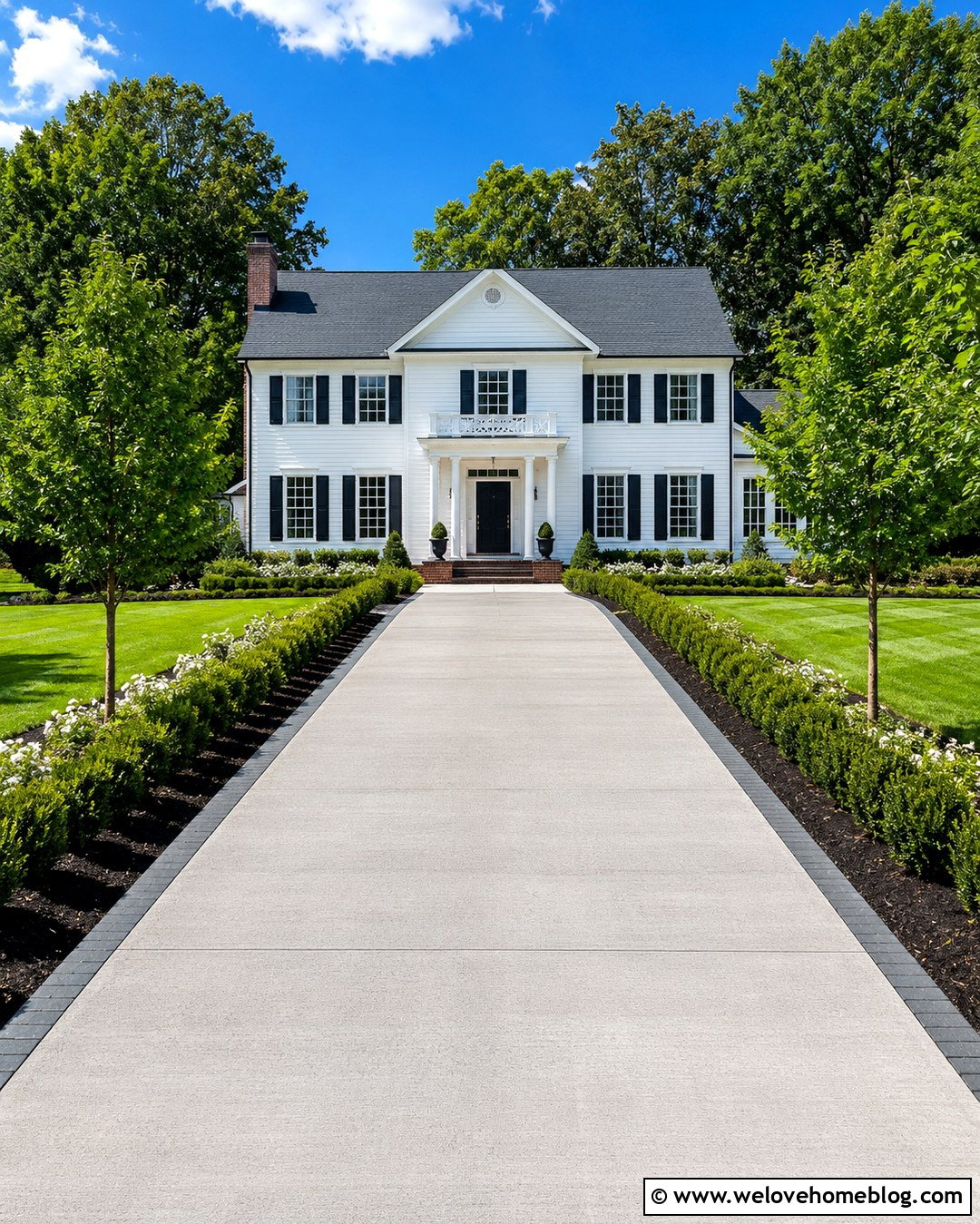
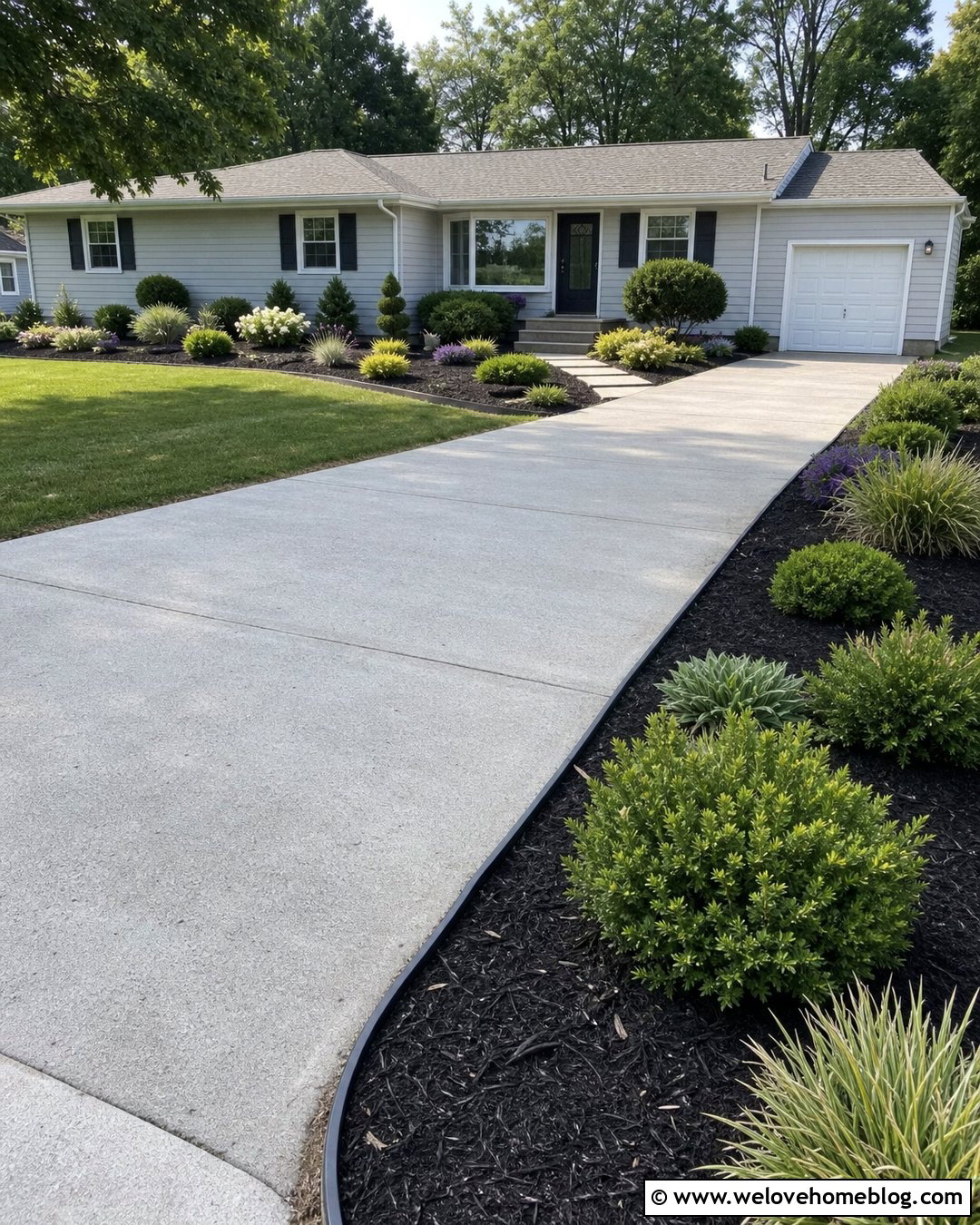
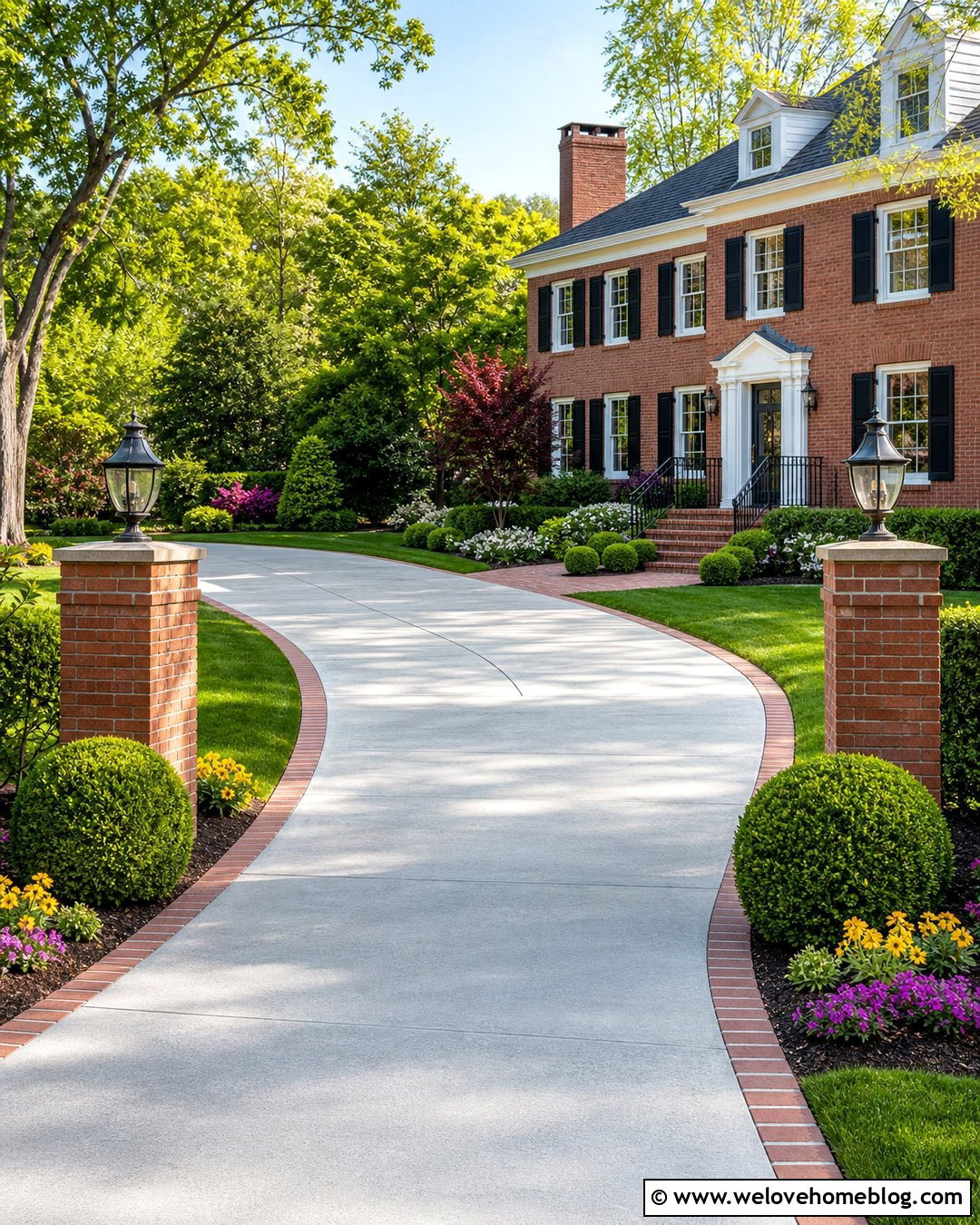
A light gray concrete driveway gains year-round structure when compact evergreens line both sides. Choose slow-growing shrubs with mature sizes that will not crowd parked vehicles or block the view near the street. Low boxwood, dwarf inkberry, or compact juniper can create a clean border without requiring constant pruning. Add wider planting pockets near the house for small ornamental trees and flowering perennials. A narrow strip of dark mulch between the shrubs and pavement provides contrast while simplifying maintenance. Finish the driveway with a darker paver edge that visually separates concrete from planting beds. This balanced design works especially well with colonial, Cape Cod, and traditional homes because the strong symmetry supports their orderly architecture.
2. Straight Asphalt Driveway With Flower Beds
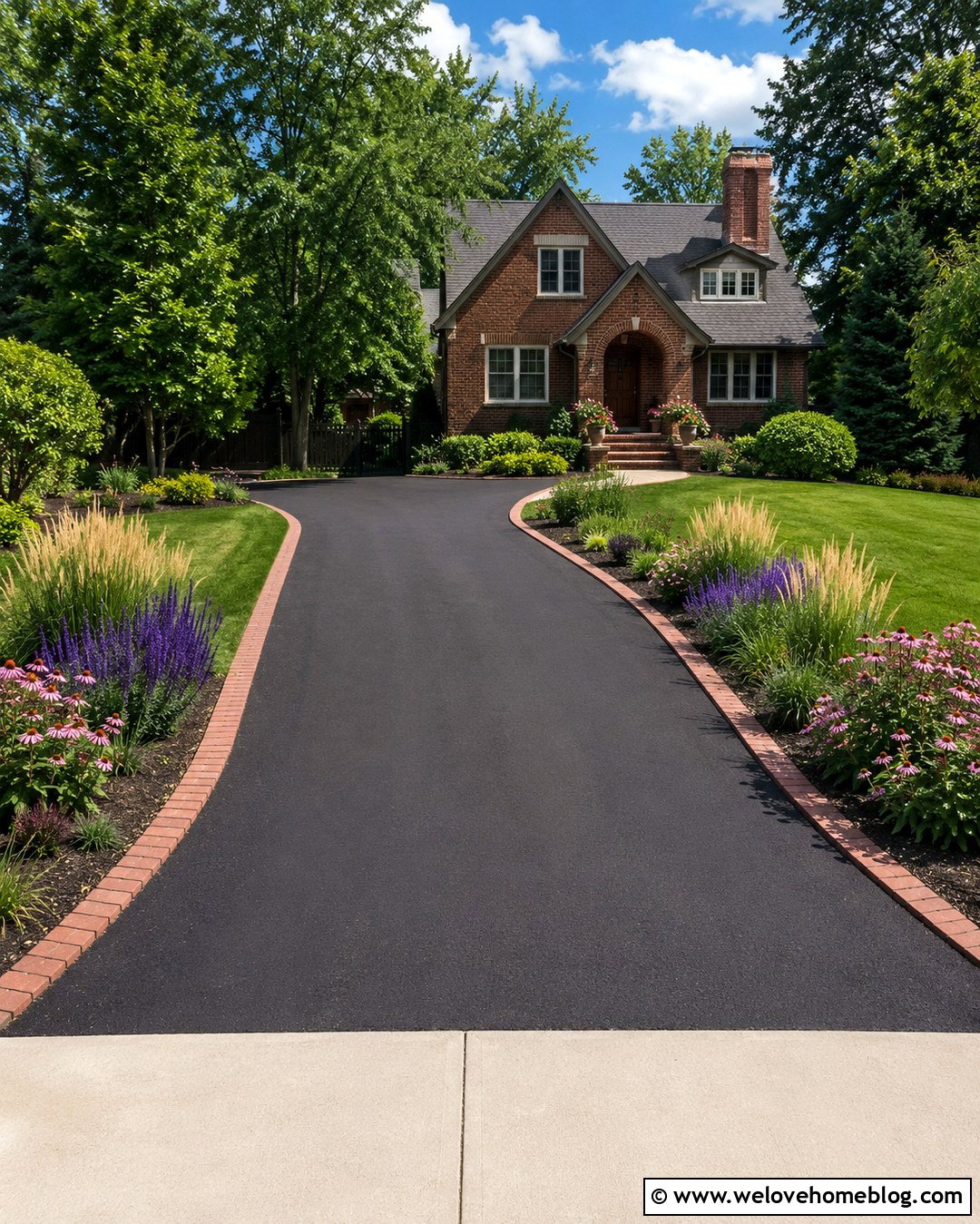
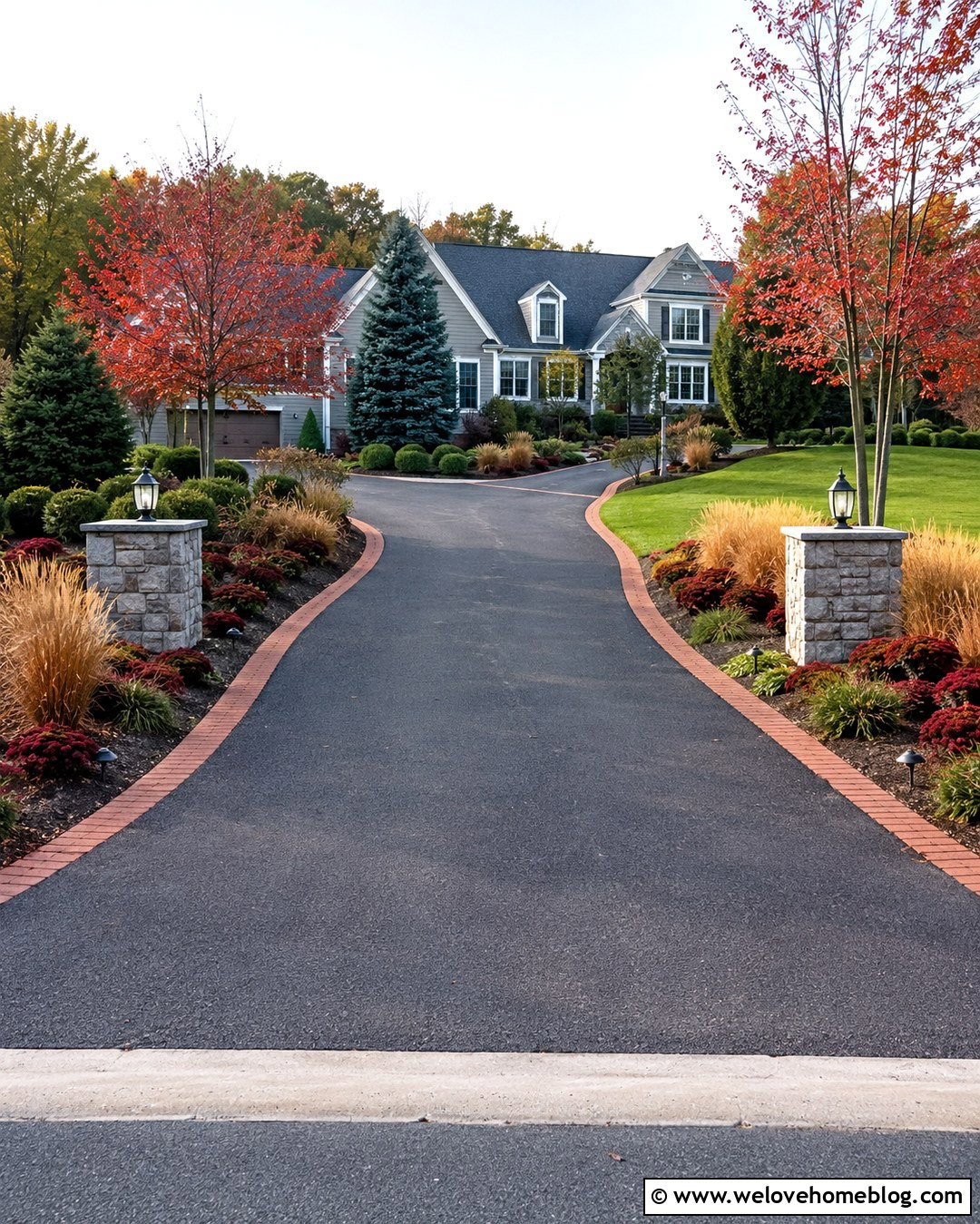
Can a practical black asphalt driveway feel colorful and inviting? Long flower beds on both sides can soften its dark surface while emphasizing the direct route to the house. Build gently curved beds rather than copying the driveway’s rigid lines exactly. This contrast makes the yard look more natural. Combine low ornamental grasses, coneflowers, salvia, and other climate-appropriate perennials for changing color and texture. Keep taller plants farther from the pavement, especially near the entrance and garage. A brick soldier-course border creates a crisp transition between asphalt and soil. Repeating a limited plant palette down the driveway also prevents the landscaping from looking busy. Near the house, widen the beds and add flowering shrubs to connect the driveway with the foundation planting.
3. Straight Gravel Driveway With Timber Edging
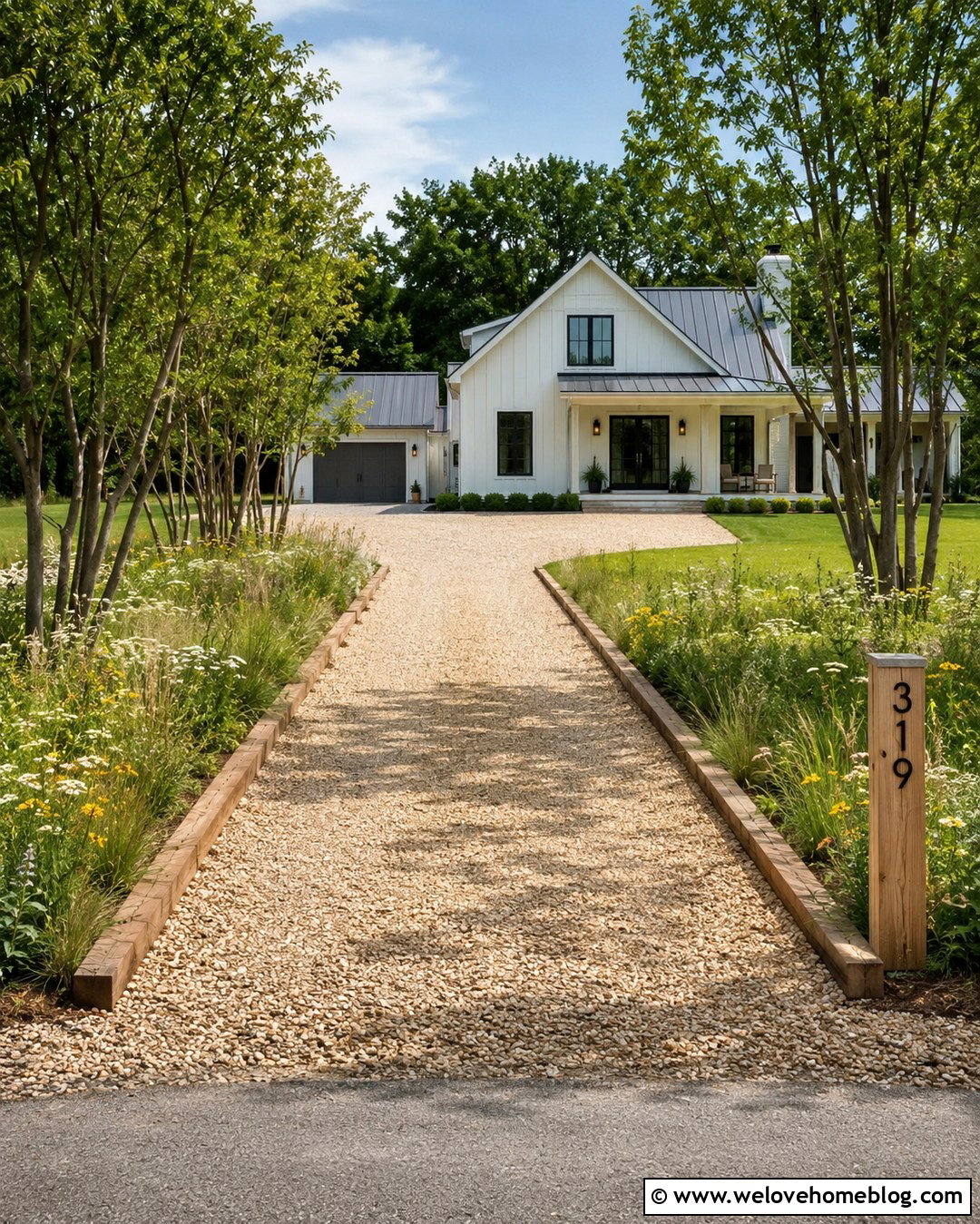
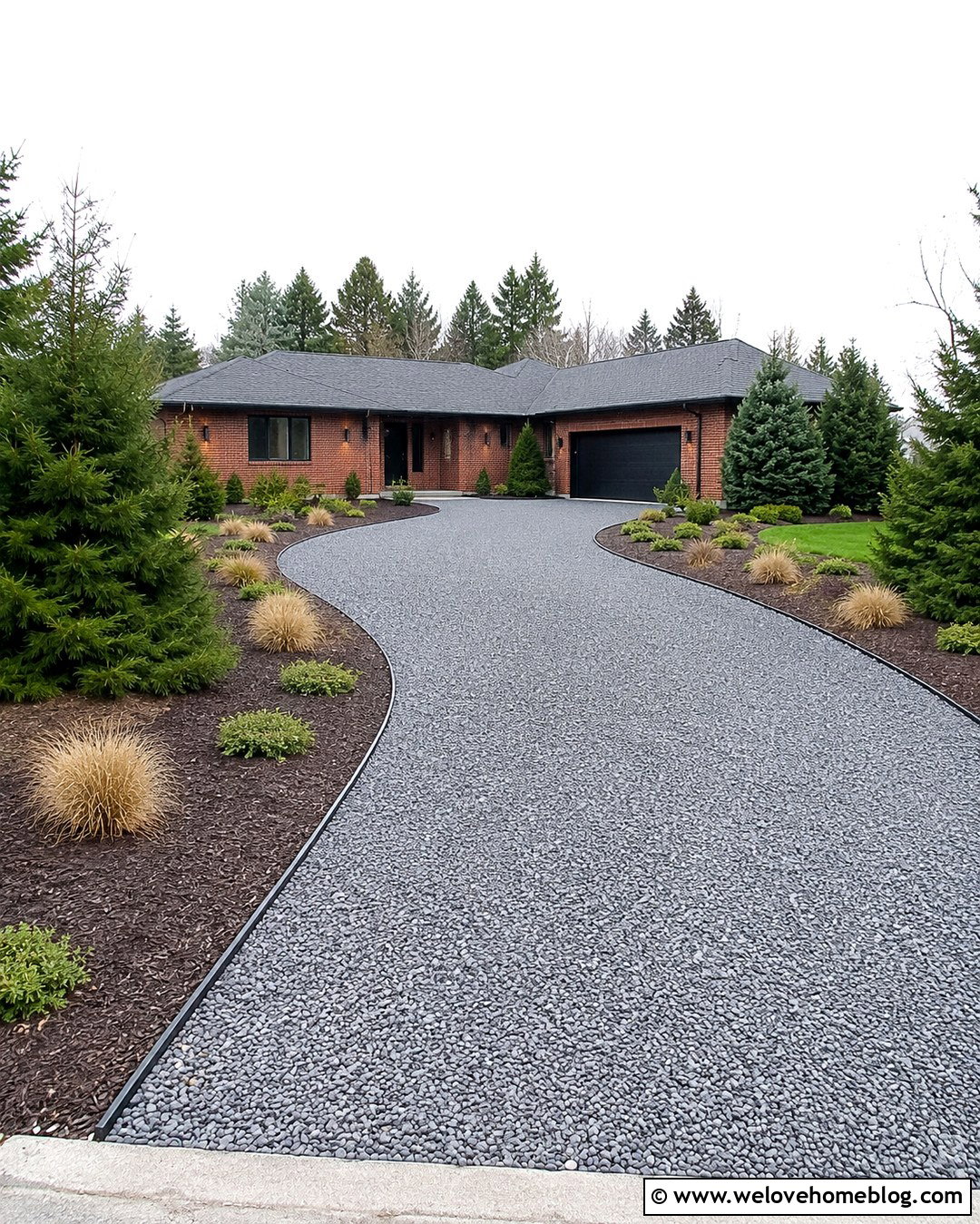
The relaxed texture of gravel pairs naturally with timber edging and loose, meadow-inspired landscaping. Use compacted tan or gray gravel for the driving surface, then secure both sides with pressure-treated landscape timbers or durable hardwood boards. The edging keeps loose stones from spreading into the lawn and creates a clear mowing line. Beyond it, plant clumps of ornamental grass, low native flowers, and a few small multi-stem trees. Leave occasional gaps in the planting so passengers can step out comfortably. At the street, frame the entrance with larger beds and simple wooden address posts. This complete look suits cabins, country homes, and modern farmhouses. It feels informal, but the straight layout and defined timber edges keep the design organized.
4. Straight Paver Driveway With Boxwood Hedges
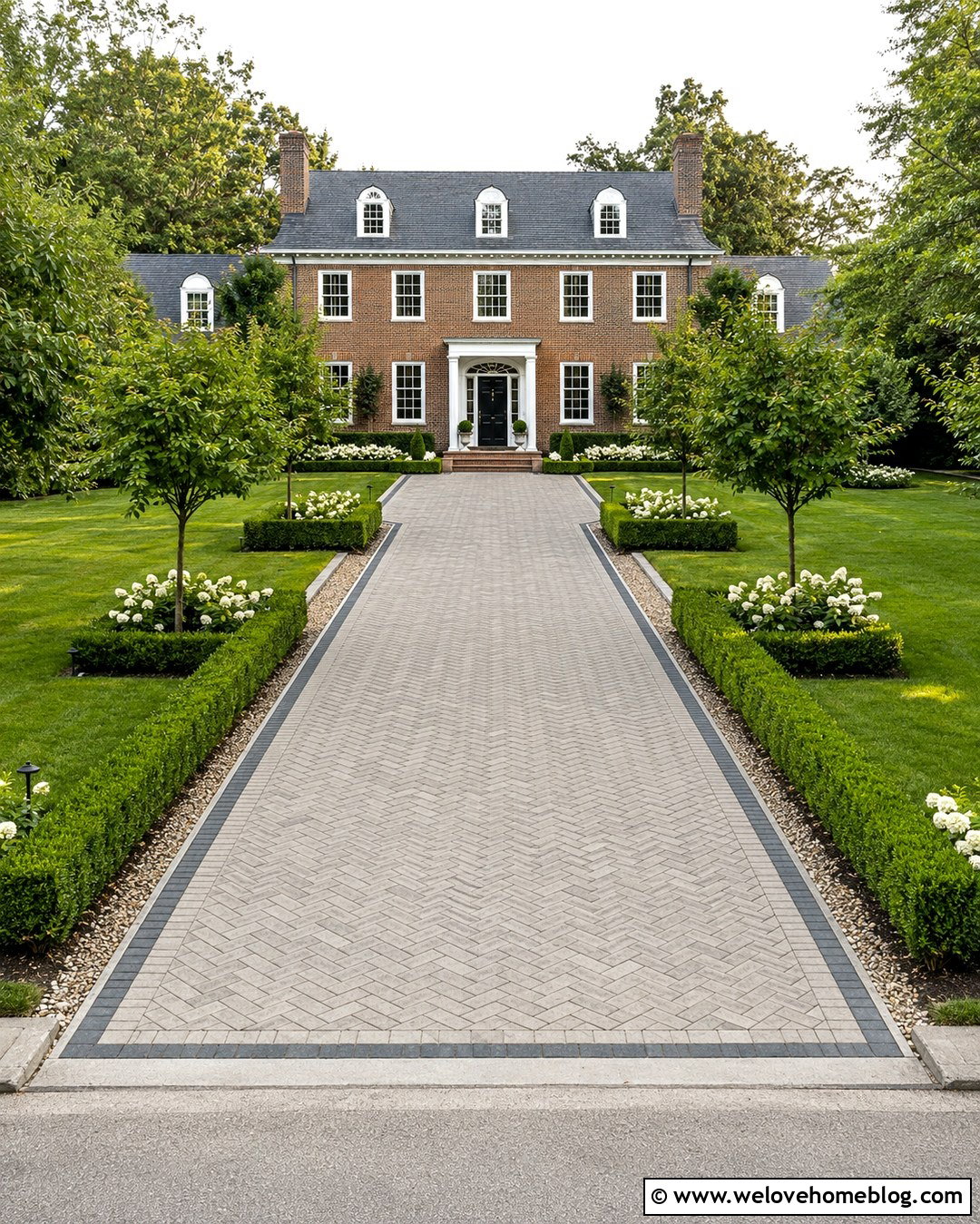
For an orderly, upscale approach, combine warm gray concrete pavers with neatly clipped boxwood hedges. Lay the pavers in a running-bond or herringbone pattern and add a contrasting charcoal border along each side. The darker frame makes the straight driveway appear intentionally designed rather than purely functional. Position the hedges beyond a narrow gravel drainage strip so foliage does not spill onto the driving surface. Small flowering trees can mark the entrance, while matching shrubs near the garage tie the driveway to the home. Break up long hedge lines with recessed planting pockets containing white flowers or seasonal color. This layout complements formal brick, Georgian, and French-inspired houses. It also provides attractive winter structure when perennial gardens are dormant.
5. Straight Brick Driveway With Cottage Gardens
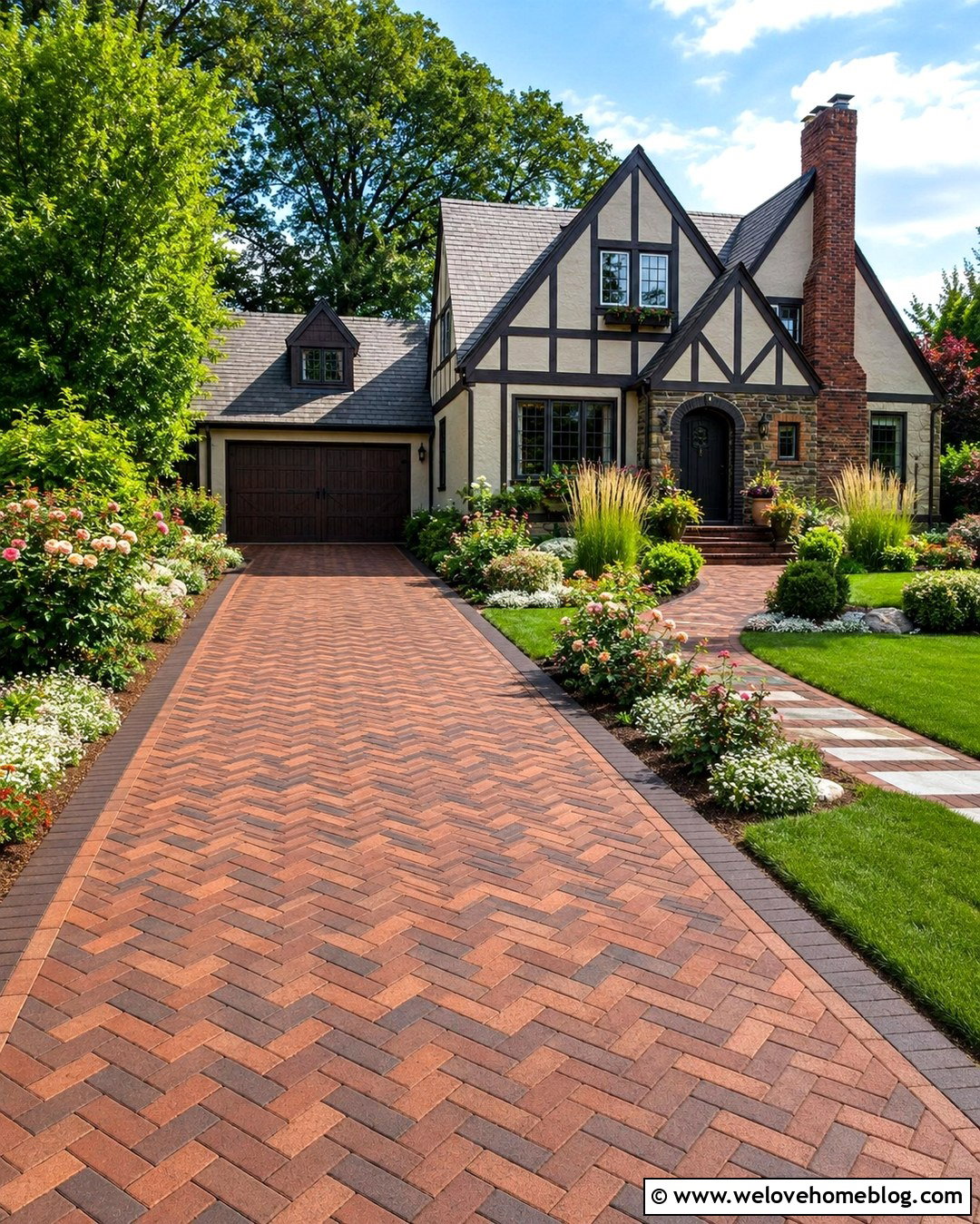
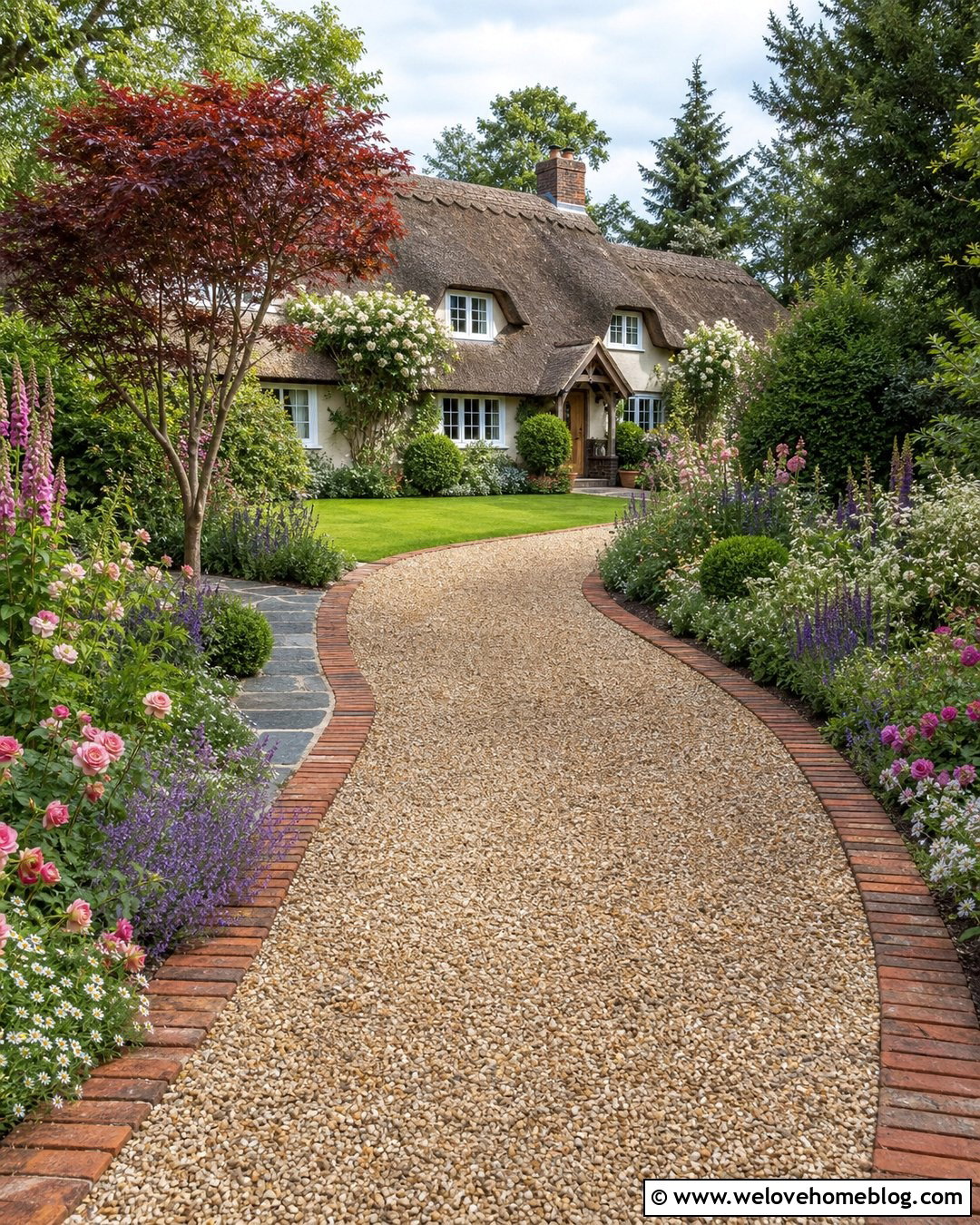
Warm clay brick creates a welcoming foundation for an abundant cottage-style landscape. A herringbone pattern offers visual movement, while a darker brick border clearly defines the driveway’s straight shape. Along both sides, use layered beds that begin with low ground cover and progress to flowering perennials, roses, and airy ornamental grasses. Keep plants relaxed but contained so stems do not interfere with doors, mirrors, or tires. Small stepping stones placed at convenient intervals allow people to cross the beds without damaging plants. A matching brick walkway can branch toward the porch near the garage. This design looks especially natural beside a cottage, Tudor, or traditional home. Repeating several flower colors across the beds maintains cohesion even when the planting feels full and informal.
6. Straight Exposed Aggregate Driveway With River Rock Landscaping
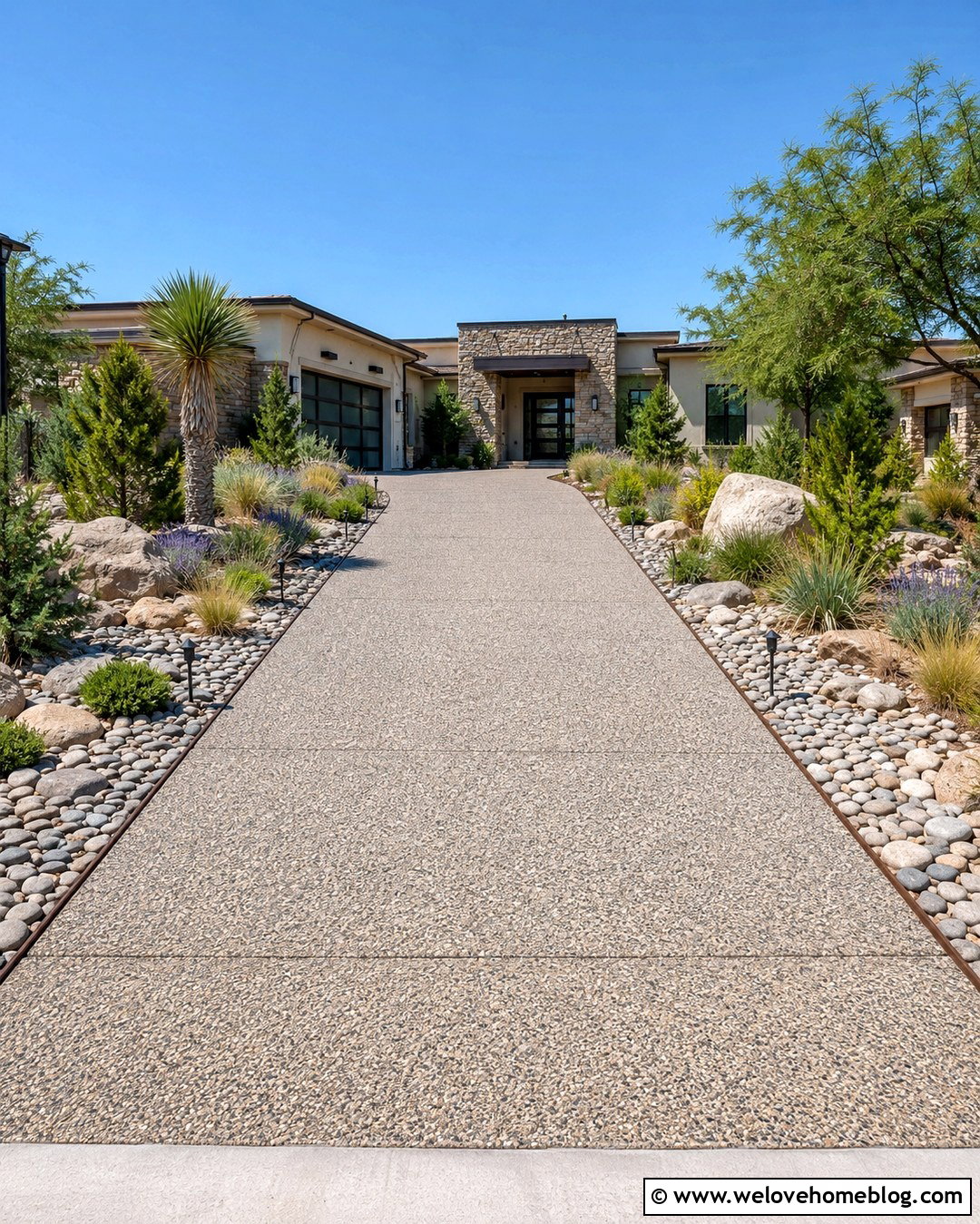
Exposed aggregate offers rich texture without making a straight driveway feel overly decorative. Pair its speckled gray and tan finish with wide river rock beds for a coordinated, low-water landscape. Install steel or concrete edging between the driveway and rock to prevent materials from mixing. Within the beds, group sculptural plants such as yucca, agave, dwarf pine, or drought-tolerant ornamental grasses suited to your climate. Use larger boulders sparingly to create focal points rather than filling every open area. A few low-voltage lights can highlight the stone and guide the approach after dark. This driveway design fits modern, Southwestern, and contemporary ranch homes. It also replaces narrow lawn strips that may otherwise be difficult to irrigate, trim, and maintain.
7. Straight Concrete Ribbon Driveway With Grass Center
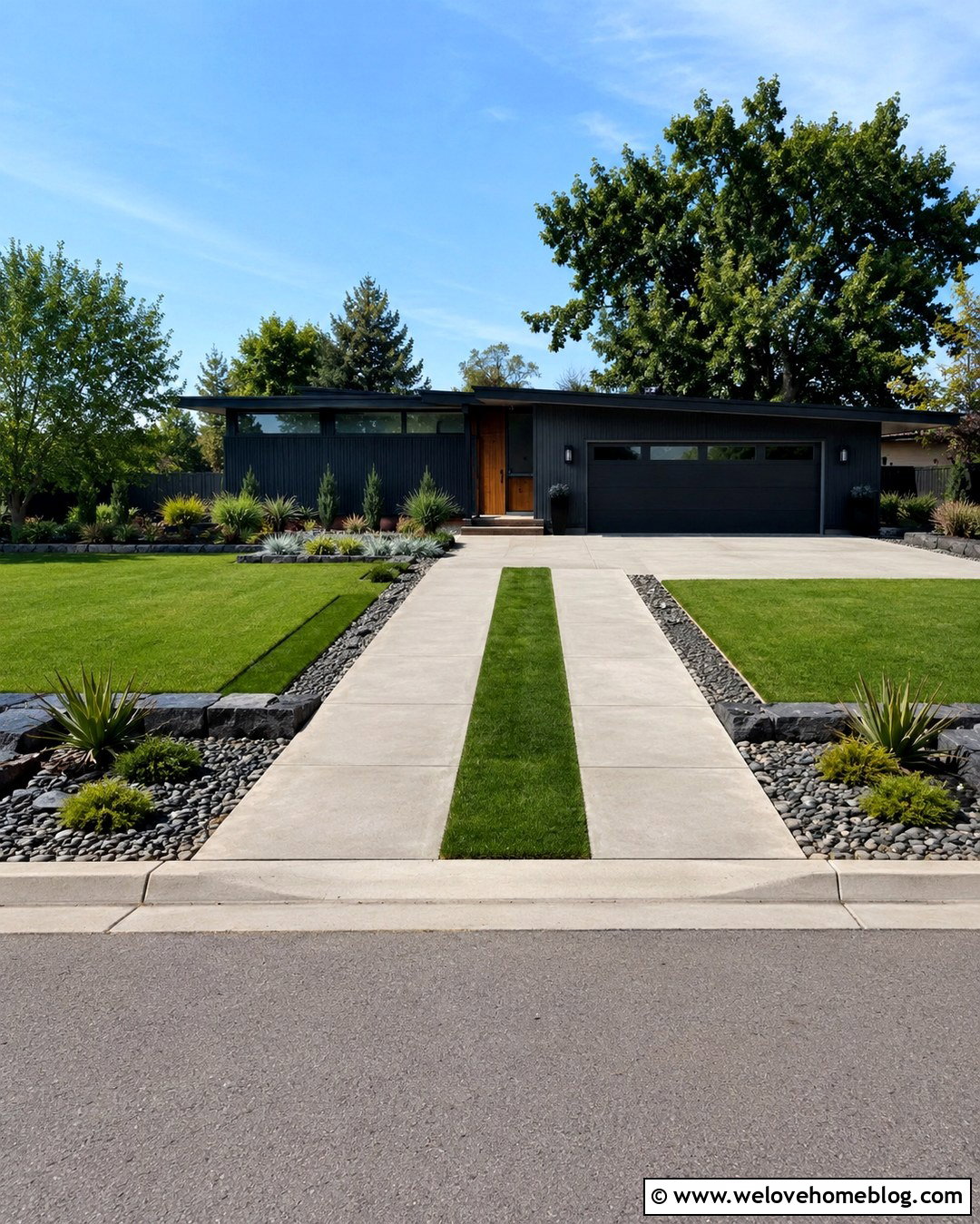
A concrete ribbon driveway reduces the visual weight of pavement by leaving a planted strip down the center. The two reinforced concrete tracks should be properly sized for vehicle tires, while the middle can contain durable turf or low-growing ground cover appropriate for local conditions. Continue the green theme with simple lawn panels and restrained planting beds along the outer edges. Decorative stone borders help keep soil and grass away from the concrete. Near the house, transition to a full-width parking pad so turning and garage access remain convenient. This clean design looks at home with midcentury, minimalist, and contemporary architecture. Before installation, consider vehicle widths, snow removal, irrigation, and long-term maintenance so the attractive center strip remains practical throughout the year.
8. Long Straight Driveway With Tree-Lined Landscaping
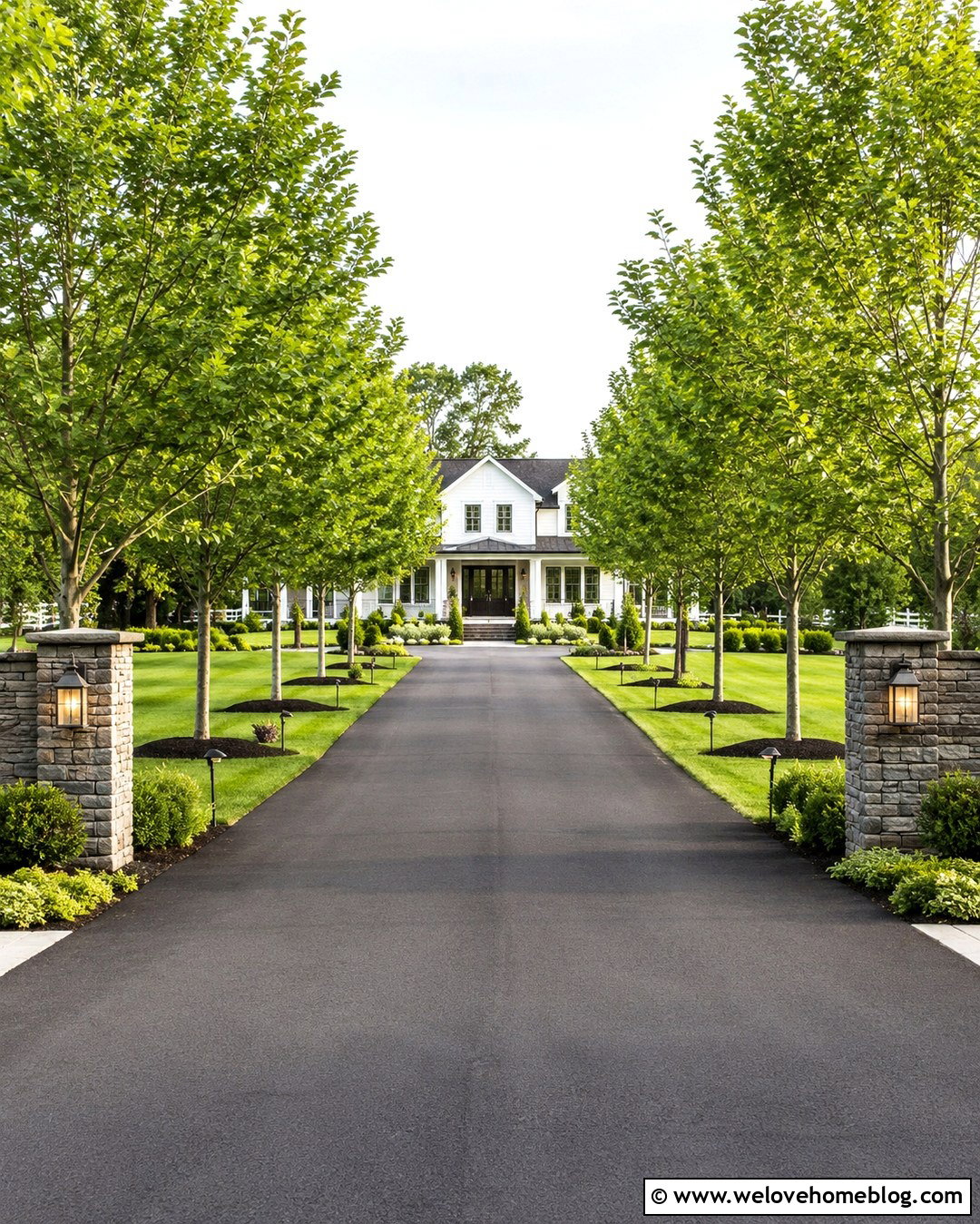
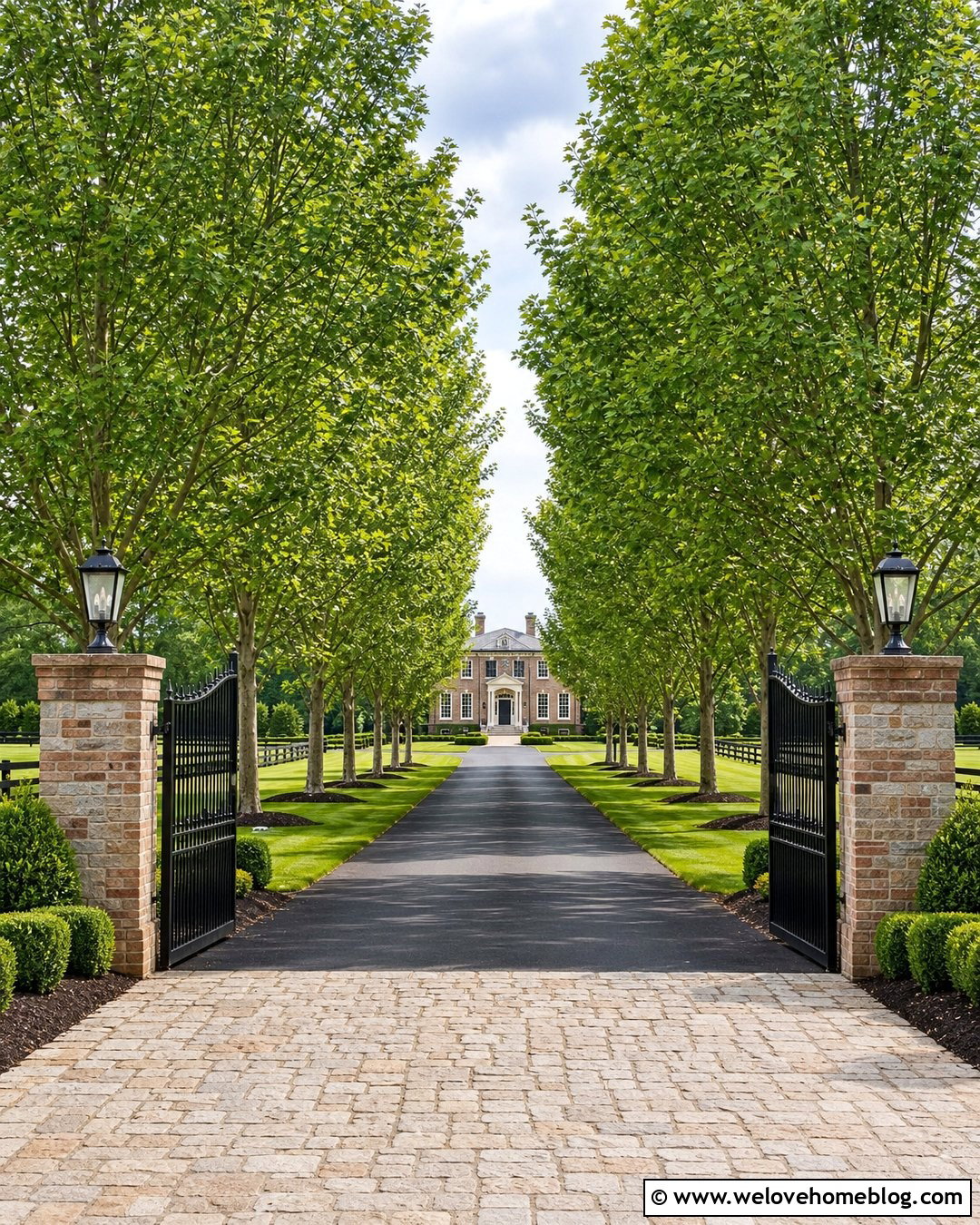
A long driveway becomes a memorable approach when evenly spaced trees create rhythm from the road to the house. Choose a species suited to the soil, climate, overhead utilities, and available root space. Set trunks far enough from the pavement to accommodate mature canopies and prevent branches from striking vehicles. Beneath the trees, continuous lawn or low ground cover keeps the composition calm. Narrow mulch rings can protect trunks without creating a cluttered series of small beds. Add low entrance pillars and understated lighting to strengthen the view from the street. At the house, finish the axis with a broader parking area and layered foundation planting. This formal arrangement works beautifully for farmhouse, colonial, and estate-inspired properties with generous front yards.
9. Straight Resin-Bound Driveway With Lavender Borders
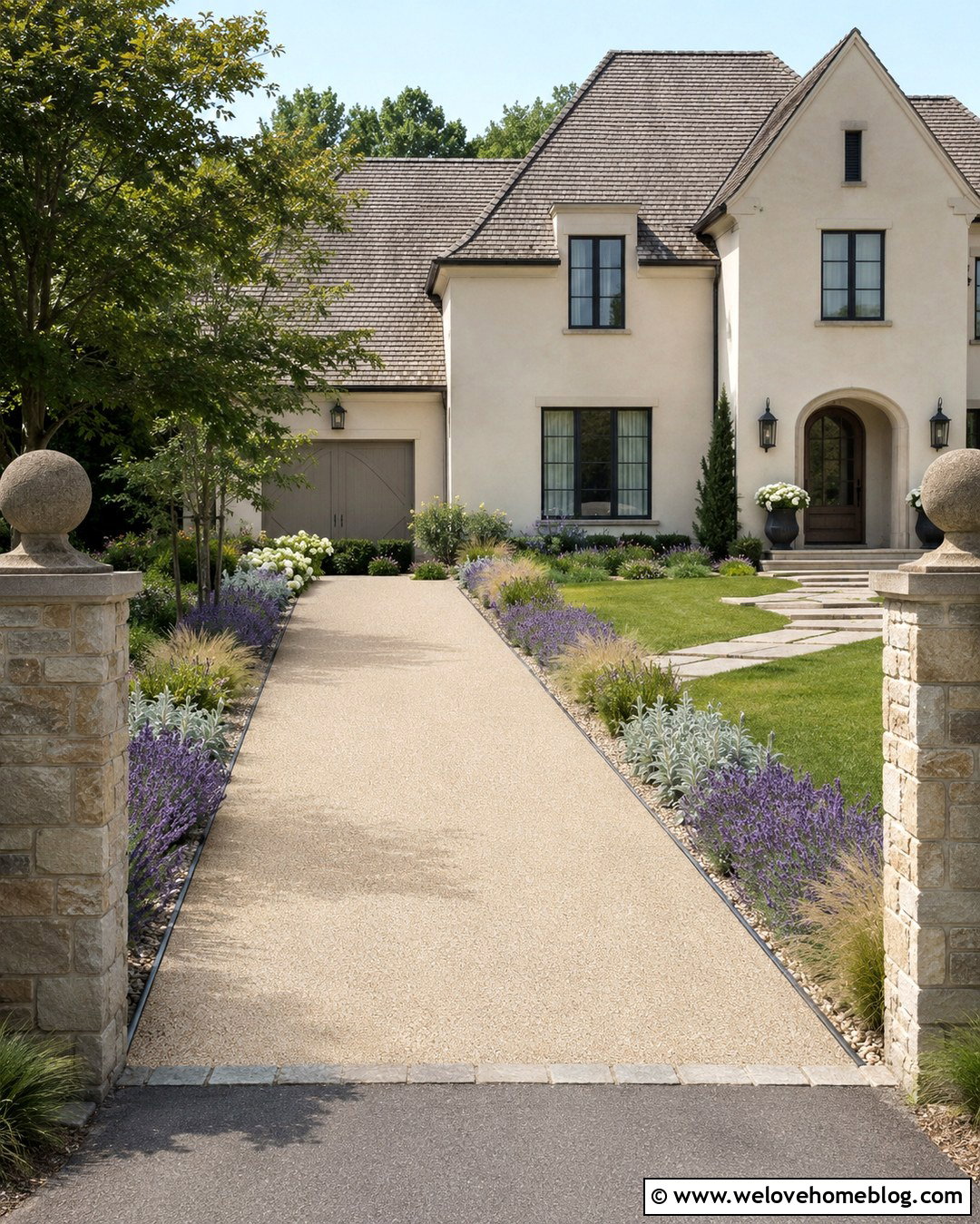
A smooth, warm beige resin-bound driveway looks refined beside bands of lavender and silvery foliage. The small aggregate texture provides subtle detail, while straight metal edging keeps the surface and planting beds sharply separated. Arrange lavender in broad repeating groups rather than one unbroken row, then fill the gaps with low ornamental grasses or compact evergreen mounds. Choose plants compatible with your region’s moisture, temperature, and soil conditions. Gravel mulch can support the dry, Mediterranean character and prevent dark soil from splashing onto the pale driveway. Add simple stone pillars at the entrance and repeat the same stone around the front walkway. This complete landscape suits stucco, modern farmhouse, and European-inspired homes while delivering color, fragrance, and strong curb appeal.
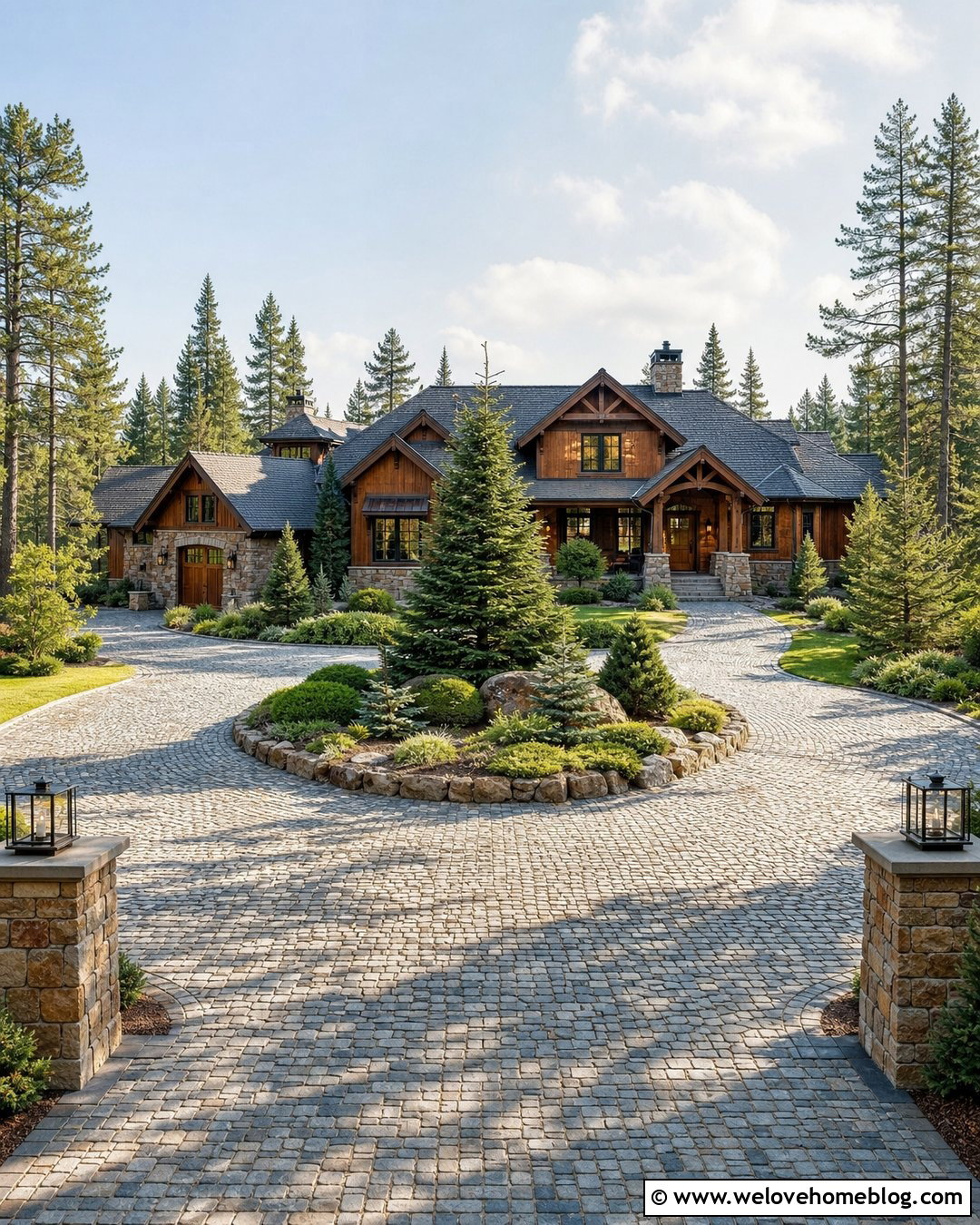
10. Straight Cobblestone Driveway With Hydrangea Beds
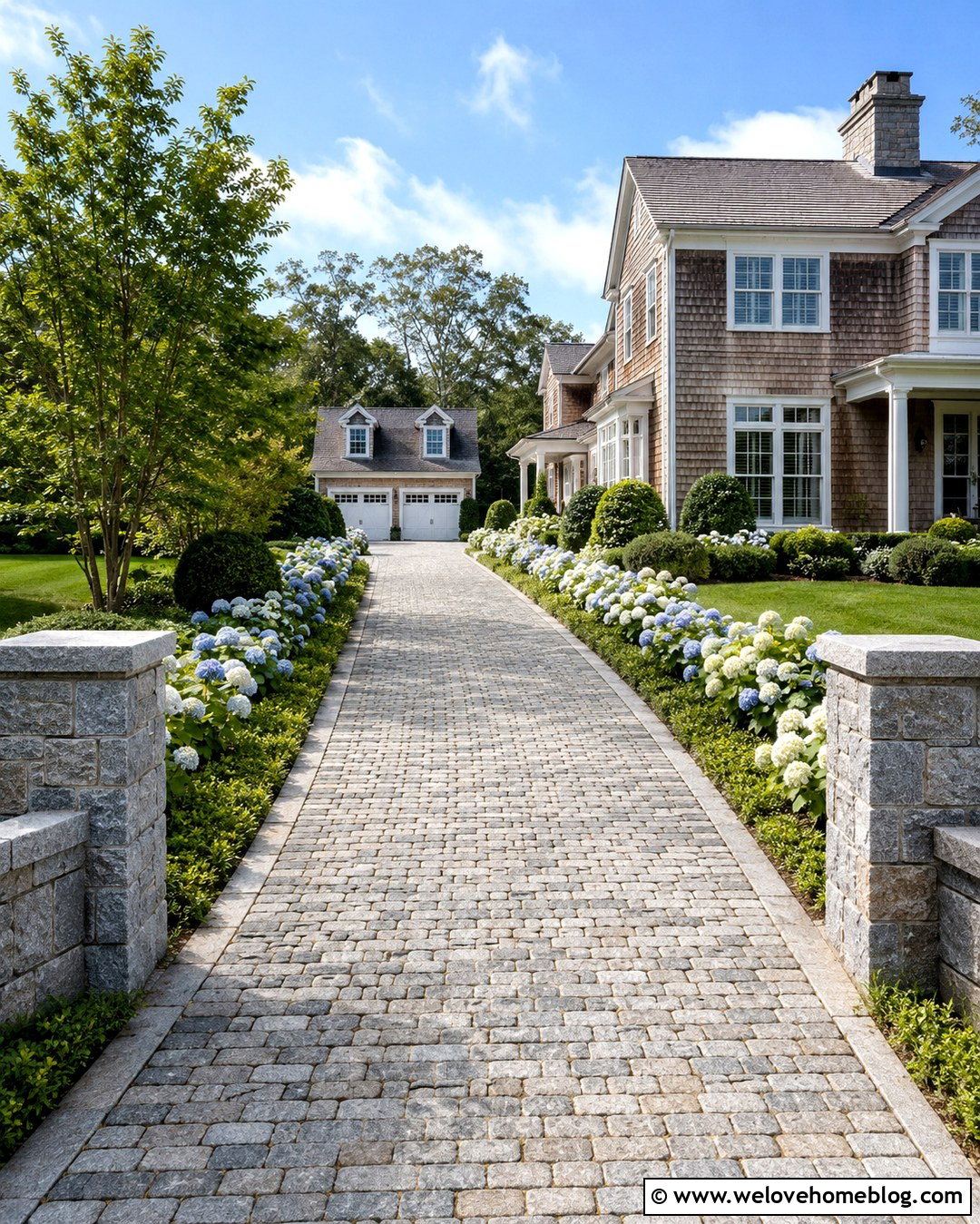
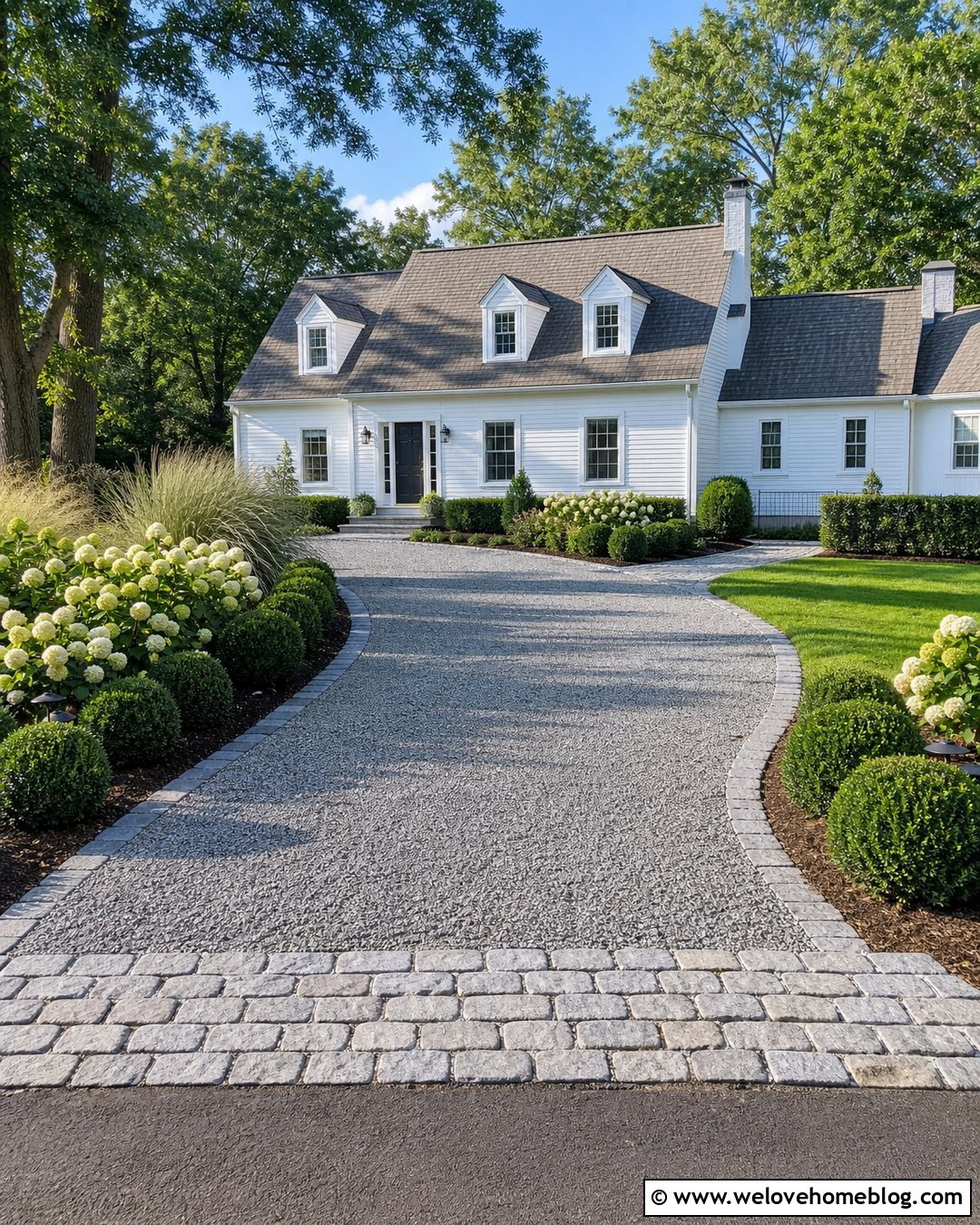
Old-world cobblestone and generous hydrangea beds create a substantial entrance with soft seasonal color. Select gray cobbles with a slightly varied tone, then install a flush stone border for a smooth transition at the sides. Place hydrangeas in wide beds where their mature growth will not narrow the driving area. Low ground covers and clipped evergreens can fill the front edge, while taller shrubs belong toward the lawn or house. In colder regions, include evergreen structure so the driveway remains attractive after the flowers fade. Stone gate pillars at the street can repeat the cobblestone color and establish a clear arrival point. This combination is particularly effective with shingle, colonial, and stone-front houses, where the rich surface and full planting feel appropriately established.
11. Straight Modern Concrete Driveway With Gravel Strips
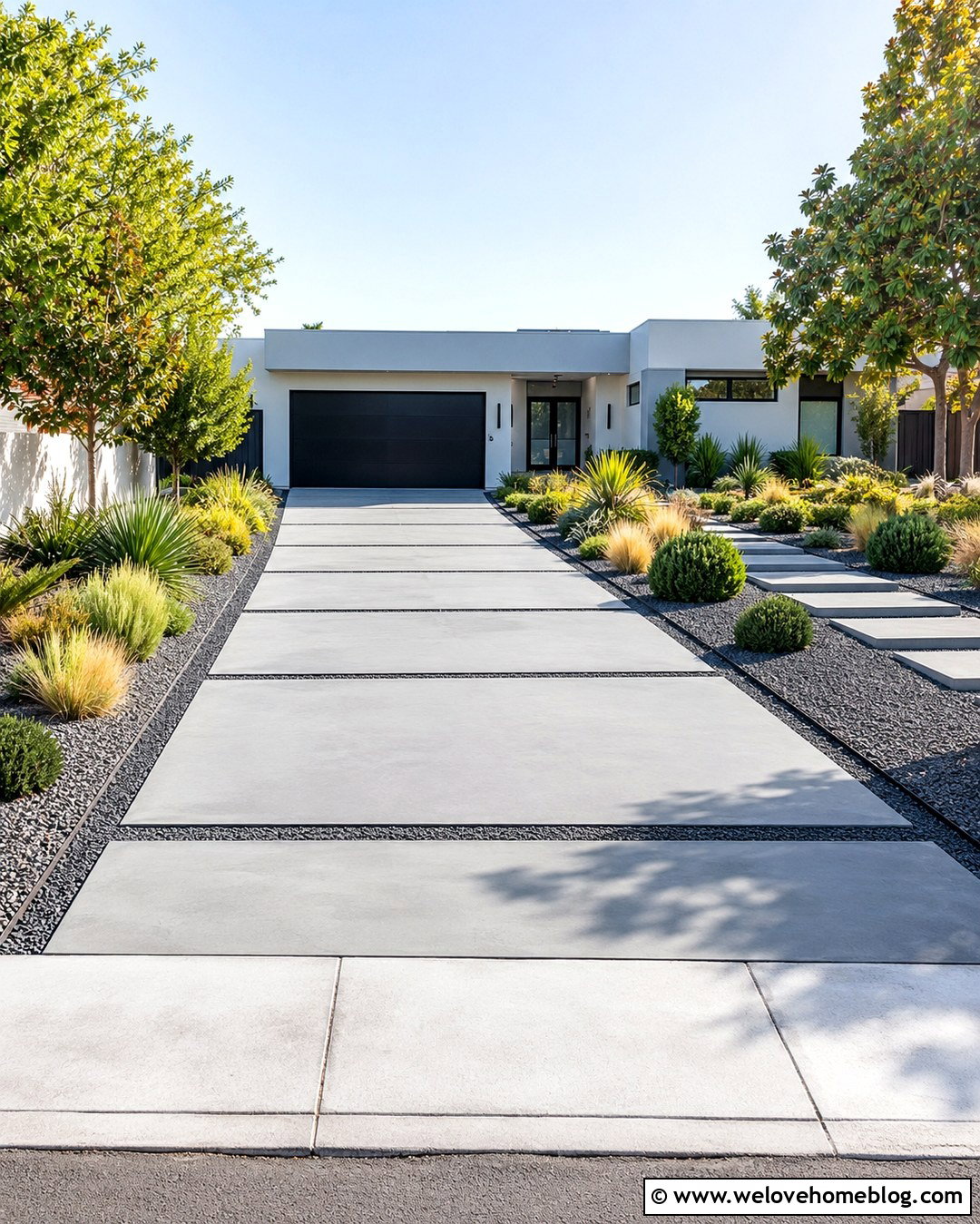
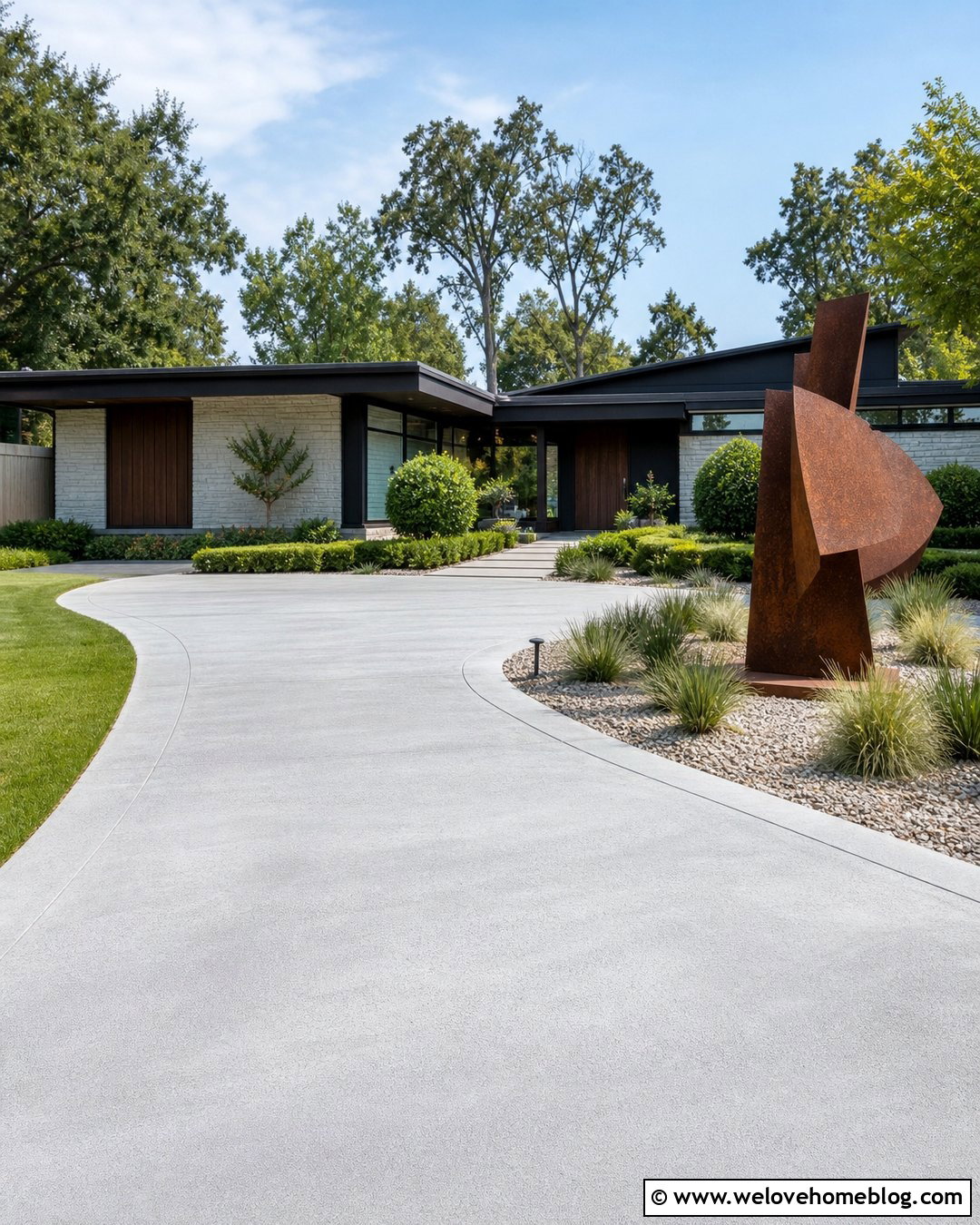
Large rectangular concrete slabs separated by narrow gravel joints give a straight driveway a clean contemporary pattern. Use smooth medium-gray concrete and dark crushed stone for crisp contrast. Continue the stone along both outer edges, where it can surround drought-tolerant grasses, rounded shrubs, and a few architectural plants. Keep the planting palette limited and repeat each variety in generous groups. This prevents the long driveway from looking fragmented. Linear concrete stepping pads can connect the driveway to the front door without introducing another material. Near the garage, use larger planting beds to balance the broad facade and soften blank walls. The combination works best with modern and midcentury homes featuring simple forms, flat or low roofs, and restrained exterior colors.
12. Straight Permeable Paver Driveway With Rain Gardens
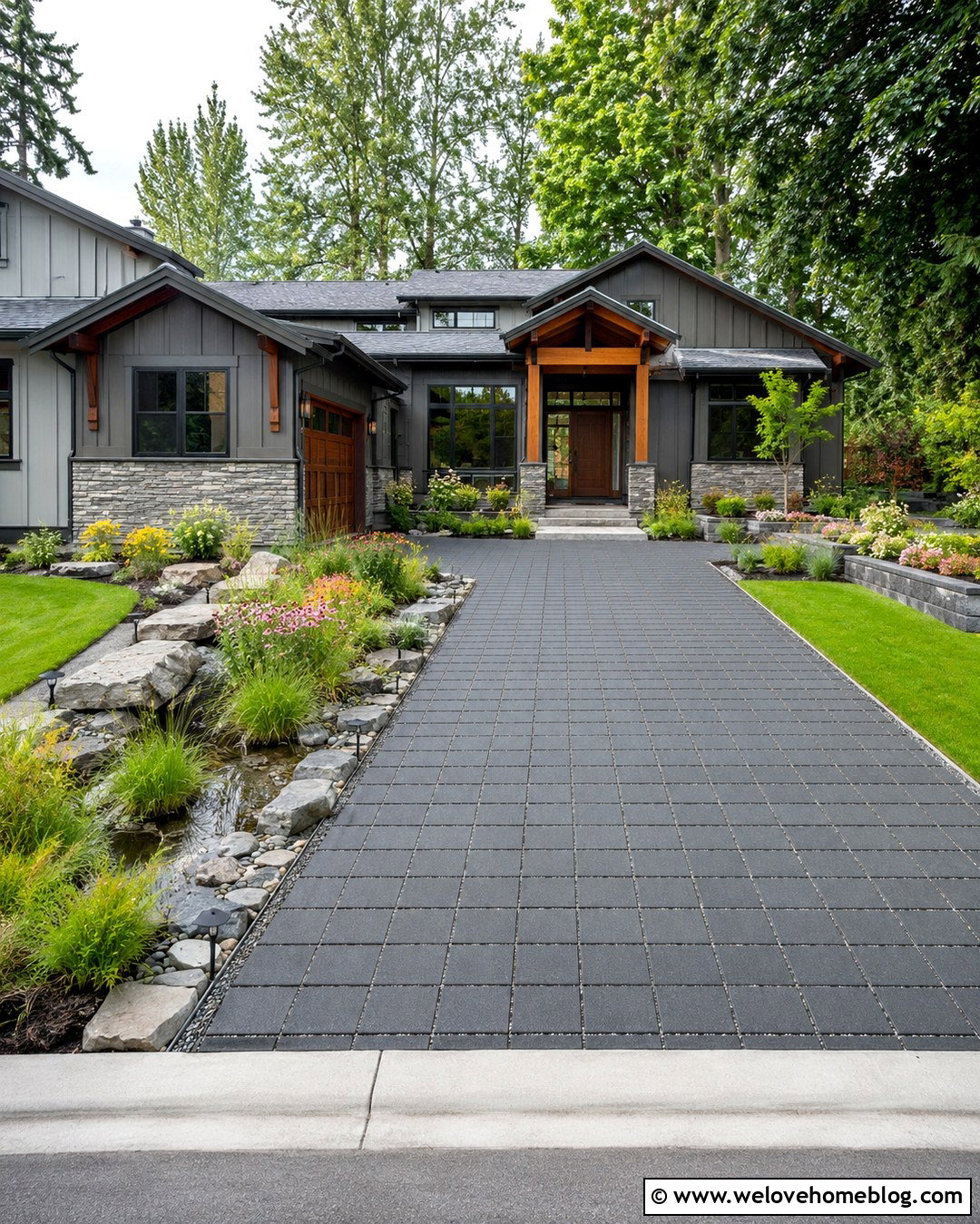
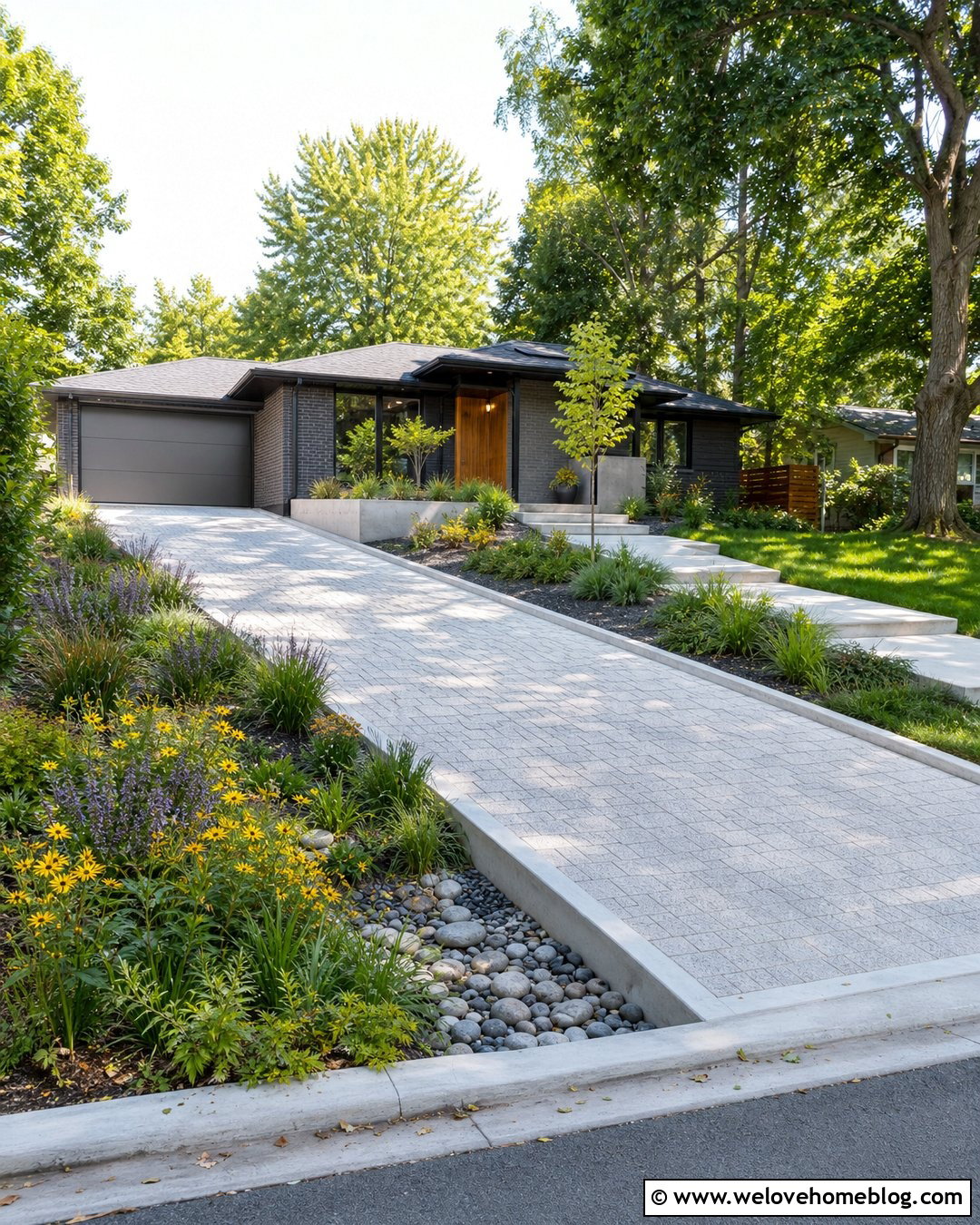
A straight driveway can support a greener landscape when permeable pavers are paired with planted rain gardens. Choose charcoal or natural-gray permeable concrete pavers with open joints filled by small aggregate. Along the lower side of the driveway, create shallow planted depressions that can receive runoff where local conditions and regulations allow. Fill them with moisture-tolerant native grasses, sedges, flowers, and shrubs selected for the site. Use flat stone edging or a clear gravel transition to protect the planting area from tires. On the opposite side, repeat several of the same plants in a simpler raised bed for balance. This integrated design suits contemporary and craftsman homes and makes the drainage features look like intentional parts of the front-yard landscape.
13. Straight Paver Driveway With Low Retaining Walls
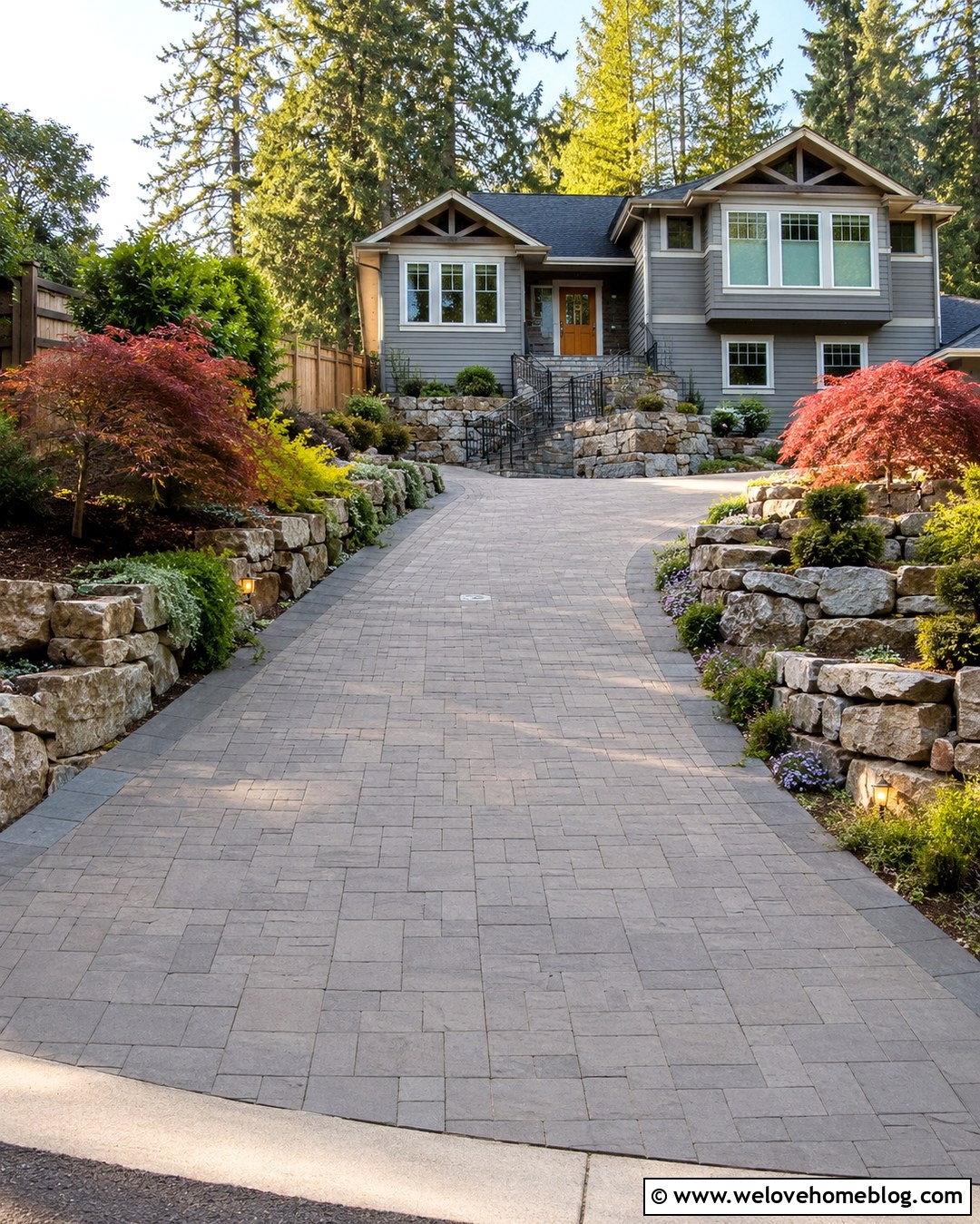
Sloped front yards often benefit from a straight paver driveway framed by low retaining walls. Warm gray interlocking pavers create a durable-looking surface, while walls of matching concrete block or natural stone hold back raised planting beds. Keep the walls low where possible and use stepped sections to follow changes in grade. Plant trailing ground covers near the wall edges, then add compact shrubs and small trees farther back. This layered arrangement softens the masonry without hiding it. Integrate wall lights or low path fixtures to define the driveway’s boundaries. At the street, flare the planting beds slightly to create a more welcoming entrance. The finished look works well with split-level, craftsman, and hillside homes because it turns difficult elevation changes into a structured landscape feature.
14. Narrow Straight Driveway With Vertical Landscaping
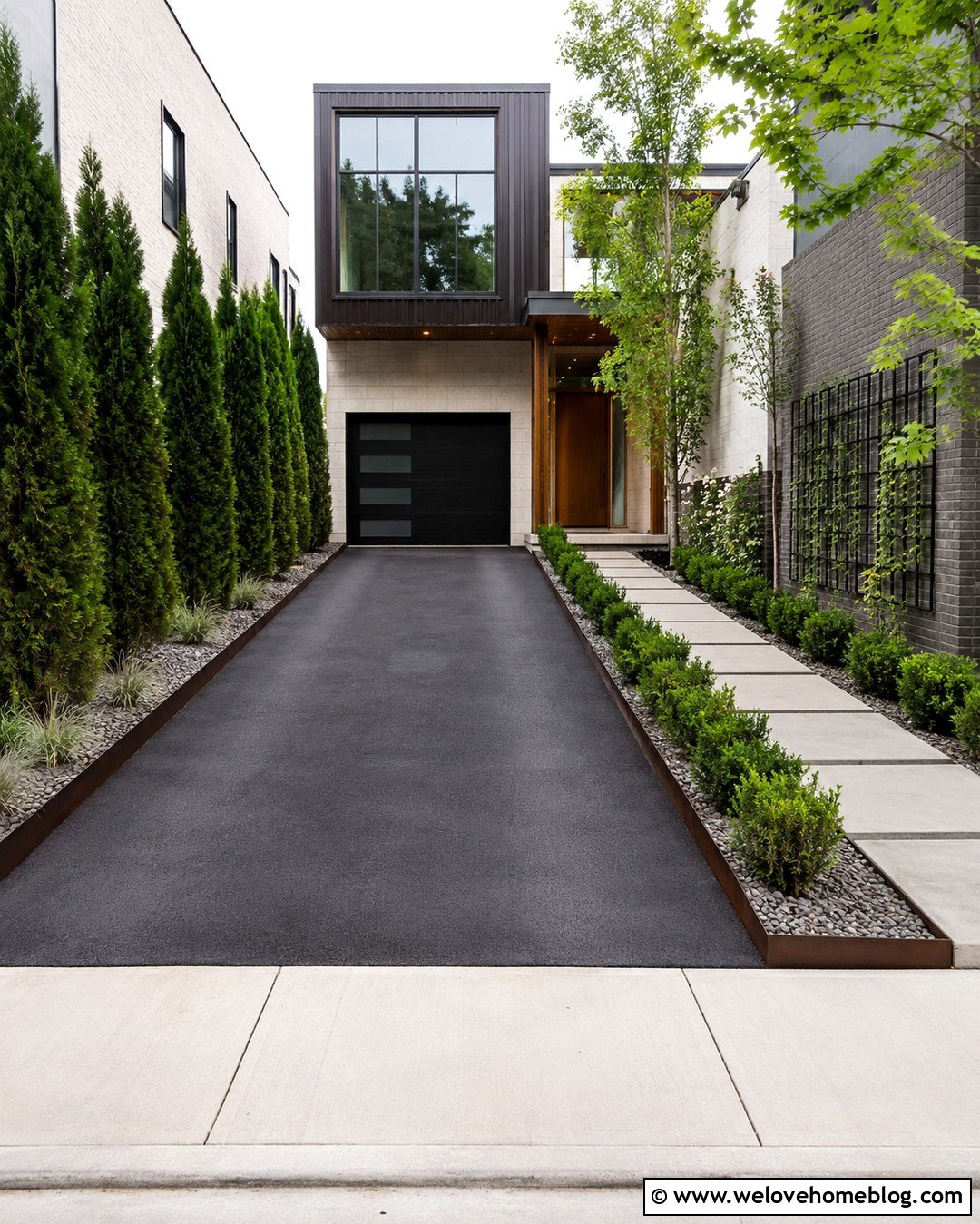
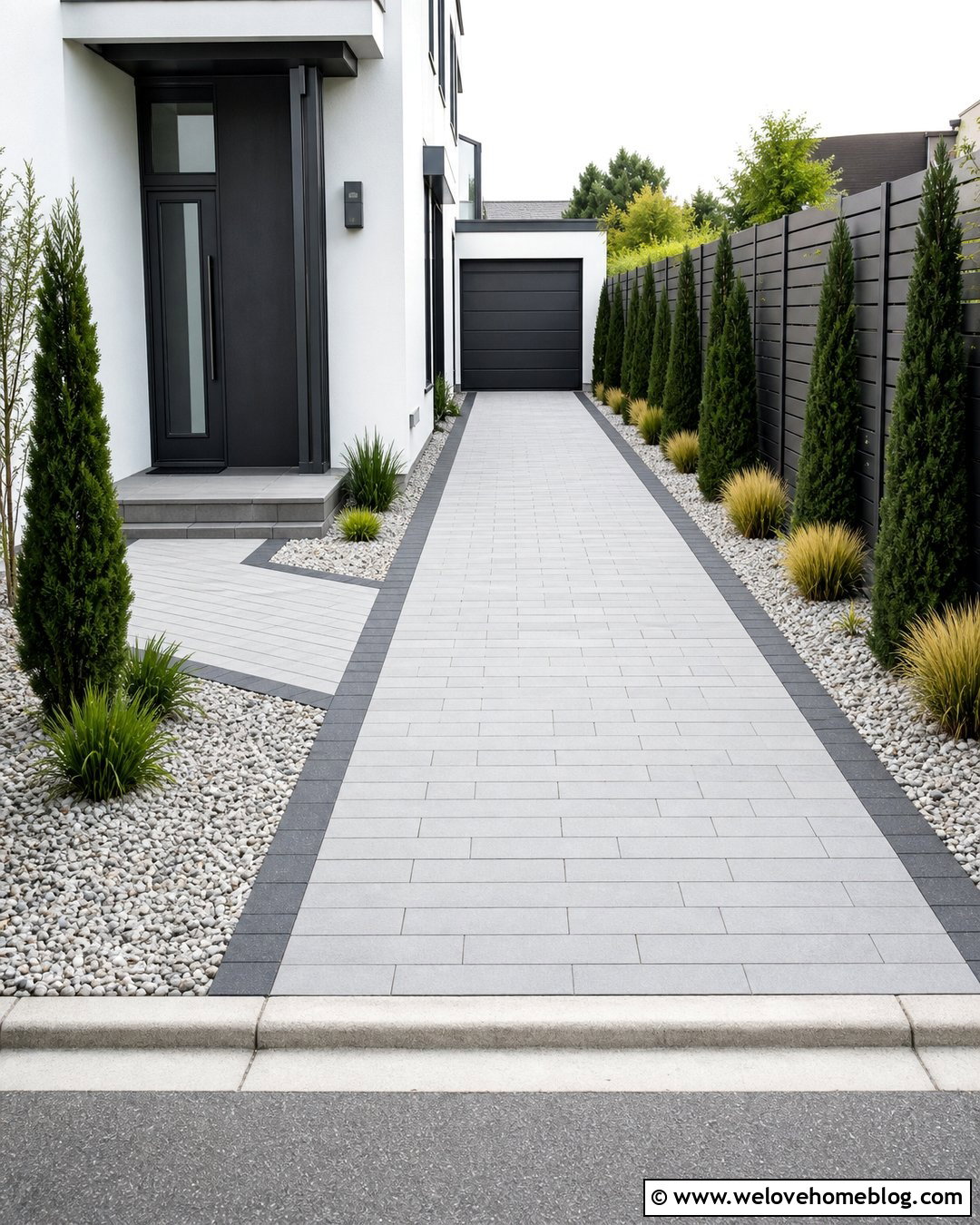
When space is limited, vertical plants can frame a narrow driveway without consuming valuable parking width. Begin with a smooth concrete or dark asphalt surface and install slim planting beds beyond sturdy edging. Upright shrubs, columnar evergreens, and narrow ornamental trees provide height while maintaining a compact footprint. Check mature dimensions carefully and avoid thorny plants beside passenger doors. A wall-mounted trellis near the house can carry a controlled climbing plant and draw attention upward. Use gravel mulch around the plantings to reduce the need for mowing in tight spaces. A separate paver walkway should remain visually clear, even if it runs beside the driveway. This efficient plan works for urban lots, side-yard driveways, and homes built close to neighboring properties.
15. Long Straight Driveway With Native Plant Borders
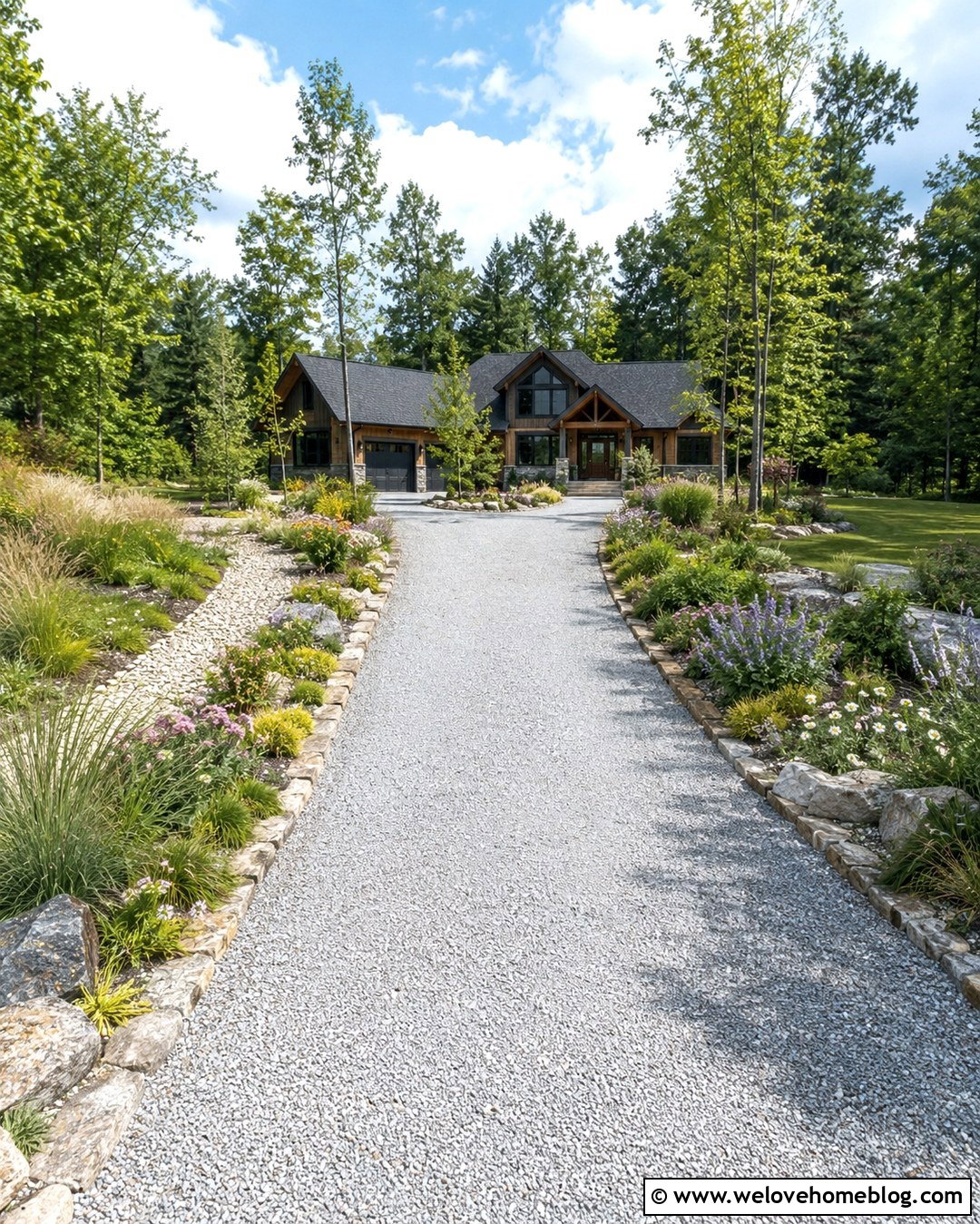
Wide native planting borders can make a long driveway feel connected to the surrounding landscape. Start with a simple gravel, asphalt, or concrete surface, then shape broad beds that gently expand and contract along the straight route. Combine regionally appropriate grasses, flowering perennials, ground covers, and shrubs in repeating groups. The varied bed shape softens the pavement without changing its efficient layout. Place shorter plants near the street to preserve driver visibility and reserve taller species for the middle or rear sections. Natural stone edging can provide definition without appearing formal. Include a mown or gravel access strip where passengers commonly exit. This approach is well suited to country, prairie, woodland-edge, and craftsman properties that benefit from a relaxed, environmentally responsive appearance.
16. Straight Farmhouse Gravel Driveway With Split-Rail Fencing
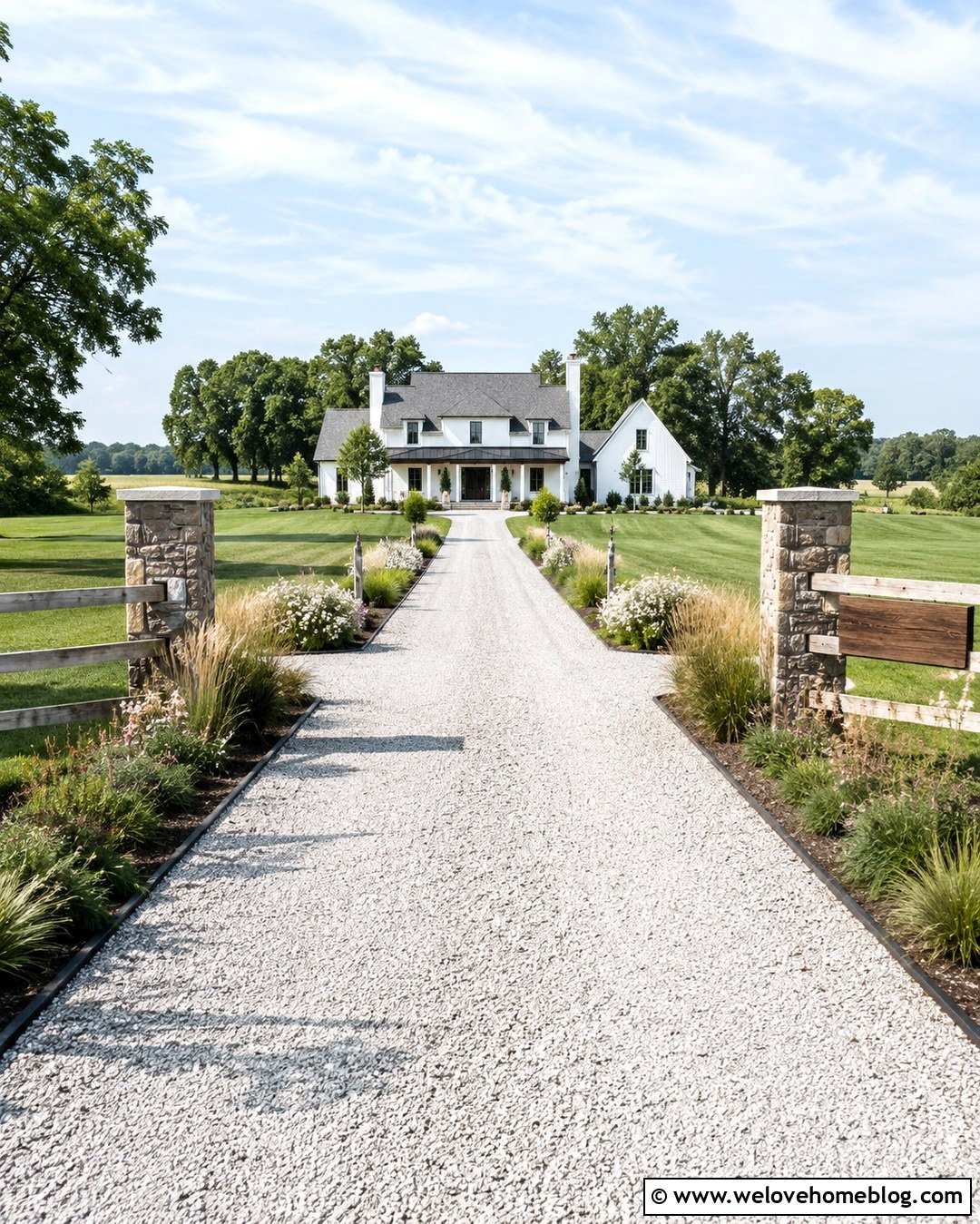
A pale gravel driveway bordered by split-rail fencing creates a classic rural entrance without requiring formal landscaping. Set the fence back from the gravel edge to leave room for drainage, snow storage, and plant growth. Add loose clusters of ornamental grasses, white flowering shrubs, and native perennials around the posts rather than planting a continuous narrow row. At the street, use simple stone pillars or a wooden address sign to identify the entrance. Continue the fence toward a white or neutral modern farmhouse, but stop it before the garage so the parking area remains open. Compacted gravel and defined steel edging keep the surface tidy. This complete look feels relaxed and authentic while still guiding the eye directly toward the house.
17. Straight Brick Driveway With Symmetrical Hedges
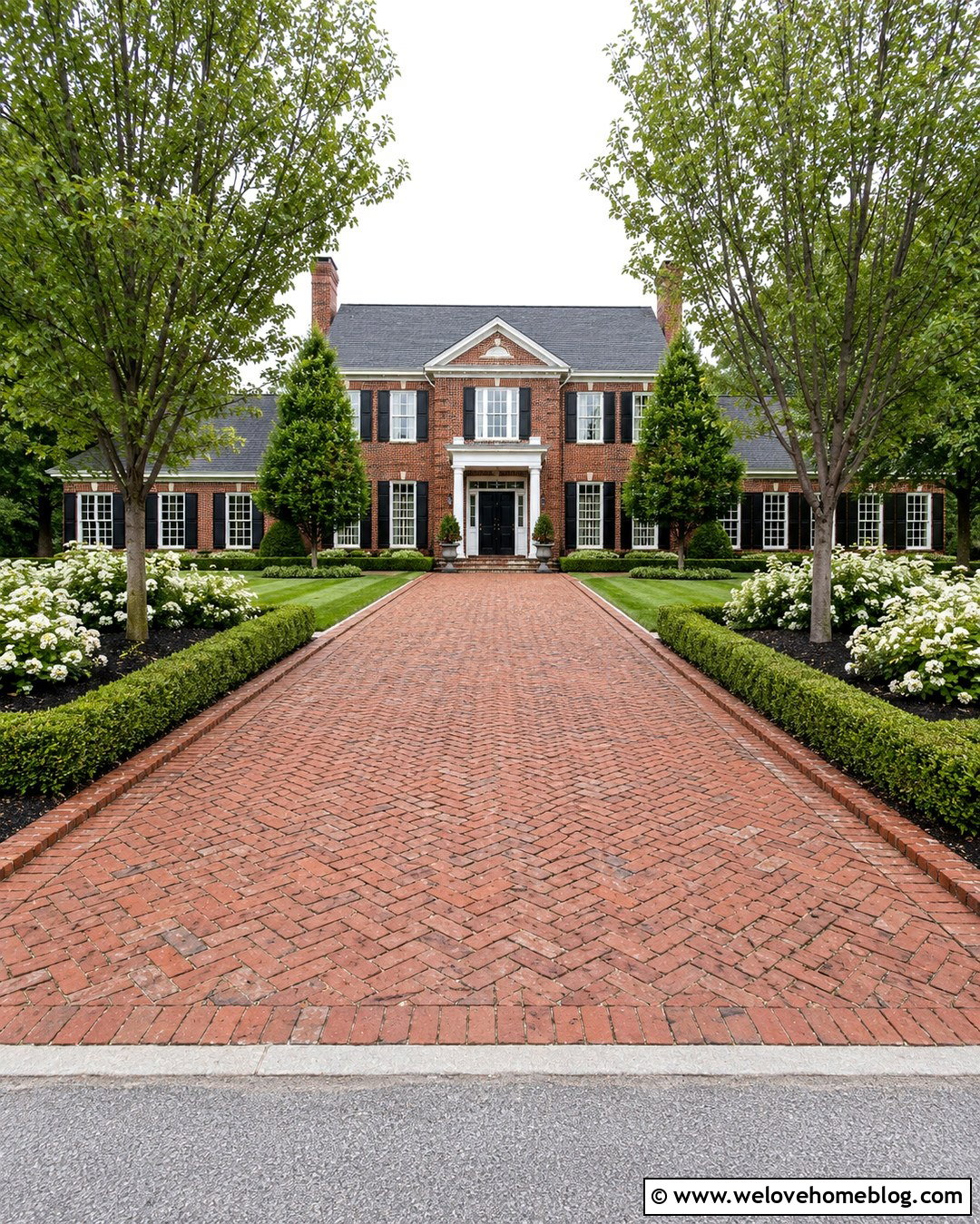
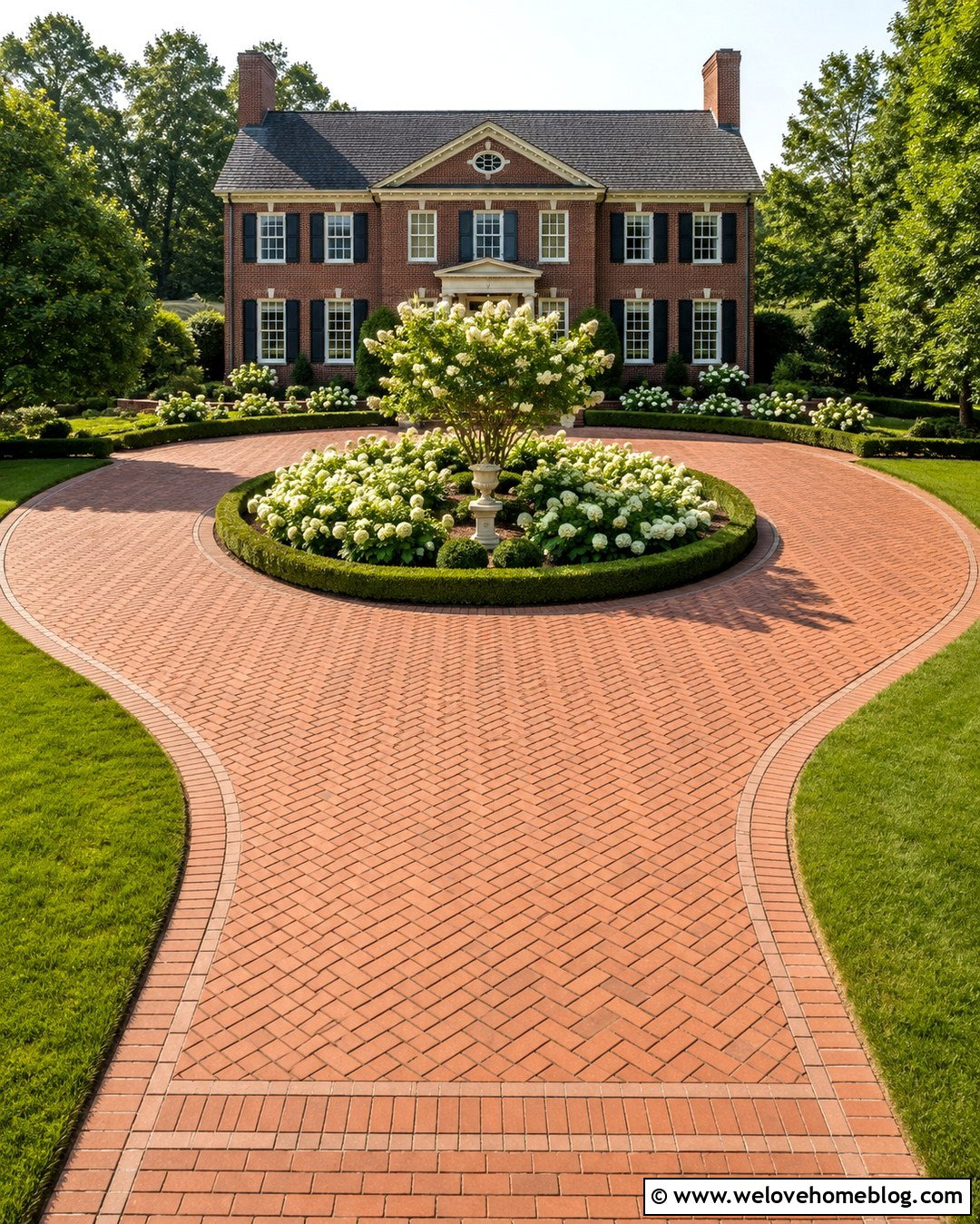
A red or weathered clay brick driveway looks especially polished when the landscaping follows a symmetrical plan. Frame both sides with low evergreen hedges, then add identical planting beds near the street and garage. Small deciduous trees can stand at matching points along the route, creating a formal sequence without forming a dense tunnel. Use brick edging that matches the driveway and dark mulch that highlights the green foliage. White flowering shrubs or seasonal annuals can introduce controlled color near the entrance. Keep every plant far enough from the pavement to maintain comfortable door clearance. This arrangement complements colonial and Georgian houses because it reinforces centered doors, balanced windows, and traditional facades. The strong geometry also makes a relatively ordinary rectangular front yard feel more composed.
18. Straight Concrete Driveway With Ornamental Grasses
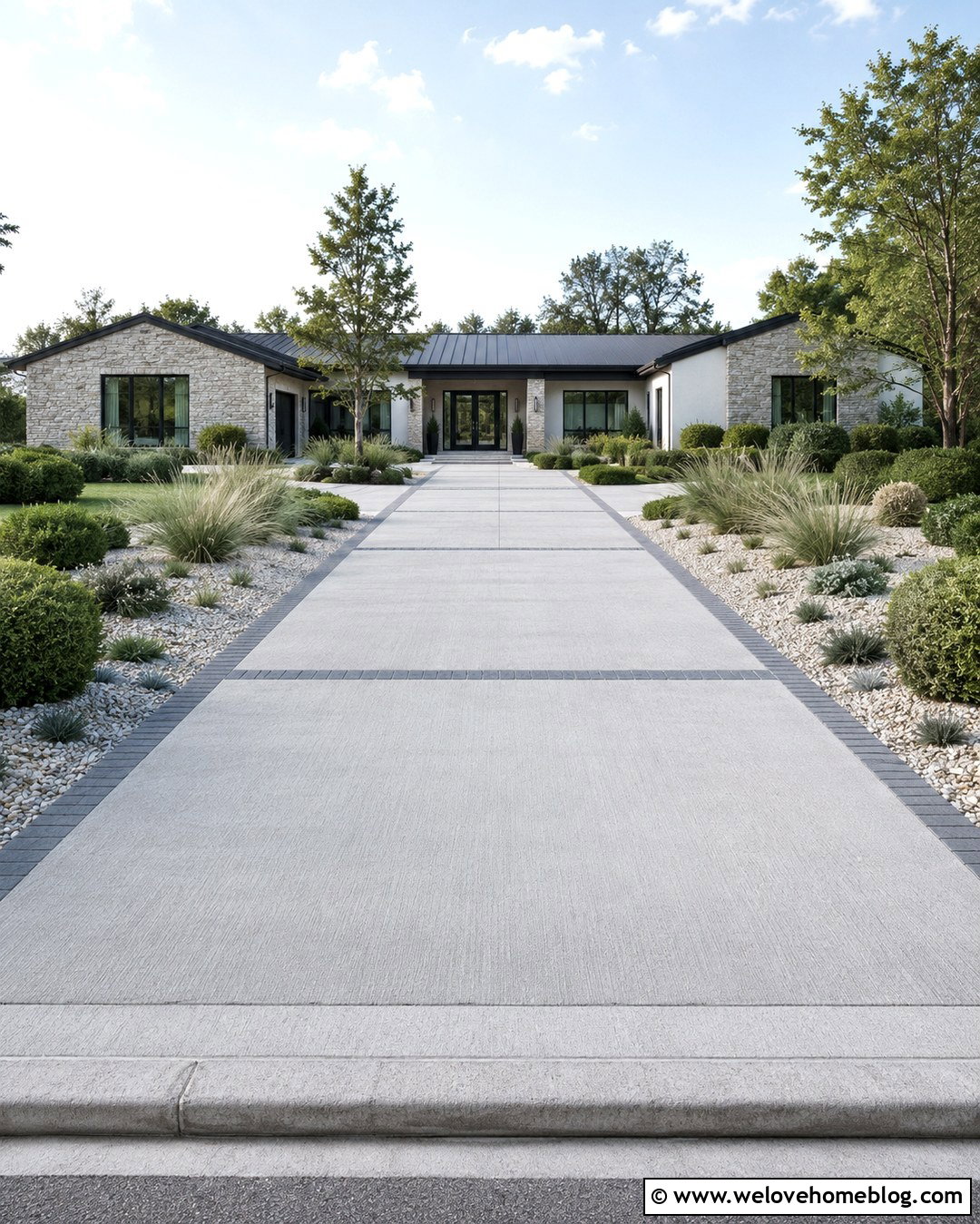
Soft, moving grasses provide an effective contrast to a solid concrete driveway. Use broom-finished light gray concrete with a dark paver ribbon, then plant broad drifts of compact ornamental grasses along one or both sides. Mix varieties with different heights and seed-head textures, but maintain a restrained color palette. Low ground cover or gravel mulch can fill spaces between clumps and keep the beds looking finished. Place the tallest grasses away from the street and outside important sightlines. Near the garage, combine them with rounded evergreen shrubs to provide winter shape. This full landscape works particularly well around ranch, contemporary, and coastal-inspired homes. It creates movement and texture while preserving the straight driveway’s simple, practical character.
19. Small Straight Driveway With Landscaped Side Walkway
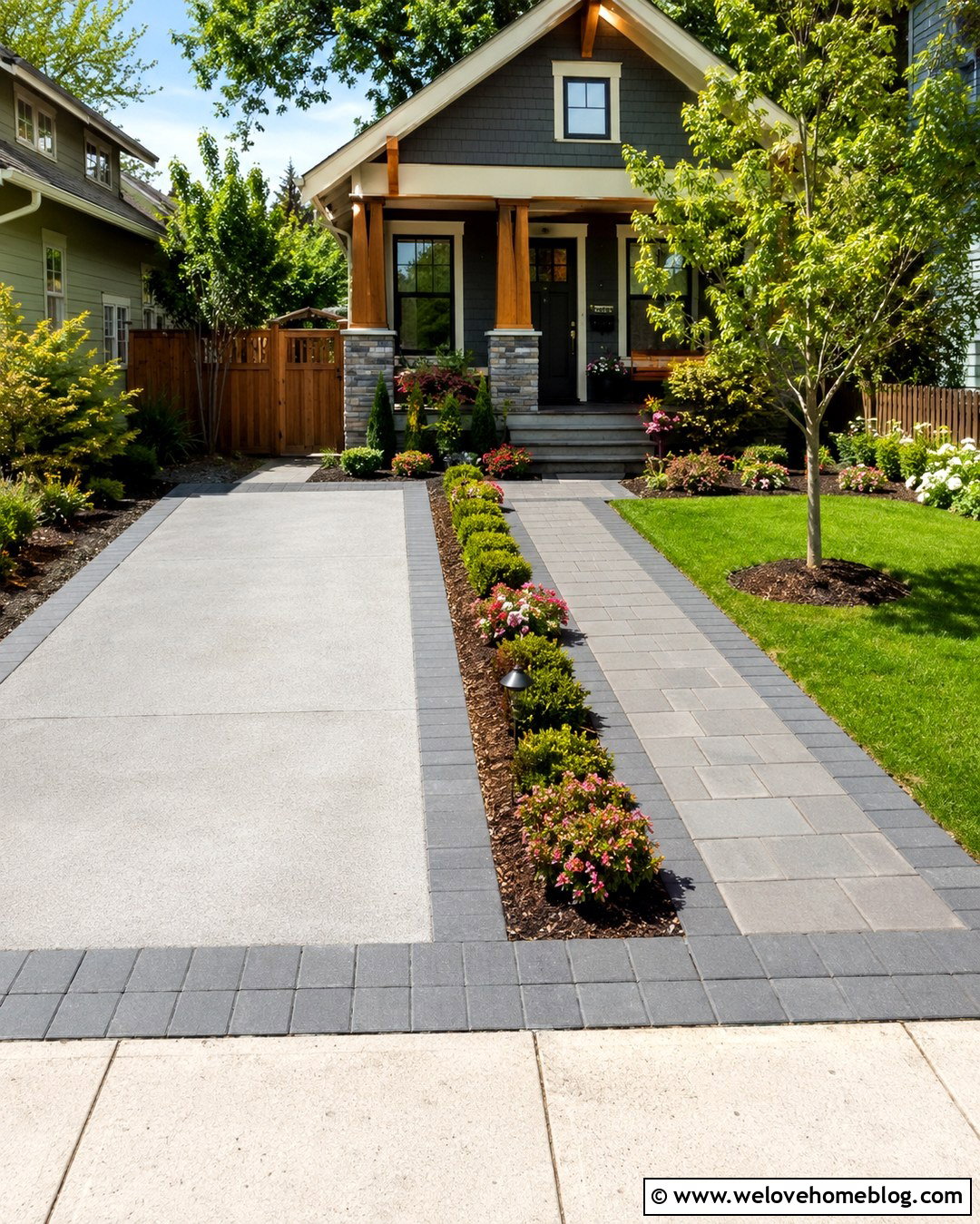
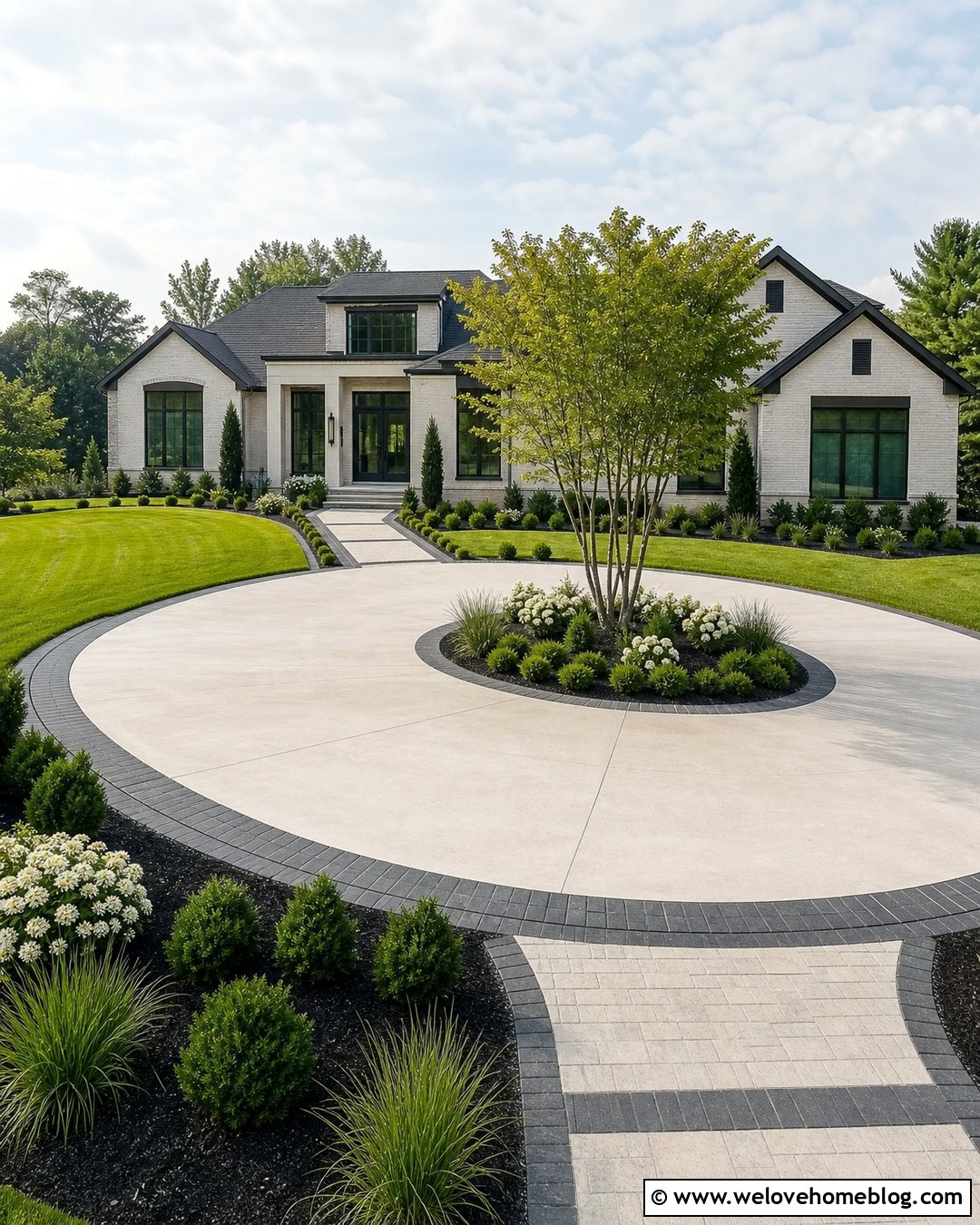
A compact front yard needs a clear distinction between vehicle space and the route to the front door. Pair a straight concrete driveway with a parallel paver walkway, then separate the two using a narrow landscaped strip. Fill the bed with low shrubs, ground cover, and seasonal flowers that will not spread across either surface. At key crossing points, install flush stepping stones so people can move easily between the driveway and path. Use the same pavers as a border around the concrete to connect both hardscape areas visually. A small ornamental tree near the porch can provide a focal point without crowding the parking area. This organized arrangement makes bungalow, townhouse, and small suburban properties appear more welcoming and thoughtfully planned.
20. Straight Asphalt Driveway With Mulch Beds And Lighting
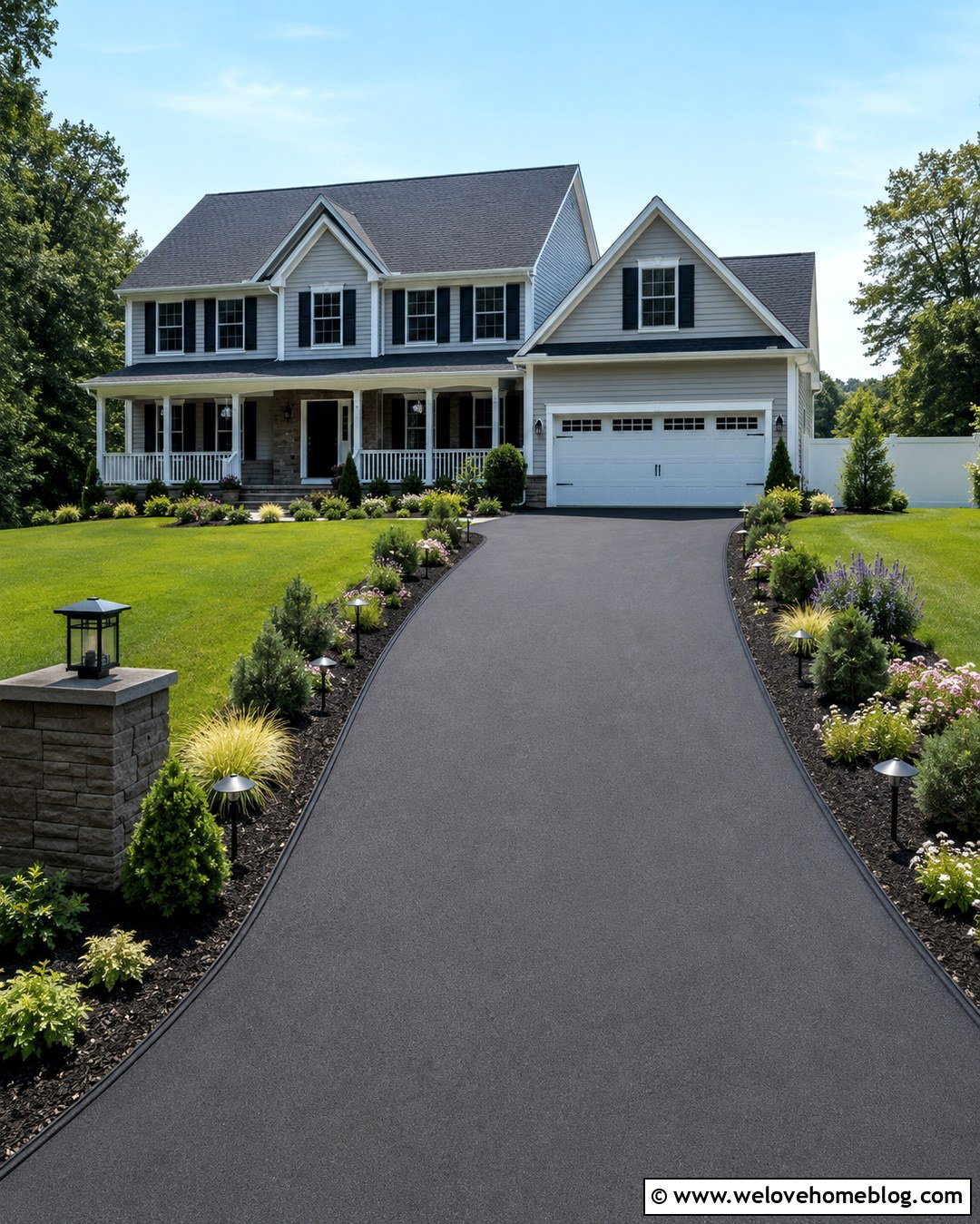
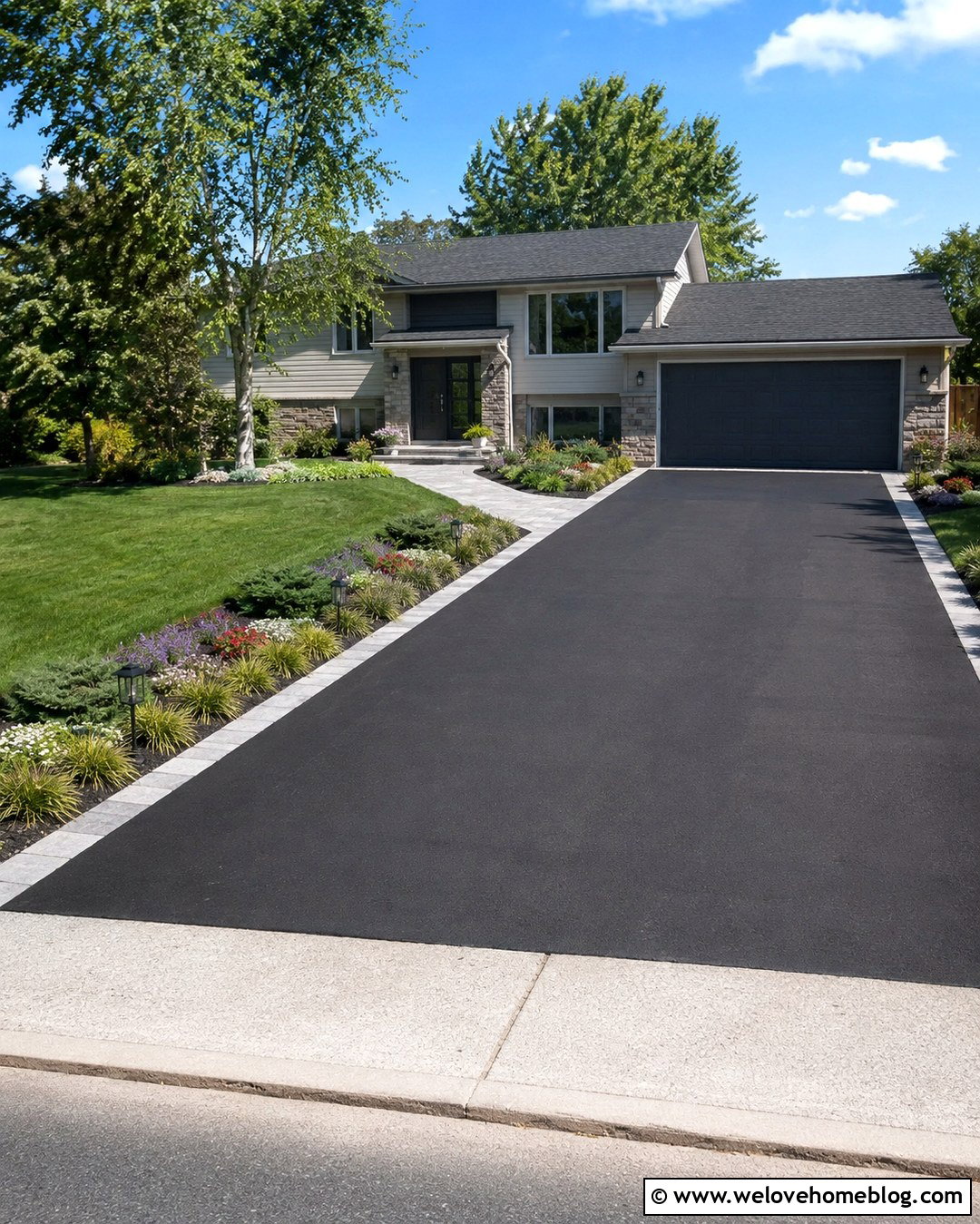
An existing asphalt driveway can receive an affordable update through clean mulch beds and evenly spaced lighting. Cut broad planting borders along the outer edges rather than scattering small beds around the yard. Use a simple mix of compact evergreen shrubs, ornamental grasses, and dependable flowering perennials suited to the site. Black metal or concrete edging prevents mulch from washing onto the asphalt. Install low-voltage path lights at generous intervals so the layout feels calm and organized, not crowded. Near the street, add matching planting pockets around a modest address marker. Widen the beds near the house to blend with the foundation landscaping. This practical design can refresh a basic suburban driveway without replacing the main surface, making it useful for budget-conscious curb appeal projects.
Conclusion:
The strongest 20 straight driveway landscaping ideas treat the driveway, borders, plants, lighting, and house as one connected composition. Begin by considering the existing surface, available width, drainage, sunlight, and vehicle clearance. Then choose a landscape style that complements your home instead of competing with it. Formal hedges can sharpen a traditional entrance, while grasses and native beds soften modern concrete or practical asphalt. Gravel, brick, pavers, and exposed aggregate also offer distinct textures that can guide your planting choices. Whatever design you select, plan for mature plant sizes and easy maintenance. A clear, balanced approach will make even a basic straight driveway feel welcoming, attractive, and intentionally designed.

Related posts:
Leave a Reply