
A well-planned driveway can do much more than provide a place to park. It can frame the house, guide visitors toward the front door, improve drainage, and make the entire property feel more welcoming. The best front house driveway landscaping ideas treat the driveway, planting beds, walkways, borders, and entrance as one connected design. Materials should complement the home, while plants need to suit the local climate, sunlight, and available maintenance time. Whether you have a narrow concrete strip, a wide circular drive, or a long gravel approach, thoughtful landscaping can soften hard surfaces without limiting vehicle access. The complete looks below offer practical inspiration for different homes, budgets, driveway materials, and yard sizes. Explore these 20 front house driveway landscaping ideas.

1. Curved Concrete Driveway Landscaping
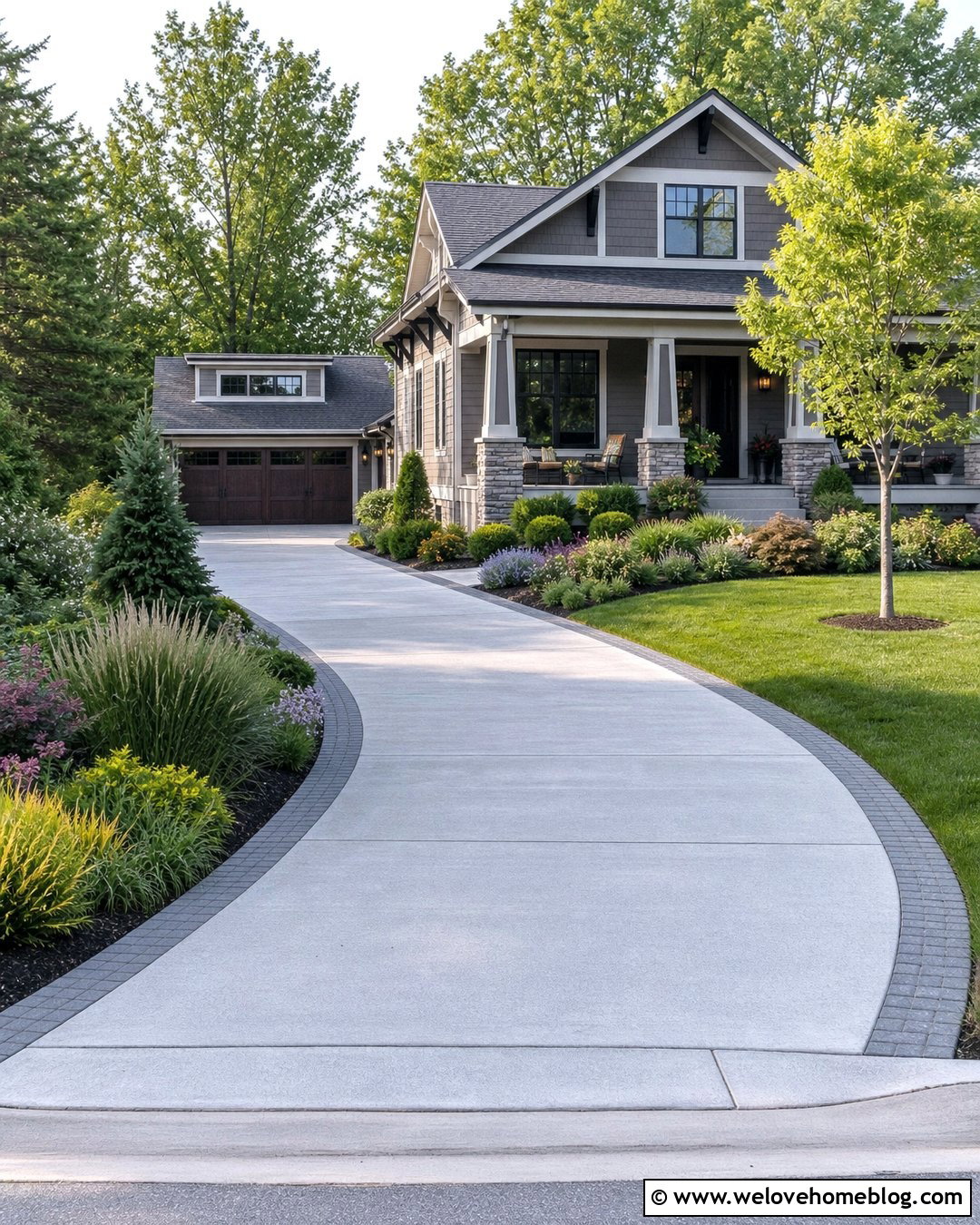
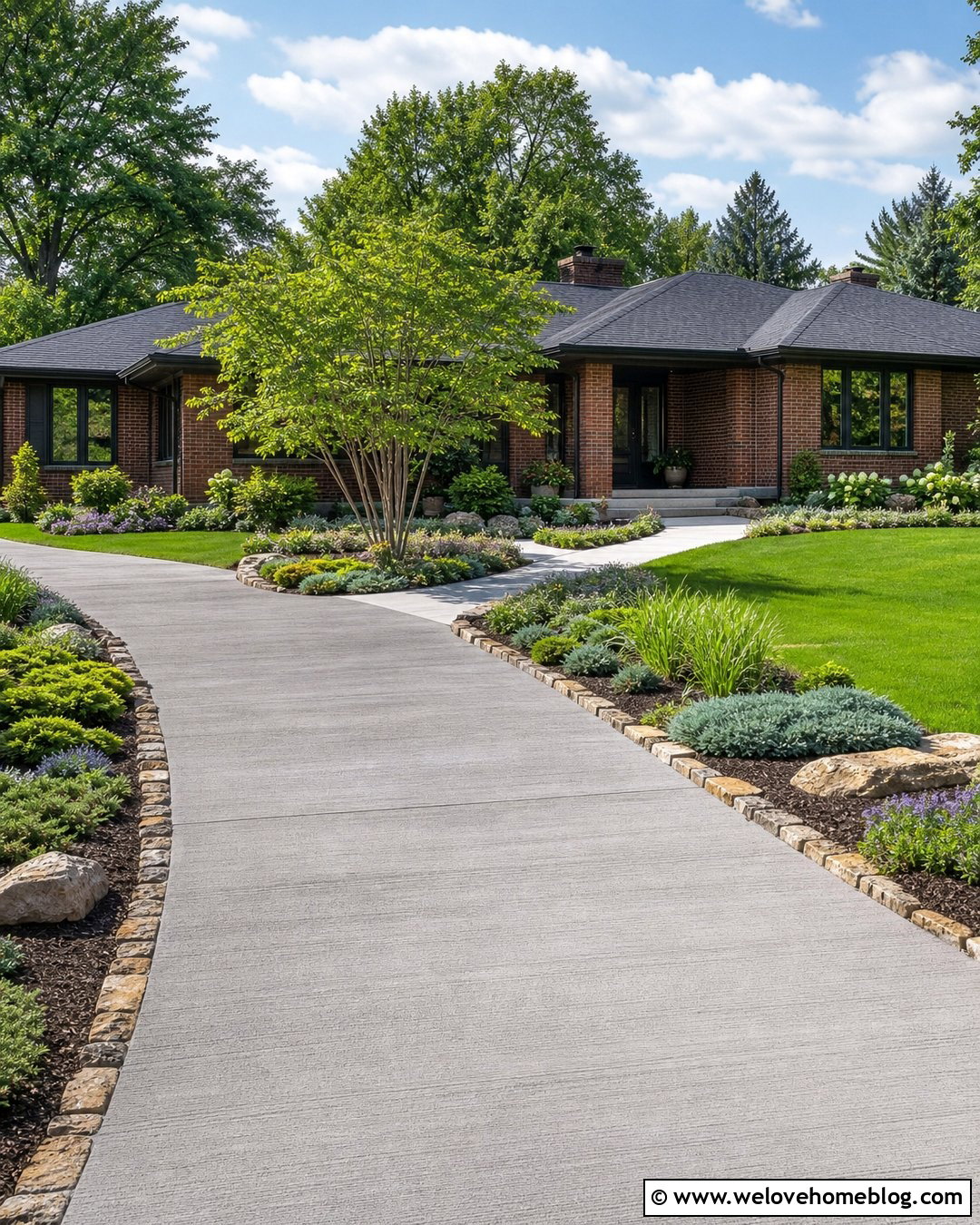
A curved concrete driveway creates a softer approach than a straight strip of pavement. Follow the inside curve with a deep planting bed filled with layered evergreen shrubs, flowering perennials, and ornamental grasses. On the wider outer edge, keep the lawn open so drivers have a clear view when entering or backing out. A narrow charcoal paver border can define the pale concrete and connect it visually to the front walkway. Choose one small ornamental tree near the broadest part of the curve, but place it far enough away to prevent branches from obstructing vehicles. Repeating two or three plant varieties keeps the landscape organized. This complete design works especially well with ranch, Craftsman, and contemporary suburban homes.
2. Gravel Driveway Landscaping With Lavender
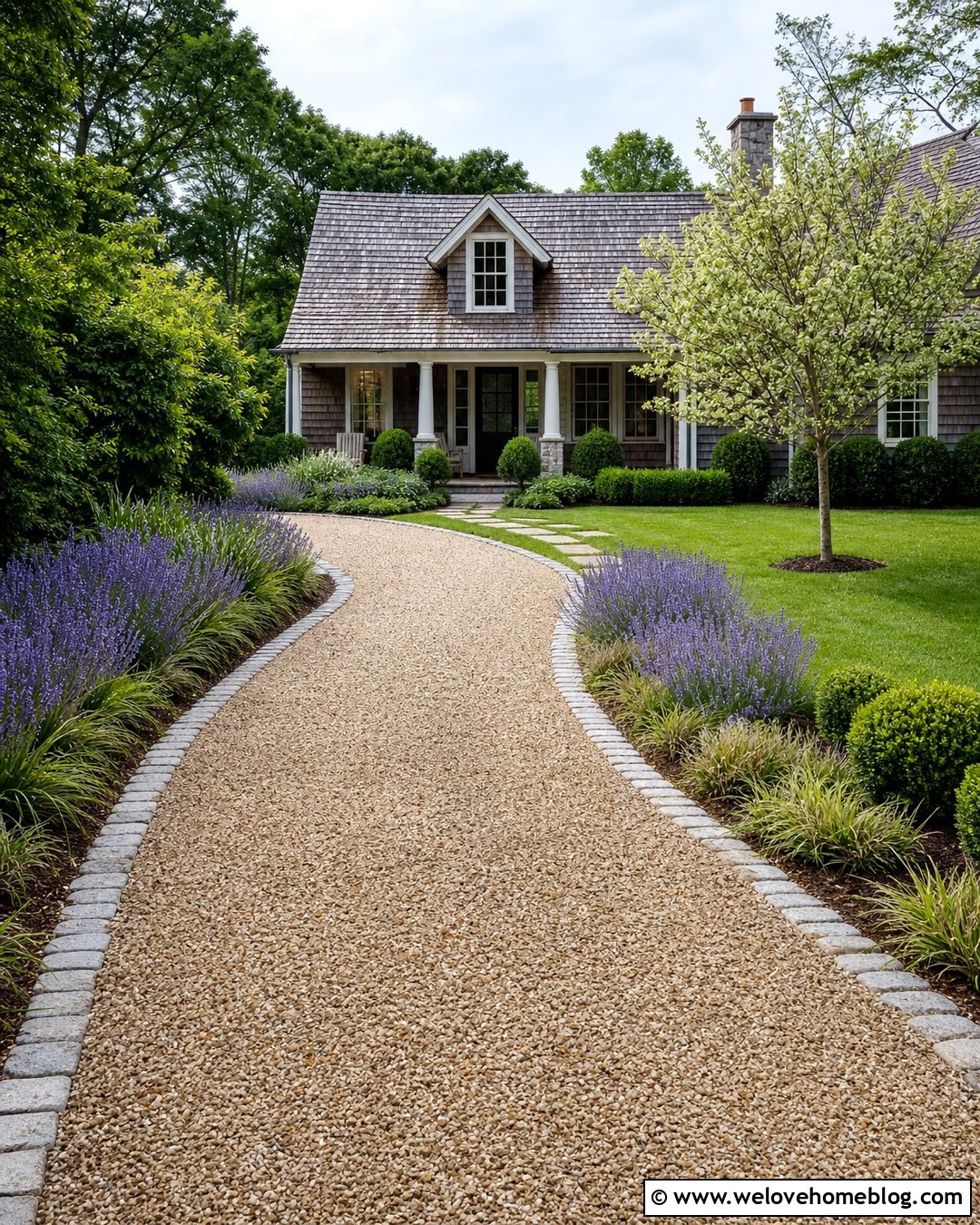
The soft texture of pea gravel looks especially inviting beside fragrant, relaxed planting. Create a gently curved driveway using warm beige pea gravel contained by cobblestone edging. Plant lavender in generous rows along the sunny side, then add compact ornamental grasses and low evergreen shrubs for structure after the flowers fade. A wider bed near the house can include a multi-stem serviceberry or another regionally suitable flowering tree. Connect the driveway to the porch with large natural-stone stepping slabs set into the gravel. This combination has a casual country appearance but still feels orderly because the stone border keeps gravel from spreading into the beds. It complements cottages, European-inspired houses, and modern farmhouses with warm exterior colors.
3. Asphalt Driveway Landscaping With Brick Edging
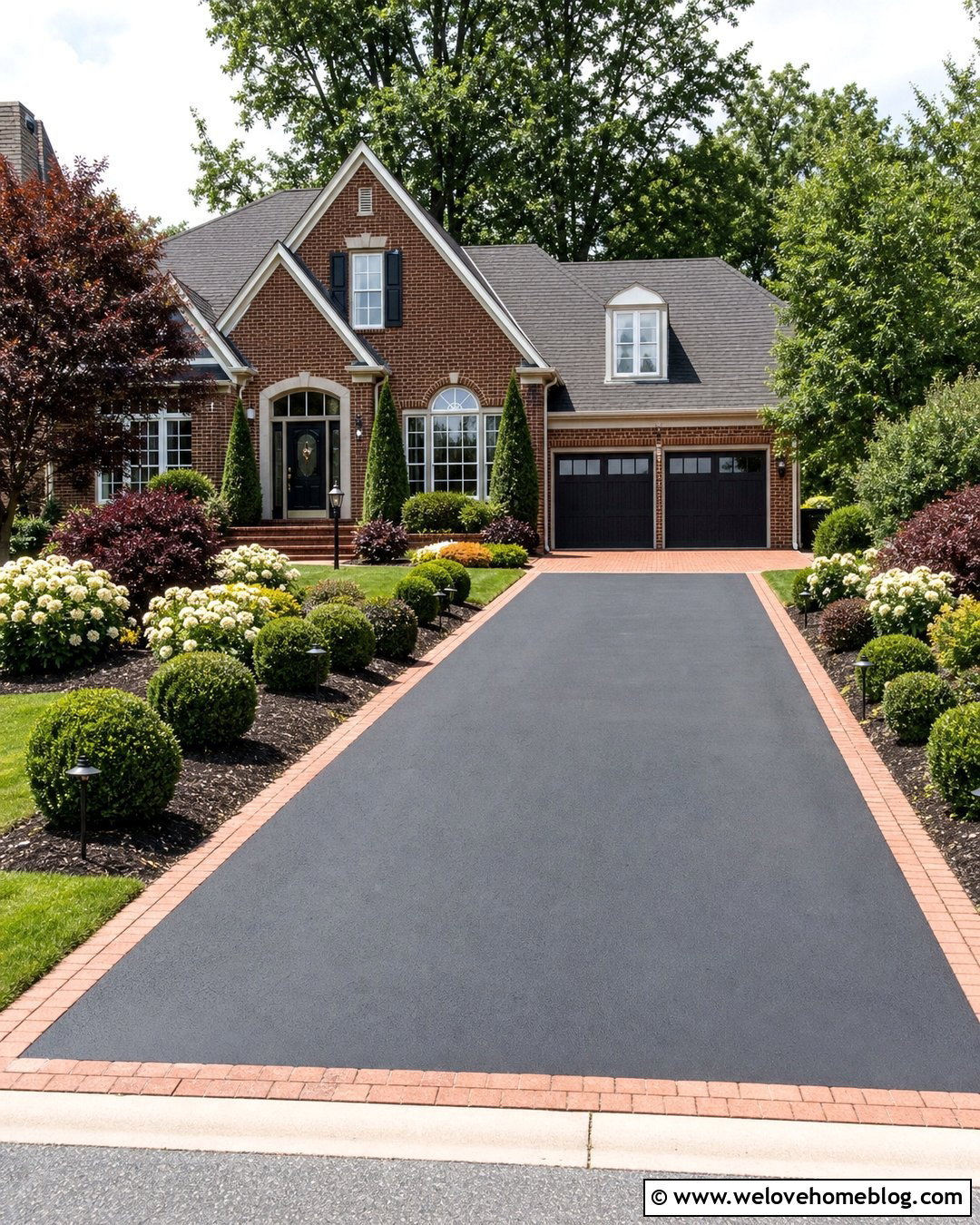
Black asphalt becomes far more attractive when it is framed by warm clay brick. Install a flush brick soldier-course border along both sides so the driveway has a crisp outline without creating a tire hazard. Beside the brick, use broad planting beds with rounded evergreen shrubs, white flowering perennials, and a few burgundy foliage plants. The strong colors balance the dark pavement and help connect it to a traditional brick house. At the garage, repeat the brick in a narrow apron or decorative ribbon. Keep plants lower near the street and gradually increase their height toward the house. This preserves visibility while making the front elevation feel layered. Low-voltage lights placed behind the border can illuminate the route without cluttering the driving surface.
4. Paver Driveway Landscaping With Boxwood
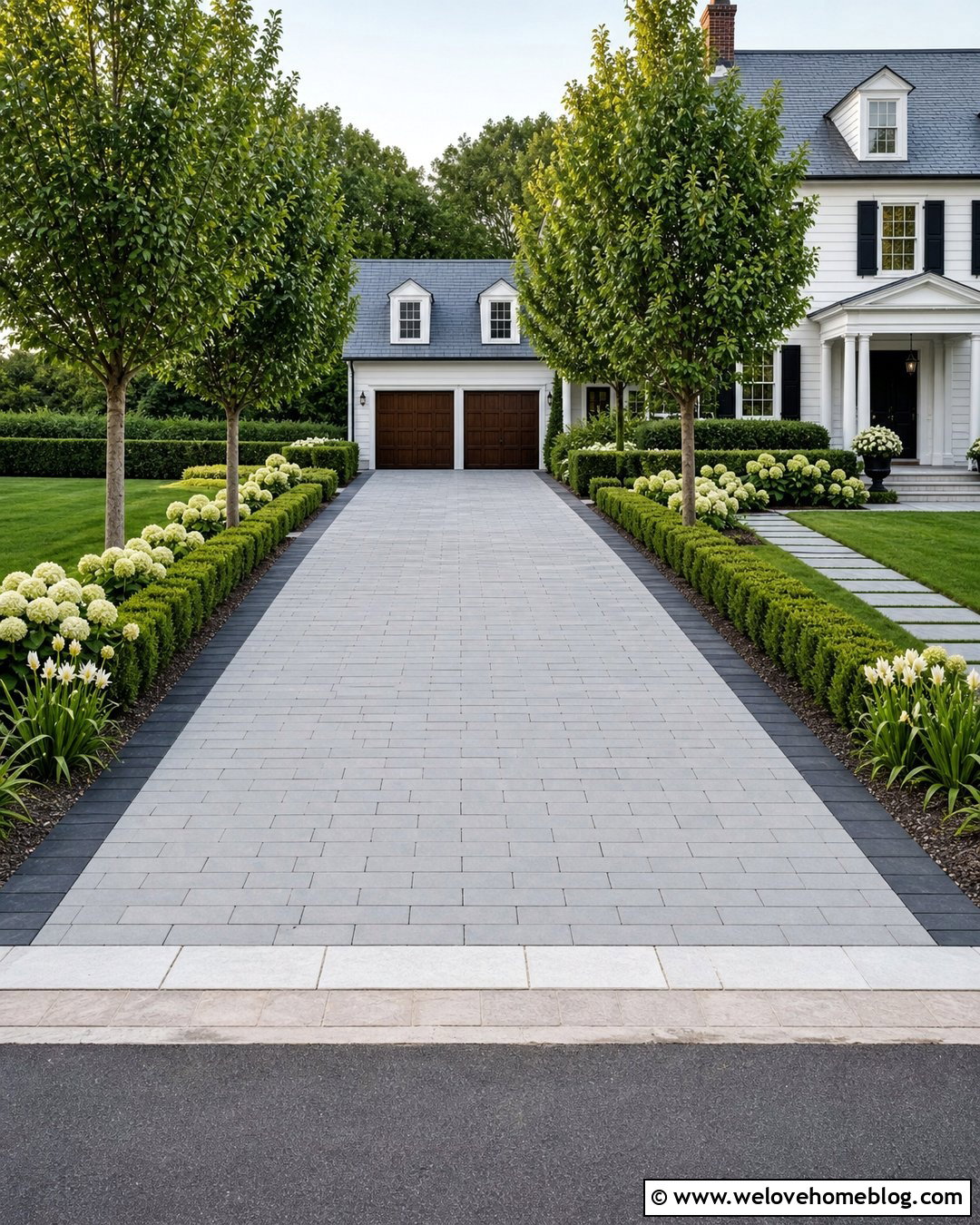
A driveway made from concrete pavers gains a formal, tailored look when paired with clipped boxwood or a locally appropriate evergreen substitute. Choose medium-gray pavers in a running-bond pattern and define the edges with a darker paver course. Low hedges can follow both sides of the straight driveway, while breaks in the hedge provide access to the lawn and front walkway. Behind the greenery, add white hydrangeas, spring bulbs, and one upright tree on each side for height. The repeated planting creates symmetry without making the property feel crowded. Allow generous space between the pavement and mature shrubs so branches do not scratch vehicles. This polished arrangement suits Colonial, Georgian, and traditional two-story homes, especially when the walkway repeats the driveway’s paver colors.
5. Circular Driveway Landscaping With Center Island
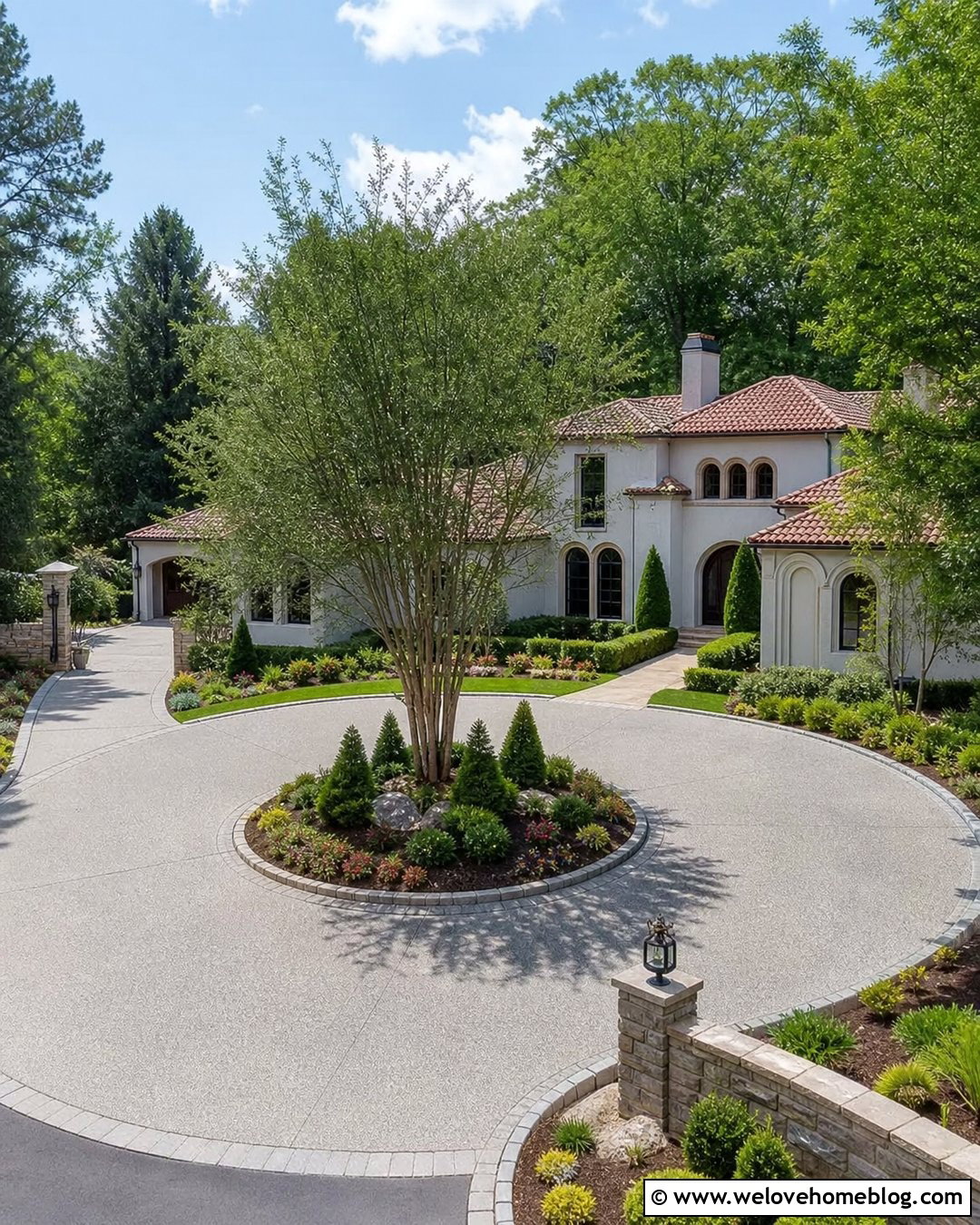
A circular driveway offers a natural location for a landscaped center island. Surround a light-gray exposed aggregate drive with a low stone curb, then repeat that stone around the island for a unified appearance. A multi-stem ornamental tree can become the central focal point, supported by evergreen shrubs, flowering ground cover, and seasonal perennials. Keep the island planting low around its outer edge so drivers can see across the circle. Near the house, use simpler foundation beds to avoid competing with the centerpiece. A clear walkway should connect the passenger drop-off area to the front door without crossing awkward planting zones. This balanced layout gives larger Colonial, Mediterranean, and estate-style houses a gracious entrance while breaking up an otherwise broad area of pavement.
6. Small Driveway Landscaping With Narrow Beds
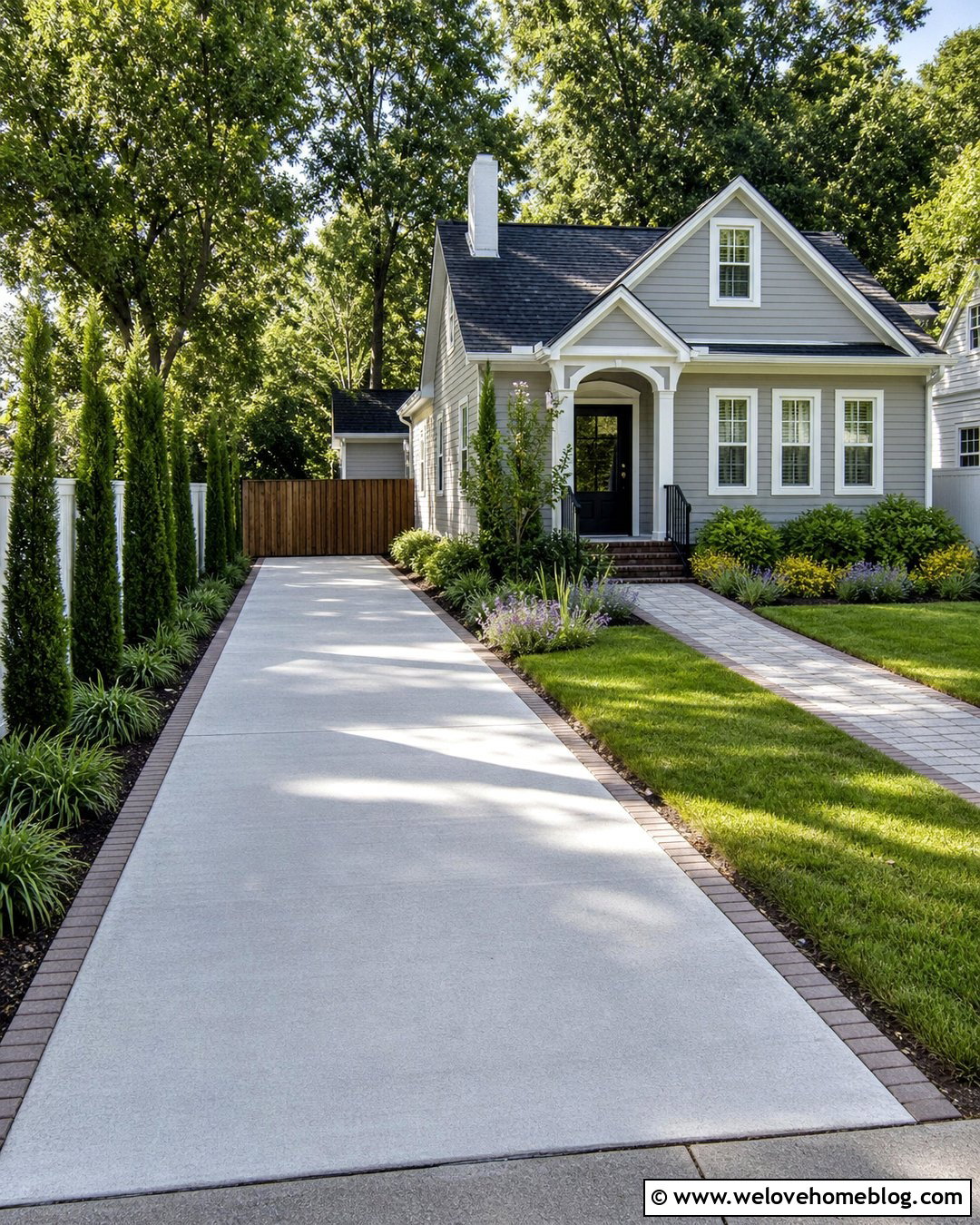
Limited space does not mean the driveway must feel bare. Frame a narrow broom-finished concrete driveway with slim planting beds that stay safely outside the vehicle path. Use vertical plants such as compact columnar evergreens near the house, then transition to low grasses, ground cover, and small flowering perennials toward the sidewalk. A flush brick or steel edge prevents soil and mulch from spilling onto the concrete. Where side clearance is extremely tight, add a green wall, trellis vine, or wall-mounted planter instead of a wide shrub. Connect the driveway to the porch with a clearly visible paver walkway in a contrasting tone. A restrained palette and repeated plants will make the small front yard appear organized, open, and intentionally designed rather than squeezed.
7. Modern Driveway Landscaping With Ornamental Grasses
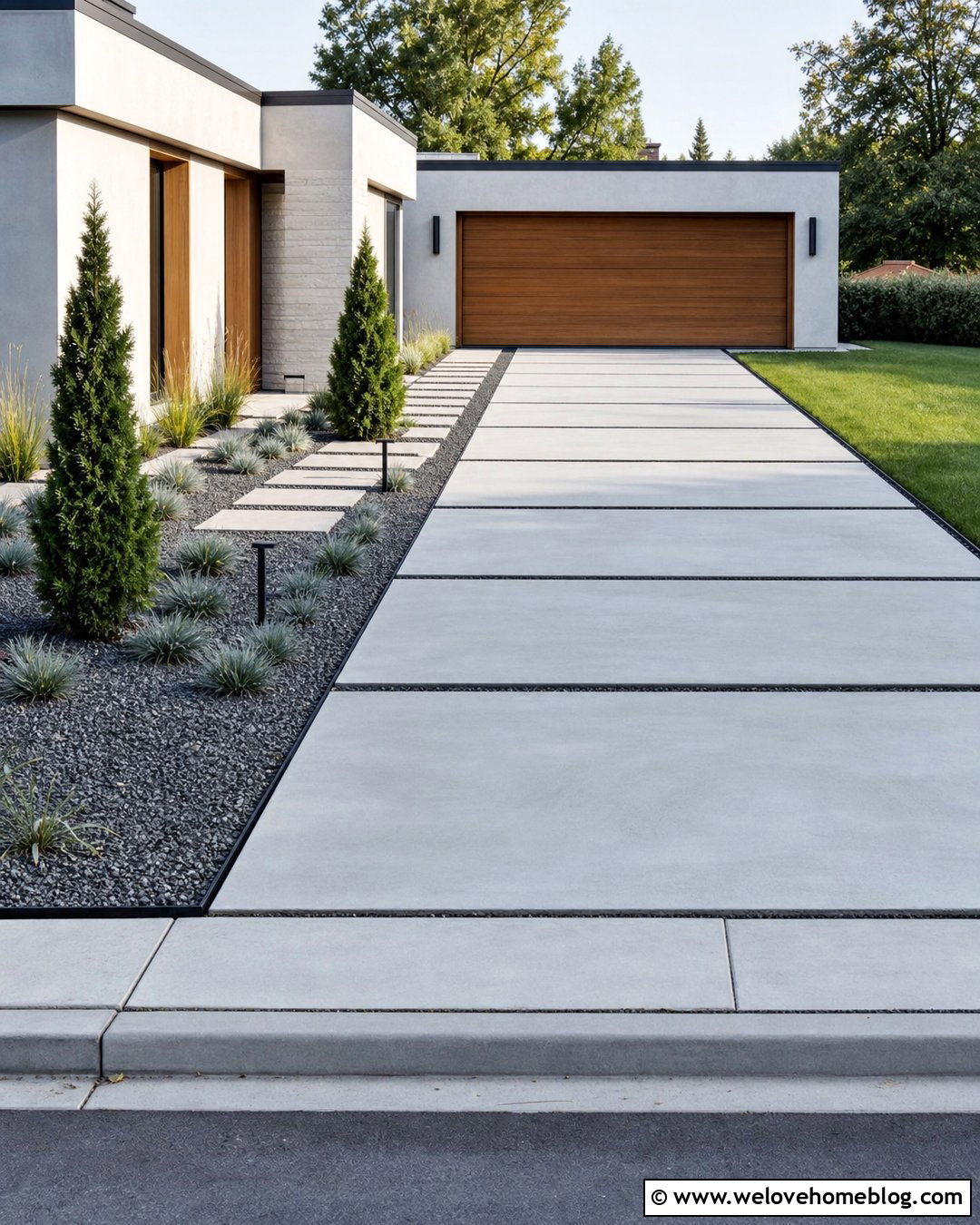
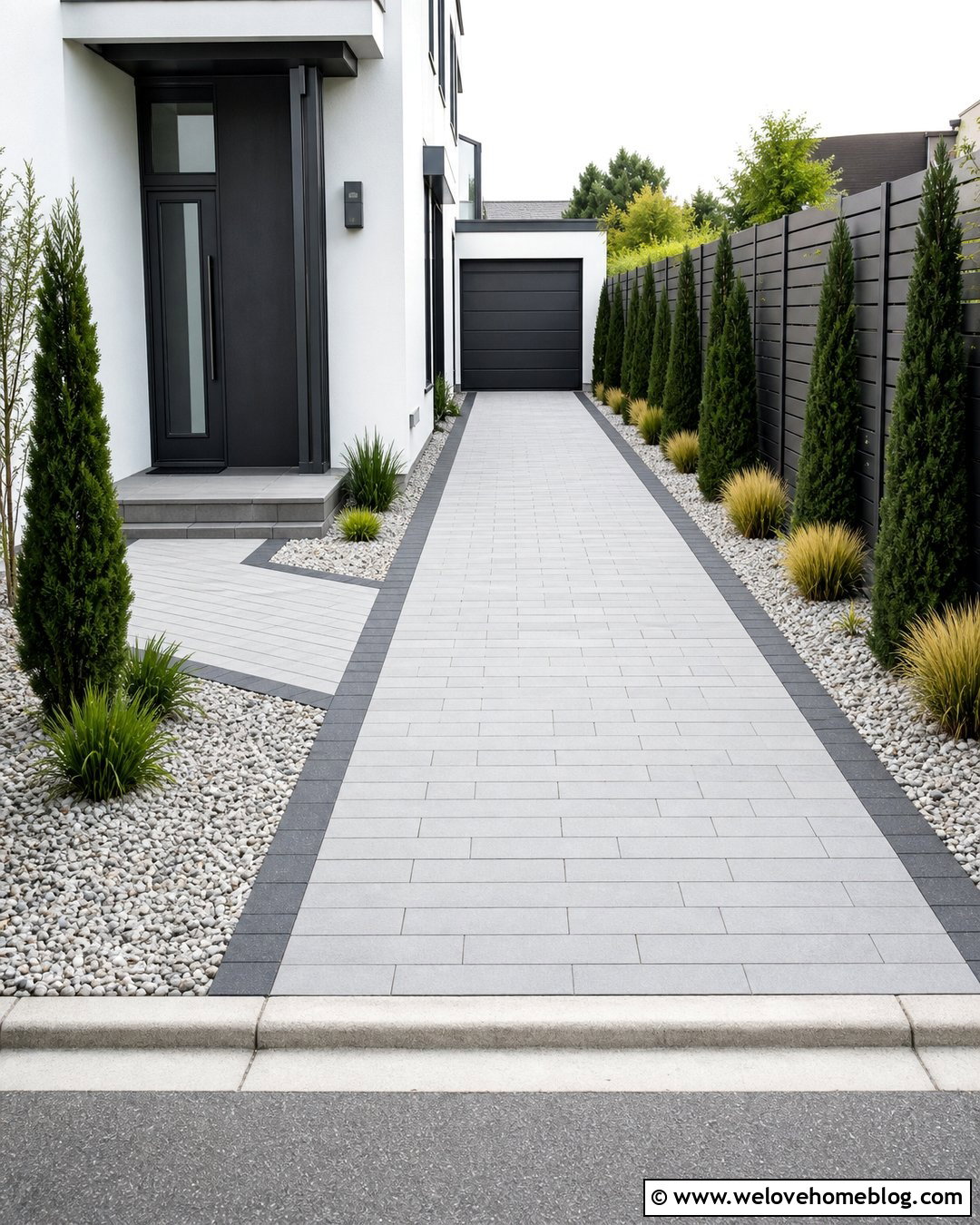
Clean lines and controlled texture define a successful modern driveway landscape. Use large rectangular concrete slabs with narrow gravel joints to form a straight approach to the garage. Along one side, create a linear bed containing repeated clumps of switchgrass, fountain grass, or another noninvasive grass suitable for the region. Balance it with sculptural evergreens and low ground cover on the opposite side. Black steel edging keeps the beds crisp and matches contemporary windows, lighting, or house trim. Choose gravel in a tone that contrasts gently with the concrete instead of creating a busy pattern. An offset walkway made from the same slabs can lead toward the front door. The result feels minimal but not empty, with grasses softening the architecture and moving naturally in the breeze.
8. Farmhouse Driveway Landscaping With Split Rail Fence
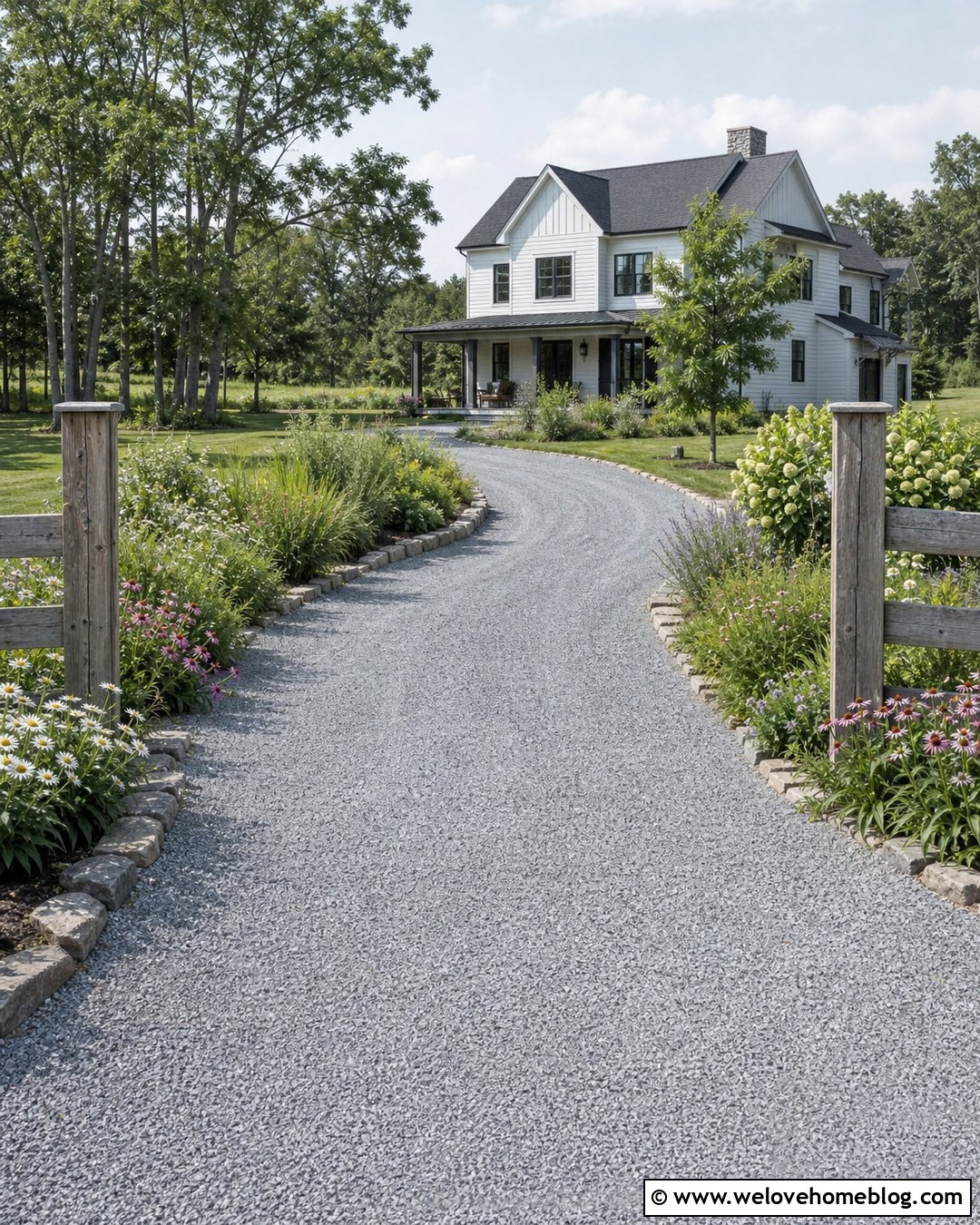
A farmhouse driveway should feel relaxed, practical, and connected to its surroundings. Build the surface with compacted gray crushed gravel and shape it into a broad, gently curving approach. A weathered split rail fence can follow one side, set behind a shallow planting bed filled with native grasses, daisies, coneflowers, and compact flowering shrubs. Use rough-cut stone edging near the house where a cleaner transition is needed. At the entrance, simple timber posts and matching gravel shoulders reinforce the rural character without creating an oversized gateway. Leave open lawn on the opposite side to balance the abundant planting. This complete look works well for modern farmhouses, country homes, and larger ranch properties, especially when the plant selection reflects the surrounding natural landscape.
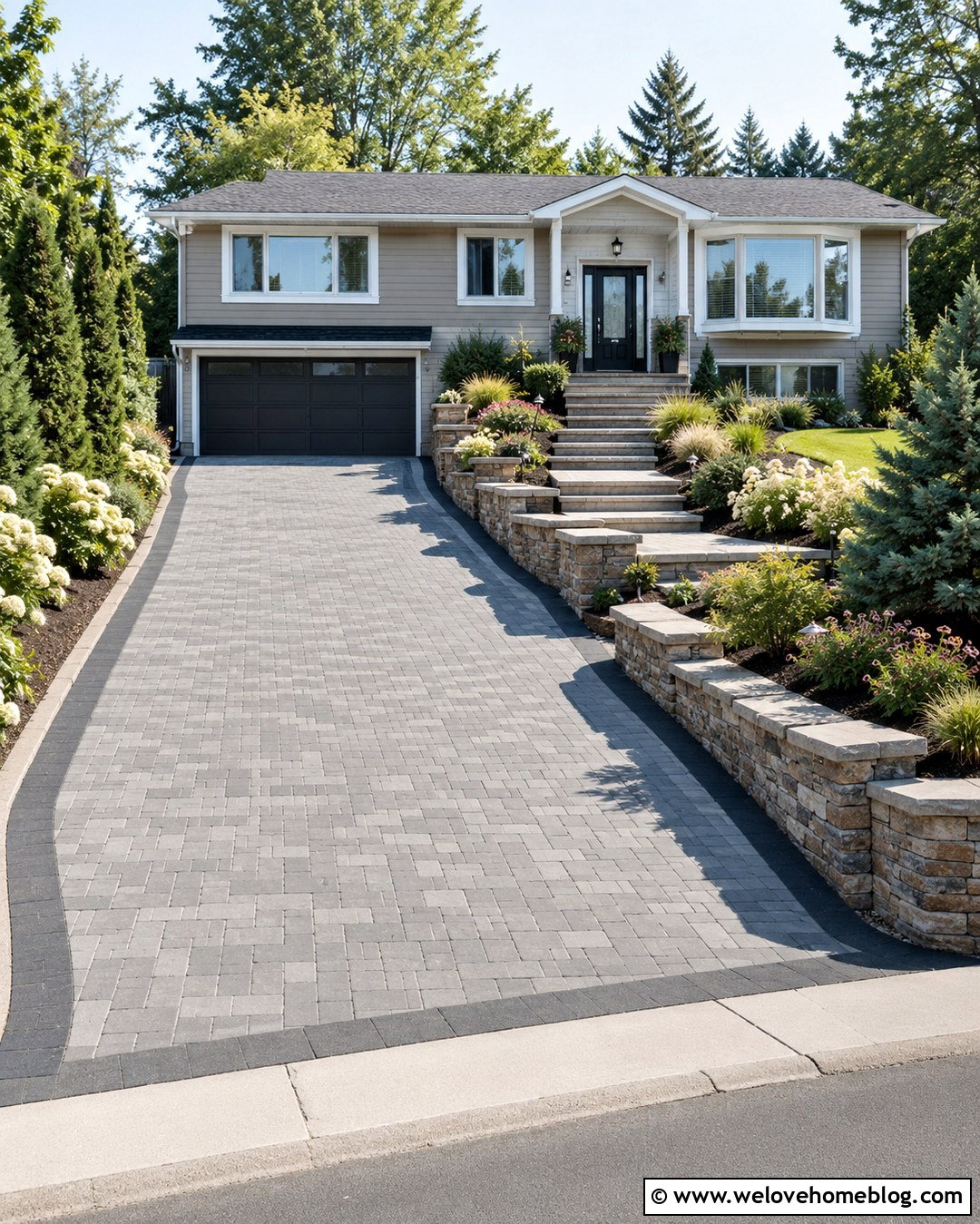
9. Sloped Driveway Landscaping With Retaining Walls

A sloped driveway needs landscaping that controls soil while keeping the route visually open. Use textured concrete or concrete pavers for better visual definition, then stabilize the higher side with a tiered natural-stone retaining wall. Plant the terraces with spreading evergreens, ornamental grasses, flowering ground cover, and deeply rooted shrubs appropriate for the site. On the lower side, install a simple curb or stone edge to separate pavement from a drainage swale. Keep taller plants away from tight bends and the street entrance, where clear sightlines matter most. Wide stone steps can run beside the driveway and create a safer pedestrian route to the house. Repeating the retaining-wall stone around the front steps makes the entire sloped landscape feel cohesive rather than purely functional.

10. Long Driveway Landscaping With Trees
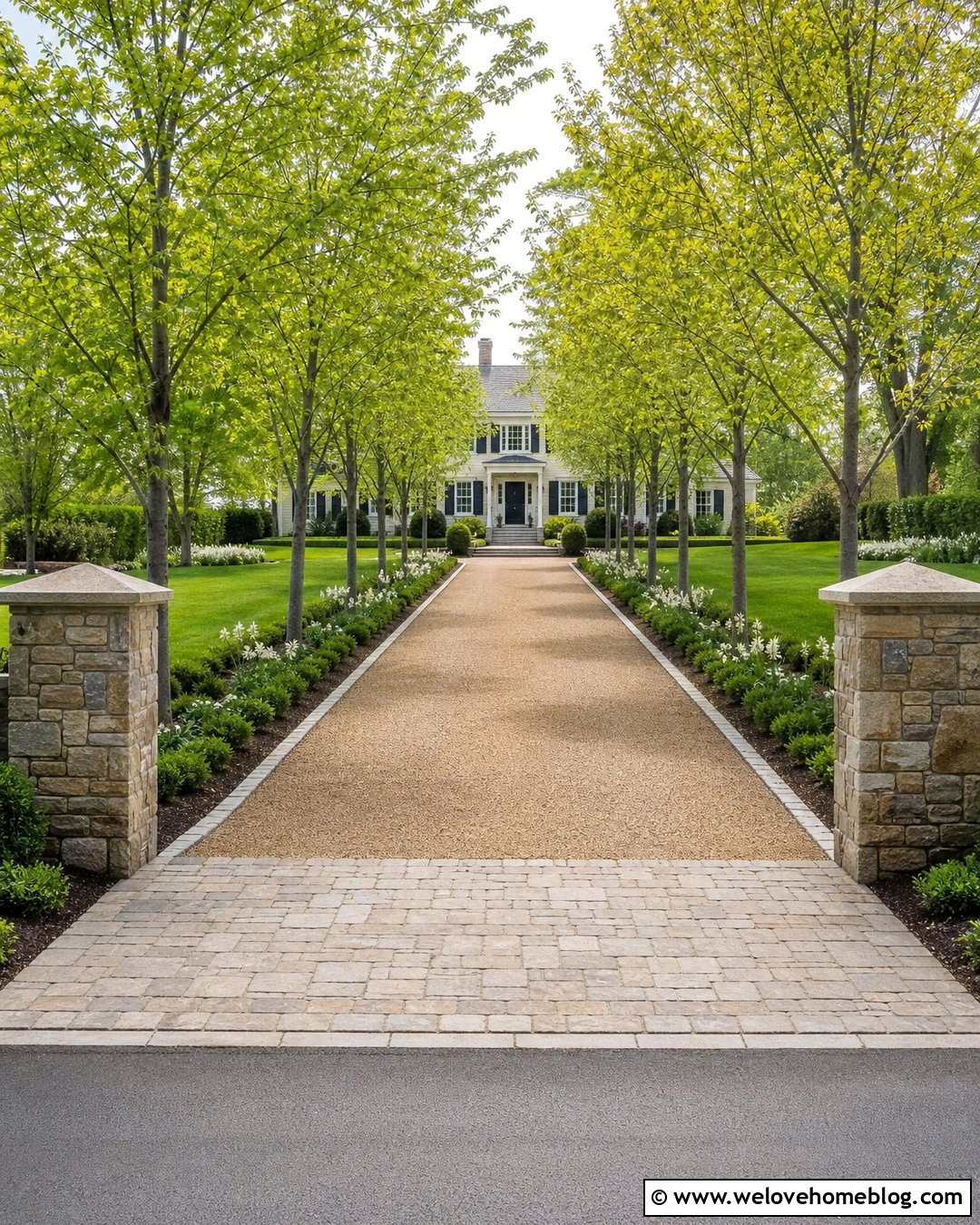
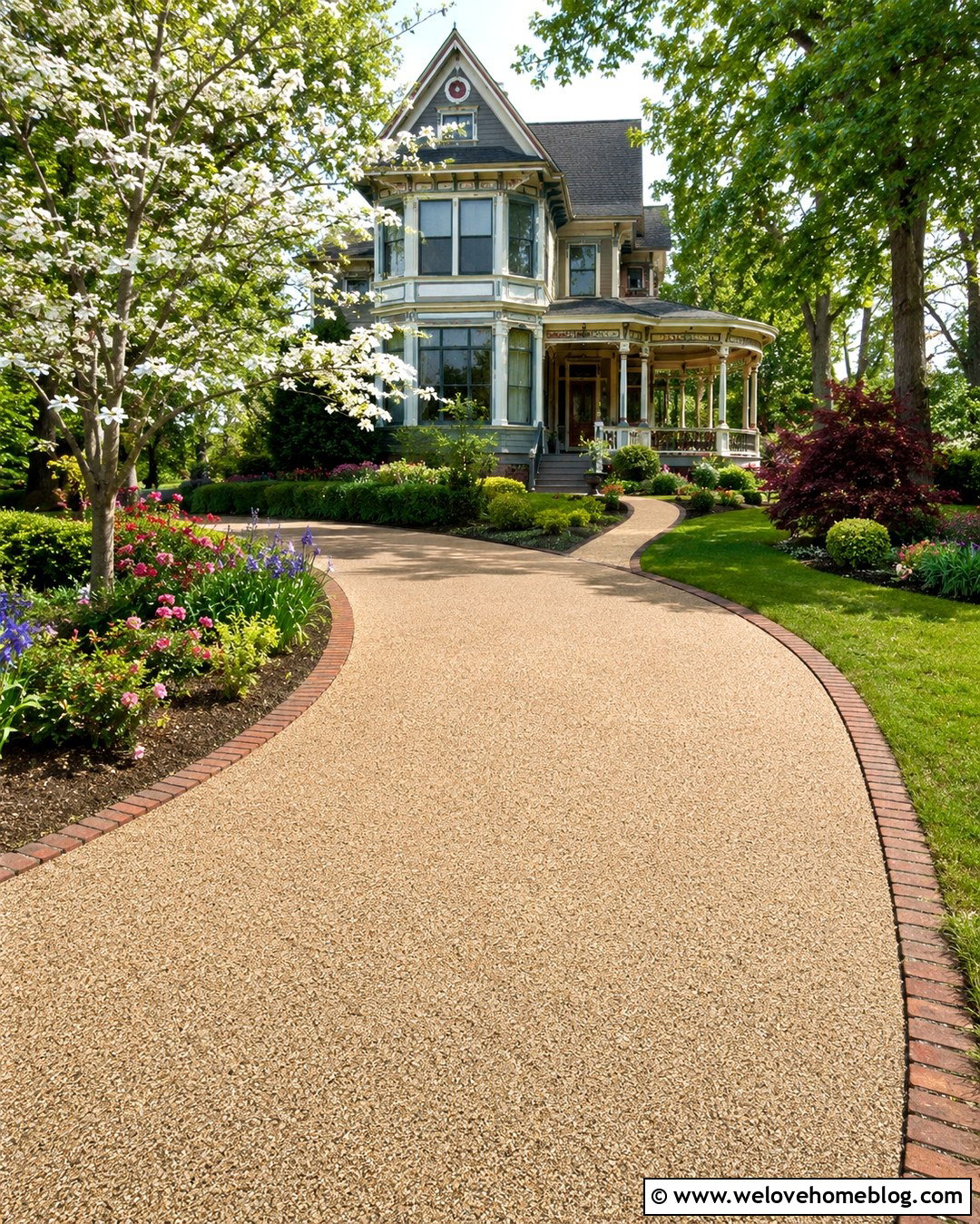
A long driveway becomes a memorable approach when trees provide rhythm, shade, and a clear visual connection to the house. Cover the drive with warm-toned resin-bound gravel or compacted crushed stone, then line both sides with evenly spaced deciduous trees suitable for the local climate. Position them far enough from the pavement to accommodate mature trunks, roots, and branches. Beneath the trees, use simple sweeps of low ground cover, spring bulbs, or mown lawn rather than complicated flower beds. Stone entrance pillars can mark the beginning, while a matching paver apron creates a finished transition at the road. At the far end, keep the front door or porch visible as the destination. This formal arrangement works beautifully with large Colonial, farmhouse, and country properties.
11. Low Maintenance Driveway Landscaping With Rocks
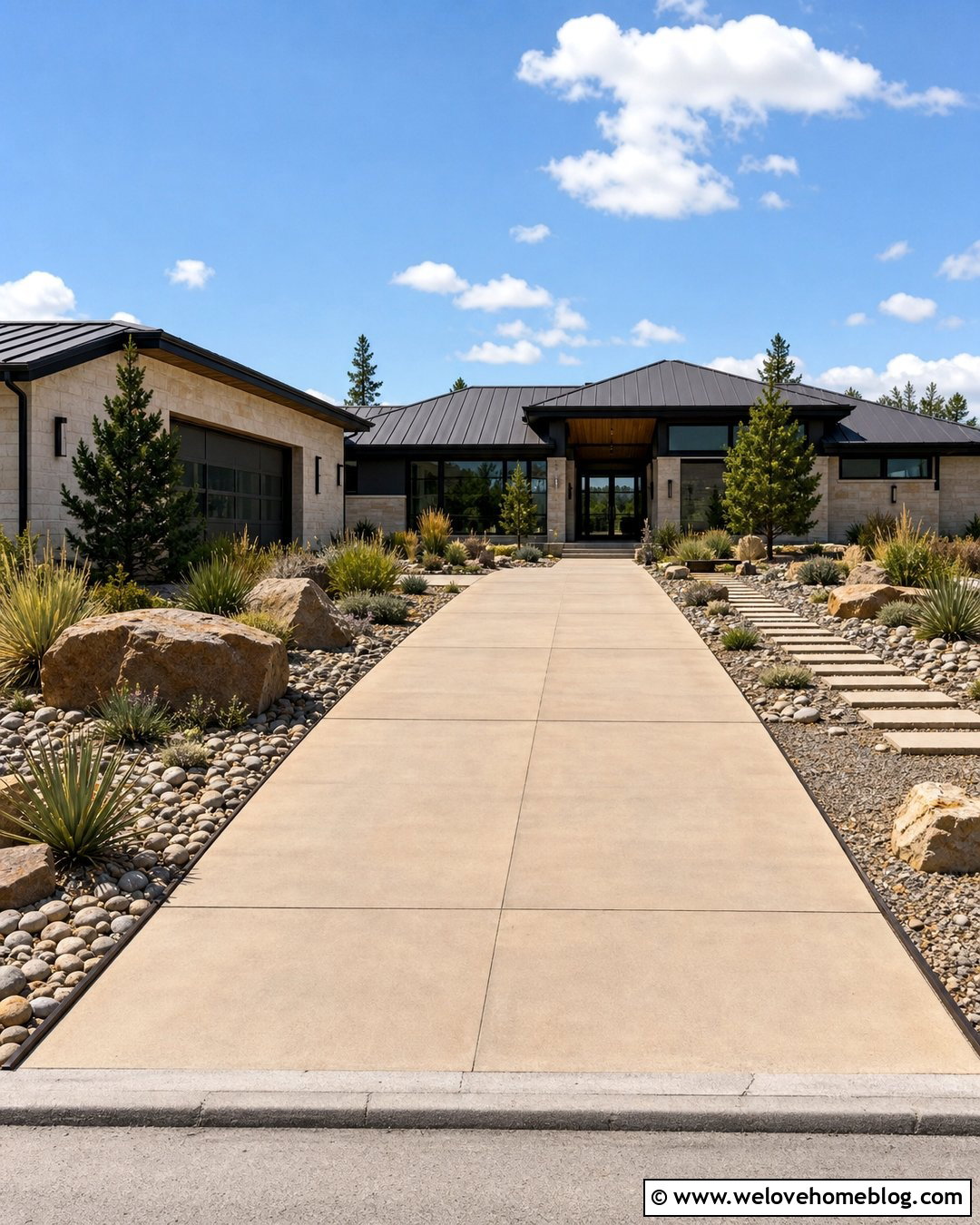
For dependable curb appeal with less routine work, combine a practical driveway with rock-based planting beds. A straight tan concrete driveway can be bordered by steel edging and wide beds of mixed river rock, angular gravel, and a few strategically placed boulders. Add drought-tolerant ornamental grasses, compact evergreens, yucca, sedum, or regionally suitable shrubs to prevent the design from looking barren. Group plants in repeated clusters instead of scattering many unrelated varieties. A stepping-stone walkway through the rock bed can connect the driveway to the porch. Before installation, address drainage and prepare the soil based on each plant’s needs rather than covering poor ground with decorative stone. The finished landscape suits contemporary ranch homes and busy households that prefer clean lines and fewer seasonal chores.
12. Cottage Driveway Landscaping With Flower Borders
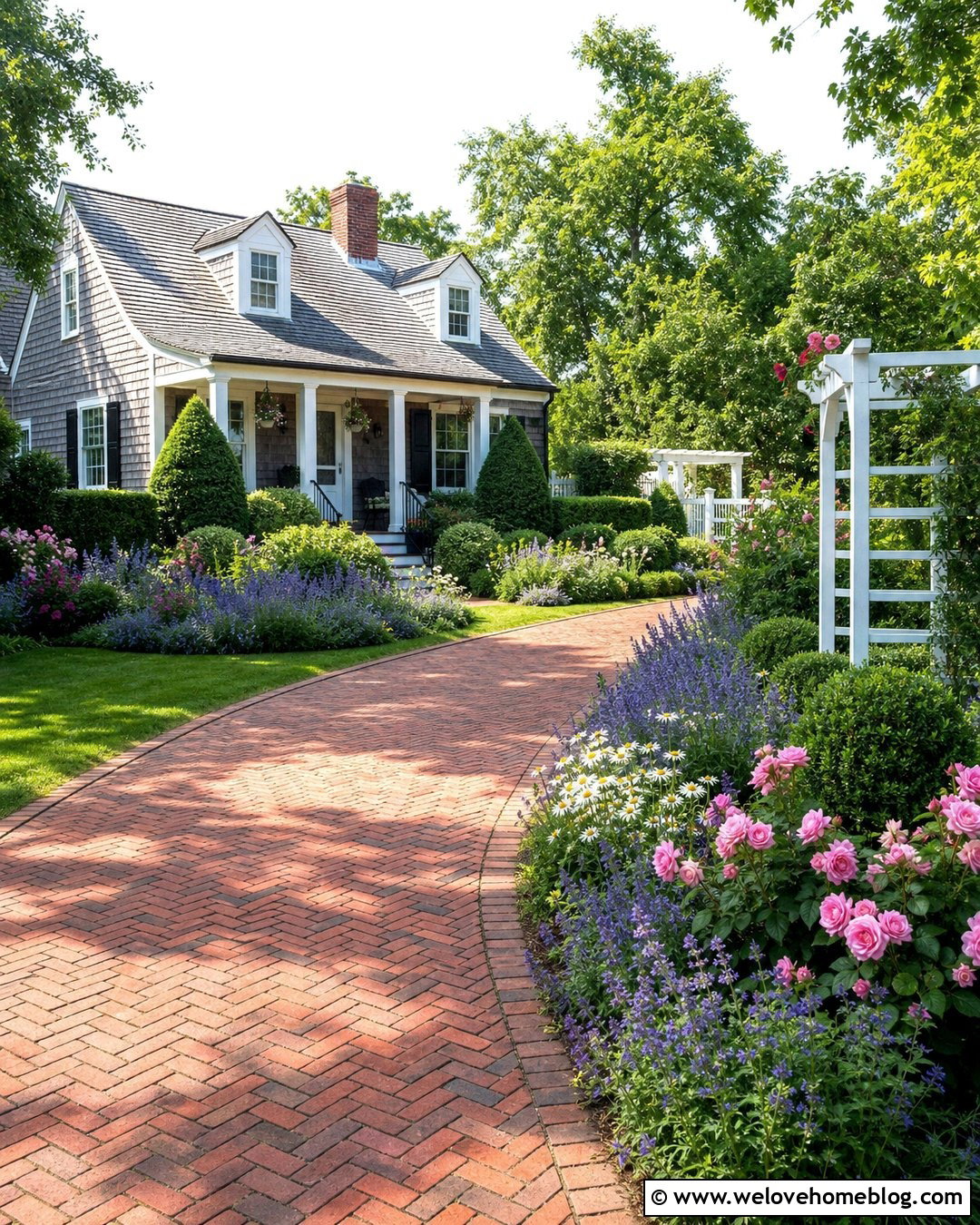
Colorful flower borders can transform a basic driveway into a cheerful cottage entrance. Use warm clay brick pavers in a herringbone pattern and shape the driveway with a slight curve toward the house. On each side, create generous beds containing roses, catmint, salvia, daisies, and other long-blooming plants suited to the local conditions. Low clipped shrubs provide winter structure and prevent the borders from appearing untidy. A brick walkway can branch naturally from the driveway and pass beneath a simple garden arbor before reaching the porch. Keep flowers nearest the pavement compact so they do not flop into the parking area. Repeating several key colors throughout the beds produces an abundant appearance without visual chaos. This welcoming design pairs naturally with Cape Cod, cottage, and Tudor homes.
13. Tropical Driveway Landscaping With Palms
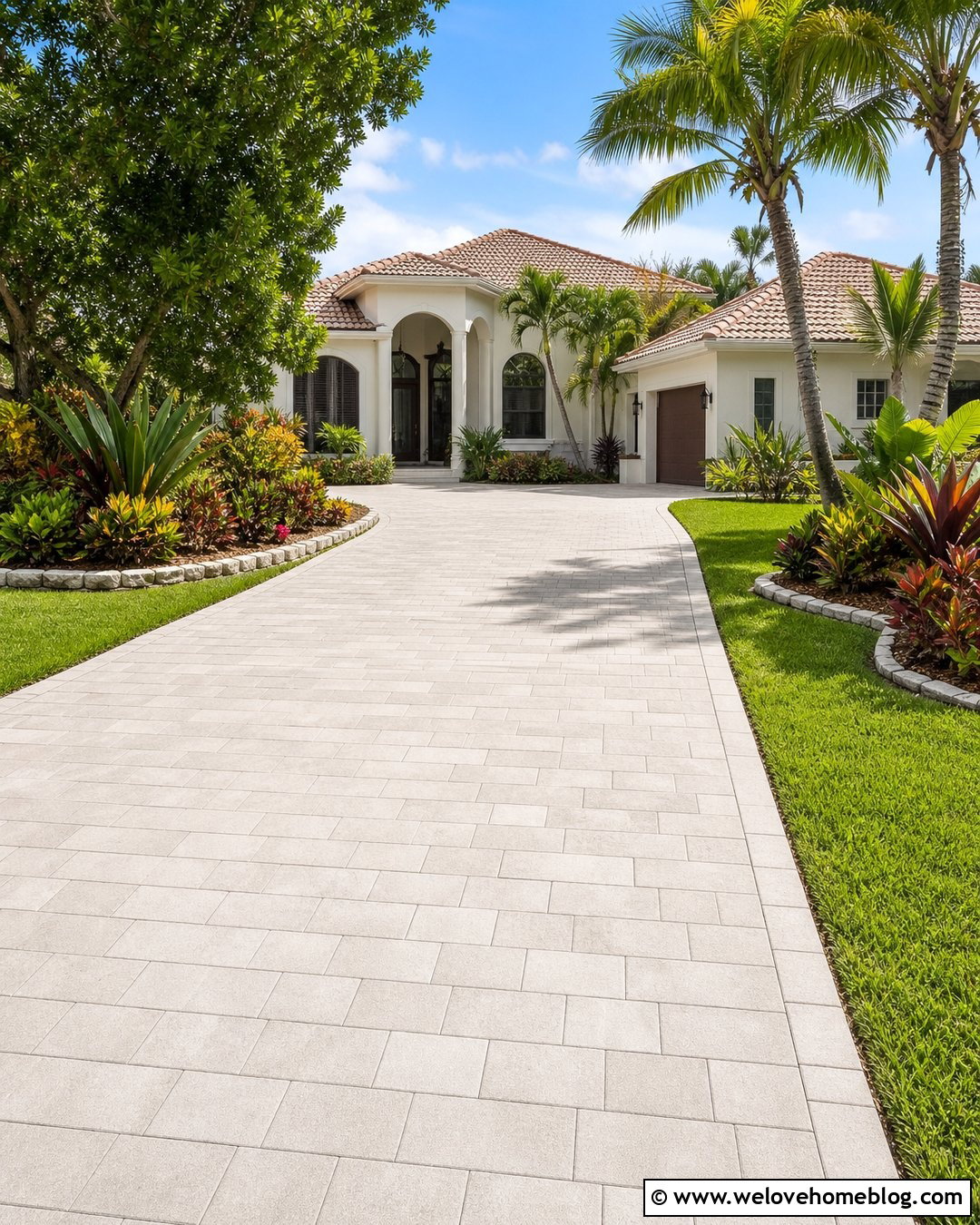
Warm-climate properties can use bold foliage to turn the driveway into a lush front entrance. Start with a pale concrete paver driveway laid in a simple running pattern, allowing the greenery to provide most of the visual interest. Place palms at wider intervals beyond the pavement edge, then layer crotons, bird of paradise, ferns, and low tropical ground covers beneath them. Curved beds edged with smooth limestone can soften the straight driveway and complement a light stucco house. Leave enough open space around each plant for mature growth and easy vehicle access. A matching paver walkway should lead directly from the parking area to the front door. Used with restraint, the mixture creates a full tropical setting without hiding the home or making routine maintenance unnecessarily difficult.
14. Desert Driveway Landscaping With Drought-Tolerant Plants
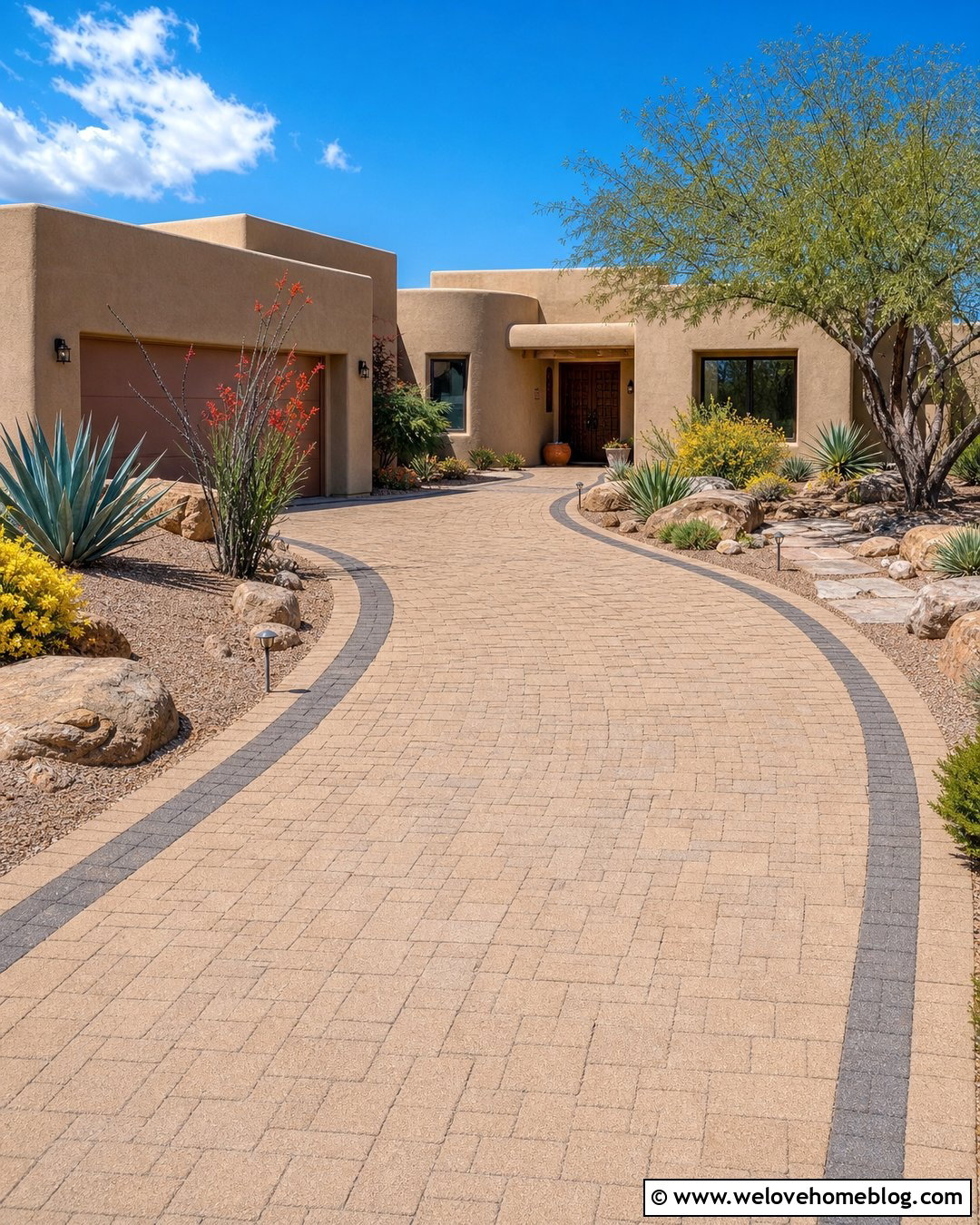
A desert landscape can look colorful and welcoming without relying on a large lawn. Build a gently curved driveway from sandy beige permeable pavers and frame it with beds of decomposed granite. Arrange agave, red yucca, desert spoon, compact flowering shrubs, and sculptural boulders in spaced groups. A darker paver ribbon along the driveway edge adds definition and keeps the broad neutral surfaces from blending together. Use one desert-adapted tree near the house to provide height and filtered shade while preserving open sightlines at the street. A flagstone walkway can cross the gravel bed and guide visitors toward the porch. This water-conscious composition complements Southwestern, adobe, Spanish, and contemporary homes while delivering texture, seasonal blooms, and strong curb appeal throughout the year.


15. Shaded Driveway Landscaping With Hostas
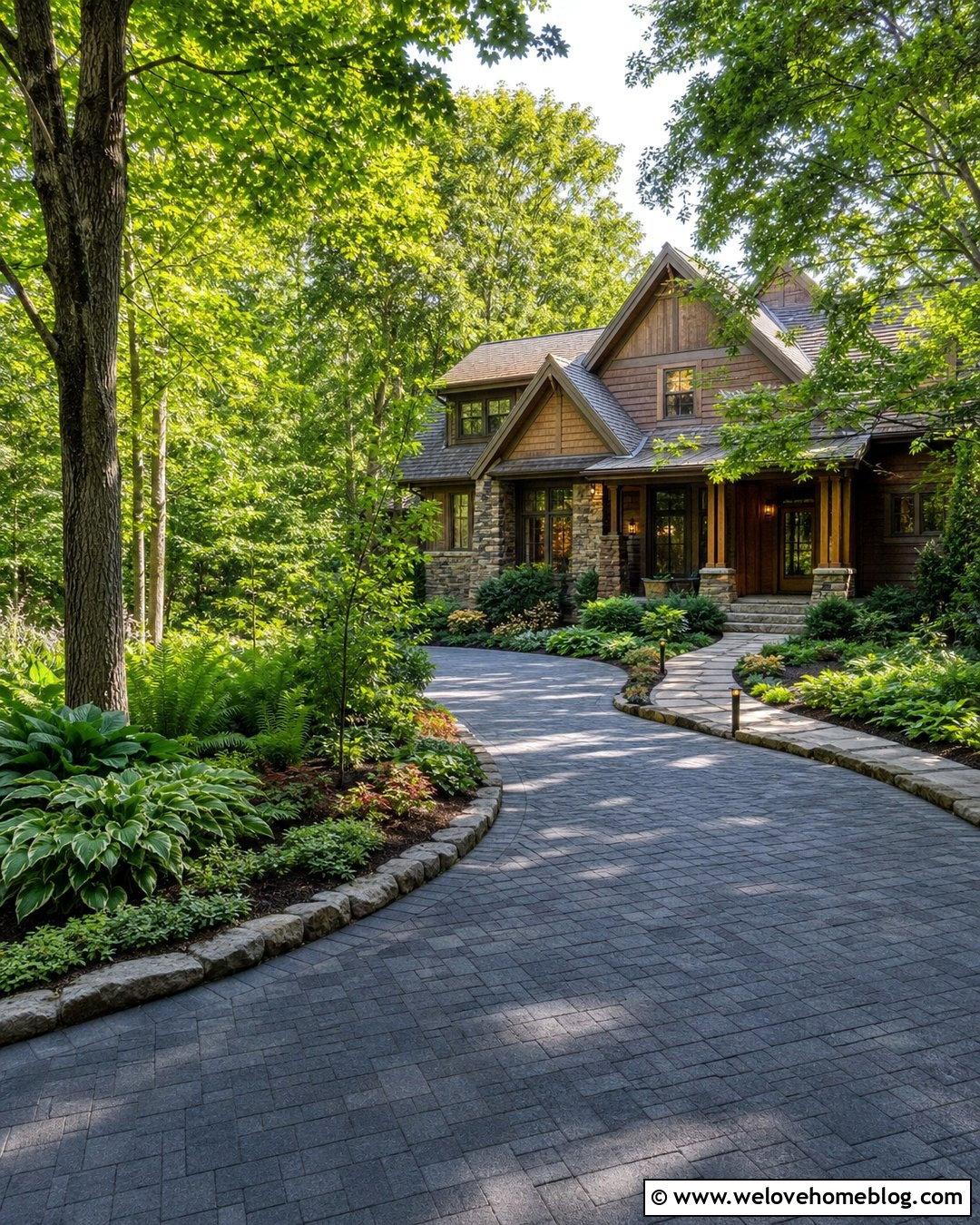
A driveway shaded by mature trees can still support a rich, layered landscape. Choose charcoal-gray concrete pavers for the driveway, then soften the edges with sweeping beds of hostas, ferns, heuchera, and shade-tolerant ground cover. Use plants with different leaf sizes and colors so the design remains interesting even when few flowers are present. A low natural-stone border separates the beds from the pavers and echoes the wooded setting. Add a stone walkway that curves from the driveway to the porch, with small path lights tucked discreetly among the foliage. Avoid piling soil or mulch against existing tree trunks, and select plants based on available moisture as well as shade. This calm, green arrangement works particularly well with Craftsman, woodland cottage, and traditional homes.
16. Driveway Entrance Landscaping With Stone Pillars
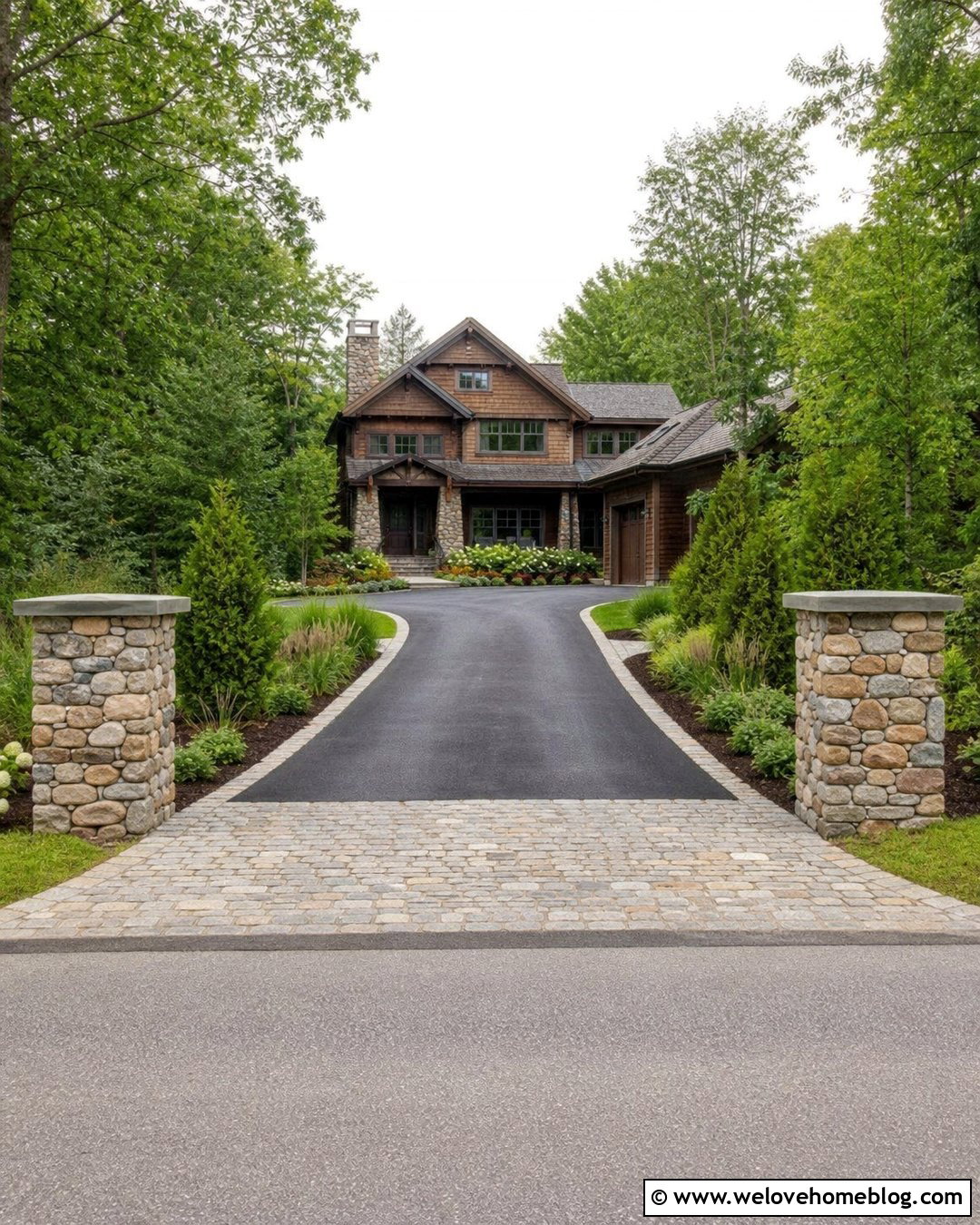
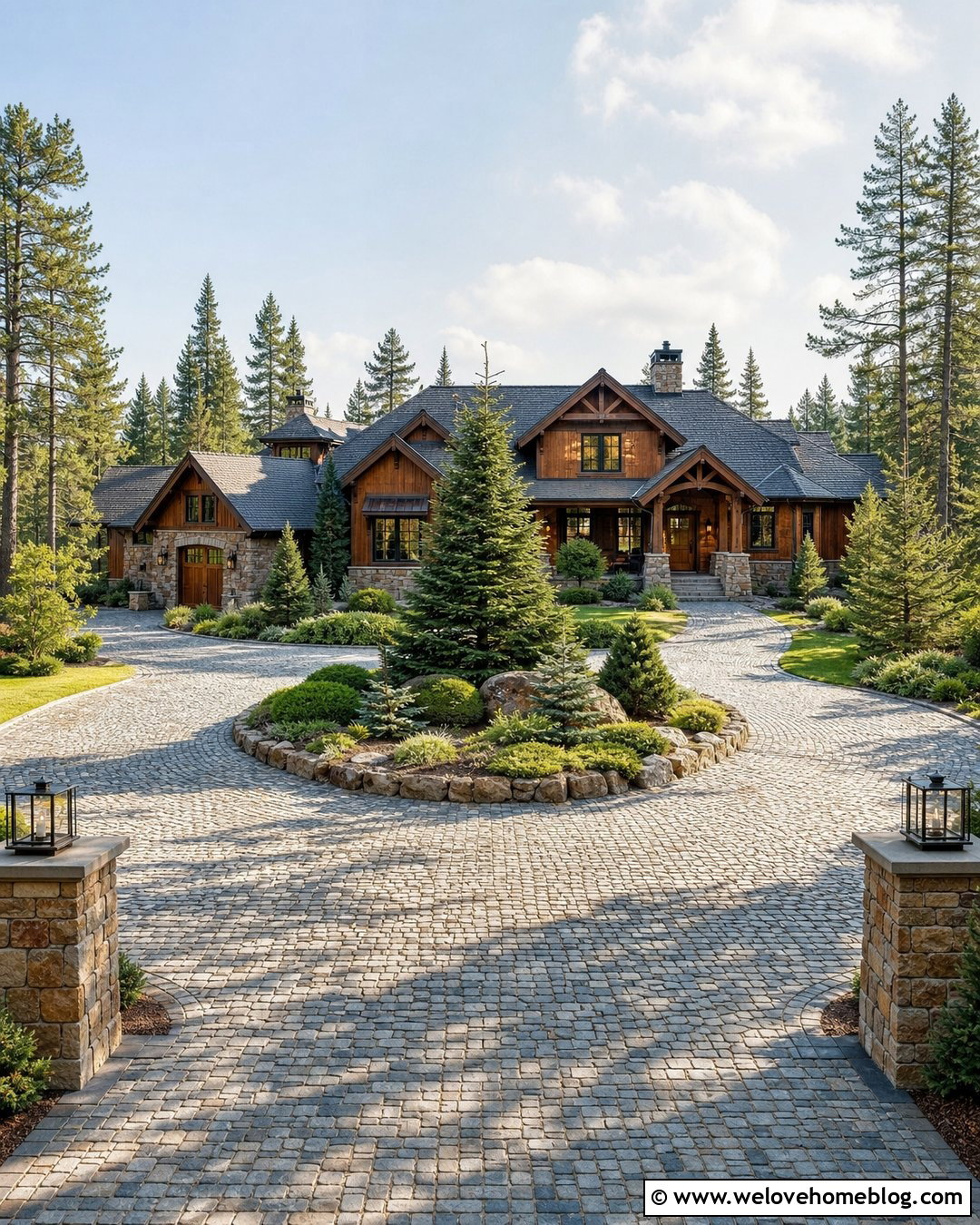
Strong entrance landscaping gives even a simple driveway a clear sense of arrival. Use a dark asphalt surface with a wide cobblestone apron at the street, then place two proportional fieldstone pillars beyond the road setback. Curved planting beds can wrap around the pillars without restricting visibility. Fill them with compact evergreen shrubs, ornamental grasses, and low seasonal flowers that will not obscure address numbers or lighting. Continue the cobblestone as a narrow border along the drive to connect the entrance with the house. Farther inside the property, repeat a few of the same plants near the front walkway. The coordinated materials prevent the pillars from looking detached from the landscape. This substantial but approachable design works with rustic, Craftsman, farmhouse, and traditional stone-accented homes.
17. Driveway Landscaping With Rain Garden
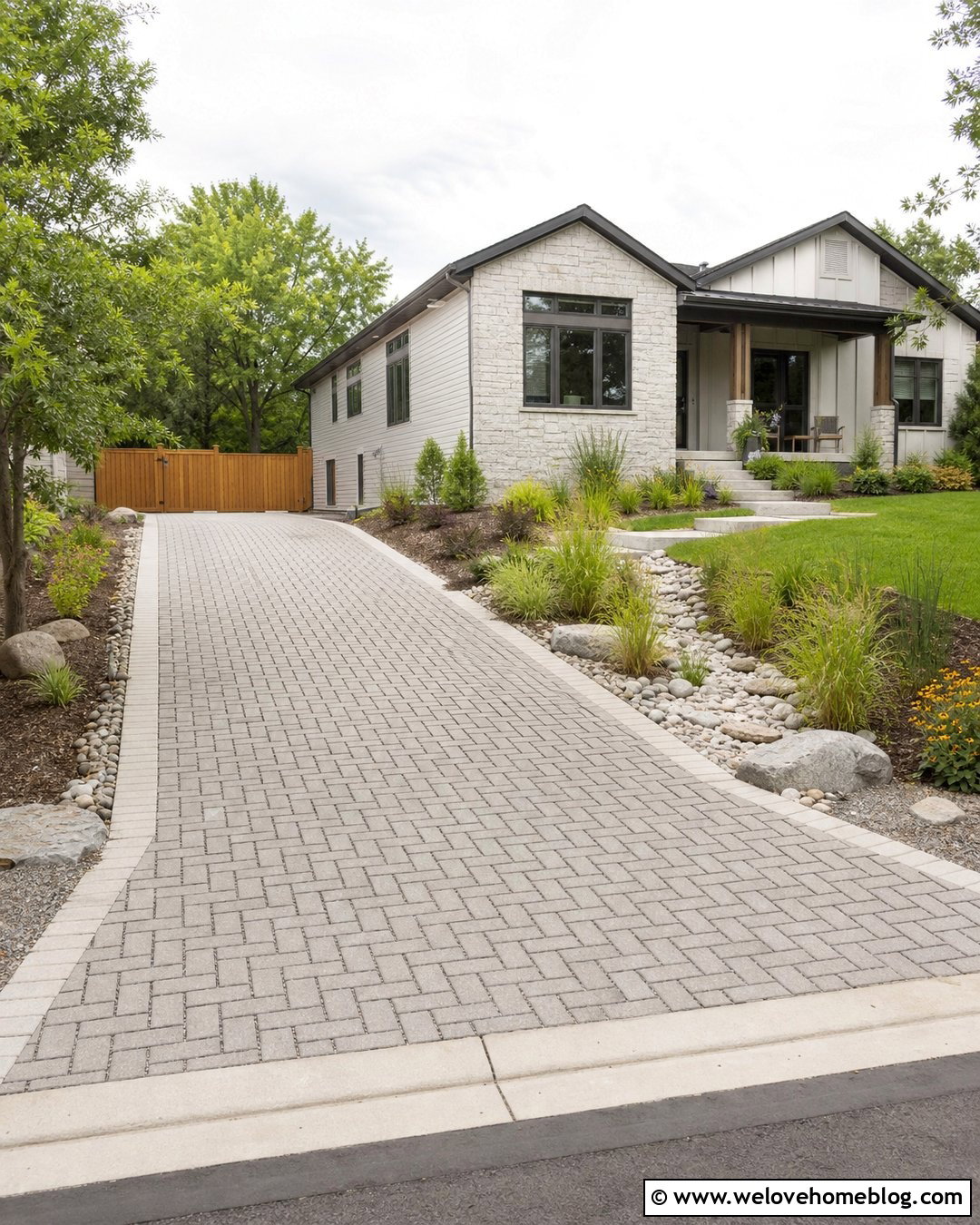
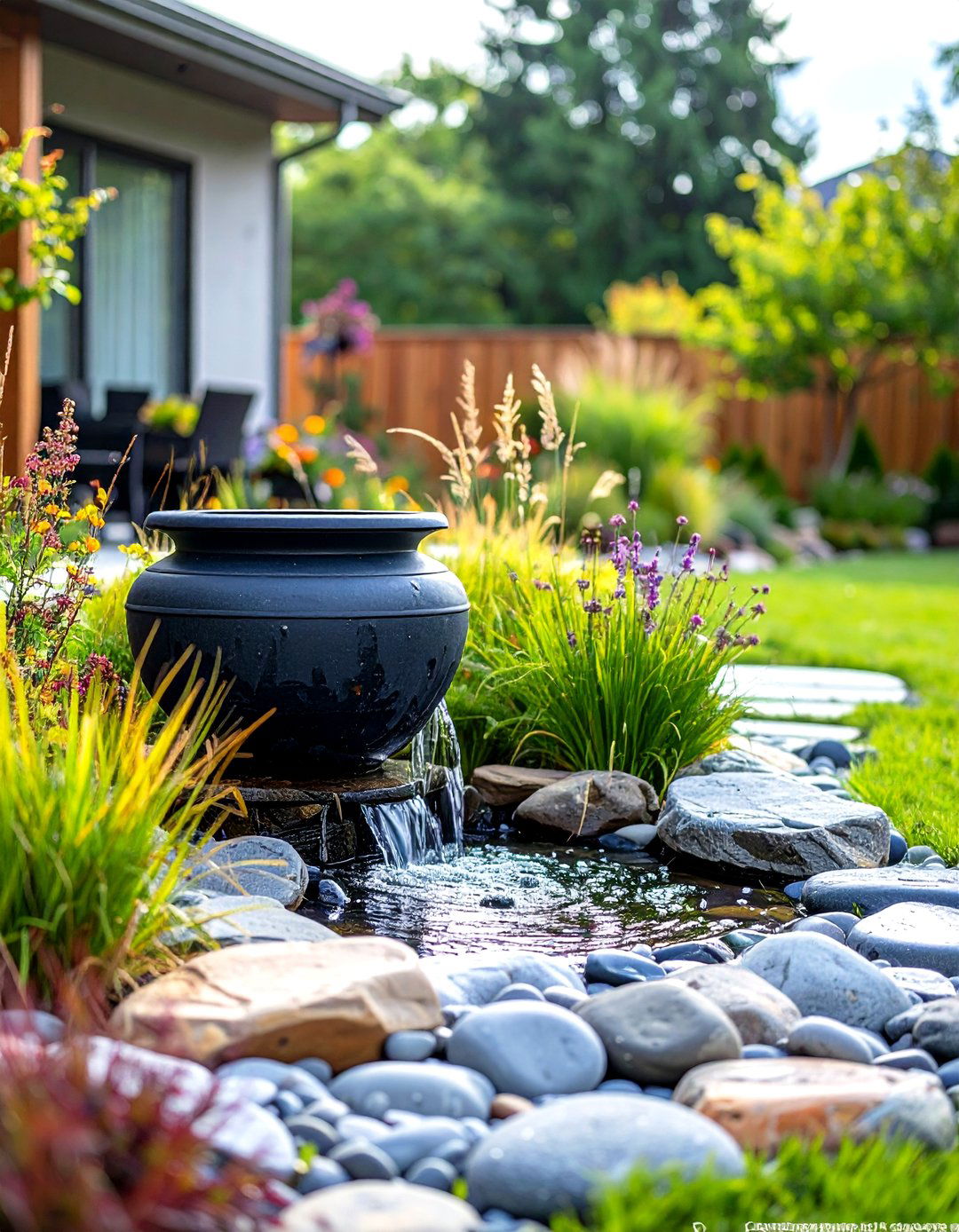
A rain garden can make drainage part of the driveway’s overall design. Install a permeable interlocking concrete paver driveway that gently directs runoff toward a shallow planted basin rather than the house. Edge the basin with river stone and fill it with moisture-tolerant native grasses, flowering perennials, and shrubs selected for local soil and rainfall patterns. The center should sit lower than the surrounding yard, while an appropriate overflow route handles unusually heavy storms. Place the garden beside the driveway where it remains visible but does not interfere with parking or walking. A raised paver walkway can connect the driveway to the porch. With thoughtful grading, the result resembles an intentional flower bed while adding movement, wildlife value, and a natural transition between hard paving and lawn.
18. Driveway Landscaping With Lighting
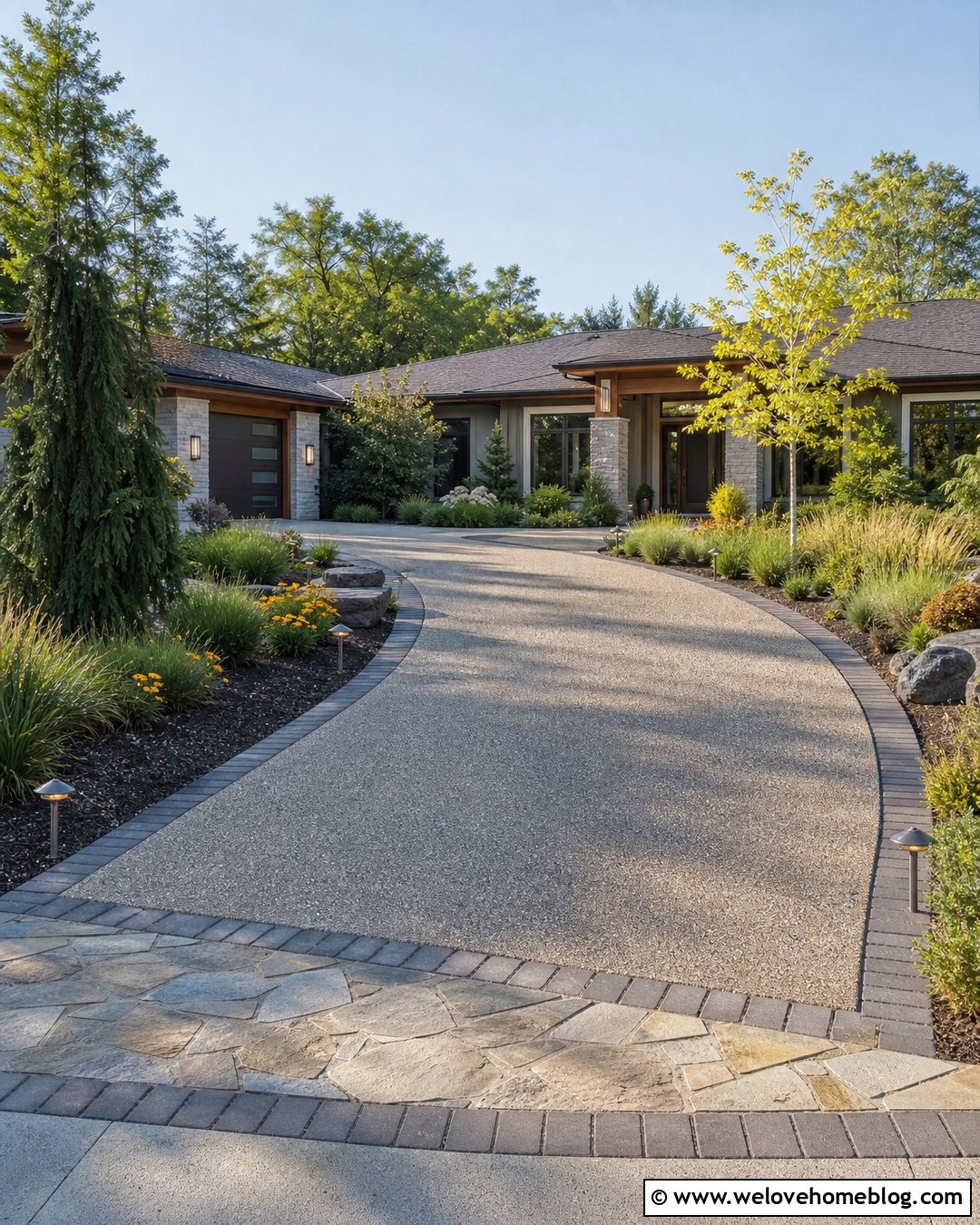
Landscape lighting should reveal the driveway’s route and planting without overpowering the house. Pair a curved exposed aggregate driveway with low path lights spaced along broad beds of evergreen shrubs, ornamental grasses, and flowering perennials. Position fixtures behind the border so they illuminate the pavement edge while remaining protected from tires and lawn equipment. Small uplights can highlight one ornamental tree near the house, and recessed fixtures may define a stone entrance apron. Keep the daytime appearance in mind by choosing simple fixtures that match the exterior hardware. A paver walkway branching from the driveway should receive its own gentle lighting for a clear path to the porch. The layered arrangement improves the entire composition, allowing the driveway, landscape, and front entrance to read as one coordinated design.
19. Driveway Landscaping With Front Walkway
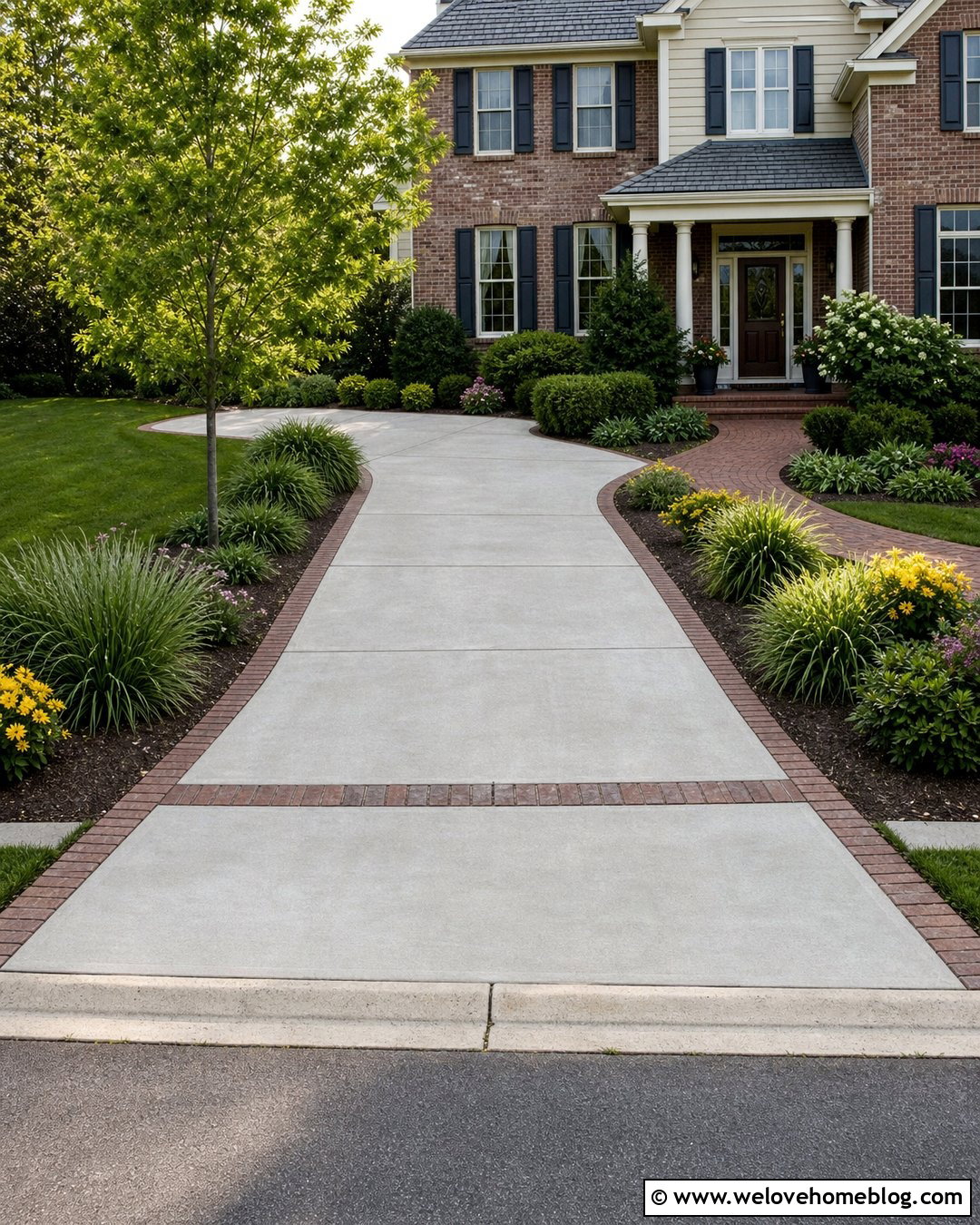
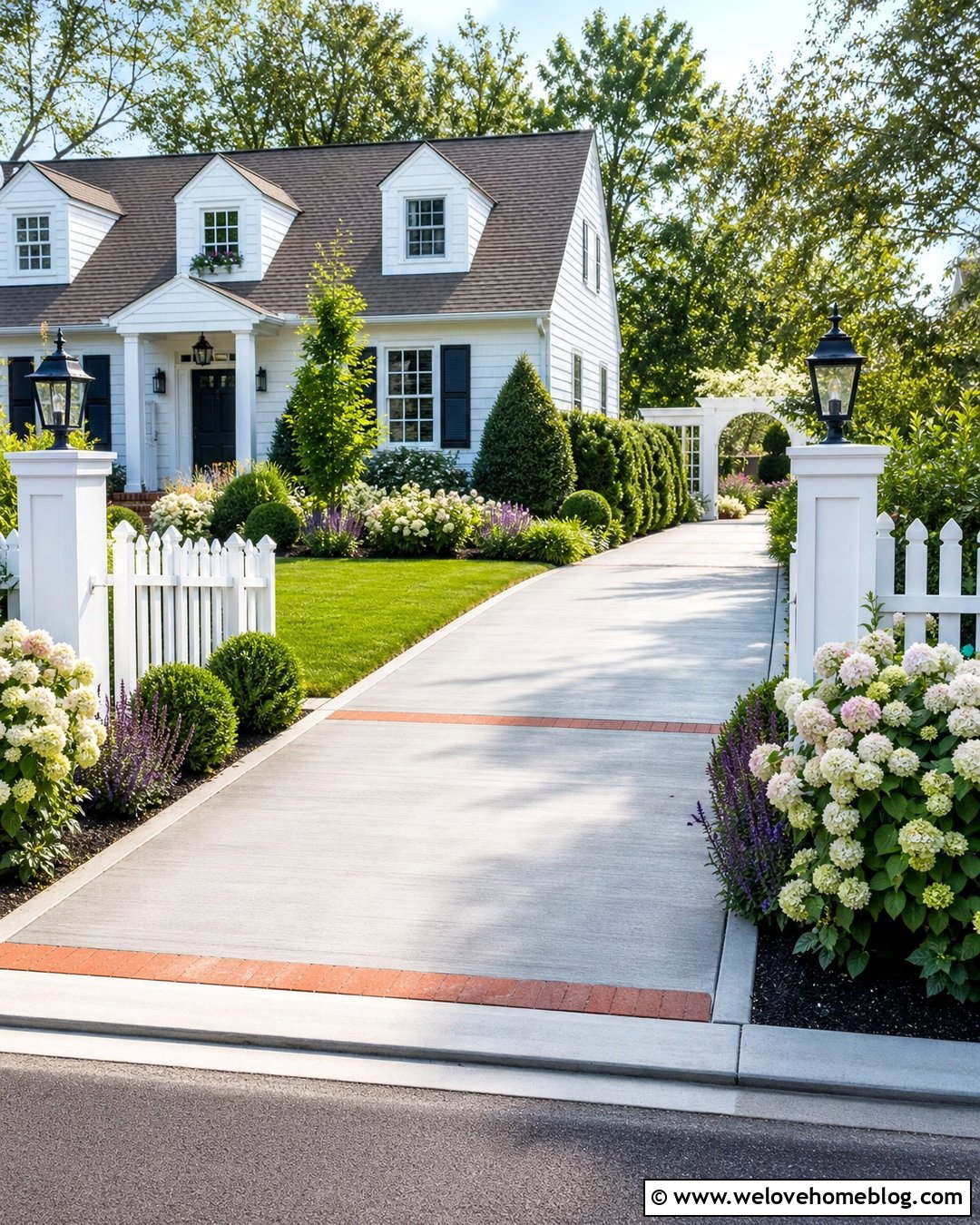
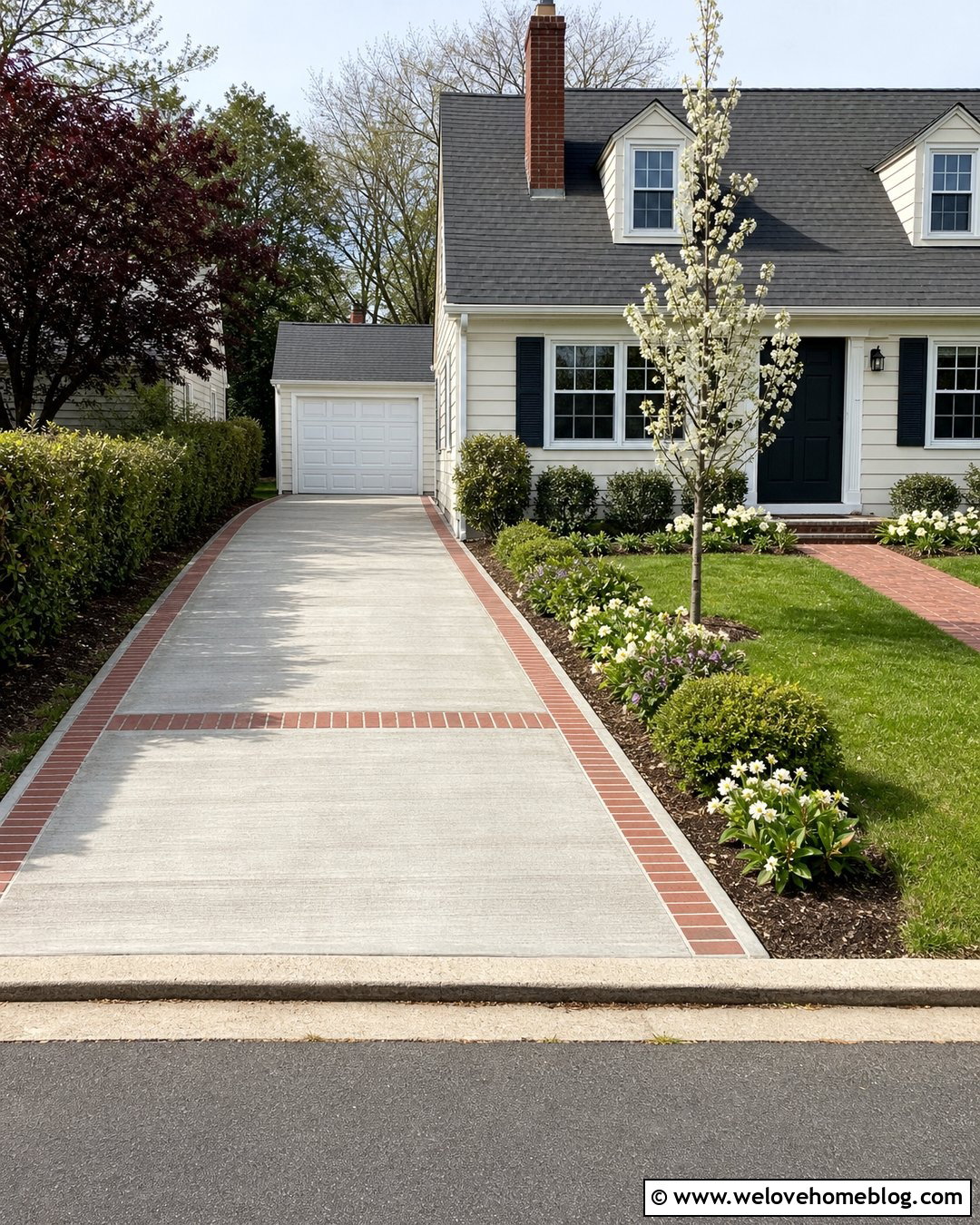
A well-positioned walkway prevents guests from feeling as though they must navigate around parked vehicles. Use a light-gray poured concrete driveway with a contrasting walkway made from red-brown brick pavers. Begin the path at a widened passenger drop-off point, then curve it through a landscaped bed toward the front porch. Low shrubs, ornamental grasses, and flowering perennials can frame the route while leaving the front door visible. Repeat the brick as a flush driveway border to tie both surfaces together. Where the walkway meets the drive, keep the transition level, broad, and easy to recognize. A small ornamental tree near the curve adds height without blocking windows. This practical layout is useful for suburban Colonial, ranch, Cape Cod, and traditional homes with garages close to the front entrance.
20. Budget Driveway Landscaping With Mulch Beds
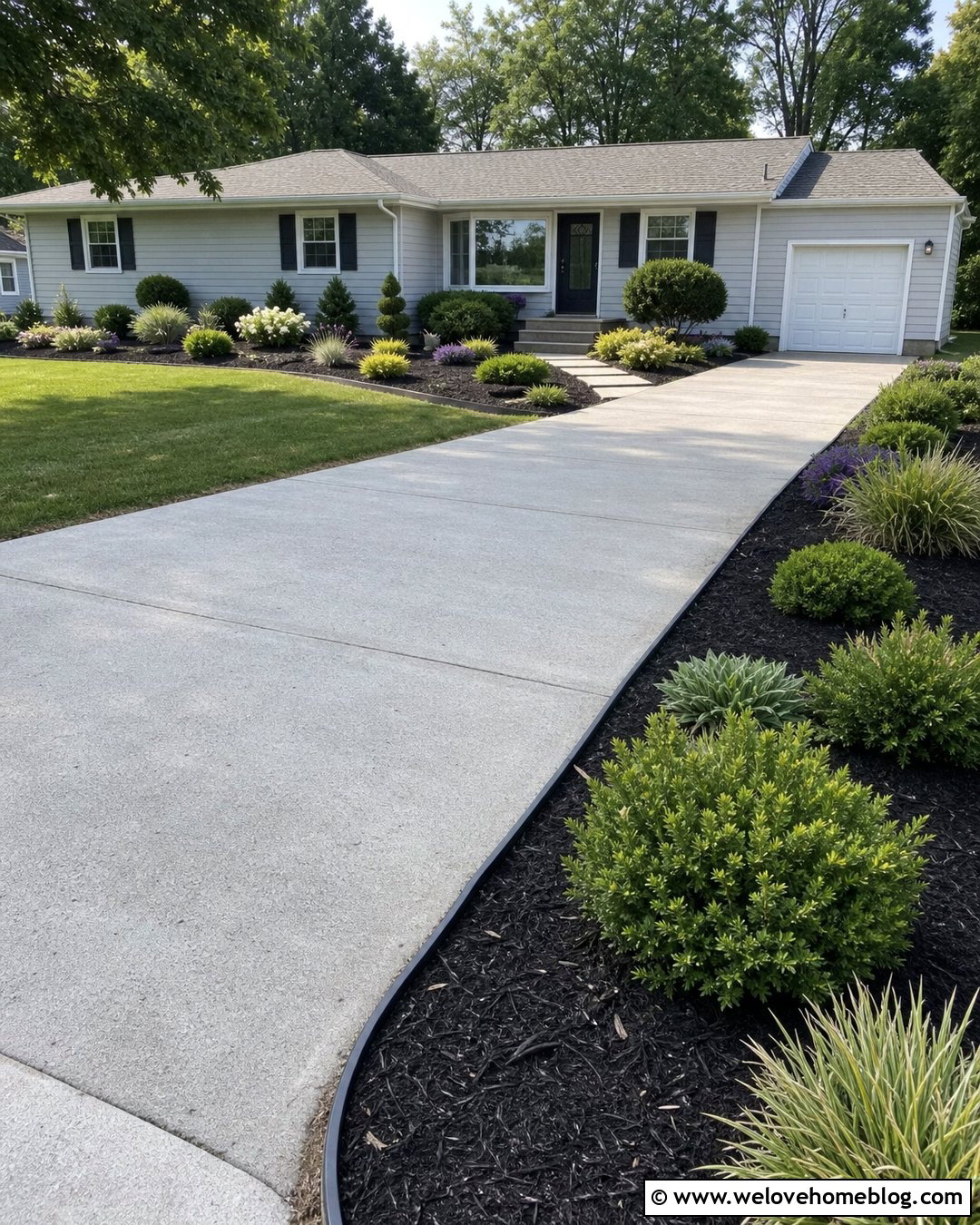
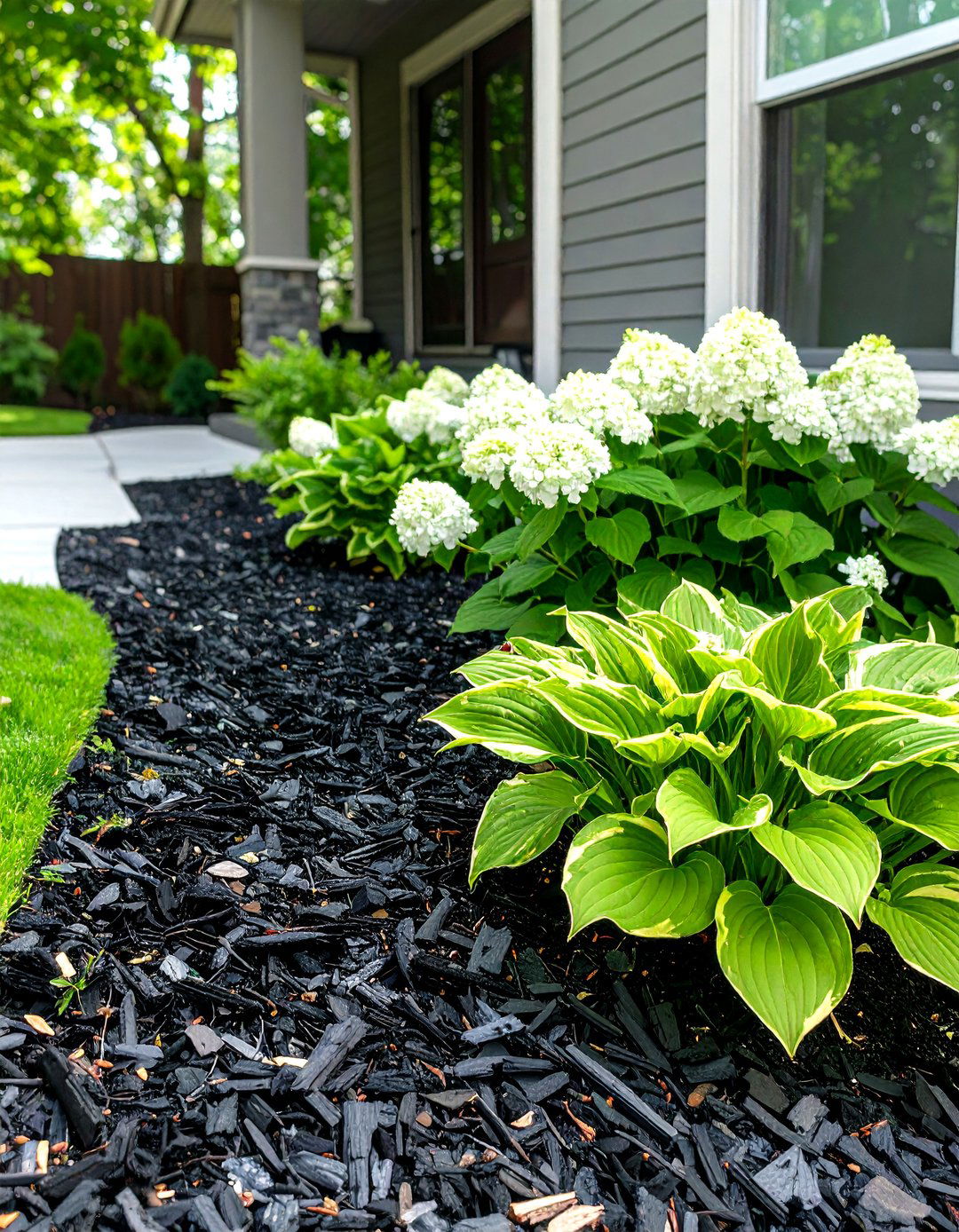
An affordable driveway makeover can begin with clean edges, fresh mulch, and a limited number of dependable plants. Retain an existing plain concrete driveway and cut simple curved beds along one side and near the garage. Define them with inexpensive metal or composite edging, then cover exposed soil with dark shredded mulch. Plant compact evergreen shrubs at regular intervals and fill the gaps with easy-care perennials or ornamental grasses suited to local growing conditions. Divide or repeat existing plants when possible to create a coordinated look for less money. A stepping-stone path can connect the driveway to the porch without requiring a full paved walkway. Keep the opposite edge as neatly trimmed lawn. This focused approach adds shape, color, and intention without rebuilding a usable driveway.
Conclusion:
The most successful 20 front house driveway landscaping ideas combine appearance with everyday function. Begin with the driveway’s material, shape, slope, drainage, and parking needs. Then select borders, plants, walkways, and entrance features that complement both the pavement and the architecture. Maintain clear visibility near the street, leave enough room for mature plant growth, and protect pedestrian routes from vehicle traffic. A simple design with repeated materials and plants often looks more polished than an overcrowded landscape. Whether you prefer cottage flowers, modern grasses, formal hedges, or drought-tolerant rock beds, treat every feature as part of one complete composition. That approach creates a front driveway that feels practical, attractive, and naturally connected to the house.

Related posts:

Leave a Reply