
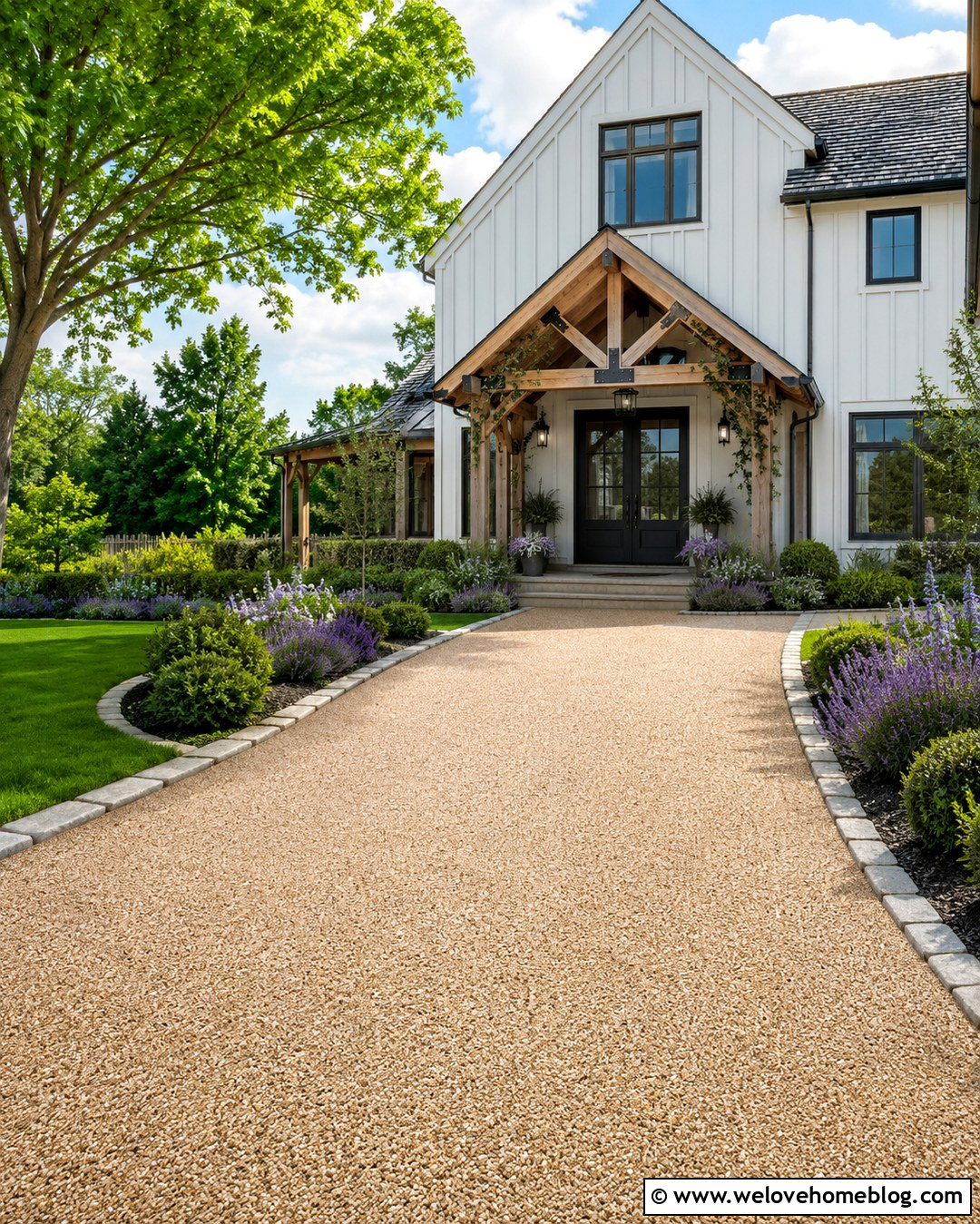
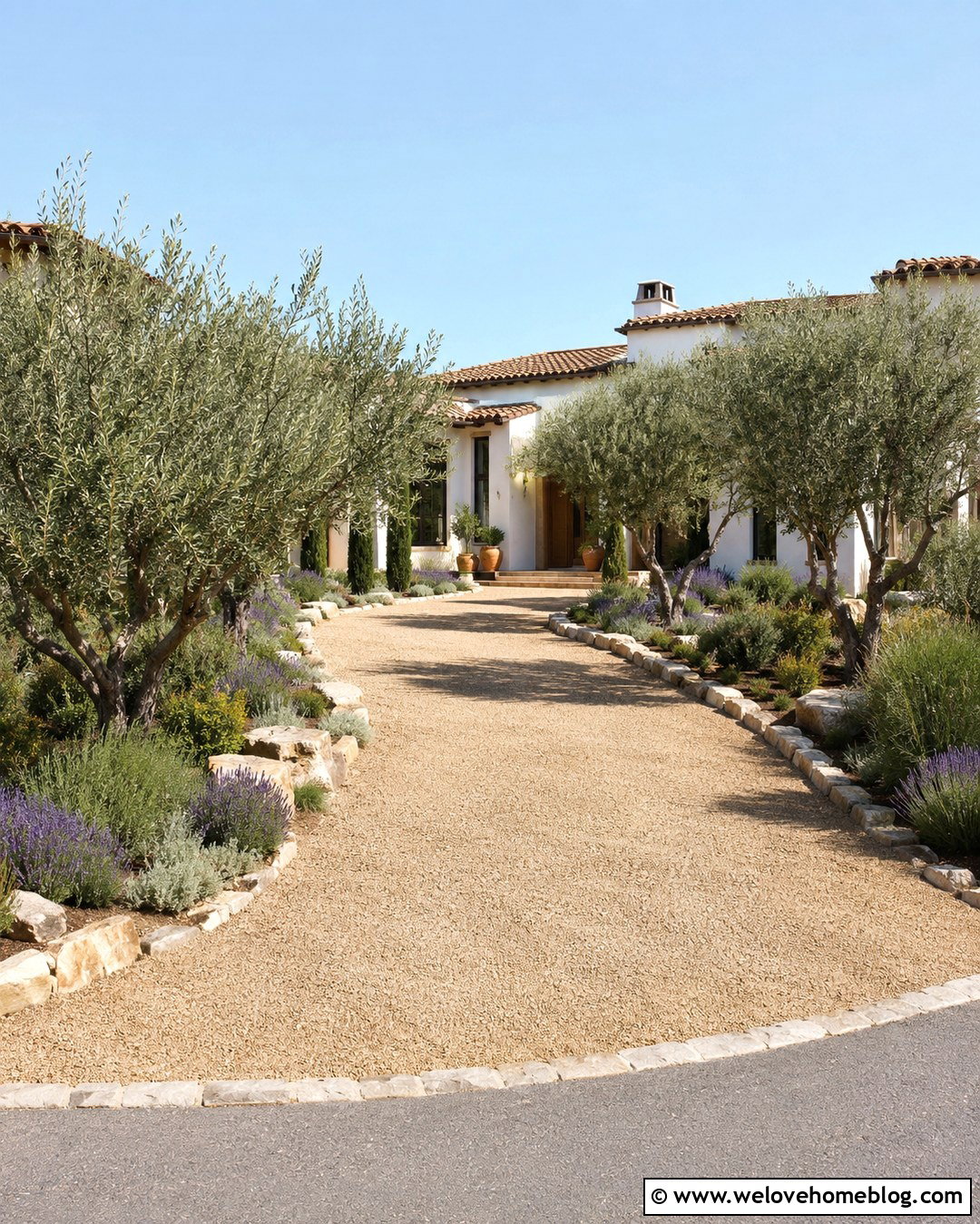
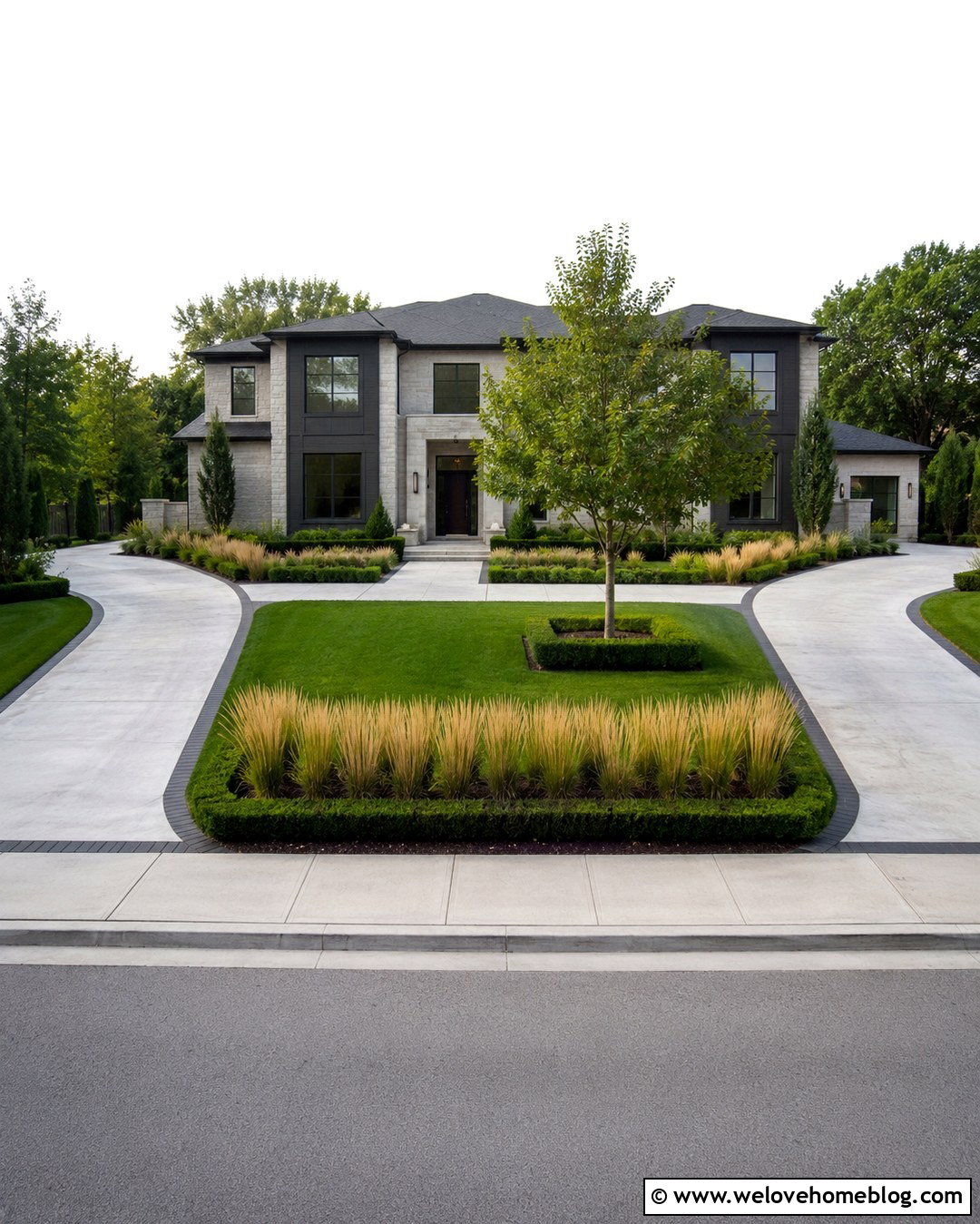
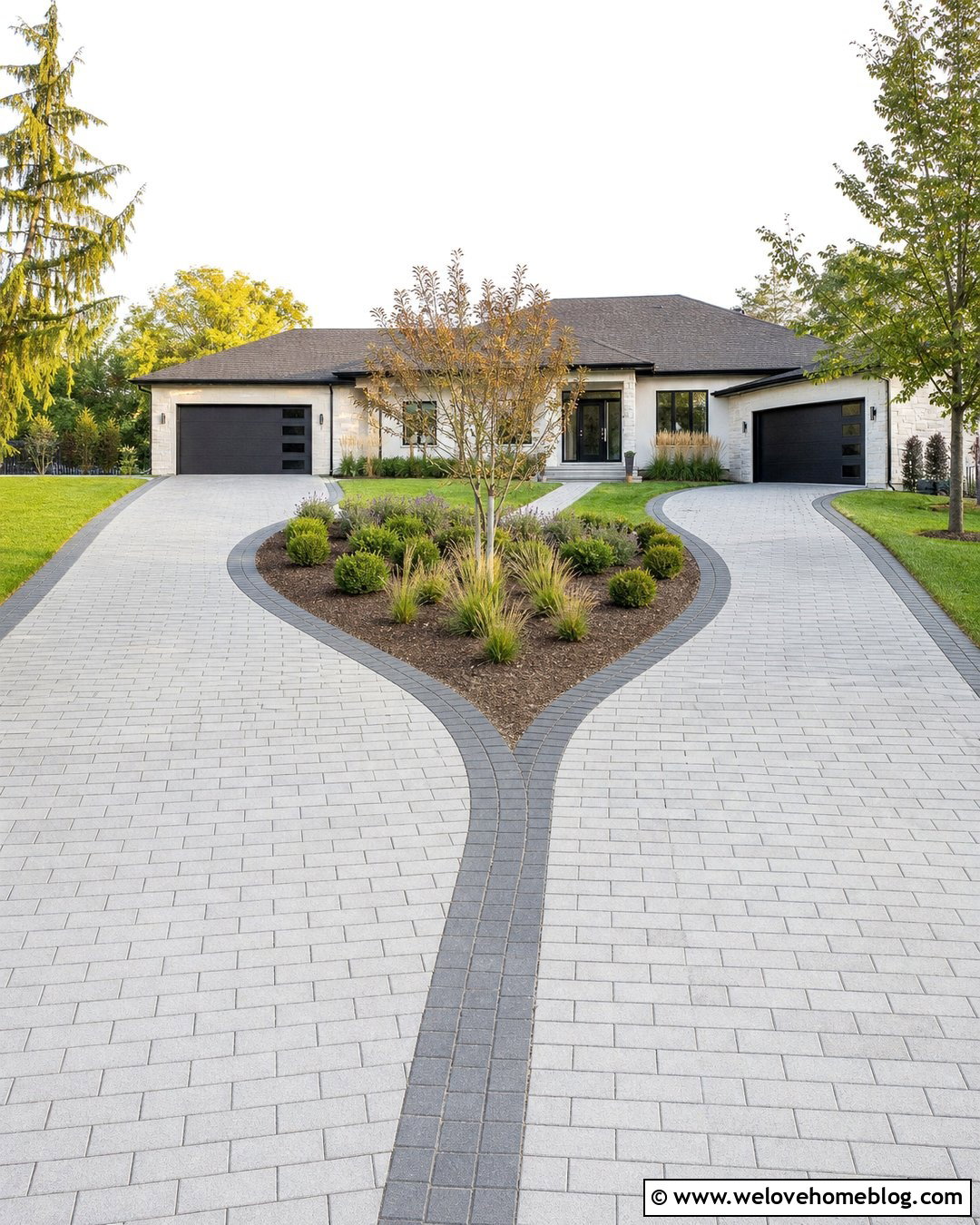
A gravel driveway can feel far more connected to the home when a well-planned path guides guests toward the entrance. These 20 Gravel Driveway With Path Ideas combine practical vehicle access with comfortable walking routes, attractive borders, and layered front-yard landscaping. Gravel also works with straight, curved, cottage, farmhouse, and modern layouts because it can follow irregular shapes without complicated cuts. Strong edging helps contain loose stones, while pavers, flagstones, bricks, or compacted gravel can make the pedestrian route easier to recognize. () Whether you are refreshing a small suburban yard or planning a long country entrance, the complete looks below offer useful inspiration. Explore these 20 Gravel Driveway With Path Ideas to find a layout that fits your home.

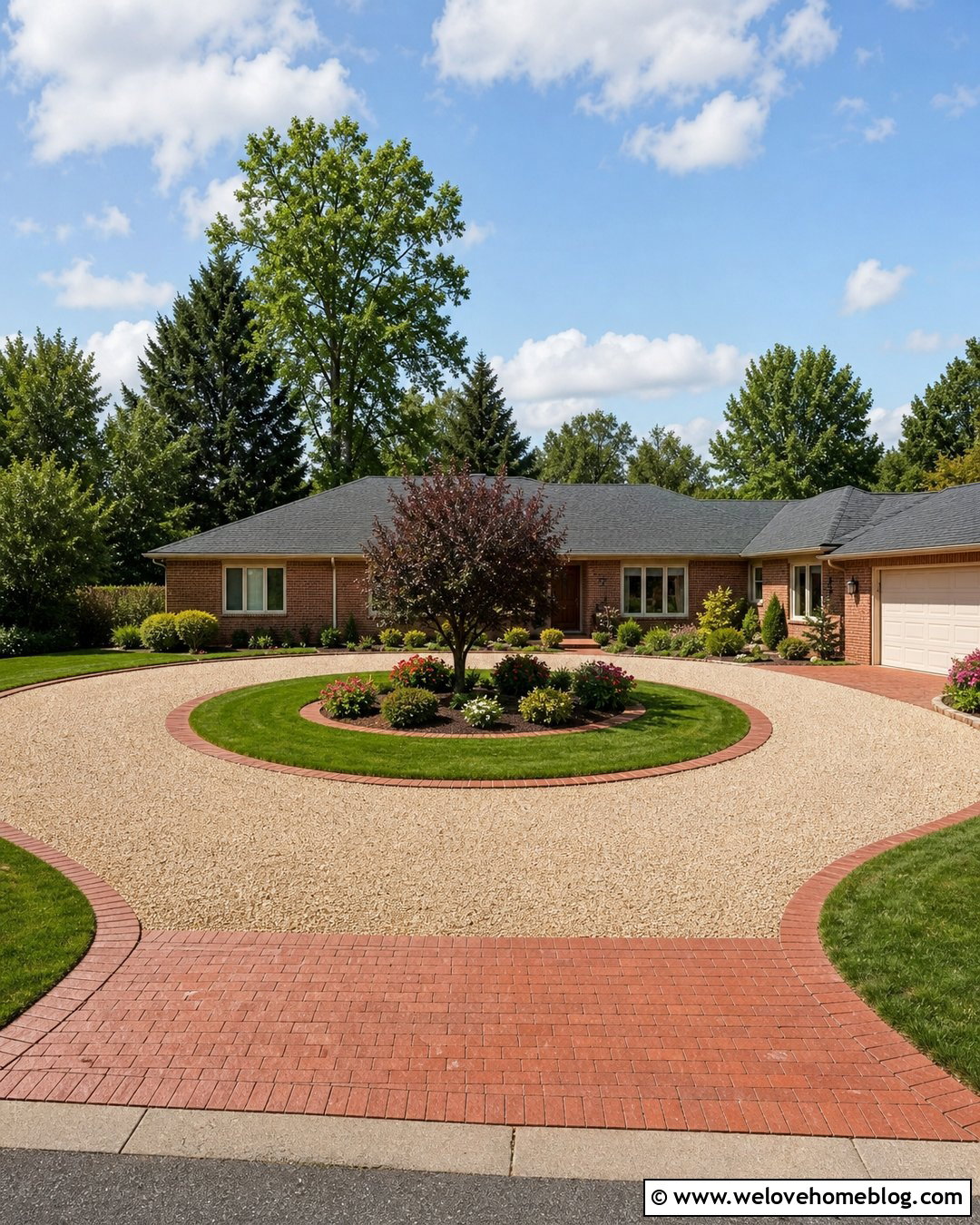
1. Pea Gravel Driveway With Brick Path
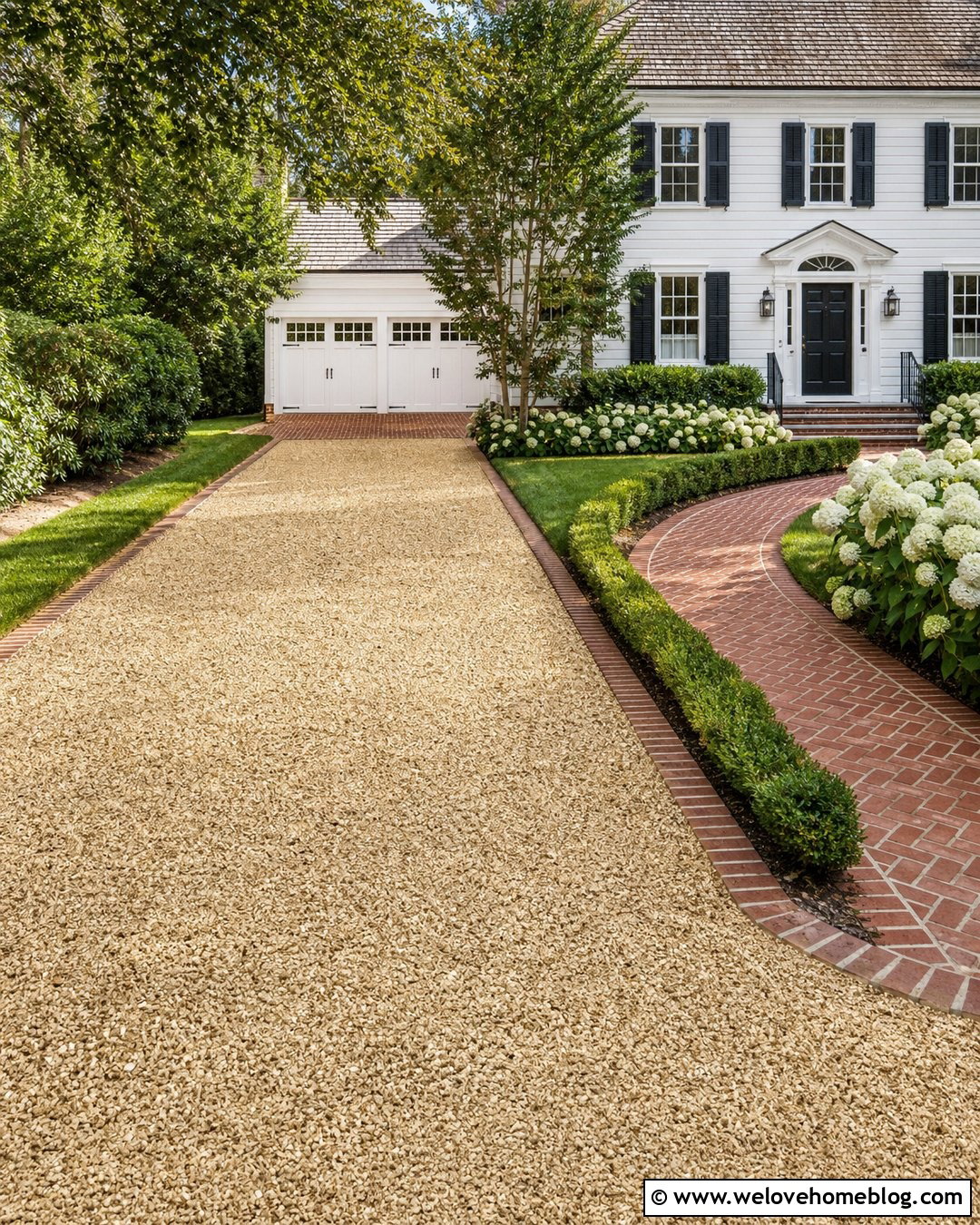
Warm pea gravel and a red brick path create a welcoming entrance that suits traditional homes. Use honey-colored pea gravel across a straight driveway, then run a gently curved brick walkway from the parking area to the front porch. A herringbone pattern gives the path extra detail, while a soldier-course brick border clearly separates it from the loose gravel. Continue the same brick along the driveway edges for a coordinated appearance. Low boxwood shrubs, white hydrangeas, and a simple green lawn can frame the layout without hiding it. Near the garage, install a brick transition strip where the driveway meets the slab. This creates a deliberate stopping point and repeats the path material, helping the entire front yard look connected rather than pieced together.
2. Gray Gravel Driveway With Flagstone Path
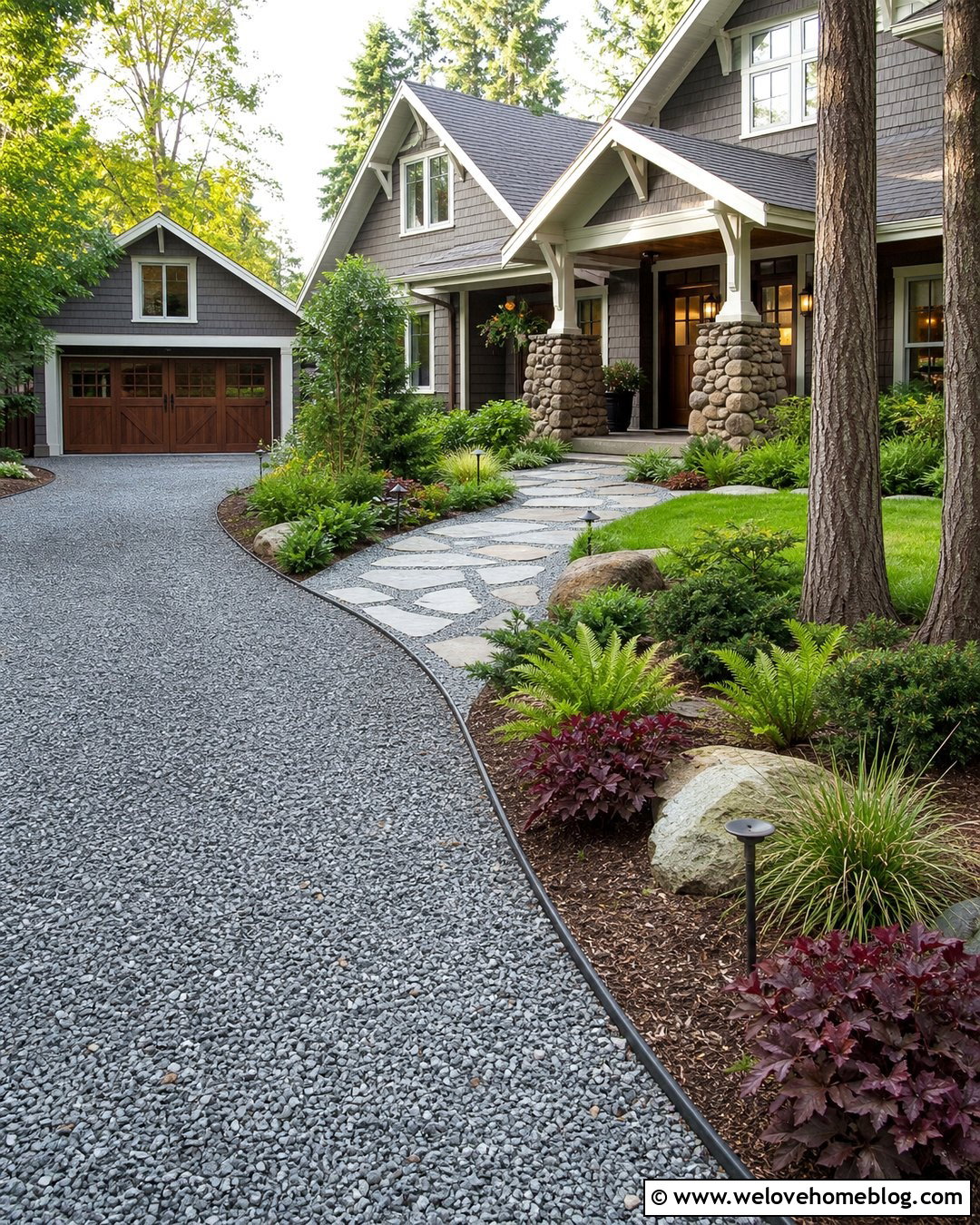
Cool gray gravel provides a calm foundation for a flagstone path leading toward a Craftsman-style house. Choose large, irregular bluestone or gray flagstone pieces and place them close enough together to form a clear walking route. The path can branch from the driveway near the street and curve through a wide planting bed before reaching the porch steps. Dark steel edging keeps the gravel driveway crisp, while smaller gray stone fills the joints around the path. Add ferns, ornamental grasses, coral bells, and compact evergreen shrubs to soften the hard materials. A few larger landscape rocks can visually connect the path with the natural stone porch. Keep planting lower beside the walking route and place taller shrubs farther back, preserving visibility from the driveway to the entrance.
3. White Gravel Driveway With Paver Path
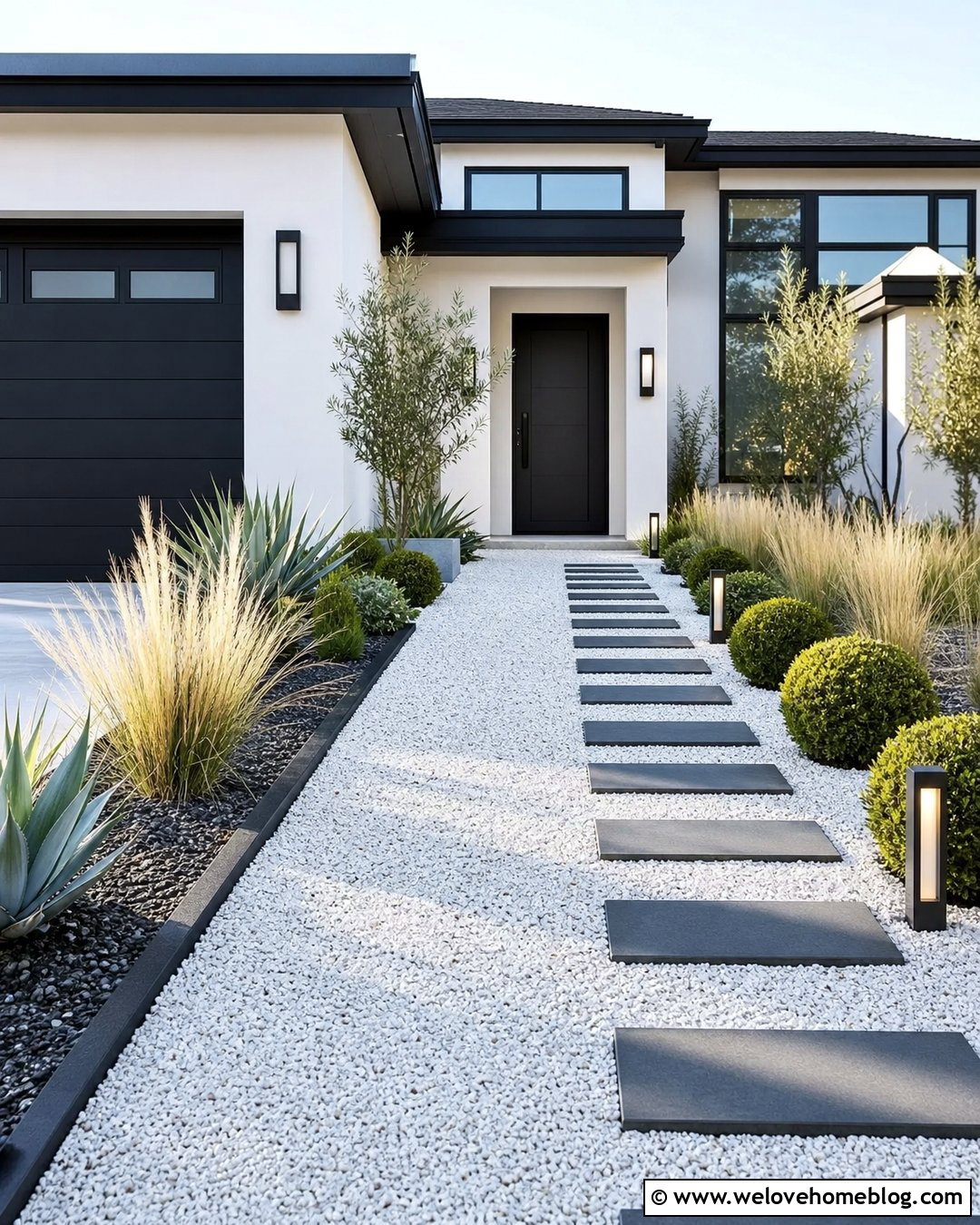
Bright white gravel paired with large charcoal pavers creates a clean, high-contrast look for a modern home. Design the driveway with a simple straight or slightly angled layout, then position rectangular concrete pavers in a staggered line beside it. Fill the spaces around the pavers with matching white gravel so the path appears integrated without disappearing. Thin black metal edging can define both surfaces and prevent stones from spreading into nearby planting beds. Gravel should sit slightly below the top of the edging to help maintain a cleaner boundary. () Complete the design with architectural grasses, clipped evergreen spheres, and drought-tolerant plants arranged in broad groups. A dark front door, black garage trim, and low rectangular path lights will repeat the charcoal tones and give the entire frontage a balanced appearance.
4. Curved Gravel Driveway With Side Path
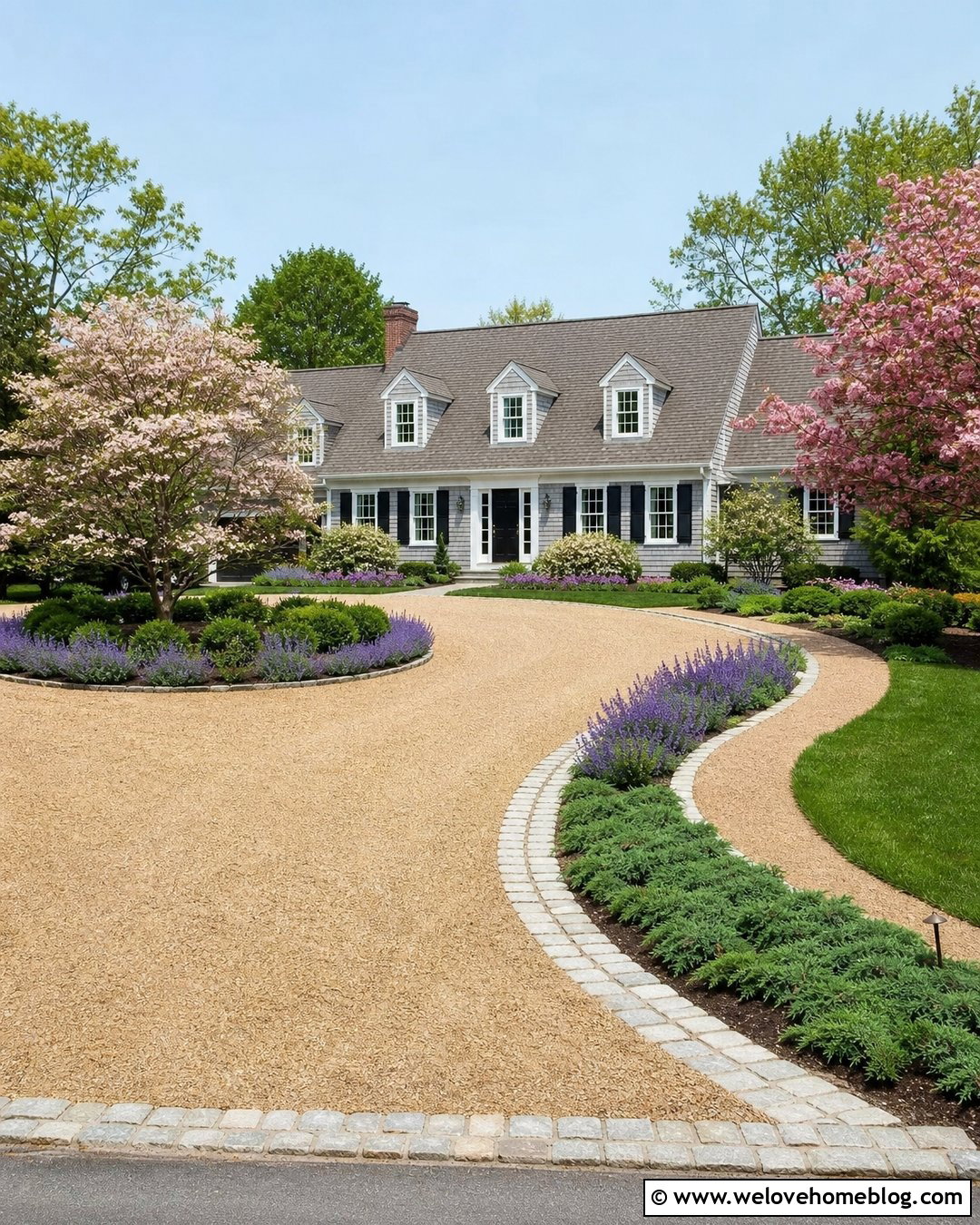
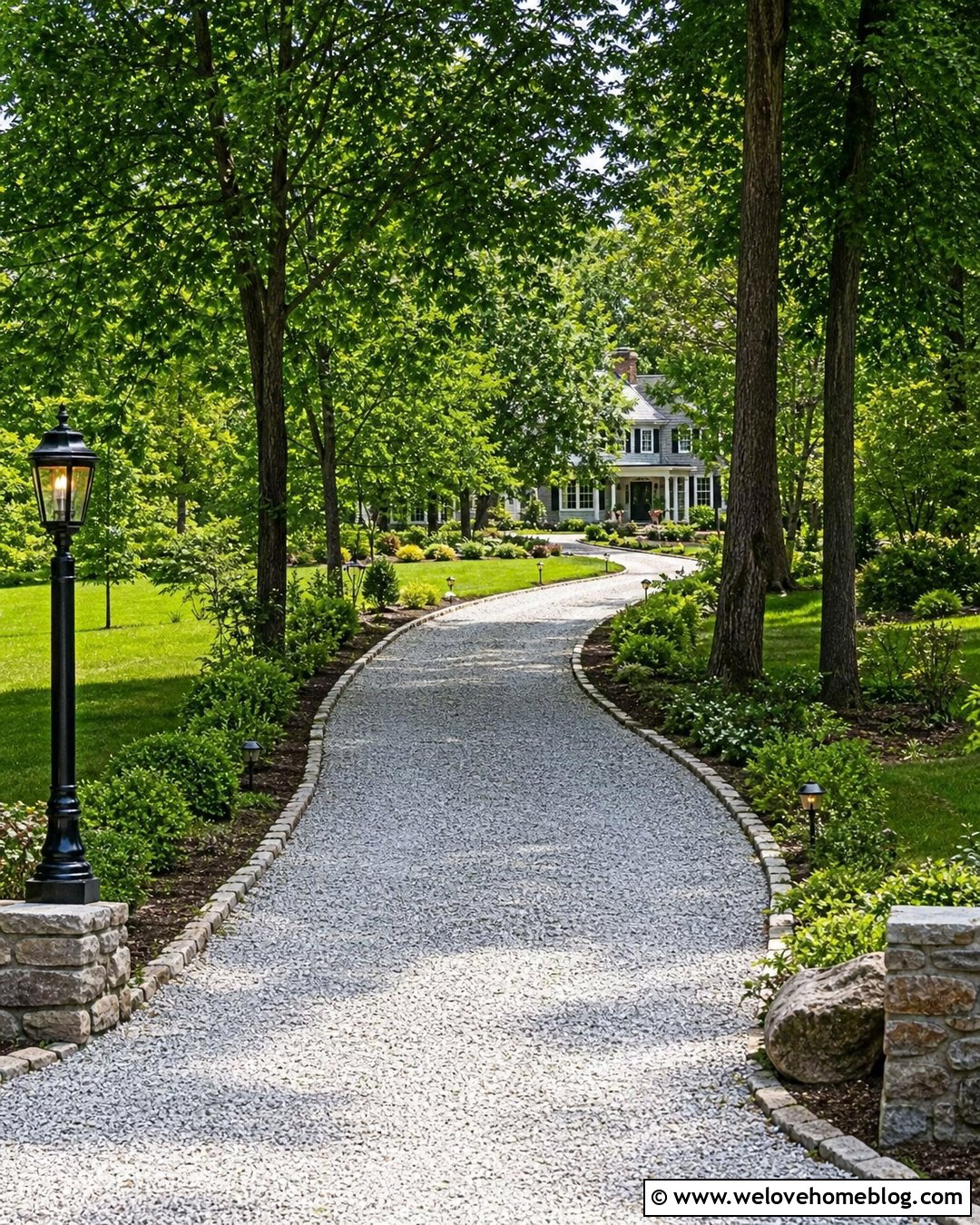
A curved driveway feels even more natural when a separate path follows its inside edge. Use compacted tan crushed gravel for the driveway and a finer version of the same material for the walking route. A narrow cobblestone border between the two areas creates visible separation without introducing a competing color. Because gravel adapts easily to organic curves, it works well for layouts that bend around mature trees, sloping lawns, or established garden beds. () Let the path leave the driveway near the entrance and take a shorter curve toward the front porch. Plant lavender, catmint, low junipers, and small flowering trees between the path and driveway. The layered arrangement turns unused central ground into a landscaped focal point while keeping pedestrians away from the main vehicle route.
5. Gravel Driveway With Stepping Stone Path

Large stepping stones can transform a basic gravel driveway into an attractive and clearly organized approach. Cover the driveway with medium-gray crushed stone, then set broad rectangular limestone slabs into a parallel path along one side. The stones should feel generously sized and follow a comfortable walking rhythm. Surround them with smaller gravel in a slightly lighter tone to make the route visible. A flush steel edge between the driveway and path keeps the layout tidy without creating a tripping obstacle. On the garden side, use soft planting such as creeping thyme, lamb’s ear, salvia, and ornamental grasses. Allow a few low plants to relax over the outer edge, but keep the stepping surfaces open. At the porch, widen the path into a small gravel landing that connects naturally with the steps.
6. Farmhouse Gravel Driveway With Stone Path
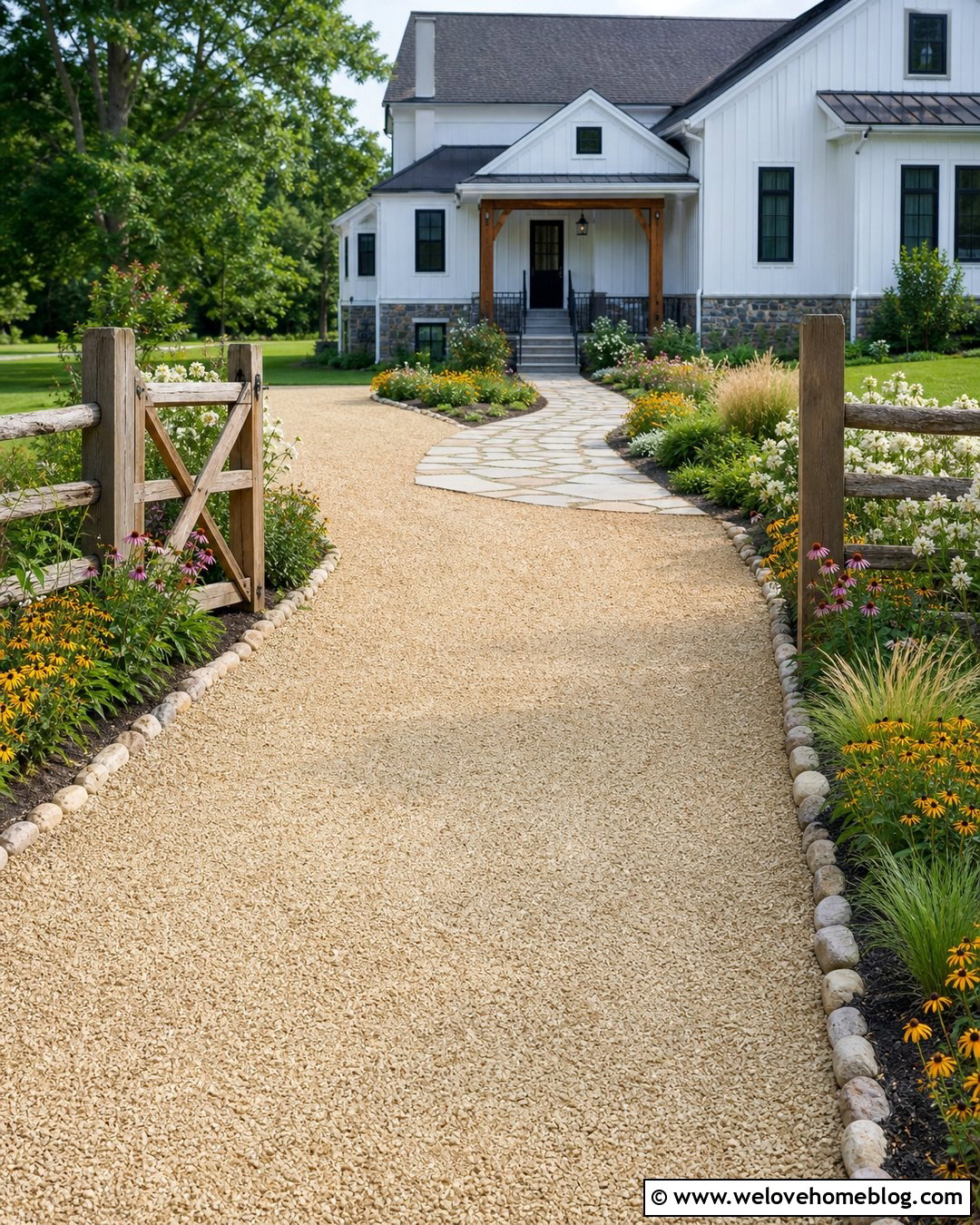
For a modern farmhouse, combine warm crushed limestone with a broad natural stone walkway. A straight driveway can lead toward a detached garage or side-entry parking area, while the path branches gently toward the main porch. Use irregular buff flagstones with tight joints so the walkway feels rustic but remains visually organized. Chunky fieldstone edging can line the driveway entrance, then transition into lower stone borders near the house. Surround the path with white flowering shrubs, soft green grasses, and loose groups of black-eyed Susans or coneflowers. A split-rail fence and simple timber gate can reinforce the country setting without making the entrance overly formal. Repeat the farmhouse’s foundation stone in the path or edging, creating a strong connection between the architecture, gravel surface, and surrounding landscape.
7. Gravel Driveway With Concrete Walkway
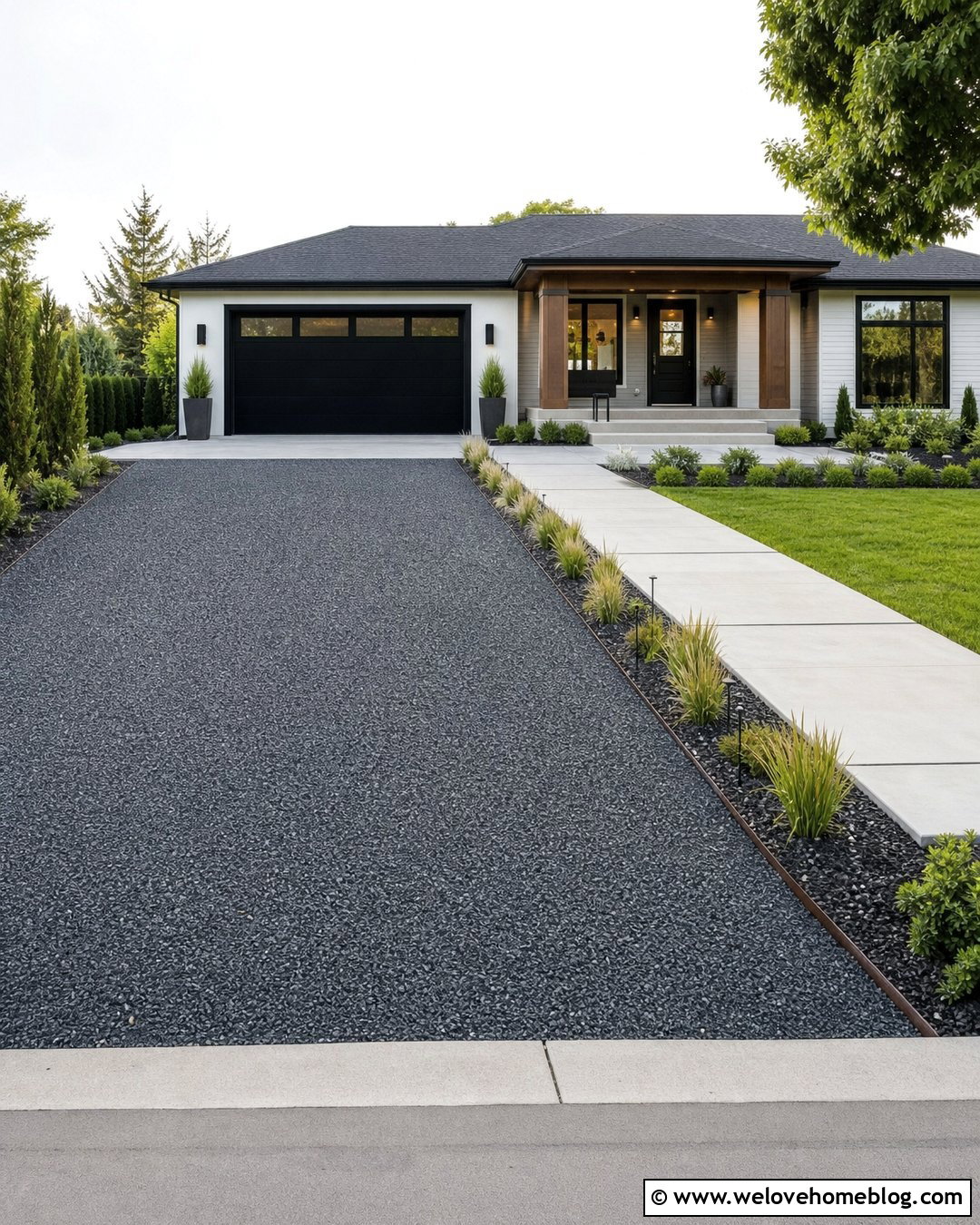
A poured concrete walkway offers a smooth visual counterpoint to the texture of a gravel driveway. Choose charcoal-gray gravel for a wide straight driveway and pale gray concrete for a path running from the curb to the front door. Rather than placing both routes directly together, leave a narrow planting strip between them. Fill this strip with ornamental grasses, low sedges, or evenly spaced evergreen shrubs. The greenery creates separation and reduces the appearance of one oversized paved area. Use matching concrete bands across the driveway at the street and garage to repeat the walkway finish. Straight steel edging maintains clean gravel lines and complements a contemporary ranch or midcentury home. Keep the path broad and direct, with an expanded landing near the porch for planters, packages, and a more comfortable entrance transition.
8. Gravel Driveway With Cobblestone Path
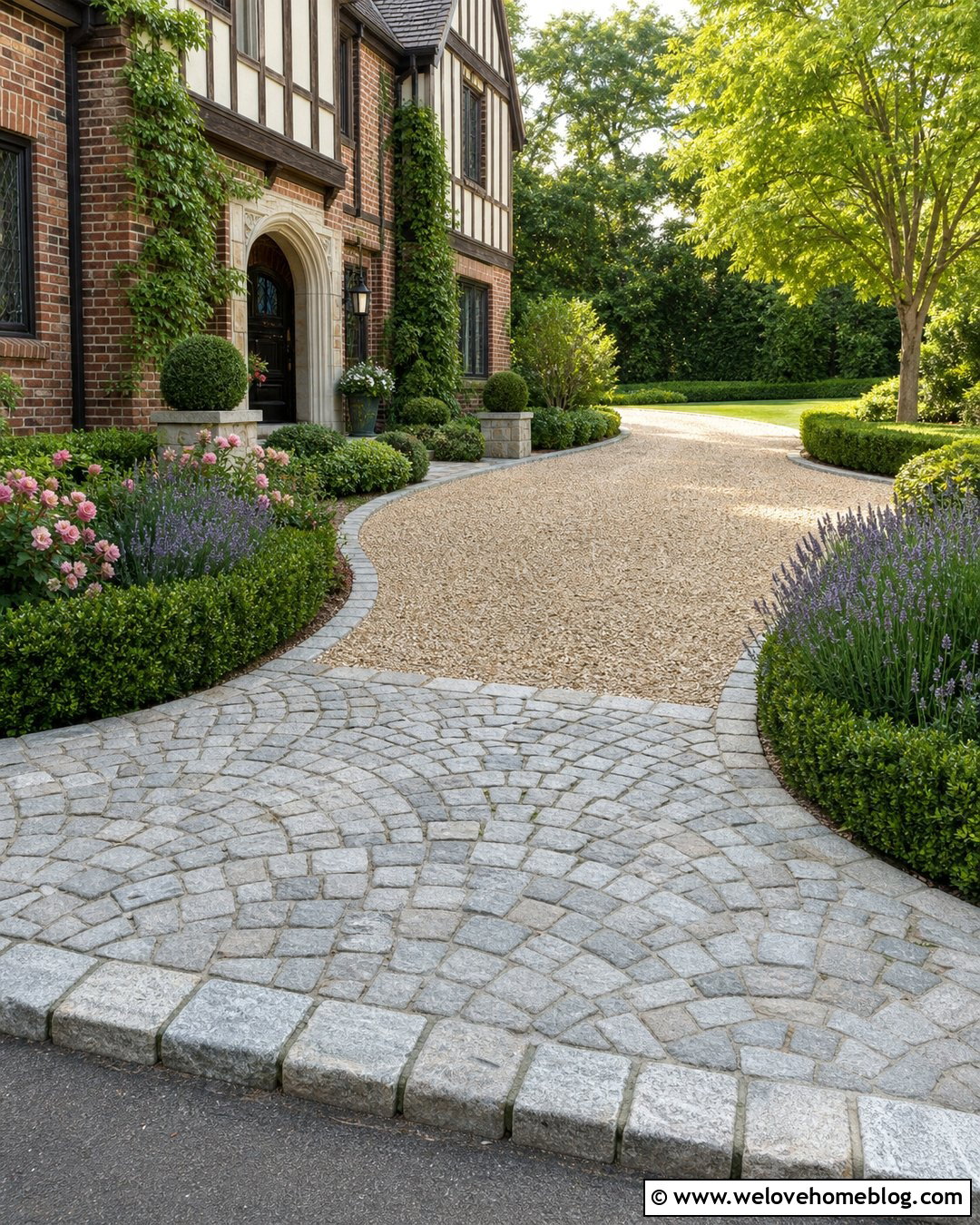
Cobblestone adds old-world character to a gravel driveway without covering the entire frontage in expensive masonry. Begin with light beige gravel in a softly curved driveway, then install a narrower cobblestone path from the parking area to the front steps. Gray granite setts provide a durable-looking contrast and can be arranged in gentle fan patterns near the porch. Use matching cobblestones as the driveway border and as an apron where the gravel meets the road. Stone edging is also useful for visually defining loose-gravel paths and limiting movement into surrounding beds. () Complete the setting with clipped hedges, roses, lavender, and a small ornamental tree. This combination works especially well with brick Colonial, Tudor, or European-inspired homes where natural stone details already appear in the facade.
9. Gravel Driveway With Garden Path
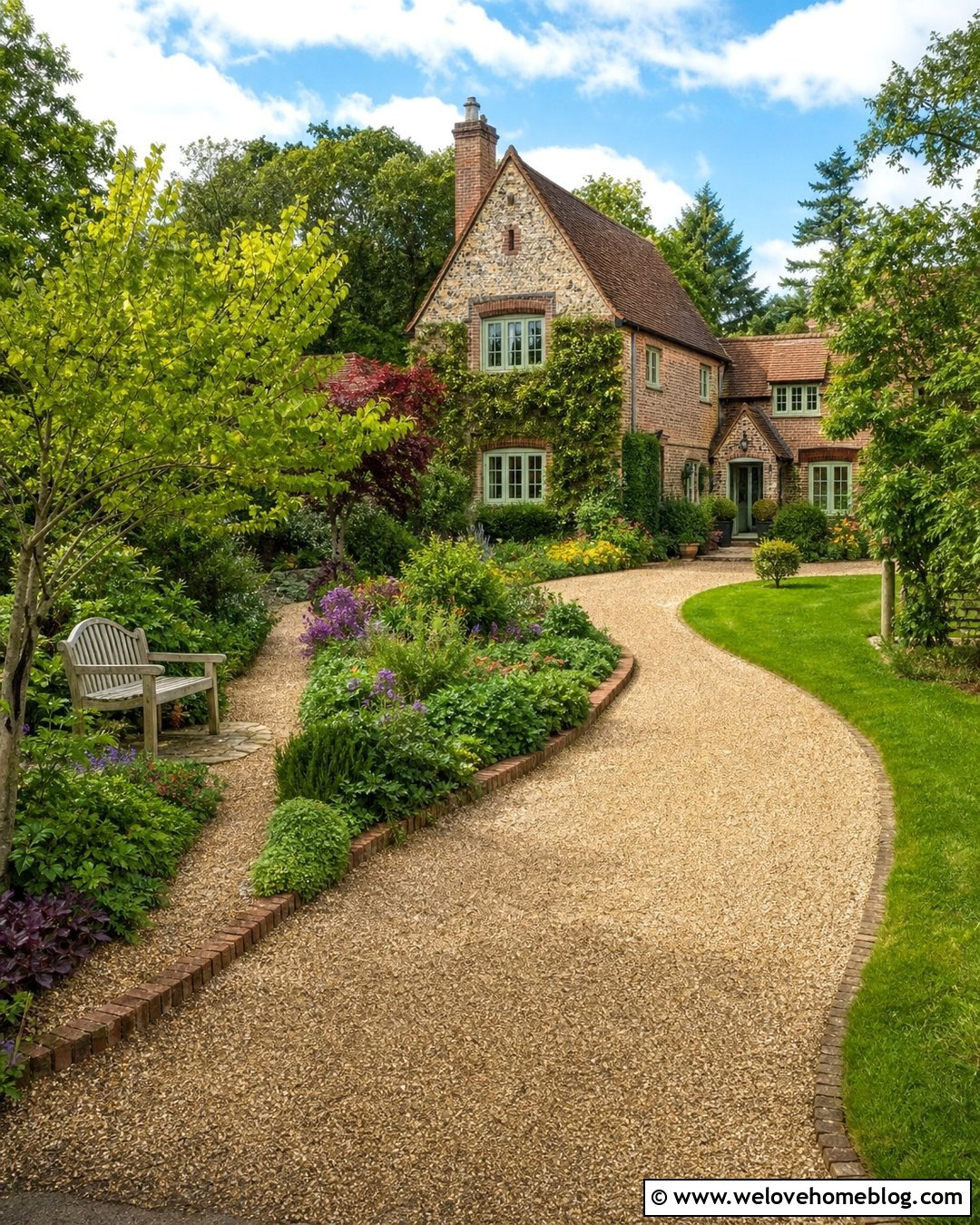
A garden path can turn the walk from the driveway into a small landscape experience. Use golden gravel for a gently curved parking approach, then create a narrower path that winds through deep planting beds toward the front door. Keep the path material slightly finer than the driveway gravel so it feels comfortable and visually distinct. Rustic brick edging or slim steel strips can hold its curves. Layer the garden with low ground covers near the path, flowering perennials through the middle, and taller shrubs toward the property boundary. Add one or two small trees to create overhead structure without blocking the house. The path should remain easy to follow, even when plants mature. A modest widening near a bench, gate, or porch gives the route a purposeful pause and helps the landscape feel planned.
10. Circular Gravel Driveway With Front Path
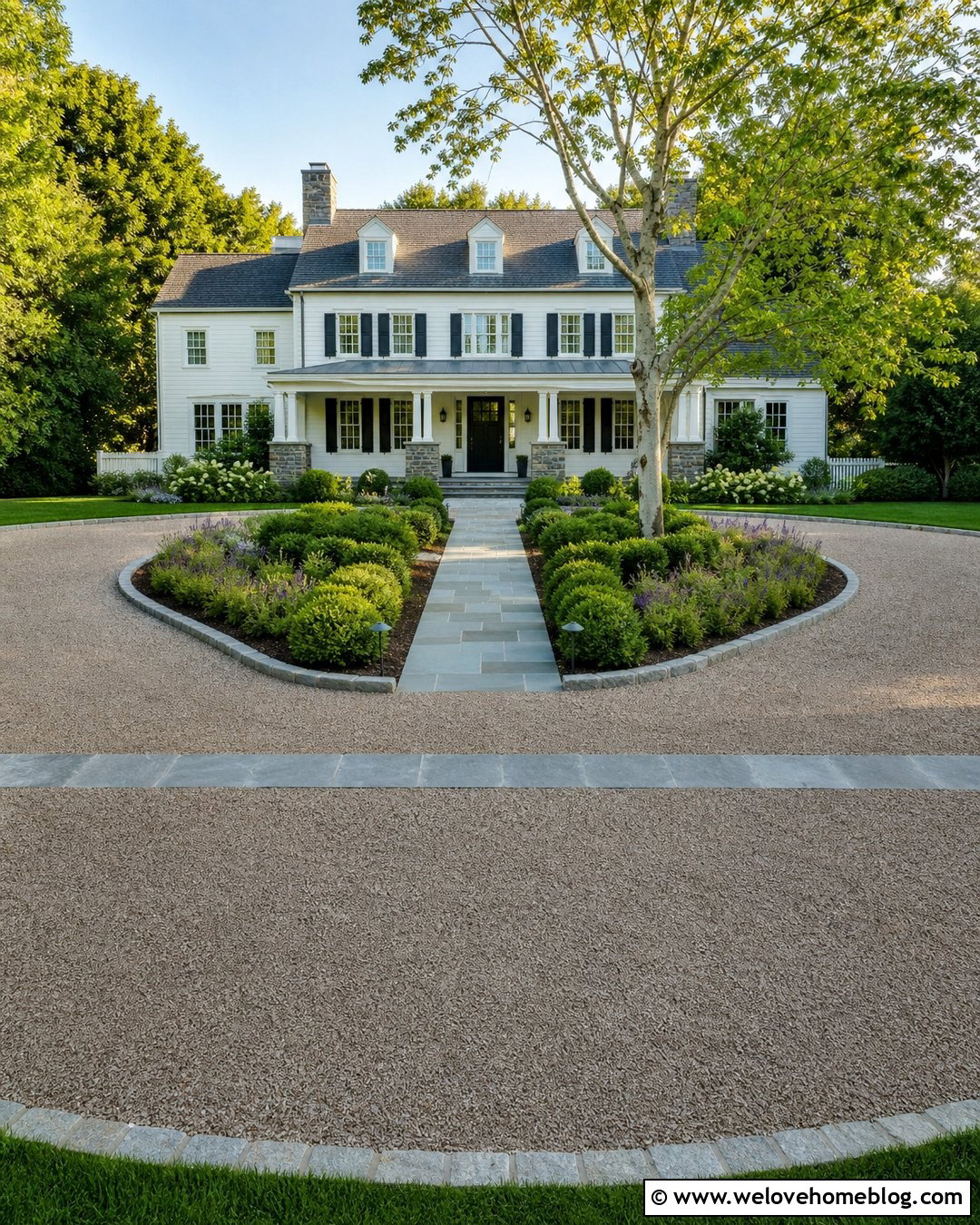
A circular gravel driveway needs a direct pedestrian connection so visitors do not have to walk around the vehicle loop. Cover the driveway with compacted gray-brown gravel and create a straight bluestone path through the center island. Align the walkway with the front door for a balanced, formal view from the street. Low granite curbing can define the circular drive, while matching stone edges frame the central path. Landscape the island with a small specimen tree, clipped shrubs, and low seasonal flowers that will not obstruct the entrance. If the path crosses the driving lane, continue the bluestone as a flush band across the gravel. This detail makes the walking route easy to recognize and visually links the landscaped island with the porch, pillars, and main facade.
11. Small Gravel Driveway With Narrow Path
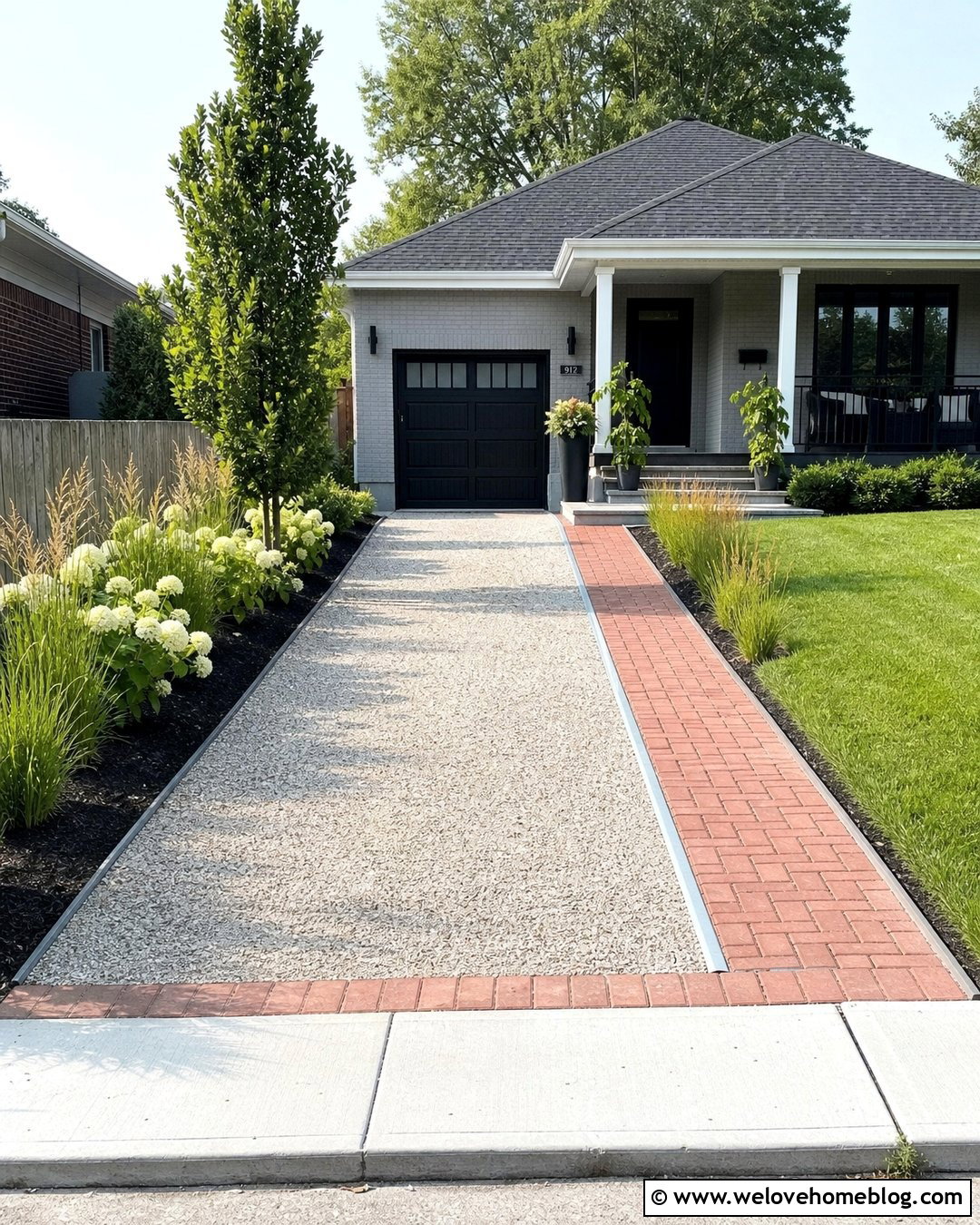
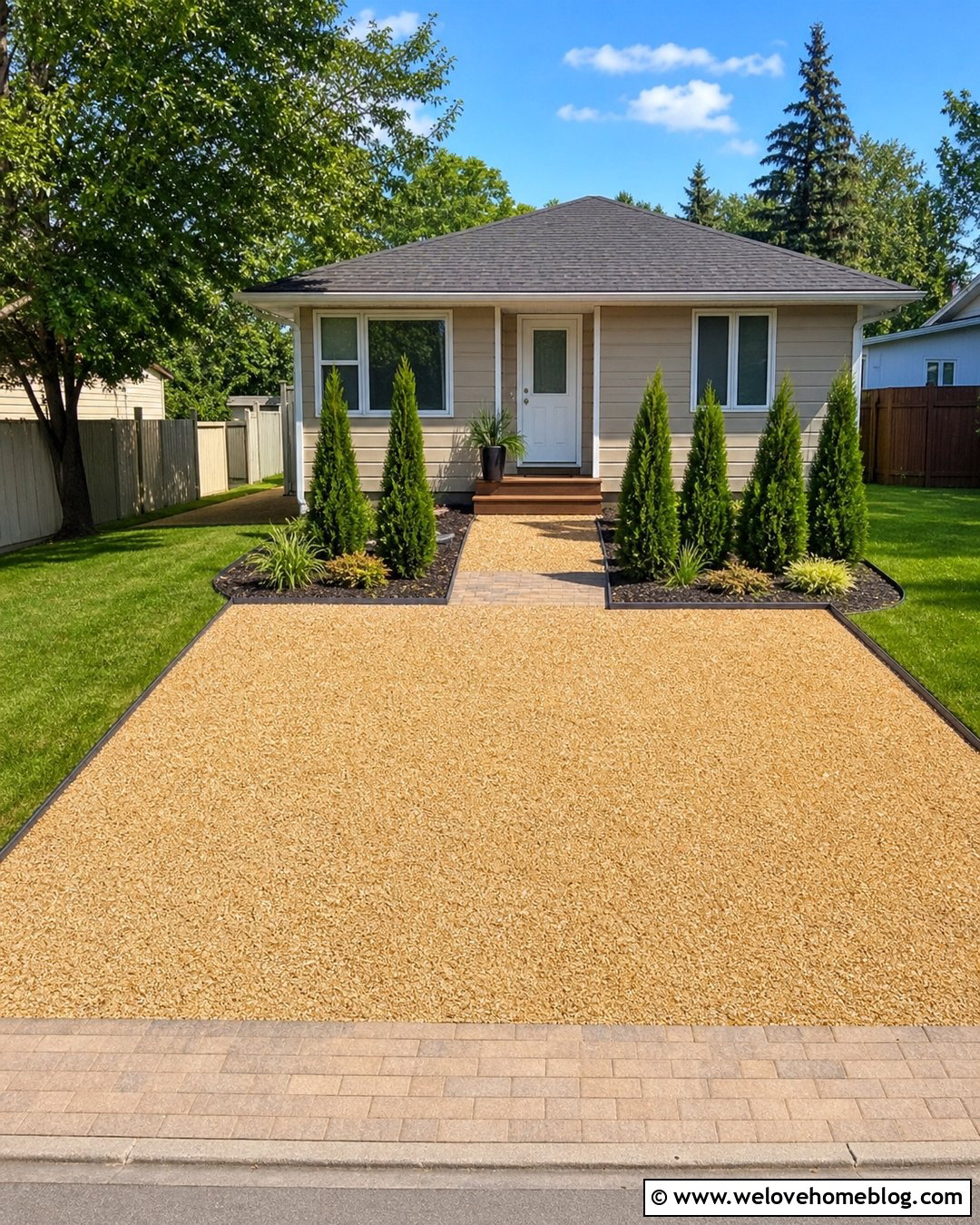
Limited front-yard space can still support a separate driveway and walkway when the materials remain simple. Use compacted light-gray gravel for a single-car driveway and place a narrow brick path directly beside it. Set the bricks lengthwise to make the path appear longer, then use a flush metal divider to prevent gravel from covering the walking surface. Along the property line, create one slim planting bed with upright grasses, compact hydrangeas, and a narrow ornamental tree. The opposite driveway edge can meet a clean lawn or low ground cover. Continue the brick path across the front of the garage to connect it with the porch. A coordinated brick threshold and small wall-mounted address sign will add detail without consuming valuable ground space, making the compact frontage feel orderly and welcoming.
12. Long Gravel Driveway With Curved Path
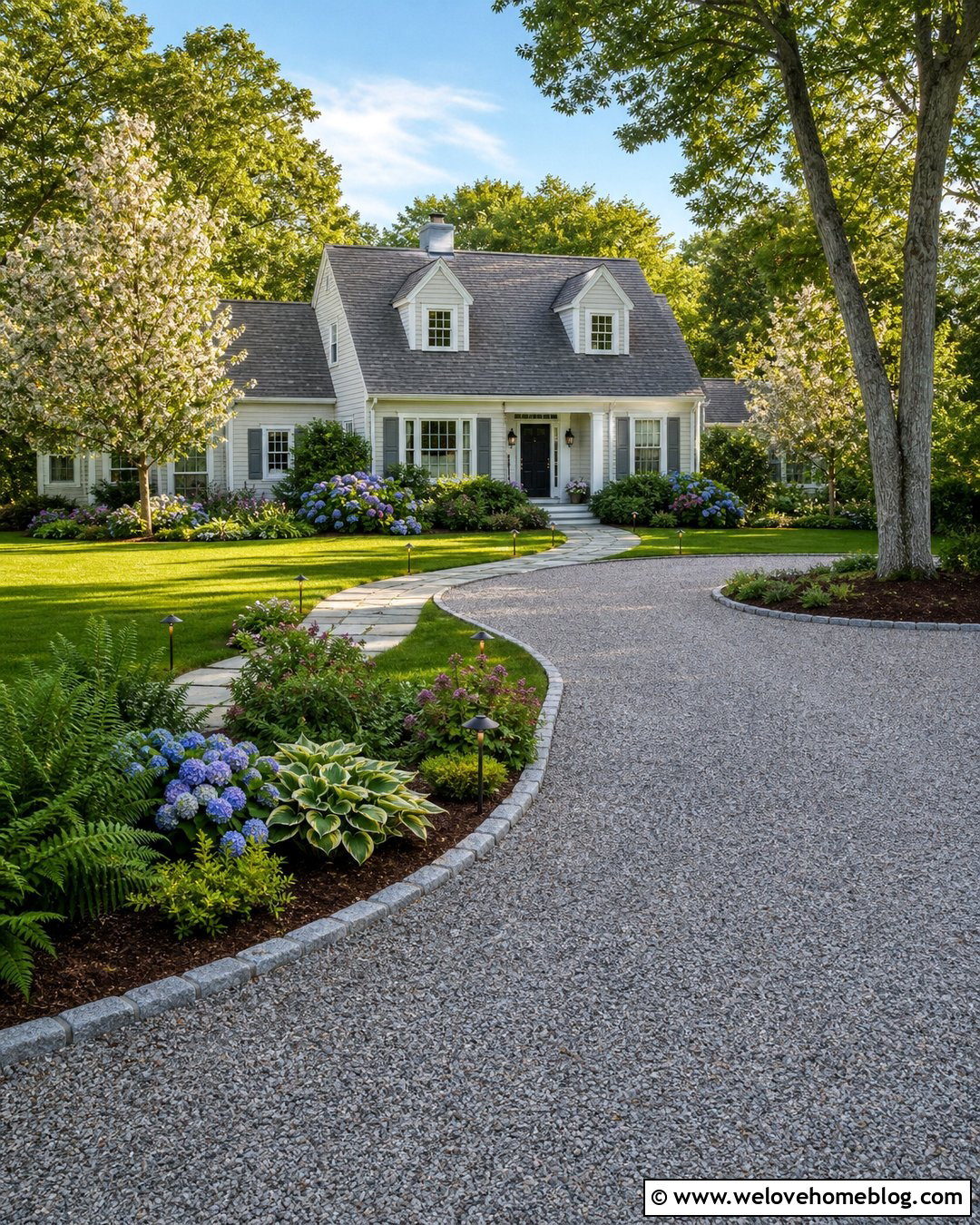
At the end of a long gravel driveway, a sweeping path can soften the transition from arrival area to front entrance. Use warm gray crushed stone for the drive and create a generous turnaround near a country or Cape Cod home. From that space, lead a curved flagstone path through a broad lawn and toward the porch. Edge the driveway with granite blocks, but allow the path to have a softer planted edge. Groups of hydrangeas, ferns, hostas, and small flowering trees can follow the inside curve. Use repeated low-voltage path lights rather than one intense fixture, keeping the route visually clear without overwhelming the landscape. The path should begin at a logical unloading point and avoid crossing the main turning area, creating a safer-looking and more intuitive approach for guests.
13. Gravel Driveway With Timber Path Edging
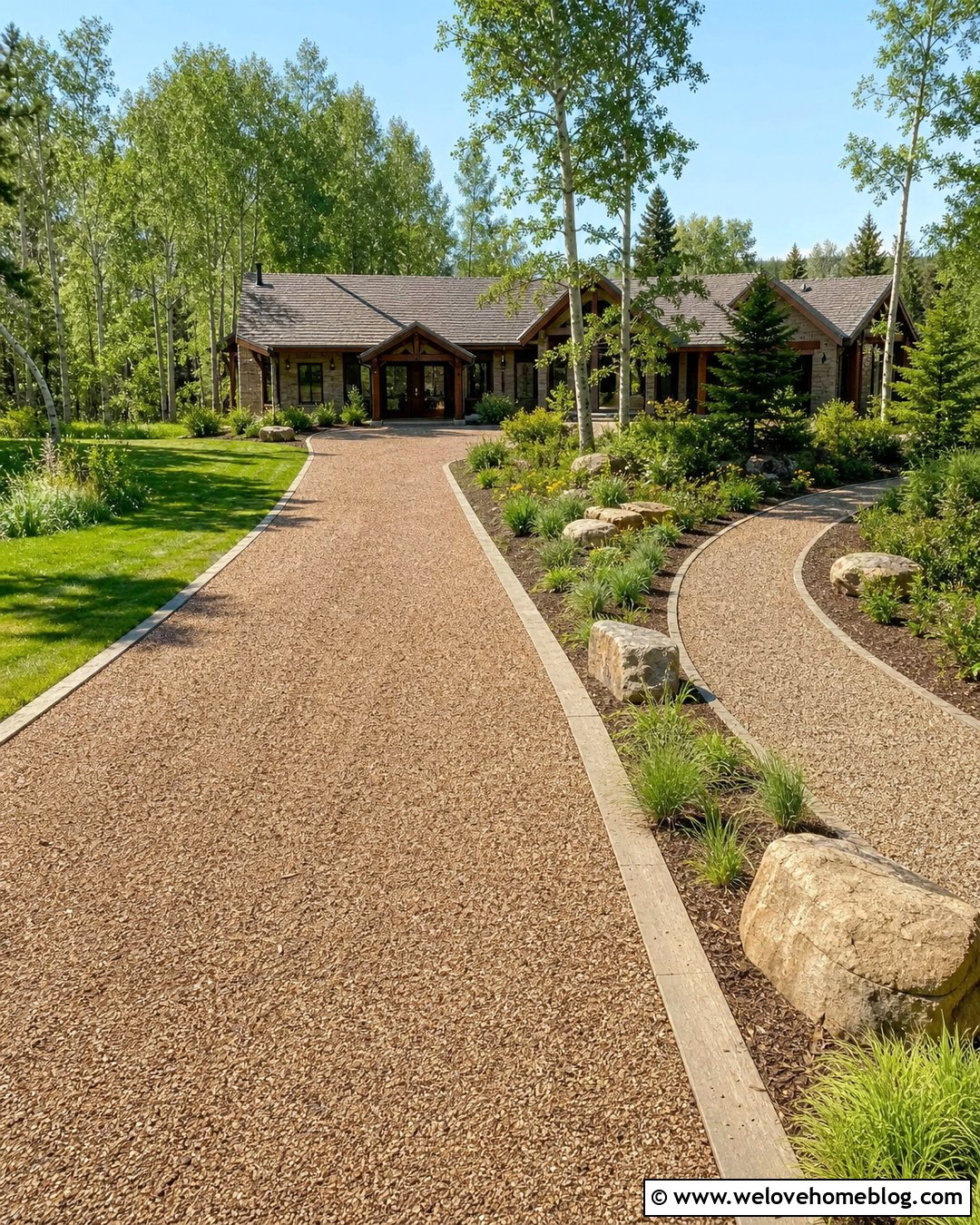
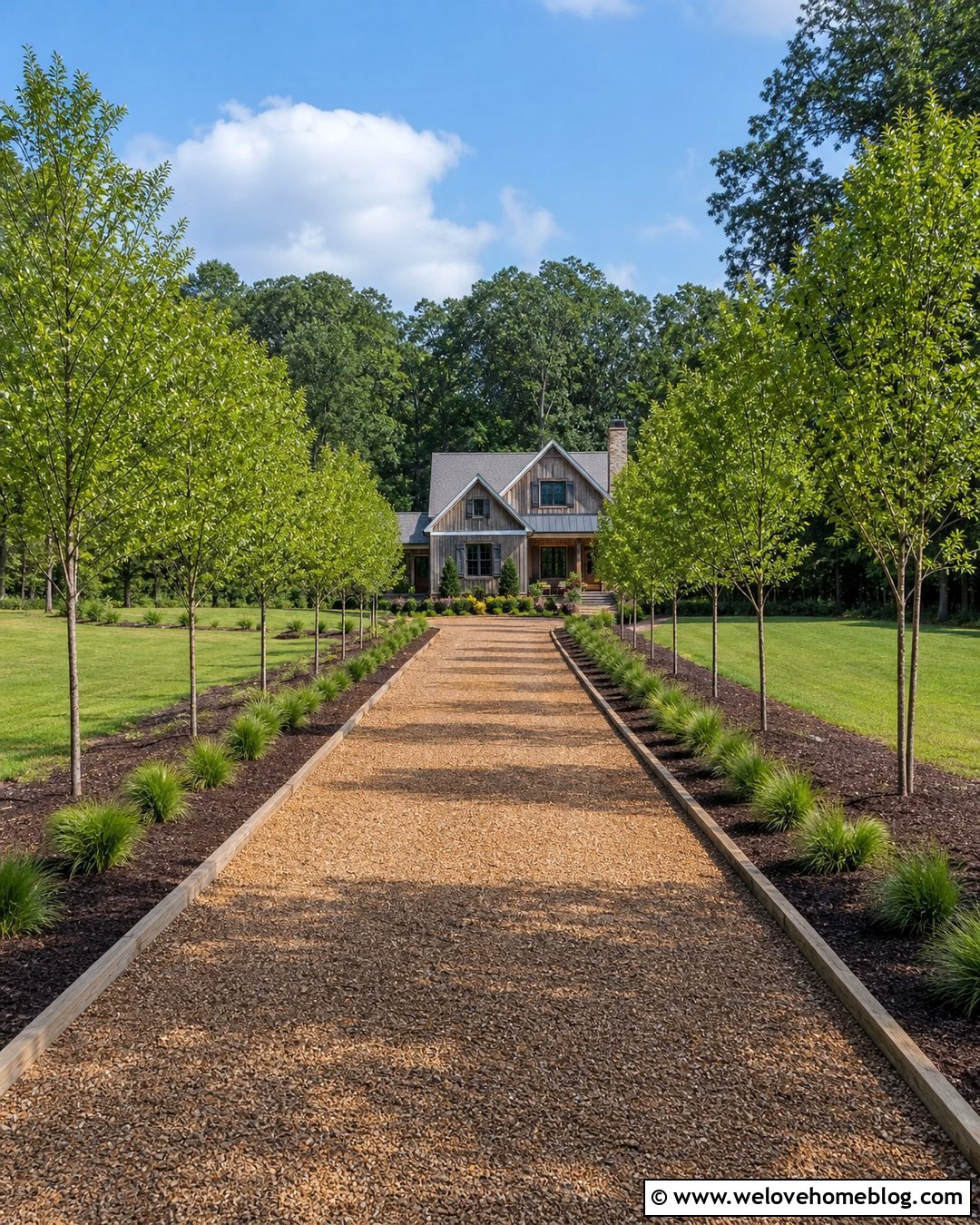
Timber edging brings relaxed, natural structure to a gravel driveway and connecting path. Select earthy brown crushed gravel and use pressure-treated landscape timbers to define a straight driveway leading toward a rustic ranch or cabin-inspired home. A narrower gravel path can branch from the drive and curve gently around a planting bed. Use the same gravel on both surfaces, but choose smaller stone for the path and place timber on each side to show where walking begins. Edging is especially important with loose gravel because it helps keep the material within the intended route. () Add native grasses, evergreen shrubs, woodland perennials, and rough natural rocks around the curves. Keep the timber nearly flush with the gravel for a subtle finish and easier transitions between adjoining areas.
14. Gravel Driveway With Brick Ribbon Path
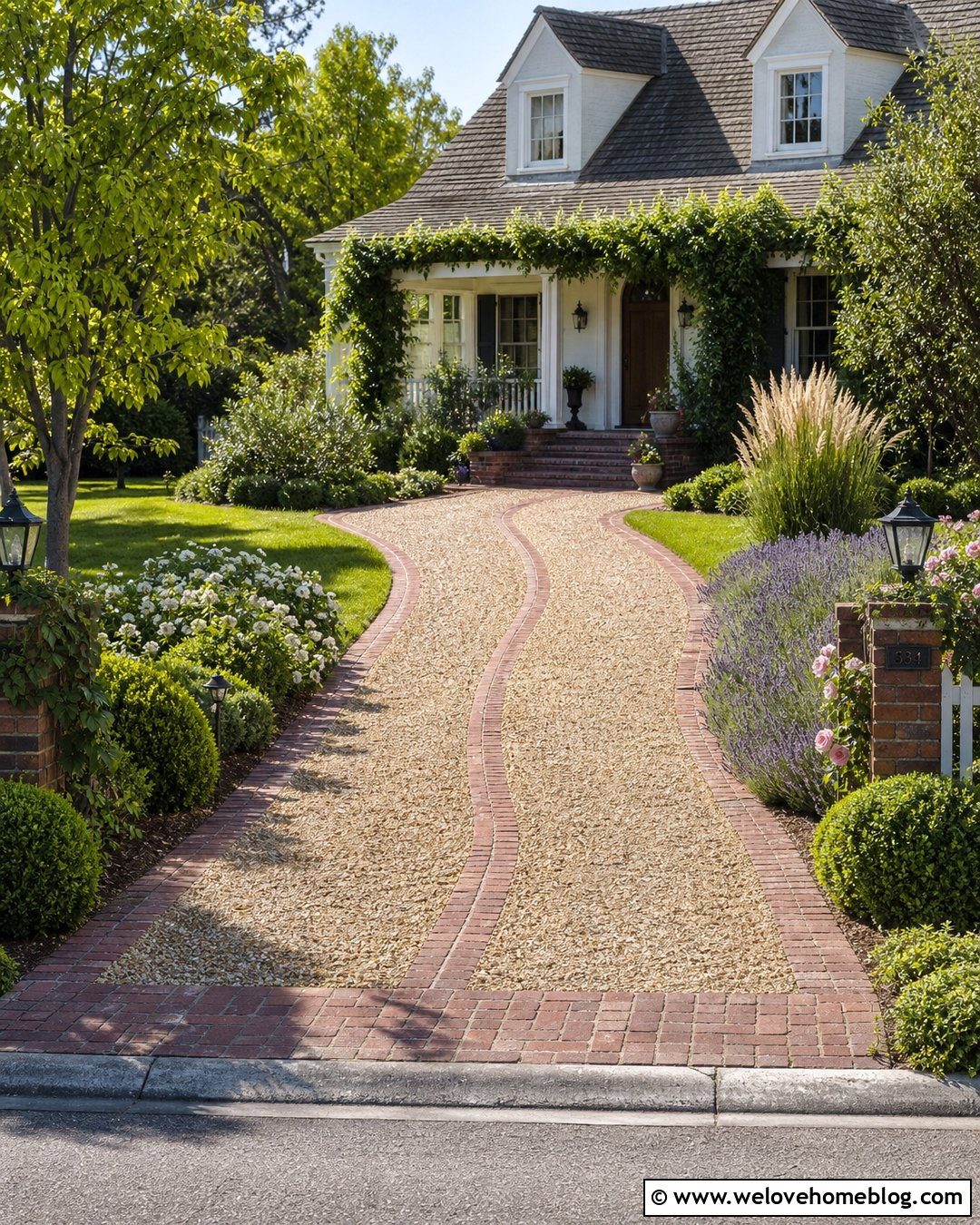
A brick ribbon can form a distinctive walkway without visually separating it from the gravel driveway. Start with pale buff gravel and install two parallel brick lines with compacted gravel between them. The paired ribbons clearly outline the pedestrian route while preserving the light, informal quality of the loose surface. Let the path run beside a straight driveway, then curve toward a cottage or traditional porch. Use the same red or weathered brick as a border along the driveway and across its entrance. Plant lavender, roses, boxwood, and soft ornamental grasses in the spaces surrounding the curved section. Repeating brick at the porch steps will strengthen the design. This approach offers more visual structure than an unbordered gravel path while using less masonry than a fully paved walkway.
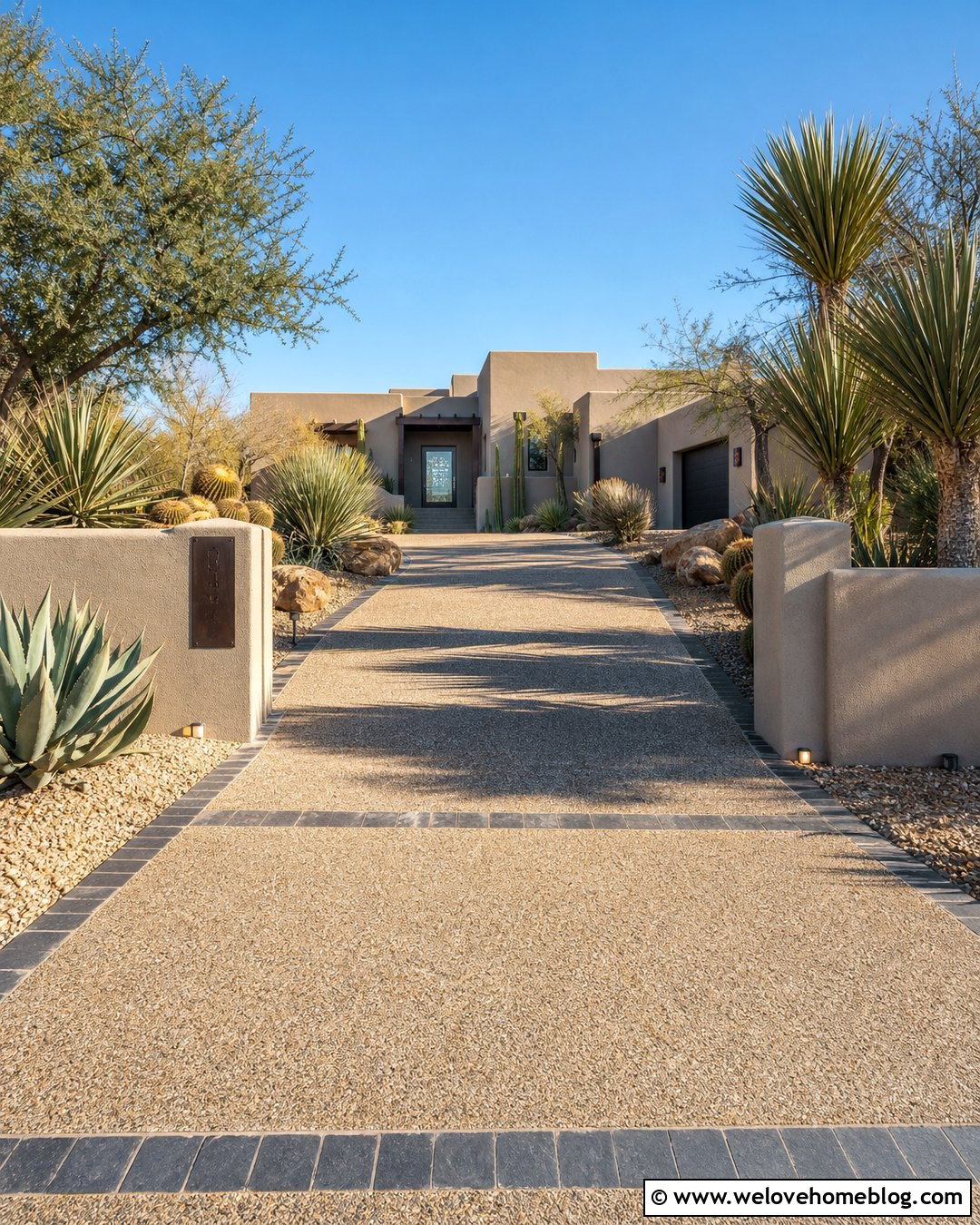
15. Black Gravel Driveway With Light Stone Path
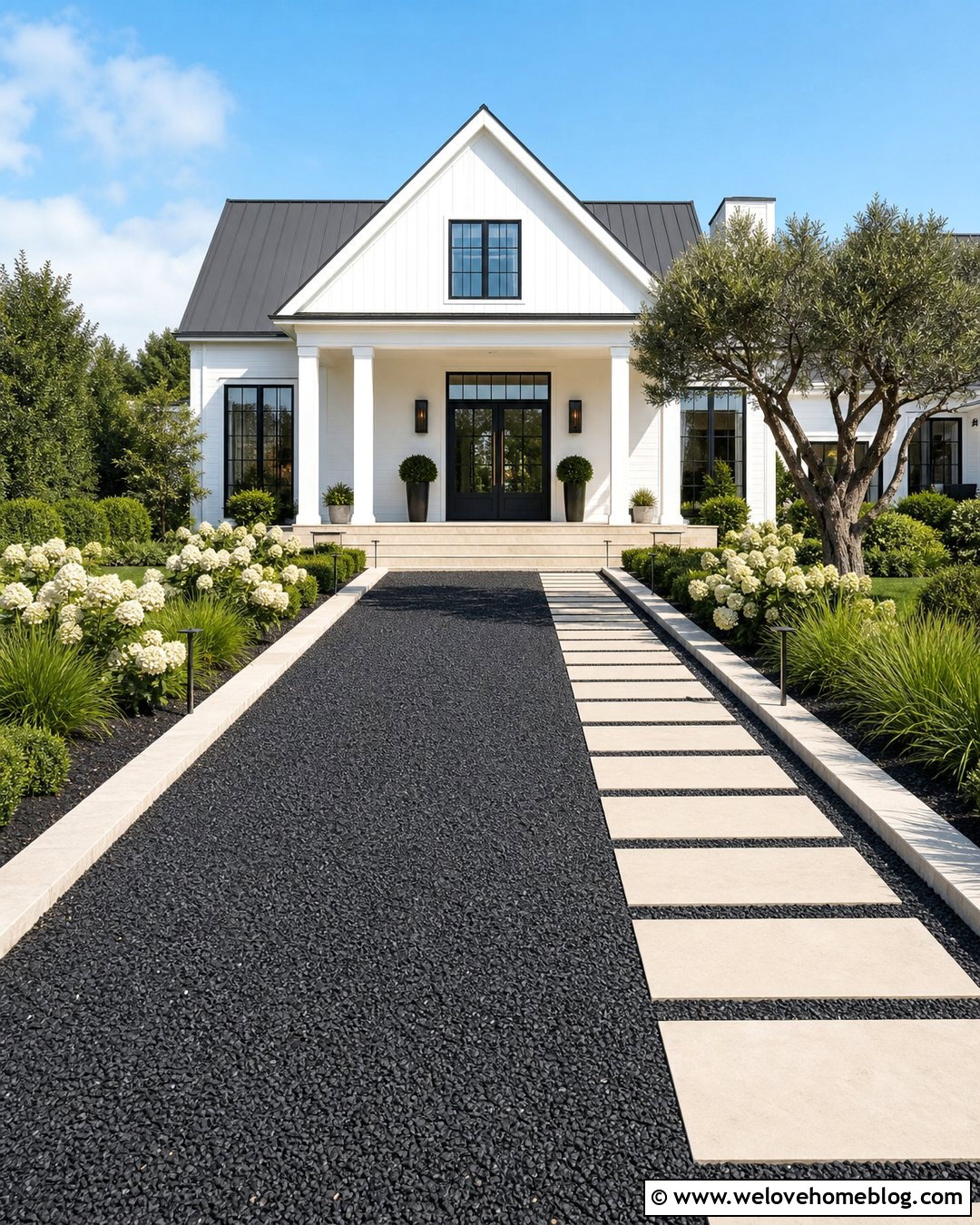
Dark gravel can create a dramatic foundation when paired with a pale stone path and restrained landscaping. Choose charcoal basalt or dark crushed granite for a straight driveway leading to a white modern farmhouse or contemporary home. Install large cream limestone pavers along one side, leaving narrow gravel joints between each slab. Pale stone curbing can outline the driveway and repeat the path color at the street entrance. Keep the planting palette simple with white hydrangeas, green grasses, clipped evergreens, and one sculptural tree. This allows the contrast between the black gravel, light walkway, and house facade to remain the main feature. Add slim black path lights beside the pale slabs and carry the limestone into a wide porch landing for a polished, connected finish.
16. Gravel Driveway With Grass Strip Path
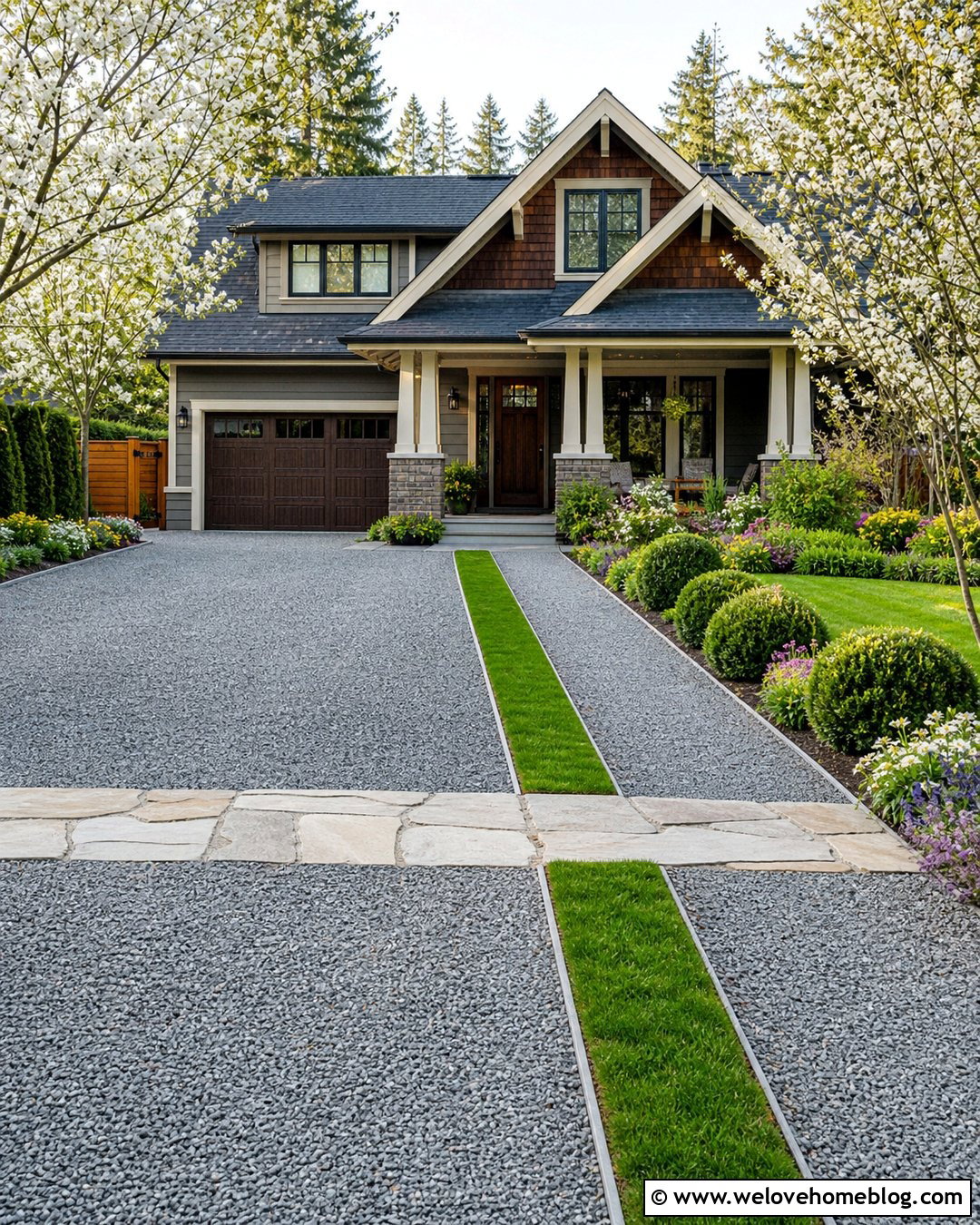
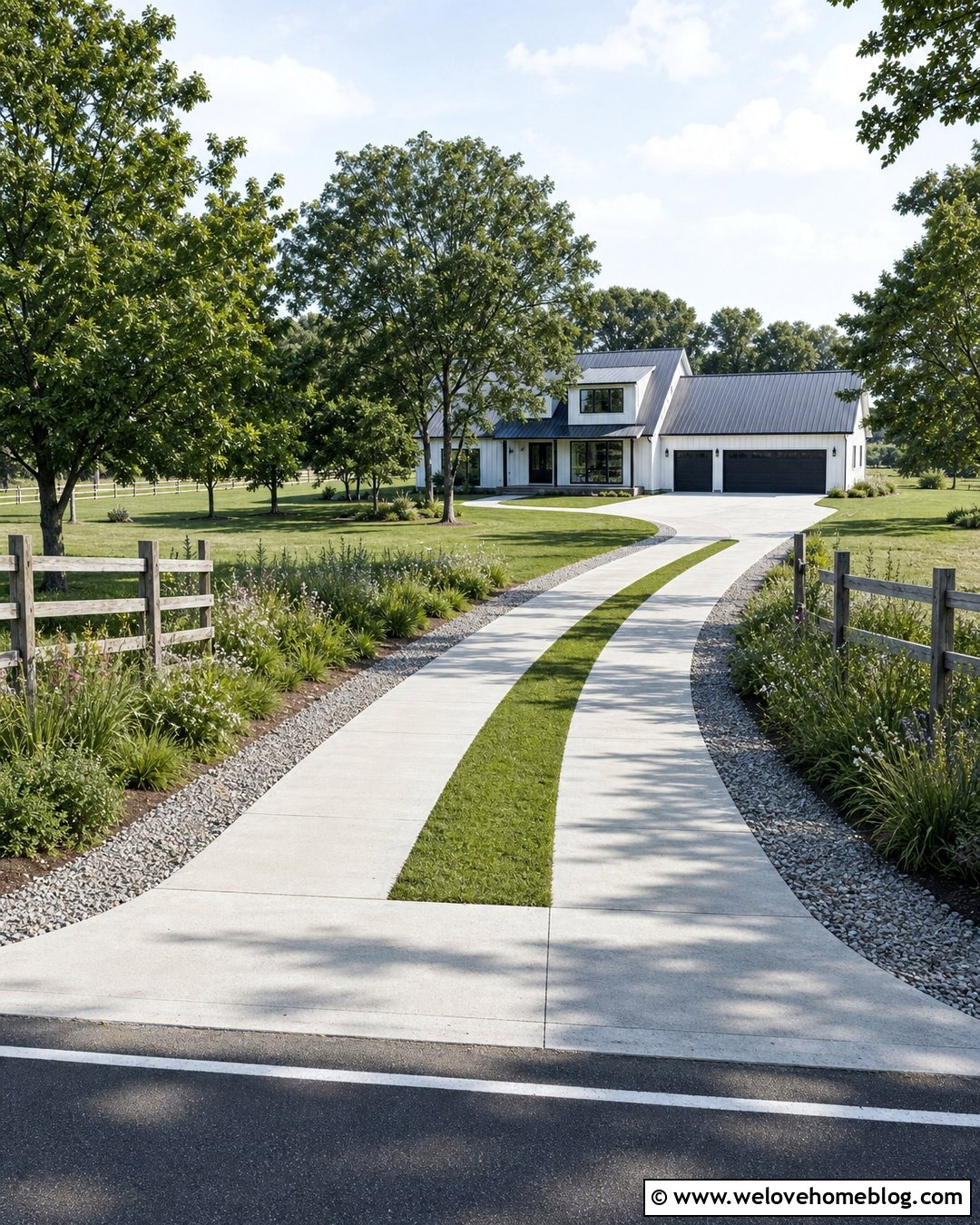
Green grass strips can give a gravel driveway and path a softer, more spacious appearance. Use medium-gray gravel for a wide driveway, then separate a matching gravel walkway with a narrow band of lawn. The path can run parallel to the drive before bending toward a Craftsman or suburban ranch entrance. Steel edging on both sides of the grass maintains clear lines and reduces the chance of gravel mixing into the turf. Make the planted strip wide enough to read as an intentional landscape feature rather than a leftover gap. Add small flowering trees, rounded shrubs, and seasonal perennials along the path’s outer edge. Where the walkway crosses the driveway, install a short line of large stone pavers. This keeps the walking route visually continuous while introducing a practical transition through the loose gravel.
17. Gravel Driveway With Decomposed Granite Path
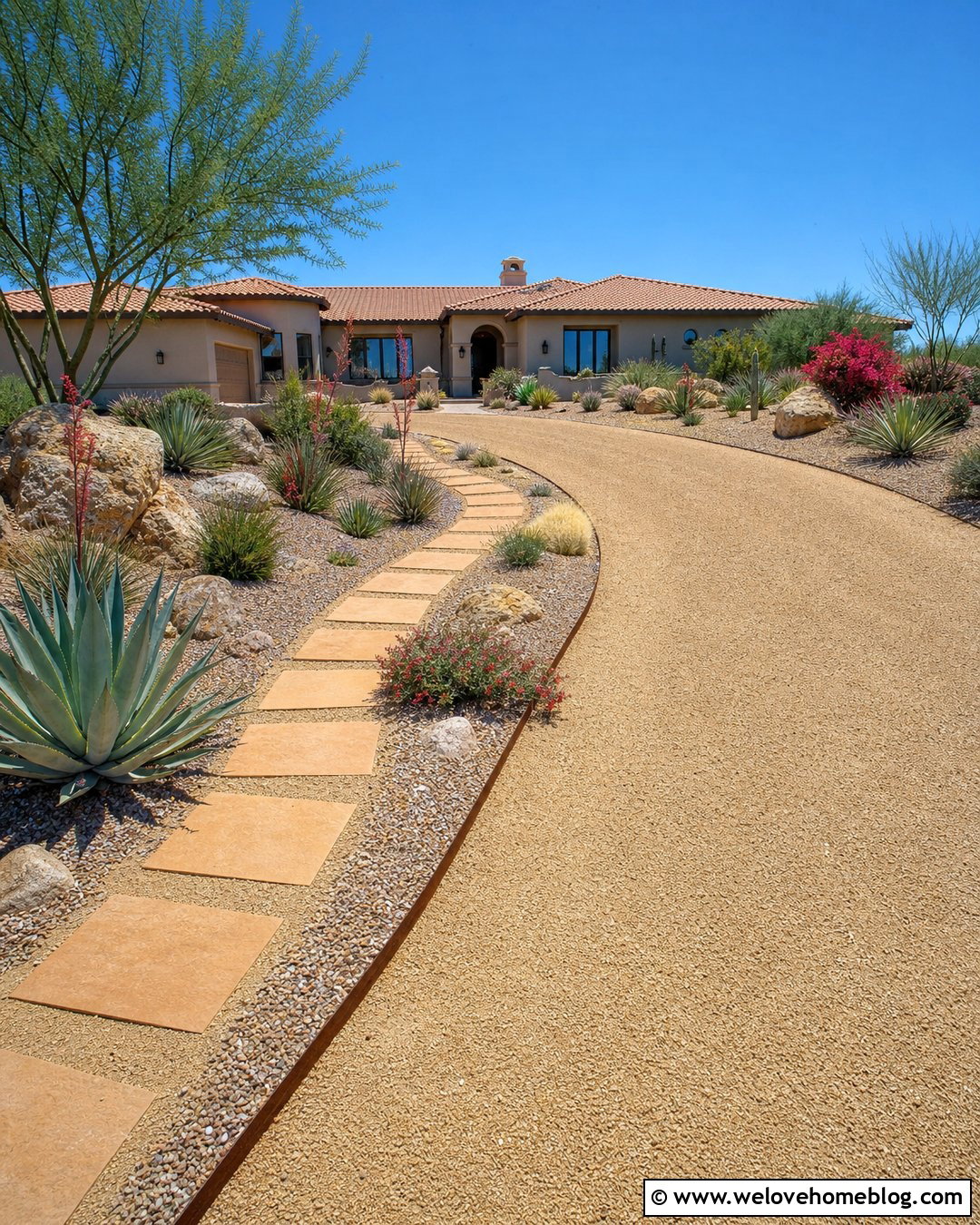
A decomposed granite path pairs naturally with a gravel driveway while providing a smoother-looking pedestrian surface. Use larger tan crushed gravel for the driveway and finely compacted gold decomposed granite for a curved path leading to a Southwestern, adobe-inspired, or contemporary ranch home. Separate the materials with slim rust-colored steel edging so their textures remain distinct. Add rectangular sandstone stepping pads near the front door where traffic is highest. Surround the layout with drought-tolerant plants such as agave, yucca, red yucca, desert grasses, and compact flowering shrubs. Large boulders can anchor the bends and reinforce the natural color palette. Because slopes and runoff can move loose fines, the layout should follow gentle contours and include secure edging rather than sending the path directly down a steep grade.
18. Gravel Driveway With Paver Grid Path
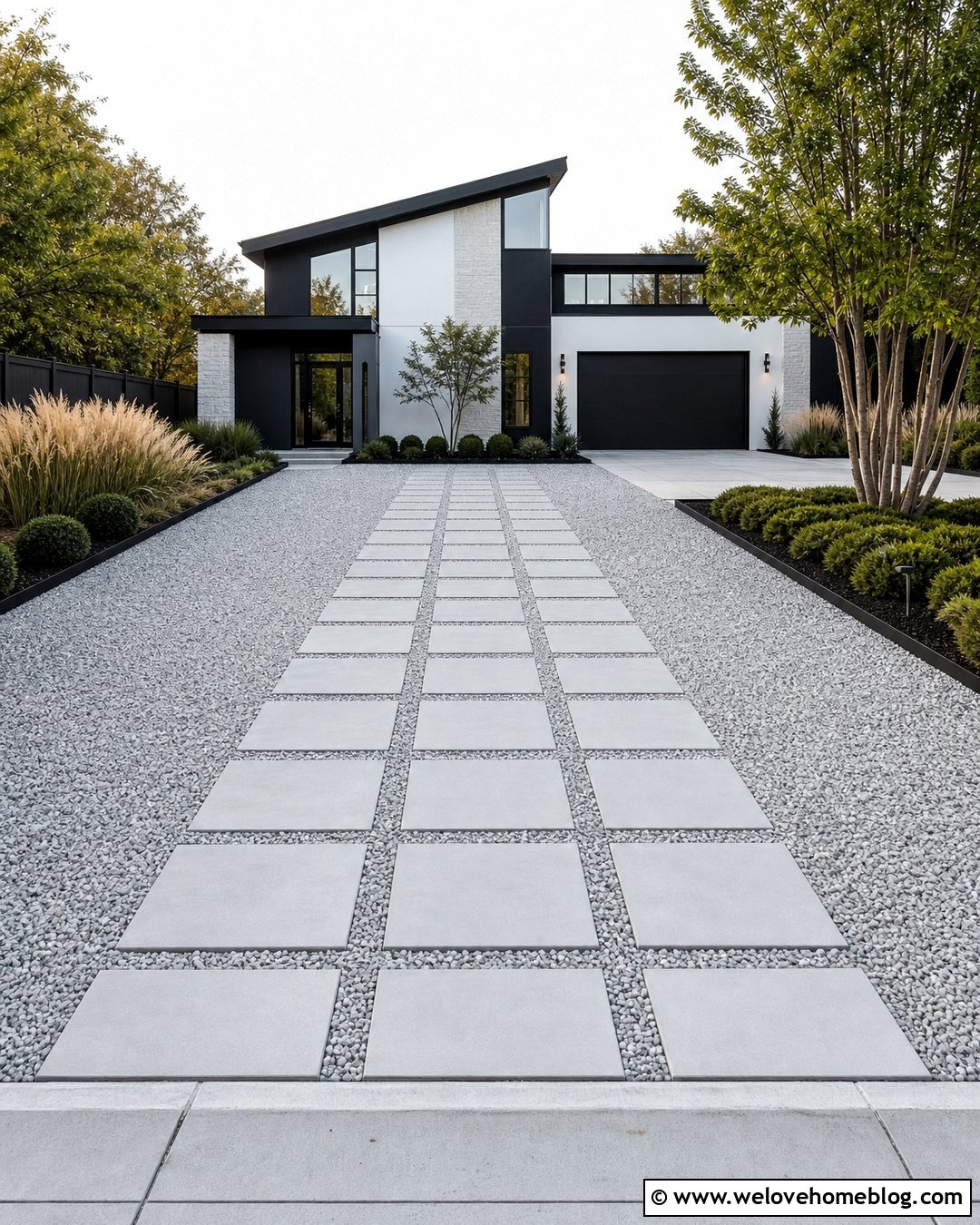
A paver grid creates a modern walking route that looks integrated with a loose gravel surface. Cover a broad driveway with pale gray angular gravel, then set large square concrete pavers in an evenly spaced line from the curb to the porch. Continue the driveway gravel around the slabs, but outline the full path with narrow black steel edging. The repeated squares establish a clear visual rhythm while preserving the permeable-looking character of the frontage. Use a slightly offset arrangement if the architecture is asymmetrical, or center the pavers on the front door for a formal layout. Frame the path with massed ornamental grasses, low evergreen mounds, and one multi-stem tree. A concrete apron near the garage can repeat the paver color and provide a clean visual transition from gravel to the building.
19. Gravel Driveway With Split Front Path
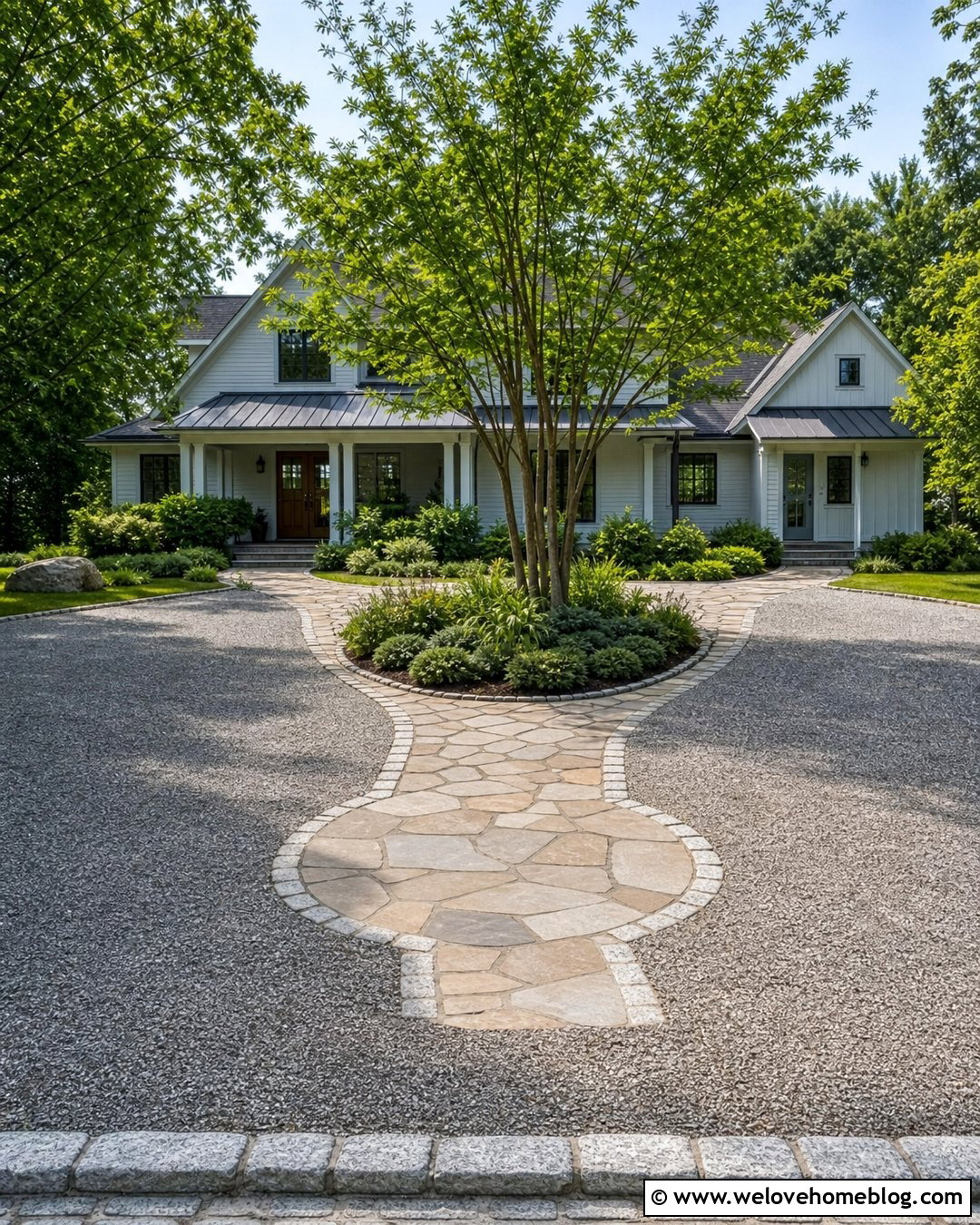
A split path makes sense when a gravel driveway serves more than one entrance. Use warm gray gravel for a broad parking area, then create a central flagstone walkway that divides toward the front porch and side mudroom. Mark the split with a circular stone landing or a small planted island containing a multi-stem tree. Granite cobbles can edge the driveway, path, and central feature, visually tying the different routes together. Keep the main branch wider so visitors naturally recognize the formal entrance. The secondary path can be narrower and more direct for everyday household use. Add low shrubs near the path junction and taller plants along the outer boundaries. Consistent stone colors and clear destination points prevent the branching layout from looking confusing or overly busy.
20. Gravel Driveway With Covered Entry Path
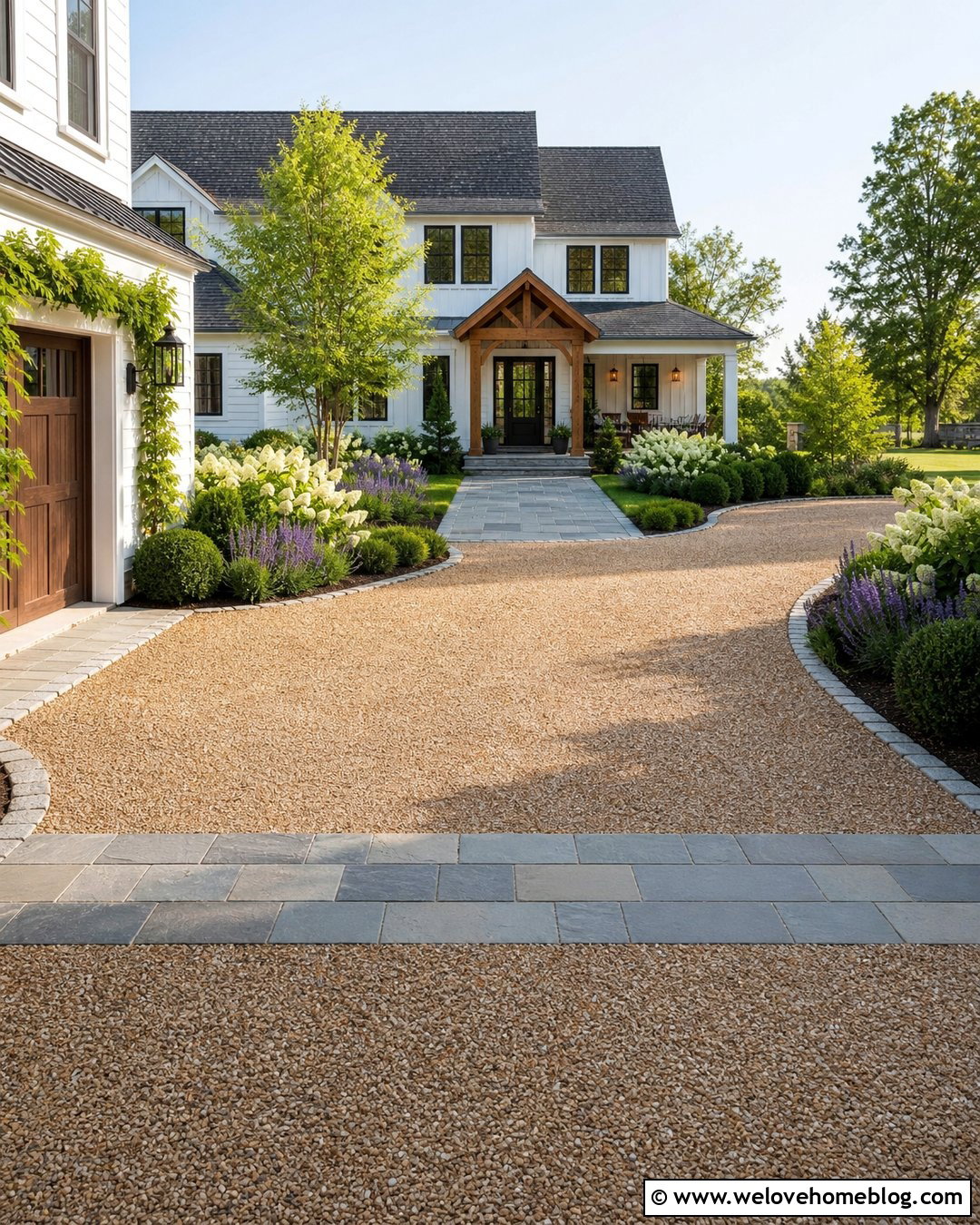
A covered path provides a polished final connection between a gravel driveway and the house. Begin with light brown pea gravel in a gently curved driveway leading to a traditional or modern farmhouse. From the parking area, create a wide rectangular bluestone path that ends beneath a simple timber pergola or roofed side porch. Use bluestone bands along the driveway edges and across the garage threshold to repeat the walkway material. Climbing greenery can soften the overhead structure, while hydrangeas, salvia, and evergreen shrubs frame the approach at ground level. Keep the covered portion open and bright rather than enclosing it with dense plants. The strong endpoint gives guests an obvious destination, and the combination of loose gravel, solid stone, and shelter makes the entire arrival sequence feel complete.
Conclusion:
The best 20 Gravel Driveway With Path Ideas treat driving, walking, borders, planting, and architecture as parts of one connected front-yard design. Start by choosing gravel that complements the house, then make the path easy to recognize through a contrasting material, different stone size, or defined edging. Consider where guests leave their vehicles and create the shortest comfortable route from that point to the entrance. Brick, flagstone, concrete pavers, cobblestone, and compacted fines can all work beside gravel. Finish the layout with practical transitions, low planting near walking areas, and taller greenery farther back. When every feature supports the same overall look, even an affordable gravel driveway can create memorable curb appeal.

Related posts:

Leave a Reply