
A well-planned driveway can do much more than provide parking. When the paving, borders, plants, pathways, and entrance are designed together, the entire front yard feels more welcoming and intentional. These **20 Driveway And Garden Ideas** explore complete looks for compact suburban lots, spacious country homes, modern properties, and traditional houses. You will find gravel, concrete, brick, asphalt, cobblestone, resin, and permeable surfaces paired with practical garden features. Each design also considers shape, edging, visibility, drainage, maintenance, and comfortable access around parked vehicles. Driveway planting can visually connect a large paved area to the wider landscape instead of leaving it isolated from the yard. () Use these **20 Driveway And Garden Ideas** to create an attractive entrance that works beautifully every day.

1. Gravel Driveway With Cottage Garden Borders
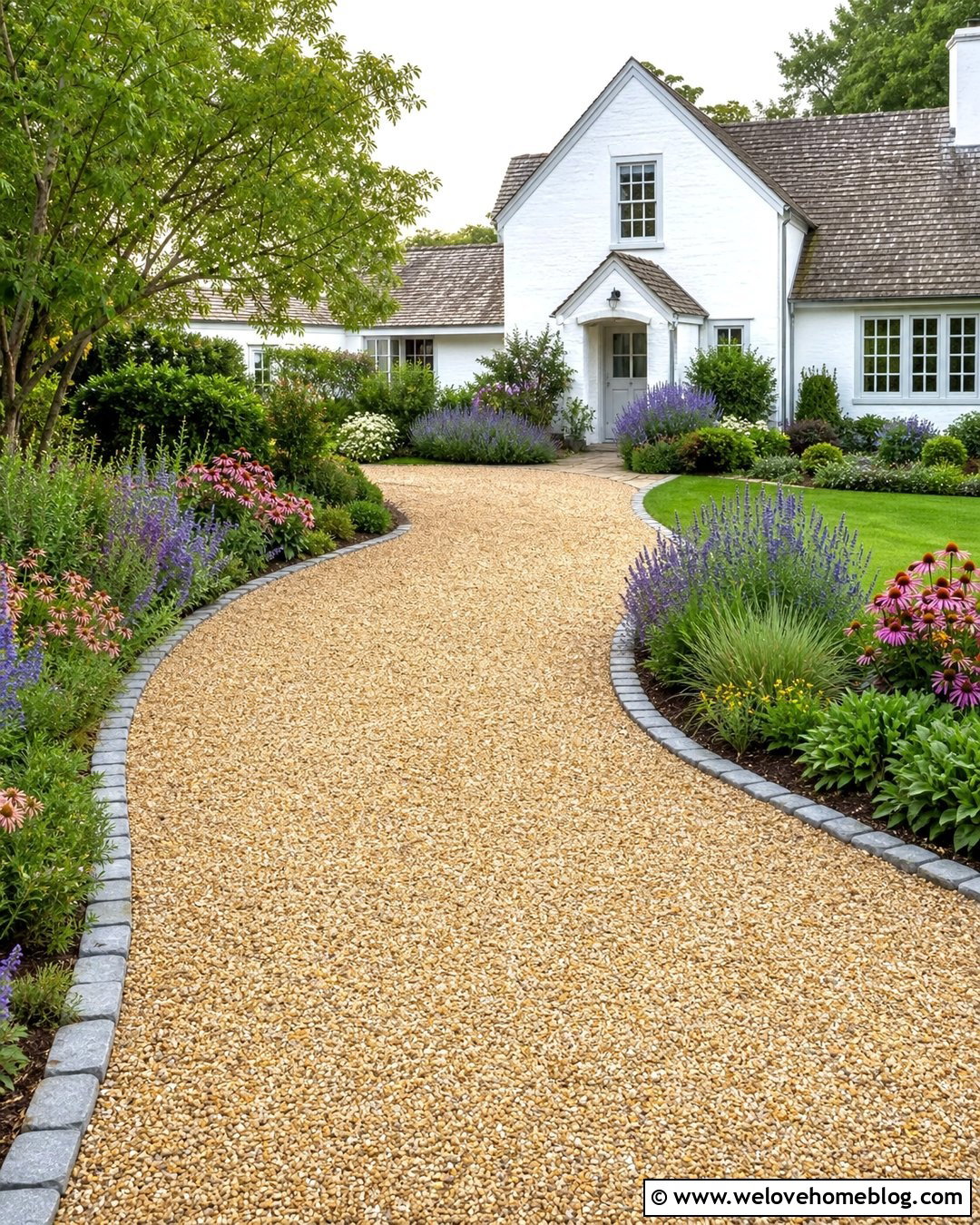
A warm gravel driveway framed by loose cottage planting creates an inviting entrance without looking overly formal. Choose golden pea gravel or buff crushed stone that complements the home’s siding, brick, or natural stonework. A gently curved layout makes the approach feel softer and allows garden beds to widen near the house. Install cobblestone edging to keep gravel away from the soil and provide a durable line beside the planting. Fill the borders with lavender, catmint, coneflowers, salvia, and compact ornamental grasses suited to your climate. Keep plants low near the street so drivers can see pedestrians and traffic clearly. Repeating several varieties along both sides gives the garden continuity while preserving the relaxed, colorful character of a cottage landscape.
2. Concrete Driveway With Modern Grass Beds
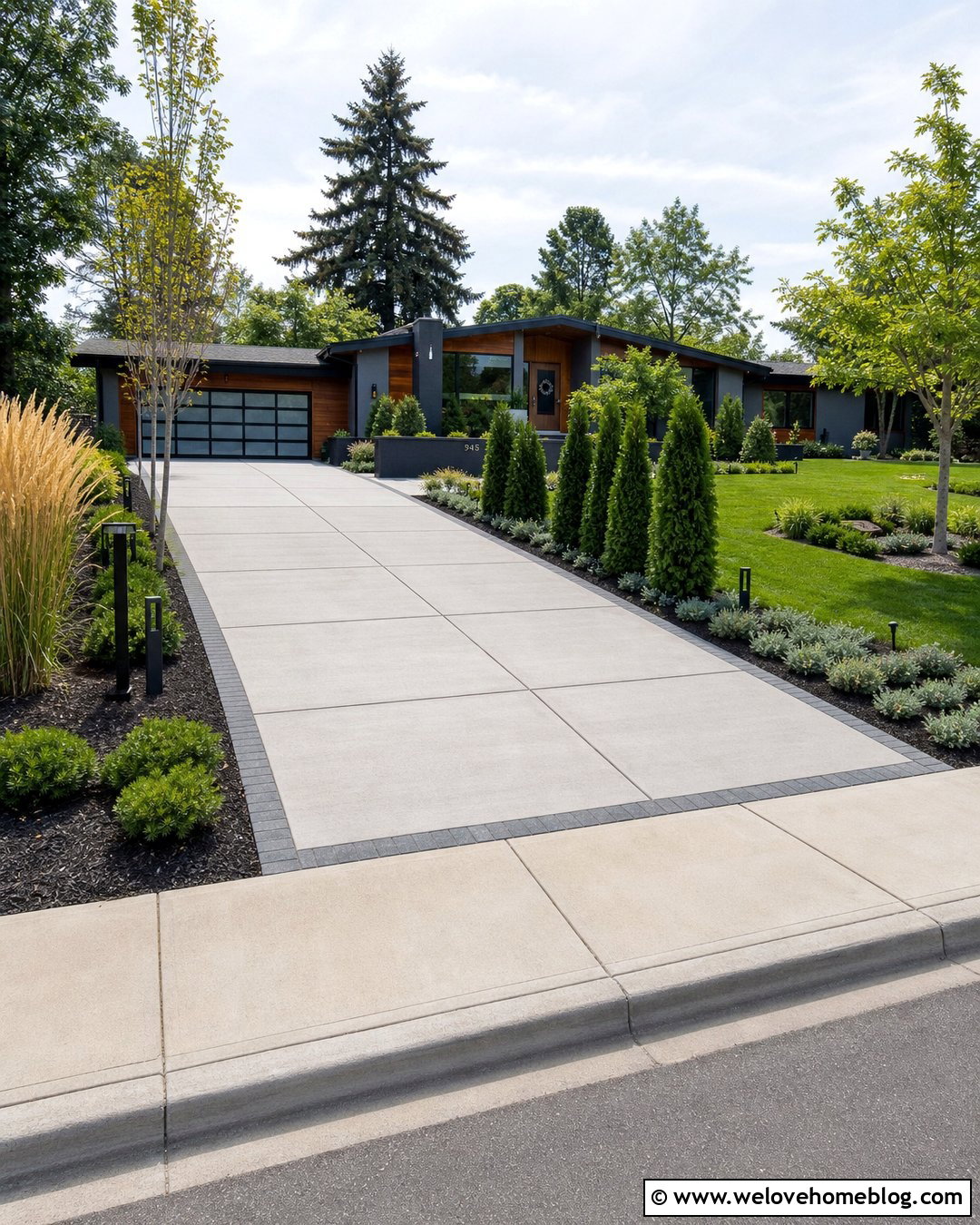
Clean poured concrete looks less stark when it is balanced with deep planting beds and softly moving grasses. Use large rectangular concrete sections with narrow joints to create an orderly surface leading toward a modern or midcentury home. Charcoal paver borders can outline the driveway and connect it visually to the front walkway. Along one side, arrange feather reed grass, switchgrass, compact evergreens, and low ground cover in simple repeating groups. Leave the other side more open with lawn or a broad stepping-stone path for easy passenger access. Dark mulch or decorative gravel will sharpen the contrast around the plants. The finished design feels modern but not empty because the structured pavement and natural planting provide an appealing balance of straight lines, texture, and movement.
3. Brick Driveway With Formal Boxwood Garden
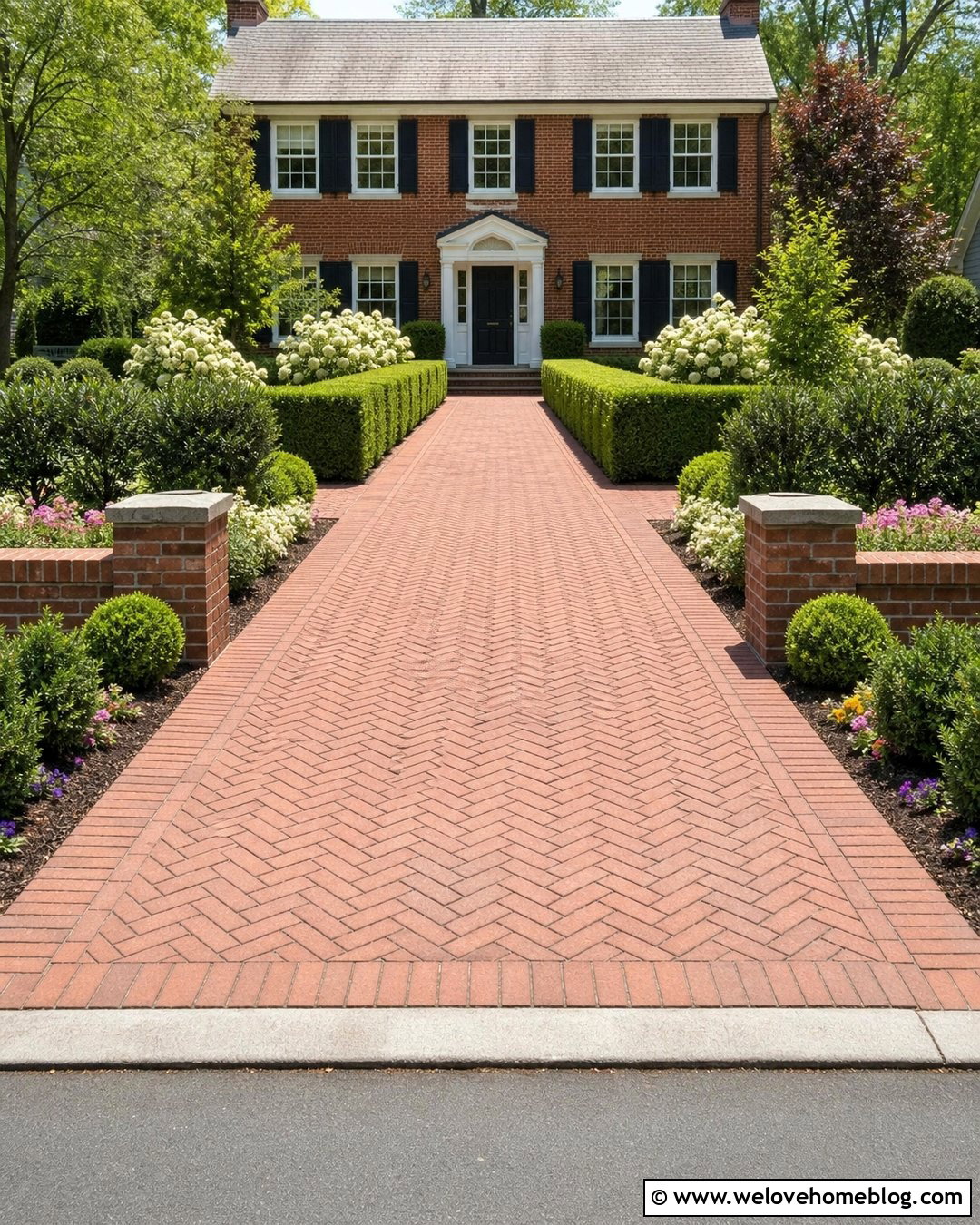
Could your traditional home benefit from a more structured arrival? A red clay brick driveway laid in herringbone creates a detailed surface that pairs naturally with colonial, Georgian, and classic brick architecture. Add a straight soldier-course border to define the edges and reduce visual clutter. Formal garden beds can run beside the driveway with clipped boxwood, compact hollies, white flowering shrubs, and neatly spaced seasonal flowers. Repeat the brick around the front walkway so the driveway and entrance feel like one design. Keep hedges below window height and set them back from parking areas to provide room for open doors. Symmetrical planting works especially well here, giving the property a polished appearance without requiring complicated combinations of colors, materials, or decorative ornaments.
4. Asphalt Driveway With Hydrangea Borders
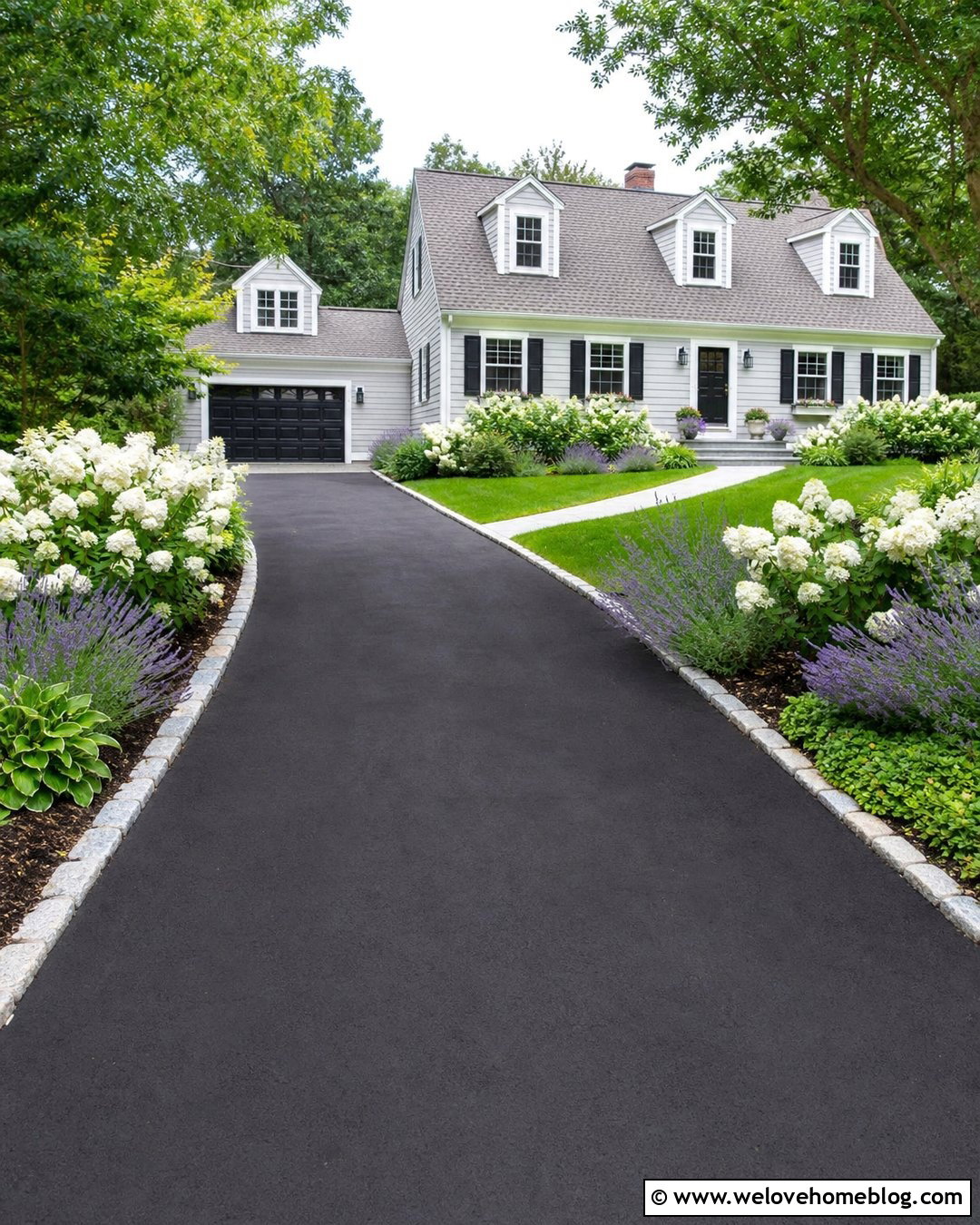
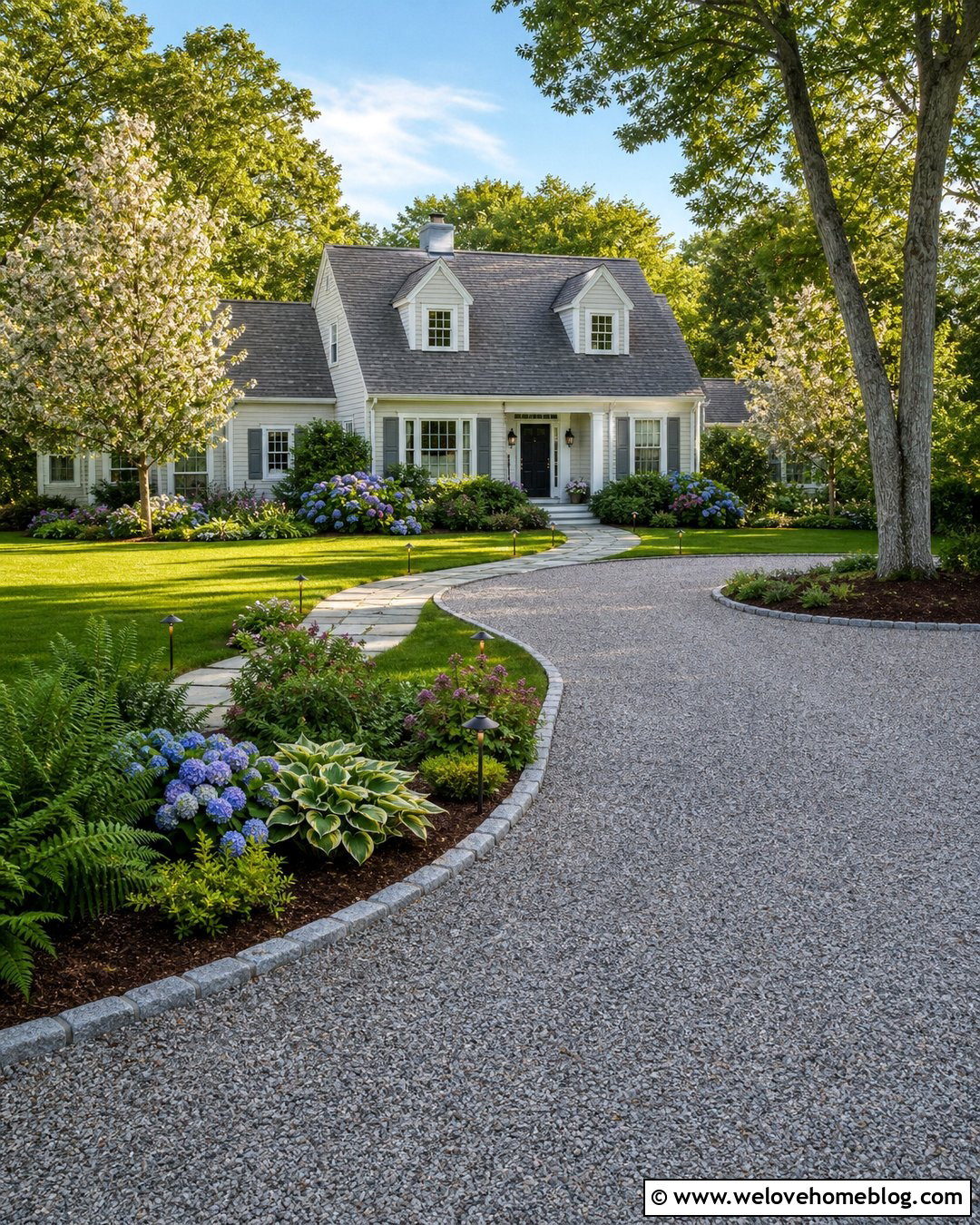
Black asphalt becomes an attractive foundation when crisp edging and abundant flowers soften its dark surface. This approach suits a Cape Cod, ranch, or traditional suburban home with a straight driveway and established front lawn. Add a light-gray concrete or granite border to create separation between the asphalt and garden soil. Plant hydrangeas in broad beds, leaving enough space for their mature width rather than crowding them against the pavement. Low catmint, hostas, or spreading ground cover can fill the front edge, depending on sun exposure. Repeat mulch and edging around the foundation garden for a connected appearance. White, pink, or blue blooms stand out clearly against black paving, while the simple asphalt surface keeps the overall project practical, familiar, and visually calm.
5. Paver Driveway With Native Plant Garden
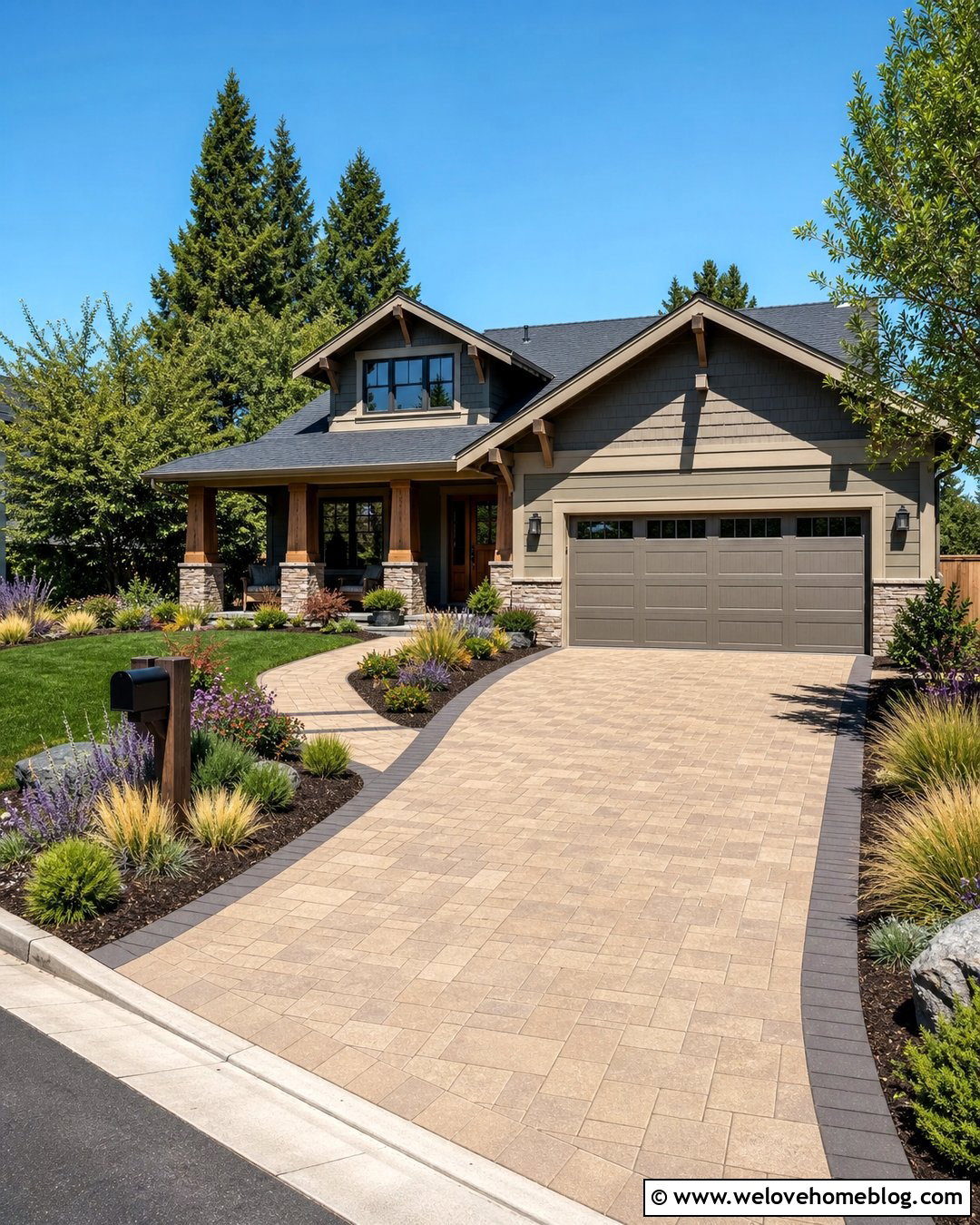
A paver driveway bordered by native planting can feel polished while still belonging naturally to its surroundings. Select gray or warm-tan concrete pavers in a running-bond pattern, then add a darker paver ribbon around the perimeter. Build gently curving garden beds beside the straight or slightly angled driveway. Choose locally appropriate grasses, flowering perennials, ground covers, and compact shrubs rather than relying on one universal plant list. Layer shorter plants near the pavement and place taller varieties farther back where they will not interfere with visibility or car doors. A mulched basin can capture runoff from the paved area if site conditions allow. Repeating the same plants near the mailbox, walkway, and front porch helps the driveway garden look intentional rather than like several unrelated planting patches.
6. Circular Driveway With Center Island Garden
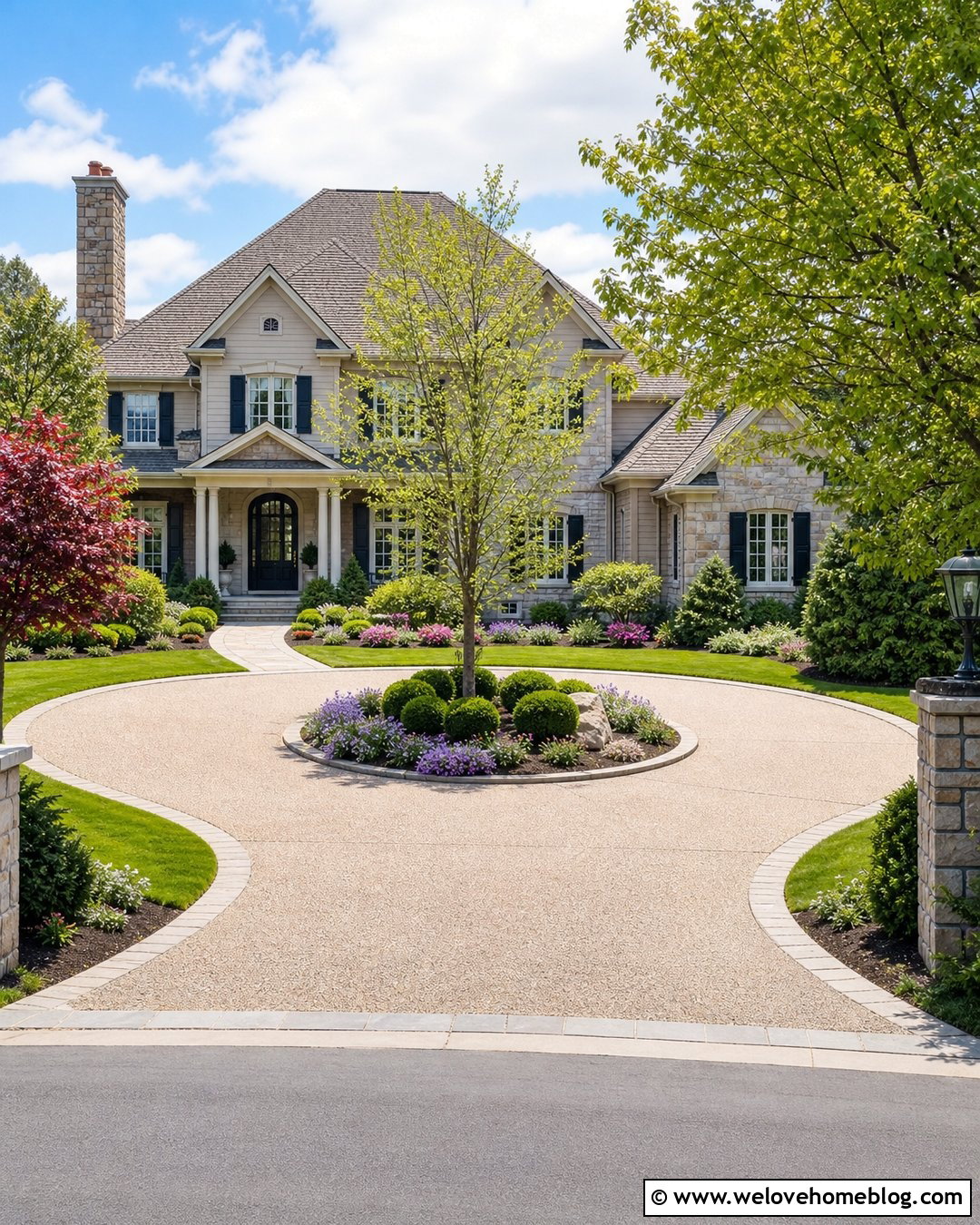
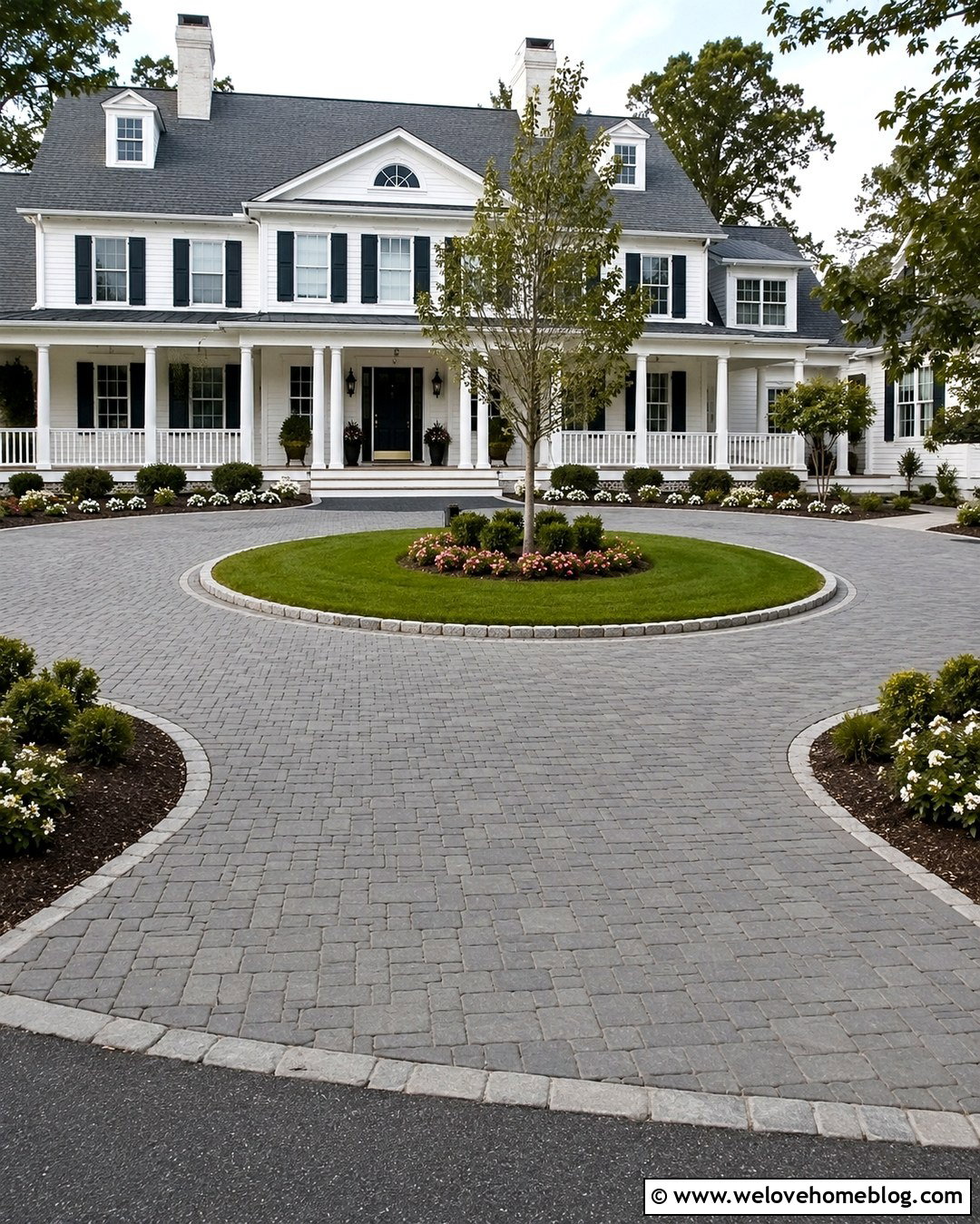
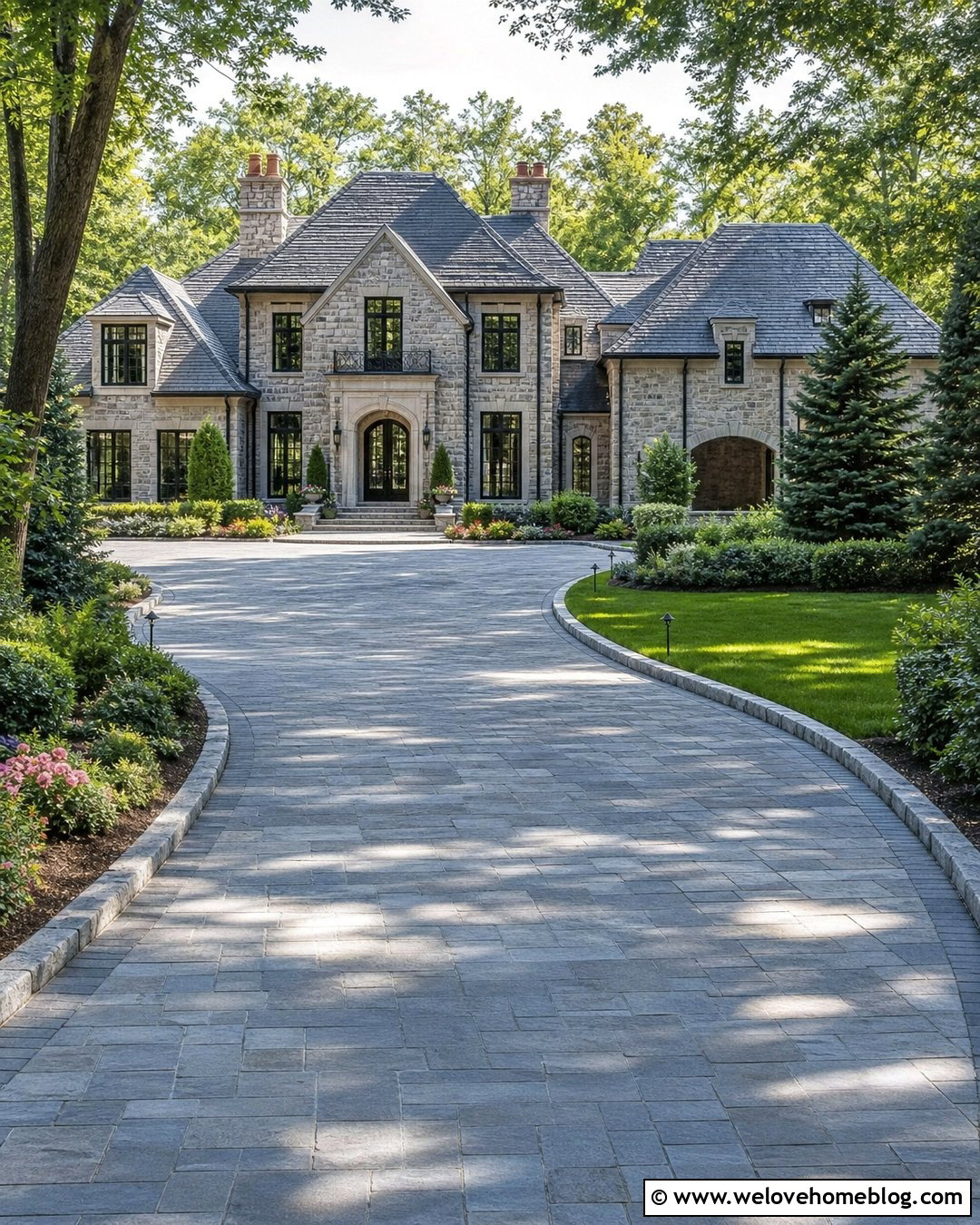
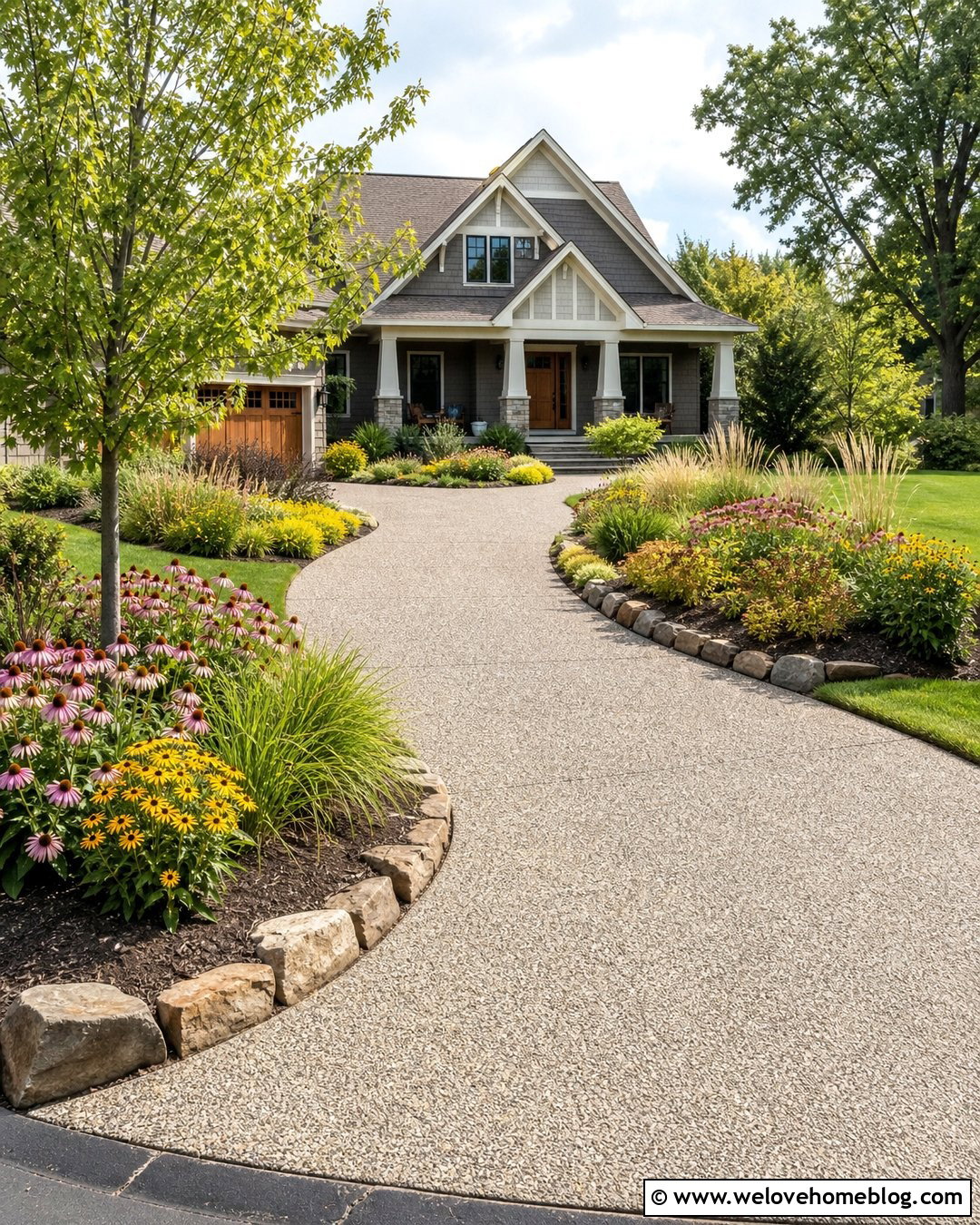
A circular driveway provides an excellent opportunity to create a garden that becomes the centerpiece of the front yard. Use light exposed-aggregate concrete or neutral concrete pavers to form a generous loop with clearly defined entry and exit points. In the center island, plant one appropriately sized ornamental tree surrounded by evergreen shrubs, flowering perennials, and low ground cover. Avoid oversized plants that could block important sightlines across the circle. A stone mowing strip around the island creates a clean transition and simplifies lawn maintenance. Match the island’s curves with rounded foundation beds near the house. This complete layout works particularly well for wide properties because it turns the vehicle route into a balanced landscape feature while providing convenient movement around the entrance.
7. Curved Gravel Driveway With Tree-Lined Garden
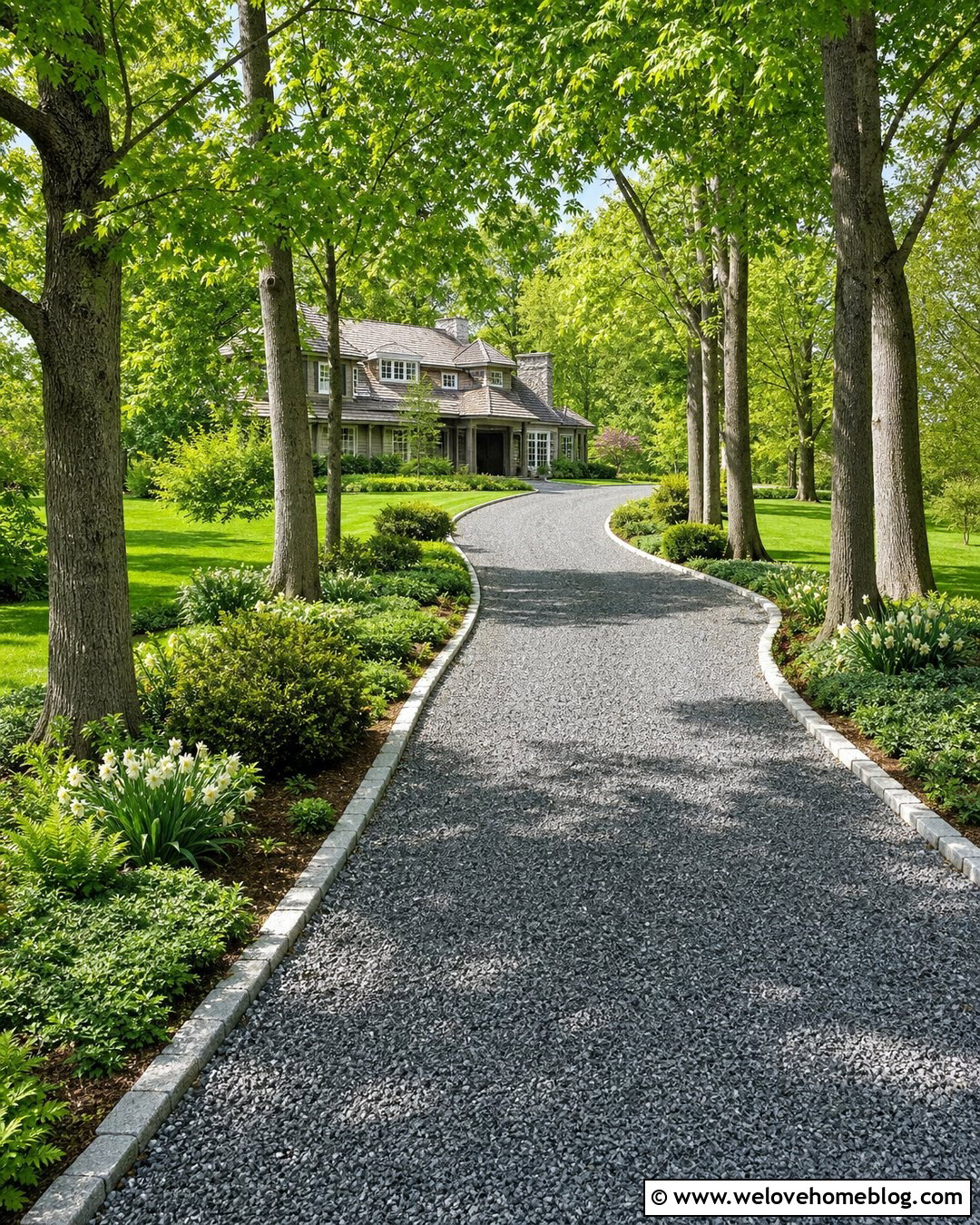
The soft crunch of gravel and a rhythm of evenly spaced trees can make a long driveway feel like a journey through the garden. Choose compacted gray crushed stone for the driving surface and use sturdy steel or granite edging to hold the curved outline. Plant small or medium canopy trees far enough from the pavement to allow healthy growth and safe clearance. Beneath them, create broad sweeps of shade-tolerant ground cover, spring bulbs, and low shrubs. The repeated trees guide the eye toward the house, while the curve reveals the property gradually. On large sites, occasional lawn openings can prevent the planting from feeling enclosed. Regularly spaced trees and modest hedging are established ways to bring rhythm and garden character to a sweeping driveway. ()
8. Ribbon Driveway With Ground Cover Garden
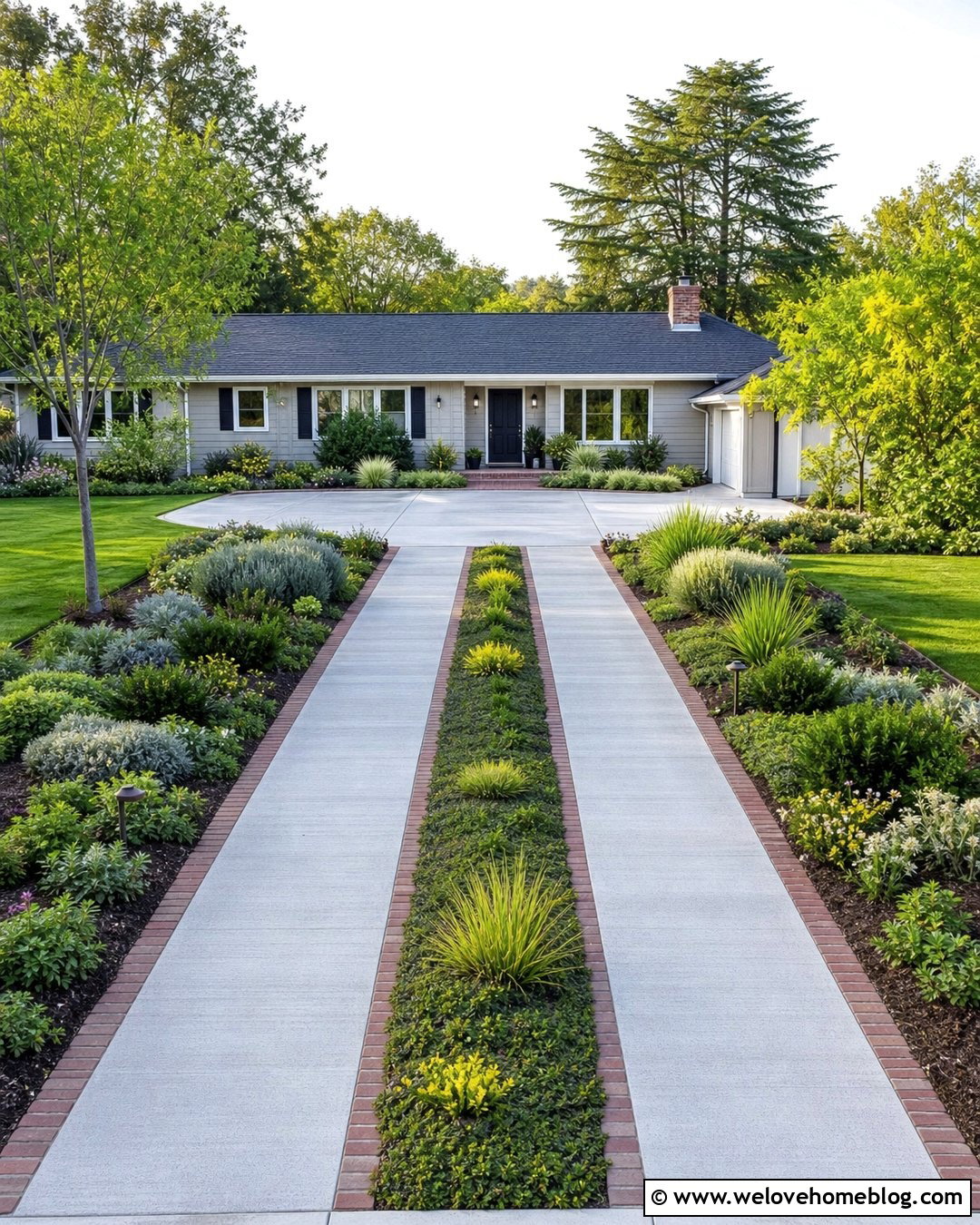
A ribbon driveway reduces the visual weight of paving by placing two firm driving tracks around a planted center strip. Use broom-finished concrete tracks for a clean suburban look or brick tracks for a more traditional entrance. The center can contain low, traffic-tolerant ground cover suited to local light, moisture, and winter conditions. Keep growth below the car undercarriage and install a stable base beneath every driven area. Frame both outer edges with narrow beds of dwarf shrubs, creeping plants, and ornamental grasses. A matching paved apron near the garage provides room for turning and parking. This layout works best where routine vehicle paths are predictable. The bands of greenery help the driveway blend with the lawn and garden while maintaining a clear, functional route to the house.
9. Cobblestone Driveway With English Garden Borders
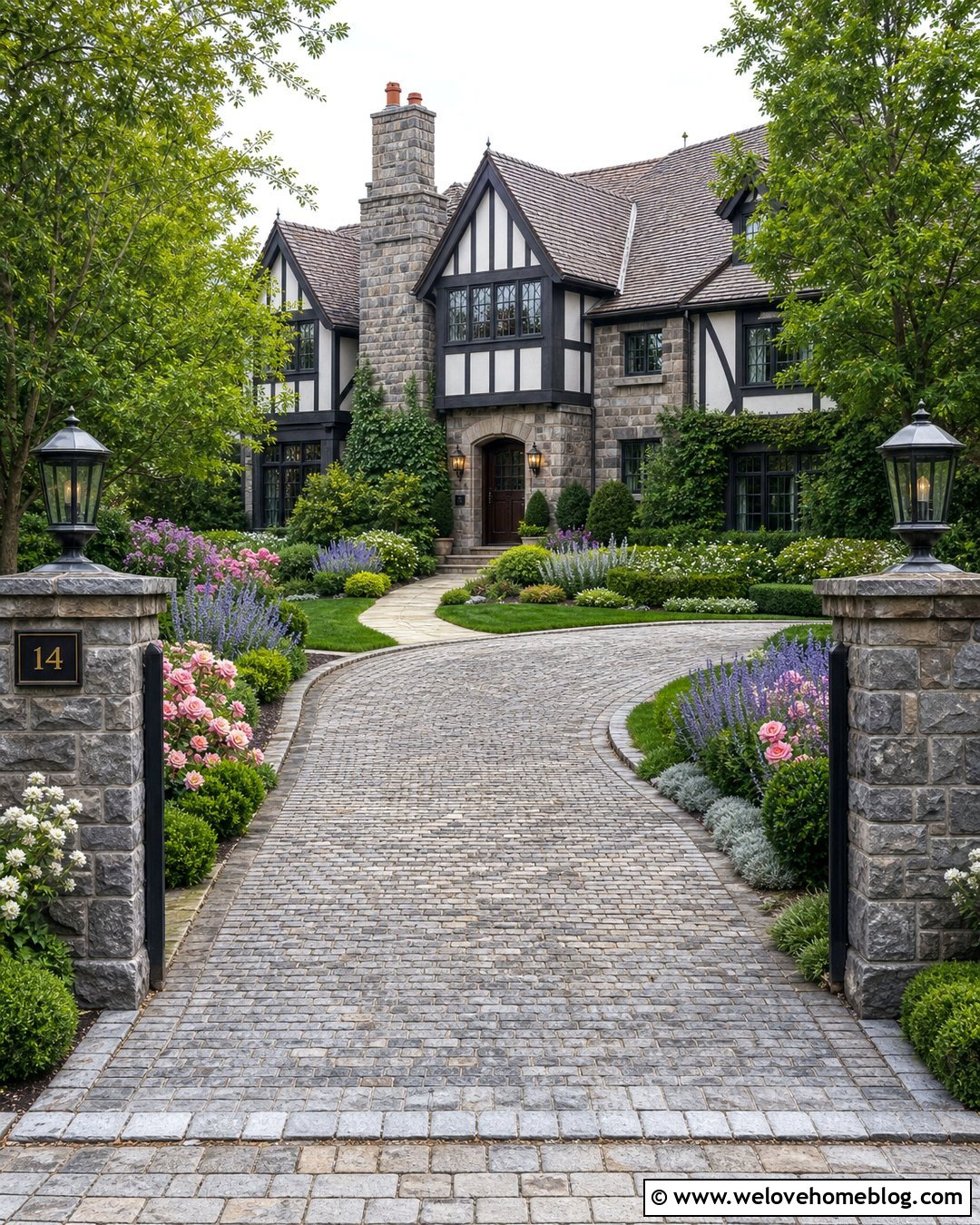
Rounded cobblestone and layered borders create a rich, established look around an English-inspired home. Use full cobblestone for a smaller driveway or combine a cobblestone apron and edging with a smoother center surface for easier everyday access. A curved or gently flared shape will complement informal garden beds filled with roses, foxgloves, lavender, hardy geraniums, and clipped evergreen forms. Position taller flowering plants away from the pavement, then bring low ground covers toward the stone edge. A brick or natural-stone walkway can branch from the driveway and lead through the garden to the front door. Restricting the planting palette to several repeated colors keeps the lush border from appearing chaotic. The final entrance should feel abundant and romantic while still offering clear parking boundaries and comfortable walking space.

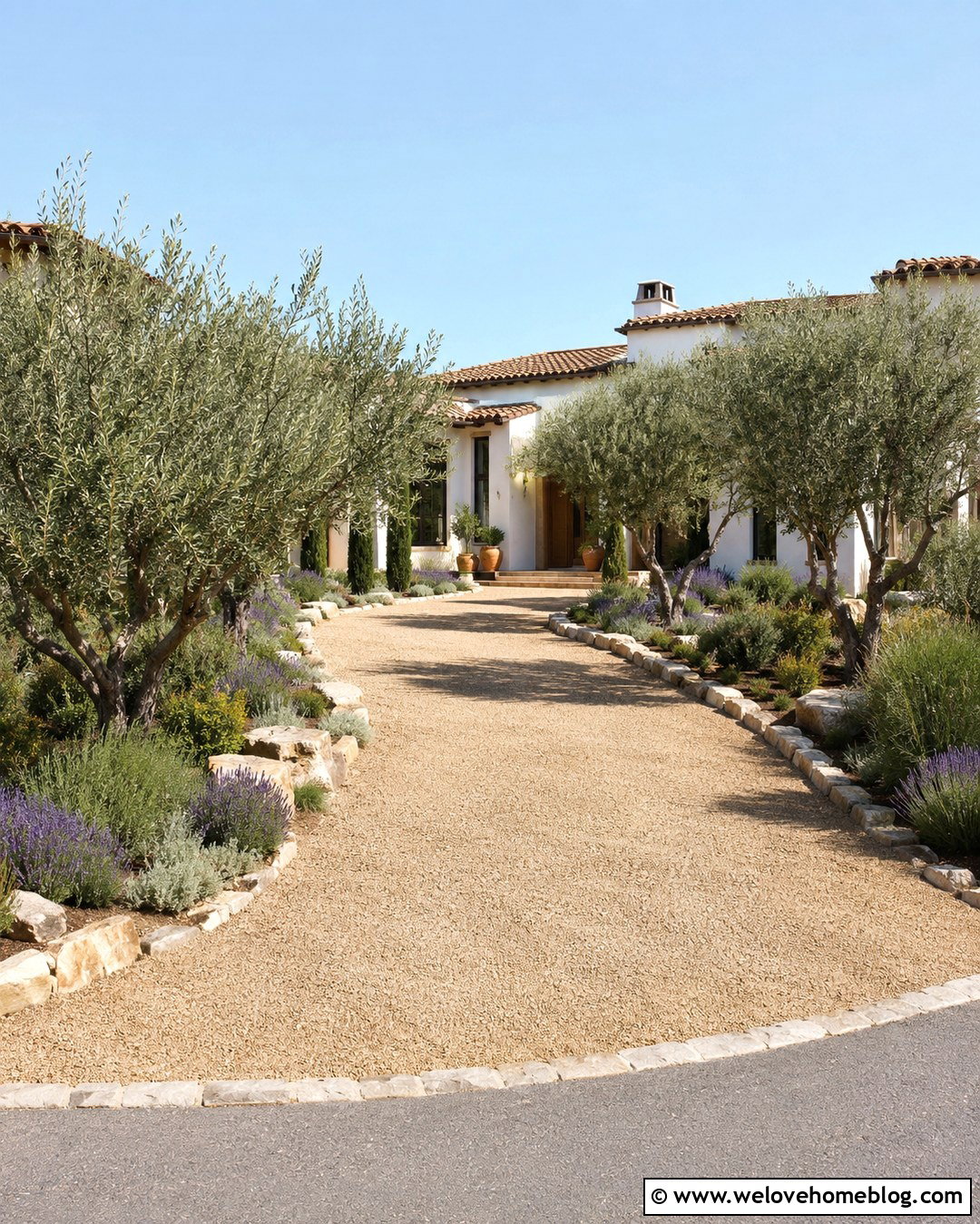
10. Resin-Bound Driveway With Low-Maintenance Garden
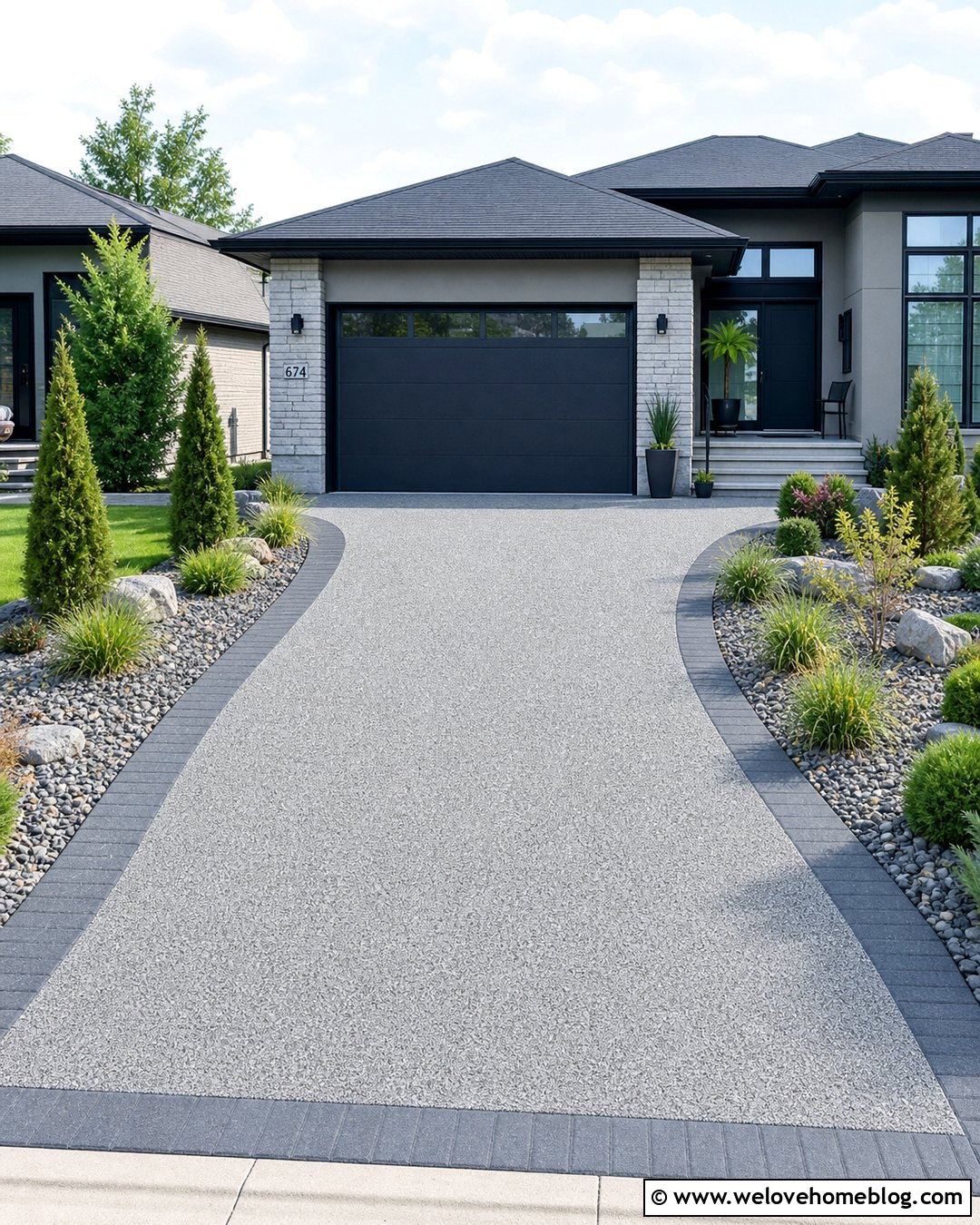
Smooth resin-bound gravel offers a tidy background for a simple garden with year-round structure. Choose a warm beige, silver-gray, or natural stone blend that coordinates with the house facade. A straight driveway with a subtle curved edge can soften the front yard without making the parking layout difficult. Border the surface with charcoal pavers, then create mulched beds containing dwarf evergreens, compact ornamental grasses, sedges, and slow-growing flowering shrubs. Use repeated groups instead of many individual varieties to make maintenance and seasonal cleanup easier. Decorative stones can cover narrow areas where planting would be difficult. Include a broad pathway from the parking space to the front door. This combination creates a clean, contemporary entrance that feels landscaped but does not depend on constant pruning, replanting, or complicated decorative features.
11. Exposed Aggregate Driveway With Tropical Garden
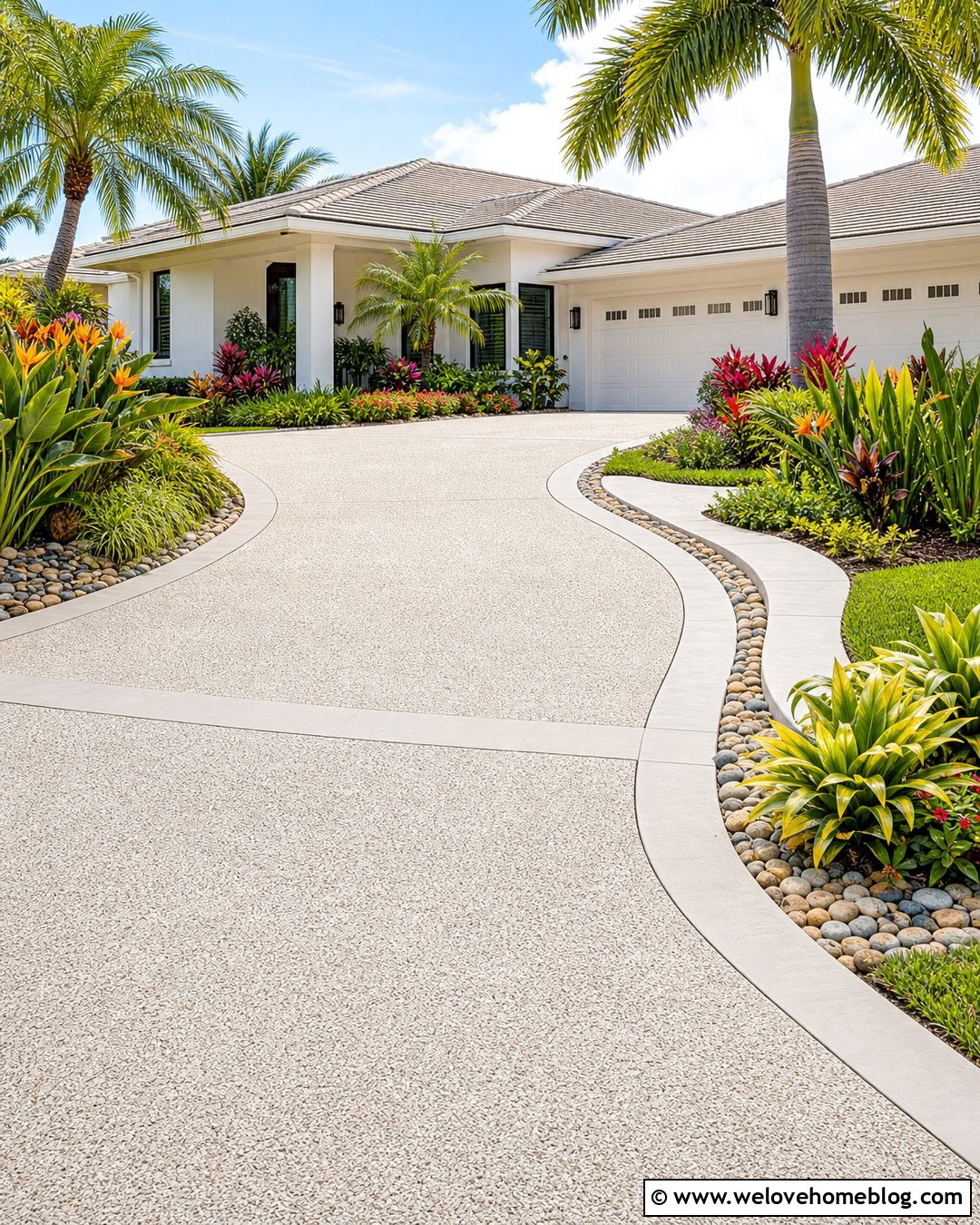
Bright foliage and an exposed-aggregate surface can bring a relaxed tropical character to a warm-climate property. Select an aggregate blend with cream, sand, and light-gray stones so the driveway stays visually bright beside bold planting. A wide curved layout works well with a stucco ranch, coastal home, or contemporary bungalow. Use smooth concrete bands to frame the aggregate and repeat those bands in the walkway. Build generous borders with palms suited to the property’s scale, bird of paradise, ornamental grasses, broad-leaf shrubs, and colorful low plants. Keep thorny or rigid foliage away from car doors and walking routes. River rock mulch can reinforce the tropical palette while giving beds a finished appearance. The result is lush and colorful, yet the defined paving and borders prevent the landscape from overwhelming the entrance.
12. Crushed Stone Driveway With Farmhouse Garden
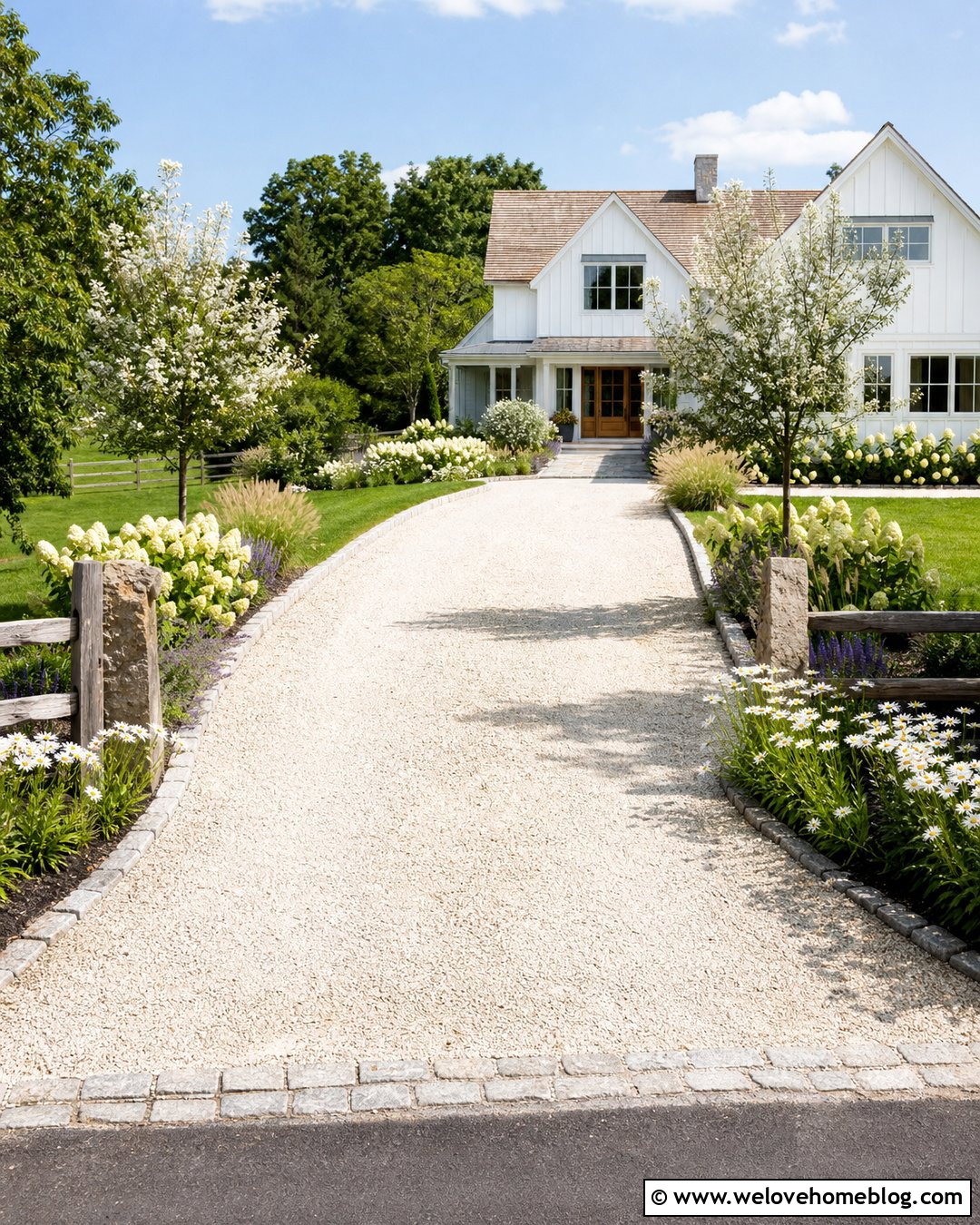
A pale crushed-stone driveway feels at home beside a modern farmhouse, country cottage, or converted barn. Give the driveway a broad straight approach with a softly widened parking area near the house. Reclaimed granite blocks, weathered brick, or heavy timber can define the edges and prevent stone from spreading into the garden. Plant informal borders with panicle hydrangeas, daisies, salvia, ornamental grasses, and compact flowering trees. A split-rail fence placed beyond the planting can frame the entrance without making it feel closed. Connect the driveway to the porch using large flagstones set in gravel or lawn. Repeating white flowers and deep-green foliage supports the farmhouse palette. This design feels casual and practical, but the clear borders and repeated planting give it a purposeful, finished appearance.
13. Permeable Paver Driveway With Rain Garden
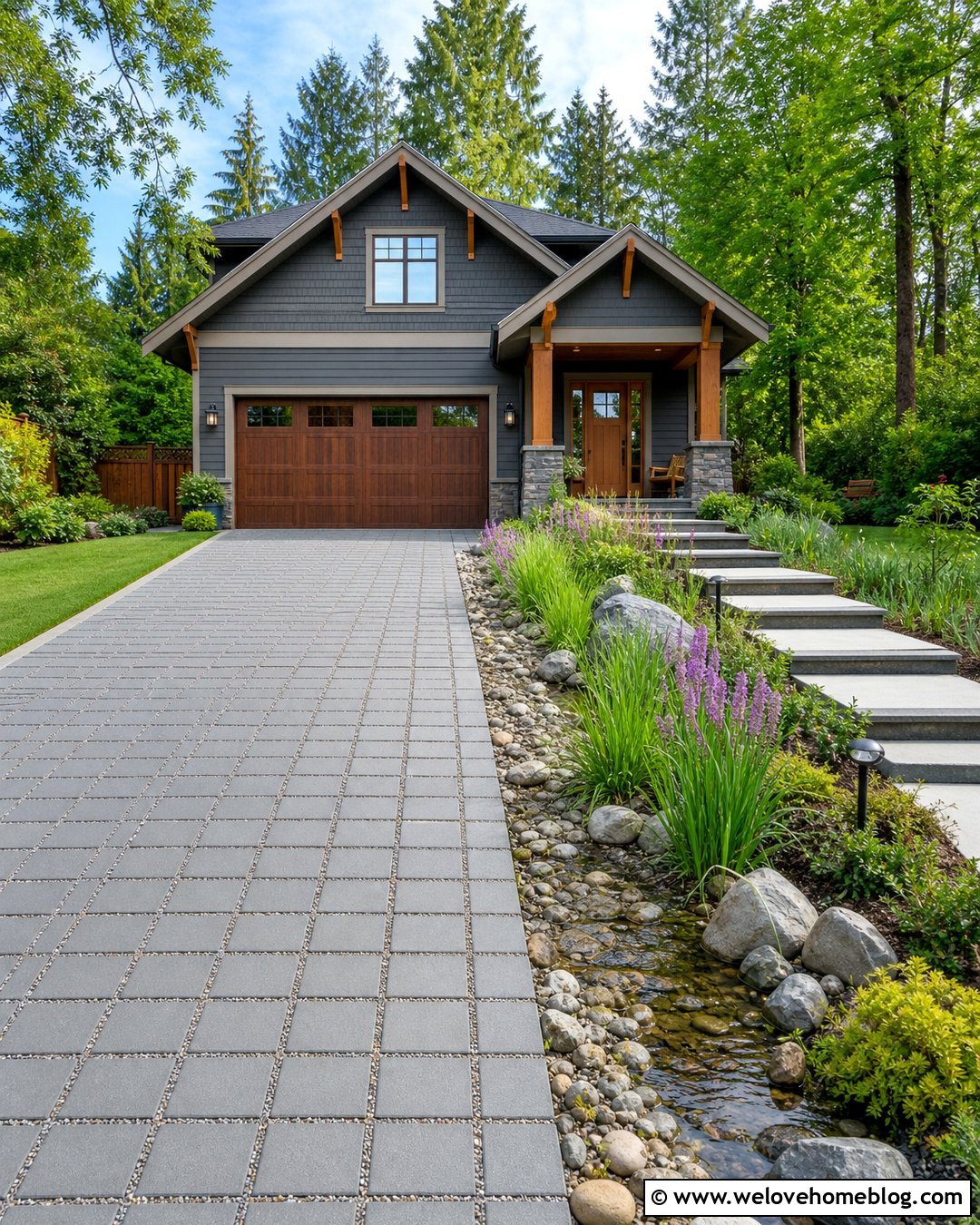
Permeable concrete pavers and a planted rain garden can turn stormwater management into an attractive landscape feature. Use interlocking gray pavers with visible aggregate-filled joints over a base designed for local soil and drainage conditions. Slope and construction requirements should be planned professionally where runoff, foundations, or neighboring properties could be affected. Place a shallow rain garden beside the lower edge of the driveway, using moisture-tolerant plants appropriate for the region. Sedges, flowering perennials, and compact shrubs can create layers without blocking the view from the street. Define the basin with natural stone and include an overflow route. Add a raised stepping path between parking and the front door. The permeable paving, drainage bed, and surrounding garden will then read as one coordinated landscape rather than separate utility features.
14. Small Concrete Driveway With Raised Garden Beds
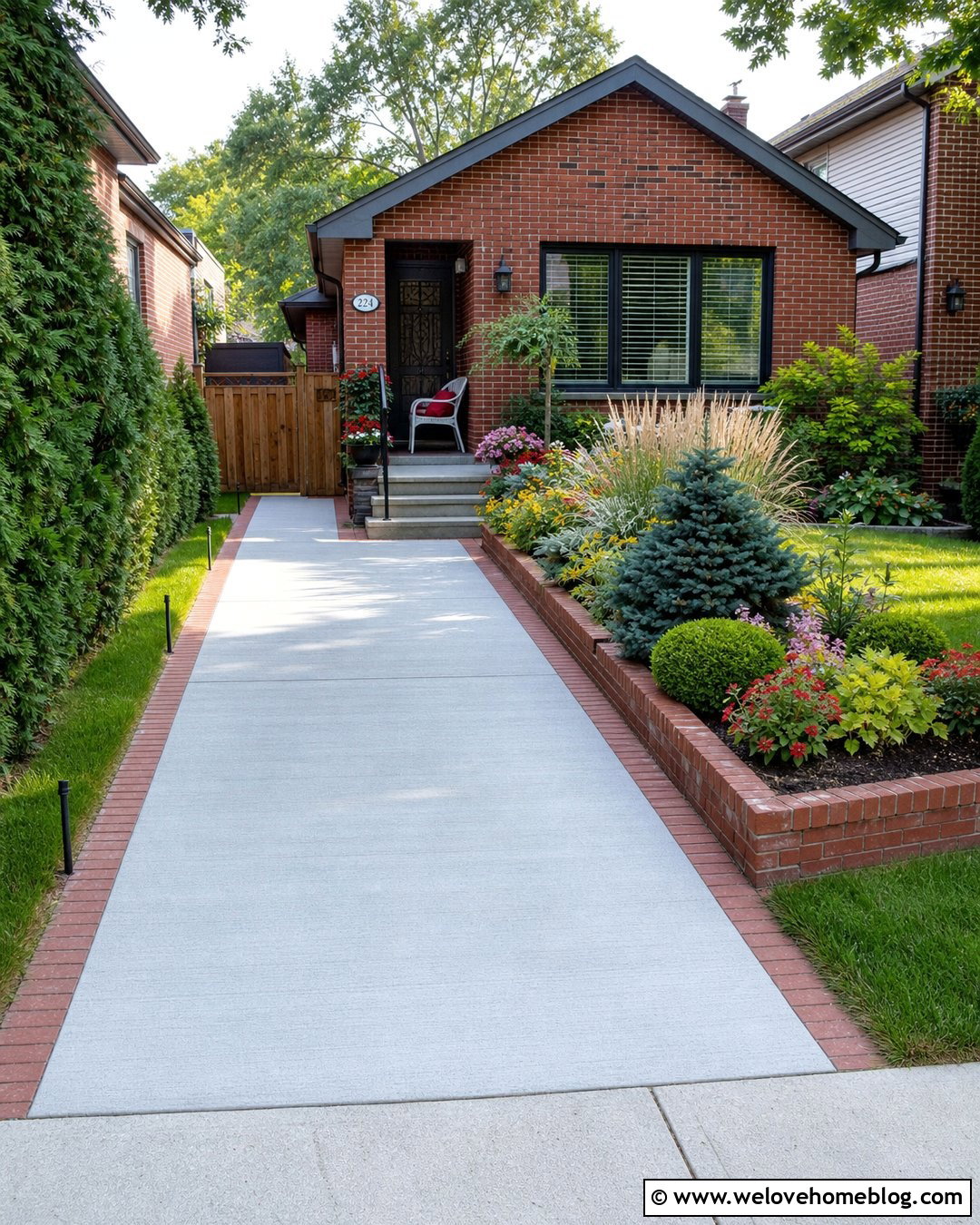
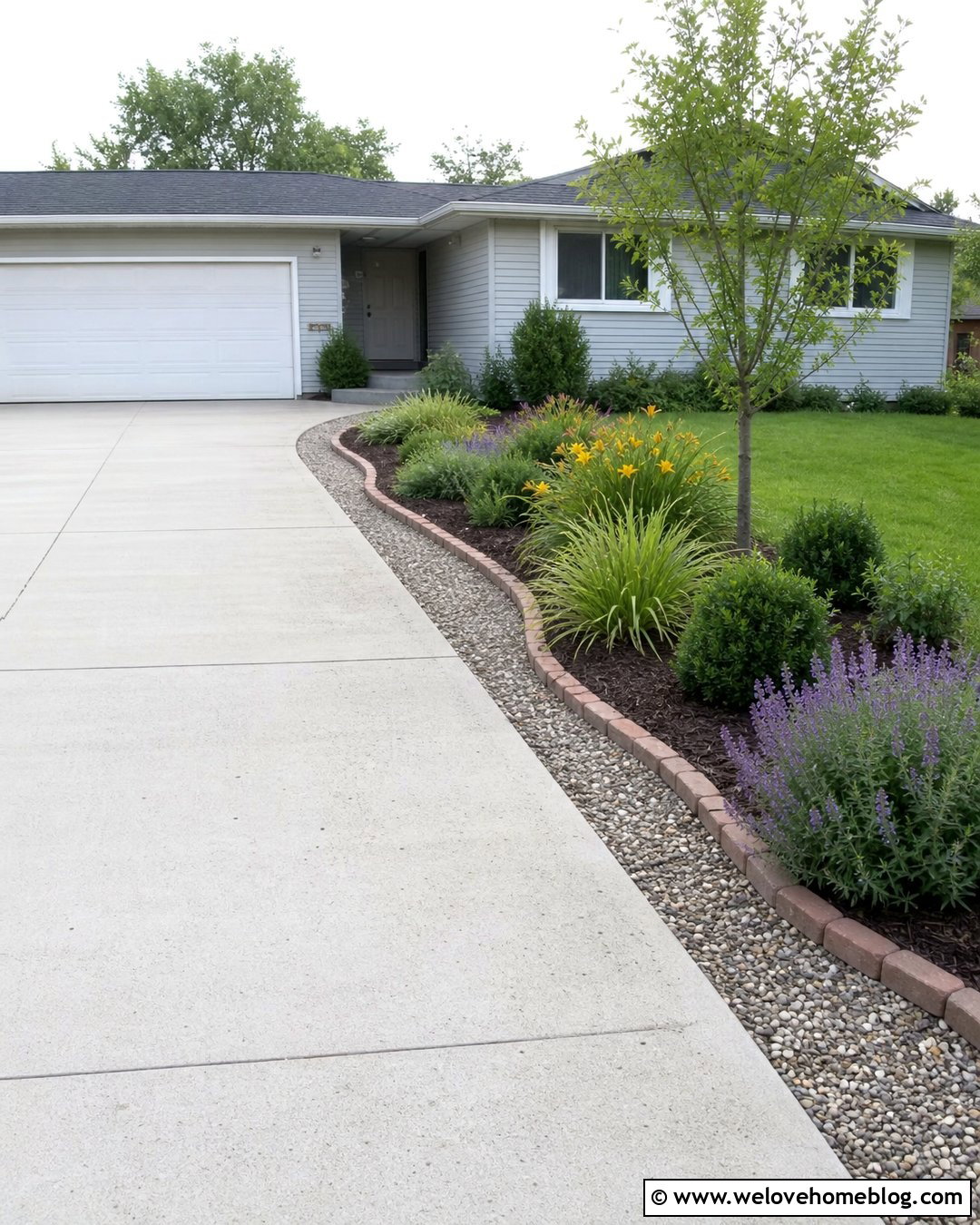
Limited frontage does not mean the driveway must dominate the entire yard. A narrow broom-finished concrete driveway can be paired with slim raised beds to preserve useful parking while introducing greenery. Run a brick border around the concrete and build one low brick or rendered masonry planter beside the house. Fill it with compact evergreens, upright grasses, and seasonal flowers that will not spill into the walking zone. On the opposite side, use a narrow strip of lawn or low ground cover to keep the space open. Continue a clear pathway beside the driveway so people can reach the entrance when a vehicle is parked. Matching the planter material to the house or front steps ties everything together. This efficient arrangement makes a small front garden feel organized, colorful, and comfortable.
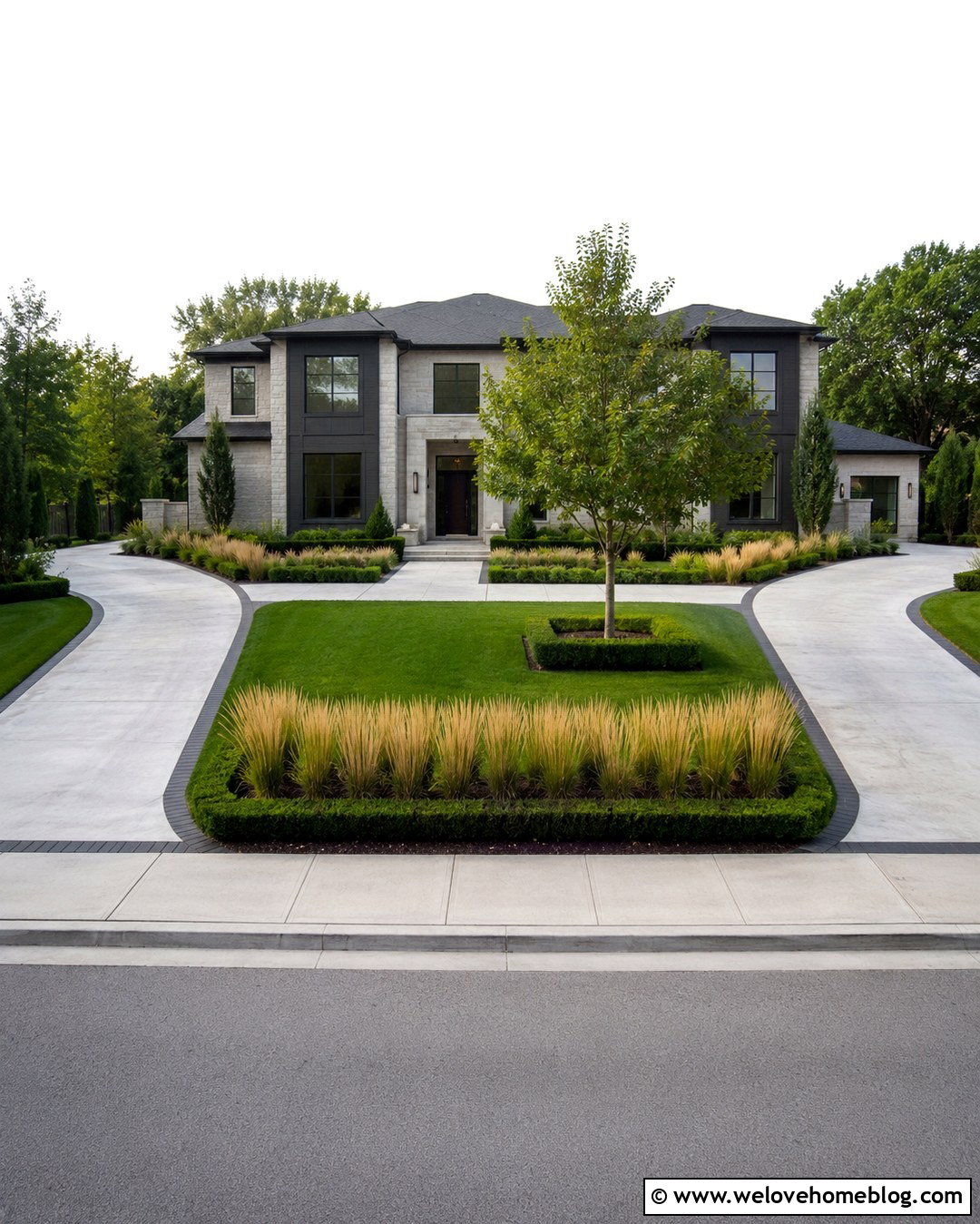
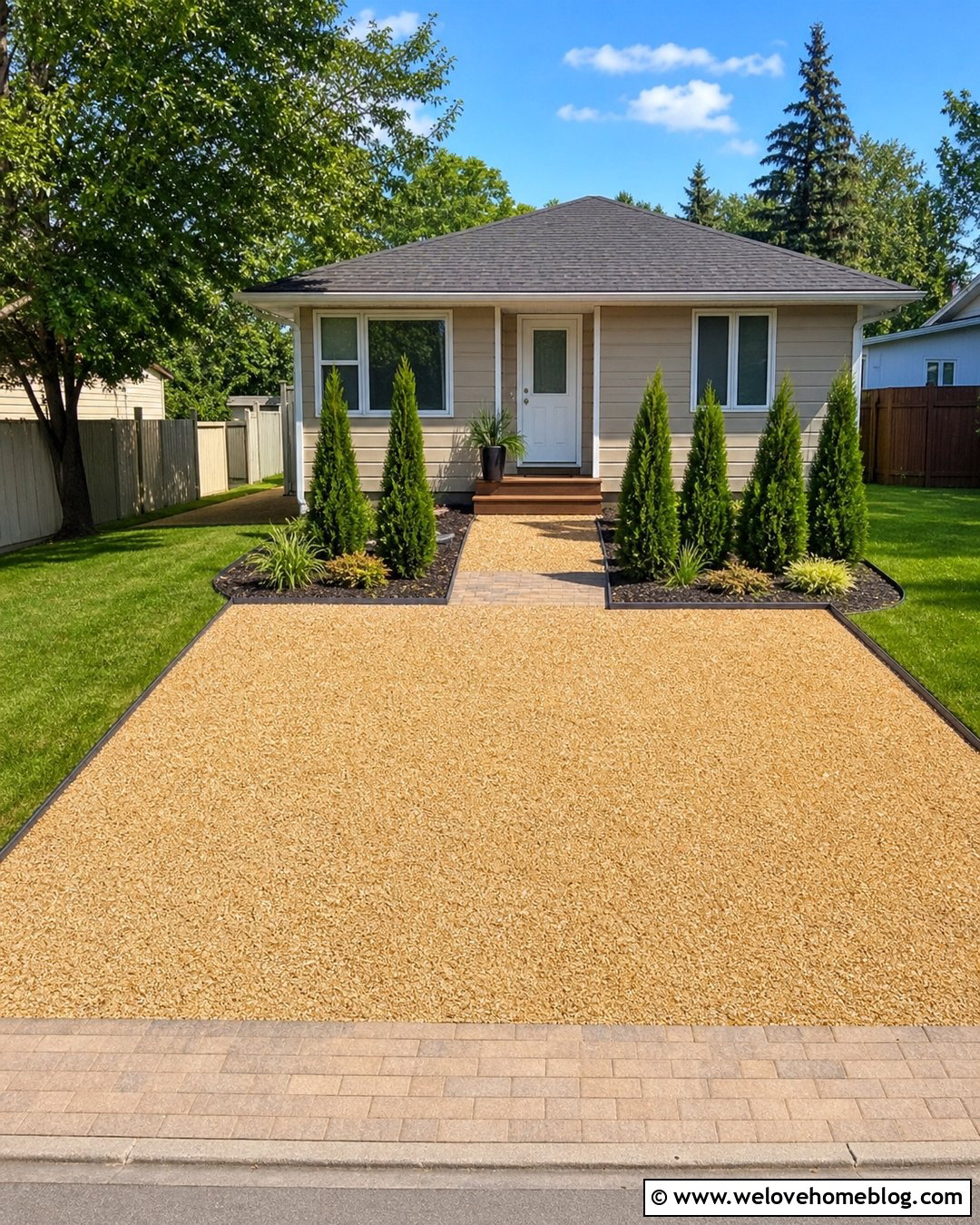
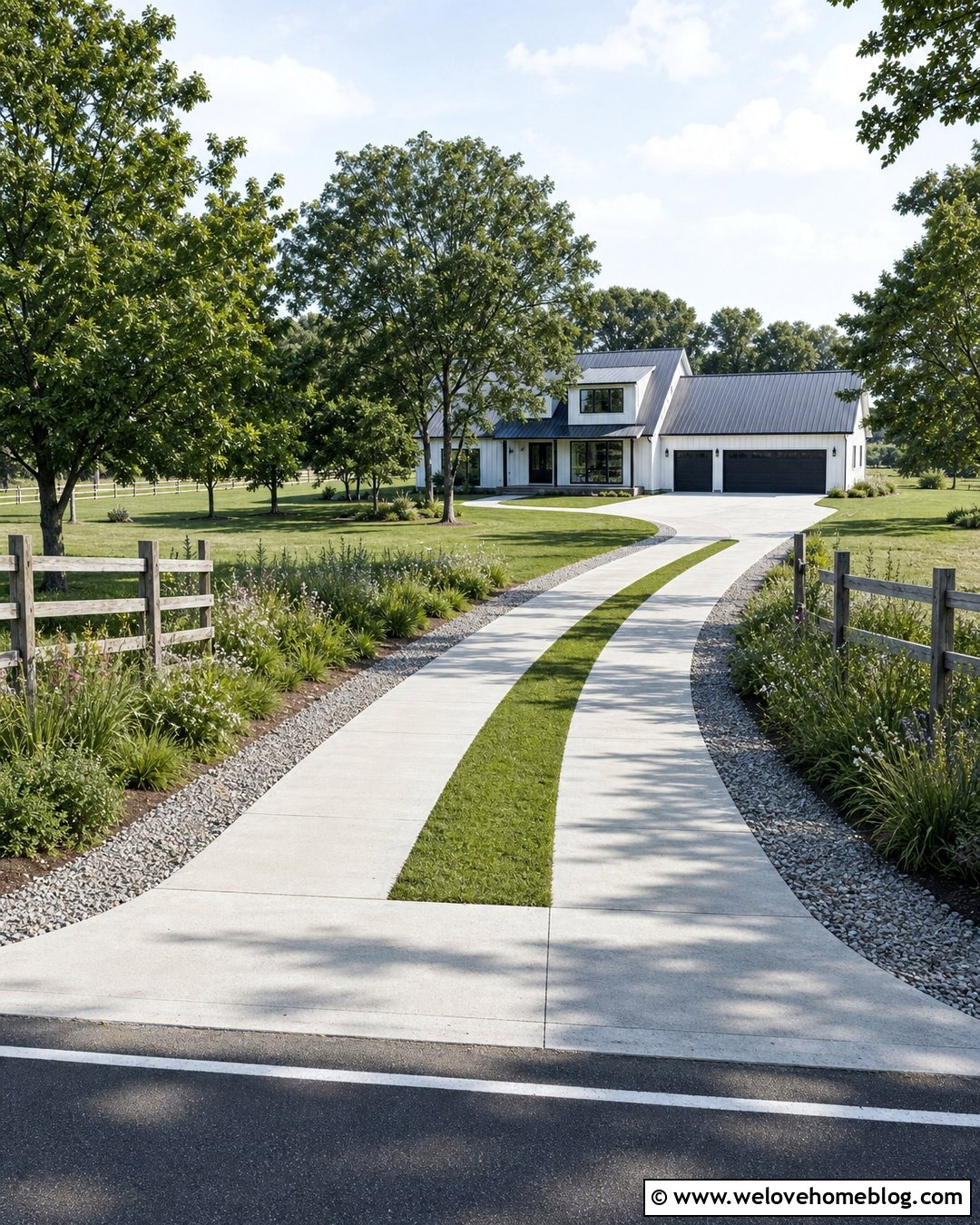
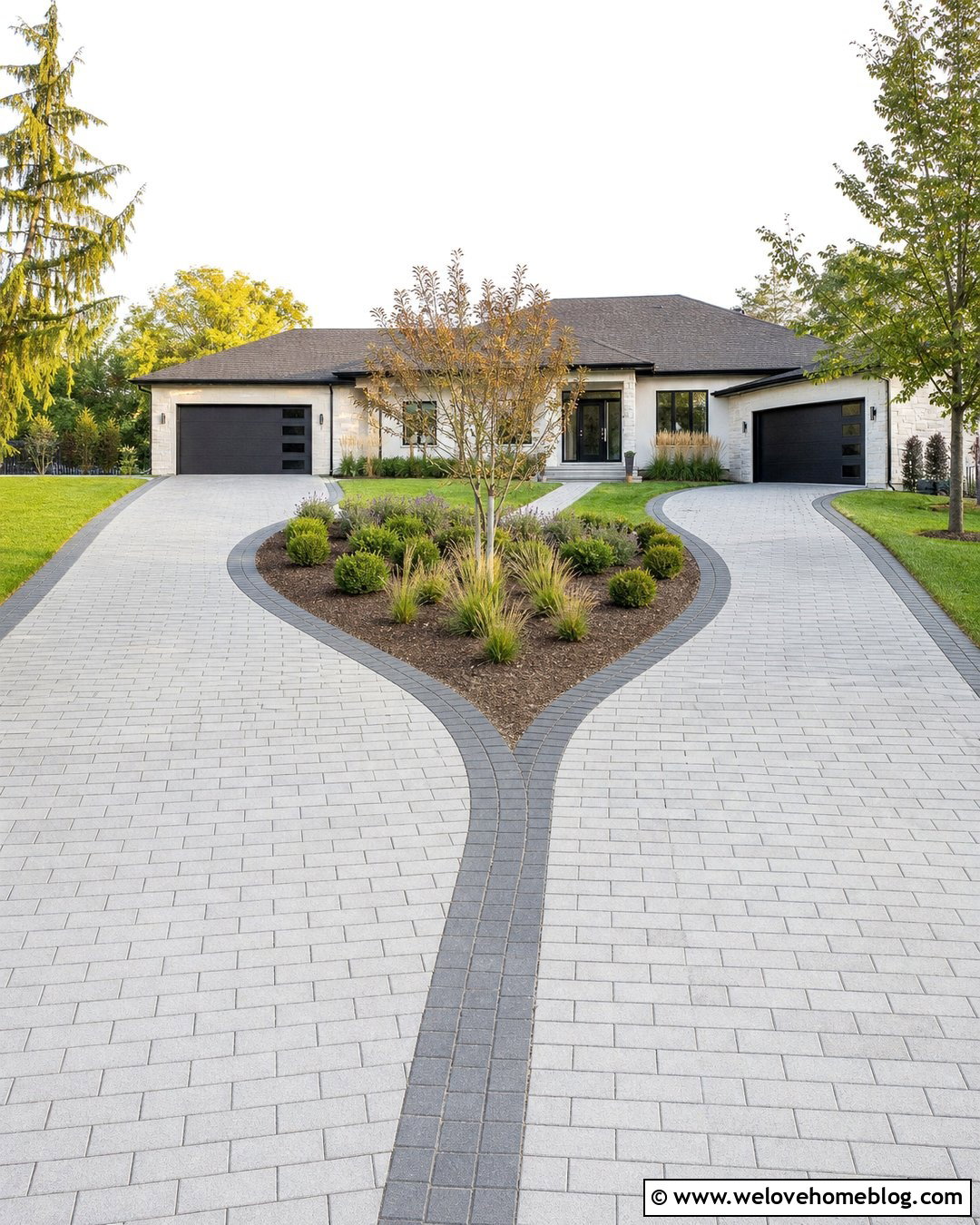
15. Long Asphalt Driveway With Ornamental Grass Borders
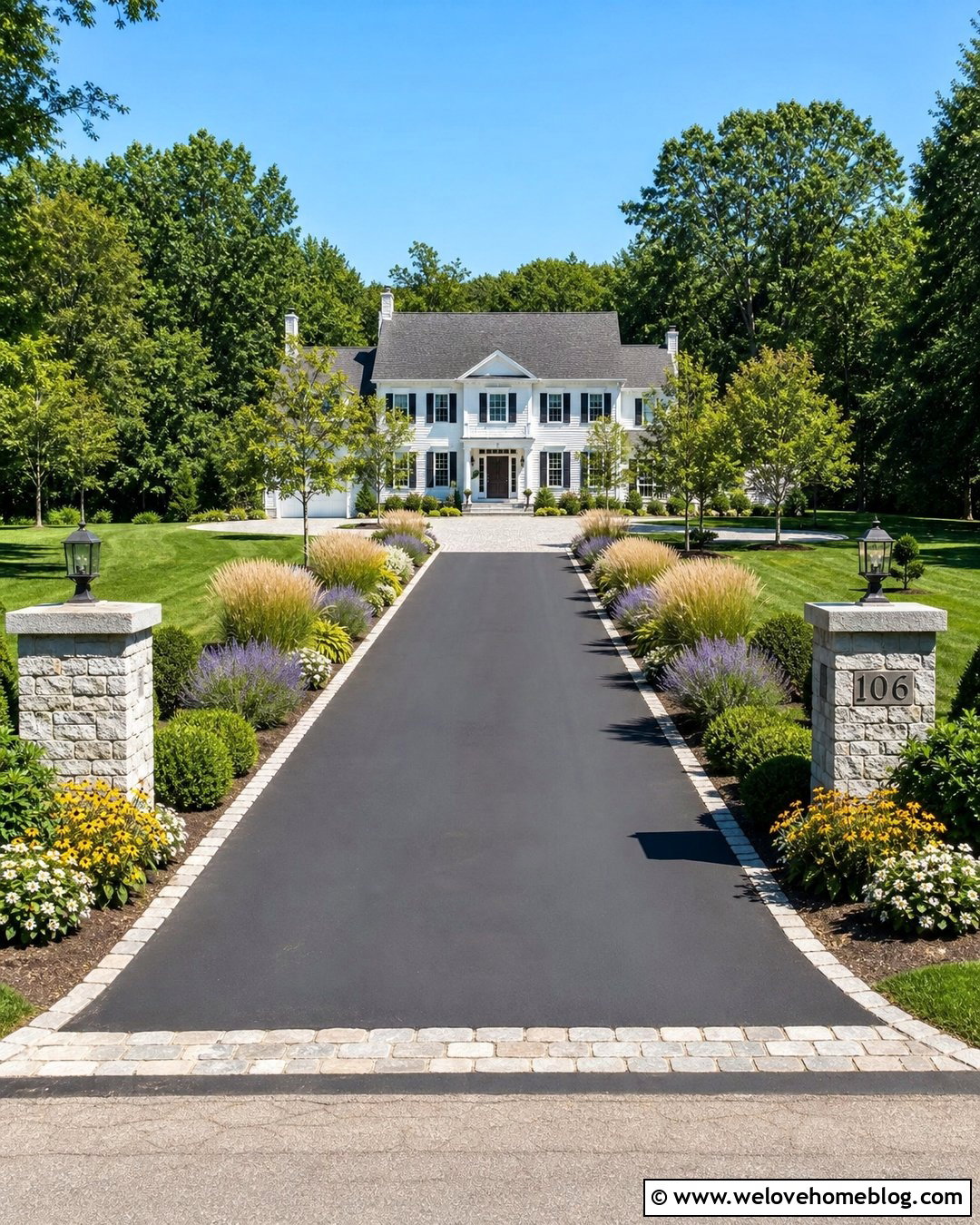
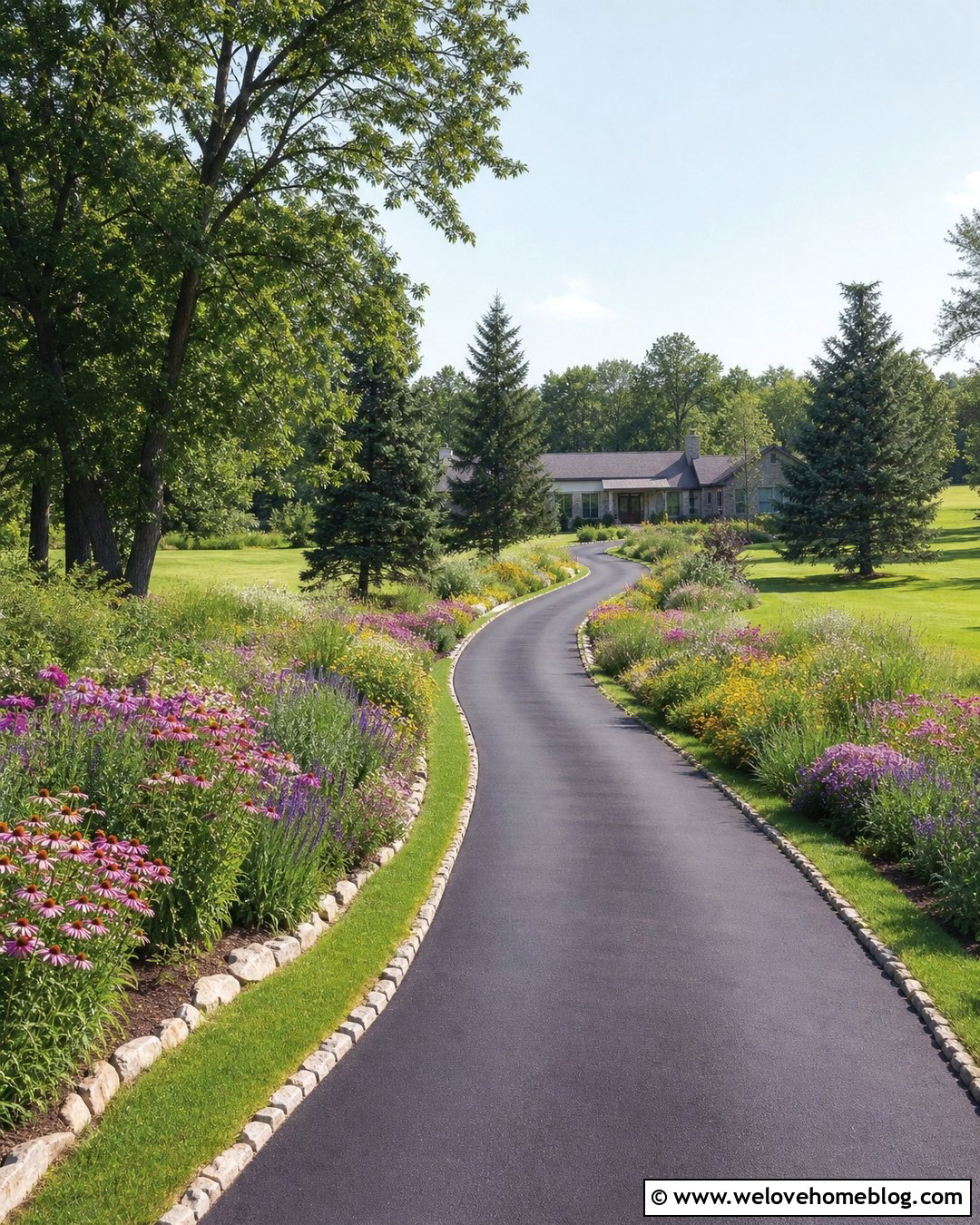
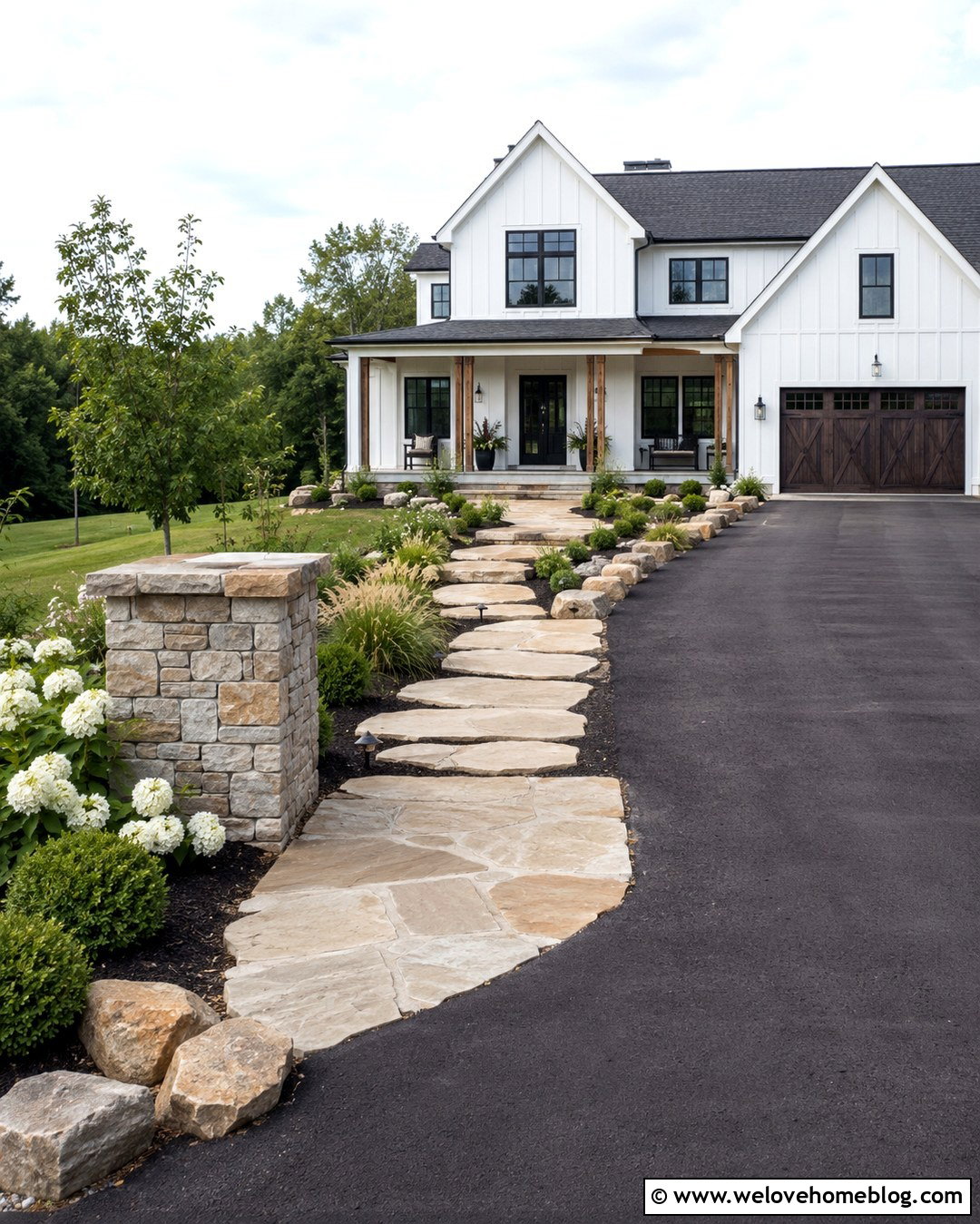
Long asphalt driveways can feel overly wide and empty unless the surrounding garden creates rhythm. Keep the black asphalt surface simple, then add flush concrete curbs or cobblestone edging along both sides. Plant repeated drifts of ornamental grasses, flowering perennials, and low evergreen shrubs rather than using one continuous hedge. Alternating planted sections with open lawn creates breathing room and keeps the route from feeling like a narrow corridor. Near the entrance, widen the beds around masonry pillars, a mailbox, or a simple address marker. Closer to the house, transition to more detailed foundation planting and a paved parking apron. Select plants that tolerate local heat, road spray, or snow conditions. The repeated garden pattern visually shortens the approach and helps guide attention toward the home.
16. Horseshoe Driveway With Symmetrical Entrance Garden
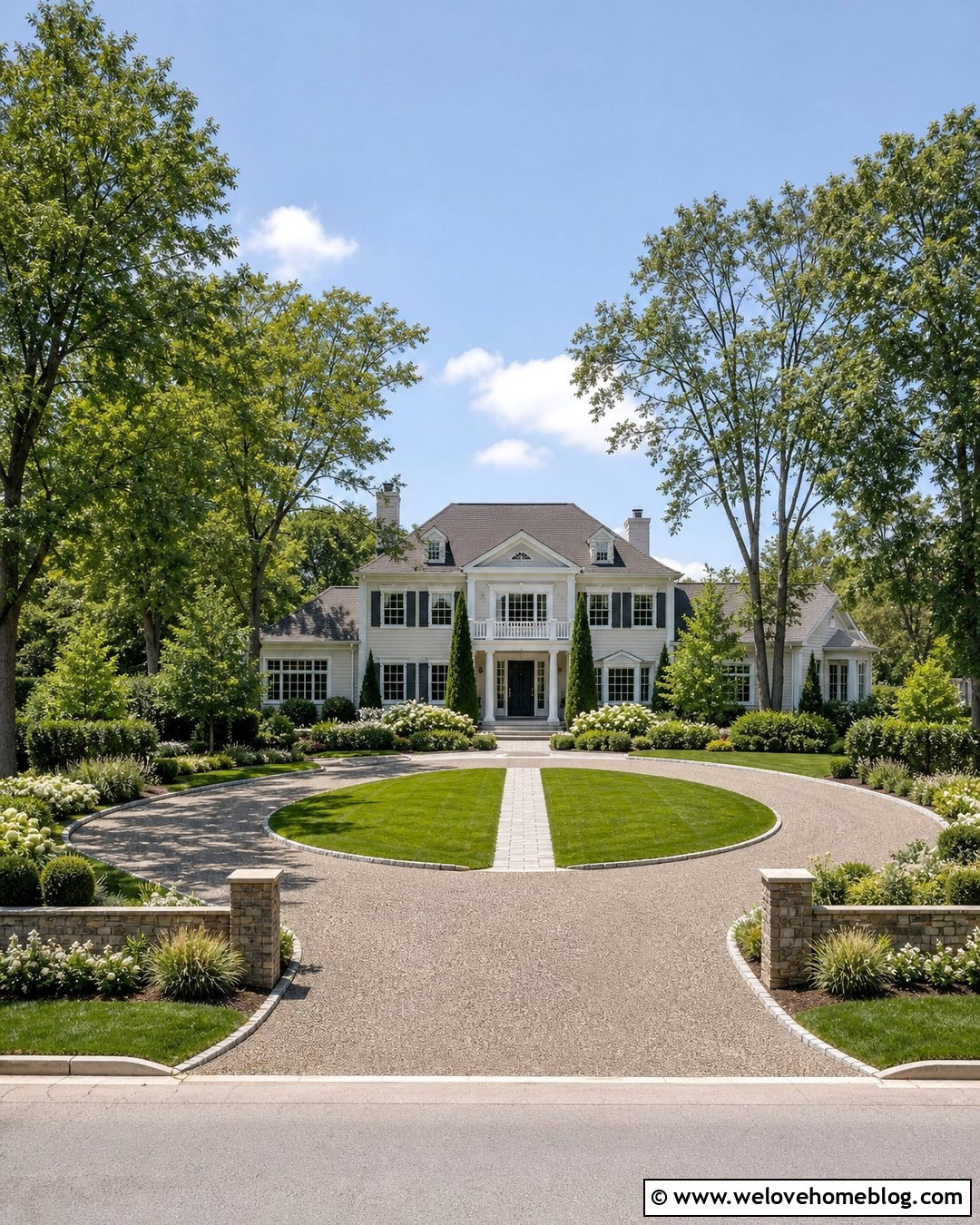
A horseshoe driveway becomes especially impressive when its two entrances share the same materials and planting arrangement. Use warm-gray concrete pavers or exposed aggregate for the curved driving loop. Mark each opening with low stone pillars that preserve clear views of the road. Behind the pillars, plant matching groups of compact evergreens, flowering shrubs, and ornamental grasses. Continue the symmetry around the inner lawn, but leave enough open space for the house to remain visible. A straight walkway can cross the central garden and connect the loop to the front steps. Use a contrasting paver border to clarify the driveway’s curves and protect adjacent beds. The matching entrance gardens provide order, while the sweeping shape offers convenient vehicle circulation and a strong sense of arrival.
17. Brick And Gravel Driveway With Courtyard Garden
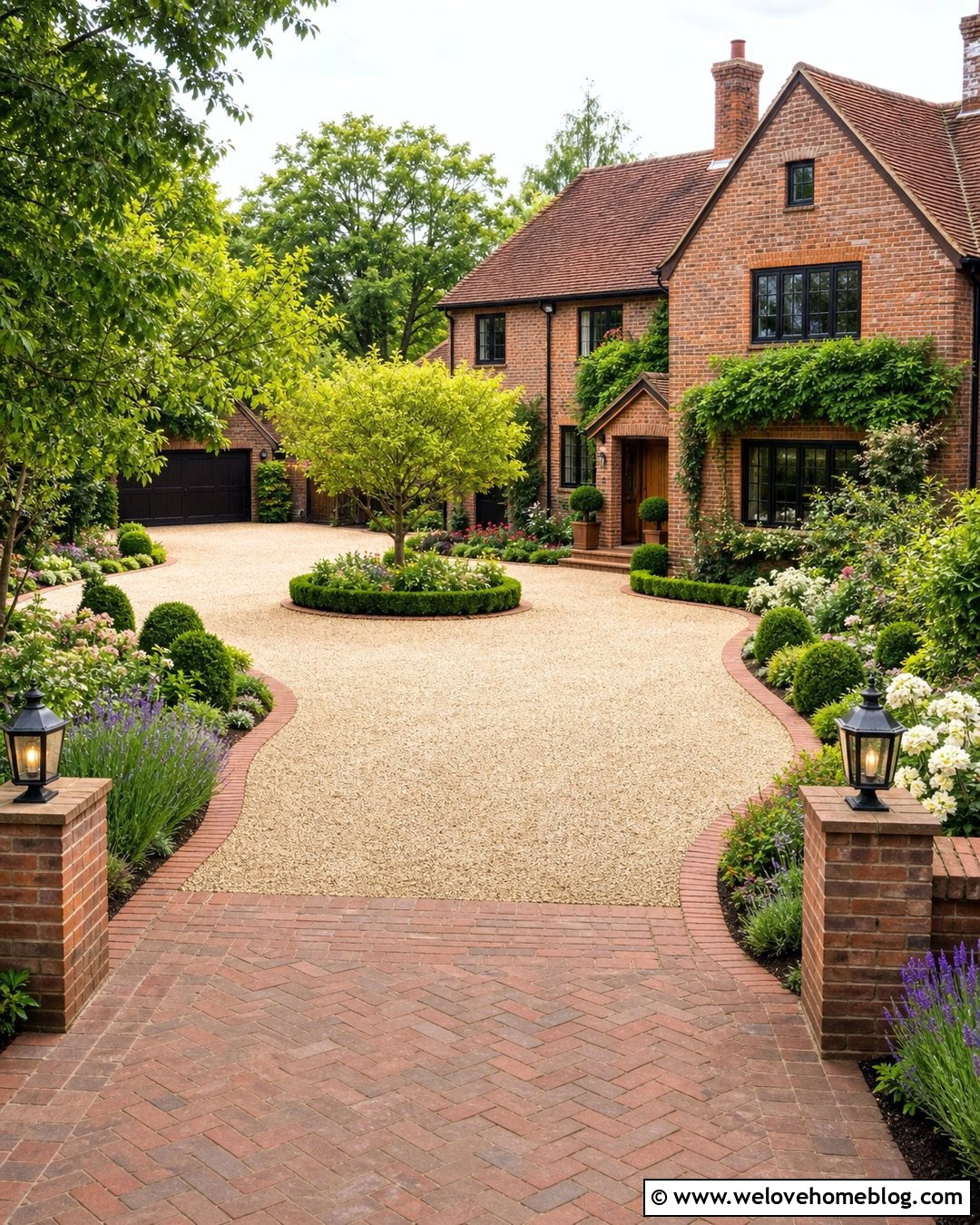
Combining brick and gravel can give a driveway the welcoming character of a small front courtyard. Use compacted tan gravel for the main parking surface, then install red or charcoal brick around the perimeter, entrance apron, and turning area. Carry the same brick into a pathway leading to the front door. Arrange raised beds or broad ground-level borders around two sides of the parking court, using clipped shrubs, small trees, herbs, and long-blooming perennials. A low wall can provide structure without closing the garden off from the street. Place planting islands carefully so they do not interfere with reversing or passenger access. This mixed-material design breaks up a broad driveway, relates naturally to traditional architecture, and makes the arrival area feel like an outdoor room rather than a plain parking space.
18. Sloped Driveway With Rock Garden Borders
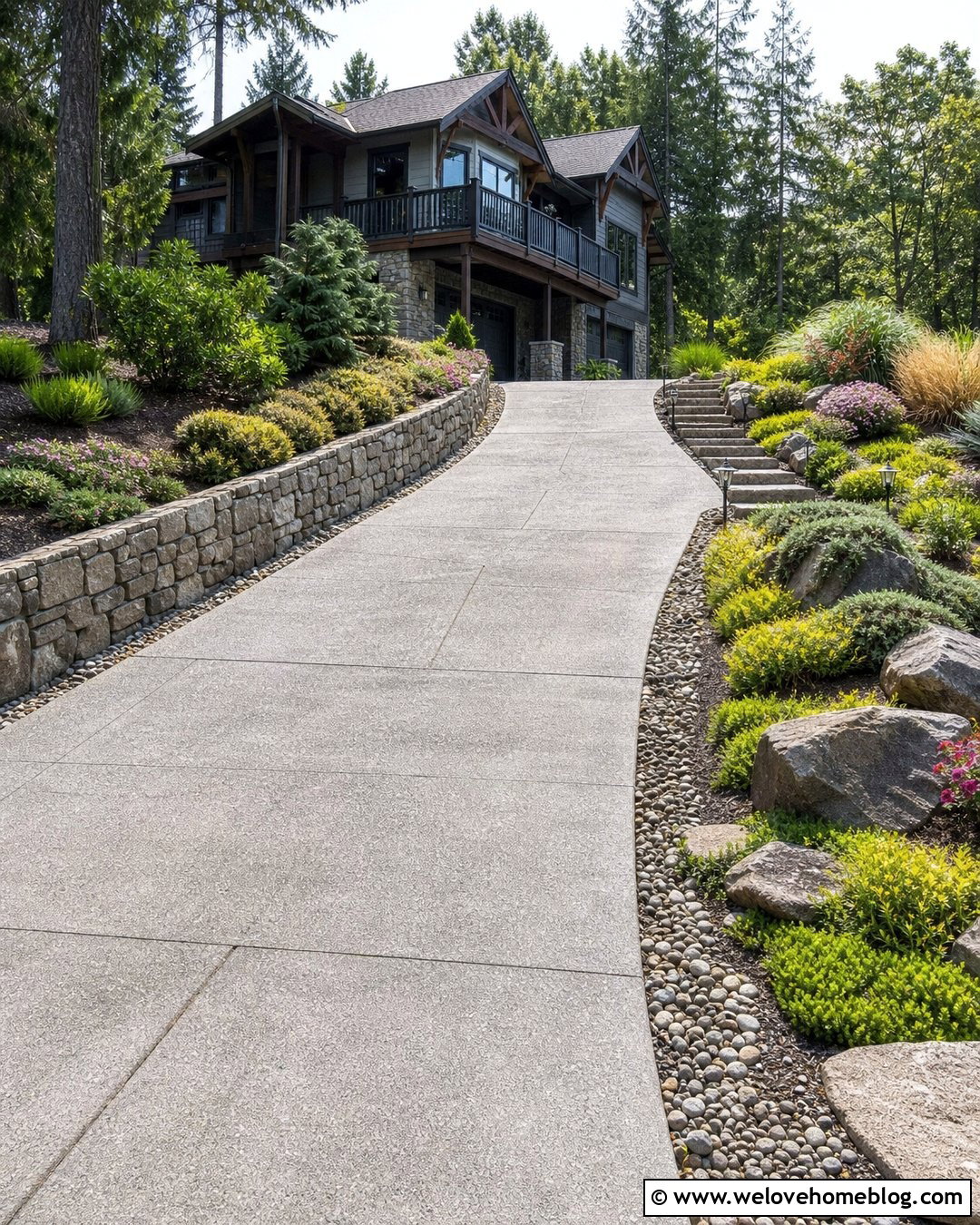
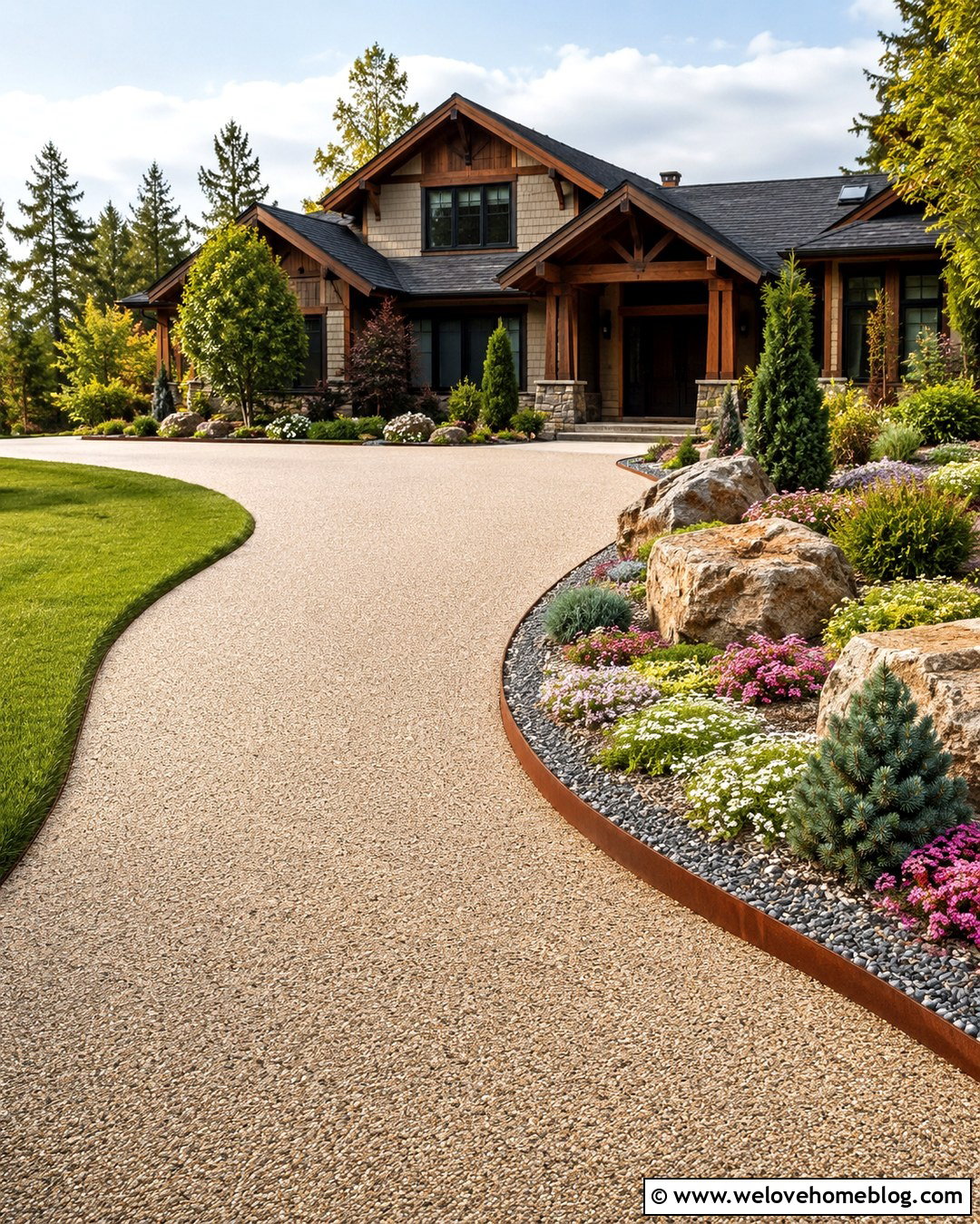
A sloped driveway needs garden borders that look attractive while helping the grade feel stable and organized. Choose textured poured concrete or asphalt for dependable traction, then install a low natural-stone retaining wall along the higher side. Set the wall back from the driving edge to provide clearance and create a usable planting bed. Fill the slope with spreading evergreens, ornamental grasses, hardy flowering plants, and carefully placed boulders suited to the site. On the lower side, use a shallow swale or gravel drainage strip where appropriate. A stepped walkway can run separately from the driveway, offering a safer route to the entrance. Low rock walls may help separate sloped planting from pavement and reduce soil movement toward the driveway. ()
19. Driveway With Pollinator Garden And Stone Edging
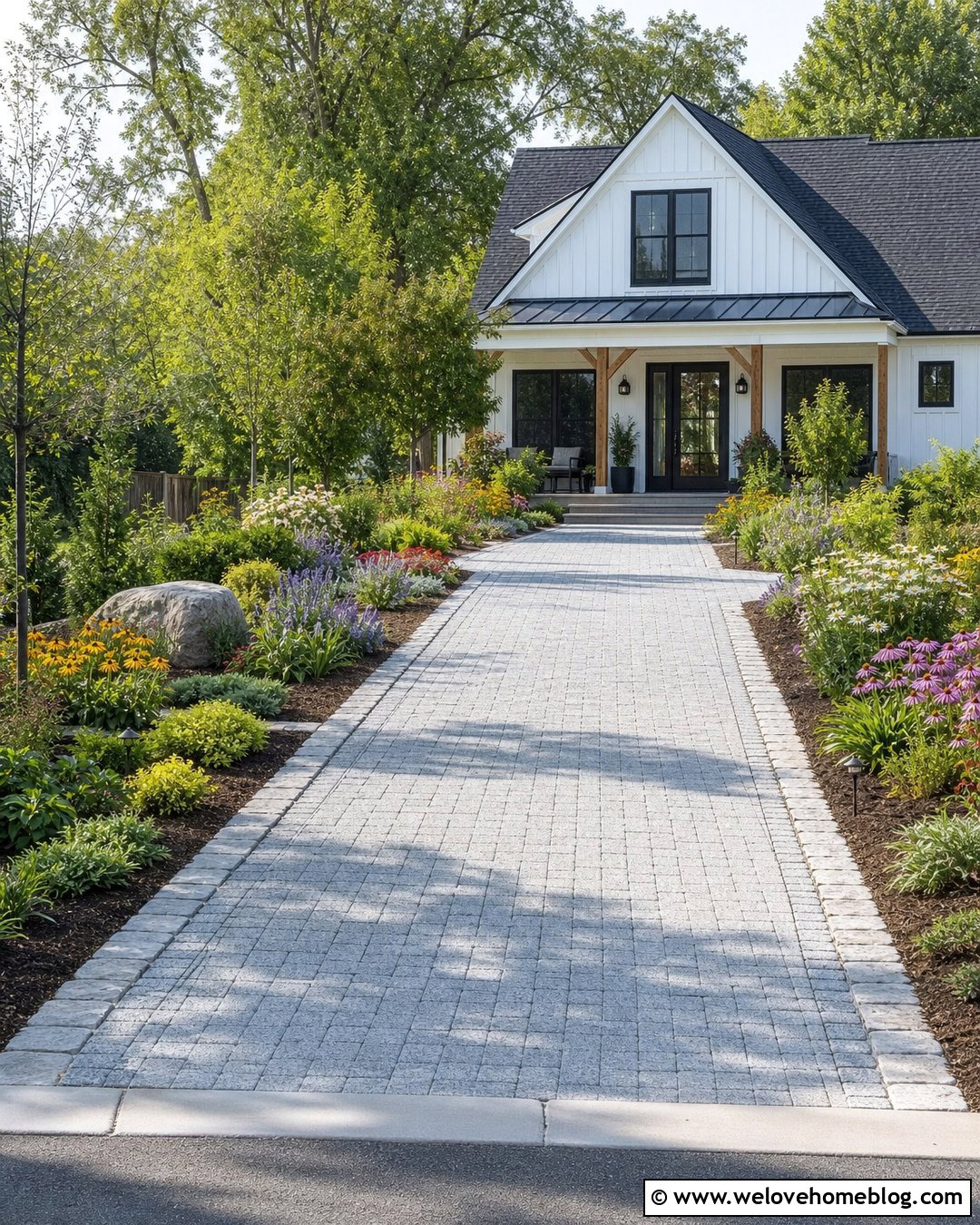
A pollinator border can transform a practical driveway into a lively seasonal garden without sacrificing a neat appearance. Start with a light-gray concrete or permeable paver driveway and outline it with a continuous natural-stone edge. Create beds that are wide enough for layered planting rather than squeezing flowers into a narrow strip. Combine regionally suitable flowering perennials, native grasses, low shrubs, and spring bulbs so the display changes through the growing season. Repeat plant groups in drifts for a calmer look and place shorter varieties beside the pavement. Leave clear stepping areas where passengers commonly exit vehicles. Add a simple birdbath or small boulder within the bed rather than on the driveway. The strong stone border balances the loose planting and makes the complete entrance feel intentional.
20. Driveway With Evergreen Garden And Lighting
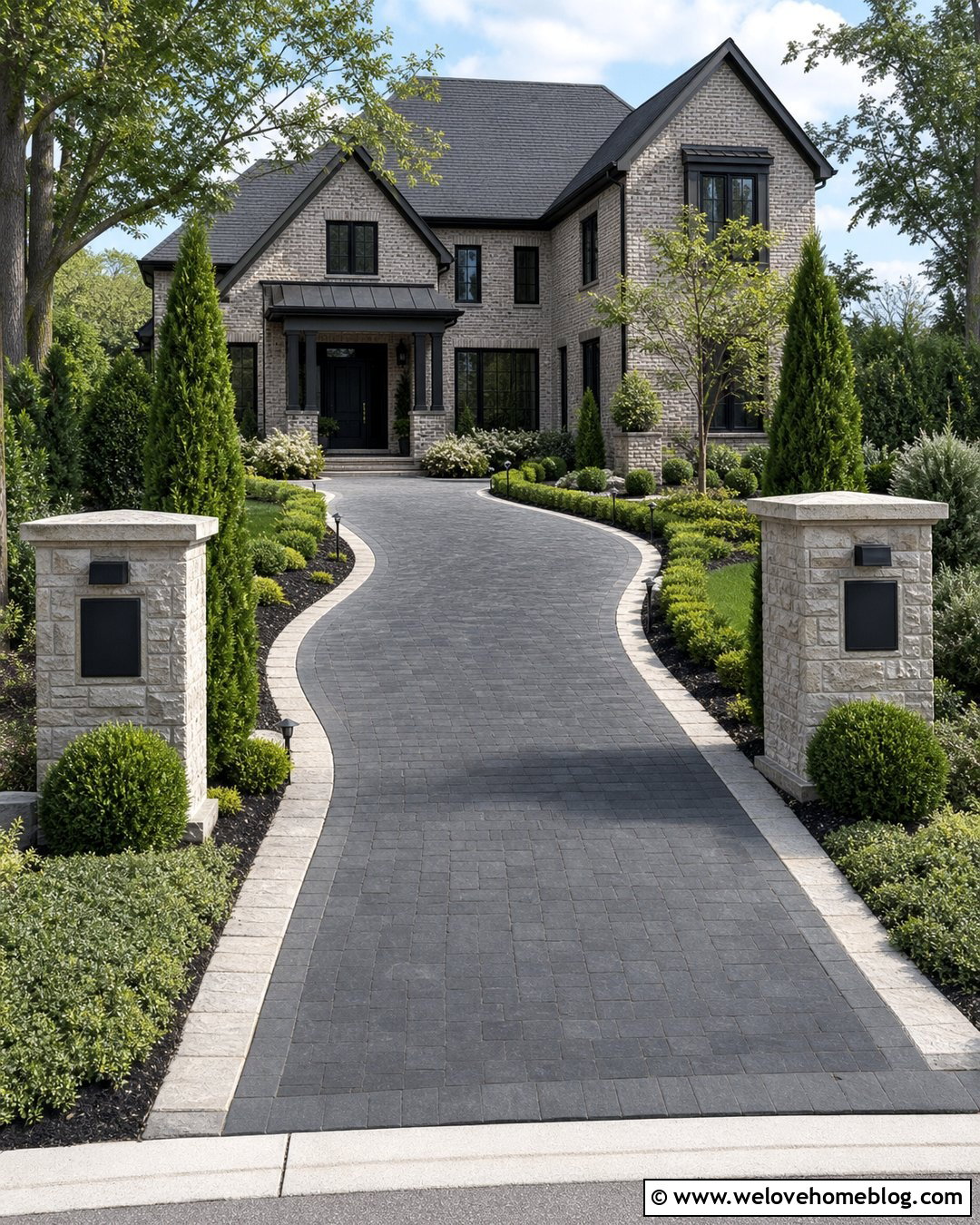
Year-round greenery and carefully positioned lighting can give almost any driveway a finished, welcoming appearance. Pair a charcoal paver or dark asphalt driveway with light stone edging for clear daytime contrast. Along the route, arrange compact evergreen shrubs, columnar trees, and low ground cover in repeated groups. Allow generous spacing so plants can reach their mature size without narrowing the driveway. Install simple low-voltage fixtures near entrance pillars, pathway turns, and important level changes rather than lining every edge like a runway. Keep the fixtures within planting beds where they are less likely to be damaged. Add a matching walkway and a clearly visible address marker near the street. In daylight, the evergreen garden provides structure; after sunset, restrained lighting helps define the approach, entrance, and pedestrian route.
Conclusion:
The best driveway gardens balance attractive materials with safe movement, useful parking, manageable planting, and a clear connection to the house. Gravel can support a relaxed cottage border, while concrete and pavers suit cleaner, more structured landscapes. Circular islands, rain gardens, raised beds, flowering borders, and tree-lined approaches can all work when they are planned as complete designs. Before building, consider drainage, mature plant sizes, passenger access, street visibility, snow removal, and local requirements. Repeat materials and plants to keep the entrance cohesive rather than crowded. Whether your front yard is narrow, sloped, formal, or spacious, these **20 Driveway And Garden Ideas** offer practical starting points for improving everyday function and lasting curb appeal.

Related posts:

Leave a Reply