
Replacing a worn driveway does not always require a large concrete or asphalt budget. The best low-cost surfaces use locally available aggregates, recycled materials, smaller paved areas, or permeable systems that reduce material and labor needs. However, a cheap surface still needs a firm base, effective drainage, and secure edging to prevent ruts and washouts. Climate, slope, snow removal, soil conditions, and neighborhood rules should also guide your choice. Before ordering materials, compare delivered prices from nearby quarries and recycling yards because transportation can change the final cost dramatically. The complete driveway looks below combine affordable surfaces with practical borders, layouts, entrances, and landscaping. Explore these **20 Driveway Alternatives Cheap Ideas** to find a solution that suits your home, yard, and maintenance preferences.

1. Crushed Stone Driveway With Timber Edging
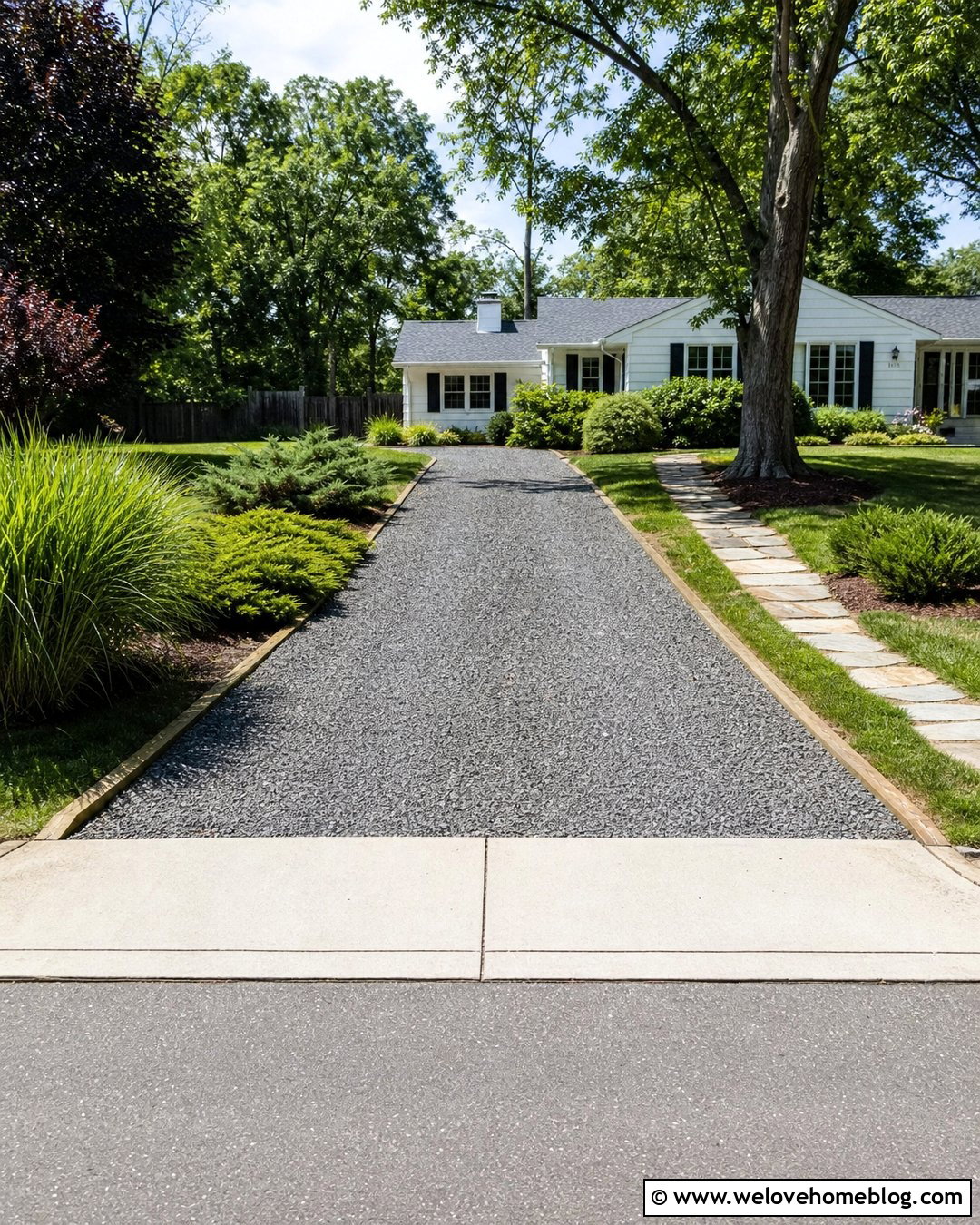
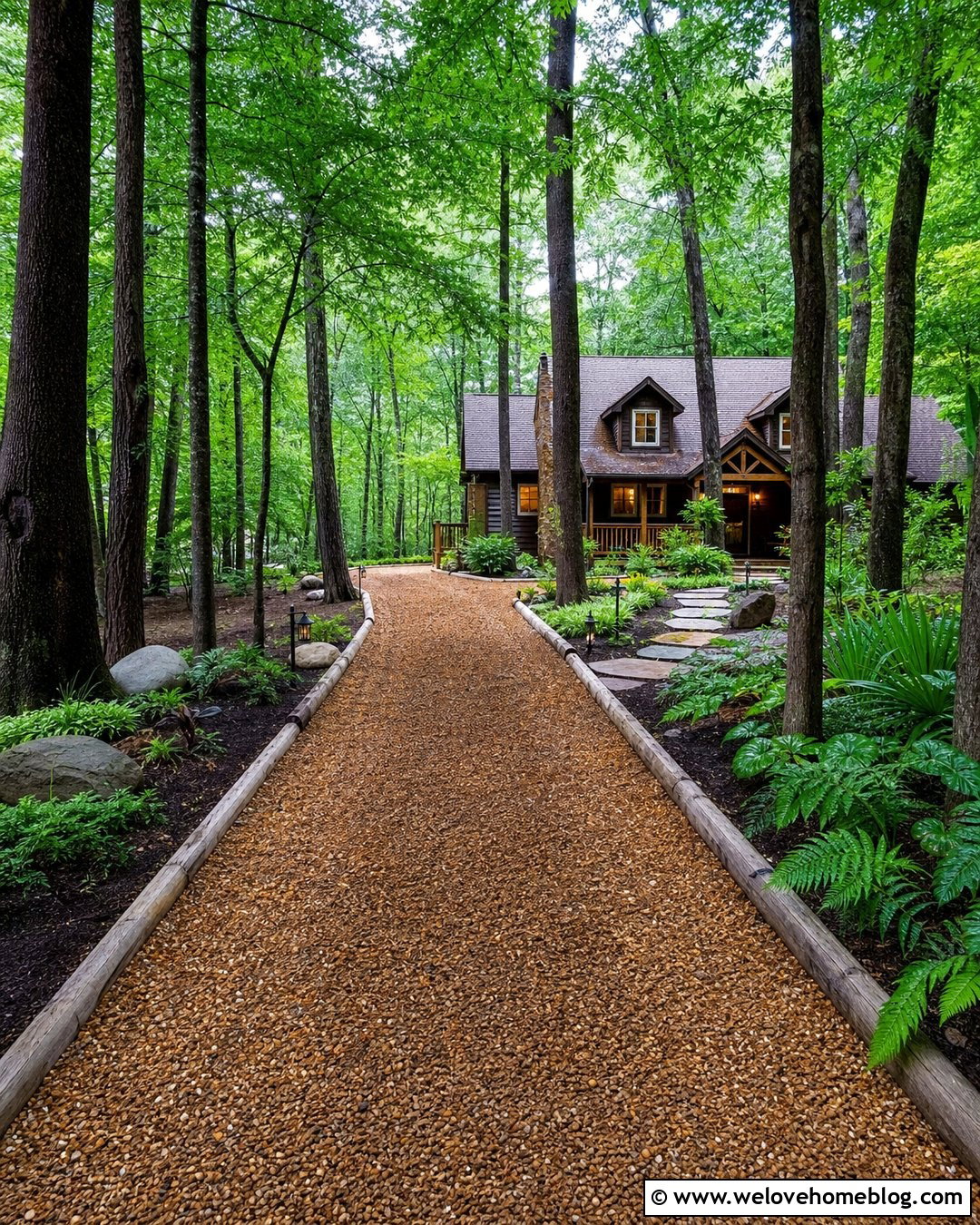
A crushed stone driveway is one of the simplest ways to create a clean, usable entrance without paying for a fully paved surface. Choose angular, driveway-grade stone rather than smooth decorative pebbles. The irregular pieces lock together more effectively when compacted. Use pressure-treated landscape timbers along both sides to contain the material and create a straight outline. A wide concrete or paver apron near the street can reduce stone migration onto the road. Complete the look with low ornamental grasses, spreading junipers, and a simple walkway beside the driveway. Proper grading remains essential, especially on long or sloped properties. Loose aggregate options generally have lower starting costs than conventional concrete or asphalt, although periodic raking and replenishment should be included in the maintenance plan. ()
2. Crusher Run Driveway With Brick Border
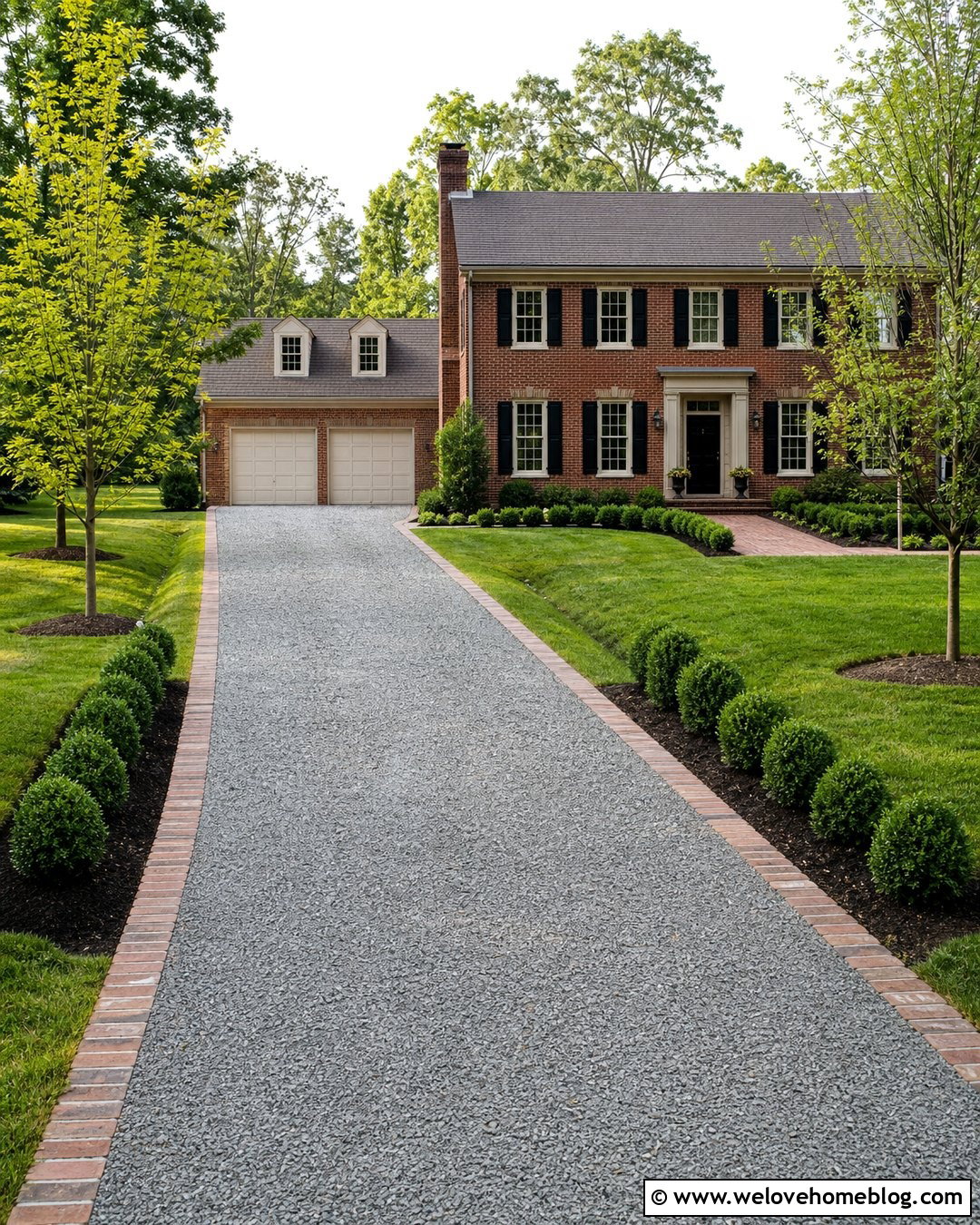
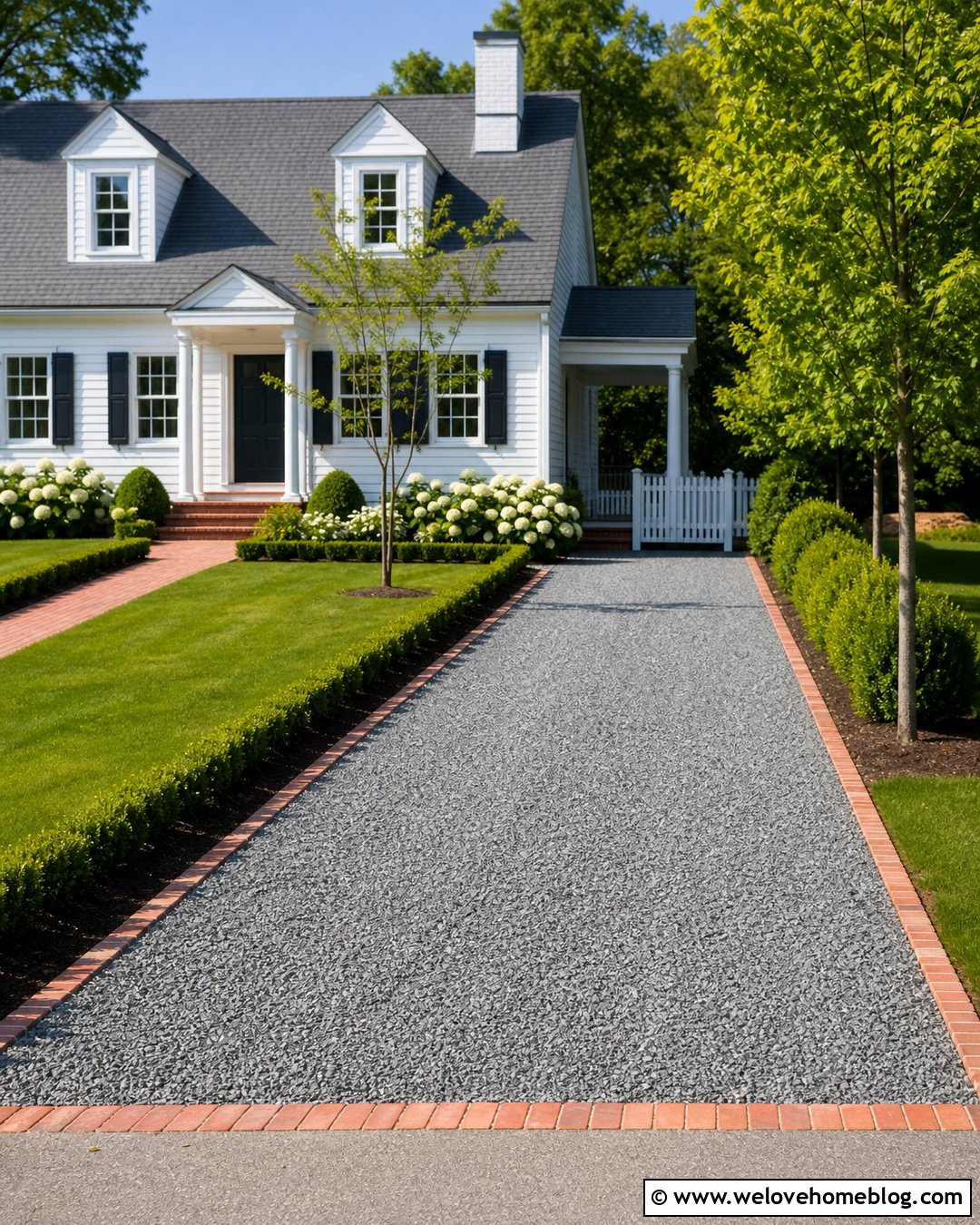
Crusher run combines angular stone with fine particles that settle into the gaps during compaction. This creates a firmer surface than loose decorative gravel while maintaining a natural, informal appearance. Frame a straight crusher run driveway with reclaimed brick laid flat at ground level. The border makes mowing easier and helps define the entrance without requiring expensive raised curbs. Warm red brick also provides an attractive contrast against gray aggregate. Add symmetrical planting beds near the street, using compact shrubs that will not block sightlines. A shallow drainage swale can run behind one border where water tends to collect. Install crusher run in compacted layers over stable soil rather than spreading one thick, loose load. Good base preparation helps reduce sinking, puddles, and deep tire tracks.
3. Pea Gravel Driveway With Cobblestone Edge
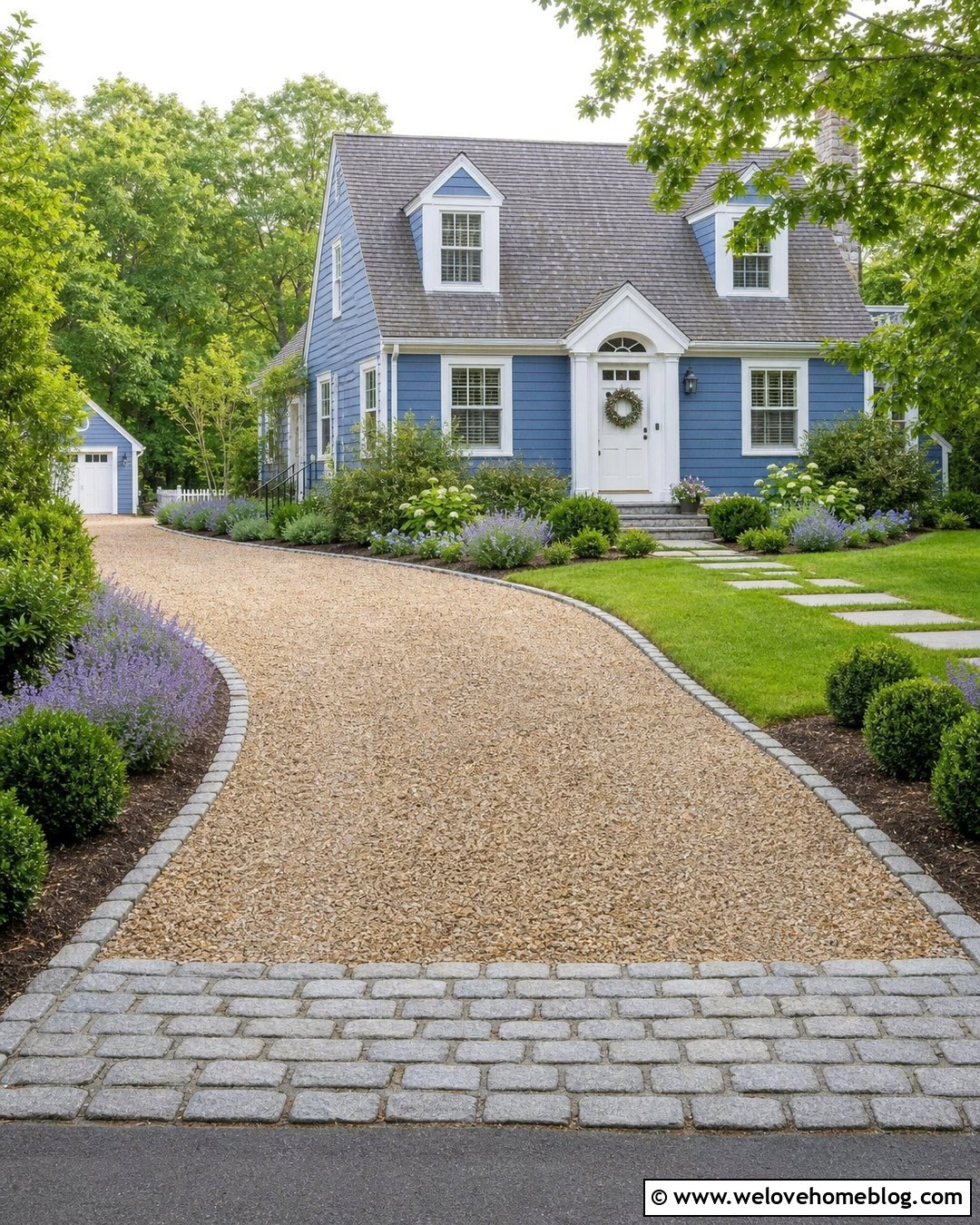
Softly colored pea gravel creates an inviting driveway for cottages, Cape Cod homes, and traditional suburban properties. Because the stones are smooth and more likely to shift, use a stabilizing gravel grid beneath the surface whenever the budget allows. A cobblestone edge gives the driveway stronger definition and helps keep loose gravel away from planting beds. To control costs, reserve cobblestone for the visible entrance and use less expensive concrete edging farther up the drive. A gently curved layout will soften a small front yard and reveal the house gradually. Surround it with lavender, catmint, dwarf boxwood, and lawn. Keep the gravel layer shallow enough for stable driving, and avoid piling rounded stones over an unstable base. Occasional raking will restore an even, polished appearance.
4. Recycled Concrete Driveway With Native Planting
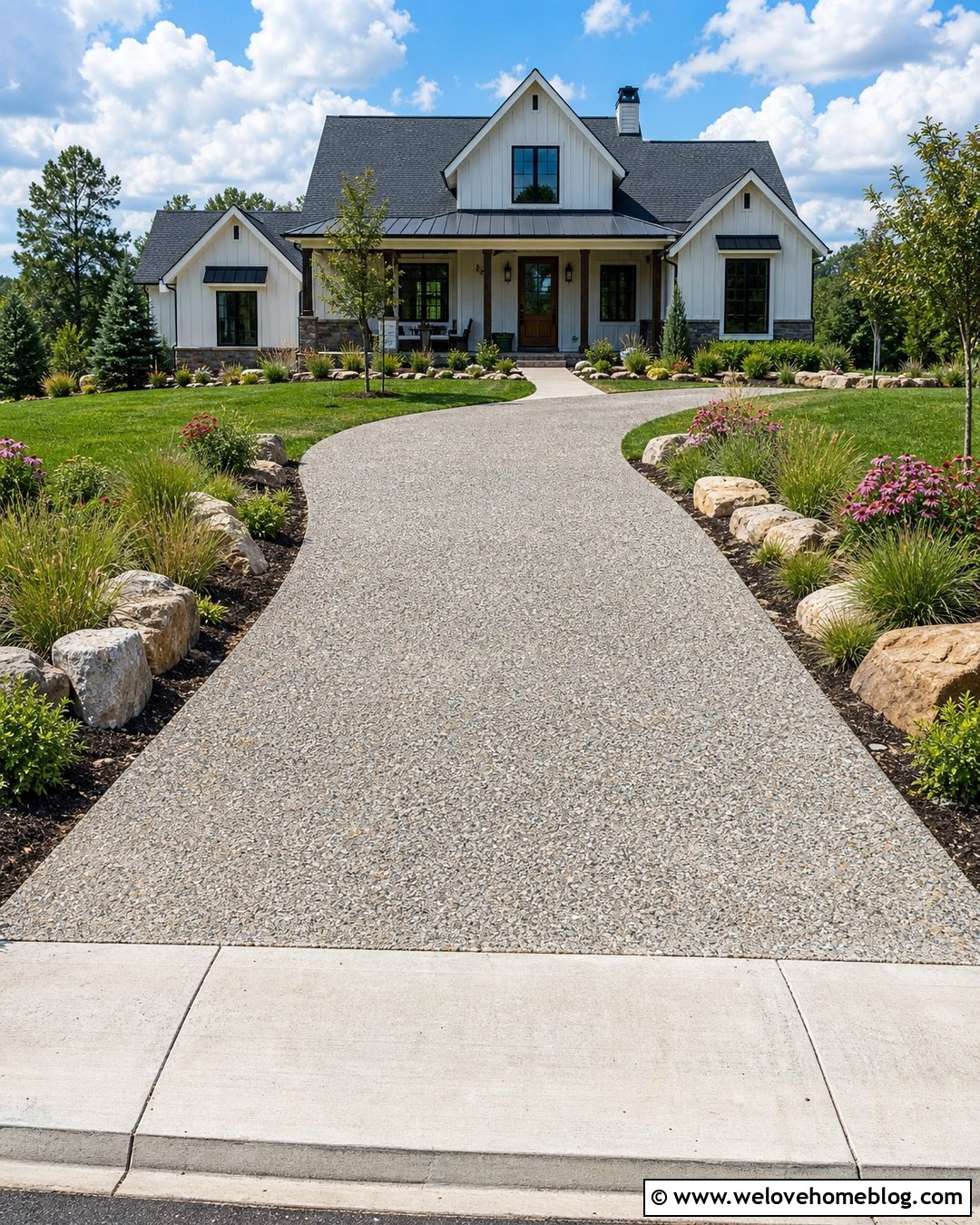
Recycled concrete aggregate can turn demolition material into a useful driveway surface with a pale, textured appearance. It is crushed into different sizes, so request a compactable blend intended for driveways rather than oversized construction rubble. Use larger natural stones as informal borders and create shallow native planting beds along the driveway’s outer edges. Drought-tolerant grasses, coneflowers, and low shrubs can soften the recycled material while limiting irrigation needs. A straight or slightly curved layout works well for ranch houses and modern farmhouses. Include a defined apron at the road and direct runoff toward planted drainage areas instead of the foundation. Recycled concrete can be an economical alternative where it is locally available, but homeowners should confirm that the supplier provides clean, properly processed material. ()
5. Asphalt Millings Driveway With Steel Edging
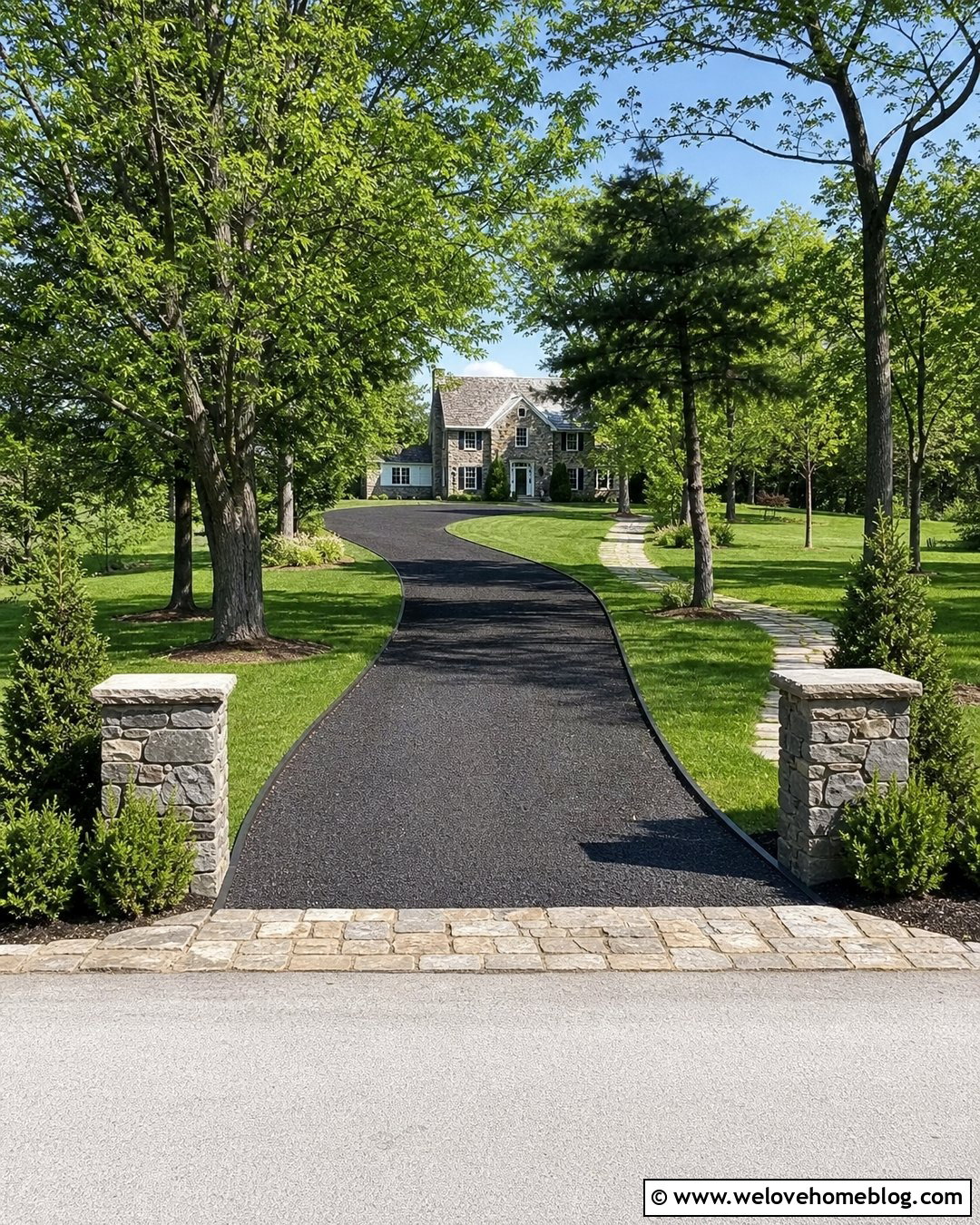
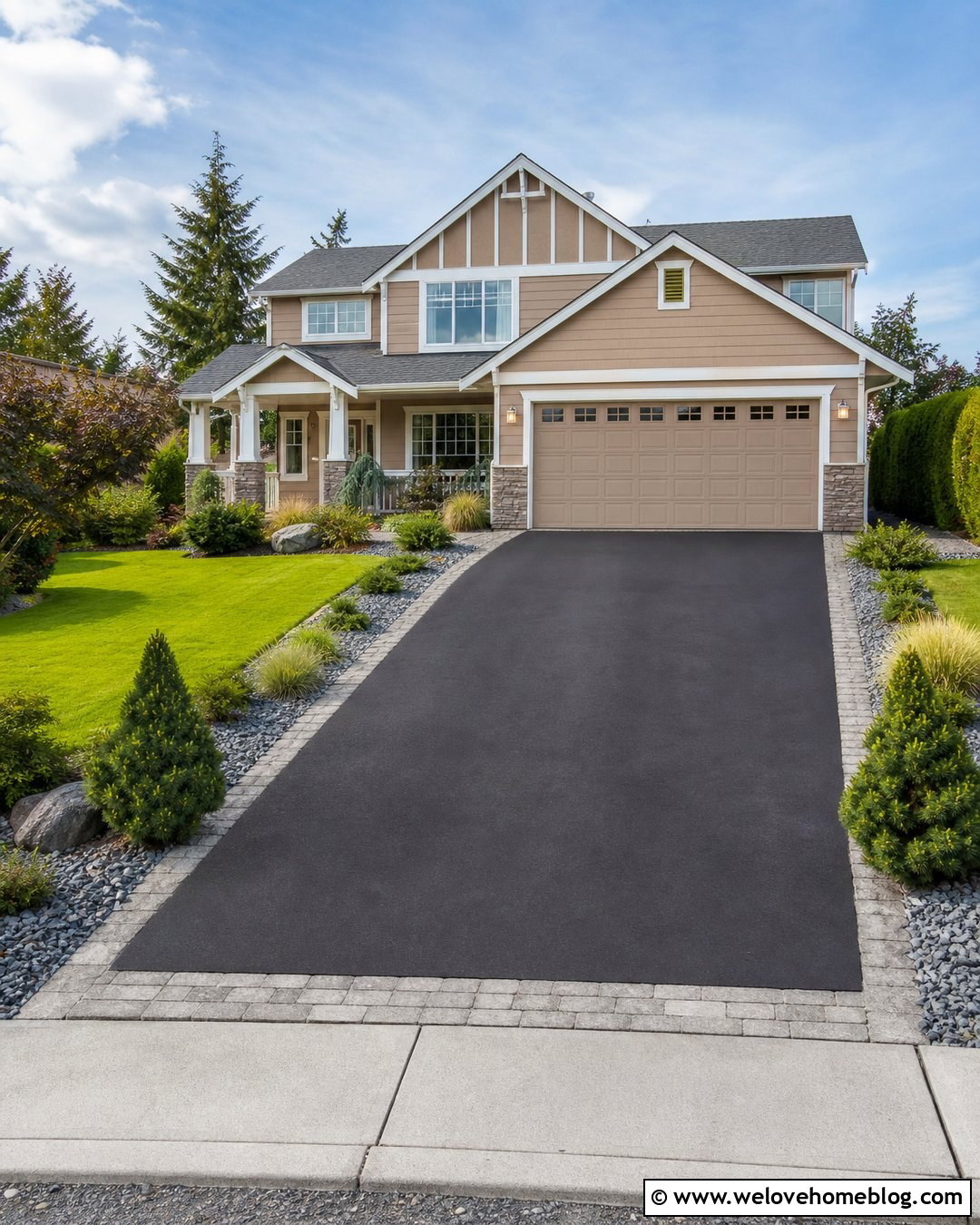
Recycled asphalt millings offer a darker, more finished appearance than ordinary gravel. Once spread, graded, and compacted, the particles can form a relatively dense driving surface. This makes millings useful for long rural driveways, side parking areas, and homes where fresh asphalt is beyond the budget. Install slim steel edging along visible planting beds for a crisp transition. At the entrance, add two low fieldstone pillars and a matching stone apron to create curb appeal without paving the entire length. Evergreen shrubs and shade trees will complement the charcoal surface. Availability and quality can vary, so inspect the material for excessive debris before delivery. Millings are normally less expensive than new asphalt, but professional compaction and ongoing surface care can significantly improve their performance. ()
6. Chip Seal Driveway With Gravel Shoulders
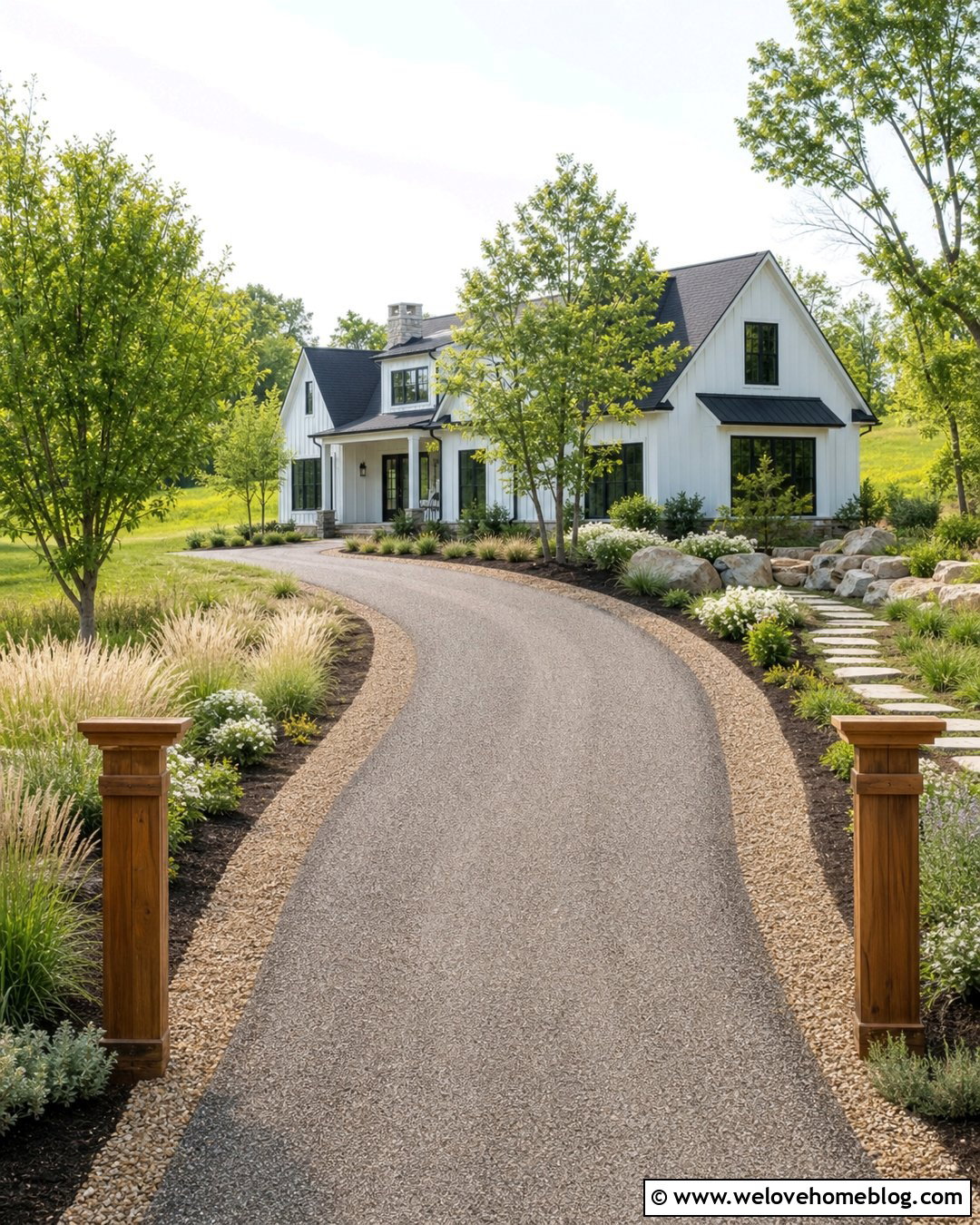
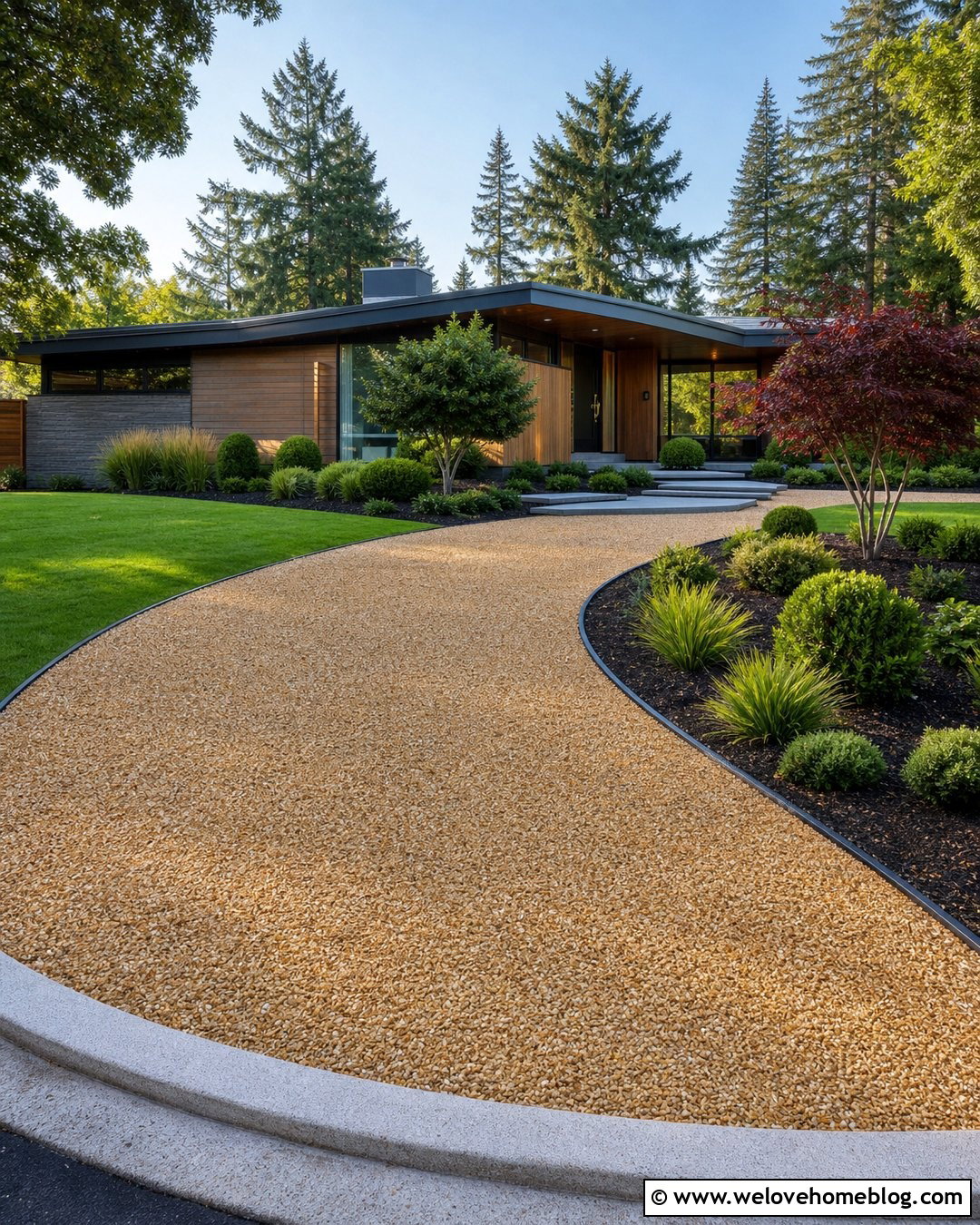
Chip seal, also called tar and chip, creates a textured surface by combining a liquid asphalt layer with stone aggregate. It can provide the visual strength of asphalt with a more natural, speckled finish. Pair a warm gray chip seal driveway with compacted gravel shoulders that collect minor runoff and simplify edge repairs. A curved route leading to a country house or farmhouse will make the surface feel intentional rather than purely functional. Use native grasses and broad planting beds outside the shoulders, keeping tall plants away from the road entrance. Chip seal is not typically a casual DIY project because the binder and rolling process require specialized equipment. However, it may be a lower-cost paving alternative in areas where local contractors already provide the service. ()
7. Gravel Grid Driveway With Stone Borders
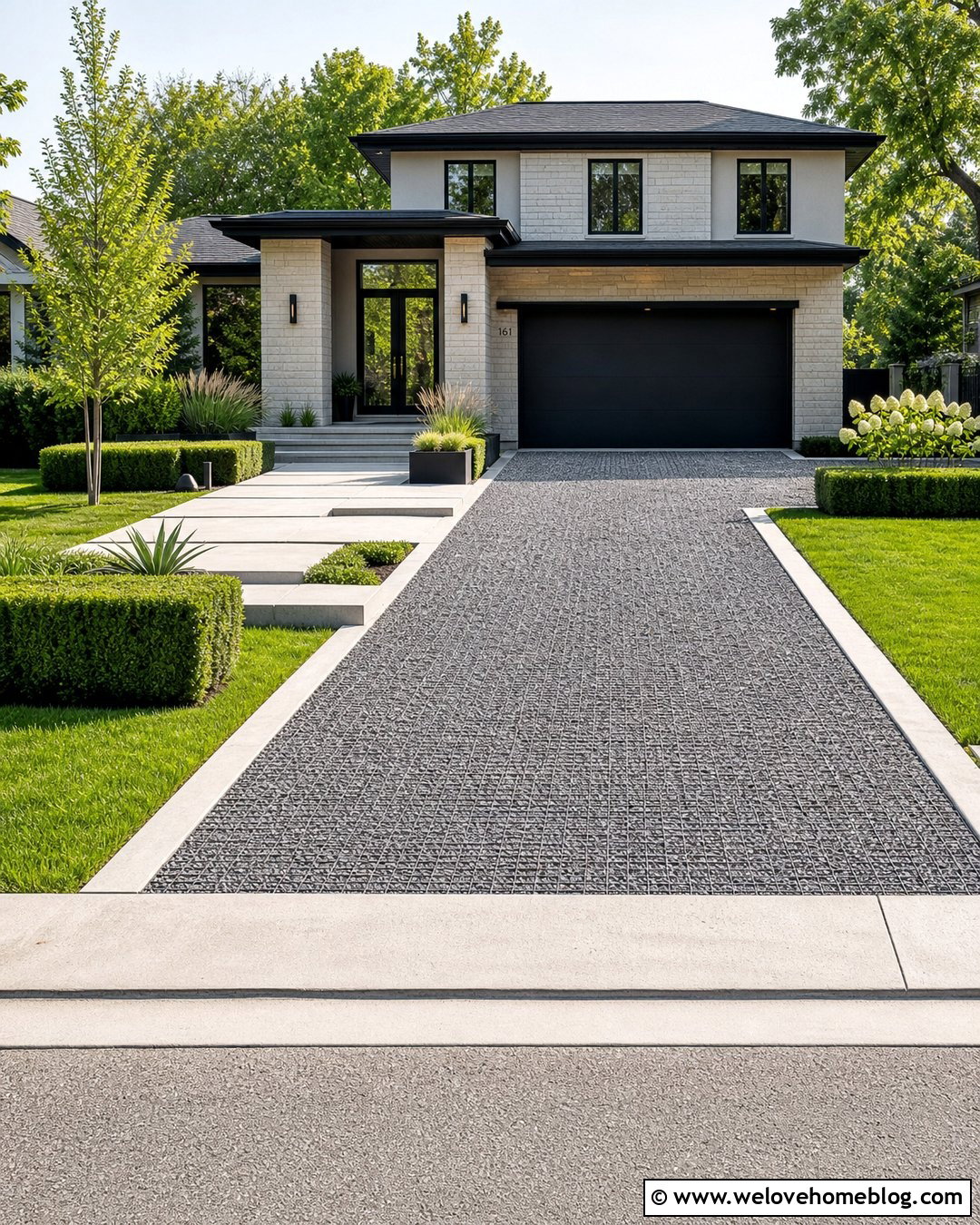
A gravel grid driveway combines affordable aggregate with a hidden cellular support system. The grid holds gravel in place, distributes vehicle loads, and produces a more stable surface than loose stone alone. Fill the cells with angular gray gravel and finish both sides with flat limestone borders. For a contemporary home, use a straight driveway with square planting beds, clipped shrubs, and a simple concrete walkway. The structured landscaping will reinforce the grid’s neat appearance. A permeable surface can also help water enter the ground, provided the base and soil are designed for drainage. Always choose a grid rated for vehicles, not a lightweight landscape product. Although the grid adds to the upfront expense, it can reduce routine raking, gravel migration, and rut repairs in frequently used areas. ()
8. Grass Paver Driveway With Concrete Apron
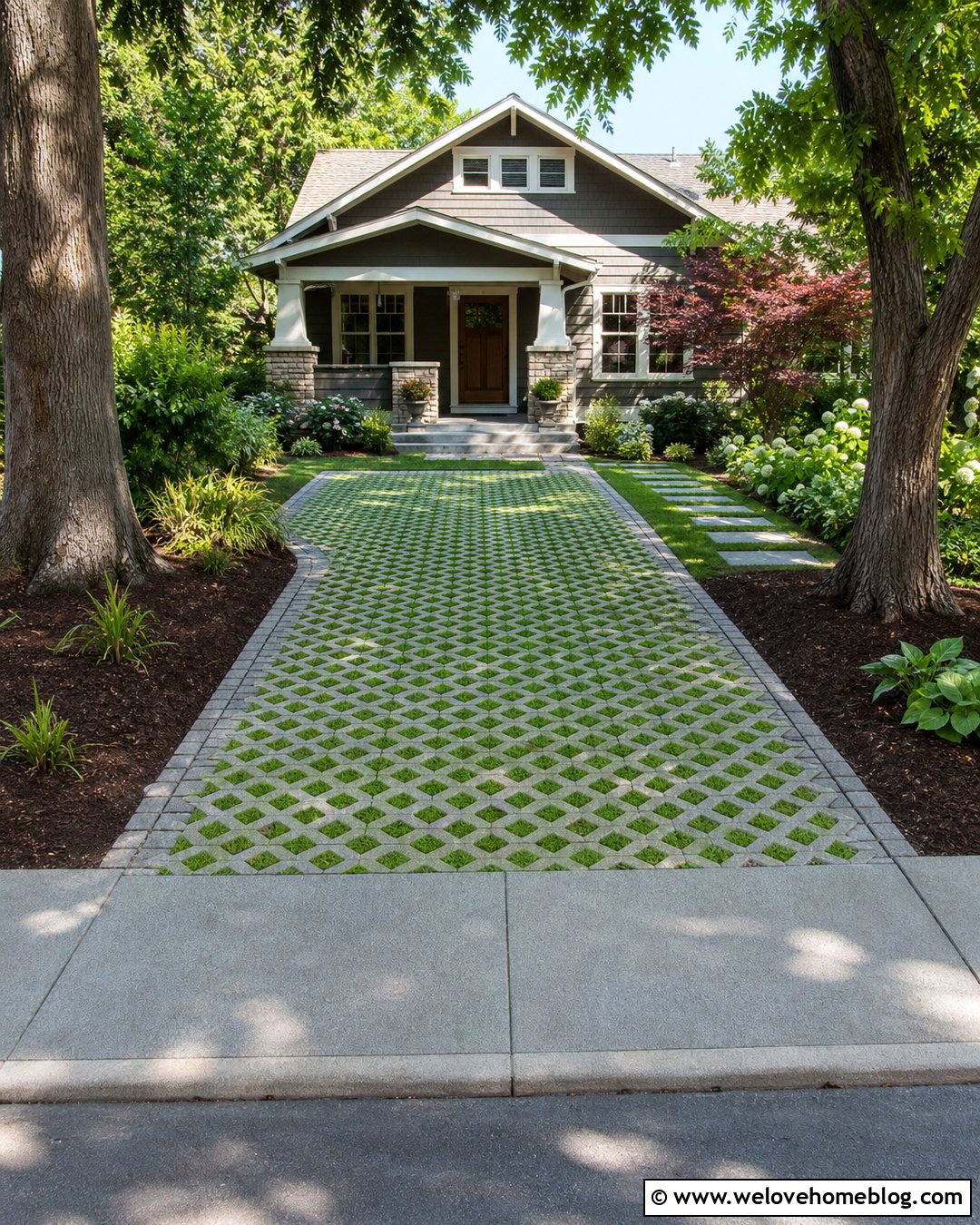
Grass pavers create a green driveway by supporting vehicle weight while allowing turf or low ground cover to grow through open cells. This alternative works especially well for occasional parking, secondary driveways, and low-traffic approaches. Use concrete or heavy-duty plastic cells rated for cars, then install a short poured-concrete apron where the driveway meets the street. The hard apron handles turning forces and creates a tidy transition at the curb. Continue the planted surface toward a Craftsman house, framing it with shade trees, mulched beds, and a stepping-stone walkway. Choose grass suited to local sun, rainfall, and traffic conditions. A reinforced base remains necessary because the plants alone cannot carry vehicles. Grass pavers also require mowing, watering, and occasional cell repairs, so consider both maintenance and appearance before installation.
9. Concrete Ribbon Driveway With Gravel Center
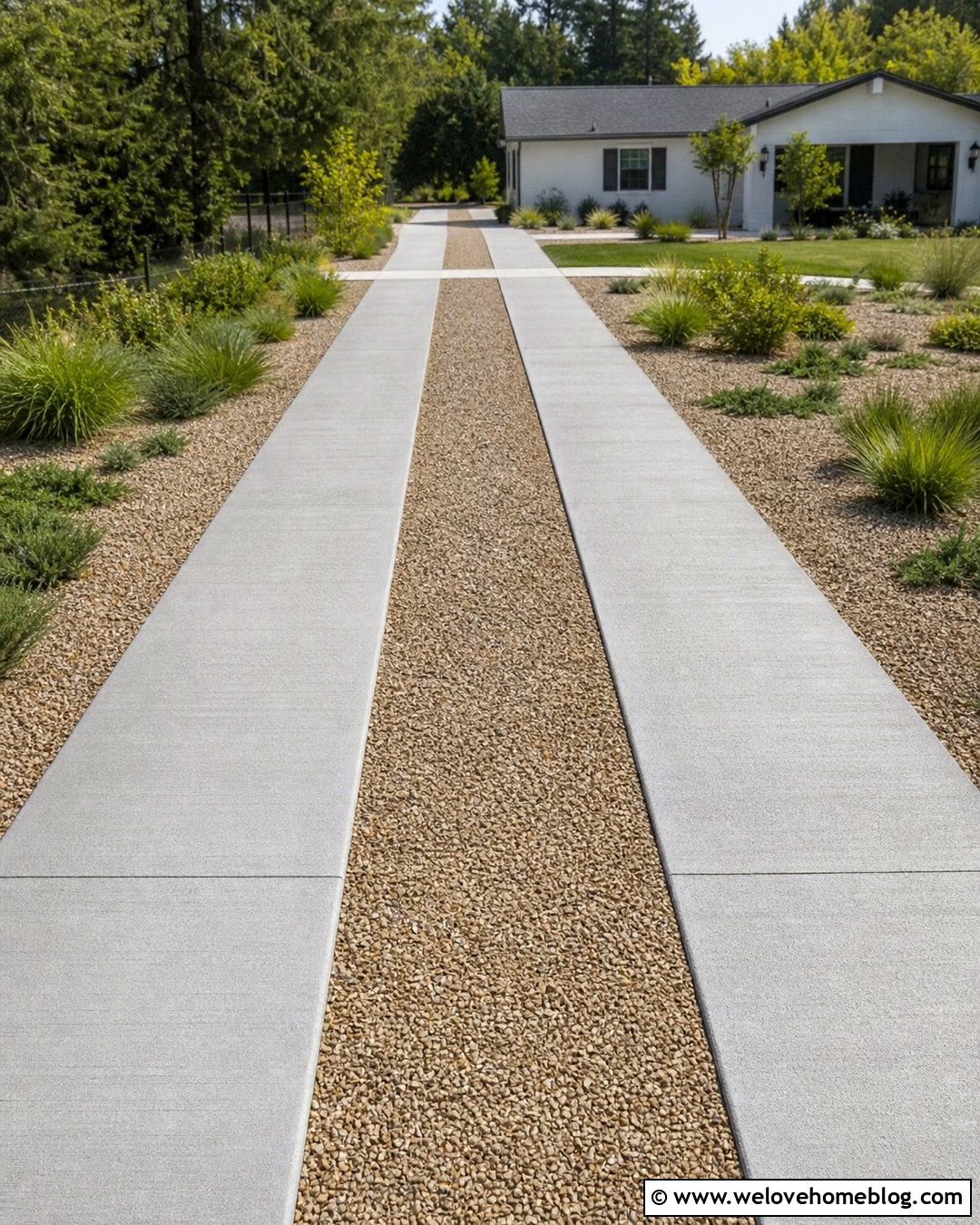
A concrete ribbon driveway places pavement only beneath the vehicle tires, reducing the amount of concrete required. Two straight poured-concrete tracks can frame a compacted gravel center, creating a practical surface with more visual interest than a full slab. Continue gravel along the outer shoulders to improve drainage and soften the edges. This layout suits small ranch homes, detached garages, and narrow side yards where every foot matters. Add low planting beds with sedges, dwarf shrubs, and creeping ground cover beside the ribbons. Accurate track spacing is important, especially if different vehicles use the driveway. The concrete strips need a properly compacted base and enough thickness for expected loads. Local rules may also regulate driveway width, apron design, and permeable center materials, so verify requirements before construction. ()
10. Concrete Parking Strips With Lawn Center
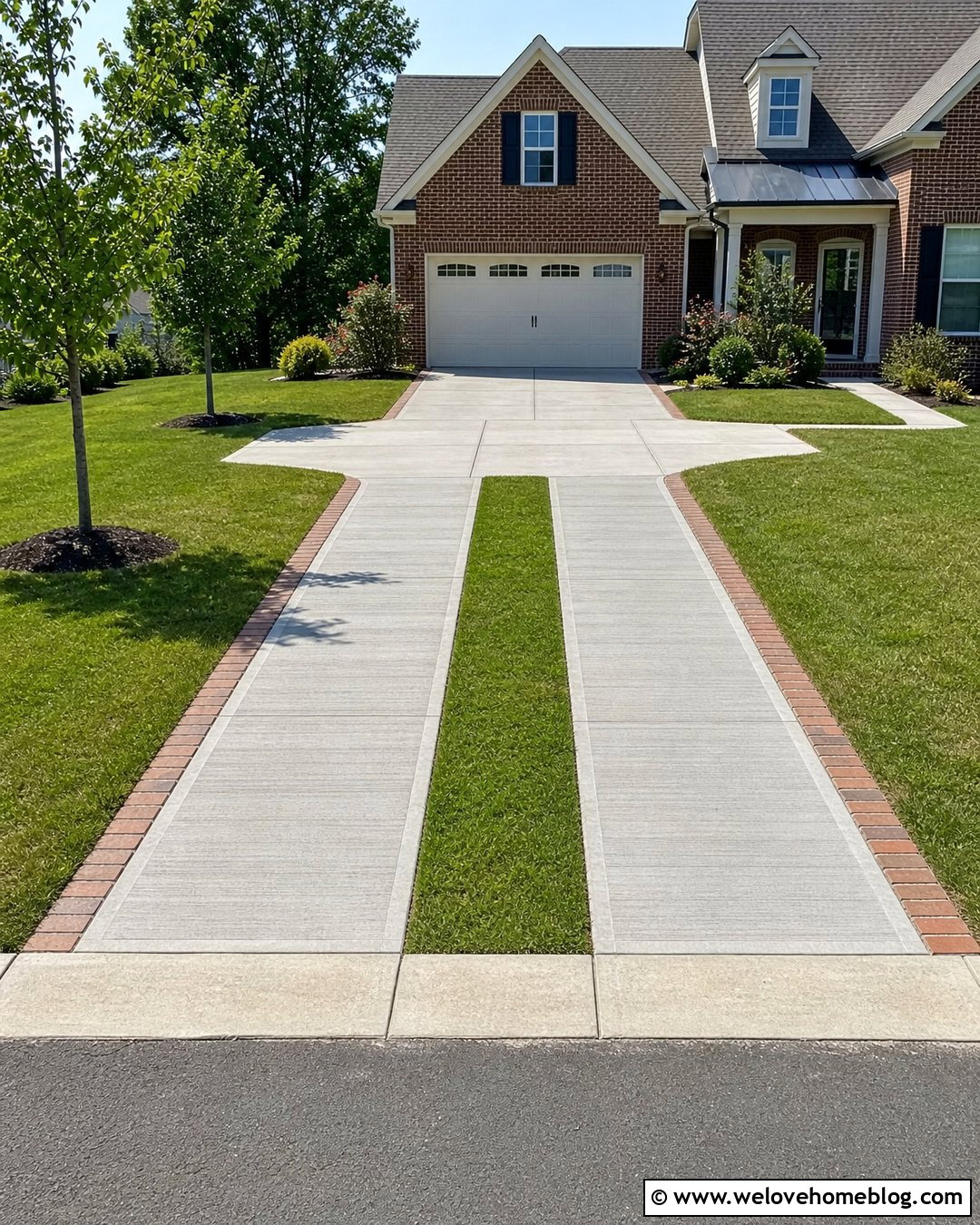
For a softer residential look, pair narrow concrete parking strips with a maintained lawn center. Unlike a gravel-filled ribbon driveway, this design allows grass to visually connect both sides of the front yard. It works best on a level, straight approach with predictable vehicle placement. Use broom-finished gray concrete for traction and install a wider turning pad near the garage. A brick border around the outer strips can add definition while protecting nearby soil. Keep trees and large shrubs far enough away that branches will not scrape vehicles or block visibility. The lawn center should sit slightly below the concrete so mower wheels can pass safely over the edges. Select durable turf and expect occasional reseeding where tires drift. This design reduces paving coverage but still requires professional base preparation.
11. Decomposed Granite Driveway With Metal Edging
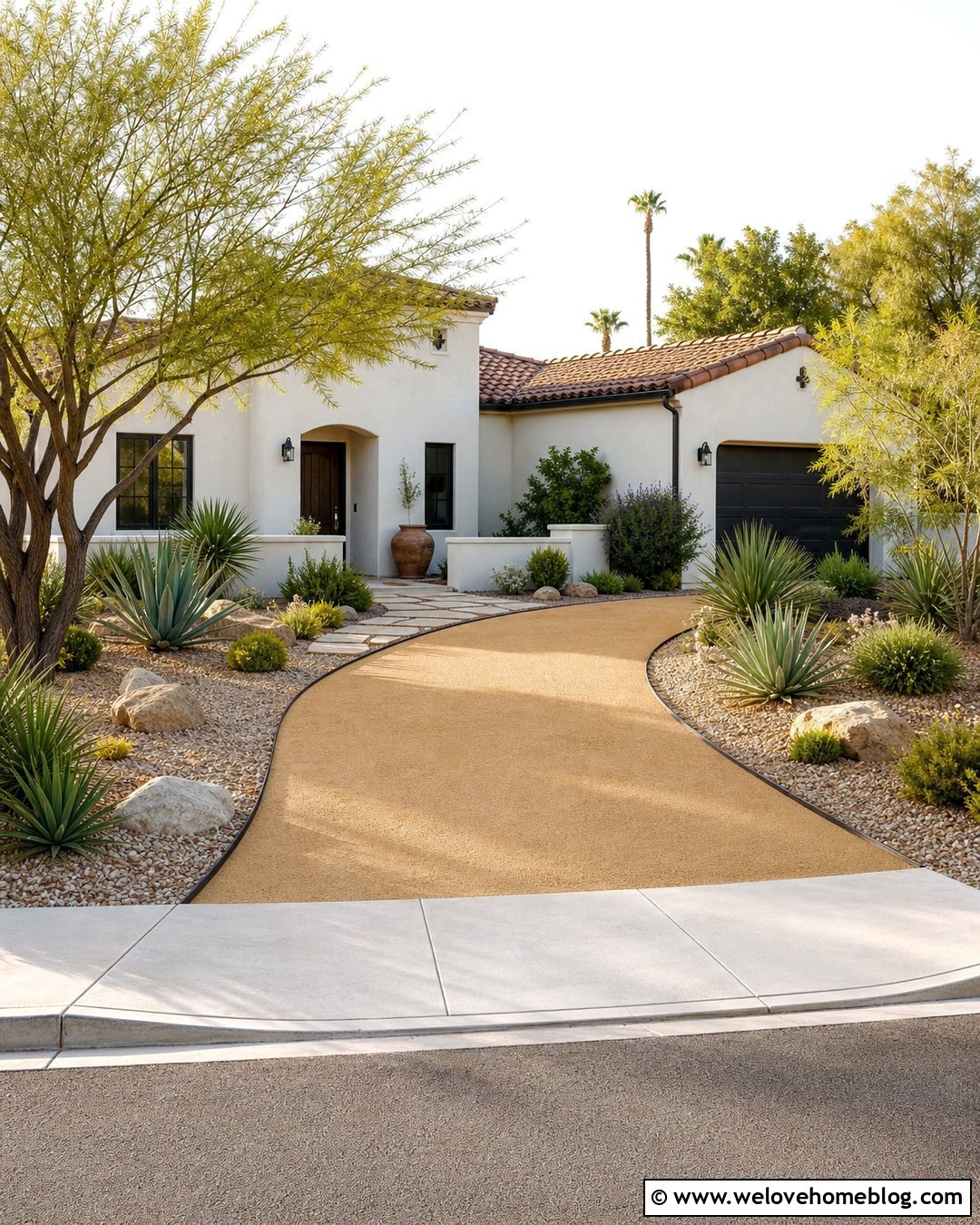
Decomposed granite offers a warm, fine-textured surface that suits Southwestern, Spanish, and contemporary desert homes. For vehicle use, choose a compactable product containing particles of varied sizes rather than loose decorative sand. Stabilized decomposed granite may cost more initially, but it can resist displacement better in frequently traveled areas. Outline a gently curved driveway with dark steel edging and install a contrasting concrete apron at the street. Use gravel-mulched planting beds filled with agave, yucca, ornamental grasses, and drought-tolerant shrubs. The warm driveway color will coordinate naturally with stucco walls and clay roof tiles. This material performs best when water can drain away instead of flowing rapidly across it. On steep or rainy sites, another surface may require fewer repairs and provide more reliable erosion control.
12. Limestone Screenings Driveway With Fieldstone Border
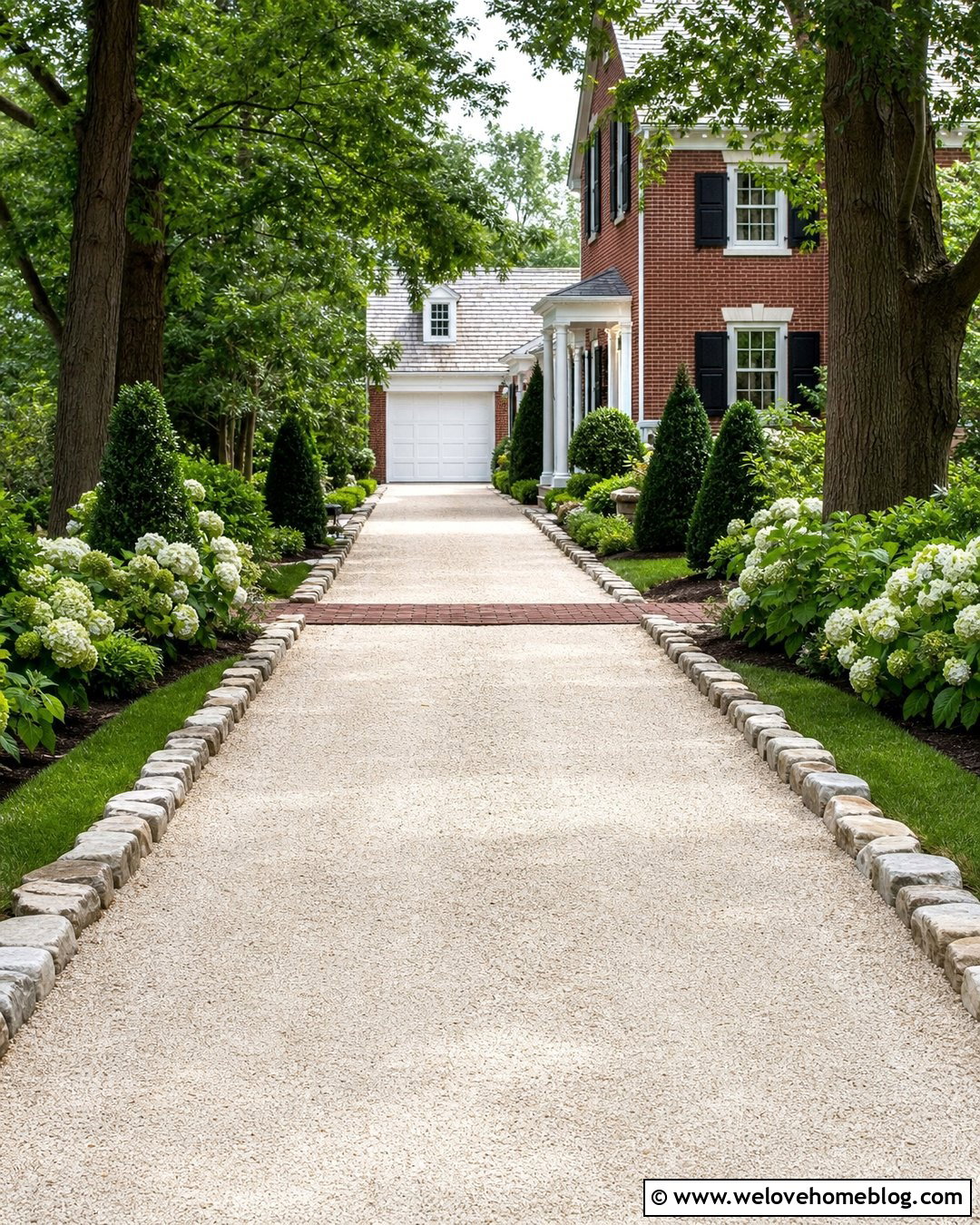
Limestone screenings contain small stone fragments and fines that compact into a smooth, firm surface. Their muted cream or gray color can brighten the approach to a brick colonial, cottage, or traditional farmhouse. Build a straight driveway with fieldstone edging placed along both sides, using locally sourced stones to keep the border affordable. Add hydrangeas, compact evergreens, and a narrow lawn strip outside the stone. A brick walkway crossing the driveway near the house will create a practical pedestrian route and connect the design to the facade. Screenings can become dusty during dry weather and may soften where drainage is poor. Install them over a stronger crushed-stone base, compact the layers carefully, and maintain a gentle crown. Local quarry pricing often determines whether this option is genuinely economical.
13. Crushed Shell Driveway With Coastal Landscaping
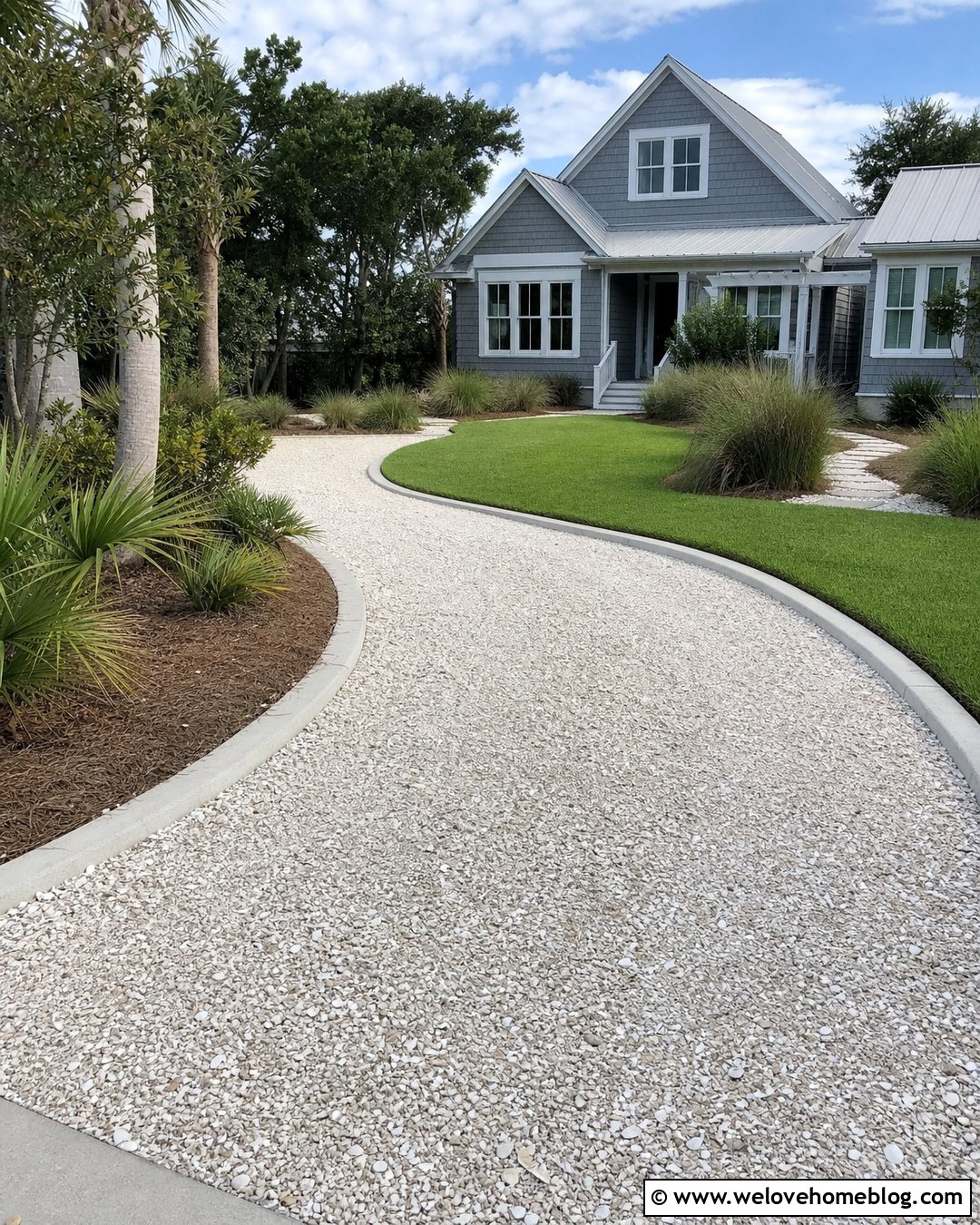
In coastal regions where crushed shell is readily available, it can produce a light-colored driveway with relaxed regional character. Oyster, clam, or similar processed shells gradually break into smaller pieces and may become firmer with use. Frame a softly curved crushed shell driveway with pressure-treated timber or pale concrete curbing. Add beach grasses, wax myrtle, dwarf palmettos, and other salt-tolerant plants suited to the location. A blue-gray shingle house or simple coastal cottage will complement the creamy surface. Use a compacted aggregate foundation beneath the shells, especially where soil remains sandy or wet. Shell availability, sourcing rules, and pricing vary substantially by area. Purchase only legally processed landscape material from a reputable supplier, and confirm that sharp fragments, odor, and drainage conditions will not create problems.
14. Crushed Granite Driveway With Paver Apron
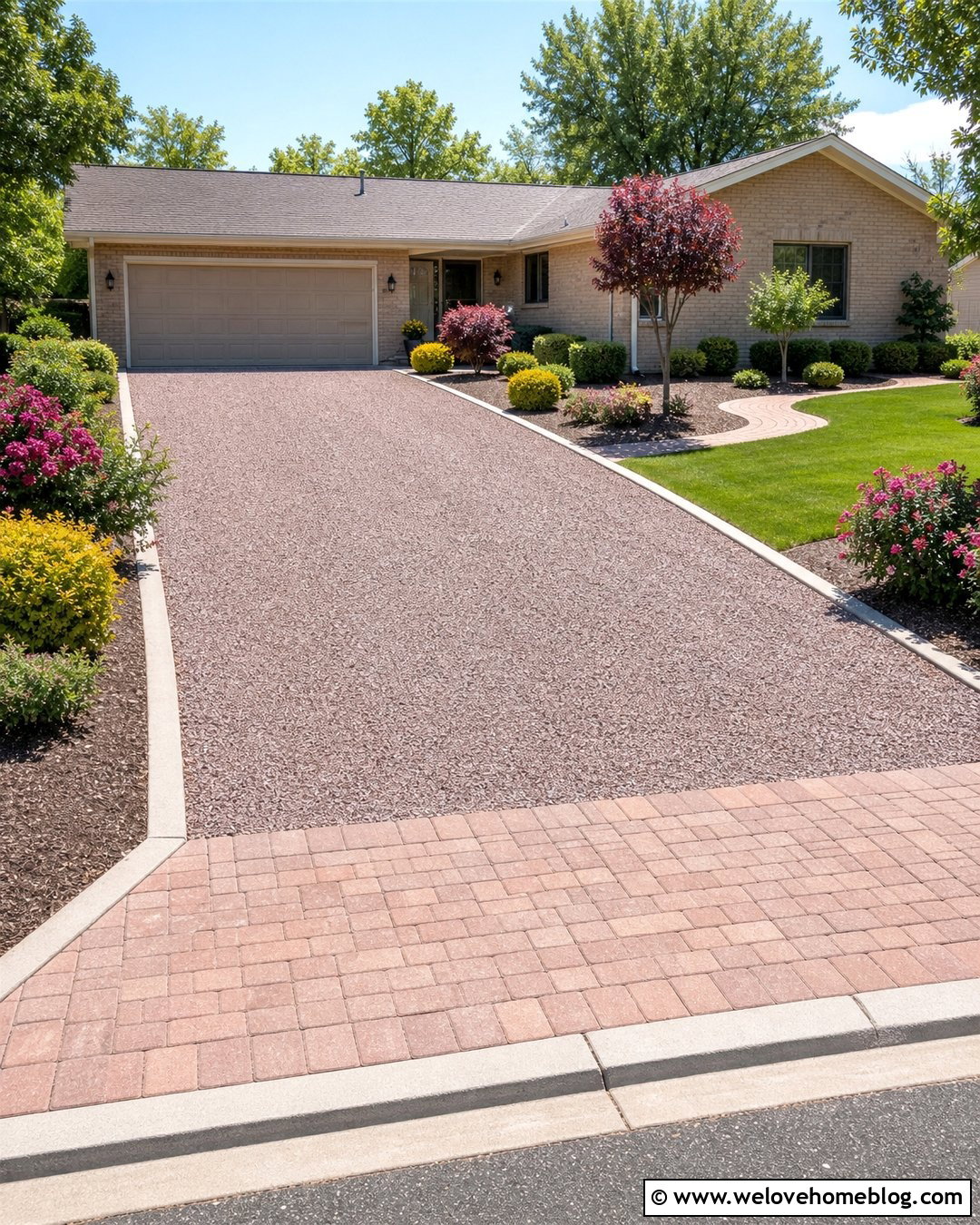
Angular crushed granite gives a driveway rich color while remaining more budget-friendly than full granite paving. Depending on the local stone, the surface may appear gray, pink, rust, or charcoal. Use a straight crushed granite driveway with a simple clay brick paver apron at the curb. The apron captures loose particles where tires enter and adds a finished detail where it matters most. Concrete landscape curbing can contain the aggregate along the lawn, while flowering shrubs and small ornamental trees frame the approach. Match the stone tone to the home’s roof, masonry, or siding for a connected look. Crushed granite should include enough fines to compact well. Avoid using only large decorative chips, which can roll under tires and make walking or snow removal difficult.


15. Road Base Driveway With Grass Shoulders
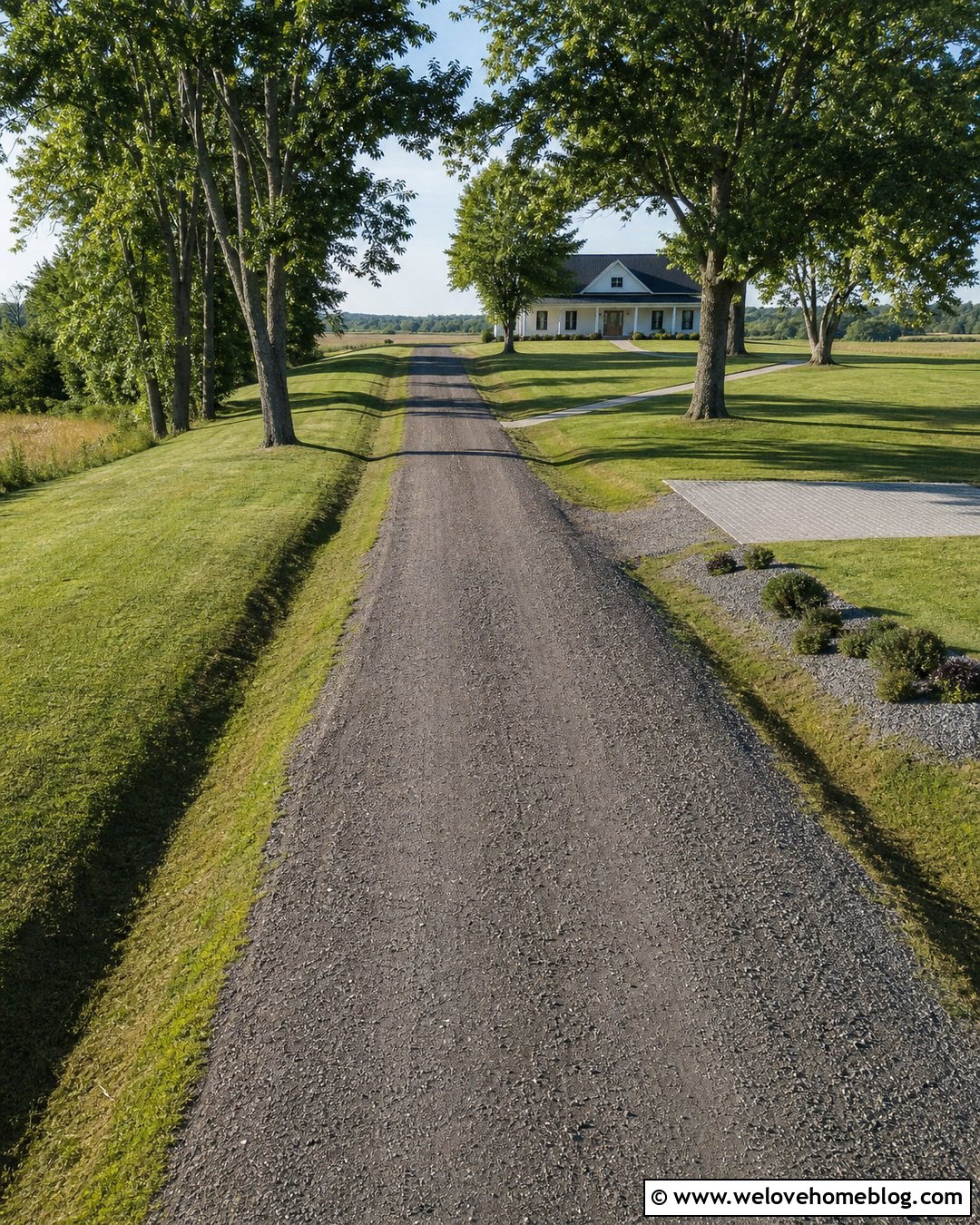
Compacted road base is a practical choice when appearance matters less than durability and low initial cost. It normally combines crushed rock and fines, allowing the mixture to settle into a dense surface after proper watering and compaction. Use it for a long, straight country driveway with gently sloped grass shoulders. Near the house, add a small paver parking pad or stone turnaround to improve the most visible area without upgrading the entire drive. Shade trees placed well beyond the shoulders can frame the entrance while leaving space for drainage ditches. Apply road base in several thin layers rather than one deep layer. Each lift should be graded and compacted before the next is added. Loose aggregate driveways remain vulnerable to rutting and erosion when drainage and edge support are neglected. ()
16. Reclaimed Brick Driveway With Gravel Infill
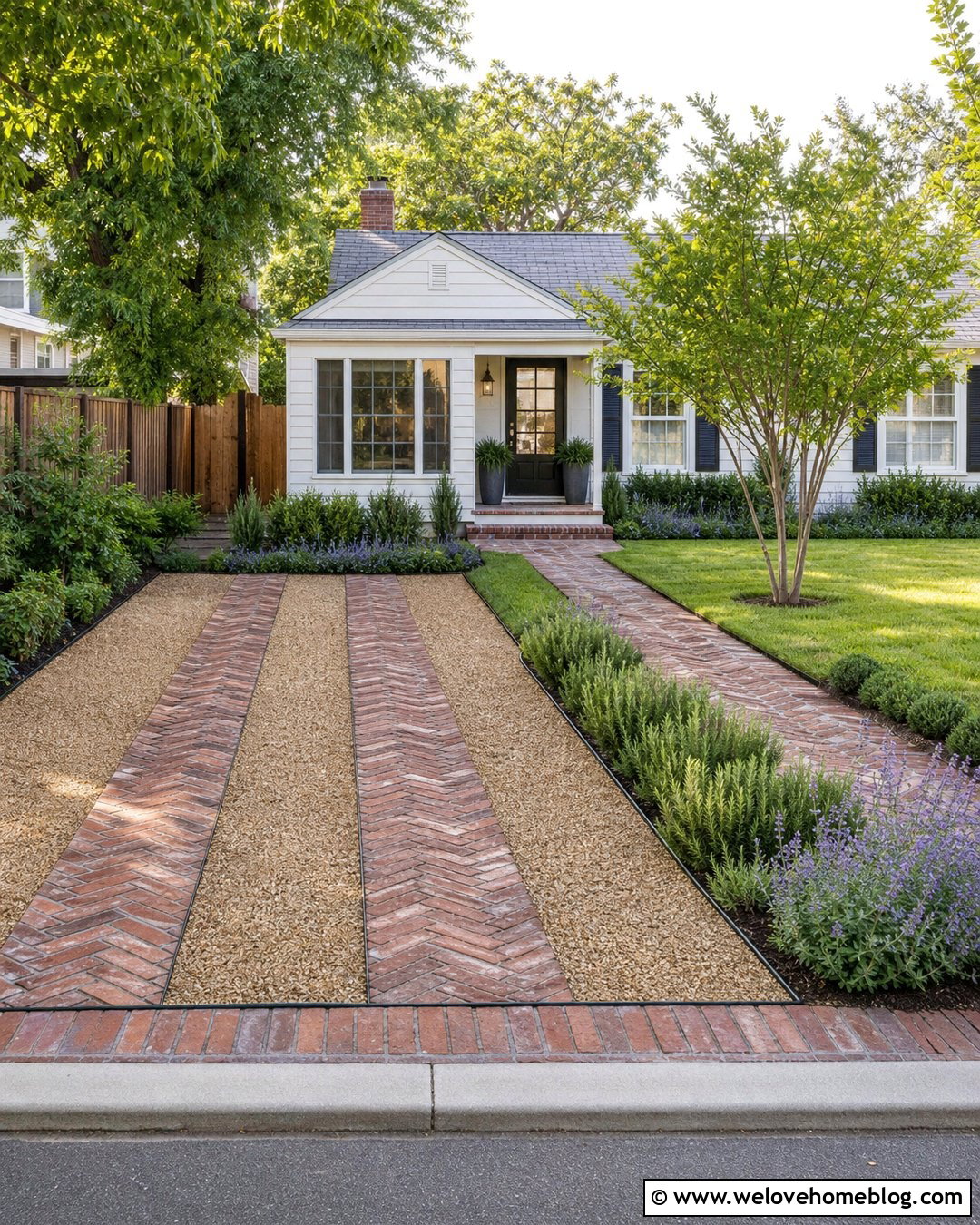
A complete reclaimed brick driveway can require considerable labor, but using salvaged brick only in the wheel paths offers a more affordable alternative. Lay two herringbone brick ribbons over a compacted base, then fill the center and outer shoulders with angular tan gravel. This design works beautifully with a cottage, bungalow, or older colonial home because natural variations in the reused brick add character. Define the sides with flush steel edging and plant rosemary, catmint, or low evergreen shrubs beyond it. Inspect every reclaimed brick before installation, since wall bricks may not tolerate vehicle loads or freeze-thaw exposure. Choose dense paving brick whenever possible. The ribbons must also be spaced for the vehicles using the driveway. A wider gravel parking area near the garage can accommodate turning and guest parking.
17. Salvaged Paver Driveway With Grass Joints
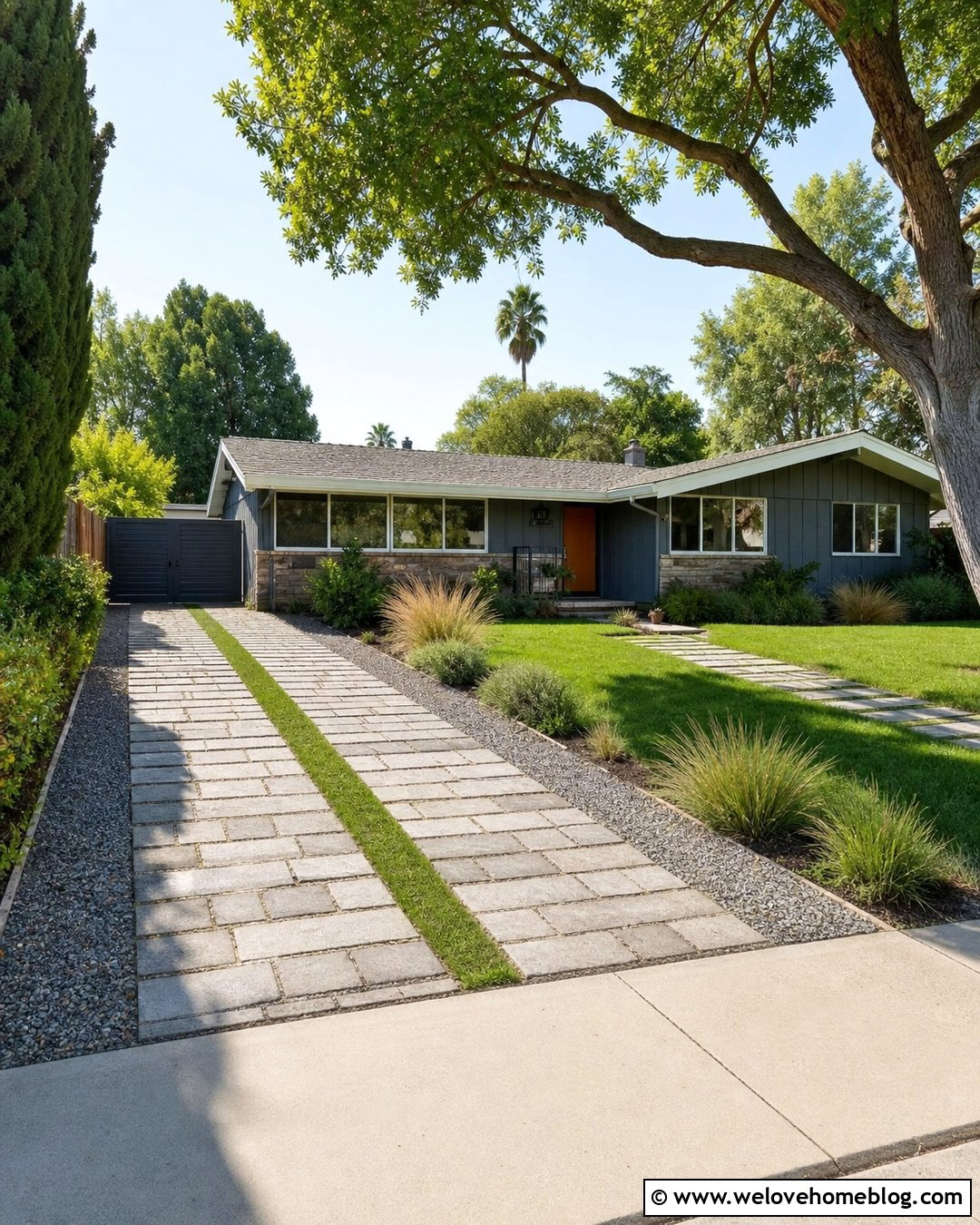
Used concrete pavers can reduce material expenses when they are available through local reuse centers, demolition projects, or marketplace listings. Arrange matching pavers in wide wheel tracks or a compact parking pad rather than covering the entire driveway. Leave narrow joints filled with gravel or low-growing grass to create a permeable, relaxed look. A straight approach with a broad gravel border suits a midcentury ranch or updated suburban home. Repeat the paver color in the front walkway for visual continuity, then add simple shrubs and ornamental grasses. Salvaged units require careful sorting because thickness, strength, and edge condition may vary. Build a stable aggregate base and use edge restraints to prevent movement. The installation can be labor-intensive, but patient homeowners may save by cleaning and laying reusable materials themselves.
18. Crushed Slate Driveway With Wood Borders
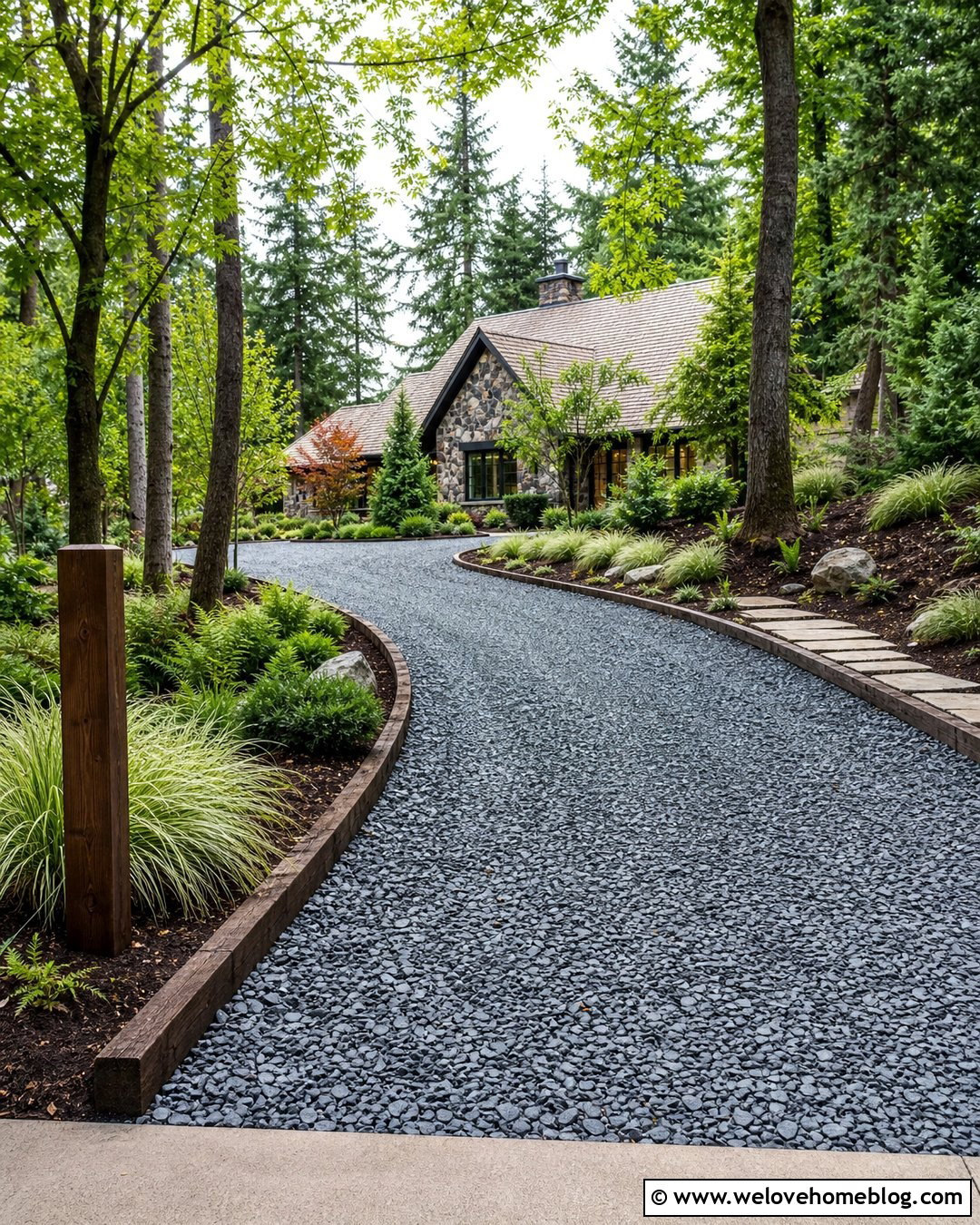
Crushed slate creates a distinctive blue-gray or charcoal driveway that pairs well with modern farmhouses, stone cottages, and wooded properties. It may be economical in regions where slate is quarried or processed nearby, but delivery can make it expensive elsewhere. Use a curved crushed slate driveway with heavy timber borders that keep the flat chips away from planting beds. At the entrance, widen the border around a simple wood address post and two clusters of ornamental grass. Ferns, native shrubs, and mature trees can frame the remainder of the approach. Request a compactable crushed product rather than thin decorative flakes alone. The driveway should have a strong stone base, a crowned surface, and protected drainage outlets. Dark slate can become hot in direct summer sun, so consider local exposure.
19. Partial Paver Driveway With Crushed Stone Center
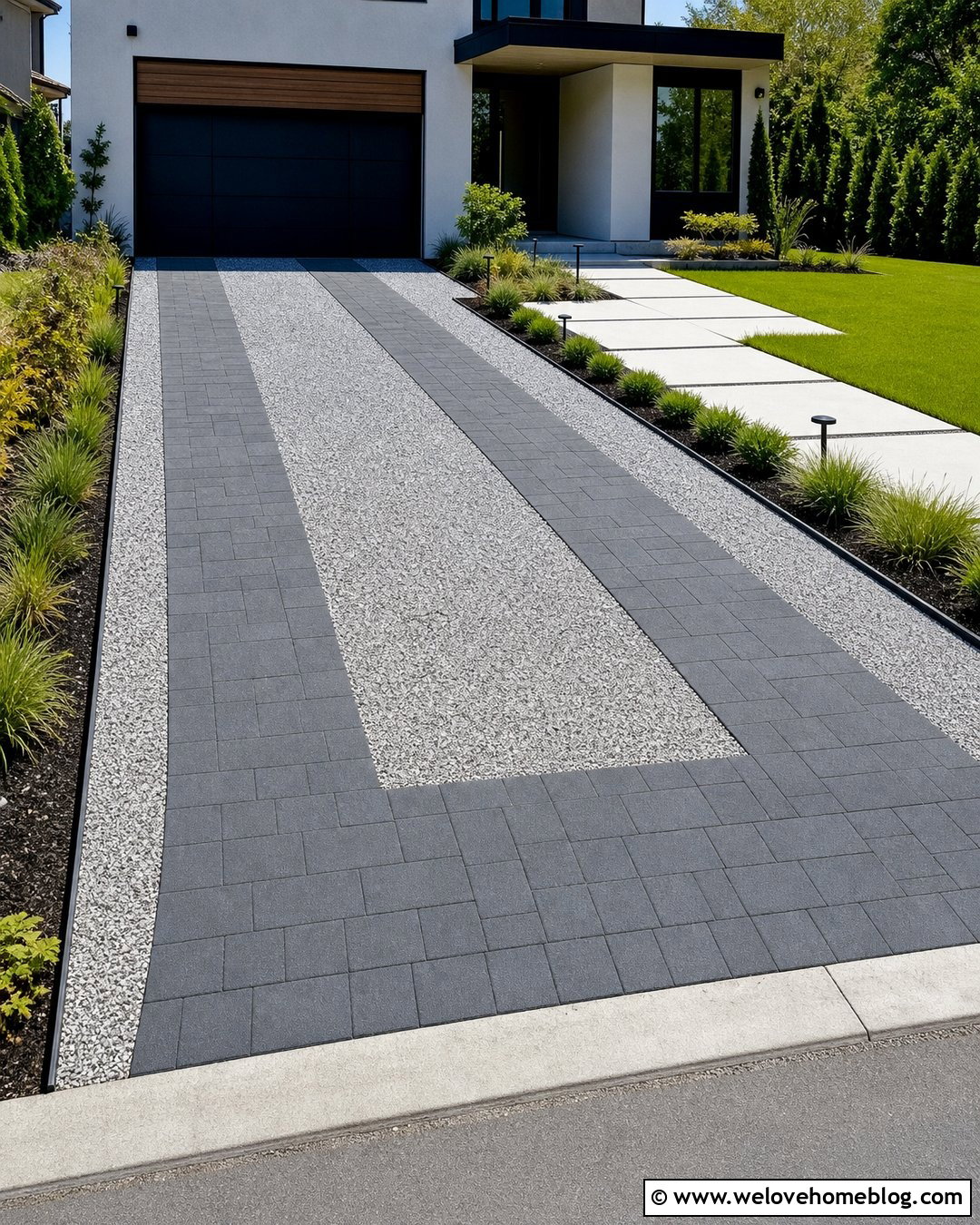
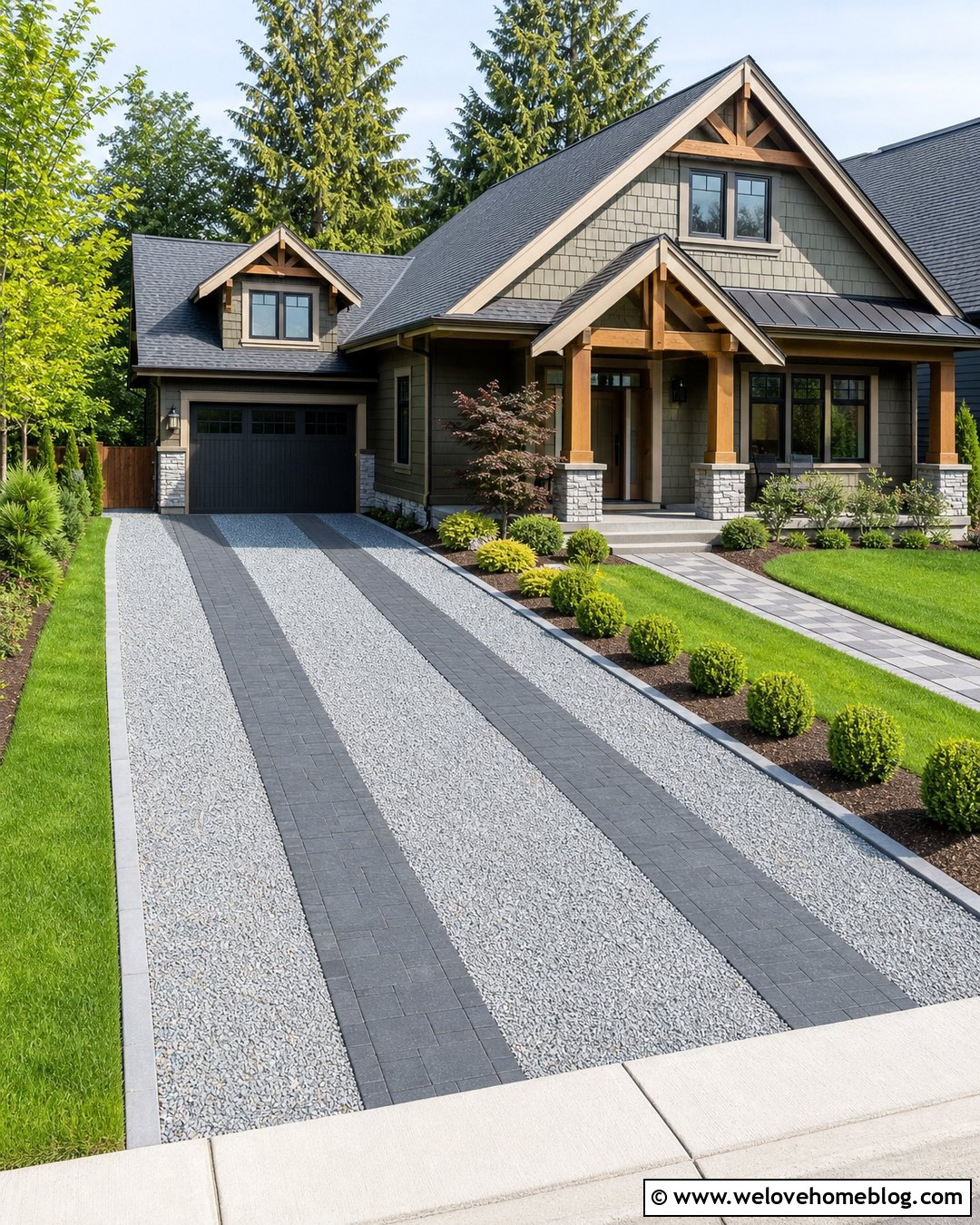
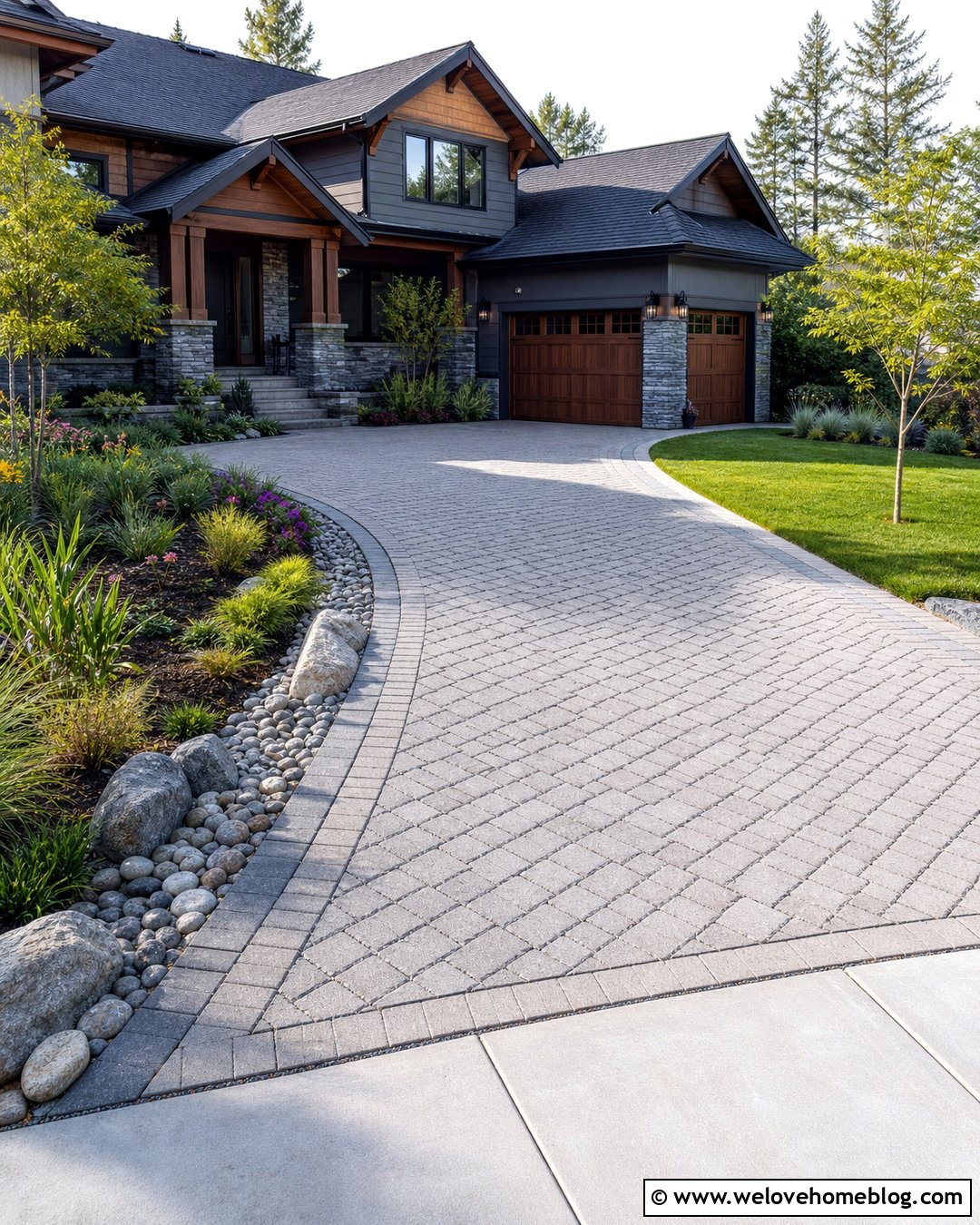
Strategic paving creates a polished entrance without the cost of installing pavers across the entire driveway. Use concrete pavers for two wheel tracks, the street apron, and a small landing in front of the garage. Fill the remaining center and side areas with compacted crushed stone in a coordinating color. This mixed-material layout gives the driveway structure while reducing the quantity of premium paving units. It works well for a contemporary house with a straight or gently angled approach. Add narrow planting beds, architectural grasses, and low pathway lights outside the driveway edges. Both materials need a compatible base so the transitions remain level. Secure the pavers with edge restraints and keep the aggregate slightly below their surface. Regular sweeping will prevent loose stone from covering the paver tracks.
20. Gravel Overlay Driveway With Repaired Borders
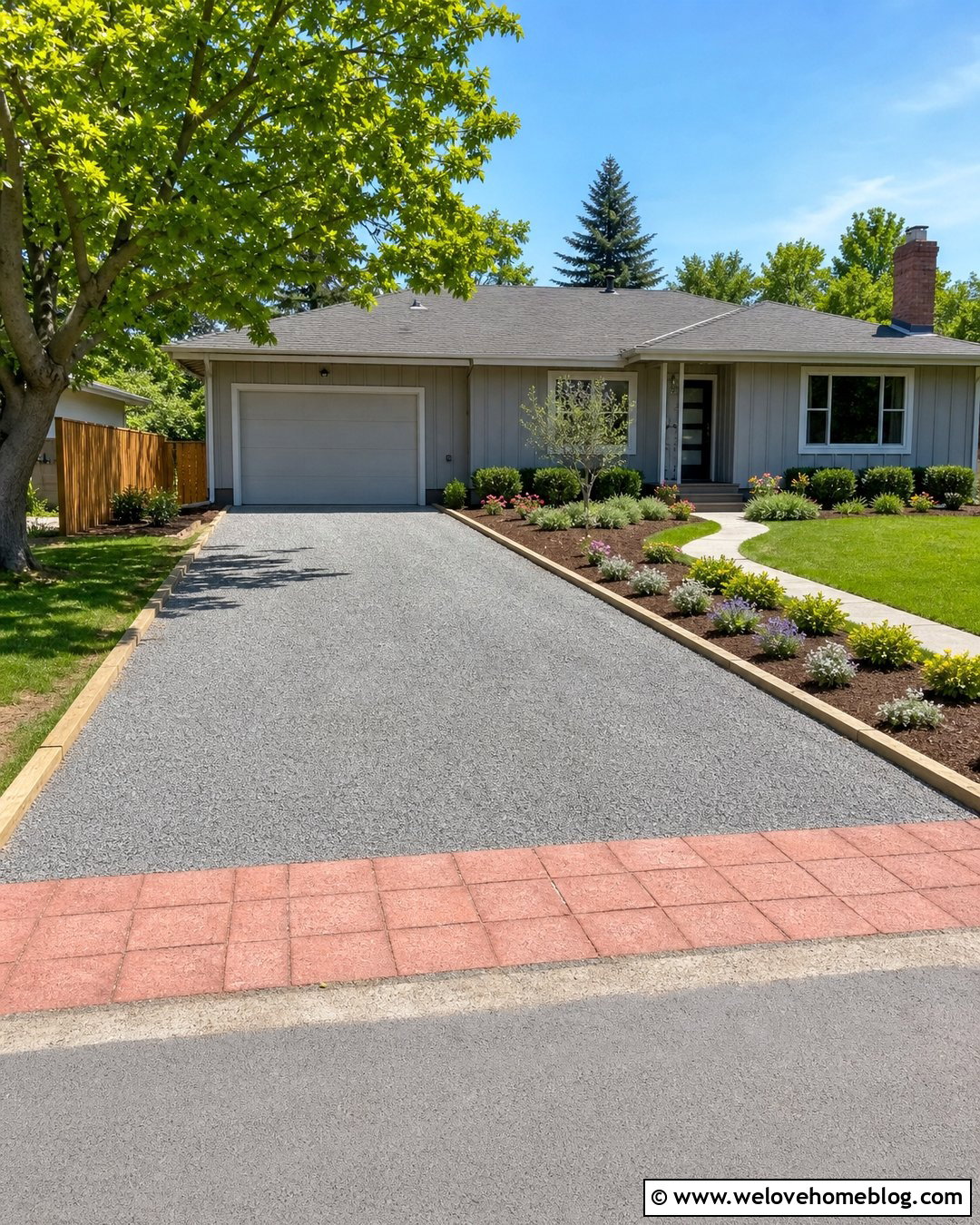
Sometimes the cheapest driveway alternative is improving the surface already in place instead of removing everything. A worn but stable aggregate driveway may only need corrected drainage, filled depressions, compacted base material, and a fresh gravel topping. Begin by removing soft soil and repairing deep ruts rather than hiding them beneath new stone. Add angular gravel in thin layers, then grade and compact the complete surface. Rebuild the sides with inexpensive treated timbers, steel edging, or locally available rocks. A defined paver apron and refreshed planting beds can make the renovation feel like a full redesign. This approach suits practical suburban and rural homes where the underlying driveway remains sound. If severe settling, buried utility damage, or continuing water flow is present, obtain professional advice before applying an overlay.
Conclusion:
Affordable driveway planning involves more than selecting the lowest-priced surface. A strong base, correct slope, controlled runoff, and reliable edging can make an economical material perform better and look more intentional. Compare local aggregate and delivery prices before committing, since recycled concrete, crushed granite, shells, slate, or asphalt millings may be affordable in one region and costly in another. You should also check permit requirements, stormwater rules, utility locations, and neighborhood restrictions. Whether you prefer compacted stone, grass pavers, concrete ribbons, or salvaged materials, design the surface as part of the complete front yard. These **20 Driveway Alternatives Cheap Ideas** offer realistic starting points for balancing cost, maintenance, drainage, and curb appeal.

Related posts:

Leave a Reply