
A practical driveway does not need premium stonework or a complicated layout to improve your home’s curb appeal. The best **cheap driveway ideas** combine an economical surface with reliable preparation, simple edging, and low-maintenance landscaping. Gravel, crushed stone, asphalt, and basic concrete are commonly considered budget-friendly choices, while reclaimed pavers and decorative accents can create a more custom look without covering the entire surface in expensive materials. () Before choosing a design, consider drainage, local weather, soil conditions, maintenance, and whether professional grading is needed. A strong base often matters more than decorative upgrades. From country gravel entrances to refreshed asphalt parking areas, the complete looks below offer 35 cheap driveway ideas for different homes, lot sizes, and budgets.
1. Crushed Stone Driveway With Timber Edging
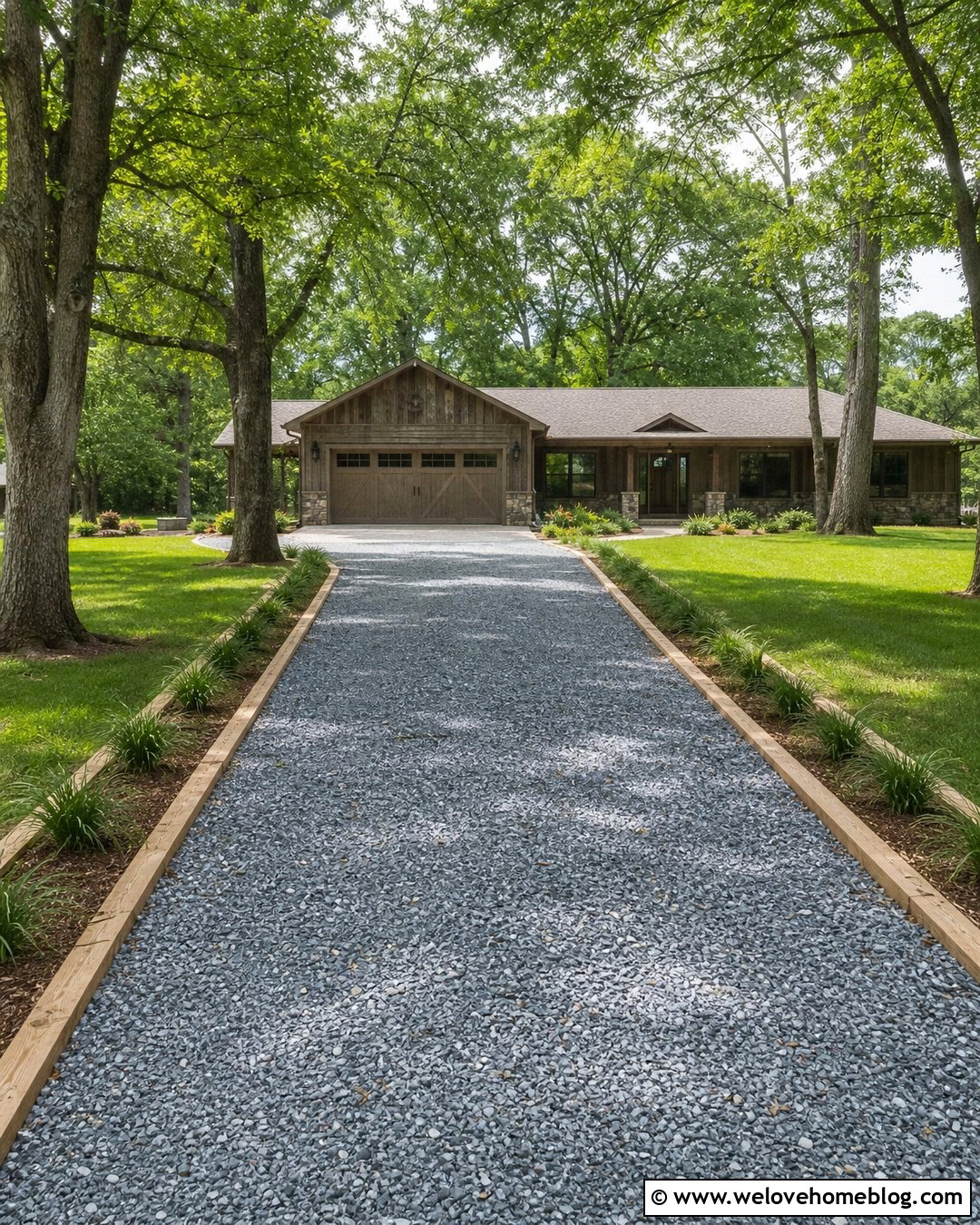
Crushed stone creates a straightforward driveway that suits ranch homes, cottages, and wooded properties. Choose locally available gray or tan stone to reduce material and delivery expenses. A straight layout is usually easier to excavate, grade, and install than a highly curved design. Pressure-treated landscape timbers can form clean borders and help keep loose aggregate away from the lawn. Add narrow planting beds beside the timber with tough ornamental grasses or compact evergreen shrubs. Near the garage, install a simple concrete paver landing to create a smoother transition. Properly preparing and compacting the base helps reduce sinking, uneven tire tracks, and frequent stone replacement. Gravel and crushed stone are commonly selected for affordable, DIY-friendly driveway projects. ()
2. Pea Gravel Driveway With Brick Edging
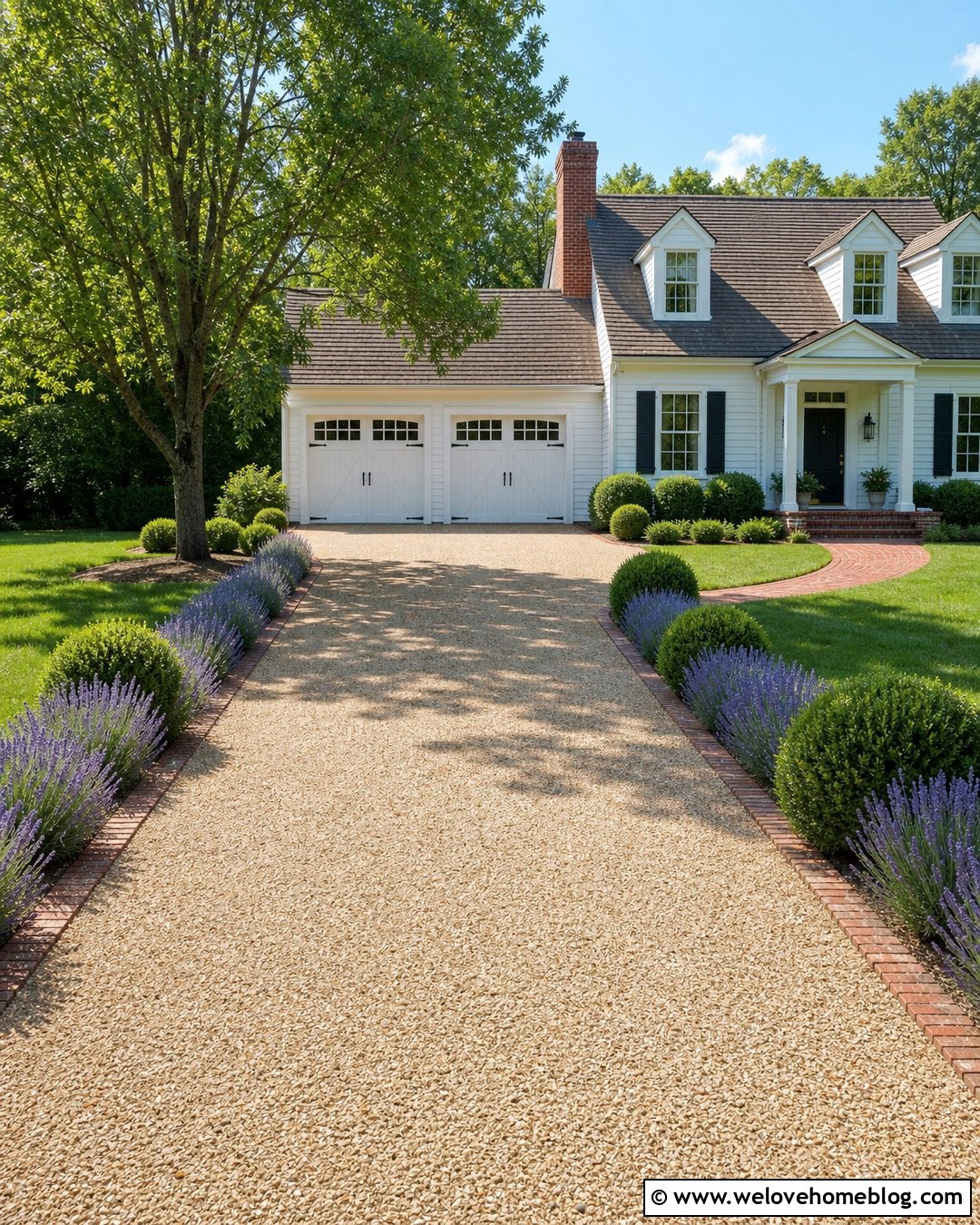
Warm pea gravel paired with reclaimed brick gives an inexpensive driveway a more established appearance. Use the rounded gravel on a short, level driveway where migration will be easier to control. Set salvaged red bricks along both sides in a simple soldier-course border. The bricks define the shape while connecting the driveway visually to a traditional colonial or Cape Cod house. Plant lavender, catmint, or low ornamental grasses beyond the border to soften the hard surface. A slightly wider parking area near the garage makes turning easier without requiring an elaborate layout. Because pea gravel can shift under tires, strong edging and a compacted crushed-stone base are important parts of this complete budget driveway design.
3. Gray Gravel Driveway With Paver Ribbons
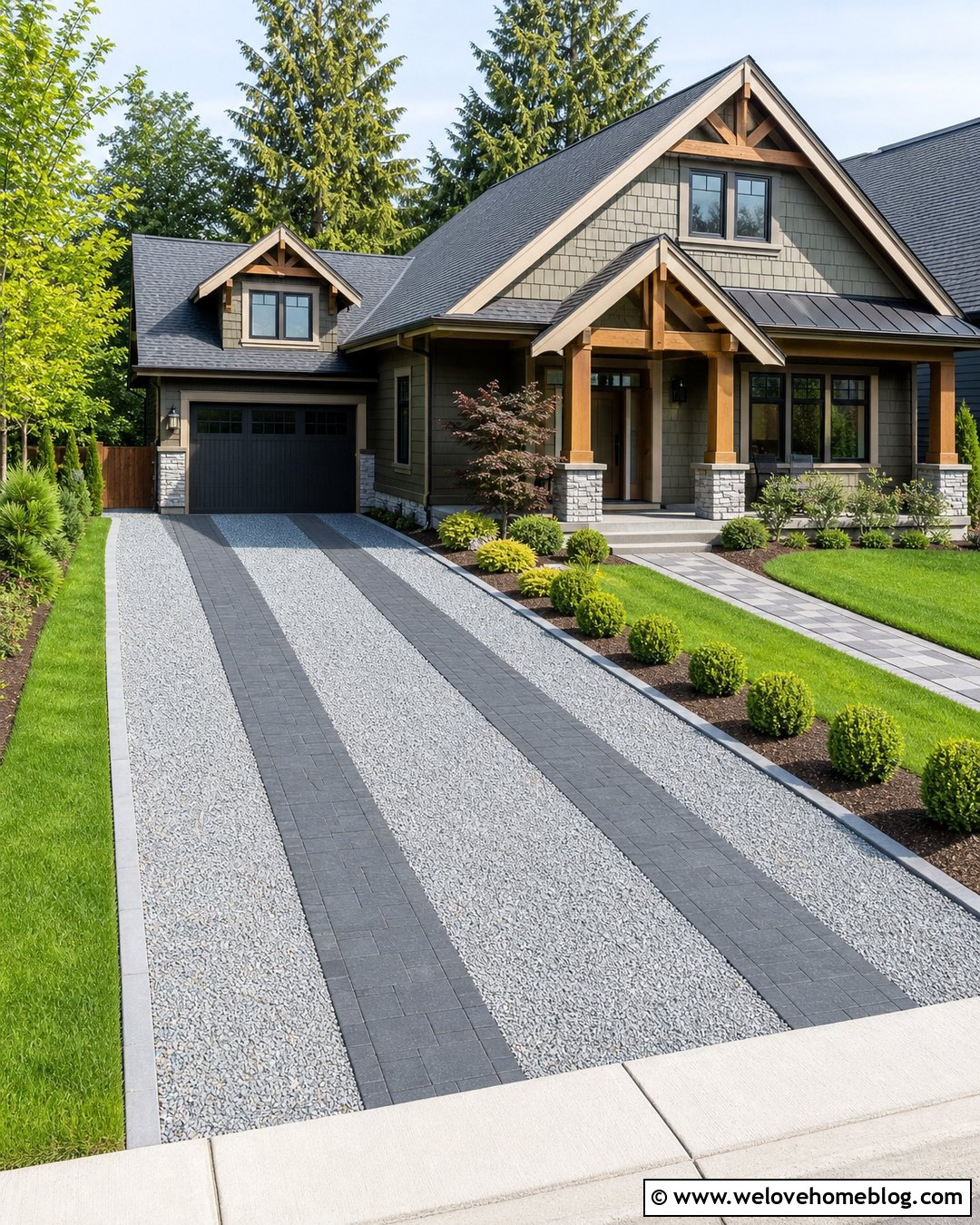
A few carefully placed pavers can make an ordinary gray gravel driveway feel planned rather than unfinished. Create two straight concrete paver ribbons where vehicle tires normally travel, then fill the center and outer sections with compacted gravel. This reduces the number of pavers required while providing a clearly organized parking route. Use charcoal pavers for contrast or light gray blocks for a seamless look. Narrow lawn strips and clipped shrubs can frame the driveway without adding expensive landscaping. This layout works particularly well in front of a simple craftsman or suburban home. Keep the paver ribbons properly supported by a compacted base, and use sturdy edge restraints so the blocks and gravel stay neatly aligned.
4. Recycled Asphalt Driveway With Stone Borders
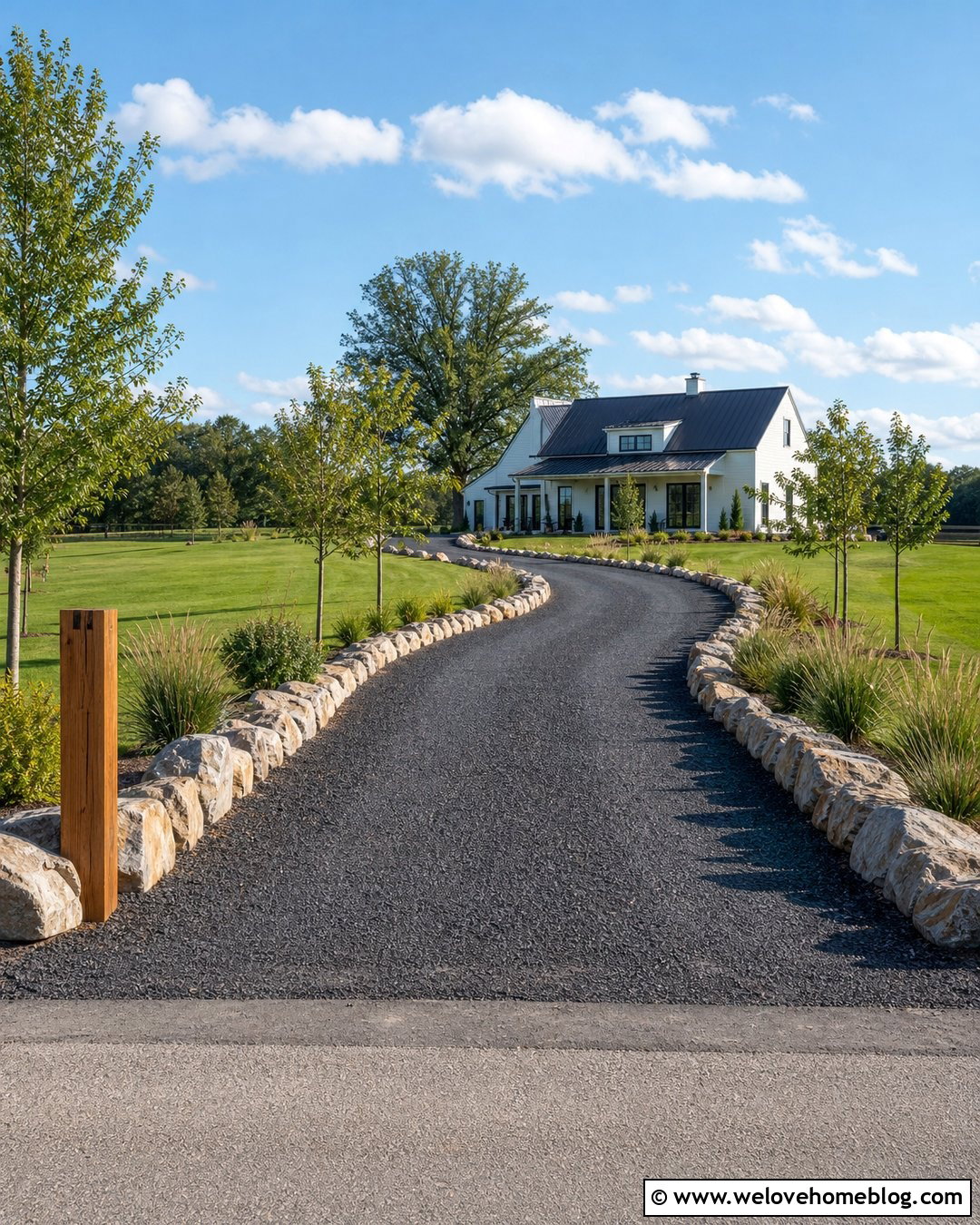
Recycled asphalt can create a dark, tidy surface with a softer appearance than freshly paved black asphalt. It works especially well for long rural driveways and wide parking areas where covering the entire space with new pavement may exceed the budget. Frame the surface with locally sourced fieldstone or economical concrete edging blocks. A gentle curved approach can follow the existing terrain and reduce major excavation. Use native grasses, small trees, and broad lawn areas beside the drive for relaxed landscaping. A compacted installation produces a more unified surface than loose pieces spread without preparation. Finish the entrance with matching stone clusters and a simple address post, giving the complete driveway a purposeful country look without costly masonry pillars.
5. Asphalt Driveway With Brick Apron
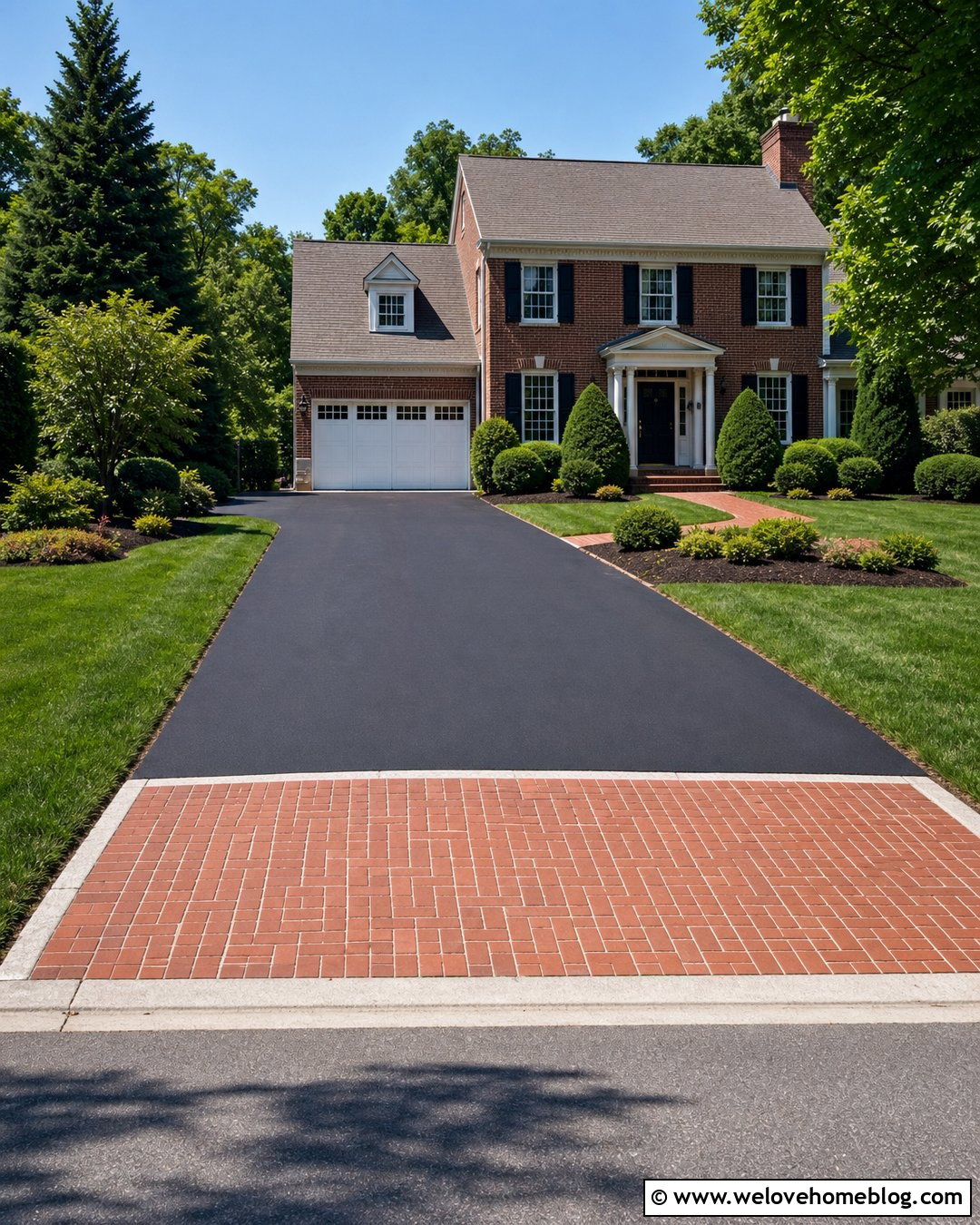
Standard black asphalt becomes more distinctive when decorative material is limited to the most visible area. Install a simple red or charcoal brick apron where the driveway meets the street, then continue with economical asphalt toward the garage. The apron creates a polished entrance while using far fewer bricks than a fully paved driveway. Match the brick color to the home’s facade, walkway, or porch steps. Along the sides, use clean grass edges and small mulched beds filled with low shrubs. A straight shape helps control installation complexity and complements most suburban houses. Asphalt is generally positioned among the more affordable paved driveway materials, although sealing and future maintenance should be included when comparing long-term costs. ()
6. Asphalt Driveway With Gravel Parking Pad
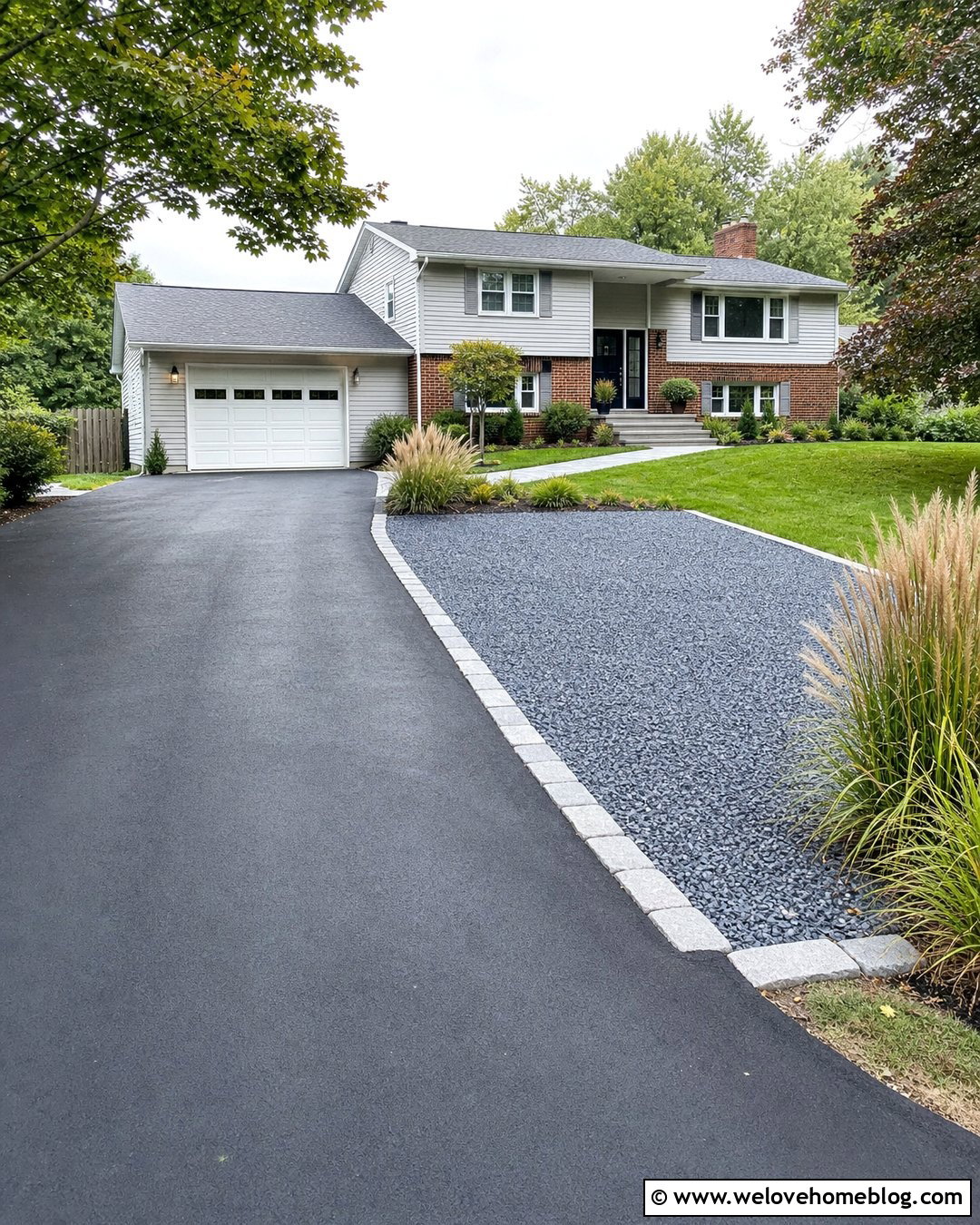
Does your household need another parking space without replacing the entire driveway? Keep the existing asphalt lane and add a compacted gravel pad beside the garage or near the street. Choose gravel that coordinates with the house, such as warm beige stone beside brick or blue-gray stone beside cool siding. Separate the two surfaces with a sturdy row of concrete edging blocks. Plant low grasses around the outer corners so the addition blends into the yard without blocking visibility. A rectangular pad is easy to measure and gives the space an intentional shape. This mixed-material driveway keeps the stable paved approach while using less expensive aggregate only where extra width is needed, helping control both labor and material requirements.
7. Concrete Driveway With Gravel Center Strip
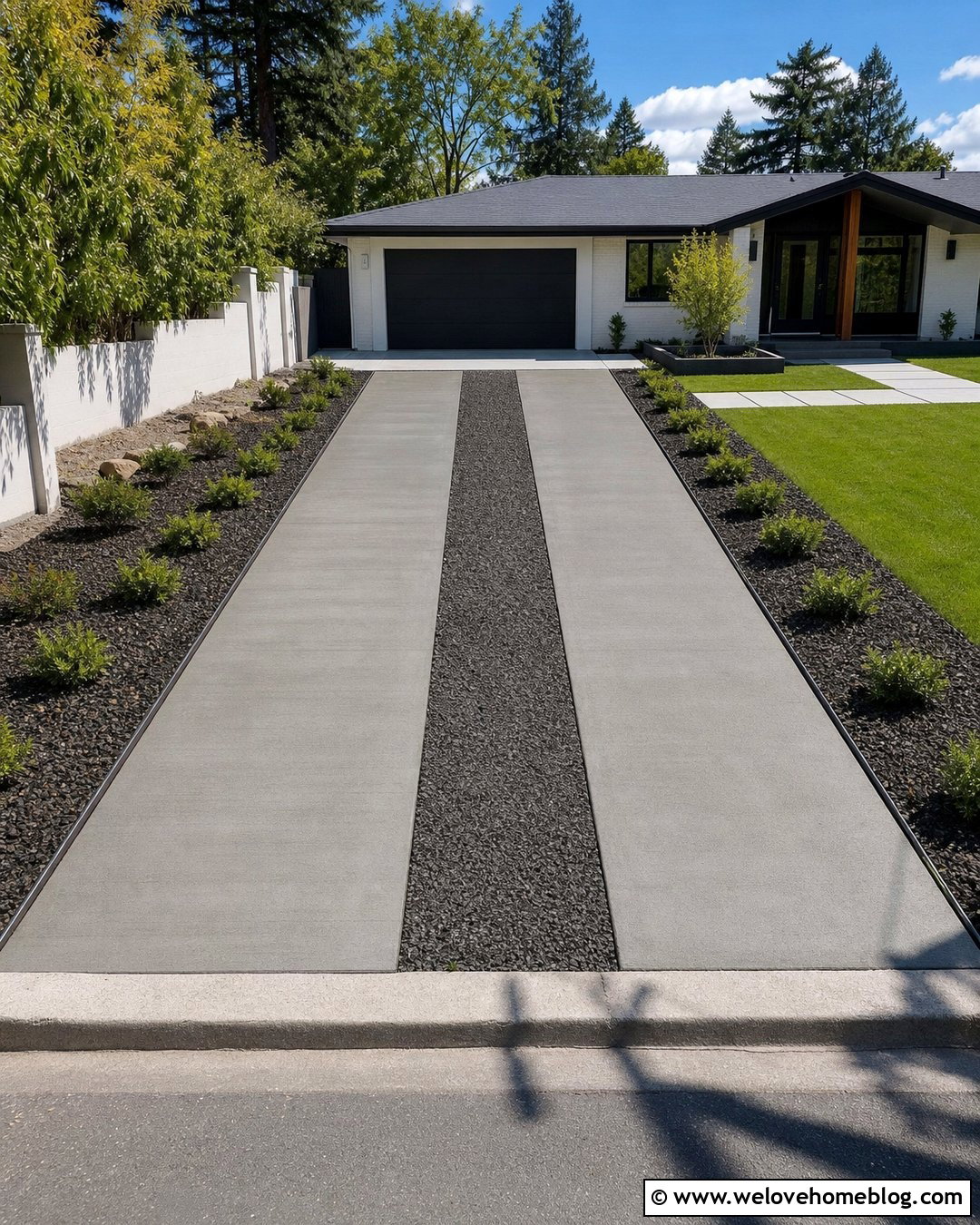
A concrete ribbon driveway can provide stable tire paths without using concrete across the entire width. Pour two straight broom-finished concrete tracks and fill the center strip with compacted decorative gravel. The result feels lighter and more landscaped than one broad slab. Use steel or concrete edging between the materials to maintain crisp lines. Ground-cover plants can border the driveway, while a small paved walkway connects the parking area to the front entrance. This layout complements midcentury ranch houses and modest modern homes particularly well. Keep the tire tracks wide enough for comfortable daily use, and plan drainage before installation. By limiting the amount of poured material, the complete design can deliver a clean concrete appearance while reducing the paved surface area.
8. Plain Concrete Driveway With Mulch Borders
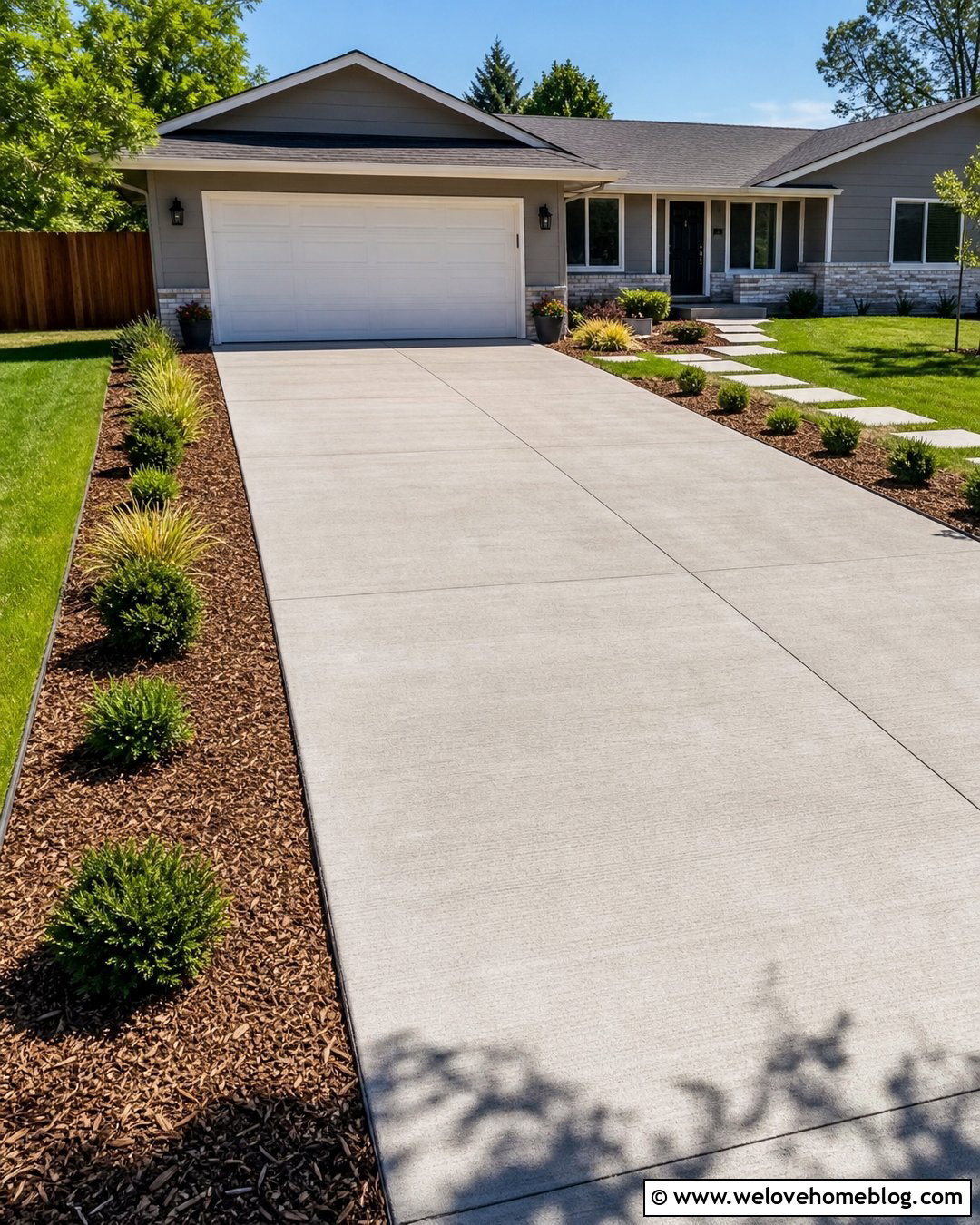
Basic broom-finished concrete can look attractive when the surrounding landscape is organized and restrained. Choose a straight rectangular driveway without added colors, stamping, or elaborate curves. Create wide mulch beds on both sides using inexpensive shredded bark, then add a limited number of repeated plants. Dwarf evergreens, ornamental grasses, or compact flowering shrubs provide structure without requiring dense planting. Simple metal or plastic landscape edging keeps mulch off the concrete. Connect the driveway to the front door with square concrete stepping stones that match the main surface. This complete look works with ranch, split-level, and contemporary suburban homes. Saving decorative upgrades for the landscaping allows the practical driveway surface to remain plain, versatile, and easier to coordinate with future exterior changes.
9. Concrete Driveway With Painted Border
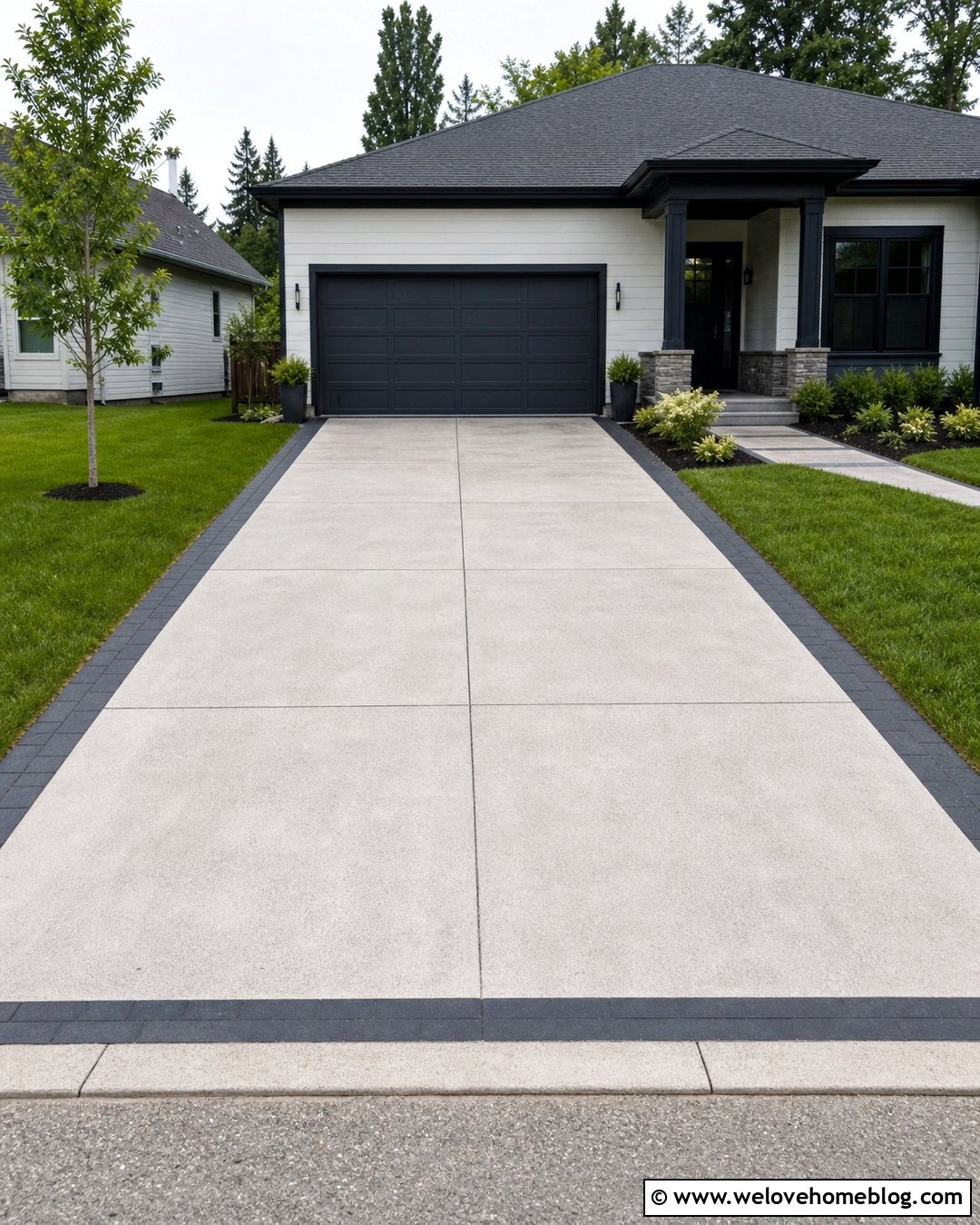
An existing concrete driveway can receive a visual upgrade without being completely replaced. After repairing appropriate minor surface flaws and thoroughly cleaning the slab, add a masonry-compatible painted or stained border in charcoal, taupe, or another color connected to the house. Keep the central concrete its natural gray so the treatment remains simple and affordable. A straight border around the perimeter creates the appearance of an inlaid frame. Repeat the darker tone in planters, porch railings, or a mailbox post. Add neatly cut lawn edges and two small planting beds near the garage. Before applying any coating, confirm that the product is rated for exterior vehicular surfaces. This refreshed complete driveway look is best for sound concrete needing cosmetic improvement.
10. Concrete Driveway With Reclaimed Brick Bands
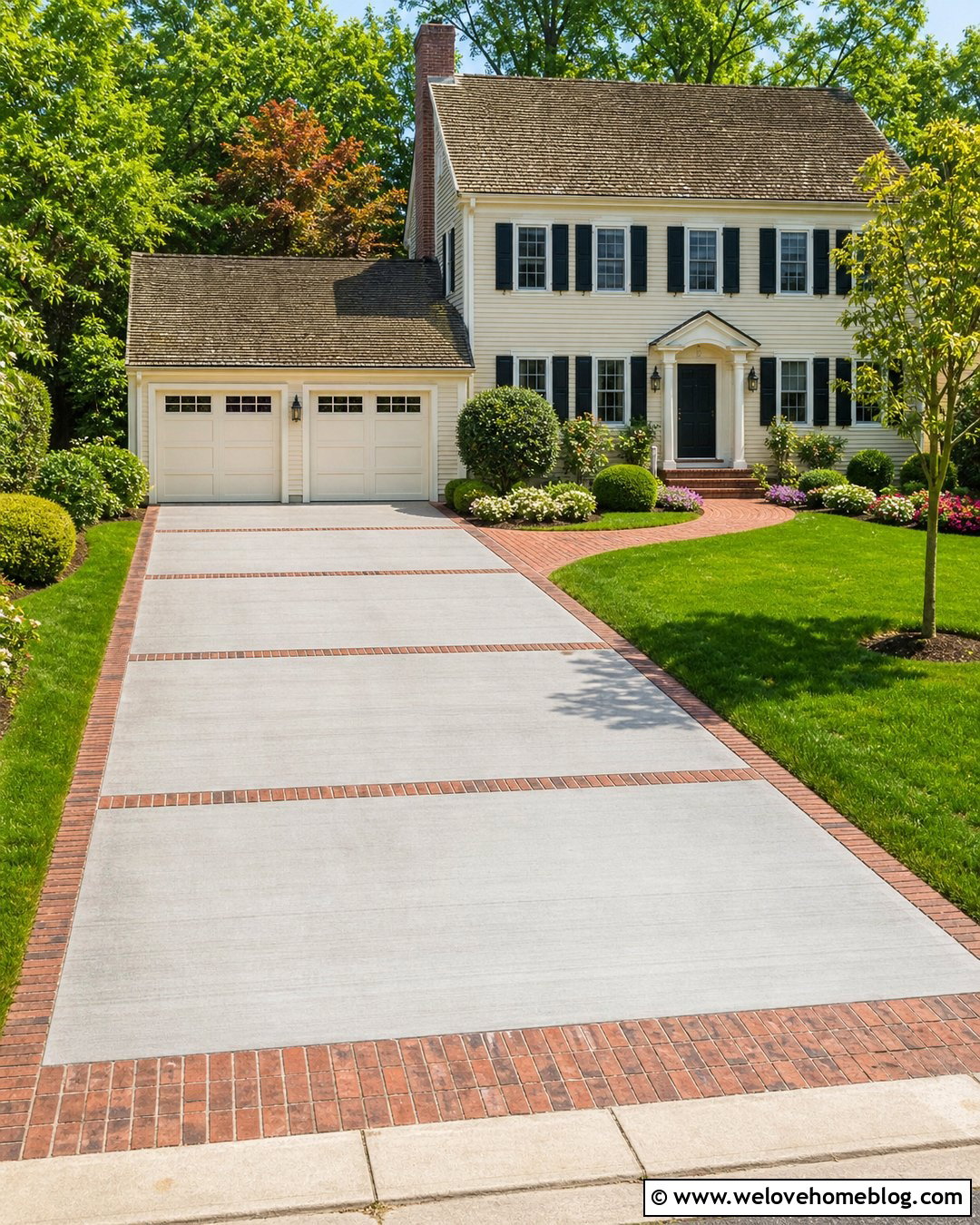
Reclaimed bricks can add character to plain concrete without the cost of paving the complete driveway. Place brick bands across the surface at visually balanced intervals, or use them at the street entrance and garage transition. Warm red brick pairs naturally with cream siding, painted brick, and traditional homes. Surround the driveway with simple lawn, clipped boxwood alternatives, and a curved walkway made from matching salvaged brick. The concrete should remain the dominant material, keeping the design practical and visually calm. When planning a new installation, have the bands integrated correctly so the surfaces remain even. If modifying an existing driveway, consult a qualified installer before cutting the slab. The limited brick coverage provides color and pattern while controlling material use.
11. Concrete Parking Strips With Grass Center
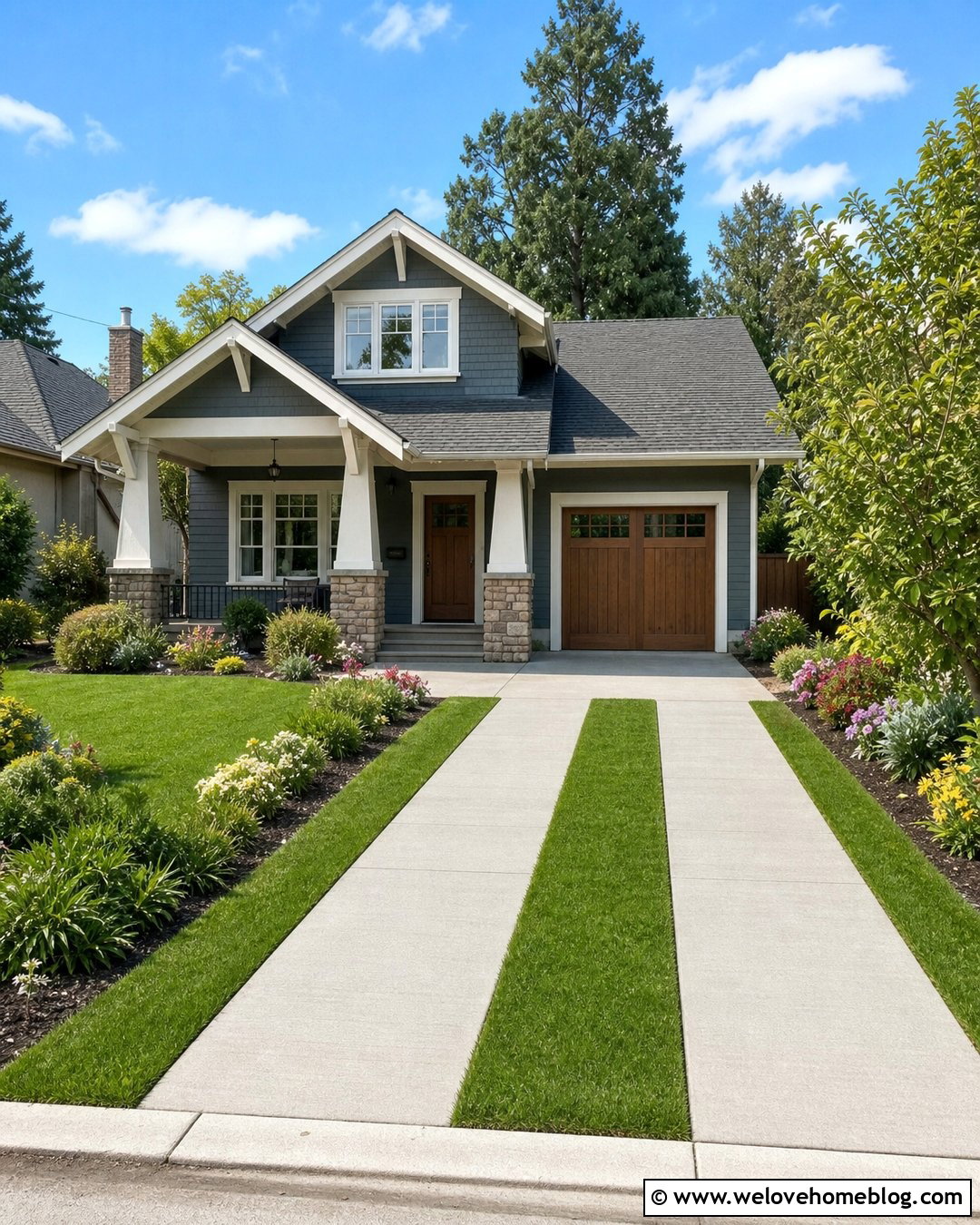
Two concrete parking strips separated by grass create a classic ribbon driveway that uses less hard material than a full-width slab. This layout looks especially appropriate beside cottages, bungalows, and small craftsman homes. Keep the driveway straight and border the outside edges with lawn or narrow planting beds. The green center visually connects the parking area to the yard, reducing the appearance of a large paved surface. Choose durable turf suited to local sunlight and traffic conditions, or use a tough low-growing ground cover where appropriate. Add a small concrete pad near the garage so drivers have a comfortable place to step out. Careful spacing, base preparation, and drainage planning are essential for keeping both concrete tracks level and usable.
12. Gravel Driveway With Concrete Apron
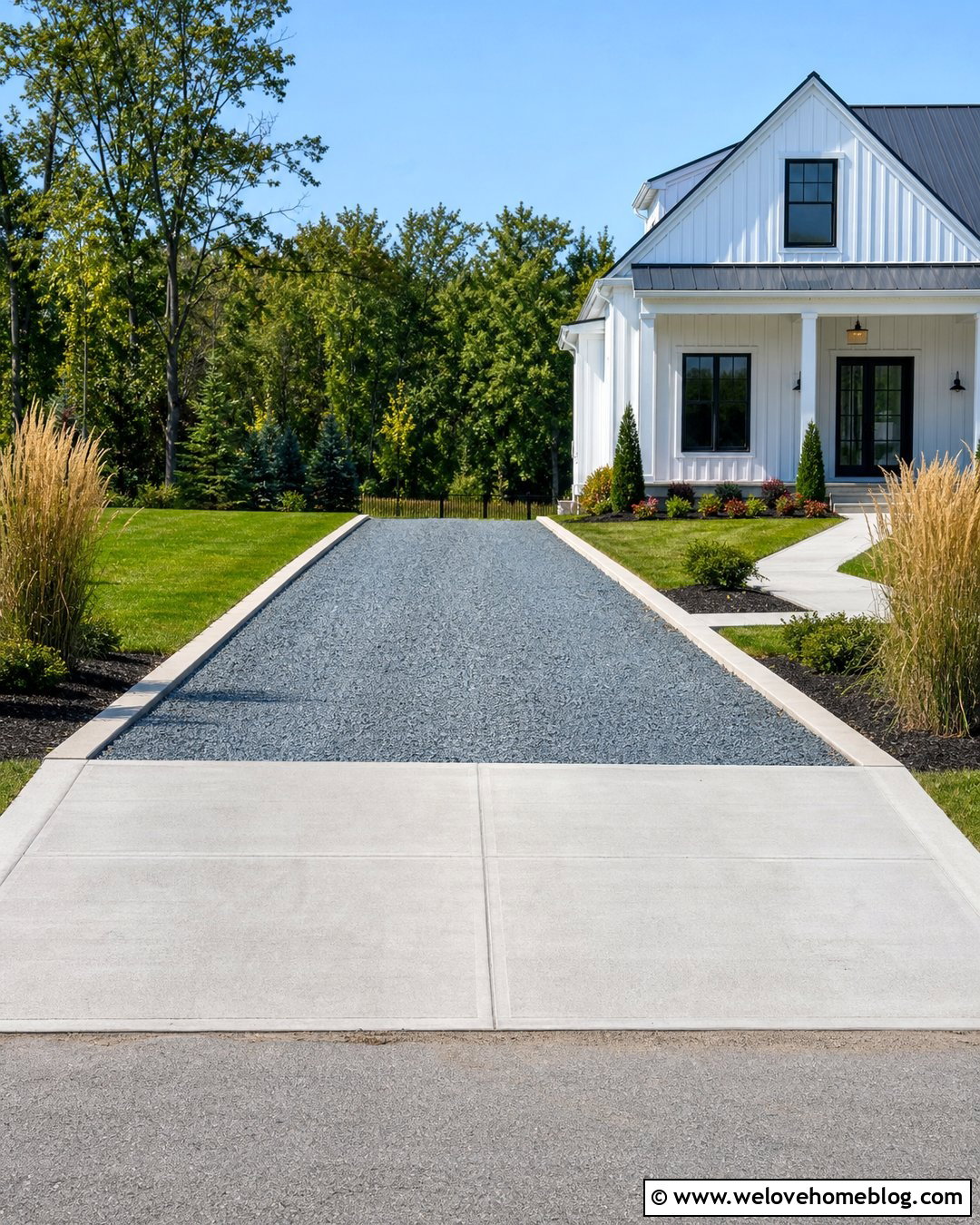
A concrete apron can solve the visual problem of loose gravel meeting the street or sidewalk. Use poured gray concrete for the first several feet of the entrance, then transition to affordable compacted crushed gravel leading toward the house. The smooth apron clearly marks the driveway and helps create a neat public-facing edge. Continue the concrete color through simple edging blocks or a matching front walkway. On both sides of the entrance, add small mulched beds with ornamental grasses and low shrubs that preserve driver visibility. This combination fits farmhouse, ranch, and country homes. The majority of the driveway remains economical gravel, while concrete is reserved for a high-visibility transition where a crisp, finished surface contributes the most curb appeal.
13. Gravel Driveway With Cobblestone Entrance
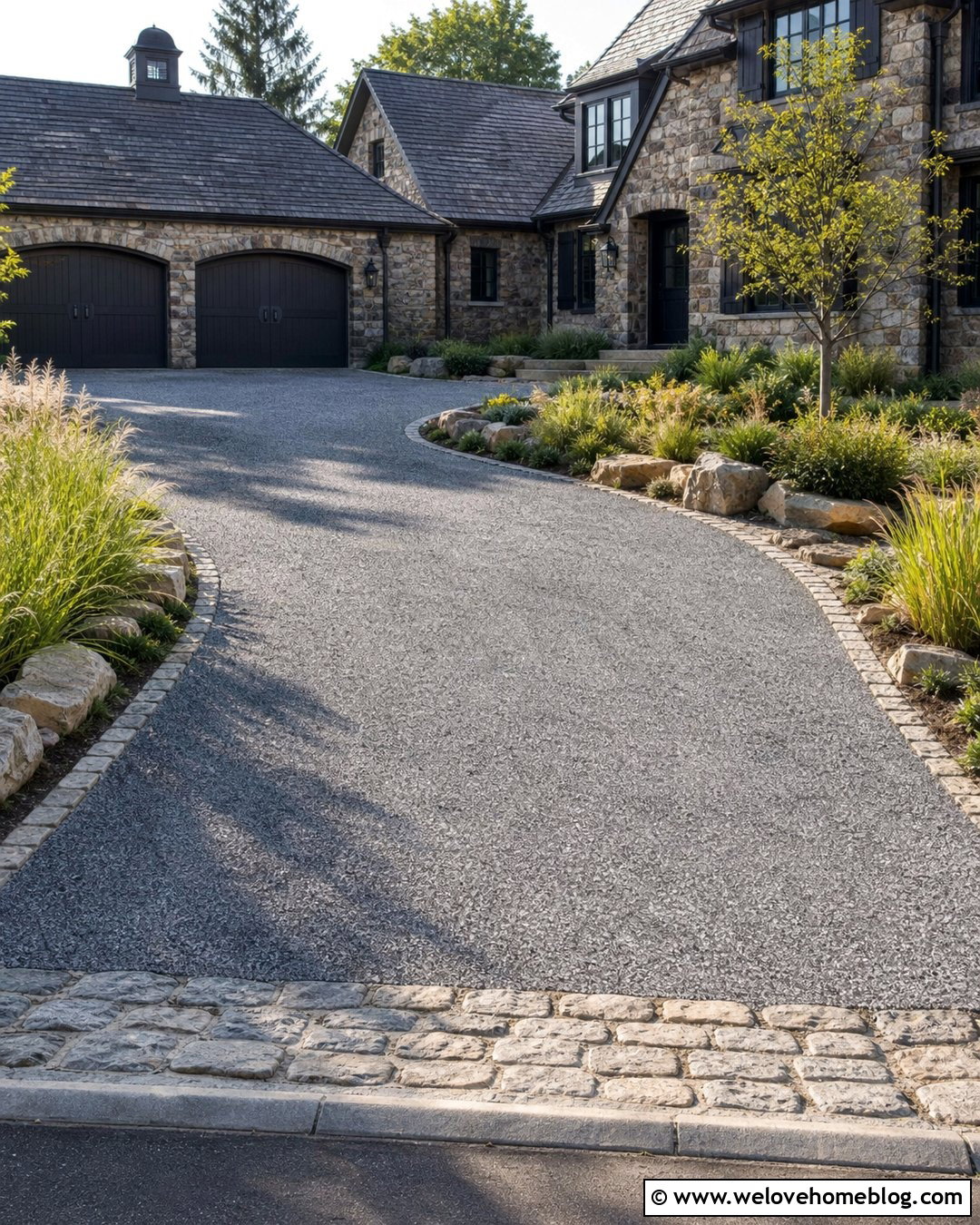
Real cobblestone can be costly across a large driveway, but a narrow entrance band uses the material more strategically. Cover the main curved driveway with compacted gray gravel and install a short cobblestone threshold at the road. Use matching cobblestones as limited corner markers instead of edging the full length. Fieldstone planting beds, native grasses, and one small ornamental tree can support the traditional look. This complete design works beautifully with cottages, stone houses, and older colonial homes. The change in texture gives the entrance visual weight while the gravel keeps the overall material plan economical. Check that the stones sit evenly and that the transition does not create a trip hazard, drainage obstruction, or uncomfortable bump for vehicles.
14. White Gravel Driveway With Metal Edging
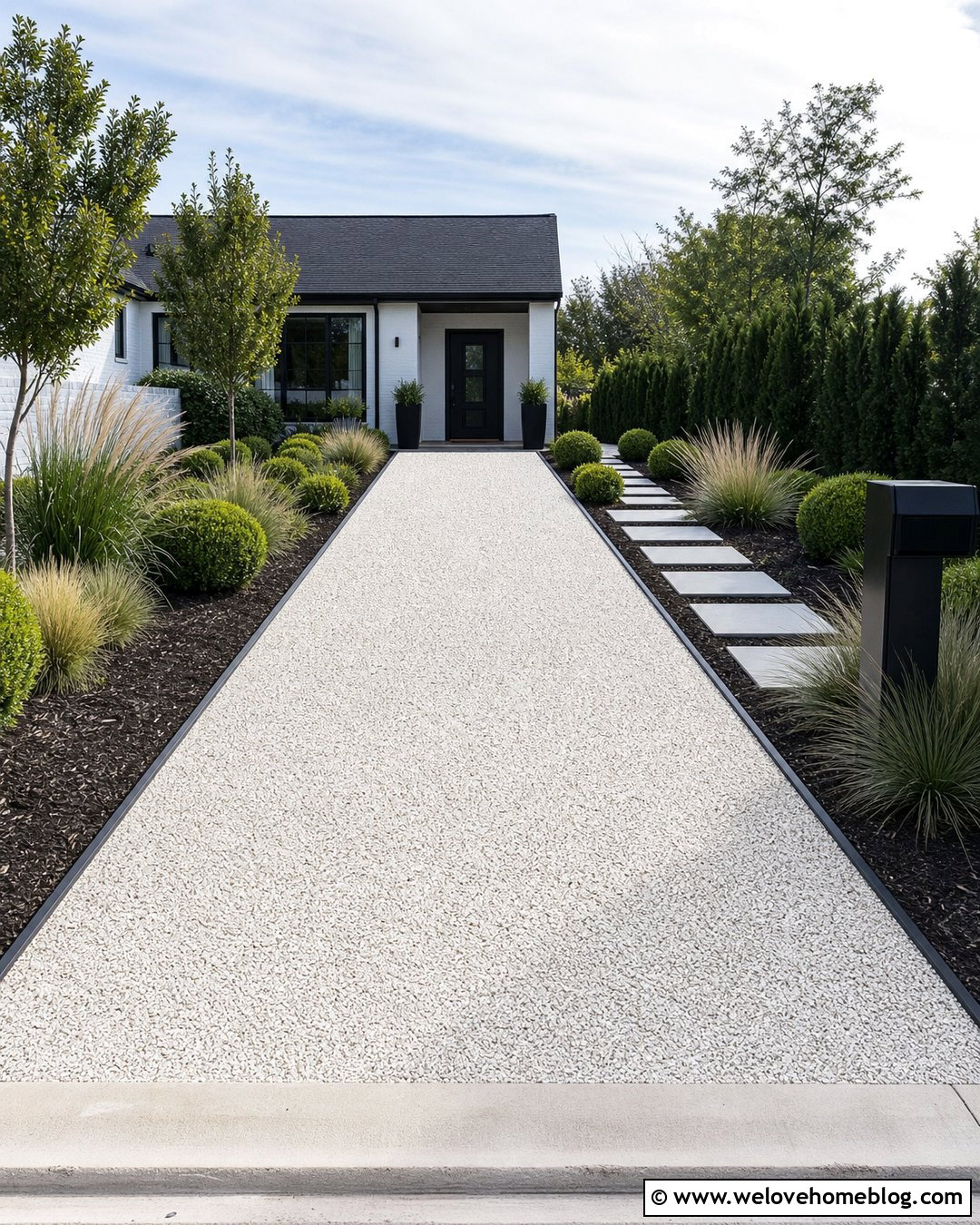
Bright white or pale limestone gravel can refresh the approach to a compact modern home. Keep the driveway straight and narrow, using black steel or aluminum edging to produce a clean outline. The contrast makes an inexpensive loose surface look crisp and contemporary. Repeat the black finish on the mailbox, house numbers, planters, and exterior light fixtures. Use drought-tolerant ornamental grasses, rounded shrubs, and dark mulch around the perimeter. A few rectangular concrete stepping pads can create a practical route from the driveway to the front door. Pale gravel may show leaves and dirt more readily, so it is best for homeowners comfortable with occasional raking. Locally available light aggregate can provide a similar effect while reducing transportation expenses.
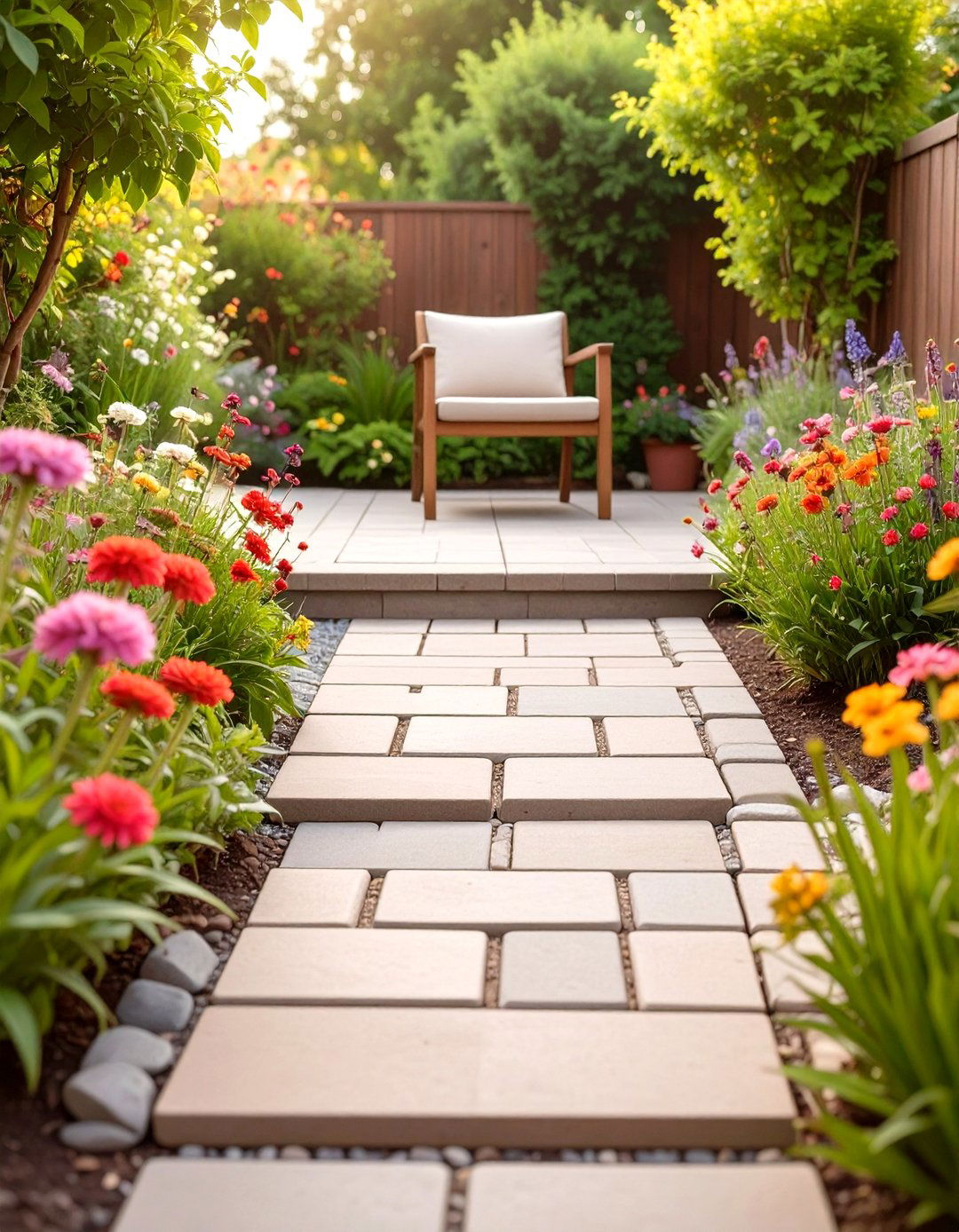
15. Tan Gravel Driveway With Native Plants
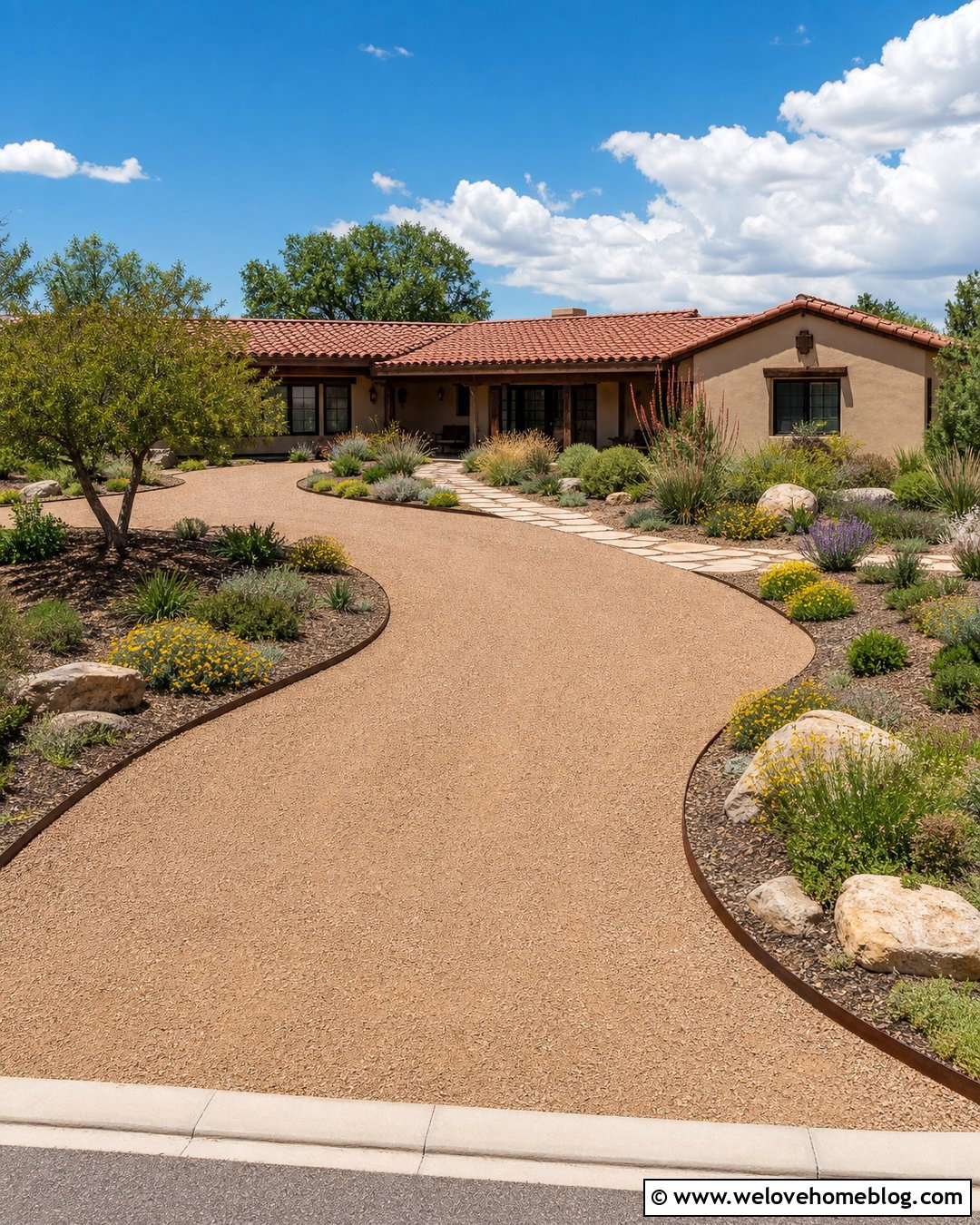
Soft tan gravel blends naturally into dry, sunny landscapes and can be easier to coordinate with warm stucco, brick, or wood siding. Shape the driveway with one broad curve that follows the property instead of forcing a complicated route. Use weathered steel edging or inexpensive tan concrete blocks to contain the aggregate. Beyond the border, arrange native grasses, flowering perennials, and small drought-tolerant shrubs in loose groups. Leaving breathing room between plants reduces the initial purchase while allowing the landscape to mature. A flagstone walkway can cross the gravel near the house and guide visitors toward the entrance. This low-key driveway design feels integrated with the yard, making a basic surface look deliberate rather than merely functional.
16. Crusher Run Driveway With Railroad Tie Edging
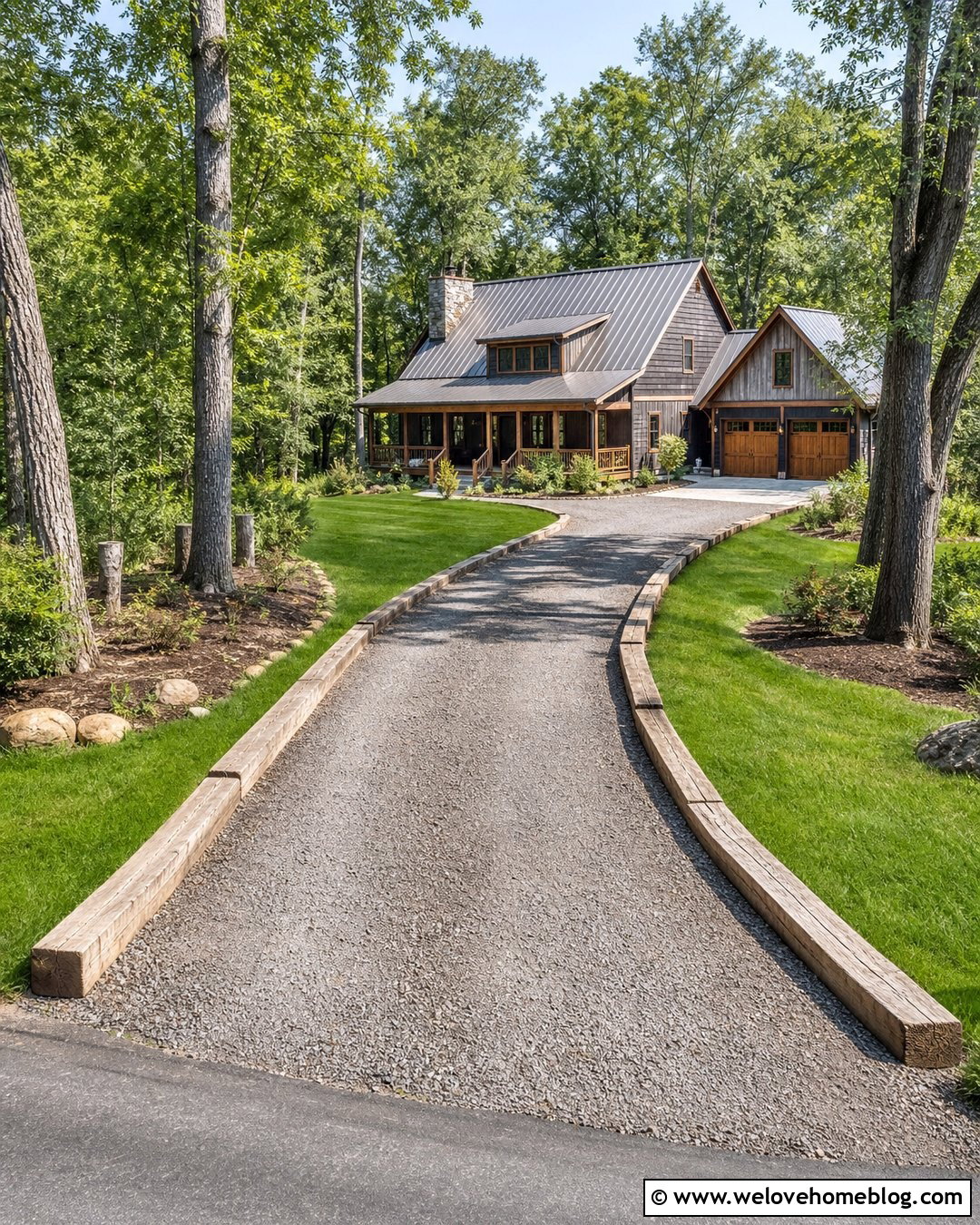
Crusher run contains mixed stone sizes that compact into a firm-looking, rustic surface. It is a practical choice for country properties, workshops, and detached garages where an informal appearance feels appropriate. Create a straight or gently curved driveway and contain the material with sound landscape timbers designed for ground contact. Avoid using old treated wood of uncertain condition around edible gardens or sensitive areas. Add broad grass shoulders, native trees, and a simple gravel walkway to complete the rural setting. Near the house, place a small row of concrete pavers as a clean step-out zone. The subdued gray-brown surface, heavy timber border, and natural planting work together as one affordable look that suits a farmhouse or cabin-inspired exterior.
17. Decomposed Granite Driveway With Steel Edging
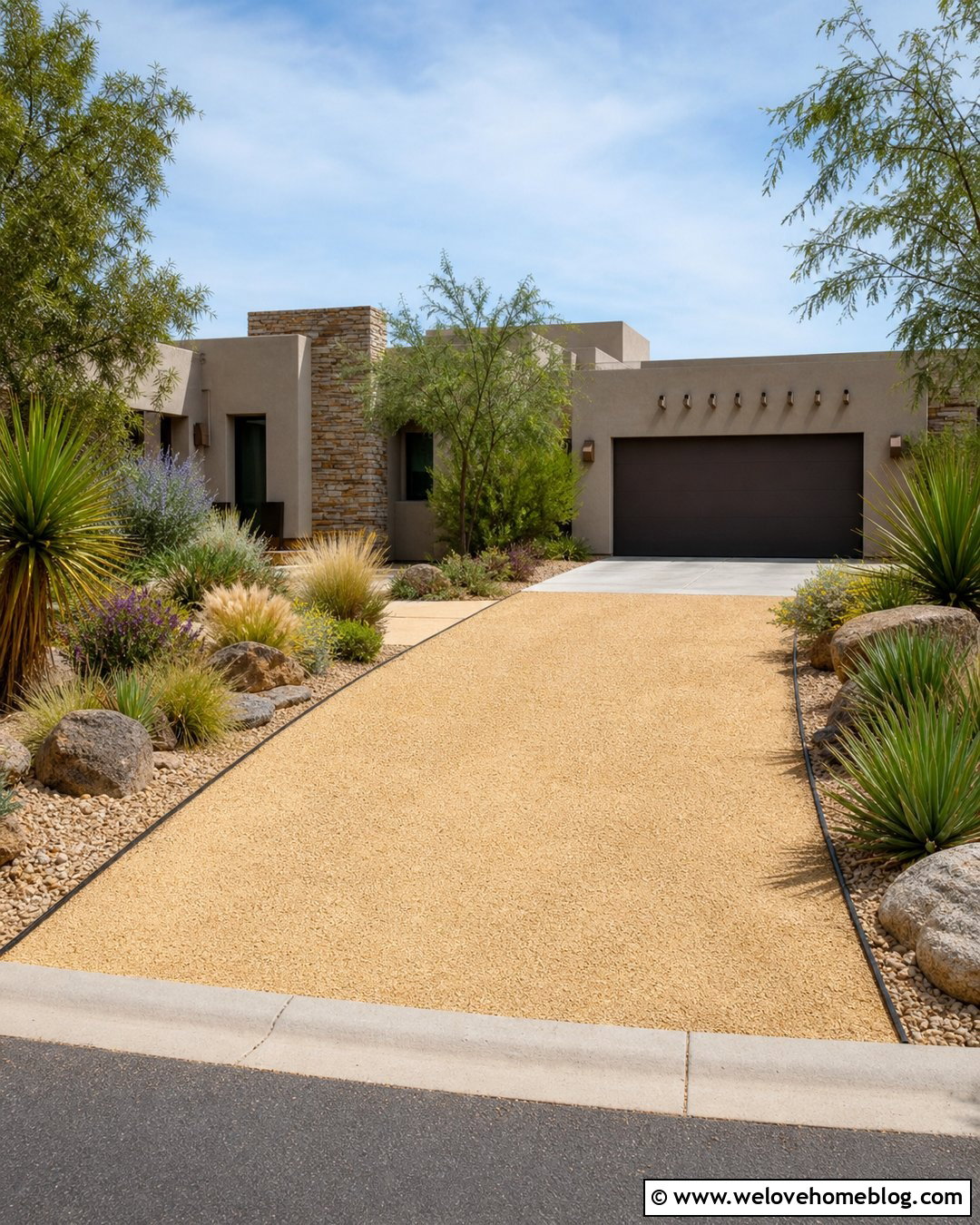
Decomposed granite offers warm color and a smooth, natural appearance when installed and compacted correctly. Choose a stabilized product suitable for vehicular use rather than assuming every landscape-grade mixture can support a driveway. A straight layout with a small parking area keeps the geometry simple. Thin dark steel edging defines the perimeter without visually overpowering the surface. Pair golden or rust-colored granite with a Southwestern ranch, adobe-inspired house, or modern desert home. Gravel beds, yucca-like accent plants suitable for the region, native grasses, and large rocks can frame the drive. Use a compatible concrete or paver apron at the garage to reduce loose material near the door. The limited planting palette keeps this complete design cohesive and manageable.
18. Recycled Concrete Driveway With Paver Edging
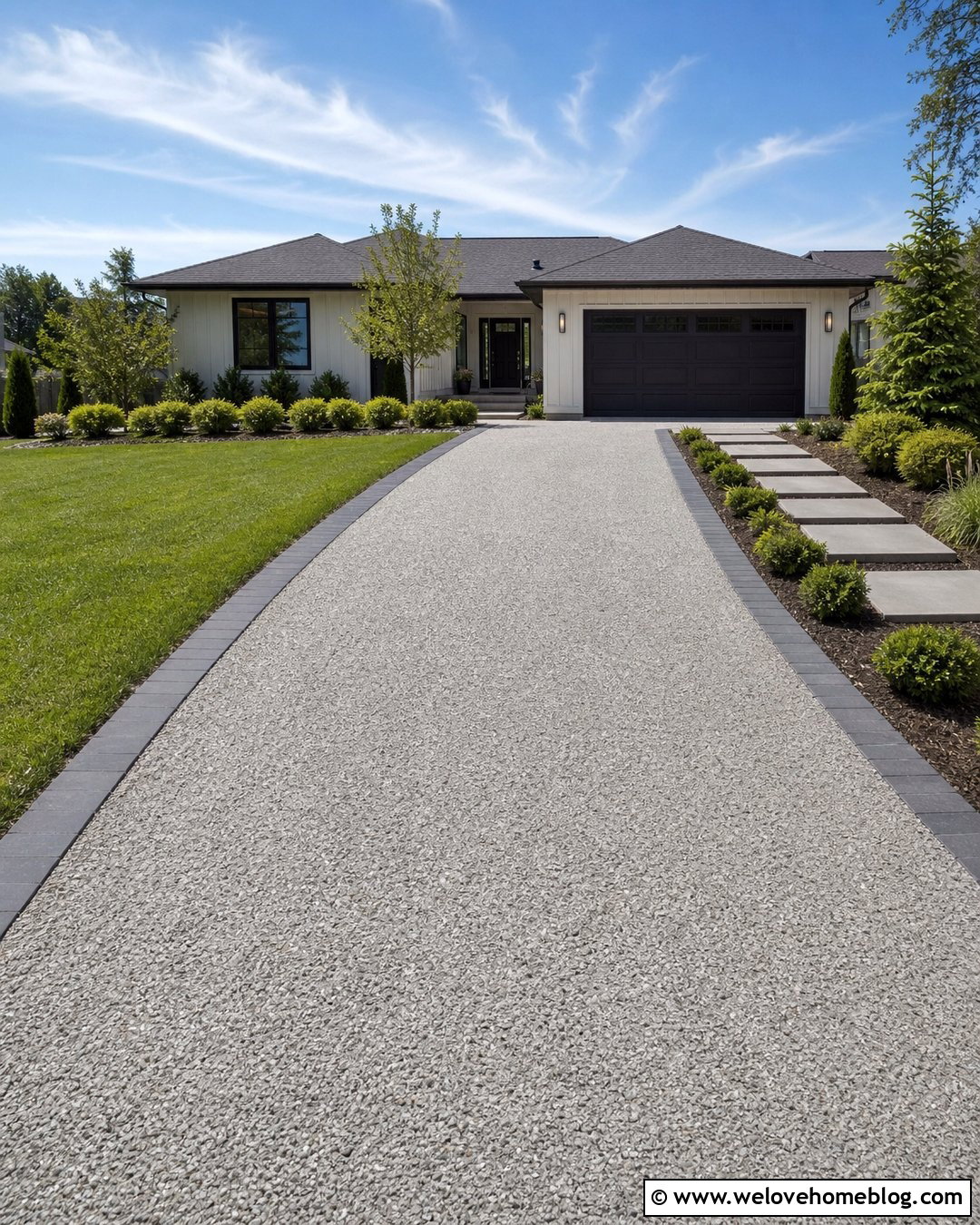
Crushed recycled concrete may be available as an economical aggregate in some locations. Its varied gray tones create a casual surface that works well for long driveways, side parking lanes, and utility areas. Contain the material with secondhand concrete pavers placed in a straight border. Using one consistent paver color keeps reclaimed pieces from looking mismatched. Add a simple lawn edge, a few low evergreen shrubs, and a broad stepping-stone walkway near the house. The driveway should be graded and compacted in layers rather than spread casually over soft topsoil. Confirm that the chosen recycled aggregate is clean, appropriately processed, and accepted for residential driveway use in your area. This practical combination gives reused materials an orderly, finished presentation.
19. Shell Driveway With Brick Border
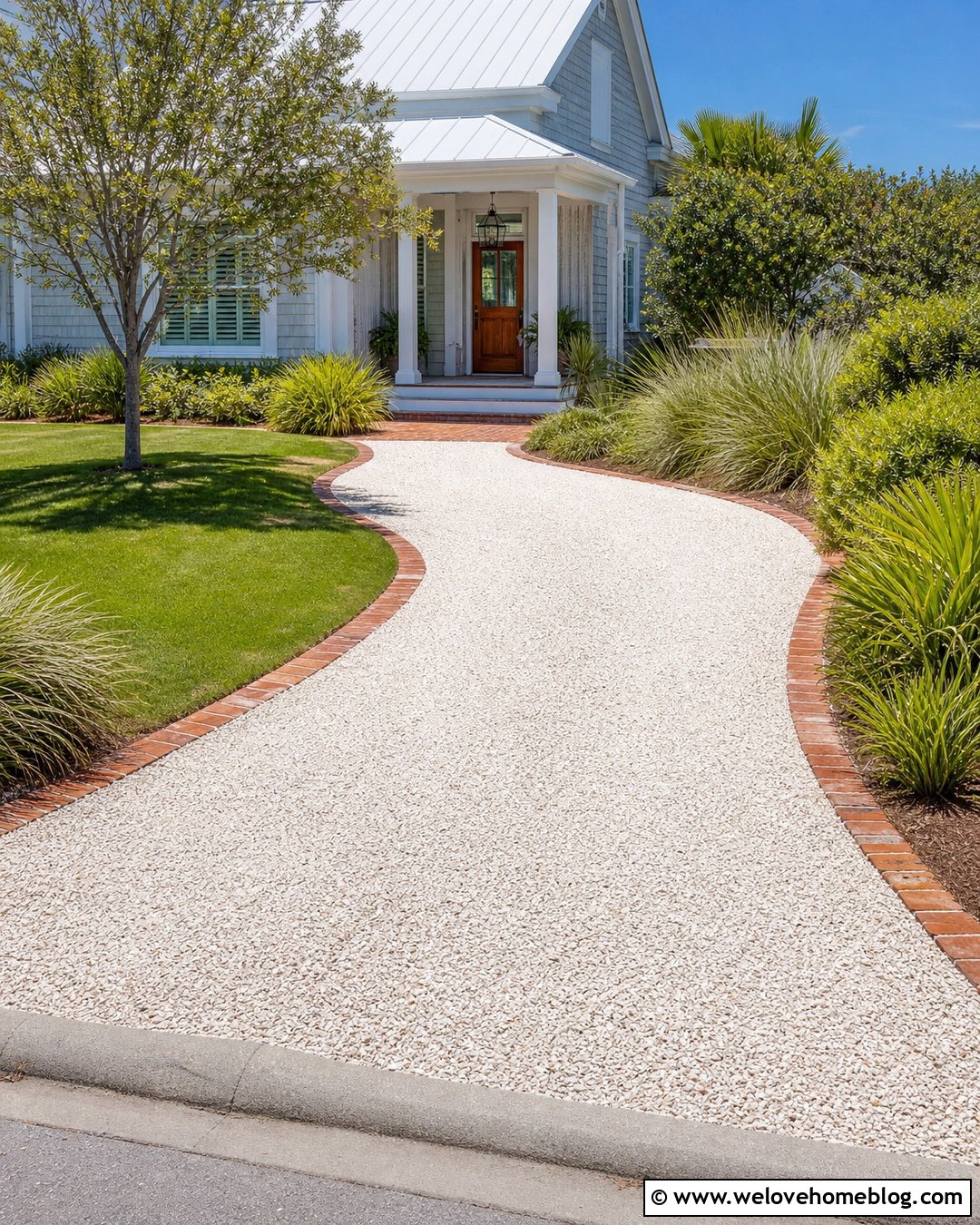
Crushed shell creates a light coastal driveway that pairs naturally with beach cottages and homes in suitable regions. Because availability and local environmental rules vary, it makes the most sense where driveway-grade shell is legally sourced nearby. Use a straight or softly curved layout with reclaimed red brick edging for warm contrast. Plant salt-tolerant or regionally appropriate grasses, compact shrubs, and one small shade tree around the outer borders. A brick walkway leading to the porch can visually connect the driveway edge to the house. Keep the entrance open and uncluttered so drivers can see pedestrians and road traffic. Over time, the pale shell surface can develop a more compact appearance, while occasional replenishment and edging maintenance keep the complete approach looking intentional.
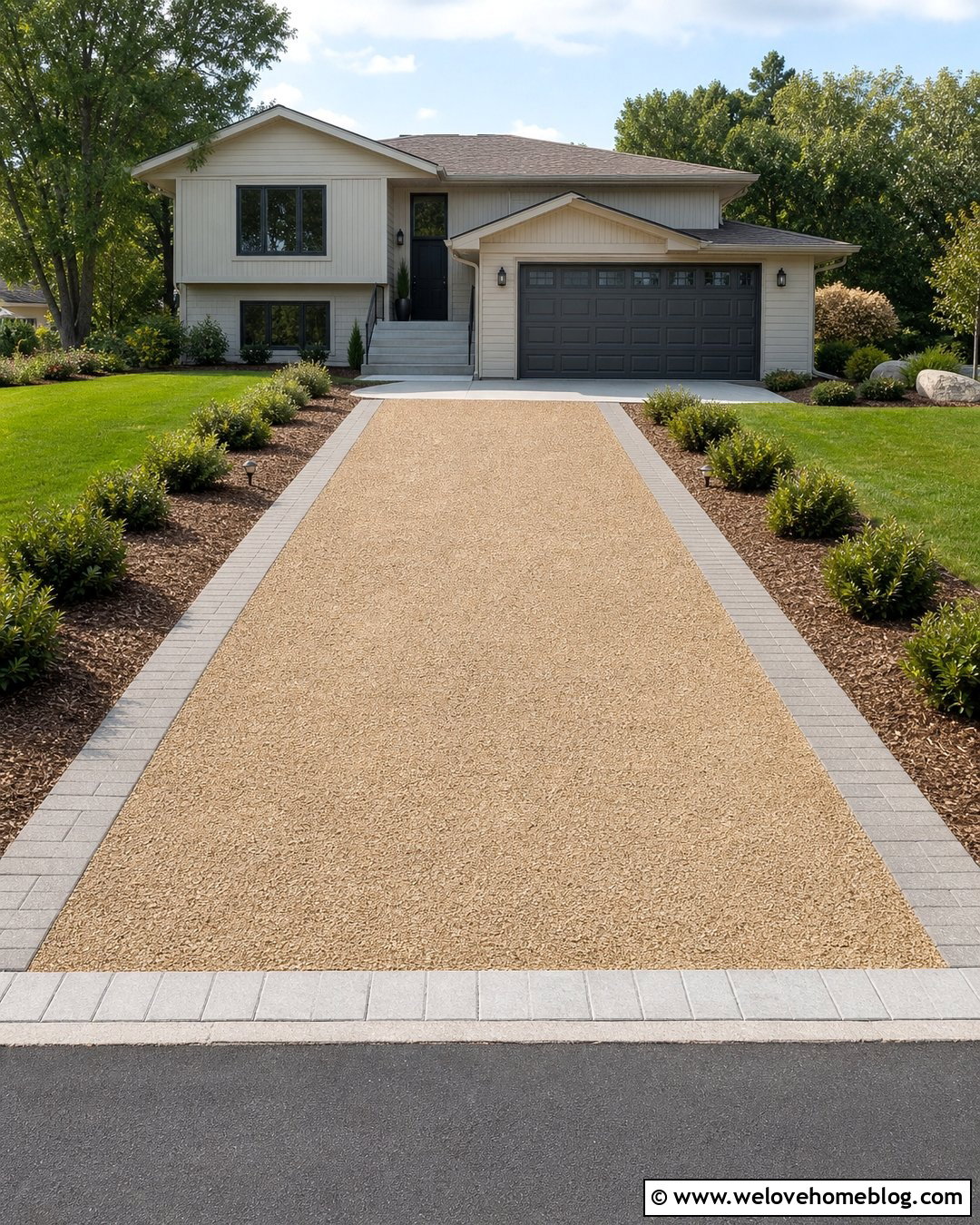


20. Gravel Driveway With Reclaimed Paver Apron
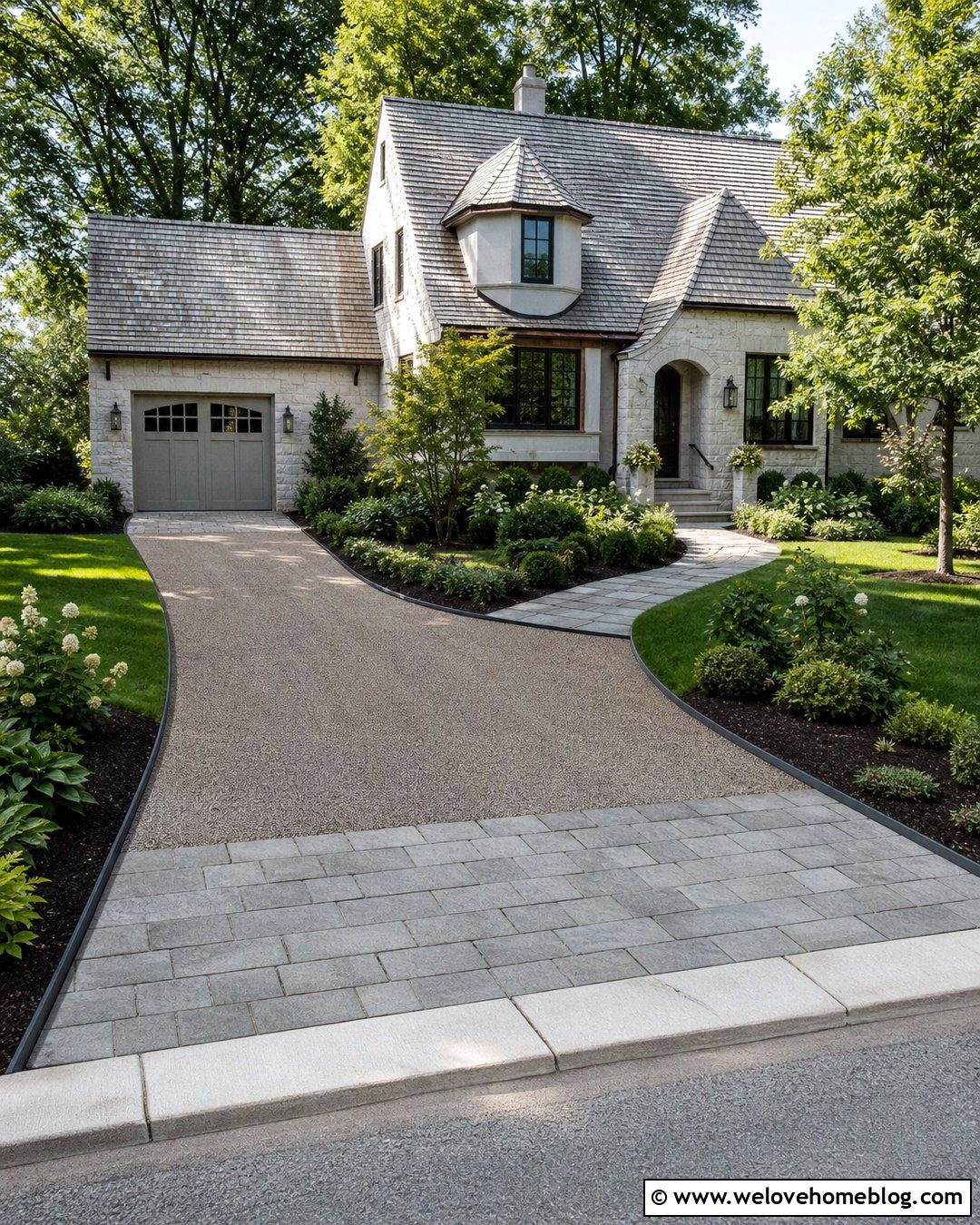
Secondhand pavers are ideal for a small decorative zone rather than an entire driveway. Install reclaimed concrete or clay pavers in a rectangular apron directly in front of the garage, then use compacted gravel for the longer approach. The solid apron creates a stable unloading area and keeps the most detailed material close to the house. Choose pavers with similar thicknesses and complementary colors, even if their surfaces show age. A curved gravel drive bordered by simple metal edging can lead through lawn and informal shrub beds. Repeat a few matching pavers in the walkway to unify the design. Proper sorting, base preparation, and installation are important because inconsistent reclaimed pieces can create uneven joints if they are placed without planning.
21. Gravel Driveway With Flagstone Walkway
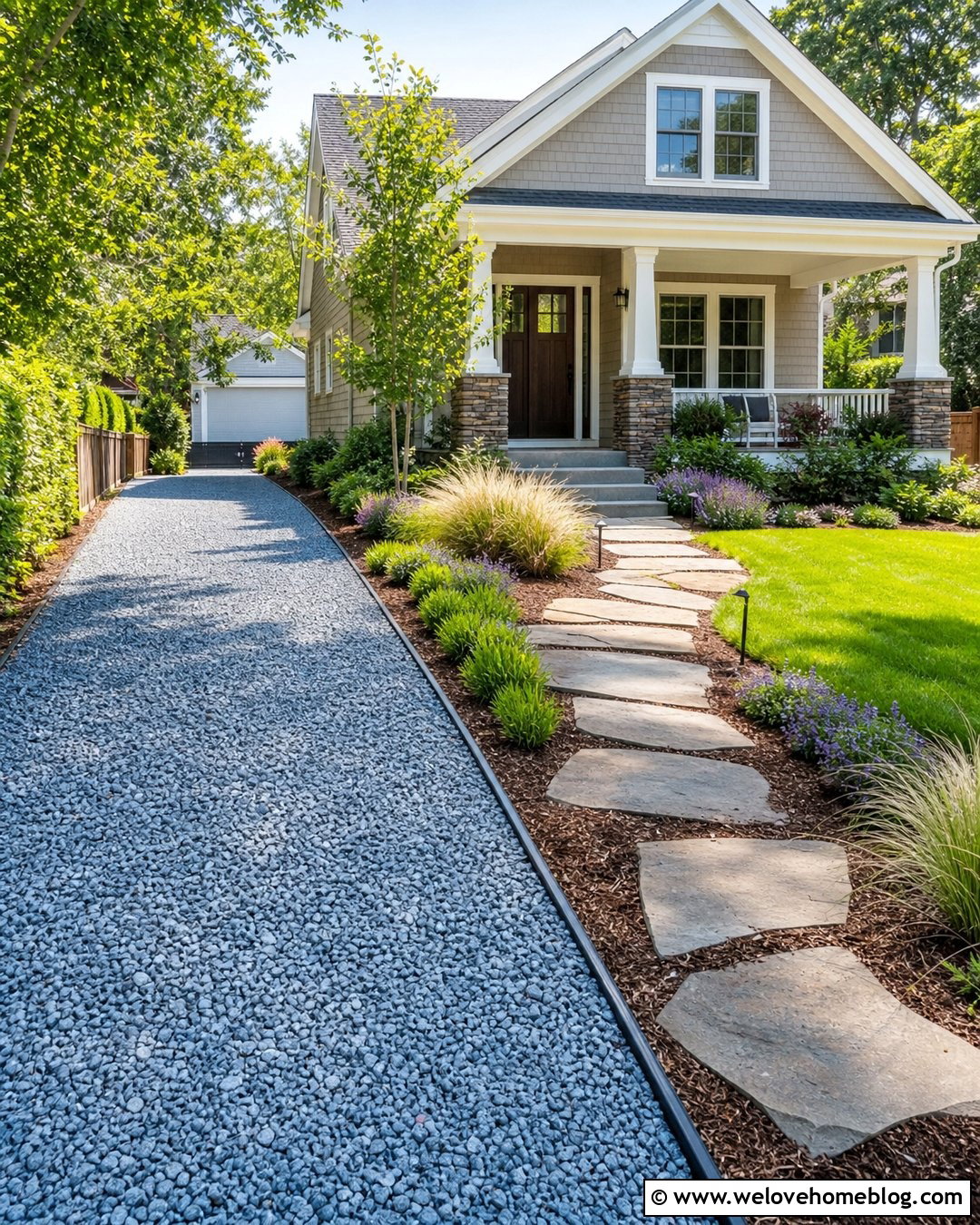
A separate walkway can make a low-cost gravel driveway feel safer and more welcoming for visitors. Use compacted blue-gray crushed stone for a straight driveway, then build a stepping path from large, flat flagstones along one side. The walkway should be positioned outside the regular vehicle path and installed on a stable base. Define the driveway with affordable metal edging and frame the path with mulch, ornamental grasses, and low flowering perennials. A craftsman or cottage house provides a fitting backdrop for the natural material mix. Since flagstone is used only for the pedestrian route, the project requires less premium stone. The varied textures make the whole front yard feel landscaped while keeping the main parking surface simple and economical.
22. Gravel Driveway With Solar Entrance Lights
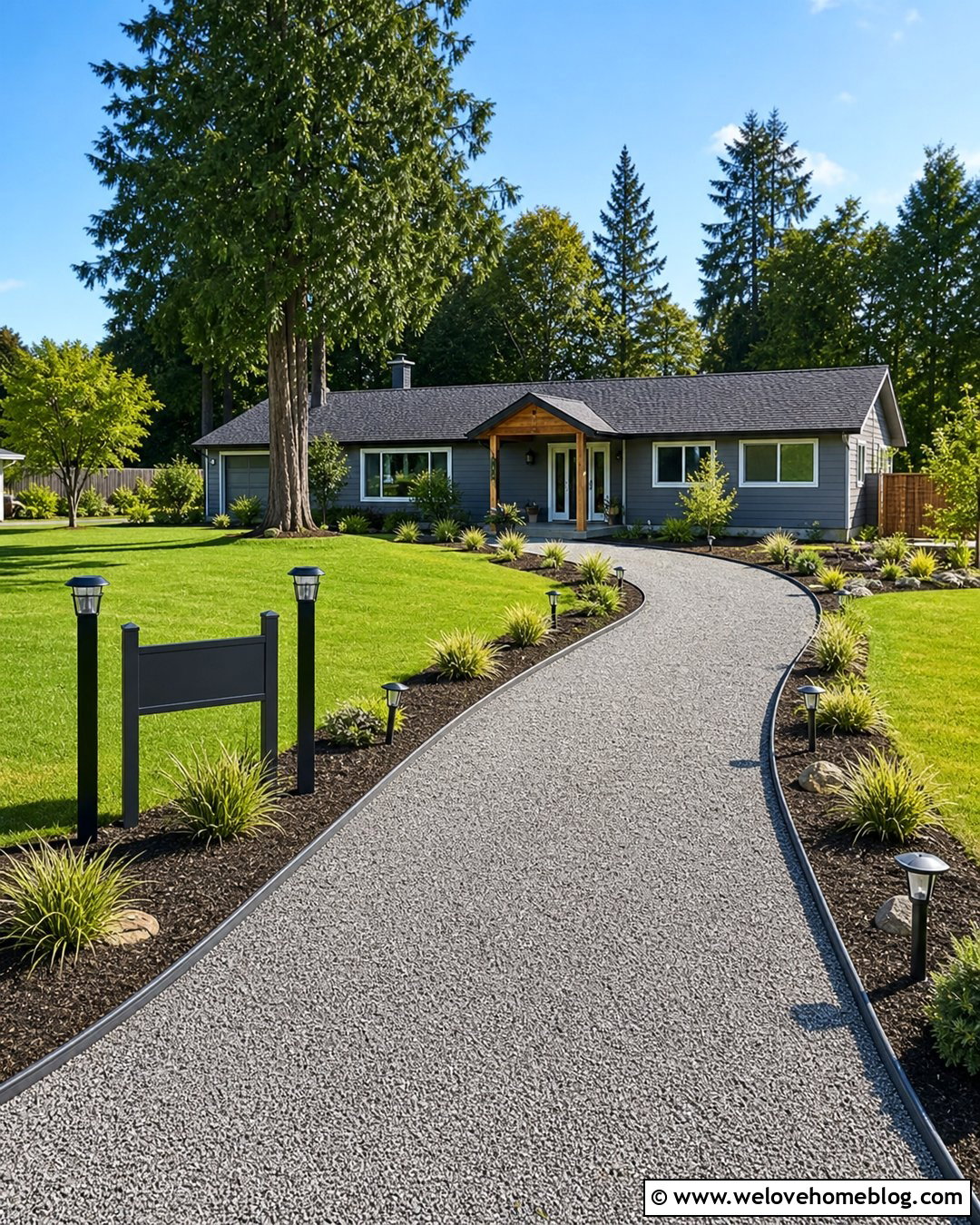
Lighting can improve the appearance of an inexpensive driveway without requiring a large masonry entrance. Select warm gray crushed gravel for a gently curved drive and install simple solar fixtures at repeated intervals beyond the edging. Choose fixtures that cast light downward and remain clear of vehicle doors, snow removal routes, and lawn equipment. Black metal edging and small mulched planting pockets can anchor each light visually. At the street, use two taller solar posts beside a basic address sign rather than costly wired pillars. The complete look suits suburban ranch homes and modern farmhouses. Product quality and sunlight exposure vary, so place solar panels where they receive adequate light. Keep the landscape open enough to maintain safe entrance visibility.
23. Gravel Driveway With a Simple Wood Gate
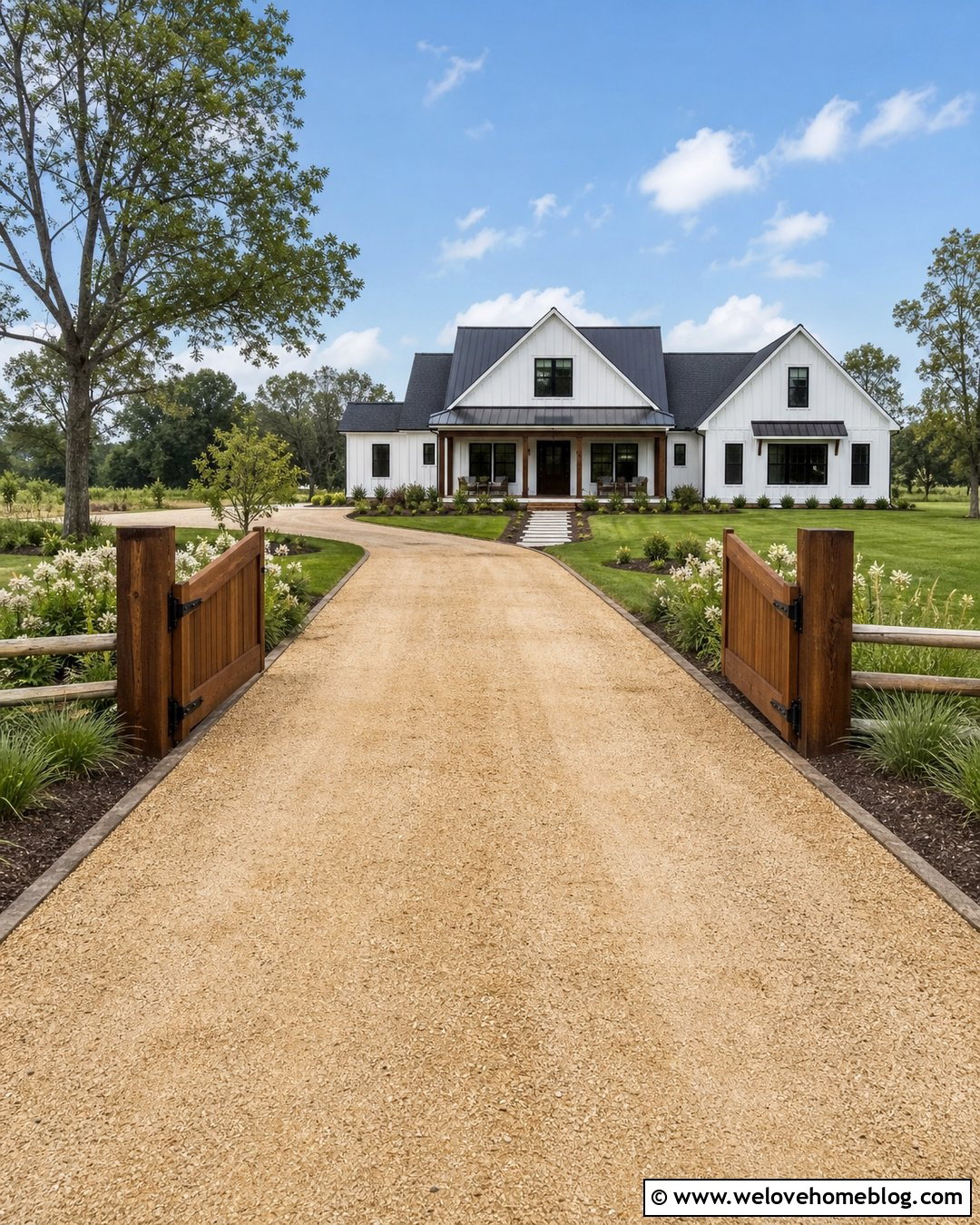
A basic wood gate can turn a modest gravel driveway into a recognizable country entrance. Use compacted tan crushed stone for a straight approach leading to a farmhouse, barn-style home, or cottage. Install a lightweight painted or stained gate between sturdy wood posts, leaving enough clearance for vehicles and local emergency-access requirements. Low split-rail fencing can continue a short distance on both sides without surrounding the entire property. Add native grasses, hydrangea-like shrubs suited to the climate, and a simple gravel-to-paver walkway near the house. Black hinges and a matching address plaque provide contrast. Before building, confirm property boundaries, setbacks, gate-swing space, and permit rules. The restrained entrance creates character without requiring elaborate stone columns or automated equipment.
24. Gravel Driveway With Stone Pillar Accents
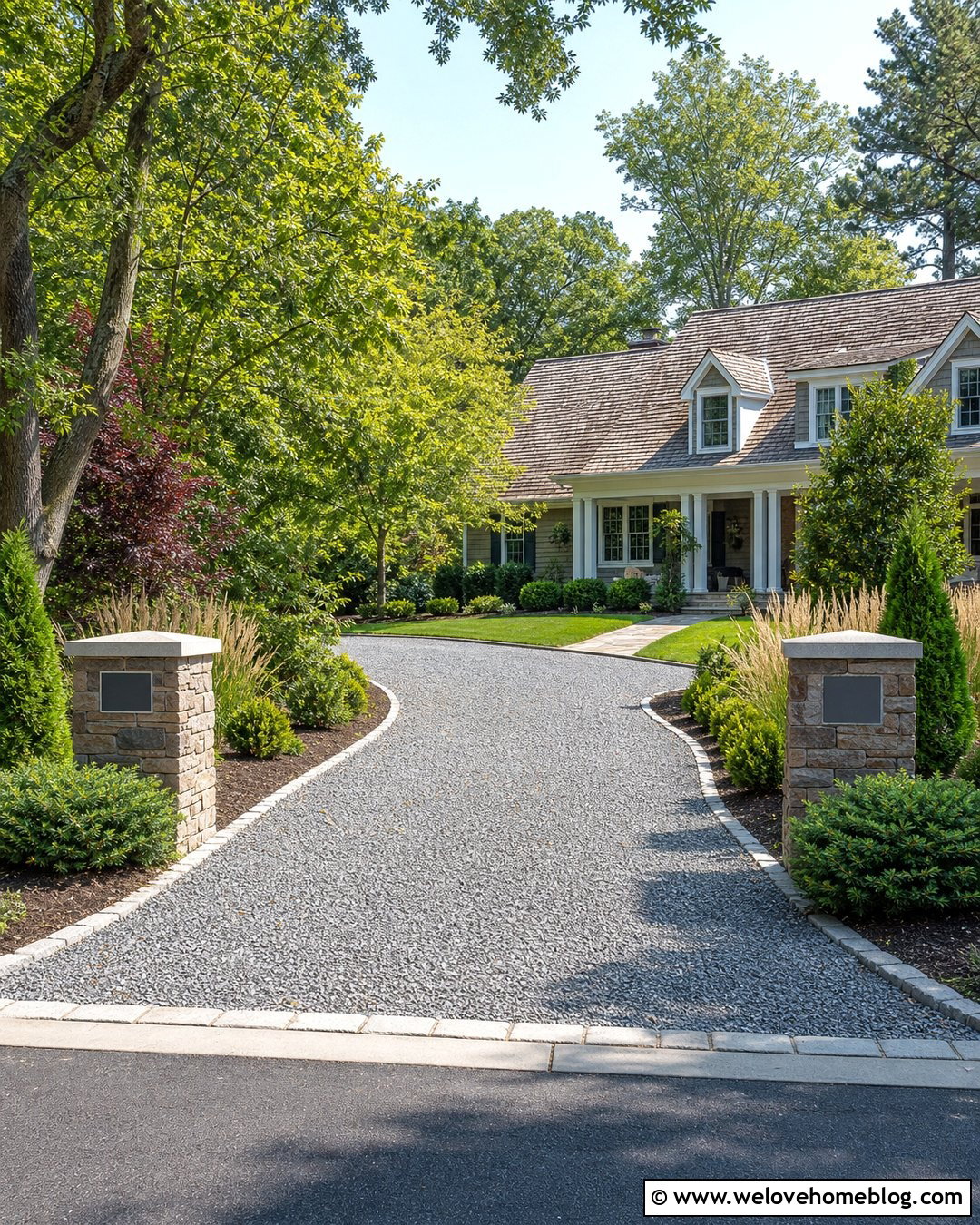
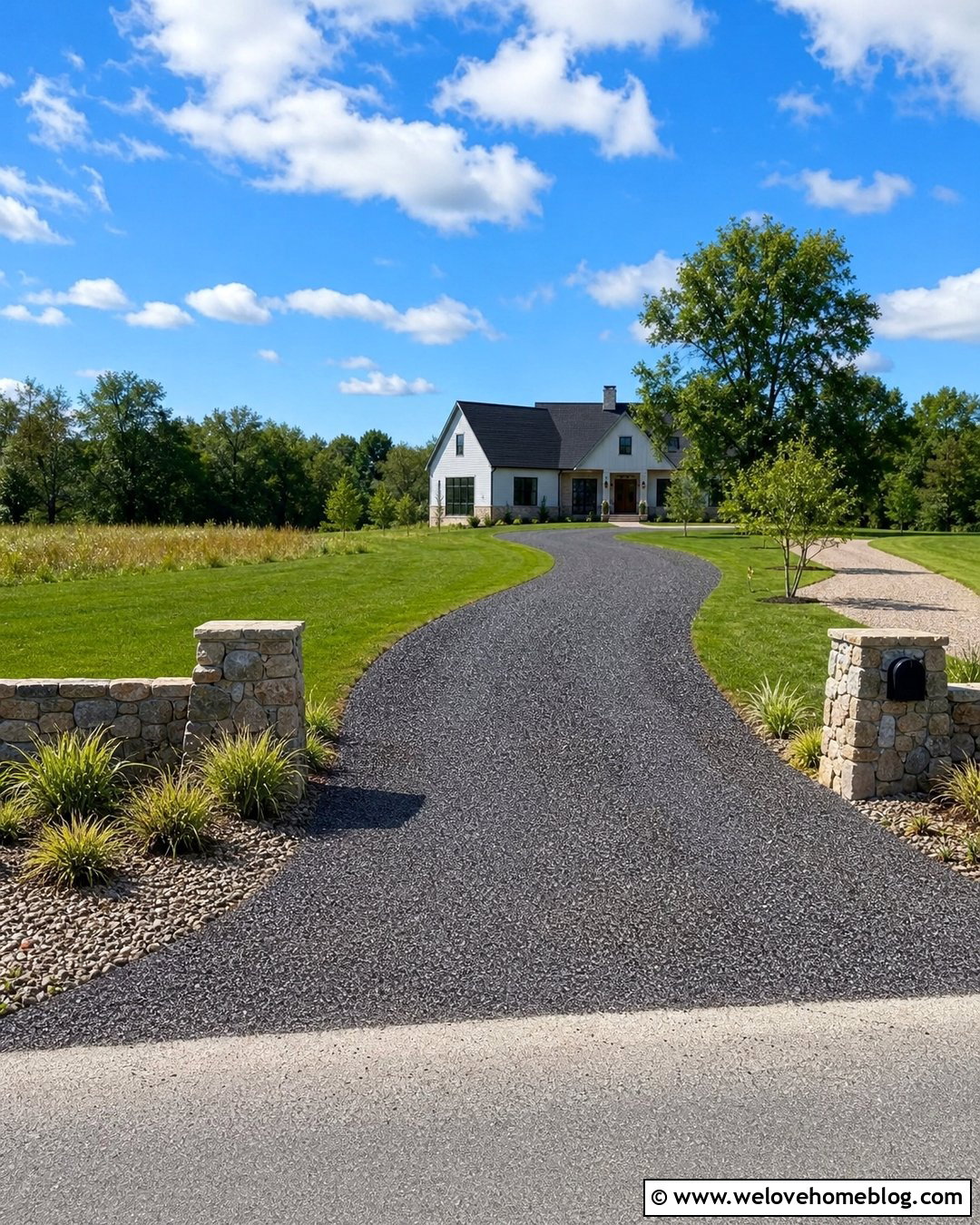
Instead of constructing large masonry columns, create short stone pillar accents at the entrance using economical concrete blocks or stone veneer over properly built cores. Pair them with a gray gravel driveway that curves gently toward a traditional suburban house. Keep the pillars low enough to preserve sightlines, and finish each one with a simple concrete cap. Small evergreen shrubs, ornamental grasses, and ground-cover planting beds can surround the bases. Use matching gray edging along the first portion of the driveway, then transition to discreet metal edging farther up to control costs. A modest address plaque completes the entrance. Correct foundations and safe placement matter, so structural pillar work may still require professional guidance even when the visible materials are budget-conscious.
25. Chip Seal Driveway With Grass Edges
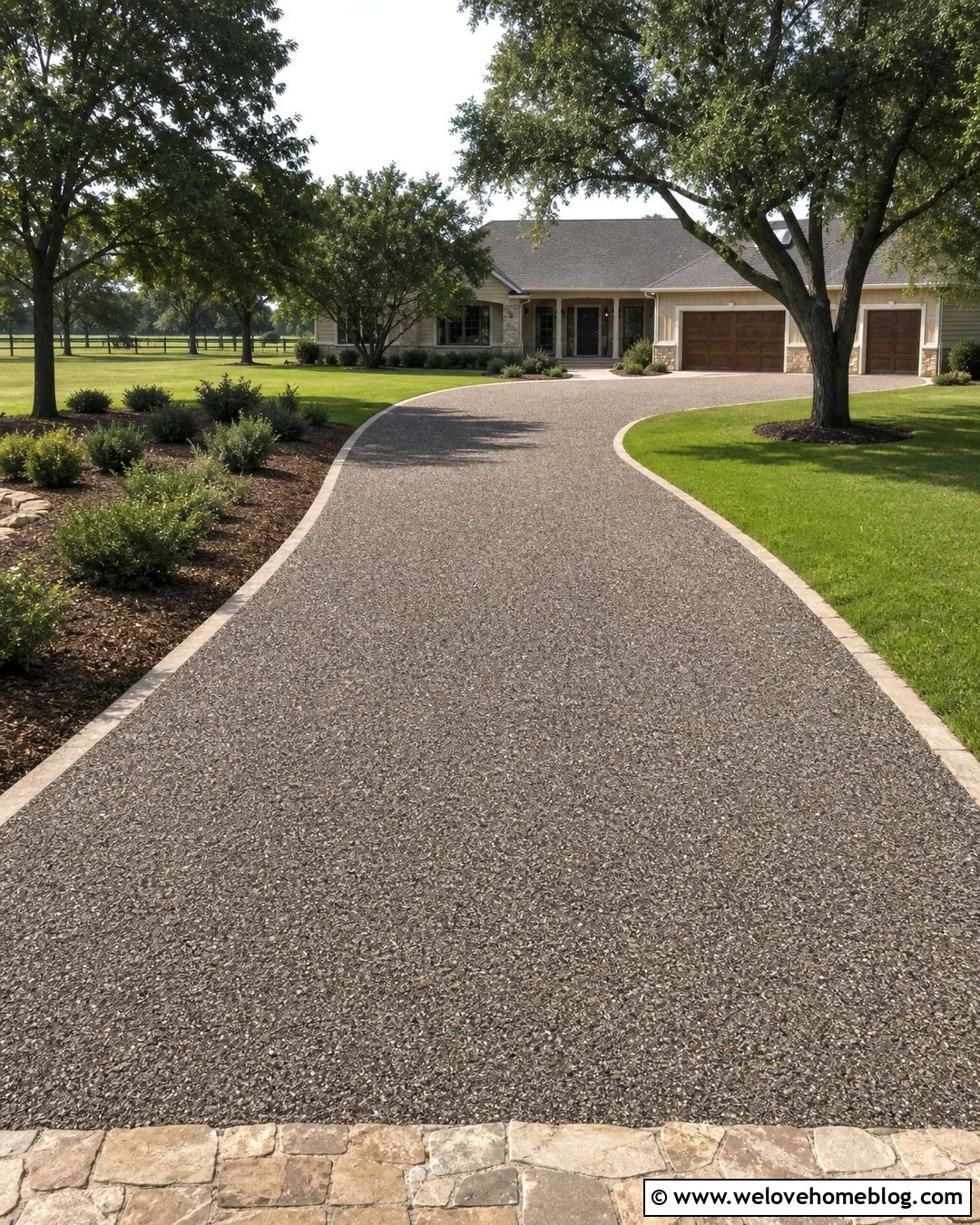
Chip seal combines a dark binding layer with a visible aggregate finish, creating a textured surface suited to long residential driveways. Availability depends on local contractors, making it most economical where crews and materials are already common. Choose a simple straight approach or one broad country curve. Clean grass shoulders can act as the main border, avoiding the expense of continuous masonry edging. Near the street, add a narrow stone entrance band and two mulched beds with low native shrubs. The textured gray-brown finish works well with ranch homes, farmhouses, and wooded properties. Ask installers about aggregate color, drainage, base condition, and expected maintenance. A limited landscape palette lets the driveway texture become the main visual feature without expensive decoration.
26. Existing Asphalt Driveway With Gravel Borders
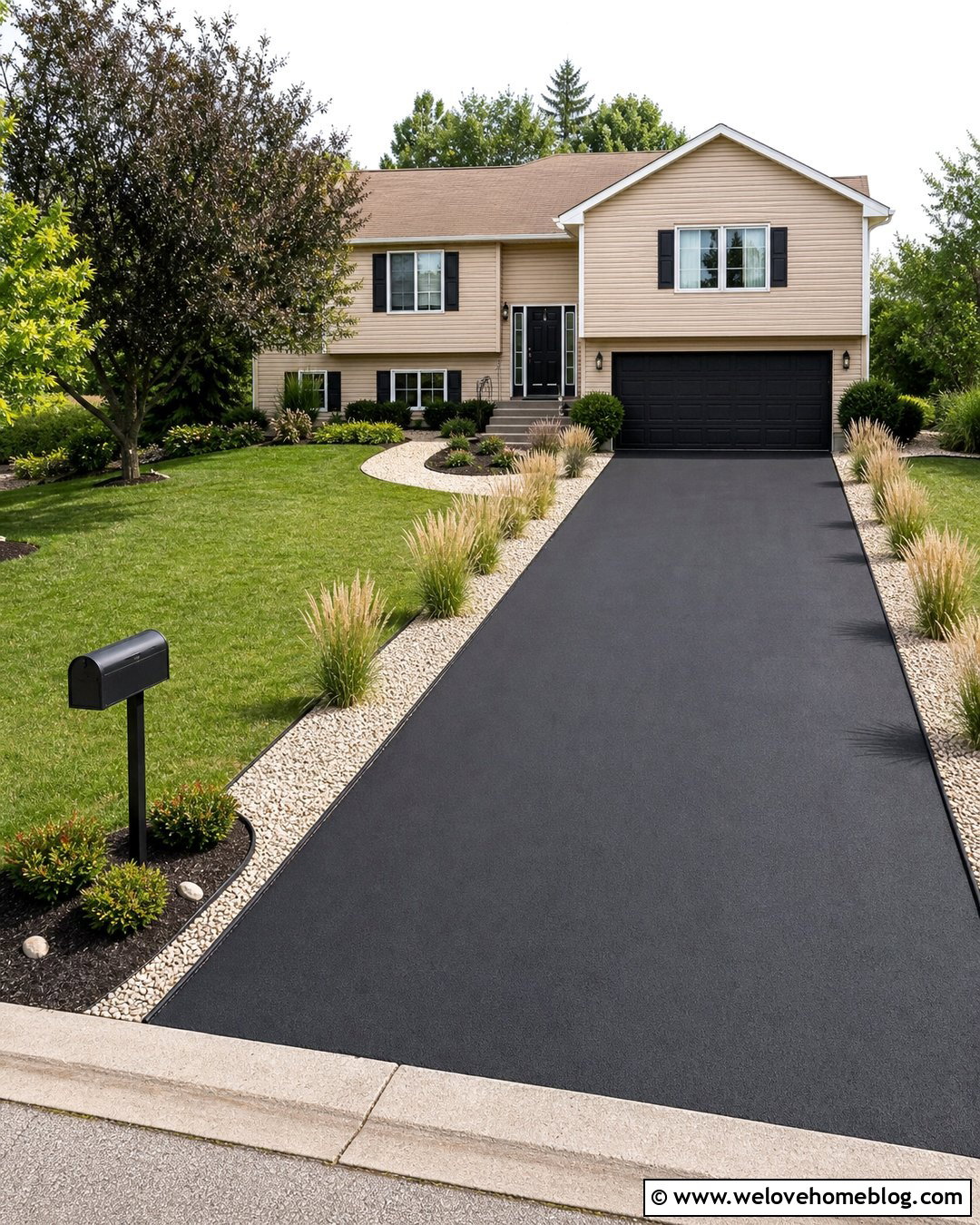
An aging but serviceable asphalt driveway may look better after landscaping rather than immediate replacement. Clean the edges, address suitable maintenance needs, and create narrow strips of contrasting pea gravel or crushed stone along both sides. Separate the decorative gravel from the asphalt and lawn with metal or plastic edging. Charcoal asphalt paired with pale stone gives a simple suburban home a sharper outline. Add repeated ornamental grasses near the garage and low shrubs around the mailbox, keeping most of the borders open. A coordinating gravel walkway can lead toward the front porch. This approach focuses spending on the visible frame instead of installing a completely new surface. Have serious cracking, drainage problems, or base failure evaluated before making cosmetic updates.
27. Existing Concrete Driveway With Gravel Expansion
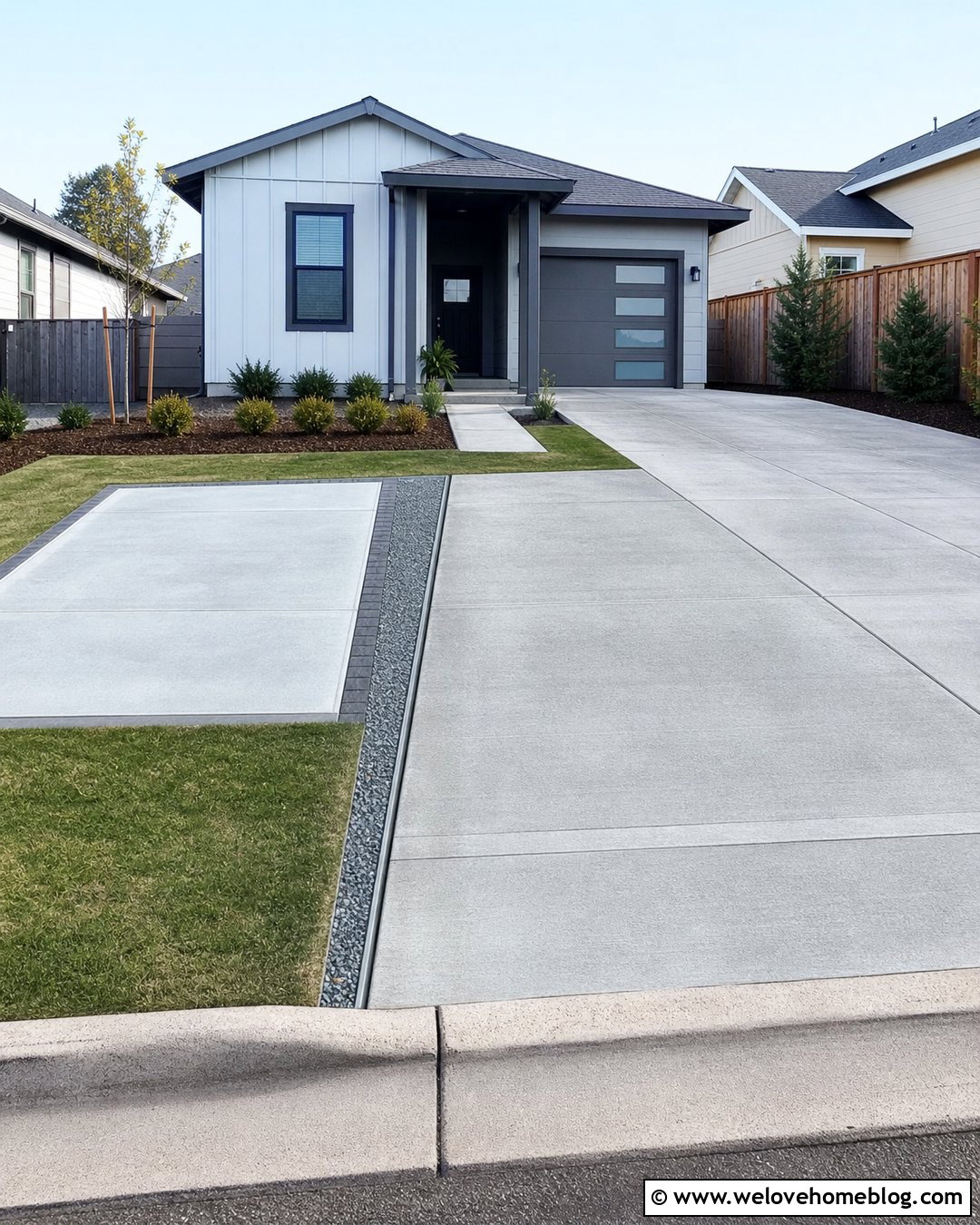
Widening a narrow driveway does not always require replacing every section of concrete. Where local rules and site conditions permit, retain the sound broom-finished slab and add a compacted gravel parking strip along one side. Use a charcoal concrete paver border between the old driveway and new aggregate. This strong visual line makes the expansion look planned. Match the gravel tone to the home’s siding or masonry, then frame the outside edge with lawn and a small mulched bed. A rectangular shape provides useful parking while preserving as much yard as possible. Proper excavation, drainage, and base compaction are still necessary. The mixed surface works best when the gravel section is clearly contained and wide enough to function without vehicles riding over the border.
28. Concrete Paver Driveway With Gravel Joints
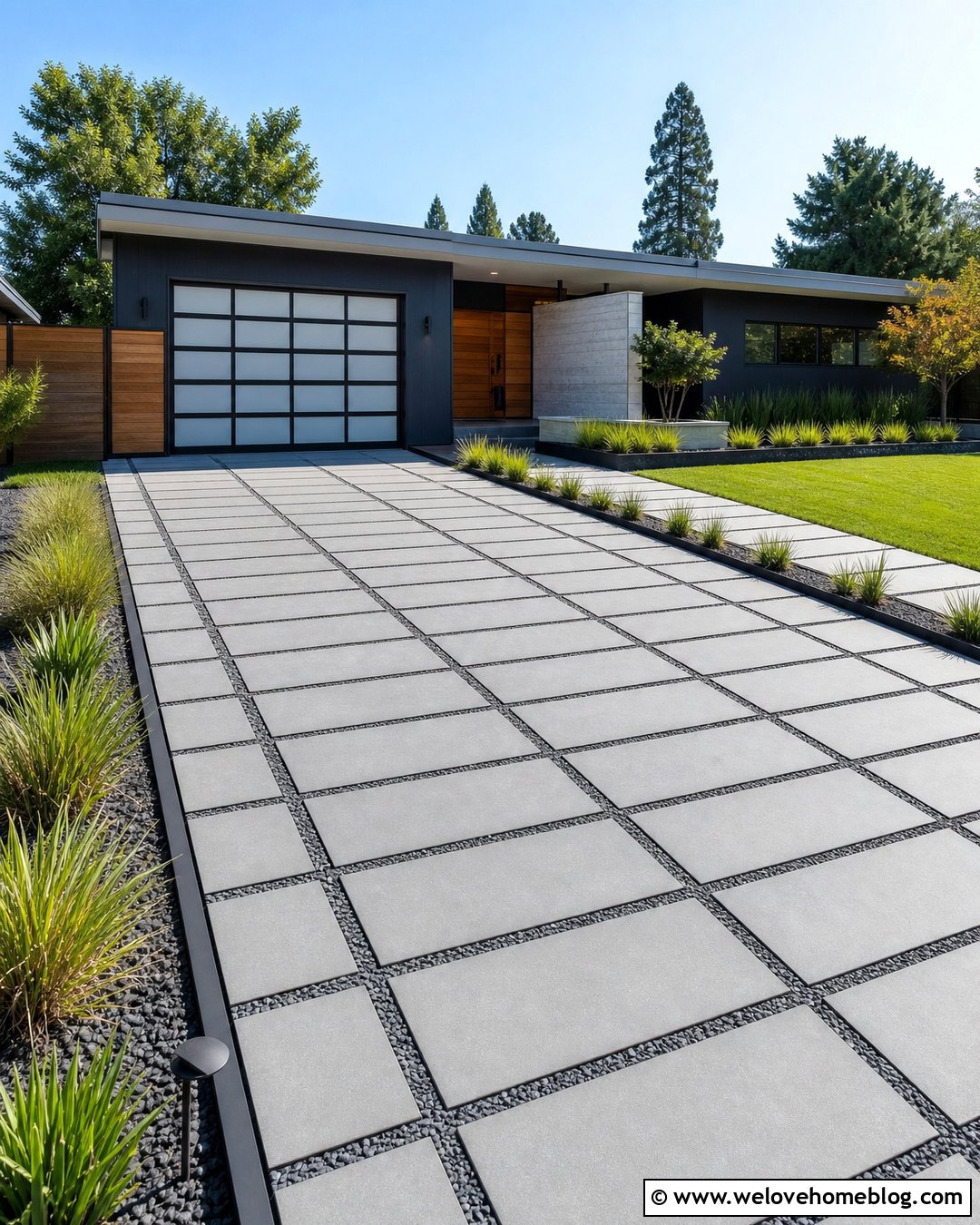
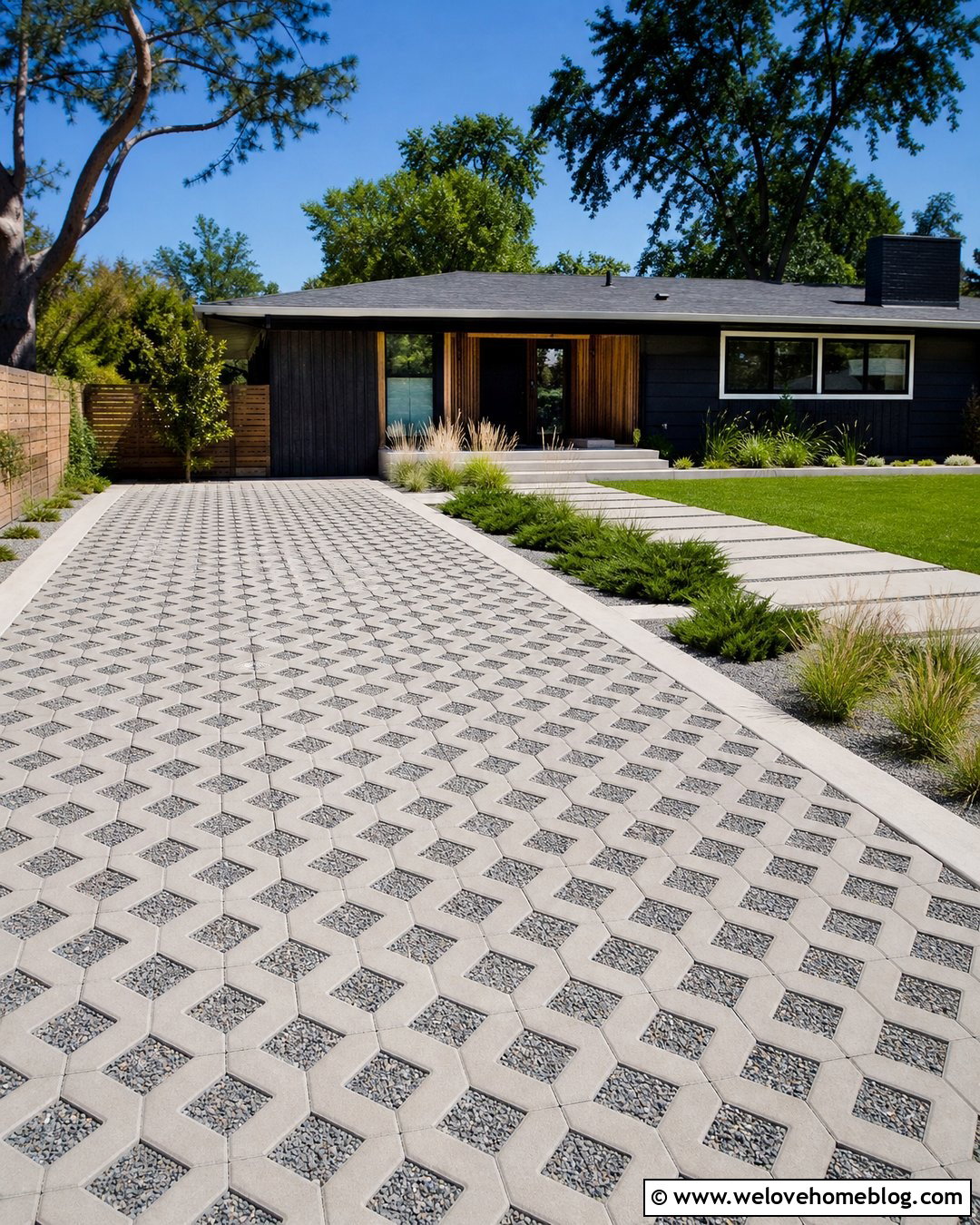
Large concrete pavers spaced with gravel joints can create a modern driveway while reducing the number of blocks required. Use economical square or rectangular gray pavers arranged in aligned rows on a properly prepared base. Fill consistent gaps with small dark gravel and contain the entire surface with strong edge restraints. A straight driveway leading to a modern or midcentury house keeps the pattern easy to read. Surround it with simple lawn panels, ornamental grasses, and a matching concrete walkway. The layout should be engineered for vehicle loads rather than installed like a casual garden path. Open-joint and permeable paver arrangements can also support drainage goals when designed as a complete system, but local soil, slope, and installation requirements must be considered. ()
29. Reclaimed Brick Driveway With Gravel Infill
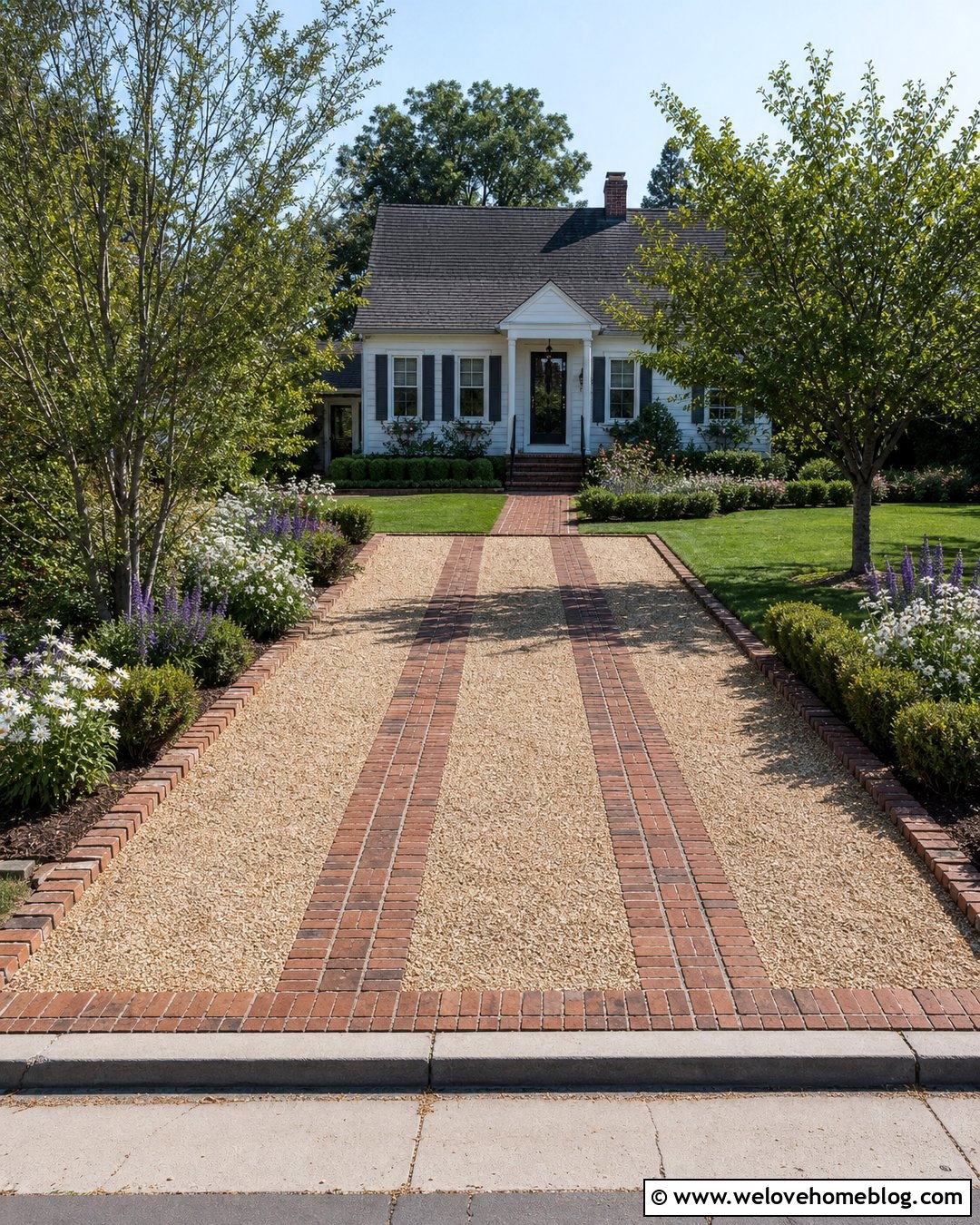
Reclaimed bricks can stretch farther when used as tire ribbons, borders, and entrance bands instead of a solid paved field. Lay two brick tracks along a compacted tan gravel driveway, keeping the spacing aligned with regular vehicle use. Continue the bricks around the perimeter of a small parking area near the house. This warm material combination complements cottages, historic homes, and modest colonials. Plant low hedges, flowering perennials, and a small ornamental tree beyond the edging. Select bricks suitable for paving and outdoor freeze-thaw conditions in your region; ordinary building bricks may not perform the same way. The reused character adds visual richness, while the gravel infill keeps the design relaxed and limits the quantity of specialty material needed.
30. Grass Paver Driveway With Concrete Apron
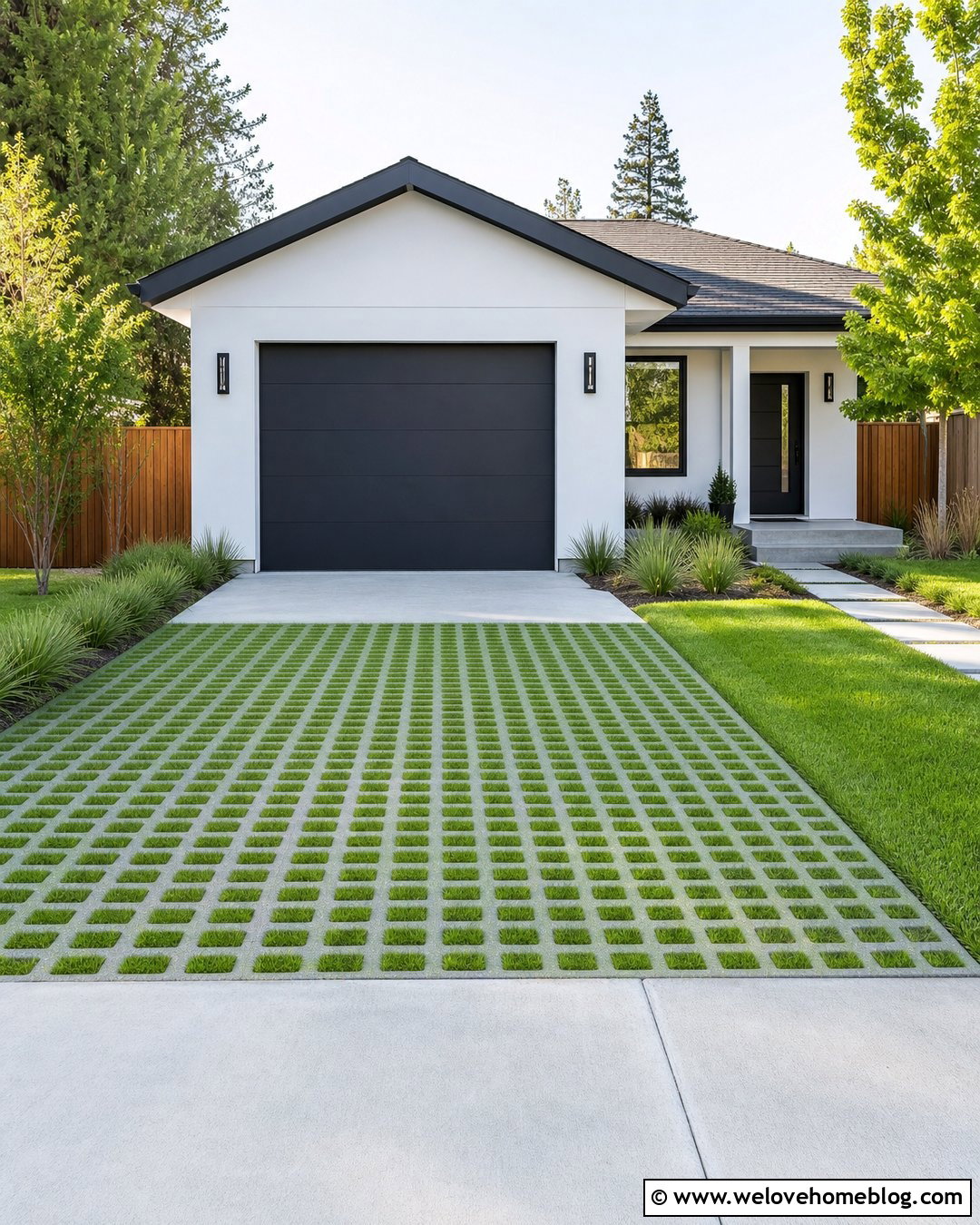
Open-cell concrete grid pavers can create a green parking surface when the complete system suits local climate, soil, and maintenance conditions. Use the grid across a short straight driveway and establish appropriate turf within the openings. Install a plain concrete apron near the street and another solid landing at the garage. These smoother zones define the entrance and provide practical transitions. The green center blends with the lawn, making the parking area feel less dominant in front of a compact modern home. Narrow planting beds with low grasses can frame the outer edges without crowding the tires. Since turf receives repeated traffic and heat, realistic maintenance expectations are important. Proper base construction also matters more than simply placing grids over existing grass.
31. Two-Track Gravel Driveway With Ground Cover
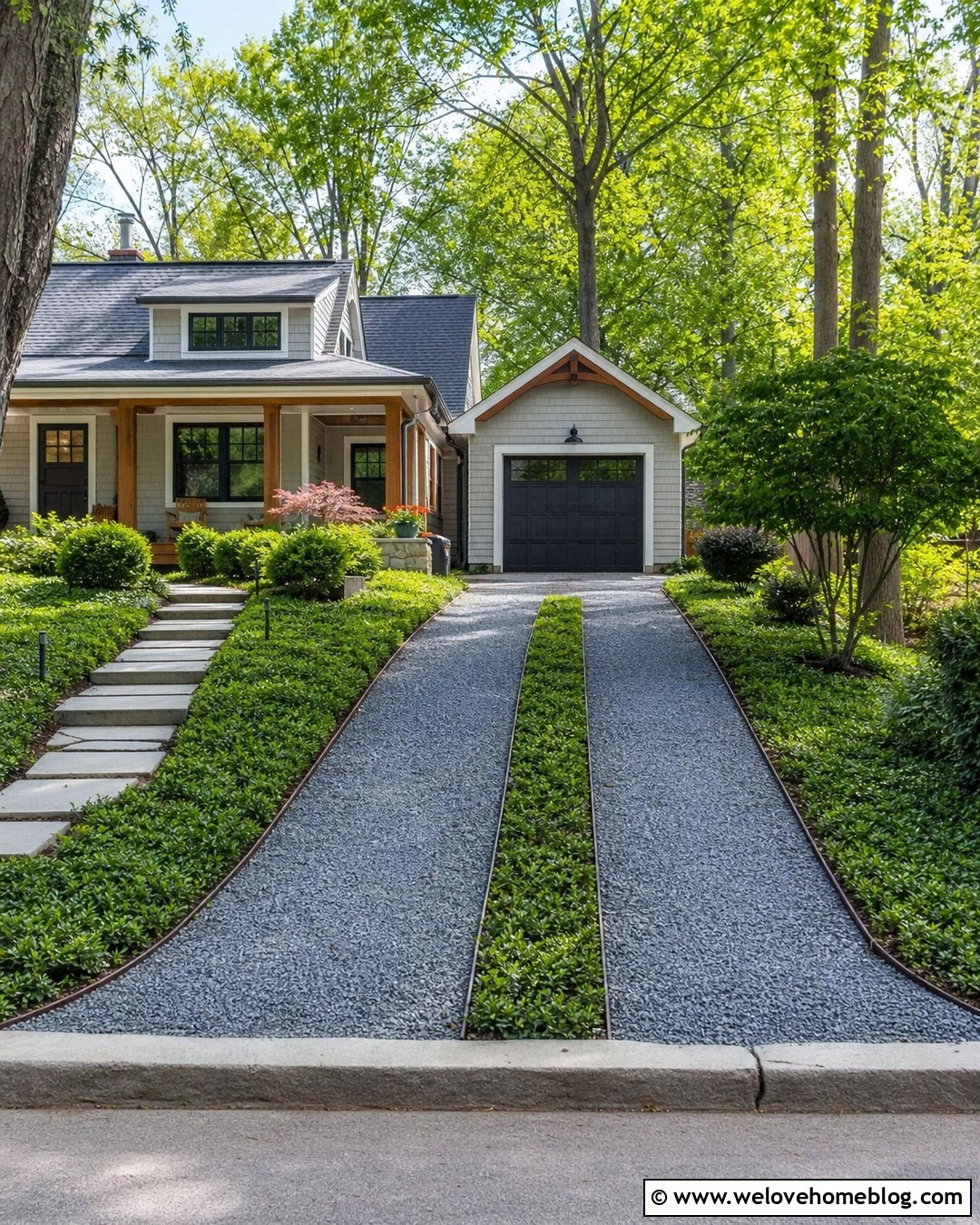
A two-track layout reduces the visible amount of loose stone while preserving a clear route to the garage. Form two compacted crushed-gravel tracks and plant a tough, regionally appropriate low ground cover in the center strip. Keep the outer edges defined with steel edging or narrow concrete curbs. This design suits a small cottage, bungalow, or detached backyard garage where traffic is predictable. Continue the ground cover into nearby planting beds so the center does not look disconnected. Add a simple stepping-stone path beside the driveway for pedestrian access. The planted strip should not be positioned where low vehicle parts will damage it. Good grading and a substantial base beneath the gravel tracks help the complete layout remain functional rather than becoming two muddy ruts.
32. Curved Gravel Driveway With Mulch Beds
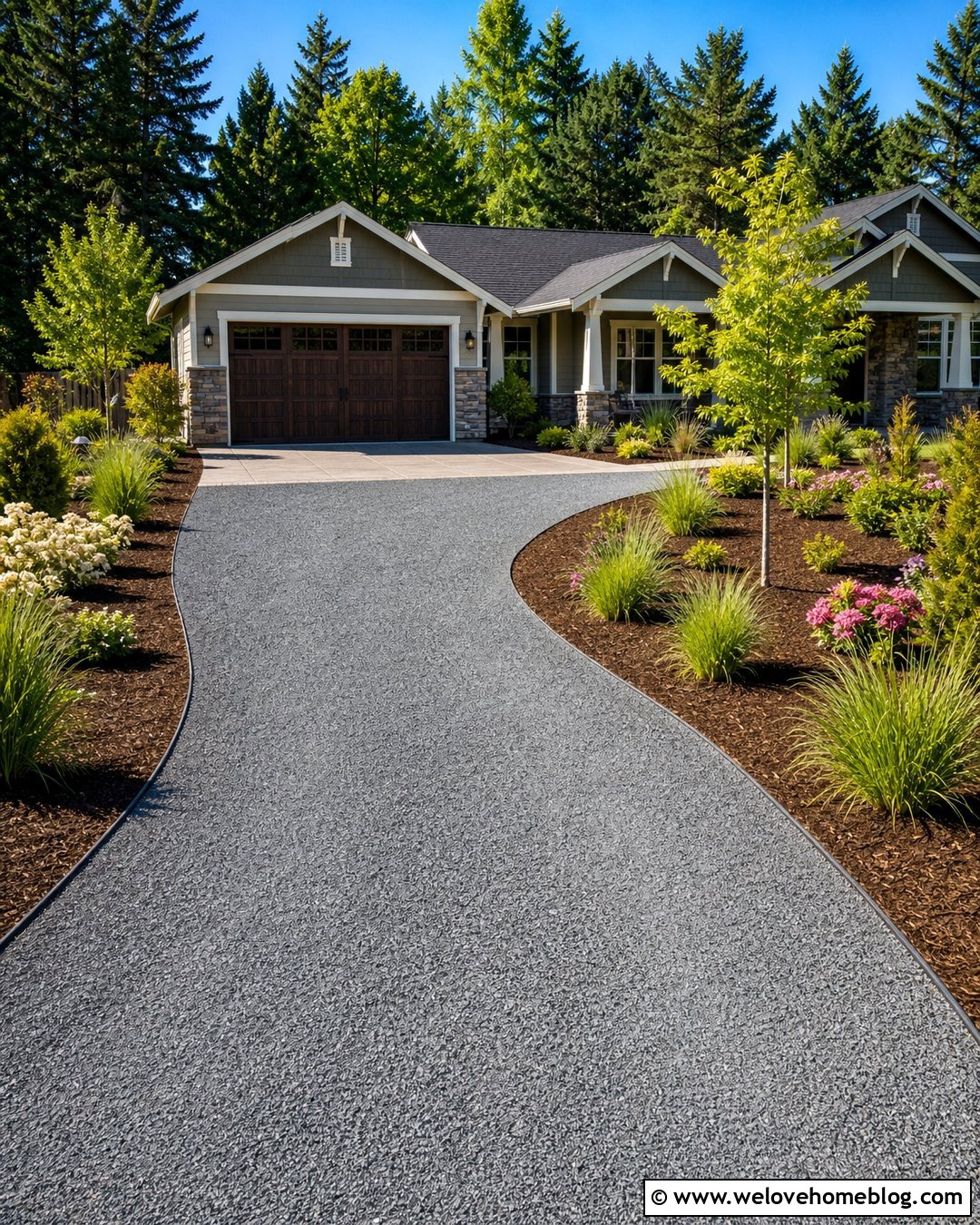
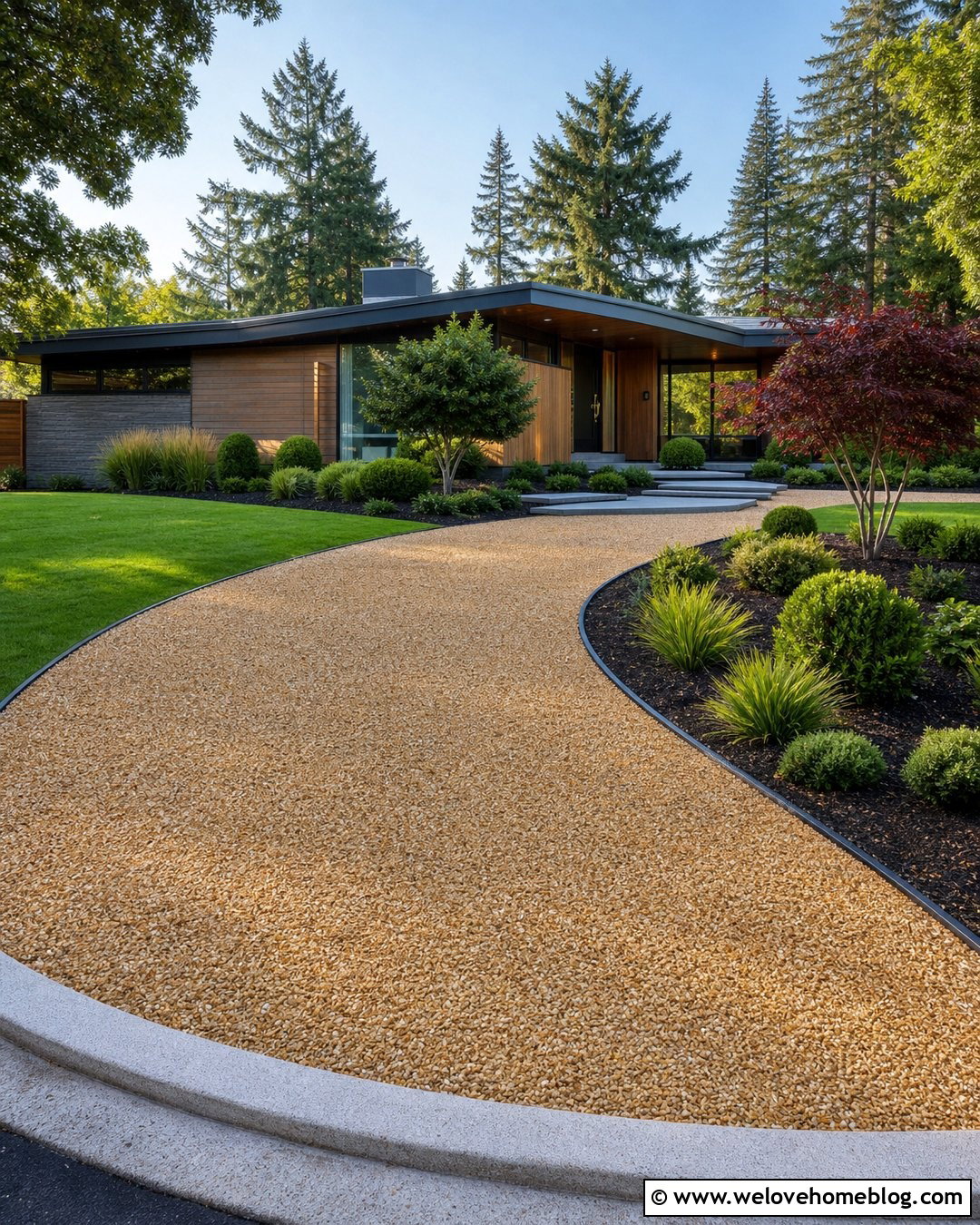
A broad curve can make an affordable driveway feel integrated with the front yard, especially when it follows the existing terrain. Use locally sourced gray crushed gravel and define the inside curve with flexible metal edging. On the outer side, create generous mulch beds filled with repeated low-cost shrubs and ornamental grasses. Purchasing fewer plant varieties often produces a more organized look and simplifies maintenance. Position one small ornamental tree near the curve as a focal point, but keep its mature canopy and roots away from driving space. A simple paver apron in front of the garage provides a tidy transition. This complete design works with ranch, craftsman, and country homes, turning a basic gravel route into a landscaped approach without complicated hardscaping.
33. Circular Gravel Driveway With a Planted Center
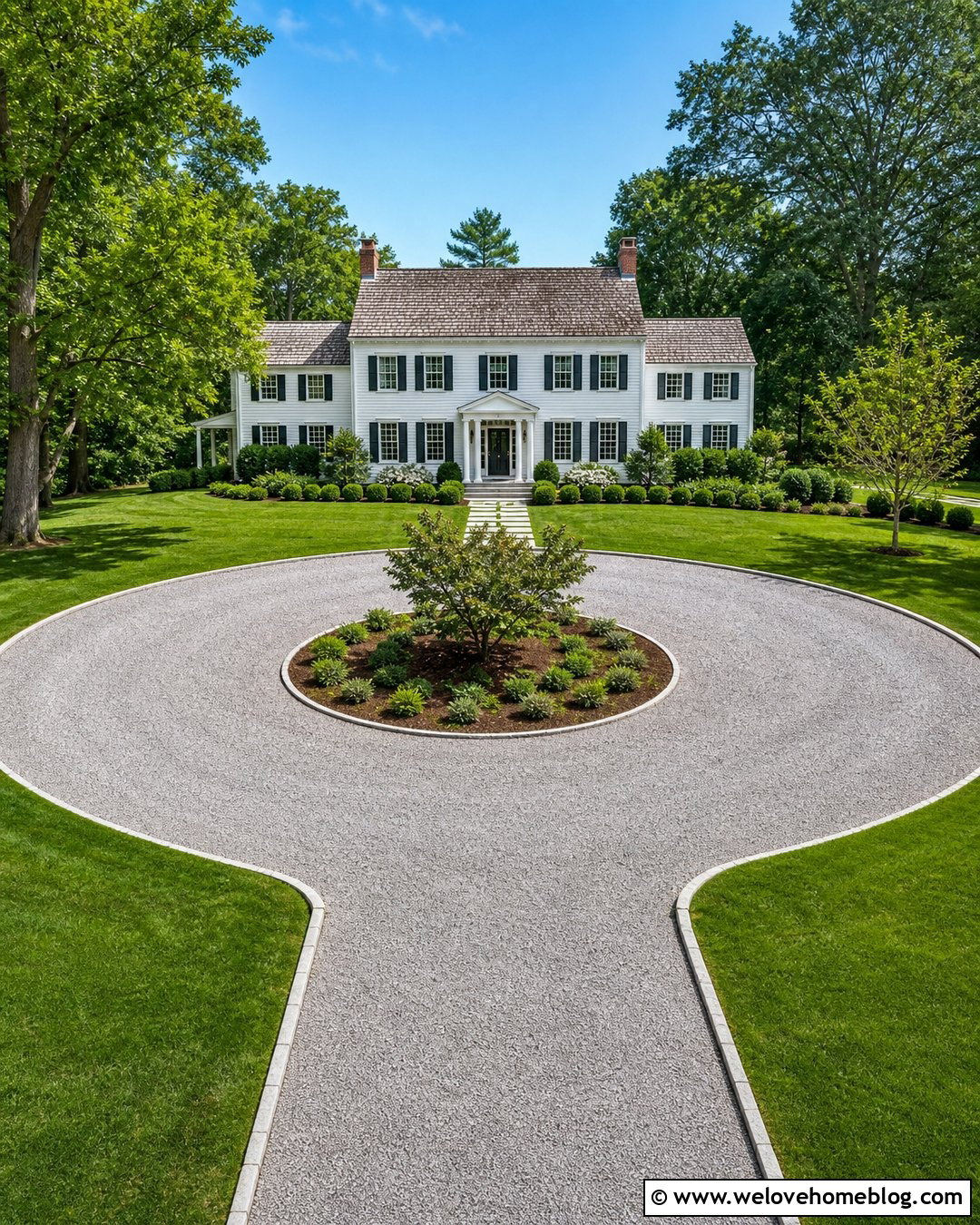
A circular driveway usually requires more area, but an existing loop can be refreshed economically with new compacted gravel and a simplified center island. Choose one locally available aggregate color and contain it with basic concrete edging. In the middle, use mulch, a small ornamental tree, and a limited group of low shrubs rather than costly masonry or dense planting. Keep plants short near entry and exit points to protect visibility. A straight walkway can cross from the circle to the front porch using economical concrete stepping stones. This design suits colonial, country, and large ranch houses. Regrading the existing loop and improving its borders may provide a stronger visual result than replacing the complete surface with a more expensive paving material.
34. Short Gravel Driveway With Paver Parking Area
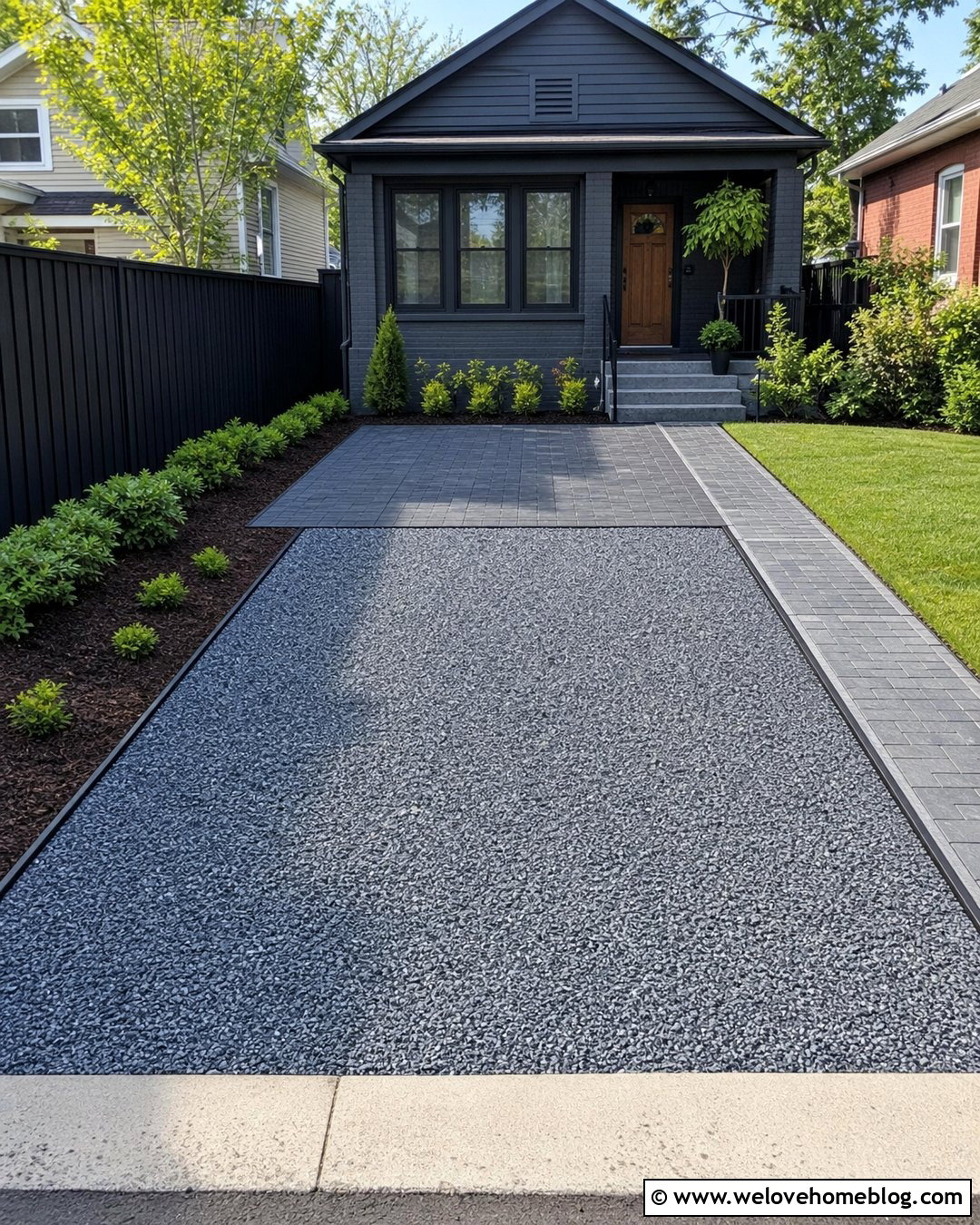
For a compact front yard, divide the driveway budget according to how each zone is used. Install inexpensive crushed gravel from the street to the main parking area, then use basic concrete pavers only where vehicles stop near the house. A charcoal paver rectangle creates a clean parking pad, while a matching narrow walkway leads to the front door. Metal edging contains the gravel along the short approach. Add lawn on one side and a shallow mulched planting bed on the other to avoid crowding the space. This mixed-material design works well with small bungalows, duplexes, and urban cottages. Limiting pavers to a clearly defined destination provides a more finished arrival area without paying to pave every square foot.
35. Long Gravel Driveway With a Budget Tree Border
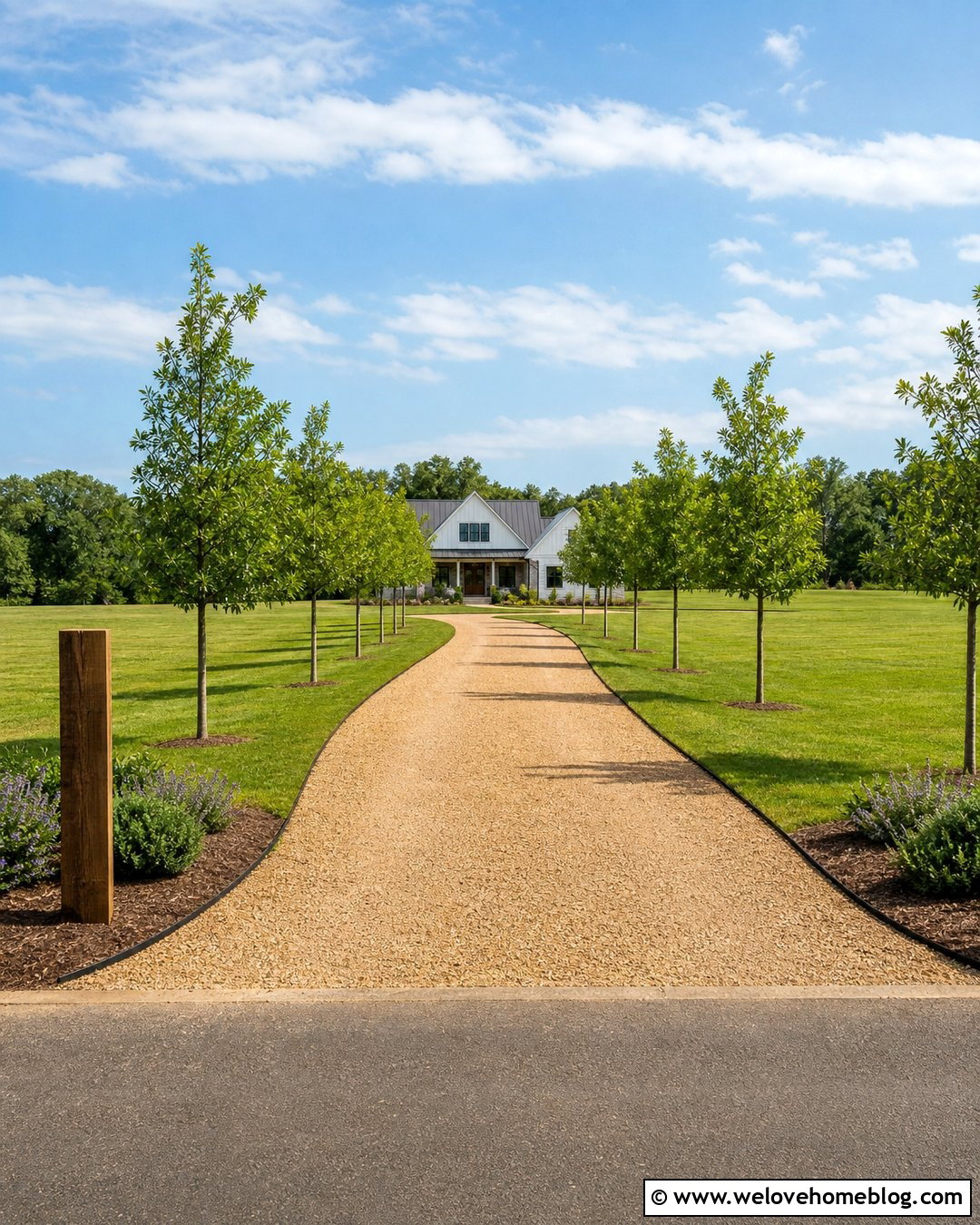
A long driveway can gain presence through repetition rather than expensive paving. Cover the approach with compacted gray or tan crushed stone and use economical metal edging only where the gravel meets planting beds or walkways. Plant young, regionally appropriate trees at generous, consistent intervals, allowing room for their mature trunks, roots, and canopies. Fill the ground beneath them with lawn, mulch, or simple native grasses. At the road, use a basic wood address post and two small planting beds to identify the entrance. The driveway can remain mostly straight or follow one gentle curve toward a country house. Starting with smaller trees controls the initial cost while establishing a layout that can become more impressive as the landscape matures.
Conclusion:
The most successful **cheap driveway ideas** do more than select the lowest-priced surface. They use simple shapes, locally available materials, practical borders, and restrained landscaping to create a complete approach to the house. Gravel and crushed stone offer flexibility, while basic asphalt, concrete ribbons, reclaimed pavers, and mixed-material layouts provide additional options. Before starting, evaluate the existing soil, slope, drainage, utility locations, permits, and expected vehicle use. Spend first on excavation, base preparation, compaction, and water management. Decorative bands, plants, lighting, and entrance details can be added gradually. With thoughtful planning, even a modest driveway can look tidy, welcoming, and connected to the home rather than unfinished or purely utilitarian.

Related posts:


Leave a Reply