
A practical driveway can look polished without consuming your entire home-improvement budget. The best 40 driveway on a budget ideas combine an affordable surface with solid preparation, simple edging, and low-maintenance landscaping. Gravel, crushed stone, recycled asphalt, basic concrete, and mixed-material layouts can all create attractive results when matched to your climate and daily parking needs. Gravel is often among the least expensive driveway surfaces, while decorative details can be reserved for smaller, highly visible areas. () Before starting, check drainage, utility locations, neighborhood rules, and local permit requirements. Then compare bulk material delivery with packaged products and decide which tasks are realistic to complete yourself. The complete looks below offer approachable 40 driveway on a budget ideas.

1. Pea Gravel Driveway With Timber Edging
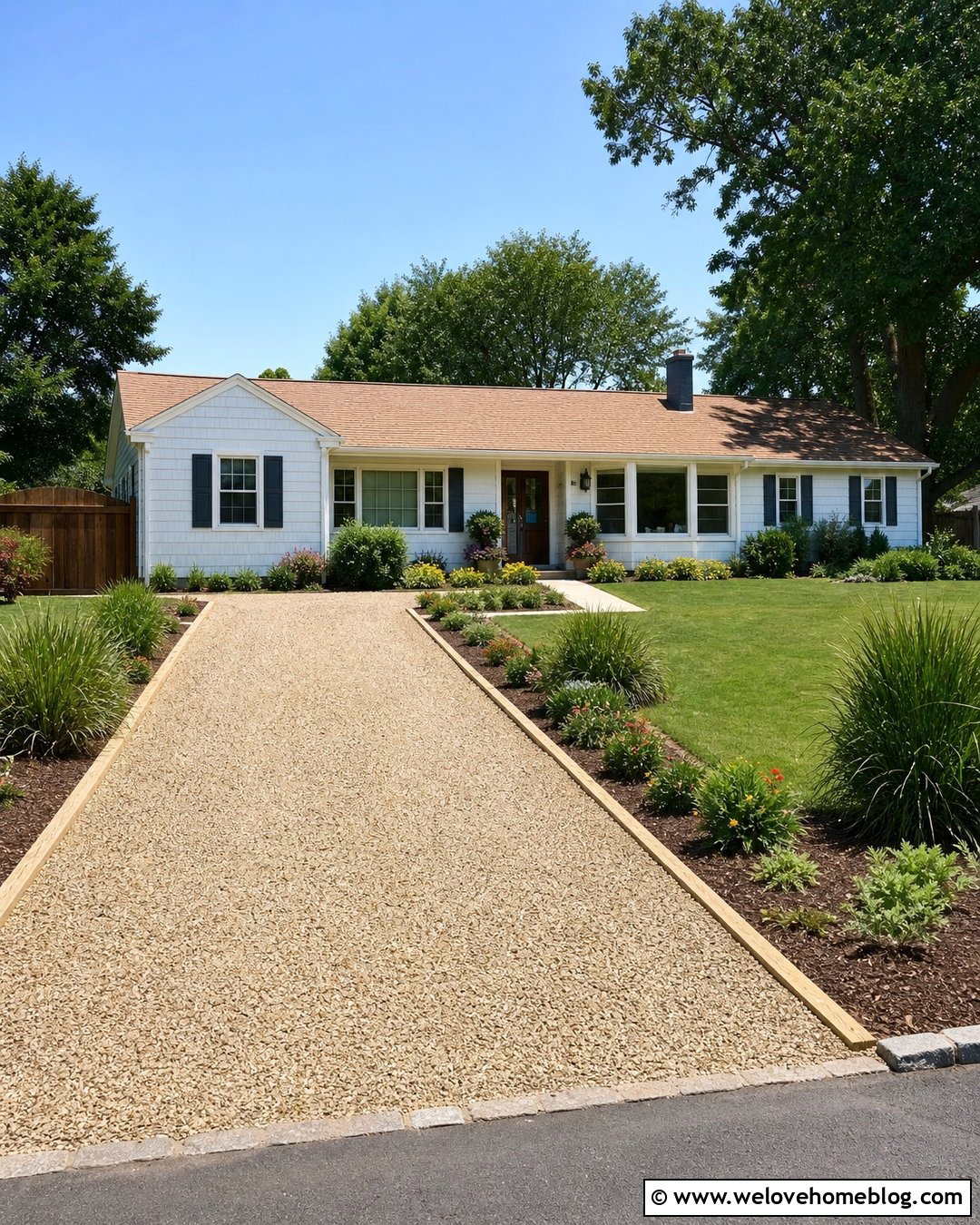
Pea gravel creates a soft, welcoming surface that works especially well beside ranch, cottage, and traditional homes. Keep the driveway straight and compact to reduce excavation and material costs. Pressure-treated landscape timbers can form an affordable border that separates the gravel from lawn and planting beds. Secure them firmly so they do not shift when tires approach the edge. Under the decorative gravel, install a compacted angular-stone base suited to local soil conditions. A simple bed of ornamental grasses and flowering perennials near the house adds color without lining the entire driveway. Buy gravel in bulk when possible, and place your landscaping only where it will have the strongest visual impact.
2. Crushed Stone Driveway With Brick Border
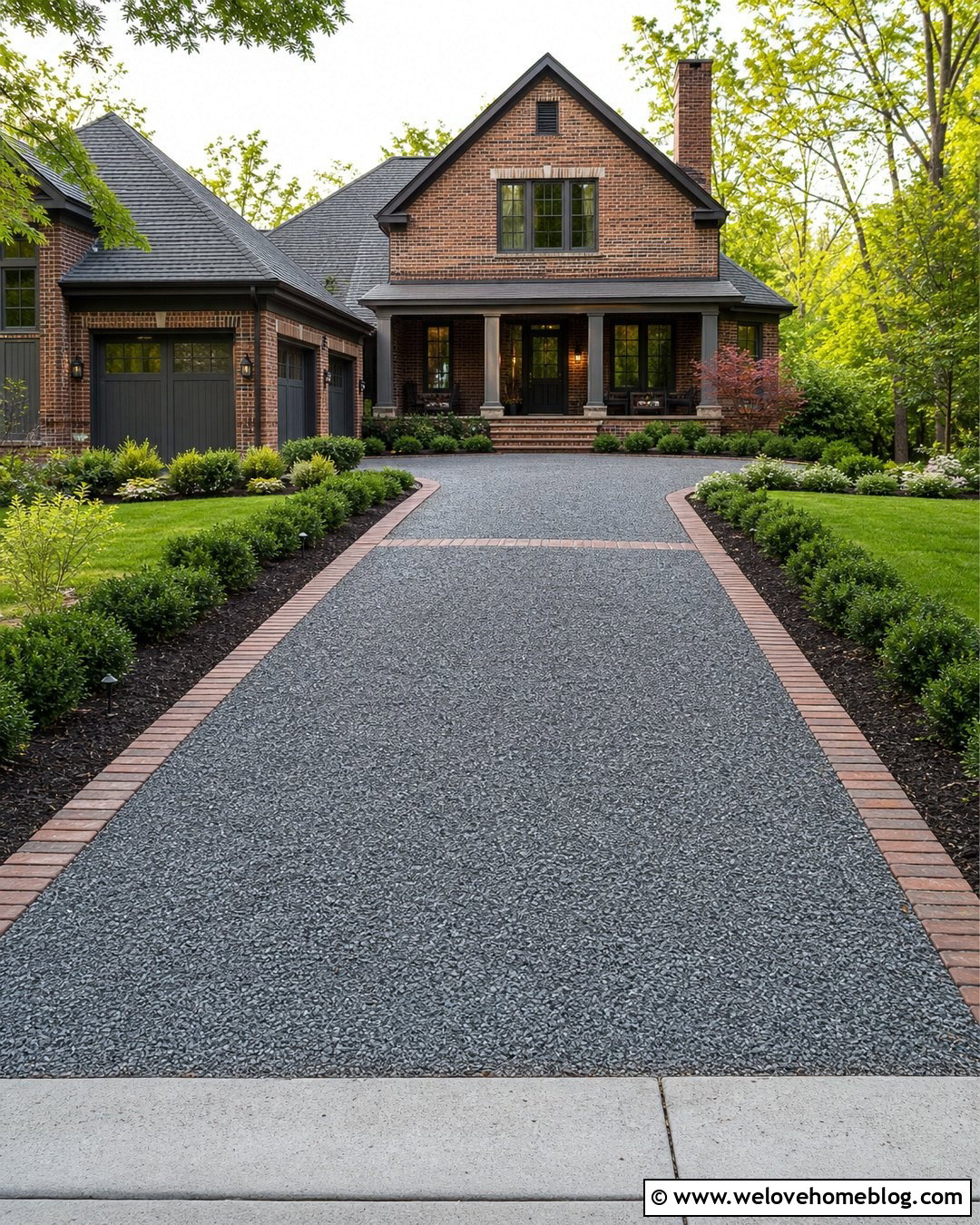
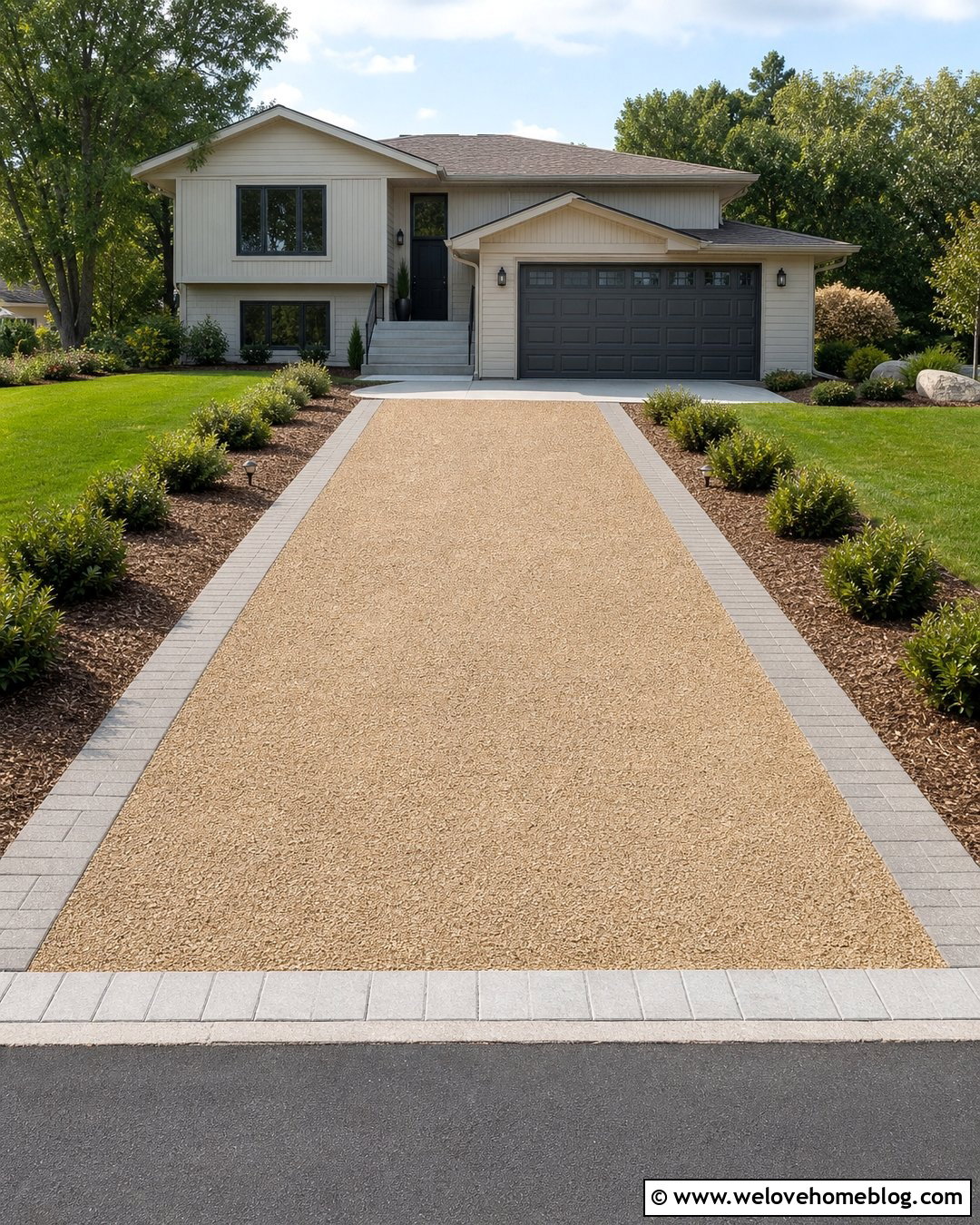
Angular crushed stone locks together more effectively than rounded gravel, making it useful for a hardworking budget driveway. Choose locally available gray or warm-toned stone to reduce transportation costs. A straight layout is generally easier and less expensive to prepare than a complicated curve. Add a border made from salvaged clay bricks installed flush with the surface. The brick gives the driveway a finished appearance while helping contain loose aggregate. Repeat the brick color around a nearby walkway or planting bed for a connected design. Keep landscaping simple with lawn on one side and a narrow mulch bed on the other. Good grading and a properly compacted base matter more than using expensive decorative stone on top.
3. Recycled Asphalt Driveway With Lawn Edges
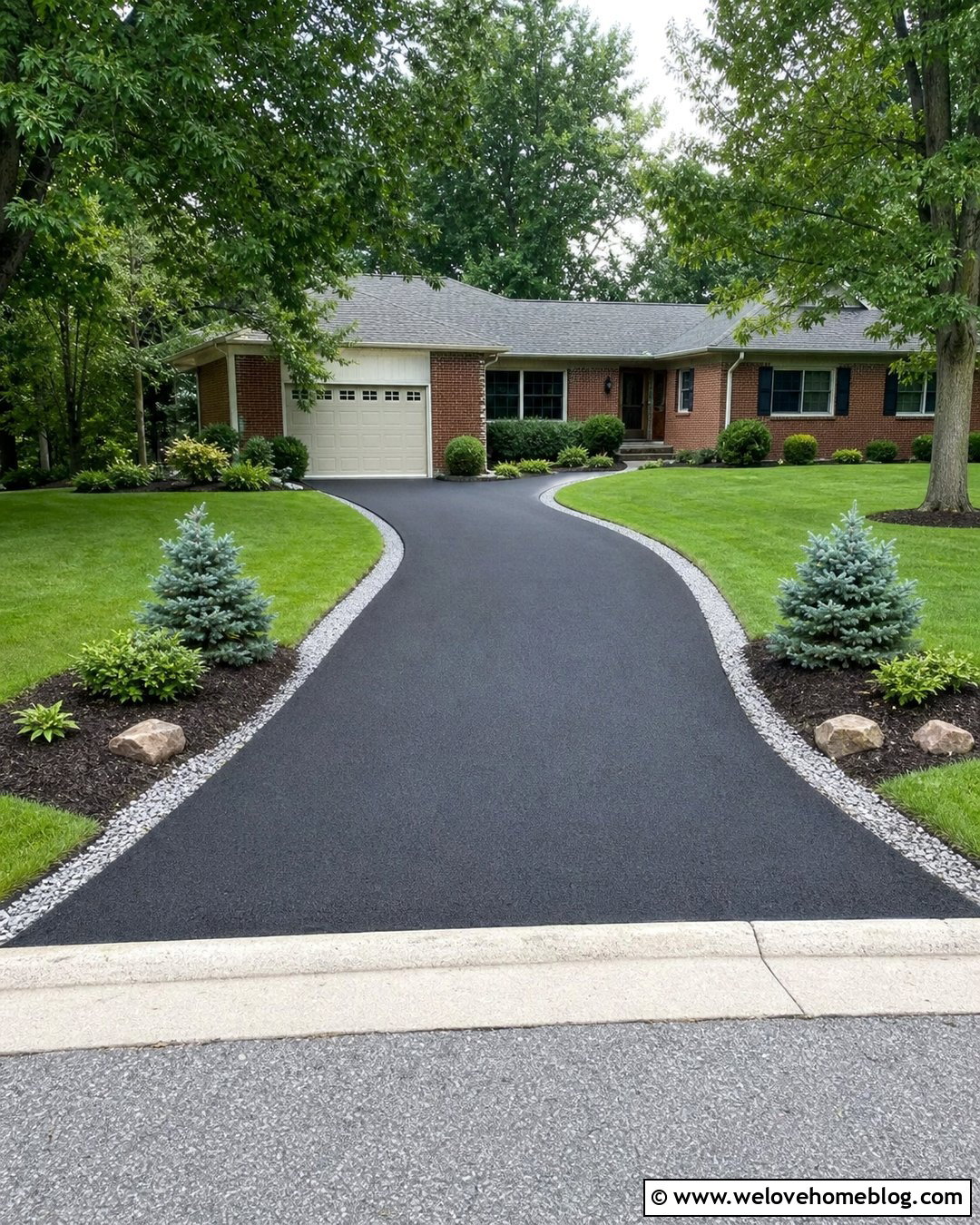
Recycled asphalt can produce a dark, practical driveway without the cost of installing an entirely new hot-mix asphalt surface. Its charcoal color looks especially appropriate with brick ranch houses, workshops, and casual suburban homes. Use it on a straight or gently curved driveway with crisp, regularly trimmed lawn edges. Compacting the material thoroughly helps create a firmer surface and reduces loose pieces. A narrow strip of inexpensive gray gravel between the driveway and lawn can provide a cleaner transition in high-wear areas. Near the street, frame the entrance with two simple mulch beds and matching evergreen shrubs. Ask local suppliers about material availability, gradation, delivery minimums, and whether professional compaction equipment should be used.
4. Crushed Concrete Driveway With Native Plants
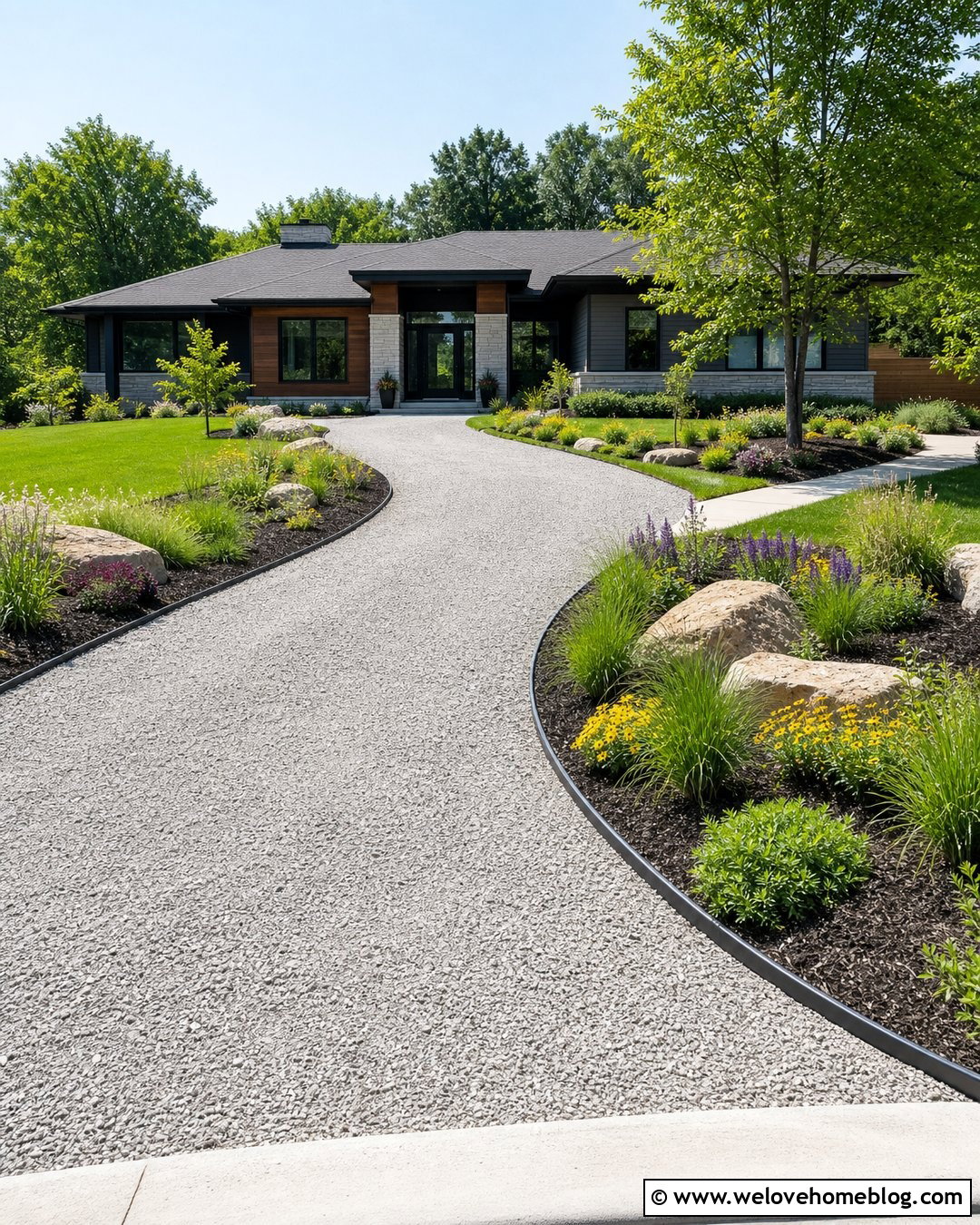
A pale crushed concrete driveway can brighten the front yard while making use of recycled material. It pairs naturally with a modest contemporary house or light-colored bungalow. Choose a gently curved layout only if the existing grade already supports it, since extra excavation can quickly increase the budget. Define the edges with low-profile metal edging or a compacted shoulder of larger stones. Native grasses, tough flowering perennials, and a few small shrubs can soften the recycled surface without demanding elaborate irrigation. Concentrate plants near the entrance and house rather than filling every available border. Confirm that the crushed concrete is properly processed and free from unsuitable debris. A stable base and effective drainage should remain the project’s main priorities.
5. Decomposed Granite Driveway With Steel Edging
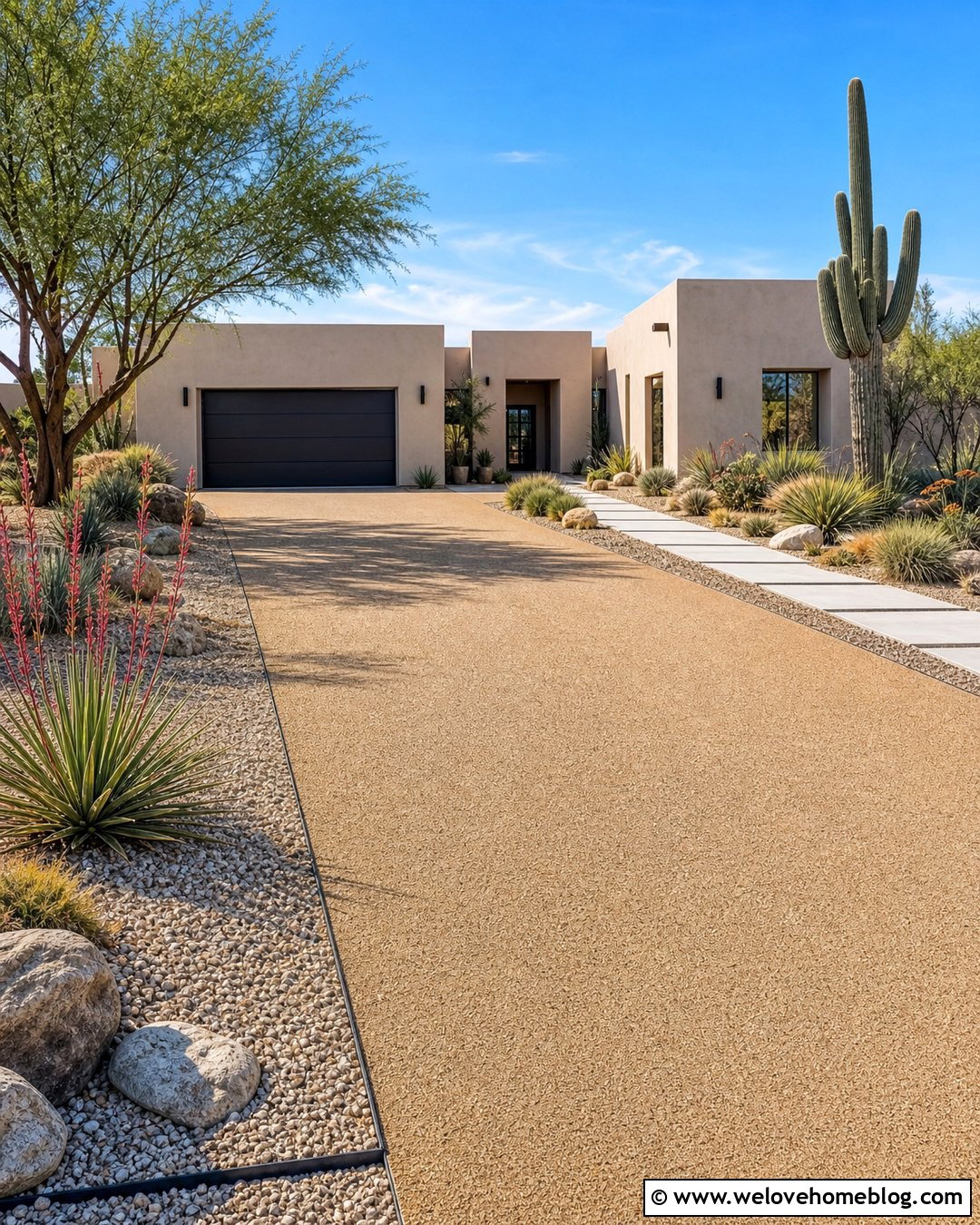
Warm decomposed granite gives a driveway an understated Southwestern appearance that complements stucco, adobe-inspired, and modern desert homes. Use stabilized material where local conditions and vehicle loads make loose granite difficult to maintain. A straight driveway with slender steel edging creates clean lines without requiring a large amount of decorative masonry. Rust-colored or black edging can either blend into the surface or provide subtle contrast. Surround the driveway with gravel mulch, drought-tolerant grasses, agave-like plants suited to your region, and a few well-placed boulders. Avoid overcrowding the borders, which raises both installation and maintenance costs. Because decomposed granite performs differently by climate and product type, ask local suppliers about compaction, stabilization, drainage, and expected maintenance before ordering.
6. Asphalt Driveway With Gravel Shoulders
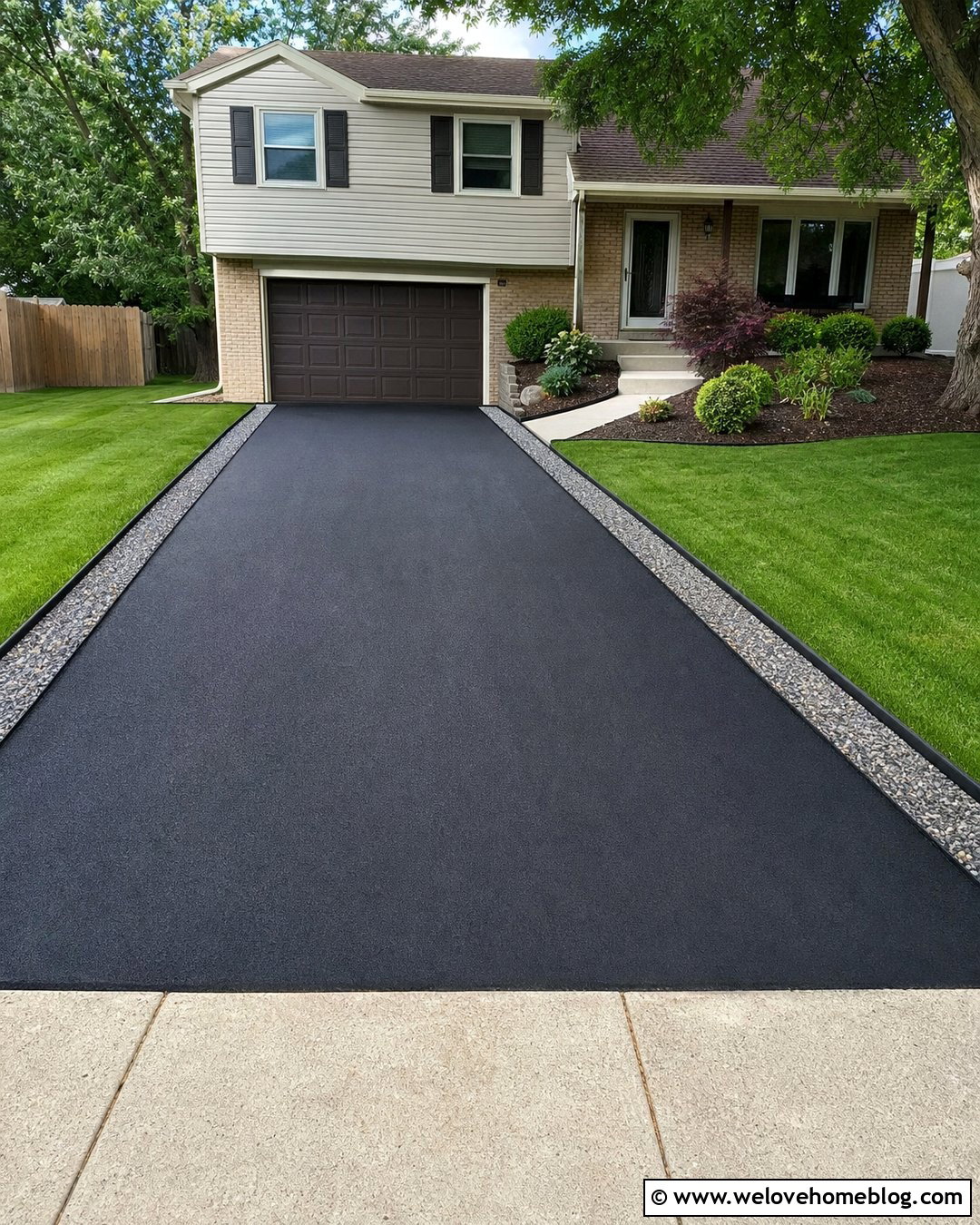
If an asphalt driveway is structurally sound but visually plain, inexpensive gravel shoulders can give it a wider and more intentional appearance. Spread compacted angular gravel along both sides, keeping the bands narrow enough to avoid unnecessary material costs. Gray gravel creates a seamless transition, while tan stone introduces warmer contrast. Use metal or plastic landscape edging beside the lawn to contain the shoulder material. At the house, connect the gravel bands to small planting beds filled with mulch and easy-care shrubs. Repair significant asphalt cracks and drainage problems before making cosmetic improvements. The finished design suits a suburban ranch or split-level home because it is practical and uncomplicated. It also refreshes the driveway without removing the existing paved surface.
7. Concrete Track Driveway With Grass Center
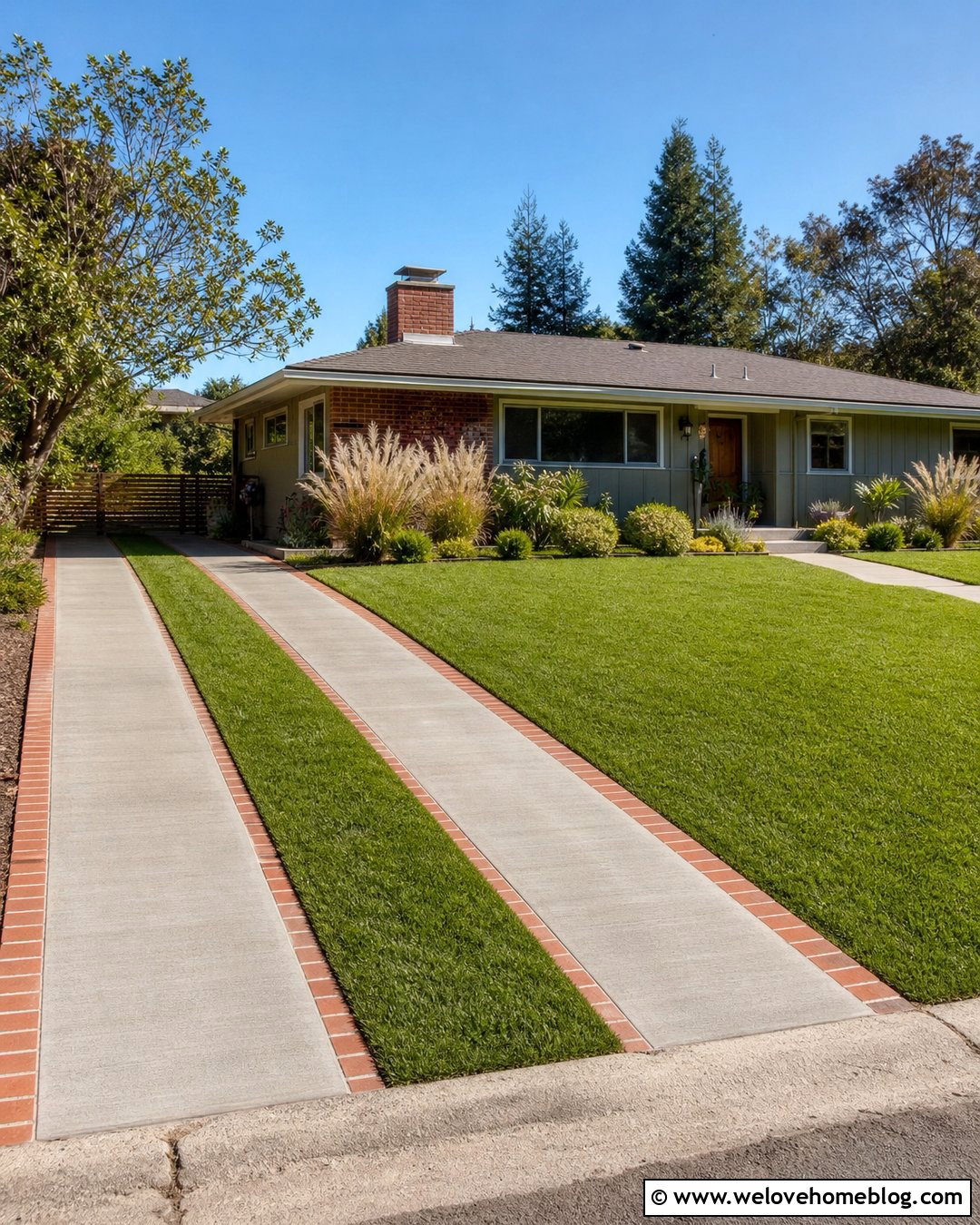
Two concrete tire tracks use less concrete than a fully poured driveway while still giving vehicles a firm route to the garage. The green center helps the design feel less like a broad slab and more integrated with the yard. This layout works best on a straight driveway where vehicles can follow a predictable path. Keep the track width and spacing appropriate for regular users, and build each strip over a correctly prepared base. Use durable grass suited to local sunlight and traffic, or replace the center with low-growing ground cover where appropriate. A flush brick edge can separate the tracks from side lawns. Before choosing this design, consider snow removal, turning movements, delivery vehicles, and whether local regulations allow partially planted driveway surfaces.
8. Gravel Driveway With Concrete Tire Tracks
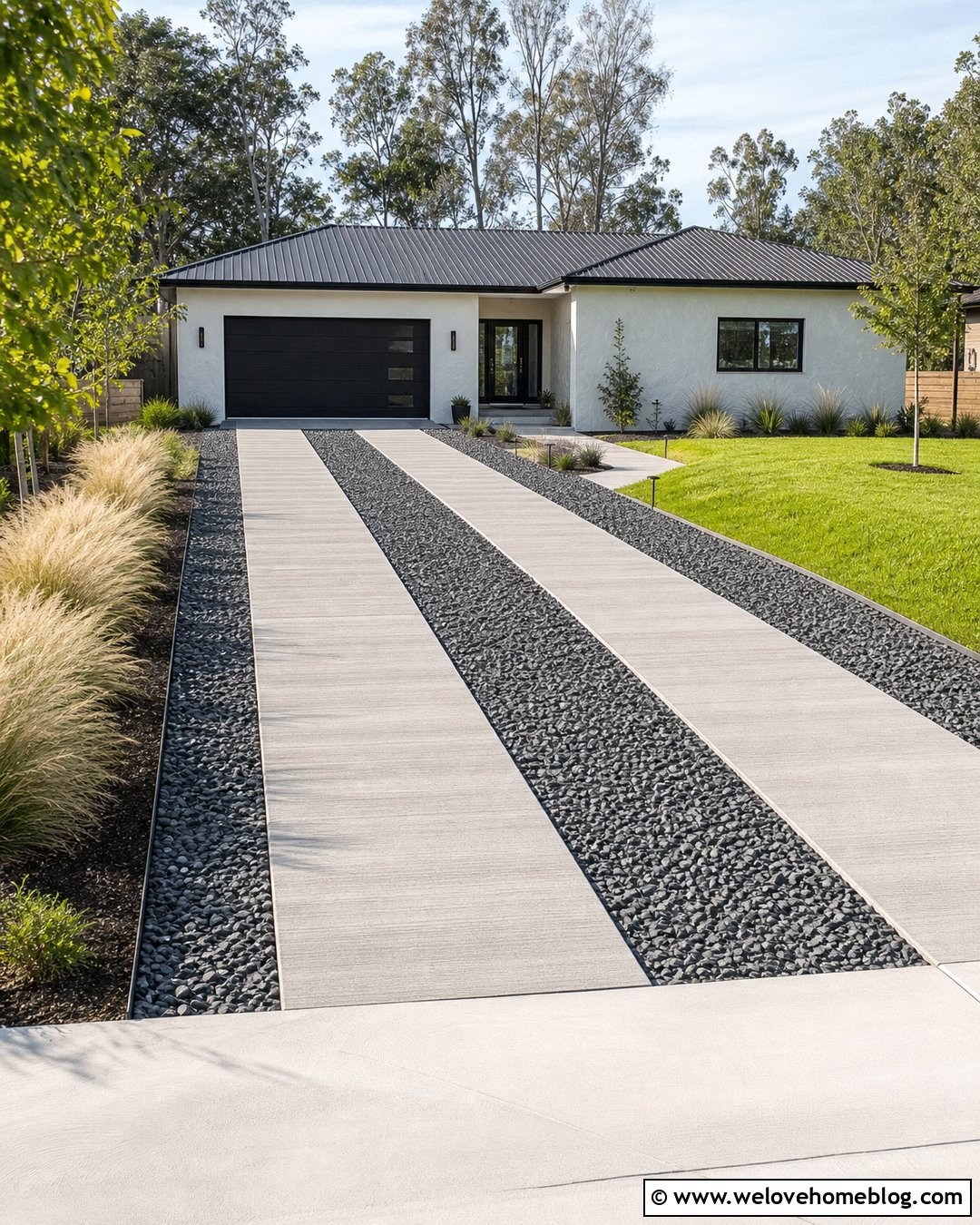
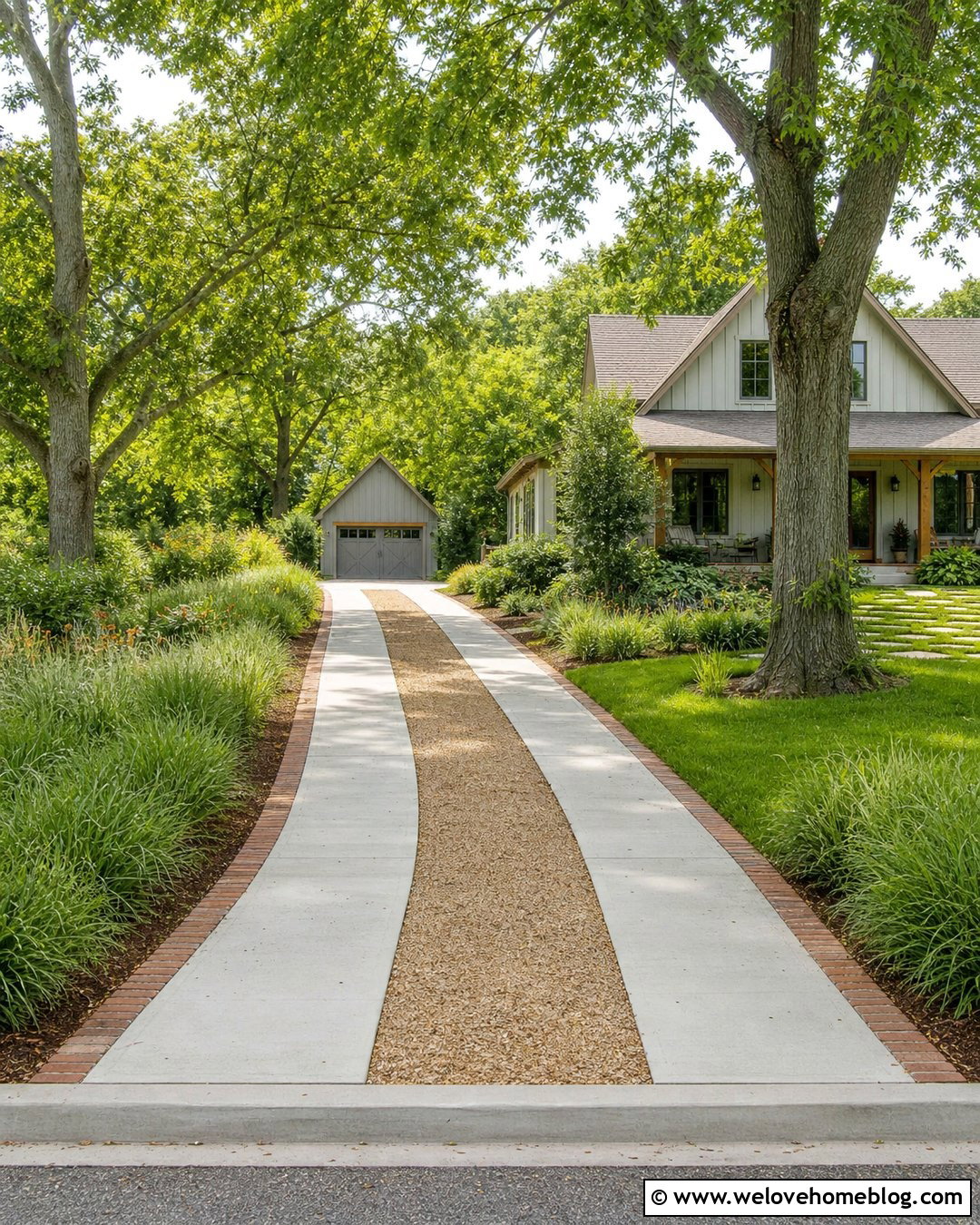
Concrete tire tracks surrounded by inexpensive gravel create a stable mixed-material driveway with strong visual definition. The tracks handle the primary wheel load, while the gravel fills the center and outer areas without requiring a full-width concrete pour. Select an angular gray gravel that complements basic broom-finished concrete. A straight approach is easiest to navigate and usually limits cutting, forming, and excavation. Use a simple steel edge beside planting beds to stop gravel migration. Near the garage, widen the concrete or add a compact landing area where tires turn. Low ornamental grasses and one shade tree can frame the design without creating expensive borders. Careful measurements are essential so the tracks fit the vehicles that use the driveway most frequently.
9. Chip Seal Driveway With Stone Entrance
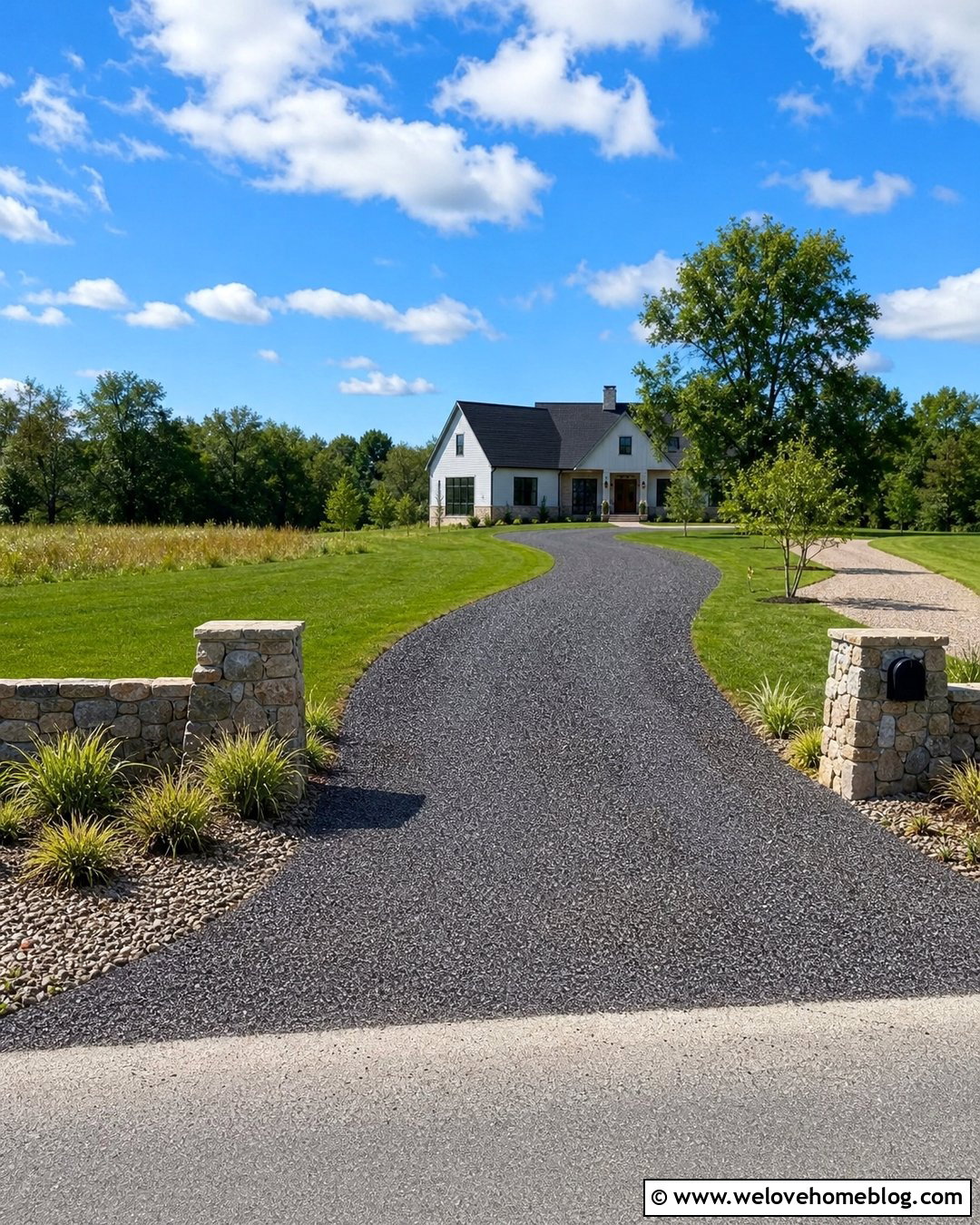
Chip seal can provide the dark, cohesive appearance of pavement with a textured layer of aggregate visible at the surface. Availability and suitability vary by location, so obtain quotes from contractors who regularly install residential chip seal. Keep the main driveway simple and invest in a small stone entrance instead of decorating its full length. Two low fieldstone borders or short columns can mark the curb without requiring gates or extensive masonry. Use matching stone around a mailbox bed to connect the entrance with the house. Native grasses planted behind the stones soften the transition to the yard. This complete look works well for long country driveways where full decorative paving would be costly. Proper base preparation and drainage remain necessary for lasting performance.
10. Shell Driveway With Wood Edging
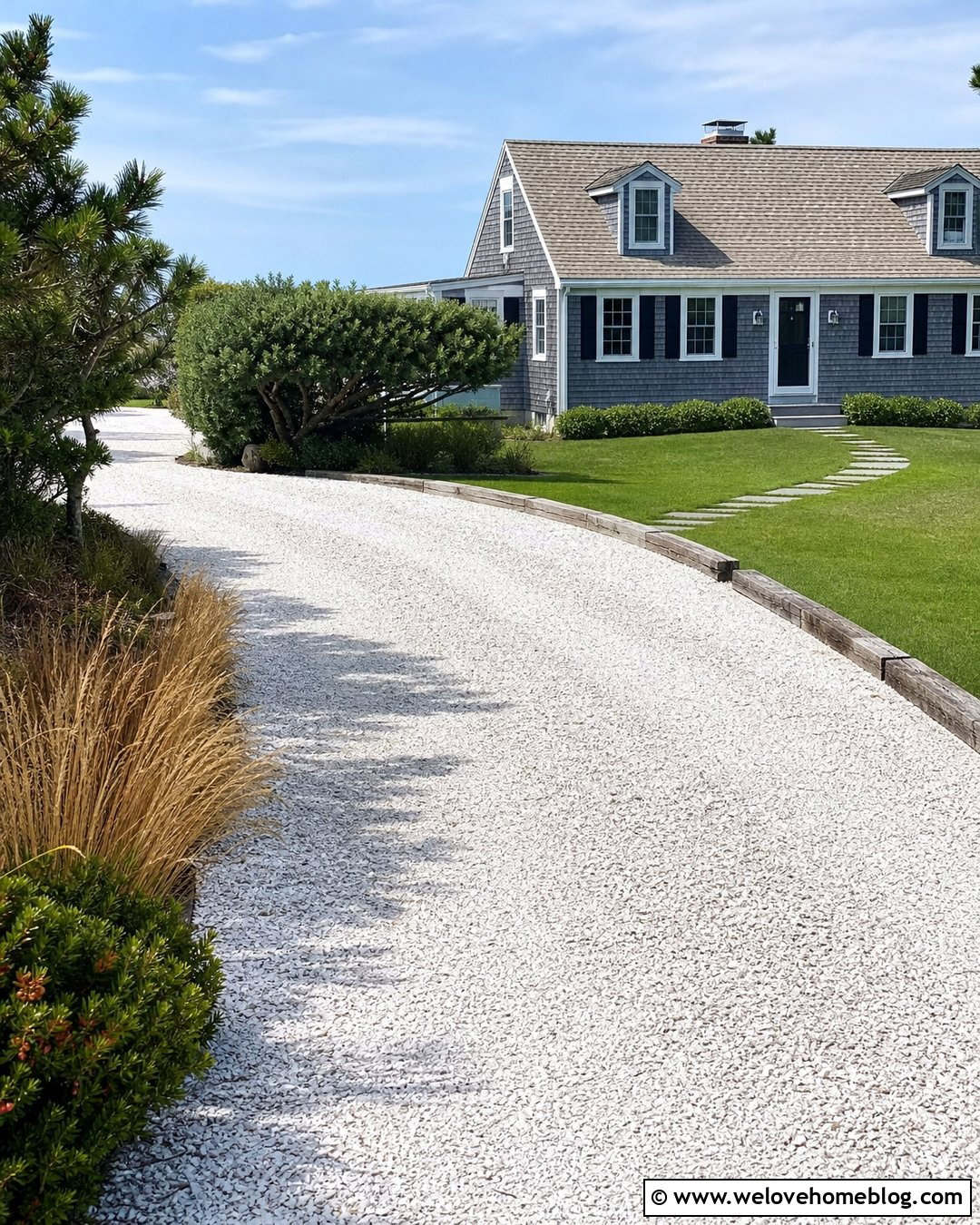
In coastal regions where crushed shell is locally available, a shell driveway can create a bright, relaxed surface suited to Cape Cod cottages and beach-inspired homes. Material availability is important because long-distance shipping can eliminate potential savings. Use a straight or softly curved layout with pressure-treated wood edging to hold the shell away from planting beds. Compact the base carefully, then apply the shell at the depth recommended by the supplier. Beach grasses, low evergreen shrubs, and weathered stone accents can complete the coastal look. Avoid scattering shells into lawn areas where mowing becomes difficult. A wider gravel or concrete apron may be useful at the street if local rules require a stronger transition. Expect occasional raking and replenishment as the surface settles.
11. Limestone Driveway With Curved Layout
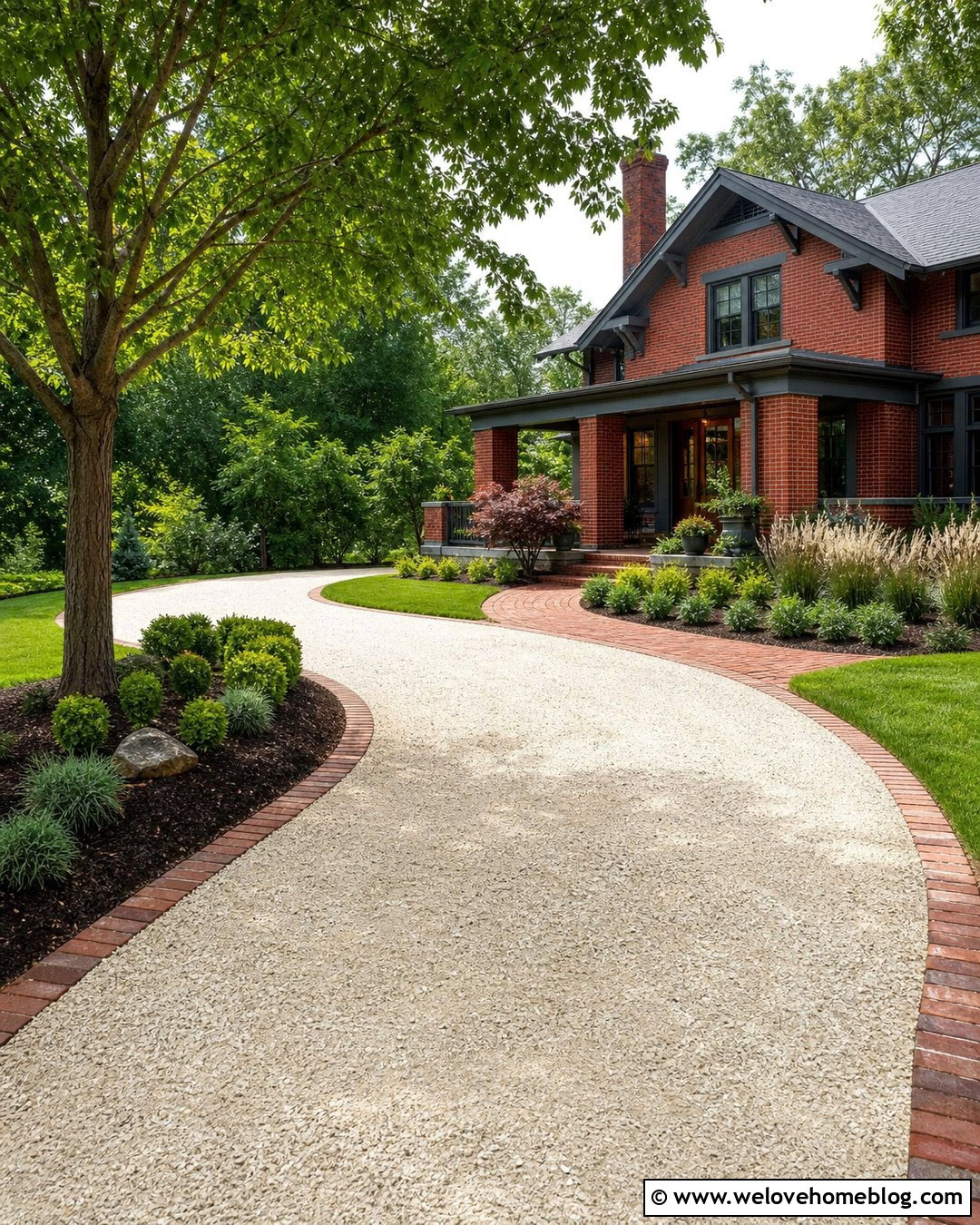
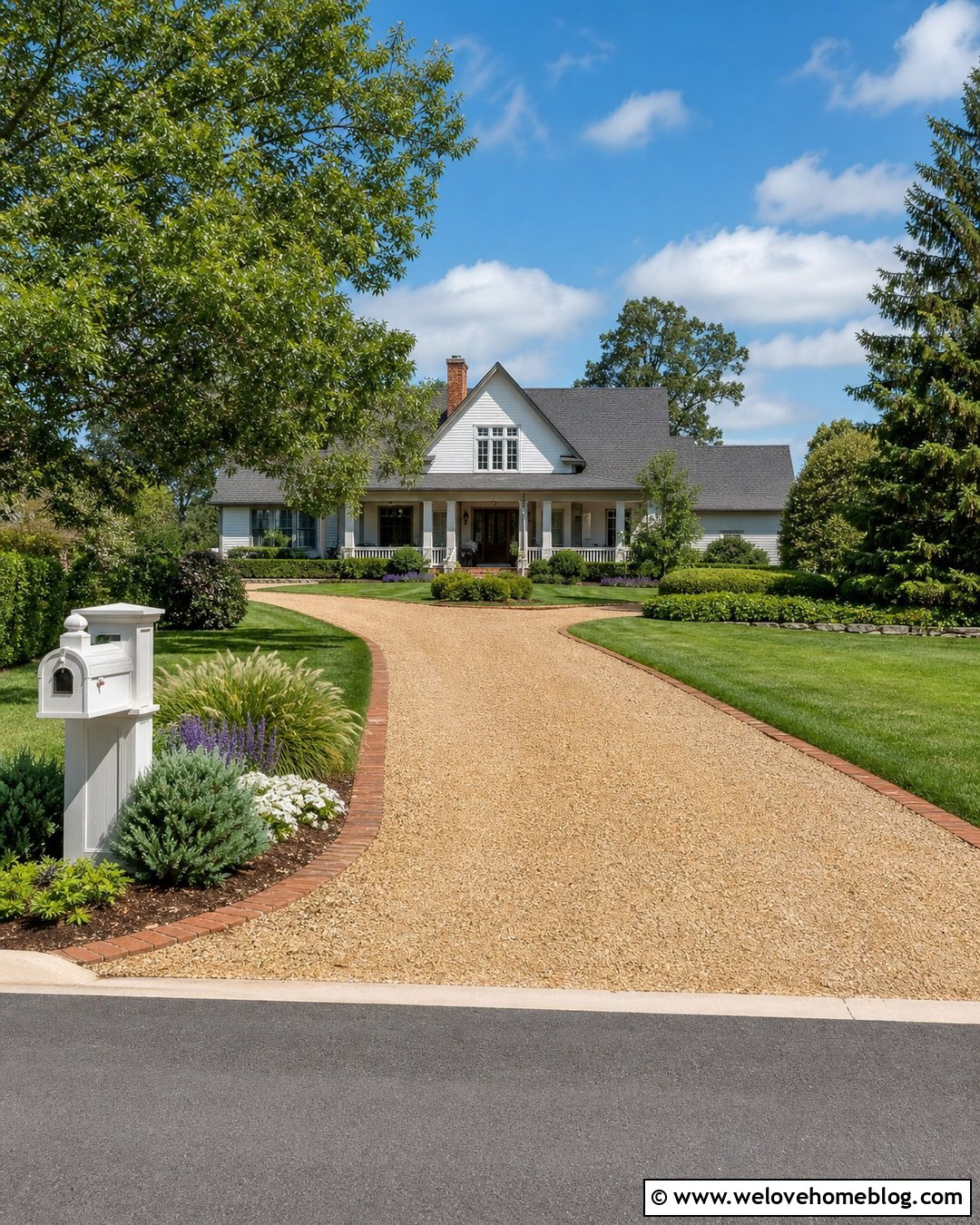
Crushed limestone offers a clean, light-toned surface that can complement brick, stone, and farmhouse exteriors. A gentle curve makes a short approach feel more landscaped, but it should follow the existing terrain to avoid excessive grading. Use larger limestone at the base and a finer, compactable grade at the surface, based on local professional recommendations. A flush border of reclaimed brick helps contain the stone at planting beds and introduces a warm color contrast. Place a small shade tree on the outside of the curve, leaving enough clearance for mature growth and vehicles. Mulched beds with low shrubs can emphasize the driveway’s shape. Keep the inside curve open so drivers maintain visibility and have sufficient space to turn comfortably.
12. Gravel Driveway With River Rock Border
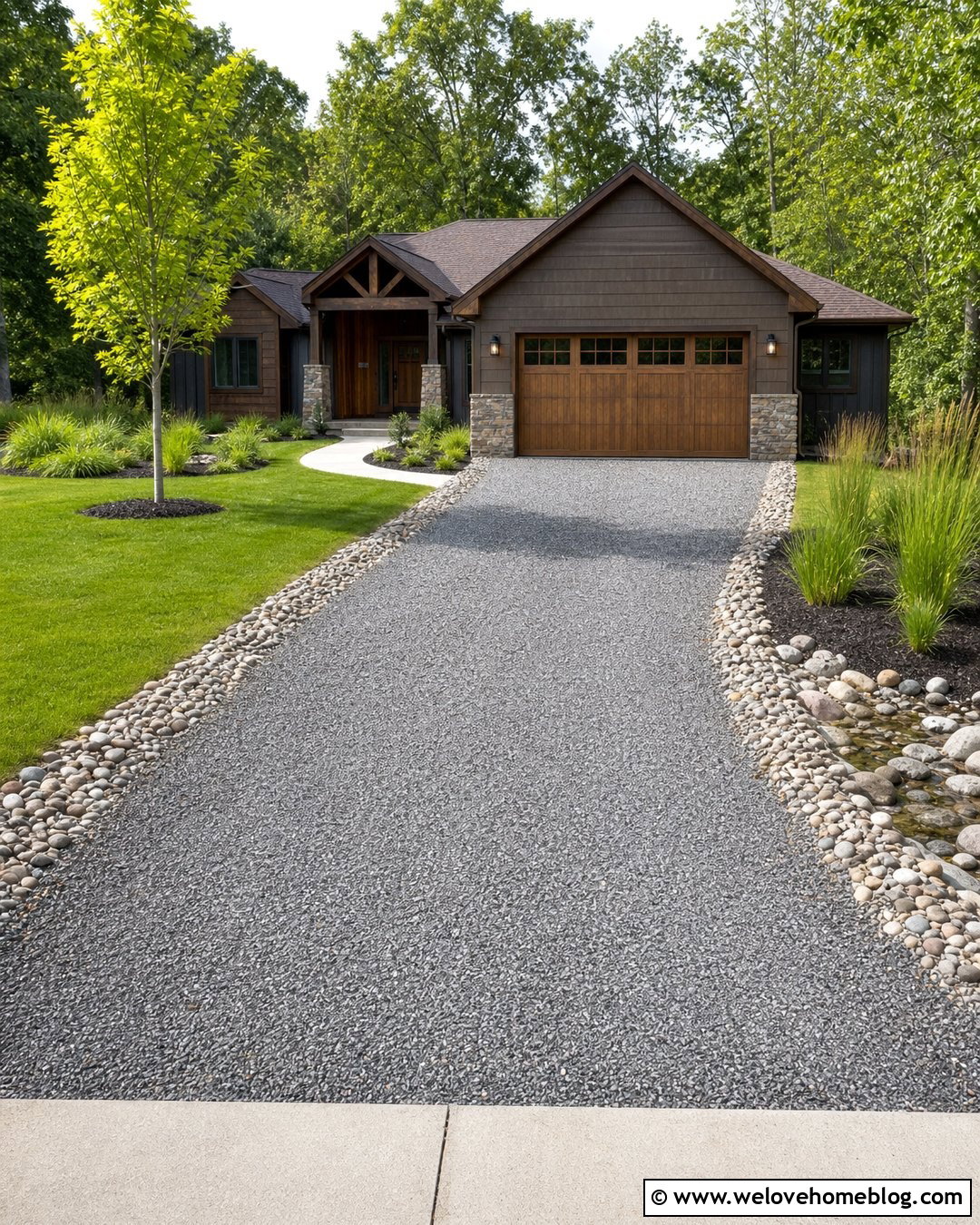
Rounded river rock is attractive as a border, while compacted angular gravel is generally more suitable for the main driving surface. Combining the two materials creates visual contrast without paying for decorative stone across the entire driveway. Use medium-gray crushed gravel in a straight layout, then add a single row or narrow band of smooth river rocks along each side. Install a hidden restraint beside the lawn to keep the border tidy. Repeat the river rock around a small rain garden or downspout bed near the house. The rounded stones can visually connect drainage features with the driveway design. Choose rocks large enough to remain separate from the driving surface. Sparse grasses and ground-cover plants will soften the edges while keeping maintenance manageable.
13. Painted Concrete Driveway With Dark Borders
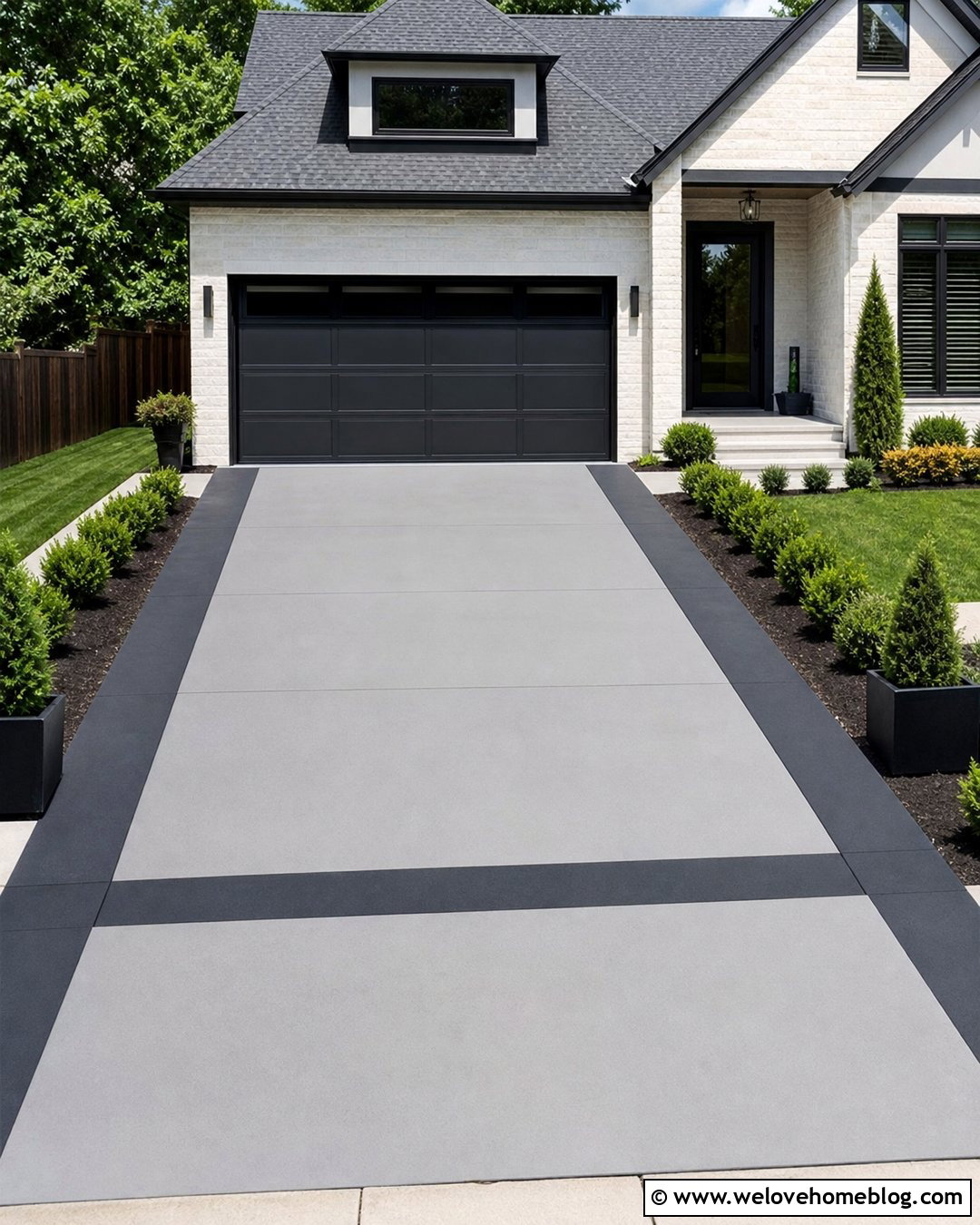
An older concrete driveway can look noticeably cleaner after repairs, pressure washing, and a compatible exterior concrete coating. Rather than applying an elaborate pattern, use one restrained color across the surface and a darker painted band around the edges. Soft gray with a charcoal border suits a modern or transitional house and makes patched areas less distracting. Confirm that the concrete is stable, dry, and properly prepared before applying any product. Choose a coating specifically rated for driveway traffic and follow its instructions for surface preparation and curing. Add simple black planters or mulch beds near the garage to repeat the border color. This makeover is primarily cosmetic, so movement, drainage trouble, severe spalling, and major cracks should be professionally evaluated first.
14. Sealed Asphalt Driveway With Brick Apron
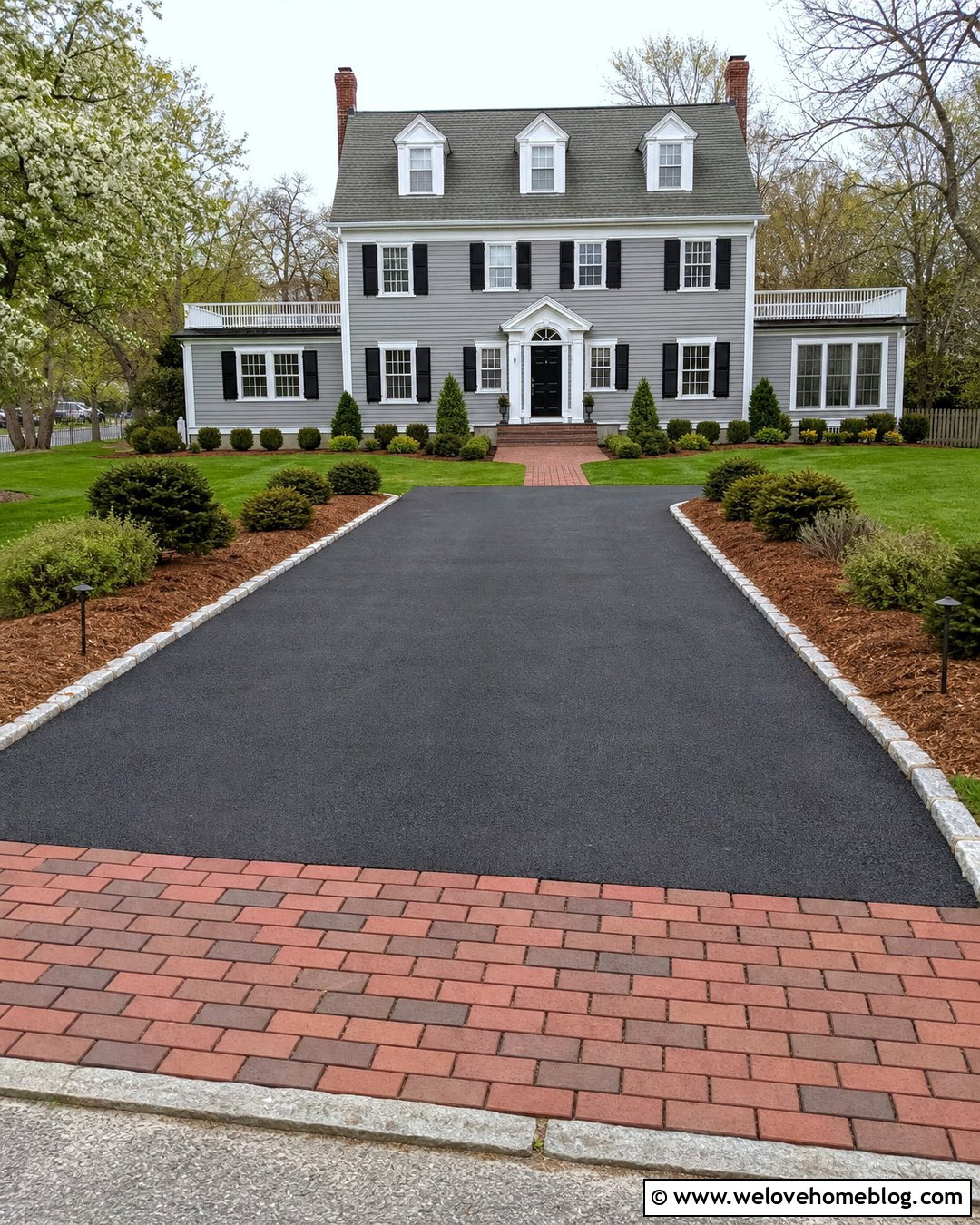
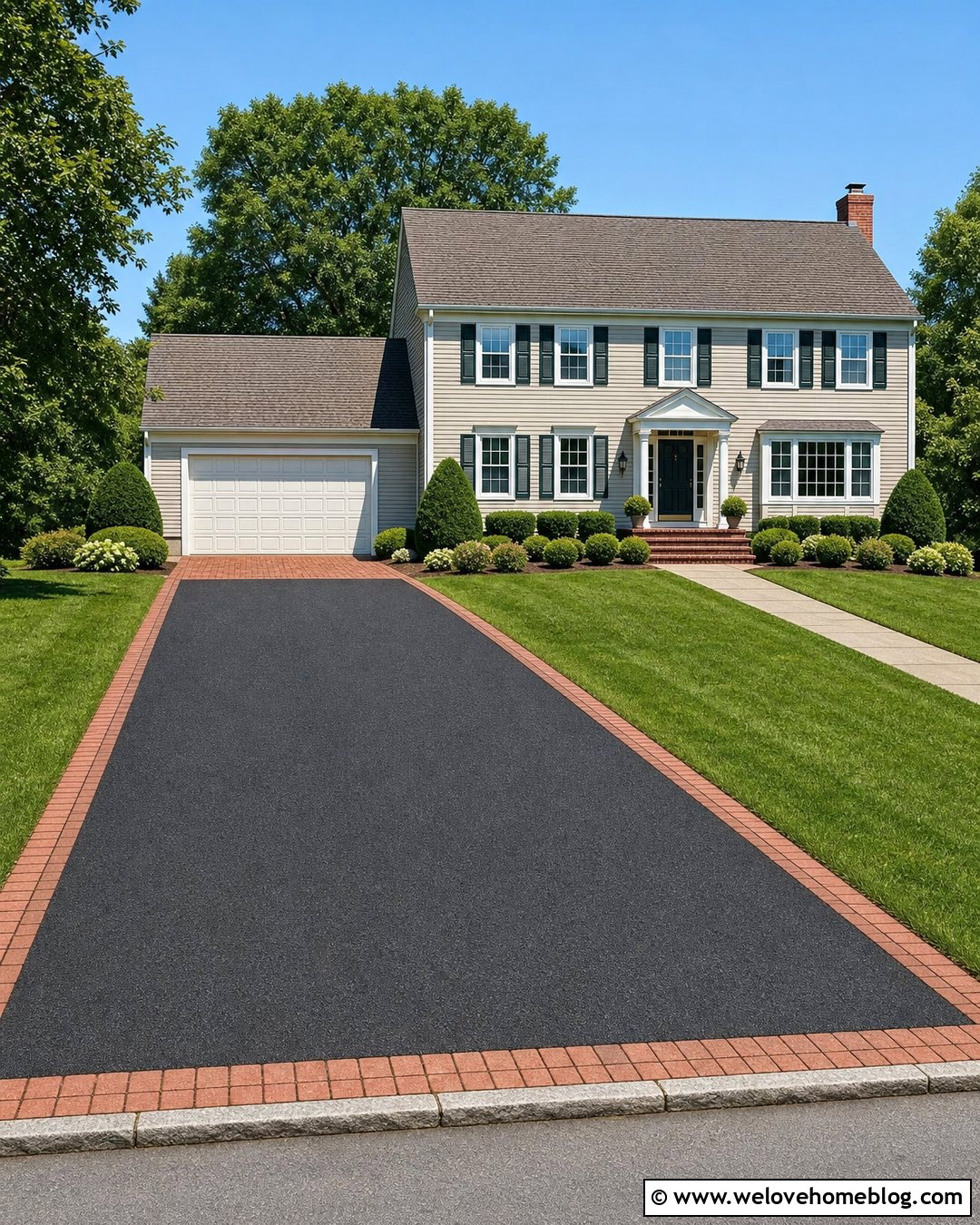
A faded asphalt driveway can gain sharper curb appeal when necessary repairs are completed and the surface receives an appropriate protective treatment. Instead of replacing the entire driveway for appearance alone, place the decorative emphasis at the street. A narrow apron of reclaimed or affordable clay brick pavers introduces color where it is most visible. Choose a running-bond pattern to limit complicated cuts and labor. The brick can also coordinate with a traditional home’s facade, walkway, or porch steps. Frame the entrance with two compact beds containing mulch and durable shrubs. Verify that the existing asphalt and base are in serviceable condition before spending money on decorative upgrades. The apron should be installed over a vehicle-rated base with secure edge restraints.
15. Gravel Driveway With Reclaimed Brick Apron
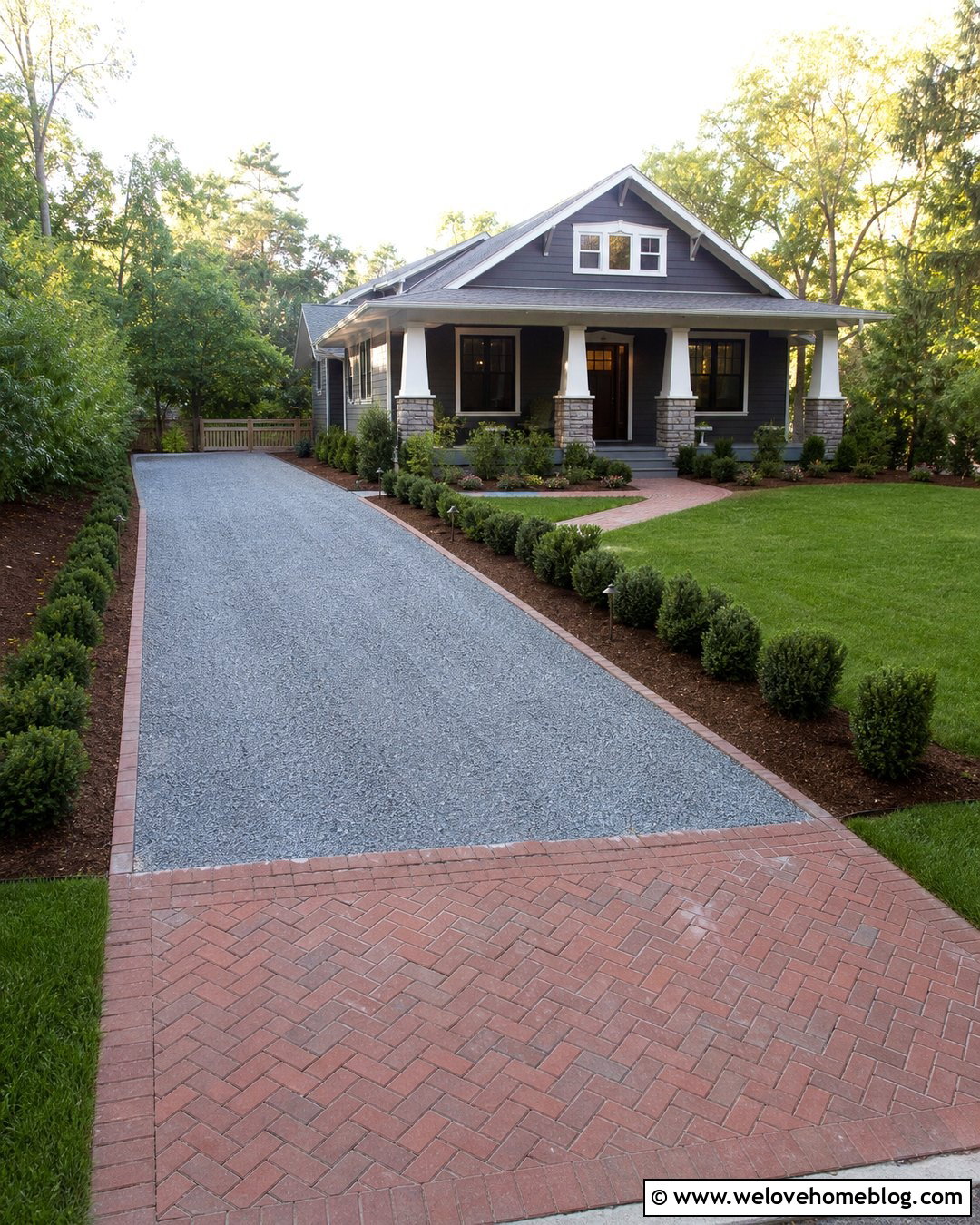
A gravel driveway feels more finished when a reclaimed brick apron marks the transition from the street. Use affordable crusher-run or angular gravel for the main surface, then reserve the brick for the first few feet. This concentrates the expensive detail where neighbors and visitors notice it most. A herringbone pattern offers strong visual texture, while a simpler running bond can reduce cuts and installation time. Match the apron to narrow brick borders farther up the driveway for continuity. On either side, plant low evergreen shrubs that will not block sightlines. The combination suits colonial, craftsman, and cottage homes. Before buying salvaged bricks, check that they are sound and appropriate for exterior vehicular use rather than soft interior or decorative masonry.
16. Concrete Driveway With Gravel Parking Extension
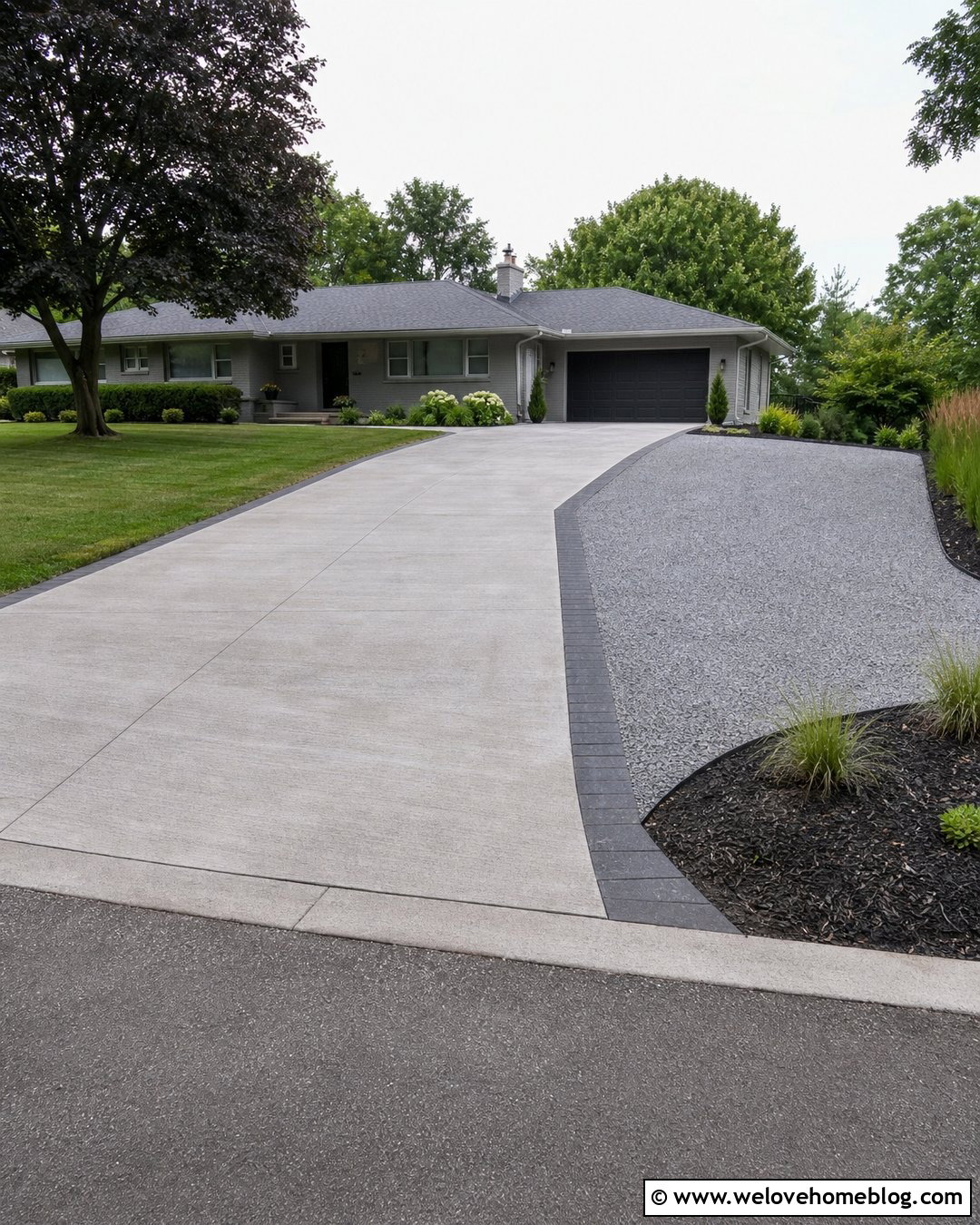
When a household needs one more parking space, extending an existing concrete driveway with compacted gravel can be less disruptive than widening it with matching concrete. Select gravel close to the concrete’s color, such as light gray crushed stone, for a coordinated transition. Install a firm edge restraint along the outside border and create a correctly prepared base rather than placing stone directly over lawn. A narrow paver ribbon between the old concrete and new gravel makes the change in materials appear planned. Add a small planting bed at the far corner to soften the expanded area. Check setback, drainage, permit, and parking-surface rules before construction. The extension should be large enough for safe access without dominating the entire front yard.
17. Grass Grid Driveway With Gravel Parking Pad
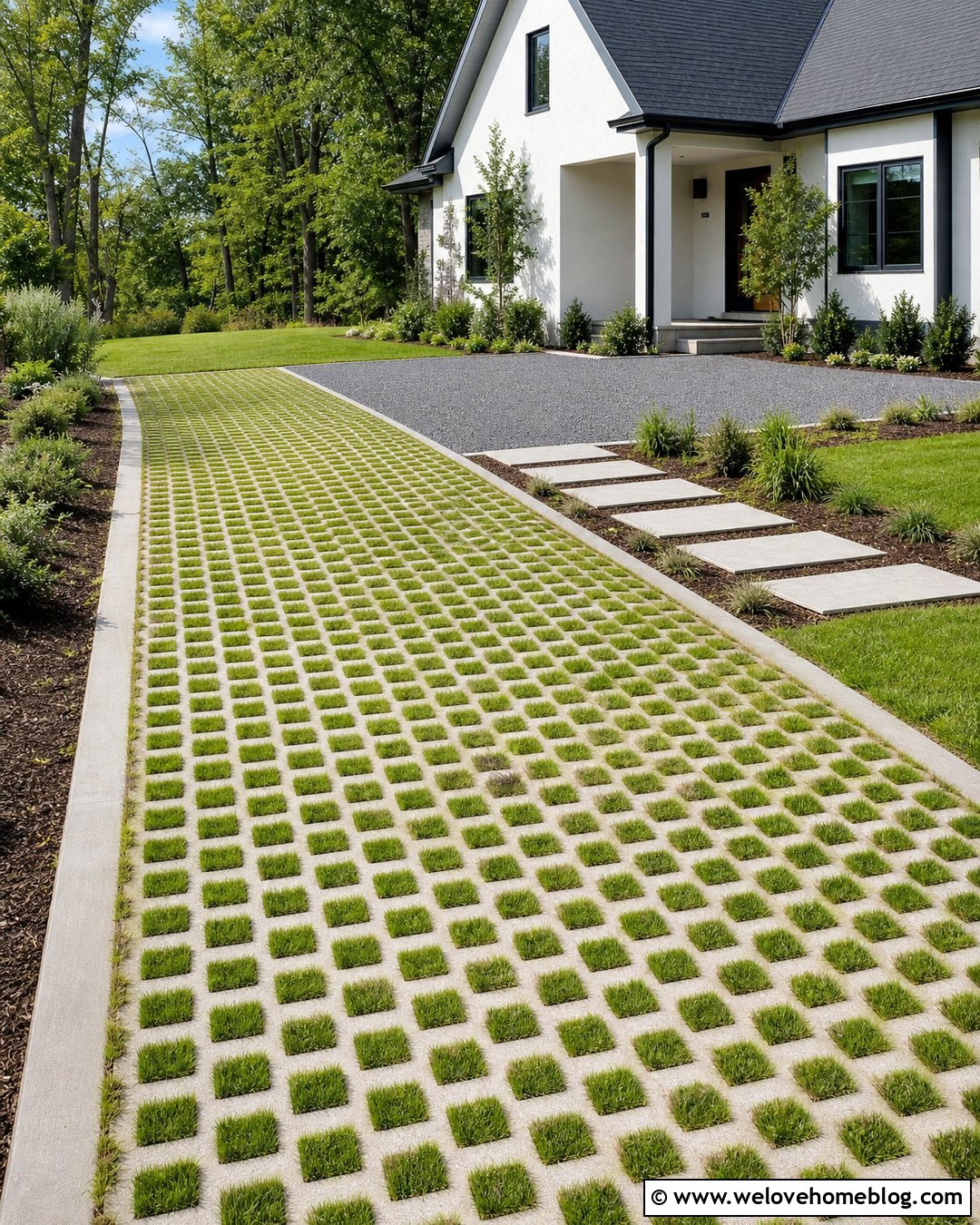
A reinforced grass-grid approach can reduce the amount of visible hardscape while providing occasional vehicle access. Pair it with a compact gravel parking pad near the house, where turning and repeated parking create heavier wear. The grid must be rated for vehicle loads and installed over the base specified by its manufacturer. Choose grass suited to local growing conditions, or use compatible gravel infill when healthy turf would be difficult to maintain. A brick or concrete edge can create a clean boundary beside the lawn. This design works well for overflow parking, guest spaces, and secondary driveways rather than every property’s primary entrance. Permeable paving systems allow water to move through surface openings, although correct underlying construction remains essential. ()
18. Gravel Grid Driveway With Metal Edging
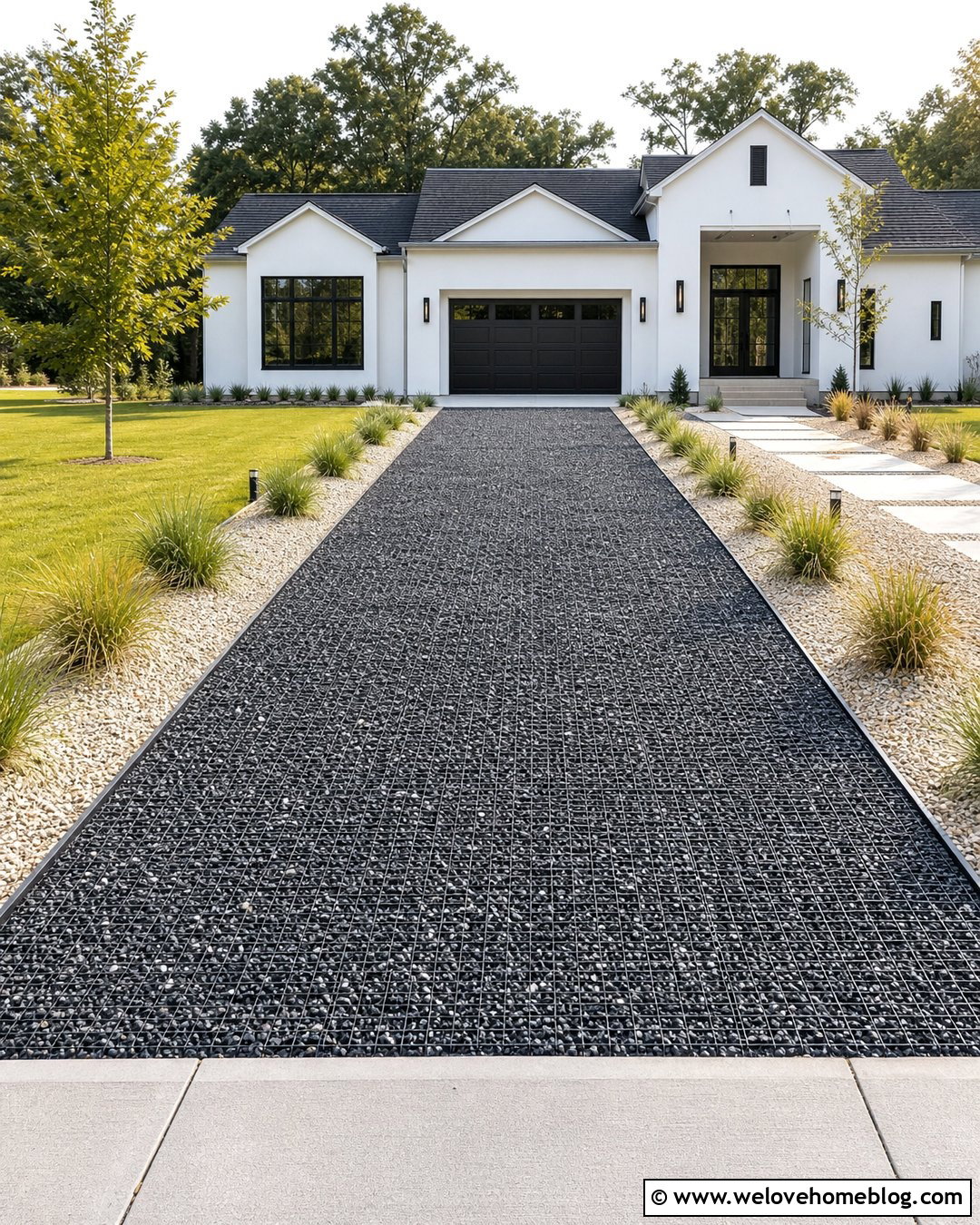
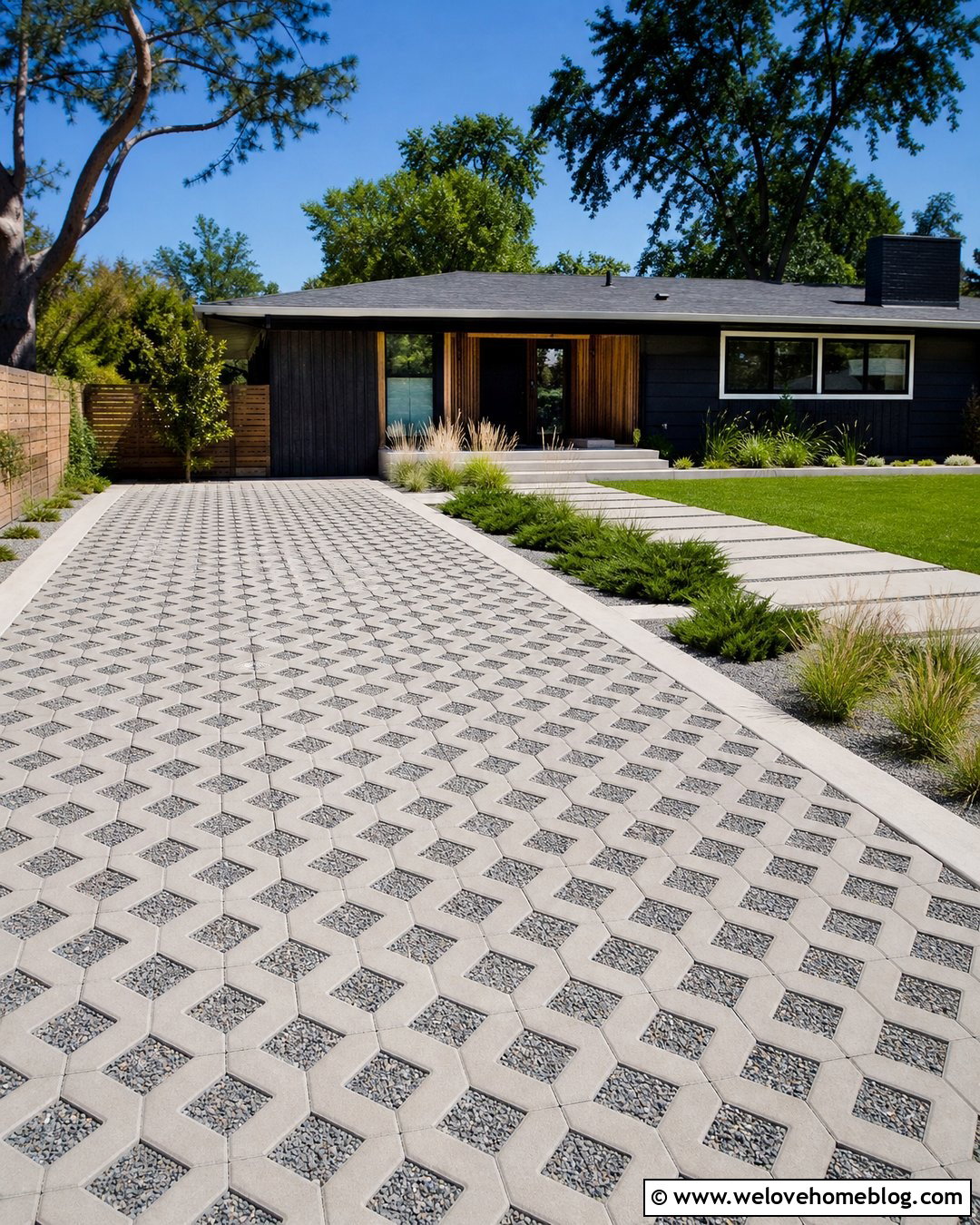
Plastic or concrete stabilization grids can help hold gravel in place and create a more orderly surface, especially where tires frequently turn. Fill the vehicle-rated grid with angular gravel in a color that complements the house. A straight driveway bordered by black metal edging delivers a simple modern appearance without costly stonework. Keep the edging flush enough to avoid becoming a tire or walking hazard. Beside the driveway, use broad areas of lawn and one narrow bed of ornamental grasses. This prevents the grid pattern from competing with overly complicated landscaping. Installation requirements differ among products, so follow the manufacturer’s specifications for excavation, base depth, infill, compaction, slopes, and edge restraints. Saving money by skipping the recommended foundation can cause avoidable movement and repairs.
19. Paver Track Driveway With Gravel Center
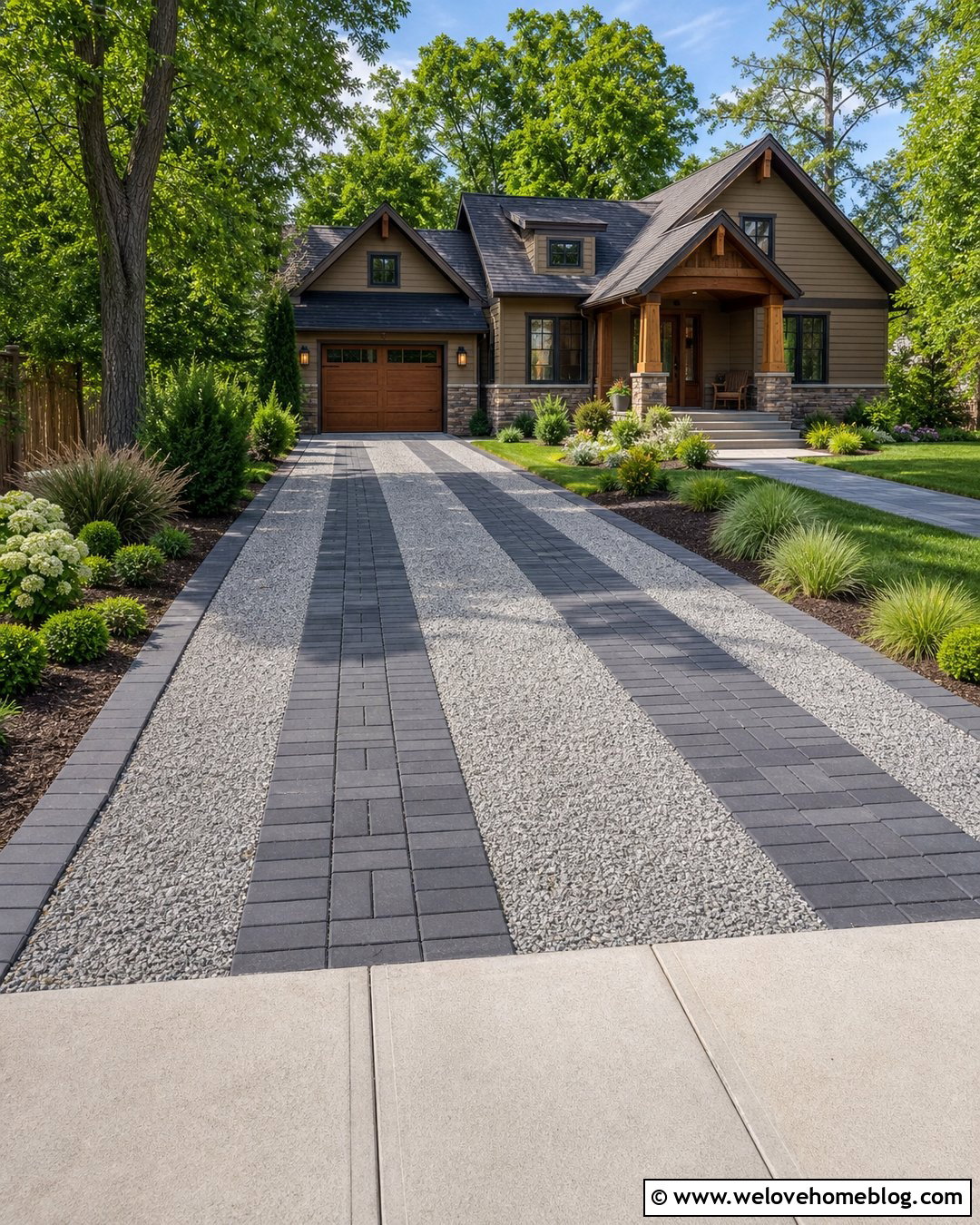
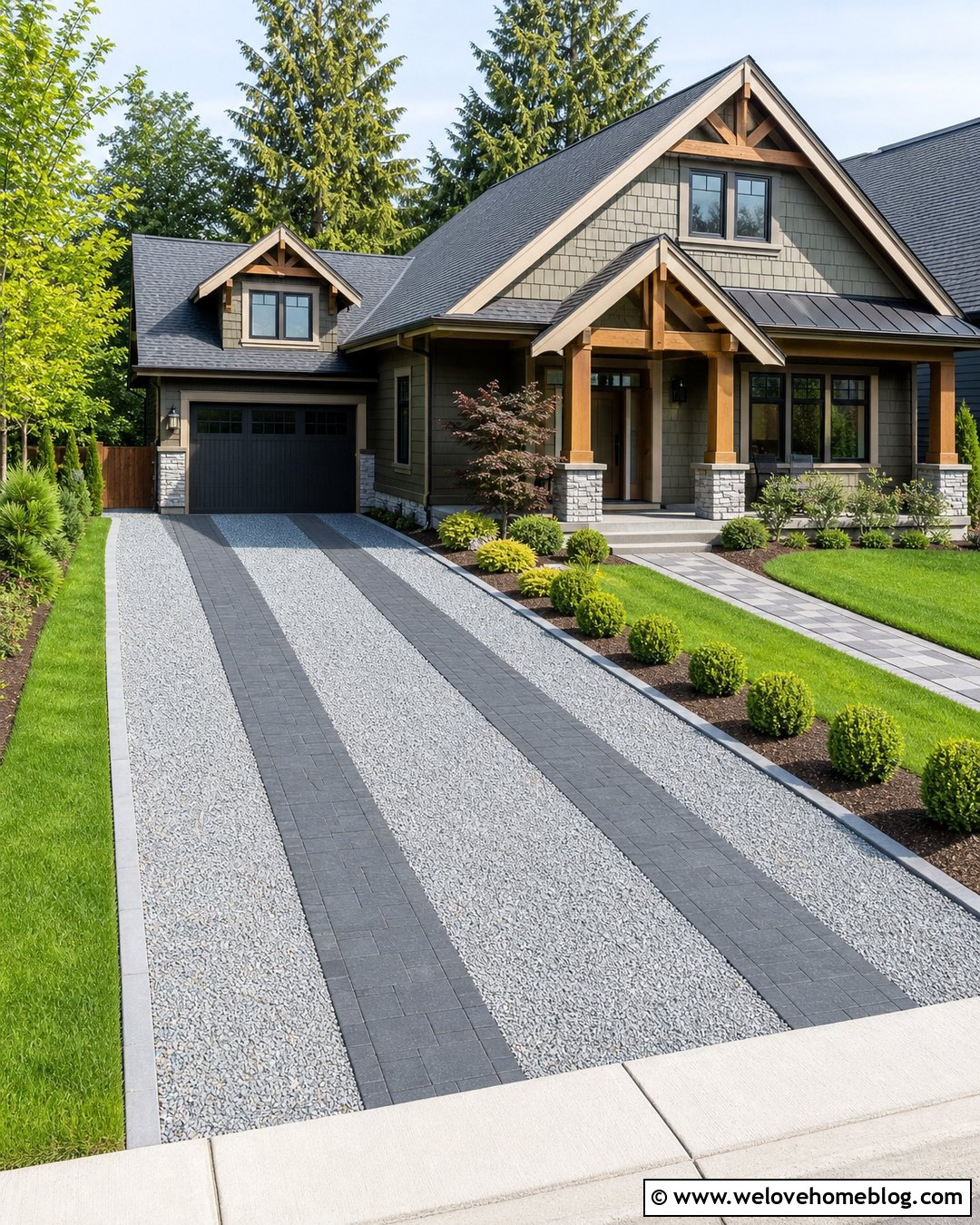
Concrete pavers can be used only beneath the tire paths instead of covering the entire driveway. Fill the center and outer bands with compacted gravel to produce an attractive design with less premium material. Select rectangular concrete pavers in a simple running bond, avoiding intricate patterns that increase cutting. Dark pavers with light gravel create a modern look, while tan pavers and warm stone suit a craftsman house. Install reliable edge restraints around every paver track and prepare the base for vehicle loads. A narrow walkway made from the same pavers can lead to the front door, helping the reduced paving area feel intentional. Keep plantings low and uncomplicated so the strong linear pattern remains the main feature.
20. Salvaged Paver Driveway With Mixed Pattern
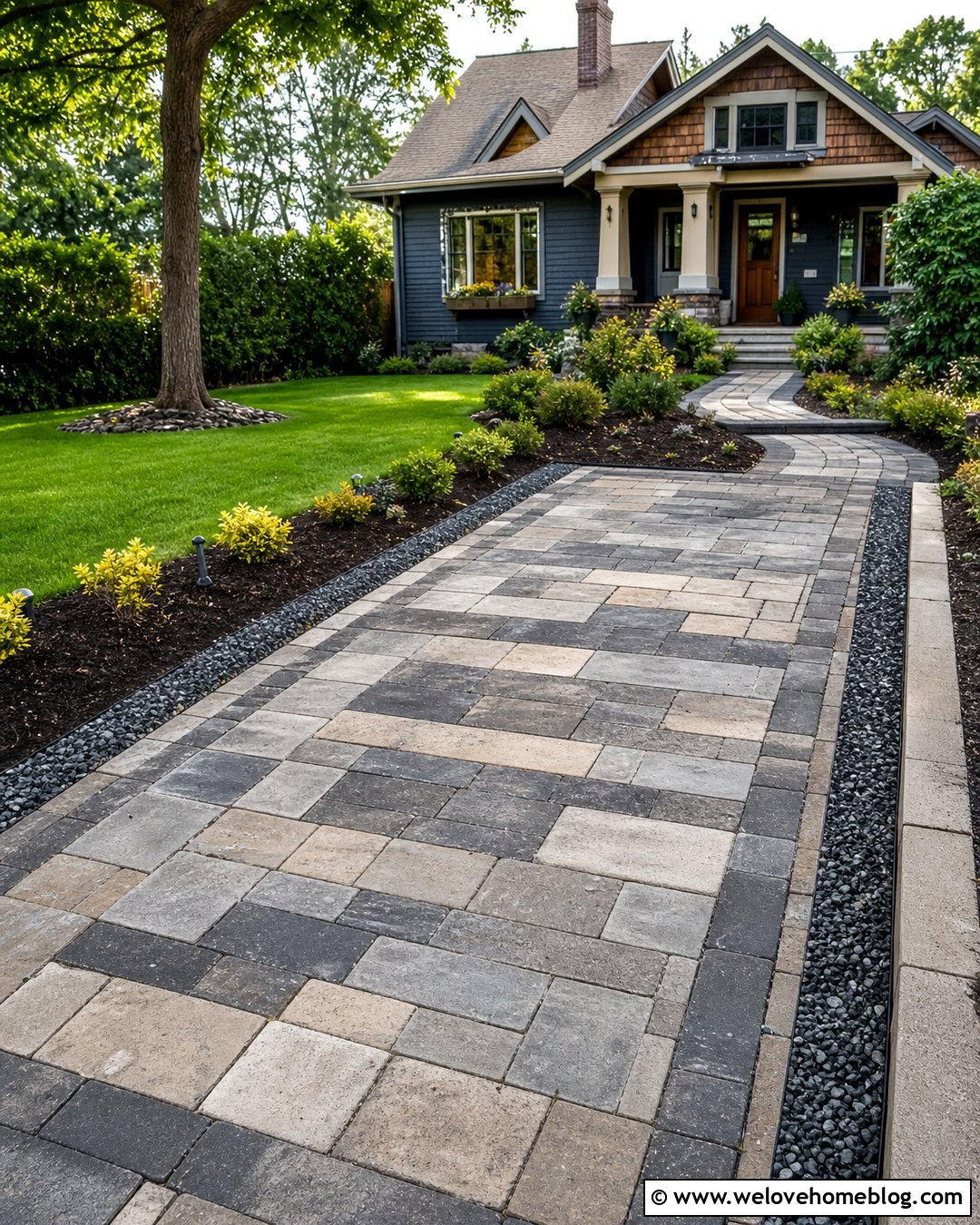
Leftover and reclaimed concrete pavers can create a distinctive driveway when their thickness, strength, and condition are compatible. Organize mixed colors into broad bands instead of placing every unit randomly. A planned pattern gives mismatched materials a cohesive appearance and simplifies installation. Use the best pavers through the center driving zone, with less uniform pieces along stable outer sections. Dark gravel borders can hide minor irregularities and reduce the amount of paving required. This approach suits an eclectic bungalow or casual craftsman home. Purchase extra units because matching replacements may be difficult to find later. All pavers should be rated or demonstrably suitable for vehicle traffic, and the base must be constructed correctly. Reclaimed surface materials do not justify cutting corners underneath.
21. Concrete Driveway With Saw-Cut Squares
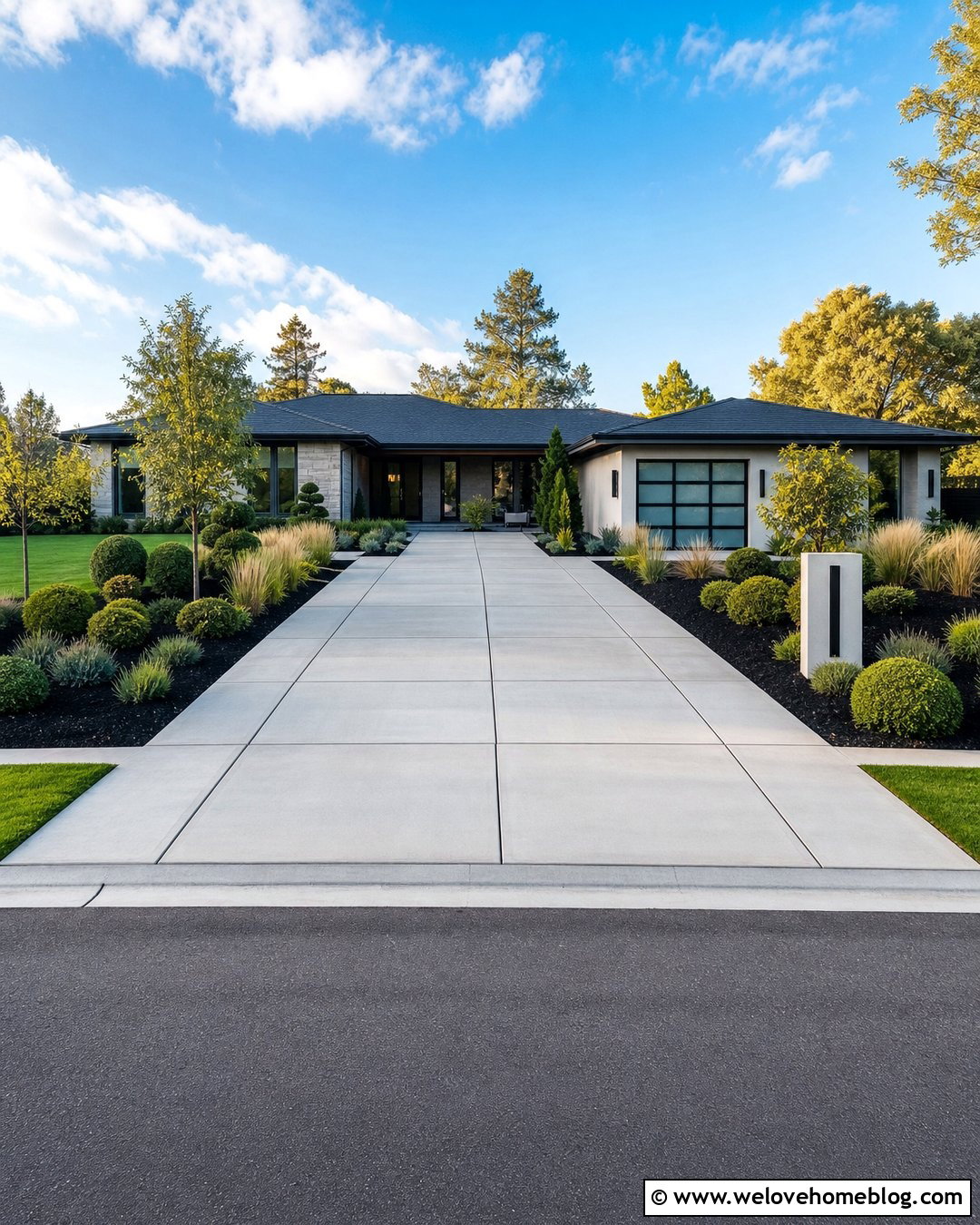
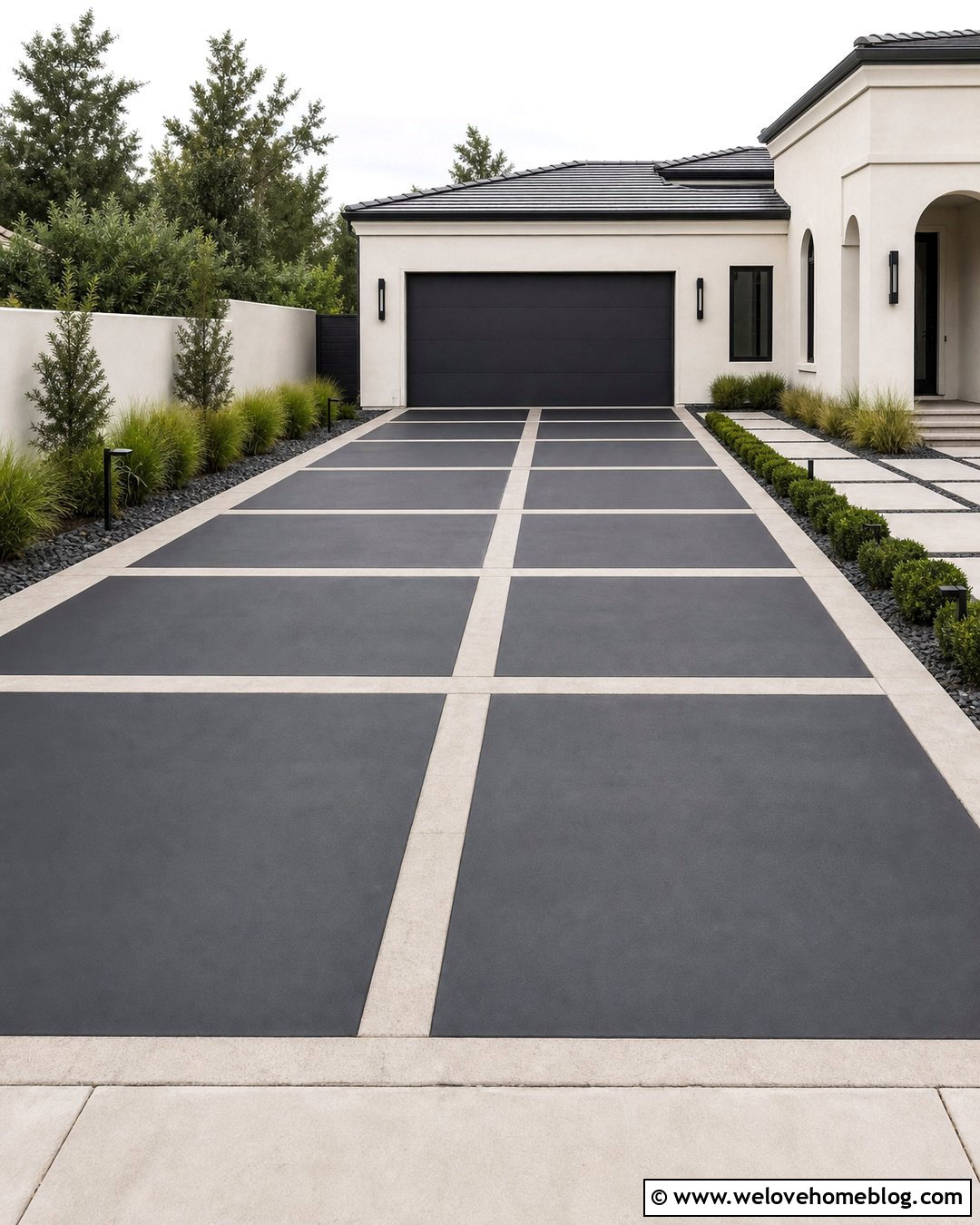
A plain existing concrete driveway can gain a more structured appearance through professionally planned decorative saw cuts. Large square or rectangular sections create the look of oversized slabs without installing separate pavers. This treatment is most appropriate for concrete in good condition, and the cuts must not compromise reinforcement or structural performance. After cleaning and repairing minor defects, consider a subtle compatible stain to unify the surface. Fill narrow border beds with dark mulch and compact evergreen shrubs to frame the geometry. A modern address marker can repeat the clean lines near the street. Because cutting concrete creates dust and carries practical risks, hire suitable equipment and follow safety requirements. Consult an experienced contractor if the slab layout or condition is uncertain.
22. Stenciled Concrete Driveway With Plain Borders
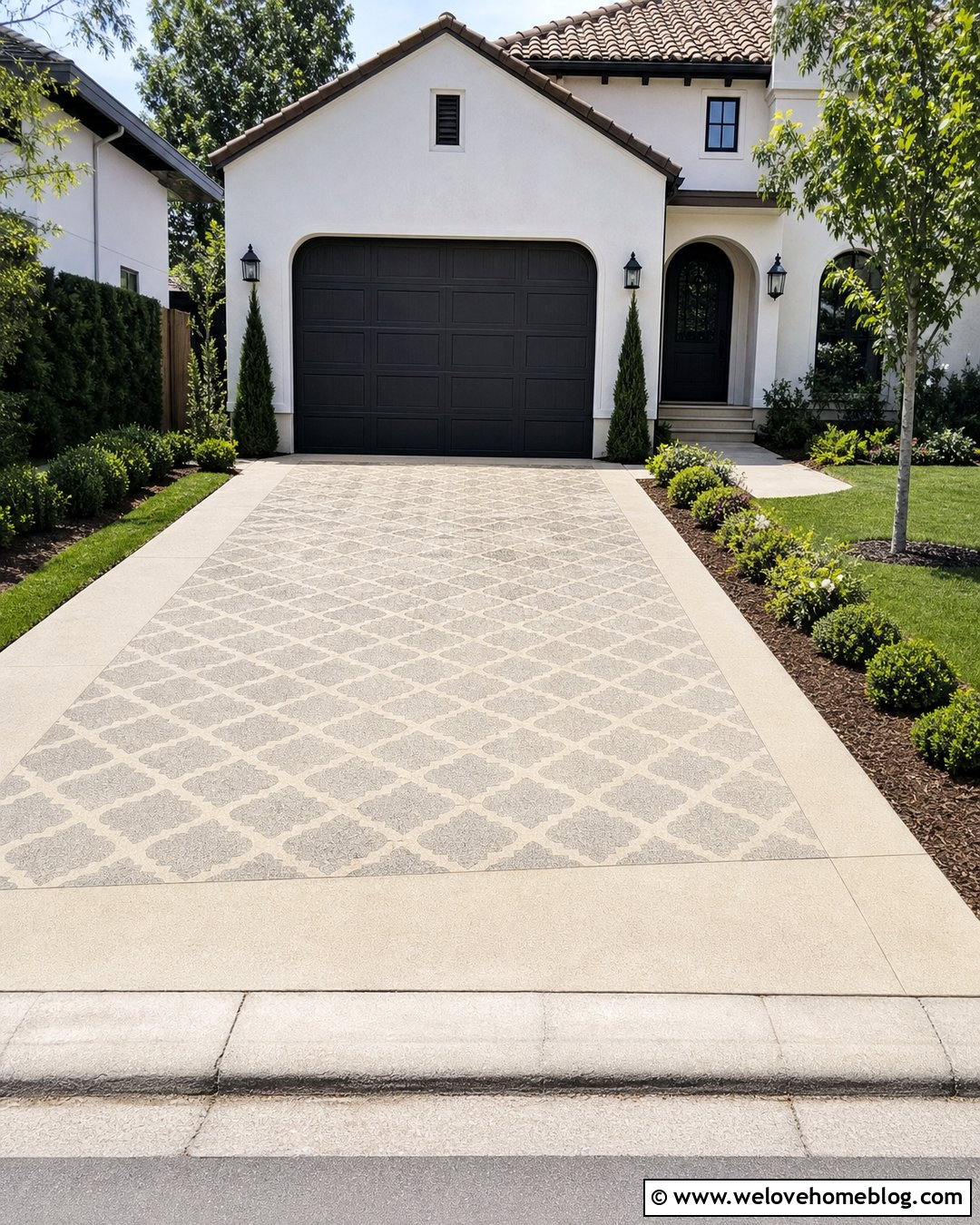
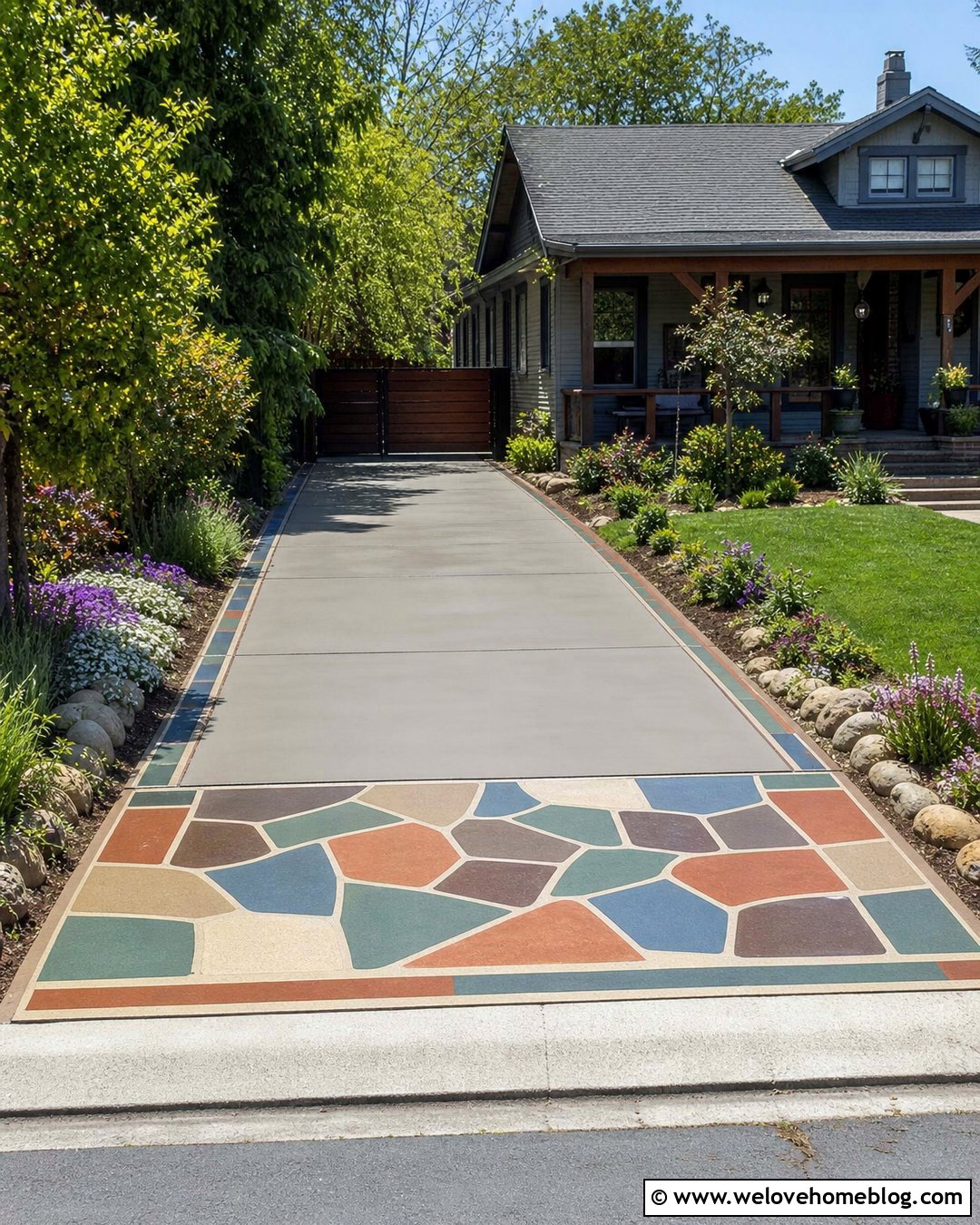
Decorative stenciling can refresh serviceable concrete without covering every inch in an expensive finish. Apply the pattern to a small entry apron or central parking area, then leave broad outer borders plain. A simple ashlar or rectangular pattern usually looks more convincing than highly detailed imitation stone. Choose two closely related gray or tan tones so the driveway complements the house rather than becoming overly busy. Prepare the surface according to the coating system’s requirements and use products designed for exterior vehicle traffic. Frame the driveway with trimmed lawn and a small group of low shrubs near the front walk. Stenciling cannot correct structural failure, deep spalling, or drainage problems. Address those conditions before investing in a decorative surface treatment.
23. Concrete Driveway With Gravel Inlay Bands
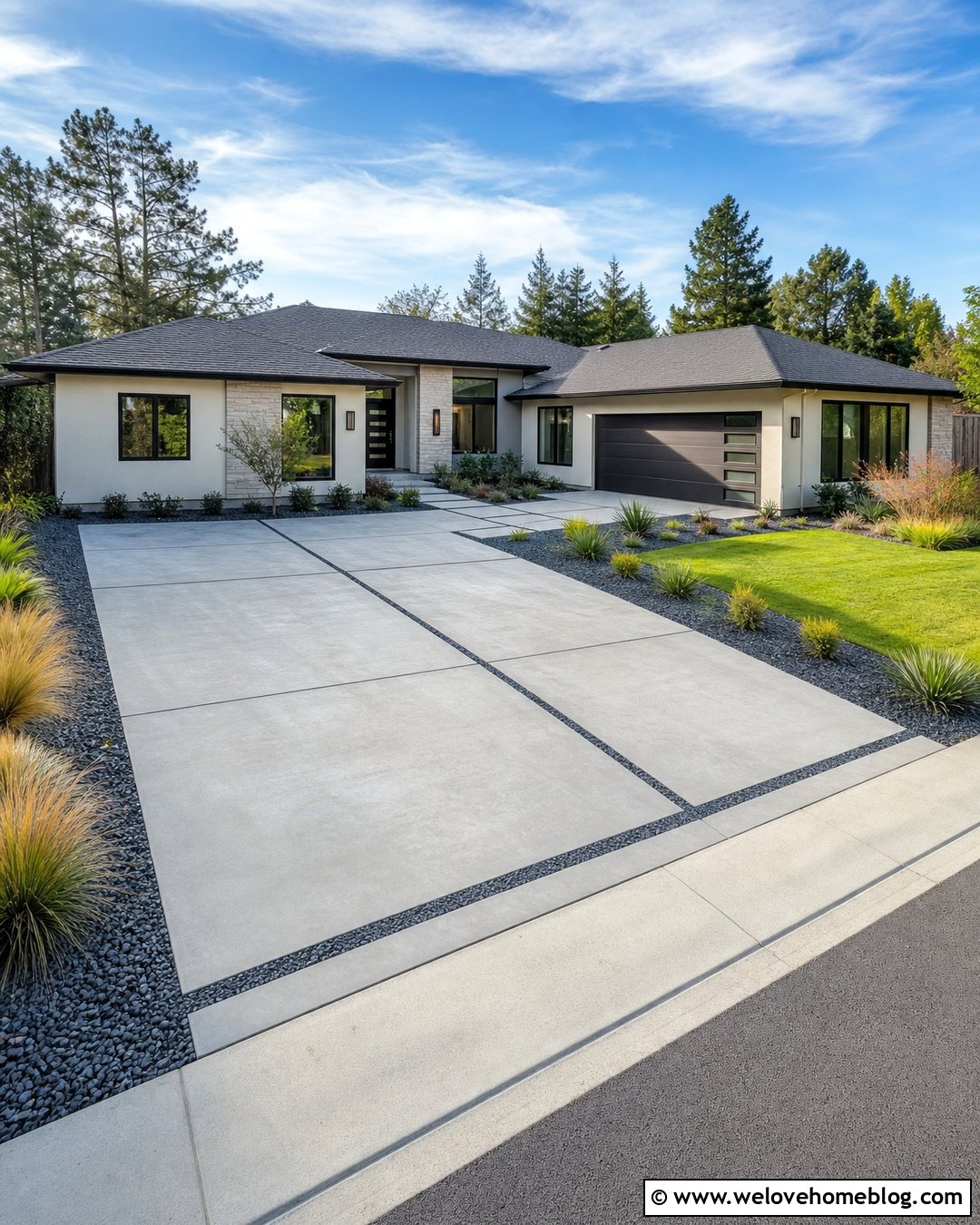
Gravel inlay bands can break up a wide concrete driveway and make repaired or separate poured sections look purposeful. Use narrow bands of dark angular gravel between existing slabs or alongside a central concrete strip, provided the layout does not create unstable edges. Hidden metal restraints help keep the gravel within its designated channels. Repeat the same stone in nearby planting beds to connect the driveway with the landscape. A contemporary ranch house benefits from straight bands, clipped grasses, and a clean walkway. Keep loose material away from garage thresholds and areas where tires turn sharply. If creating new joints or removing strips of concrete, confirm that the work will not damage reinforcement or weaken the slab. The strongest savings come from adapting sound concrete rather than replacing it.
24. Asphalt Driveway With Paver Ribbon
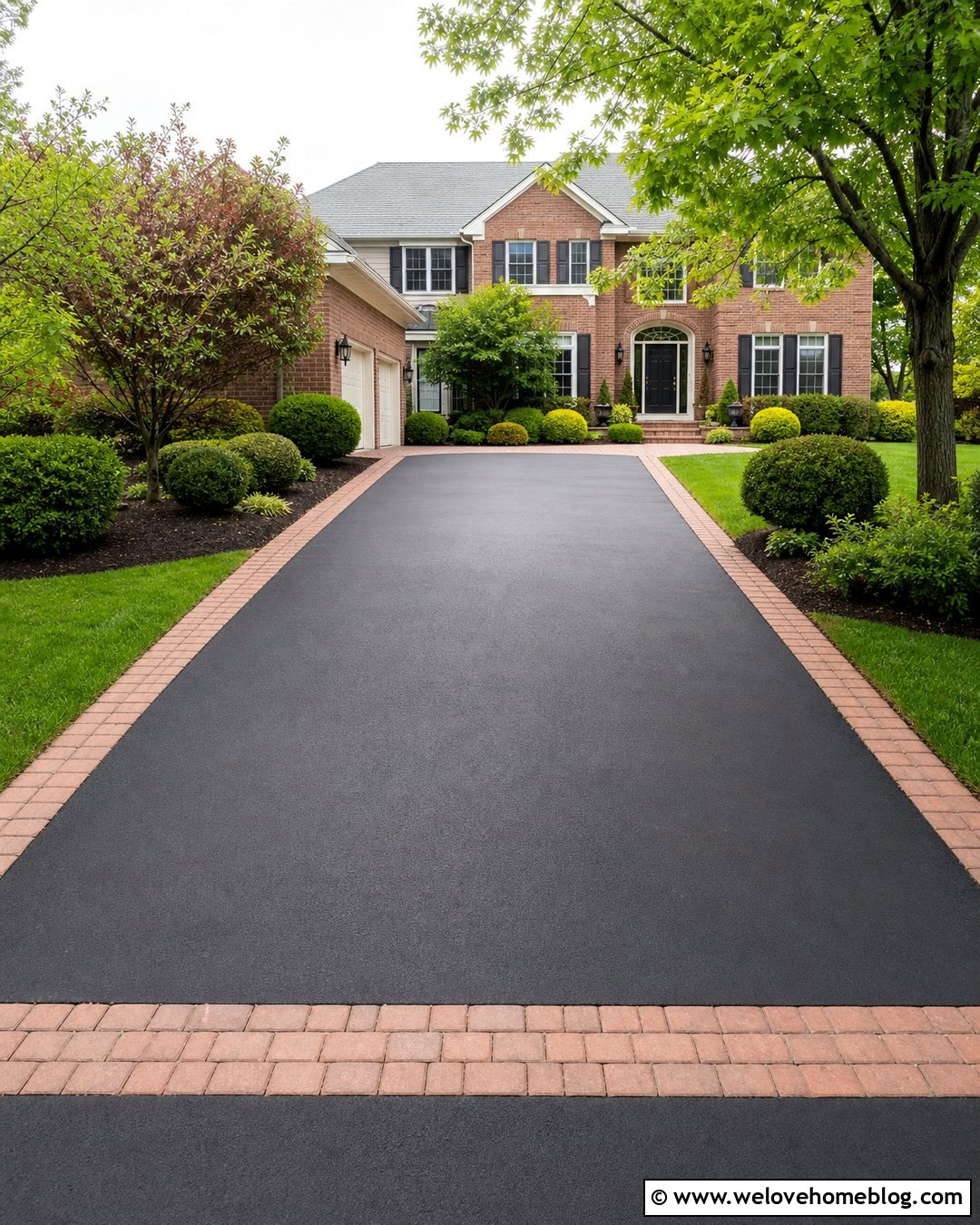
A single paver ribbon can give a basic asphalt driveway a custom appearance without the cost of a fully paved surface. Place the ribbon near the street, across the driveway before the garage, or along both edges. Concrete pavers are often available in multiple colors and may cost less than natural cobblestone. Choose a straightforward soldier-course or running-bond arrangement for easier installation. The pavers require a stable base and proper edge restraint, even though they occupy only a narrow area. Match their color to the house facade, front walkway, or porch. Alongside the asphalt, maintain simple lawn edges and two symmetrical planting beds. This focused upgrade works especially well when the asphalt remains structurally usable but needs stronger visual connection to the home.
25. Circular Gravel Driveway With Mulch Island
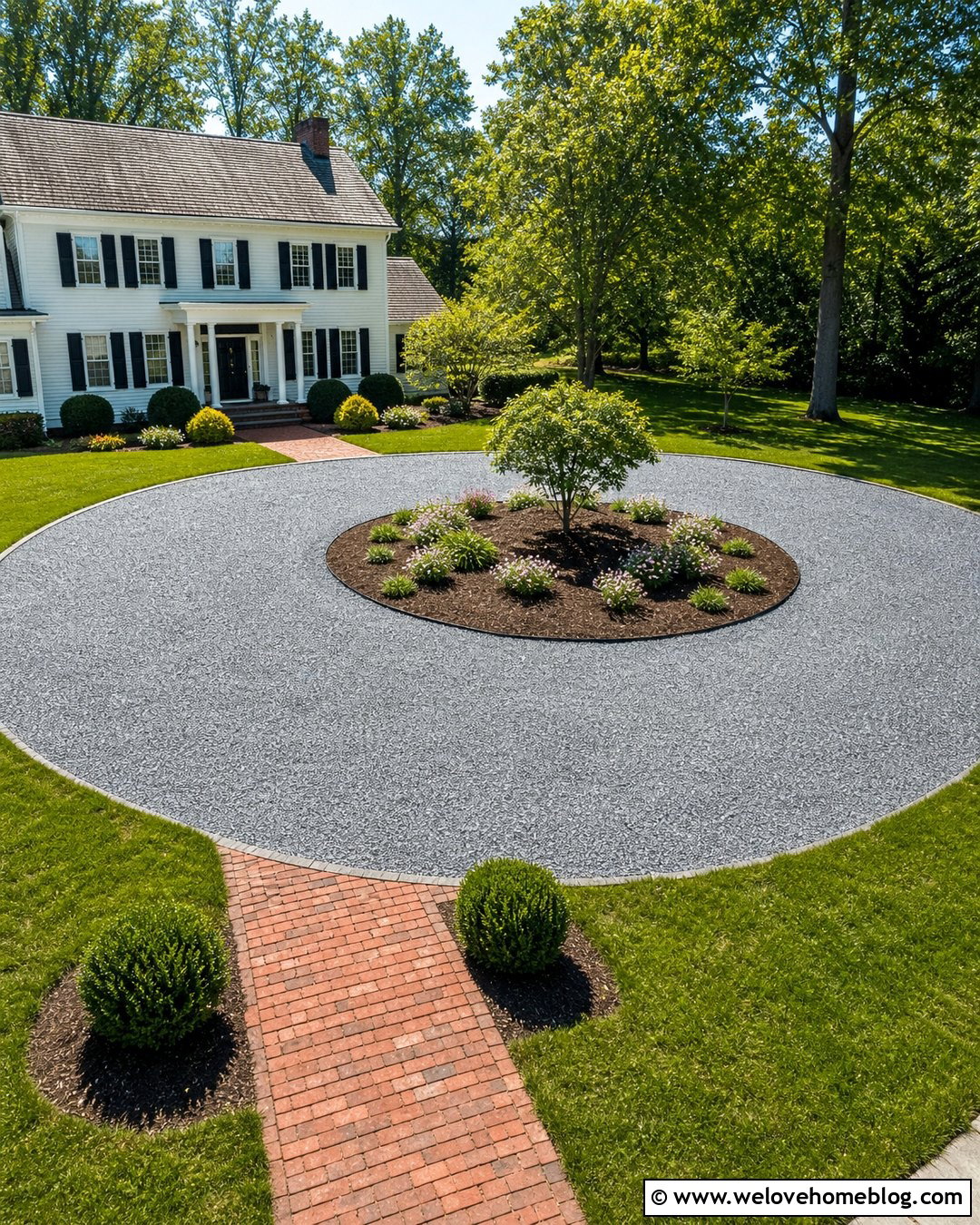
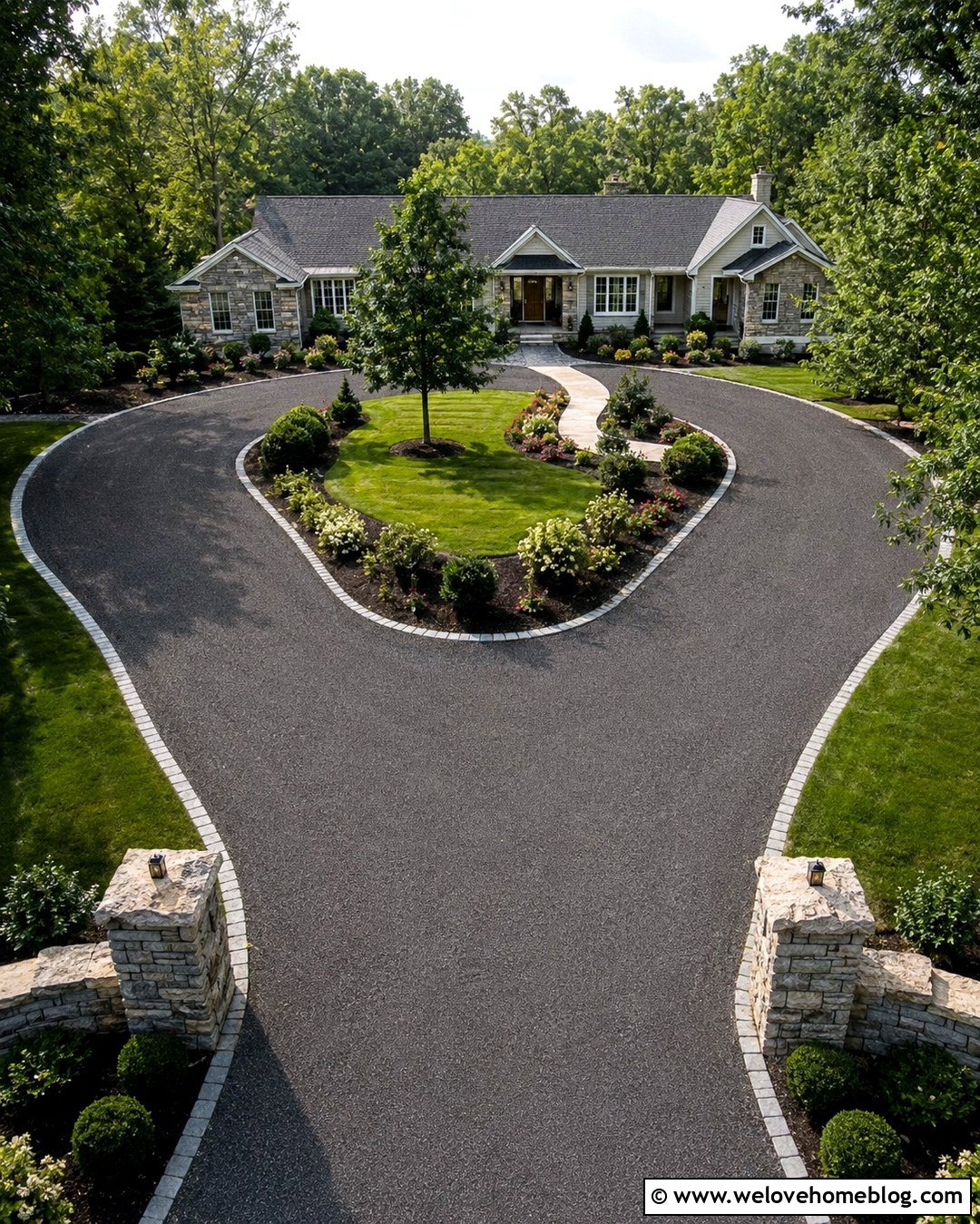
A circular driveway can be economical when the property already has a suitable loop or broad approach that requires minimal excavation. Cover the driving lane with locally sourced angular gravel and define the inner circle with inexpensive steel edging. Instead of filling the island with masonry, use dark mulch, one small ornamental tree, and a ring of low perennials. This creates a focal point without purchasing large quantities of plants. Keep mature branches and roots safely away from vehicles and underground utilities. The outer driveway edge can transition directly into lawn to control costs. Confirm that the turning radius accommodates regular vehicles, service access, and emergency requirements. Good grading is particularly important because water should not collect against the island or flow toward the house.
26. Curved Gravel Driveway With Native Grasses
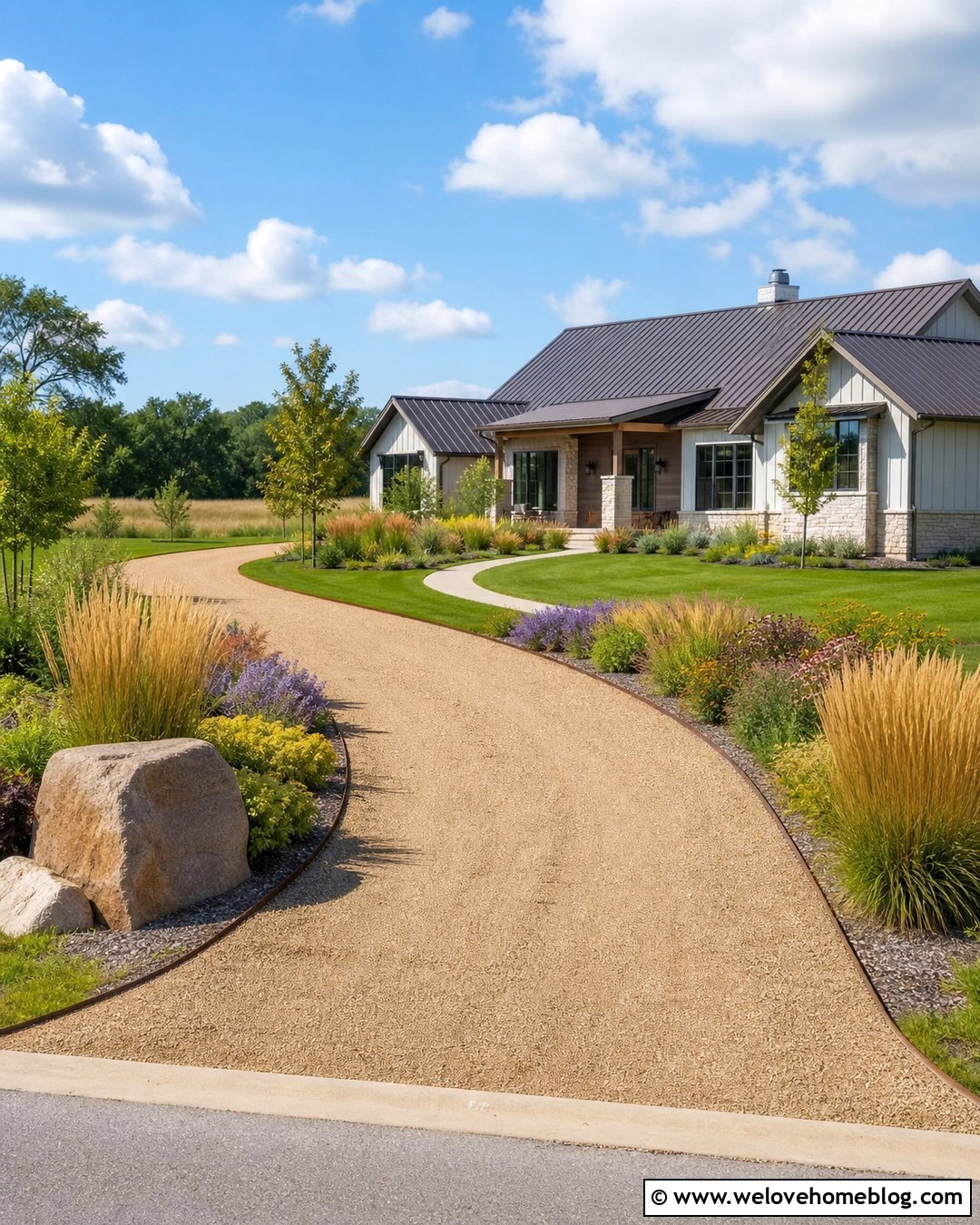
A softly curved gravel driveway can follow the natural grade and make a modest front yard feel more spacious. Use compacted crushed stone rather than loose rounded gravel in areas where tires turn. A narrow steel edge along the inside curve keeps the line crisp, while a shallow gravel shoulder can stabilize the outside. Group native ornamental grasses at two or three strategic points instead of planting an expensive continuous border. Their movement and texture will soften the driveway while preserving visibility. Add one larger boulder near the entrance as a durable marker, positioned well outside the vehicle clearance zone. This design suits contemporary, prairie, and country homes. Choose regionally appropriate plants that tolerate roadside conditions, sun exposure, and available rainfall.
27. Narrow Gravel Driveway With Stepping-Stone Walkway
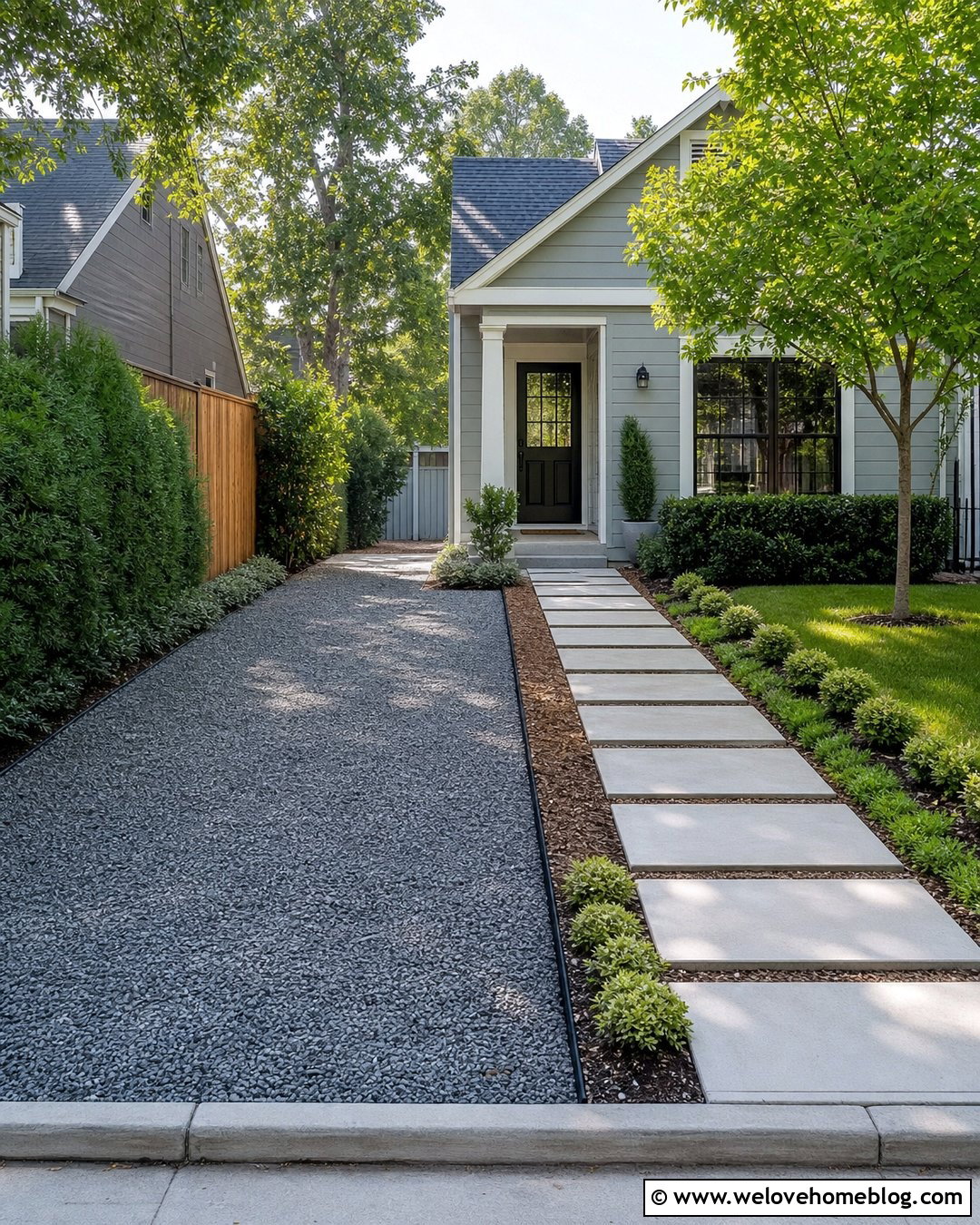
A narrow driveway can remain affordable and functional when pedestrian access is planned separately. Use compacted gray gravel for the driving area and install a simple stepping-stone walkway along one side. Large concrete squares are often easier to walk on than loose stone and can lead directly from the curb or parking area to the front door. Separate the walkway from the driveway with a slim mulch strip or low metal edging. Add ground cover between the stones only if it suits local conditions and will not create a slippery surface. A small bungalow or urban cottage benefits from this space-conscious arrangement. Keep shrubs away from car doors, maintain a clear walking width, and ensure that the driveway still meets applicable access and parking requirements.
28. Side Yard Gravel Driveway With Privacy Planting
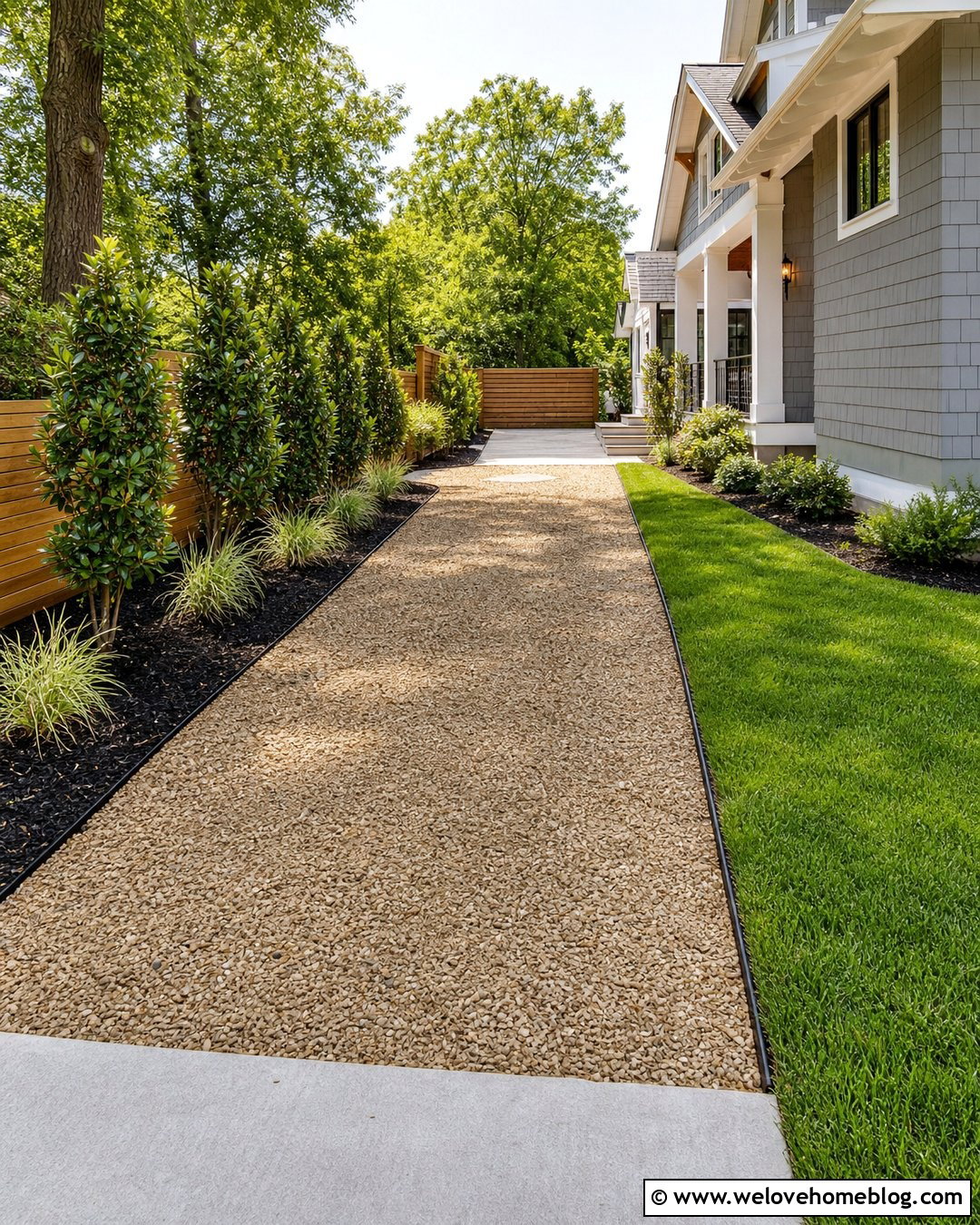
A side-yard driveway can be visually softened with a narrow privacy border rather than an expensive wall. Begin with compacted tan or gray gravel held by steel edging. Along the property side, create a mulched bed containing upright shrubs or ornamental grasses suited to the available width. Space them according to mature size so the driveway does not become crowded in a few years. On the house side, keep the edge open and provide a clear walkway to doors, utility equipment, and trash storage. A simple horizontal wood screen near the parking pad can conceal bins without lining the entire driveway with fencing. Confirm property boundaries before installing plants or edging. The result provides parking, screening, and a finished landscape within a relatively compact footprint.
29. Farmhouse Gravel Driveway With Split-Rail Fence
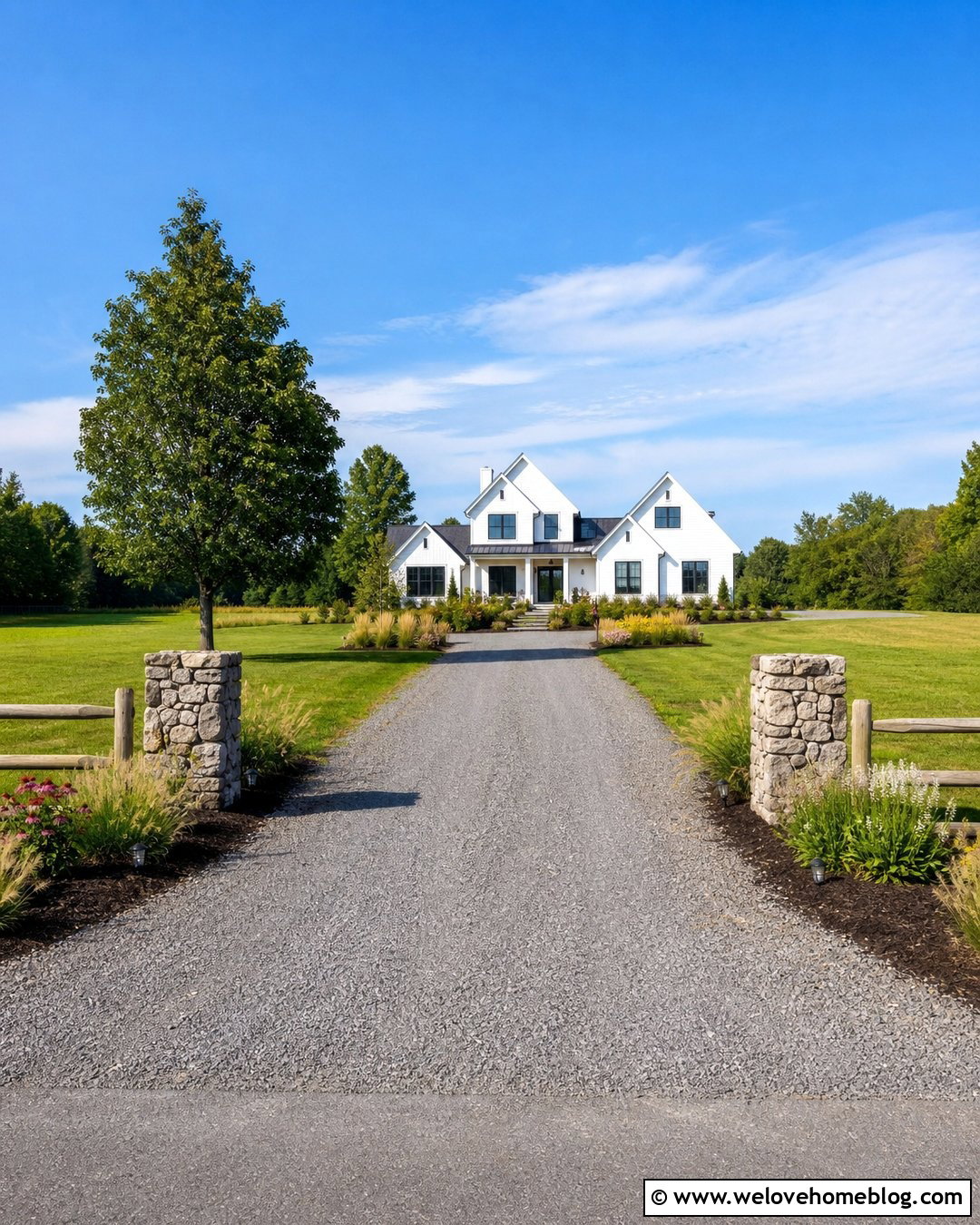
A broad gravel driveway pairs naturally with a modest split-rail fence and a farmhouse-style home. Use locally available crushed limestone or gray gravel in a straight layout that leads clearly toward the house or detached garage. Install fencing only near the entrance and along one prominent section instead of enclosing the entire property. This saves material while establishing the rural character. A mulched bed of native grasses and long-blooming perennials can sit behind the fence, safely separated from turning vehicles. Use larger fieldstones as discreet entrance markers, keeping them outside the clear driving area. The informal materials are forgiving, but the driveway still needs correct grading and compaction. Regular raking and timely gravel replenishment will help preserve its defined shape.
30. Modern Crushed Stone Driveway With Black Edging
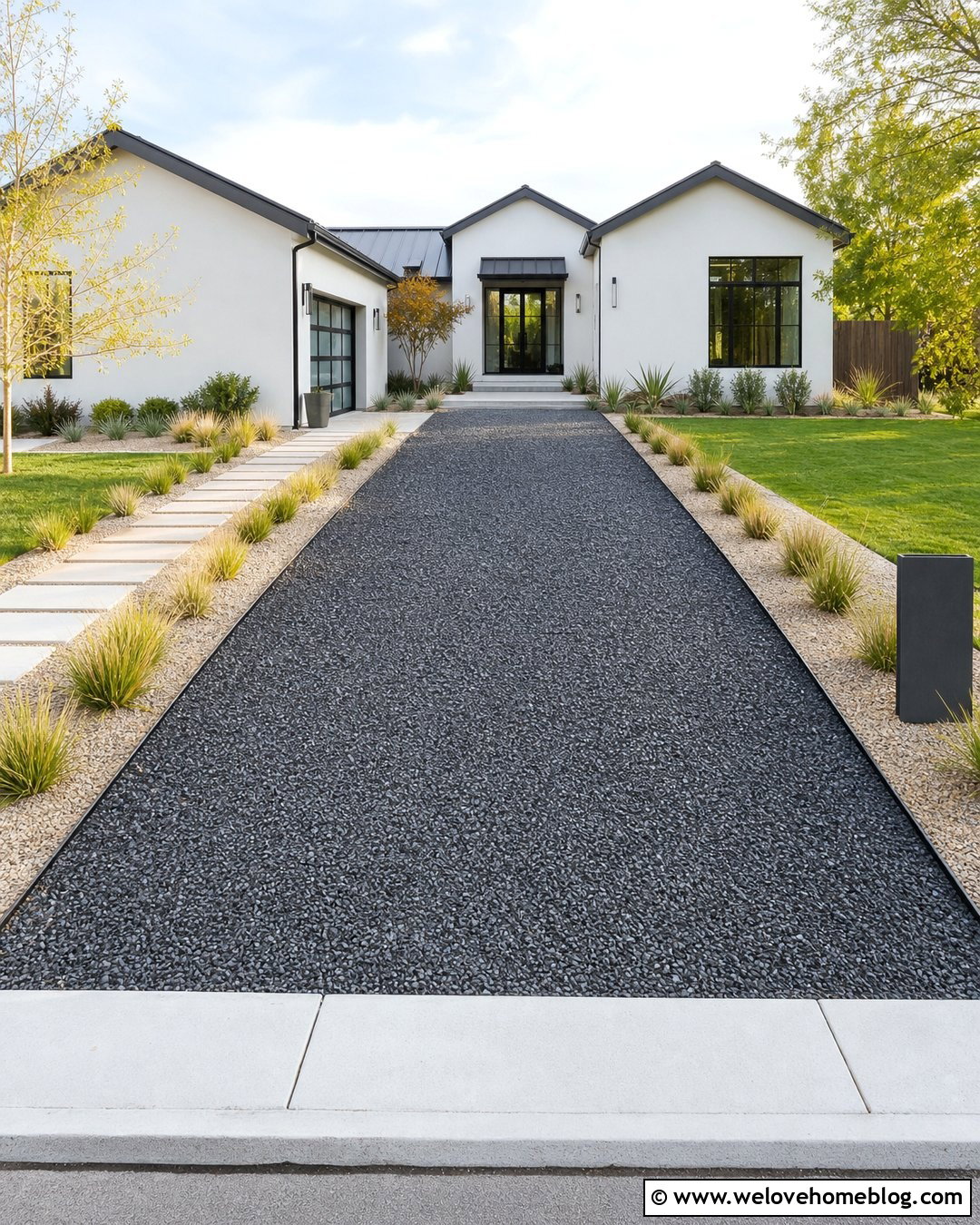
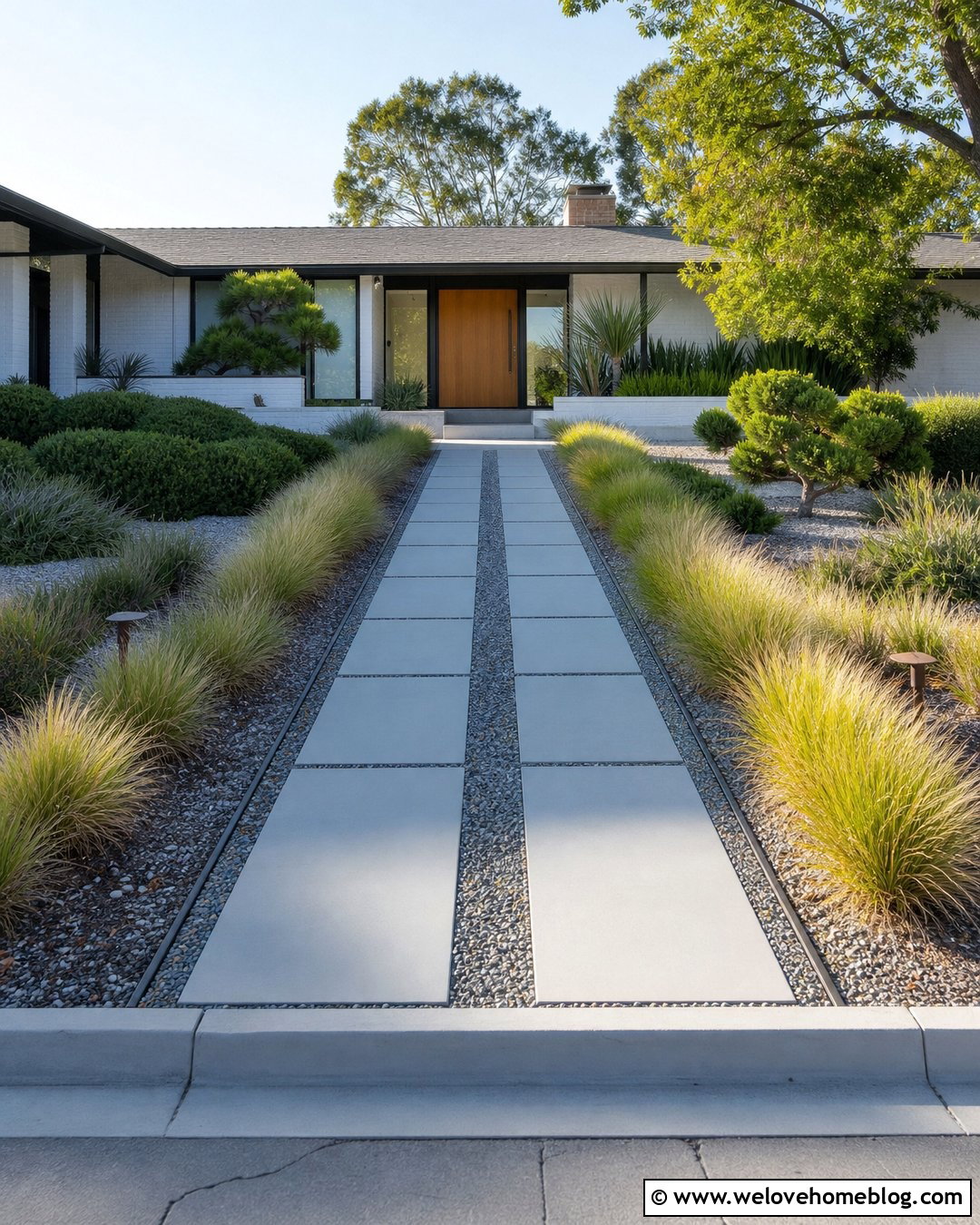
Dark crushed stone, black metal edging, and restrained planting can create a modern driveway without relying on expensive large-format pavers. Keep the layout straight and rectangular, using angular charcoal aggregate over a properly constructed base. Slim black edging makes the borders look precise and separates the stone from pale gravel mulch or lawn. Plant repeated groups of ornamental grasses rather than purchasing many different species. A basic concrete slab walkway can cross the gravel and connect the parking area to a modern front entrance. Limit decorative details to one address marker or geometric planter near the street. The strong color contrast makes affordable materials feel deliberate. Make sure dark aggregate is practical for the local climate, availability, and expected surface temperature.
31. Cottage Pea Gravel Driveway With Flower Beds
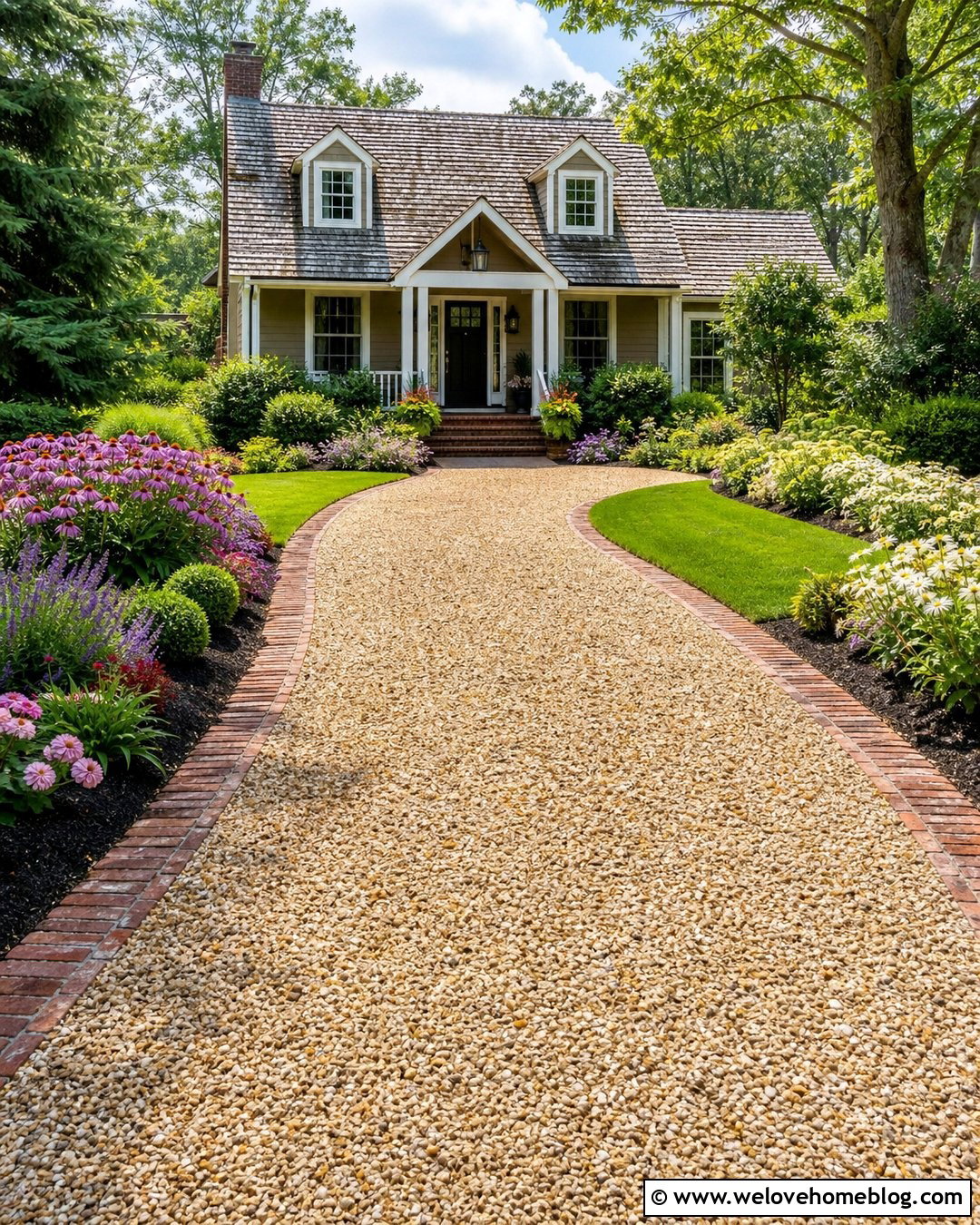
Warm pea gravel, reclaimed brick edging, and informal flower beds can give a small cottage driveway a welcoming character. Because rounded pea gravel moves easily, use it as a controlled top layer over a stable base and keep it contained with secure borders. A narrow straight driveway limits the amount of material required. Run brick edging along the most visible side, then use simpler hidden edging where it will not be noticed. Plant budget-friendly perennials in repeated groups, leaving enough clearance for doors and mirrors. Mulch the beds to create visual order and reduce exposed soil. Near the house, connect the brick border to a small walkway or porch step. Choose plants suited to local light, soil, rainfall, and mature-space limitations.
32. Ranch Asphalt Driveway With Drought-Tolerant Beds
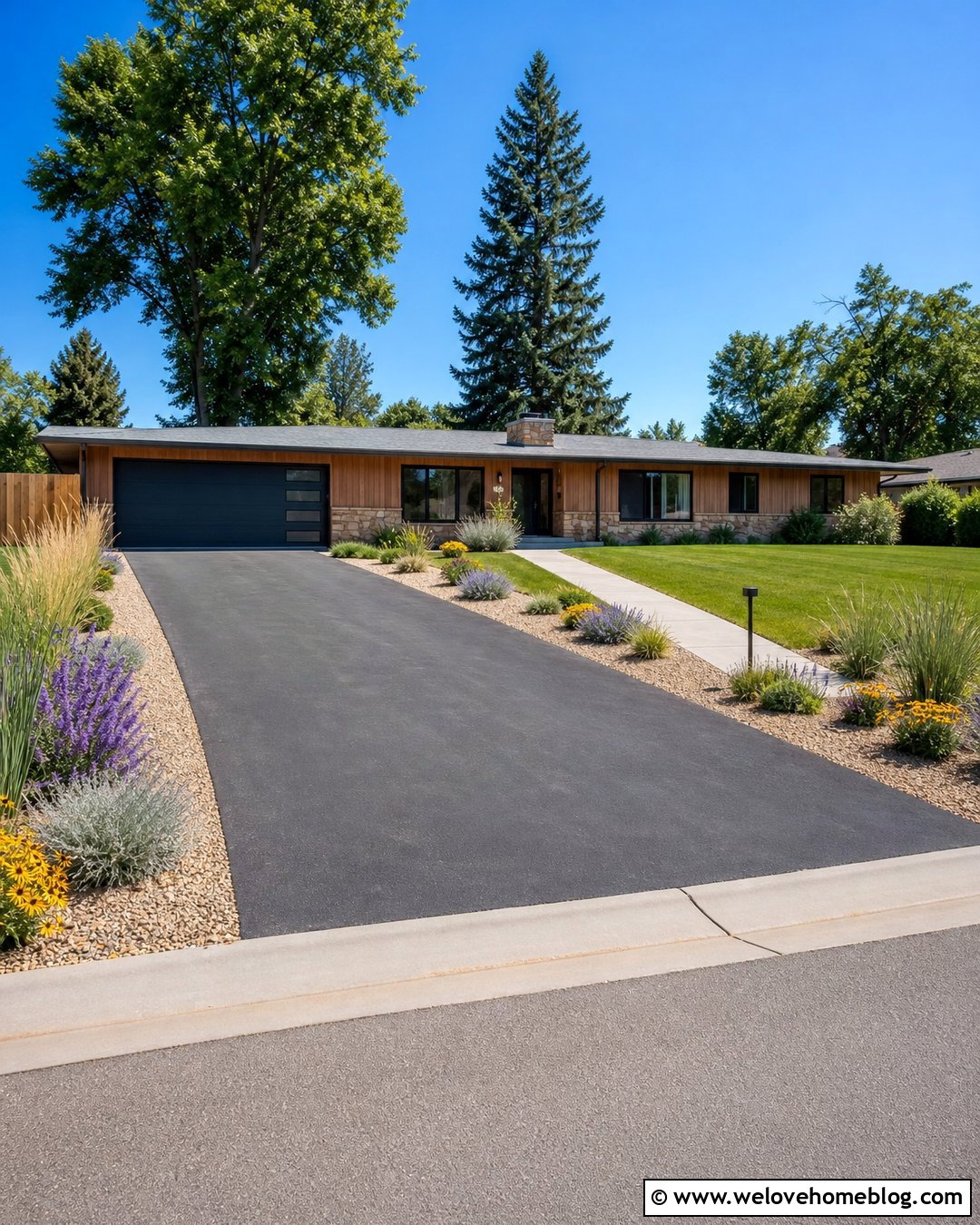
A simple asphalt driveway can complement a low ranch house when the surrounding landscape is clean and proportionate. Retain the existing surface if it is serviceable, complete appropriate repairs, and define both sides with narrow bands of tan gravel. Create drought-tolerant planting beds only near the street and garage, where they will provide the greatest visual benefit. Use a few structural plants, ornamental grasses, and locally suitable flowering perennials instead of filling the beds with many small specimens. Large areas of matching gravel mulch make young plants look intentional while they mature. A straight concrete walkway can connect the driveway to the porch. Avoid placing thorny or spreading plants close to parking areas. Confirm irrigation needs and local fire-safety guidance when selecting dry-climate landscaping.
33. Colonial Crushed Stone Driveway With Symmetrical Beds
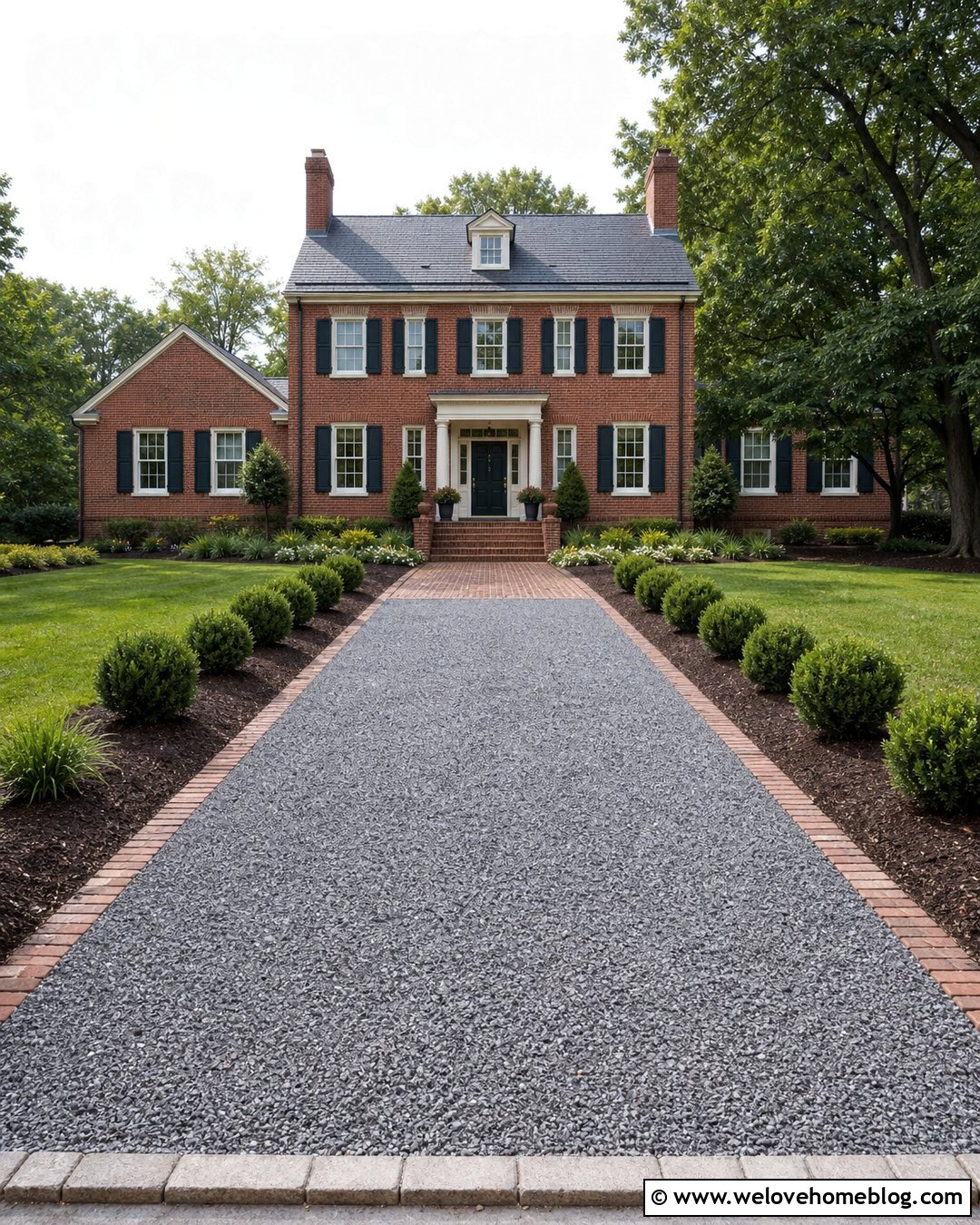
A symmetrical layout helps an inexpensive crushed stone driveway suit a formal colonial facade. Choose medium-gray angular stone and keep the approach straight, centered, and clearly defined. At the street, add two matching mulch beds with compact shrubs rather than costly masonry pillars. Repeat the same plants near the front steps to visually connect the entrance with the house. A flush border of red reclaimed brick can run along the most visible driveway edges and echo the home’s exterior. Maintain open sightlines at the road by using low plantings. The orderly arrangement creates formality through repetition instead of expensive materials. If the driveway is long, concentrate decorative edging near the entrance and house while using a simpler compacted shoulder through the middle section.
34. Cape Cod Shell Driveway With Beach Grass
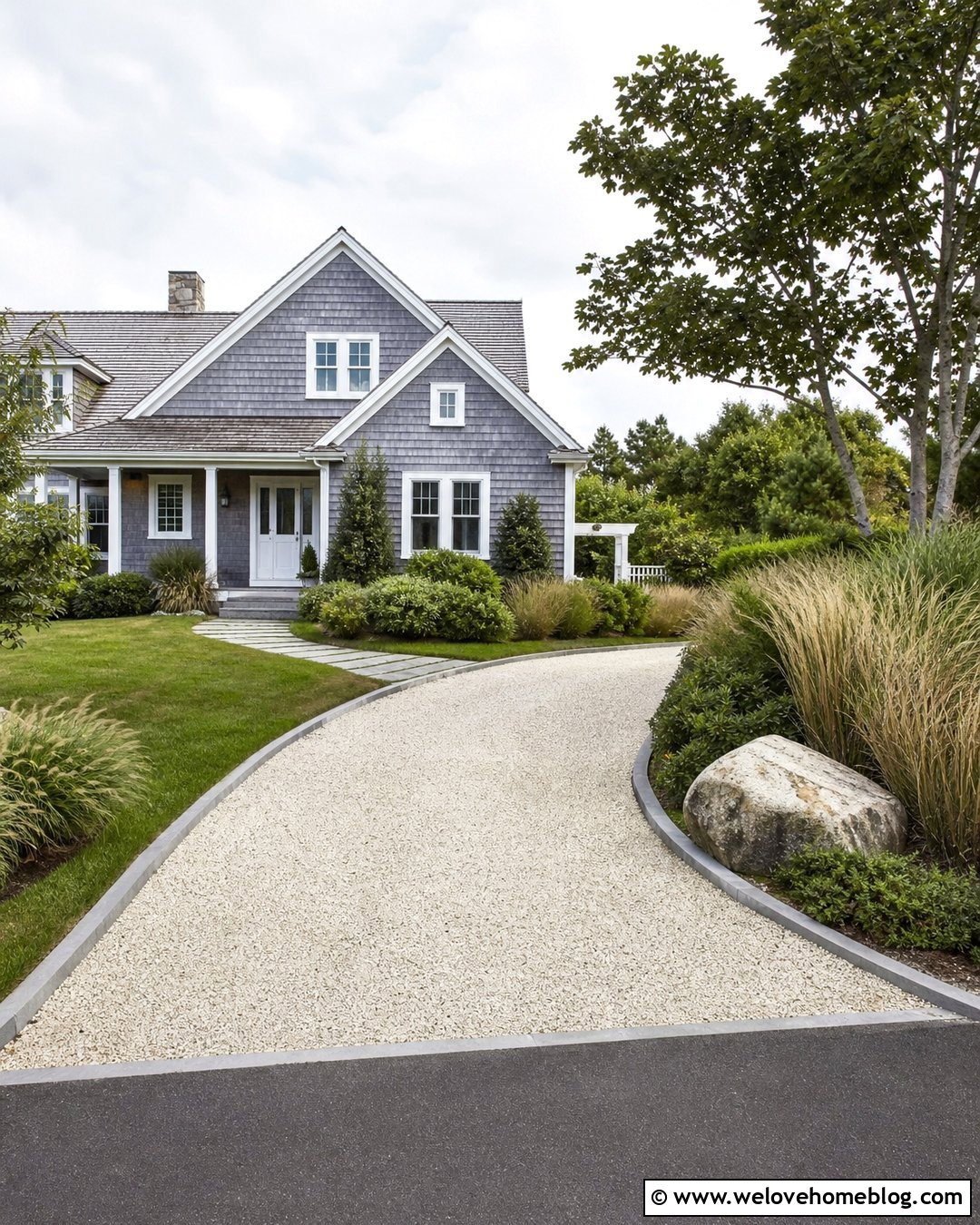
A pale crushed shell driveway and blue-gray Cape Cod exterior can create a bright coastal look where shell is an economical regional material. Use a gently curved approach bordered by weather-resistant timber or understated gray pavers. Plant beach grass or locally appropriate coastal grasses in broad mulched groups, leaving open areas beside the driveway for visibility and snow storage where needed. A simple stepping-stone path can branch toward the front porch. Add one weathered boulder near the entrance instead of elaborate gateposts. Because shell products, environmental rules, and installation methods differ by location, confirm local availability and suitability before planning the design. The limited color palette makes the full driveway feel cohesive while allowing affordable materials and uncomplicated landscaping to carry the look.
35. Wooded Crusher-Run Driveway With Log Edging
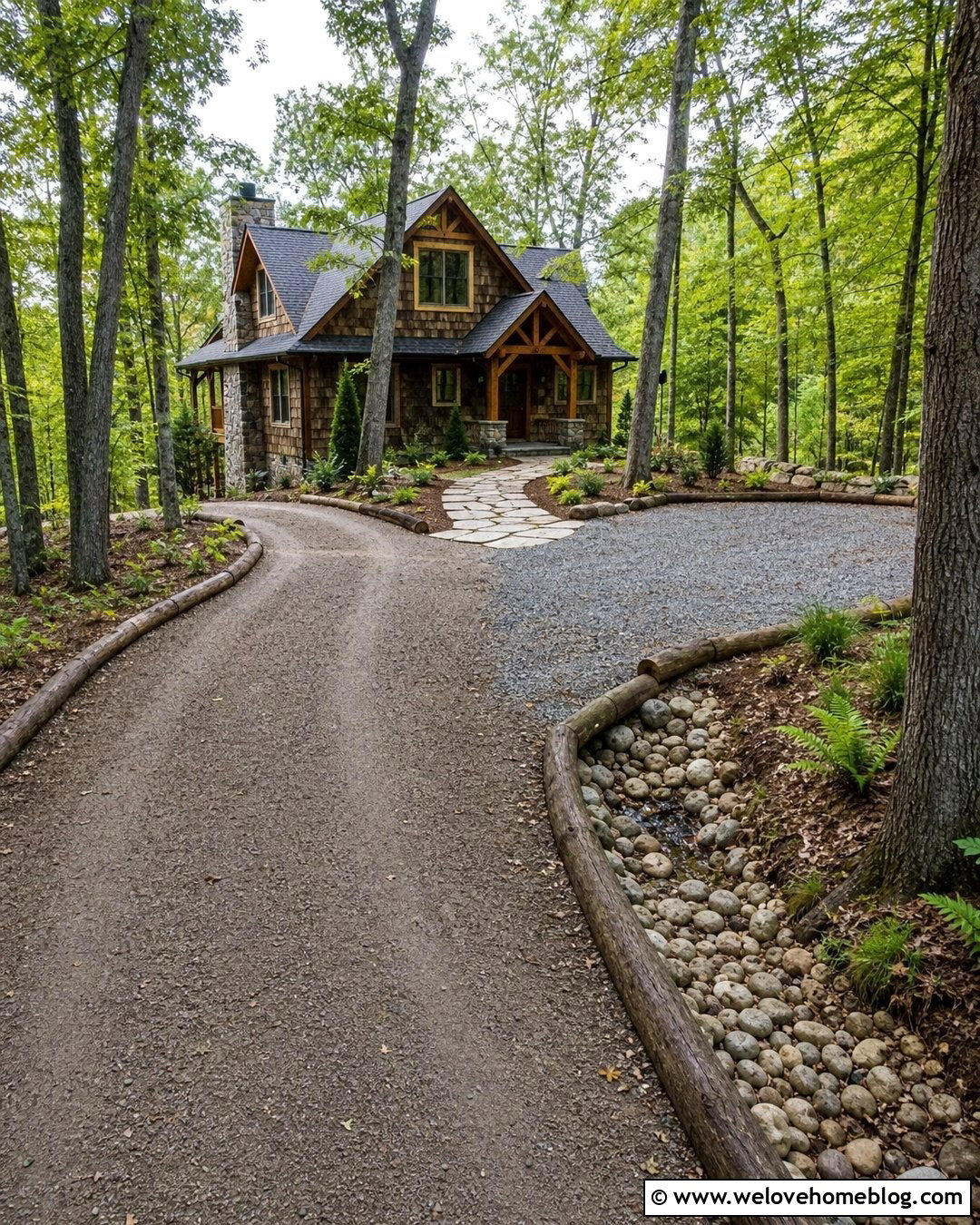
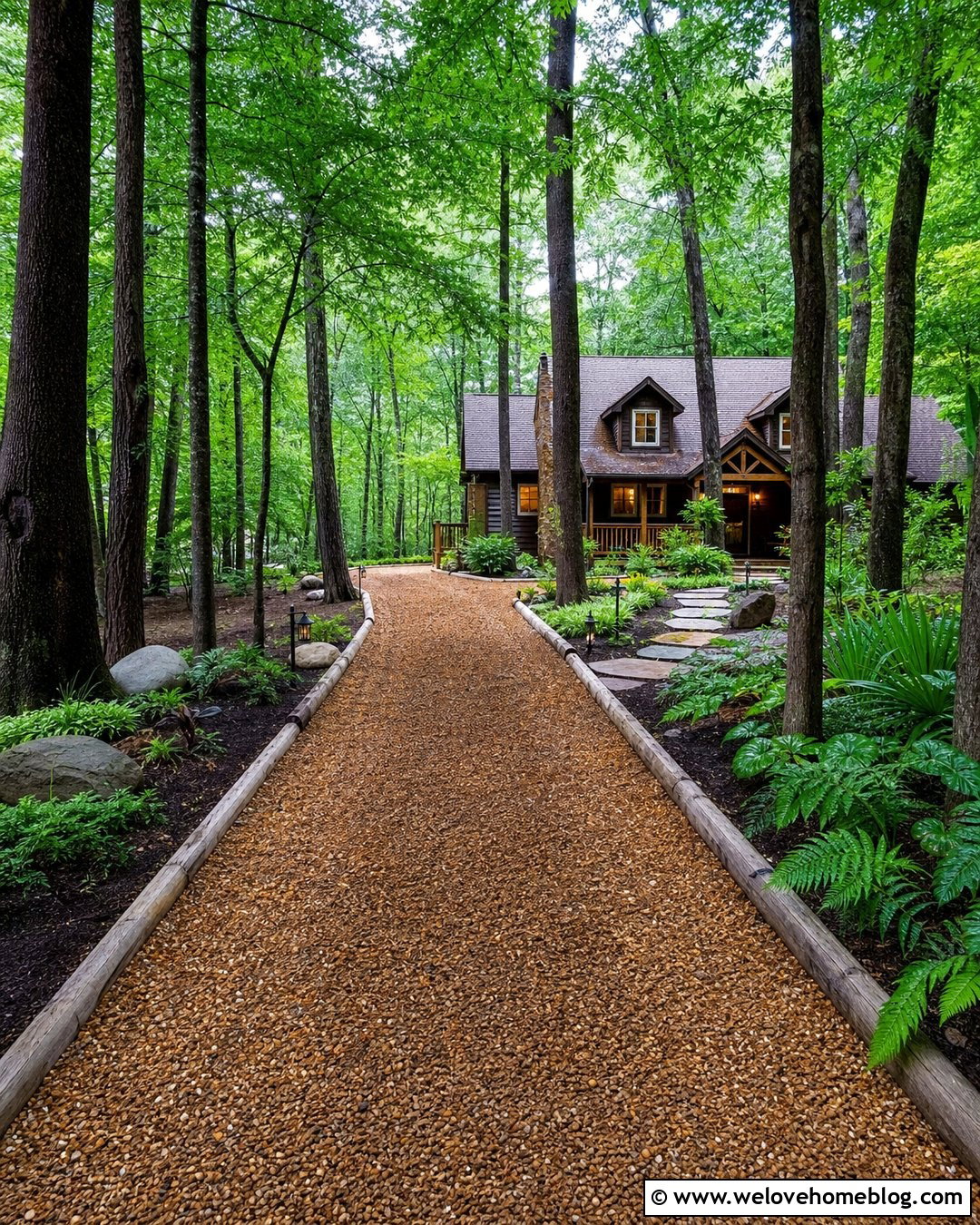
Crusher run provides a compactable, rustic surface that fits a wooded cabin, country cottage, or secluded craftsman home. Follow the existing terrain with a gentle curve rather than removing mature trees or creating unnecessary excavation. Where edging is required, use rot-resistant logs or pressure-treated timbers placed safely outside tire paths. Natural leaf litter can remain beyond the defined border, reducing the need for formal planting beds. Near the house, add a small gravel parking pad and a flagstone walkway made from locally sourced or reclaimed pieces. Remove weak overhanging branches and preserve adequate overhead clearance. In forested settings, drainage must be carefully directed so runoff does not erode the driveway or expose roots. Regularly clear leaves from swales, culverts, and other drainage routes.
36. Sloped Crushed Stone Driveway With Drainage Swale
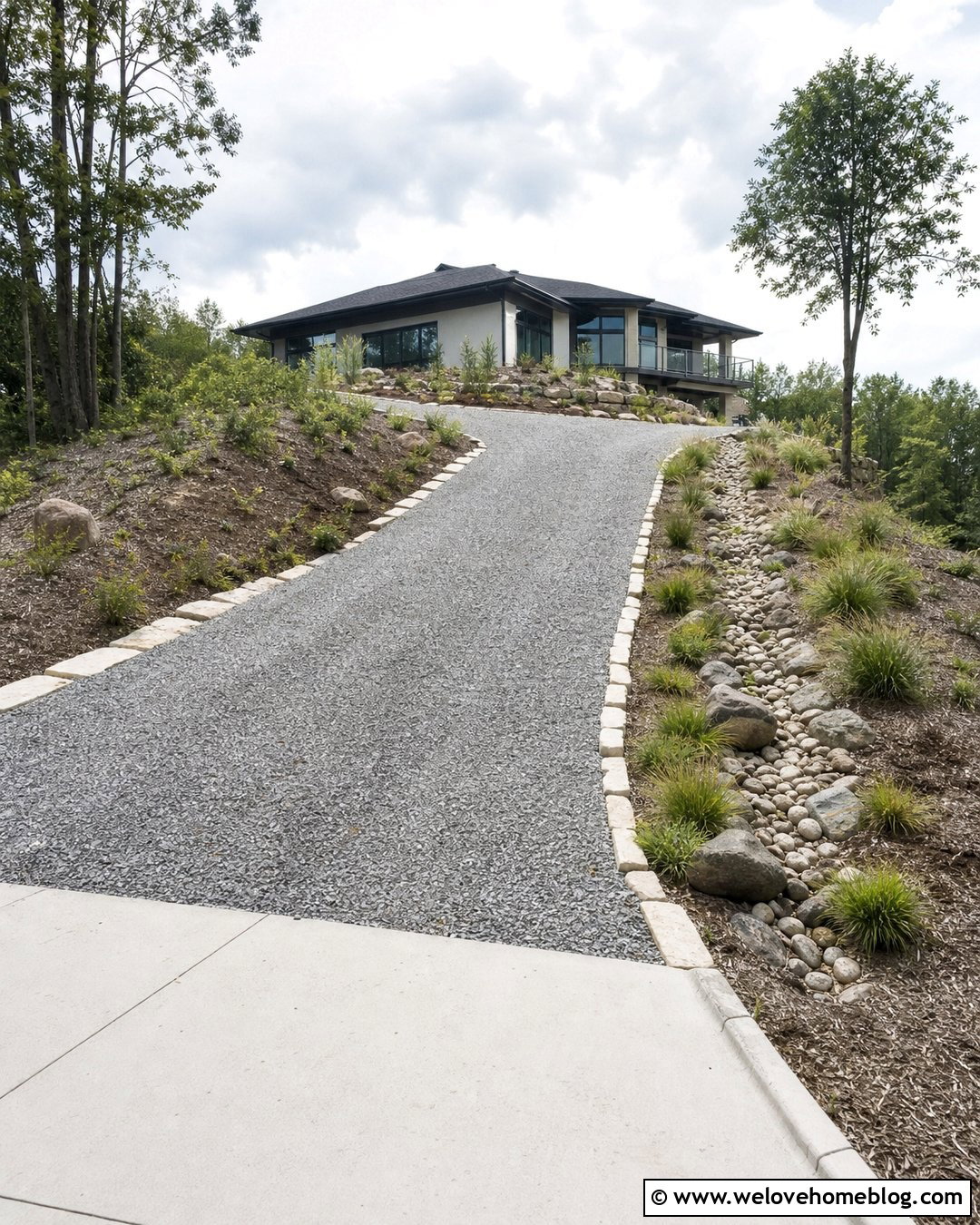
A sloped driveway demands more than simply spreading inexpensive gravel over the ground. Use angular crushed stone that compacts well, supported by a properly designed base and grading plan. A shallow vegetated swale along one side can guide runoff toward an approved drainage area while becoming part of the landscaping. Plant it with locally suitable grasses and moisture-tolerant ground covers that will not obstruct water movement. Use sturdy flush edging only where necessary, since raised borders can interfere with drainage. At the bottom, consider a stable apron that reduces loose material entering the street. Steeper or erosion-prone sites may require professional design, additional drainage structures, or another surface. Solving water movement first protects the budget from repeated washouts and gravel replacement.
37. Gravel Driveway With Solar Entrance Lights
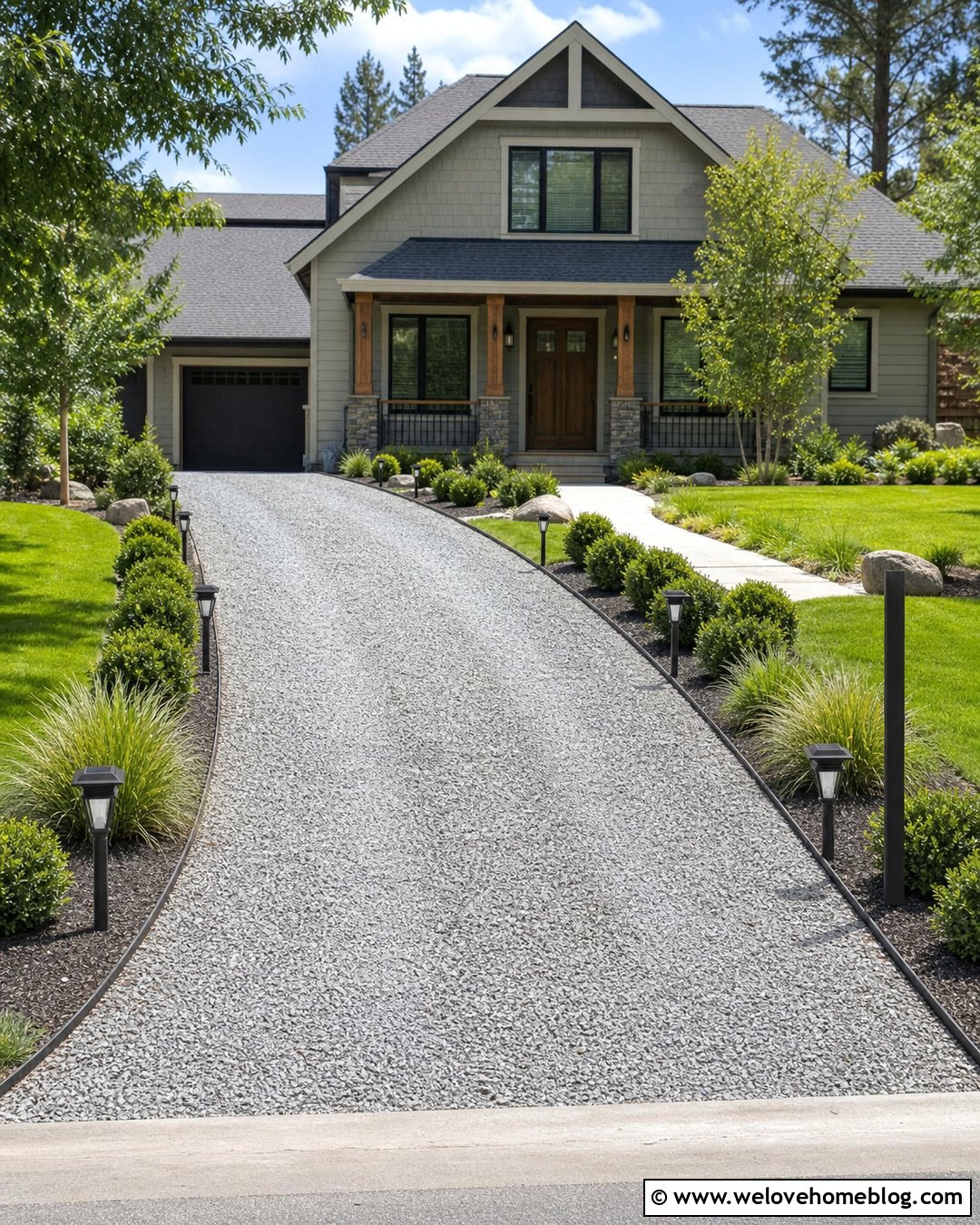
Lighting can improve the appearance of an affordable gravel driveway without installing electrical wiring along its full length. Use compacted light-gray crushed stone with dark metal edging, then position solar fixtures near the entrance and key walkway connections. Select durable lights that provide downward-directed illumination rather than scattering many small units along every edge. Two matching fixtures beside low planting beds can create a clear arrival point. Add reflective address numbers on a simple post so visitors can identify the property. During the day, ornamental grasses and small evergreen shrubs should frame the lights without shading their solar panels. Keep all fixtures outside vehicle clearances and snow-removal routes. Performance varies by product, sunlight, season, and climate, so place lighting according to actual site conditions.
38. Gravel Driveway With Address Post And Boulder Markers
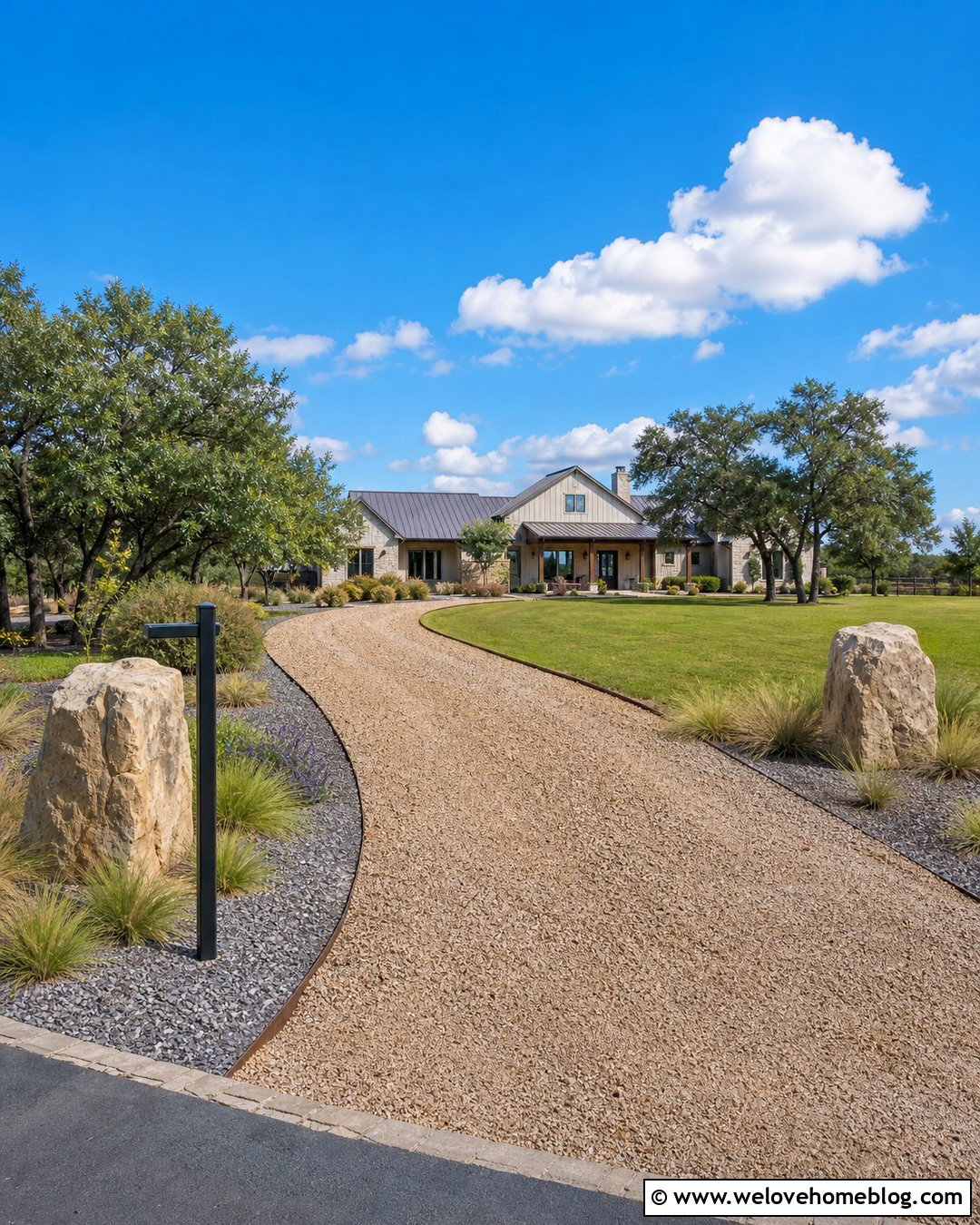
A well-designed address feature can make a basic gravel driveway feel complete. Use tan crushed stone in a straight or gently curved layout, framed by compacted shoulders instead of expensive continuous edging. Near the street, install a simple wood or black metal address post with large, readable numbers. Place one natural boulder on each side as visual markers, ensuring they remain well outside the driveway’s required clearance and public right-of-way. Surround the markers with low gravel mulch and tough ornamental grasses. Avoid dense shrubs that could block traffic visibility or hide the address. Match the post color to the mailbox, exterior lights, or front door. This small entrance investment gives the entire driveway a recognizable focal point while keeping the long driving surface economical.
39. Asphalt Driveway With Mulched Shrub Borders
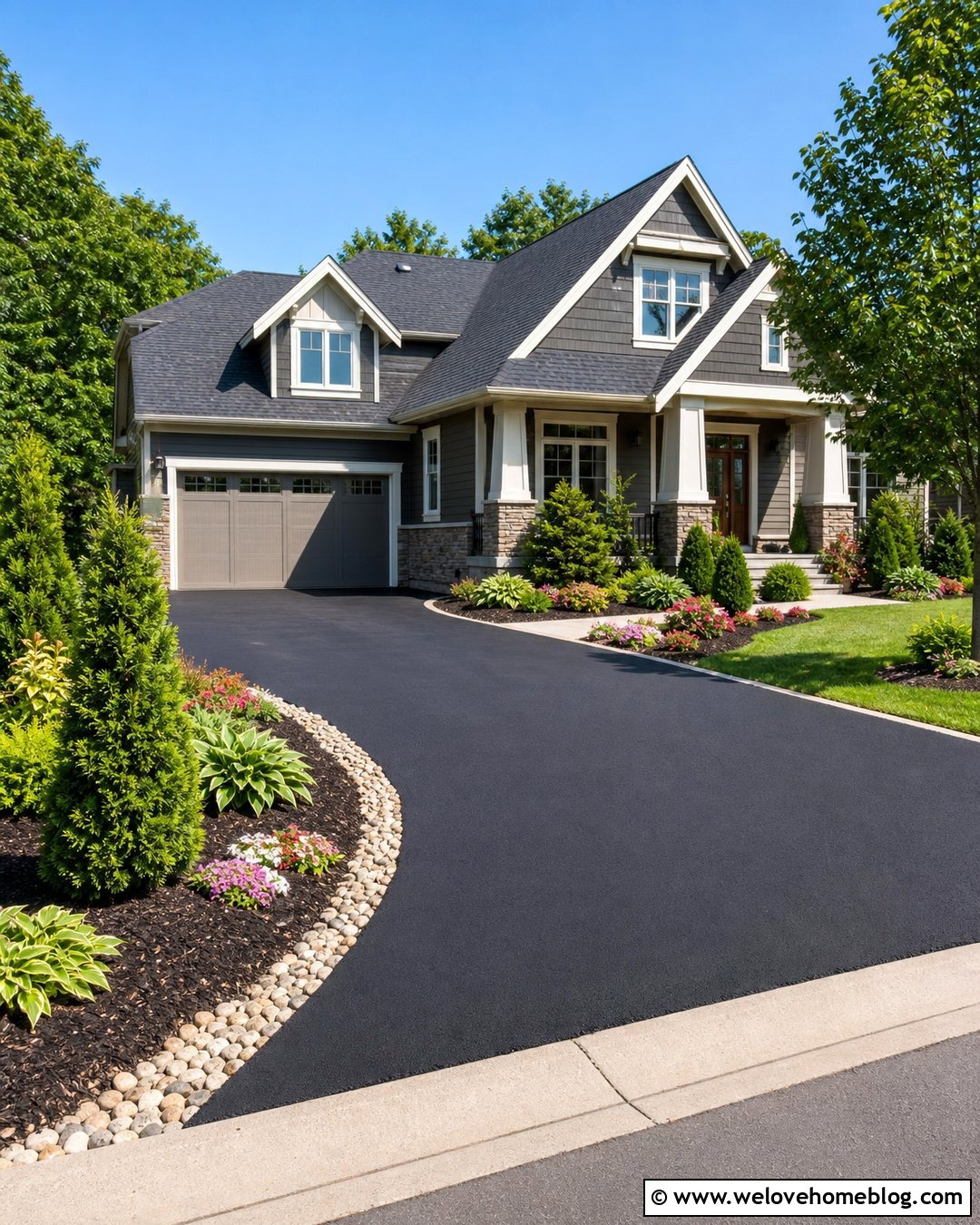
Freshly defined planting beds can improve an asphalt driveway even when resurfacing is not in the budget. Cut smooth bed lines along selected portions of the driveway, then apply dark mulch and install a limited number of durable shrubs. Concentrate plants near the garage and front walk rather than creating a continuous high-maintenance hedge. Repeating one or two varieties gives the border a calmer, fuller appearance as plants mature. Add a narrow strip of river rock where downspouts or roof runoff regularly cross the bed. The rock provides a visual transition and can support a properly planned drainage route. Keep mulch, soil, and roots from building up against the asphalt edge. Choose shrubs based on mature width so branches do not scratch vehicles or obstruct doors.
40. Mixed-Material Driveway With Decorative Entrance
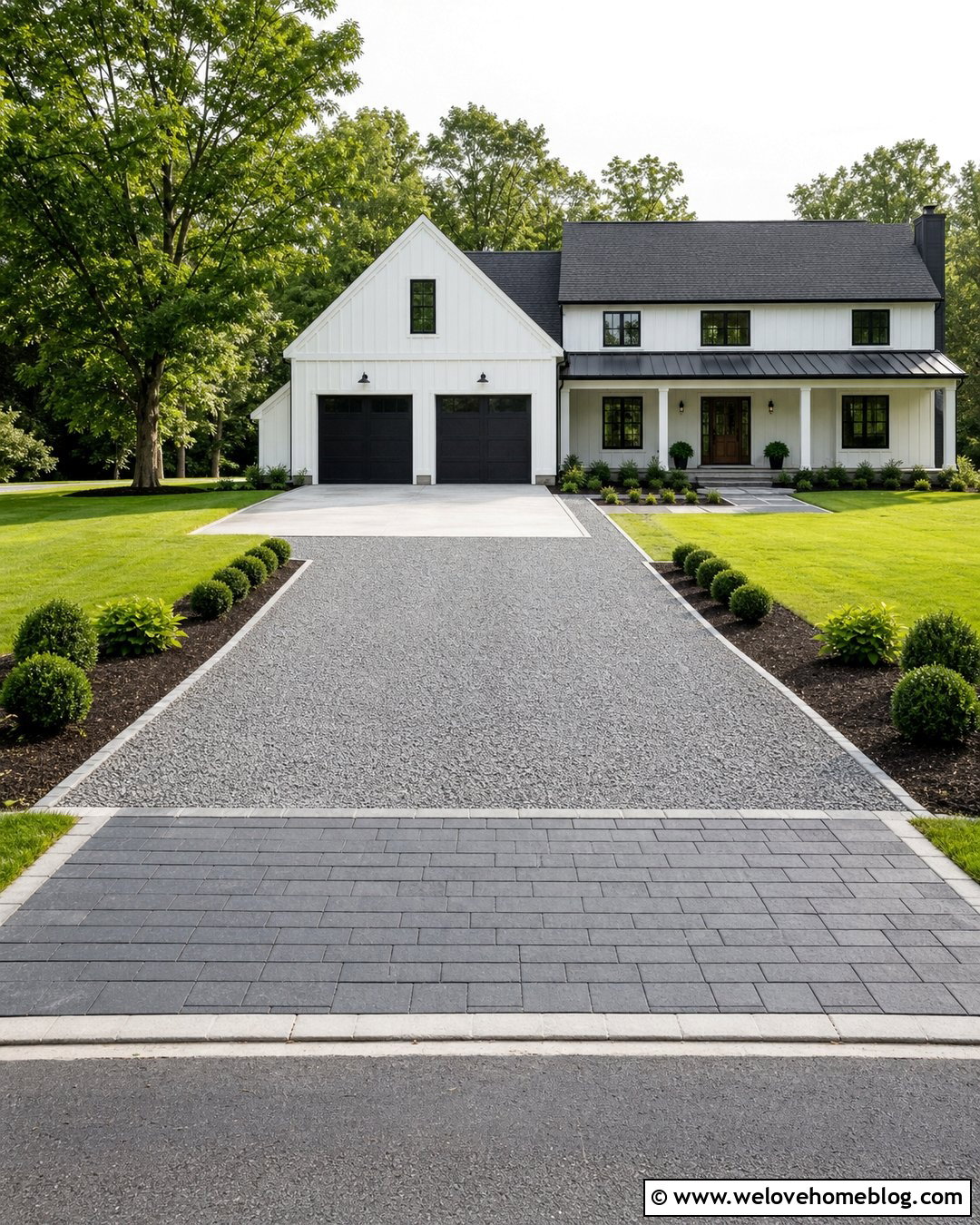
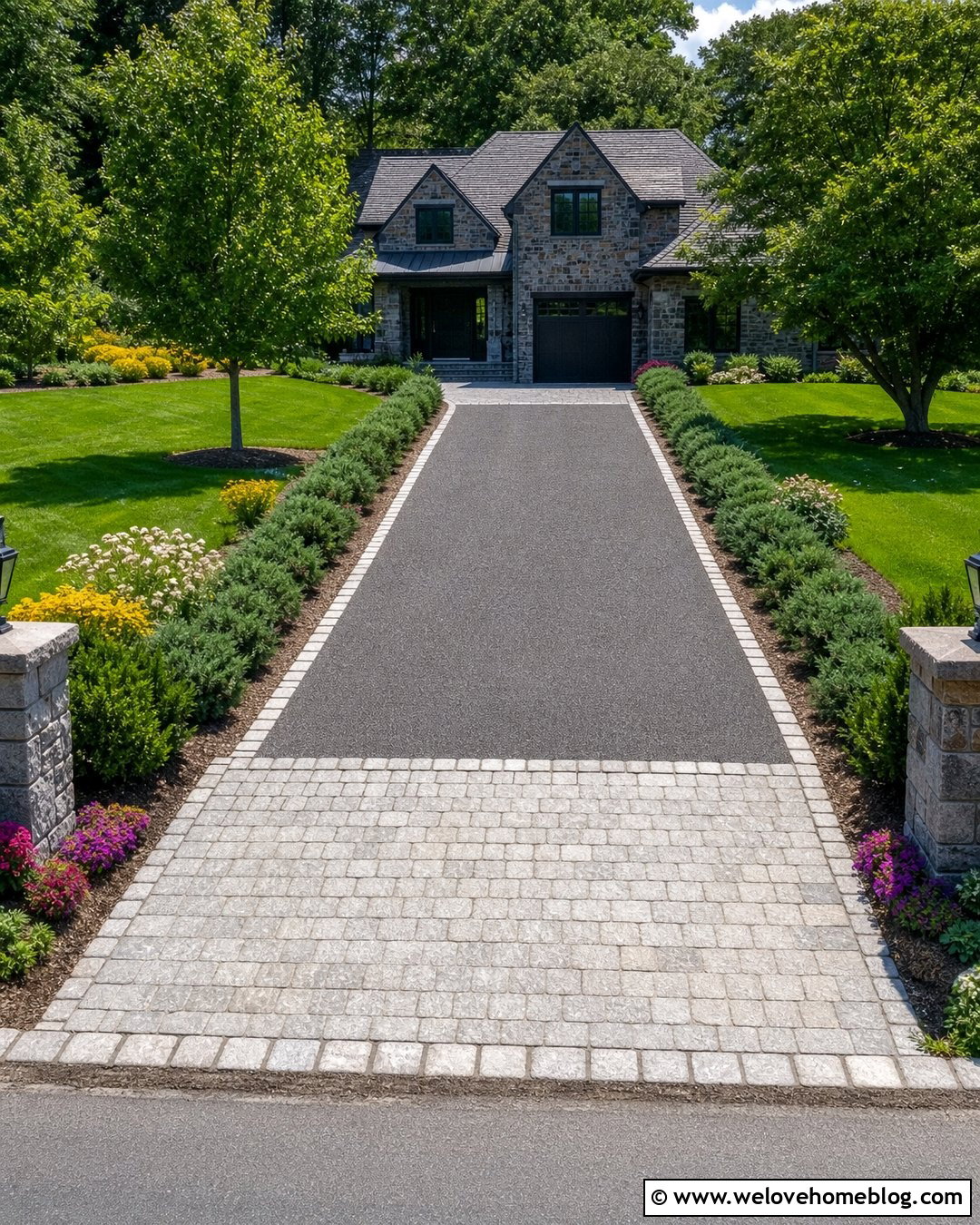
A mixed-material layout stretches the budget by reserving premium finishes for the most visible areas. Use compacted crushed gravel for most of the driveway, a small asphalt or concrete parking pad near the garage, and an affordable concrete-paver apron at the street. Connect the three surfaces with a consistent color palette, such as charcoal pavers, gray gravel, and natural concrete. Flush edging creates smooth transitions and reduces loose material movement. Frame the entrance with two simple lawn cutouts or mulched beds containing matching shrubs. Near the house, repeat a few apron pavers in the walkway. Plan every transition for vehicle loads, drainage, and comfortable walking. This layered approach can look custom because each material has a clear purpose rather than appearing like an unfinished patchwork.
Conclusion:
The strongest 40 driveway on a budget ideas prioritize function beneath the surface and restraint above it. Start with drainage, grading, a vehicle-ready base, and a layout that supports daily parking. Then select a locally available material that fits your climate and maintenance expectations. Gravel, crushed stone, recycled aggregates, asphalt improvements, concrete tracks, and mixed surfaces can all deliver attractive results. Use decorative brick, pavers, lighting, plants, or entrance markers in smaller focal areas instead of spreading expensive details everywhere. Reuse sound existing pavement whenever practical, compare bulk-delivery costs, and verify local requirements before construction. A clear plan helps every dollar contribute to a safer, tidier, and more welcoming driveway.

Related posts:



Leave a Reply