
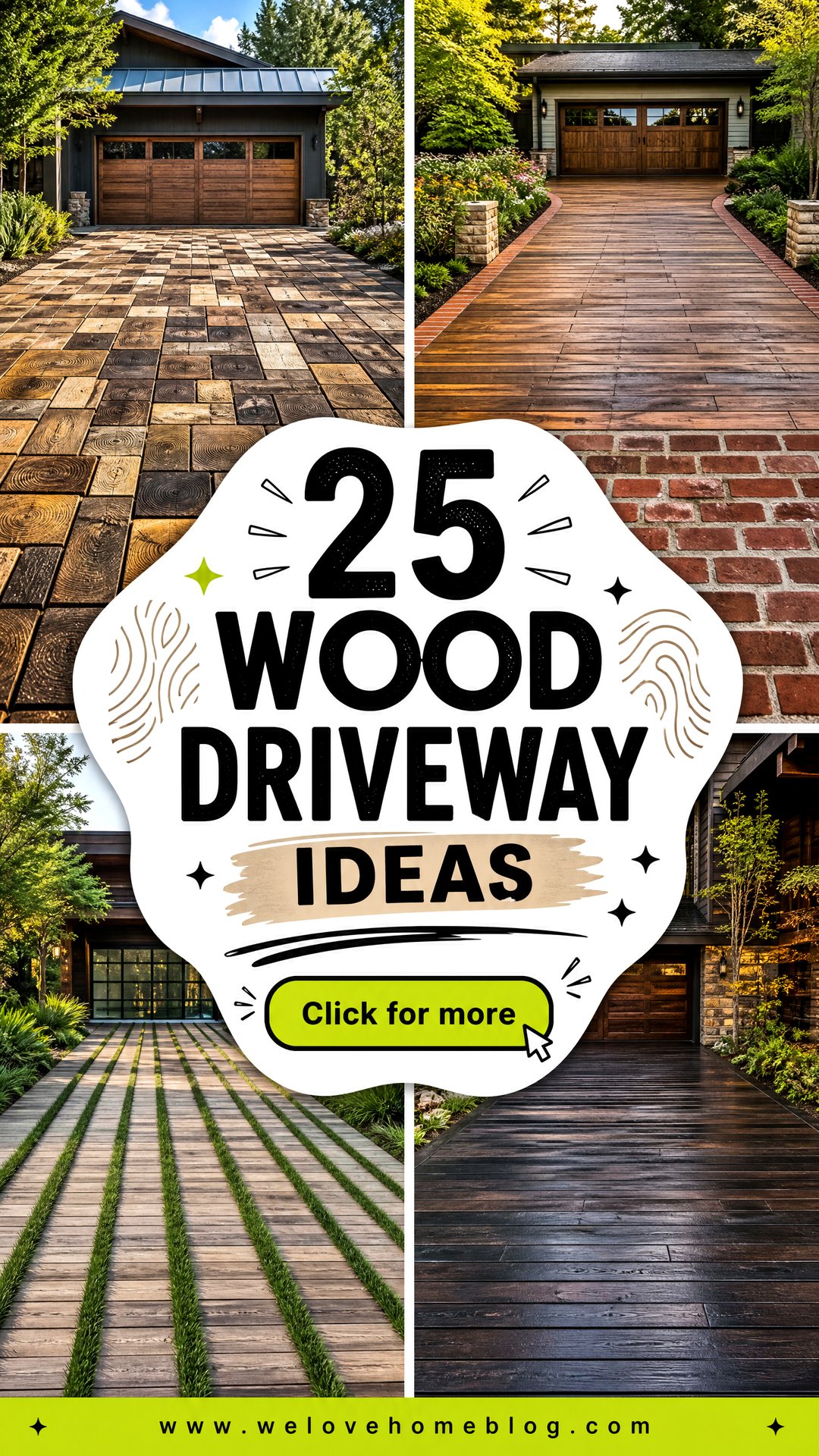
These 25 Wood Driveway Ideas explore how natural timber, wood pavers, and realistic wood-look paving can create a warm, distinctive entrance. Real wood brings rich grain and organic color, but a driveway must also handle moisture, drainage, ground movement, and vehicle loads. Durable hardwood heartwood, especially black locust, offers greater decay resistance than many common species, while wood-stamped concrete provides a lower-maintenance alternative with convincing plank texture. () Every successful design also needs a properly engineered base, secure edge restraints, and a layout suited to the property. From woodland cabins to modern suburban homes, these complete looks combine the surface, shape, borders, gates, and landscaping. Use the sections below to compare practical and attractive 25 Wood Driveway Ideas.
1. Black Locust Wood Paver Driveway
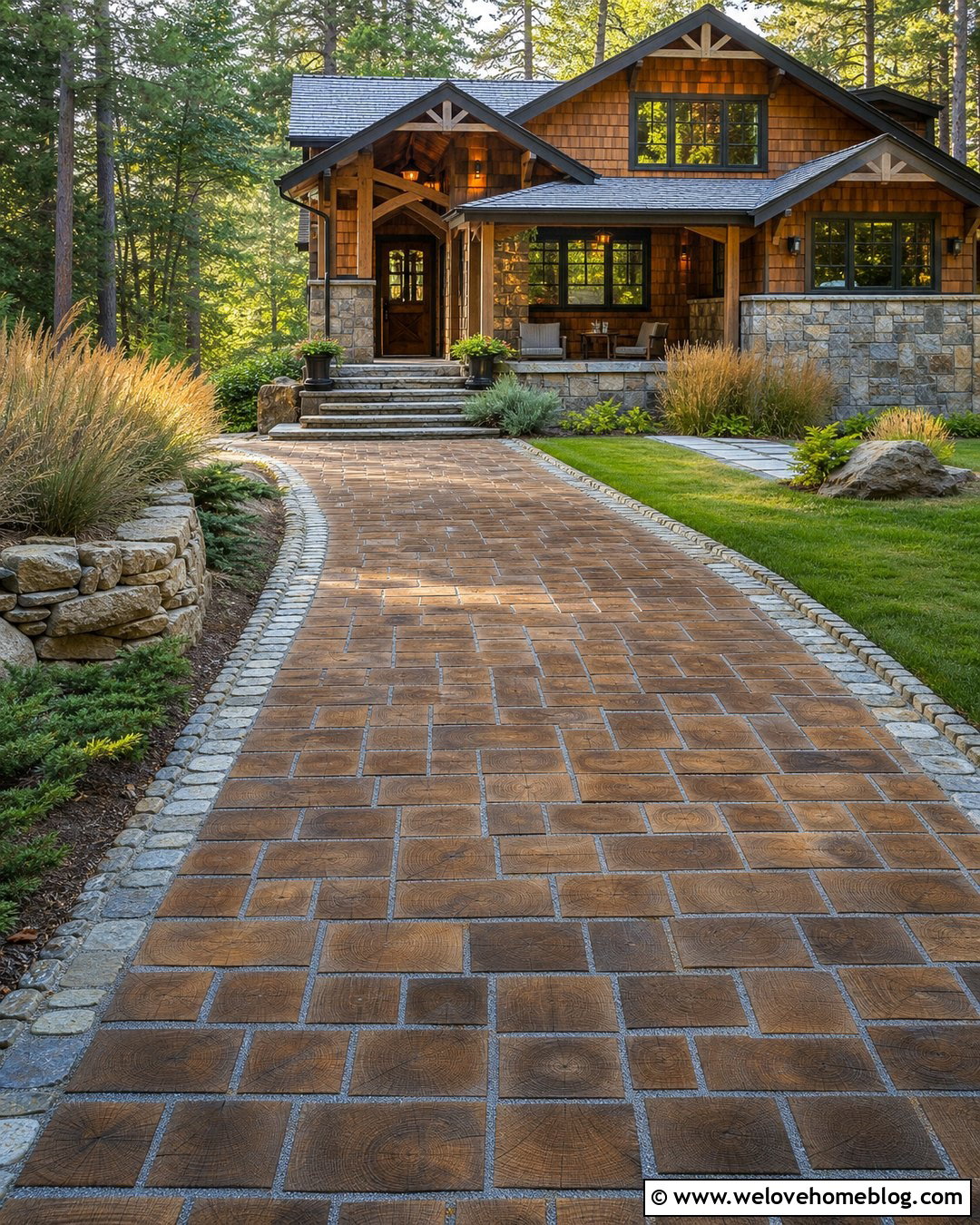
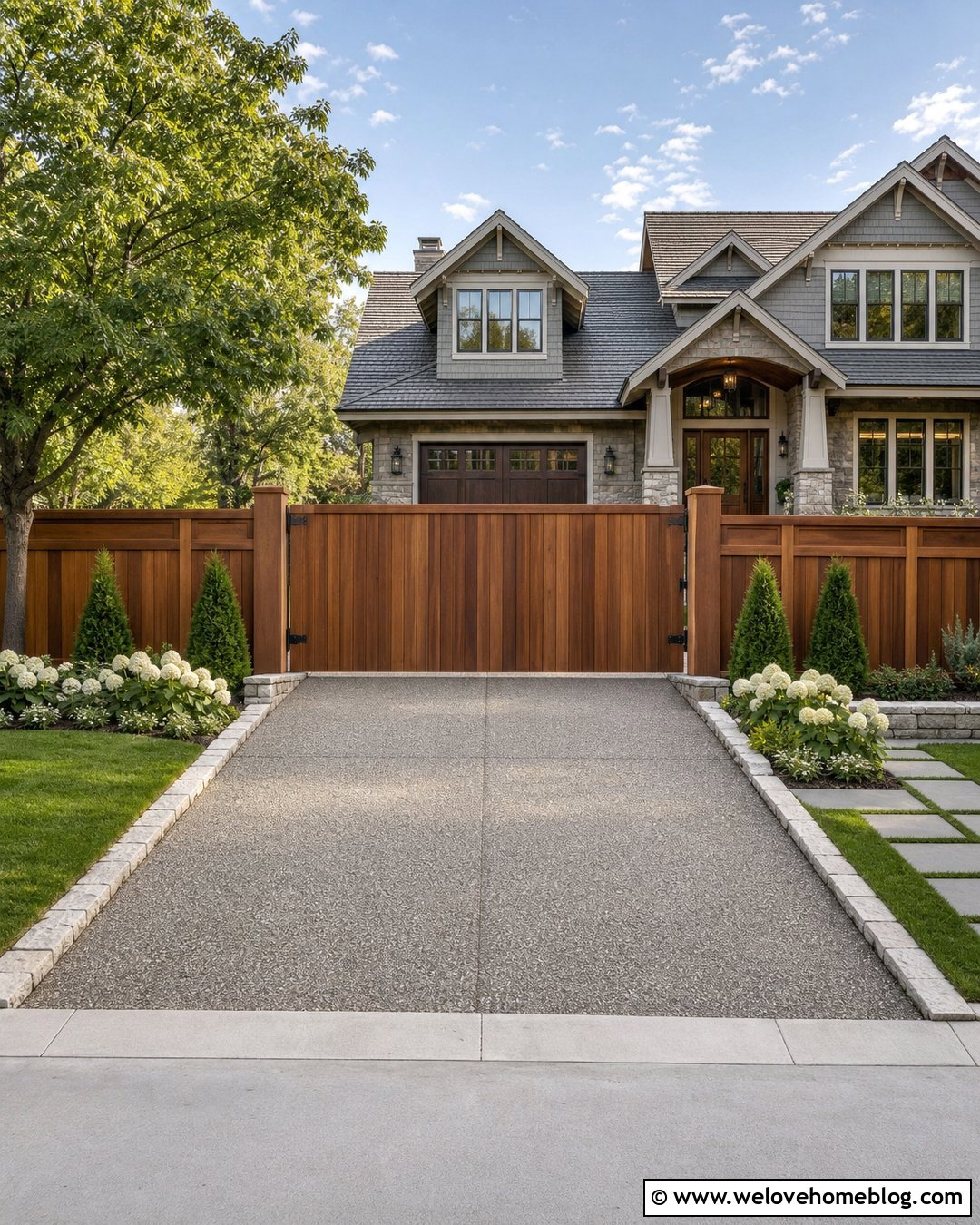
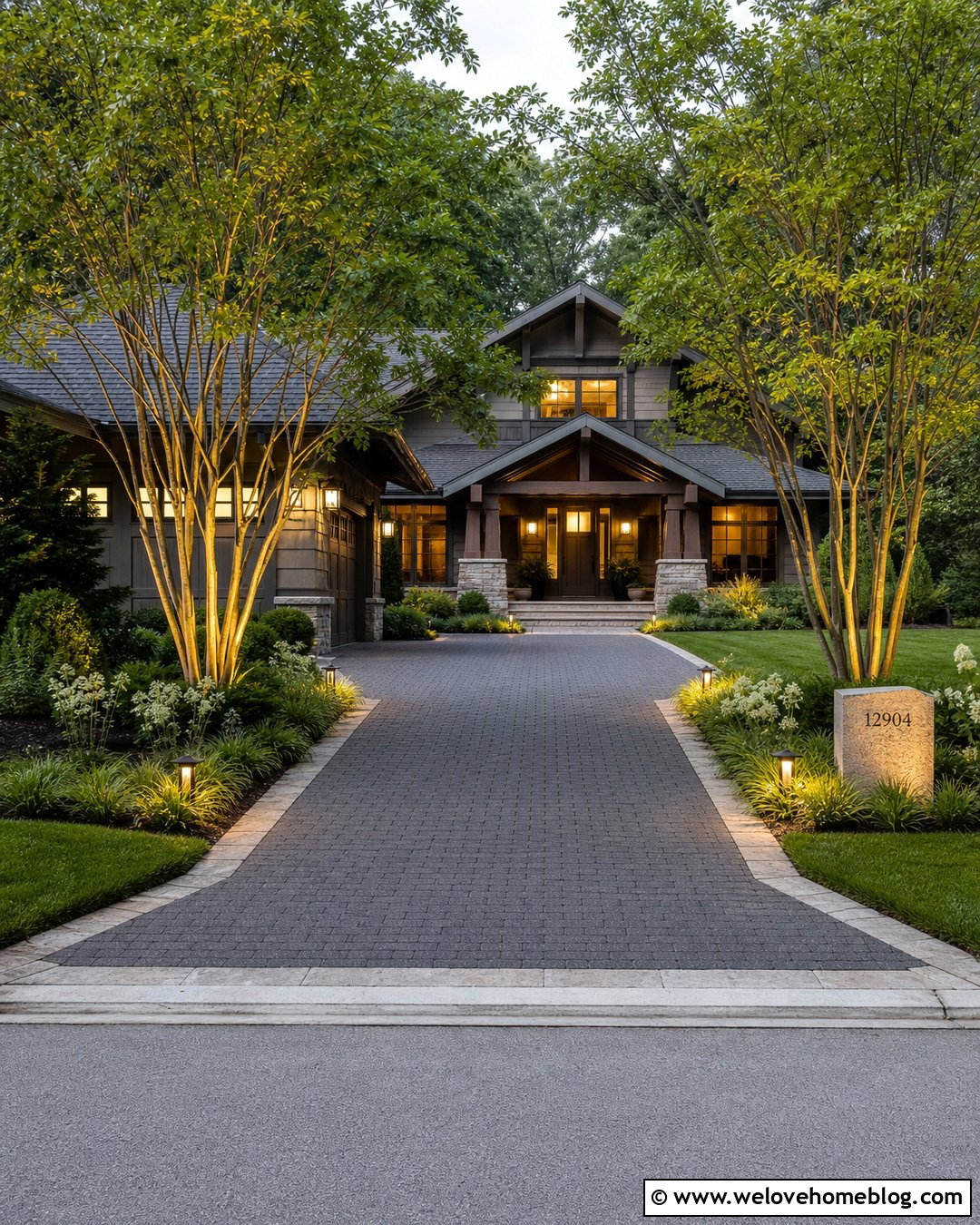
Black locust pavers create a genuine wood driveway with deep golden-brown color and visible end-grain texture. Arrange thick, vehicle-rated blocks in a running bond pattern over an engineered, free-draining base. Narrow joints filled with compacted stone help water move away instead of collecting around the wood. A cobblestone perimeter keeps the blocks contained and provides a durable transition at the street and garage. This surface feels especially natural beside a craftsman home with cedar siding or stone details. Add ornamental grasses, low junipers, and a simple flagstone walkway to soften the edges. Black locust heartwood is naturally decay resistant, but the paver dimensions, foundation, drainage, and load capacity should still be specified by an experienced contractor or engineer. ()
2. Reclaimed Wood Block Driveway
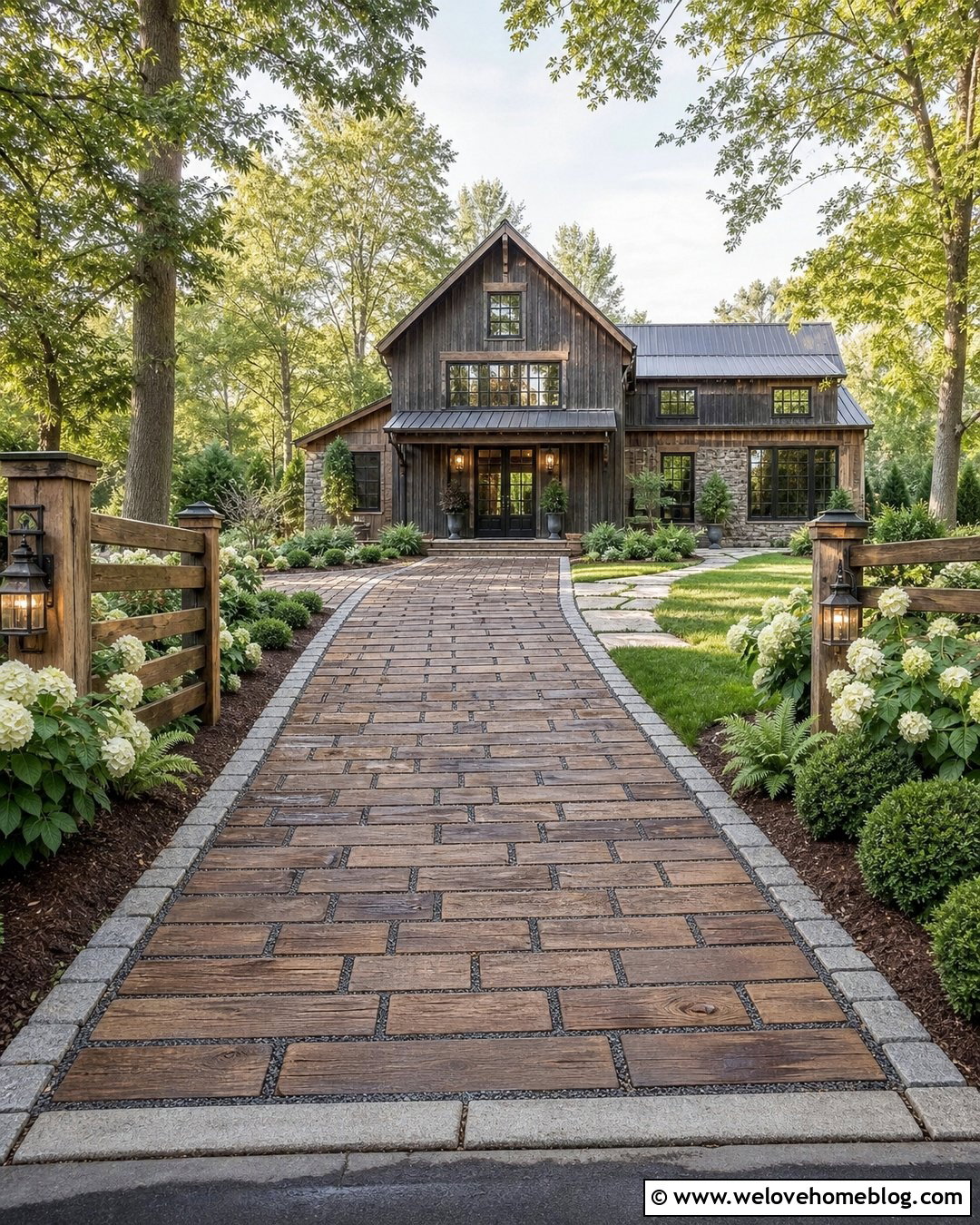
Weathered reclaimed wood blocks give a driveway an aged surface that looks settled into the landscape. Choose sound, untreated hardwood pieces with consistent thickness rather than decorative scraps with unknown coatings. A staggered block pattern distributes the visual texture, while charcoal gravel joints highlight every warm brown paver. Frame the driveway with granite setts so the softer wood is not exposed directly to turning tires at the edges. This complete look works well with a renovated barn, country farmhouse, or rustic guesthouse. Deep planting beds filled with hydrangeas, ferns, boxwoods, and native grasses make the entrance feel established. Because reclaimed pieces may vary in strength and condition, have every block inspected and build the surface over a professionally designed structural base.
3. Pressure Treated Timber Plank Driveway
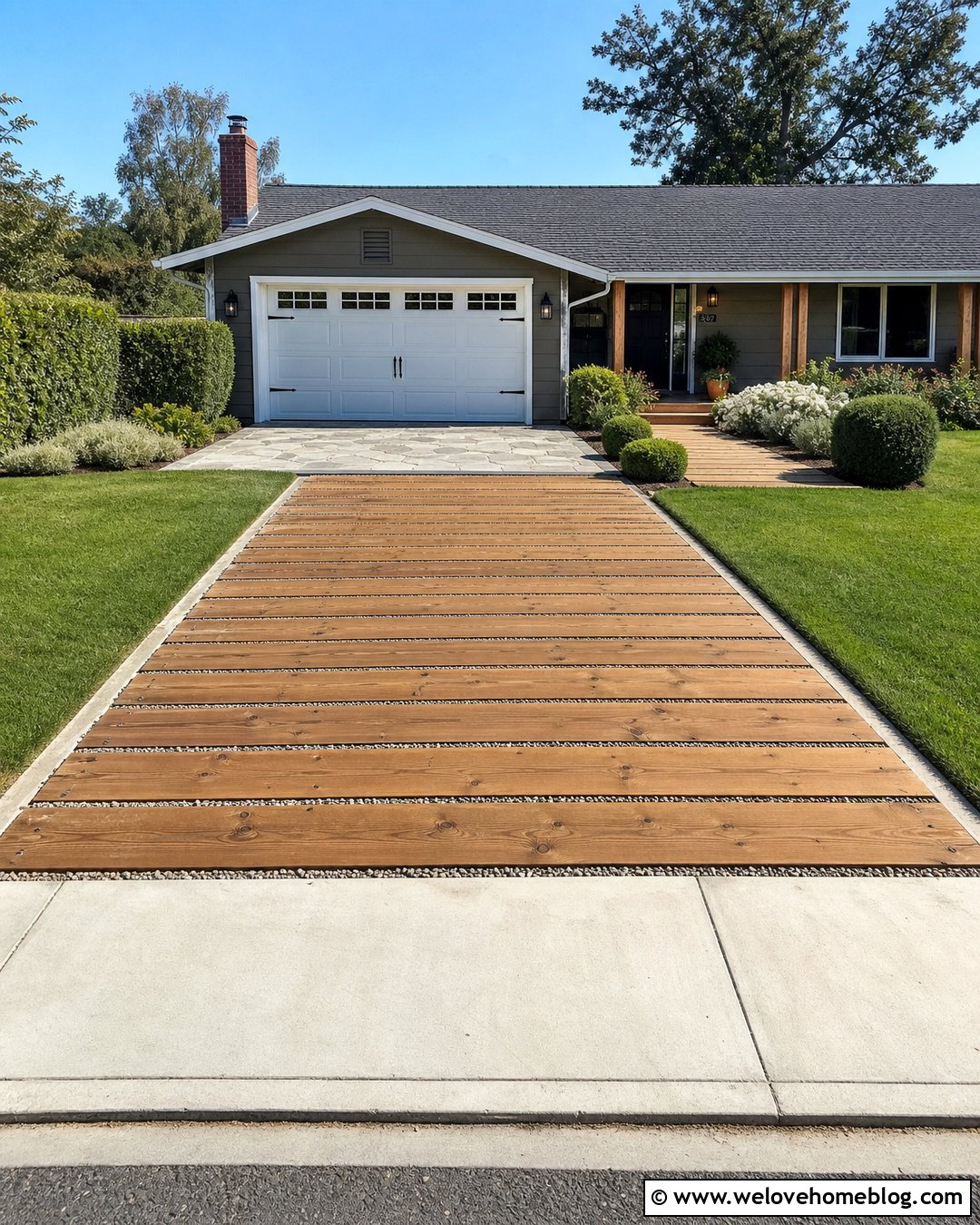
Long pressure-treated timber planks can produce a clean linear driveway that visually stretches a small front yard. Lay substantial, ground-contact-rated timbers perpendicular to the direction of travel so tires cross several boards rather than following one narrow plank. Controlled gaps between the boards can reveal compacted angular stone and improve surface drainage. Use concrete or stone at the street apron, garage threshold, and turning points where wear is greatest. A straight layout complements a modest ranch home, especially when paired with clipped shrubs, wide lawn strips, and a matching timber walkway. Select treatments permitted for residential ground contact in your area. The supporting structure, fasteners, ventilation, and expected vehicle weight should be professionally evaluated before installation, since ordinary deck boards are not driveway materials.
4. Wood Plank Driveway With Gravel Joints
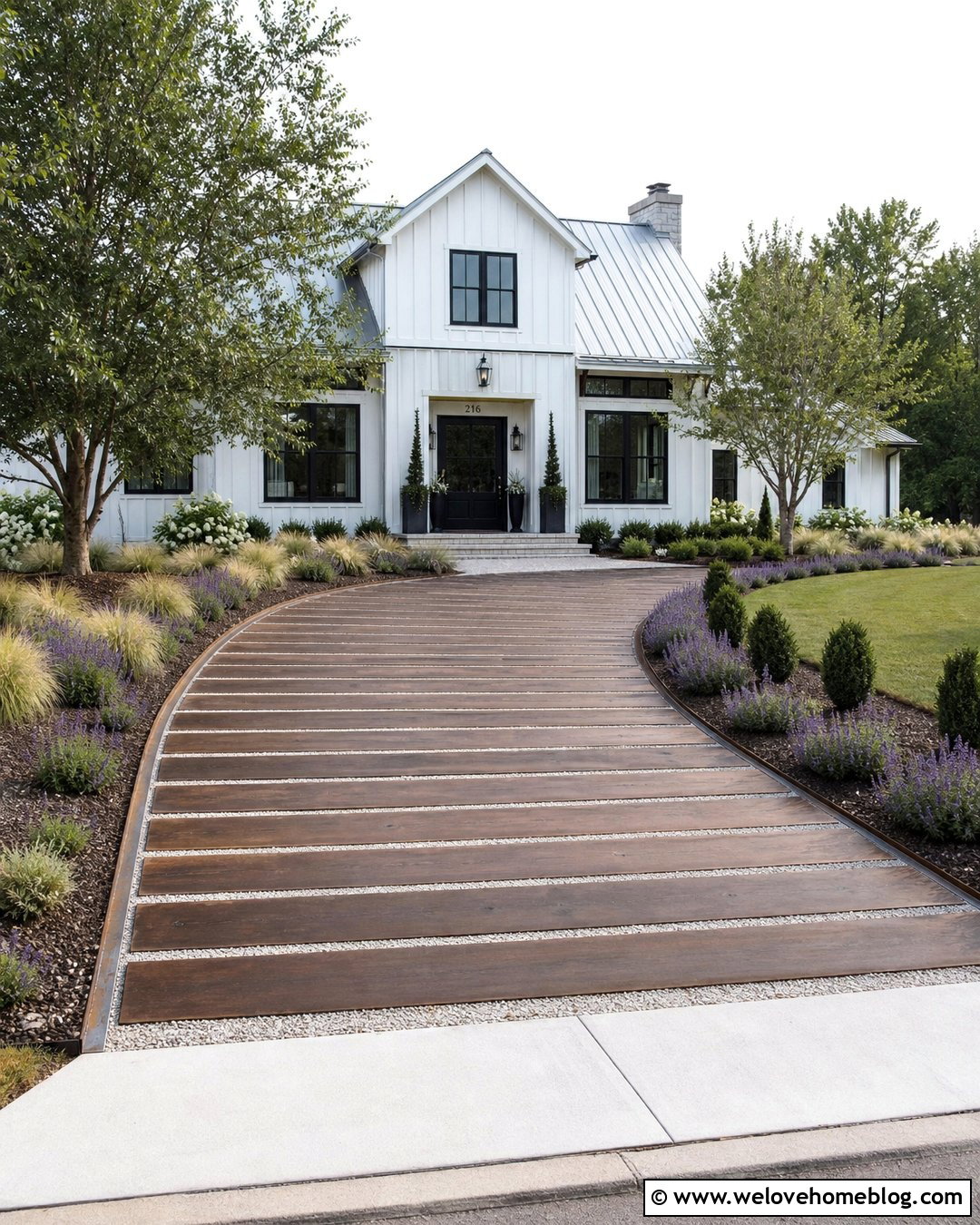
Warm timber planks and pale gravel create a relaxed driveway that feels lighter than one continuous paved surface. Set thick, vehicle-rated hardwood planks in evenly spaced bands across a compacted gravel field. The gravel should sit slightly below the wood so it remains contained and does not scatter onto the lawn. Steel edging along both sides provides a crisp boundary without competing with the natural materials. A gently curved shape can lead toward a modern farmhouse with white siding, black windows, and a timber porch. Complete the look with lavender, feather reed grass, dwarf evergreens, and two small ornamental trees near the entrance. This mixed surface depends on excellent drainage and a stable subbase, so it is best suited to a carefully engineered residential installation.
5. Wood Driveway With Concrete Tire Tracks
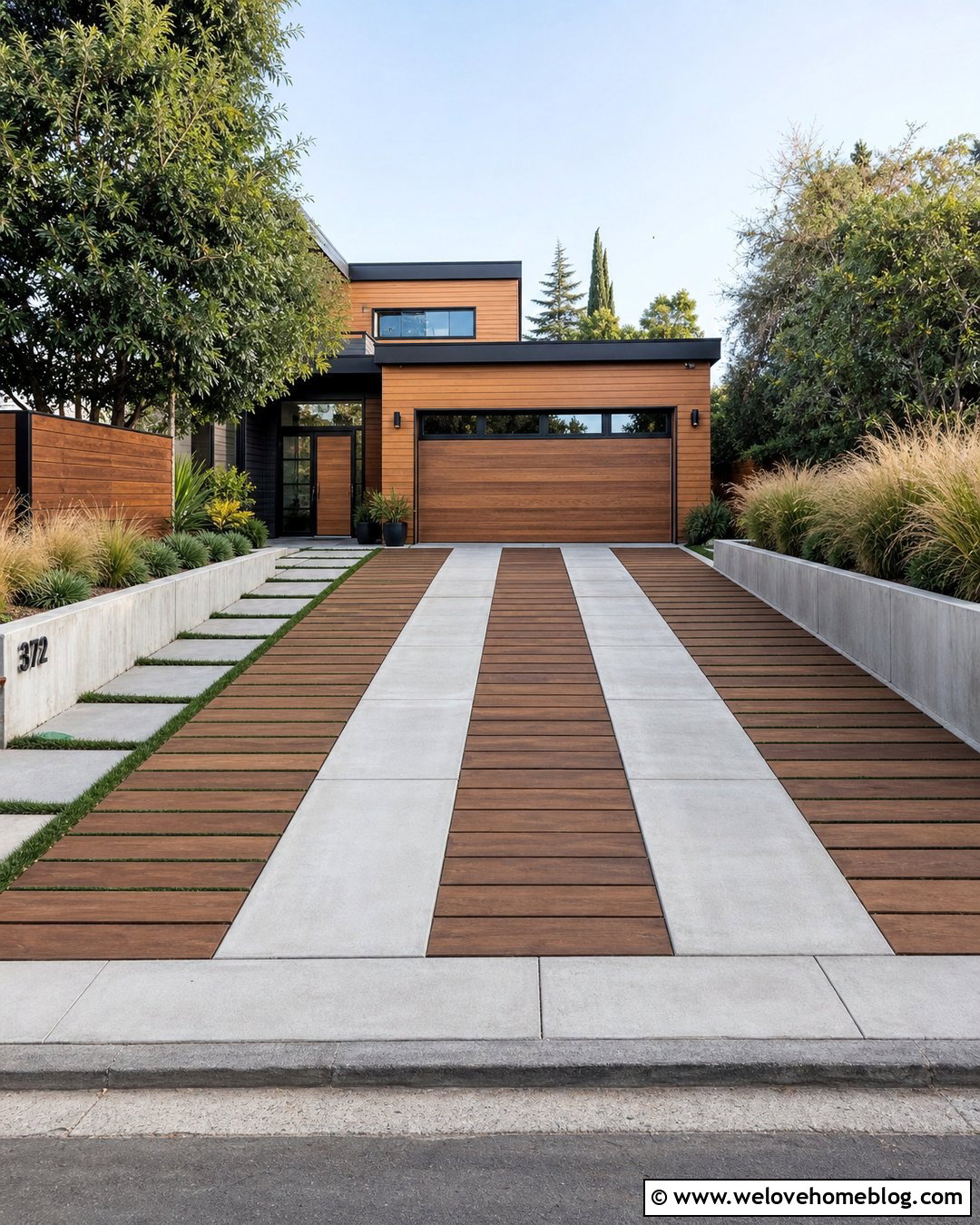
Concrete tire tracks make it possible to feature real wood without placing every timber directly beneath regular vehicle traffic. Use two reinforced concrete lanes as the primary driving surface, then fill the center and outer bands with short hardwood planks or wood blocks. A medium walnut stain warms the wood, while light gray concrete keeps the entrance bright. Continue the concrete into the street apron and parking area for easier turning. This practical composition suits a contemporary home with wood siding and simple rectangular architecture. Add grass between the center boards, low planting beds along the edges, and a straight concrete walkway to the front door. The repeated linear bands create order while reducing the amount of exposed wood that needs cleaning, inspection, and refinishing.
6. Wood Driveway With Stone Borders
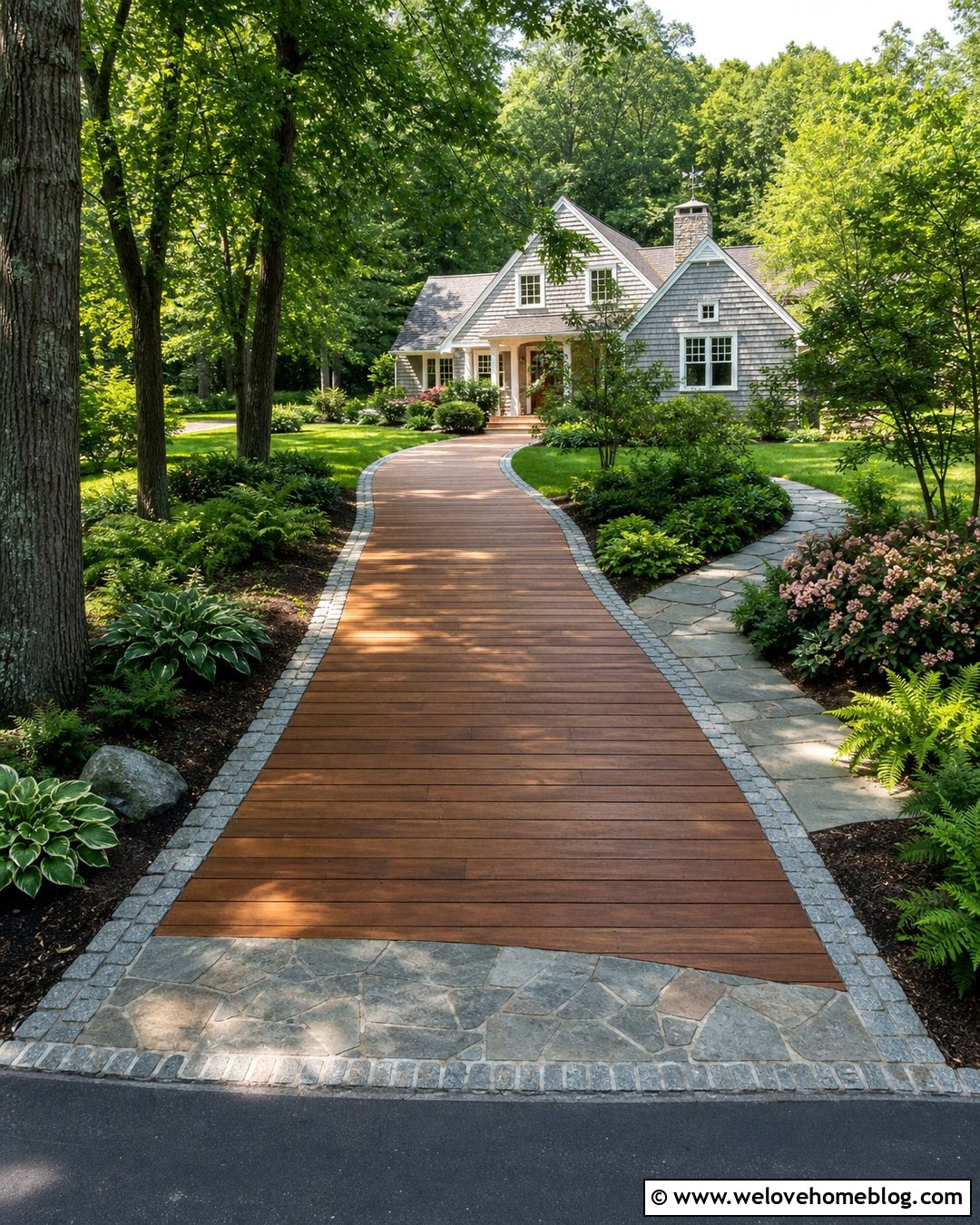
Natural stone borders give a timber driveway a strong frame and protect its most vulnerable edges. Choose wide hardwood planks for the central surface, then install two or three rows of rugged granite setts along each side. Extend the stone across the street apron and garage entrance to handle frequent braking and turning. A subtle curve makes the driveway feel inviting beside a cottage or shingle-style home. Ferns, hostas, flowering shrubs, and mature shade trees can create a cool woodland setting without hiding the driveway. Keep mulch and dense plant growth away from the timber so air can circulate around the edge. The contrast between warm wood grain and cool gray stone gives the complete entrance depth while making the transition between the driveway, lawn, and planting beds clearly visible.
7. Wood Driveway With Brick Apron
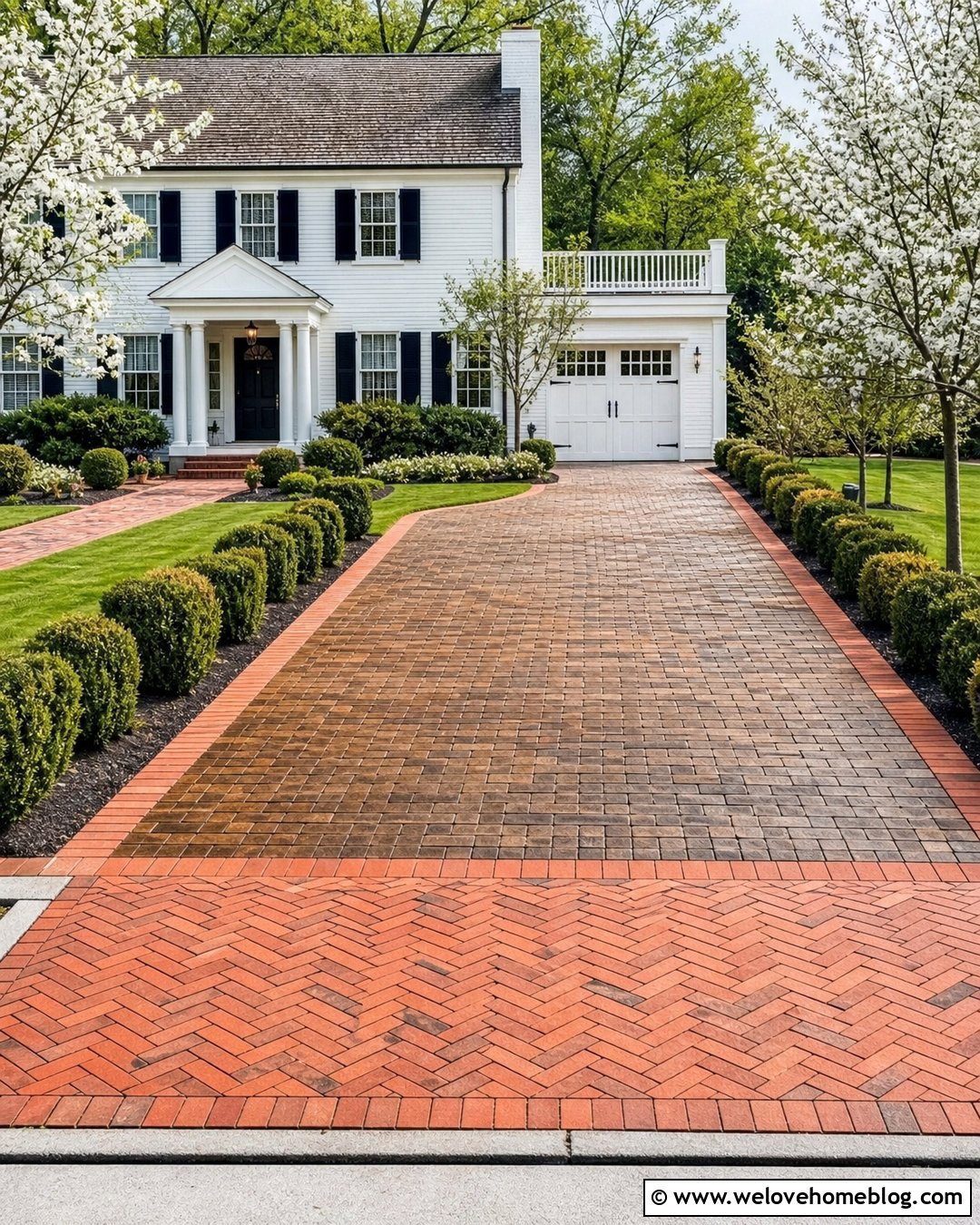
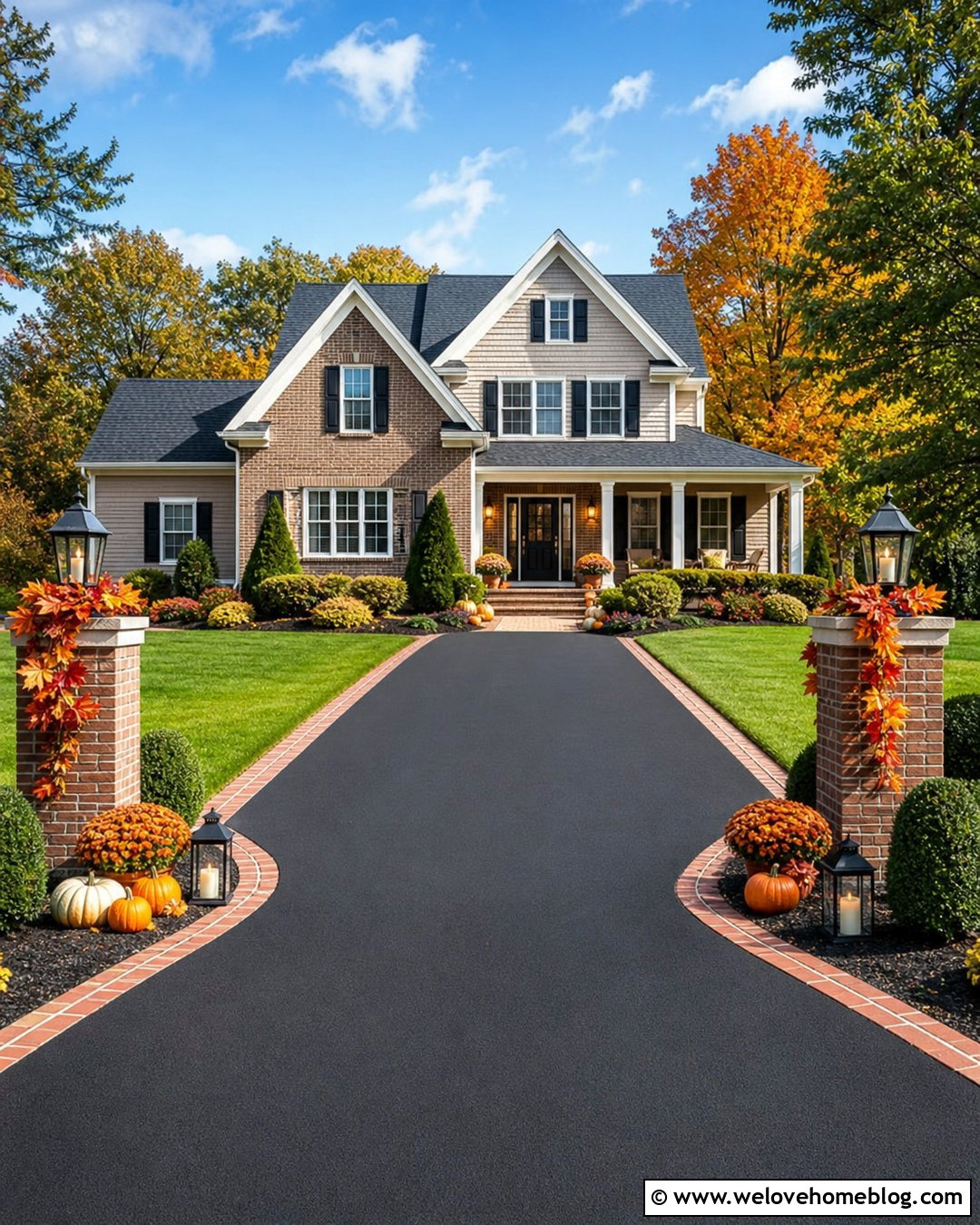
A brick apron provides a durable, traditional introduction to a wood driveway. Begin at the curb with clay brick pavers laid in herringbone, then transition into staggered hardwood blocks farther inside the property. Repeat the brick as a narrow perimeter border to tie the two materials together. Warm red brick looks especially balanced with honey-brown wood and a classic colonial home featuring white trim and dark shutters. Frame the straight driveway with symmetrical boxwoods, small flowering trees, and a brick walkway leading toward the porch. The apron should be deep enough to absorb regular turning and street-edge wear. This arrangement keeps the wood away from runoff and road treatments while preserving its rich texture across the more protected portion of the driveway.
8. Wood Driveway With Grass Strips
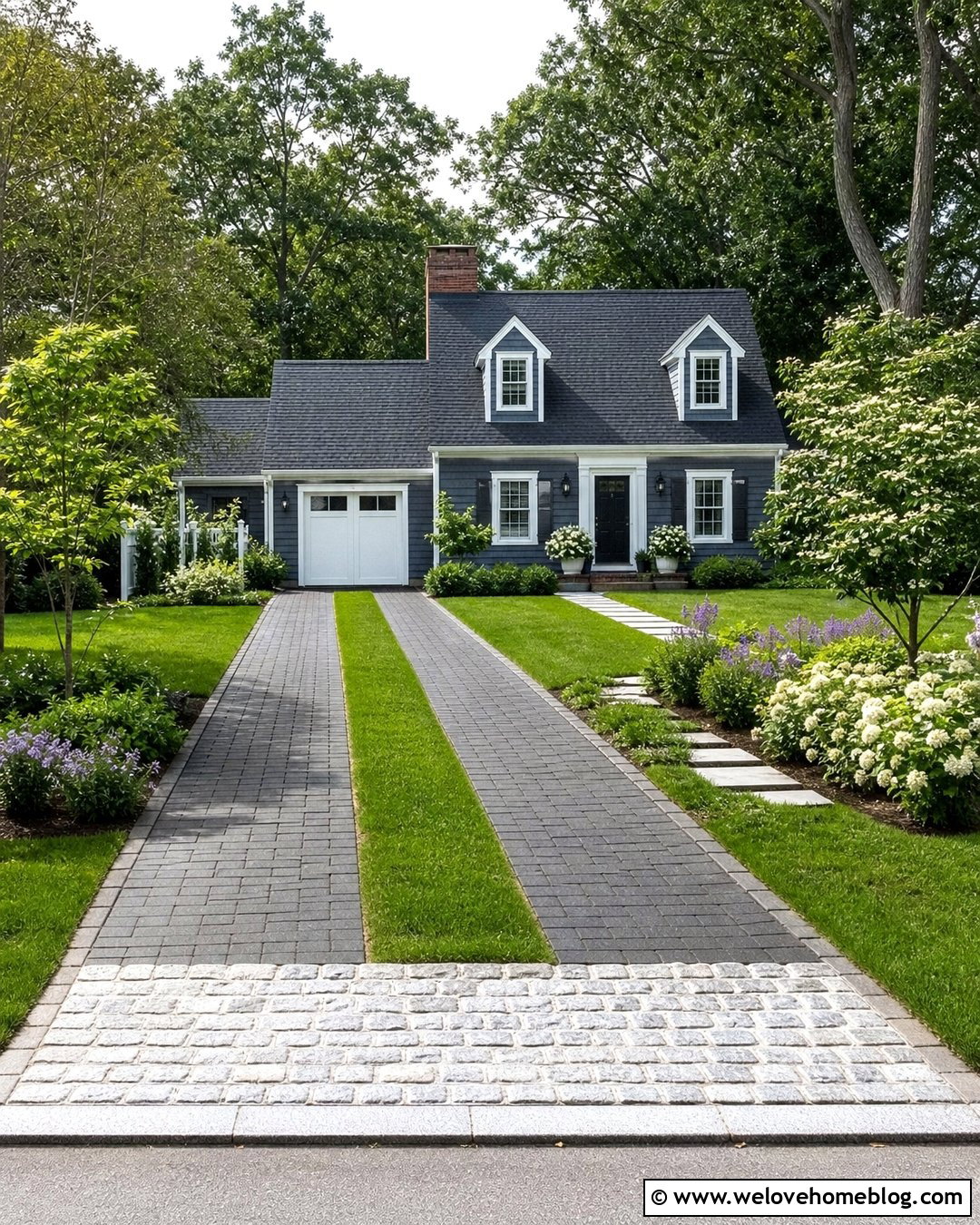
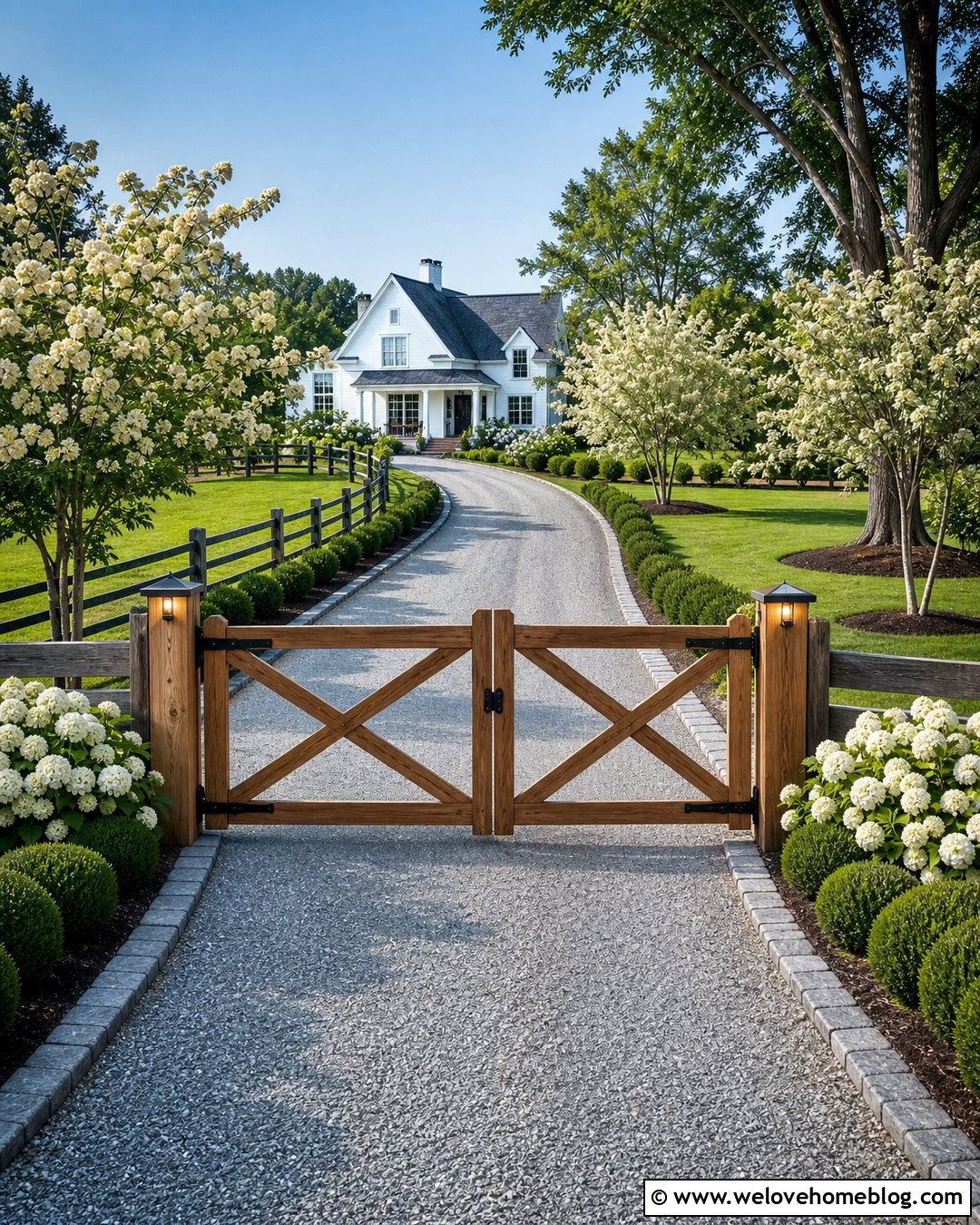
Green grass strips can break a broad wood driveway into smaller, garden-friendly sections. Use two wide lanes of engineered hardwood pavers beneath the tire paths, with a generous grass band running between them. Additional lawn strips along the edges create soft transitions into the front yard. A straight or slightly curved layout works well for a casual Cape Cod home with painted shingles and a welcoming front porch. Keep the grass level slightly below the wood and install hidden restraints to prevent soil from spreading onto the driving surface. Stepping stones can connect the driveway to the front walkway without interrupting the composition. Choose turf suited to the available sun, or replace struggling grass with low ground cover where local conditions and traffic allow.
9. Curved Wood Driveway
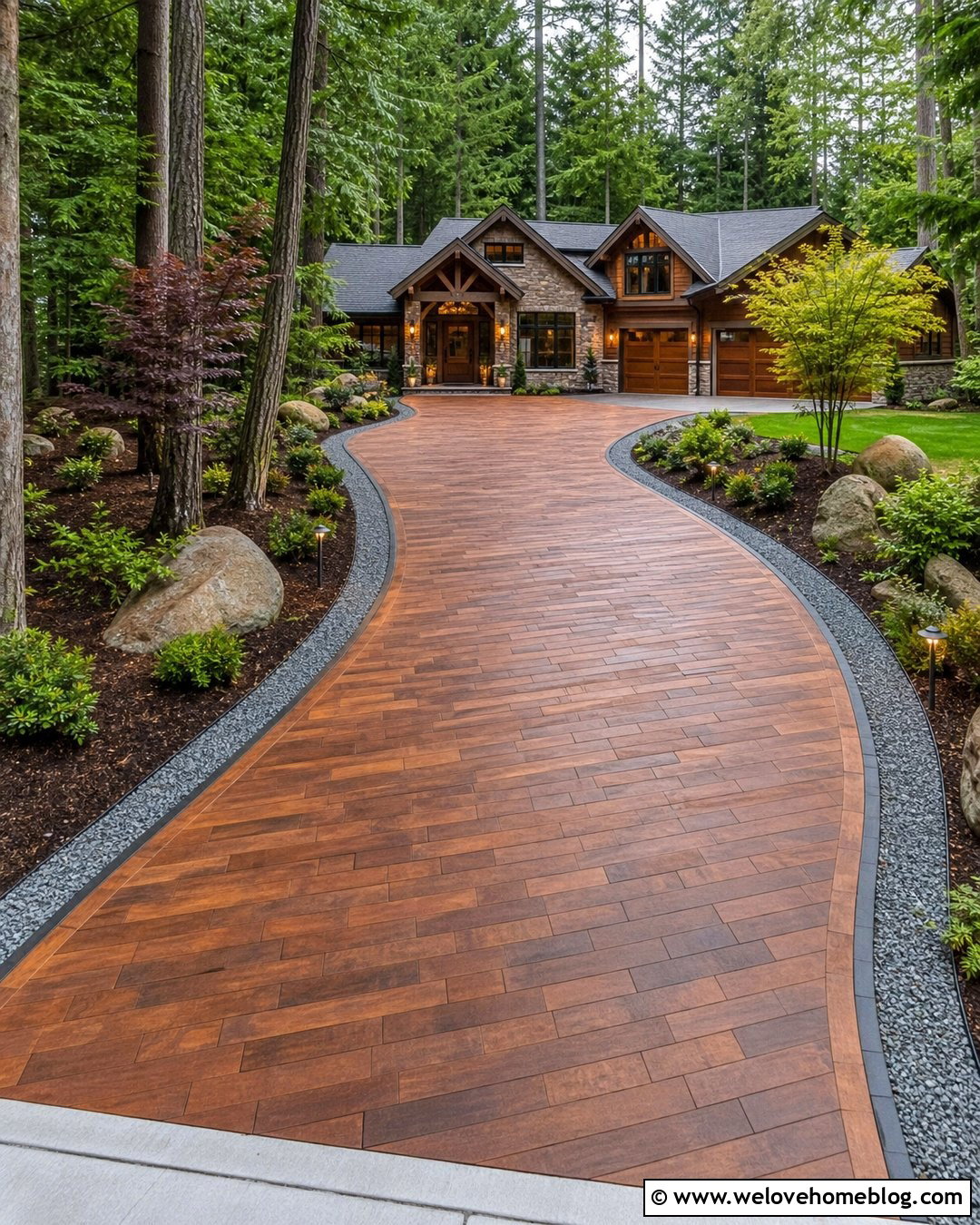
A curved wood driveway can make a deep front yard feel more scenic and private. Arrange rectangular hardwood blocks in short staggered rows that follow the bend smoothly. Flexible steel edging gives the curve a precise outline, while a band of compacted gray gravel provides contrast and drainage along both sides. Position ornamental trees near the outside of the curve and use lower shrubs on the inside to preserve sightlines. This approach is particularly appealing beside a wooded craftsman or contemporary cabin with stone foundations and natural siding. Low path lights may follow the gravel border without interrupting the wood surface. Avoid tight turns that increase tire friction and edge wear. A broad, gradual curve is easier to navigate and displays more of the textured paving from the street.
10. Circular Wood Driveway
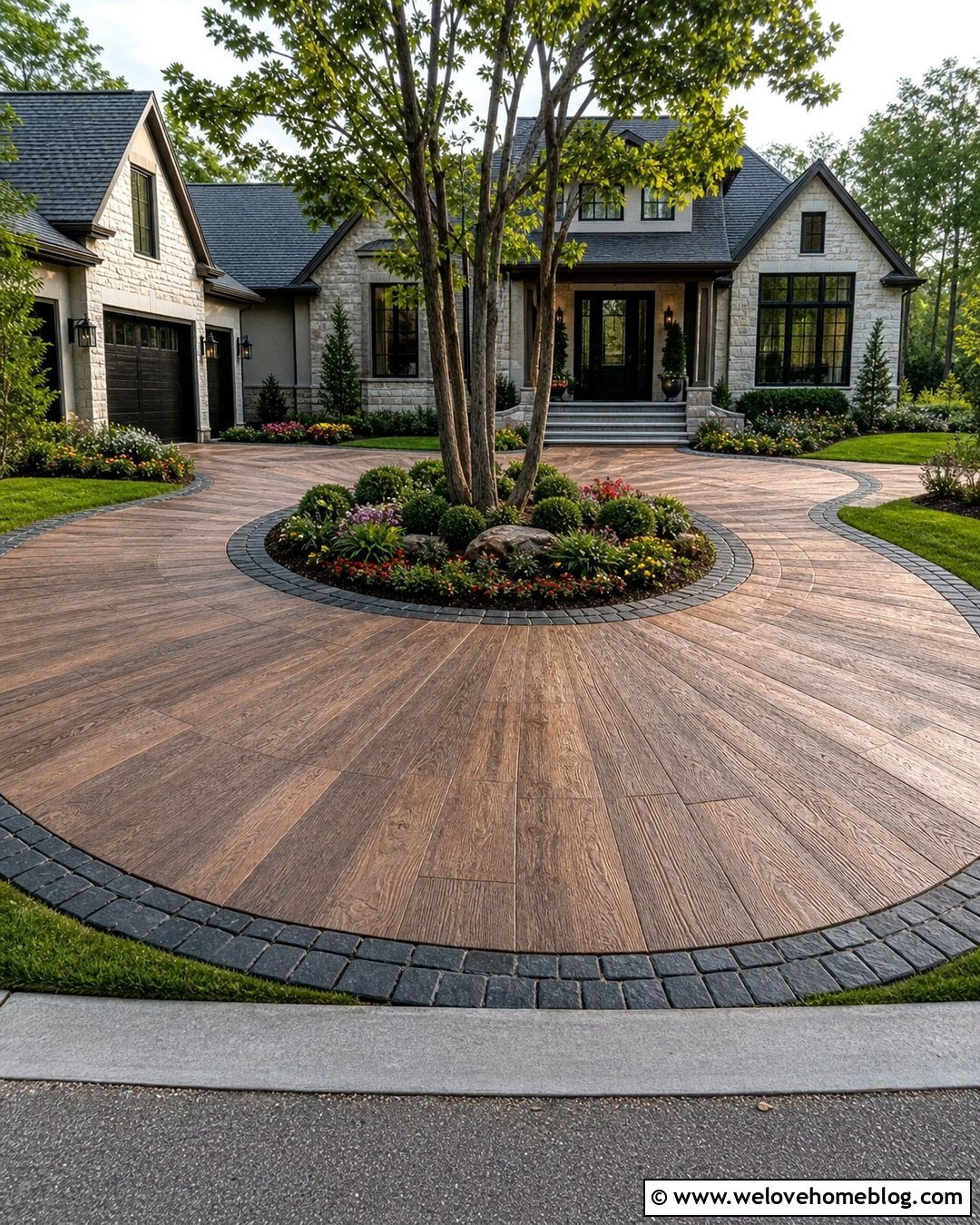
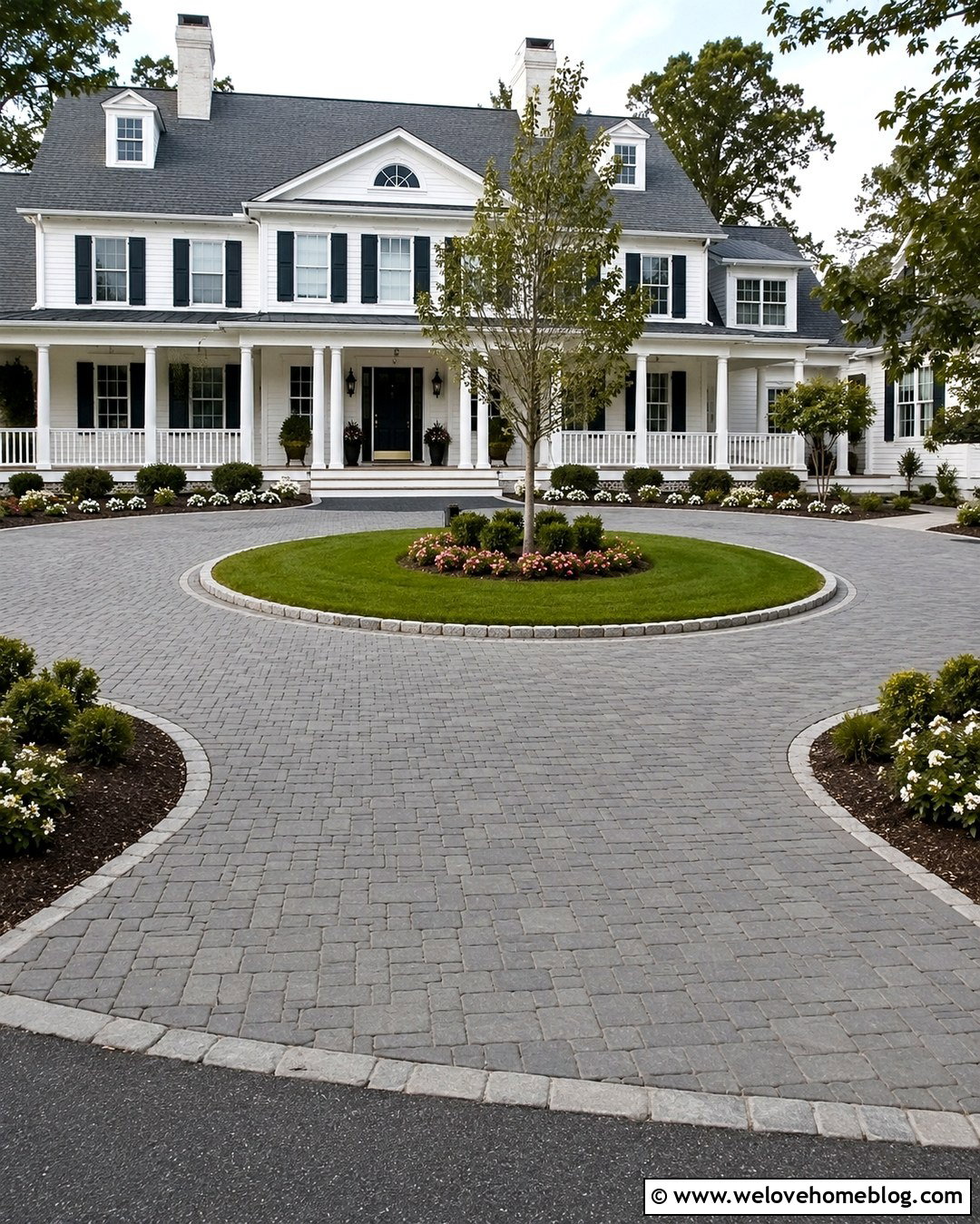
A circular wood driveway creates an impressive arrival while allowing vehicles to move through without backing toward the street. Use durable wood-look concrete planks in a radial pattern around a large central planting island. The material delivers the appearance of individual timber boards while providing a continuous, vehicle-ready concrete surface. Wood-grain stamps can reproduce plank lines, knots, and saw marks, with layered coloring adding realistic variation. () Border the circle with dark cobblestones and repeat them around the central bed. A mature multi-trunk tree, low shrubs, and seasonal flowers create an attractive focal point without blocking the house. This design suits a substantial traditional or transitional home, especially when the warm brown driveway color echoes wood doors, shutters, or porch details.
11. Modern Wood Look Concrete Driveway
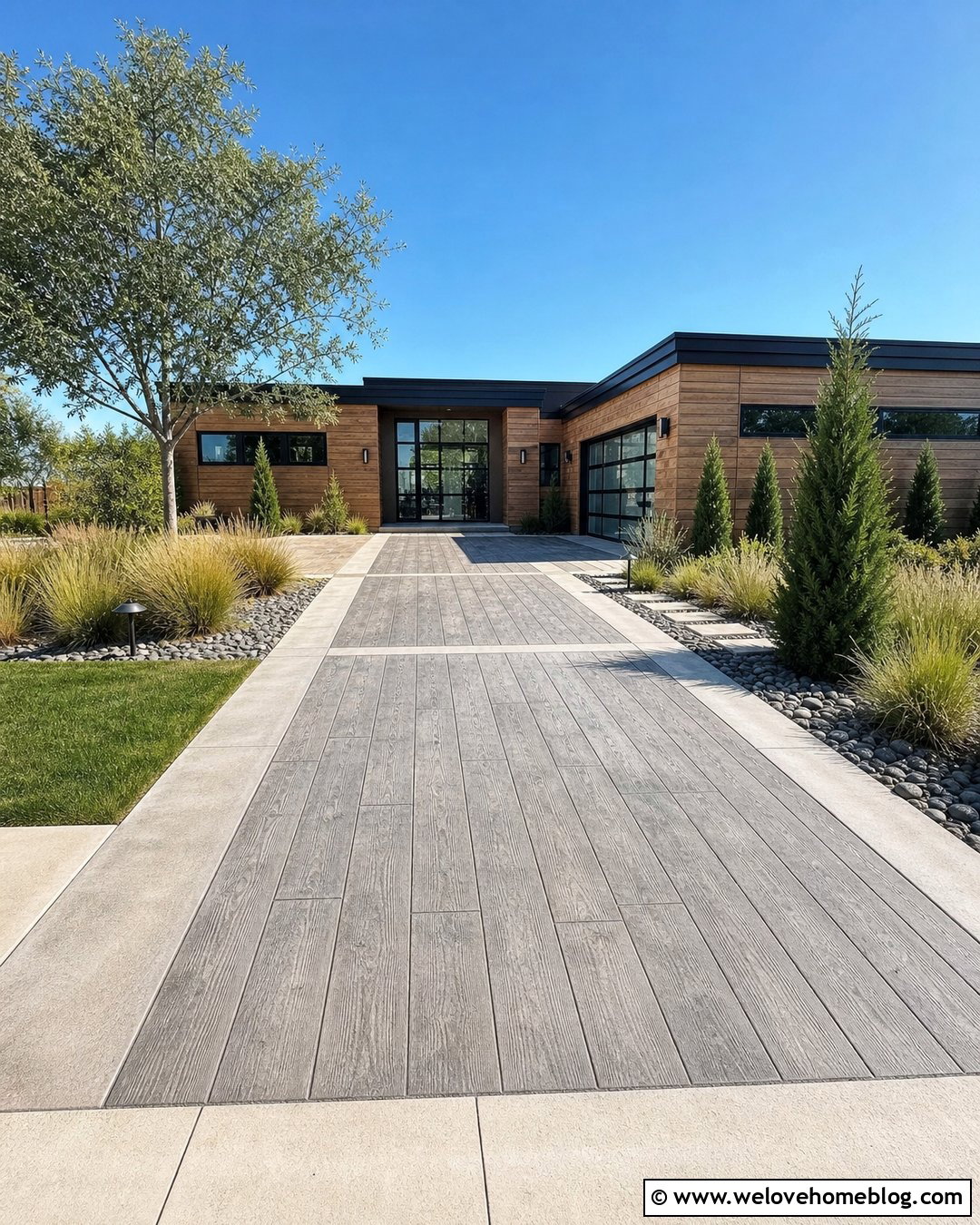
Could a wood driveway complement sharp modern architecture? Wood-look stamped concrete provides the necessary clean surface while retaining natural-looking grain. Choose long, narrow plank impressions in a cool weathered-gray color and run them toward the garage to emphasize depth. Large concrete border bands can outline the driveway and divide it into controlled rectangular panels. Pair the surface with a flat-roof modern home, horizontal wood cladding, black-framed windows, and a simple cantilevered entry. Sparse landscaping keeps the composition crisp. Try ornamental grasses, sculptural evergreens, river rock, and one carefully positioned tree. Specify an exterior finish with appropriate traction rather than an overly glossy sealer. Proper control joints, drainage, base preparation, and reinforcement remain essential even when decorative stamping hides the appearance of ordinary concrete.
12. Wood Look Paver Driveway
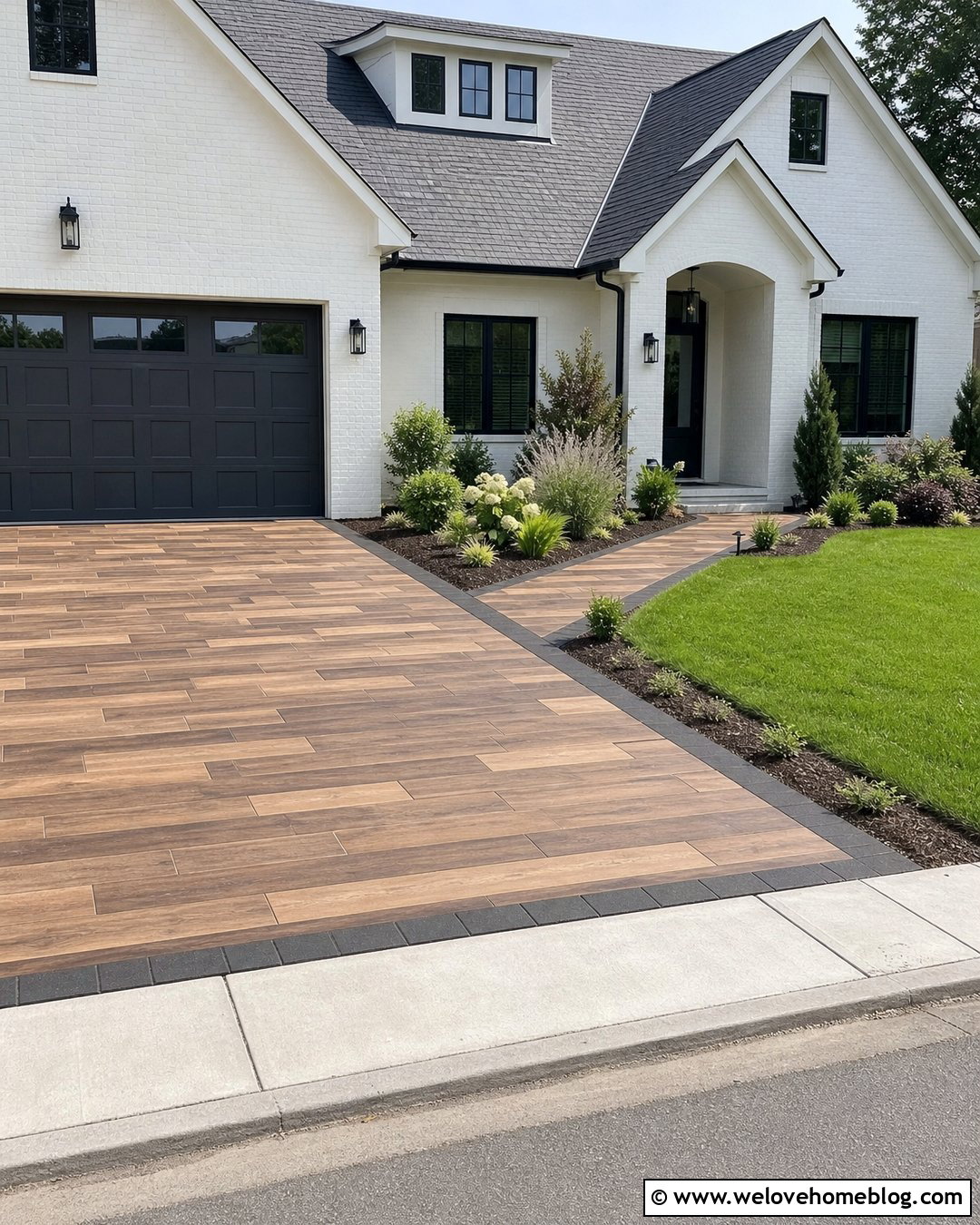
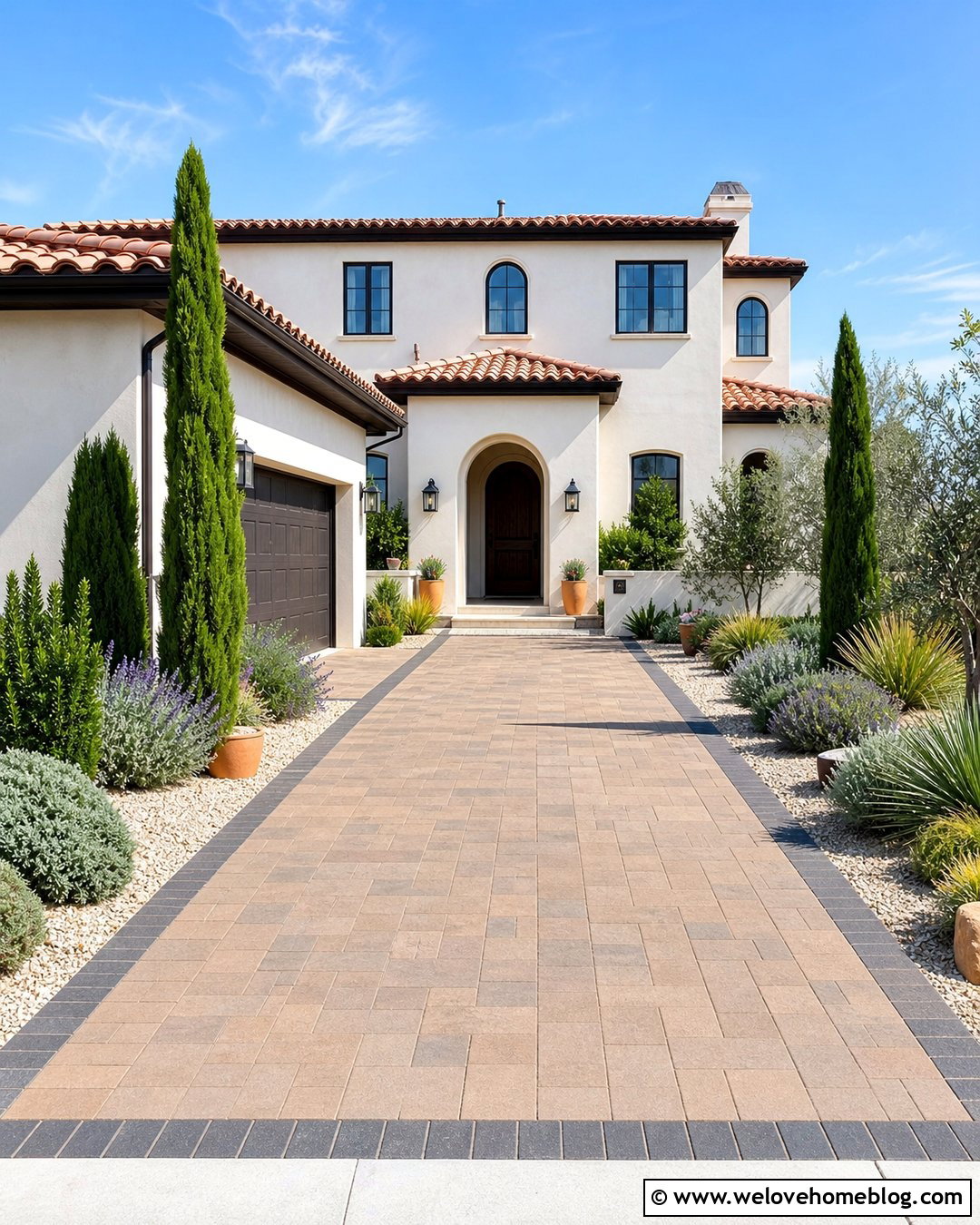
Wood-look concrete pavers offer the appearance of separate boards with the repair flexibility of an interlocking surface. Select driveway-rated planks with mixed cedar and walnut tones, then install them in a staggered pattern over a properly compacted aggregate base. Modern driveway pavers should be specifically manufactured for heavy loads rather than selected only for their decorative appearance. () A charcoal paver border gives the warm surface a tailored edge and reinforces the parking area. This look pairs beautifully with a transitional house combining painted brick, wood accents, and dark roofing. Add layered planting beds with rounded shrubs and airy ornamental grasses. Continue the wood-look pavers into the front walkway, but change their direction to make the pedestrian route easy to recognize.
13. Wood Driveway With Timber Edging
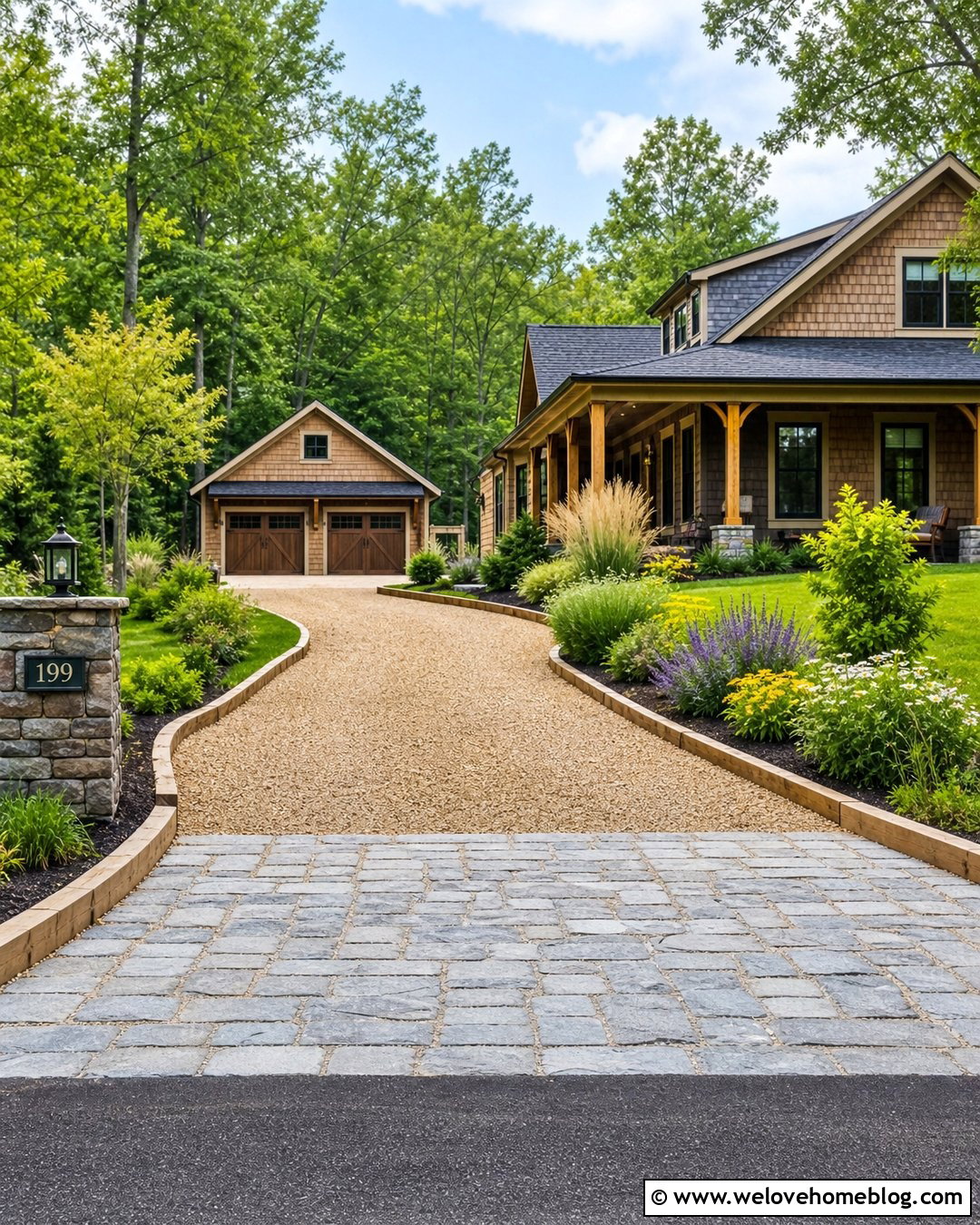
A gravel driveway framed with substantial timber edging offers an affordable way to make wood the defining design feature. Use compacted tan crushed stone for the vehicle surface and install thick, pressure-treated landscape timbers along both sides. The edging can follow a gentle curve toward a detached garage or country home. Add a matching timber band across the entrance, backed by a stable stone or concrete apron to prevent movement. Repeating the wood in raised planting beds creates a coordinated front landscape. Fill those beds with native grasses, flowering perennials, and compact evergreen shrubs. Keep the timbers slightly above the gravel to maintain a visible outline but low enough to avoid becoming a tripping or tire hazard. Secure them with an installation system suited to local soil and drainage conditions.
14. Wood Driveway With Horizontal Slat Gate
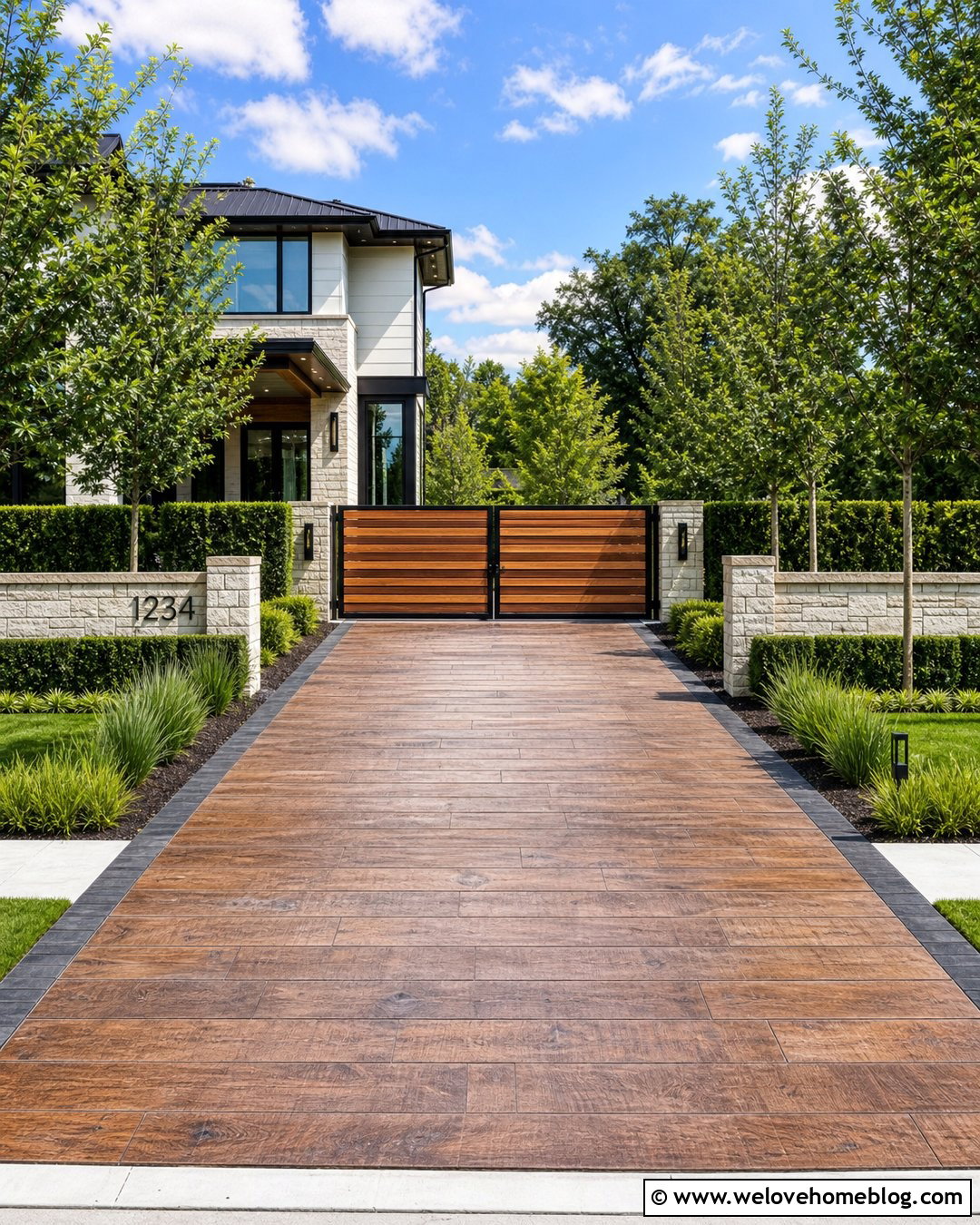
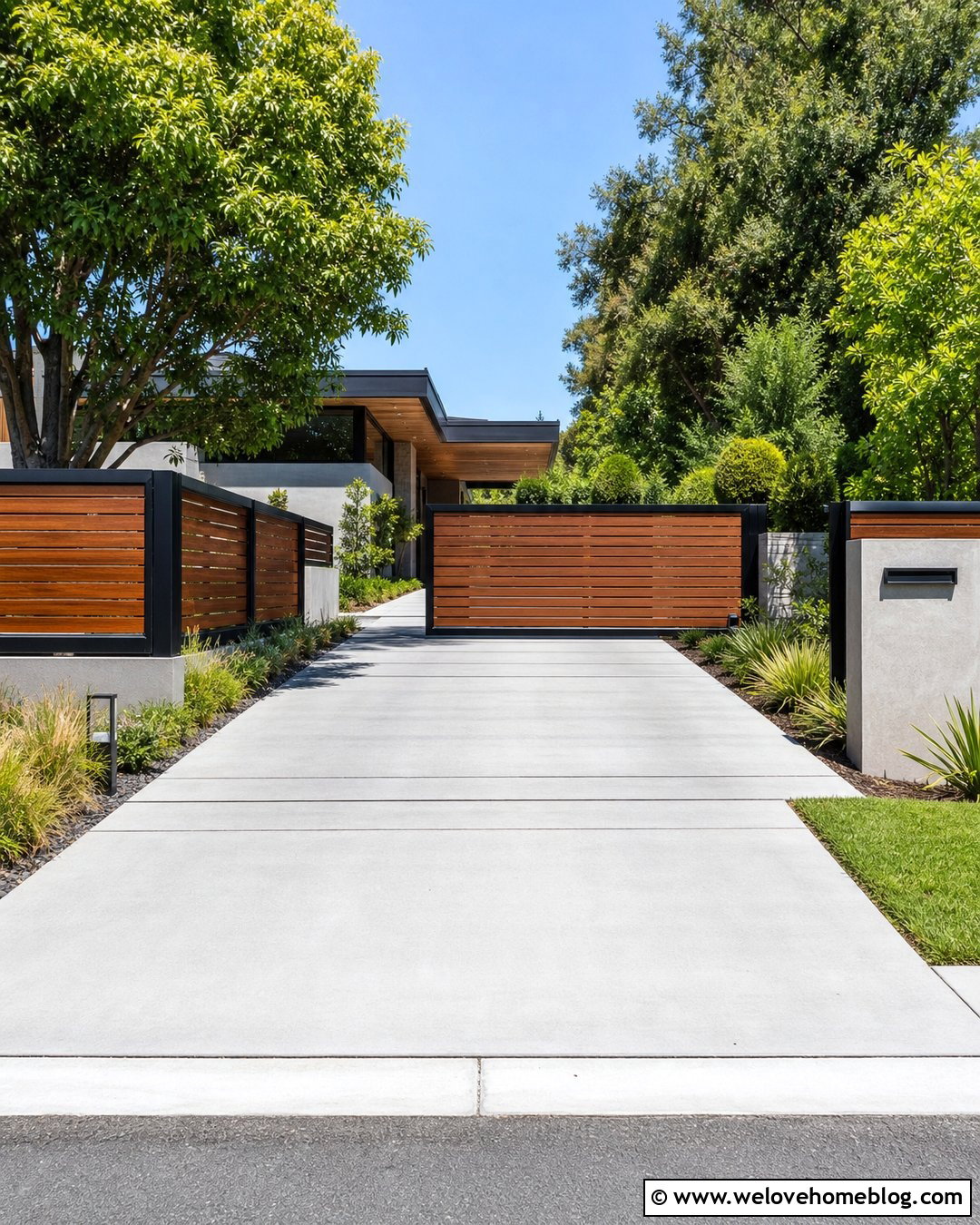
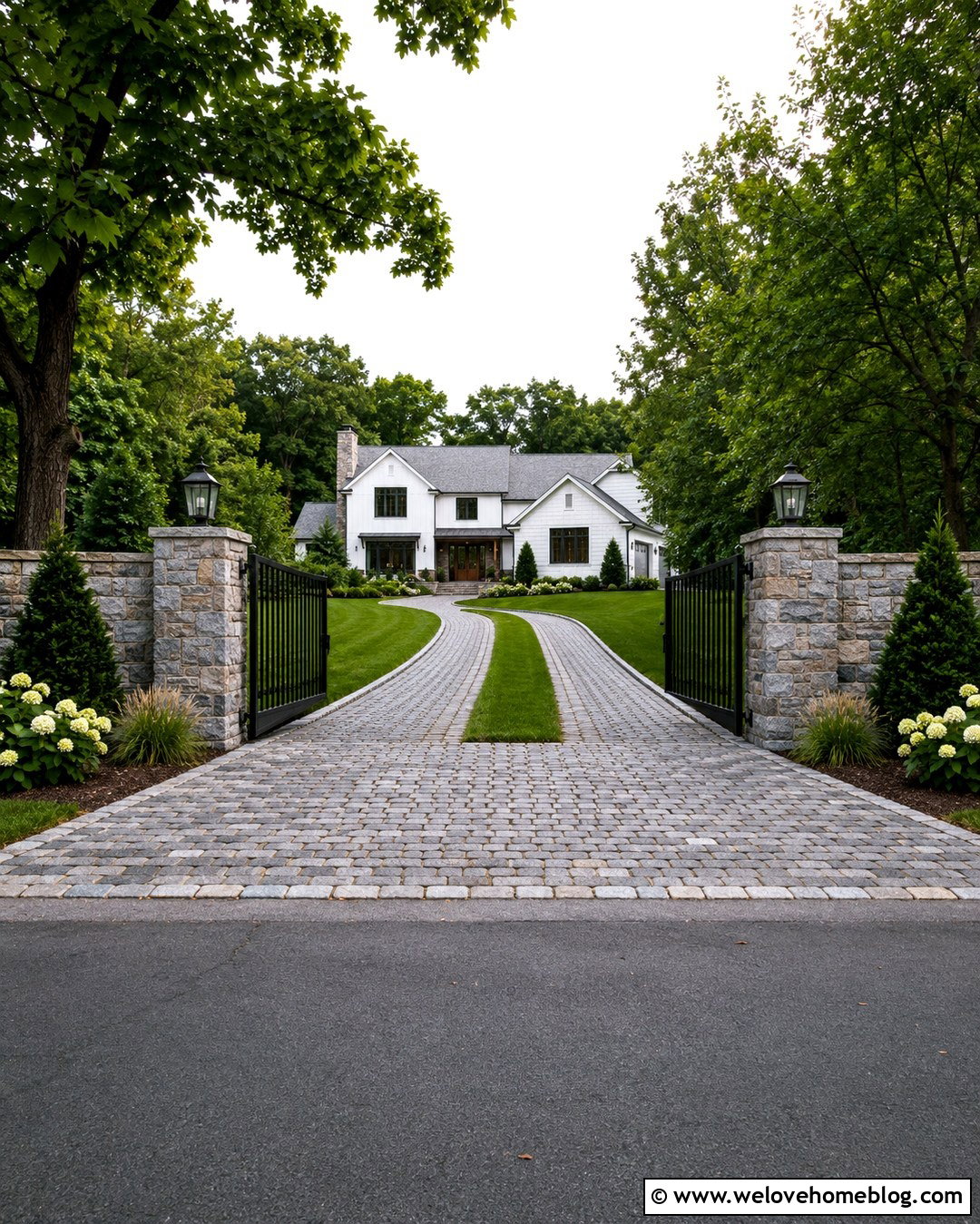
A horizontal wood gate makes a strong focal point at the entrance to a simple paved driveway. Pair a warm cedar or thermally modified wood gate with wood-look concrete planks running toward the house. Black steel framing around the gate adds strength and repeats the home’s dark windows or exterior lights. Use low stone walls at both sides to anchor the opening and protect the wooden components from minor vehicle contact. A straight driveway looks especially polished when lined with structured ornamental grasses, clipped hedges, and evenly spaced trees. Keep planting low near the street so drivers can see pedestrians and traffic clearly. Automated gates require adequate setbacks, safe operating clearances, approved controls, and professional installation. The finished design should feel open and welcoming rather than oversized or fortress-like.

15. Wood Driveway With Wood Clad Pillars
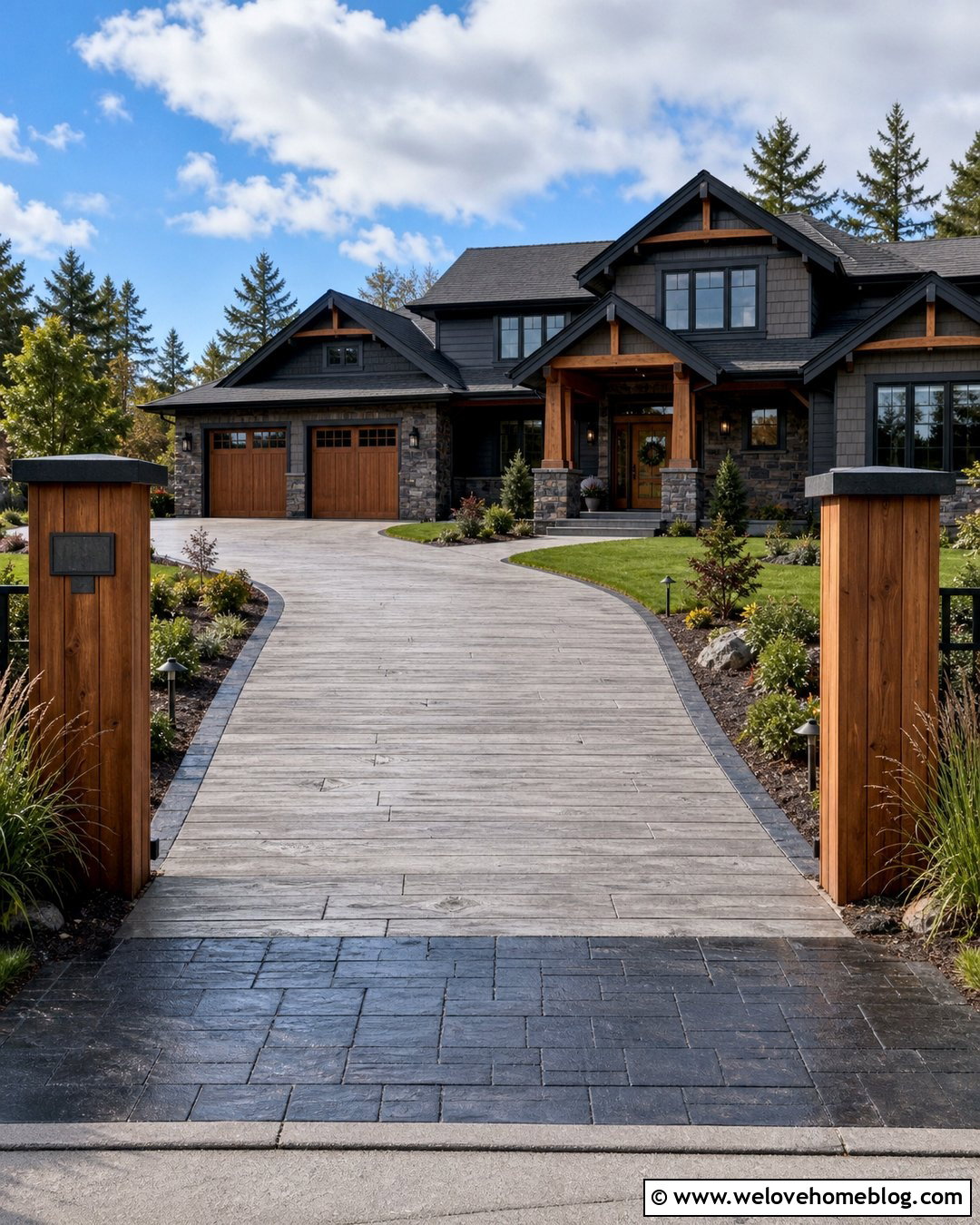
Wood-clad entrance pillars can make a driveway feel architectural without the weight of solid masonry columns. Build structurally appropriate cores, then finish them with vertical cedar boards that match the home’s siding or garage door. Between the pillars, use a gently curved driveway of weathered wood-look pavers with a dark stone apron. Low landscape lighting, narrow planting beds, and a simple address plaque can make the entrance easy to recognize. This combination works particularly well with a modern craftsman home featuring exposed beams and mixed stone-and-wood details. Keep the pillars proportional to the driveway width and position them outside required vehicle clearances. Cap each column to direct water away from the cladding. Repeating the same wood tone at the house creates a unified view from curb to front door.
16. Farmhouse Wood Driveway
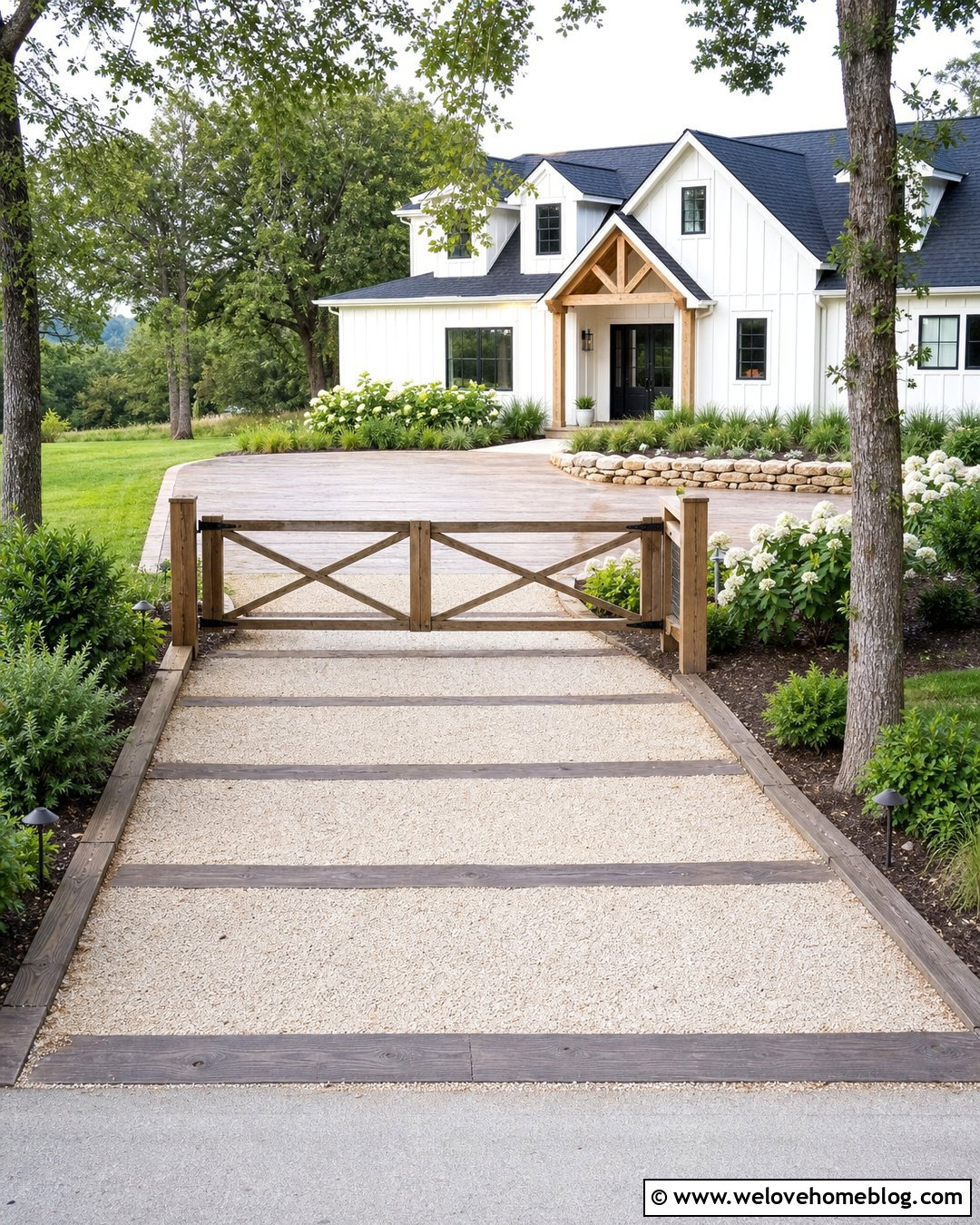
A farmhouse wood driveway should feel practical, relaxed, and connected to the surrounding land. Start with pale compacted gravel, then install thick reclaimed hardwood bands at regular intervals across the surface. These bands add warmth and visually slow the long approach without covering the entire driveway in timber. Use stone edging near the house and simple timber restraints along the rural portion. A wide entrance with a natural wood farm gate completes the setting. Plant native shade trees, white hydrangeas, and informal grasses instead of tightly clipped formal hedges. Near the porch, transition to wood-look concrete planks for a cleaner parking pad. The mix of gravel, real timber accents, and durable decorative concrete creates a believable farmhouse entrance that can accommodate daily use and changing weather.
17. Cabin Wood Driveway
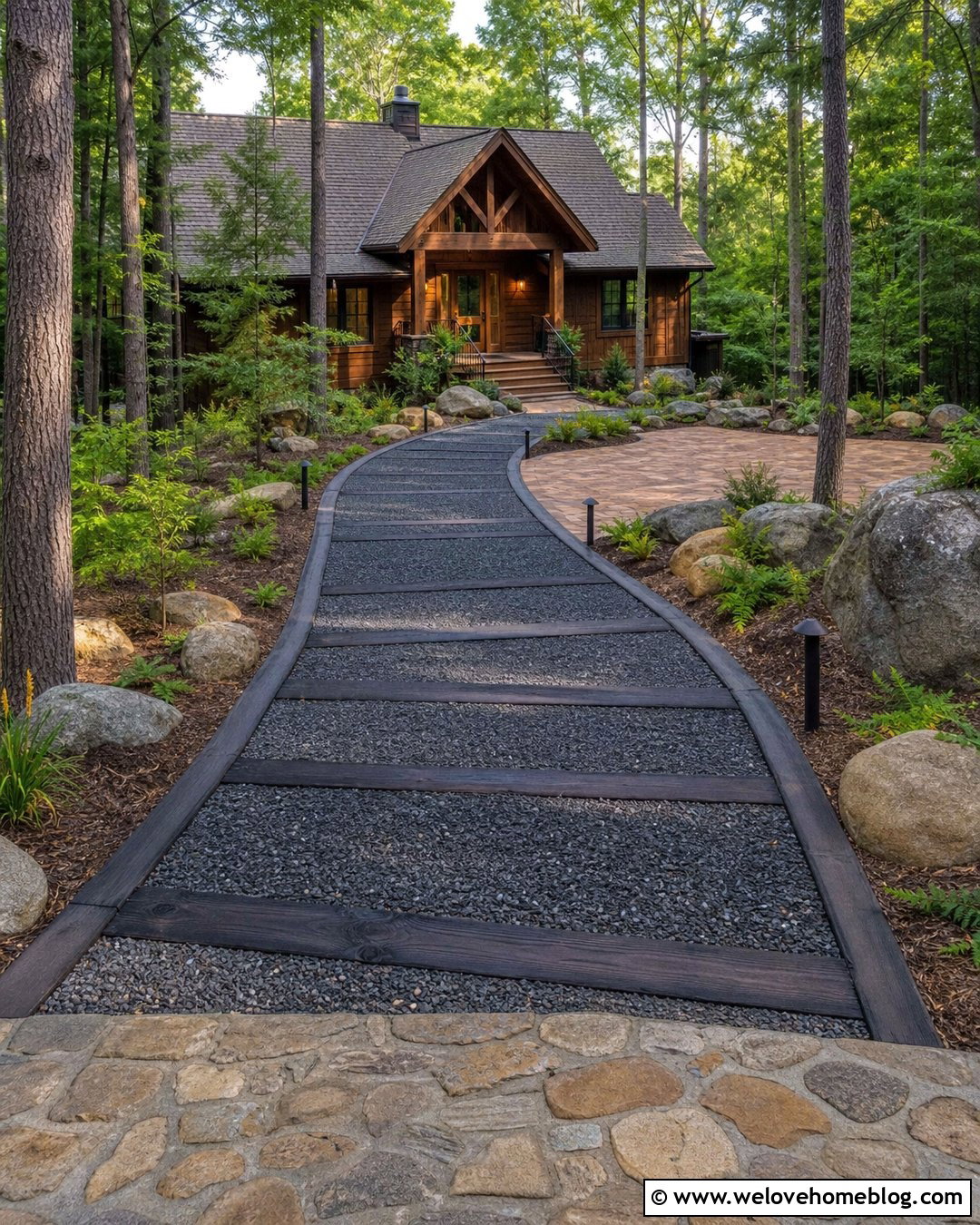
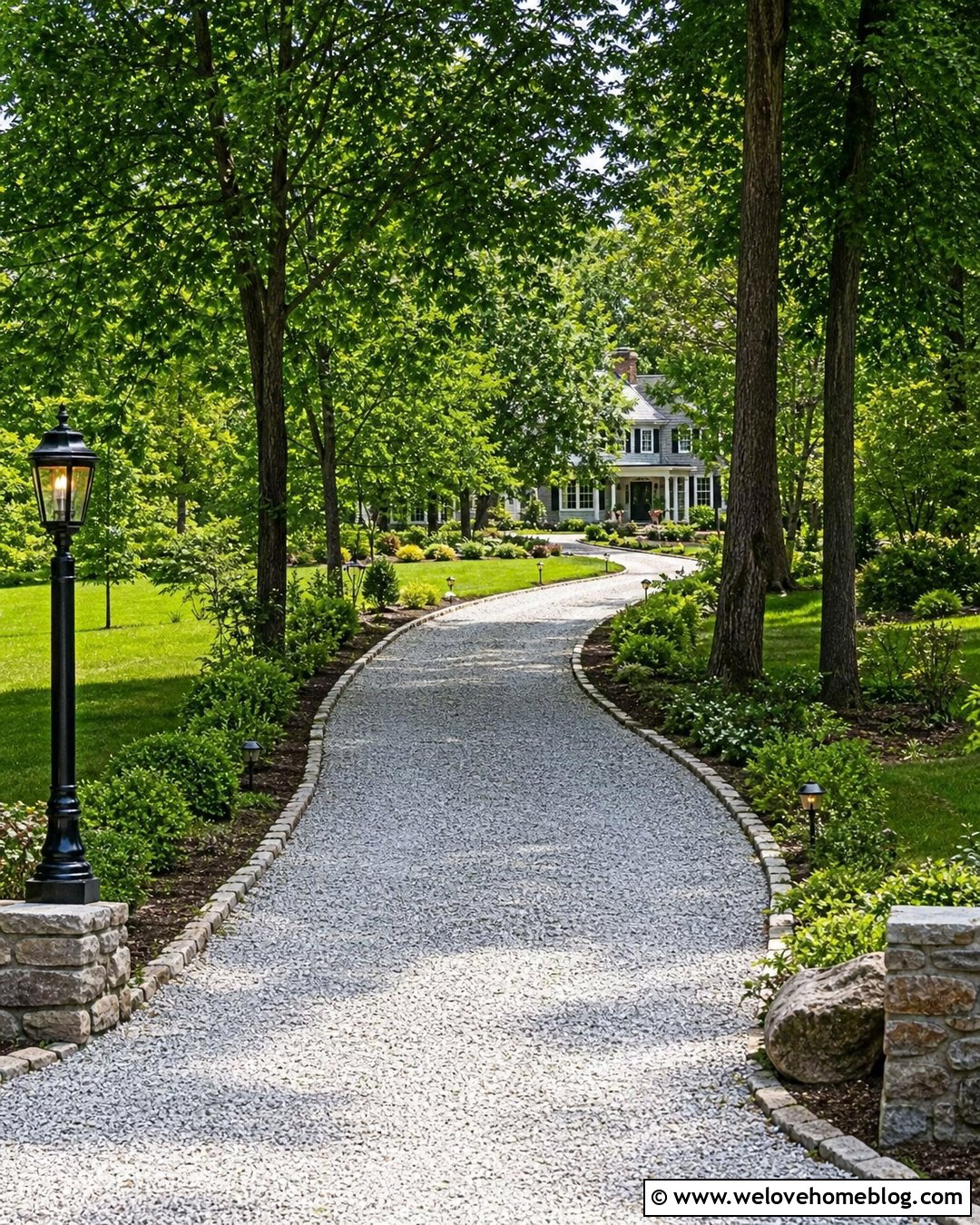
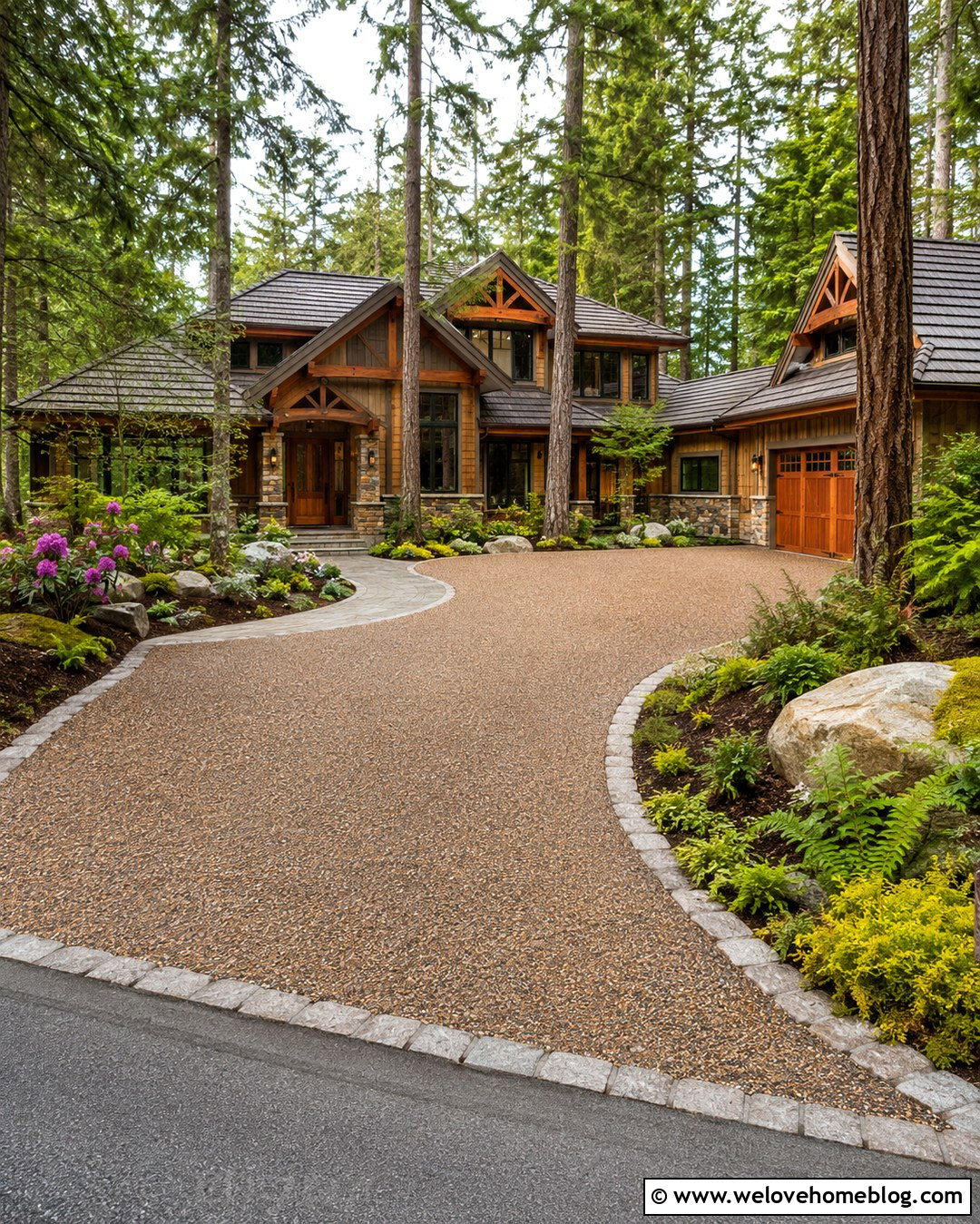
Crunching gravel and warm timber instantly establish the right mood for a cabin entrance. Create a narrow curved driveway using charcoal crushed stone, with closely spaced black locust crossbands and thick timber edging. A small stone apron near the road protects the entrance, while a wider wood-look paver parking area provides a stable surface beside the cabin. Surround the route with pines, ferns, native ground cover, and scattered boulders. Low bollard lights can guide the approach while blending into the woodland setting. Match the driveway wood to the cabin’s porch posts or board-and-batten siding for consistency. Drainage is especially important beneath tree cover, where damp leaves and shade can slow drying. Maintain open edges and direct runoff away from all natural timber components.
18. Coastal Wood Driveway
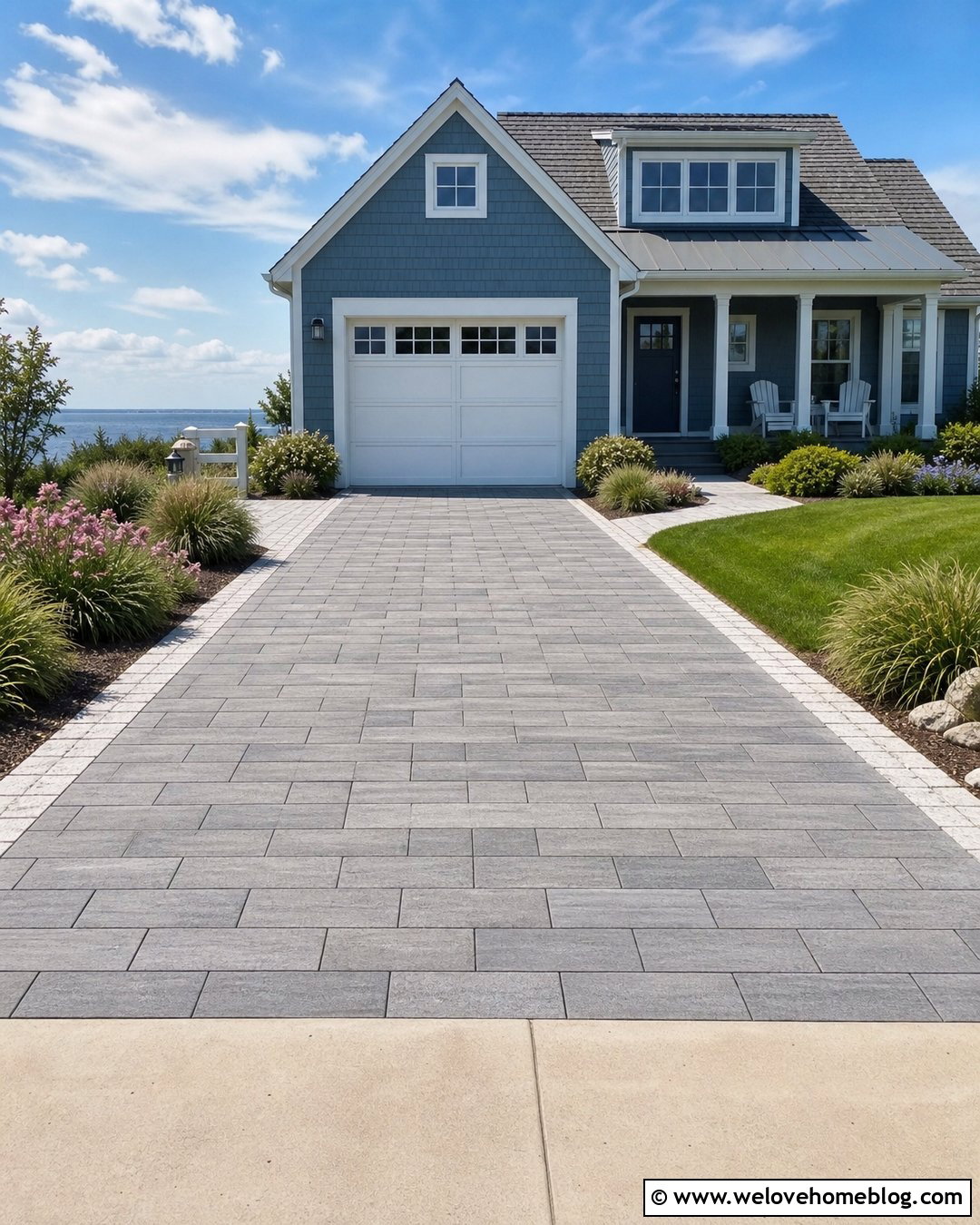
Weathered-gray wood tones suit a coastal driveway without relying on a dark or heavily rustic finish. Use wood-look porcelain or concrete pavers that are explicitly rated by the manufacturer for driveway loads. Arrange the planks in a straight running bond and border them with pale cobblestones or sand-colored concrete. The lighter palette looks fresh beside a coastal cottage with blue-gray shingles, white trim, and a covered porch. Plant salt-tolerant ornamental grasses, low evergreen shrubs, and compact flowering plants suited to the local climate. A boardwalk-inspired walkway can branch from the driveway toward the front steps. Real timber may deteriorate quickly in consistently damp or salty conditions, so durable wood-look paving often provides the more practical foundation while preserving the relaxed appearance of a coastal boardwalk.
19. Small Wood Driveway
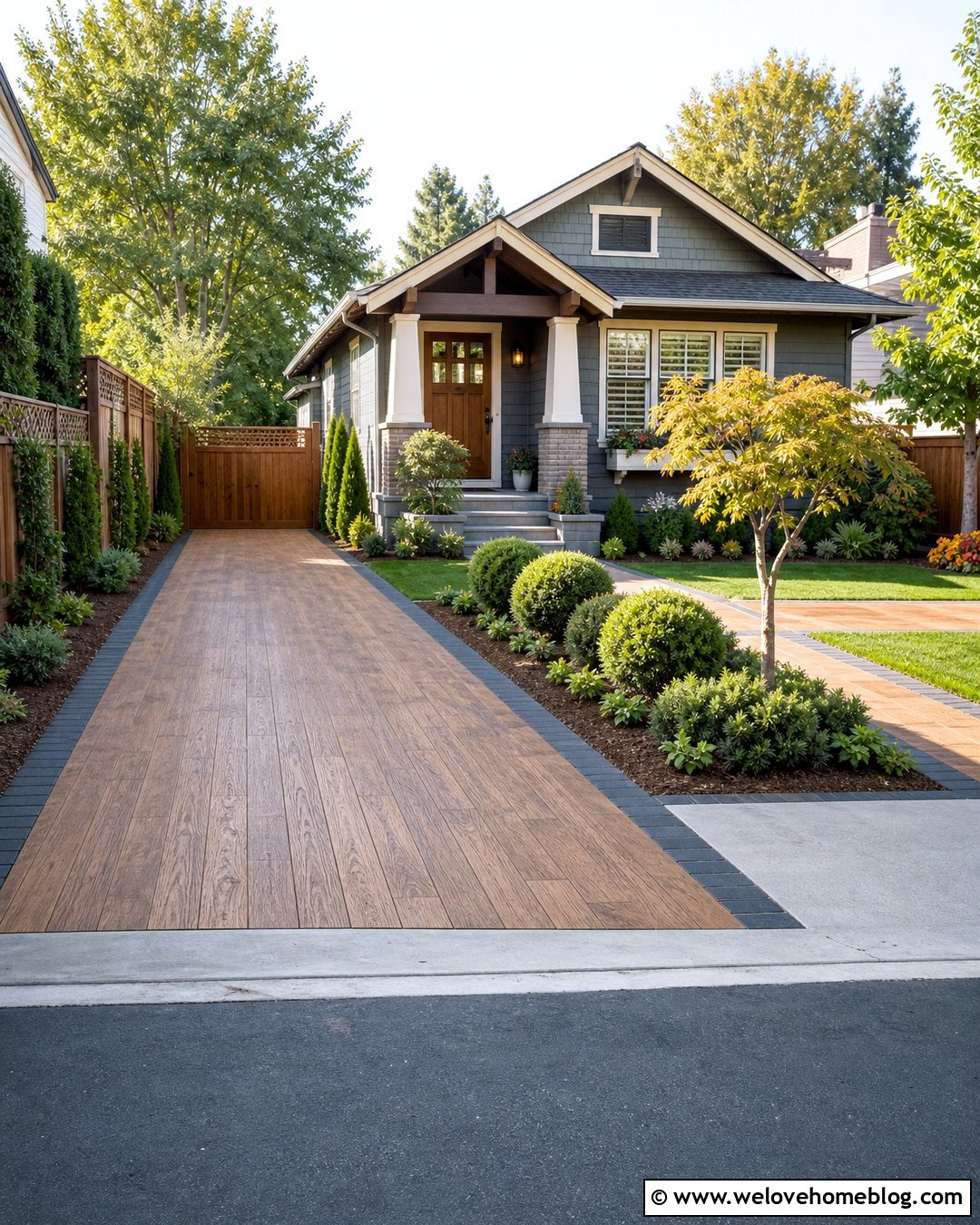
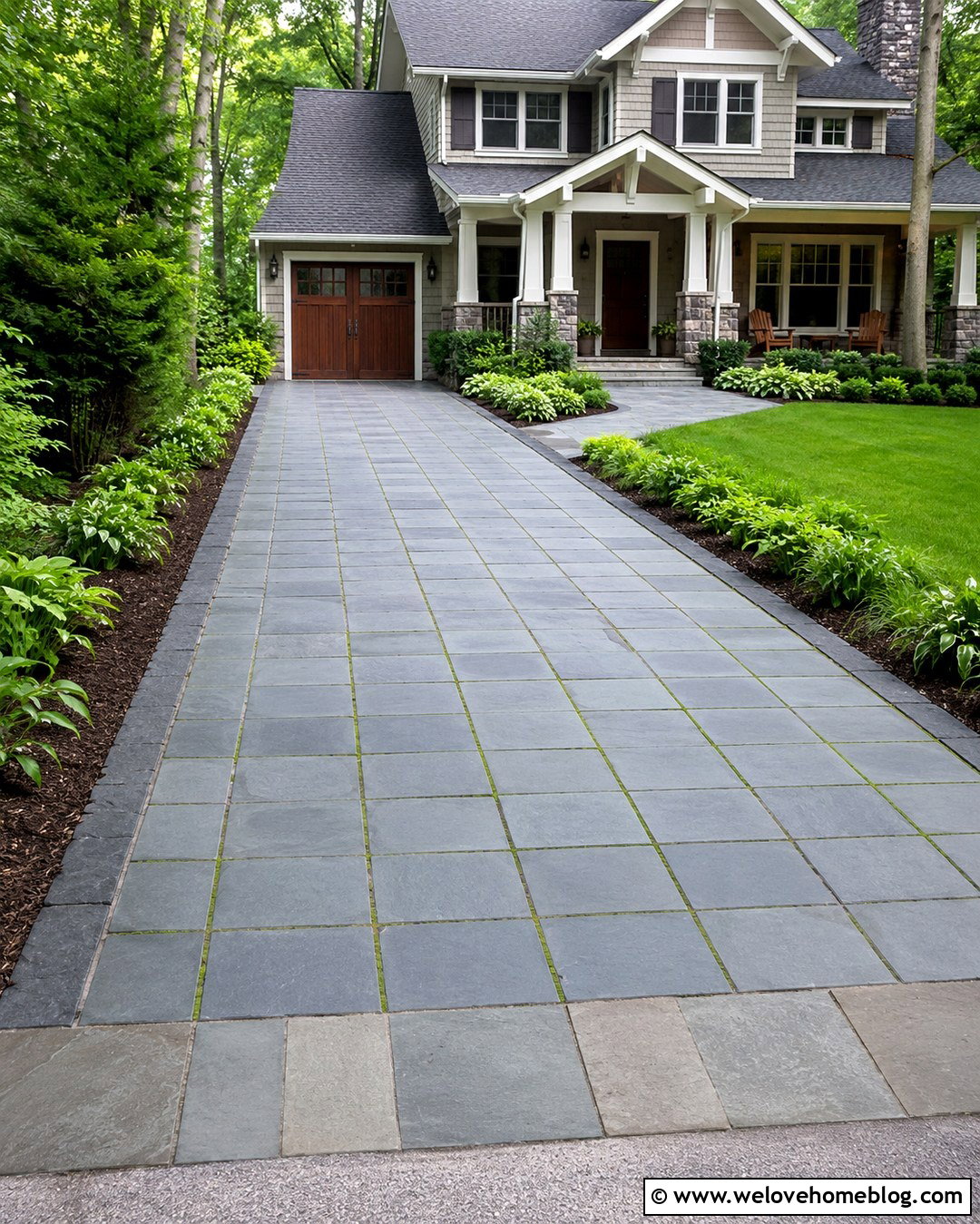
A small front yard can support a wood driveway when the design remains visually simple. Use narrow wood-look concrete planks in a medium oak tone and run them lengthwise to make the parking area appear deeper. A slim charcoal border defines the edges without reducing the driveway’s apparent width. Near the sidewalk, add a darker concrete apron that handles regular turning and keeps the decorative pattern away from the curb. One planting bed with a small ornamental tree, rounded shrubs, and ground cover supplies greenery without crowding the vehicle space. This compact look works with a bungalow, townhouse, or small contemporary home. Connect the front walk using the same material, but distinguish it with a perpendicular plank direction. Avoid oversized patterns that can make a short driveway feel fragmented.
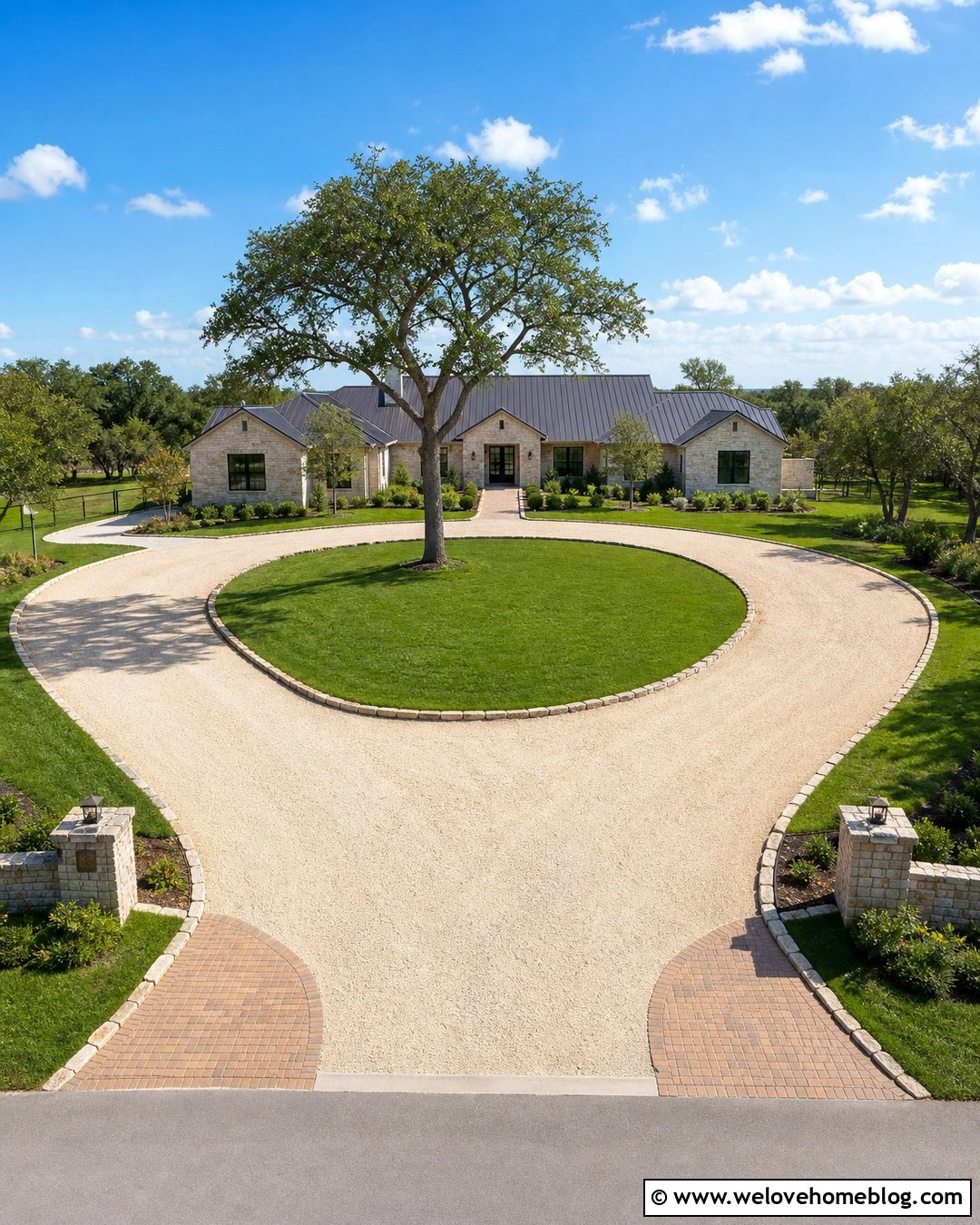
20. Sloped Wood Driveway
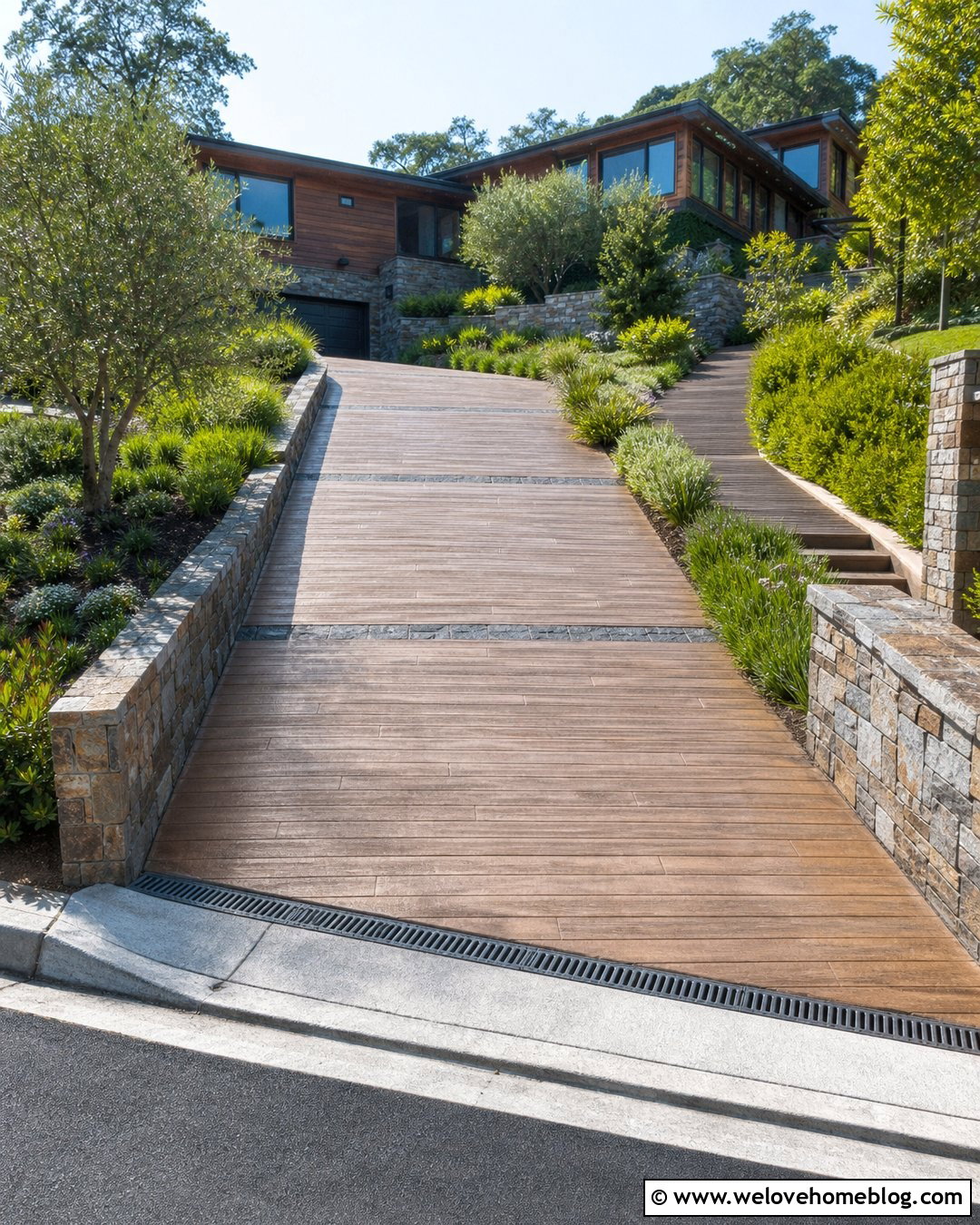
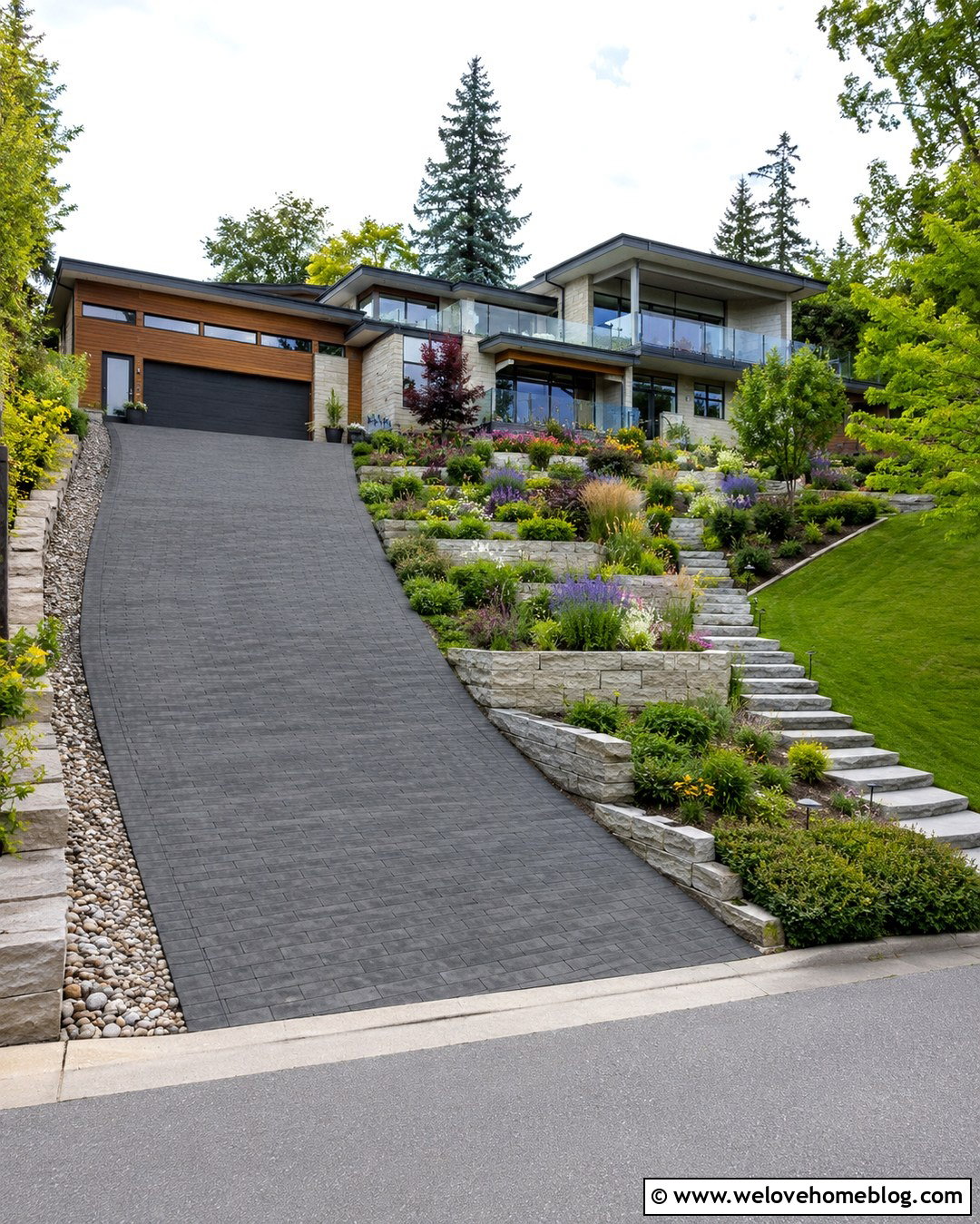
Sloped sites require extra attention to traction, runoff, and material movement. A wood-look stamped concrete driveway can provide the desired timber appearance without placing individual wood boards across a demanding incline. Choose short plank impressions running across the slope, with a subtle textured finish rather than a slick coating. Dark stone bands at controlled intervals can visually divide the climb and complement retaining walls along the sides. Use terraced planting beds with deep-rooted shrubs, ornamental grasses, and low ground cover to soften the grade. A contemporary hillside home with wood siding creates a natural background for the warm brown paving. Drainage channels should be positioned by a qualified professional so water does not rush toward the garage, undermine the edges, or create hazardous icy patches.
21. Permeable Wood Paver Driveway
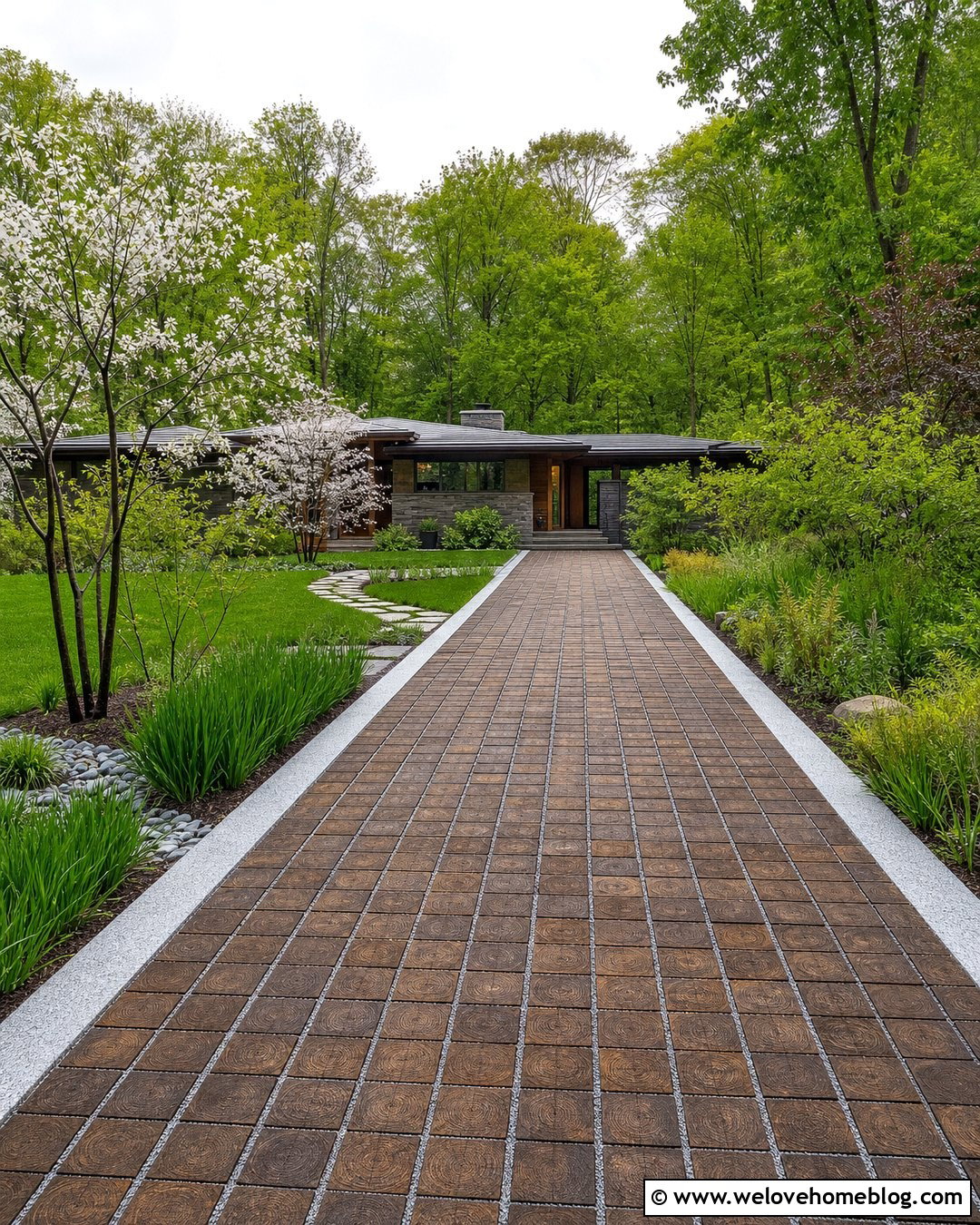
A permeable wood paver driveway combines natural texture with carefully planned gaps for water movement. Thick black locust blocks can be installed over an engineered open-graded stone base, with clean angular aggregate filling the joints. The wood modules should be designed and approved for the anticipated vehicle loads rather than adapted from ordinary garden pavers. A straight layout and broad granite border make the varied end-grain blocks feel orderly. Pair the driveway with a low contemporary ranch surrounded by rain gardens, native grasses, sedges, and small flowering trees. Direct roof runoff toward planted drainage areas instead of allowing it to soak continually around the wood. Permeable construction depends on local soil, groundwater, freeze-thaw conditions, and municipal requirements, so professional site assessment is essential before choosing this system.
22. Dark Stained Wood Driveway
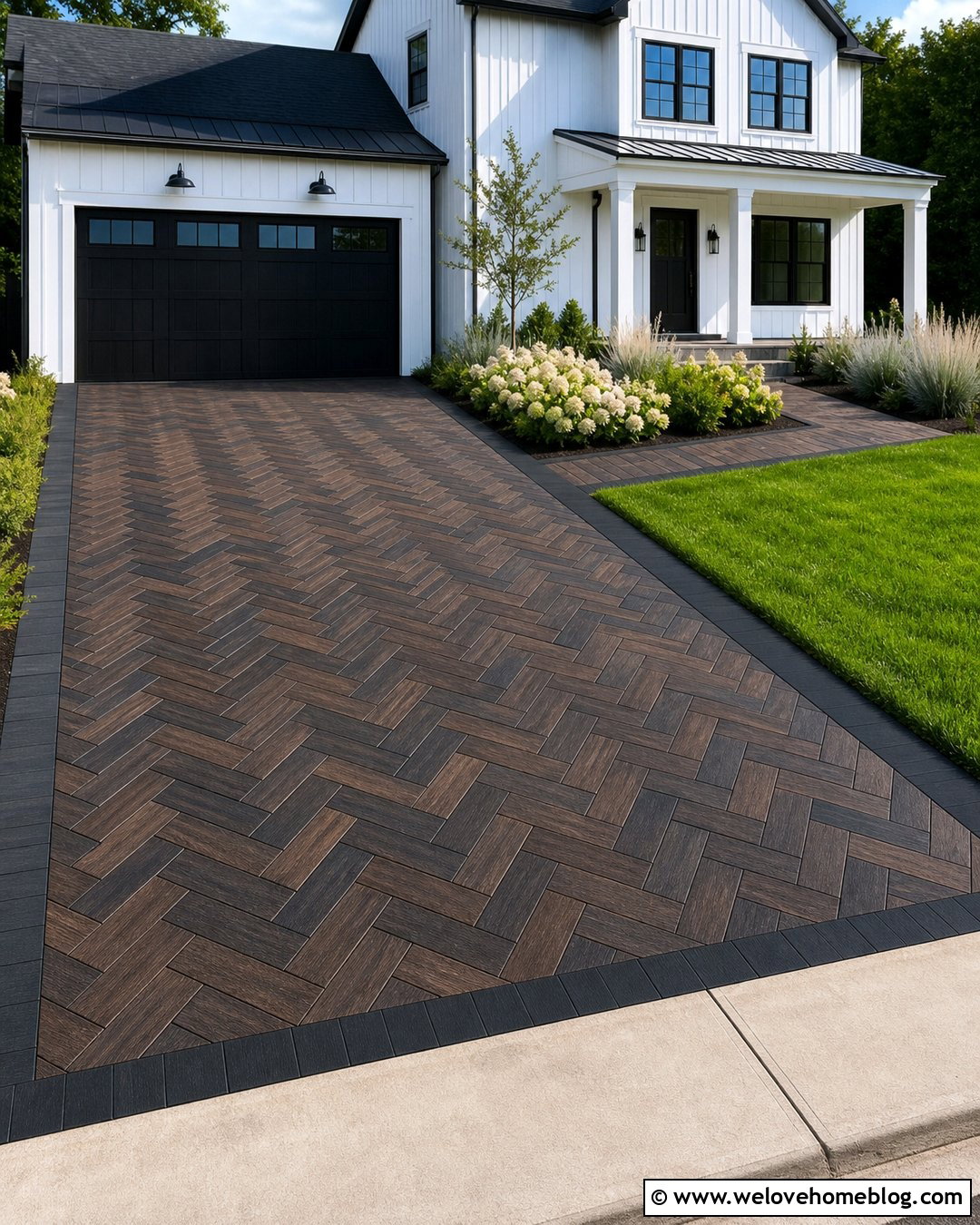
A dark walnut finish can give a wood driveway a dramatic, refined appearance. Use durable wood-look concrete pavers rather than heavily staining untreated boards that sit close to wet ground. Select several brown and charcoal tones so the finished surface resembles naturally varied timber instead of one flat color. Lay the planks in a wide herringbone pattern and surround them with a smooth black paver border. This bold surface complements a white contemporary farmhouse or modern home with black-framed windows. Bright green lawn, pale flowering shrubs, and silvery ornamental grasses keep the entrance from feeling too heavy. Carry the dark border into the front walkway and garage threshold for continuity. Test finish samples outdoors because direct sunlight can reveal undertones that are less noticeable in a showroom.
23. Natural Wood Driveway
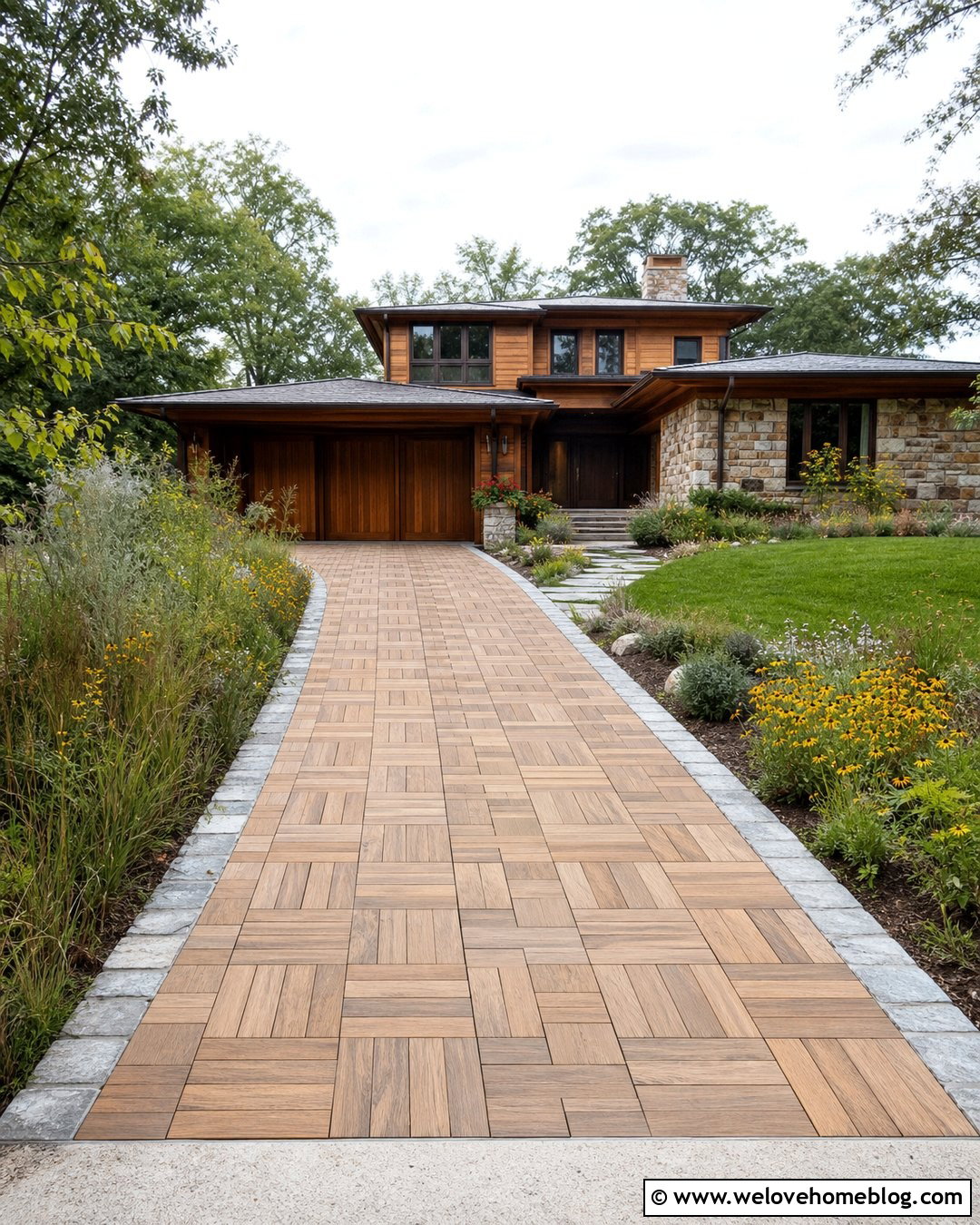
An unstained wood driveway celebrates subtle grain, knots, and gradual color variation. Choose a naturally durable species in substantial, professionally sized pavers and allow its warm original tone to lead the design. Set rectangular blocks in a basket-weave arrangement with narrow gray stone joints. A simple fieldstone border adds strength while preserving the organic character. This surface feels at home beside a low prairie-style house, natural stone facade, or cedar-sided retreat. Surround it with meadow grasses, native flowers, and informal clusters of shrubs rather than highly formal planting. Clear leaves and soil from the surface regularly so the wood can dry. Natural weathering will change its appearance, so homeowners should accept a developing patina rather than expecting every block to retain an identical fresh-cut color.
24. Wood Driveway With Landscape Lighting
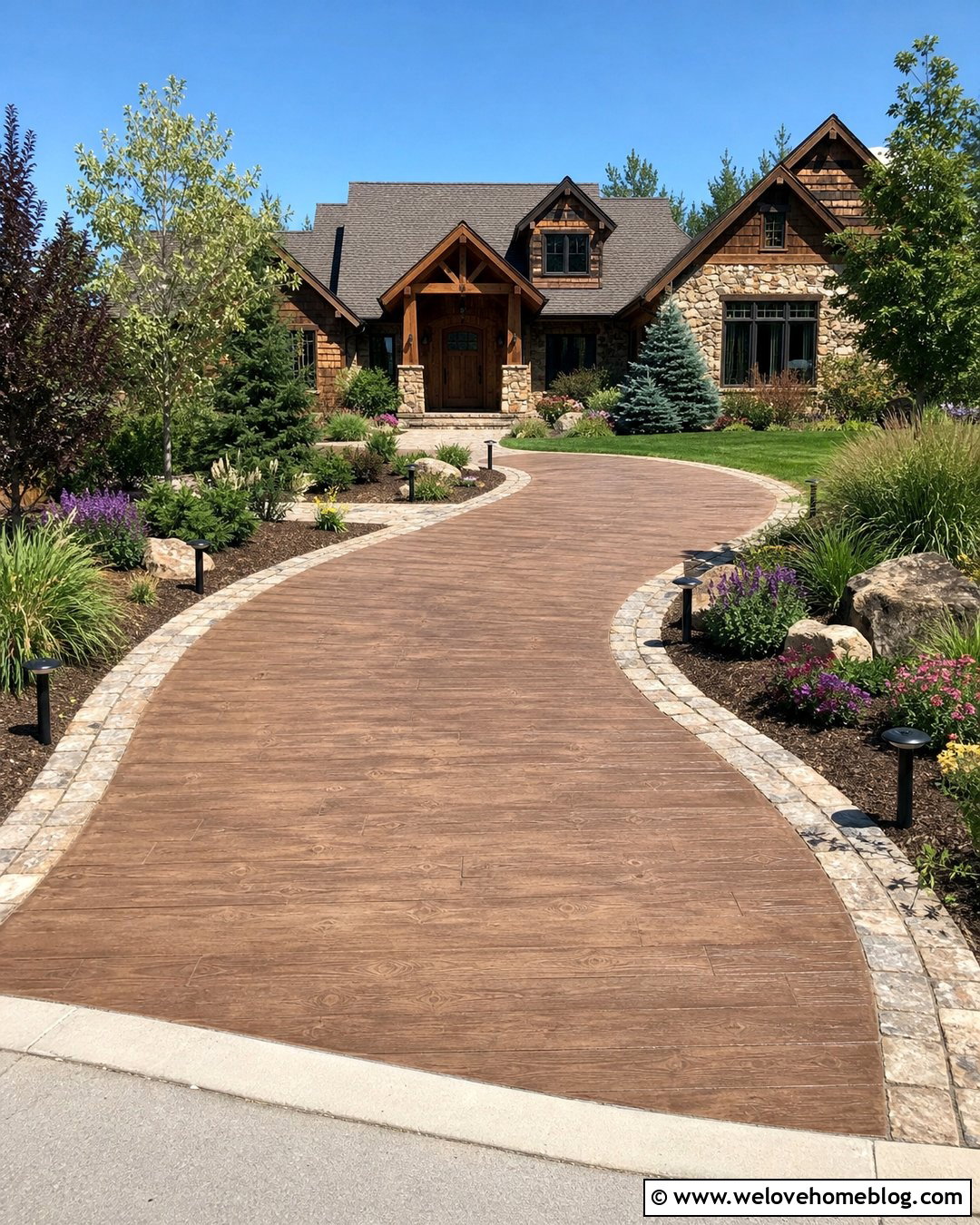
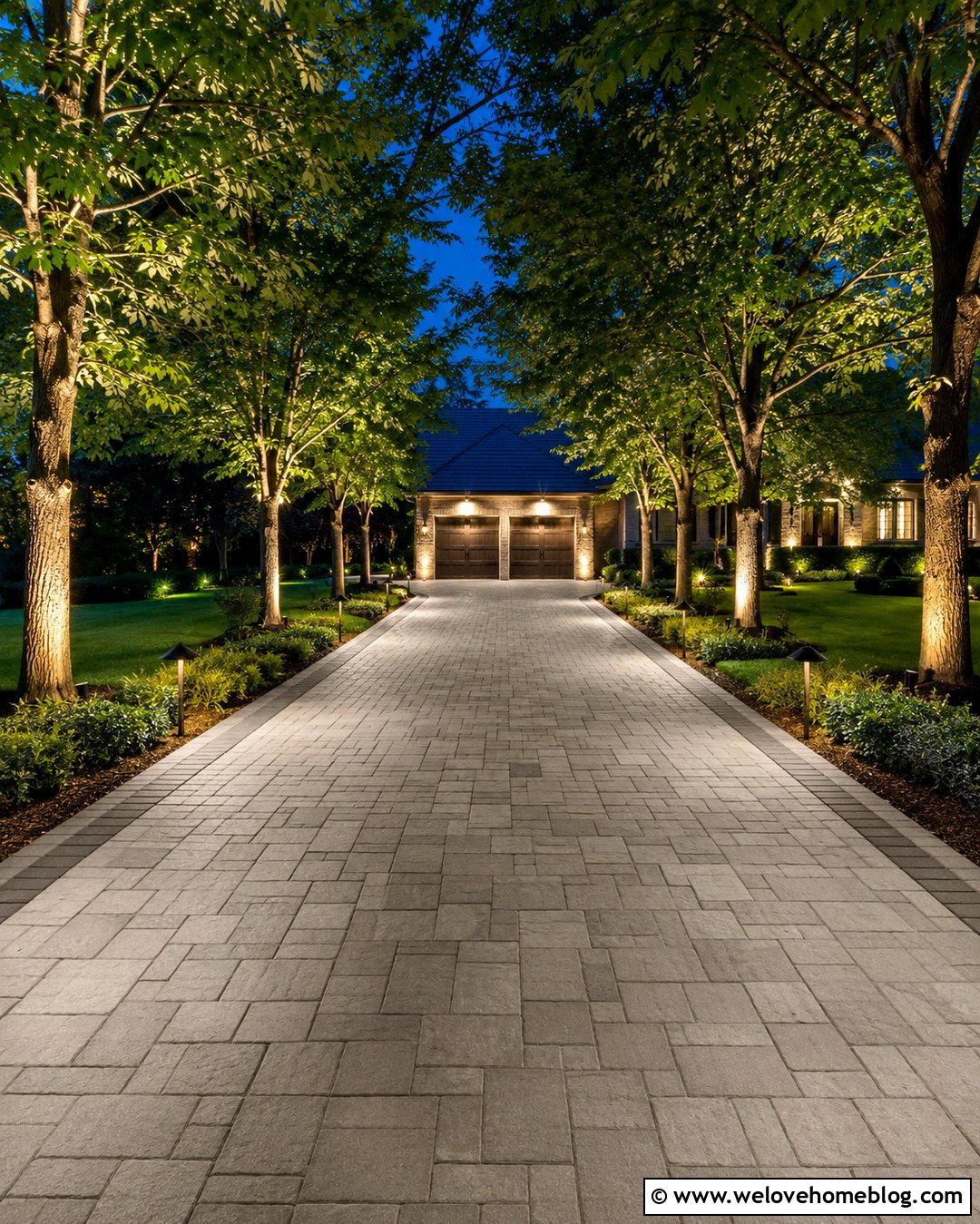
Landscape lighting can improve navigation while highlighting the texture of a wood driveway after sunset, although the driveway should still be photographed and appreciated in bright daylight. Use cedar-toned wood-look concrete planks in a broad curved layout leading to a craftsman home. Install low, shielded fixtures within a cobblestone border instead of placing lights where tires or snow equipment may strike them. Additional illumination beneath small trees can define the curve without producing glare for drivers or neighbors. Layer the landscaping with evergreen shrubs, flowering perennials, and ornamental grasses that remain below critical sightlines. Match the fixture finish to the home’s hardware and gate. During the day, the dark metal lights create a neat repeated accent; after dark, they guide the full approach and reveal its shape.
25. Mixed Material Wood Driveway
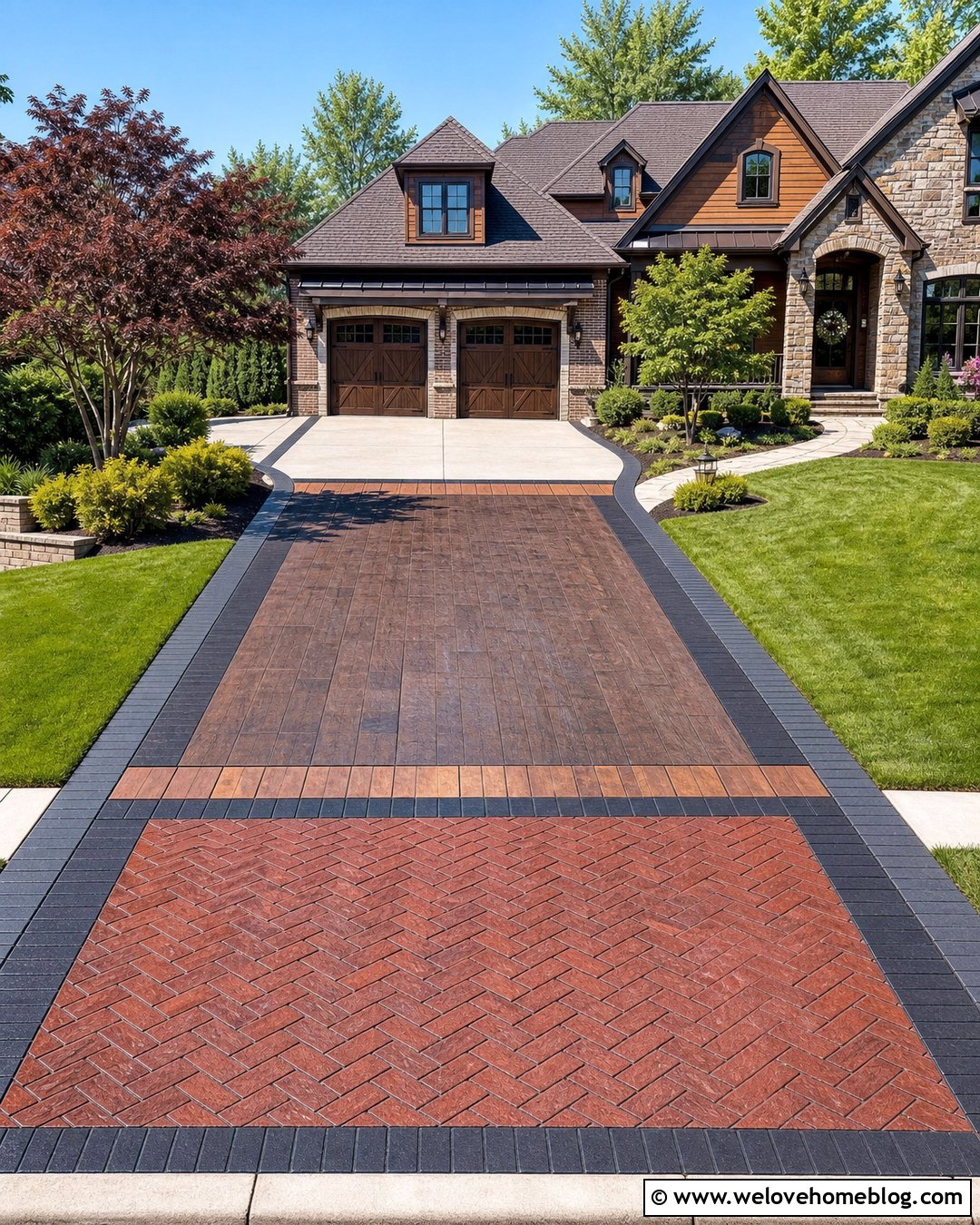
A mixed material design offers the warmth of wood where it matters most and tougher paving where traffic is concentrated. Start with a clay brick street apron, continue into a central field of wood-look concrete planks, and use reinforced smooth concrete for the parking and turning area near the garage. Narrow natural timber inlays can mark transitions without carrying the full vehicle load. Repeat warm brown, charcoal, and muted red tones across all three surfaces to keep the composition cohesive. This layered driveway works well with an eclectic craftsman or transitional home containing brick, stone, and wood accents. Frame it with broad lawn panels, structured shrubs, and a curved walkway. Careful alignment of borders and joints prevents the materials from looking like unrelated additions installed at different times.
Conclusion:
The best 25 Wood Driveway Ideas balance natural warmth with the practical demands of a vehicle surface. Genuine hardwood pavers can create an exceptional entrance, but they require informed species selection, drainage, ventilation, edge support, and structural planning. Wood-look concrete and driveway-rated pavers provide a more conventional alternative while still delivering convincing grain and plank patterns. Mixed designs can place real timber in lower-wear areas and stronger masonry beneath turning or parking zones. Whatever look you prefer, connect the surface to the house through coordinated borders, gates, walkways, and planting. Before construction, consult qualified local professionals about load capacity, climate, permits, runoff, treatments, and maintenance so the completed driveway remains attractive, stable, and safe.

Related posts:
Leave a Reply