
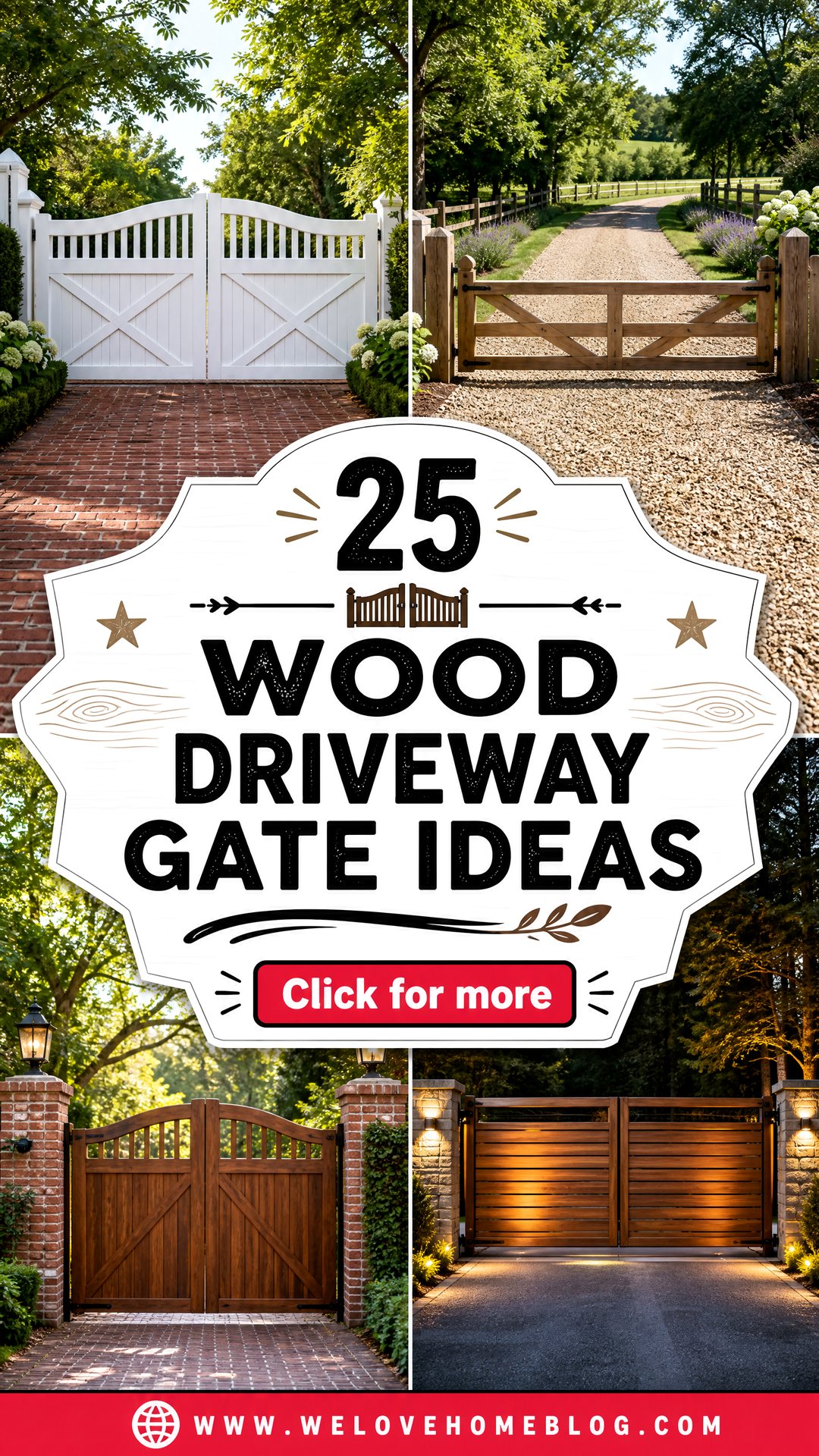
A wood driveway gate can make a home feel more private, polished, and welcoming before guests even reach the front door. The best designs connect the gate with the driveway surface, entry pillars, fencing, landscaping, and architecture. Cedar, redwood, white oak, and dense hardwoods can create very different looks, while steel frames and quality hardware help larger wooden gates remain stable. You should also consider the driveway slope, available opening space, local weather, visibility, and automation before choosing between swinging and sliding systems. From rustic farm entrances to streamlined contemporary gates, these complete designs offer practical inspiration for many properties. Explore these **25 Wood Driveway Gate Ideas** to find a complete entrance that fits your house, yard, and budget.
1. Cedar Wood Driveway Gate With Gravel Driveway
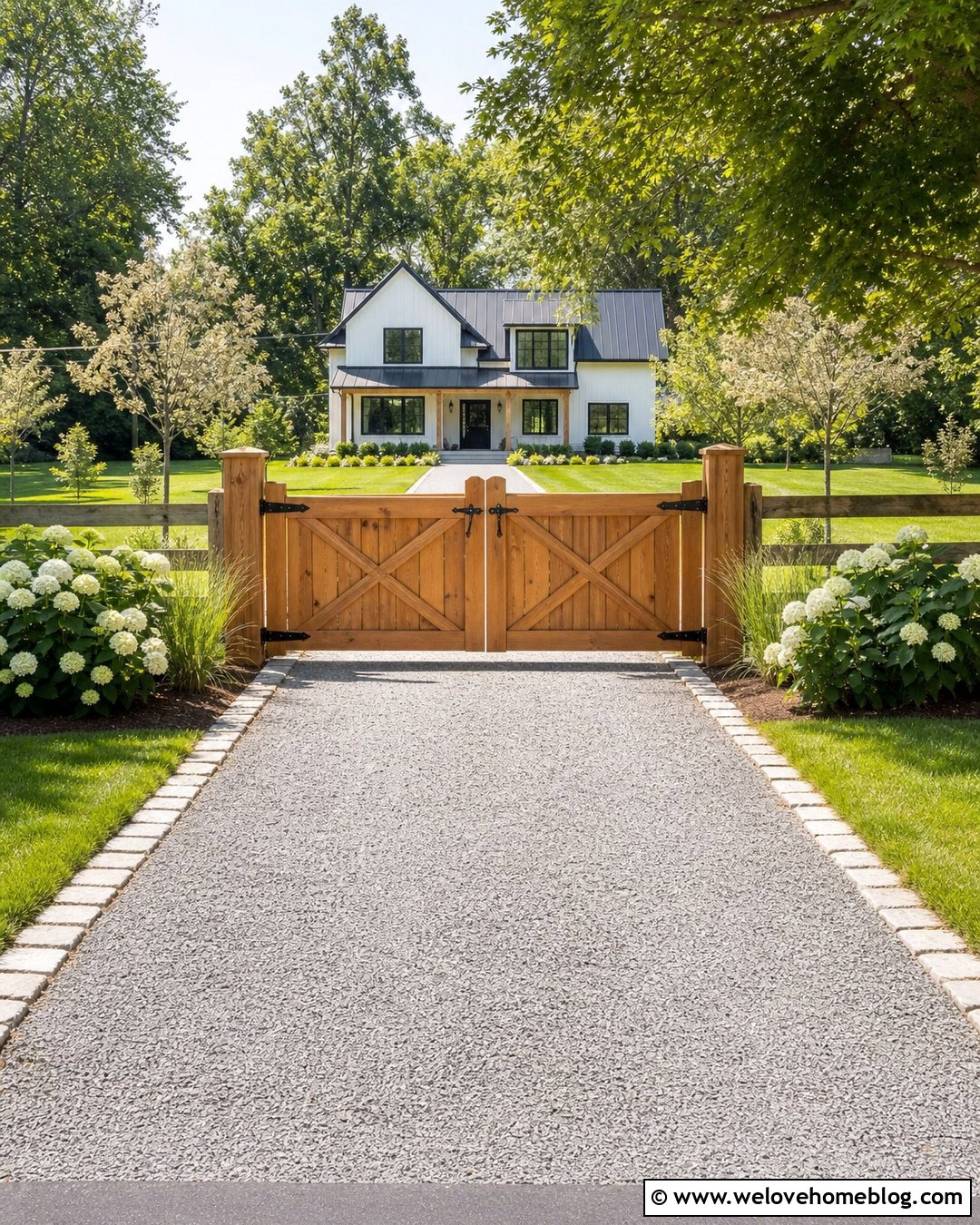
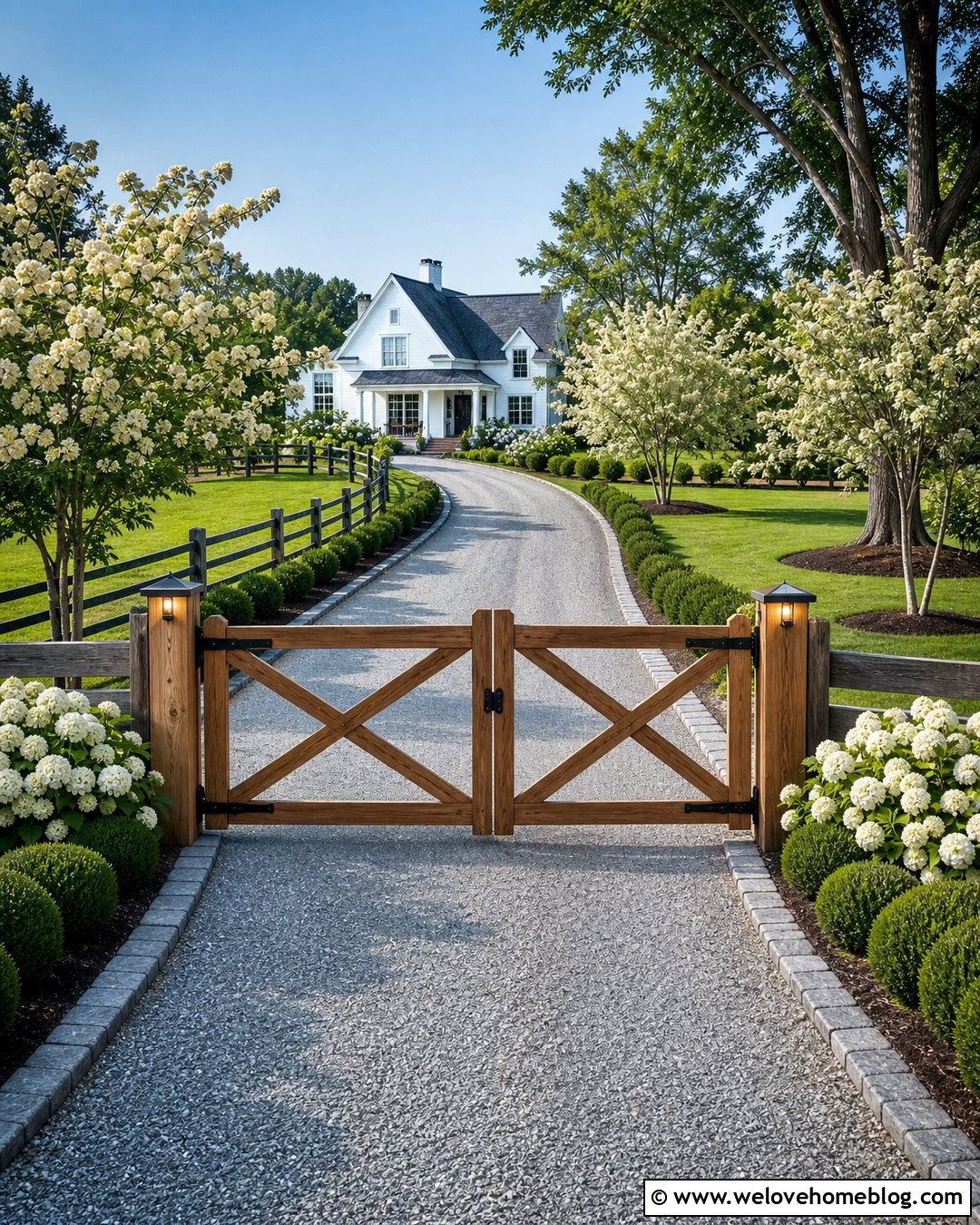
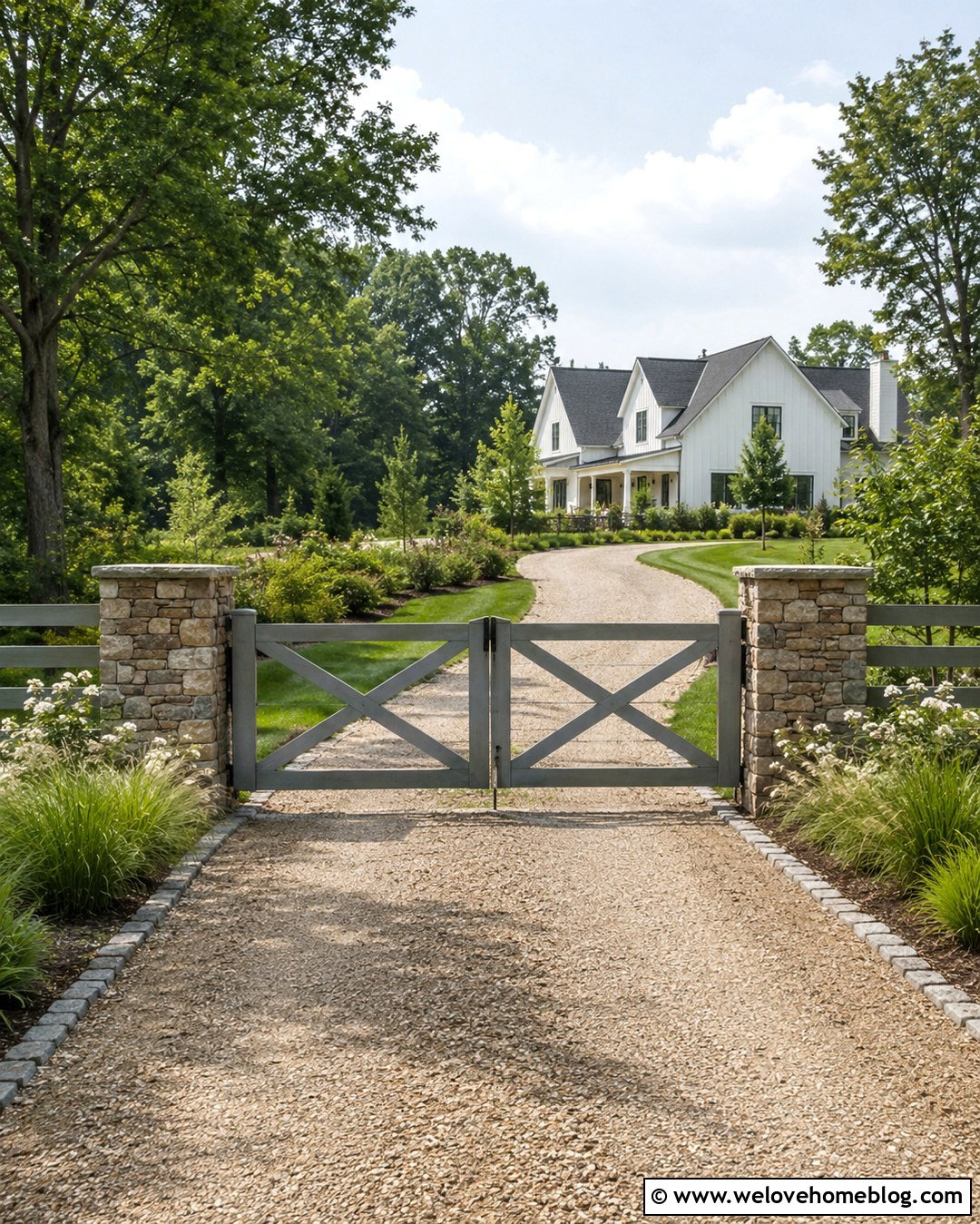
Warm cedar creates an inviting entrance when paired with a softly textured gravel driveway. Choose a double-swing gate with vertical cedar boards and simple diagonal bracing for a relaxed country appearance. Black strap hinges add contrast without making the design feel too formal. On either side, substantial timber posts can connect the gate to split-rail fencing. Use compacted gray gravel for the main driving surface and add cobblestone edging to contain loose stones. Native grasses, hydrangeas, and small flowering trees will soften the wide entrance. This combination works especially well with a ranch house, cottage, or modern farmhouse. A clear exterior stain can preserve the cedar’s warm color, while a weathered finish creates a quieter, more natural look.
2. Modern Wood Driveway Gate With Concrete Driveway
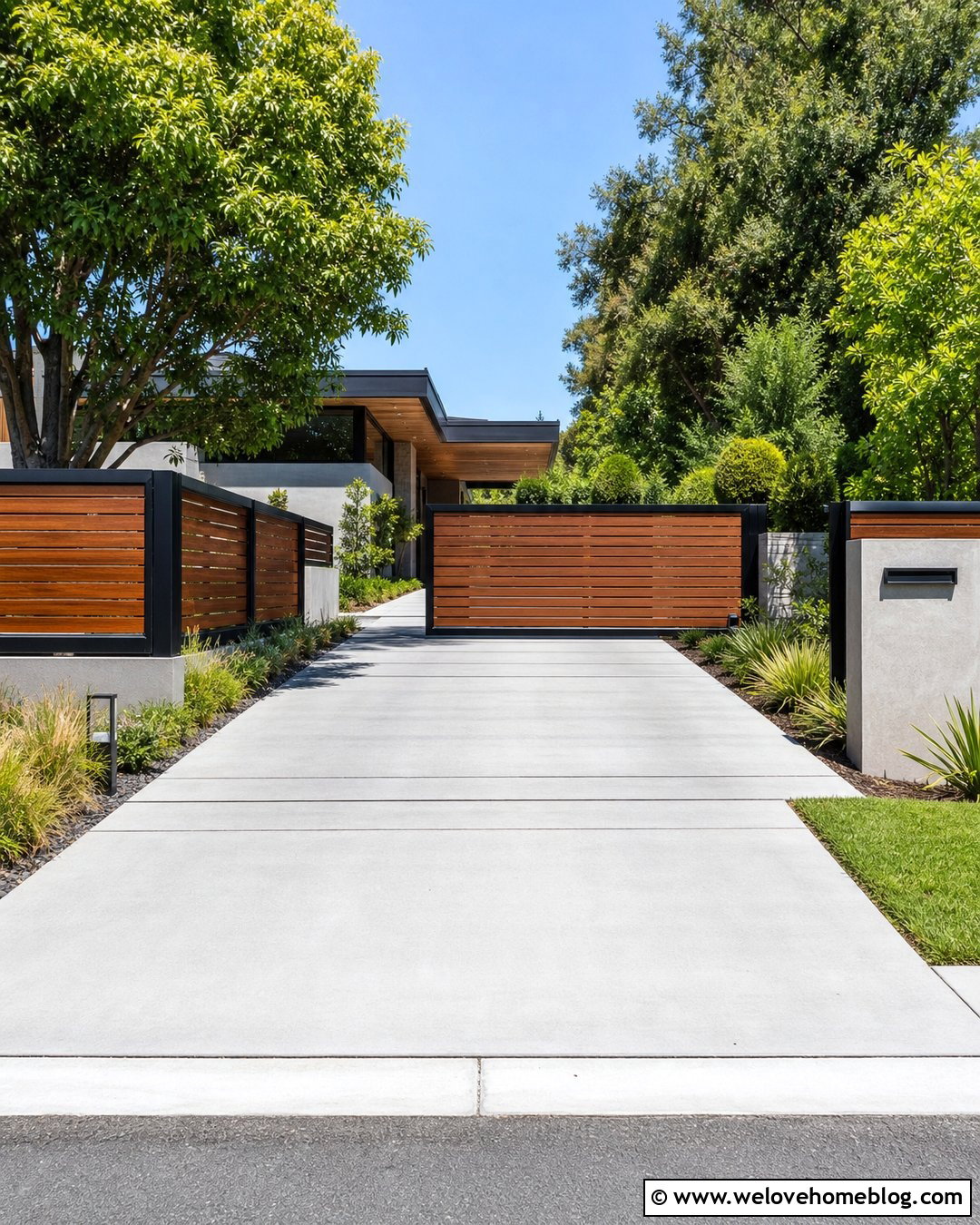
Clean horizontal boards can turn a practical gate into an architectural feature. Use narrow cedar or ipe slats inside a slim black steel frame, leaving small, consistent spaces between the boards. A sliding configuration is useful when the driveway apron is level but lacks enough depth for swinging panels. Continue the strong horizontal lines with a smooth light-gray poured concrete driveway and matching wood fencing. Low concrete walls, ornamental grasses, and neatly clipped shrubs can frame the entrance without distracting from the gate. Consider a recessed address sign and discreet gate controls in one wall. This complete look suits a modern or midcentury home with simple rooflines. The combination of warm wood, dark metal, pale concrete, and restrained planting feels balanced rather than cold.
3. Farmhouse Wood Driveway Gate With Brick Pillars
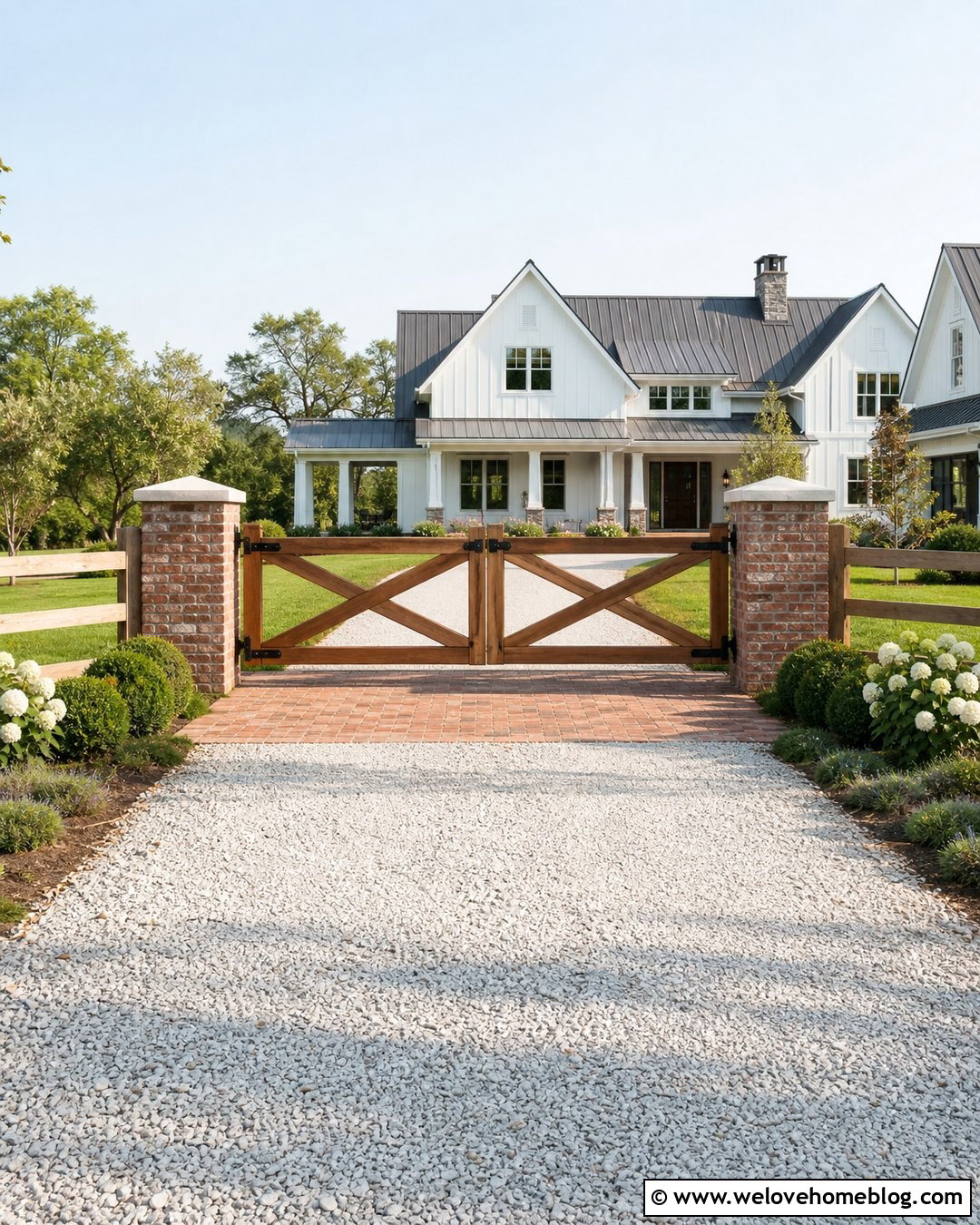
A traditional farmhouse entrance looks complete when a substantial wooden gate sits between classic brick pillars. Build the double gate from stained cedar boards with bold X-shaped braces that reference barn doors. Large black hinges, a central latch, and modest post caps reinforce the rural character. A pale crushed-stone driveway keeps the setting relaxed, while a brick apron creates a clean transition from the road. Extend low post-and-rail fencing from both pillars to visually connect the entrance with the wider property. White hydrangeas, boxwoods, and loosely planted perennials add softness around the masonry. For better balance, match the pillar brick to the home’s chimney or foundation. This design provides a welcoming boundary while preserving the open, comfortable feeling associated with farmhouse landscaping.
4. Arched Wood Driveway Gate With Stone Columns
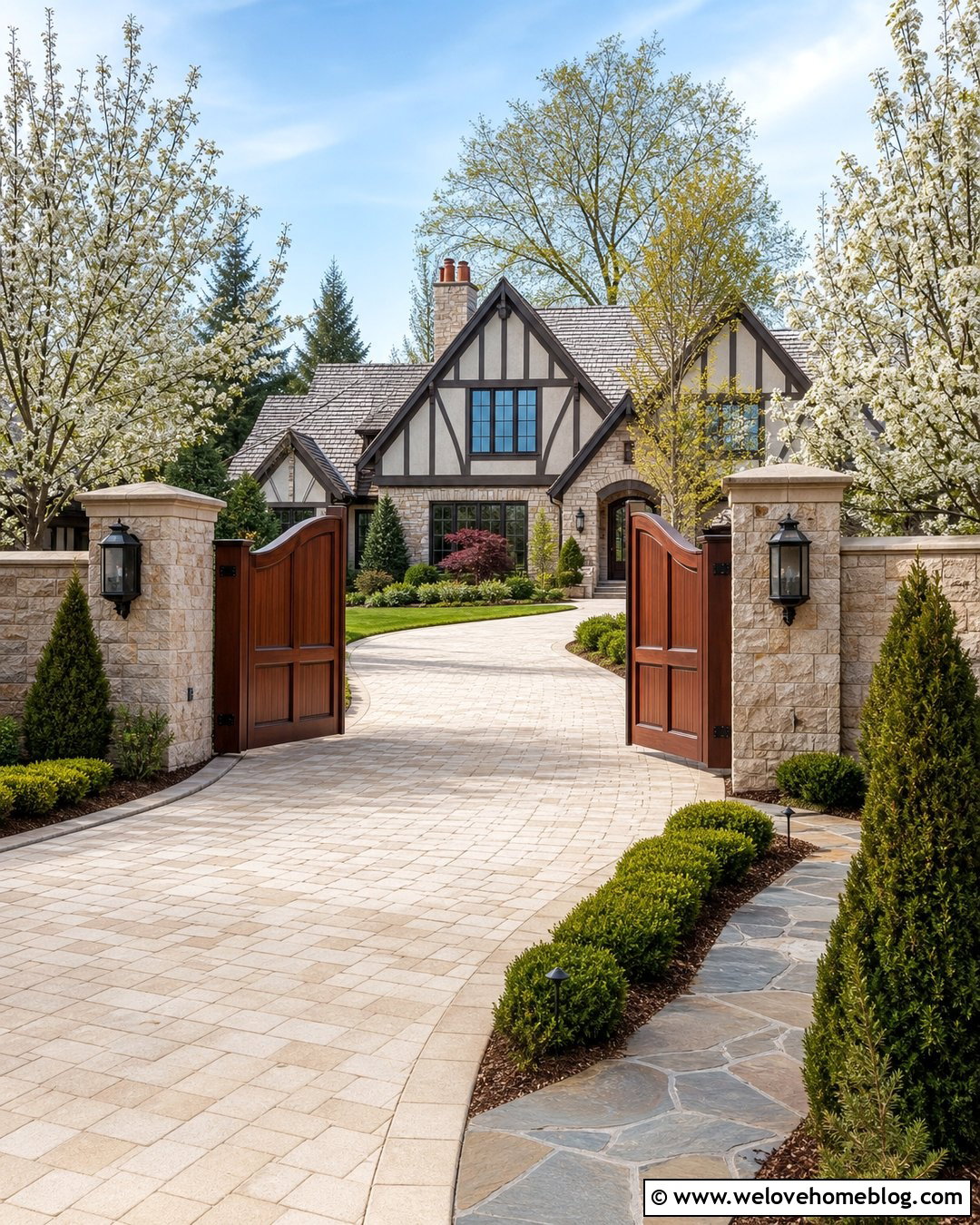
An arched wooden gate brings graceful structure to a large traditional entrance. Use two mahogany or stained cedar leaves with curved upper rails that rise gently toward the center. Natural stone columns give the gate visual support and help it feel proportionate beside a broad paver driveway. Select irregular fieldstone for a country estate or neatly cut limestone for a more refined appearance. Lantern-style fixtures can be mounted near the tops of the columns, with wiring concealed inside. Frame the entrance using evergreen shrubs, flowering trees, and layered planting beds that maintain clear visibility near the road. A curved driveway strengthens the flowing effect of the gate. This coordinated approach complements Tudor, Colonial, Mediterranean, and substantial Craftsman homes without requiring excessive carving or decorative hardware.
5. Black Wood Driveway Gate With Asphalt Driveway
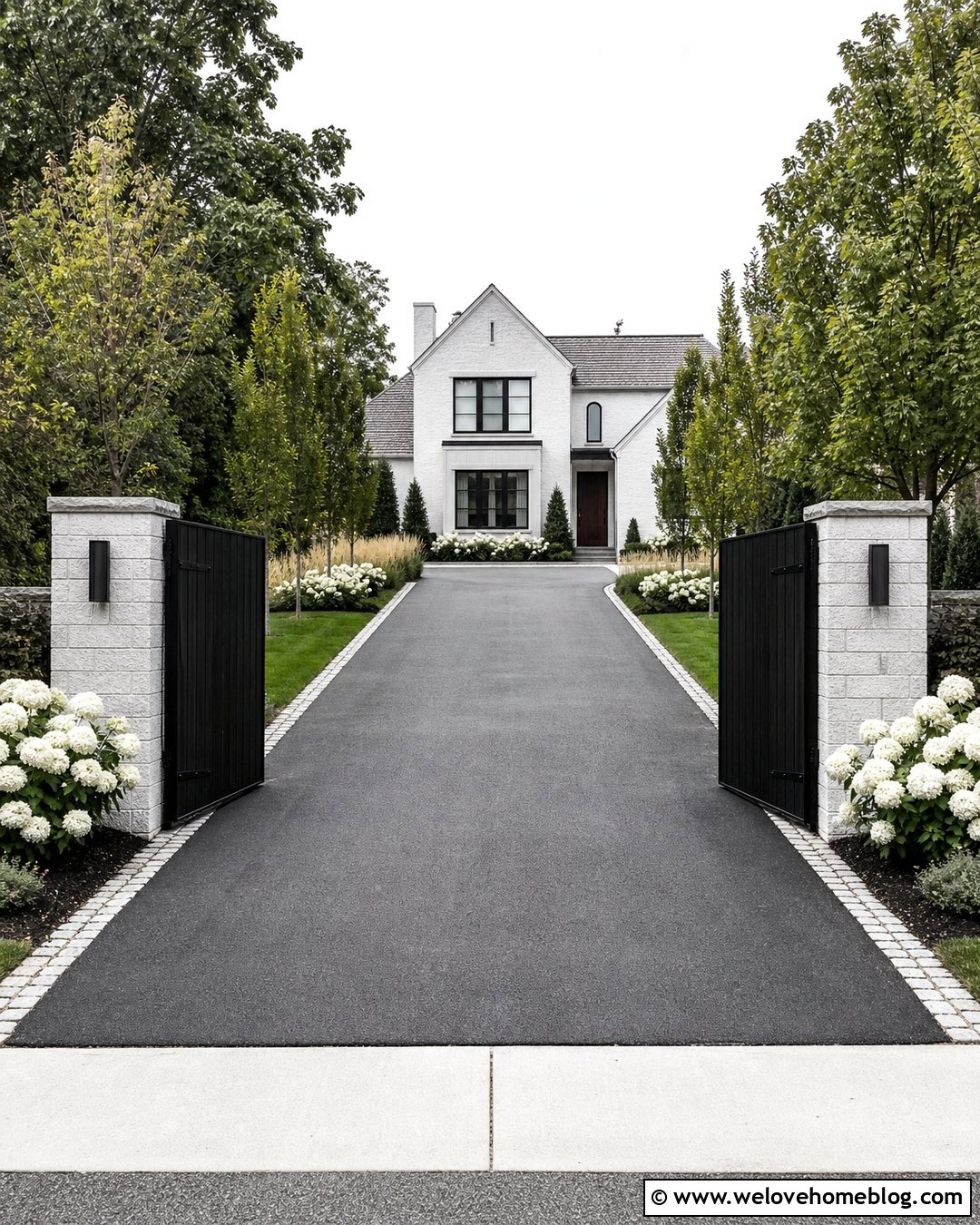
Painting or staining a wooden gate black creates a confident entrance that can suit both updated traditional homes and contemporary properties. Use wide vertical cedar boards within a reinforced frame for privacy, then add minimal matte-black hardware. Pair the gate with a smooth black asphalt driveway bordered by light granite setts. The lighter edging defines the driveway and prevents the dark surfaces from blending into one heavy block. White flowering shrubs, feathery grasses, and fresh green lawn will provide further contrast. Simple masonry pillars in warm white or pale gray can hold the gate without competing with it. Continue the black finish on nearby fencing and an understated address plaque. This coordinated palette looks especially effective in front of a white brick, light stucco, or pale siding facade.
6. Sliding Wood Driveway Gate With Paver Driveway
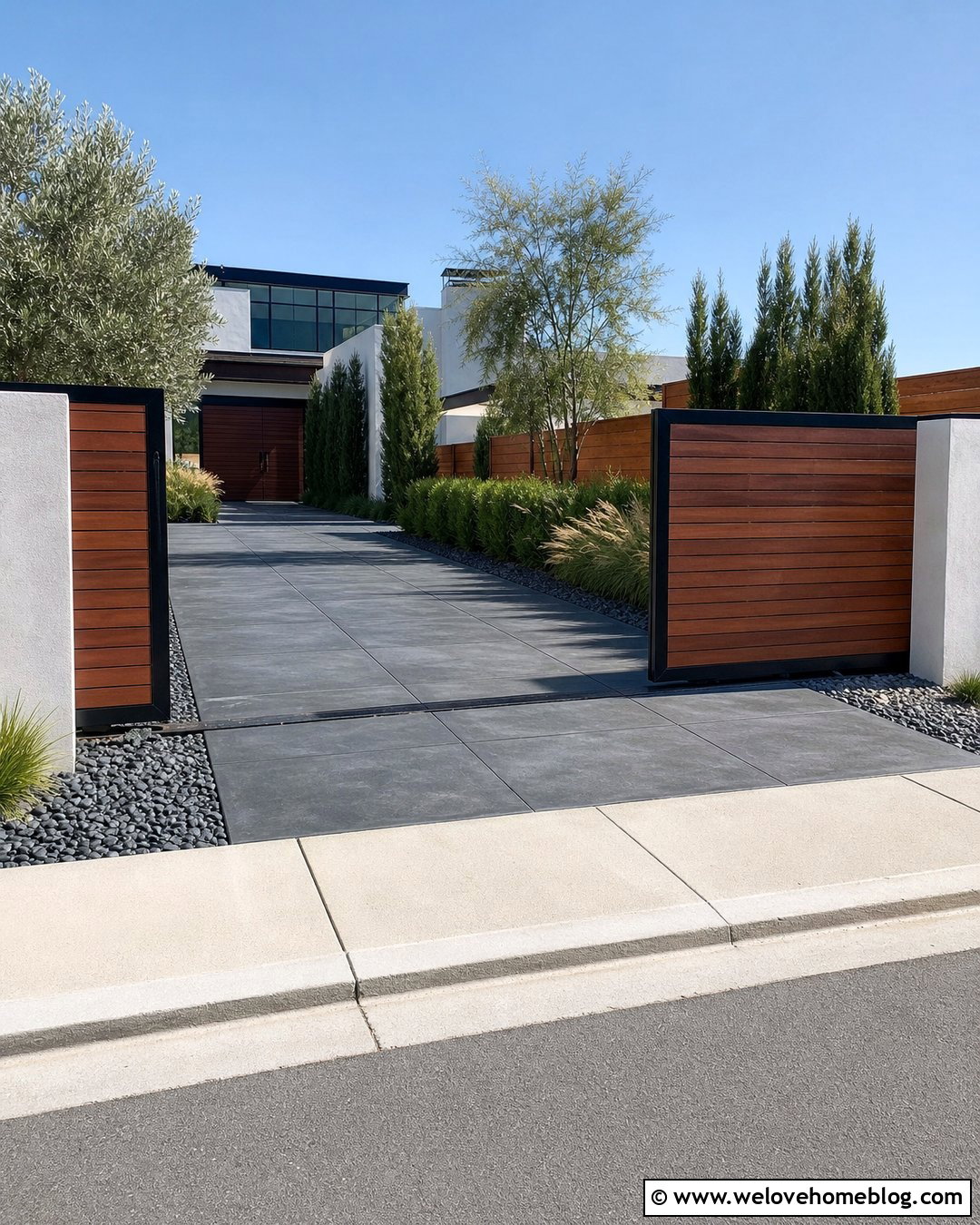
A sliding wooden gate can provide a wide, uncluttered opening where there is insufficient room for swing gates. Select horizontal redwood boards secured inside a powder-coated steel frame to reduce unwanted movement across the long panel. A cantilever design can avoid placing a track across the main driving surface, although it requires adequate fence-line space beside the entrance. Pair it with large-format charcoal concrete pavers installed in a straight running pattern. A narrow gravel drainage strip can separate the pavers from rendered walls and planting beds. Use compact evergreens and sculptural ornamental grasses to keep the entrance crisp. This layout suits contemporary homes on compact lots. Plan the gate’s open position carefully so the long panel disappears neatly behind matching fencing instead of dominating the front yard.
7. Rustic Wood Driveway Gate With Stone Driveway
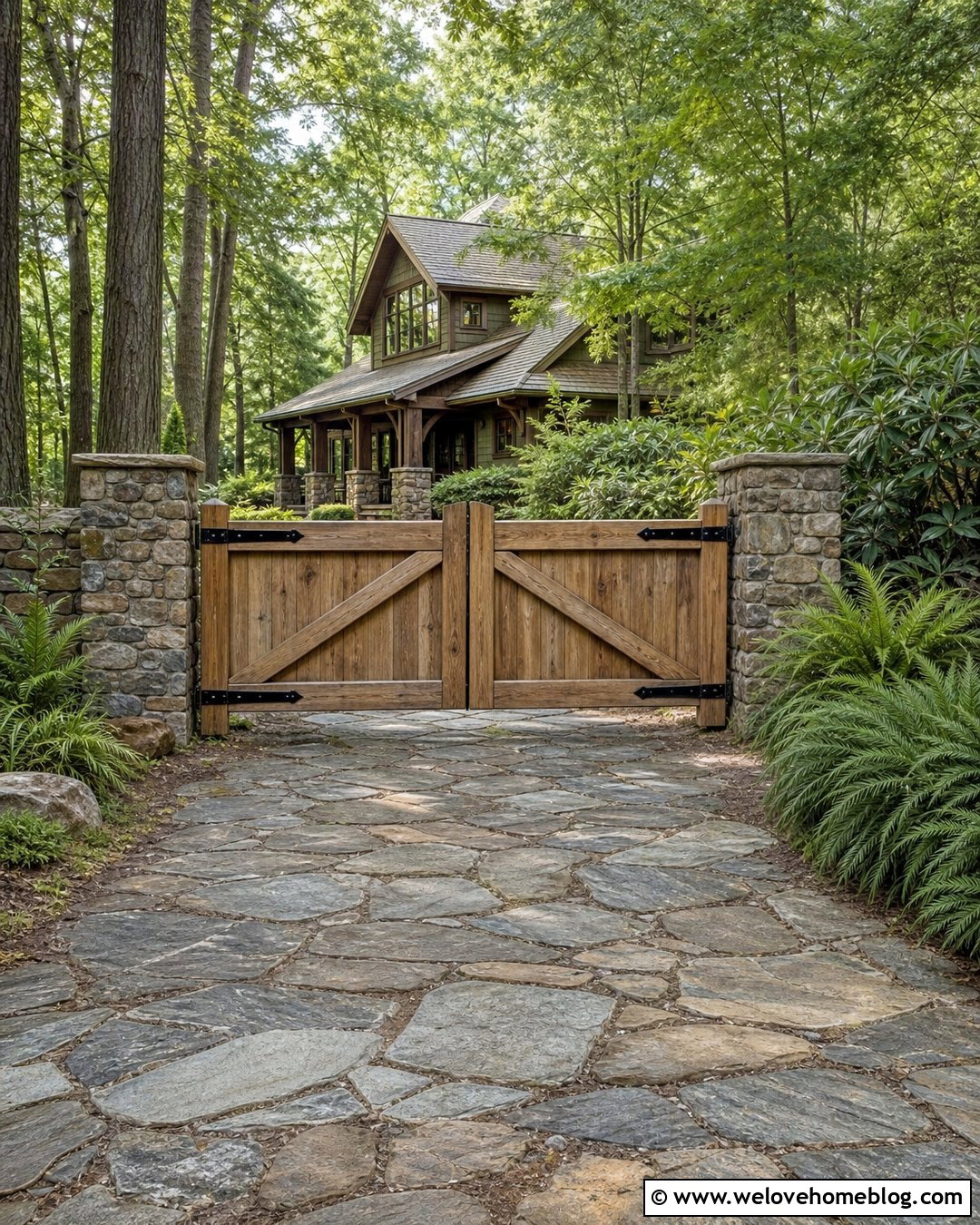
Rough-sawn timber looks most convincing when the surrounding driveway and landscape share its natural character. Create a low double-swing gate from thick oak rails, vertical boards, and visible diagonal braces. A medium-brown stain can highlight knots and saw marks without making the wood appear overly finished. Pair it with an irregular stone driveway laid in earthy gray and tan tones. Use large timber posts or rugged fieldstone columns, depending on the scale of the house. Ferns, native grasses, and broad evergreen shrubs can blend the entrance into a wooded property. Keep the gate partially open rather than fully solid if preserving views is important. This complete design feels appropriate for a mountain cabin, country home, woodland retreat, or rustic Craftsman house with stone exterior details.
8. White Wood Driveway Gate With Brick Driveway
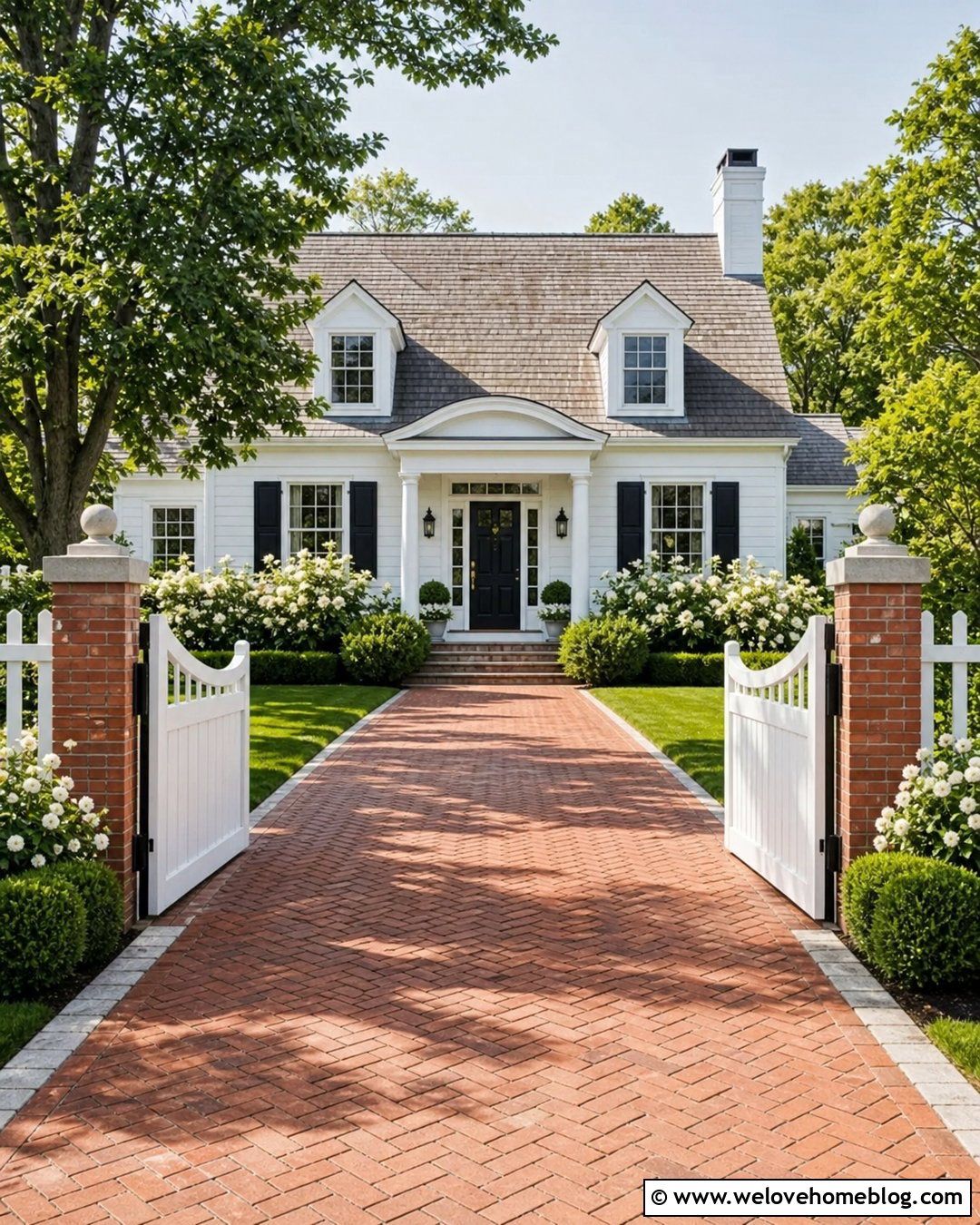
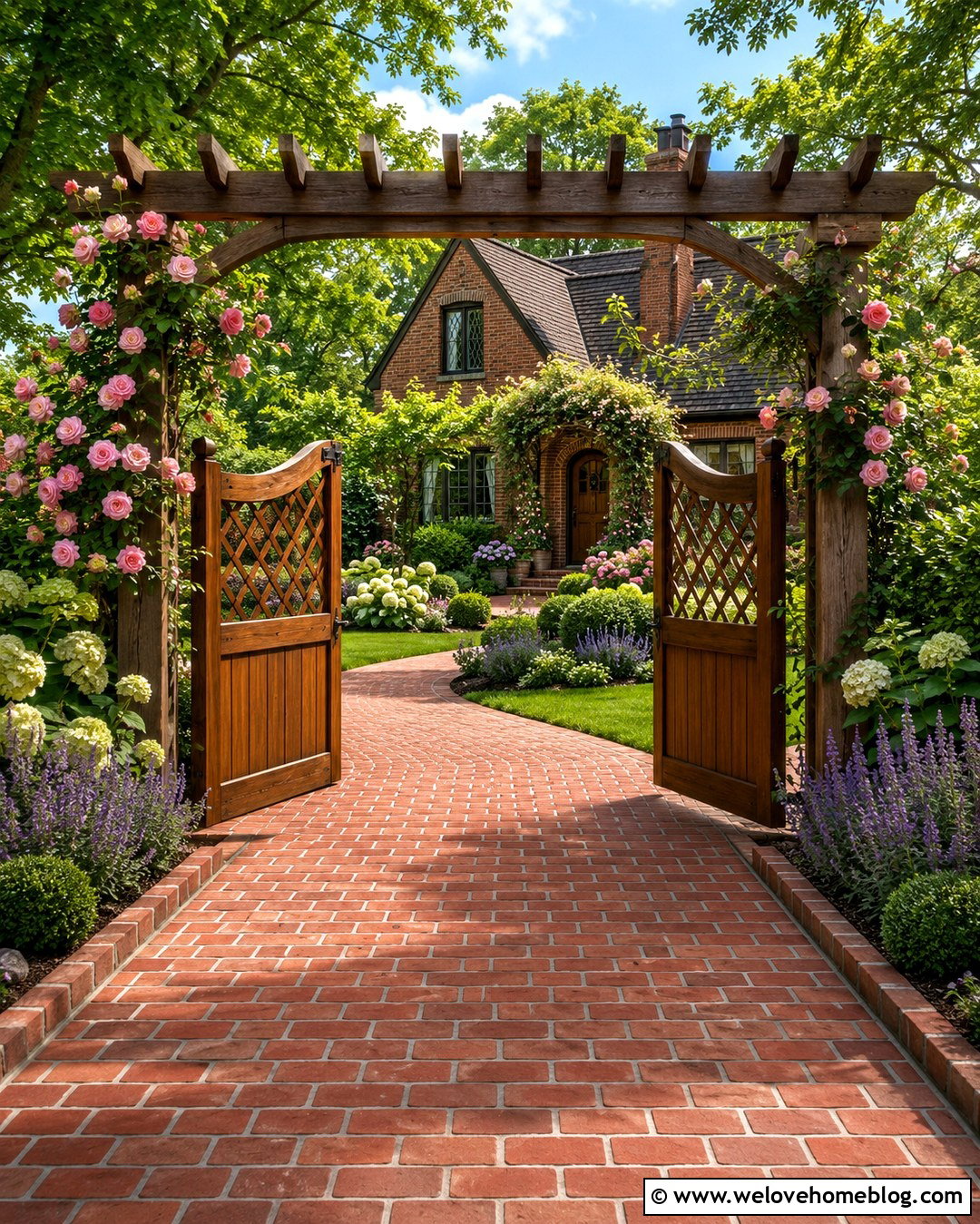
A white wooden gate can make a brick driveway feel lighter and more welcoming. Choose a double-swing design with vertical boards, an open upper section, and gently curved top rails. White paint connects the gate with traditional trim, porch columns, or nearby picket fencing. Underfoot, use red clay brick pavers in a herringbone pattern, framed by a straight soldier-course border. Red brick pillars with pale stone caps can anchor the gate and repeat the driveway material. Surround the entrance with clipped boxwoods, white roses, and a tidy lawn for a classic composition. Stainless or black hardware will stand out clearly against the paint, so keep the fittings simple and symmetrical. This complete entrance works particularly well with Colonial, Cape Cod, Georgian, and traditional cottage architecture.
9. Wood And Metal Driveway Gate With Concrete Pavers
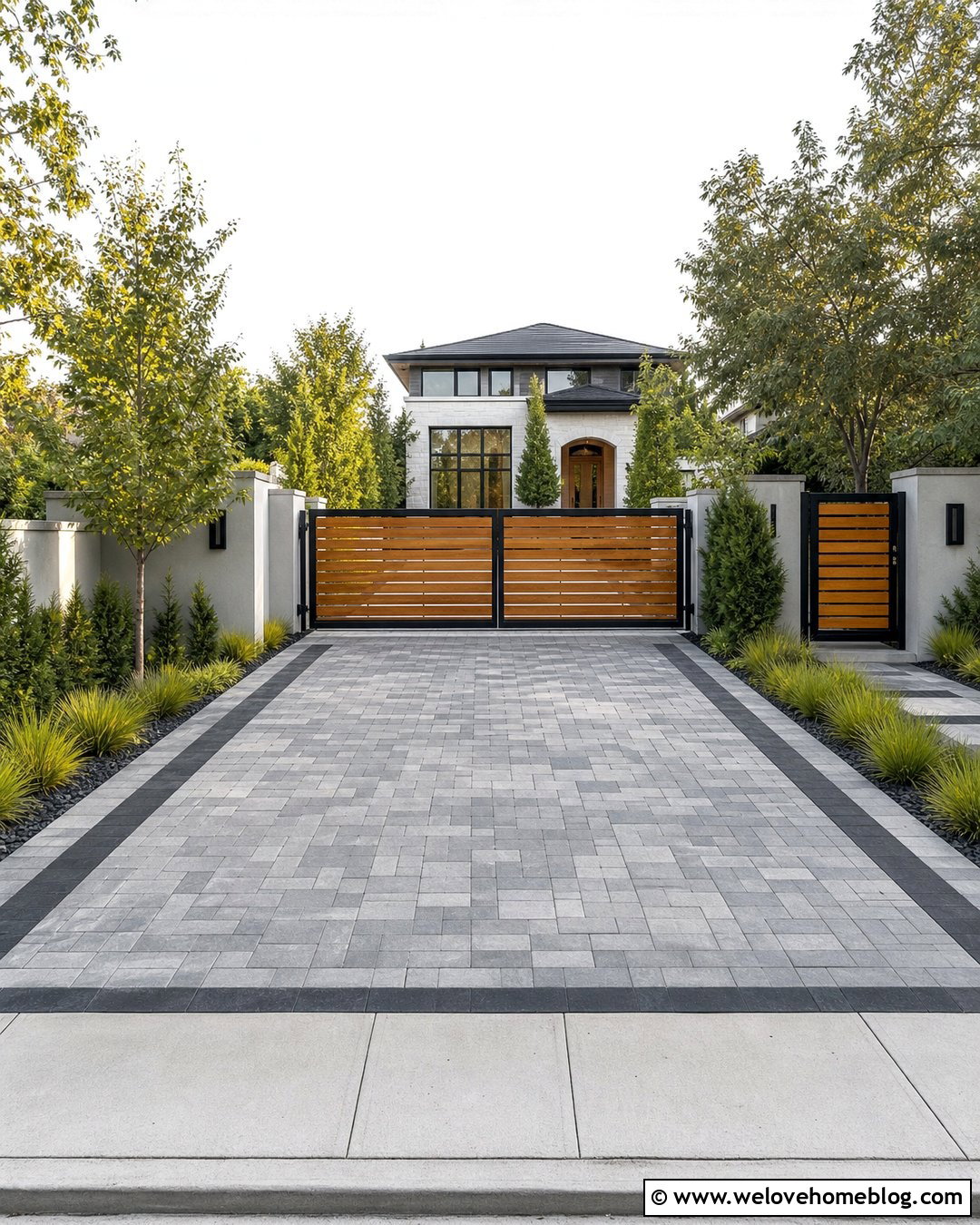
Mixing wood with metal gives a driveway gate warmth, strength, and clear visual definition. Use honey-toned cedar slats as the infill and a charcoal steel frame around each gate leaf. Horizontal boards create a modern effect, while the dark perimeter makes the entrance feel substantial. Pair the gate with rectangular concrete pavers in mixed gray tones, laid in a clean modular pattern. Narrow black paver ribbons can lead from the entrance toward the garage and visually echo the steel frame. Add smooth concrete pillars, linear planting beds, and groups of ornamental grasses for a unified contemporary landscape. A matching pedestrian gate can sit beside the driveway without looking like an afterthought. This combination is particularly suitable for transitional homes that balance traditional materials with simpler modern forms.
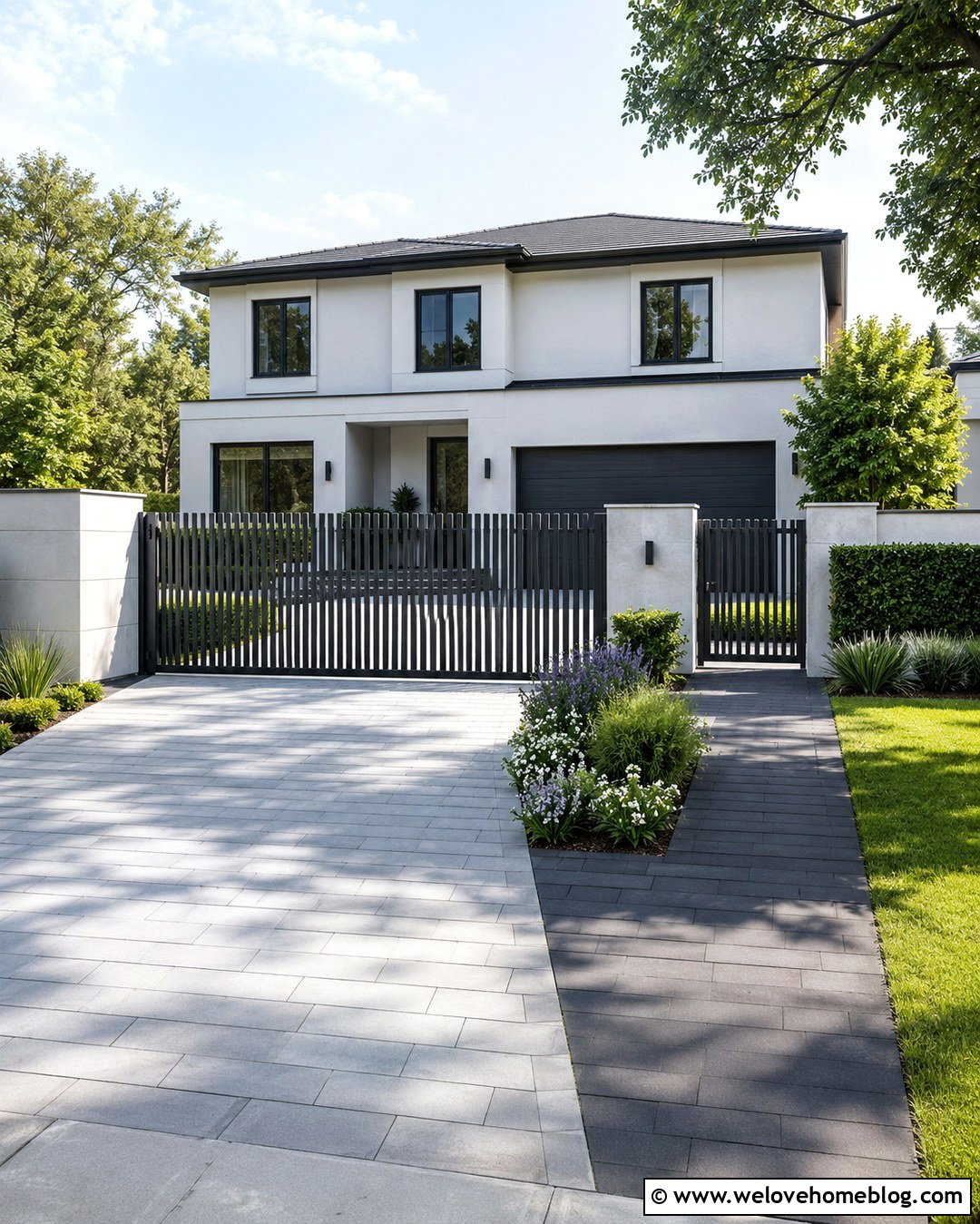
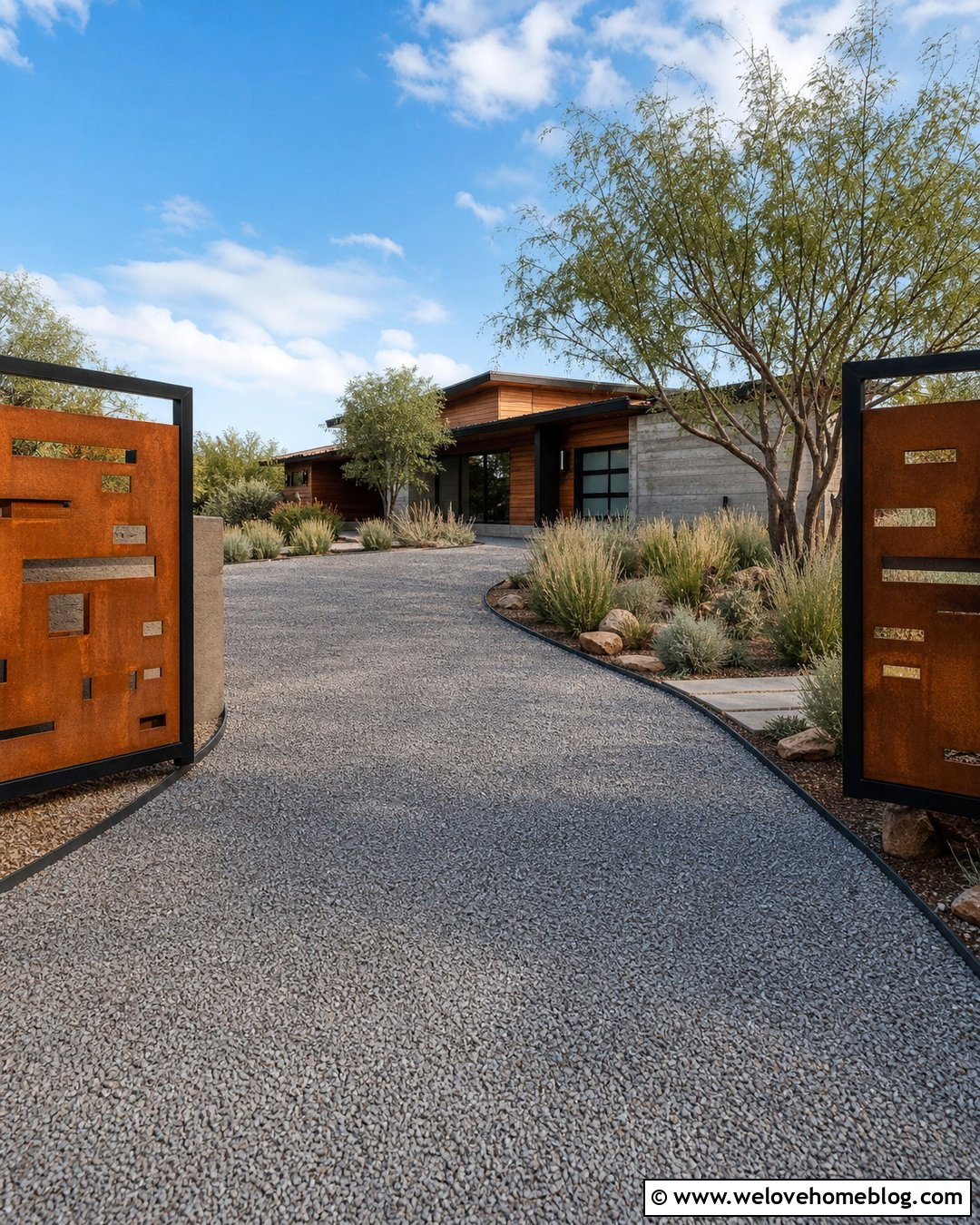
10. Wood Driveway Gate With Wrought Iron Details
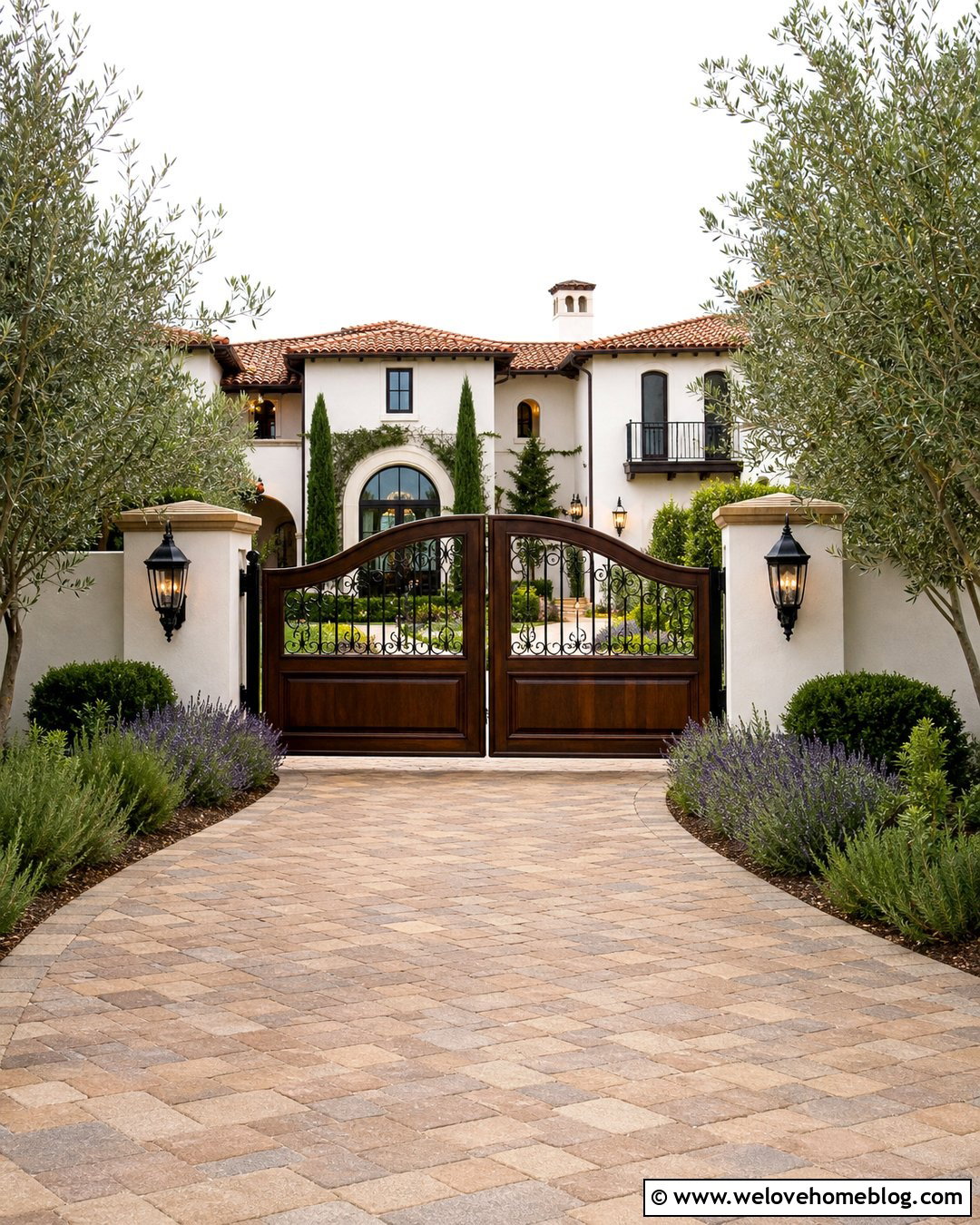
Decorative iron can make a wooden gate more transparent and refined without removing its sense of privacy. Choose a double-swing mahogany gate with solid lower panels and open iron grilles across the upper third. A shallow arched top will complement the scrollwork while maintaining comfortable vehicle clearance. Pair the entrance with warm sandstone pavers and substantial stucco pillars capped in matching stone. Continue a limited amount of iron detailing in nearby fence panels, lights, or balcony rails so the gate relates to the house. Rosemary, lavender, olive trees, and structured evergreen shrubs suit the warm materials. Avoid filling every surface with ornament; one carefully proportioned iron section is usually enough. This coordinated design complements Mediterranean, Spanish Revival, Tuscan, and traditional stucco homes.
11. Horizontal Wood Driveway Gate With Grass Strips

A horizontal wood gate pairs naturally with a driveway that uses long, linear details. Install closely spaced cedar or thermally modified wood boards within a concealed metal frame, finishing them in a medium walnut tone. Continue the visual rhythm with two concrete driving strips separated by a narrow band of reinforced grass. The green center reduces the amount of visible hardscape and helps a compact front yard feel softer. Use flush steel edging to create precise transitions between the grass, concrete, and planting beds. Simple black posts and a slim address marker can support the gate without interrupting its clean lines. Low ground covers and ornamental grasses should frame the entrance while staying clear of moving parts. This look fits modern, minimalist, and midcentury residential architecture.
12. Vertical Wood Driveway Gate With Cobblestone Apron
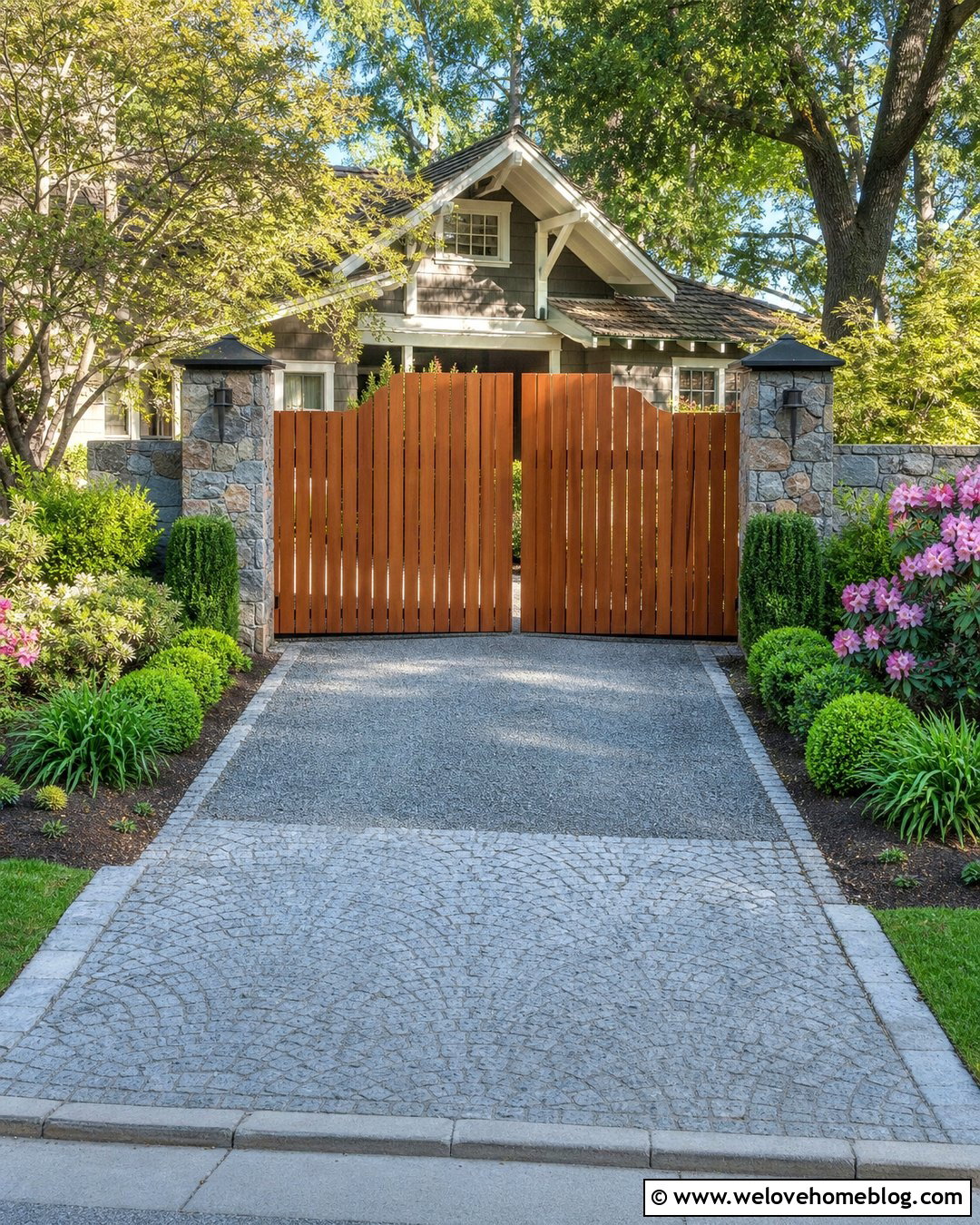
Vertical boards give a wooden driveway gate a strong, traditional presence, especially when the entrance includes a carefully defined cobblestone apron. Use red cedar boards with narrow gaps and a gently stepped top. A sturdy internal frame and diagonal reinforcement can help broad gate leaves maintain their shape. Place the gate between square stone pillars fitted with simple black caps. At ground level, install a fan-pattern cobblestone apron before transitioning to a compacted gravel driveway. The darker stones create a durable-looking threshold and visually mark the property entrance. Layer boxwoods, ferns, and small flowering shrubs around the pillars while preserving safe sightlines. This arrangement feels established but not excessively formal. It works well for Craftsman, cottage, country, and traditional shingle-style homes.
13. Wood Driveway Gate With Matching Fence
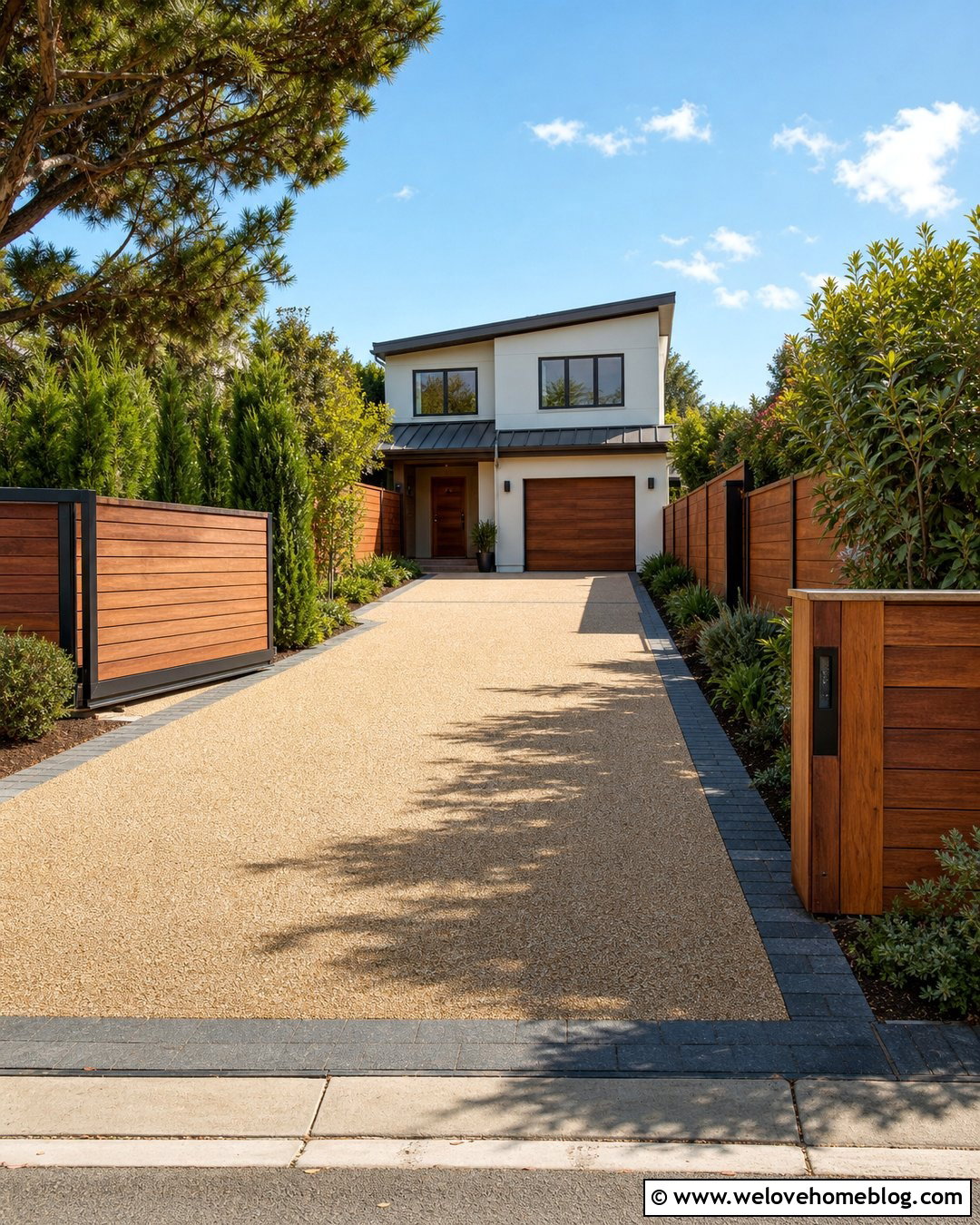
Matching the gate and fence creates a continuous frontage that looks planned from the beginning. Use horizontal redwood boards across a sliding gate and continue the same board width, stain color, and spacing along both sides. A dark metal frame can remain mostly concealed behind the wood, keeping the street-facing surface consistent. Pair the entrance with a warm beige resin-bound gravel driveway and a charcoal paver border. The smooth surface and restrained color keep attention on the timber grain. Add layered evergreen planting in front of the fence to soften its length, but leave open areas around the gate mechanism. A matching pedestrian entrance and address post will further unify the design. This approach suits private suburban yards and modern homes with wide street-facing boundaries.
14. Low Wood Driveway Gate With Pea Gravel
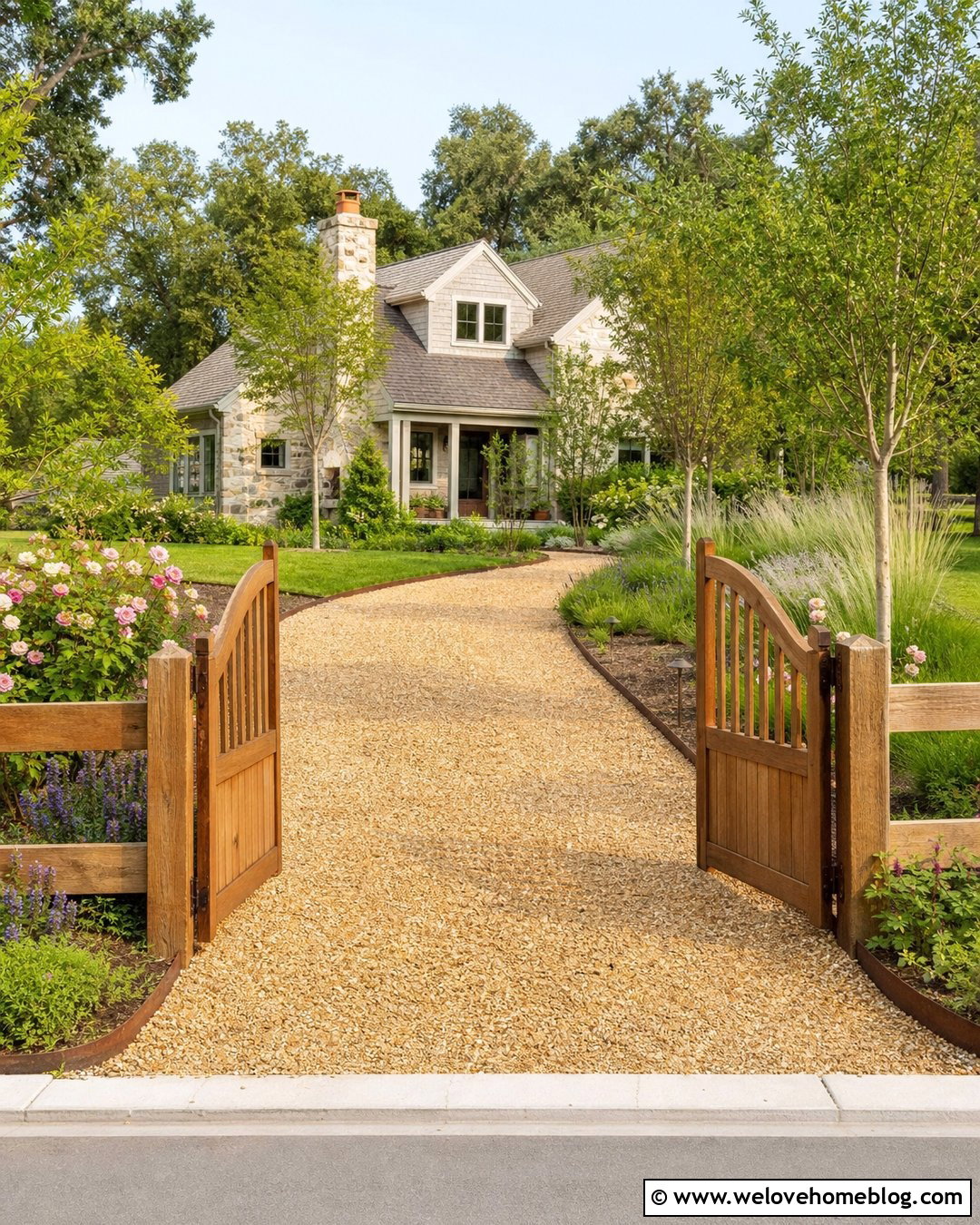
Not every property needs a tall privacy gate. A low, open wooden gate can define the entrance while retaining views of the house and front garden. Build a simple double gate from cedar rails and narrow vertical pickets, keeping the top line level or adding a shallow central curve. Pair it with warm tan pea gravel contained by weathered steel or brick edging. Connect the gate to low post-and-rail fencing so the entire boundary feels open and approachable. Cottage roses, catmint, ornamental grasses, and small deciduous trees can frame the entrance without hiding it. This design works beautifully for cottages, bungalows, ranch houses, and informal country homes. It is also visually lighter than a solid gate, making it suitable for smaller front yards where tall panels could feel overpowering.
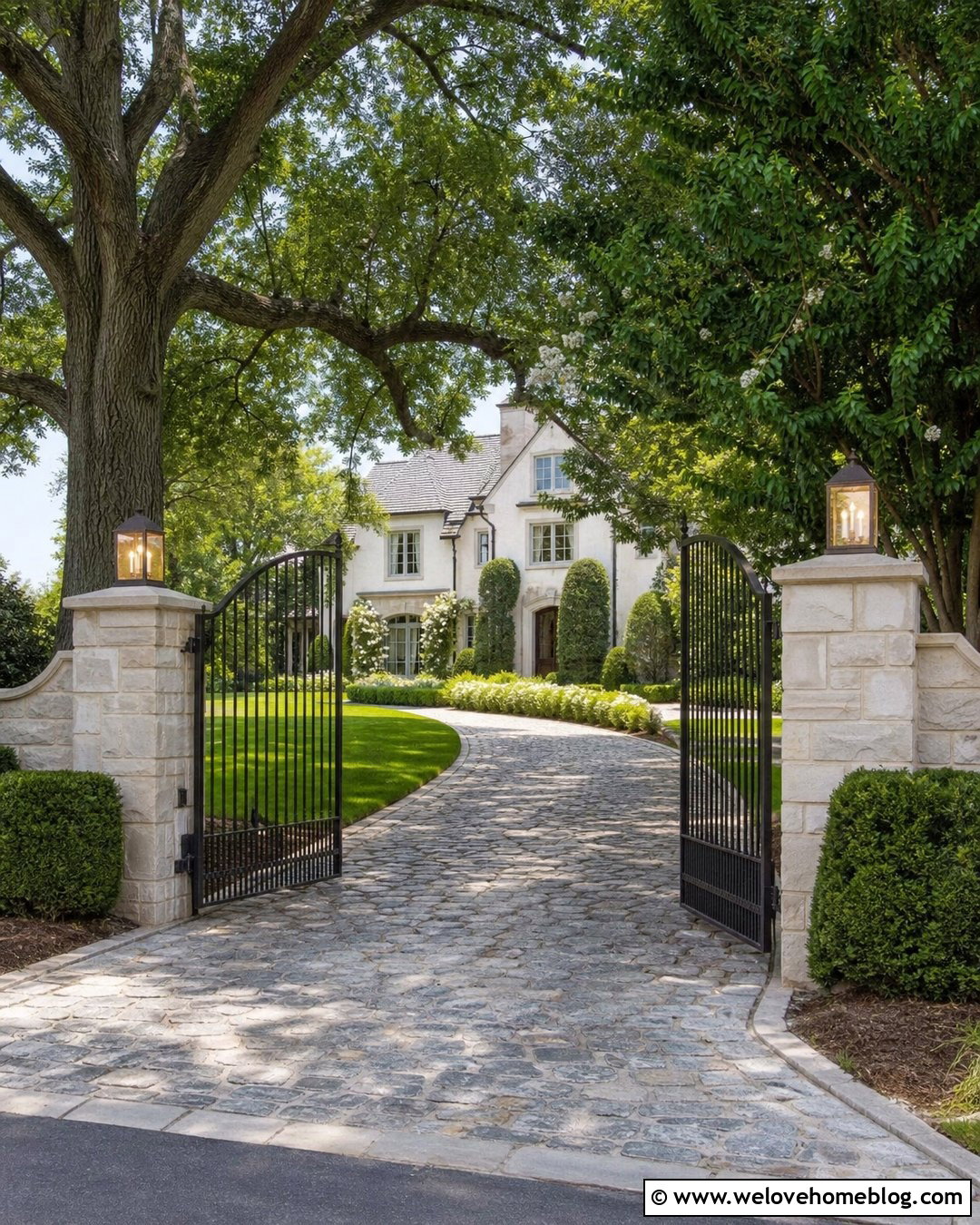
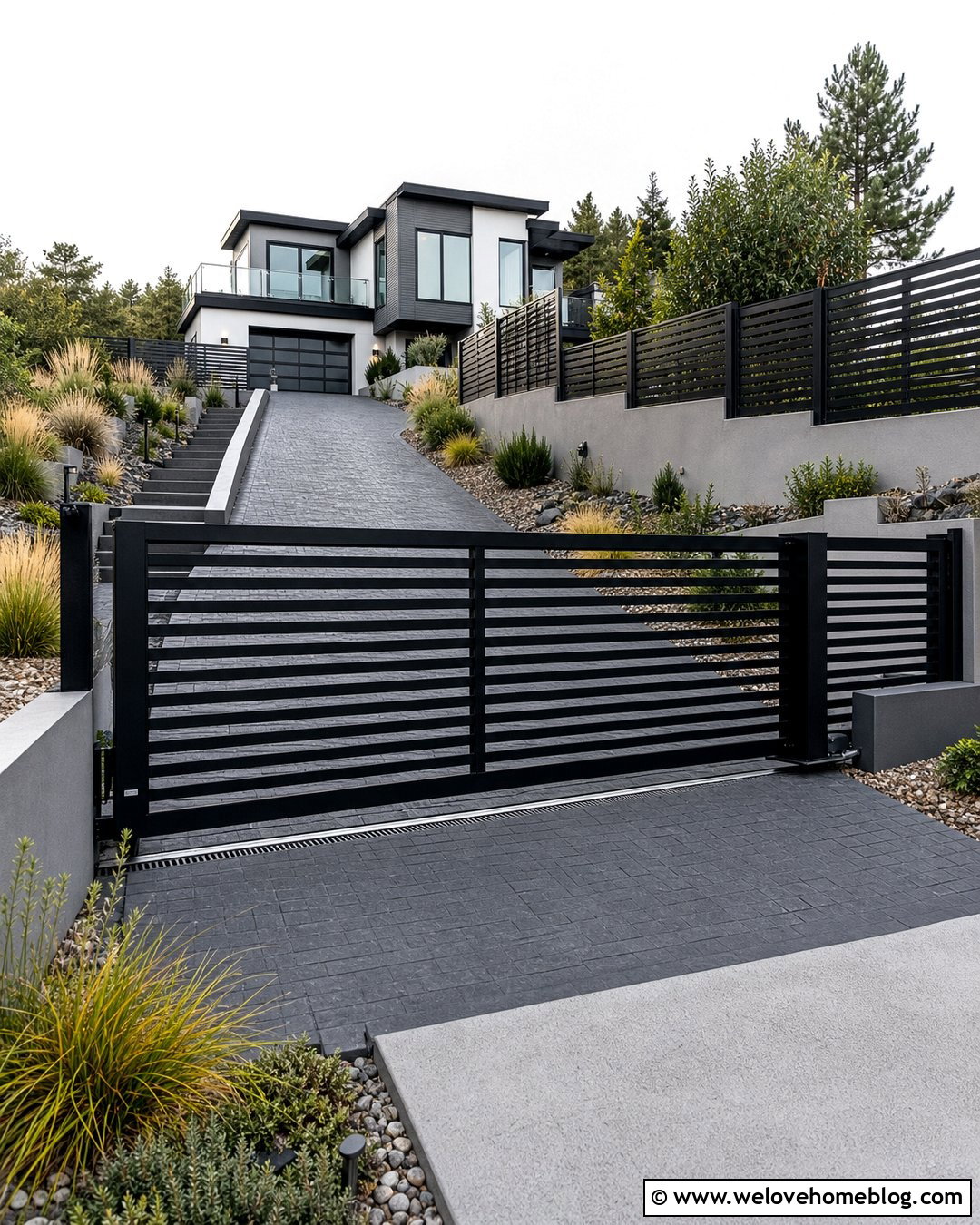
15. Tall Privacy Wood Driveway Gate With Concrete
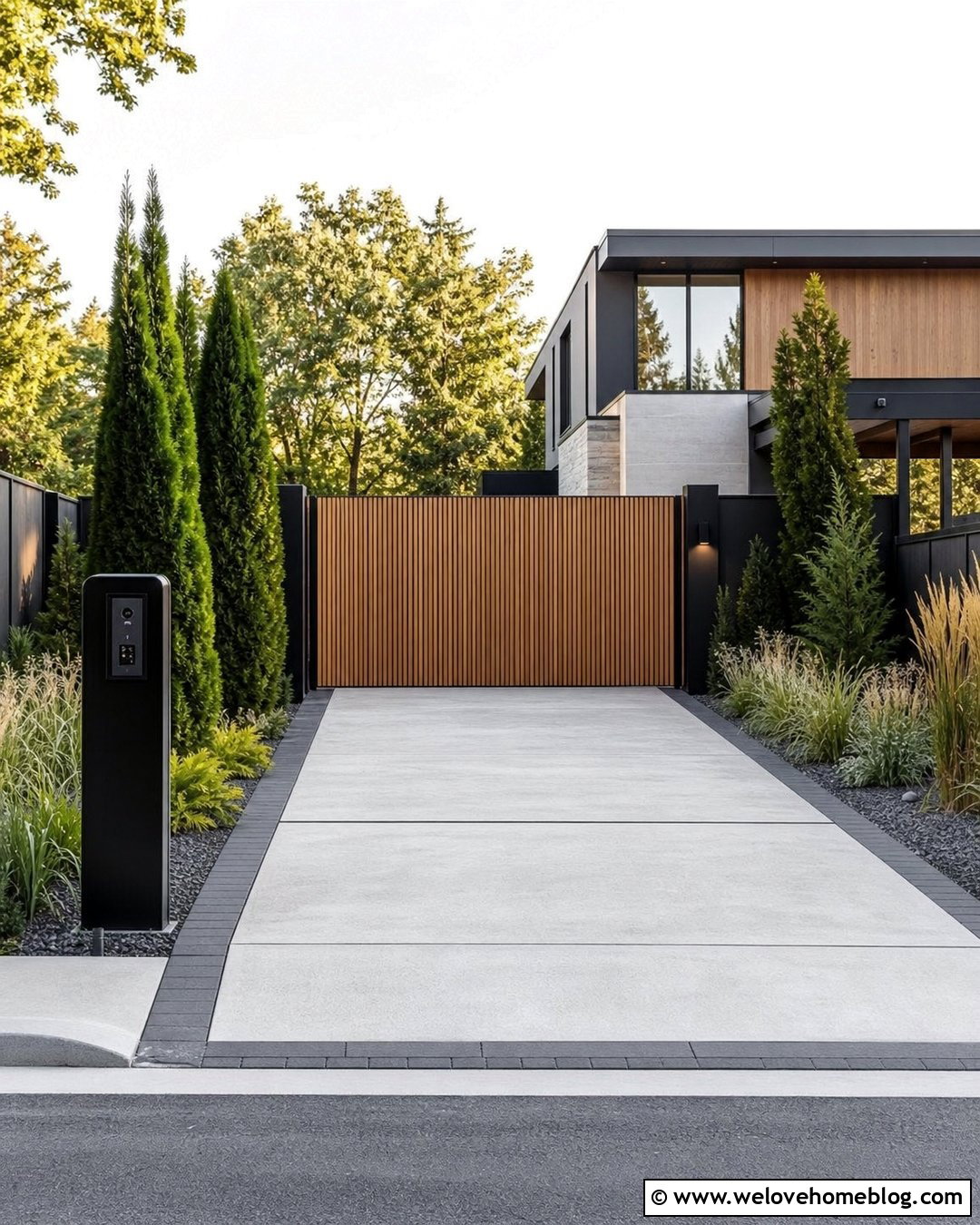
A tall wooden gate can screen parked vehicles and create a calm, private front courtyard. Use narrow vertical cedar boards with minimal gaps, secured to a steel subframe for a crisp, stable appearance. Keep the top straight and hardware discreet to prevent the large surface from looking overly decorative. A pale broom-finished concrete driveway brightens the entrance and contrasts with the warm wood. Add dark basalt borders on both sides to define the driving area and connect with black gate posts. Layer upright evergreens, bamboo alternatives, or tall ornamental grasses behind low planting beds for additional screening. A modern address pillar and wall-mounted intercom can be incorporated beside the gate. This complete design suits urban lots, contemporary houses, and homes with garages positioned close to the street.
16. Wood Driveway Gate With Stone Wall
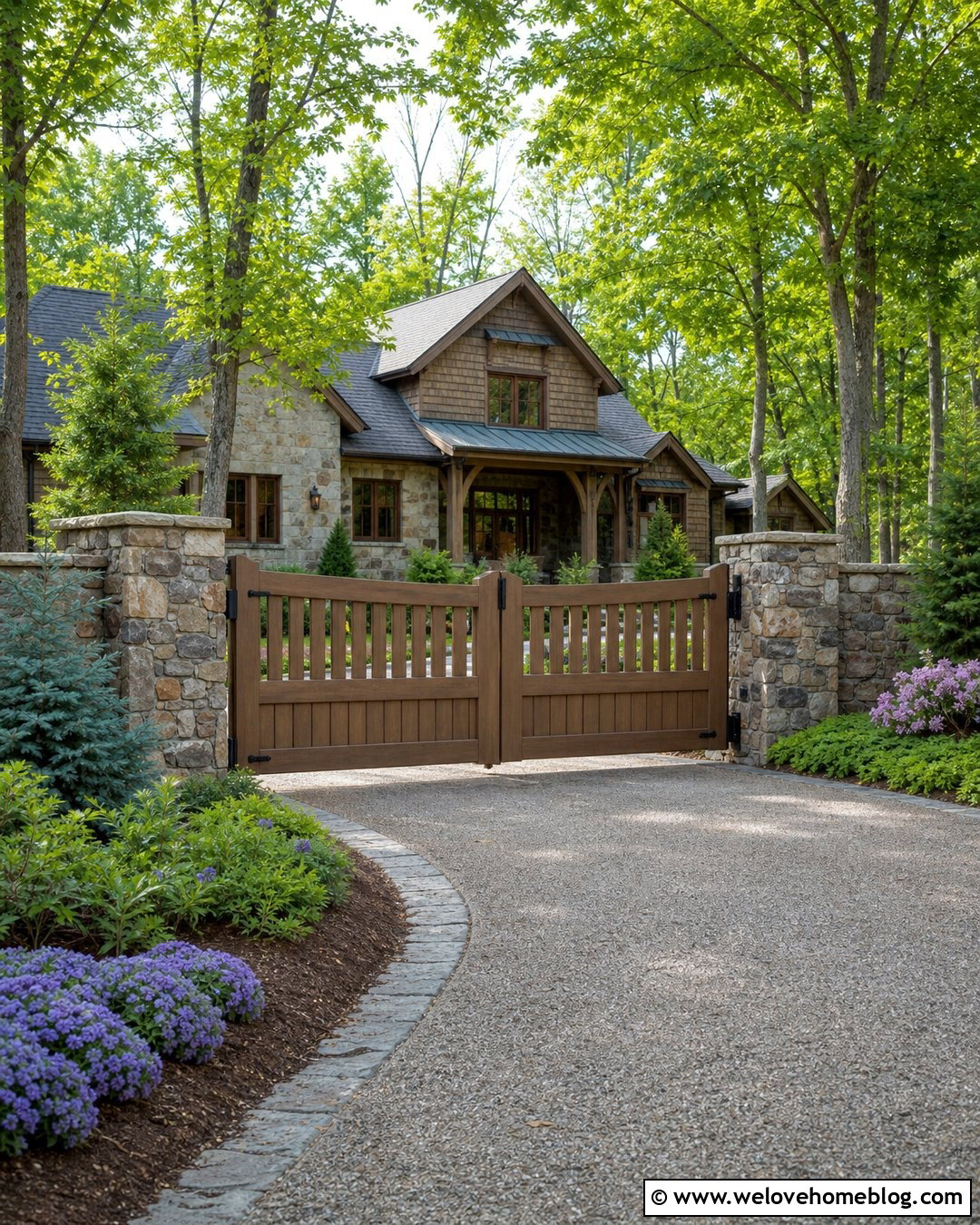
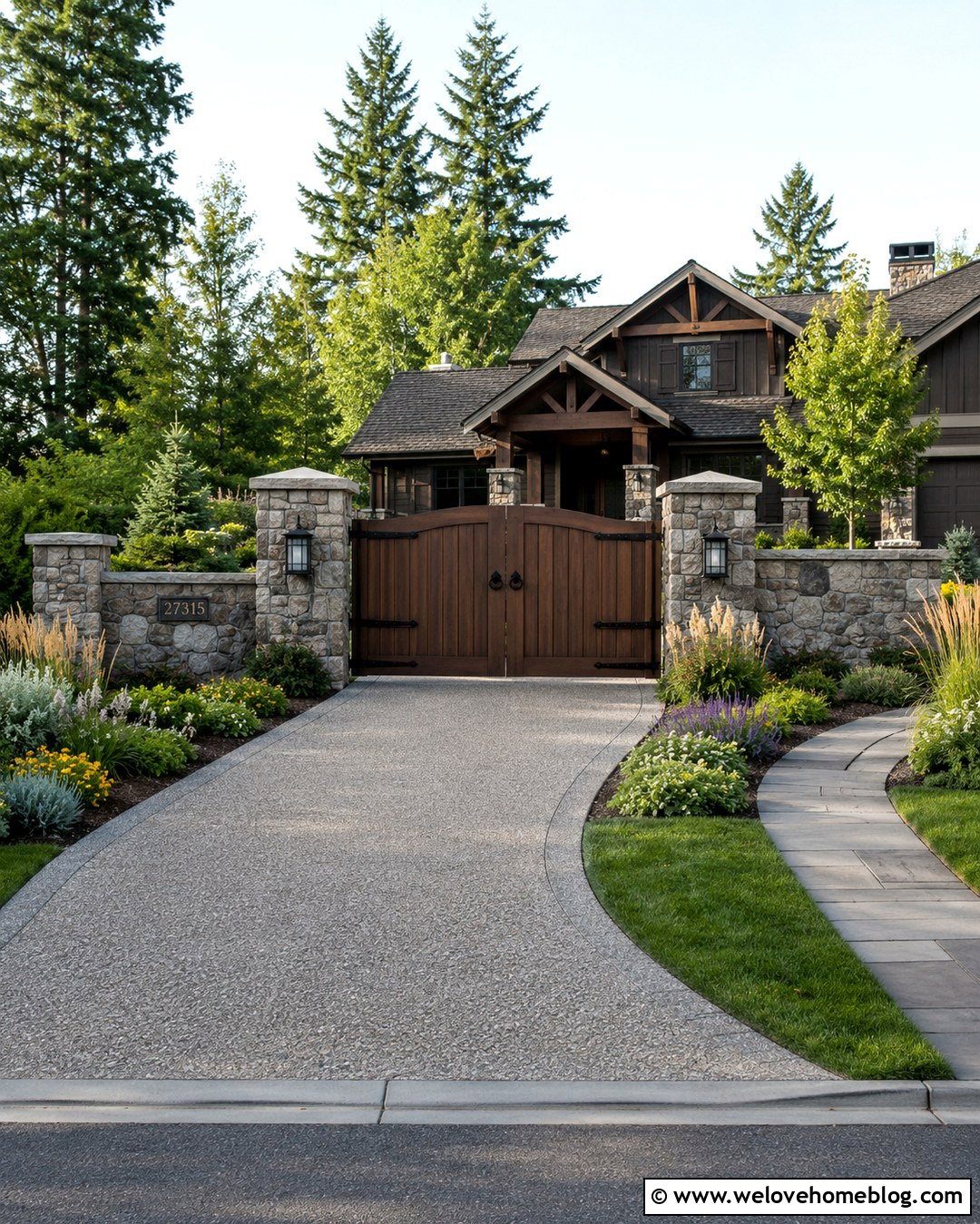
A wooden gate inserted into a natural stone wall can make the entrance feel connected to the landscape. Choose a medium-height white oak double gate with broad horizontal rails and vertical infill boards. Finish the wood in a muted brown that complements, rather than matches, the stone. A curved exposed-aggregate concrete driveway works well because its visible texture bridges the gap between refined paving and rugged masonry. Extend the stone walls gradually toward the road instead of ending them abruptly at the pillars. Ground-cover plants, small evergreens, and flowering shrubs can spill gently over selected wall edges. Use understated bronze or black hardware to maintain the natural palette. This combination feels especially appropriate for hillside properties, Craftsman homes, stone cottages, and country residences surrounded by mature trees.
17. Wood Driveway Gate With Brick Columns
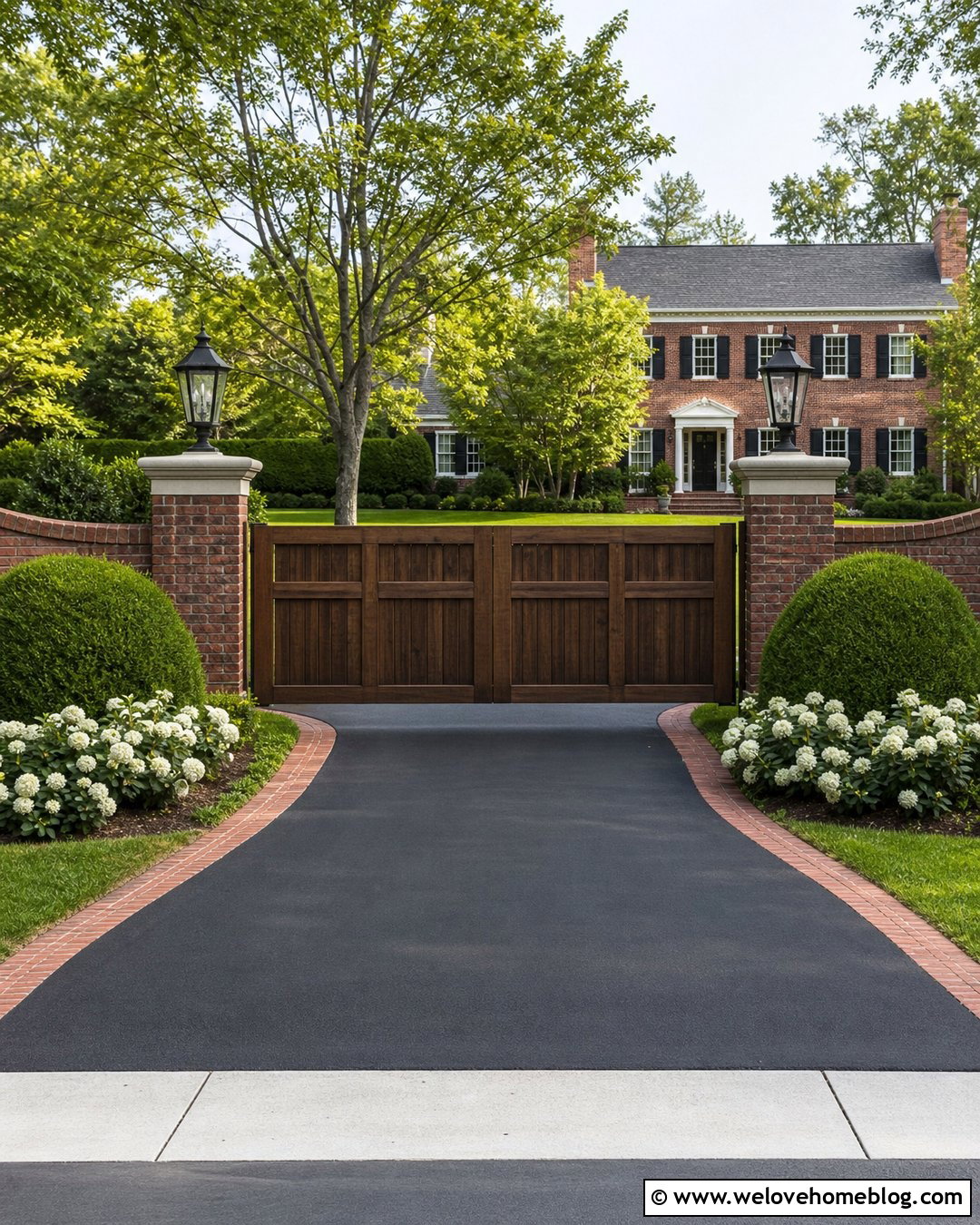
Brick columns provide familiar color and reliable visual weight for a classic wooden entrance. Use a straight-topped cedar double gate with framed panels and a rich walnut stain. Deep brown wood complements red brick without becoming indistinguishable from it. Pale concrete or limestone caps can lighten the columns and help protect their upper surfaces. Continue the entrance with a gently curved asphalt driveway outlined by a double row of brick pavers. The brick border connects the driveway to the columns and makes the entire composition feel intentional. Plant rounded evergreen shrubs, white hydrangeas, and a pair of small ornamental trees behind the masonry. Traditional lanterns can finish the look. This complete entrance pairs naturally with Colonial, Tudor, traditional brick, and updated ranch homes.
18. Craftsman Wood Driveway Gate With Paver Bands
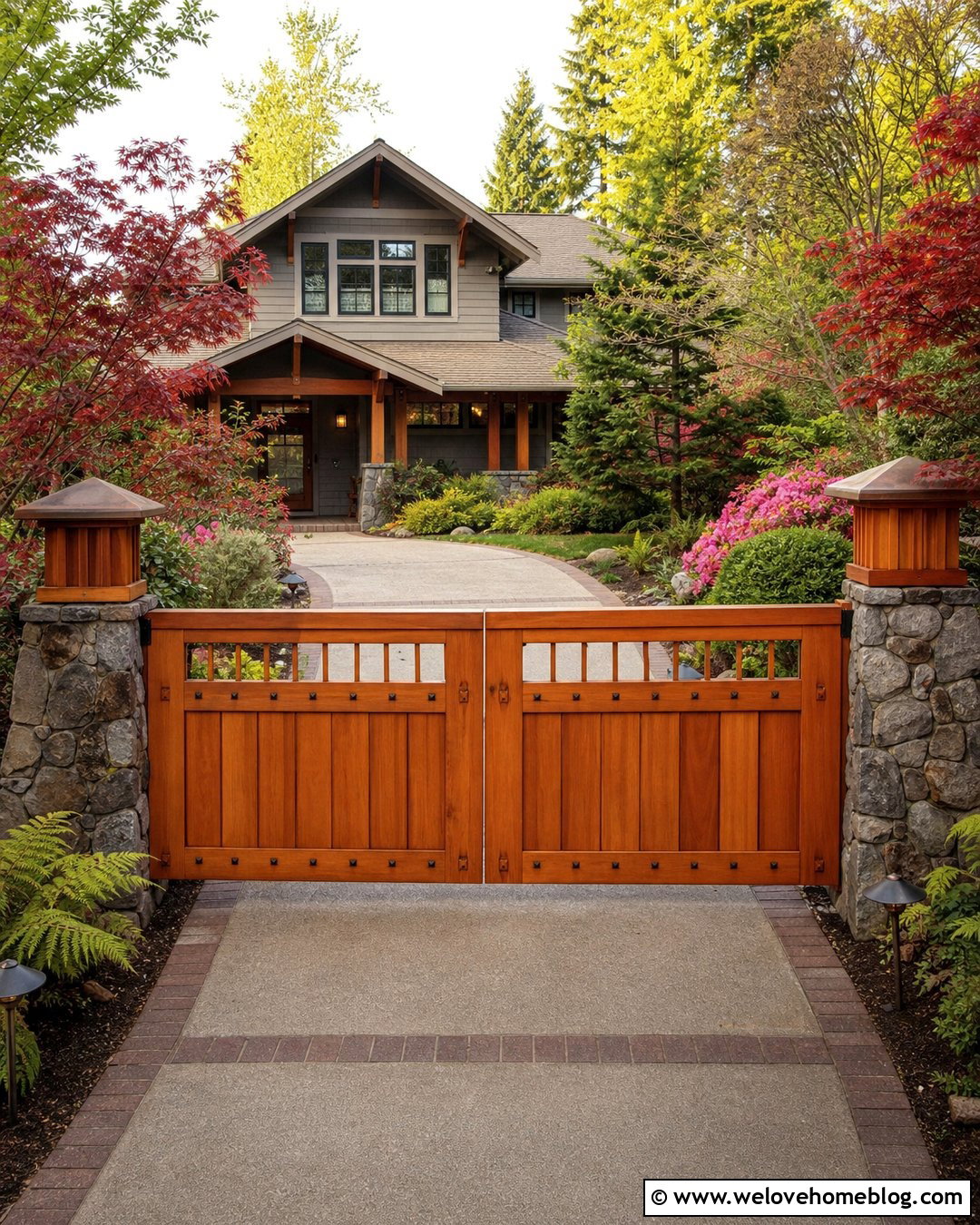
Craftsman design is known for visible structure, natural materials, and thoughtful proportions. Build the gate from stained Douglas fir or cedar using wide frames, recessed vertical panels, and square decorative pegs. Keep the top mostly level, with a slight rise near the center if the driveway is broad. Anchor the gate with tapered stone-and-wood pillars that repeat details from the home’s porch. A warm gray concrete driveway can include narrow clay brick bands at regular intervals, adding handcrafted character without creating a busy pattern. Surround the entrance with ferns, azaleas, Japanese maples, and layered evergreen shrubs. Low path lights can illuminate the borders without overpowering the woodwork. This coordinated entrance should appear sturdy and carefully made, reflecting the architecture rather than competing with it.
19. Ranch Wood Driveway Gate With Split Rail Fence
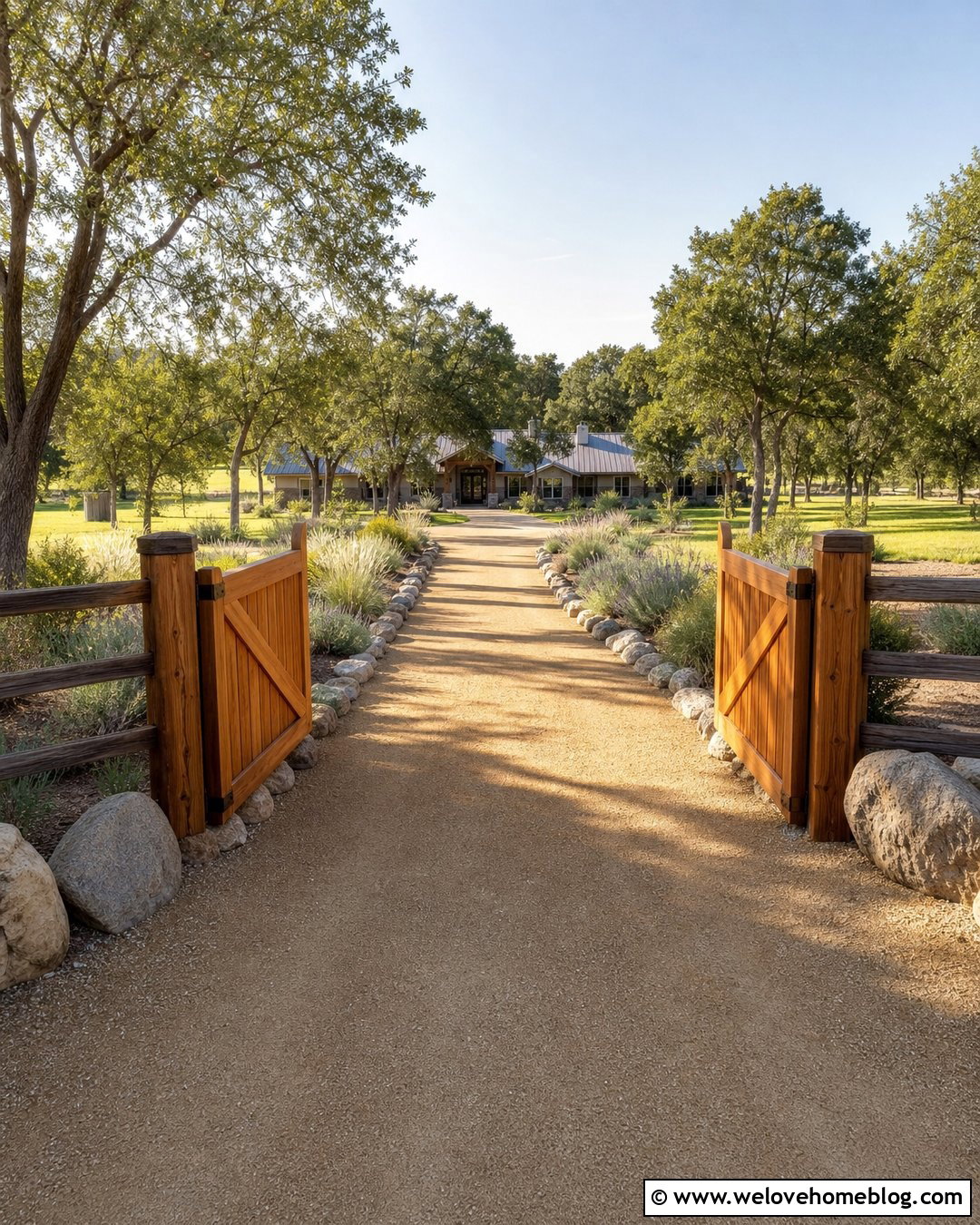
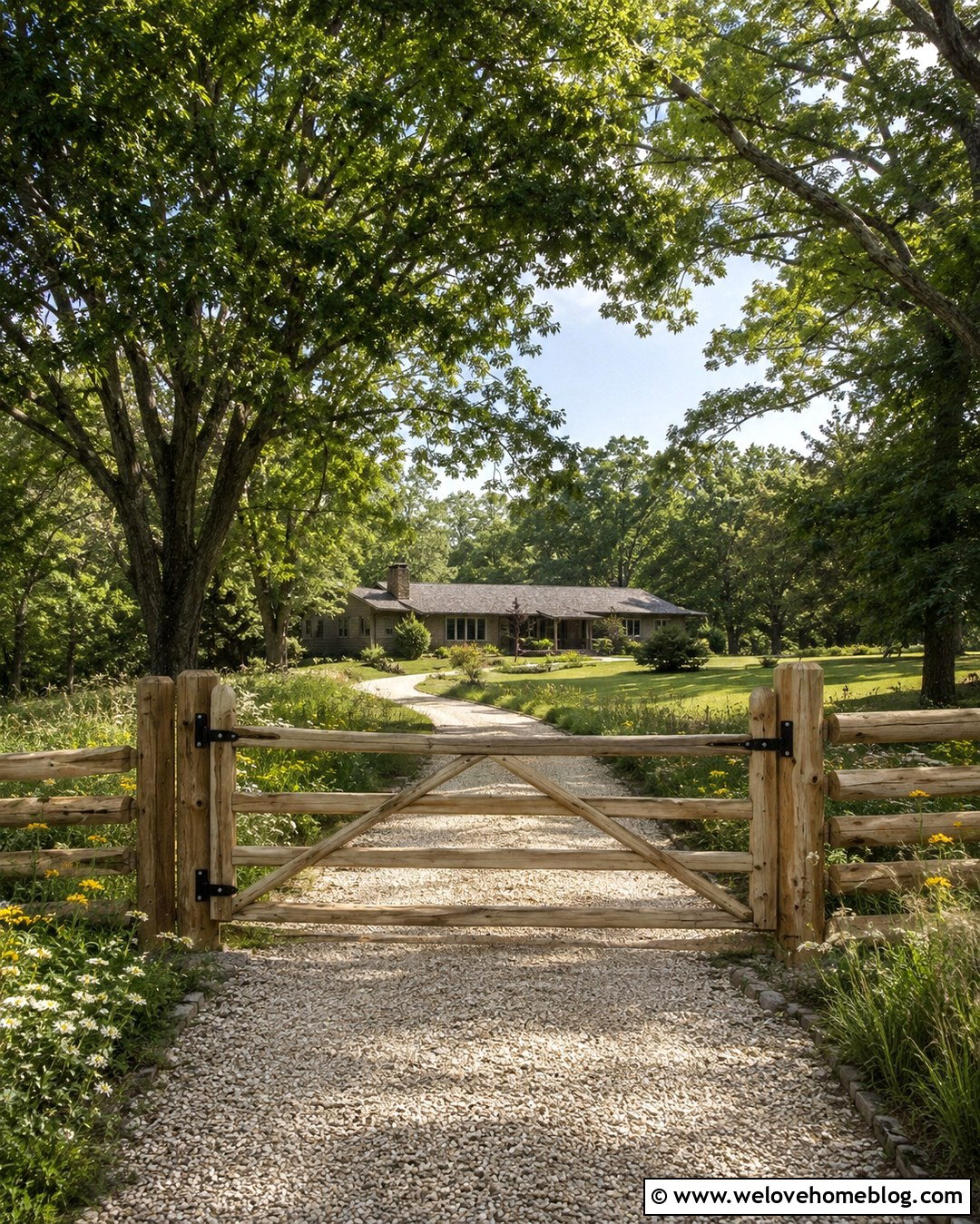
A ranch entrance should feel broad, functional, and visually connected to the surrounding land. Use an open double-swing gate made from thick cedar or pressure-treated timber rails arranged in a classic Z-brace pattern. Substantial square posts can connect directly to split-rail fencing on both sides. Choose a wide decomposed granite driveway in a warm sandy tone, with larger rocks or timber edging near planted areas. Native grasses, low shrubs, and drought-tolerant trees create a landscape that requires less formal trimming. Keep the gate low enough to preserve views across the property and make turning into the driveway feel comfortable. Black or galvanized hardware offers a simple finishing detail. This complete look suits ranch houses, rural properties, equestrian settings, and homes with long approaches.
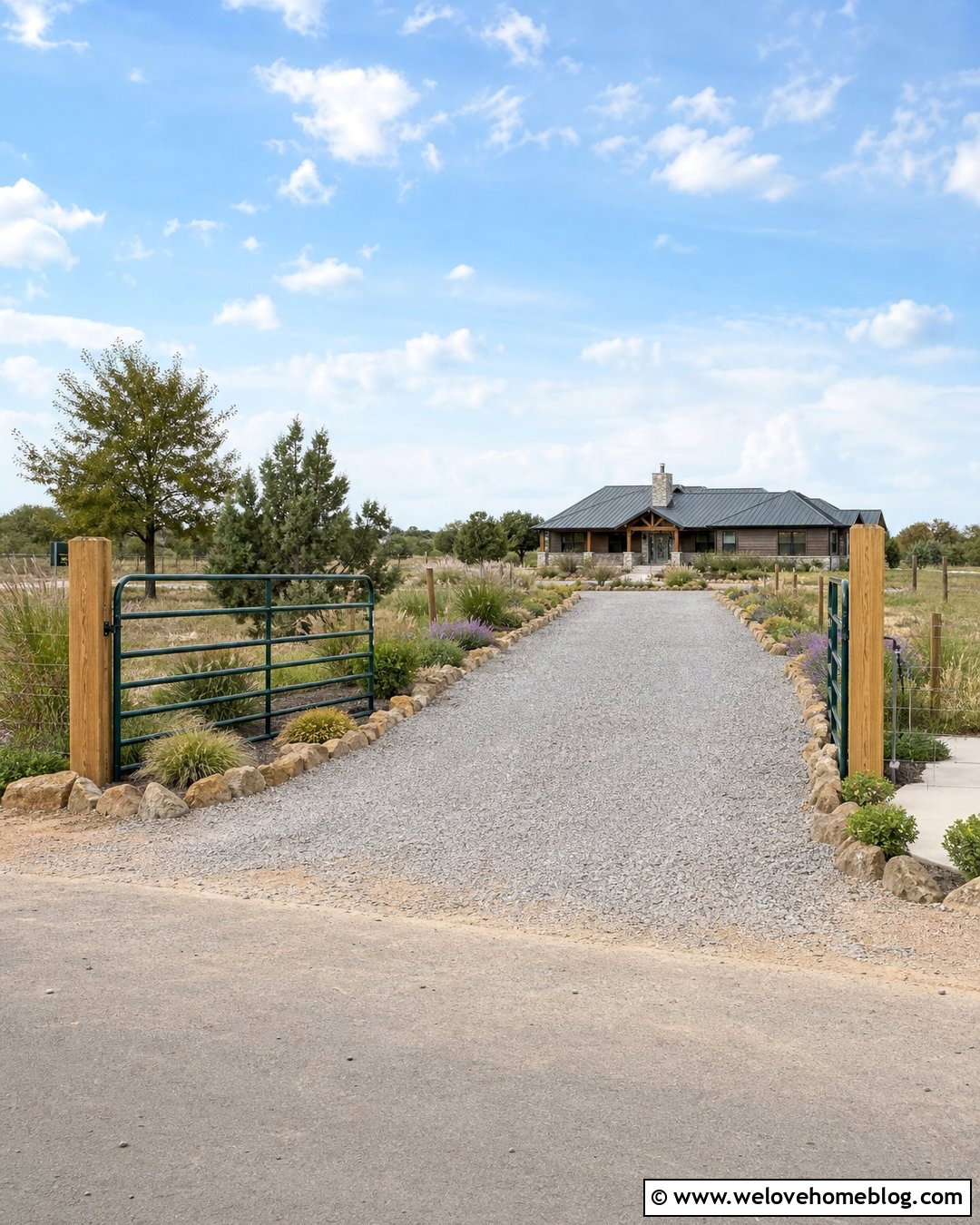
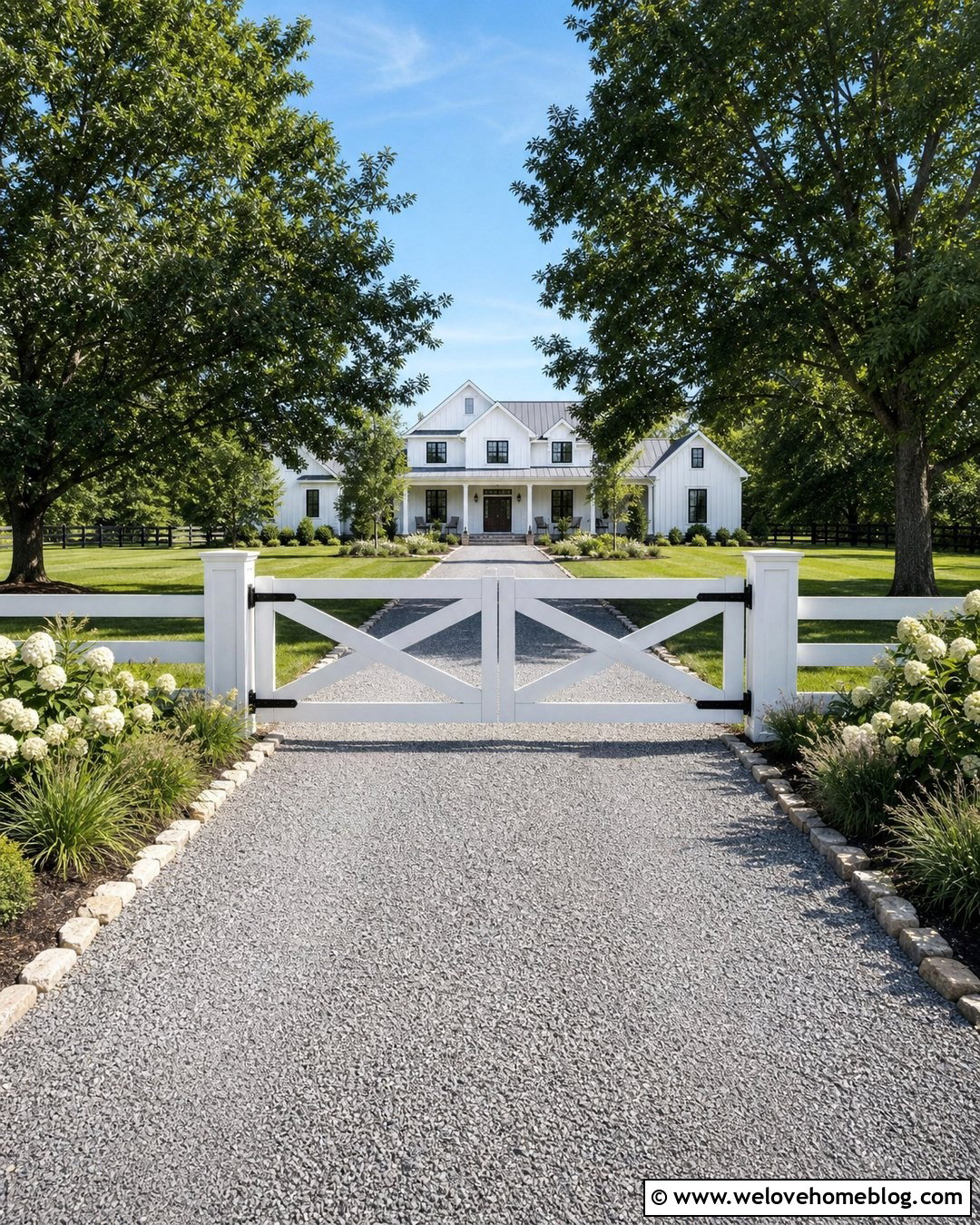
20. Coastal Wood Driveway Gate With Shell Driveway
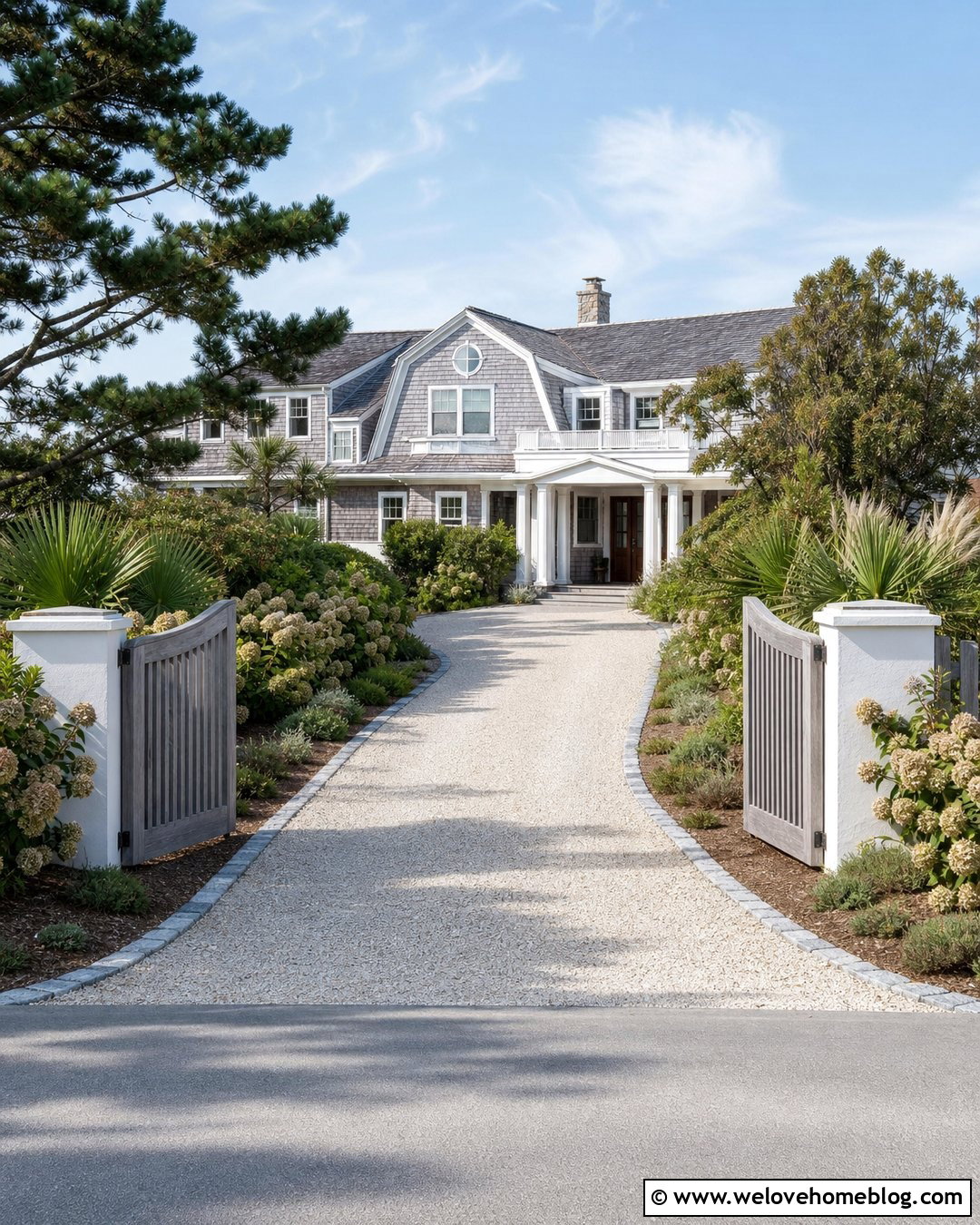
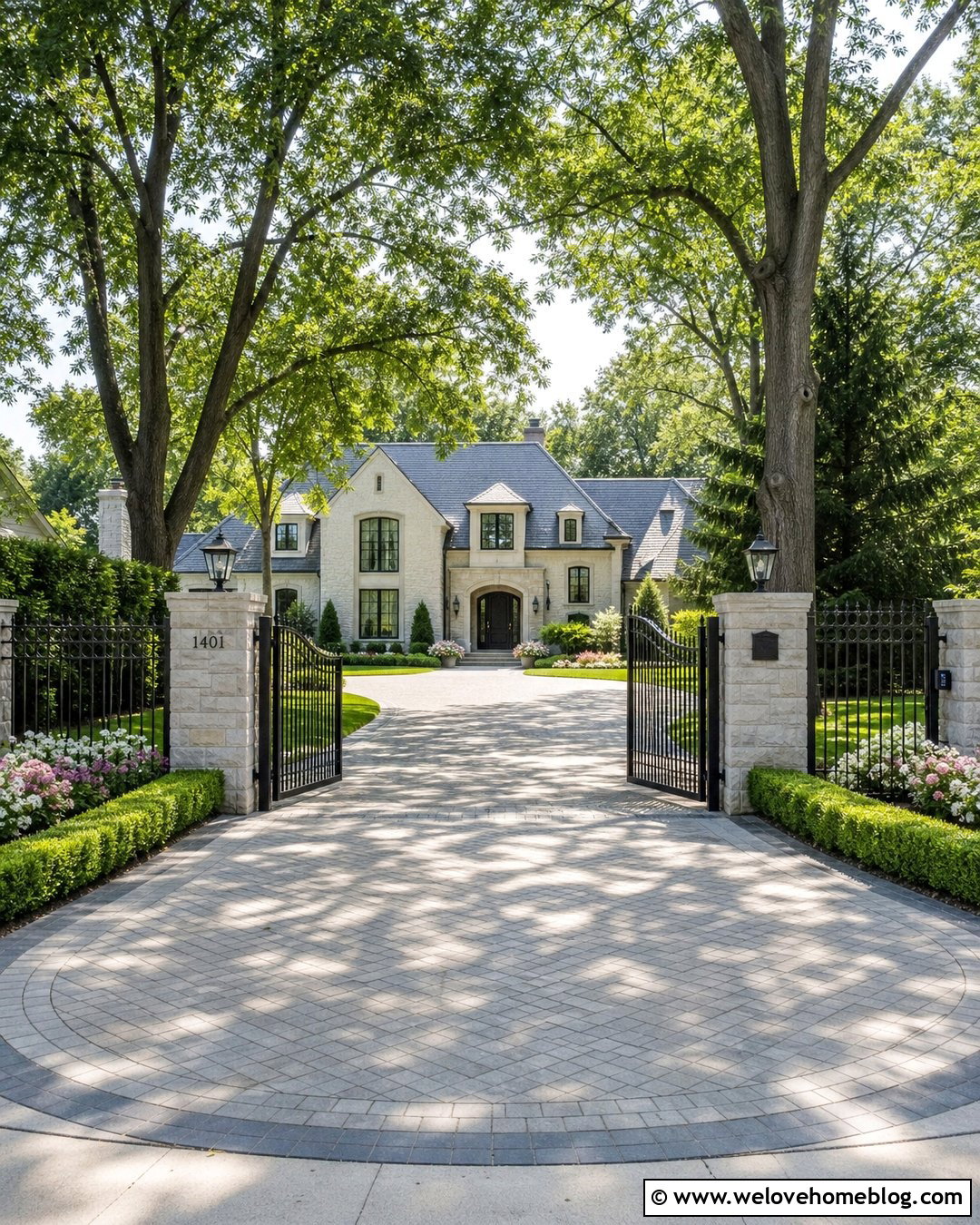
A coastal entrance looks relaxed when weathered wood is paired with a pale, textured driveway. Use a double-swing cedar gate with vertical boards, open spacing, and a soft gray stain that resembles naturally aged timber. White or light-gray masonry pillars can keep the entrance bright, while corrosion-resistant hardware offers a cleaner appearance in damp, salty environments. Pair the gate with a compacted crushed-shell driveway edged in light granite or pale concrete pavers. Sea oats, dwarf palmettos, hydrangeas, and salt-tolerant ground covers will reinforce the coastal character. Continue the weathered wood finish on a short adjoining fence or pedestrian gate. This light, breezy combination complements beach cottages, coastal farmhouses, shingle-style houses, and pale stucco homes without relying on obvious decorative themes.
21. Automatic Wood Driveway Gate With Lighting
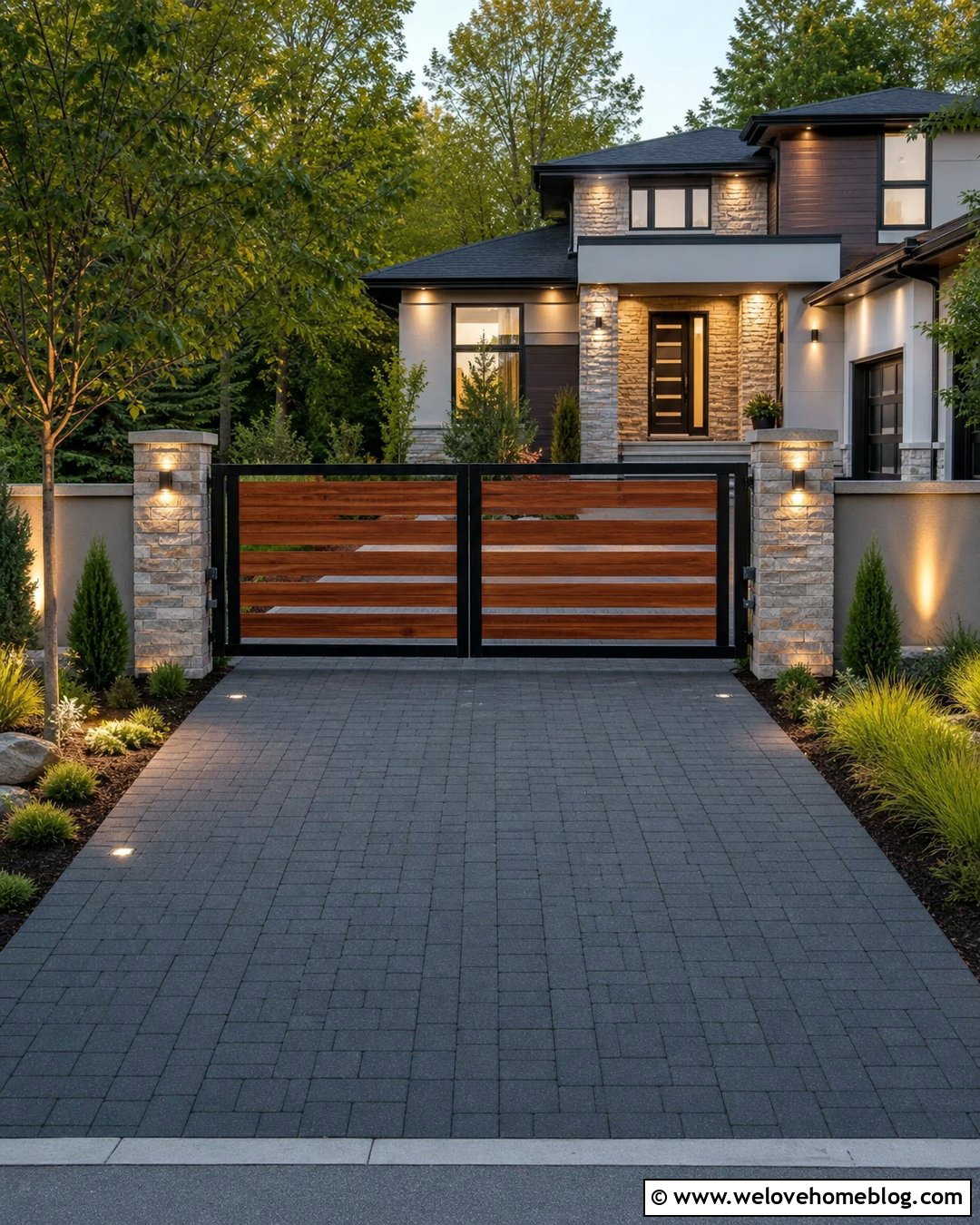
Automation can be integrated without allowing motors, control boxes, and safety equipment to dominate the entrance. Choose a double-swing cedar gate with horizontal slats and a black steel frame. Position the operating arms on the property side and coordinate safety sensors with the pillar finish. A straight driveway made from charcoal permeable pavers will create a clean approach and help the warm wood stand out. Install small recessed lights in stone-clad pillars, then add low landscape lighting along planting beds for a layered daytime and nighttime design. Compact shrubs and ornamental grasses should remain far enough from the gate to avoid obstructing movement. Before installation, confirm local requirements and work with an experienced gate professional. Properly planned automation should feel like a discreet part of the overall entrance.
22. Wood Sliding Gate With Sloped Driveway
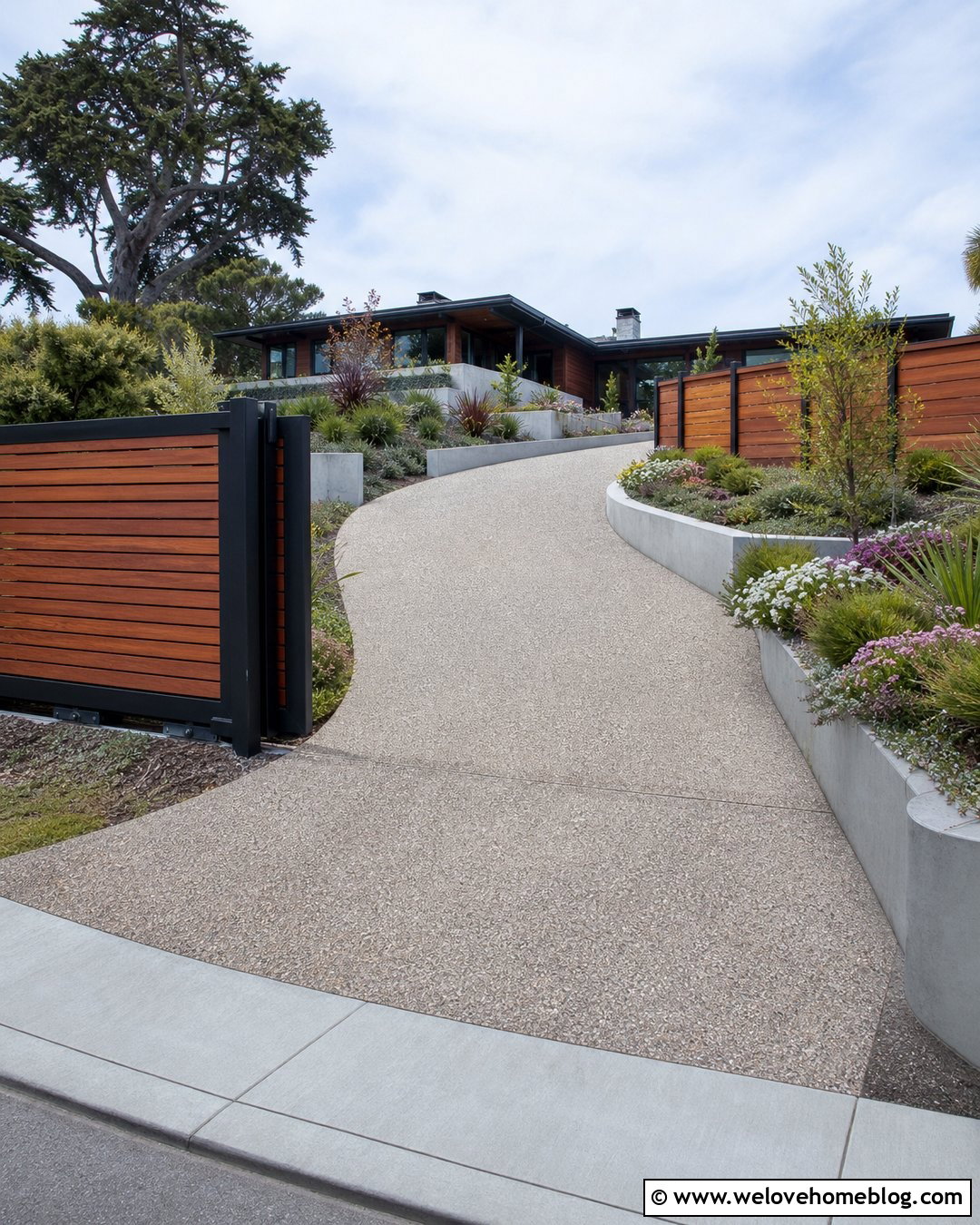
A sloped approach requires careful planning because conventional swinging panels may scrape the driveway or need complicated rising hinges. A cantilever sliding gate can be a practical visual solution when sufficient level space exists along the boundary. Use lightweight cedar boards in a semi-private horizontal pattern, supported by a dark steel frame. Pair the gate with a textured exposed-aggregate driveway that curves gently uphill toward a contemporary ranch house. Low retaining walls can manage the changing grade while creating planting areas for grasses, junipers, and flowering ground covers. Keep the gate’s travel path clear and visually screen its open position with matching fencing. The driveway, wall, and gate should follow coordinated horizontal lines, helping the sloped entrance appear controlled rather than awkward or overly engineered.
23. Japanese Style Wood Driveway Gate With Gravel
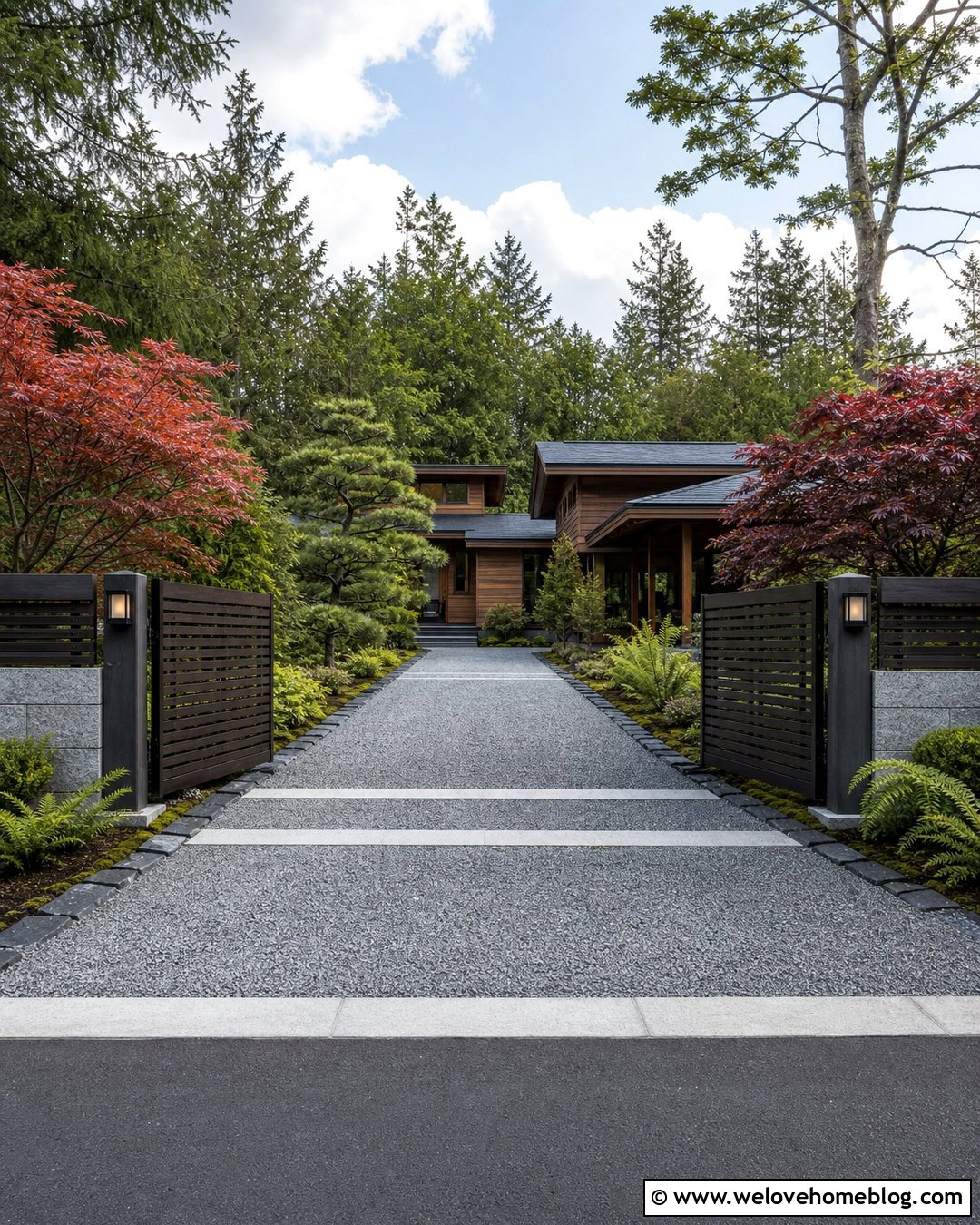
A Japanese-influenced entrance relies on restraint, natural materials, and carefully controlled views. Select a straight sliding gate made from dark-stained cedar slats with narrow, even spacing. Frame it with simple charcoal posts and matching horizontal fencing rather than oversized decorative pillars. Use finely crushed gray gravel across the driveway, contained by dark stone edging and broken by a few broad granite bands. Carefully placed Japanese maples, cloud-pruned evergreens, ferns, and moss-like ground covers can soften the entrance. Avoid filling every open area with plants; negative space is an important part of the composition. A low stone address marker and simple pedestrian path can complete the frontage. This look works best with modern, Asian-inspired, minimalist, or wood-clad homes featuring calm geometric lines.
24. Curved Wood Driveway Gate With Circular Driveway
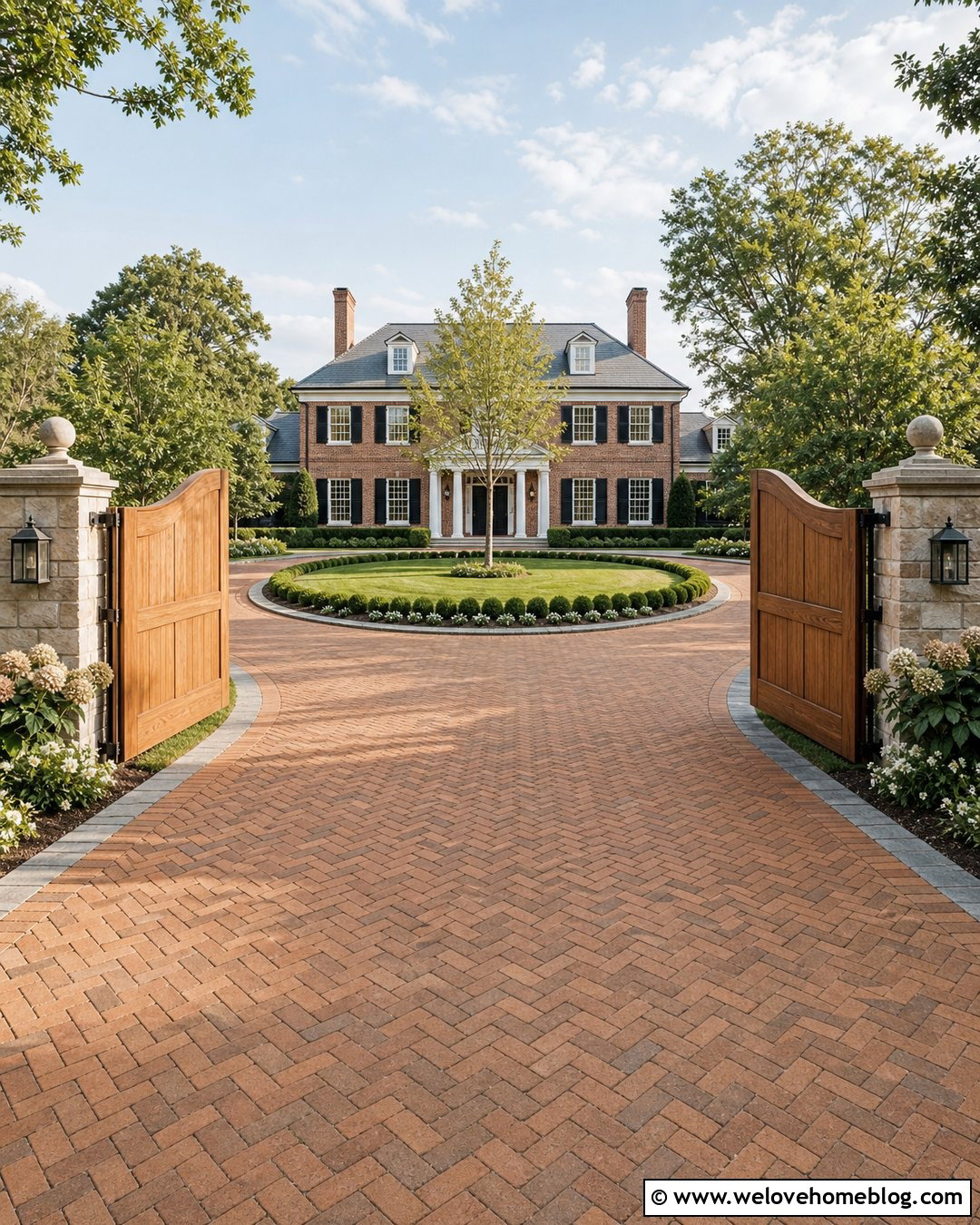
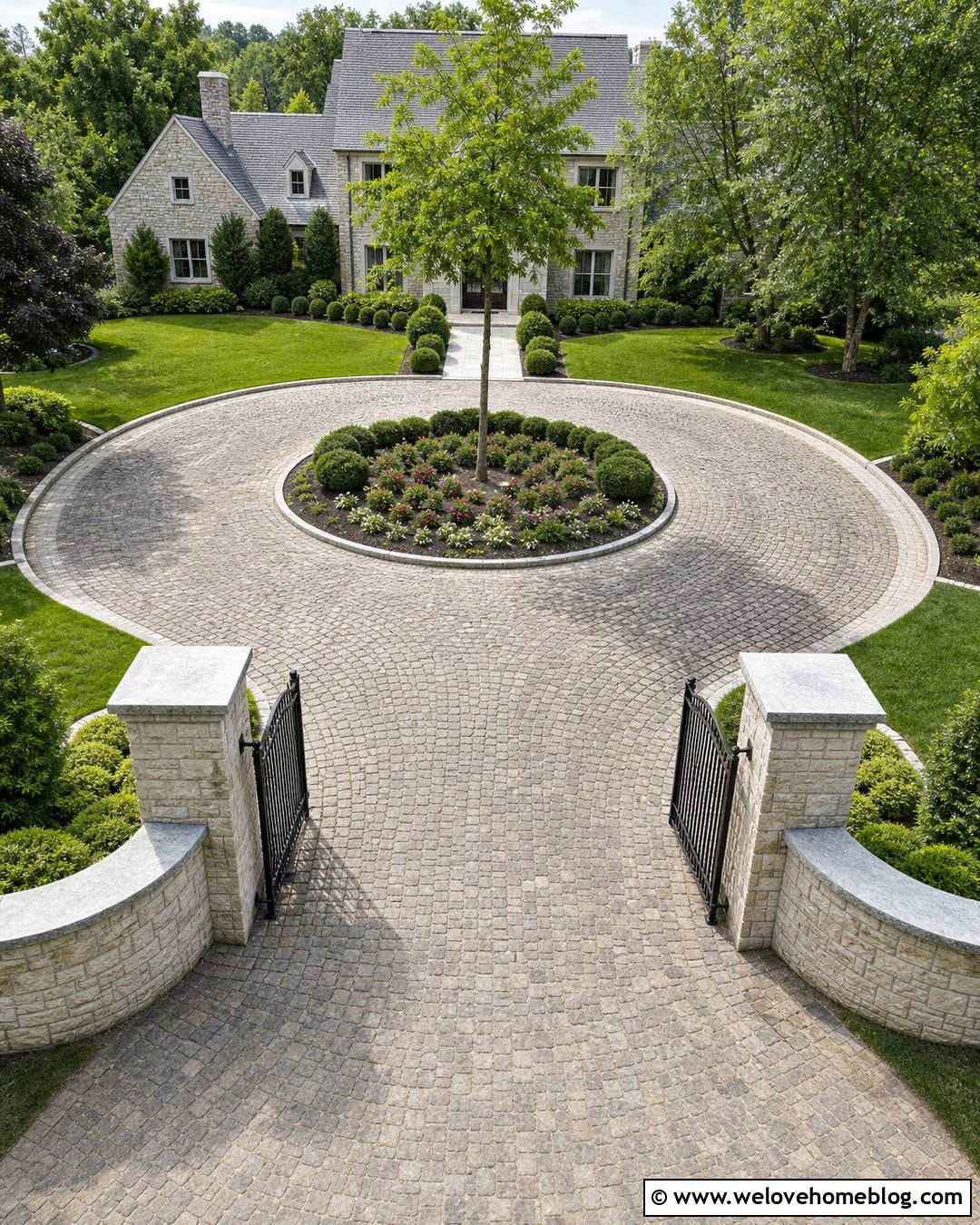
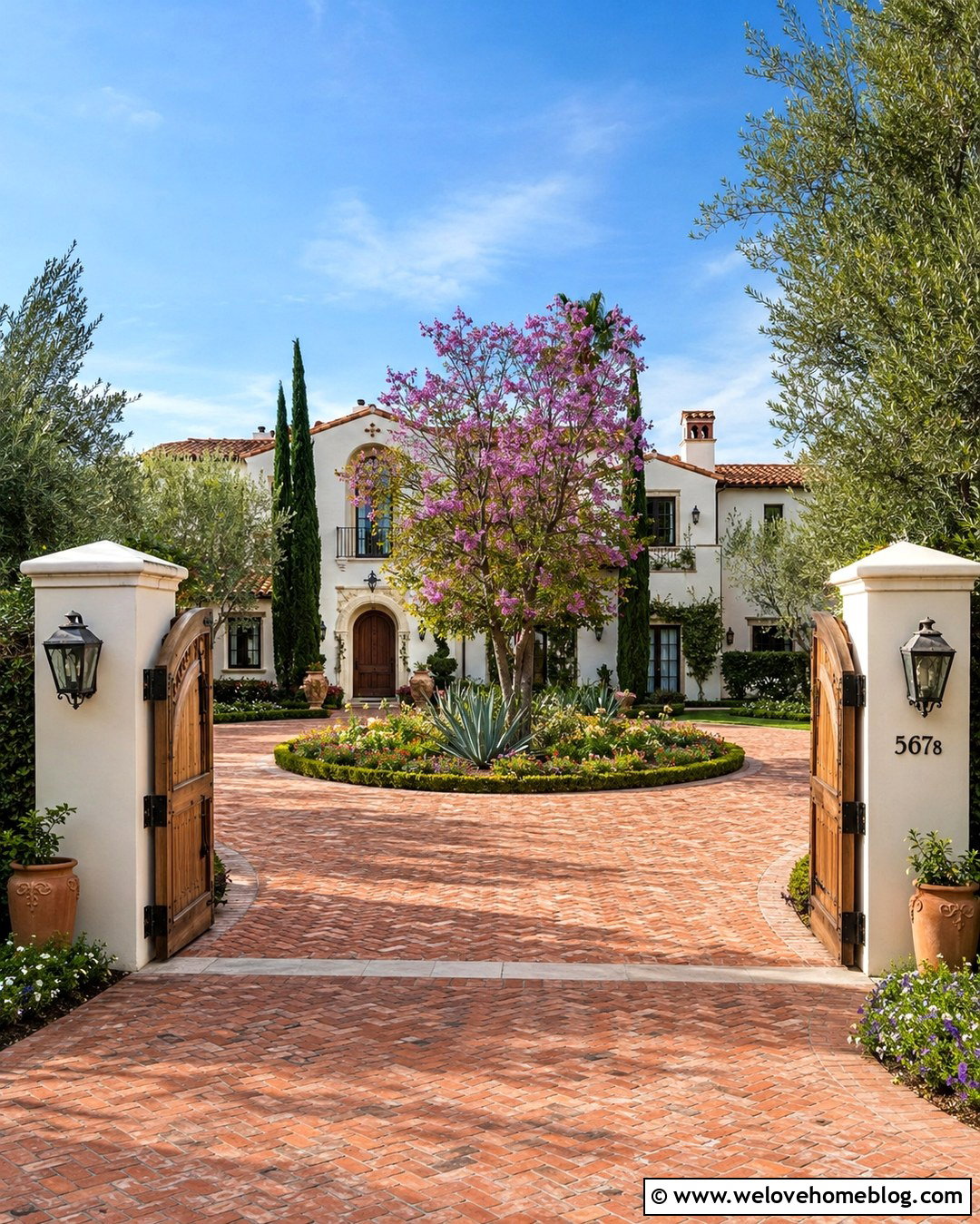
A curved gate can introduce the flowing shape of a circular driveway from the moment visitors arrive. Use two cedar gate leaves with shallow arched tops that meet at a slightly raised center. Position them between stone pillars that align with the driveway’s symmetrical entry and exit points. Clay brick pavers laid in a herringbone pattern can follow the circular route around a central lawn island. Add a soldier-course border to define every curve and reduce visual clutter. Plant one specimen tree in the island, then surround it with low shrubs and seasonal flowers that will not block sightlines. Matching wooden fencing can connect the two gated openings. This balanced entrance complements Colonial, Georgian, traditional farmhouse, and large cottage-style homes with generous front yards.
25. Budget Wood Driveway Gate With Crushed Gravel
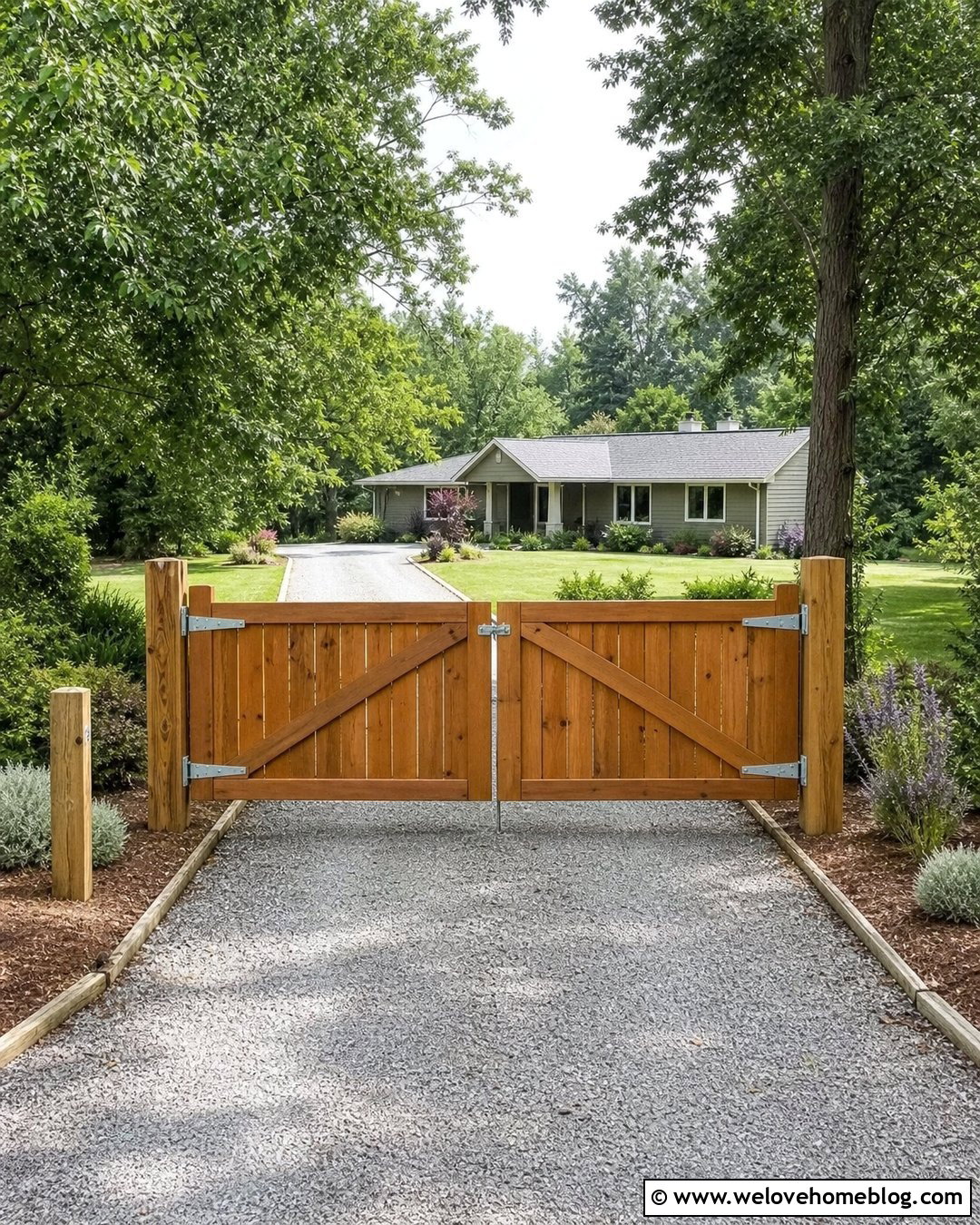
An attractive wood driveway gate does not have to depend on expensive hardwood, elaborate masonry, or custom ornament. Build a straightforward double gate from pressure-treated pine using vertical boards and visible diagonal braces. Apply an exterior stain in a warm cedar tone to create a more finished appearance. Set the gate on reinforced posts with sturdy galvanized hardware, keeping each leaf reasonably light. A compacted crushed-gravel driveway is affordable, informal, and easy to coordinate with simple timber edging. Add low-maintenance native shrubs, mulch beds, and a small address post instead of large entrance columns. Repeating the same stained wood on short fence sections creates continuity. This practical design suits ranch homes, starter homes, backyard vehicle entrances, and rural properties where durability and straightforward maintenance matter most.
Conclusion:
The most successful **25 Wood Driveway Gate Ideas** treat the gate as part of a complete entrance rather than an isolated feature. Its wood species, height, opening system, finish, and hardware should work with the driveway surface, pillars, fencing, landscaping, and house architecture. Modern slats can sharpen a concrete approach, while braced cedar panels bring warmth to gravel and country settings. Before settling on a design, measure the opening, evaluate the grade, check sightlines, and consider wind exposure and maintenance. Large or automated gates benefit from professional engineering and installation. With thoughtful planning, a wood driveway gate can offer privacy, practical access, and lasting curb appeal while giving the entire property a more intentional first impression.

Related posts:
Leave a Reply