
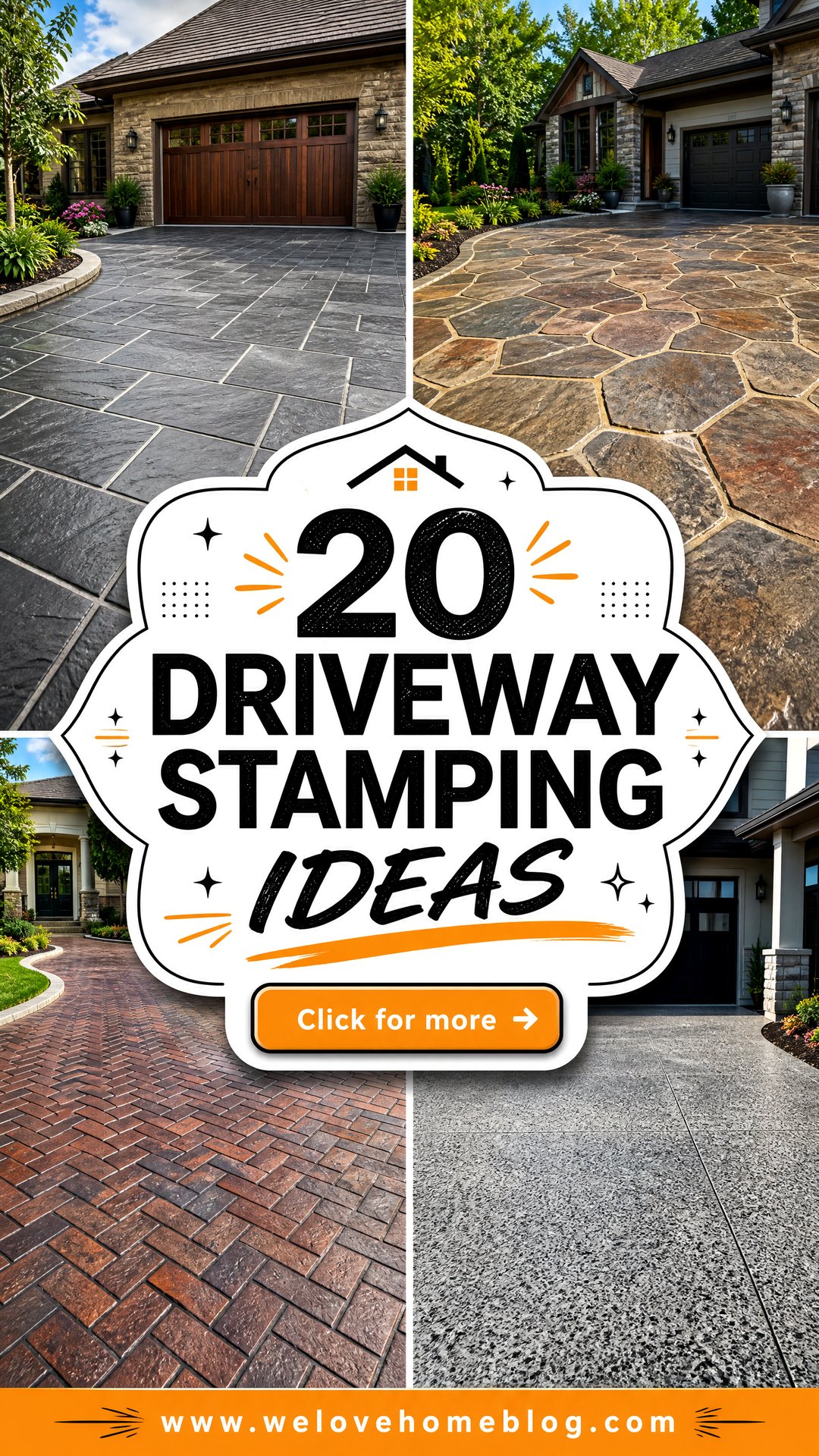
Driveway stamping can turn practical concrete into a custom surface that resembles brick, slate, flagstone, cobblestone, or cut stone. The best 20 Driveway Stamping Ideas go beyond choosing a pattern. They coordinate the stamped finish with the driveway shape, border, color palette, landscaping, and architecture of the house. Stamped fields can create a bold transformation, while decorative aprons, bands, and borders offer a more affordable update. Contrasting release colors also add depth, helping textured concrete appear more natural from the curb. () Whether your home is modern, traditional, farmhouse, or Mediterranean, there is a complete look that can enhance its character. Use the following 20 Driveway Stamping Ideas to plan a balanced and welcoming entrance.
1. Ashlar Slate Stamped Concrete Driveway
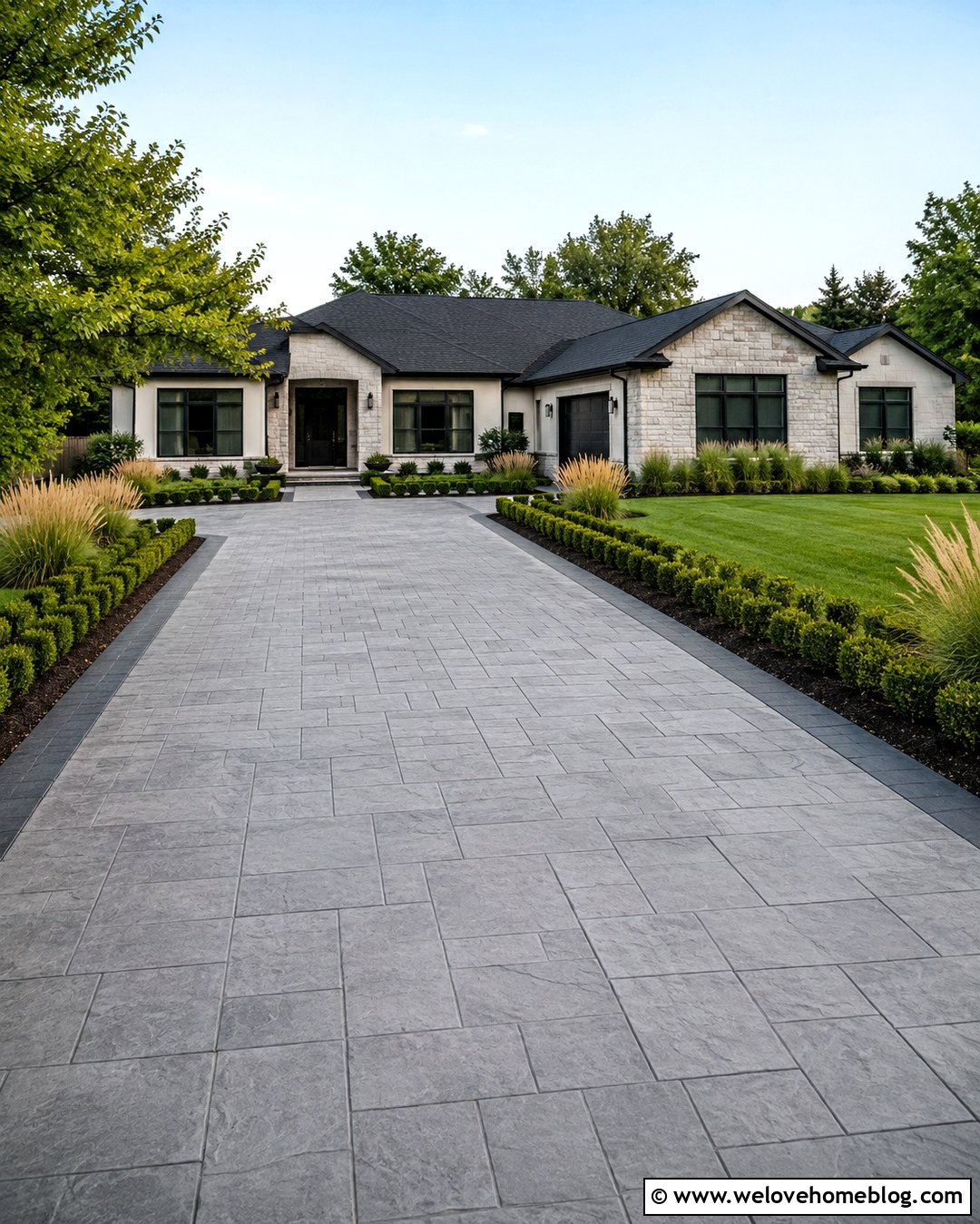
Ashlar slate stamping creates a neat arrangement of rectangular stone shapes with subtle surface texture. It works especially well on a wide, straight driveway because the repeating pattern emphasizes clean lines and an orderly approach. Choose warm gray concrete with charcoal antiquing to give each stamped section visible depth. A smooth dark-gray concrete border can frame the design without making it feel busy. Complete the look with clipped boxwoods, ornamental grasses, and a straight walkway leading toward a modern ranch house. Align the control joints with parts of the stamped pattern when possible, so they appear less distracting. This complete driveway design feels polished and structured while providing the visual character of individually laid stone.
2. Random Flagstone Stamped Concrete Driveway
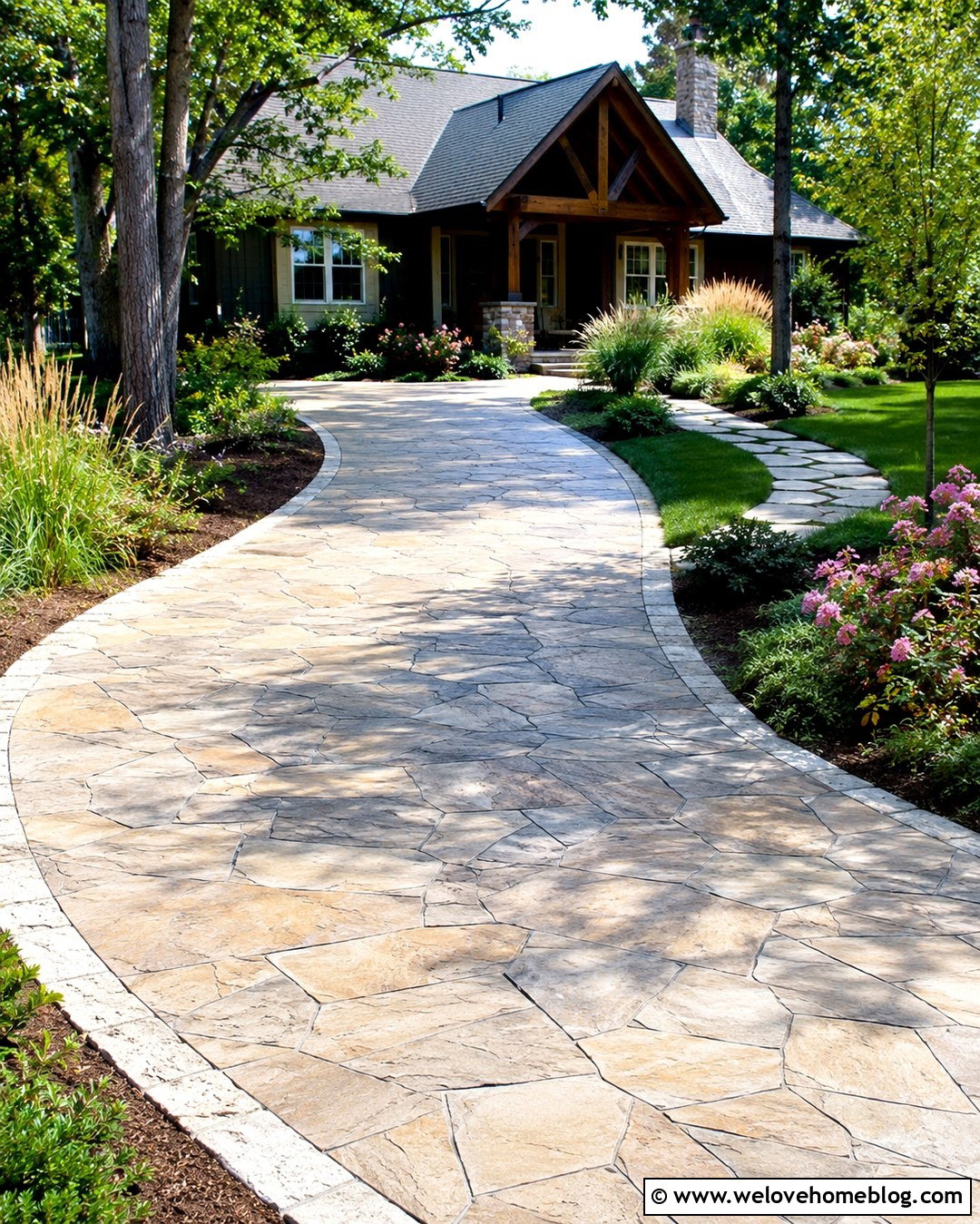
Do you prefer a driveway that feels relaxed rather than perfectly symmetrical? A random flagstone stamp uses irregular shapes and varied joint lines to recreate the appearance of natural stone. Apply the pattern to a gently curved driveway in soft sandstone, beige, and muted brown tones. A charcoal antiquing color can settle into the impressions and make the individual stones more noticeable. Border the concrete with real limestone blocks to create a clear transition into planting beds. Native grasses, flowering shrubs, and several small shade trees will soften the irregular edges. This driveway stamping look suits craftsman, cottage, and rustic ranch homes because its organic pattern connects naturally with layered landscaping and informal architecture.
3. Cobblestone Stamped Concrete Circular Driveway
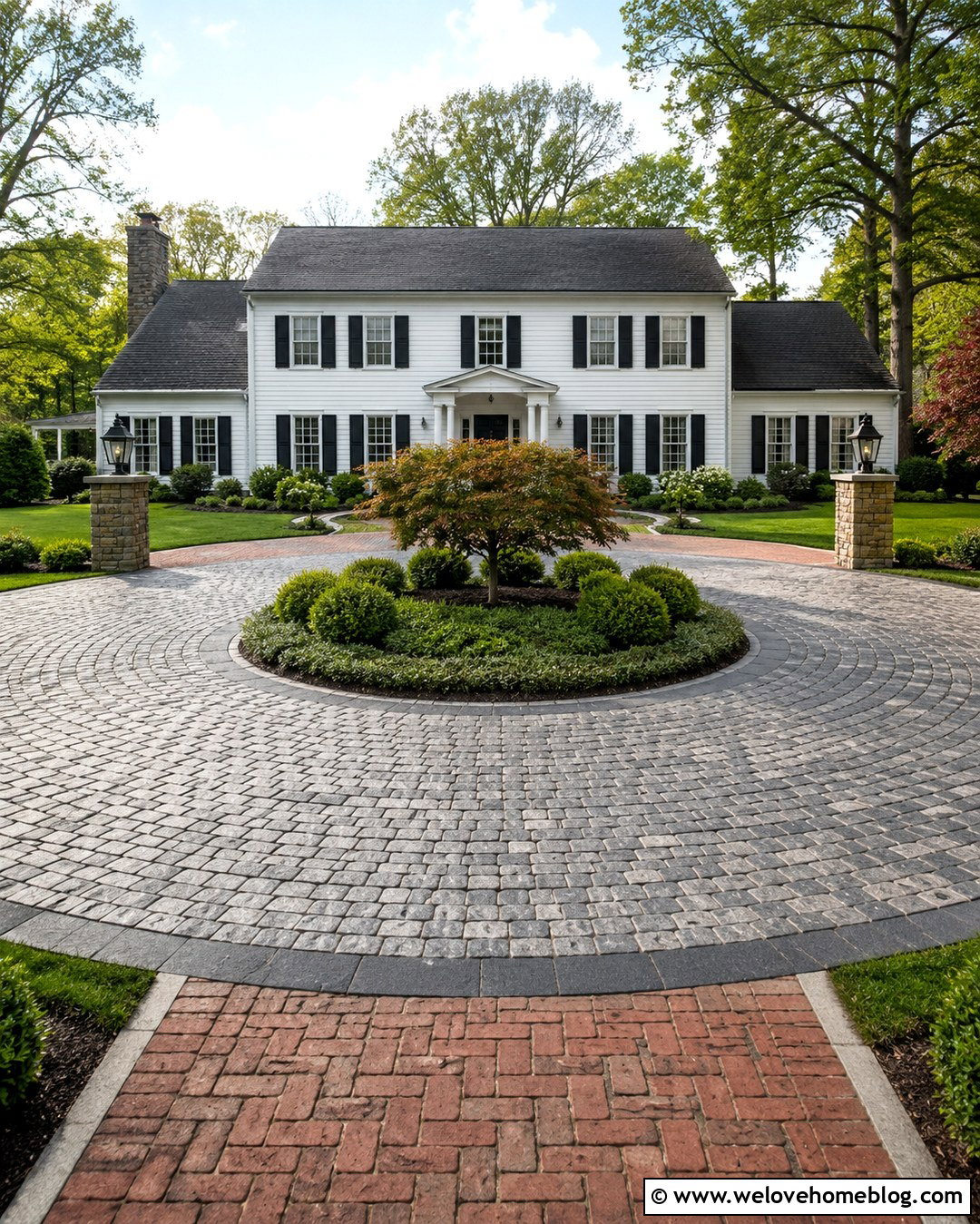
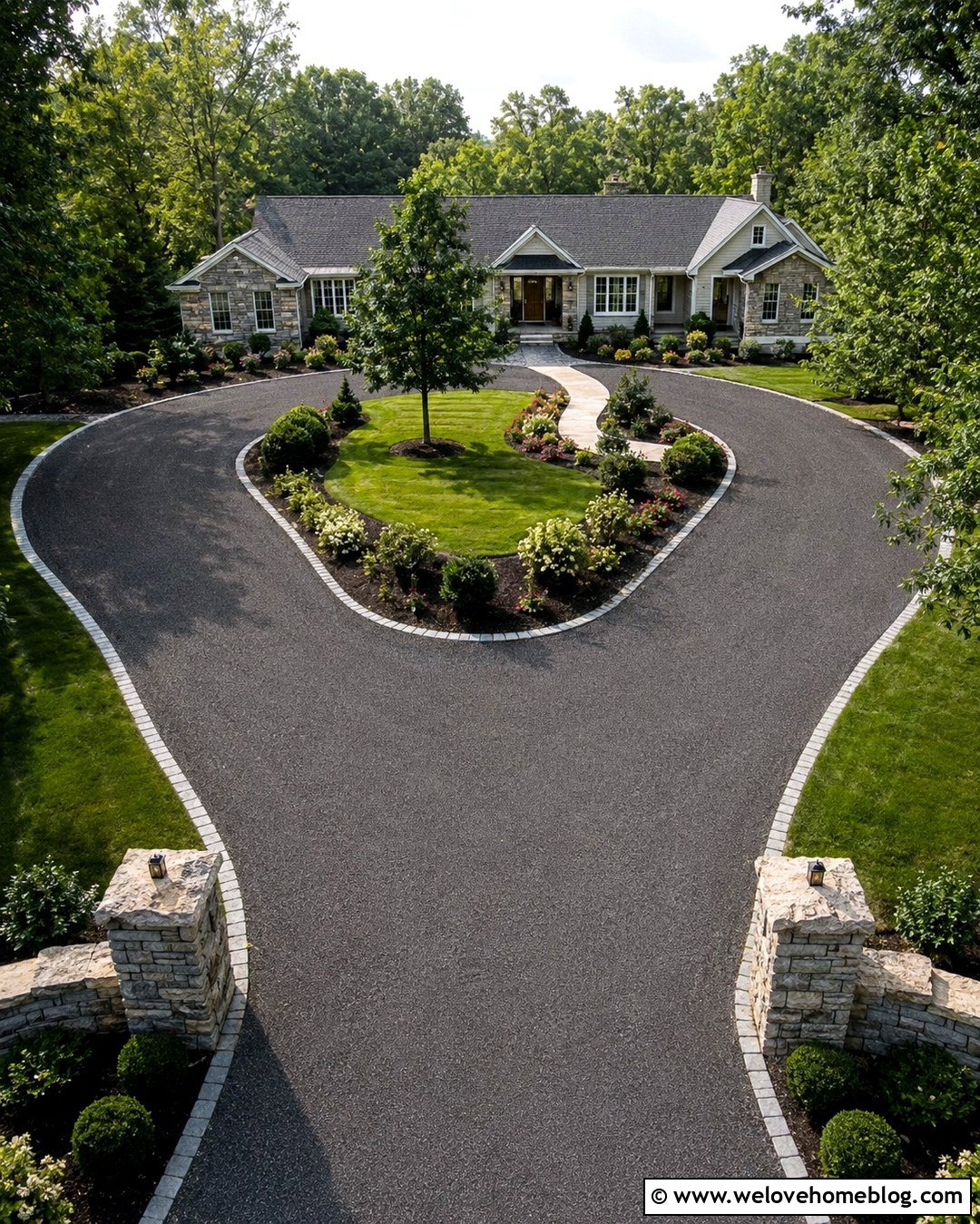
Small cobblestone impressions can give a circular driveway the character of an established European entrance. Select medium-gray stamped concrete with darker charcoal accents around the simulated joints. The rounded pattern will complement the flowing movement of the circle, especially when it surrounds a landscaped center island. Fill that island with a compact ornamental tree, evergreen shrubs, and low ground cover that will not block the view of the house. A smooth concrete border in a matching gray tone can contain the detailed cobblestone field. Traditional lantern-style lights near the entrance add another classic feature without overwhelming the driveway. This complete arrangement works beautifully with colonial, Tudor, and European-inspired homes featuring brick, stone, or painted stucco facades.
4. European Fan Stamped Concrete Driveway
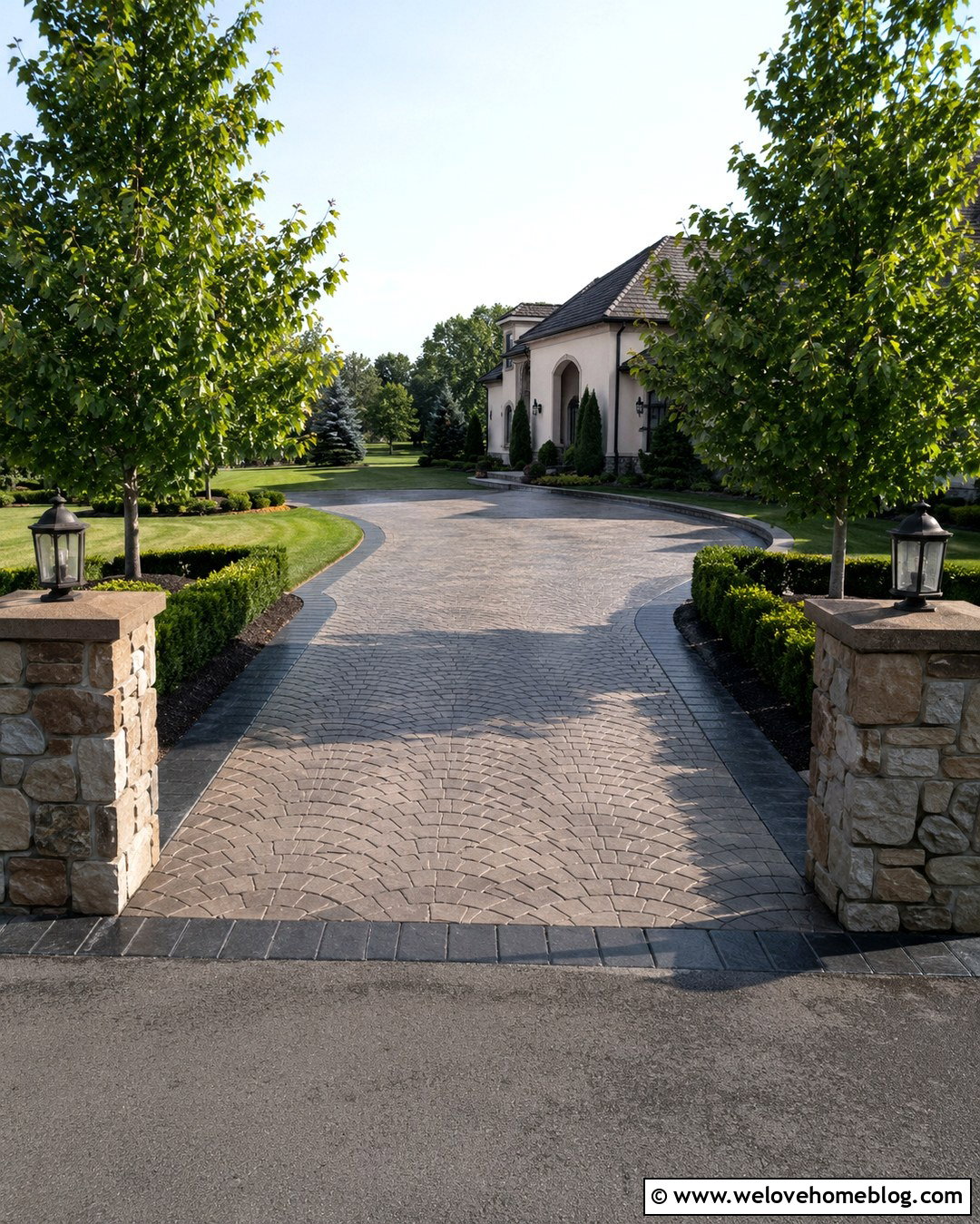
European fan stamping arranges small stone shapes in broad, curving arcs. It is an effective choice for a horseshoe driveway because the fan pattern naturally follows the bends of the layout. Use a blend of taupe, weathered brown, and soft charcoal to prevent the surface from appearing flat or overly uniform. A single dark stamped border can outline both sides of the driveway and make the curves easier to read from the street. Frame the entrance with stone pillars, low hedges, and symmetrical ornamental trees. Keep the remaining landscaping restrained because the pattern already supplies considerable detail. Paired with a traditional brick or stucco house, this stamped driveway creates a formal entrance that remains warm and approachable.
5. Herringbone Brick Stamped Concrete Driveway
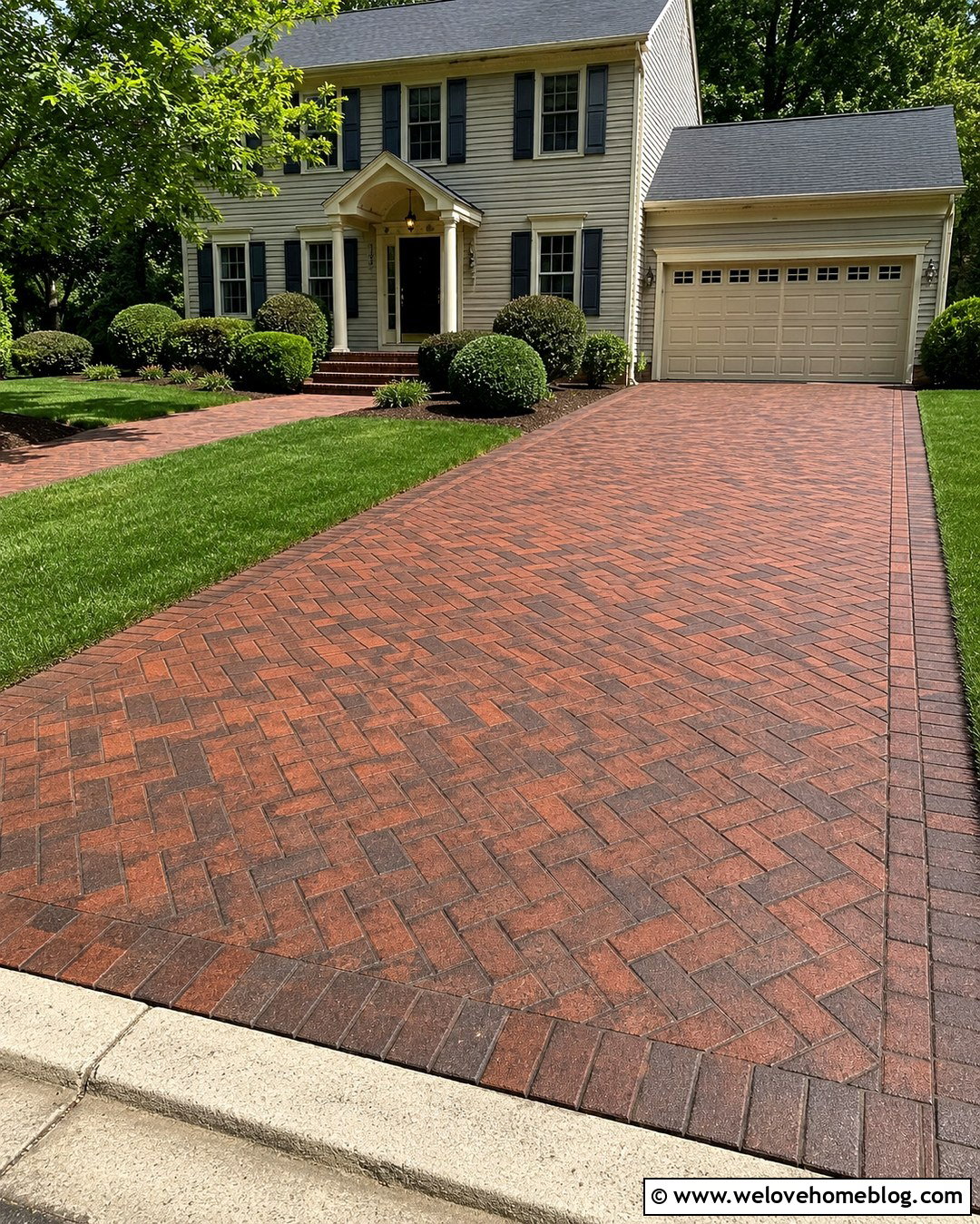
A herringbone brick stamp delivers strong visual movement without requiring individual clay pavers. Deep red, burnt sienna, and muted brown coloring can create a convincing brick-inspired surface, while a darker release color defines the diagonal pattern. Run the herringbone layout along a straight driveway toward a colonial house to reinforce its traditional architecture. Add a stamped soldier-course border in dark brown to frame the angled field. Neatly cut lawn, rounded foundation shrubs, and a brick walkway will connect the driveway to the rest of the front yard. Because the pattern is visually active, avoid using too many unrelated materials nearby. Repeating similar brick tones on the steps, porch, or facade produces a more intentional and unified exterior.
6. Seamless Slate Stamped Concrete Driveway
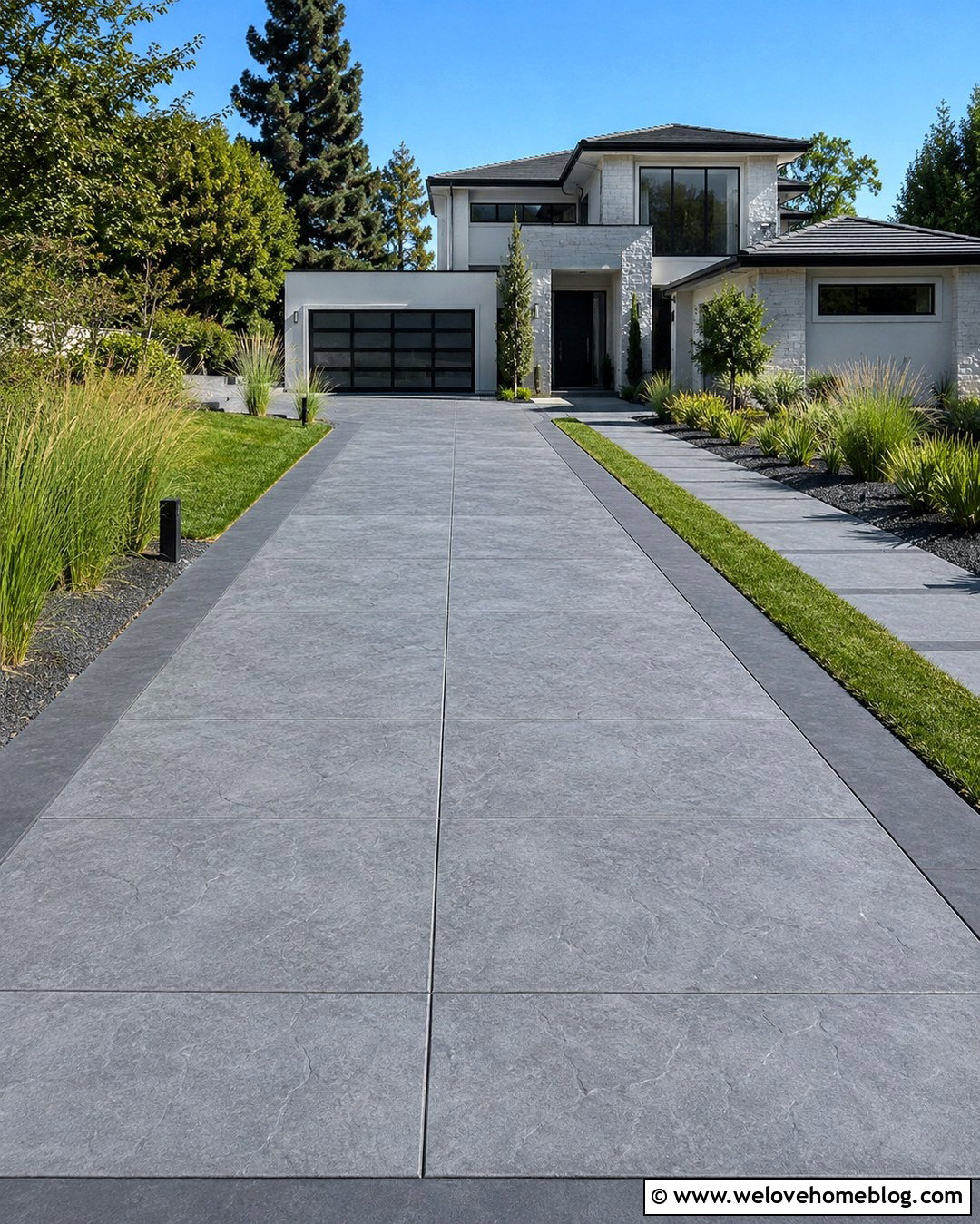
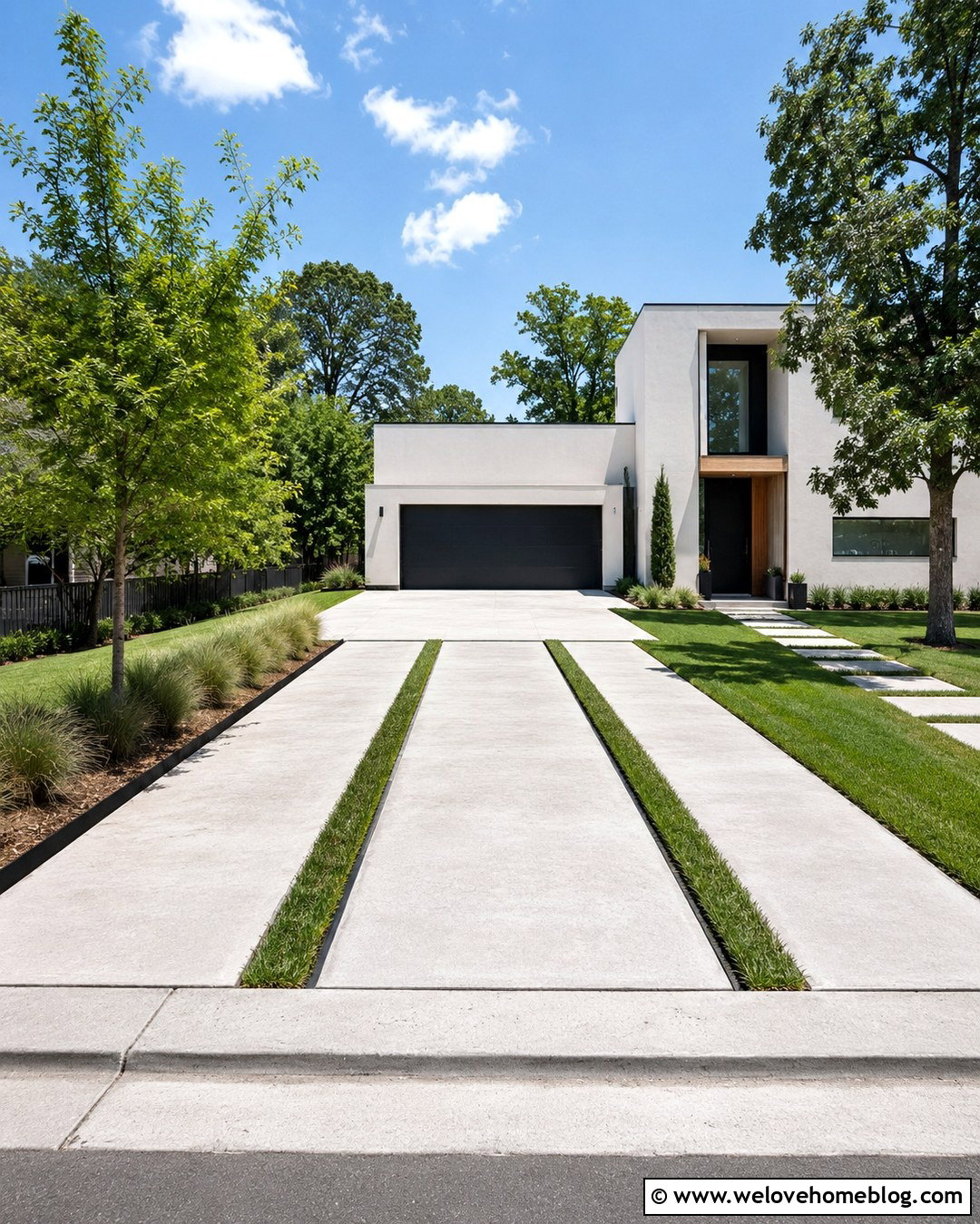
Seamless slate stamping provides natural texture without prominent repeating joints. The result is quieter than cobblestone or brick, making it a strong match for a minimalist home. Use cool-gray stamped concrete on a wide, straight driveway divided into large rectangular sections by clean control joints. A slightly darker smooth-concrete border will sharpen the perimeter without competing with the slate texture. Narrow grass strips, linear planting beds, and upright ornamental grasses can reinforce the modern geometry. Add a matching concrete walkway with the same finish to connect the driveway and front door. The subtle surface variation catches daylight and gives the concrete more character, yet the overall entrance remains simple, uncluttered, and compatible with contemporary architecture.
7. Wood Plank Stamped Concrete Driveway
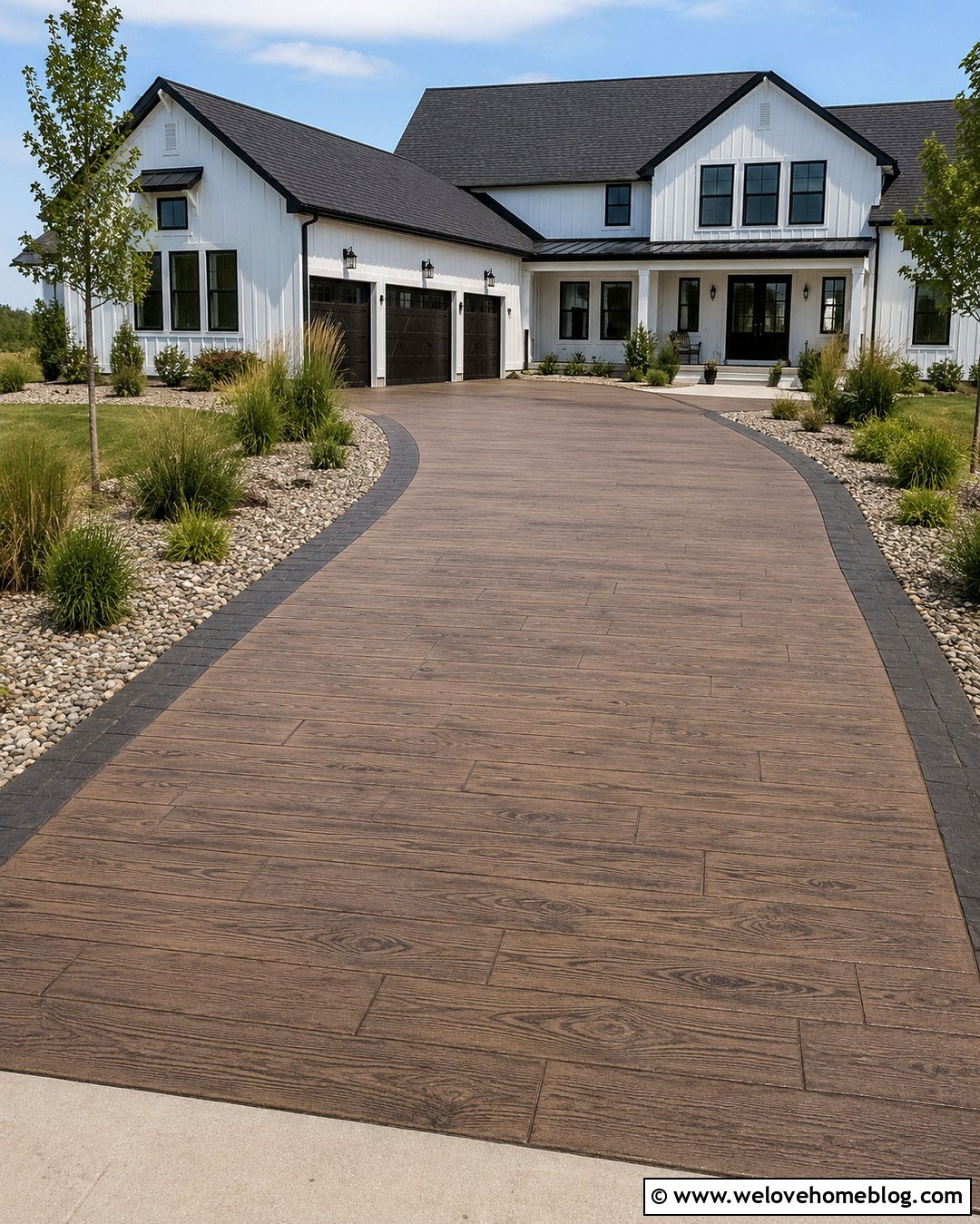
Wood plank stamps bring warmth to concrete while avoiding the impracticality of using real wood beneath vehicle traffic. Long plank impressions look most natural when they run in the direction of travel along a straight or gently curved driveway. Choose medium-brown concrete with darker grain accents, but keep the color slightly muted so the finish does not appear artificial. A narrow charcoal concrete border provides definition and introduces a contemporary contrast. Surround the driveway with gravel planting beds, prairie grasses, and young trees for a modern farmhouse setting. Black exterior lights and dark window frames can repeat the border color. This complete look combines rustic texture with a durable-looking, organized layout that complements board-and-batten siding and timber porch details.
8. Sandstone Stamped Concrete Driveway
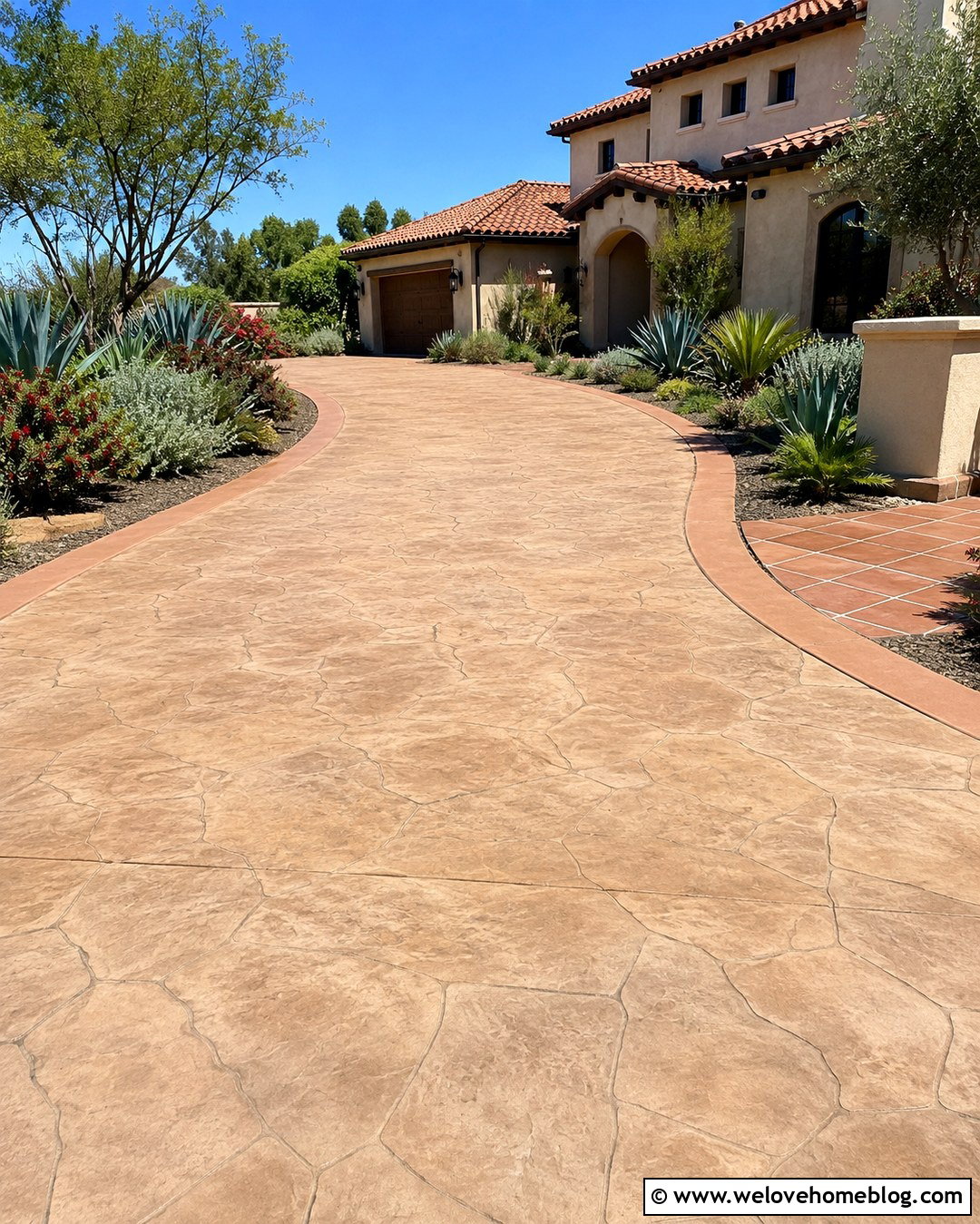
Warm sandstone stamping can brighten the entrance to a Mediterranean or Southwestern house. Select large, irregular stone impressions in sandy beige, light tan, and pale terracotta. Add restrained brown antiquing around the textured joints to create depth without darkening the whole driveway. A broad curved layout will make the warm surface feel relaxed and welcoming. Border it with smooth terracotta-colored concrete or natural stone that coordinates with the roof. Drought-tolerant planting beds featuring agave, sage, ornamental grasses, and small flowering shrubs can complete the design. Keep plants set back from the driving area to preserve clear vehicle access. The combination of earthy stamped concrete, curved edges, and water-conscious landscaping creates cohesive curb appeal suited to sunny residential settings.
9. Compass Medallion Stamped Concrete Driveway
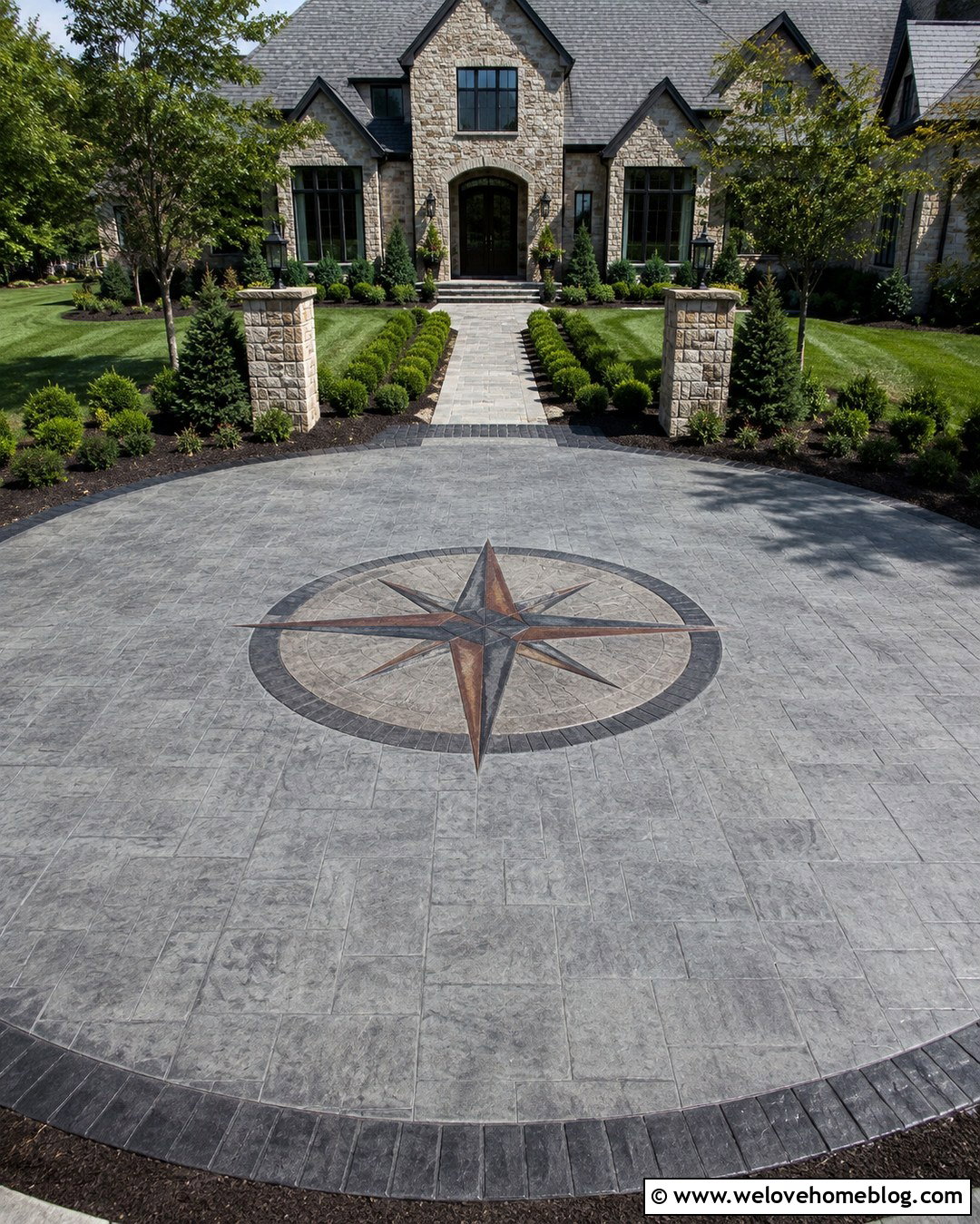
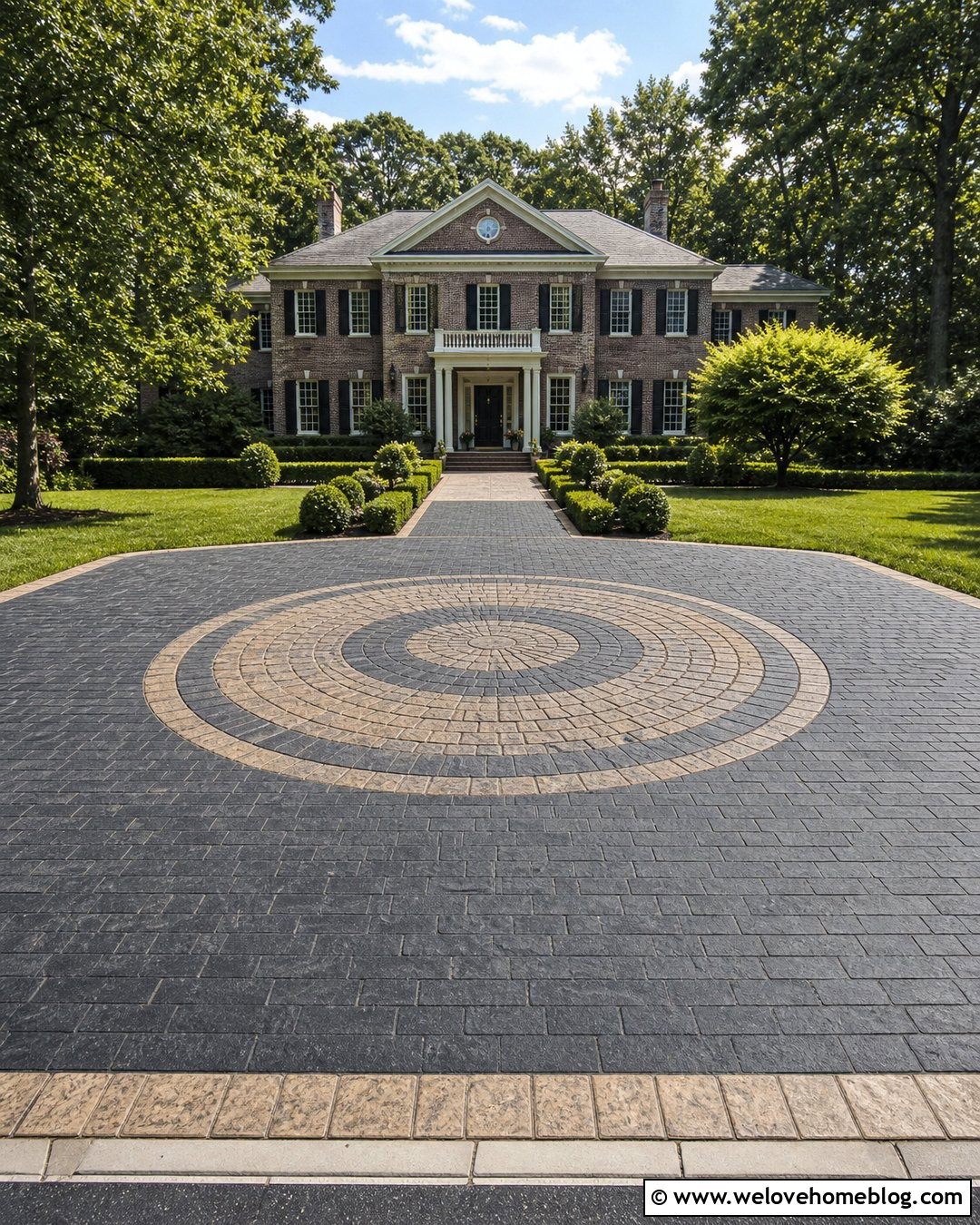
A stamped compass medallion can create a memorable focal point without covering the driveway in multiple complicated patterns. Position the medallion at the center of a circular turnaround or where a long driveway opens into a parking court. Use seamless gray slate stamping across the main concrete field, then color the medallion in charcoal, taupe, and muted rust. A matching dark border will help connect the centerpiece with the outer edge. Keep the nearby landscaping symmetrical, using low evergreen shrubs and matching trees so the focal pattern remains visible. Stone entrance pillars can add scale to a larger property. This design works best when the medallion is properly centered and sized to suit the width of the finished driveway.
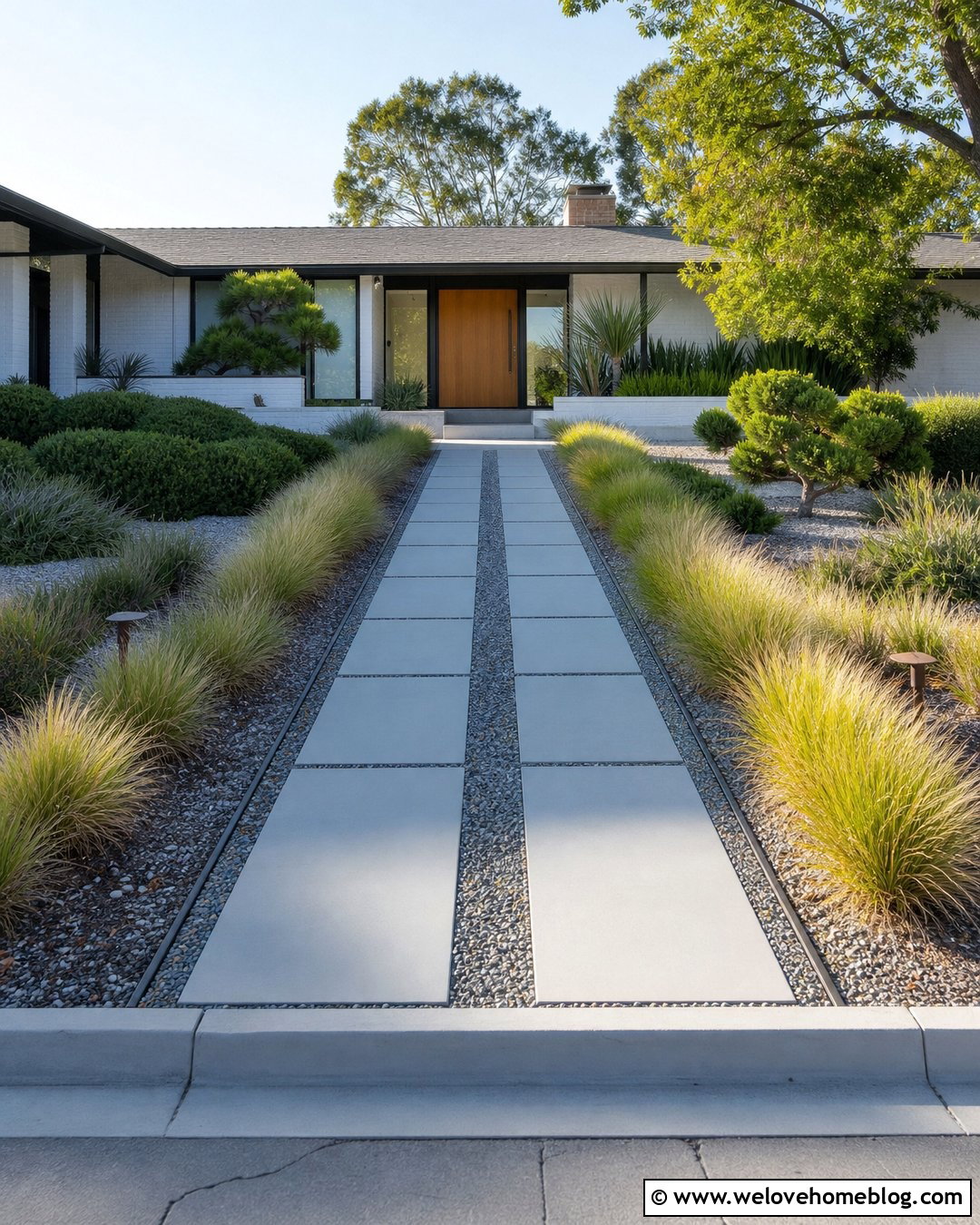
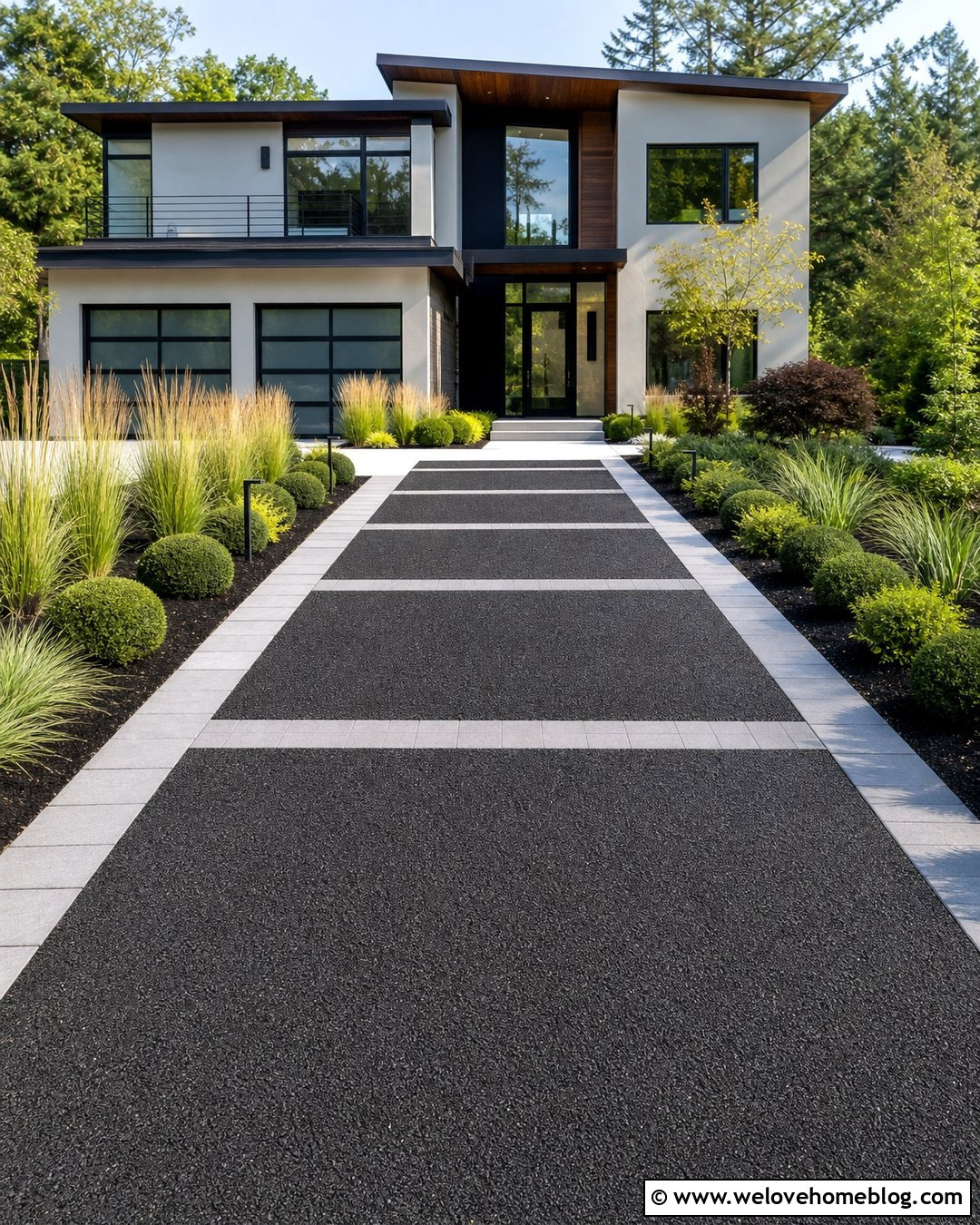
10. Stamped Border Concrete Driveway
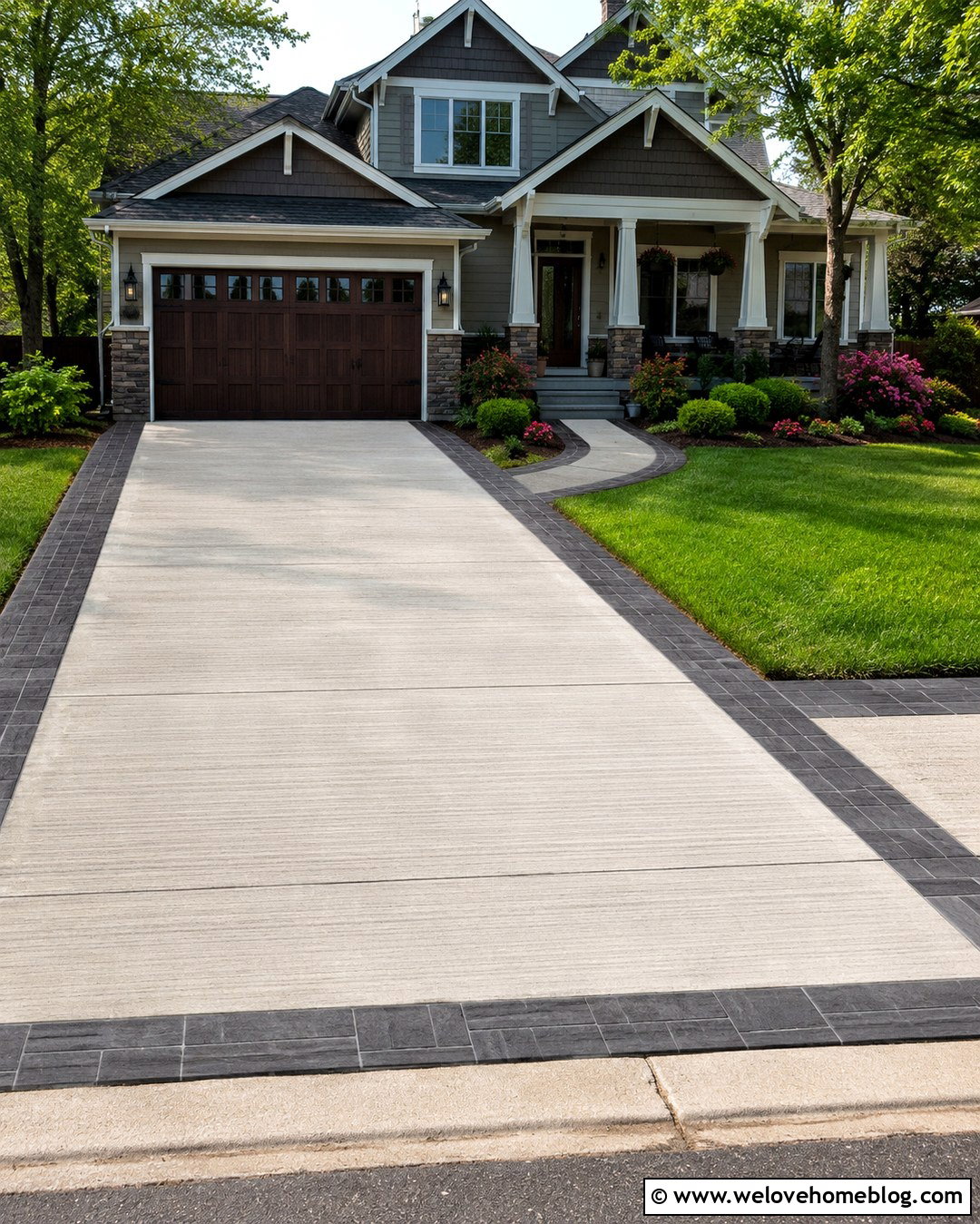
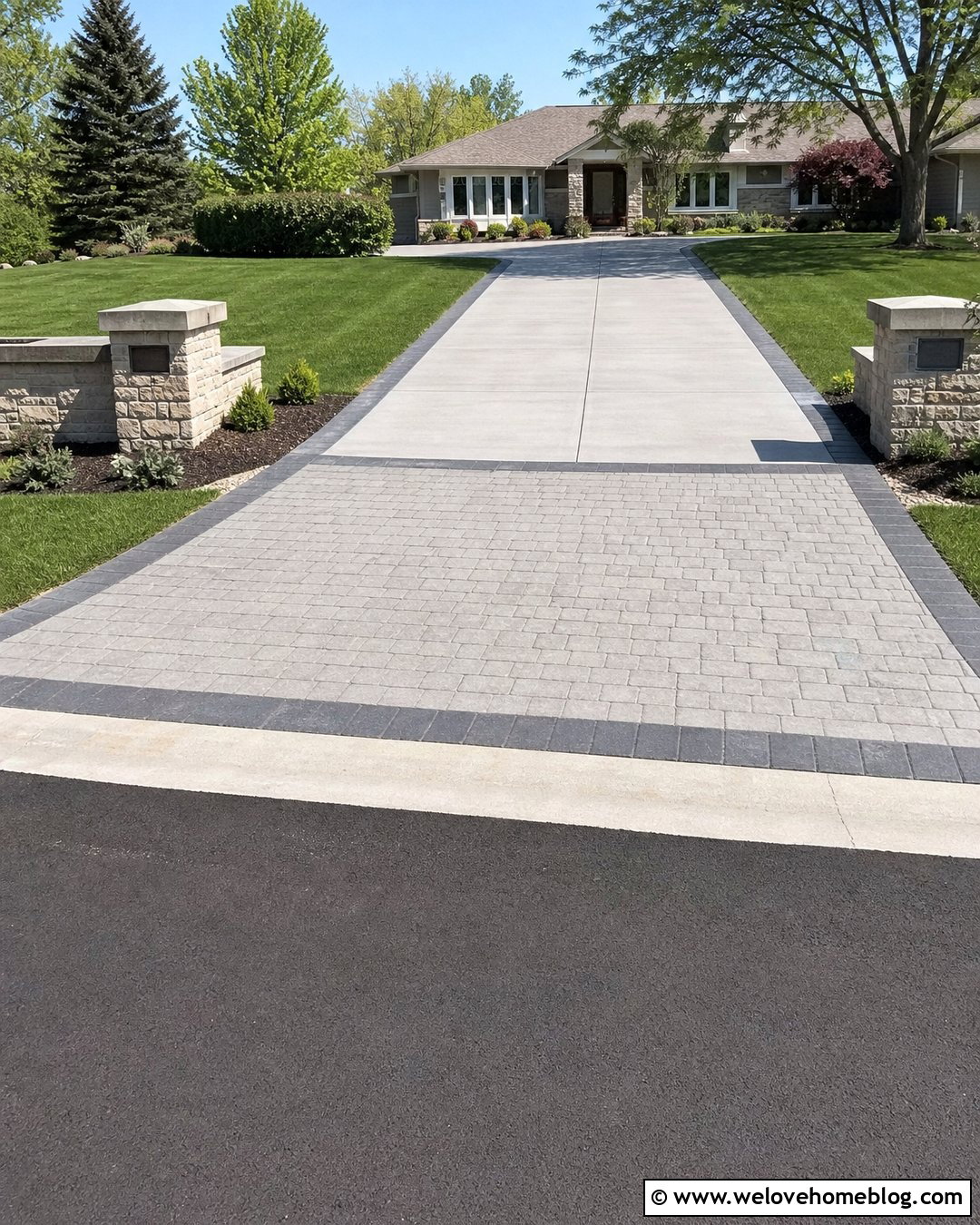
A full stamped surface is not the only way to introduce decorative texture. Pair a light-gray broom-finished concrete field with a wide stamped border that resembles dark brick or cut stone. This approach concentrates the detailed pattern around the most visible edges while keeping the main driving surface simple. Decorative borders and bands can add contrast while reducing the amount of labor-intensive stamped work. () Use the border to trace a straight driveway and continue it around an attached walkway. Green lawn, tidy foundation shrubs, and a craftsman house will give the design a practical suburban setting. A coordinated border creates a custom appearance without allowing pattern, color, or texture to dominate the front yard.
11. Stamped Concrete Driveway Apron
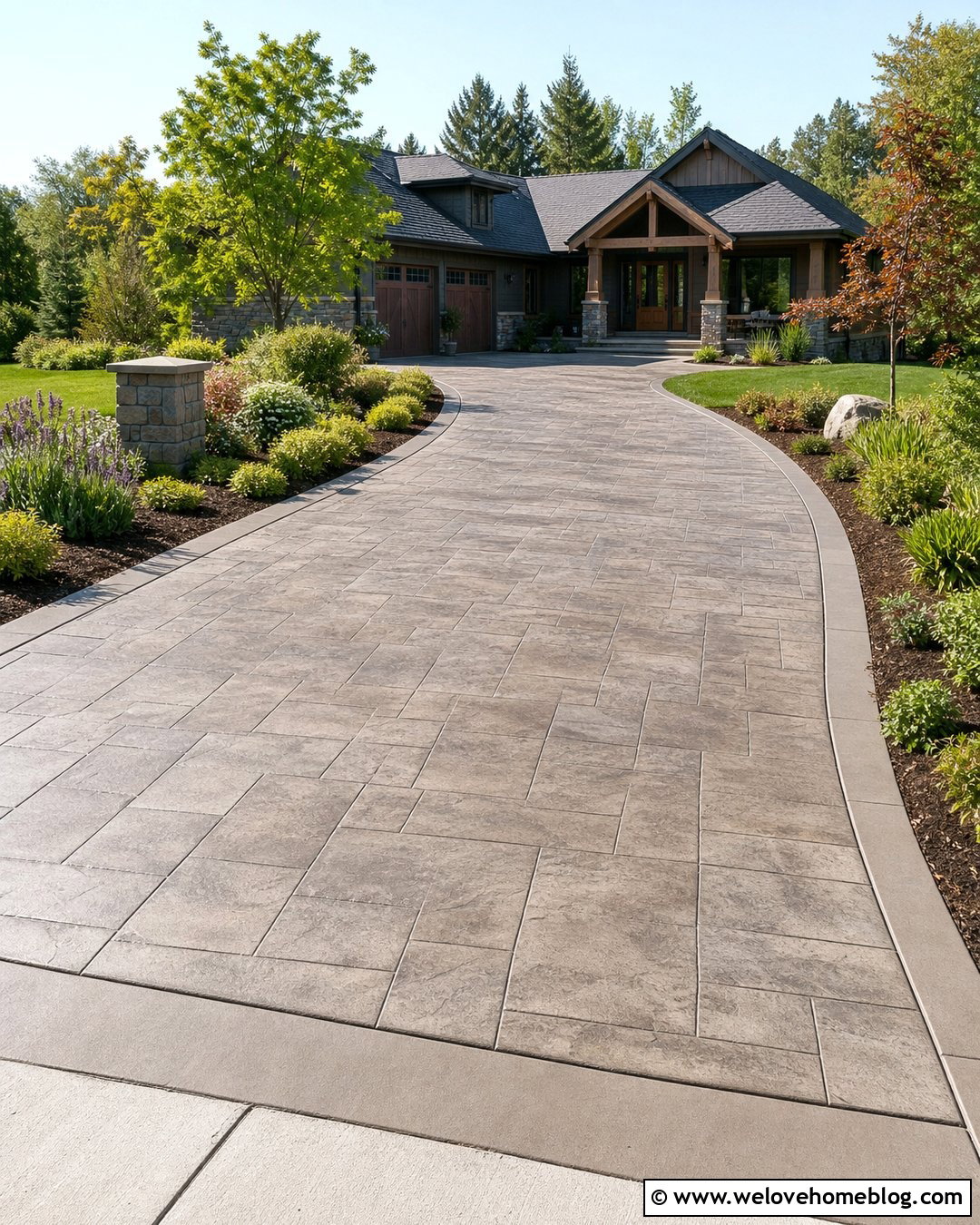
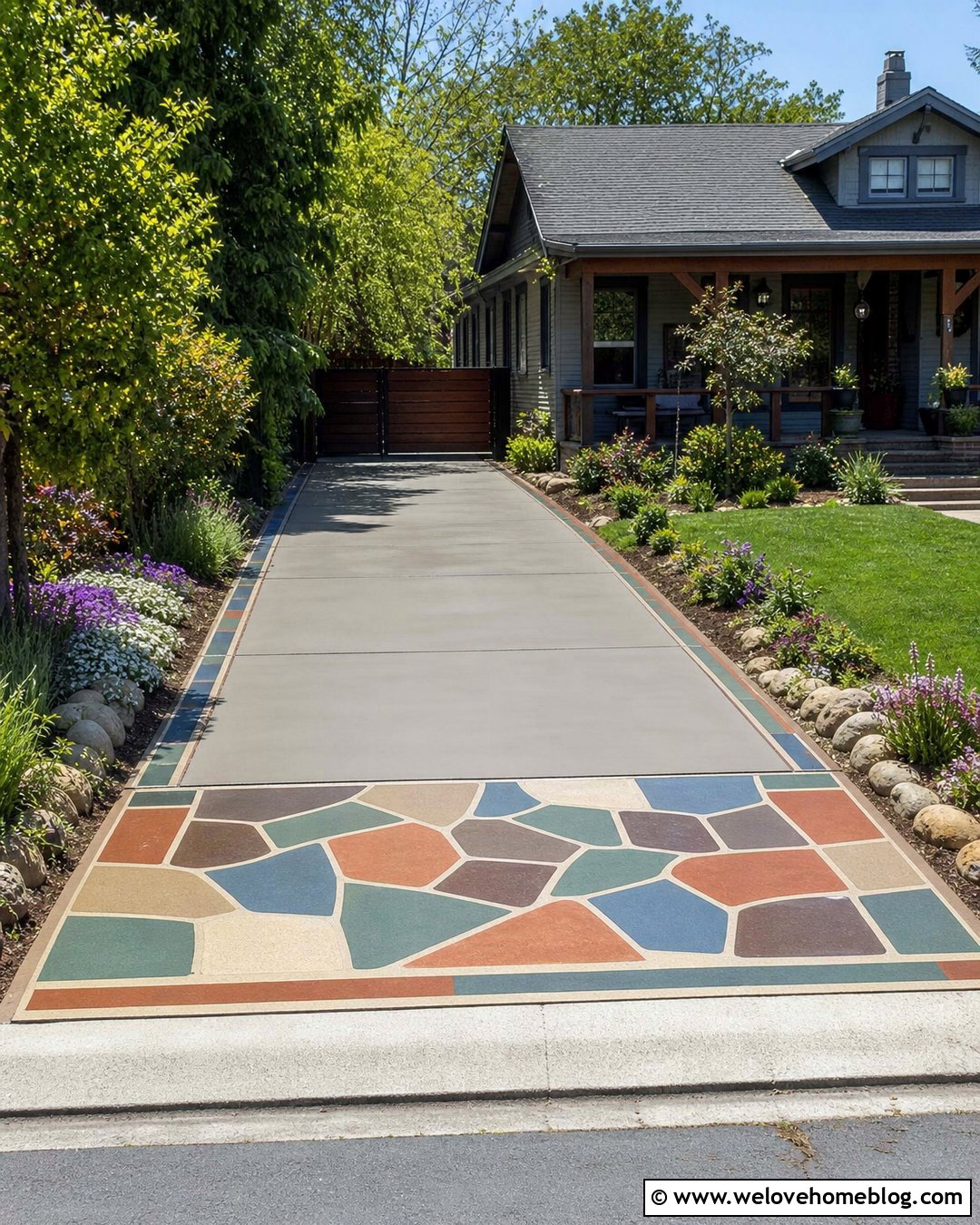
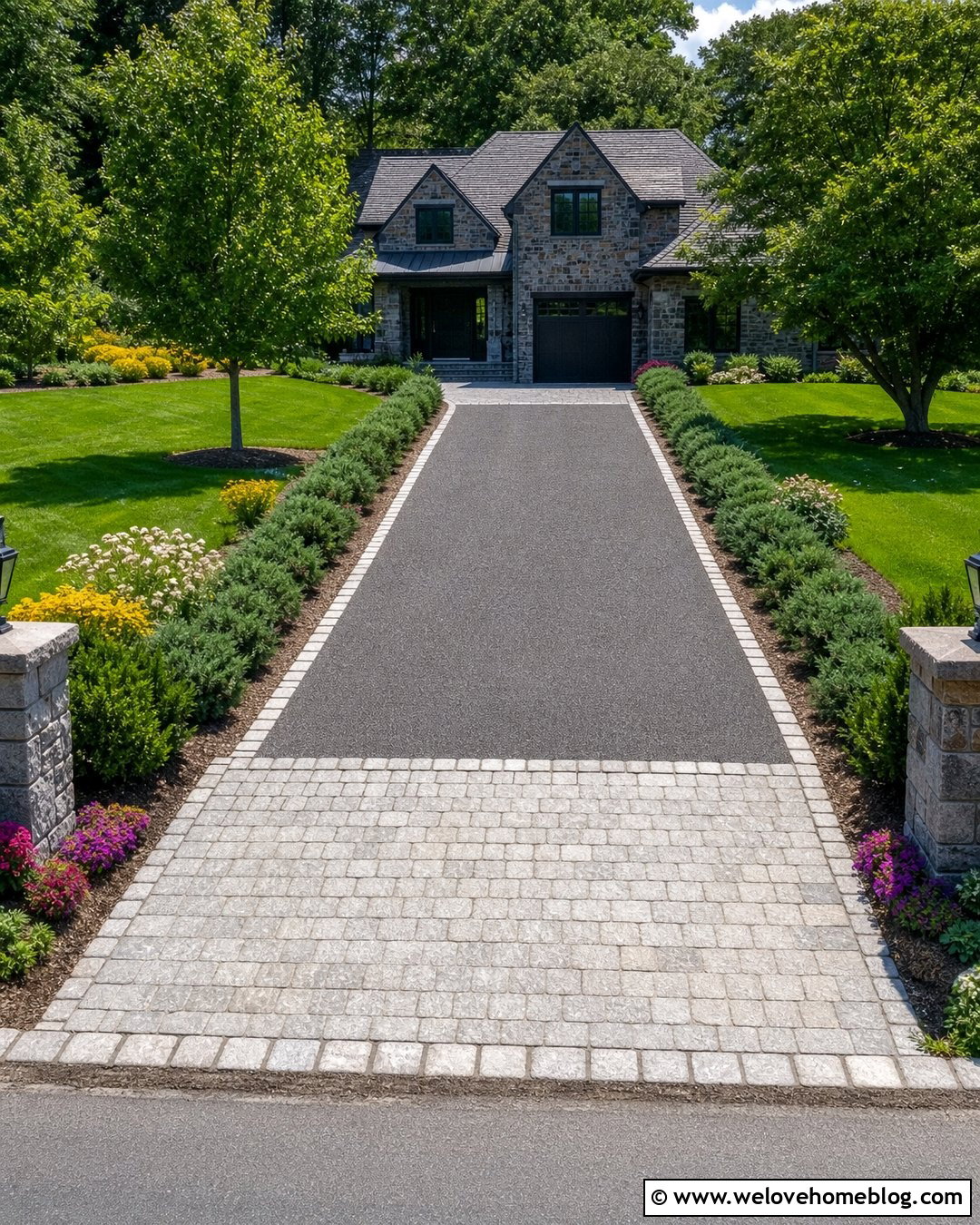
The first few feet of a driveway receive plenty of visual attention from the street. A stamped concrete apron can make this area feel special while the remaining driveway stays understated. Use a gray cobblestone stamp across the entrance apron, then transition into smooth or broom-finished light-gray concrete. A narrow charcoal band between the two finishes will make the change appear deliberate. Flank the entrance with low stone walls, address pillars, and compact planting beds that preserve safe sightlines. Continue the apron pattern into a small pedestrian entry path for better visual balance. This design is particularly useful for a long driveway because it adds curb appeal where it matters most without placing an elaborate pattern across the entire approach.
12. Large Stone Stamped Concrete Driveway
Oversized stone impressions can make a broad driveway look calm and spacious. Choose a large rectangular cut-stone stamp rather than a small, heavily detailed pattern. Warm greige concrete with subtle brown and charcoal accents will imitate natural limestone while coordinating with many exterior colors. Arrange the driveway in a wide, gently curved layout leading to a contemporary craftsman house. A smooth taupe border can contain the large-scale pattern and separate it from the lawn. Add broad planting beds with layered shrubs, flowering perennials, and one or two sculptural trees. The scale of the stamp should relate to the driveway width; larger units often read more clearly on generous surfaces and prevent an expansive parking area from appearing overly busy.
13. Granite Texture Stamped Concrete Driveway
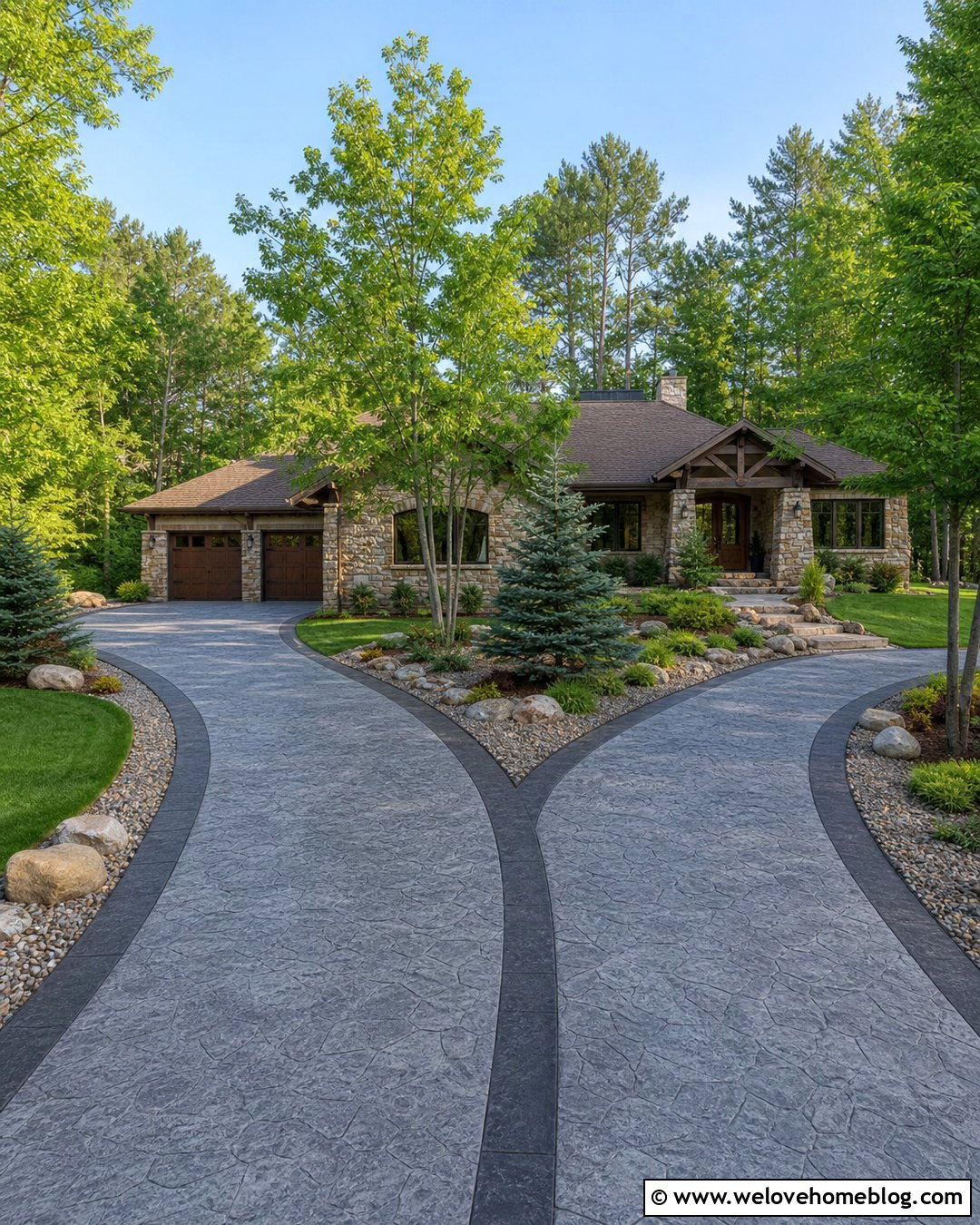
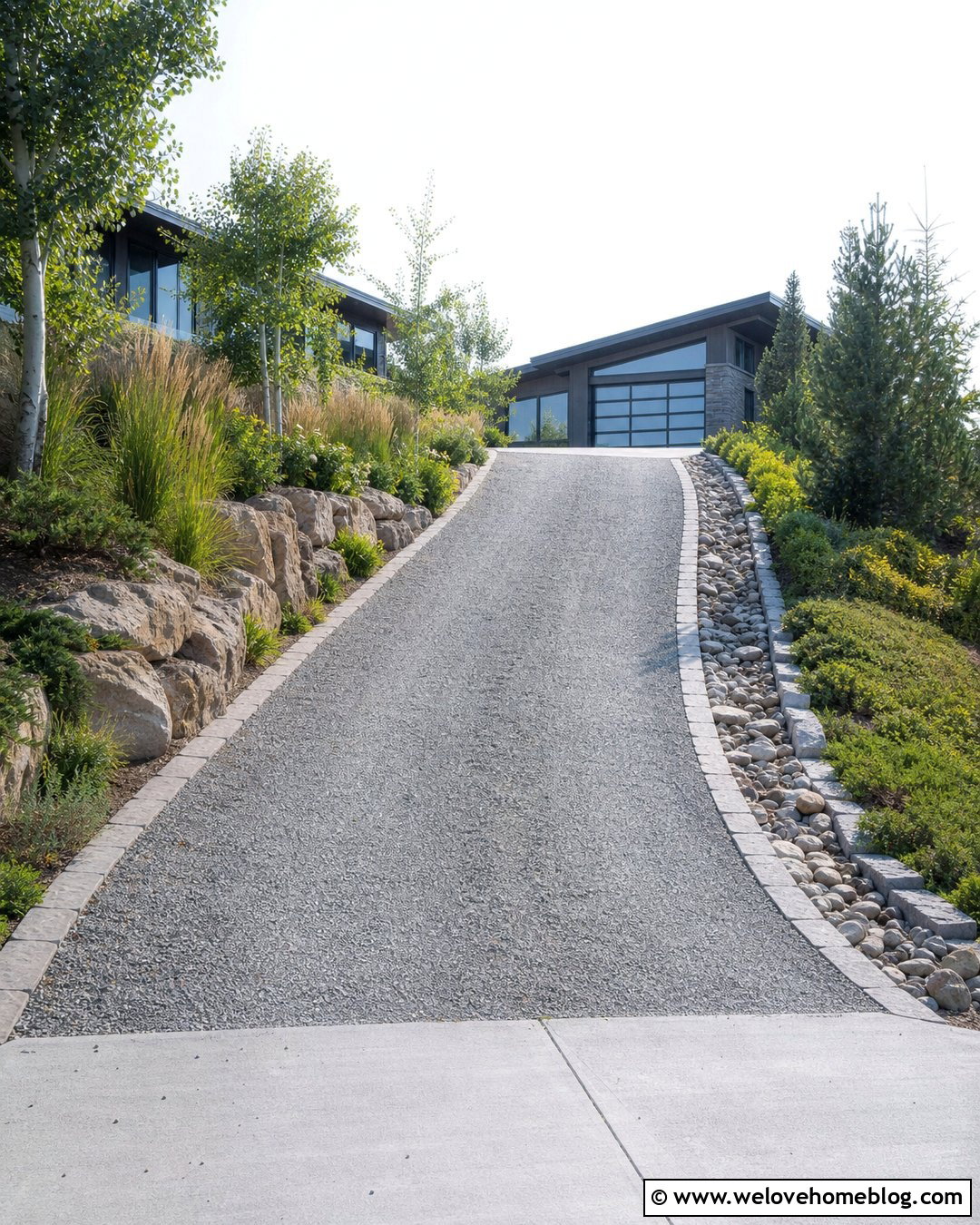
A granite texture stamp gives concrete a rugged stone appearance without creating deep simulated joints. It works well when you want visible surface variation but prefer a continuous, easy-to-read field. Select medium-gray concrete with a soft charcoal wash to highlight the texture. Use it across a split driveway with one branch leading to the garage and another to a side parking space. Dark stamped bands can define the split and help organize the layout. Frame both sides with evergreen shrubs, river rock beds, and several deciduous trees. This complete look pairs naturally with a mountain-inspired craftsman or stone-front ranch home. The understated pattern allows stone veneer, timber beams, and surrounding greenery to remain important parts of the overall composition.
14. Roman Slate Stamped Concrete Driveway
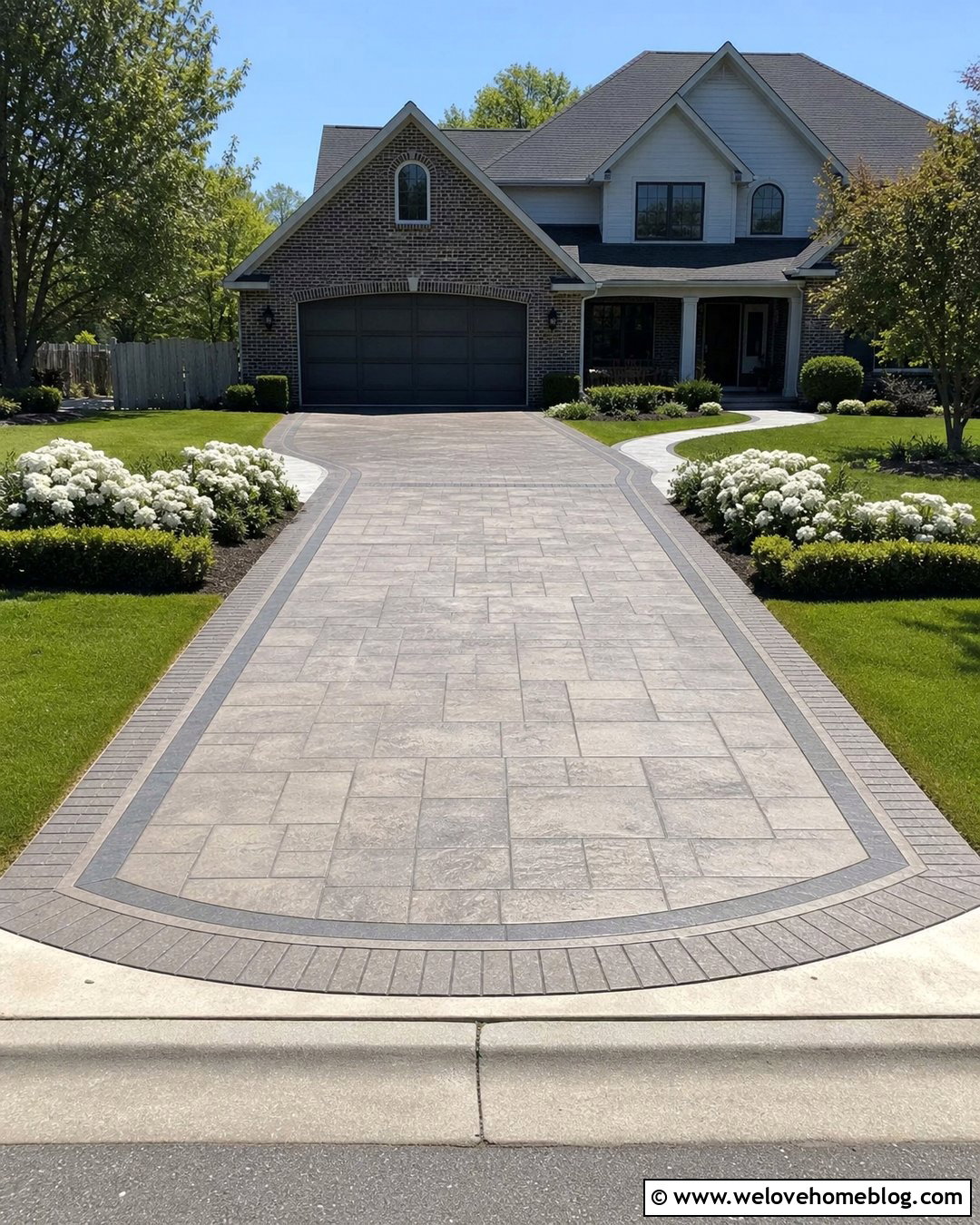
Roman slate stamping offers fine texture and a restrained stone appearance that can adapt to traditional and transitional homes. A soft taupe base with smoky-gray antiquing feels warmer than standard gray concrete, yet it remains neutral enough to coordinate with brick, siding, or stone. Apply the finish to a straight driveway with a modest flare at the street. Add a double border consisting of a narrow smooth band and an outer brick-pattern stamp. Low hedges, white flowering shrubs, and a curved walkway can soften the strong driveway lines. Repeat the taupe tone on the front steps or porch floor for continuity. The layered border makes the entrance feel custom, while the subtle main field keeps the complete design balanced and approachable.
15. Stamped Brick Bands On Concrete Driveway
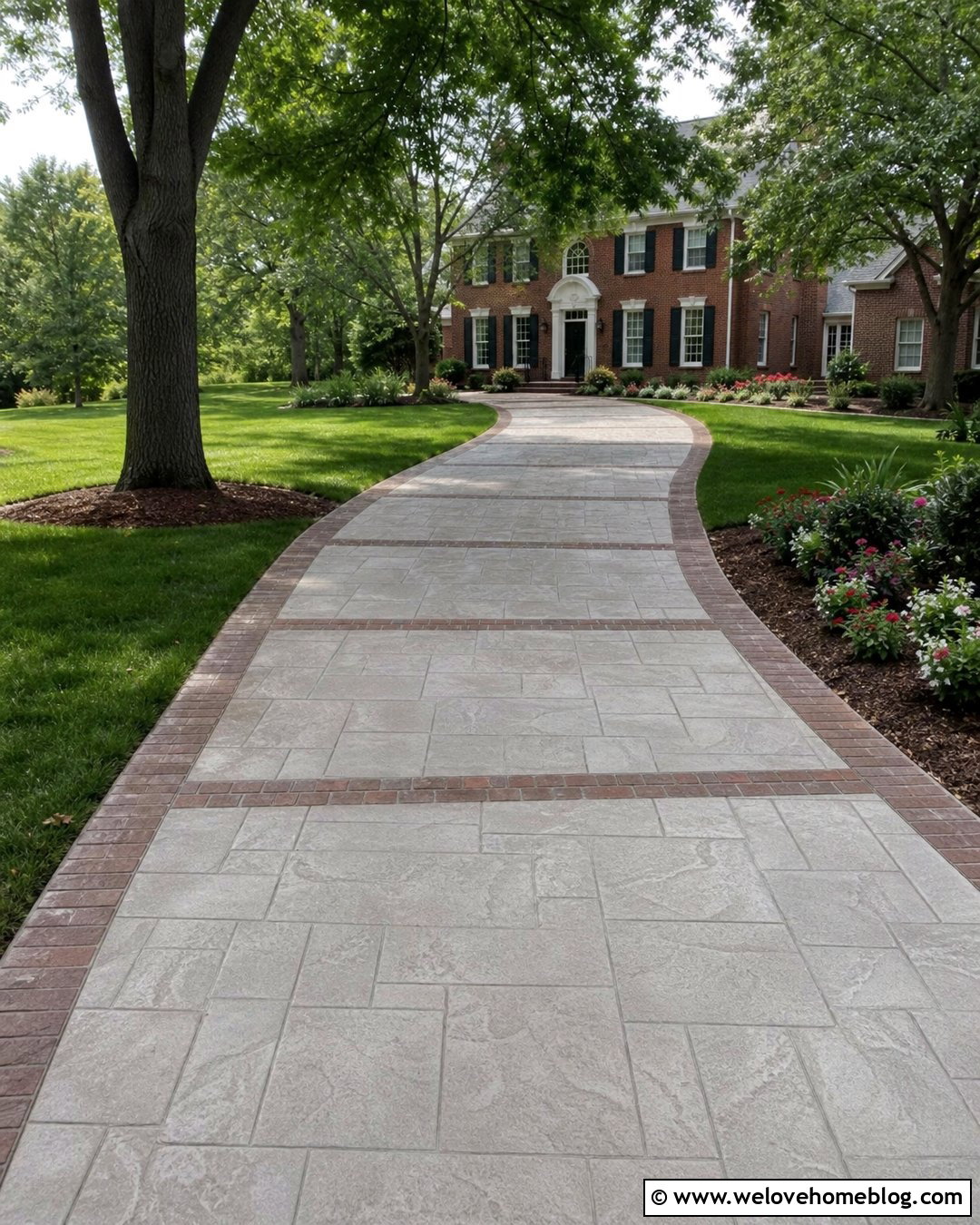
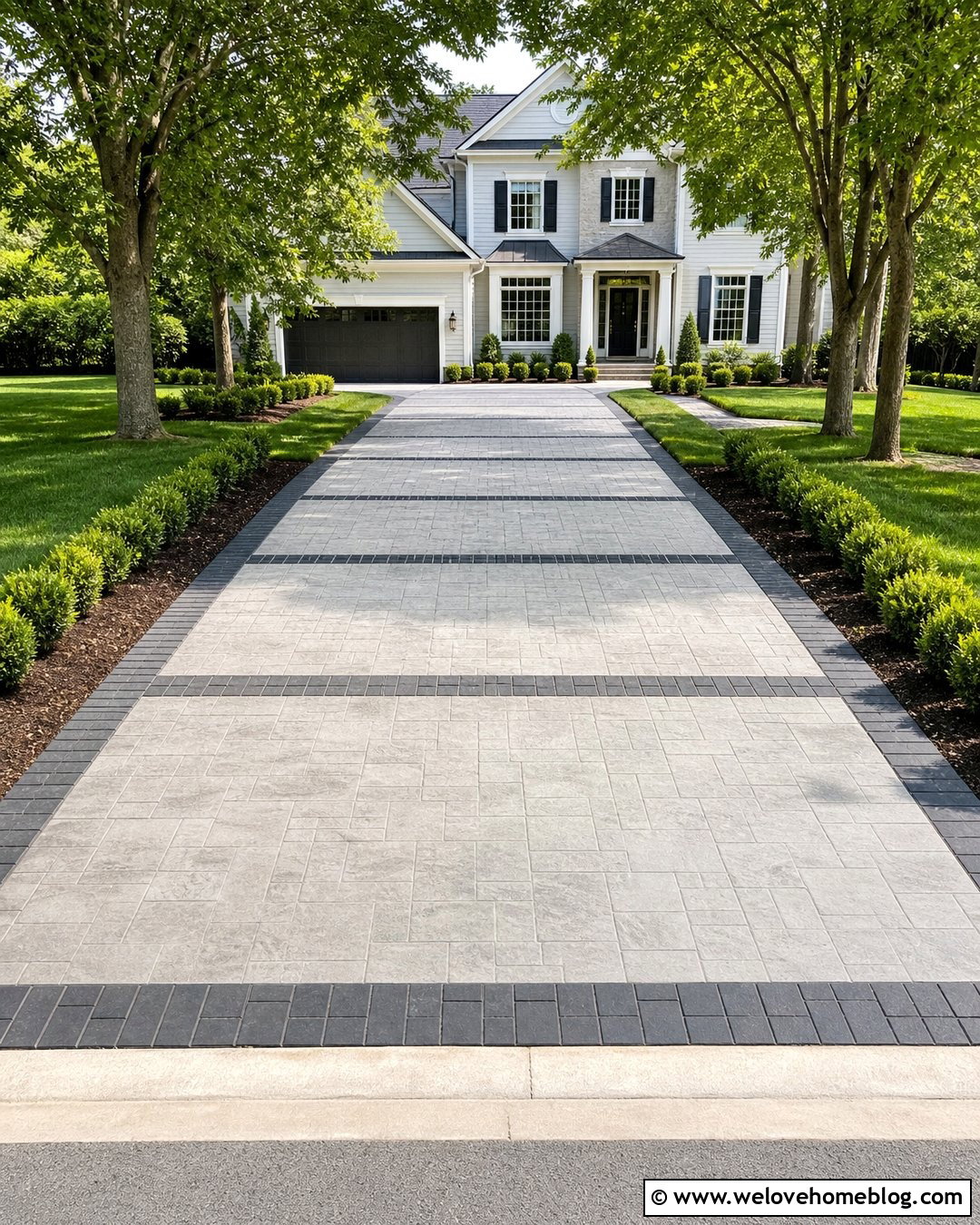
Brick-pattern bands can break up the length of an extended concrete driveway. Begin with a warm-gray seamless stone-stamped field, then place reddish-brown stamped brick bands across the surface at measured intervals. Continue the brick finish around the outer edges to visually connect the sections. This repeated detail guides the eye toward the house and makes a long approach feel more organized. Use a gently curved layout bordered by lawn, shade trees, and low flowering beds. A brick-front colonial or traditional ranch house will naturally repeat the color of the bands. Plan the band positions alongside necessary control joints when feasible. That coordination helps practical divisions feel like part of the decorative design rather than lines added after the stamping was completed.
16. Two Tone Stamped Concrete Driveway
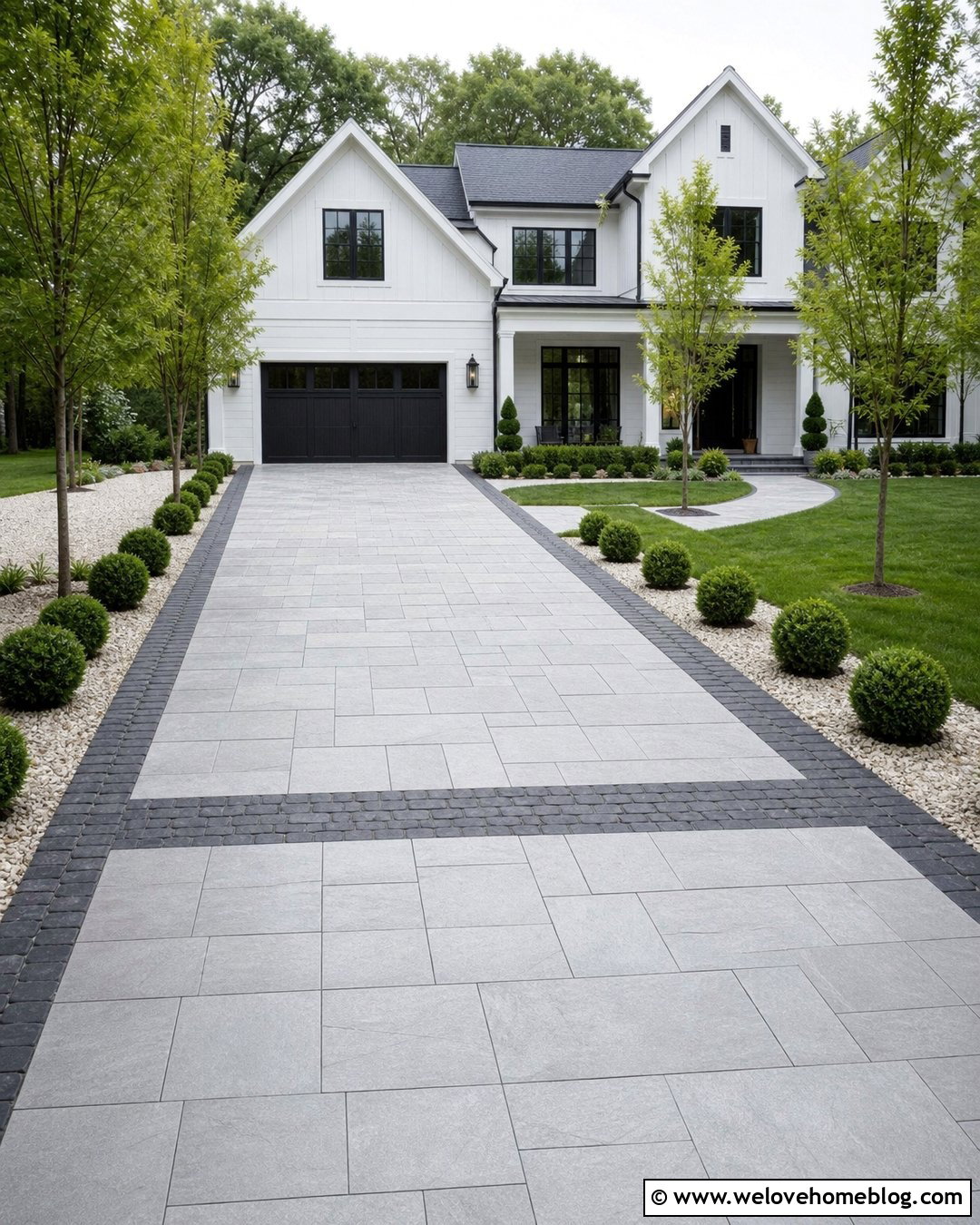
Two closely related colors can make a stamped driveway feel layered without becoming excessively decorative. Use a light-gray ashlar slate stamp for the central field and charcoal cobblestone stamping along the perimeter. On a wide driveway, add one charcoal band near the garage to create a clear visual stopping point. The dark edging will outline the shape, while the lighter center keeps the entrance bright. Pair the driveway with a white modern farmhouse featuring black windows and a covered porch. Simple boxwood hedges, pale gravel beds, and small ornamental trees will continue the limited palette. Instead of adding several unrelated colors, repeat the same gray and charcoal tones on the walkway, porch steps, planters, and exterior fixtures.
17. Light Limestone Stamped Concrete Driveway
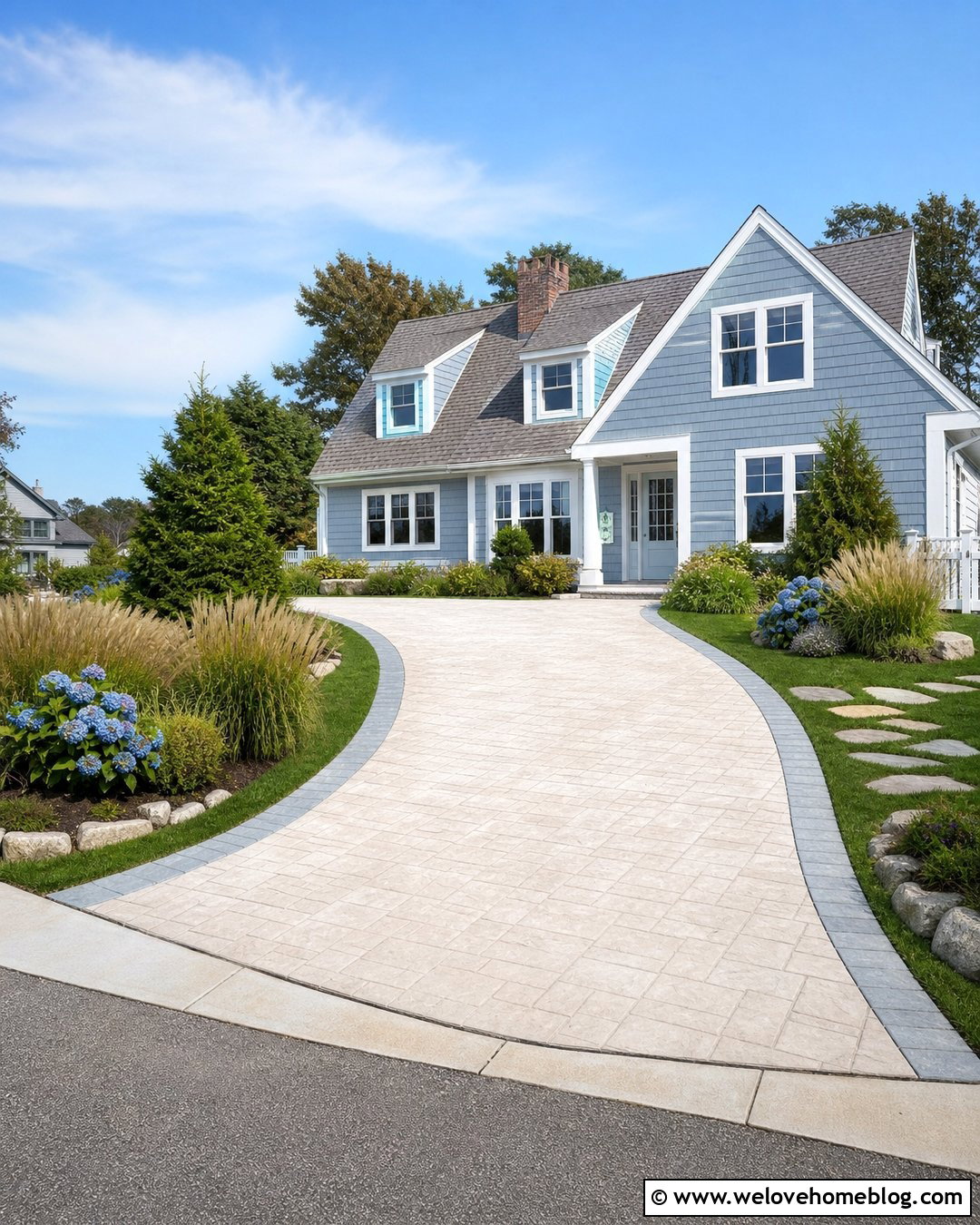
A pale limestone stamp can produce an airy driveway that complements coastal and Cape Cod architecture. Choose warm ivory or light beige concrete with very soft gray antiquing in the simulated joints. Apply the pattern in large irregular sections across a curved driveway leading to a white or pale-blue house. A muted blue-gray stamped border can echo shutters, roofing, or porch details without appearing overly colorful. Frame the driveway with hydrangeas, low evergreen shrubs, beach grasses, and a well-maintained lawn. Natural stone stepping pads can link the driveway to the front walkway. This bright palette keeps the hardscape from feeling heavy and allows the texture to remain visible. It is especially attractive where a darker driveway would overpower a small front yard.
18. Charcoal Stamped Concrete Driveway
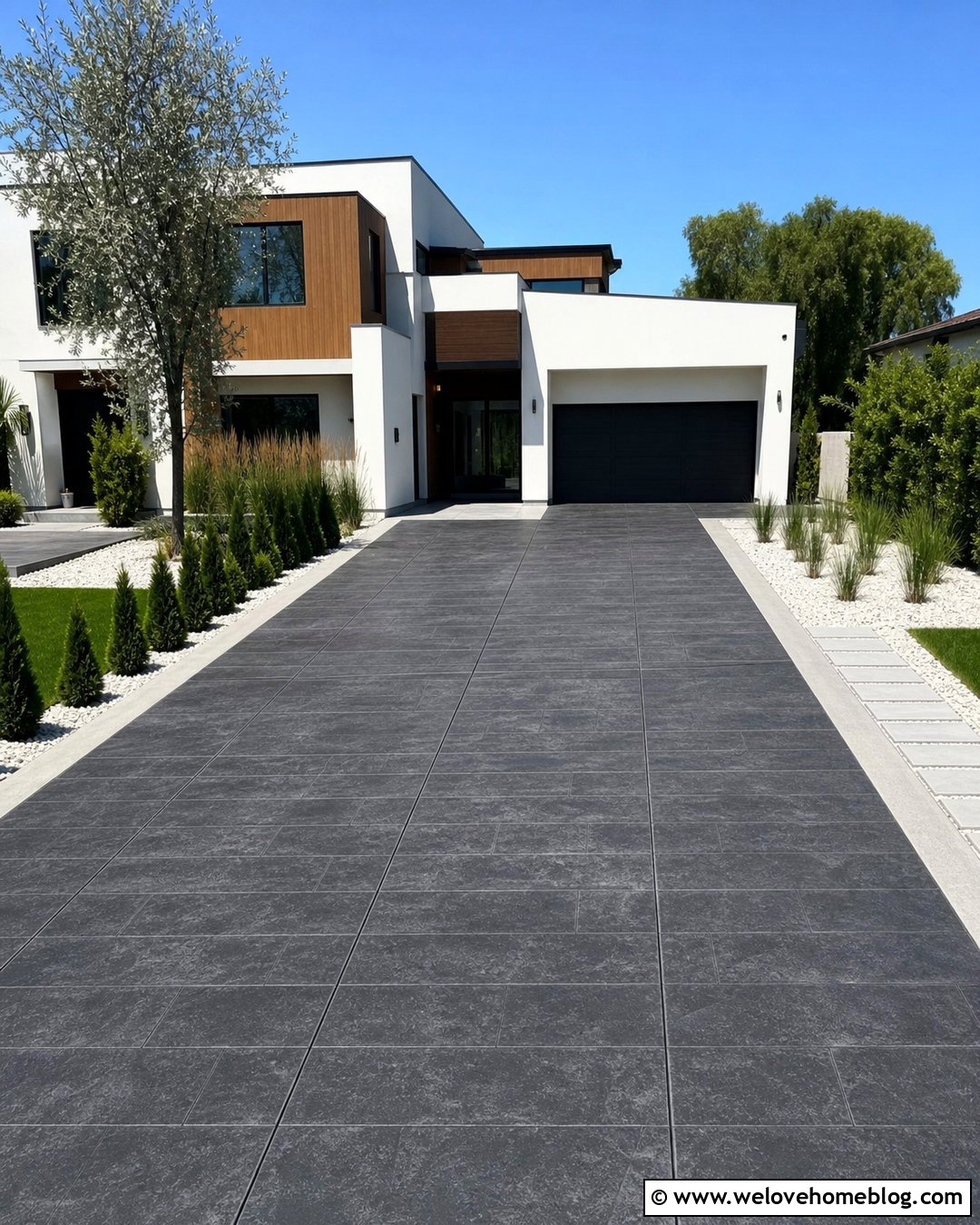
Dark stamped concrete can give a modern house a strong, grounded entrance. Choose a seamless slate or large-format stone stamp in charcoal gray, then use a slightly lighter antiquing tone to reveal the texture. Keep the driveway straight and divide it into clean geometric sections with aligned control joints. A narrow light-gray border will prevent the dark field from blending into planting beds. Surround it with pale decorative gravel, clipped evergreens, and upright grasses for crisp contrast. The house might feature white stucco, warm wood siding, or light brick with black-framed windows. Because dark colors can command attention, simplify the landscaping and avoid unnecessary patterns. The finished driveway should feel bold, balanced, and connected to the building’s modern lines.
19. Red Brick Stamped Concrete Driveway
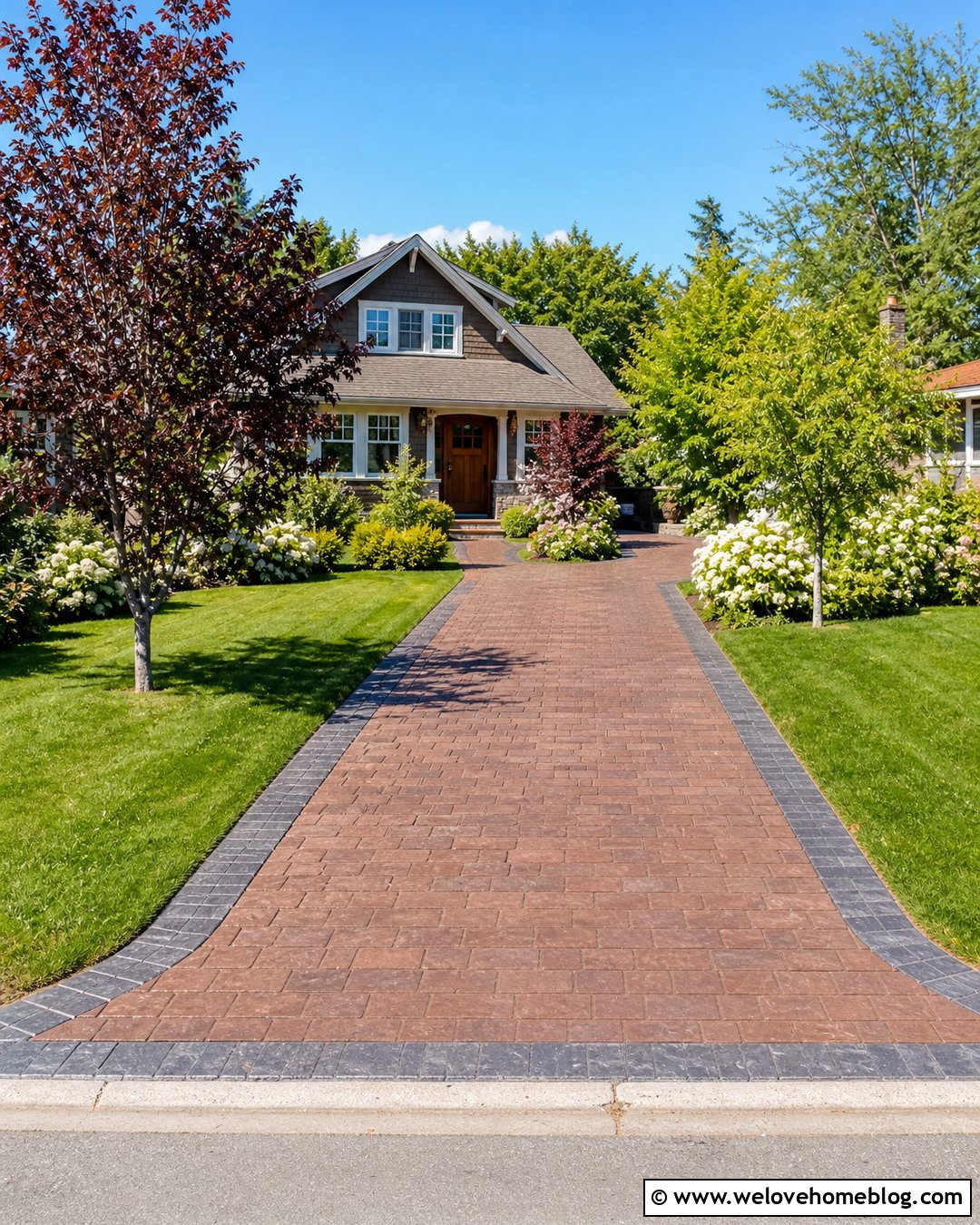
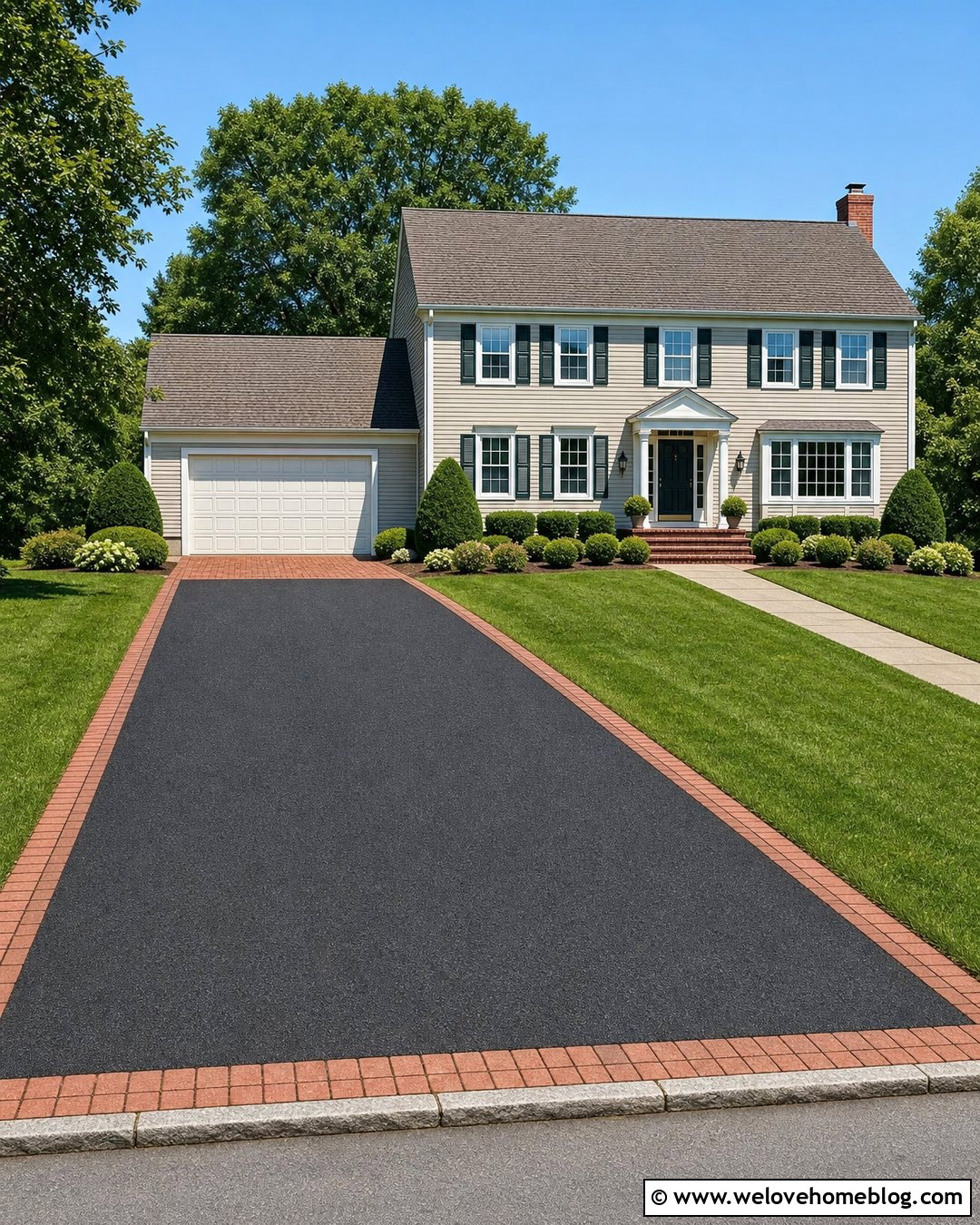
Red brick stamping can support the welcoming character of a traditional cottage or craftsman home. Instead of using one solid red, combine muted clay, burgundy, and brown tones for a more natural-looking field. A running-bond stamp will feel calmer than herringbone on a small driveway, while a charcoal cobblestone border can add definition. Use a gently flared entrance that narrows into a straight approach toward the garage. Layer the sides with green lawn, white flowering shrubs, and small ornamental trees. A matching brick walkway can branch toward the porch, creating a continuous material story. This design works best when the stamped color relates to existing masonry but is not matched so precisely that the exterior appears flat or overly uniform.
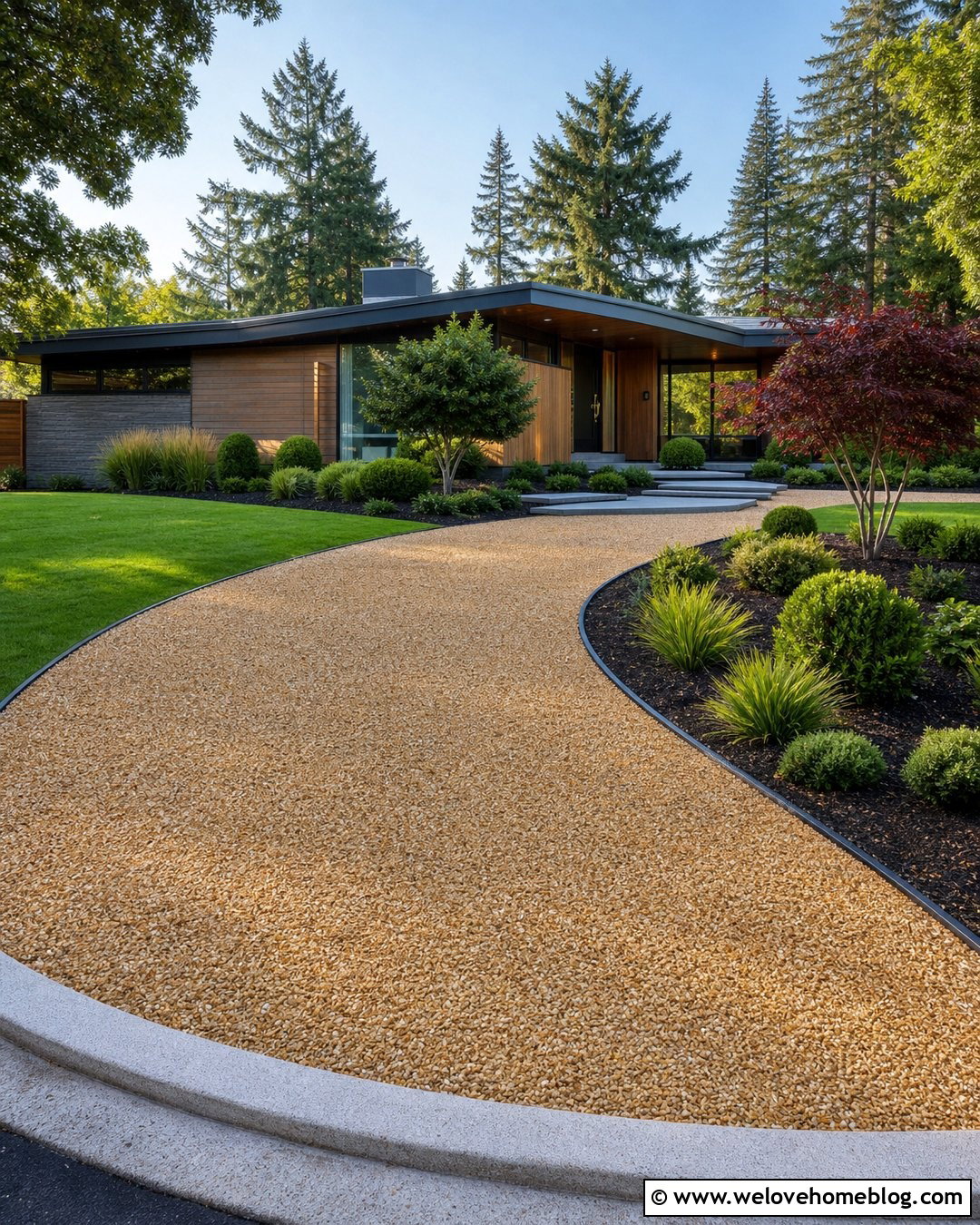
20. Stamped Concrete Overlay Driveway
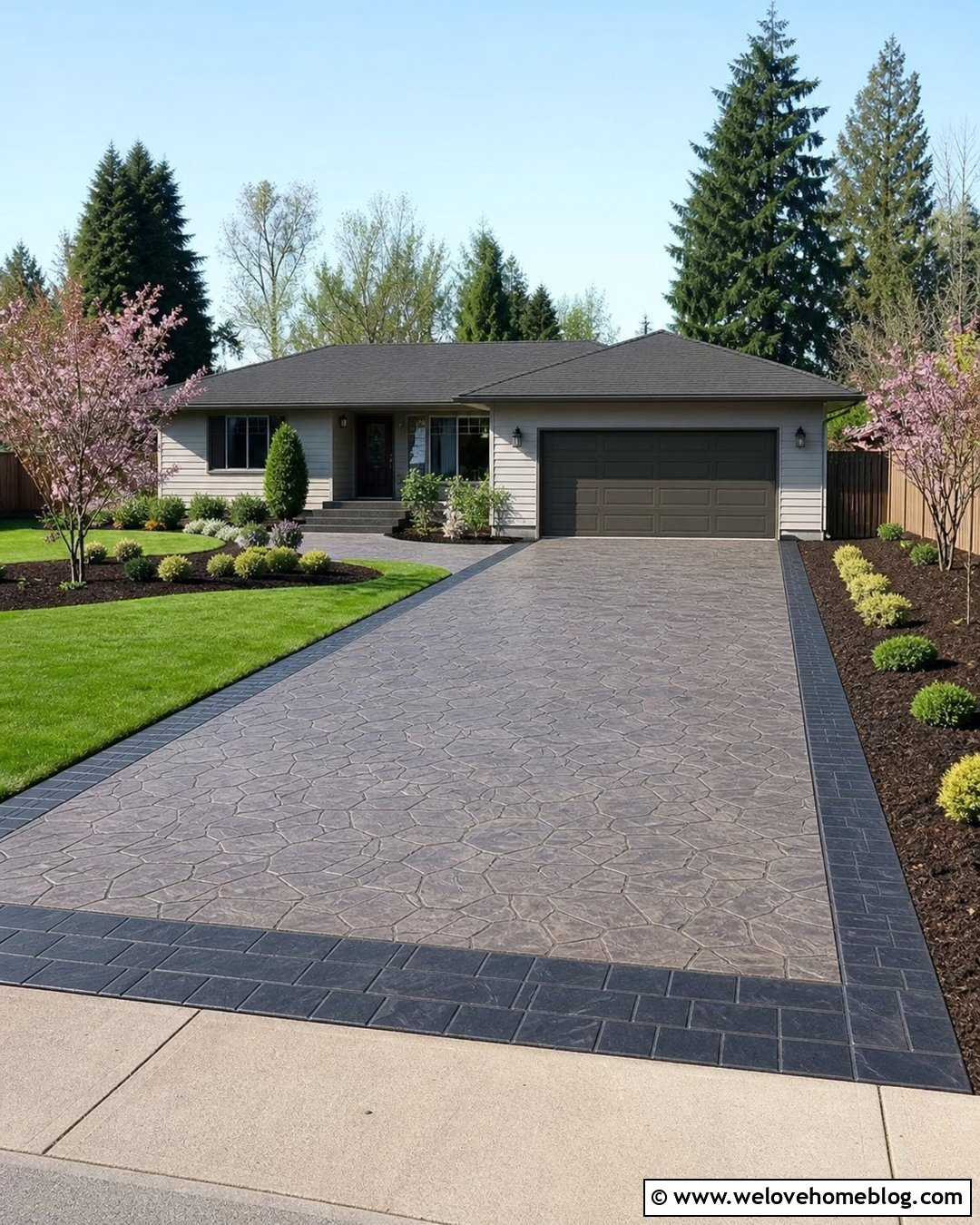
An existing concrete driveway may be a candidate for a decorative stamped overlay when its condition and underlying structure are suitable for resurfacing. Overlays can introduce color and pattern without creating an entirely new visual layout. () Consider a warm-gray random stone pattern with a darker slate border on a straight suburban driveway. Continue the border around the walkway and across the garage threshold to make the update appear comprehensive. Fresh planting beds, low shrubs, mulch, and a clean lawn edge will strengthen the finished transformation. Because overlays require careful surface preparation, have a qualified contractor inspect cracks, drainage, movement, and previous coatings first. A well-planned design should improve the entire approach rather than merely hide an aging concrete color.
Conclusion:
These 20 Driveway Stamping Ideas show how pattern, color, shape, borders, and landscaping can work together to create a complete entrance. Ashlar slate and seamless textures suit clean modern homes, while brick, cobblestone, and European fan patterns support more traditional architecture. For a restrained budget, consider concentrating decorative stamping on the apron, border, or cross bands instead of the entire surface. Always view color samples outdoors and compare them with the roof, siding, masonry, and surrounding landscape. A professional installer should also plan drainage, control joints, traction, base preparation, and sealing. When these practical details support the visual concept, stamped concrete can deliver a distinctive driveway with balanced, long-lasting curb appeal.

Related posts:

Leave a Reply