
Extending a driveway with gravel is a practical way to create extra parking, improve access, or connect the main drive to a garage, shed, or backyard. These 20 Extend Driveway With Gravel Ideas cover complete layouts rather than simple strips of loose stone. Each look combines the gravel surface with a clear shape, durable edging, smart drainage, and landscaping that complements the home. Before starting, check local zoning rules, HOA requirements, property setbacks, underground utilities, and limits on driveway width or front-yard parking. A well-compacted aggregate base and properly graded surface will also reduce sinking, spreading, and standing water. Use the following 20 Extend Driveway With Gravel Ideas to find a design that fits your space, budget, and curb appeal goals.
1. Gravel Driveway Side Extension
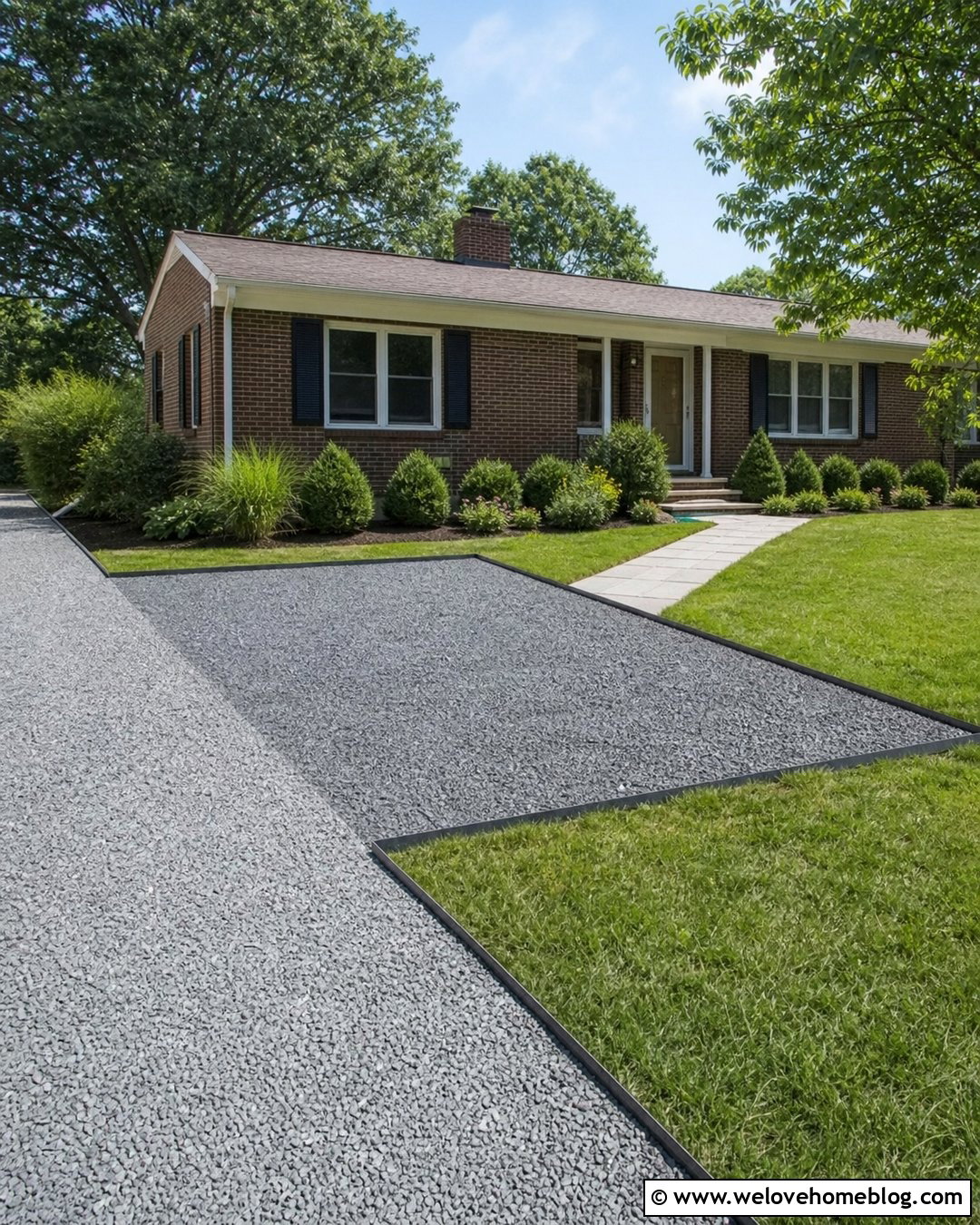
A side extension is one of the simplest ways to create another parking space without rebuilding the entire driveway. Run a rectangular strip of compacted gray crushed gravel beside the existing concrete or asphalt surface. Keep the extension level with the driveway so tires can move between materials without crossing a raised edge. A flush steel border along the lawn side contains loose aggregate while creating a clean finish. Add a narrow planting bed with ornamental grasses and compact evergreen shrubs to soften the expanded hardscape. Match the new space to the length of the existing parking area rather than extending it toward the street unnecessarily. This straightforward layout works especially well beside ranch houses, split-level homes, and attached two-car garages.
2. Pea Gravel Driveway Extension With Brick Edging
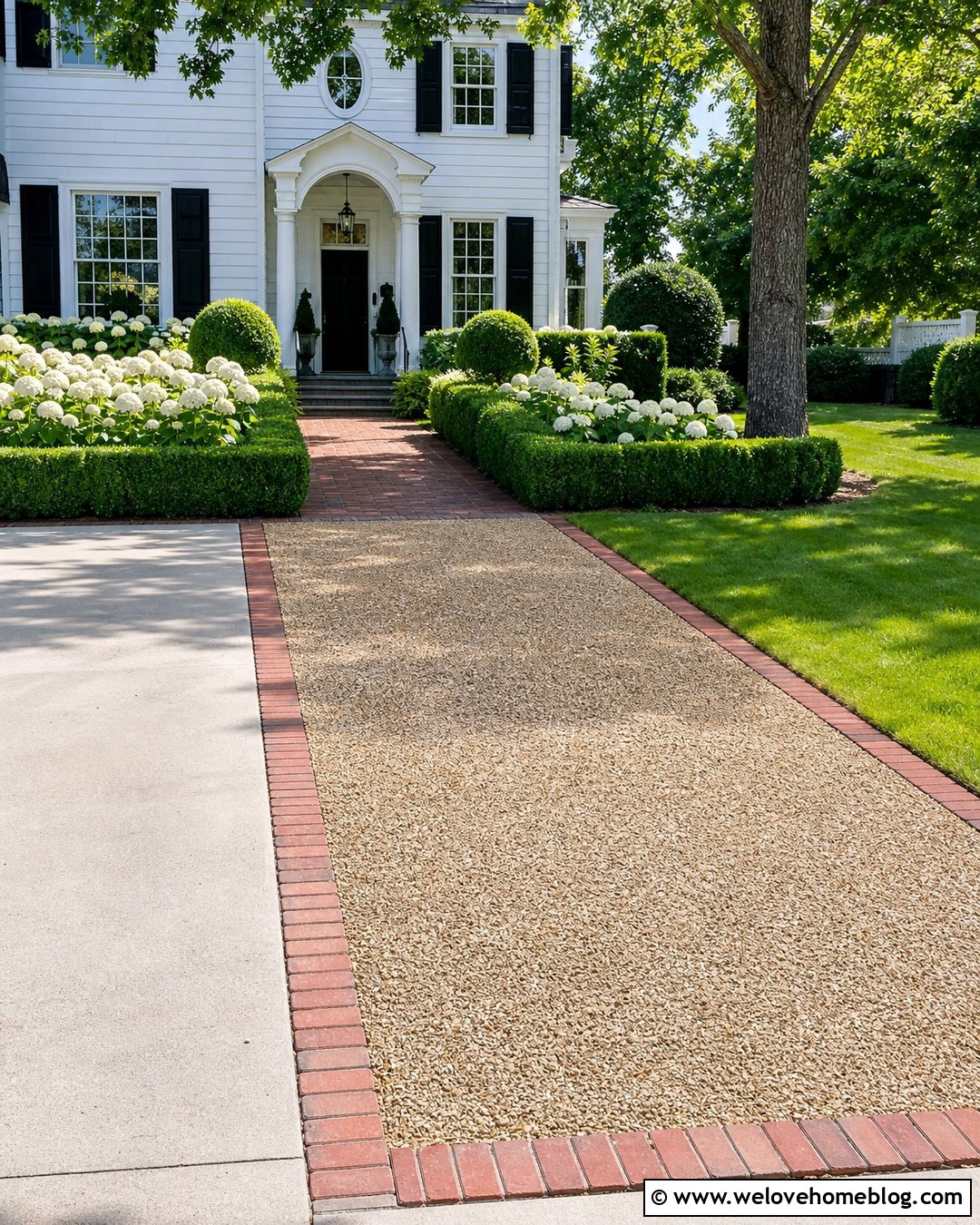
Warm pea gravel and red clay brick create a welcoming extension beside an older concrete driveway. Because rounded pea gravel can shift beneath tires, install it within a strong gravel stabilization grid over a compacted crushed-stone base. Frame the parking pad with bricks placed in a soldier-course pattern. The brick edge visually connects the new extension to a traditional Colonial, Cape Cod, or cottage-style house. Continue the border along the transition between the original driveway and gravel for a more intentional appearance. Low boxwoods, hydrangeas, and a simple lawn provide a tidy landscape around the widened surface. This combination is best for level sites where the grid and border can keep the decorative gravel contained during turning, parking, and routine maintenance.
3. Crushed Granite Driveway Extension With Concrete Curb
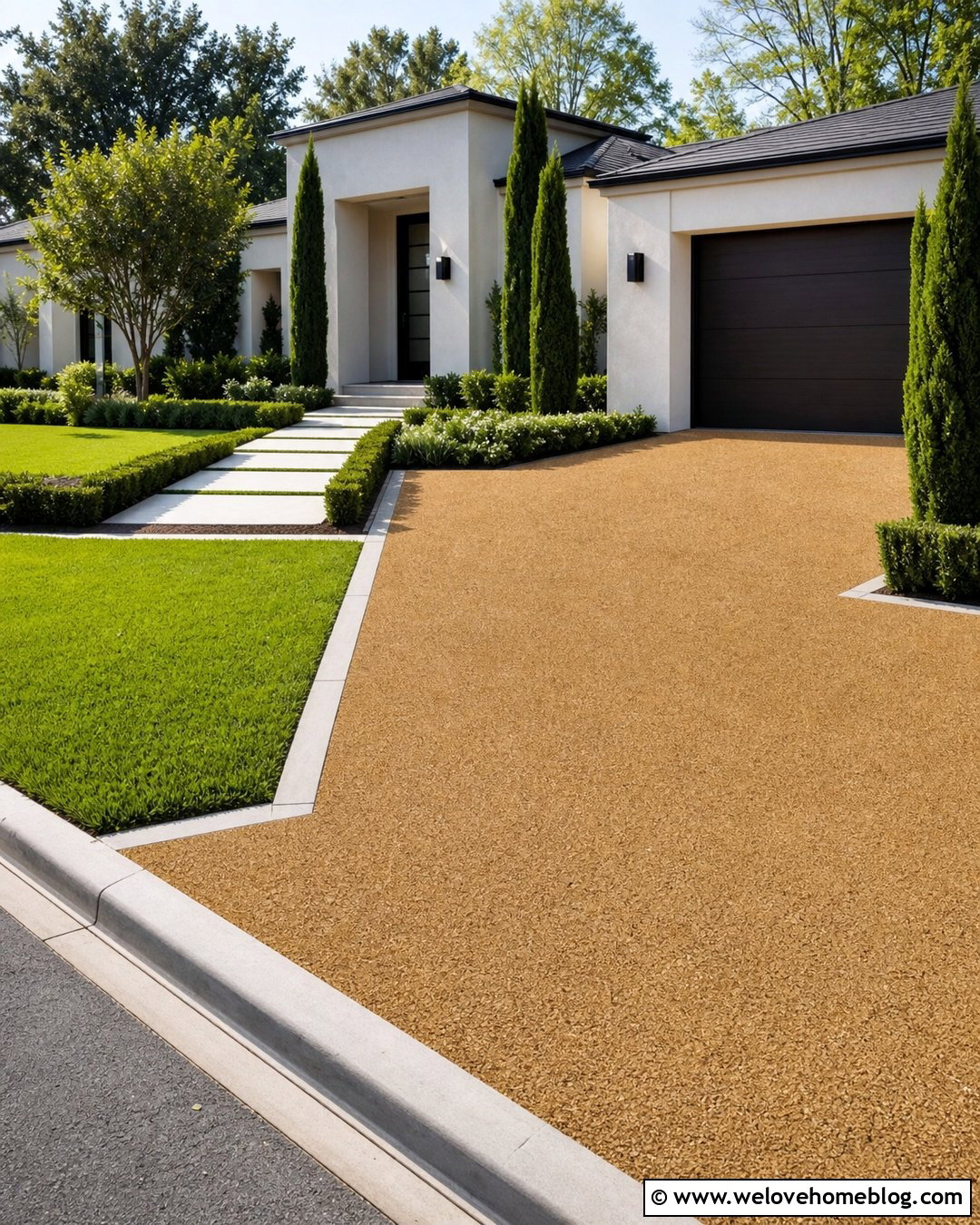
Crushed granite offers a firm, attractive surface for a frequently used driveway extension. Choose angular material with fines that compact tightly instead of smooth decorative rock that rolls beneath vehicle tires. A low concrete curb can follow the outside edge, separating the gravel from the lawn and preventing gradual spreading. Make the curb flush near walkways and garage access points to avoid creating a tripping hazard. Soft gray or tan granite pairs naturally with modern stucco, brick, and painted siding. Complete the design with structured planting beds, upright evergreens, and a paved walkway leading to the front entrance. The crisp curb and compacted surface make the extension look like a permanent part of the property rather than a temporary patch added beside the original driveway.
4. Gravel Grid Driveway Parking Extension
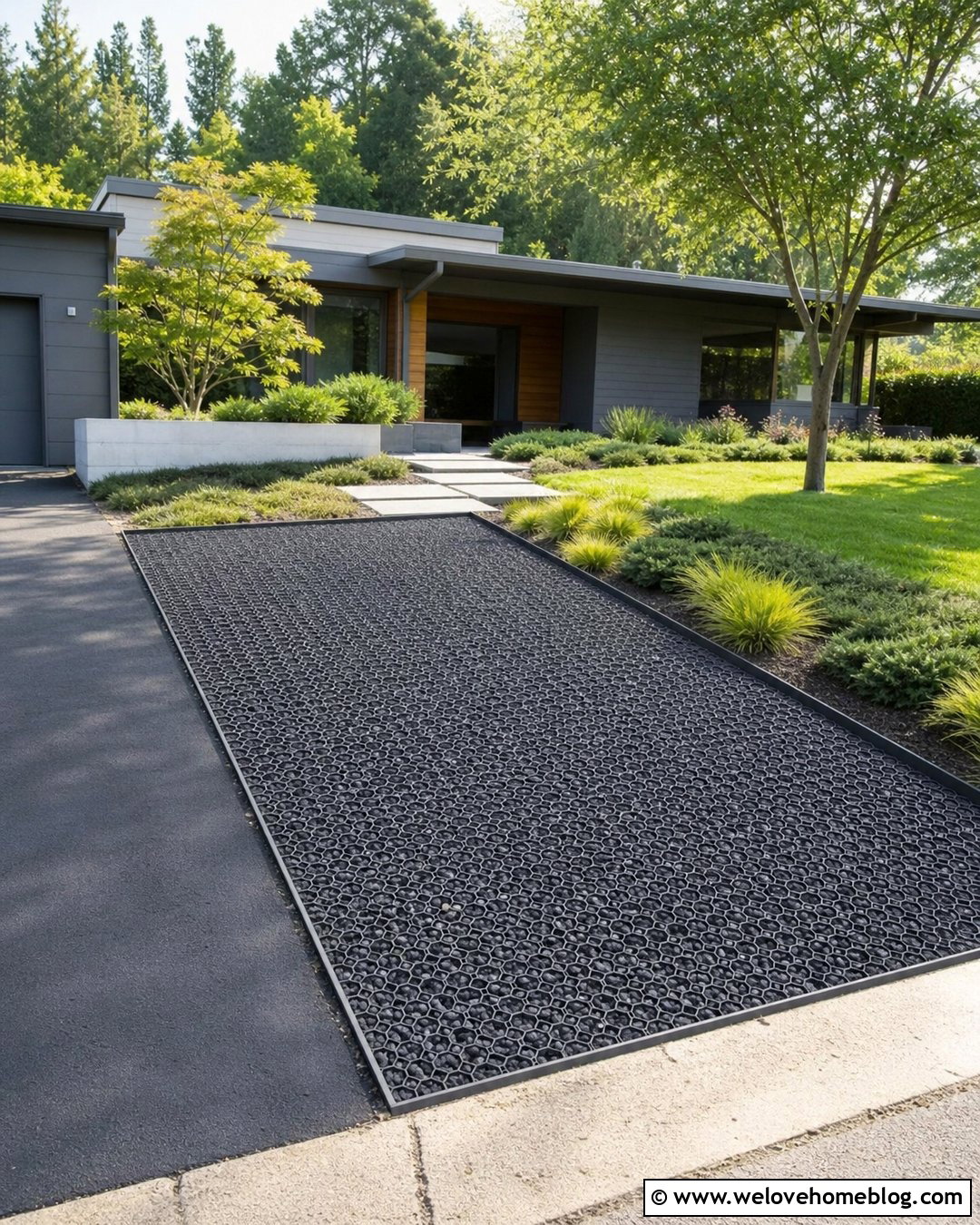
A gravel stabilization grid provides extra support where the extension will hold a car every day. Install the cellular grid over an excavated, compacted aggregate base, then fill it with angular gravel that settles into the openings. The finished surface retains the natural appearance of loose stone while reducing movement, ruts, and displaced gravel. Create a full-width rectangular parking bay beside the driveway and finish its outer edge with dark metal edging. A row of low grasses or spreading junipers can screen the parked vehicle without blocking sightlines. This organized layout complements contemporary and midcentury homes because the parking area has a precise geometric shape. Keep the finished grid level with the neighboring driveway and provide a gentle slope toward a suitable landscaped drainage area.
5. Curved Gravel Driveway Extension With Cobblestone Border
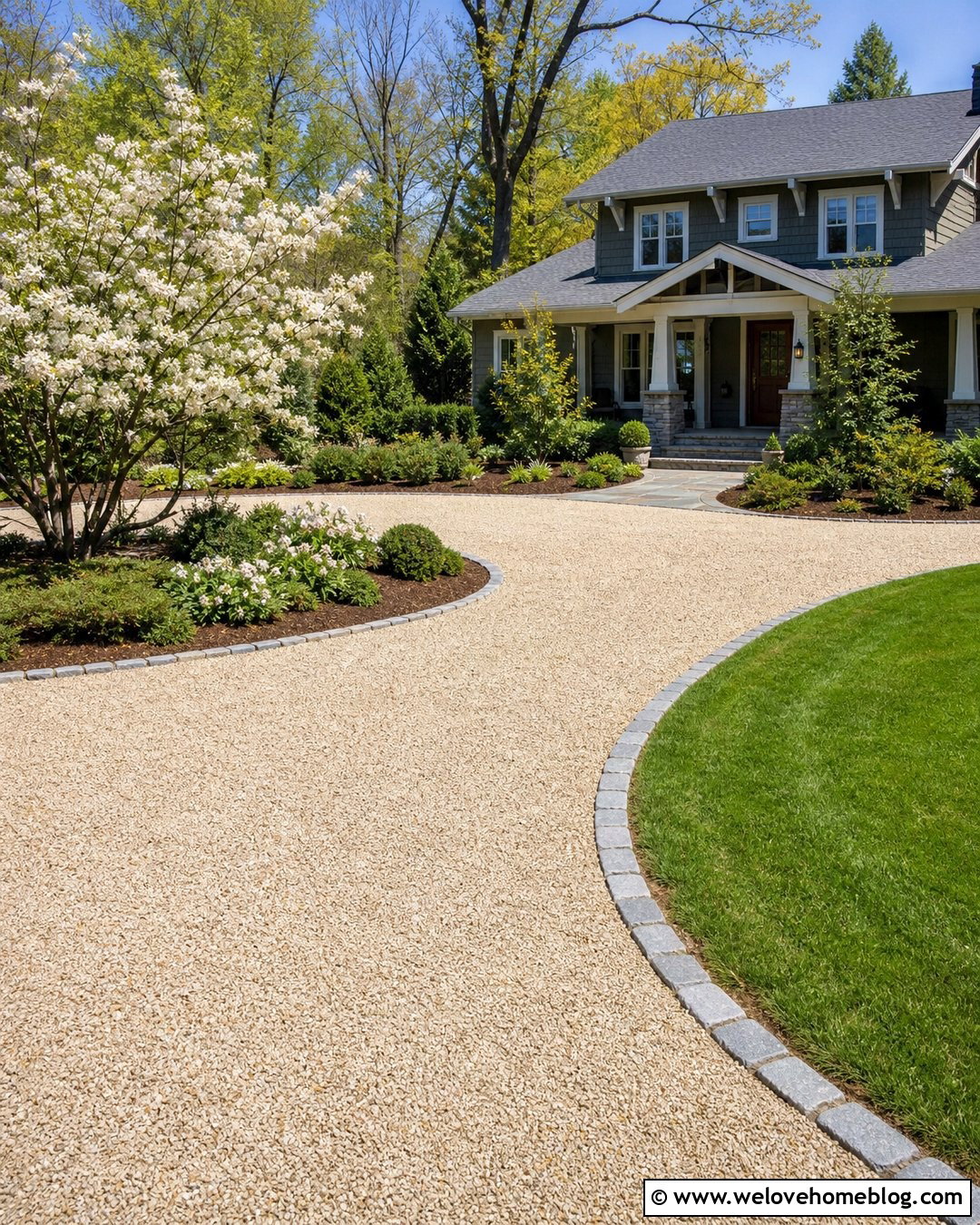
A gently curved extension can create more maneuvering space while blending naturally into a large front yard. Use compacted buff-colored crushed stone for the driving surface and trace the outer curve with granite cobblestones. The cobblestone border should sit firmly on a prepared base so turning tires do not push it outward. Continue the curve into a rounded planting bed filled with small flowering trees, evergreen shrubs, and ground cover. This softens the widened driveway and helps the new construction feel connected to the landscape. A curved design works particularly well around Craftsman houses, cottages, and homes with angled garages. Avoid tight bends that make parking difficult. Instead, use a broad radius that provides comfortable vehicle movement and maintains a clear view from the street.
6. Gravel Driveway Extension Behind A Side Gate
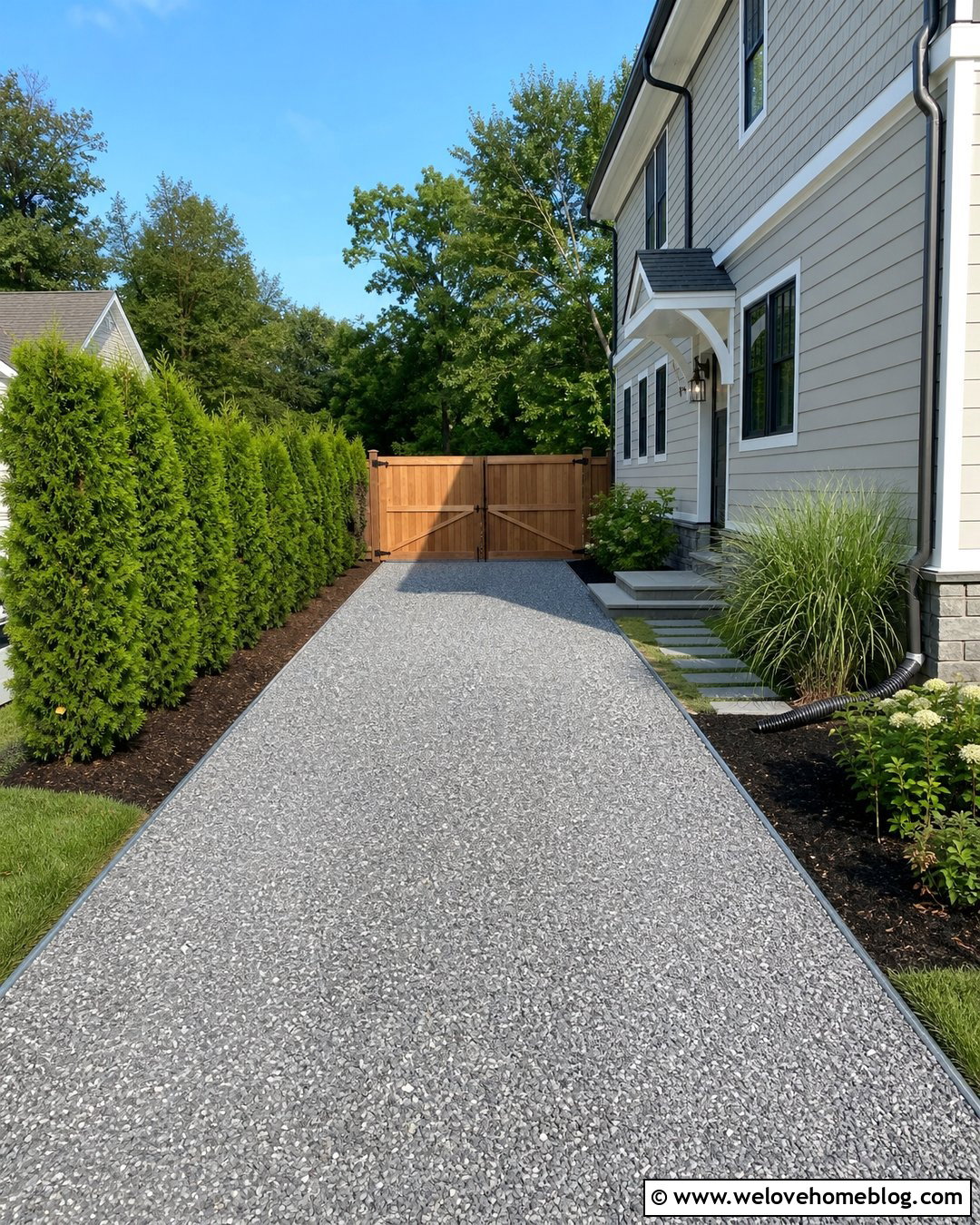
Need secure space for a trailer, work equipment, or an occasional vehicle? Extend the driveway along the side of the house and continue it through a wide gate into the backyard. Compact gray crushed limestone over a stable base and contain it with steel edging or a narrow concrete mow strip. Choose a double gate wide enough for comfortable access, and position its posts outside the usable driving path. A horizontal cedar gate adds privacy and warms the cool gravel tones. Screen the extension with upright shrubs while leaving enough clearance to open doors and move equipment. This long, straight arrangement suits suburban homes with narrow side yards. Plan roof runoff and downspouts carefully so water does not wash gravel toward the gate or neighboring property.
7. Gravel Driveway Extension For RV Parking
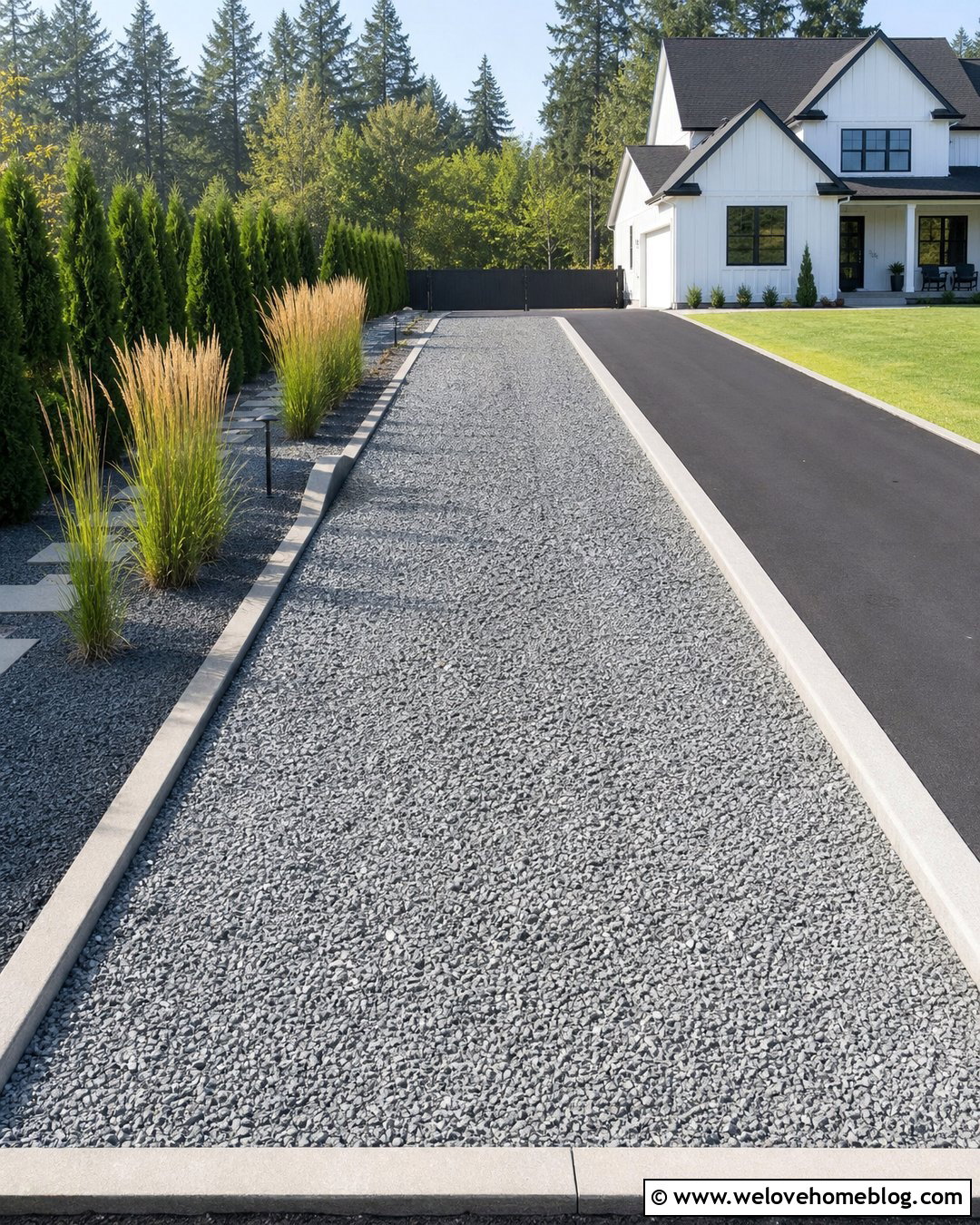
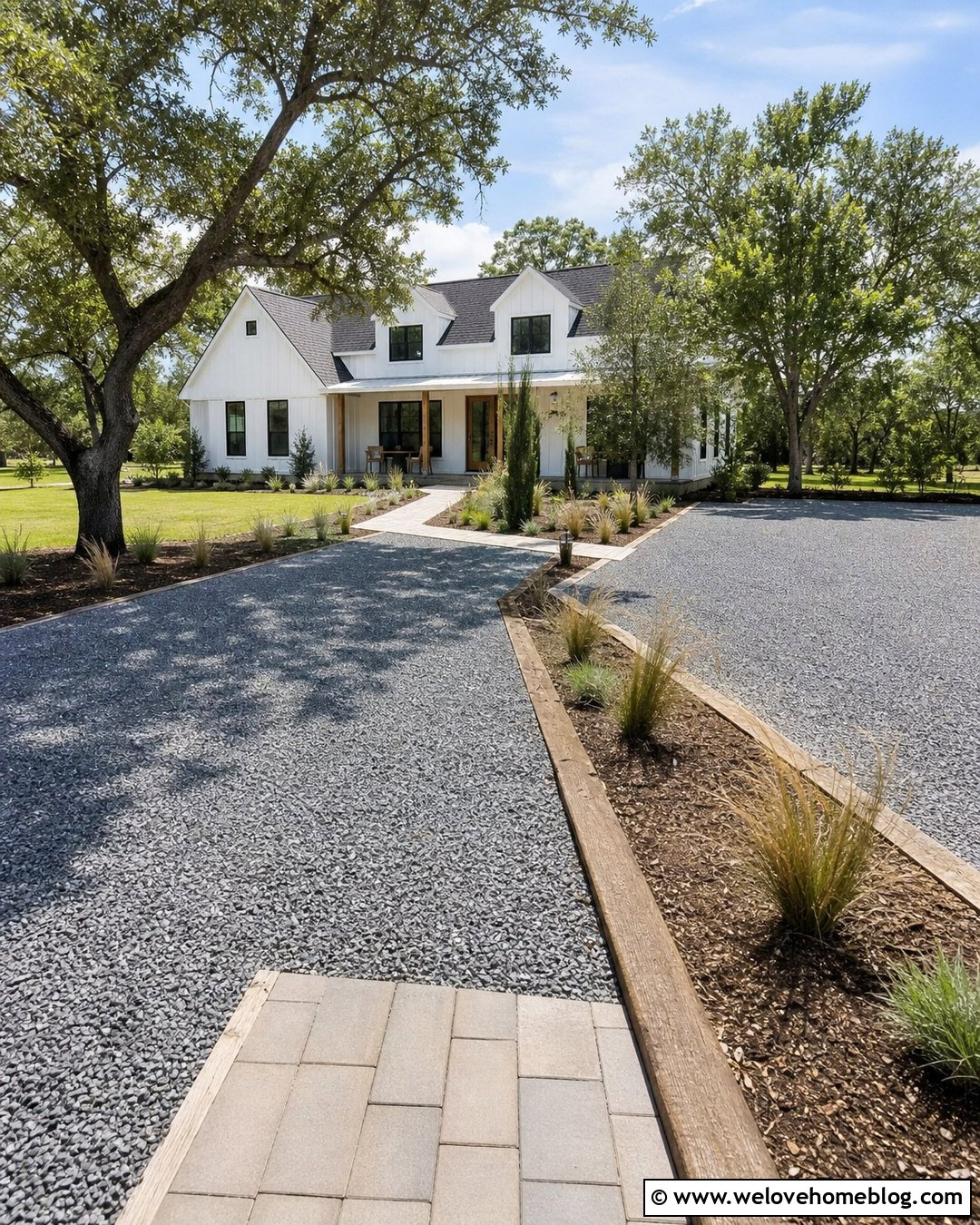
An RV parking extension needs more width, length, and base strength than a small car pad. Build a long rectangular bay beside the main driveway using compacted angular crushed stone over a deep, properly prepared aggregate foundation. Larger base rock can improve support below the finer top layer, especially where the vehicle will remain parked for long periods. Install substantial concrete curbs or heavy steel edging to resist lateral movement. Leave clear space around utility connections, roof overhangs, gates, and property boundaries. Use tall ornamental grasses or a mixed evergreen hedge to reduce the visual impact without crowding the RV. A matching gravel walkway can connect the pad to the house. This layout works well beside modern farmhouses, ranch homes, and larger country properties.
8. Gravel Driveway Extension With A Turnaround
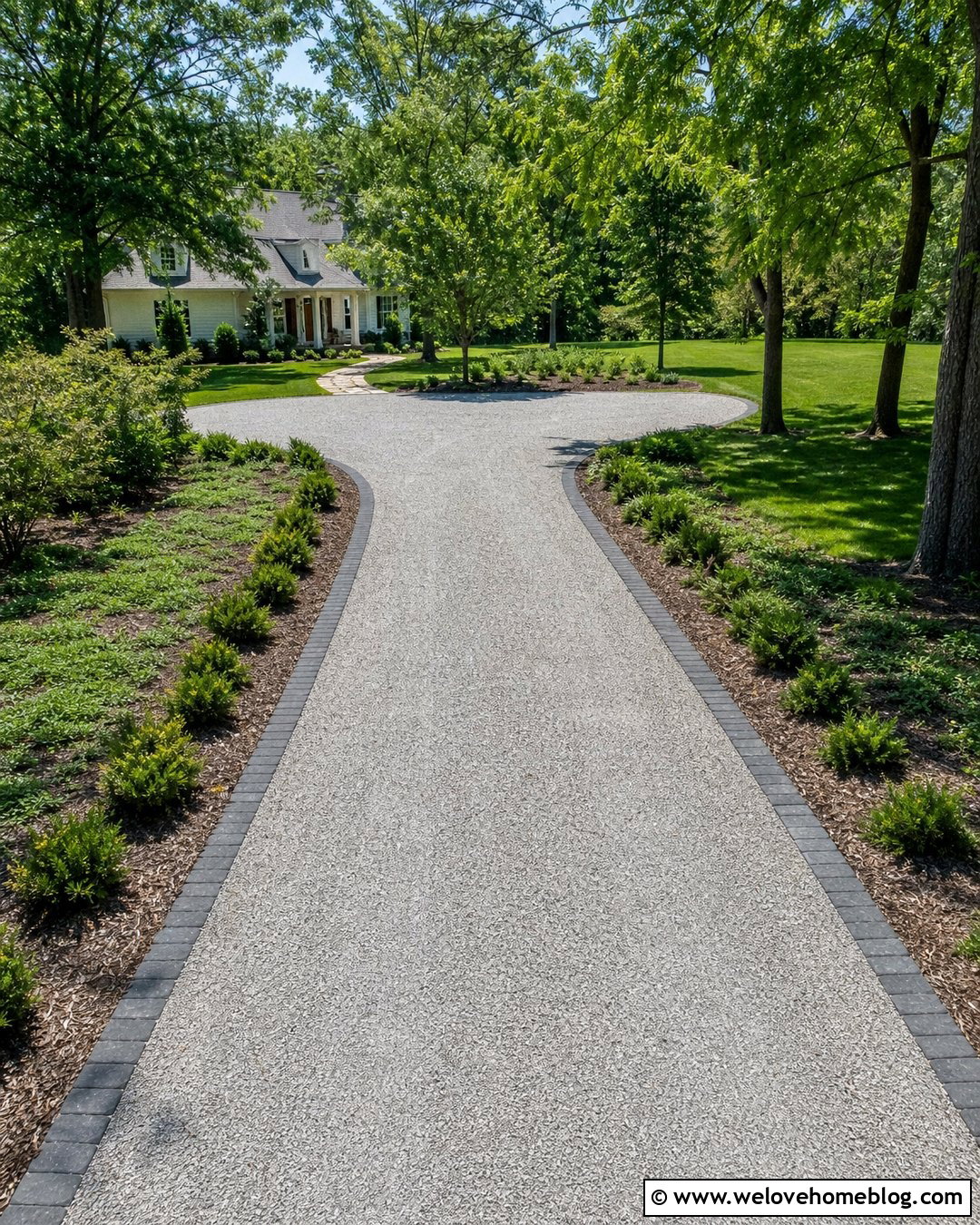
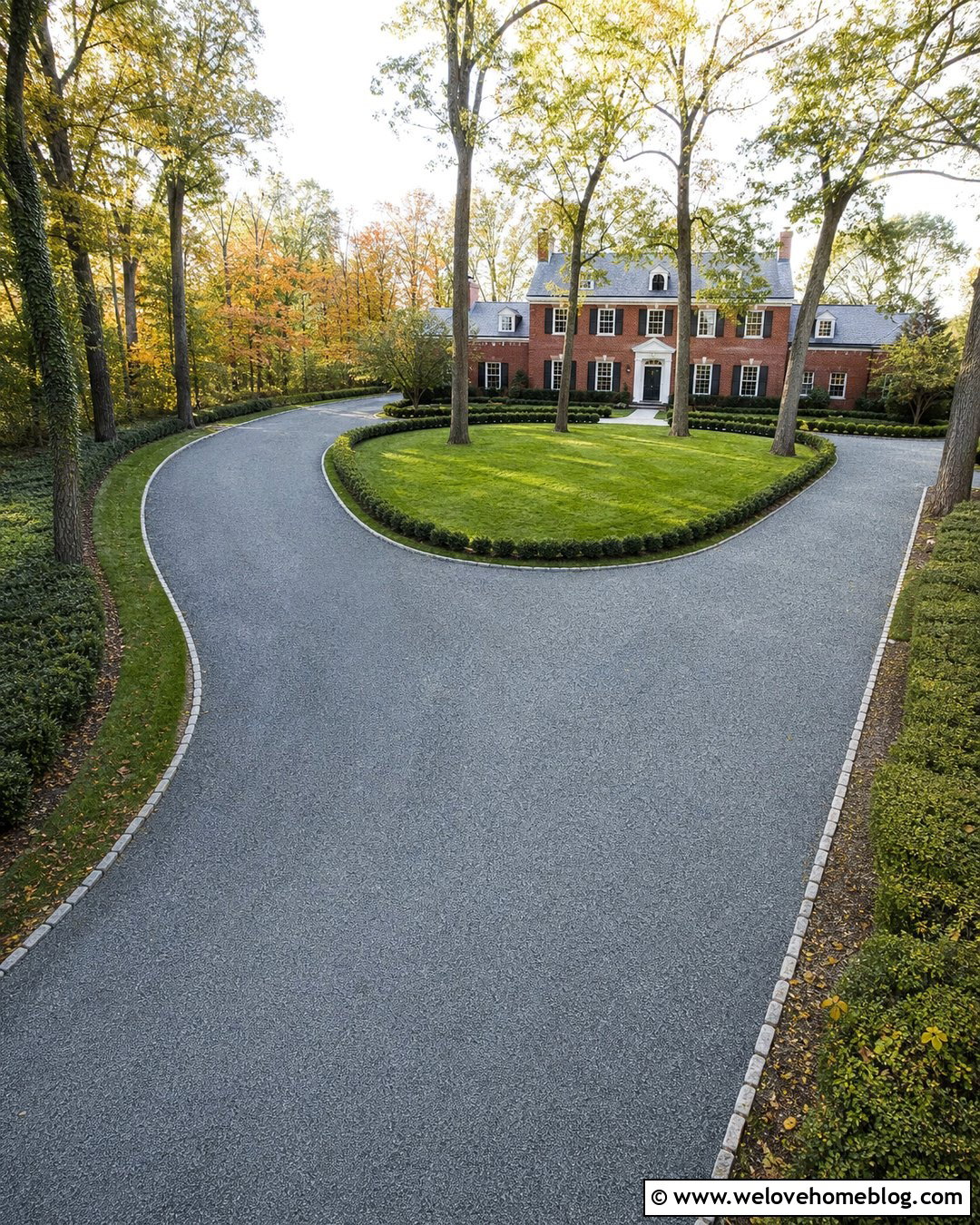
A gravel turnaround makes it easier to leave a property facing forward rather than reversing into the street. Add a broad rectangular, hammerhead, or rounded turning area near the garage using compacted crushed gravel that matches the existing drive. Outline the new section with stone setts or a flush paver border so its shape remains easy to read. On a larger lot, a central landscaped island can organize movement, but it should leave enough clearance for comfortable turns. Plant the surrounding beds with low shrubs and ground covers that preserve visibility. This extension is especially useful for long driveways serving country homes or houses on busy roads. Keep the surface evenly graded and avoid creating low pockets where water can collect after heavy rain.
9. Gravel Driveway Extension To A Detached Garage
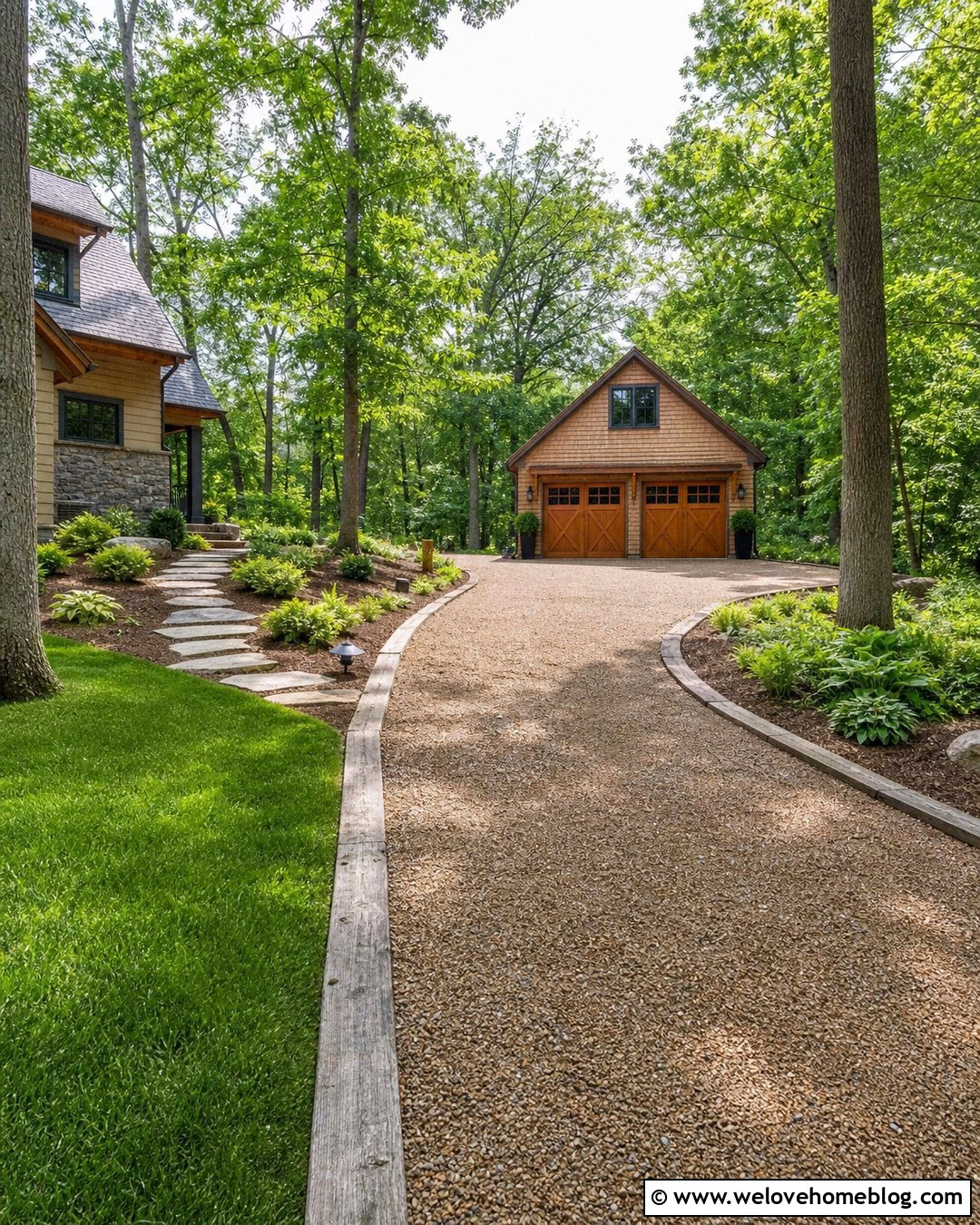
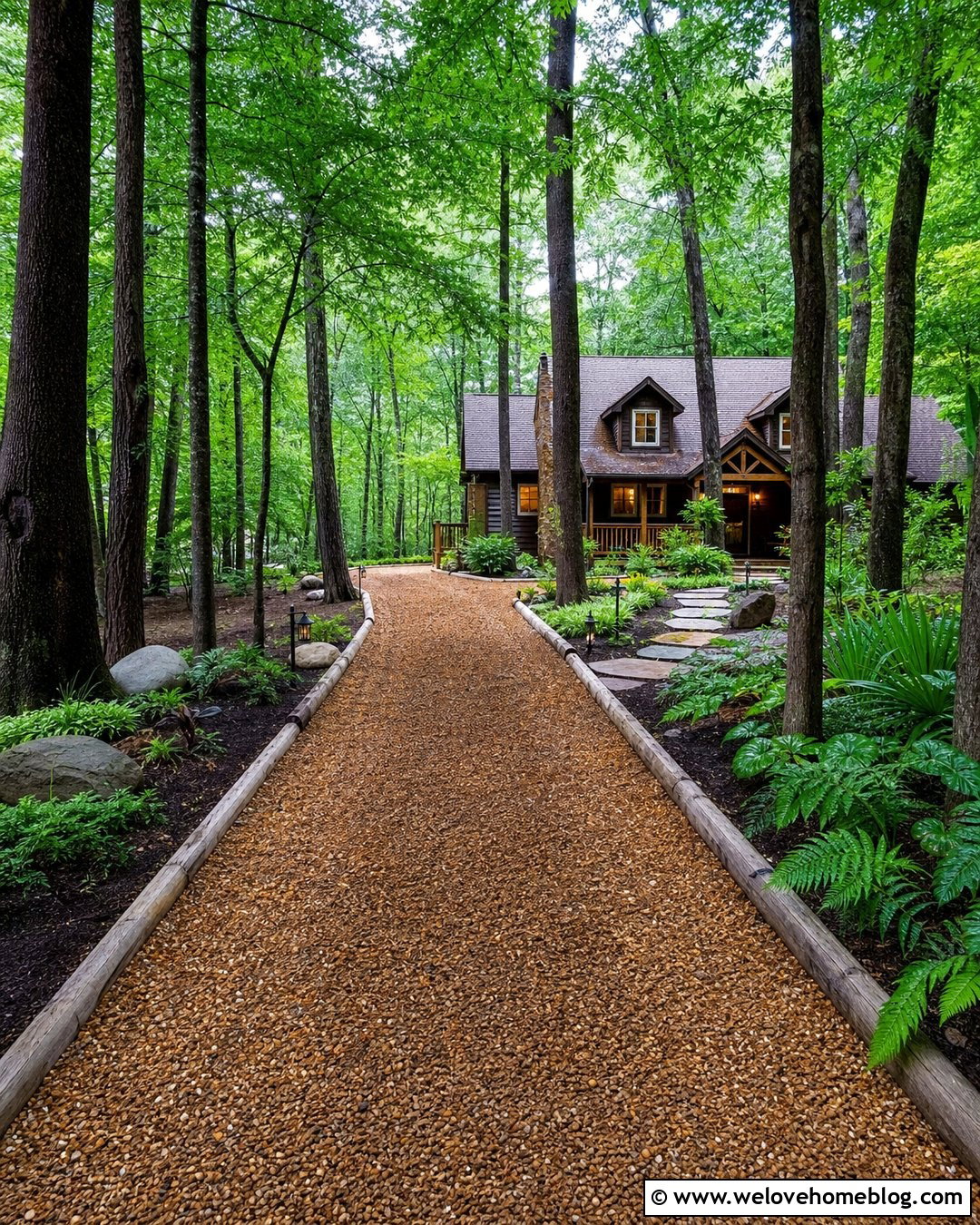
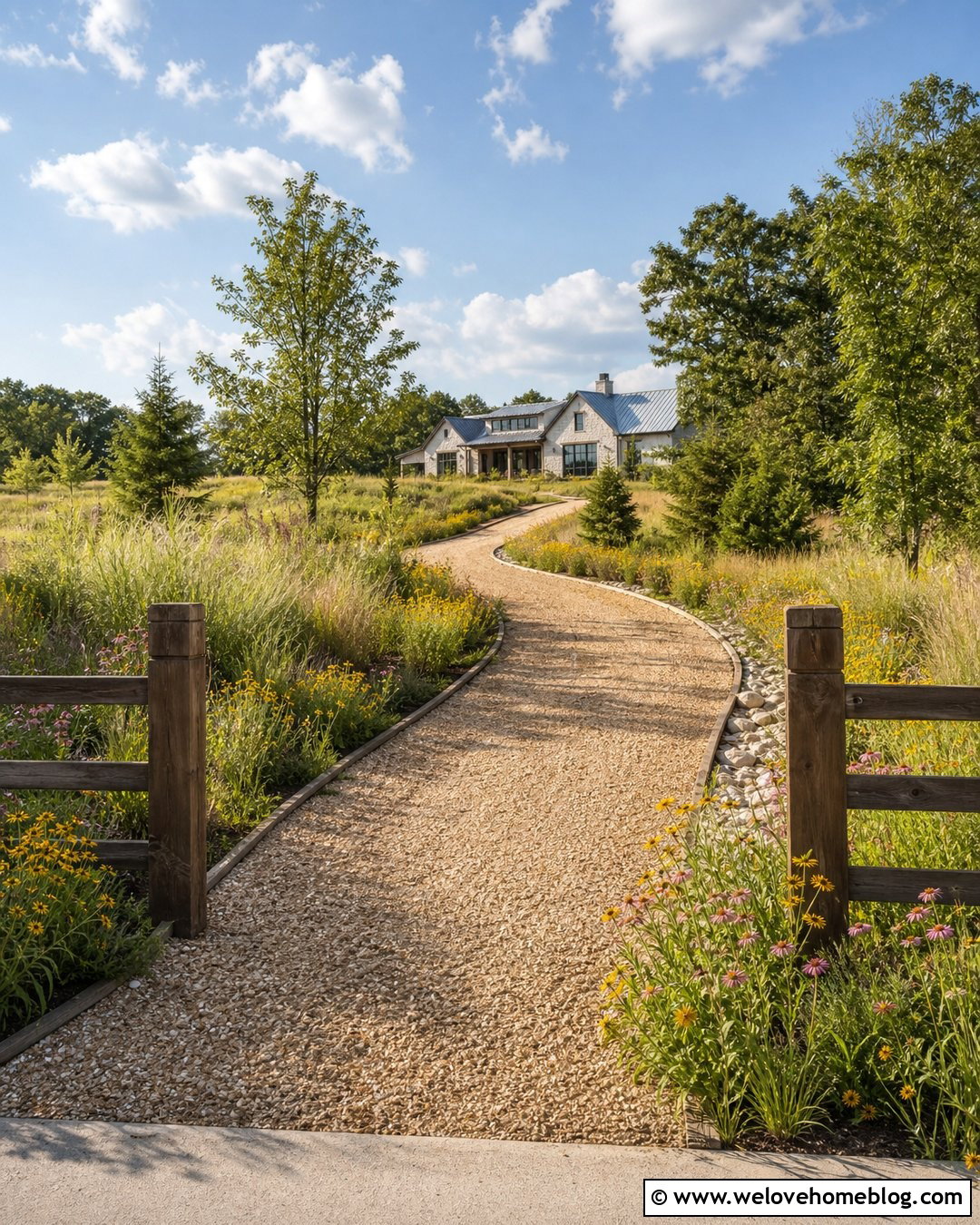
Connecting an existing driveway to a detached garage creates a convenient route that looks more finished than worn tire tracks across the lawn. Build a straight or gently curved lane with compacted brown crushed gravel that suits the property’s natural colors. Define both sides with timber edging, stone curbs, or metal restraints, depending on the house style. Allow the lane to widen near the garage so doors can open and vehicles can turn comfortably. Shade-tolerant ground cover, native shrubs, and existing trees can frame the route without narrowing it. For a cohesive appearance, repeat materials already used around the home, such as fieldstone, brick, or cedar. Grade the extension so runoff moves away from both the house foundation and detached garage floor.
10. Gravel Driveway Entrance Extension
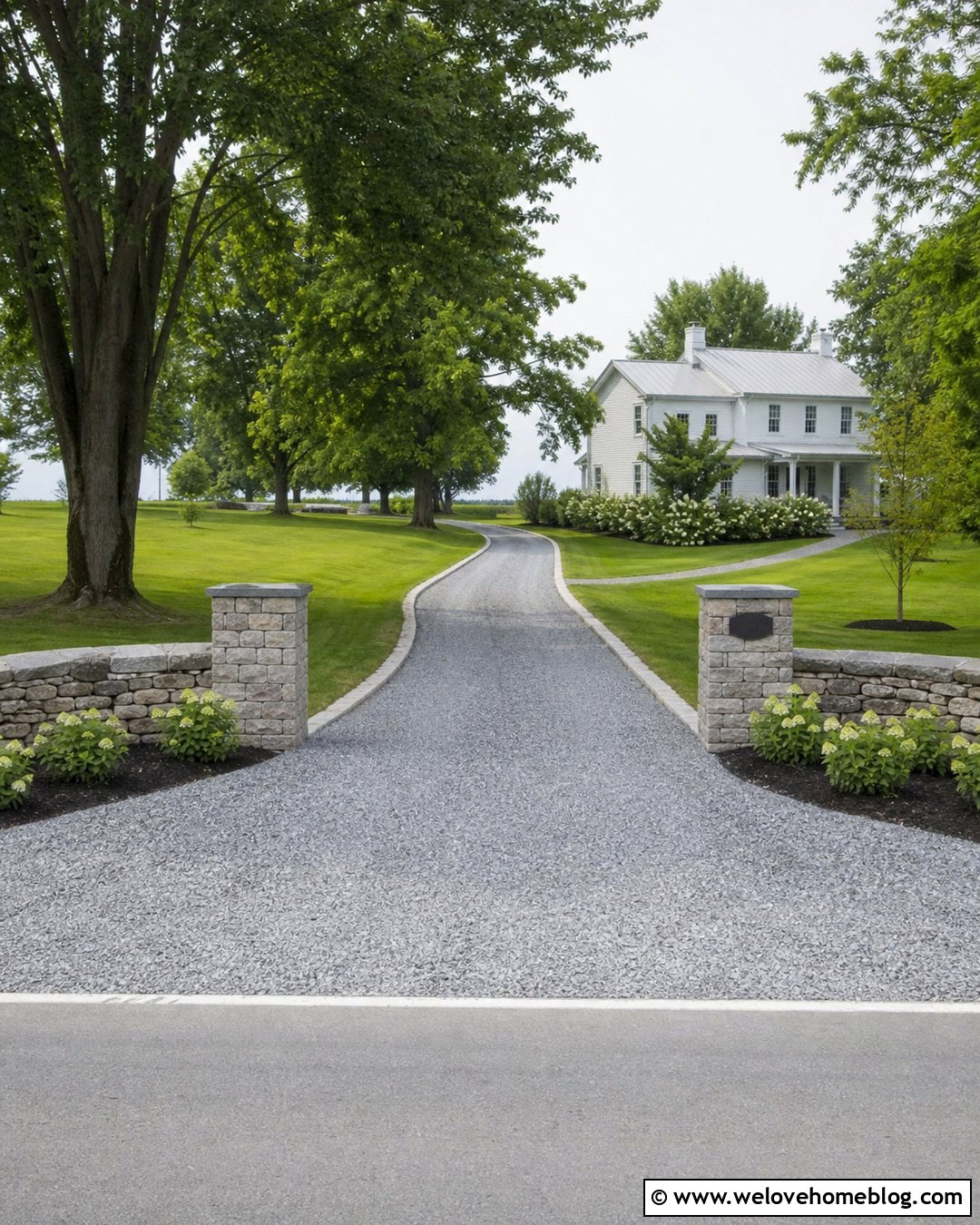
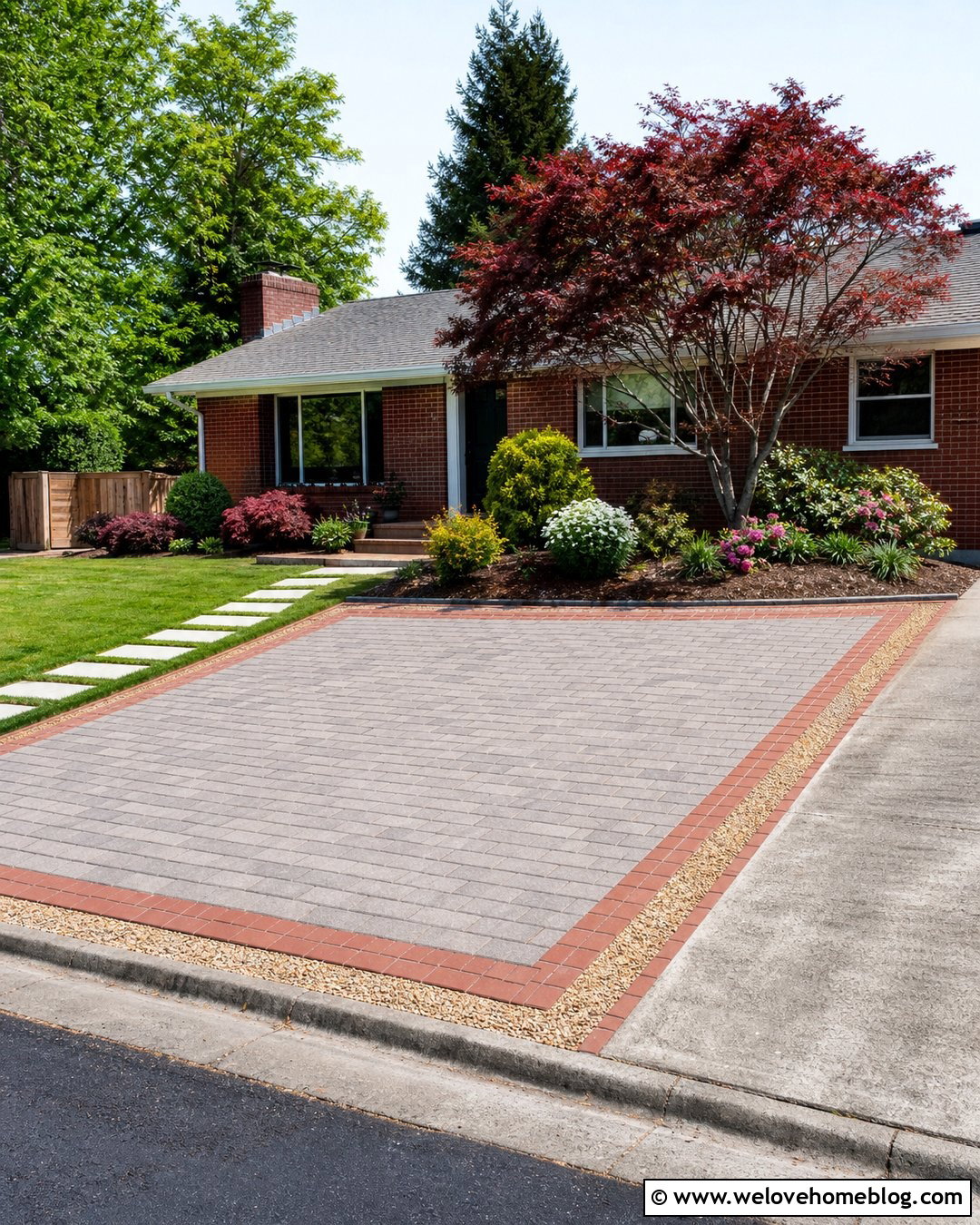
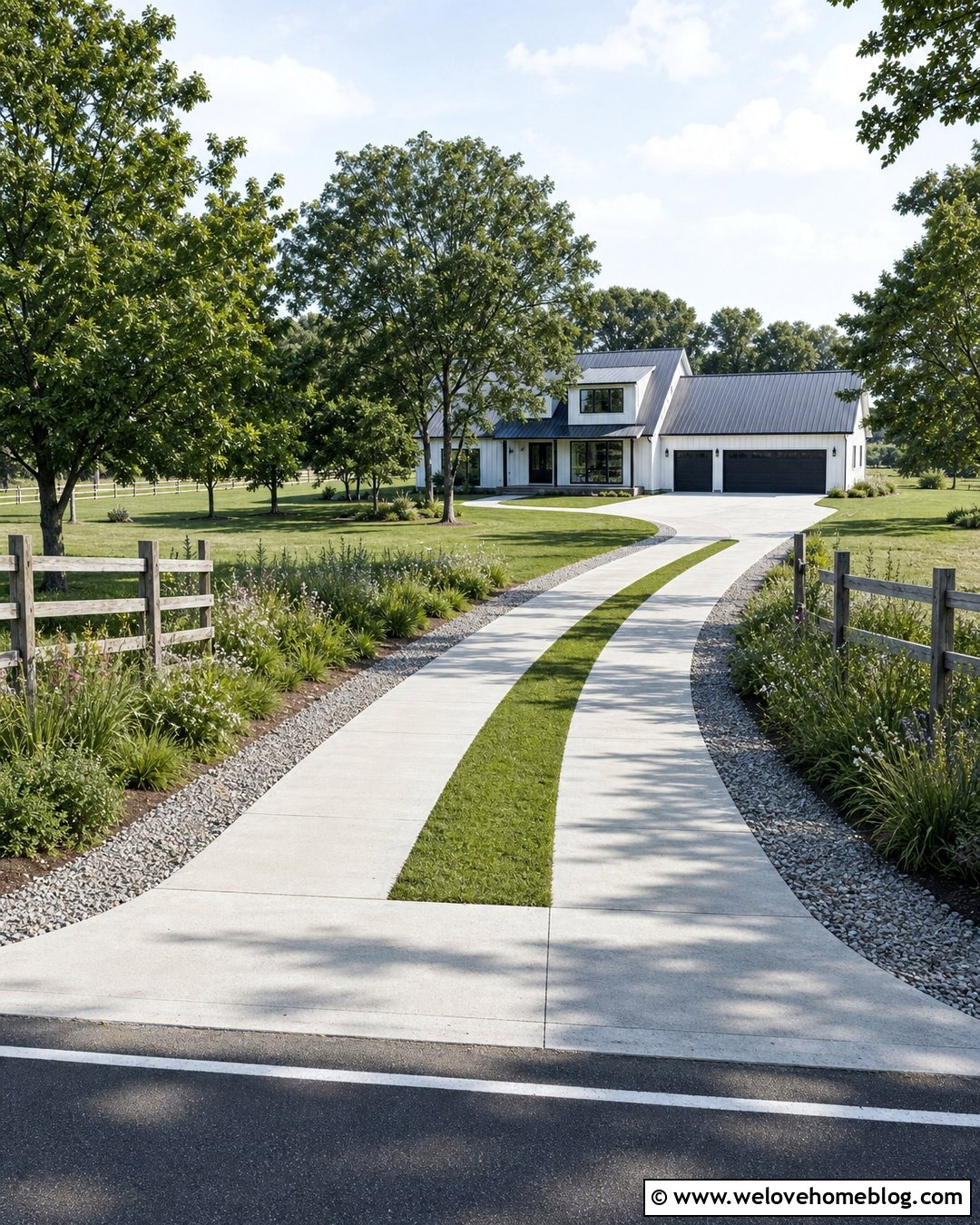
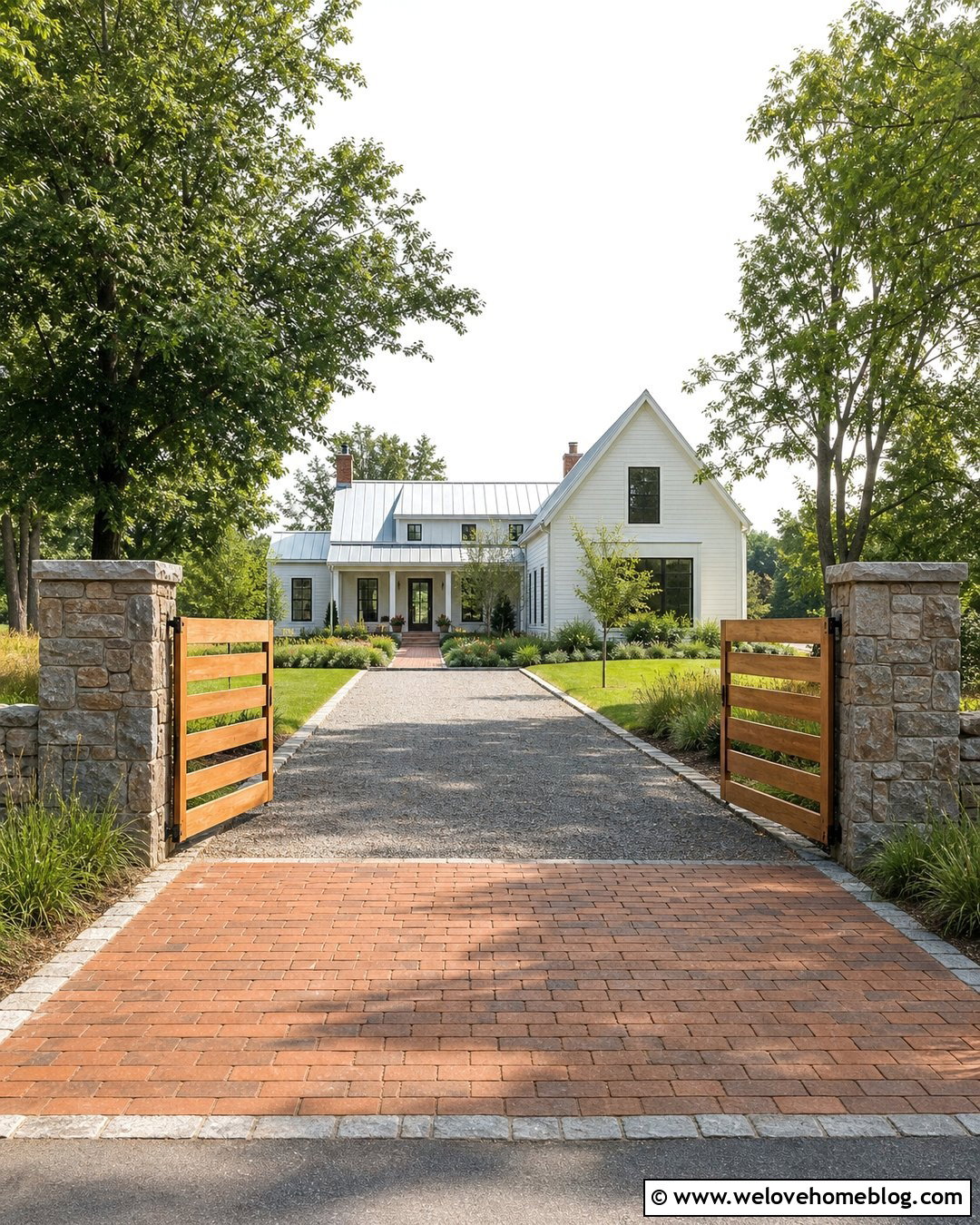
Widening only the driveway entrance can make daily access more comfortable and reduce tires cutting across the lawn. Flare the extension gradually from the road toward the narrower existing driveway instead of adding an abrupt square patch. Use compacted gray crushed stone that blends with the original surface, then frame the expanded entrance with low stone edging. Simple masonry pillars or a clear address marker can emphasize the new shape without restricting driver visibility. Continue the surrounding lawn or planting beds behind the edging for a polished transition. Before changing the driveway approach, confirm local requirements concerning right-of-way work, drainage ditches, culverts, and approved surface materials. A balanced flared entrance can complement farmhouse, traditional, and rural properties while making the driveway easier to navigate.
11. Gravel Driveway Extension With A Drainage Swale
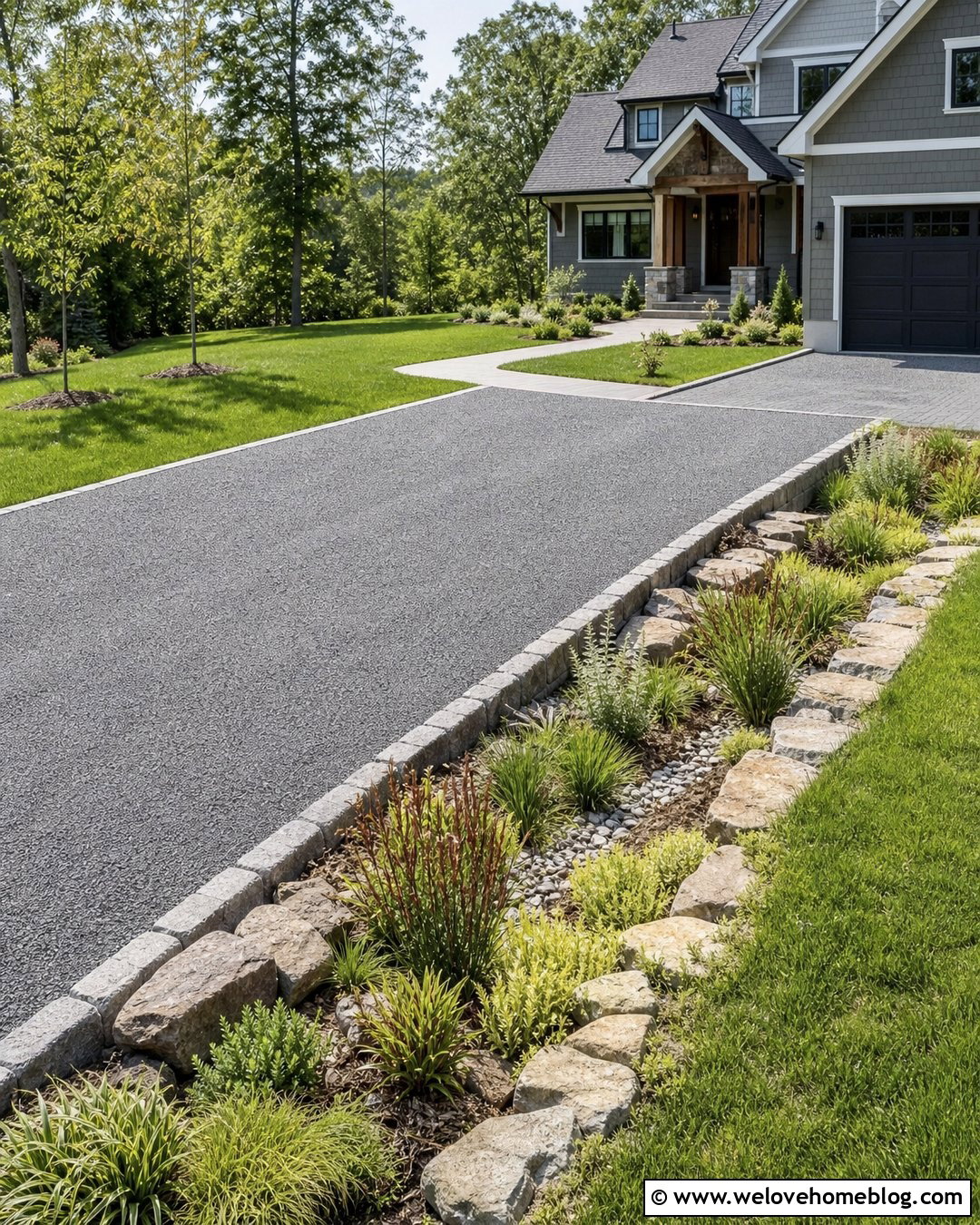
A shallow landscaped swale can manage runoff while giving a gravel extension a natural outer boundary. Place the parking strip beside the existing driveway using compacted angular gravel over a stable base. Along its lower side, form a broad depression that directs water toward an approved drainage area instead of the street, house, or neighboring yard. Plant the swale with moisture-tolerant grasses, sedges, and low native perennials suited to local conditions. A sturdy stone or metal edge between the gravel and planting zone prevents soil from mixing into the driving surface. This complete layout works well on gently sloping suburban lots where a conventional curb could trap water. Keep the swale shallow and visually open so it remains easy to maintain and does not create an unexpected drop.
12. Gravel Driveway Extension With A French Drain
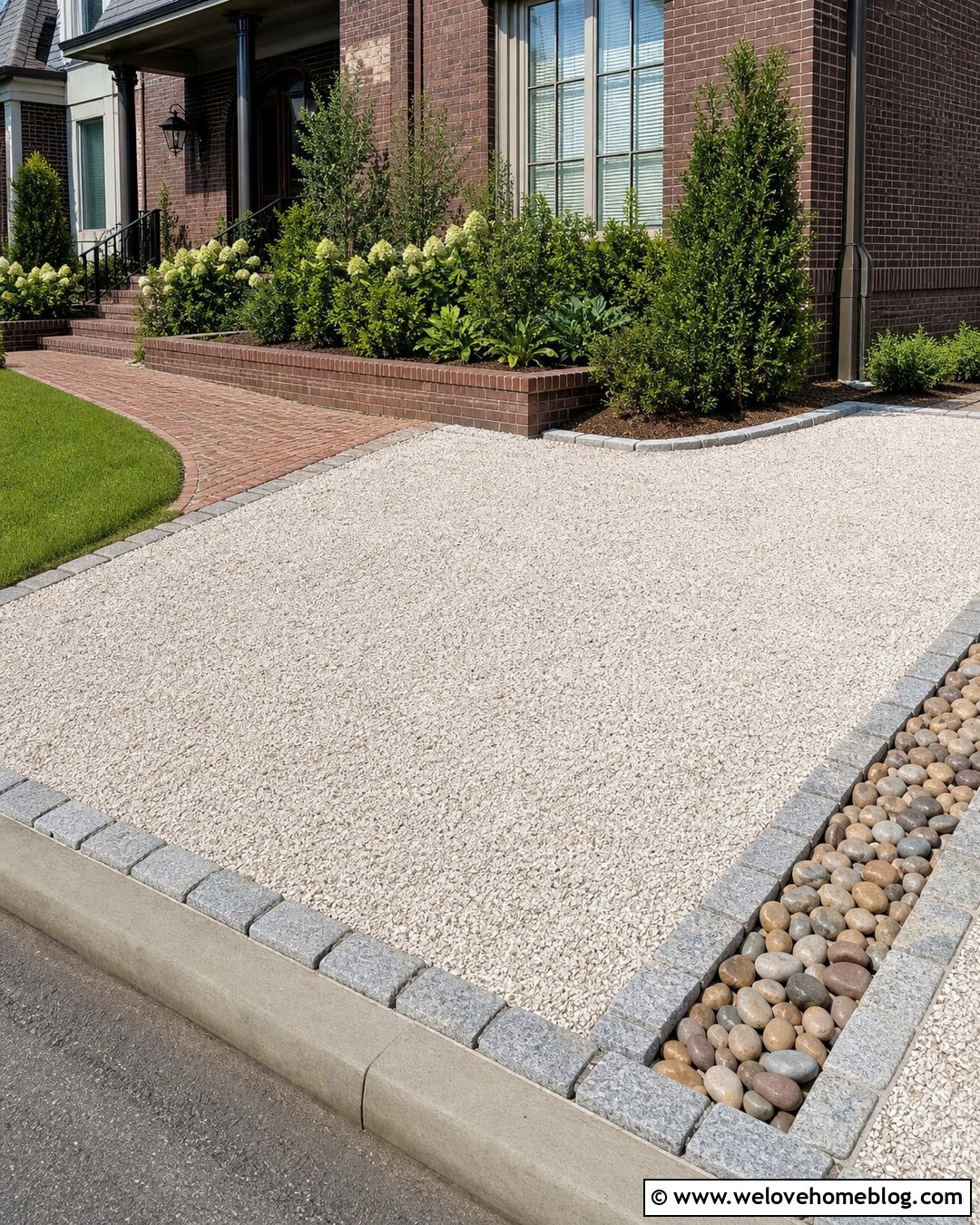
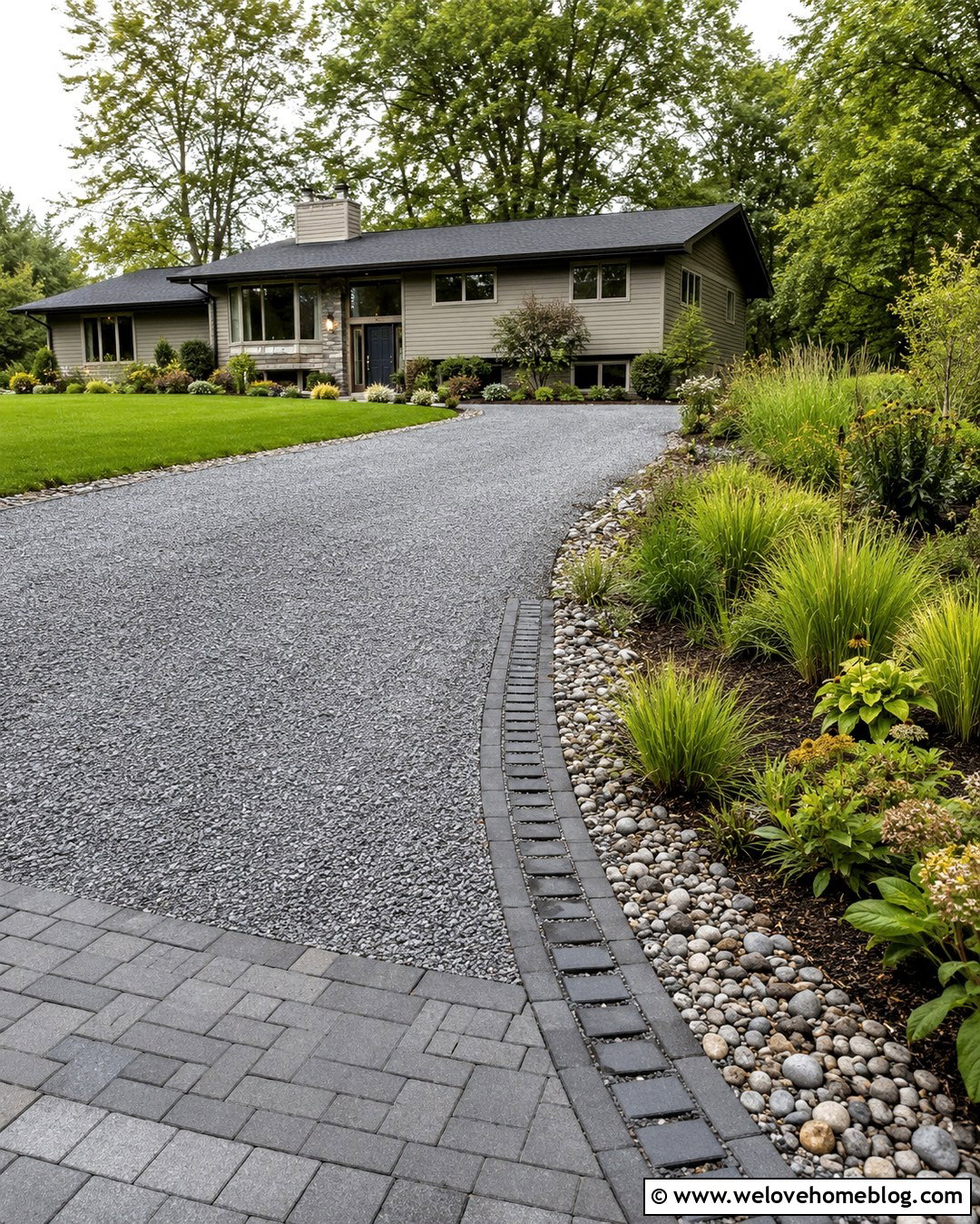
Persistent water beside an existing driveway may require more than surface grading. A gravel extension can incorporate a French drain along its lowest edge, using a perforated pipe, suitable drainage stone, and filter fabric as specified for the site. Cover the parking surface with compacted crushed limestone and separate it from the drain using a flush granite or concrete border. The visible drainage-stone strip can become a deliberate design feature rather than an unfinished trench. Add raised planting beds or water-tolerant shrubs beyond it to frame the extension. This solution is useful beside garages where runoff tends to settle near the slab. Because drainage outlets and subsurface conditions vary, confirm the correct location and construction with an experienced local professional before excavation begins.
13. Gravel Driveway Extension With Timber Edging
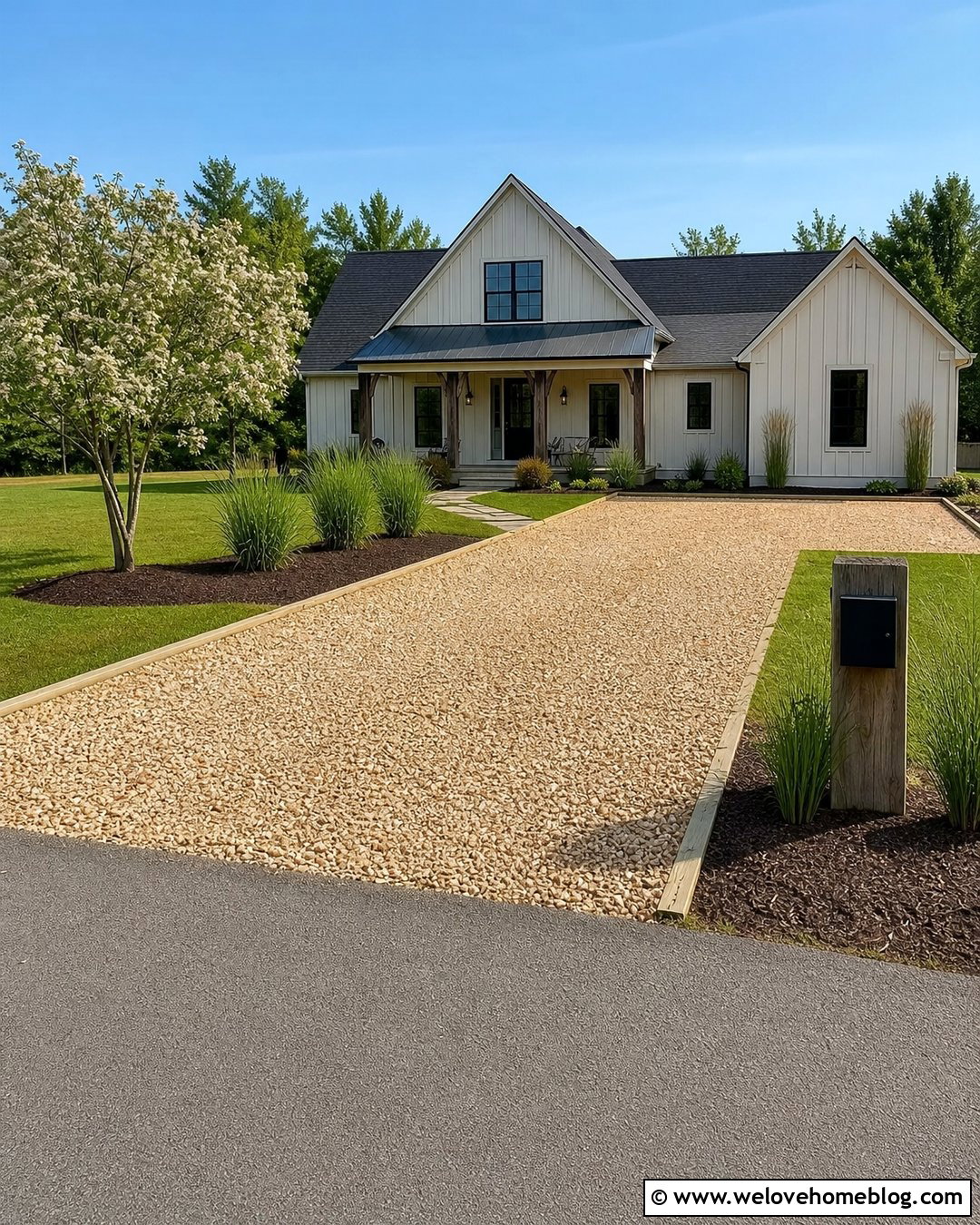
Timber edging gives a gravel extension a relaxed look that suits rustic homes, cabins, and modern farmhouses. Form a straight side parking bay with compacted tan crushed stone and secure pressure-treated landscape timbers along the lawn-facing perimeter. Set the timber low enough to contain gravel without becoming a parking obstacle. At the driveway entrance, taper or recess the border so tires cannot catch exposed corners. Complete the space with mulched beds, upright grasses, and a small flowering tree near the far end. Repeating wood in a mailbox post, fence, or porch detail helps the extension blend with the property. Timber is approachable and budget-friendly, but it requires secure anchoring and periodic inspection because constant ground contact and moisture can eventually affect its condition.
14. Gravel Driveway Extension With A Paver Ribbon
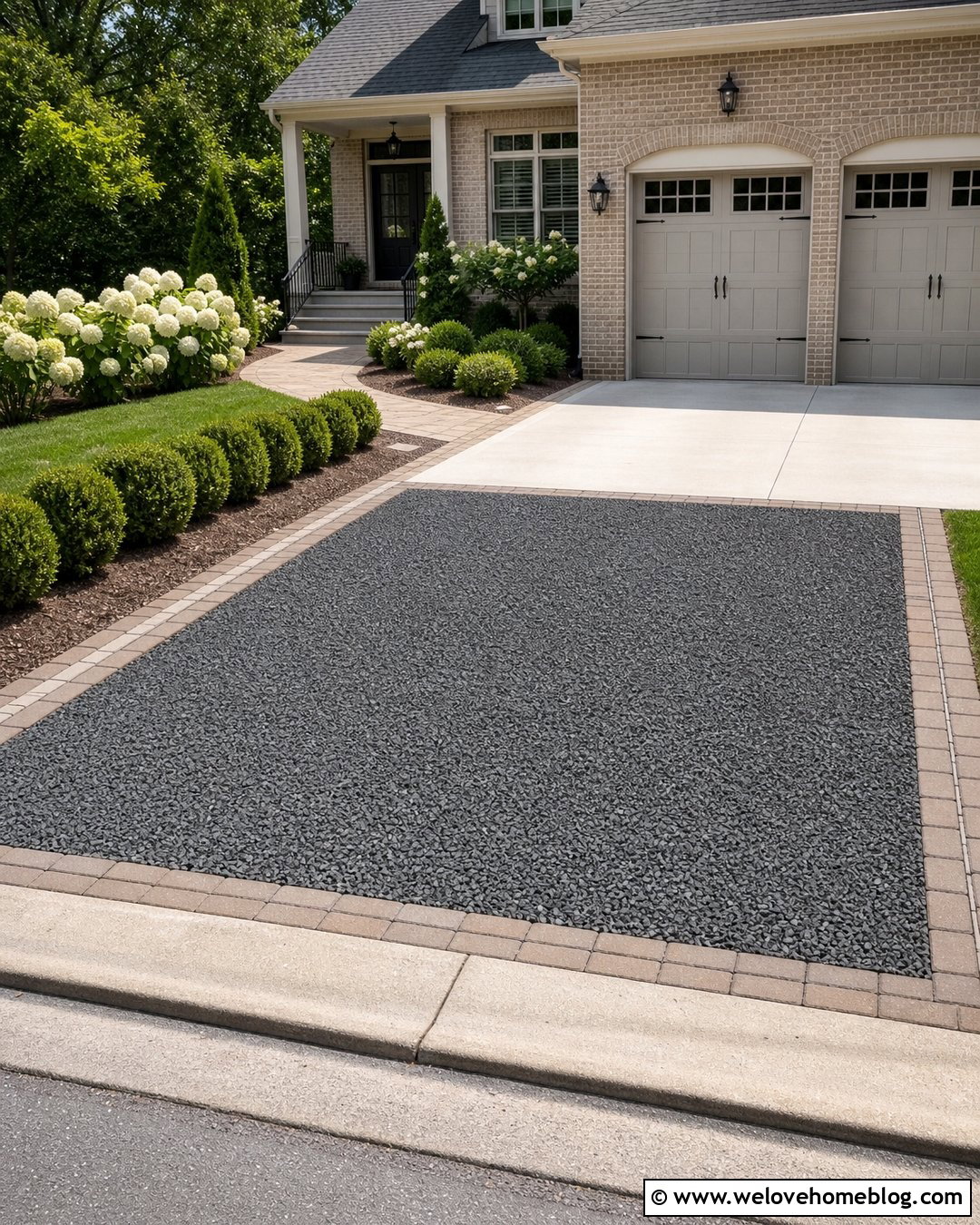
A paver ribbon creates a polished connection between an existing paved driveway and a new gravel extension. Install a single or double row of concrete or clay pavers along the material transition and around the extension’s outer edge. Inside the border, use compacted charcoal crushed gravel for a defined parking space. Select pavers that repeat the home’s brickwork, front walkway, or porch colors. This detail makes the mixed materials appear planned and helps reduce gravel migration onto the original surface. Finish the complete look with symmetrical planting beds, clipped shrubs, and a clear path to the front door. A rectangular layout complements traditional homes, while a slightly angled extension can fit garages positioned away from the street. Set every border unit on a stable base.


15. Gravel Driveway Extension With Grass Strips
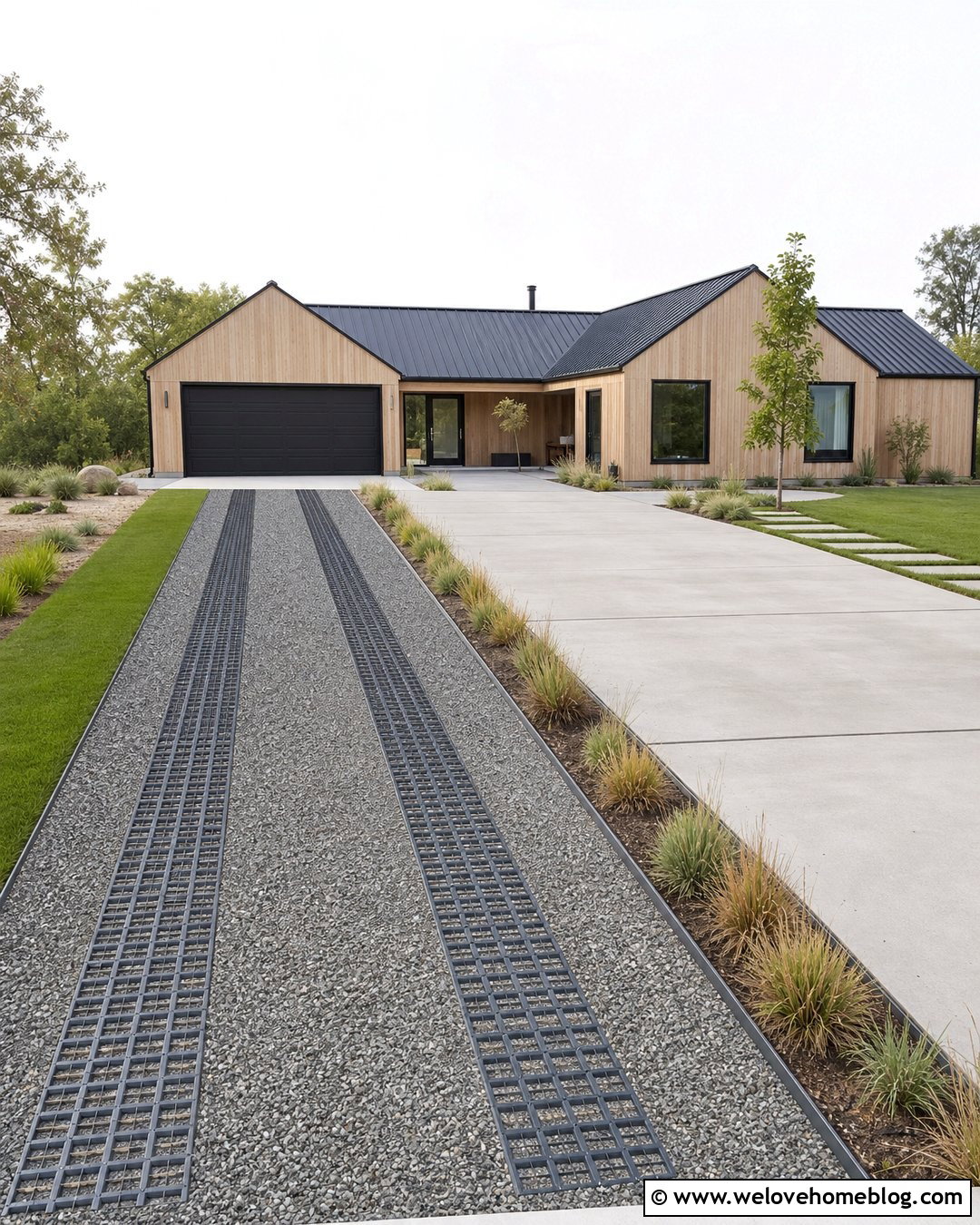
Grass strips can visually reduce the size of a broad gravel extension while preserving useful parking space. Build two reinforced wheel tracks or a stabilized gravel bay separated from the main driveway by a narrow green strip. Use angular gray gravel held within a cellular grid so the surface remains defined beside the lawn. Flush concrete or steel edging makes mowing easier and limits gravel movement. Choose this arrangement for an occasional guest space rather than a heavily used turning area, since frequent traffic can damage unprotected turf. Repeat the grass between the extension and a matching walkway for a connected landscape. The combination looks especially suitable beside contemporary ranch and Scandinavian-inspired homes, where simple lines and restrained materials create clean, understated curb appeal.
16. Sloped Gravel Driveway Extension
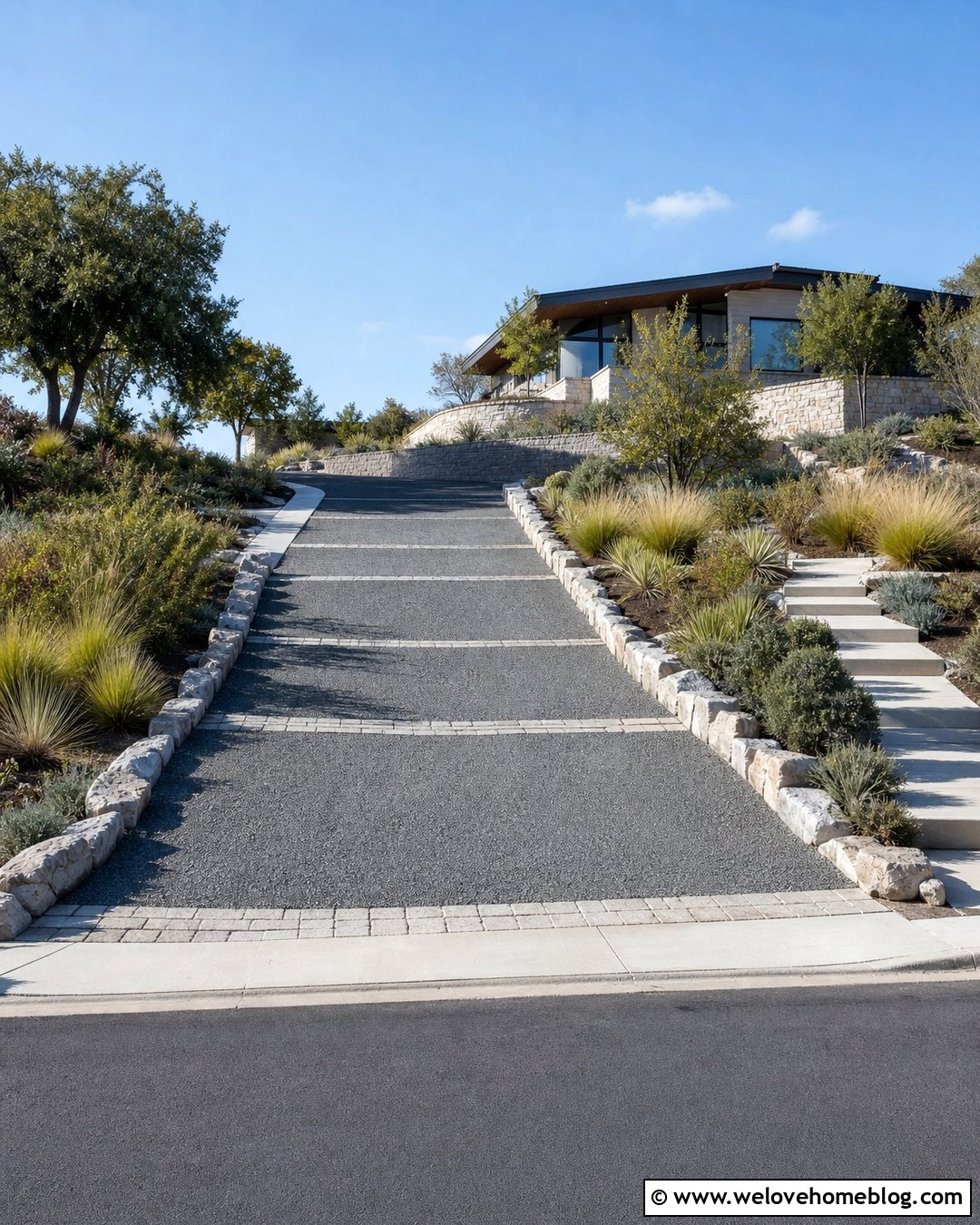
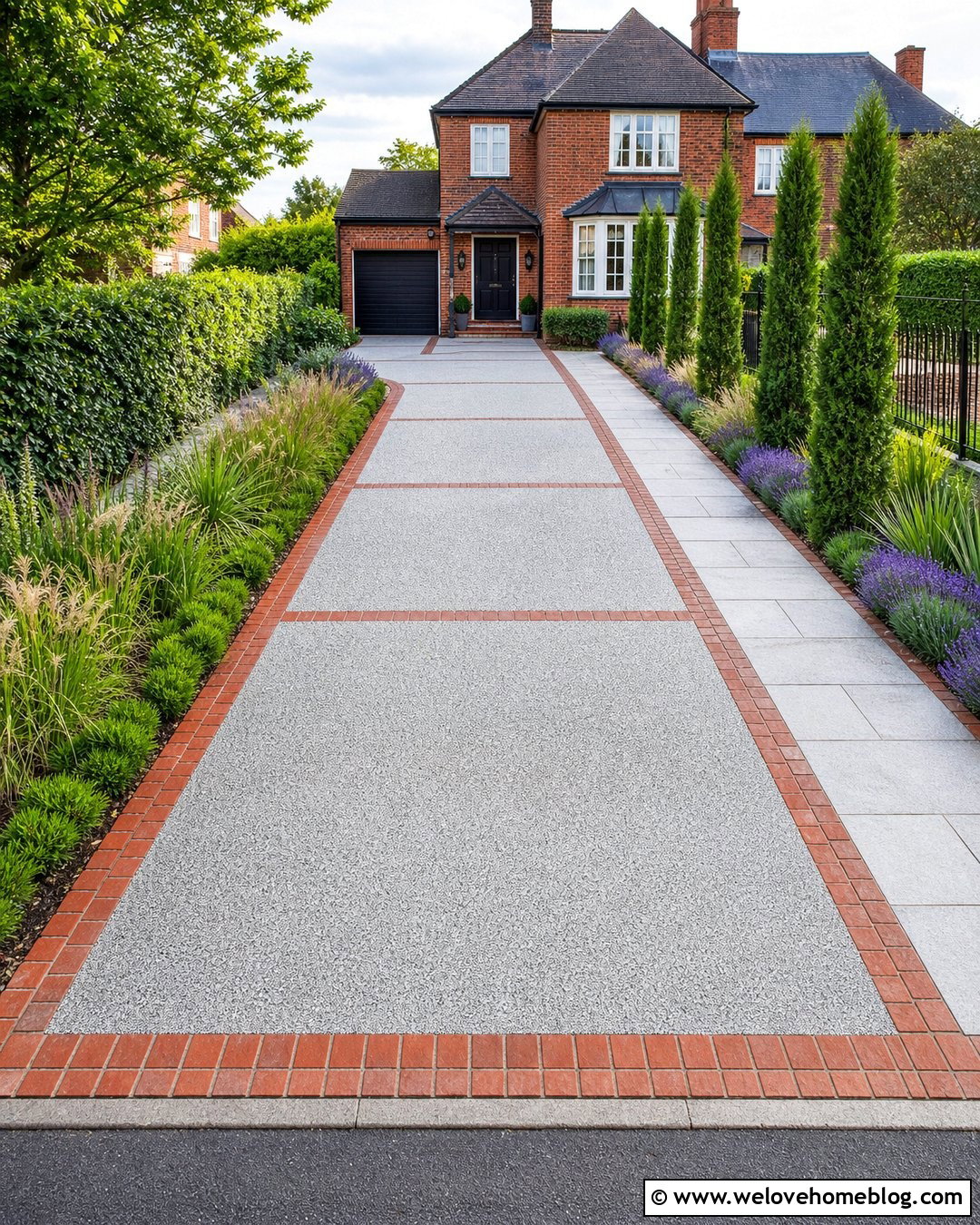
A sloped extension requires careful planning because loose stone can migrate downhill under tires and heavy runoff. Use angular crushed gravel with compactable fines and install it over a well-built base. Divide a longer slope with subtle stone bands or properly anchored paver ribbons that help interrupt the visual expanse and hold the surface. Strong concrete or stone edging should follow both sides of the parking bay. Grade the area to direct water away from buildings without sending sediment into the street. Drought-tolerant shrubs and deep-rooted ornamental grasses can stabilize nearby planting beds while keeping the approach open. On a steep or erosion-prone property, seek professional design guidance. A carefully built extension can still look attractive, but drainage and structural performance must guide every decorative decision.
17. Tree-Lined Gravel Driveway Extension
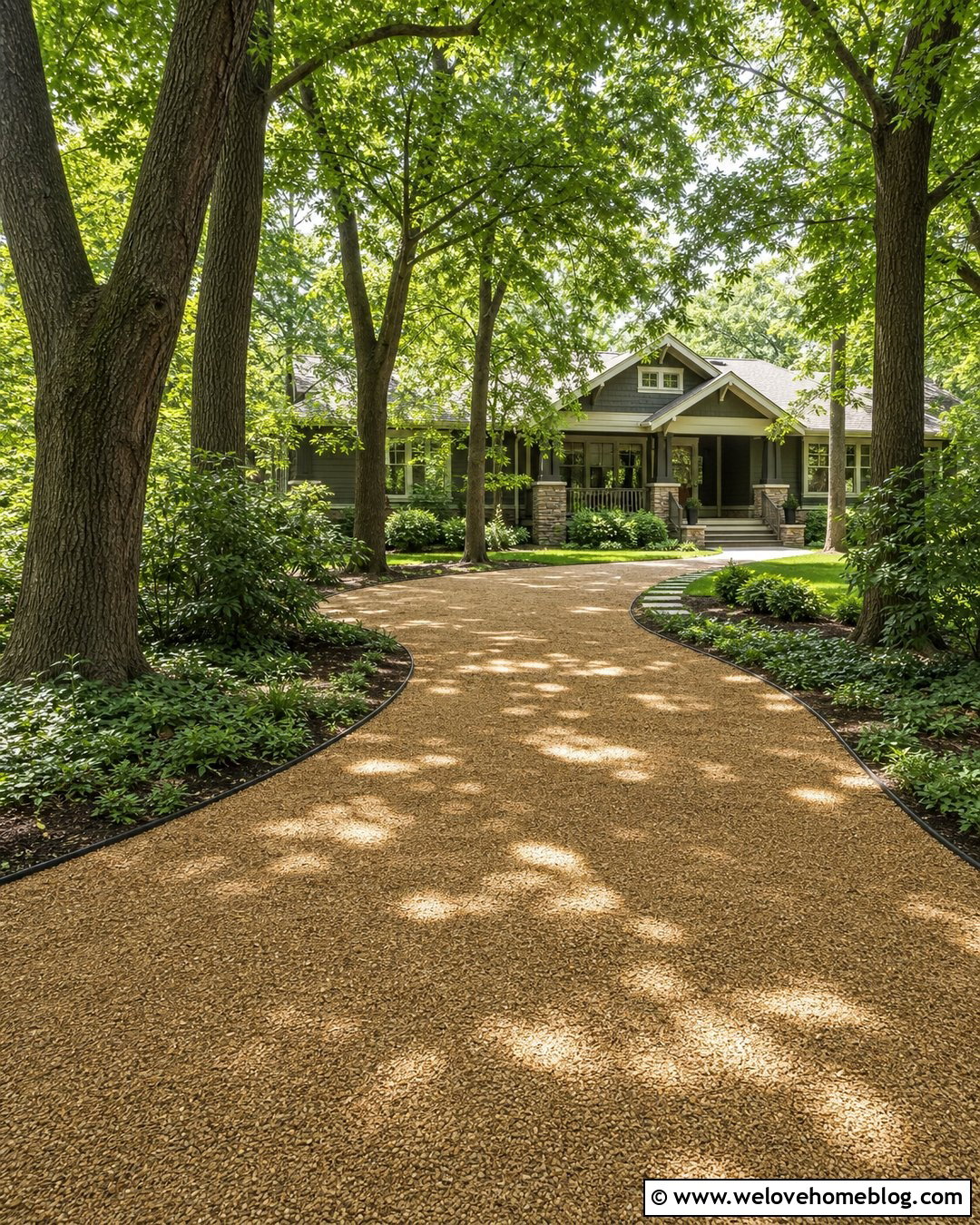
Mature trees can make an extended driveway feel established, but the layout must respect roots and trunk clearance. Curve a compacted buff gravel lane toward a side parking area while keeping excavation away from critical root zones. Use flexible steel edging to define the gentle shape without introducing bulky borders. Beneath the tree canopy, frame the extension with shade-tolerant shrubs, woodland ground cover, and a simple stepping-stone path to the house. Avoid piling gravel against trunks or changing soil levels around major roots. An arborist can help evaluate the safest route when valuable trees are nearby. This leafy design complements Craftsman homes, cottages, and country properties. The combination of warm gravel, natural curves, and layered planting creates additional usable space without making the yard feel dominated by parking.
18. Gravel Driveway Extension With Drought-Tolerant Landscaping
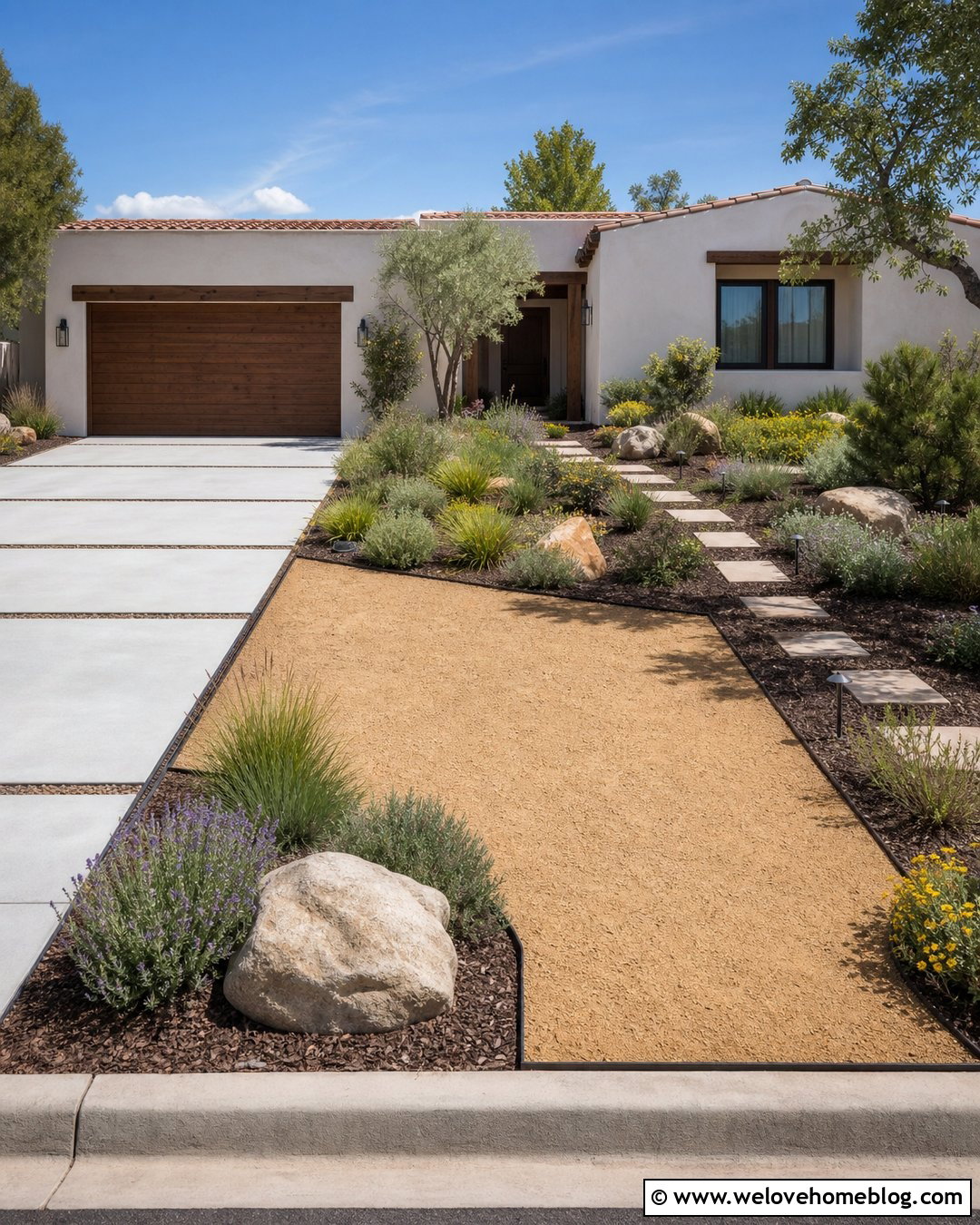
A low-water landscape can make a gravel driveway extension feel cohesive rather than bare. Use warm decomposed granite or compacted tan crushed gravel for a rectangular side parking bay. Border it with dark steel edging and broad planting beds filled with regionally appropriate ornamental grasses, flowering perennials, evergreen shrubs, and decorative boulders. Leave clear sightlines near the street and enough open space for vehicle doors. A stepping-stone walkway can cross the planting area and connect the extension to the front entrance. This palette pairs well with stucco, Southwestern, modern, and California ranch homes. Group plants by water needs and use mulch that contrasts with the driveway gravel. The finished landscape should define the parking area while remaining simple enough to weed, rake, and maintain throughout the year.
19. Gravel Driveway Extension With Stone House Accents
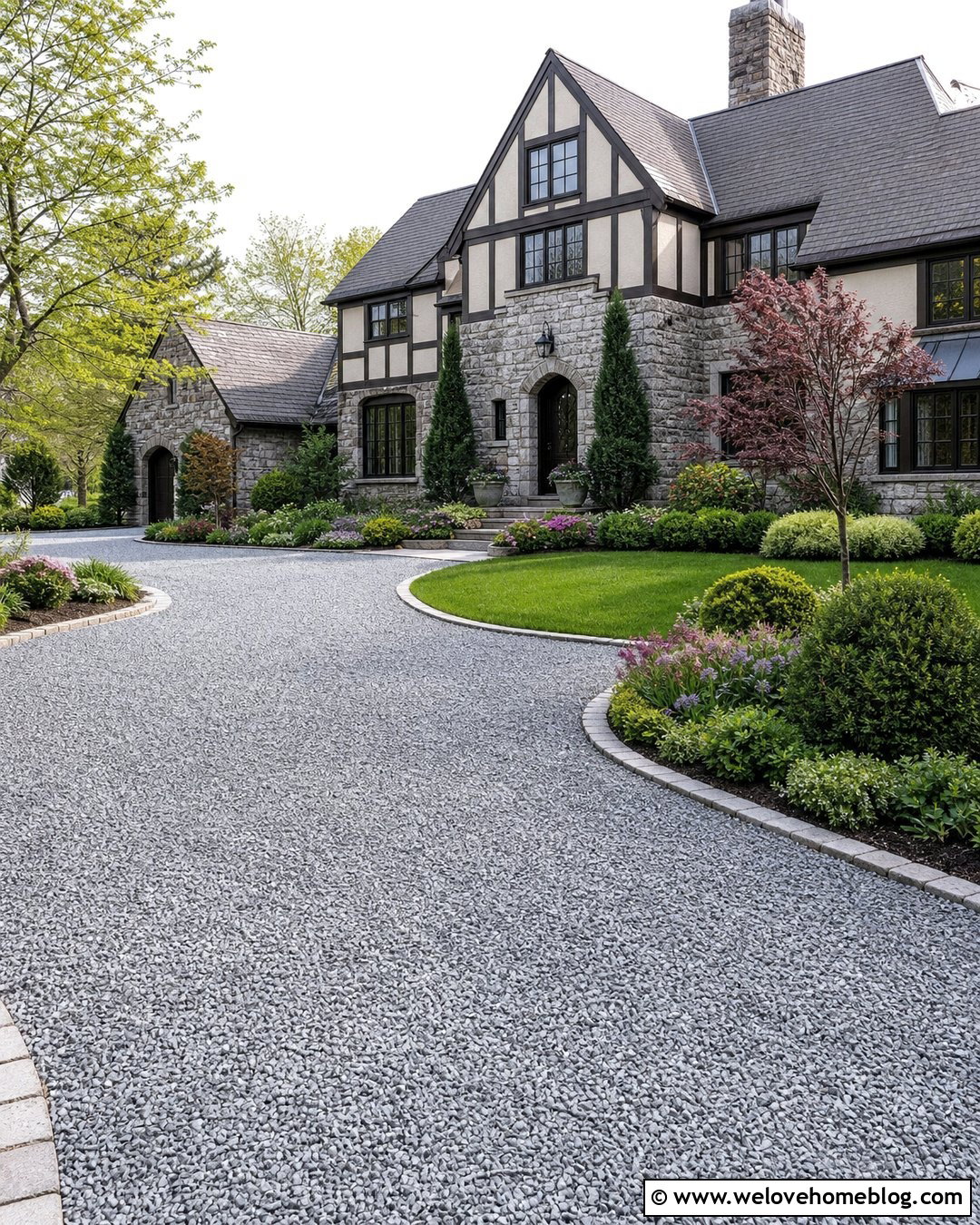
Repeating stone from the home’s facade can help a gravel extension look original to the property. Choose crushed gravel in a color that relates to the existing masonry, such as cool gray stone beside slate or warm beige aggregate beside fieldstone. Create a wide side bay with a softly rounded outer corner. Frame it with matching stone setts and continue those setts into the front walkway or planting-bed border. Layer evergreen shrubs, flowering perennials, and a small ornamental tree around the parking area to balance the added hardscape. This approach works beautifully with Tudor, Craftsman, and traditional stone-accented houses. Avoid matching every color too precisely. A coordinated range of natural tones usually looks more convincing and gives the complete driveway design greater depth.

20. Budget Gravel Driveway Extension
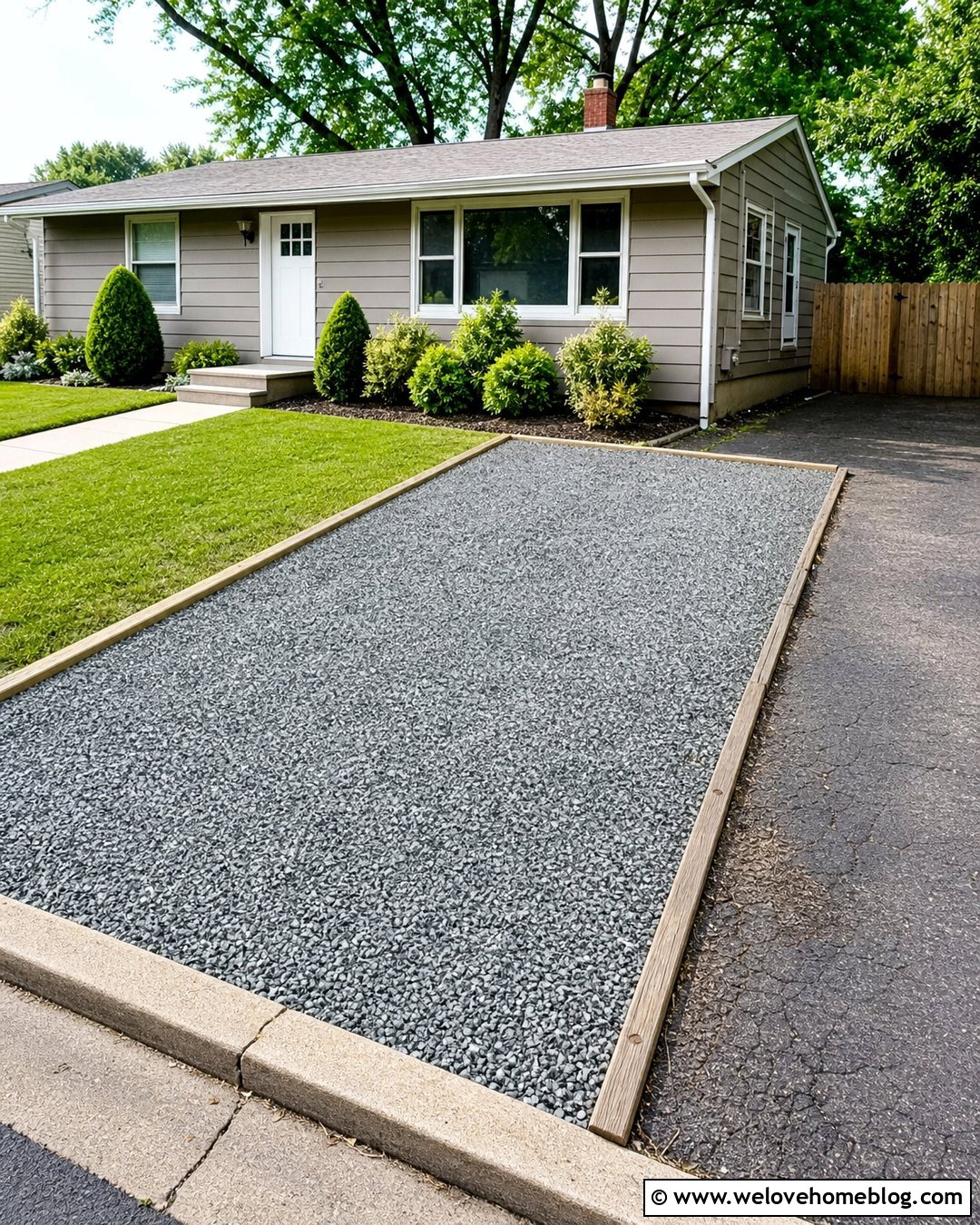
A budget extension can still look intentional when the shape, base, and edges receive careful attention. Start with a simple rectangular parking pad beside the existing driveway to minimize excavation and complicated cuts. Use locally available angular crushed gravel over compacted base aggregate rather than spending heavily on decorative surface stone. Pressure-treated timber or heavy-duty metal edging can provide an affordable, defined perimeter. Keep landscaping simple with restored lawn, a narrow mulch bed, and several durable shrubs at the far end. Reuse compatible stone from other yard projects only when it is clean and suitable for the planned layer. Spend first on excavation, grading, compaction, and drainage because those hidden components affect performance. Decorative upgrades, extra planting, and premium borders can always be added later.
Conclusion:
The best gravel extension should add useful space without looking disconnected from the original driveway or surrounding yard. These 20 Extend Driveway With Gravel Ideas demonstrate how crushed stone, stabilization grids, brick, pavers, timber, drainage features, and landscaping can form a complete design. Choose a layout based on how the extension will be used, whether it is for daily parking, an RV, guest vehicles, turning, or garage access. Confirm local restrictions before removing lawn or changing the street approach. Then prioritize excavation, a compacted aggregate base, controlled drainage, and secure edging. With thoughtful preparation, a gravel driveway extension can be affordable, attractive, durable, and easy to adapt as your household’s parking needs change.

Related posts:

Leave a Reply