
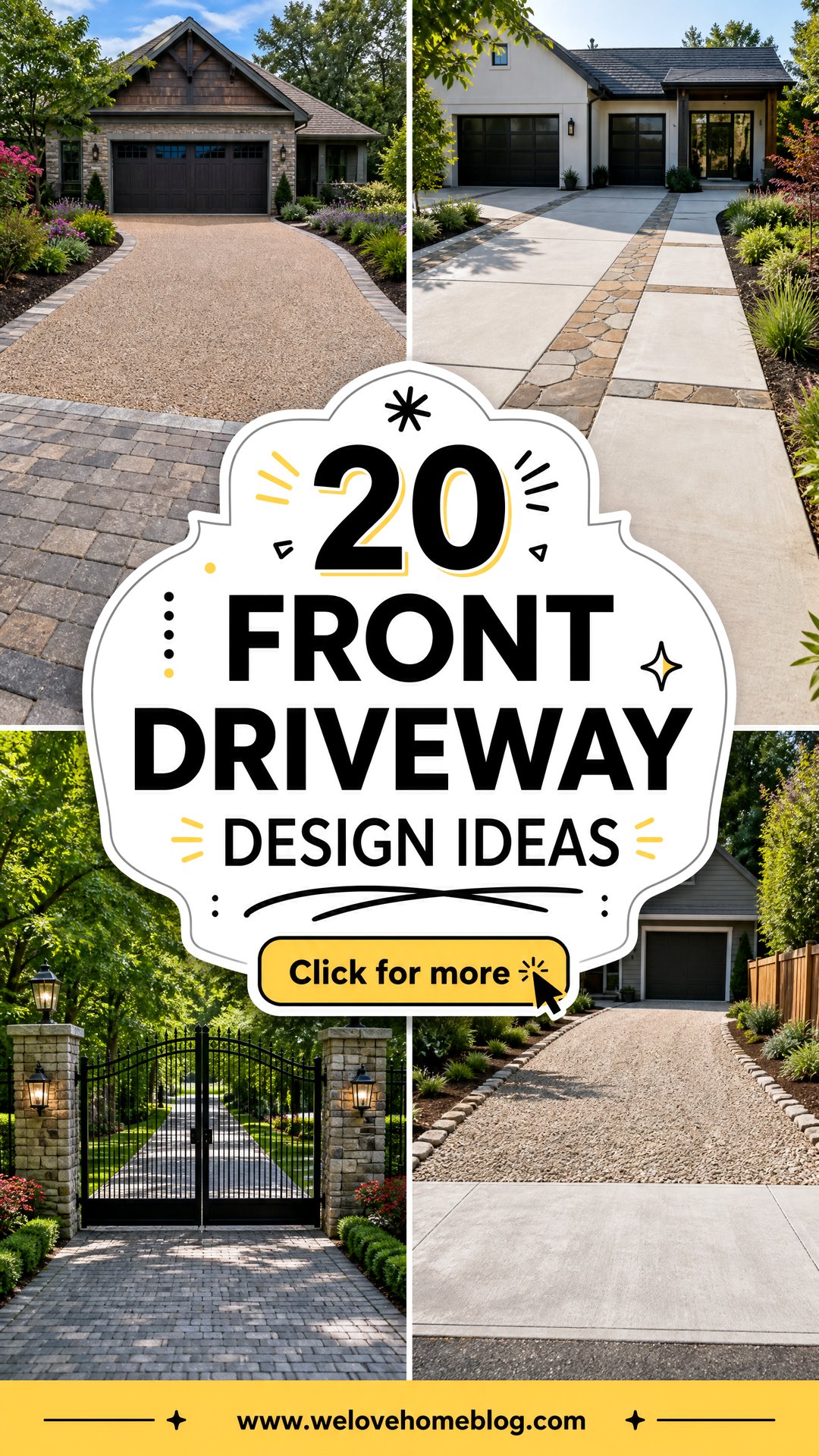
The best **20 front driveway design ideas** combine a durable driving surface with a layout, border, walkway, and landscape that suit the home. Instead of treating the driveway as a plain parking area, plan it as part of the full front yard. Concrete can feel warmer with brick edging. Gravel looks more finished beside cobblestone and layered planting. Pavers can create a polished entrance, while asphalt becomes more attractive with a defined apron and green borders. Your lot size, drainage, maintenance needs, climate, and house style should guide the final choice. The following complete looks cover modern, traditional, farmhouse, coastal, and budget-friendly options, giving you practical inspiration from these **20 front driveway design ideas**.
1. Modern Concrete Driveway With Grass Strips
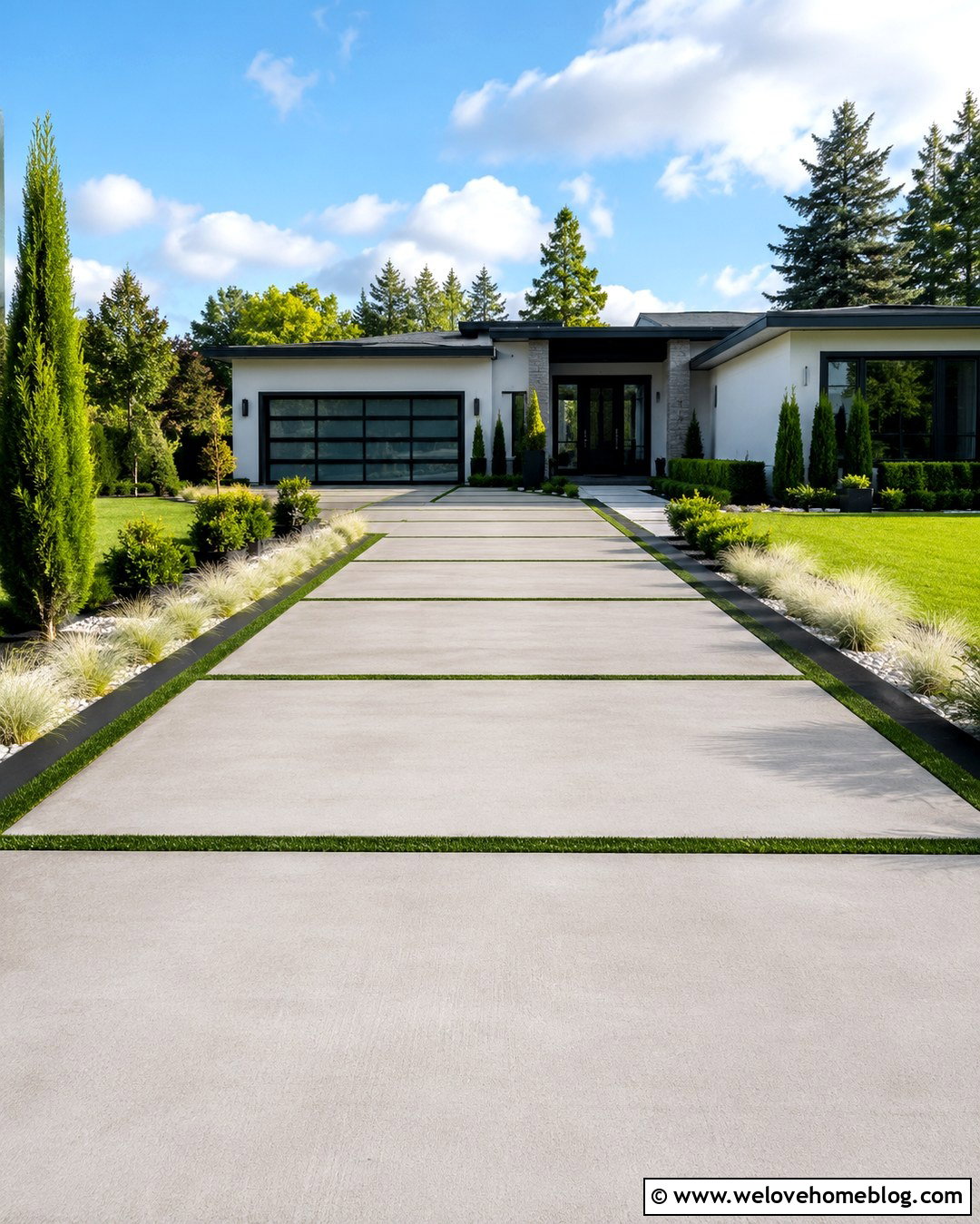
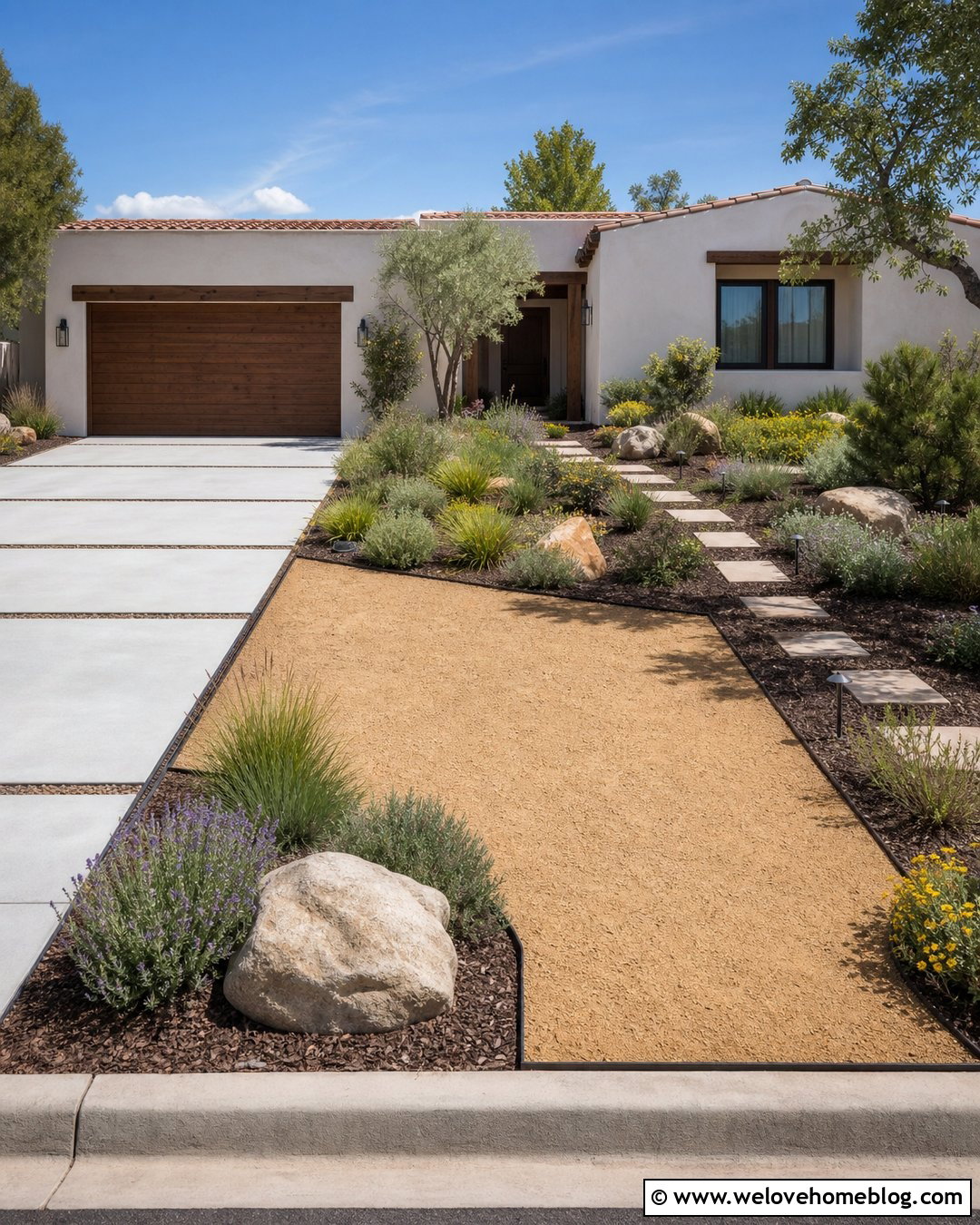
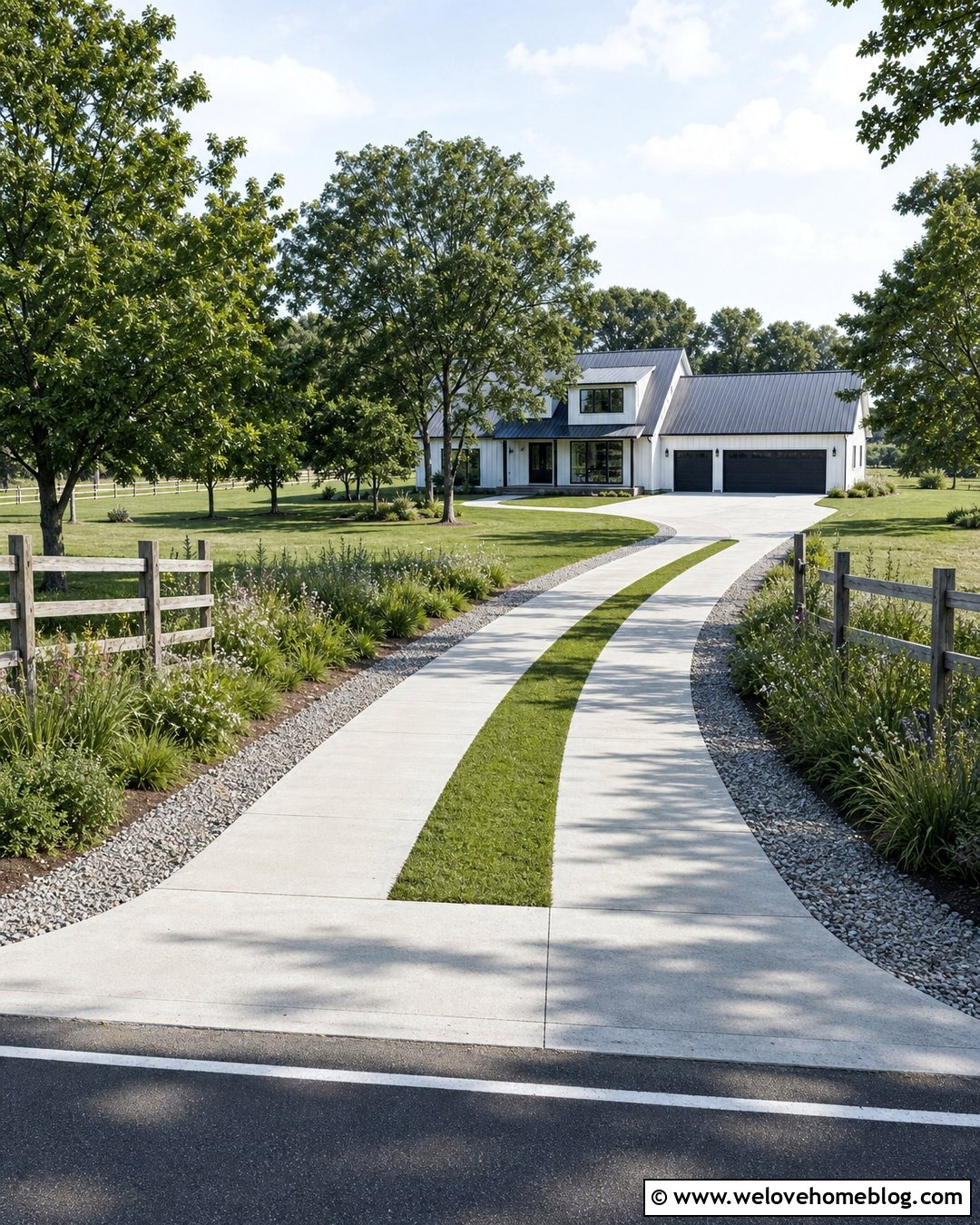
Large rectangular slabs give a modern concrete driveway a crisp, architectural look. Set narrow grass strips or low ground cover between selected sections to break up the hard surface and introduce natural color. A straight layout works especially well with a low-profile modern home, where the driveway can align with the garage, walkway, and front facade. Use dark metal edging to keep each planting strip neat and clearly defined. Along the outer edges, repeat a restrained mix of ornamental grasses, compact evergreen shrubs, and light-colored gravel. This simple planting palette prevents the entrance from feeling busy. Choose a light gray concrete finish for brightness, and keep the slab dimensions consistent so the entire front driveway appears balanced and intentional. ()
2. Stamped Concrete Driveway With Cobblestone Border
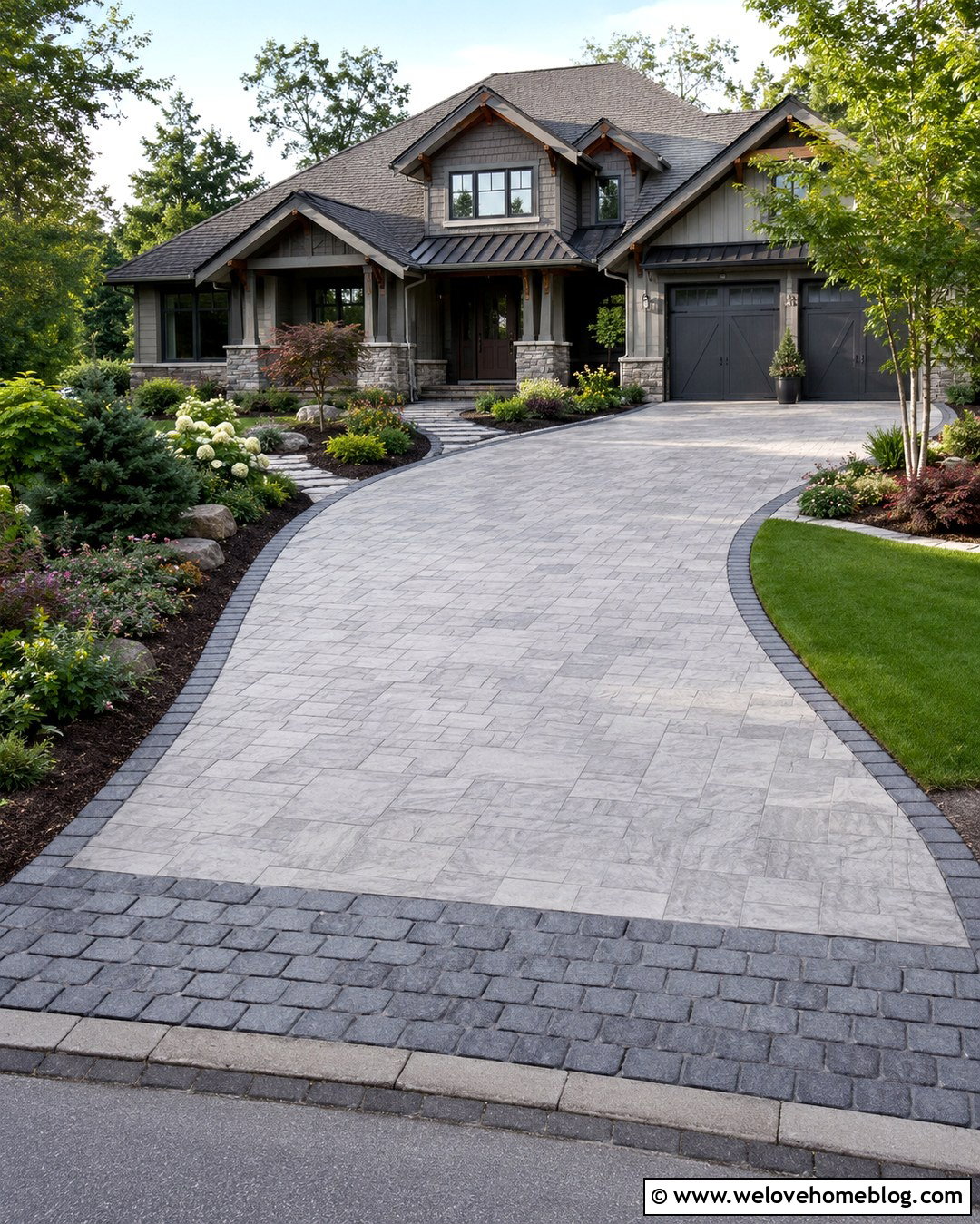
Stamped concrete can create the character of natural stone without covering the entire driveway in individual pavers. A soft ash-gray or warm taupe finish works well for a gently curved driveway leading to a craftsman or traditional home. Frame the concrete with dark cobblestone edging to strengthen the shape and protect the landscape border from vehicle tires. A matching cobblestone apron at the street creates a finished transition and makes the entrance more noticeable. Complete the design with layered beds of evergreen shrubs, flowering perennials, and small ornamental trees. Keep taller plants away from the driving area to preserve visibility. A subtle stone pattern usually looks more convincing than an overly bold stamp, especially when its color coordinates with the house foundation, walkway, and front steps.
3. Exposed Aggregate Driveway With Paver Apron
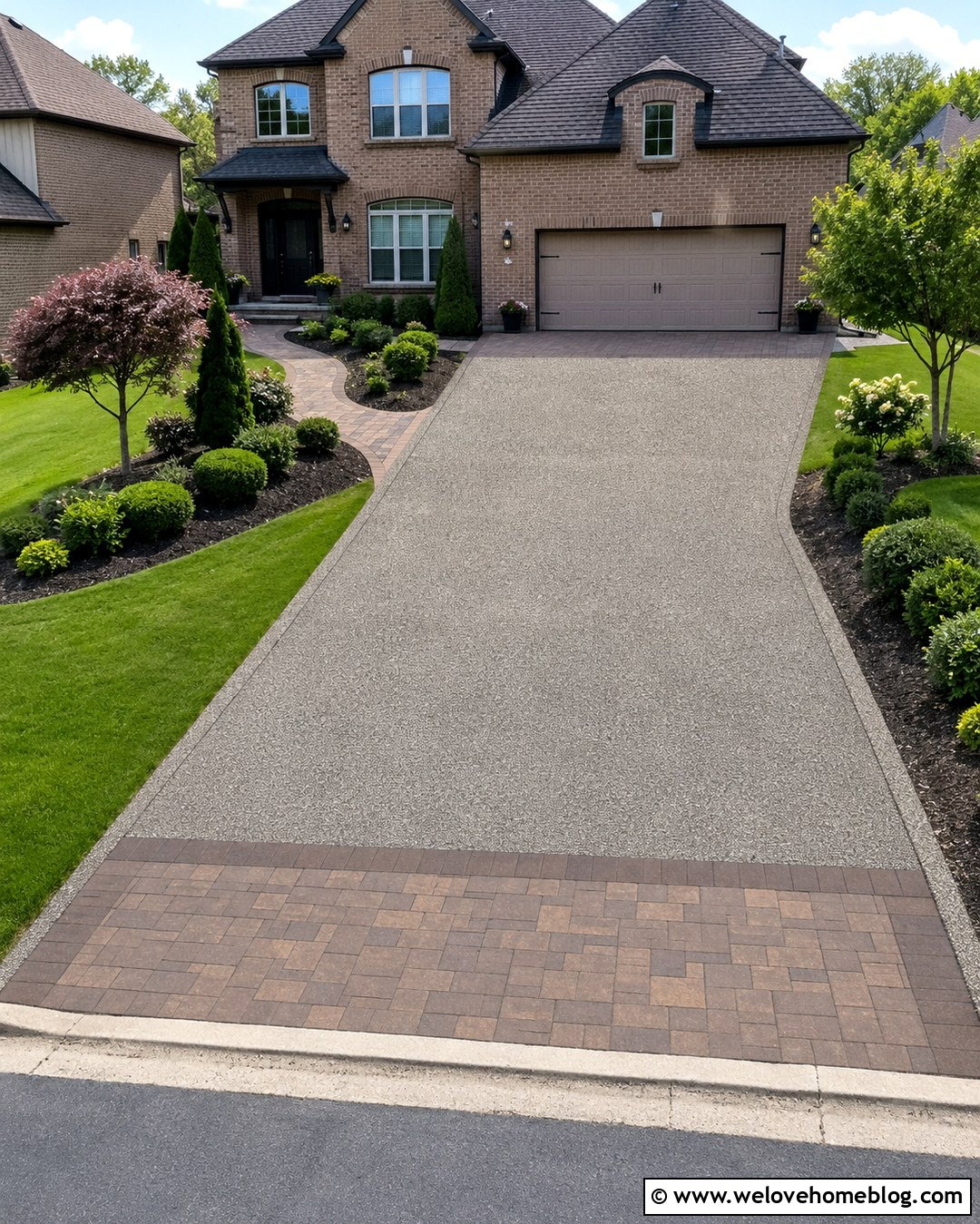
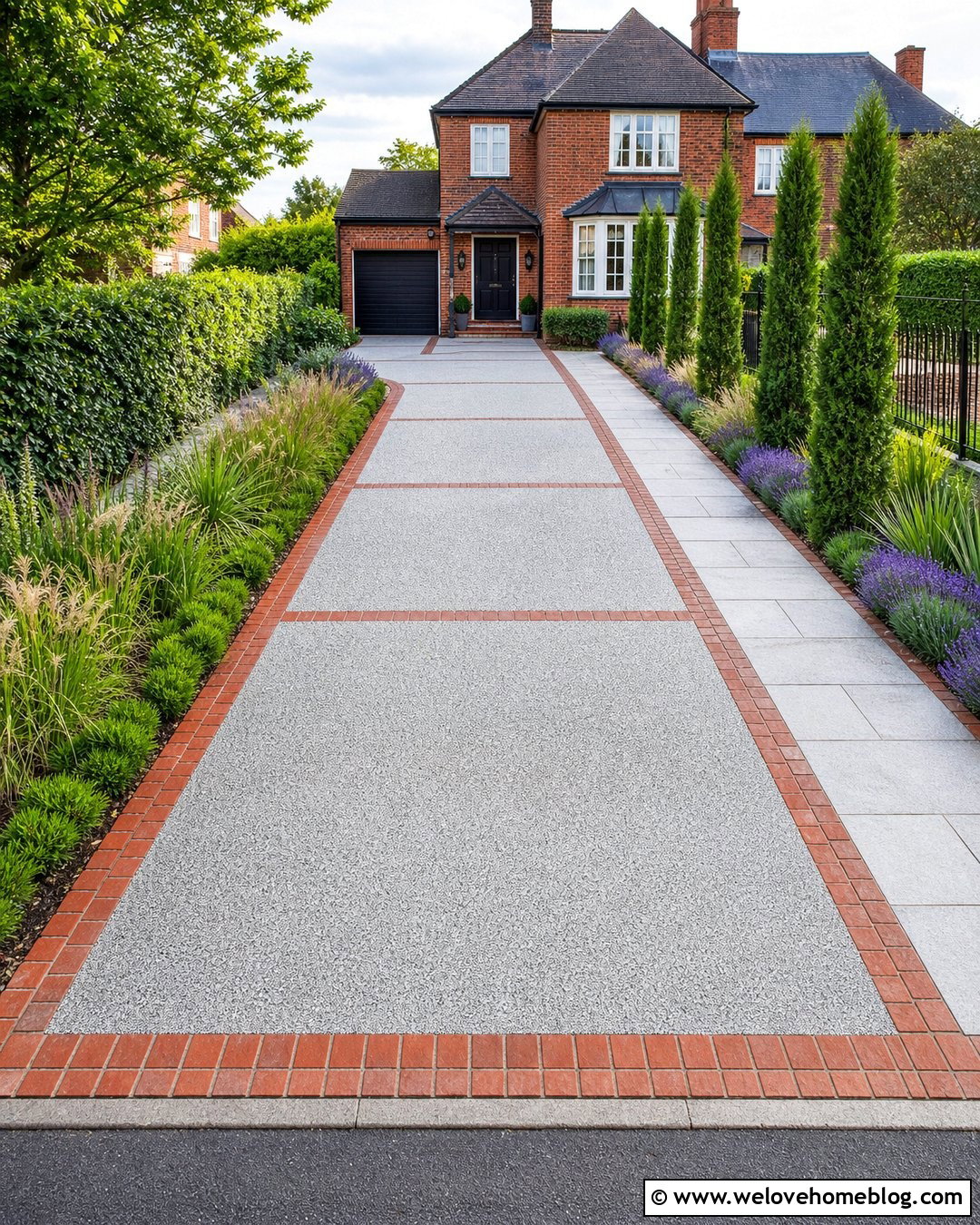
Exposed aggregate offers more texture than smooth concrete while maintaining a clean, practical appearance. Its small visible stones add variation that can hide everyday dust and minor surface marks. Use a straight or softly flared layout, then install a contrasting brick or concrete paver apron where the driveway meets the street. A second paver band near the garage can visually frame the surface and connect it to the home. Warm brown aggregate suits brick houses, while gray aggregate complements contemporary siding and natural stone. Add clipped shrubs, mulched planting beds, and a clear walkway to the front door. The combination feels detailed without becoming complicated. For a unified result, repeat one of the aggregate tones in the paver border, porch floor, retaining wall, or foundation stone.
4. Circular Paver Driveway With Center Garden
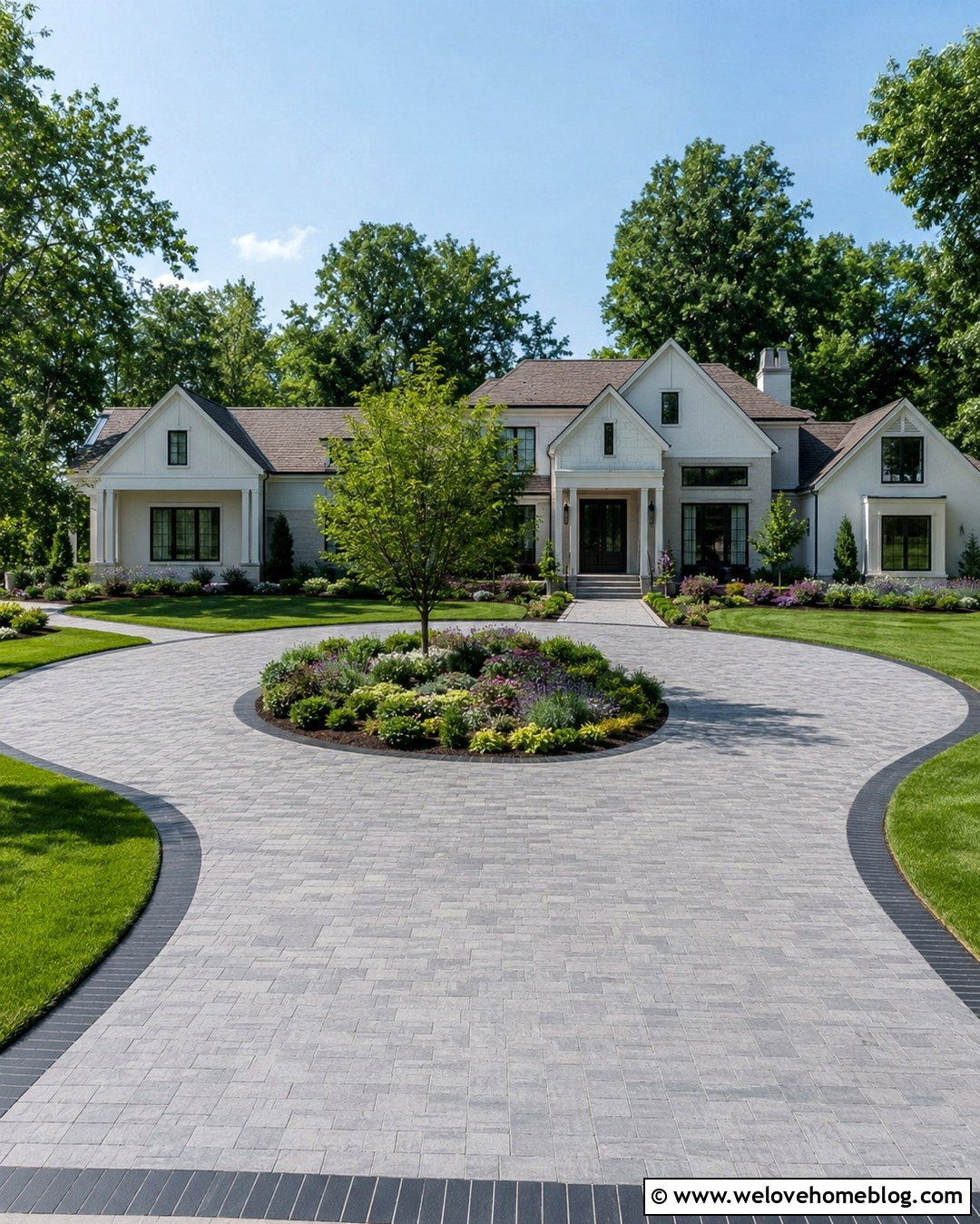
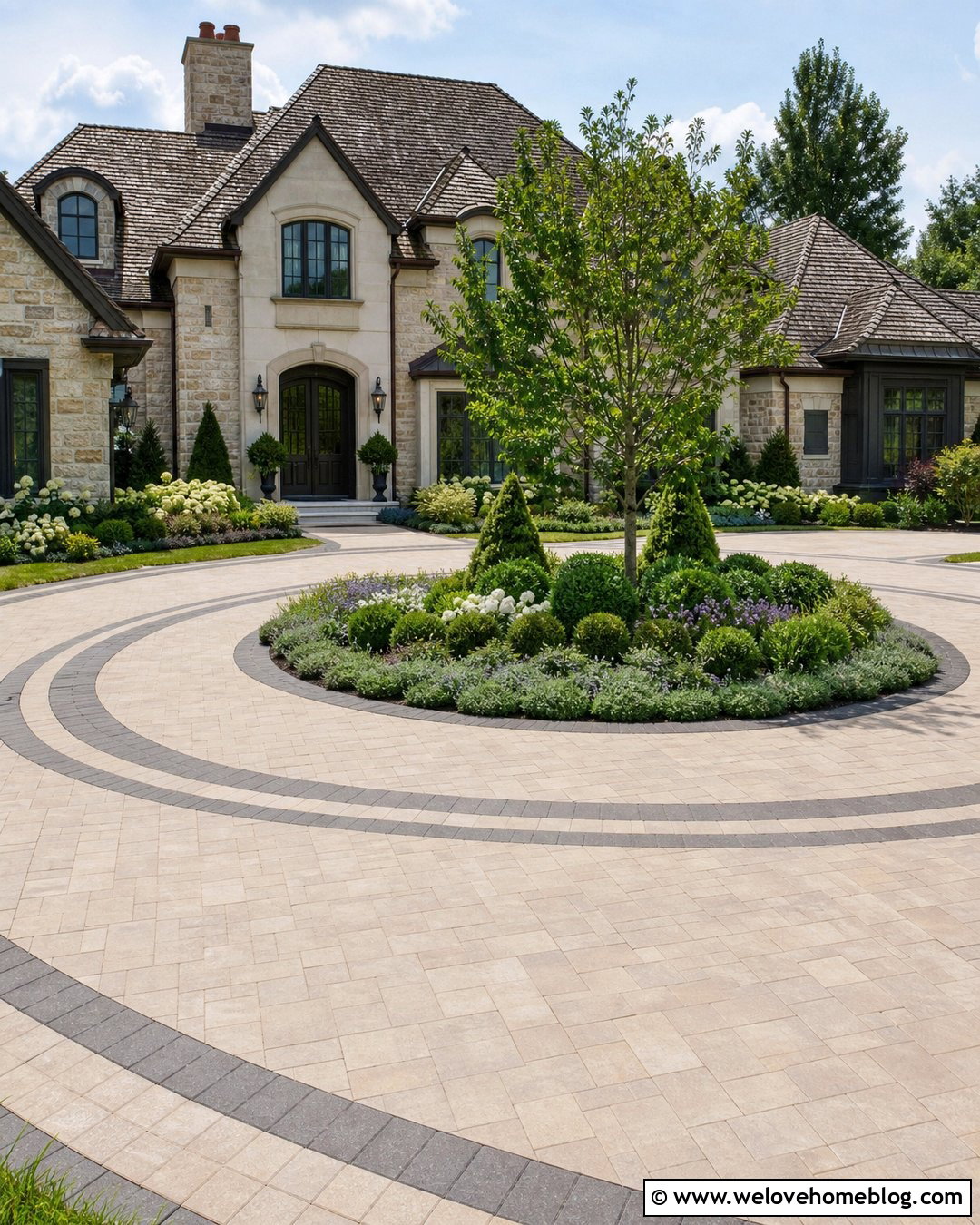
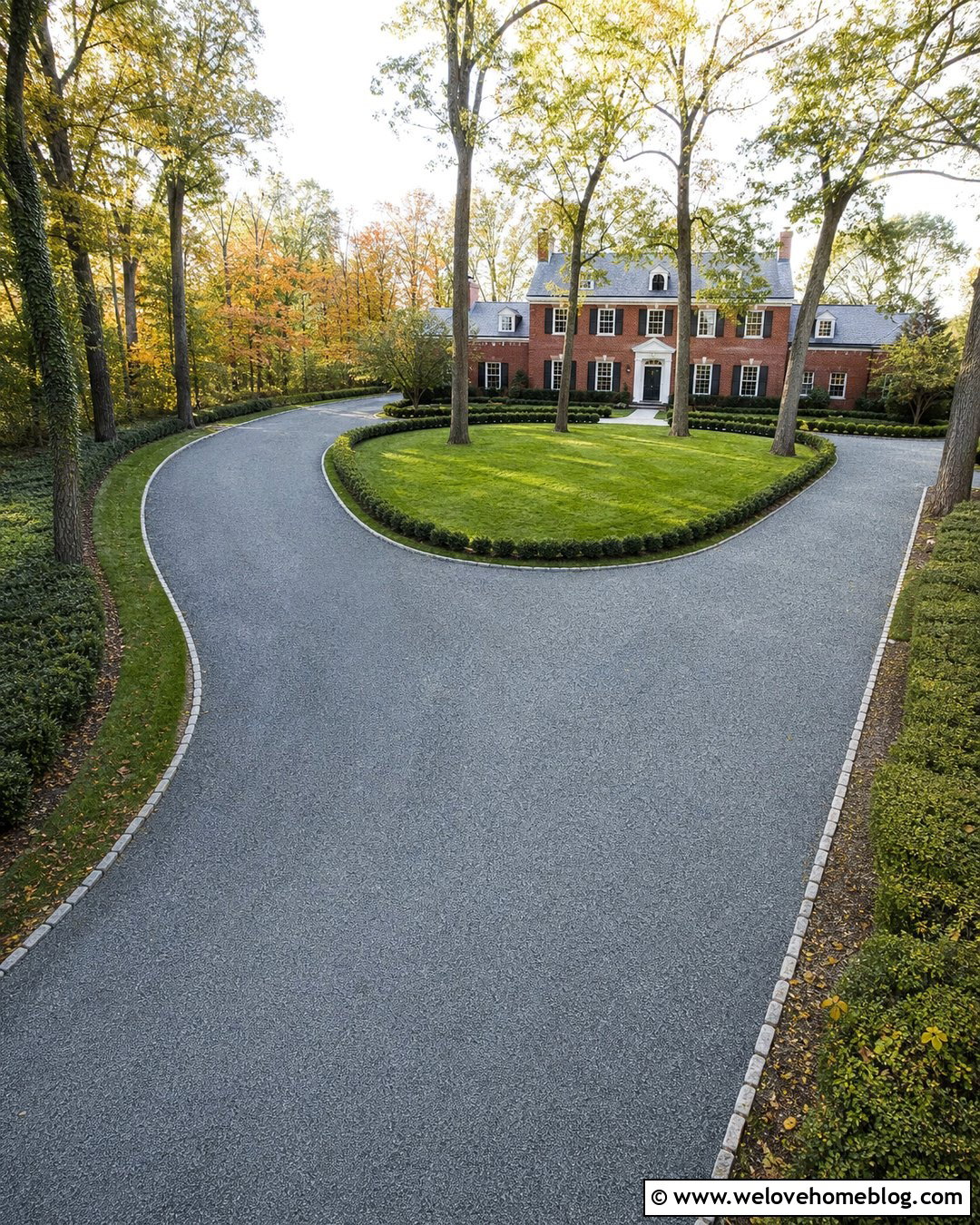
A circular paver driveway creates a graceful arrival and allows the central island to become part of the front-yard landscape. Use neutral concrete pavers in a running bond or fan pattern, with a darker border emphasizing the curve. Inside the circle, plant one small ornamental tree surrounded by low shrubs, flowering perennials, and ground cover. Keeping the center planting below key sightlines helps drivers see approaching traffic and pedestrians. Connect the loop to the front door with a direct paver walkway so guests understand where to enter. This layout needs sufficient front-yard space, but it can reduce the need for difficult reversing. Coordinate the island’s curved bed line with the driveway geometry rather than using an unrelated shape. ()
5. Brick Driveway With Herringbone Pattern
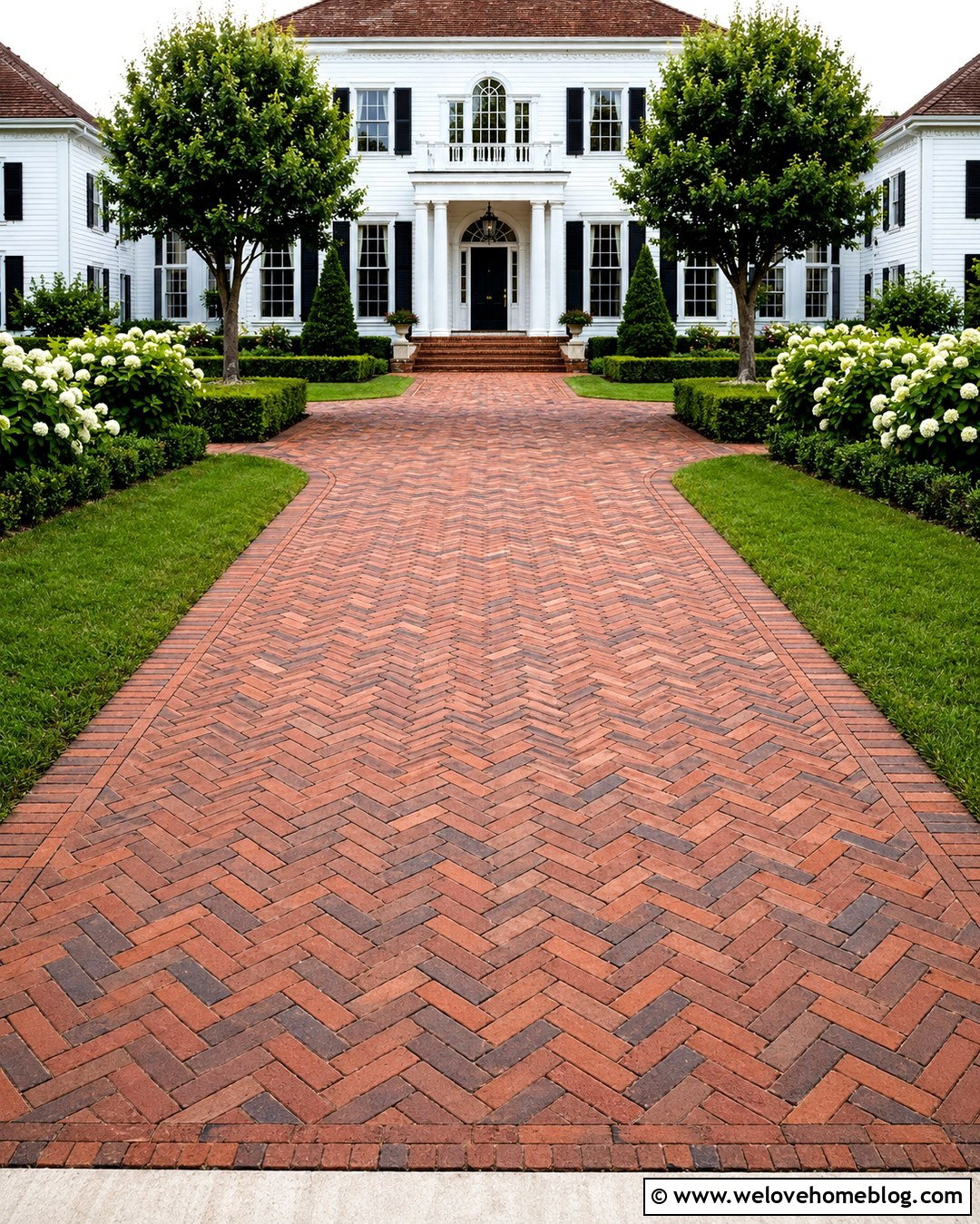
A herringbone brick driveway brings rich color and traditional detail to a colonial, Georgian, or cottage-style home. Clay brick pavers in warm red, brown, and charcoal tones create a surface that looks established rather than overly uniform. Run the herringbone field through the main driving area, then add a soldier-course border around the edges. A gently flared entrance makes the driveway easier to approach while giving the pattern more visual presence from the street. Frame the surface with low boxwood-like shrubs, hydrangeas, and a narrow lawn strip. A brick walkway can continue toward the front steps, creating a strong connection between parking and entry. Select brick colors already visible in the facade, chimney, shutters, or roof so the finished driveway supports the architecture instead of competing with it.
6. Gravel Driveway With Cobblestone Edging
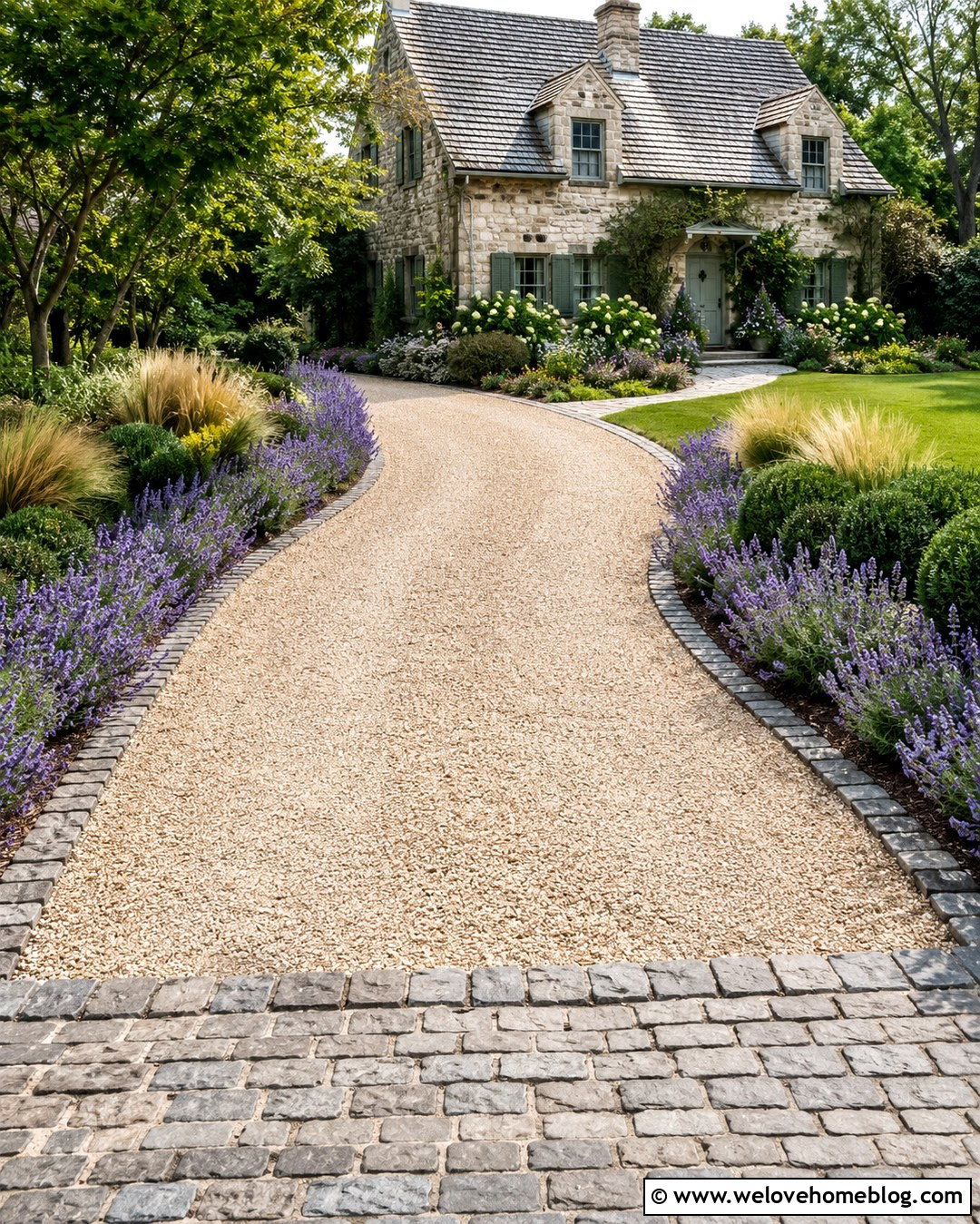
A pale gravel driveway can look relaxed and refined when its boundaries are clearly defined. Choose compactable gray or buff gravel for the main surface and install cobblestone edging along both sides. The darker stones prevent the driveway from visually blending into nearby beds and create a durable line around gentle curves. A cobblestone apron at the street can help establish a more formal entrance. For a country or cottage setting, flank the driveway with lavender-like flowering plants, ornamental grasses, and rounded evergreen shrubs. Leave enough clear space beside the surface so mature plants do not interfere with vehicles. A central grass strip may add charm to a lightly used driveway, but a fully graveled surface is usually easier to navigate. Repeating cobblestone around the walkway ties the complete front entrance together.
7. Pea Gravel Driveway With Steel Edging
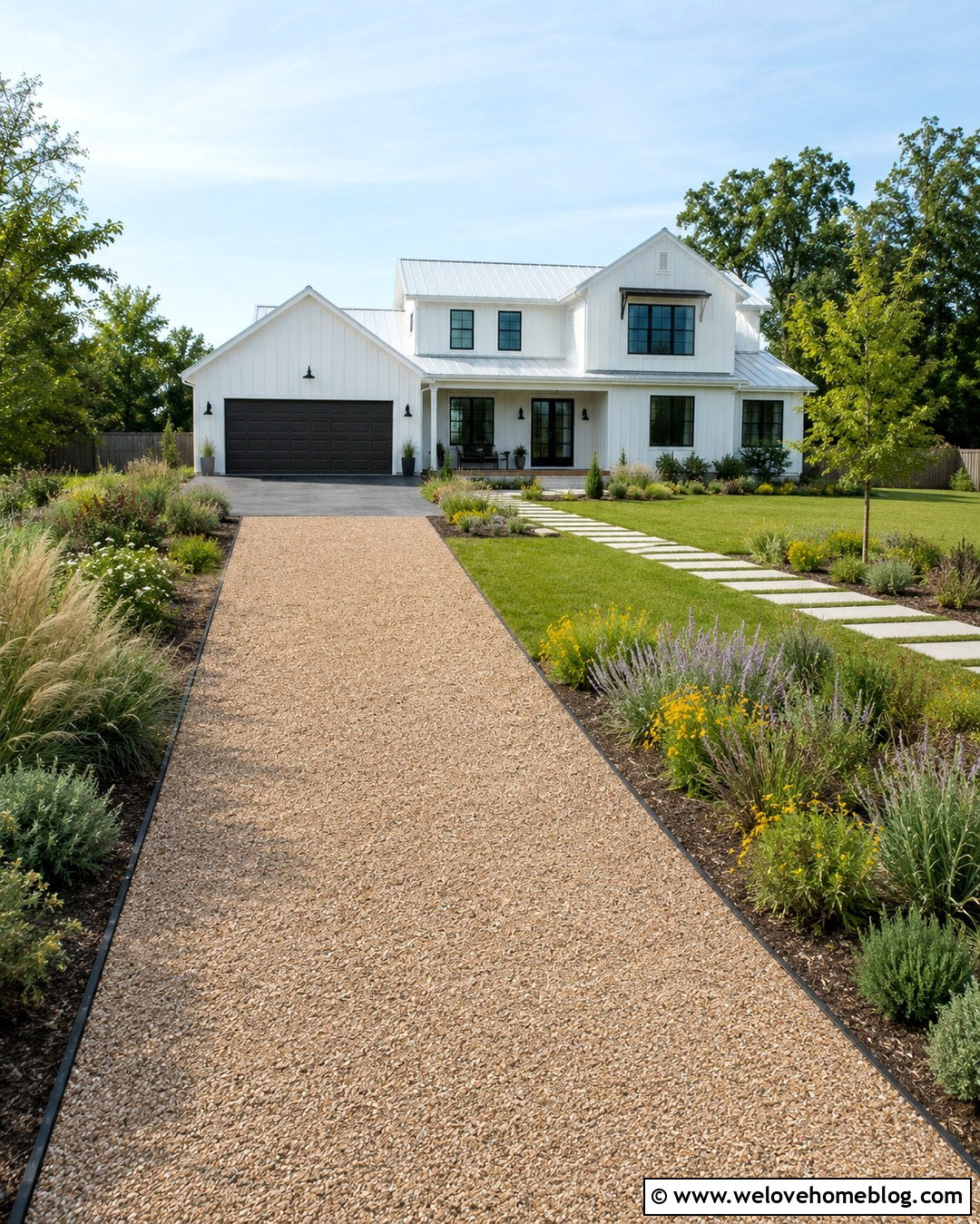
Warm pea gravel creates an informal surface that pairs naturally with a modern farmhouse or simple ranch home. Give it a more controlled appearance with black steel edging and a straight driveway layout. The thin edge almost disappears from a distance, allowing the warm gravel and green landscaping to stand out. Install a stable base beneath the decorative gravel and use a contrasting paver apron at the garage to create a tidy transition. Wide beds of native grasses, flowering shrubs, and drought-tolerant perennials can soften the sides without making the drive feel narrow. Add a separate stepping-stone or concrete walkway to the front door rather than asking guests to walk through loose gravel. The overall look should feel casual but organized, with clean bed lines and limited plant varieties repeated along the approach.
8. Asphalt Driveway With Belgian Block Border
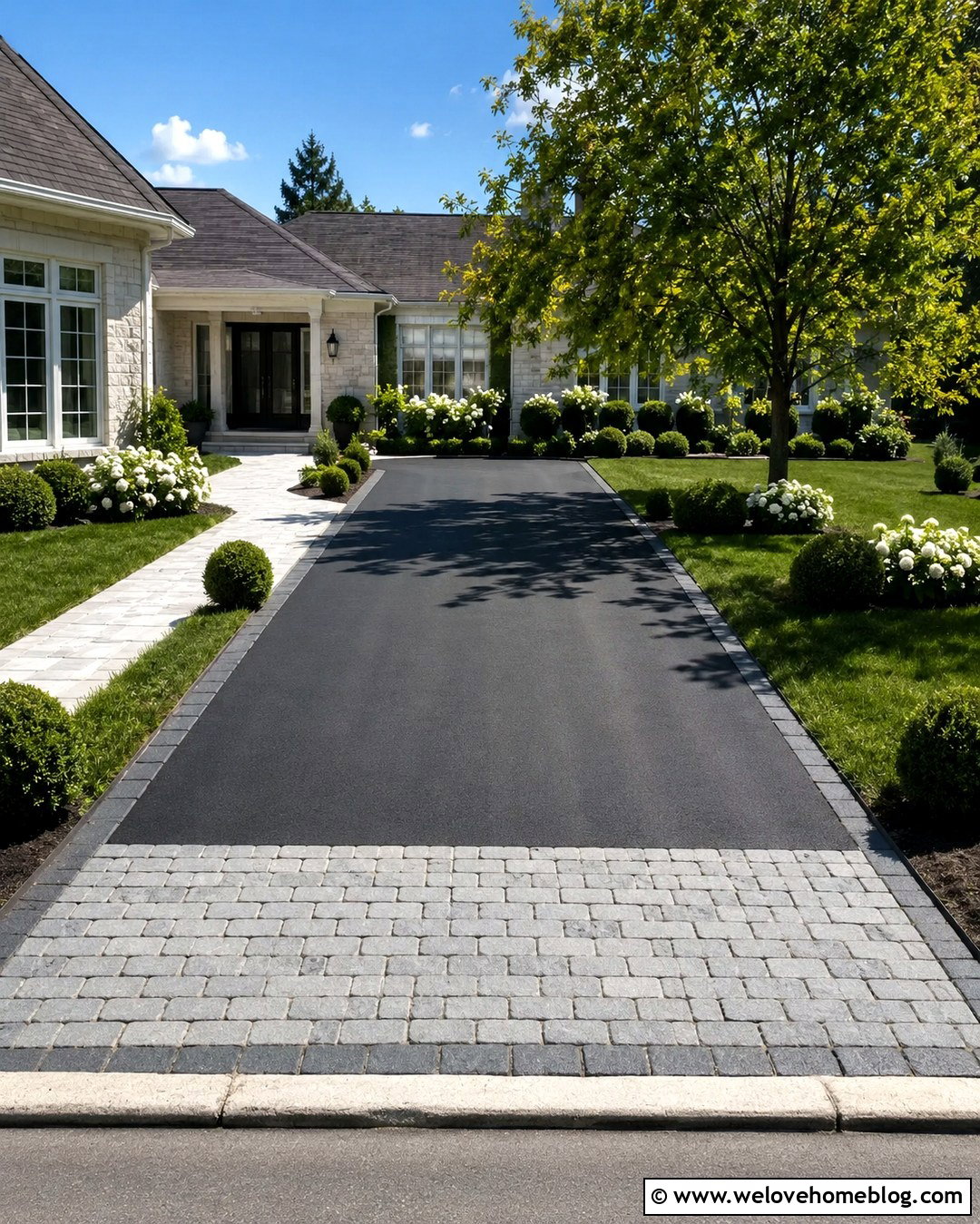
Black asphalt becomes much more polished when surrounded by a strong stone border. Belgian block in charcoal, gray, or weathered brown gives the driveway a permanent edge and provides contrast against the dark surface. Use a straight layout for a suburban home, then widen the entrance slightly so vehicles can turn in comfortably. A full-width Belgian block apron makes the street connection feel deliberate and repeats the border material in a more visible way. Balance the dark driveway with bright lawn, light-colored foundation planting, and a pale concrete or stone walkway. Rounded shrubs and one flowering tree can soften the long lines. This design is especially useful when the budget favors asphalt but the front yard still needs architectural detail. Keep the block height even to avoid awkward transitions along the driving edge.
9. Resin-Bound Driveway With Stone Edging
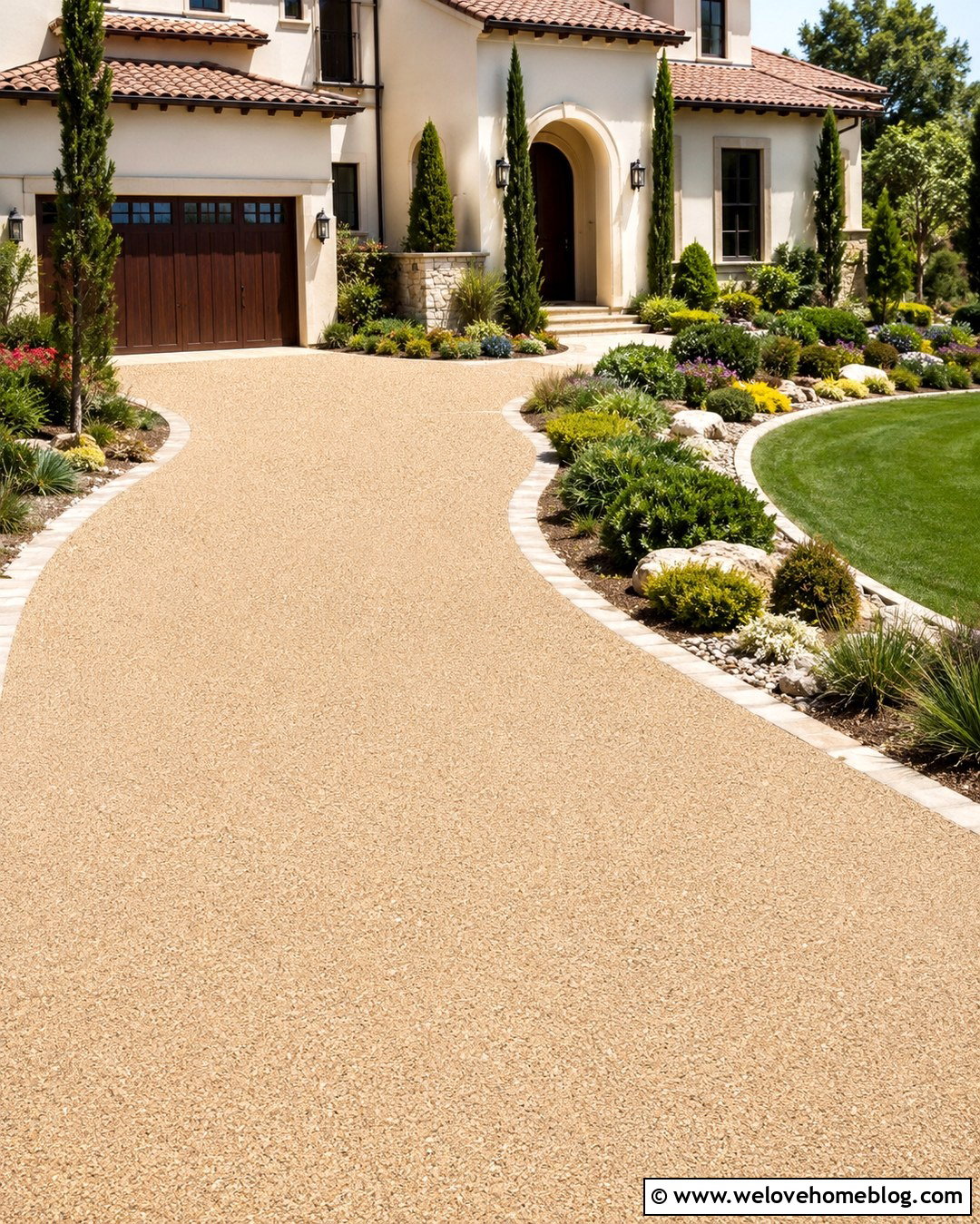
A resin-bound gravel driveway delivers a smooth, visually consistent surface while retaining the appearance of small natural stones. Select a warm beige blend for a stucco or Mediterranean-inspired home, or choose a silver-gray blend for a contemporary facade. A curved layout can soften a wide front yard and guide attention toward the main entrance. Define the perimeter with natural stone setts or dark concrete pavers that contrast gently with the resin-bound finish. Add broad planting beds containing evergreen structure, flowering accents, and drought-tolerant grasses. A matching walkway can branch from the driveway and lead directly to the front steps. Because installation requirements vary by product and site, drainage and base preparation should be planned professionally. The finished look works best when its aggregate colors echo nearby walls, roof tones, and landscape stone.

10. Permeable Paver Driveway With Green Joints
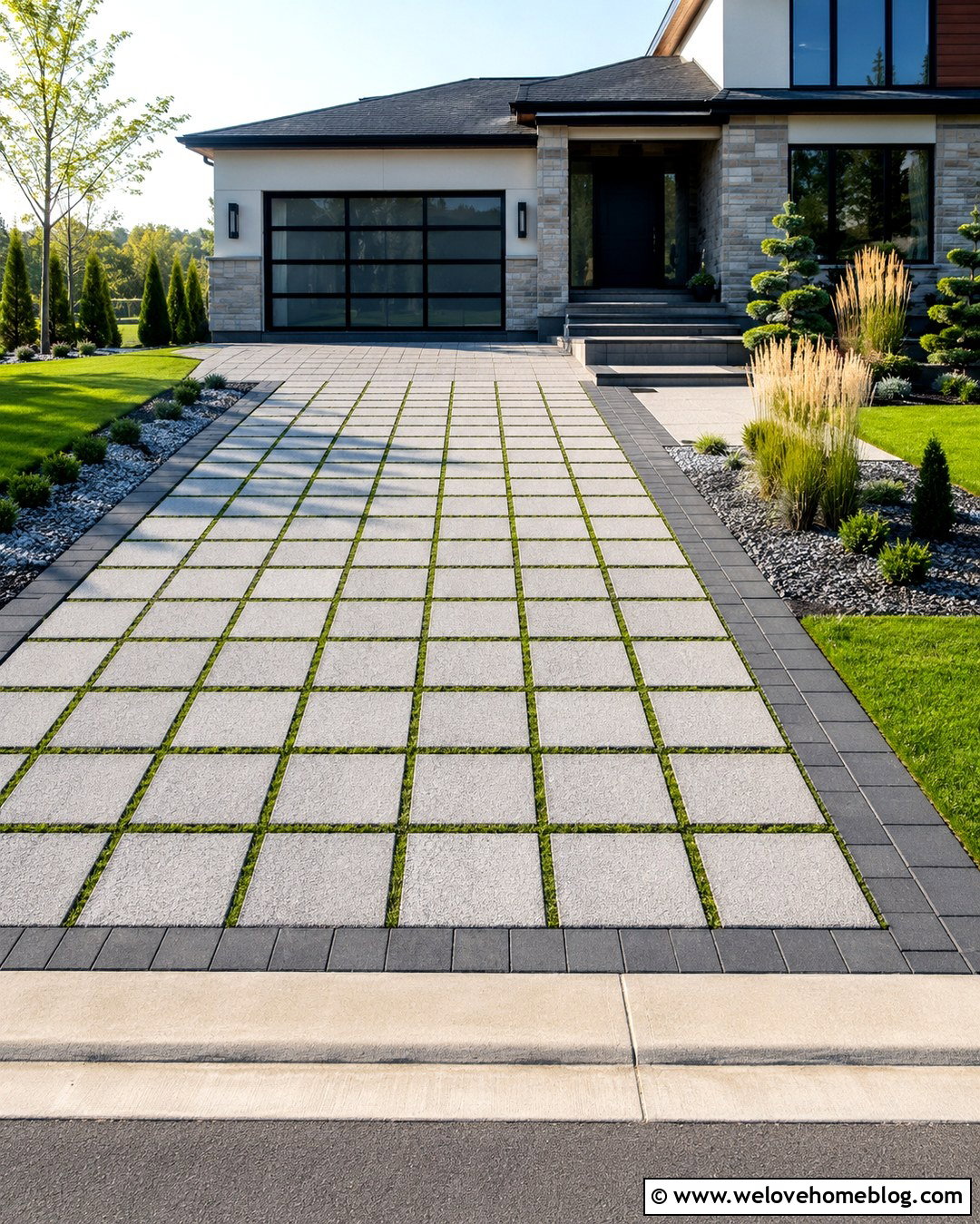
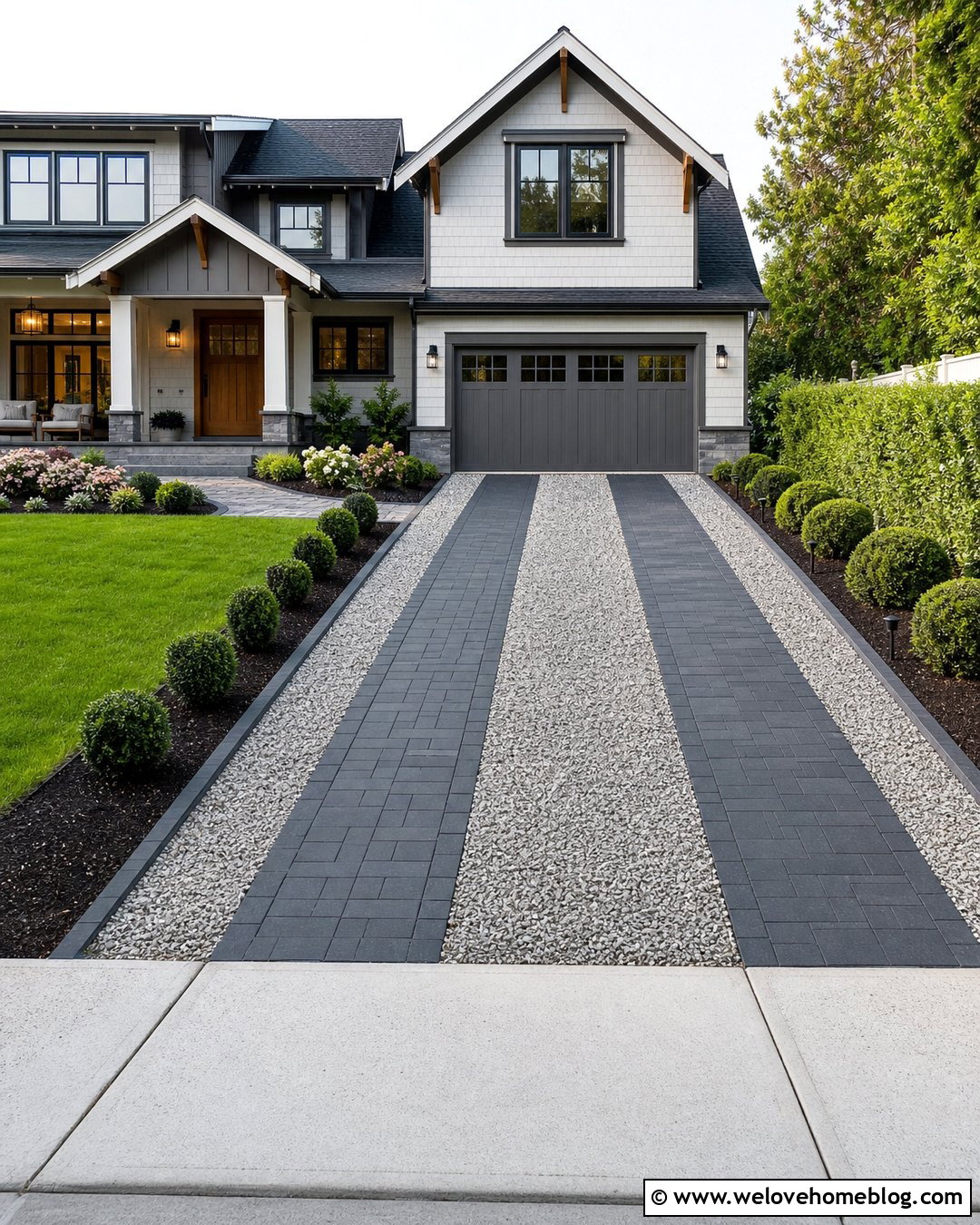
Permeable concrete pavers can make a front driveway feel greener and less dominated by hard paving. Use rectangular gray pavers in a grid, leaving narrow joints filled with gravel or suitable low-growing vegetation. A straight layout complements a contemporary home, while a slightly wider parking pad can accommodate daily use without covering the entire yard. Frame the driveway with simple planting beds, upright grasses, and a few sculptural shrubs. Dark paver edging helps contain the pattern and creates a sharp transition to the lawn. Continue solid pavers through higher-traffic areas, including the garage threshold and pedestrian walkway. The design should remain visually quiet, with the joint pattern providing most of the detail. Permeable surfaces can support on-site water management when the complete system is properly designed for local soil and drainage conditions. ()
11. Cobblestone Driveway With Formal Landscaping
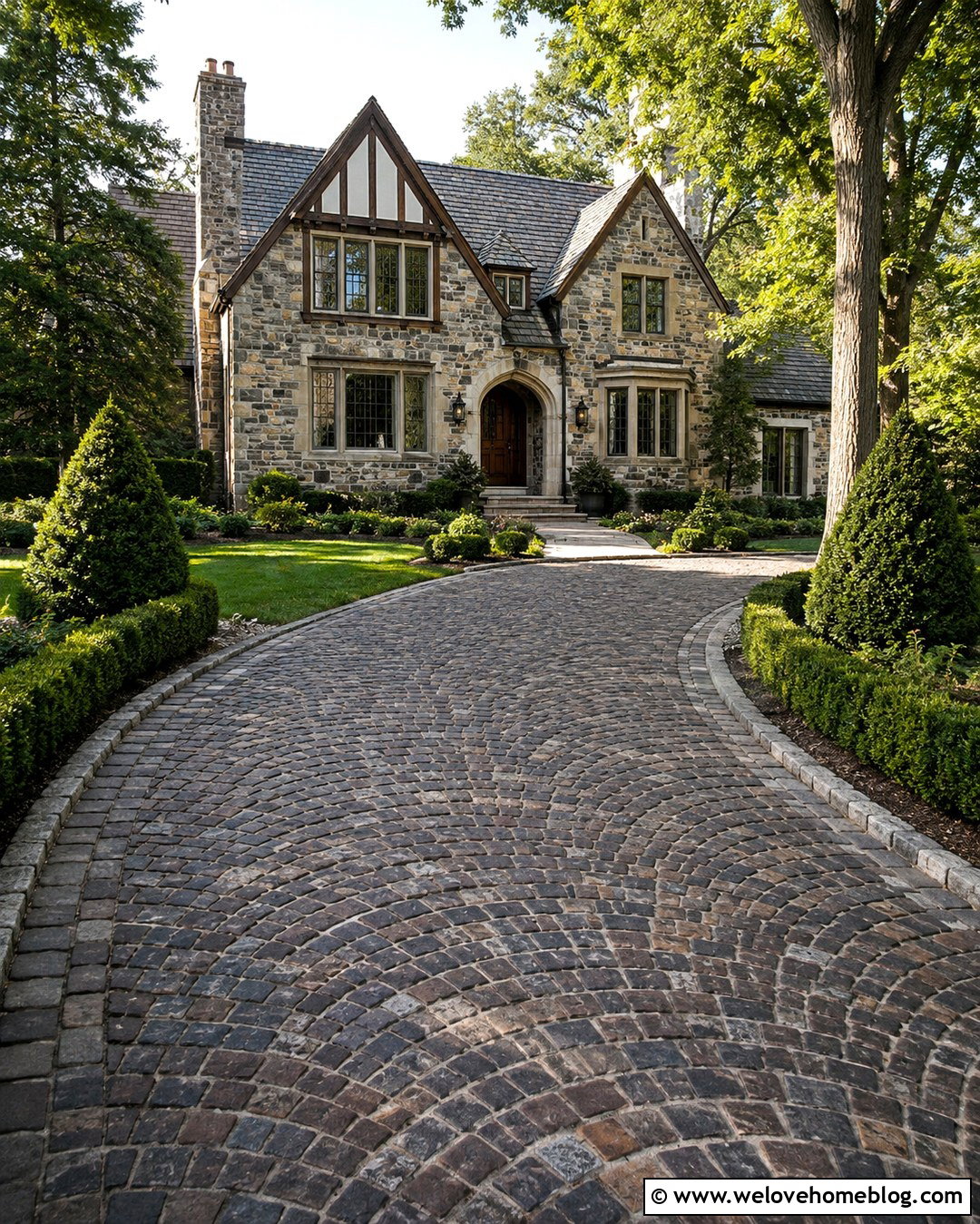
Full cobblestone creates a substantial front driveway suited to a Tudor, European-inspired, or traditional stone home. Mix charcoal, muted brown, and soft gray stones for natural variation, then lay them in gentle arcs that make the surface feel handcrafted. A curved approach works especially well because the paving pattern can follow the movement of the driveway. Formal landscaping keeps the varied stone from looking overly rustic. Use symmetrical evergreen shrubs near the entrance, low hedges beside the drive, and matching trees positioned at a safe distance from the pavement. A smooth stone walkway should provide a comfortable pedestrian route to the front door. If a full cobblestone surface exceeds the budget, use it for the apron and border while filling the main field with compatible pavers or exposed aggregate.
12. Concrete Driveway With Flagstone Ribbons
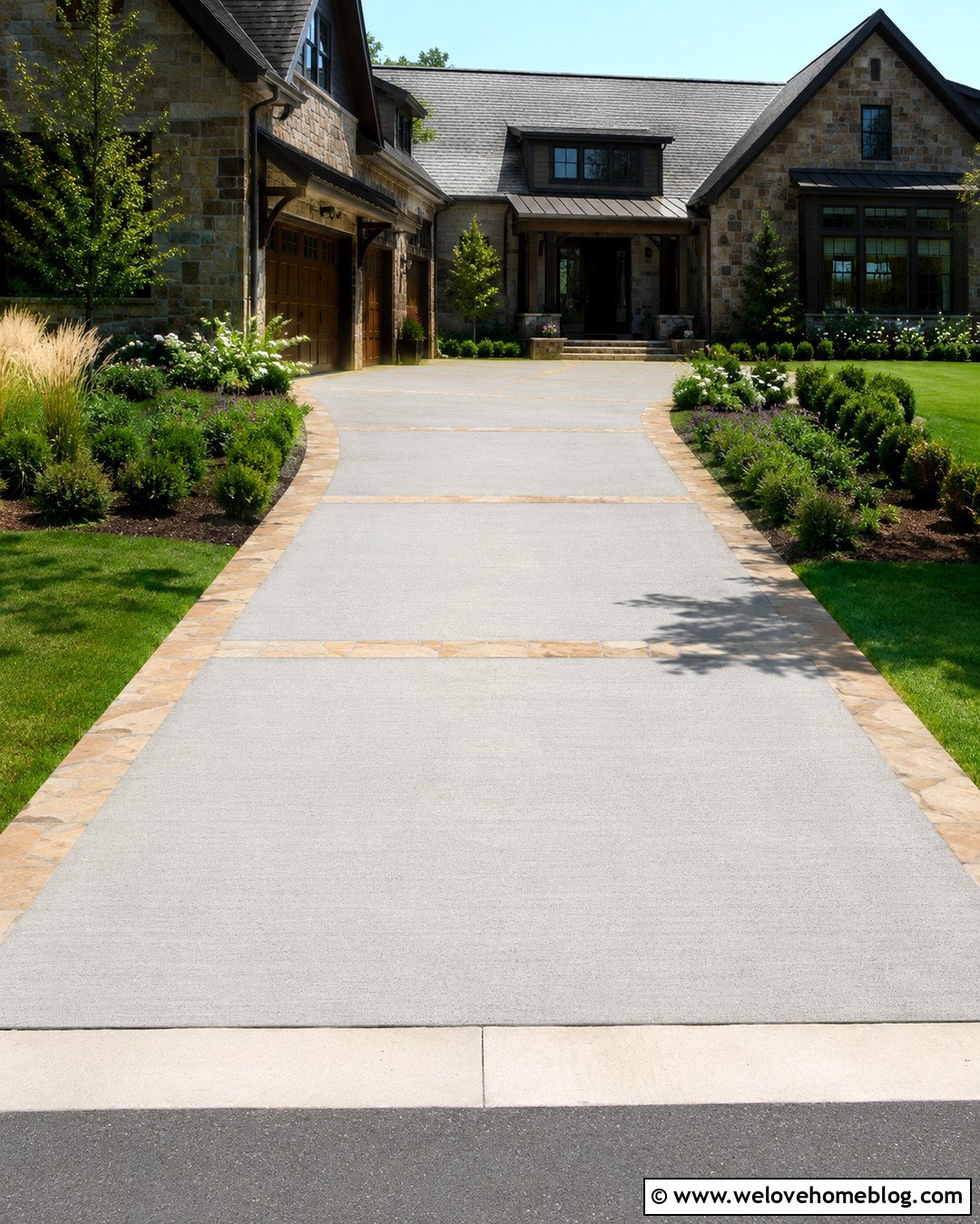
Flagstone ribbons can transform a basic poured-concrete driveway into a more customized front entrance. Begin with light gray broom-finished concrete, then place narrow flagstone bands across the surface at measured intervals. The bands visually divide a long driveway and connect it to a natural stone facade or front walkway. Use the same stone as an outer border, but keep the color contrast moderate for a cohesive result. A straight driveway looks warmer when framed by curved planting beds filled with compact shrubs, grasses, and seasonal flowers. Near the house, let the flagstone walkway branch from one ribbon and continue toward the porch. This creates an obvious pedestrian route without adding another unrelated material. Keep the ribbons level with the concrete so the surface remains comfortable for walking, driving, and routine maintenance.
13. Wide Ranch Driveway With Layered Planting
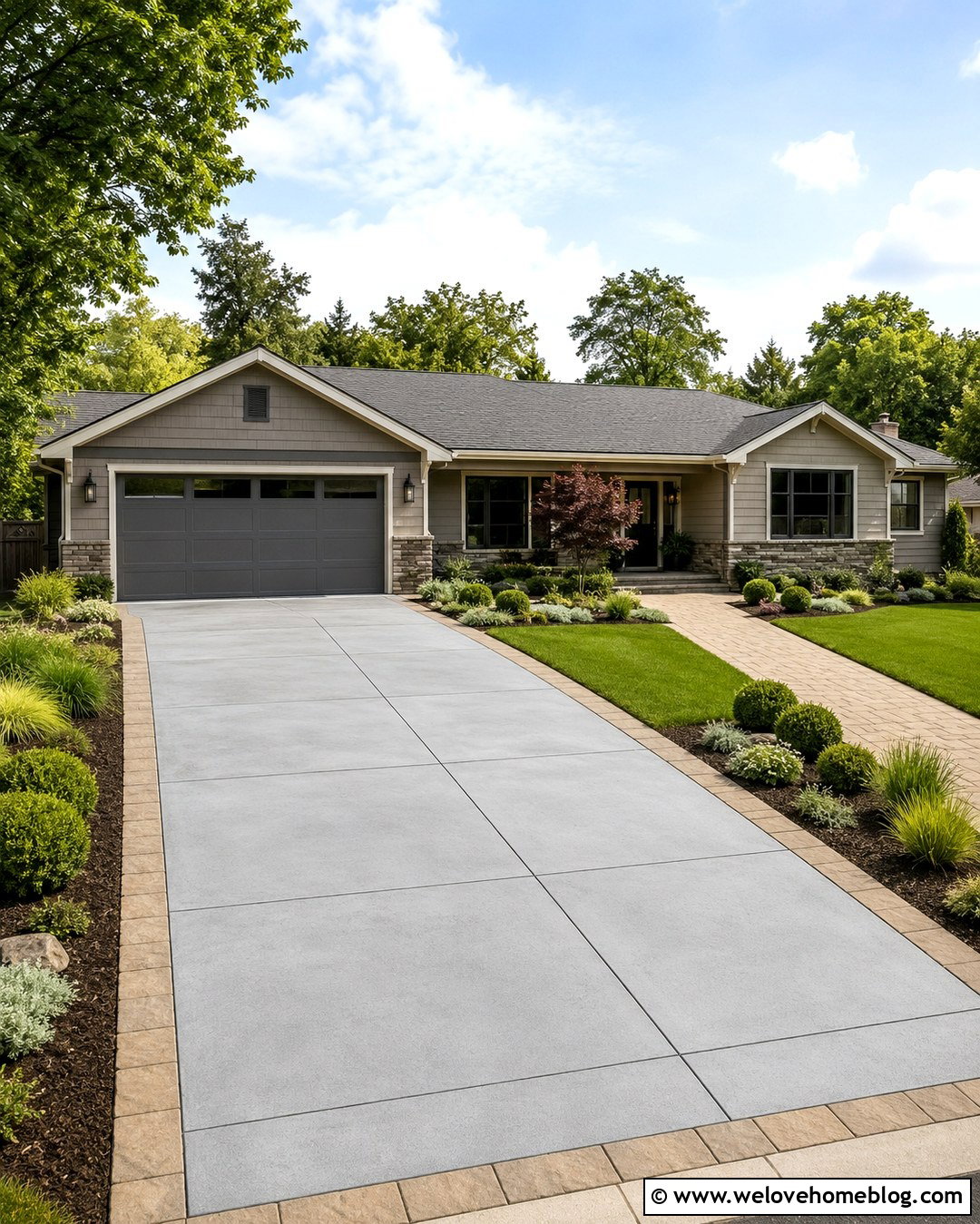
A broad driveway in front of a ranch house needs landscaping that reduces its visual width without blocking access. Use medium-gray poured concrete divided into large rectangular panels, then border it with warm tan pavers. On both sides, create deep planting beds that taper toward the street. Layer low ground cover at the front, rounded shrubs in the middle, and ornamental grasses or small trees toward the back. This arrangement frames the driveway while keeping the pavement open and practical. Add a broad walkway from the parking area to the front door, using the same tan pavers as the border. A narrow lawn strip between the driveway and planting beds can provide extra breathing room. Repeating plants in broad groups creates a calmer appearance than scattering many unrelated varieties across the front yard.
14. Small Front Driveway With Concrete Pavers
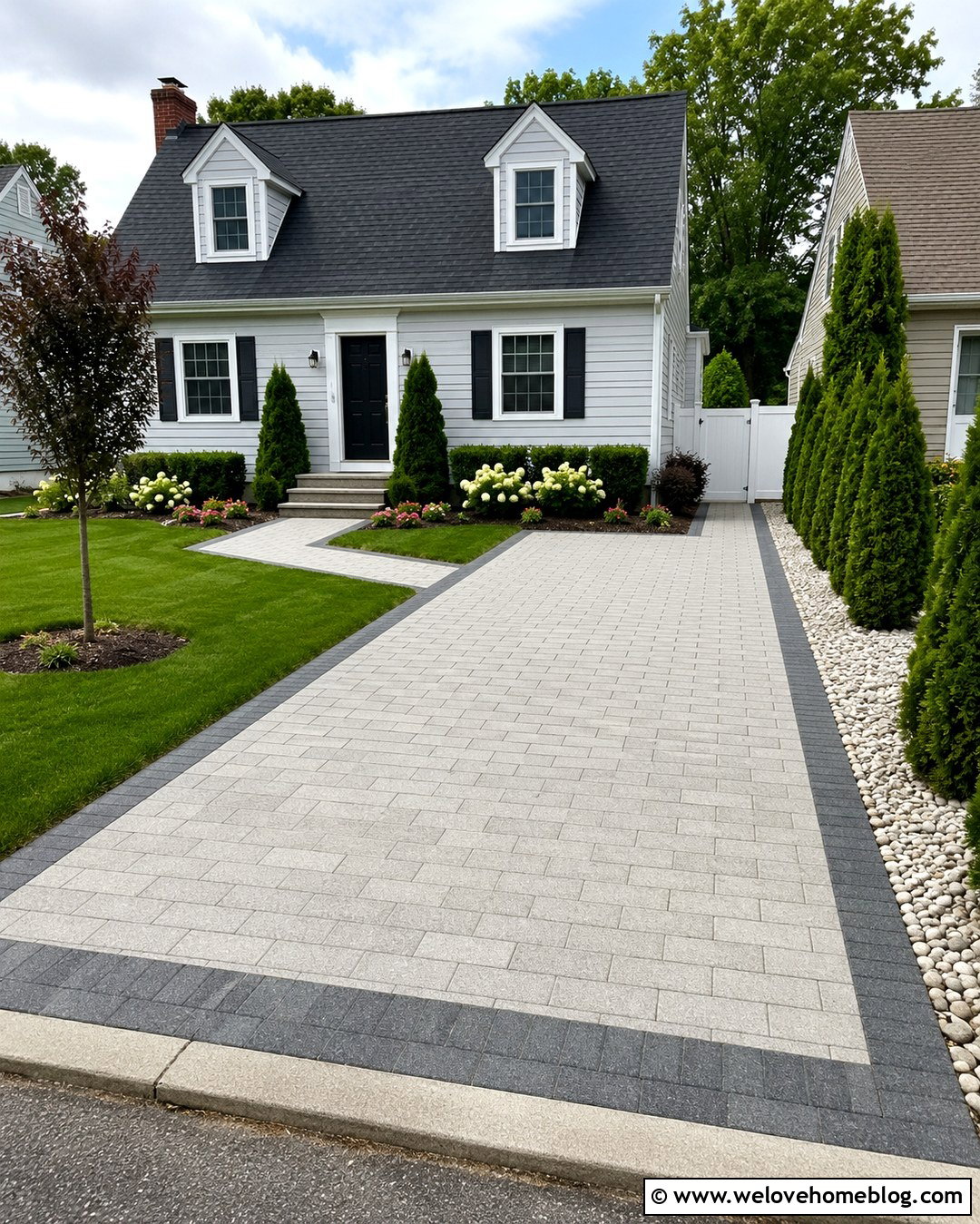
Limited front-yard space calls for a driveway that feels orderly rather than crowded. Rectangular concrete pavers in a light gray running bond can make a short driveway look longer and brighter. Use a dark charcoal border to define the parking area, then connect it to a narrow walkway that leads directly to the front door. Keep planting beds compact and place them where they will not reduce door clearance or vehicle access. Upright evergreens, low flowering plants, and a single small ornamental tree can provide color without overwhelming the lot. If space permits, include a slim rain garden or gravel drainage strip along one edge. Match the paver scale to the house; oversized units often suit modern facades, while smaller pavers complement cottages and traditional homes. Avoid too many materials in this compact setting.


15. Sloped Driveway With Stone Retaining Walls
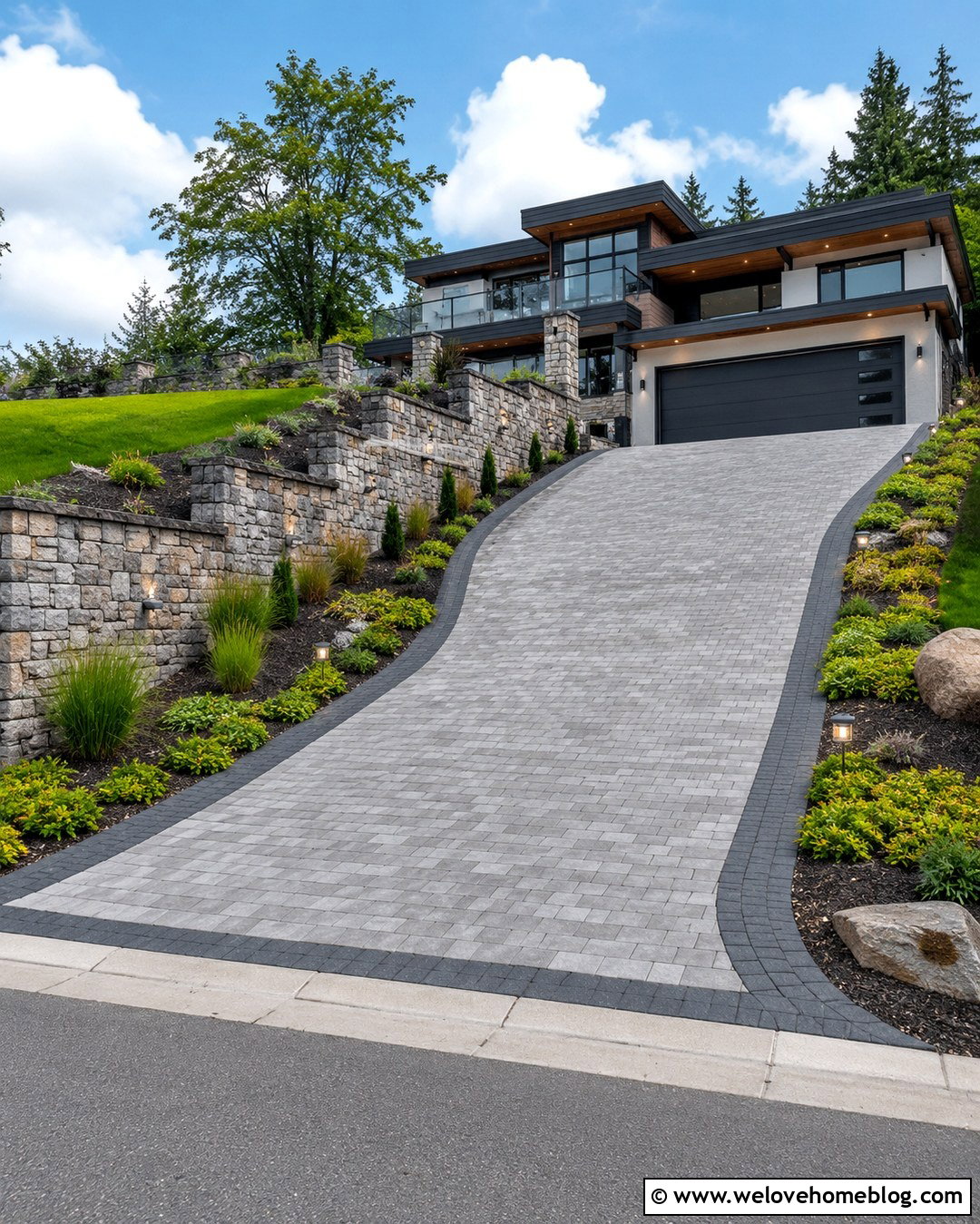
A sloped front driveway can become an attractive landscape feature when retaining walls, drainage, and planting are planned together. Use textured concrete pavers in a medium gray tone to provide visual grip and define the incline. On the higher side, build a tiered natural stone retaining wall that follows the slope instead of creating one tall, heavy barrier. Fill the terraces with spreading ground cover, compact shrubs, and plants suited to the site’s exposure. On the lower side, a strong paver edge can separate the driveway from lawn or a drainage area. Add broad landing zones near the street and garage where site conditions allow. Low wall lighting can improve visibility, but fixtures should remain unobtrusive. Because grades and runoff create technical challenges, use qualified local professionals for engineering and construction decisions.
16. Curved Gravel Driveway With Trees
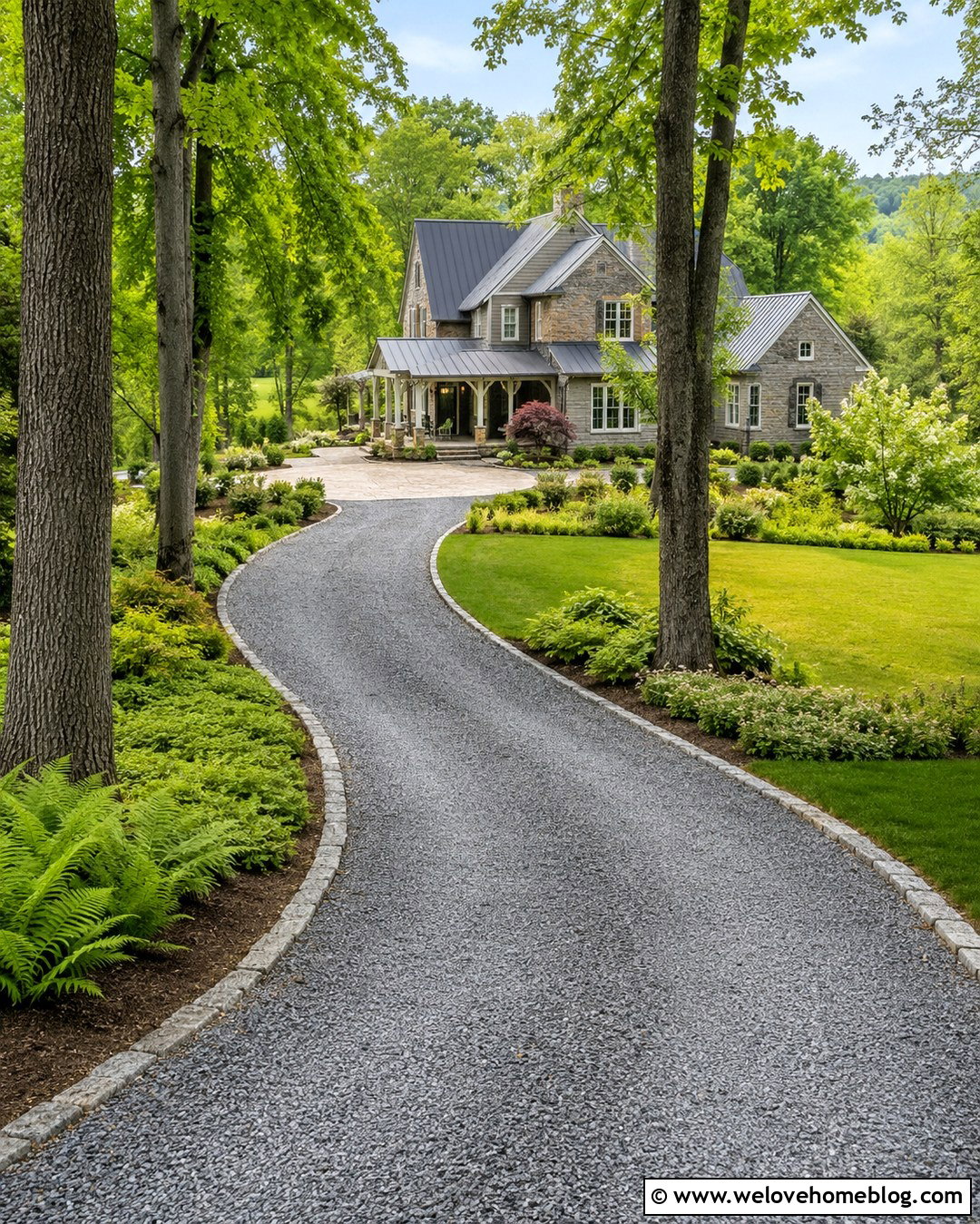
A gently curved gravel driveway creates a sense of depth because the entire house is not revealed from the street at once. Choose compacted gray crushed stone rather than round decorative gravel for the main driving surface, then use weathered granite setts along the edges. Position trees in loose, staggered groups rather than perfectly rigid rows for a natural country look. Underplant them with shade-tolerant ground cover, ferns, or low native shrubs, depending on local conditions. The inside of the curve can hold a wider planting bed, while the outside should remain open enough for visibility and vehicle movement. Near the house, transition to a stone parking court or paver apron. This creates a cleaner arrival area and keeps loose material farther from the garage and front walkway.
17. Driveway Gate With Stone Pillars
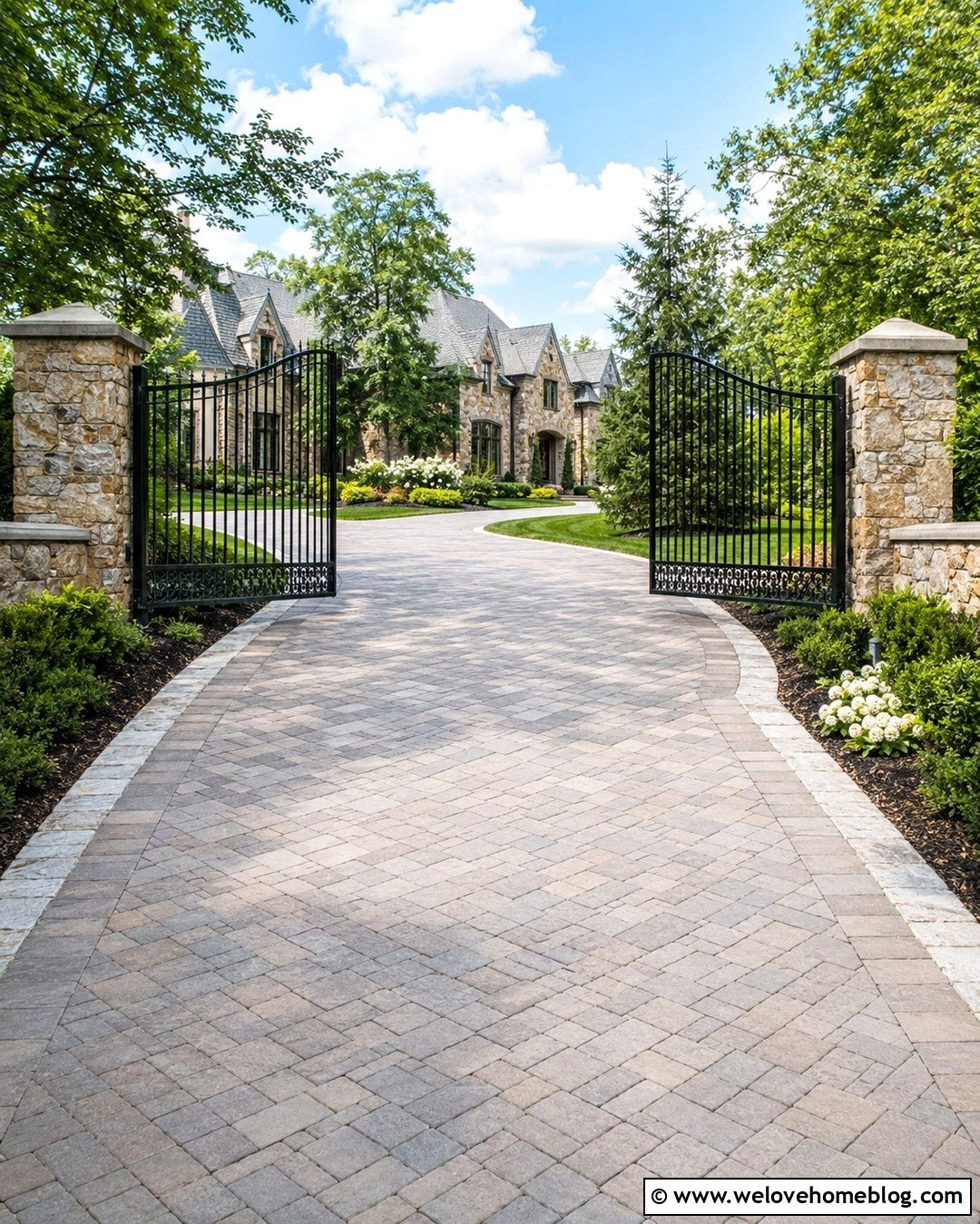
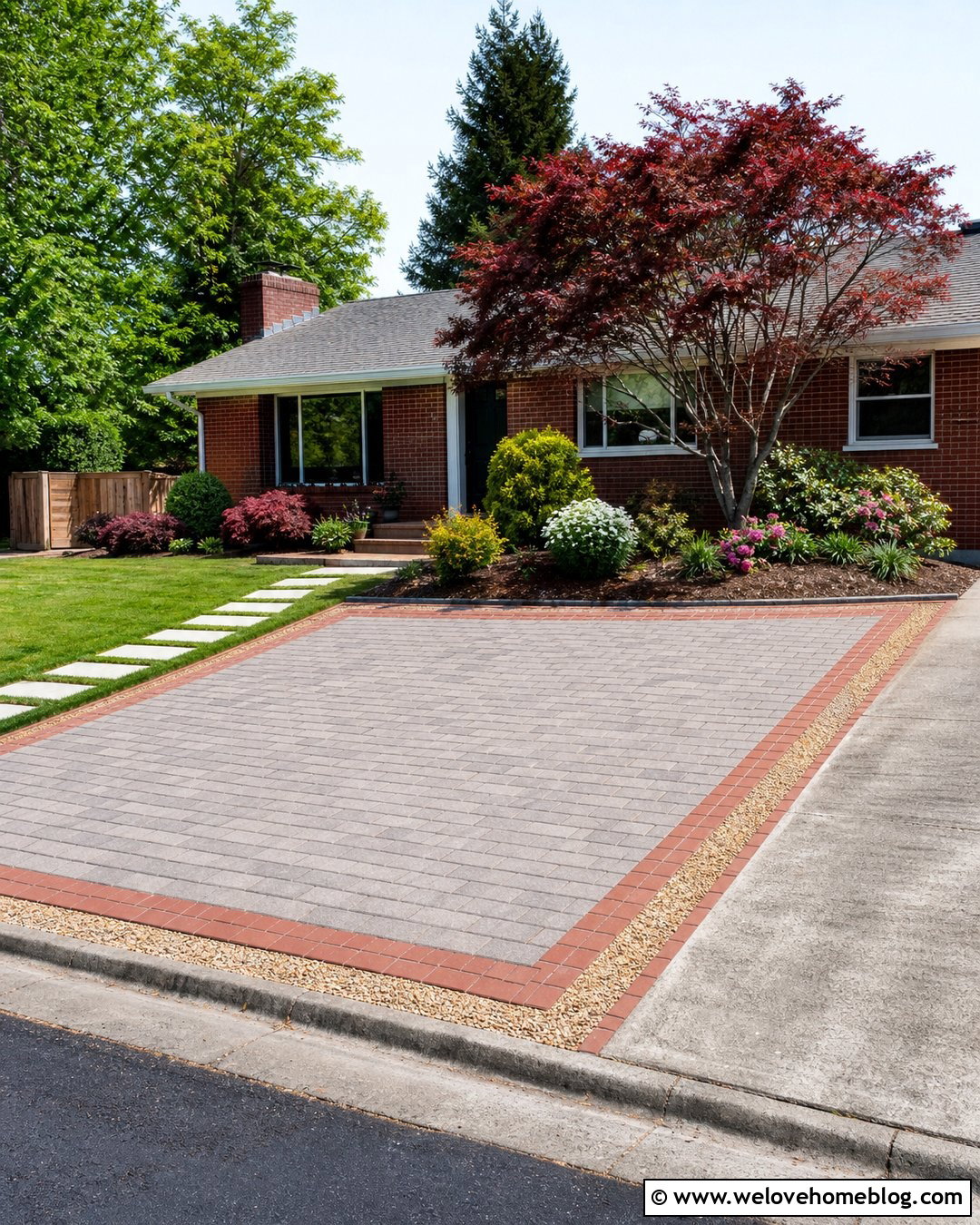
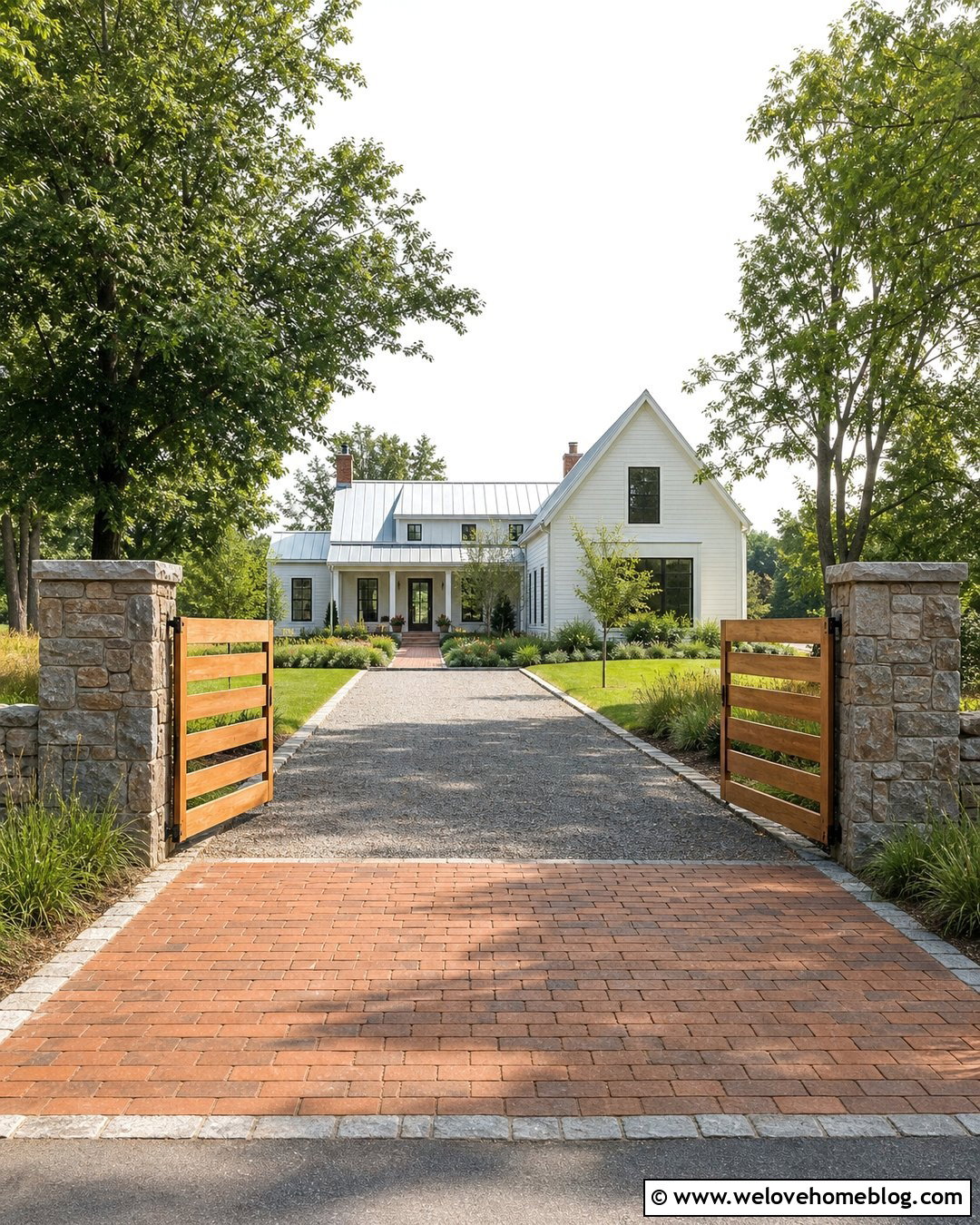
A driveway gate should feel connected to the surface, house, and surrounding landscape rather than added as a separate object. Pair a black metal swing gate with substantial stone pillars and a warm gray paver driveway. A gently flared entrance provides room for the pillars while helping vehicles align with the opening. Repeat the pillar stone on the house foundation, low landscape walls, or mailbox surround. Plant low evergreen shrubs around the base, but preserve clear visibility near the road and gate controls. Inside the entrance, continue the pavers along a straight or softly curved approach to the home. Simple gate lines suit modern architecture, while restrained scrollwork can complement a traditional facade. Confirm property setbacks, gate clearance, utility locations, and local entrance requirements before deciding on the final placement. ()
18. Driveway Lighting With Address Sign
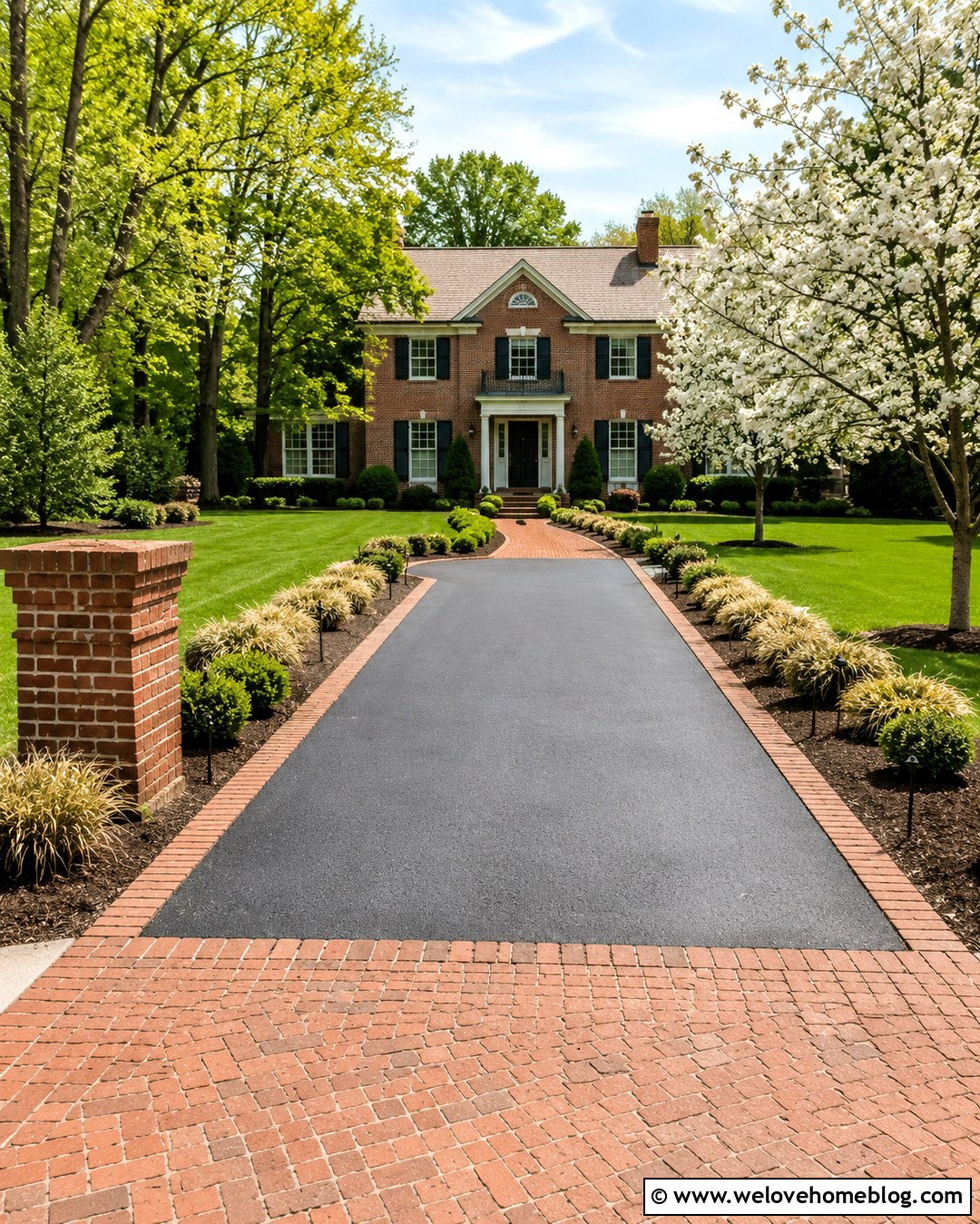
Lighting and an address marker can make a front driveway easier to understand while adding curb appeal during the day. Start with a dark gray asphalt driveway framed by a warm brick border. At the entrance, place a low masonry address monument that repeats brick from the house facade. Keep its shape simple and its location clear of important sightlines. Install low-profile path lights at wider intervals along the landscape beds rather than lining the pavement like a runway. During daylight, ornamental grasses, compact shrubs, and a small flowering tree should help the fixtures blend into the yard. A brick apron can connect the sign, border, and driveway entrance visually. Run wiring and prepare fixture locations during the driveway project whenever possible, which can avoid disturbing a newly completed surface and surrounding landscape later.
19. Crushed Shell Driveway With Coastal Landscaping
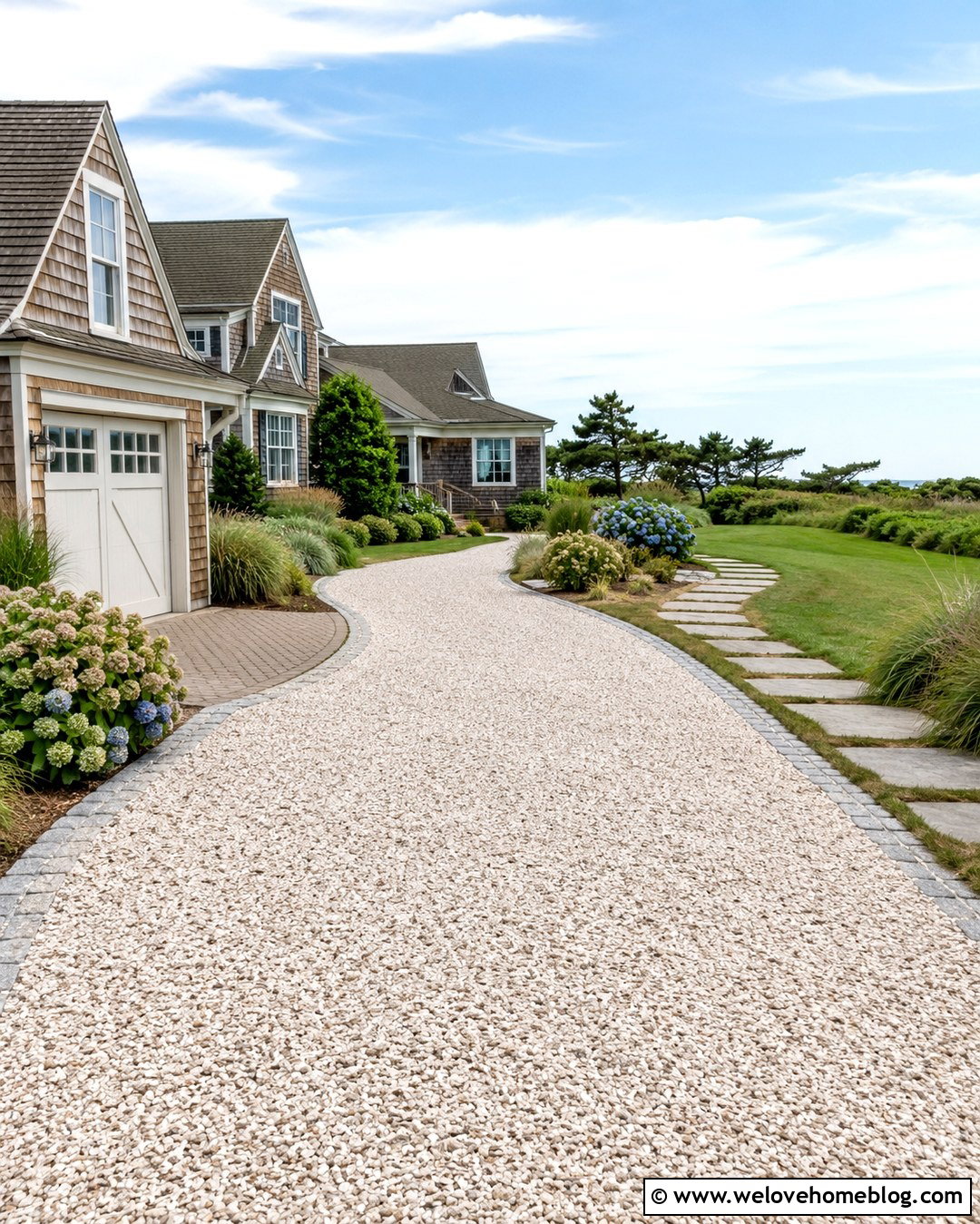
A crushed shell driveway brings a bright, relaxed character to a Cape Cod, coastal cottage, or shingle-style home. Use pale oyster shell or a regionally available shell blend over a properly prepared base. Shape the driveway with a soft curve and define its sides using granite cobbles or low steel edging. Near the garage, add a band of gray concrete pavers to create a clean transition and reduce loose material at the threshold. Surround the drive with beach grasses, compact hydrangeas, low evergreens, and open lawn. A simple stepping-stone walkway can lead toward the front porch without competing with the shell texture. Keep the planting palette resilient and appropriate for local soil, wind, and salt exposure. The pale driveway looks especially cohesive beside weathered shingles, white trim, and natural wood details.

20. Budget Gravel Driveway With Concrete Apron
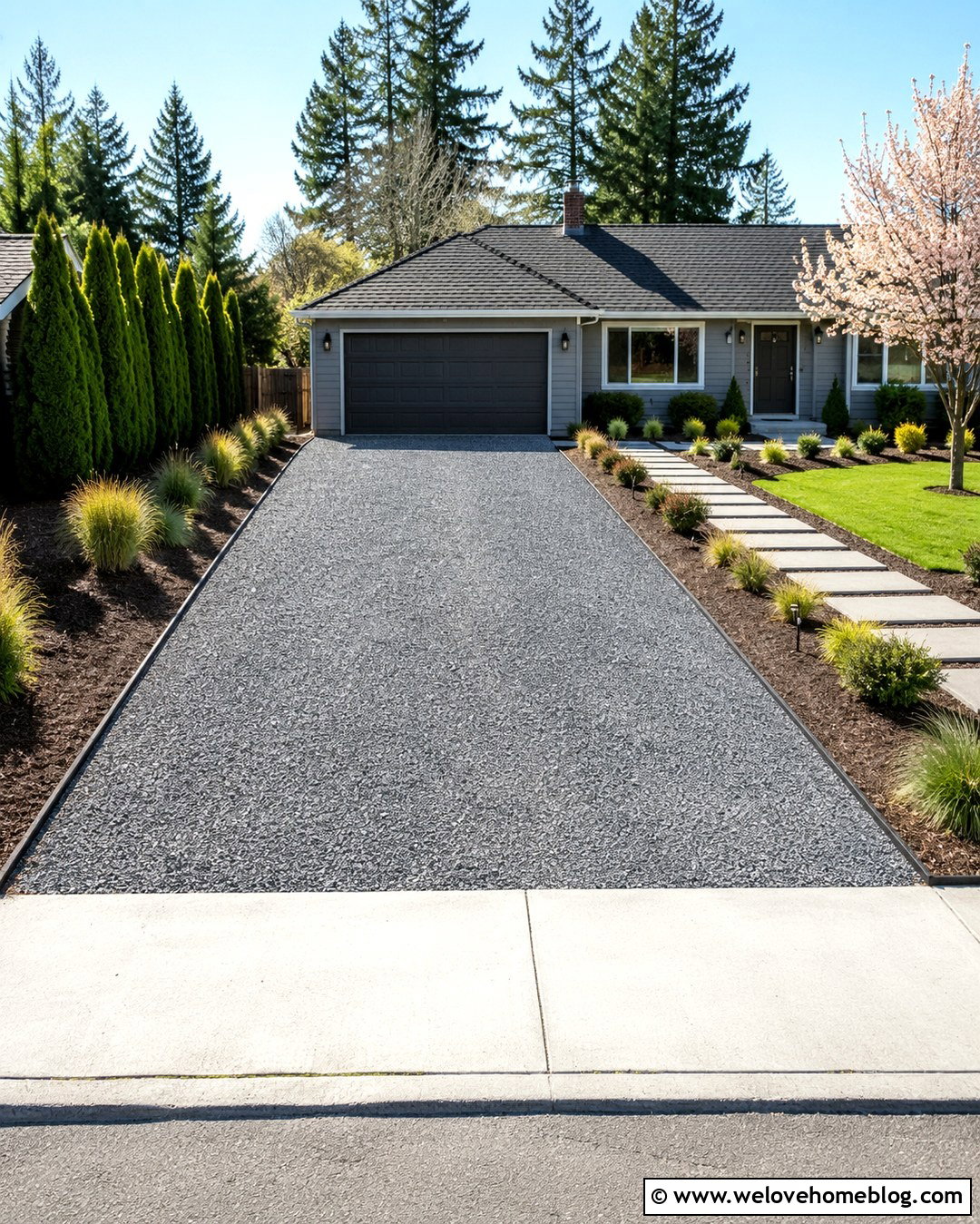
A budget-conscious driveway can still look complete when money is focused on the most visible transitions. Use compacted gray crushed gravel for a straight main surface, then install a broom-finished concrete apron at the street and another concrete pad near the garage. Metal or pressure-treated landscape edging can contain the gravel, while broad mulched beds soften both sides. Choose affordable plants with a clear structure, such as repeated ornamental grasses, compact evergreen shrubs, and one small flowering tree. A separate concrete stepping path gives visitors a clean route to the front door. Keep curves minimal to reduce excavation and edging needs. Before installation, prioritize grading, base preparation, and drainage rather than decorative extras. More expensive features, including masonry borders or upgraded planting, can be added later without changing the overall layout.
Conclusion:
These **20 front driveway design ideas** show how paving, borders, layout, landscaping, and architecture can work together as one complete entrance. Start by choosing a surface that suits your climate, maintenance expectations, and budget. Then use shape and edging to give it definition. Planting beds, walkways, lighting, gates, and address markers should support that foundation instead of competing with it. Before construction, review drainage, turning space, underground utilities, local requirements, and any neighborhood rules. It also helps to test material samples beside the house in natural daylight. A carefully planned driveway does more than provide parking. It guides visitors, strengthens curb appeal, and creates a welcoming connection between the street and home.

Related posts:

Leave a Reply