
A crushed oyster shell driveway brings soft coastal color, natural texture, and an unmistakable crunch to a home’s entrance. These 20 Crushed Oyster Shell Driveway Ideas explore complete looks rather than treating the surface as an isolated feature. You will find straight, curved, circular, and compact layouts paired with practical borders, welcoming walkways, and layered landscaping. Crushed shells can form a bright, permeable surface, but successful installations depend on solid ground preparation, effective grading, firm compaction, and edging that limits material movement. Fresh shells may also become lighter as they weather in the sun. () Whether your home is coastal, traditional, modern, or rustic, the following designs provide useful inspiration through 20 Crushed Oyster Shell Driveway Ideas.
1. Straight Crushed Oyster Shell Driveway With Cobblestone Edging
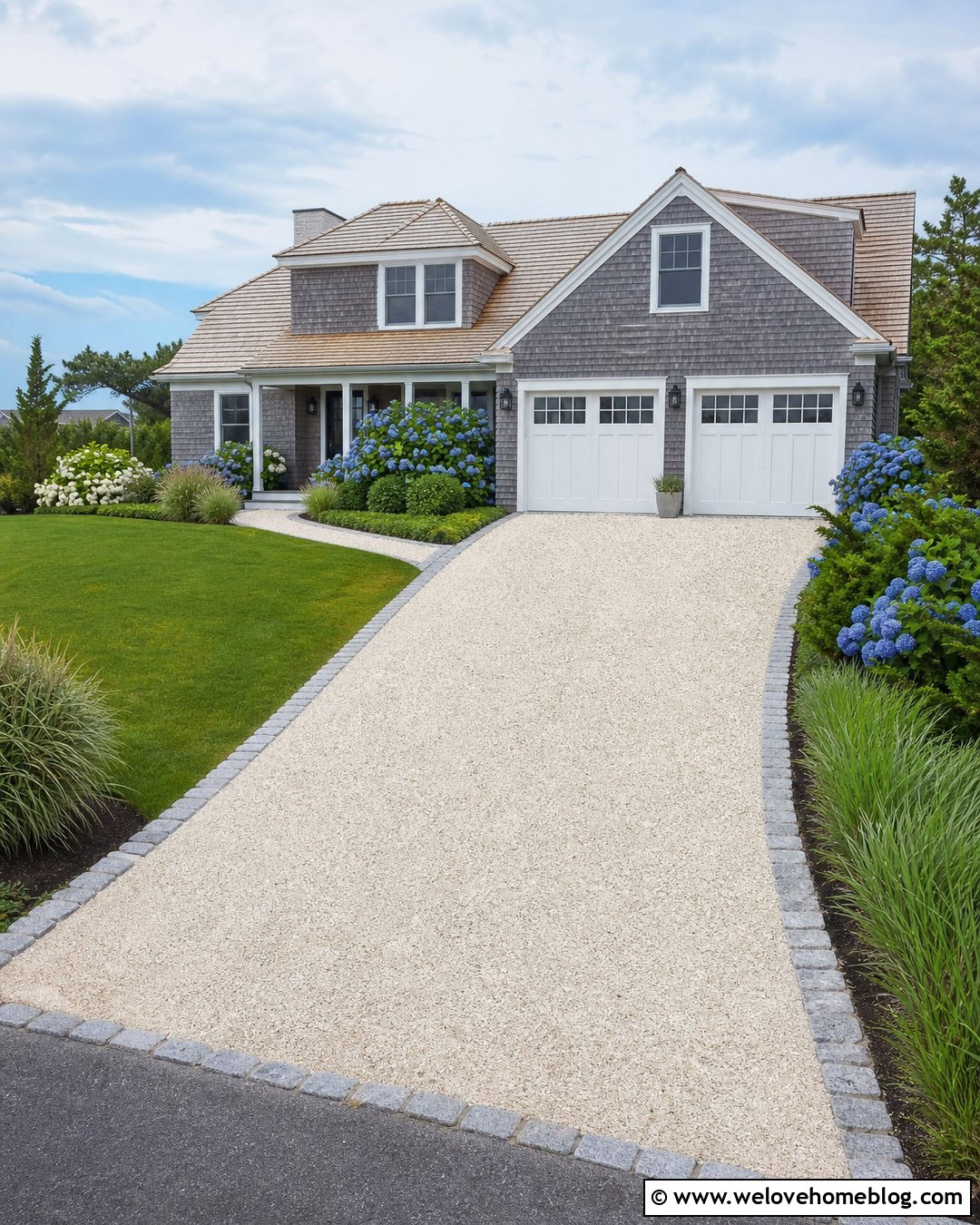
A straight layout makes the pale shell surface feel clean, orderly, and easy to navigate. Frame the driveway with gray granite cobblestones to create a firm boundary that contrasts with the warm white oyster shells. This border helps define the parking area while giving the entrance a traditional coastal character. Low beds of hydrangeas, inkberry, and ornamental grasses can soften both sides without crowding passing vehicles. Continue the cobblestones across the garage threshold as a simple apron for a more finished transition. A matching shell walkway can branch toward the front porch, tying the entrance together. Install the shells over a properly prepared and compacted stone base because good ground preparation helps reduce sinking, mixing, and premature resurfacing. ()
2. Curved Crushed Oyster Shell Driveway With Hydrangeas
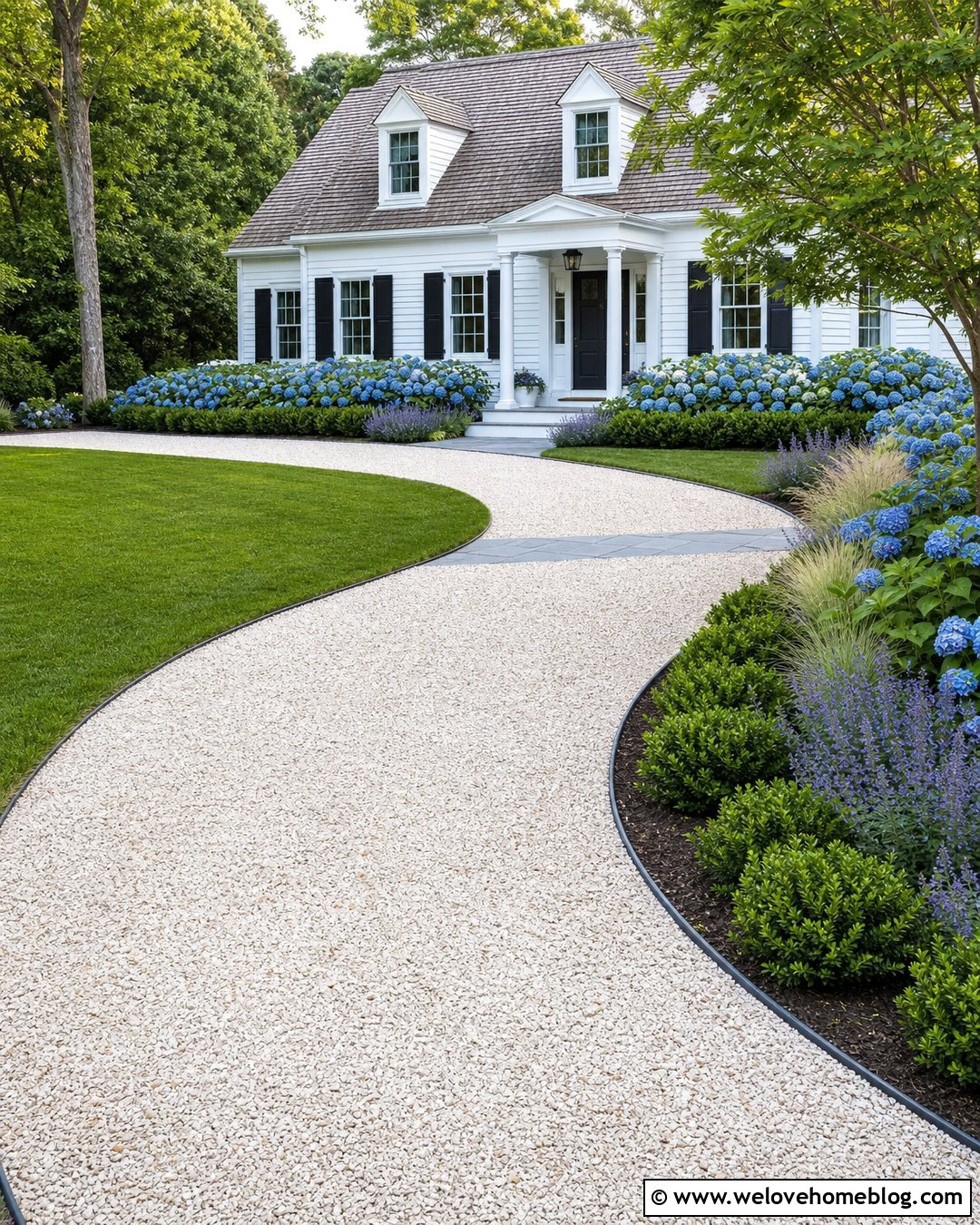
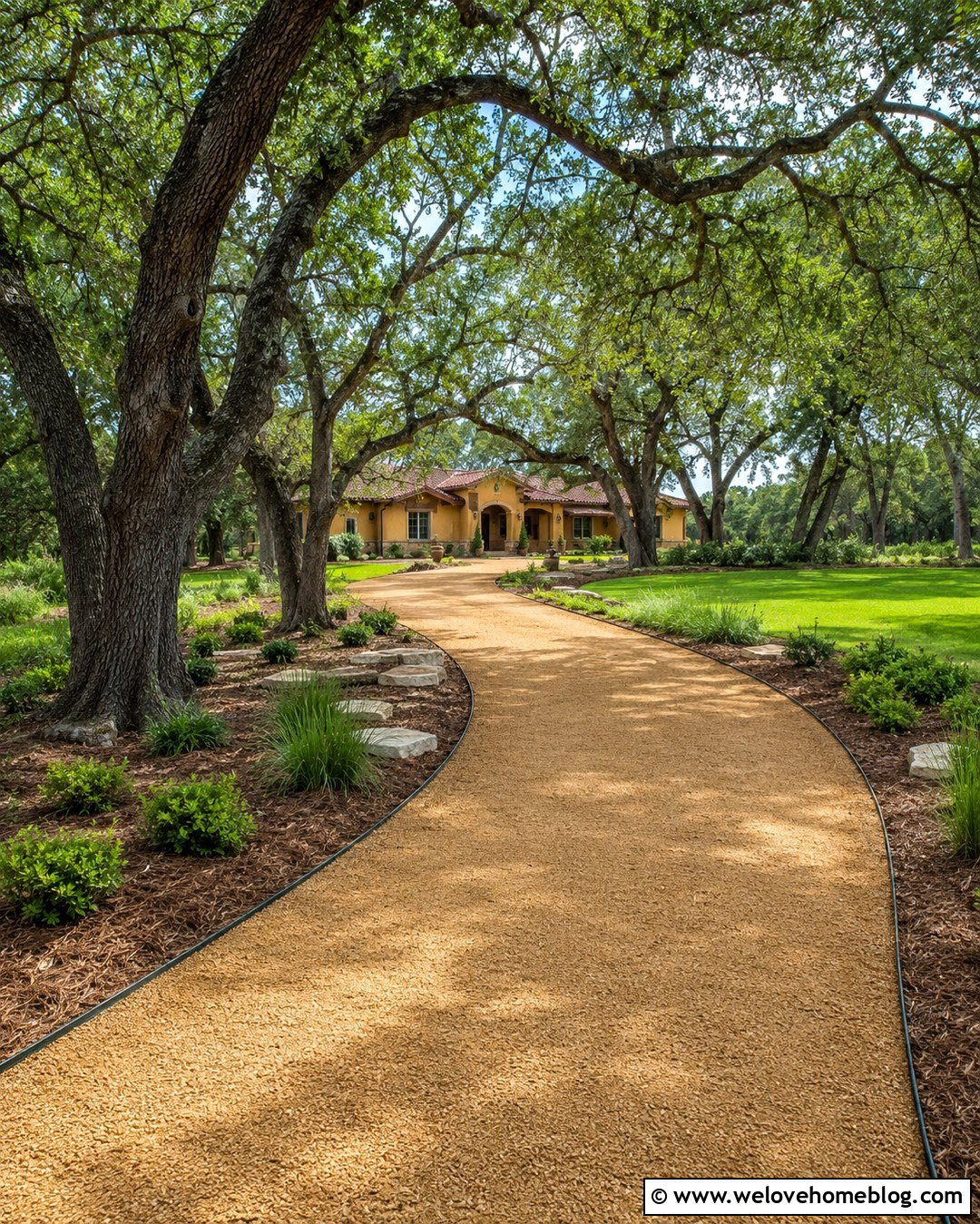
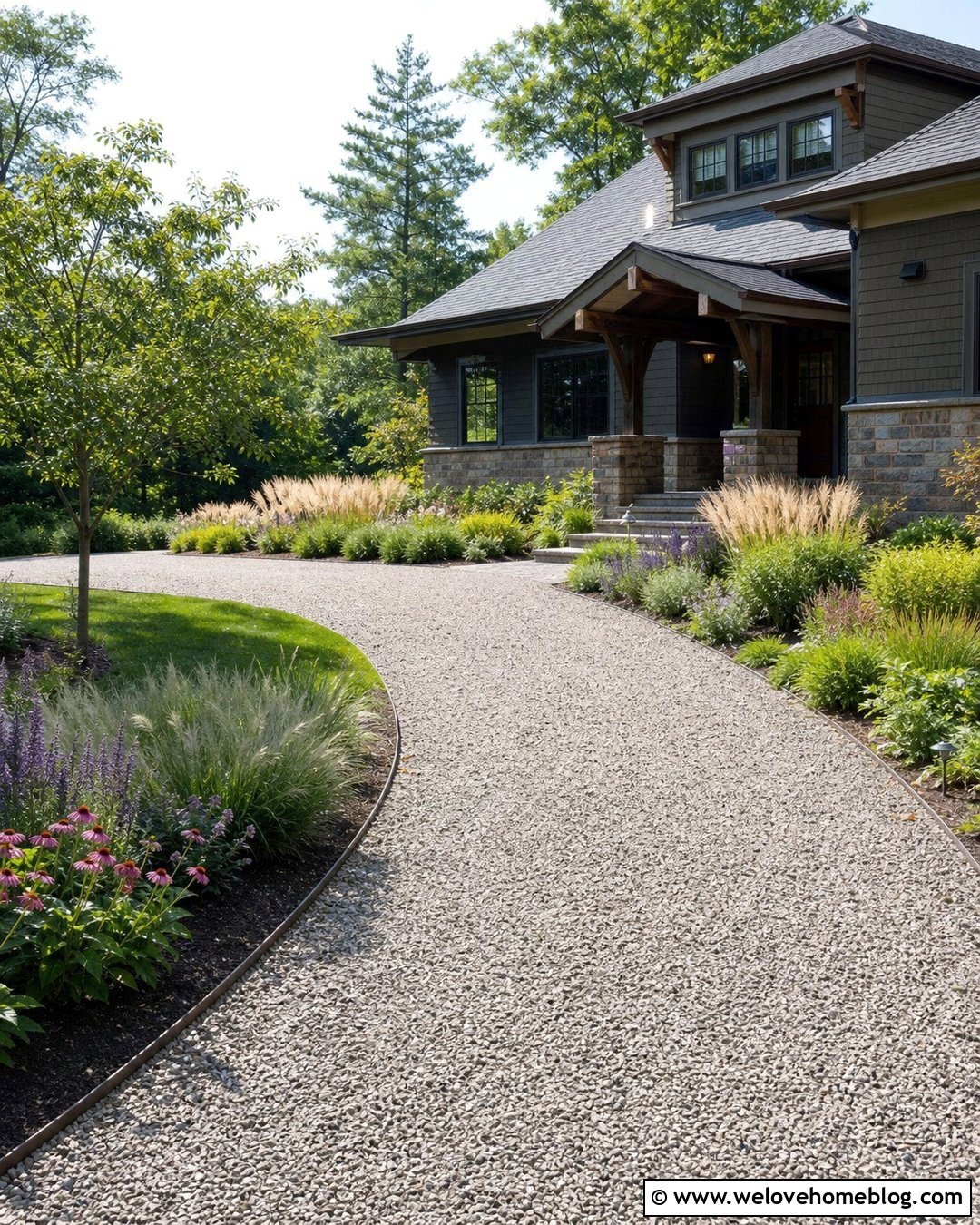
A gently curved shell driveway can make a modest front yard feel deeper and more inviting. Instead of showing the entire house from the street, the bend gradually reveals the porch, garage, and surrounding garden. Edge the crushed oyster shell with dark steel restraints that nearly disappear beside the lawn. Plant broad groups of blue hydrangeas along the outside curve, where there is more room for mature growth. On the inside, use lower plants such as catmint, dwarf inkberry, or prairie dropseed to protect sightlines. A bluestone walkway can cross the shell surface near the house and lead guests directly to the front door. Keep the curve broad rather than tight so vehicles can follow it without pushing loose shells against the edging.
3. Circular Crushed Oyster Shell Driveway With Center Garden
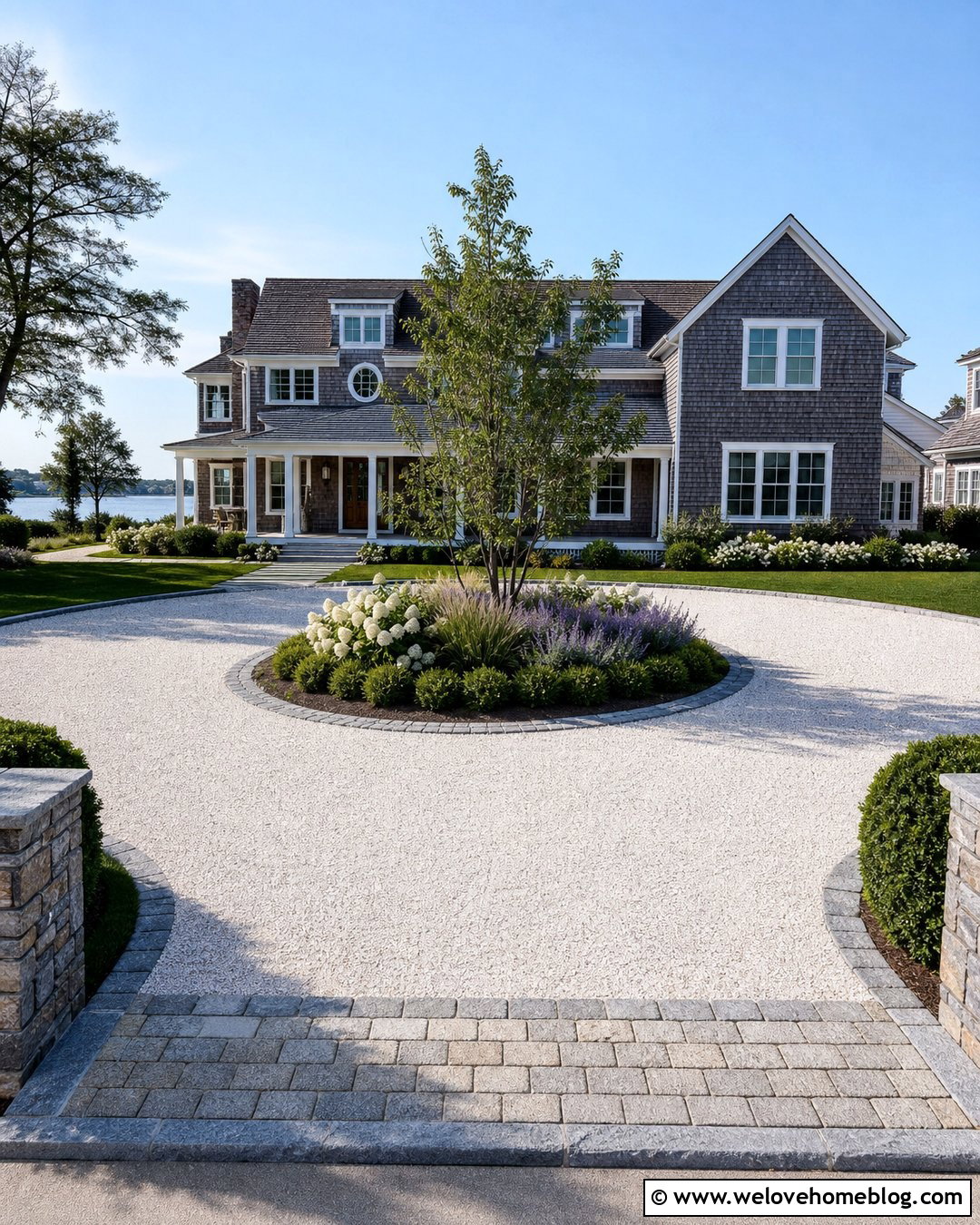
For a large coastal home, a circular driveway creates an impressive entrance while improving arrival and departure flow. Use bright crushed oyster shell across the complete loop and surround it with a low cobblestone border. The center island should be broad enough to look intentional rather than like a leftover patch of lawn. A small native tree, such as serviceberry, can anchor the space without hiding the house. Fill the lower layer with hydrangeas, evergreen inkberry, lavender, and decorative grasses. Repeat several of these plants near the facade to connect the island with the wider landscape. At the street, a granite or brick apron catches displaced shell and establishes a clear transition. Subtle grading should direct runoff away from the island and building foundation.
4. Crushed Oyster Shell Driveway With Brick Border
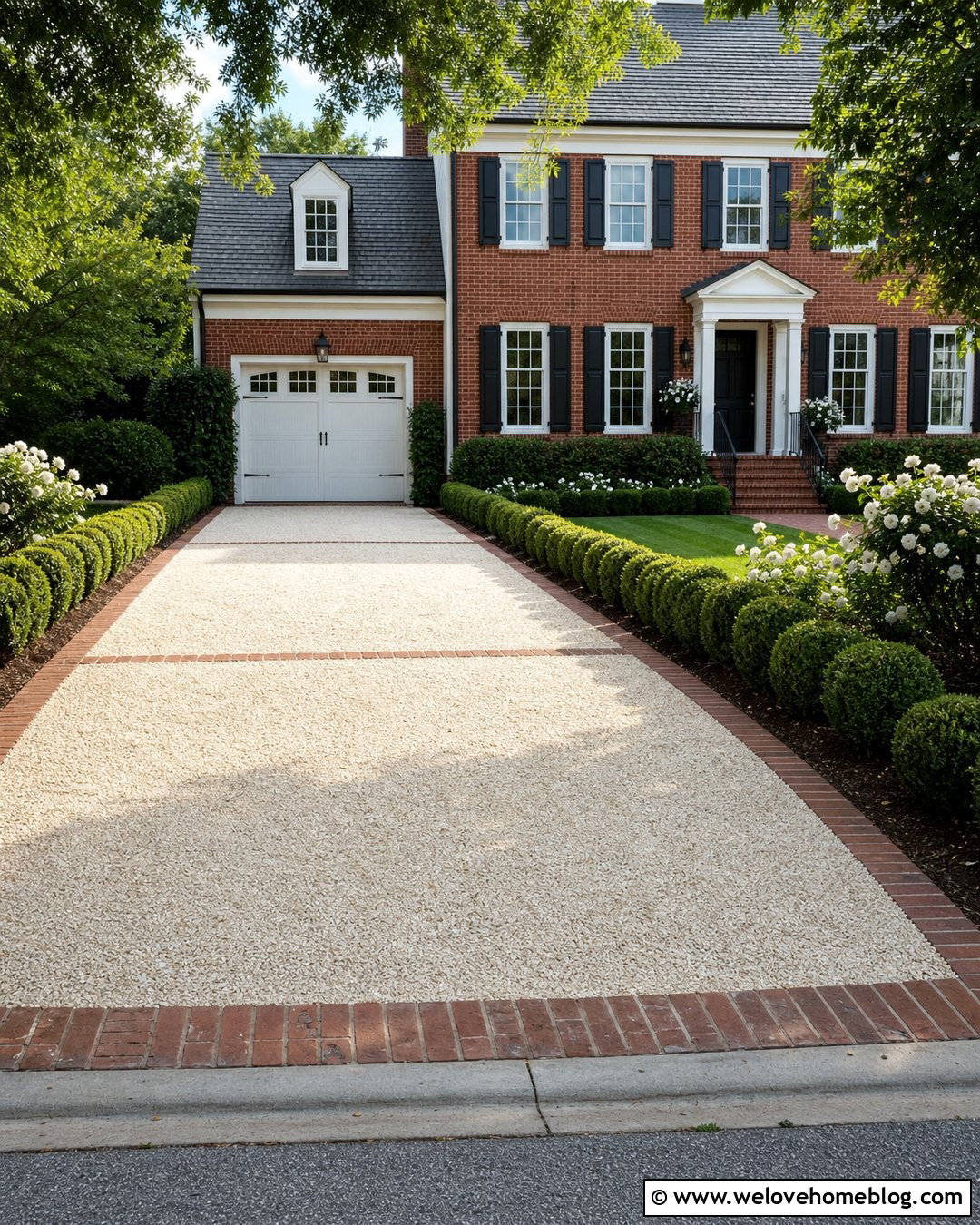
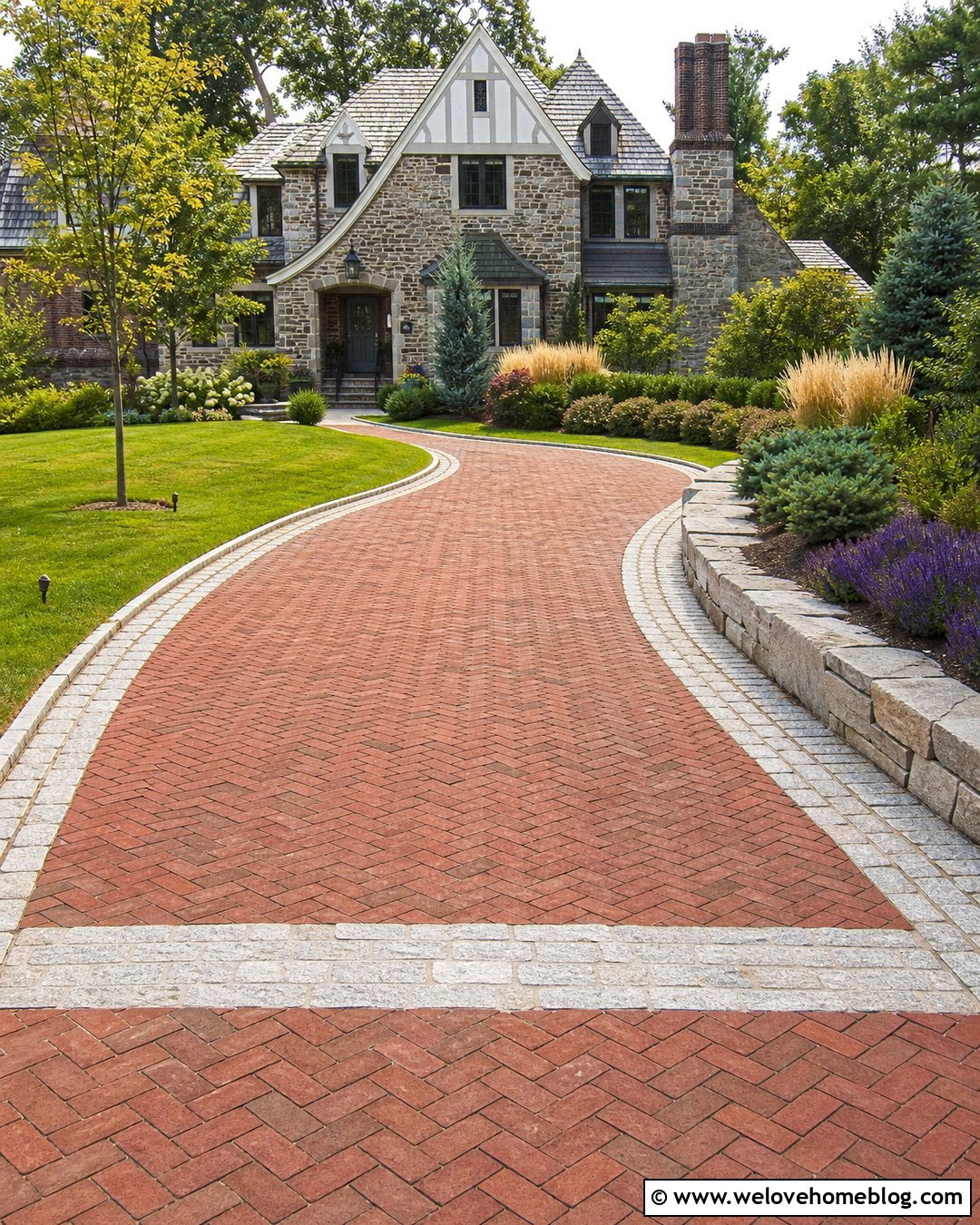
Warm red brick gives a crushed oyster shell driveway a classic look that works especially well beside colonial and Cape Cod homes. Lay the brick as a simple soldier-course border so its clean line stands out against the irregular shell texture. A matching brick apron at the curb and another narrow band near the garage can visually divide the long surface. Keep the driveway straight or introduce one gradual curve, depending on the position of the garage. Green lawn and clipped boxwood bring order to the design, while white flowering shrubs repeat the shell’s light color. Connect the driveway to the porch with a brick walkway. The coordinated materials make the entire entrance feel established, even when the shell surface itself remains relaxed and informal.
5. Crushed Oyster Shell Driveway With Timber Edging
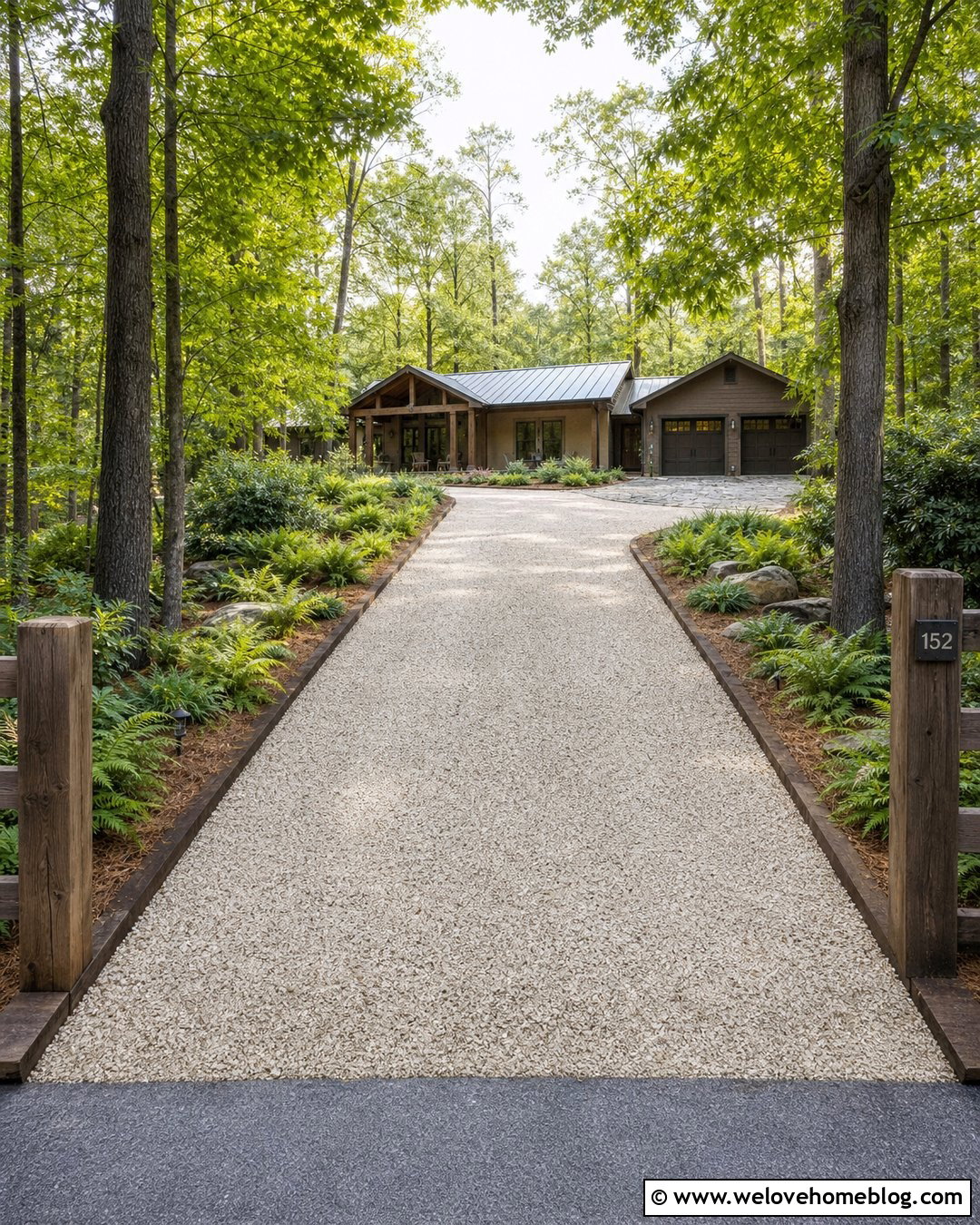
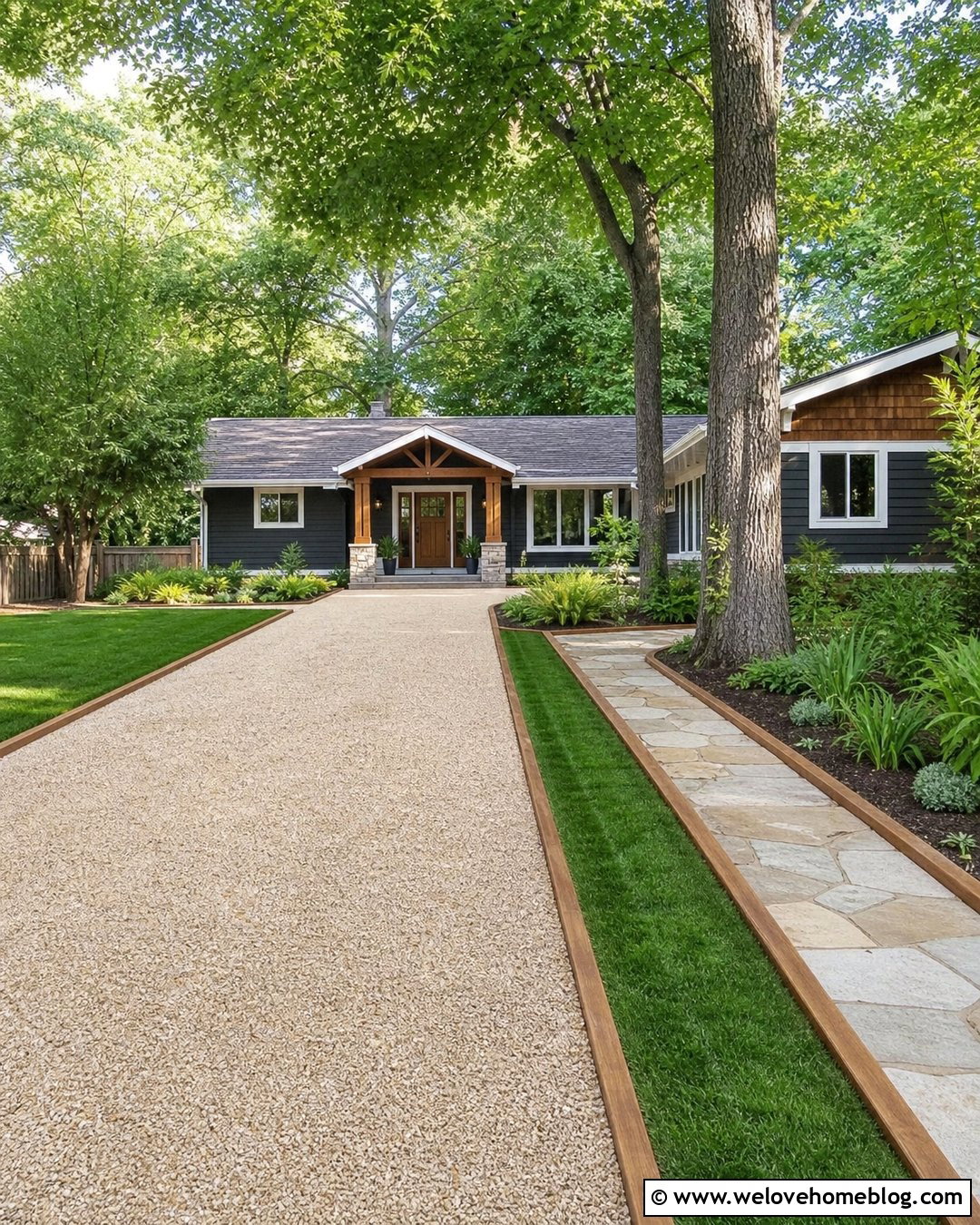
Do you want a shell driveway that feels natural rather than formal? Heavy timber edging provides a simple solution for a cottage, ranch, or wooded country home. Use pressure-treated or naturally rot-resistant timbers set firmly along a wide, straight driveway. Their warm brown tone creates a noticeable boundary against the pale crushed oyster shell. Plant ferns, native grasses, low blueberries, and spreading ground covers beyond the timbers to blend the driveway into its surroundings. Near the garage, switch to a stone apron that can handle frequent turning and create a cleaner threshold. The surface should remain nearly level with the timber tops so shells stay contained. This complete look is practical, understated, and particularly attractive where mature trees already define the property.
6. Crushed Oyster Shell Driveway With Granite Apron
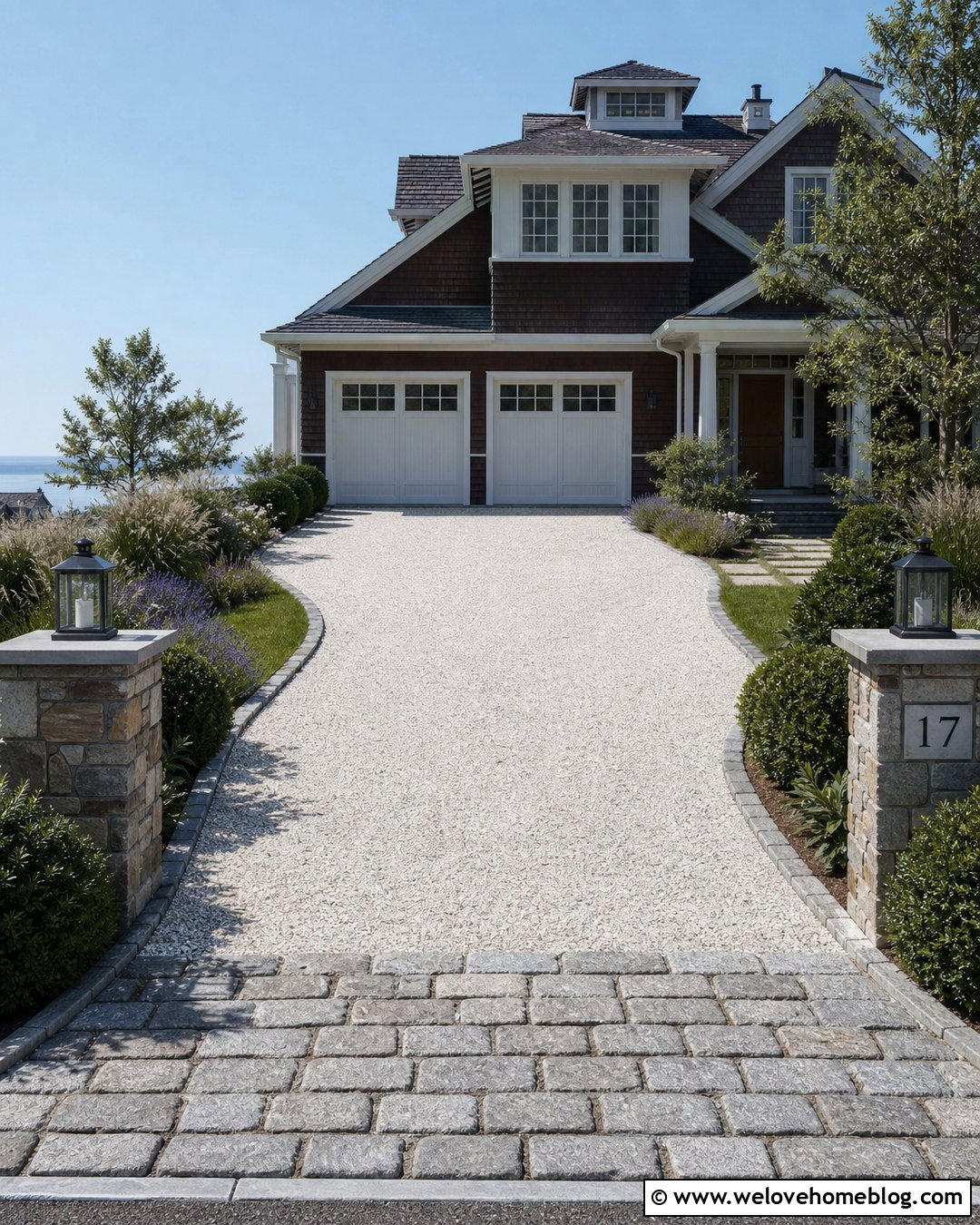
The street entrance usually experiences the greatest amount of turning, braking, and material displacement. A granite cobblestone apron can strengthen this transition while giving a shell driveway a polished beginning. Extend the apron several feet into the property and repeat the same granite along both edges. Beyond it, use compacted crushed oyster shell in a straight or gently widening layout leading toward the garage. Small beds containing dwarf yaupon, lavender, and fountain grass can flank the entrance without blocking visibility. Add simple address pillars set beyond the driving clearance. Shell is still a loose surface, so durable edge restraints and periodic releveling help control spreading, ruts, and low areas. () The substantial apron makes this maintenance easier at the most heavily traveled point.
7. Crushed Oyster Shell Driveway With Grass Center Strip
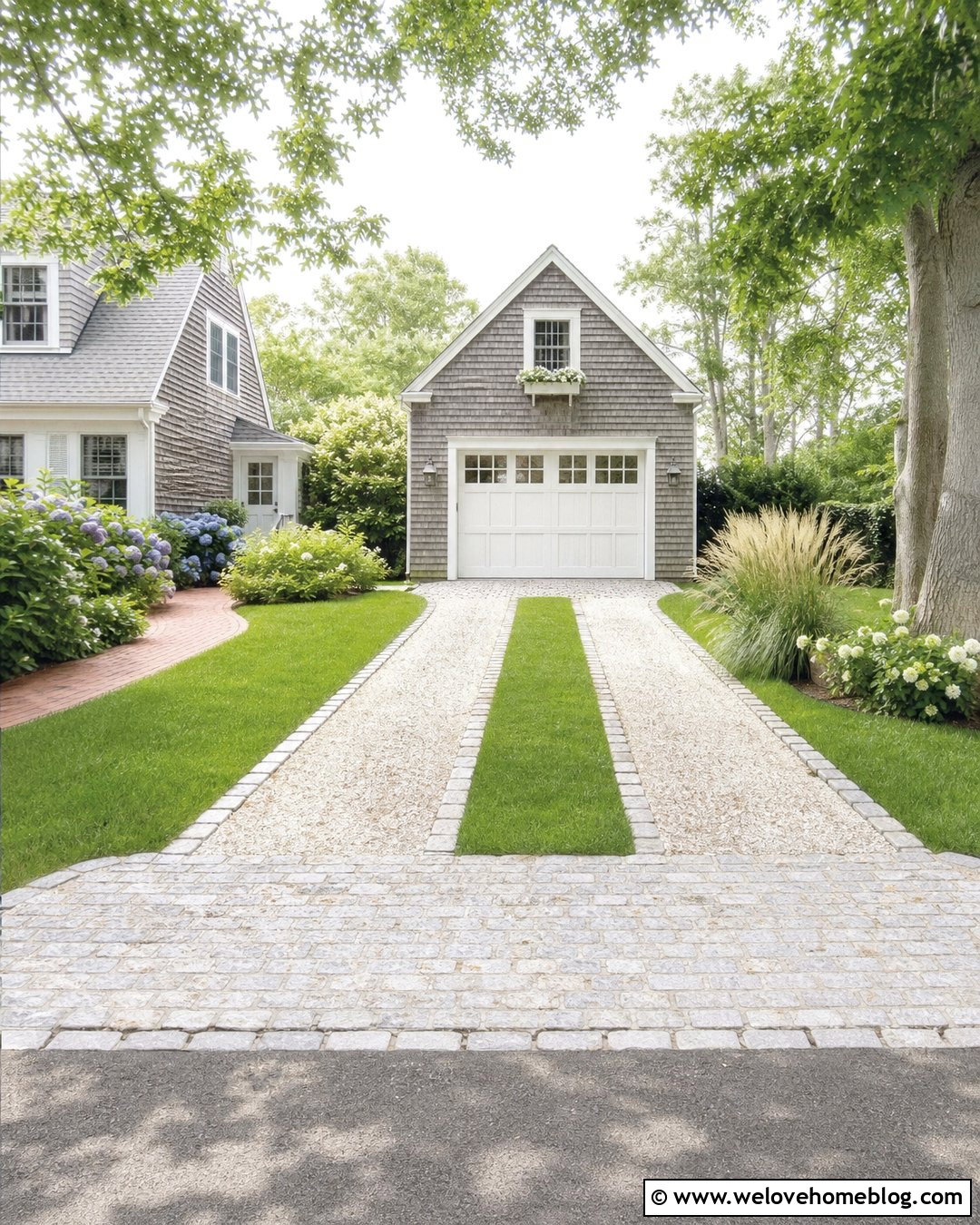
A shell driveway with a grass center strip reduces the visual width of the hardscape and creates a relaxed coastal-country appearance. Build two generous crushed oyster shell tracks rather than narrow tire lines, allowing different vehicles to use the driveway comfortably. Between them, establish a broad strip of durable turf that follows the full approach. Cobblestone edging on both sides of each shell track creates definition and helps prevent the materials from blending. This layout looks particularly appropriate in front of a weathered-shingle cottage or farmhouse garage. Continue the grass into the surrounding lawn for a seamless effect. Near the street and garage, replace the center strip with full-width shell and add stone aprons. These solid transition areas simplify turning and prevent awkward exposed corners.
8. Wide Crushed Oyster Shell Driveway With Parking Court
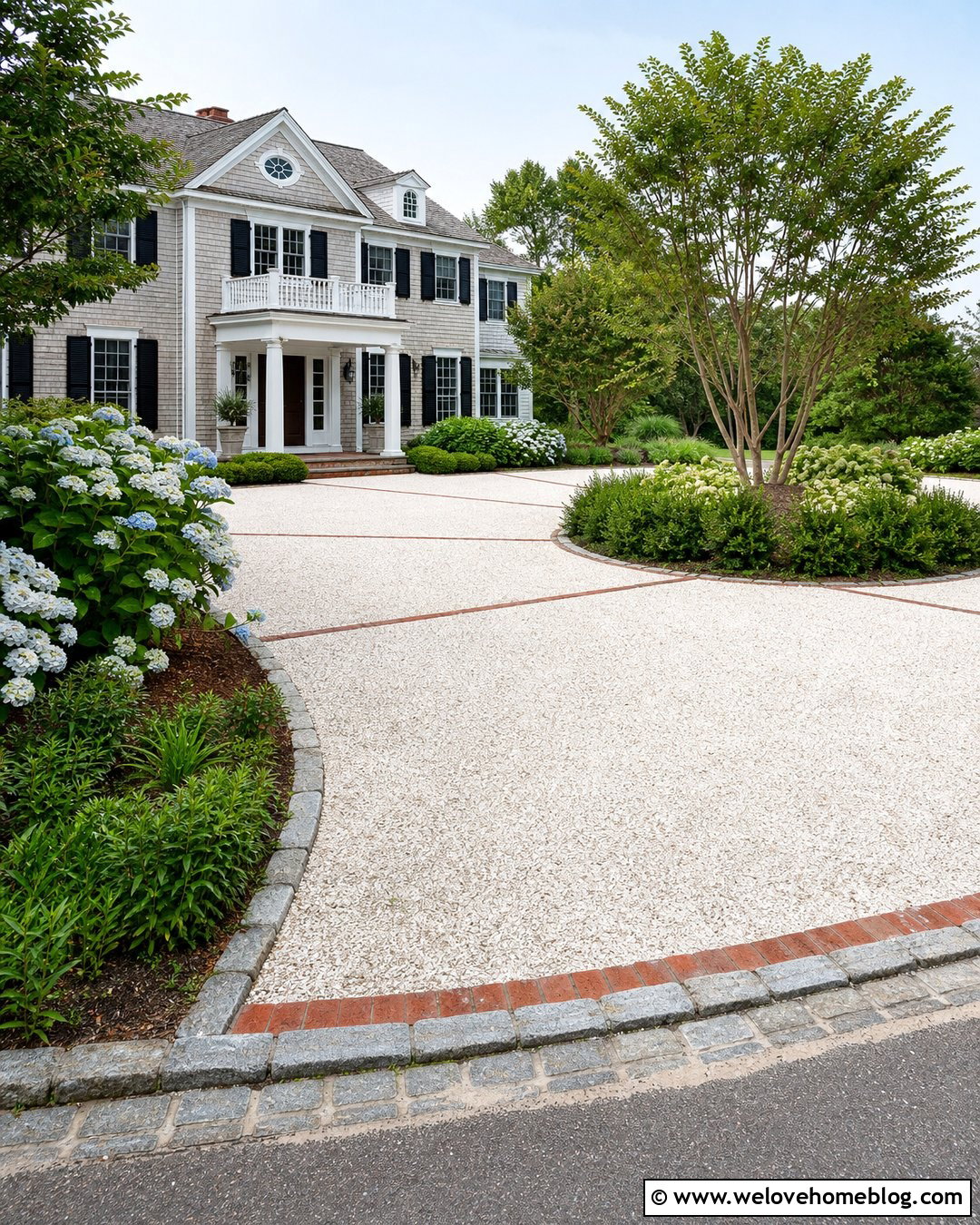
A wide parking court can provide useful guest space without resembling a commercial lot. Begin with a narrower crushed oyster shell approach, then gradually open it into a rectangular or fan-shaped court near the house. Define the outside edge with reclaimed granite blocks and place a brick ribbon between the driving lane and parking bays. Large planting beds at the corners can contain multi-stem trees, hydrangeas, hollies, and sweeps of ornamental grass. These beds break up the broad surface and guide vehicles naturally. A contrasting stone walkway should lead from the court to the front entrance, keeping pedestrian movement clear. Leave enough open space for turning, but avoid making every edge perfectly square. Slightly softened corners help the large driveway sit more comfortably within a residential landscape.
9. Narrow Crushed Oyster Shell Driveway For Small Yards
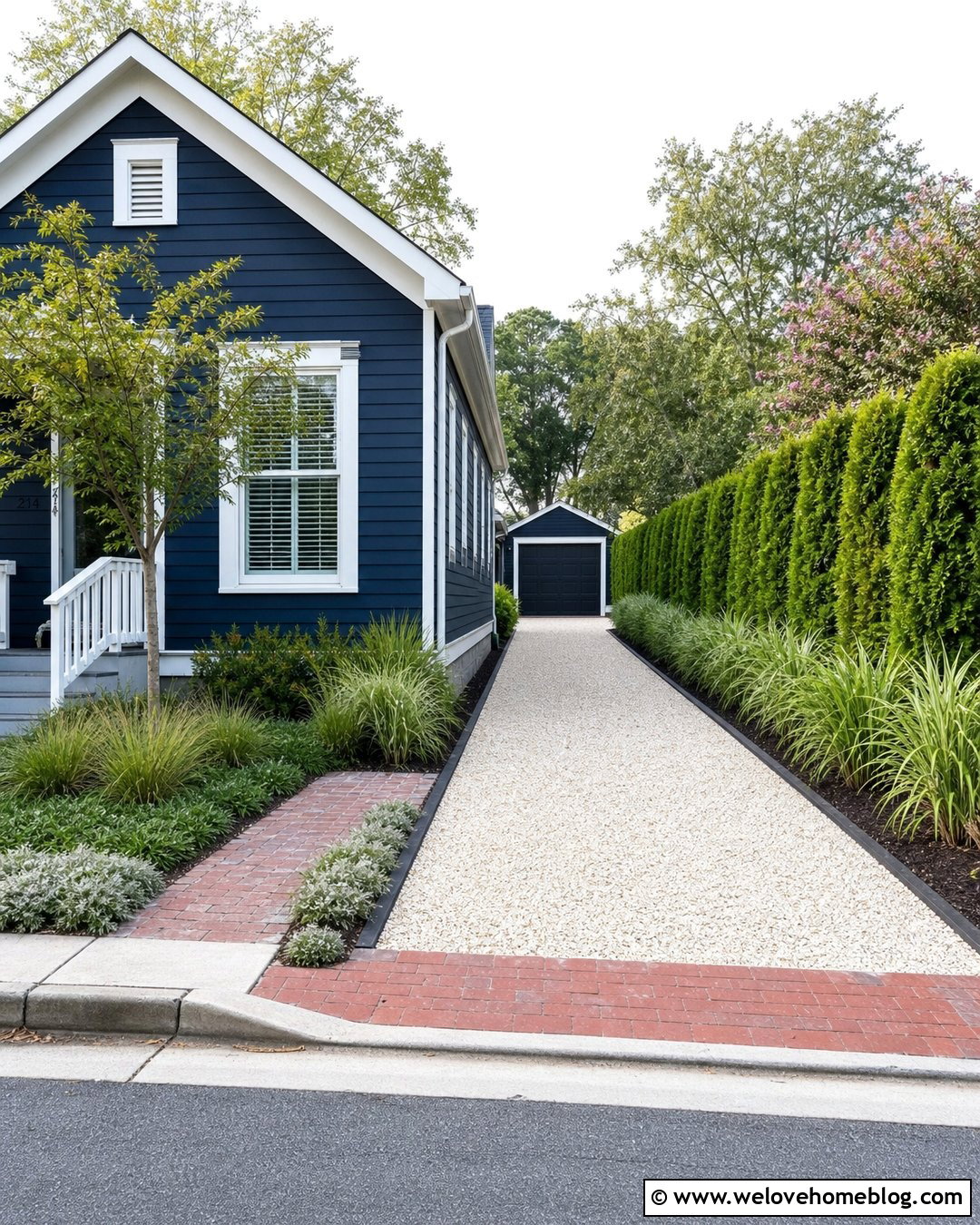
Limited frontage does not prevent a crushed shell driveway from making a strong impression. A narrow, single-lane layout can run beside the house toward a rear garage or compact parking pad. Use dark metal edging to conserve every available inch, since thick stone borders may make the space feel tighter. Along the property line, plant a slim evergreen hedge or upright ornamental grasses for privacy. Keep the house side simpler with a narrow brick walkway and low ground covers. At the curb, add a brick apron that matches the home’s facade and prevents the entrance from looking unfinished. Bright oyster shell visually opens the passage, especially beside a darker exterior. Careful drainage is important in confined side yards, where runoff must not be directed toward the neighboring property or foundation.
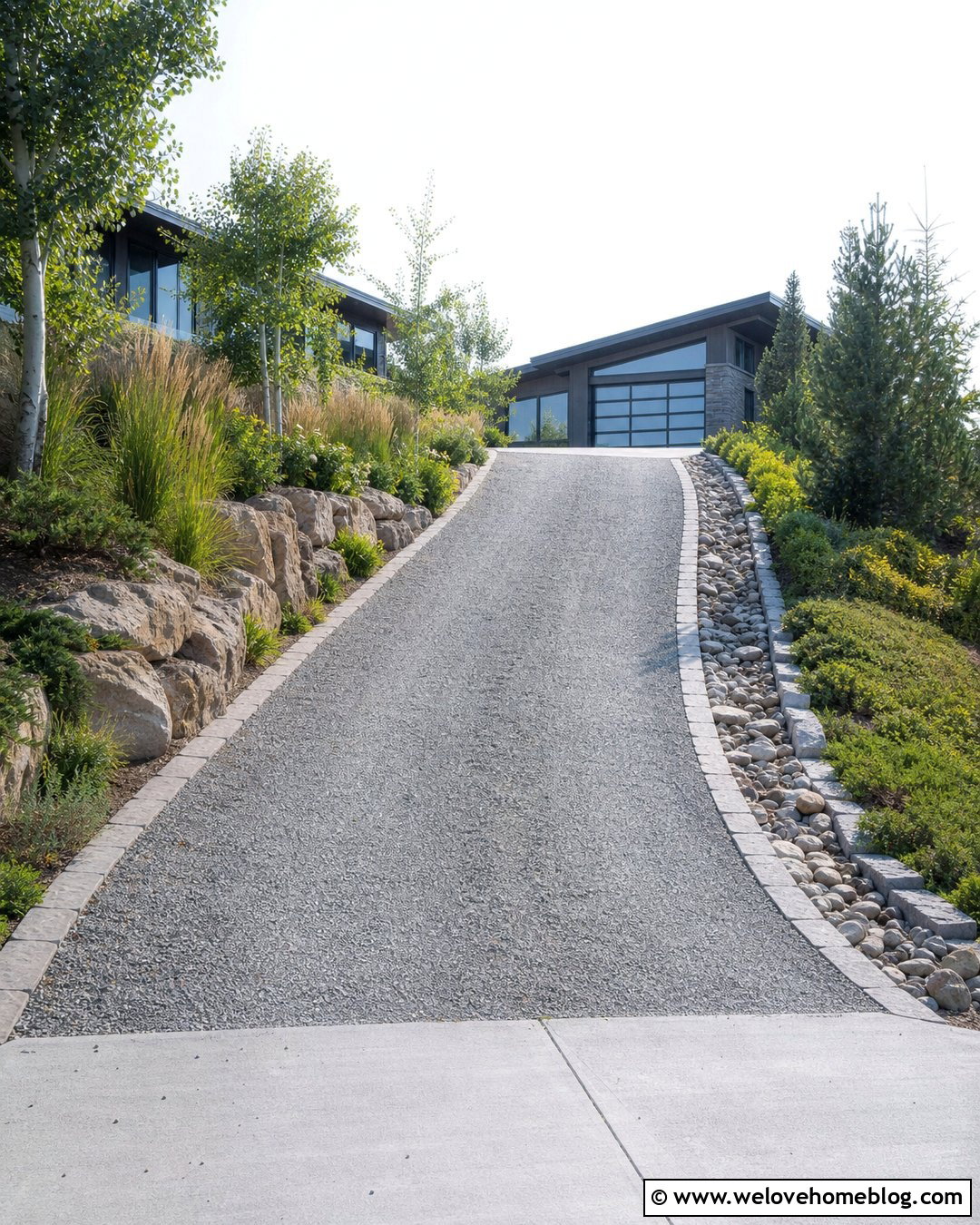
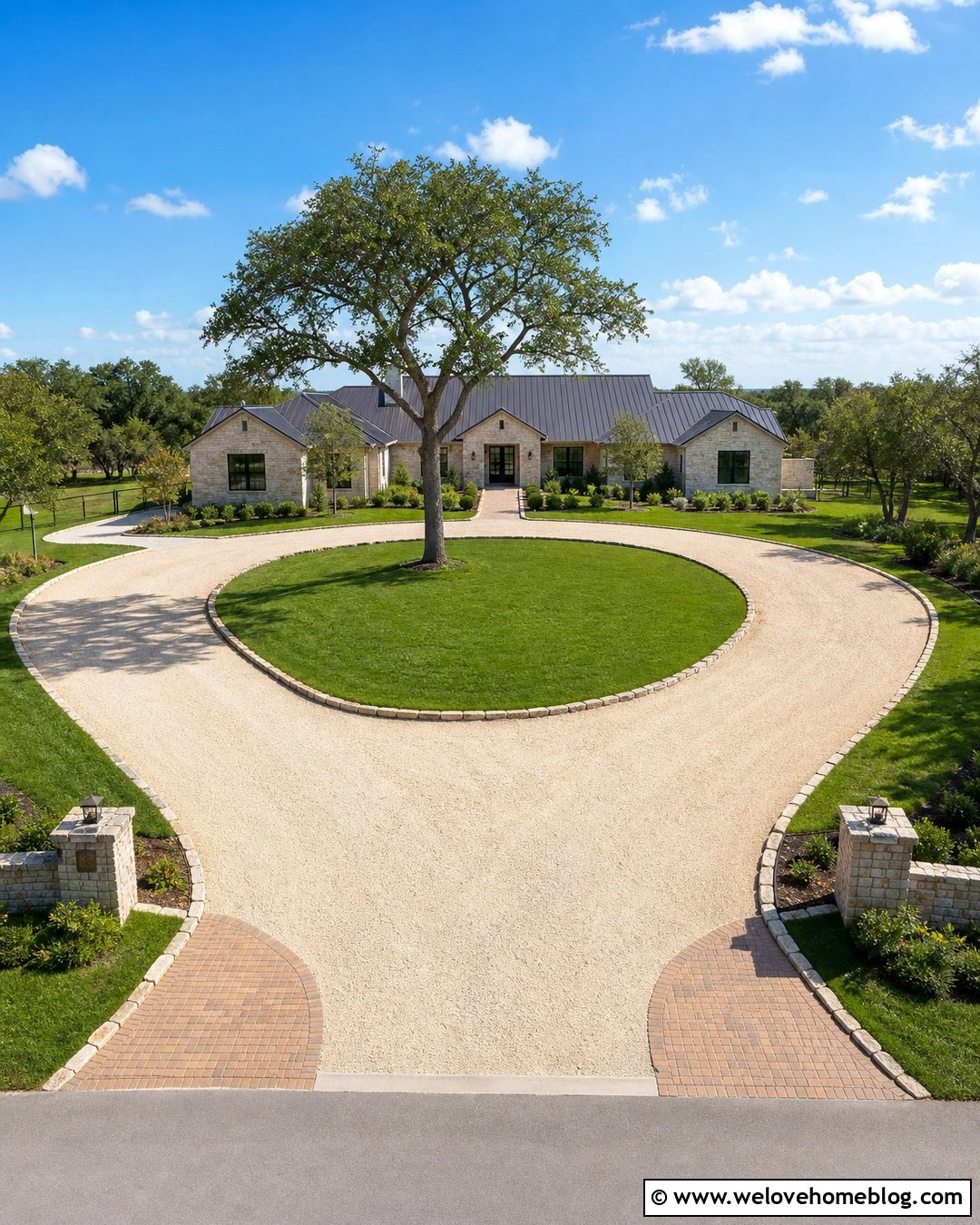
10. Crushed Oyster Shell Driveway With Coastal Native Plants
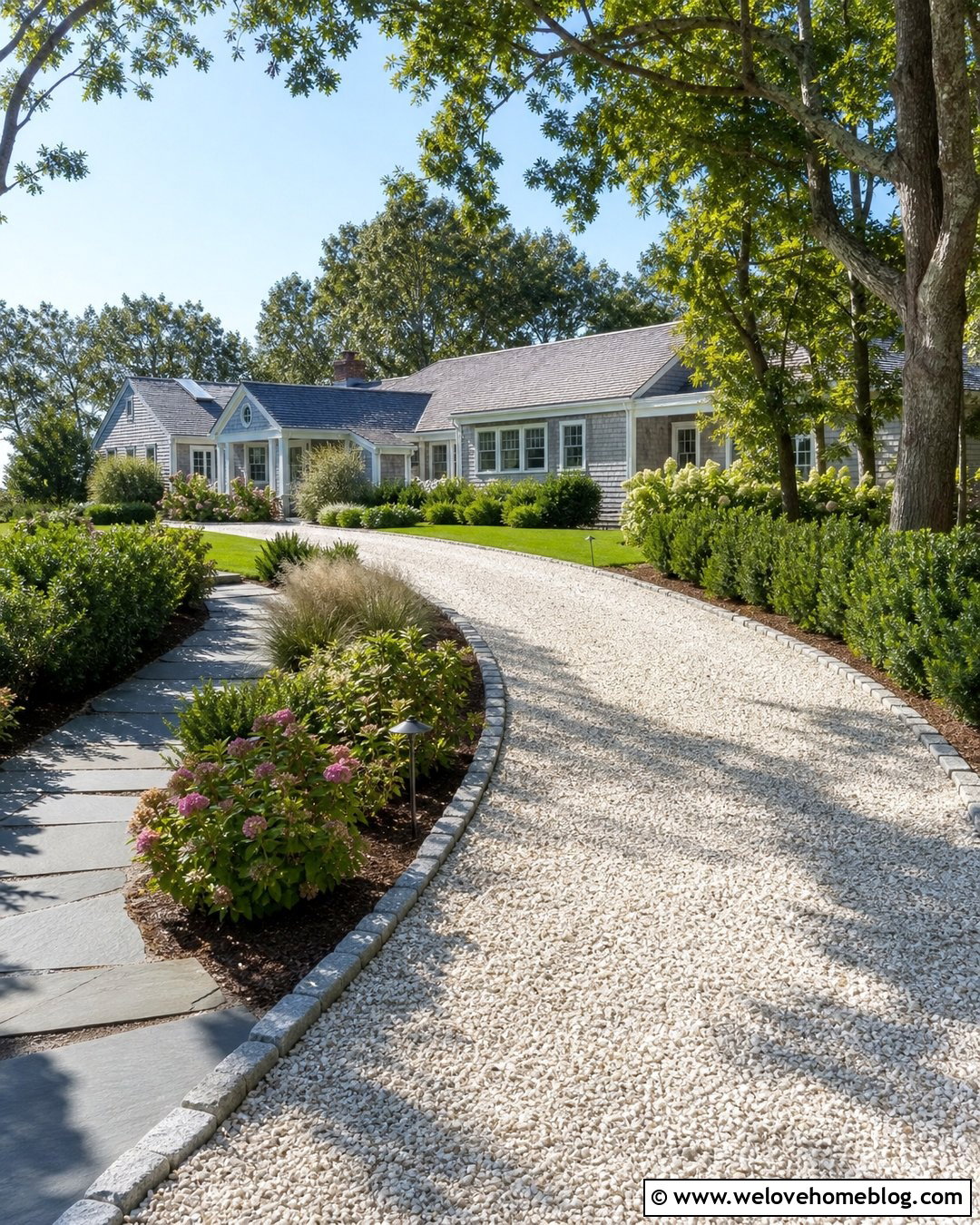
Salt-tolerant and regionally appropriate planting can make a shell driveway feel connected to its surroundings. Pair a gently curved crushed oyster shell surface with beds of bayberry, beach plum, inkberry, switchgrass, and low-growing juniper. Arrange the plants in broad groups rather than isolated specimens to produce a calm, natural composition. Granite cobblestone edging gives the loose shell a strong boundary without appearing overly decorative. Near the house, introduce hydrangeas or white roses for a more cultivated transition. A simple bluestone walkway can cross the planting and meet the shell driveway at a clearly defined landing. Leave open lawn or low plants around the street entrance to protect visibility. Once established, the layered greenery provides movement, seasonal color, and a convincing coastal frame for the light driveway surface.
11. Crushed Oyster Shell Driveway With Beach Grass Borders

Tall, moving grasses emphasize the breezy quality of a crushed oyster shell entrance. Use a broad, slightly curved driveway edged with low steel or granite so the border remains visible beneath the planting. Mass ornamental grasses in repeated drifts along the outside of the curve, choosing species suited to local soil, moisture, and climate. Mix in compact evergreens to maintain structure after the grasses are cut back. The inside curve should feature shorter plants and an open lawn to preserve safe views. A shingle-style home with white trim provides an ideal background, but the combination can also soften a simple ranch house. Place larger stones sparingly within the beds. Too many nautical decorations can make the landscape feel themed, while restrained materials keep the complete design natural and sophisticated.
12. Crushed Oyster Shell Driveway With White Picket Fence
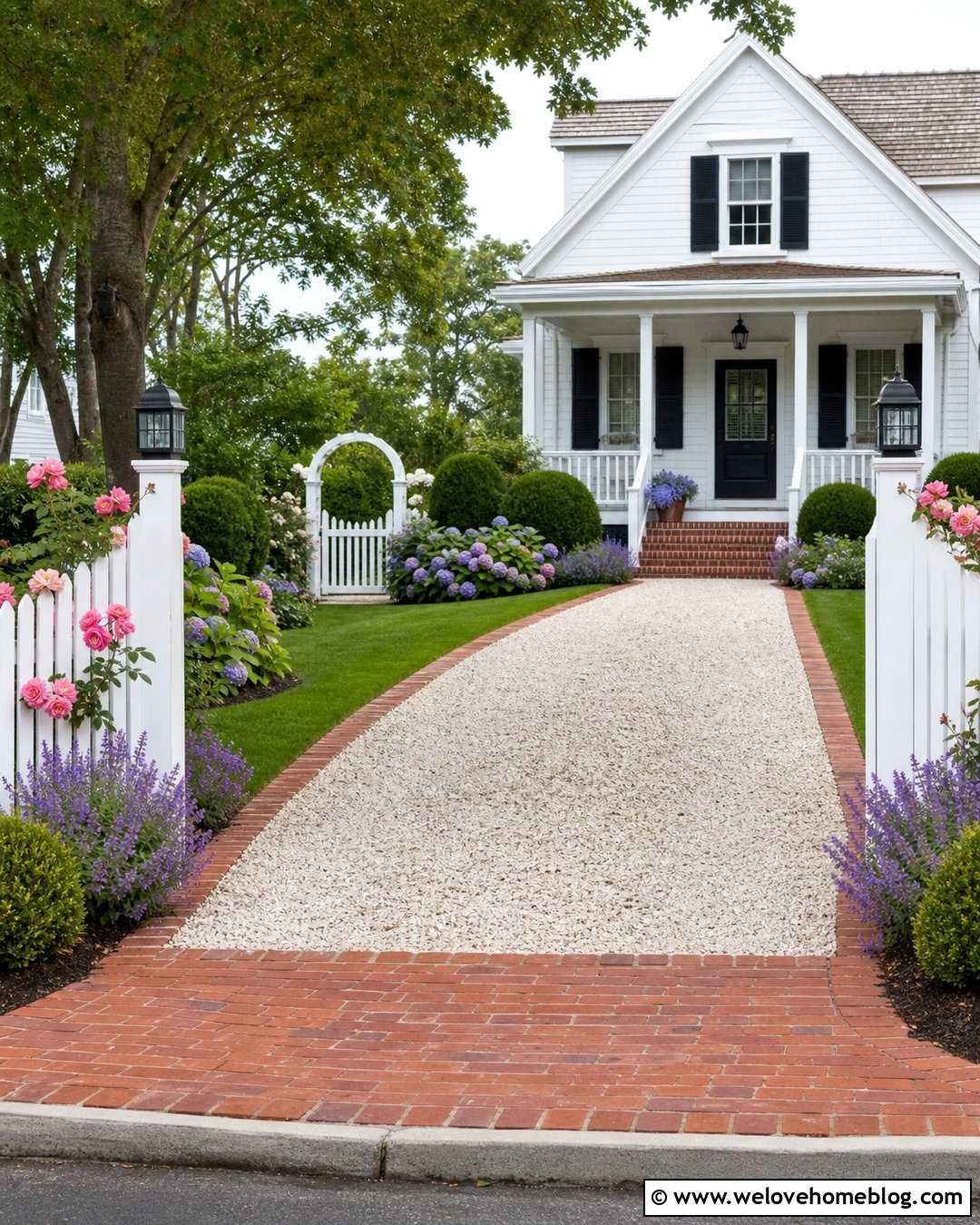
A white picket fence and pale shell driveway create an inviting cottage entrance without requiring elaborate architecture. Run the fence parallel to a straight crushed oyster shell driveway, leaving a planted strip between the two surfaces. Fill this bed with roses, catmint, salvia, hydrangeas, and compact evergreen shrubs. Use red brick edging along the driveway to introduce warmth and coordinate with a chimney or front walkway. At the street, curve the fence inward to form a wider entrance that feels comfortable for drivers. A matching garden gate can mark the pedestrian route to the porch. Keep the shell parking area broad enough near the garage, then narrow the visible approach. This change in width gives the property practical maneuvering space while maintaining a charming, residential scale from the curb.
13. Crushed Oyster Shell Driveway With Stone Pillars
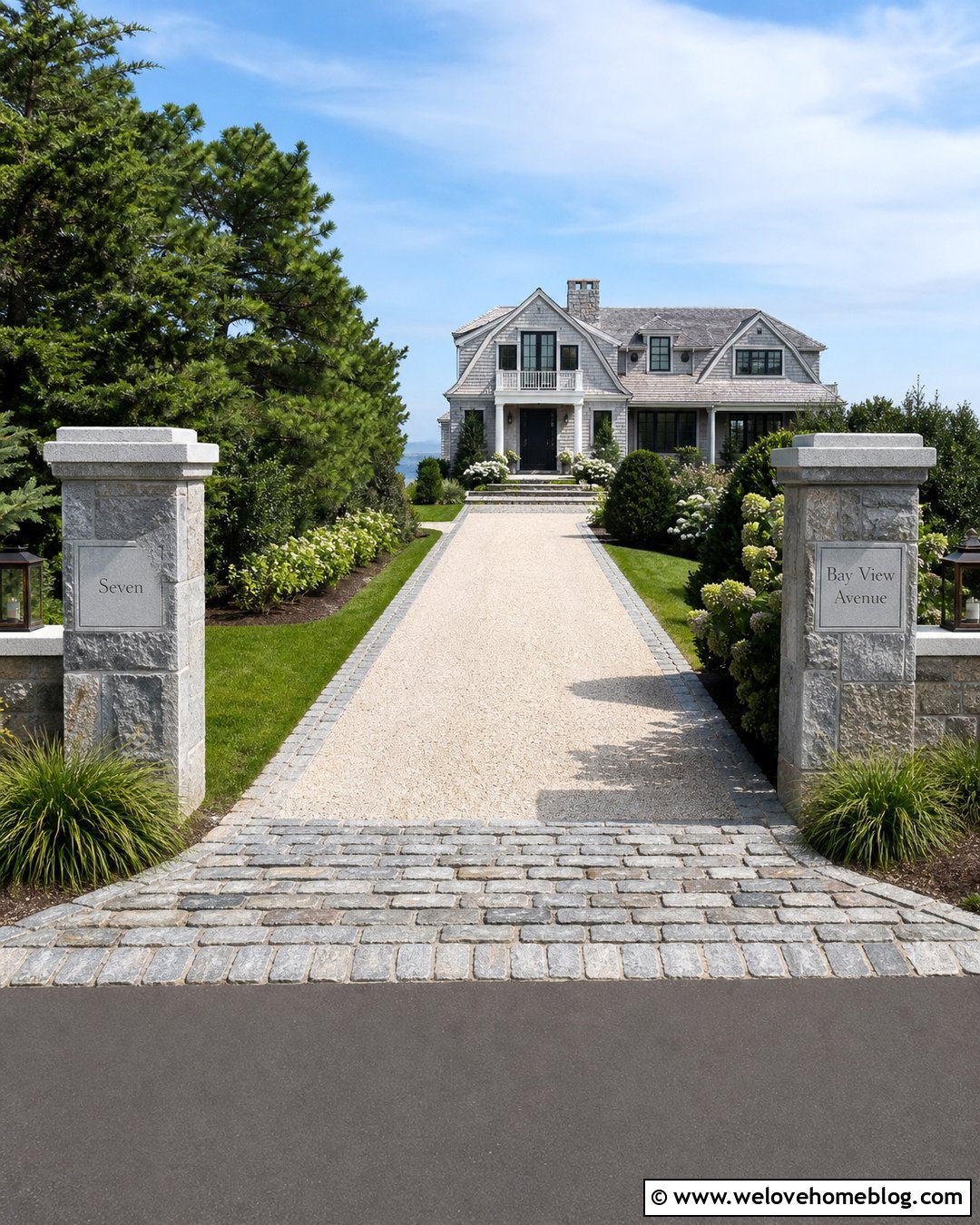
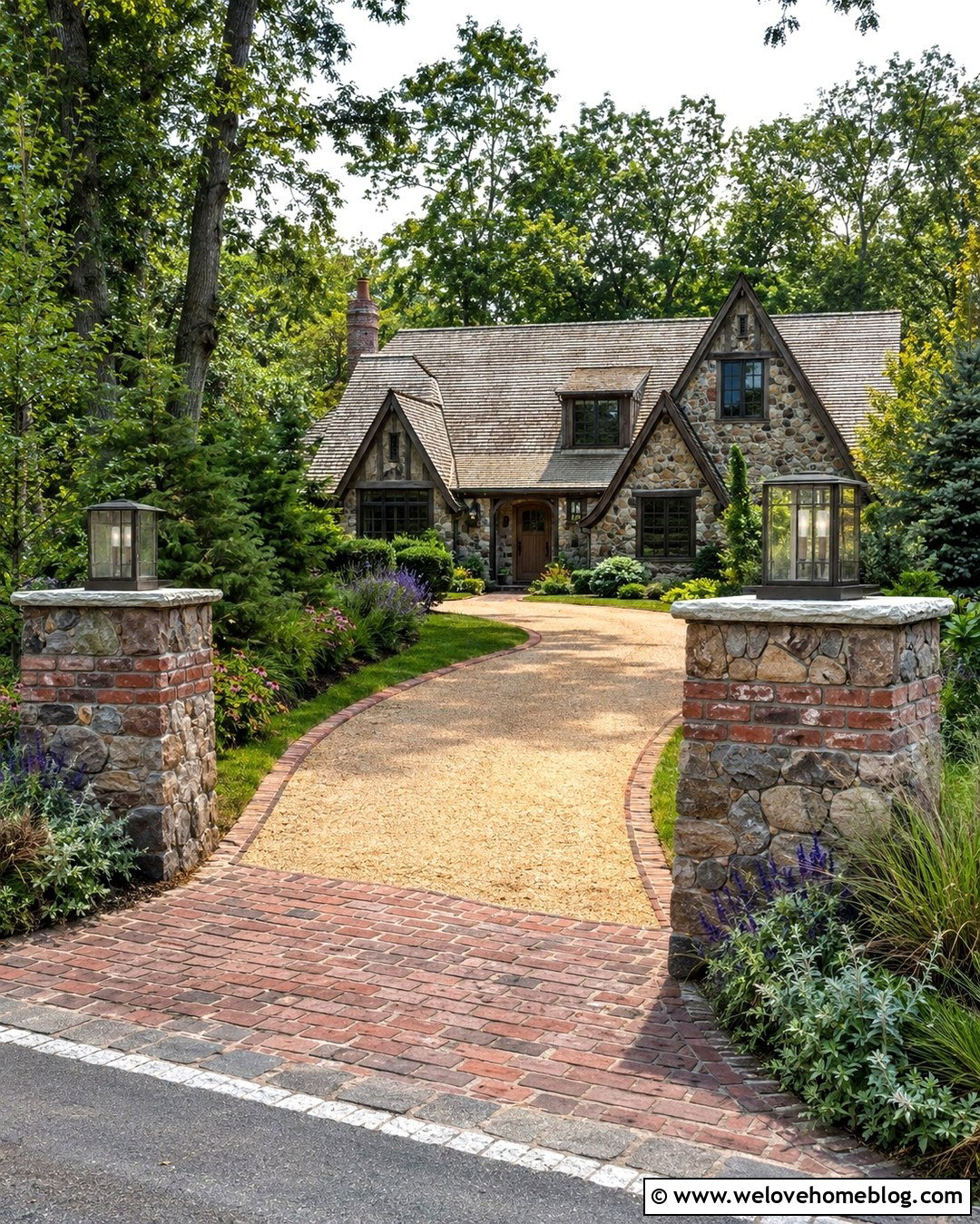
Stone pillars give a long shell driveway a clear point of arrival and help connect the entrance to the home’s architecture. Position the pillars well outside the vehicle path, then join them to low stone walls or simple fencing. Use warm fieldstone for a rustic house or rectangular gray granite for a more formal coastal property. Between the pillars, install a cobblestone apron that transitions into a straight crushed oyster shell drive. Continue narrow cobblestone edges toward the house for a coordinated finish. Plant low juniper, hydrangeas, and ornamental grasses around the pillar bases, but keep taller growth away from sightlines. Down the approach, repeat stone in a front walkway or porch foundation. This repetition makes the pillars feel integrated rather than added as a separate decorative feature.
14. Crushed Oyster Shell Driveway With Wooden Gate

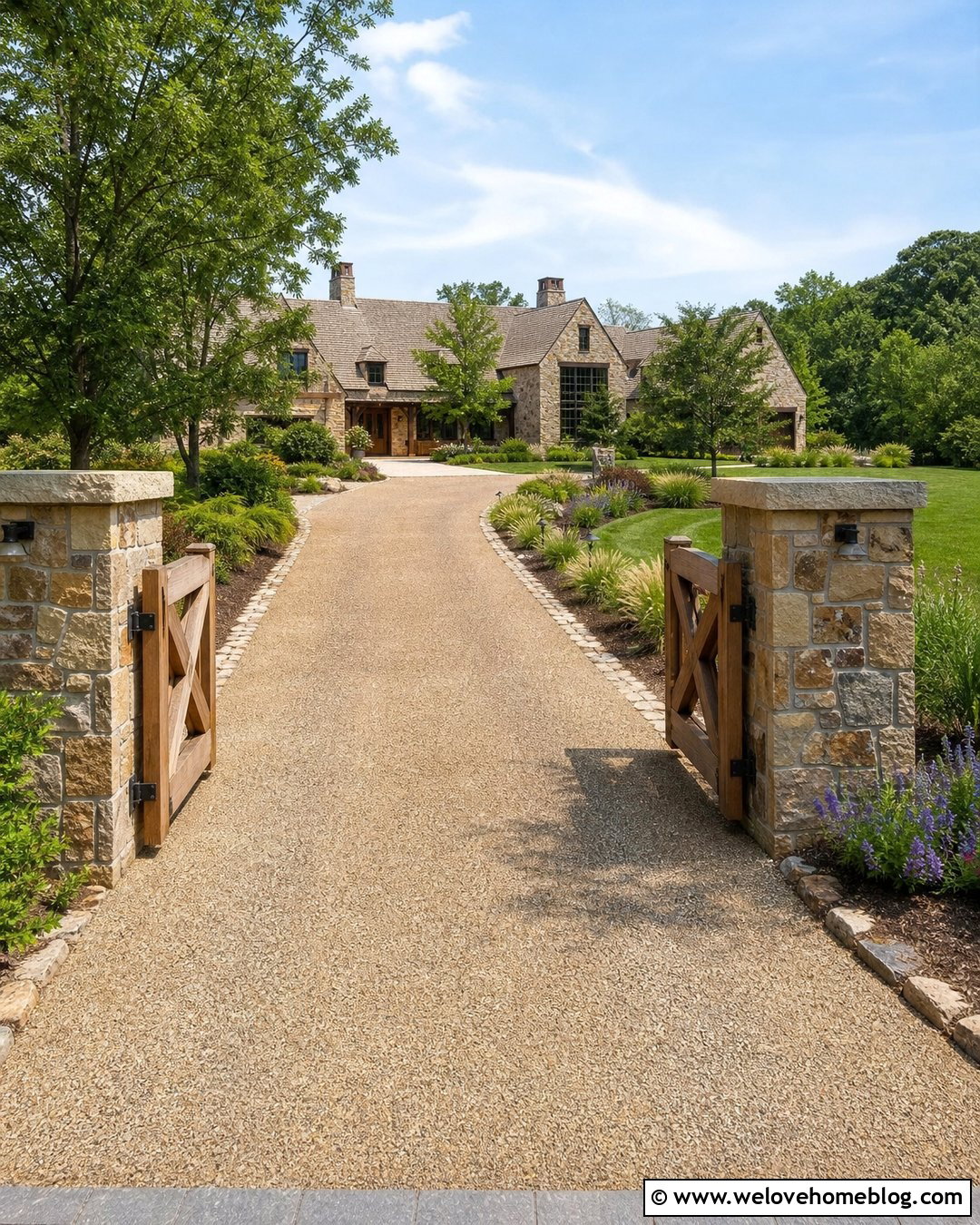
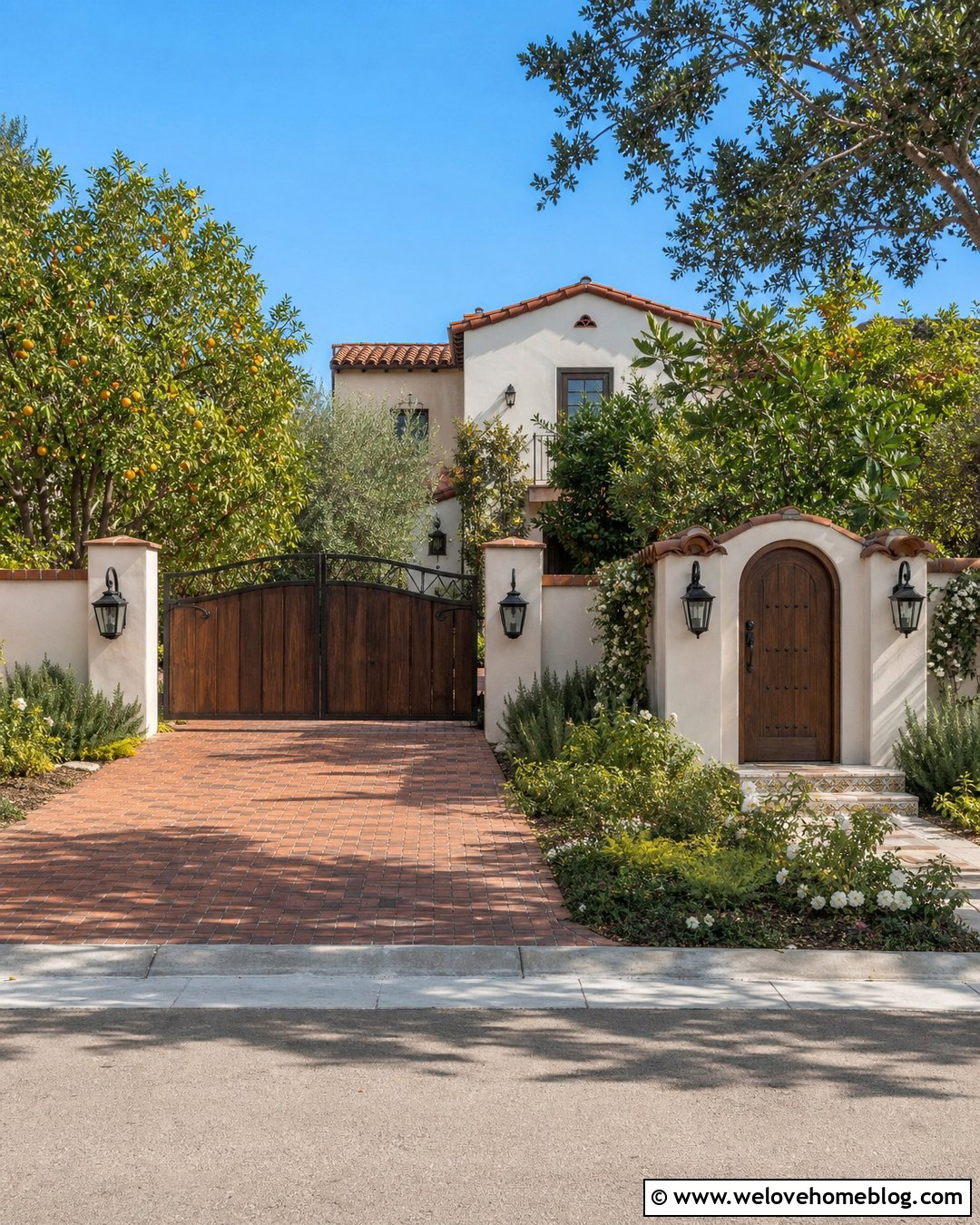
A wooden gate can bring privacy and warmth to a shell driveway, particularly on a large farmhouse or coastal country property. Choose a simple swing or sliding gate with wide openings that do not visually overpower the landscape. Set it between substantial timber posts or stone pillars and place a firm brick or cobblestone apron beneath the operating area. Beyond the gate, continue with compacted crushed oyster shell in a wide, gently curving layout. Shell surfaces can shift under sharp turns and concentrated traffic, making a stable base, controlled drainage, and sturdy edging particularly important around entrances. () Frame the gate with native evergreens and flowering shrubs while keeping the approach open. A small address marker and low landscape lighting can complete the entrance without making it feel cluttered.
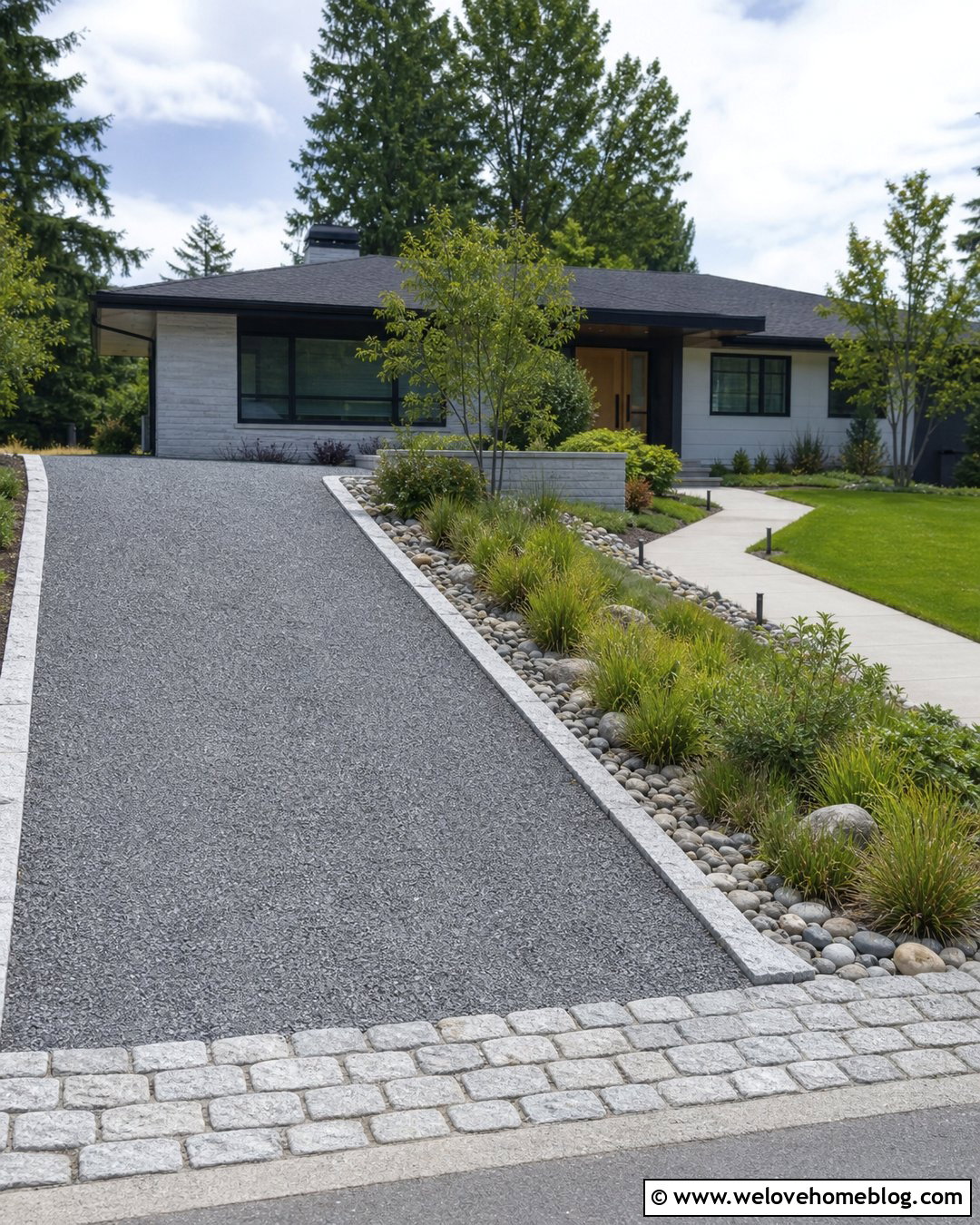
15. Crushed Oyster Shell Driveway With Modern Steel Edging
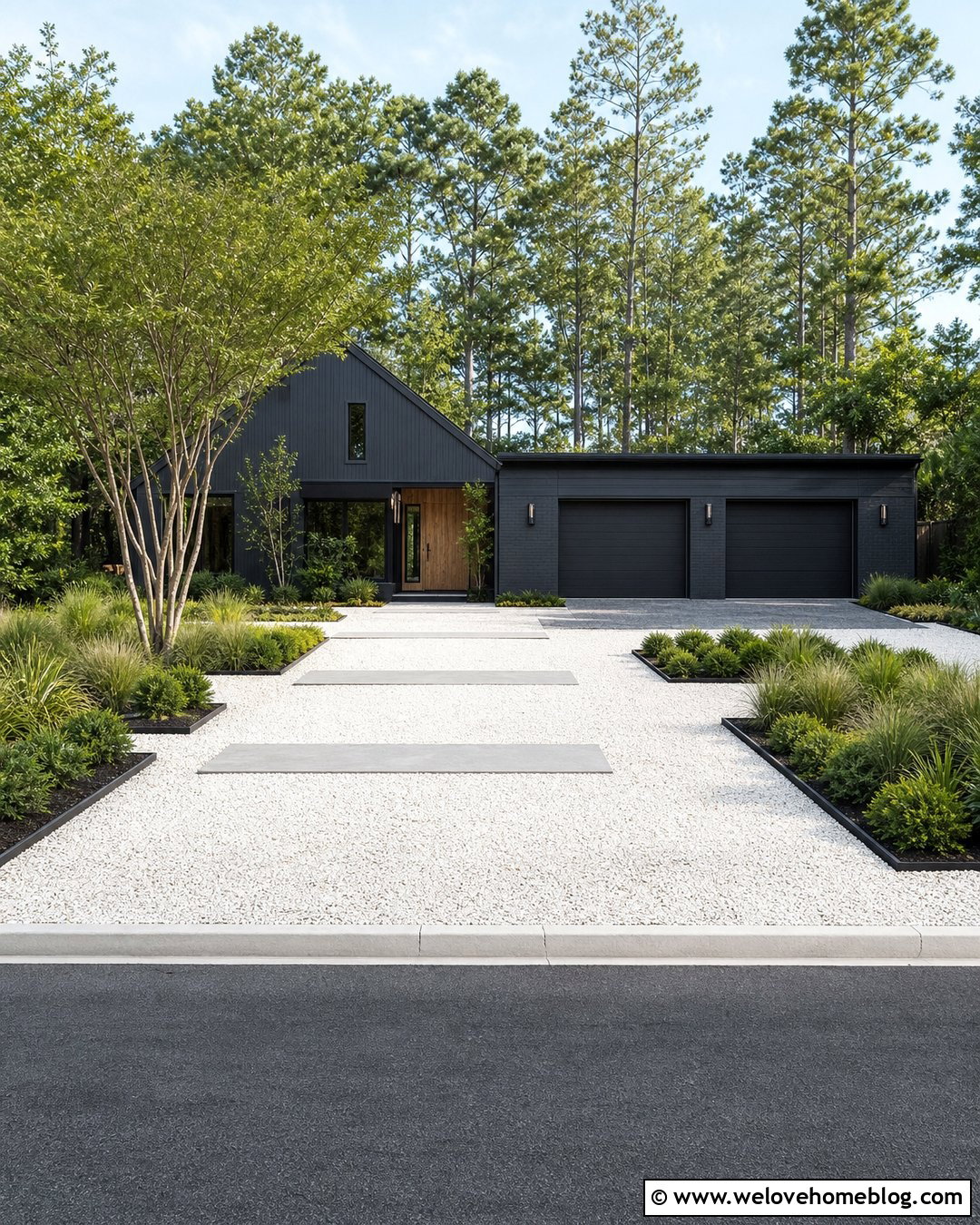
Crushed shell can complement modern architecture when the surrounding lines remain restrained. Create a straight or subtly angled driveway with crisp black steel edging installed nearly flush with the surface. The narrow border contrasts with the warm white crushed oyster shell without adding visual bulk. Use rectangular planting beds filled with feather reed grass, compact inkberry, low sedges, and one sculptural multi-stem tree. Large concrete slabs can form a walkway that crosses the shell and leads to the front door. At the garage, add a clean band of dark gray concrete or charcoal pavers. Keep the color palette limited to white, charcoal, green, and natural wood. This controlled combination allows the shell’s irregular texture to soften a modern facade while preserving the house’s simple geometry.
16. Crushed Oyster Shell Driveway With Farmhouse Landscaping
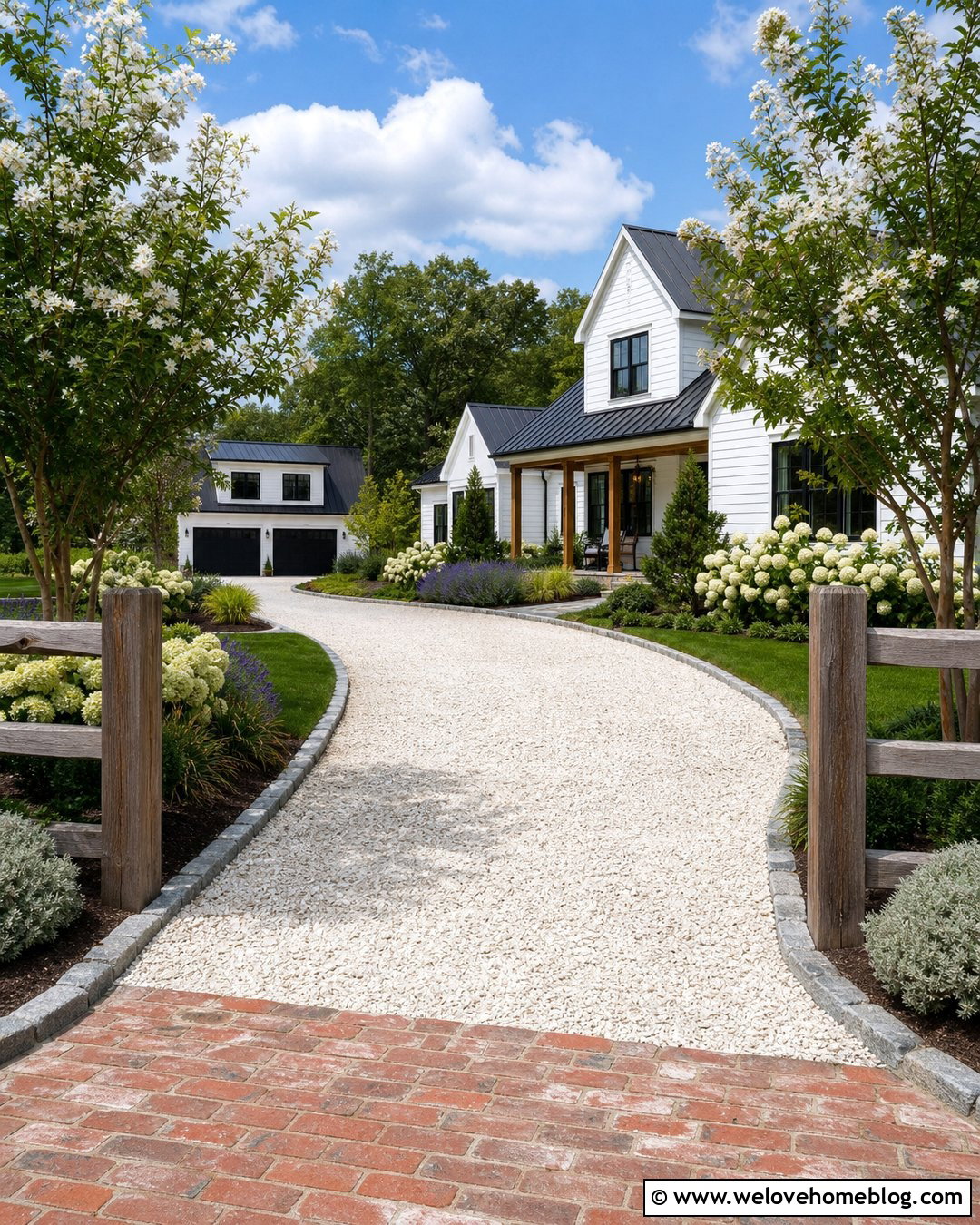
A relaxed farmhouse entrance needs enough structure to look maintained without feeling overly formal. Use a wide crushed oyster shell driveway that curves toward a detached garage or side parking area. Reclaimed timber or weathered granite can form the edging, while a red brick apron marks the street entrance. Plant small flowering trees near the curve and layer them with panicle hydrangeas, lavender, dwarf evergreens, and native grasses. A post-and-rail fence can follow one side, visually connecting the driveway with the broader property. Near the house, introduce a brick or flagstone walkway leading to the porch. Keep plantings asymmetrical but repeat several varieties throughout the beds. The resulting design feels established and practical, with the pale shell surface providing a bright counterpoint to black, white, or natural wood siding.
17. Crushed Oyster Shell Driveway With Cape Cod Landscaping
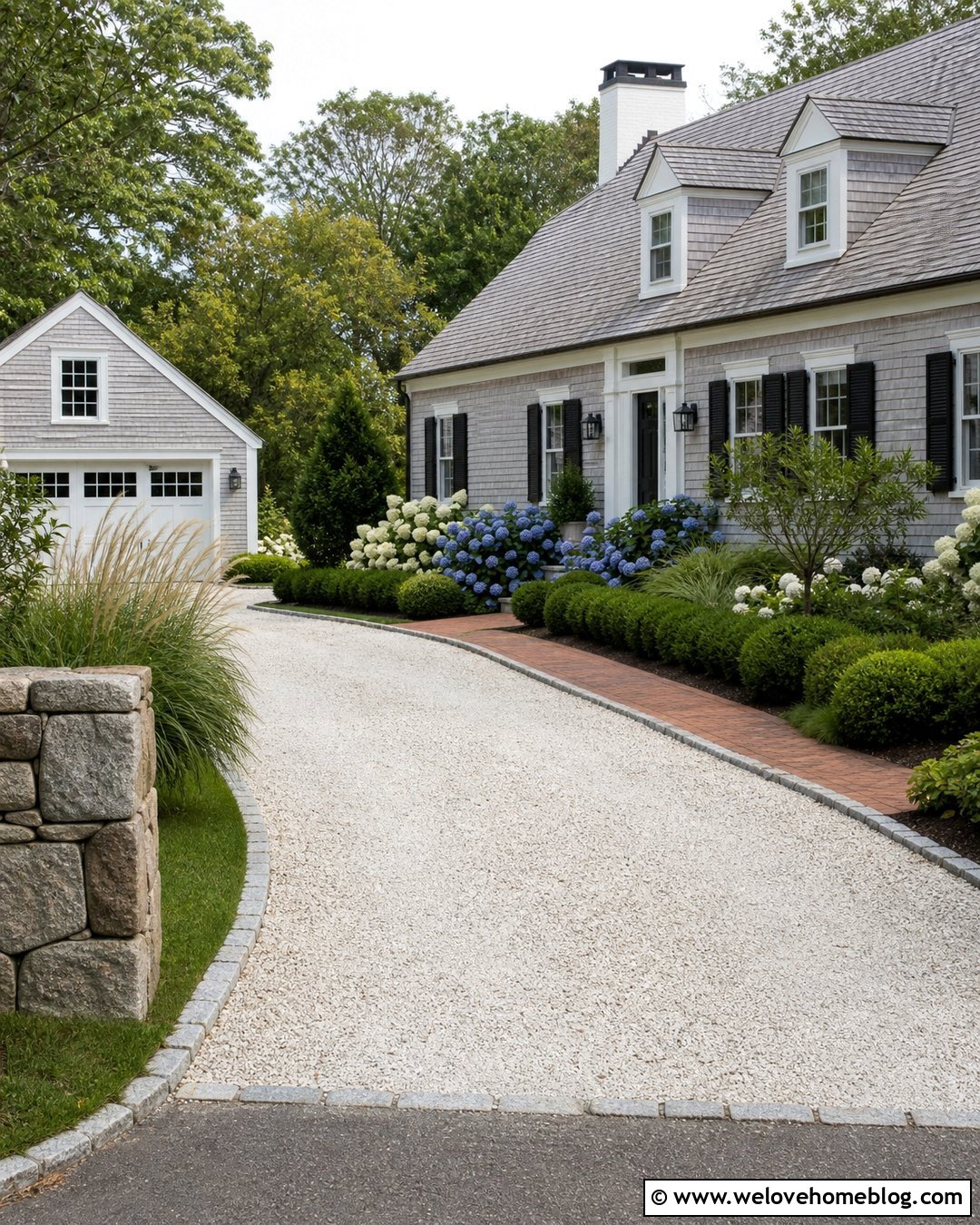
Few combinations look more natural than crushed oyster shell and a classic Cape Cod house. Run a straight driveway beside the home or curve it gently toward a detached garage. Frame the cream-white shell with weathered granite cobblestones that echo traditional New England hardscaping. Foundation beds can feature blue hydrangeas, inkberry, boxwood, roses, and soft ornamental grasses. Keep the planting low around the compact facade so windows, shutters, and the central entrance remain visible. A brick walkway from the driveway to the front door adds warmth and historical character. Fresh shell may initially show mixed tones, then gradually lighten through exposure and use. () This subtle weathering suits the relaxed setting, while clear edging and carefully clipped lawn keep the overall property looking intentional.
18. Crushed Oyster Shell Driveway With Low Stone Walls
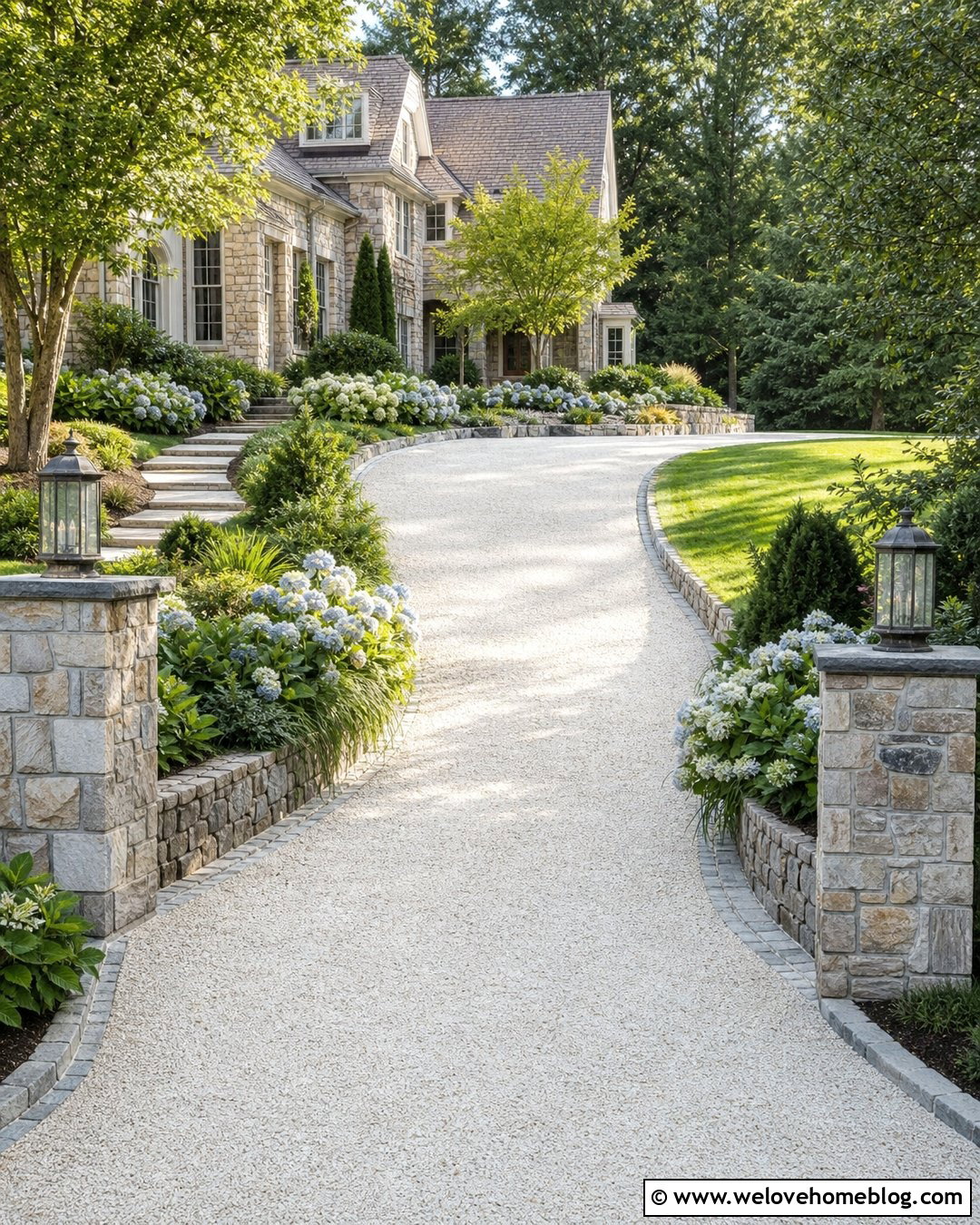
Low stone walls can turn an ordinary shell driveway into a strongly framed landscape feature. They are especially useful when the yard changes elevation or when planting beds need visual separation from the driving surface. Build the walls from local fieldstone and follow the shape of a wide, curved crushed oyster shell driveway. Keep the walls low near the road and inside curves so drivers maintain clear views. Behind them, layer spreading evergreens, hydrangeas, ferns, and ornamental grasses. Finish the driveway edges with a narrow granite curb that keeps shell away from the wall base. Stone pillars can terminate the walls at the entrance, while a matching walkway connects the driveway to the porch. Repeating one stone type throughout the property gives this substantial design a coherent, settled appearance.
19. Crushed Oyster Shell Driveway With Shell Walkway
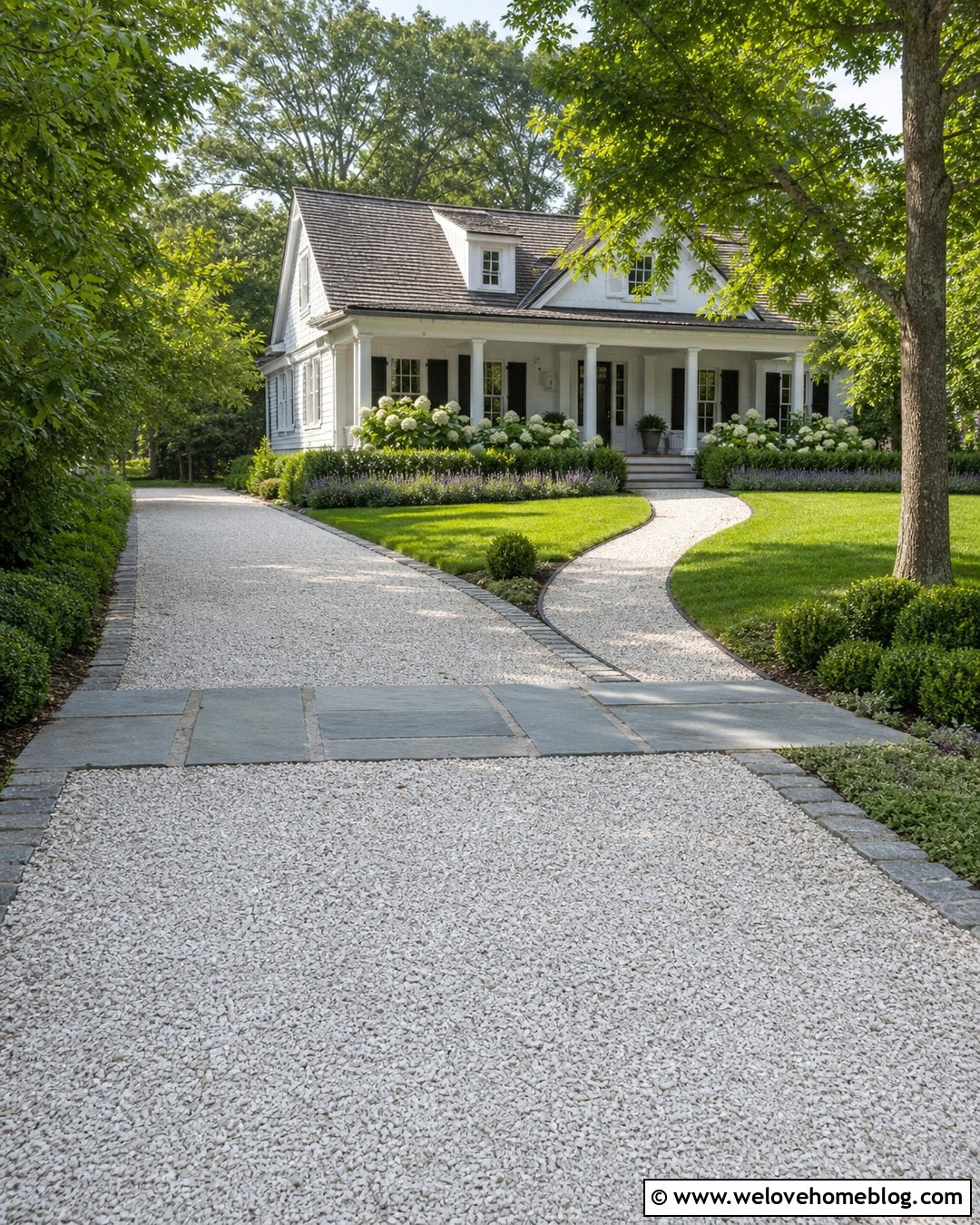
Repeating crushed oyster shell in the driveway and front walkway creates continuity, but the two areas should remain clearly defined. Use a broad driveway with granite cobblestone edging, then branch off a narrower shell path toward the porch. Give the walkway its own brick or steel border so visitors can recognize the route immediately. Where it crosses the driveway, install several large bluestone slabs or a complete brick band for stable footing and visual contrast. Surround the walkway with layered beds of boxwood, hydrangeas, catmint, and ground-covering thyme. The driveway can remain straight while the path curves gently through the garden. This difference in shape prevents the surfaces from blending into one oversized expanse and creates a more graceful approach to the front entrance.
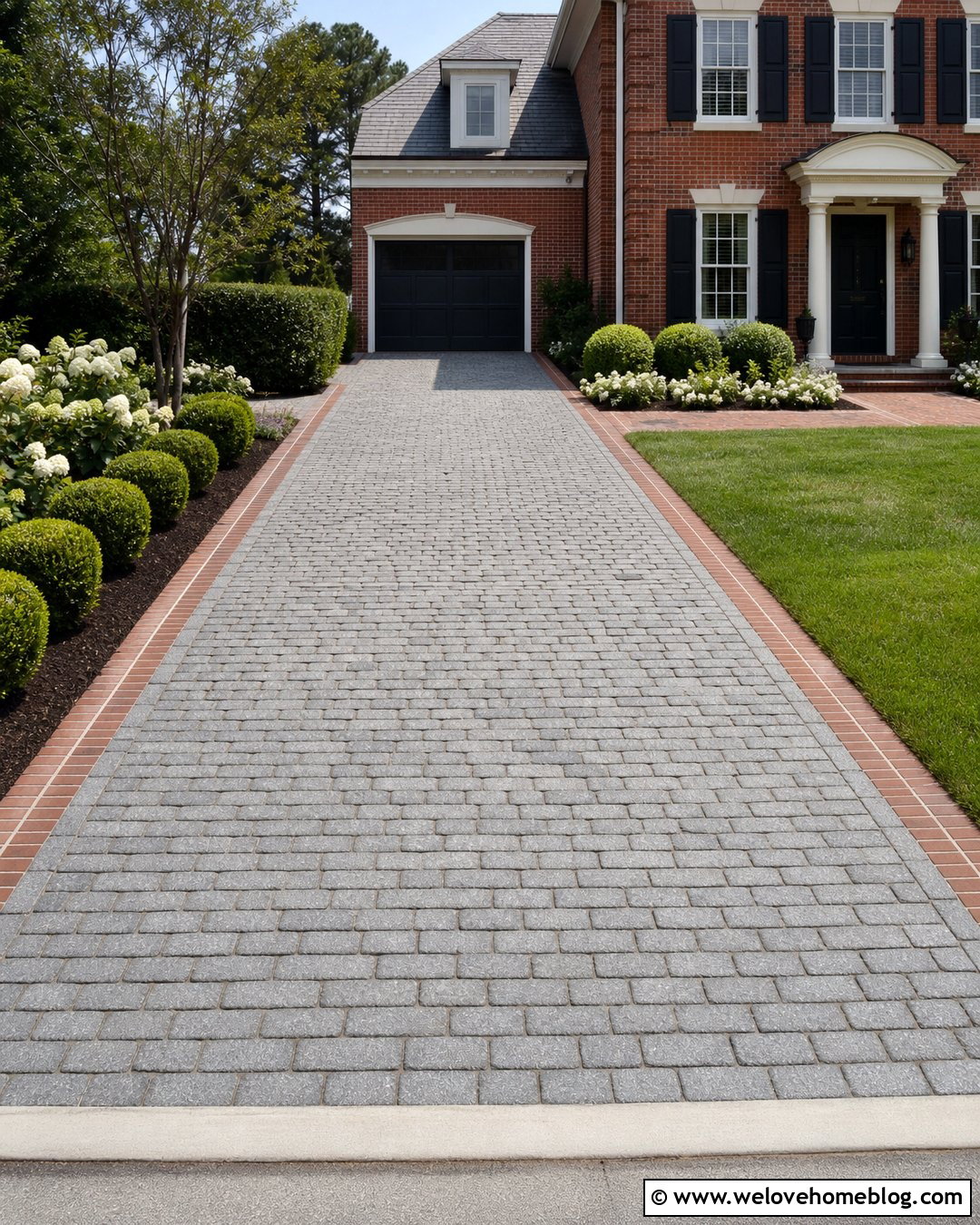
20. Crushed Oyster Shell Horseshoe Driveway With Entrance Beds
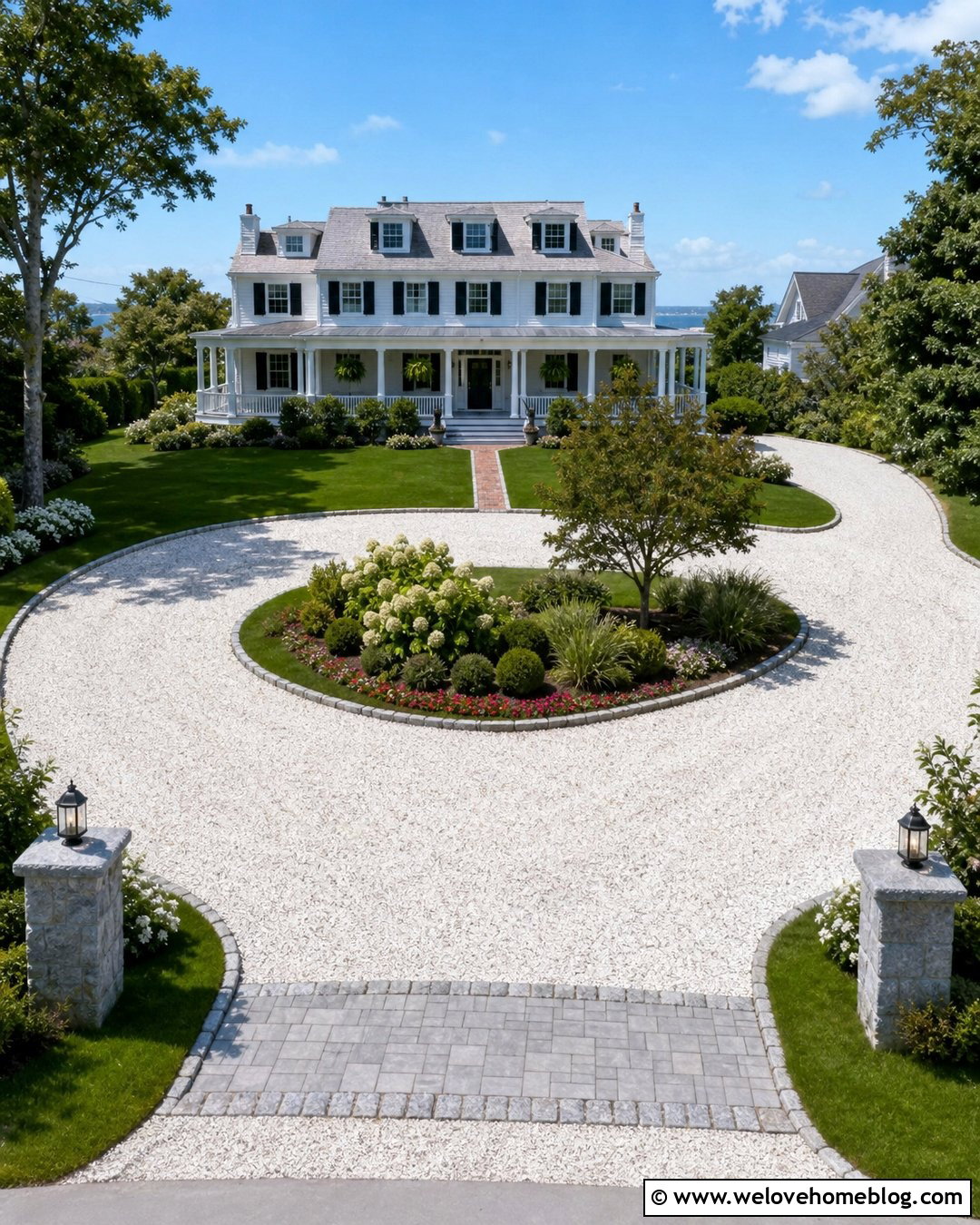
A horseshoe driveway works well on wide properties where vehicles need to enter and leave without reversing toward the road. Cover the complete loop with compacted crushed oyster shell and define both street openings with granite aprons. Low cobblestone edging can follow the outer curves, while the inner lawn becomes a large landscaped island. Plant a small shade tree near the center and surround it with hydrangeas, ornamental grasses, dwarf hollies, and seasonal flowers. Keep vegetation short near both entrances for visibility. A straight brick walkway can connect the inner island edge to the home’s central porch. Because two entrances increase the amount of visible hardscape, generous lawn and substantial planting beds are important. They balance the bright shell surface and give the complete frontage a welcoming residential character.
Conclusion:
The best crushed shell entrance combines coastal character with practical planning. These 20 Crushed Oyster Shell Driveway Ideas show how the same distinctive material can suit small cottages, modern homes, farmhouses, and large waterfront properties. Shape, edging, planting, and entrance details determine whether the finished driveway feels relaxed, traditional, contemporary, or formal. Whatever layout you prefer, begin with a stable compacted base, appropriate grading, dependable drainage, and strong edge restraints. Expect to rake the surface, refill low spots, control weeds, and add shell as traffic gradually breaks down the material. () With thoughtful installation and coordinated landscaping, a crushed oyster shell driveway can become a bright and memorable part of the home.

Related posts:

Leave a Reply