
Spanish architecture is known for warm colors, handcrafted details, textured surfaces, and inviting outdoor spaces. The right driveway should continue that character from the curb to the front door. These 20 Spanish Style Driveway Ideas explore complete looks using terracotta pavers, brick, cobblestone, gravel, concrete, decorative tile, wrought iron, stucco pillars, and water-wise landscaping. You will find practical options for small homes, large estates, curved approaches, circular layouts, and sloped properties. Each design connects the driveway surface with its border, entrance, planting, and house facade. Use the concepts as inspiration, then adjust the materials for your climate, maintenance needs, and budget. Start exploring these 20 Spanish Style Driveway Ideas to create an entrance that feels authentic and welcoming.

1. Terracotta Paver Spanish Driveway
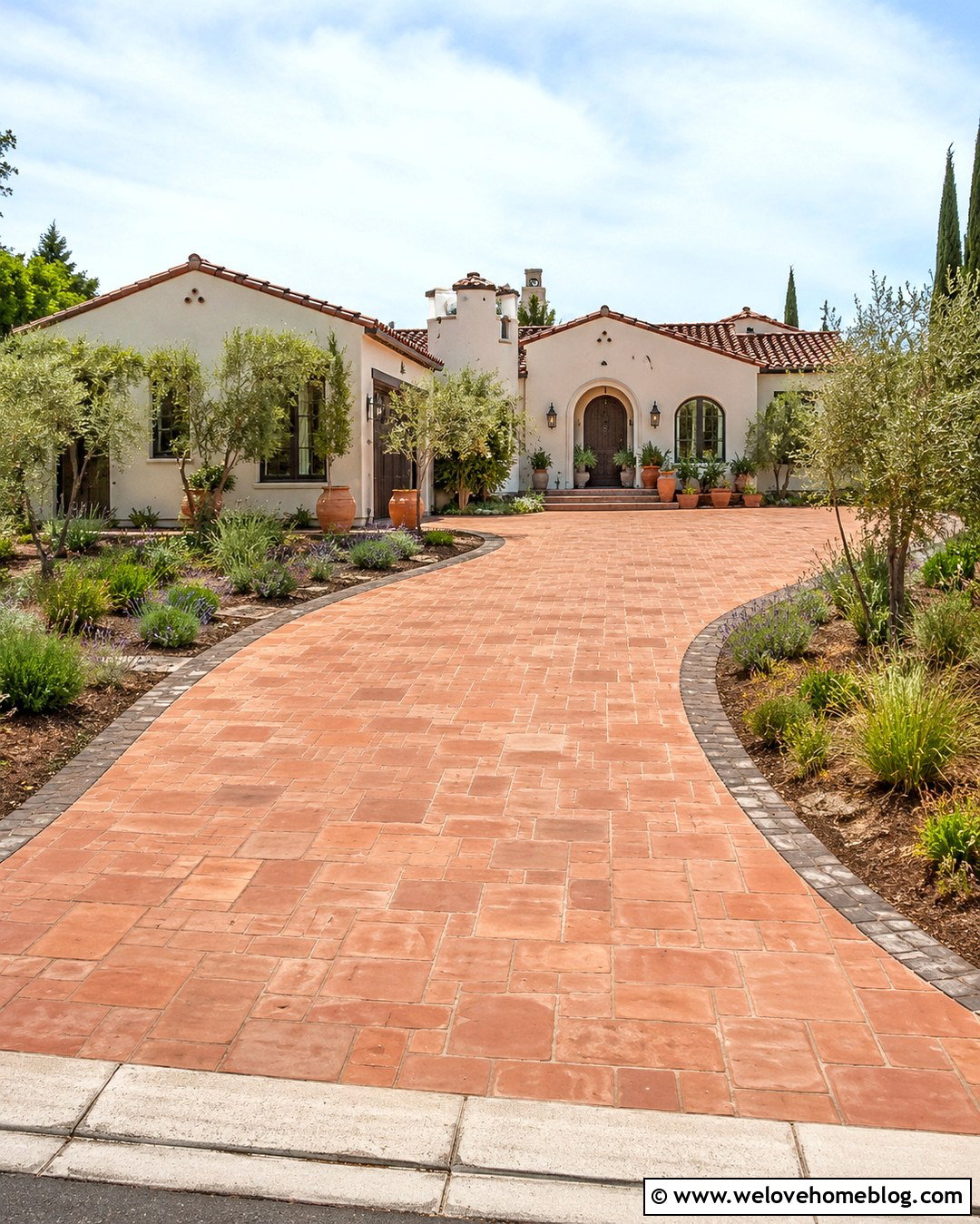
Terracotta-colored pavers instantly connect a driveway to clay roof tiles and warm stucco walls. Choose vehicle-rated concrete or clay pavers in varied red, rust, and burnt-orange tones rather than one flat color. A random ashlar layout gives the surface a relaxed, hand-laid appearance. Frame the driveway with dark brown brick or charcoal cobblestone to provide definition and help contain the field pavers. A gently curved approach works especially well because it reveals the house gradually. Finish the look with olive trees, rosemary, lavender, and mounded ornamental grasses. Terracotta pots beside the garage and entry walkway repeat the driveway color. This complete design feels warm and established without making the property look overly formal.
2. Tumbled Stone Spanish Driveway
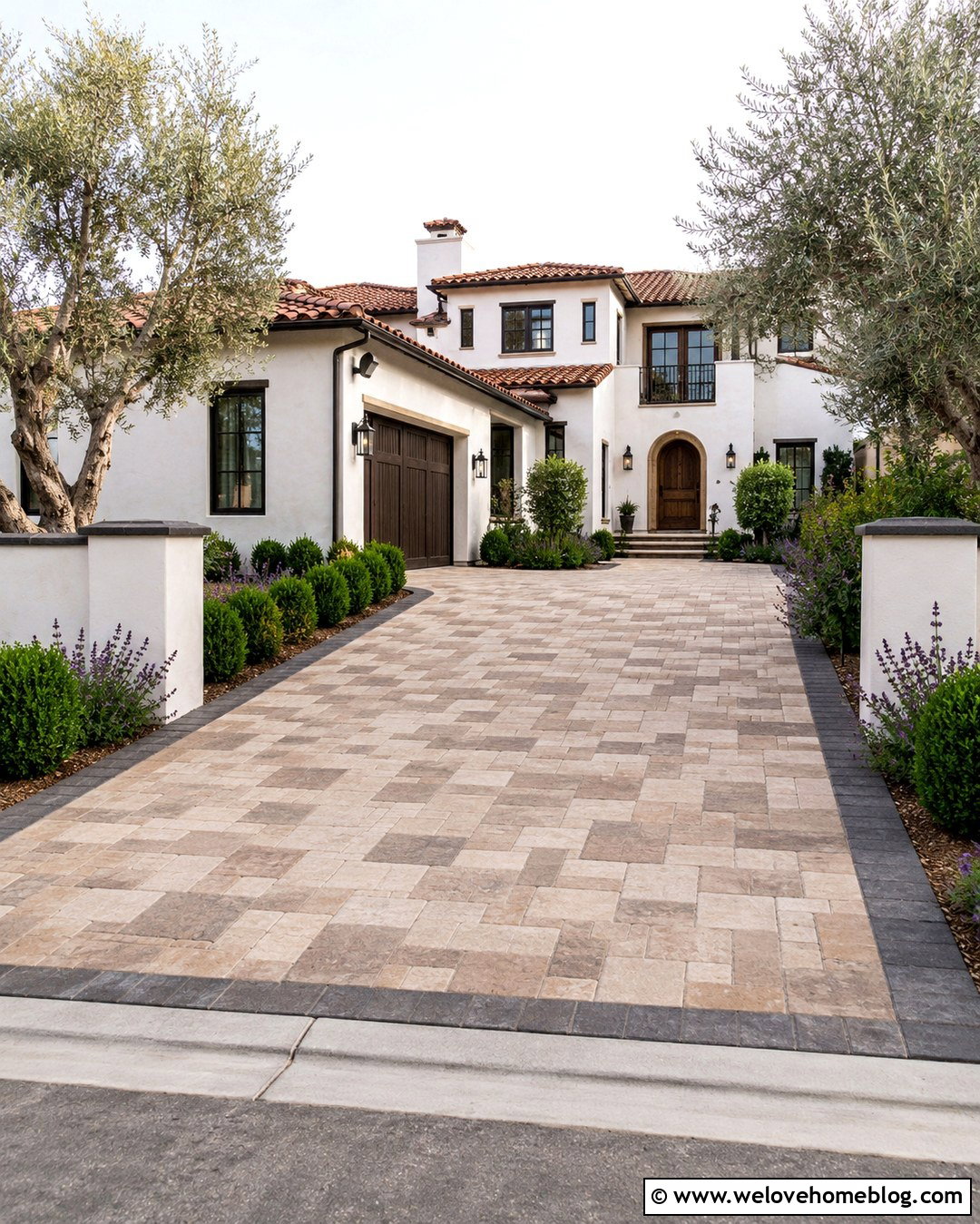
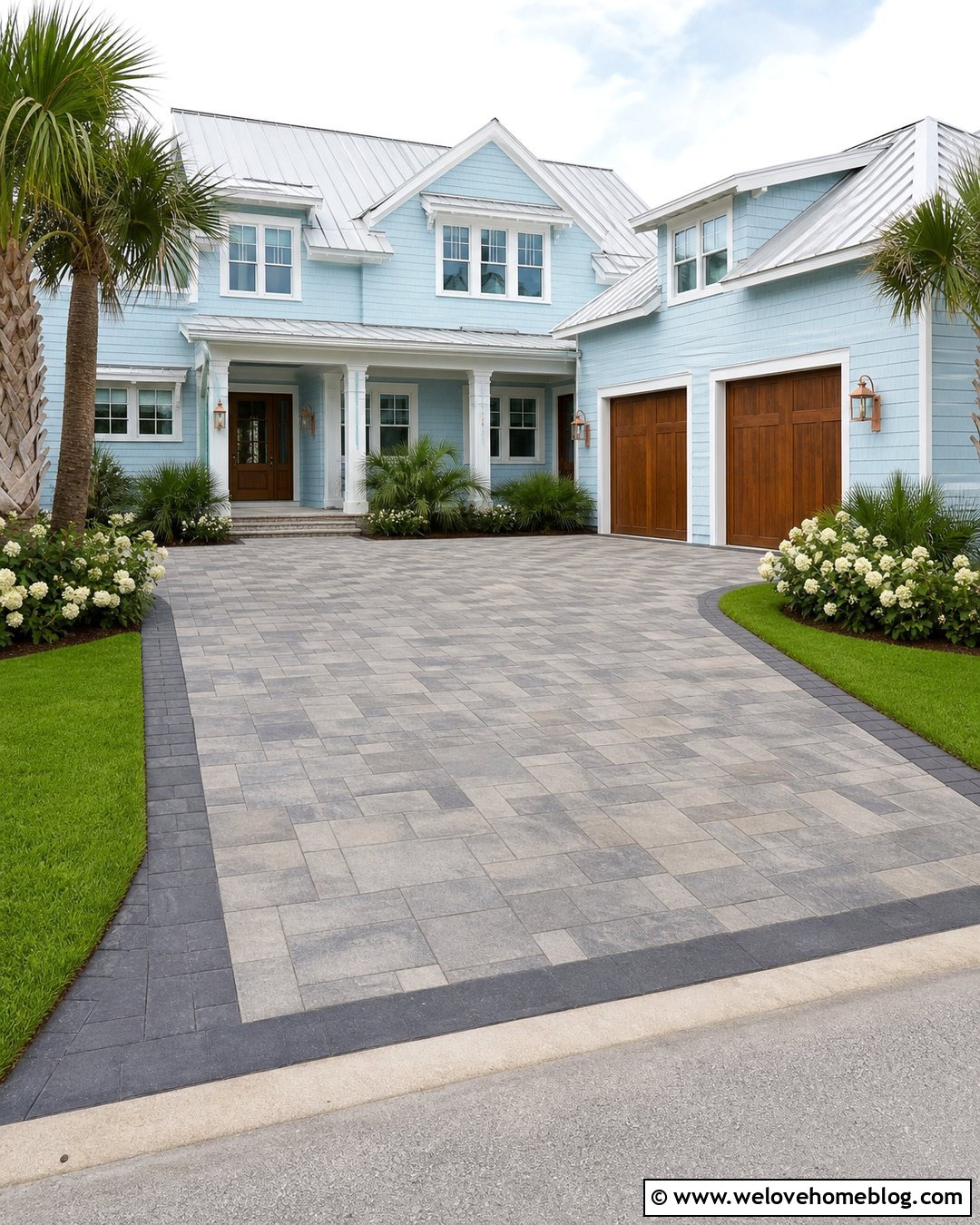
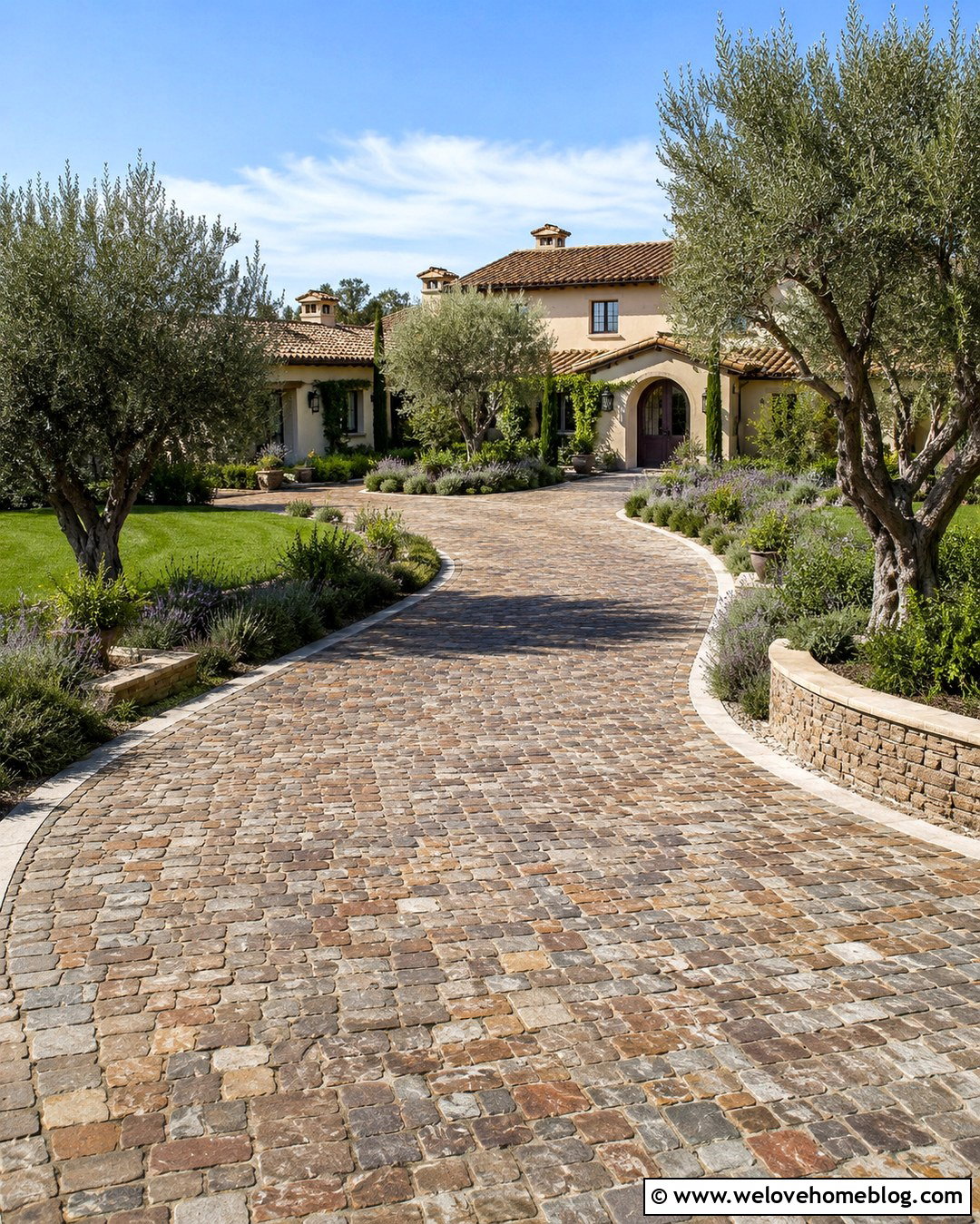
Softly weathered pavers create the worn, old-world character often associated with Spanish Revival homes. Use tumbled concrete pavers that resemble limestone or sandstone in a blend of cream, tan, and muted brown. Lay several sizes in a random modular pattern so the driveway appears less rigid. A border of darker stone pavers can outline the curves and create a clean transition into planting beds. Surround the driveway with low stucco walls, clipped shrubs, flowering sage, and one or two sculptural olive trees. Connect the parking area to the front door with a walkway made from the same pavers. The repeated material makes the entire approach feel intentional while the softened edges complement textured stucco and arched architectural details.
3. Herringbone Brick Spanish Driveway
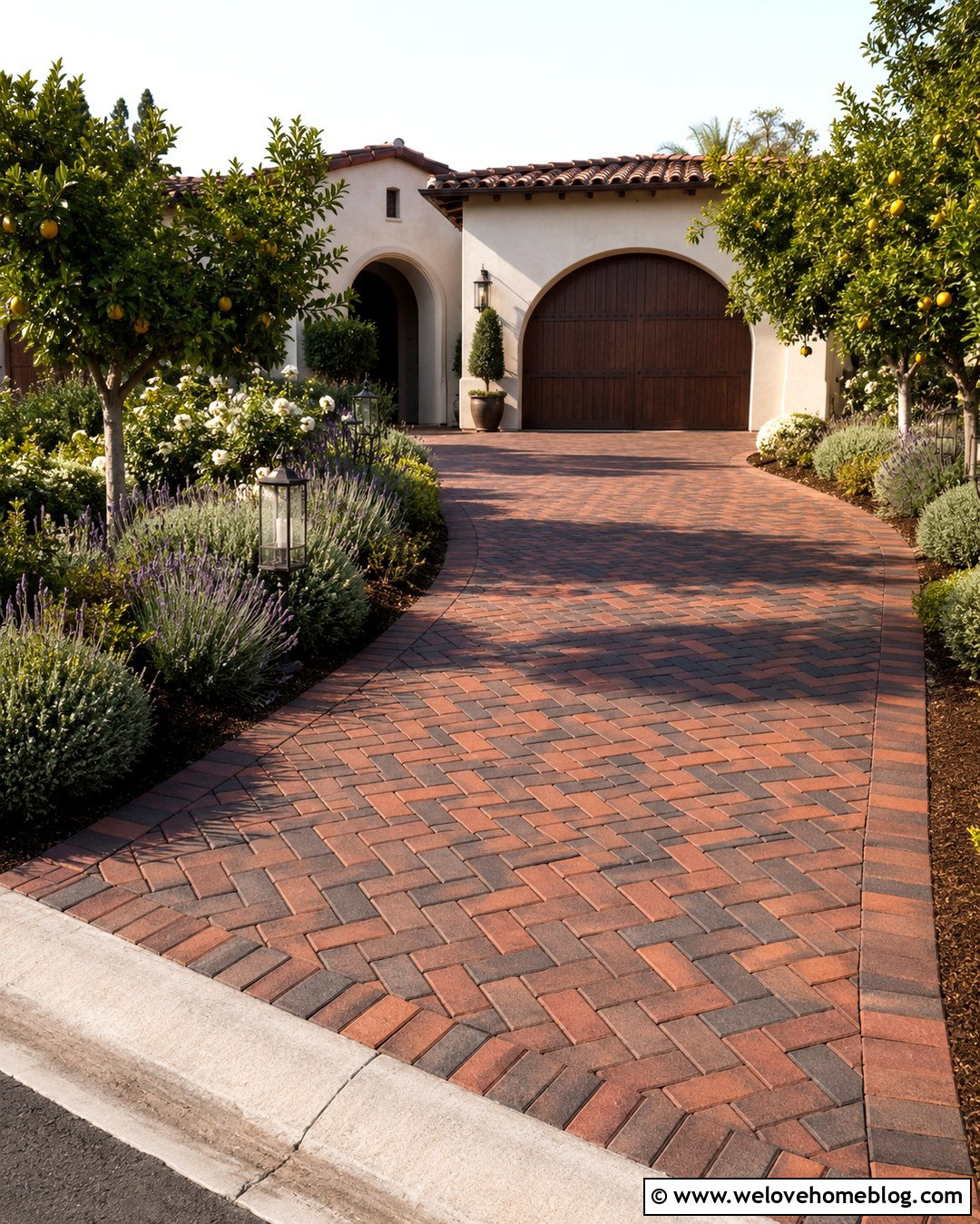
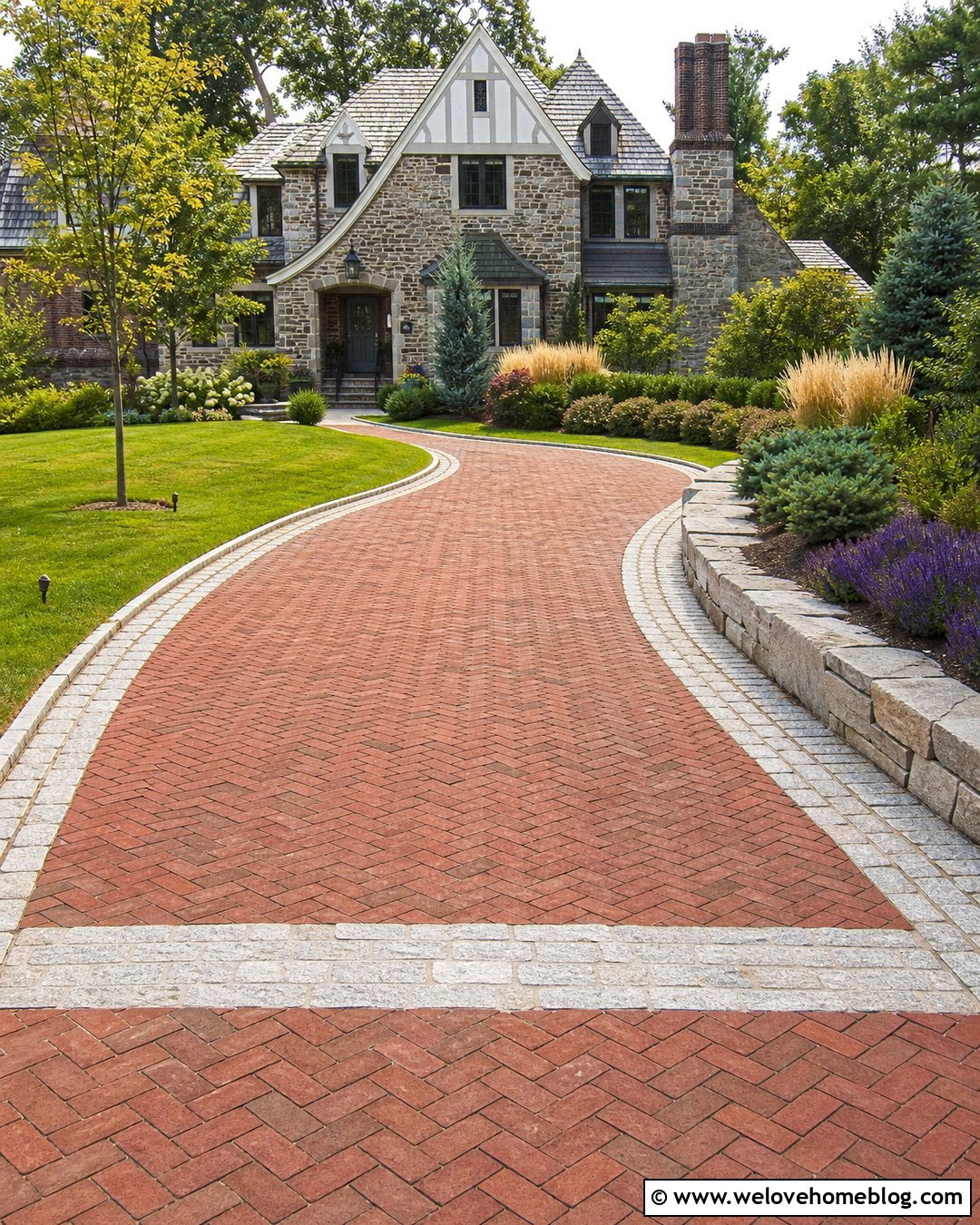
A brick driveway laid in a herringbone pattern adds strong texture and a traditional courtyard feeling. Select clay brick pavers in earthy red, brown, and charcoal tones to avoid an overly uniform surface. Position the pattern at a 45-degree angle to visually widen a narrow driveway and draw attention toward the house. A soldier-course brick border keeps the layout crisp and creates a finished edge beside the lawn. Add curved planting beds filled with citrus trees, lavender, santolina, and white roses. Black metal lanterns and a matching pedestrian gate can repeat the darker tones within the brick. This complete driveway works beautifully with cream stucco, red roof tiles, decorative ironwork, and an arched wooden garage door.
4. Cobblestone Spanish Driveway
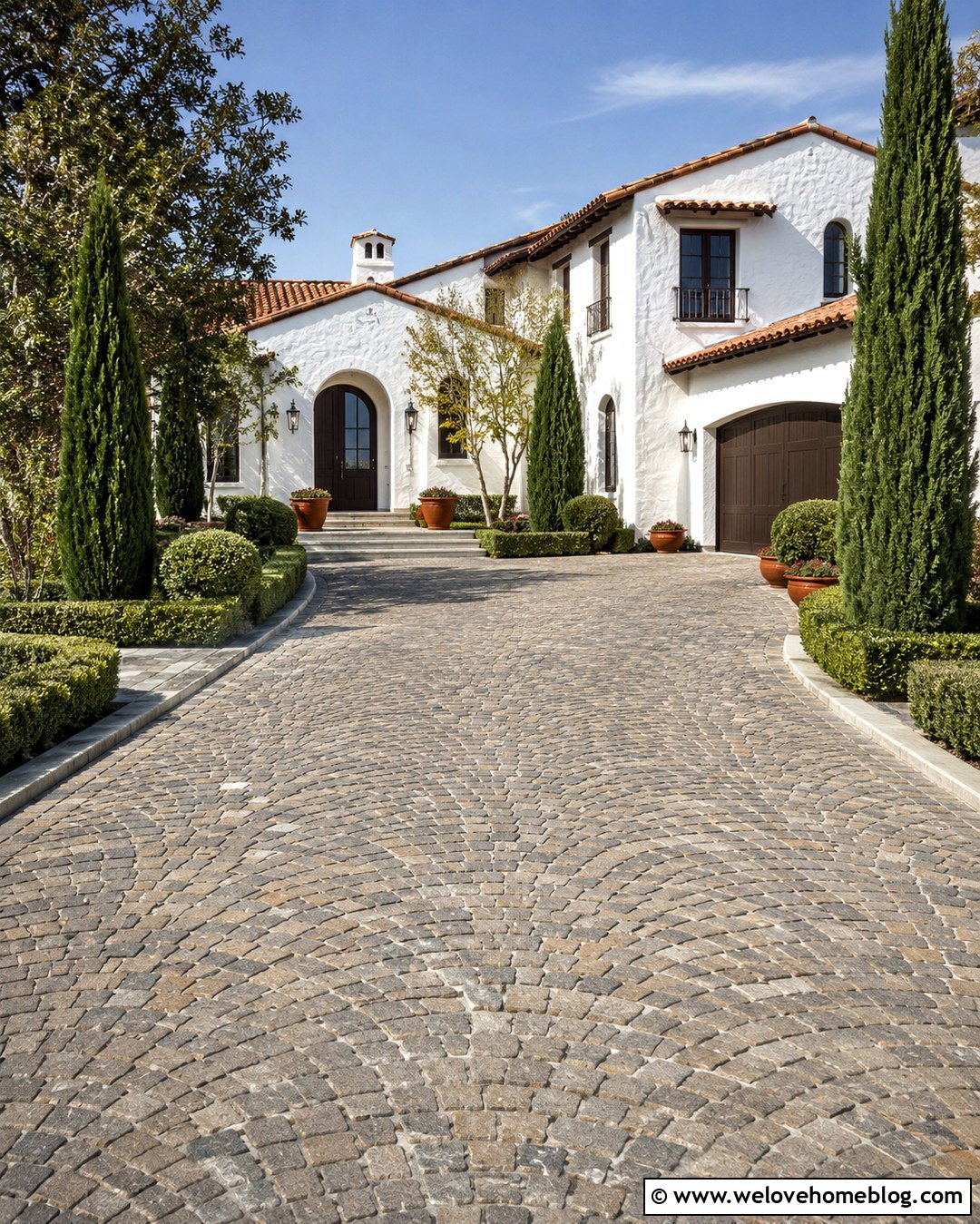
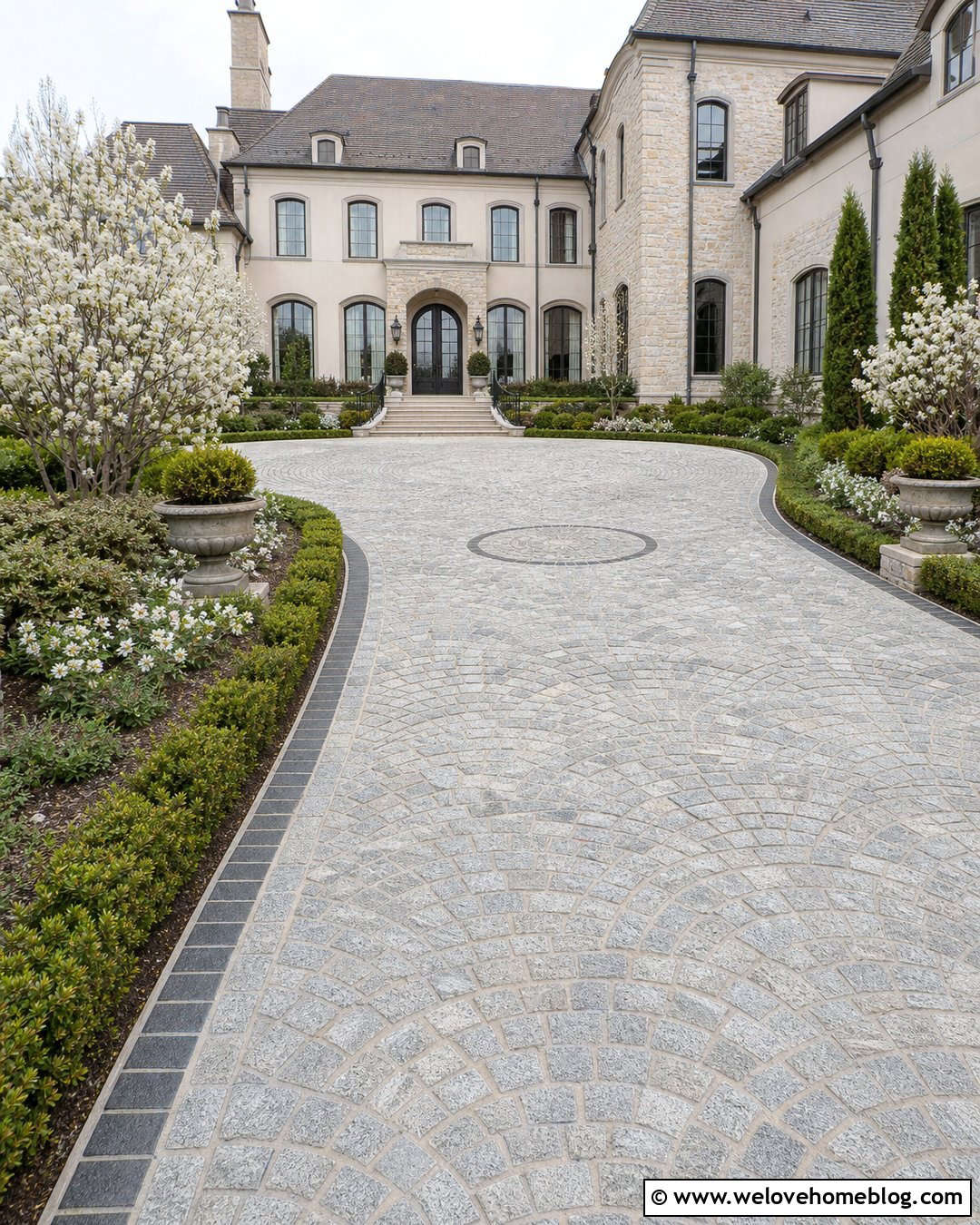
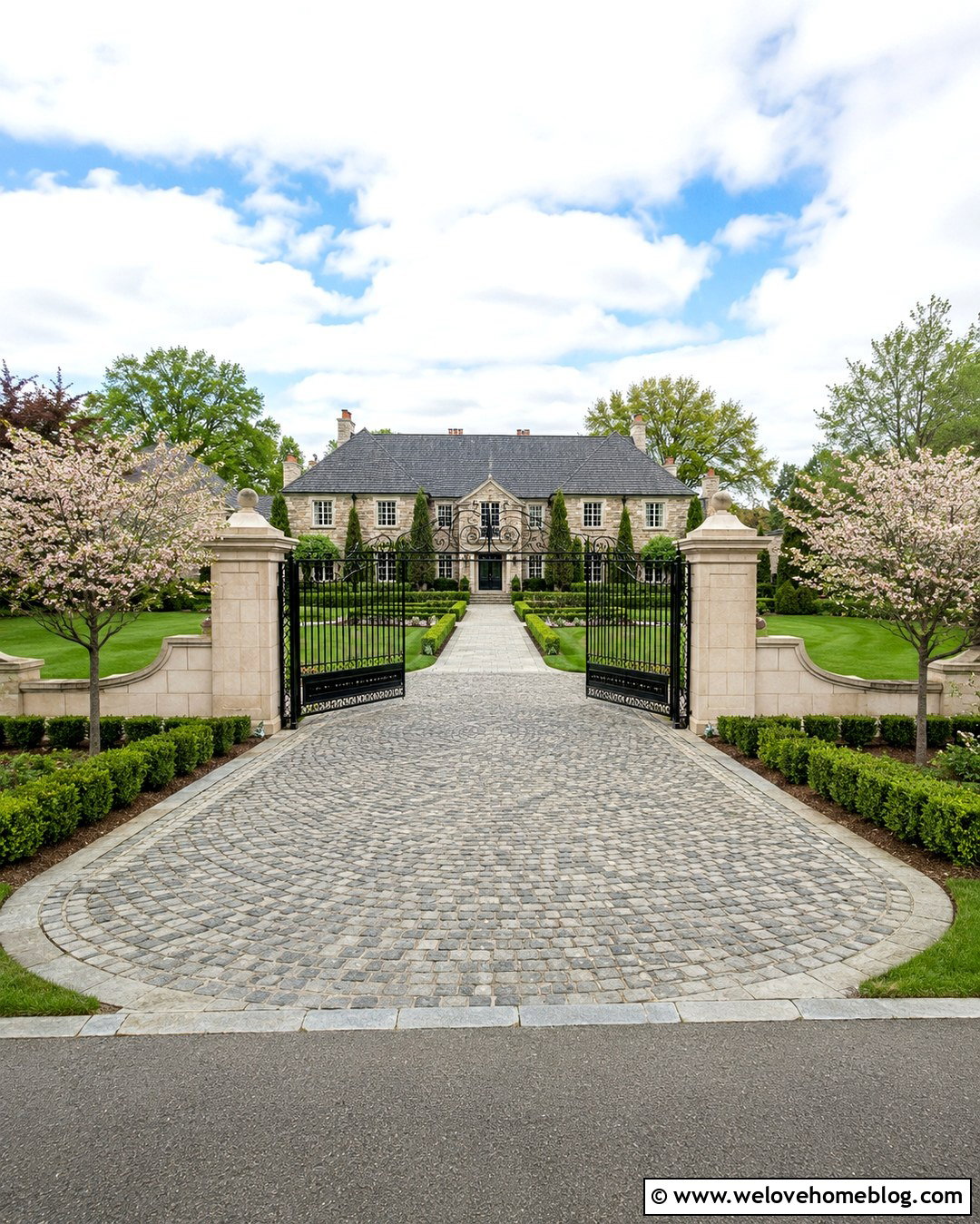
Cobblestone gives a Spanish driveway substantial texture and the appearance of an entrance that has evolved over generations. Choose granite or concrete cobbles in warm gray, taupe, brown, and charcoal rather than cool blue-gray stone. A fan pattern creates movement across a wide driveway, while a running pattern can make a short approach appear longer. Use flush stone curbing along both sides to provide a smooth, contained edge. Balance the rugged surface with structured landscaping, including clipped boxwood, upright cypress, and symmetrical terracotta planters. A simple walkway should branch naturally toward the front entry. Because heavily textured cobbles can feel busy, keep the stucco walls, gate, and planting palette restrained for a balanced Spanish-inspired composition.
5. Decomposed Granite Spanish Driveway
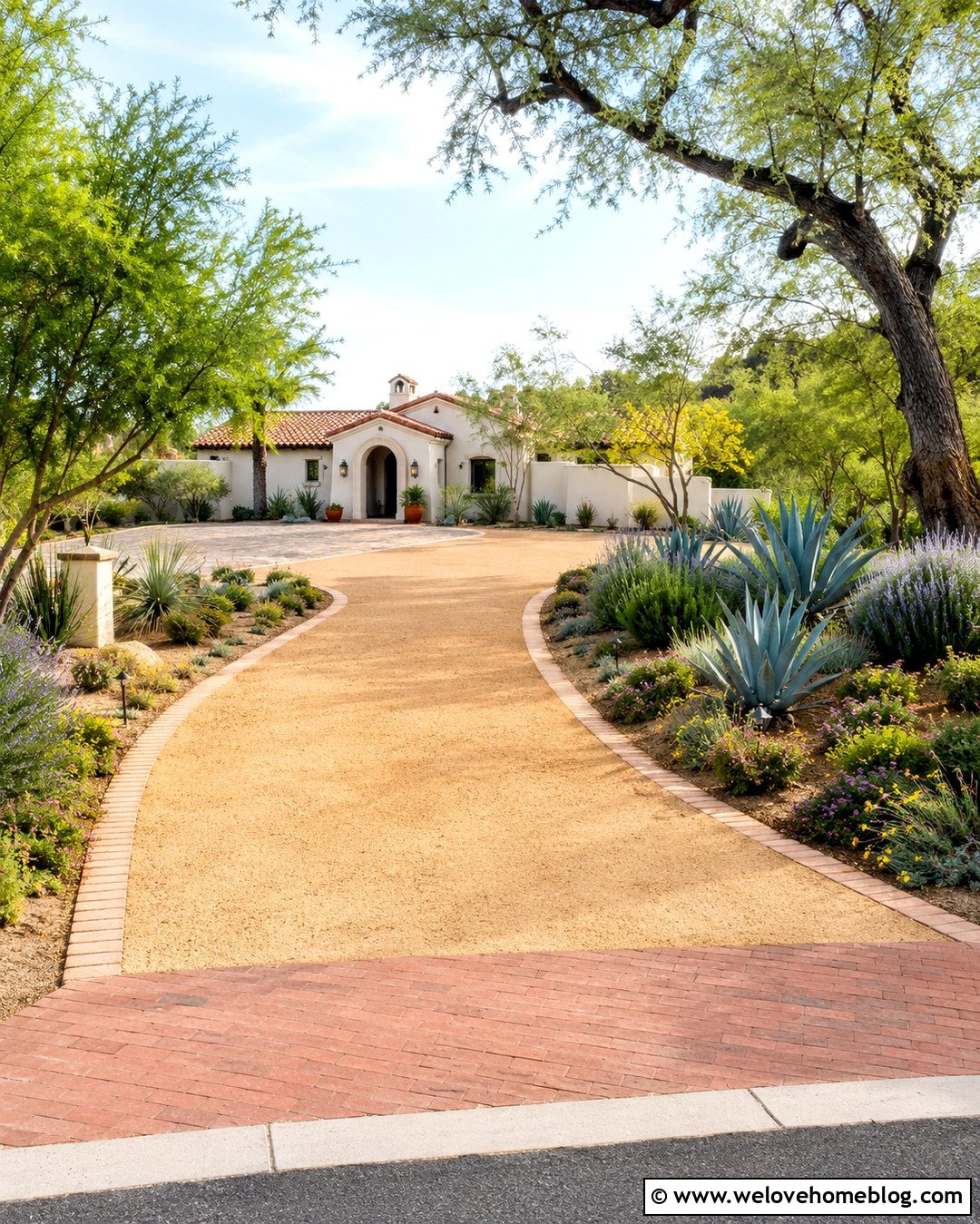
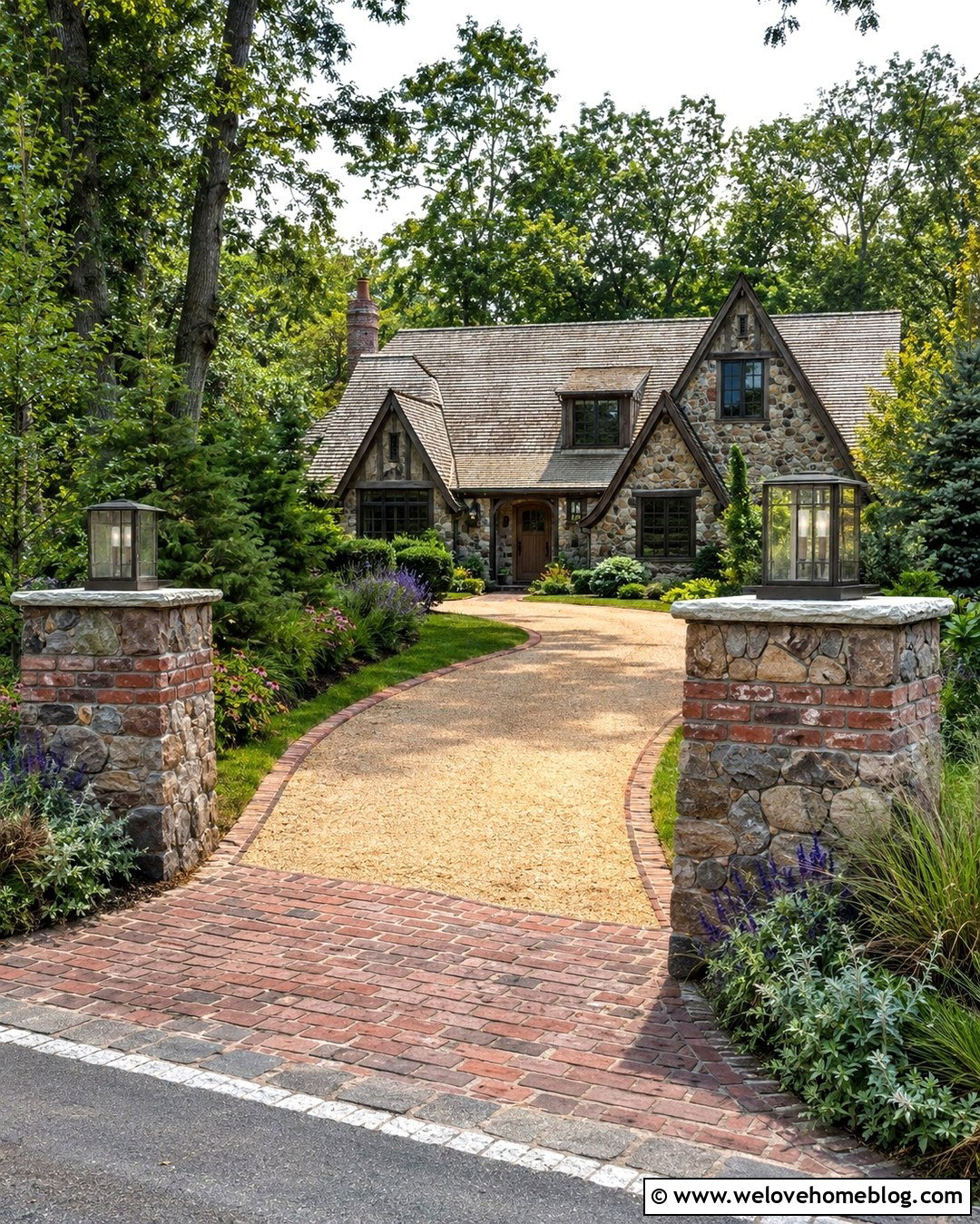
Decomposed granite offers a softer, more casual surface for a Spanish ranch or adobe-inspired home. Warm gold, tan, or rust-colored material blends naturally with cream stucco, exposed wood, and clay roof tiles. Stabilized decomposed granite is especially helpful where a firmer, more contained driving surface is preferred. Define the edges with clay brick, weathered steel, or low stone curbing to prevent the driveway from visually disappearing into the yard. A broad curved layout can follow the contours of the property and preserve existing trees. Frame it with agaves, native grasses, rosemary, and flowering ground covers. Add a brick apron near the street and a matching paved parking pad beside the house to create durable transitions and a polished overall look.
6. Pea Gravel Spanish Driveway
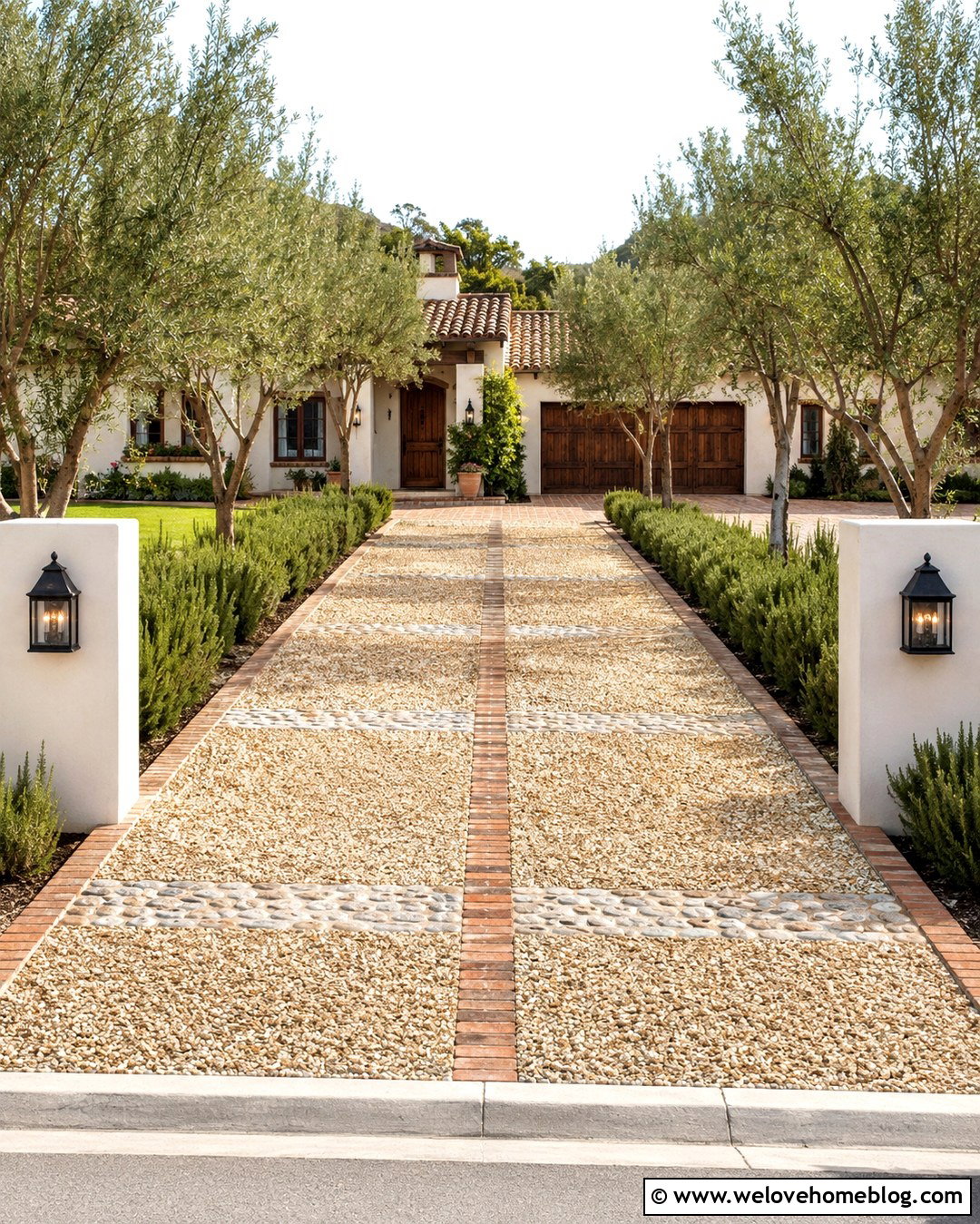
The gentle crunch of pea gravel can make the approach to a Spanish home feel relaxed and welcoming. Choose warm tan, cream, and light brown gravel rather than bright white stone. Use a compacted structural base underneath and install solid edging to keep loose material within the driveway. A straight layout can feel more decorative when it includes a central brick strip or cobblestone bands placed across the surface. Line the sides with low stucco walls, rosemary hedges, and evenly spaced olive trees. At the garage, transition to a paved apron that reduces gravel movement near the doors. Terracotta planters and dark iron lanterns complete the composition. This design delivers old-world character while remaining visually simple and suitable for a country setting.
7. Stamped Concrete Spanish Driveway
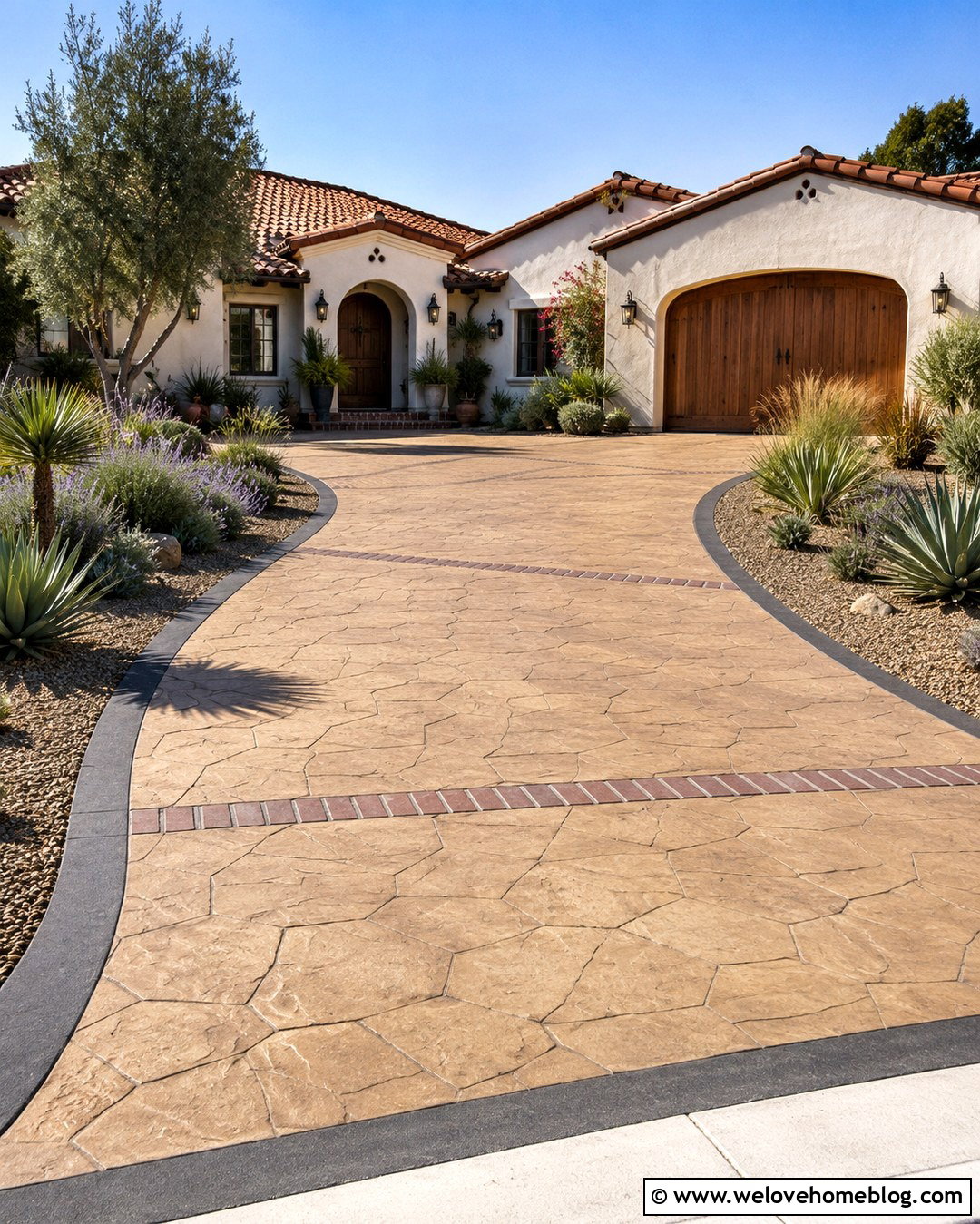
Stamped concrete can support a Spanish exterior when the color, pattern, and surrounding details are carefully coordinated. Select a natural stone pattern with subtle joints rather than an overly dramatic imitation texture. Warm sand, beige, or light terracotta coloring will relate to stucco and tile roofing. A darker integral border can outline a curved driveway and separate it from gravel planting beds. Break up a broad surface with decorative saw-cut bands or real brick ribbons placed at the apron and garage entrance. Use drought-tolerant landscaping such as agave, yucca, lavender, and ornamental grasses to soften the concrete. Before installation, plan drainage, reinforcement, and control joints with an experienced local contractor so practical requirements become part of the finished pattern instead of distracting from it.
8. Exposed Aggregate Spanish Driveway
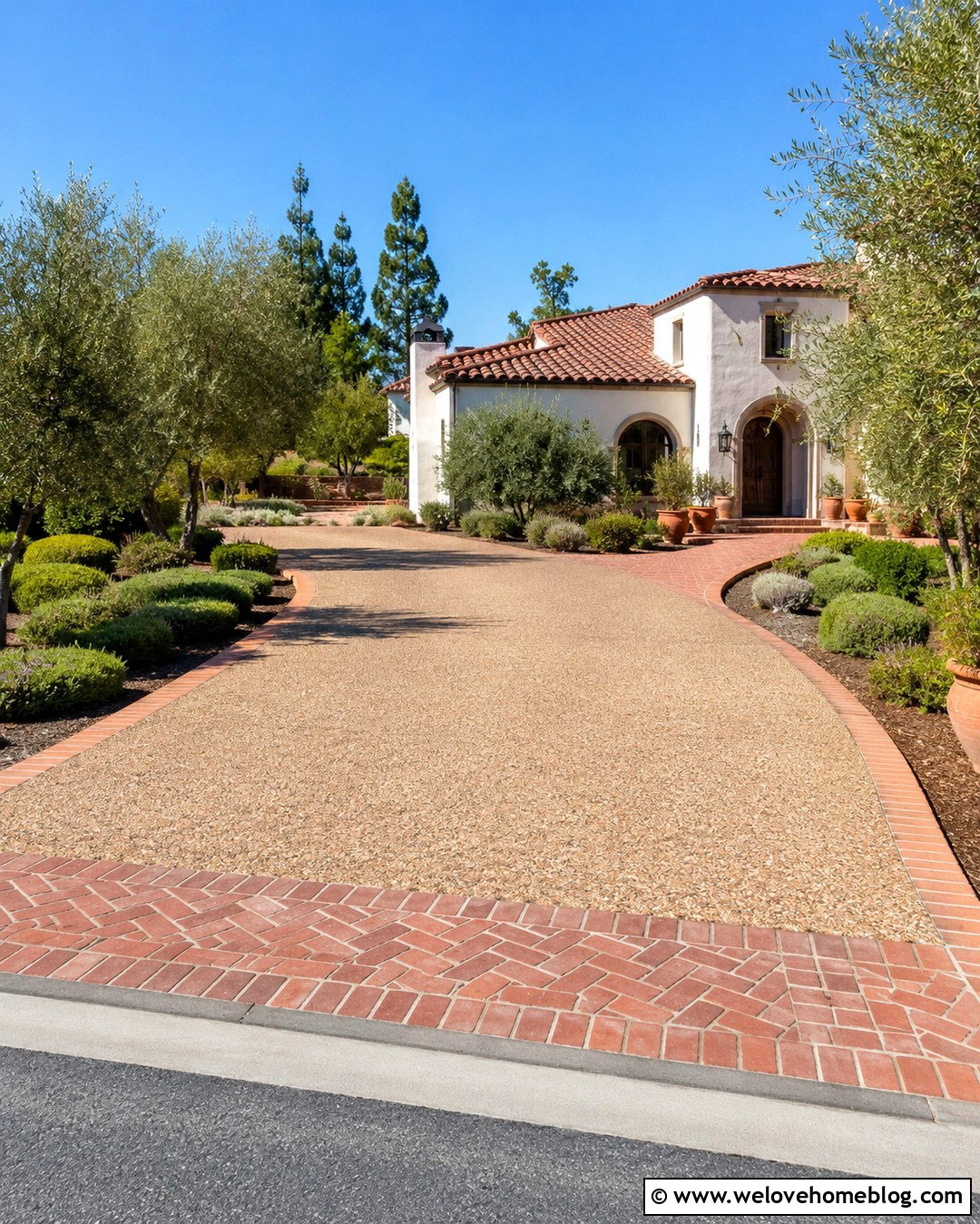
Exposed aggregate provides a textured but understated foundation for a Spanish-style house. A mix containing tan, cream, brown, and muted red stones will coordinate with warm stucco and terracotta roofing. Use the material on a broad straight or softly curved driveway, then add clay brick bands to introduce stronger Spanish character. Brick can frame the perimeter, mark parking bays, and form a welcoming apron at the street. Plant olive trees and rounded shrubs in generous beds beside the drive, leaving enough open space so mature growth does not crowd vehicles. A Saltillo-inspired walkway can connect the driveway to an arched entry. The finished look is durable and visually interesting without competing with decorative doors, iron balconies, tile stair risers, or other architectural features.
9. Concrete Ribbon Spanish Driveway
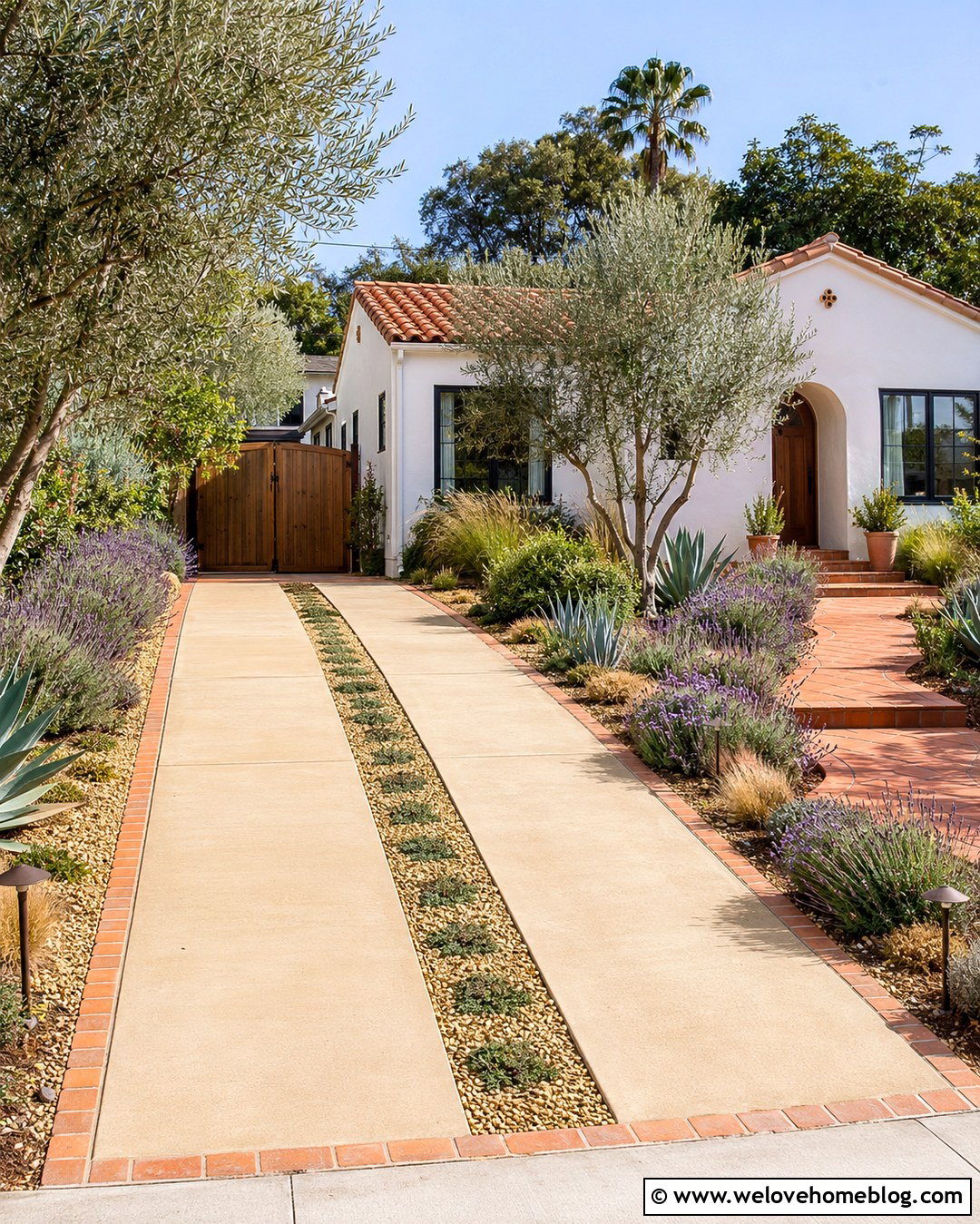
Two concrete driving ribbons separated by gravel or low ground cover create a lighter driveway that does not overwhelm a small Spanish home. Use warm beige poured concrete with a lightly brushed finish instead of standard cool gray. Position the ribbons to align comfortably with vehicle tires and widen them near the garage for easier movement. Fill the center with compacted golden gravel, creeping thyme, or another locally suitable low-growing plant. Clay brick edging can outline the entire driveway and connect it to a terracotta-colored front walkway. Surrounding beds might include dwarf olive trees, blue-green agaves, lavender, and ornamental grasses. This complete design reduces the appearance of uninterrupted paving and gives a modest front yard more texture, color, and garden character.
10. Curved Spanish Driveway With Olive Trees
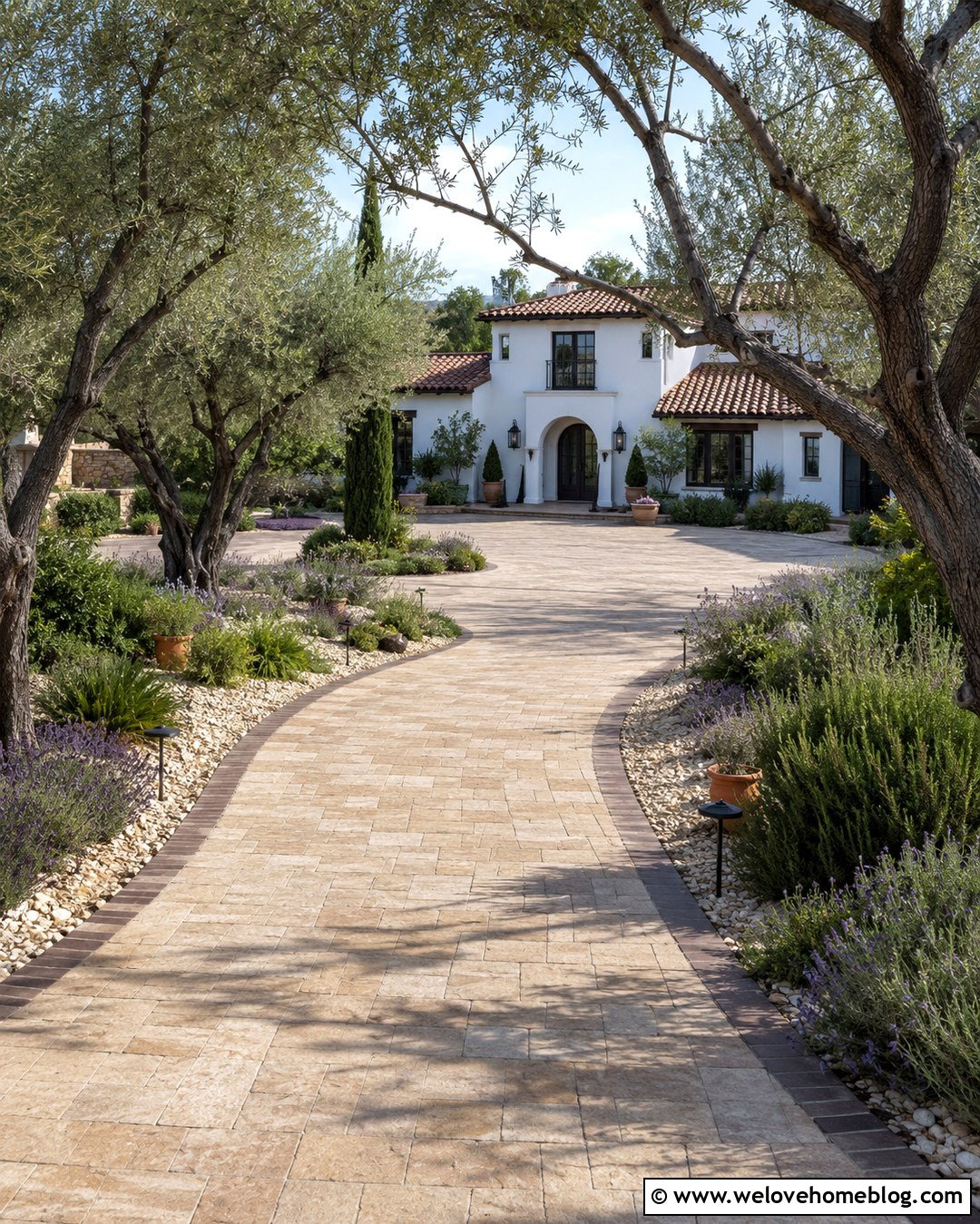
A curved driveway creates an attractive sense of arrival, especially when it moves through a simple grove of olive trees. Cover the surface with warm tan pavers in a random ashlar pattern and define both edges with dark brick. Keep the curve broad and gradual so it looks natural and provides comfortable access. Place olive trees beyond the vehicle clearance area, then underplant them with lavender, rosemary, and pale gravel mulch. Low-voltage fixtures can illuminate the trunks without filling the daytime landscape with bulky hardware. Near the house, widen the driveway into a small parking court bordered by terracotta pots. The combination of a sweeping layout, layered greenery, and earthy paving turns a functional route into a cohesive Spanish garden entrance.
11. Circular Spanish Driveway With Fountain
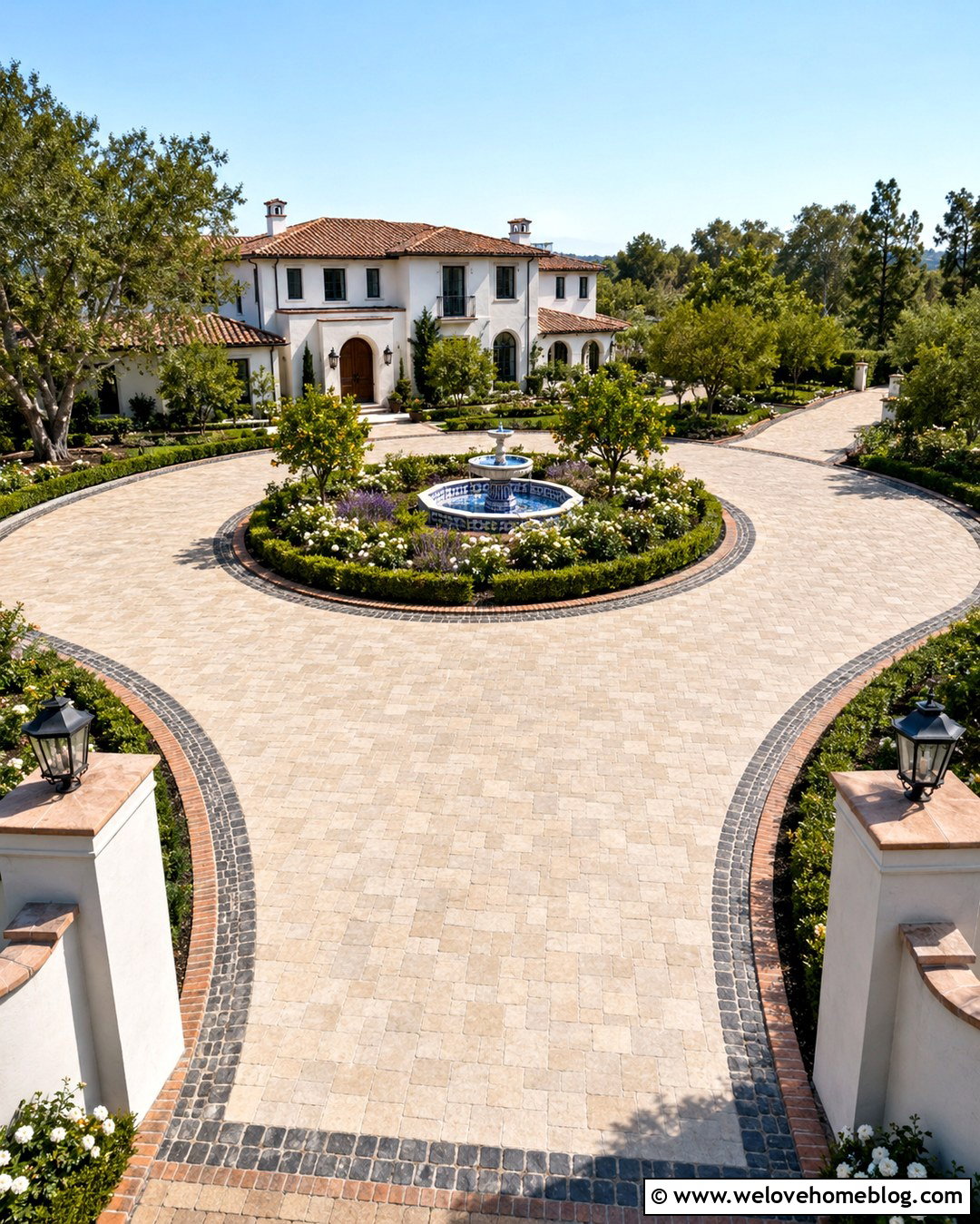
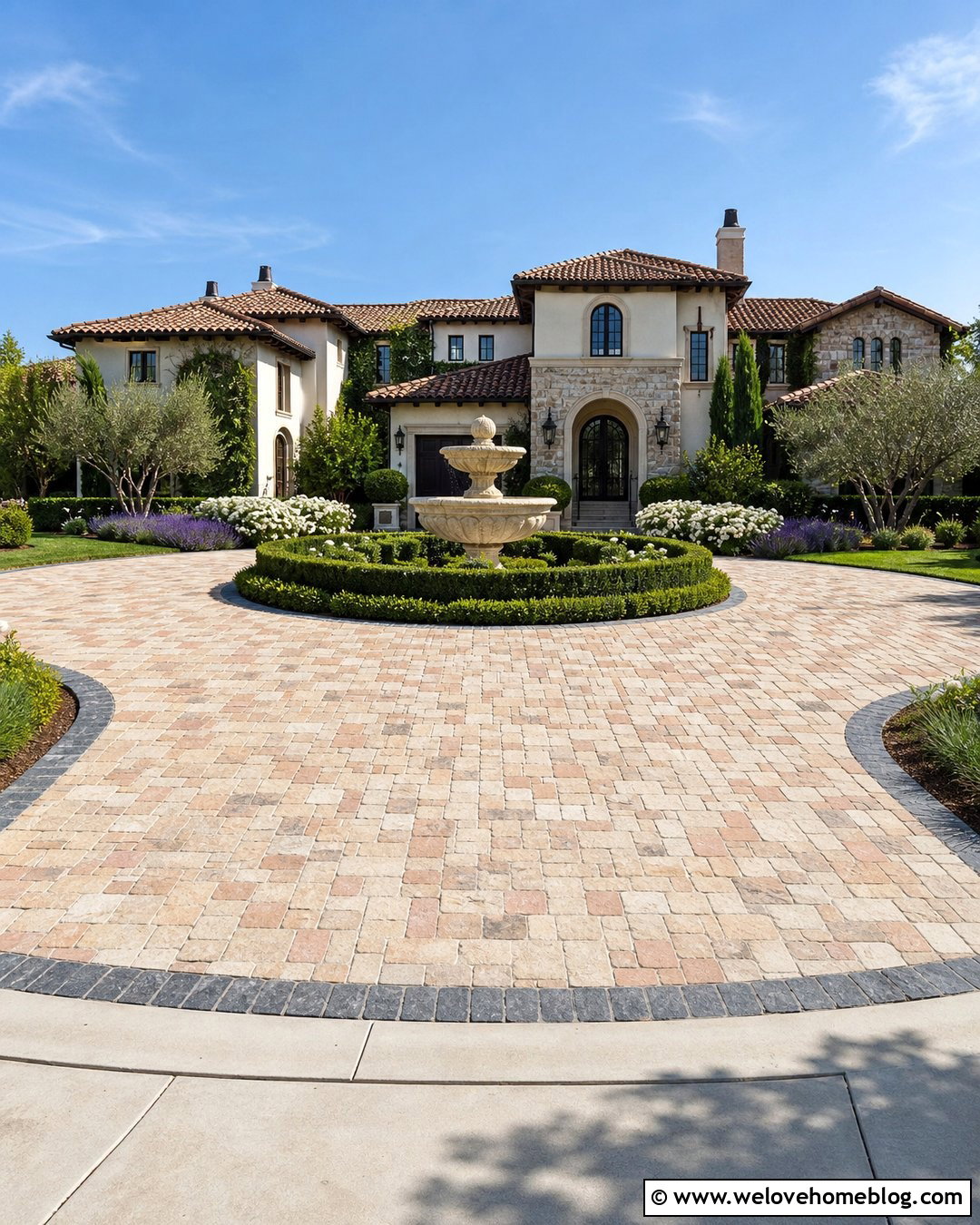
A circular driveway can become the centerpiece of a larger Spanish Colonial or Mediterranean property. Use tumbled pavers in warm limestone tones for the driving surface and outline the circle with clay brick or dark cobblestone. In the central island, install a simple tiled fountain surrounded by low hedges, white roses, lavender, and symmetrical citrus trees. Keep taller planting away from important sightlines so drivers can navigate the loop comfortably. Stucco pillars at the two street entrances help frame the driveway without making it feel closed off. Repeat the fountain tile on stair risers or planters near the house. By coordinating the paving, centerpiece, planting, and entrance structures, the circle reads as one elegant motor court rather than a driveway wrapped around an unrelated garden bed.
12. Spanish Driveway With Wrought Iron Gate
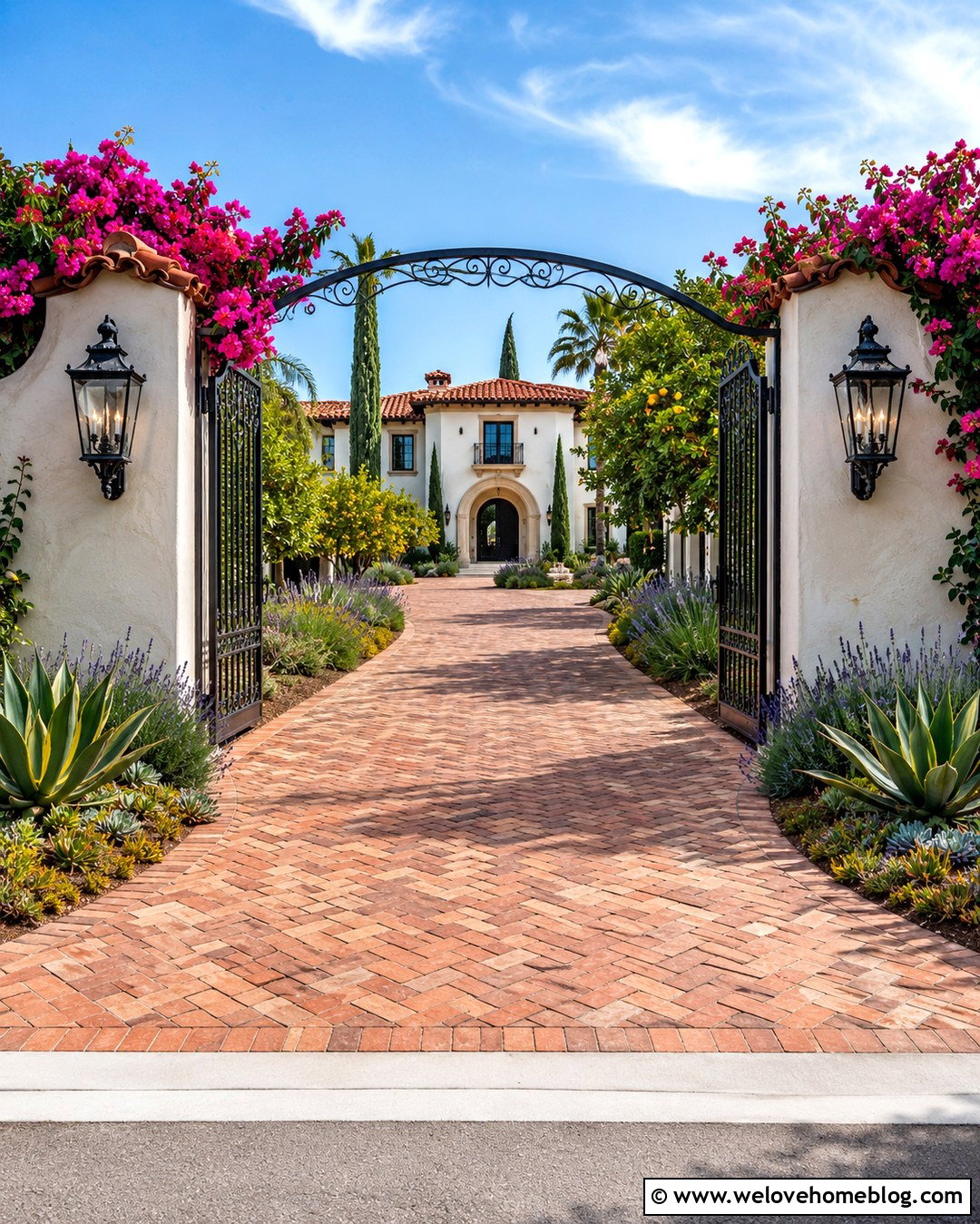
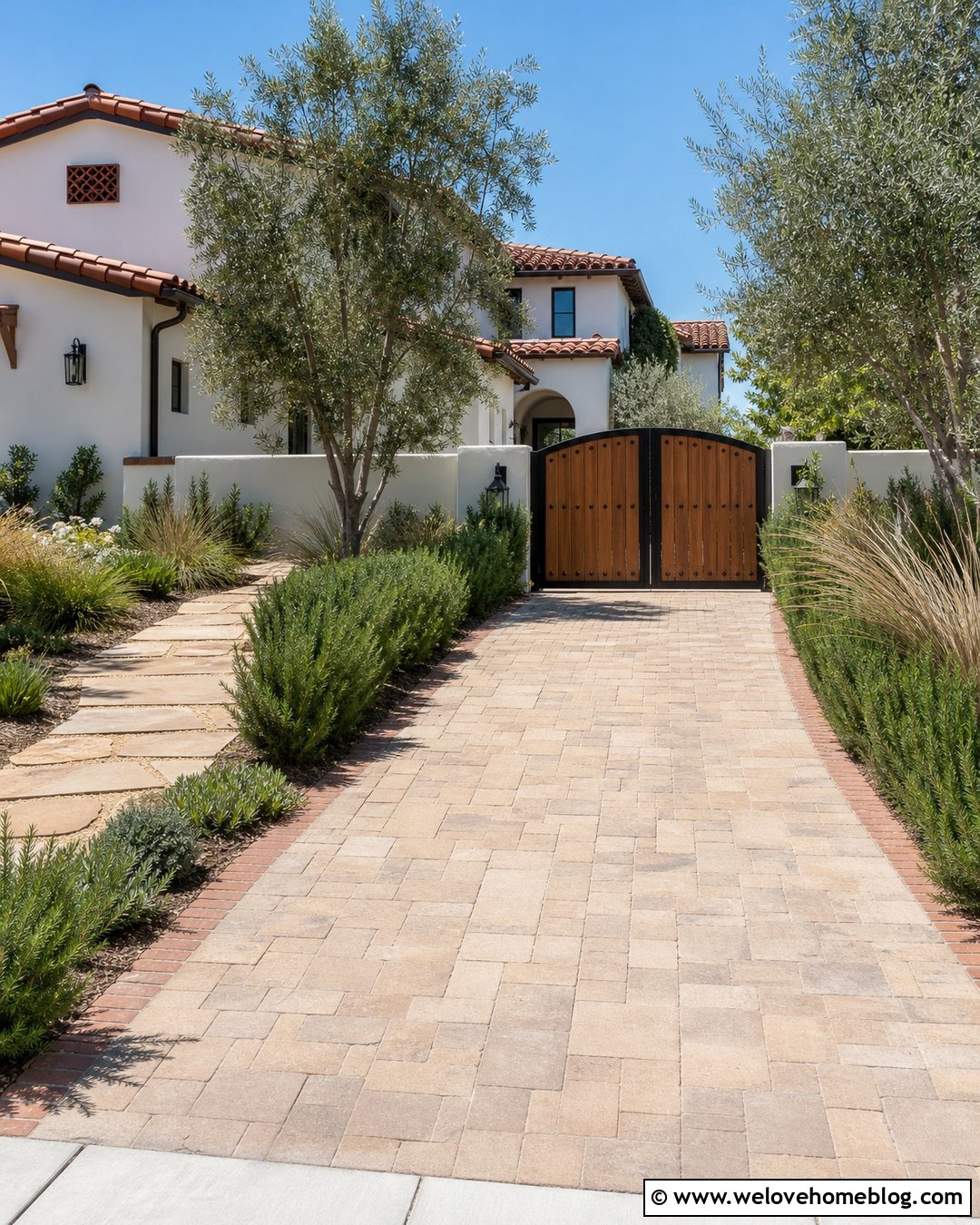
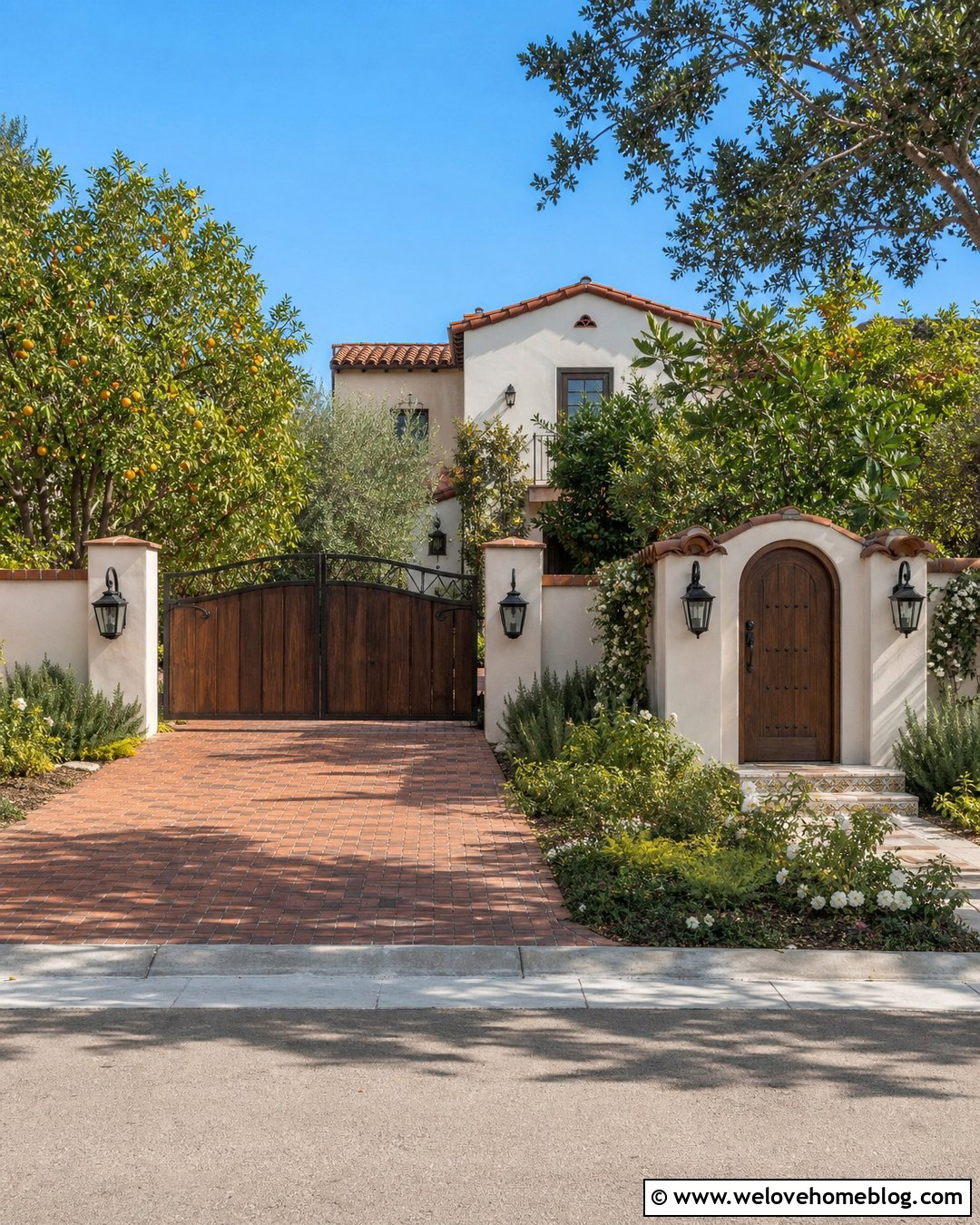
Dark wrought iron creates a striking contrast against pale stucco and warm driveway materials. Pair an arched iron gate with a herringbone brick driveway in muted red and brown tones. Set the gate far enough inside the property to create a practical entrance area, subject to local site and access requirements. Flank it with smooth stucco walls capped in clay barrel tile. Behind the gate, allow the driveway to curve gently toward the home, revealing landscaped beds along the approach. Use bougainvillea, citrus, lavender, and sculptural succulents to support the Spanish palette without blocking the ironwork. Matching lanterns on the entrance walls provide continuity. The result feels secure and formal while still allowing views of the house, garden, and textured driveway.
13. Spanish Driveway With Stucco Pillars
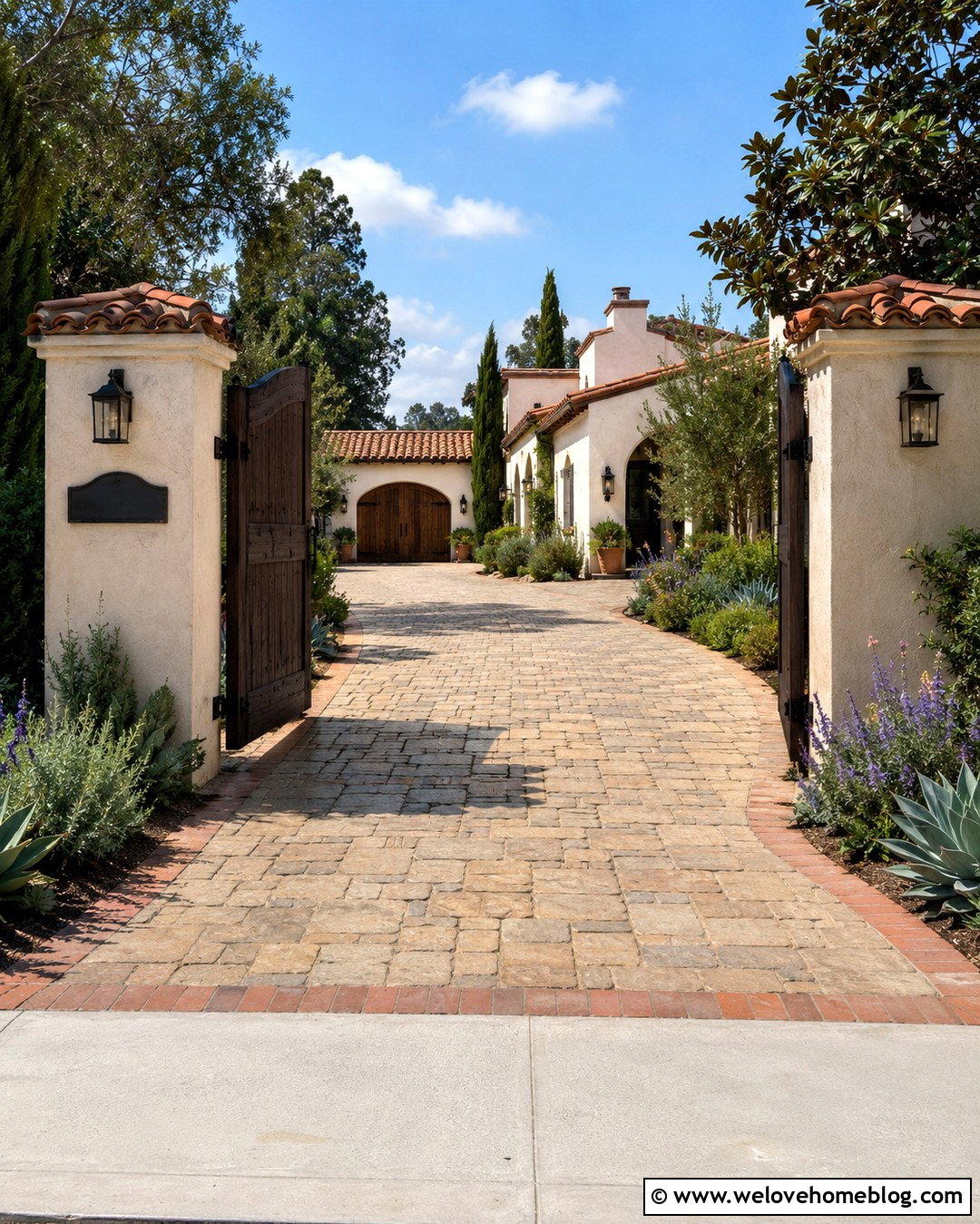
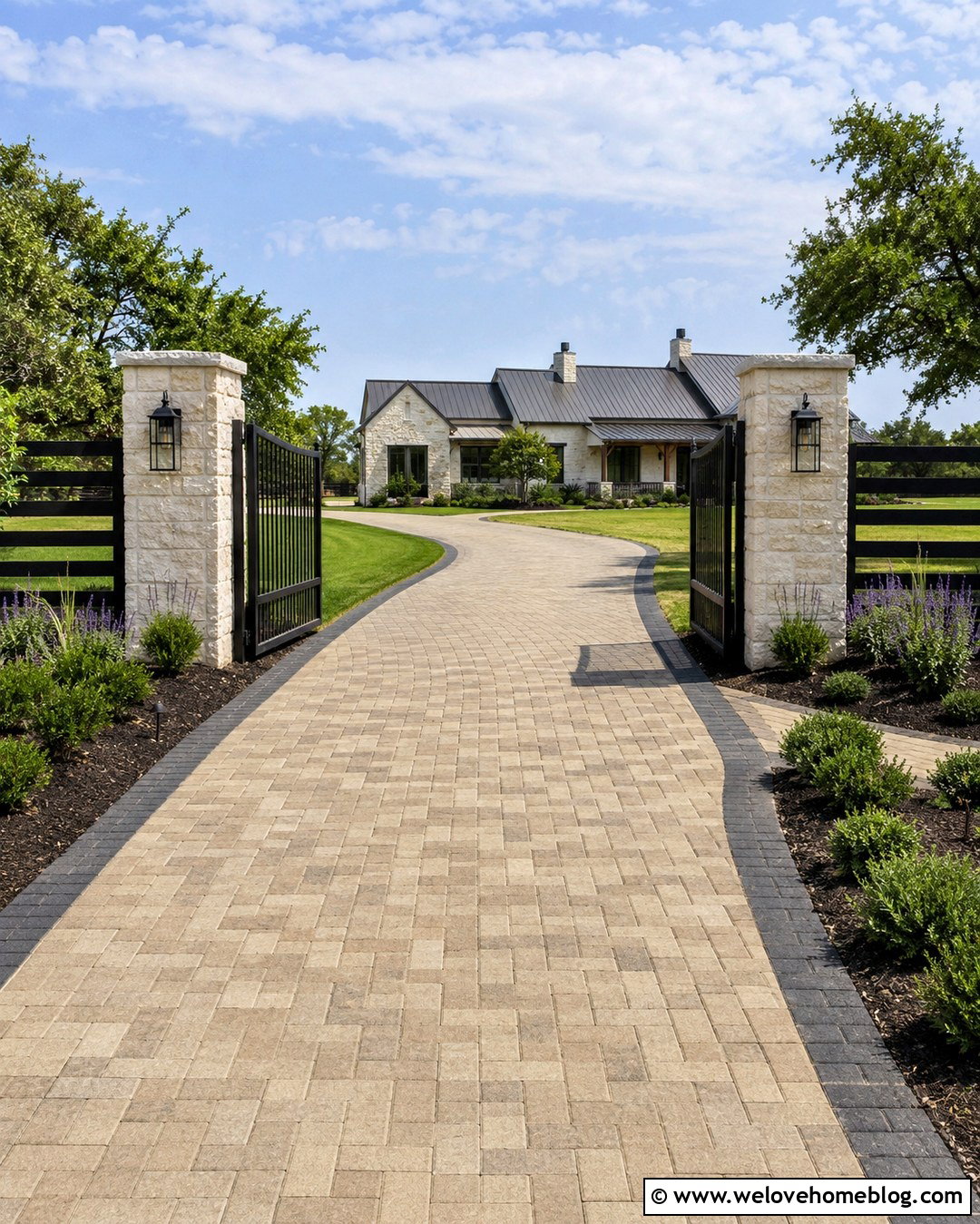
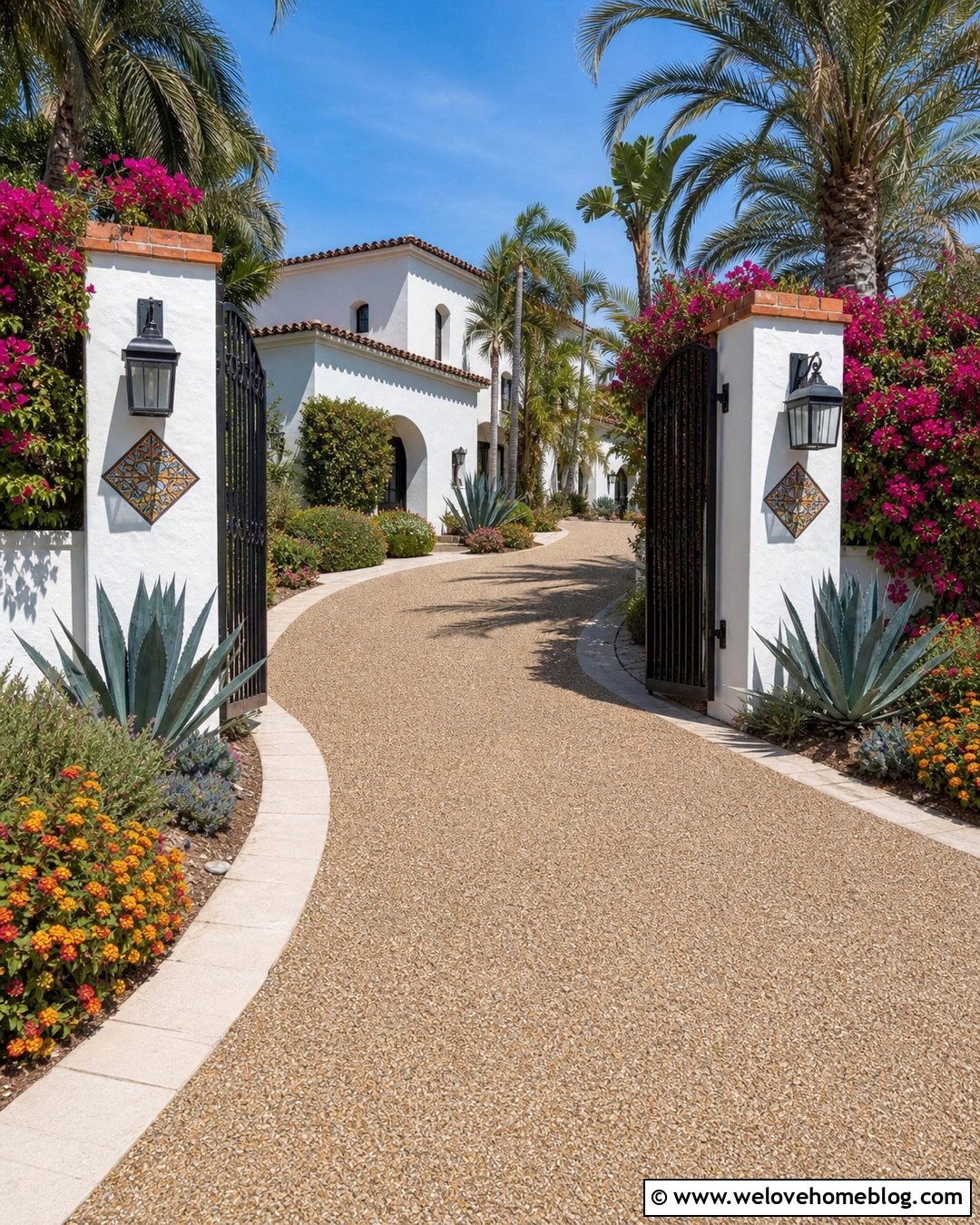
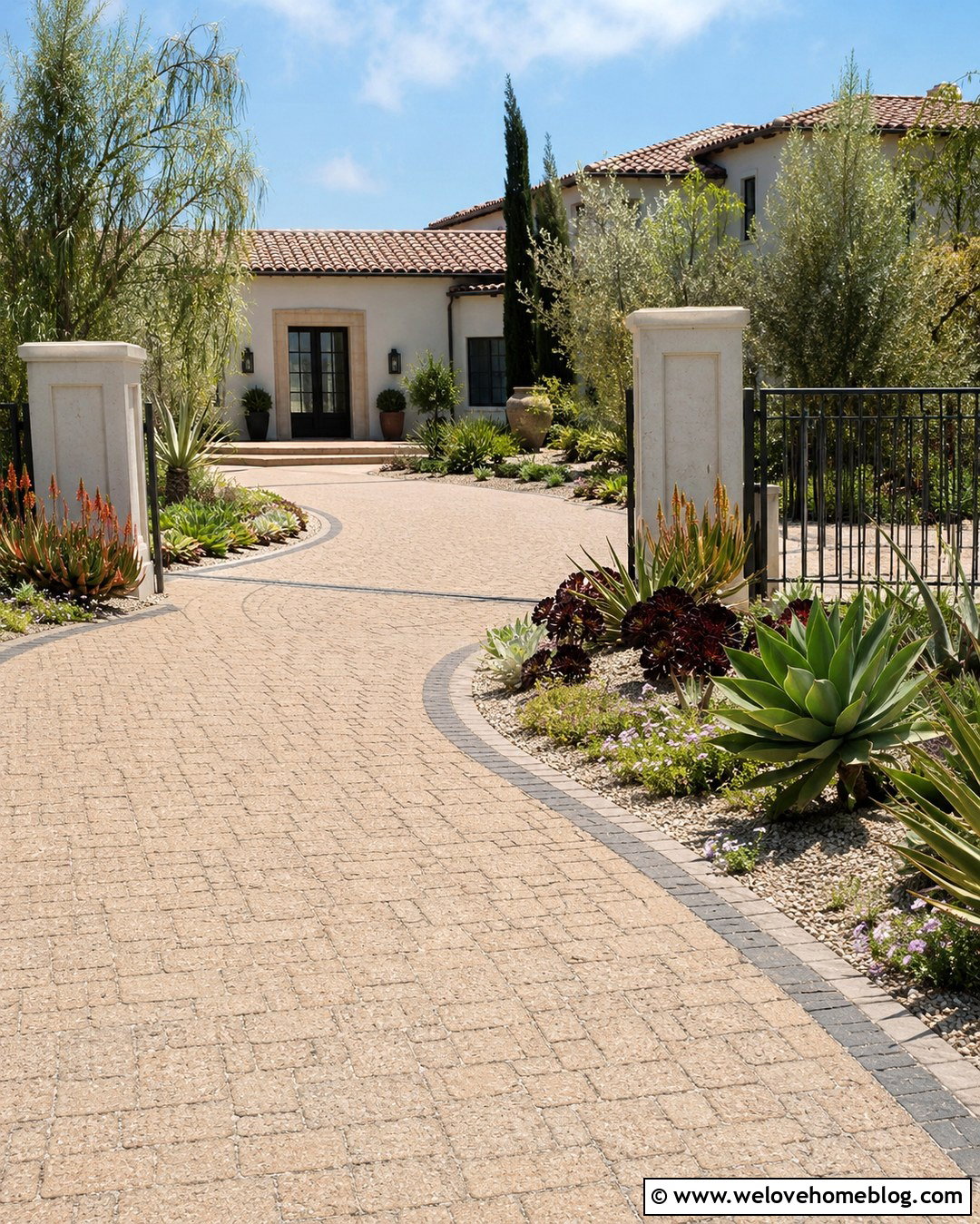
Stucco pillars can give even a simple driveway a clear Spanish architectural identity. Build substantial square columns in a color that matches or complements the house, then finish them with stone caps or small clay-tile roofs. Between the pillars, use an open wooden or wrought-iron gate that keeps the entrance visually welcoming. Continue the look with tan cobblestone-style concrete pavers arranged in a multi-size pattern. A contrasting brick border can define the driveway and lead toward an arched garage. Plant compact agaves, rosemary, and flowering sage around the pillar bases without hiding their proportions. Include an address plaque and understated lanterns as integrated details. Coordinating these entrance features creates a complete approach rather than placing decorative columns beside an otherwise unrelated driveway.
14. Spanish Driveway With Saltillo Tile Border
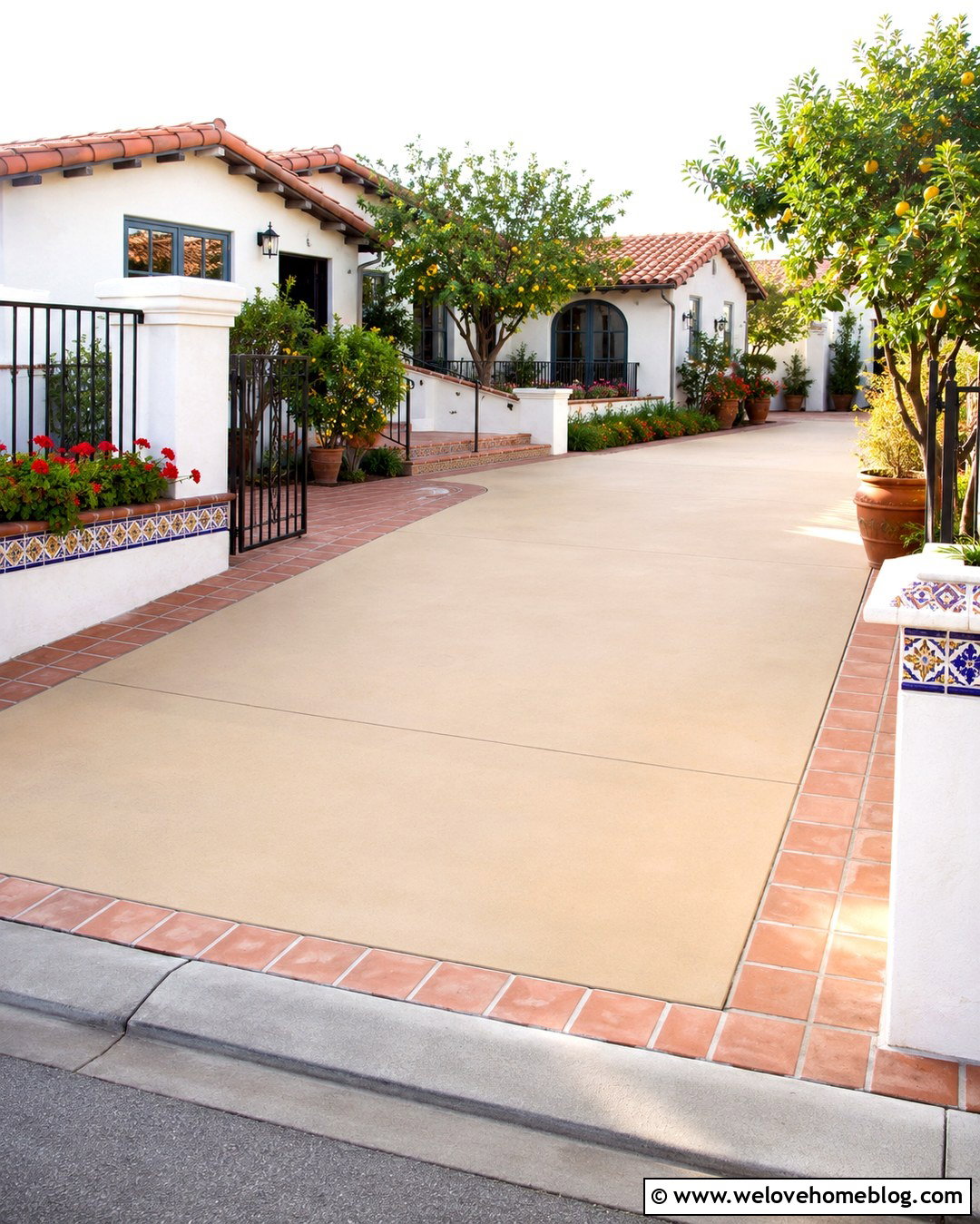
Saltillo-inspired tile can introduce beautiful color without covering an entire vehicle surface. Begin with a warm beige concrete or light tan paver driveway, then add a terracotta-toned tile or clay paver border designed for exterior use. Use the accent along the sides, across the driveway apron, and where the driveway meets the front walkway. Small blue-and-white decorative tile details can appear on nearby planter walls or stair risers, but keep them away from high-wear driving zones unless they are rated for that use. Frame the approach with white stucco walls, dark iron railings, and terracotta pots filled with citrus and geraniums. This restrained application gives the driveway Spanish color and craftsmanship while keeping the main surface practical and easy to navigate.
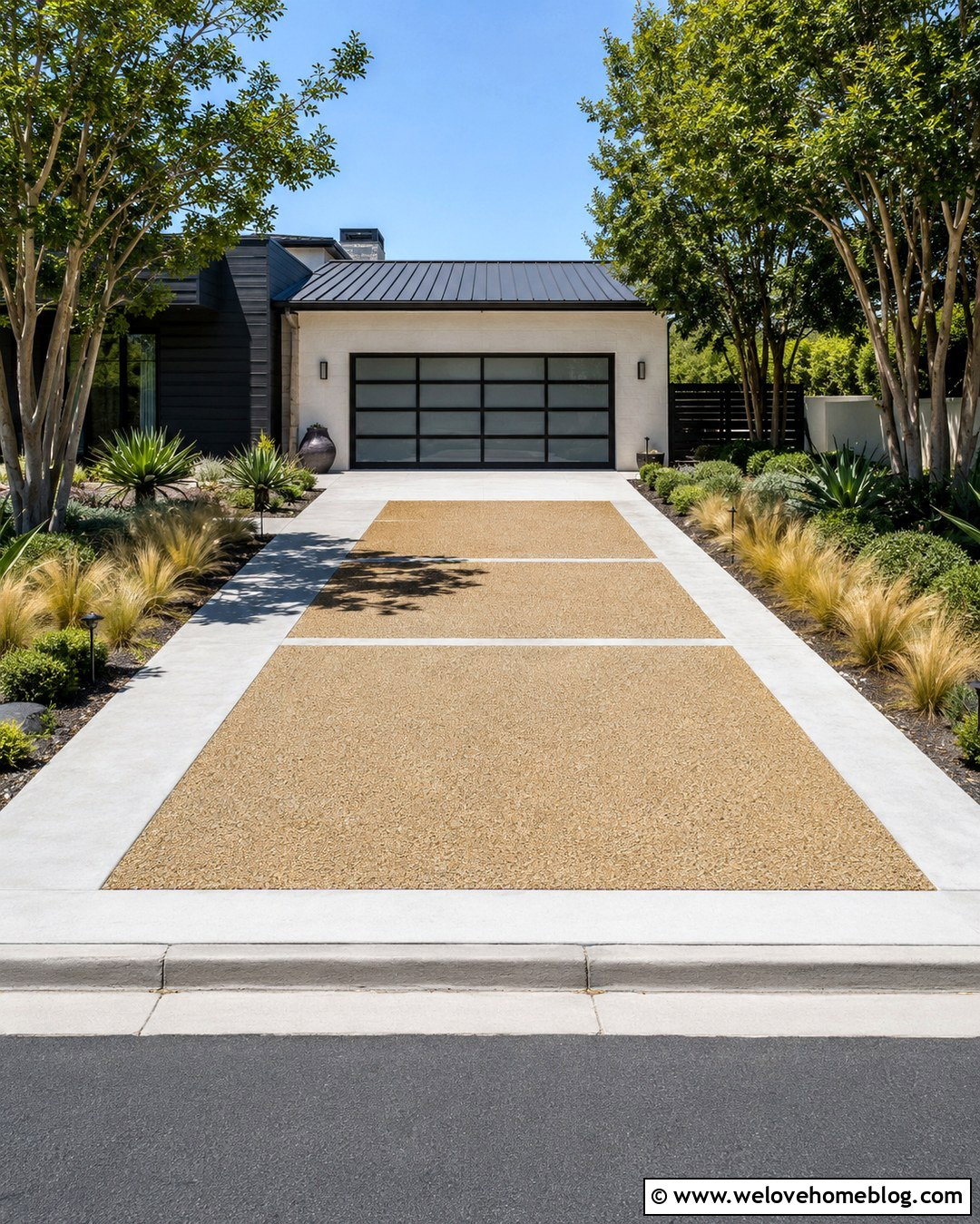
15. Spanish Driveway With Grass Strips
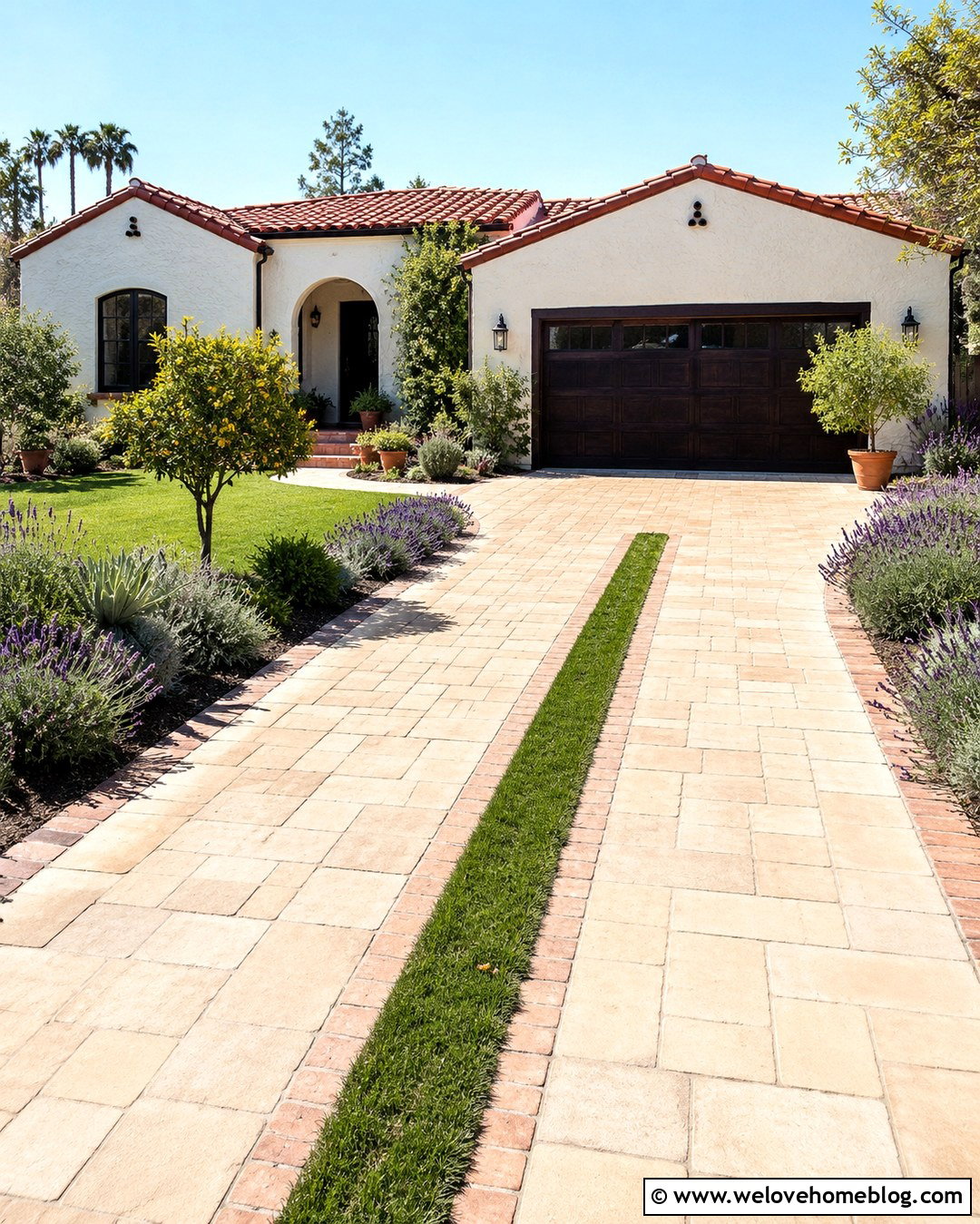
Grass strips can soften a paved driveway and help a compact Spanish bungalow feel more connected to its front garden. Use warm buff concrete pavers for two wide driving tracks, then place a narrow green strip between them. Continue the same planting in slim joints near the driveway edges if the local climate and maintenance routine make that practical. A clay brick outline gives the layout structure and prevents it from looking unfinished. Beside the driveway, combine a small lawn with rounded planting beds containing lavender, sage, dwarf citrus, and terracotta pots. The paver tracks should widen into a full parking surface near the garage. This balanced design blends greenery and paving while preserving a clear, functional route from the curb to the house.
16. Spanish Driveway With Drought-Tolerant Landscaping
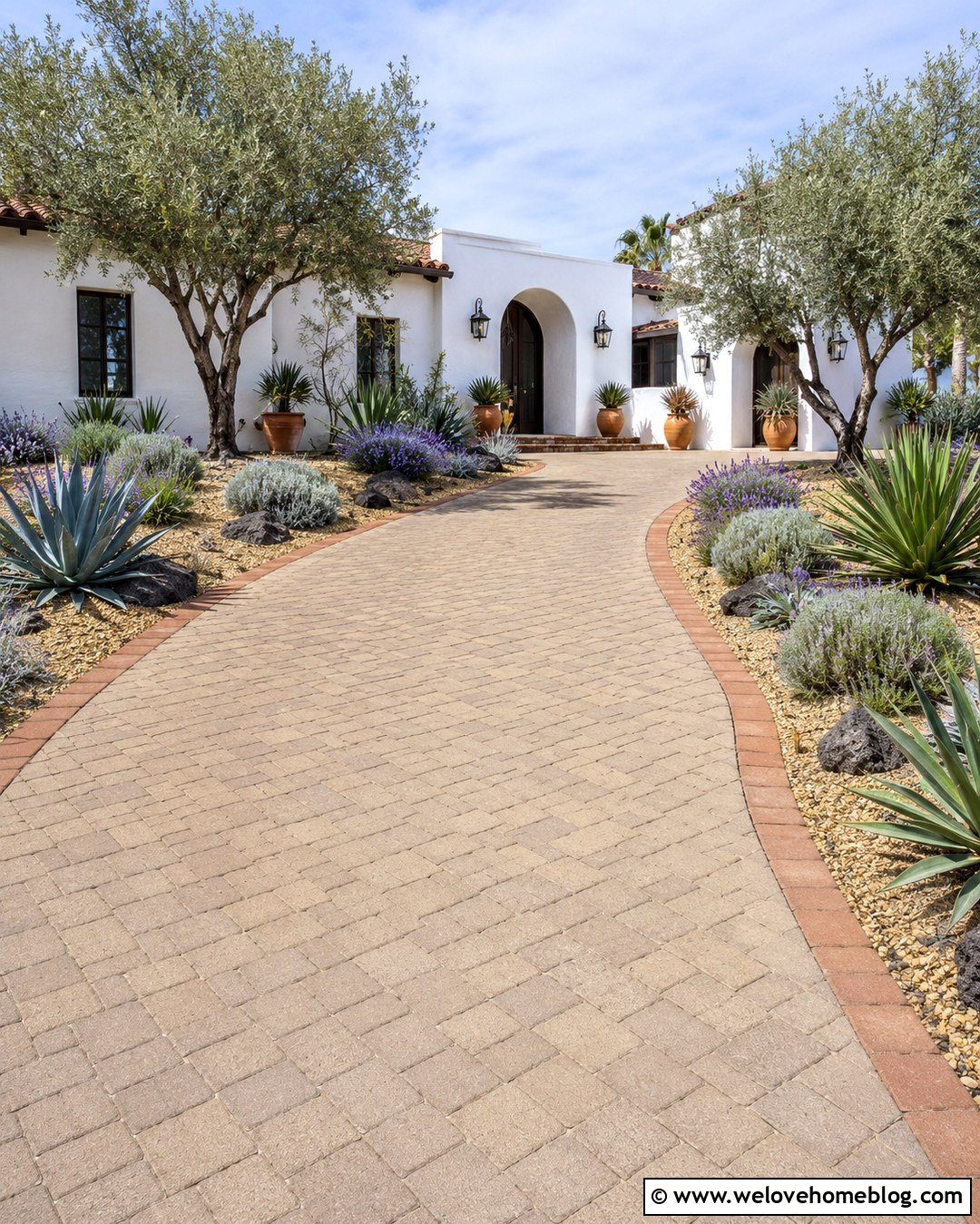
A water-wise landscape can reinforce Spanish character through shape, texture, and color rather than relying on a large lawn. Pair a sandy beige interlocking paver driveway with broad beds of golden gravel and dark volcanic rock accents. Use agave, aloe, yucca, rosemary, lavender, santolina, and ornamental grasses in repeated groups instead of scattering many unrelated plants. A softly curved driveway will create several planting pockets while guiding the eye toward the house. Add clay brick edging to separate the pavers from loose mulch and make maintenance easier. One olive tree near the entrance and another near the garage can balance the composition. White stucco walls, terracotta pots, and black iron lanterns tie the planting and driveway into a unified Spanish-inspired exterior.
17. Small Spanish Driveway
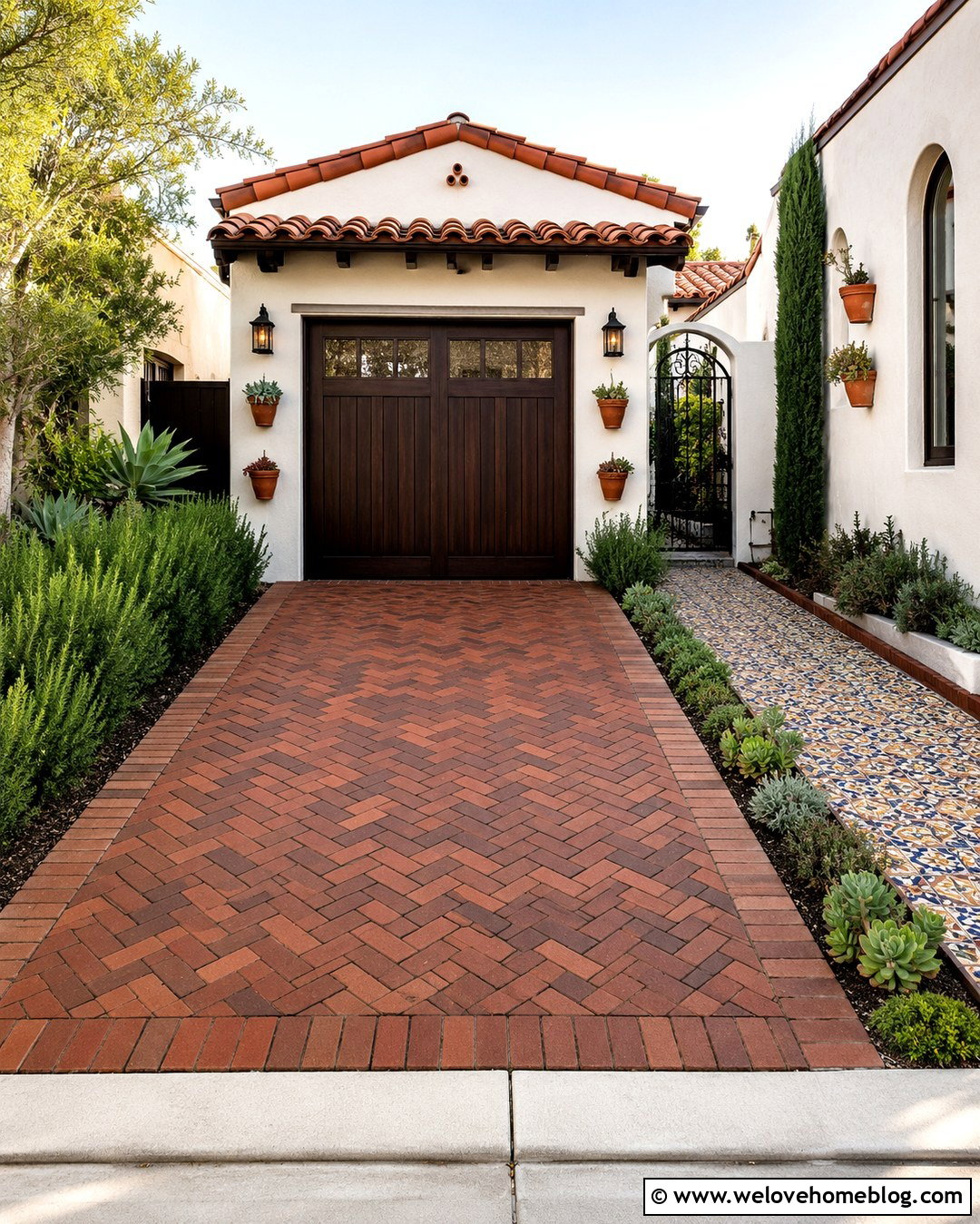
A narrow urban driveway can still carry strong Spanish character without feeling crowded. Use small-format clay brick pavers in a warm red and brown blend, laid in a simple herringbone pattern. A single soldier-course border provides definition without consuming valuable width. Keep the driveway straight, but create visual interest with a tiled pedestrian path running beside it toward the front porch. Plant upright Italian cypress or slim ornamental trees only where adequate clearance is available. Elsewhere, use wall-mounted pots, compact rosemary, and low succulents. A dark wooden garage door and one arched wrought-iron side gate complete the look. Limiting the palette to a few repeated materials makes the driveway feel larger, cleaner, and more connected to the home.
18. Sloped Spanish Driveway
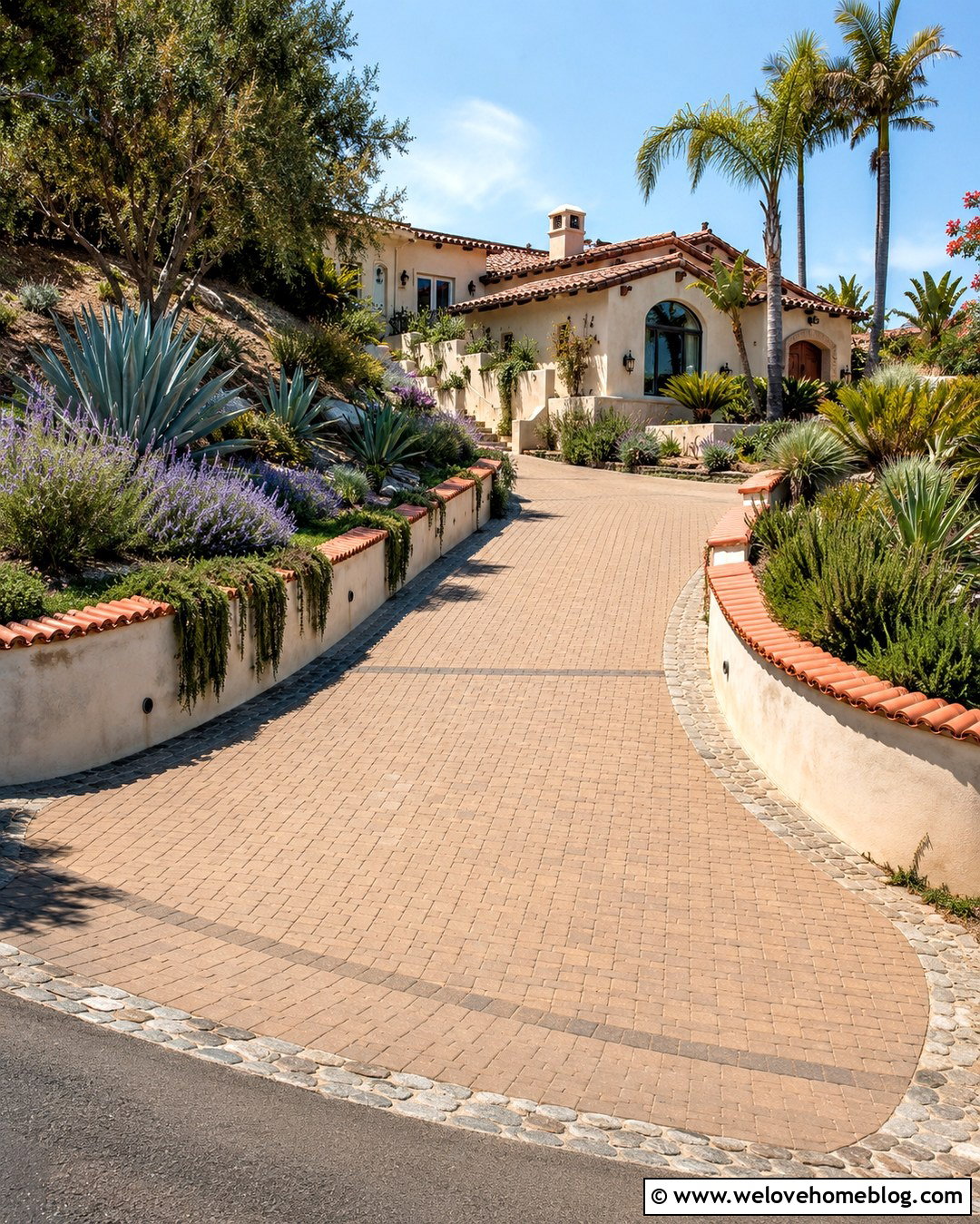
A sloped driveway needs visual character without sacrificing a clear, comfortable approach. Warm-toned interlocking concrete pavers can provide texture while allowing the surface pattern to follow the grade. Use a herringbone layout through the main driving area and darker paver bands at transitions. Curving the driveway slightly may help it sit more naturally within the landscape, depending on available space and site conditions. Retaining walls finished in cream stucco can support raised planting beds along the higher side. Cap them with terracotta tile and plant trailing rosemary, lavender, agave, and ornamental grasses. On the lower side, a cobblestone curb can define the edge. Thoughtful grading, drainage, and professional base preparation are essential parts of making this complete Spanish driveway attractive and dependable.
19. Modern Spanish Driveway
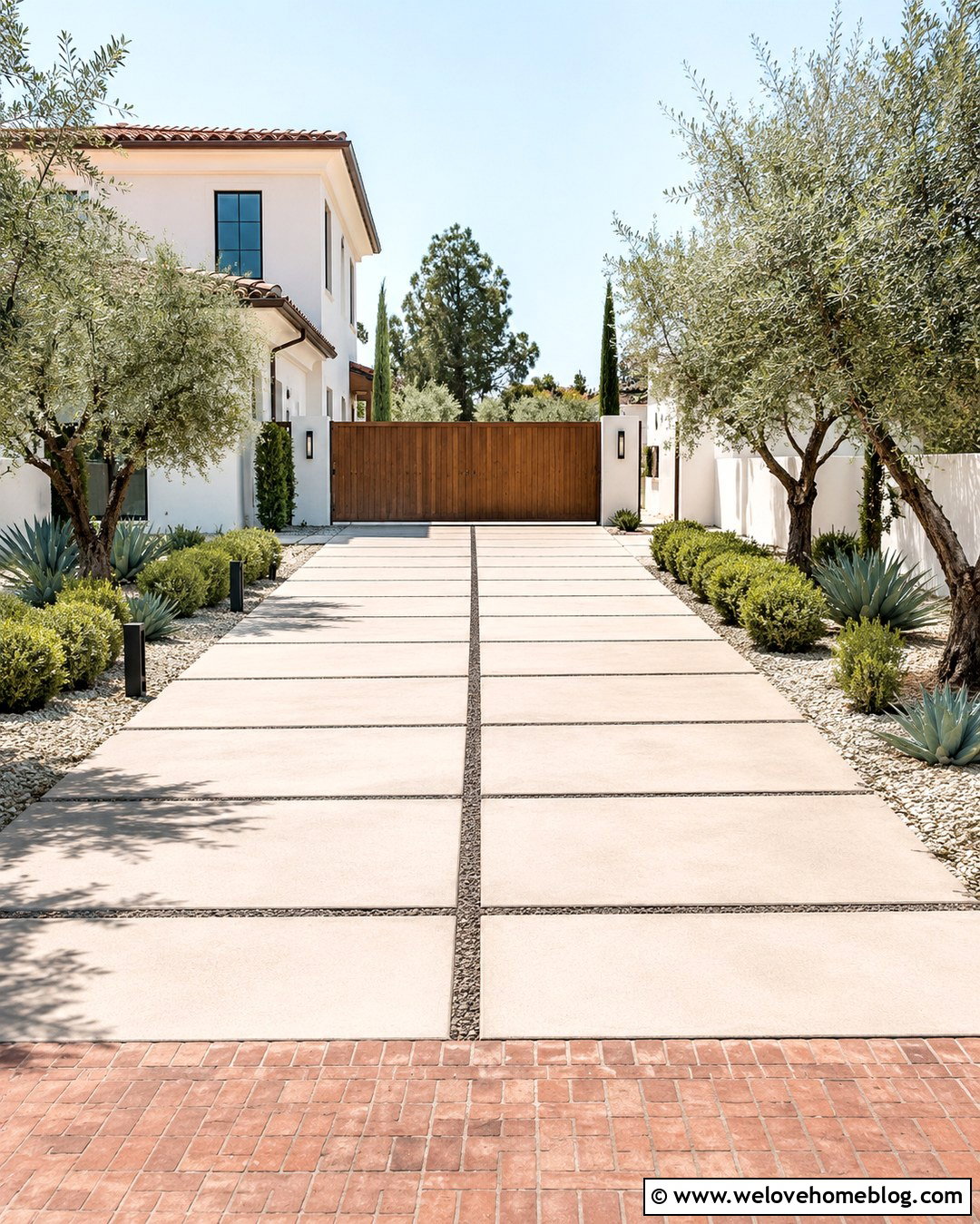
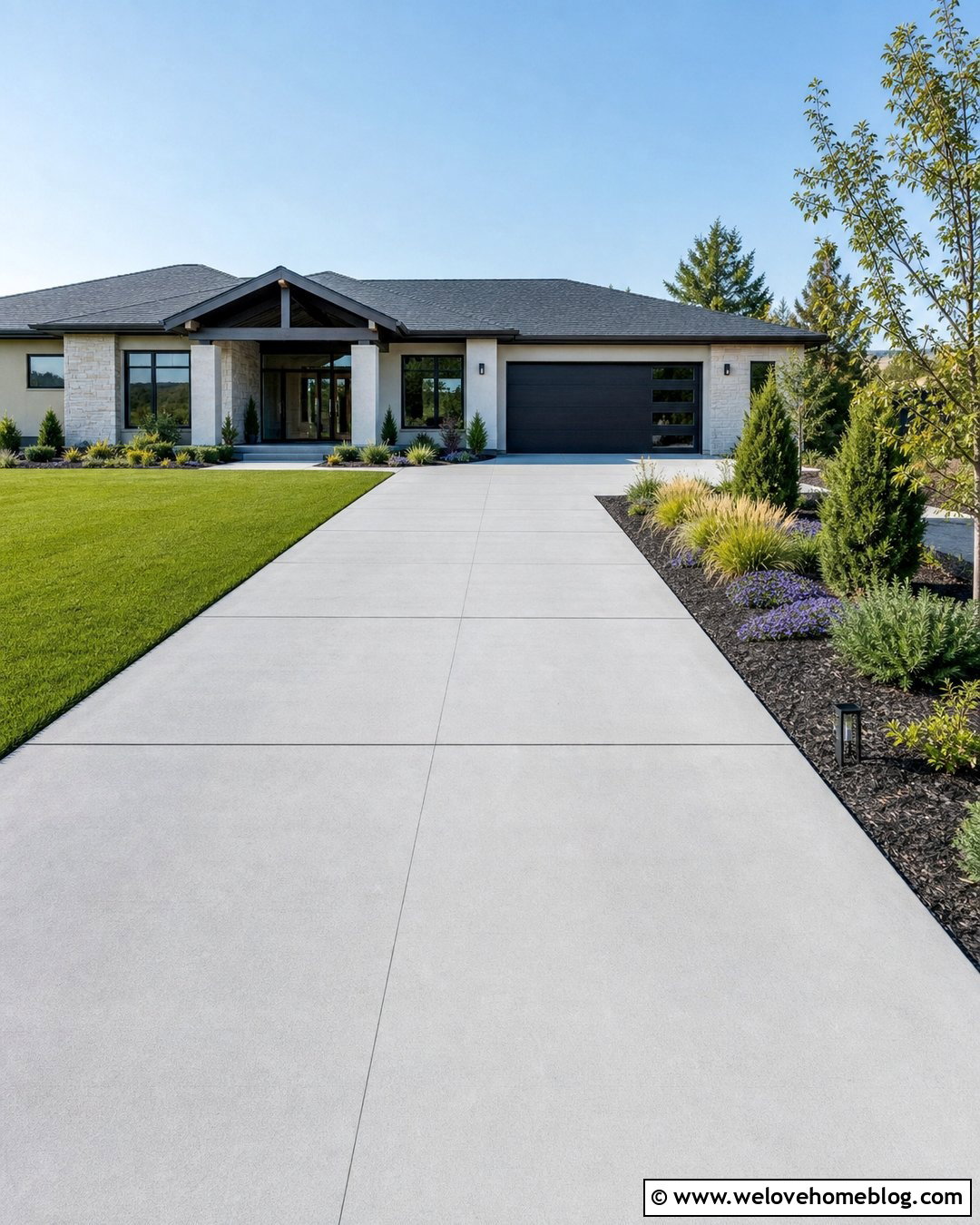
Modern Spanish design combines clean geometry with warm, traditional materials. Start with large-format concrete pavers in a soft sand or limestone color, laid in a straight grid. Separate selected rows with narrow strips of dark gravel to emphasize the architecture without creating a busy pattern. Use a clay brick border or terracotta accent band near the entrance to connect the driveway with the tile roof. Landscaping should feel sculptural and controlled, with mature olive trees, blue-green agaves, clipped rosemary, and pale gravel beds. Add simple black metal lighting and a streamlined wooden gate between smooth stucco walls. The finished driveway feels fresh and uncluttered, yet its earthy colors, textured plants, iron accents, and handcrafted details remain clearly rooted in Spanish design.
20. Spanish Motor Court Driveway
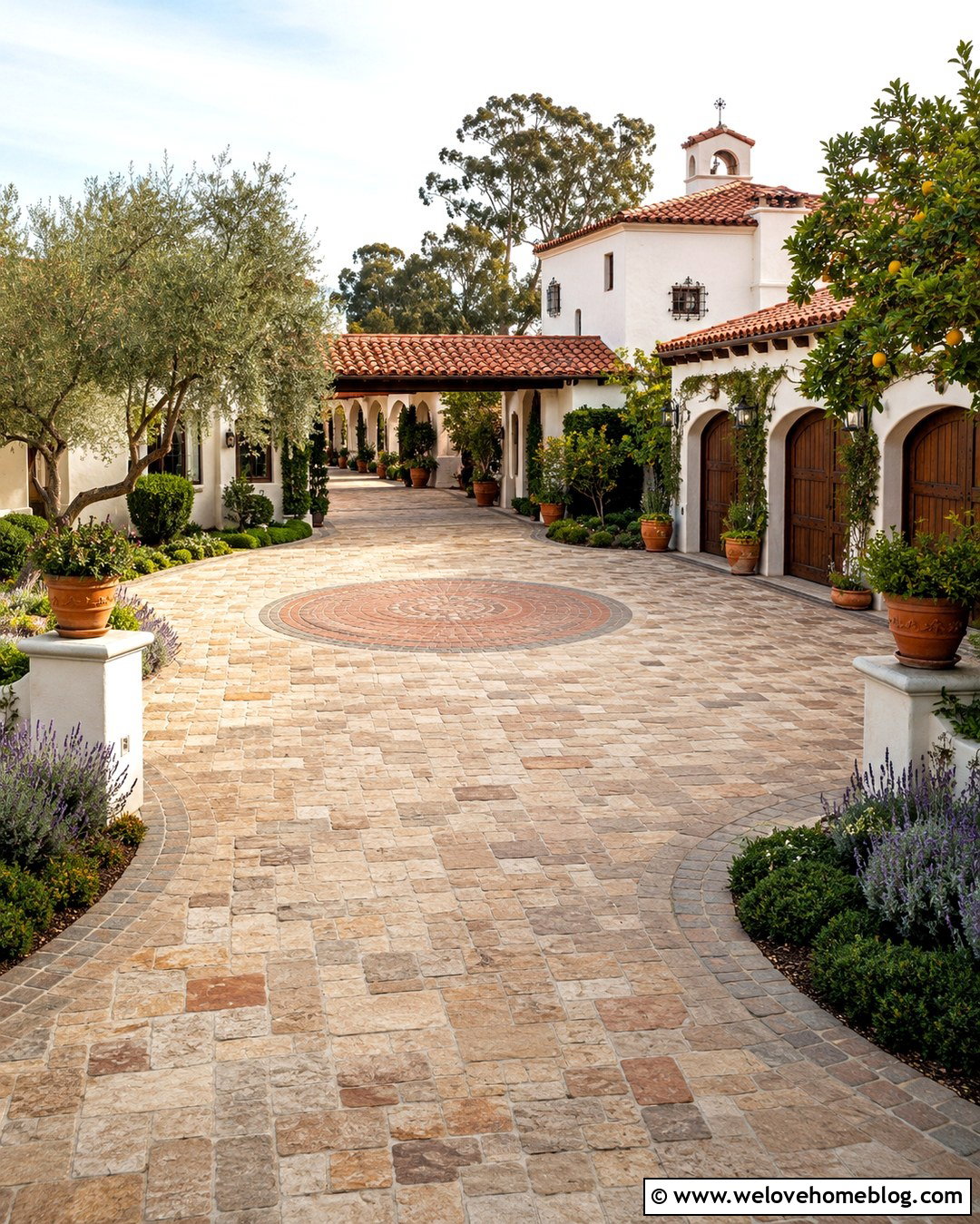
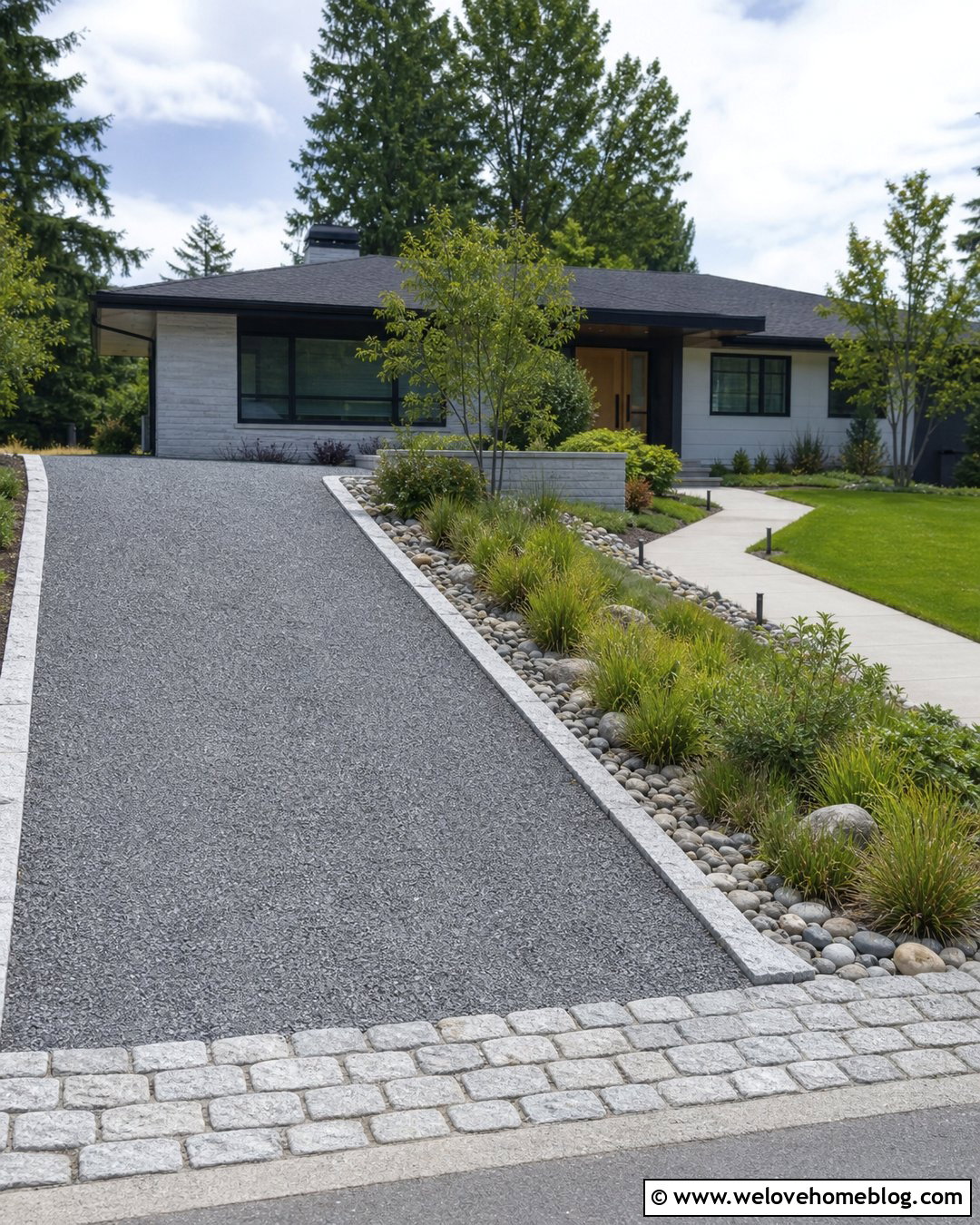
A spacious motor court should feel like an outdoor room rather than an oversized parking surface. Use multi-size tumbled pavers in warm cream, tan, and rust tones to create a softly varied field. Define the center with a circular brick medallion or a subtle cobblestone ring that helps organize vehicle movement. Around the perimeter, include low stucco walls, arched garage doors, terracotta planters, and planting beds filled with olives, citrus, lavender, and clipped shrubs. A covered walkway or small tiled courtyard can connect the motor court to the main entrance. Keep the center relatively open and place decorative features beyond turning areas. Repeating the same pavers, brick accents, and planting palette throughout the property creates a polished Spanish estate appearance.
Conclusion:
The most successful Spanish driveway feels like a natural extension of the house rather than a separate paved area. Warm materials, gentle curves, defined borders, handcrafted accents, and Mediterranean-inspired planting can turn an everyday entrance into a memorable approach. When comparing these 20 Spanish Style Driveway Ideas, consider how each surface will perform in your climate and how much maintenance it may require. Plan vehicle access, drainage, lighting, and planting space before selecting decorative details. You can create strong Spanish character with a complete renovation or a few coordinated upgrades, such as a brick border, stucco pillars, terracotta planters, and an iron gate. A consistent material palette will keep the finished driveway balanced and welcoming.

Related posts:

Leave a Reply