
A well-planned garden bed can soften hard paving, improve curb appeal, and make the route to your front door feel more welcoming. The best garden bed next to driveway ideas treat the paving, edging, plants, and house as one connected design. Plant height matters because doors need room to open and drivers need clear sightlines. Bed shape matters too. Long, narrow borders suit straight drives, while sweeping beds complement curved layouts. Choose plants for your sunlight, soil, climate, and exposure to reflected heat or winter road salt. Repeating a limited plant palette will create a cleaner, more cohesive result than filling the space with unrelated varieties. () Here are 20 practical Garden Bed Next To Driveway Ideas for different homes, budgets, and yard sizes.

1. Low-Maintenance Garden Bed Next To Concrete Driveway
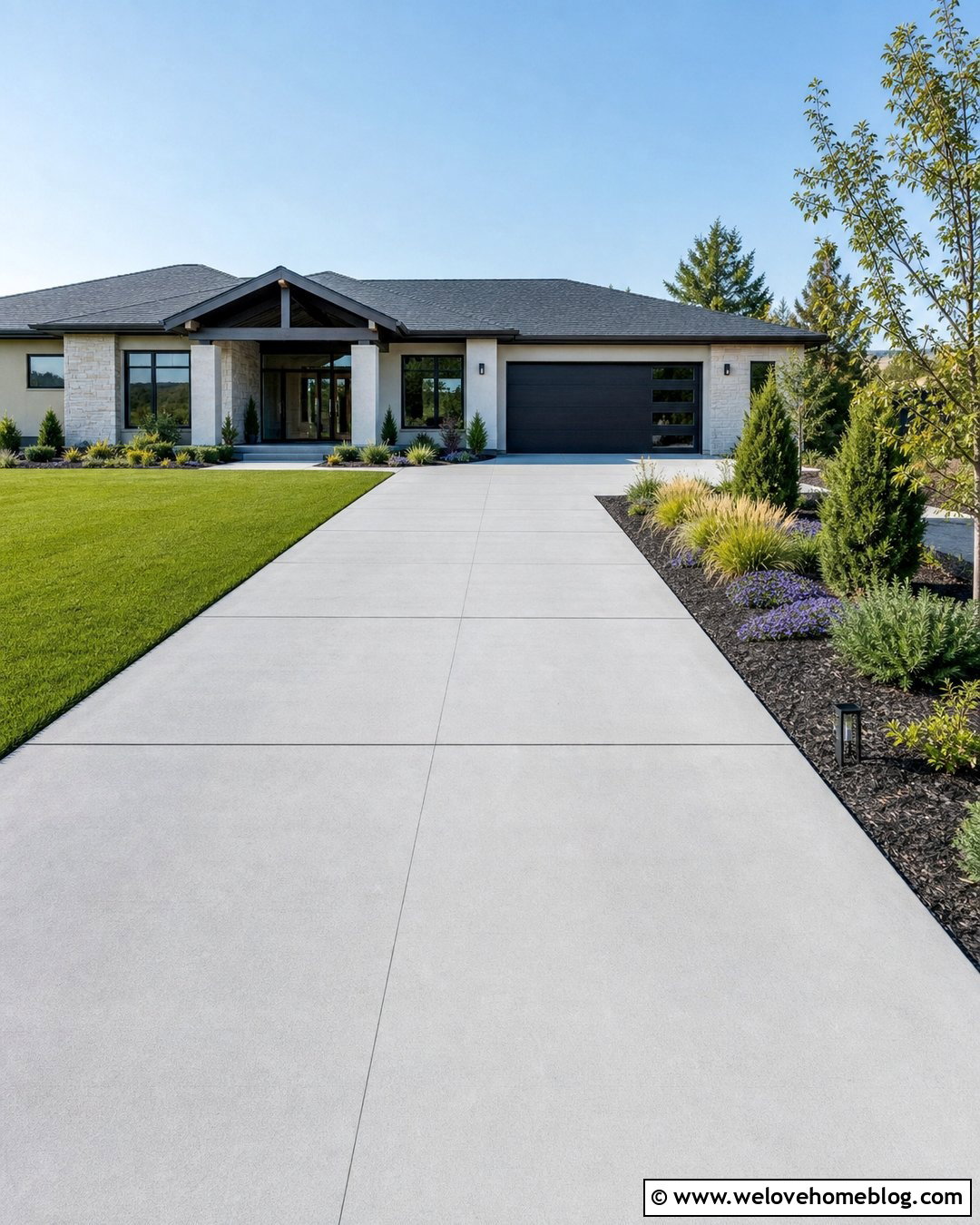
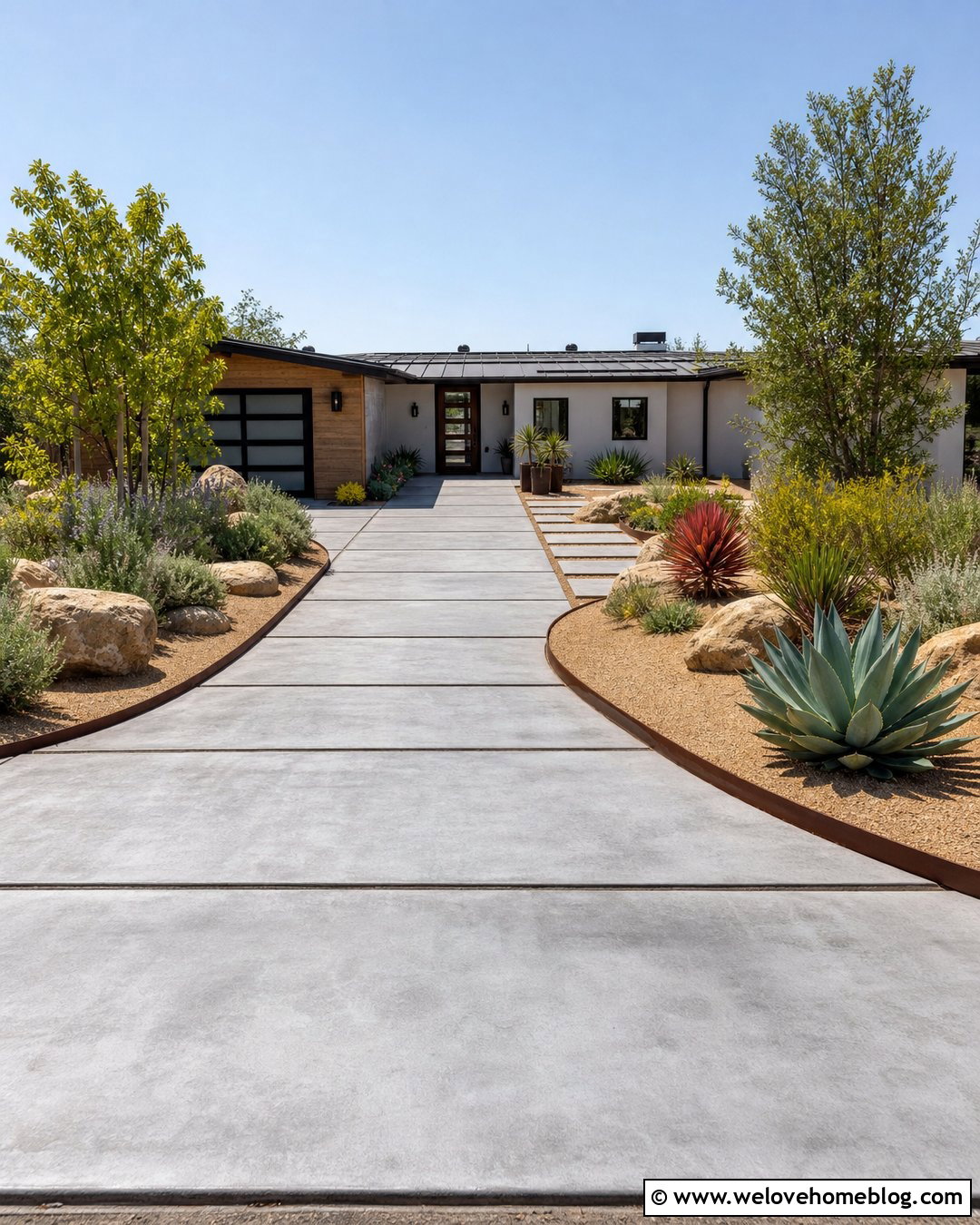
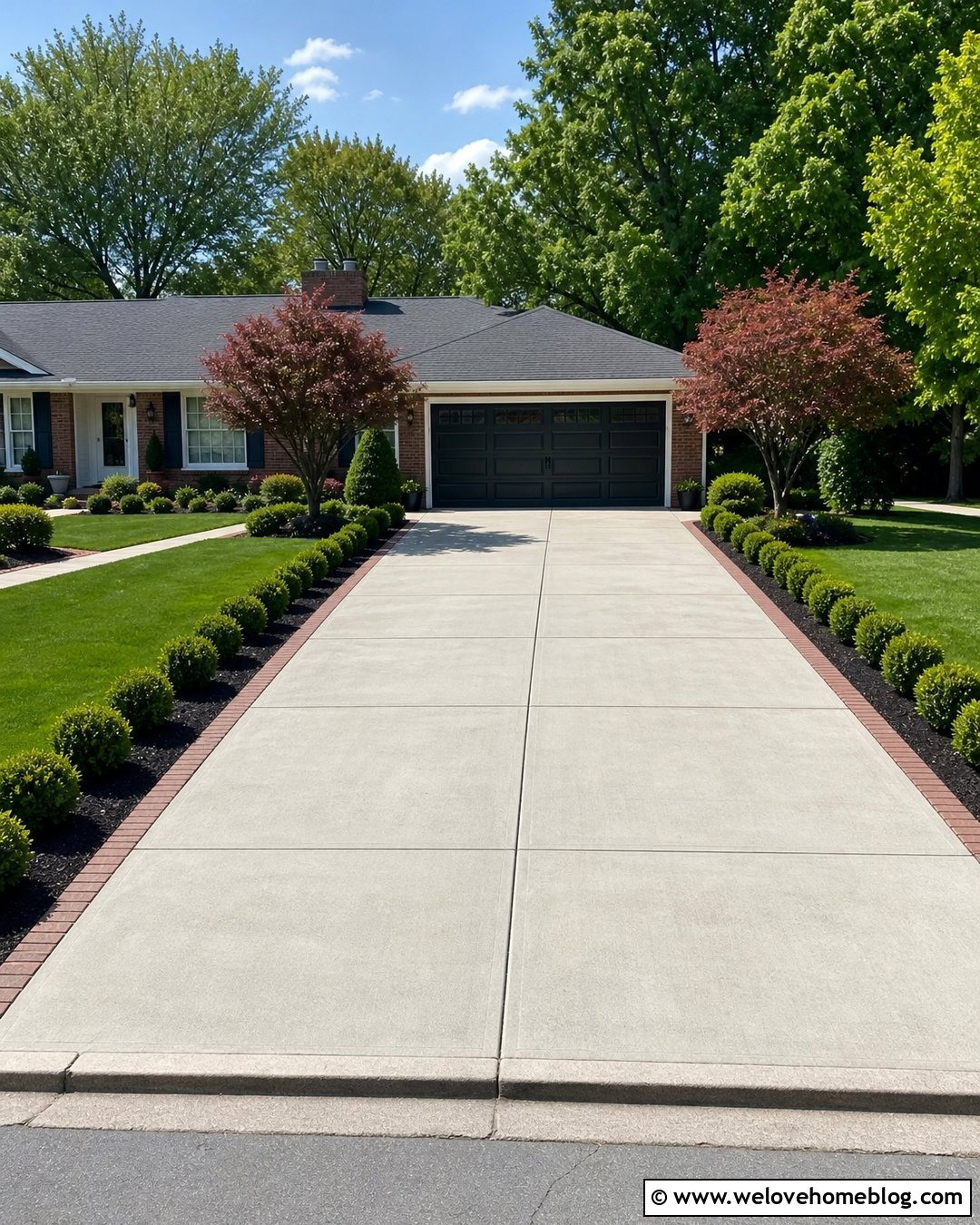
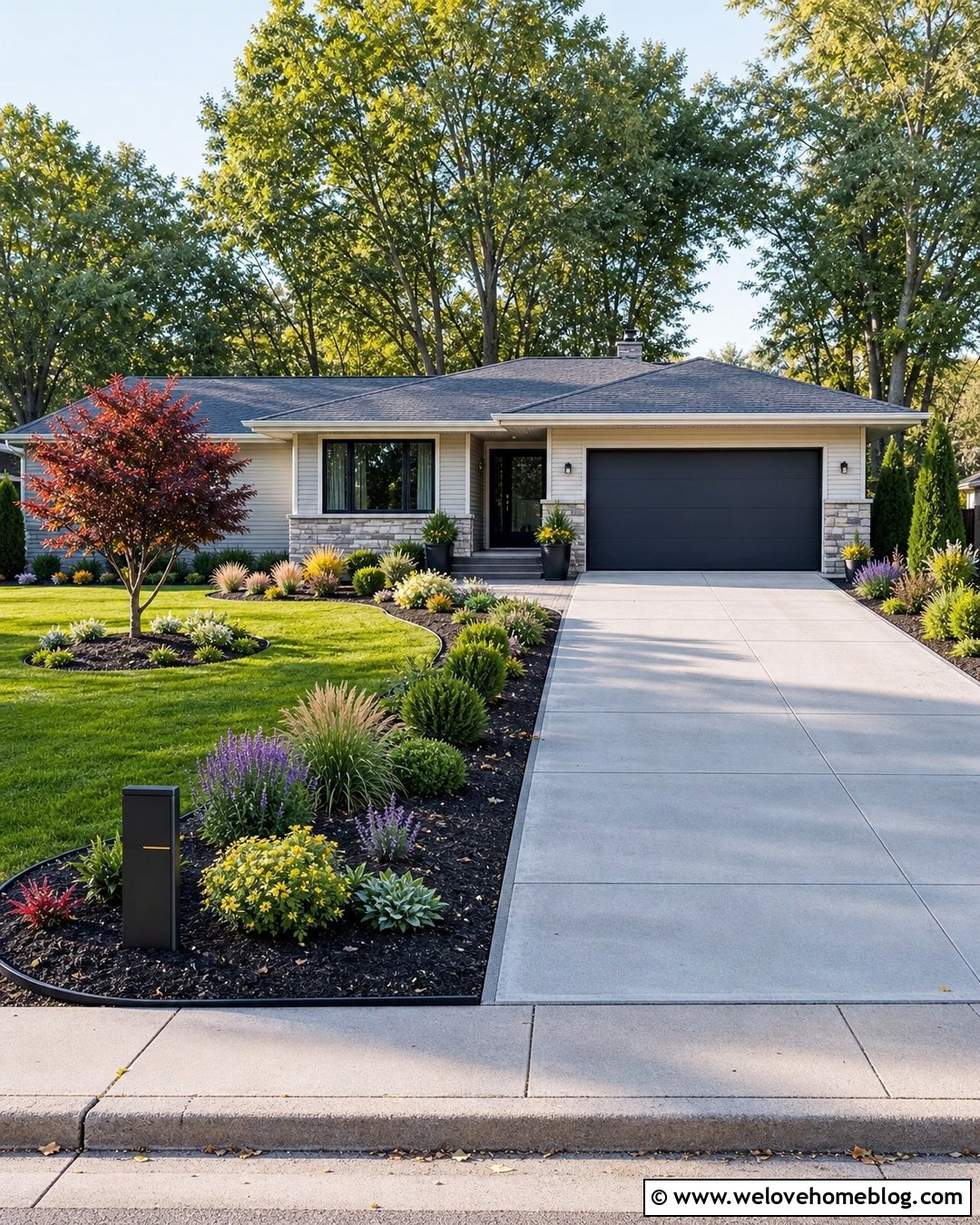
A straight poured concrete driveway looks less severe when paired with a simple, low-maintenance garden bed. Create a three- to five-foot-wide border with a gently curved outer edge. Use dark mulch to contrast with the pale concrete, then repeat compact evergreens, ornamental grasses, and flowering ground covers. Position the shortest plants beside the driveway so car doors can open without crushing foliage. Place taller shrubs toward the lawn or house. Flush steel or concrete edging keeps soil and mulch away from the driving surface. Choose heat-tolerant plants because concrete can reflect warmth during summer. Three or four repeated plant varieties will usually look more intentional than a crowded mixture, while generous spacing provides better airflow and leaves room for mature growth.
2. Curved Flower Bed Next To Asphalt Driveway
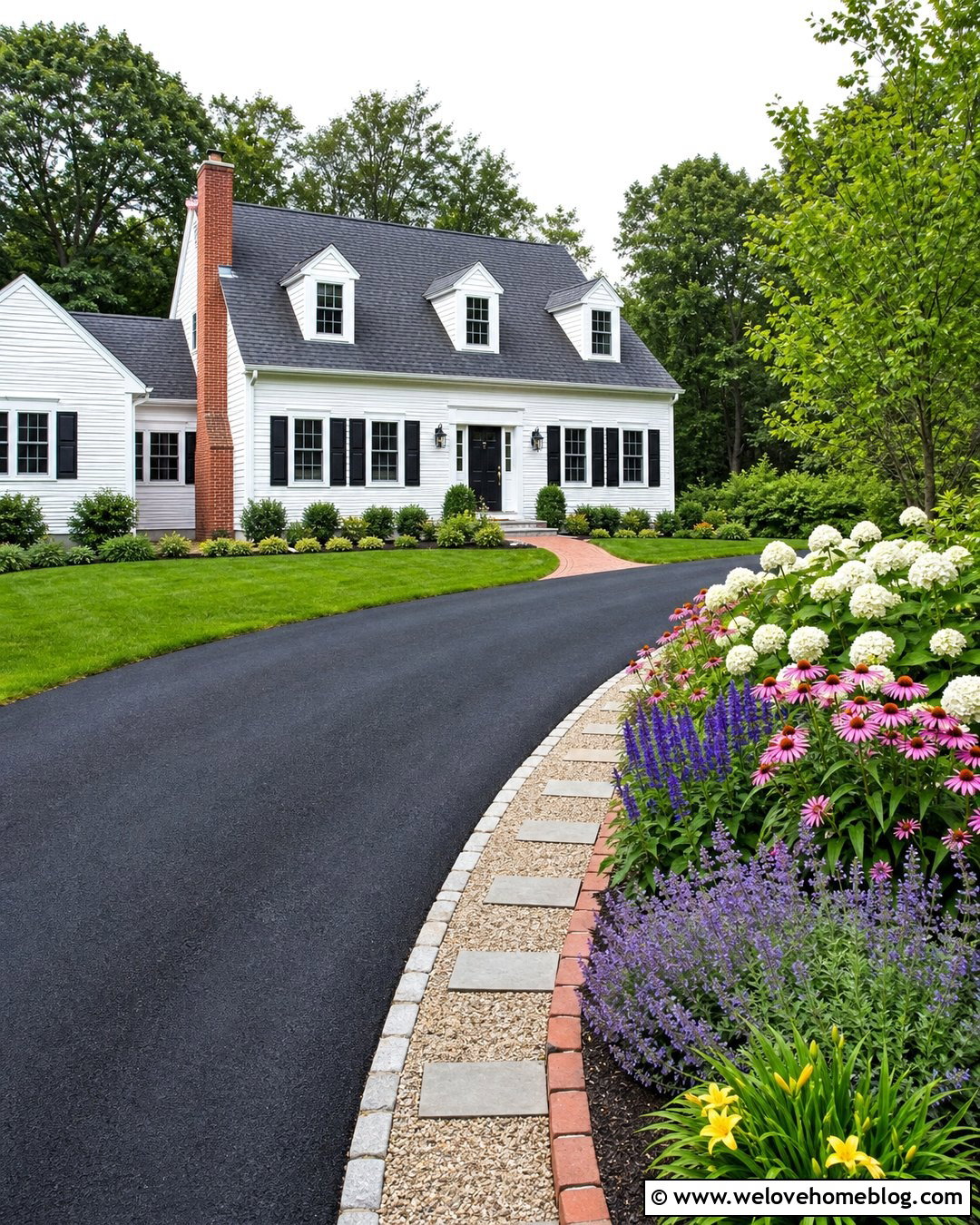
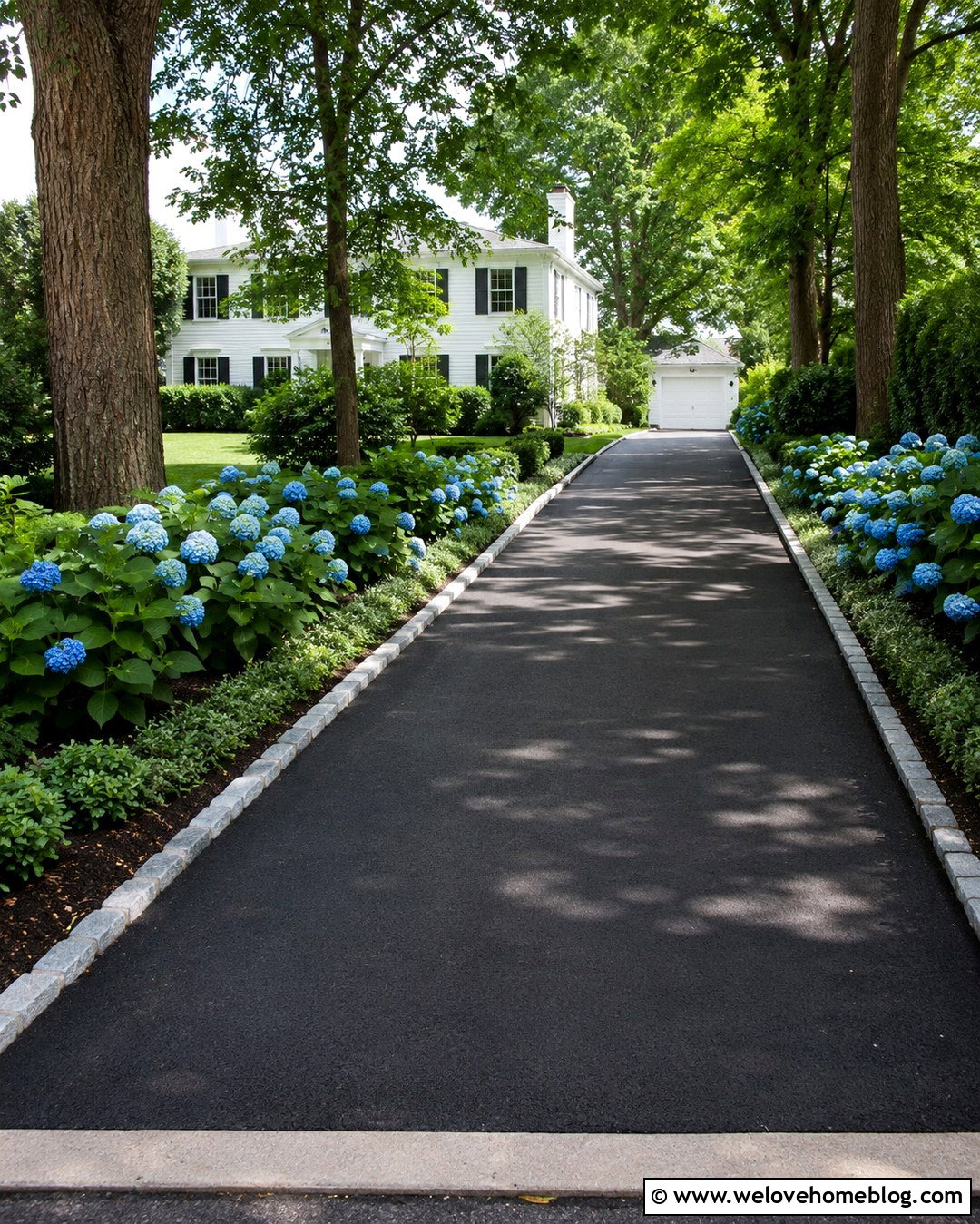
Black asphalt creates a strong backdrop for a colorful curved flower bed. Trace a broad, flowing bed line instead of following the driveway with a perfectly straight strip. A red brick border adds warmth and prevents mulch from washing onto the pavement. Combine flowering shrubs at the back with groups of coneflowers, salvia, catmint, and compact daylilies toward the front. Repeat each variety in clusters rather than planting single specimens. This gives the border enough visual weight to balance the dark driveway. Leave a narrow paved or gravel stepping area near common parking spots for easy access. The result feels relaxed but organized, especially beside a Cape Cod, cottage, or traditional suburban home with matching brick details.
3. Drought-Tolerant Garden Bed Next To Gravel Driveway
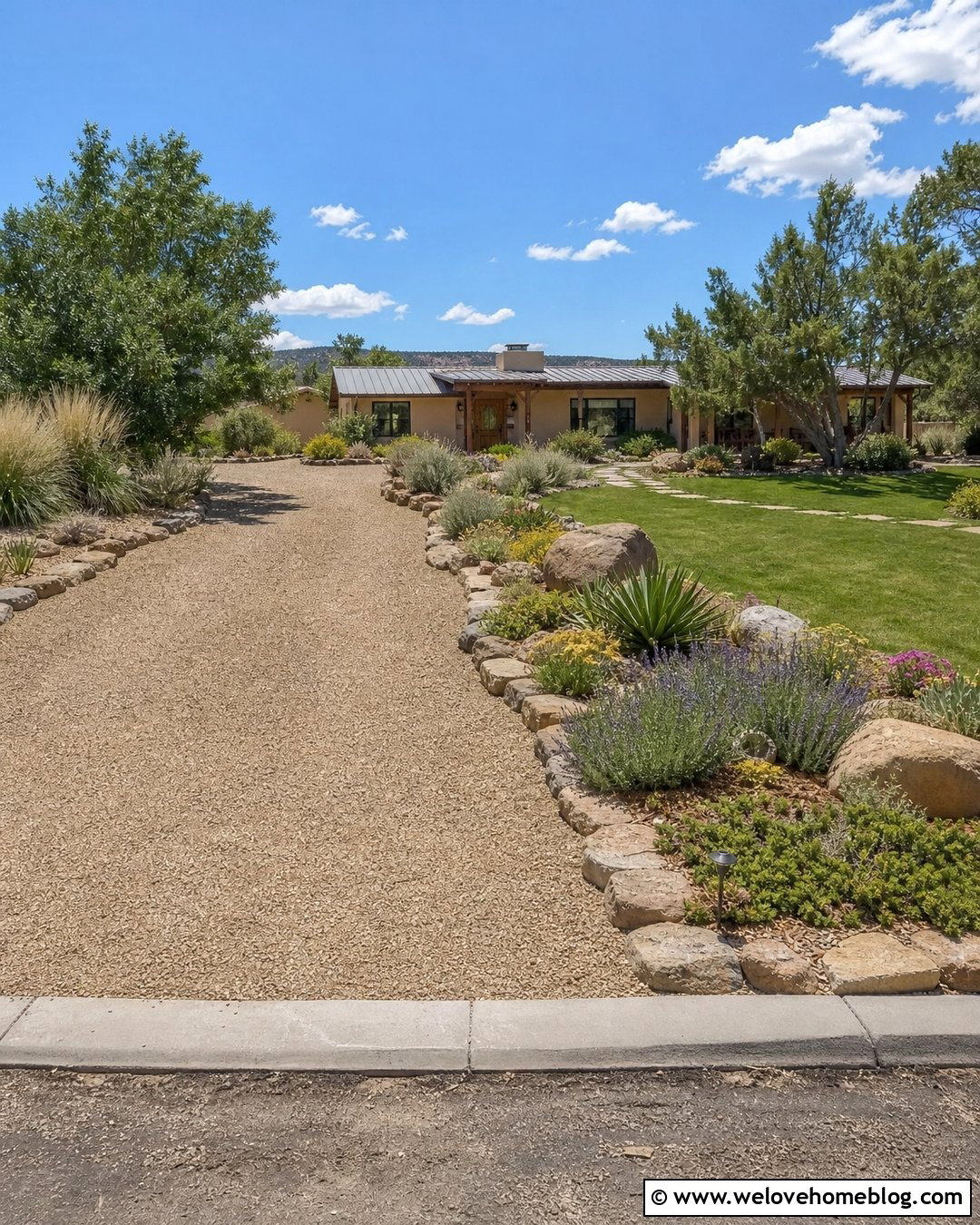
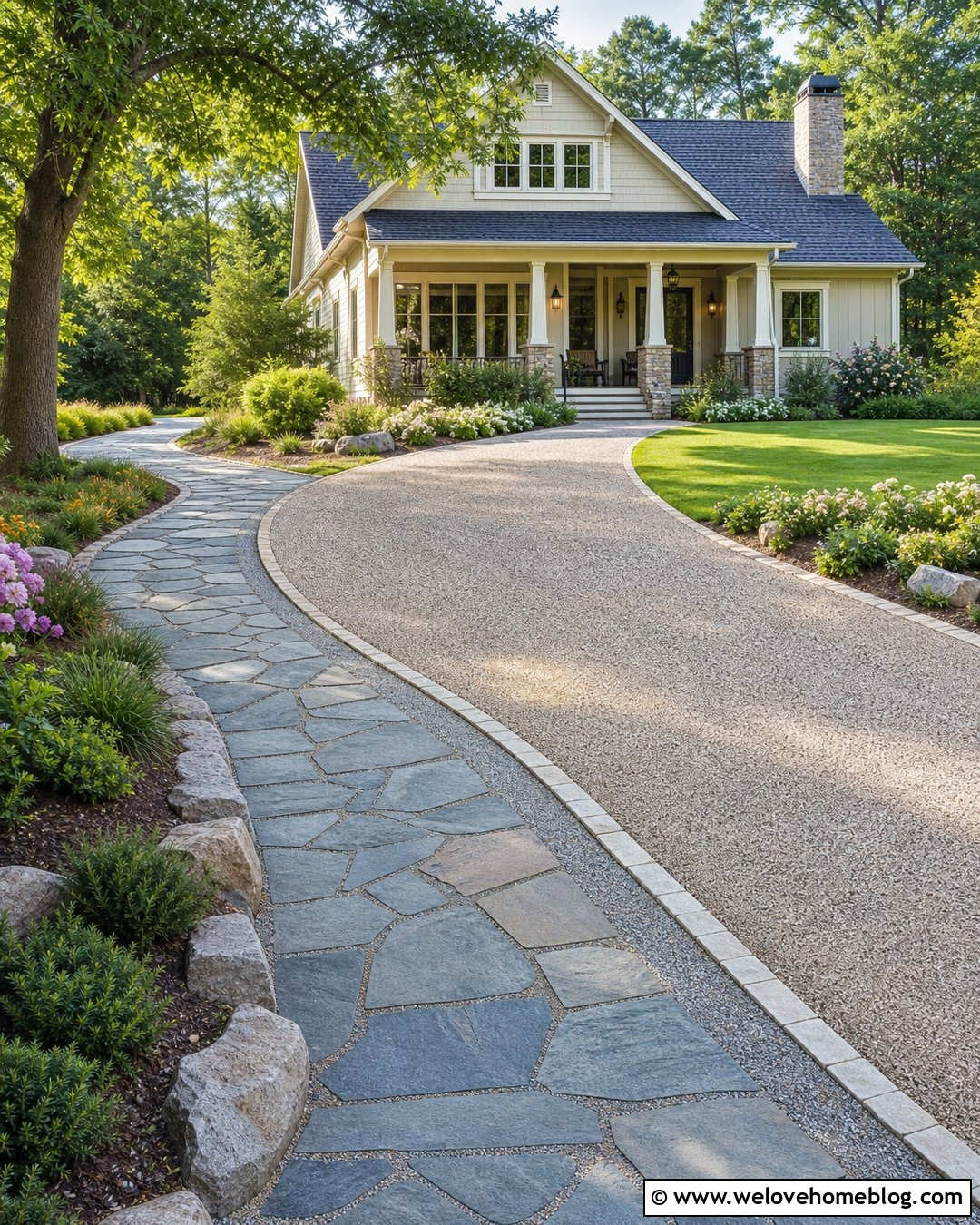
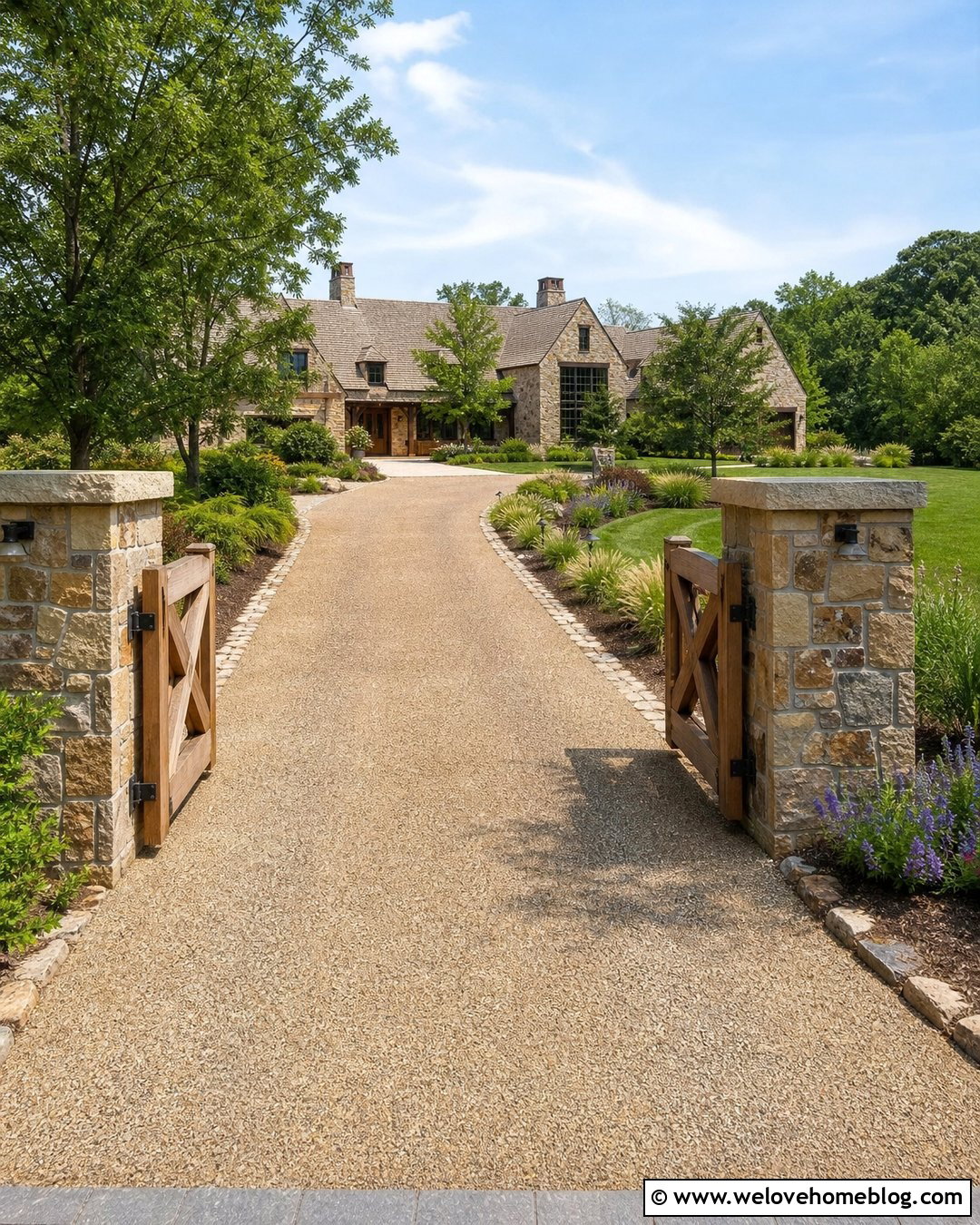
A gravel driveway naturally suits a drought-tolerant planting bed filled with texture. Use large fieldstone edging to hold loose driveway gravel in place and establish a visible boundary. Inside the bed, spread crushed stone or gravel mulch around native grasses, yucca, sedum, compact juniper, and climate-appropriate flowering perennials. Arrange plants in repeating groups to create a cohesive landscape rather than a scattered collection. () A few accent boulders can connect the bed visually to the driveway surface. Keep plants set back from the parking edge and avoid thorny varieties where passengers step out. This complete look works especially well with ranch houses, Southwestern homes, and contemporary properties where water-wise landscaping feels natural and intentional.
4. Narrow Garden Bed Next To Paver Driveway
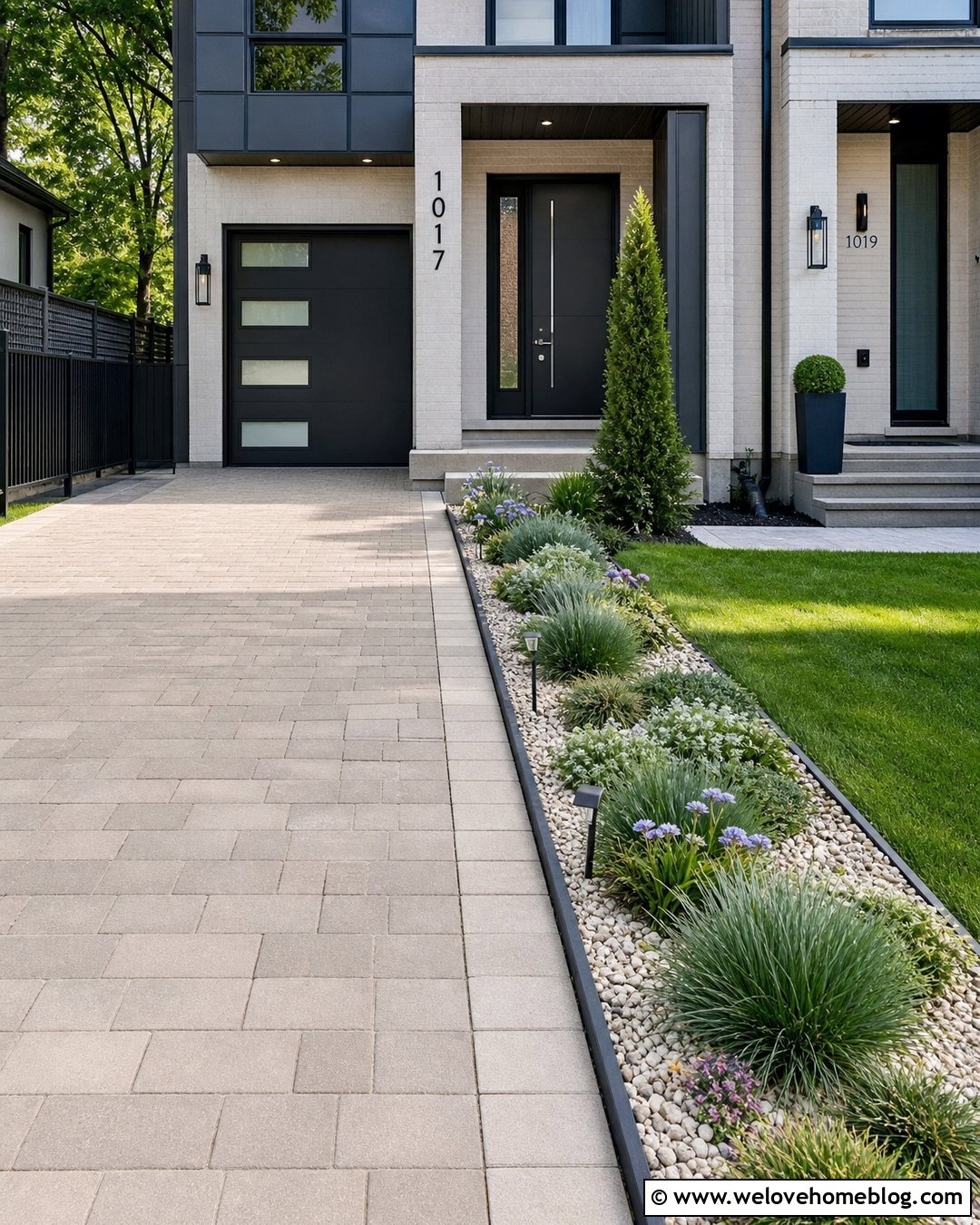
Even a two-foot strip can become an attractive garden bed beside a driveway. Pair a warm-toned concrete paver driveway with slim metal edging and a disciplined row of compact plants. Dwarf ornamental grasses, low-growing sedges, creeping thyme, and small flowering perennials provide color without spreading into the parking area. Use one taller accent plant near the house or entrance rather than squeezing shrubs along the entire border. Gravel mulch keeps the narrow space looking clean and reduces the contrast between small gaps in the plants. Match the bed’s straight lines to the paver pattern for a polished appearance. This space-saving design is practical for townhomes, small suburban yards, and side driveways where every inch must remain usable.
5. Formal Garden Bed Next To Brick Driveway
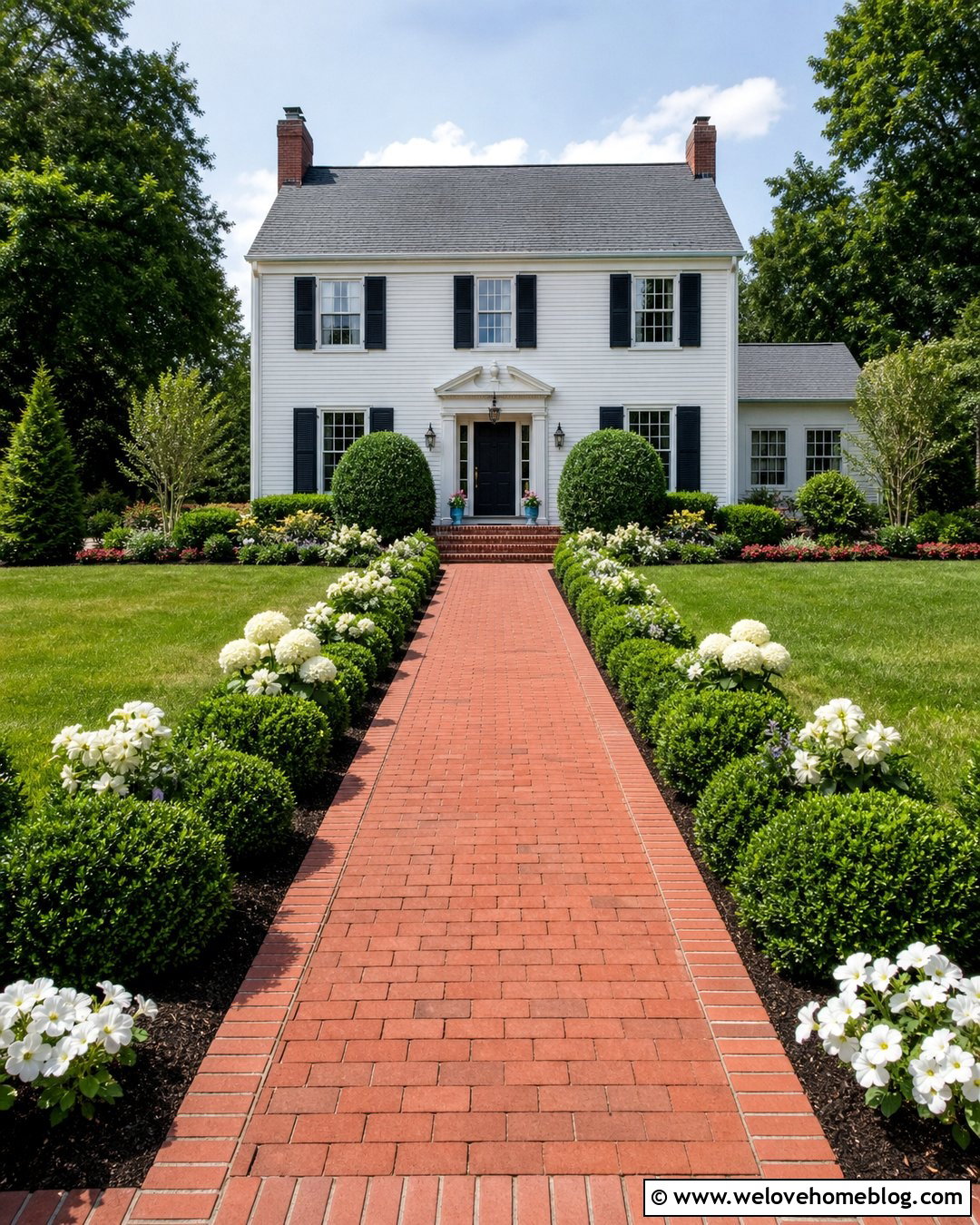
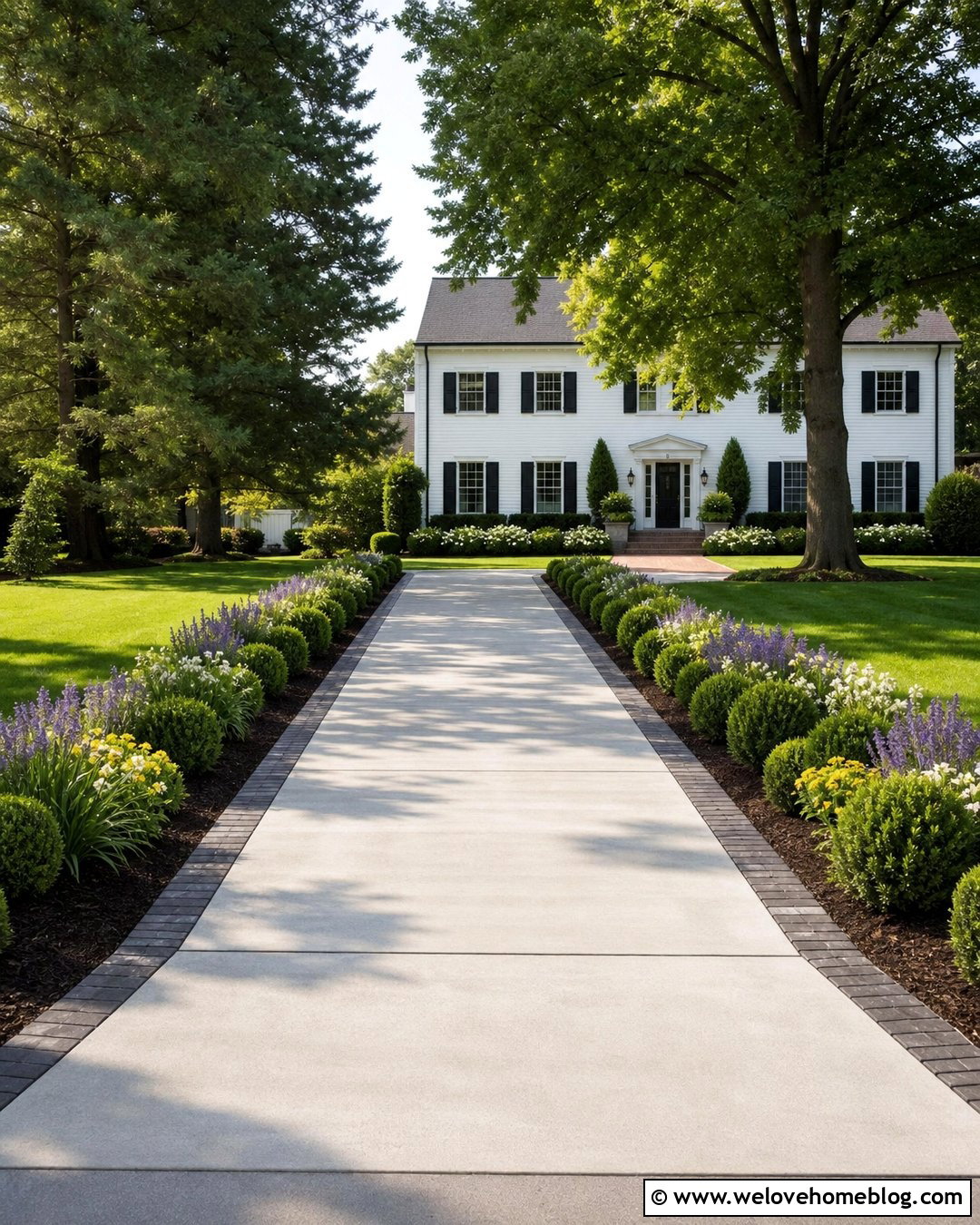
A clay brick driveway gains a classic, refined frame from a symmetrical garden bed. Use matching brick edging laid in a soldier-course pattern to connect the planting area with the driveway. Plant clipped boxwood alternatives, dwarf hollies, or compact inkberry in an evenly spaced row, then add white flowering perennials or seasonal annuals along the front. A pair of larger rounded shrubs can mark the point where the driveway meets the front walkway. Keep the bed line straight or gently curved, depending on the architecture. Dark brown mulch provides a neat background without competing with the brick. This balanced design complements Colonial, Georgian, and traditional homes, especially when the bed on one side is echoed by similar foundation planting near the entrance.
6. Raised Garden Bed Next To Sloped Driveway
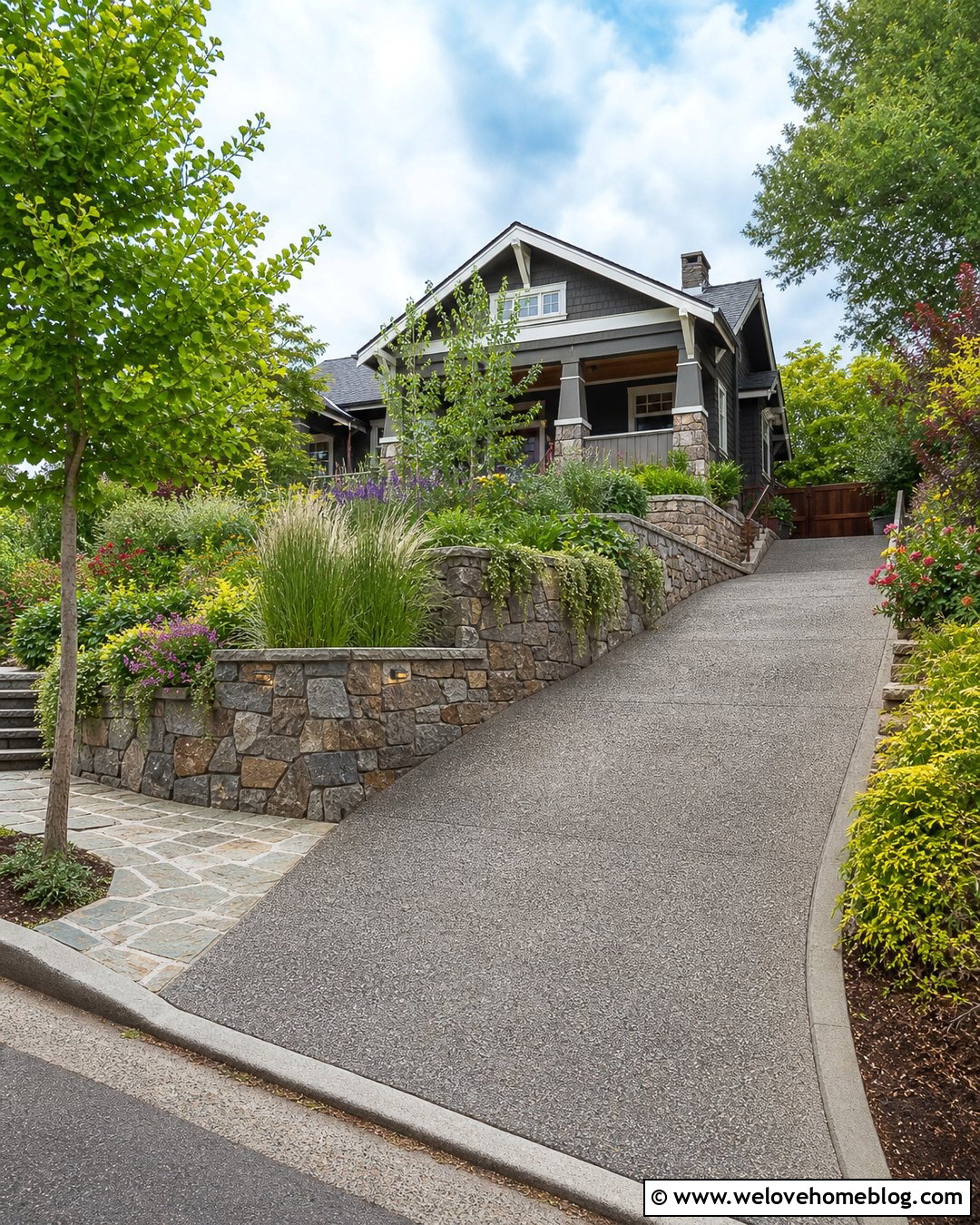
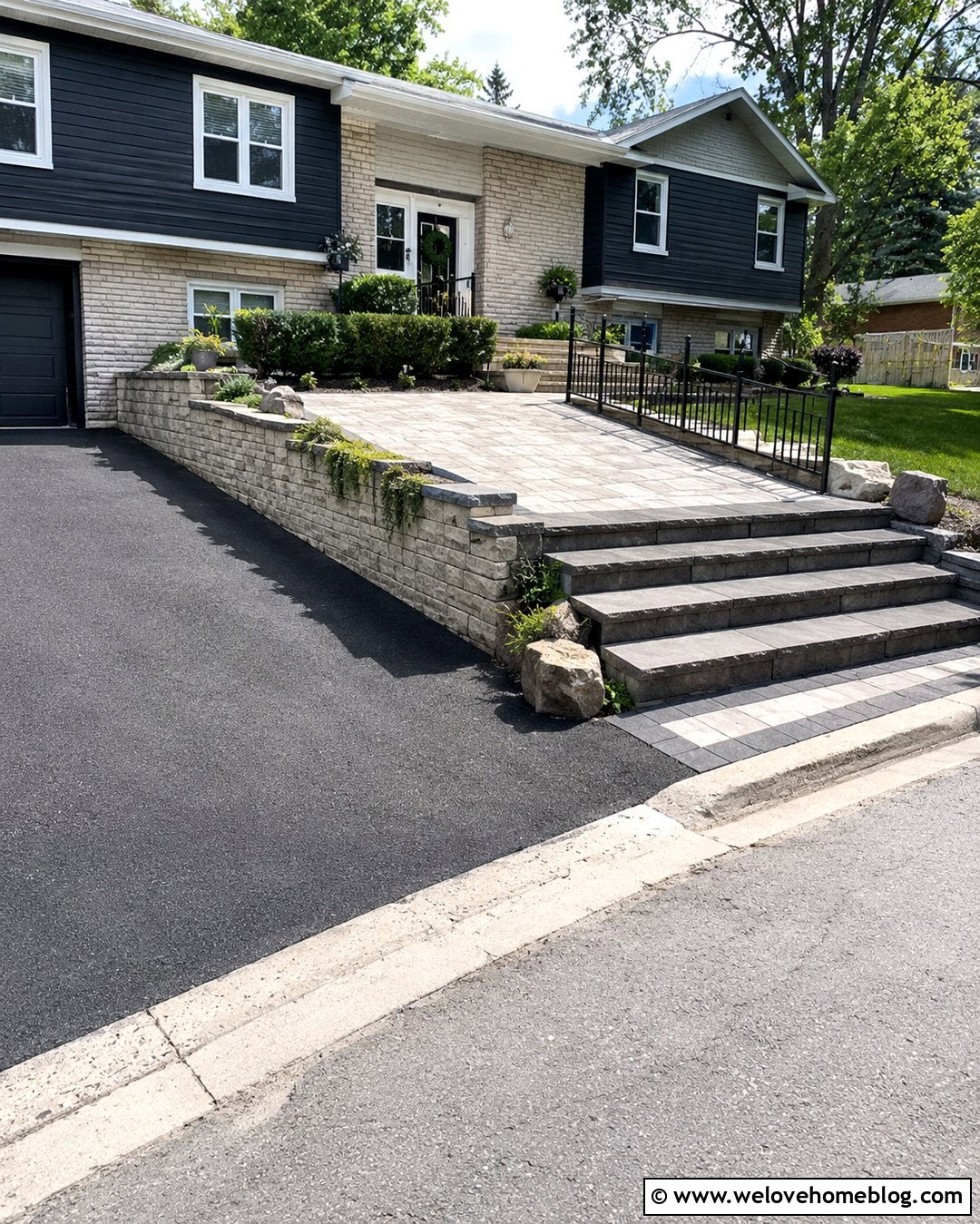
A sloped driveway needs a garden bed that controls loose soil while making the grade change look intentional. Build a low retaining wall from natural stone or concrete wall blocks, setting it far enough from the pavement to preserve vehicle clearance. Terracing the bed into two shallow levels can reduce the visual weight of a tall wall. It also creates room for cascading ground covers, sturdy perennials, ornamental grasses, and compact shrubs. A stone barrier may help keep soil from shifting toward the driveway during runoff. () Include drainage behind the wall and direct excess water toward an approved outlet. Echo the stone in a driveway apron or walkway border so the raised bed feels connected to the overall landscape.
7. Circular Driveway Garden Bed With Center Island
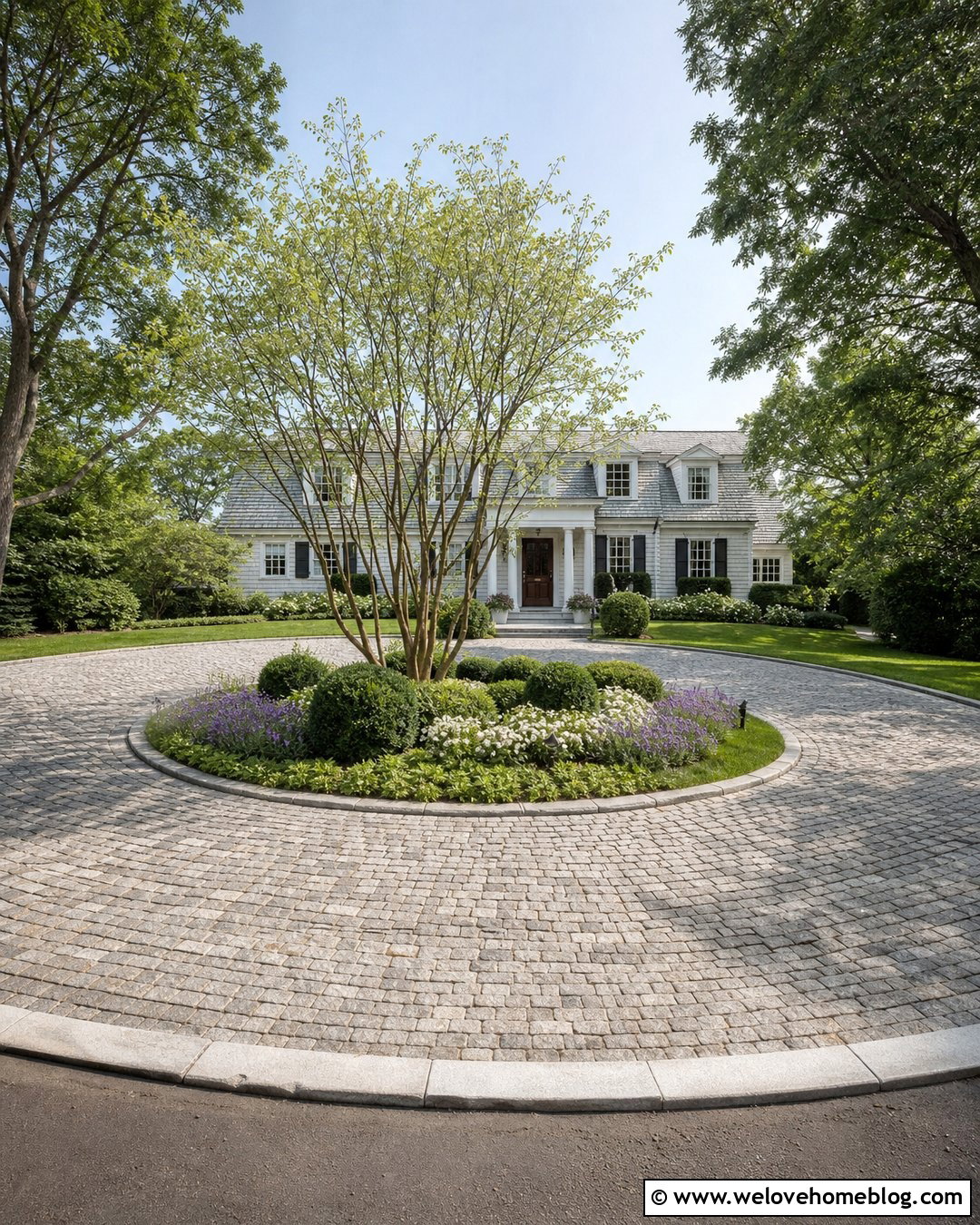
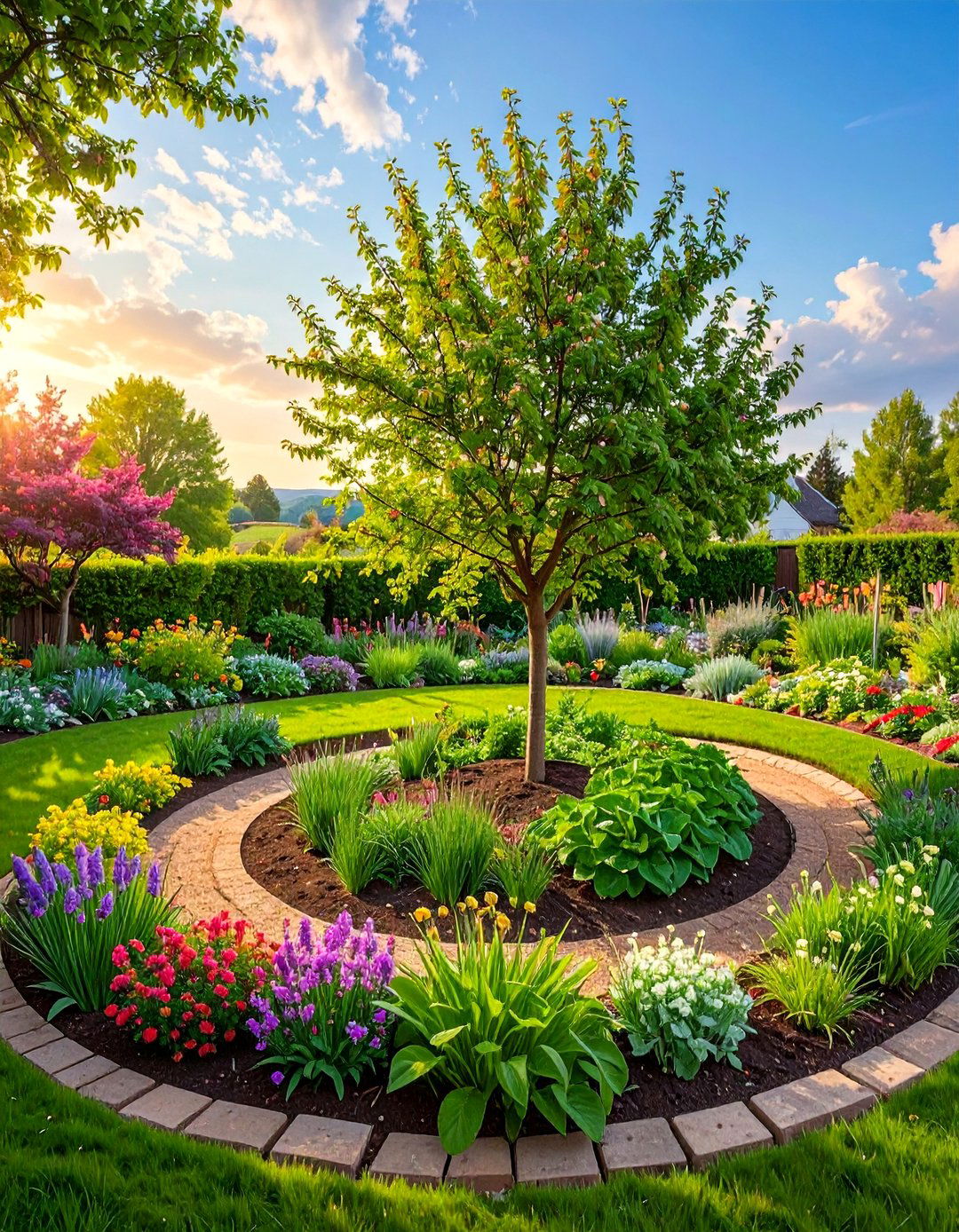
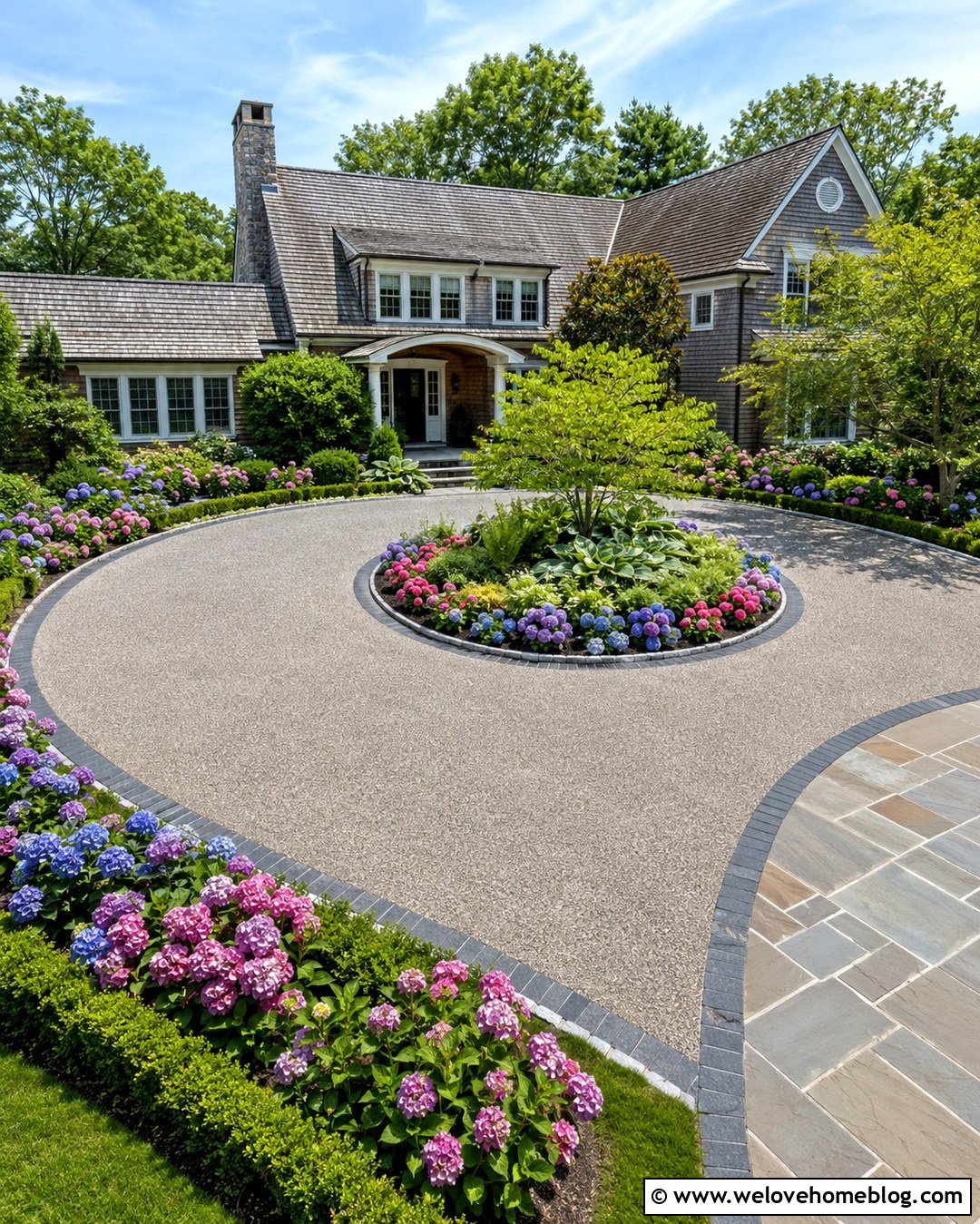
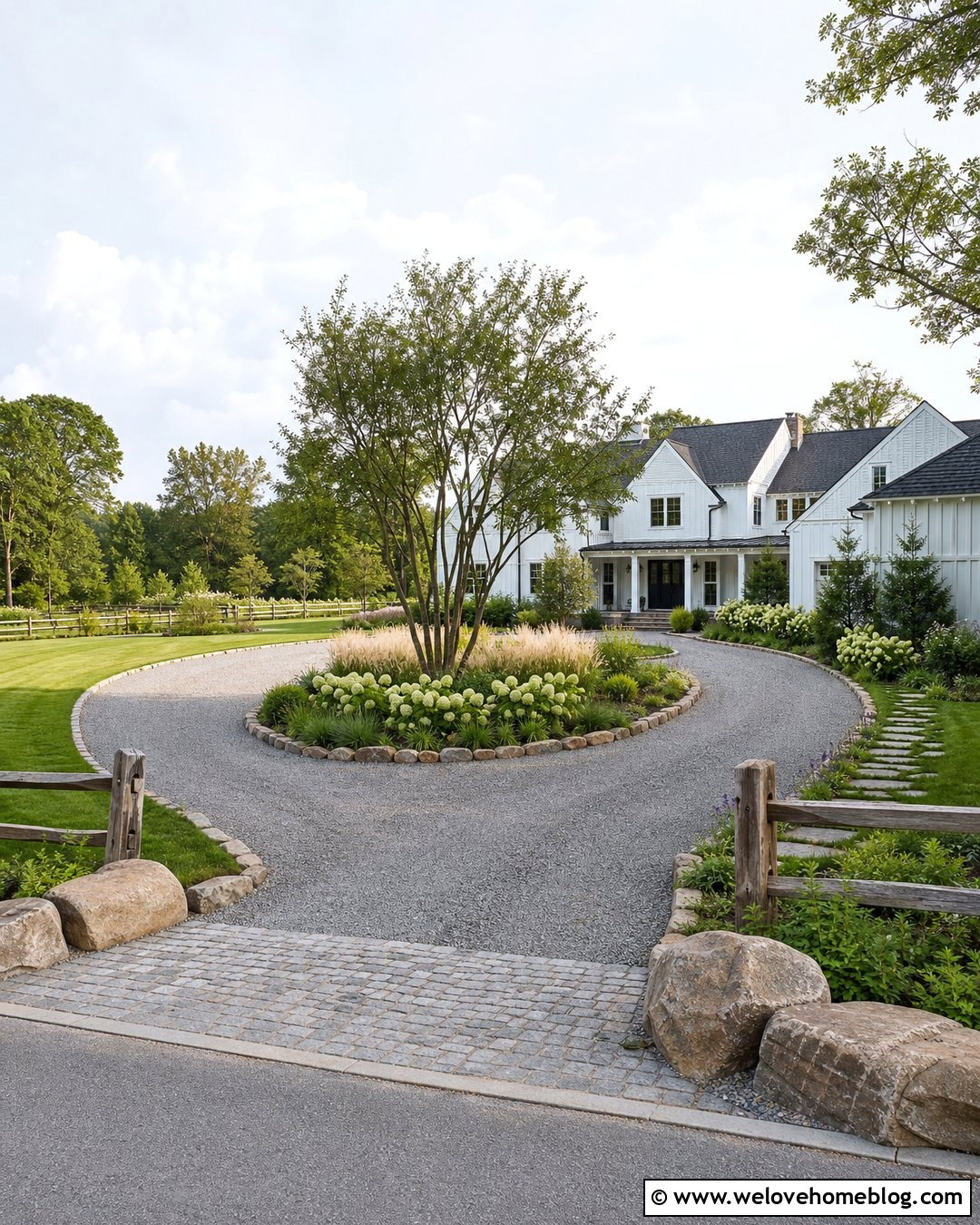
The center of a circular driveway offers enough space for a layered garden bed that becomes the property’s main focal point. Begin with a small ornamental tree, such as a serviceberry, redbud, or another species suitable for your climate. Surround it with medium-height evergreen shrubs, flowering perennials, and a low ground-cover border. Maintain clear visibility across the island by keeping plants shorter near driveway entry and exit points. A stone or brick mowing edge defines the circle and protects plants from tires. Repeat materials found on the house or driveway for a unified effect. The island should appear attractive from every direction, so distribute color and plant mass evenly instead of creating a clear front and unfinished back.
8. Modern Garden Bed Next To Resin-Bound Driveway
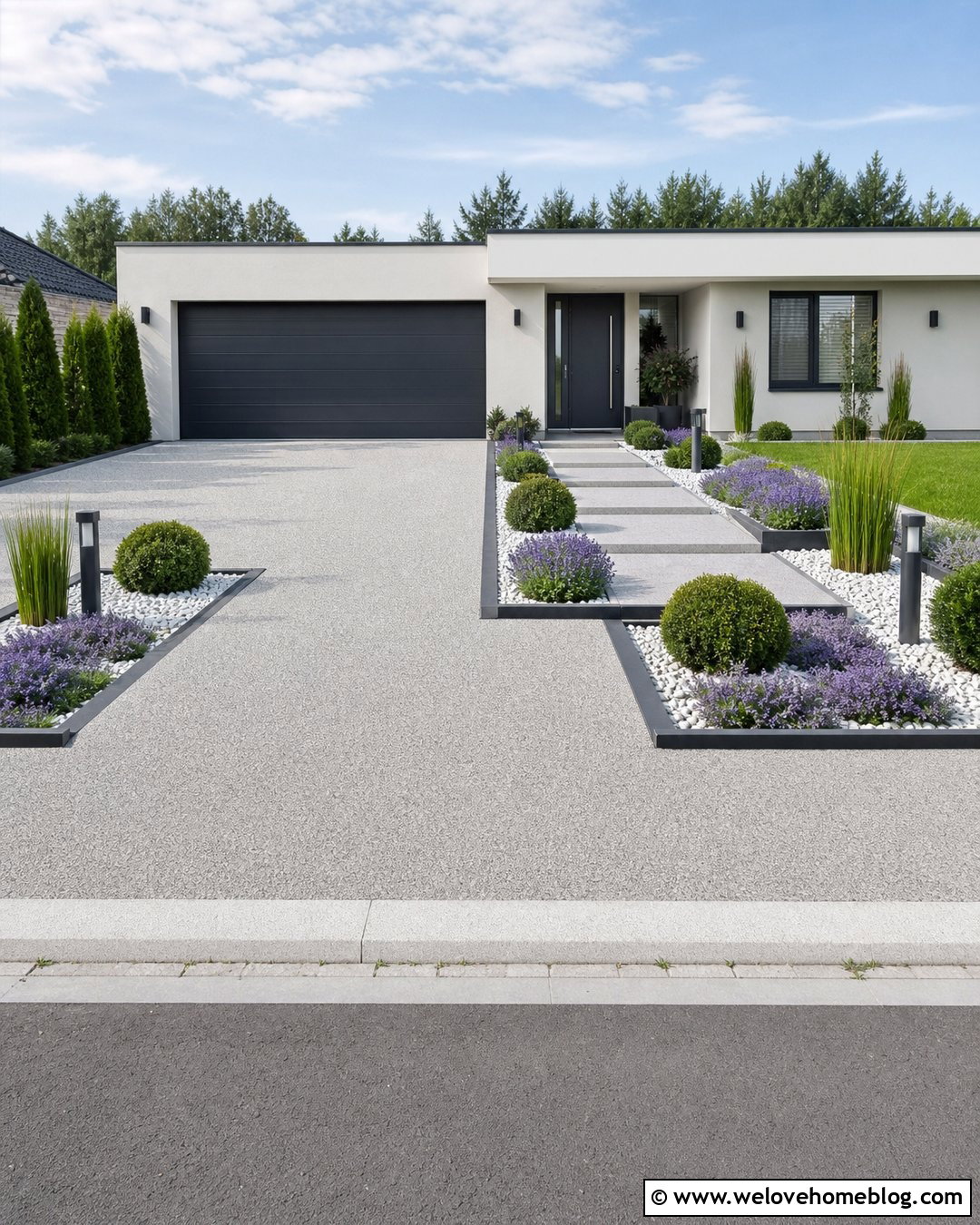
Clean geometry helps a garden bed complement a smooth resin-bound gravel driveway. Use rectangular planting zones separated by narrow strips of decorative stone. Black steel edging creates a crisp transition between the light driveway and the garden. Choose sculptural plants with distinct forms, such as upright grasses, compact globe-shaped evergreens, and low mounds of flowering ground cover. Limit the palette to two or three foliage colors for a calm modern appearance. Spacing is important because each plant should have room to display its natural shape. Add simple bollard lights along the outer edge rather than filling the bed with decorative accessories. This uncluttered combination works well with flat-roofed homes, modern facades, and renovated mid-century properties.
9. Farmhouse Garden Bed Next To Gravel Driveway
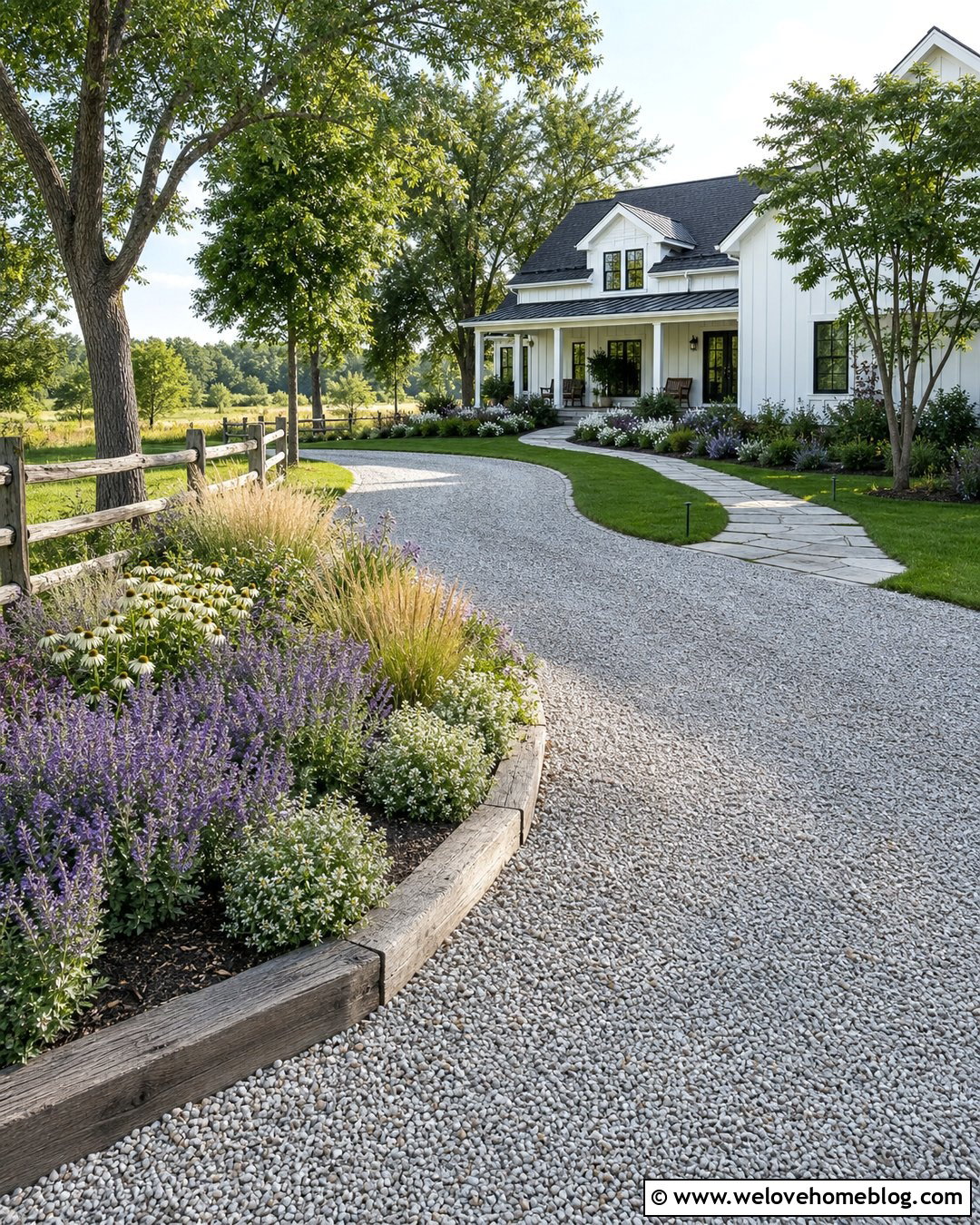
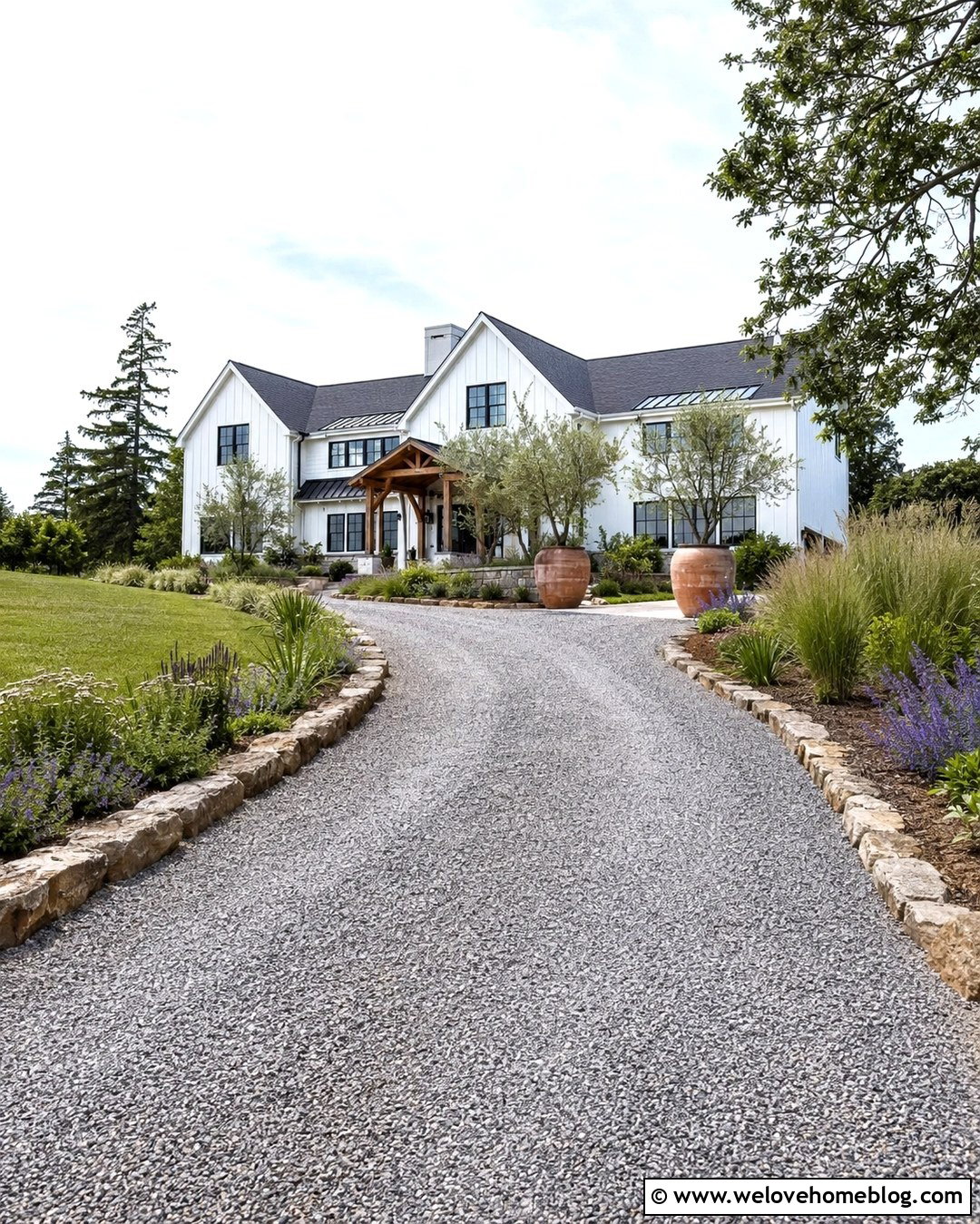
A pale gravel driveway feels especially welcoming beside a loose, informal farmhouse garden bed. Define the edge with weathered timber, reclaimed brick, or irregular fieldstone. Plant sweeping groups of lavender, catmint, white coneflowers, ornamental grasses, and compact flowering shrubs. Select locally suitable alternatives where these plants are not appropriate. A split-rail fence behind part of the bed can add structure without making the entrance feel closed. Allow selected ground covers to soften the edging, but keep vigorous plants away from the driving surface. Repeating silver-green foliage connects beautifully with gray or tan gravel. The bed can curve outward near the house to meet the front walkway, creating a continuous landscape around a modern farmhouse, country cottage, or rural ranch home.
10. Small Garden Bed At Driveway Corner
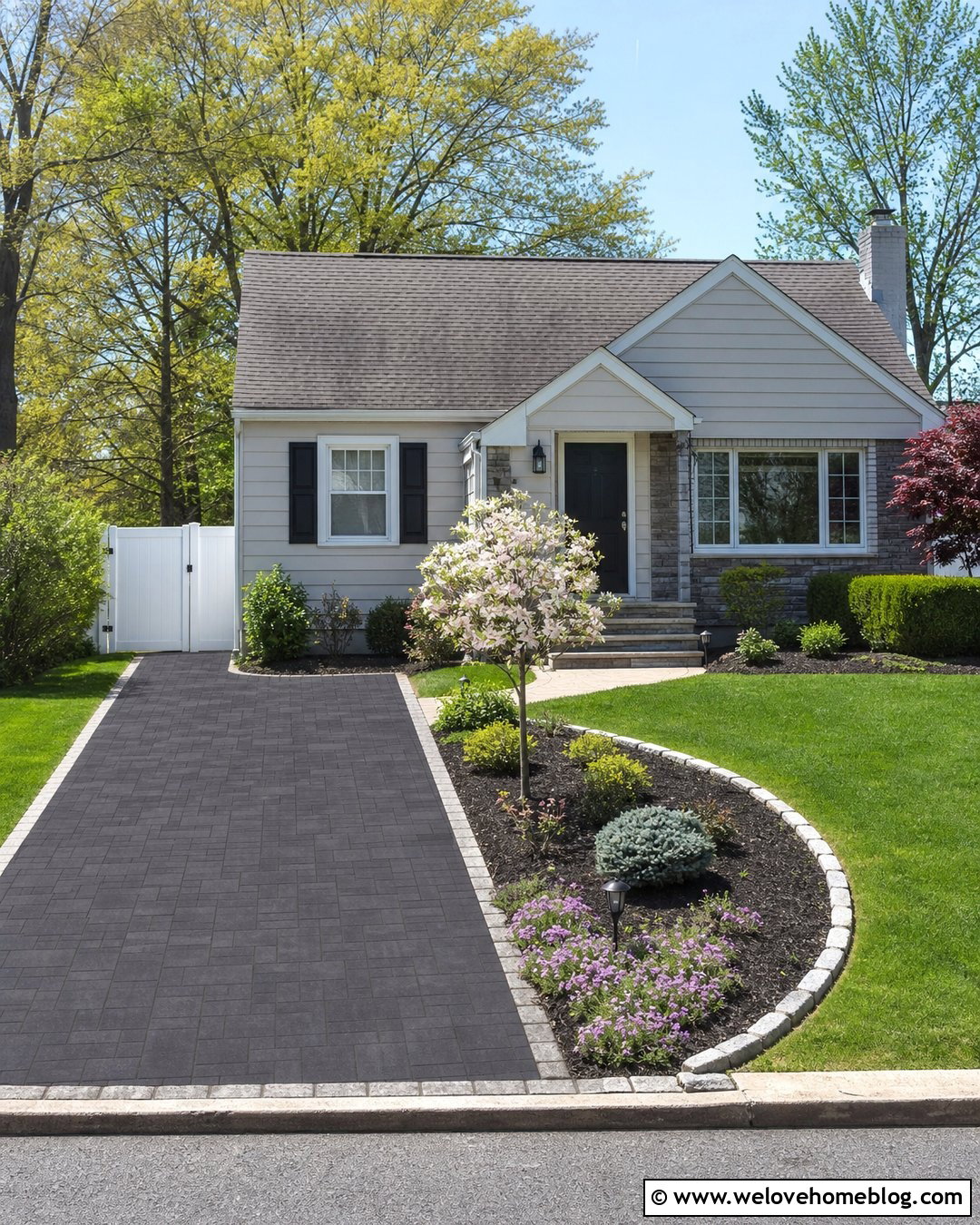
A small triangular or kidney-shaped bed can transform the empty corner where the driveway meets the front walkway. Use a compact flowering shrub or dwarf ornamental tree as the anchor. Surround it with two layers of low perennials and ground cover, keeping the driveway side open for visibility and foot traffic. Brick, cobblestone, or concrete curbing will give the pocket bed a finished outline. Match that material to the walkway or house facade whenever possible. Instead of adding many small plants, use three generous clusters with contrasting foliage. A landscape light can illuminate the focal plant without occupying much room. This approach delivers noticeable curb appeal while preserving parking space, making it useful for short driveways and compact front yards.
11. Rain Garden Bed Next To Permeable Driveway
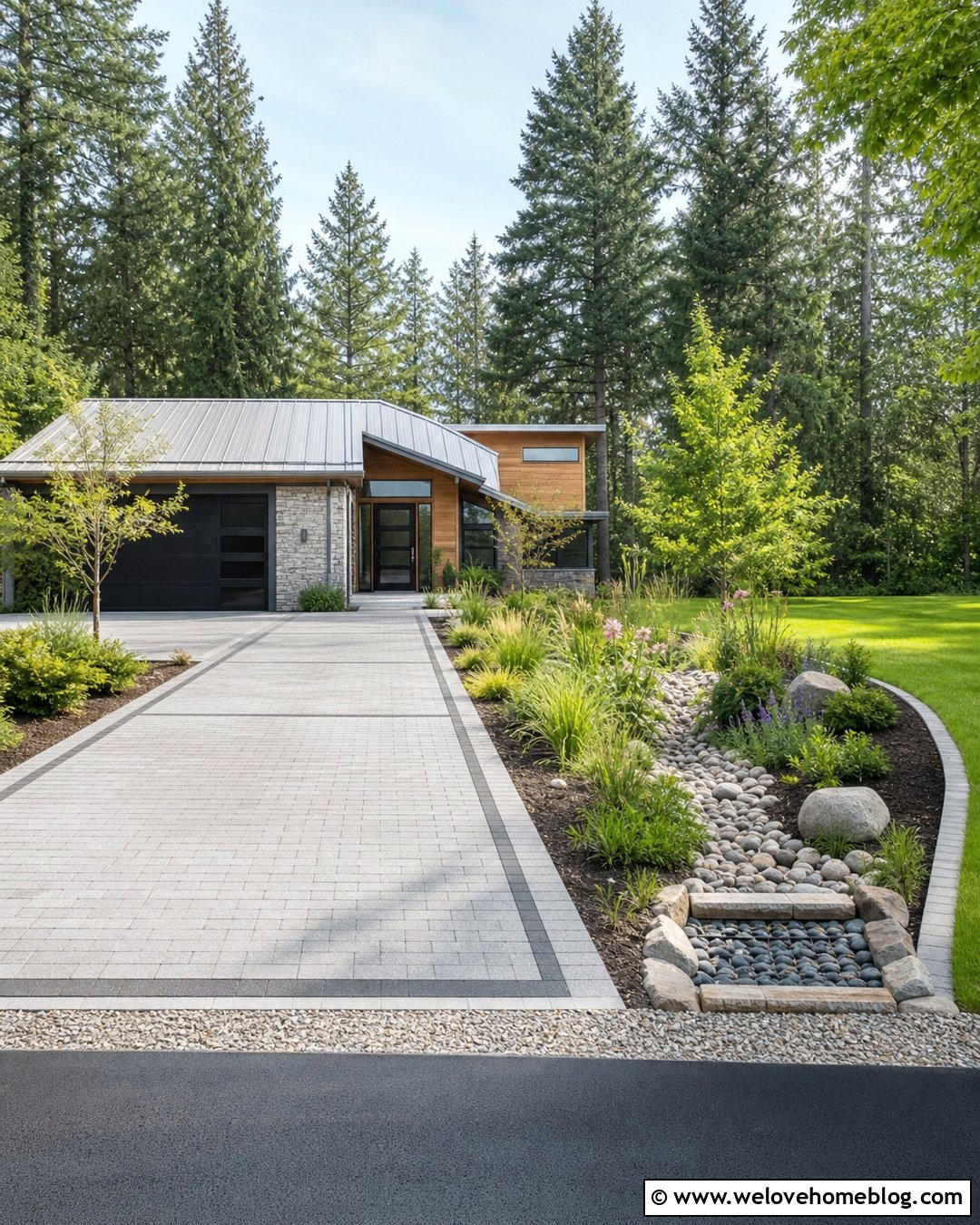
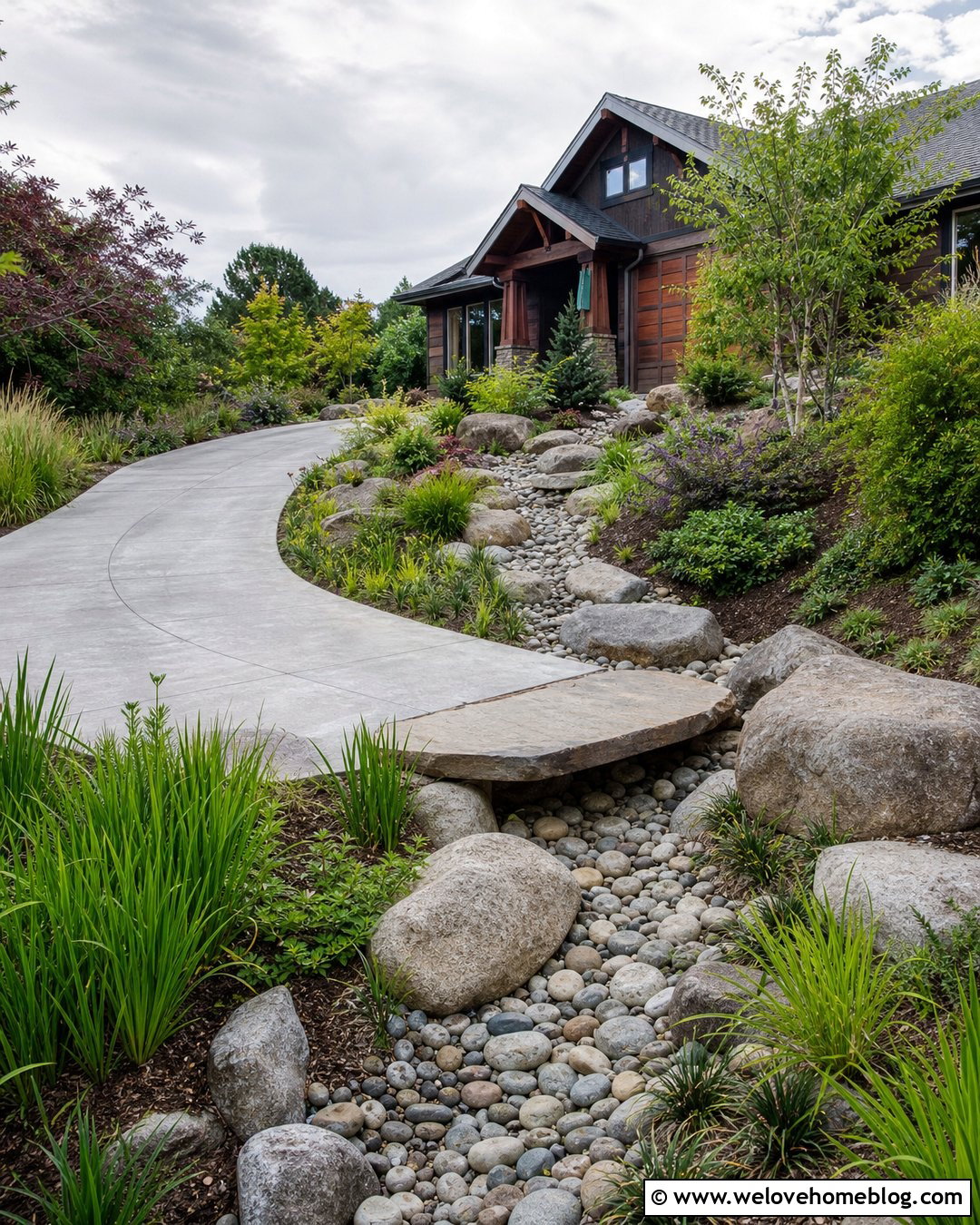
A shallow rain garden can turn a wet area beside a permeable paver driveway into a purposeful landscape feature. Position the basin where it can receive water safely without directing moisture toward the house foundation. Create gently sloped sides and use moisture-tolerant native plants suited to temporary wet and dry conditions. Sedges, rushes, flowering perennials, and low shrubs can provide several layers of texture. Add a flat stone or reinforced overflow point where water enters to reduce erosion. The bed should not hold standing water indefinitely, and its location, depth, and drainage must suit local soil and regulations. Connect the rain garden visually to the driveway with a matching paver border and a tidy gravel transition.
12. Privacy Garden Bed Next To Long Driveway
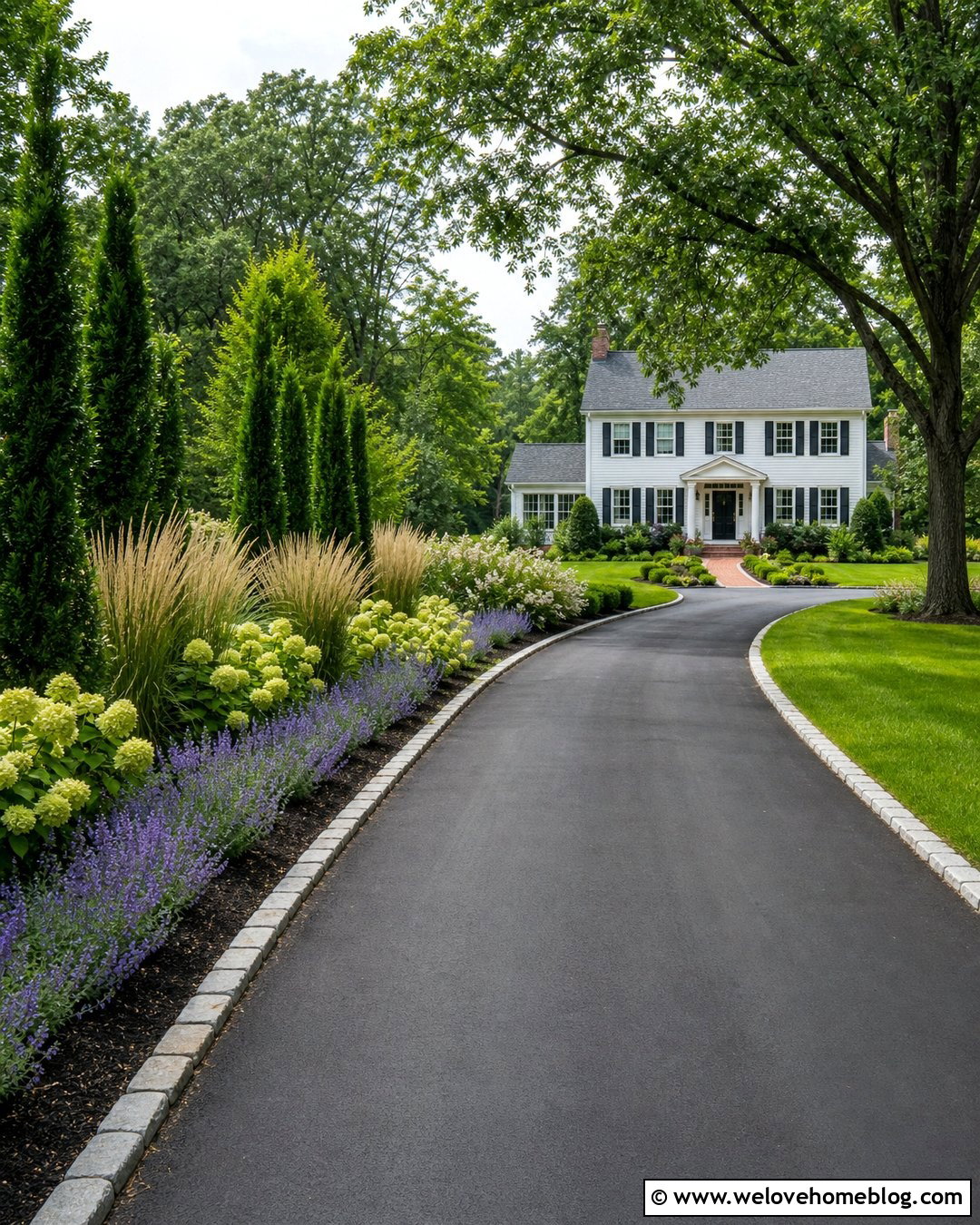
A long driveway running beside a neighboring property can benefit from a layered privacy bed. Start with narrow evergreen trees or upright shrubs along the outer boundary. Add medium-height flowering shrubs in front, followed by ornamental grasses or low perennials beside the driveway. This tiered arrangement creates screening without forming a solid, overpowering wall. Keep mature plant width in mind so branches do not reduce driving space. A cobblestone or concrete curb protects the bed and makes the long border easier to maintain. Repeating the same plants at regular intervals establishes rhythm and guides the eye toward the house. For added depth, stagger plants rather than placing everything in one rigid row, while maintaining clear visibility near the street entrance.
13. Tropical Garden Bed Next To Concrete Driveway
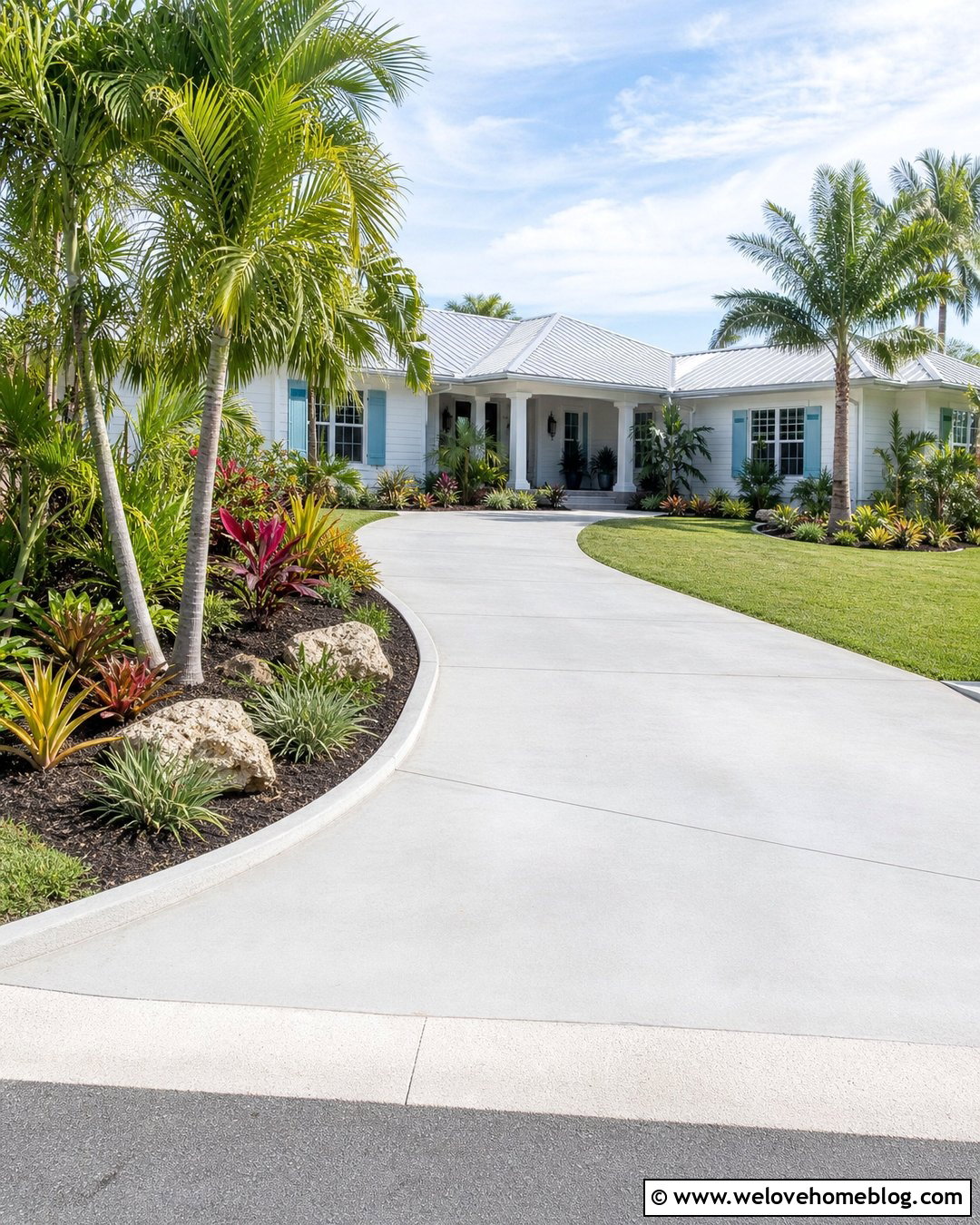
In a warm climate, bold foliage can make a concrete driveway feel like part of a lush resort landscape. Create a sweeping bed with a smooth concrete curb that echoes the driveway material. Use palms suited to the available space, then layer compact gingers, cordylines, bromeliads, ornamental grasses, and dense ground covers beneath them. Keep large leaves away from parking areas, where they could obstruct doors or collect on the pavement. Dark mulch intensifies green, burgundy, and lime foliage colors. Include adequate irrigation, but avoid spraying water across the driveway. A few natural rocks can add structure without competing with the planting. This full, layered look pairs well with Florida ranch homes, coastal houses, and light-colored contemporary facades.
14. Pollinator Garden Bed Next To Asphalt Driveway
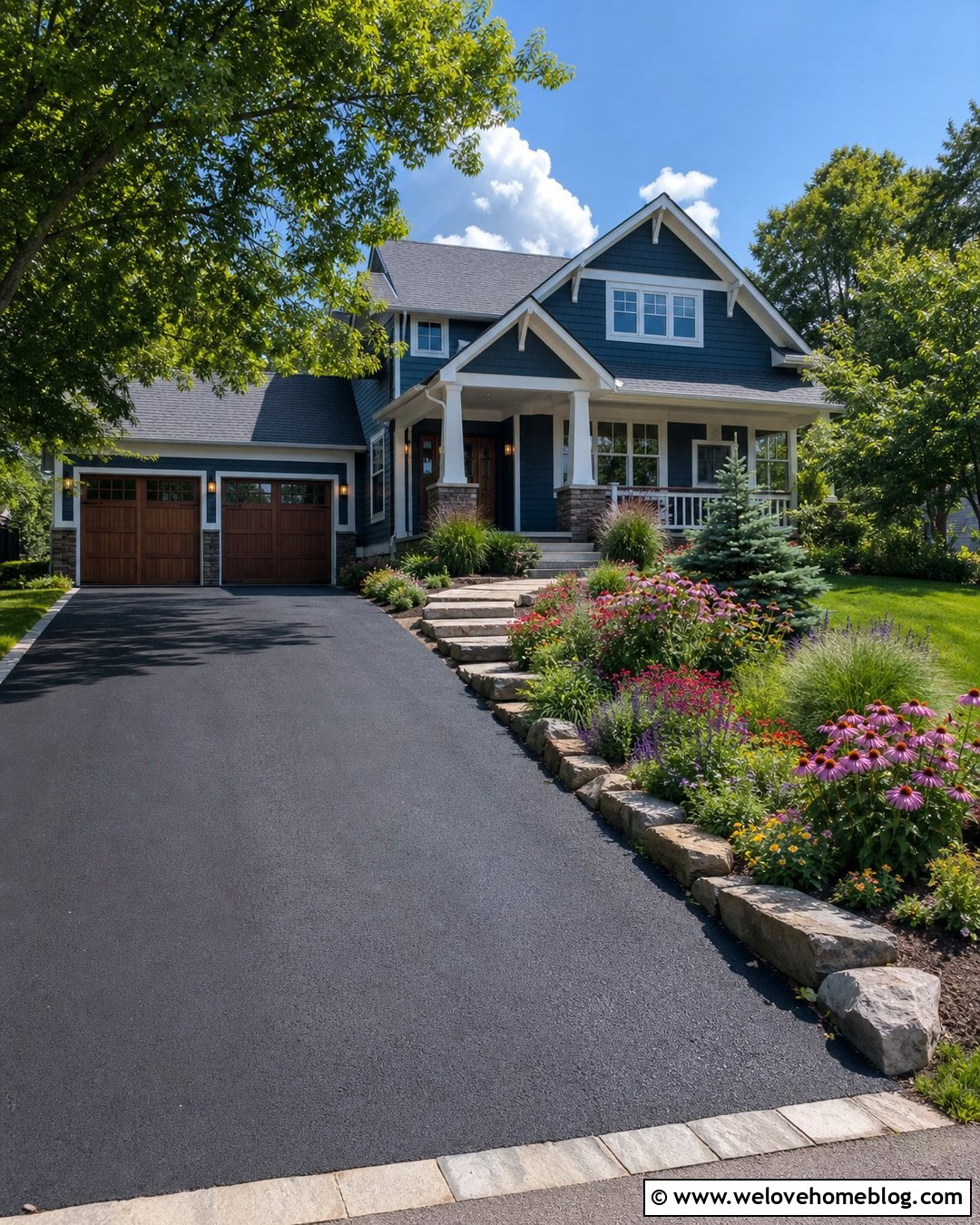
A sunny border beside an asphalt driveway can become a colorful pollinator garden without looking untidy. Use a defined brick or stone edge, then organize native flowering plants in large repeating groups. Arrange taller varieties toward the back and shorter plants beside the driveway. Include species with different flowering periods to extend seasonal interest, selecting plants recommended for your region. Ornamental grasses and compact evergreen shrubs provide structure when flowers are not in bloom. Leave small gaps for stepping access near vehicle doors and the mailbox. Rather than scattering every available flower color, choose a controlled palette that complements the house. The crisp border and repeated plant masses will make the naturalistic planting feel deliberate, approachable, and suitable for a front-yard setting.

15. Shade Garden Bed Next To Side Driveway
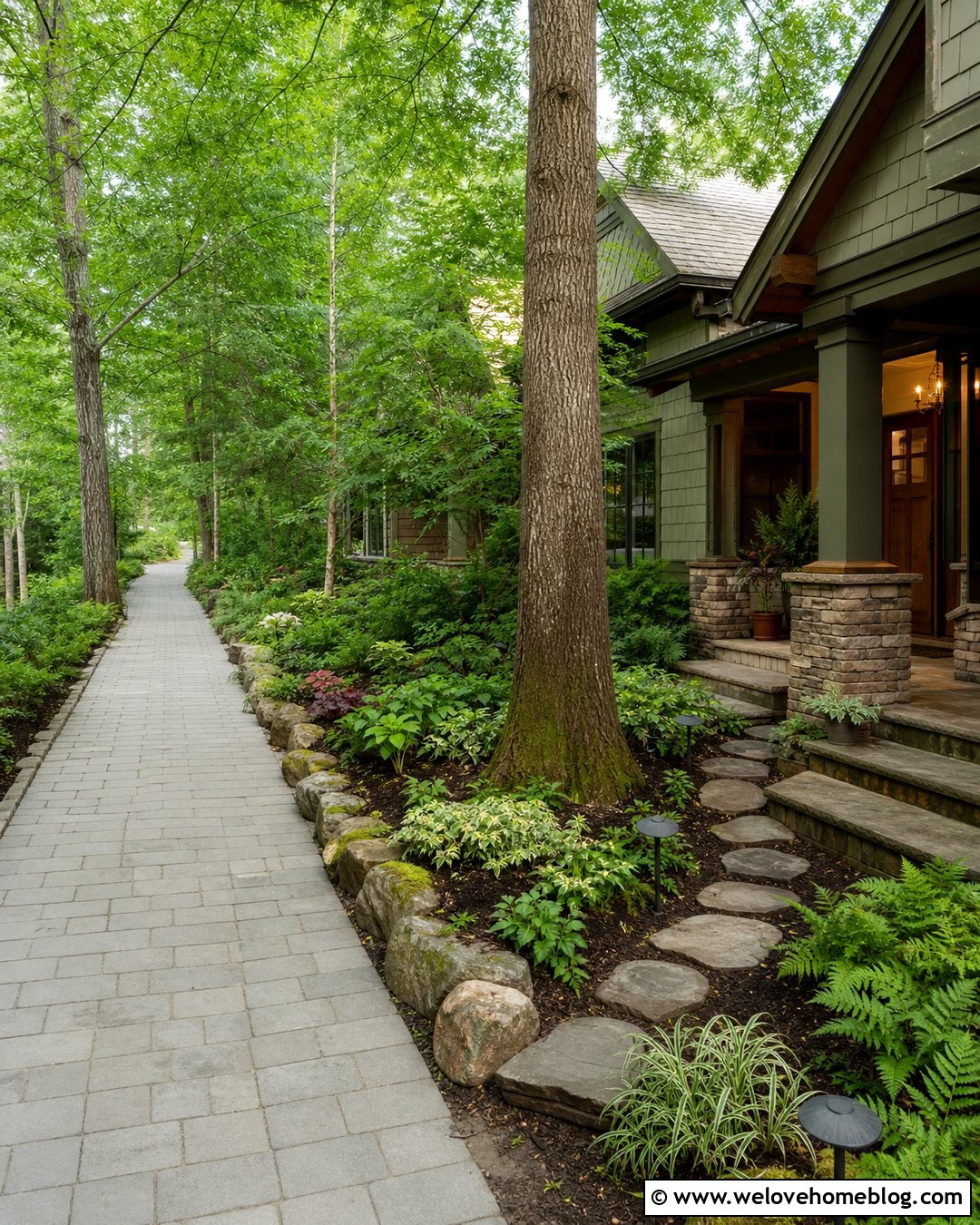
A side driveway shaded by the house or mature trees can support a cool, woodland-inspired garden bed. Pair gray poured concrete or muted pavers with natural stone edging and dark leaf mulch. Layer shade-tolerant shrubs at the back, followed by ferns, coral bells, sedges, and regionally suitable ground covers. Use foliage contrast as the main feature because flowering may be limited in deep shade. Broad leaves, fine fern fronds, and variegated accents can create depth without bright sunlight. Avoid plants that hold water or flop onto the pavement after rain. A narrow stepping-stone path through the bed can provide access to utilities or the backyard. This relaxed design looks especially natural beside Craftsman homes, wooded properties, and traditional side entrances.
16. Rock Garden Bed Next To Driveway
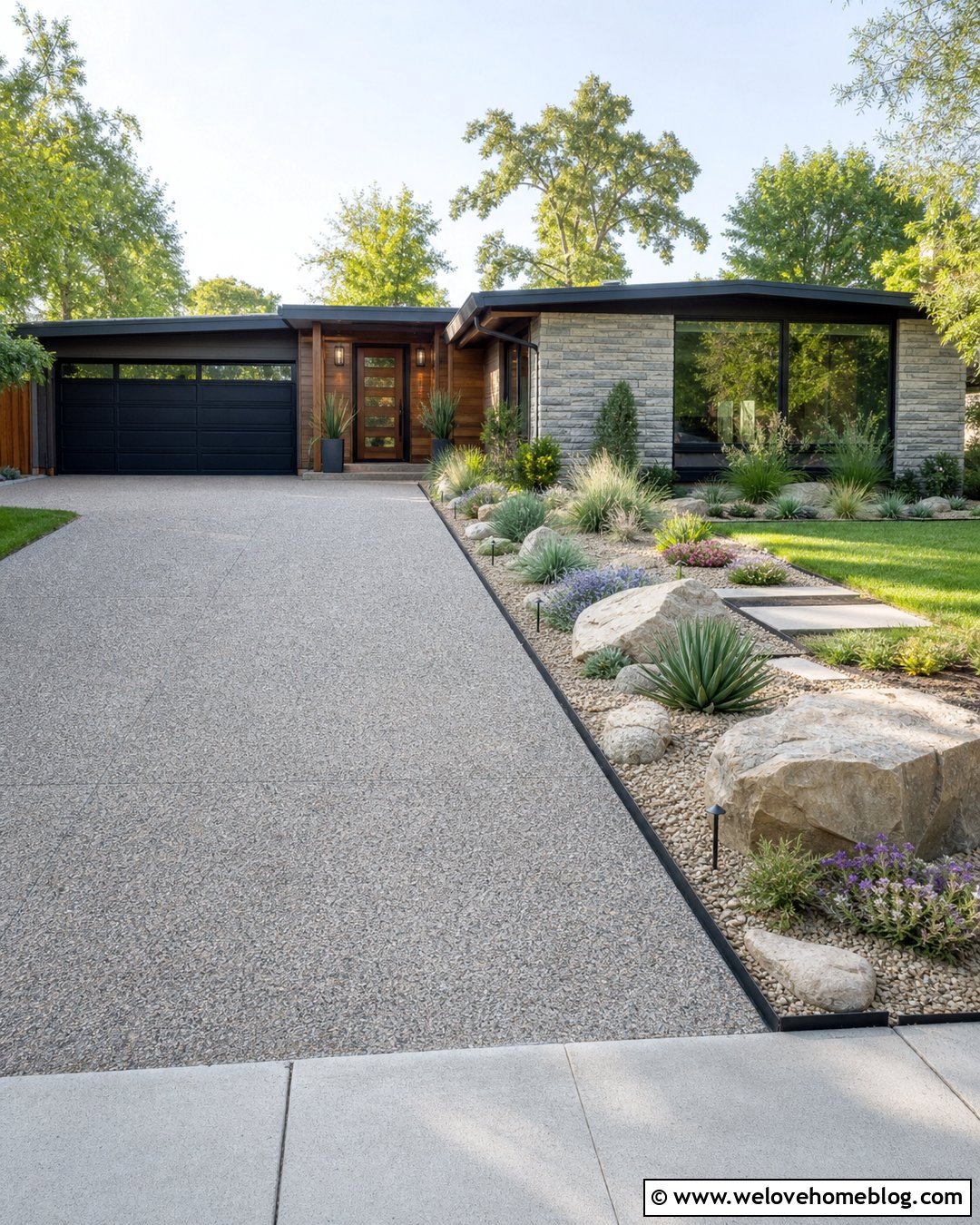
A rock garden offers a durable solution for a hot, dry driveway edge. Beside an exposed aggregate driveway, install a low steel or stone border and cover the bed with angular gravel. Arrange several large boulders first, partially burying them so they appear settled into the landscape. Add drought-tolerant succulents, compact grasses, flowering ground covers, and small evergreen shrubs between the rocks. Choose plants suited to local winter temperatures and rainfall. Varying plant heights will prevent the bed from looking flat, but maintain open space around each form. Use gravel that contrasts slightly with the driveway so the boundary remains visible. This rugged, low-profile landscape complements contemporary, mountain, desert, and mid-century homes while keeping foliage away from parked vehicles.
17. Mailbox Garden Bed At Driveway Entrance
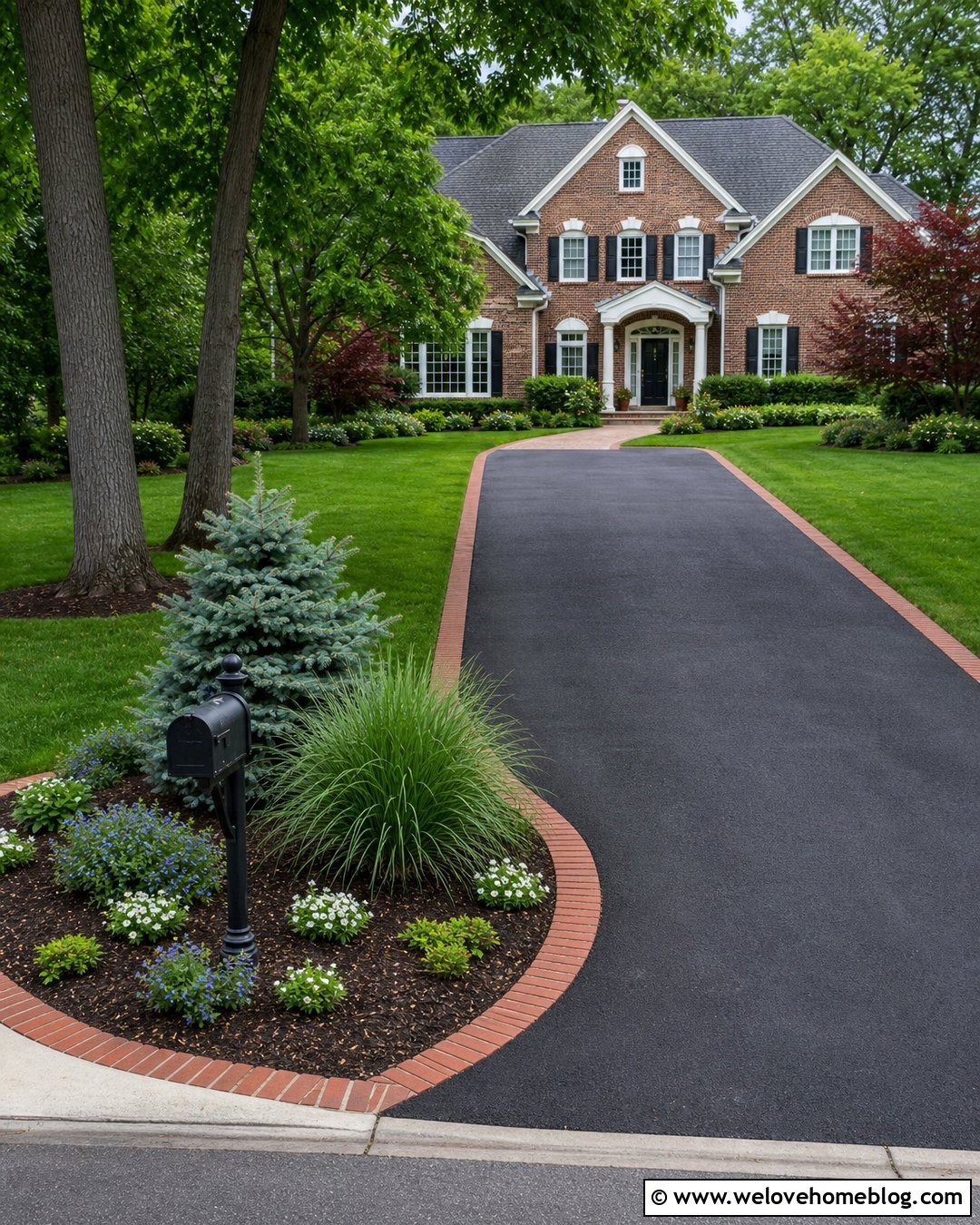
A mailbox garden bed can give the driveway entrance a clear focal point without blocking sightlines. Shape the bed as a wide oval or shallow crescent around the mailbox, leaving enough clearance from the street and driveway apron. Match the edging to the driveway material, such as a brick ring beside asphalt or cobblestone edging beside gravel. Place compact ornamental grass or a small evergreen behind the post. Add low flowers and ground covers around the front. Avoid tall shrubs that could hide approaching traffic, interfere with mail delivery, or overwhelm the sign. Repeating one flower color from the foundation garden connects the entrance to the house. Solar or low-voltage lighting may improve visibility while keeping the planting arrangement simple and uncluttered.
18. Retaining Wall Garden Bed Next To Driveway
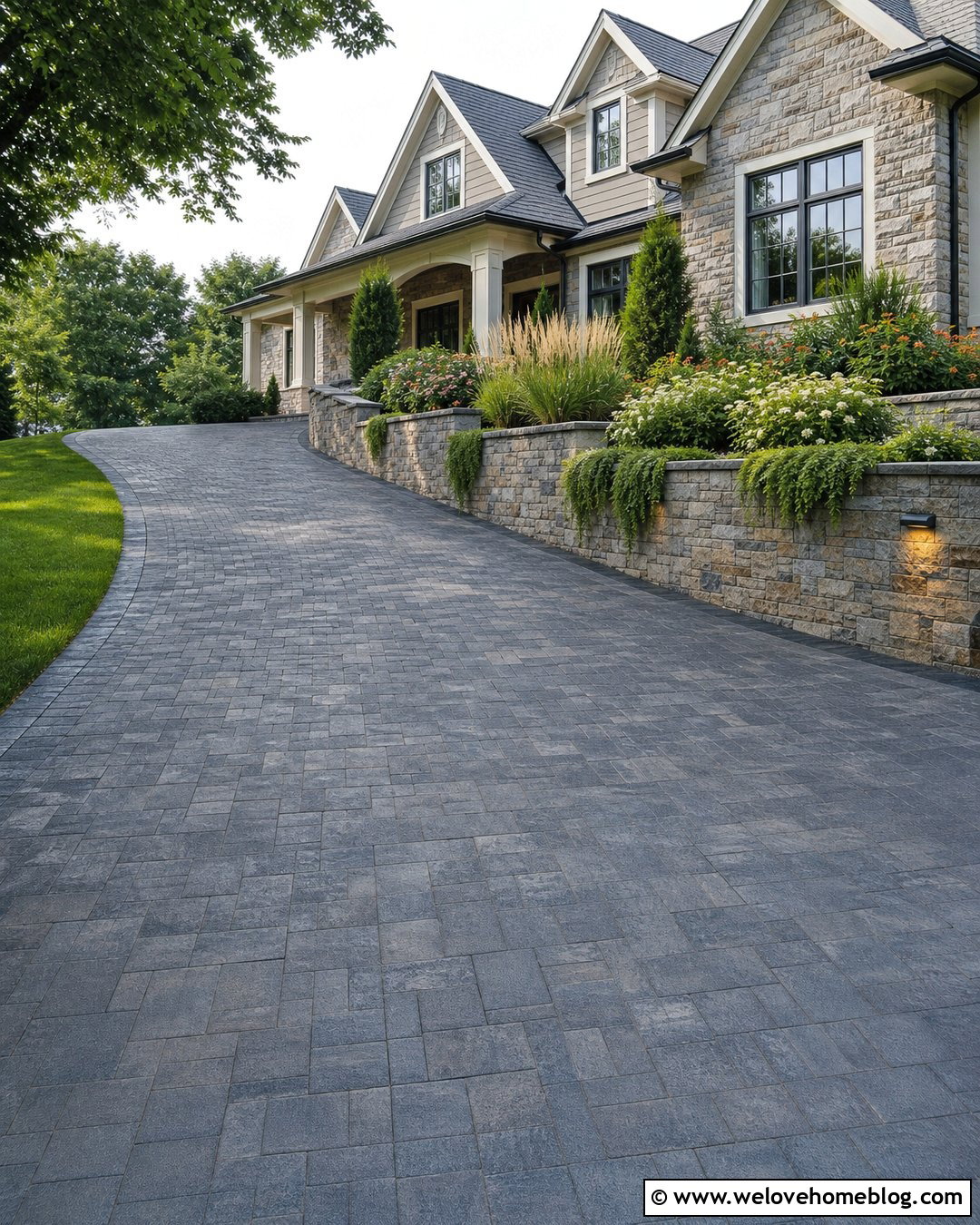
Where a driveway sits below the lawn, a retaining wall garden bed can manage the elevation change and create a striking planted edge. Use stone veneer, segmented concrete blocks, or brick that coordinates with the house. The wall should be properly designed for its height, soil pressure, and drainage needs. Above it, combine trailing plants near the cap with compact shrubs and upright grasses farther back. This layered arrangement softens the masonry while keeping soil contained. Leave a small setback between the wall and driveway where space allows, especially along turning areas. Integrated wall lighting can define the edge without placing fixtures in the driving zone. Carry the same masonry into the front steps or walkway to make the entire arrival feel intentionally designed.
19. Ornamental Tree Garden Bed Next To Curved Driveway
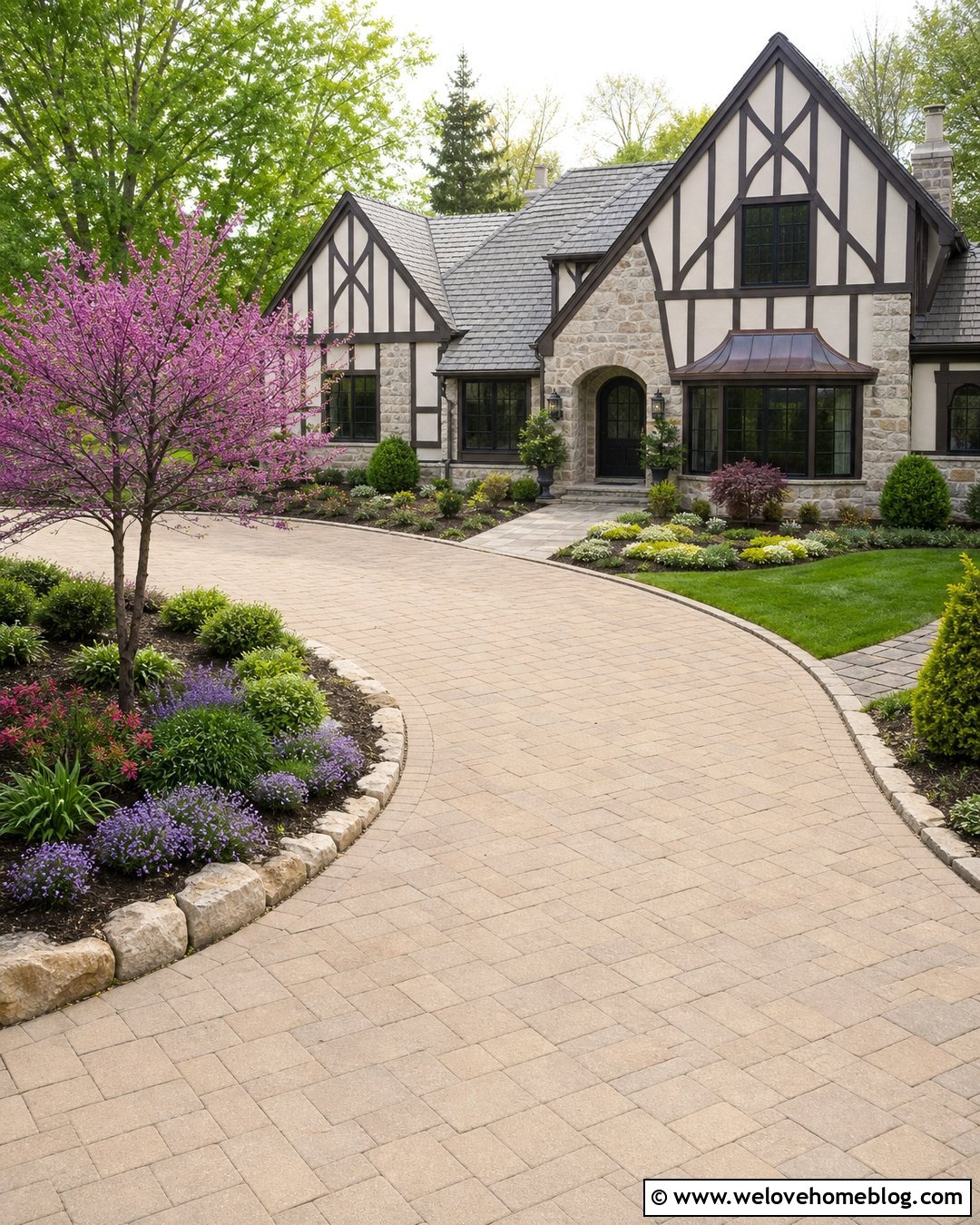
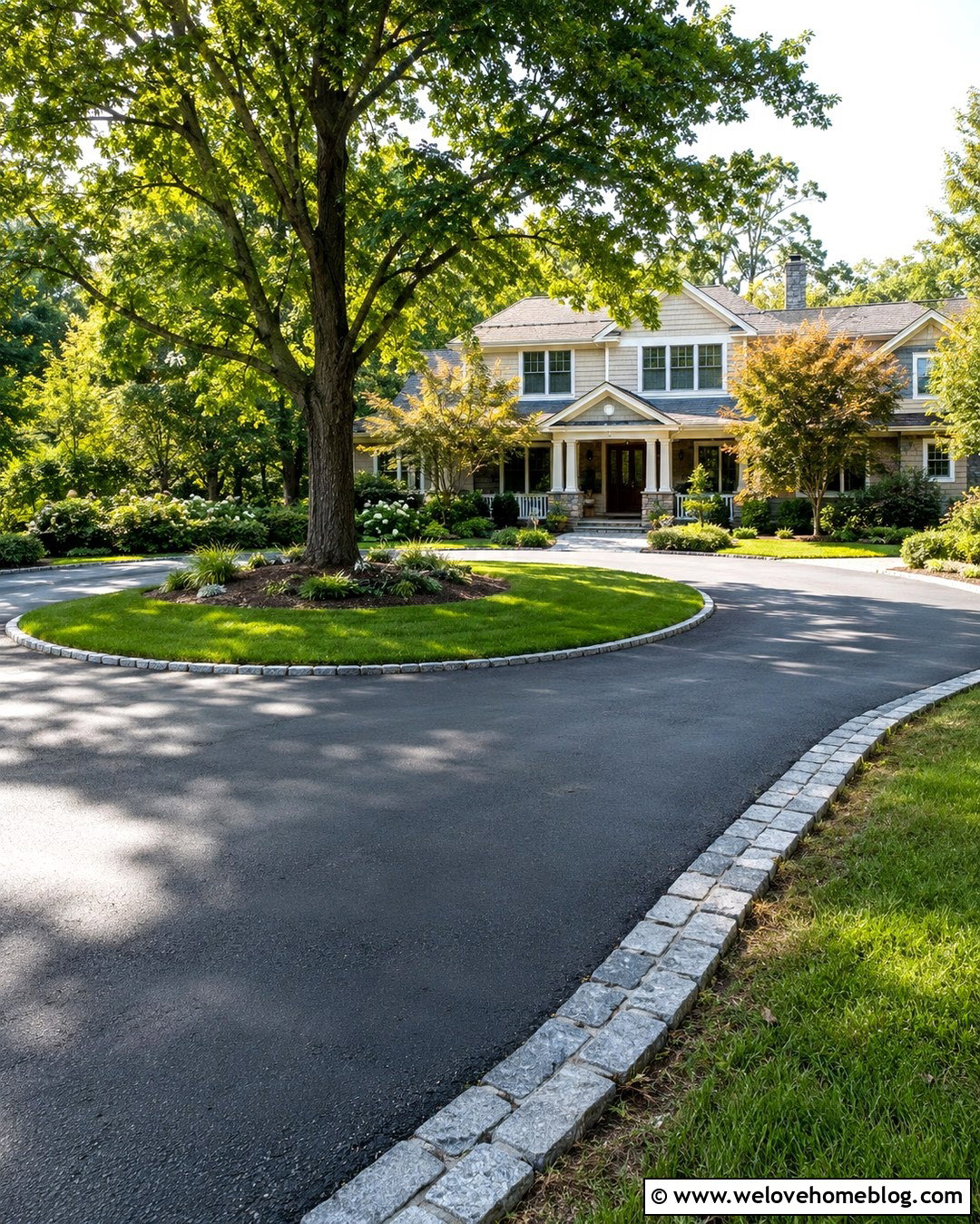
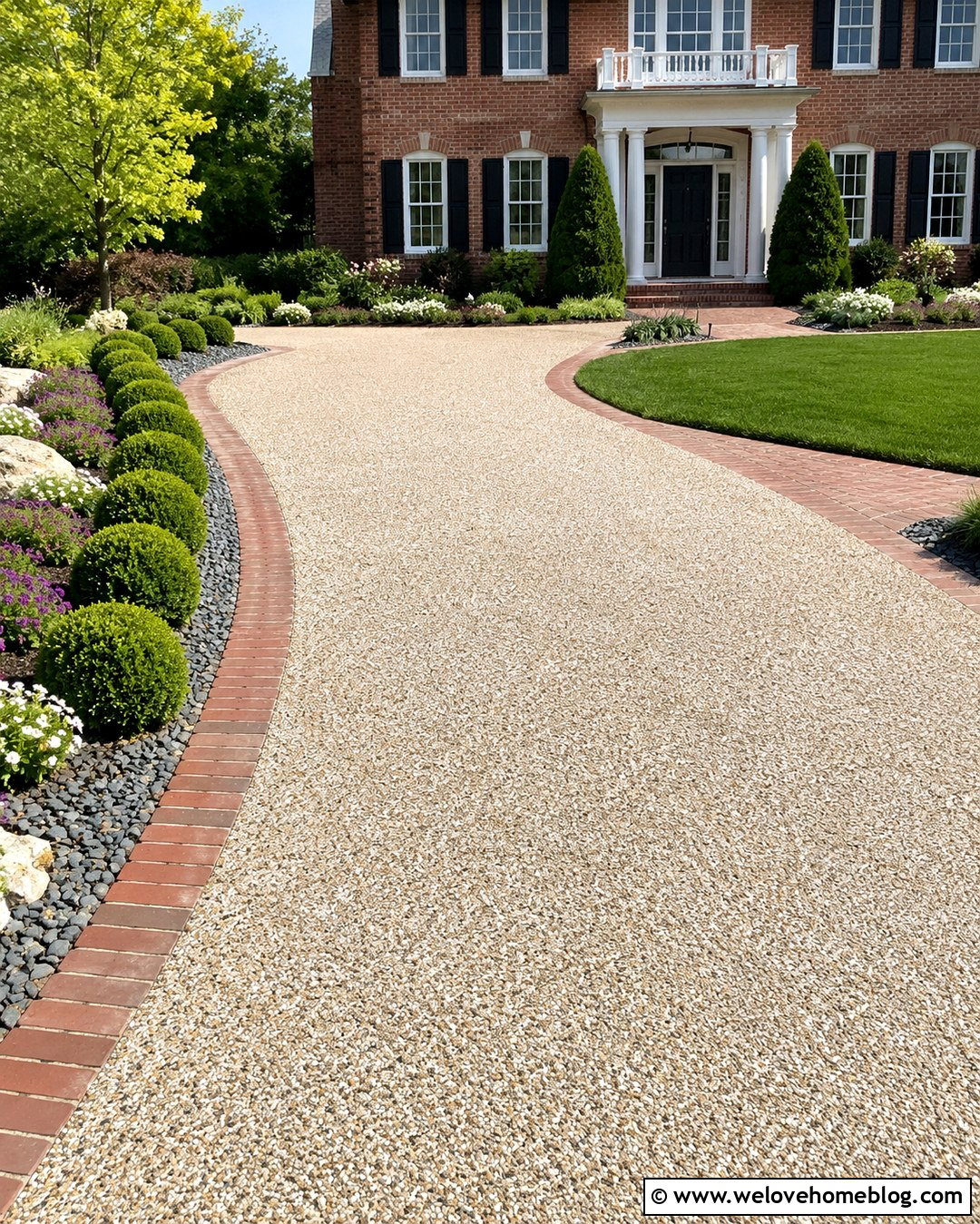
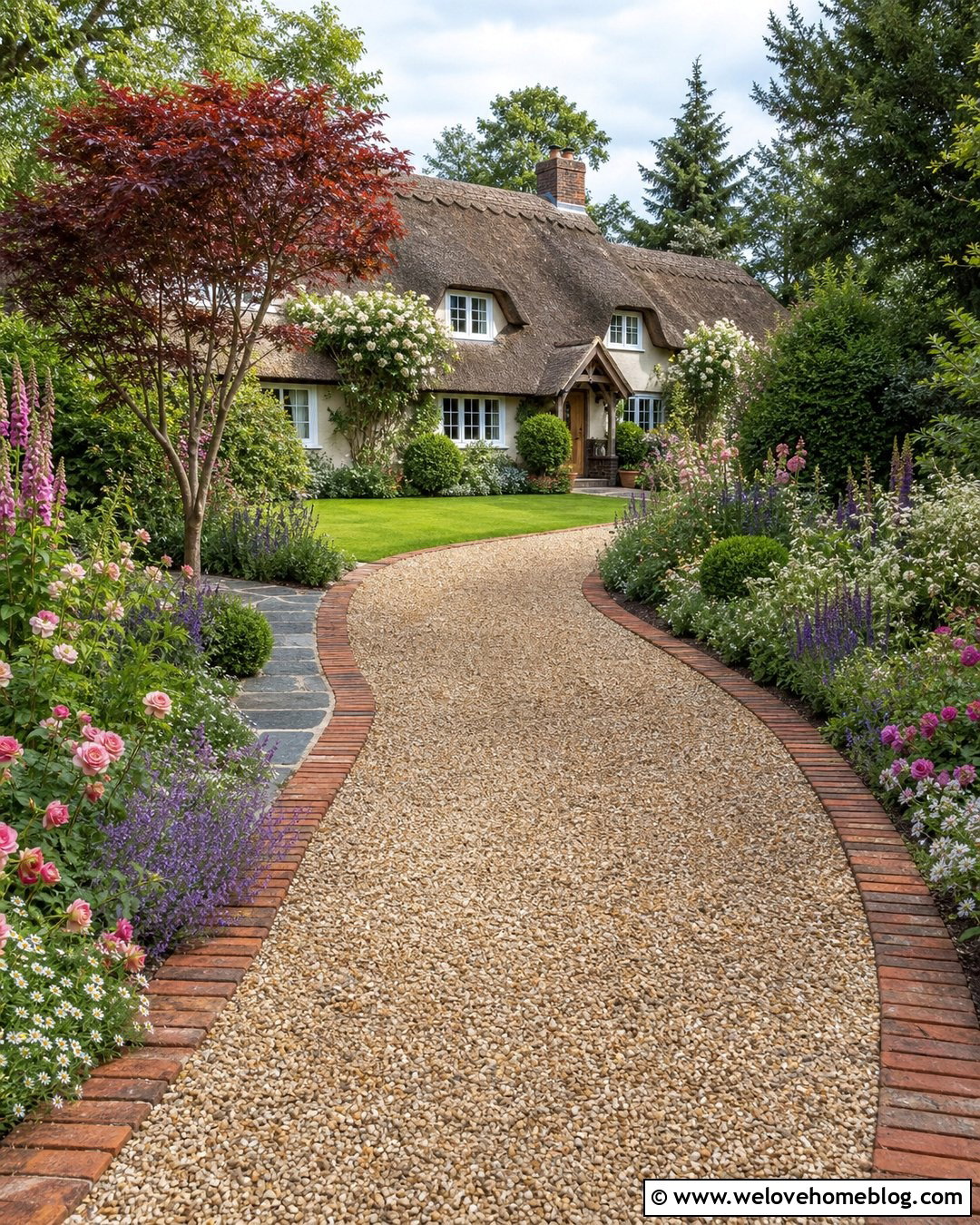
A curved driveway creates a natural location for an ornamental tree garden bed. Widen the bed along the outside of the curve, where it can reinforce the driveway’s shape without reducing turning space. Choose a small tree with roots and mature dimensions appropriate for the site. Underplant it with compact shrubs, flowering perennials, and a continuous ground cover. A brick or natural stone edge will emphasize the sweeping line and prevent mulch from moving onto the pavement. Position the tree far enough from the driveway to avoid low branches over vehicles. Add a second, smaller plant grouping farther along the curve to continue the visual rhythm. This arrangement works beautifully with paver, asphalt, concrete, and gravel driveways leading to many architectural styles.


20. Four-Season Garden Bed Next To Driveway
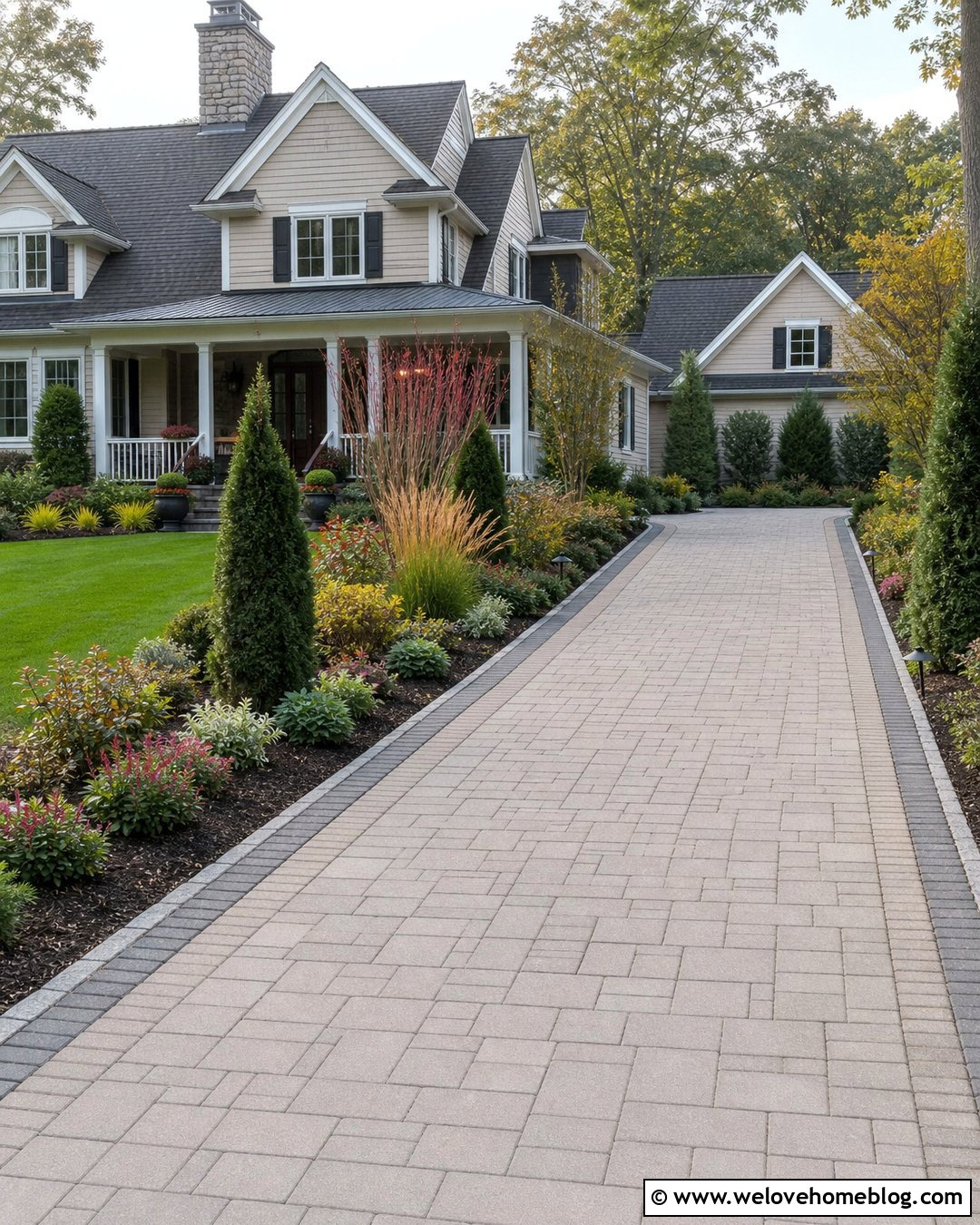
A four-season driveway garden should balance flowers with plants that maintain shape, texture, or color throughout the year. Begin with compact evergreens as permanent anchors. Add spring bulbs, summer perennials, ornamental grasses for fall, and shrubs with attractive bark or berries for winter interest. Choose noninvasive plants appropriate for your region and property conditions. A neat stone edge and dark mulch help the bed look finished even when fewer plants are blooming. Keep the planting low near the street, then gradually increase height toward the house. Repeat key plants along the entire driveway to connect each season visually. Beside a neutral concrete paver driveway, this layered approach creates reliable curb appeal without depending on short-lived annual displays or constant seasonal replacement.
Conclusion:
The most successful Garden Bed Next To Driveway Ideas combine practical clearance with plants, edging, and bed shapes that complement the paving. Start by measuring parking space, door-swing areas, sunlight, drainage, and visibility near the street. Then select a simple plant palette suited to your climate and repeat it throughout the bed. Crisp edging will keep soil, mulch, and loose gravel away from the driveway, while layered planting adds depth without creating clutter. Whether you prefer a formal hedge, colorful cottage border, rain garden, rock garden, or raised stone bed, plan for mature plant sizes. A complete, coordinated design will be easier to maintain and will make the entire approach to your home feel more welcoming.

Related posts:
Leave a Reply