
A well-planned rock garden can turn the narrow, awkward space beside a driveway into a polished part of your front yard. These 20 Rock Garden Next To Driveway Ideas combine practical driveway surfaces with boulders, decorative gravel, drought-tolerant plants, attractive edging, and clear step-out areas. The best layout should complement the home while keeping loose stones away from tires and making vehicle access comfortable. You can create a natural woodland border, a clean modern bed, a colorful alpine garden, or a water-wise desert landscape. Choose rocks that coordinate with the driveway and plants suited to your sunlight, soil, and climate. The complete looks below offer adaptable inspiration for large and small properties with **20 Rock Garden Next To Driveway Ideas**.

1. River Rock Garden Along Concrete Driveway
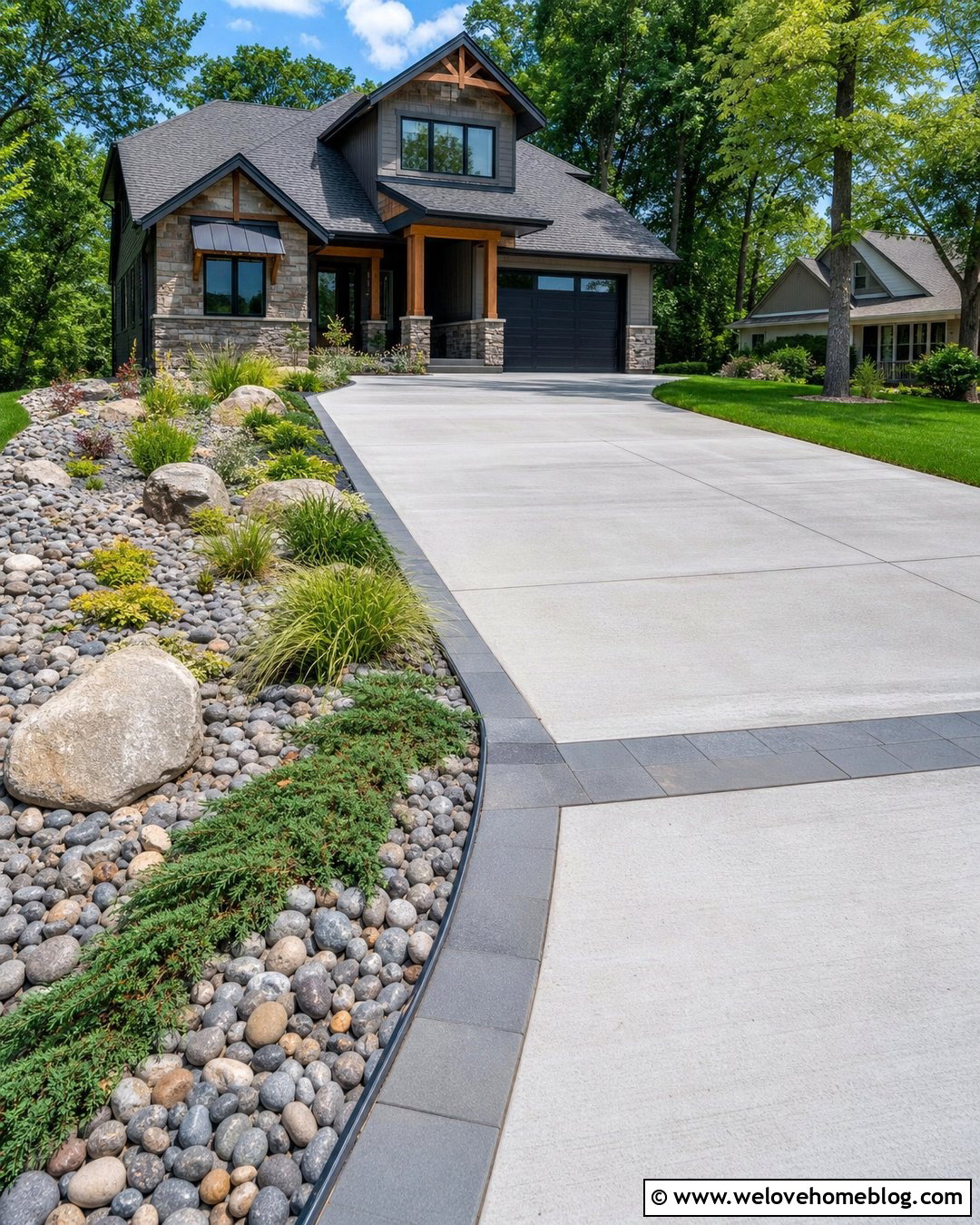
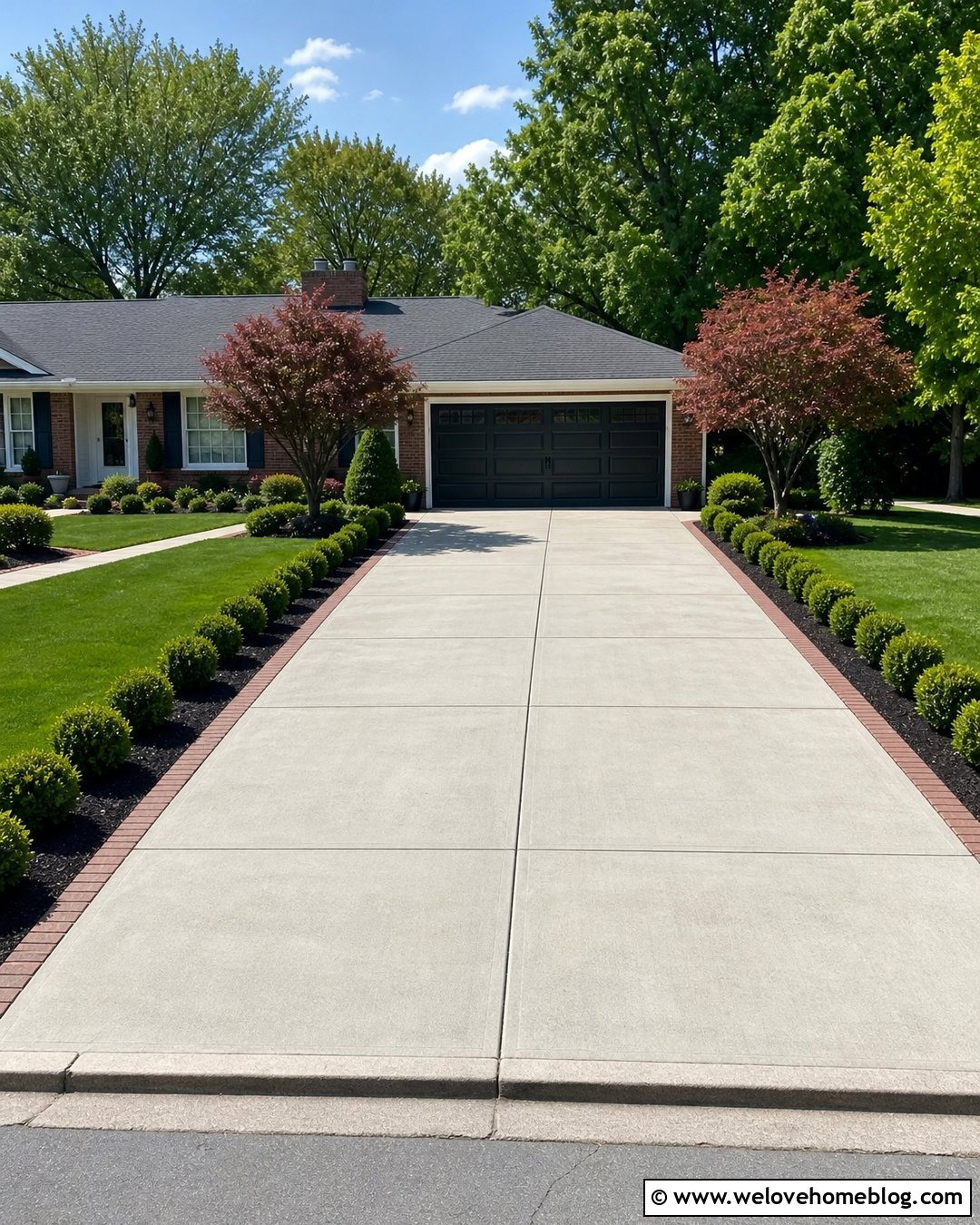
Smooth river rock creates a relaxed border beside a straight, light-gray poured concrete driveway. Use a mixture of two- to five-inch stones instead of one uniform size for a more natural appearance. Place several weathered boulders through the bed, then soften them with ornamental grasses, creeping juniper, and compact flowering perennials. A narrow steel edge between the concrete and garden keeps smaller stones from rolling onto the driving surface. Leave a level strip of concrete or flat pavers where passengers usually step out. This complete arrangement works especially well with ranch, craftsman, and cottage homes. Select gray, tan, and muted brown rock tones that connect the driveway to the house facade without making the front yard look overly busy.
2. Boulder Rock Garden Beside Curved Asphalt Driveway
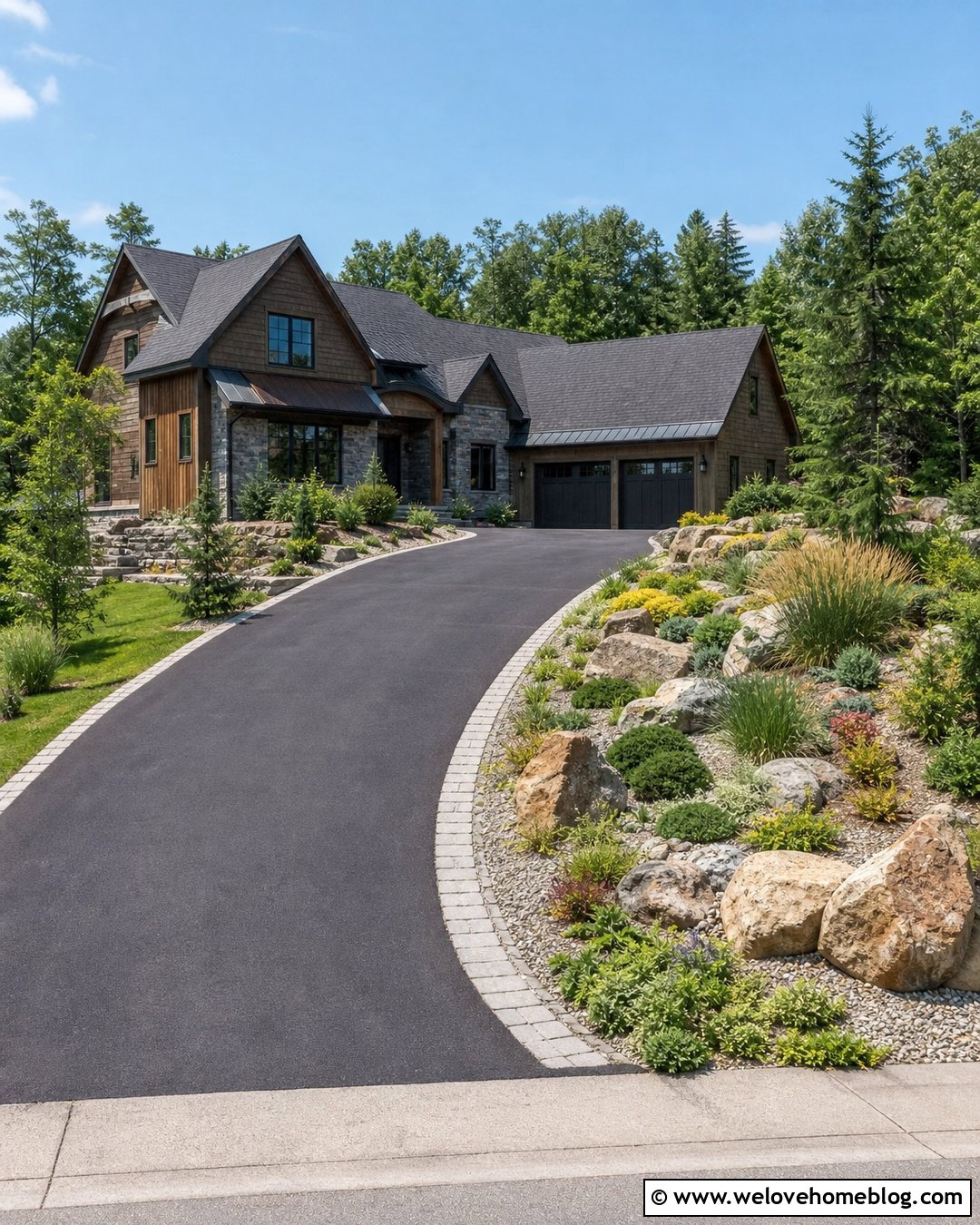
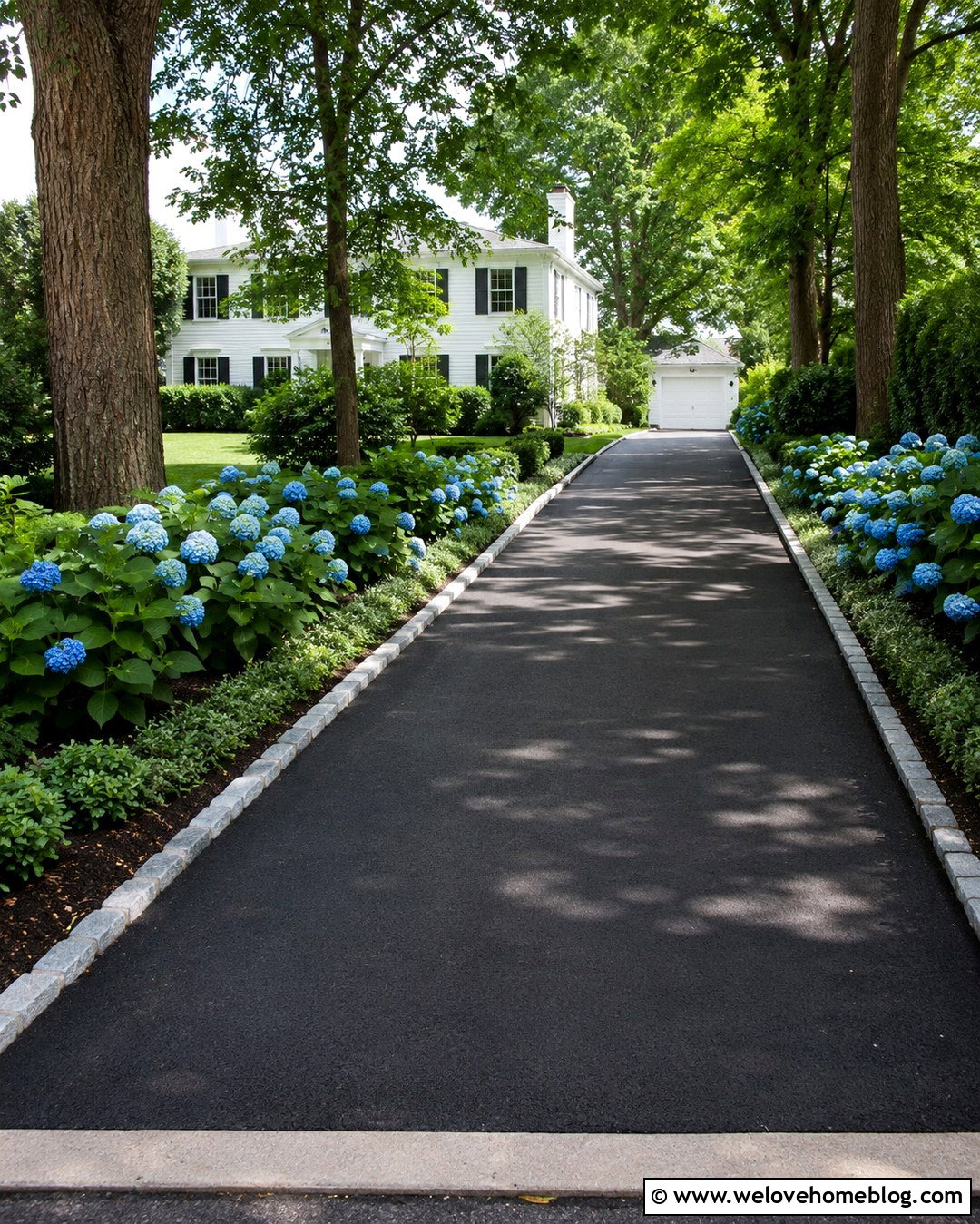
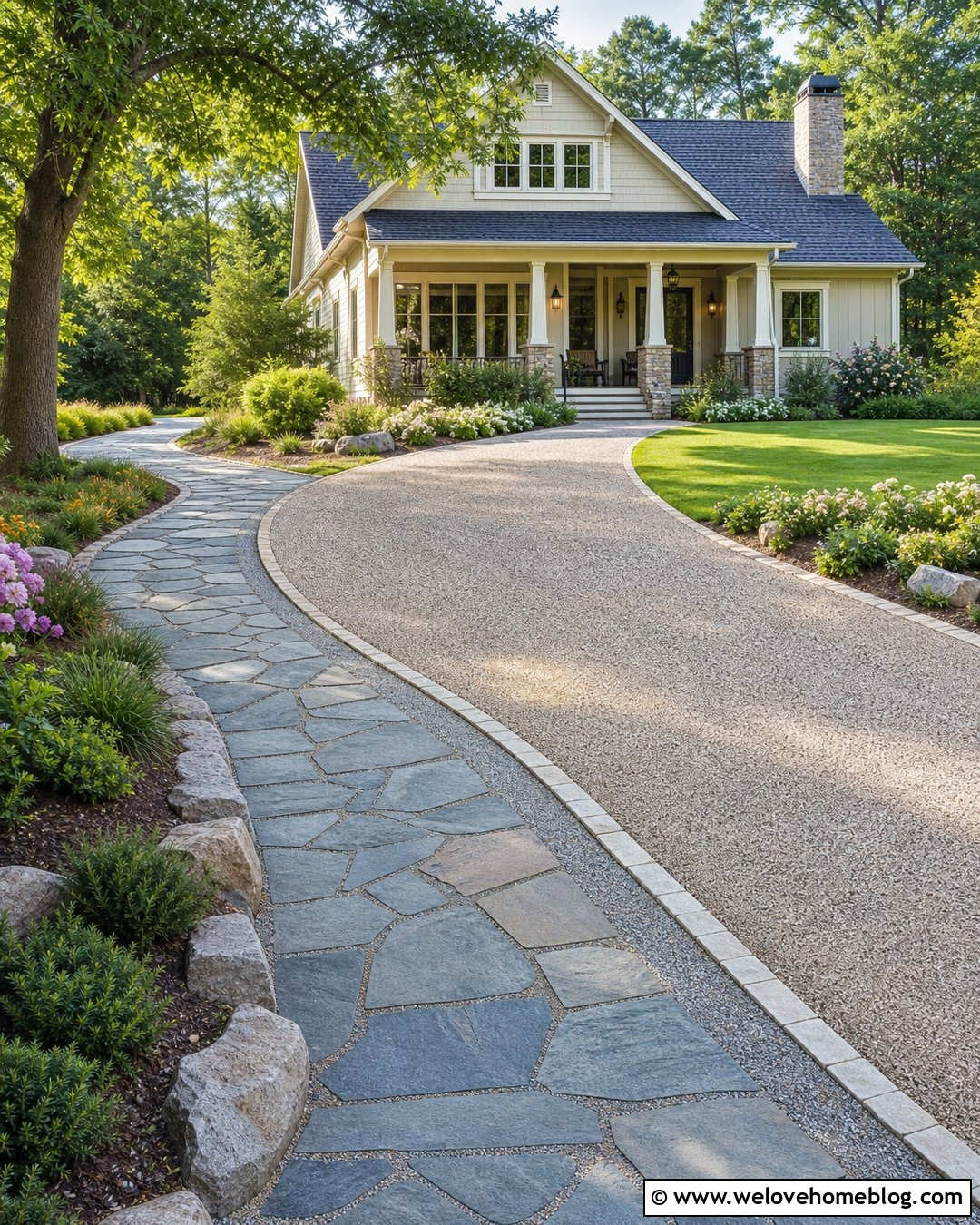
A sweeping asphalt driveway feels less severe when a boulder garden follows its outer curve. Begin with large local stones positioned at irregular intervals, turning their broadest and most attractive faces toward the driveway. Fill the spaces with crushed gray gravel, low evergreen shrubs, sedum, and clumping grasses. A flush cobblestone ribbon provides a strong transition between the black asphalt and pale rock bed. Keep the planting lower near the street so drivers can see pedestrians and traffic clearly. Taller shrubs can gradually appear closer to the house. This layered design gives a long driveway rhythm without creating a formal hedge. Repeating the same stone near the entrance walkway helps the entire front landscape feel connected rather than assembled from unrelated features.
3. Desert Rock Garden Next To Gravel Driveway
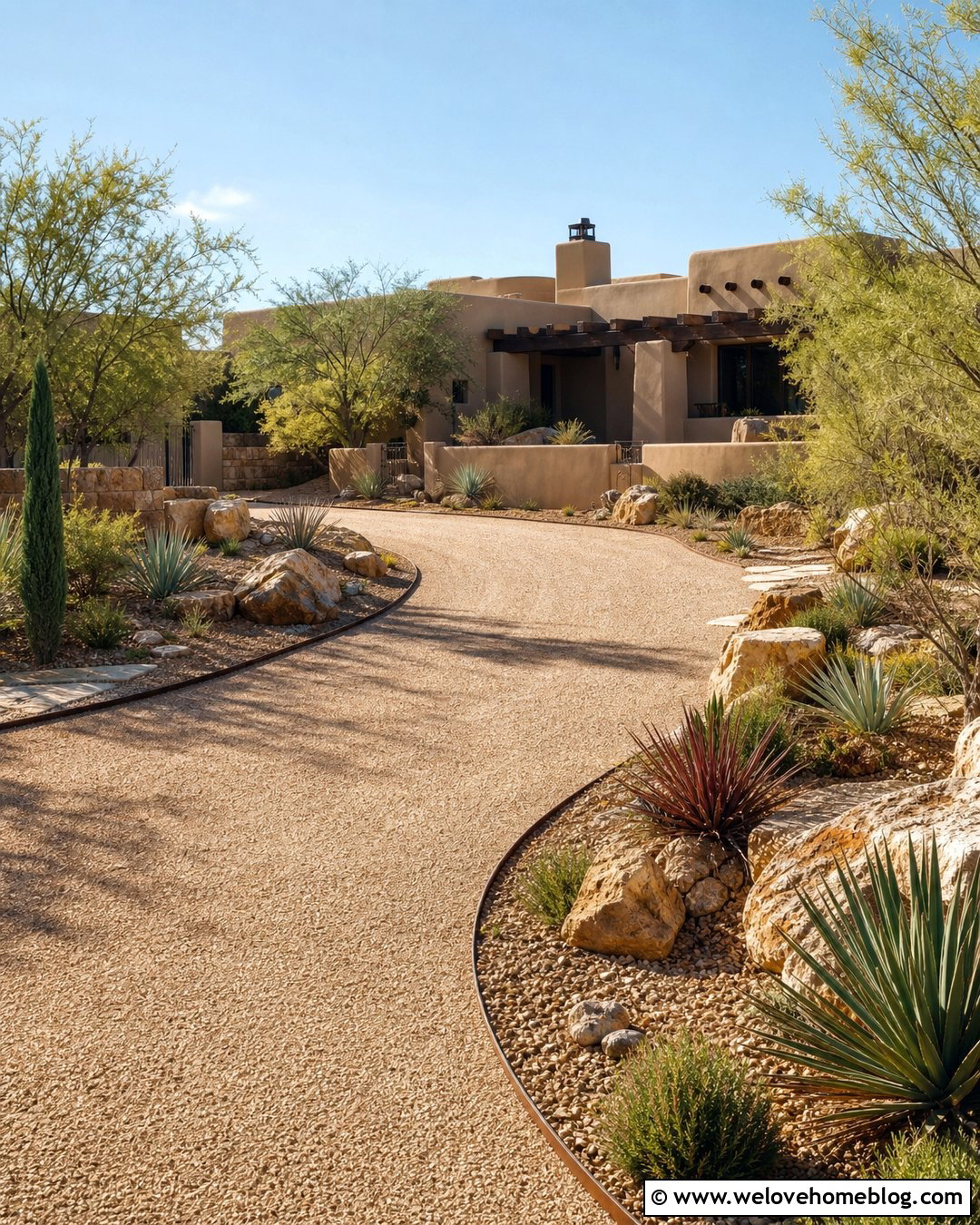
Hot, sunny yards are ideal for a desert-inspired rock garden beside a warm beige gravel driveway. Create a gently curved bed filled with decomposed granite, angular fieldstone, and several sculptural boulders. Add yucca, red yucca, agave, desert spoon, and drought-tolerant grasses where they are appropriate for the local climate. Space plants generously so their forms remain visible against the stone. Steel edging or a line of larger cobbles will separate the driveway gravel from the finer garden material. Near parking areas, include broad flagstone landing pads for comfortable footing. The limited plant palette and repeated rock colors create a calm, cohesive entrance. This design suits Southwestern, adobe, contemporary, and desert ranch homes while reducing the amount of lawn beside the driveway.
4. White Rock Garden Beside Black Asphalt Driveway
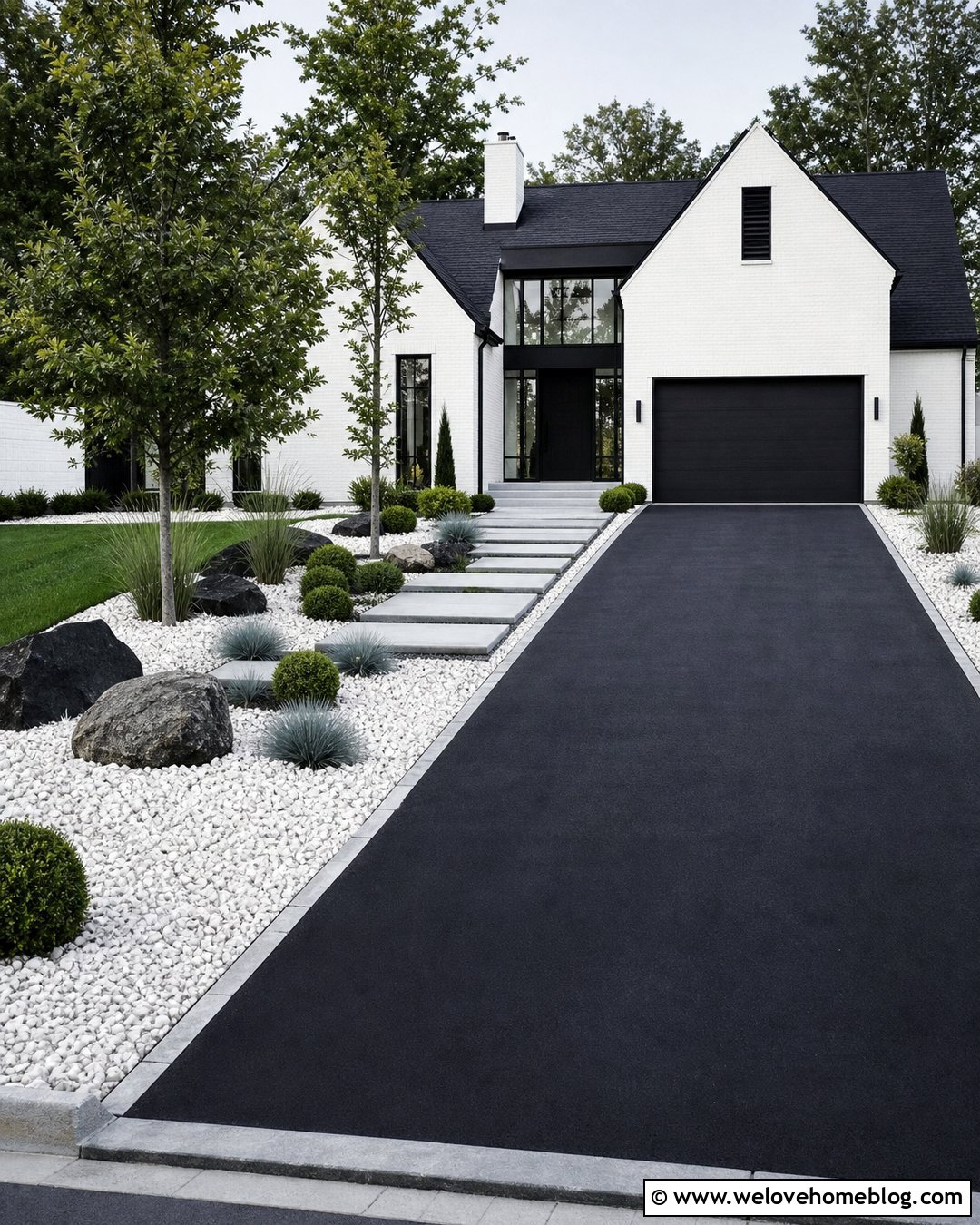
Crisp contrast can give an ordinary asphalt driveway a sharper, more modern appearance. Run a wide bed of white marble chips or pale quartz gravel along one side, contained by dark metal edging. Add charcoal boulders, rounded evergreen shrubs, blue fescue, and upright ornamental grasses for definition. Use plants in repeated groups rather than scattering many unrelated varieties across the bed. The white stone will look brightest when fallen leaves and soil are removed regularly, so this treatment is best in a relatively open location. A walkway made from oversized gray concrete slabs can cross the rock garden near the house. Pairing black asphalt, white rock, and restrained greenery creates a bold complete look that complements white brick, dark siding, or minimalist contemporary architecture.
5. Sloped Rock Garden Next To Driveway
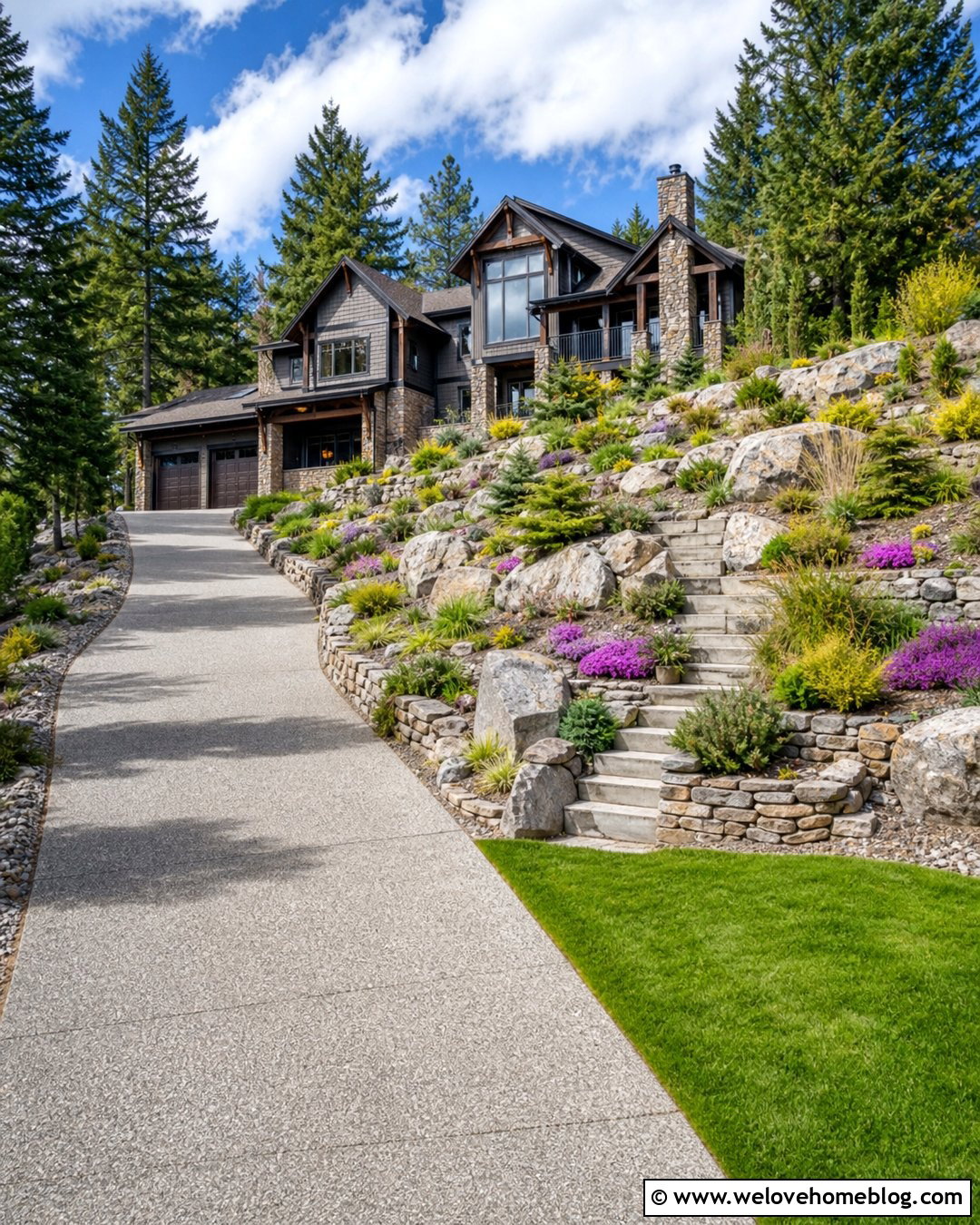
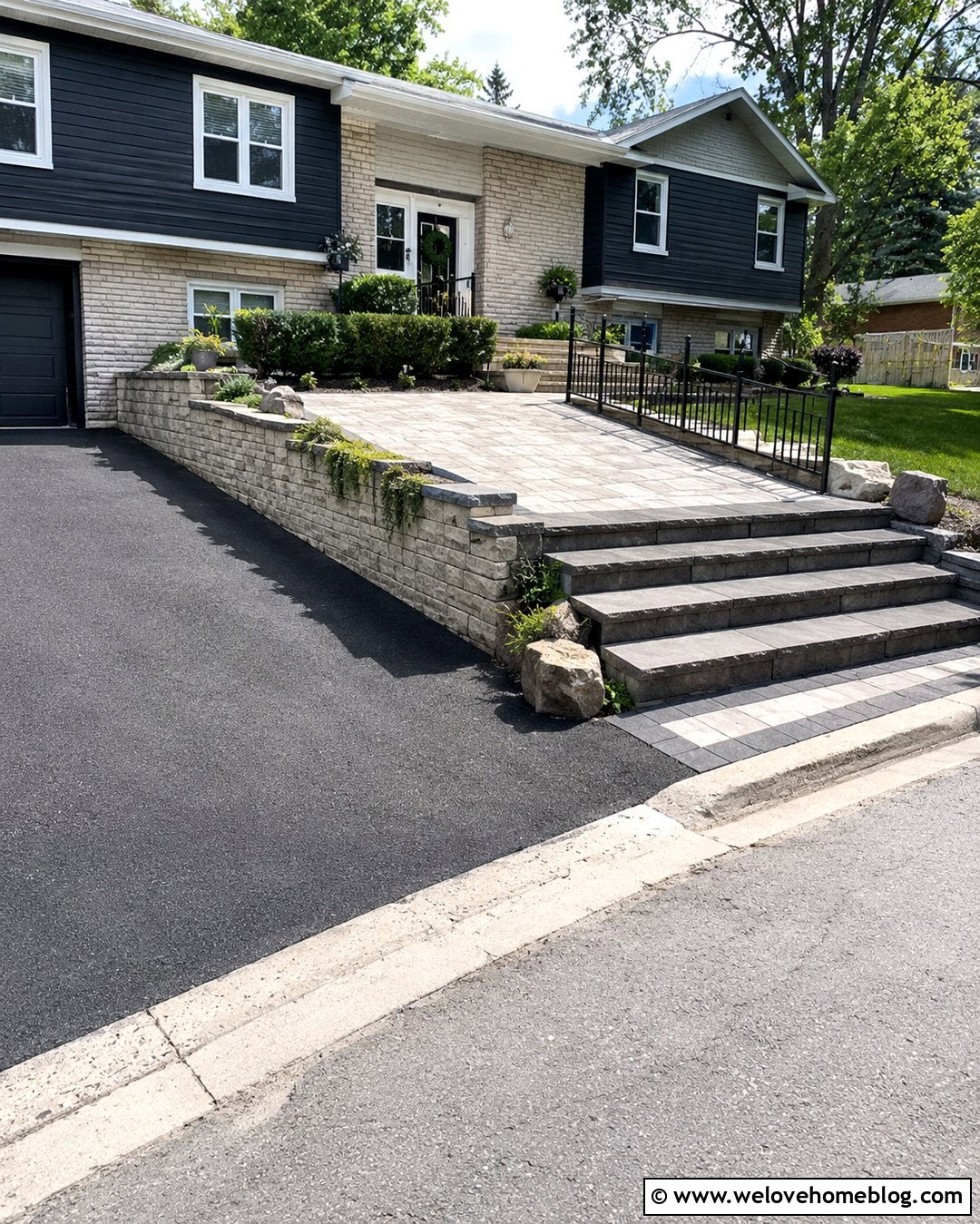
A steep bank beside a driveway can become an attractive terraced rock garden instead of a difficult mowing area. Use embedded boulders and short dry-stacked stone walls to divide the slope into broad planting pockets. Fill them with well-draining soil, decorative gravel, spreading juniper, creeping phlox, sedum, and compact ornamental grasses. Arrange rocks partly below the soil line so they appear naturally anchored. The lowest edge should be strong enough to keep soil and loose stone away from the driveway. Low rock walls can also help control soil movement along sloping driveway beds. () Include a simple stone stair or paved path if garden maintenance requires hillside access. This layered layout fits mountain, craftsman, rustic, and woodland homes.
6. Dry Creek Rock Garden Along Driveway
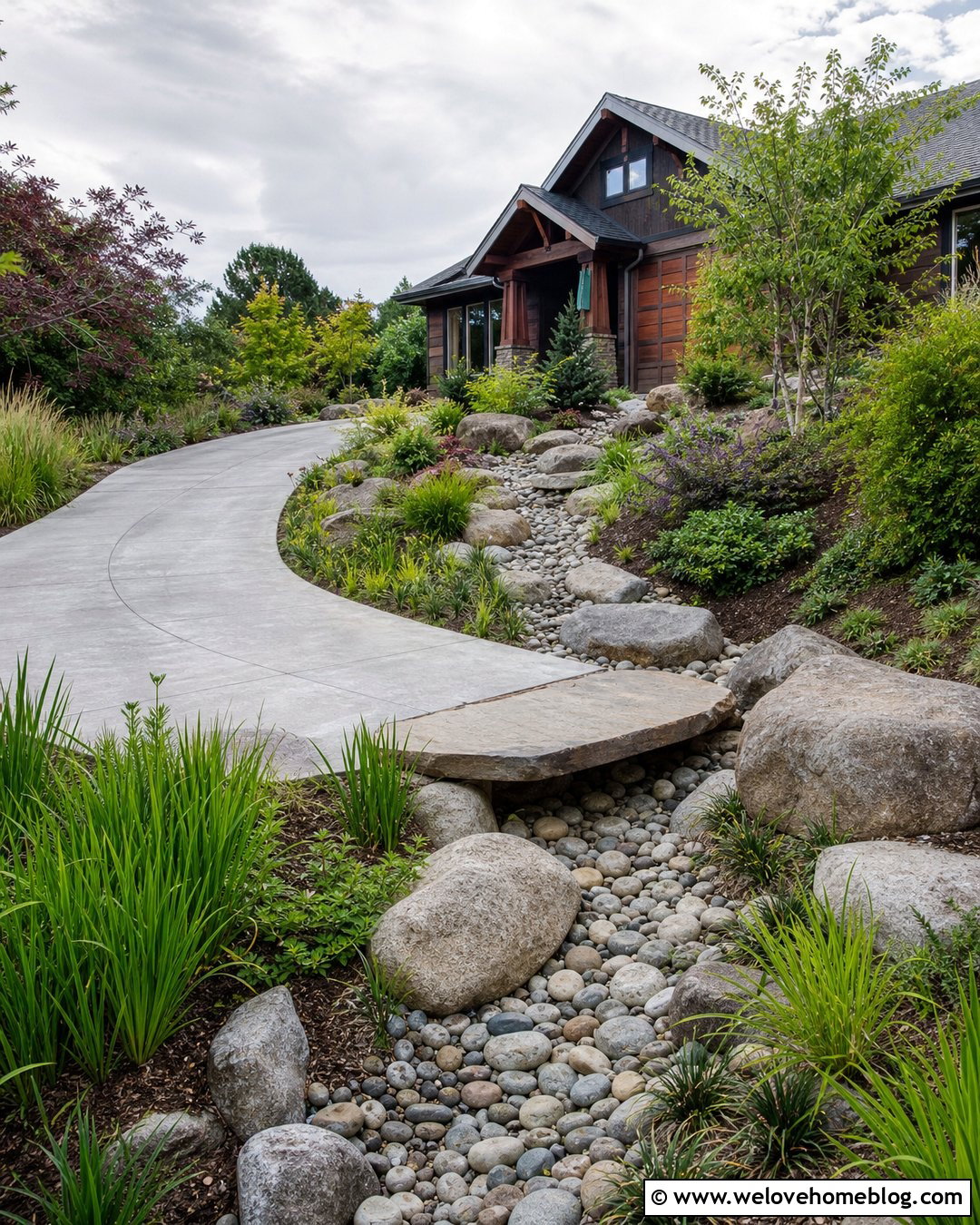
A dry creek bed can transform a drainage route beside a driveway into an intentional landscape feature. Shape a shallow, curving channel that follows the driveway without directing water toward the garage or foundation. Line it with mixed river cobbles, gravel, and larger boulders placed around the bends. Add moisture-tolerant grasses and native perennials near lower areas, while using drought-tolerant plants along the raised banks. A narrow stone bridge can connect the driveway to the front walkway. Keep loose cobbles set back from parking and tire paths. Proper grading should be confirmed before construction, especially where stormwater moves quickly. Rock-lined swales are commonly used beside driveways to guide and slow runoff while creating a softer landscape transition. ()
7. Succulent Rock Garden Beside Paver Driveway
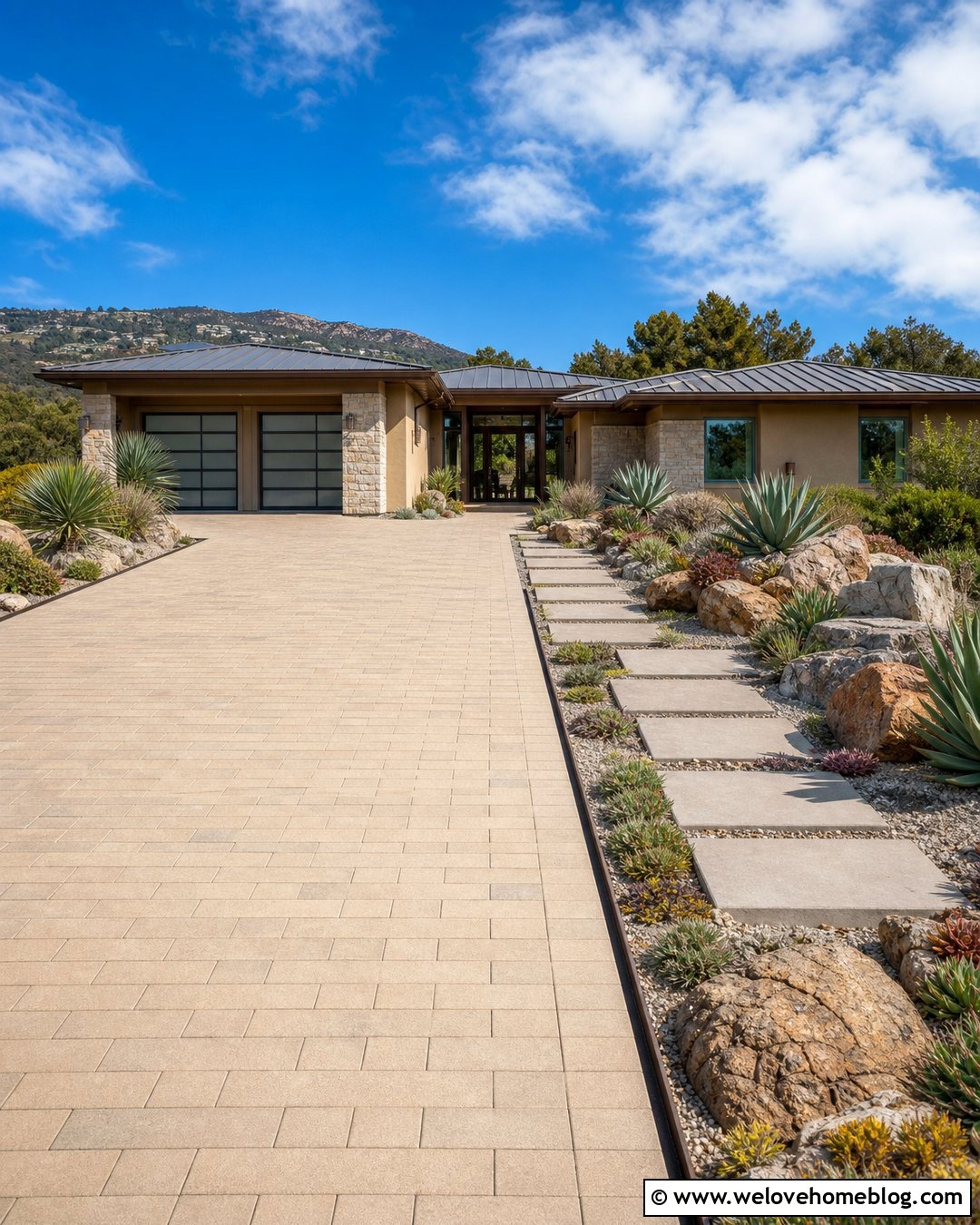
Succulents bring strong shapes and changing color to a rock garden next to a paver driveway. Pair tan concrete pavers with a bed of small gravel, fractured stone, and several low boulders. Plant hardy selections such as sedum and hens-and-chicks in cool regions, or climate-appropriate agaves and aloes in warmer areas. Tuck smaller plants into crevices, but leave open gravel around larger specimens so each form can stand out. A dark brick or steel edge keeps the planting bed separate from the paver pattern. Avoid placing pointed or spreading plants beside car doors and pedestrian routes. Low-growing succulents can work effectively in protected rock pockets near driveway traffic. () The result is colorful, textural, and especially suitable for sunny front yards.
8. Modern Rock Garden Next To Concrete Driveway
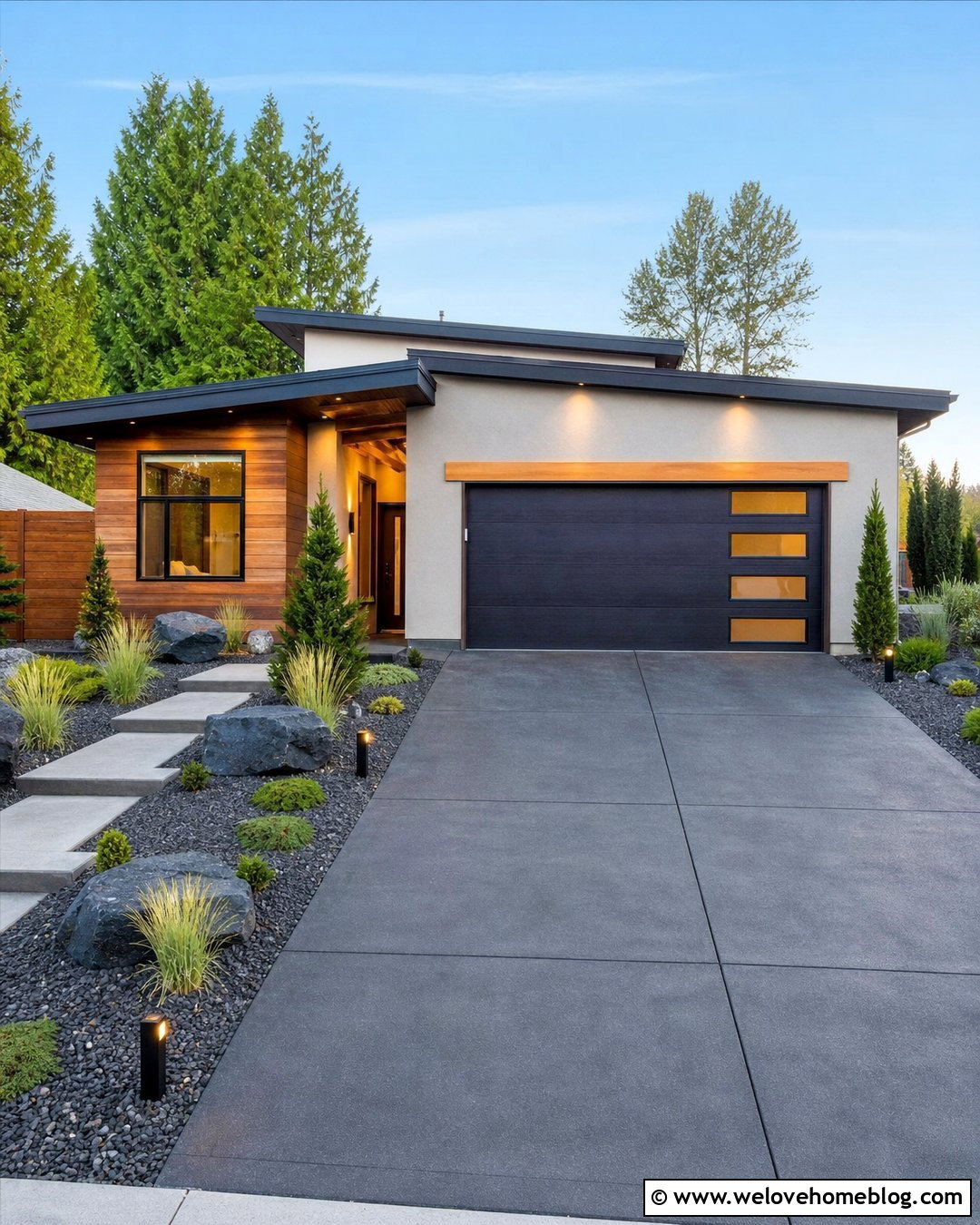
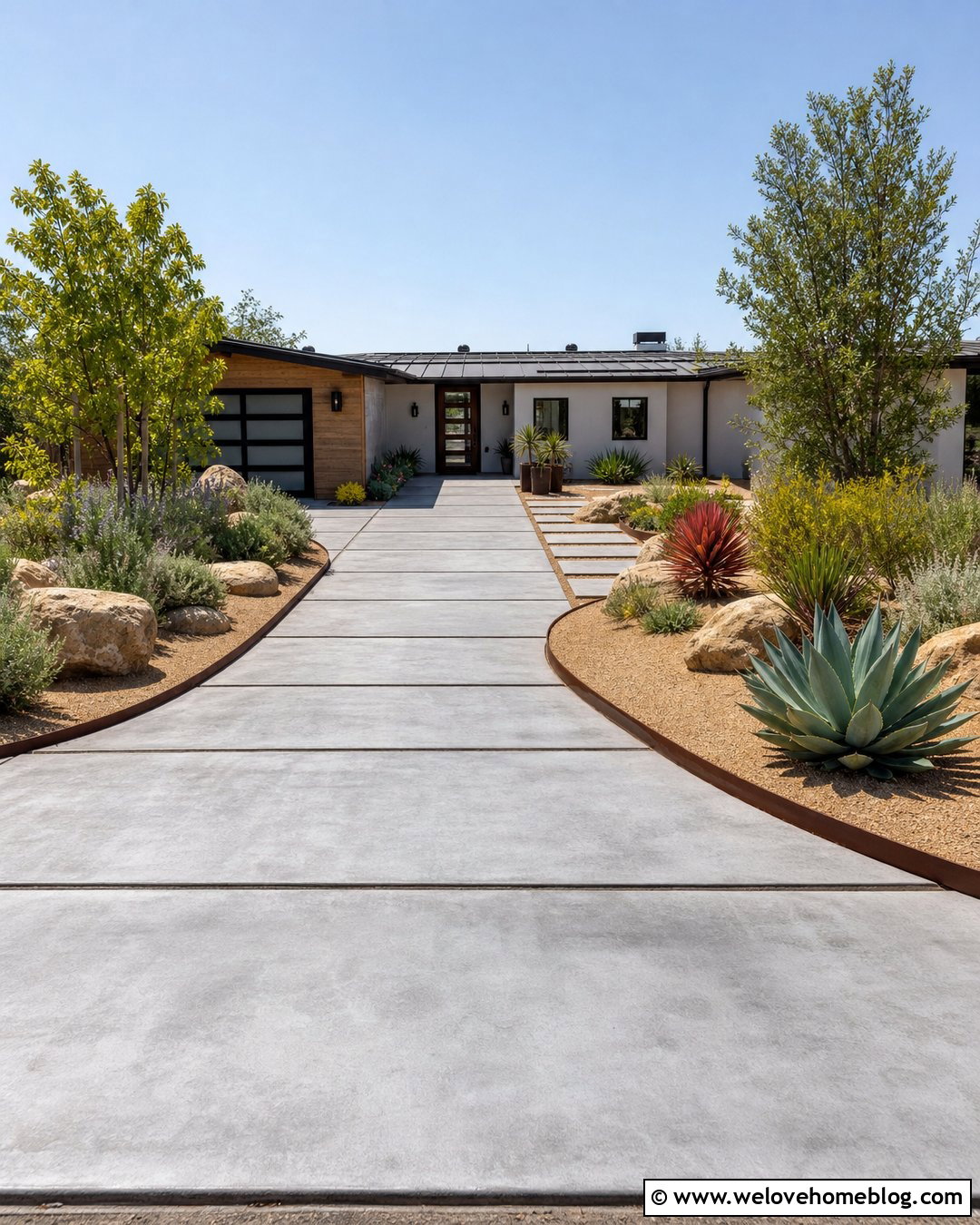
For a contemporary home, extend the driveway’s clean geometry into the neighboring rock garden. Start with a straight charcoal or medium-gray concrete driveway featuring narrow control joints. Beside it, create rectangular beds filled with dark basalt gravel and a few large, flat-faced boulders. Plant upright grasses, compact evergreens, and low ground covers in simple blocks. A flush steel edge keeps every line crisp without becoming visually dominant. Add a walkway of large concrete slabs separated by narrow gravel joints. The arrangement should feel spacious, so avoid filling every empty area with plants or ornaments. Low bollard lights can mark the garden’s outer edge while leaving the driveway unobstructed. This streamlined combination looks especially cohesive beside modern homes with wood, stucco, glass, or dark metal details.
9. Small Rock Garden Beside Narrow Driveway
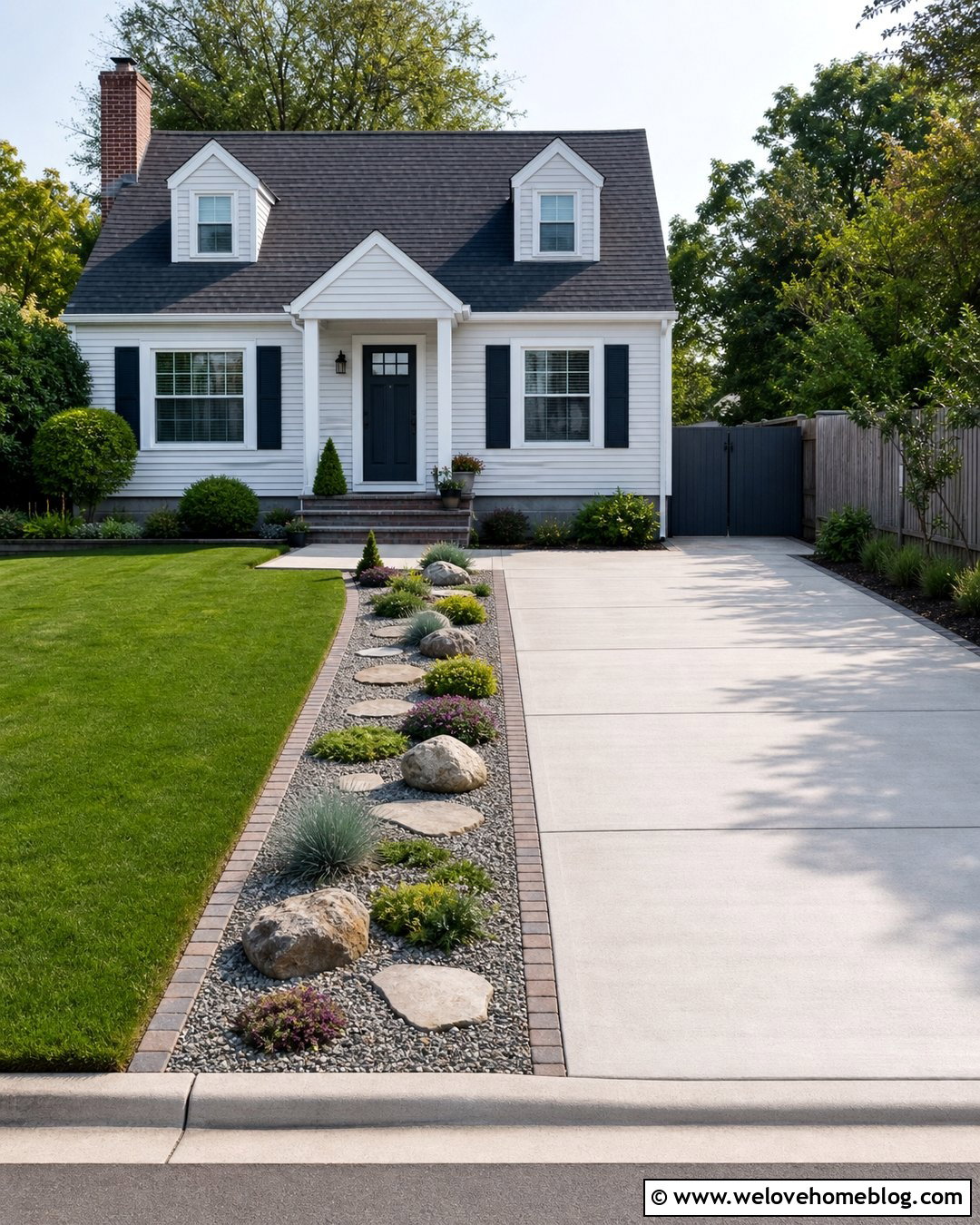
Even a two- or three-foot strip can support a complete rock garden if every element is carefully scaled. Next to a narrow concrete driveway, use fine gravel, several small boulders, and repeating groups of compact plants. Creeping thyme, dwarf sedum, blue fescue, and miniature evergreens can provide texture without crowding parked vehicles. Install a flush brick or metal border to contain the decorative stone. Where doors open, replace plants with flat stepping stones or a simple paved landing strip. Keep shrubs away from mirrors and avoid tall flowers that may lean over the concrete. Continue the same gravel and plant groupings toward the front walkway to make the small bed appear longer. This efficient layout adds curb appeal without sacrificing the limited width needed for comfortable driveway use.
10. Cottage Rock Garden Along Brick Driveway
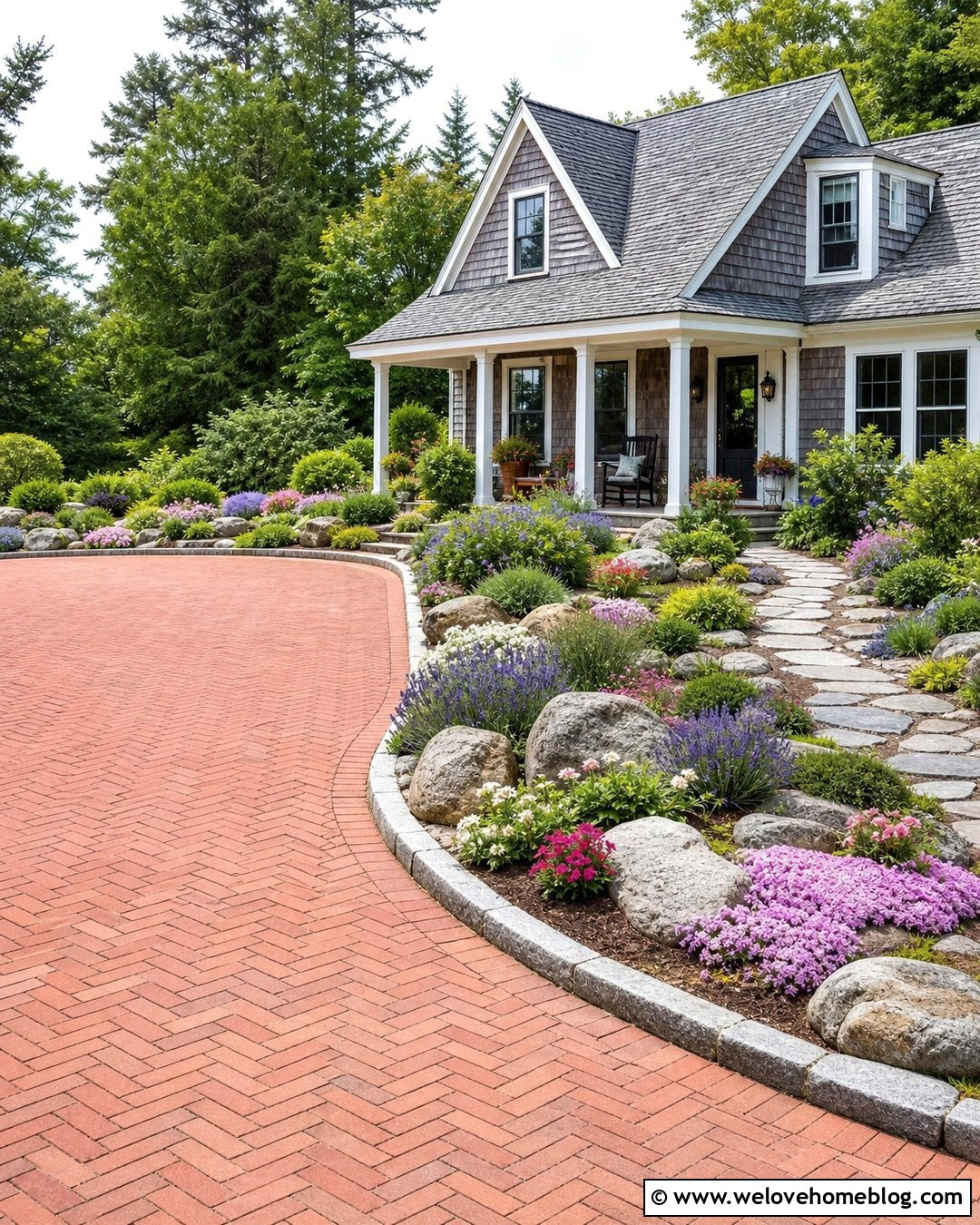
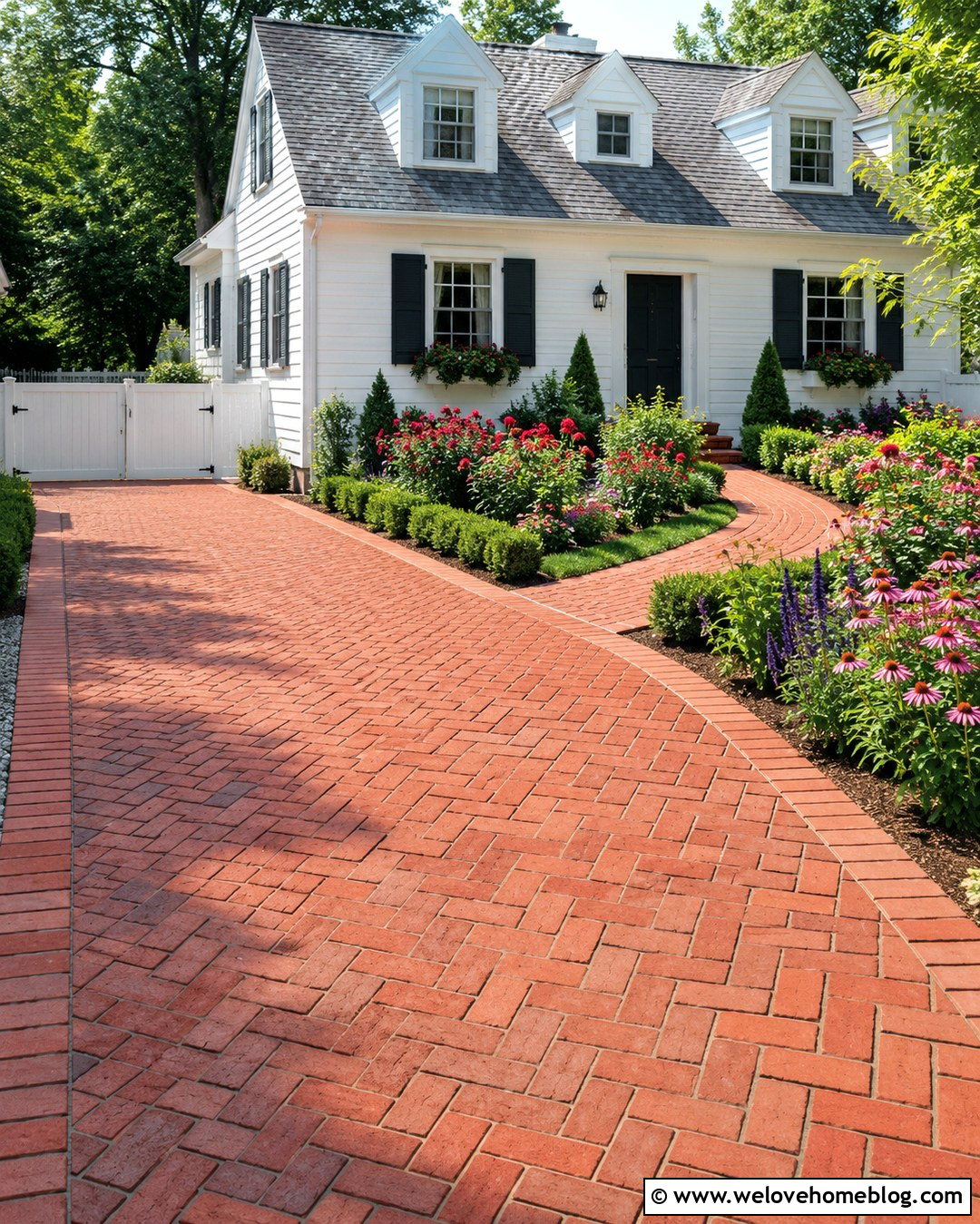
A cottage rock garden looks welcoming beside a red or weathered clay brick driveway. Use irregular fieldstone, small gravel pockets, and gently curved bed lines rather than rigid geometry. Plant creeping phlox, dianthus, dwarf lavender, hardy geraniums, sedum, and small ornamental grasses in generous clusters. Allow selected ground covers to soften the boulder edges, but prevent them from spreading onto the vehicle path. A low fieldstone curb can echo the home’s foundation or garden wall. Near the entrance, connect the driveway to the porch with a flagstone walkway that passes through the planting. Choose a limited flower palette so the finished space feels charming rather than chaotic. This complete look pairs naturally with Cape Cod, Tudor, craftsman, and traditional cottage homes surrounded by informal landscaping.
11. Woodland Rock Garden Next To Driveway
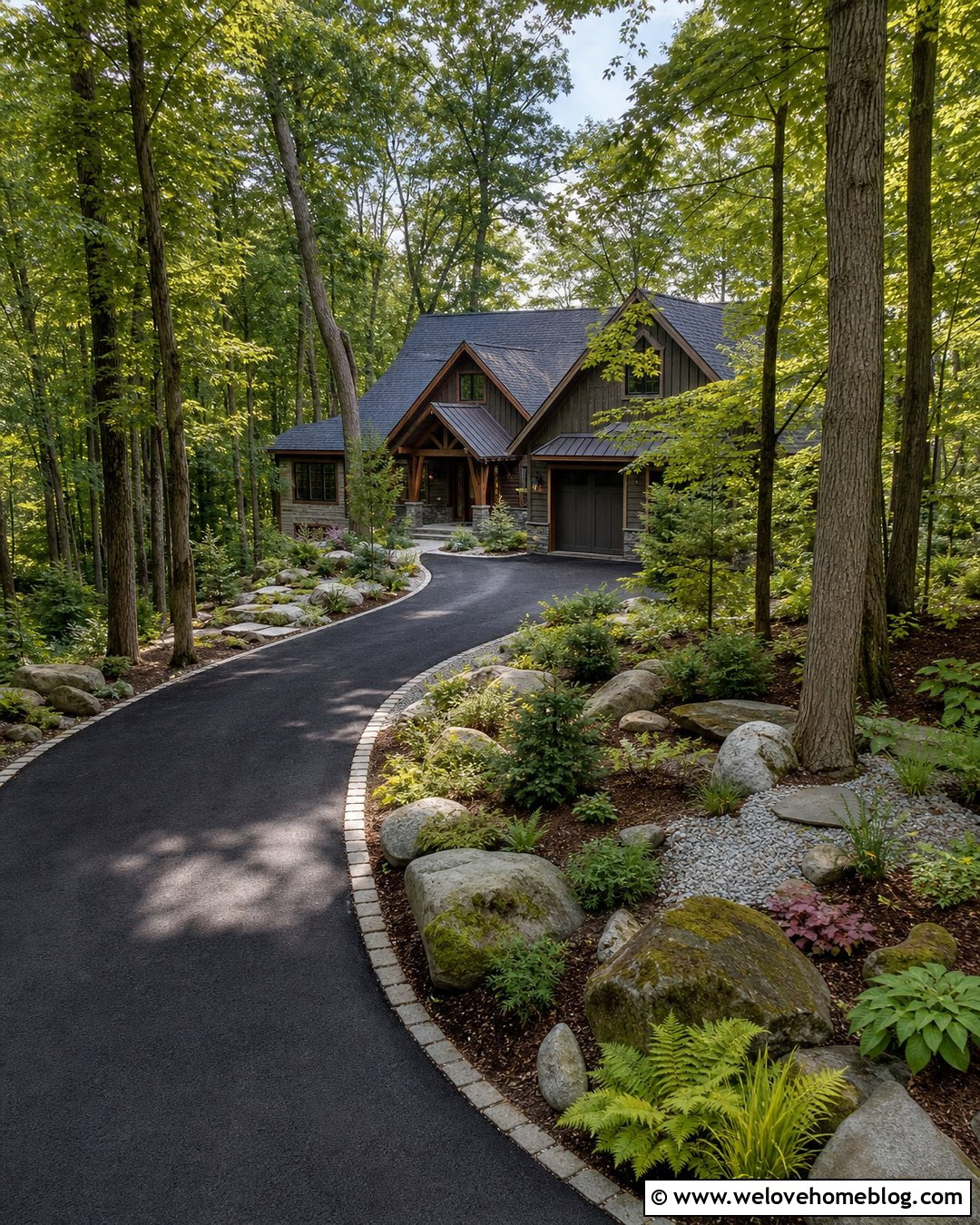
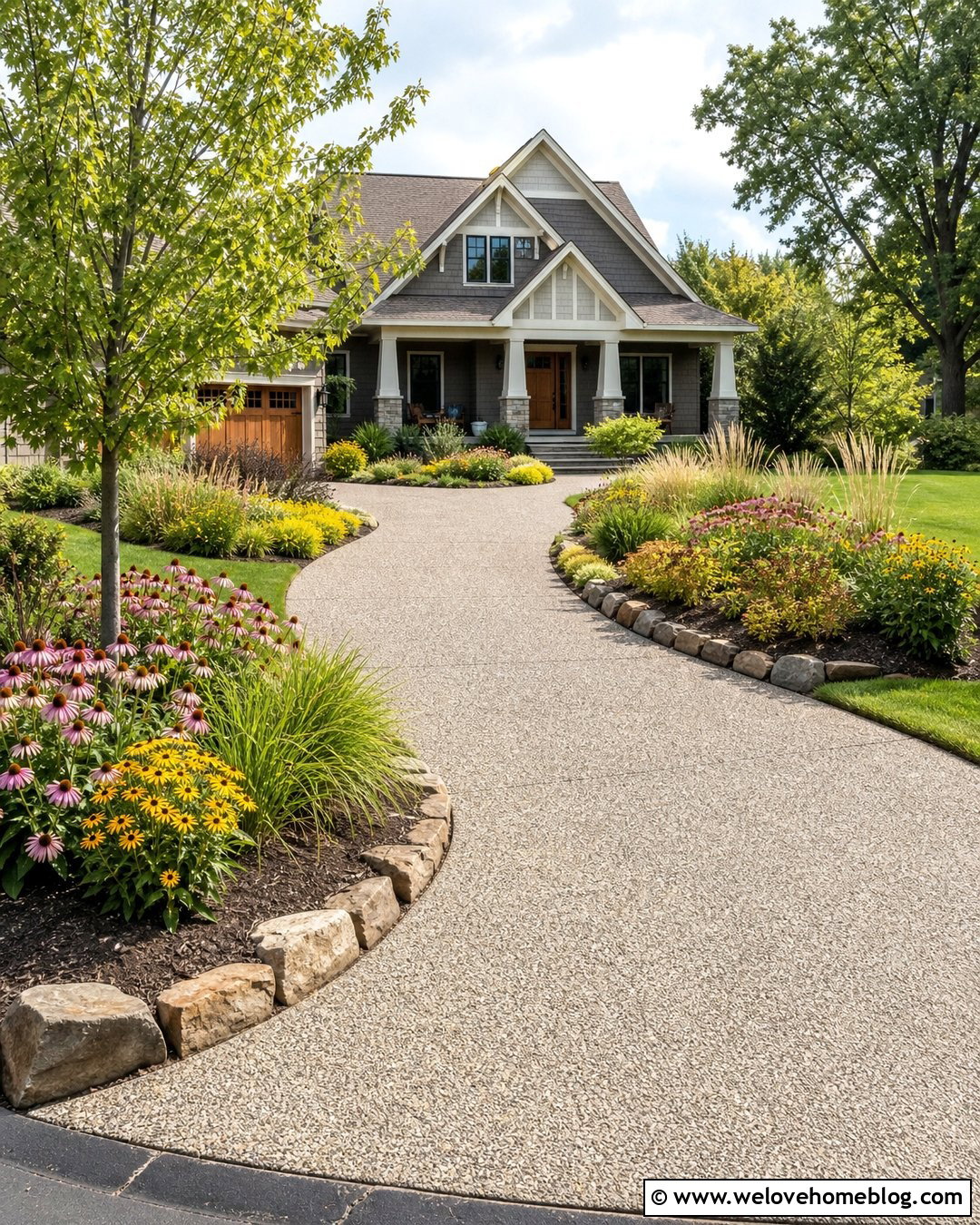
A shaded driveway can be framed with a woodland rock garden instead of sun-loving alpine plants. Combine gray fieldstone, mossy boulders, shredded bark, and pockets of fine gravel along a curved asphalt or exposed-aggregate driveway. Add ferns, heuchera, carex, dwarf conifers, and other shade-tolerant plants suited to your region. Arrange the largest stones near existing trees without piling material against trunks or disturbing major roots. A granite cobble edge can hold the bed in place while complementing the natural setting. Include flat stepping stones near parking spaces so passengers do not step into damp soil. Repeating a few plant varieties down the driveway creates continuity beneath the tree canopy. The finished entrance feels established and peaceful, making it especially suitable for wooded suburban and country properties.
12. Colorful Alpine Rock Garden Beside Driveway
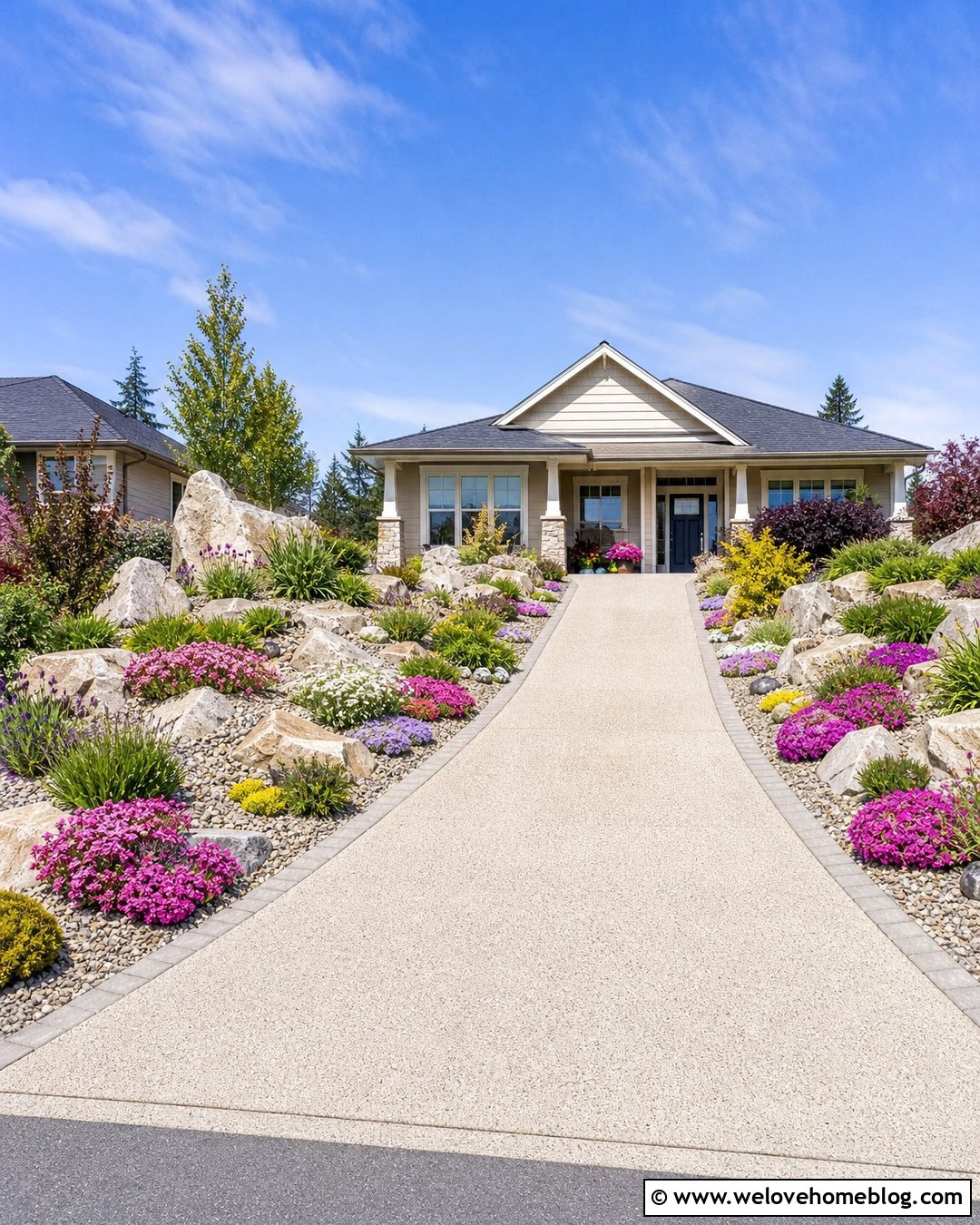
A sunny, well-drained strip beside a driveway can support a bright alpine-style garden. Pair a pale exposed-aggregate driveway with angular limestone, gravel mulch, and raised planting pockets. Use compact plants that stay low and display color at different times, such as creeping phlox, dianthus, thrift, sedum, and miniature iris where local conditions allow. Group each variety in noticeable drifts instead of planting isolated specimens. Position taller rocks toward the back and smaller stones near the driveway edge to create depth. A flush line of granite setts contains the gravel without blocking car doors. This rock garden works best when the soil drains freely and plants are matched to the climate. Its small-scale flowers and rugged stone texture suit cottages, bungalows, and traditional suburban homes.
13. Native Plant Rock Garden Along Driveway
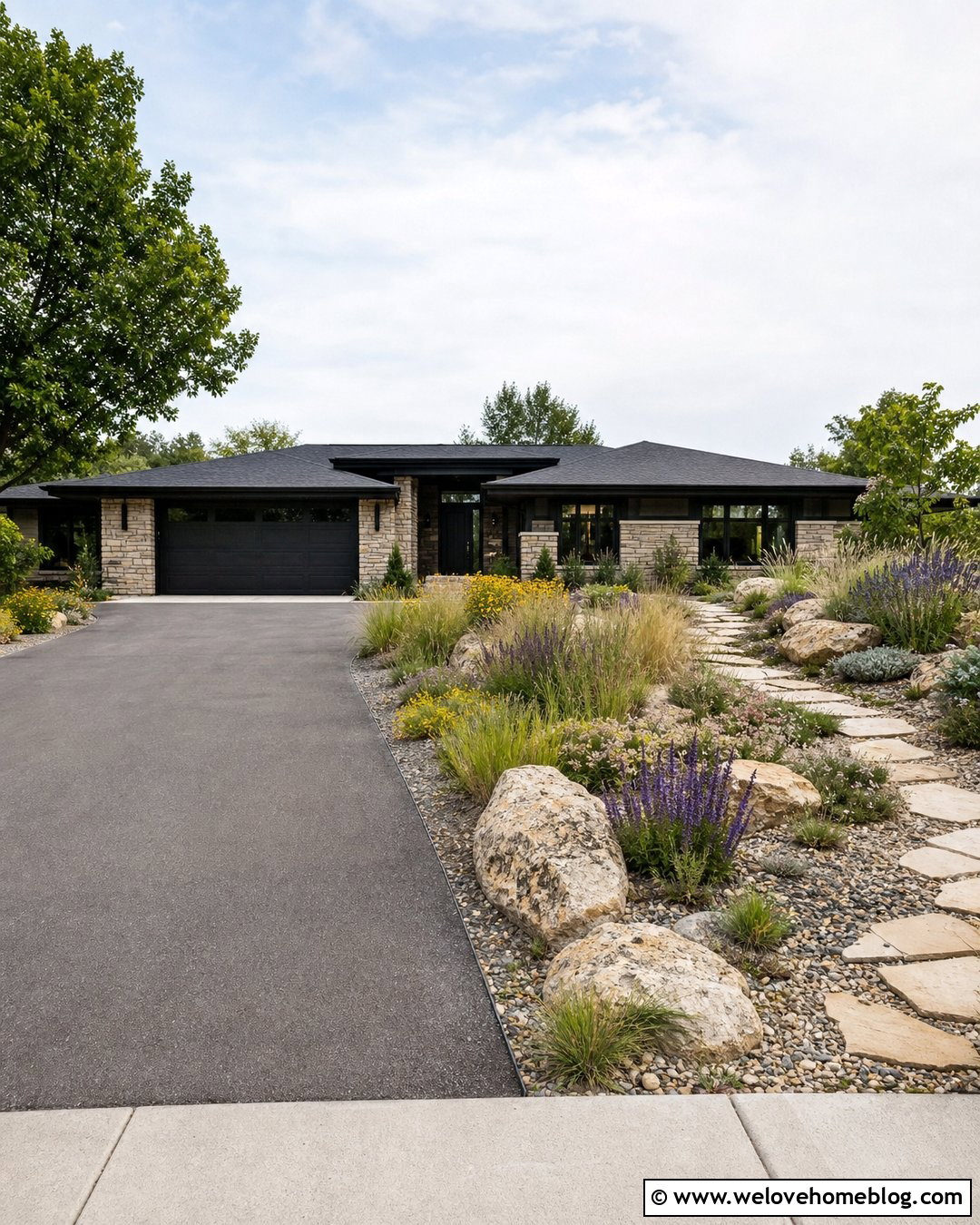
Local stone and regionally appropriate plants can make a driveway garden look connected to the surrounding landscape. Beside a straight gravel or asphalt driveway, form a broad bed with weathered boulders, crushed local stone, native grasses, flowering perennials, and one or two compact shrubs. Repeat plants in loose groups to create a natural appearance while keeping the layout readable from the street. Use larger stones or a durable metal edge to stop gravel from mixing with the driveway. Near the road, maintain low growth and open visibility. A stepping-stone route can provide access for maintenance without compacting the planting soil. Because native plant choices differ greatly by region, select species based on local sunlight, moisture, mature size, and soil conditions rather than relying only on their appearance at the nursery.
14. Japanese Rock Garden Next To Driveway
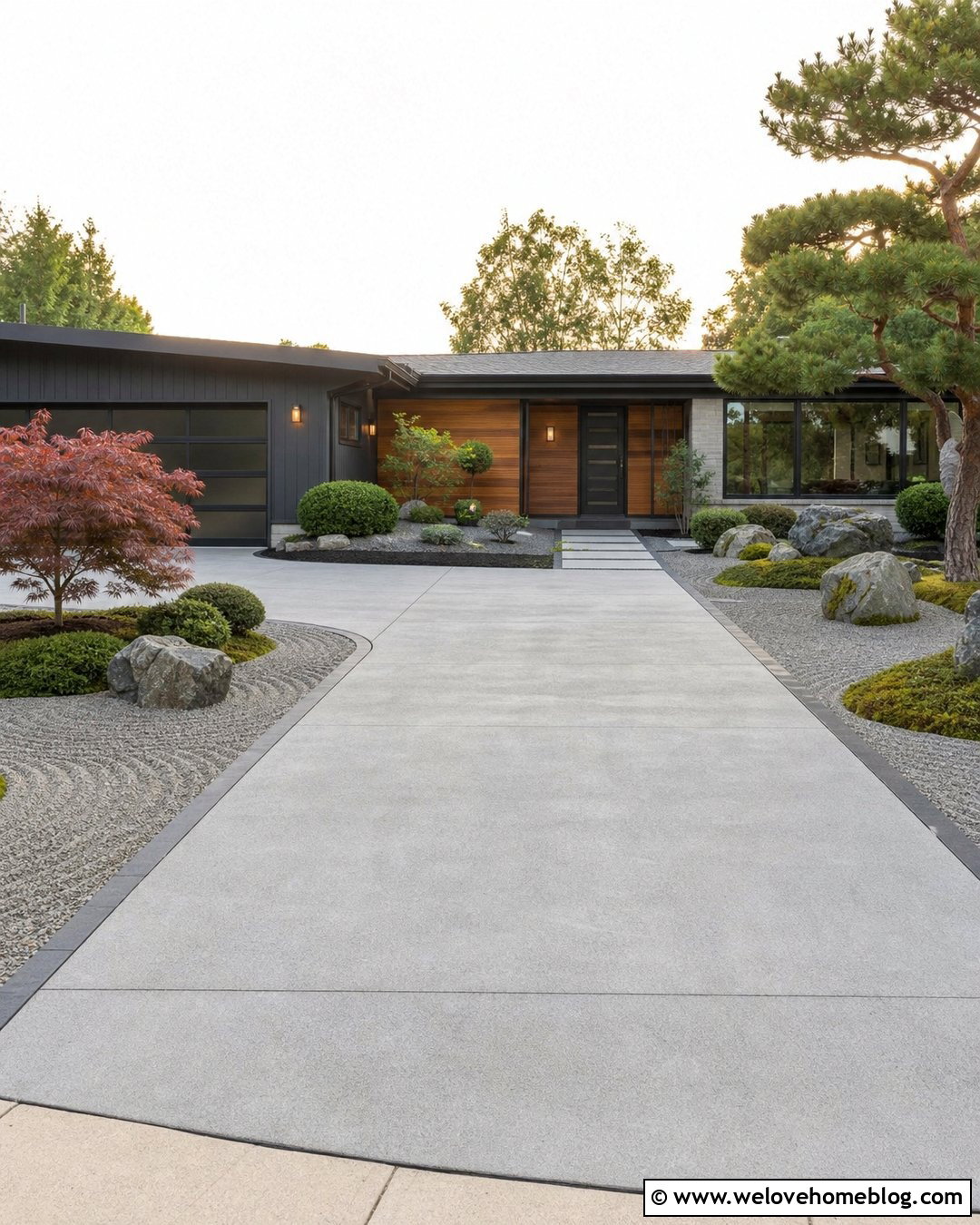
A restrained Japanese-inspired rock garden can create a calm transition between a driveway and the front entrance. Pair smooth gray poured concrete with raked granite gravel, carefully positioned boulders, clipped evergreen shrubs, and a small ornamental tree. Use asymmetrical groupings of three or five rocks rather than placing matching stones at equal intervals. A dark granite curb keeps the fine gravel contained, while rectangular stepping stones form a direct path toward the house. Moss or low ground covers can soften shaded areas where growing conditions permit. Keep ornaments limited so the stone shapes and open space remain the focus. This complete look suits modern, midcentury, and Asian-influenced homes. It also works in compact yards because a small number of thoughtfully placed materials can create a strong visual effect.

15. Farmhouse Rock Garden Beside Gravel Driveway
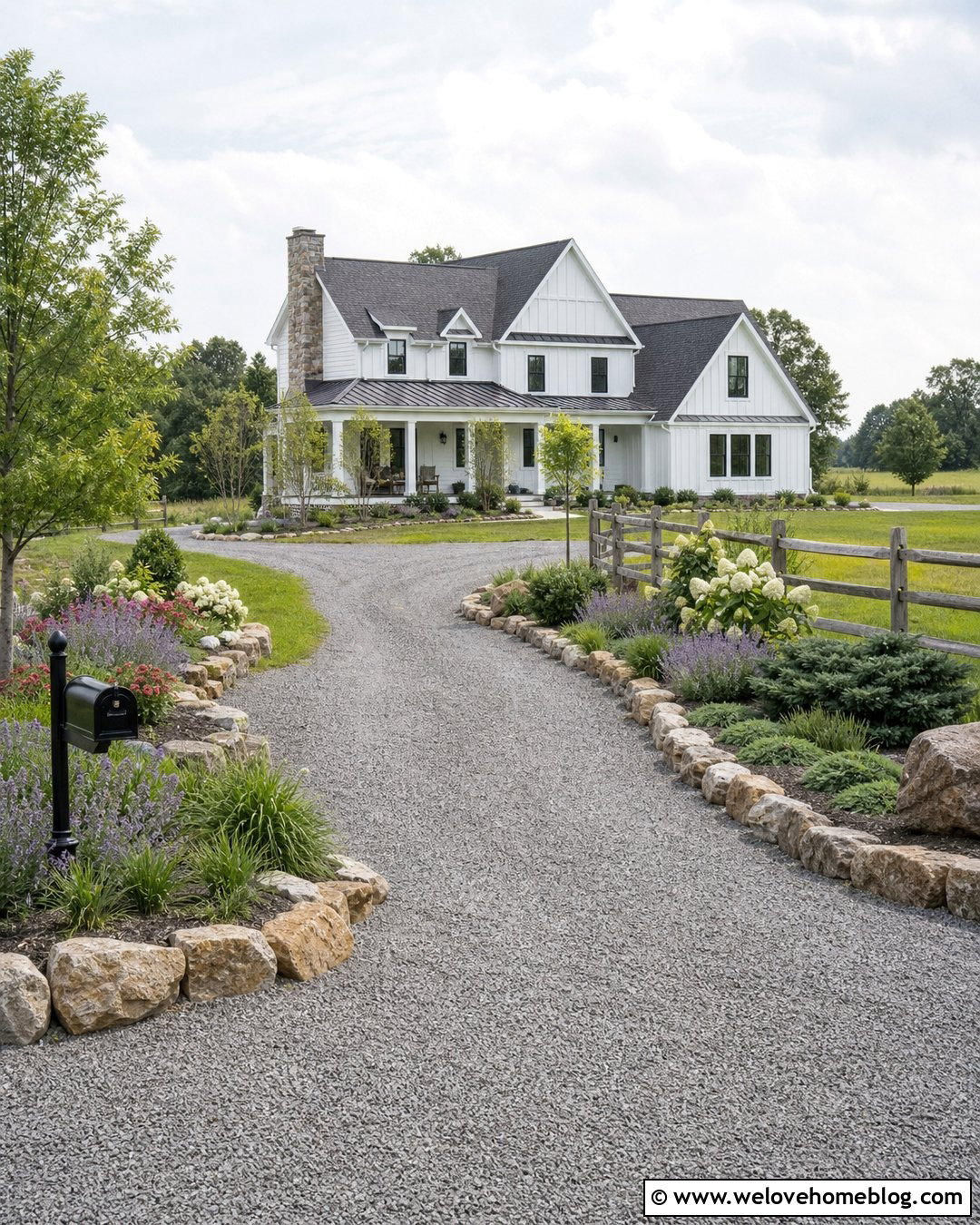
A farmhouse rock garden should feel relaxed, durable, and connected to the surrounding yard. Start with a curved gray crushed-stone driveway bordered by chunky fieldstone. Beyond that edge, create informal beds containing weathered boulders, ornamental grasses, catmint, coneflowers, low junipers, and compact hydrangeas where conditions are suitable. Repeat the same fieldstone around the mailbox or entrance columns for a coordinated arrival. Keep a mowed grass strip or broad stepping stones beside common parking areas. This prevents passengers from stepping directly into the planted bed. A split-rail fence can define the garden’s outer boundary without making the entrance feel closed. The combination of gravel, natural rock, loose planting, and simple fencing complements modern farmhouses, country homes, barns, and large rural driveways.
16. Rock Garden With Ornamental Grass Driveway Border
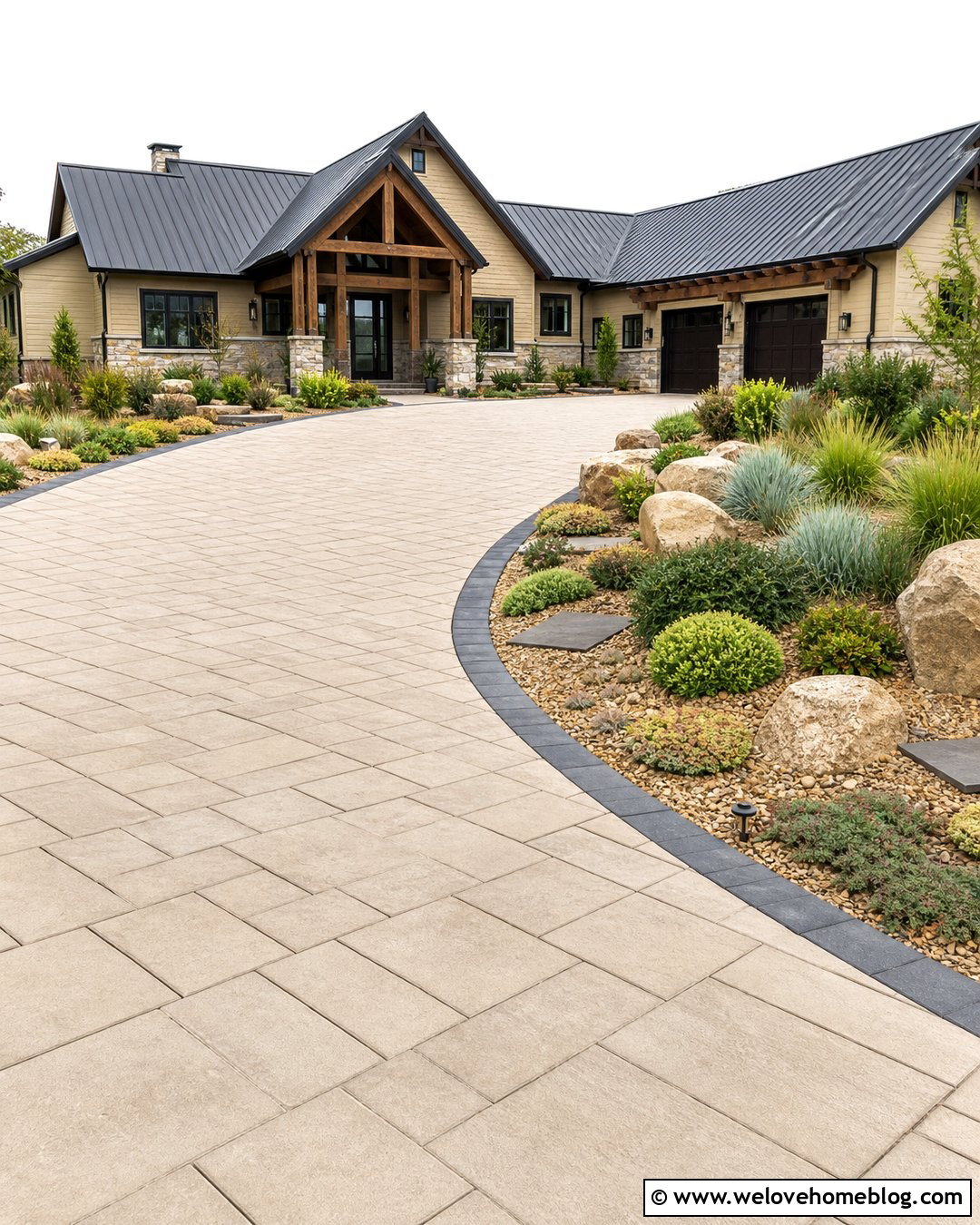
Ornamental grasses add movement and height to a rock garden without hiding the stone structure. Along a broad concrete paver driveway, build a gently curving bed with buff gravel, rounded boulders, and repeated drifts of compact grasses. Use low varieties near car doors and intersections, saving taller grasses for the rear of the bed or areas closer to the house. Mix in sedum, creeping ground covers, and a few evergreen shrubs to maintain interest when grasses are cut back. A charcoal paver ribbon can separate the driveway from the pale decorative gravel. Leave occasional flat stone pads for passenger access and maintenance. This balanced design feels natural but orderly. It works particularly well with prairie-inspired, ranch, craftsman, and contemporary homes in sunny, open front yards.
17. Rock Garden With Driveway Entrance Boulders
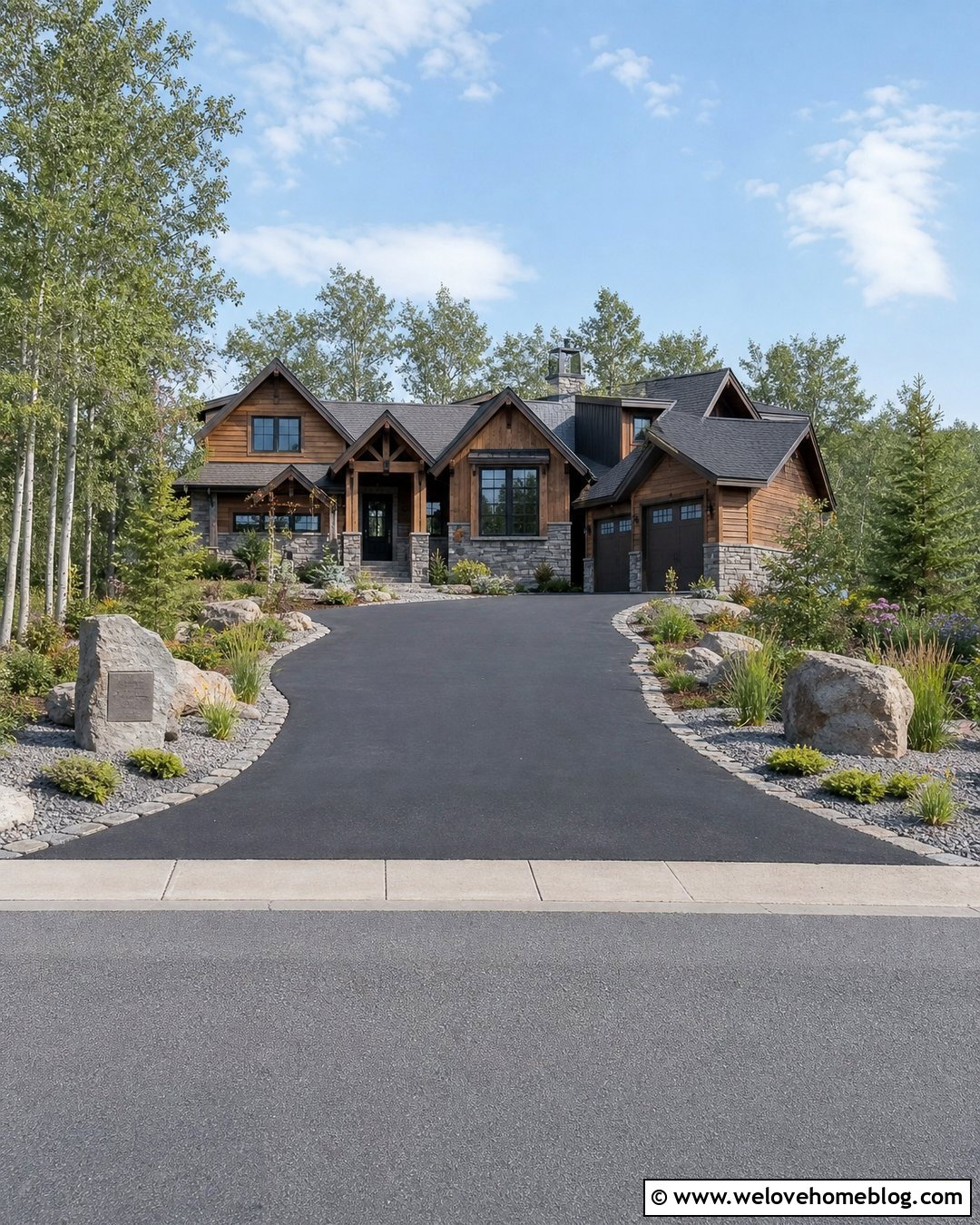
Large boulders at the driveway entrance can create a memorable arrival when they are placed outside the required driving and visibility zones. Frame a wide asphalt driveway with matching rock gardens on both sides, using one substantial boulder in each bed as an anchor. Surround them with crushed stone, low grasses, spreading evergreens, and seasonal perennials. Add a simple address marker to one side rather than placing signs on both boulders. The beds do not need to be perfectly symmetrical, but they should share the same stone and plant palette. Keep growth low near the street and position every boulder well away from turning vehicles. Continue smaller versions of the entrance rocks closer to the house. This repetition makes the gateway feel connected to the full driveway landscape.
18. Rock Garden With Driveway Lighting
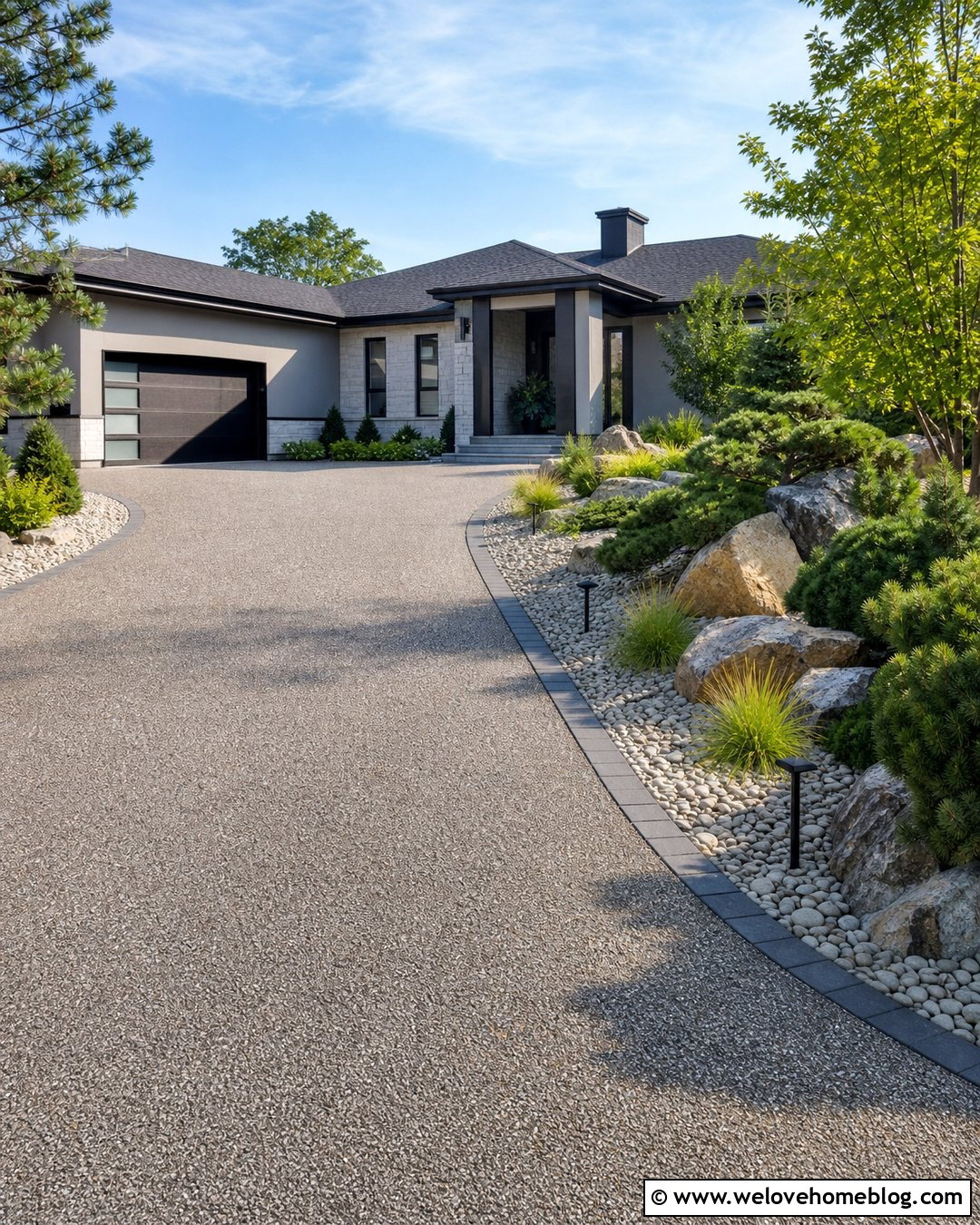
Good lighting can make a driveway rock garden easier to navigate while keeping its design visible after sunset. During the day, the layout should still feel complete: consider a warm-gray resin-bound gravel driveway, dark stone edging, pale river rock, sculptural boulders, and neat groups of low plants. Place compact fixtures behind rocks or along the garden’s outer border instead of directly beside tires. Downward-facing lights can illuminate the driveway edge, while softly aimed fixtures emphasize one or two feature boulders. Keep wiring protected and avoid fixtures that interfere with car doors, snow removal, or garden maintenance. The restrained combination of lighting, stone, and planting suits contemporary and transitional homes. In image planning, show this design under bright daylight so every material and edge remains clearly visible.
19. Circular Driveway Rock Garden Island
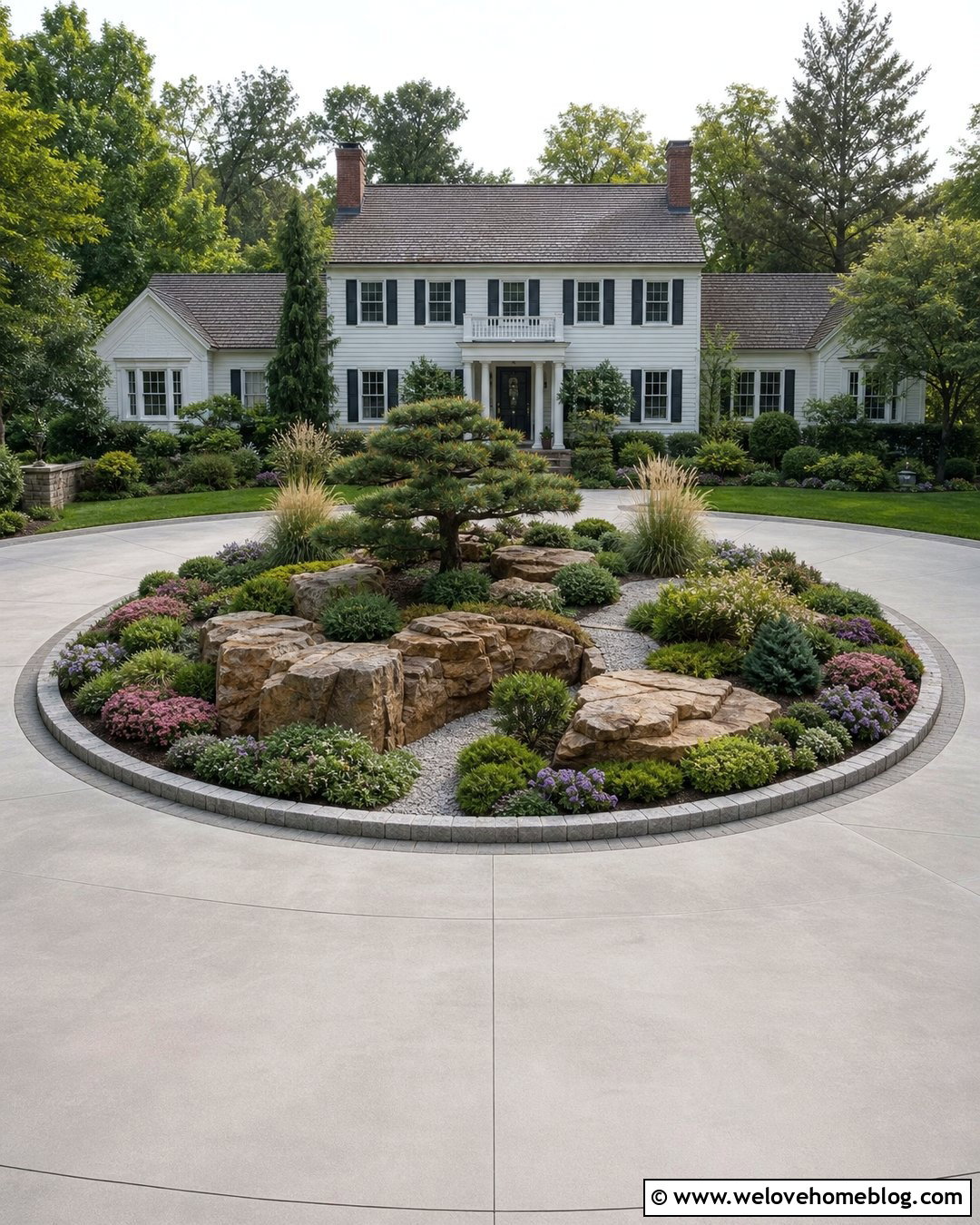
A circular driveway offers an ideal setting for a large central rock garden. Surround the island with a cobblestone curb that clearly separates the planting from a light-gray concrete or asphalt driving loop. Inside, place several large boulders at different heights, then layer dwarf trees, evergreen shrubs, ornamental grasses, and low flowering ground covers around them. Keep the outer planting short to preserve visibility across the circle. Taller elements belong near the center, where they can screen the house without blocking drivers. A gravel maintenance path can provide discreet access to the inner beds. Repeat one stone type in the driveway entrance borders for continuity. This substantial design works with colonial, craftsman, ranch, and estate-style homes that have enough front-yard space for a generous turning area.
20. Low-Maintenance Rock Garden Next To Driveway
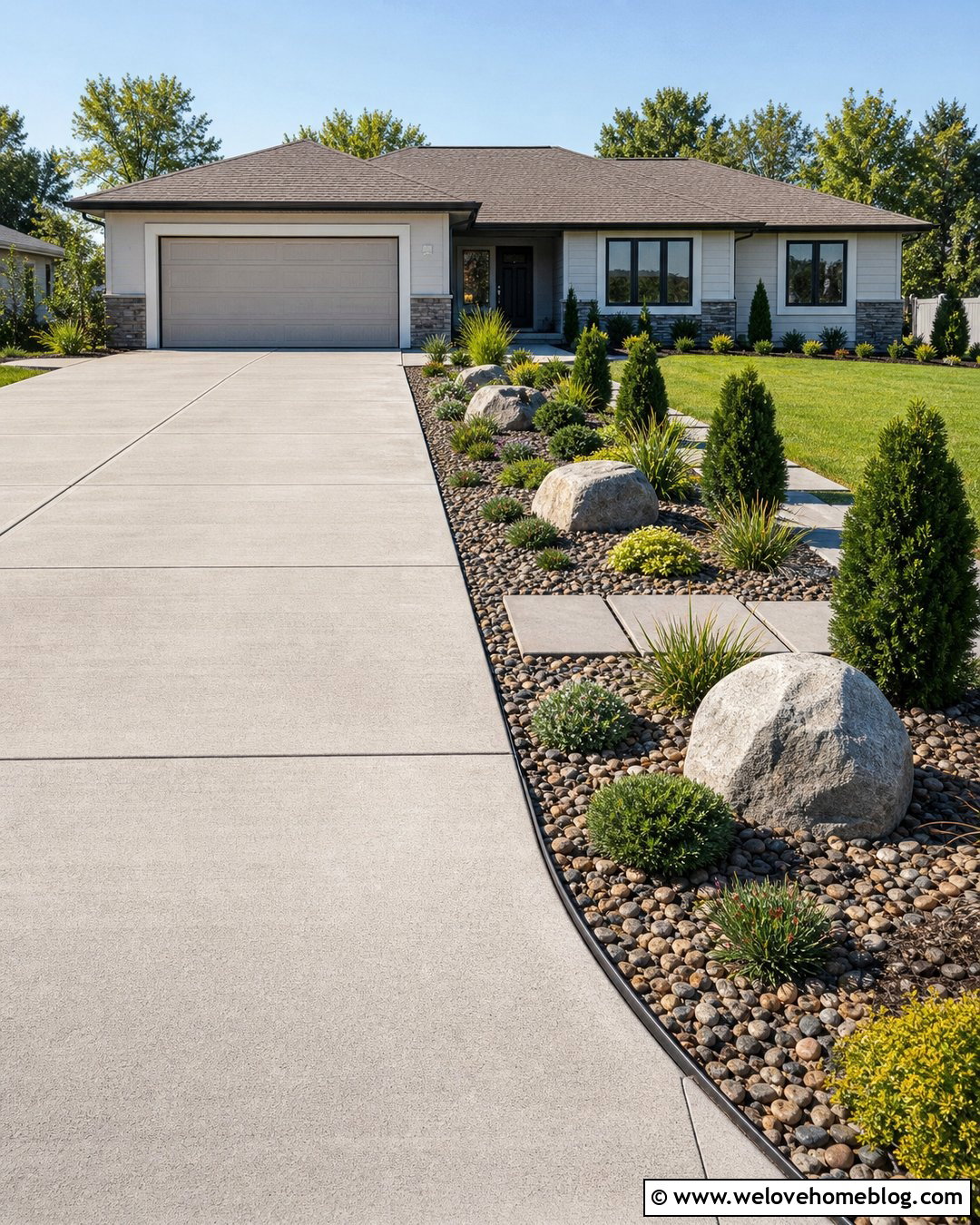
For a simpler front yard, use fewer plant varieties and stronger areas of stone. Pair a straight broom-finished concrete driveway with a wide bed of medium river rock, three or four well-placed boulders, and repeated groups of compact evergreens, hardy ground covers, and ornamental grasses. Match every plant to the site so it will not require constant watering, pruning, or replacement. Install a secure edge to stop stones from migrating onto the concrete. Flat pavers beside parking spaces provide cleaner footing and make unloading easier. Space plants according to their mature width rather than their nursery size. Although rock mulch can reduce mowing and cover bare soil, leaves and windblown debris still require occasional removal. The uncluttered finished design looks polished beside almost any suburban home.
Conclusion:
These **20 Rock Garden Next To Driveway Ideas** show how stone, plants, edging, and driveway materials can work together as one complete landscape. Begin by measuring car-door clearance, checking sunlight, and understanding how water moves through the site. Then choose one main rock color, a few complementary boulders, and plants suited to local conditions. Repeat materials used on the house, walkway, or driveway border to create a connected appearance. Keep loose gravel contained and preserve open views near the street. Whether you prefer a modern basalt bed, colorful alpine planting, woodland border, or dry creek garden, thoughtful spacing will make the design attractive, accessible, and easier to maintain over time.

Related posts:
Leave a Reply