
Gravel next to a driveway can turn an awkward strip of bare soil into a polished part of the front yard. It can soften hard paving, improve visual separation, and create space for plants, lighting, or a practical walkway. The best layouts treat the gravel as part of the entire entrance rather than leftover filler. Color, stone size, edging, driveway material, drainage, and house style should all work together. You can choose pale pea gravel for a relaxed cottage look, dark crushed stone for modern contrast, or warm decomposed granite for a natural Southwestern yard. The following complete designs offer practical and attractive ways to explore **20 gravel next to driveway ideas**.

1. White Gravel Next To Concrete Driveway
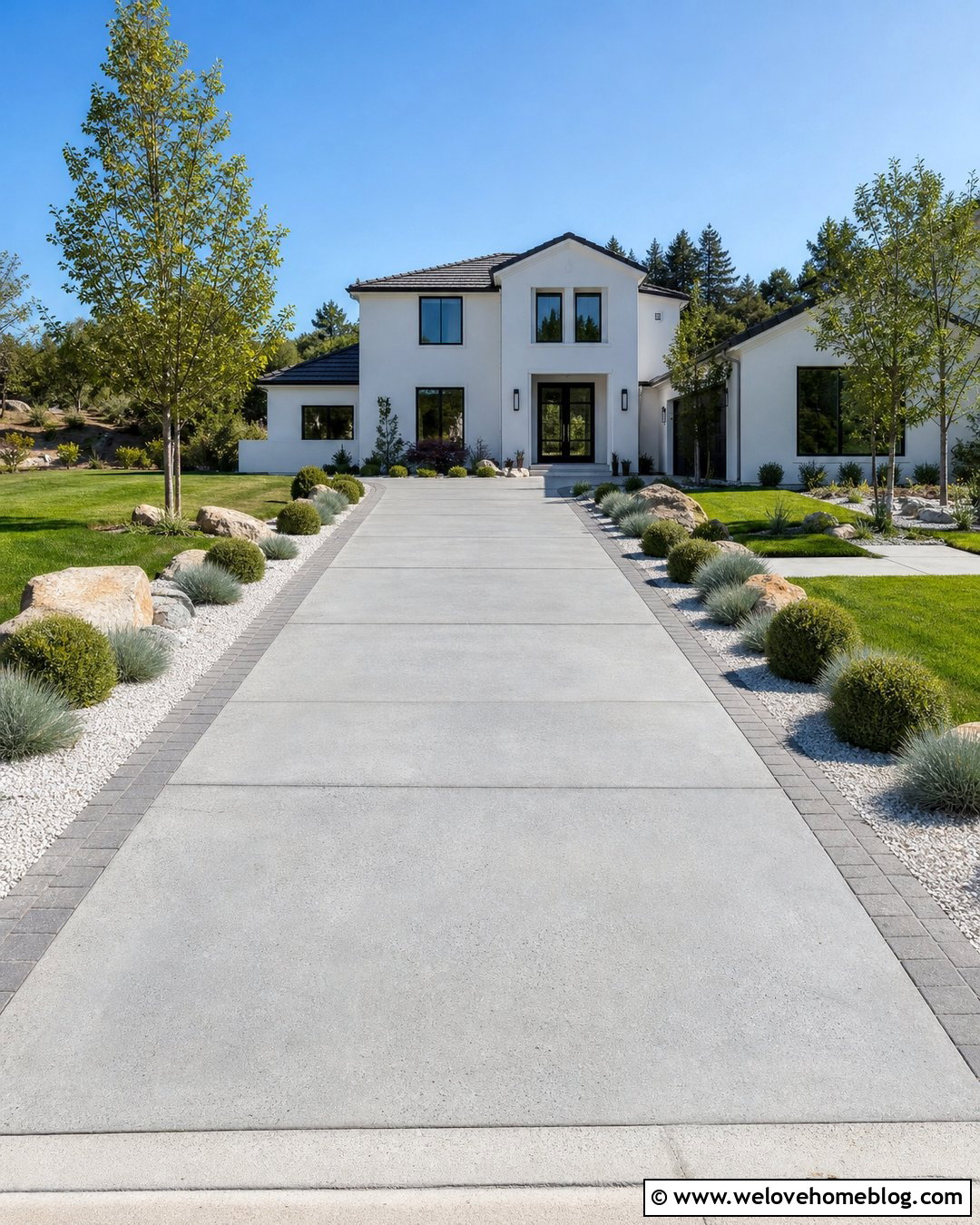
A white gravel bed can give a standard concrete driveway a brighter, cleaner appearance. Start with a straight gray poured concrete surface and place a wide strip of white marble chips along both sides. Use slim charcoal paver edging to stop the stones from spreading onto the driveway or lawn. In the gravel, space rounded evergreen shrubs, blue fescue, and a few sculptural boulders for a simple modern layout. Keep plants low near parking areas so doors can open comfortably. A matching concrete walkway can branch toward the front entrance without interrupting the gravel bed. This complete look works especially well with a modern house featuring white stucco, black windows, and simple geometric landscaping.
2. Pea Gravel Next To Asphalt Driveway
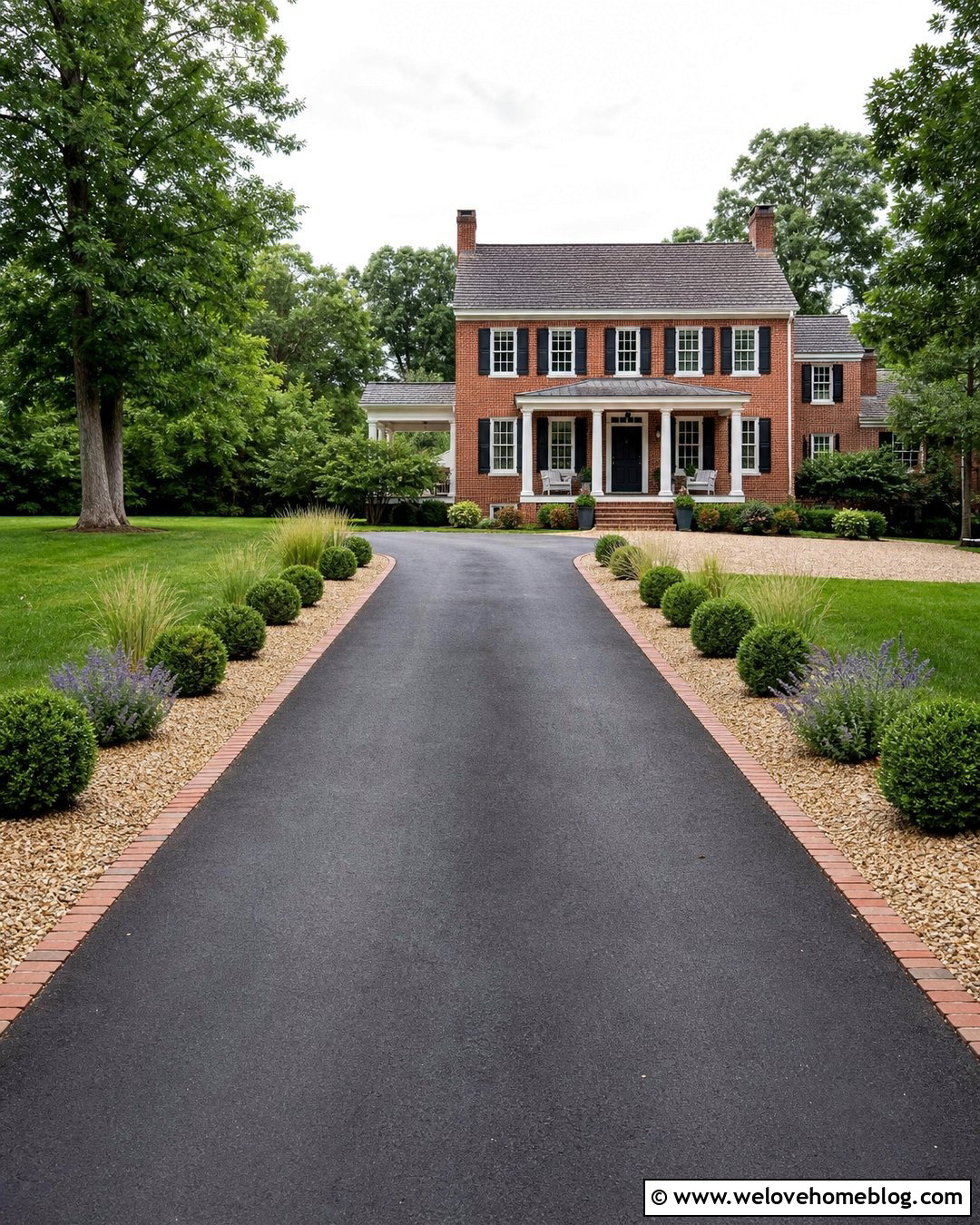
Warm pea gravel creates an attractive transition between a black asphalt driveway and a green front lawn. Its rounded texture softens the dark paving while giving the entrance a more welcoming, informal look. Frame the gravel with red clay brick set flush with the ground, then add compact boxwood, catmint, and ornamental grasses farther from the parking edge. A straight asphalt driveway looks more intentional when the gravel border gently widens near the house, creating room for a stepping-stone path to the porch. Make sure the gravel level remains slightly below the brick edging to reduce spillover. This balanced combination suits a traditional brick colonial, Cape Cod, or suburban ranch home with symmetrical foundation planting.
3. River Rock Next To Curved Driveway
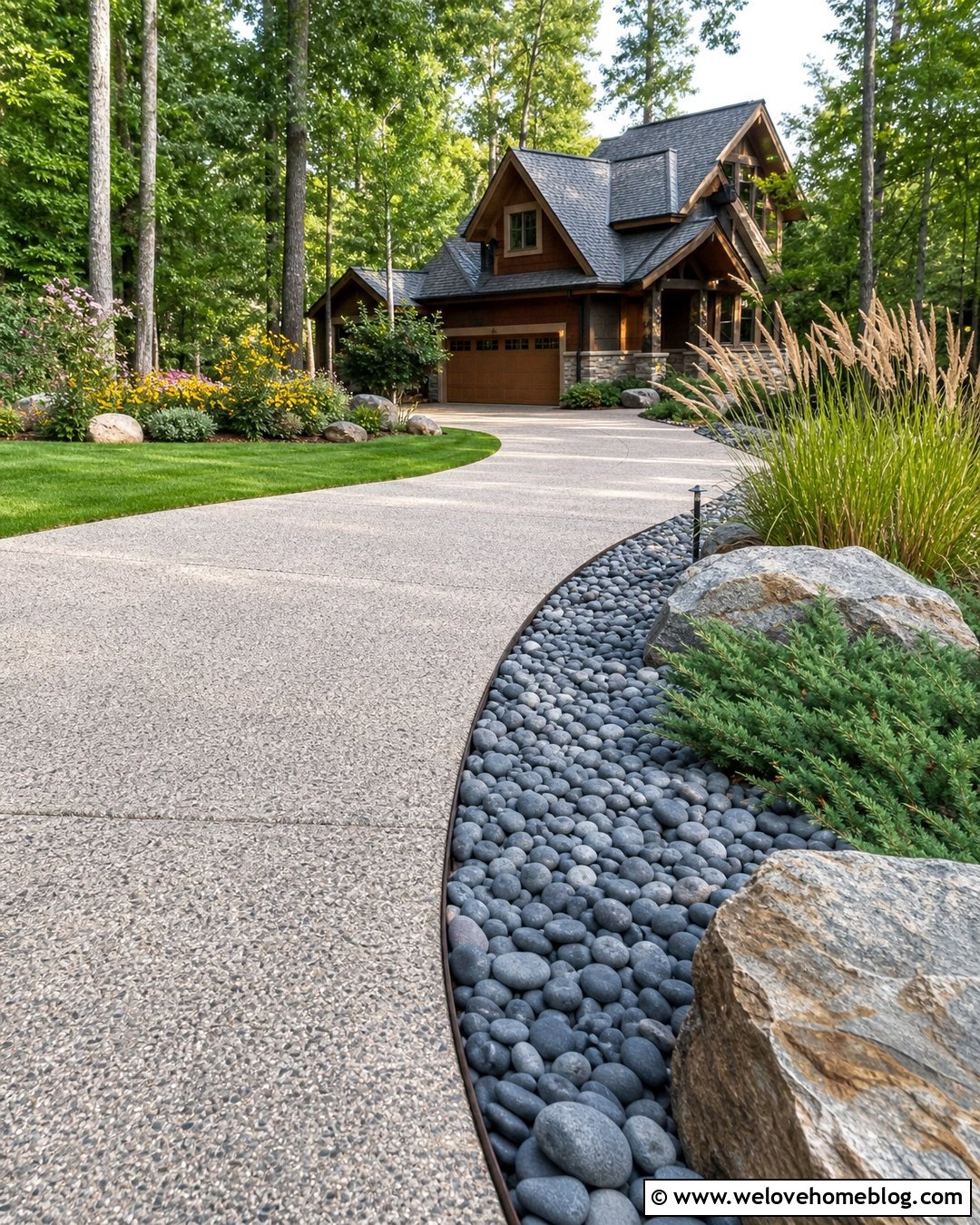
A curved driveway feels more connected to the landscape when a sweeping river rock bed follows its shape. Use exposed aggregate concrete for the main surface and medium gray river stones along the outside curve. Large natural boulders can anchor the widest areas, while fountain grass, creeping juniper, and native flowering perennials provide height and seasonal color. Install sturdy steel edging between the driveway and stone bed so the materials remain clearly separated. On the lawn side, allow the rock border to form relaxed curves instead of a rigid line. This complete driveway design looks especially natural beside a craftsman home surrounded by mature trees. It also turns a difficult mowing edge into a deliberate landscape feature.
4. Black Gravel Next To Paver Driveway
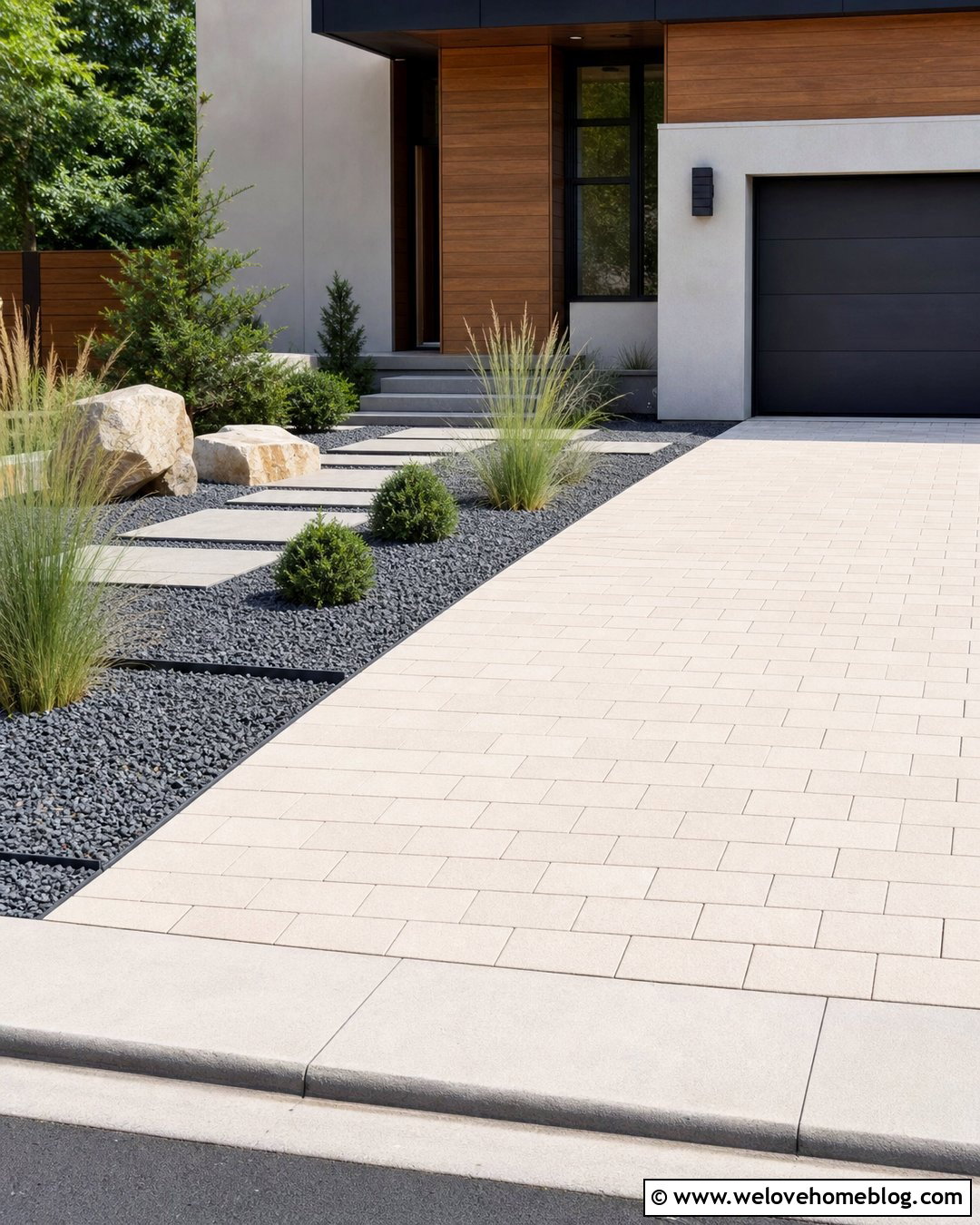
Dark gravel beside light pavers creates crisp contrast without adding a complicated planting scheme. Choose pale beige concrete pavers in a running-bond pattern for the driveway, then place crushed black basalt in broad rectangular beds along each side. Straight steel edging will reinforce the clean geometry. Add upright ornamental grasses, dwarf evergreens, and a few pale limestone boulders to break up the dark surface. Near the garage, extend the black gravel around large square stepping stones to create a practical side walkway. This design pairs beautifully with a contemporary house featuring wood siding, cream stucco, and black trim. The limited color palette makes the full driveway look coordinated, modern, and easy to visually maintain.
5. Gravel Parking Strip Next To Driveway
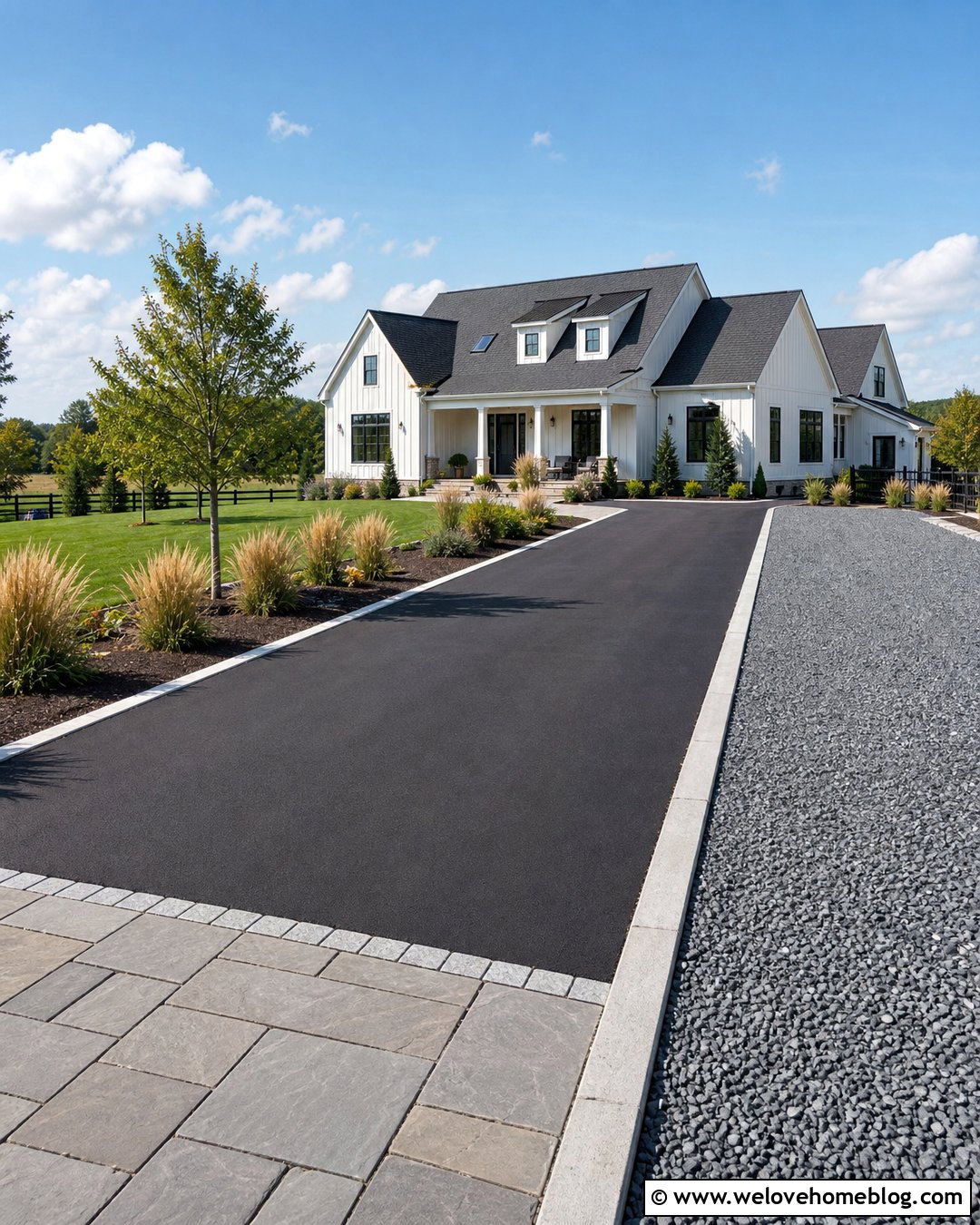
Need more room for guests without replacing the existing driveway? A gravel parking strip can provide useful overflow space while improving the overall layout. Place compacted angular gray gravel beside a straight black asphalt driveway and contain it with heavy concrete curbs or cobblestone edging. The extension should look planned, so align it with the garage and finish the far edge with a narrow planting bed. Tough ornamental grasses, compact shrubs, and one small shade tree can visually screen parked vehicles. A paver apron at the street creates a neat shared entrance for both surfaces. This practical arrangement works well beside ranch homes and modern farmhouses with wide front yards, especially where occasional extra parking is needed.
6. Gravel Walkway Next To Driveway
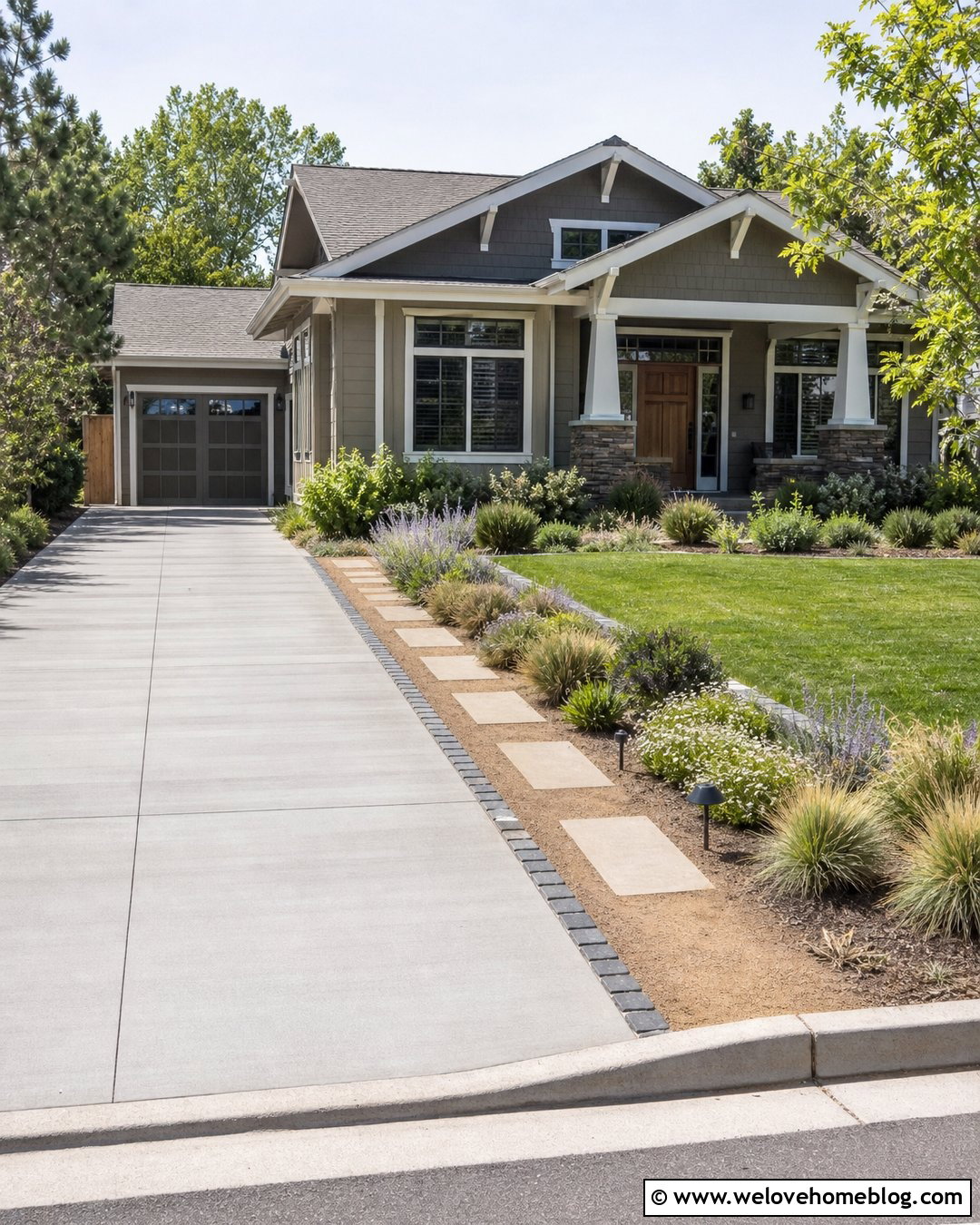
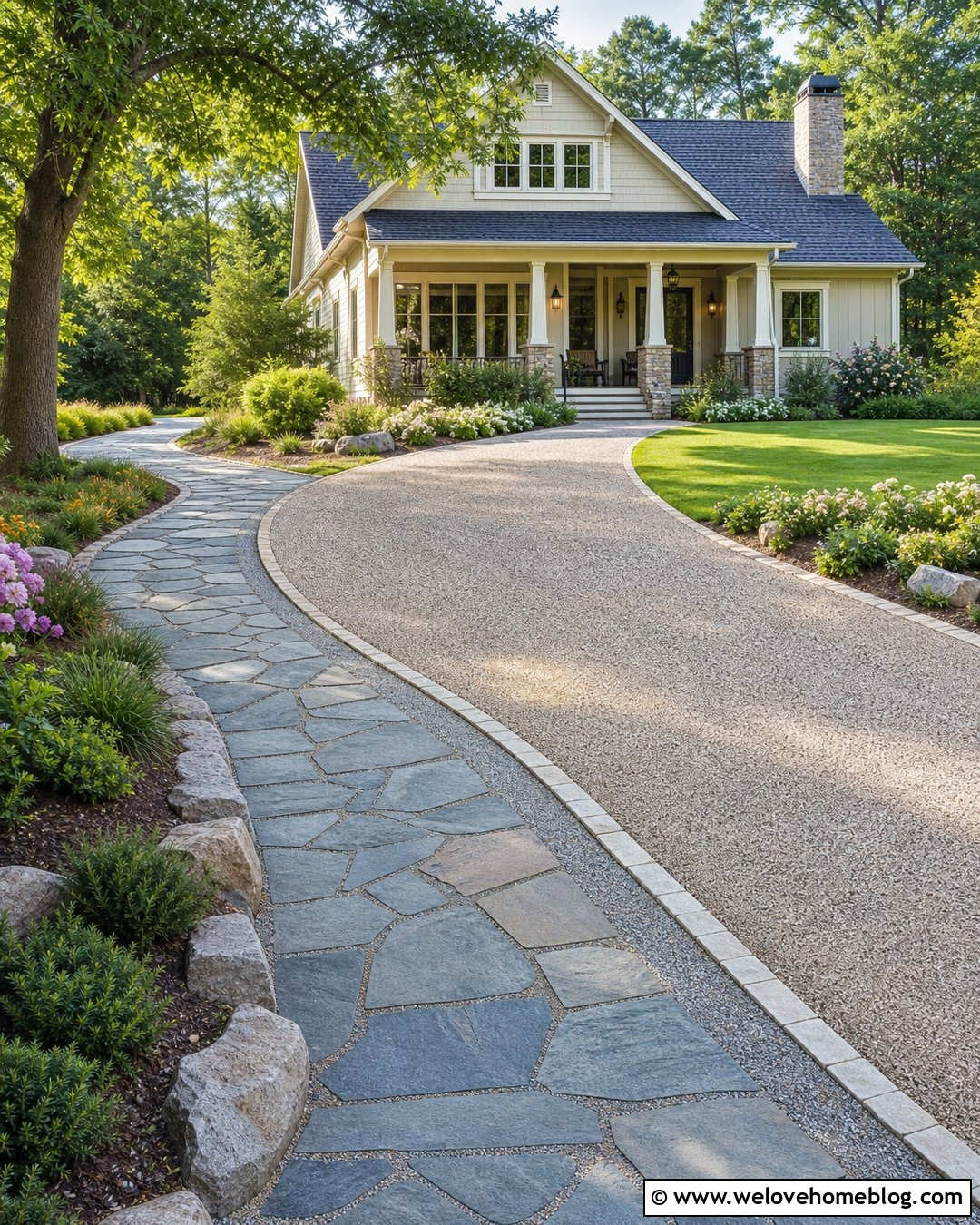
A dedicated gravel walkway keeps pedestrians from sharing the main driving surface. Pair a light gray concrete driveway with a parallel path made from compacted tan decomposed granite. Separate the two areas using a narrow strip of charcoal cobblestones, which provides a visible border and helps define the walking route. Add rectangular concrete stepping slabs through the gravel for a firmer surface leading toward the porch. On the outer side, plant lavender, dwarf grasses, and low flowering ground covers that will not crowd the path. Widen the walkway near the front door to create a comfortable arrival area. This complete design gives a craftsman or cottage home a friendly entrance while keeping the driveway open, organized, and visually balanced.
7. Gravel Garden Next To Driveway
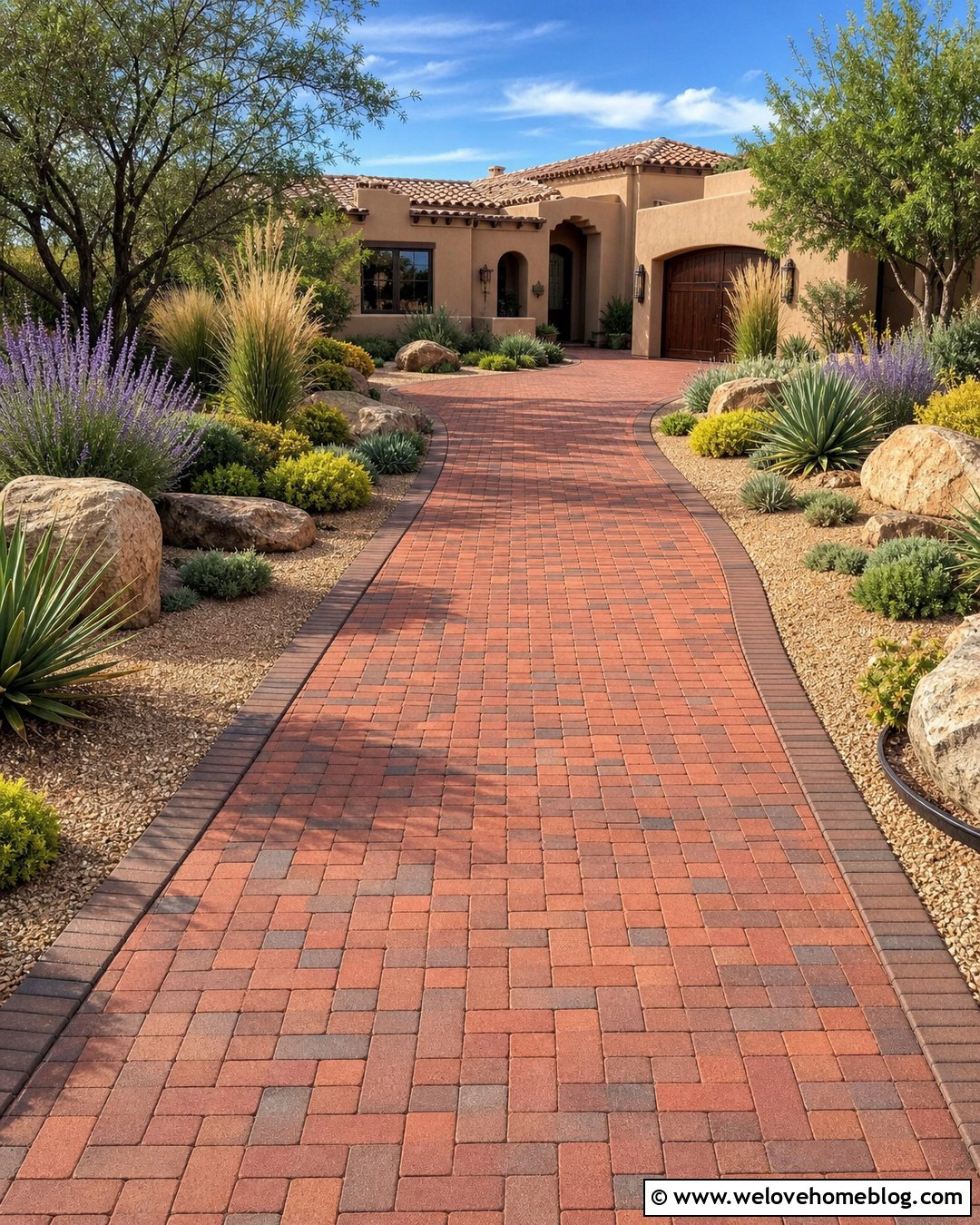
Turn the space beside a driveway into a layered gravel garden rather than leaving one flat expanse of stone. A warm-toned brick paver driveway can be framed with buff crushed gravel, weathered boulders, and drought-tolerant planting. Arrange sedum, yucca, lavender, and feather reed grass in repeating groups, leaving visible gravel between them. Use curved metal edging along the lawn and a brick soldier-course border beside the driveway. The planting should remain low near the street and become taller closer to the house, preserving clear views at the entrance. This combination works with Southwestern, Mediterranean, and rustic homes. It creates a complete landscape that feels textured and colorful without relying on a large lawn or dense flower beds.
8. Gravel Drainage Strip Next To Driveway
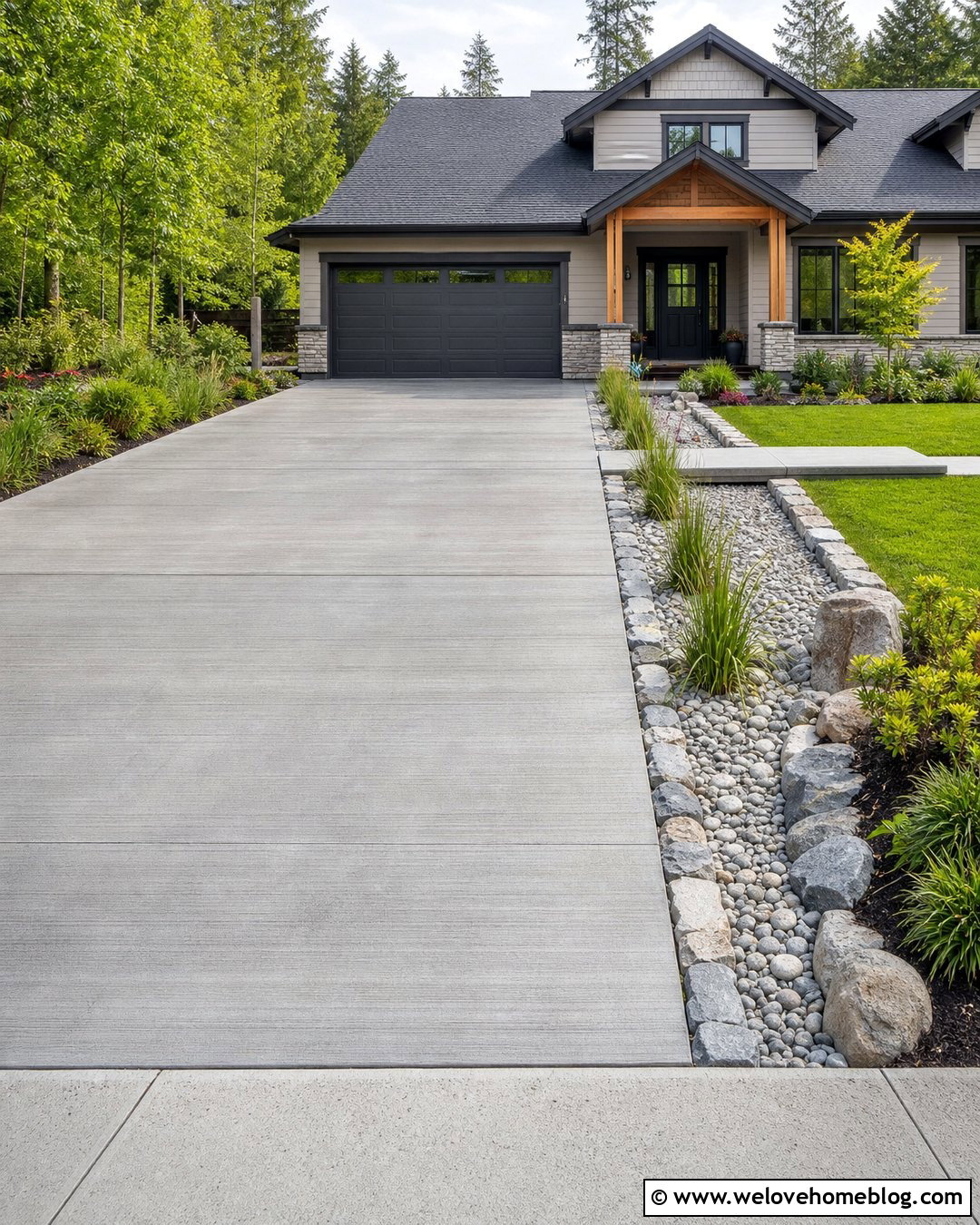
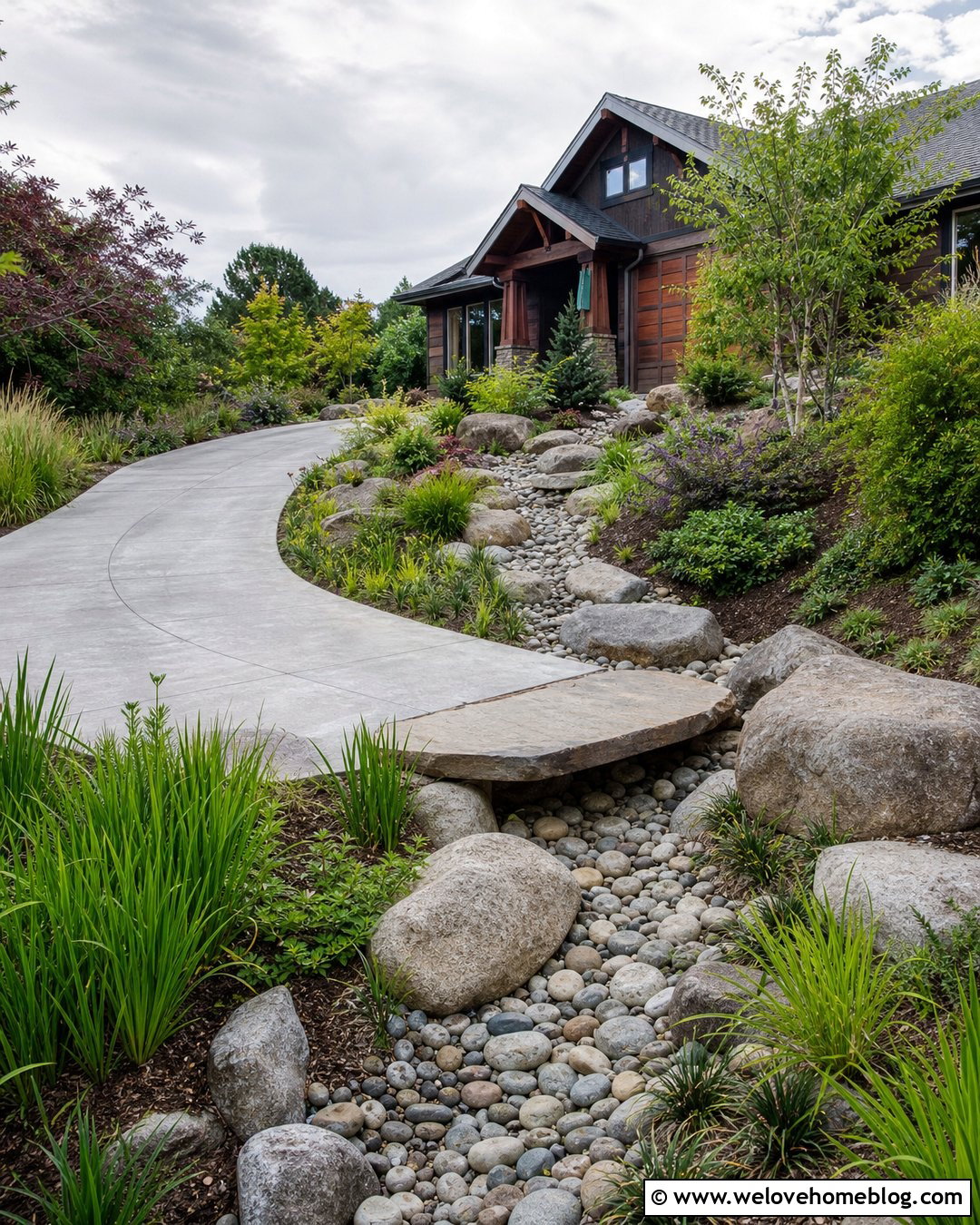
A gravel drainage strip can look decorative while helping organize runoff beside a paved surface. Use a straight broom-finished concrete driveway with a shallow channel of washed gray drainage stone along the lower side. Line the channel with larger cobbles and shape it into a gentle swale that continues toward an appropriate drainage area. Moisture-tolerant ornamental grasses, rushes, and native perennials can soften the outer edge without blocking water movement. On the opposite side, repeat a narrower gravel bed so the driveway still looks balanced. Connect the porch with a raised concrete walkway that crosses the stone channel cleanly. This practical design complements contemporary and craftsman homes, combining visible drainage planning with an attractive, intentional front-yard layout.
9. Decomposed Granite Next To Driveway
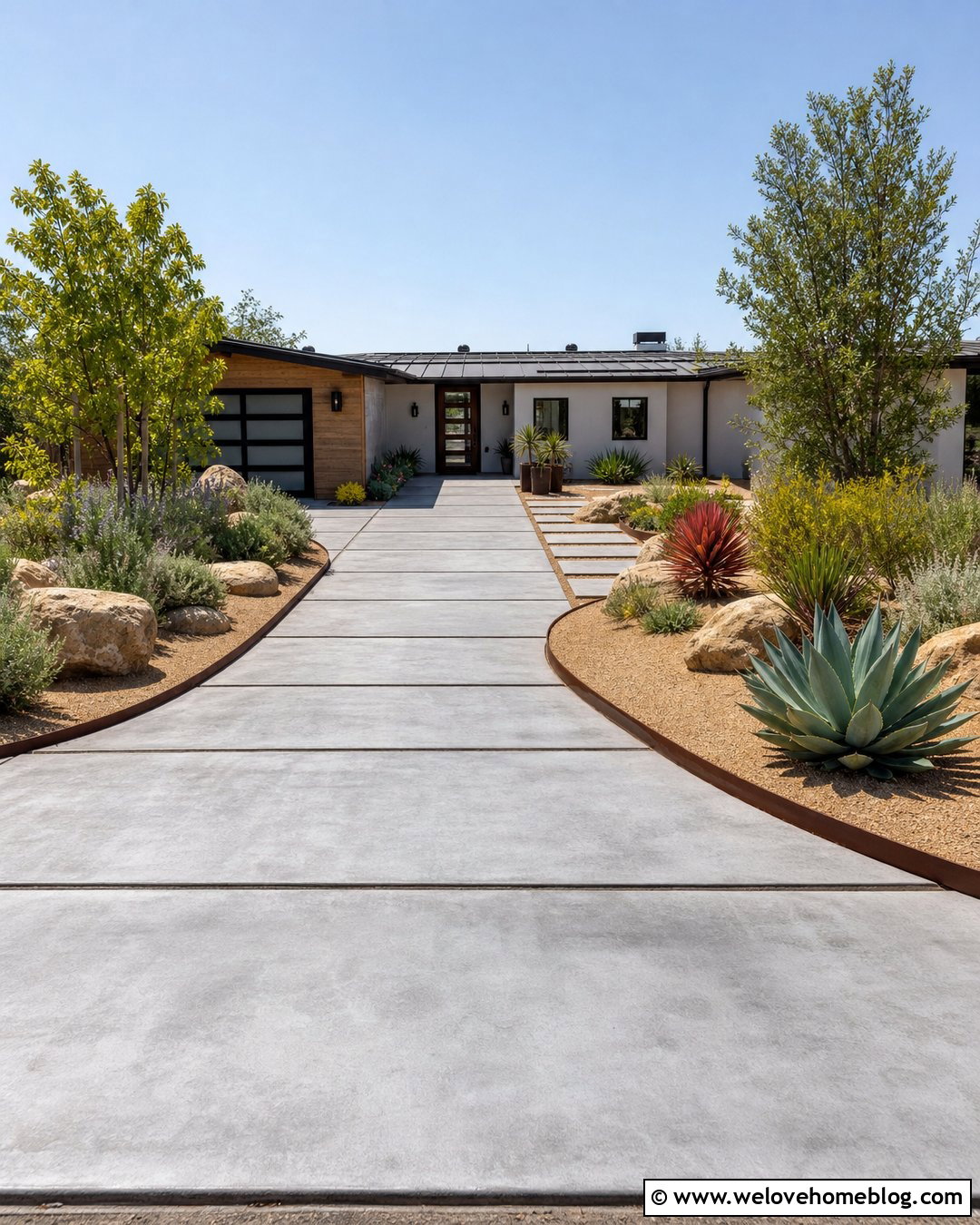
Golden decomposed granite brings warmth to a plain driveway and blends naturally with dry-climate landscaping. Pair it with a medium-gray poured concrete driveway arranged in wide rectangular sections. Use weathered steel edging to form a gently curved gravel bed along one side, then add agave, red yucca, sage, and sculptural desert boulders. A few large concrete stepping pads can create a side path without covering the warm stone completely. Keep the opposite edge simple with a narrow decomposed granite ribbon and spaced ornamental grasses. Against a low modern ranch house, the golden surface adds color while the gray concrete keeps the composition grounded. The result is a complete, water-conscious entrance with strong curb appeal and clear structure.
10. Gravel And Stepping Stones Next To Driveway
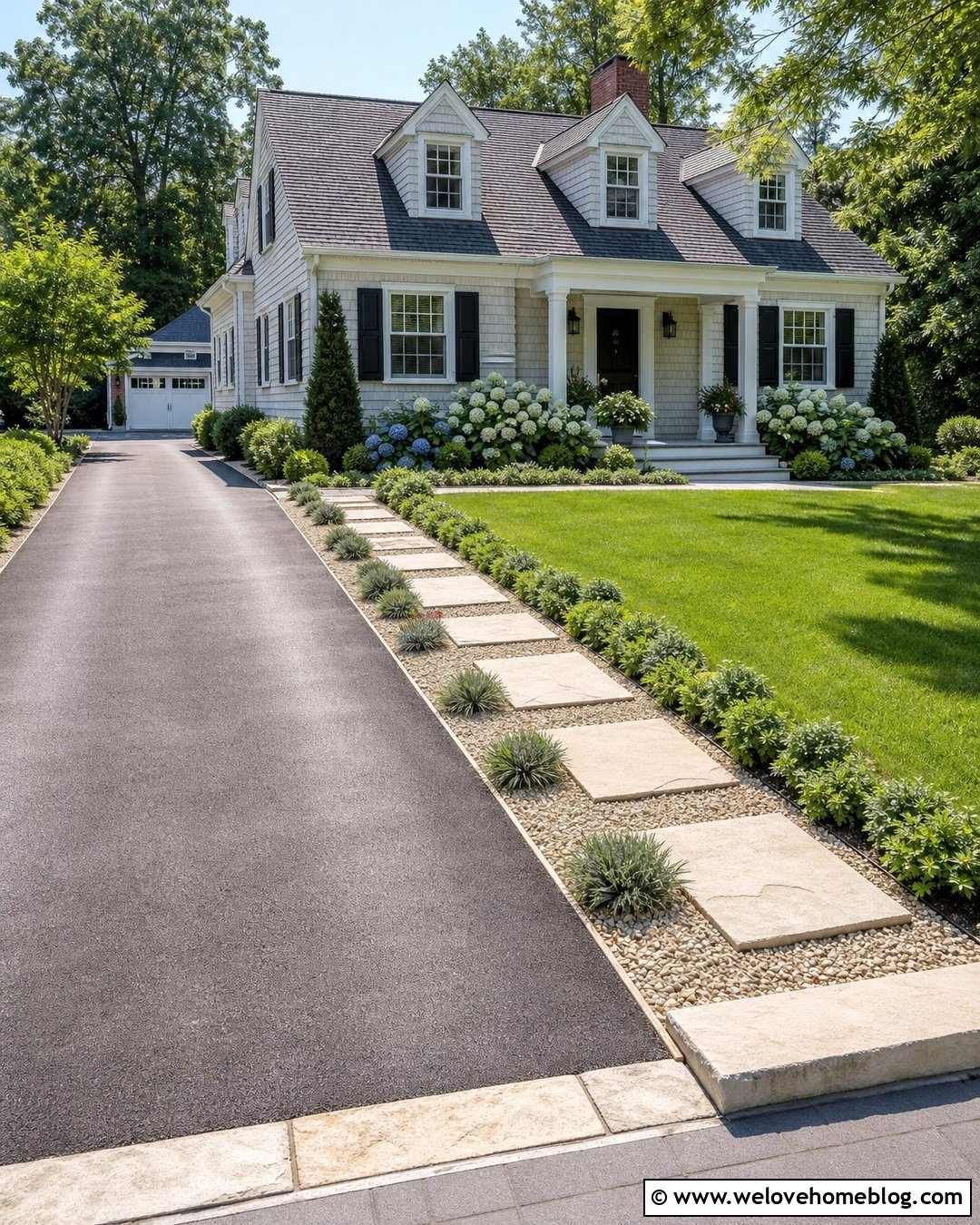
Large stepping stones laid through gravel create an inviting route from the curb or parking area to the front door. Use a dark gray asphalt driveway as the main surface and install rectangular limestone slabs in a bed of pale pea gravel beside it. Define the walkway with flush steel edging, allowing the gravel strip to widen near the porch. Add low thyme, blue fescue, hydrangeas, or regionally suitable shrubs along the outer edge. The slabs should form a comfortable, direct walking line rather than an unnecessary zigzag. A matching limestone border around the driveway entrance ties everything together. This full design works with cottage, colonial, and transitional houses, making a basic asphalt surface feel softer and more integrated with the yard.
11. Gravel Border Next To Brick Driveway
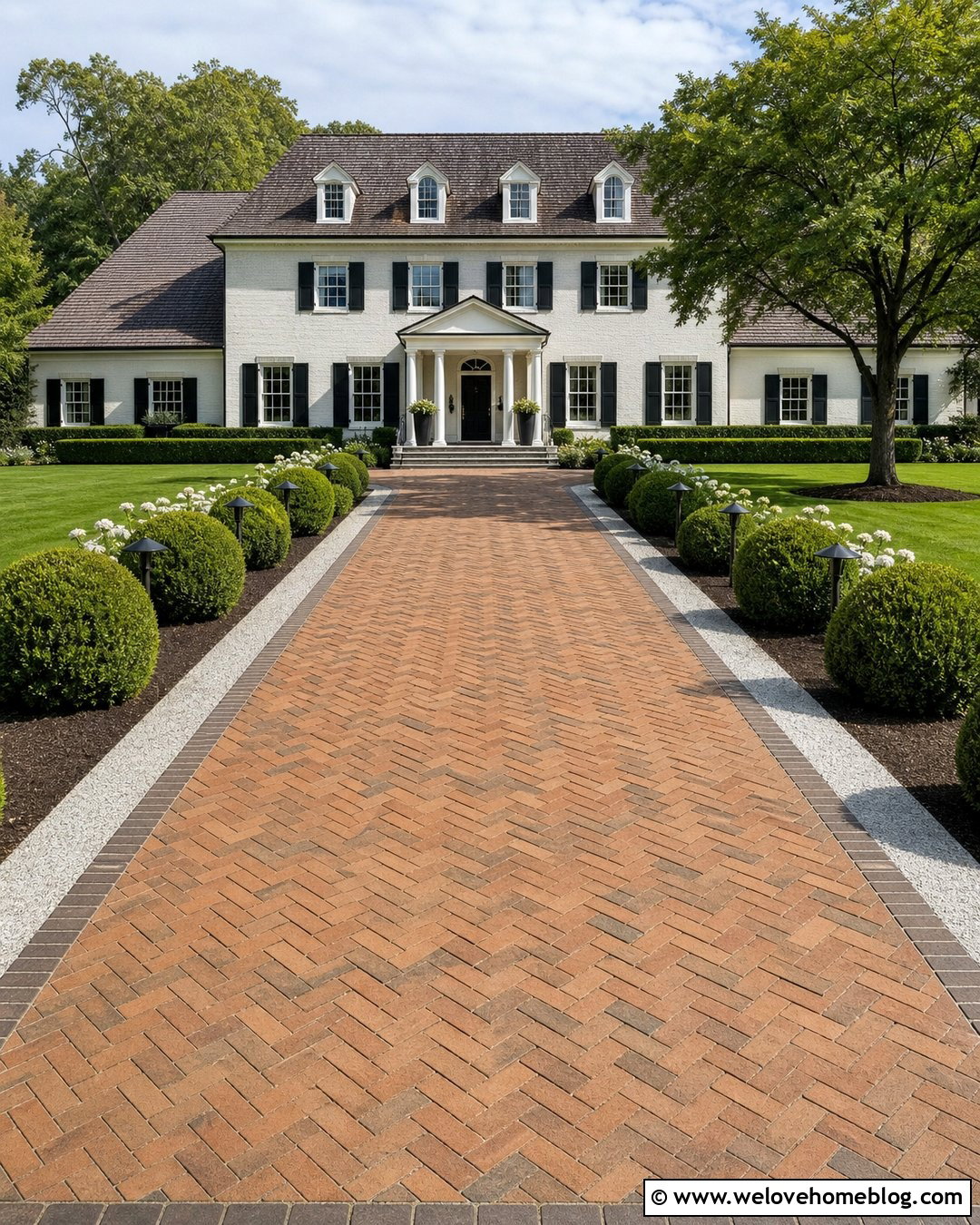
A narrow gravel border can prevent a brick driveway from feeling too heavy or visually crowded. Choose clay brick pavers in a herringbone pattern and frame them with a two-foot strip of light gray crushed granite. Add a dark brick soldier course between the driving surface and gravel for strong definition. Within the stone bed, use clipped boxwood spheres, white flowering perennials, and evenly spaced path lights. The gravel can expand around the base of a specimen tree near the house, linking the driveway to the broader landscape. Keep the layout symmetrical if the home has a formal facade. This coordinated combination is particularly effective for Georgian, colonial, and traditional brick houses because it repeats classic materials while introducing a lighter texture.
12. Gravel Next To Narrow Driveway
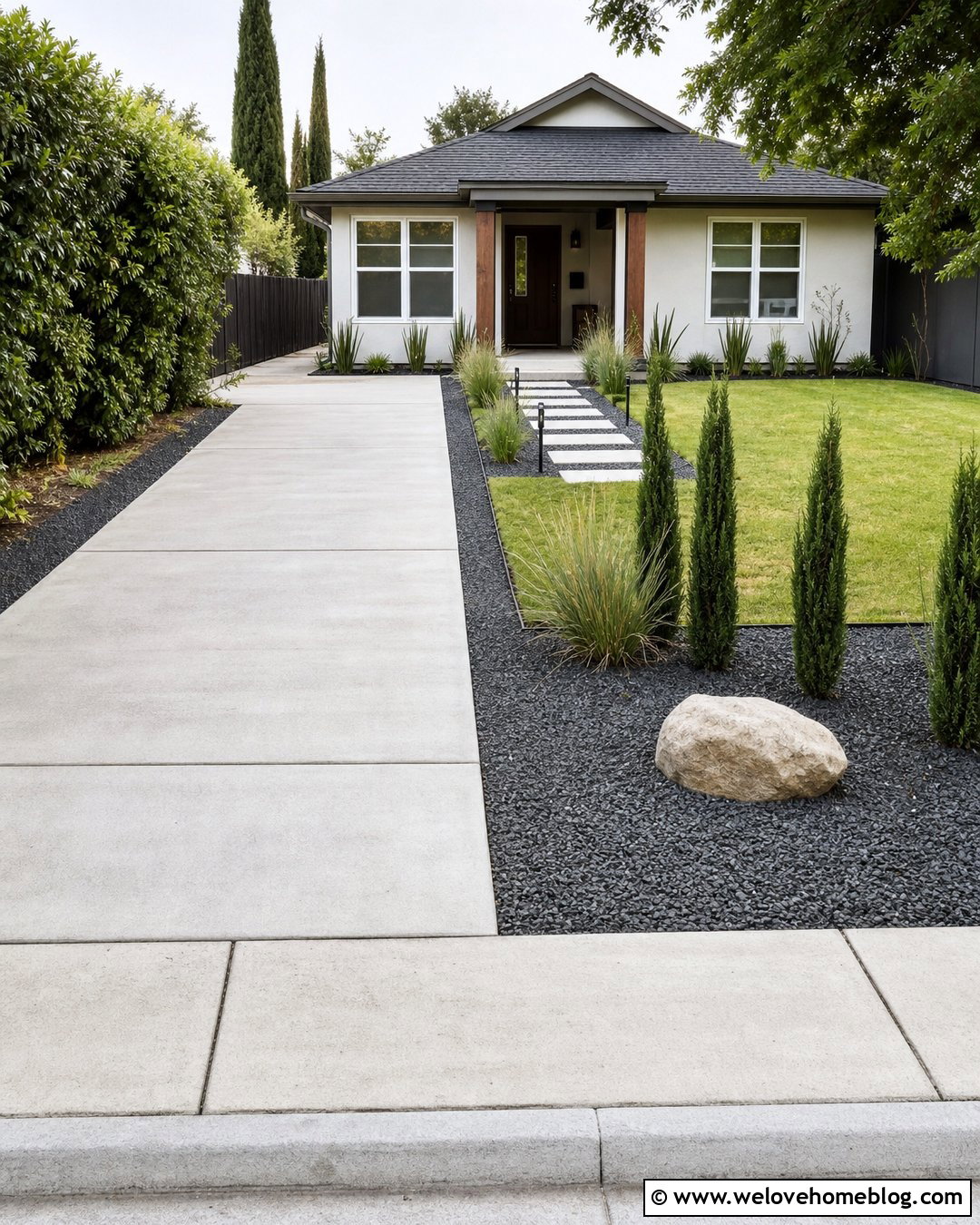
A narrow driveway needs side landscaping that adds interest without reducing usable space. Pair smooth gray concrete with slim bands of compacted charcoal gravel along both edges. Install flush metal restraints so tires, shoes, and maintenance equipment do not scatter the stone. Near the parking zone, keep the gravel mostly open and place plants farther back where car doors will not hit them. Upright grasses, columnar evergreens, and a narrow stepping-stone walkway provide function without creating visual clutter. A wider gravel pocket near the street can hold a boulder and low ground cover, clearly marking the entrance. This space-conscious design suits townhomes, bungalows, and small suburban lots where every inch beside the driveway needs a clear purpose.
13. Gravel Next To Farmhouse Driveway
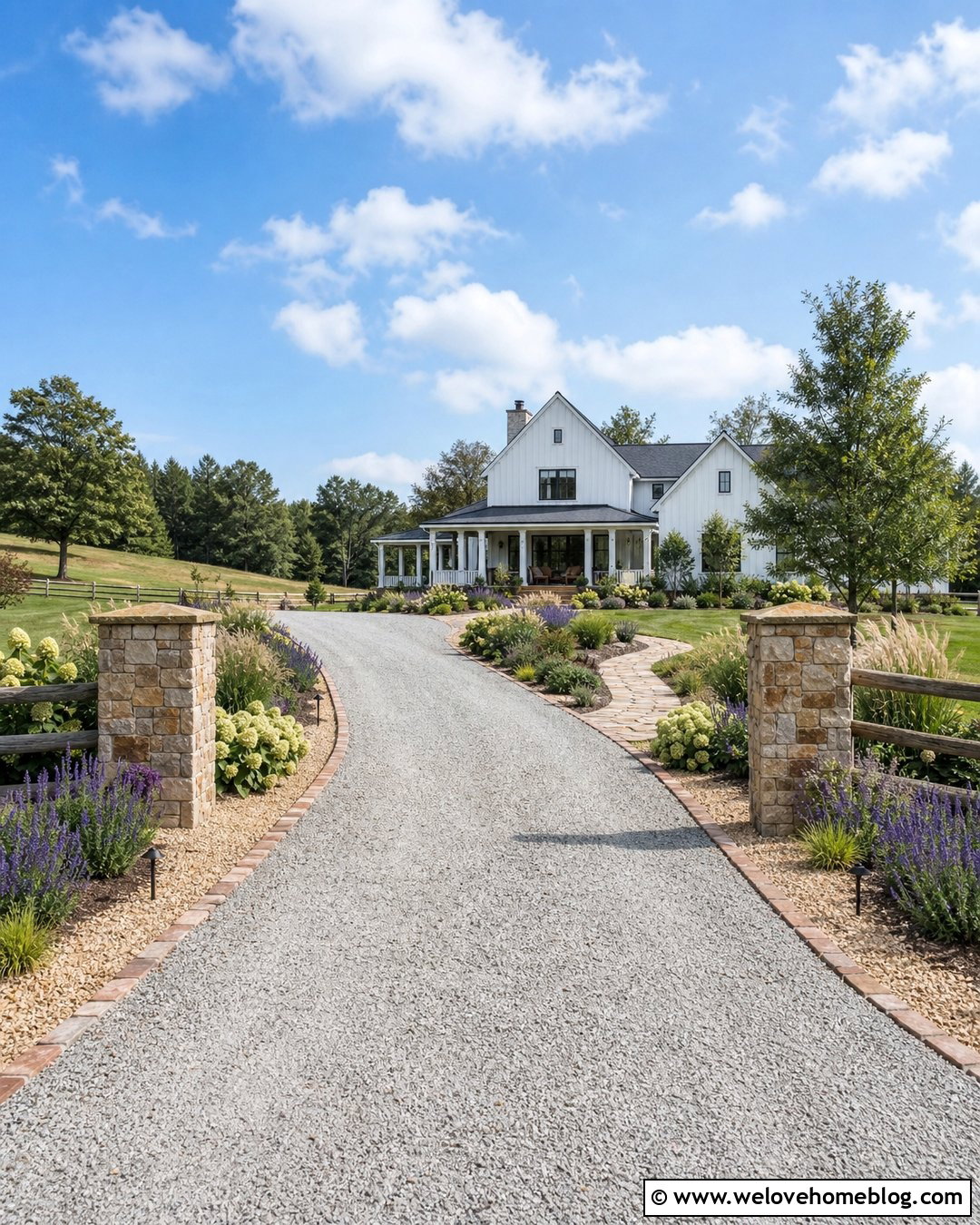
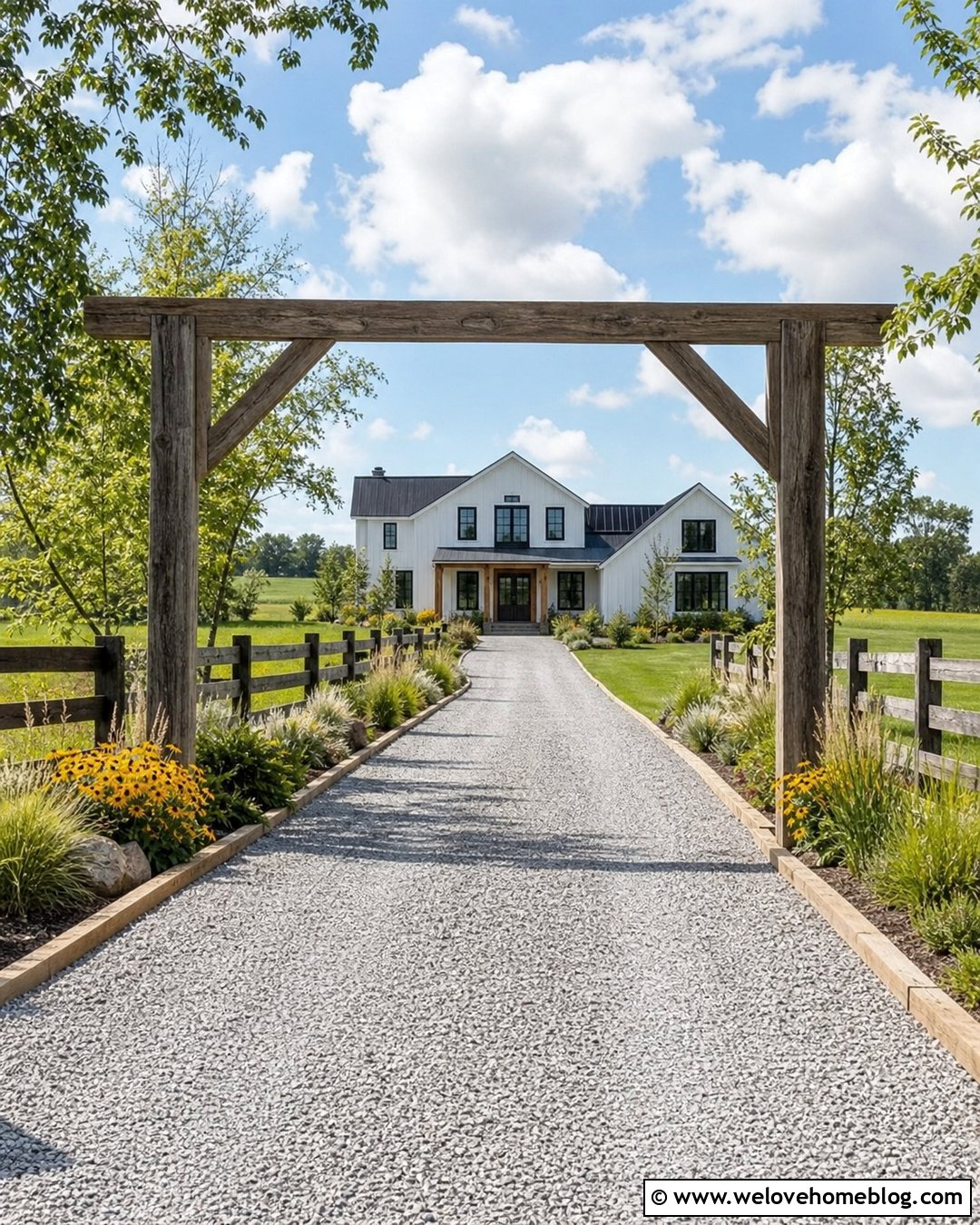
A farmhouse entrance looks relaxed and established when pale gravel beds frame a practical driveway. Use light gray crushed limestone for the driving surface, then distinguish the side areas with smaller cream pea gravel. A row of reclaimed brick or weathered timber can separate the two gravel textures. Plant hydrangeas, lavender, salvia, and informal ornamental grasses in generous groups, leaving enough open stone to keep the layout airy. Near the road, add simple stone pillars and a split-rail fence that turns into the planting border. A curved flagstone walkway can lead from the driveway to a covered porch. This complete setting combines useful surfaces with soft country landscaping, complementing a white modern farmhouse, barn-style garage, or rural cottage.
14. Gravel Next To Modern Driveway
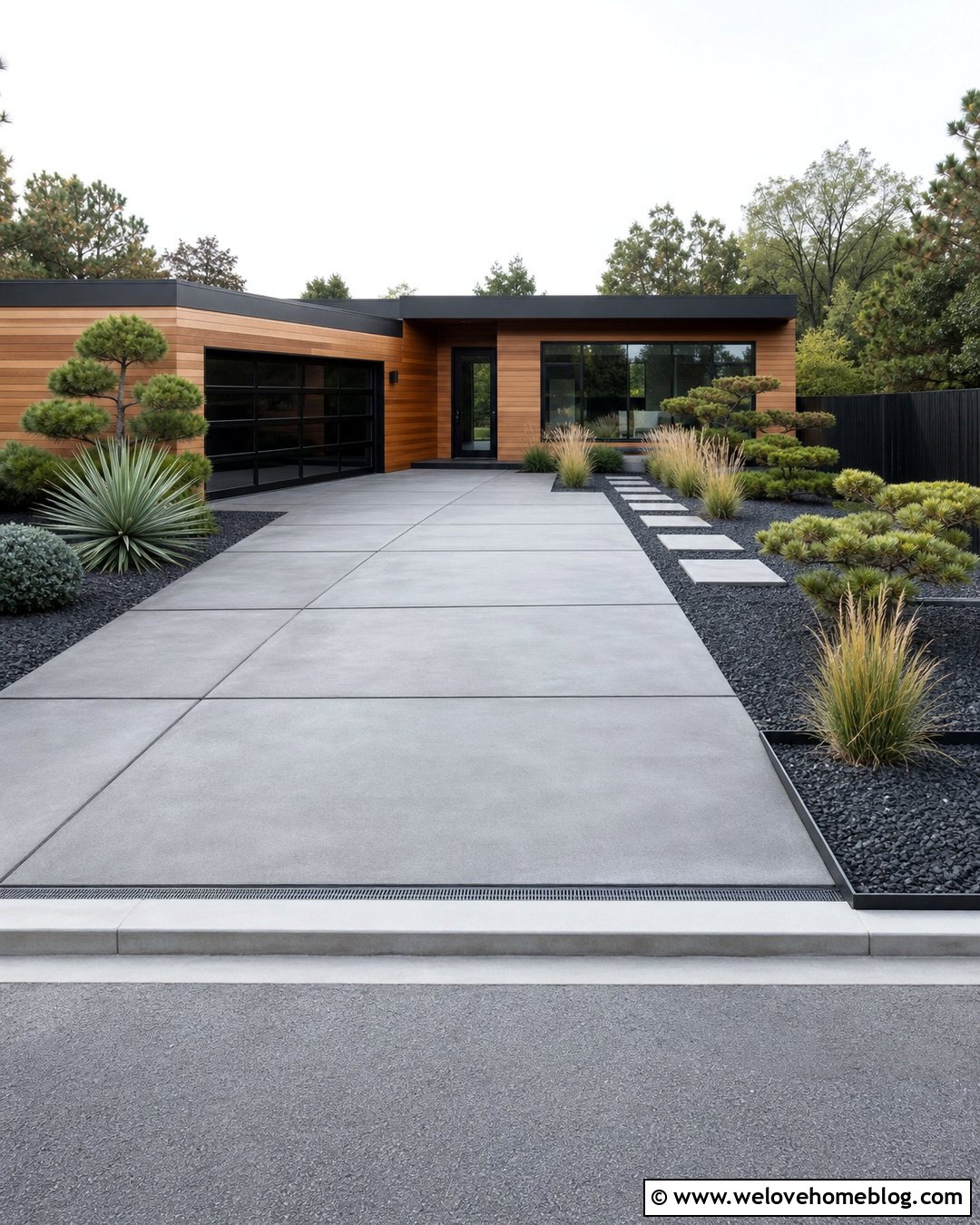
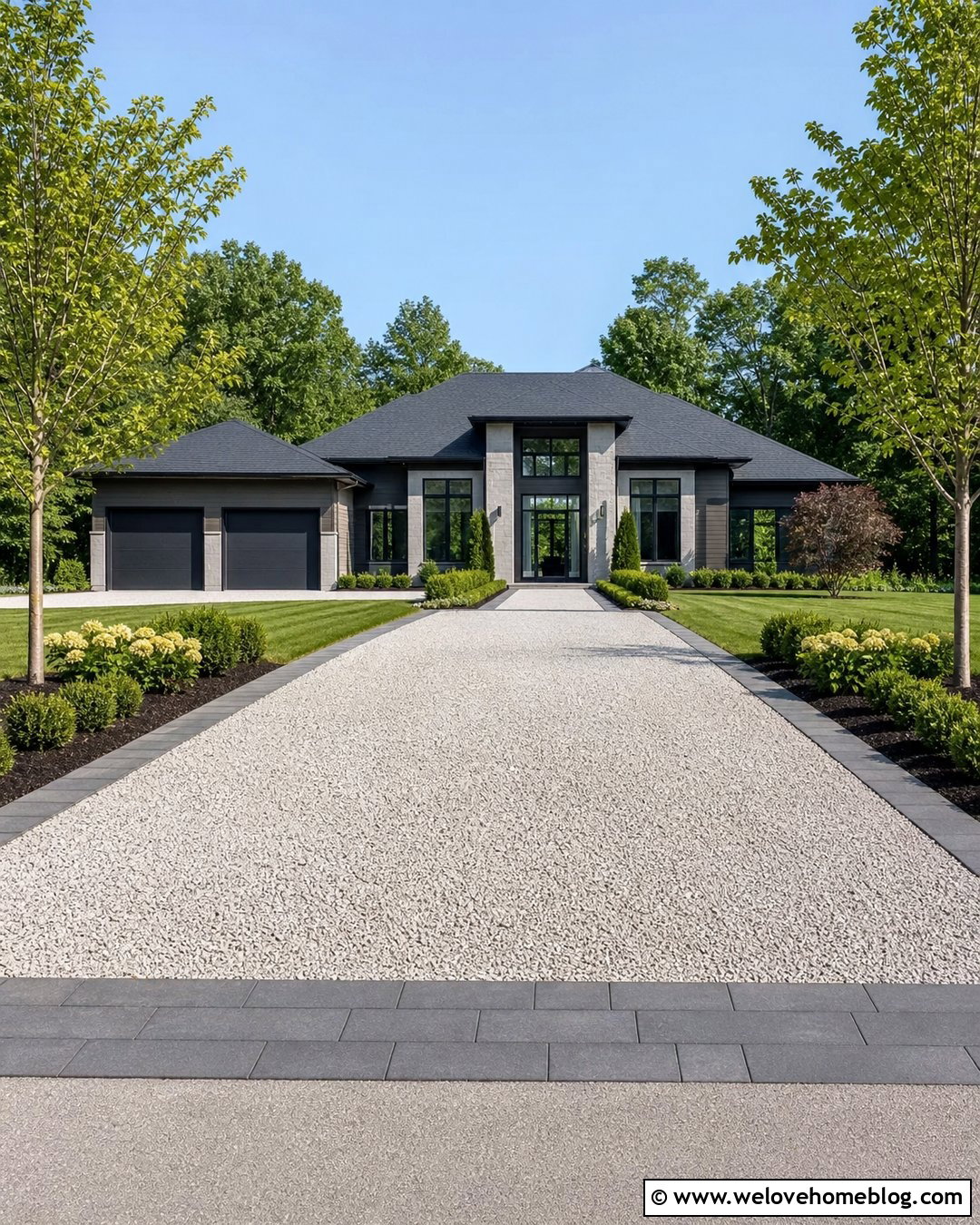
For a minimalist front yard, use gravel to emphasize the driveway’s clean lines and strong geometry. A wide driveway made from large-format gray concrete slabs can be bordered by crushed charcoal granite in long rectangular beds. Add black steel edging, square concrete stepping pads, and carefully spaced sculptural plants such as yucca, dwarf pine, or upright ornamental grass. Avoid filling every area with greenery. Open gravel provides valuable negative space and makes each plant more noticeable. Near the garage, align the bed with the house facade for a precise architectural effect. Integrated drainage channels can sit discreetly between the driveway and gravel. This complete look suits modern homes with flat roofs, warm wood cladding, glass, and matte black exterior details.
15. Gravel Next To Circular Driveway
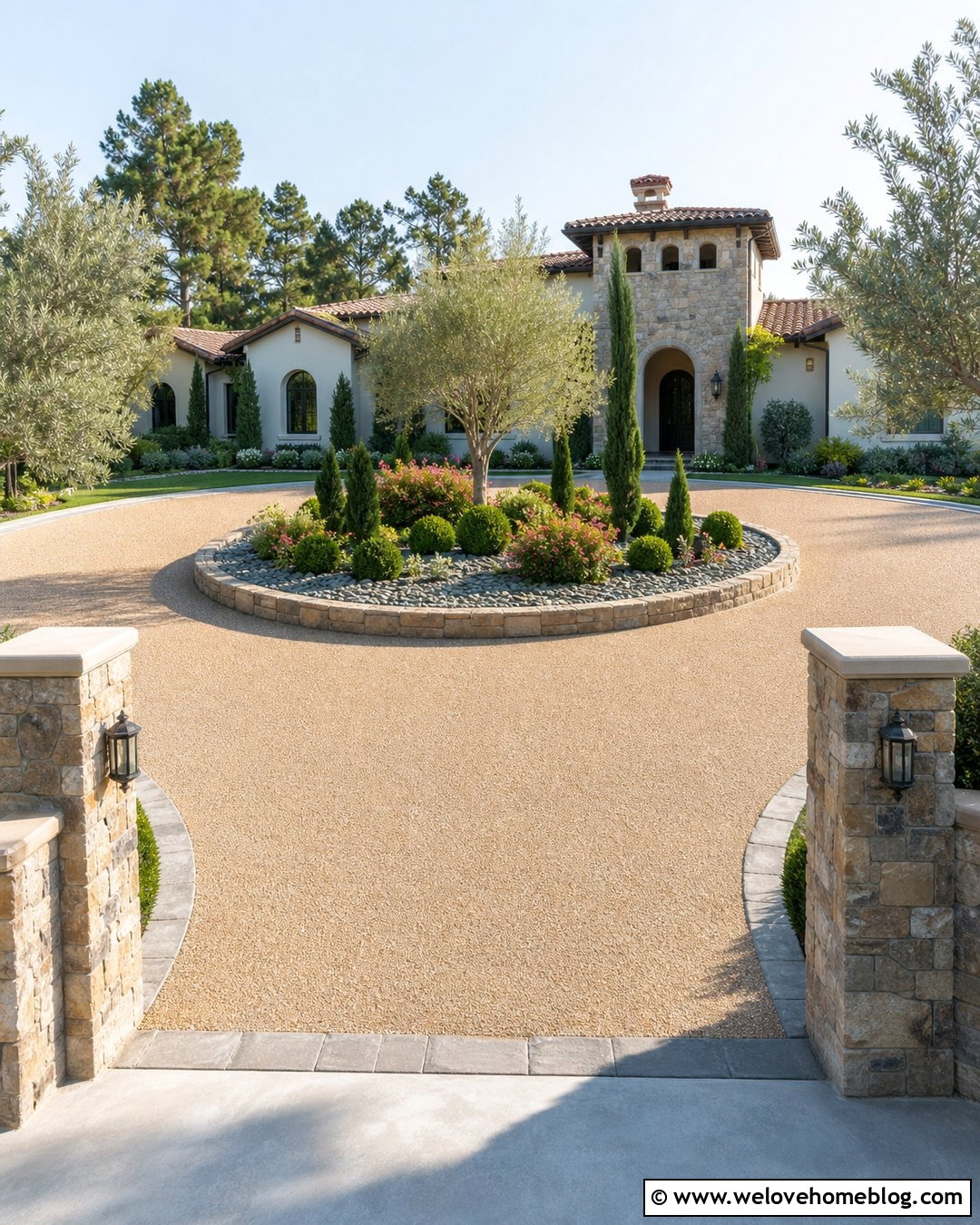
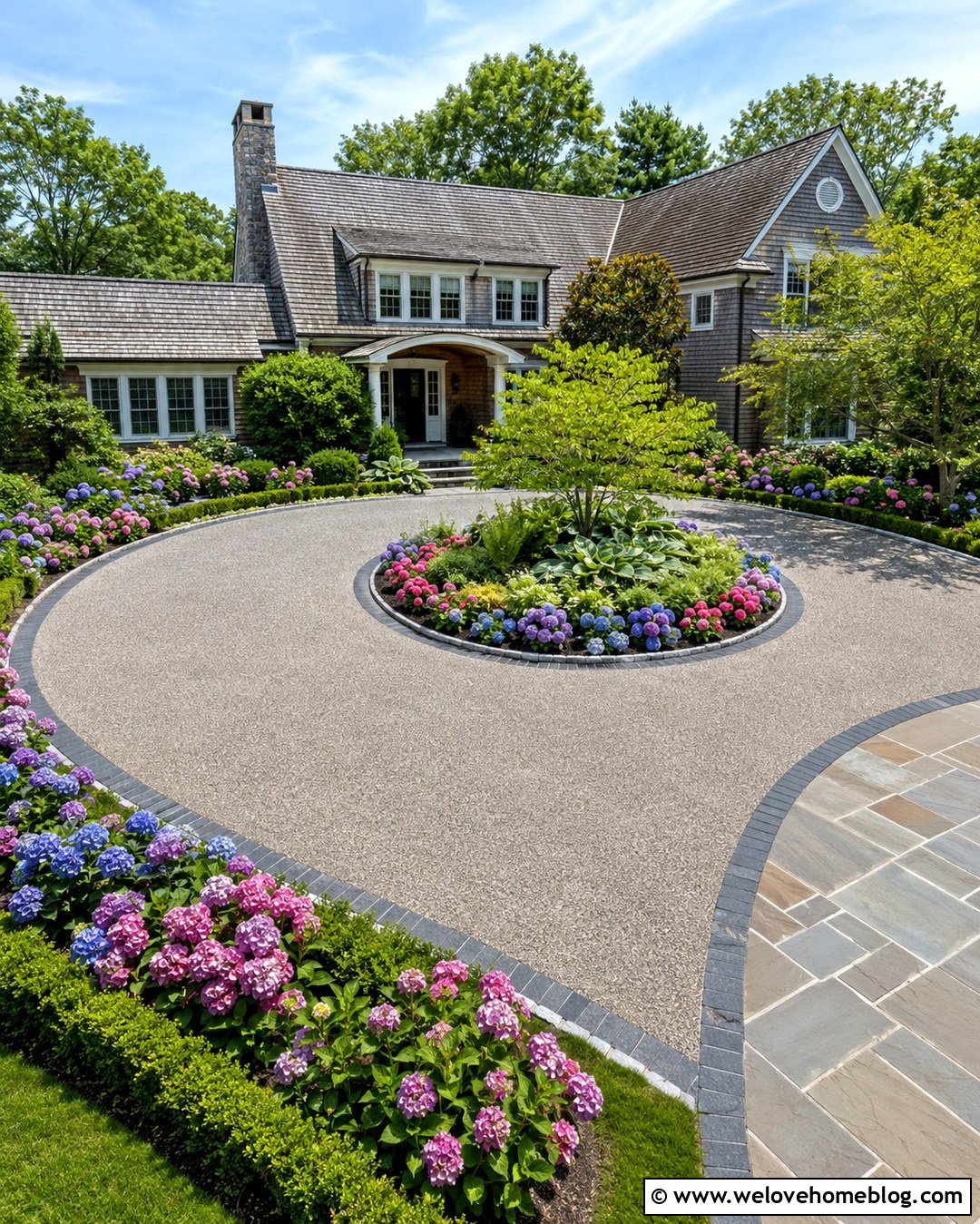
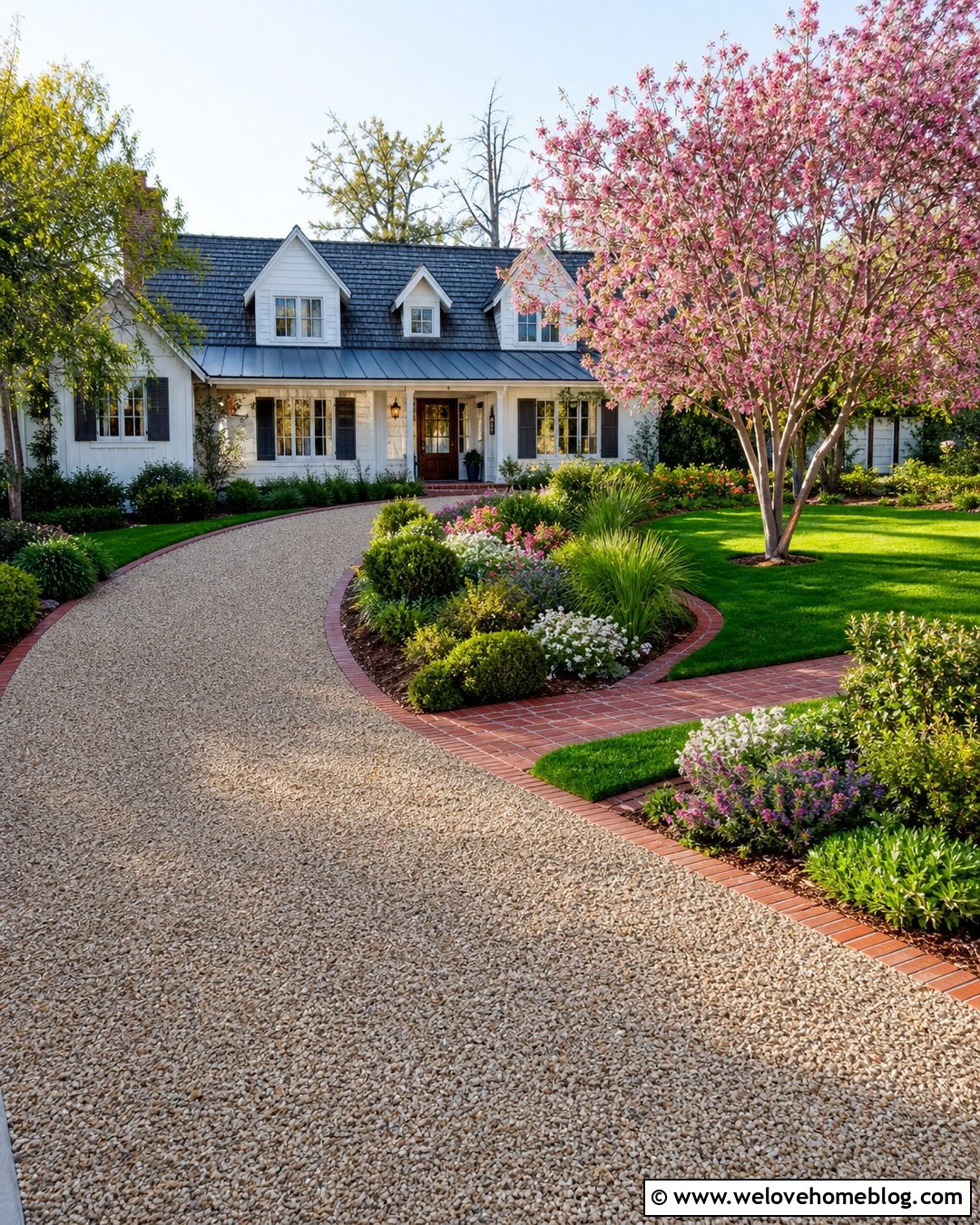
A circular driveway offers enough space for gravel landscaping to become a major focal point. Use warm beige resin-bound gravel for the driving loop and fill the central island with contrasting gray river rock. A low natural-stone curb can contain the center bed, while clipped evergreens, flowering shrubs, and one ornamental tree create height without hiding the house. Repeat a narrower gray gravel border around the outer curve to unify the layout. At the entrance, stone pillars and low planting beds should follow the same rounded lines. A clear walkway can cross the loop toward the front door. This complete design works especially well for colonial, Mediterranean, and large traditional houses with broad, symmetrical front elevations.
16. Gravel Next To Cobblestone Driveway
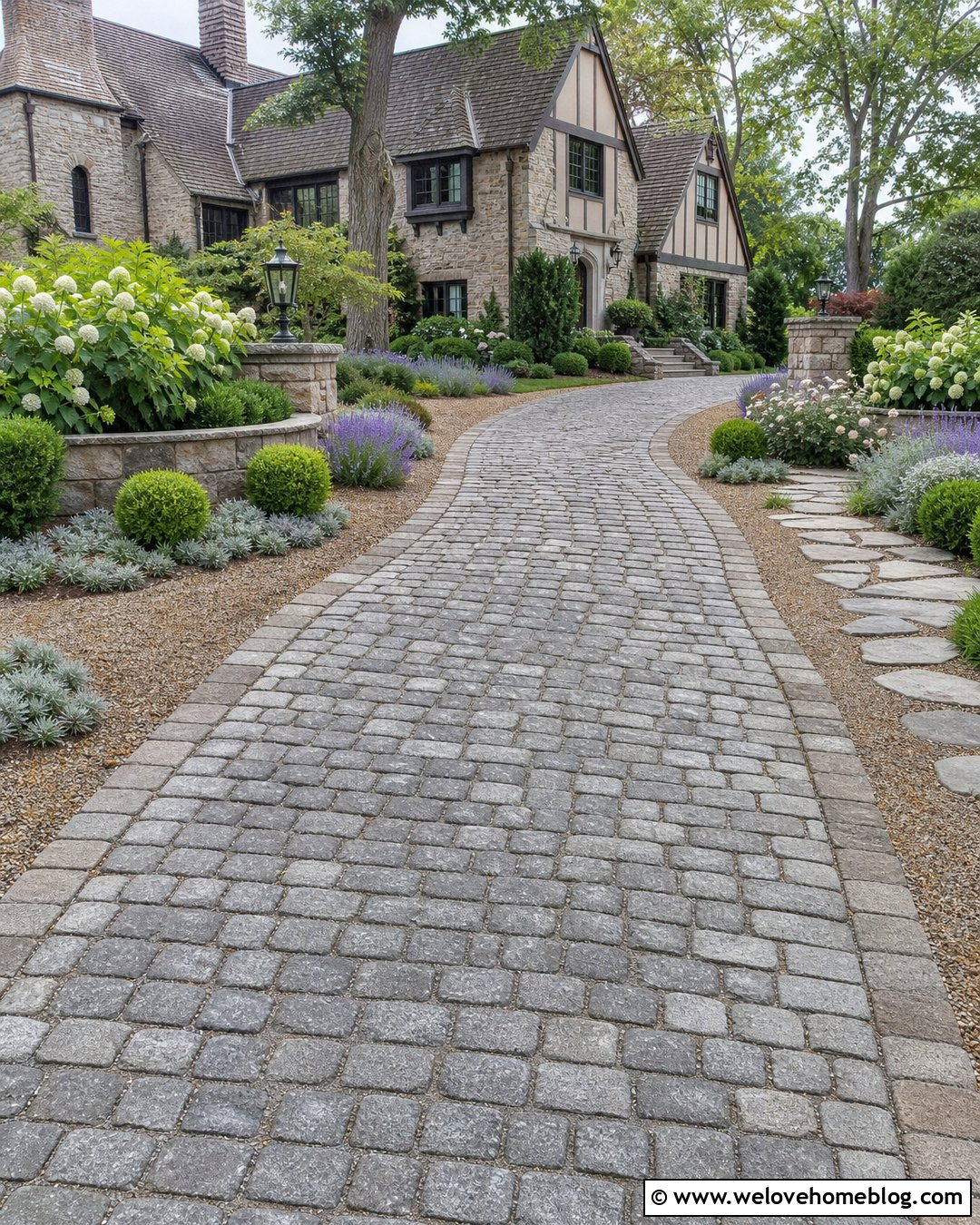
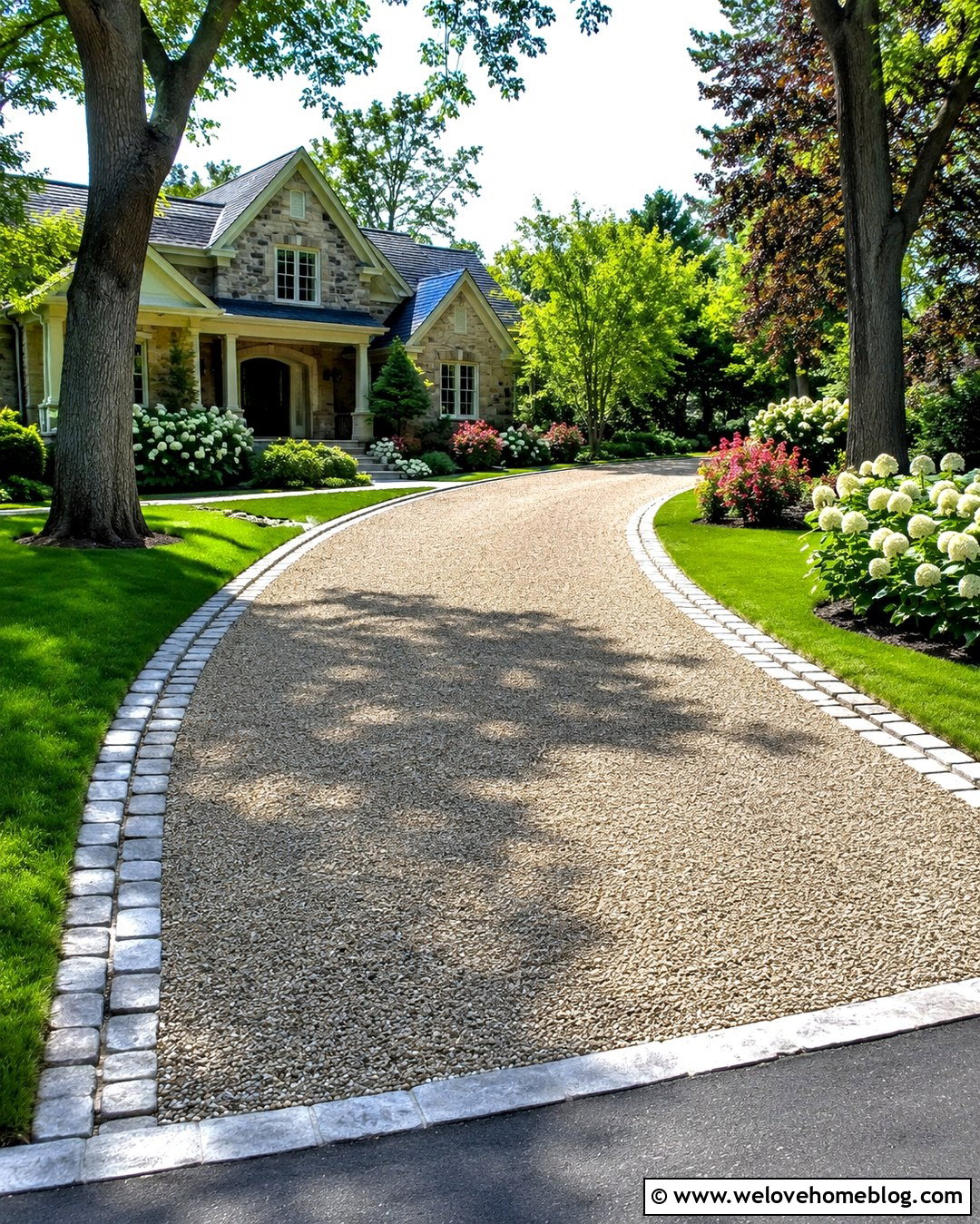
Cobblestone already provides rich texture, so the gravel beside it should be simple and carefully contained. Choose weathered gray granite cobbles for a curved driveway and frame them with fine buff gravel. A flush row of larger cobbles can form the transition, preventing the two loose-looking textures from blending visually. Plant compact lavender, low roses, boxwood, and silver-leaved ground covers in broad beds beyond the gravel. Near the house, add irregular flagstone stepping stones that connect the parking area to the entrance. The soft tan gravel highlights the cobblestone pattern without competing with it. This complete driveway landscape is well suited to European-inspired cottages, Tudor houses, and traditional stone homes surrounded by mature trees and informal gardens.
17. Gravel Next To Driveway With Boulders
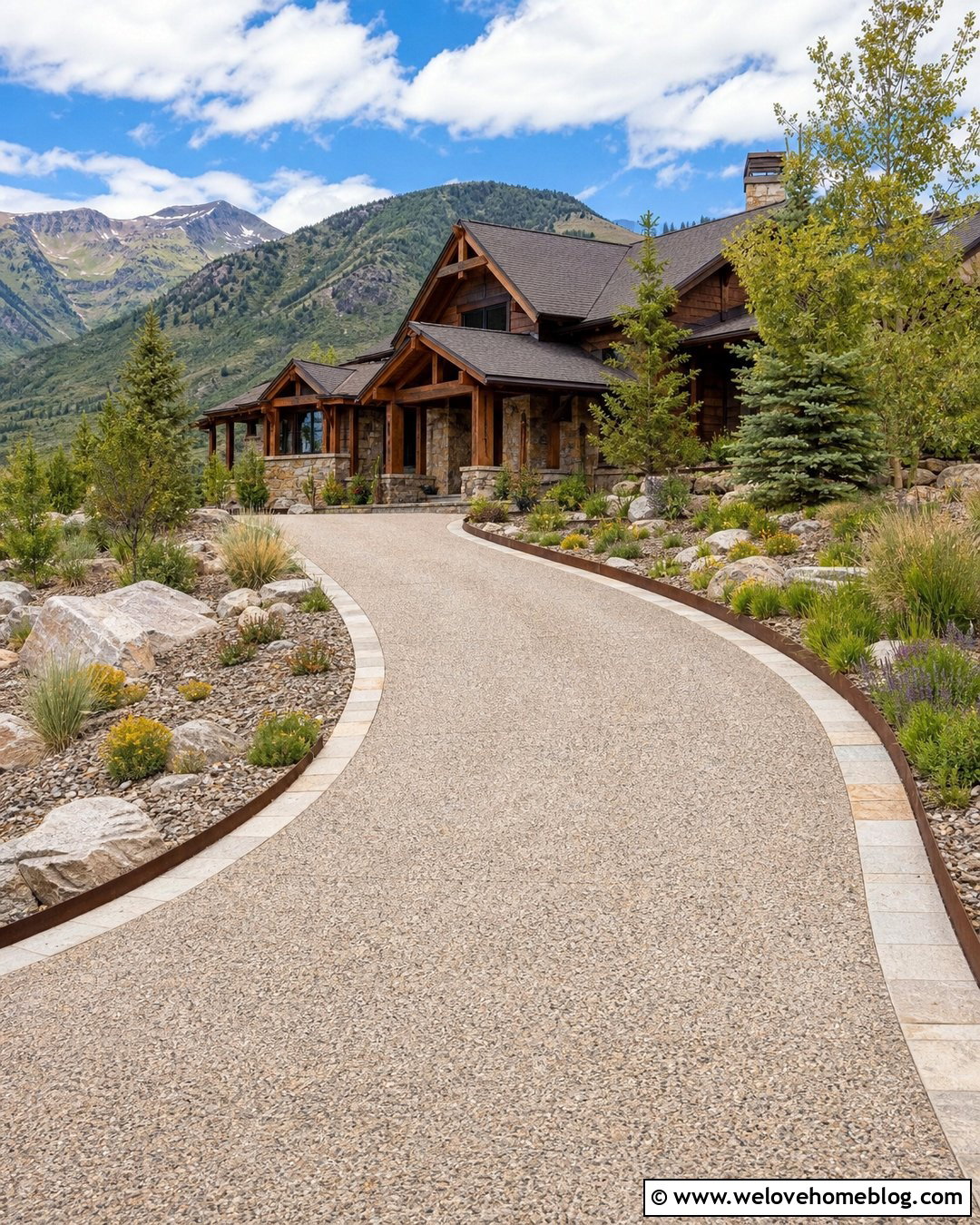
Large boulders can anchor a gravel border and protect vulnerable lawn corners from repeated tire traffic. Pair a curved exposed aggregate driveway with a broad bed of medium brown crushed stone along its outside edge. Place three or five regionally appropriate boulders in staggered positions, partially setting them into the ground so they appear stable and natural. Surround them with low juniper, ornamental grass, sedum, and native flowering plants. Use steel edging along the lawn, but keep the transition near the driveway defined with a flush stone curb. The gravel bed can widen at the entrance to create a strong first impression. This rugged complete design works beautifully with mountain homes, rustic ranches, and wooded craftsman properties.
18. Gravel Next To Driveway With Lighting
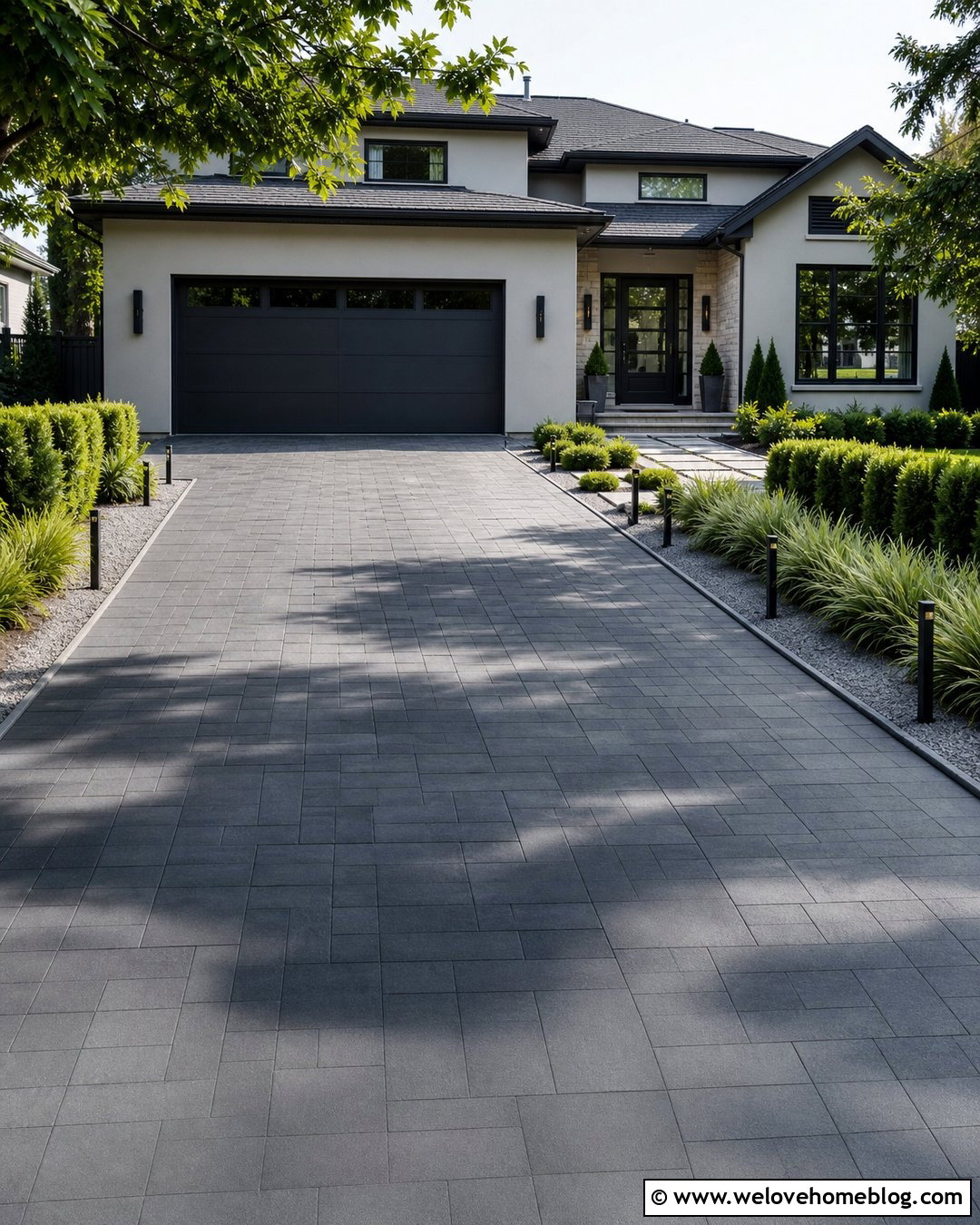
Driveway lighting is most effective when it belongs to the complete landscape rather than appearing as a row of isolated fixtures. Use a straight charcoal concrete paver driveway with pale gray gravel strips on both sides. Install low black bollard lights at consistent intervals within the gravel, keeping them far enough from the pavement to avoid accidental contact. Repeat the black finish through steel edging, the mailbox, and exterior house details. Add low evergreen shrubs and feathery grasses between selected lights while preserving open areas near parking spaces. A matching paver walkway can branch toward the front door. In daylight, this full design looks structured and modern, complementing transitional, contemporary, and midcentury homes without overwhelming their architecture.
19. Gravel Next To Driveway With Grass
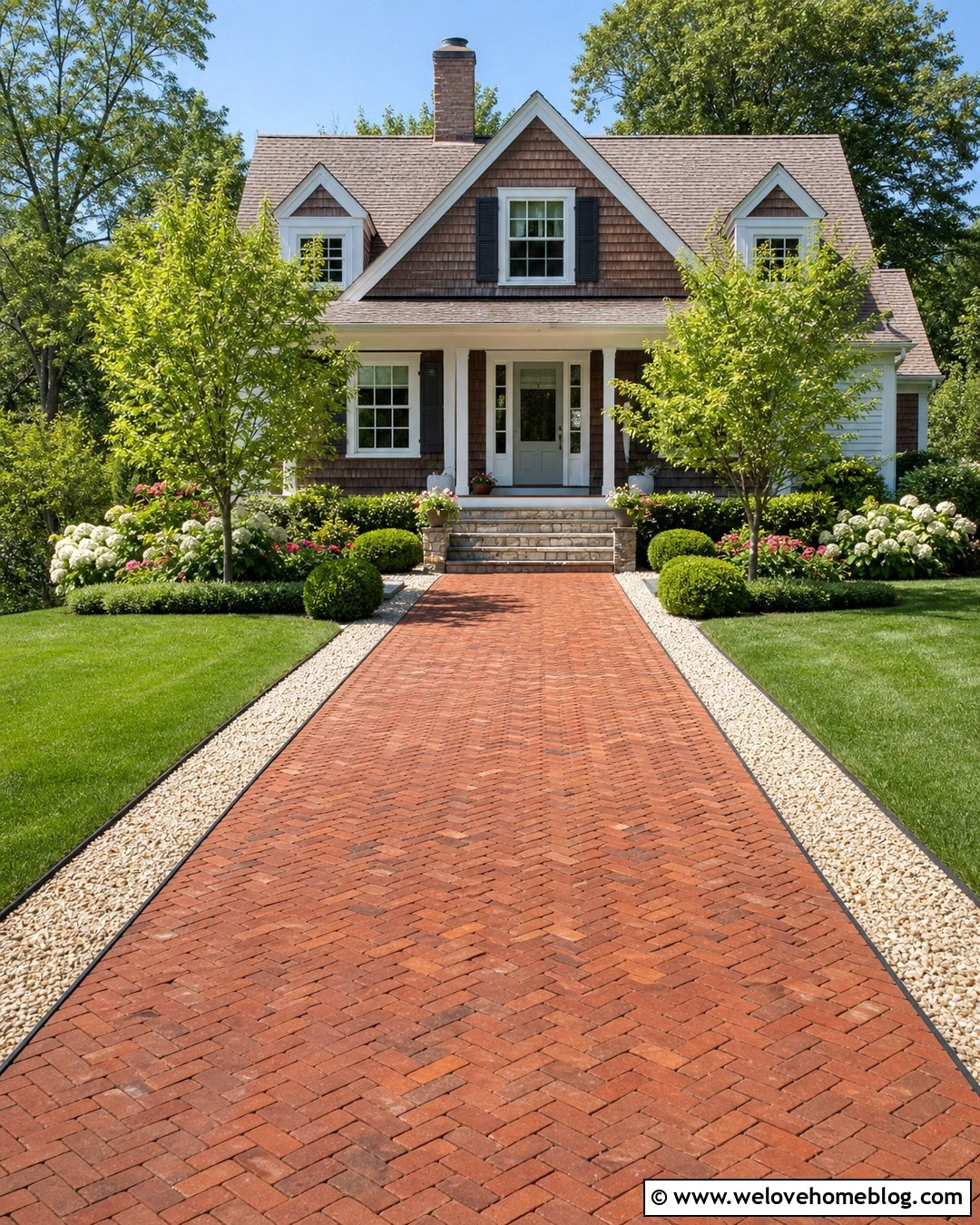
Gravel and lawn can work together when a clear border keeps their contrasting textures separate. Pair a warm red brick driveway with a narrow band of cream-colored pea gravel, then install flush dark steel edging before the green lawn begins. Allow the gravel strip to curve gently around planting pockets containing small trees, boxwood, and seasonal flowers. The open stone creates breathing room between the hard brick and soft turf, while the edging makes mowing easier and limits material movement. Near the porch, continue the gravel around square flagstone steps that connect the driveway to the entrance. This complete, colorful arrangement suits Cape Cod, colonial, and cottage homes where traditional materials and a healthy front lawn define the curb appeal.
20. Low Maintenance Gravel Next To Driveway
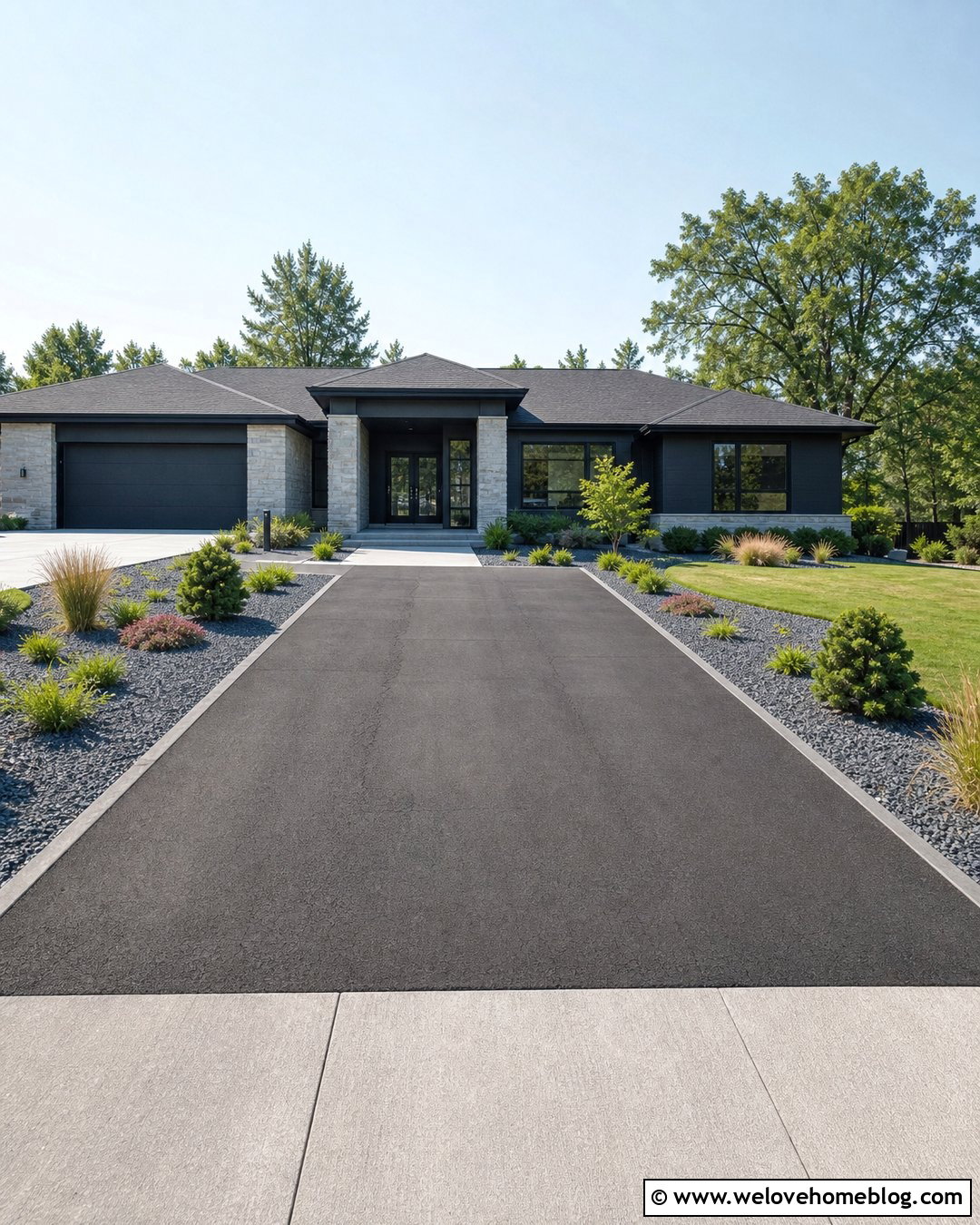
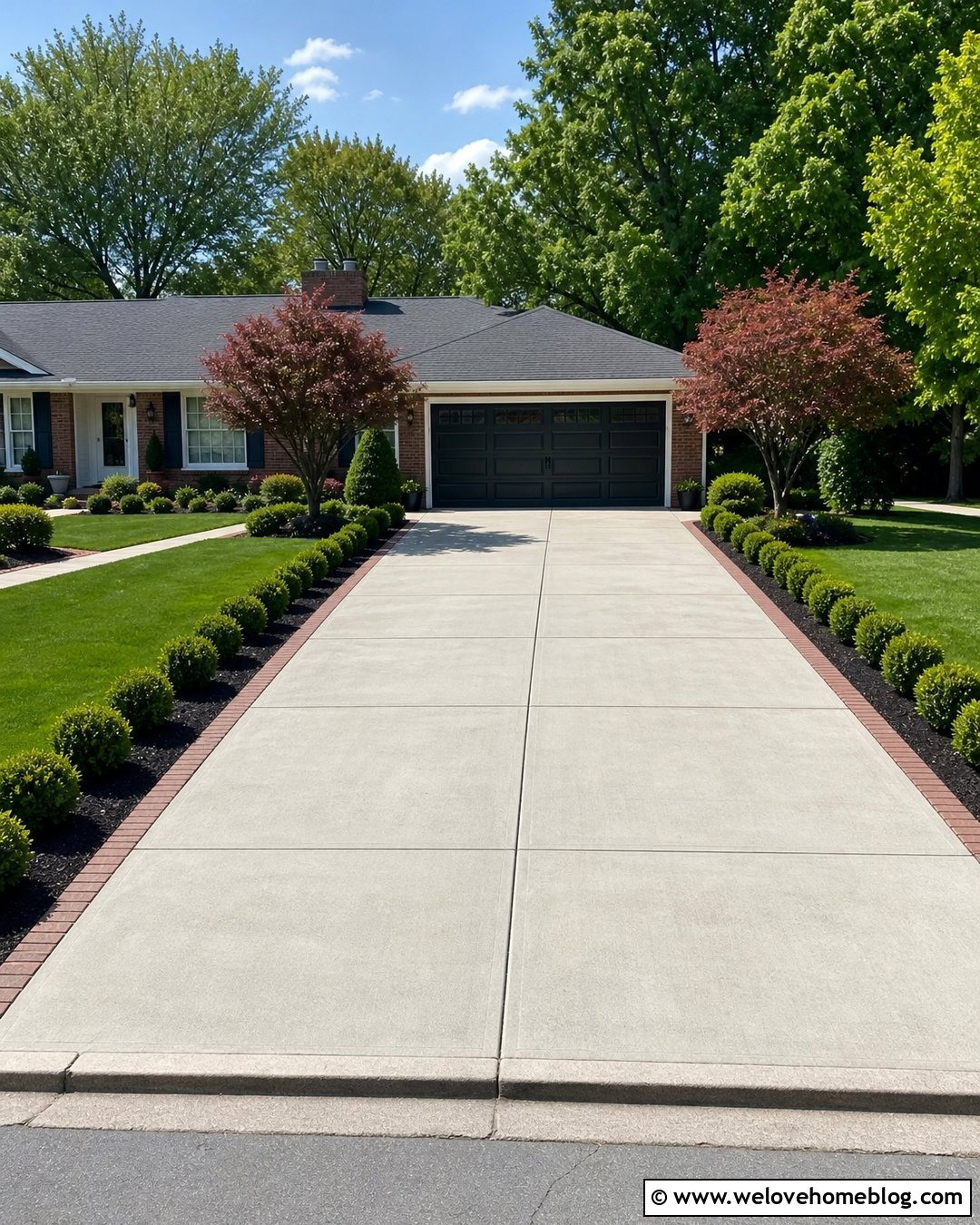
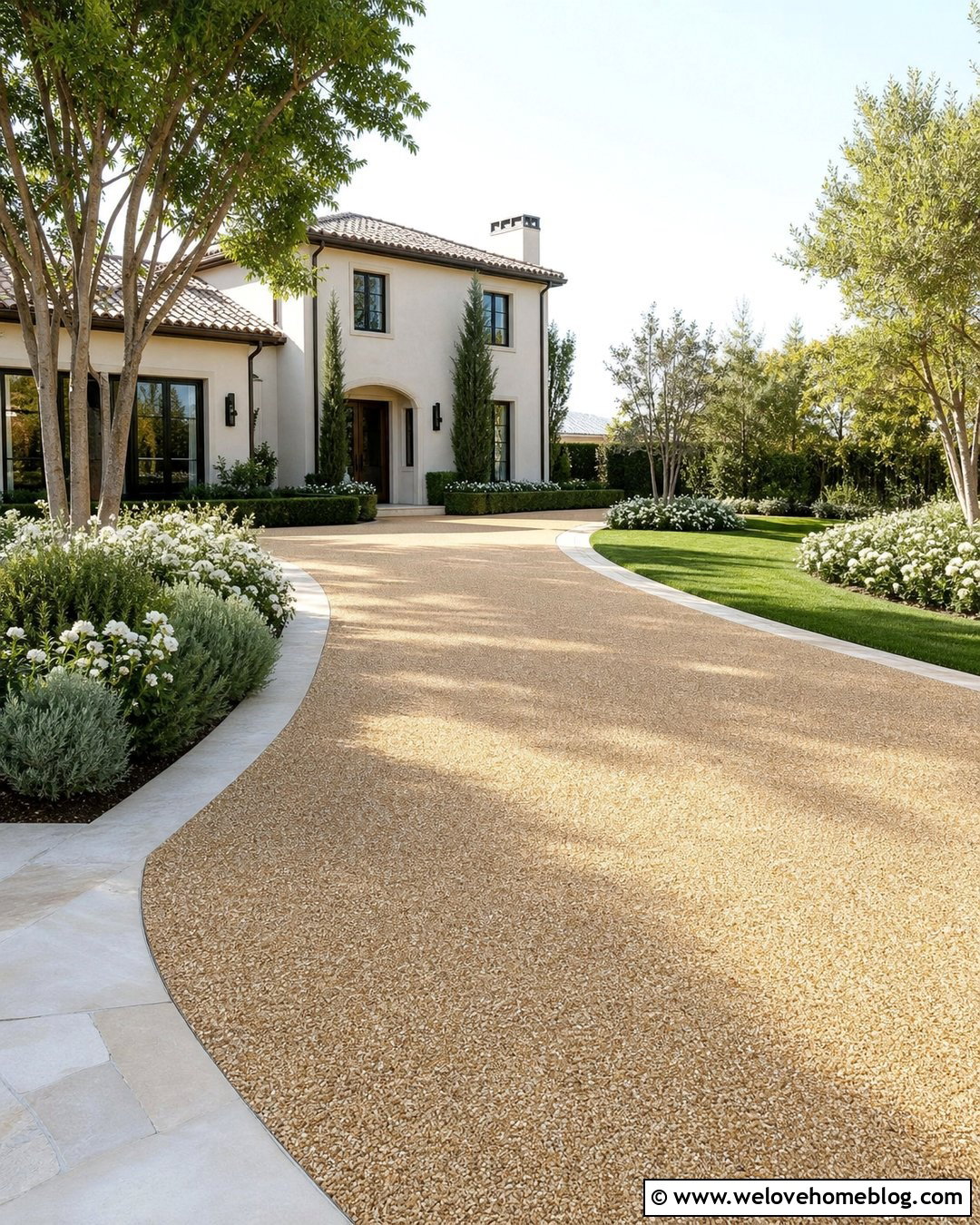
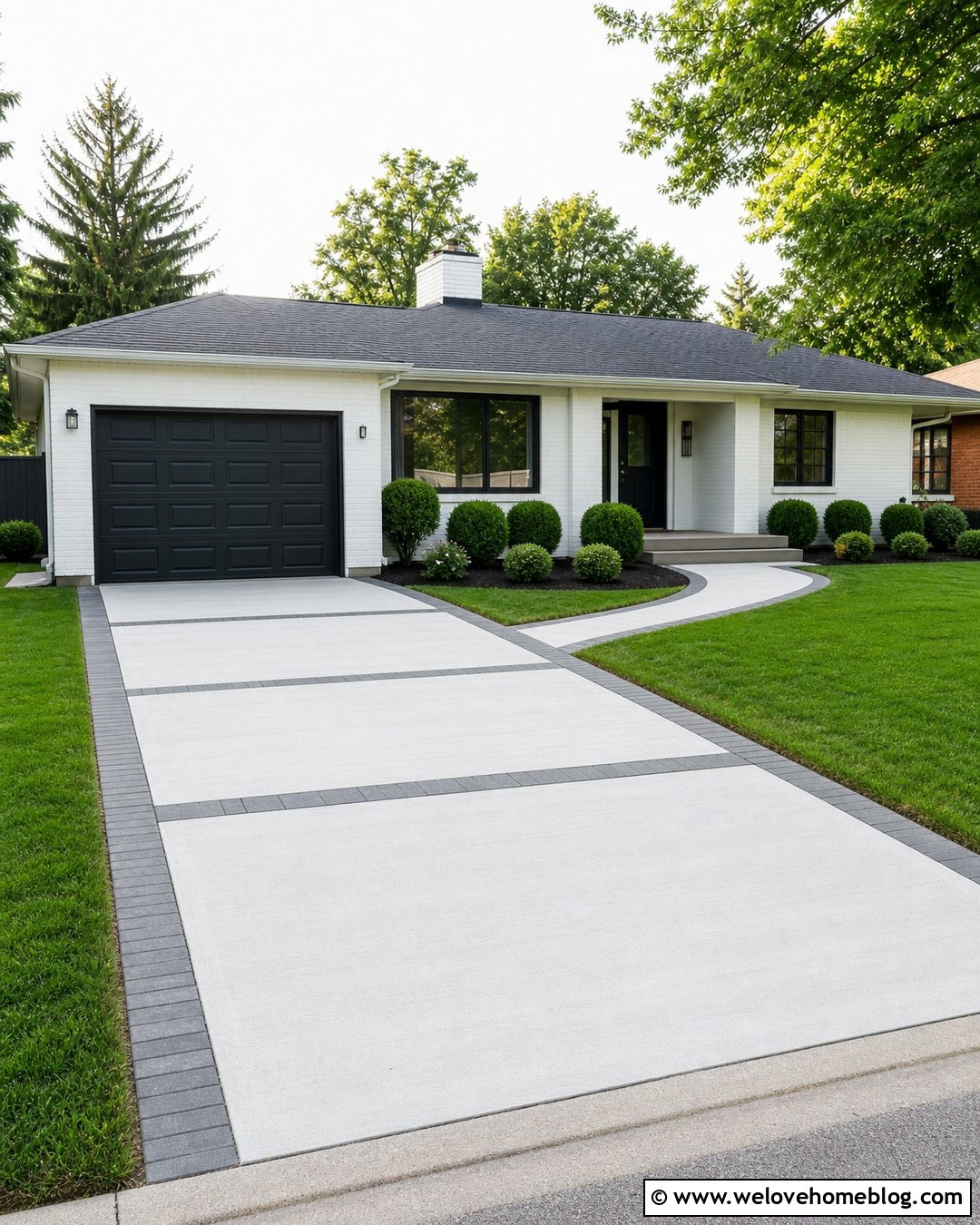
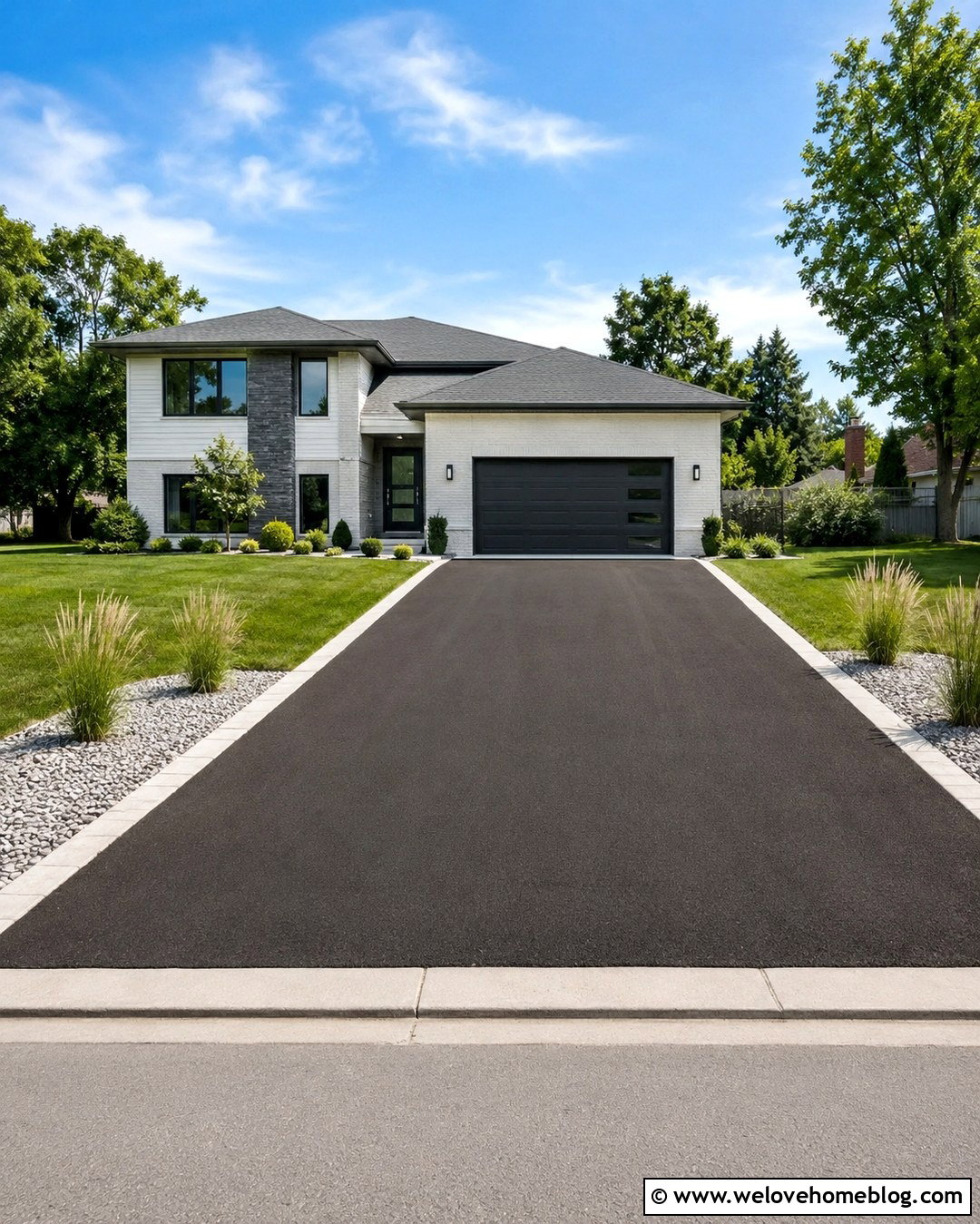
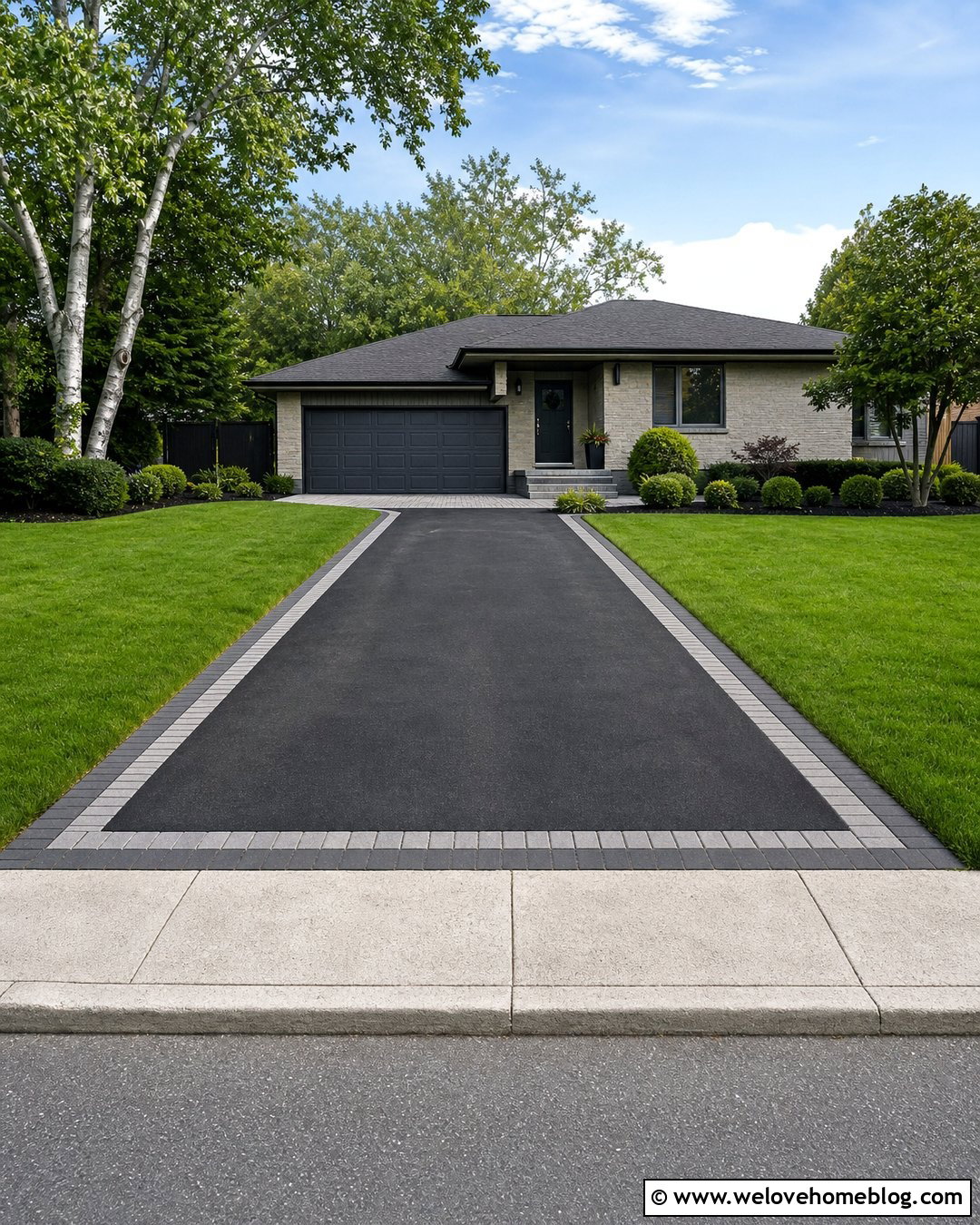
A low-maintenance design should use stable materials, restrained planting, and clearly defined edges. Start with a black asphalt driveway and place angular gray crushed gravel in wide beds on both sides. Unlike very rounded stone, angular gravel creates a firmer-looking, more structured surface. Contain it with concrete curbing near the driveway and steel edging beside the lawn. Add only a few durable plant groups, such as dwarf evergreens, ornamental grasses, sedum, and regionally appropriate ground covers. Space them widely enough to preserve the clean gravel background. A simple concrete slab walkway can lead directly to a modern ranch house. This complete approach reduces visual clutter and avoids narrow, complicated planting pockets that demand frequent trimming or careful access.
Conclusion:
The most successful **20 gravel next to driveway ideas** treat stone, paving, edging, plants, and walkways as parts of one coordinated entrance. Before choosing a gravel color, consider the driveway material, house facade, surrounding soil, drainage direction, and available parking clearance. Pale stone can brighten dark asphalt, while charcoal gravel creates modern contrast beside concrete or light pavers. Strong edging is equally important because it gives the design a finished shape and helps keep separate materials in place. Whether you want a walkway, drainage strip, parking extension, or decorative garden, build a properly prepared base and choose a complete layout that improves both everyday function and long-term curb appeal.

Related posts:

Leave a Reply