
Gravel can make a driveway feel relaxed, polished, rustic, or modern depending on the stone, layout, edging, and surrounding landscape. This guide to **20 Gravel For Driveway Ideas** focuses on complete designs rather than isolated materials. Each look combines a suitable gravel surface with practical borders, planting, drainage, and an architectural setting. Angular crushed stone generally creates a firmer driving surface because the pieces lock together, while rounded gravel needs stronger containment to control movement. A properly prepared base is also essential for preventing ruts and maintaining a clean finish. () Whether you have a compact suburban entrance or a large country property, you can find a layout that suits your home, climate, and maintenance preferences in these **20 Gravel For Driveway Ideas**.

1. Crushed Limestone Gravel Driveway With Brick Edging
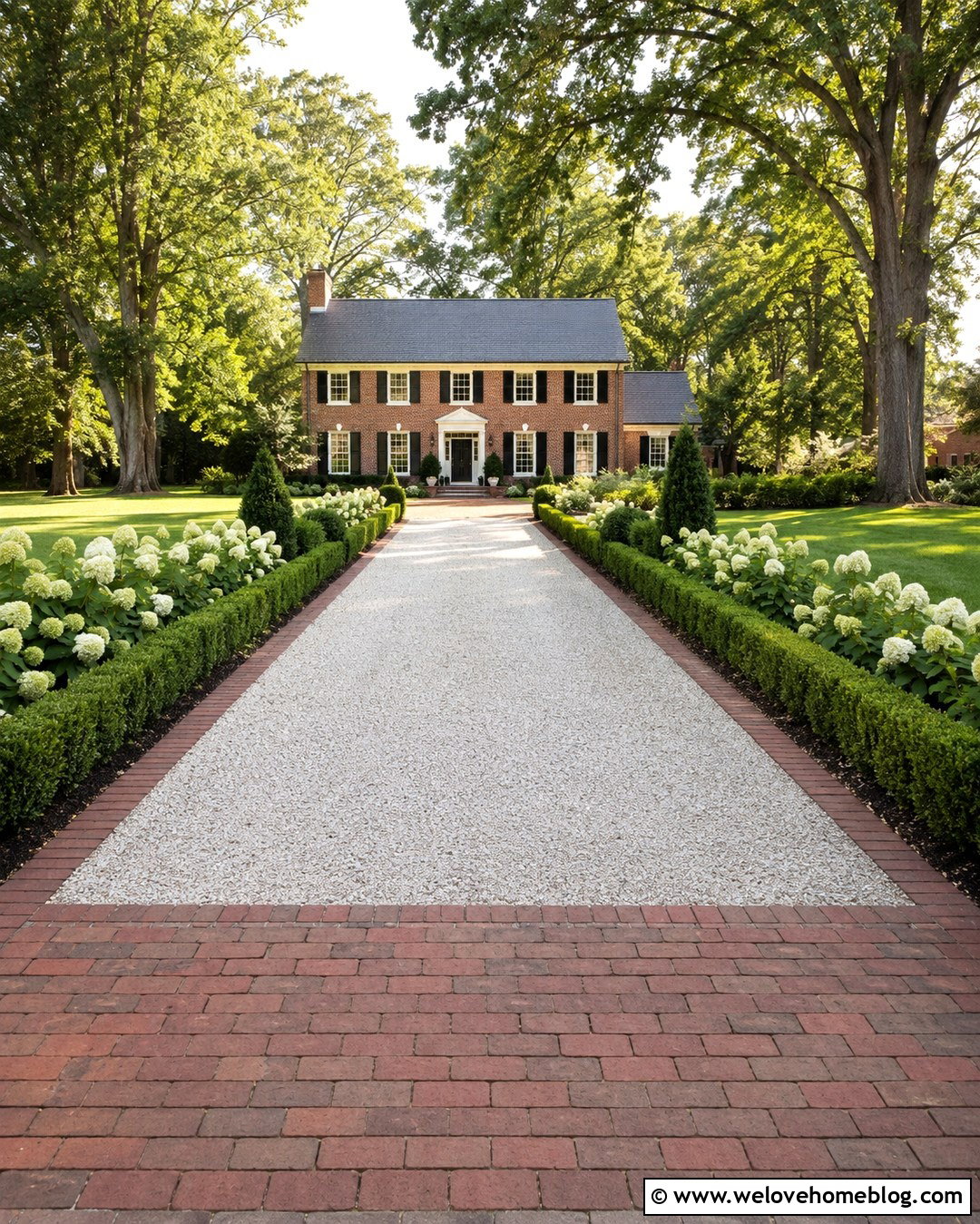
A straight crushed limestone gravel driveway creates a bright, welcoming approach to a traditional brick or colonial home. Choose angular limestone rather than smooth decorative pebbles so the surface compacts more securely beneath vehicle traffic. A warm red brick border keeps the pale gravel contained while connecting the driveway to the home’s facade. Continue the same brick along a front walkway for a coordinated appearance. Low boxwood hedges, clipped evergreens, and simple lawn panels can frame the driveway without making the entrance feel crowded. At the street, install a brick apron or a slightly wider gravel entrance to define the transition. The contrast between creamy limestone, red brick, and green landscaping delivers classic curb appeal while remaining practical for an everyday residential driveway.
2. Pea Gravel Driveway With Cobblestone Borders
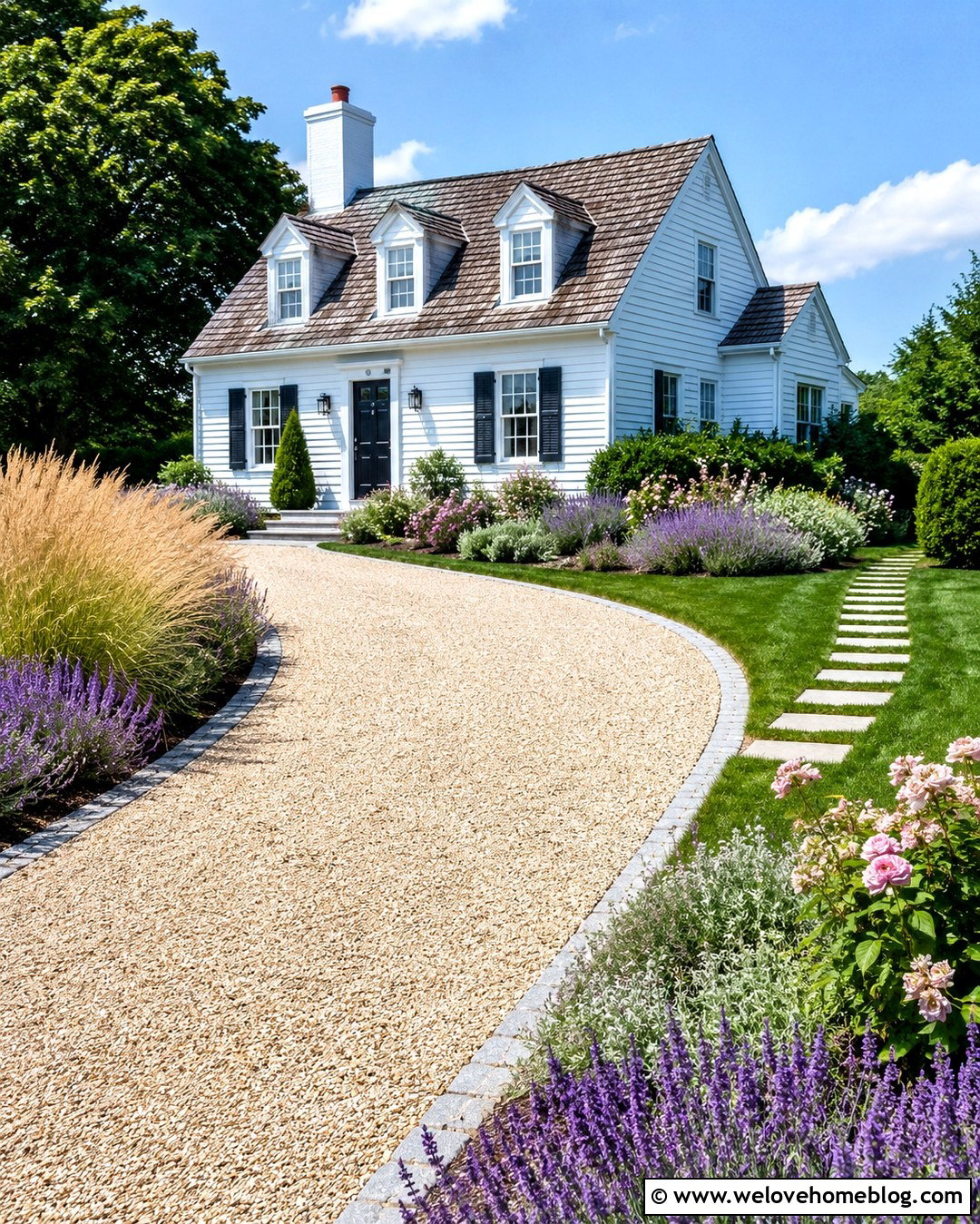
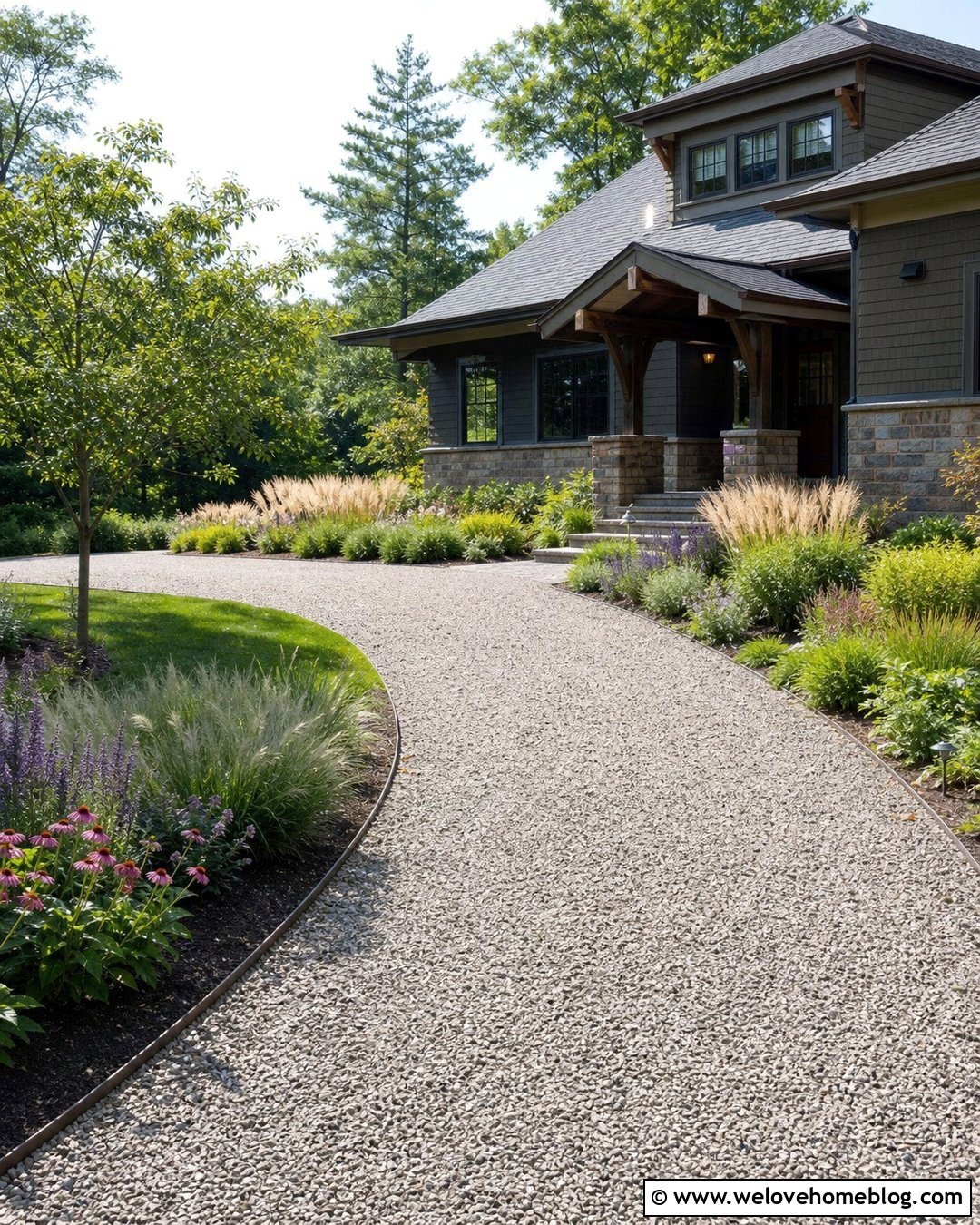
Softly colored pea gravel can give a curved driveway an inviting cottage appearance, especially when it is surrounded by generous planting beds. Because its rounded stones move more easily than angular aggregate, use pea gravel as a controlled surface layer over a stable, compacted base. Deep cobblestone borders or a driveway stabilization grid can help reduce spreading and rutting. () Plant lavender, catmint, ornamental grasses, and compact roses along the curves to soften the hardscape. A stepping-stone walkway can branch toward the front door without interrupting the driving route. This complete look works especially well with Cape Cod, cottage, and painted farmhouse homes. Select mixed tan, cream, and gray pea gravel so dirt and fallen leaves are less noticeable between routine maintenance sessions.
3. Gray Crushed Granite Gravel Driveway With Steel Edging
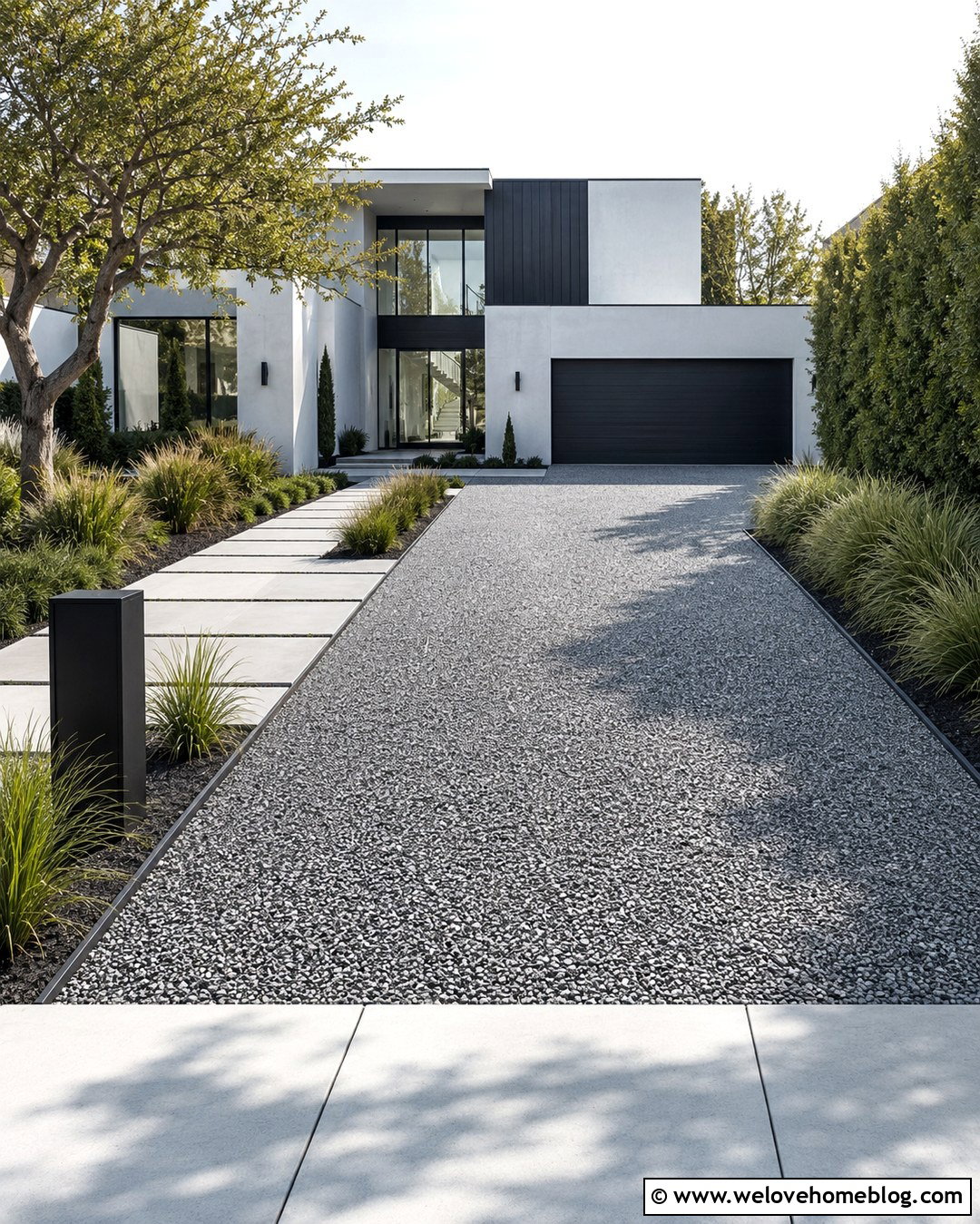
Clean lines make gray crushed granite a natural match for a modern home. Use the gravel on a wide, straight driveway with slim black steel edging installed along both sides. The dark border creates a precise outline and prevents the surface from blending into nearby planting beds. Large rectangular concrete slabs can form a separate walkway, while gravel-filled gaps visually connect the path to the driveway. Keep the landscaping restrained with groups of feather reed grass, compact evergreens, and one sculptural tree near the entrance. A charcoal address marker and simple black lighting fixtures reinforce the contemporary palette. Crushed granite brings subtle texture without distracting from the architecture. Its angular pieces also compact more effectively than rounded river stone, helping the driveway feel stable rather than loose beneath regular vehicle traffic.
4. Decomposed Granite Driveway With Desert Landscaping
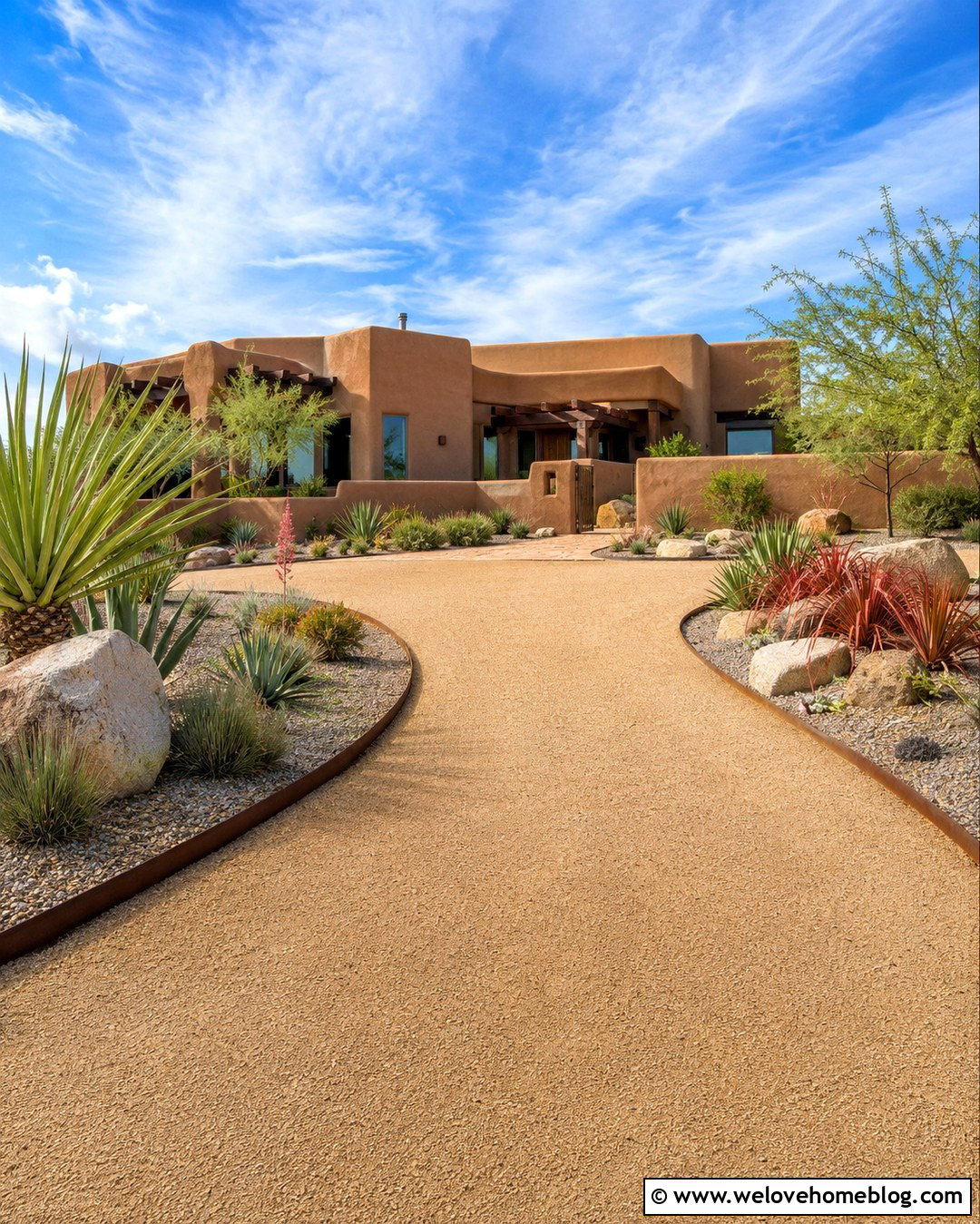
Golden decomposed granite can blend a driveway into a warm, dry landscape rather than creating a harsh visual divide. Use a stabilized, driveway-rated product over a properly engineered aggregate base, particularly where cars turn or park. Shape the driveway with broad, gentle curves that follow the natural contours of the front yard. Weathered steel edging provides clean containment while echoing the earthy color of the gravel. Surround the drive with agave, yucca, desert spoon, red yucca, and clusters of drought-tolerant ornamental grass. Place larger boulders sparingly so they frame the approach without restricting visibility. This design suits Southwestern, adobe, ranch, and desert-modern homes. Matching decomposed granite paths can connect the driveway to the entrance, creating one continuous and water-conscious front-yard composition.
5. Jersey Shore Gravel Driveway With Stone Pillars
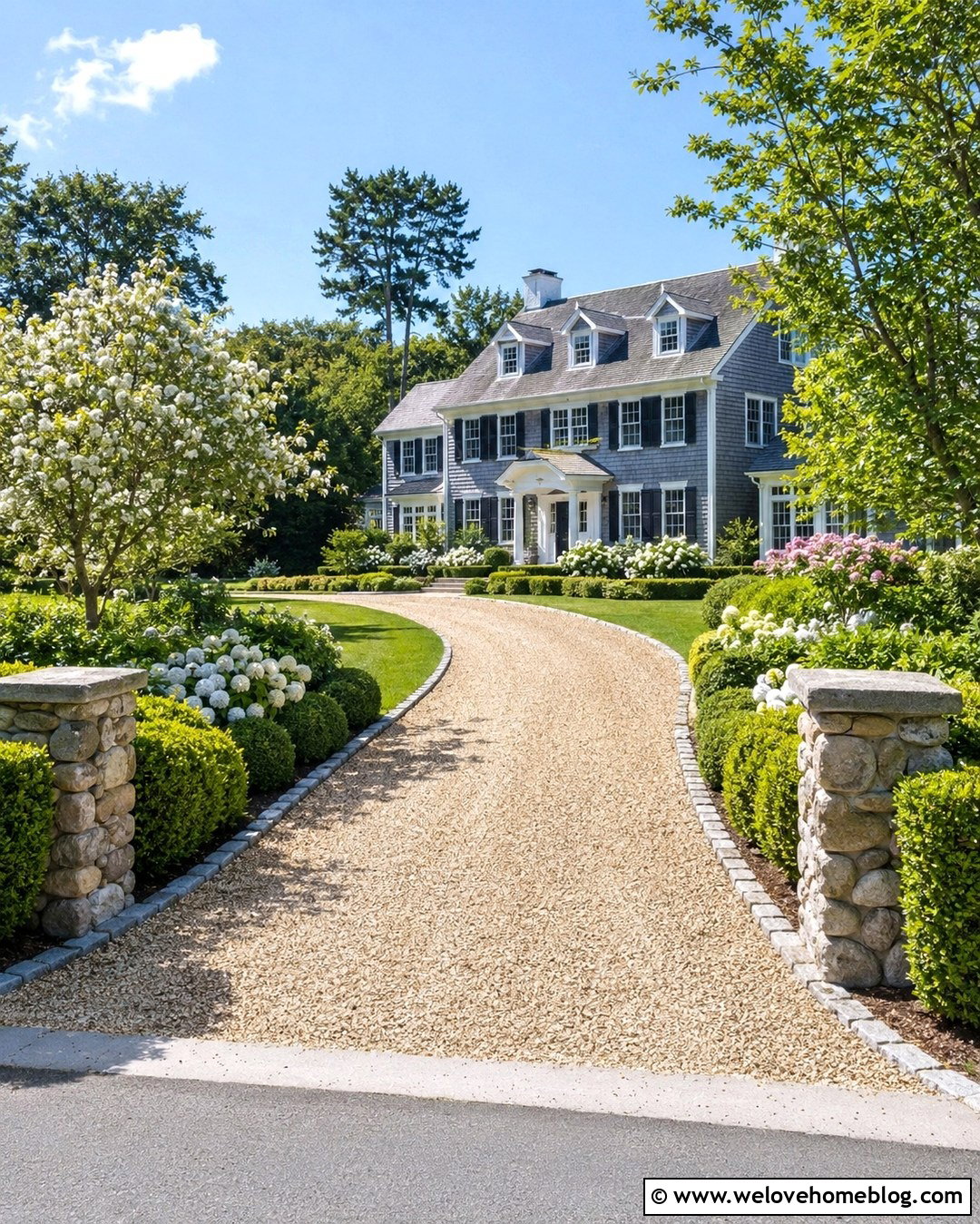
Jersey Shore gravel offers a warm mixture of yellow, tan, cream, and soft brown tones that complements traditional architecture. Use it on a gently curved driveway leading toward a colonial or shingle-style house. Substantial fieldstone pillars at the entrance provide structure and make the loose-stone surface feel more intentional. Connect the pillars with low stone walls or neatly trimmed hedges, leaving generous sightlines near the street. Granite cobbles installed along the driveway edges help contain the rounded gravel and create a durable transition beside the lawn. Add hydrangeas, inkberry, ornamental grasses, and flowering trees for a layered East Coast landscape. A compacted crushed-stone foundation beneath the decorative gravel improves performance. The finished entrance feels established and elegant without becoming overly formal or difficult to maintain.
6. White Marble Gravel Driveway With Modern Landscaping
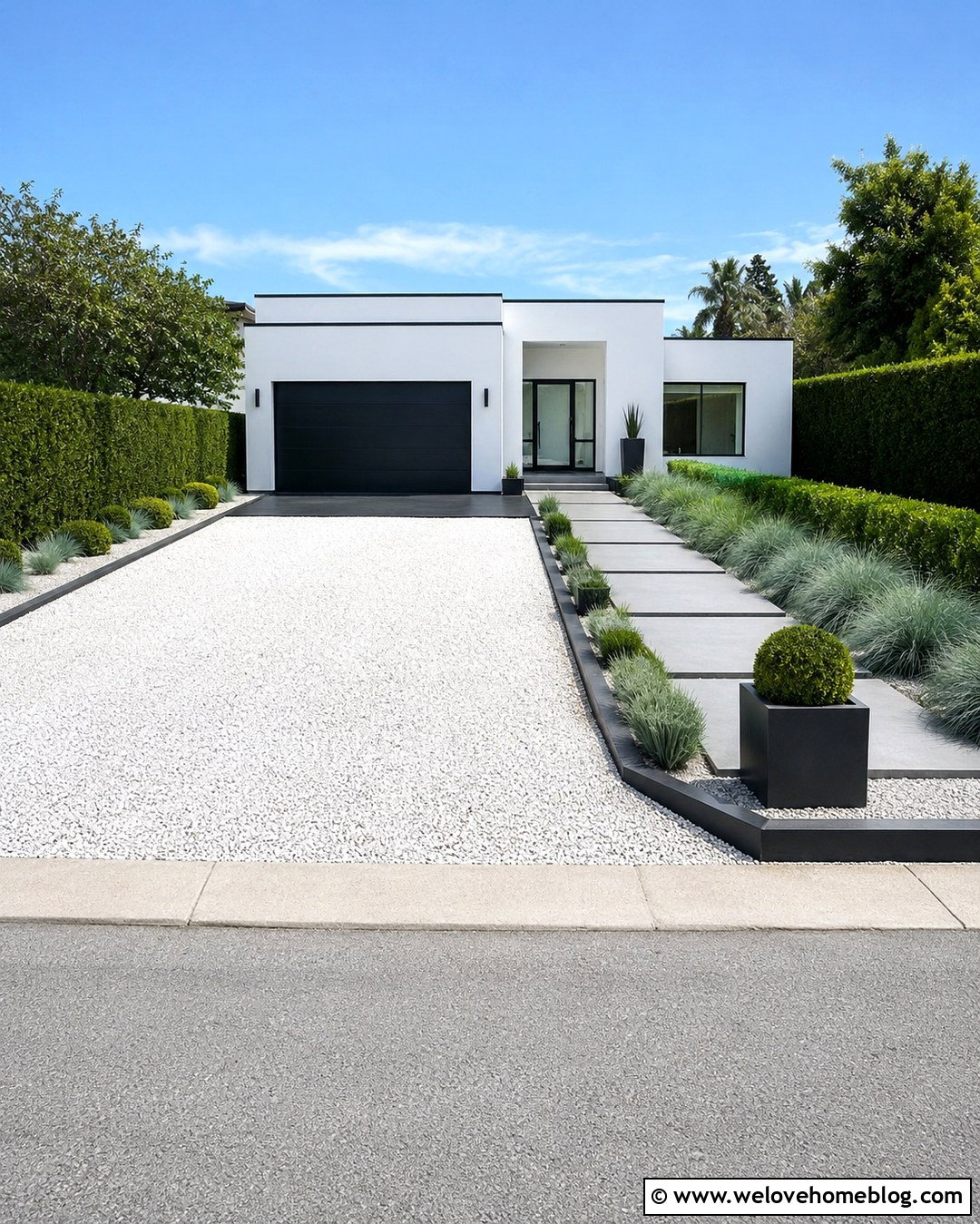
White marble chips can create a striking driveway for a crisp modern home, but they work best where their brightness and maintenance needs suit the setting. Lay them as a decorative top layer over a firm structural base and contain them with raised charcoal concrete curbs. A straight or slightly offset layout will emphasize the clean architecture. Use dark green hedges, blue-green ornamental grasses, and black planters to balance the brilliant surface. Large gray pavers can form the walkway and prevent foot traffic from disturbing the gravel. Consider local sunlight, dust, leaf drop, and staining before choosing such a pale material. A wide charcoal apron at the garage may also make tire marks less visible. The high-contrast combination produces a bold, gallery-like entrance with unmistakably contemporary curb appeal.
7. Black Basalt Gravel Driveway With Concrete Borders
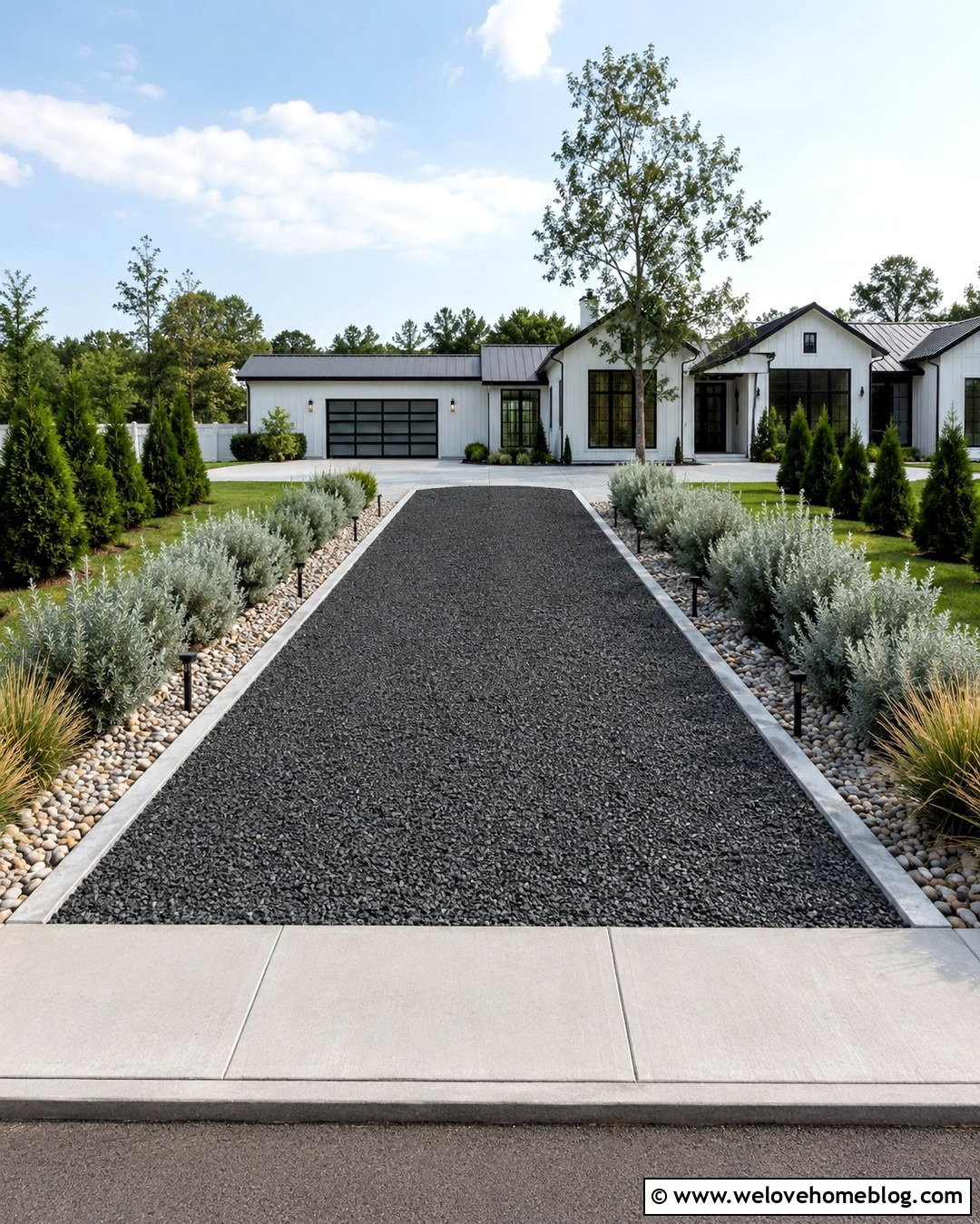
Dark crushed basalt gives a driveway a dramatic color while maintaining the textured character of gravel. Pair it with light gray poured-concrete borders to create a sharp outline around a broad, straight approach. The contrasting materials look particularly effective beside a white stucco, contemporary ranch, or minimalist home. Add a concrete apron near the garage and another at the street to stabilize the areas that receive frequent turning and braking. Along the sides, use pale river rocks only as decorative drainage accents rather than the primary driving surface. Plant silver foliage, ornamental grasses, and compact evergreen shrubs to brighten the dark gravel. Low black bollard lights can define the route without overwhelming it. This driveway looks sleek and polished while still allowing the landscape to feel natural and textural.
8. Crusher Run Gravel Driveway With Timber Edging
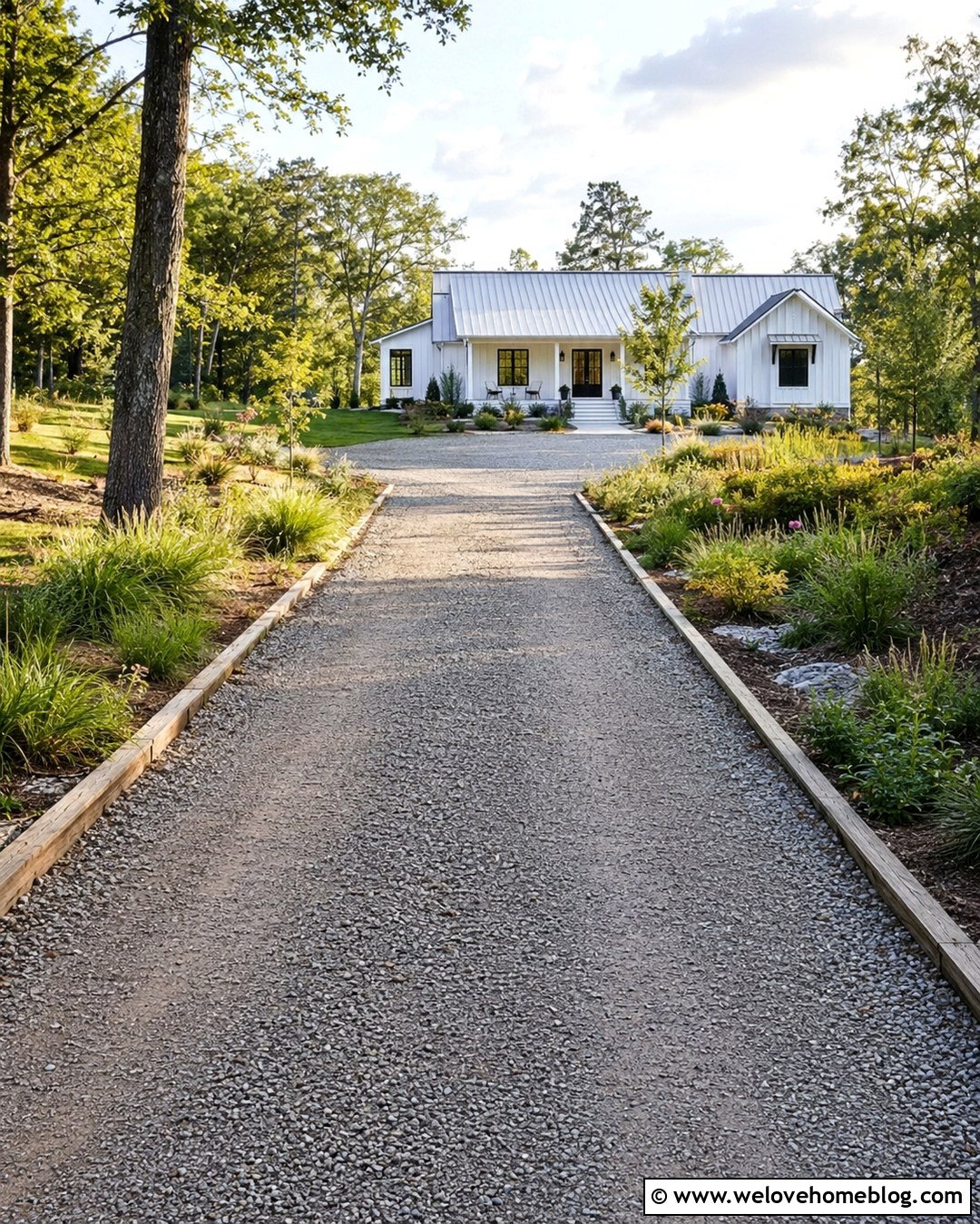
For an affordable rural entrance, crusher run provides a compactable mixture of crushed stone and fine particles. Use it on a long straight driveway leading to a farmhouse, barn-style home, or wooded cabin. Pressure-treated timber edging can create a simple boundary, although it should be securely anchored and separated from areas where standing moisture collects. Add a wider parking pad near the house and a matching gravel walkway toward the porch. Native grasses, flowering shrubs, and informal tree groups will keep the design relaxed. A shallow planted drainage swale can run beside the drive where site conditions require runoff management. The muted gray-brown surface works naturally with wood siding, metal roofing, and stone foundations. Regular grading and occasional replenishment help preserve a smooth profile and reduce developing tire channels.
9. Gravel Grid Driveway With Grass Borders
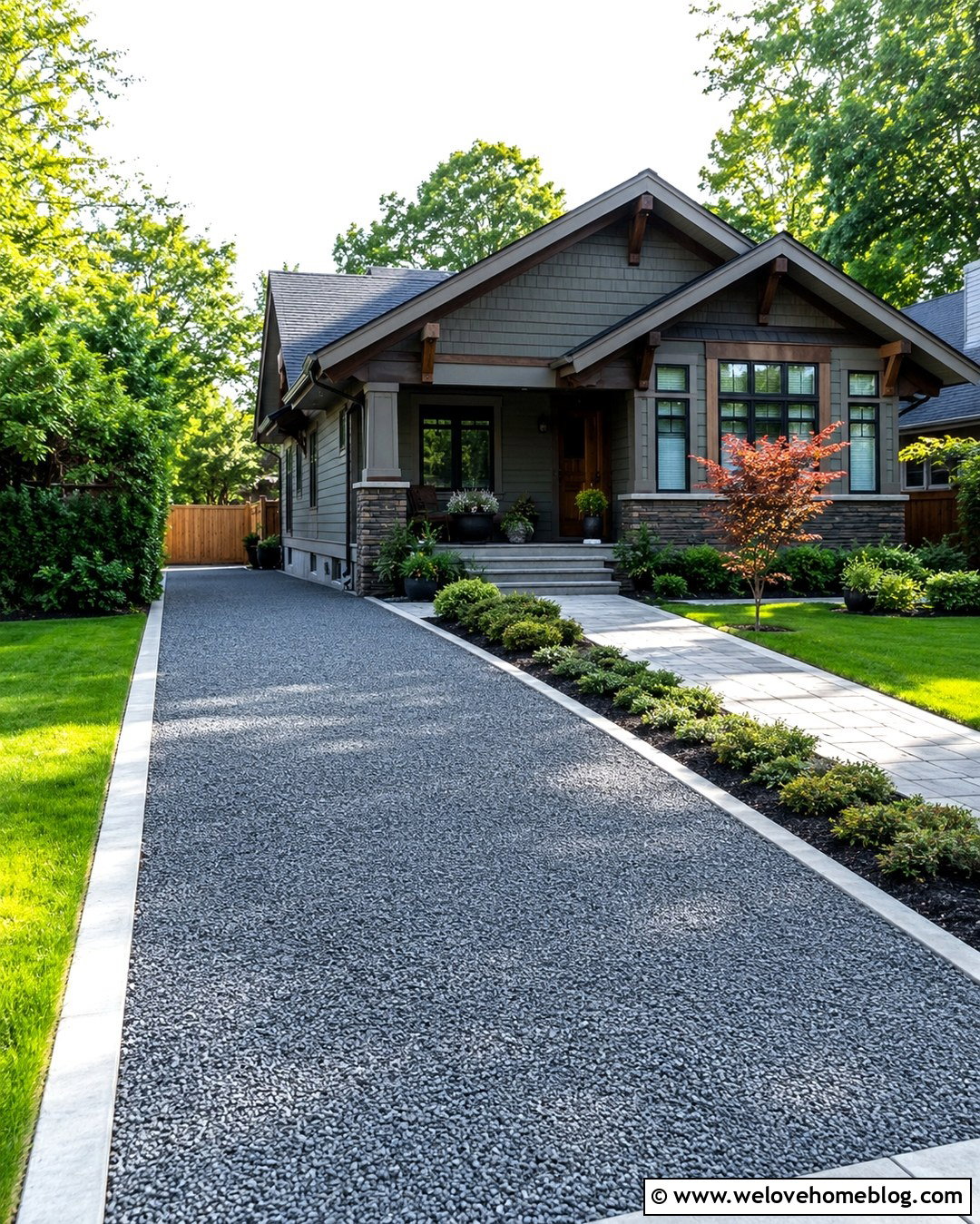
A gravel stabilization grid can make a small suburban driveway look neat while helping the aggregate remain evenly distributed. Fill a properly installed load-bearing grid with angular gray gravel rather than overly rounded stones. Keep the layout straight and simple, using flush concrete curbs at each side for additional containment. Narrow grass strips or low ground-cover beds can soften the edges without spilling into the driving area. Near the house, add a contrasting paver walkway that leads clearly to the front door. This layout is useful when you want the appearance and permeability of loose gravel with a more controlled surface. The base and grid must be selected for the expected vehicles and local soil conditions. A compact craftsman or ranch house provides an ideal backdrop for this organized, space-conscious driveway treatment.
10. Circular Gravel Driveway With A Landscaped Island
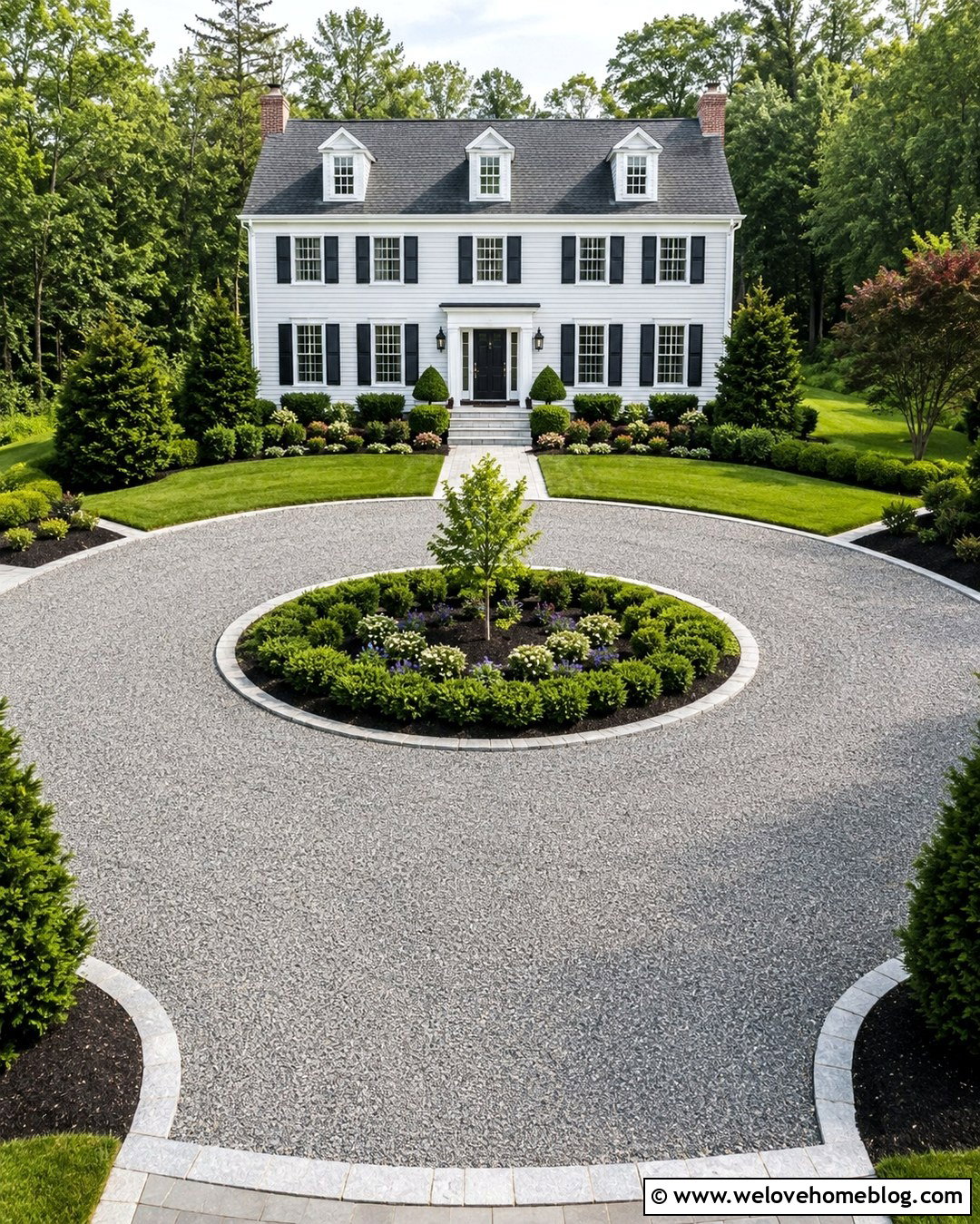
A circular gravel driveway creates a graceful arrival sequence and allows vehicles to leave without reversing toward the street. Fill the driving loop with compacted crushed granite or limestone and outline both edges with substantial stone setts. In the center, create a landscaped island with one small ornamental tree, low evergreen shrubs, and seasonal flowers that will not block visibility. The island should feel broad enough to anchor the design without making the driving lane uncomfortably narrow. Carry the stone border into a walkway leading from the loop to the front entrance. This arrangement works well with colonial, Georgian, Mediterranean, and large ranch homes. Choose gravel colors that relate to the house facade. The combination of a structured loop, contained aggregate, and restrained planting creates a balanced, impressive front-yard focal point.
11. Horseshoe Gravel Driveway With Tree-Lined Landscaping
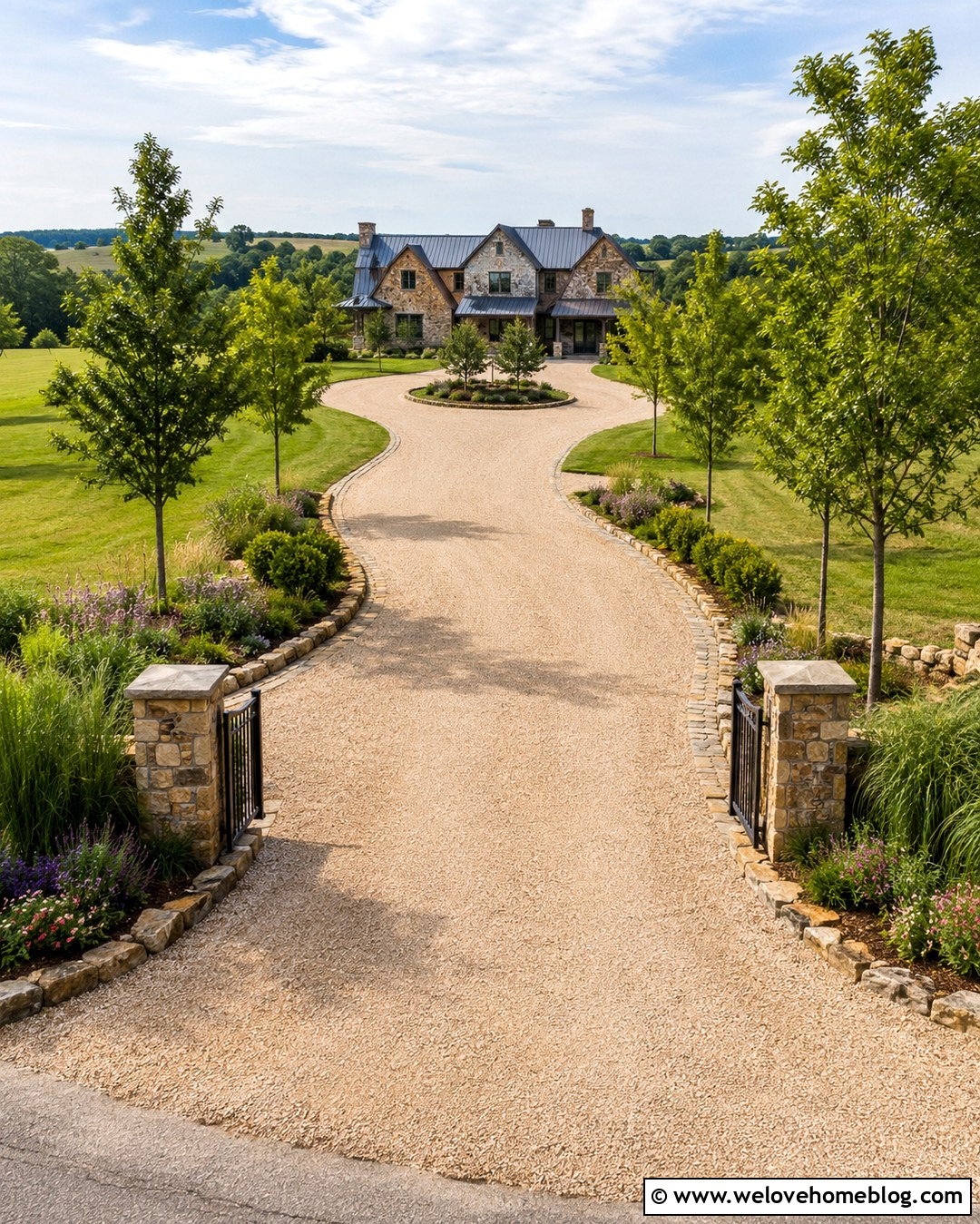
A horseshoe driveway offers two street connections and can make a wide country property easier to navigate. Use durable angular gravel across the full U-shaped route, with a compacted base designed for drainage and vehicle loads. Define the outside edge with natural fieldstone and the inside curve with a lower cobblestone border. Small deciduous trees planted at regular intervals can guide the eye toward the house, but keep them far enough from the drive to protect roots and preserve visibility. Fill the spaces between trees with native grasses or low flowering shrubs. Near the front steps, widen the driveway into a simple arrival court. This complete layout looks especially natural beside a country farmhouse, traditional ranch, or stone residence and gives a large front yard clear structure.
12. Gravel Driveway With Concrete Tire Tracks
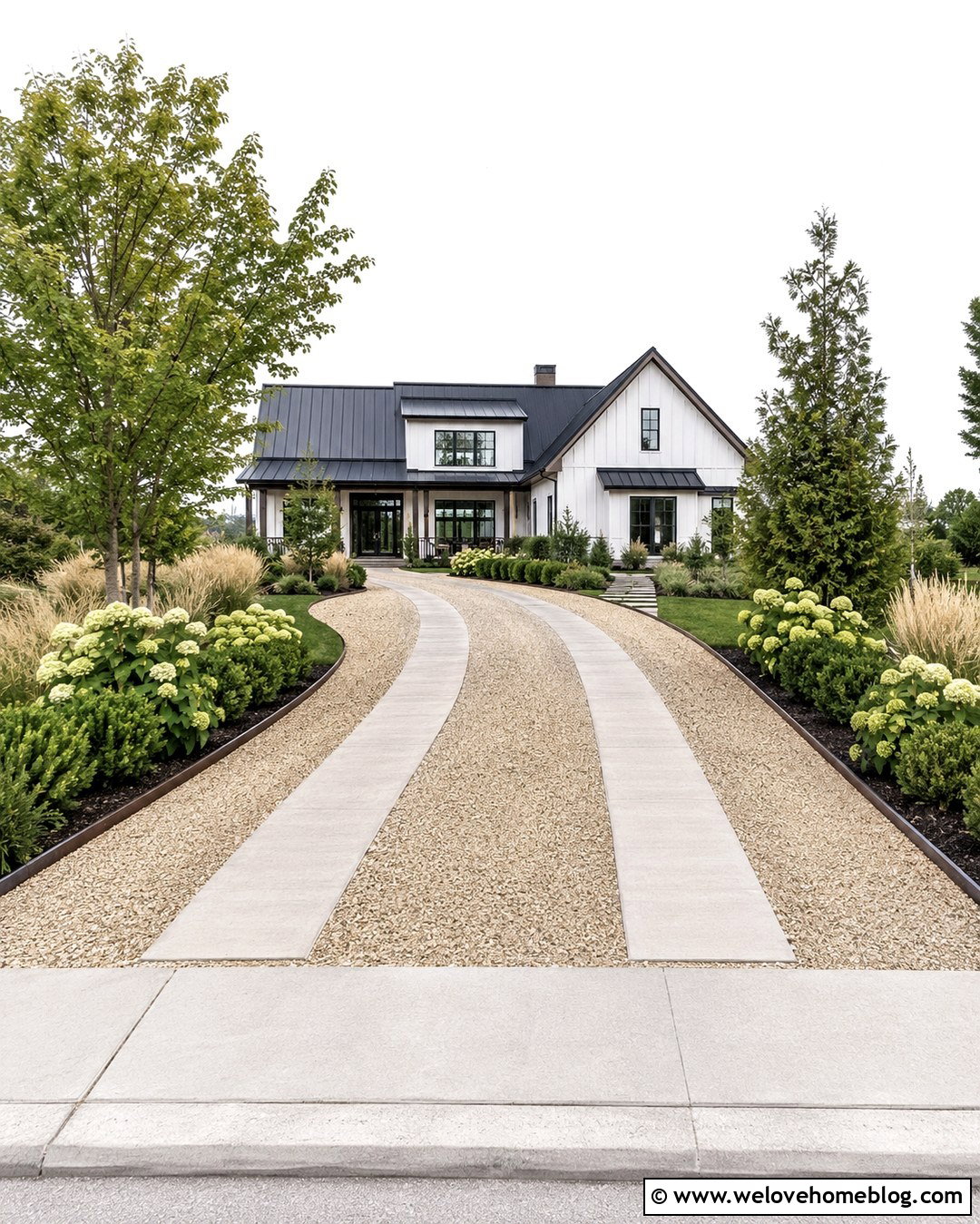
Concrete tire tracks provide firm driving lanes while allowing gravel to remain the dominant visual material. Install two continuous bands of broom-finished concrete within a surface of small angular gravel. The tracks should follow the vehicle route precisely, whether the driveway is straight or gently curved. Use steel or concrete edging around the outside perimeter to stop gravel from migrating into the lawn. Between the tracks, choose compact gravel that matches the surrounding surface rather than loose, oversized rock. This design pairs well with a modern farmhouse, renovated ranch, or contemporary country home. Add simple planting beds filled with ornamental grasses, compact hydrangeas, and low evergreen shrubs. The combination reduces disturbance along the primary wheel paths while preserving the softer texture and informal appearance associated with a full gravel driveway.
13. Gravel Driveway With A Belgian Block Apron
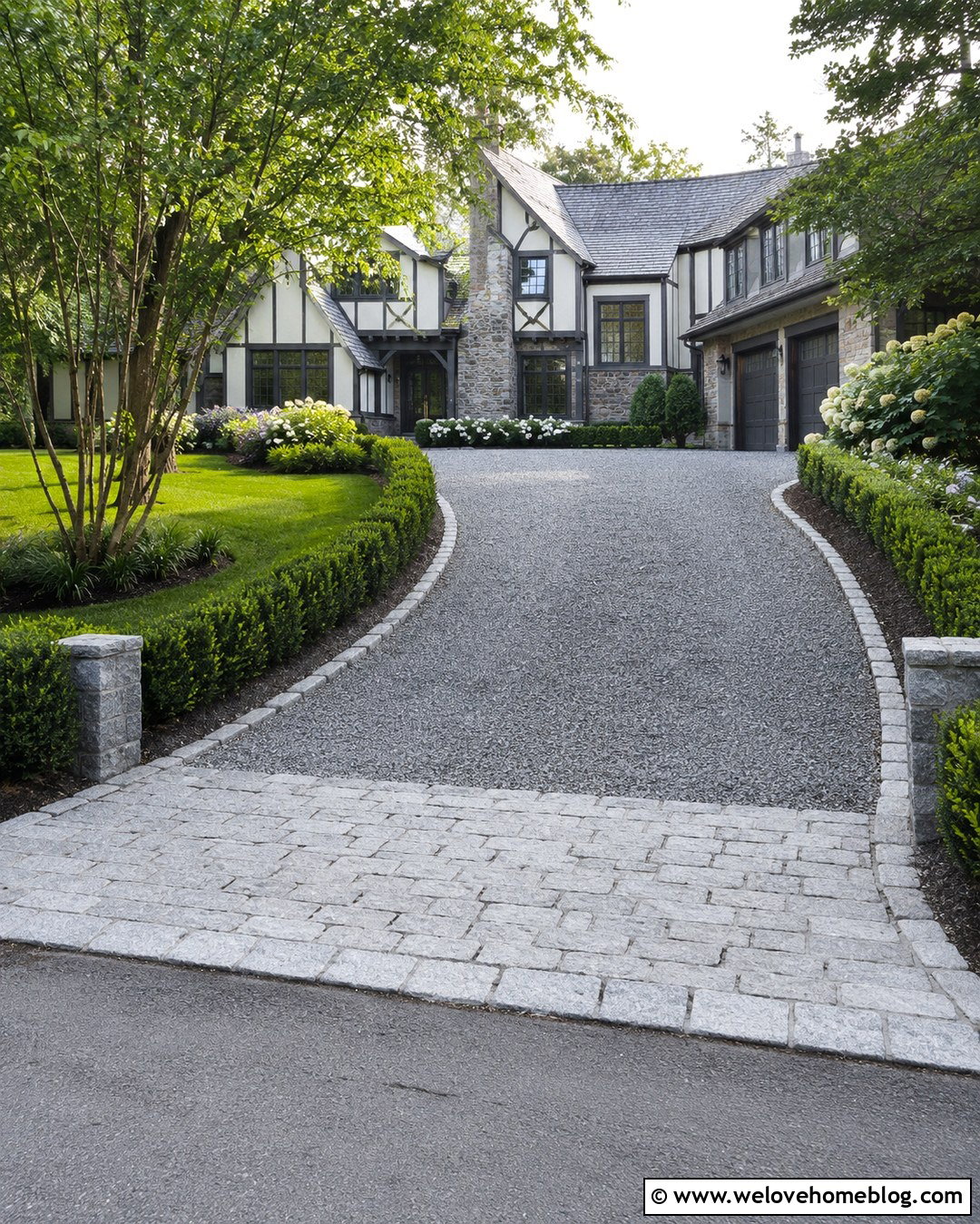
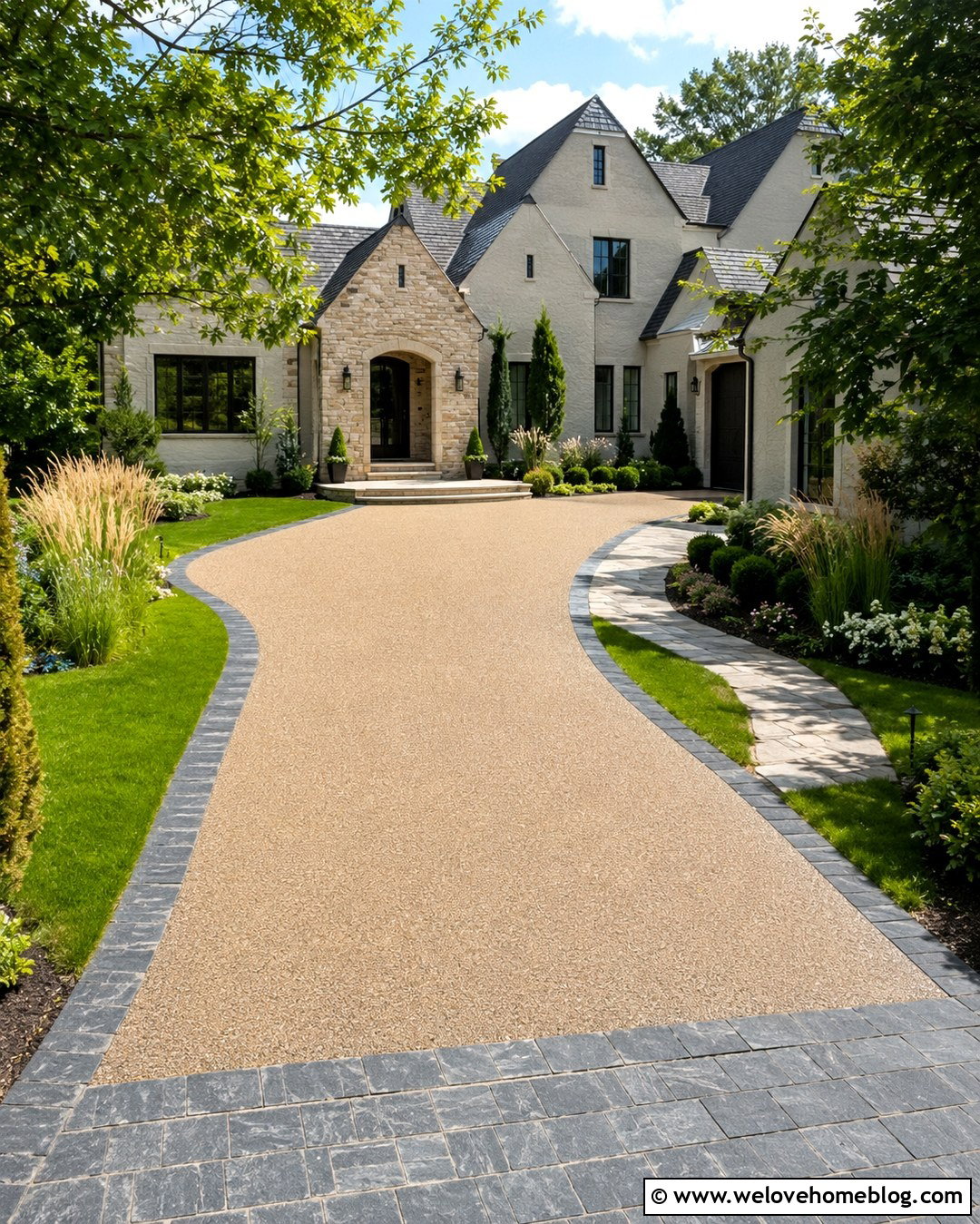
The entrance of a gravel driveway often experiences extra movement as vehicles turn in from the road. A Belgian block apron creates a strong, attractive transition before the main gravel surface begins. Use gray crushed stone for the driveway and install several rows of granite blocks across its full width at the curb. Continue a single line of matching blocks along both sides to contain the aggregate. A gently curved layout can lead toward a traditional brick, Tudor, or colonial home. Frame the entrance with low hedges and flowering shrubs instead of tall plants that might reduce visibility. Near the garage, repeat the Belgian block as a narrow threshold. This coordinated use of stone gives the driveway a finished appearance and helps visually connect the street, gravel approach, landscape, and architecture.
14. Gravel Driveway With A Brick Ribbon Border
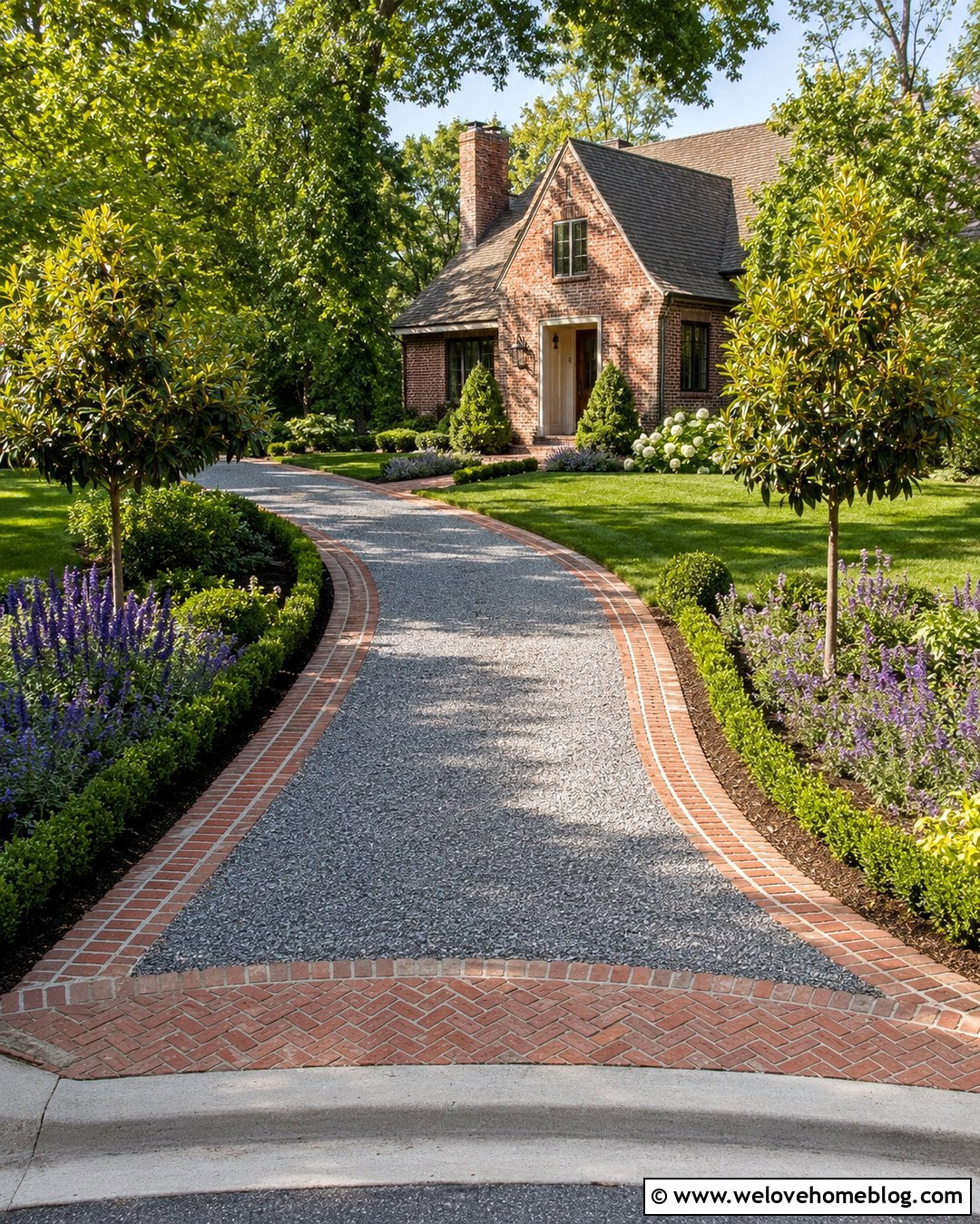
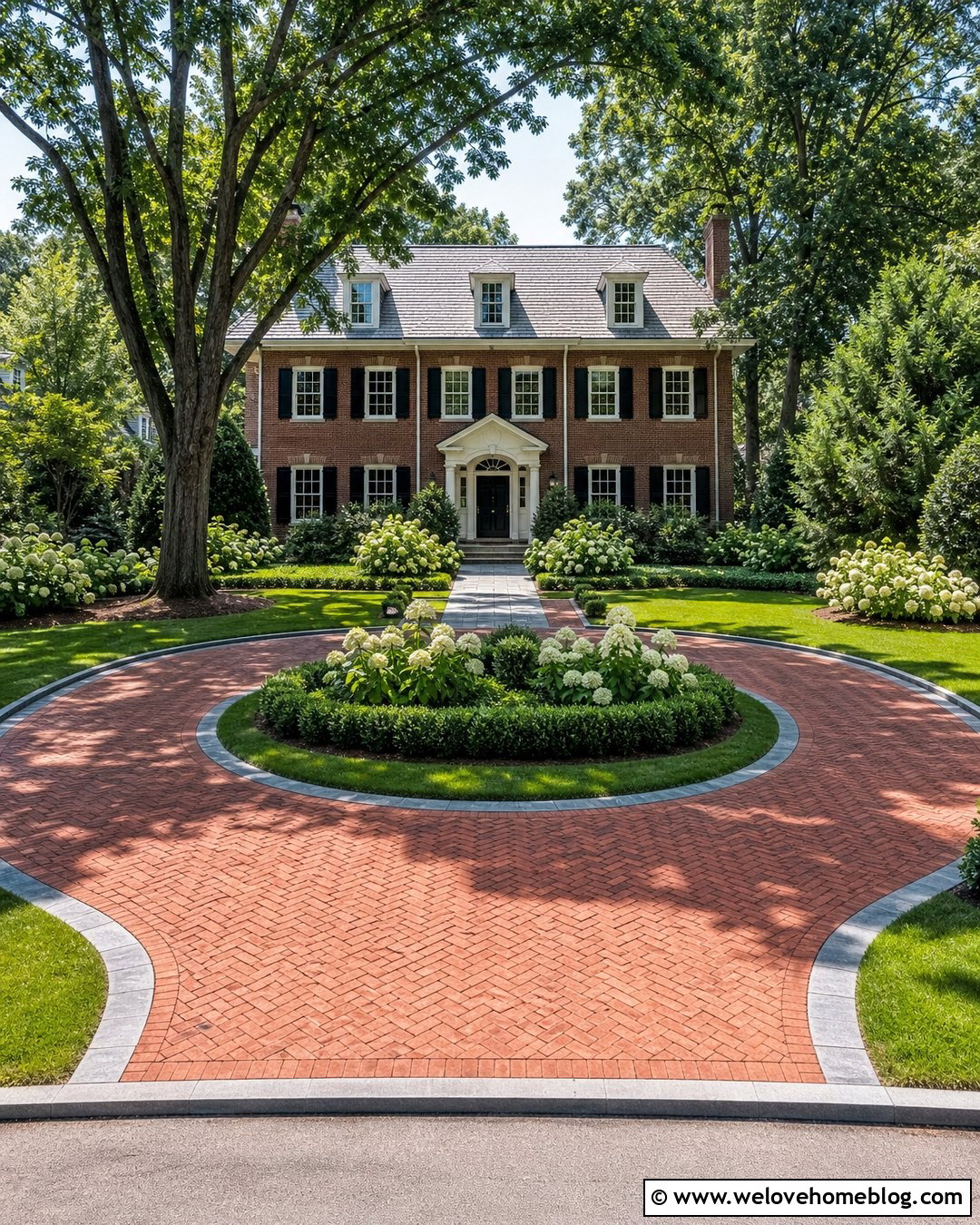
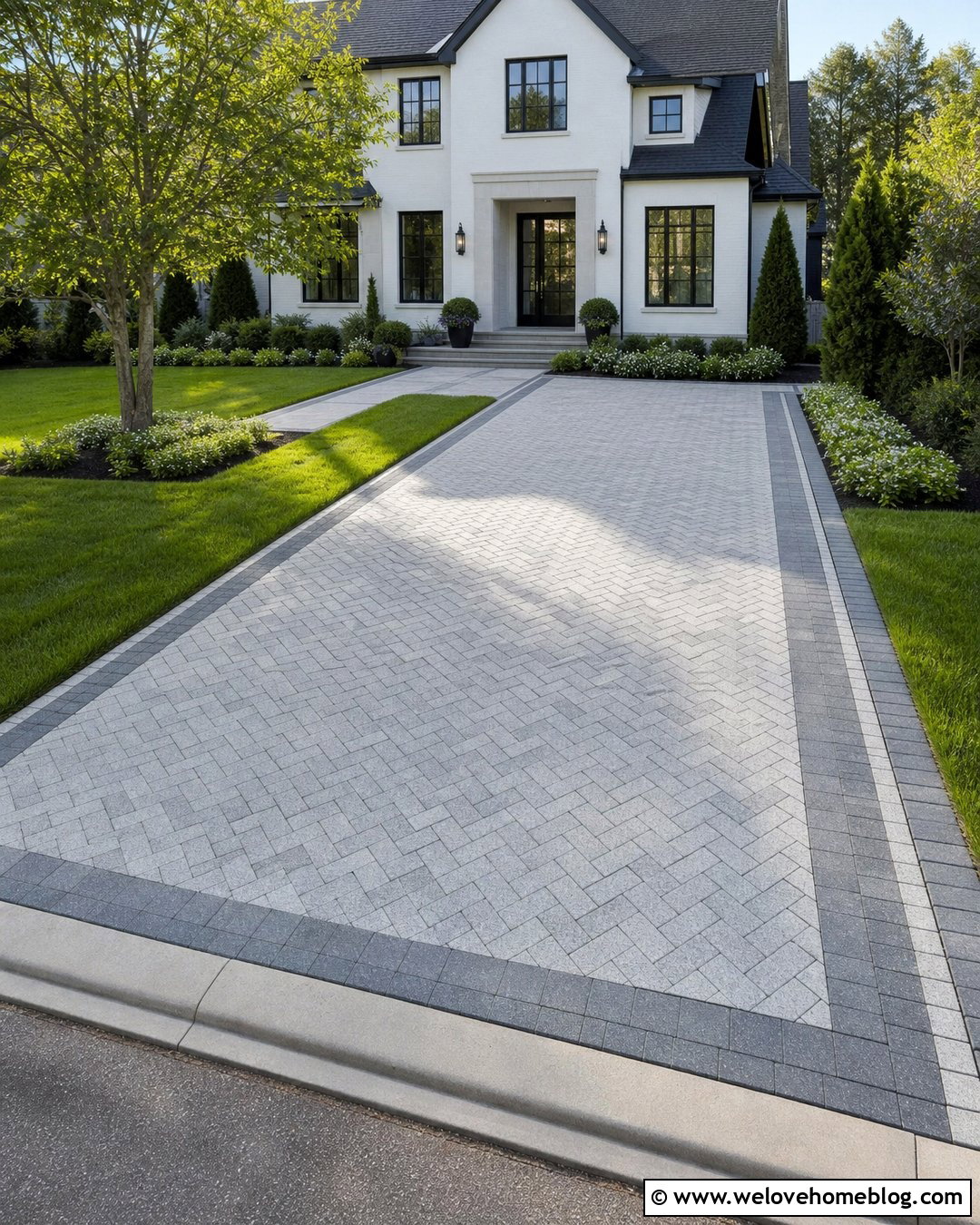
A brick ribbon adds color and definition without making a gravel driveway feel overly formal. Fill a straight or softly curved drive with warm gray crushed limestone, then install one or two rows of clay brick along the perimeter. Select brick that repeats a color found in the house, front steps, or chimney. At the entrance, widen the ribbon into a small brick fan or rectangular apron for greater visual impact. Plant boxwood, salvia, catmint, and compact ornamental trees in beds behind the edging. A separate brick walkway can cross the gravel near the house and guide visitors toward the door. Secure installation is important because loose or poorly supported edge bricks can shift. The completed driveway feels coordinated, welcoming, and suitable for craftsman, colonial, cottage, or traditional suburban architecture.
15. Gravel Driveway With Corten Steel Edging
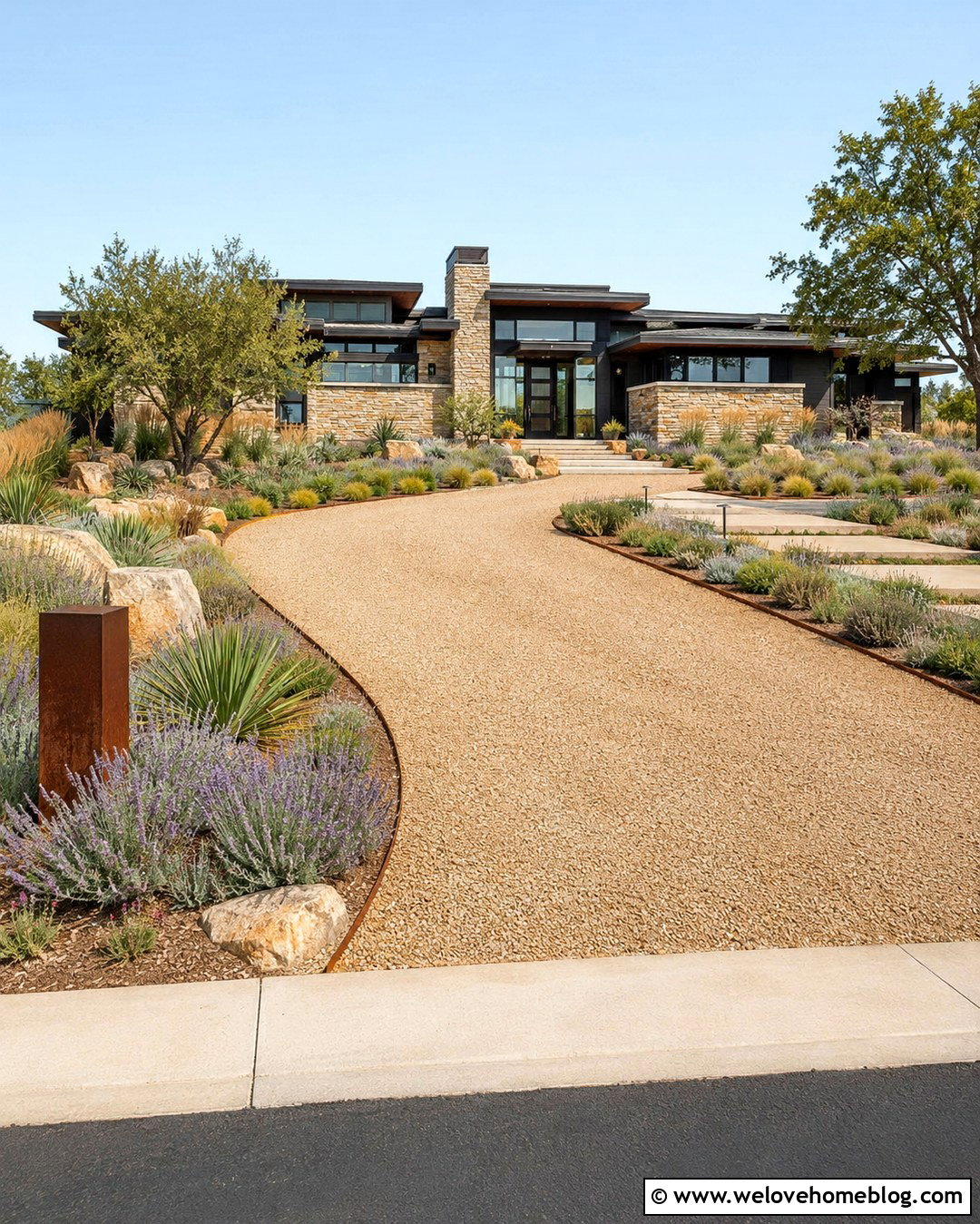
Rust-colored Corten steel creates a thin but visible border around a warm gravel driveway. Use buff crushed granite or stabilized decomposed granite on a broad, gently curved layout leading to a contemporary desert or prairie-style home. The steel edging should rise only enough to contain the aggregate without creating an unnecessary tripping edge. Repeat its warm tone through boulders, weathered planters, or an architectural address sign near the entrance. Surround the driveway with drought-tolerant grasses, sage, yucca, and low flowering perennials. A walkway of large concrete slabs can run through the planting toward the front door. This combination feels modern but not cold. The fine edging emphasizes the driveway’s shape, while the warm gravel and naturalistic planting soften the architecture and blend the hardscape into the broader landscape.
16. Gravel Driveway With A Rain Garden Border
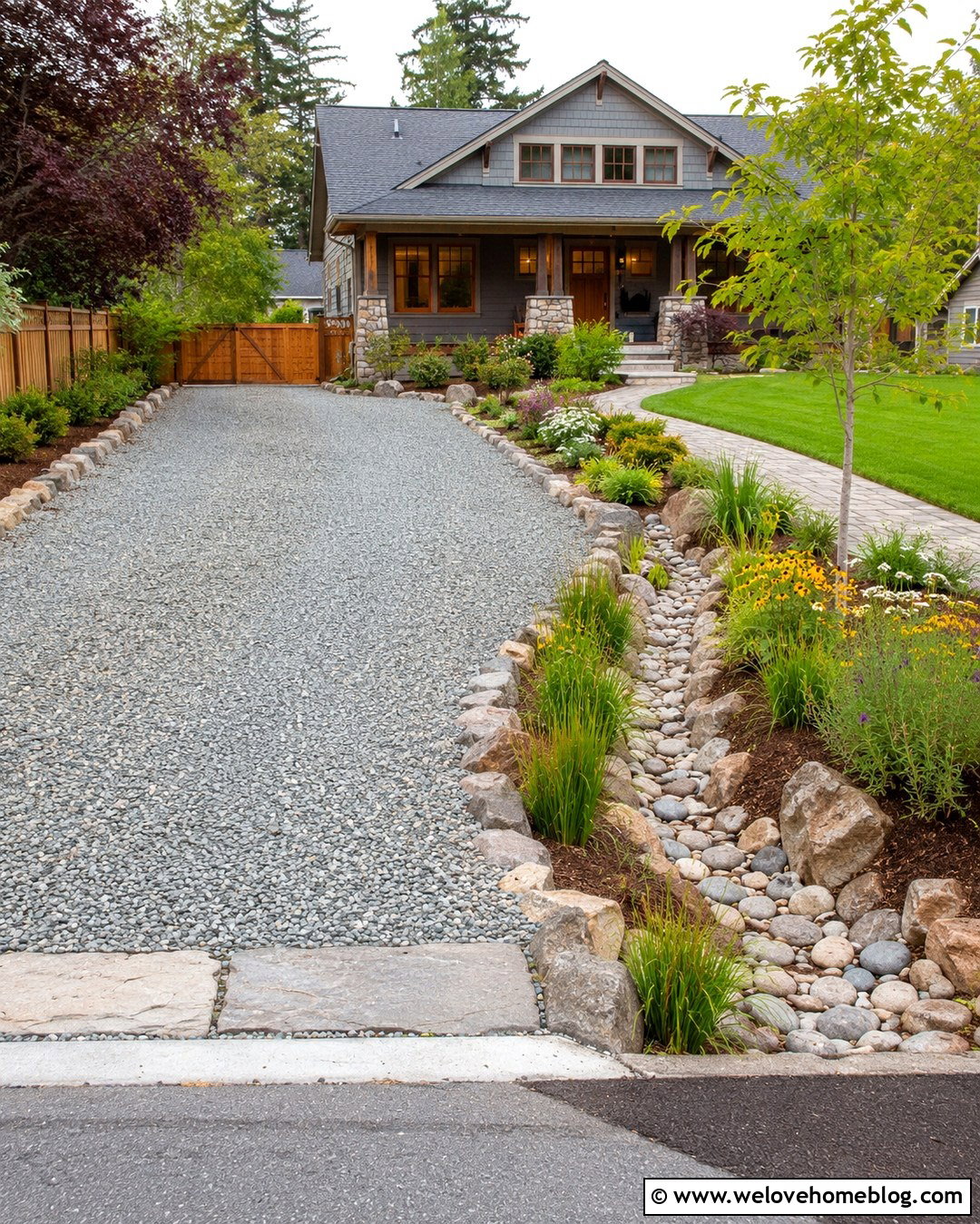
A driveway can become part of a thoughtful drainage plan when it is paired with a properly positioned rain garden. Use compacted angular gravel on a slightly crowned driveway so water moves toward a shallow planted area rather than collecting in tire ruts. Edge the driving surface with stone or concrete wherever runoff enters the garden to prevent erosion. Fill the lower bed with plants suited to temporary wet conditions in your region, and use taller grasses farther from street sightlines. A small stone channel can create an attractive transition between the gravel and planting. This layout works well with craftsman, cottage, and environmentally focused contemporary homes. Drainage requirements vary by soil, slope, and local regulations, so the grading should be planned carefully rather than relying on gravel alone to manage every storm.
17. Sloped Gravel Driveway With Retaining Walls
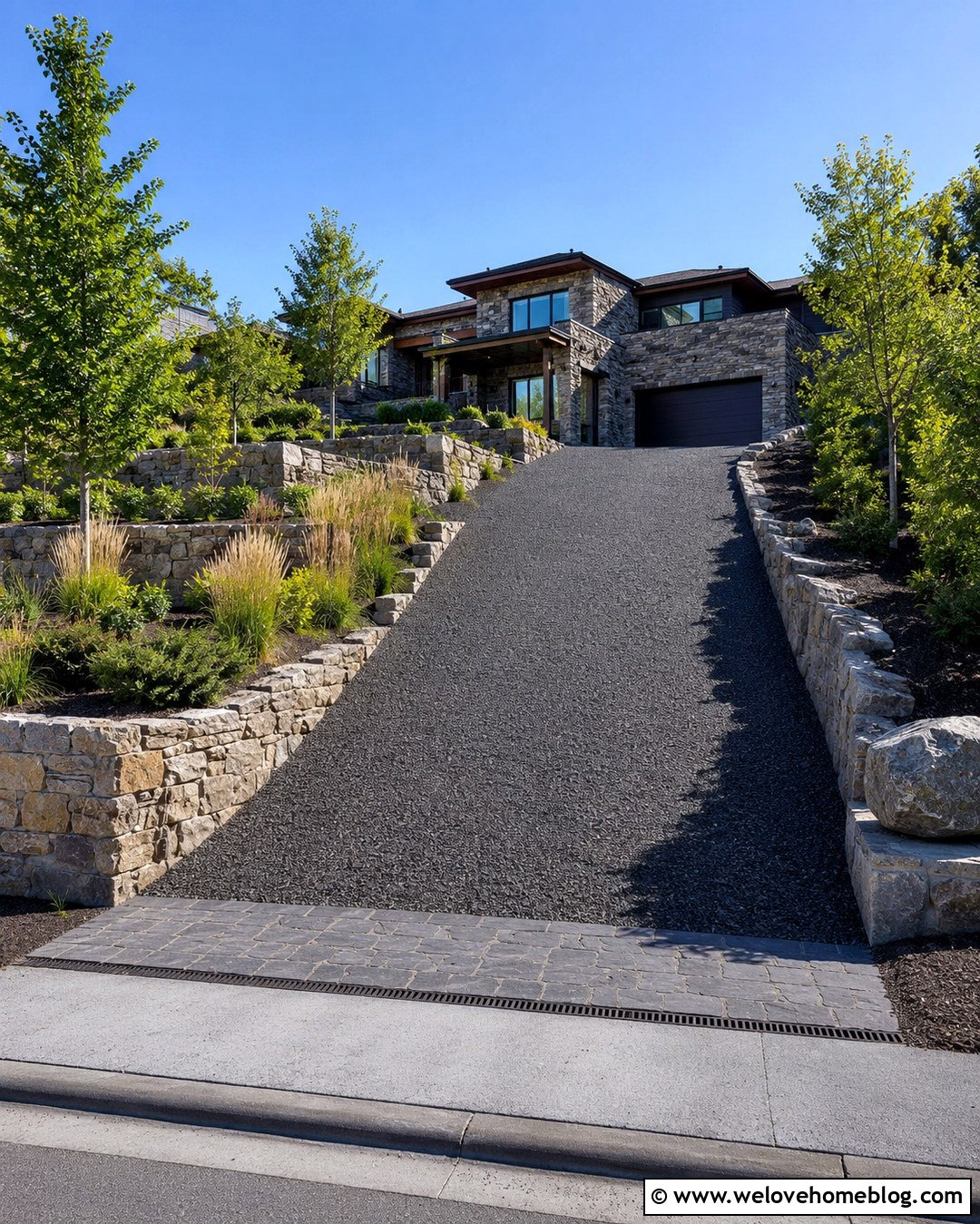
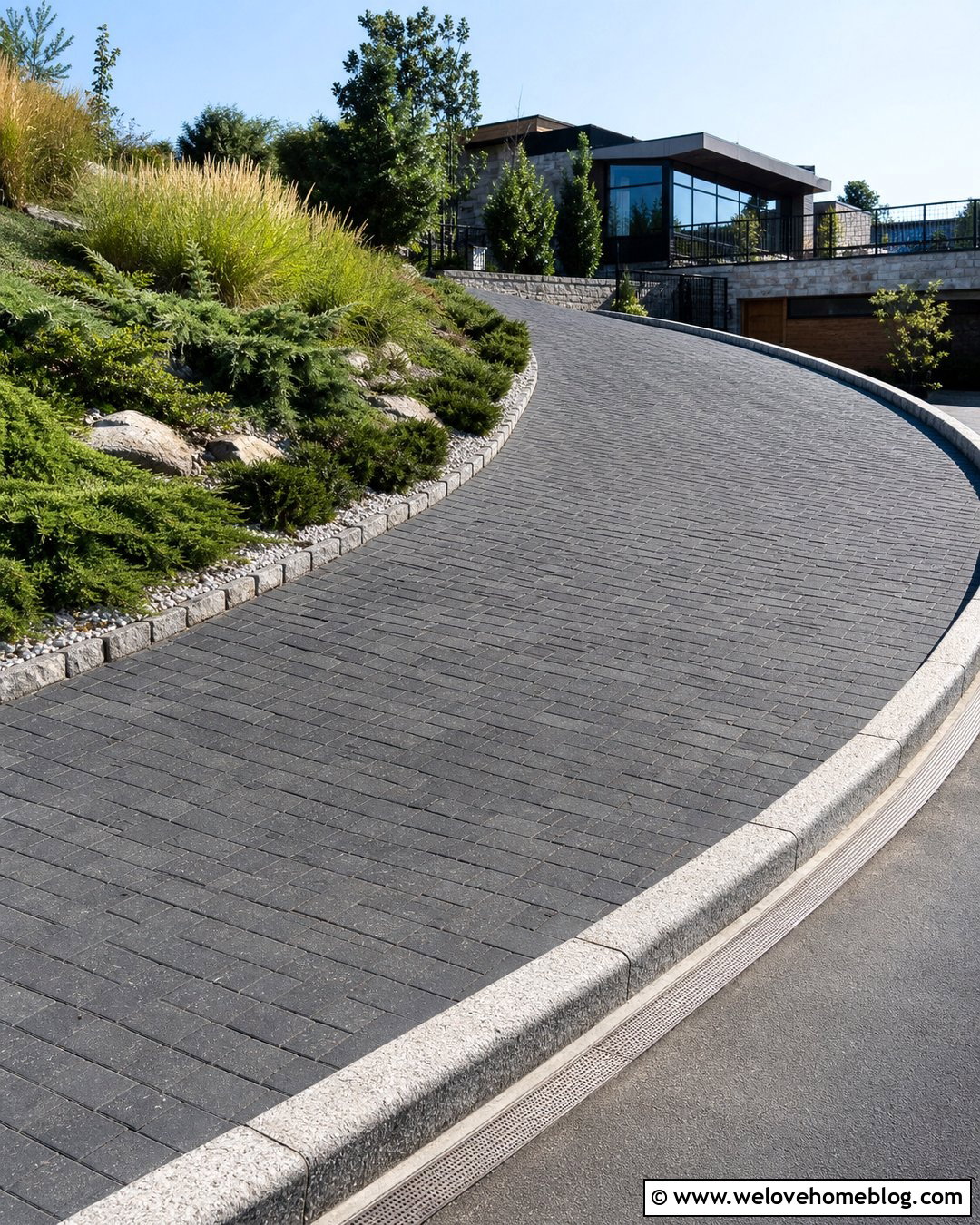
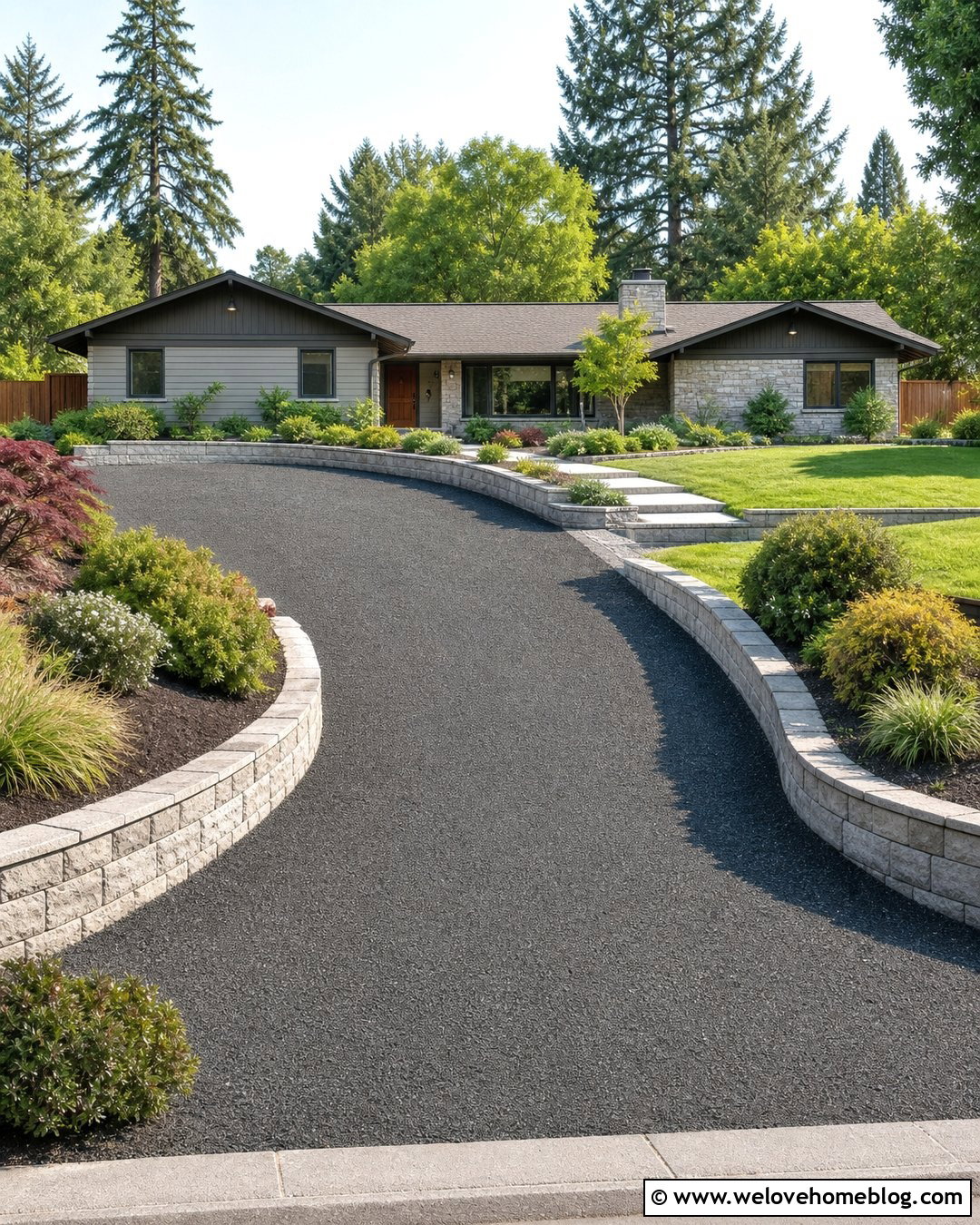
A sloped driveway needs a stable aggregate that resists rolling and displacement. Choose crushed angular granite, basalt, or limestone instead of rounded pea gravel or river rock. Install the material over a well-compacted base and use drainage features suited to the site. Low retaining walls can support raised planting beds along one or both sides while creating a clearly defined route to the house. Use textured concrete, natural stone, or masonry that matches the facade. At the bottom and top of the slope, paved aprons can protect areas affected by turning, braking, and concentrated runoff. Plant deep-rooted shrubs and ornamental grasses above the walls to soften the structure. The complete design combines surface stability, water control, containment, and landscaping rather than treating the steep gravel section as an isolated construction problem.
18. Narrow Gravel Driveway With Paver Edging
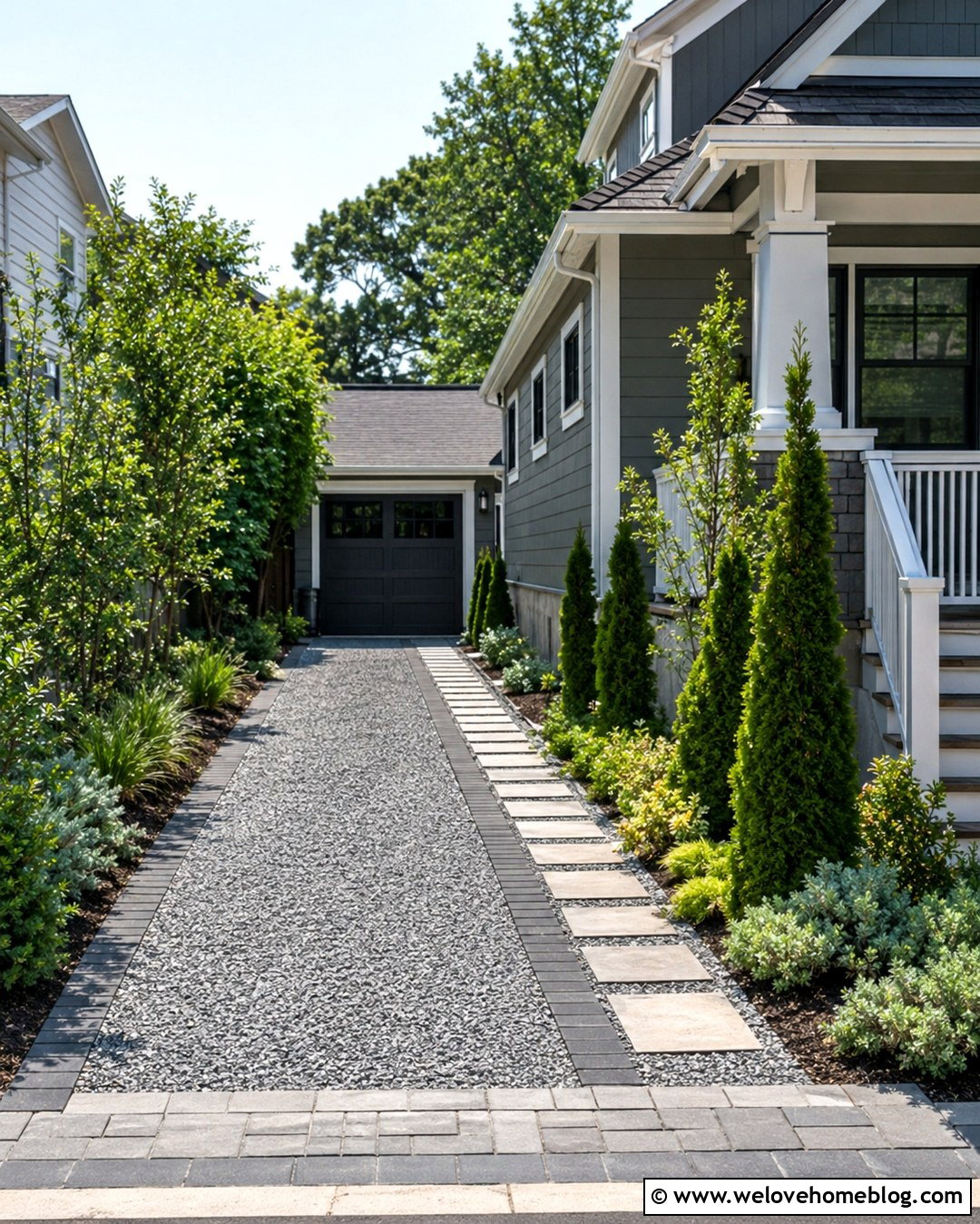
A narrow side driveway can still look purposeful when every material is carefully organized. Use small gray crushed stone on a straight route beside a compact bungalow, craftsman, or urban cottage. Install a slim paver border along both edges to keep the gravel separate from planting beds and neighboring lawn. Where space allows, add a narrow stepping-stone walkway on one side instead of asking pedestrians to share the driving surface. Choose upright shrubs, columnar evergreens, and low ground covers that will not spread into the vehicle clearance zone. A wider gravel parking pad can open near the rear or side garage. Matching pavers at the street and garage thresholds complete the design. The limited palette prevents the small space from looking busy while giving the narrow driveway a crisp, maintained appearance.
19. Large Gravel Motor Court With Stone Borders
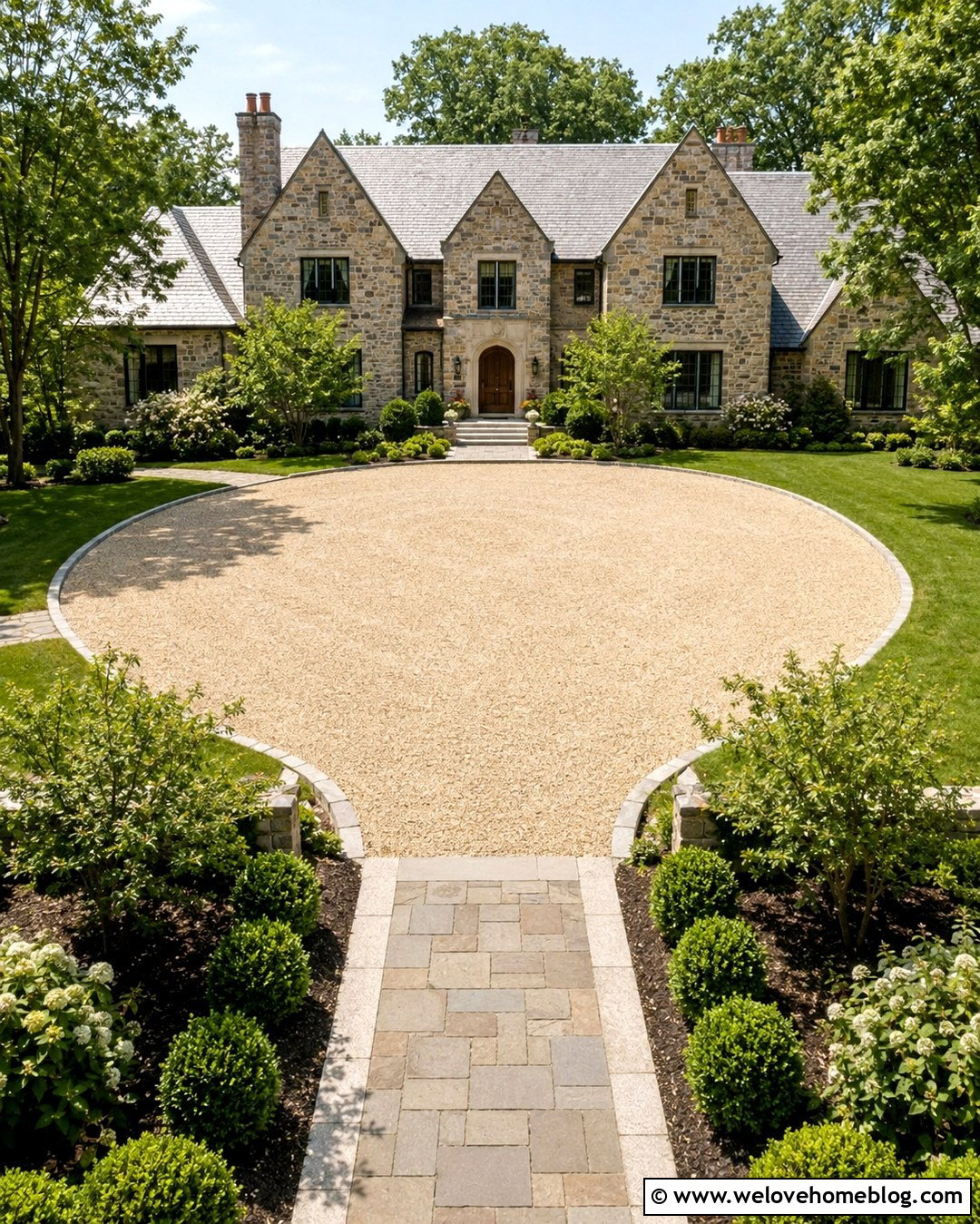
A broad gravel motor court can provide turning and guest parking space without looking like an oversized paved lot. Use compacted crushed granite in a medium gray or warm beige tone and define the perimeter with heavy stone curbing. Shape the court as an oval, rounded rectangle, or generous forecourt in front of a large traditional home. Create a direct paver walkway from the parking area to the entrance so visitors do not have to cross loose gravel in formal shoes. Plant large shrubs and small trees around the outside, leaving the center open for safe vehicle movement. A stone fountain, planter, or tree may anchor the layout only when there is enough turning clearance. Repeating the border stone on steps, walls, and pillars will unify the complete arrival area.
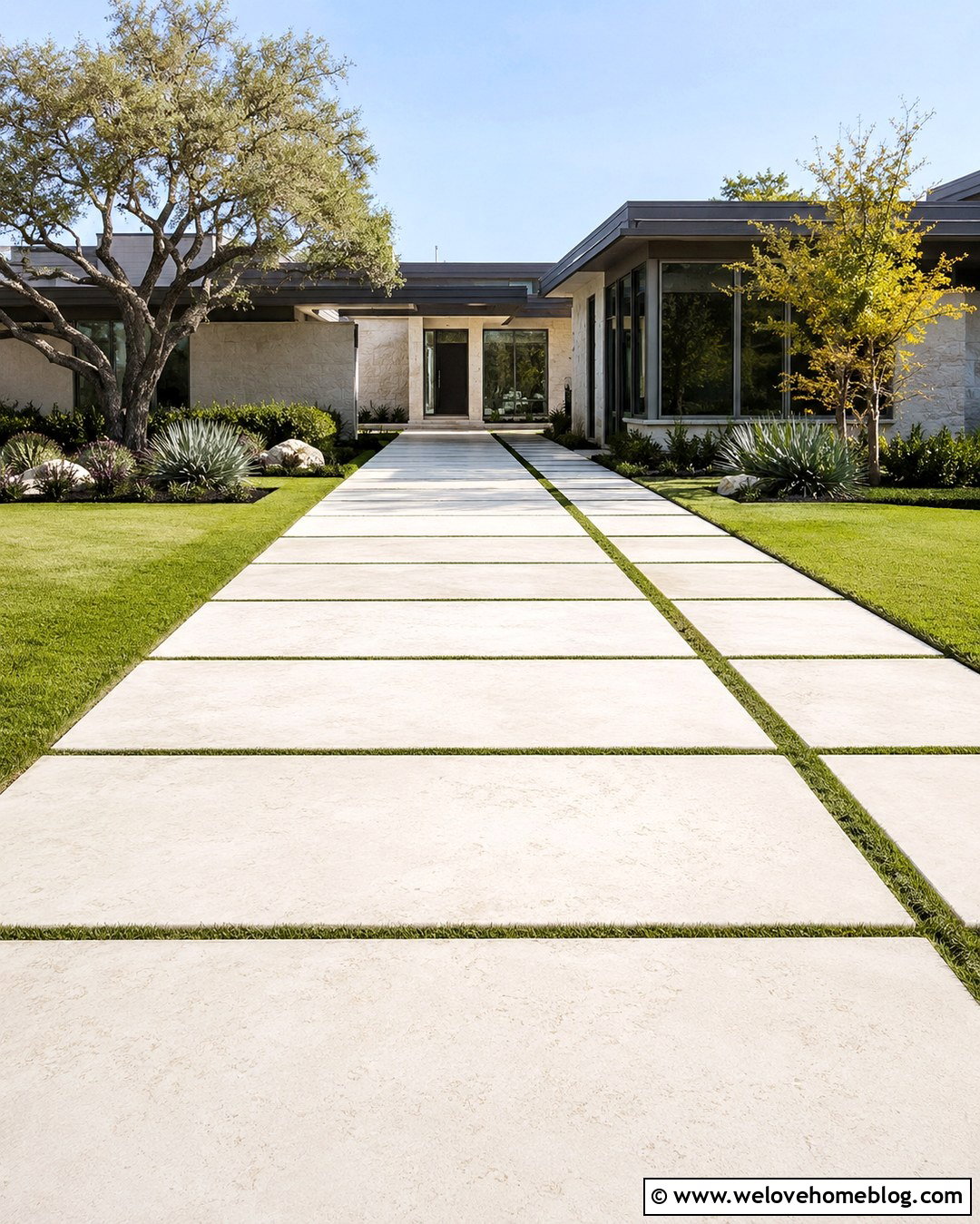
20. Mixed Gravel Driveway With A Gated Entrance
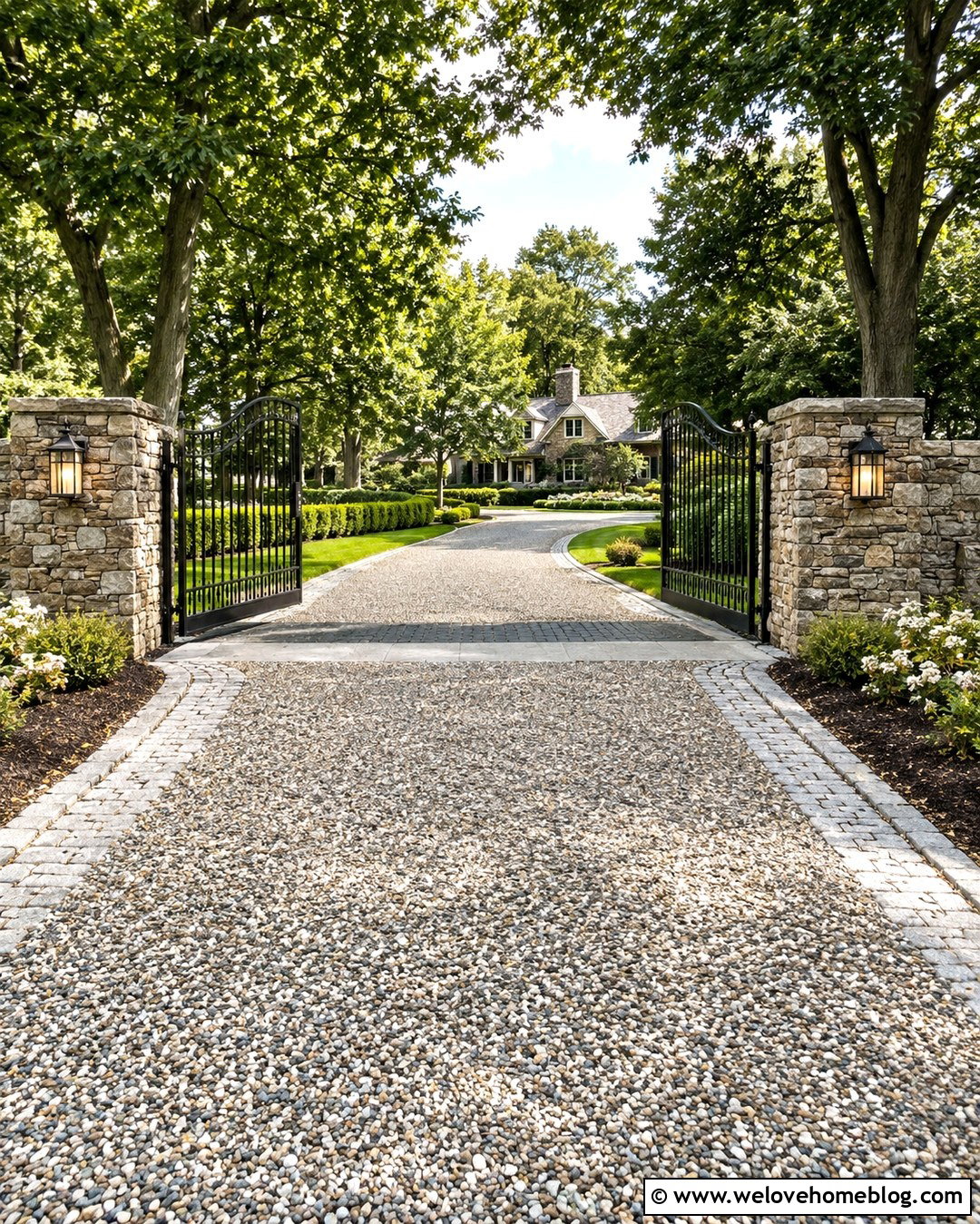
A gated gravel entrance feels most cohesive when the gate, pillars, surface, and landscape share a clear visual language. Use a mixed tan-and-gray crushed stone driveway leading through substantial brick or stone pillars. Install a paver apron beneath the gate so moving parts and vehicle stopping areas are not surrounded by shifting aggregate. Continue cobblestone edging from the entrance toward the house, following a long straight or sweeping curved layout. Set the gate back far enough for safe access based on the property and local requirements. Layer the surrounding landscape with lawn, shade trees, hedges, and low entrance beds that preserve visibility. Lantern-style fixtures or understated modern lights can match the home’s architecture. This design creates a defined boundary while keeping the gravel approach warm, natural, and inviting.
Conclusion:
The best gravel driveway is more than a layer of attractive stone. It combines a load-supporting base, suitable gravel, dependable edging, effective drainage, and landscaping that complements the house. Angular crushed materials usually make the most practical driving surfaces, while rounded or decorative gravel should be carefully contained and used over a stable foundation. Brick ribbons, cobblestone borders, steel edging, paved aprons, gates, rain gardens, and planting beds can give the driveway a deliberate finished appearance. Use these **20 Gravel For Driveway Ideas** to compare colors, layouts, and complete landscape combinations. Before installation, evaluate your soil, slope, vehicle use, snow-removal needs, local regulations, and available maintenance time so the chosen design remains functional and attractive.

Related posts:
Leave a Reply