
A loose stone surface can look relaxed, welcoming, and expensive when its boundaries feel intentional. The best gravel driveway edging does more than create a clean line. It helps contain migrating stones, separates gravel from lawns and planting beds, and connects the driveway to the home’s architecture. Raised borders provide stronger containment, while flush edges make mowing and vehicle access easier. Material also matters. Brick and cobblestone feel traditional, steel suits contemporary homes, and timber creates a softer country look. Proper installation is equally important because weak or shallow edging may shift under regular vehicle traffic. () Whether your entrance is straight, curved, wide, or compact, this collection of **20 gravel driveways edging ideas** offers a complete look for every setting.

1. Gravel Driveway With Brick Edging
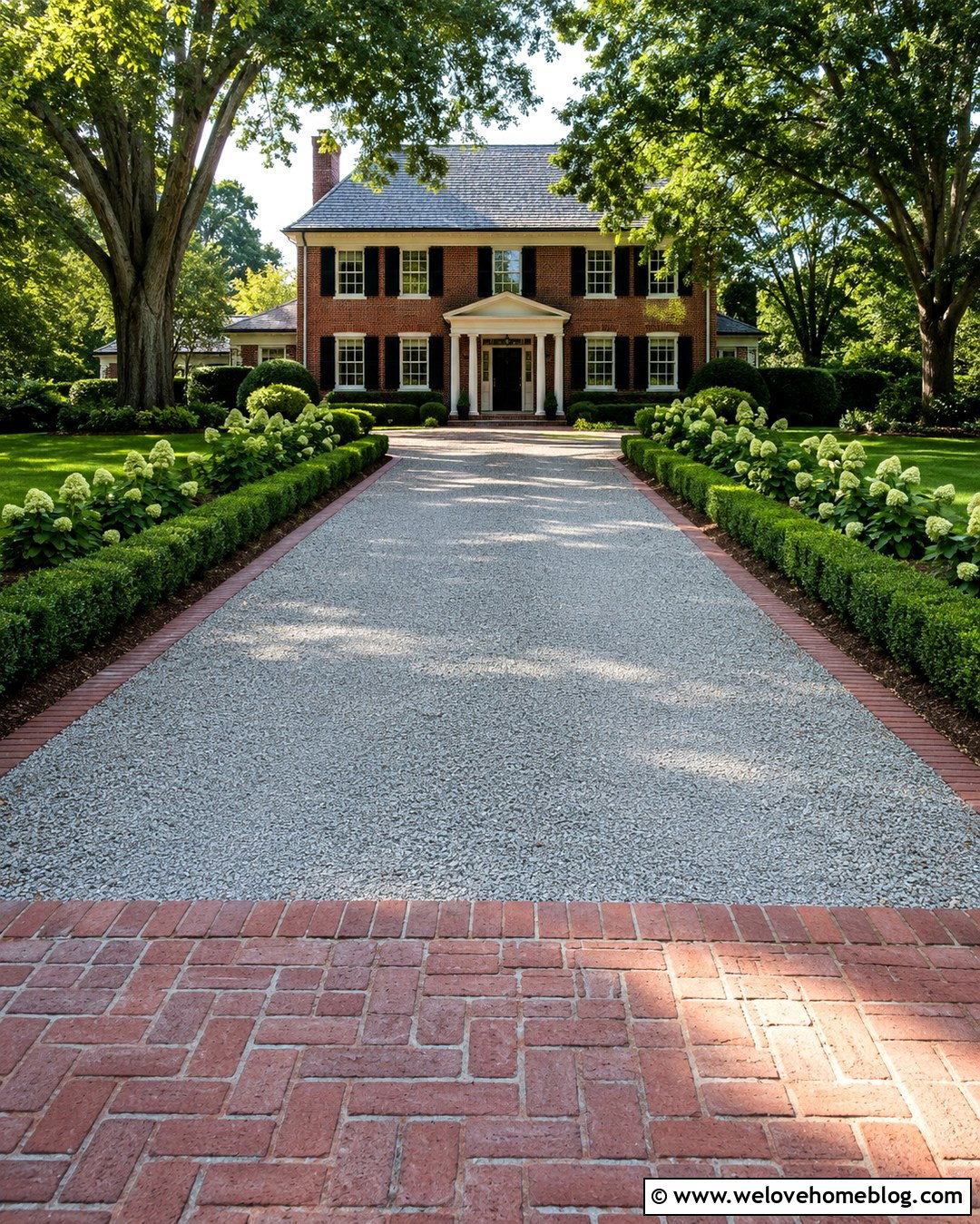
Warm red brick creates a crisp contrast against pale gray or cream gravel. This combination works especially well with Colonial, Cape Cod, and traditional brick homes. Lay the bricks lengthwise for a simple border or use a soldier-course pattern for a stronger visual line. A straight driveway can feel more welcoming when the brick edging continues around nearby planting beds and connects to the front walkway. Keep the brick slightly raised where gravel tends to spread, but install it nearly flush beside lawn areas that require mowing. Compact the base beneath the bricks carefully so the border does not dip or separate. Finish the complete look with clipped boxwoods, hydrangeas, and a matching brick apron near the street. ()
2. Gravel Driveway With Cobblestone Edging
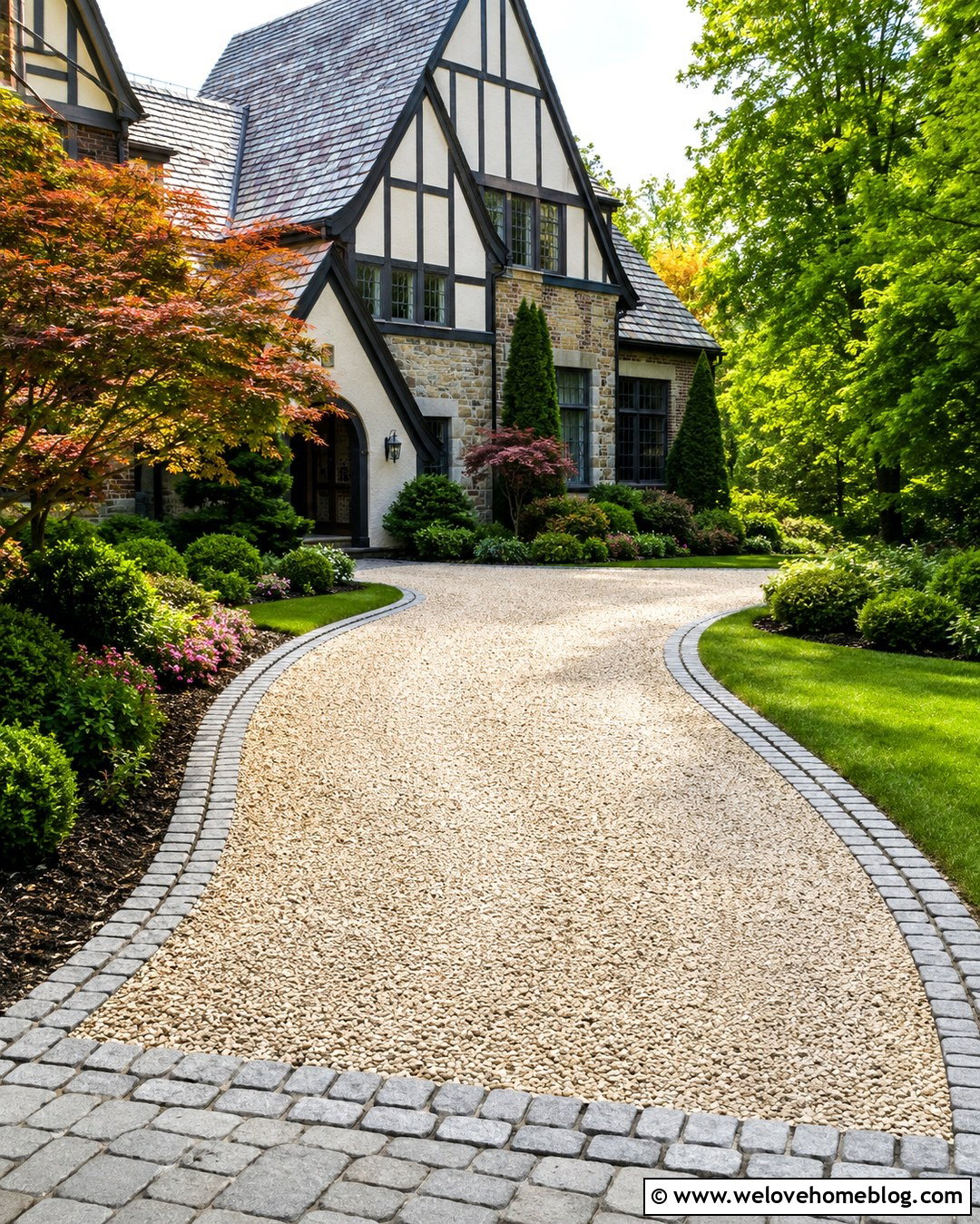
Cobblestone edging gives a gravel driveway a durable, established appearance without making it feel overly formal. Gray granite cobbles pair beautifully with crushed granite, limestone, or charcoal gravel. Use one row along a narrow driveway or two rows where a wider, more prominent border suits the scale of the home. On a curved approach, small cobbles can follow the bend more smoothly than long edging pieces. Set the stones on a stable compacted base and maintain a consistent height to create an orderly finish. A cobblestone apron at the road can repeat the edging and strengthen the entrance visually. Surround the driveway with lawn, evergreen shrubs, and small ornamental trees for a timeless design that complements Craftsman, Tudor, and cottage homes. ()
3. Gravel Driveway With Steel Edging
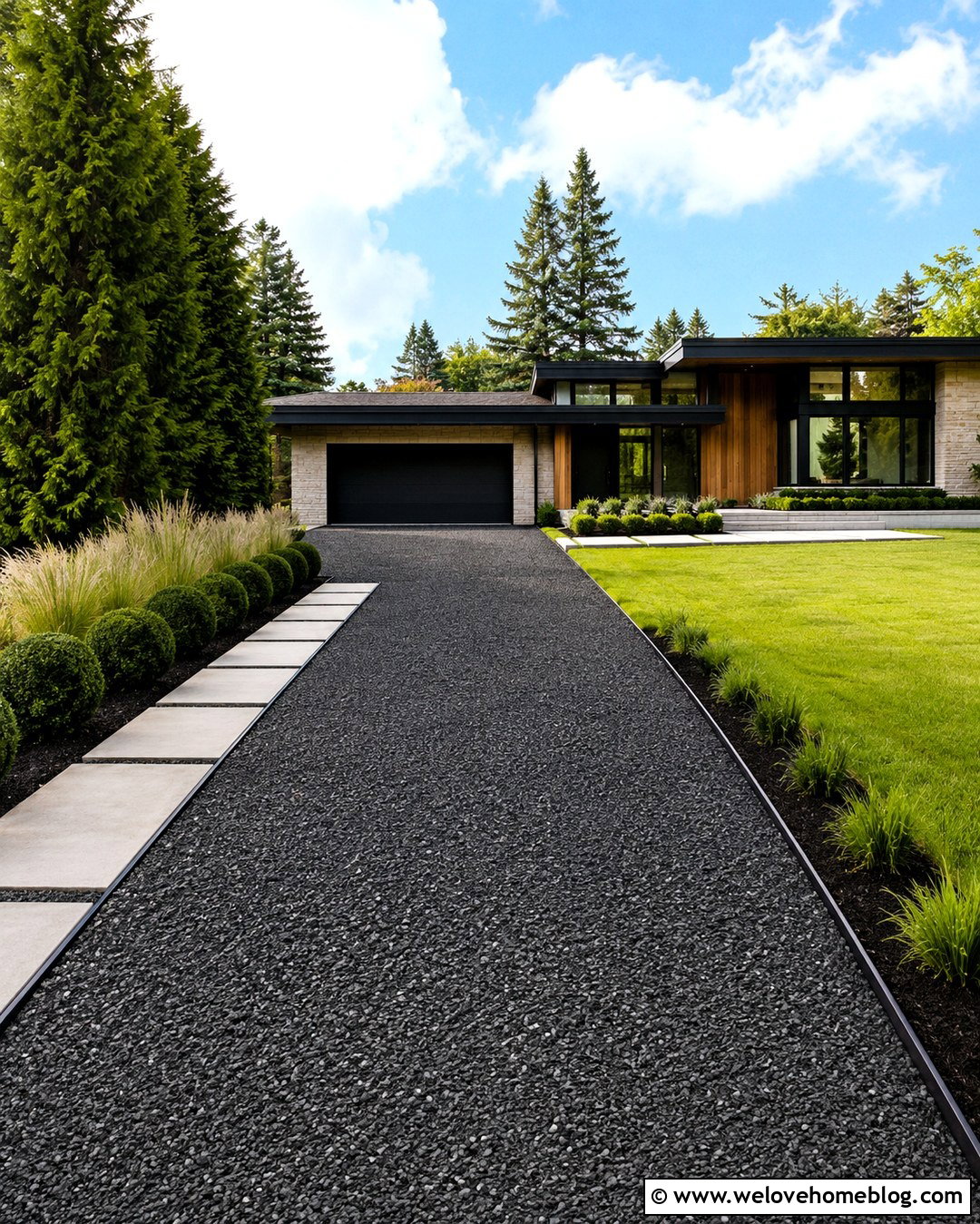
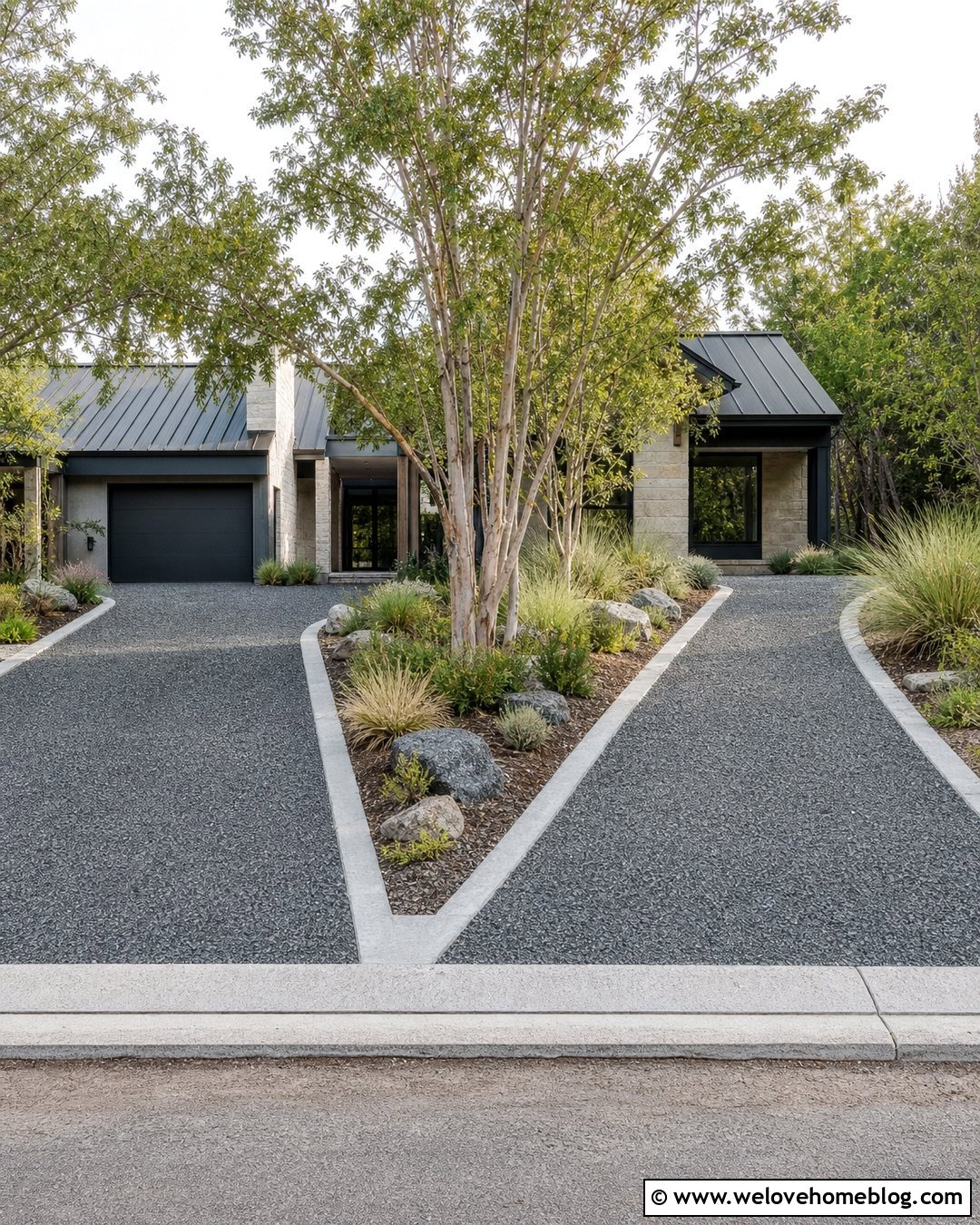
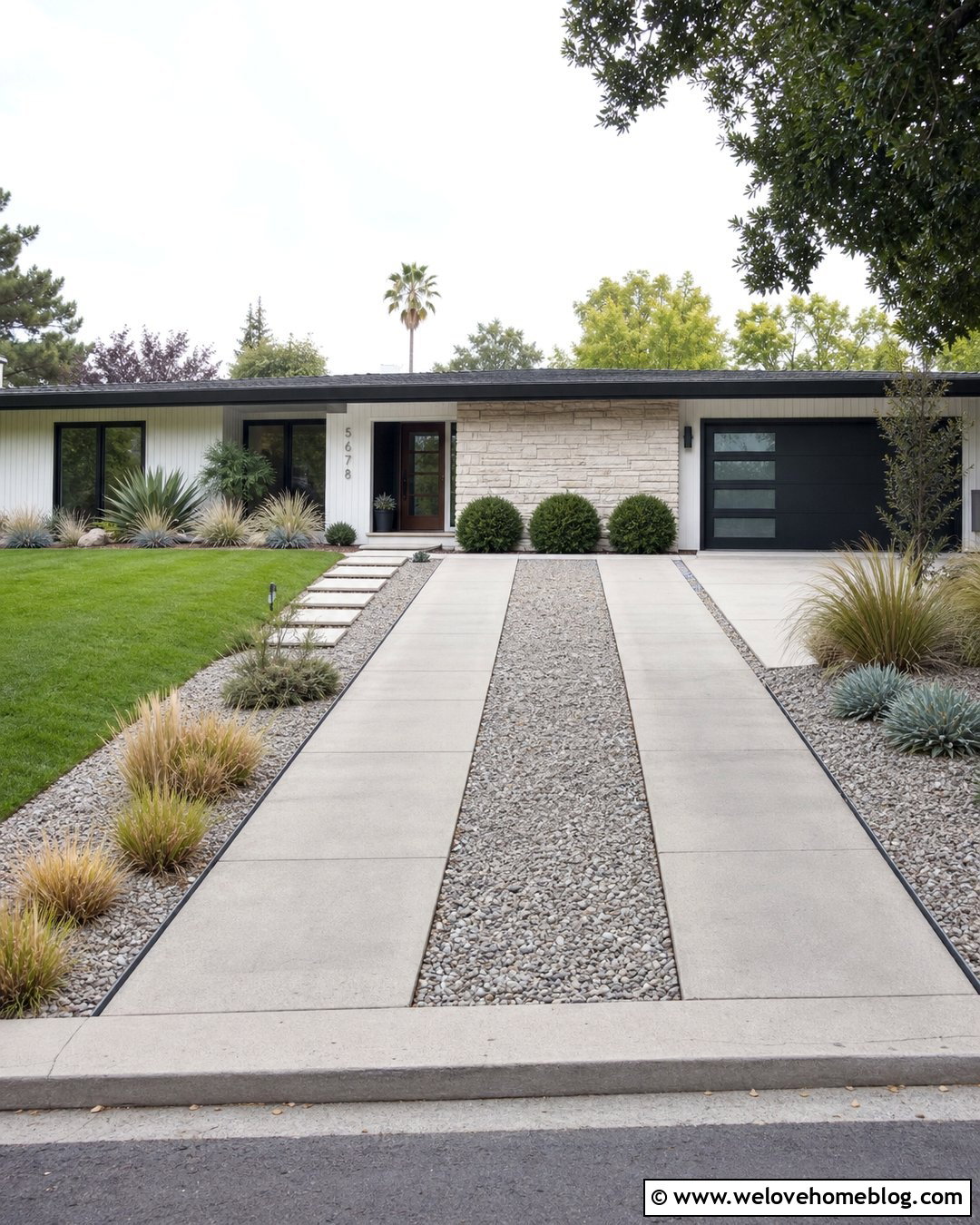
Slim steel edging is a practical match for a modern gravel driveway because it creates definition without adding a heavy decorative border. Dark steel nearly disappears beside charcoal gravel, while weathering steel introduces a warm rust-colored line against pale crushed stone. Use it along a straight or gently curved driveway leading to a modern, midcentury, or industrial-inspired house. The top should remain visible enough to retain gravel but not so high that it becomes an awkward obstacle. Choose heavy-duty edging designed for demanding landscape applications rather than thin decorative garden strips. Secure it firmly and create smooth curves without sharp projections. Ornamental grasses, structured evergreens, concrete stepping pads, and broad planting beds will complete the clean, contemporary setting. ()
4. Gravel Driveway With Timber Edging
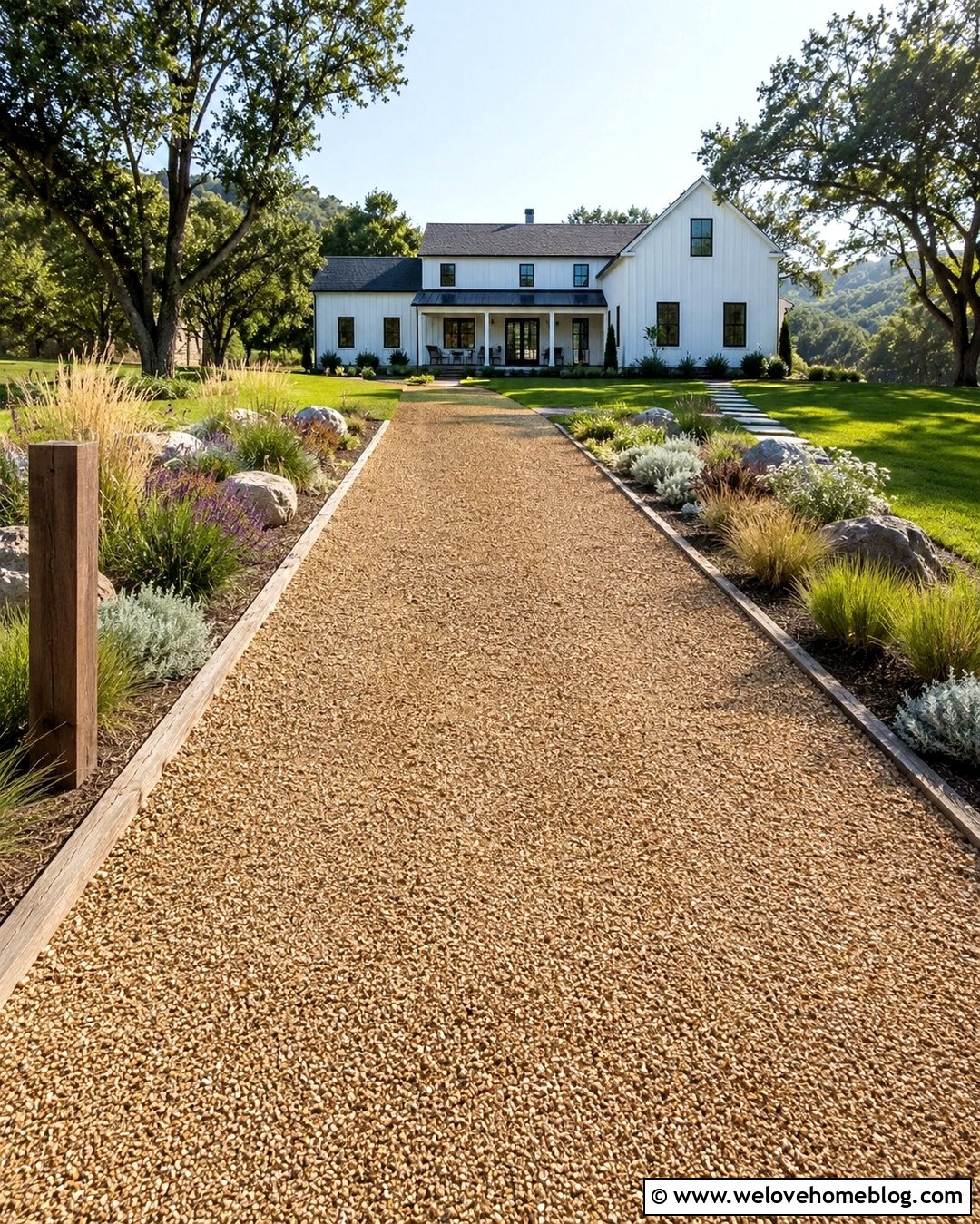
Landscape timbers bring warmth and an informal country character to a gravel driveway. They look especially natural beside brown gravel, crushed granite, or mixed tan stone leading to a farmhouse, cabin, or ranch home. Run the timbers along a straight drive, or use shorter sections to form gradual curves. Secure every piece with suitable spikes and provide a compacted base so the border stays aligned. Because wood is exposed to damp soil and changing weather, select material rated for ground contact and plan for eventual replacement. Soften the long horizontal lines with native grasses, flowering perennials, and occasional boulders. A matching timber address post near the entrance can tie the border into the overall landscape without making the design feel too coordinated. ()
5. Gravel Driveway With Concrete Curb Edging
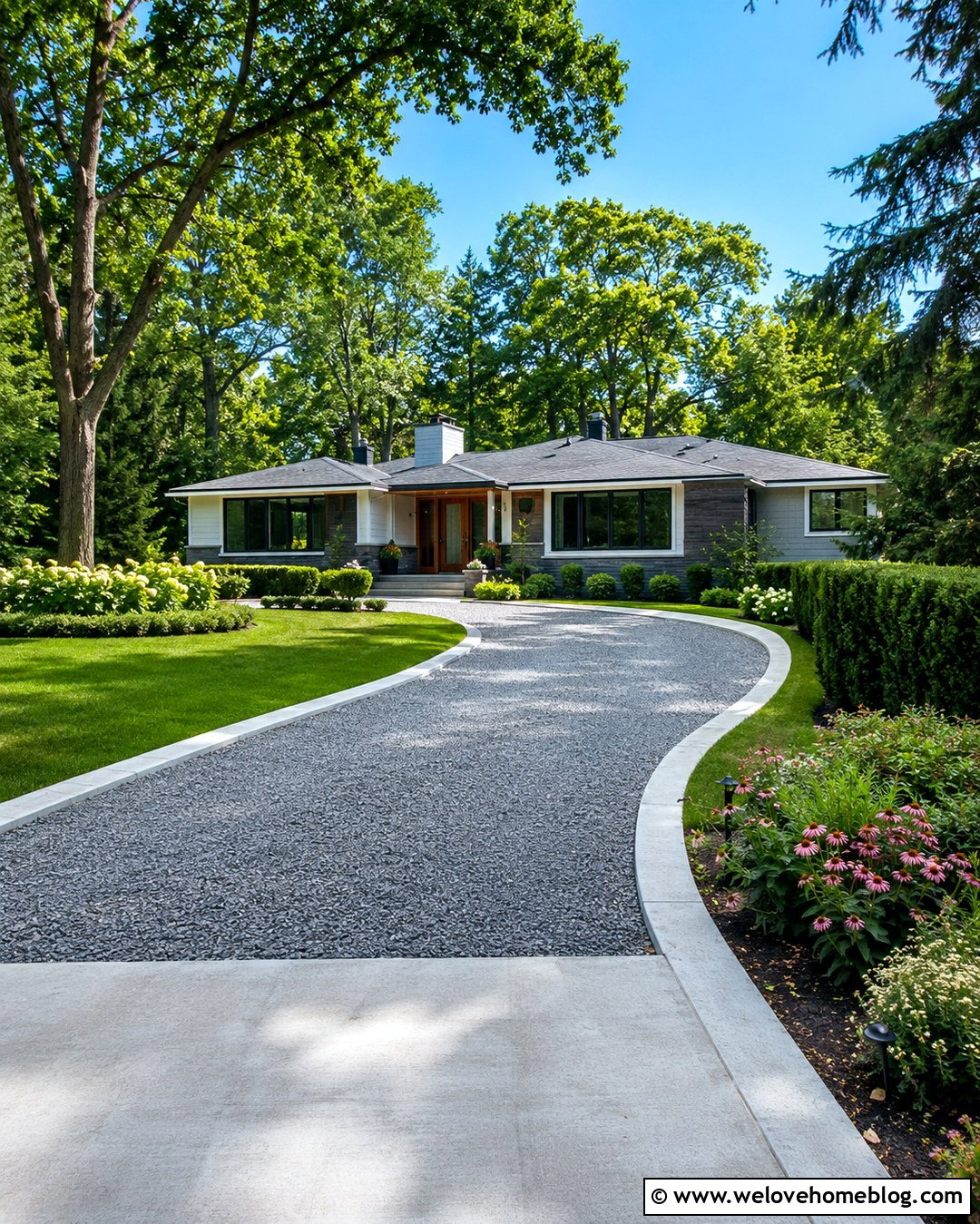
A continuous concrete curb creates one of the clearest and strongest boundaries for a heavily used gravel driveway. It suits a broad suburban entrance where loose stone frequently reaches the lawn or street. Choose natural gray concrete for a subtle look, or tint it beige to coordinate with buff gravel and a warm-toned house facade. Straight curbs reinforce clean geometry, while professionally formed curves can outline a sweeping driveway or rounded parking area. Keep the curb low and consistent so it contains gravel without visually overpowering the yard. Add a wider concrete apron where the driveway meets the road for a polished transition. Simple lawn panels, low hedges, and a concrete walkway help the entire entrance look structured, accessible, and thoughtfully planned.
6. Gravel Driveway With Paver Edging
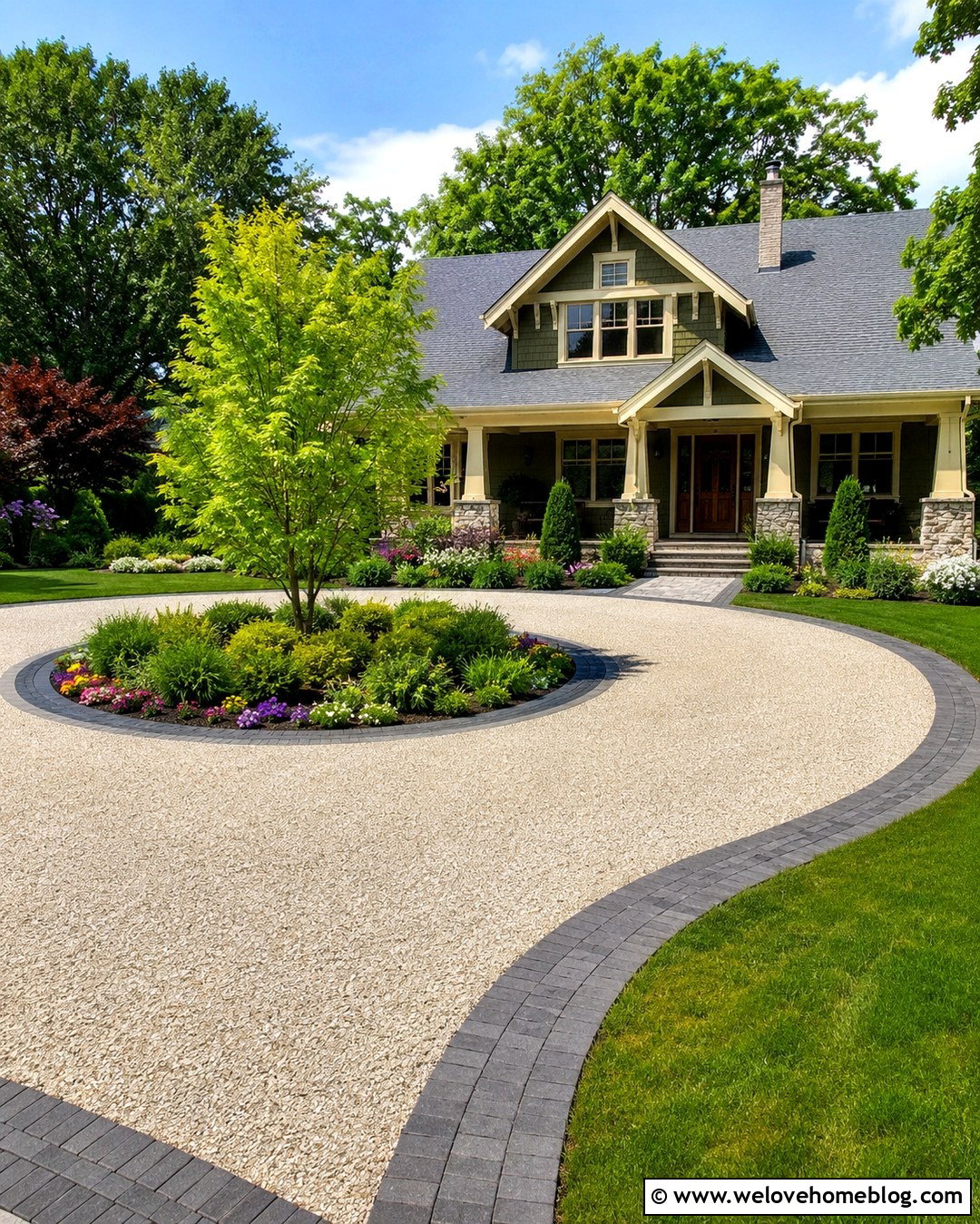
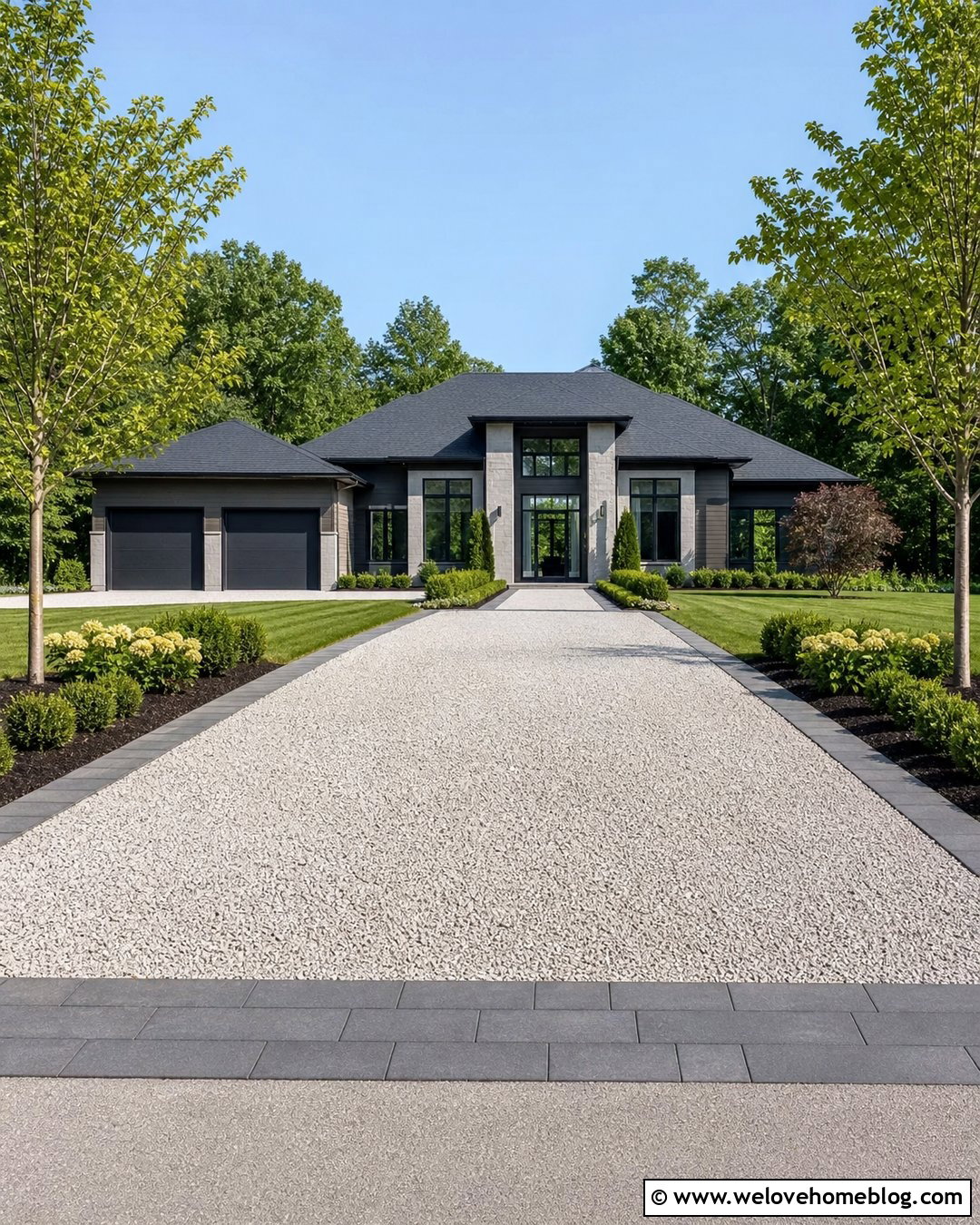
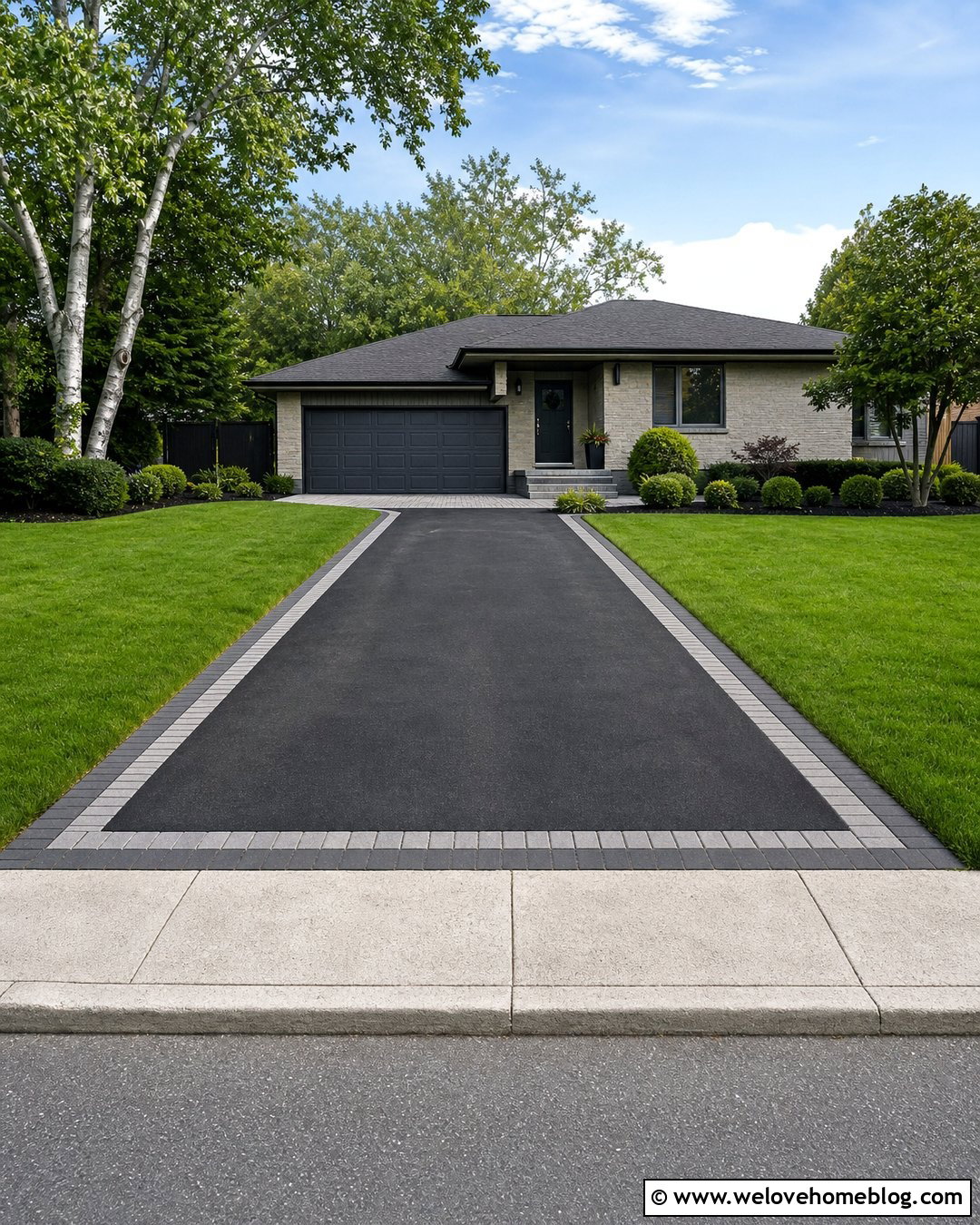
Concrete pavers provide color, shape, and pattern while forming a practical edge around loose gravel. For a cohesive result, select pavers that repeat a tone found in the house exterior, walkway, or front steps. Charcoal pavers sharpen a light limestone driveway, while tan pavers blend gently with golden gravel. A double paver ribbon works well along a wide circular drive, and a single flush row keeps a smaller suburban driveway from looking crowded. Install the units over a properly prepared base and restrain the outer edge so the line remains stable. Continue the same pavers into a front walkway or entrance apron. Layered shrubs, flowering ground covers, and a neat lawn can then frame the driveway without competing with the patterned border.
7. Gravel Driveway With Natural Stone Edging
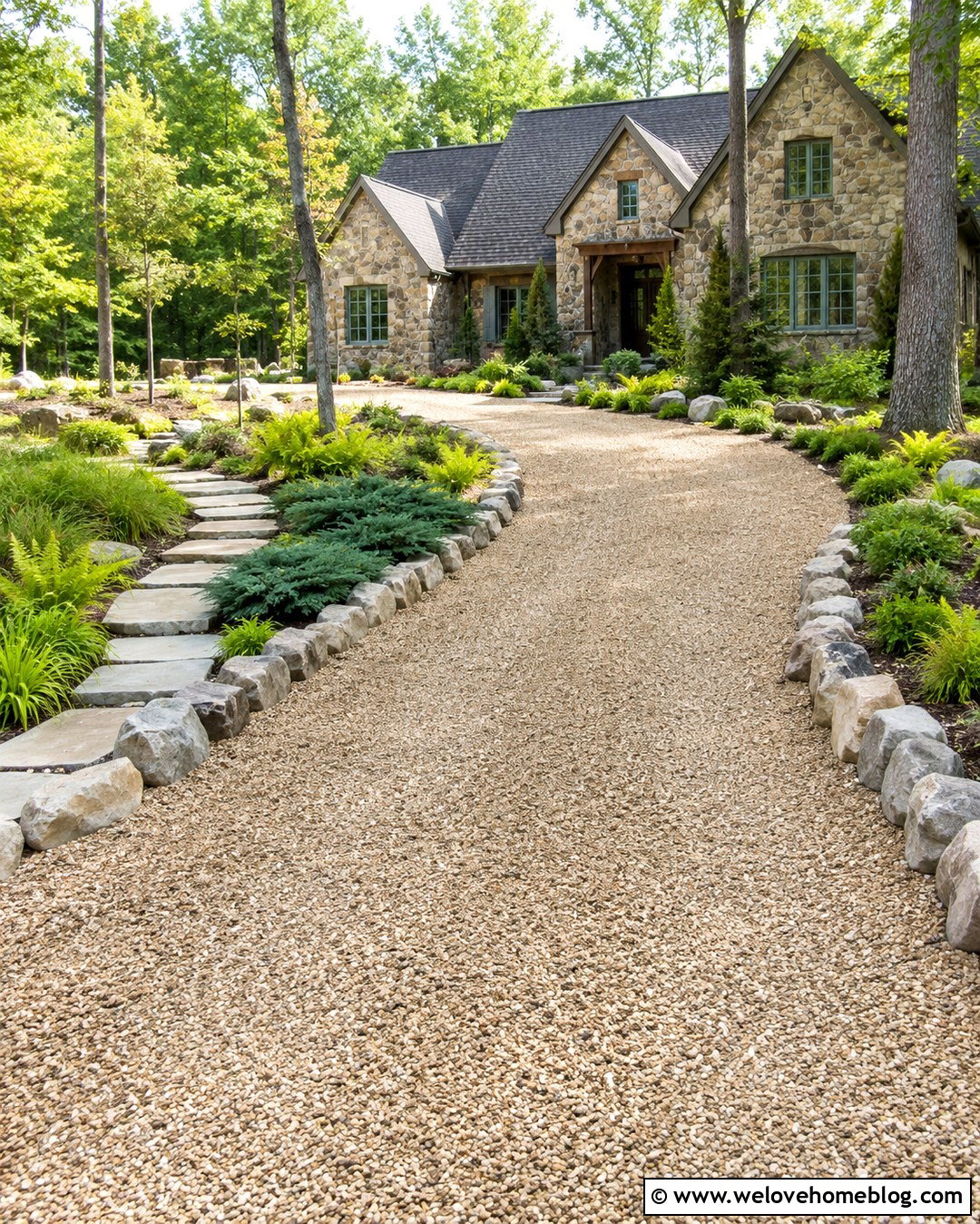
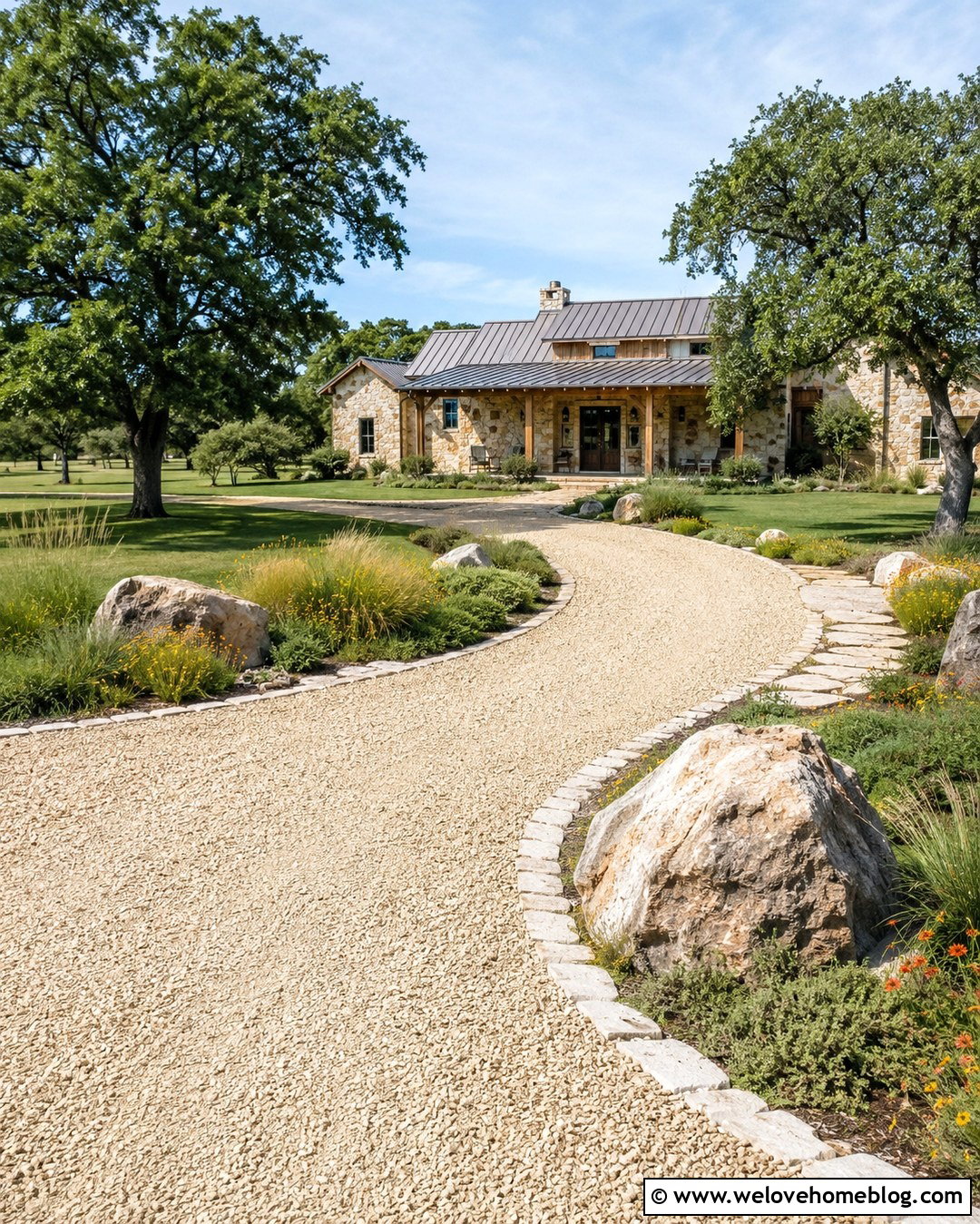
Irregular natural stone produces an organic border that feels connected to the surrounding landscape. Choose locally available fieldstone, limestone, sandstone, or granite that complements the gravel color and the home’s facade. Large, partially buried stones can edge a curved country driveway, while flatter cut pieces create a more controlled line near a formal house. Avoid placing random rocks directly on soft soil. Create a stable bed and select stones with enough mass to remain secure beside vehicle traffic. Leave consistent spacing if you want a relaxed appearance, or fit the stones closely for better gravel containment. Ferns, low junipers, native grasses, and mature shade trees can soften the edge, making the driveway appear naturally integrated rather than added as a separate hardscape feature.
8. Gravel Driveway With Belgian Block Edging
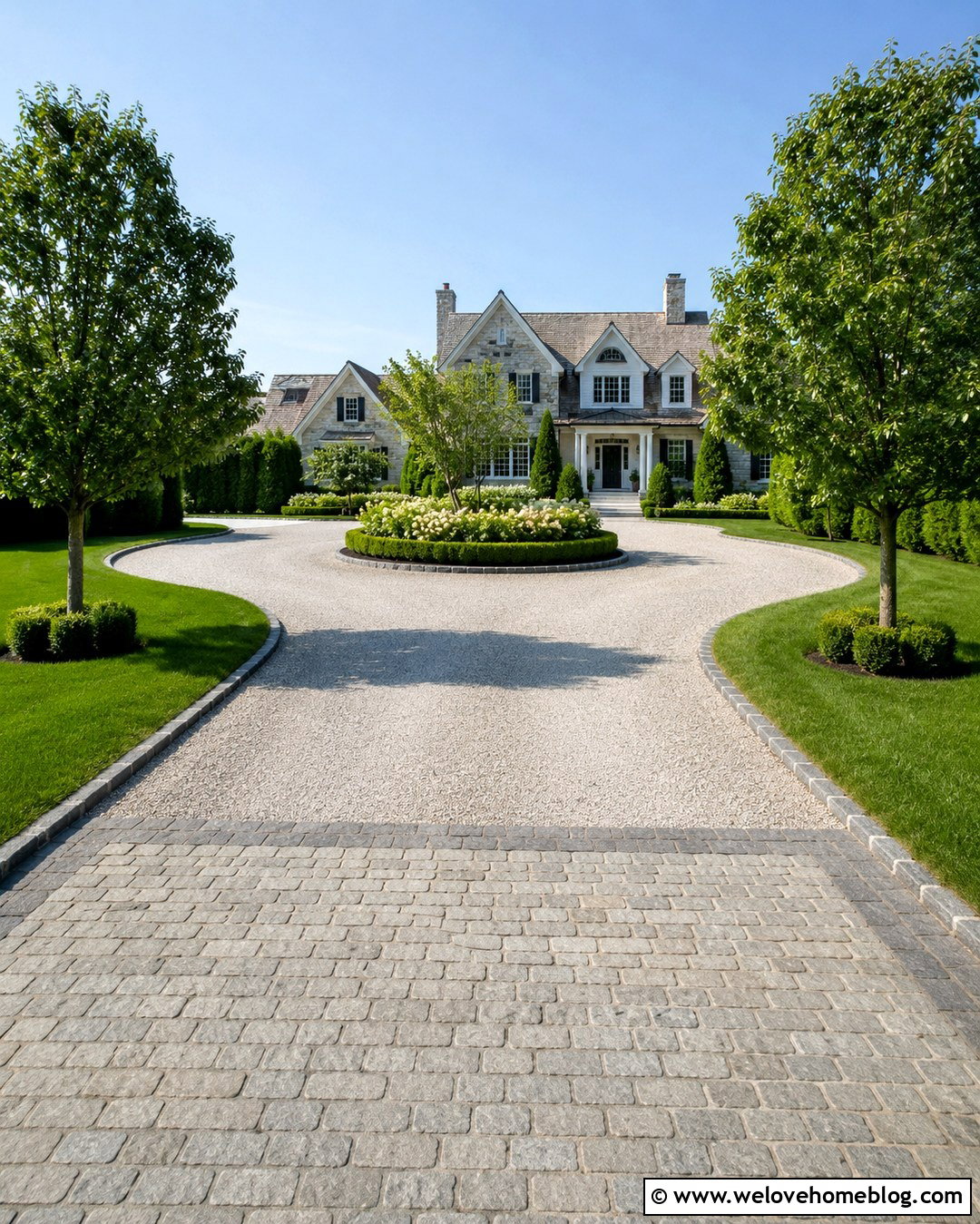
Belgian block brings substantial texture and definition to a gravel driveway, making it suitable for elegant traditional homes and large front yards. Dark granite blocks form a handsome border around light gray gravel, while warmer blocks coordinate with tan stone and brick facades. Set the blocks vertically for a pronounced curb or horizontally for a lower, wider ribbon. A curved driveway benefits from the repeated small units because they can follow an arc without creating awkward gaps. Carry the block across the entrance as an apron and around a central island if the layout is circular. Formal hedges, symmetrical trees, and broad lawn areas balance the strong masonry. This design feels refined, but the natural variation in the stone keeps it from looking rigid.
9. Gravel Driveway With Railroad Tie Edging
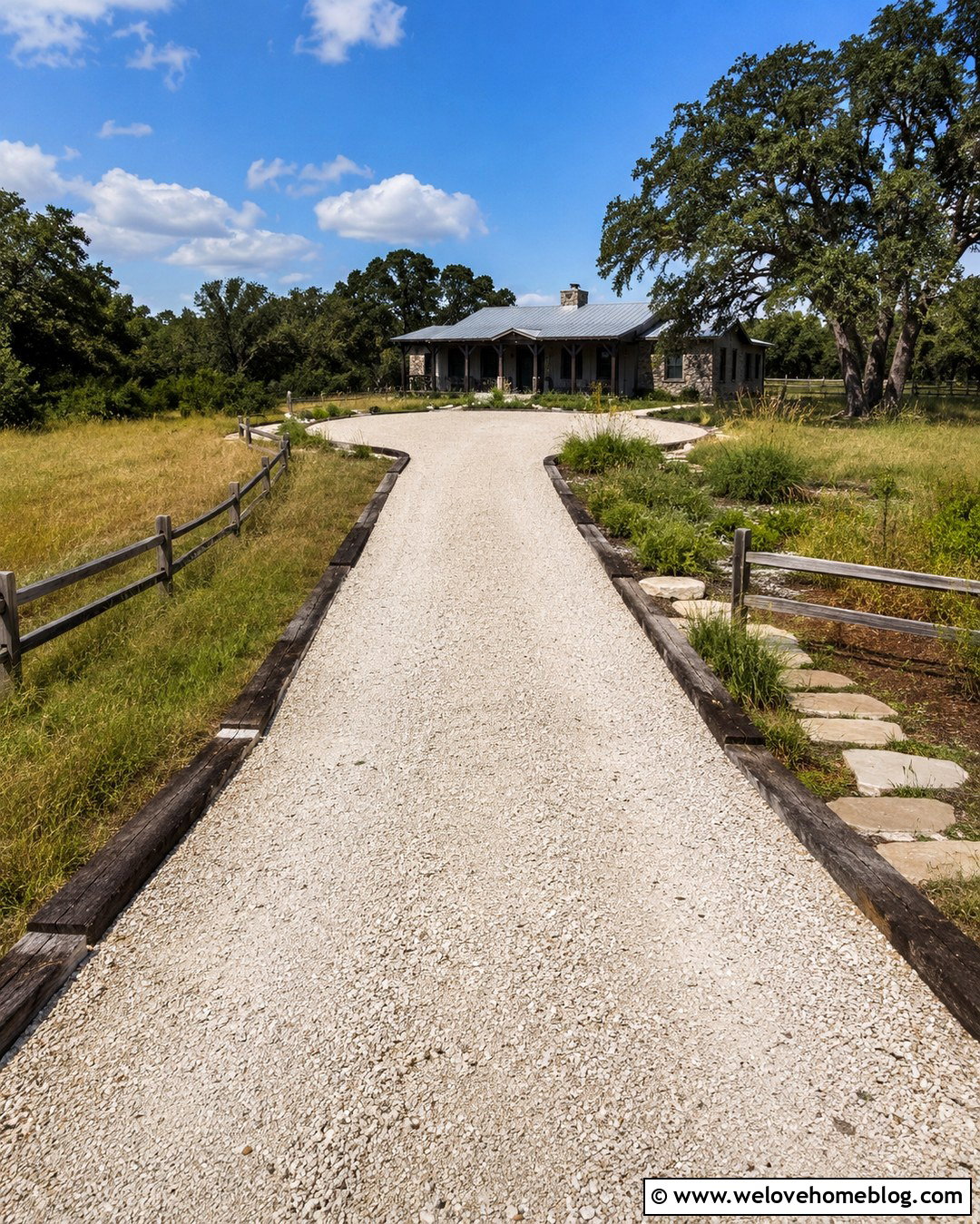
Railroad-tie edging creates a rugged boundary that suits long rural driveways, wooded properties, and rustic homes. The dark, substantial timbers contrast particularly well with light crushed limestone or pale gray gravel. Use ties along straight sections and around broad turns where their length will not make curves appear jagged. They can also retain a slightly raised planting bed beside a sloped driveway. Since reclaimed ties may contain preservatives unsuitable for some residential settings, consider new landscape timbers with a similar size and appearance. Anchor each piece securely and manage runoff so water does not collect around the wood. Complete the setting with meadow grasses, native shrubs, split-rail fencing, and a simple gravel turnaround near the house for a cohesive country entrance.
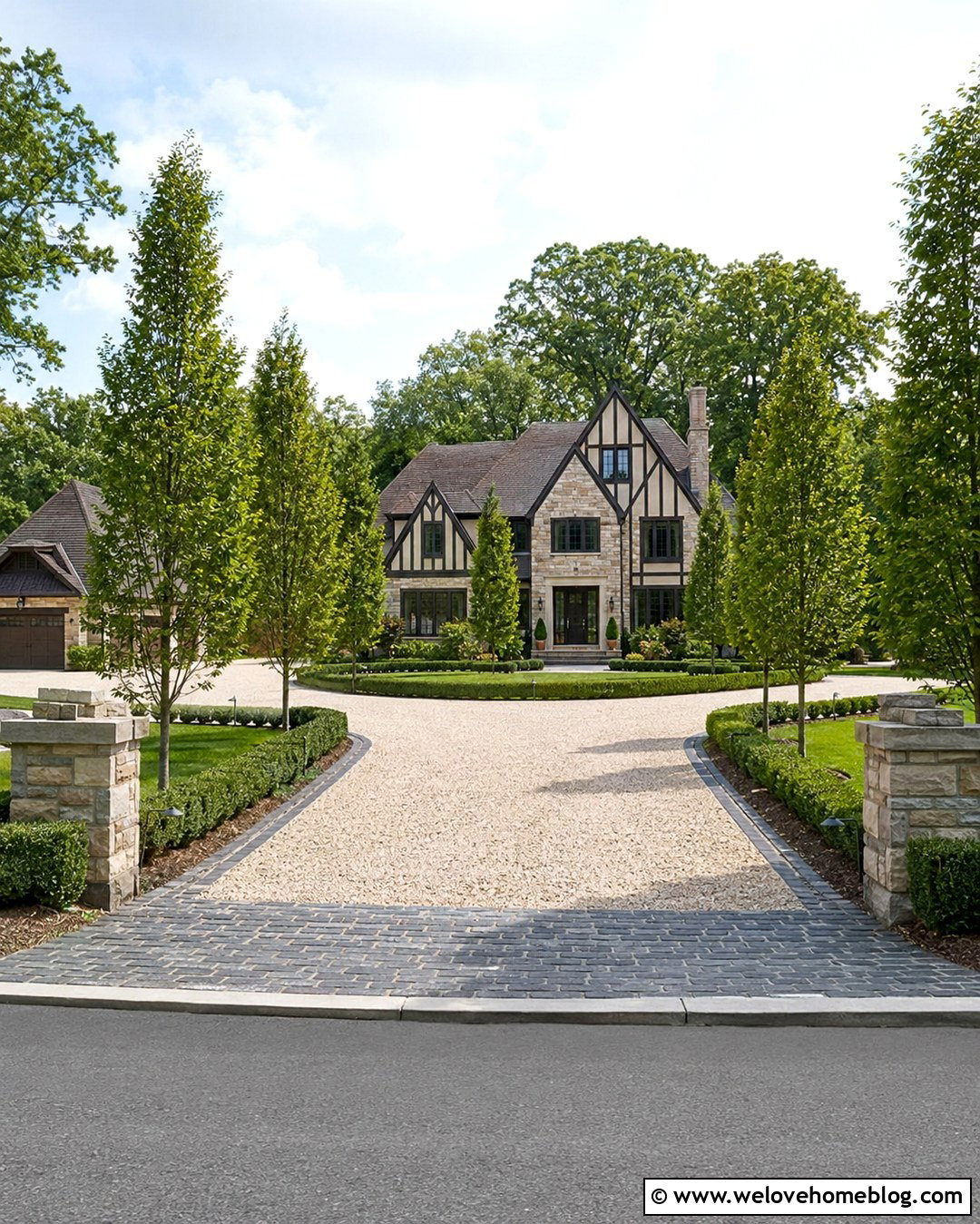
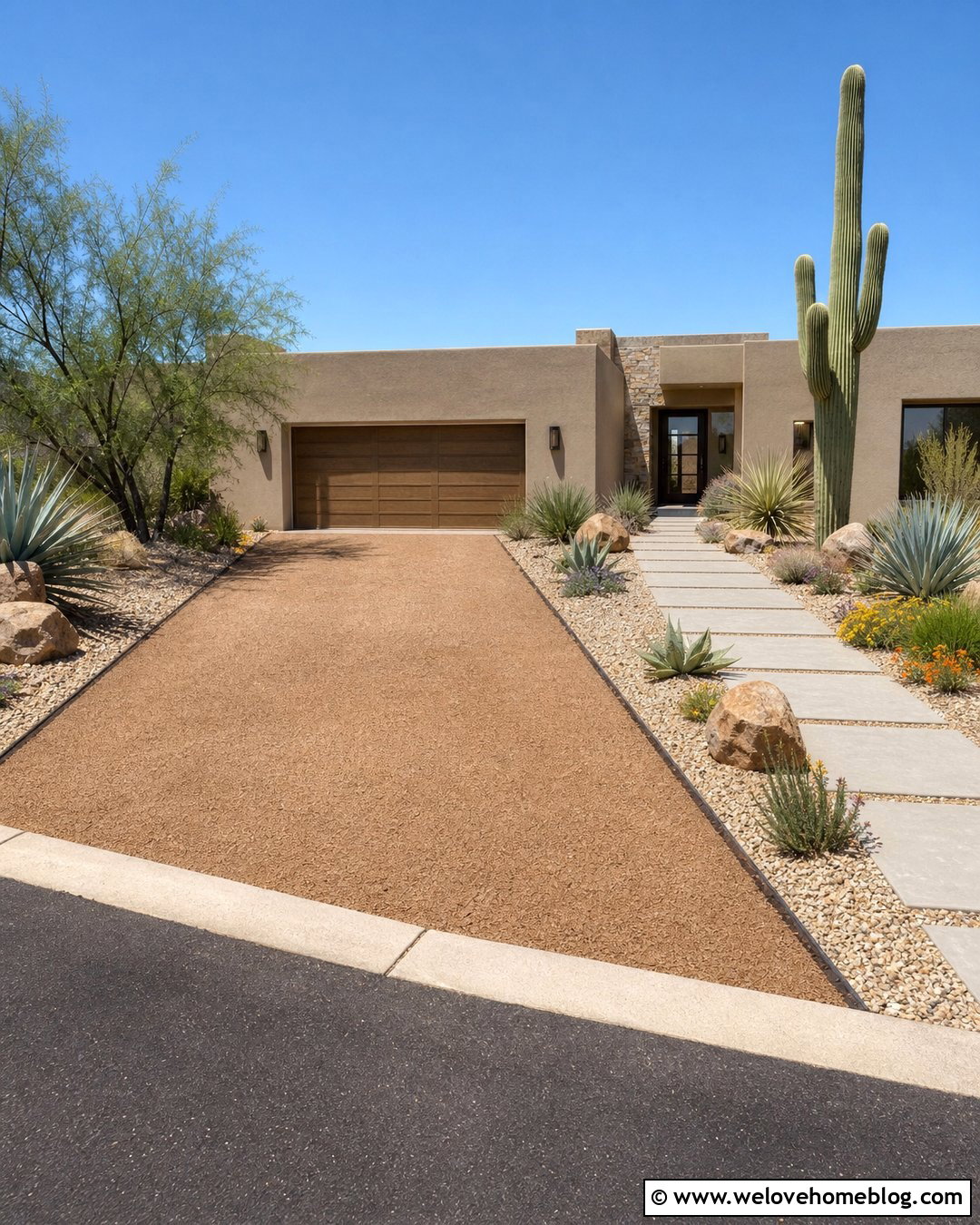
10. Gravel Driveway With River Rock Edging
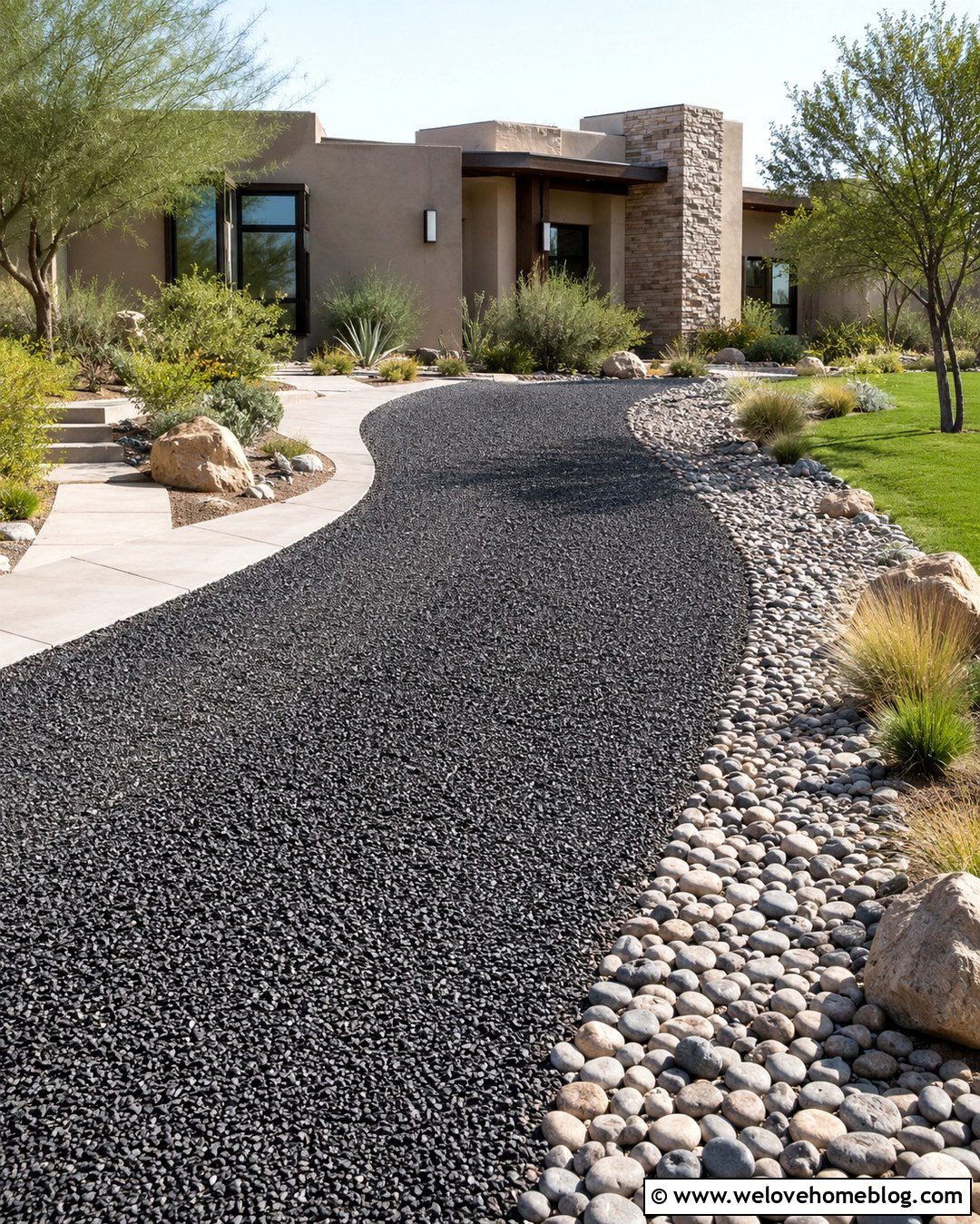
A river rock border can transition a gravel driveway into relaxed, water-wise landscaping. The key is choosing rocks noticeably larger than the driveway gravel so the two materials remain visually distinct. Smooth gray river stones look attractive beside dark crushed basalt, while mixed tan stones complement cream limestone. Place them in a shallow, defined channel rather than scattering them loosely across the lawn. A hidden rigid restraint can help maintain the border’s shape. For a complete design, use the river rock as a dry creek feature that follows one side of a gently curved driveway and directs attention toward the house. Add ornamental grasses, drought-tolerant shrubs, and occasional boulders, while preserving clear drainage routes and an uncluttered vehicle area.
11. Gravel Driveway With Raised Stone Curb
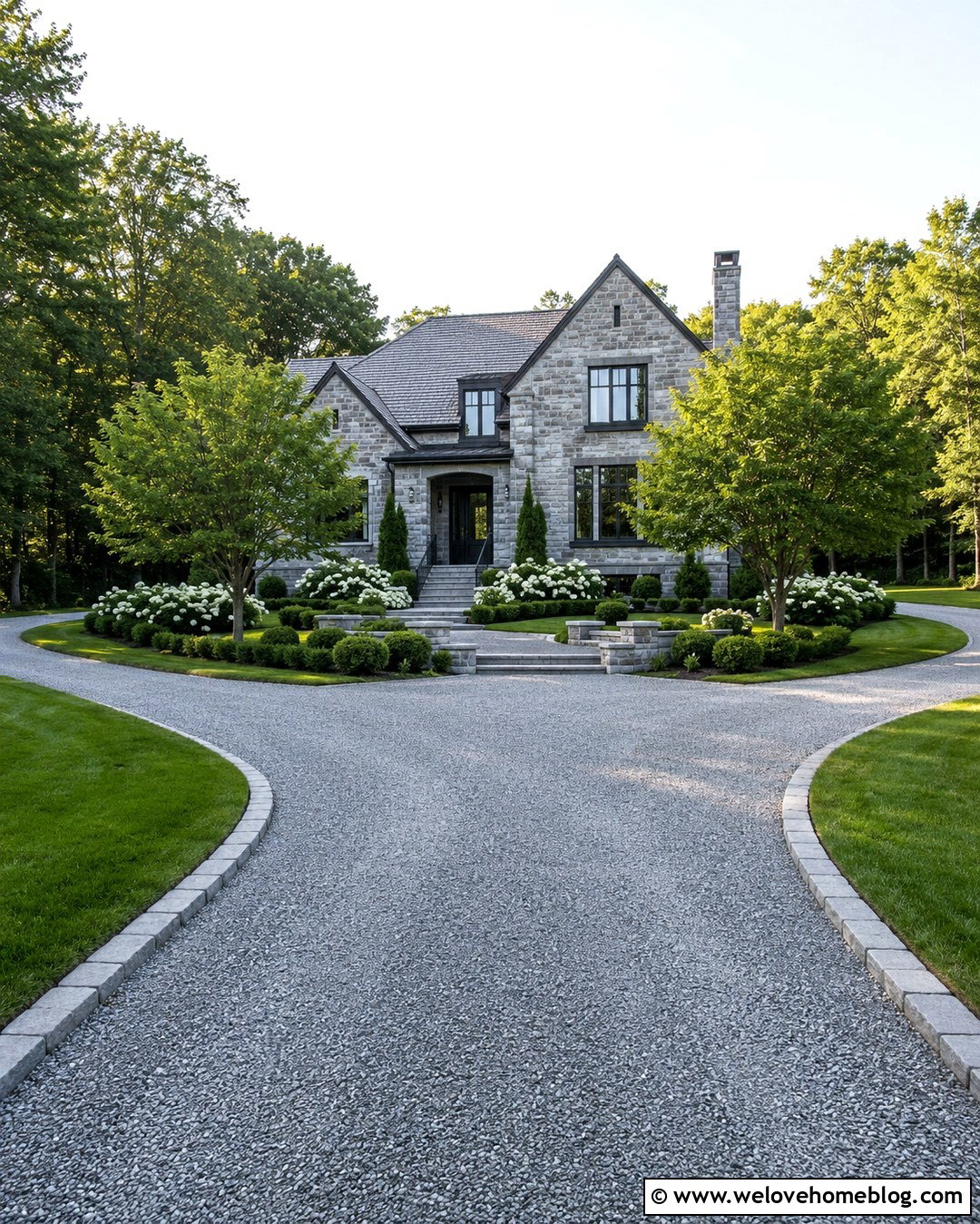
A raised stone curb gives loose gravel a substantial barrier and makes a long driveway feel carefully constructed. Rectangular granite or limestone pieces can create a smooth border that follows straight lines, gentle curves, and circular layouts. Keep the stones consistent in size for a formal residence, or allow slight variation beside a cottage or country home. This edge is especially useful where the driveway sits slightly above an adjacent lawn or planting bed. However, the curb should remain clearly visible around parking and turning areas so drivers can avoid it. Repeat the same stone in front steps, retaining walls, or mailbox pillars to connect the landscape. Low evergreen planting and broad sweeps of perennials will soften the masonry while preserving a tidy, high-end appearance.
12. Gravel Driveway With Flush Stone Edging
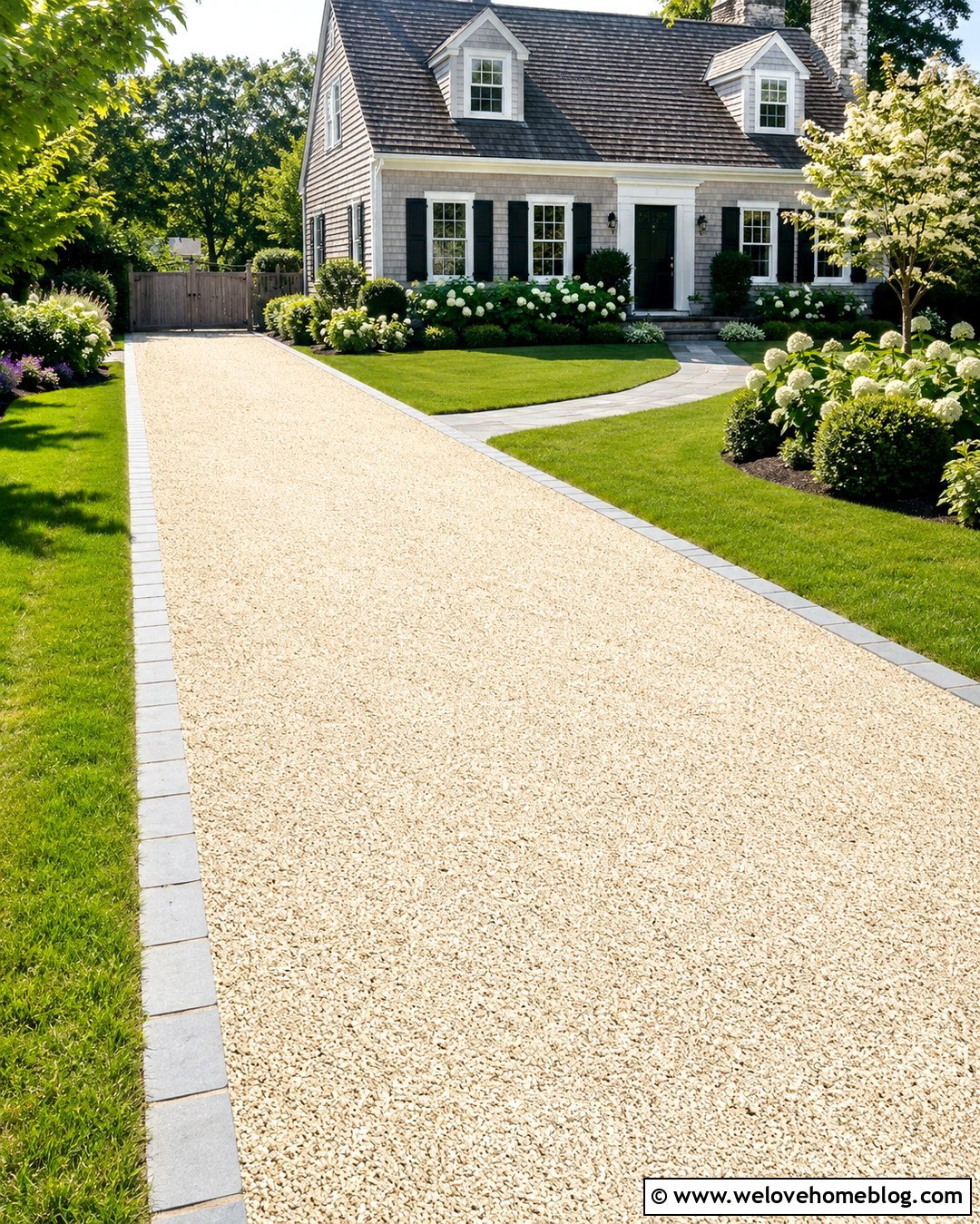
Do you want a defined border without a raised curb? Flush-cut stone edging creates a smooth transition from gravel to lawn while still providing a clear mowing line. Use flat granite setts, bluestone, or limestone pavers installed level with the surrounding grade. A single ribbon suits a compact straight driveway, while two rows can give a wider entrance more visual weight. Because the stones do not stand high above the surface, careful base preparation and edge restraint are important. Pair pale gravel with dark bluestone for contrast or use similarly colored materials for a quiet, unified look. A walkway made from the same stone, framed by lawn and low planting beds, will make the complete front yard feel connected and easy to maintain. ()
13. Gravel Driveway With Wood Log Edging
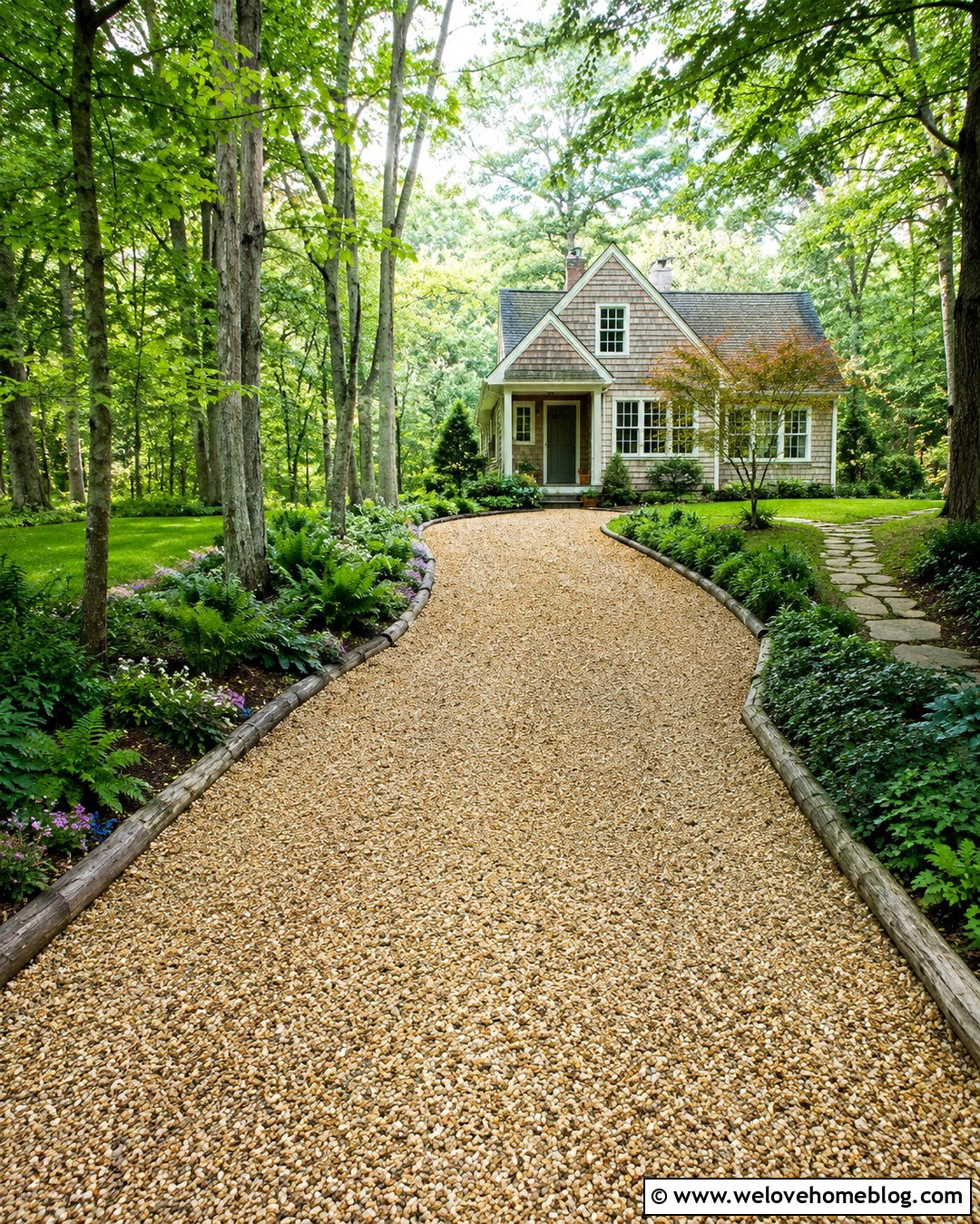
Small debarked logs create a softer and more handcrafted border than squared landscape timbers. This treatment fits a narrow gravel driveway approaching a cottage, woodland cabin, or casual farmhouse. Choose logs with similar diameters and place them horizontally for a low continuous edge. Short upright log sections can form a more decorative border, although they require careful installation to keep the tops even. Brown or honey-colored gravel enhances the natural palette, while native ground covers help blend the wood into the yard. Keep dense plants set back from the driving surface so branches do not narrow the approach. A curved layout, woodland planting, and a stepping-stone walkway can turn this economical edging choice into a complete entrance rather than a temporary-looking barrier.
14. Gravel Driveway With Brick Mow Strip
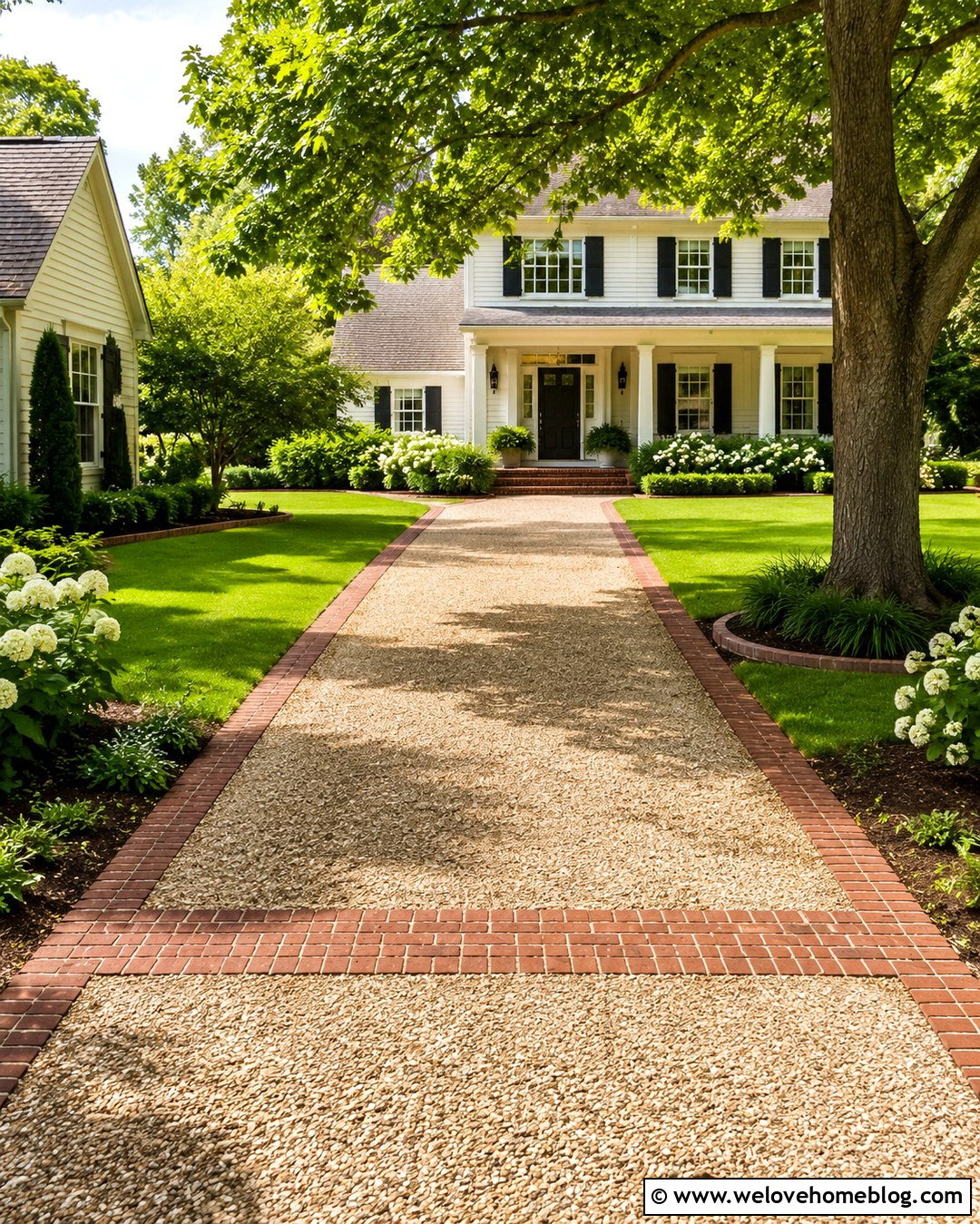
A brick mow strip combines the visual warmth of masonry with an easy lawn transition. Unlike a raised brick curb, this border sits almost level with the grass and forms a flat surface for mower wheels. It works well around a straight pea gravel driveway where the lawn meets both sides of the entrance. Install two or three brick rows for a substantial ribbon, using a running bond or basket-weave pattern to add interest. Red brick complements traditional architecture, while weathered brown brick feels comfortable beside a farmhouse. Because rounded pea gravel moves more readily than angular crushed stone, consider a slightly raised inner row or a concealed restraint for added containment. Repeat the brick around trees and along the front walkway to create a coordinated landscape. ()
15. Gravel Driveway With Granite Setts
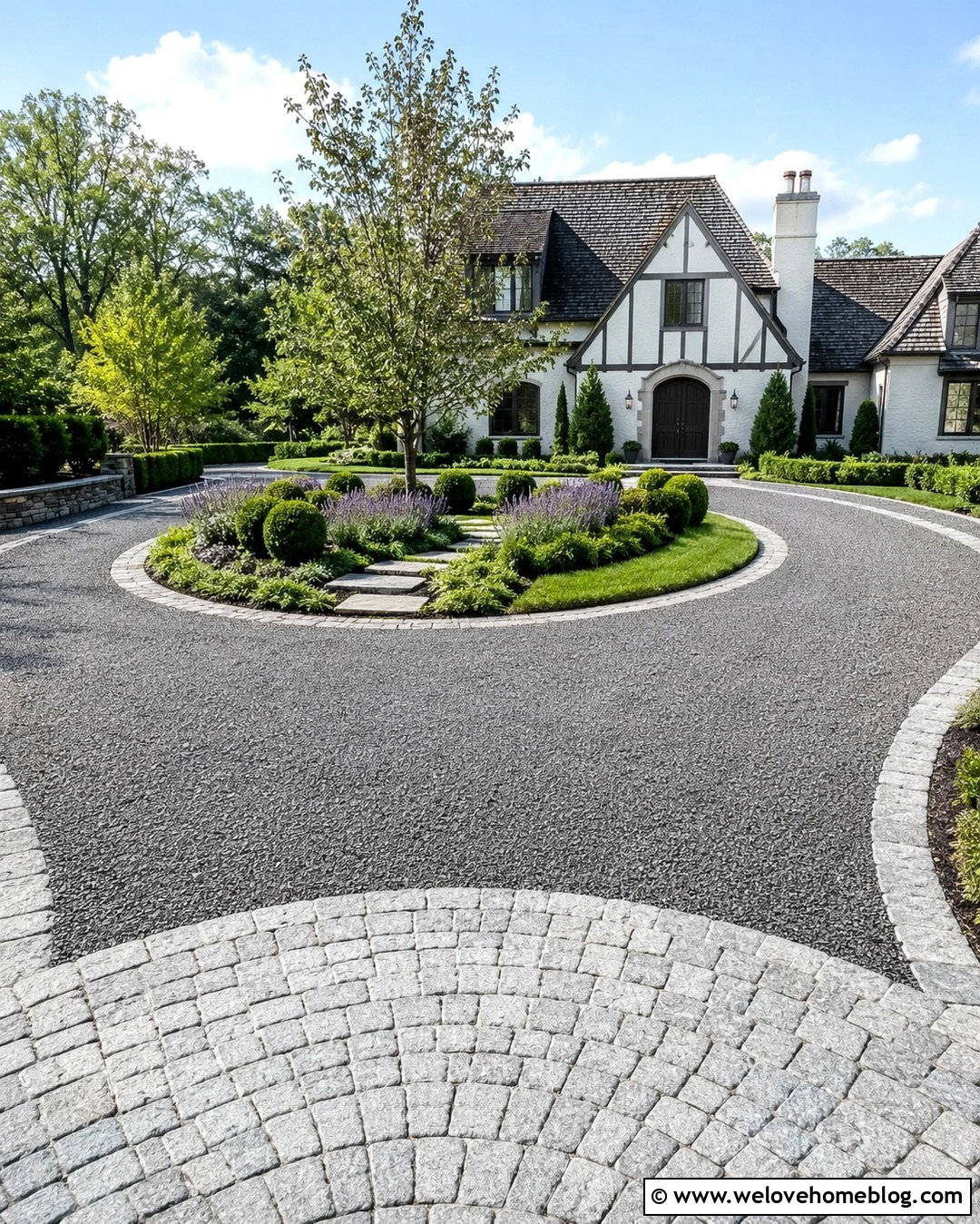
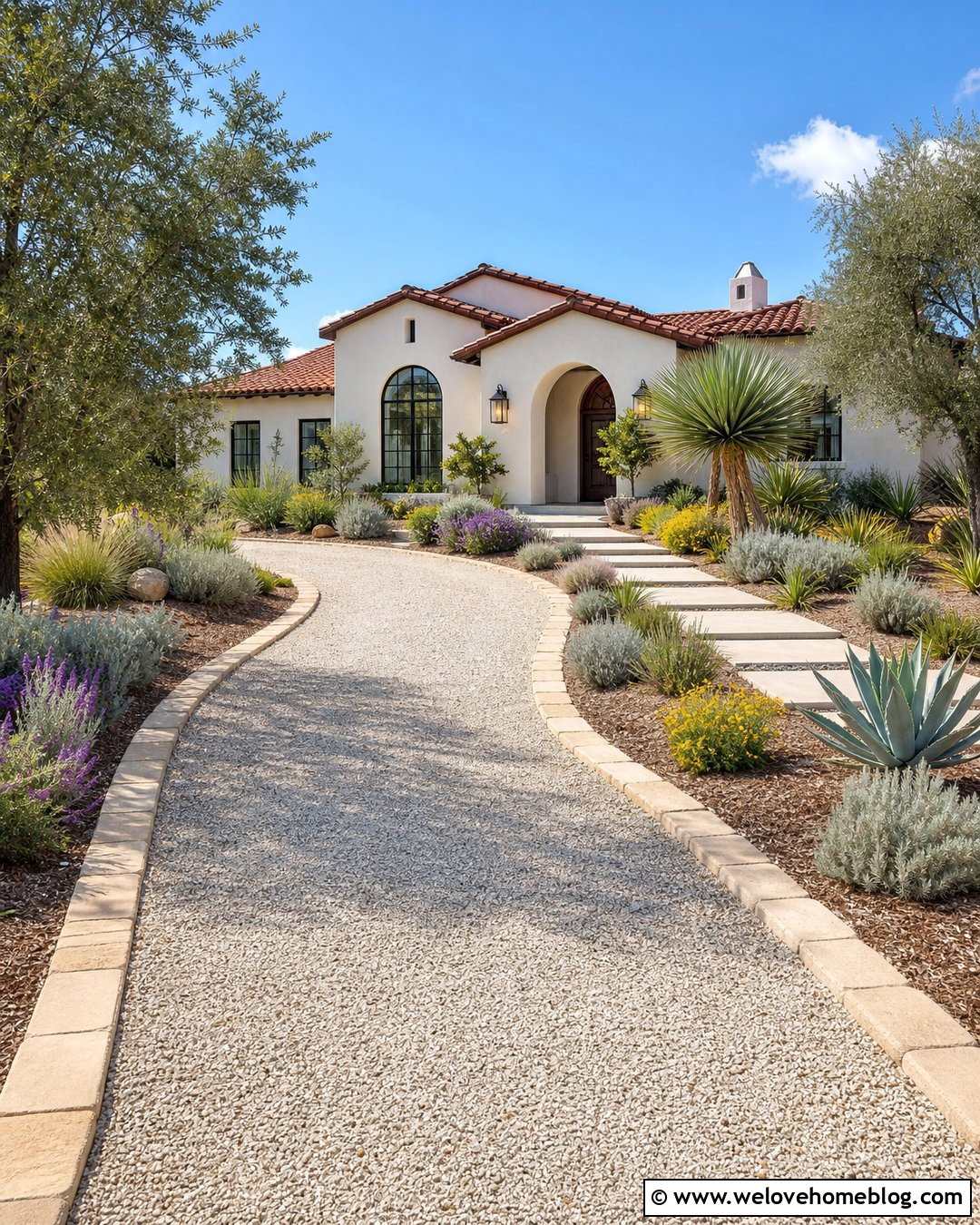
Granite setts offer the texture of historic cobblestone with a more regular, tailored shape. Their compact size makes them useful for edging curved gravel driveways, parking courts, and entrance circles. Choose silver-gray setts beside dark gravel for a layered monochrome palette, or use charcoal setts to outline light crushed granite. A two-row border adds enough width to become a deliberate design detail without taking space away from the driveway. At the street, widen the setts into a fan-shaped apron that catches the eye and visually anchors the entrance. Pair the stonework with a traditional stucco, Tudor, or European-inspired house. Clipped evergreens, lavender, and small ornamental trees provide softness while allowing the distinctive granite line to remain visible throughout the year.
16. Gravel Driveway With Corten Steel Edging
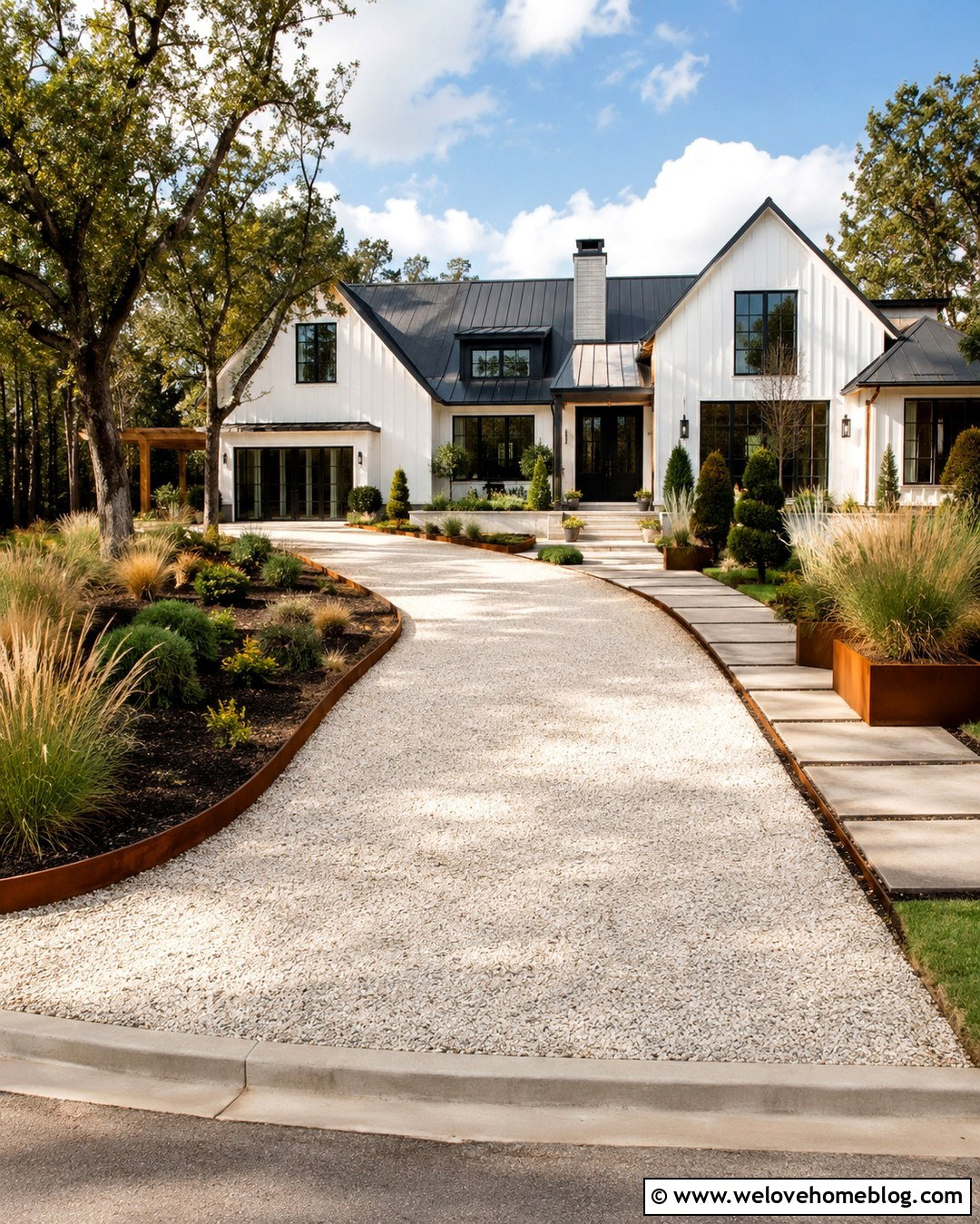
Corten steel adds a warm, contemporary accent to pale gravel and modern landscaping. As the surface develops its characteristic weathered appearance, the brown-orange tone stands out against white limestone, gray granite, or cream-colored pea gravel. Use it to define a straight driveway leading to a modern farmhouse or to trace a sweeping curve beside a low-maintenance garden. The slim profile keeps attention on the gravel and architecture rather than the border itself. Select sturdy edging with safe finished tops and secure it according to site and soil conditions. Repeat the steel in raised planters, address markers, or retaining panels for continuity. Drought-tolerant grasses, sculptural shrubs, and concrete walkway slabs will complete a clean design with plenty of texture and restrained color.
17. Gravel Driveway With Limestone Block Edging
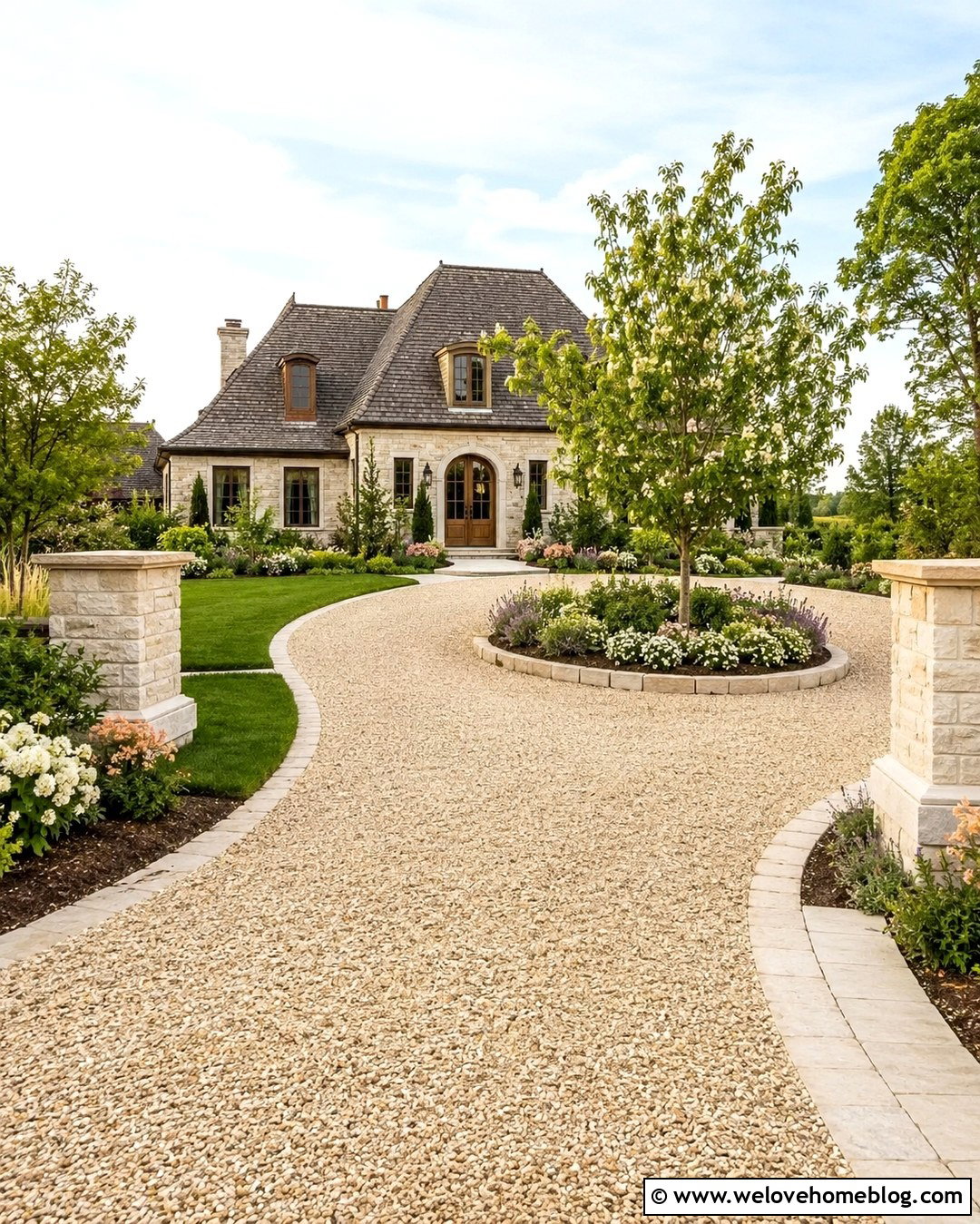
Cream limestone blocks create a bright, substantial border around beige, honey, or warm gray gravel. The look is especially attractive beside a light stucco, stone, or French country home. Use large rectangular blocks along a broad curved driveway, keeping their tops level for a polished finish. On a sloping site, the blocks can step gradually with the grade rather than forming an uneven line. Allow enough visible contrast between the gravel and edging by choosing slightly different tones or textures. Limestone can also frame a circular planting island filled with an ornamental tree, low shrubs, and seasonal flowers. Repeating the material in entry pillars or a front walkway gives the property a unified appearance. Proper base preparation helps the heavy blocks remain even and prevents an untidy, sinking border.
18. Gravel Driveway With Boulders And Native Plants
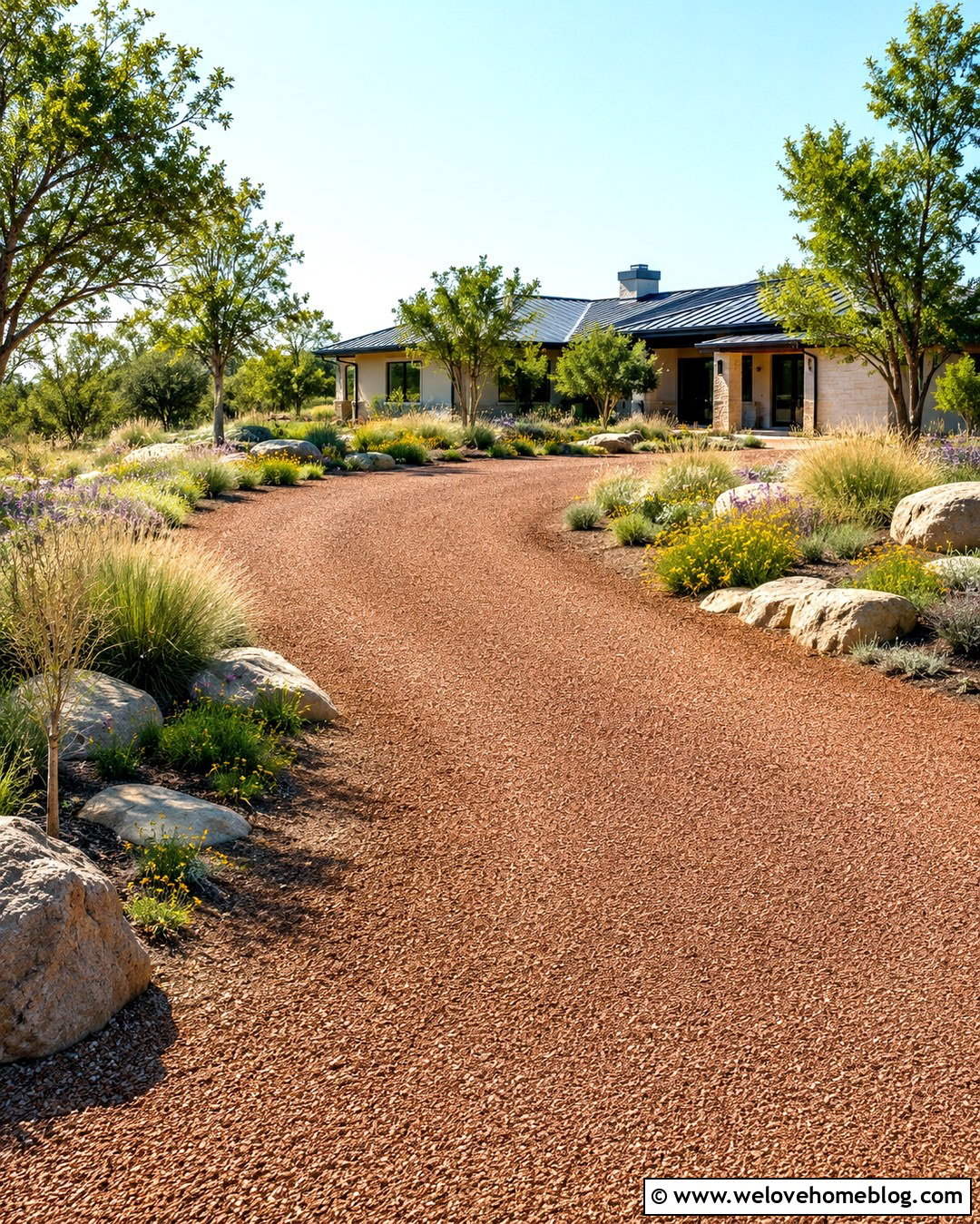
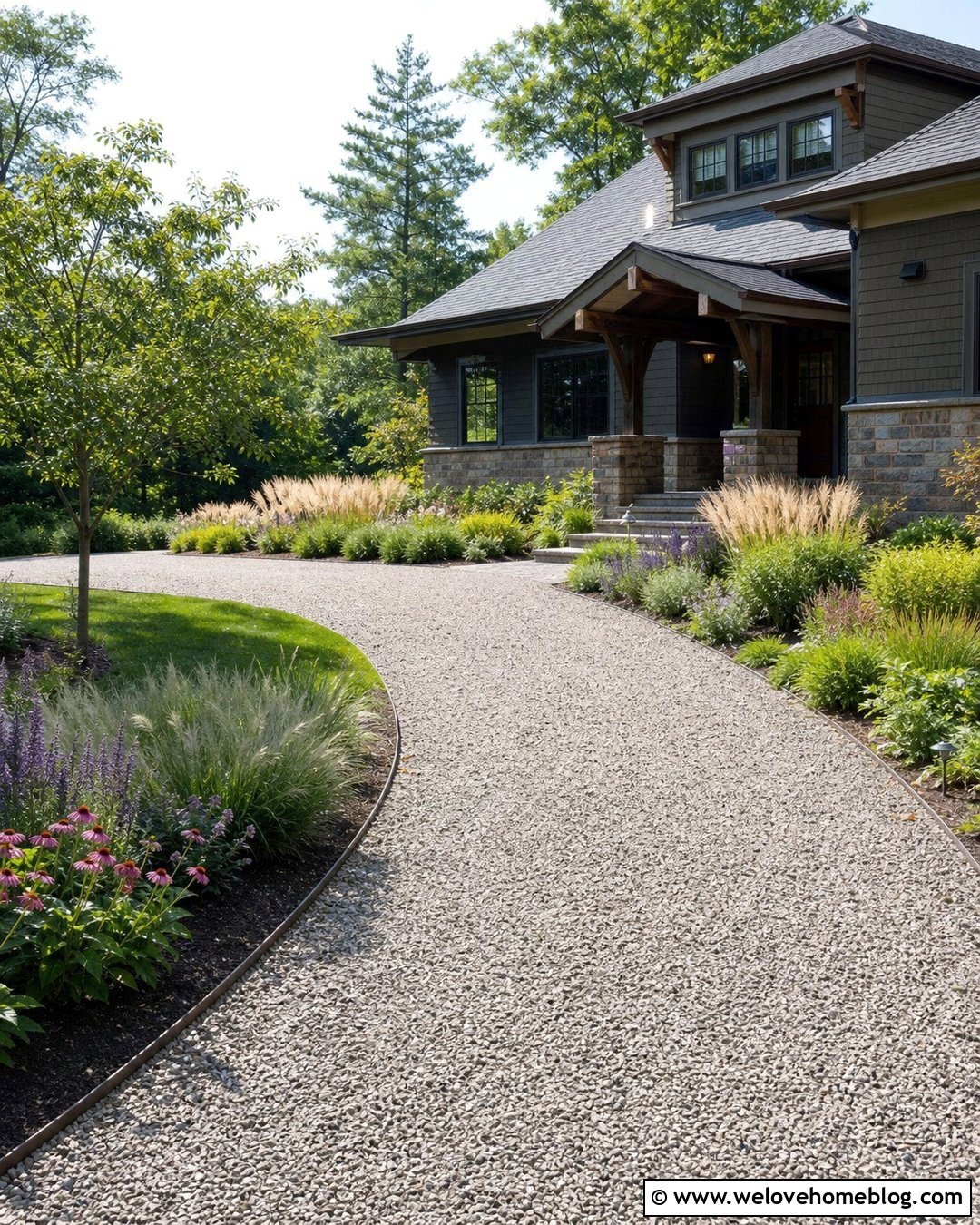
Widely spaced boulders can define a rural gravel driveway without creating a continuous hard border. Select stones large enough to look intentional, then partially bury them for a natural, grounded appearance. Place them outside the vehicle clearance zone, especially along curves and near the entrance. Between the boulders, use native grasses, low flowering plants, and spreading ground covers to strengthen the edge visually. A hidden steel restraint can contain the gravel where the planted border alone is not sufficient. This complete look works beautifully with crushed granite on a long curved drive approaching a ranch, lodge, or contemporary country home. Repeat a few matching boulders near the walkway and house foundation so the entrance landscape feels balanced rather than lined with unrelated decorative rocks.
19. Gravel Driveway With Hedge And Paver Edging
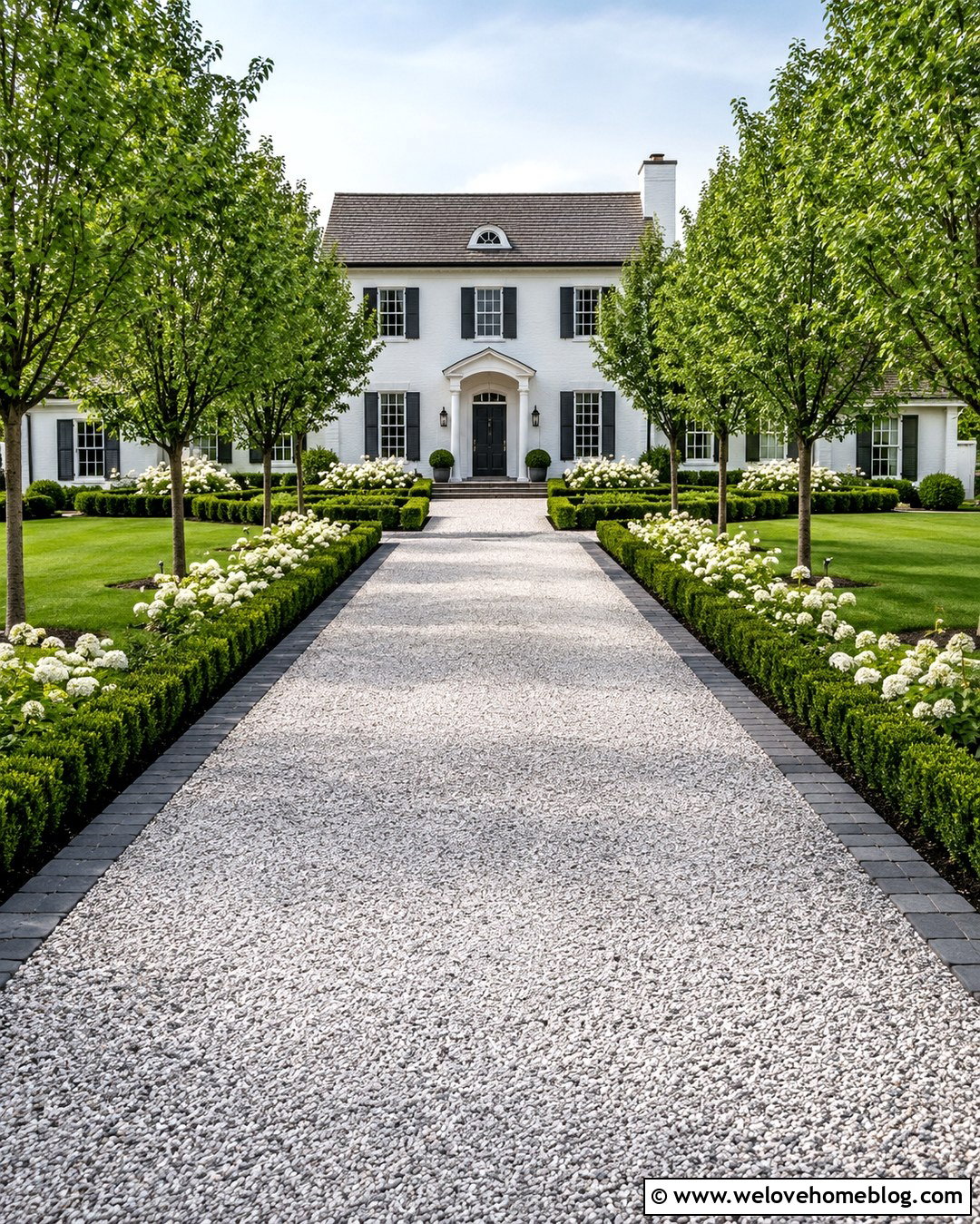
A low hedge creates a lush frame, while a paver strip supplies the firm boundary needed to separate plants from driveway gravel. This layered approach suits formal straight drives and elegant circular entrances. Install charcoal or natural stone pavers beside the gravel, then leave enough planting space for the hedge to mature without crowding vehicles. Boxwood, inkberry, and other compact shrubs can provide structure, depending on local growing conditions. Keep the hedge slightly lower near the street to preserve visibility for drivers and pedestrians. Light gravel, dark edging, and deep green foliage form a strong but classic palette. Continue the paver ribbon around a central island or front walkway, and add evenly spaced trees farther back to emphasize the driveway’s full approach to the house.
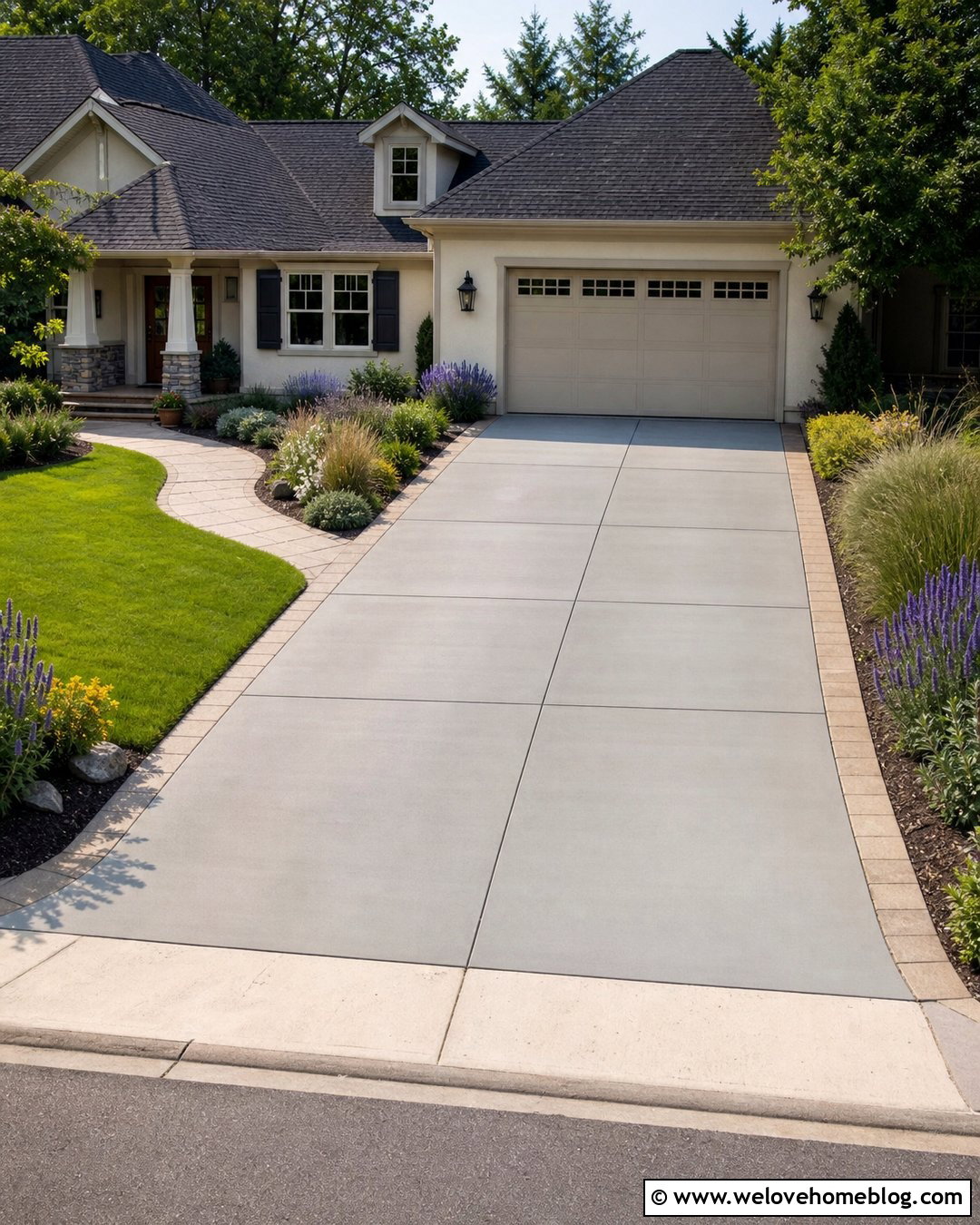
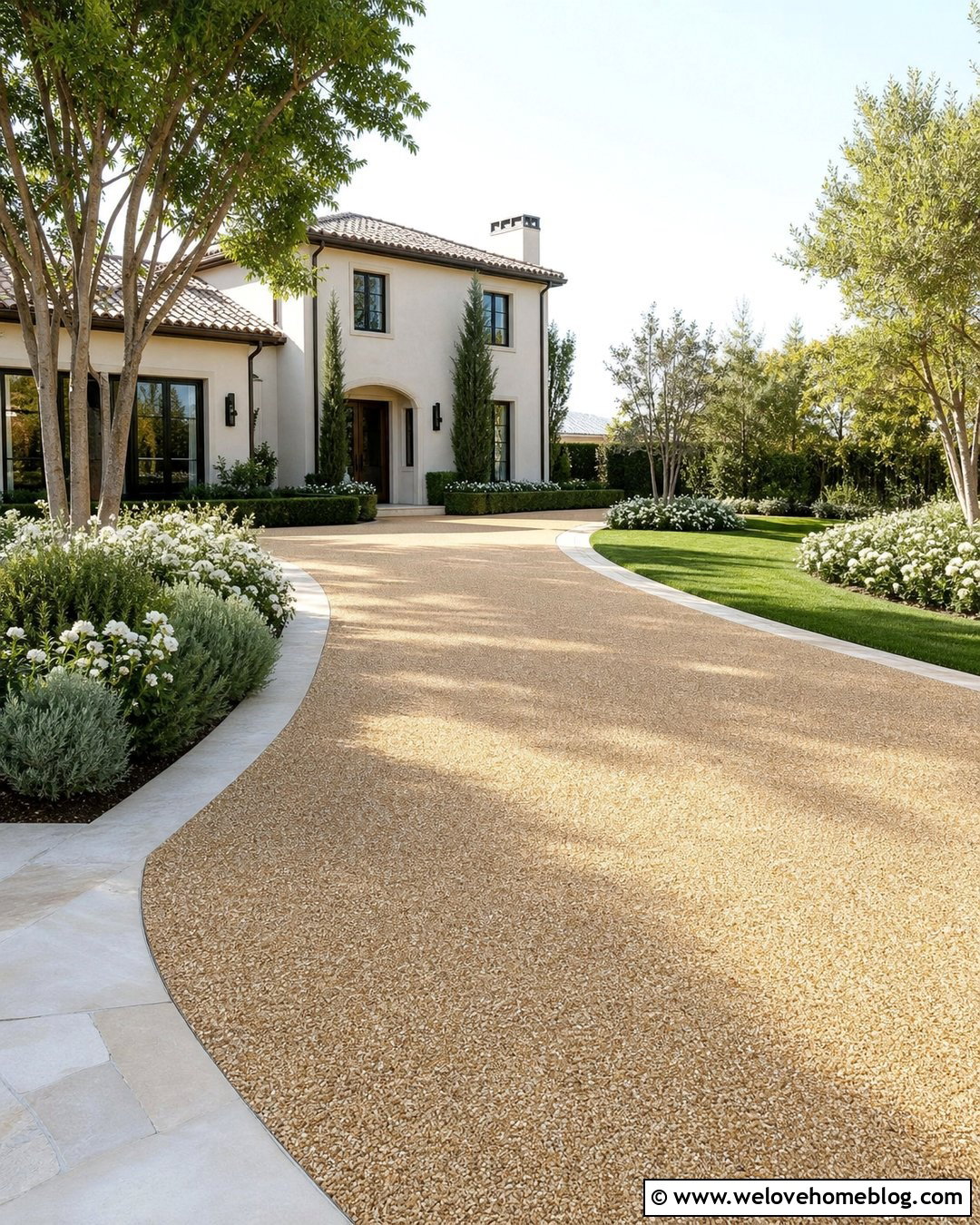
20. Gravel Driveway With Concrete And Brick Edging
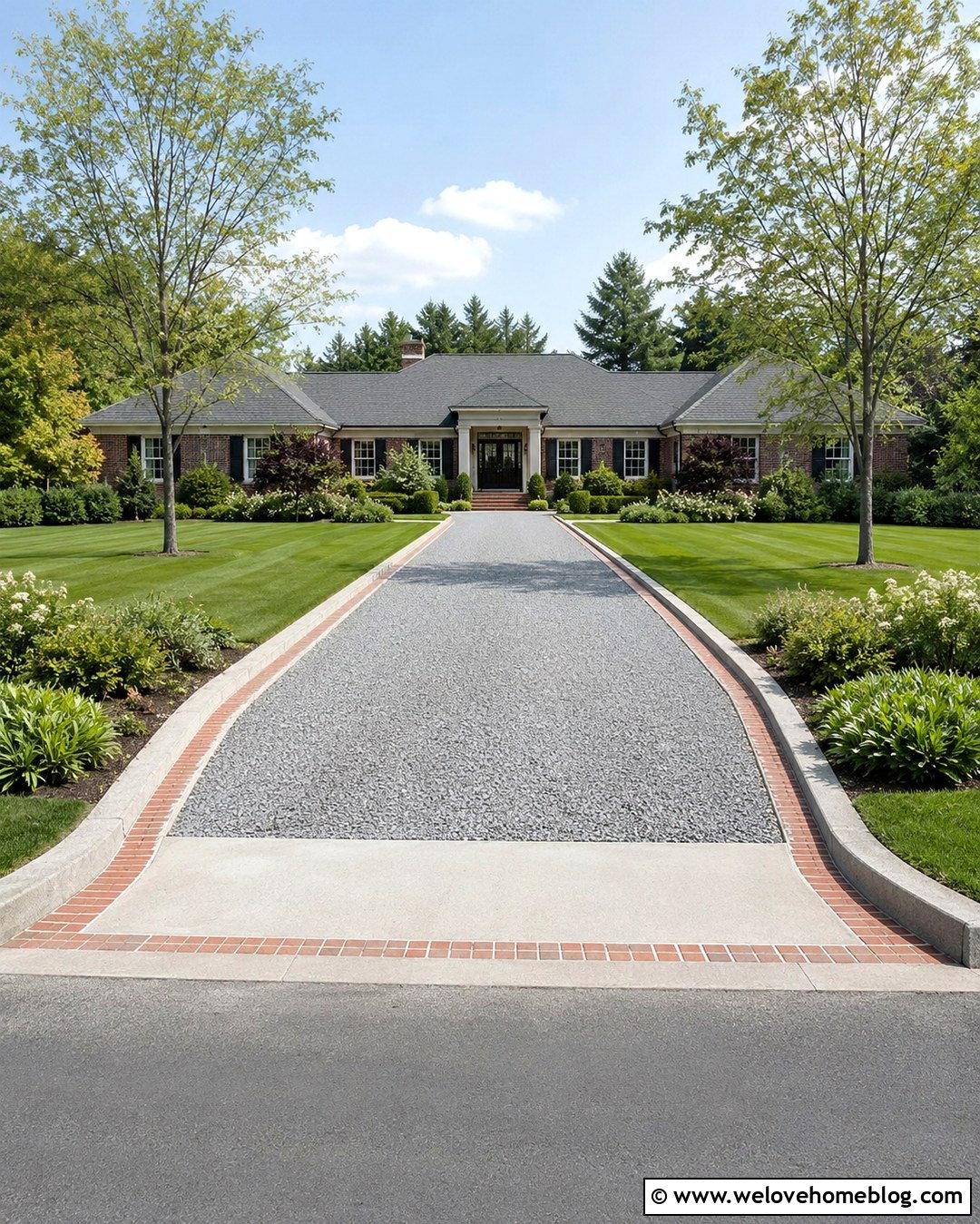
Combining concrete and brick creates a strong entrance with more detail than either material provides alone. Use a low poured-concrete curb as the structural edge, then add a flush brick ribbon inside it to introduce color and pattern. This layered border is ideal for a wide crushed-stone driveway leading to a brick Colonial, updated ranch, or traditional suburban home. The brick can match the facade or deliberately use a darker tone for contrast. Carry both materials across the street entrance as a broad apron, where gravel is most likely to migrate beyond the driveway. Balanced lawn areas, foundation shrubs, and a matching brick walkway complete the composition. Keep the material palette limited so the border appears purposeful rather than visually busy.
Conclusion:
The right border can make a loose gravel surface look finished, protect nearby lawn and planting areas, and strengthen the overall approach to a home. Brick, cobblestone, granite, and concrete provide traditional structure, while steel and Corten edging create slimmer contemporary lines. Timber, logs, boulders, and natural stone feel more at home in rural or informal landscapes. Before choosing, consider vehicle movement, mowing access, drainage, driveway curves, installation requirements, and the architecture of the house. A stable base and secure edge are just as important as appearance. Use these **20 gravel driveways edging ideas** to create an entrance where the gravel, border, landscaping, and home work together as one complete curb-appeal design.

Related posts:

Leave a Reply