
Rocks can turn an ordinary driveway edge into a polished part of the front yard. The best **20 Rocks Along Driveway Ideas** do more than line the pavement. They connect the driveway surface, surrounding plants, lawn, walkways, and home exterior into one balanced design. Smooth river stones can soften concrete, while rugged boulders complement gravel and wooded settings. Light-colored rock creates contrast beside asphalt, and cobblestones bring structure to curved entrances. Before choosing a look, consider drainage, driveway width, local climate, maintenance, and the mature size of nearby plants. A well-planned rock border should remain clear of tires while still looking connected to the landscape. Explore these complete and practical **20 Rocks Along Driveway Ideas**.

1. River Rocks Along Concrete Driveway
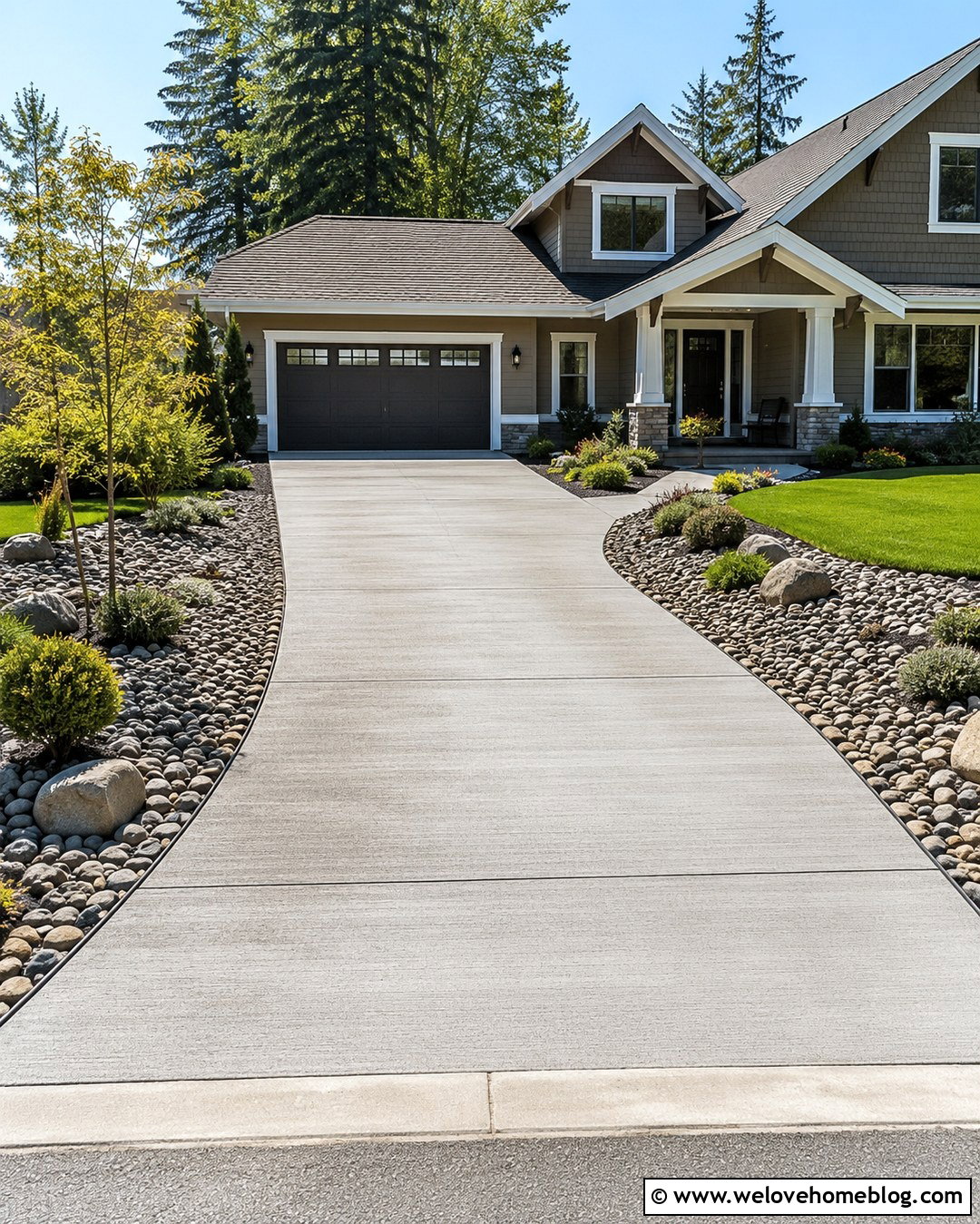
Smooth river rocks create a soft, natural border beside a straight concrete driveway. Choose a blend of gray, tan, and brown stones to complement warm brick, beige siding, or natural wood accents. A gently curved rock bed looks more relaxed than a perfectly straight strip and gives you room for compact shrubs or ornamental grasses. Install low-profile edging between the rocks and lawn so stones do not scatter into the grass. On the driveway side, keep the border slightly below the concrete surface to reduce tripping and tire interference. A matching river rock section near the front walkway can connect the driveway to the entrance. This complete look works especially well with ranch, Craftsman, and contemporary suburban homes.
2. Large Boulders Along Gravel Driveway
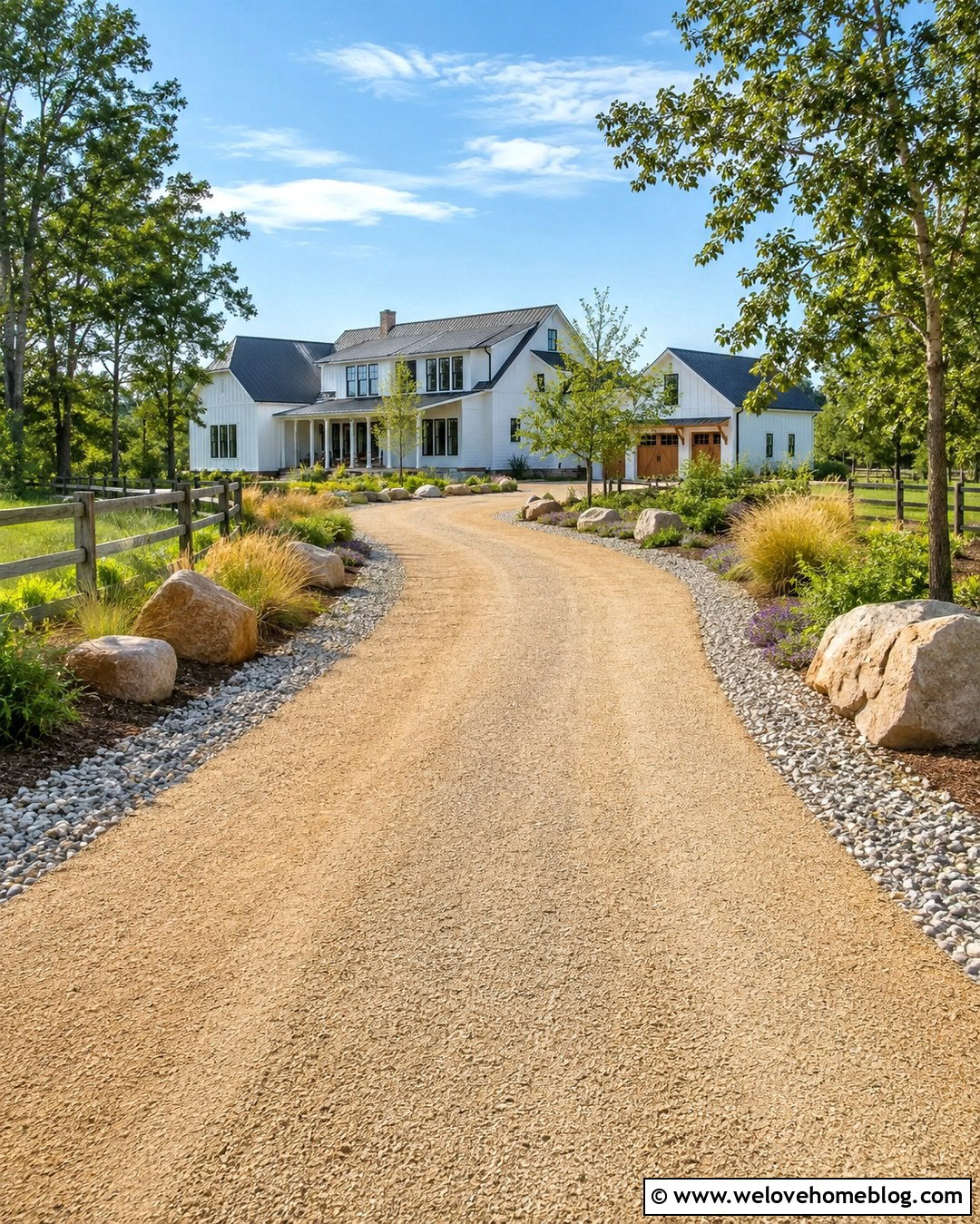
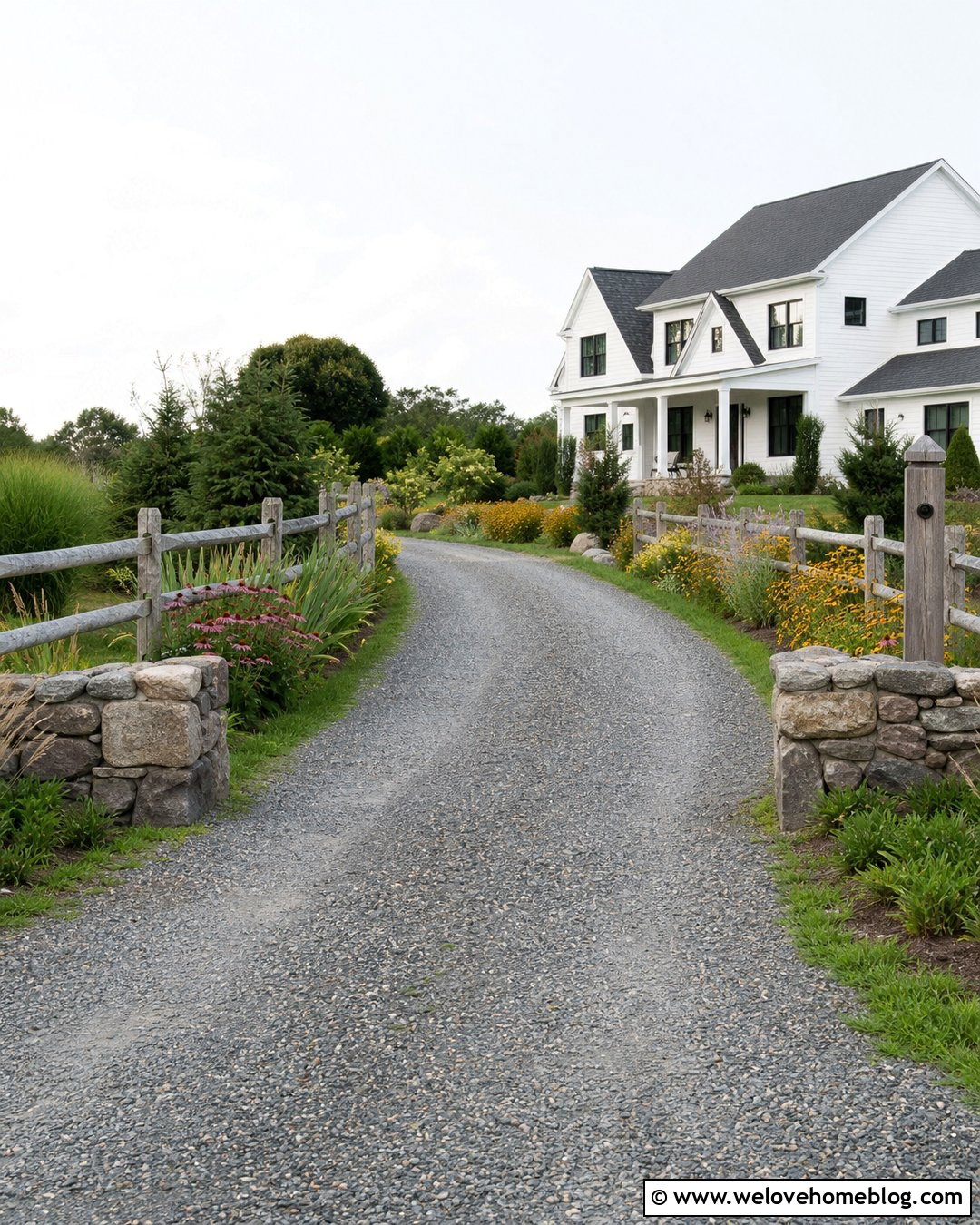
A long gravel driveway feels more established when large boulders define its edges. Use irregular fieldstone or weathered granite in several related sizes rather than repeating identical rocks. Position the largest pieces near curves, planting-bed corners, or the entrance, where they can help guide the eye and discourage tires from crossing onto the lawn. Set each boulder partly into the soil so it looks naturally grounded instead of placed on top. Fill the spaces with smaller gravel, native grasses, and low spreading plants. The driveway should retain a clear travel width, with boulders set safely beyond the vehicle path. This rugged combination suits country houses, cabins, modern farmhouses, and wooded properties with informal landscaping.
3. Dry Creek Rocks Along Sloped Driveway
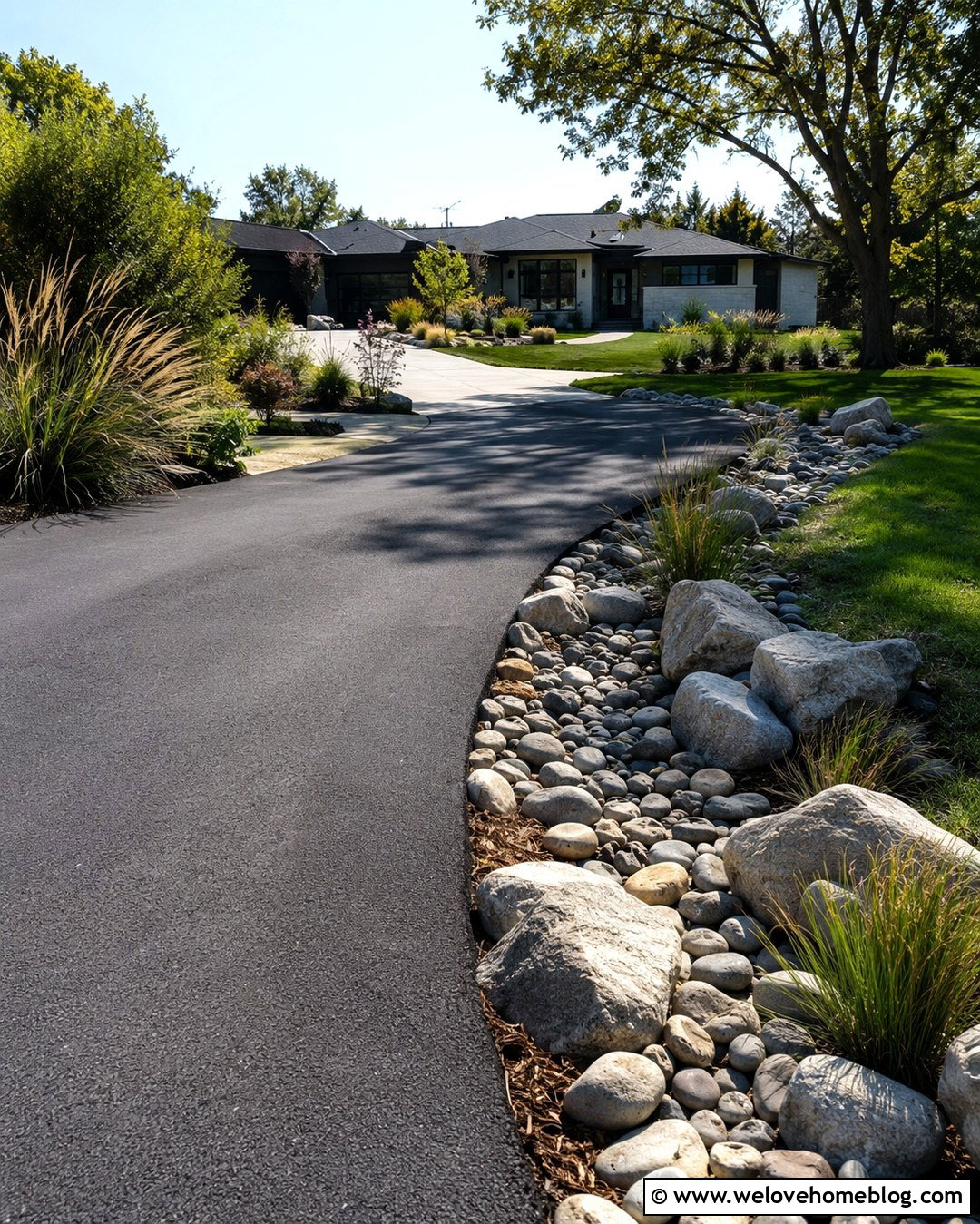
Water moving beside a sloped driveway can become part of the landscape through a rock-lined dry creek bed. Pair an asphalt or concrete driveway with a shallow, curving channel filled with rounded river rock. Add larger stones at bends and smaller gravel between them for a natural streamlike appearance. A stone-lined swale can convey runoff, while properly selected stabilizing rocks and underlying landscape fabric help keep the channel intact. The outlet must direct water toward an approved, erosion-resistant destination and away from the foundation. () Plant moisture-tolerant grasses along the upper edges without blocking water flow. The finished driveway feels intentional, practical, and visually connected to the property’s natural grade.
4. White Rocks Along Black Asphalt Driveway
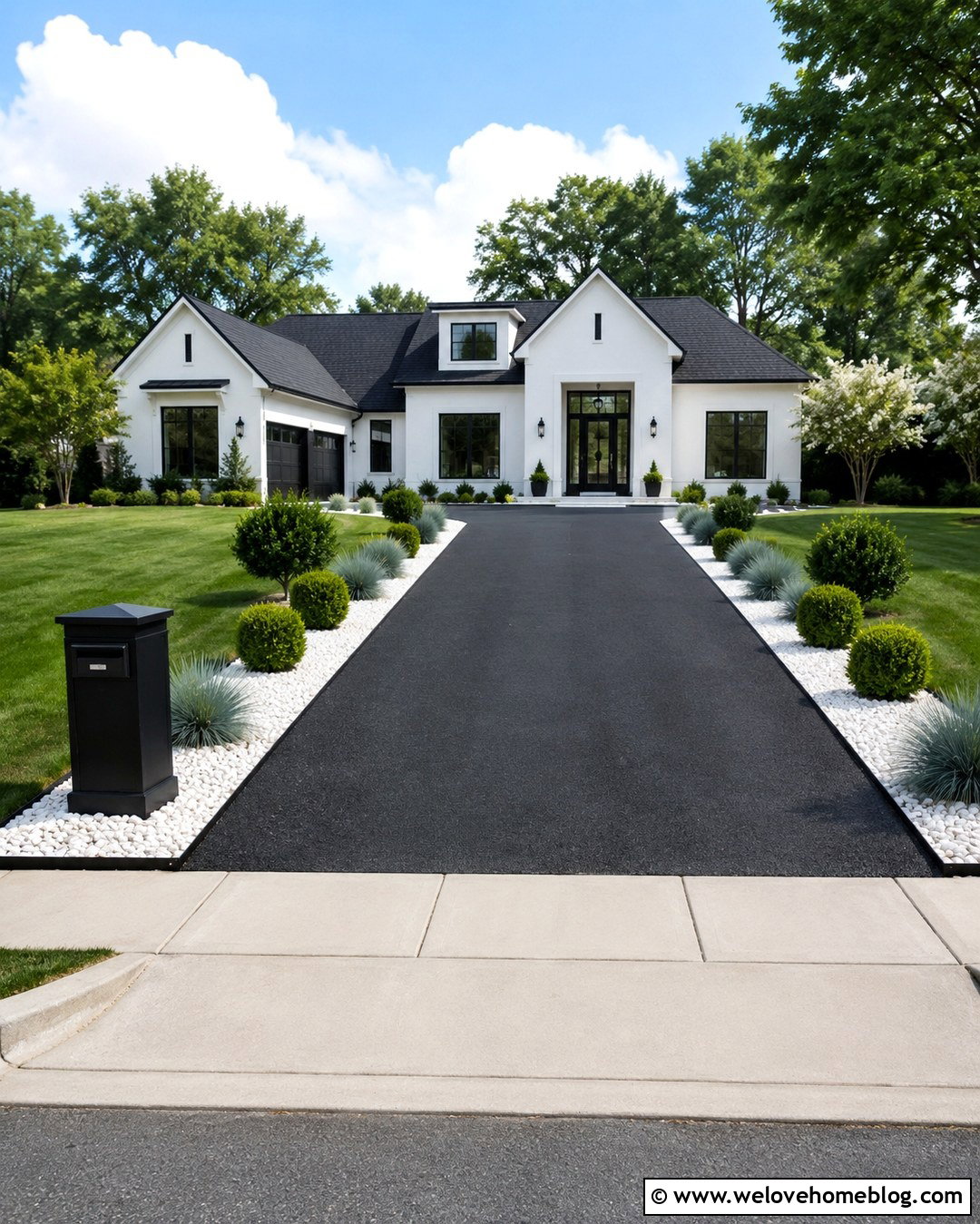
Bright white landscaping rocks make a black asphalt driveway look clean and sharply defined. Use white marble chips, quartz gravel, or pale limestone in wide border beds instead of creating a thin, uneven line. Dark metal edging can contain the stones while repeating the asphalt’s color. For a modern suburban look, add rounded evergreen shrubs, blue-green ornamental grasses, and a simple concrete walkway. Space the plants generously so the white rock remains visible and does not feel crowded. Because pale stones can show leaves and soil, this design works best where regular blowing or light raking is practical. Carry the same material around an address marker or mailbox to create a coordinated entrance that visually connects the curb, driveway, and house.
5. Lava Rocks Along Modern Driveway
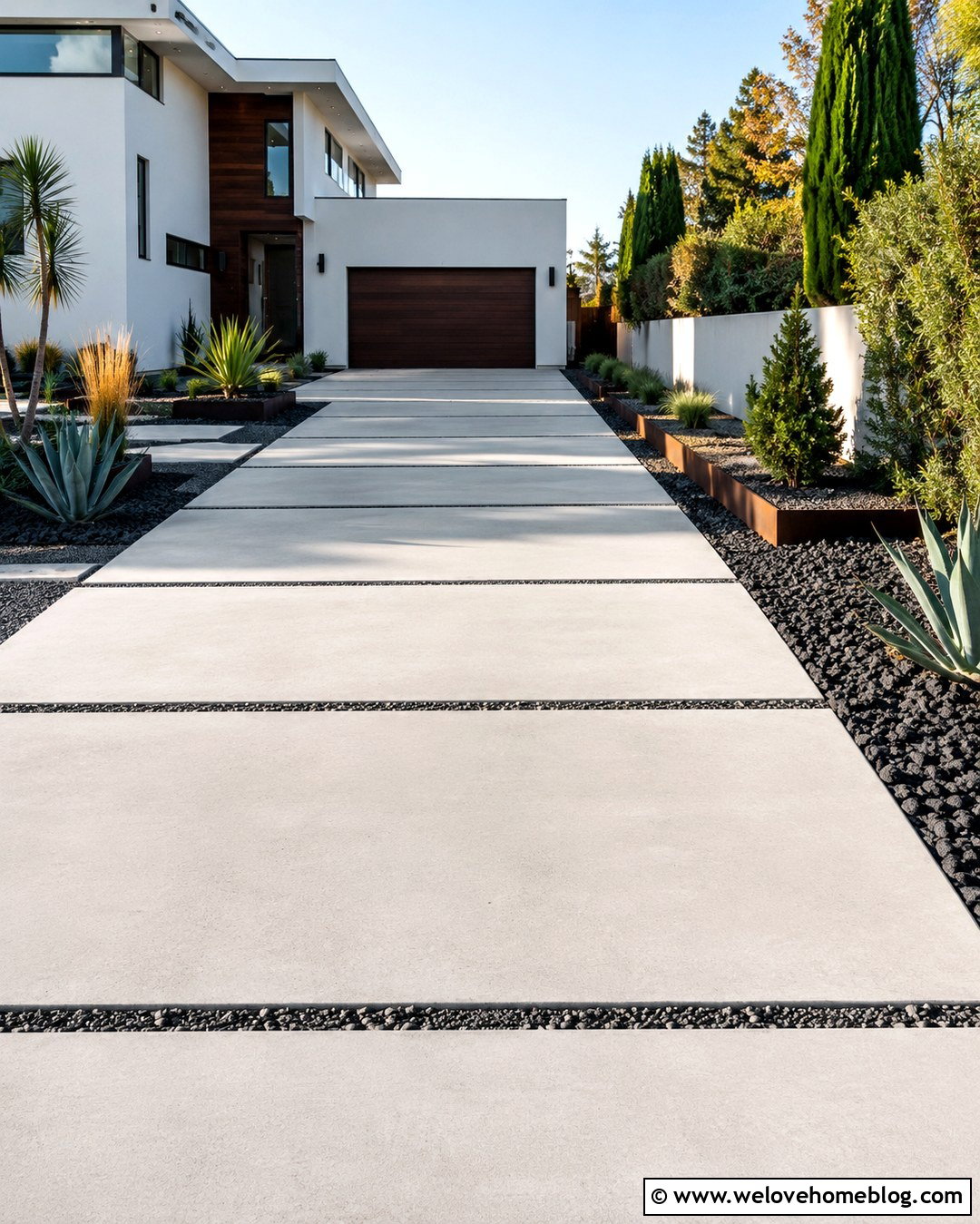
Black lava rock provides rich texture beside a pale modern driveway. Pair it with large rectangular concrete slabs, narrow gravel joints, and a straight layout leading toward a minimalist house. Keep the rock beds geometric, using crisp steel edging and repeated blocks of architectural plants. Agave, yucca, dwarf evergreens, and upright ornamental grasses all reinforce the clean structure. Red lava rock can create a warmer desert look, but black or charcoal tones usually feel more refined beside white, gray, or natural wood facades. Avoid mixing too many rock colors in the same bed. One consistent material makes the driveway appear wider and more organized. Low horizontal lighting can define the edge without interrupting the streamlined daytime view.
6. Cobblestone Rocks Along Curved Driveway
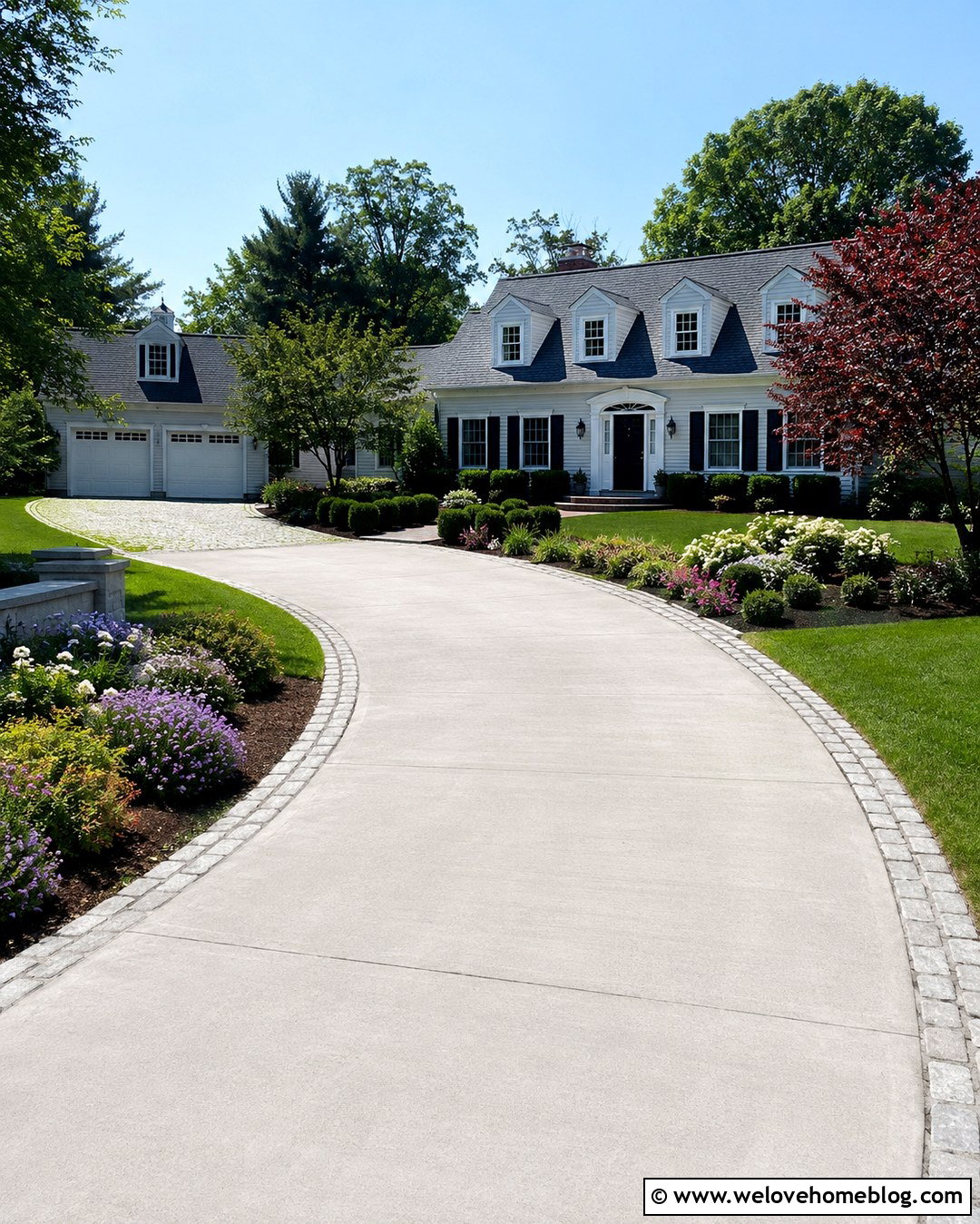
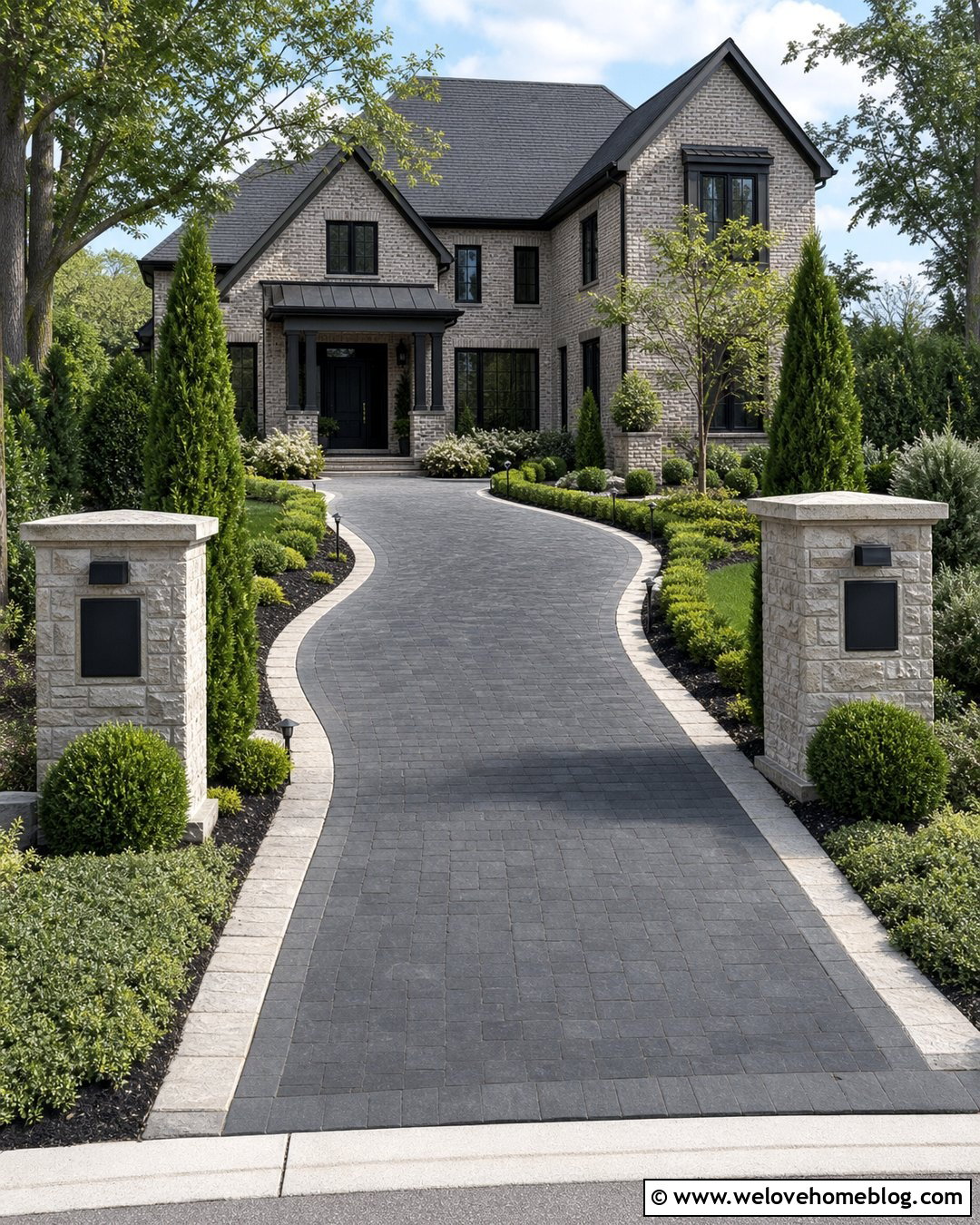
A curved driveway gains definition from a single or double row of cobblestones following its entire sweep. Gray granite cobbles work beautifully beside light gravel, poured concrete, or asphalt because their block-like form creates a durable visual boundary. Install the stones at a consistent height and use smooth, gradual curves rather than abrupt changes. Behind the cobblestone border, build broad planting beds with compact shrubs, flowering perennials, and small ornamental trees. Repeating a limited plant palette around the bend makes the driveway feel cohesive from the street. At the garage, widen the cobblestone detail into a small apron or turning-area accent. This traditional combination suits Colonial, Cape Cod, Tudor, and established suburban homes.
7. Flat Rocks Along Farmhouse Driveway
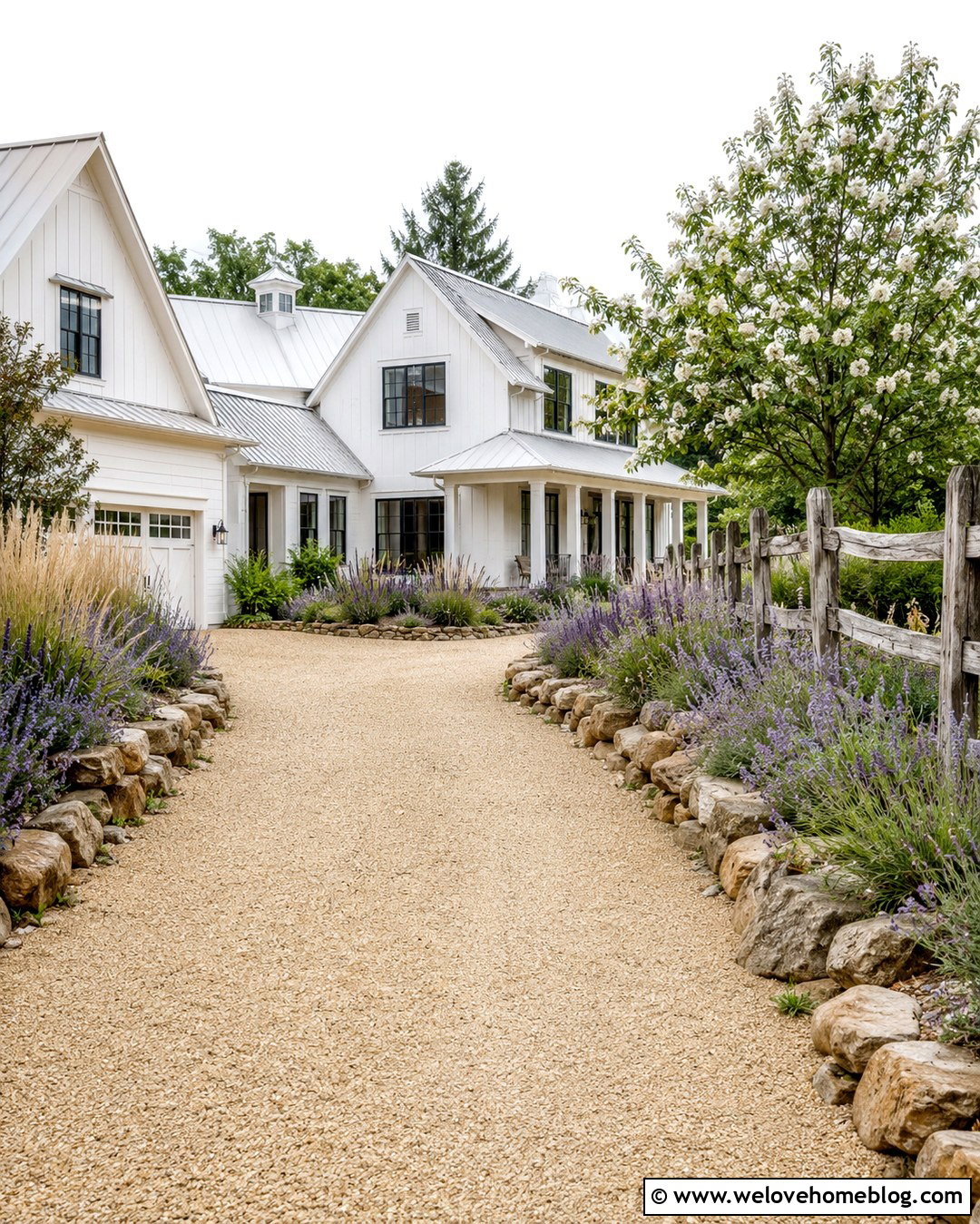
Flat fieldstones can give a farmhouse driveway a relaxed border that feels connected to the land. Pair a beige crushed-stone driveway with broad, irregular slabs laid in an informal line along each side. Leave small planted gaps between selected stones rather than creating a rigid wall. Lavender, catmint, salvia, and soft ornamental grasses add movement while keeping views open near the road. A weathered timber fence or simple wood gate can strengthen the rural character. Near the house, transition the flat stones into a wider garden bed around a small flowering tree. The earthy driveway gravel, low stone border, and natural planting should share similar warm tones, creating a complete entrance that feels welcoming without appearing overly manicured.
8. Mixed Rocks Along Circular Driveway
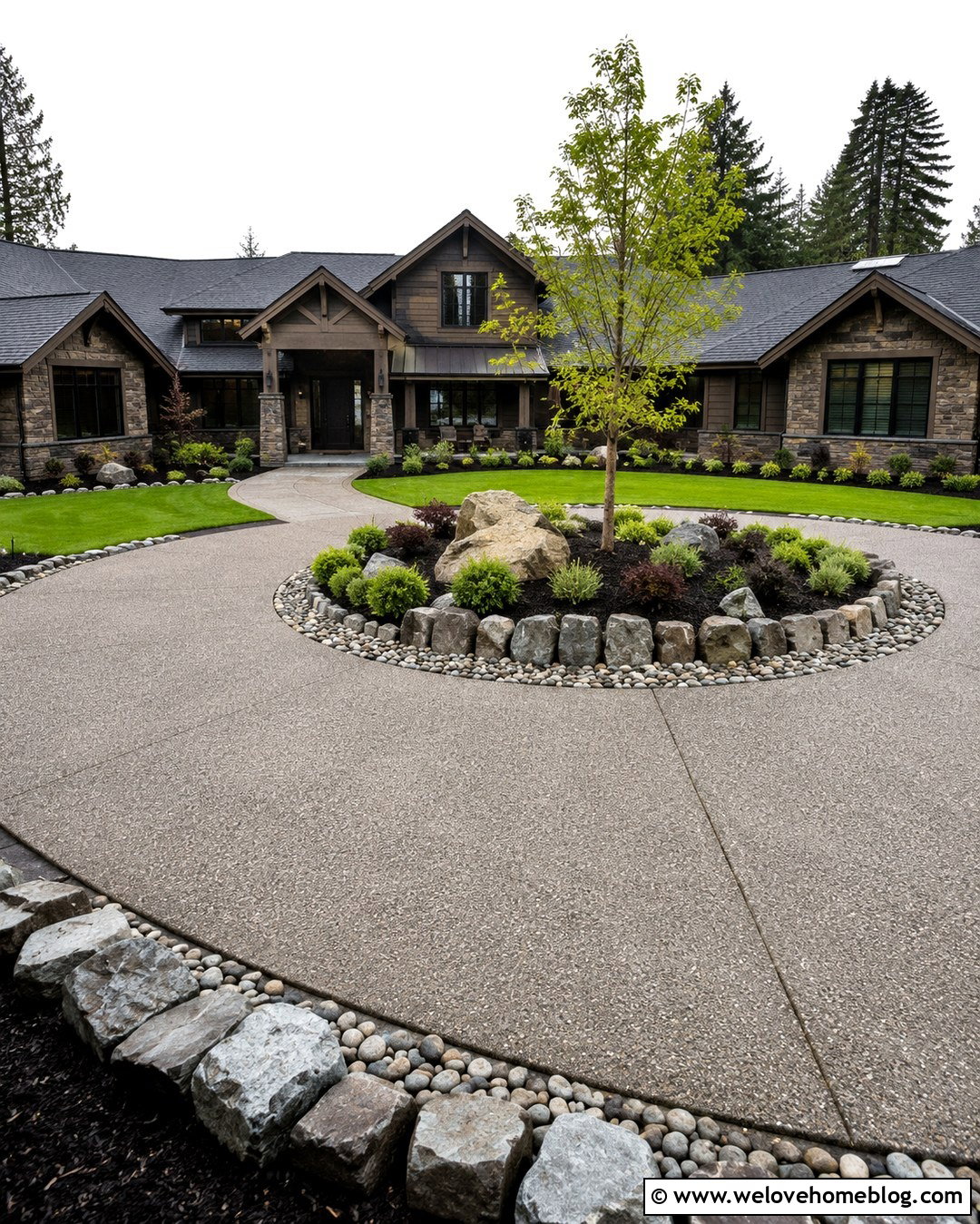
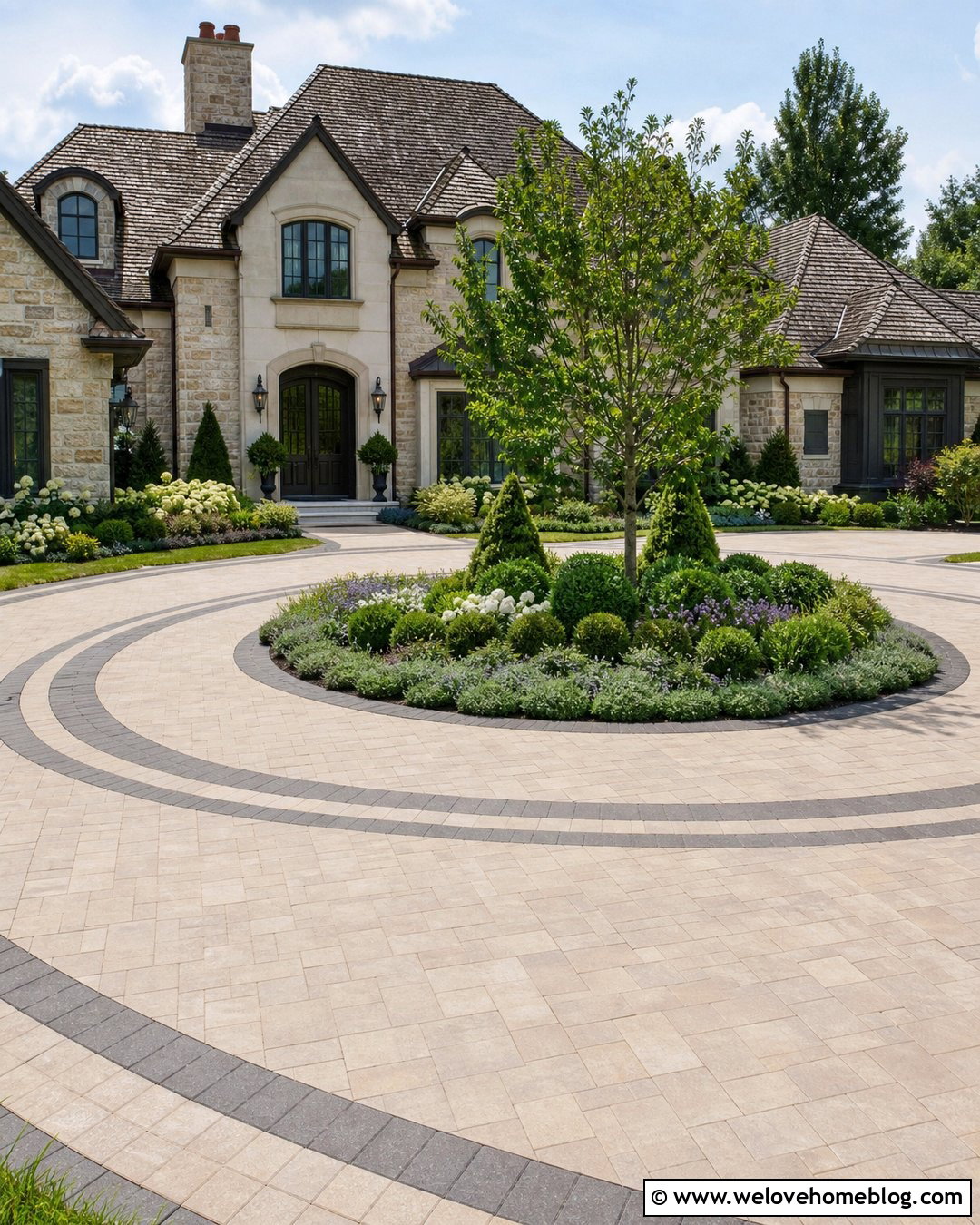
A circular driveway offers enough space to combine several rock sizes without making the landscape feel crowded. Use exposed aggregate concrete for the driving surface and create a central island edged with chunky fieldstone. Inside the island, layer small river pebbles, medium accent rocks, and a few grounded boulders around a specimen tree. Repeat a simpler rock strip along the outer edge to connect the circle with the rest of the yard. Keep stones away from turning paths and maintain clear sightlines near the driveway entrance. A short walkway can cross the island or connect its edge to the front door. This layered arrangement adds depth to broad front yards and works with Craftsman, ranch, and contemporary homes.
9. Crushed Granite Along Desert Driveway
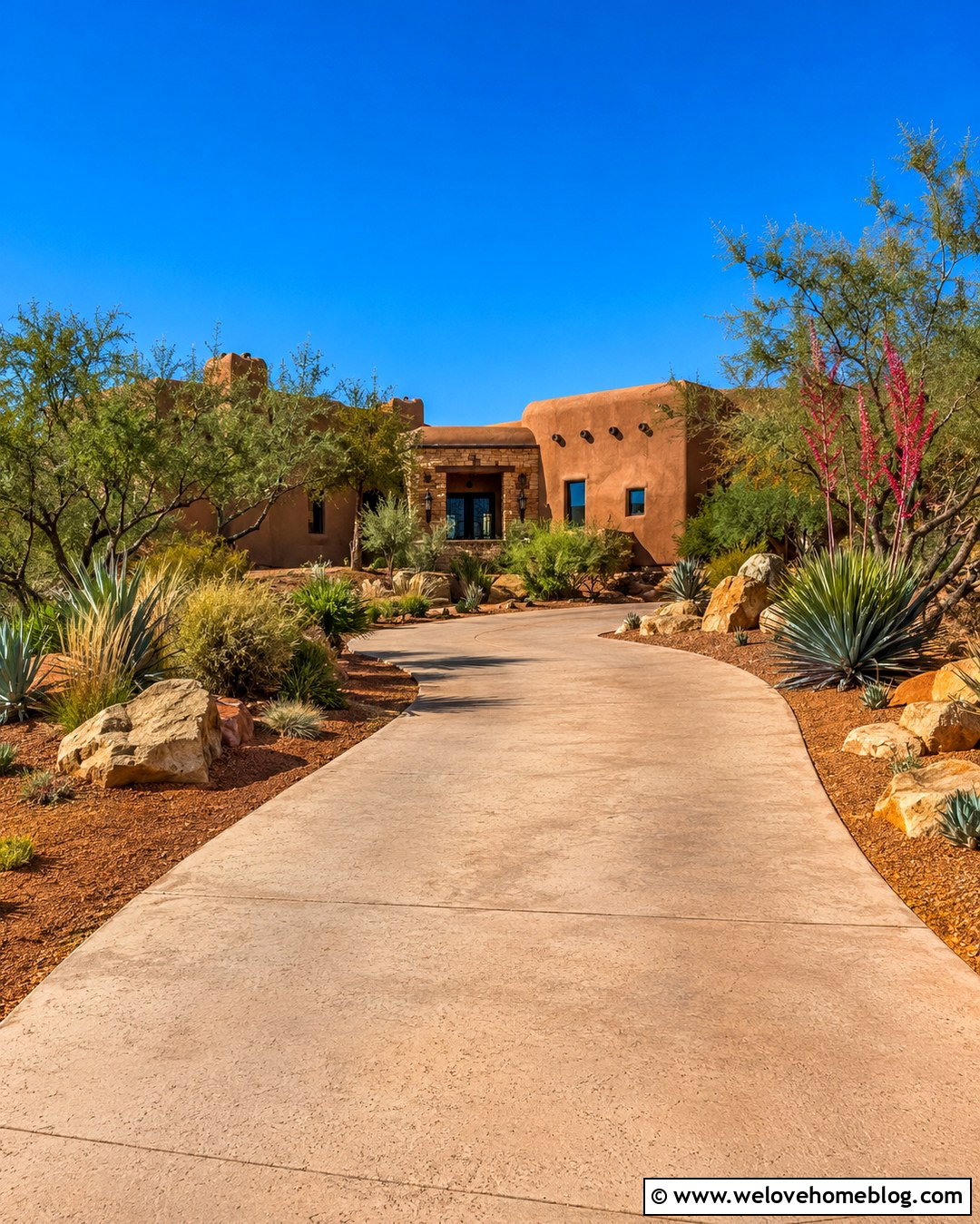
Decomposed granite creates a warm, natural transition beside a desert-style driveway. Pair a light tan concrete surface with broad shoulders of rust, gold, or buff-colored crushed granite. Define the outer edge with larger sandstone rocks placed in loose clusters rather than a continuous row. Use drought-tolerant plants such as agave, desert spoon, red yucca, and compact native grasses to add height and shape. Keep thorny plants and sharply pointed leaves far enough from doors and walking routes. A curved layout can make the landscape feel softer, while rectangular concrete bands keep it visually modern. Matching crushed granite around the mailbox or entry pillars ties the entire frontage together and reduces the appearance of disconnected planting pockets.

10. Limestone Rocks Along Brick Driveway
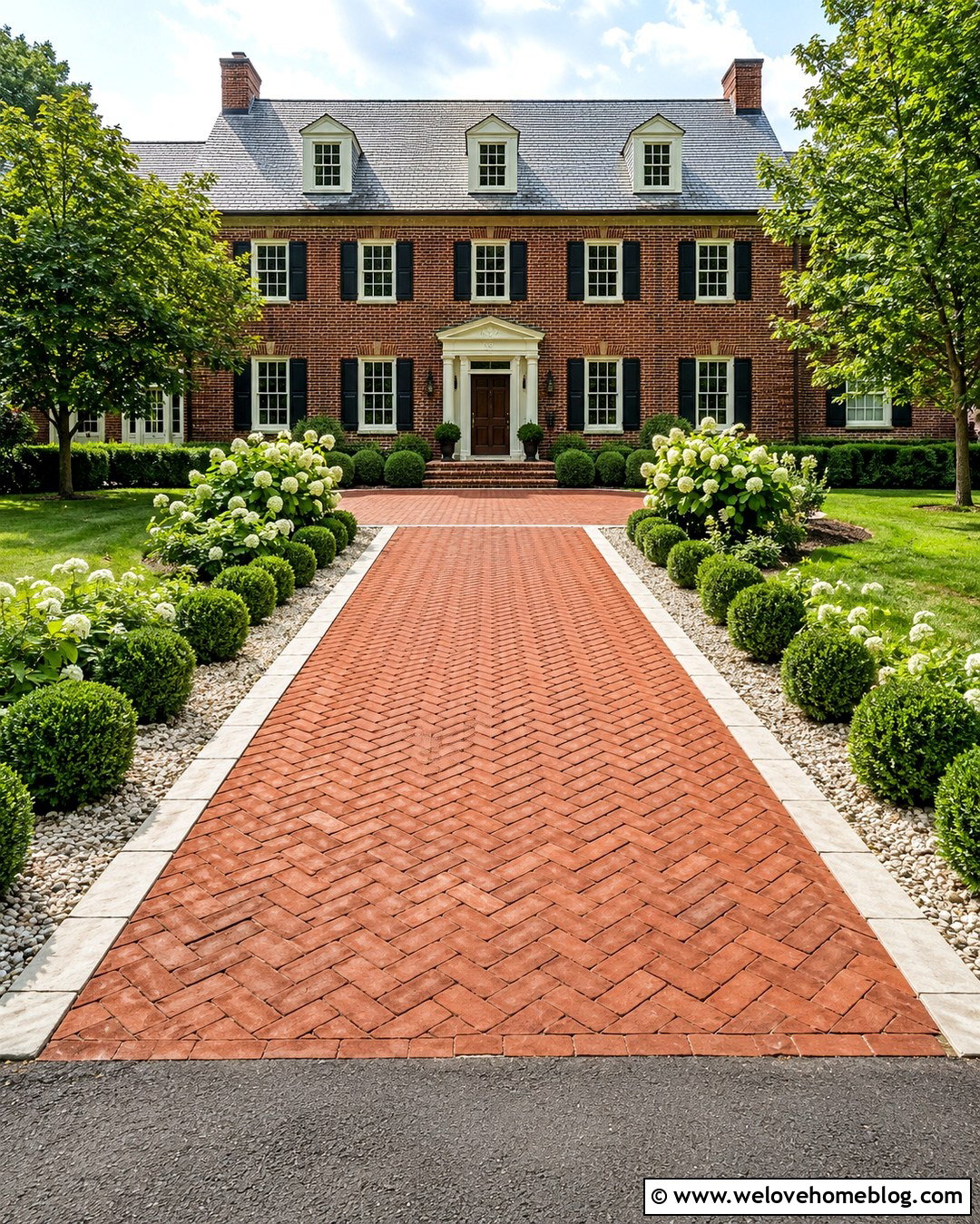
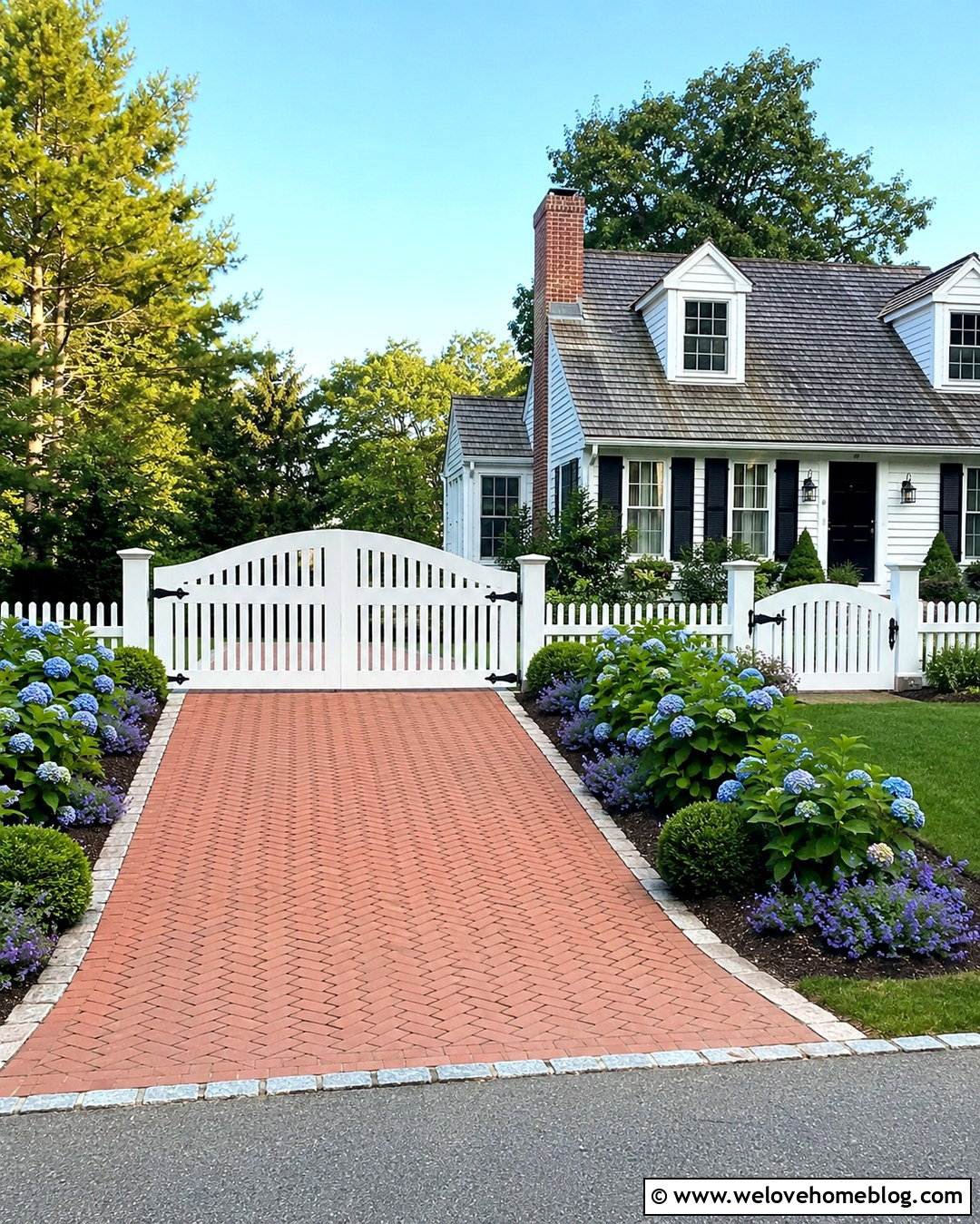
Cream-colored limestone creates an elegant contrast beside a red or brown brick paver driveway. Use medium-size limestone pieces as a structured border, then extend pale gravel into the planting beds behind them. The lighter rock brightens the driveway edge and helps the rich brick pattern stand out. Boxwood, hydrangeas, or clipped hollies can provide a traditional green backdrop, while seasonal flowers add restrained color near the walkway. Choose limestone tones that relate to the home’s trim, mortar, or front steps. At the street, incorporate a brick apron between two limestone-bordered beds for a finished entrance. This coordinated combination is particularly effective with Colonial, Georgian, French country, and traditional brick homes.
11. Rocks And Ornamental Grasses Along Driveway
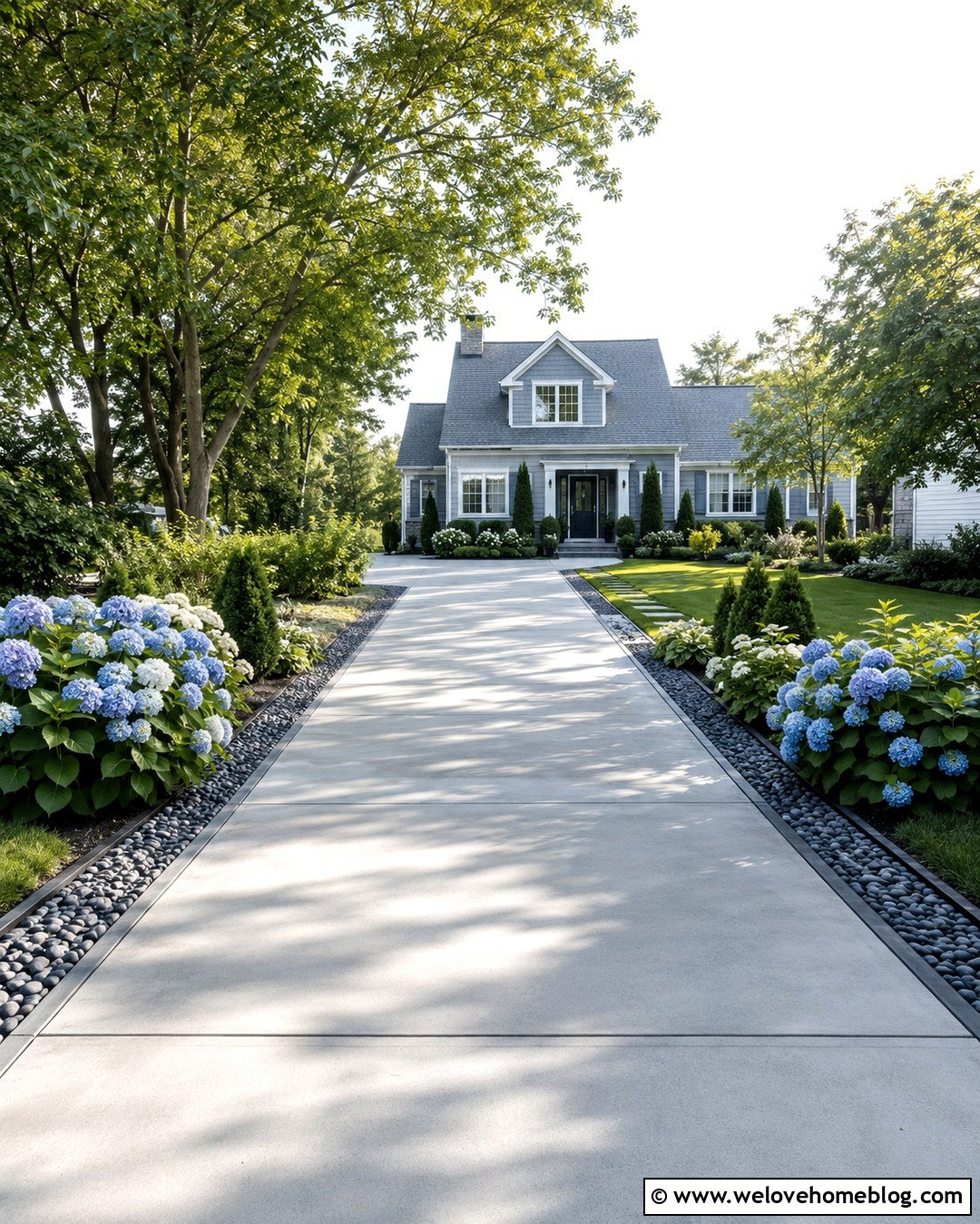
Ornamental grasses soften the hard line between a driveway and a rock-covered border. Start with a curved gray gravel or broom-finished concrete driveway, then add a wide bed of mixed river stones along one or both sides. Plant grasses in repeated groups, allowing open areas of rock to remain visible between them. Choose compact varieties near the curb and taller grasses farther up the driveway, where they will not obstruct views. Dark cobblestone edging can separate the river rock from the driving surface, while a clean steel edge keeps the lawn side neat. The movement of the grasses balances the weight of the stones. This complete look fits prairie-inspired homes, modern farmhouses, and relaxed contemporary landscapes.
12. Rocks And Succulents Along Driveway
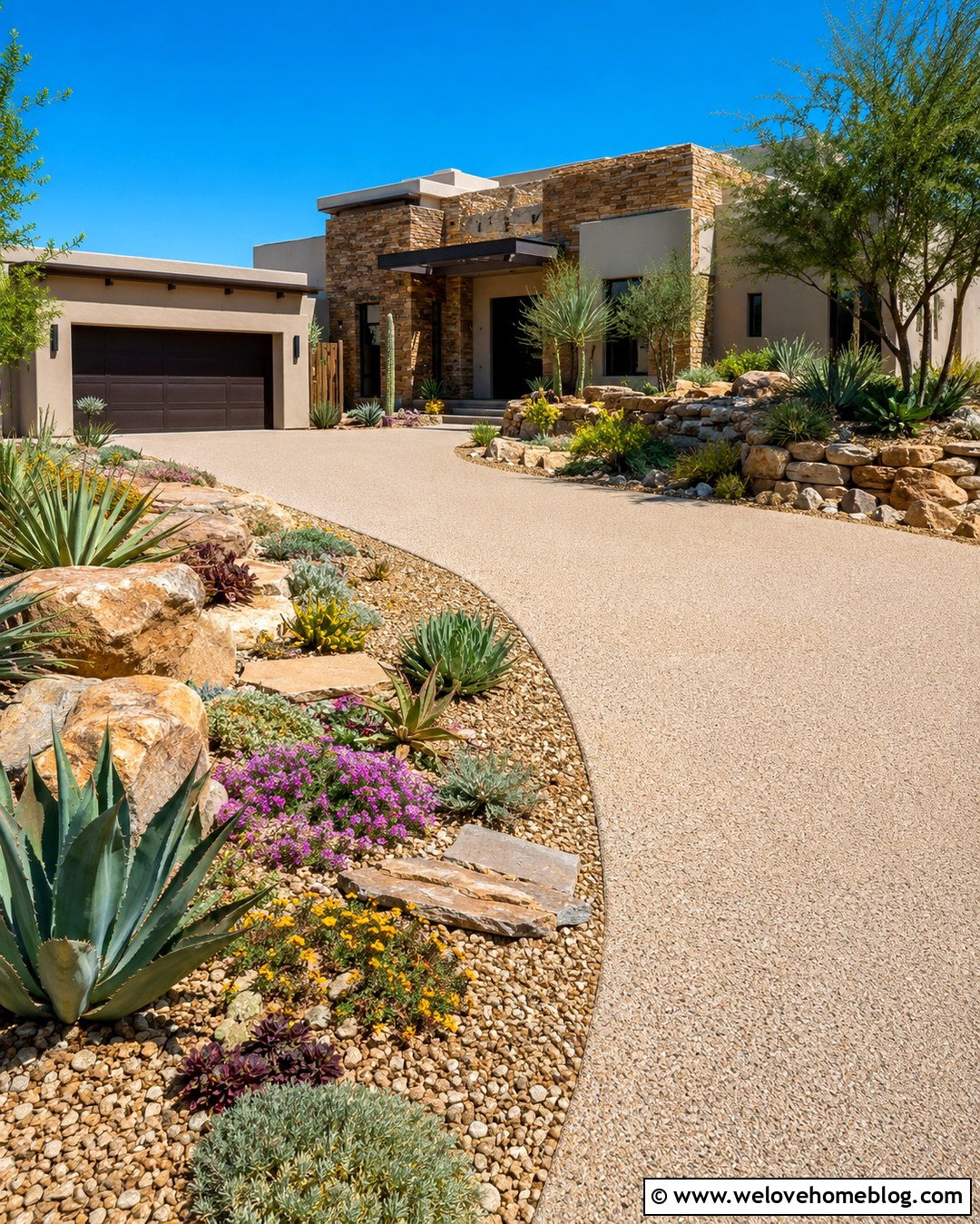
A succulent rock garden can transform a sunny driveway edge into a colorful, sculptural landscape. Pair a pale concrete or resin-bound gravel driveway with warm gravel beds, layered flagstones, and several large accent boulders. Set major rocks partly into the ground and vary their sizes so the composition feels naturally formed. Good drainage is essential, and plants should suit the property’s exposure and growing zone. () Combine rosette succulents with yucca, agave, sedum, and low flowering ground covers. Leave clear gravel around each plant to emphasize its shape and allow room for mature growth. Finish the street entrance with matching rock clusters, creating a coordinated drought-conscious look for Southwest, Spanish, or modern homes.
13. Rocks And Hydrangeas Along Driveway
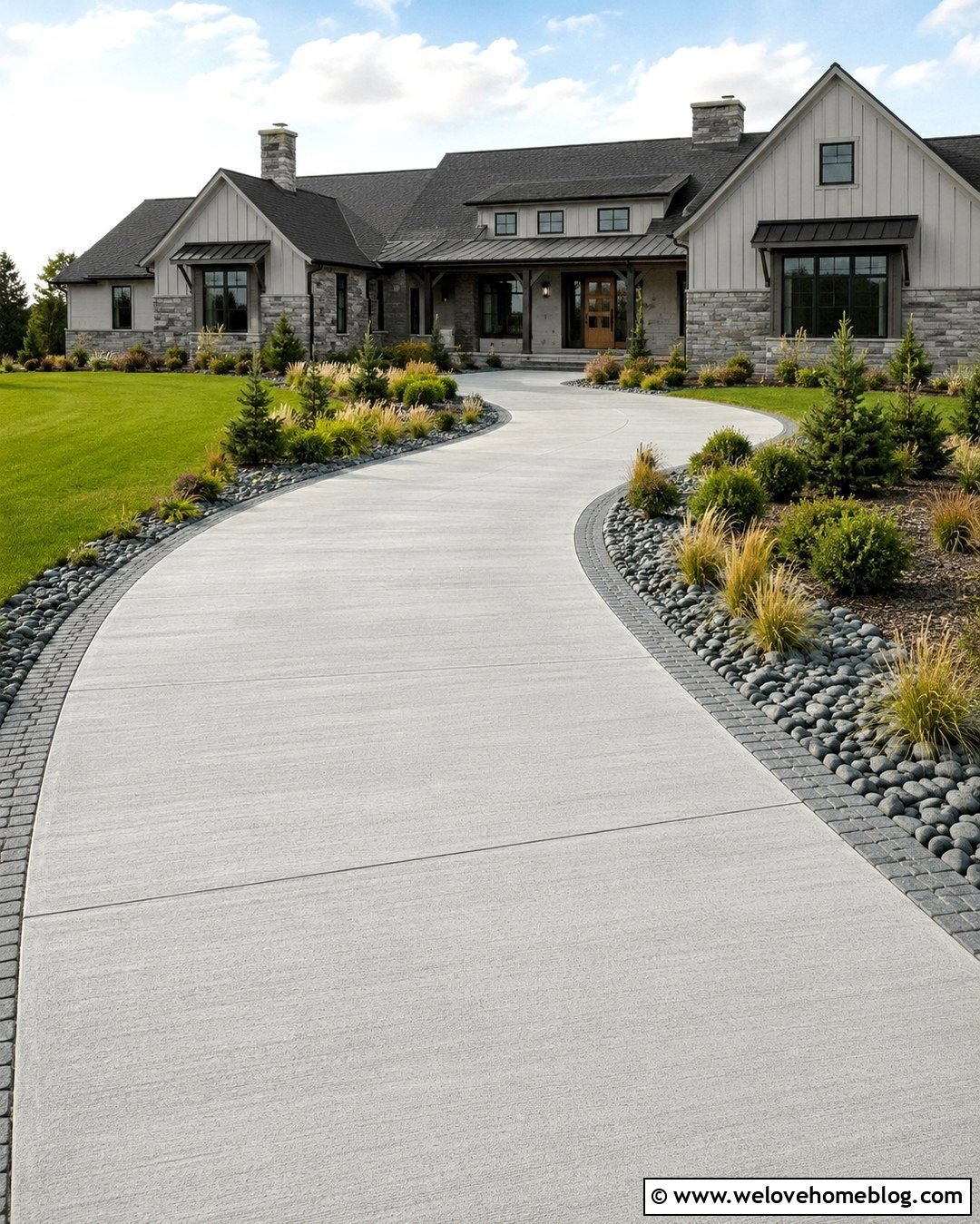
Hydrangeas bring softness and seasonal color to a driveway lined with cool gray rocks. A smooth concrete driveway or gray paver surface creates a calm foundation for broad planting beds filled with river stone. Place the hydrangeas behind the rock edge so mature branches do not extend into the vehicle path. Low evergreen shrubs can provide winter structure, while shade-tolerant ground covers fill gaps closer to the house. Use steel or stone edging to prevent the rocks from spreading into the root zones and lawn. Match the river rock to gray roof shingles, stone veneer, or walkway pavers for a unified palette. This lush combination complements Cape Cod, cottage, Craftsman, and traditional homes with partial shade and generous front-yard planting space.
14. Rocks With Lighting Along Driveway
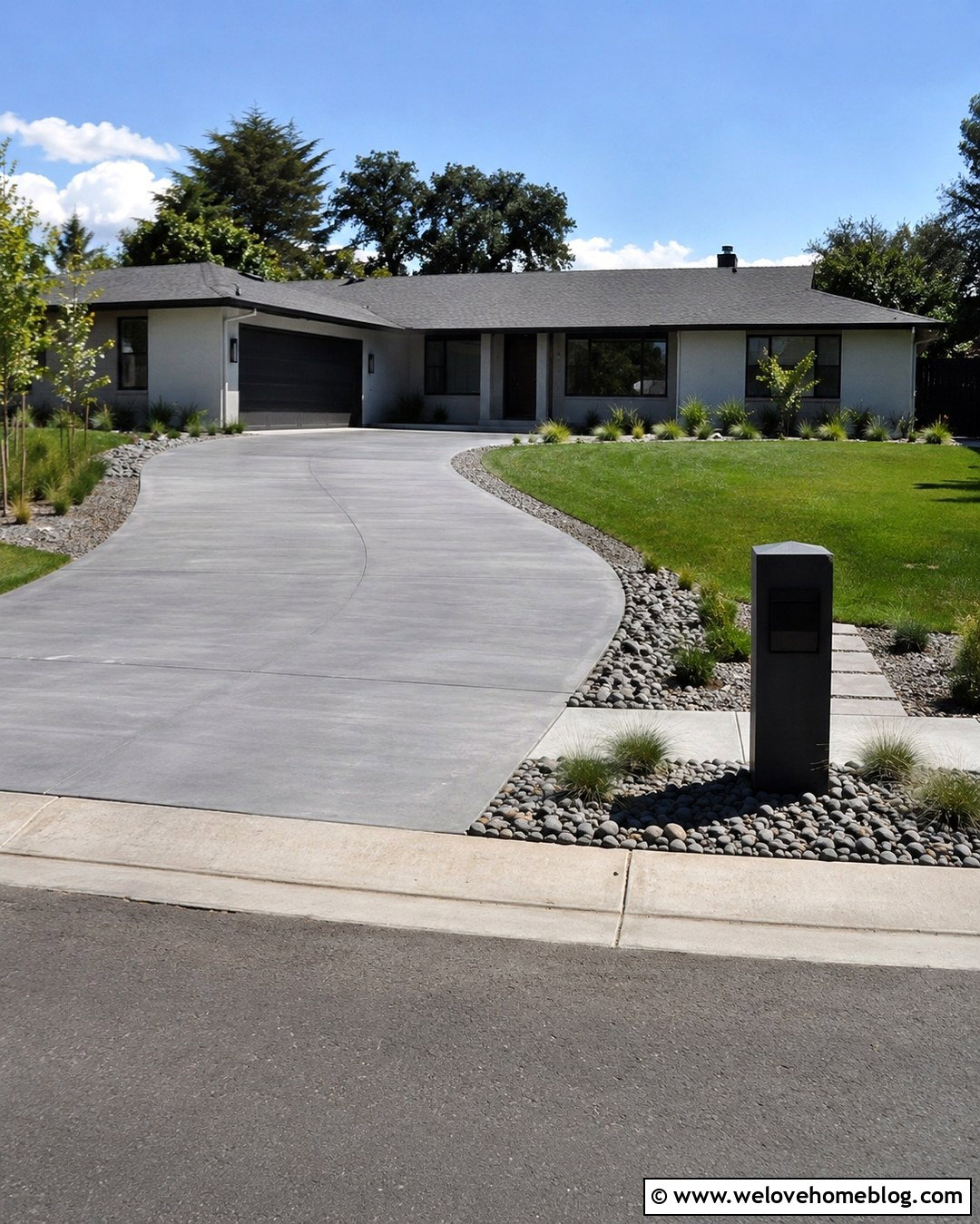
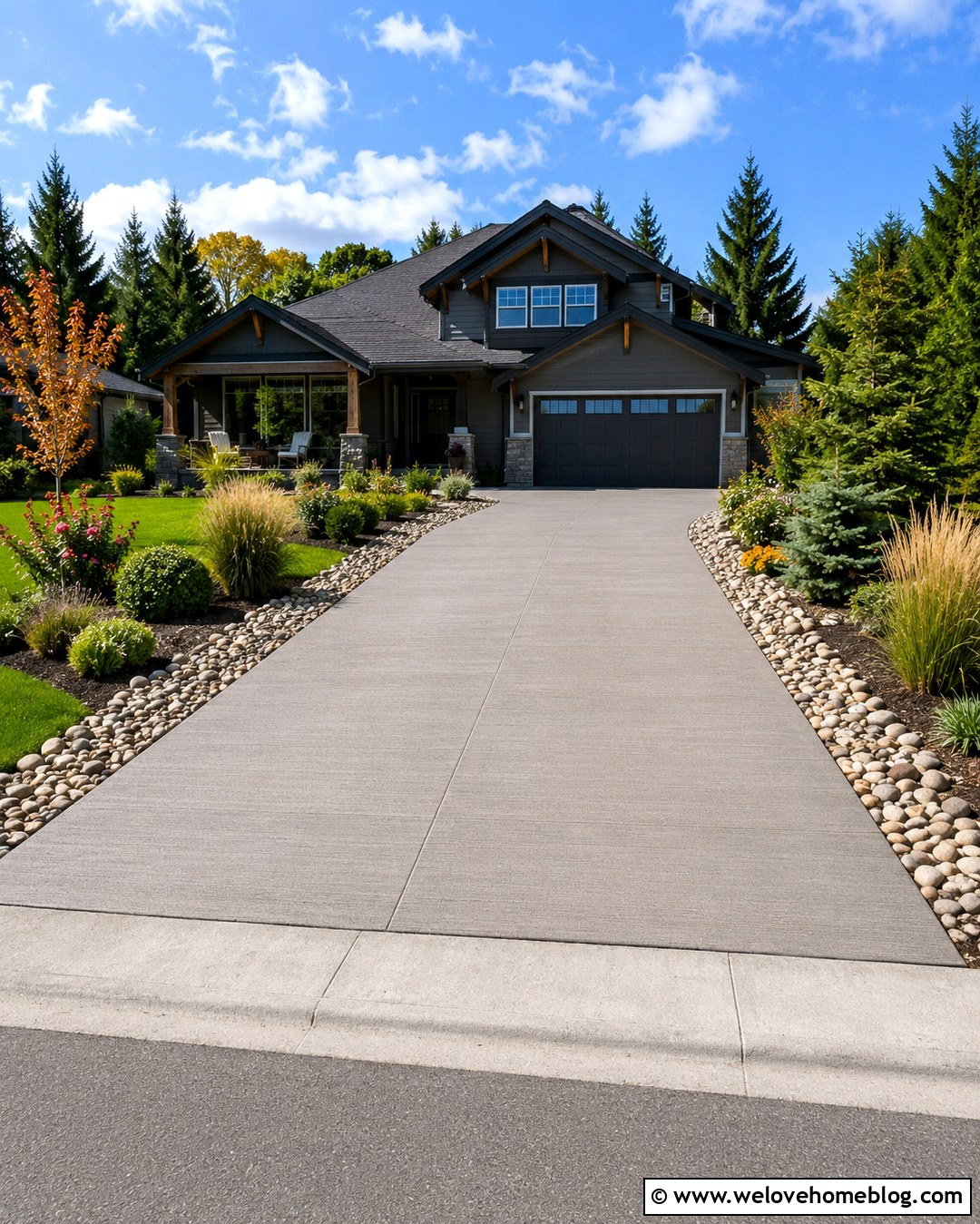
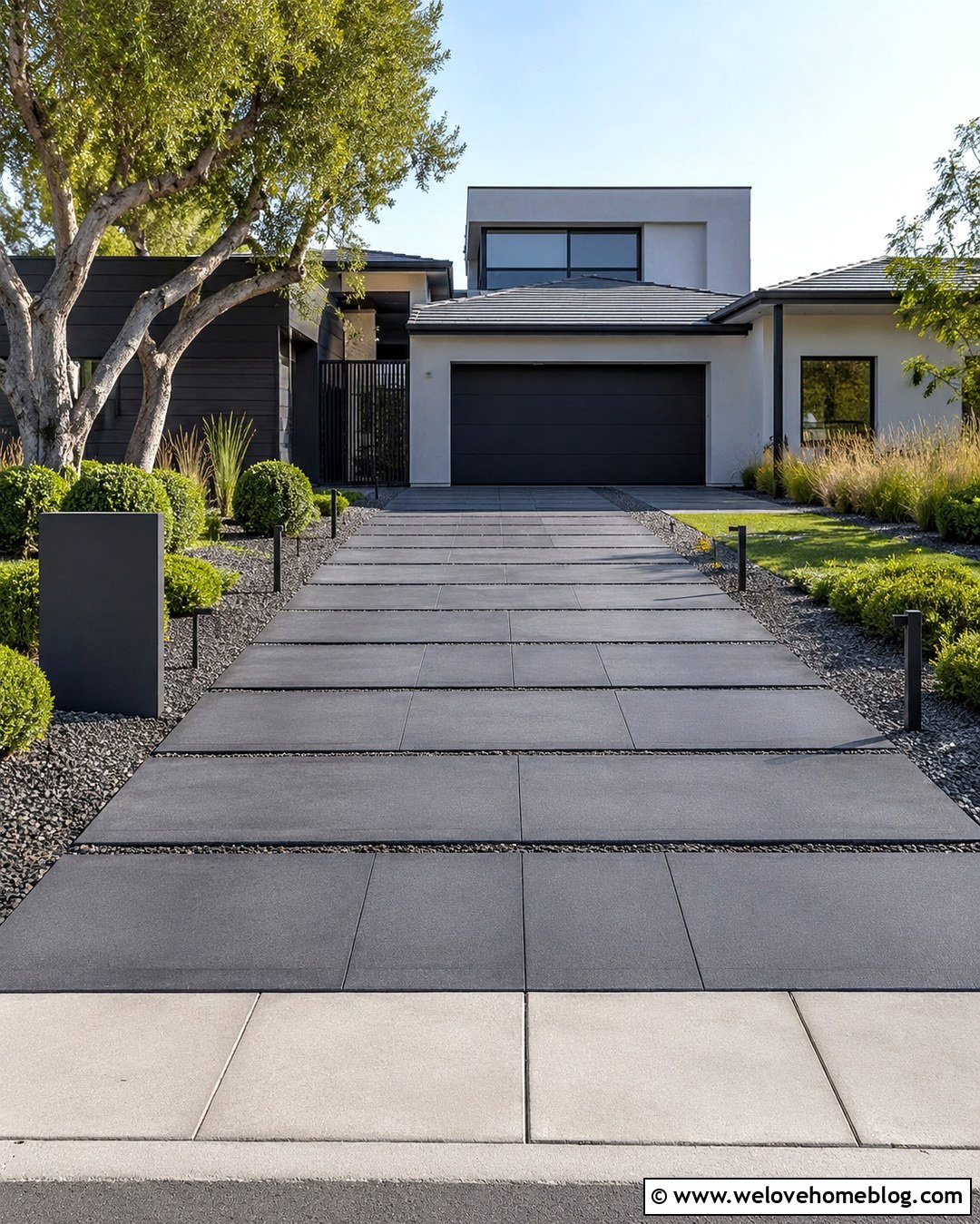
Driveway lighting looks more integrated when fixtures sit within carefully planned rock borders. Use a dark asphalt driveway with smooth gray river rocks and low black path lights spaced at major transition points. Place fixtures near the entrance, curves, walkway connection, and garage rather than forming an excessive runway of lights. During the day, ornamental grasses and compact evergreens help the fixtures blend into the beds. Larger accent stones can anchor selected lights, but they should not block illumination or create obstacles near the pavement. Conceal wiring beneath the planned border according to the lighting system’s installation requirements. The combination of dark paving, natural stone, restrained planting, and evenly positioned fixtures creates a polished approach for contemporary or transitional homes.
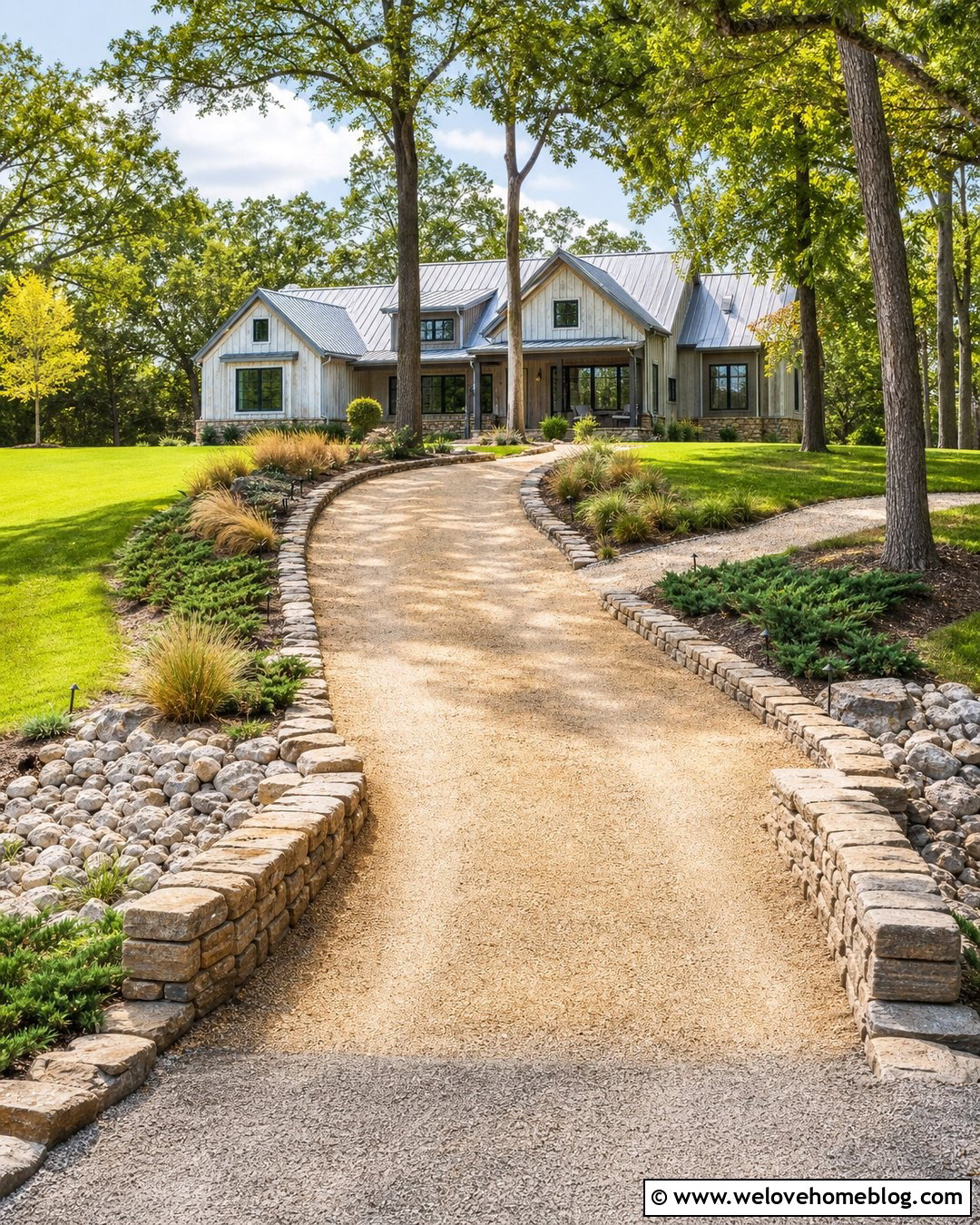


15. Rock Retaining Wall Along Driveway
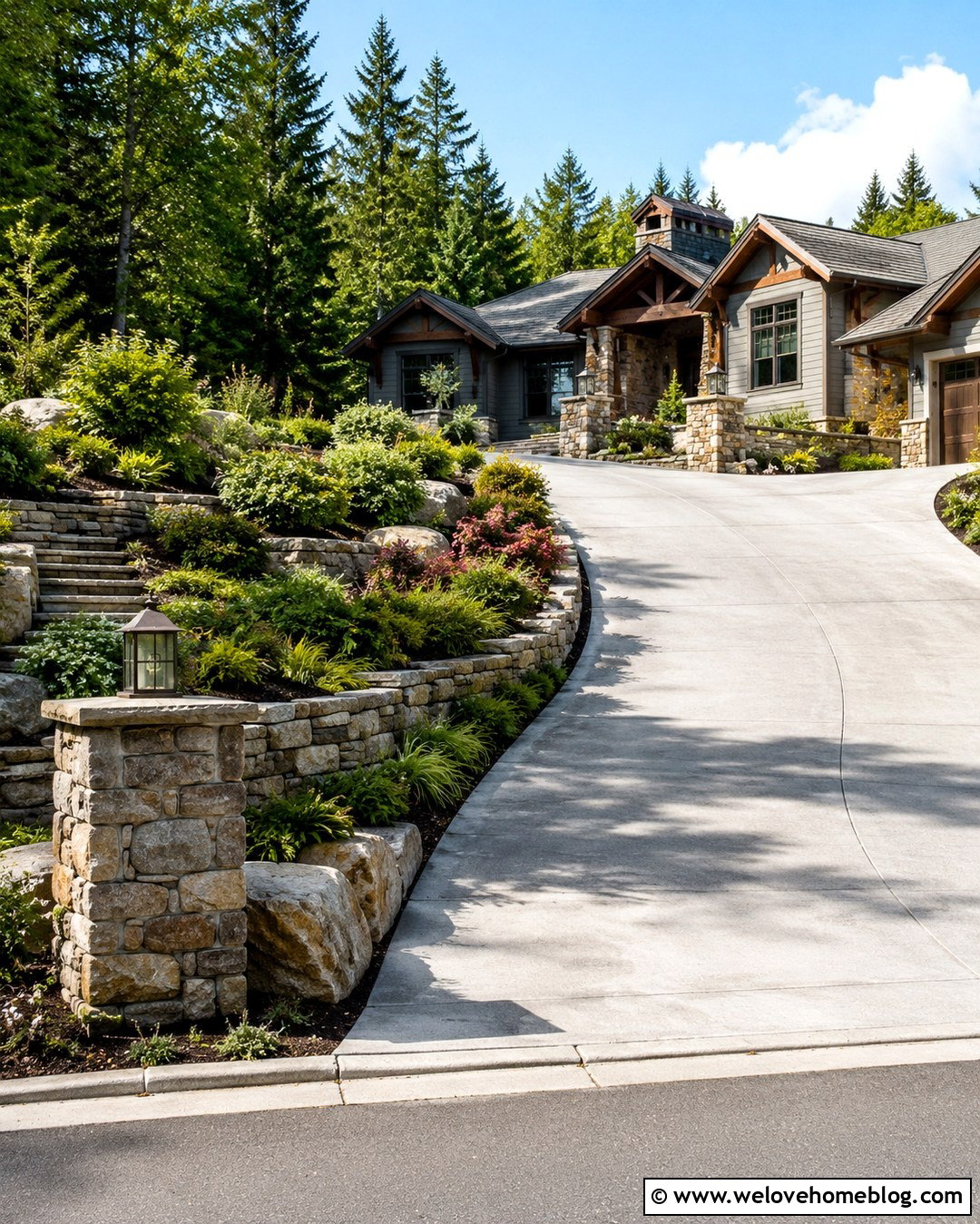
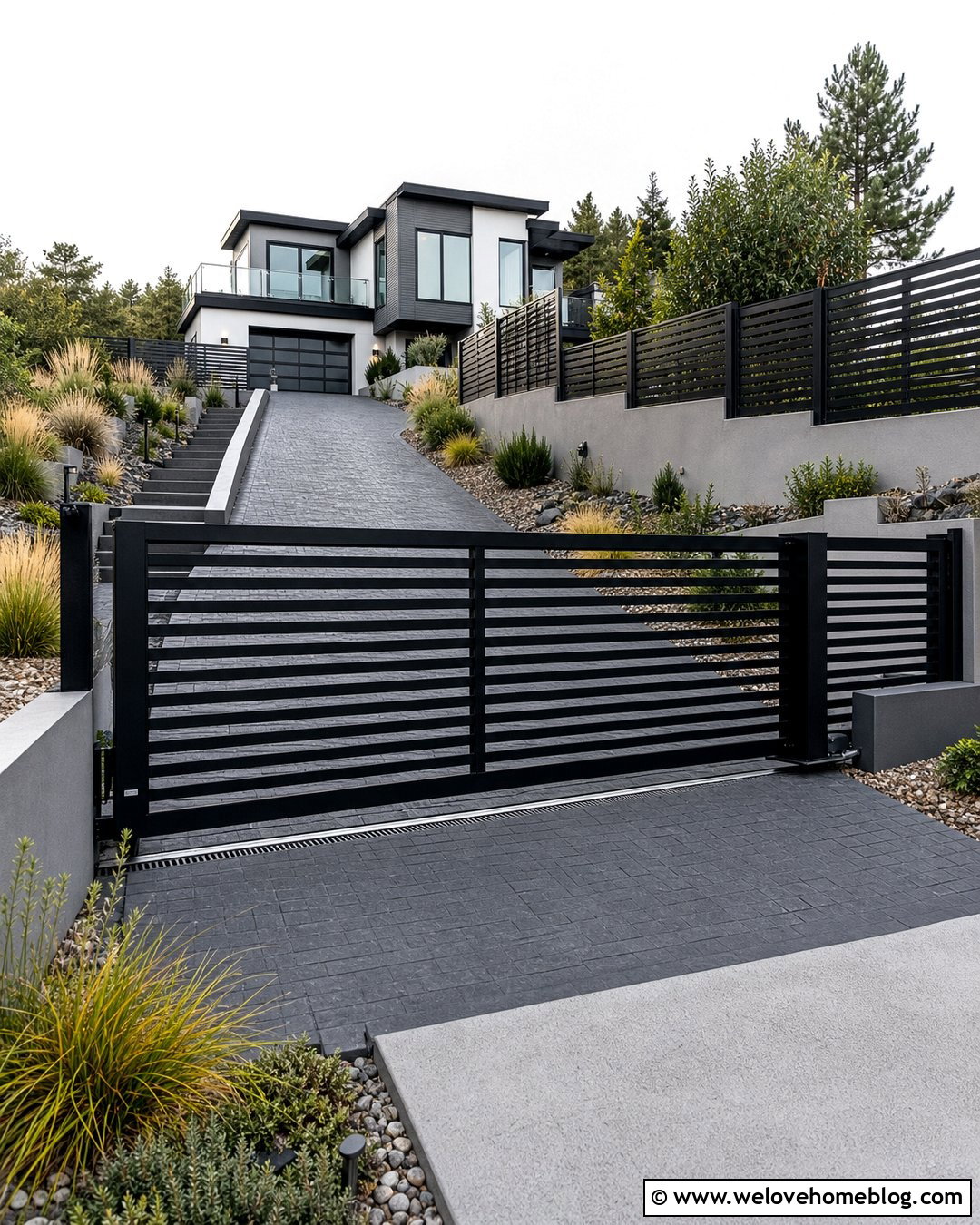
A driveway cut into a slope often benefits visually from a low rock retaining wall. Pair a curved asphalt or concrete driveway with stacked fieldstone that follows the grade without overpowering the house. Use larger stones at the base and slightly smaller pieces above to create a grounded, substantial appearance. Behind the wall, plant cascading ground covers, compact shrubs, and ornamental grasses that soften the upper edge. Keep loose rock and soil contained so they cannot wash onto the driveway. Drainage, wall height, soil pressure, and local construction requirements should be evaluated before installation, especially on steep properties. Repeat the wall stone in front steps, entrance pillars, or walkway borders to make the driveway feel like part of one coordinated landscape plan.
16. Rock Garden Along Narrow Driveway
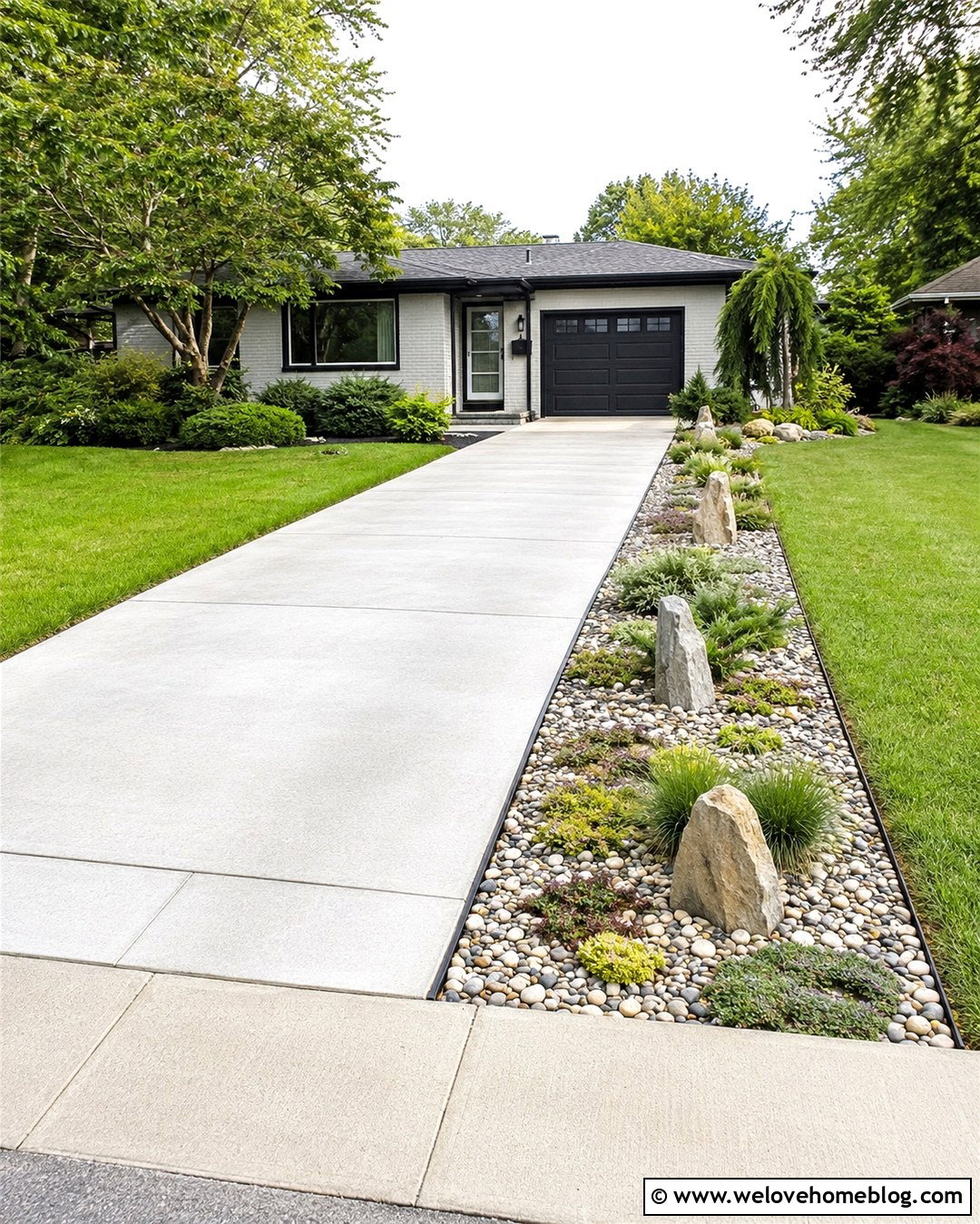
A narrow driveway needs landscaping that adds interest without reducing usable space. Choose a straight concrete driveway and place a slim rock garden along one side, using small river pebbles, several vertical stones, and low-growing plants. A flush metal edge keeps the border compact and prevents stones from rolling onto the pavement. Select plants with tidy mature widths, such as dwarf grasses, creeping thyme, sedum, or compact juniper. On the opposite side, maintain a simple lawn edge or narrow paver strip so the design does not feel cramped. Near the garage, widen the rock bed into a small focal area with one ornamental shrub. This asymmetrical arrangement gives a small suburban front yard depth while preserving comfortable vehicle and walking clearance.
17. Rocks Around Driveway Entrance
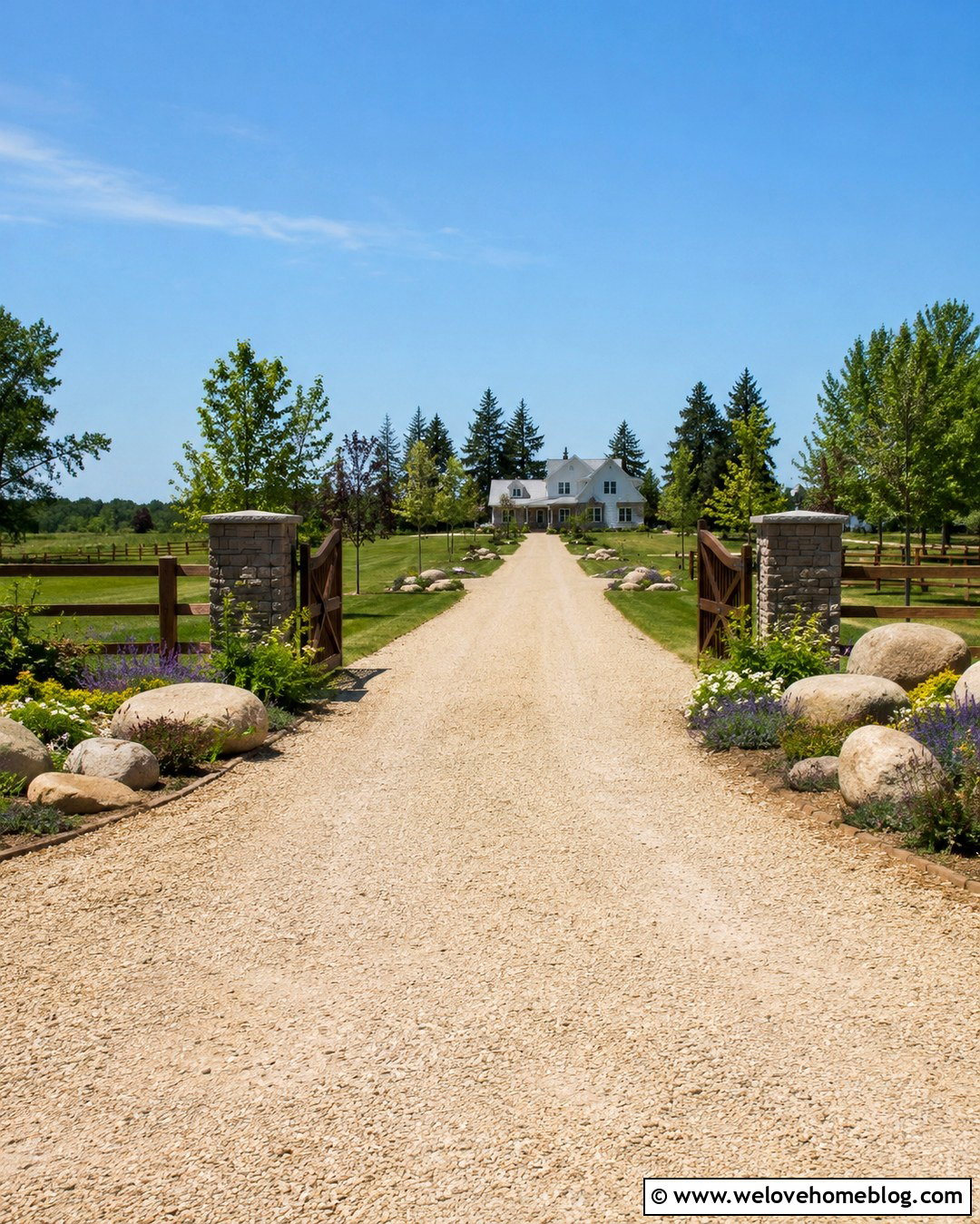
Rocks placed around the driveway entrance can make the transition from street to home feel intentional. Pair a light gravel driveway with two broad planting beds framed by natural fieldstone. Use one or two larger boulders on each side, positioning them beyond the turning path and public right-of-way. Layer smaller rocks, low shrubs, and flowering perennials around them to create balanced but not perfectly matching sides. Stone pillars, a simple gate, or a freestanding address marker can provide vertical structure. Keep plants low enough to preserve visibility when entering or leaving the property. Carry the same fieldstone farther up the driveway in smaller clusters. This creates a consistent arrival sequence suitable for farmhouse, ranch, Craftsman, and country-style homes.
18. Rocks Between Driveway And Lawn
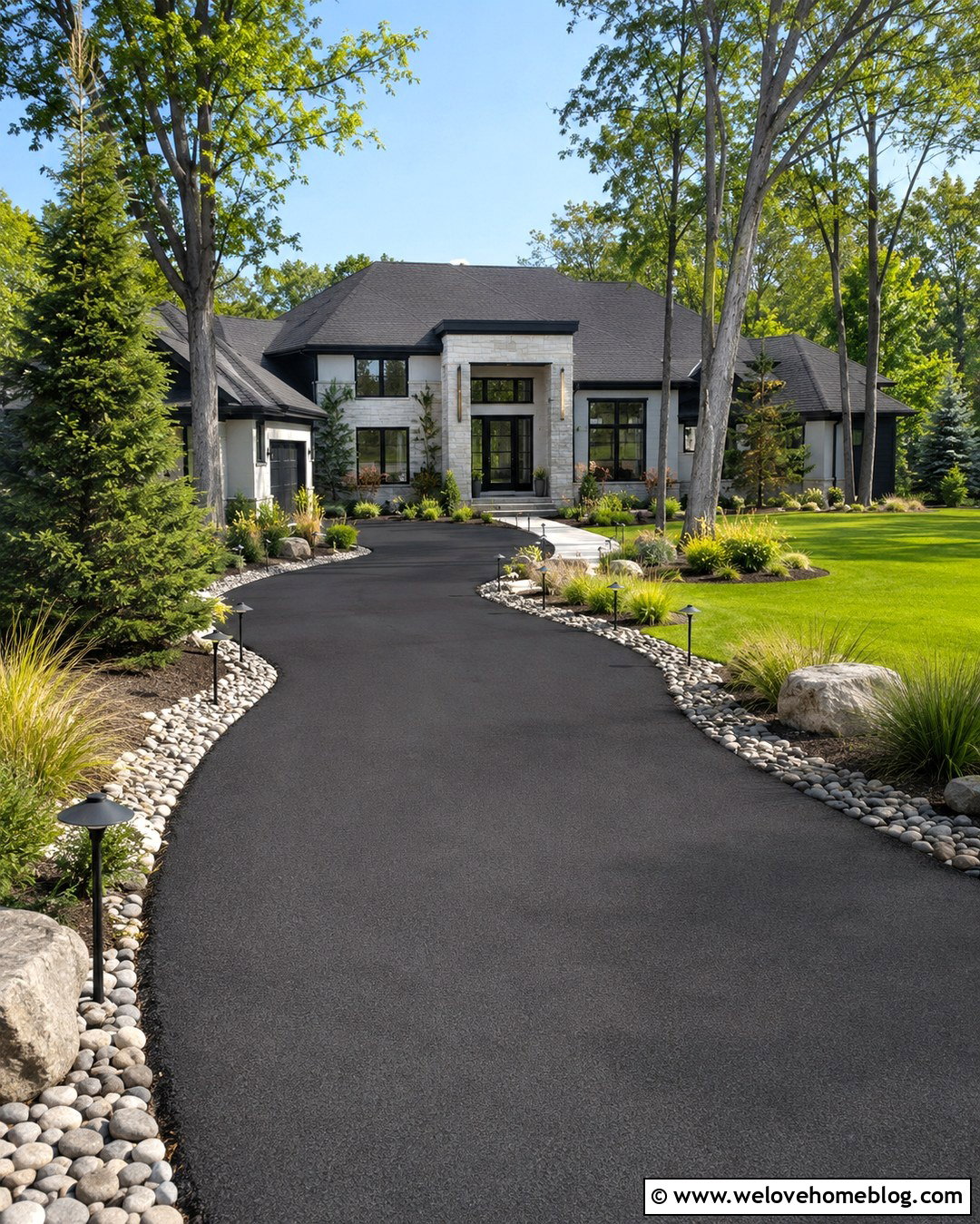
A rock buffer between the driveway and lawn can create a cleaner boundary while providing extra visual width. Start with a paved concrete driveway and install a broad strip of rounded cobbles or medium river rock beside the most frequently crossed edge. Add discreet metal edging along the grass side to help maintain a crisp mowing line. The rocks should sit on a properly prepared base and remain below any level that could interfere with tires, doors, or foot traffic. A few widely spaced grasses can soften the strip without turning it into a crowded flower bed. Continue the buffer around the driveway curve or near the mailbox for consistency. This practical design suits busy suburban driveways where grass edges often appear worn or uneven.
19. Low-Maintenance Rocks Along Long Driveway
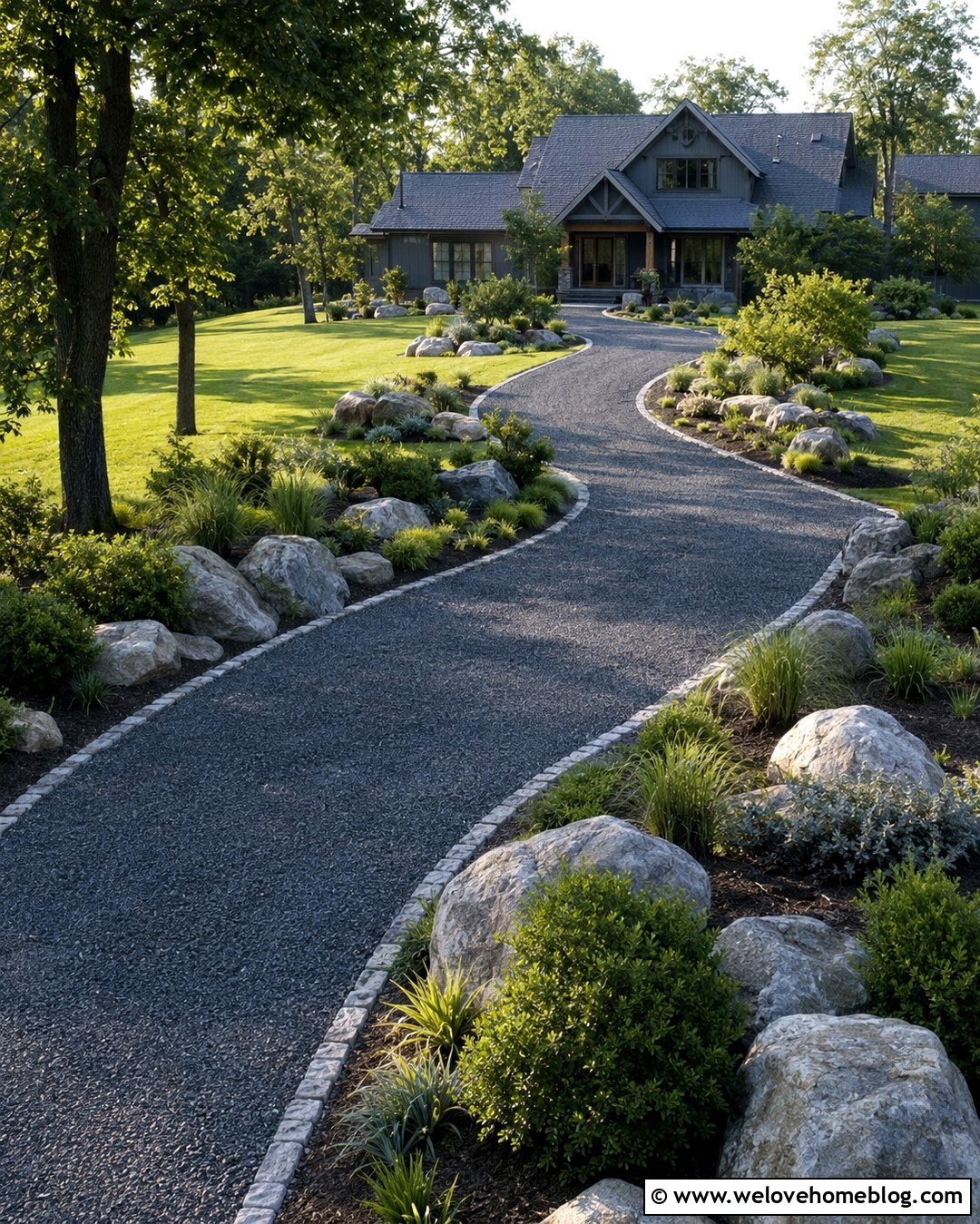
Long driveways look more balanced when rock landscaping appears in repeated sections instead of one uninterrupted bed. Pair an asphalt or compacted gravel surface with groups of local fieldstone, crushed rock, and hardy shrubs placed at key intervals. Concentrate the largest planting area near the entrance, repeat a smaller cluster around the midpoint, and finish with another bed near the house. This rhythm adds structure while limiting the amount of material and maintenance required. Use durable edging wherever loose gravel meets lawn, and choose plants suited to local sun, soil, and rainfall. Avoid covering the entire roadside with decorative stone when a few intentional groupings will do. The result feels spacious, practical, and appropriate for rural or large suburban properties.
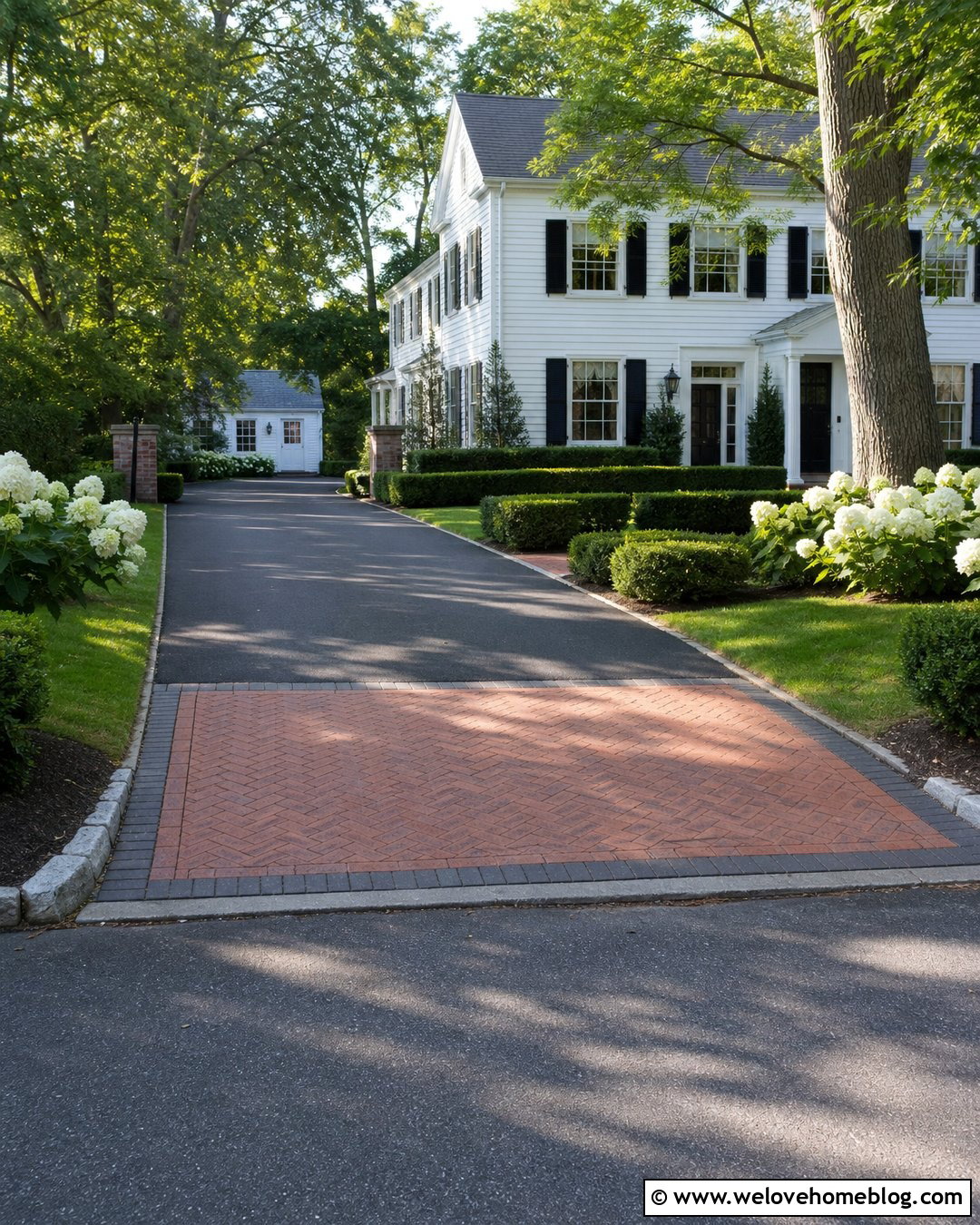
20. Natural Rocks Along Woodland Driveway
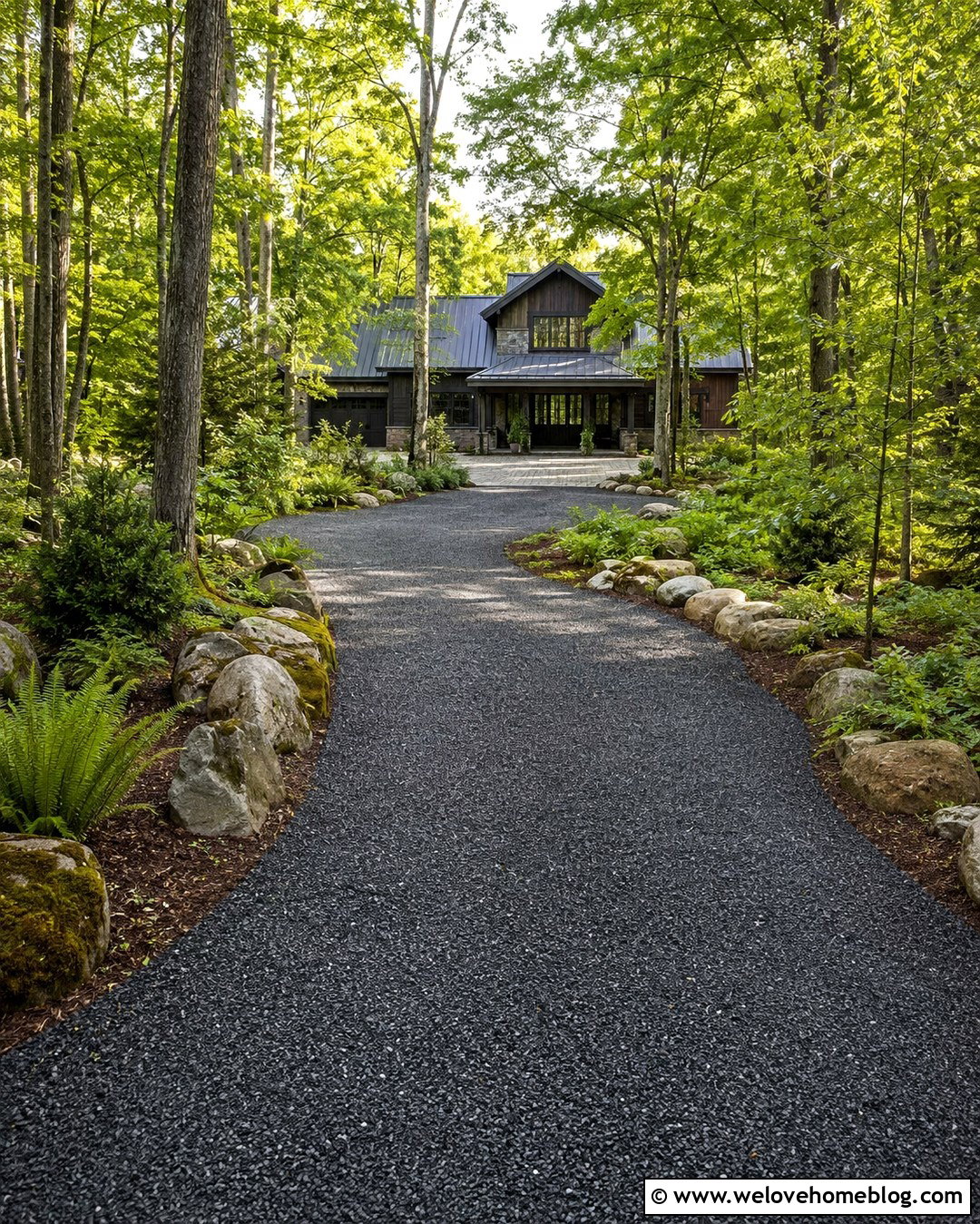
A woodland driveway should feel gently shaped rather than heavily decorated. Use dark crushed gravel or black asphalt on a curved route leading through mature trees. Border selected sections with mossy fieldstone, rounded boulders, and smaller native rocks gathered into irregular groups. Ferns, sedges, woodland ground covers, and shade-tolerant shrubs can fill the spaces without hiding the stone. Leave other stretches simple so the design follows the natural rhythm of the property. Near the house, transition to a clearer cobblestone edge or stone apron for a more finished arrival. Keep roots, drainage routes, snow removal, and vehicle clearance in mind when positioning larger pieces. This quiet combination works beautifully with cabins, Craftsman houses, and rustic contemporary homes.
Conclusion:
The most successful **20 Rocks Along Driveway Ideas** combine beauty with practical planning. Start with the driveway material and house style, then choose rocks that repeat colors already found in the exterior, roof, walkway, or surrounding landscape. River stones create soft transitions, cobbles add definition, and large boulders establish strong focal points. Rock-lined swales can also become attractive drainage features when they are properly graded and directed. Keep every border clear of tires, doors, walkways, utilities, and important sightlines. Use edging where loose stones meet grass, and leave enough space for plants to reach their mature size. A simple, coordinated design will usually look better and remain easier to maintain than an overcrowded border.

Related posts:


Leave a Reply