
A well-planned driveway can do much more than provide parking. It can organize the front yard, guide visitors toward the entrance, support drainage, and visually connect the house with the street. The strongest designs treat paving, borders, plants, lighting, and walkways as one coordinated landscape rather than unrelated features. They also complement the home’s architecture and fit the available sunlight, climate, maintenance level, and yard size. () Whether you prefer flowering cottage beds, structured evergreens, drought-tolerant planting, or a clean modern layout, there is an approach that can work for your property. Use these **25 Front Yard Landscaping Driveway Ideas** to create a practical, welcoming, and attractive entrance.

1. Curved Gravel Driveway With Flower Beds
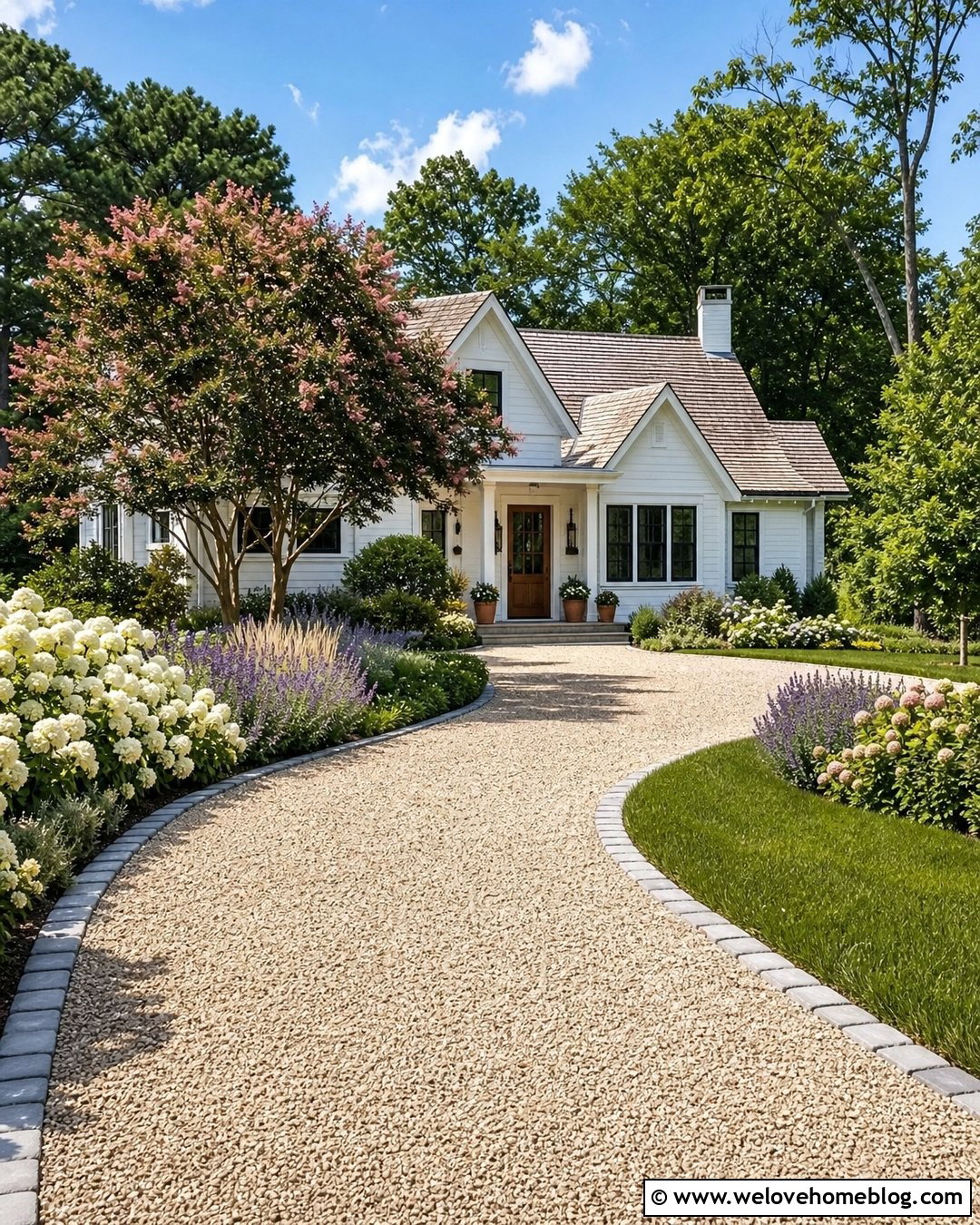
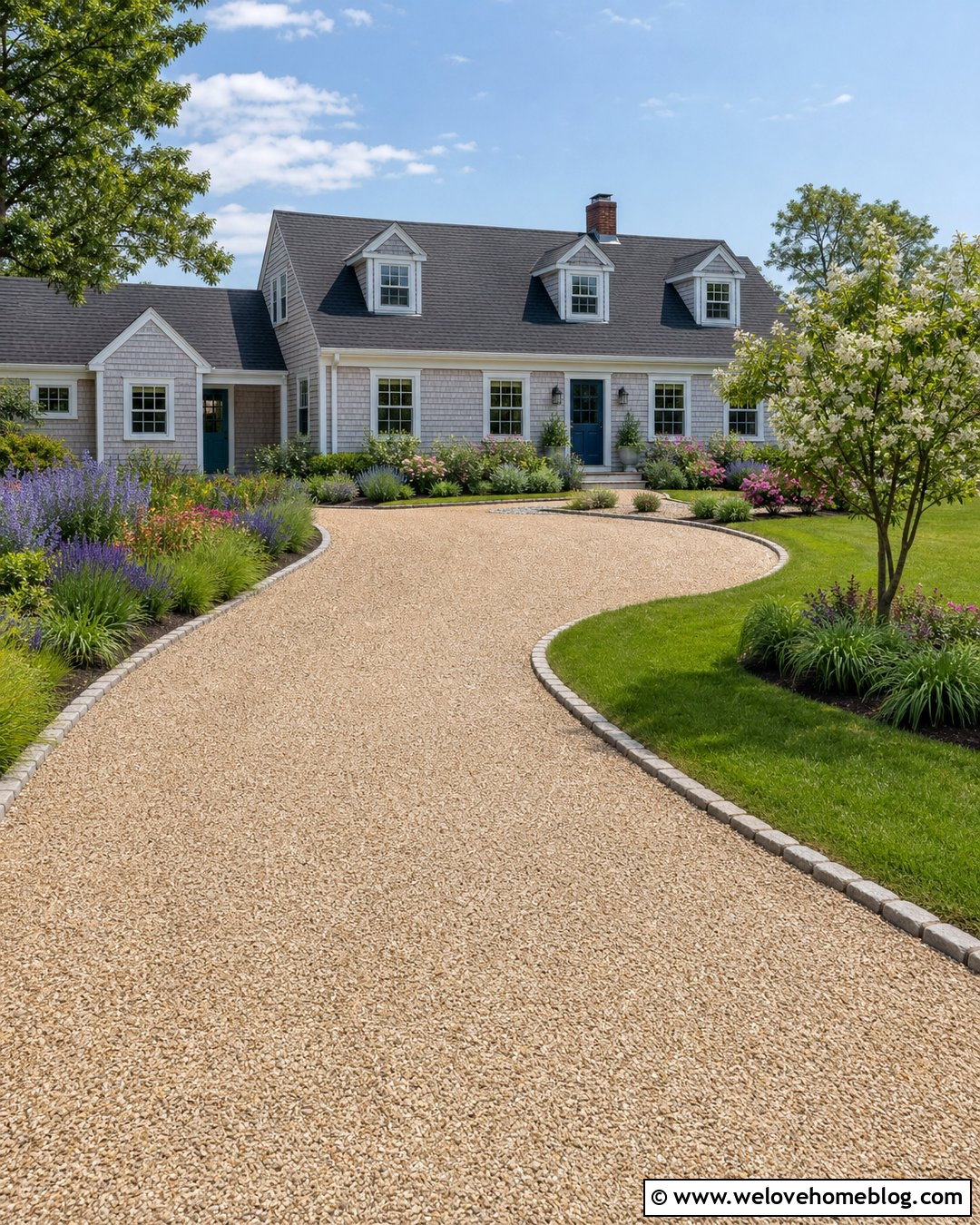
A curved pea gravel driveway creates a relaxed approach that works beautifully with cottage, farmhouse, and traditional homes. Define both sides with cobblestone edging so loose gravel stays contained while the curves remain crisp. Along the outer edge, build deep planting beds filled with hydrangeas, ornamental grasses, catmint, and compact evergreen shrubs. Keep plants low near the street to preserve clear sightlines. Taller flowers and shrubs can gradually appear closer to the house. A matching gravel walkway can branch toward the front porch, helping visitors understand where to go. Finish the design with one small flowering tree near the inside curve. The layered planting softens the gravel while making the entire front yard feel established and welcoming.
2. Concrete Driveway With Low Evergreen Borders
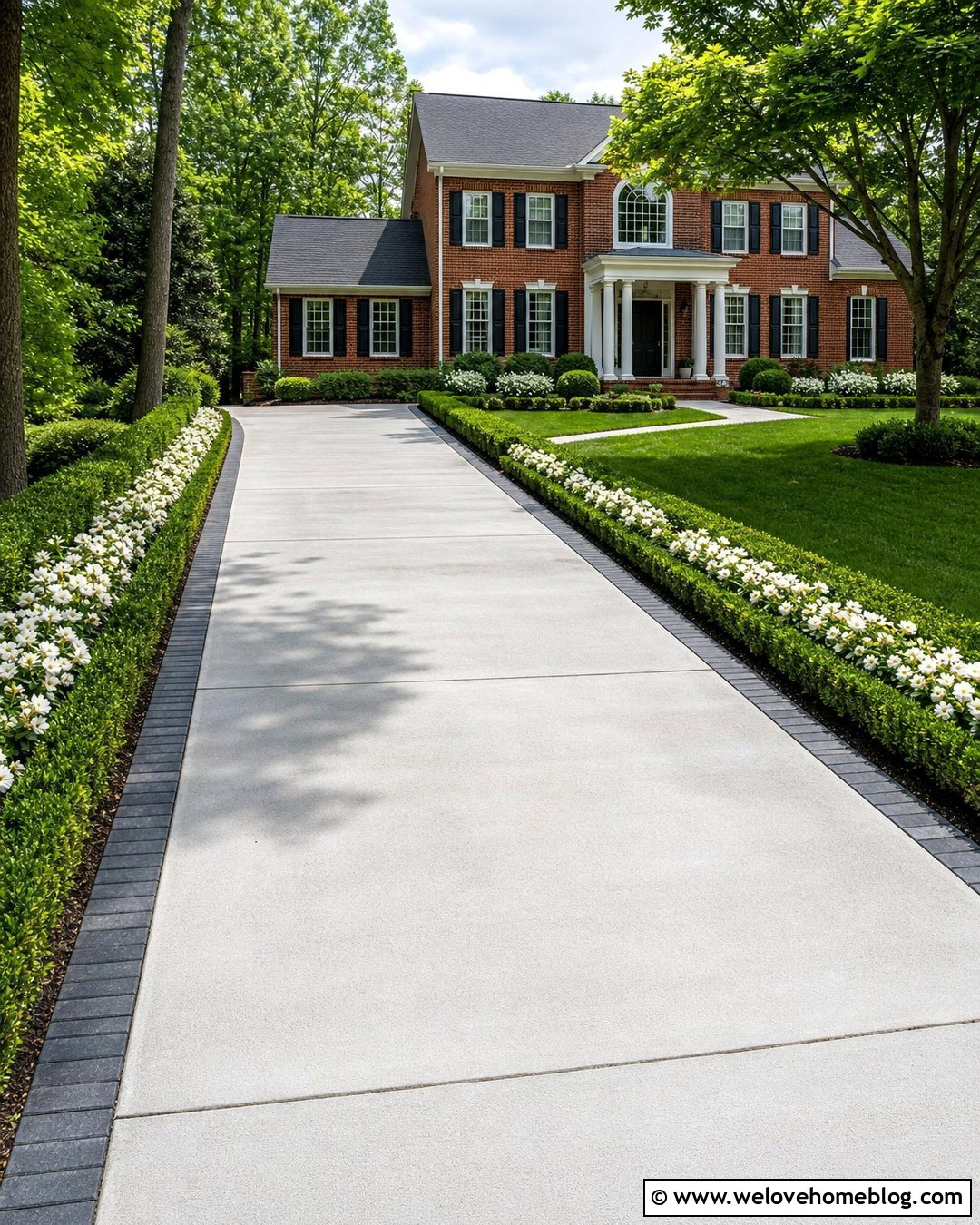
Clean lines and dependable greenery can make a standard concrete driveway feel polished throughout the year. Use light gray poured concrete in a straight layout, then frame it with narrow beds of dwarf boxwood, inkberry holly, or another compact evergreen suited to your climate. Repeating one shrub creates visual order without making the entrance feel busy. Add white flowering perennials between selected shrubs for seasonal contrast. A dark paver ribbon along the concrete edges can connect the driveway to black window frames, porch lights, or garage doors. Keep foundation beds simple and continue the same plant palette near the walkway. This complete look suits colonial, transitional, and newer suburban houses, especially where homeowners want tidy landscaping with manageable pruning and reliable year-round structure.
3. Asphalt Driveway With Brick Edging And Hydrangeas
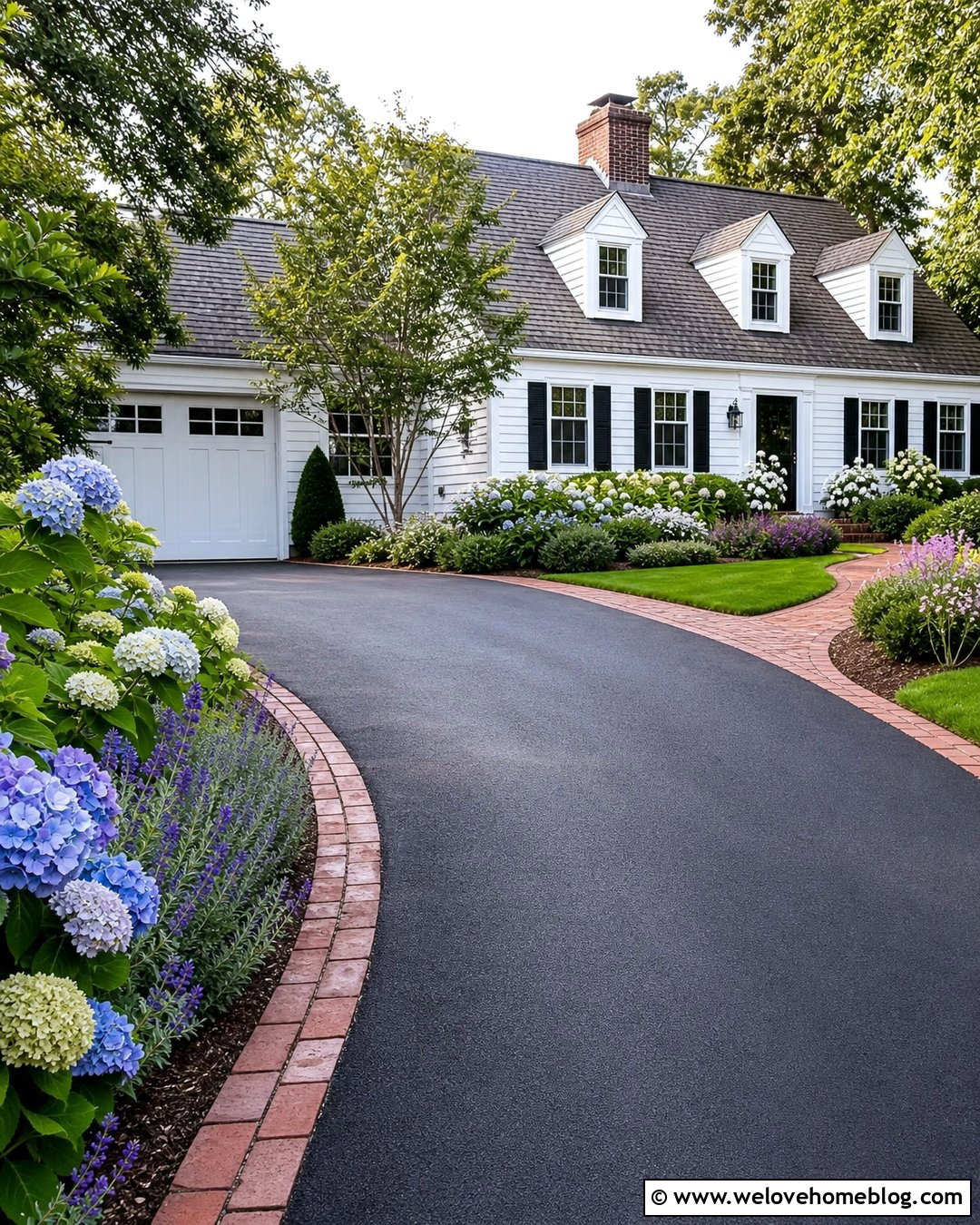
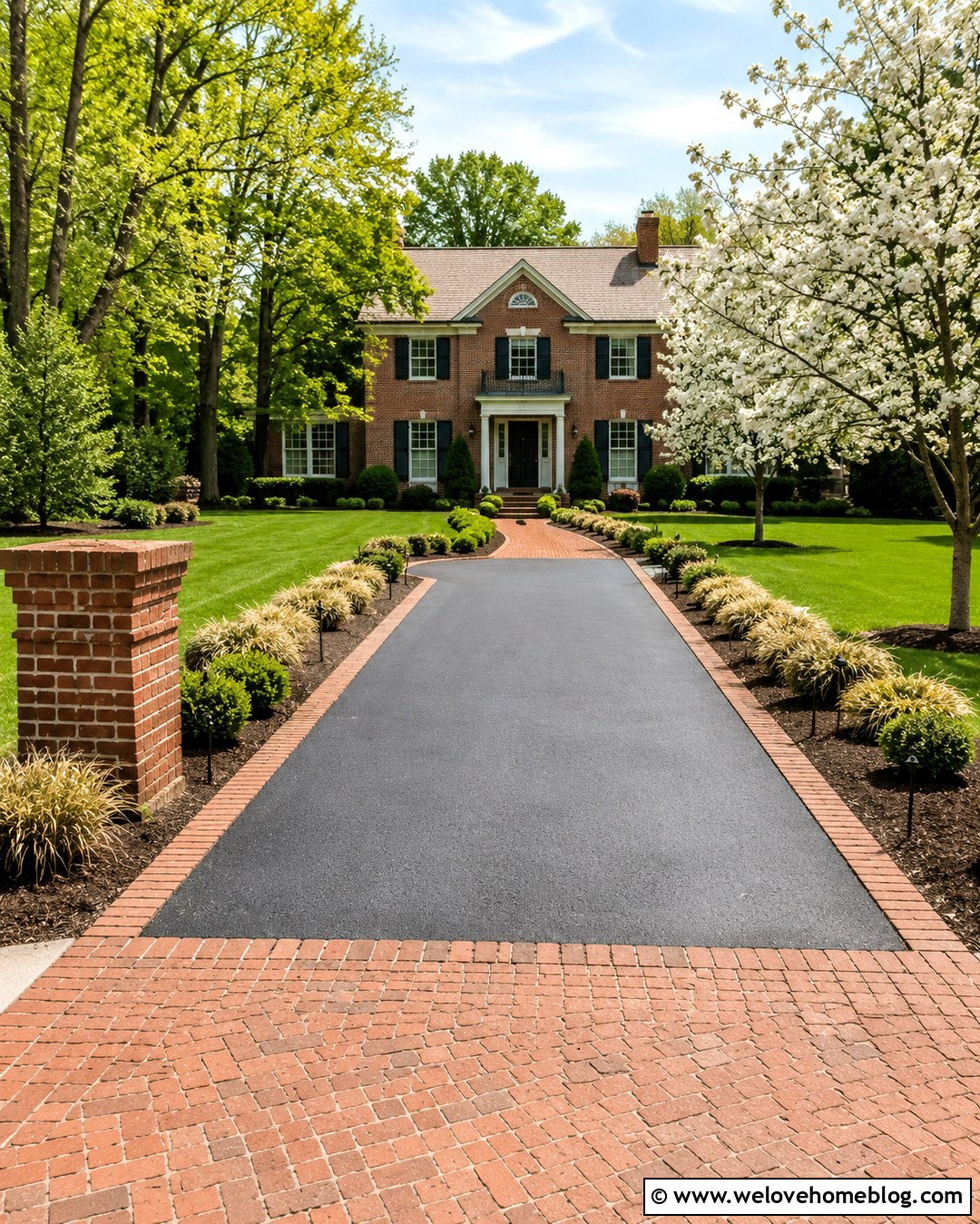
Black asphalt becomes much more attractive when warm brick and generous planting soften its practical appearance. Install a red or weathered clay brick border along a gently curved driveway, using the same brick around the adjoining walkway. The repeated material makes the layout feel intentional and visually connects the street, garage, and front door. Plant large hydrangeas behind the border, leaving enough space for their mature width. Add low catmint, salvia, or seasonal flowers at the front of the beds so foliage does not spill onto the driving surface. A mulched island near the garage can hold a small ornamental tree. This balanced design works particularly well with brick colonials, Cape Cod homes, and traditional houses with white siding.
4. Modern Driveway With Grass Strips And Ornamental Grasses
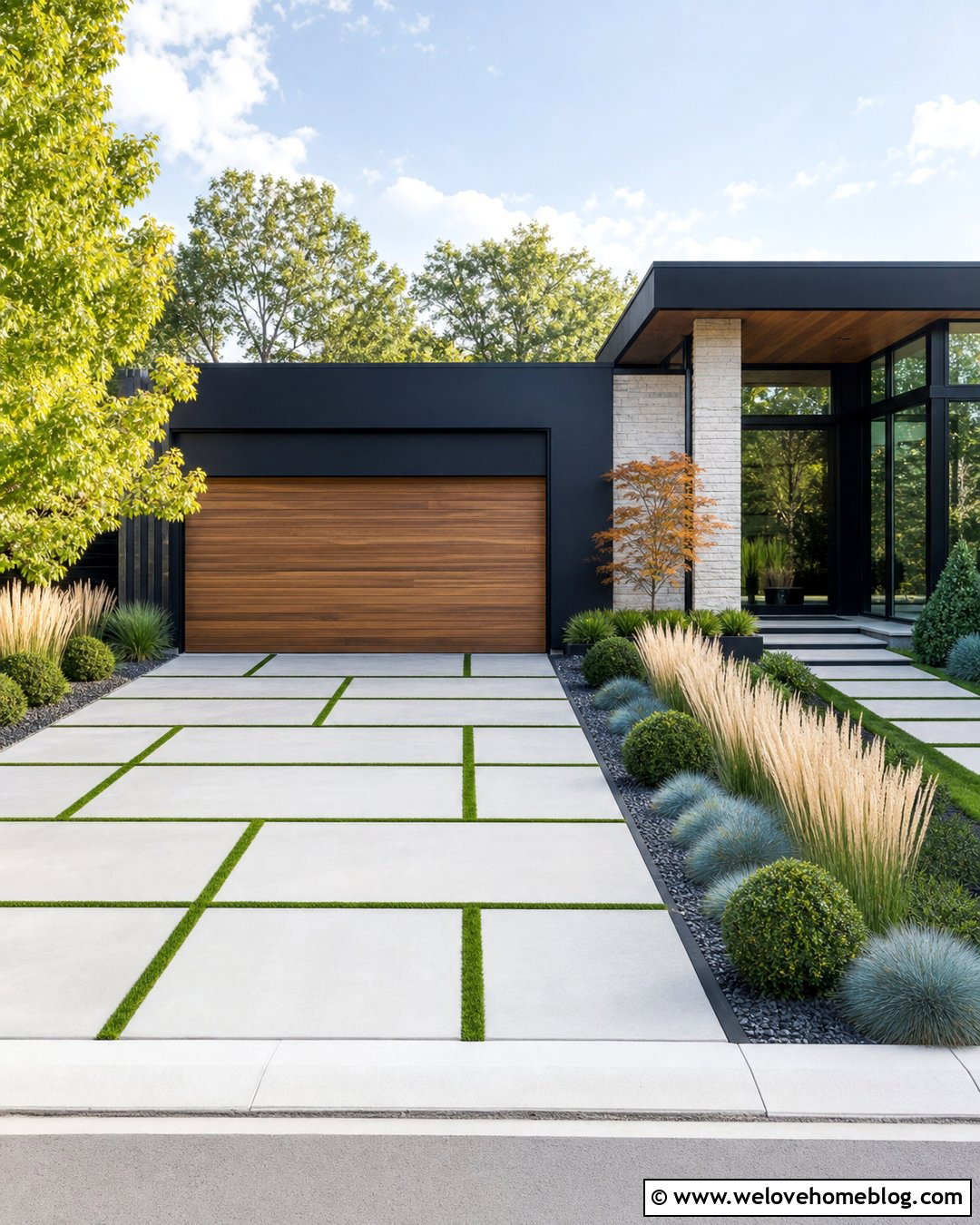
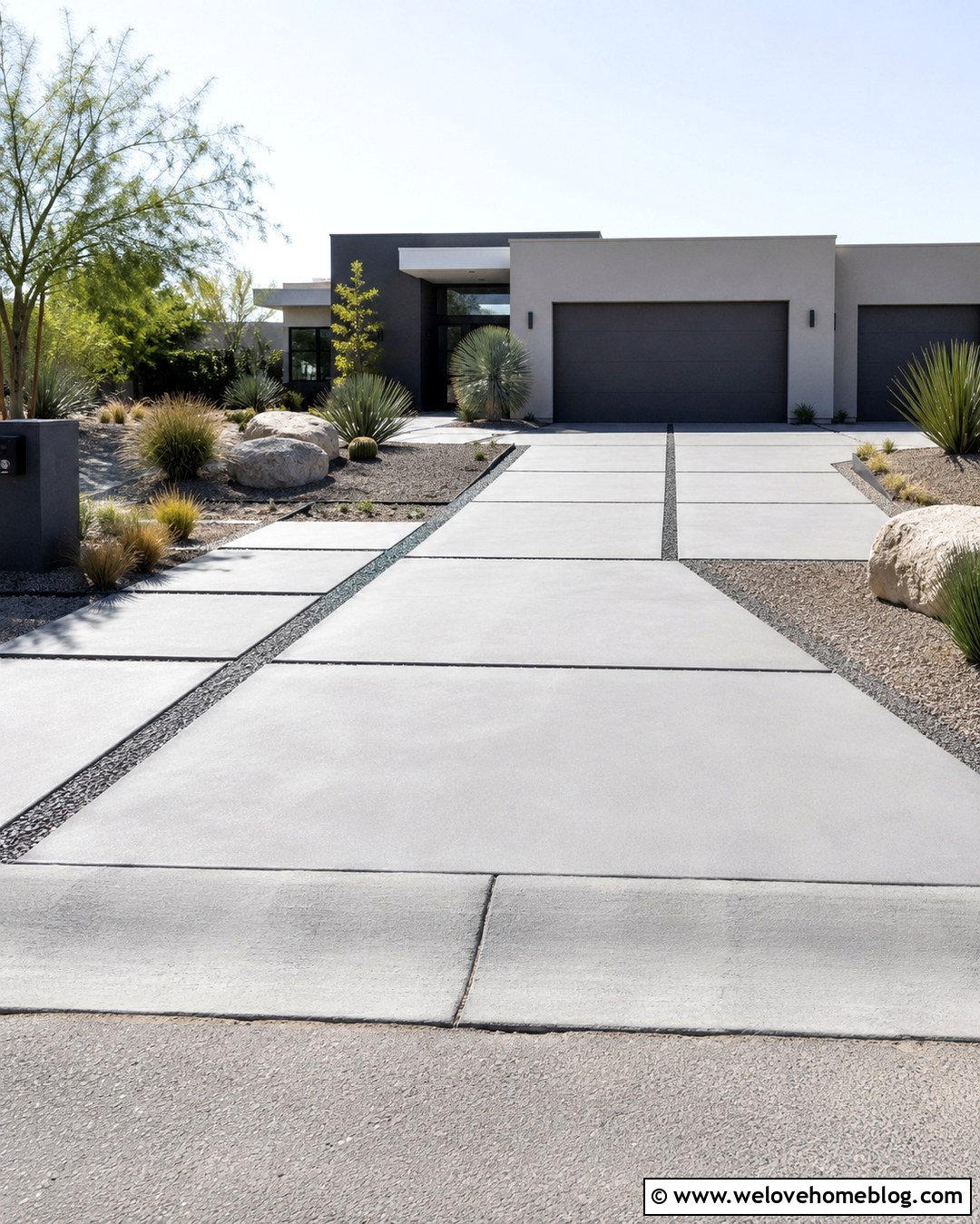
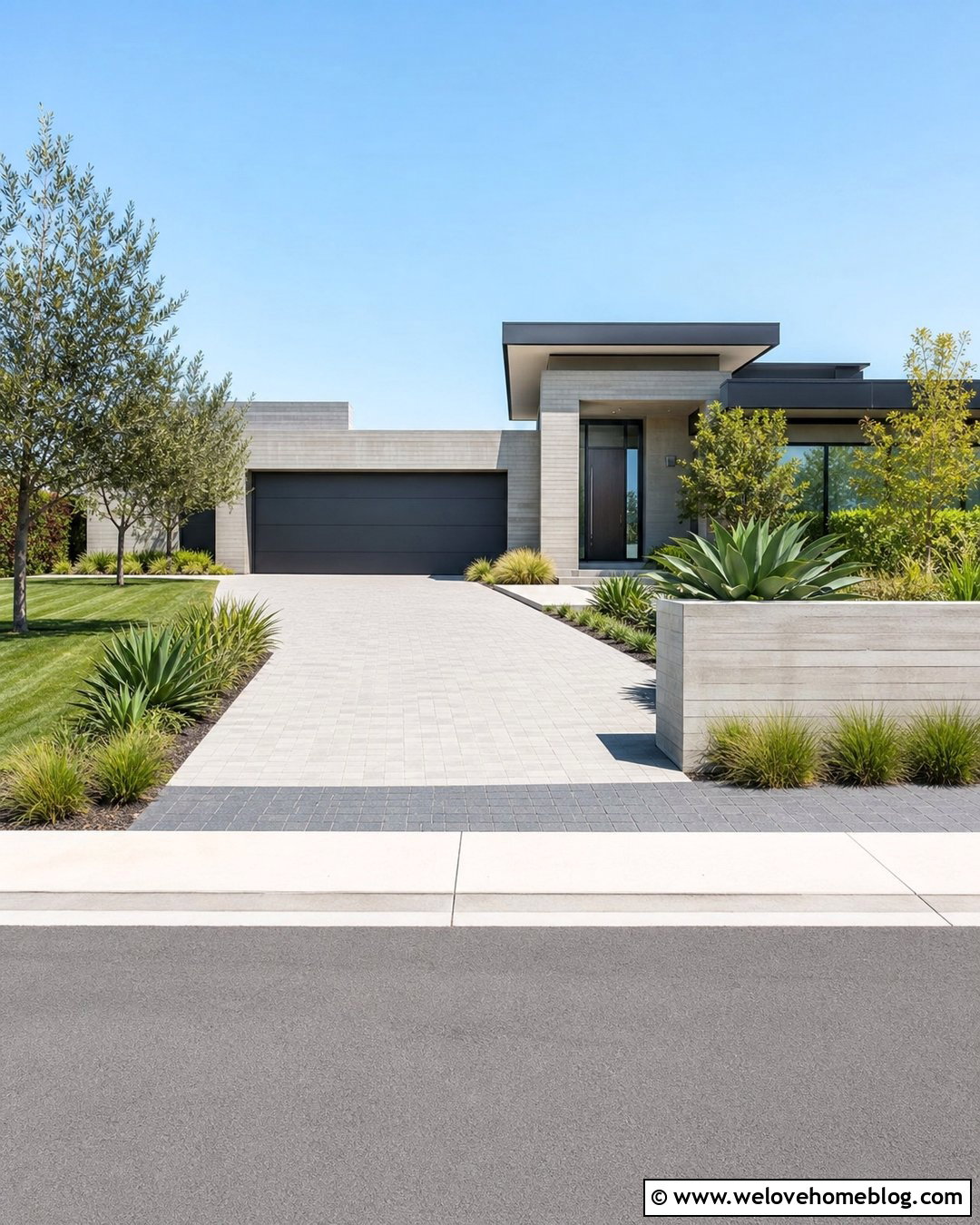
For a contemporary front yard, combine large-format concrete pavers with narrow grass joints and restrained planting. Arrange pale gray rectangular slabs in a straight driveway that aligns with the garage and architectural lines of the house. Along one side, create a linear bed containing feather reed grass, blue fescue, and compact evergreen spheres. Repeat only a few plants in measured groups to avoid visual clutter. A stepping-stone walkway can cross the planting bed and lead directly to the front door. Black steel edging keeps lawn, gravel, and mulch separated. Modern-minimalist landscapes generally benefit from a limited planting palette and deliberate repetition rather than many unrelated species. () The result feels fresh, orderly, and easy to understand from the curb.
5. Circular Paver Driveway With Center Garden
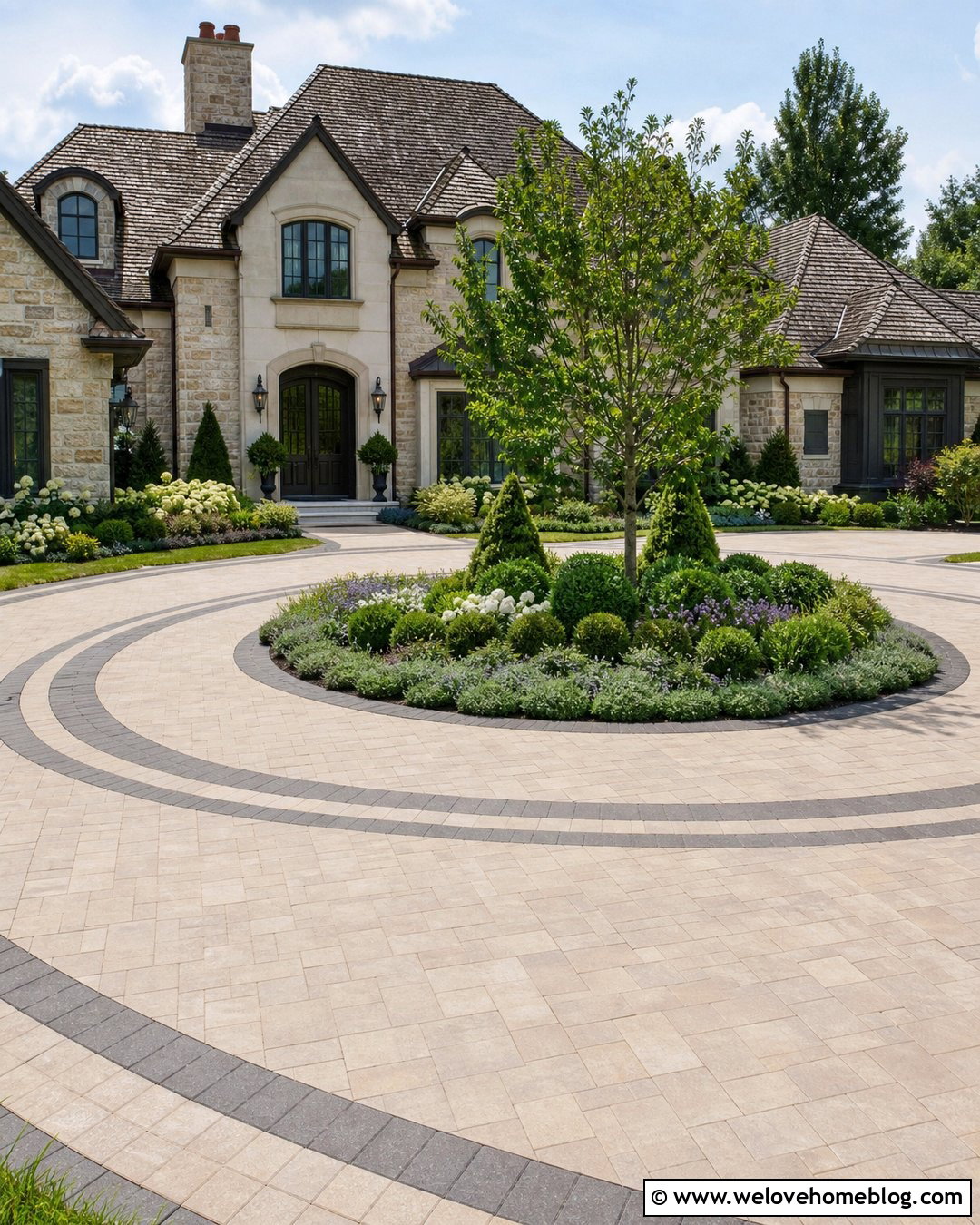
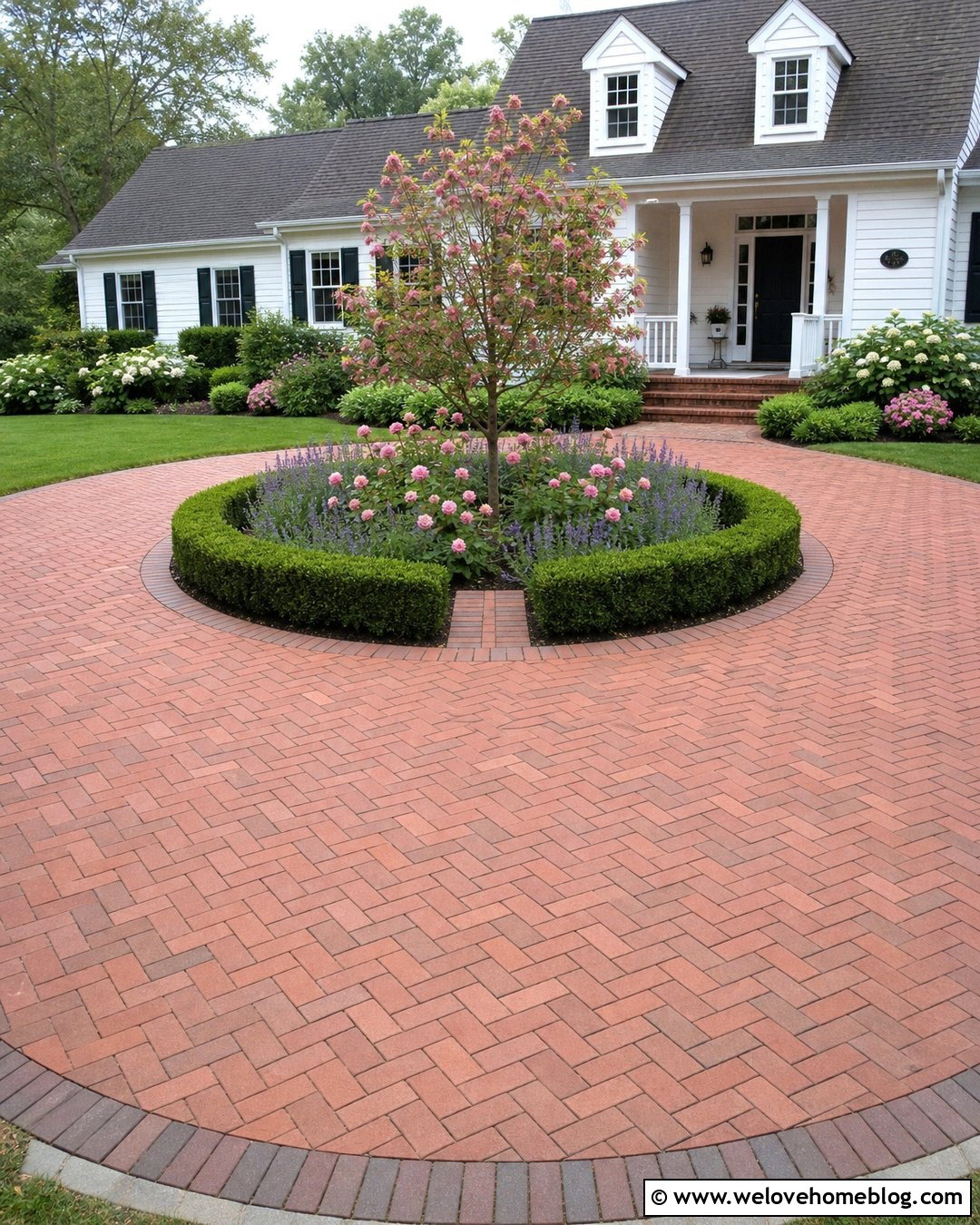
A circular driveway provides a natural setting for a landscaped center island. Use warm beige concrete pavers in a subtle running-bond pattern, then define the circle with darker paver bands. Inside the island, plant one appropriately scaled ornamental tree as the main focal point. Surround it with layered evergreen shrubs, flowering perennials, and low ground cover that will not block views across the driveway. Match the center planting with smaller beds beside the entrance and front walkway. This repetition connects the island to the wider yard instead of leaving it visually isolated. Allow comfortable vehicle clearance around mature plants and avoid placing brittle branches near the pavement. The completed look creates an elegant arrival for traditional, Mediterranean, French country, or large suburban homes.
6. Small Front Yard Driveway With Narrow Planting Beds
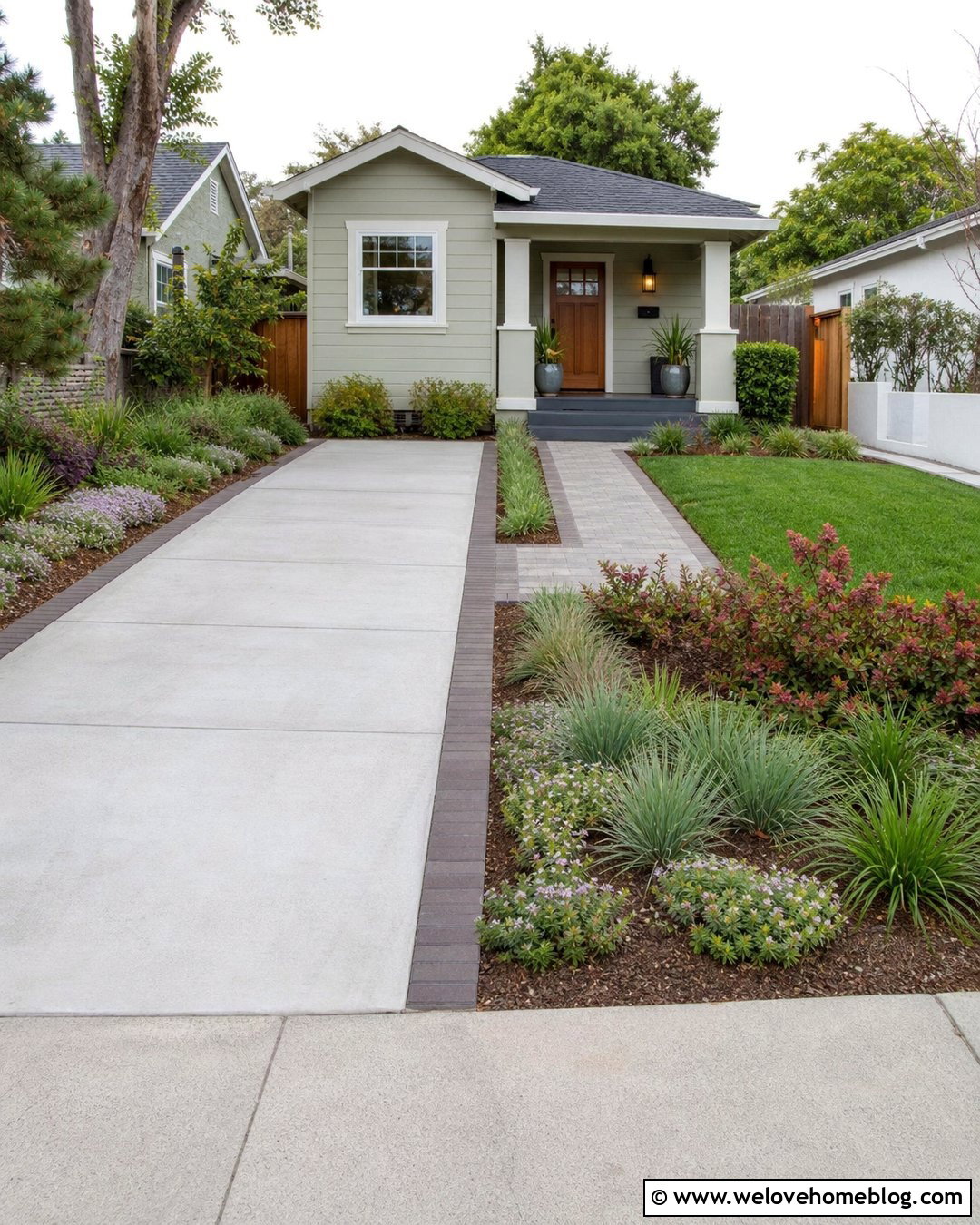
Limited space does not have to mean a bare driveway. A straight light gray concrete driveway can be softened with narrow planting beds designed around compact plants. Use dark brick edging to create a clean division between pavement and soil. Fill the beds with dwarf ornamental grasses, creeping thyme, compact spirea, and small flowering bulbs. Choose varieties that remain within their assigned width and will not scrape vehicles or obstruct the walkway. Where ground space is especially tight, add two coordinated planters near the garage or porch instead of forcing large shrubs into narrow beds. A slim paver path leading from the driveway to the front door improves circulation. The finished landscape feels green and inviting without sacrificing valuable parking or creating constant trimming work.
7. Farmhouse Gravel Driveway With Split Rail Fencing
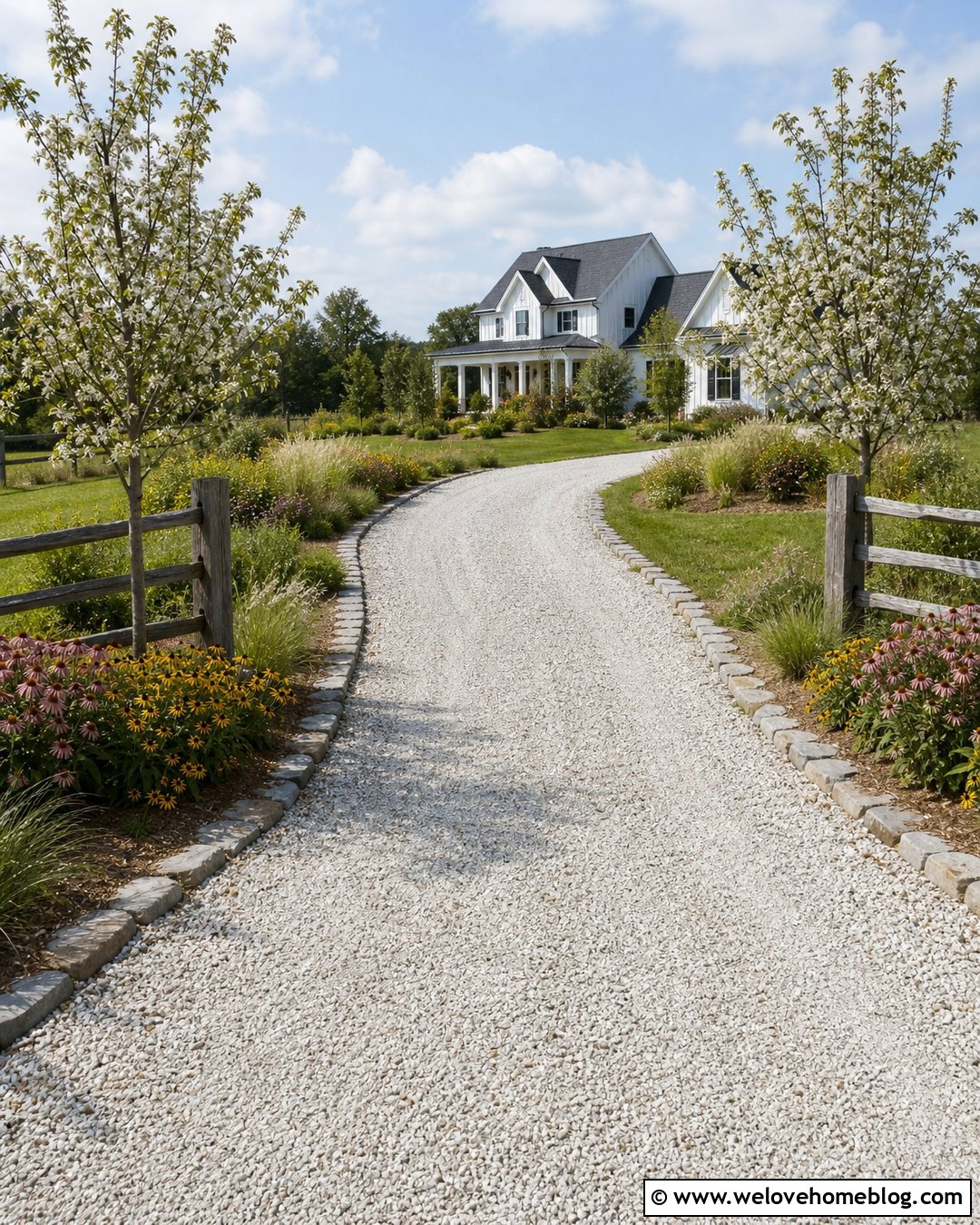
A pale crushed-stone driveway paired with split rail fencing creates a welcoming country entrance. Use a broad, gently curving layout that reveals the house gradually rather than forming a rigid line from the road. Edge the gravel with weathered fieldstone to keep the surface neat. Plant native grasses, black-eyed Susans, coneflowers, and low flowering shrubs beside the fence in loose groups. Near the house, repeat the stone in foundation beds and add a wide flagstone walkway to the porch. A pair of small flowering trees can mark the driveway entrance without forming an overly formal gateway. This complete design works especially well with white modern farmhouses, ranch homes, and country cottages, combining rural character with enough structure to look deliberately maintained.
8. Brick Driveway With Formal Boxwood Landscaping
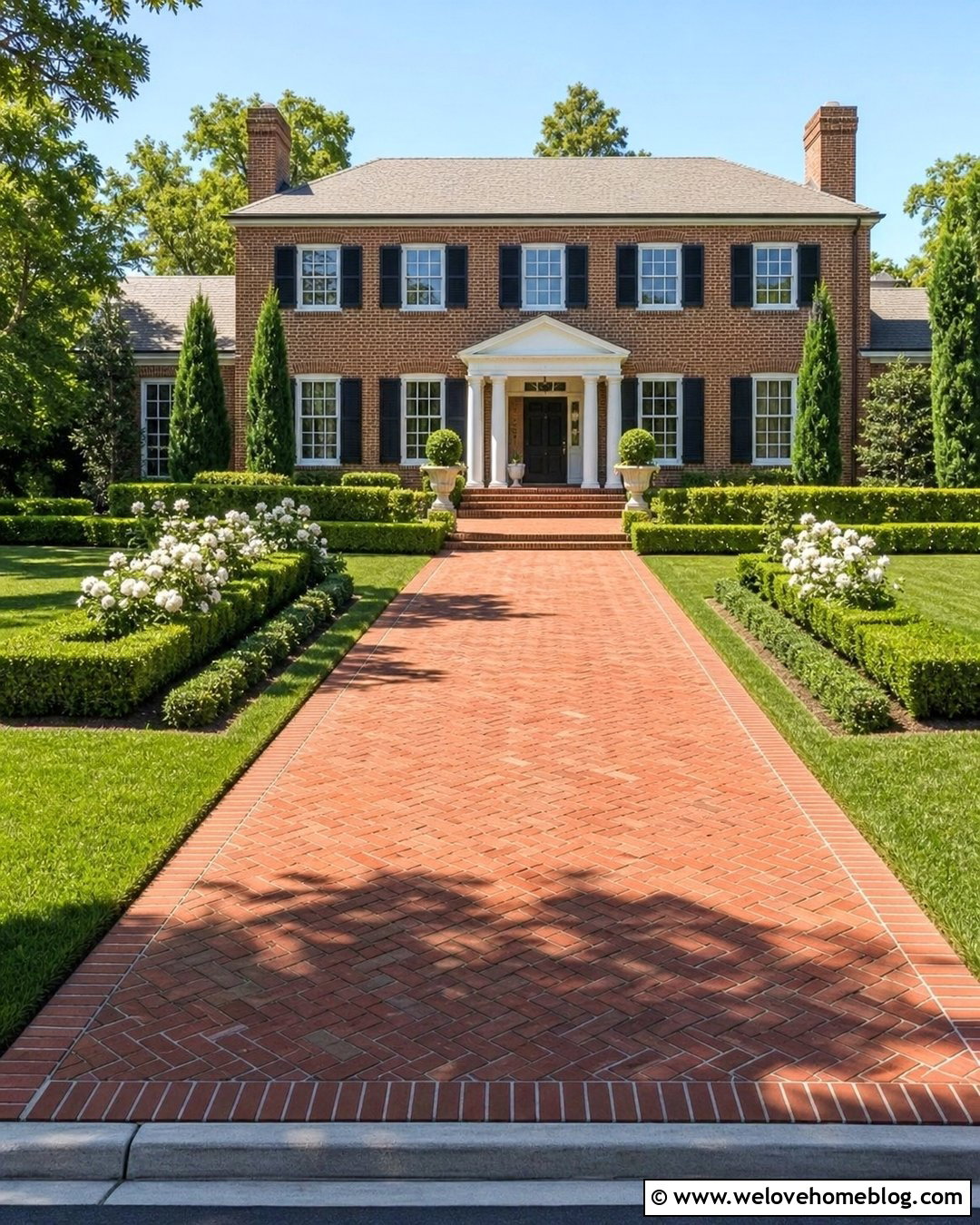
Traditional architecture pairs naturally with a clay brick driveway and symmetrical planting. Lay red brick pavers in a herringbone pattern, then use a soldier-course border to define the edges. On both sides, create matching beds with clipped boxwood, white roses, and upright evergreen accents near the garage. The symmetry should guide the eye toward the house, but the plants must remain far enough from the pavement for doors and vehicles to move freely. Continue the brick into a walkway that leads clearly to the main entrance. Two matching planters or small trees can frame the porch steps. This coordinated look works well with Georgian, colonial, and Federal-style houses, where repeated shapes, balanced beds, and classic materials strengthen the architecture without overwhelming the front facade.
9. Driveway Landscaping With Native Plants
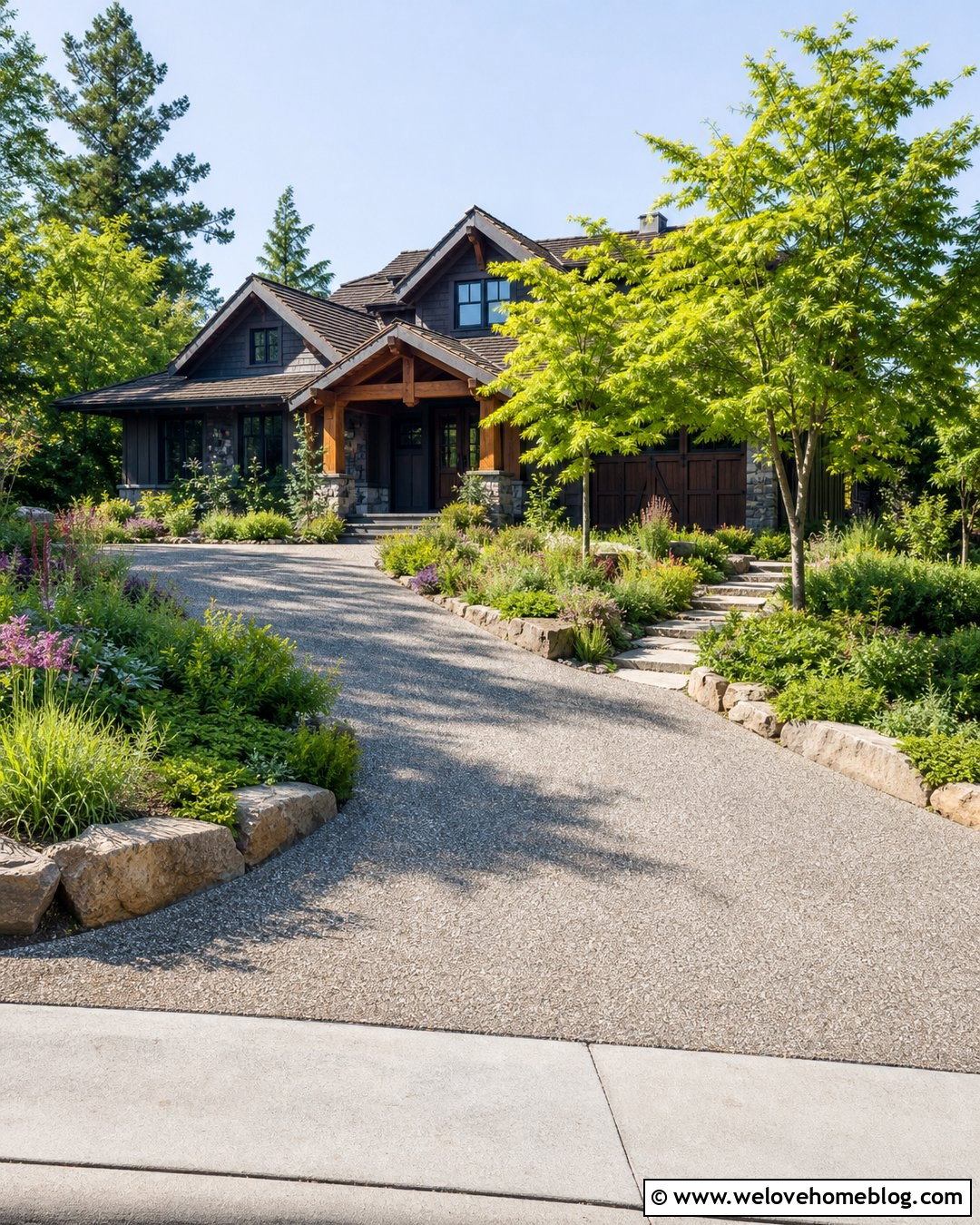
Native planting can turn a simple driveway into a landscape that feels connected to its region. Start with an exposed aggregate concrete driveway in a gentle curve, bordered by locally sourced stone. Fill the adjacent beds with regionally appropriate grasses, flowering perennials, and compact shrubs selected for the site’s sun, soil, and moisture conditions. Arrange plants in repeating drifts instead of scattering single specimens throughout the yard. Keep shorter varieties beside the pavement and reserve taller plants for the background. Add a stepping-stone walkway through the garden, plus a small native tree positioned away from utilities and vehicle clearance zones. The driveway remains easy to use, while the layered landscape offers changing color, texture, and seed heads across several seasons.
10. Driveway With Drought-Tolerant Front Yard Landscaping

A water-conscious front yard can still look full, colorful, and carefully designed. Pair a tan resin-bound gravel driveway with steel edging and broad beds of decomposed granite. Arrange drought-tolerant plants such as agave, red yucca, lavender, sage, and ornamental grasses in bold groups. Use several large boulders to anchor the composition and repeat their warm tones near the entrance walkway. Leave intentional open space between plants so their natural forms remain visible as they mature. A few low-voltage lights can highlight the largest specimens without crowding the design. This layout complements Southwestern, Spanish, ranch, and contemporary homes. Before selecting plants, match them to local winter temperatures and rainfall rather than assuming every drought-tolerant variety will thrive in every region.
11. Driveway With Tree-Lined Landscaping
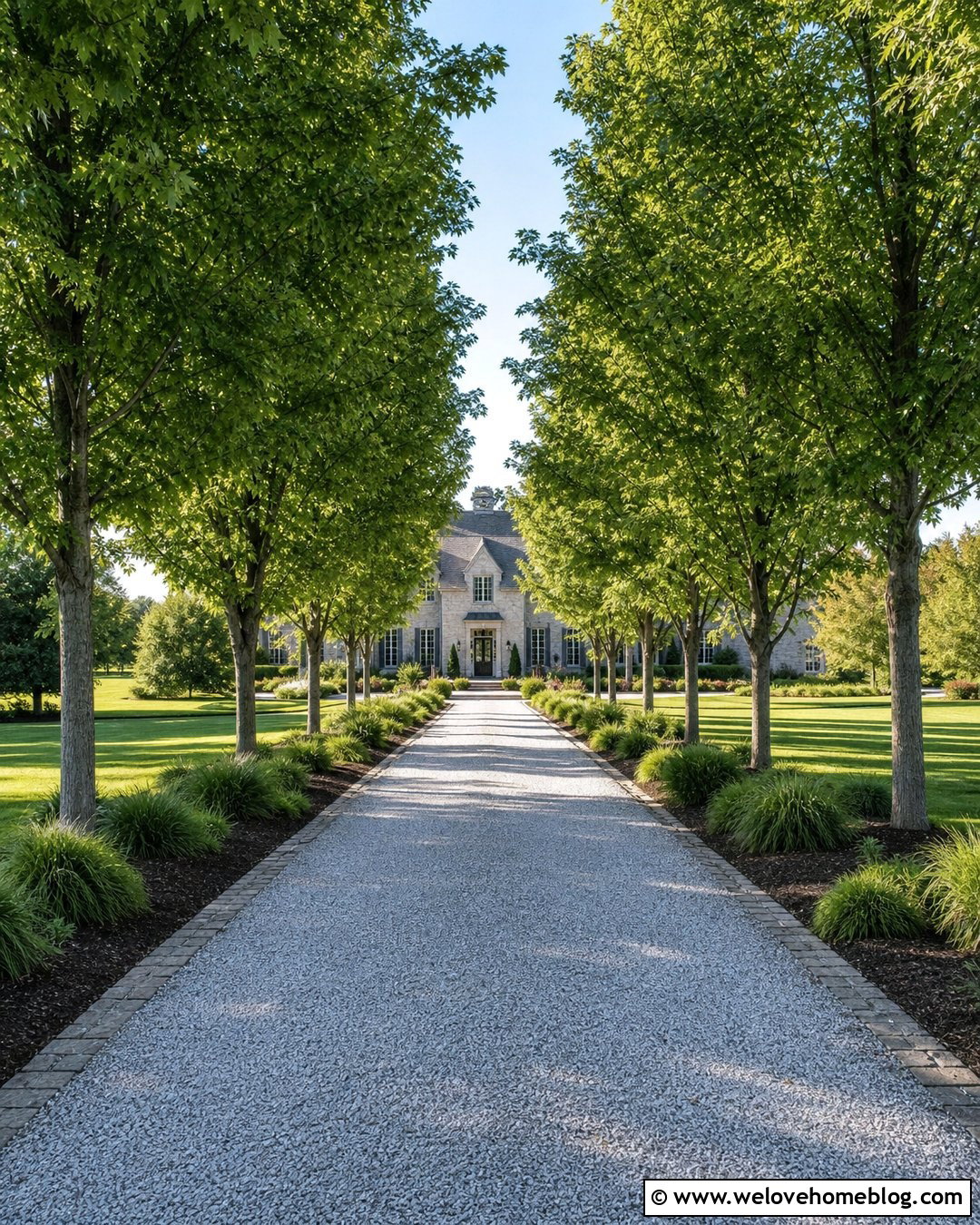
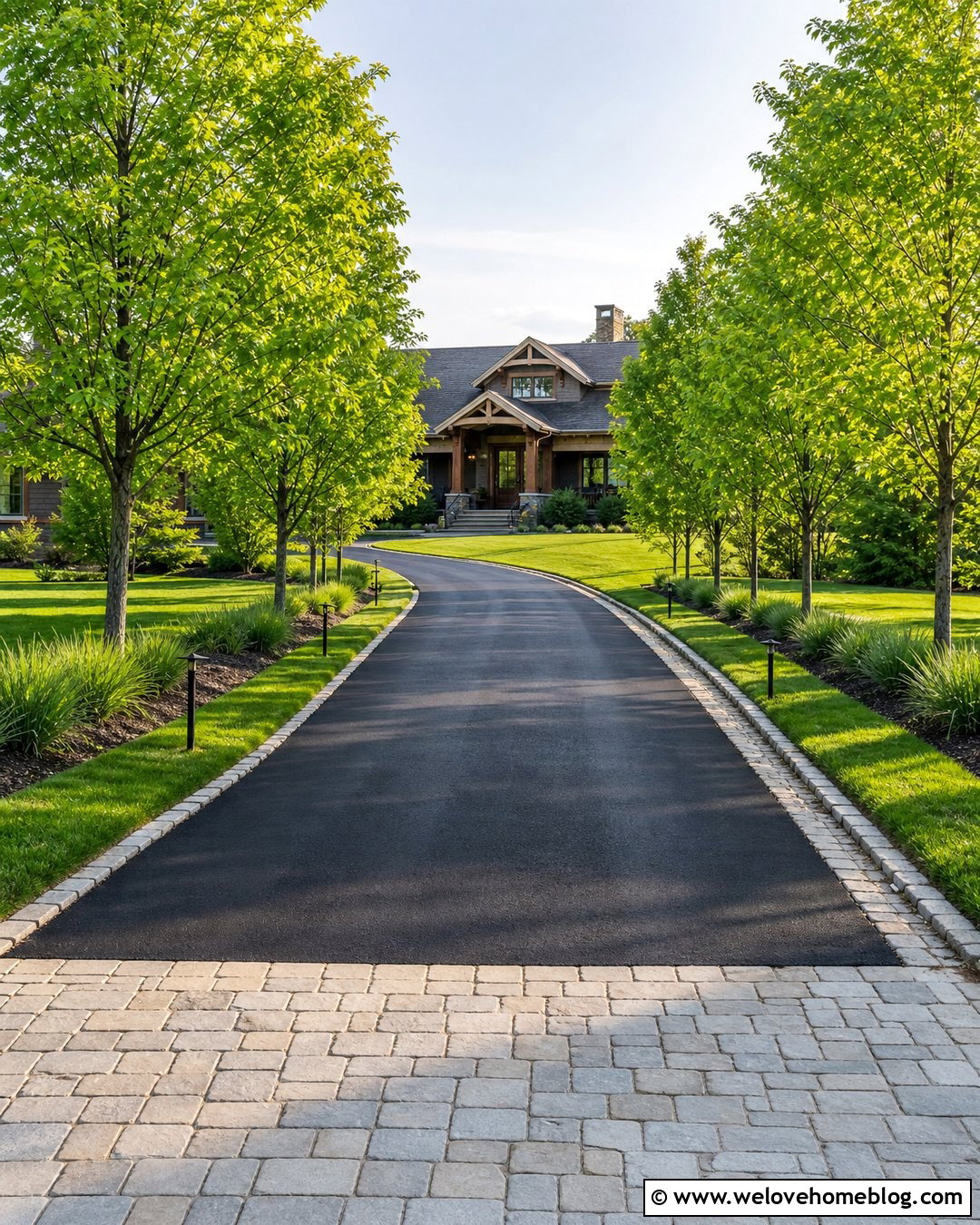
Few front yard features create a stronger sense of arrival than evenly spaced trees framing a long driveway. Use a light gray gravel surface with cobblestone edges and a straight approach toward the house. Plant matching deciduous or evergreen trees at consistent intervals, placing them far enough back to accommodate mature trunks, roots, and canopies. Beneath them, use simple ground cover, clipped lawn, or one repeated ornamental grass. Avoid filling every gap with different plants because the tree rhythm should remain the dominant feature. Near the house, transition to fuller foundation beds that share the same restrained color palette. This design is best for larger properties where the trees can develop naturally without interfering with vehicles, overhead lines, drainage, or views at the road.
12. Sloped Driveway With Terraced Landscaping
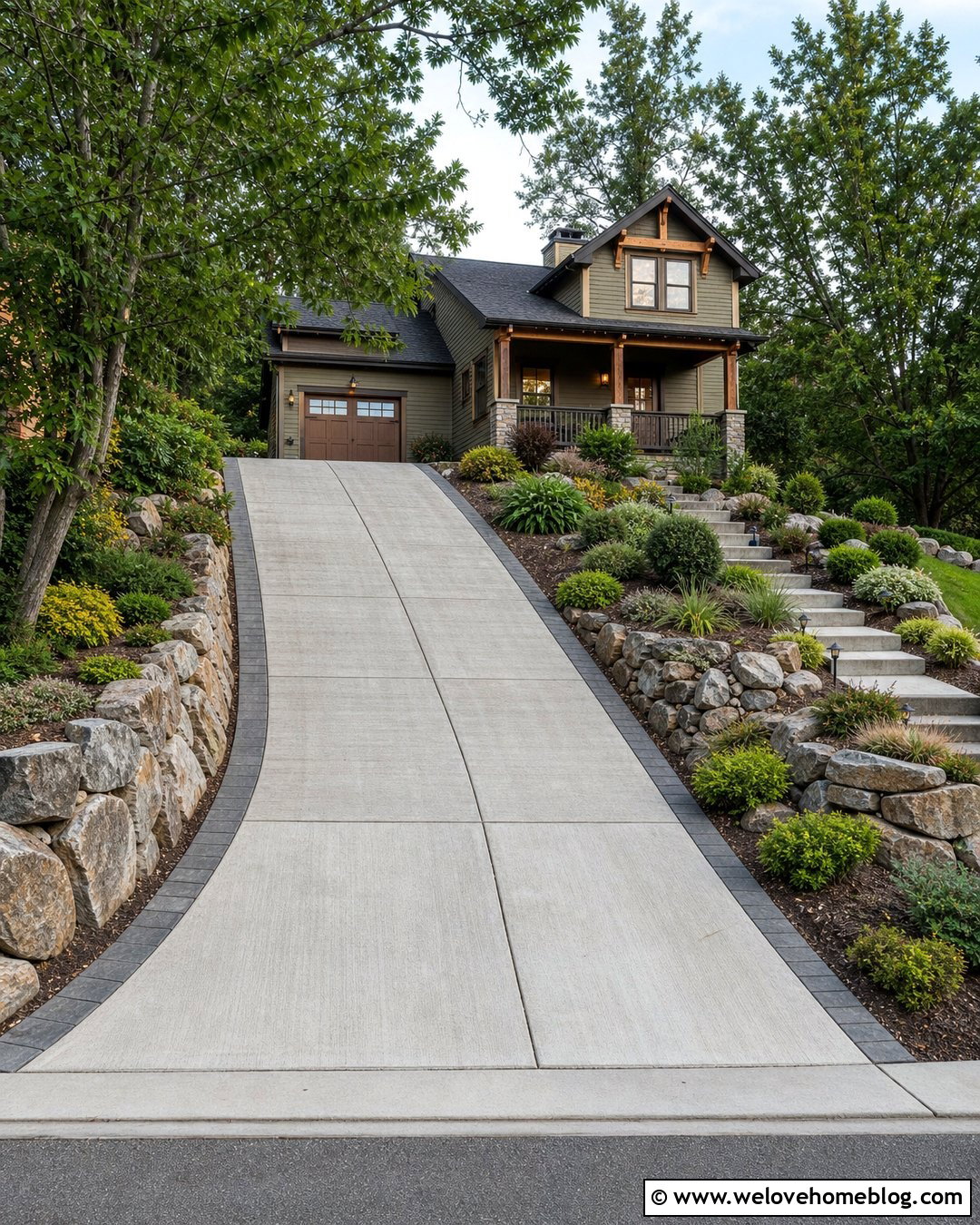
A sloped front yard becomes easier to organize when planting beds step gradually alongside the driveway. Choose broom-finished concrete for reliable visual simplicity, then add low retaining walls made from natural stone or textured concrete block. Each terrace can hold deep-rooted shrubs, spreading ground covers, and ornamental grasses that visually stabilize the hillside. Keep walls low where possible and provide safe steps or a separate walkway toward the front door. A contrasting paver border helps define the driveway edge, especially where the grade changes. Direct water toward approved drainage areas rather than allowing runoff to cross walking routes or collect beside foundations. Because walls, grading, and drainage can affect safety, consult qualified local professionals when the slope is steep or significant excavation is required.
13. Driveway With Rain Garden Landscaping
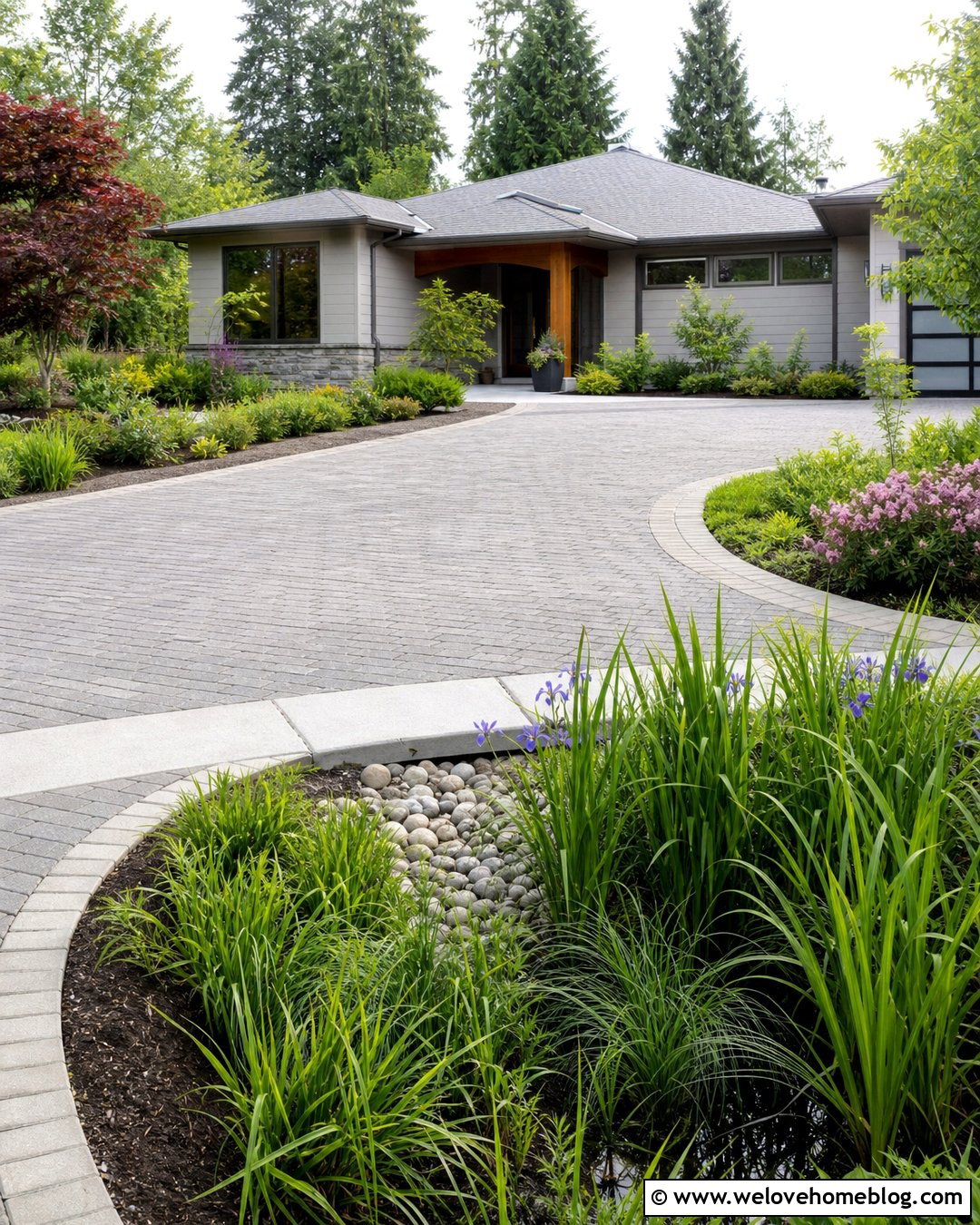
A rain garden can become an attractive part of the driveway landscape when it is properly located and engineered. Use permeable concrete pavers for a slightly curved driveway, bordered by a shallow planted basin on the lower side of the yard. Fill the basin with moisture-tolerant native sedges, irises, flowering perennials, and shrubs that also handle occasional dry periods. Add smooth river rock at the inlet to slow runoff and reduce erosion. The bed should look intentional, with clearly defined edges and layered plant heights. Coordinate the rain garden with a nearby walkway and foundation beds for a unified appearance. Driveway drainage should be planned with the paving and surrounding landscape rather than treated as a separate afterthought. ()
14. Driveway With Lavender And Stone Borders
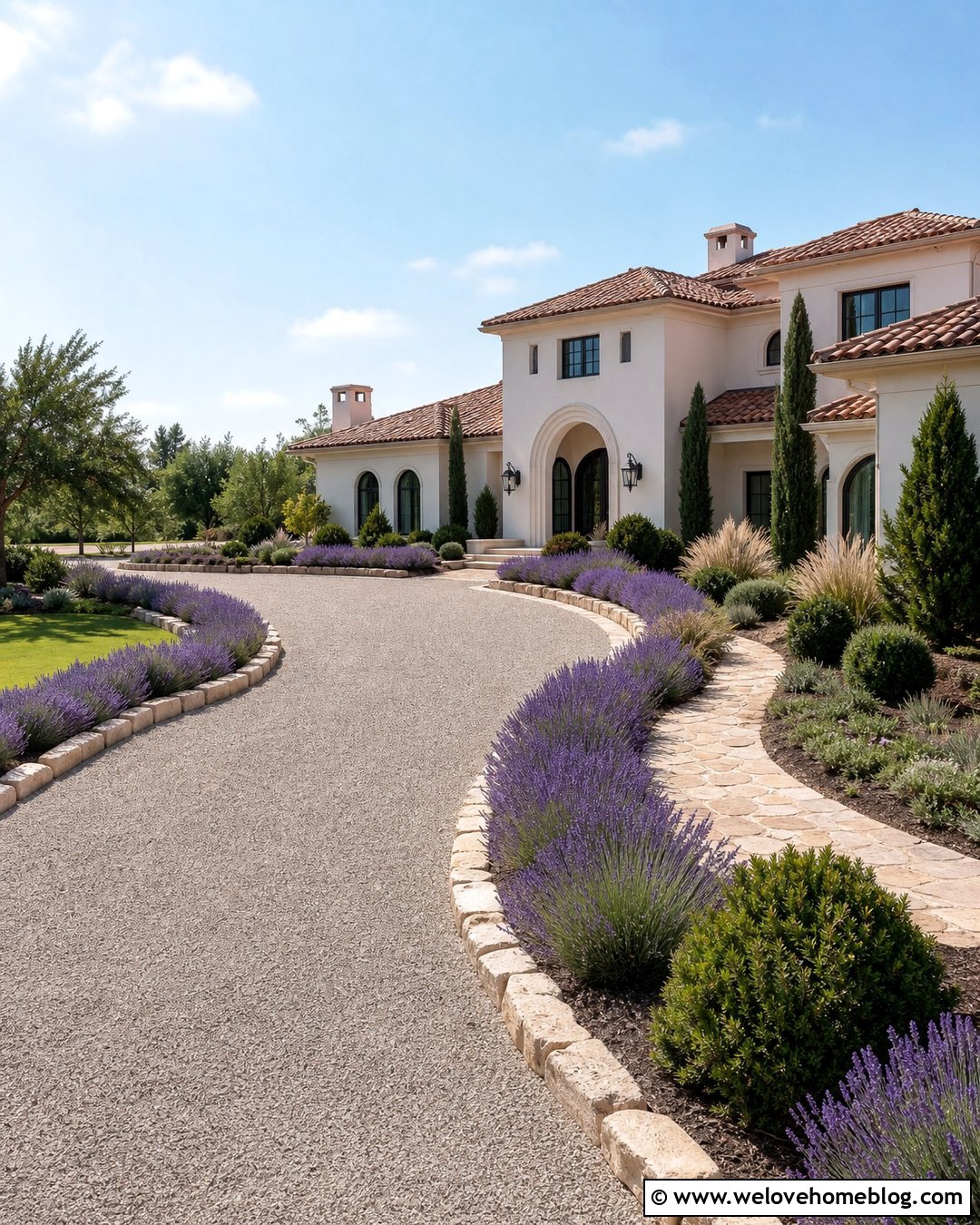
Lavender brings color, fragrance, and a relaxed formality to a sunny driveway. Pair a warm gray gravel surface with chunky limestone or granite edging, then plant lavender in repeated rows set back from the driving area. Add upright ornamental grasses and compact evergreen shrubs near the house to provide structure after the flowers fade. A curved gravel layout creates a softer approach, while a matching stone walkway connects the parking area to the porch. This look suits Mediterranean, farmhouse, cottage, and stucco homes, especially in sites with strong sunlight and well-drained soil. Choose a lavender variety suited to local humidity and winter conditions. Where lavender struggles, substitute similarly shaped plants such as catmint, salvia, or Russian sage for a comparable effect.

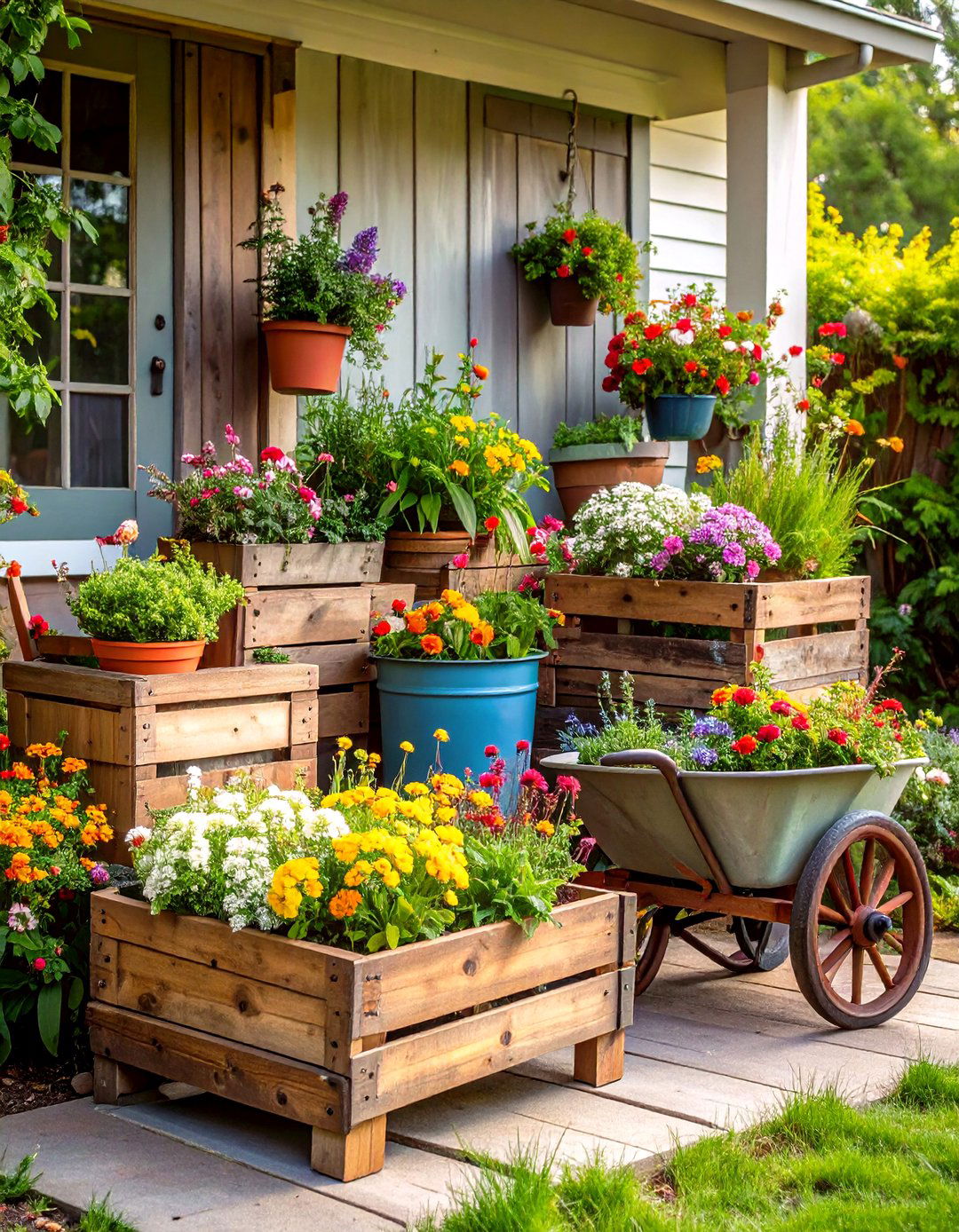
15. Woodland Driveway With Shade Landscaping
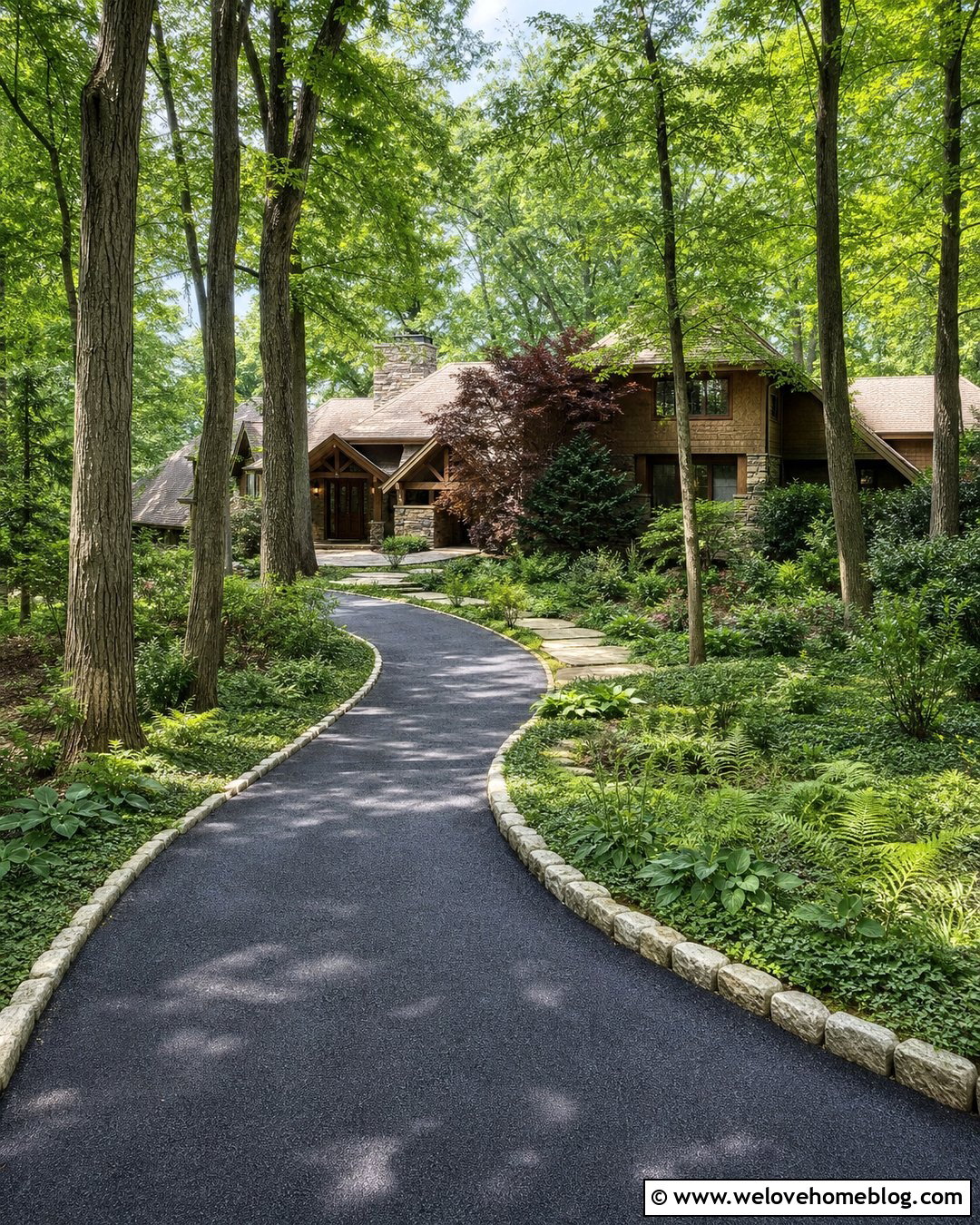
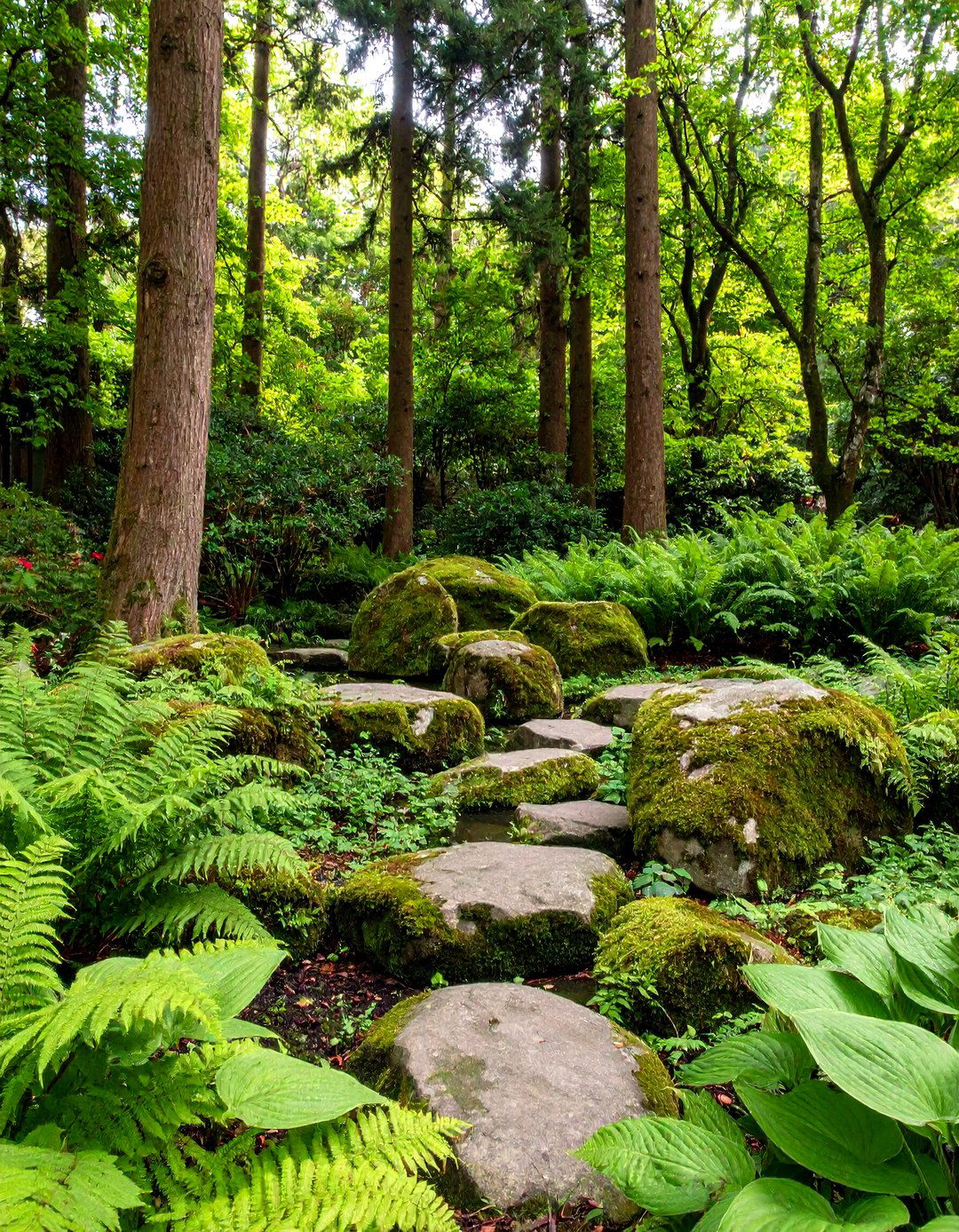
A driveway beneath mature trees needs plants that can handle shade, roots, and changing moisture levels. Use dark gray asphalt with a natural fieldstone edge so the surface blends quietly into the wooded setting. Create broad, curving beds filled with ferns, hostas, heuchera, sedges, and shade-tolerant evergreen shrubs. Arrange plants in large groups for visual impact instead of using many isolated varieties. Preserve existing tree roots by avoiding unnecessary soil buildup and deep excavation beneath canopies. A stepping-stone path can connect the driveway to the entrance while winding gently through the planting. Add woodland ground cover where lawn performs poorly. The finished design complements craftsman homes, rustic cabins, and traditional houses while making deep shade feel like a defining feature rather than a landscaping limitation.
16. Coastal Driveway With Grasses And White Flowers
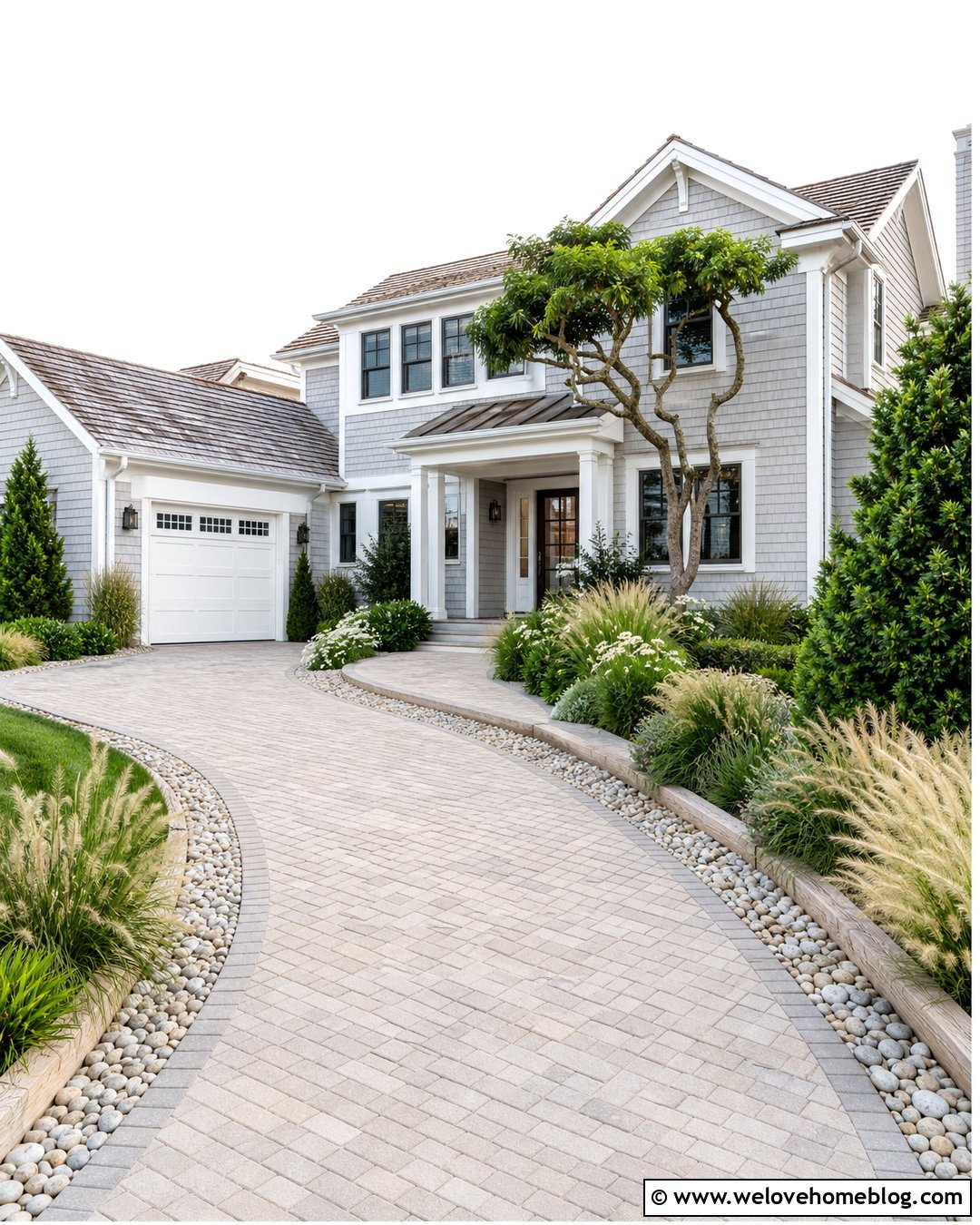
A breezy coastal look combines pale paving, moving grasses, and a limited flower palette. Choose light beige permeable pavers for a gently curved driveway and frame them with narrow bands of beach pebbles. Plant salt-tolerant ornamental grasses, compact evergreens, and white flowering perennials in broad, informal drifts. Keep the beds low and open near the street so the landscape feels airy rather than enclosed. Weathered wood edging or simple granite curbing can reinforce the relaxed coastal character. Continue the same pavers into a direct front walkway, and use one sculptural tree near the house as a focal point. This design works for Cape Cod, shingle-style, cottage, and contemporary coastal homes, but plant choices should reflect actual local wind, soil, and salt exposure.
17. Driveway With Flowering Tree Entrance
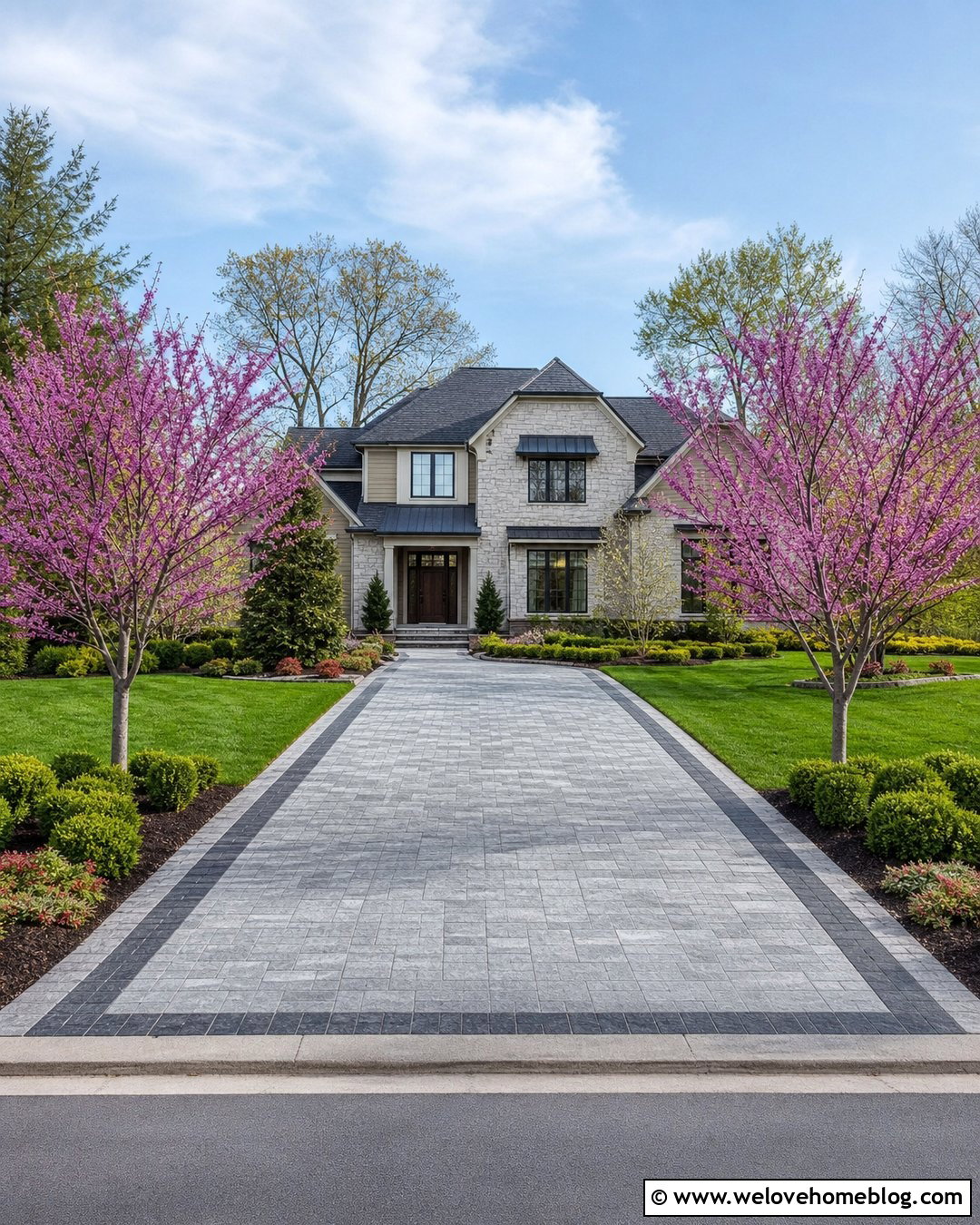
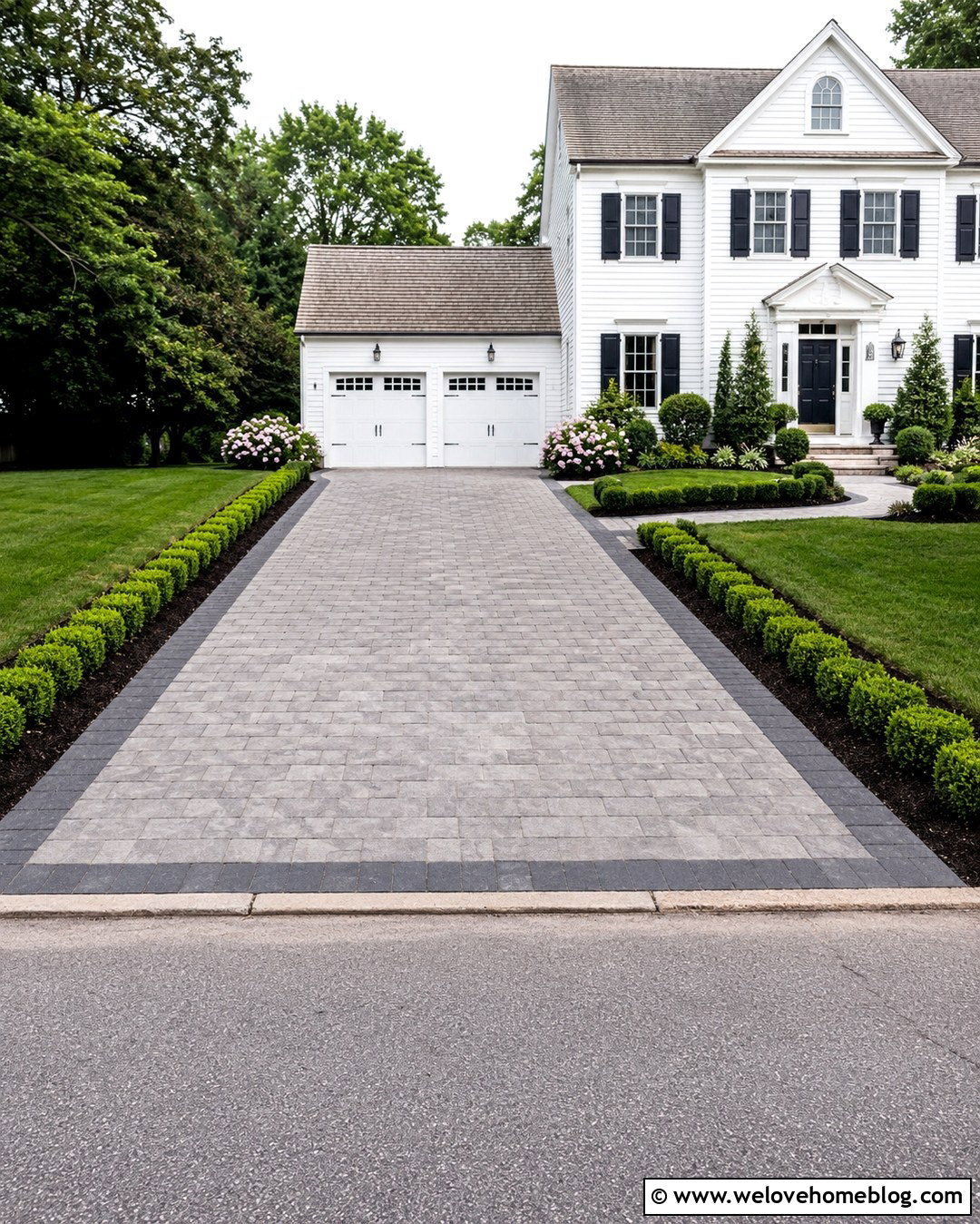
A pair of flowering trees can give an ordinary driveway a clear and memorable entrance. Use medium-gray concrete pavers in a straight layout with a charcoal border, then build matching planting beds on both sides of the apron. Select small trees with mature canopies that will not obstruct traffic visibility or interfere with utilities. Beneath them, plant low evergreen shrubs and one repeating ground cover for a finished appearance. Continue the same beds farther up the driveway, but simplify the planting as it approaches the garage. A visible walkway should branch toward the front door before visitors reach the parking area. Depending on the climate, serviceberry, redbud, crape myrtle, or flowering dogwood can provide seasonal interest while keeping the overall landscape appropriately scaled.
18. Driveway With Mixed Shrub Borders
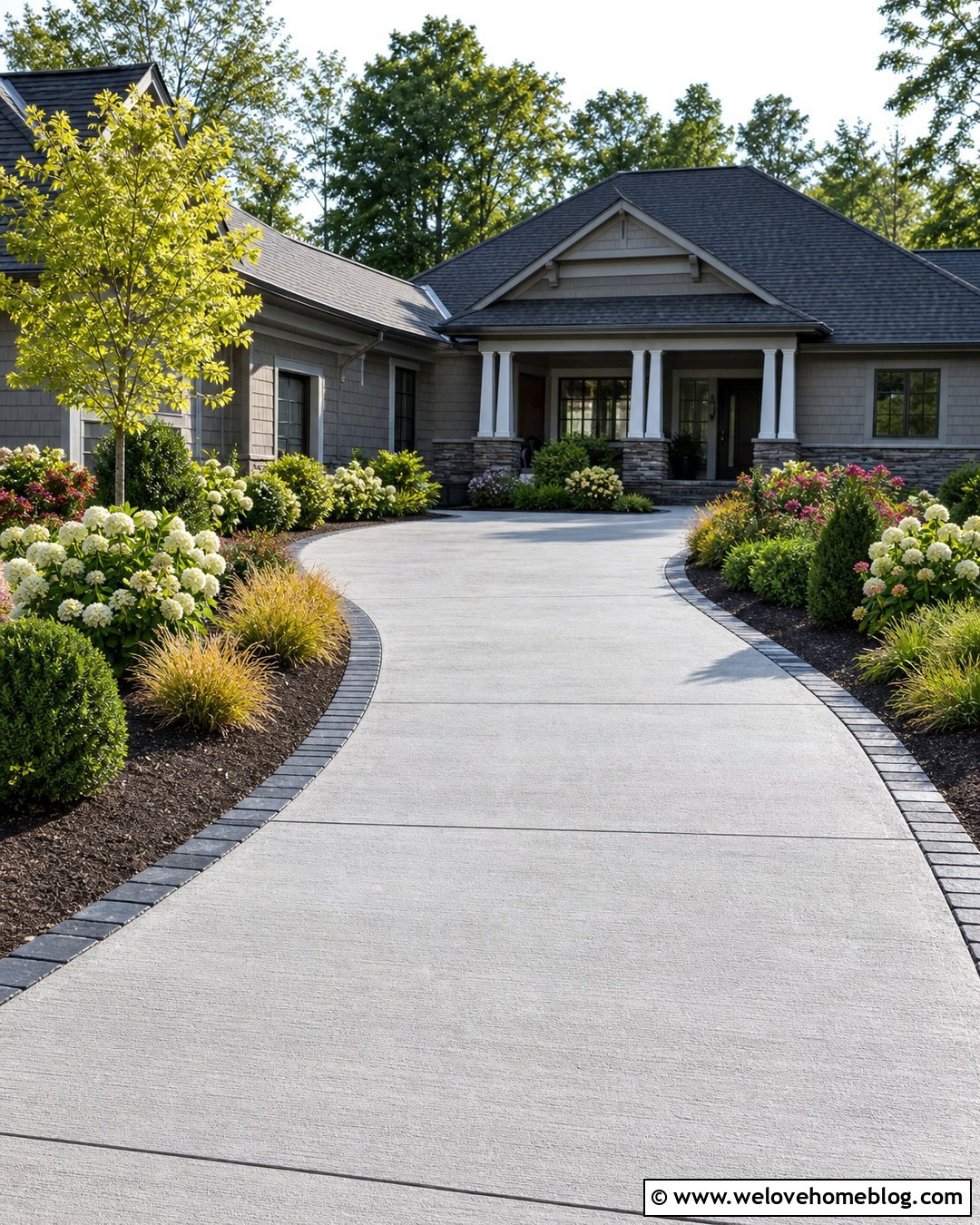
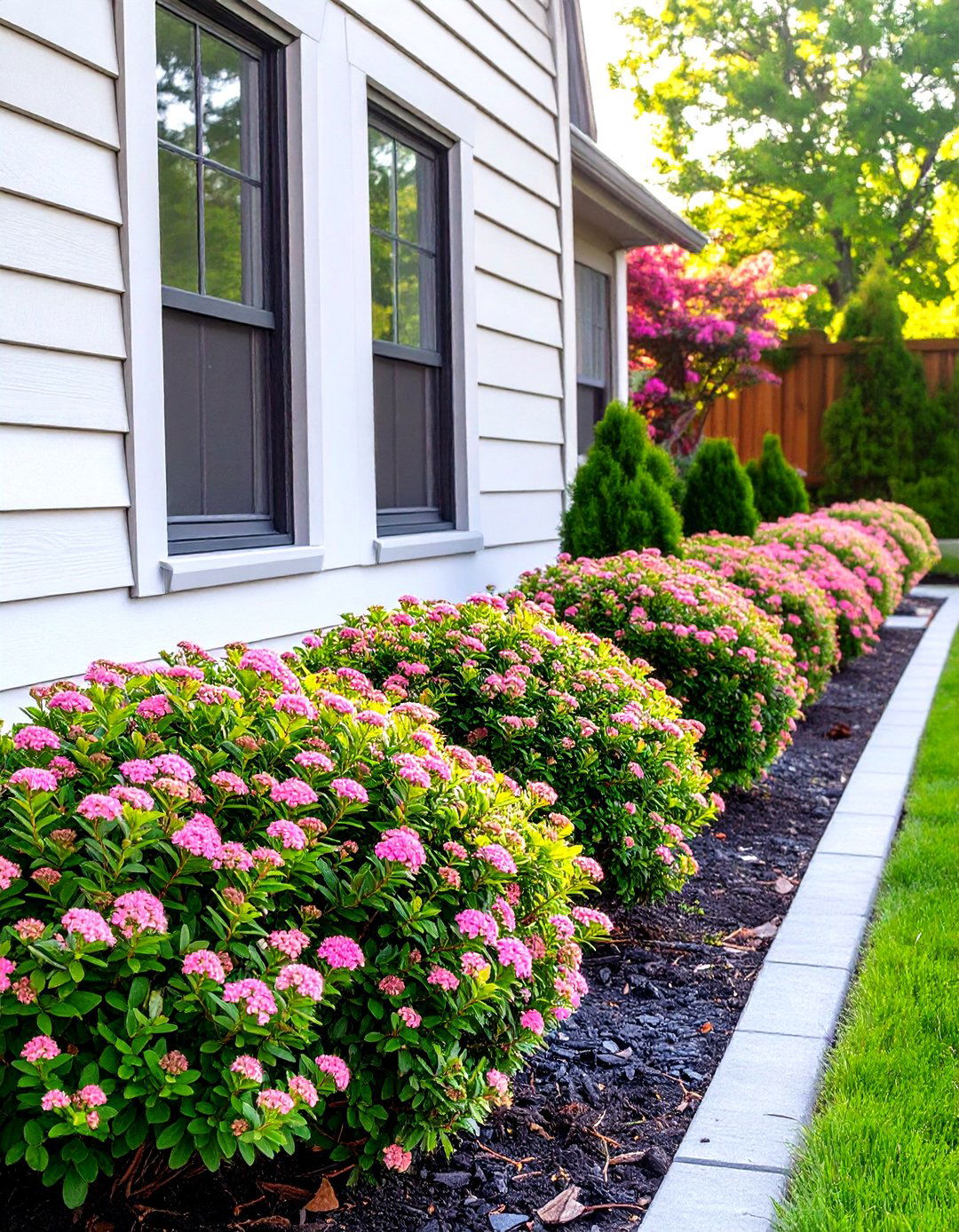
Mixed shrub borders can provide flowers, foliage, privacy, and winter structure without requiring formal symmetry. Pair a brushed concrete driveway with a dark cobblestone edge and gently curved beds. Begin with compact evergreen shrubs as the permanent framework, then layer flowering shrubs and low perennials in front. Repeat each plant in groups of three or more so the border feels connected rather than random. Position taller shrubs toward the house or property boundary, leaving lower plants near the street and driveway entrance. Mulch the beds consistently and create smooth curves that are easy to maintain. A small ornamental tree can anchor the widest section. This complete approach fits craftsman, ranch, and suburban homes where a softer landscape is preferred over clipped hedges.
19. Driveway With Raised Stone Planters
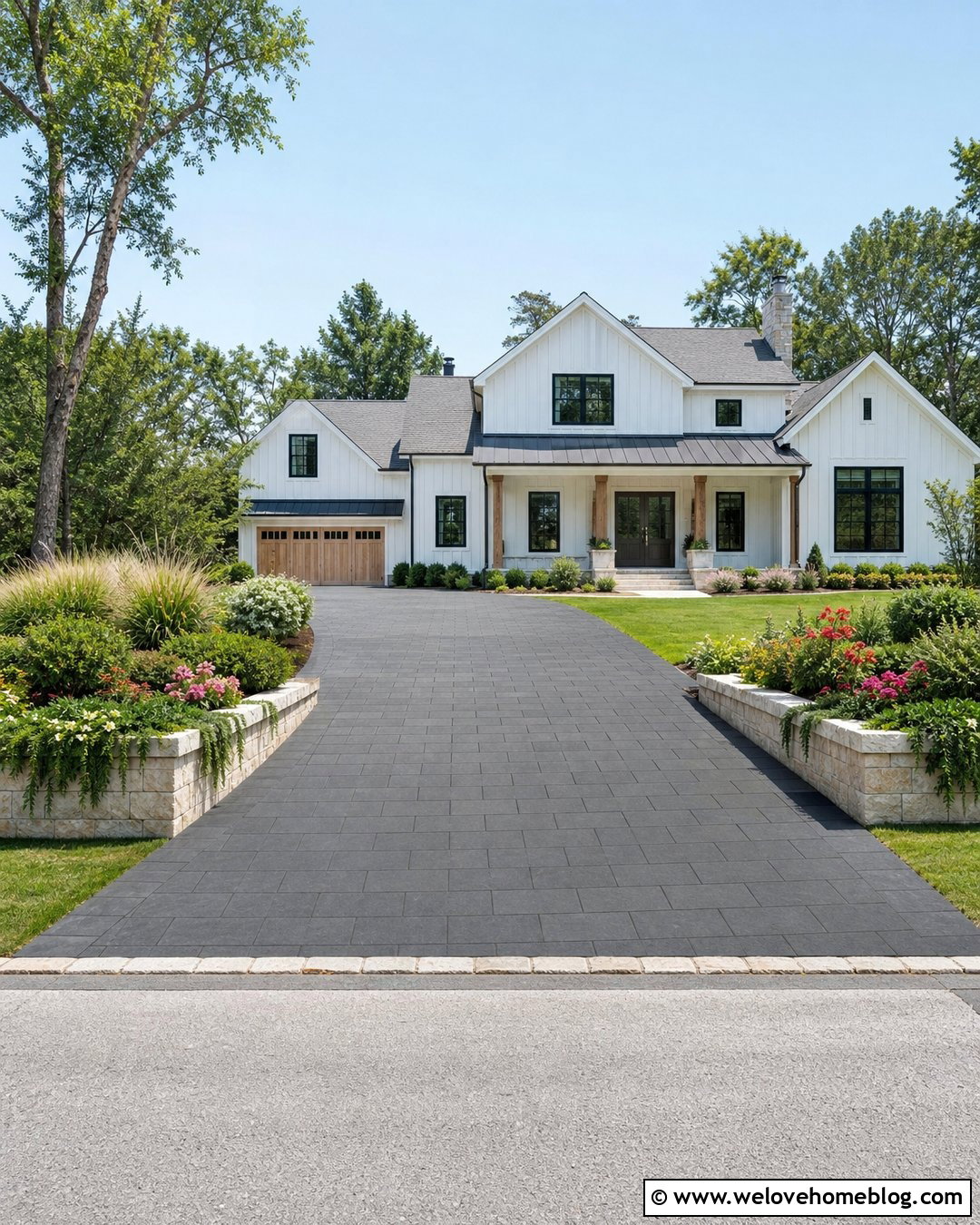
Raised planters can add depth to a flat front yard and help define the driveway entrance. Use charcoal concrete pavers for a wide, straight driveway, then construct low limestone planters along selected sections rather than enclosing the entire surface. Fill them with cascading ground cover, compact shrubs, ornamental grasses, and long-blooming flowers. Keep the walls and plants low enough to maintain visibility and allow comfortable vehicle movement. Repeat the limestone around porch steps or the front walkway so the planters appear connected to the house. Include proper drainage behind the walls to protect both masonry and planting roots. This structured design is particularly effective with contemporary, transitional, and modern farmhouse homes, where strong horizontal lines can unify the driveway, facade, and front yard.


20. Driveway With Minimalist Rock Landscaping
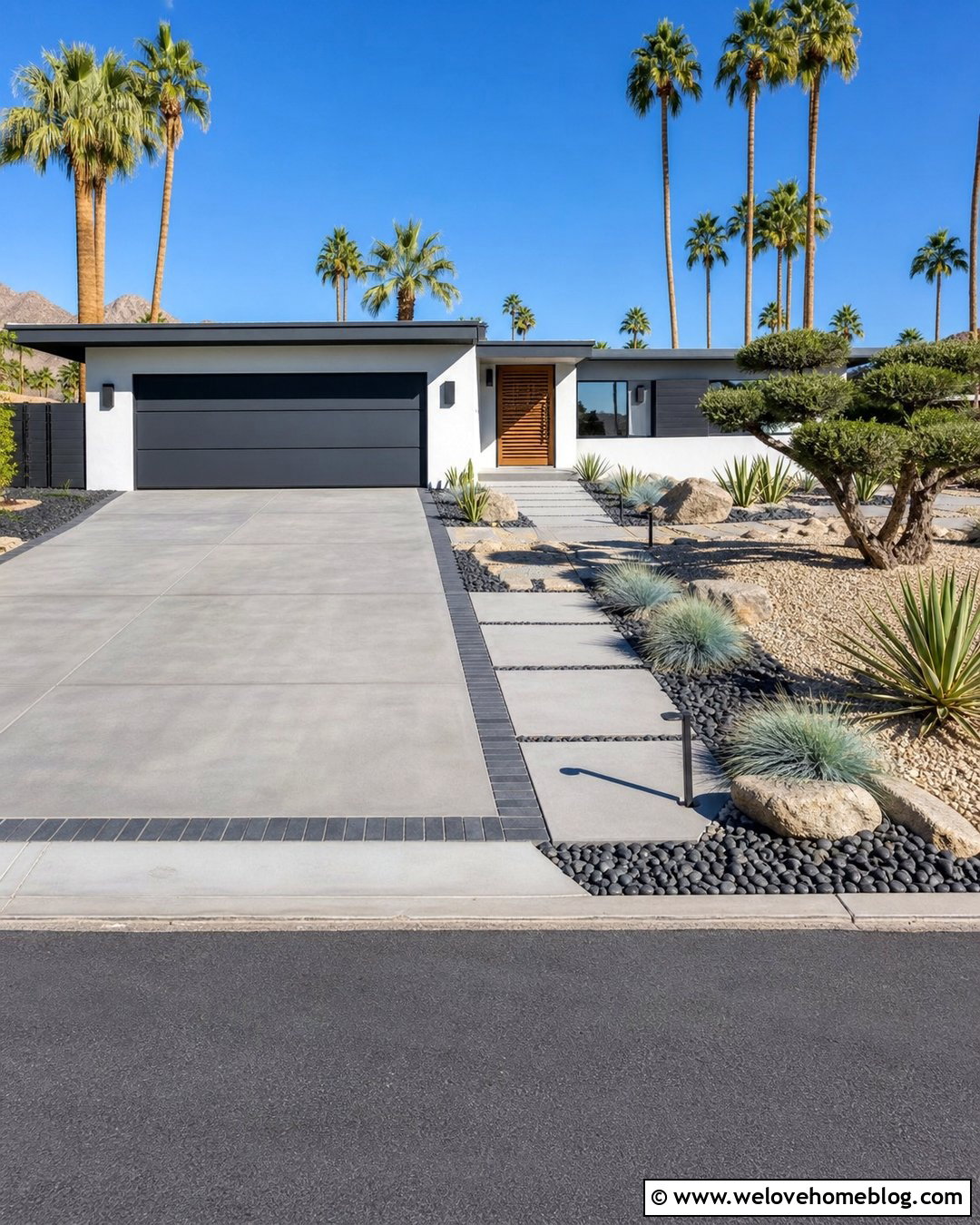
Minimalist rock landscaping works best when every material and plant has a clear role. Install smooth gray poured concrete in a straight driveway with narrow charcoal paver borders. Alongside it, create geometric beds filled with dark river rock, pale gravel, and carefully placed boulders. Add small groups of blue fescue, compact yucca, dwarf pine, or other sculptural plants suited to the local climate. Avoid covering the entire front yard with one unbroken layer of stone. Instead, balance mineral surfaces with planted areas and a few sections of lawn or ground cover. A large-format slab walkway can lead directly to the entrance. The controlled palette complements midcentury modern and contemporary houses while creating a front yard that looks clean without feeling empty or unfinished.
21. Driveway With Cottage Garden Landscaping
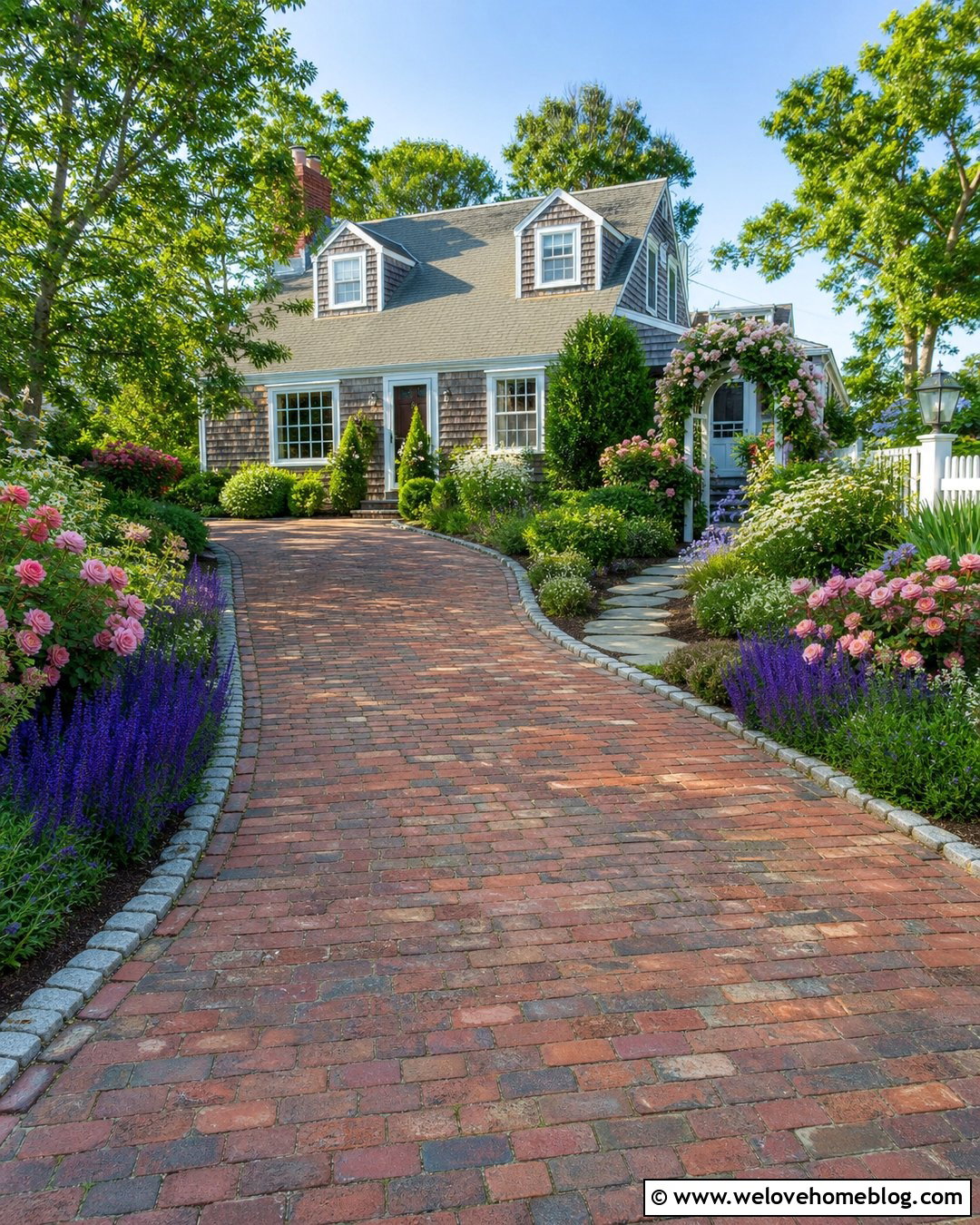
A cottage-style driveway should feel abundant without allowing plants to interfere with parking and walking. Use reclaimed clay brick pavers in a gently curved pattern, bordered by weathered cobblestone. Build deep beds containing roses, salvia, foxgloves, catmint, daisies, and compact evergreen shrubs. Repeat colors throughout the border so the planting feels coordinated even when forms are informal. Let soft ground covers approach the edging, but keep thorny or floppy plants farther from car doors. Add a small picket gate or arbor near the walkway rather than across the vehicle entrance. A flagstone path can lead from the driveway to the porch through the flowers. This layered design suits cottages, Cape Cod homes, and traditional houses with warm, detailed facades.
22. Driveway With Palm And Tropical Landscaping
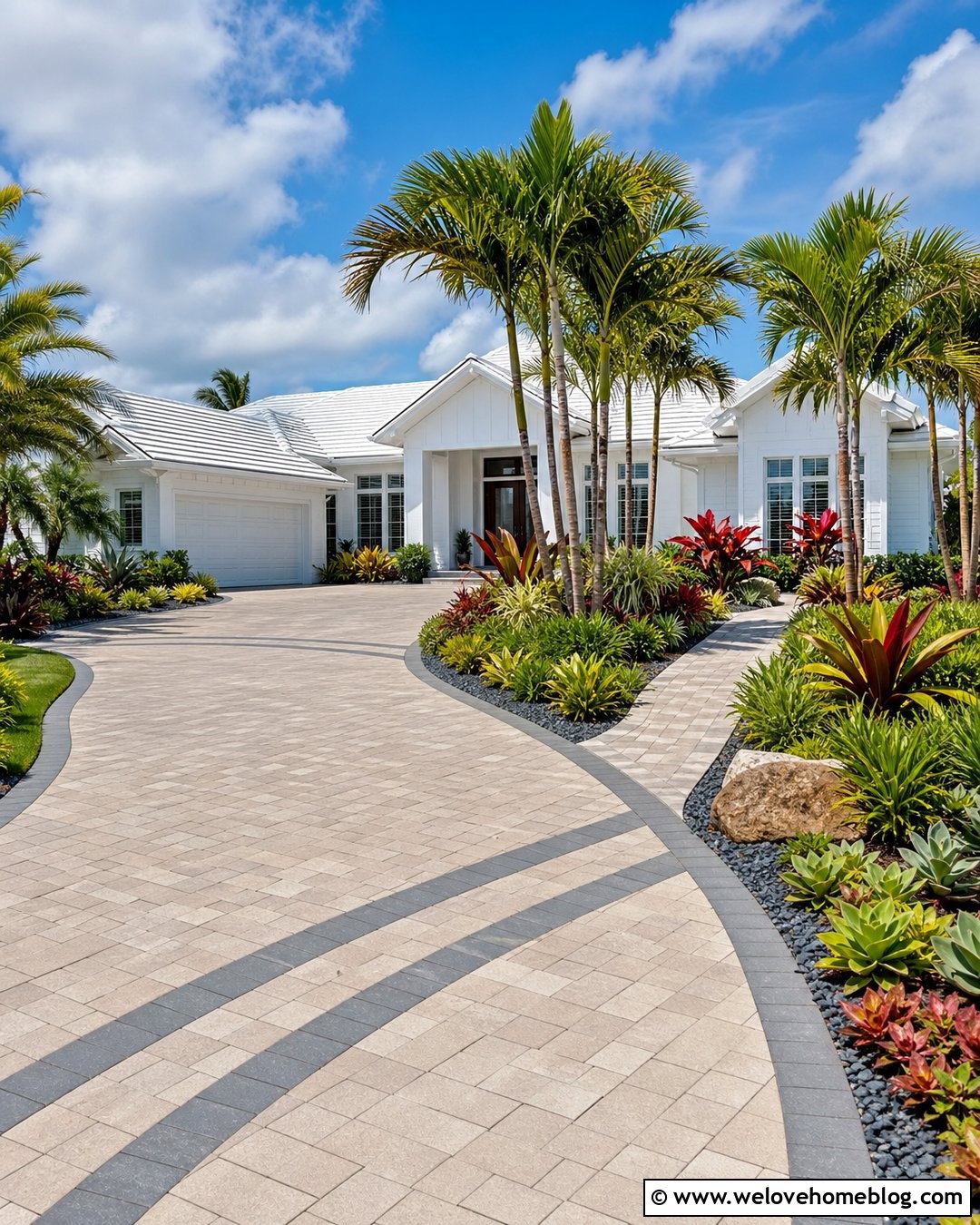
Tropical driveway landscaping can create a lush entrance when the plant palette is adapted to a warm climate. Use sand-colored concrete pavers in a wide curved layout, edged with darker stone bands. Plant palms as vertical accents rather than forming a dense wall, then layer crotons, dwarf schefflera, flax lily, bromeliads, and broad-leaved ground covers below. Keep large fronds and vigorous plants away from vehicle doors, lighting, and pedestrian routes. Add a light-colored walkway that remains visible among the foliage. Decorative gravel around selected plants can reduce the visual weight of heavy planting and improve definition. This complete look complements coastal contemporary, Florida ranch, Mediterranean, and modern stucco homes while giving the front yard a vibrant, resort-inspired character.
23. Driveway With Low-Maintenance Mulch Beds
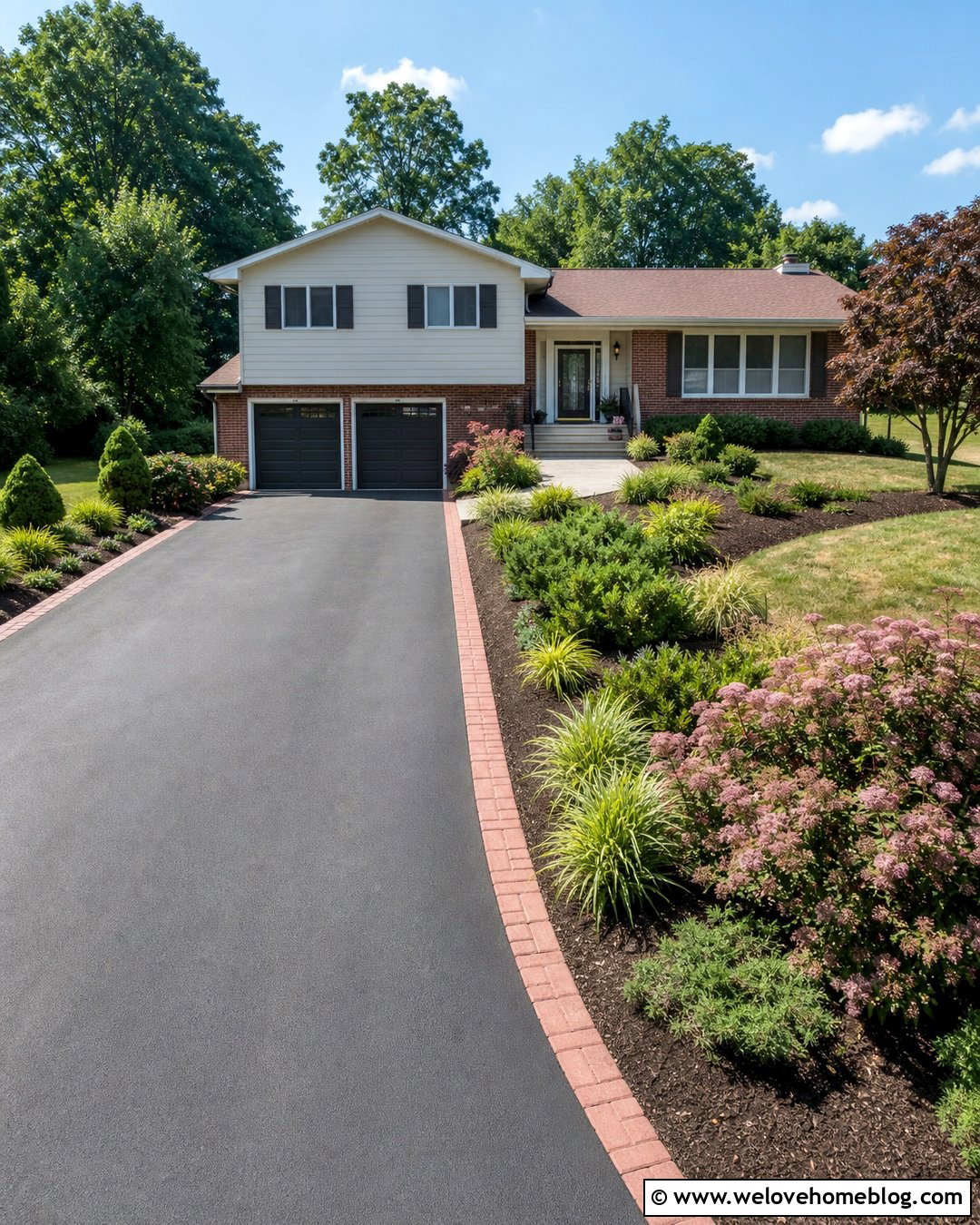
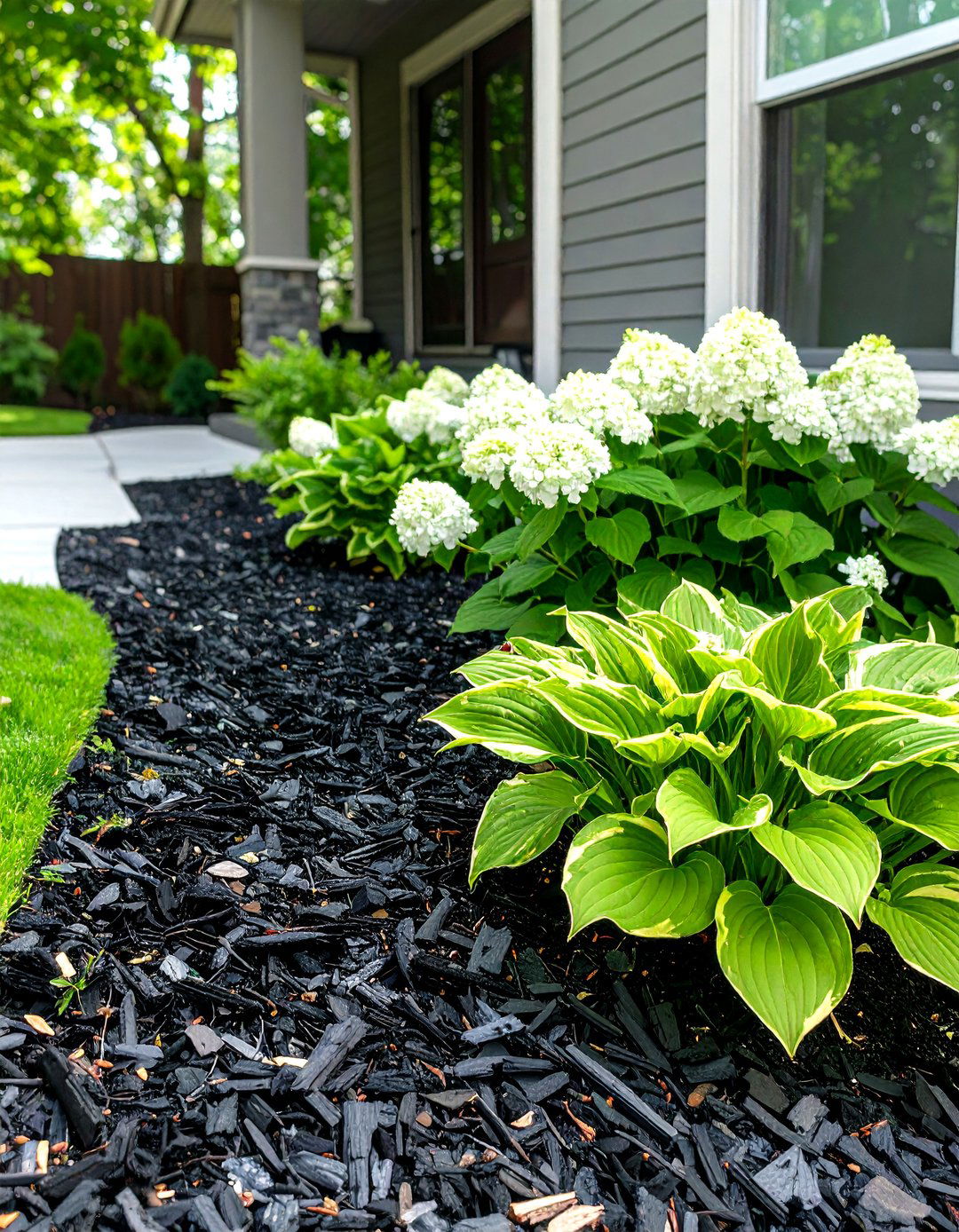
Simple mulch beds offer one of the most approachable ways to improve an existing driveway. Start with a black asphalt surface in a straight layout and add a durable brick or concrete curb along both edges. Shape broad, gradual planting beds rather than narrow strips that dry out quickly. Use a limited combination of compact evergreens, ornamental grasses, flowering shrubs, and dependable ground covers. Place plants according to mature size so the beds do not require constant shearing. Apply mulch at an appropriate depth without piling it against trunks or stems. A matching bed near the front porch connects the driveway landscaping to the house. The result is affordable, adaptable, and suitable for ranch, colonial, craftsman, or split-level homes in many suburban settings.
24. Driveway With Landscape Lighting And Layered Plants
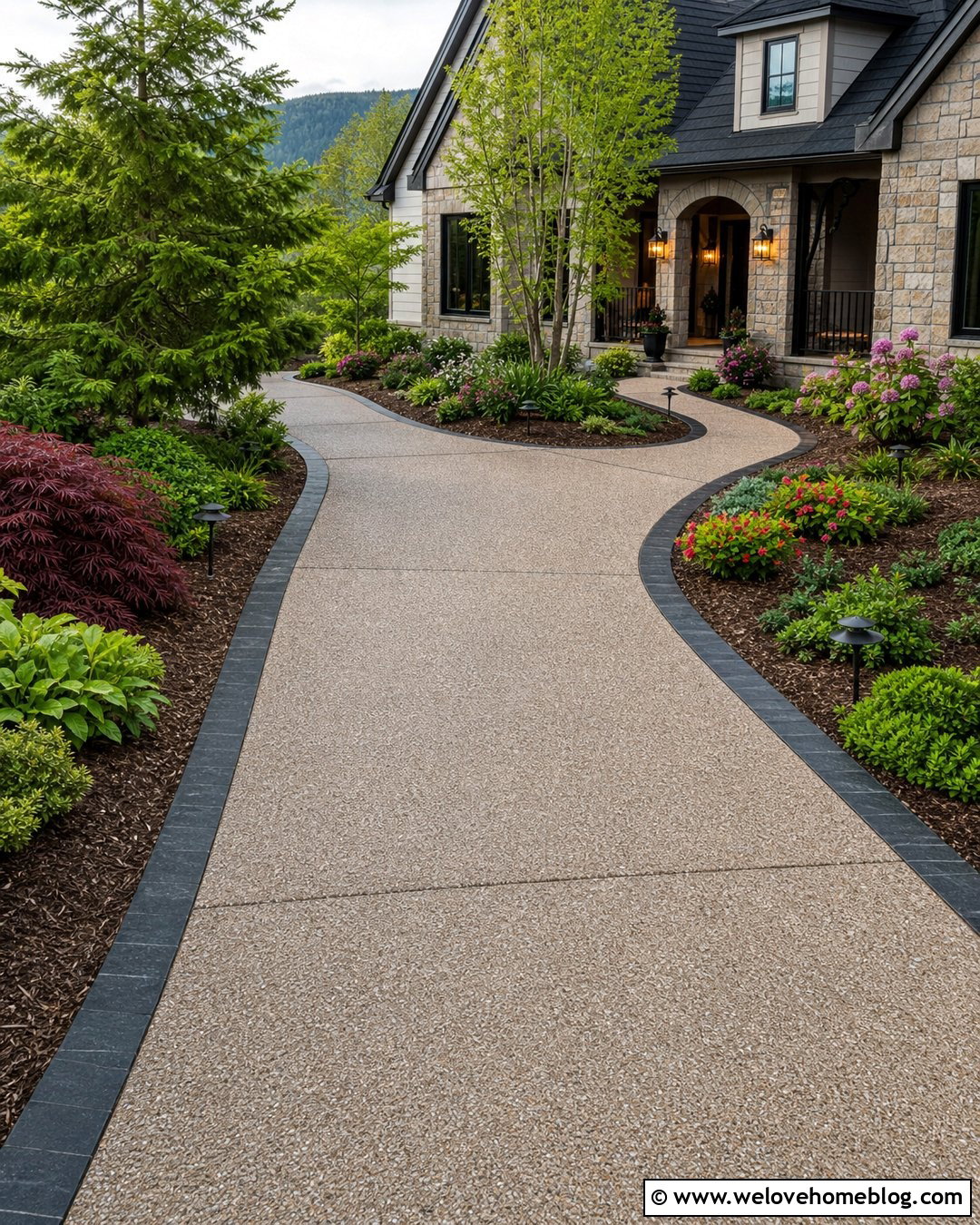
Daytime planting and nighttime visibility can be planned as one complete driveway design. Use warm-toned exposed aggregate concrete in a curved layout with a dark granite border. Build layered beds containing low ground cover, medium flowering shrubs, and a few taller ornamental trees. Install shielded path lights at practical intervals, aiming illumination toward pavement edges and pedestrian connections rather than into windows or the street. Subtle uplights can highlight selected trees or stone walls, but the fixtures should remain secondary during the day. Add a clearly visible walkway from the driveway to the entrance and continue the same plant groups around the porch. The finished landscape feels coordinated in daylight while offering safer navigation and a welcoming approach after sunset.
25. Horseshoe Driveway With Landscaped Entry Pillars
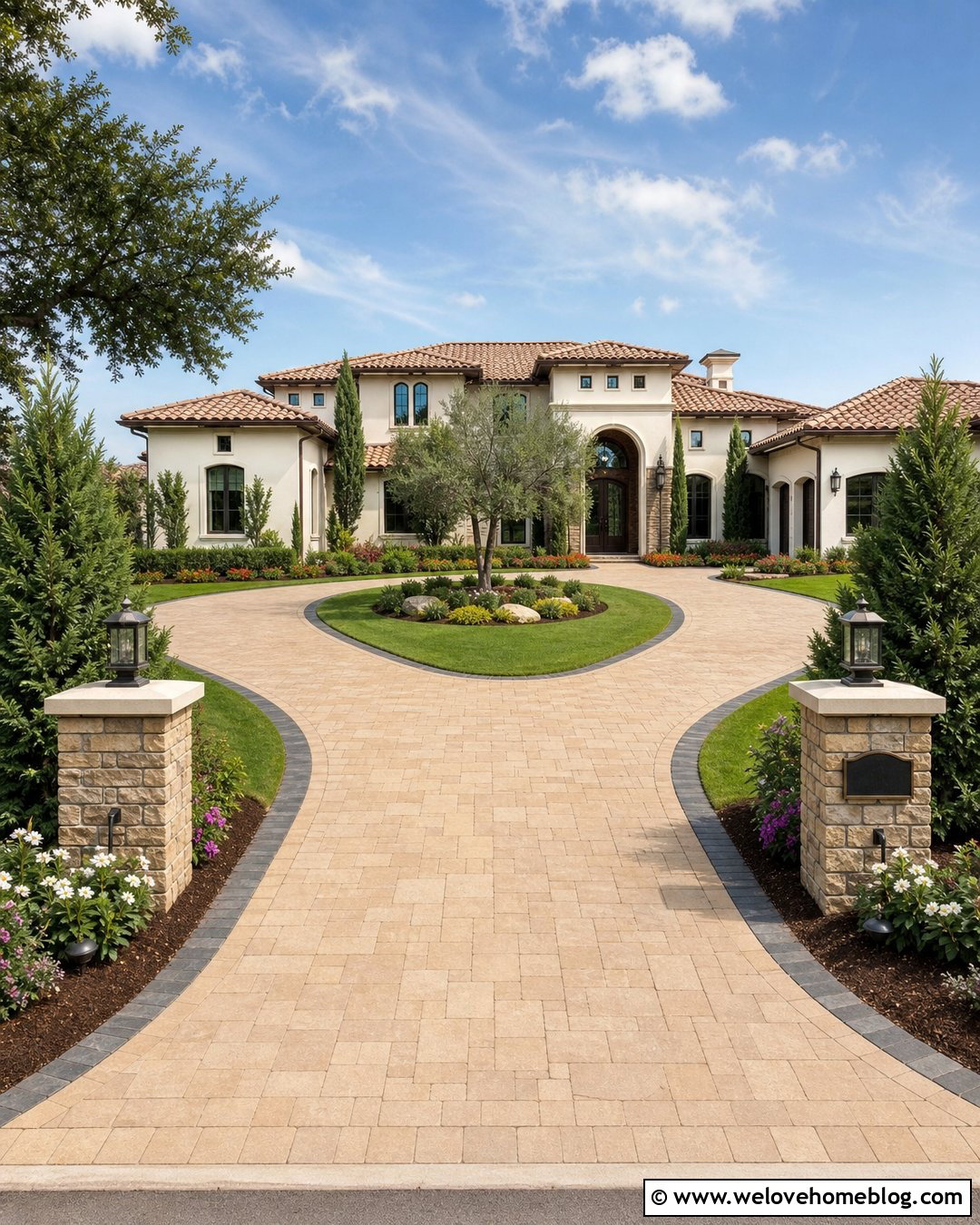
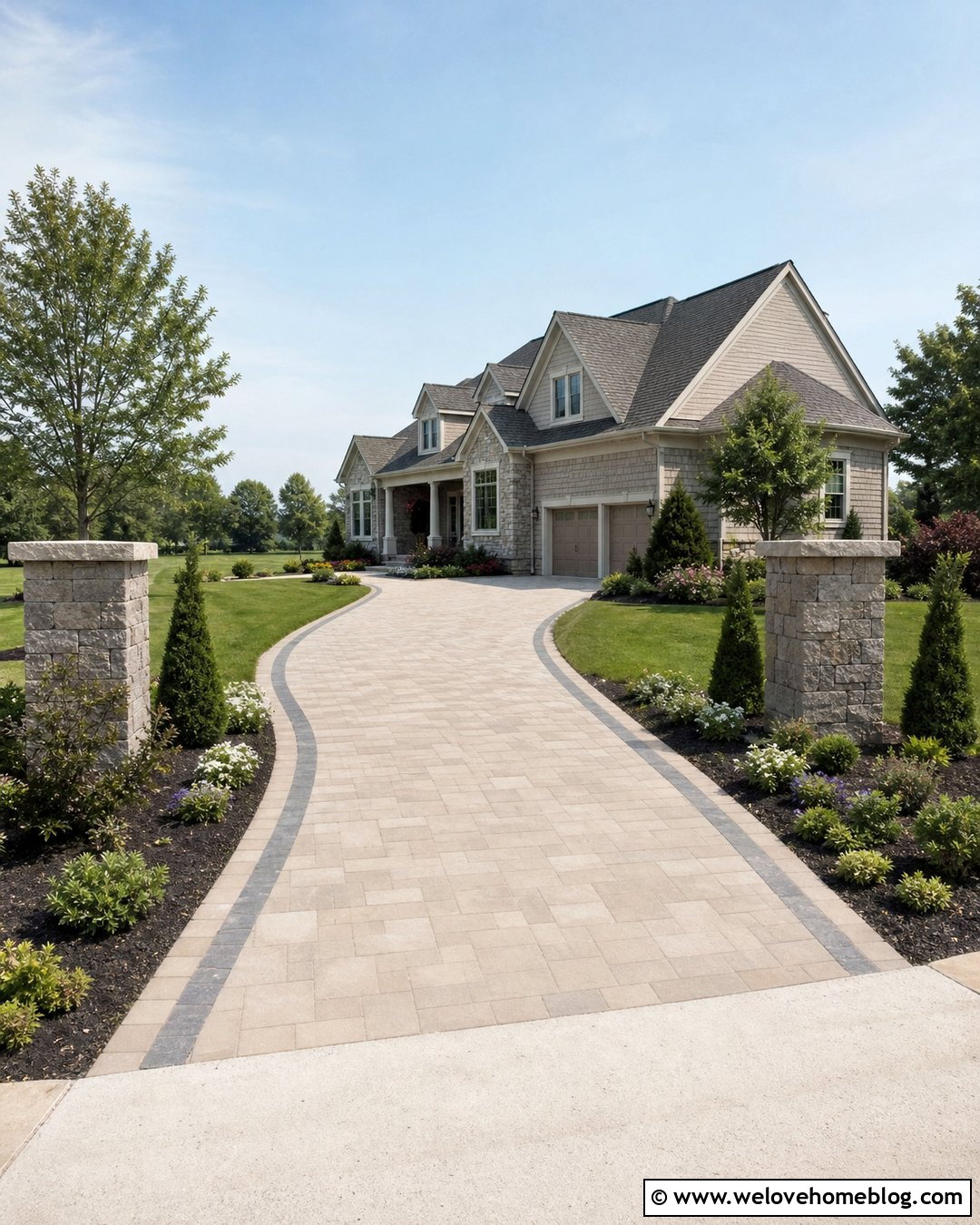
A horseshoe driveway can combine convenient circulation with a strong front yard centerpiece. Use tan cobblestone or tumbled concrete pavers throughout the curved layout, with darker stone marking both entrances. Build modest masonry pillars at the street and repeat their material in a low border around the center lawn. Inside the curve, plant one ornamental tree surrounded by evergreen shrubs, seasonal flowers, and clean ground cover. Keep the center arrangement low enough to preserve views of the house and oncoming vehicles. Continue coordinated planting beds beside each driveway arm and around the porch. Address numbers can be integrated neatly into one pillar. This formal yet practical arrangement suits larger colonial, European-inspired, Mediterranean, and traditional homes with enough frontage for comfortable turning space.
Conclusion:
The best **25 Front Yard Landscaping Driveway Ideas** combine practical access with plants, borders, walkways, and materials that suit the house. Begin by studying the driveway’s shape, sunlight, drainage, vehicle clearance, and connection to the front door. Then choose a focused plant palette and repeat key colors or materials across the yard. Small properties may benefit from narrow beds and compact shrubs, while larger lots can support trees, islands, or sweeping curves. Keep mature plant sizes, local climate, maintenance, visibility, and drainage in mind before installation. Whether you update a simple asphalt drive or build a new paver entrance, treating the entire approach as one landscape will produce stronger, longer-lasting curb appeal.

Related posts:
Leave a Reply