
A shrub-lined driveway can make an ordinary front yard feel polished, welcoming, and thoughtfully designed. The best layouts combine the driveway surface, shape, edging, and planting beds into one complete look. Shrubs can provide evergreen structure, seasonal flowers, privacy, or a softer transition between pavement and lawn. Popular approaches include mass planting one shrub variety, combining evergreen and flowering shrubs, and keeping plants low near the street for better visibility. () Before planting, consider sunlight, drainage, winter road salt, snow storage, and each shrub’s mature width. These details help prevent crowded pavement and constant pruning. The complete designs below offer practical inspiration for creating **20 shrub lined driveway ideas**.

1. Boxwood-Lined Concrete Driveway
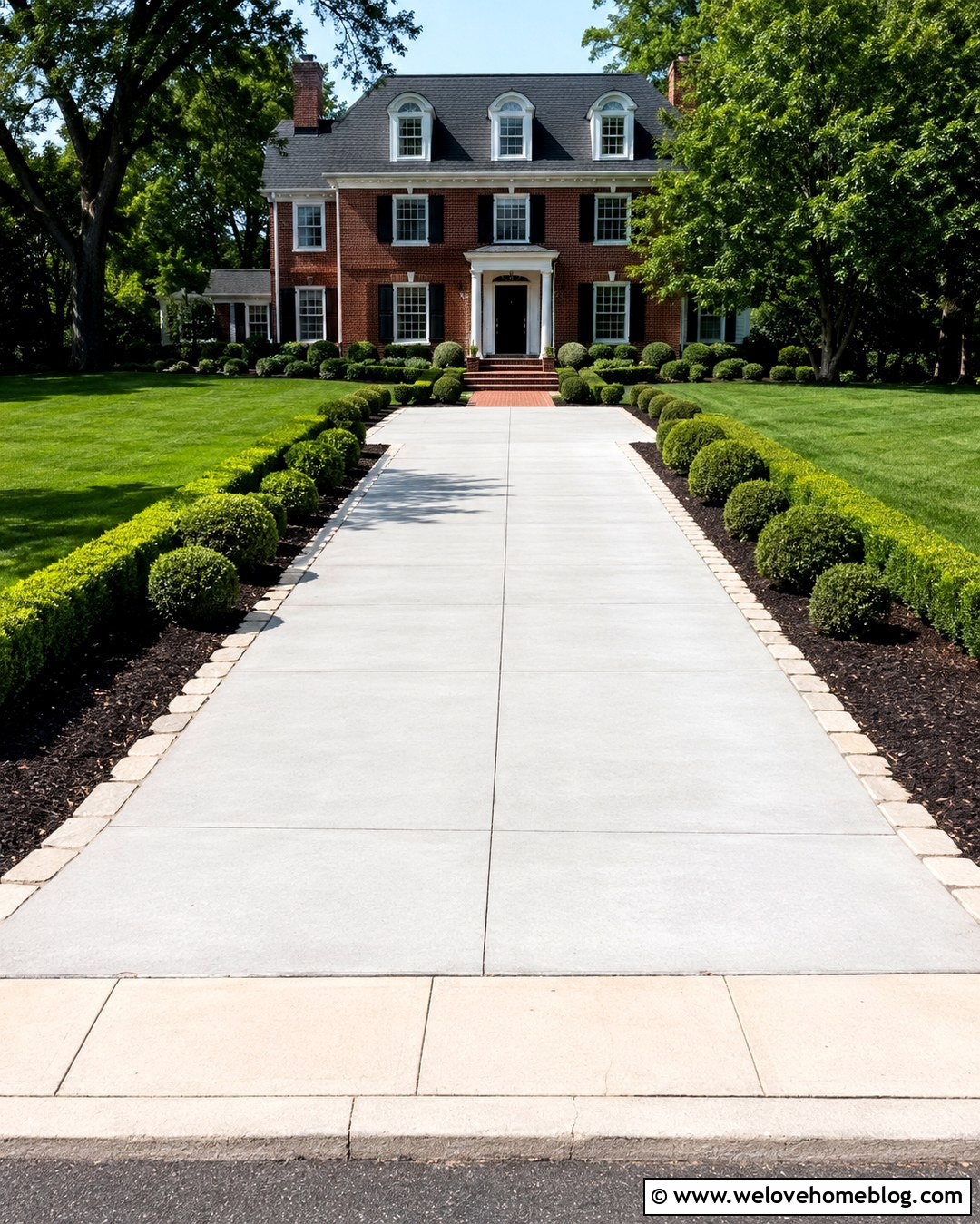
A straight, light-gray concrete driveway gains a clean and classic appearance when framed by low boxwood hedges. Keep the shrubs clipped to roughly two or three feet tall so they define the pavement without hiding the house. A narrow strip of dark mulch between the concrete and boxwoods provides root space and makes routine edging easier. At the street, end the hedge several feet before the driveway entrance to preserve clear sightlines. Add two larger boxwood spheres near the front walkway to visually connect the driveway with the entry. This complete look suits Colonial, Georgian, and traditional brick homes. Choose a boxwood alternative if common boxwood pests or diseases are problematic in your region.
2. Hydrangea-Lined Gravel Driveway
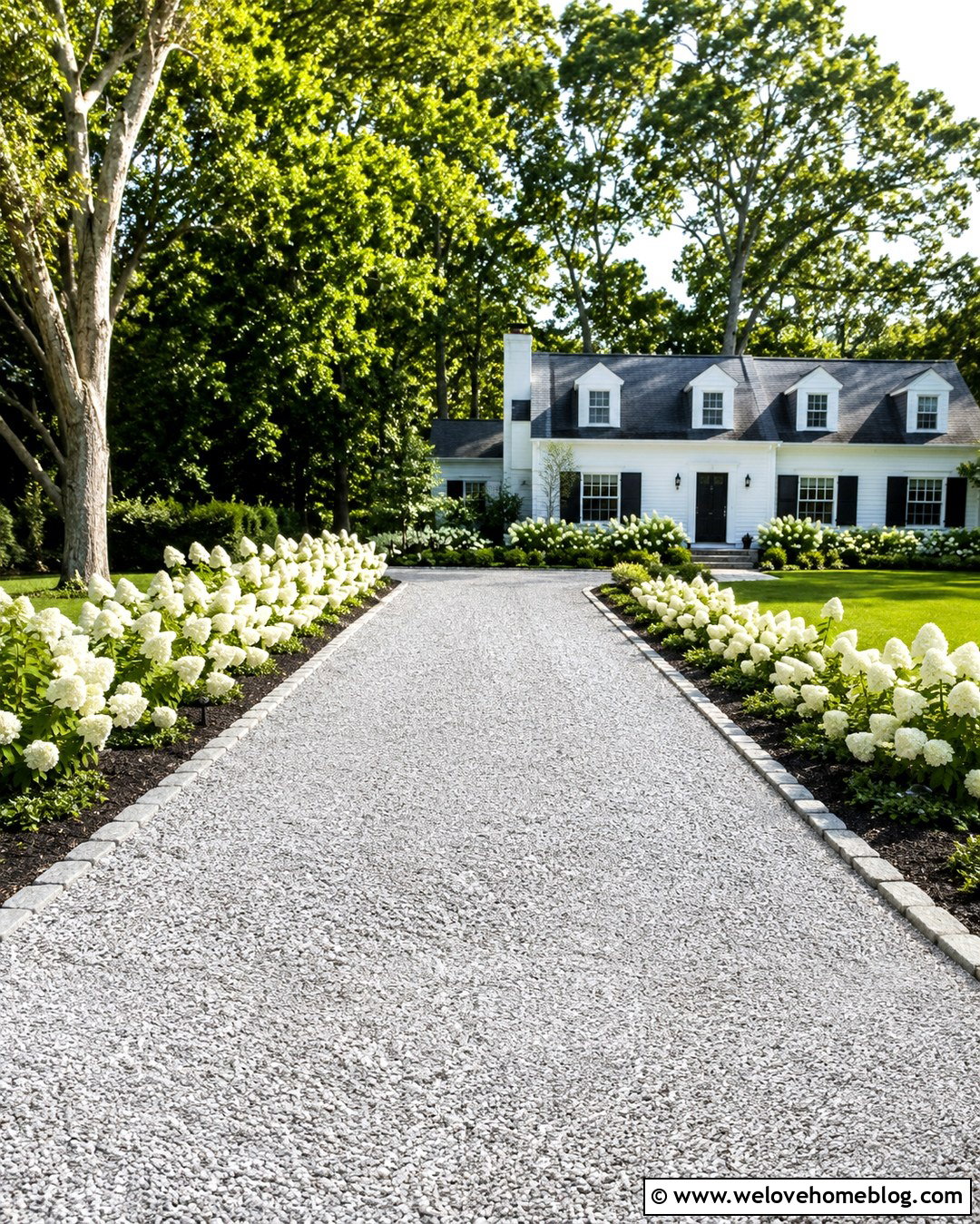
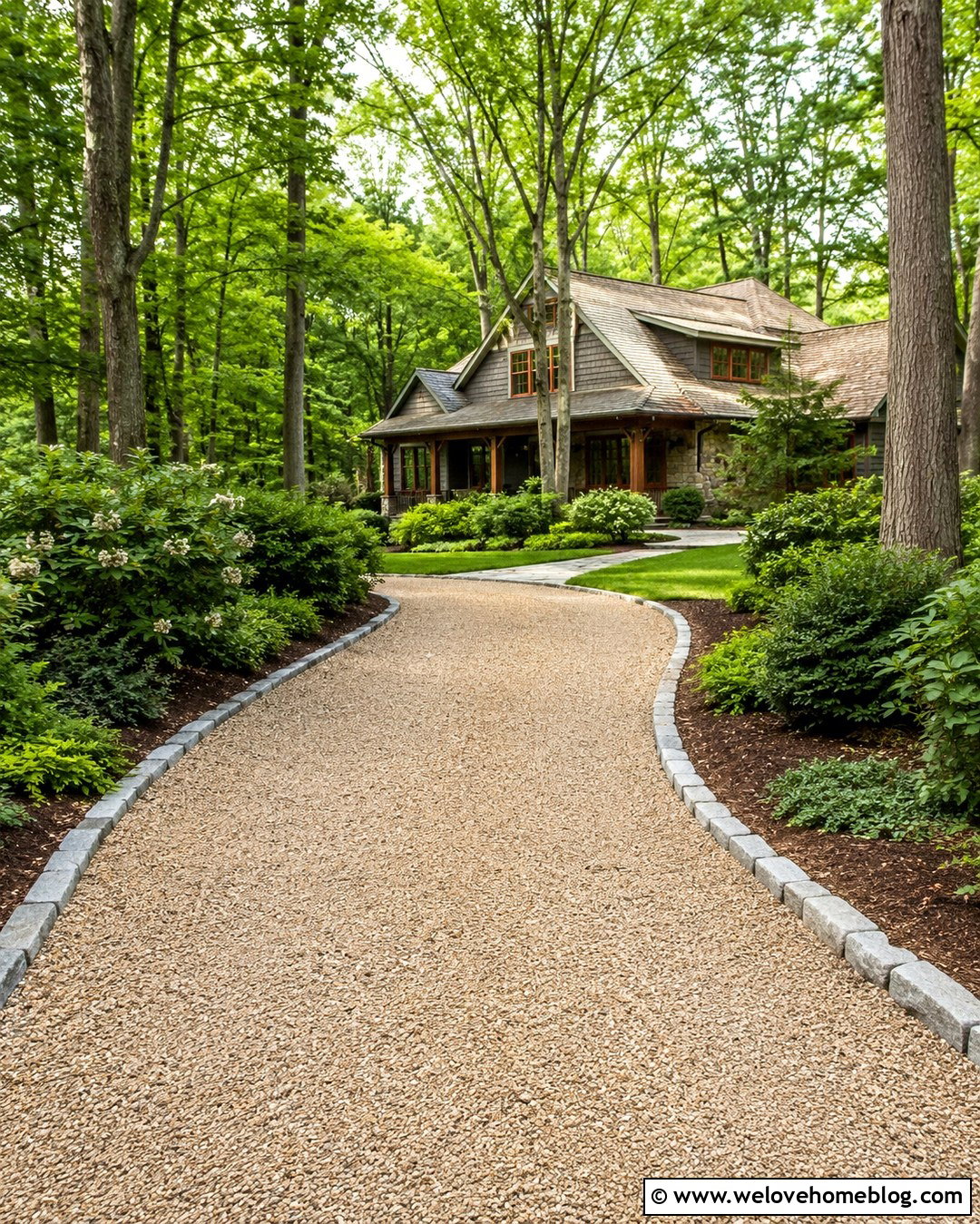
Large hydrangea blooms create a soft, romantic border along a pale gravel driveway. This combination works especially well with farmhouse, Cape Cod, and cottage-style homes. Use compact hydrangeas that fit the available bed width rather than varieties that will spread over the driving surface. A cobblestone edge keeps the gravel contained while giving the planting beds a finished boundary. Space the shrubs according to their mature size, leaving small gaps that will gradually close. Add shade-tolerant ground covers beneath the hydrangeas if the site receives limited afternoon sun. White or pale pink flowers brighten the approach, while blue blooms can complement gray siding. Drip irrigation beneath the mulch helps deliver moisture without repeatedly wetting the foliage.
3. Evergreen Shrub-Lined Asphalt Driveway
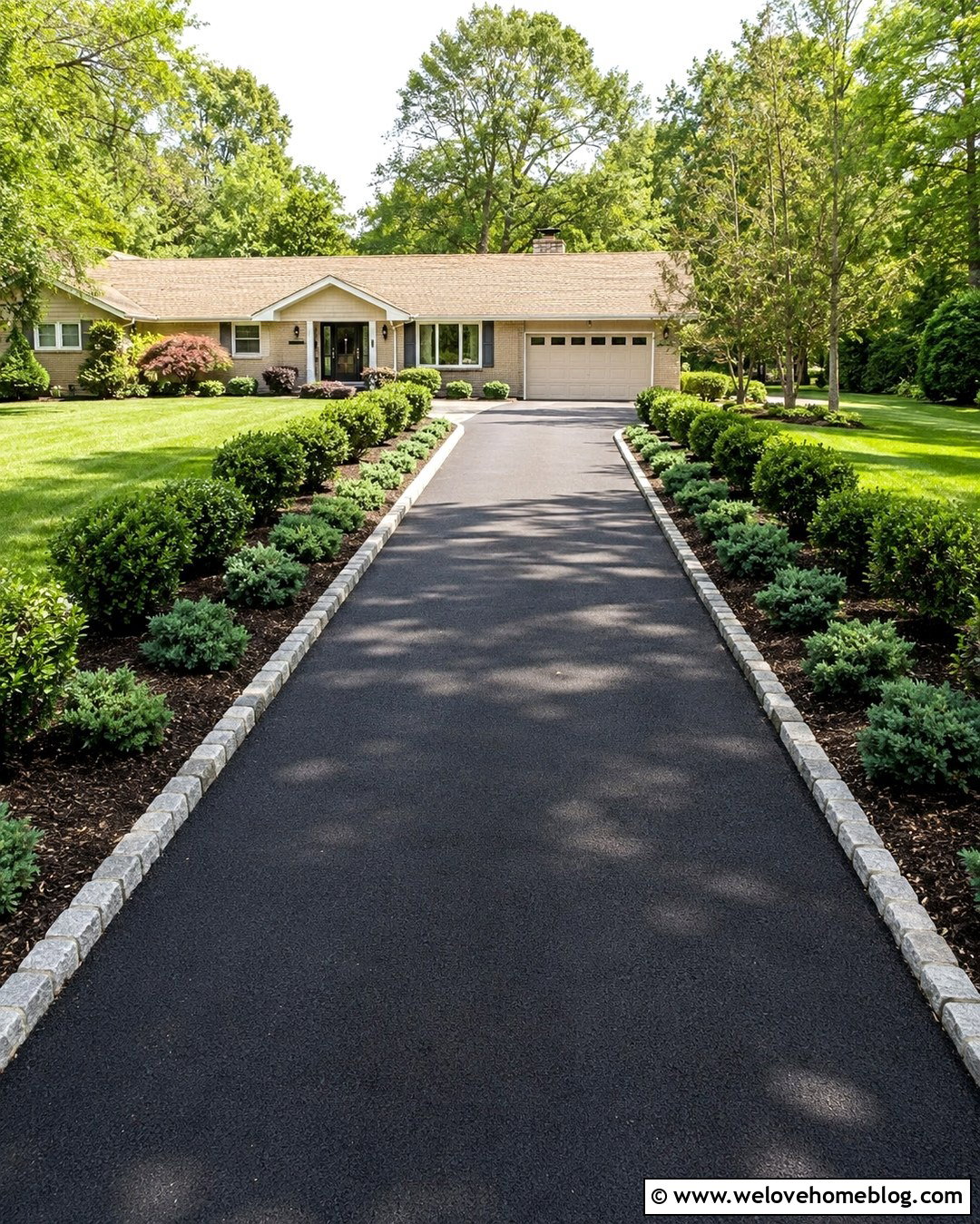
Black asphalt looks less severe when it is paired with a continuous border of green evergreen shrubs. Dwarf inkberry holly, compact juniper, and regionally suitable yew varieties can provide structure through every season. Instead of planting directly against the pavement, create a three- to five-foot-wide mulched bed that accommodates mature growth. A granite or concrete curb prevents asphalt edges from crumbling and keeps mulch out of the driveway. Maintain a consistent shrub height for a formal look, or mix two compact varieties for a more relaxed border. This practical arrangement works well along long suburban driveways where year-round definition is important. Select shrubs that match the site’s sunlight, soil drainage, climate, and exposure to deicing salt.
4. Spirea-Lined Paver Driveway
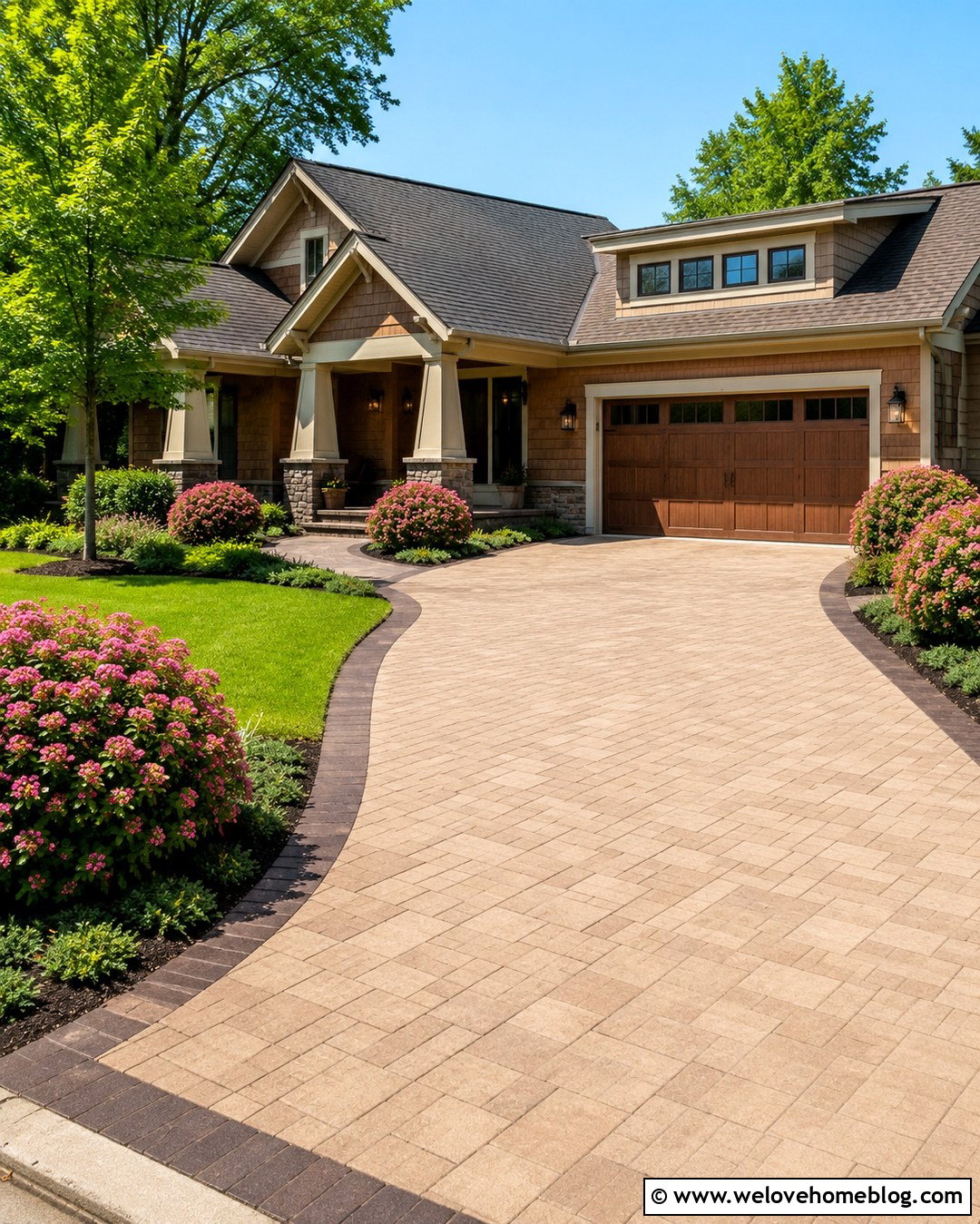
A warm-toned paver driveway bordered with compact spirea offers color without requiring a tall hedge. Many spireas develop clusters of flowers and attractive foliage, making the driveway feel lively from spring through fall. Arrange the shrubs in a repeated line behind a dark metal or brick edge. Their rounded shapes soften the strong geometric pattern of rectangular pavers. For a layered effect, plant low ground cover between the spirea and edging, but leave enough open space for airflow and maintenance. This design is particularly attractive beside ranch and craftsman homes with simple facades. Repeating the same spirea near the front steps creates visual continuity. Choose a cultivar whose mature size remains safely inside the planting bed and away from vehicle doors.
5. Native Shrub-Lined Gravel Driveway
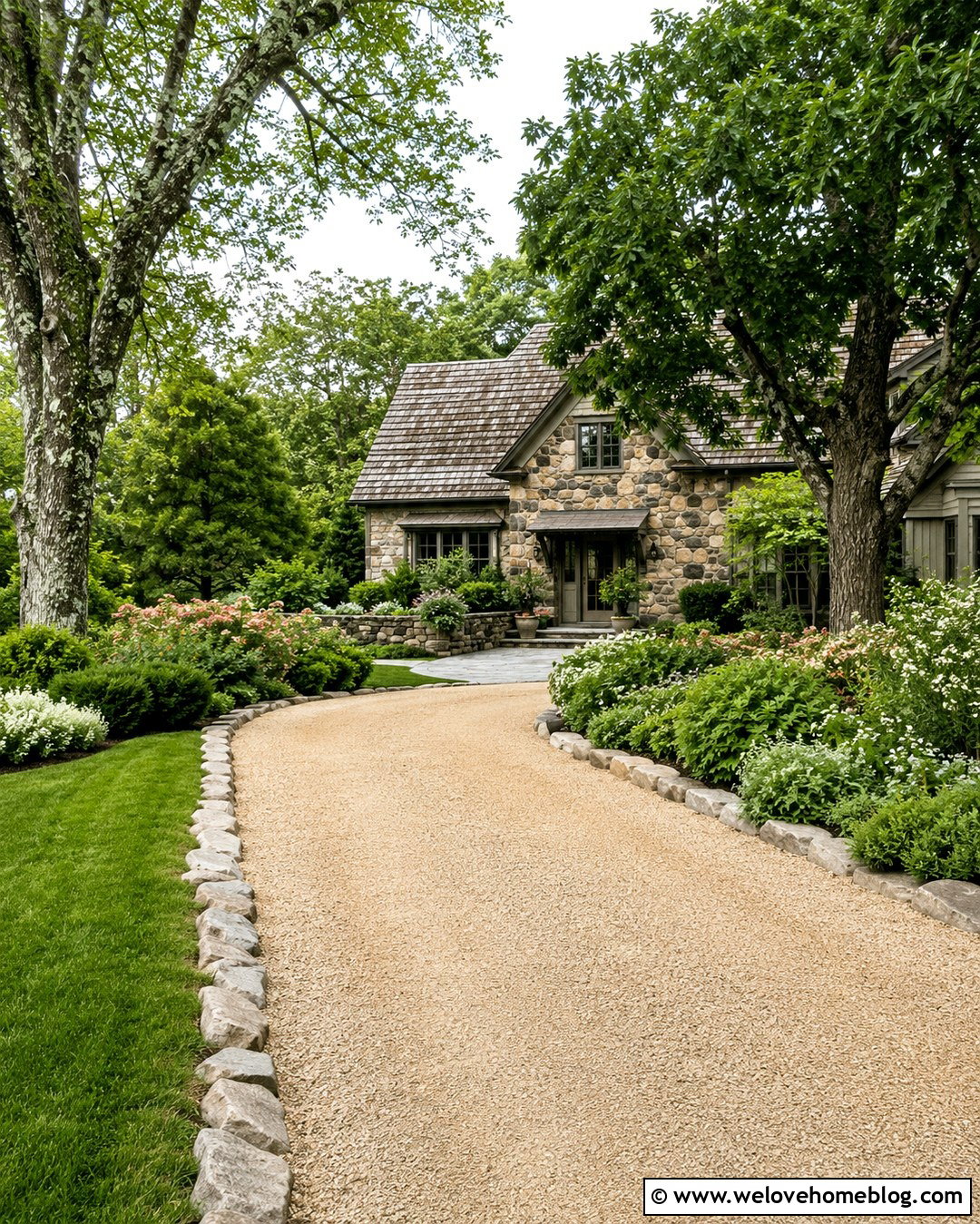
Could the driveway border support wildlife while improving curb appeal? A mixed native shrub planting can create a natural-looking entrance that feels connected to the surrounding landscape. Begin with a tan crushed-stone driveway and sturdy fieldstone edging. Then repeat several locally native shrub species in loose groups rather than planting every specimen at equal intervals. Combine compact evergreens with flowering and fruiting shrubs for changing texture throughout the year. Keep taller plants toward the property boundary and shorter shrubs beside the driving lane. A mowed grass strip at the front of the bed creates a neat transition and signals intentional design. Since native ranges vary widely, consult regional extension guidance before selecting plants for your soil and climate.
6. Privacy Hedge Along A Long Driveway
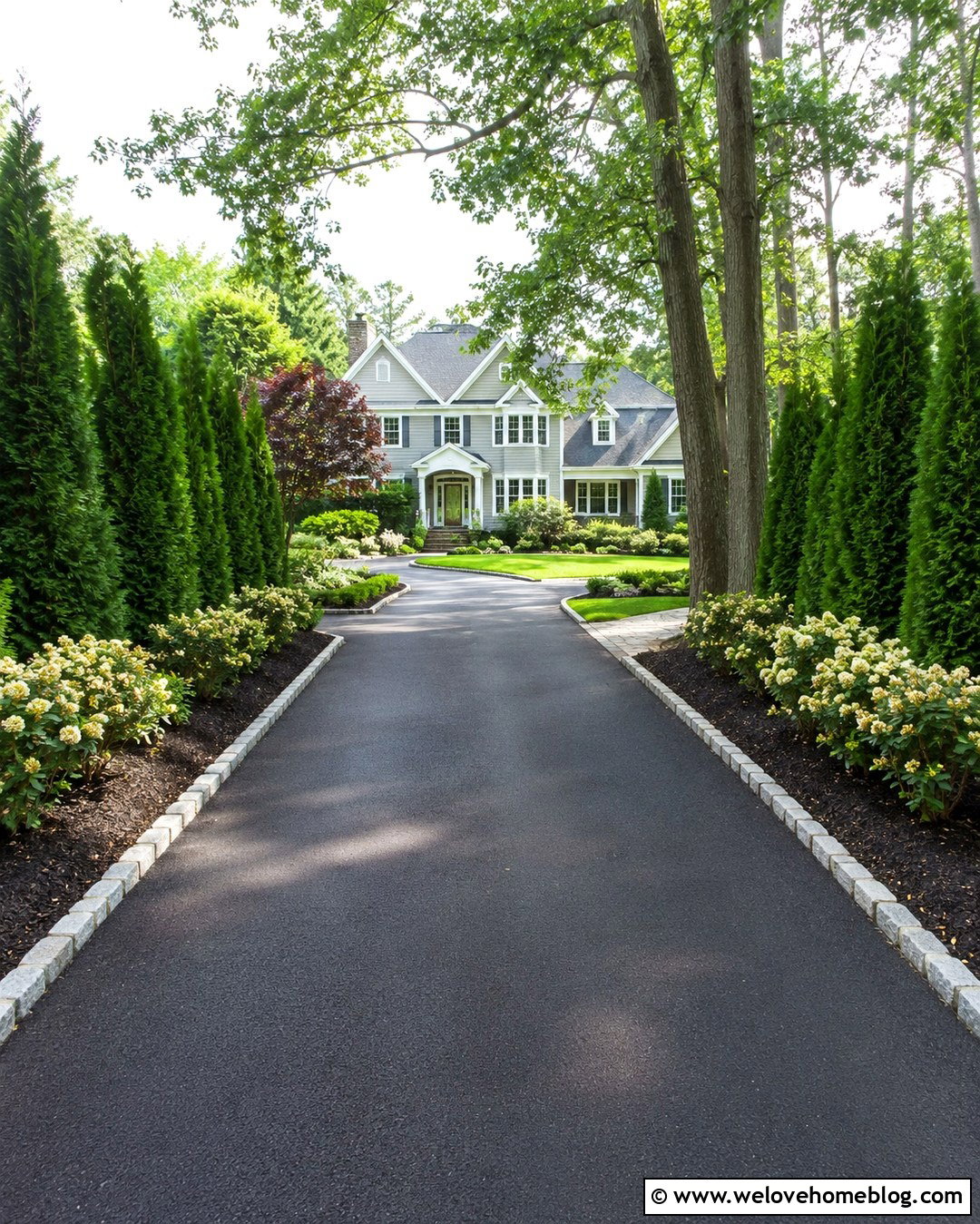
A long driveway beside a neighboring property can benefit from a deep shrub border that provides screening without feeling like a solid wall. Pair a smooth asphalt surface with a Belgian block edge and staggered rows of evergreen shrubs. Place the taller screening plants along the outer property line, then add medium-height flowering shrubs closer to the driveway. This layered arrangement creates depth and reduces the tunnel-like effect of a single tall hedge. Leave regular breaks near walkways, utility equipment, and drainage areas. Maintaining enough setback from the pavement also prevents branches from scraping vehicles. For a comfortable sense of enclosure, vary the shrub heights slightly while repeating a limited plant palette. The result feels private, cohesive, and easier to maintain.
7. Low Shrubs Along A Small Driveway
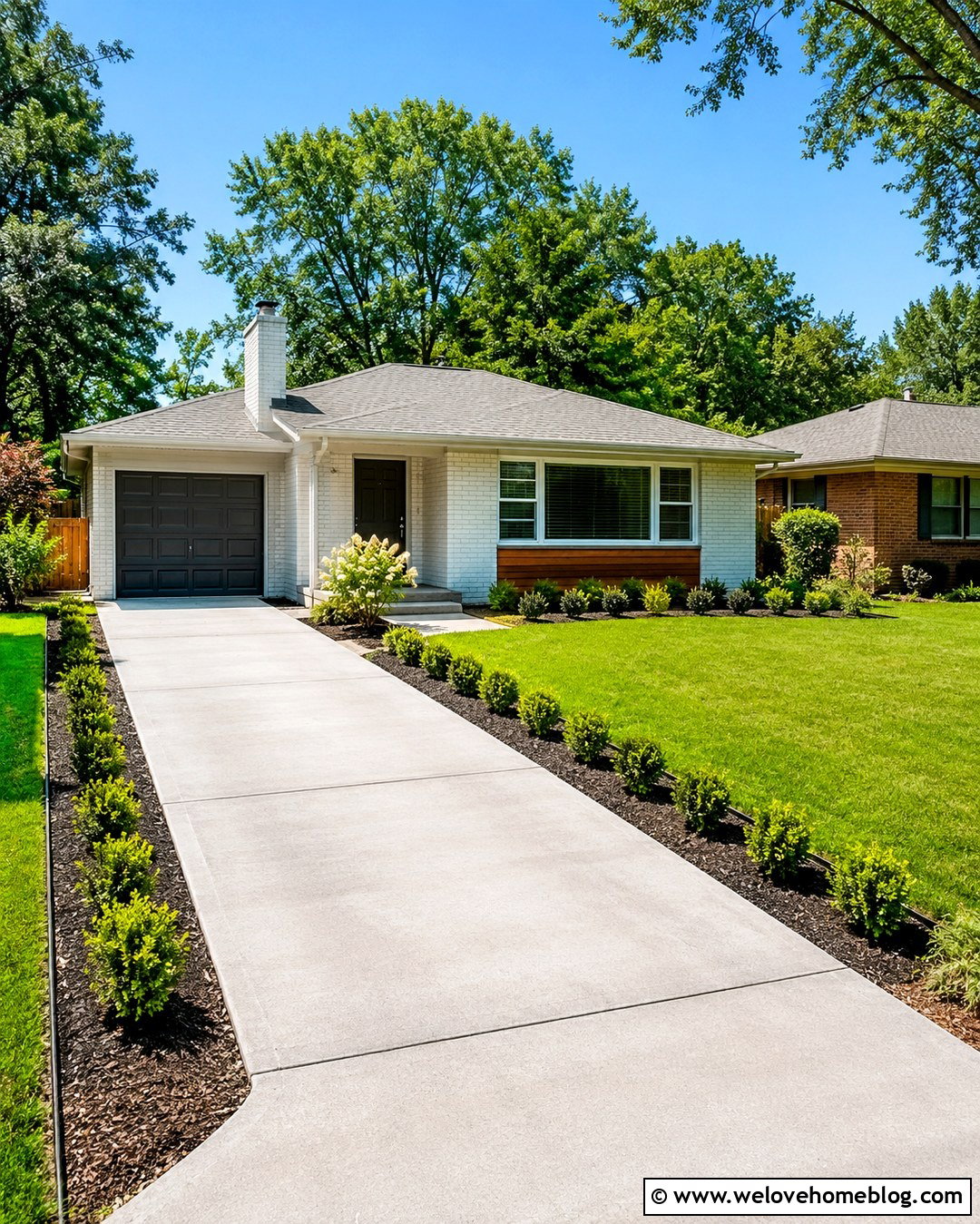
Small front yards need planting that adds character without reducing usable parking space. Frame a narrow poured-concrete driveway with compact shrubs that remain naturally low and rounded. Dwarf hollies, small spireas, and compact evergreen selections can work, depending on regional conditions. Install the shrubs in slim mulch beds behind a flush steel edge so tires can move close to the pavement without disturbing the soil. Avoid oversized varieties that require constant shearing to fit. One repeated shrub creates a calmer look than several unrelated plants in a limited area. At the house end, widen the bed and introduce a flowering accent shrub near the walkway. This subtle change creates a destination while keeping the street entrance open, practical, and uncluttered.
8. Azalea-Lined Curved Driveway
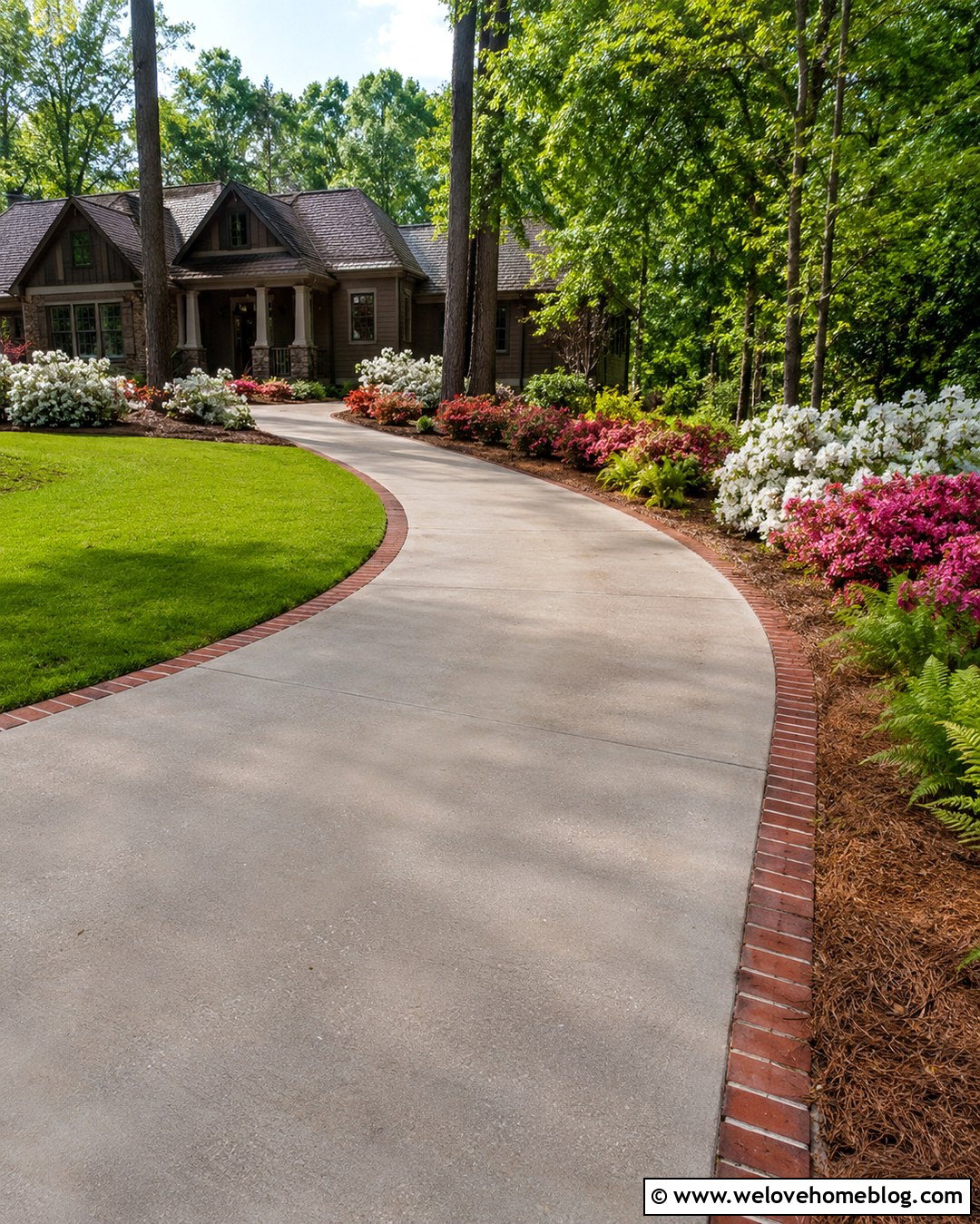
A gently curved driveway becomes especially inviting when flowering azaleas trace the outside bend. Use warm gray concrete with a narrow brick ribbon that emphasizes the curve and separates the pavement from the planting bed. Arrange azaleas in broad groups rather than a rigid row, allowing their natural shapes to soften the driveway. Evergreen varieties can retain valuable winter structure in suitable climates, while deciduous selections often provide vivid seasonal color. Beneath nearby trees, add pine-straw or shredded-bark mulch for a tidy woodland effect. Keep the inside curve lower and more open so drivers can see approaching vehicles, pedestrians, and the garage. This complete landscape works beautifully with craftsman, traditional, and wooded suburban homes.
9. Dwarf Holly Circular Driveway
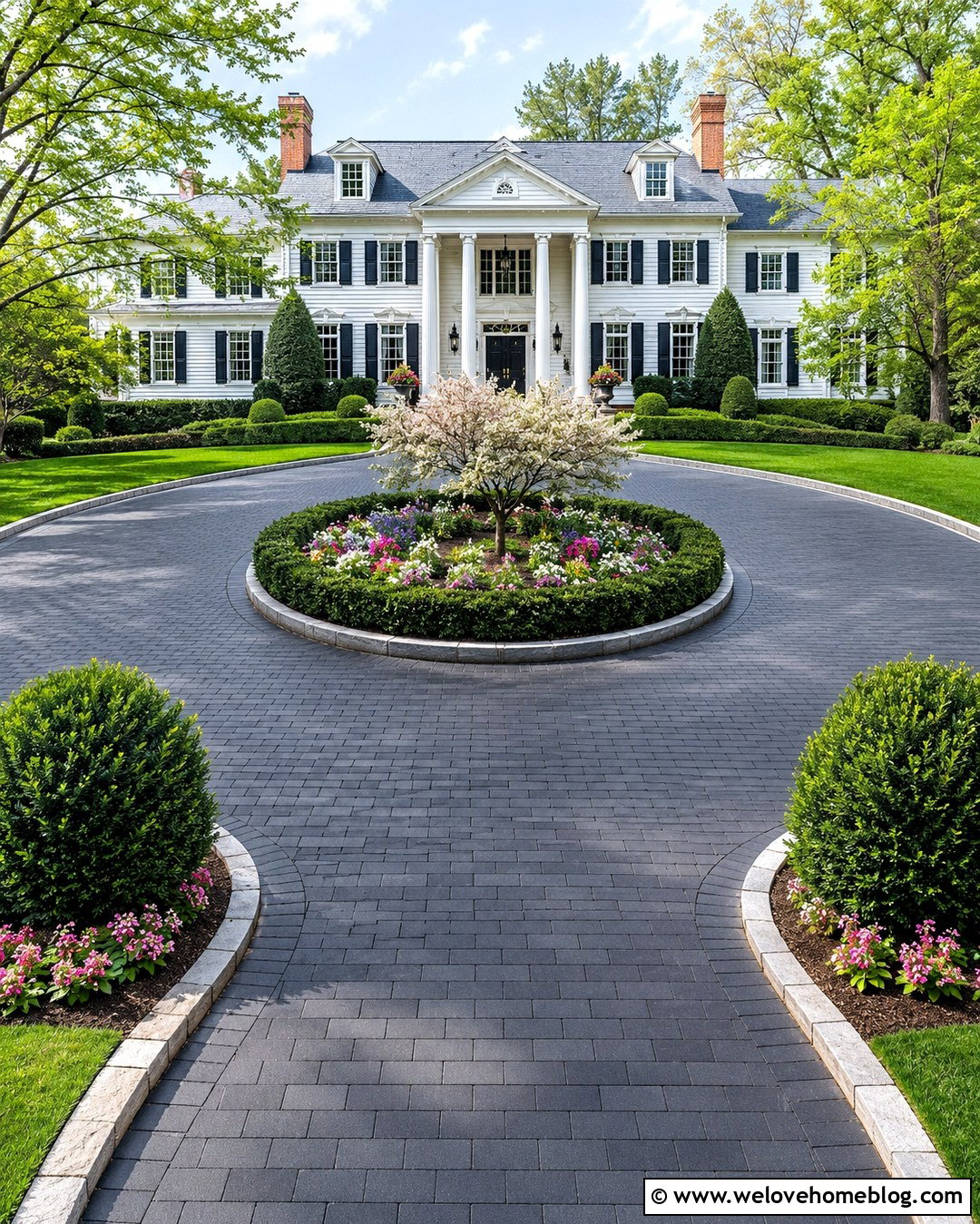
A circular driveway already has a strong shape, so a restrained shrub palette often works best. Surround the center island with a low ring of dwarf holly, leaving the middle open for a small ornamental tree or a taller flowering shrub. Use charcoal concrete pavers in a running-bond pattern, finished with a contrasting limestone curb around the island. Repeat the hollies in smaller groups near the two driveway entrances to visually connect the entire layout. Maintain a generous pavement width and keep branches away from turning areas. Seasonal flowers can be placed inside the evergreen ring without disrupting its year-round framework. This balanced design is well suited to Colonial and large traditional homes where symmetry supports the architecture.
10. Modern Concrete Driveway With Clipped Shrubs
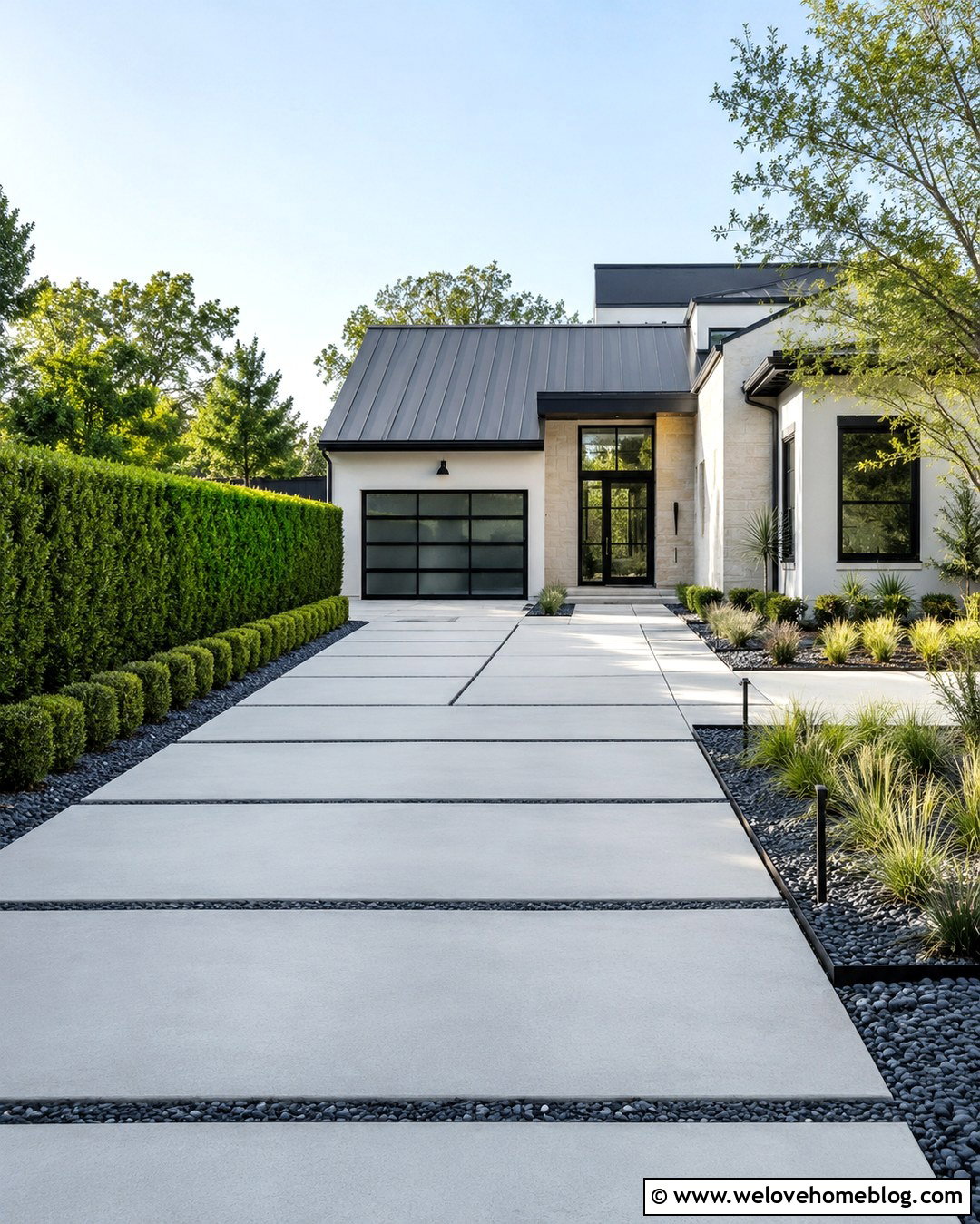
Crisp rectangles of smooth concrete pair naturally with clipped evergreen shrubs and a minimalist home. Divide the driveway into large slabs separated by narrow gravel joints, then frame one side with a linear hedge. On the opposite side, repeat the same shrub in spaced blocks to prevent the layout from feeling overly formal. Black steel edging creates a sharp boundary between pale gravel, mulch, and lawn. Choose a naturally compact evergreen so the planting can maintain its shape without excessive pruning. A few ornamental grasses behind the hedge can introduce movement while preserving the modern composition. Keep decorative colors limited and emphasize foliage, texture, and proportion. The result is orderly, contemporary, and visually connected to the home’s architectural lines.
11. Lilac-Lined Farmhouse Gravel Driveway
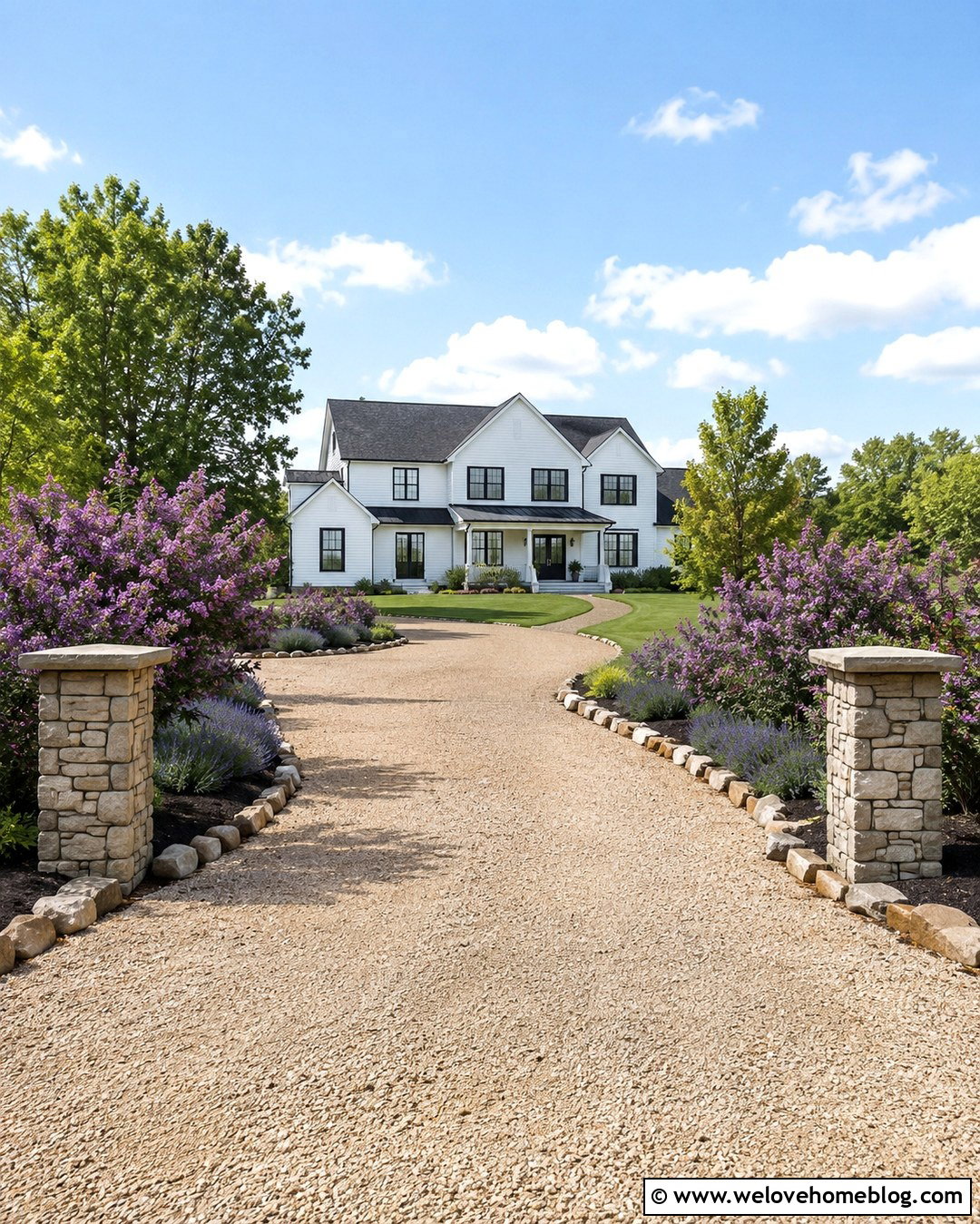
A wide gravel driveway lined with lilacs creates a relaxed country approach with strong spring character. Use buff-colored crushed gravel and weathered fieldstone edging to complement a white modern farmhouse or traditional rural home. Plant the lilacs in a broad bed outside the driveway’s snow-storage and vehicle-clearance zone. Instead of forming a tightly clipped hedge, allow each shrub to keep its natural vase-shaped form. Underplant with low catmint or another locally suitable perennial to cover bare soil and extend seasonal interest. Because lilacs generally need good sunlight and airflow, avoid crowding them against fences or dense trees. Finish the entrance with lower shrubs and simple stone pillars, ensuring the street view remains open and welcoming.
12. Rose Shrub-Lined Brick Driveway
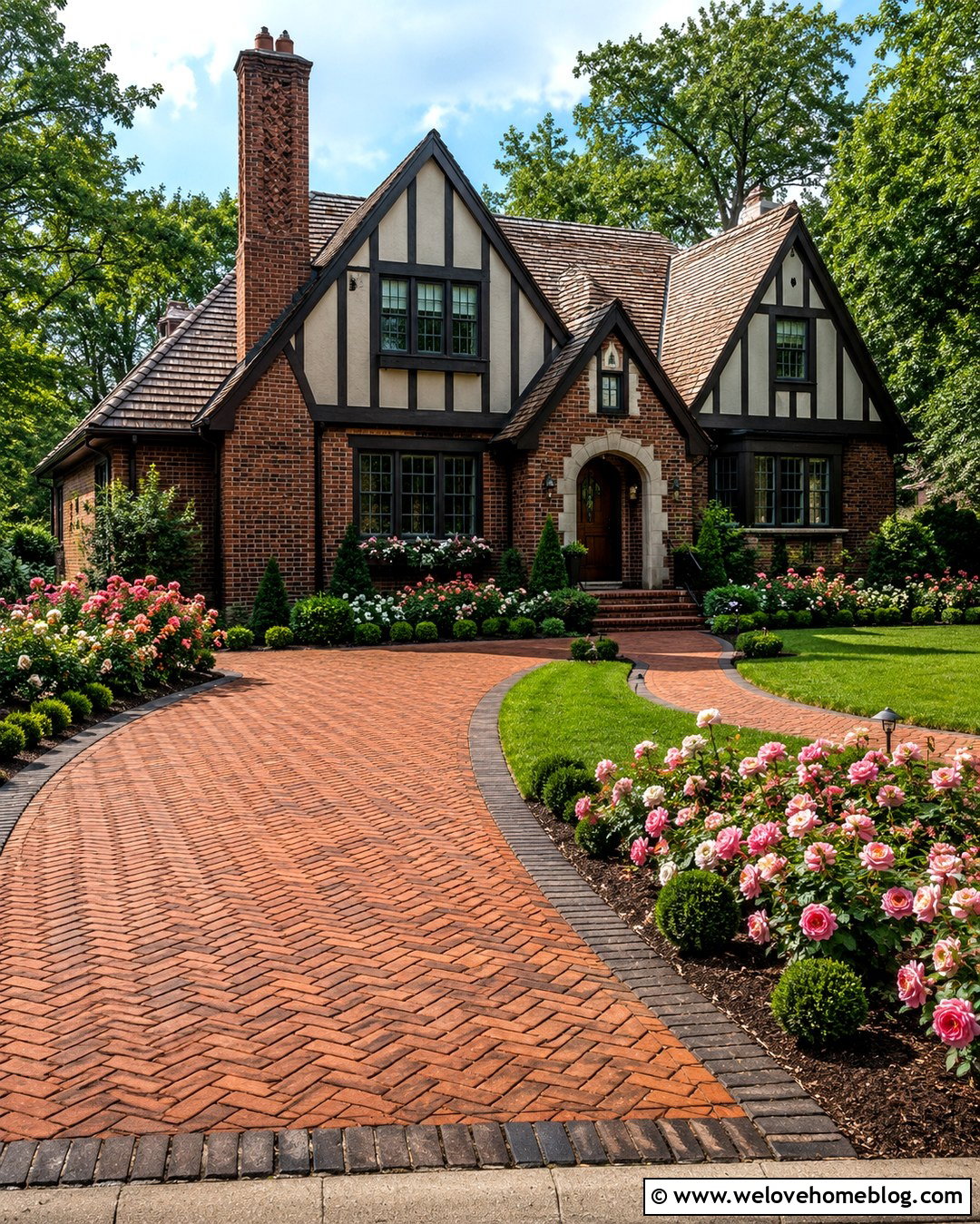
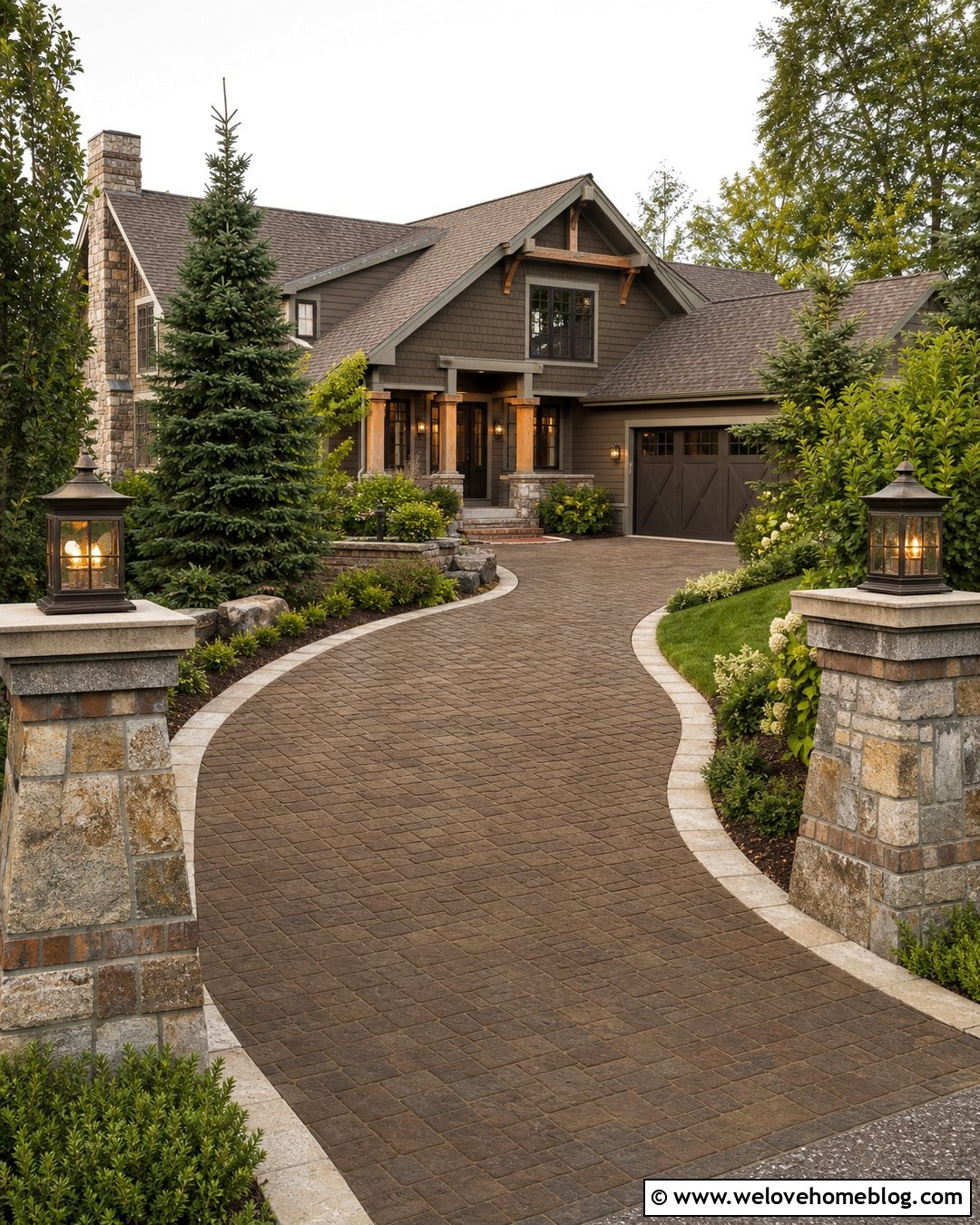
Clay brick pavers and flowering shrub roses create a warm, traditional driveway with cottage appeal. Set the bricks in a herringbone pattern and use a darker soldier-course border to strengthen the edges. Plant disease-resistant landscape roses in generous mulch beds rather than directly beside the pavers. This provides space for mature growth and keeps thorny branches away from doors and walking areas. Repeat one flower color for a unified border, or alternate two compatible shades for a softer rhythm. Low evergreen shrubs near the garage can maintain structure when the roses are not blooming. A brick walkway leading to the porch completes the composition. This look works especially well with Tudor, cottage, and traditional brick homes.
13. Salt-Tolerant Shrubs Along A Coastal Driveway
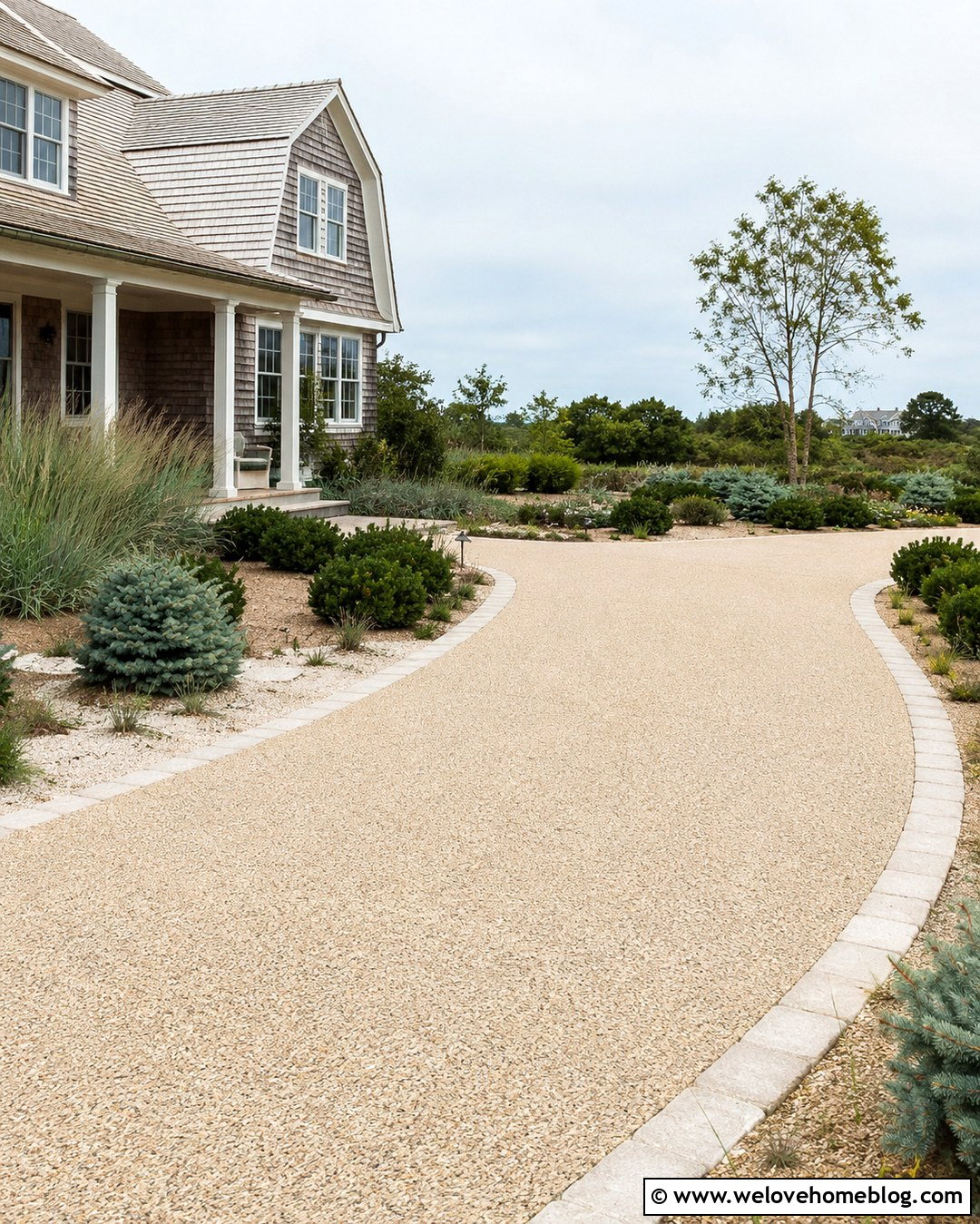
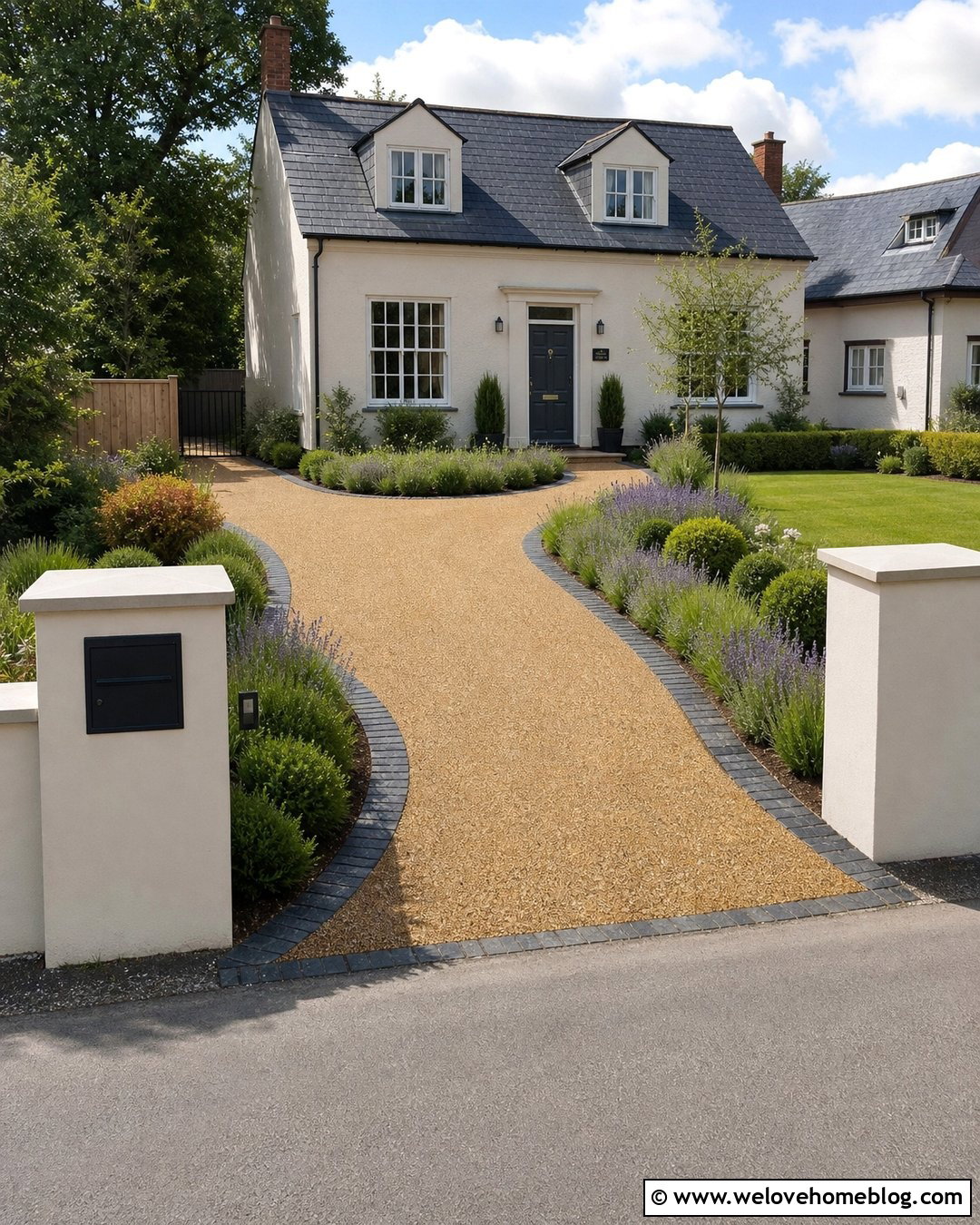
A coastal driveway requires shrubs that can handle wind, sandy soil, and occasional salt exposure. Begin with a beige resin-bound gravel surface that offers a clean, beach-inspired appearance. Edge the driveway with light granite blocks, then plant compact wax myrtle, inkberry, or other shrubs recommended for local coastal conditions. Arrange them in staggered drifts so wind can pass through rather than hitting a dense, rigid wall. Ornamental grasses and low ground covers can fill spaces between the shrubs while reinforcing the relaxed coastal character. Keep the entrance simple, using shorter plants near the road and taller shrubs closer to the house. Silver, blue-green, and deep green foliage pairs naturally with weathered shingles and pale coastal facades.
14. Juniper-Lined Sloped Driveway
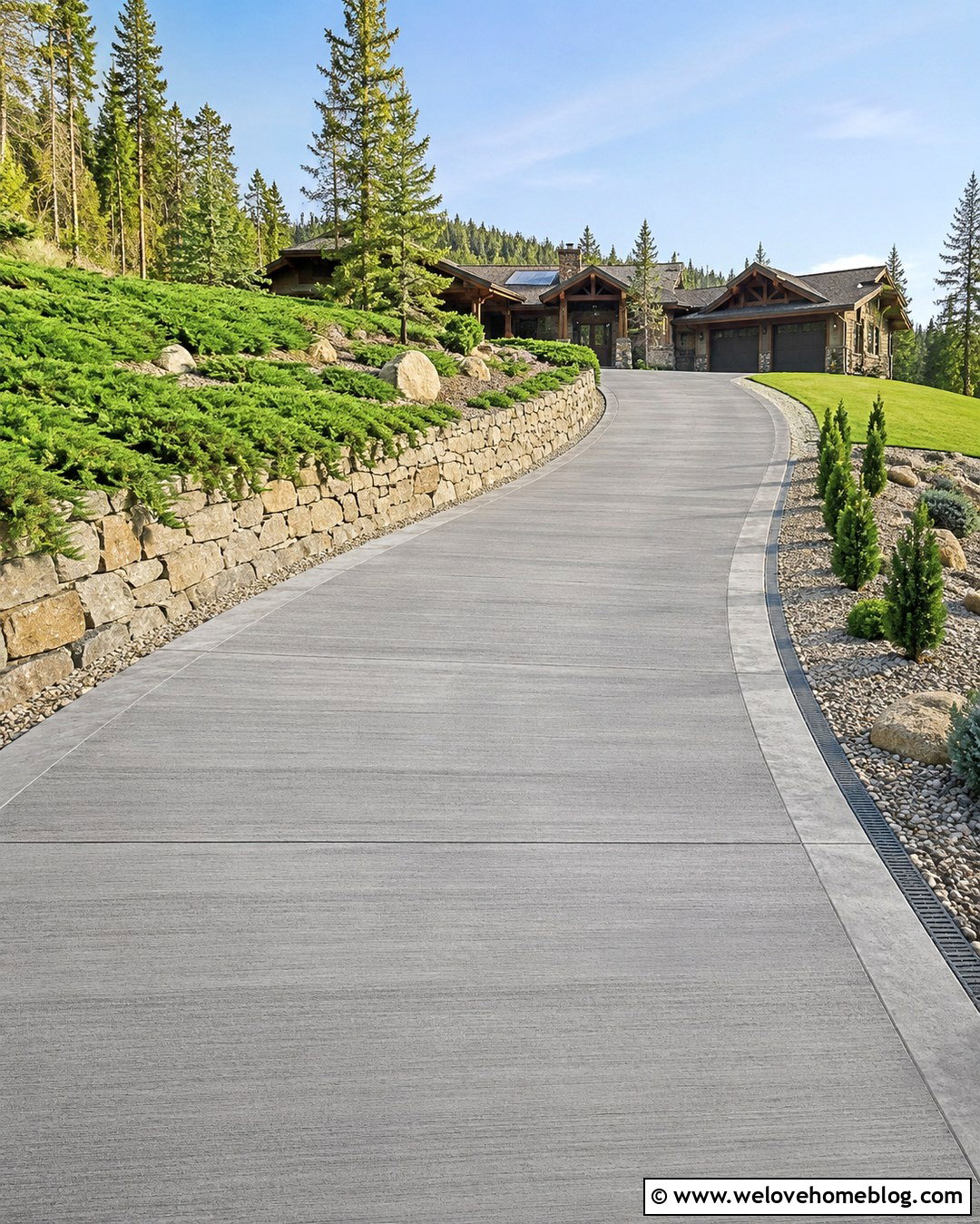
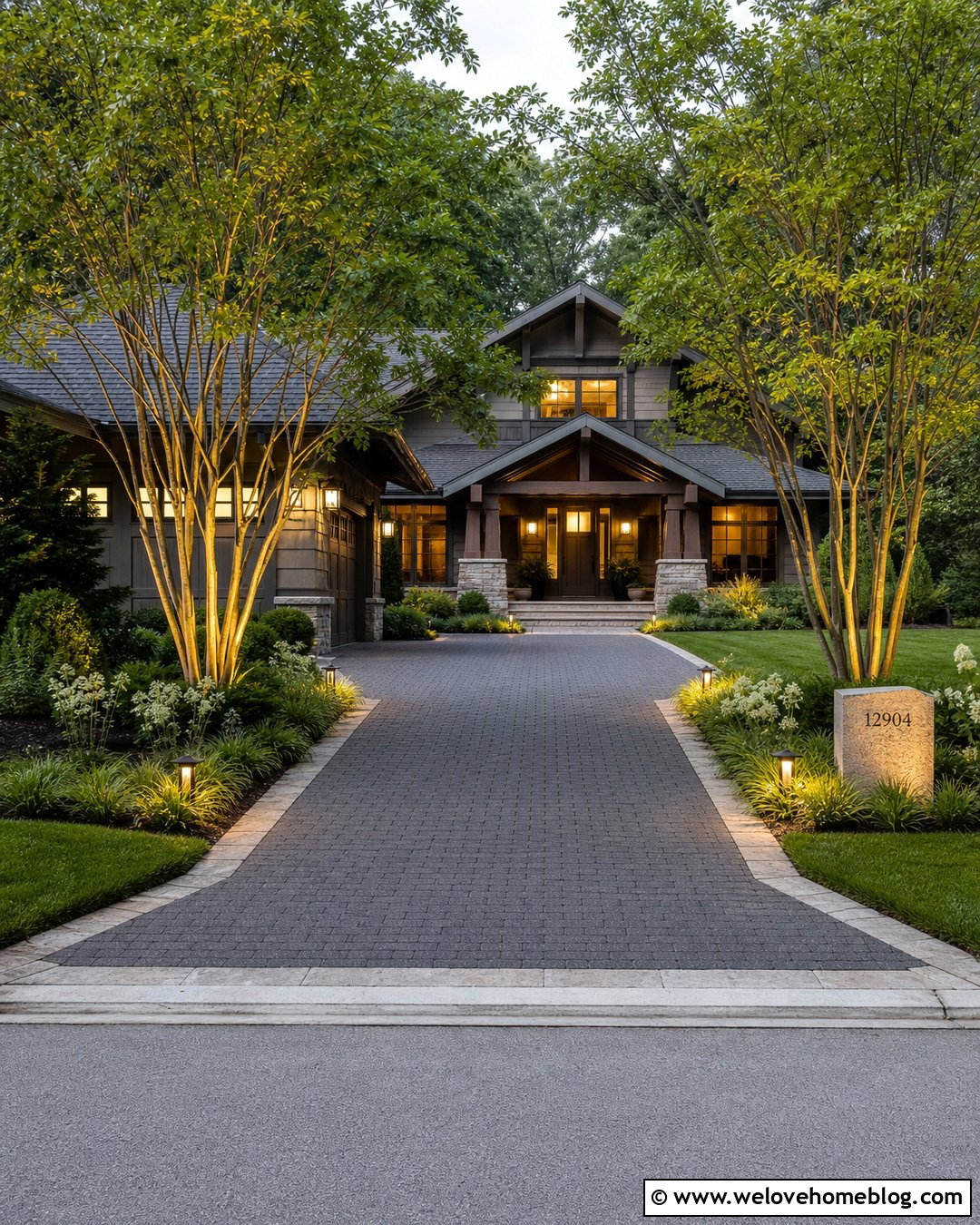
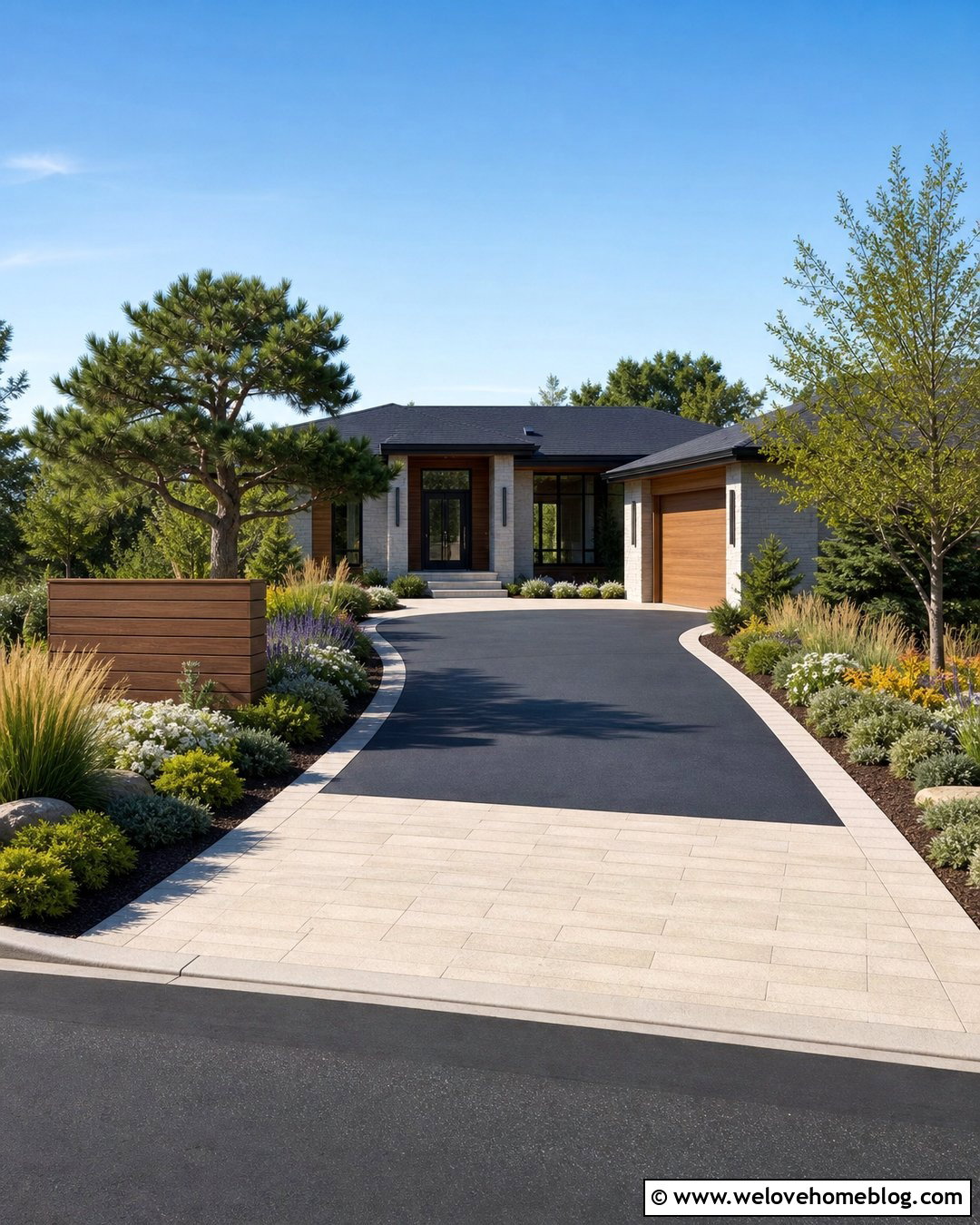
Sloped driveways often need planting that visually anchors the grade without spilling into the traffic area. A broom-finished concrete driveway bordered by low, spreading junipers offers a practical solution for sunny, well-drained sites. Build raised planting beds on the uphill side using stacked natural stone. Place the junipers where their branches can trail over the wall rather than across the pavement. On the lower side, use more compact upright shrubs to define the edge without blocking views. The varied forms make the incline appear integrated into the landscape. Add a surface drain where runoff naturally collects, and keep mulch below the top of the curb. This rugged arrangement complements mountain homes, ranch houses, and wooded contemporary architecture.
15. Rhododendron-Lined Shaded Driveway
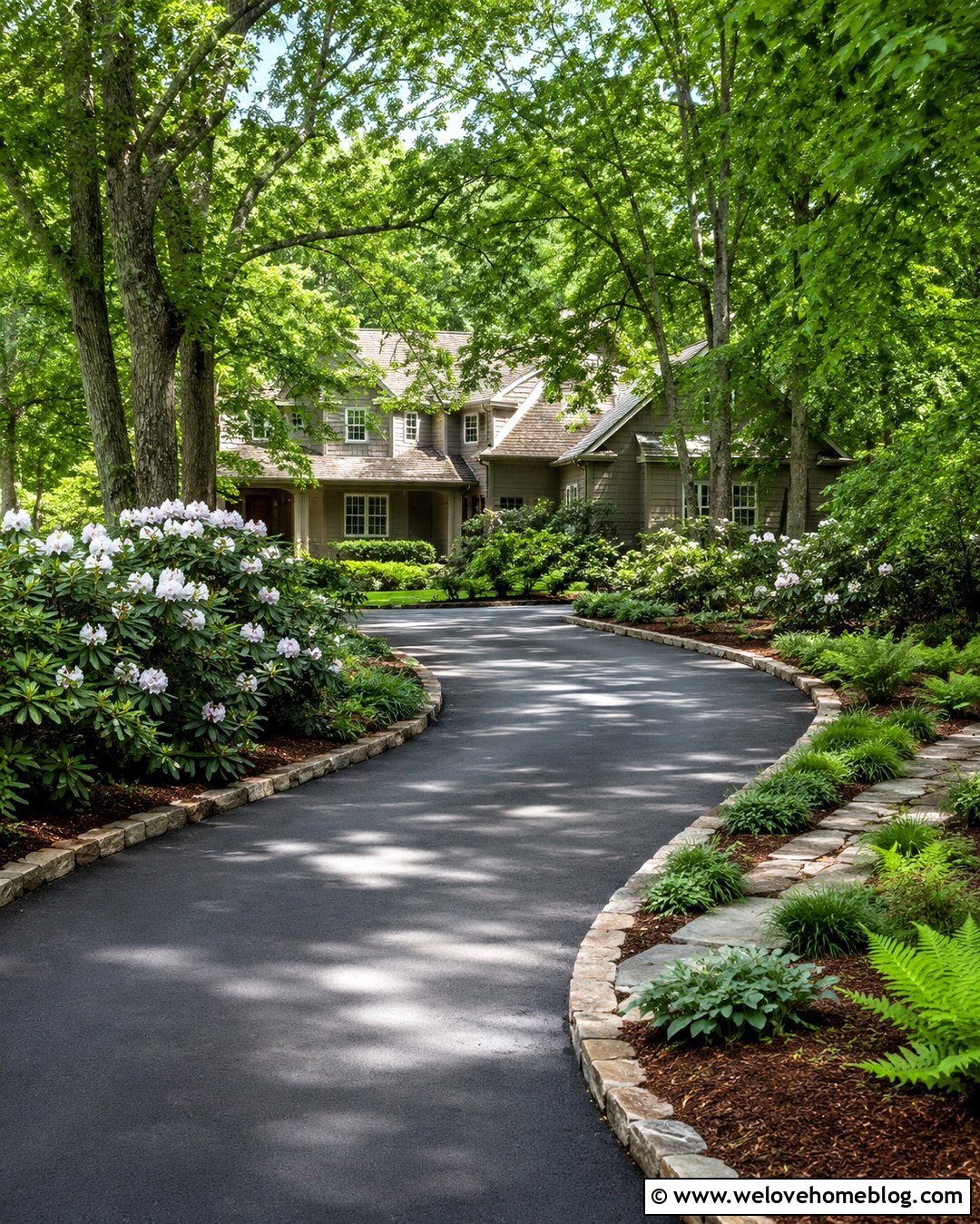
Filtered light beneath mature trees creates an ideal setting for a woodland-style shrub border. Pair a dark gray asphalt driveway with irregular stone curbing and broad planting beds filled with rhododendrons suited to the local climate. Their substantial evergreen foliage can soften the pavement even when the garden is not in bloom. Arrange the shrubs in offset groups, combining several heights while keeping the shortest plants closest to the driveway. Ferns, sedges, and shade-tolerant ground covers can fill the lower layer. Preserve adequate room around tree trunks and avoid raising the soil level over established roots. A stone walkway through the border connects the driveway to the porch and gives the entire approach a natural, cohesive appearance.
16. Drought-Tolerant Shrub-Lined Driveway
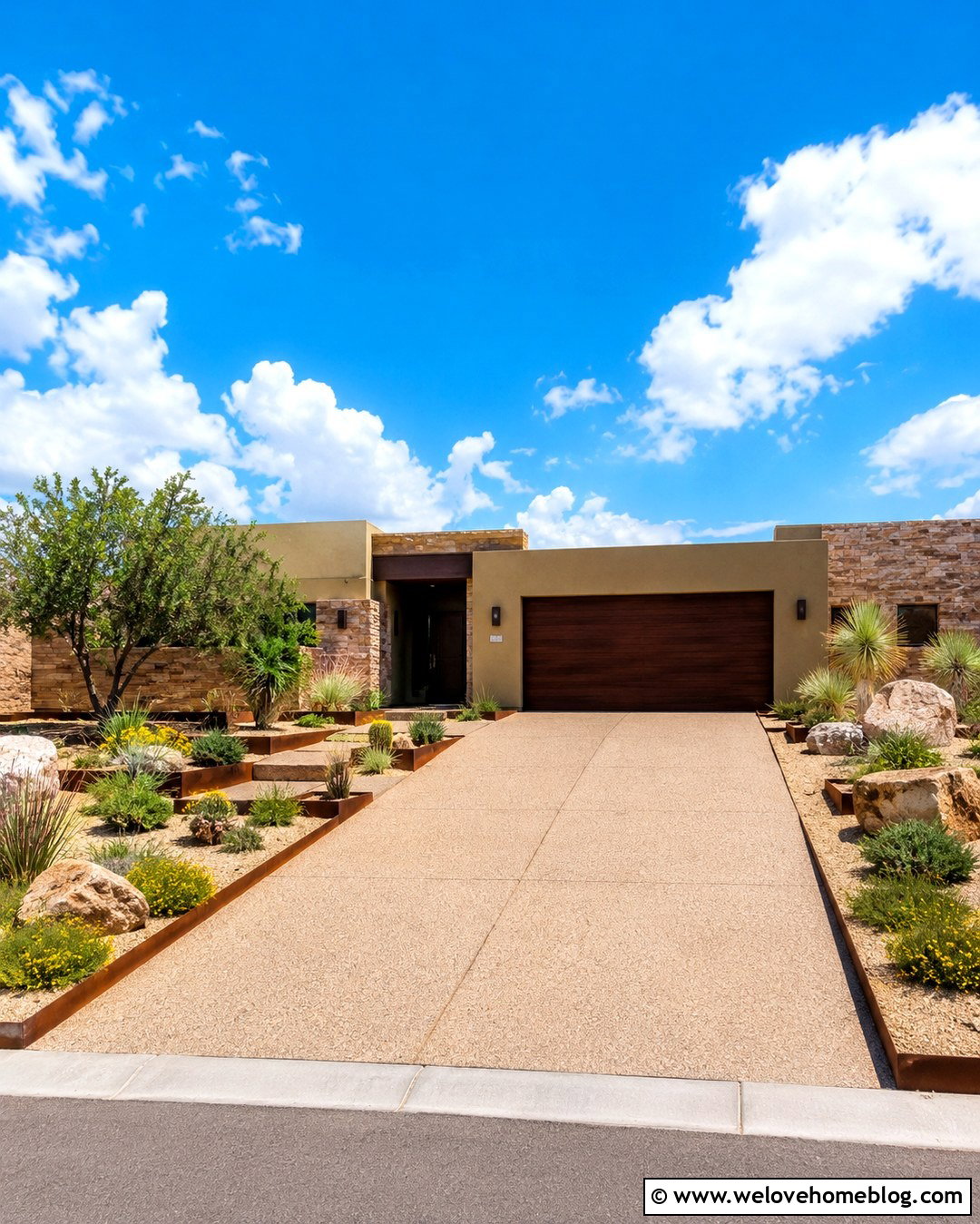
Hot, dry front yards can still support an attractive driveway landscape. Use warm-toned exposed aggregate concrete and weathered steel edging to create a durable base for a water-conscious planting scheme. Line the driveway with compact, drought-tolerant shrubs selected for the region, then add gravel mulch and ornamental grasses between them. Space the shrubs individually so their natural forms remain visible and air can circulate. A drip irrigation line helps establish new plants while reducing overspray on the driveway. Keep the color palette simple, combining gray-green foliage with a few flowering accents. Boulders placed near wider sections of the bed can reinforce the dry-garden appearance. This design pairs especially well with Southwestern, Mediterranean, and modern ranch homes.
17. Mixed Shrubs And Grasses Along A Driveway
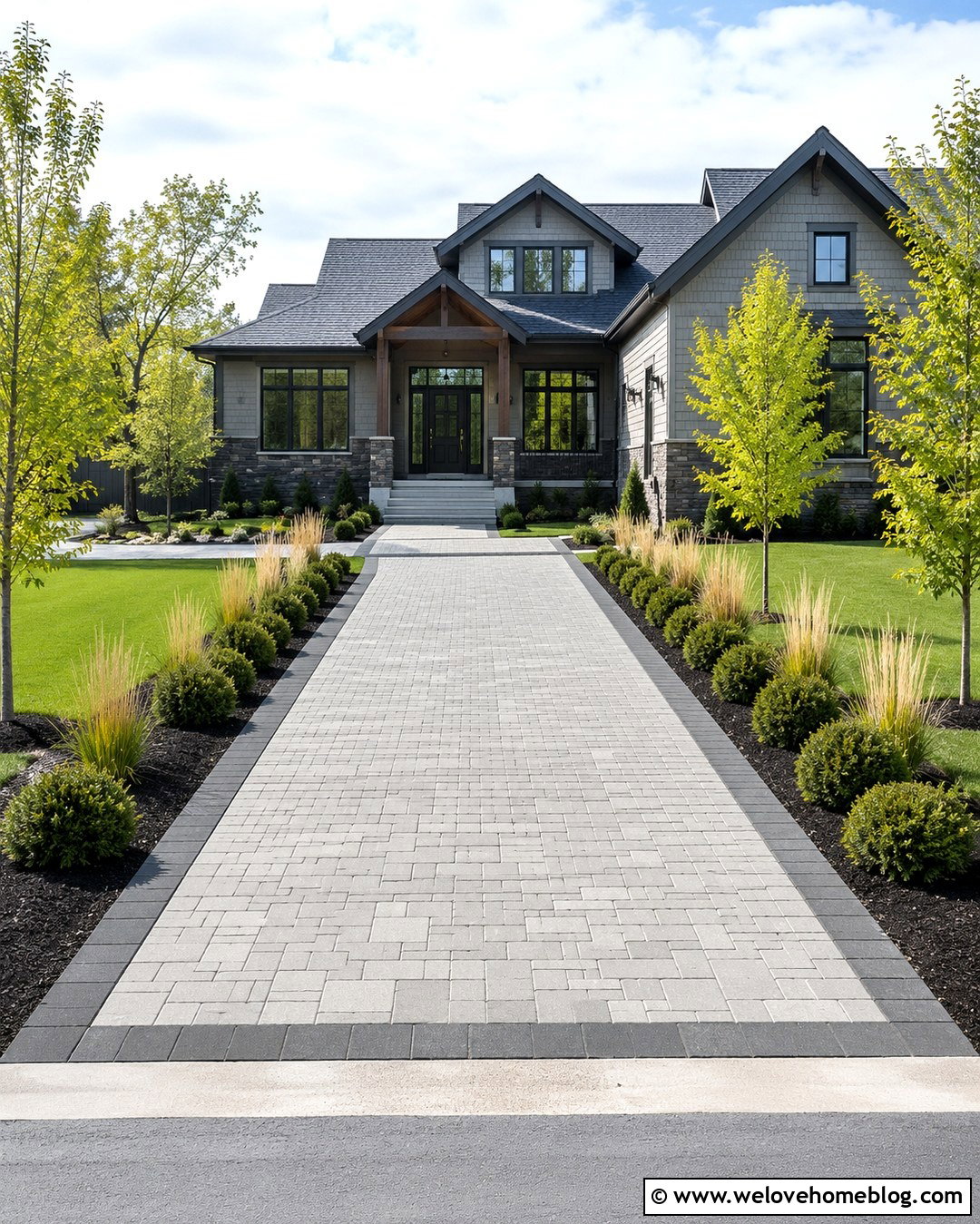
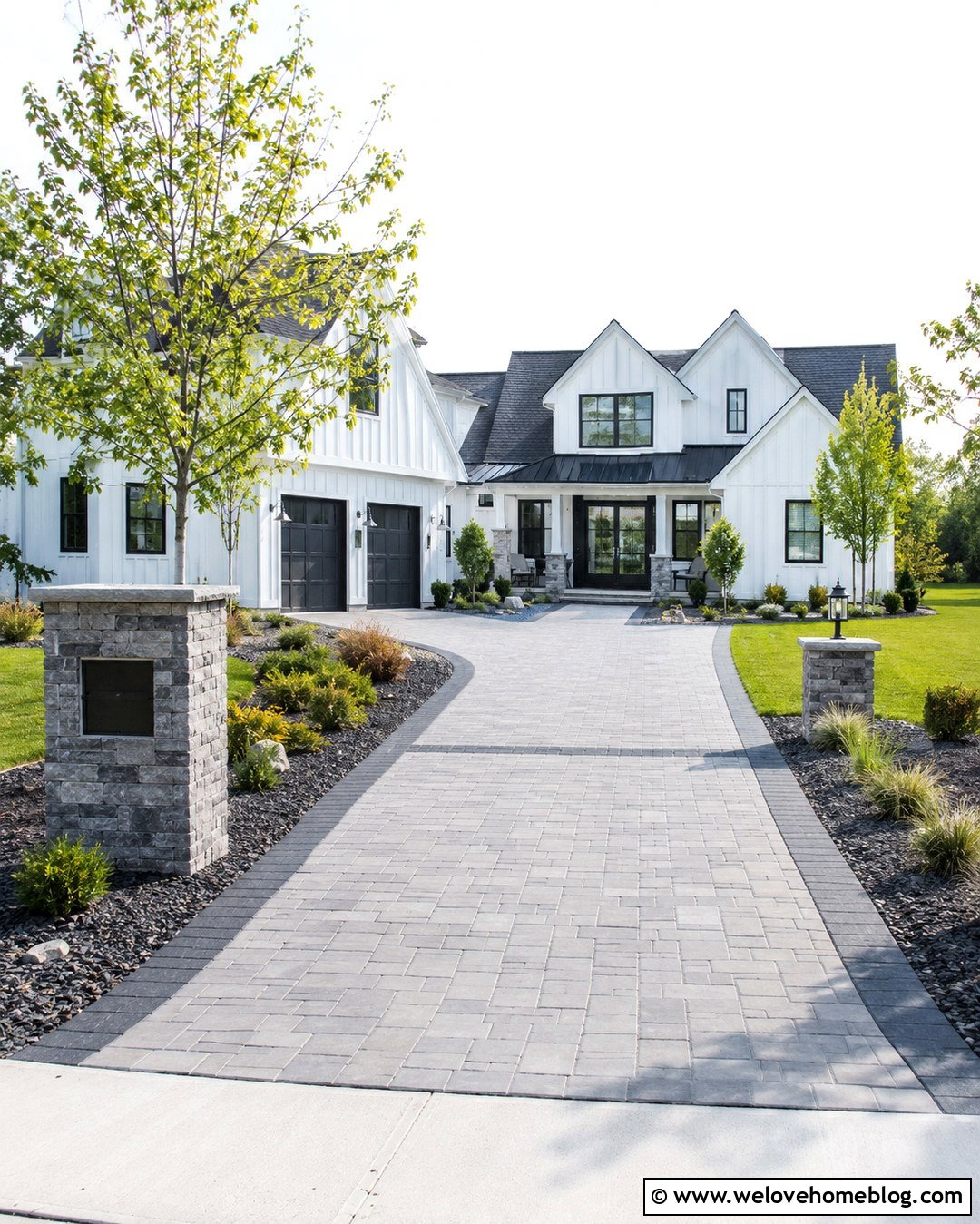
Movement and texture can make a straight driveway feel less rigid. Start with light gray concrete pavers and a dark charcoal border, then alternate compact shrubs with upright ornamental grasses. The shrubs provide visual weight, while the grasses introduce softer foliage and seasonal motion. Repeat each plant in groups rather than creating a random mixture. Along a long driveway, this rhythm guides the eye toward the house without forming a solid hedge. Use lower plants near the street and gradually increase the planting height closer to the building. A continuous mulch bed simplifies mowing and keeps the combination visually unified. Choose grasses that remain upright and shrubs that will not spread onto the pavement when they reach maturity.
18. Layered Shrub Border Along A Wide Driveway
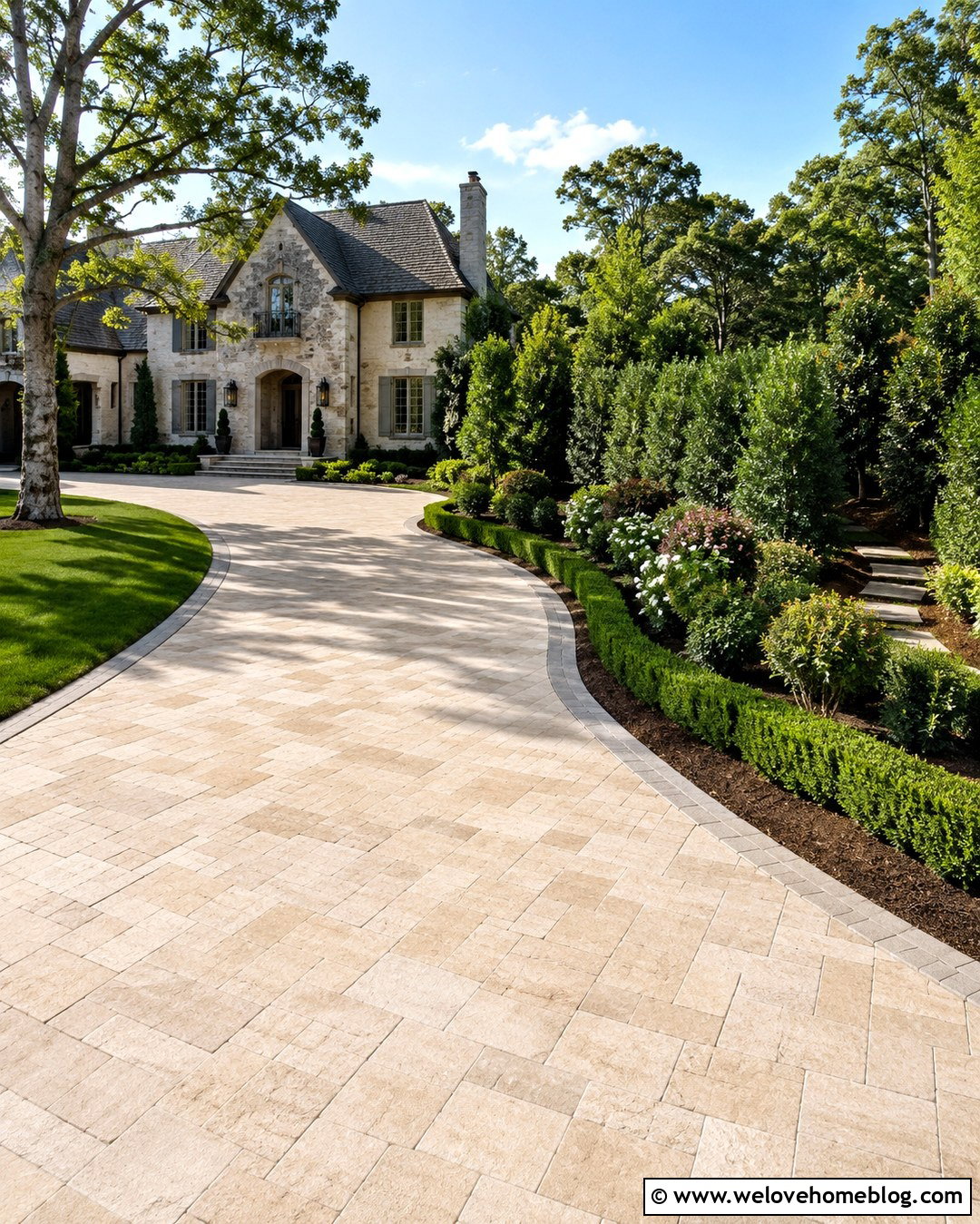
A wide driveway can support deeper planting beds with several distinct levels. Pair cream-colored limestone pavers with a low evergreen hedge along the pavement, medium flowering shrubs behind it, and taller screening shrubs near the property boundary. This three-layer arrangement gives the landscape depth while keeping the driving edge neat. Use sweeping groups instead of alternating individual plants, which can make a large border look busy. Repeating foliage colors across the layers helps connect shrubs with different forms. Add a narrow maintenance path behind the front hedge so pruning and irrigation repairs do not require stepping through the bed. The layered composition is particularly effective beside large craftsman, French country, and traditional suburban homes with broad front yards.
19. Shrub-Lined Driveway Entrance With Pillars
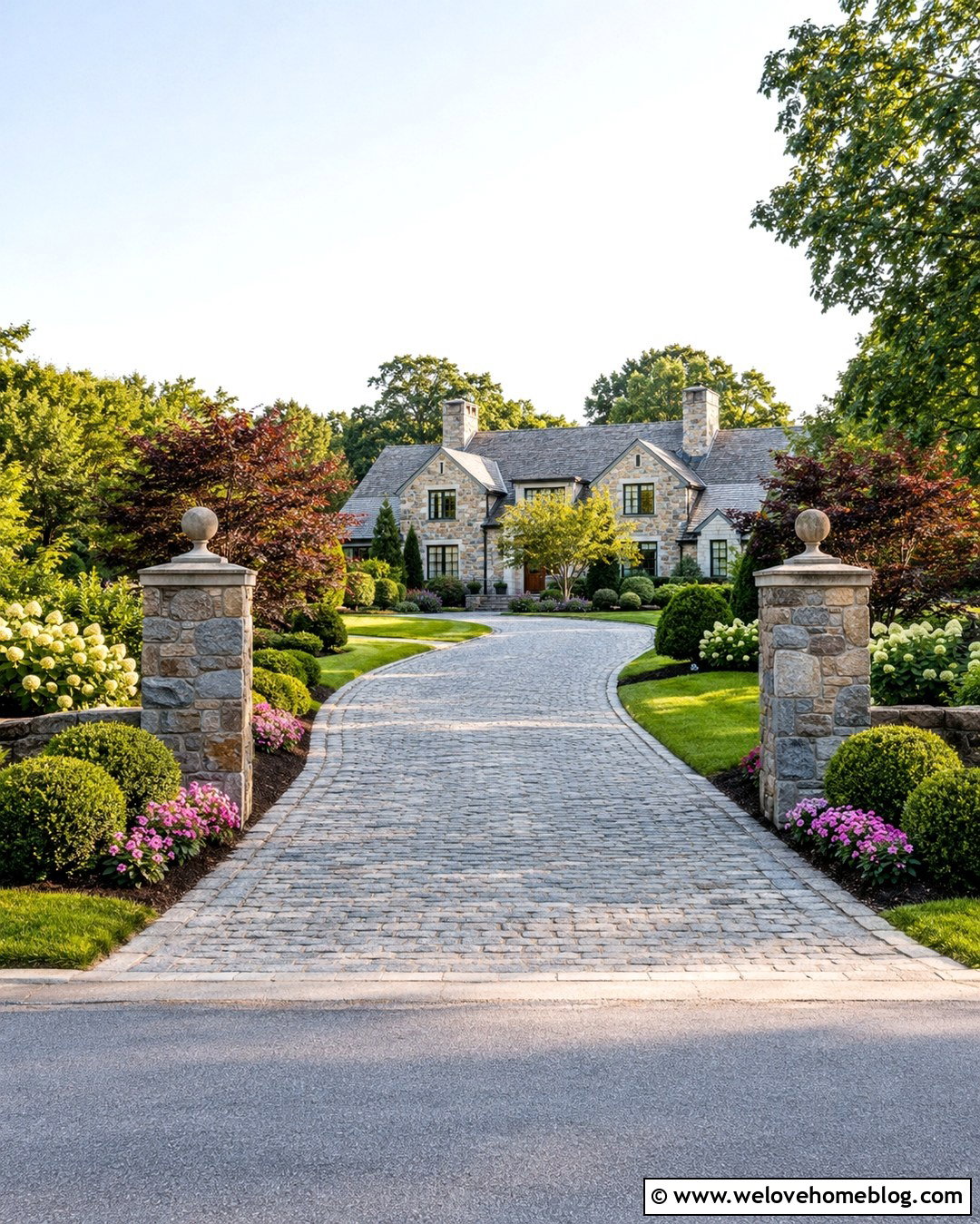
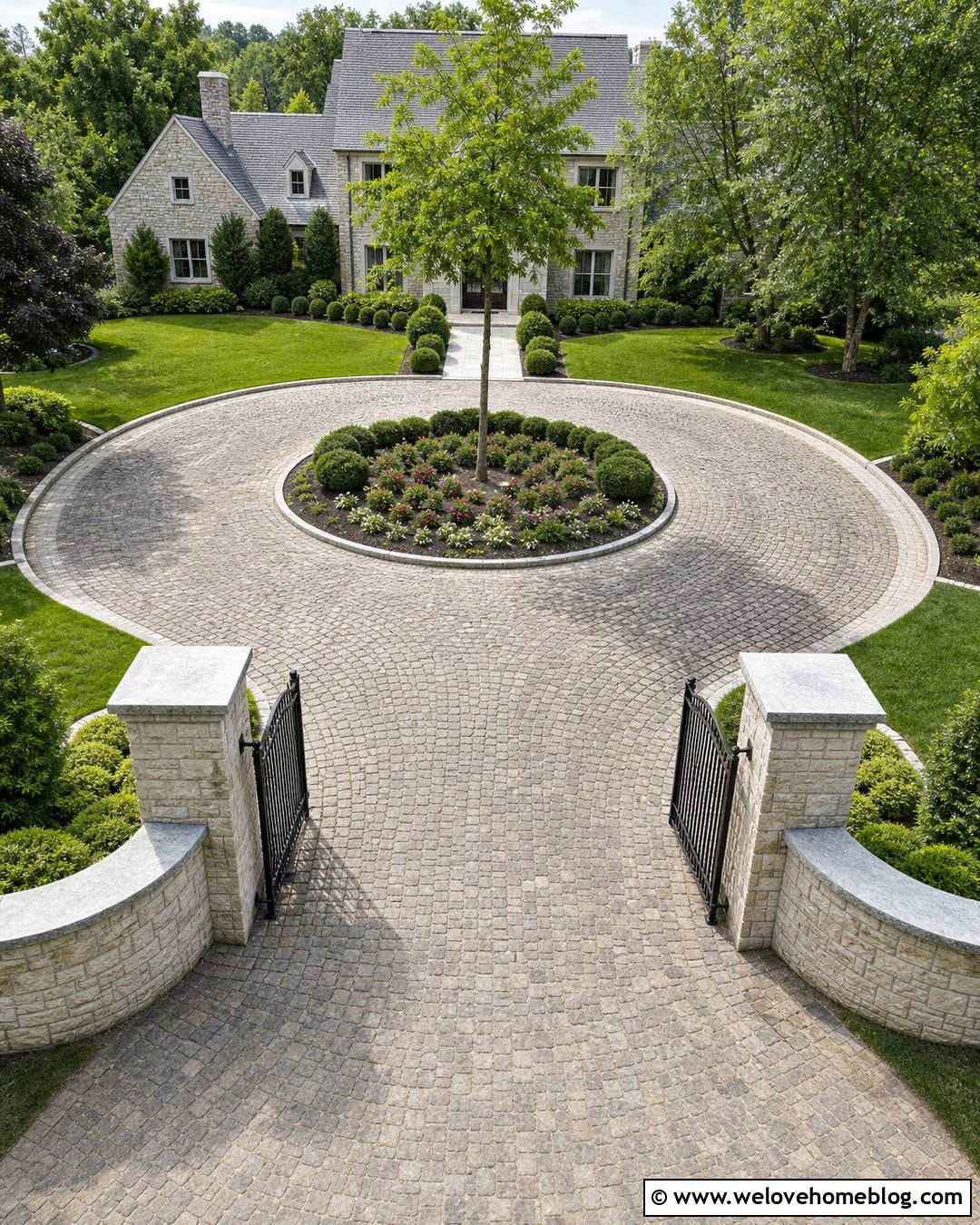
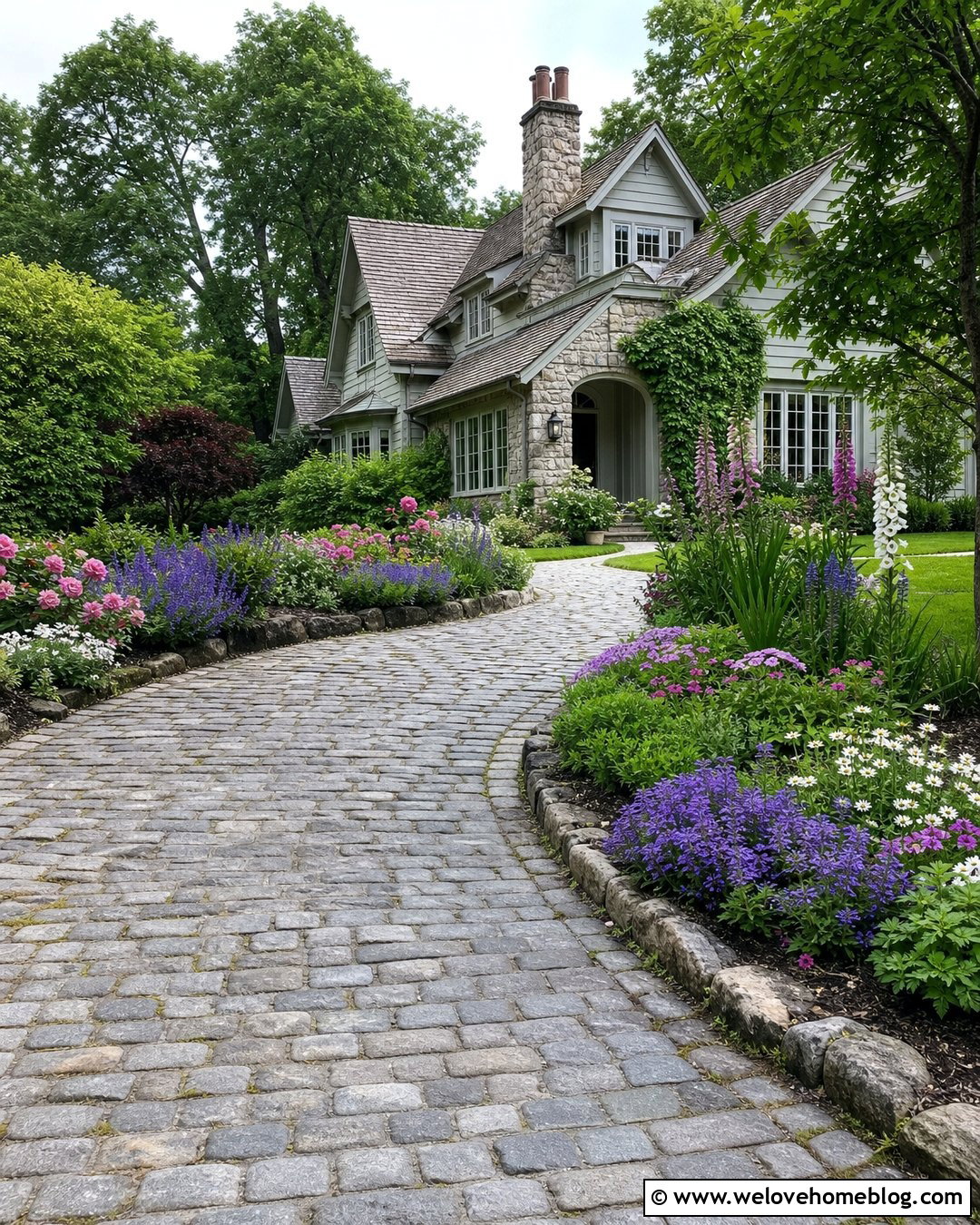
Strong entrance pillars deserve landscaping that supports them without hiding their shape. Frame a straight cobblestone driveway with stone pillars, then place matching rounded evergreen shrubs just inside the entrance. Extend the border toward the house with slightly looser groups of flowering shrubs. The transition from formal to informal planting makes the arrival feel structured but not overly rigid. Keep shrubs near the road low enough to maintain safe visibility in both directions. A curved planting bed around each pillar can include ground cover and seasonal flowers while leaving space around gates, lights, and hardware. Repeat the pillar stone in the driveway edging or front walkway. This coordinated material palette creates an entrance that feels permanent, balanced, and connected to the house.
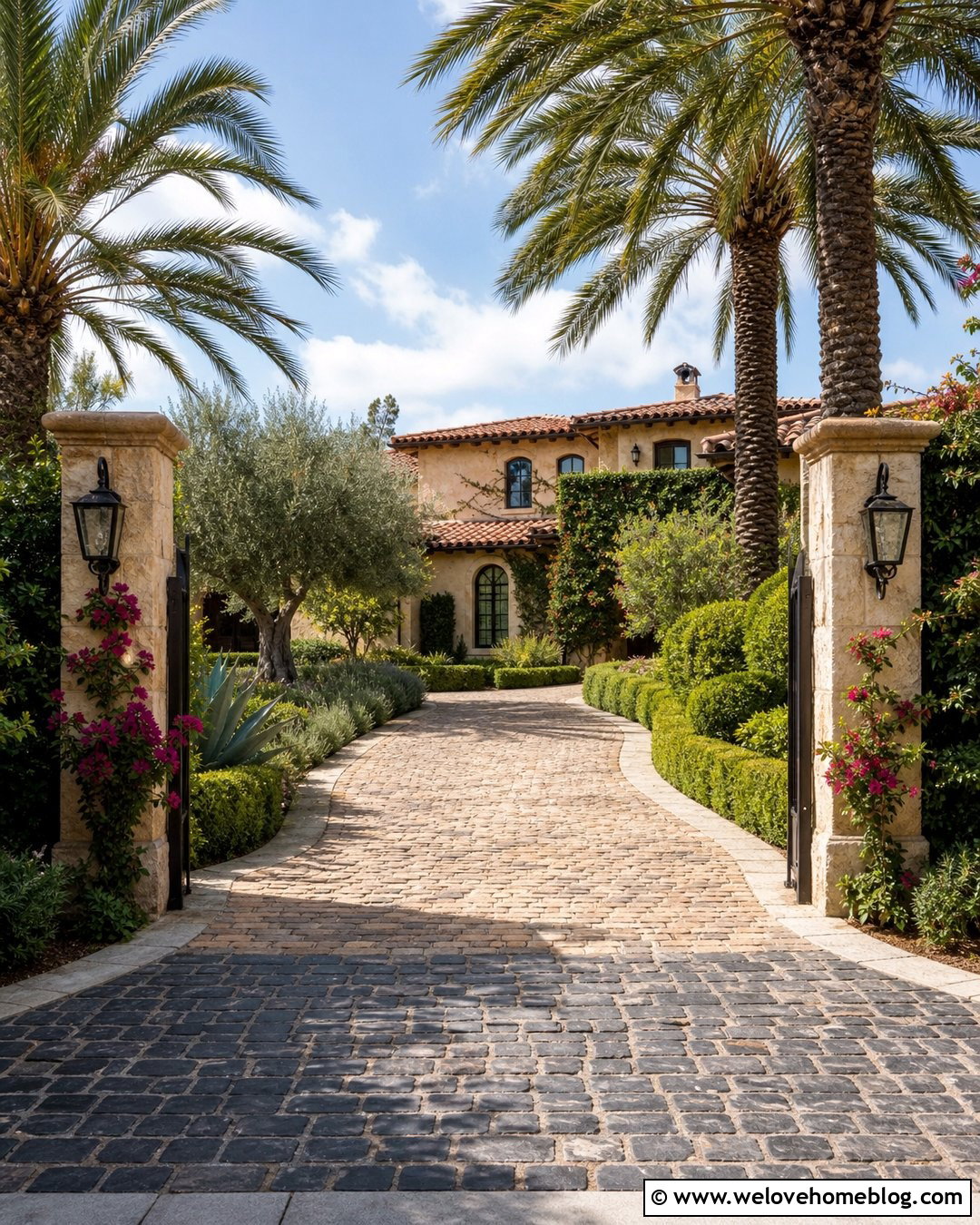
20. Shrub-Lined Driveway With Landscape Lighting
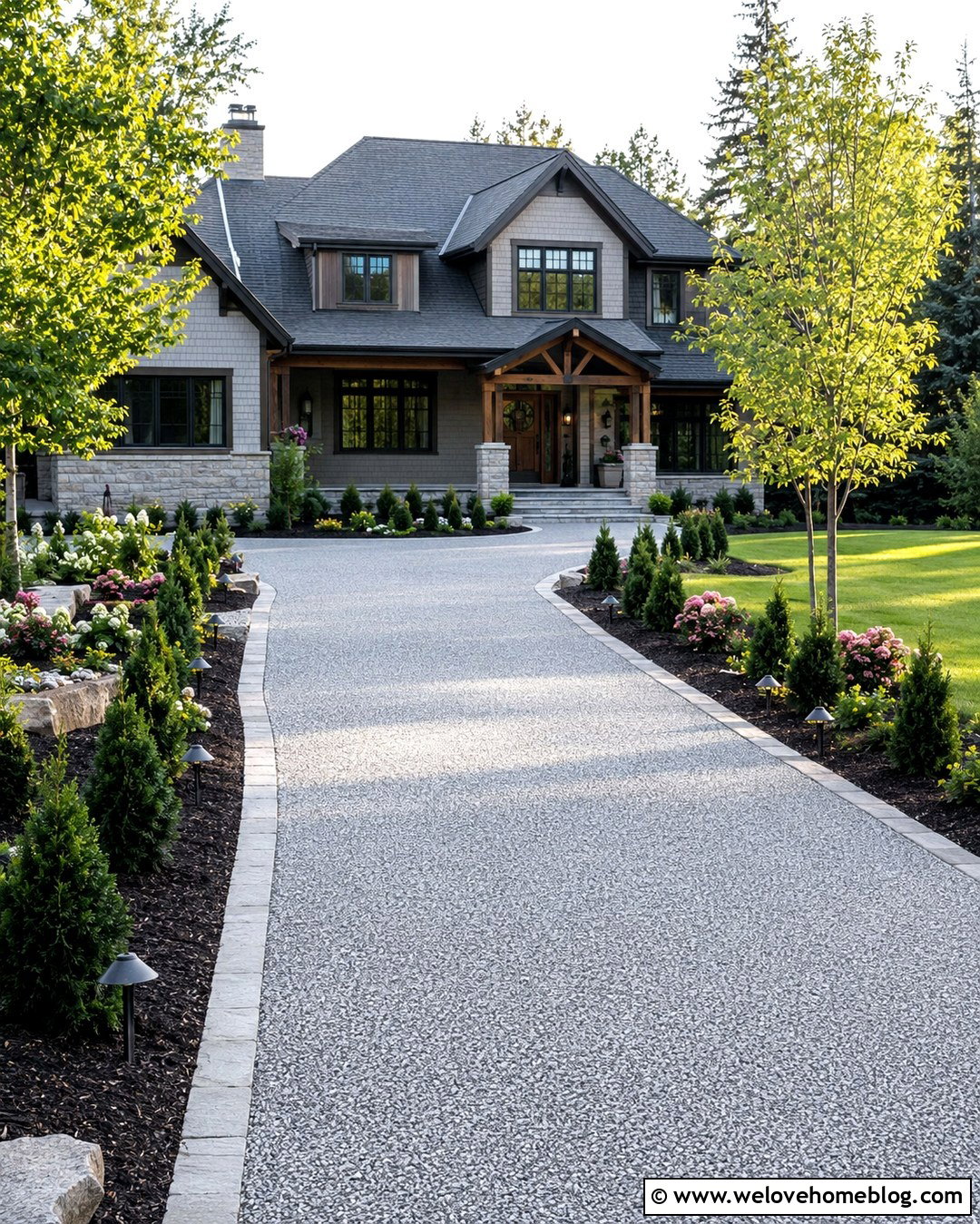
Well-positioned lighting can highlight a shrub border while making the driveway easier to navigate after sunset. During the day, a resin-bound gray gravel driveway, limestone edging, and repeated evergreen shrubs create a clean foundation. Install low path lights between selected shrubs rather than beside every plant. This prevents visual clutter and produces an even rhythm along the approach. Small uplights can emphasize larger flowering shrubs or ornamental trees near the house, but fixtures should remain concealed from the main curb view. Run wiring before the beds are fully planted, and leave access points for future maintenance. Solar fixtures may work in exposed locations, while wired systems usually provide more consistent placement options. The finished driveway remains attractive, organized, and welcoming in daylight.
Conclusion:
The strongest **20 shrub lined driveway ideas** treat planting, pavement, edging, and architecture as parts of one coordinated design. Start by measuring the usable bed width and checking sunlight, drainage, utilities, and street visibility. Then choose shrubs by mature size rather than their size at the garden center. Low evergreens can create formal definition, flowering shrubs can introduce seasonal color, and layered plantings can provide privacy along larger properties. Leave sufficient clearance for car doors, snow removal, trash bins, and routine pruning. Repeating a limited selection of shrubs generally creates a cleaner result than mixing too many varieties. With thoughtful spacing and appropriate plants, a shrub-lined driveway can offer lasting curb appeal without becoming difficult to maintain.

Related posts:
Leave a Reply