
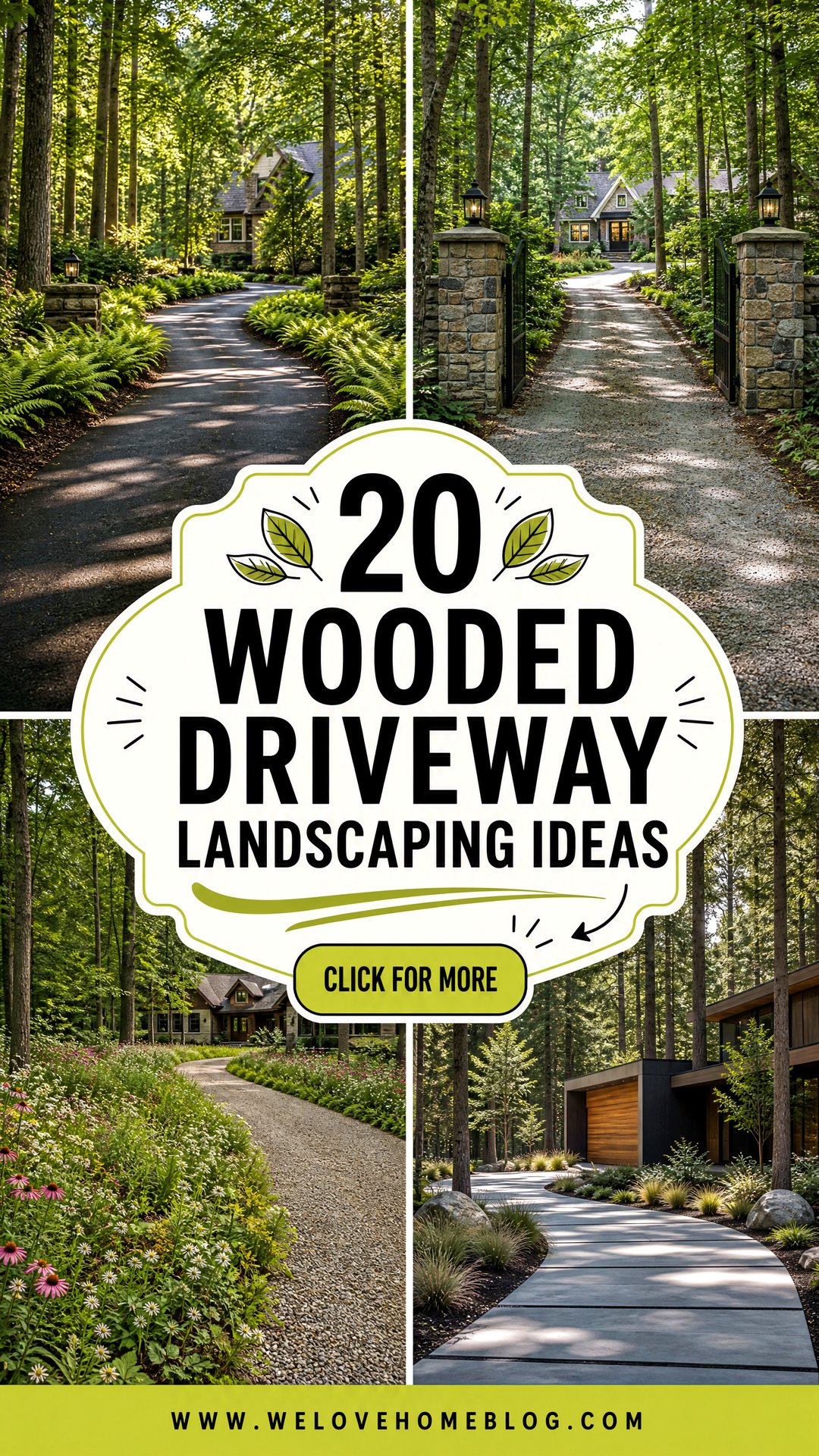
Wooded lots offer privacy, seasonal color, and a peaceful sense of arrival, but they also bring deep shade, exposed roots, falling leaves, and drainage challenges. The best **20 wooded driveway landscaping ideas** work with these natural conditions instead of fighting them. A successful design connects the driveway surface, route, borders, understory plants, lighting, and house architecture into one practical landscape. Gravel and permeable surfaces often feel at home beneath mature trees, while stone edging, native shrubs, ferns, and woodland ground covers create a polished transition into the forest. Thoughtful landscaping can also frame the approach without blocking sightlines or making routine cleanup difficult. Use the complete looks below to find adaptable, attractive **20 wooded driveway landscaping ideas**.
1. Curved Gravel Wooded Driveway
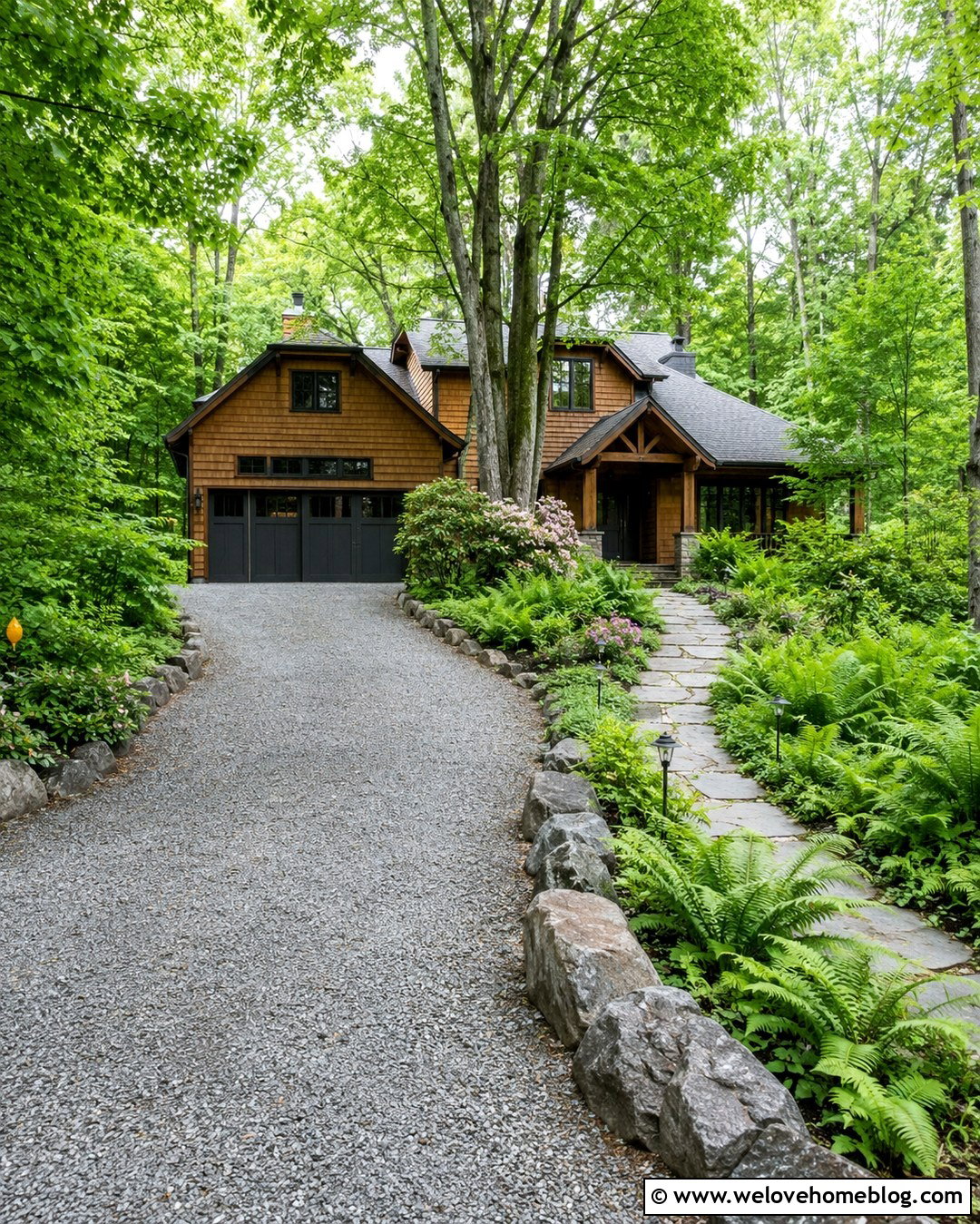
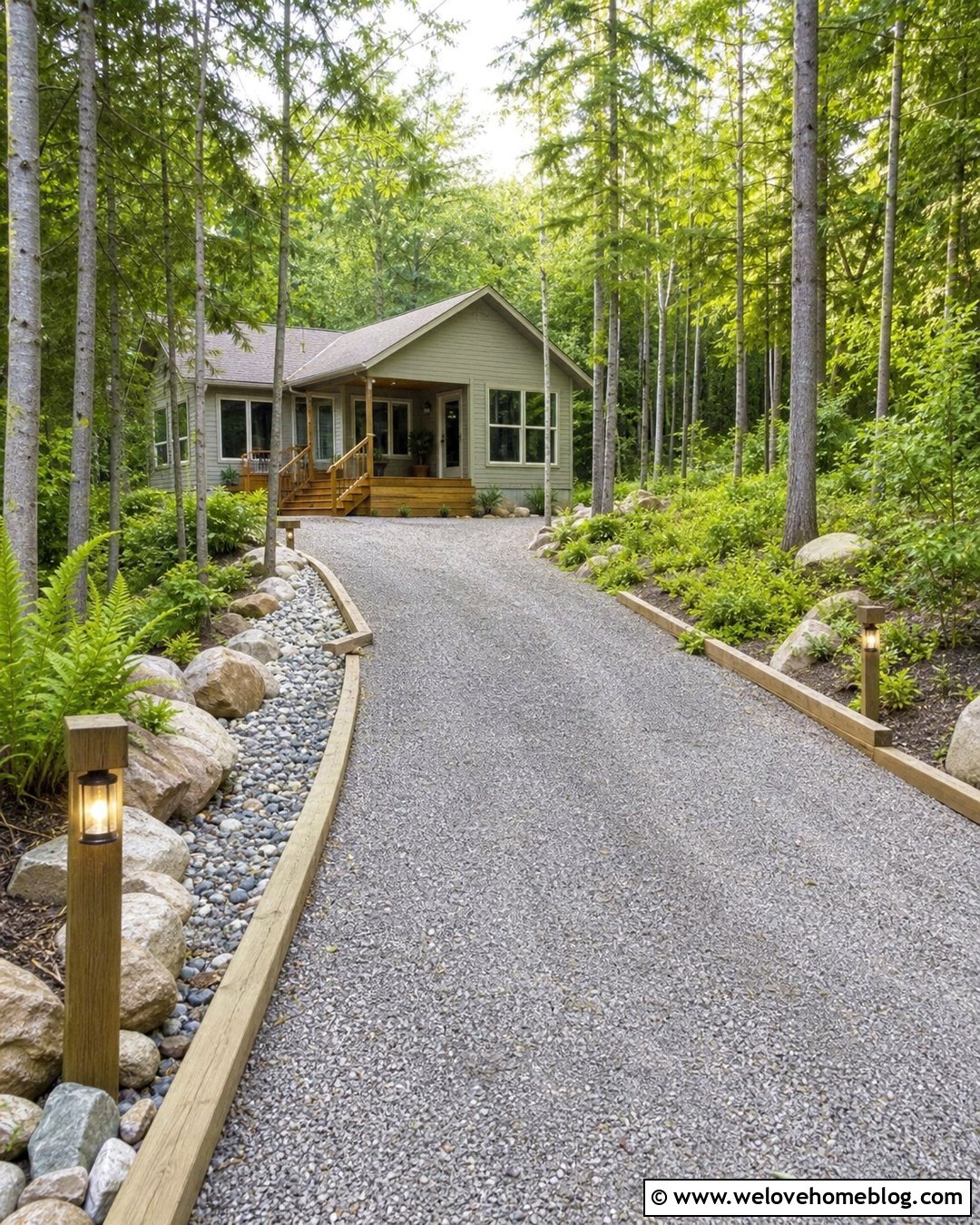
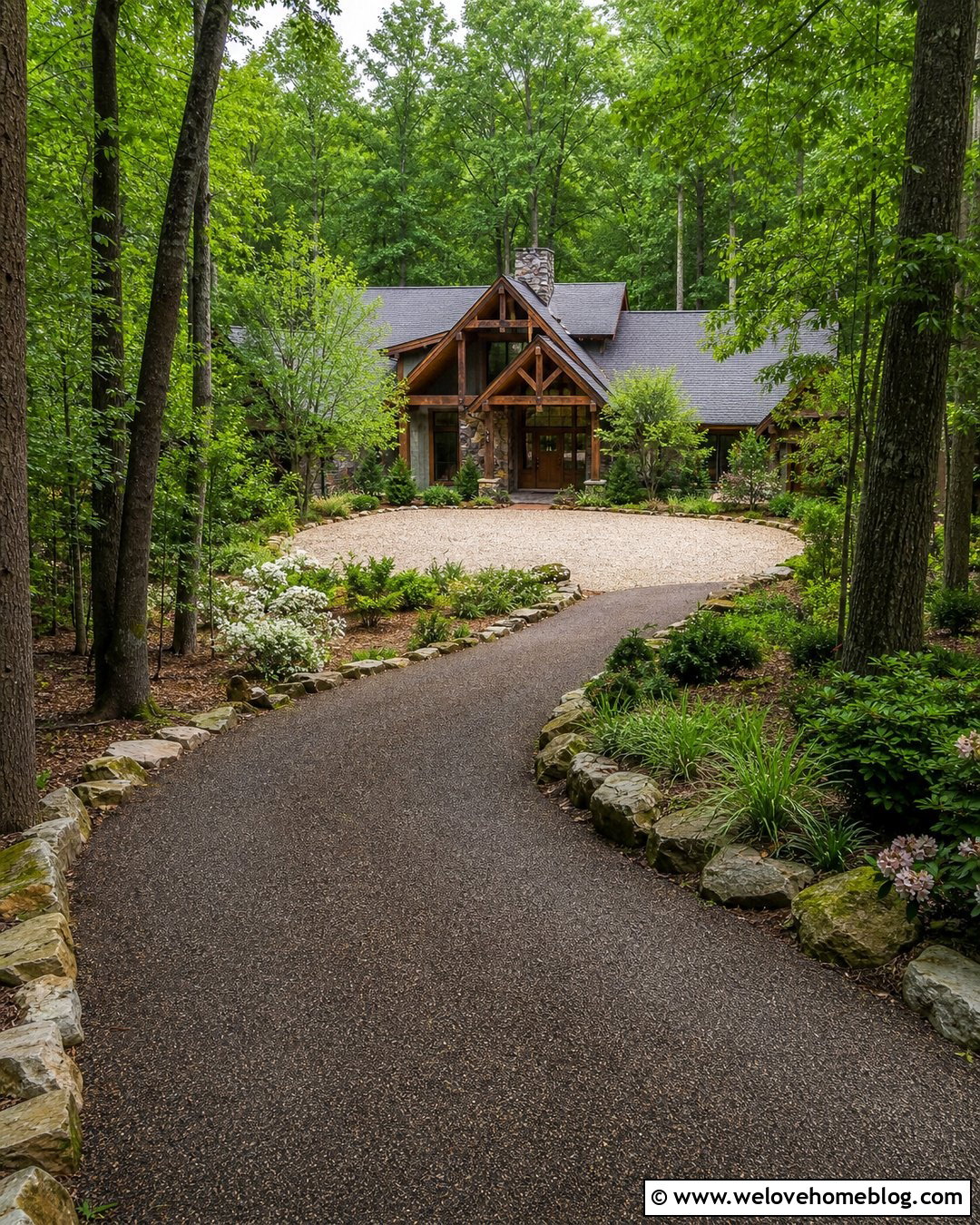
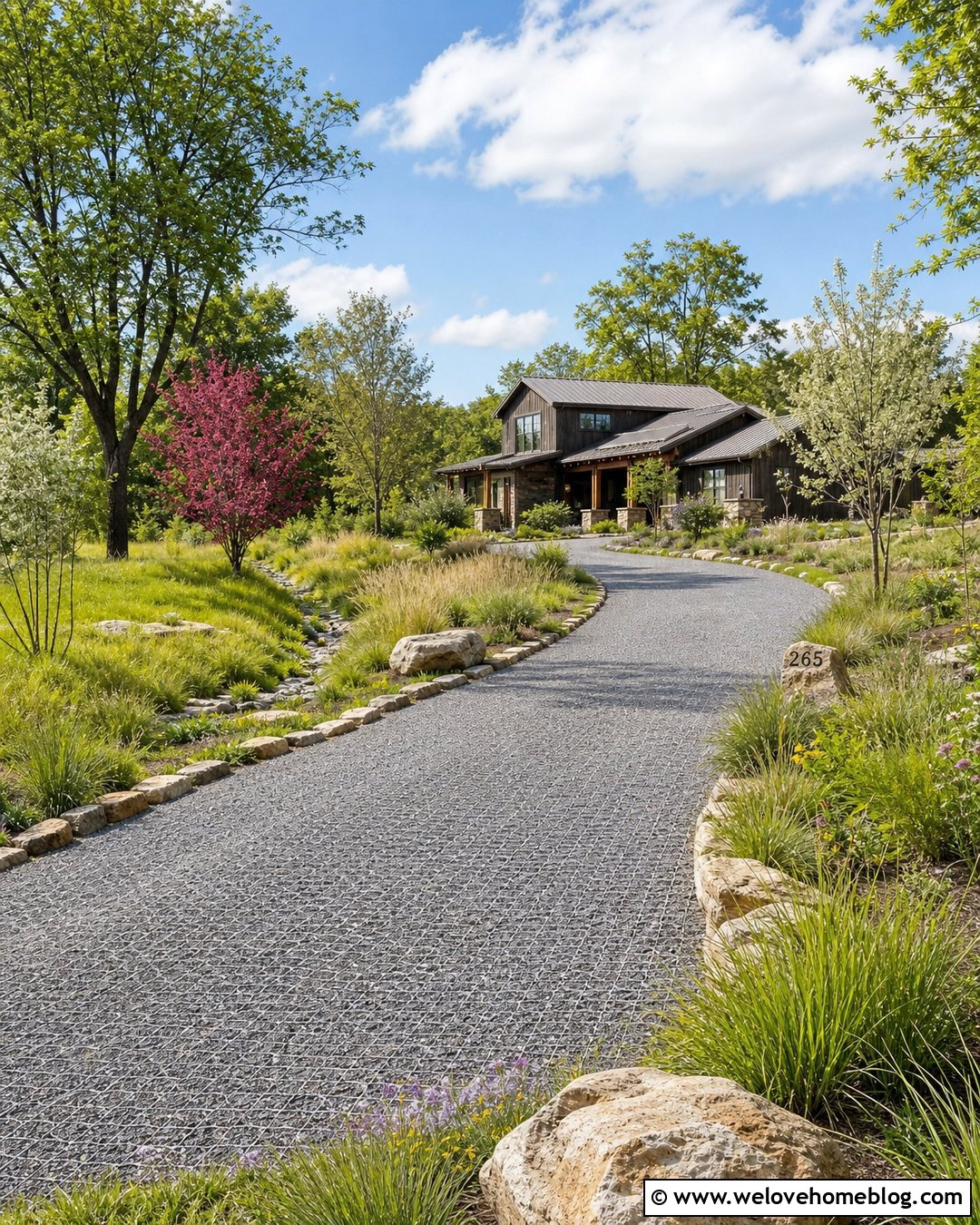
A curved gravel driveway feels natural when it follows the contours of a wooded property. Choose compacted gray crushed stone rather than loose, rounded gravel for a firmer driving surface. Define both sides with chunky fieldstone edging that looks connected to the surrounding forest floor. Beyond the stones, create wide planting drifts with native ferns, woodland sedges, foamflower, and low evergreen shrubs suited to your region. Keep plants short near the road entrance so drivers can see approaching traffic. Farther along the curve, larger rhododendrons or mountain laurels can soften the view between tree trunks. The combination creates an inviting woodland route while reducing the need for formal flower beds that may feel out of place beneath mature trees.
2. Asphalt Wooded Driveway With Fern Borders
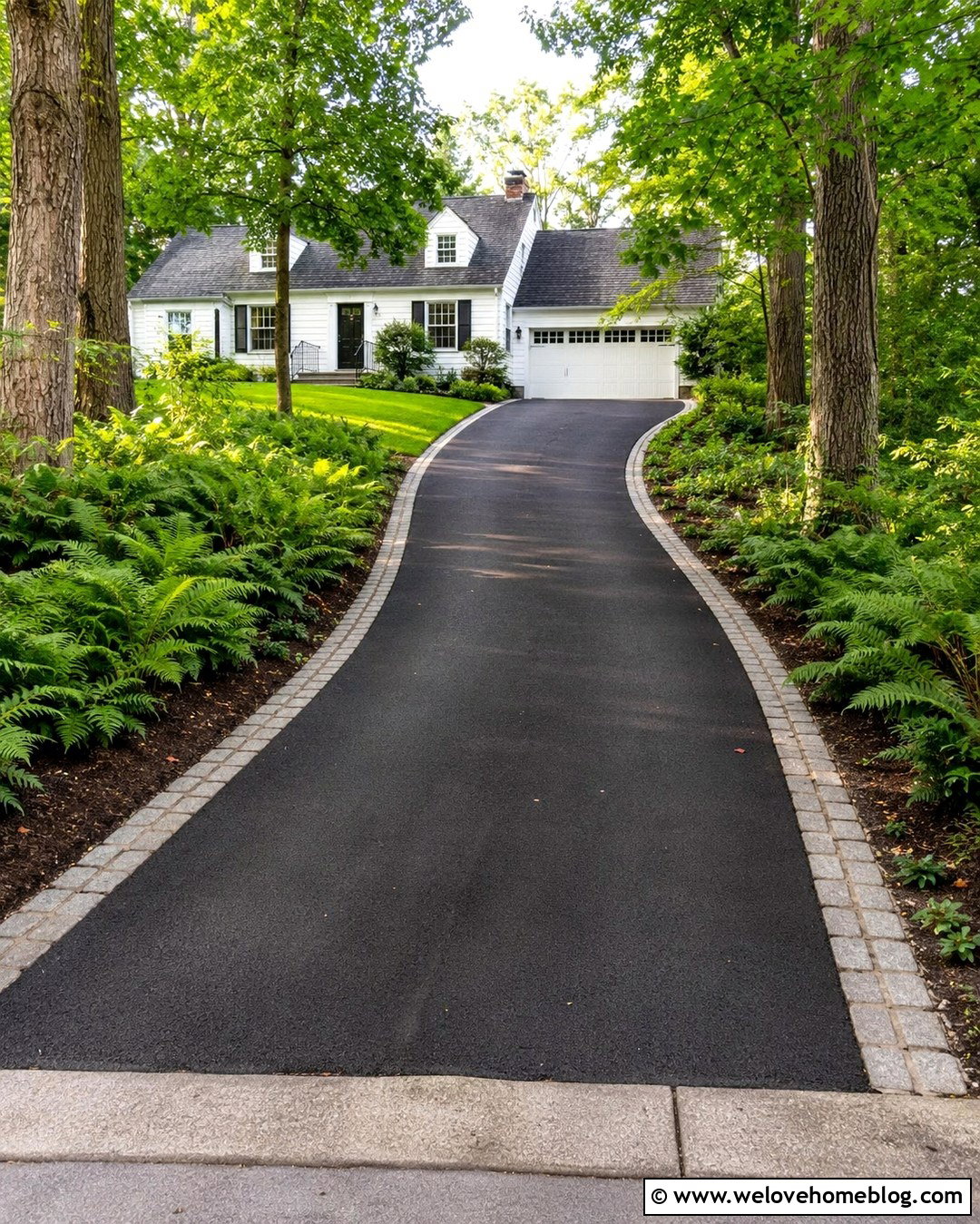
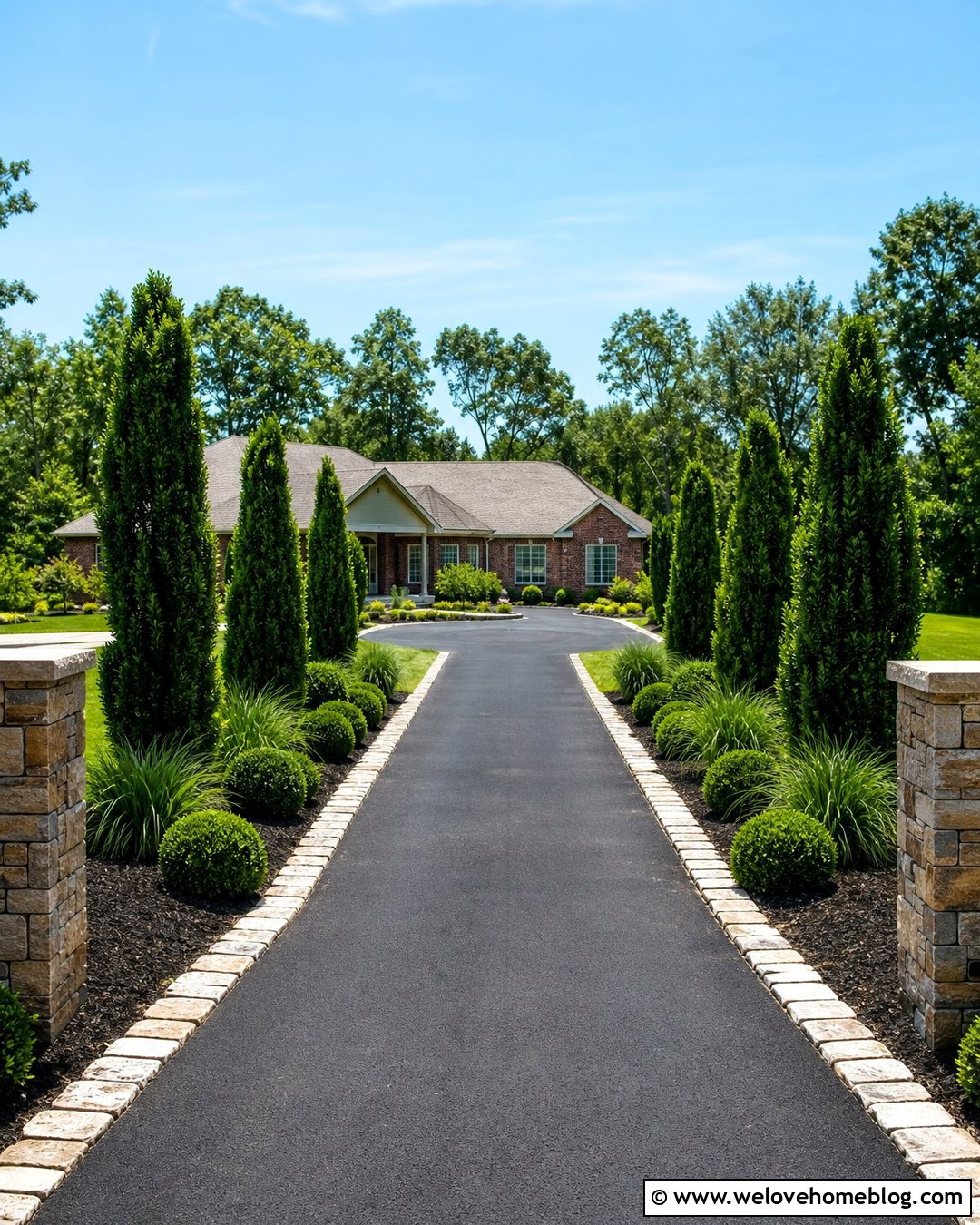
Smooth black asphalt provides a clean contrast against green woodland plants and warm brown tree trunks. This complete look works especially well on a straight or gently curving driveway leading to a traditional ranch or Cape Cod home. Add a narrow cobblestone ribbon along each edge to prevent the pavement from visually disappearing into the forest floor. Behind it, plant broad sweeps of Christmas fern, autumn fern, wild ginger, and shade-tolerant sedges. Repeating several plant varieties produces a calmer appearance than placing many unrelated specimens along the route. Leave breathing room around large tree trunks instead of raising soil over their roots. The dark surface, structured stone border, and layered greenery make the wooded setting feel maintained without removing its natural character.
3. Wooded Driveway With Native Shrubs
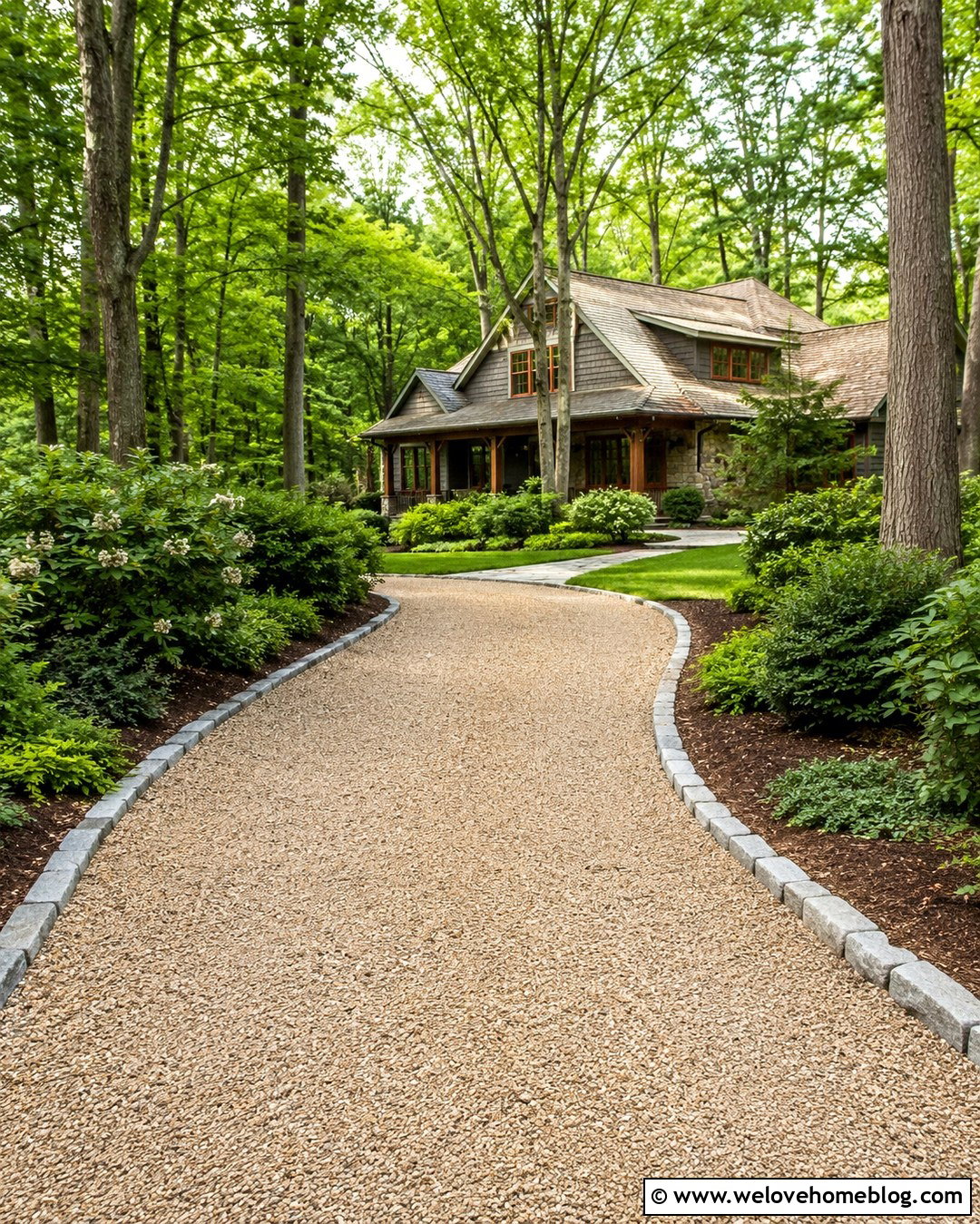
Could an existing woodland edge become the main landscaping feature? Start with a tan gravel driveway that bends gently toward a craftsman house. Use weathered granite curbing to form a clear boundary, then improve the forest edge with grouped native shrubs rather than a continuous formal hedge. Depending on local growing conditions, suitable choices may include inkberry, spicebush, oakleaf hydrangea, mountain laurel, or native viburnum. Arrange shrubs in staggered clusters with woodland ground covers filling the gaps. Maintain open pockets where attractive tree trunks, mossy rocks, and distant views can remain visible. This layered approach gives the driveway privacy and seasonal interest while retaining the relaxed structure of the woods. Local native plants are usually the most sensible starting point for climate-specific selection.
4. Concrete Wooded Driveway With Boulder Edging
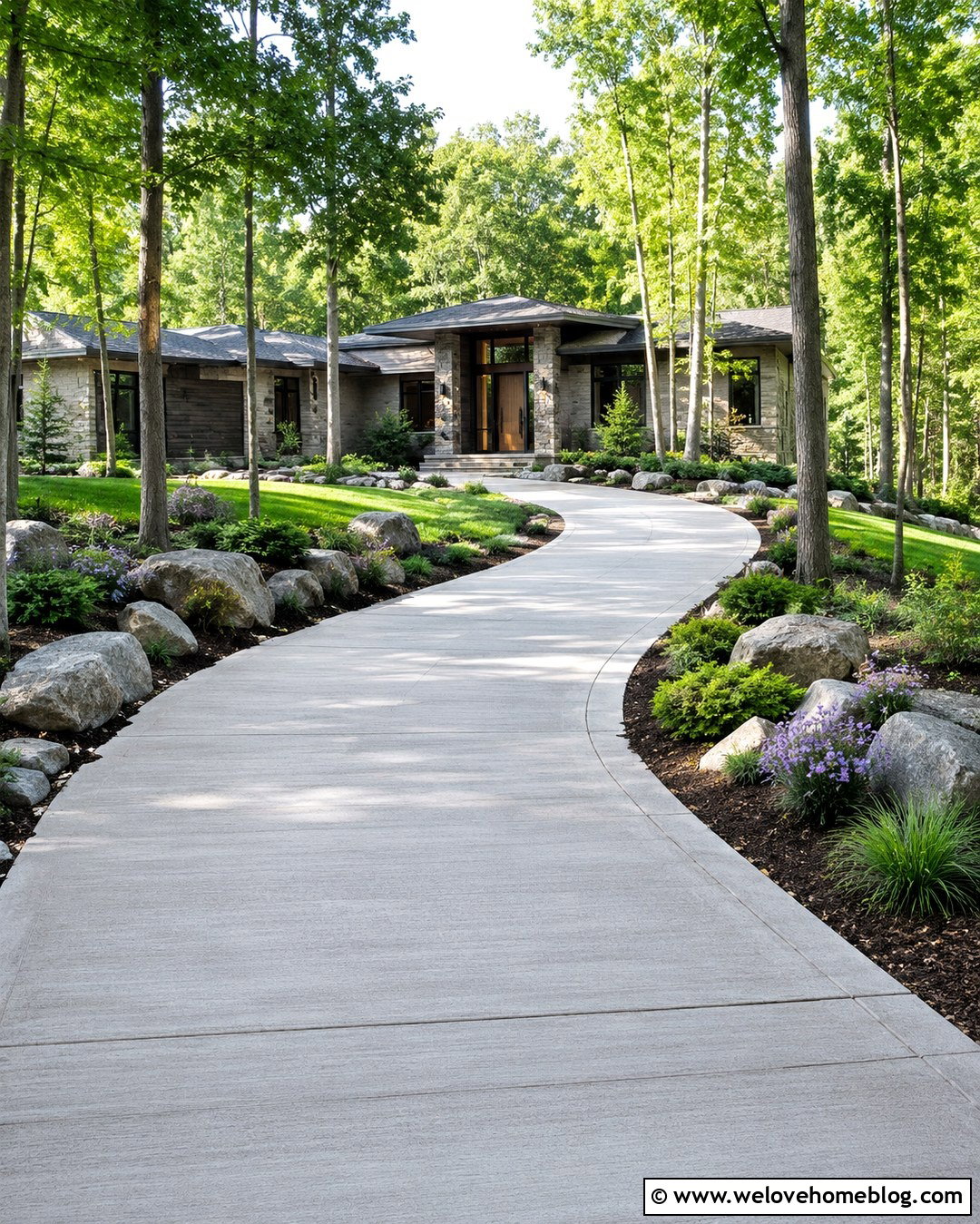
Large natural boulders can visually anchor a pale poured-concrete driveway surrounded by tall trees. Use a gently curved layout that preserves important trunks and directs attention toward a modern woodland house. Place boulders in irregular groups instead of forming an unbroken wall. Their size should feel balanced with the driveway, trees, and house rather than crowding the driving area. Fill the spaces behind them with shade-tolerant ornamental grasses, low junipers, woodland asters, and shredded bark mulch. A few smaller stones can help the large boulders blend into the planting beds. Keep the concrete finish simple, such as light broom-finished gray, so the landscape remains dominant. This design feels strong and contemporary but still belongs in a rugged, naturally wooded setting.
5. Long Wooded Driveway With Tree Uplighting
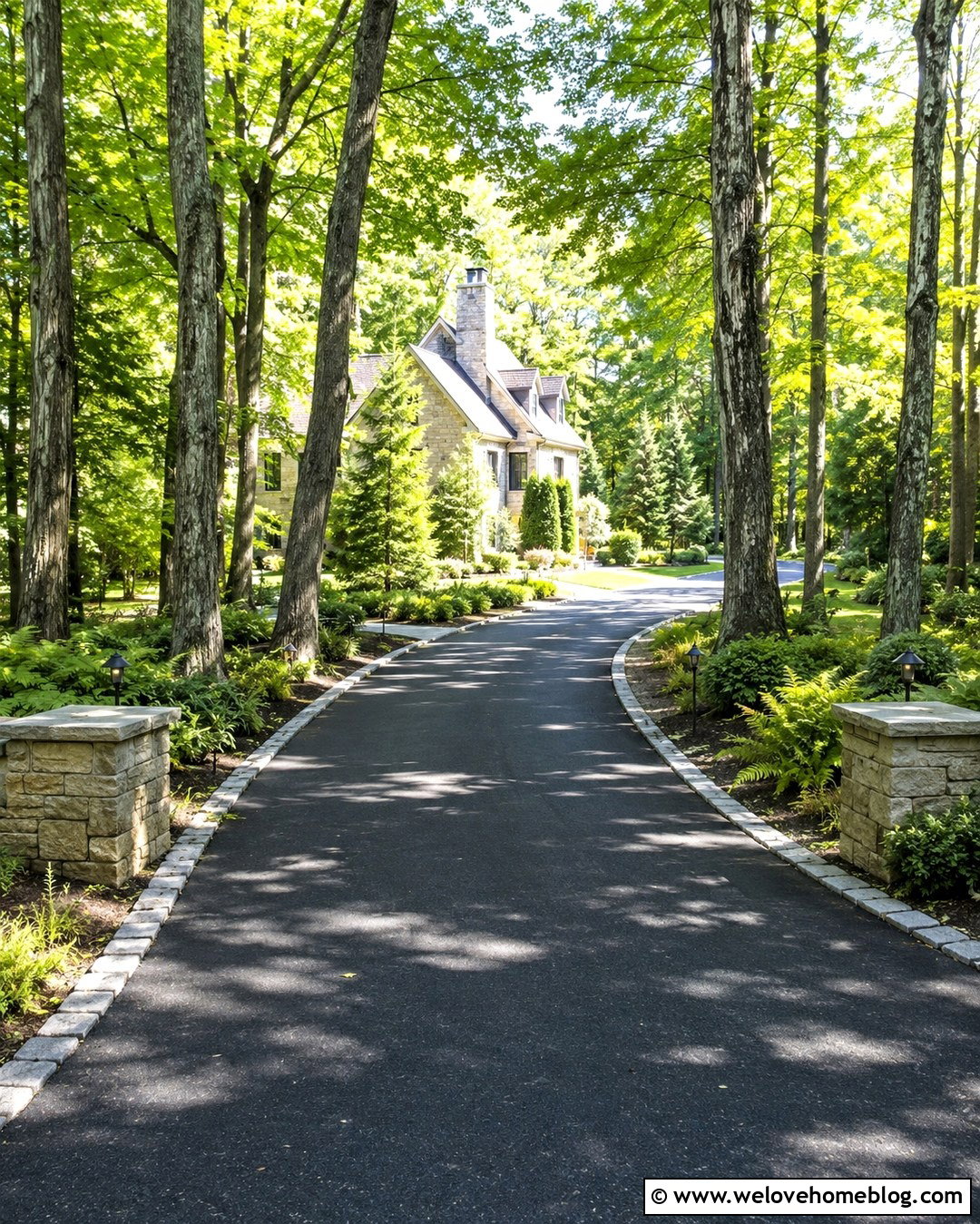
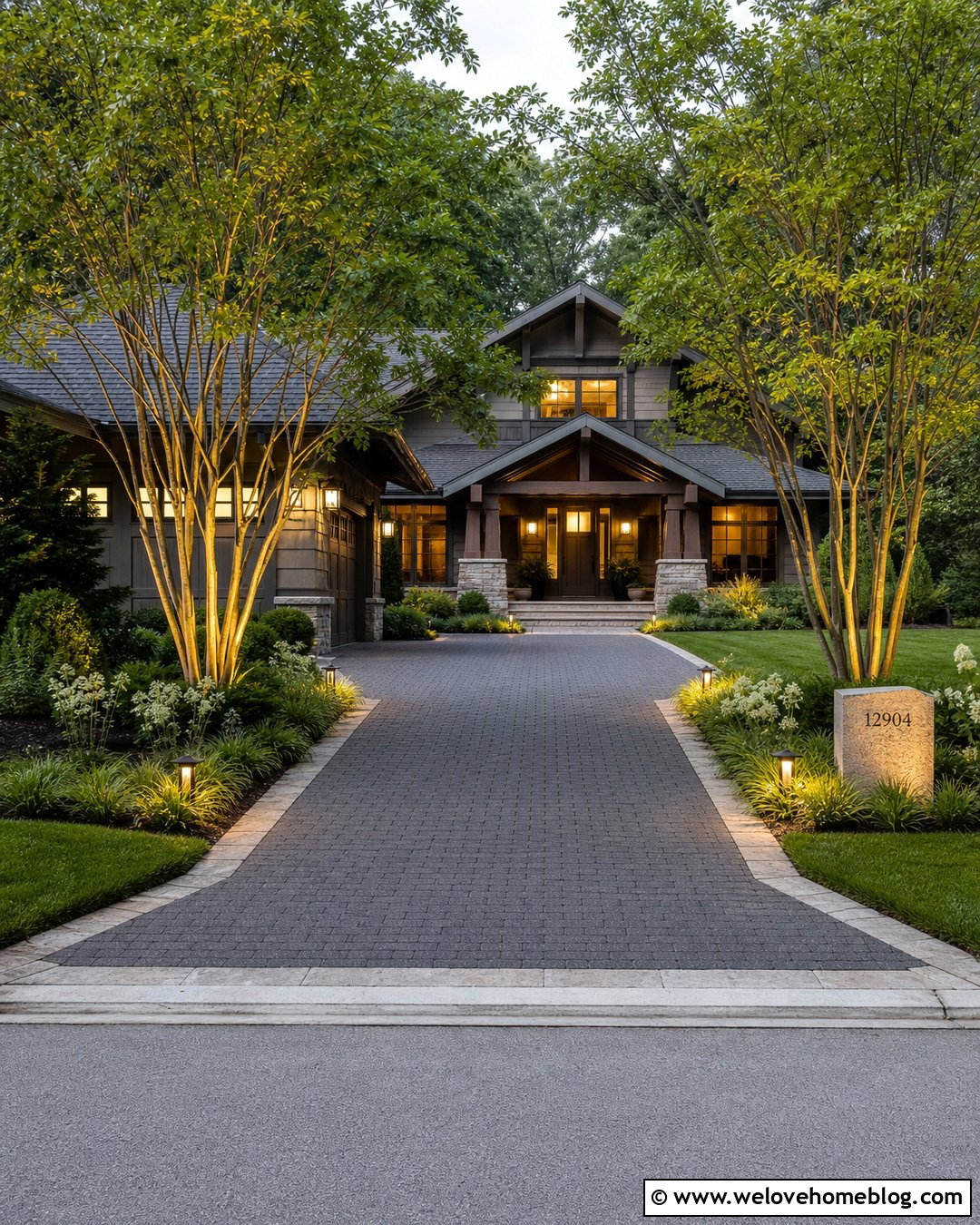
A long wooded driveway can become dramatic without adding complicated flower beds. Pair a dark gray asphalt surface with understated granite block edging and a carefully spaced low-voltage lighting system. Use shielded uplights to highlight selected tree trunks, while low path fixtures define curves and driveway edges. The fixtures should illuminate the route without shining into drivers’ eyes or neighboring properties. During daylight, surround the driveway with restrained beds of ferns, sedges, native shrubs, and leaf mulch. At the entrance, two larger trees or stone pillars can establish a clear beginning. Landscape lighting is commonly used to support both driveway visibility and curb appeal, especially when it is integrated with the materials and planting rather than treated as a separate feature. ()
6. Wooded Driveway With Hydrangea Borders
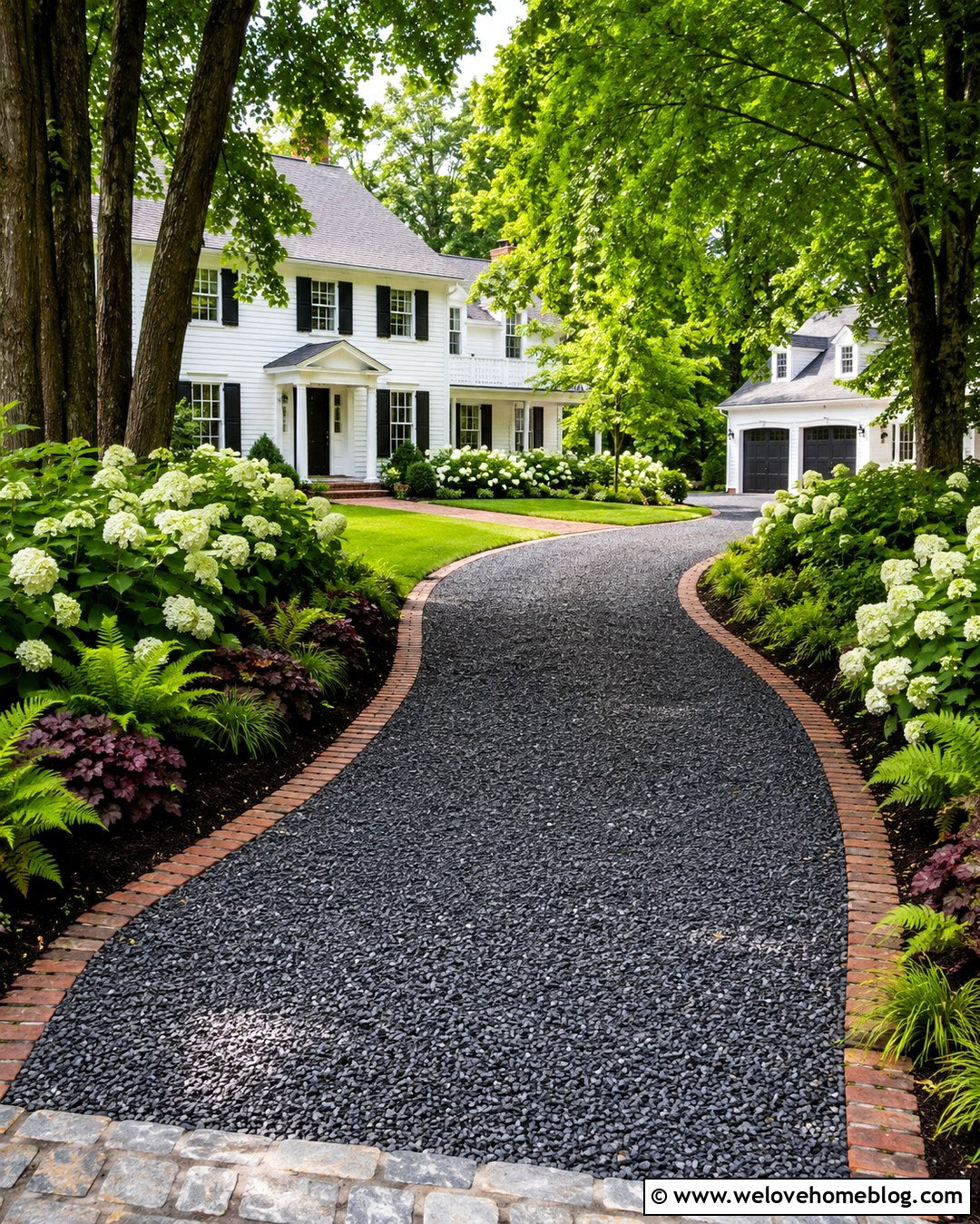
White hydrangeas can brighten a shady woodland approach, especially against a charcoal gravel driveway. Design a broad curve leading to a colonial or cottage-style house, then contain the gravel with aged brick edging. Plant hydrangeas in generous groups where filtered light and suitable moisture are available. Add ferns, heuchera, and low woodland sedges in front to conceal bare lower stems and create several levels of foliage. Repeating the same planting rhythm on both sides near the house gives the arrival area structure, while looser groups farther down the drive maintain a natural appearance. Select hydrangeas according to local climate and actual light conditions. Leave enough setback from the driveway for mature growth, snow storage, vehicle clearance, and comfortable access to planting beds.
7. Wooded Driveway With Mossy Stone Walls
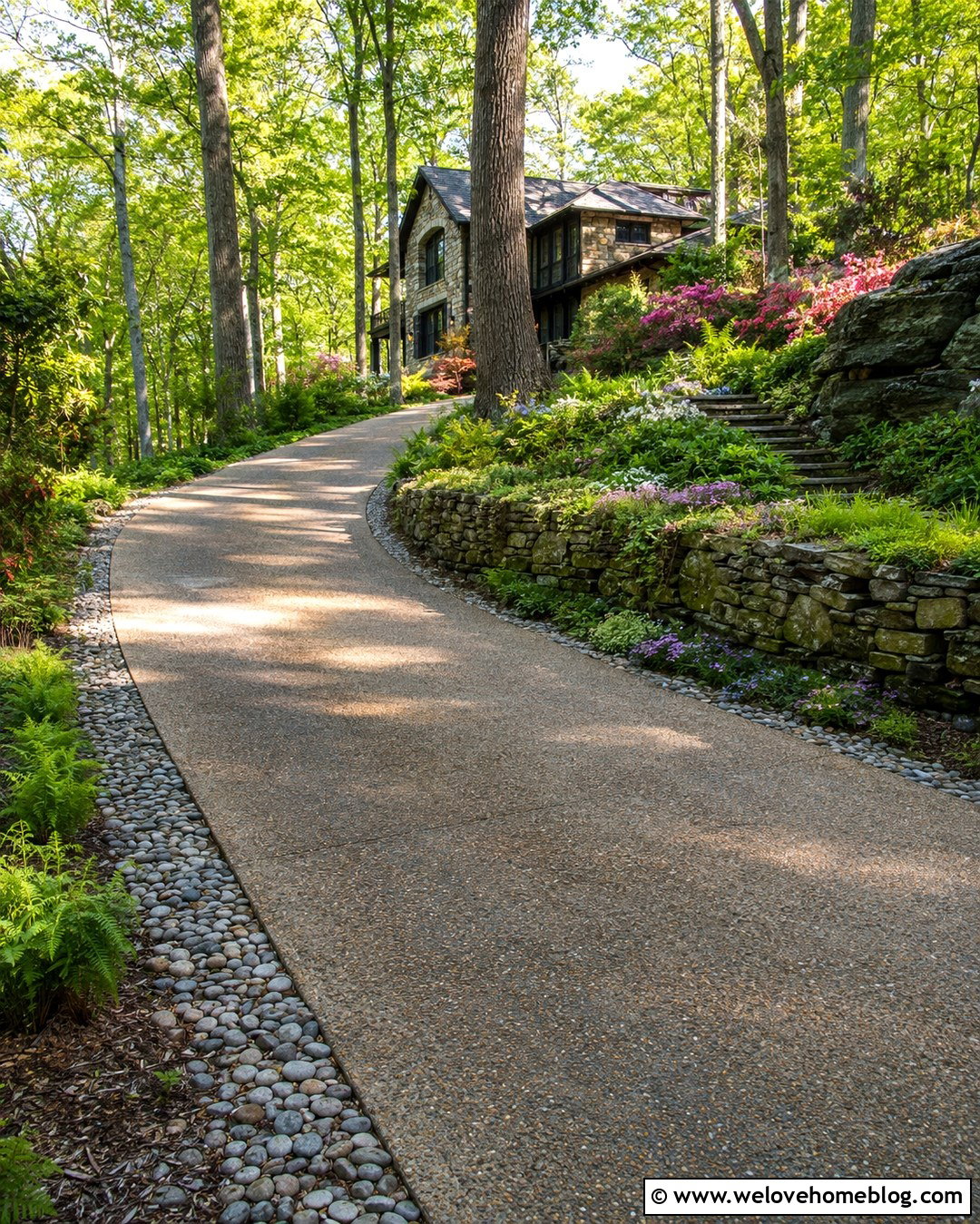
In a sloped woodland, low stone retaining walls can make the entire driveway feel settled into the land. Use warm brown exposed-aggregate concrete for a gently winding route, with dry-stacked fieldstone walls supporting raised ground along the uphill side. Keep the walls low where possible and allow existing moss to remain on undisturbed stones. Above the wall, arrange ferns, native azaleas, foamflower, and woodland phlox in loose drifts. On the lower side, use a gravel shoulder or shallow planted swale to help organize runoff. The house can appear gradually through the trees, adding to the sense of discovery. Because retaining structures and drainage affect driveway stability, taller walls or difficult slopes should be designed with appropriate professional guidance rather than treated as decorative garden edging.
8. Wooded Driveway With a Rain Garden
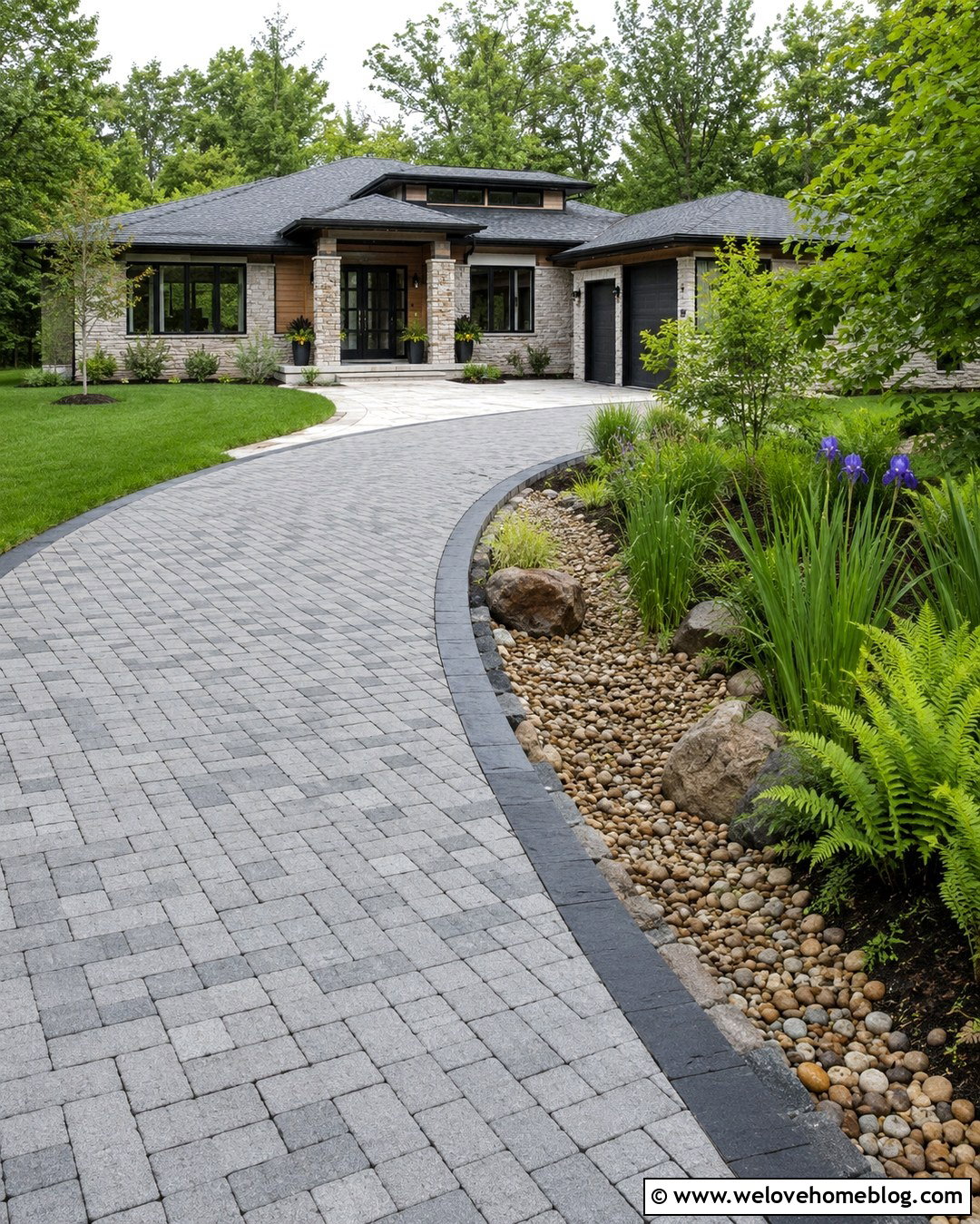
Turn a naturally damp low point beside the driveway into an attractive rain garden. A permeable gray paver driveway with a gentle curve provides a practical foundation for this environmentally responsive look. Edge the driving surface with dark granite blocks, then direct appropriate surface runoff toward a shallow planted depression instead of allowing water to erode the woodland floor. Use moisture-tolerant native sedges, ferns, irises, buttonbush, or other locally suitable plants. Place larger plants away from critical sightlines and keep the basin separated from vulnerable structures. Rounded river stones can define the inlet and slow moving water while complementing the forest setting. Rain gardens are among the landscape features that can help manage driveway runoff when they are properly located, sized, and planted. ()
9. Rustic Wooded Driveway With Timber Edging
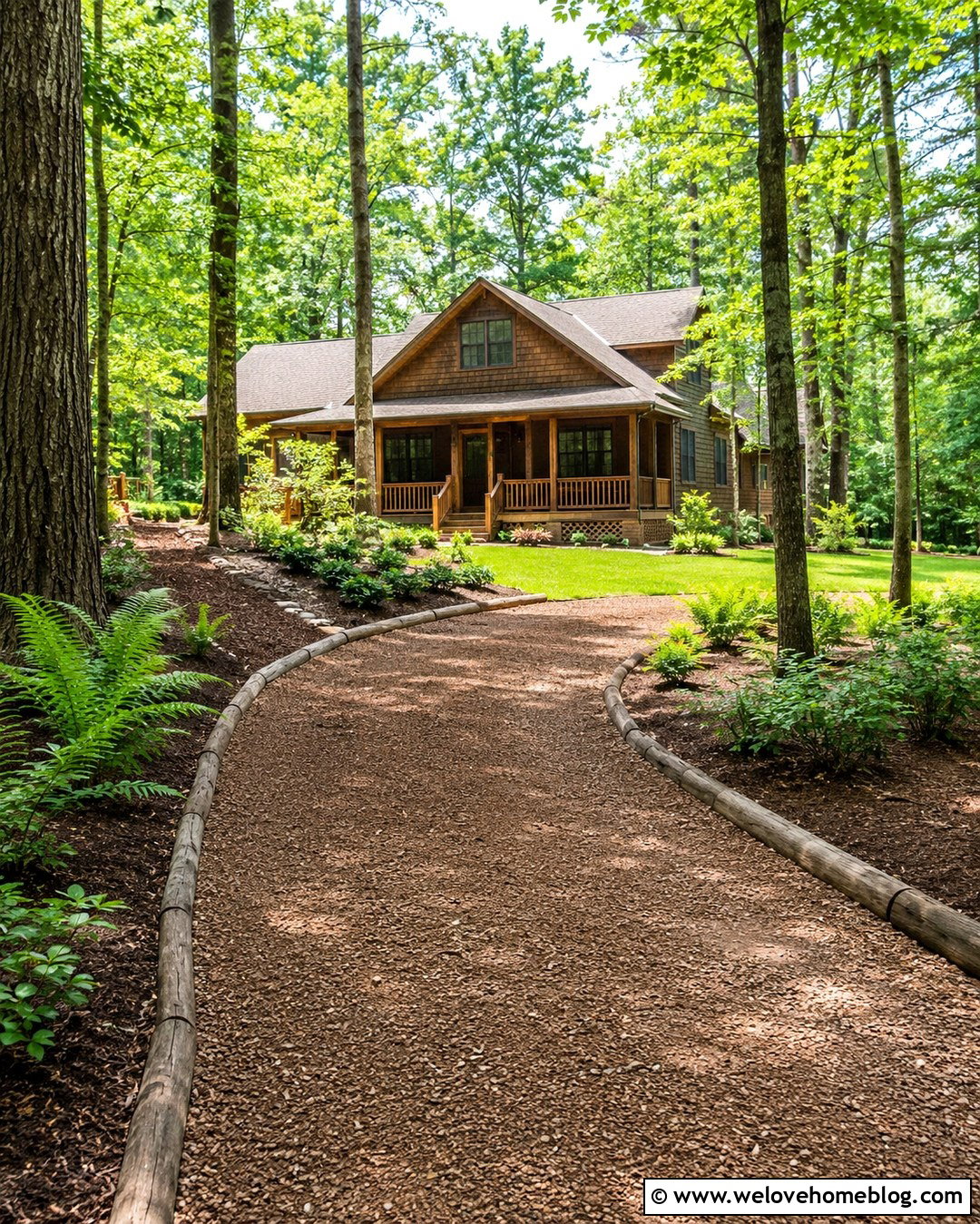
For a cabin, barn-style home, or modest country property, a rustic gravel driveway with timber edging offers an approachable finish. Select compacted brown crushed gravel that reflects the colors of bark and fallen leaves. Follow the natural grade with a softly curving route rather than forcing a rigidly straight line through the trees. Use durable landscape timbers only where they will not interfere with drainage, plowing, or vehicle tires. Behind the border, establish sweeps of woodland sedges, ferns, low blueberries, and native ground covers. A mulched pedestrian path can branch from the driveway toward the front porch. Repeating wood, gravel, and simple forest plants creates a cohesive design. Inspect timber regularly because constant soil contact and moisture can shorten the life of untreated material.

10. Circular Wooded Driveway With a Planted Island
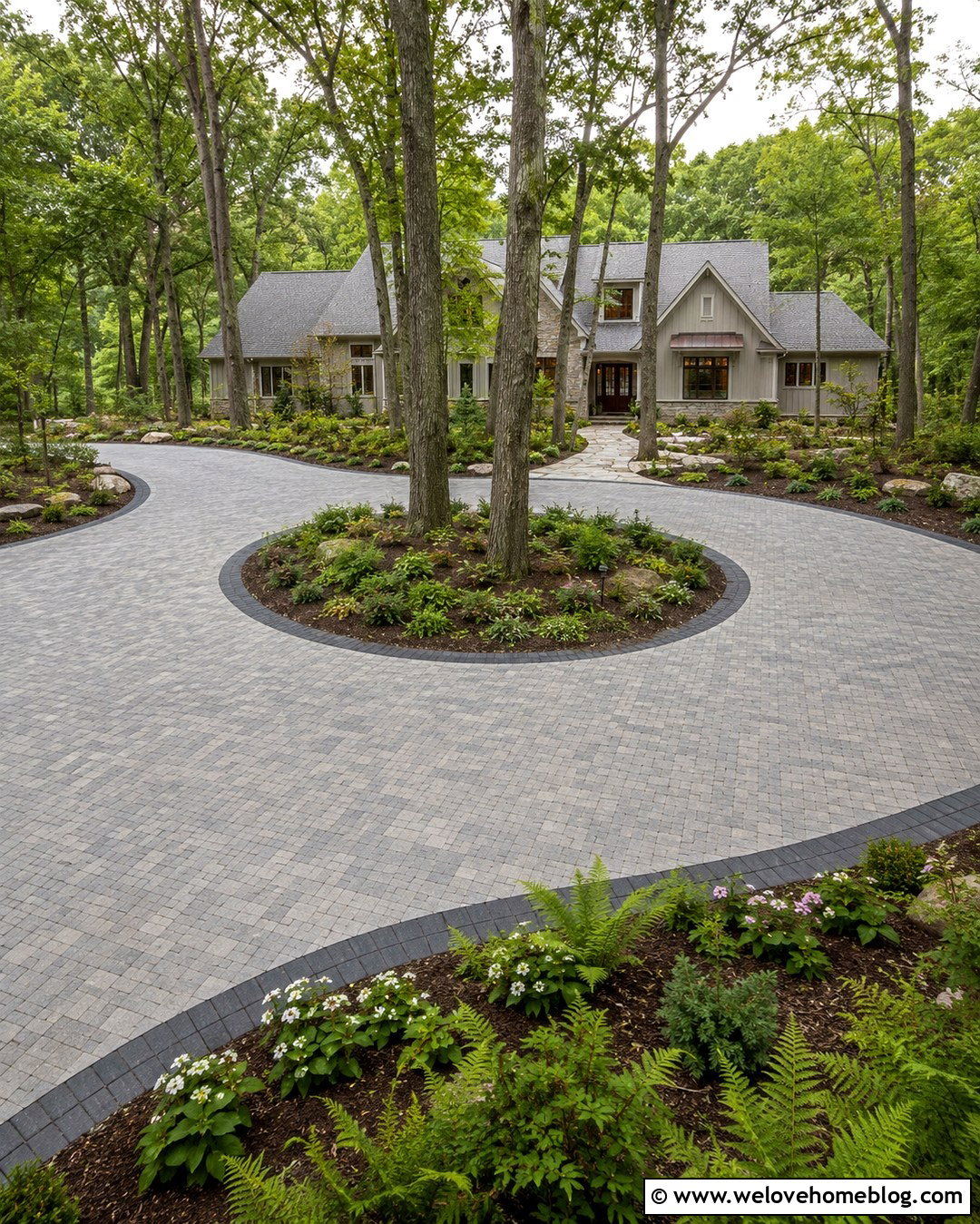
A circular driveway can protect a central group of mature trees while creating convenient vehicle movement. Use warm gray concrete pavers for the loop and frame them with a slim charcoal paver border. In the center island, preserve one or more healthy specimen trees, then create a broad mulched bed beneath them. Add ferns, hellebores, woodland sedges, and low evergreen shrubs that tolerate the available shade. Avoid piling mulch against trunks or raising the soil level around established roots. Near the house, connect the loop to a wide stone walkway that clearly directs visitors toward the entrance. The central island should remain visually open enough for safe circulation. This design makes existing trees part of the arrival experience instead of treating them as obstacles within the driveway.
11. Wooded Driveway With Evergreen Screening
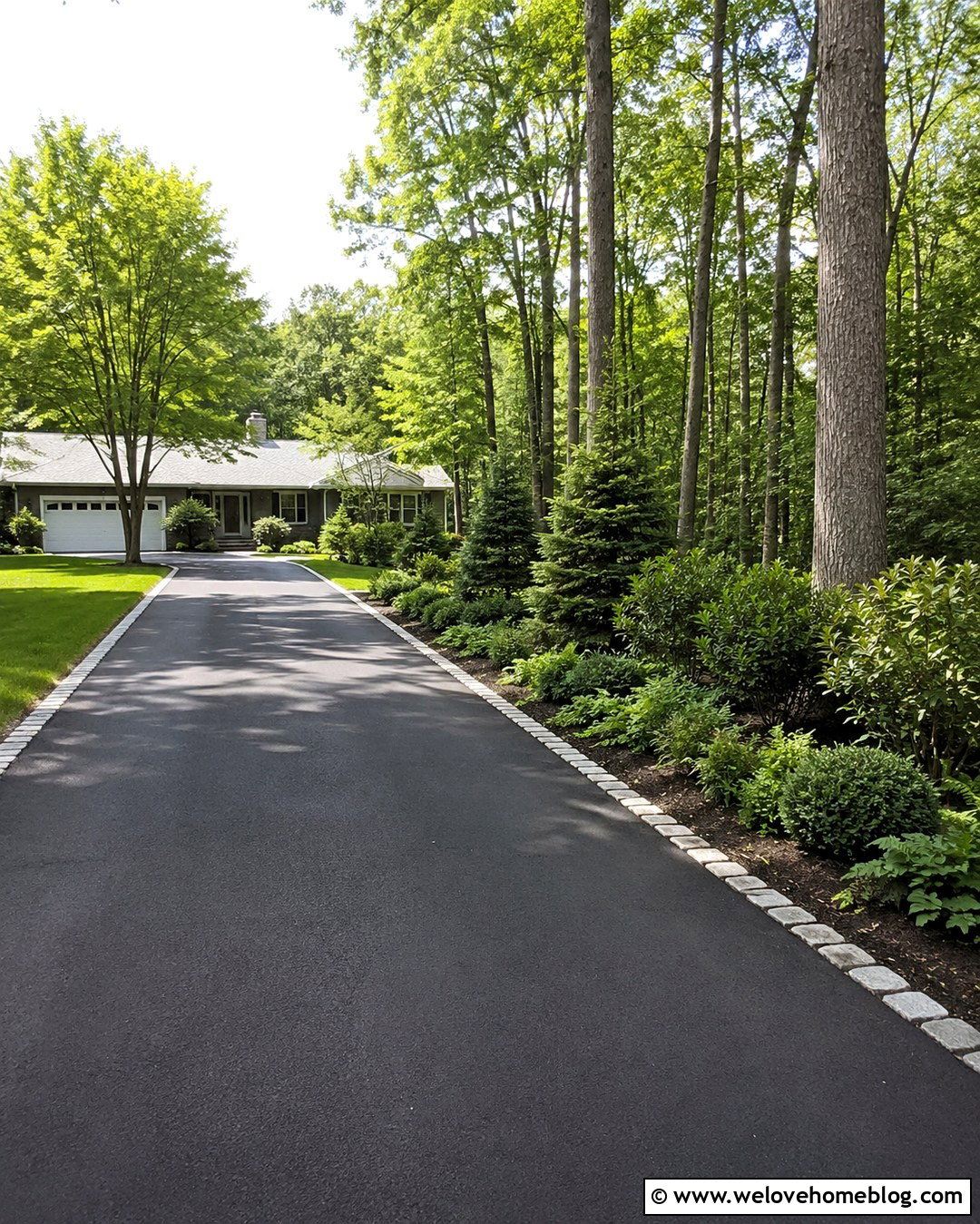
A wooded property may still need screening where neighboring homes, utility areas, or road traffic remain visible. Pair a straight black asphalt driveway with a subtle cobblestone edge and staggered evergreen planting along the exposed side. Rather than installing one dense row, combine regionally appropriate evergreen shrubs and small trees at varied depths. Fill the foreground with ferns, sedges, and shade-tolerant ground covers to connect the screening to the existing woods. On the opposite side, preserve more open views so the route does not feel like a narrow tunnel. Keep all plants far enough from the pavement to accommodate mature width, maintenance, and winter conditions. This complete design improves privacy while maintaining the layered, irregular appearance that makes woodland landscaping feel natural and spacious.
12. Wooded Driveway With Dogwood Trees
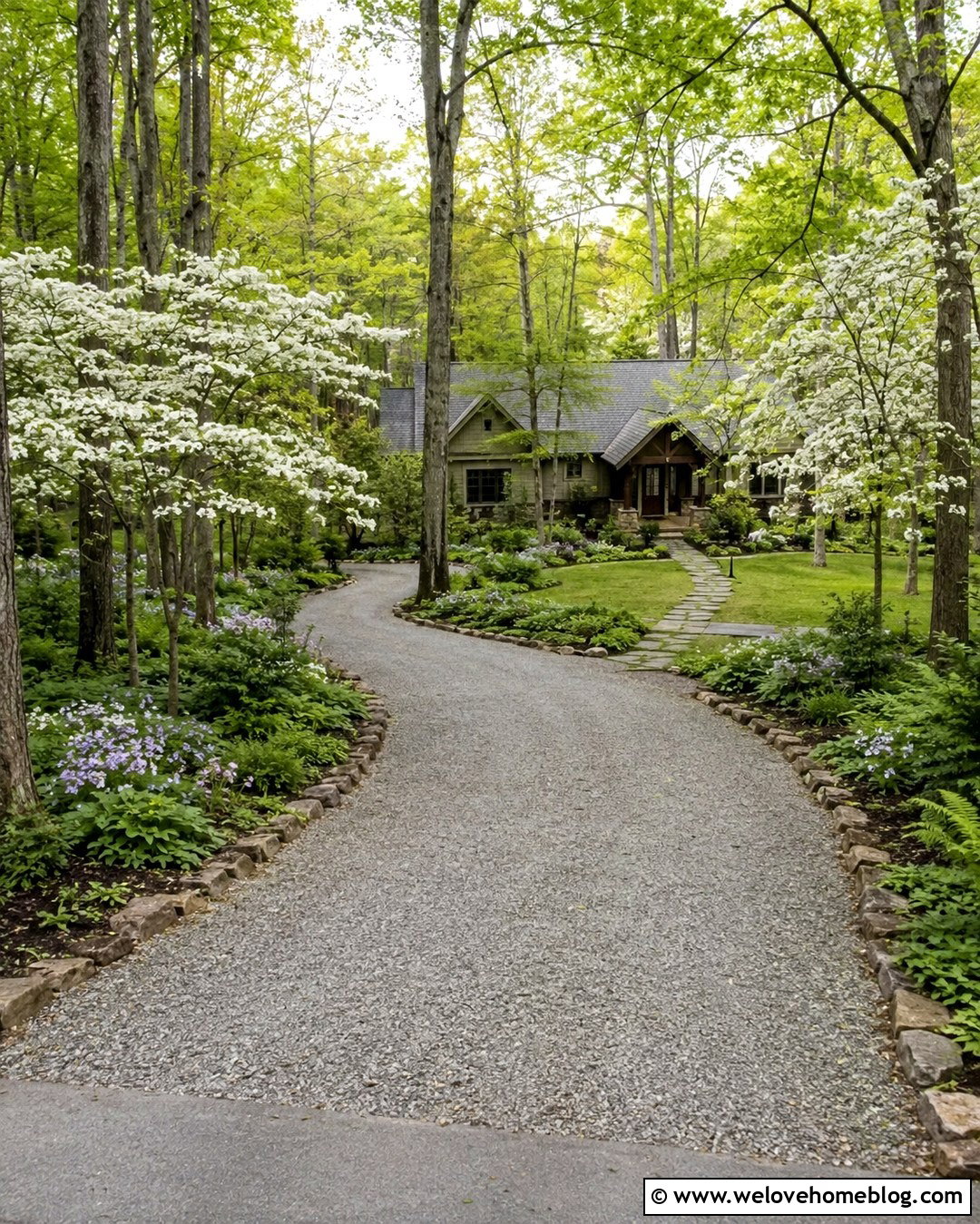
Flowering understory trees can bring spring color to a wooded driveway without competing with the tallest canopy trees. Begin with a pale gray gravel driveway that curves toward a cottage or craftsman home. Define the edge with flat fieldstone, then place native dogwoods in informal groups where their light and soil requirements can be met. Underplant them with ferns, foamflower, woodland phlox, and low evergreen ground covers. Repeat dogwoods at several points along the route rather than lining them up like street trees. This creates rhythm while preserving the relaxed forest setting. Leave generous distance between new trees, existing trunks, and the driveway base. The pale gravel reflects useful light into the shaded landscape, while white or pink spring flowers create memorable focal points among the surrounding greens.
13. Wooded Driveway With River Rock Drainage
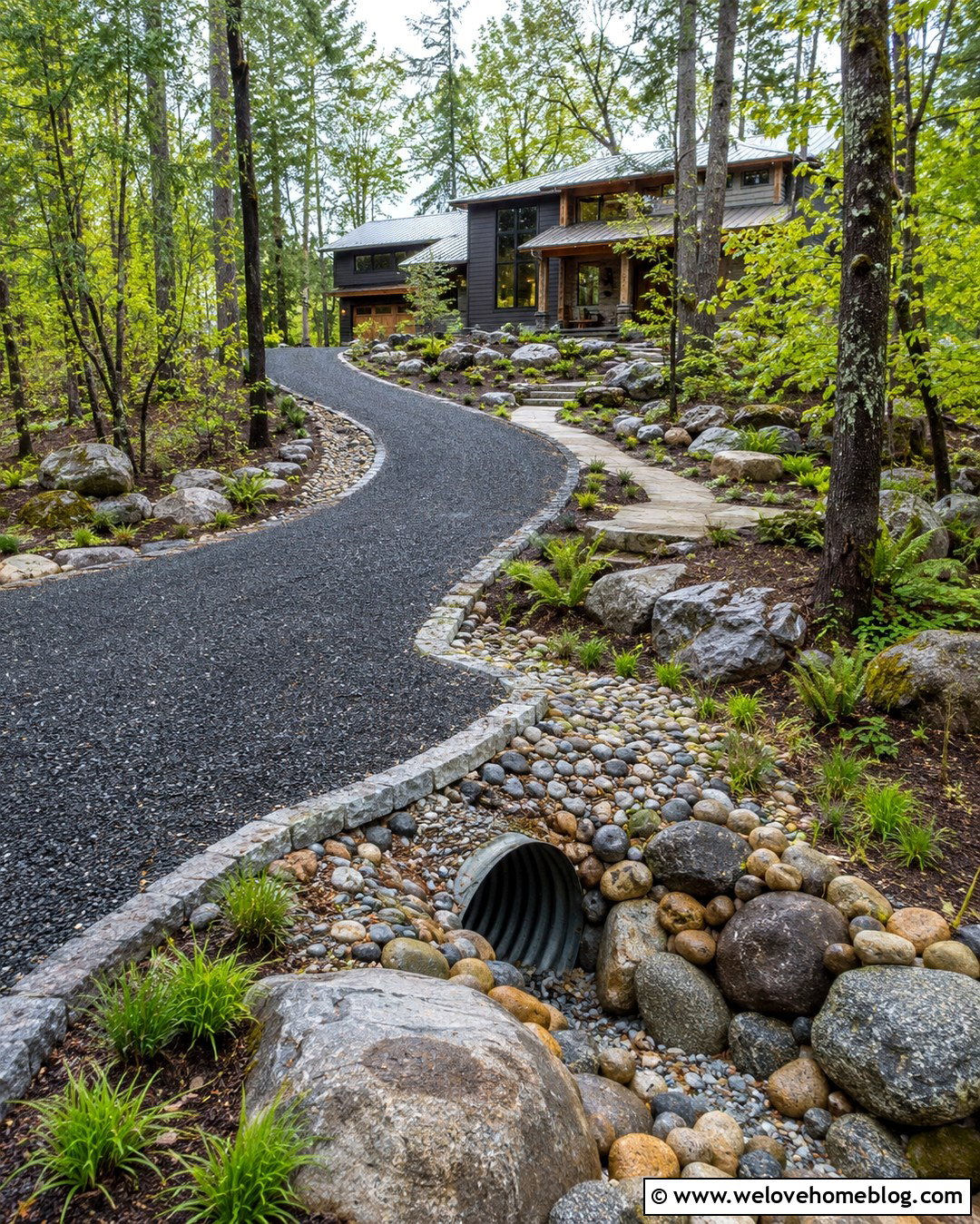
Heavy runoff can quickly damage an unprotected gravel driveway on a wooded slope. A functional dry creek can become part of the landscape rather than looking like a bare drainage trench. Use compacted charcoal crushed stone for the winding driveway, reinforced with steel or granite edging. Along the lower side, shape a shallow channel with mixed river rock, larger accent boulders, and clusters of moisture-tolerant sedges and ferns. Where water must cross the route, use a properly designed culvert or reinforced crossing instead of allowing uncontrolled flow over loose gravel. Continue the river-rock detail near the house to visually connect the entire approach. This design combines woodland character with practical water management, but the drainage path should always direct water toward an appropriate and legally permitted discharge area.
14. Wooded Driveway With Brick Apron
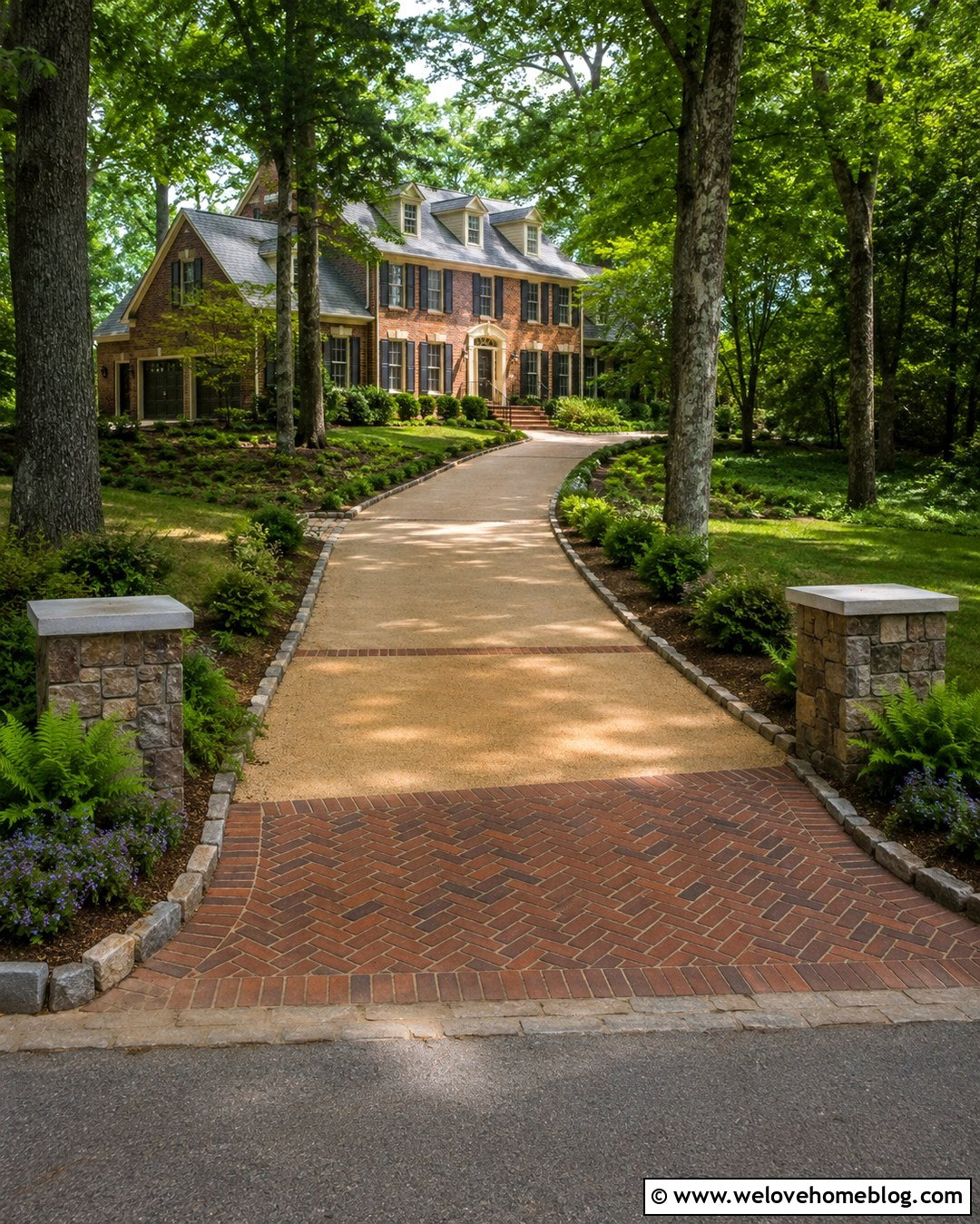
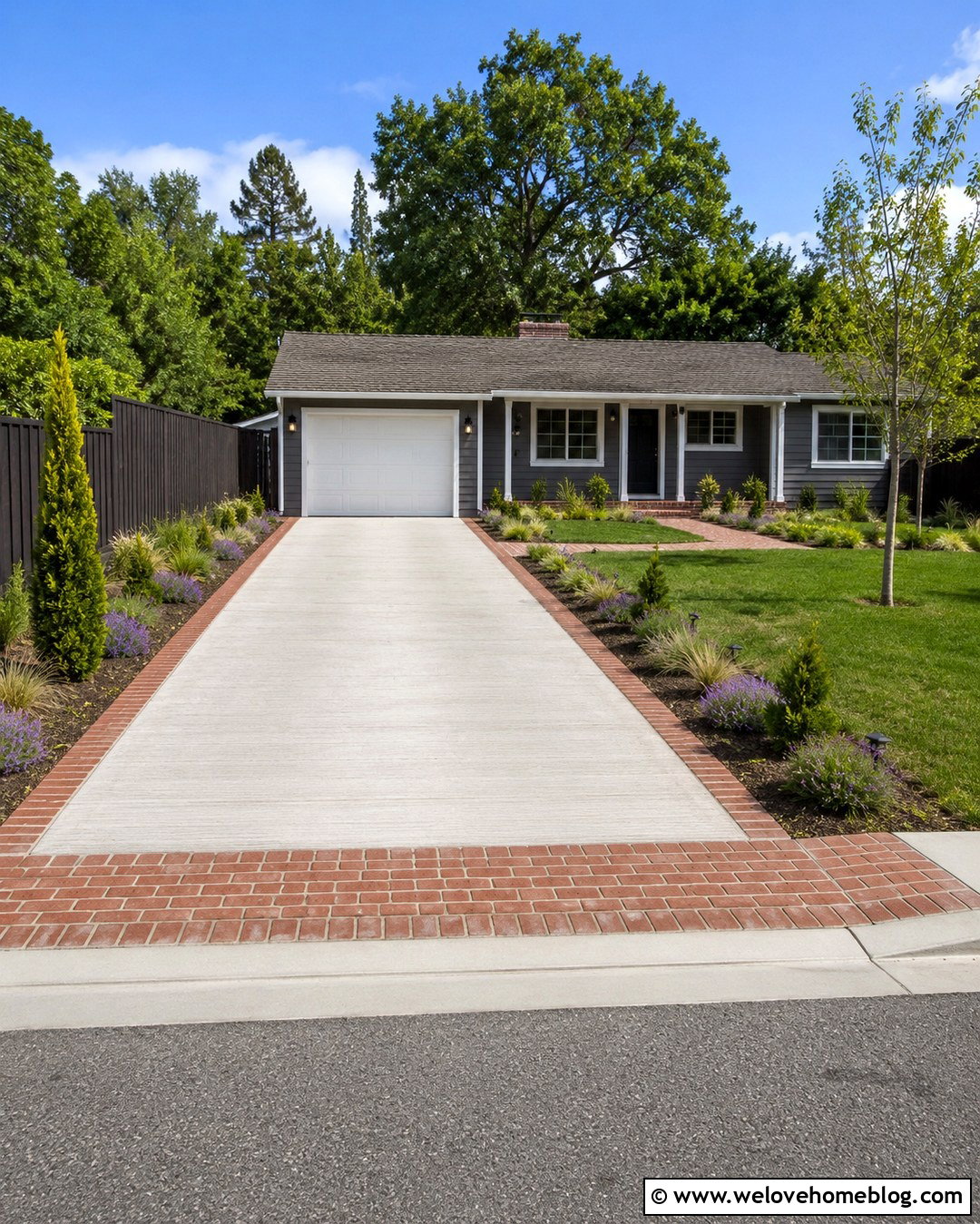
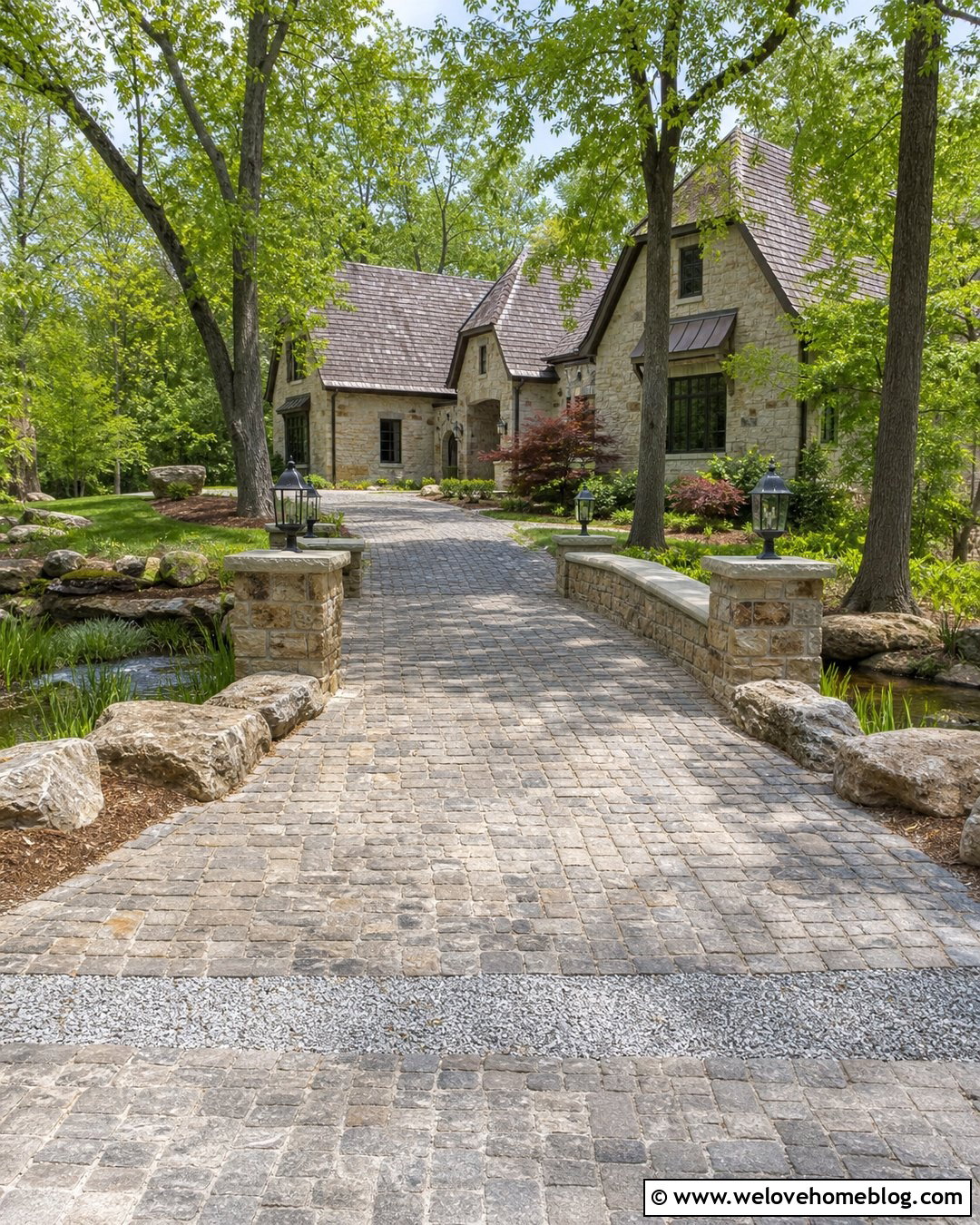
A brick apron can give a simple woodland driveway a more finished entrance without requiring brick across the entire route. Use a long tan gravel driveway with a broad, sweeping curve beneath mature oaks or maples. At the road, install clay brick pavers in a herringbone pattern, bordered by soldier-course bricks. Repeat a smaller brick band near the garage so the materials feel intentional. Along the gravel, use low fieldstone edging and loose drifts of ferns, woodland asters, and evergreen shrubs. Simple stone address pillars can flank the apron without becoming oversized. The warm red-brown brick relates naturally to tree bark and autumn foliage, while the gravel keeps the long driveway informal. Maintain open sight triangles around the entrance and avoid tall shrubs close to traffic.
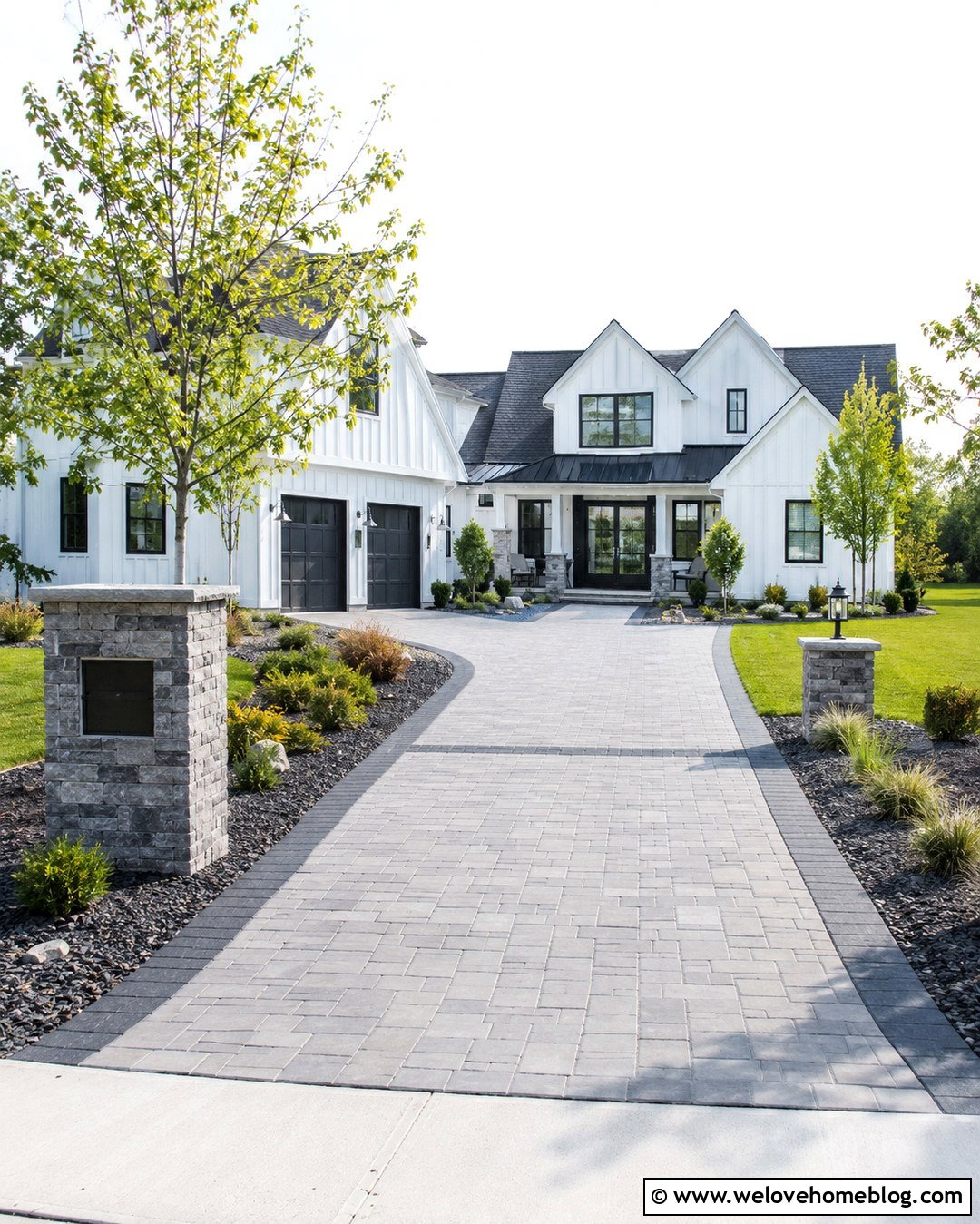
15. Wooded Driveway With Mulched Forest Beds
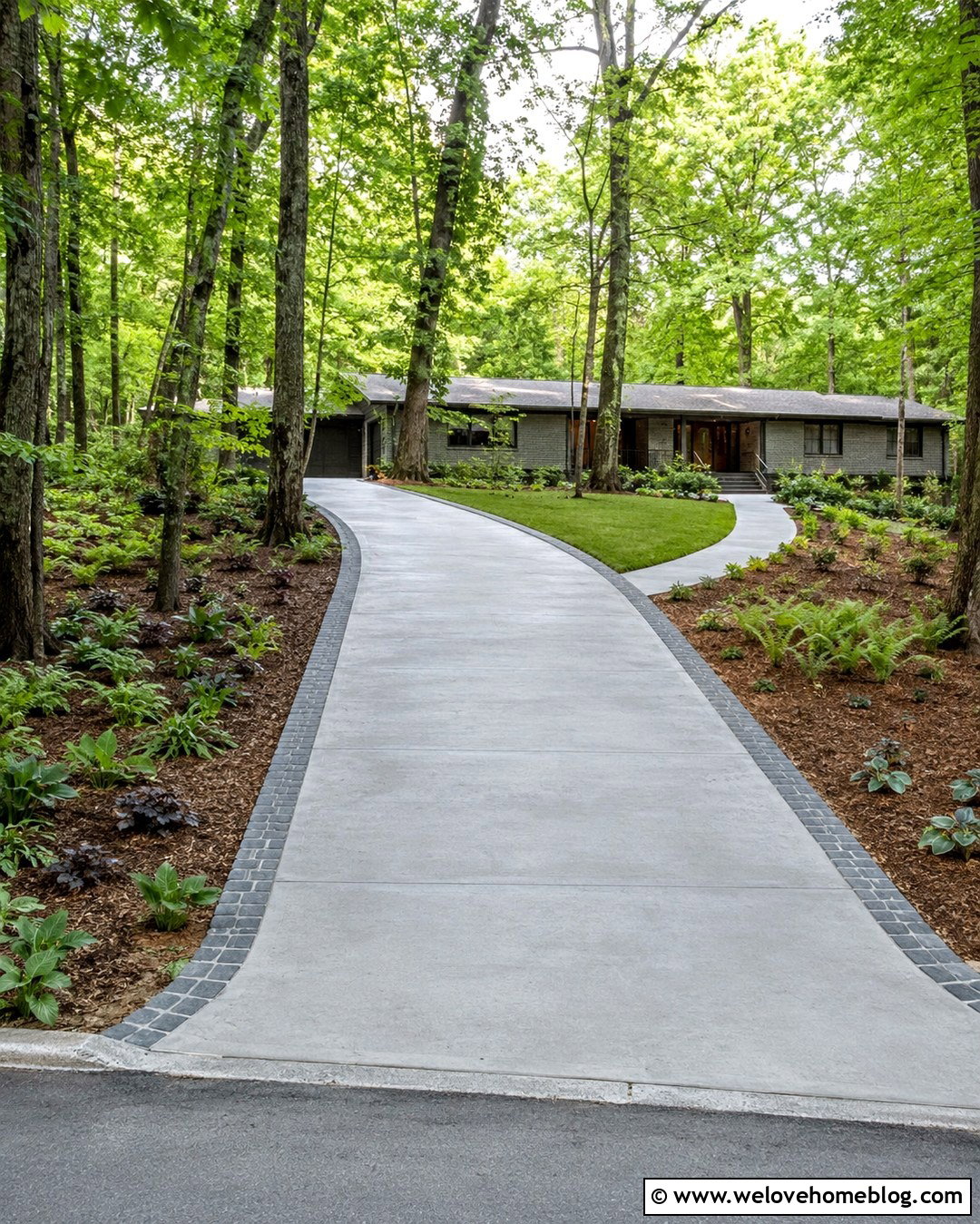
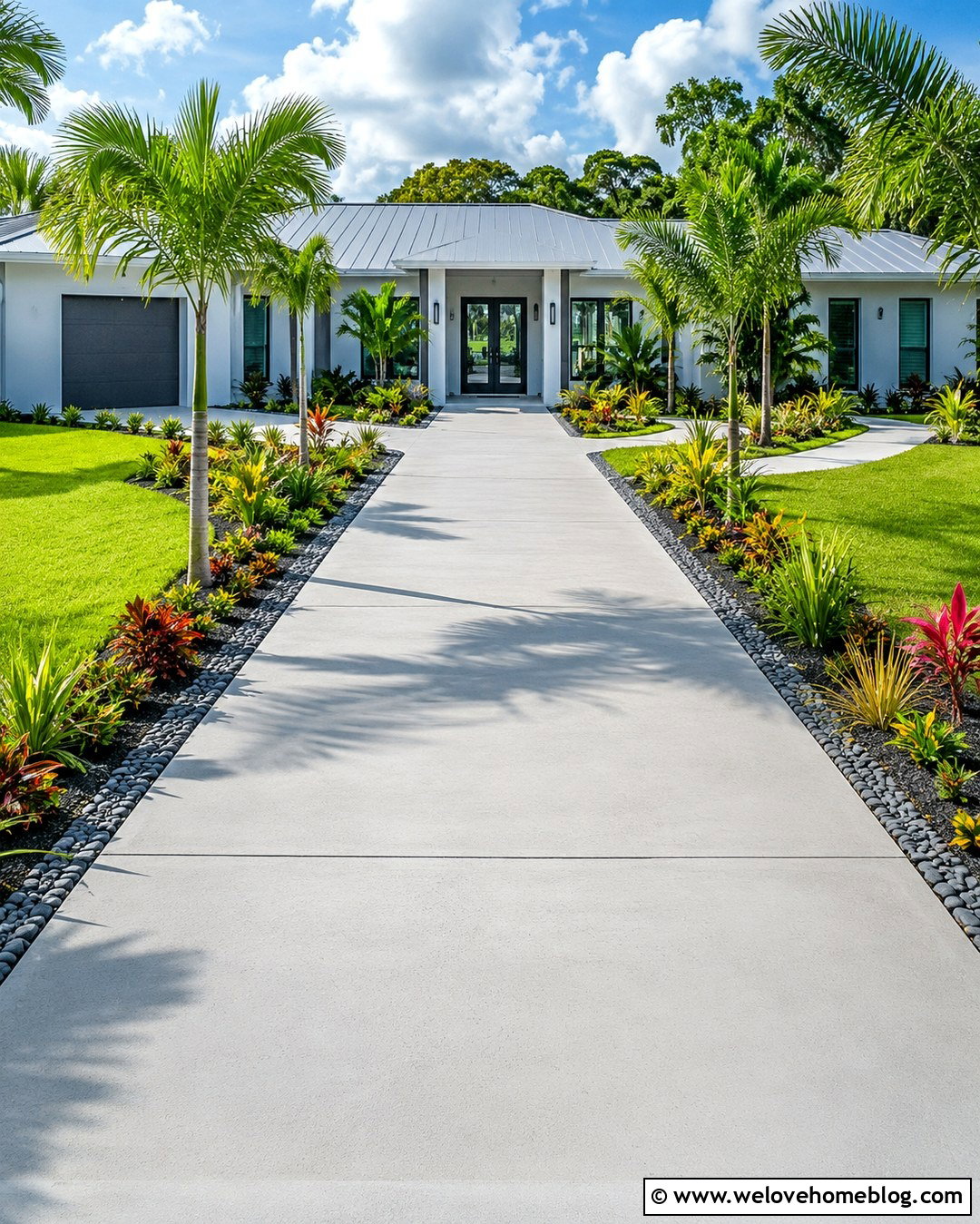
A broad mulch bed can create an easy visual transition between the driveway and an established forest floor. Choose a medium-gray poured-concrete driveway with a straight approach to a mid-century ranch home. Add a narrow band of dark cobblestones along each side, then extend natural shredded hardwood mulch several feet into the woodland edge. Retain healthy existing plants and introduce grouped ferns, wild ginger, heuchera, and compact native shrubs where needed. Use fallen leaves as part of the natural character, but keep thick debris away from drainage structures and the driveway surface. Avoid creating raised mulch mounds around tree trunks. The finished look is clean near the pavement and increasingly informal toward the woods, which makes maintenance zones clear without turning the entire property into a formal garden.
16. Wooded Driveway With Stone Gate Pillars
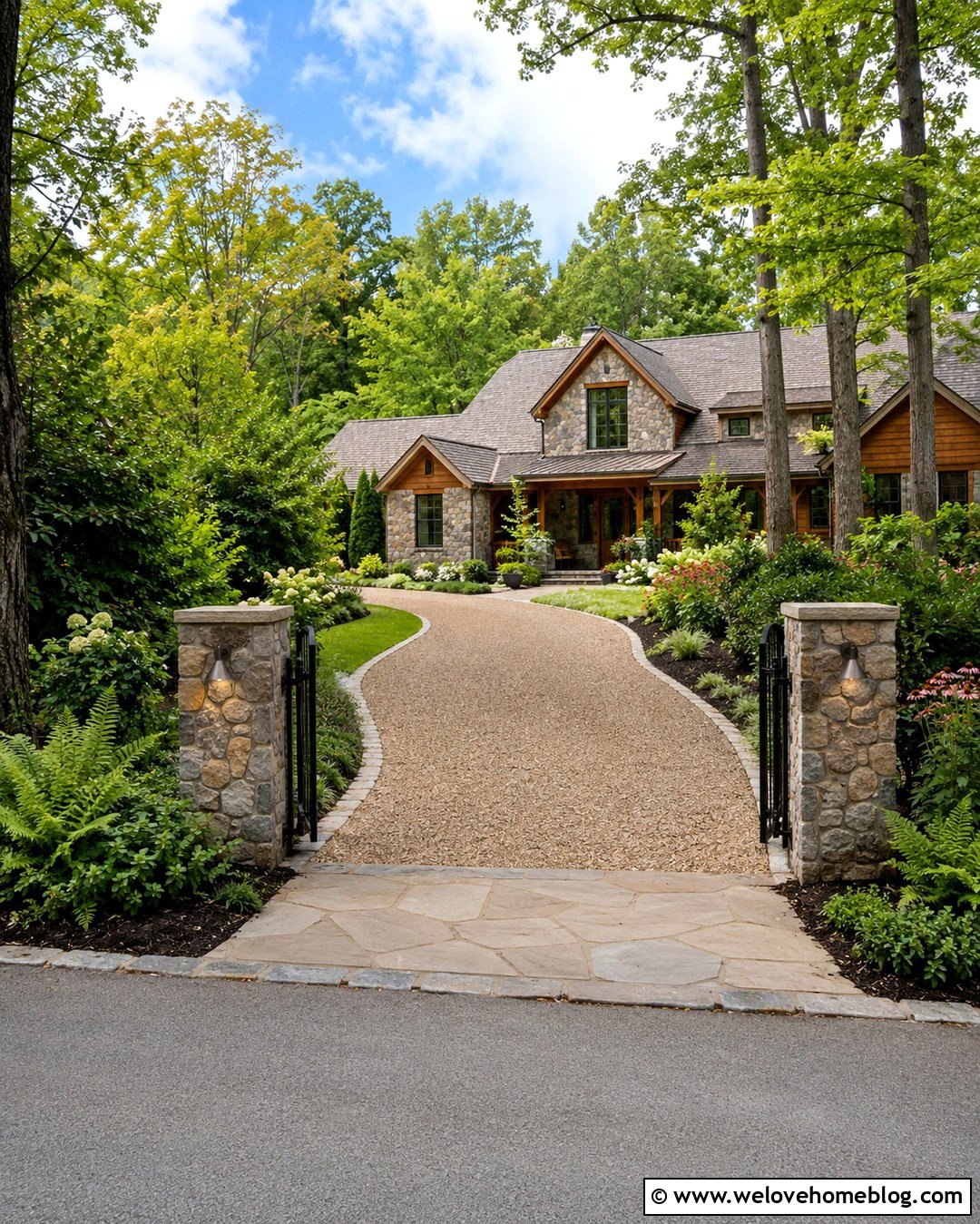
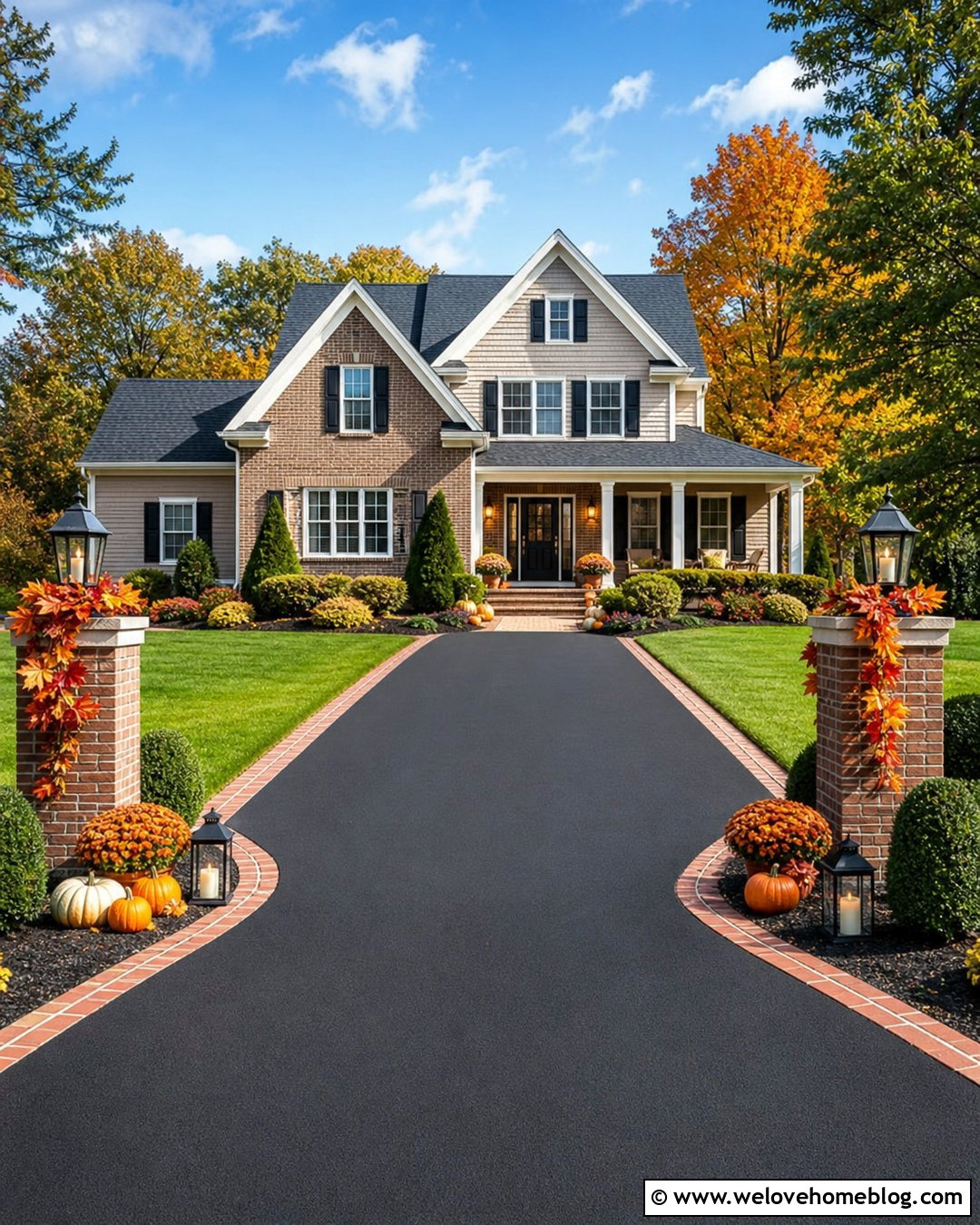
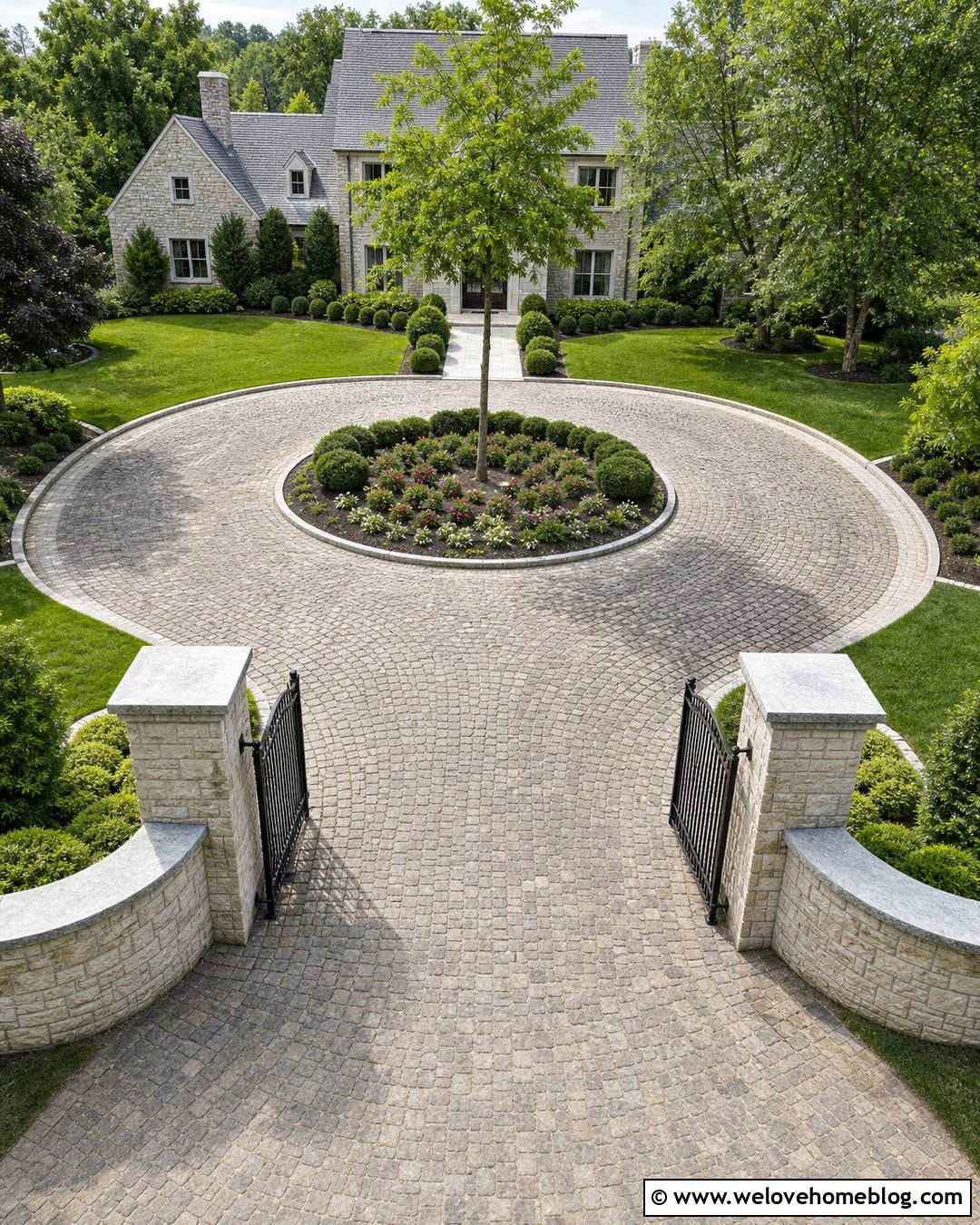
Stone pillars give a wooded entrance definition, particularly when the house cannot be seen from the road. Start with a resin-bound gravel driveway in a warm natural-stone blend and shape it into a gentle S-curve. Build two moderately sized fieldstone pillars at the entrance, leaving ample width for vehicles, delivery trucks, and maintenance equipment. Connect them visually to low stone edging that continues several yards along the driveway. Surround the pillars with compact inkberry, ferns, woodland sedges, and seasonal native flowers that stay below sightlines. A simple metal gate may be included, but an open entrance often feels more welcoming. Add a discreet address plaque and downcast lighting. Matching the pillars to stone used near the house helps the wooded driveway and architecture read as one complete property.
17. Wooded Driveway With Grass Center Strip
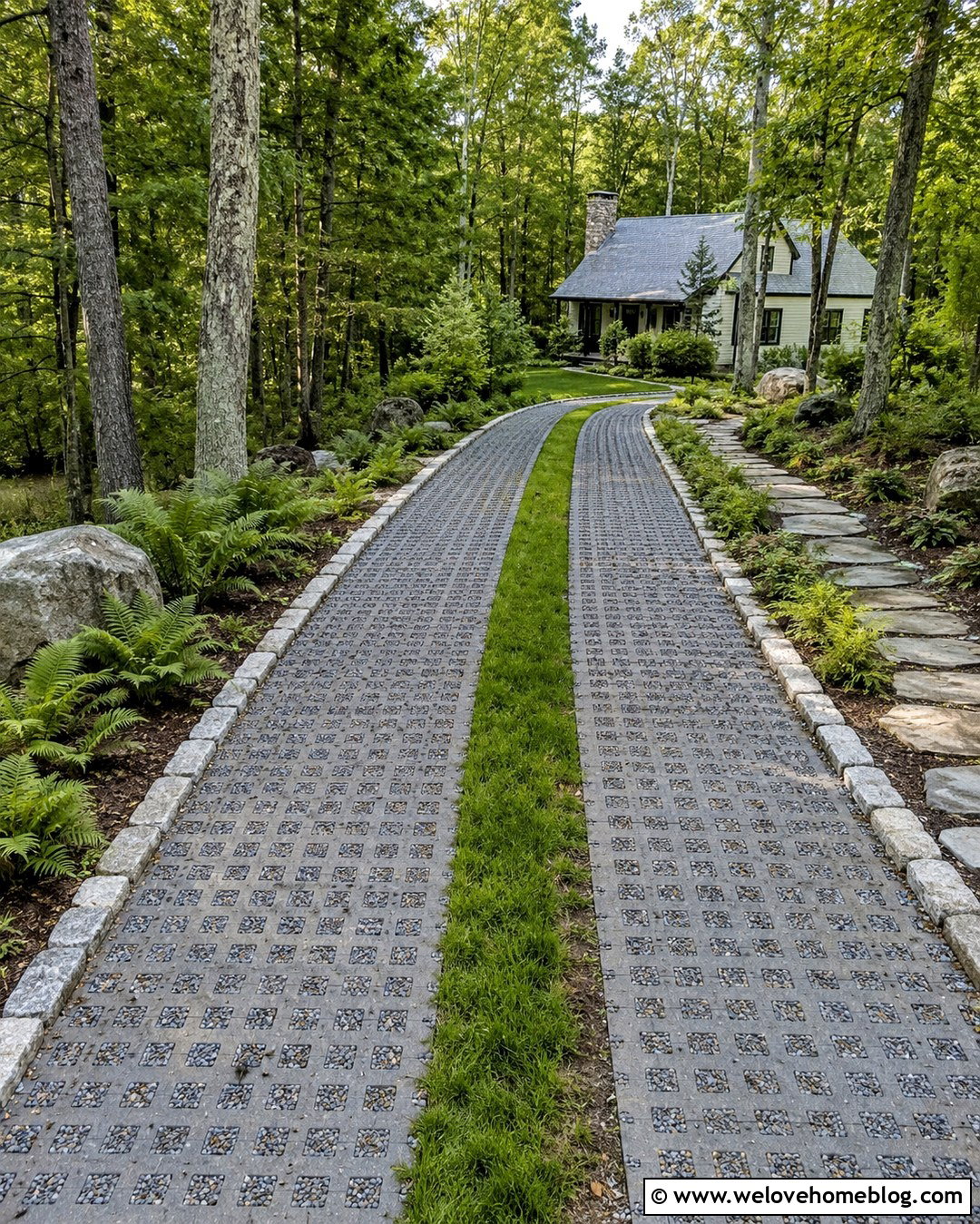
A grass-center driveway can suit a lightly traveled woodland property with relatively level ground and suitable growing conditions. Create two parallel tracks from permeable concrete grid pavers filled with small gray gravel, leaving a planted center strip between them. Use durable shade-tolerant grass or low ground cover based on local climate and maintenance needs. Border the outside edges with granite setts, then add naturalistic beds of ferns, sedges, low shrubs, and scattered boulders. The route can curve gently toward a small farmhouse or cottage, allowing existing tree groups to remain intact. Keep the planted center low so vehicle undersides clear it comfortably. This design reduces the visual width of the hardscape, helping the driveway blend into the woodland while still providing defined, stable driving tracks.
18. Wooded Driveway With a Woodland Meadow Edge
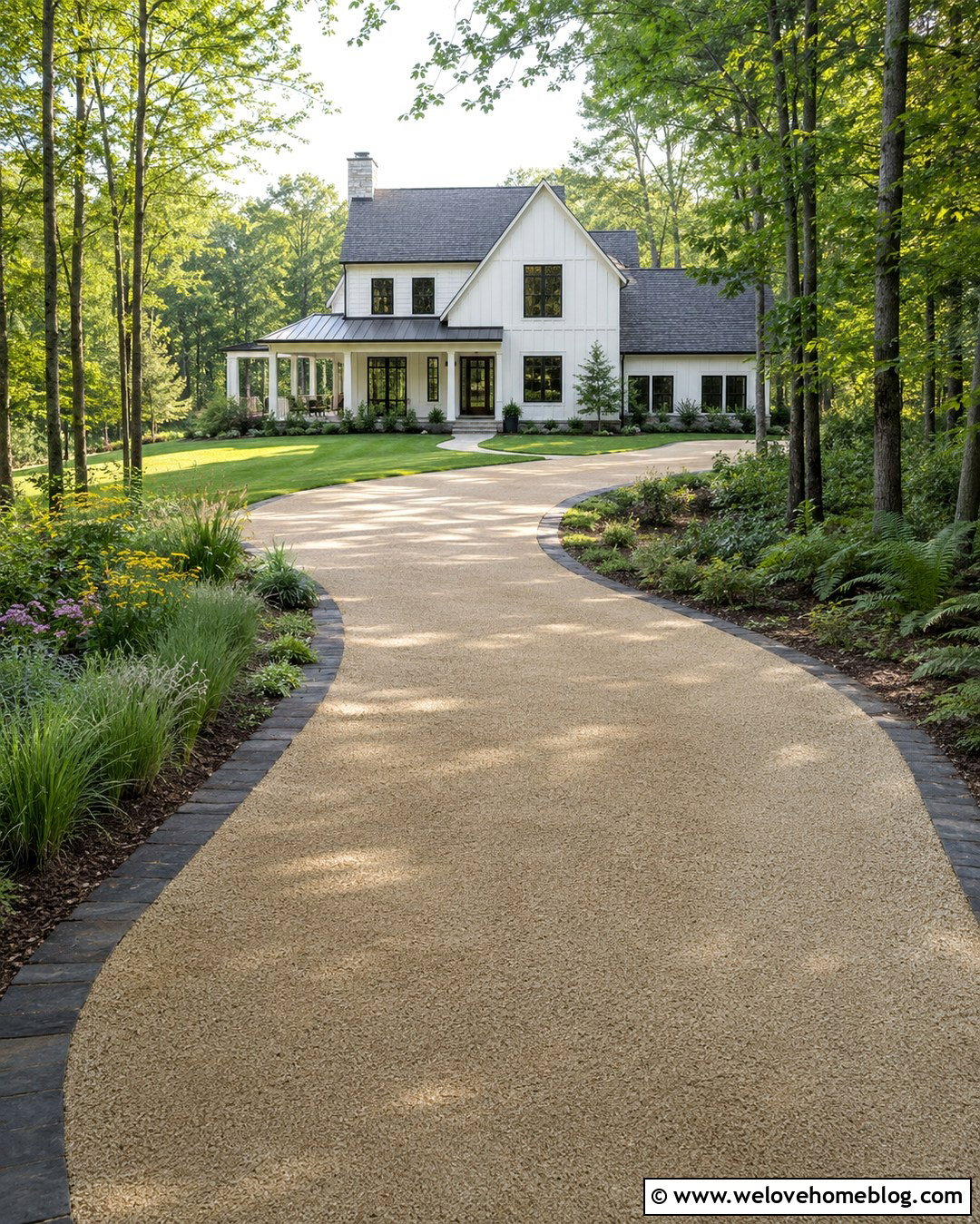
Where the tree canopy opens near the road, a small woodland meadow can soften the transition between sunny frontage and shaded forest. Use a buff-colored decomposed granite driveway with a broad curve leading toward a contemporary farmhouse. Edge the surface with weathered steel or dark granite to keep the material contained. In the brighter entrance zone, plant locally appropriate grasses and native flowering perennials in repeating drifts. Gradually replace them with ferns, sedges, and shade-tolerant shrubs as the driveway enters the woods. This change in planting mirrors the natural shift in light conditions. Keep the meadow trimmed or mowed at the driveway edge for a deliberate finish and clear visibility. The result feels colorful and relaxed while preserving a practical, uncluttered driving corridor through the property.
19. Wooded Driveway With Stepped Planting Beds
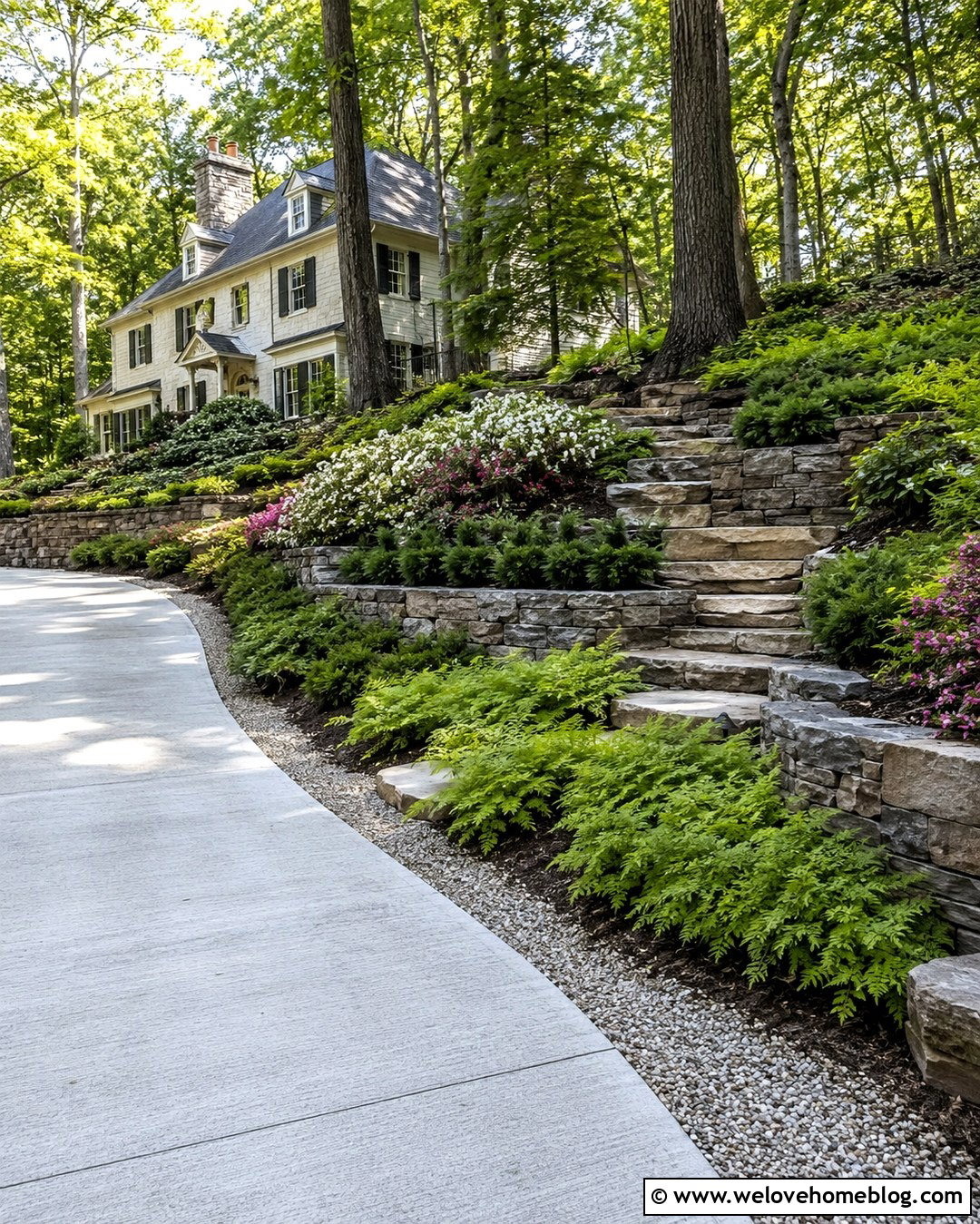
A steep bank beside a driveway can become a layered garden instead of an eroding slope. Pair a curved light-gray concrete driveway with several low retaining terraces made from rough-cut local stone. Keep the beds broad enough for healthy planting but simple enough to maintain safely. Use evergreen shrubs on the upper levels, flowering woodland shrubs in the middle, and ferns or spreading ground covers near the driveway. Repeat plant groups across the terraces so the slope does not appear cluttered. On the opposite edge, install a narrow gravel shoulder and low shade plants to balance the stronger stonework. The terraced layout should follow the land’s contours and preserve established trees where practical. Consult qualified professionals when walls, roots, utilities, or slope stability make construction technically complex.
20. Modern Wooded Driveway With Minimal Planting
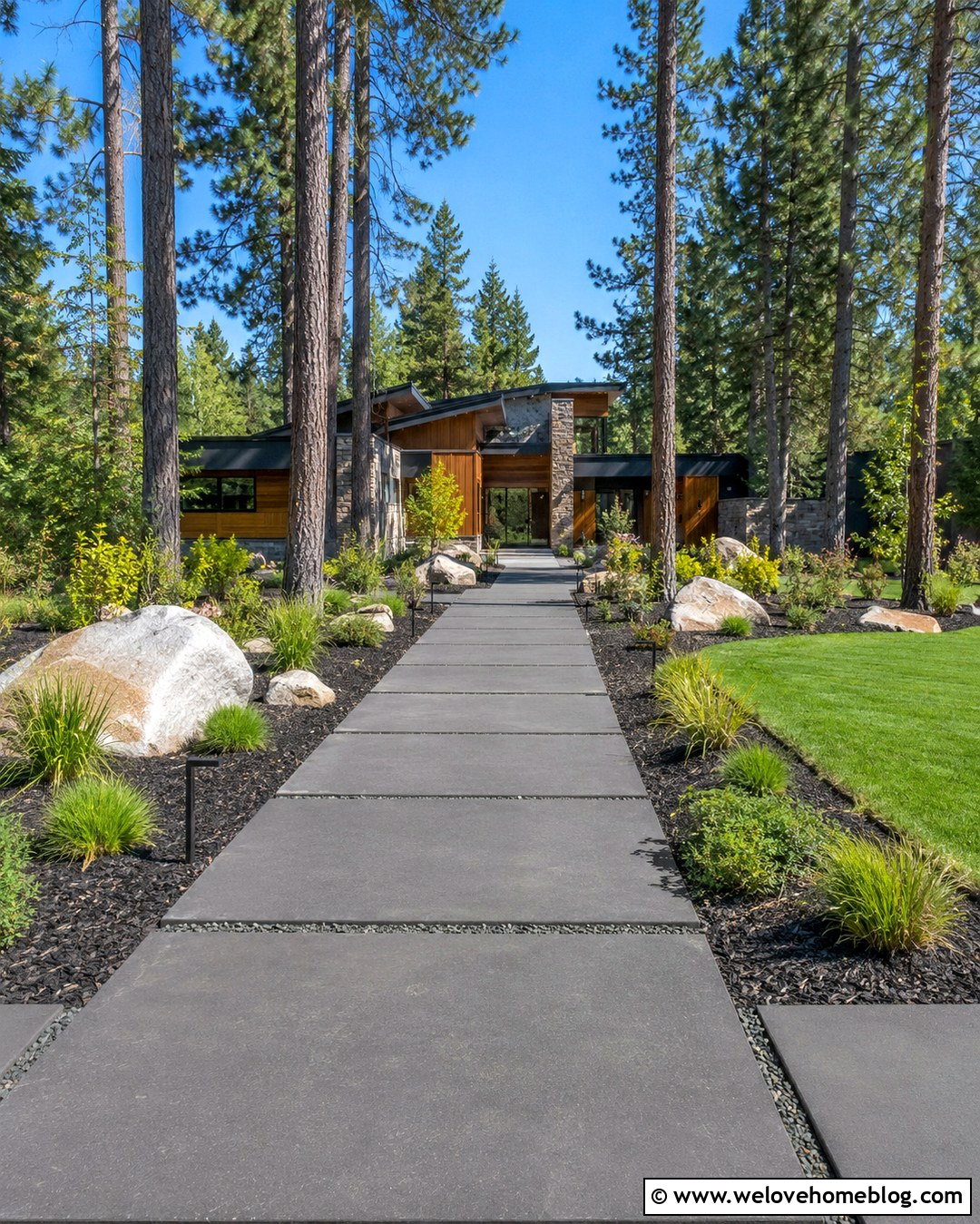
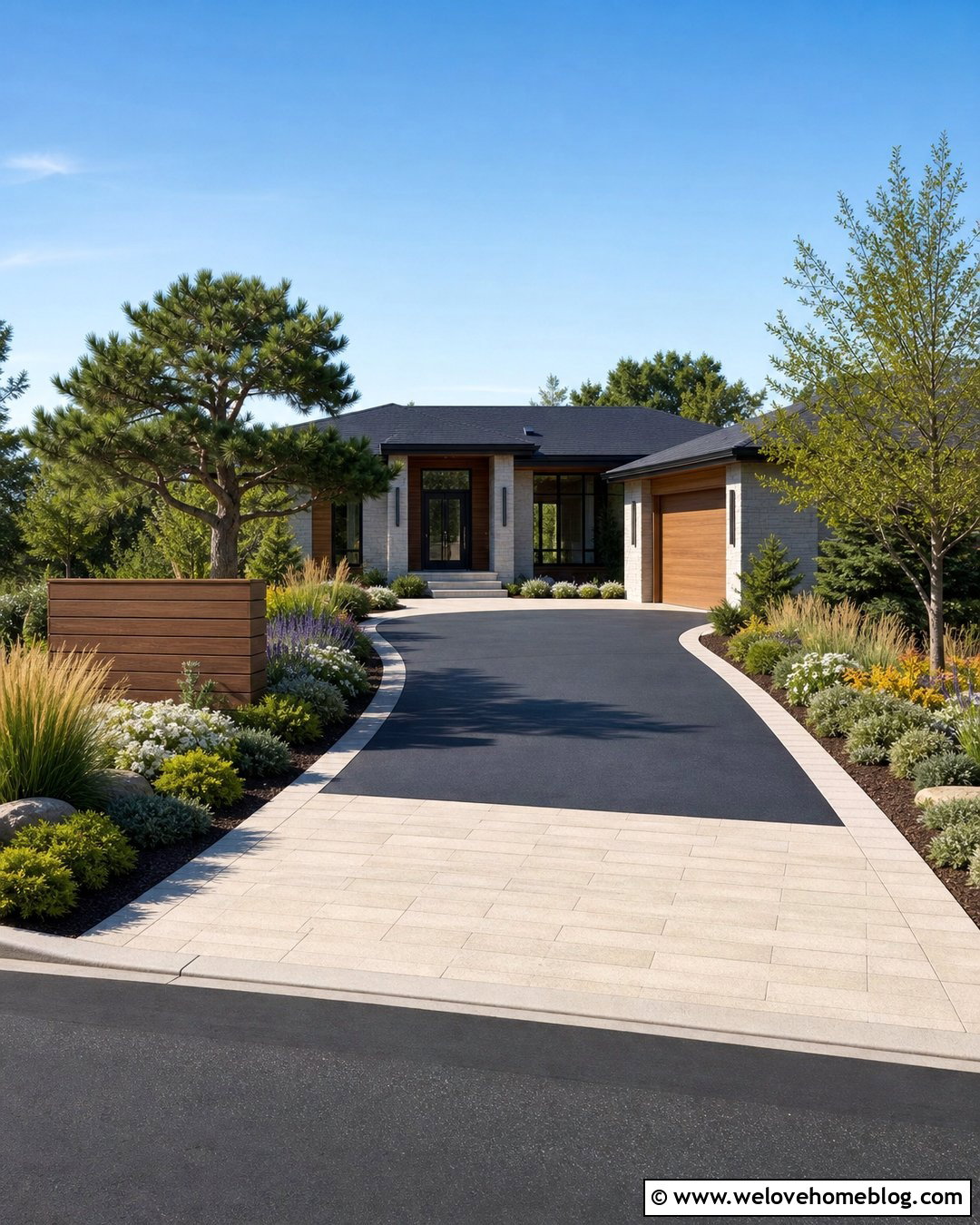
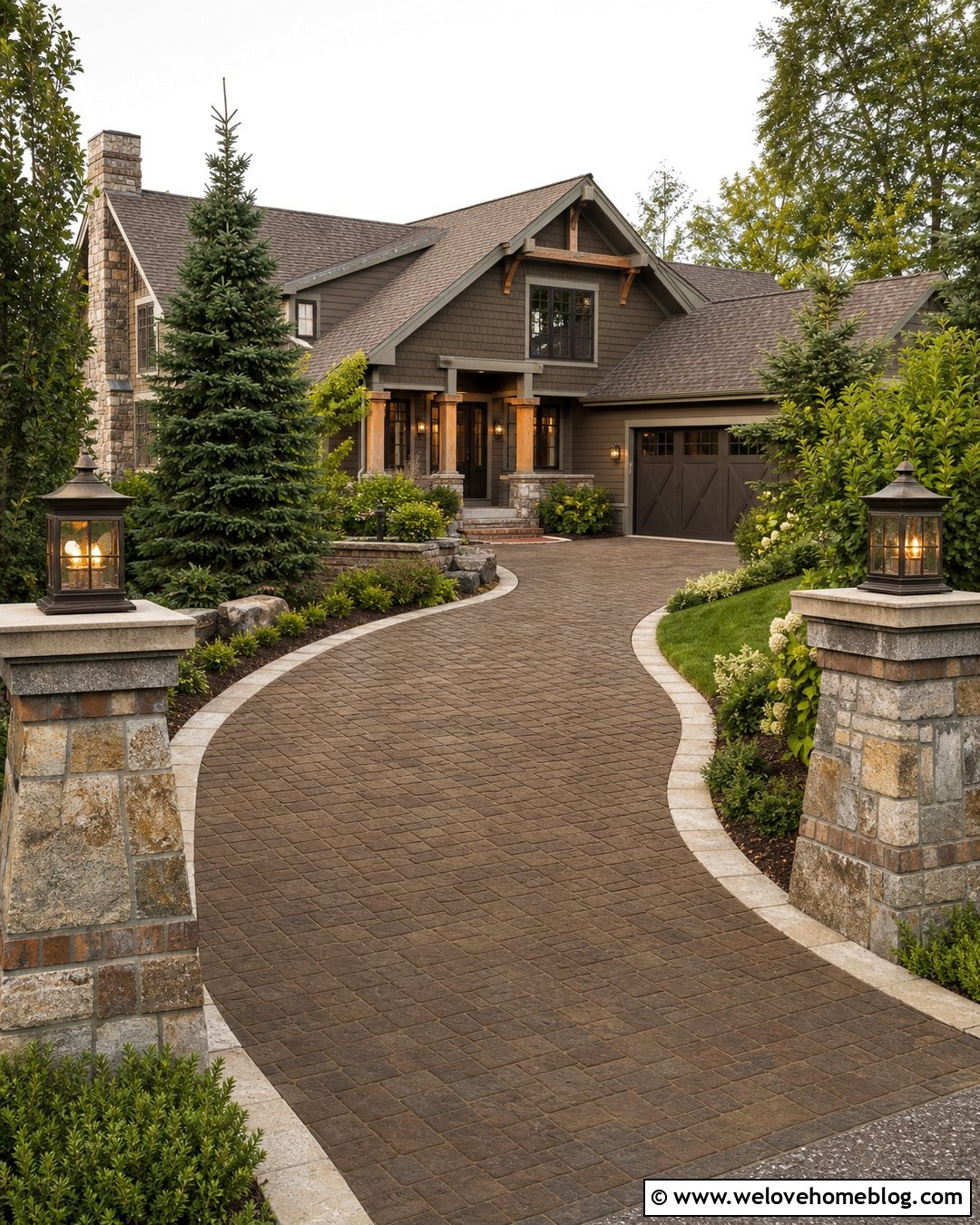
Minimal landscaping can be highly effective when mature trees already provide the main visual interest. Use large-format charcoal concrete pavers for a straight driveway leading to a modern house with wood and stone siding. Separate the pavers with narrow gravel joints or restrained dark borders. Along both sides, create clean beds of black mulch, sculptural boulders, low evergreen grasses, and compact native shrubs. Preserve selected tree trunks as vertical focal points, but remove only unsafe or poorly placed vegetation after appropriate assessment. Add a simple linear walkway and discreet black lighting fixtures near the ground. The limited material palette lets the architecture, driveway, and forest canopy work together. It also creates a calm arrival area that feels designed without requiring colorful, formal planting along the entire route.
Conclusion:
The strongest wooded driveway landscapes balance a clear driving route with the irregular beauty of the surrounding forest. Start with a surface and shape suited to the site, then connect them to practical edging, drainage, shade-tolerant planting, and safe lighting. Gravel, asphalt, concrete, pavers, and permeable materials can all work when their color and finish complement the trees and house. Preserve valuable trunks, avoid crowding roots, and choose plants for the property’s actual light, soil, moisture, and climate. Whether you prefer a rustic gravel curve or a modern paver approach, these **20 wooded driveway landscaping ideas** can help you create an entrance that feels polished, functional, and naturally connected to its setting.

Related posts:
Leave a Reply