
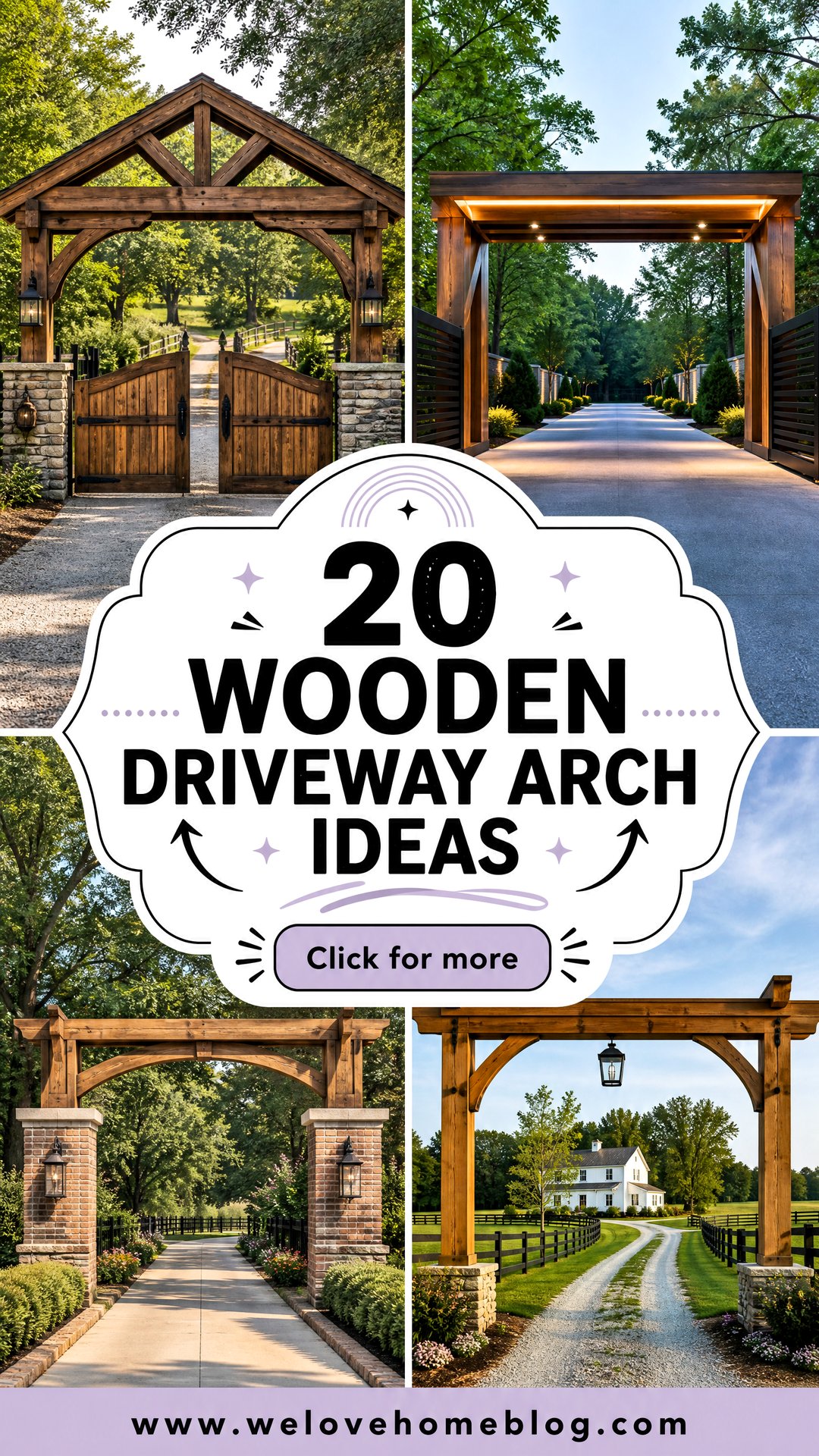
The right wooden entrance can turn an ordinary driveway into a warm, memorable approach to your home. These 20 wooden driveway arch ideas explore complete entrance looks, pairing timber structures with practical driveway materials, gates, borders, lighting, and landscaping. A well-proportioned arch creates a clear focal point while connecting the driveway to the home’s architecture and surrounding yard. () You can choose rough cedar for a country property, painted lumber for a traditional home, or clean timber beams for a modern exterior. Before building, consider vehicle clearance, gate movement, weather exposure, and local setback requirements. Whether your driveway is narrow, circular, paved, or gravel-covered, there is a design that can make it feel more intentional. Below are 20 wooden driveway arch ideas.
1. Rustic Cedar Wooden Driveway Arch
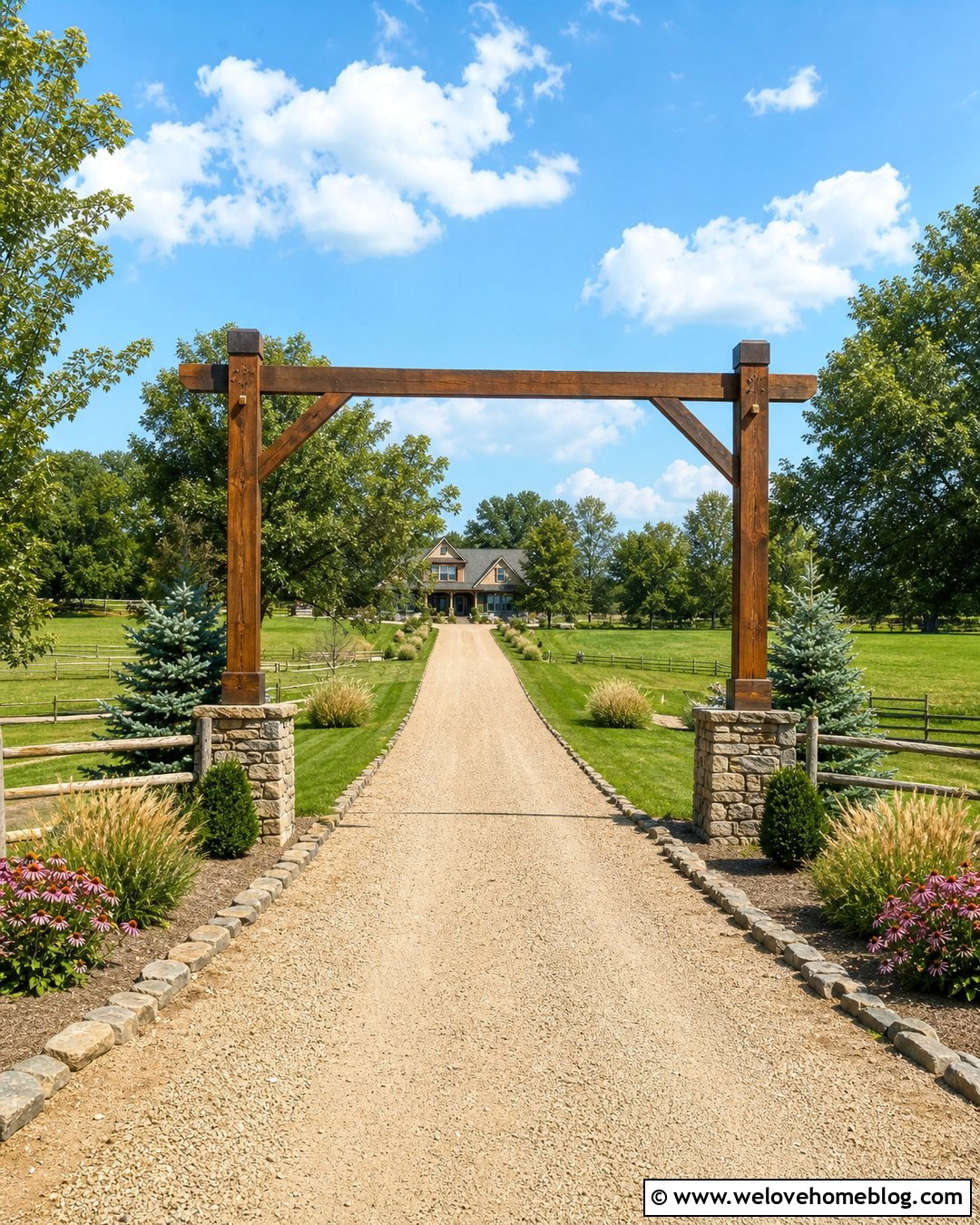
A rustic cedar arch feels naturally at home above a long gravel driveway. Use thick, square posts with a gently curved top beam to create a strong entrance without making it look formal. Medium-brown stain brings out the cedar grain while helping the wood coordinate with split-rail fencing and a country-style home. Edge the driveway with irregular fieldstones so loose gravel stays contained near the entrance. Ornamental grasses, coneflowers, and low evergreen shrubs can soften the posts without narrowing the driving area. Leave the arch open rather than adding a gate if you want a welcoming view toward the house. A pair of simple downward-facing lights under the beam can improve visibility while keeping the structure uncluttered and suitably rustic.
2. Timber Frame Arch Over A Gravel Driveway
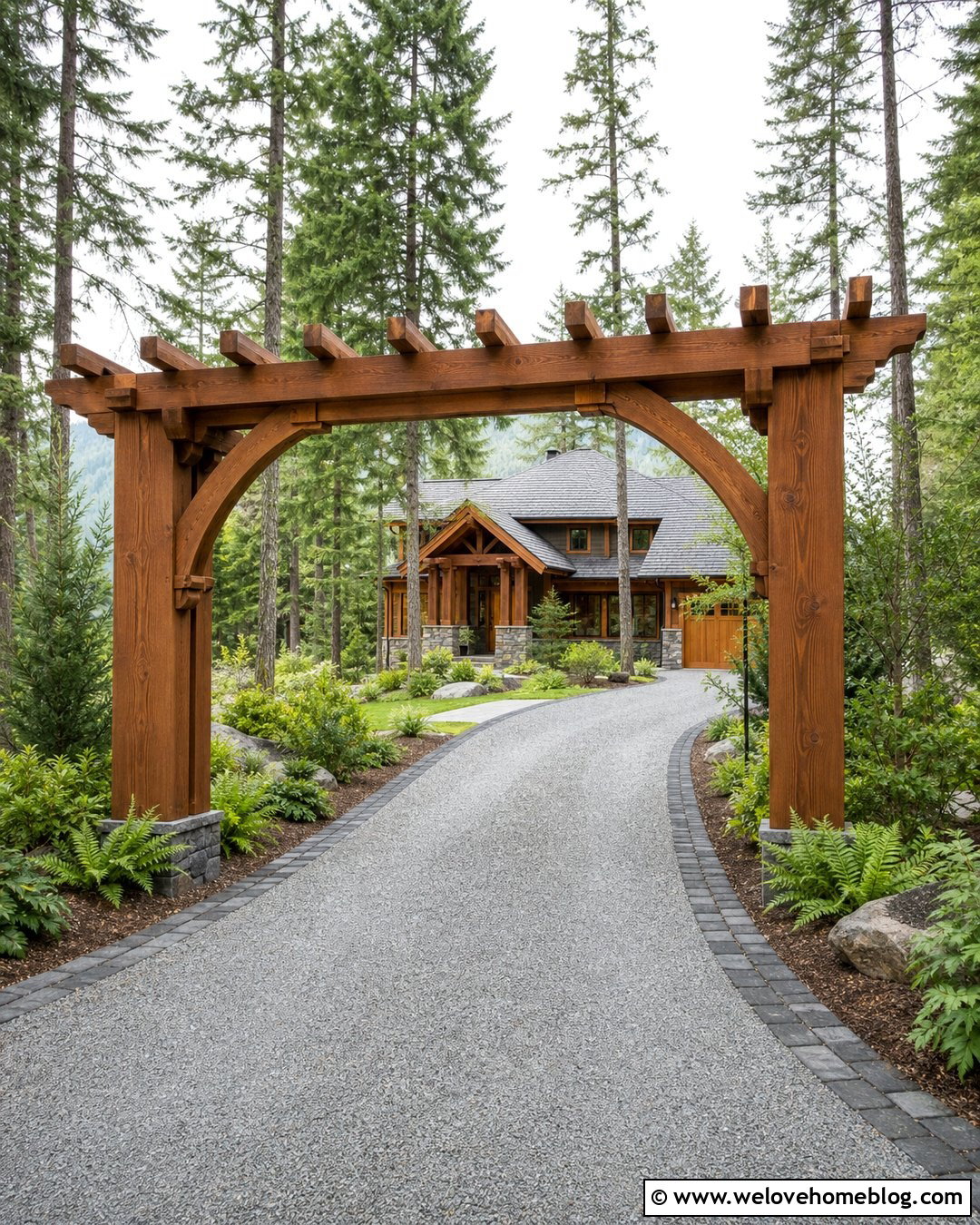
Heavy timber framing works well when the driveway entrance needs enough visual weight to match a large home or wooded property. Set substantial posts outside the gravel surface and connect them with a straight crossbeam, curved braces, and short overhead rafters. Traditional joinery details can make the structure resemble a compact barn frame. Choose angular gray gravel for a stable-looking surface, then add dark cobblestone edging where the driveway meets the road. Ferns, native grasses, and shade-tolerant shrubs will help the entrance settle into a tree-filled setting. Keep the center open and maintain generous height for delivery vehicles or equipment. Because overhead driveway structures face wind, weather, and occasional gate loads, their foundations and connections should be designed for the specific site. ()
3. Wooden Driveway Arch With Double Gates
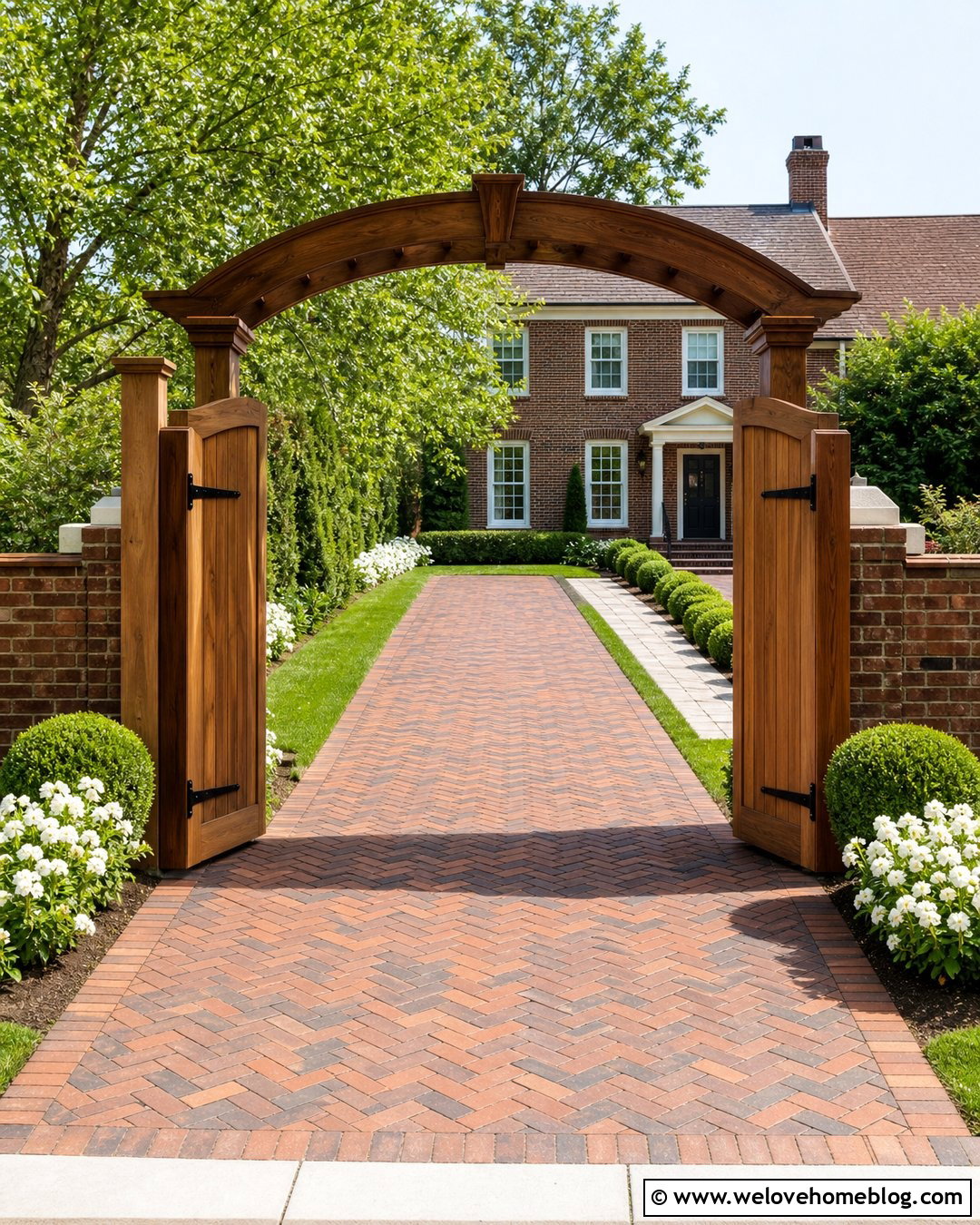
Double wooden gates can transform a simple arch into a complete and secure entrance. Build the arch with stained cedar posts and a shallow curved beam, then hang matching vertical-board gates from reinforced hinges. A light stain keeps the entrance approachable, while black metal straps add contrast and help coordinate it with nearby exterior fixtures. Clay brick pavers in a herringbone pattern provide a durable-looking surface beneath the gates and establish a clear transition from the street. Add low boxwood hedges behind the posts so they frame the entrance without interfering with gate movement. The gate leaves should open fully onto level ground and remain clear of planting beds. Repeat the wood tone on the home’s front door or porch columns to make the entrance feel connected to the property.
4. Modern Wooden Driveway Arch
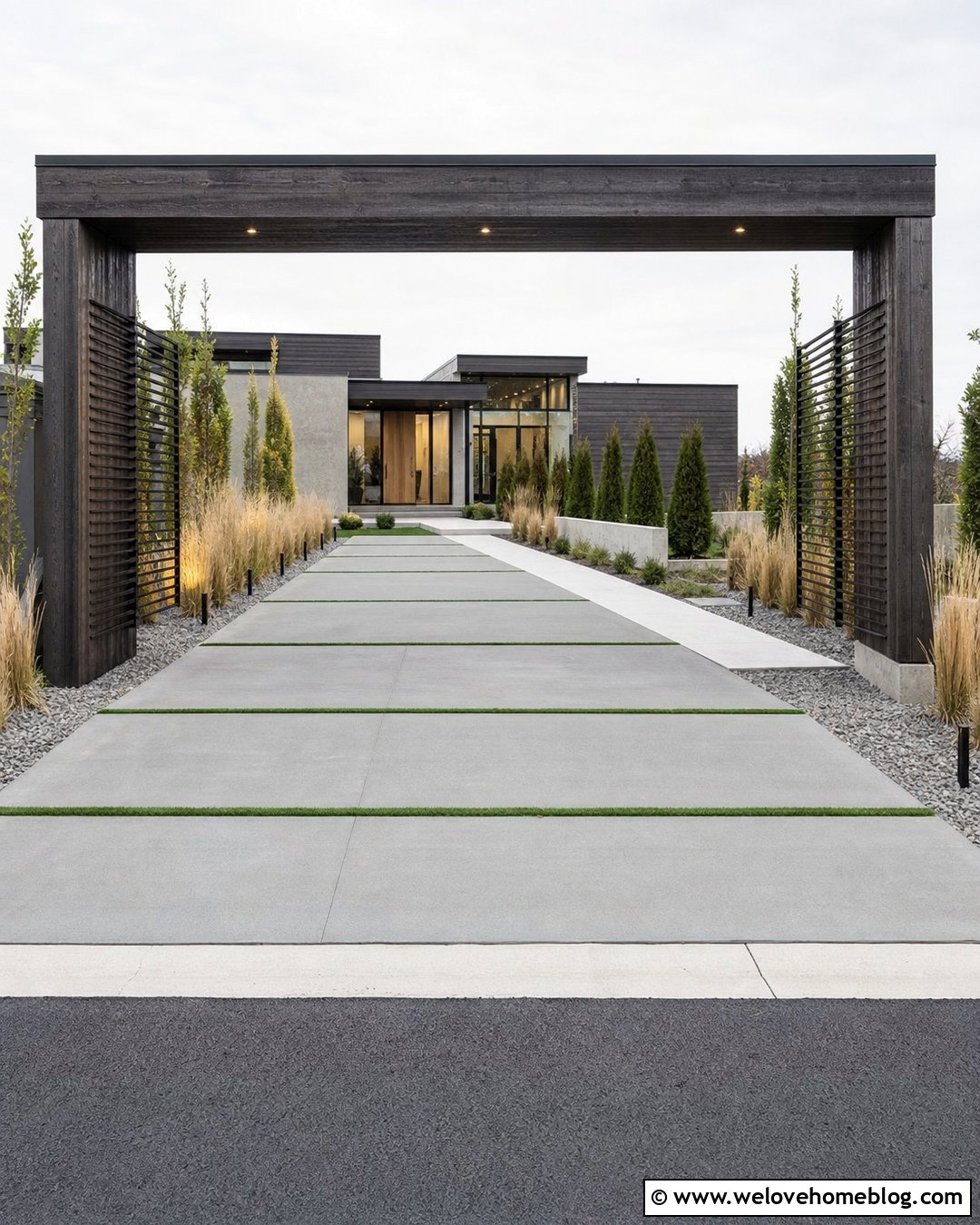
Can a wooden arch look clean and contemporary? Use smooth cedar or redwood posts, a flat horizontal beam, and slim slatted side panels instead of curved or decorative pieces. A charcoal stain gives the structure a modern finish while allowing a little wood grain to remain visible. Pair it with a straight gray poured-concrete driveway divided by narrow grass joints. Linear beds filled with feather reed grass, compact evergreens, and pale gravel will reinforce the simple geometry. Recessed lights beneath the upper beam can illuminate the driving area without introducing bulky fixtures. Keep the arch slightly wider than the concrete surface so the posts do not feel crowded. Against a white stucco or dark-sided modern house, the combination creates a strong entrance that is structured but not overly imposing.
5. White Wooden Driveway Arch
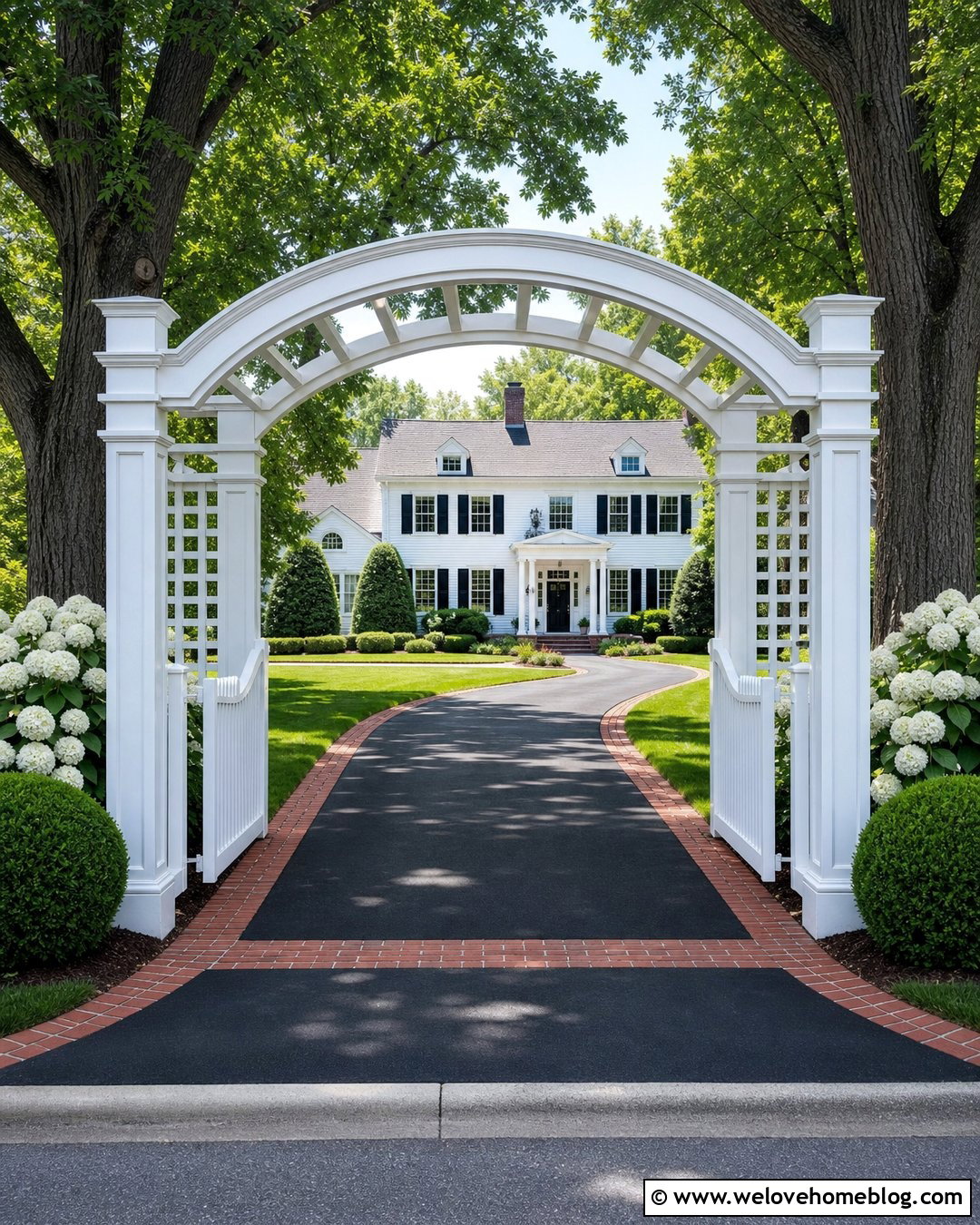
A crisp white wooden arch brings a polished finish to a colonial, Cape Cod, or traditional suburban home. Select a broad arch with square posts, layered trim, and simple lattice panels on both sides. Use exterior-grade white paint that matches the home’s window trim and porch details. A curved asphalt driveway provides practical contrast beneath the bright structure, while a red brick ribbon at the entrance adds warmth. Hydrangeas, clipped boxwoods, and a neatly maintained lawn can frame the posts and strengthen the classic appearance. Keep larger shrubs far enough back to preserve sightlines when vehicles enter the street. The arch can remain open or support lightweight white gates when privacy is needed. This design works best when the proportions are symmetrical and the landscaping is balanced on both sides.
6. Vine-Covered Wooden Driveway Arch
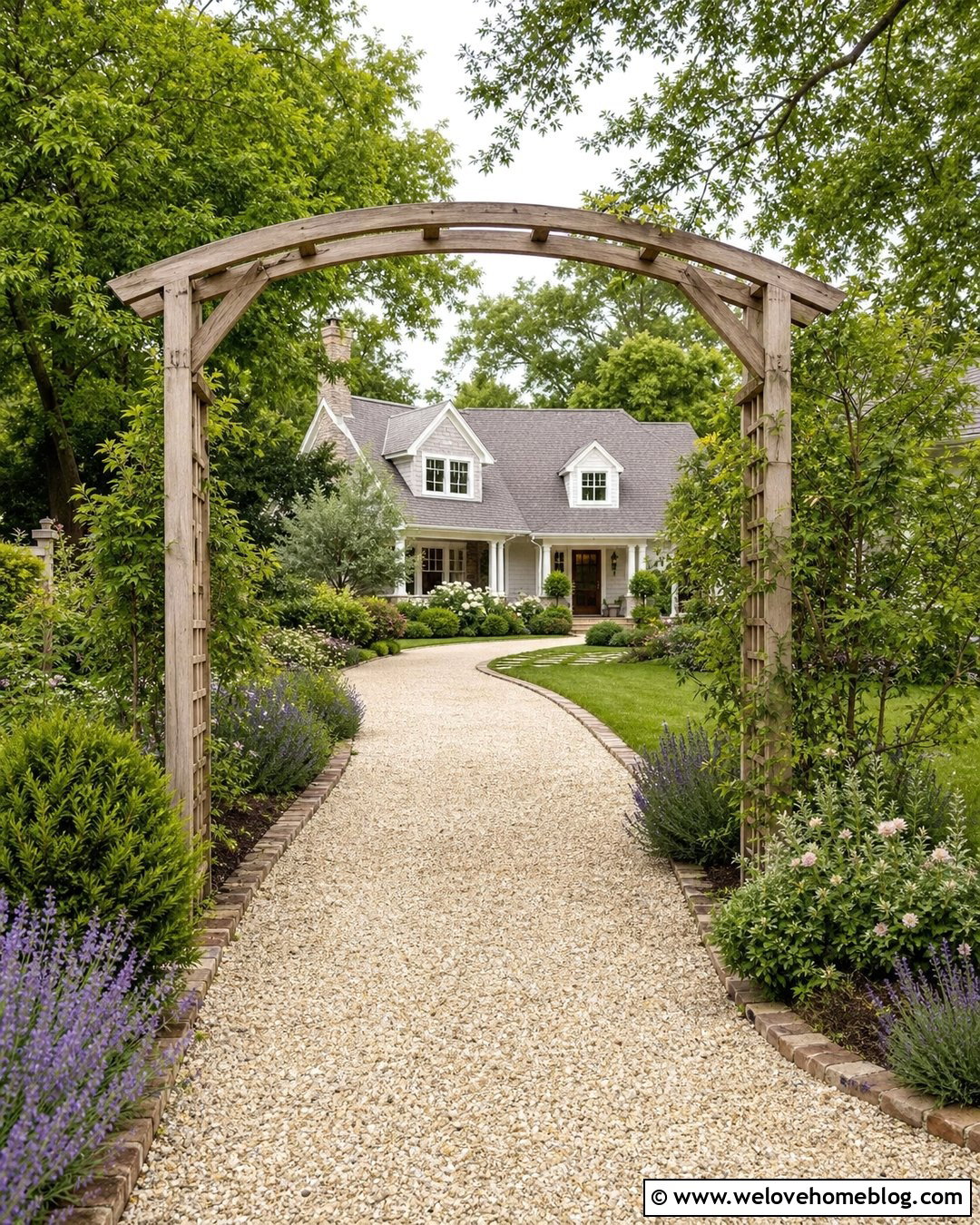
Greenery can make a substantial driveway arch feel softer and more integrated with the yard. Start with a wide cedar arbor featuring sturdy posts, open side trellises, and spaced overhead rafters. Train noninvasive climbing plants along the side panels rather than allowing heavy growth to hang over the driving lane. A pea gravel driveway with weathered brick edging creates a relaxed cottage look beneath the structure. Plant lavender, catmint, shrub roses, and low evergreen mounds around the base for layered color and texture. Regular pruning is essential so branches do not hide lighting, reduce clearance, or trap too much moisture against the wood. The finished entrance should frame the house in the distance, combining the wooden structure, gravel surface, and garden planting into one welcoming view.
7. Wooden Driveway Arch With Stone Pillars
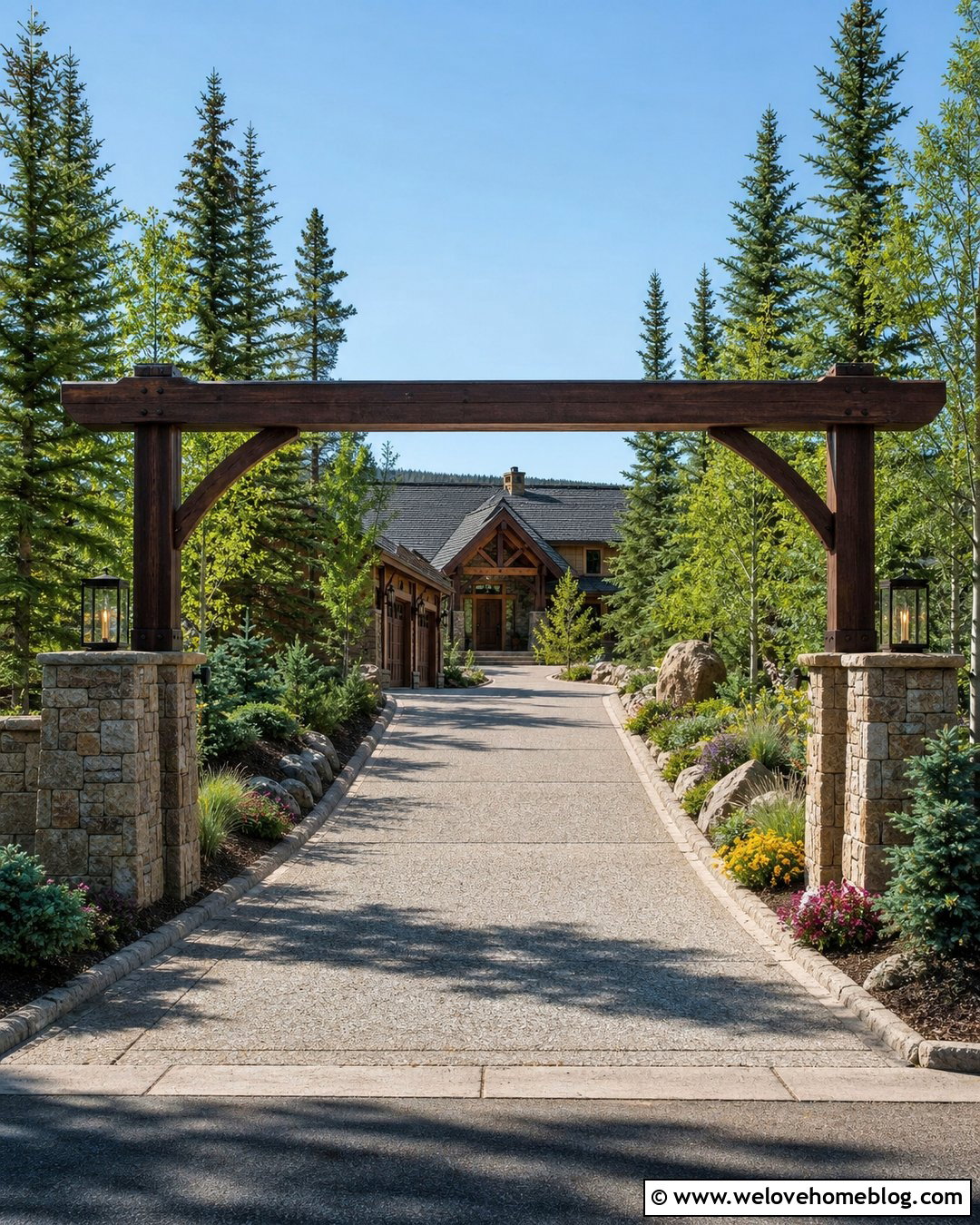
Stone pillars give a wooden arch a permanent, grounded appearance. Build two broad columns from local fieldstone or stone veneer, then span the driveway with a warm-stained timber beam and curved wooden braces. The stone should repeat colors found on the home’s foundation, chimney, or front walkway. An exposed aggregate concrete driveway complements the natural texture without competing with it. Place matching stone curbs along the first section of the approach and transition to simple planting beds filled with juniper, ornamental grasses, and seasonal flowers. Lanterns mounted to the pillars can provide practical entrance lighting while leaving the beam visually clean. If gates are included, their hinges and automation equipment should be planned before construction. The result suits craftsman, mountain, lodge, and upscale rustic homes particularly well.
8. Wooden Driveway Arch With Brick Columns
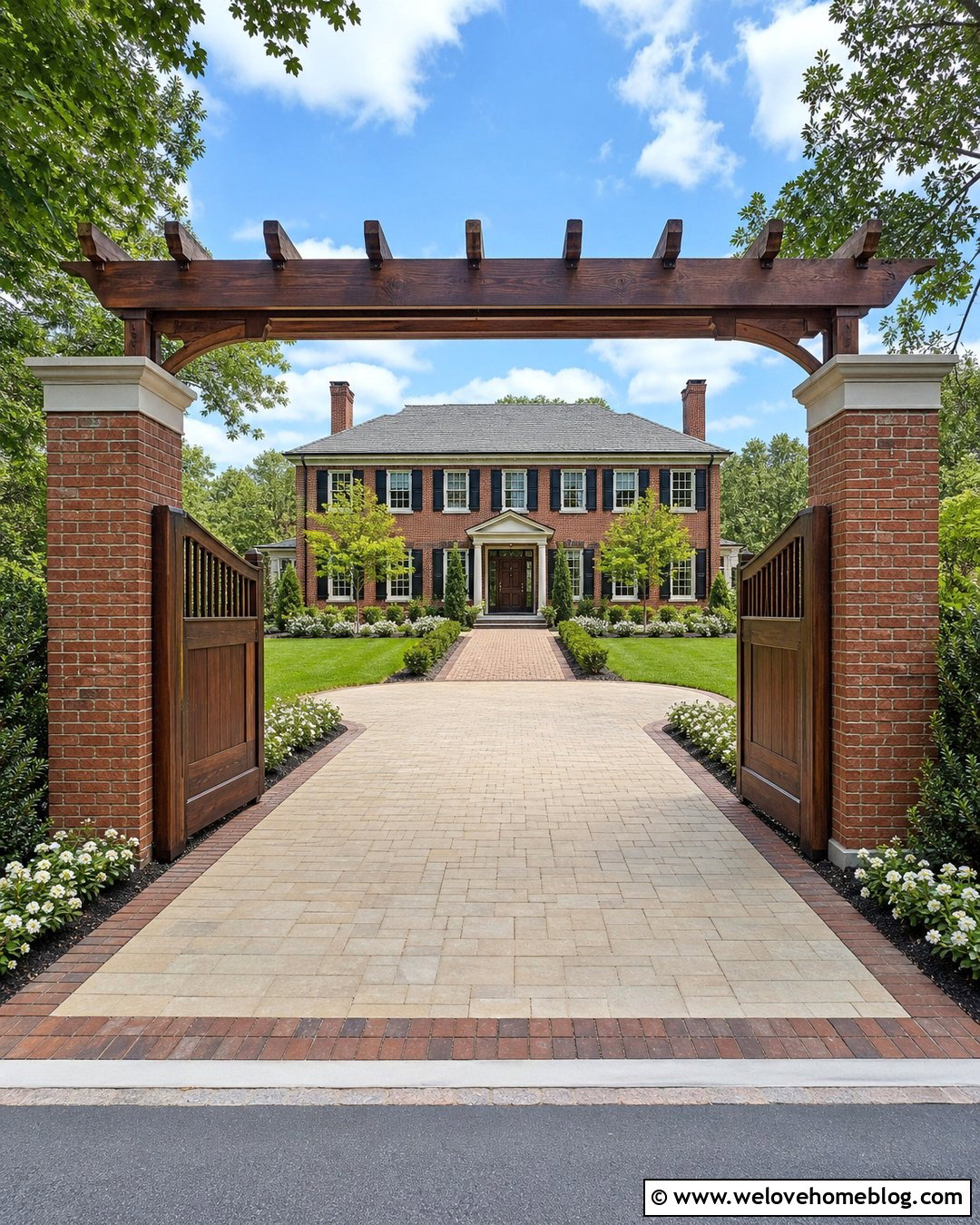
Warm brick columns and dark wood create an entrance that feels established and traditional. Use tapered red brick pillars with simple stone caps, then connect them using a deep walnut-stained wooden arch. A pair of open-board gates can sit below the beam, or the center can remain unobstructed for easier daily access. Continue the brick onto the driveway as a soldier-course border around tan concrete pavers. This repeated material makes the entrance and driving surface feel like one planned design. Plant upright hollies behind the columns and low white flowers closer to the curb for a neat, layered frame. The brick color should relate closely to the home’s facade rather than introducing an unrelated red tone. This look works especially well with colonial, Georgian, and traditional brick houses.
9. Ranch Wooden Driveway Arch
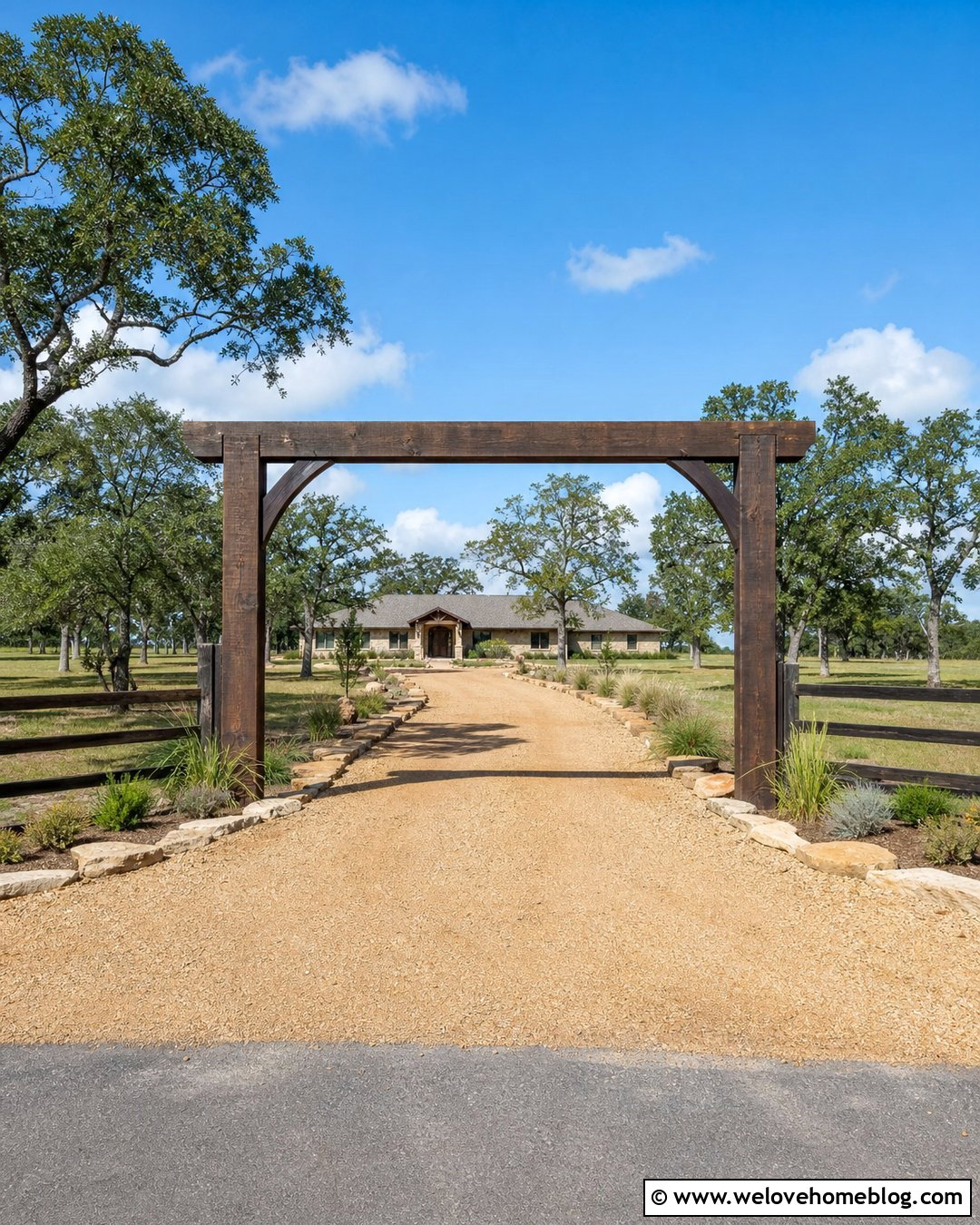
Picture a broad gravel entrance opening toward pasture fencing and a low ranch house. A rough-sawn wooden arch can define that approach without looking too refined. Use oversized posts, a straight top beam, and diagonal braces cut from pressure-treated pine or naturally durable timber. Dark brown stain will coordinate with split-rail fencing and help the structure stand out against an open landscape. Cover the driveway with compacted tan crushed stone and install larger stone edging near the roadside. Native grasses and drought-tolerant shrubs can surround the posts while requiring less formal maintenance. A simple ranch emblem or blank decorative panel may be centered on the beam, provided it does not reduce clearance. The overall entrance should feel wide, practical, and visually connected to the land beyond it.
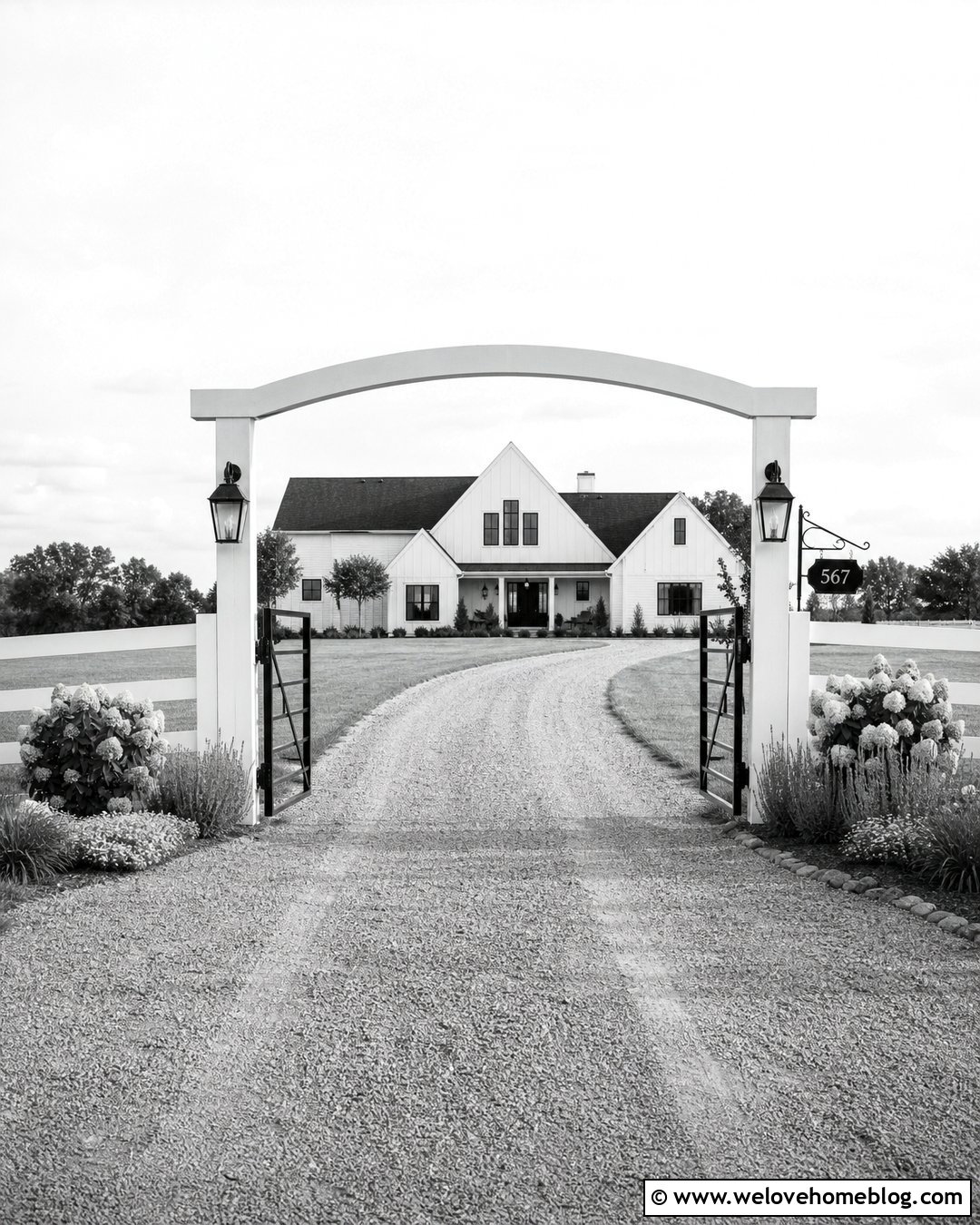
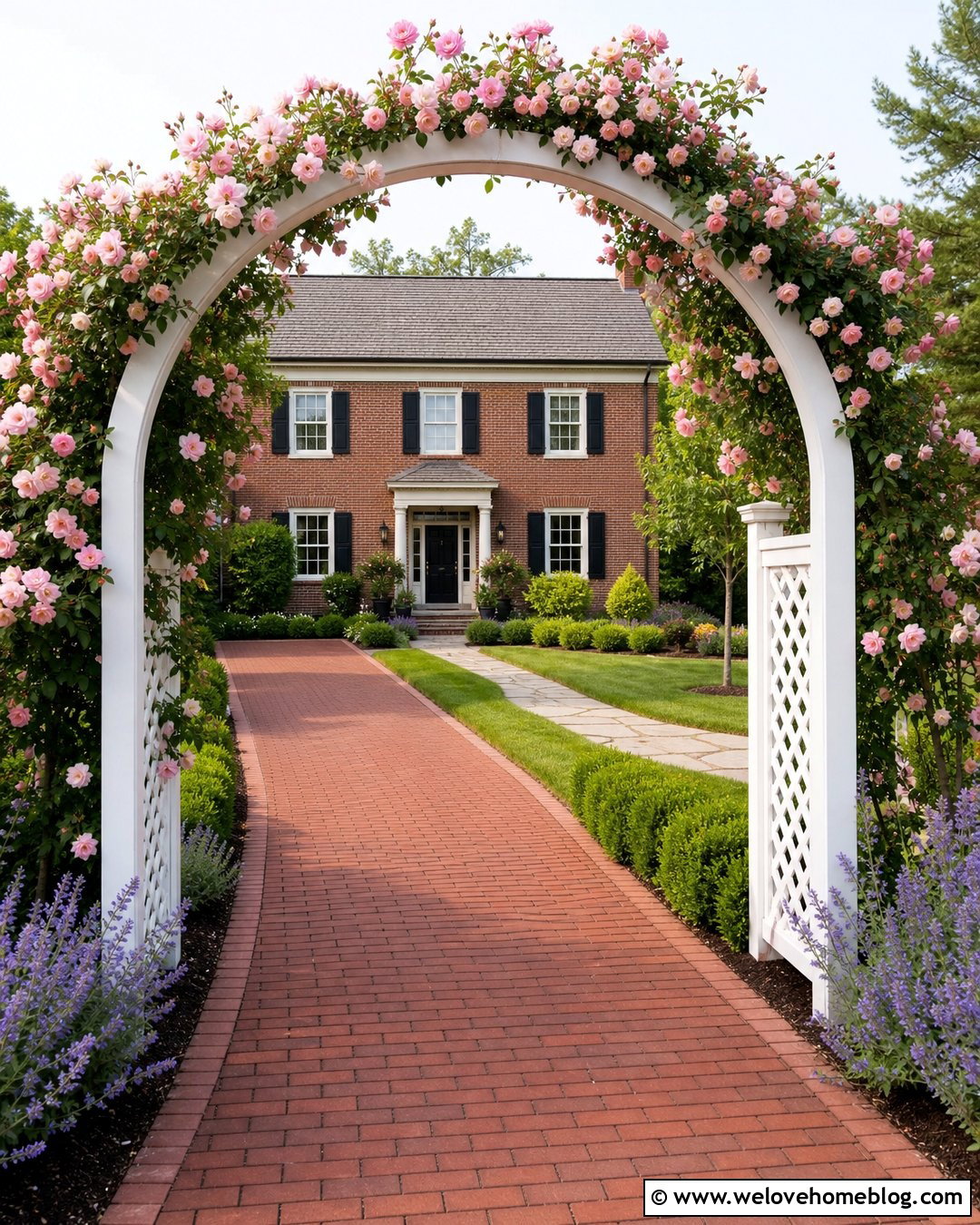
10. Craftsman Wooden Driveway Arch
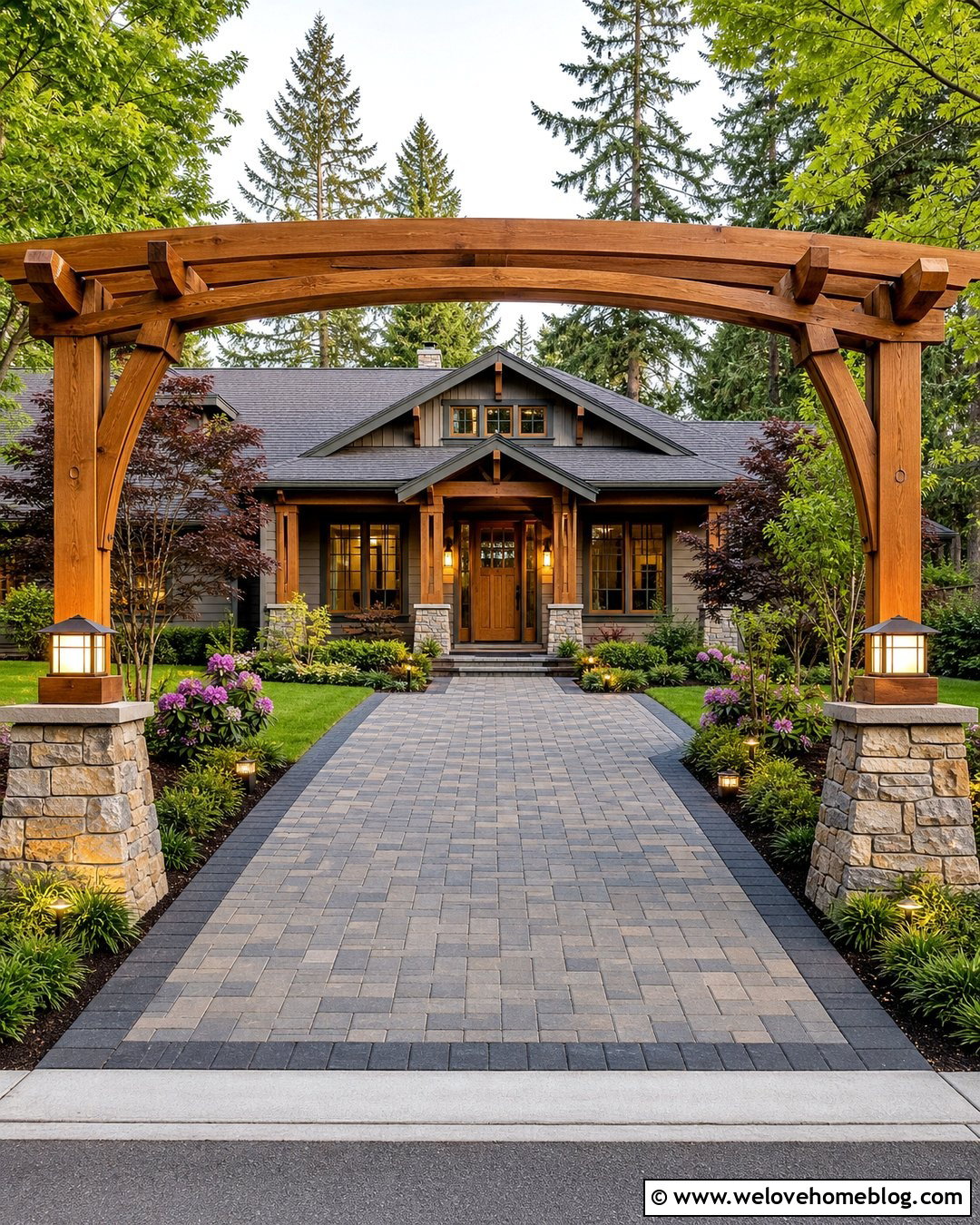
Craftsman architecture calls for an arch with visible structure and carefully balanced details. Choose tapered stone bases, thick stained-wood posts, a straight beam, and substantial curved brackets. A medium oak finish will complement exposed porch rafters, wooden garage doors, and other craftsman features. Beneath the arch, install concrete pavers in mixed charcoal and warm gray tones, finished with a darker paver border. Layer the surrounding beds with Japanese forest grass, compact rhododendrons, and small ornamental trees. Low column lights can illuminate the entrance while preserving the handcrafted character of the timber. Avoid excessive scrollwork or thin lattice, which may feel disconnected from the home’s heavier proportions. Repeating the bracket shape or stain color elsewhere on the property will make the arch look original to the house.
11. Farmhouse Wooden Driveway Arch
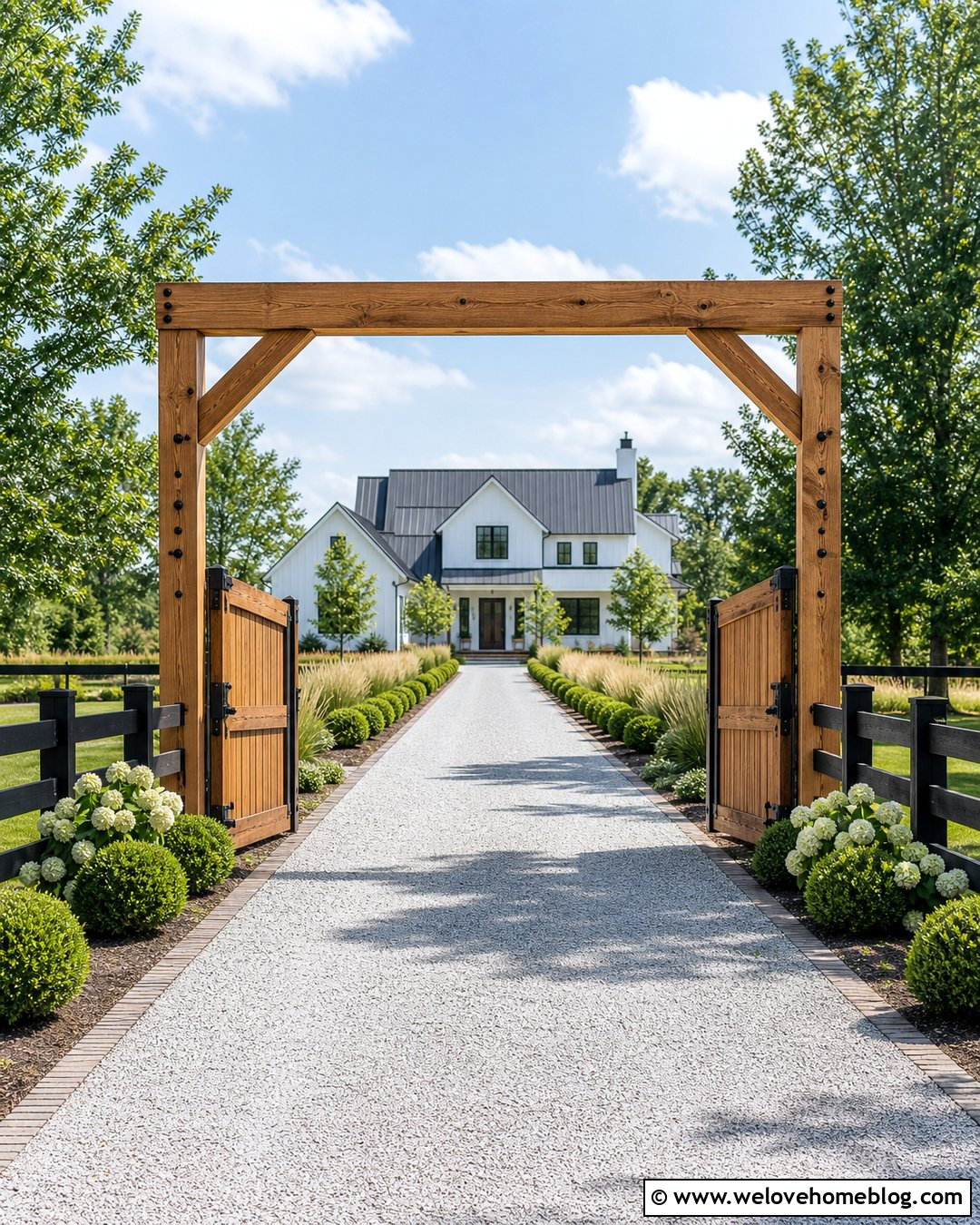
A farmhouse entrance should feel simple, useful, and welcoming from the road. Build a white-oak or cedar arch with a broad straight beam, exposed black bolts, and modest diagonal braces. A natural honey stain pairs comfortably with a white modern farmhouse and black-framed windows. Use pale gray gravel for the driveway, then define the entrance with reclaimed-brick edging and short sections of black post-and-rail fencing. Rounded boxwoods, white hydrangeas, and groups of ornamental grasses add structure without making the setting too formal. If gates are desired, choose open board-and-batten panels that preserve a view toward the house. Downward-facing black fixtures can be attached to the posts for practical lighting. The completed look combines modern farmhouse contrast with enough natural wood texture to keep the entrance warm.
12. Curved Wooden Driveway Arch
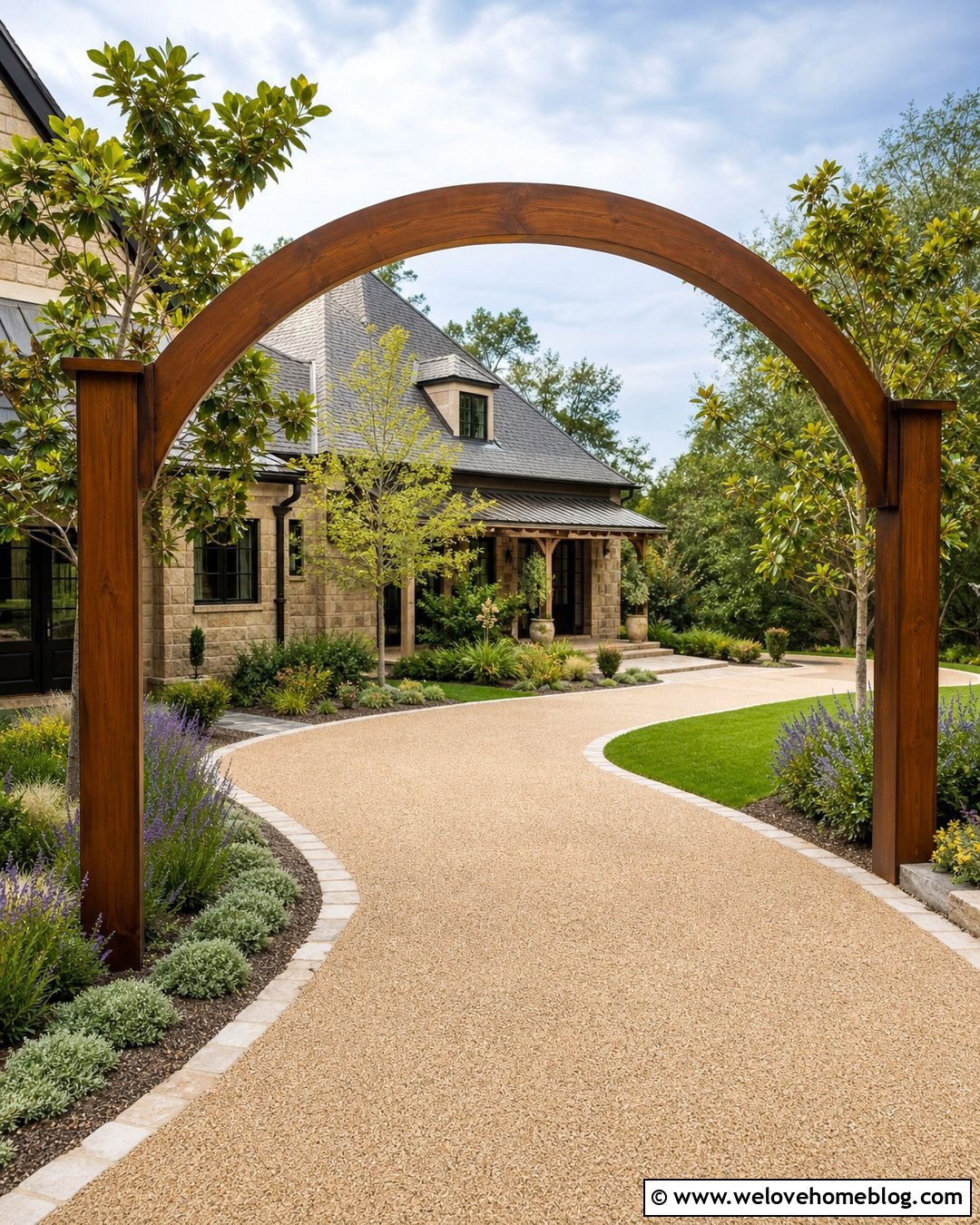
A true curved arch creates a softer profile than a standard timber crossbeam. Laminated wood or carefully joined curved sections can form a smooth semicircular opening above the driveway. Stain the arch a rich chestnut color and support it with straight posts anchored outside a curved resin-bound gravel drive. Use warm beige resin-bound gravel with a narrow granite-sett border to emphasize the sweeping layout. Plant matching ornamental trees behind each post and fill lower beds with salvia, dwarf grasses, and creeping ground cover. Keep the curve visually clean instead of covering it with heavy vines or large signs. Since curved members and their connections require careful fabrication, the shape should be planned around the required span and clearance. This graceful entrance suits transitional, cottage, and contemporary country homes.
13. Japanese-Inspired Wooden Driveway Arch
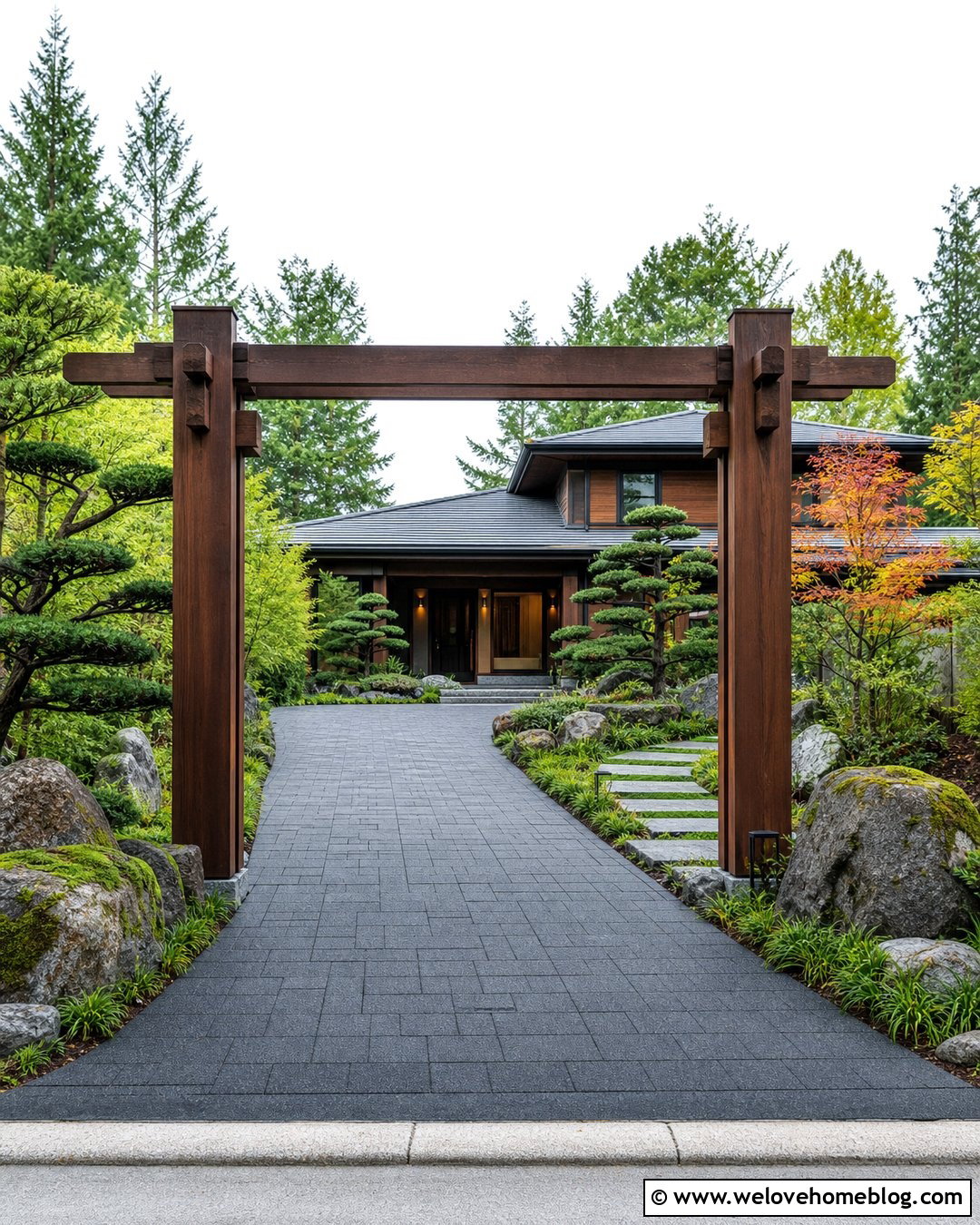
A Japanese-inspired entrance works through restraint, proportion, and a close relationship with the landscape. Use dark-stained cedar posts with a gently extended top beam and smaller secondary beam below it. Keep the joinery visible and avoid elaborate decoration. A dark gray permeable paver driveway provides a quiet, orderly surface beneath the structure. Frame the approach with mossy boulders, cloud-pruned evergreens, Japanese forest grass, and one carefully placed ornamental maple. A stepping-stone walkway can run beside the driveway without crossing the vehicle path. Concealed lighting beneath the beam will maintain the clean silhouette during the day. This entrance should feel calm rather than theatrical, so allow open space around the posts. A modern home with natural siding or charcoal stucco makes an especially fitting background.
14. Coastal Wooden Driveway Arch
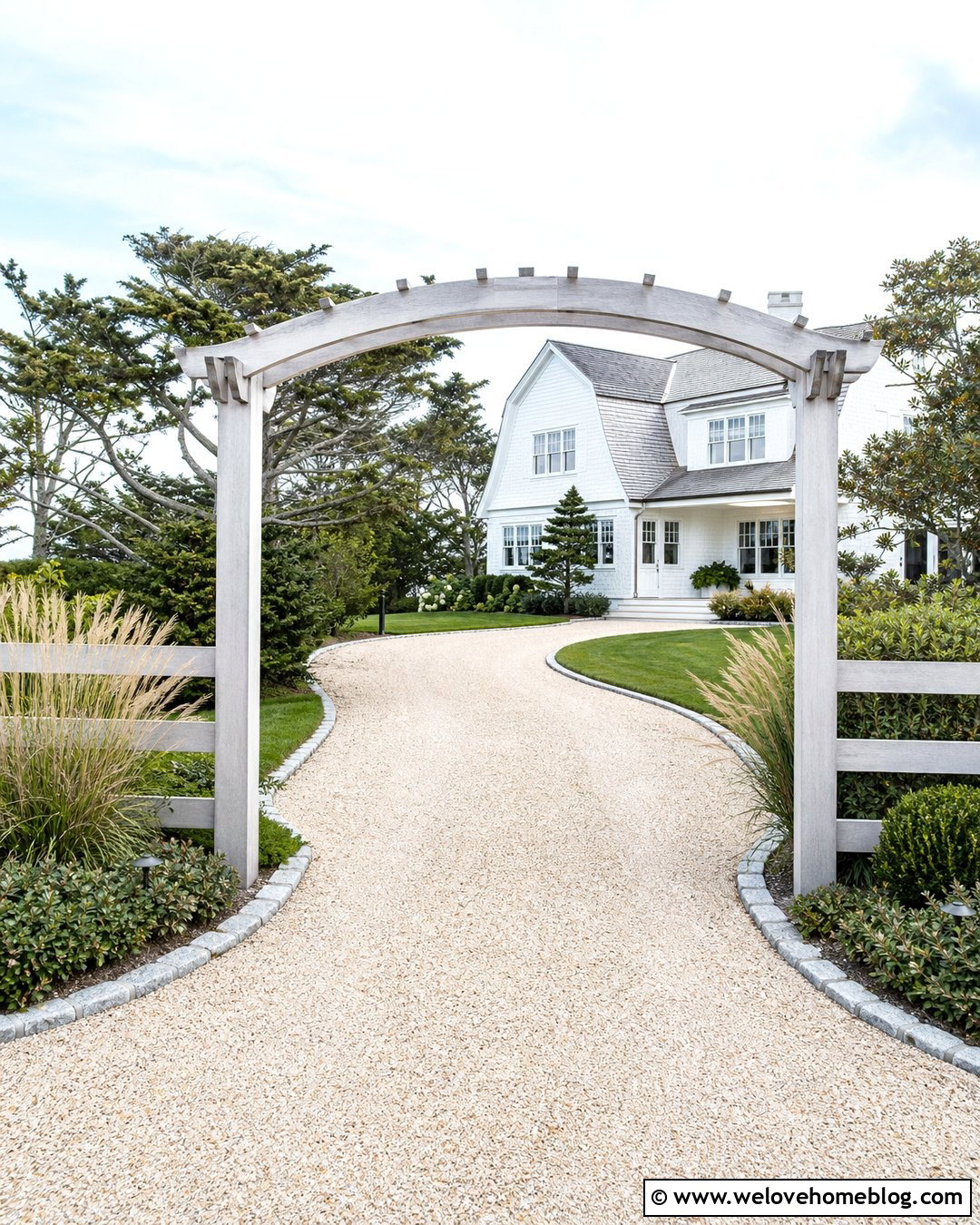
Light colors and weathered finishes help a wooden driveway arch suit a coastal home. Build the structure from cedar with a pale gray stain, using square posts, a shallow curved beam, and open horizontal side rails. A light tan shell gravel driveway or pale crushed-stone surface will keep the entrance bright and casual. Define the edges with granite cobbles that tolerate a sandy, informal landscape. Beach grass, inkberry holly, bayberry, and other wind-tolerant plants can frame the posts without producing a crowded garden look. Use simple matte-black or marine-inspired fixtures for contrast, but avoid excessive nautical decoration. A white-shingled or blue-gray coastal house should remain visible through the opening. The completed arch will feel relaxed and appropriate while still giving the driveway a clearly defined beginning.
15. Reclaimed Wood Driveway Arch
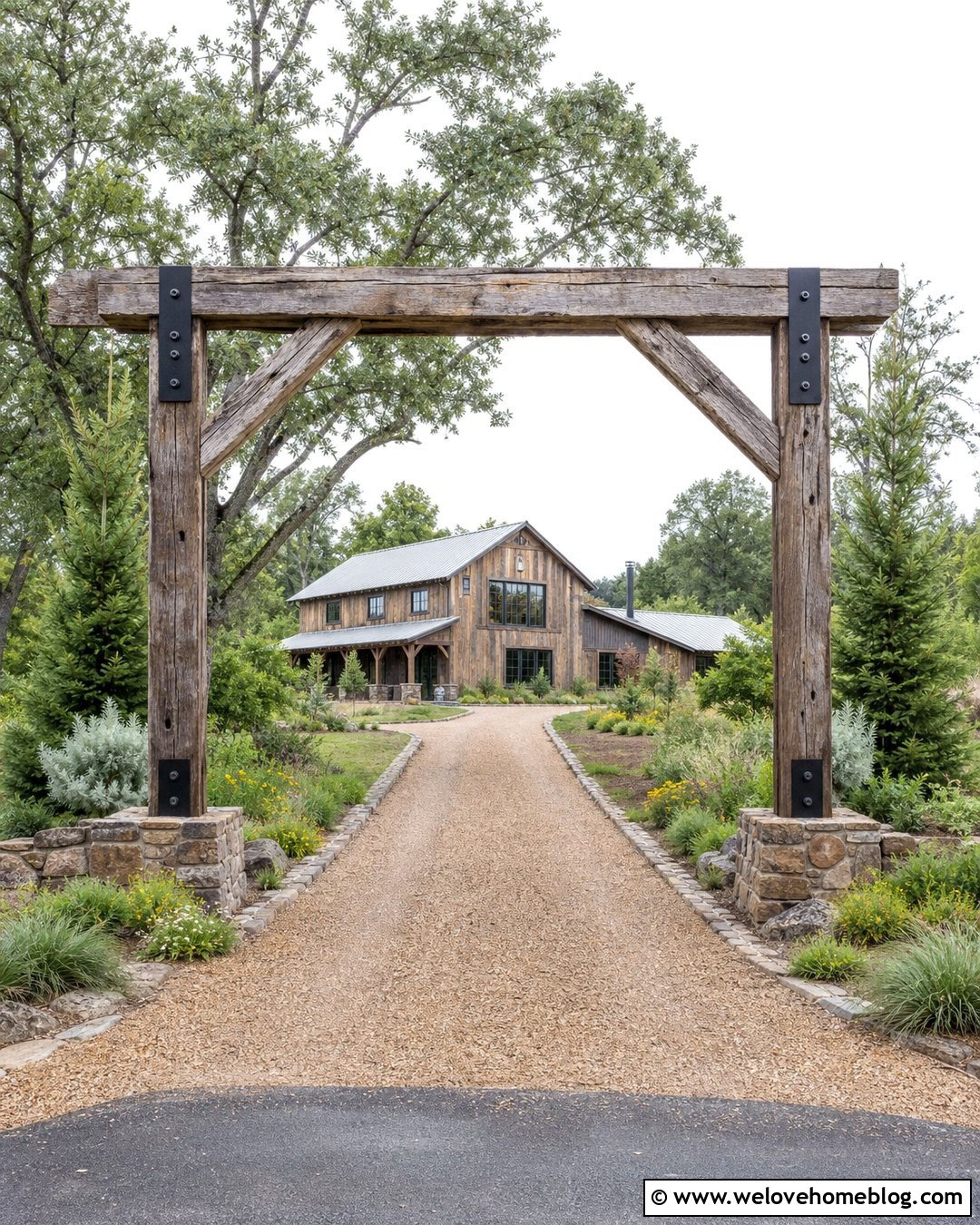
Weathered reclaimed timber brings texture and history to a country driveway entrance. Select sound beams with visible saw marks, knots, and natural color variation, but have every structural piece checked before installation. Use two thick posts, an irregular-edged crossbeam, and simple braces rather than trying to make the aged wood look overly polished. A brown crushed-granite driveway with timber-and-stone edging supports the rugged character. Surround the arch with native wildflowers, low grasses, and a few evergreen shrubs so the entrance feels natural throughout the year. Black steel connector plates can reinforce the rustic appearance while visually tying the structure together. Keep reclaimed wood elevated above wet soil and use appropriate protection for exterior exposure. This design pairs especially well with cabins, barns, and renovated country homes.
16. Wooden Driveway Arch With Solar Lights
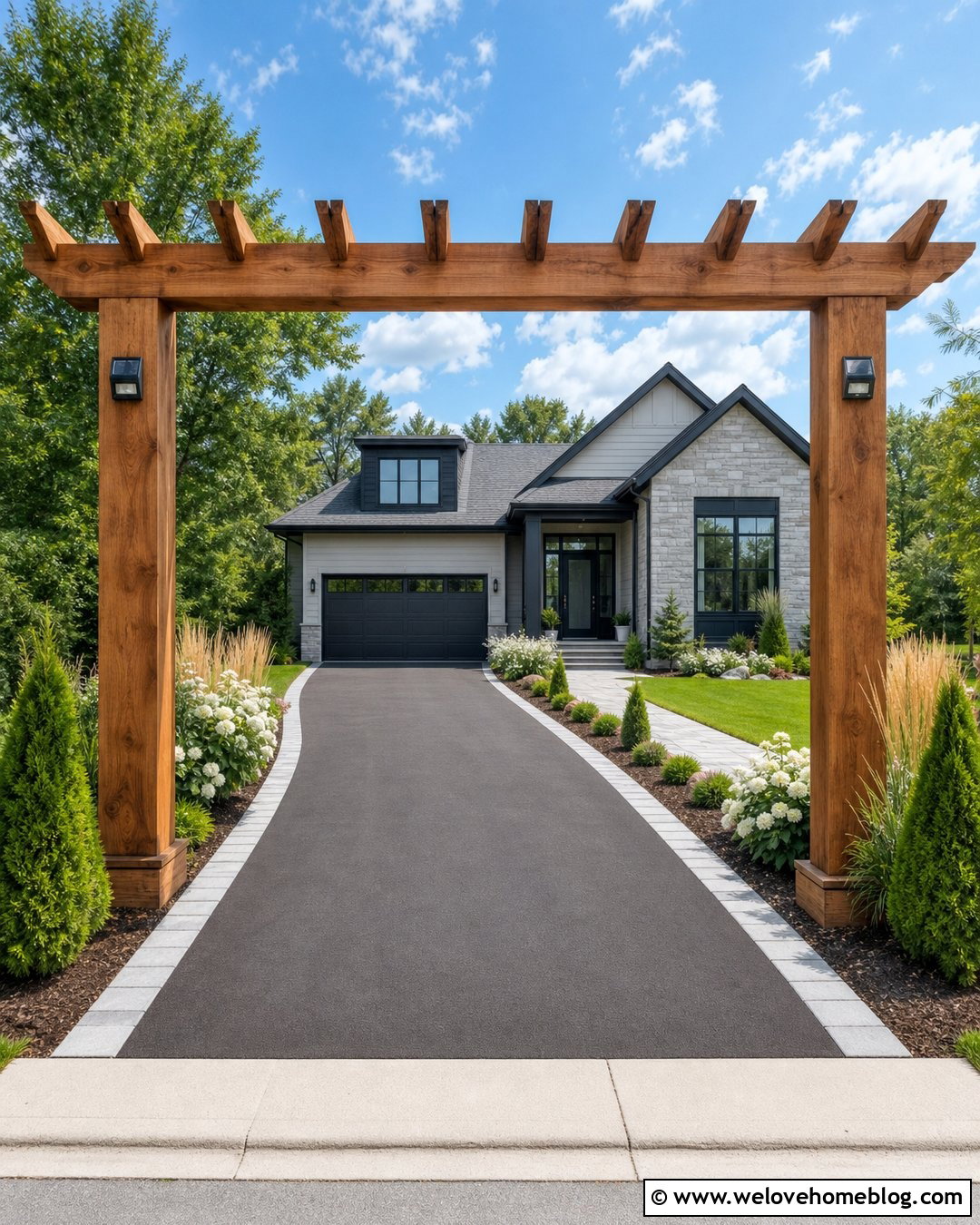
Lighting can be incorporated without allowing fixtures and wiring to dominate the arch. Choose a medium-stained cedar structure with a straight beam, open rafters, and small solar fixtures placed on the outer posts. Additional downward lights can illuminate the entrance apron while avoiding glare toward the street. Pair the arch with a black asphalt driveway and a light-gray concrete paver border, creating strong definition during daylight. Plant compact evergreens, white flowering shrubs, and ornamental grasses around the posts where they will not shade the solar panels. The house should remain visible through the center so the lighting guides attention along the driveway. Select fixtures with a simple profile that complements the exterior architecture. This complete look is practical for entrances located far from an existing electrical connection.
17. Wooden Driveway Arch With Address Sign
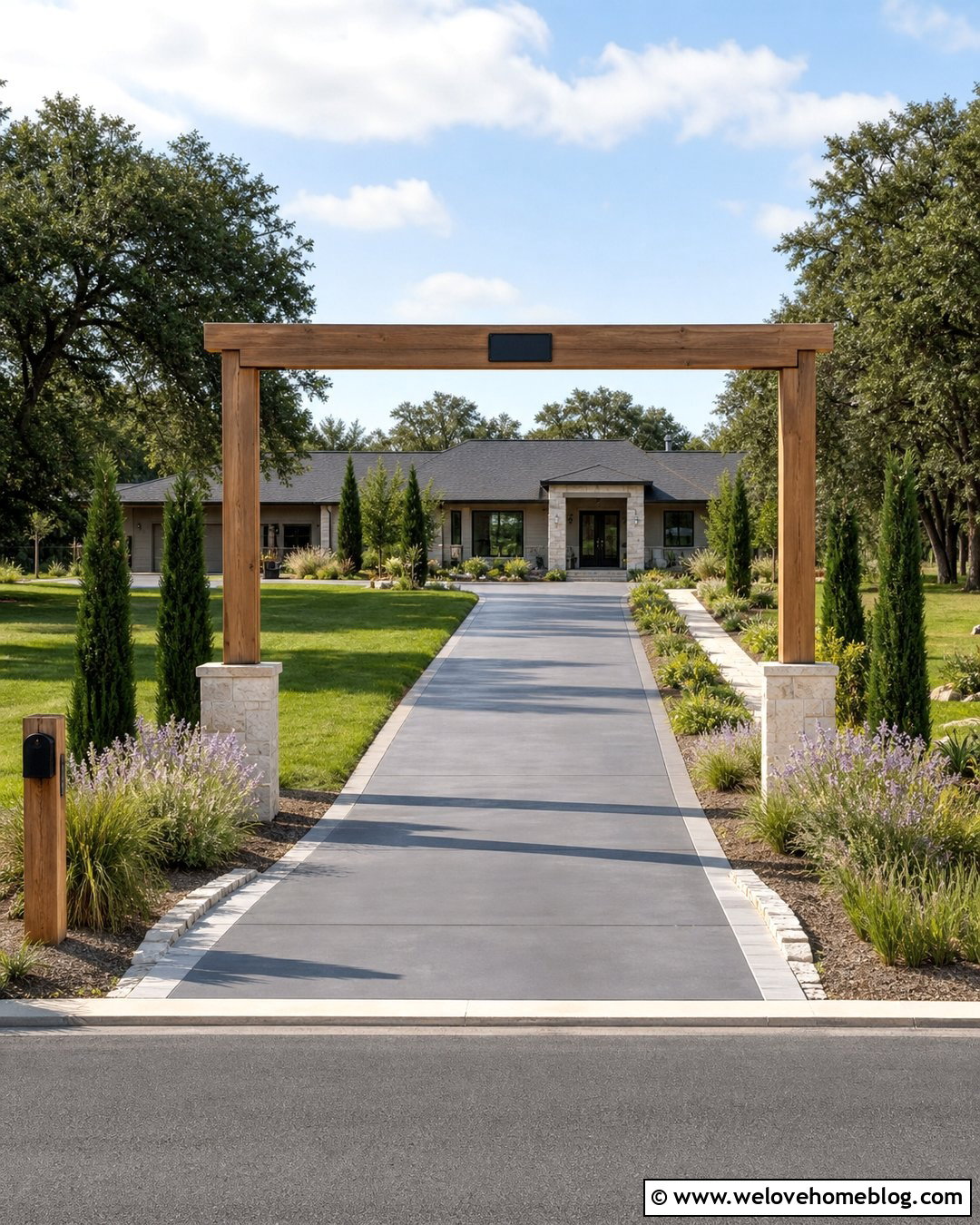
A wooden arch can make an address marker visible without adding another freestanding post near the road. Use a wide cedar beam with a small centered plaque mounted above the required vehicle clearance. Choose high-contrast numbers sized for roadside visibility, then keep the remaining decoration minimal. A straight charcoal concrete driveway with pale limestone borders creates a clean approach beneath the arch. On both sides, plant upright junipers, low sedges, and small flowering perennials that will not conceal the sign as they mature. Matching mailbox and walkway details can carry the same wood and metal finishes toward the house. Add shielded lights above the plaque if local conditions require nighttime visibility. Before installation, confirm that the arch and sign placement comply with local right-of-way and addressing requirements.
18. Wooden Driveway Arch With Split-Rail Fencing
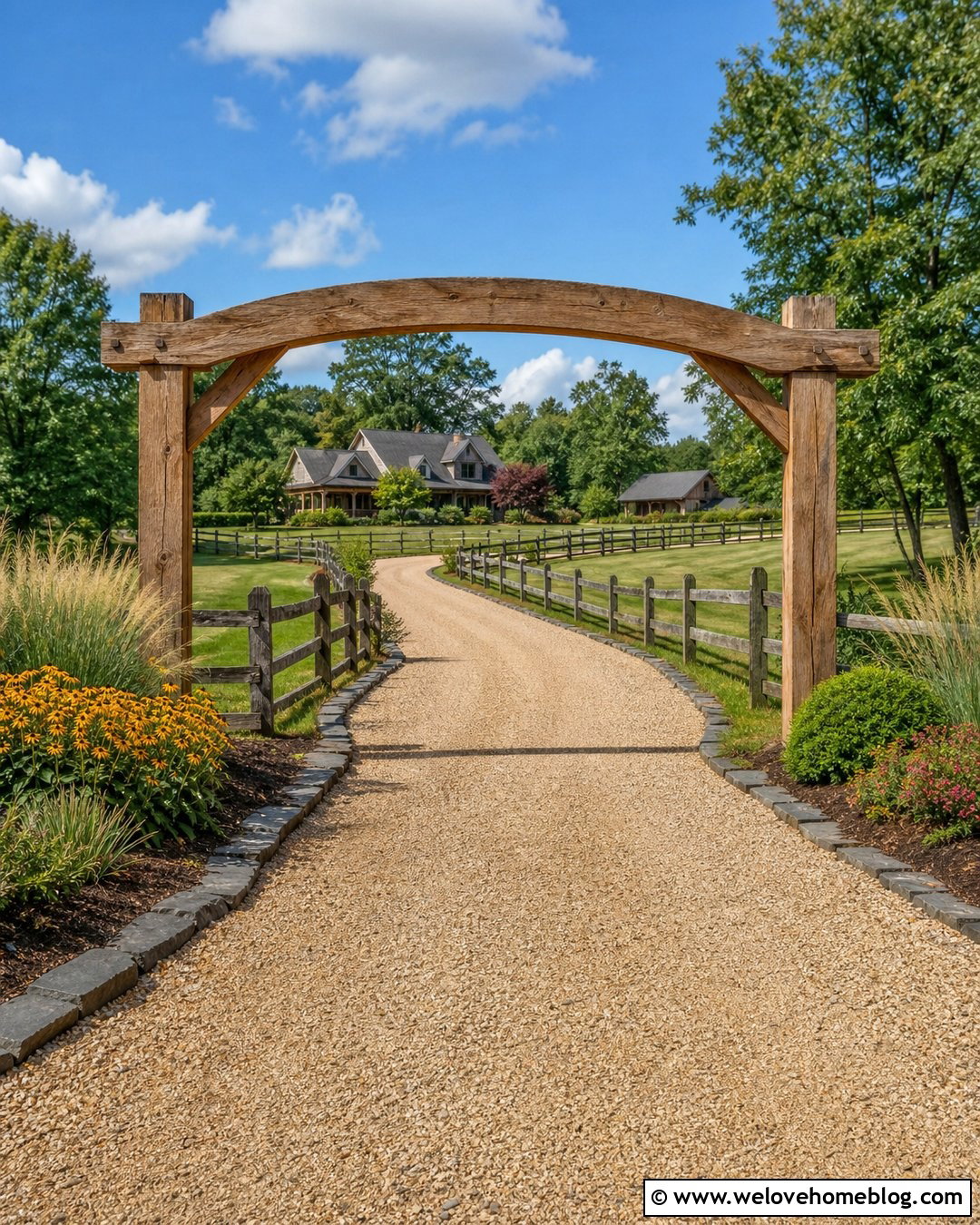
Split-rail fencing can extend a wooden arch into the surrounding landscape, making the entrance feel broader and more complete. Construct the arch from rough cedar with a gently bowed beam and thick diagonal supports. Connect two-rail fencing to the outer posts, allowing it to follow the property line on both sides. A curved tan gravel driveway will complement the informal wood, while dark stone edging controls the surface near the entrance. Add groups of black-eyed Susans, switchgrass, and compact flowering shrubs between the fence and driveway. Keep taller plants away from the road to maintain clear views for drivers. This arrangement is especially effective on large suburban lots, equestrian properties, and country homes. The matching wood tones unify the arch, fencing, landscaping, and distant house without requiring decorative extras.
19. Wooden Pergola Driveway Arch
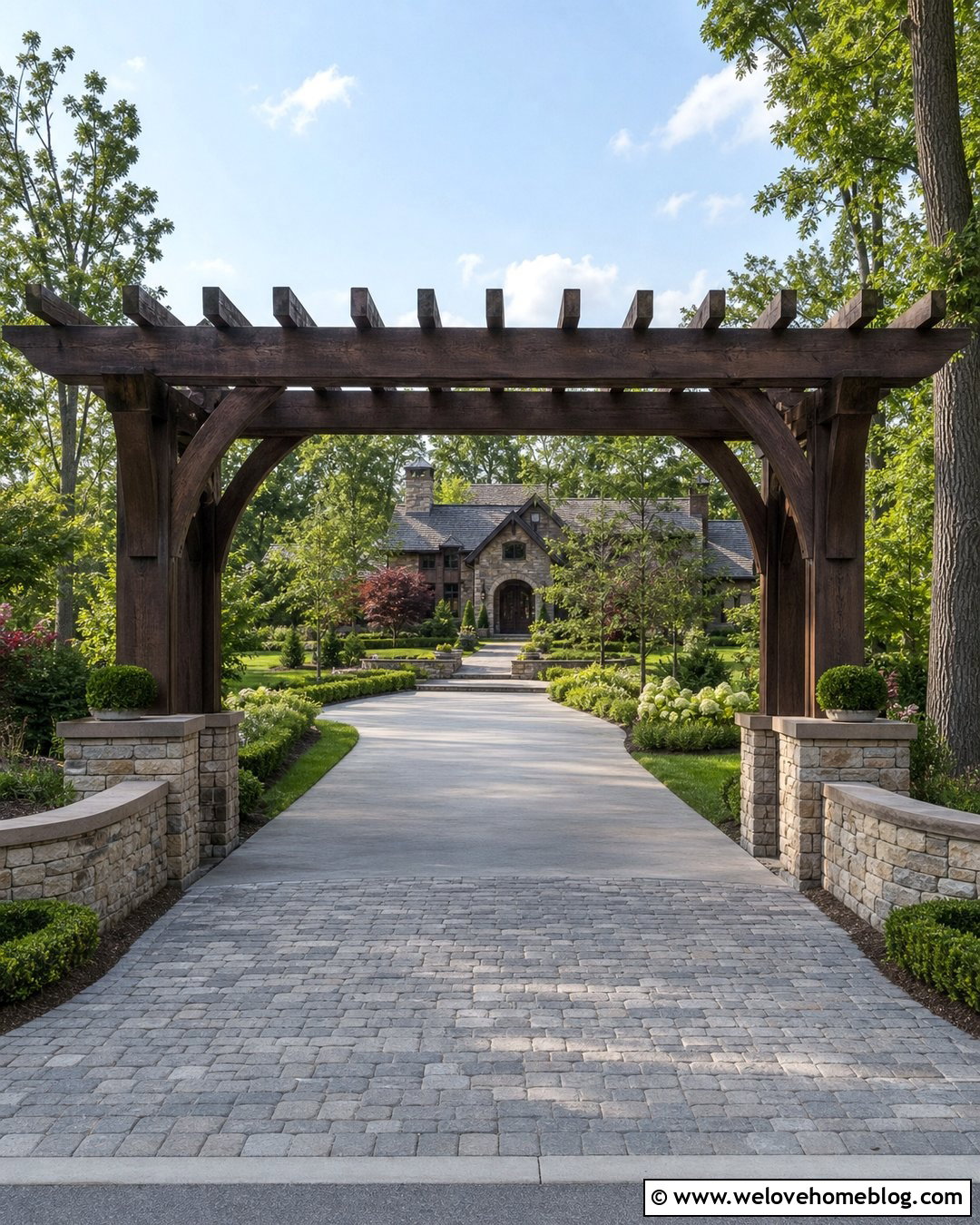
For a deeper sense of arrival, extend the arch into a short pergola that covers the first few feet of the driveway. Use heavy stained timber posts with several overhead rafters, creating a structure that frames the approach without forming a solid roof. Install warm gray cobblestone beneath it and transition into a smooth concrete driveway farther inside the property. Low stone walls can connect to the posts, while clipped shrubs and structured planting beds establish a formal edge. Keep climbing plants limited to the outer sides so leaves and branches do not hang over vehicles. A pergola-style entrance has more visual and structural complexity than a single arch, especially when combined with gates. Its posts, foundations, rafters, and gate hardware should therefore be planned as one integrated assembly.
20. Narrow Wooden Driveway Arch
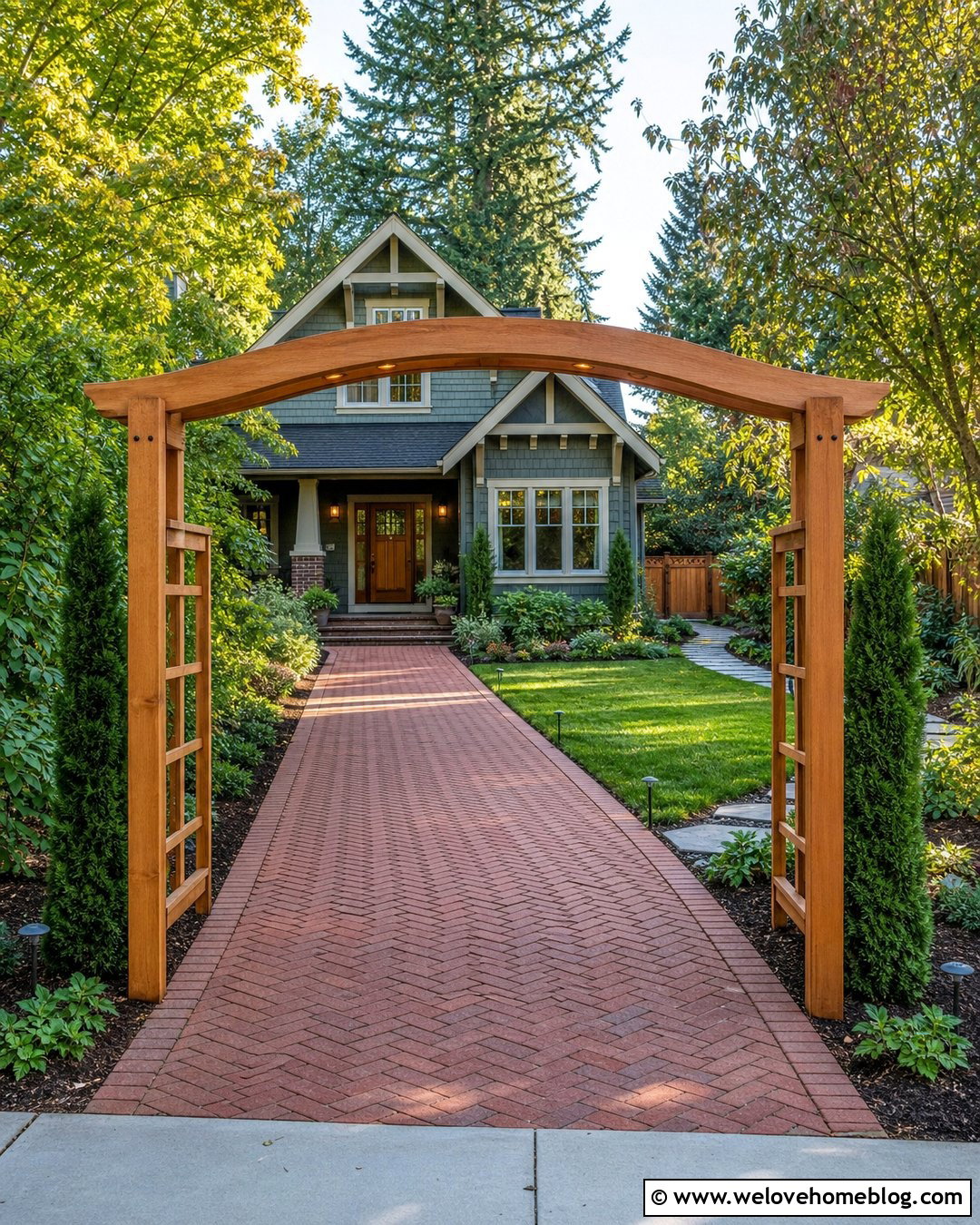
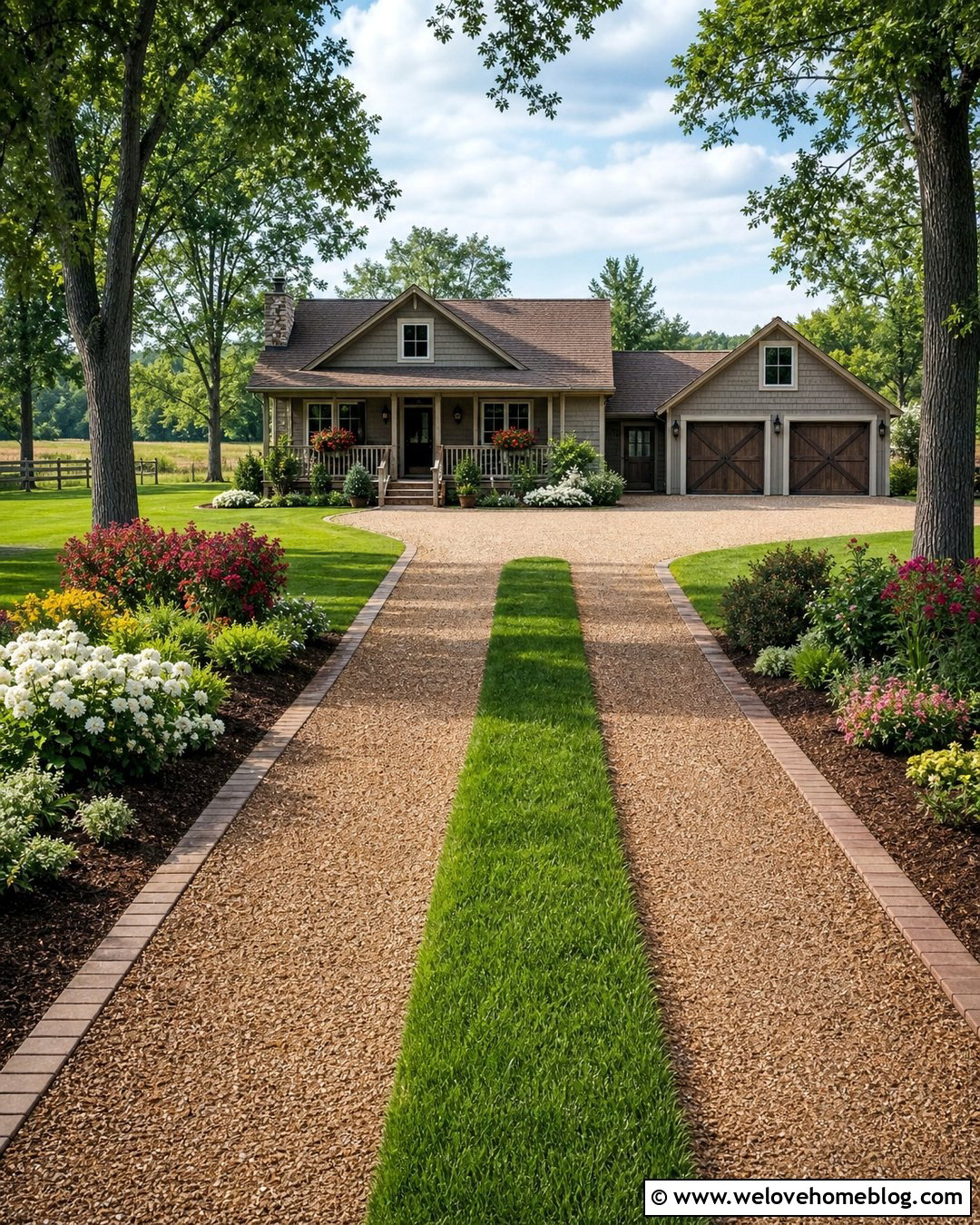
Even a compact driveway can support an attractive arch when every part is kept in proportion. Use slim cedar posts positioned immediately outside the paved surface, with a shallow curved beam that provides comfortable height without looking oversized. A narrow red clay brick driveway laid in a herringbone pattern will add character and guide the eye toward a cottage or compact craftsman house. Install flush brick edging rather than wide borders to preserve usable space. Vertical trellis panels can face outward, supporting light greenery without reducing the opening. Plant narrow upright shrubs and low ground cover beside the posts, leaving clear visibility toward the street. Small recessed lights beneath the beam add function without clutter. The resulting entrance feels detailed and welcoming while respecting the limitations of a smaller front yard.
Conclusion:
Thoughtfully designed wooden arches can give driveways of every size and material a clearer identity. The best entrance does more than place a timber beam above the road. It coordinates the wood finish, driveway surface, gate, borders, lighting, landscaping, and architecture as one complete view. Use sturdy proportions for a long rural approach, refined trim for a traditional home, or simple horizontal beams for a modern property. Always preserve vehicle clearance, visibility, drainage, and safe gate movement. Structural requirements and local rules should also be checked before construction begins. By adapting these 20 wooden driveway arch ideas to your home and landscape, you can create an entrance that feels attractive, practical, and naturally connected to the property.

Related posts:

Leave a Reply