
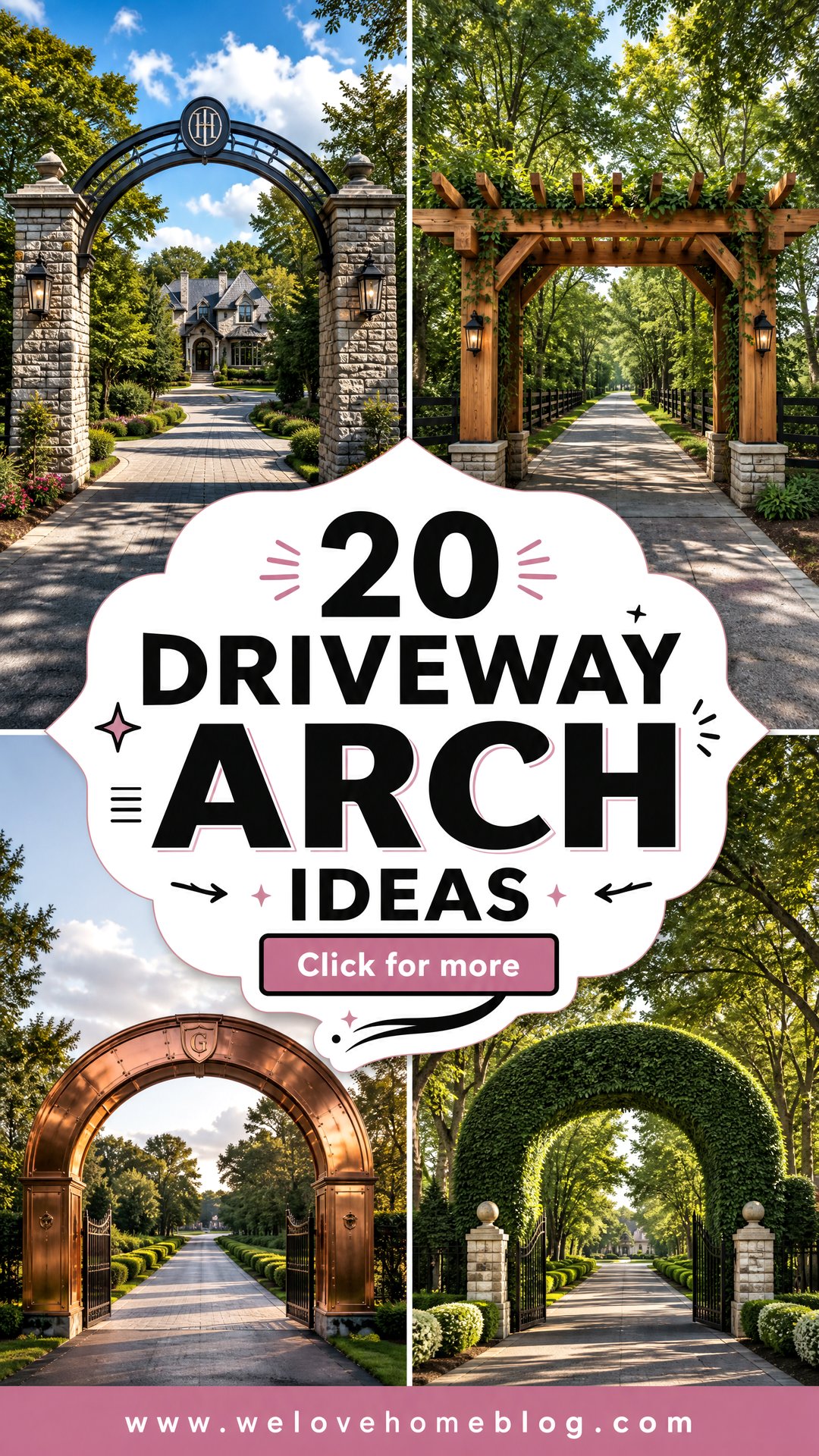
A well-designed driveway arch turns a practical entrance into a strong first impression. It can frame the approach, highlight the home’s architecture, support climbing plants, display an address, or connect gates and boundary walls. The best design also works as part of the entire driveway. Its material, scale, landscaping, lighting, and color should complement the surface below and the house beyond. Before building, allow comfortable clearance for vehicles, deliveries, and maintenance equipment. You should also consider visibility from the road, local setback rules, weather exposure, and future plant growth. From rustic timber structures to streamlined steel entrances, these 20 Driveway Arch Ideas offer practical inspiration for creating a welcoming and cohesive property entrance.
1. Stone Pillar Driveway Arch
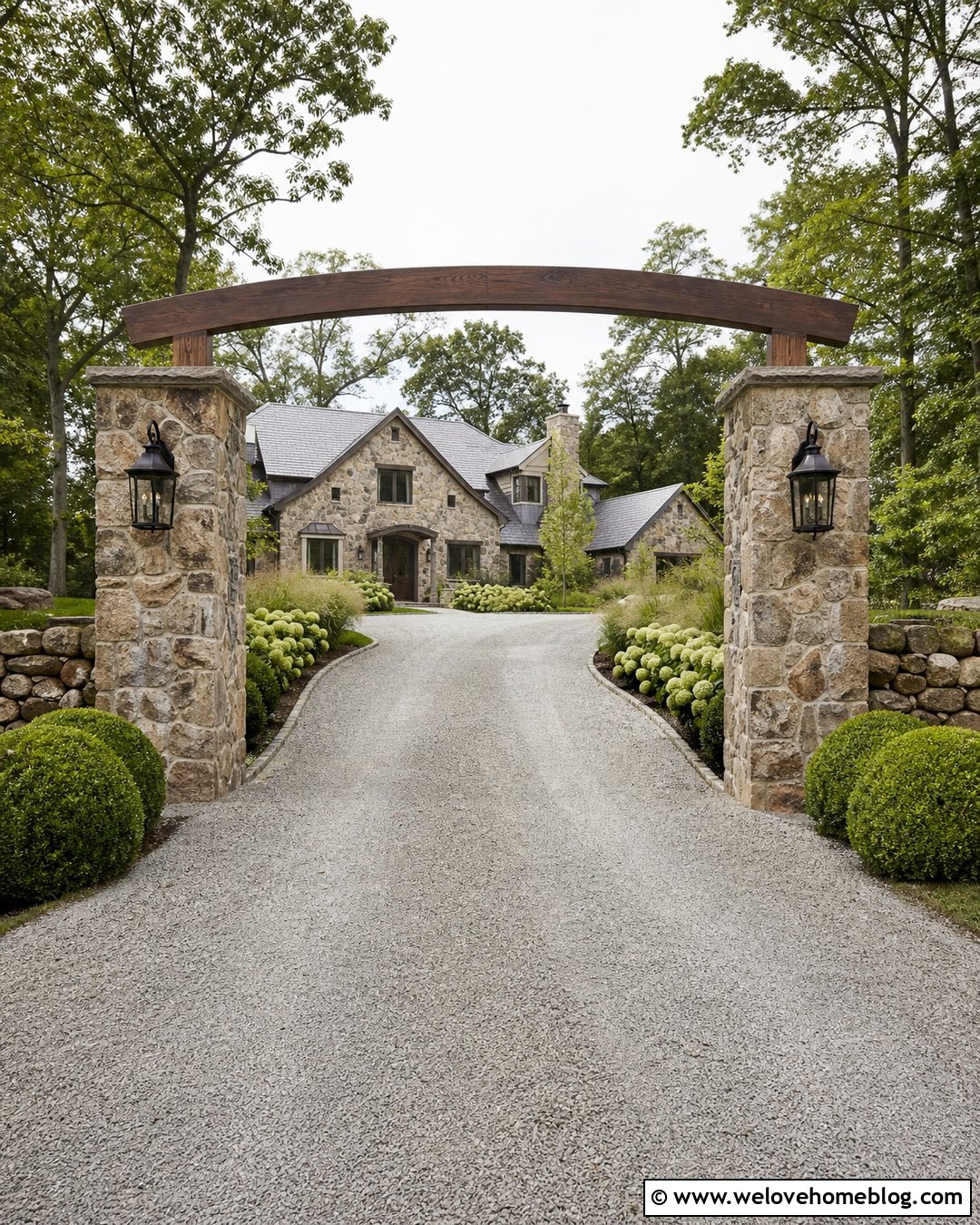
A stone pillar driveway arch creates a substantial entrance without making the property feel closed off. Use two broad fieldstone pillars with a gently curved timber beam spanning the opening. A warm gray gravel driveway suits this combination because its relaxed texture balances the heavy masonry. Continue the stone along low entrance walls, then soften everything with boxwood, hydrangeas, and ornamental grasses. Lanterns mounted near the tops of the pillars add symmetry and make the entrance easier to locate. Match the stone to the home’s foundation or chimney for a connected look. Keep nearby trees trimmed so the structure remains visible and the driveway maintains clear sight lines toward the road.
2. Modern Metal Driveway Arch
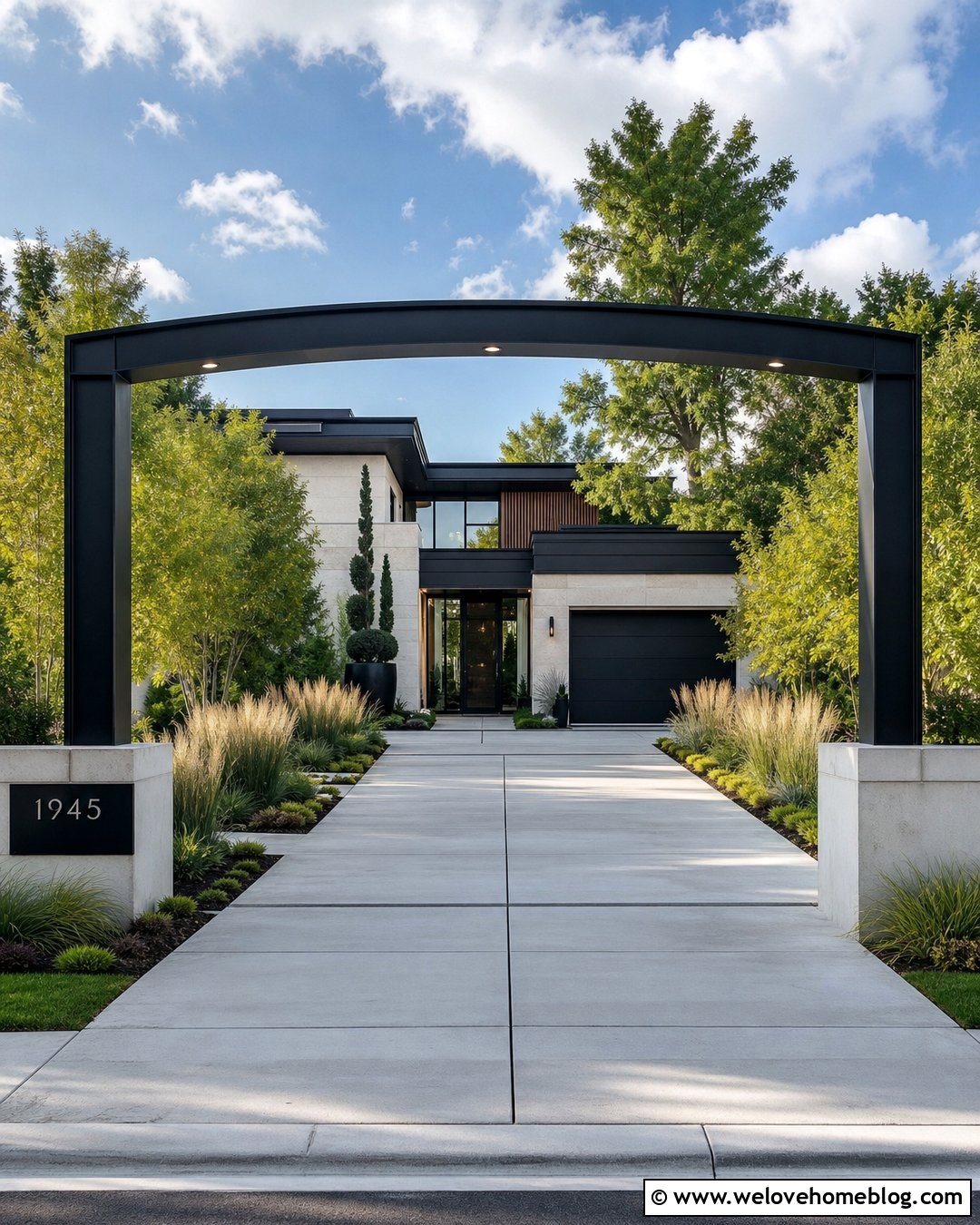
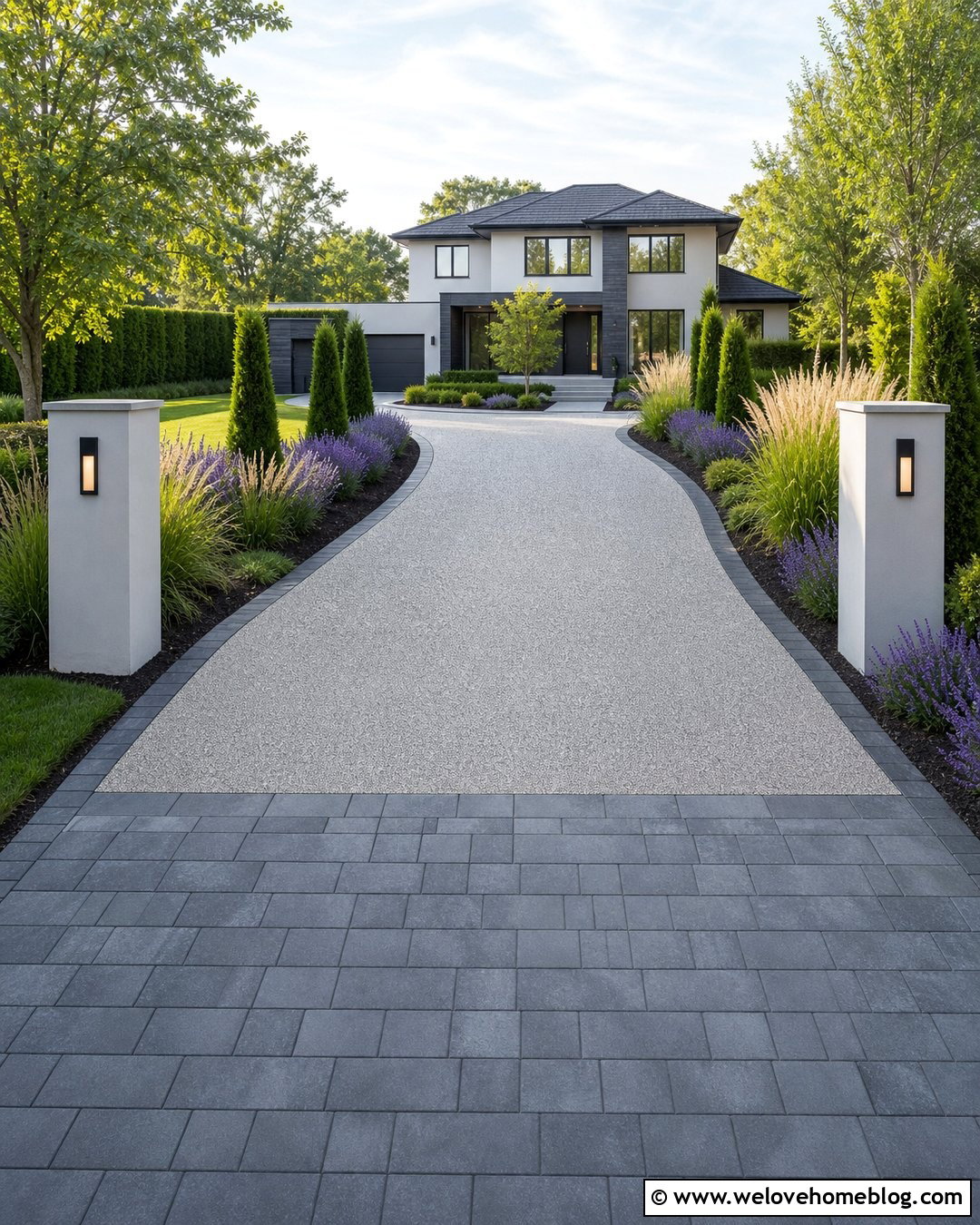
Clean lines make a modern metal driveway arch especially effective beside a contemporary home. Choose powder-coated black steel with a slim rectangular frame and a shallow curved top. Below it, a light gray poured concrete driveway with narrow expansion joints keeps the overall design simple. Linear planting beds filled with feather reed grass, low juniper, and sculptural agave can frame the entrance without hiding the structure. Add recessed lighting beneath the arch rather than decorative lanterns. This preserves the minimal appearance while improving visibility. A small house number panel can be integrated into one side. Use a durable finish that coordinates with the window frames, garage doors, and exterior railings for a polished result.
3. Wooden Driveway Arch With Gate
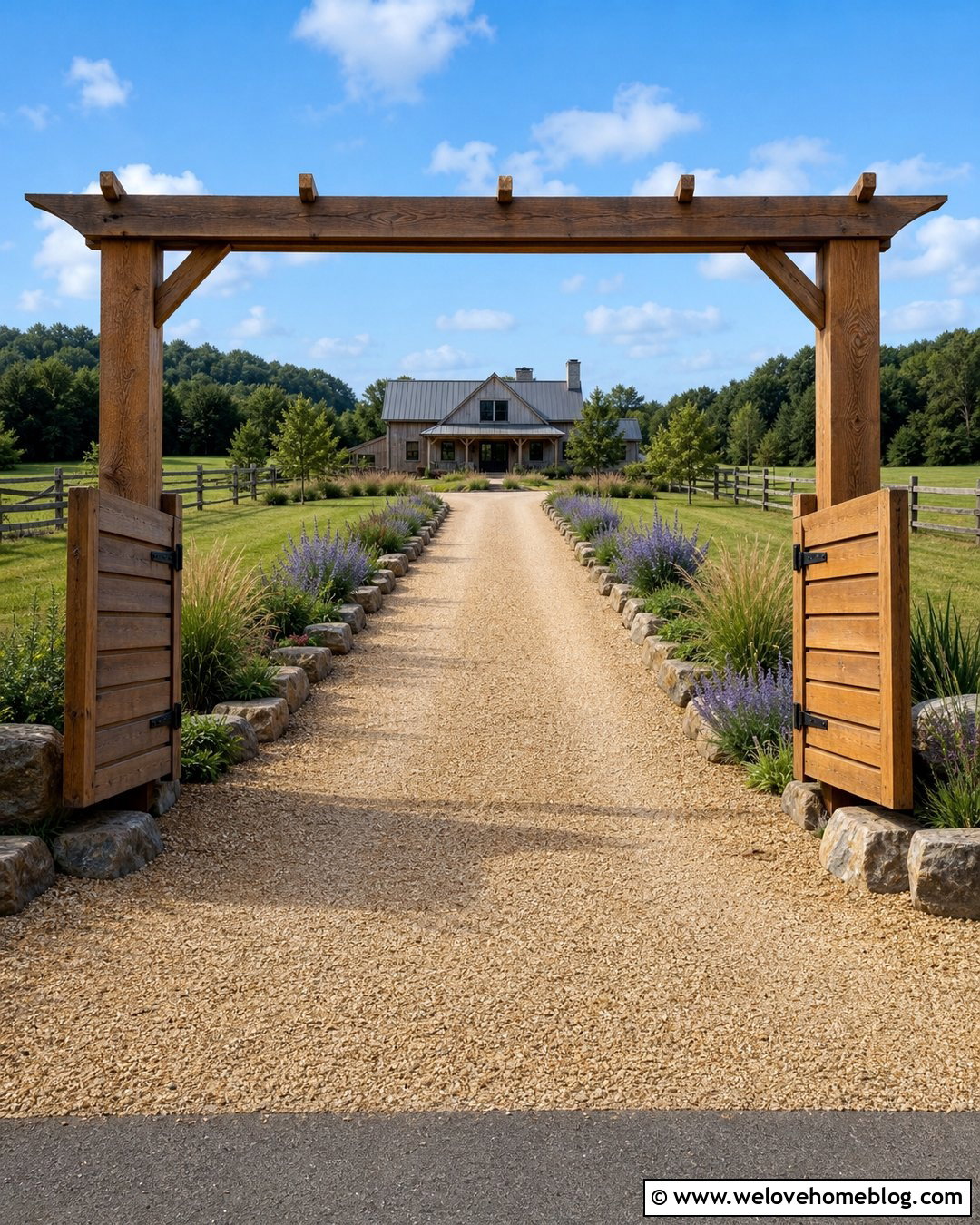
Warm wood can make a gated driveway feel welcoming rather than defensive. Build the arch from thick cedar or redwood posts, then pair it with a simple double-swing gate made from matching horizontal boards. A tan crushed-stone driveway reinforces the natural character and provides a soft transition into a country setting. Edge the entrance with large weathered rocks and broad beds of salvia, catmint, and native grasses. The gate should sit slightly behind the arch so the curved upper beam remains clearly visible. Black strap hinges and understated hardware provide useful contrast. Allow enough open space beside the posts for gate equipment, drainage, and safe vehicle movement when entering from the road.
4. Wrought Iron Driveway Arch
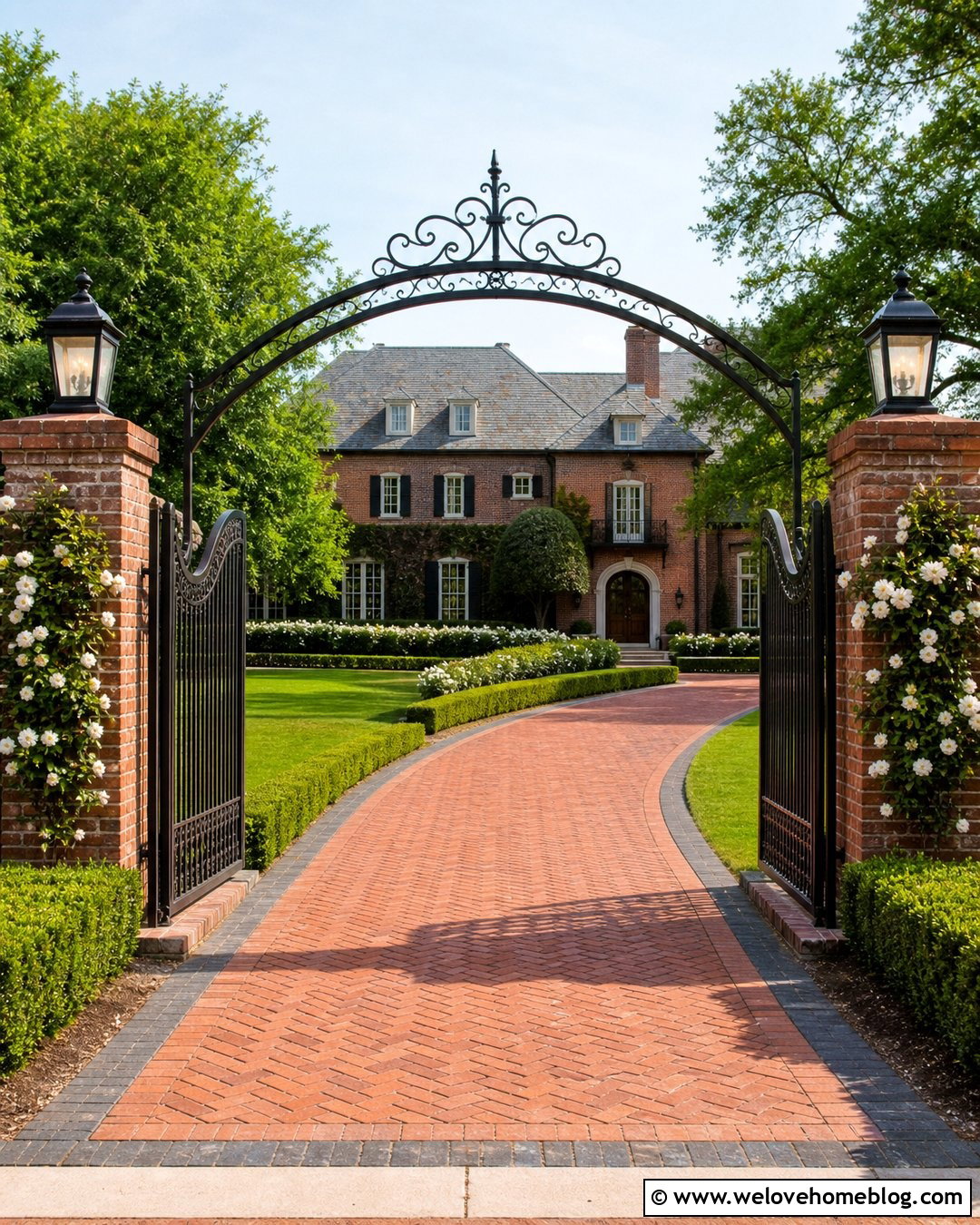
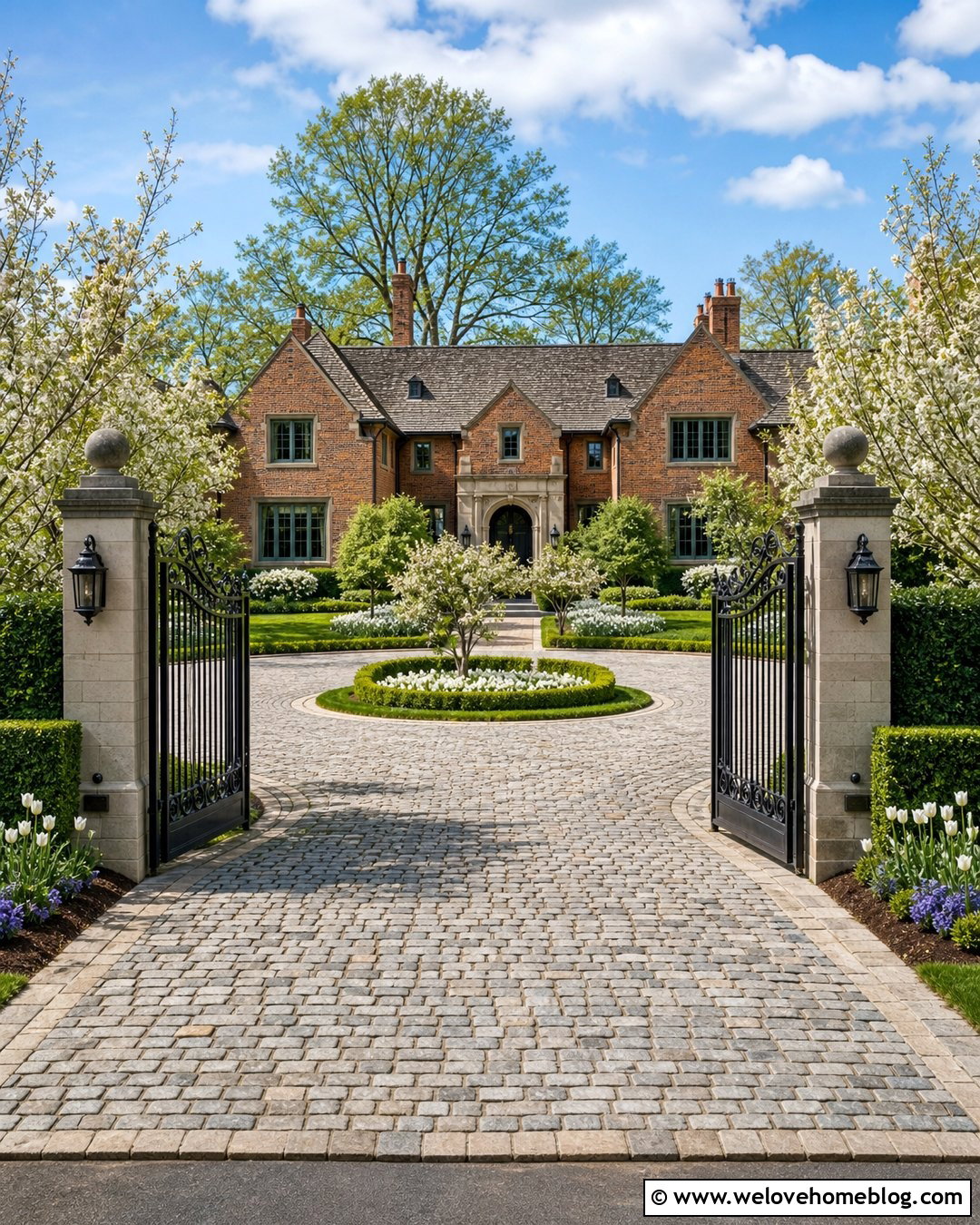
A wrought iron driveway arch brings traditional detail to brick, stone, and stucco homes. Select a wide black arch with restrained scrollwork instead of an overly ornate pattern. Pair it with a clay brick paver driveway laid in herringbone, plus a darker brick soldier-course border. Low clipped hedges on both sides create a formal approach while keeping the ironwork visible. Climbing roses can be trained along the outer edges, but regular pruning will prevent branches and thorns from reaching the vehicle path. Continue the black finish through matching gates, fence panels, and lanterns. The resulting entrance feels elegant and established, especially when the arch’s curve echoes arched windows or doorways on the house.
5. Rose-Covered Driveway Arch
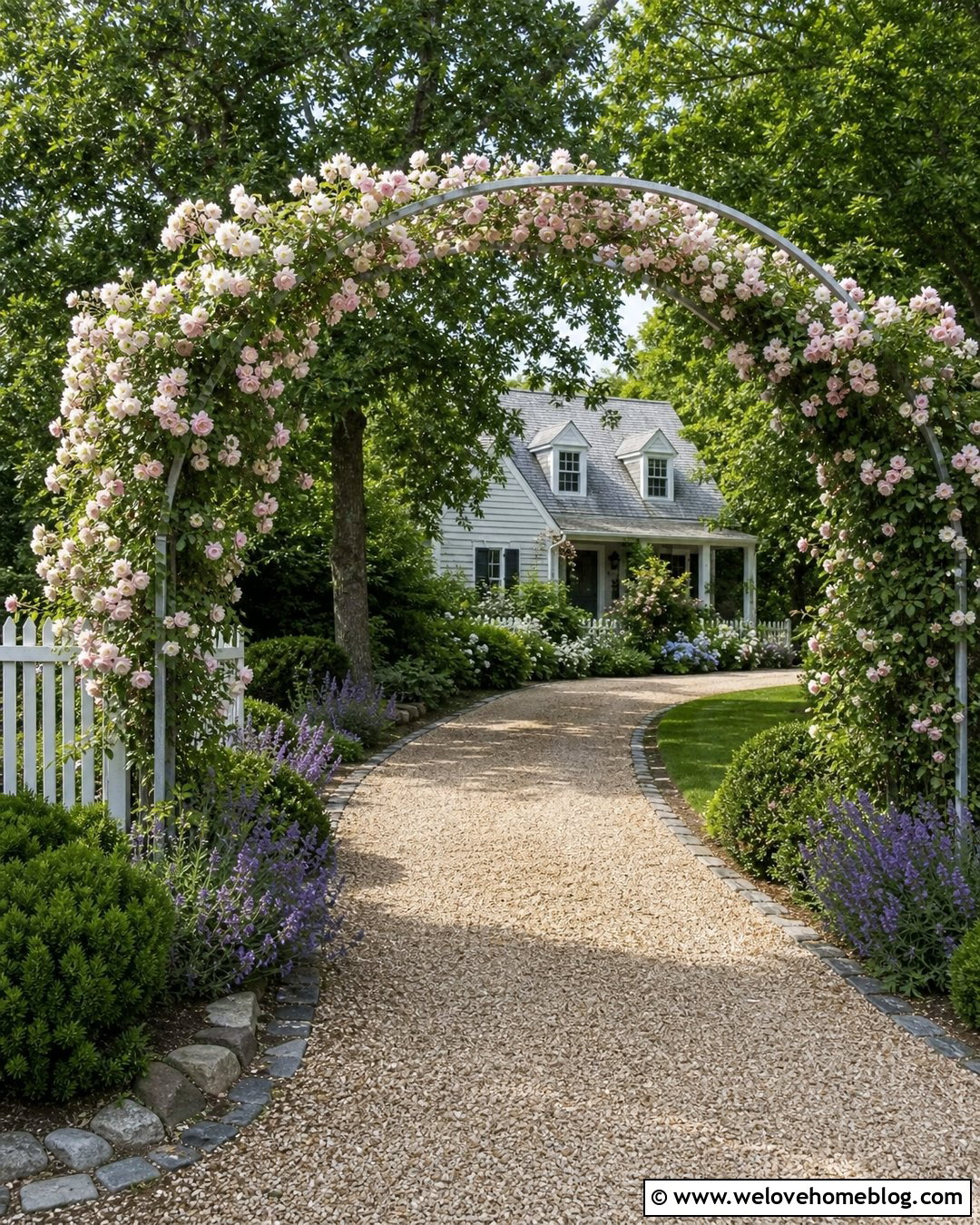
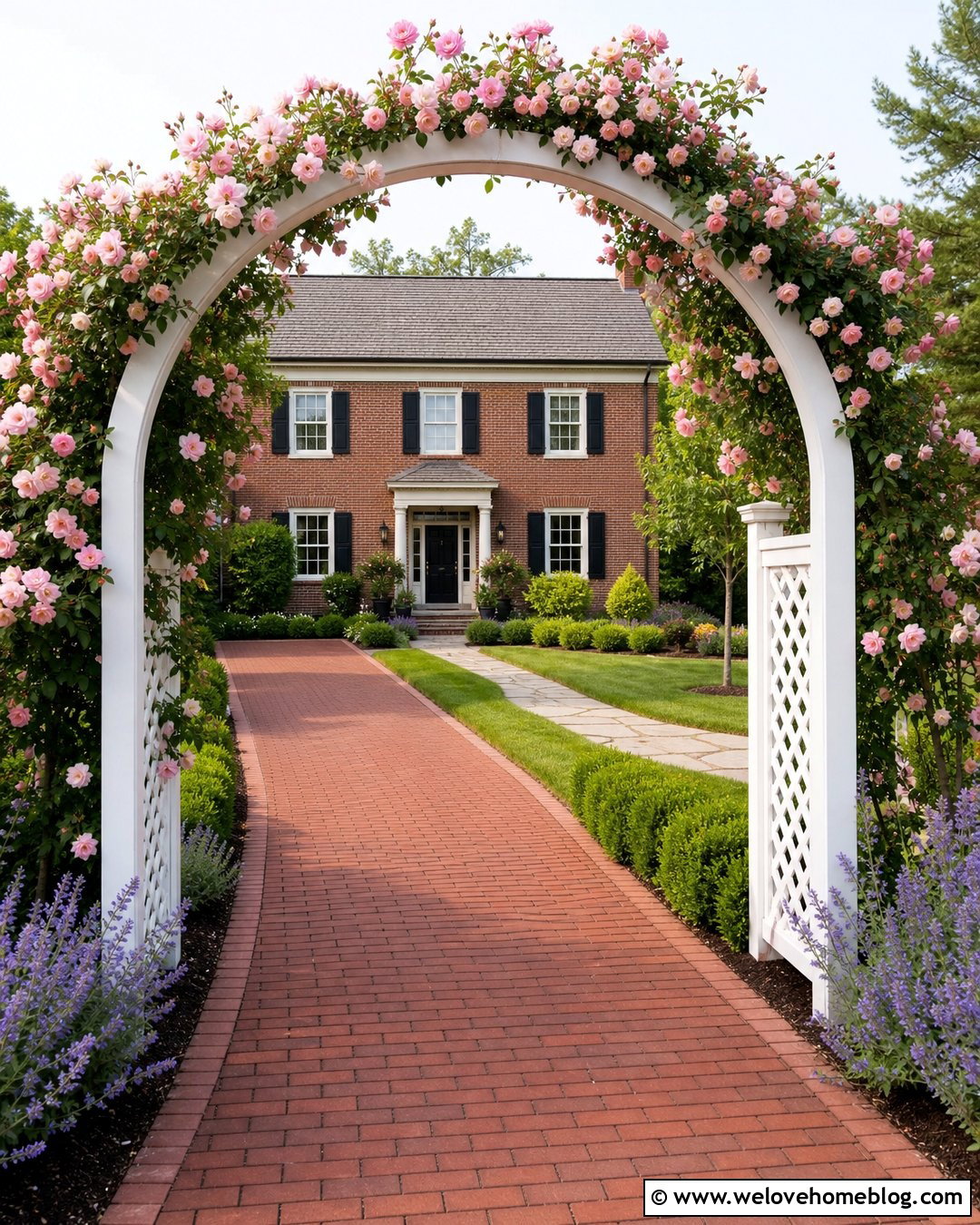
Imagine entering beneath a canopy of blooms that frames the home beyond. A rose-covered driveway arch can create that romantic effect when the support is strong, broad, and properly positioned. Use a galvanized steel framework over a pale pea gravel driveway with cobblestone edging. Plant climbing roses at the outside corners, where roots have room to grow away from compacted driving surfaces. Mix them with lavender, nepeta, and low evergreen shrubs for color beyond the flowering season. Tie new canes toward the sides and top while keeping the center clear. A softly curved driveway strengthens the garden atmosphere and gives visitors time to appreciate the planted entrance before reaching a cottage or Cape Cod home.
6. Brick Driveway Arch
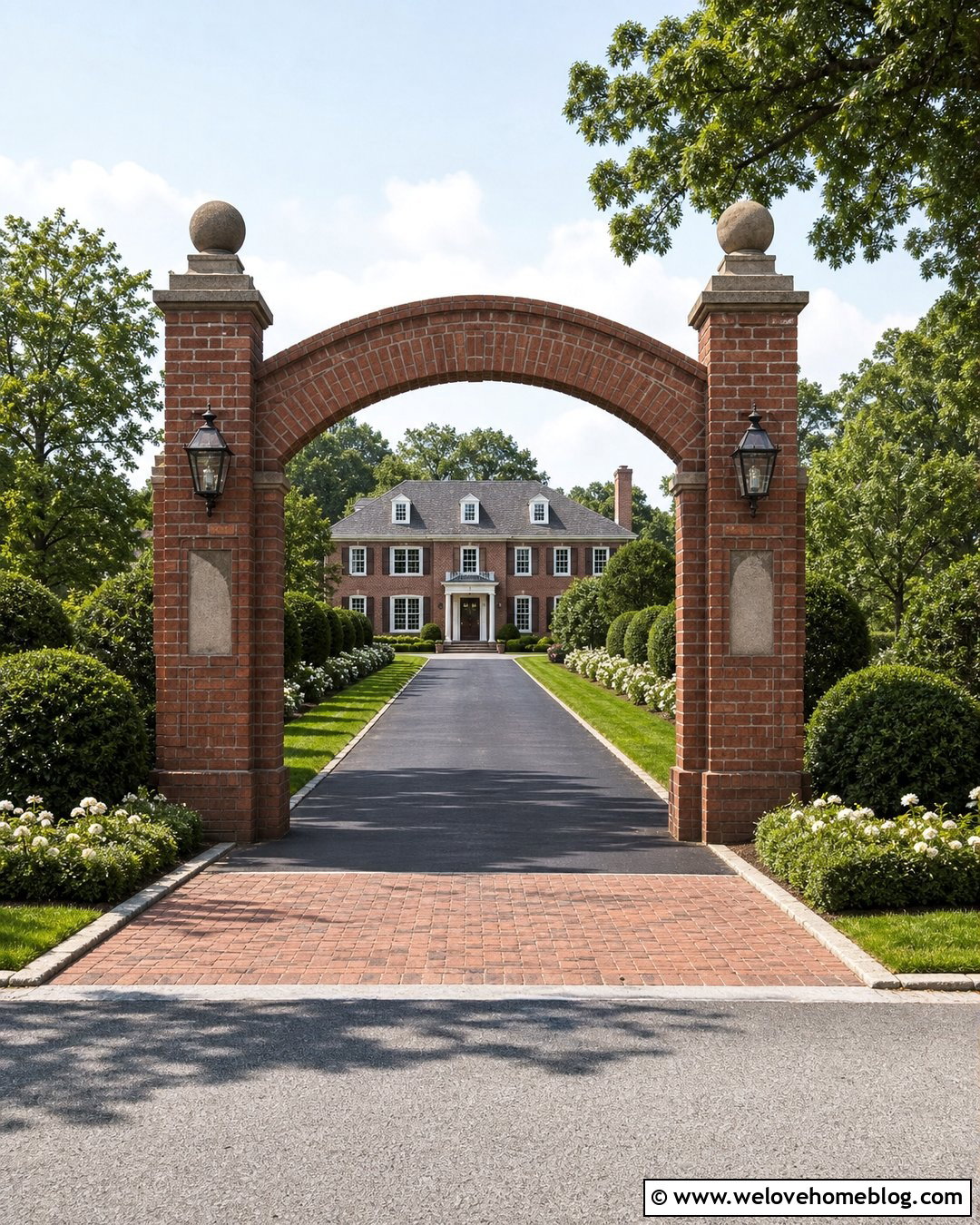
Brick offers rich color and a strong connection to traditional residential architecture. Create a full masonry driveway arch with sturdy side columns and a shallow curved span, using brick that closely matches the house facade. A charcoal asphalt driveway prevents the entrance from becoming visually overloaded and makes the red or brown brick stand out. Add a narrow brick apron beneath the arch to connect the vertical structure with the driveway surface. Formal yew shrubs, white flowering perennials, and a neatly maintained lawn complete the setting. Place address numbers on one column and a lantern on the other for balanced function. This design works especially well with Colonial, Georgian, and traditional two-story homes.
7. Mediterranean Stucco Driveway Arch
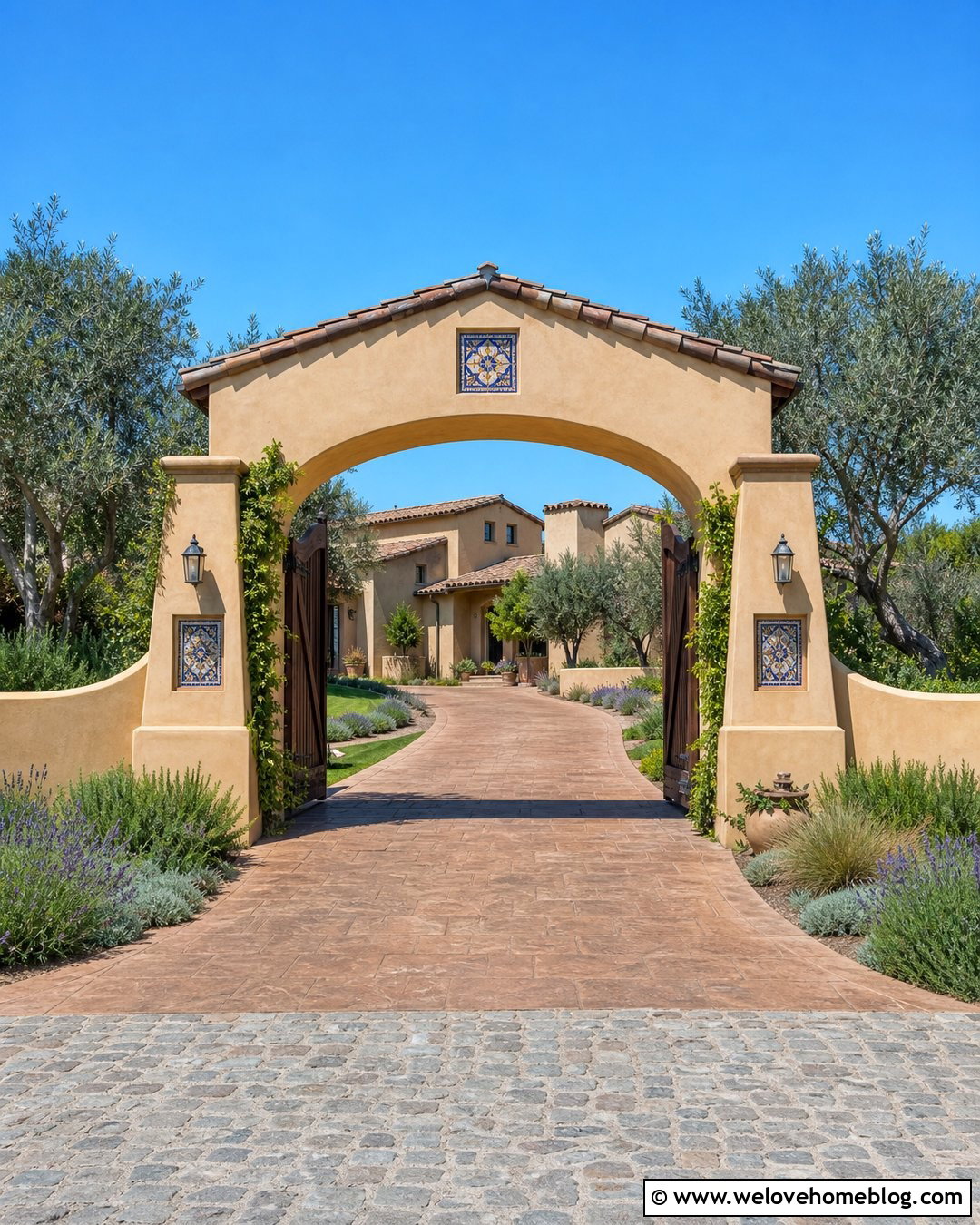
A Mediterranean stucco driveway arch looks most convincing when it feels integrated with the surrounding walls. Form a broad, rounded opening between warm white or sandy beige stucco columns. Continue low walls outward from both sides to define the entrance. A terra-cotta-toned concrete paver driveway adds warmth, while a cobblestone border provides a subtle transition at the street. Landscape the structure with olive trees, rosemary, lavender, and drought-tolerant ornamental grasses. Decorative tile inserts can introduce blue, green, or ochre accents without overwhelming the facade. Finish the opening with dark wood gates or leave it open for a more relaxed approach. Curved lines help the entrance complement tile roofs and arched windows.
8. Cedar Pergola Driveway Arch
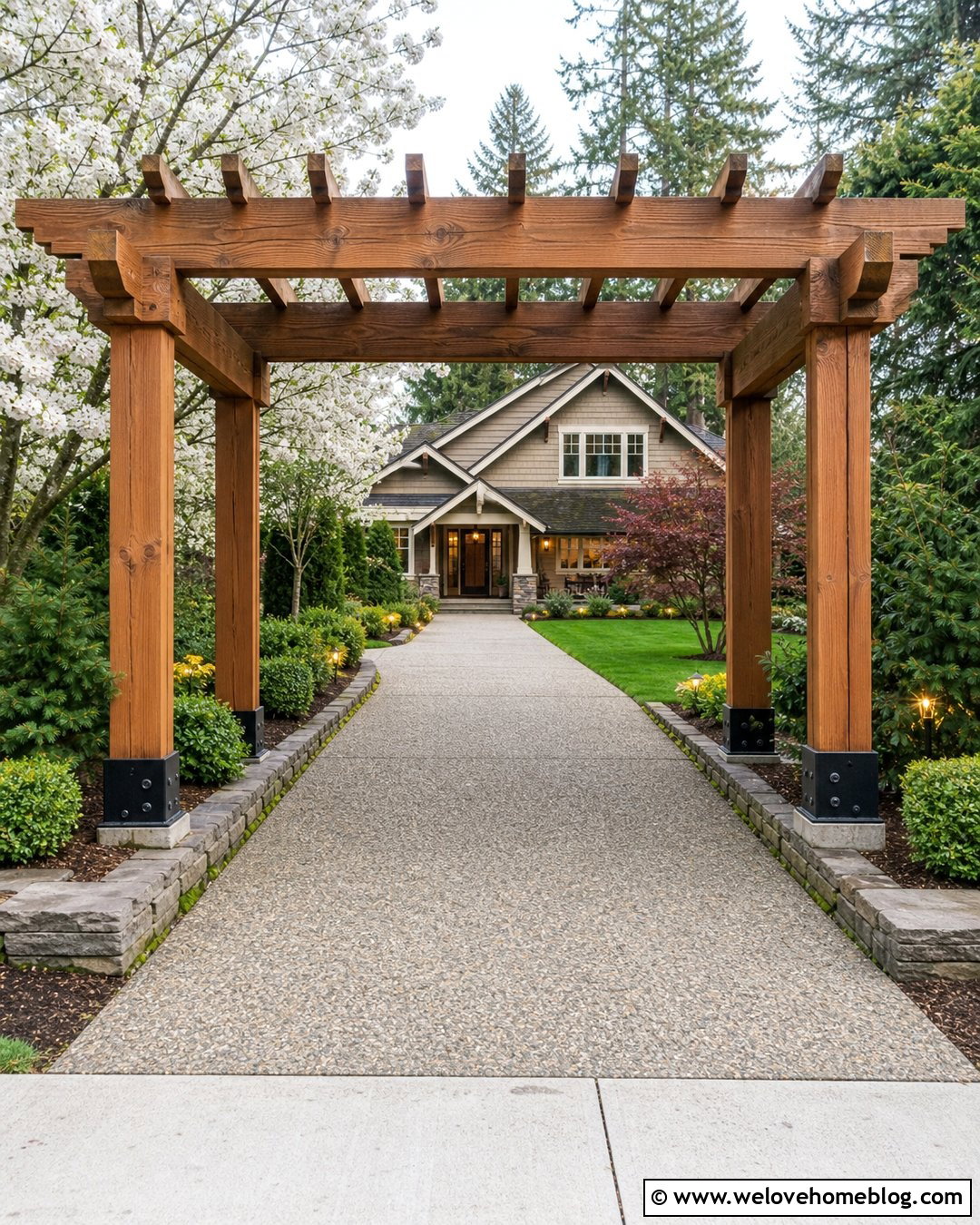
A cedar pergola driveway arch provides more visual depth than a single curved beam. Use four substantial posts and several overhead rafters to create a short entrance tunnel that clearly marks the property boundary. Pair the warm cedar with an exposed aggregate concrete driveway in soft beige and gray tones. Stone edging, layered evergreen shrubs, and small flowering trees can anchor the structure on both sides. Keep vines limited to the outer corners so they do not hang over passing vehicles. Black metal post bases and low-voltage uplights give the pergola a crisp finished appearance. This complete look works beautifully with Craftsman homes, where visible wood construction and natural materials already play an important role.
9. Farmhouse Driveway Arch
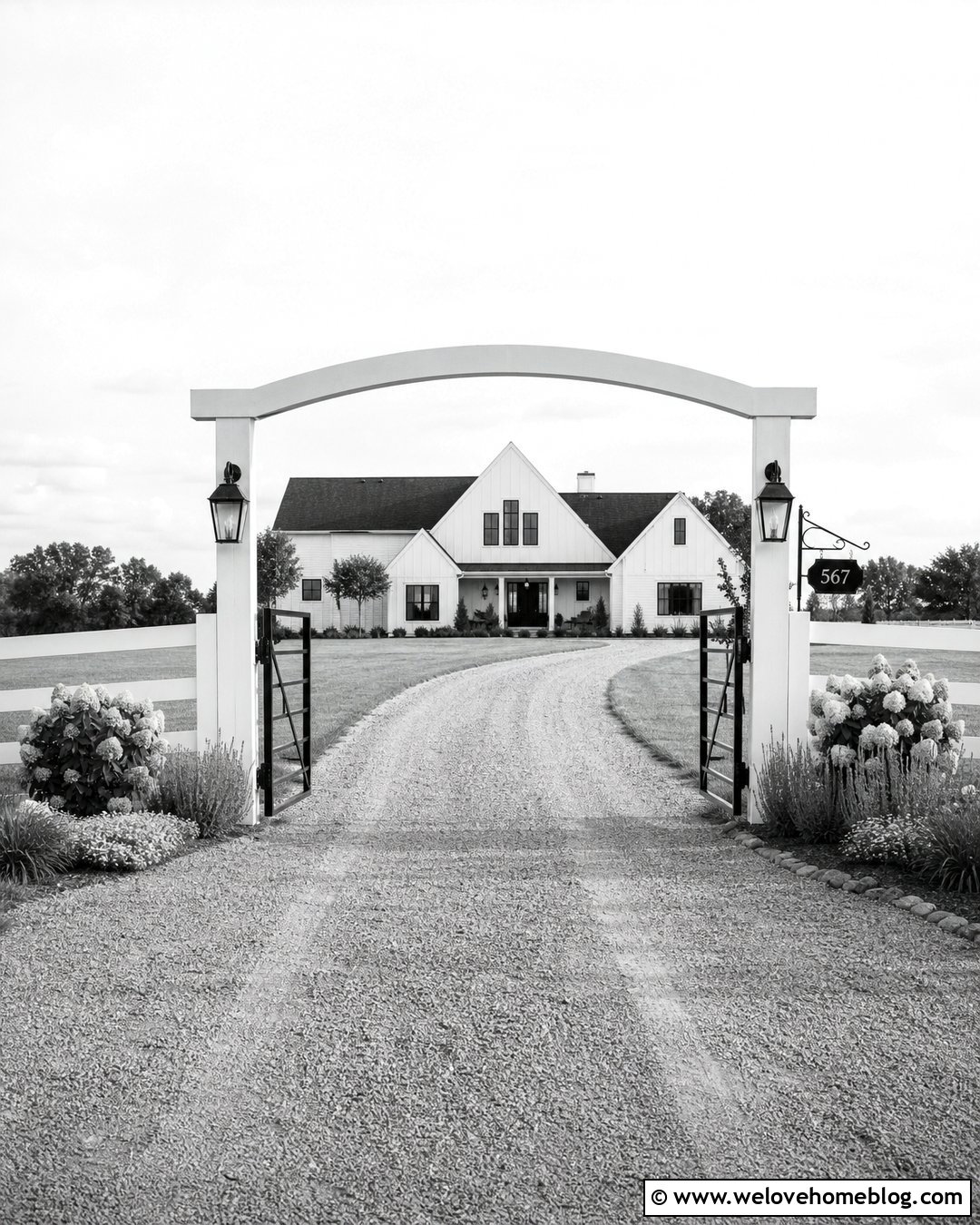
A farmhouse driveway arch should feel sturdy, straightforward, and connected to the surrounding landscape. Combine white-painted timber posts with a gently arched crossbeam and a pair of black metal farm gates. A long gray gravel driveway bordered by grass creates a relaxed approach to a modern farmhouse. Install simple black lanterns on the posts and display the address on a small horizontal plaque beneath the beam. Split-rail fencing can extend from both sides, visually tying the arch to the property boundary. Near the entrance, use panicle hydrangeas, flowering sage, and compact ornamental grasses. Avoid excessive decoration. Strong proportions, practical materials, and a limited black-and-white palette deliver the most convincing farmhouse appearance.


10. Rustic Log Driveway Arch
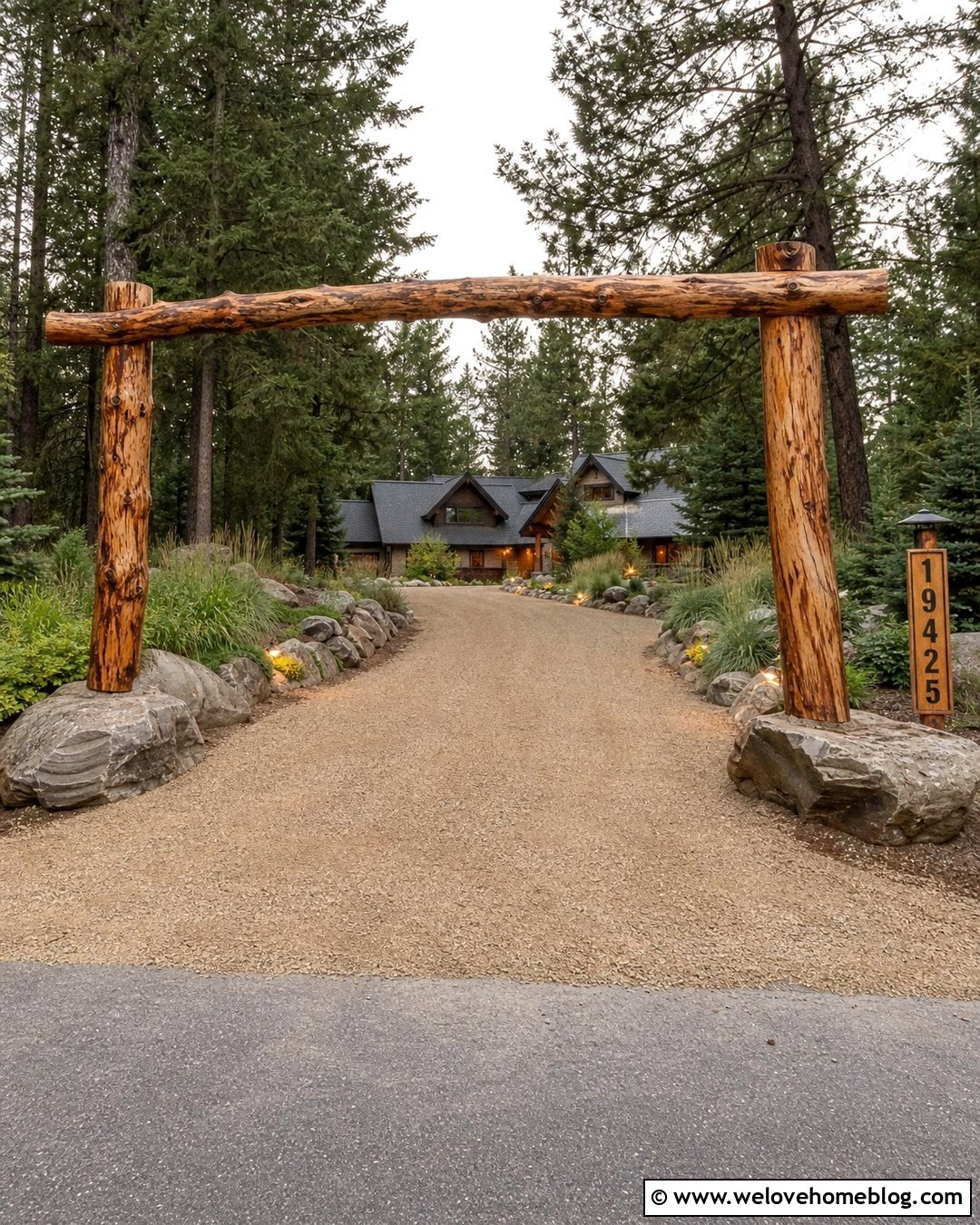
For a wooded or rural property, a rustic log driveway arch can feel more appropriate than finished masonry or decorative iron. Build it from peeled cedar logs with naturally tapered shapes and secure joinery. A brown crushed-granite driveway curves beneath the arch and continues toward a ranch or cabin-style house. Large boulders at the post bases provide visual weight, while native grasses, ferns, and evergreen trees blend the entrance into its setting. A simple wooden address sign can hang from the upper beam, provided it remains well above vehicle clearance. Choose restrained landscape lighting hidden among the rocks. The structure should look handcrafted but carefully planned, with a wide opening that accommodates trucks and utility vehicles.
11. Gothic Driveway Arch
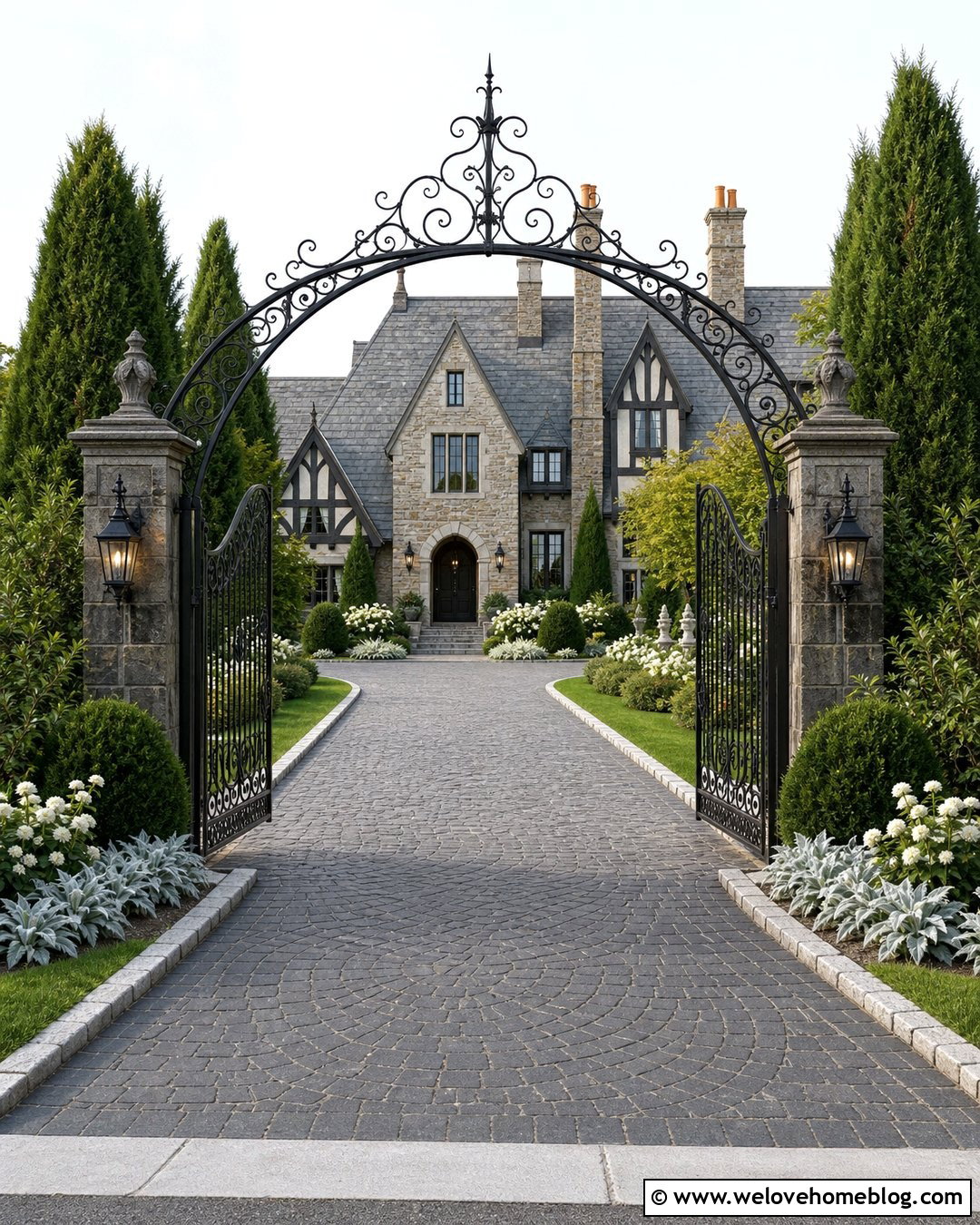
A Gothic driveway arch creates a dramatic focal point through its tall pointed silhouette. Use black steel or wrought iron for the structure, keeping the decorative pattern open enough to preserve views toward the house. A dark gray cobblestone driveway with a lighter granite border reinforces the historic character. Plant upright yews or columnar evergreens beside the arch to echo its vertical lines. White roses, lamb’s ear, and silver-toned ground covers can brighten the darker materials. If gates are included, repeat the pointed shape across their upper rails. This design is best suited to Tudor, Gothic Revival, or stone homes with steep roofs. Balanced landscaping keeps the entrance sophisticated rather than overly theatrical.
12. White Vinyl Driveway Arch
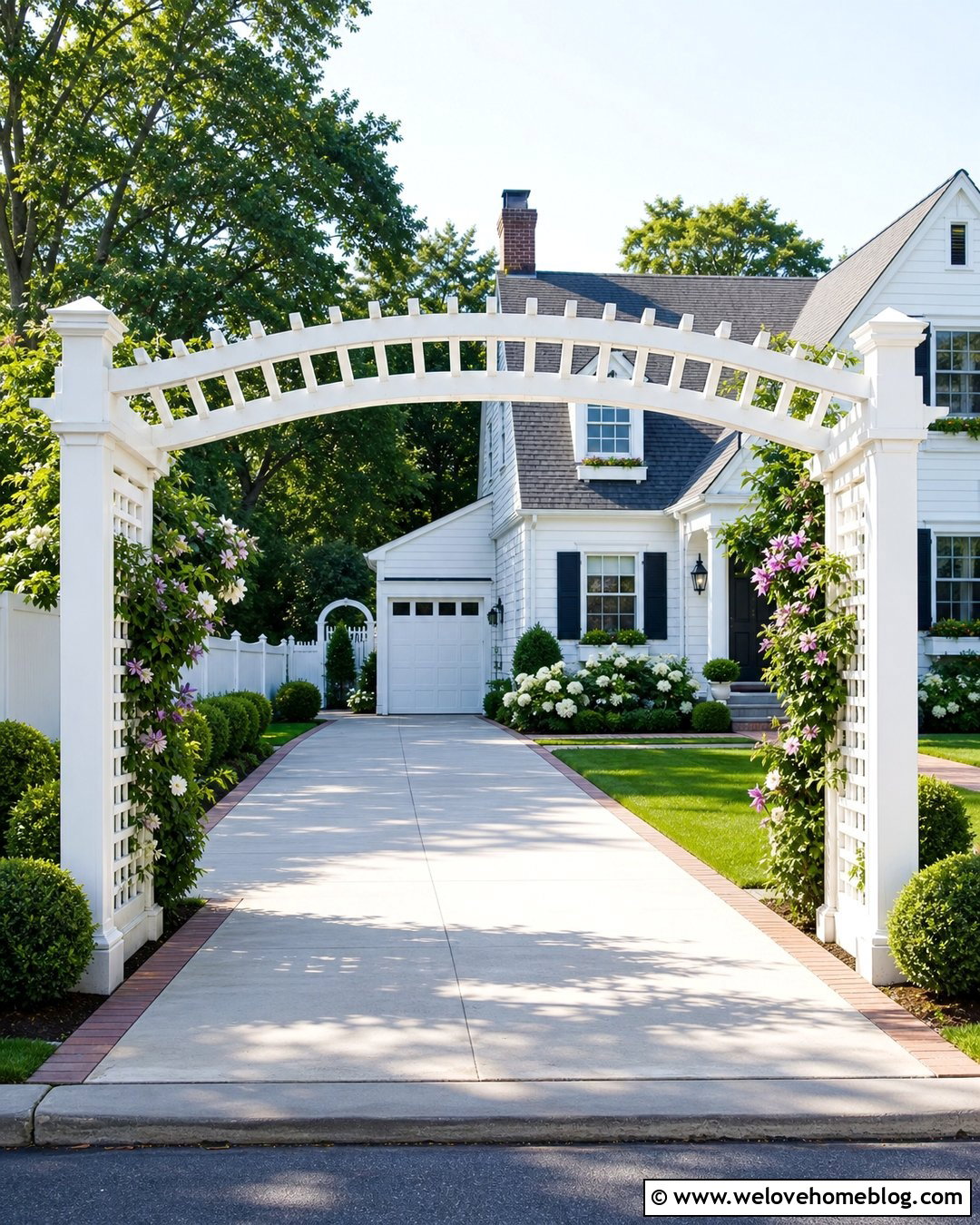
A white vinyl driveway arch provides a neat, low-detail entrance for a suburban home. Choose a reinforced structure with broad posts, a gentle curve, and simple lattice panels at the sides. Place it over a straight light gray concrete driveway edged with red brick ribbons. White hydrangeas, compact boxwoods, and a tidy lawn help the entrance feel bright and coordinated. The lattice can support lightweight clematis or annual vines, although dense growth should be kept away from the driving area. Extend matching white fencing from the arch if the property needs a clearer boundary. This design complements Colonial, Cape Cod, and cottage homes, particularly when the arch color repeats the porch columns, window trim, and garage door.
13. Craftsman Driveway Arch
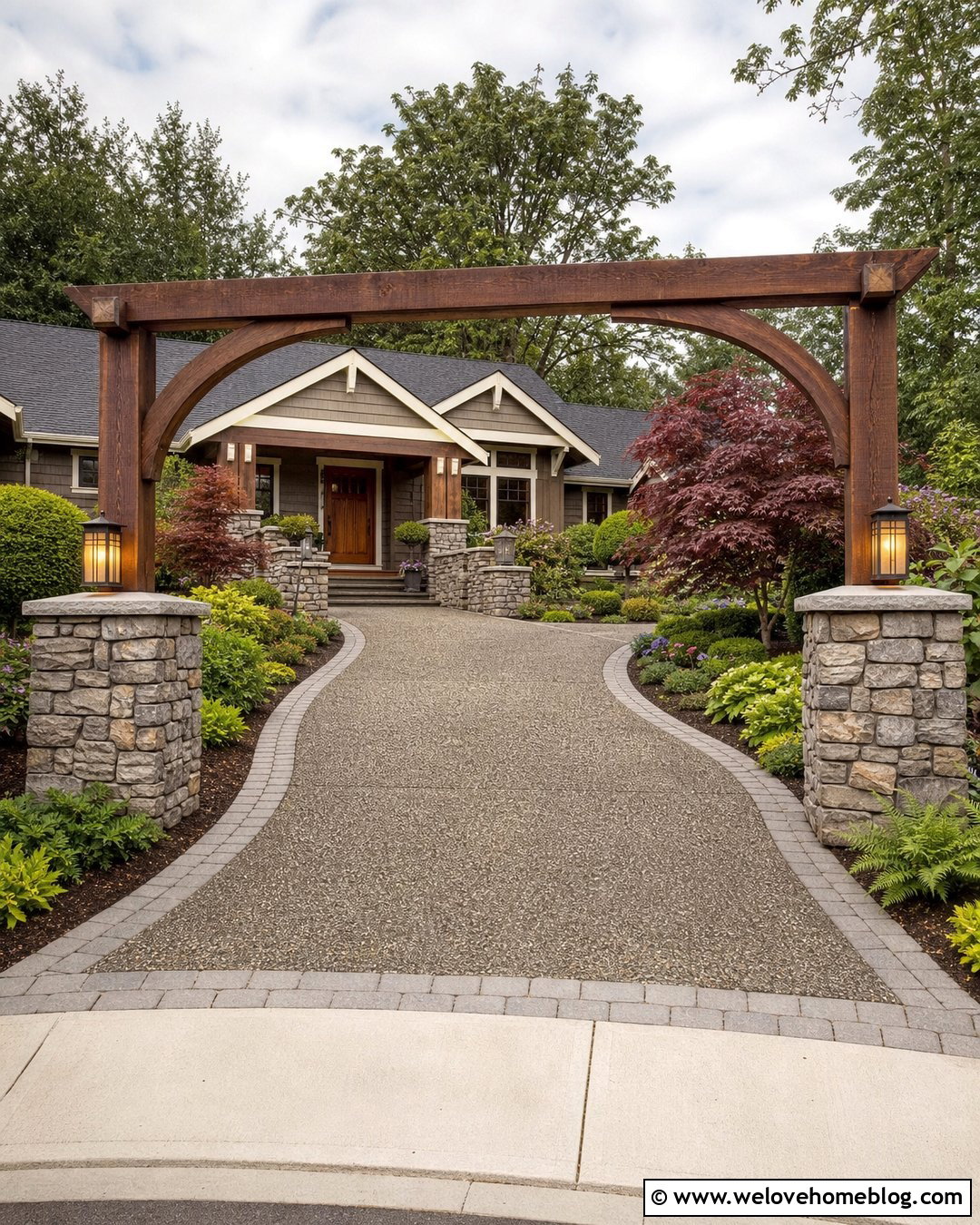
Natural materials and visible structure define a successful Craftsman driveway arch. Start with tapered stone piers that match the home’s porch columns, then span them with a stained Douglas fir beam and shallow curved braces. An exposed aggregate driveway in warm gray creates texture without competing with the entrance. Add a border of rectangular stone pavers to visually connect the surface with the masonry bases. Layer the surrounding beds with Japanese maple, dwarf conifers, ferns, and low flowering perennials. Lanterns with dark bronze frames complete the handcrafted appearance. Keep the dimensions broad and horizontal rather than tall and narrow. That proportion works naturally with low-pitched roofs, deep eaves, and wide Craftsman porches.
14. Coastal Driveway Arch
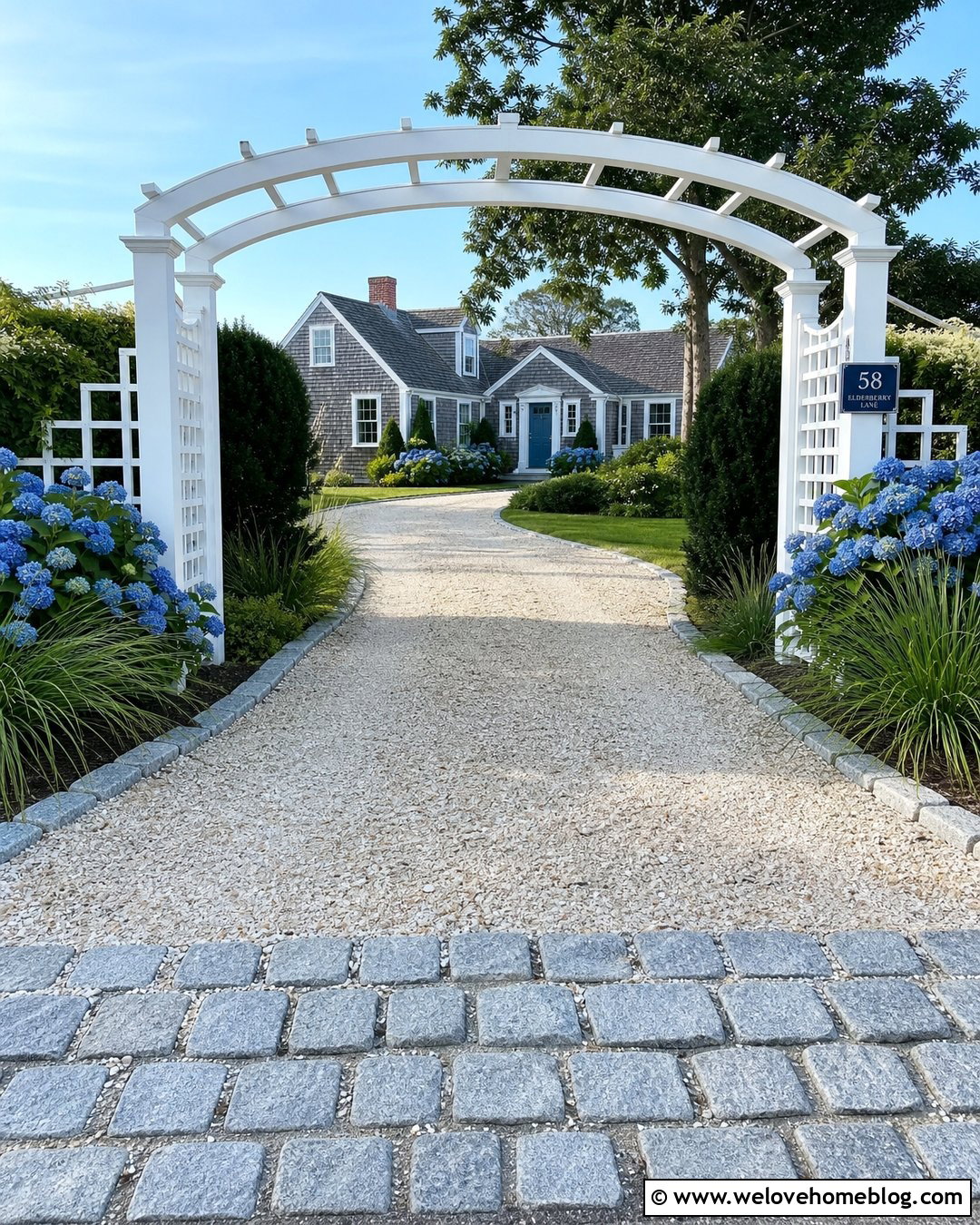
A coastal driveway arch feels fresh when its colors and materials stay light. Use a white-painted wood frame with a wide curved top and simple side lattice. Below it, install a pale shell gravel driveway edged with weathered gray cobblestones. Blue hydrangeas, beach grass, dwarf yaupon holly, and other salt-tolerant-looking plant combinations create an airy landscape around the entrance. A small navy address plaque can add contrast without becoming the main feature. Keep the structure open rather than pairing it with heavy gates. This allows breezes, views, and natural light to pass through. The complete design suits a shingle-style, coastal cottage, or pale clapboard home with soft gray roofing and understated exterior details.


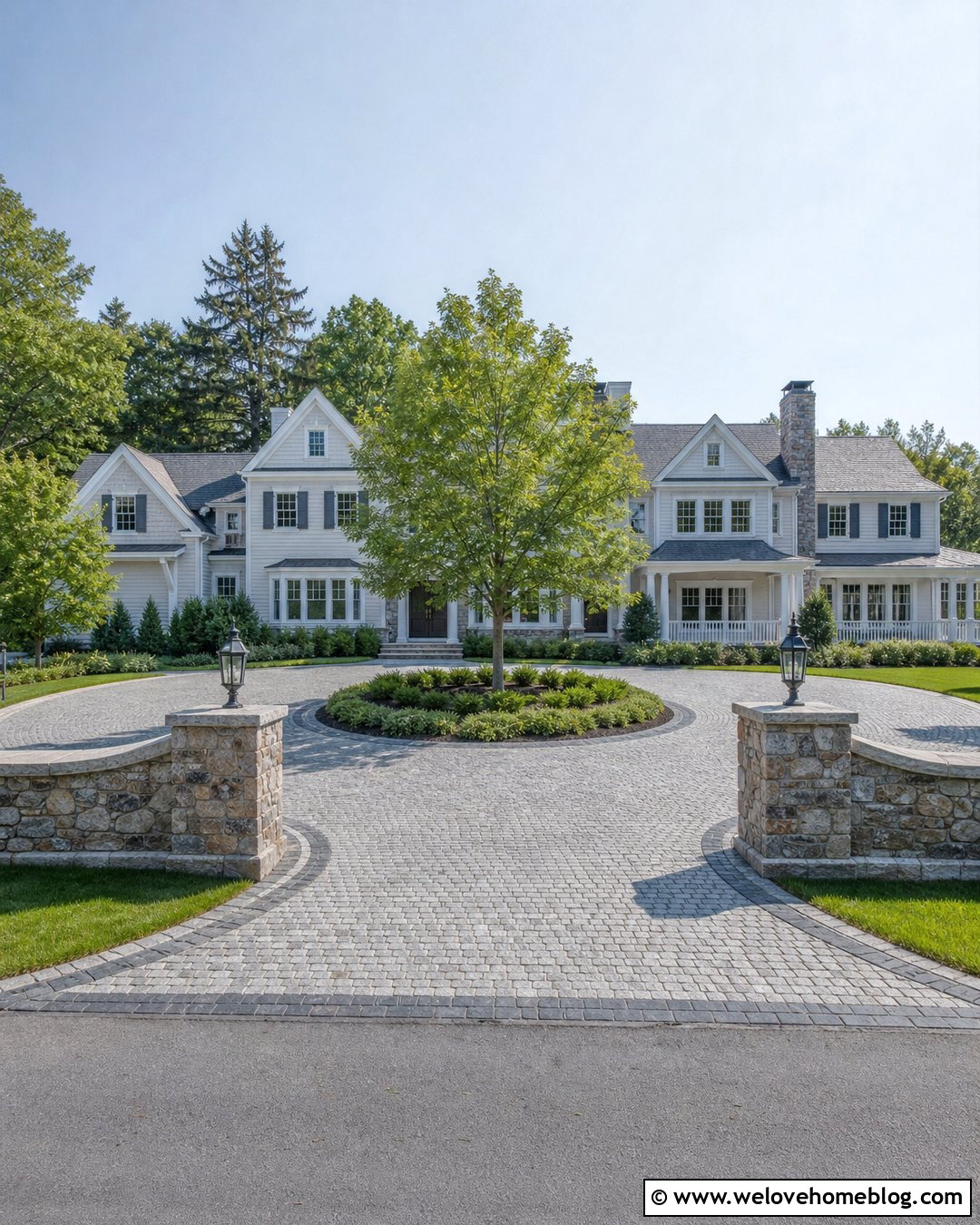
15. Copper Driveway Arch
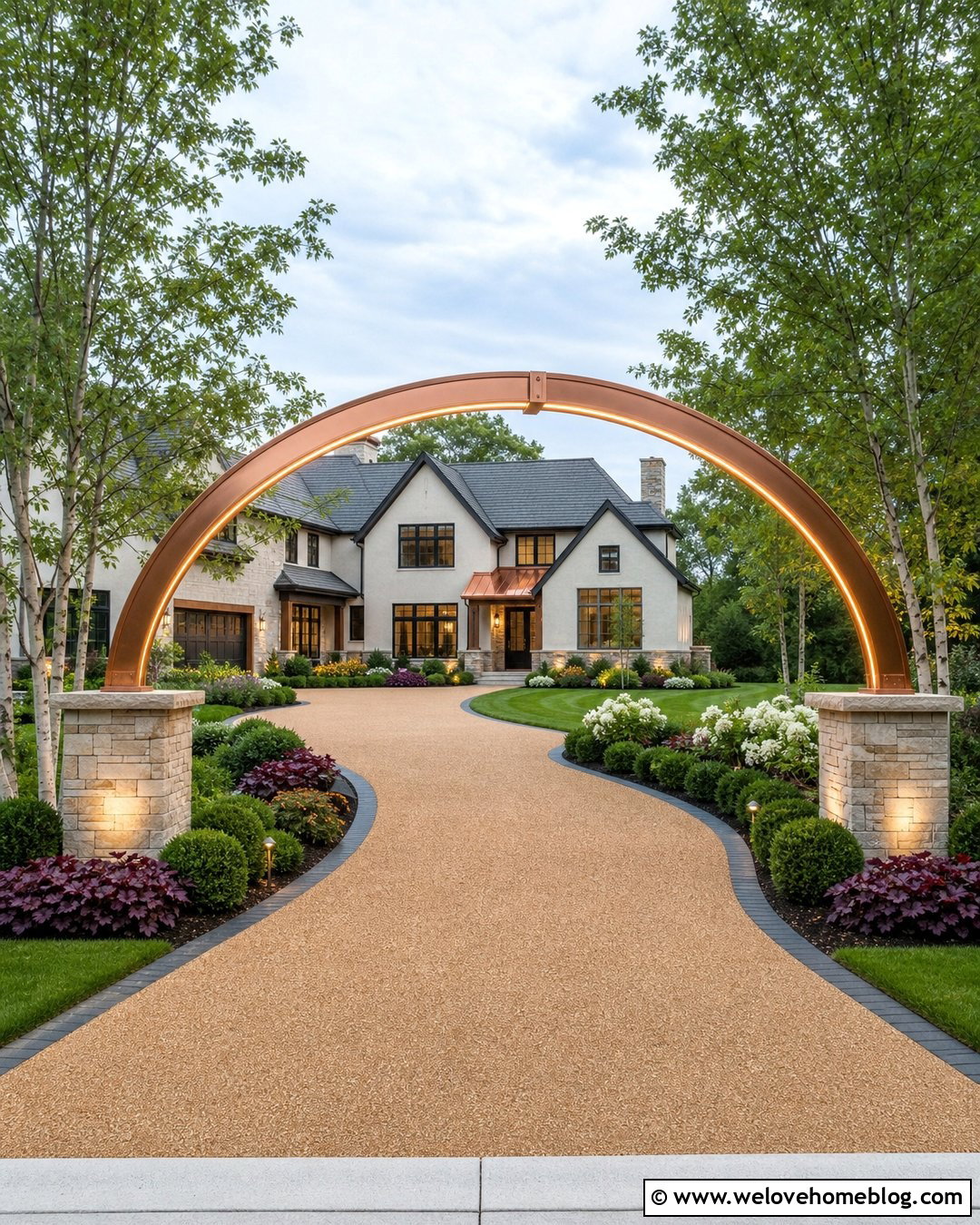
Copper introduces warmth and character to an otherwise simple entrance. Form a slender copper-clad driveway arch between two low stone columns, allowing the metal surface to weather naturally over time. A resin-bound gravel driveway in a warm buff color creates a smooth, refined base that complements both new copper and its aged finish. Outline the driveway with charcoal pavers for definition. Surrounding beds of green boxwood, burgundy heuchera, white flowering shrubs, and multi-stem birch trees provide balanced color. Concealed lighting beneath the arch can highlight the metal without exposing bulky fixtures. This combination works well with contemporary traditional homes, where familiar stone is paired with cleaner lines and carefully selected modern materials.
16. Gabion Driveway Arch
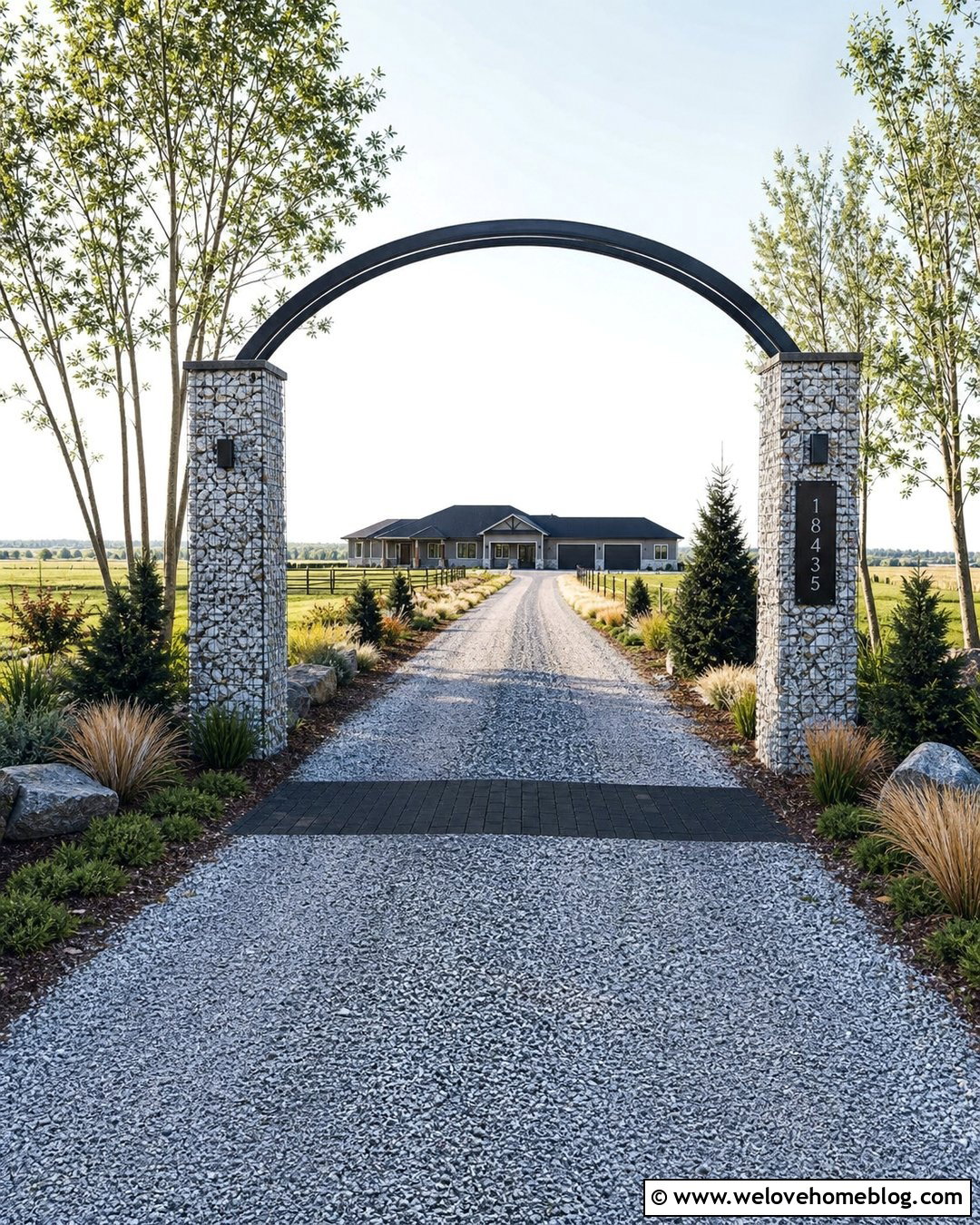
A gabion driveway arch gives a contemporary rural entrance an unusual but grounded appearance. Use stone-filled wire columns on both sides and connect them with a dark galvanized steel curved beam. A wide gray crushed-stone driveway continues the same mineral palette, while a black concrete paver apron creates a clean edge at the road. Plant drought-tolerant grasses, low juniper, sedum, and a few multi-stem trees around the bases. The loose textures should be balanced by precise bed lines and restrained planting. Integrate the house number into a flat steel plate attached to one column. This complete design is especially suitable for modern ranch homes, converted barns, and properties surrounded by open fields or rocky terrain.
17. Living Hedge Driveway Arch
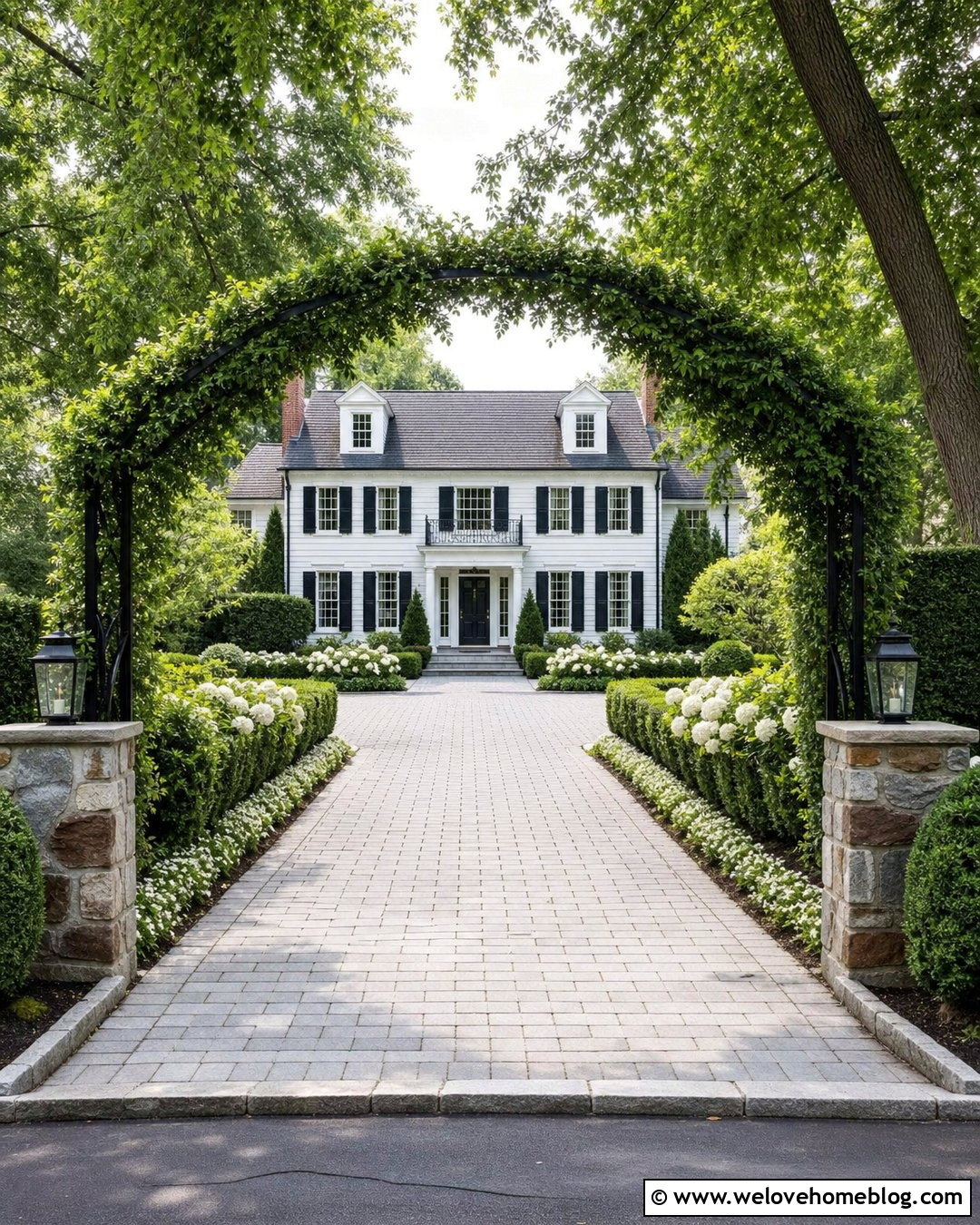
A living hedge driveway arch replaces heavy construction with carefully trained greenery. Create the framework from strong black metal, then guide evergreen vines or flexible hedge growth over the curved top. Beneath it, use a pale gray permeable paver driveway arranged in a simple running-bond pattern. Clipped hedges should continue along both sides, forming a green entrance corridor without blocking road visibility. Add white flowering perennials and low ground covers near the bases to brighten the planting. This treatment looks particularly elegant in front of a symmetrical Colonial home. Because growth changes throughout the year, regular trimming is essential. Maintain generous overhead and side clearance so the leafy opening always remains comfortable for vehicles.
18. Lighted Driveway Arch
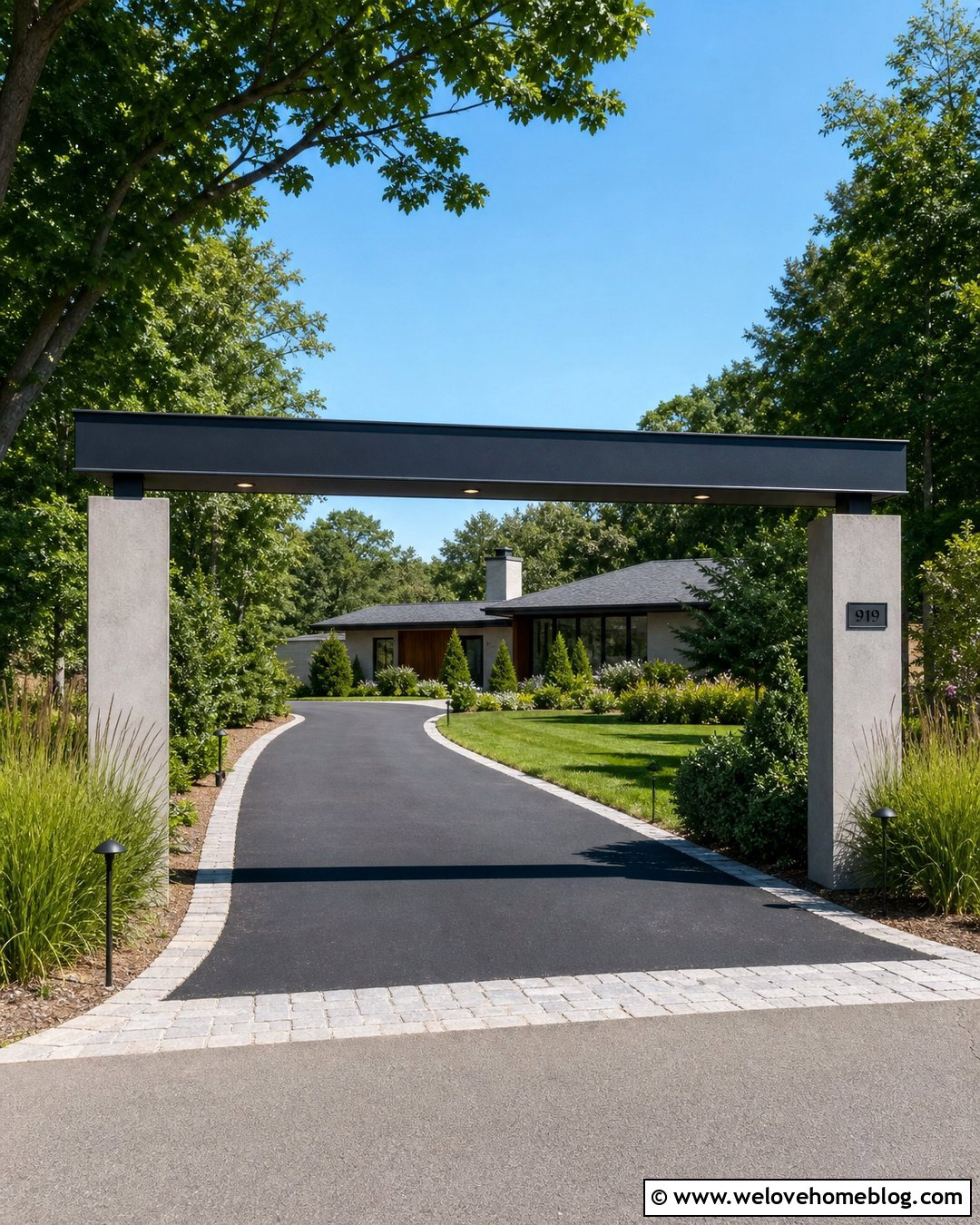
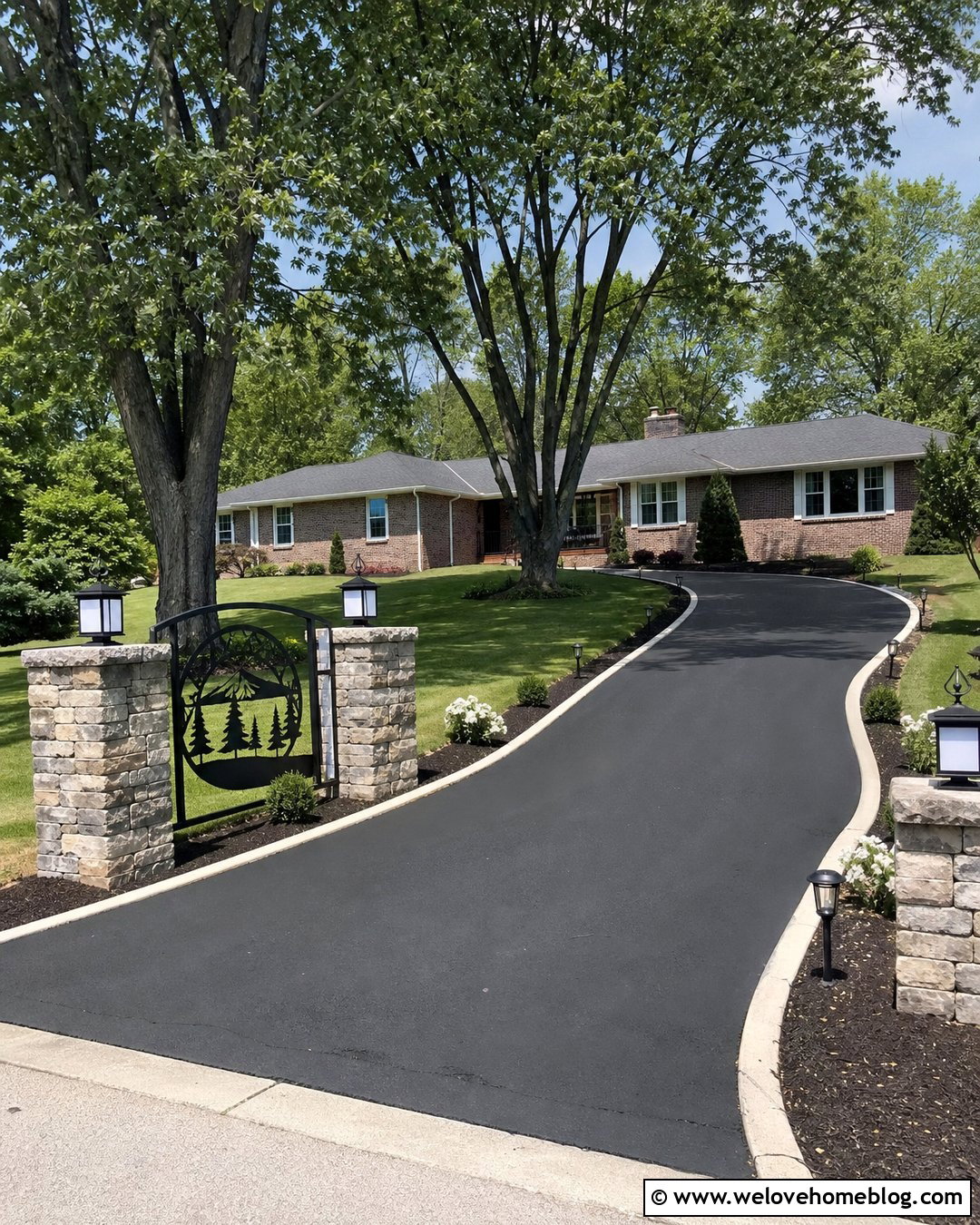
Lighting can transform a simple structure into a useful, recognizable entrance. Select a charcoal steel driveway arch supported by smooth concrete columns, then install discreet downlights along the inner curve. A black asphalt driveway with a light granite paver border provides strong contrast and guides the eye toward the house. Add low path lights within beds of ornamental grass, inkberry holly, and flowering perennials. The fixtures should illuminate the pavement and address area without producing harsh glare toward the street. During the day, the clean structure still looks intentional beside a modern ranch home. Coordinate the fixture finish with the mailbox, gate hardware, and garage lights so the entire approach feels planned as one cohesive design.
19. Driveway Arch With Address Sign
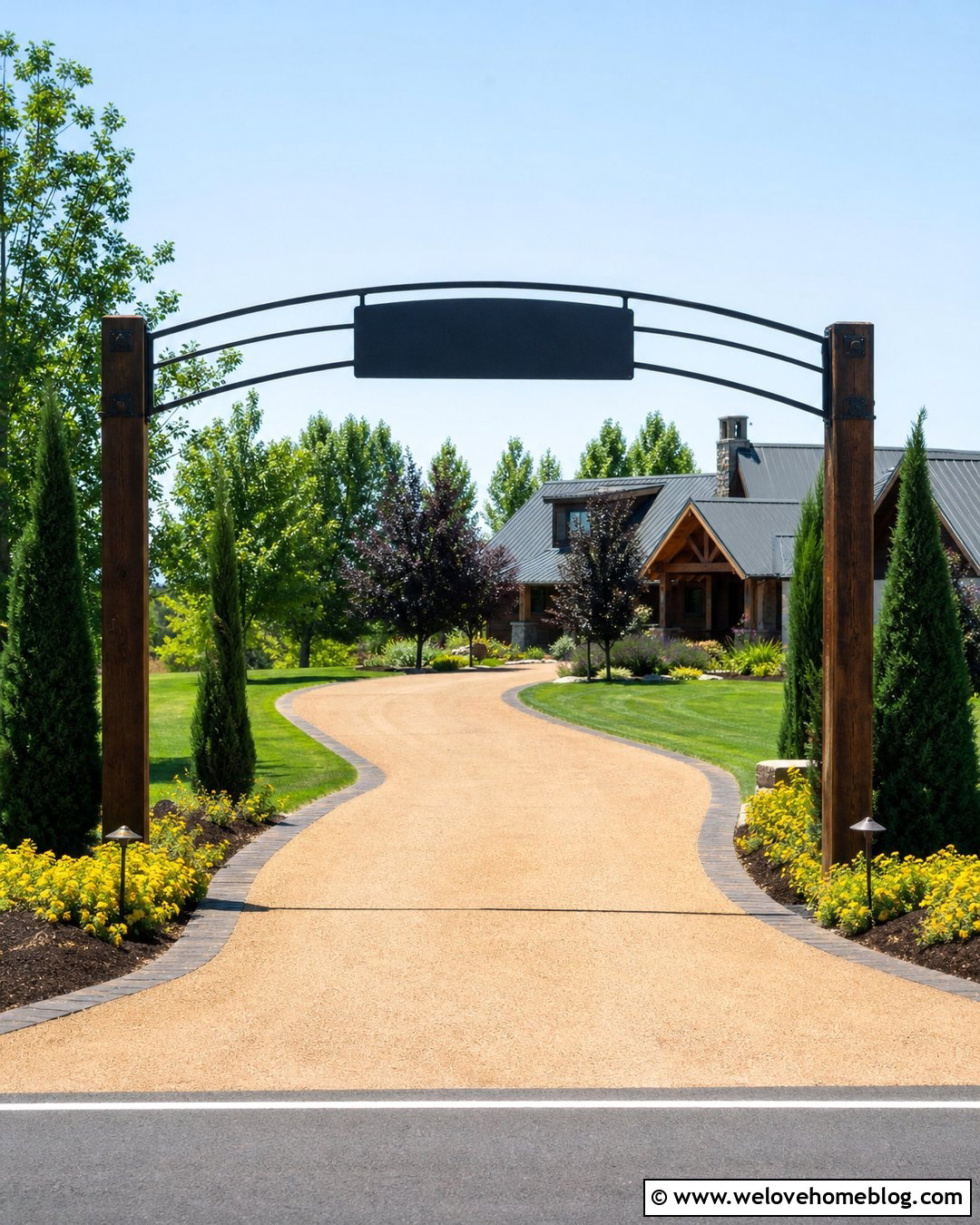
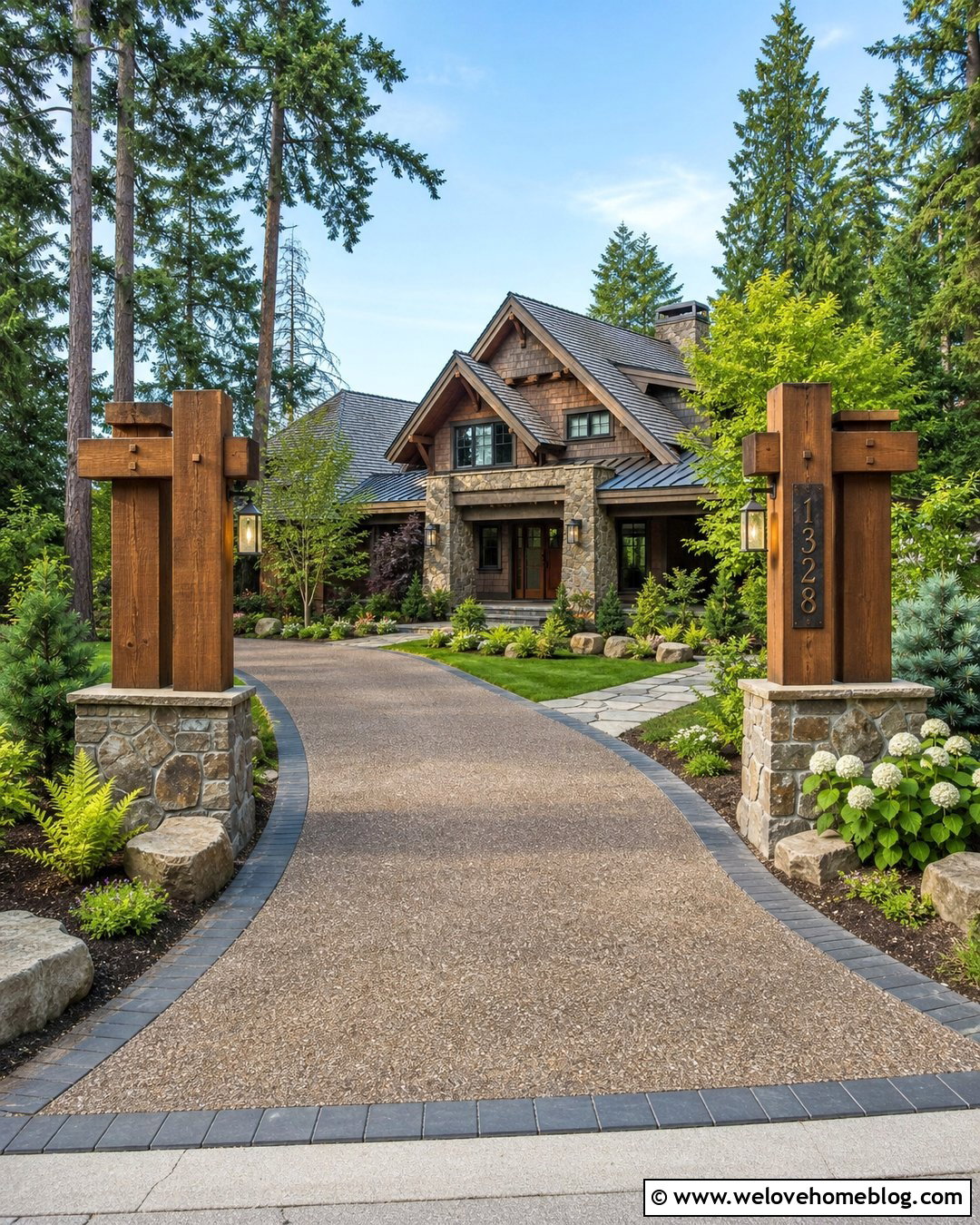
When a home sits far from the road, a driveway arch with an address sign combines identity and curb appeal. Use stained timber posts with a black metal curved top, then center a simple metal number panel beneath the highest point. A tan decomposed granite driveway with dark brick edging keeps the entrance warm and readable. Frame the posts with compact evergreens, yellow flowering perennials, and two small ornamental trees. Position landscape lights to illuminate the numbers without casting strong shadows. The sign should use large, uncluttered characters that remain visible from the road. Repeating the same wood, metal, and brick tones near the house helps this practical feature feel like part of the property rather than a separate roadside marker.
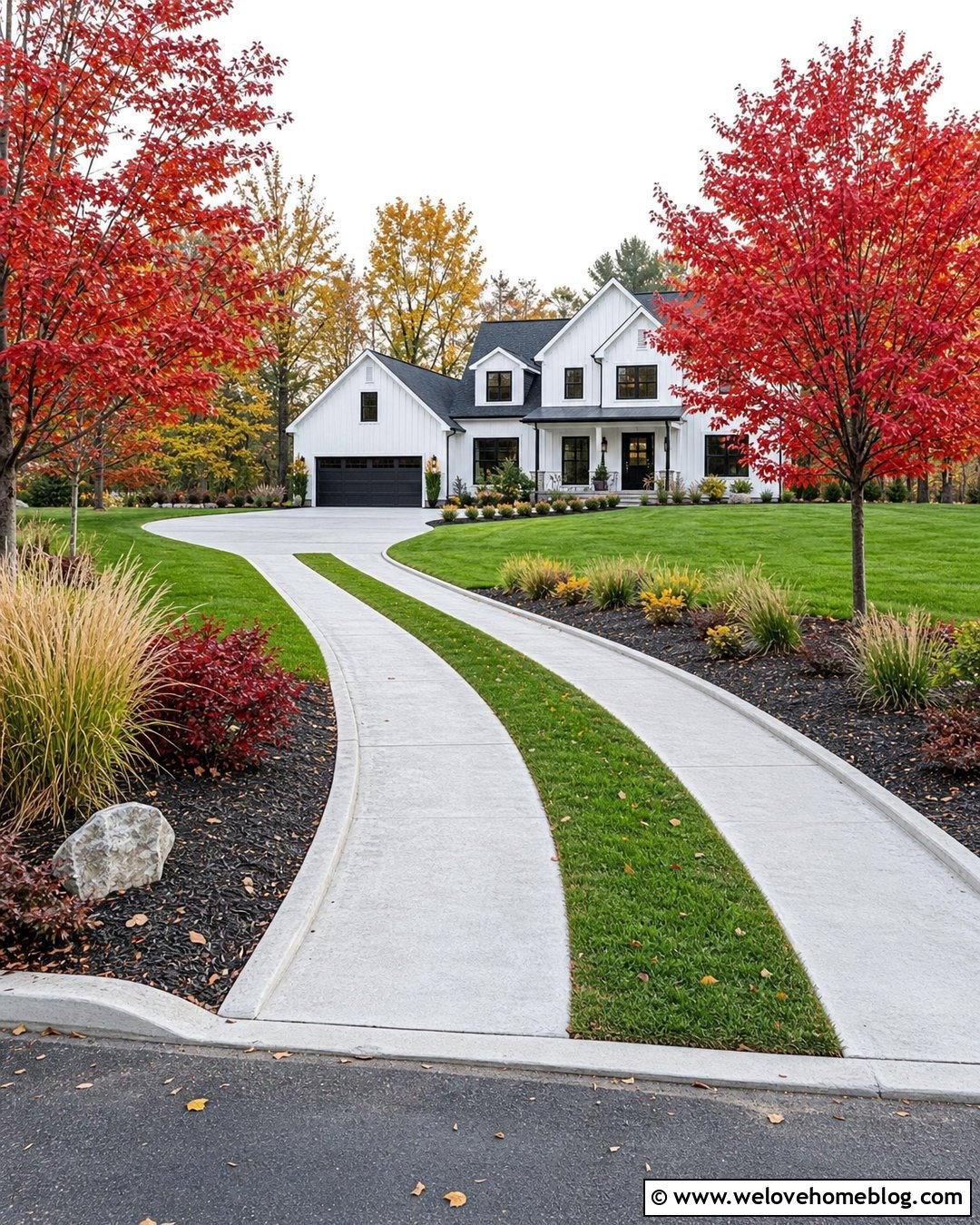
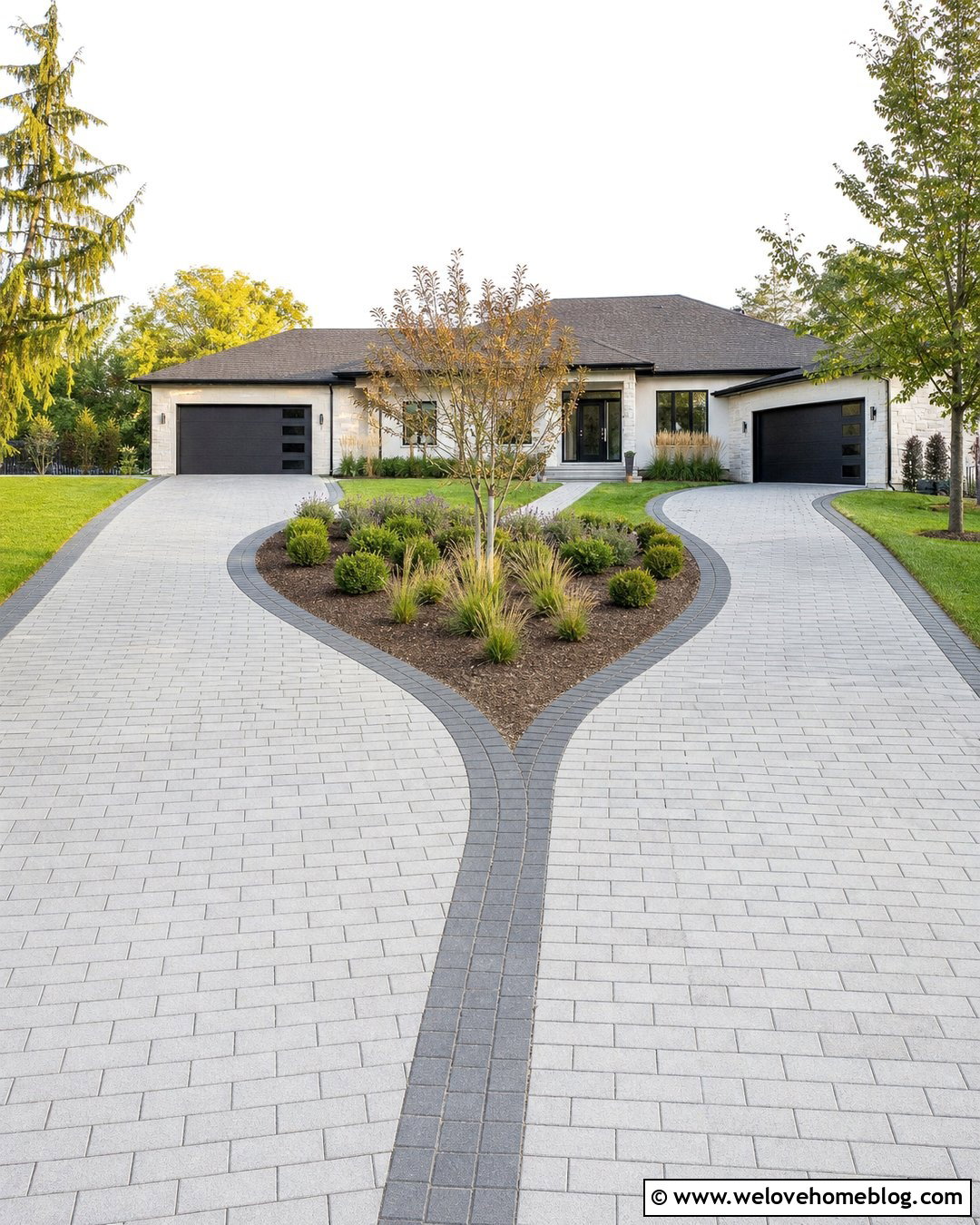
20. Double Driveway Arch
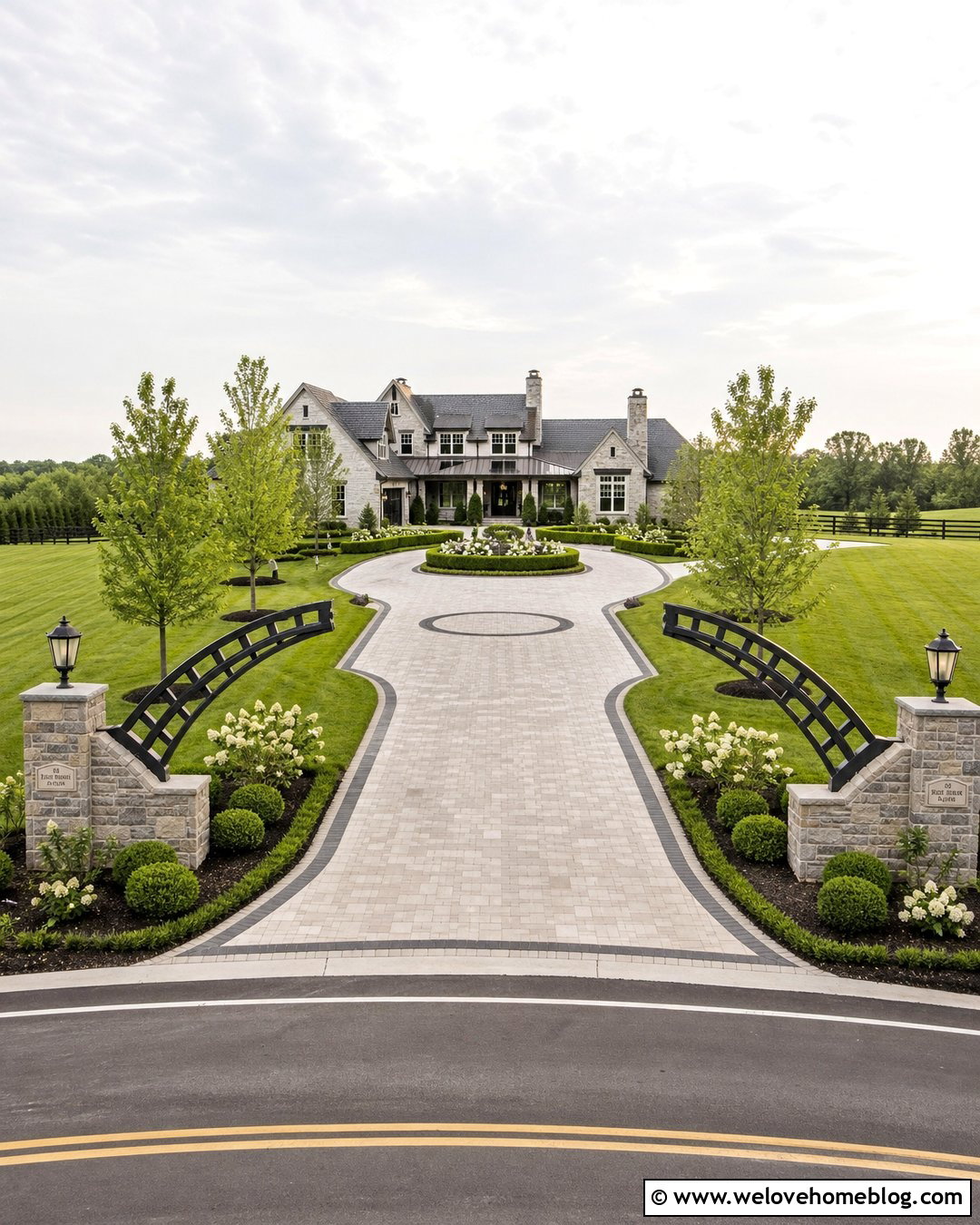
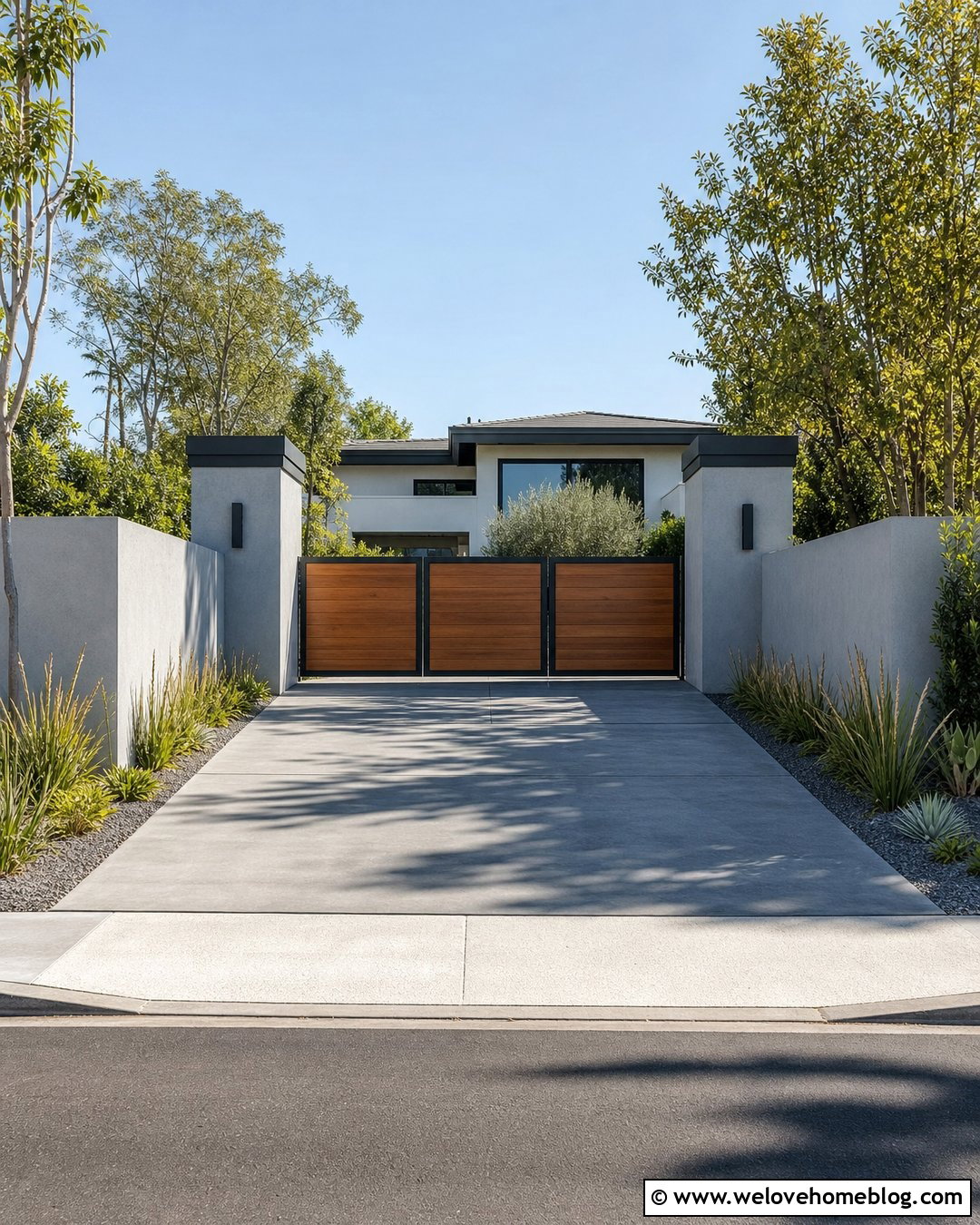
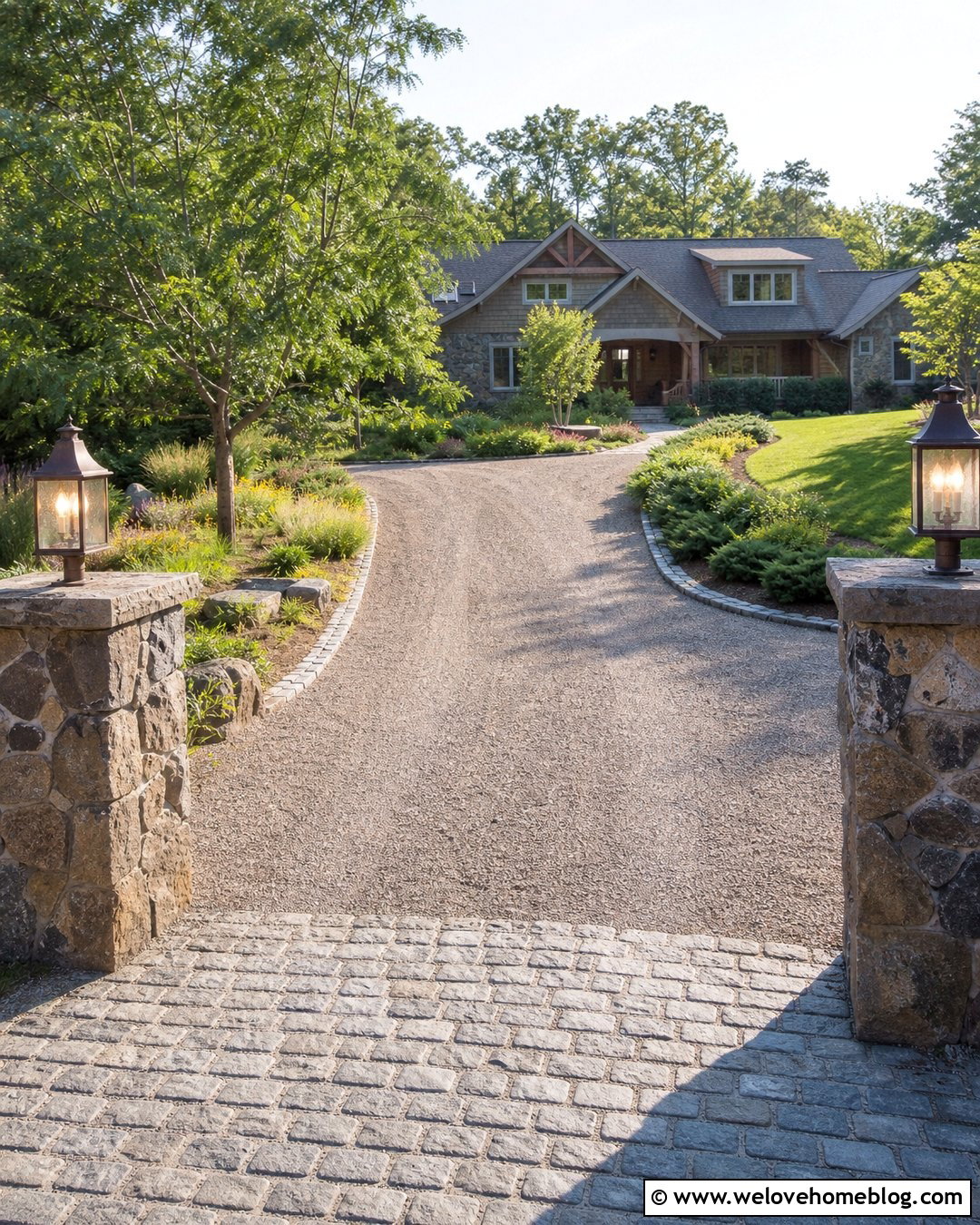
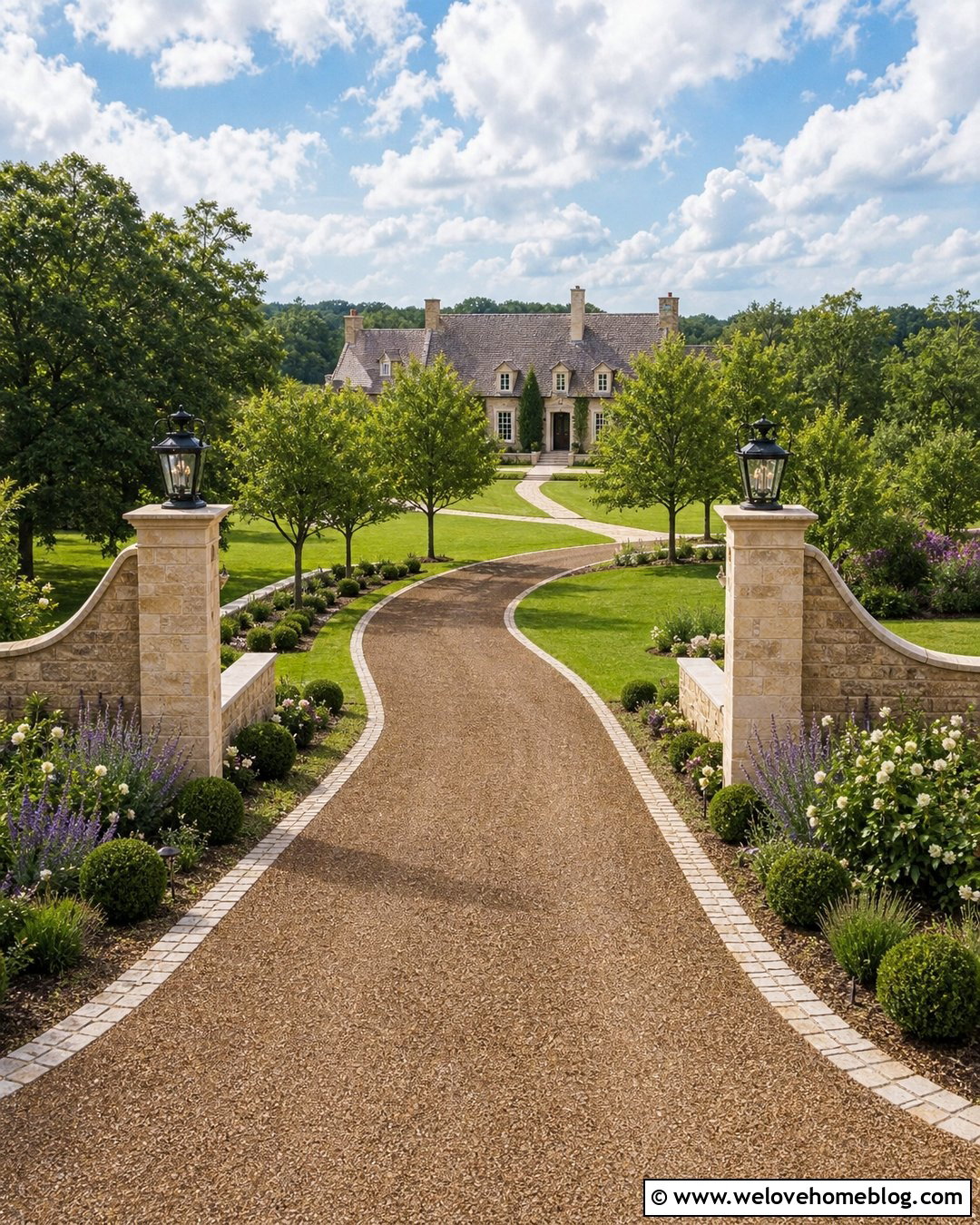
A double driveway arch creates a memorable approach on a long property. Place one broad entrance arch at the road and a second coordinating arch closer to the house or courtyard. Use stone piers with black steel curved spans, but keep the first structure simpler so the arrival feels progressive. A sweeping light gray concrete paver driveway connects both arches, bordered by darker pavers and generous lawns. Plant matching rows of small deciduous trees along the drive, then use more formal boxwood and flowering beds near the inner arch. This layered layout works especially well for circular or gently curved driveways. Consistent materials unite the structures, while different landscaping prevents the repeated arches from feeling overly formal or monotonous.
Conclusion:
The most effective driveway arch feels like a natural part of the entire property rather than an isolated decoration. Its shape should suit the home, while its material should connect with the driveway, gates, fencing, and landscape. Stone and brick provide permanence, timber adds warmth, and streamlined metal supports a cleaner modern look. Climbing plants, lighting, address signs, and coordinated borders can make the entrance more useful and inviting. Always plan generous vehicle clearance, safe visibility, suitable foundations, and manageable planting before construction begins. Whether your entrance is compact, rural, formal, or contemporary, these 20 Driveway Arch Ideas can help you create a distinctive welcome with practical long-term curb appeal.

Related posts:


Leave a Reply