
The best **20 driveway apron landscaping ideas** treat the street-facing entrance as part of the whole property, not as leftover pavement. A driveway apron is the transition where the driveway meets the road, so it must handle daily traffic while creating a welcoming first impression. Materials, planting beds, borders, drainage, and sightlines should work together. Decorative pavers can distinguish the apron, while low shrubs, ornamental grasses, and ground covers soften the hard edges without crowding vehicles. Local rules may also control the apron’s dimensions, slope, and permitted materials, so check municipal requirements before construction. () From traditional brick entrances to modern permeable paving, these complete designs provide practical **20 driveway apron landscaping ideas**.

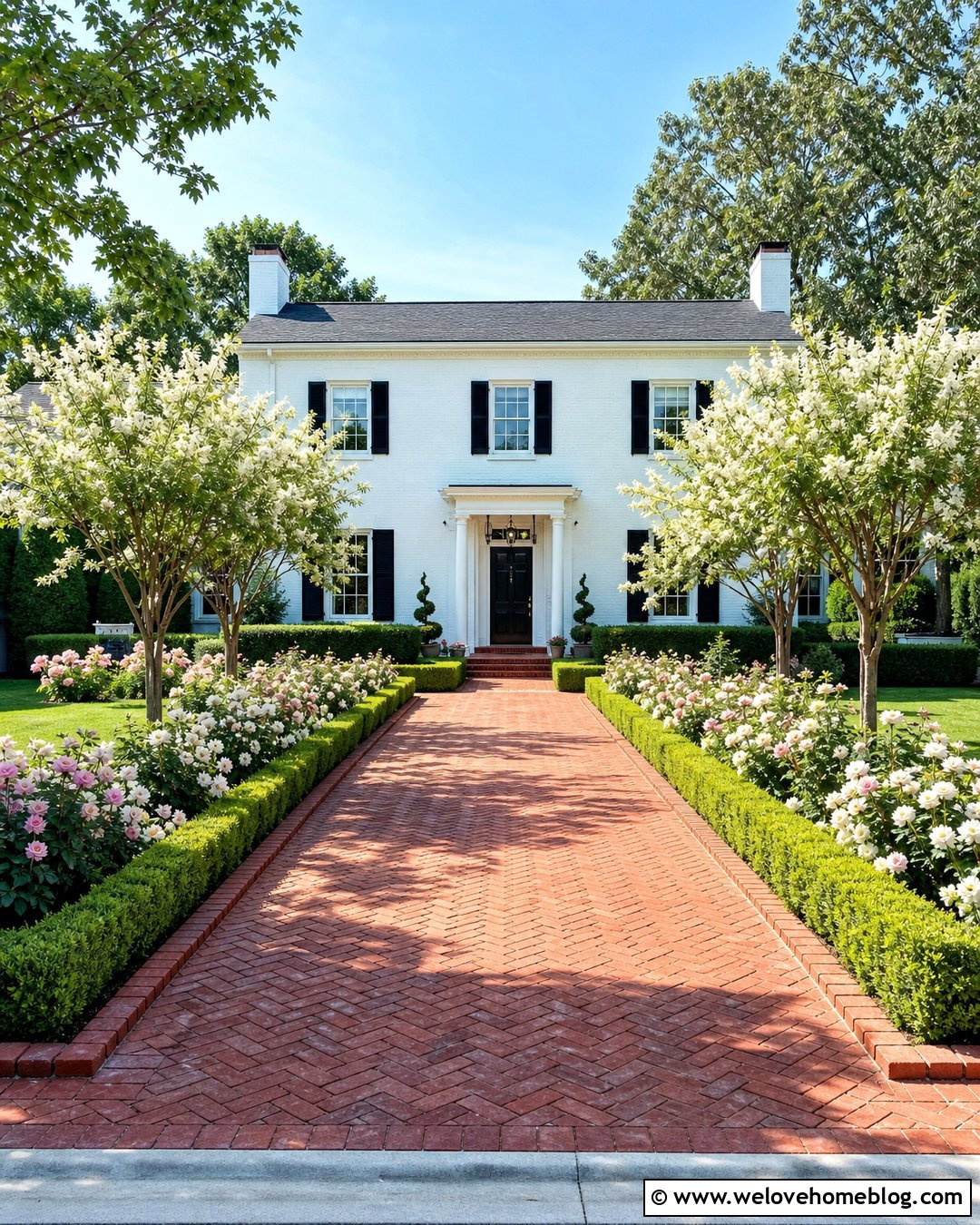
1. Brick Driveway Apron With Boxwood Beds
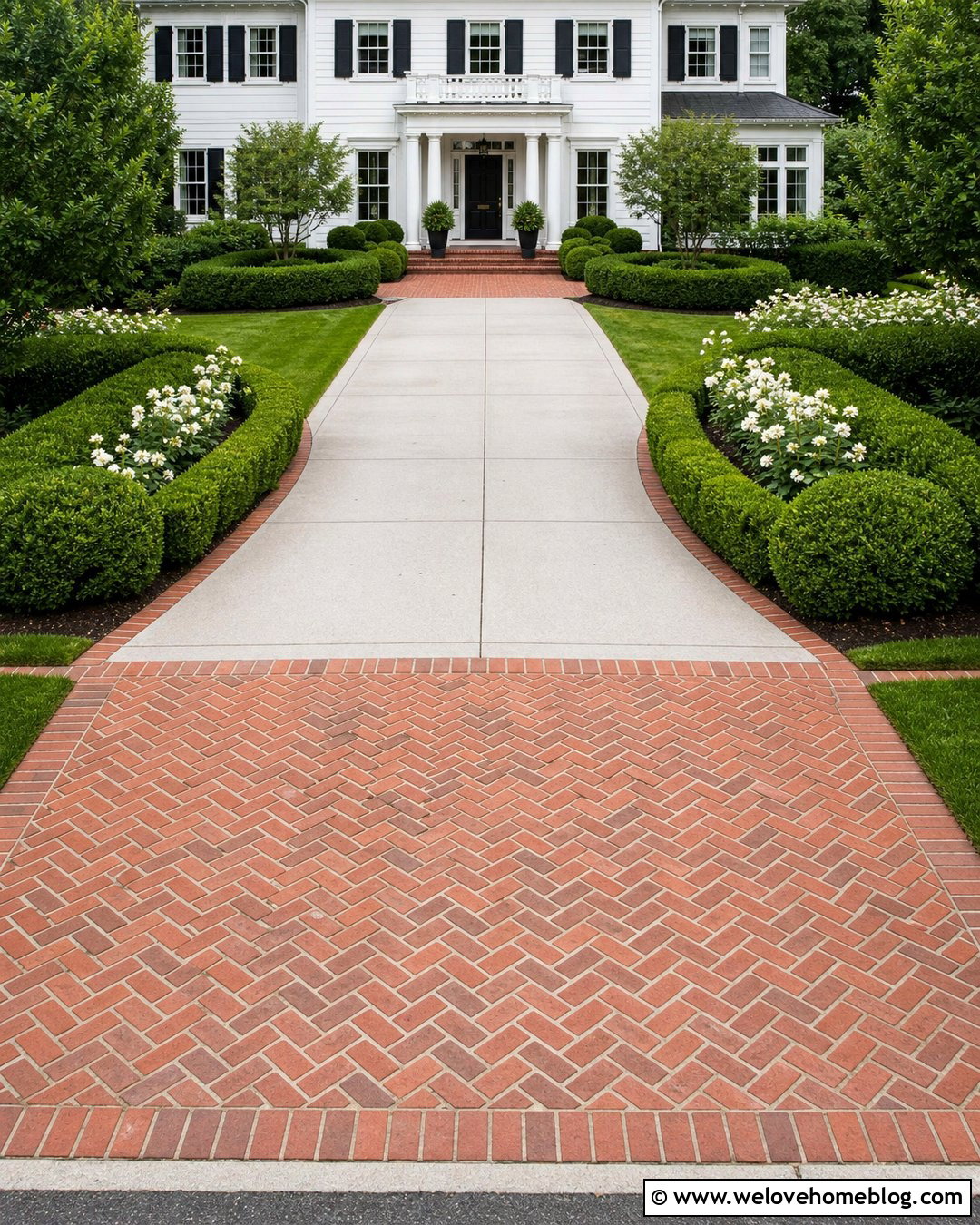
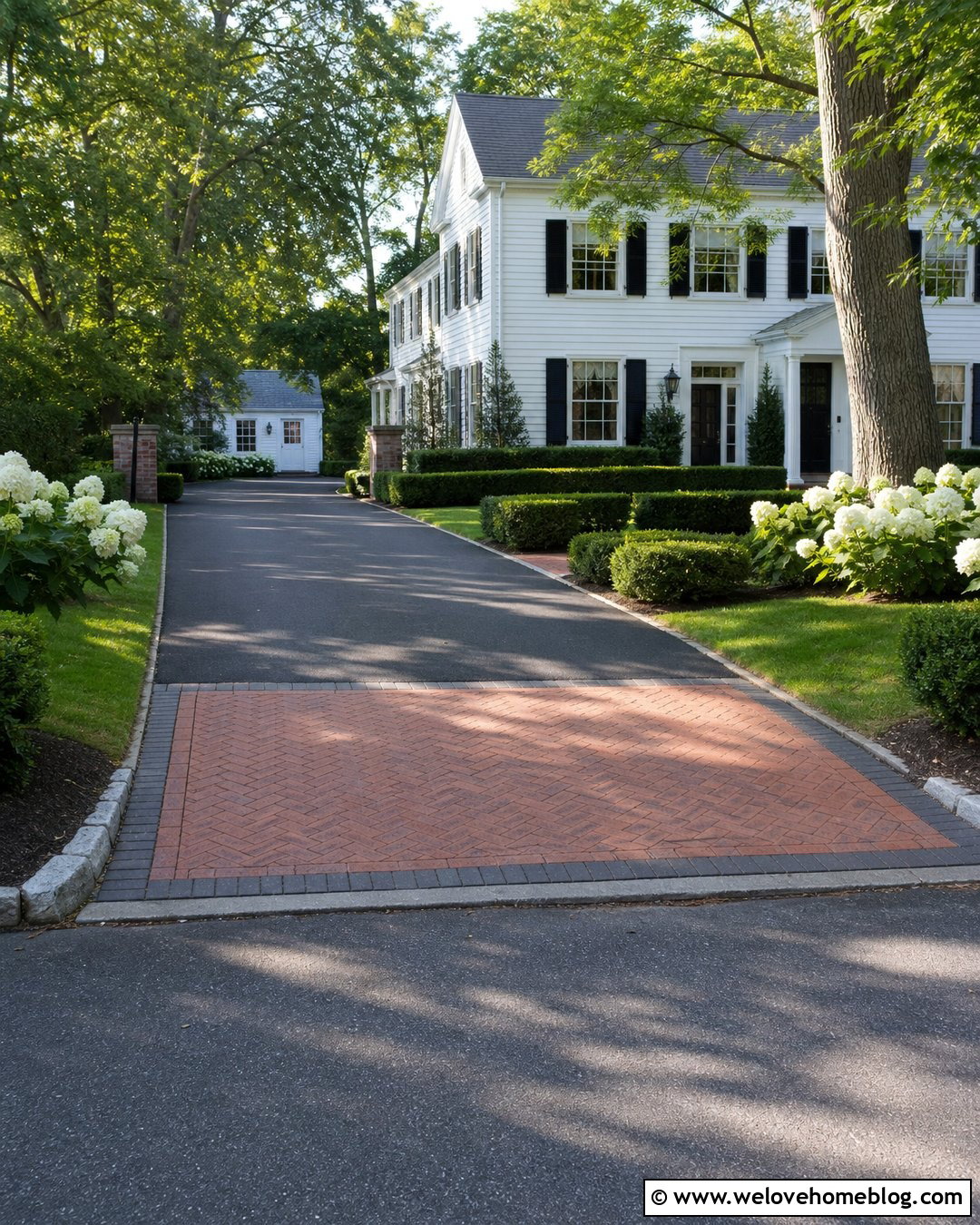
A red clay brick apron gives a plain concrete driveway a warmer and more traditional entrance. Lay the bricks in a herringbone pattern across the full apron, then add a soldier-course border for a clean edge. Continue narrow brick ribbons along both sides of the straight concrete driveway to connect the entrance with the house. On each apron corner, create matching curved beds filled with compact boxwoods, white flowering perennials, and dark mulch. Keep the plants low near the street so they do not interrupt visibility. This complete look works especially well with colonial and Cape Cod homes. Repeating the brick in the front walkway or porch steps will make the apron feel original to the property rather than like a decorative addition.
2. Cobblestone Driveway Apron With Hydrangeas
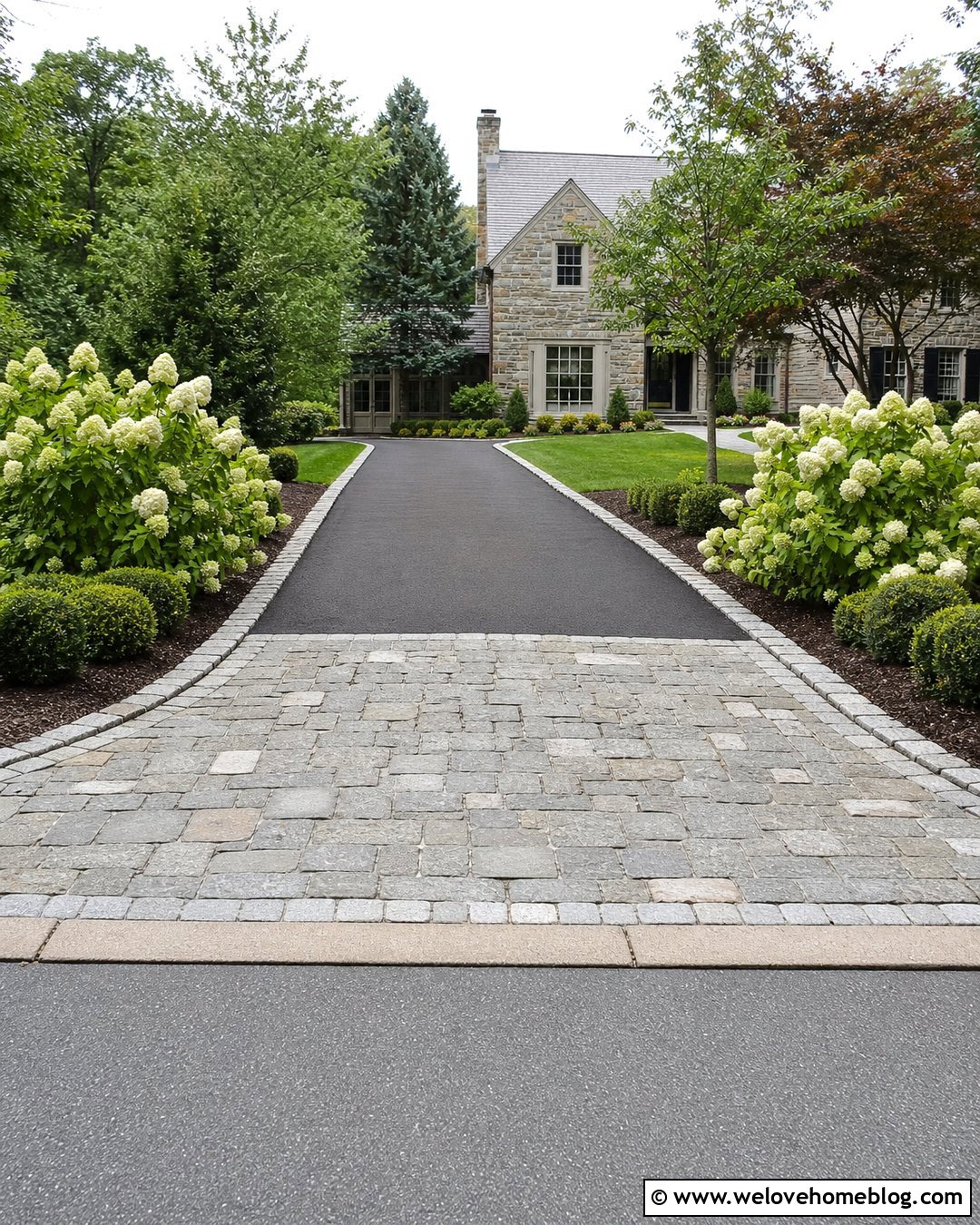
Irregular gray cobblestones can turn the apron into a strong visual threshold for an asphalt driveway. Use a rectangular cobblestone section at the street, followed by matching stone edging that runs toward the garage. Broad planting beds on both sides can soften the rugged paving with rounded hydrangeas, dwarf evergreens, and a simple layer of brown mulch. Choose compact hydrangea varieties and position the largest shrubs farther from the road. A pair of small ornamental trees placed behind the entrance beds adds height without making the apron feel enclosed. This design suits traditional homes, stone houses, and wooded suburban properties. The dark asphalt keeps the driveway practical, while the textured cobblestone and generous planting create a more established, carefully landscaped approach.
3. Concrete Driveway Apron With Ornamental Grasses
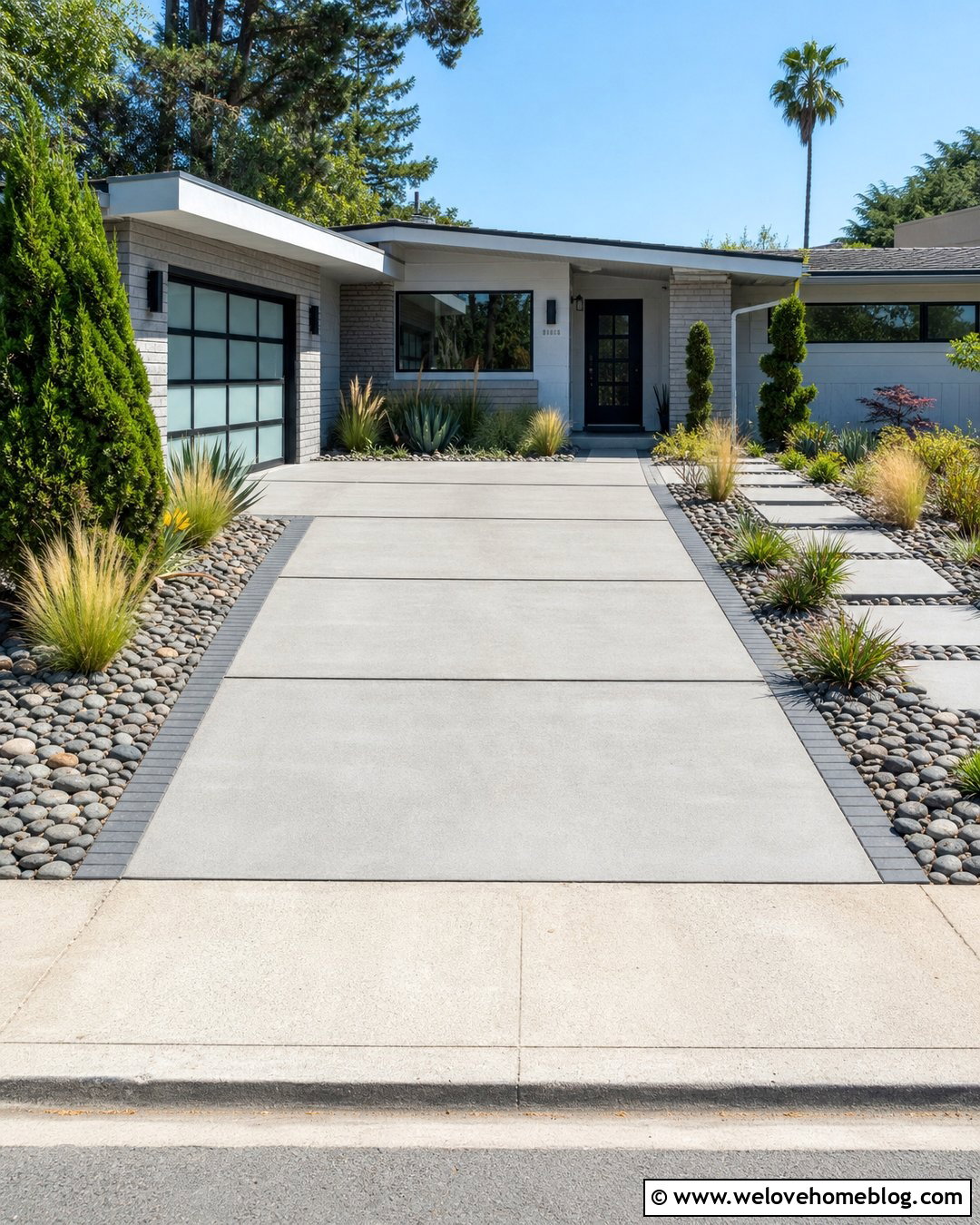
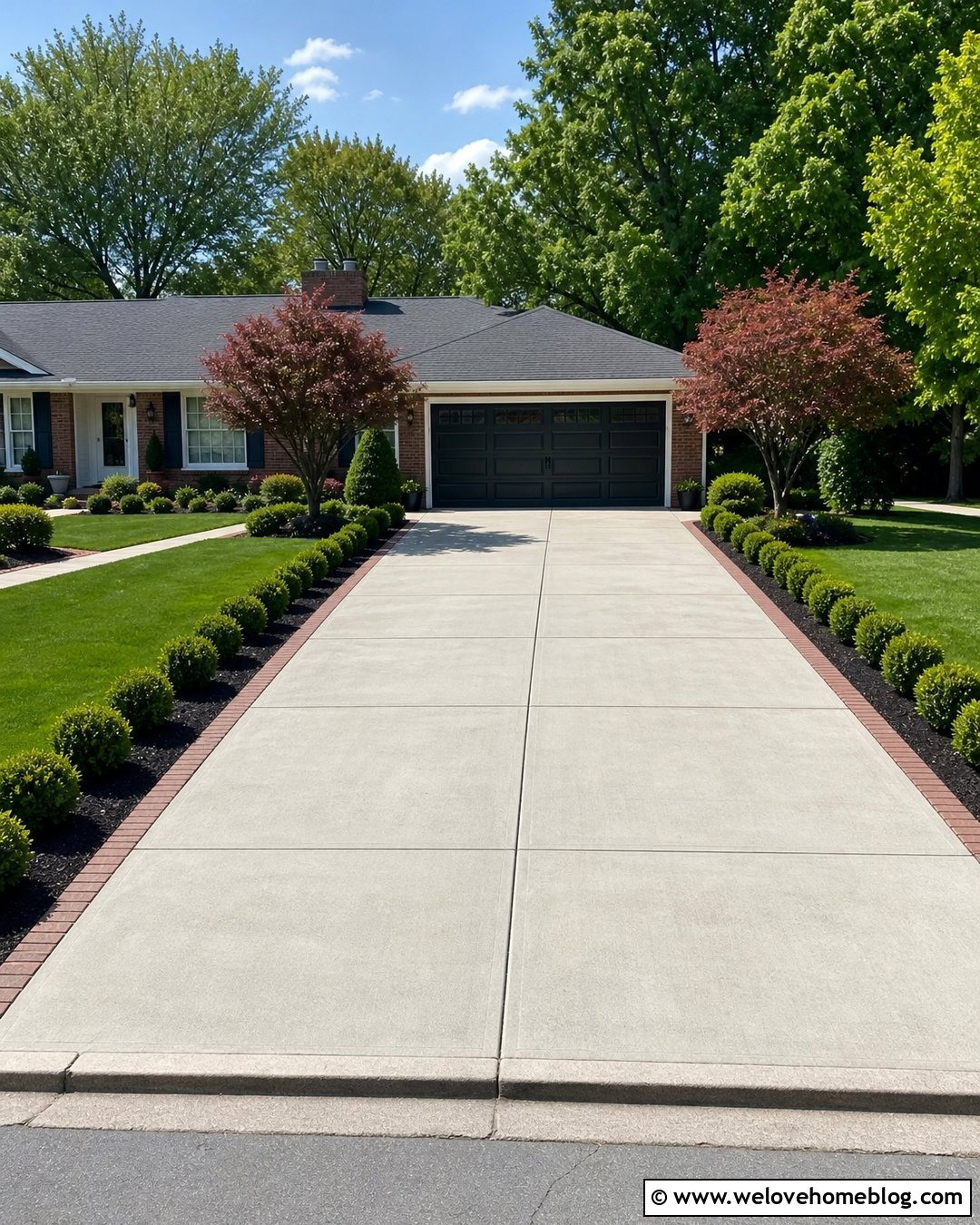
Clean lines make a poured concrete apron an excellent match for a modern ranch or midcentury home. Use large rectangular concrete sections with a light broom finish, narrow control joints, and charcoal paver borders. Build angular gravel beds beside the apron and fill them with repeating clusters of upright ornamental grasses, low sedges, and sculptural evergreen shrubs. The plants should follow the geometry of the paving instead of forming loose cottage-style borders. Add flat landscape stones or dark river rock as mulch for a crisp, low-maintenance finish. Continue the charcoal border along the straight driveway to guide the eye toward the garage. This restrained design adds movement and softness while preserving the uncluttered appearance associated with contemporary residential landscaping.
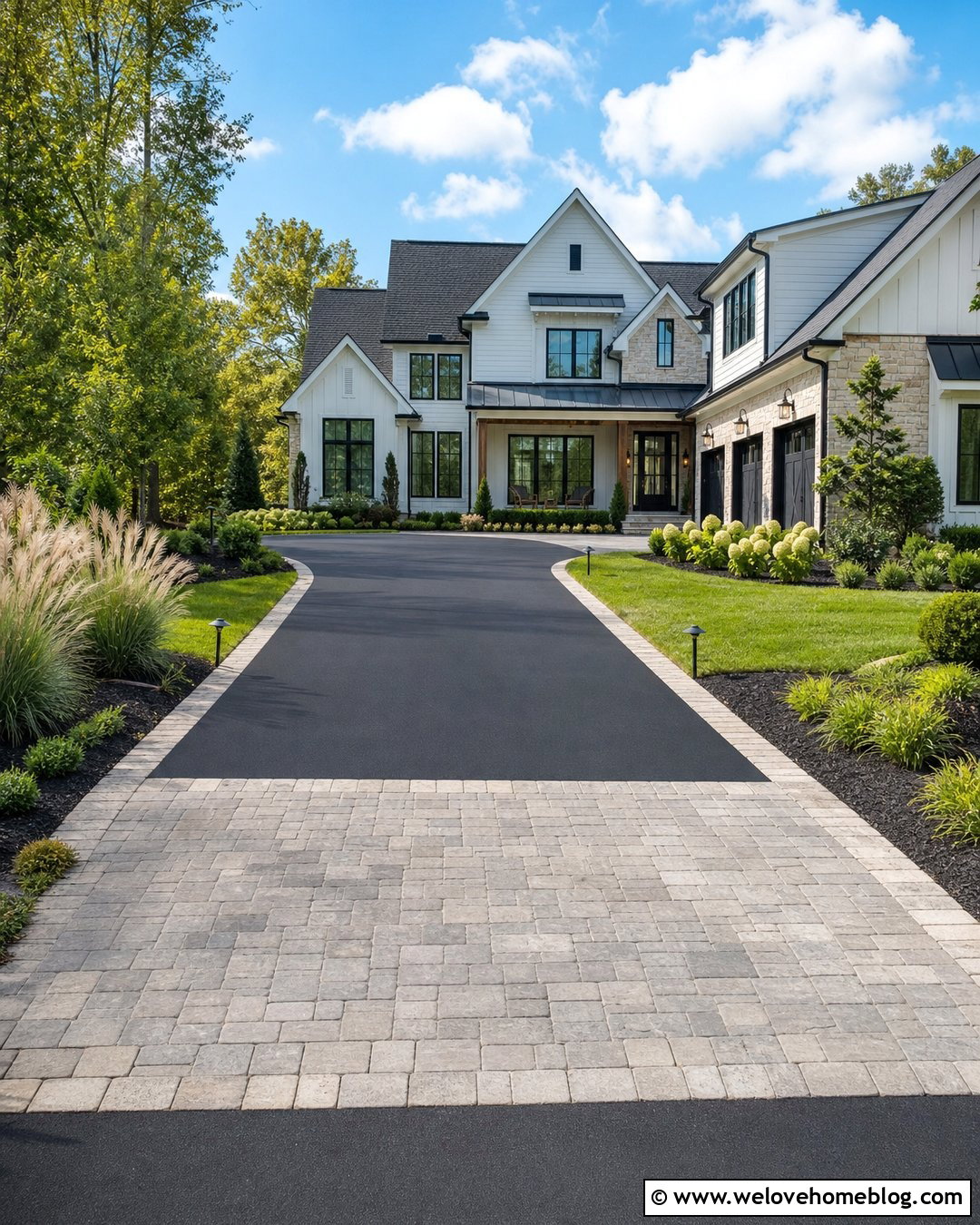
4. Asphalt Driveway Apron With Stone Wing Beds
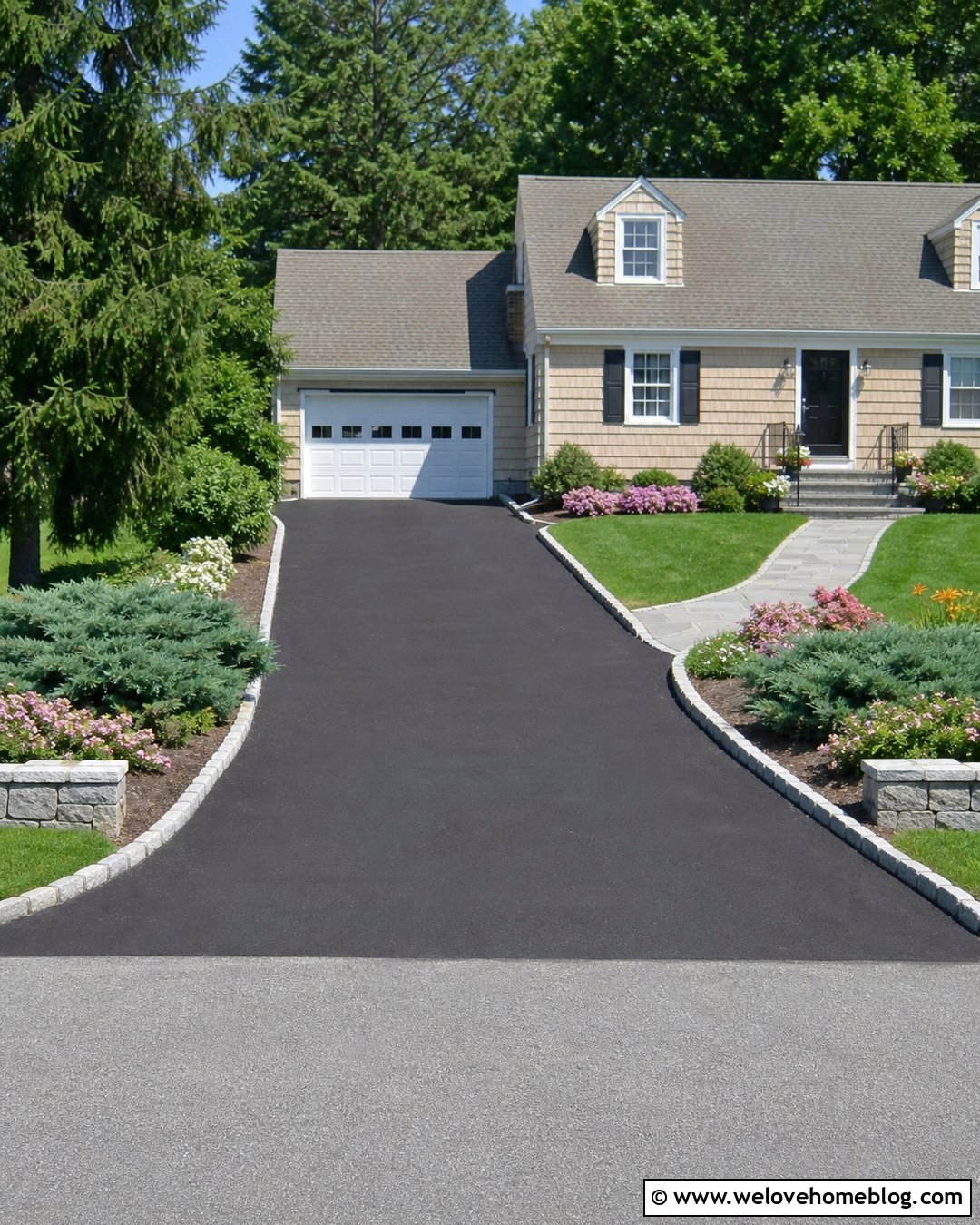
A black asphalt driveway can look more finished when its flared apron is framed by symmetrical stone-edged beds. Create broad wings at the street to allow an easier turning approach, then outline them with chunky gray granite blocks. Behind the stone, plant spreading junipers, compact spirea, and groups of colorful seasonal perennials. The planting should be deepest at the outer corners and gradually narrow as it follows the driveway. This arrangement emphasizes the apron’s shape without placing fragile flowers beside vehicle tires. A neat lawn surrounding the beds provides contrast against the dark pavement and textured stone. For a cohesive look, repeat the granite around the mailbox, front walkway, or foundation beds. The result feels practical, polished, and suitable for many suburban homes.
5. Permeable Paver Apron With Rain Gardens
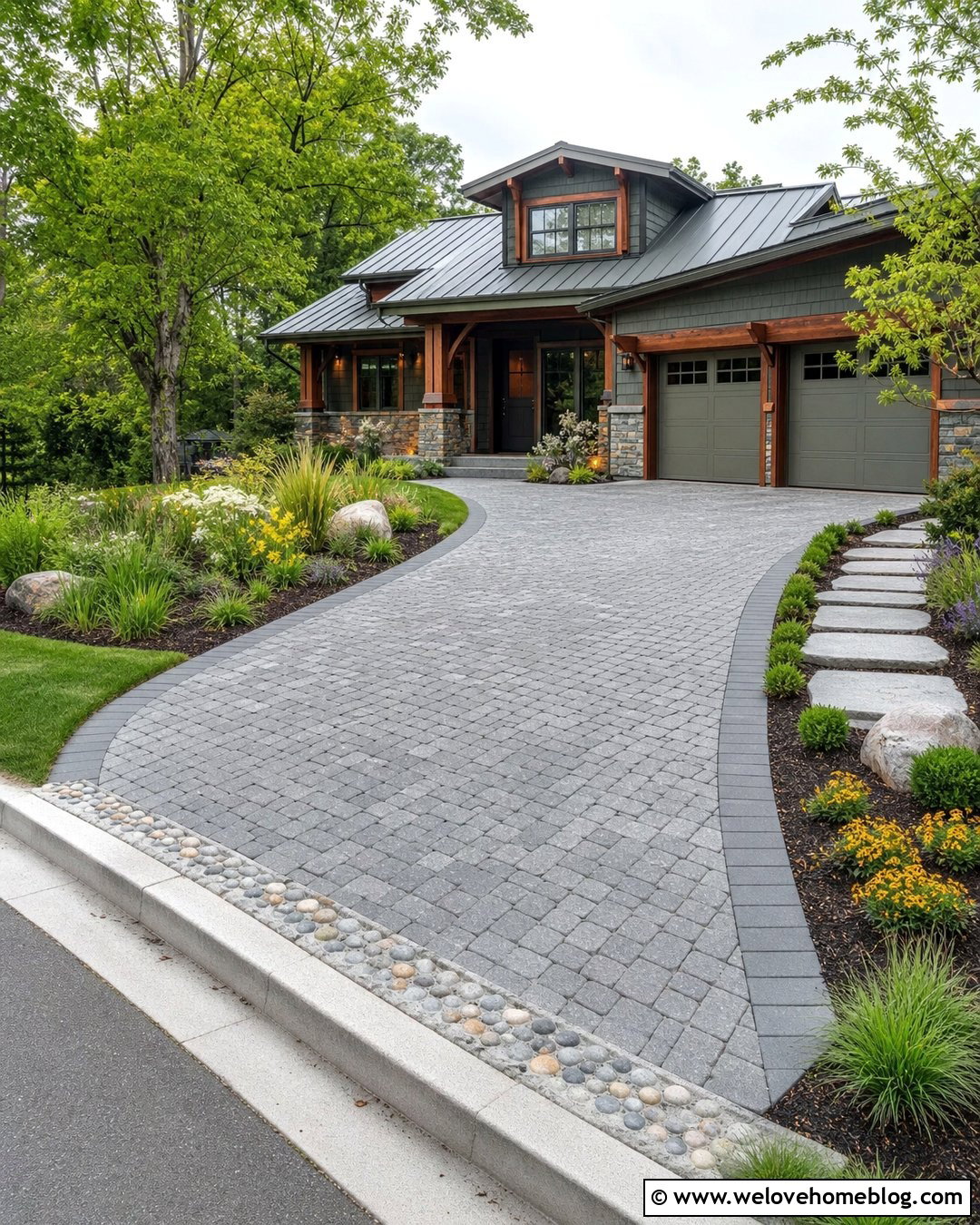
For a driveway entrance that looks attractive while responding to runoff, combine permeable concrete pavers with shallow rain garden beds. Use medium-gray pavers across the apron and continue them along a gently curved driveway. On each side, shape wide depressions planted with moisture-tolerant native sedges, rushes, flowering perennials, and compact shrubs suited to local conditions. Decorative cobbles can define channels that visually connect the pavement with the planted areas. Keep the center of the driveway open and maintain clear edges where tires pass. A small stepping-stone route through one bed can connect the sidewalk and front path. This integrated approach feels especially appropriate for craftsman, contemporary, and eco-conscious homes because the paving and landscape appear to manage the entrance as one unified space.
6. Pea Gravel Driveway Apron With Timber Edging
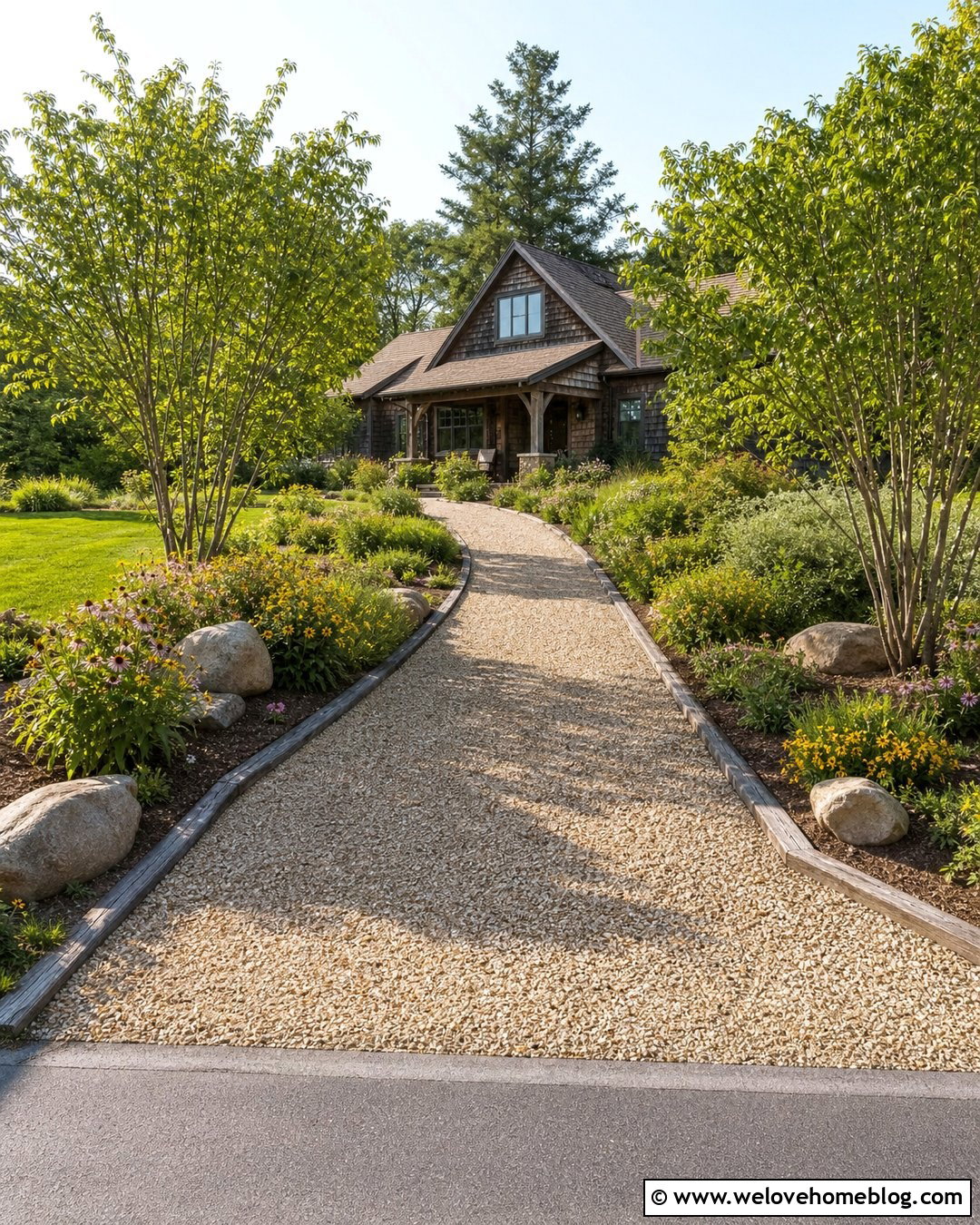
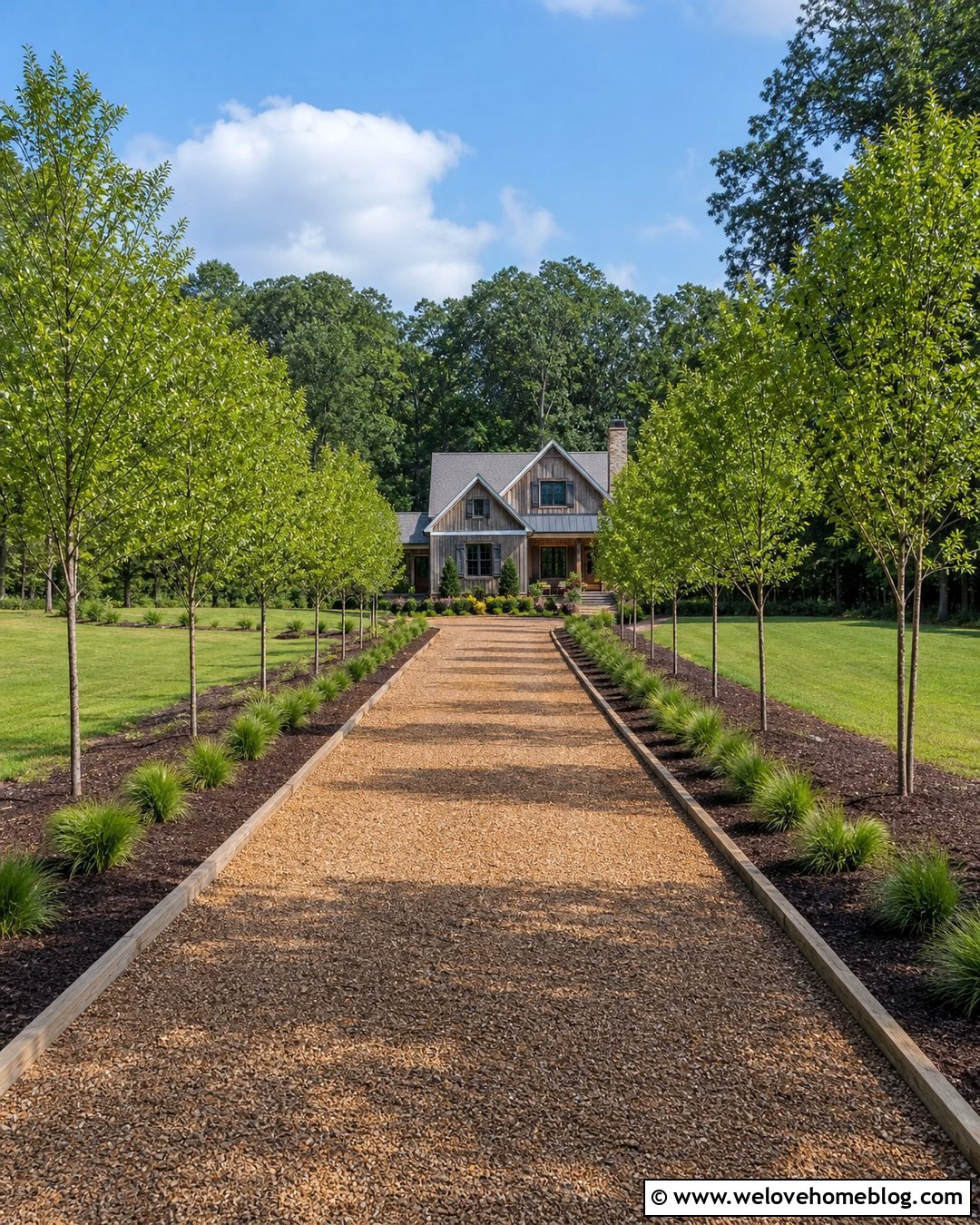
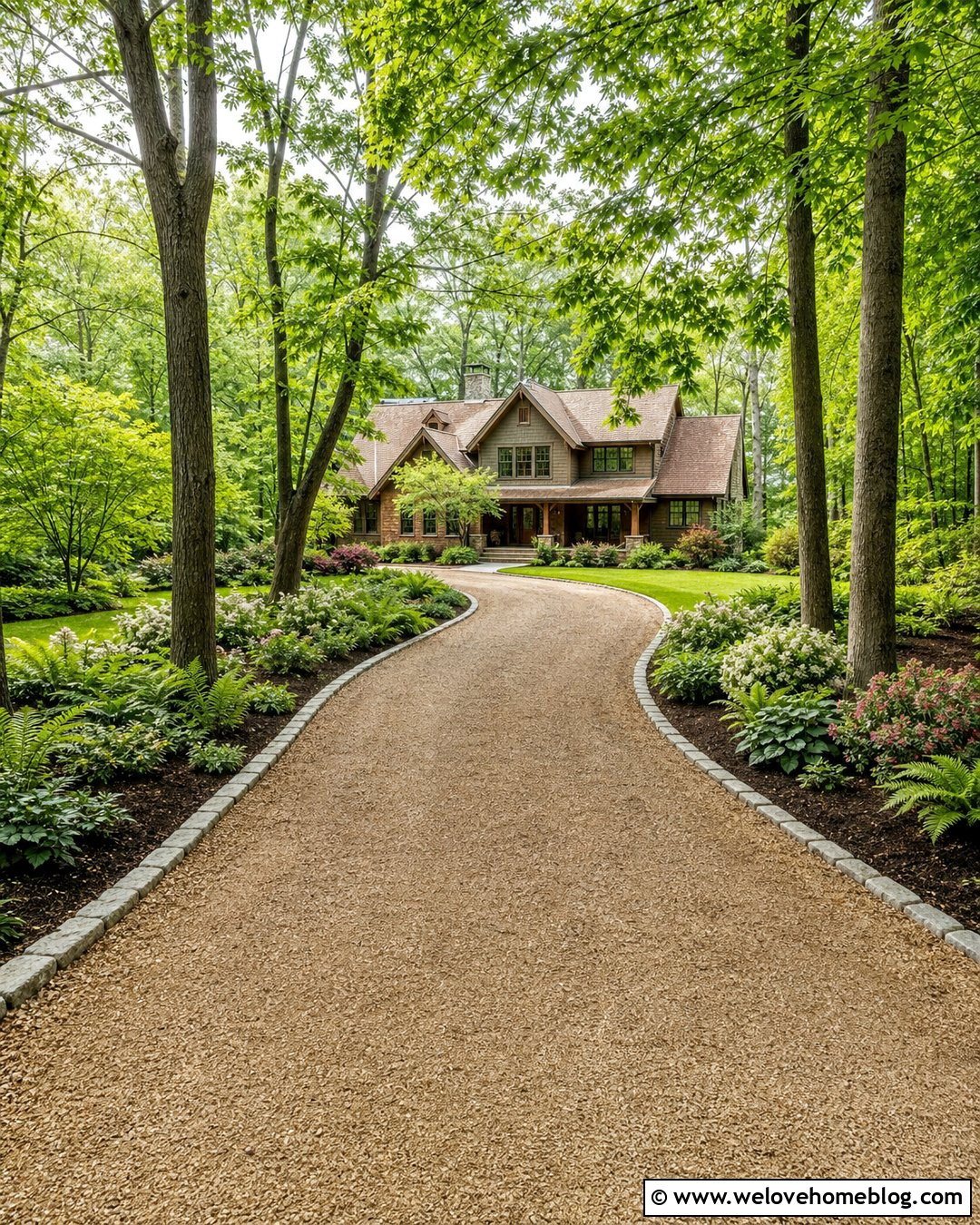
A pale pea gravel apron creates a relaxed entrance for a cottage, cabin, or modest country home. Use firmly contained gravel across the flared approach and continue it along the full driveway, with substantial timber or steel restraints holding the material in place. Form informal planting beds outside the edging using native grasses, coneflowers, coreopsis, and low spreading shrubs. A few weathered boulders can anchor the corners and protect delicate plants from turning vehicles. Keep the planting loose but repeat several species so the entrance does not appear disorderly. Behind the low flowers, add one multi-stem ornamental tree on each side. This combination gives the gravel driveway a purposeful outline while maintaining the softer, natural appearance that makes loose-stone entrances so inviting.
7. Stamped Concrete Apron With Curved Flower Beds
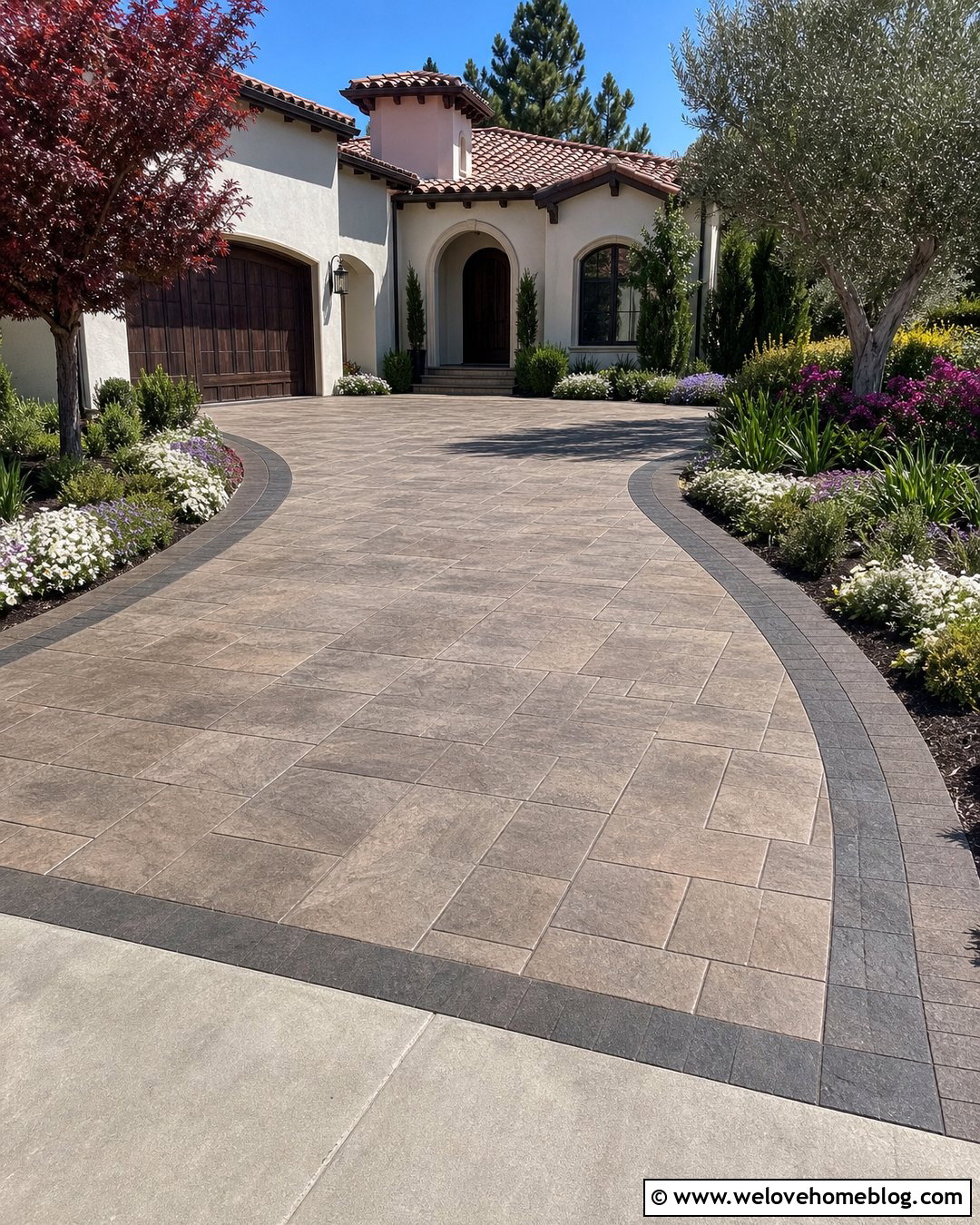
Stamped concrete can create a decorative entrance without changing the material used throughout the driveway. Choose a warm taupe concrete surface stamped with a restrained ashlar stone pattern. Frame the apron with darker concrete bands, then carry those bands along a gently curved driveway. On both sides, install sweeping flower beds that echo the curve rather than stopping abruptly at the street. Layer low ground covers at the front, flowering perennials in the middle, and compact evergreen shrubs toward the back. A pair of small flowering trees can mark the transition into the property. Avoid overly complex stamp colors, since the flowers and curved layout already provide visual interest. This balanced design complements stucco, Mediterranean, traditional, and transitional houses without making the entrance feel overly formal.
8. Exposed Aggregate Apron With River Rock Landscaping
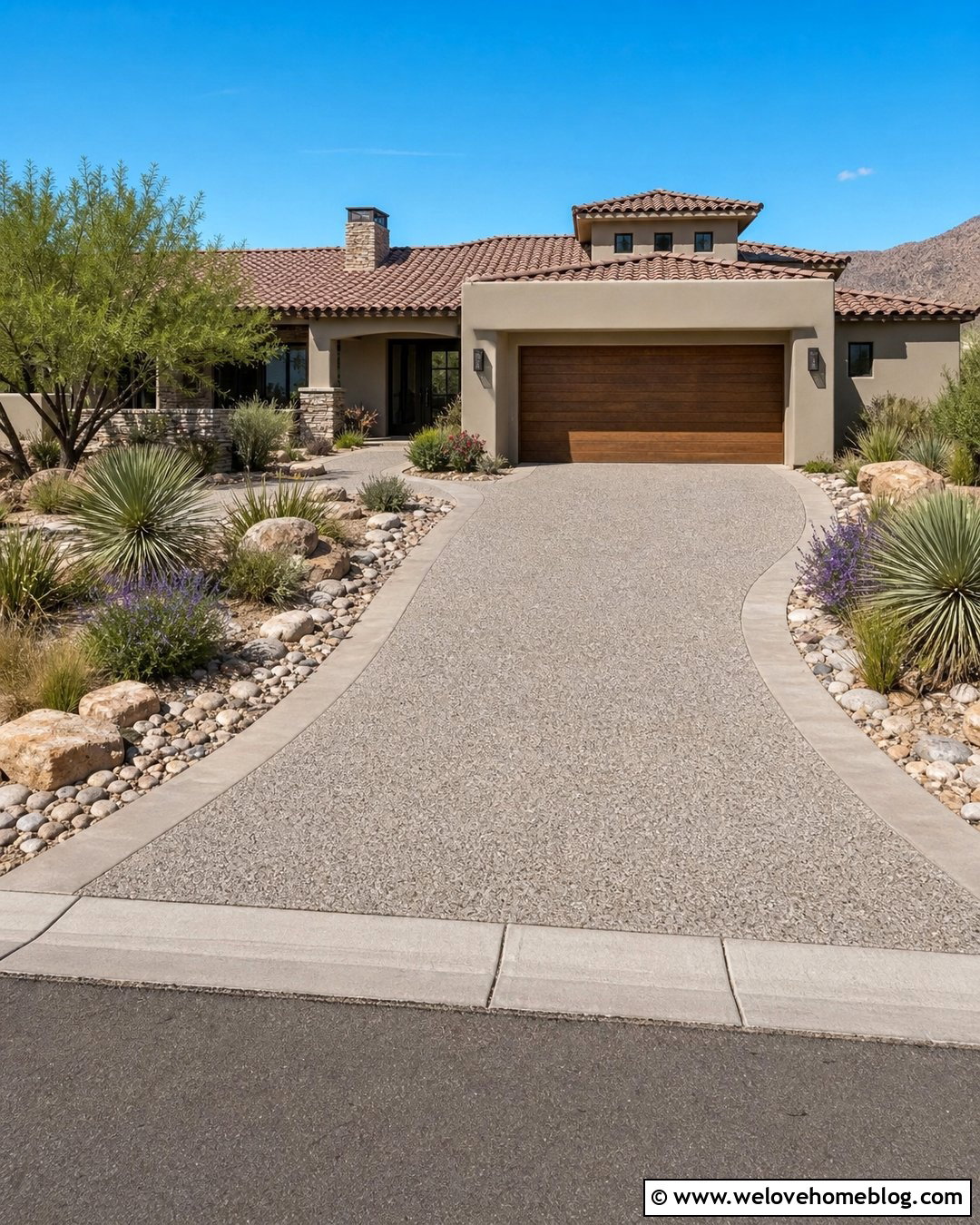
The natural texture of exposed aggregate pairs beautifully with dry creek landscaping. Use warm gray exposed aggregate for the driveway and apron, adding smooth concrete bands along the edges for definition. Beside the flared entrance, create shallow river rock channels that curve away from the pavement and into larger planting beds. Mix rounded gray stones with drought-tolerant grasses, yucca, salvia, and compact flowering shrubs. Large boulders placed at irregular intervals can make the arrangement feel grounded, but they should remain well outside the vehicle path. Extend a few planting groups farther up the driveway so the apron does not look disconnected from the yard. This complete landscape works well for ranch, Southwestern, and contemporary homes, especially where a conventional green lawn would feel out of place.
9. Bluestone Driveway Apron With Evergreen Borders
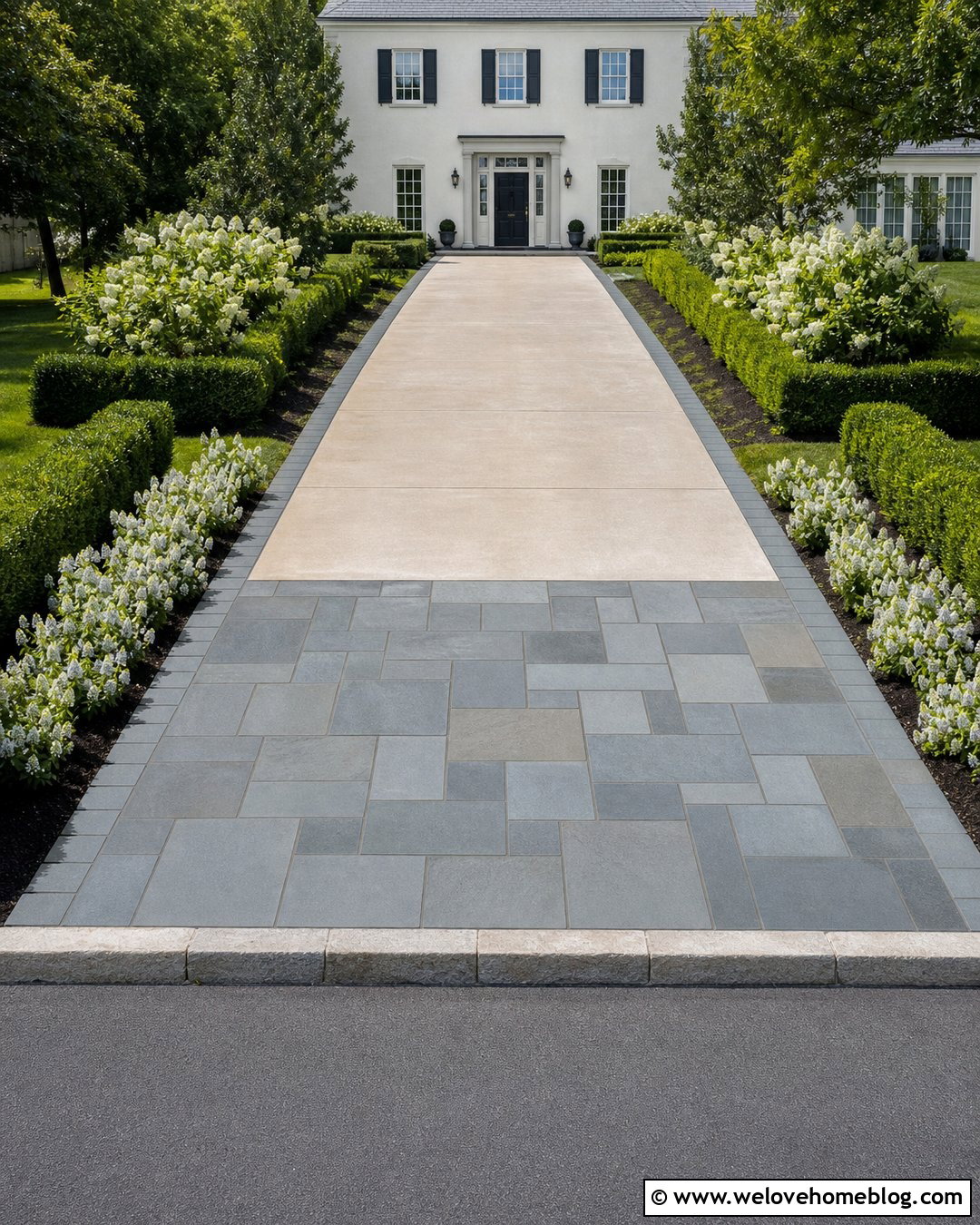
A bluestone apron introduces rich gray-blue color at the entrance to a traditional concrete driveway. Arrange rectangular stones in a random ashlar layout, then use narrow bluestone borders to connect the apron with the walkway and front steps. On either side, shape formal beds with low evergreen hedges, white flowering shrubs, and seasonal bulbs. Keep the hedges neatly clipped and below driver sightlines near the street. Taller evergreens can appear farther back, where they frame the house without closing in the entrance. A dark mulch layer will emphasize the cool tones in the stone and create a tidy backdrop for lighter flowers. This driveway look suits colonial, Georgian, and upscale craftsman homes because its structured landscaping feels elegant without relying on gates, tall pillars, or excessive decoration.
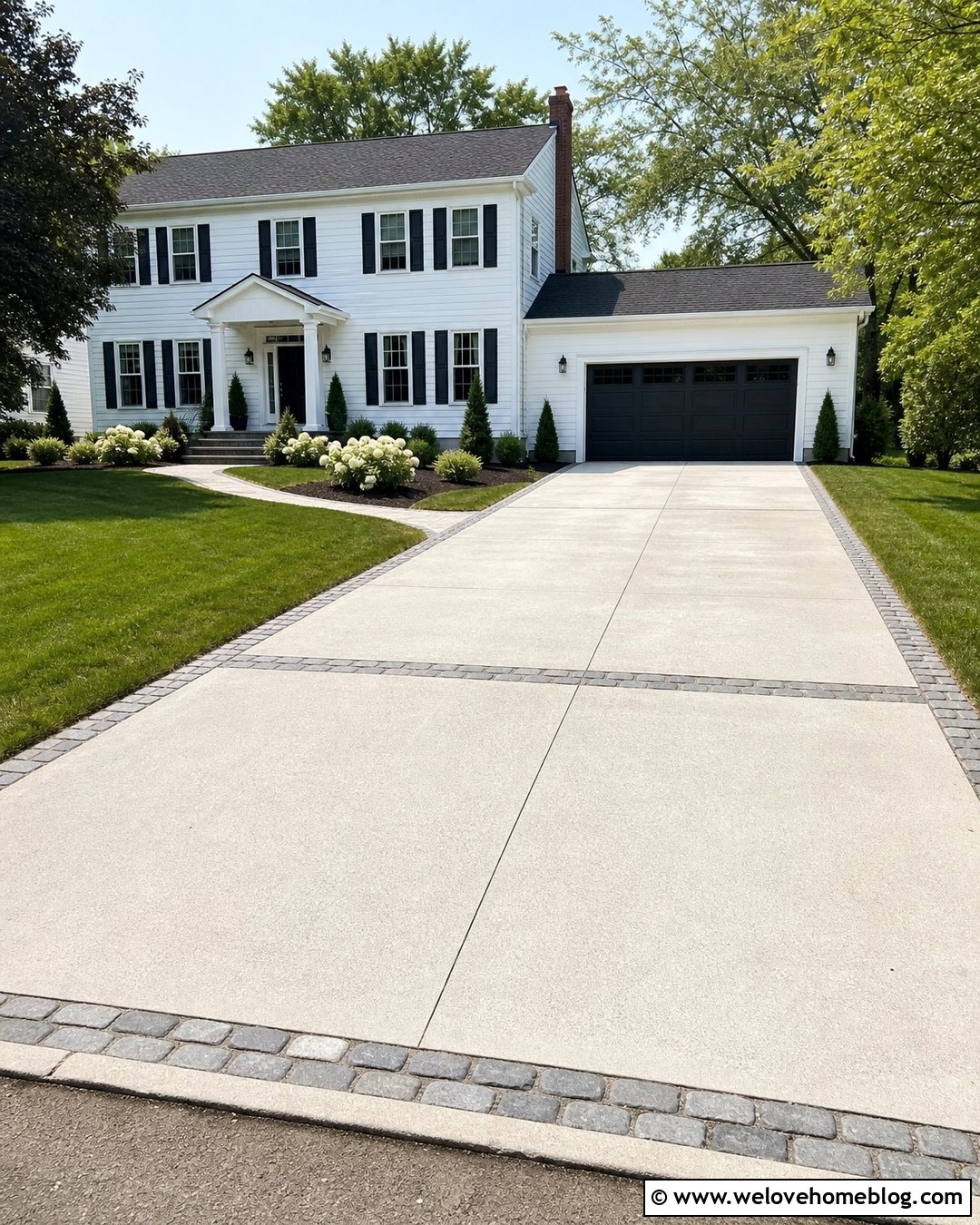
10. Resin-Bound Gravel Apron With Lavender Borders
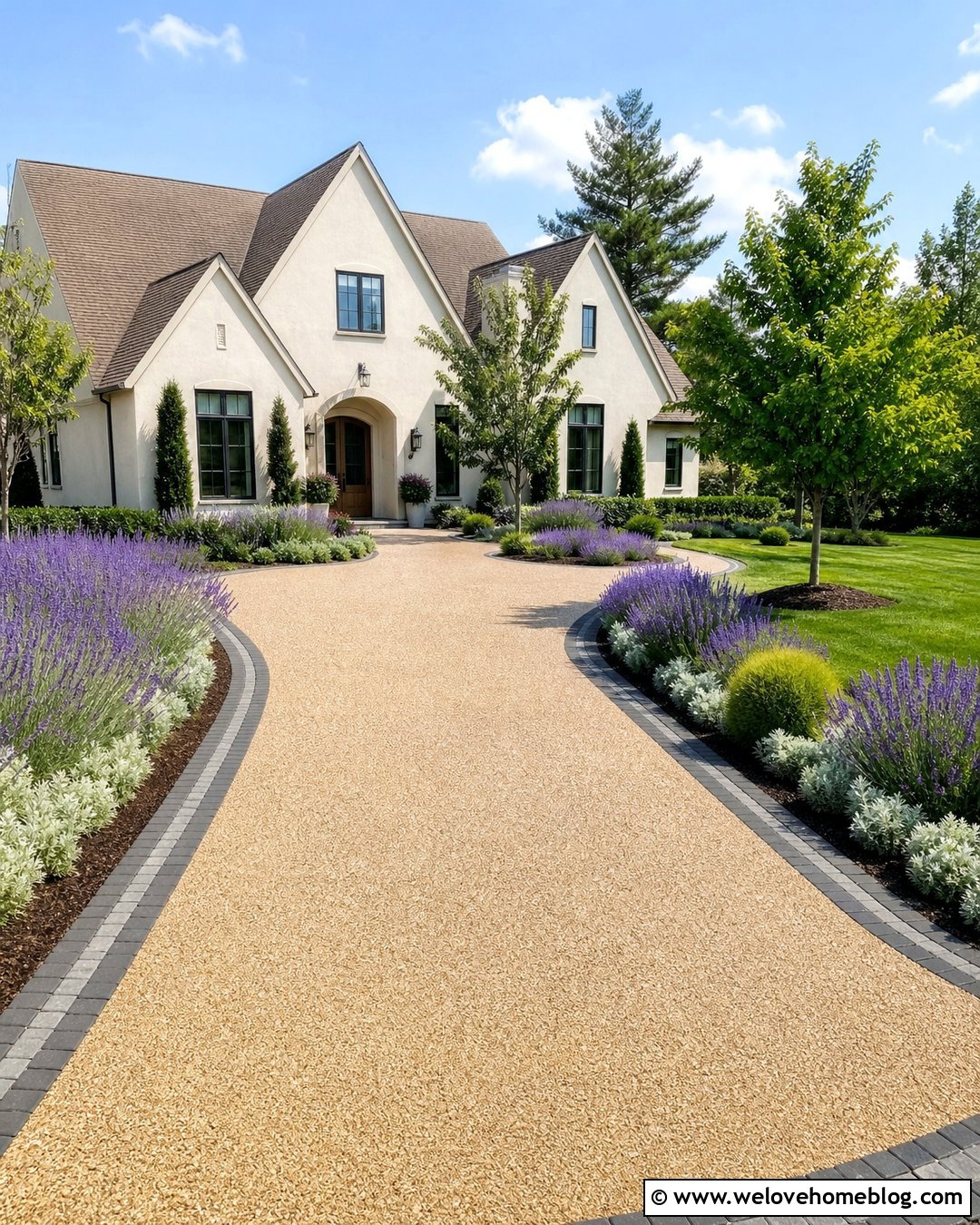
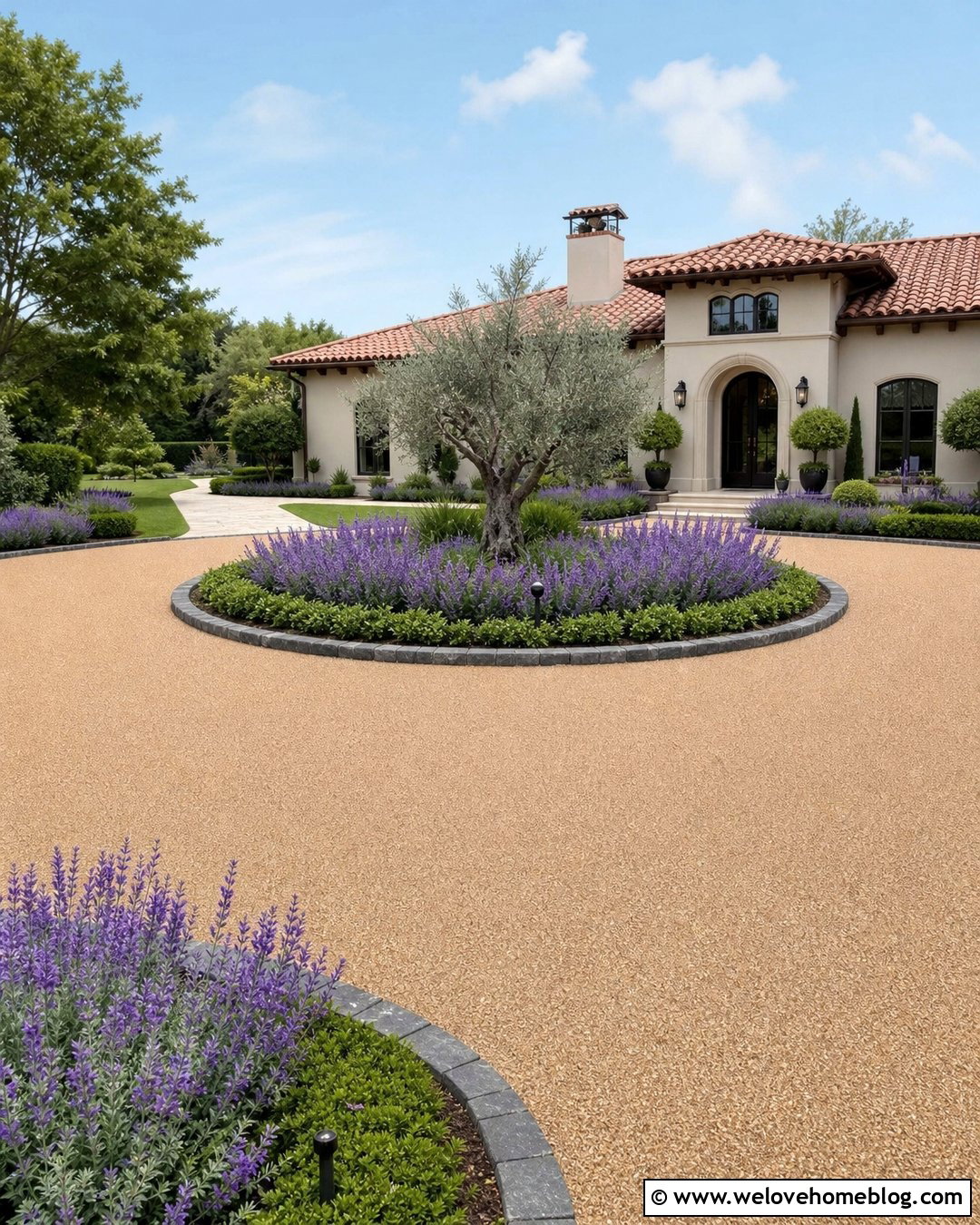
A warm beige resin-bound gravel driveway offers a smooth-looking surface with the visual character of small natural stones. Shape the apron with a gentle flare and outline it with two rows of charcoal pavers. Plant broad drifts of lavender, catmint, dwarf ornamental grasses, and silver-leaved ground covers beyond the border. The purple and blue flowers provide contrast against the light driveway while keeping the overall palette calm. Use rounded beds rather than narrow strips, giving each plant enough space to form a full mound. One small olive-like ornamental tree or a climate-appropriate alternative can anchor each side farther from the road. This sunny entrance pairs naturally with modern farmhouse, Mediterranean, and light stucco homes, creating a complete landscape that feels soft, orderly, and welcoming.
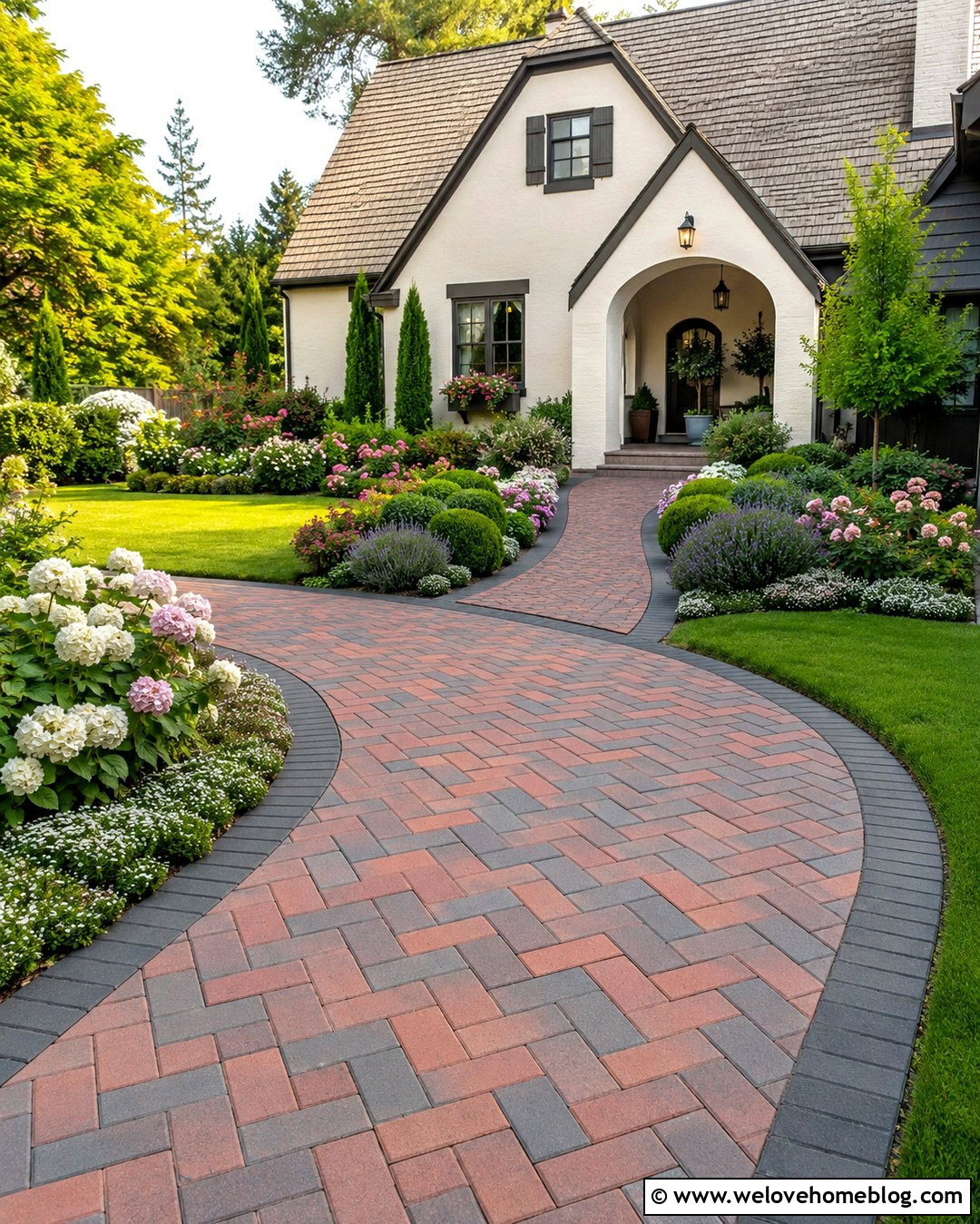
11. Herringbone Paver Apron With Brick Pillars
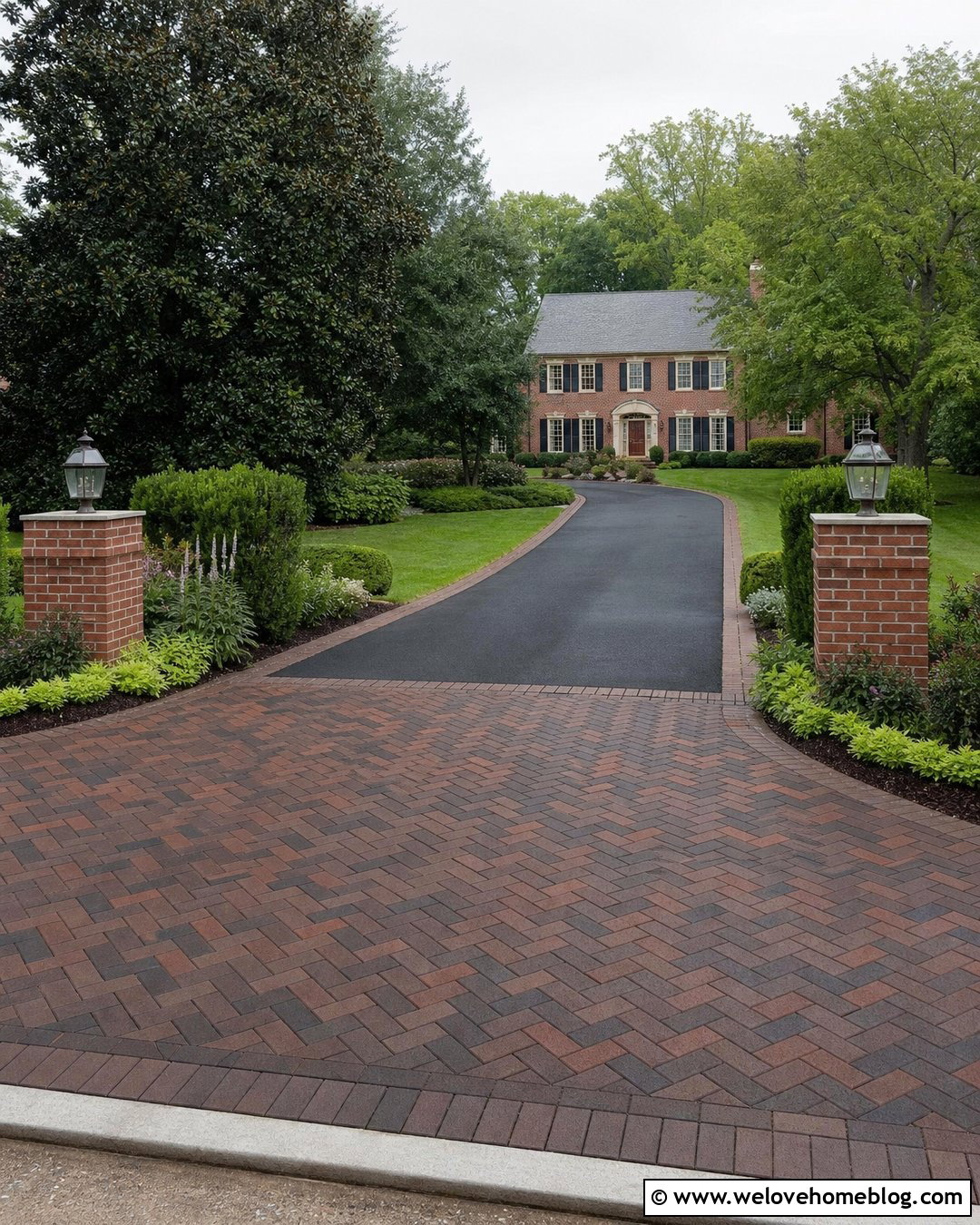
For a more defined entrance, combine a herringbone concrete paver apron with low brick pillars and layered landscaping. Select brown, charcoal, and muted red pavers that relate to the home’s brickwork. Build the apron as a broad rectangle across the entrance, then transition into a straight asphalt or concrete driveway with matching paver borders. Position short brick pillars outside the turning area and connect them visually with curved planting beds. Use dwarf hollies, flowering perennials, and spreading ground covers around each pillar. Simple lantern-style fixtures can provide an architectural accent without making the entry appear oversized. This arrangement gives a colonial or traditional home a clear sense of arrival. Keeping the pillars low and the beds open also prevents the entrance from feeling narrow or visually heavy.
12. Concrete Apron With Grass Strip Driveway
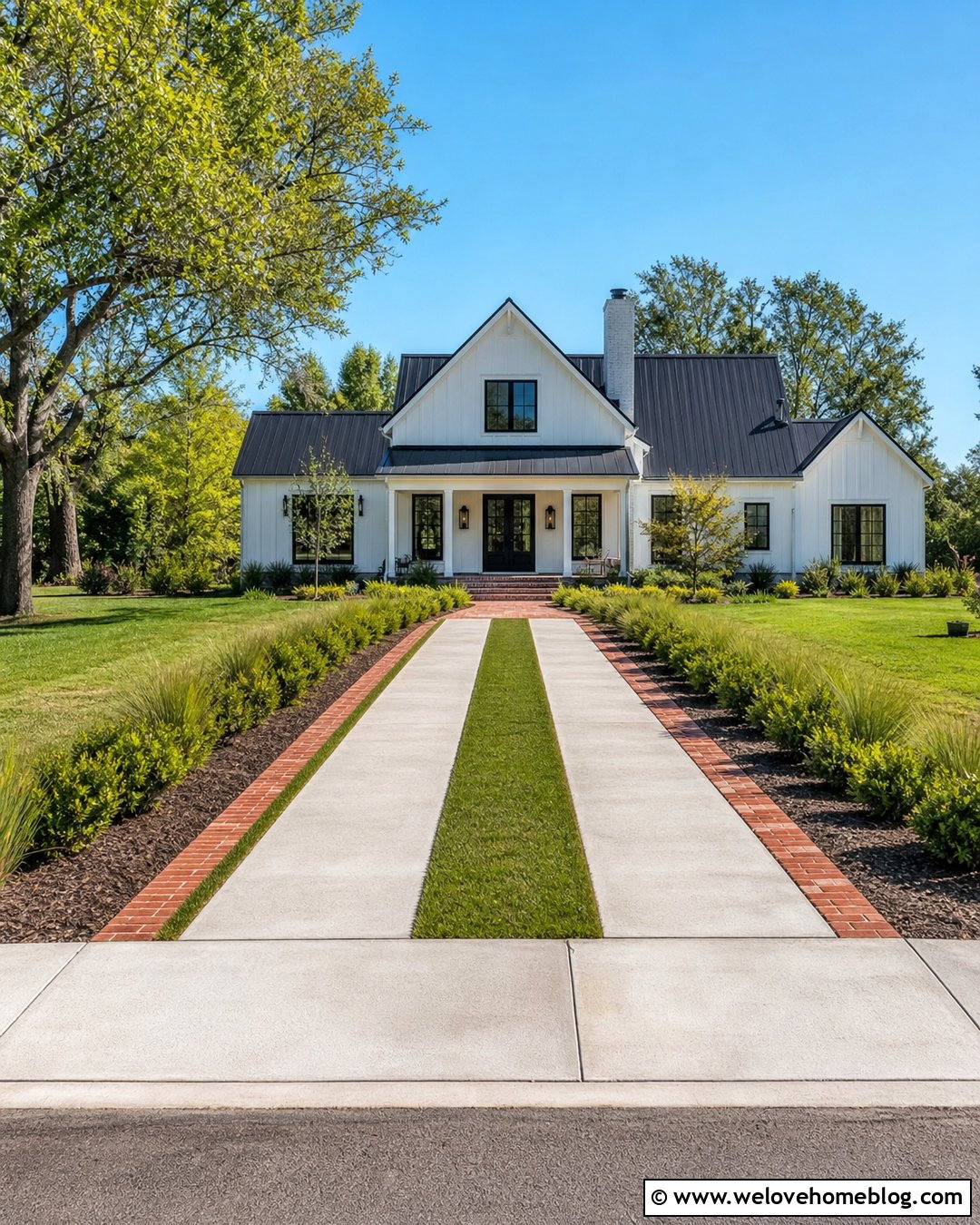
A driveway divided by a central grass strip can make a broad front yard feel greener and less dominated by paving. Begin with a full-width gray concrete apron at the street, then transition into two concrete wheel tracks separated by a wide strip of durable lawn or low ground cover. Define each side with flush brick edging and narrow planting beds containing compact shrubs and ornamental grasses. The solid apron provides a clear entrance, while the divided layout leads toward a ranch, cottage, or modern farmhouse. Keep the center strip level with the concrete to create a clean appearance. Where regular grass is difficult to maintain, consider a climate-suitable creeping ground cover. Repeating the same green texture beside the driveway helps the apron and wheel tracks blend naturally into the yard.
13. Flagstone Driveway Apron With Cottage Planting
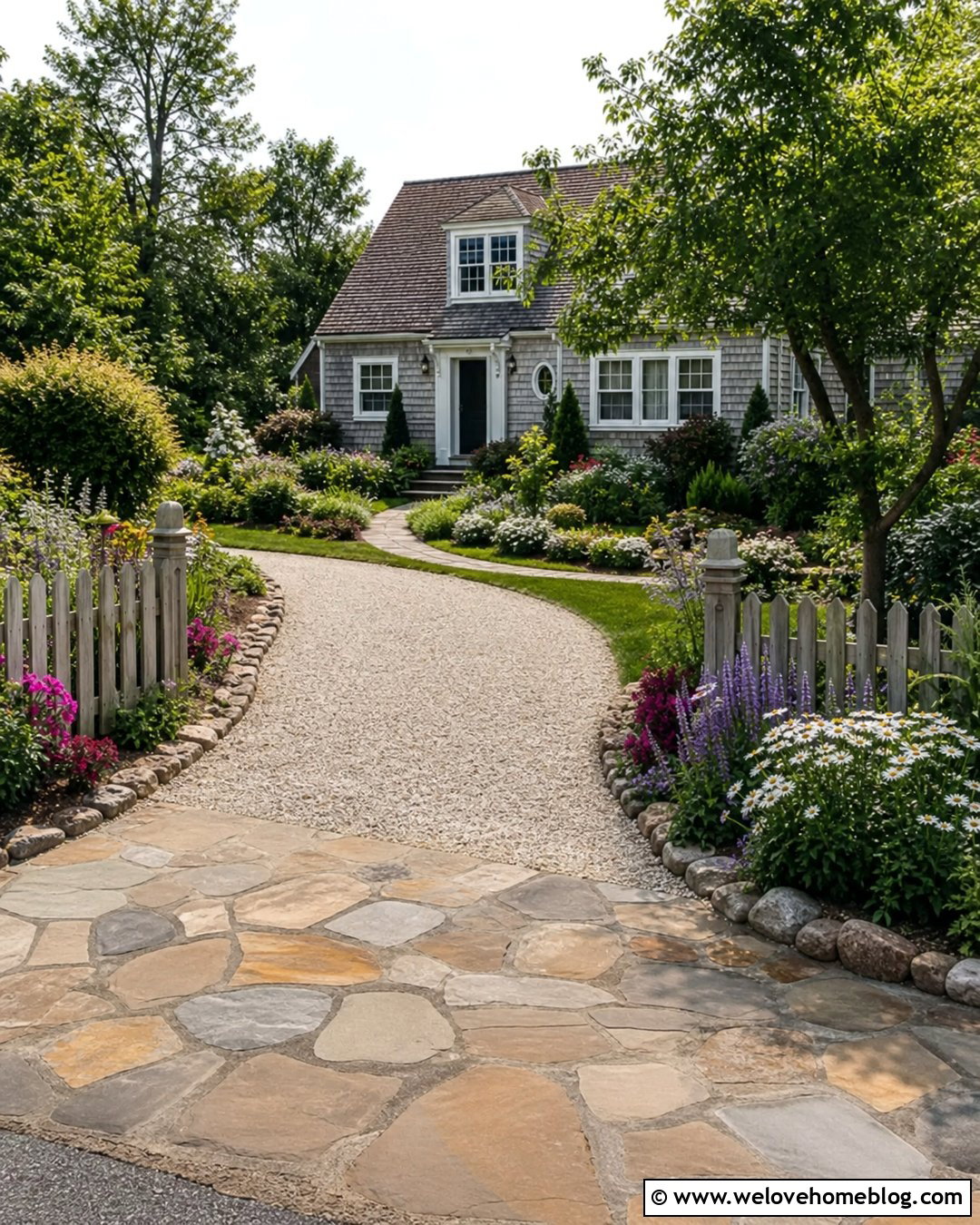
Irregular flagstone brings a relaxed, handcrafted appearance to the entrance of a light gravel driveway. Use large tan and gray flagstones across the apron, with narrow joints and a clearly defined stone edge. Continue the same flagstone as a winding walkway toward the front porch. On both sides of the driveway, create deep cottage beds filled with roses, salvia, daisies, nepeta, and compact flowering shrubs. Place the shortest plants near the pavement and reserve taller varieties for the back of each bed. A low picket fence can begin beyond the apron and follow the garden without restricting the entrance. This design feels especially comfortable beside Cape Cod homes, cottages, and older farmhouses. The varied plants soften the stone while the repeated walkway material provides visual organization.
14. Black Paver Apron With Minimalist Landscaping
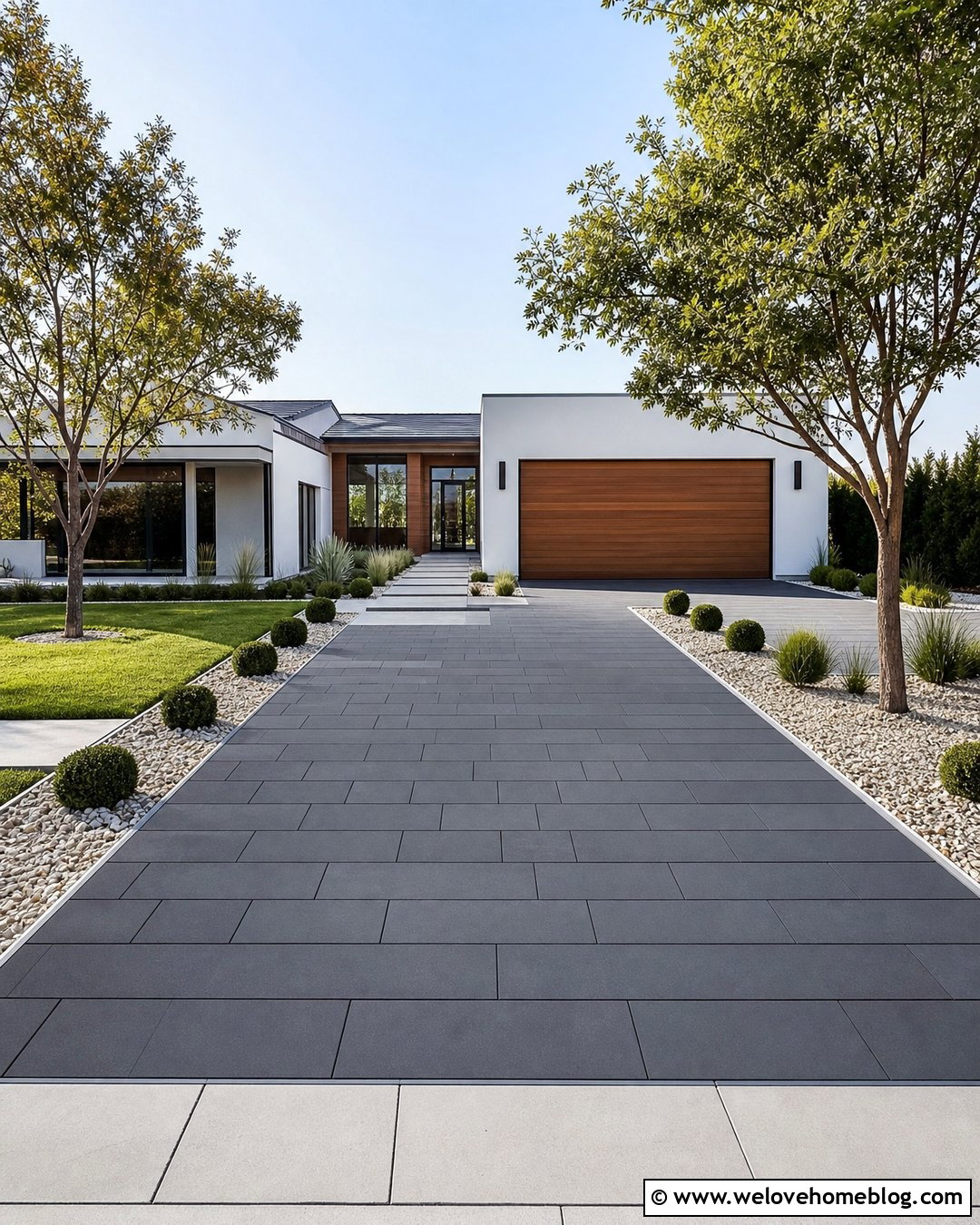
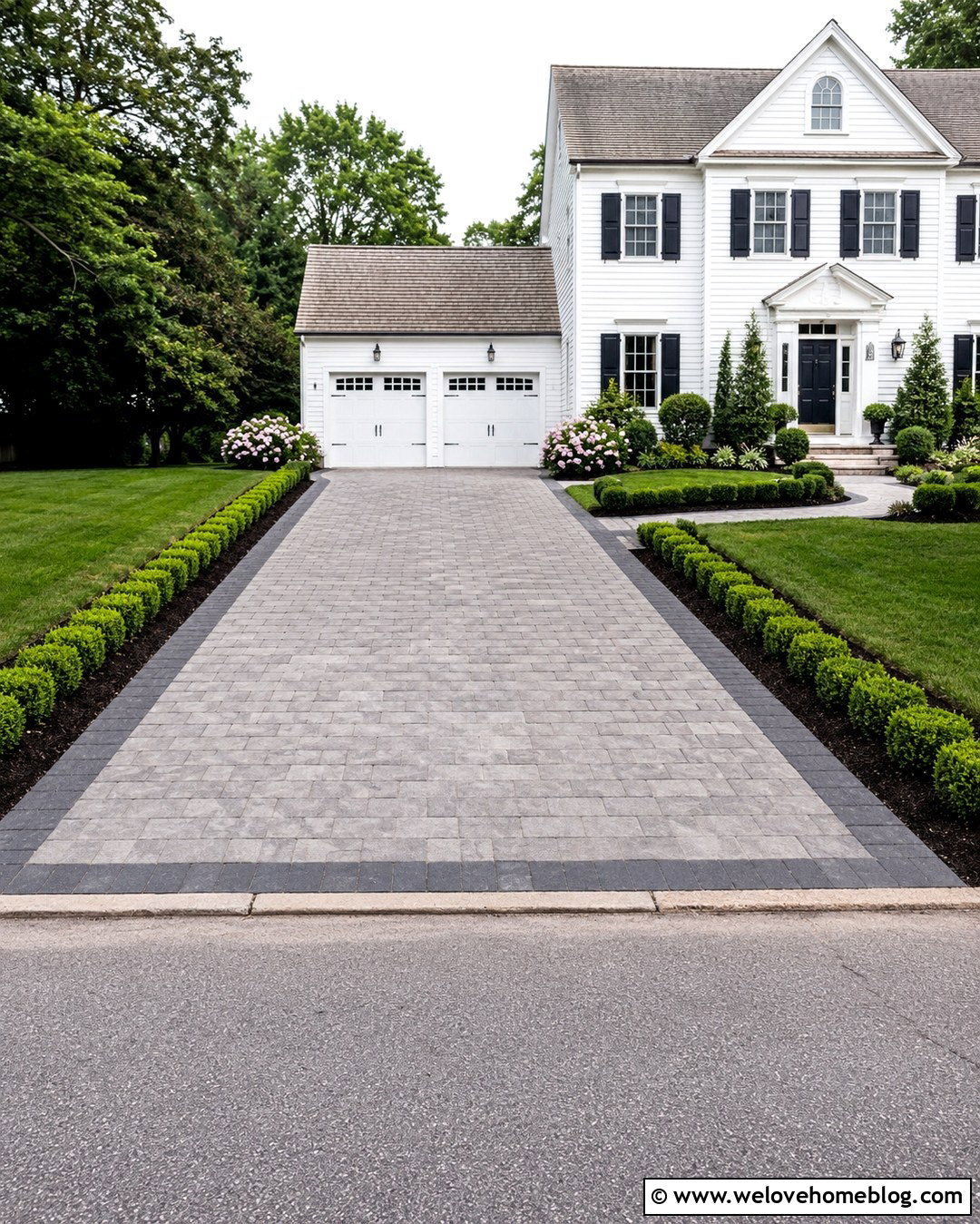
Dark charcoal pavers create a dramatic apron for a modern driveway when the surrounding landscape remains simple. Lay large-format pavers in a linear running-bond pattern, then continue them into a straight driveway with narrow gravel joints. Frame the entrance with rectangular beds of pale decorative stone, clipped evergreen spheres, and groups of upright grasses. Use one sculptural tree on each side rather than a busy mixture of small plants. A flush steel edge can keep the stone beds aligned with the paving. The home’s walkway should repeat either the black pavers or their clean rectangular proportions. This design is particularly effective with white, gray, or wood-clad modern houses. Strong contrast, repeated shapes, and open planting make the entire entrance feel spacious and intentional.
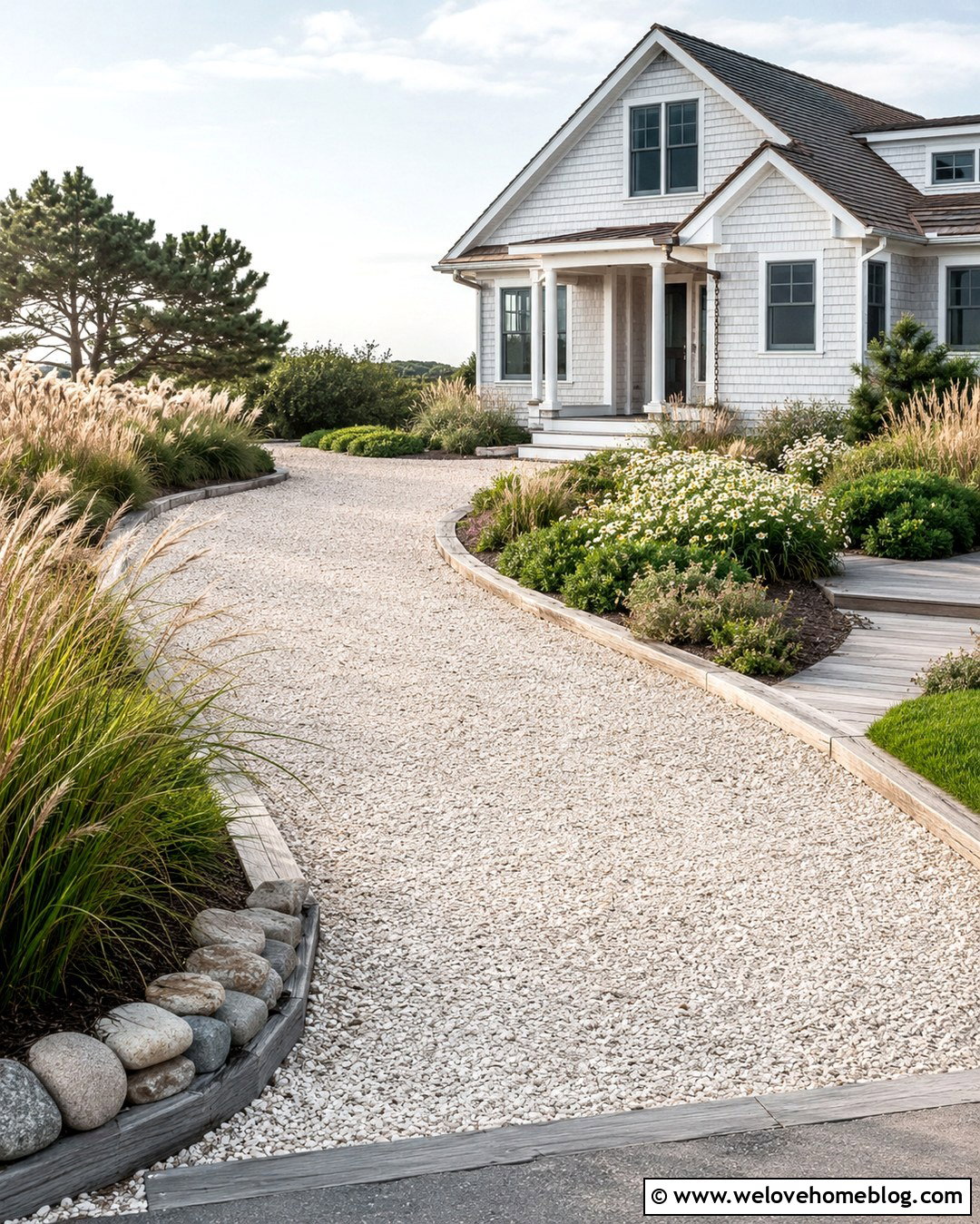
15. Crushed Shell Apron With Coastal Landscaping
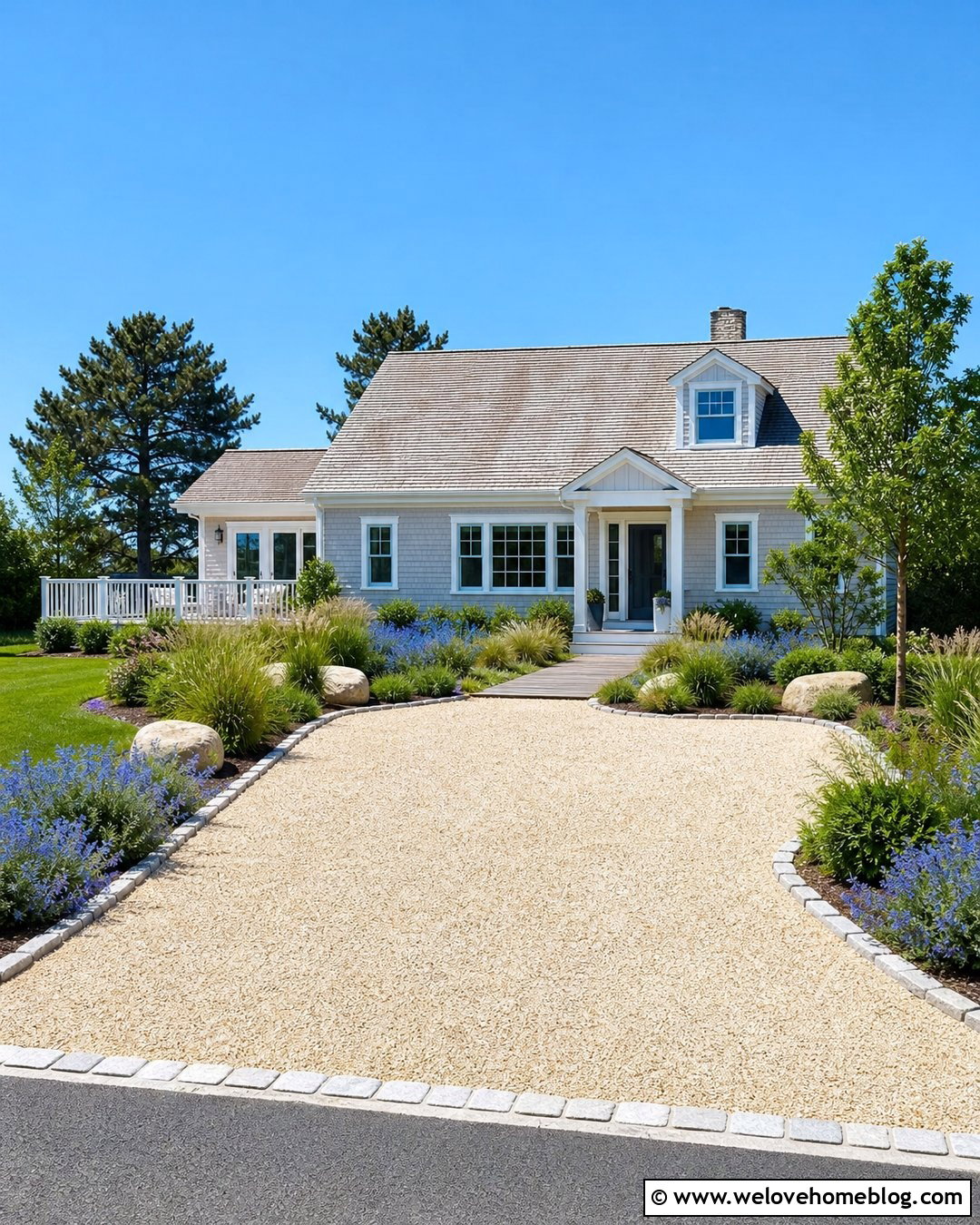
A crushed shell driveway apron brings a bright, casual character to coastal and Southern homes. Use compacted white or cream crushed shell for the complete driveway, with a slightly wider entrance framed by natural stone curbing. Plant salt-tolerant or regionally appropriate grasses, low evergreen shrubs, and blue-flowering perennials in sweeping beds on both sides. Add weathered driftwood-like accents or pale boulders sparingly, keeping the design residential and uncluttered. A boardwalk-style path can cross the planting and connect the driveway to the front porch. To strengthen the apron visually, lay a narrow band of light concrete pavers where the shell meets the road. The combination of pale materials, airy grasses, and an open layout creates an attractive approach for beach cottages and coastal-inspired farmhouses.
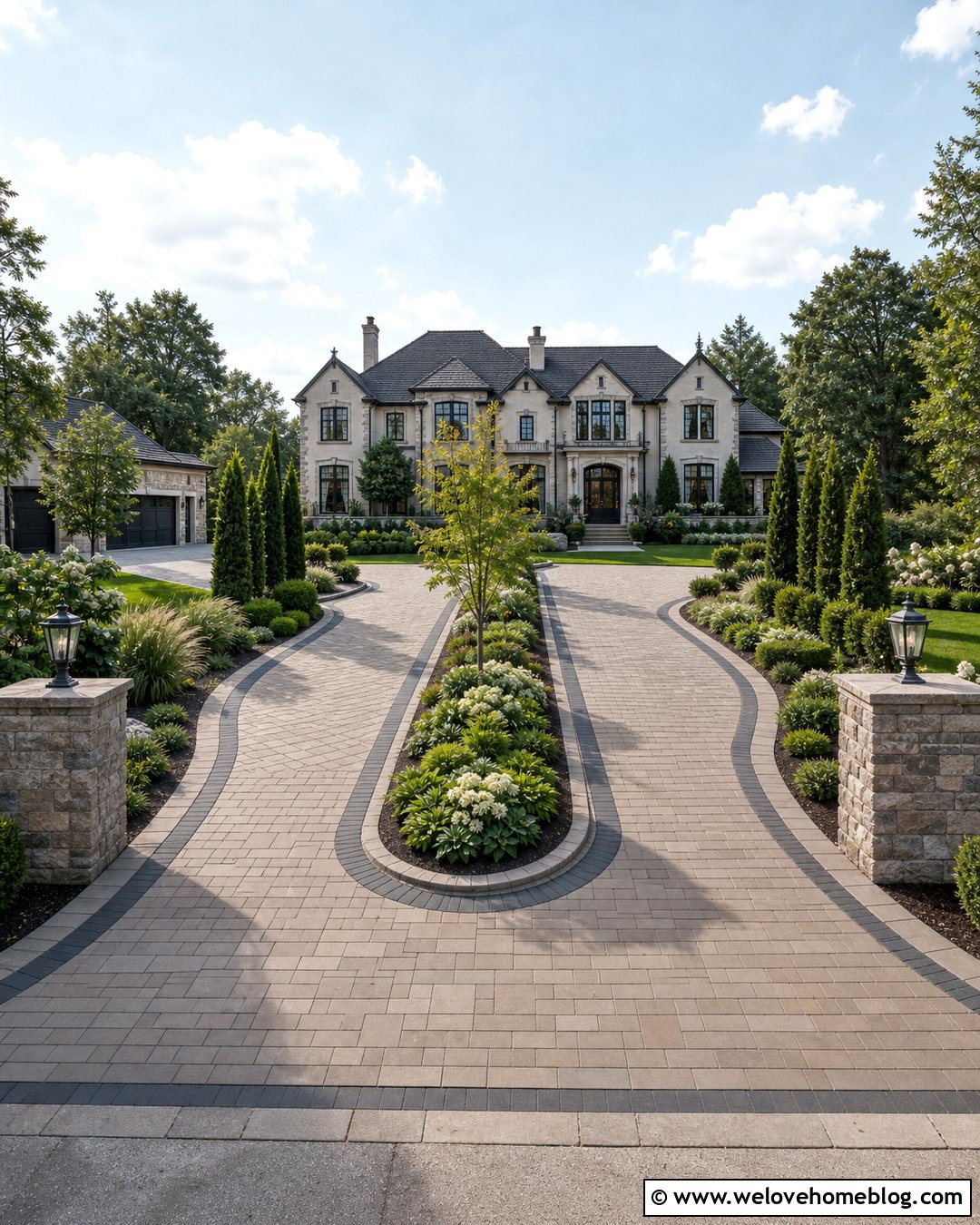
16. Circular Driveway Apron With Center Island Planting
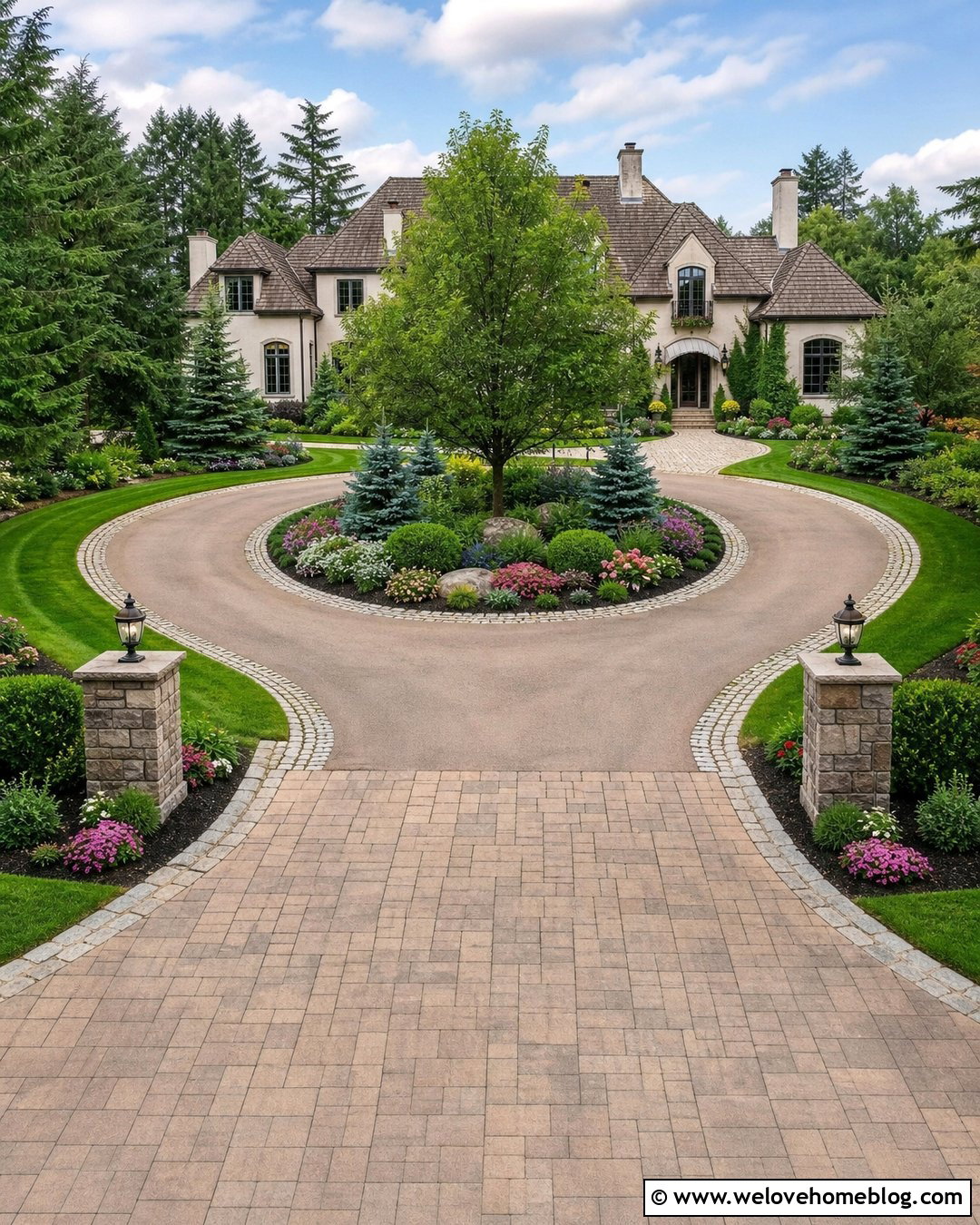
A circular driveway needs an apron that introduces its shape clearly from the street. Use warm-toned concrete pavers at the entrance, then divide the drive into two curved lanes wrapping around a landscaped center island. Outline the apron and island with matching cobblestone borders. Inside the island, plant a small ornamental tree surrounded by evergreen shrubs, flowering perennials, and a broad ground-cover layer. Mirror smaller planting beds at both sides of the street entrance to connect the apron with the central feature. Keep everything near the road low and place the tree well inside the island. This design works best on larger properties with traditional, French country, or estate-style homes. Repeating materials throughout the apron, curves, and walkway prevents the expansive entrance from feeling fragmented.
17. Narrow Driveway Apron With Columnar Shrubs
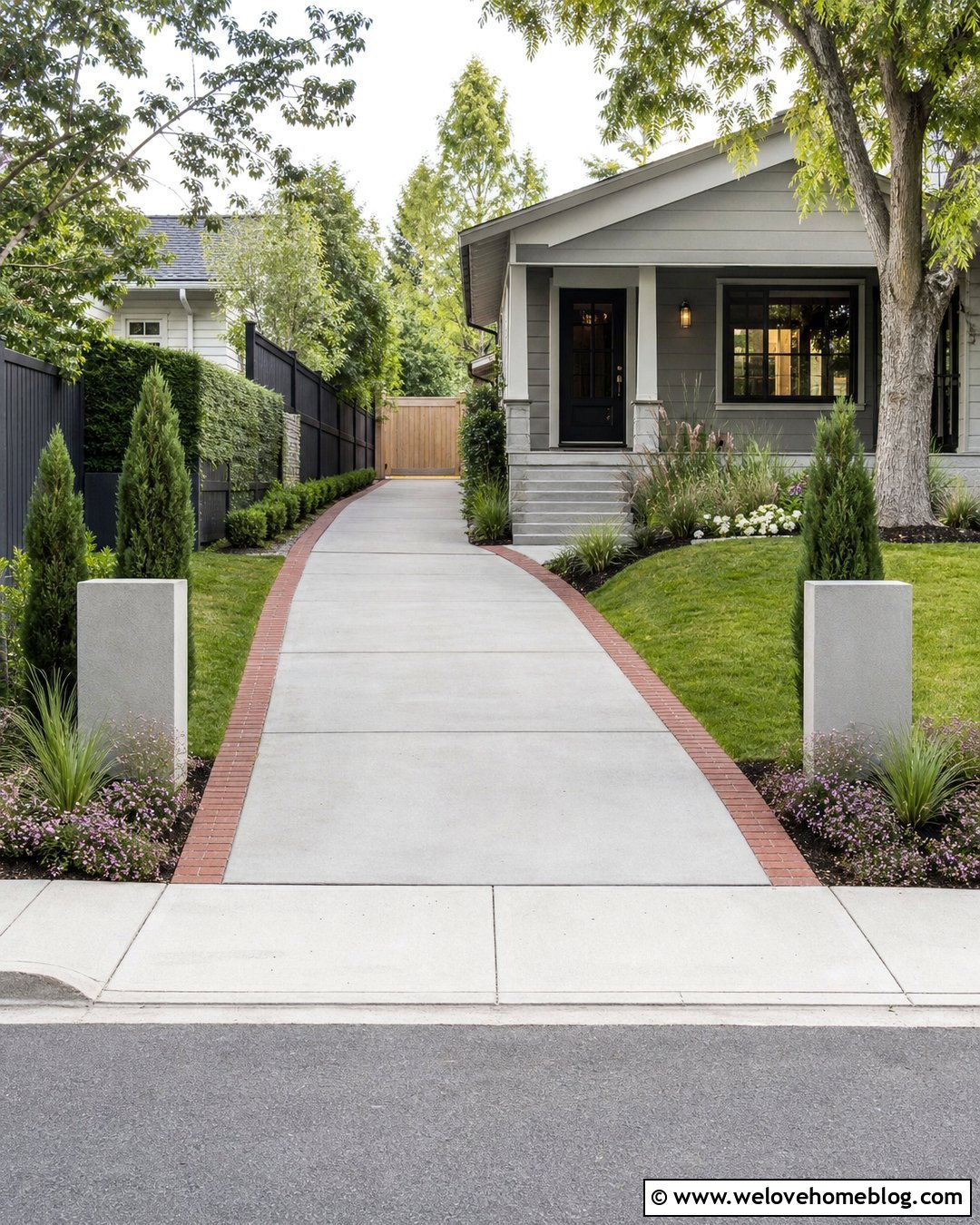
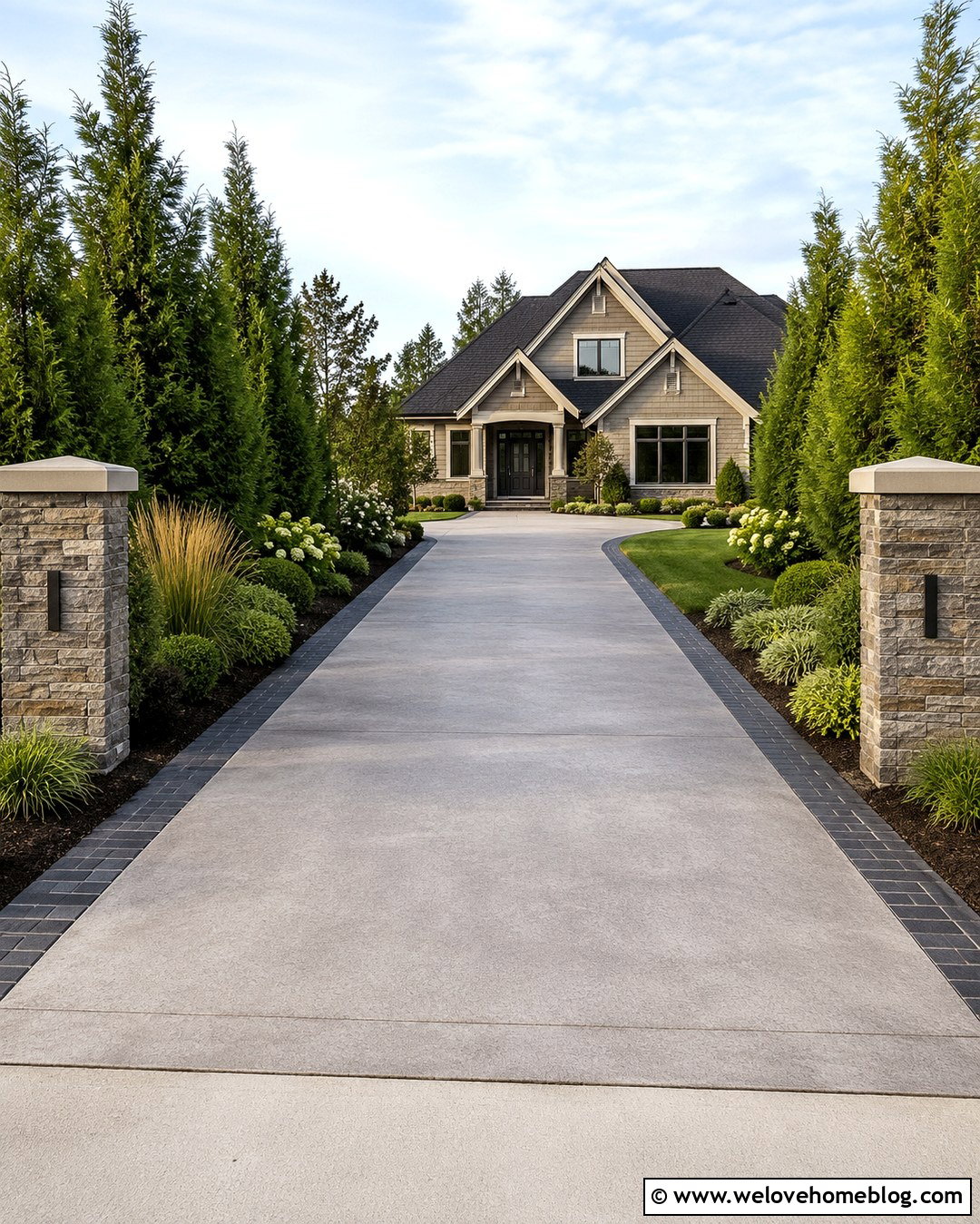
Limited frontage does not prevent a narrow driveway entrance from looking carefully landscaped. Use a light gray concrete apron with slim brick borders that continue along the driveway toward the garage. Build compact rectangular beds just outside the apron, choosing columnar evergreens, low flowering ground covers, and small ornamental grasses. The upright plants add height without spreading into the driving space. Set them back far enough to preserve visibility and allow room for snow, maintenance, or opening vehicle doors. A simple wall-mounted or low monument address marker can sit in one bed without overwhelming the entrance. Continue the same ground cover beside the front walkway for consistency. This space-conscious design suits townhomes, bungalows, and urban lots where every inch of the front yard must remain useful.
18. Sloped Driveway Apron With Retaining Walls
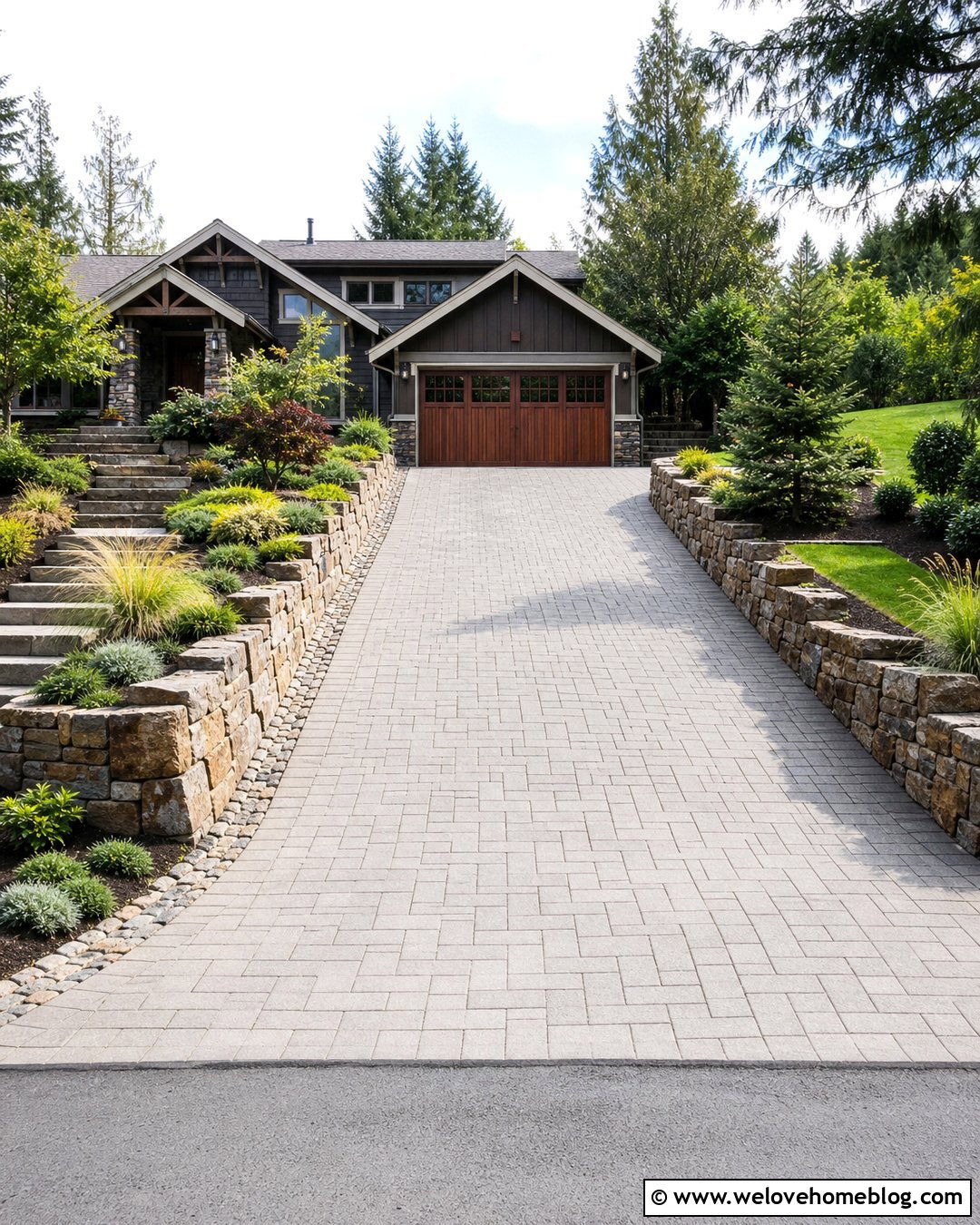
A sloping driveway entrance can become a strong landscape feature when low retaining walls shape the surrounding grade. Start with a textured concrete or interlocking paver apron and use broad flares where it meets the street. Build short natural stone walls along both outer edges, gradually stepping them down toward the road. Behind the walls, add deep-rooted ornamental grasses, spreading shrubs, and durable ground covers that visually stabilize the banks. Keep loose mulch and delicate flowers away from areas where runoff may collect. Integrate a defined drainage route into the hardscape plan rather than treating water control as an afterthought. Matching stone borders can continue up the driveway toward the house. The finished entrance feels structured and attractive while respecting the property’s natural elevation changes.
19. Farmhouse Driveway Apron With Native Meadow Beds
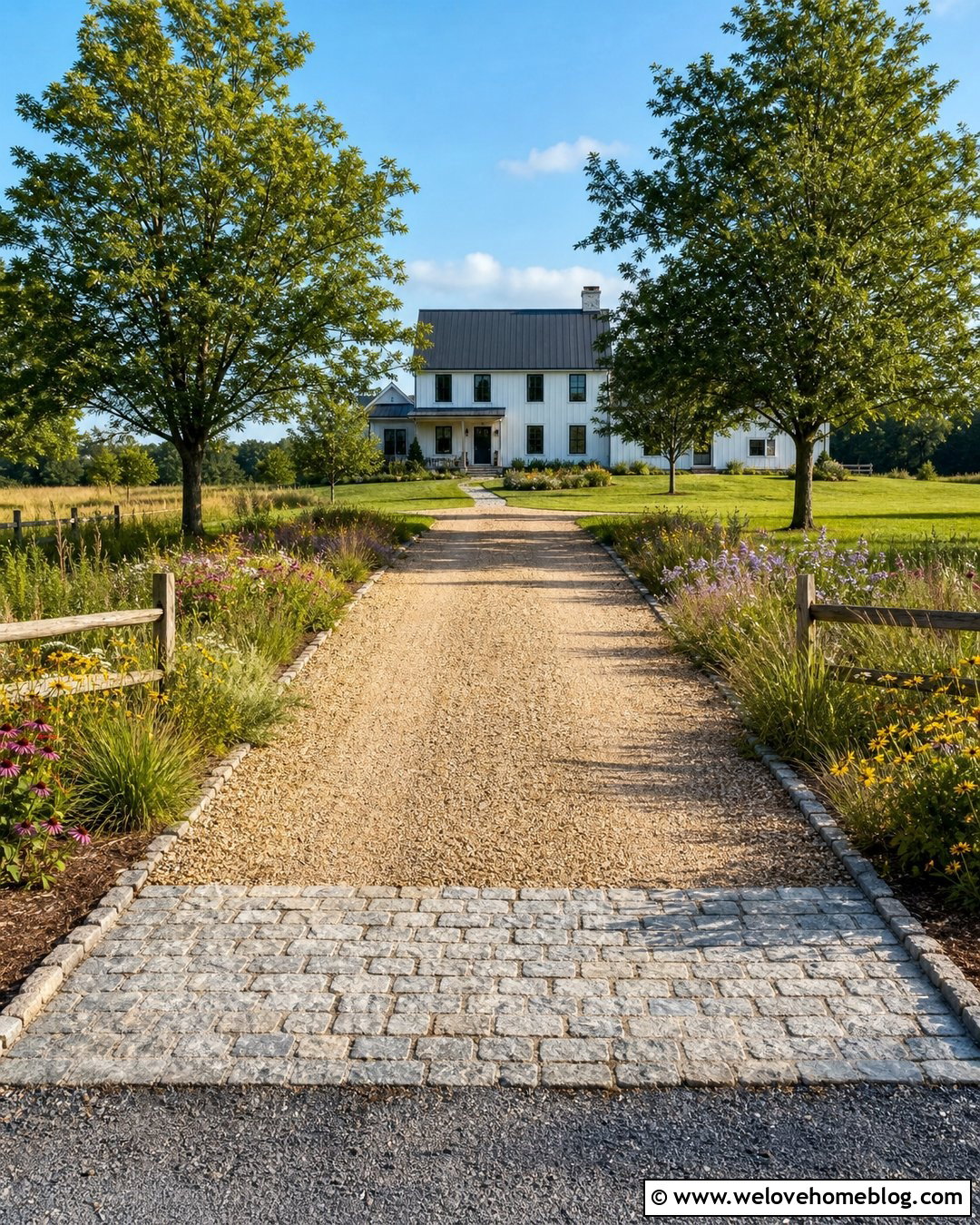
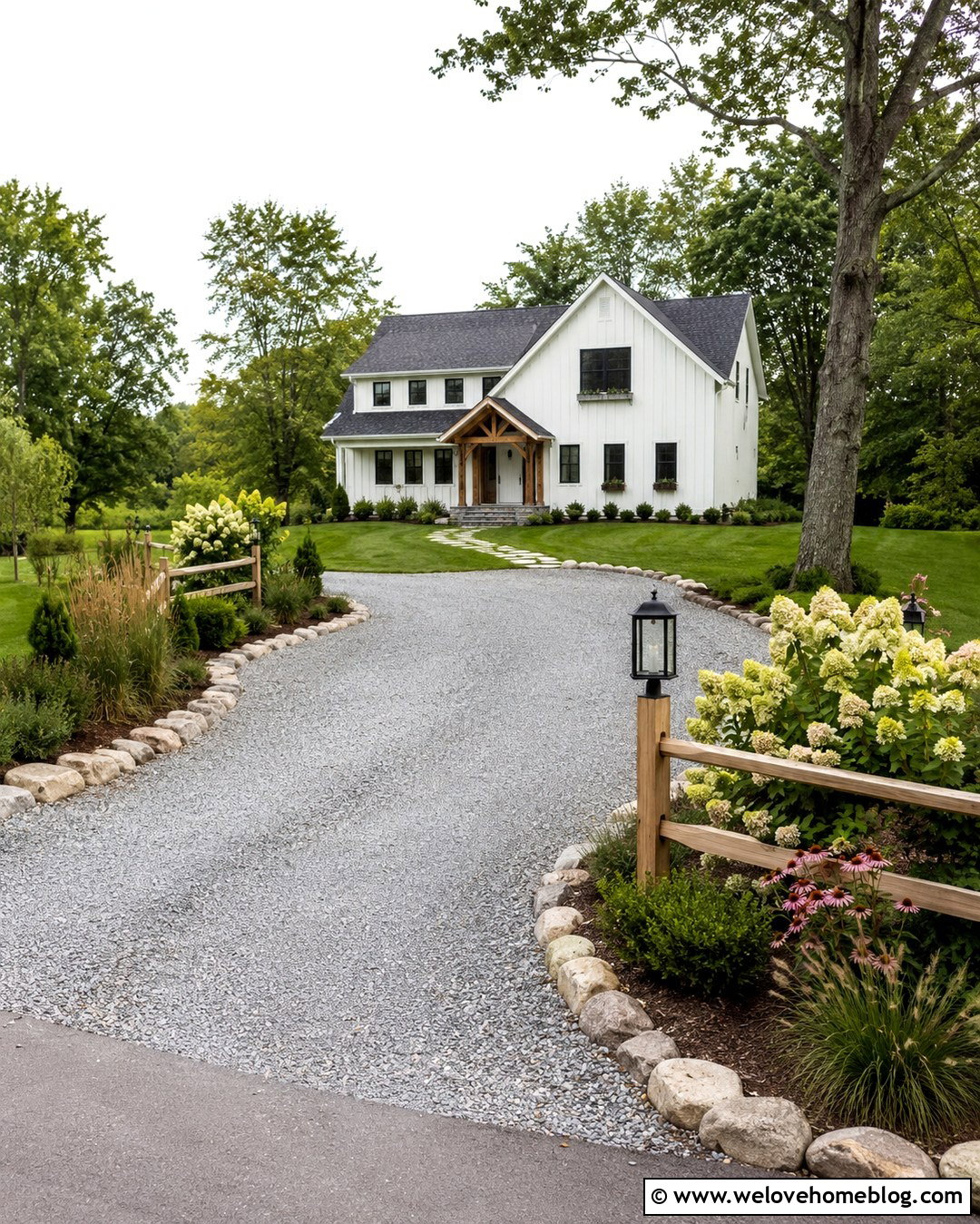
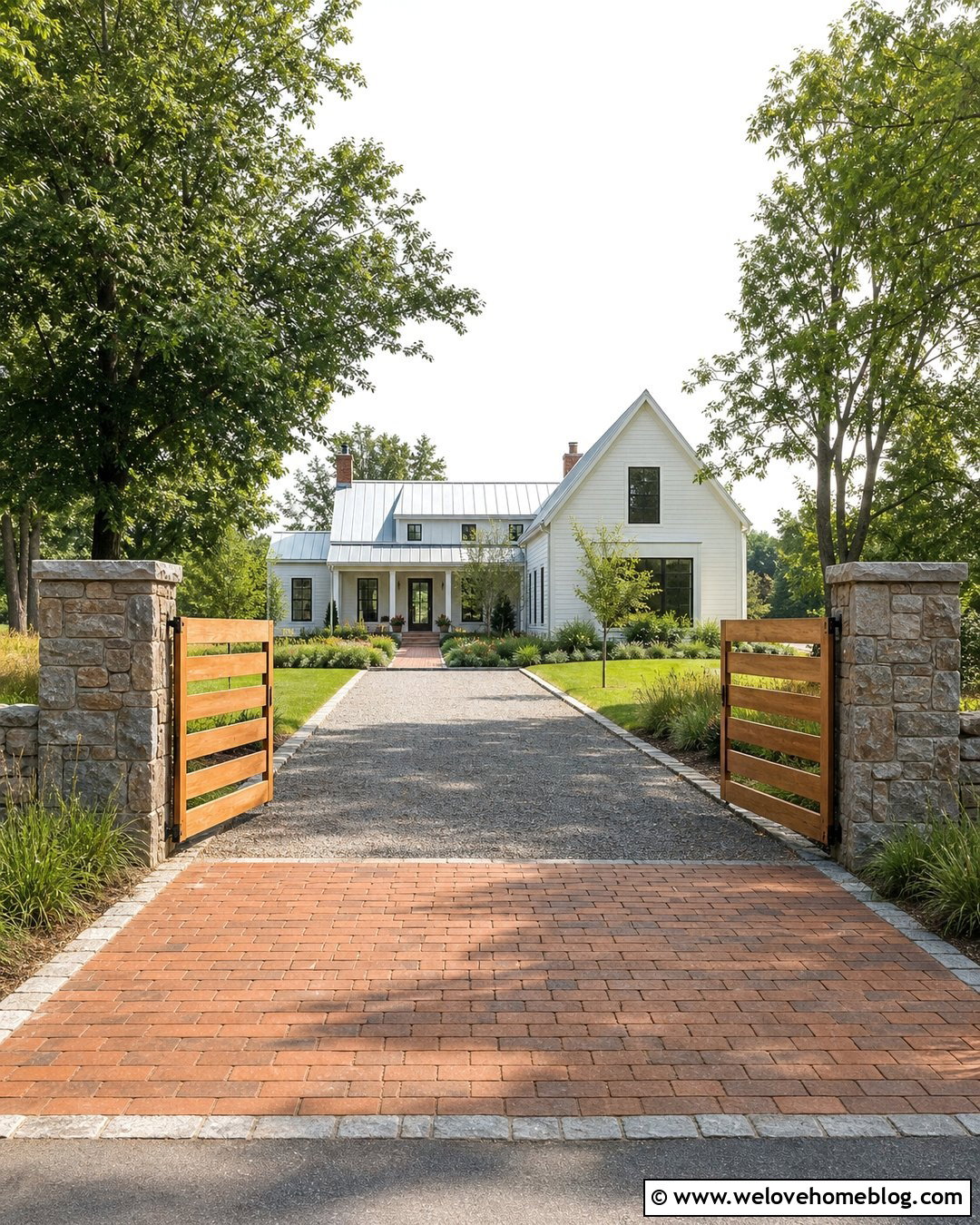
A farmhouse entrance can feel welcoming without relying on perfectly clipped formal landscaping. Use tan gravel for the long driveway and construct a wide cobblestone apron where it meets the road. On both sides, create generous meadow-style beds planted with native grasses, coneflowers, black-eyed Susans, asters, and compact shrubs. Define the beds with weathered stone or dark steel edging so the relaxed planting still looks intentional. Short sections of split-rail fence can begin beyond the apron, helping guide the eye toward the house without restricting vehicle movement. Plant one deciduous shade tree farther back on each side for balance. This complete look combines durable traditional materials with seasonal color and a natural planting character that complements barns, country homes, and modern farmhouse architecture.
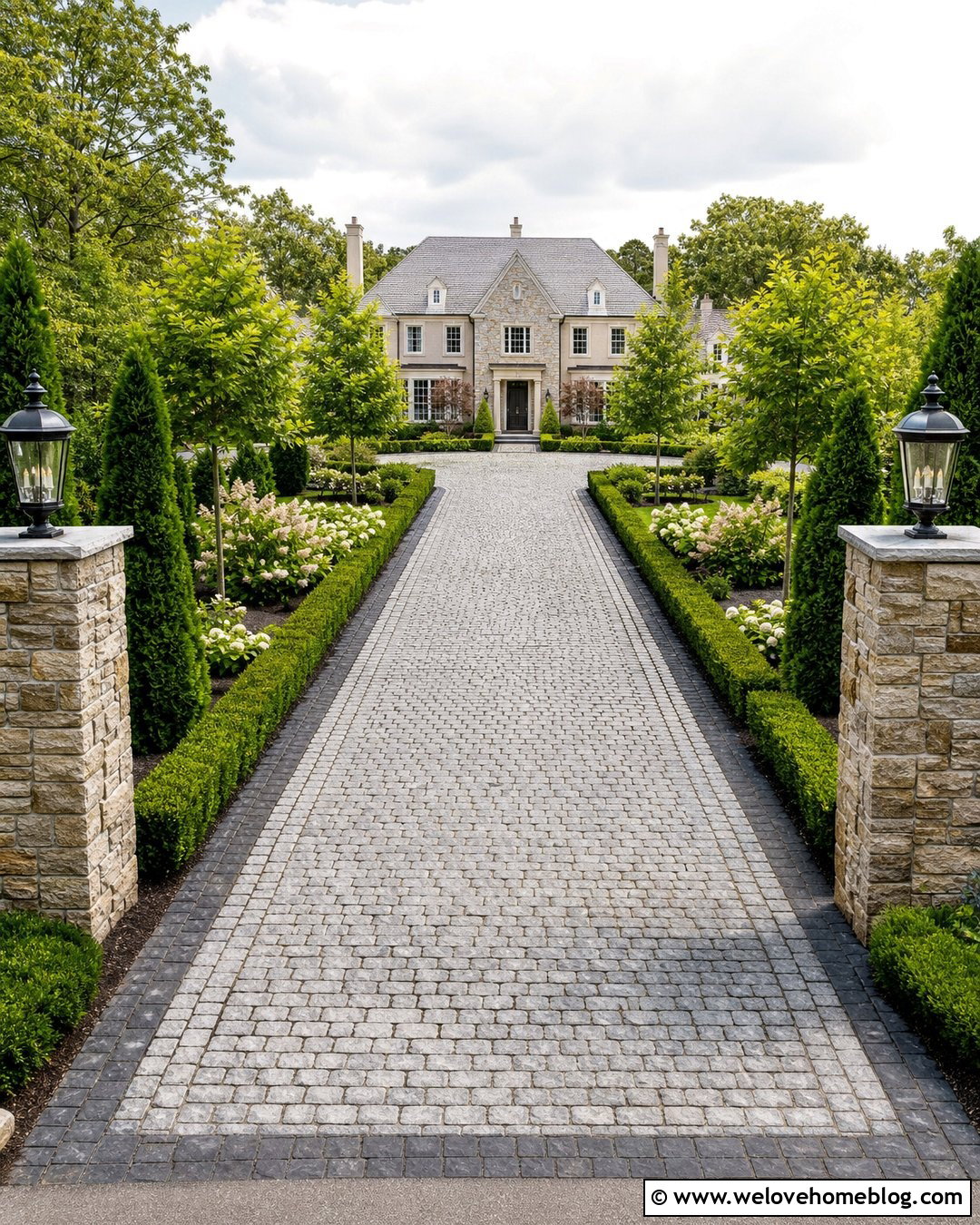
20. Modern Driveway Apron With Address Walls
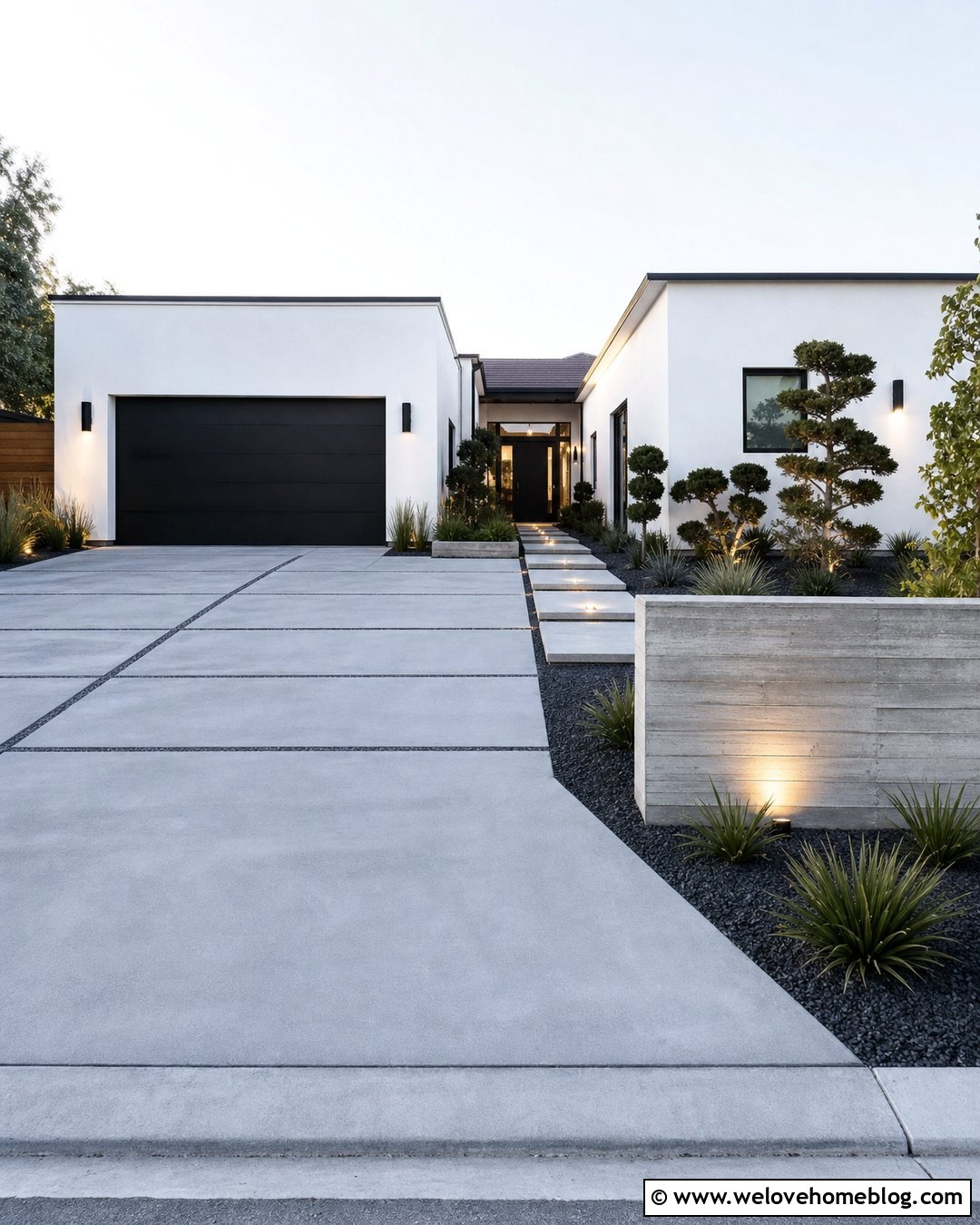
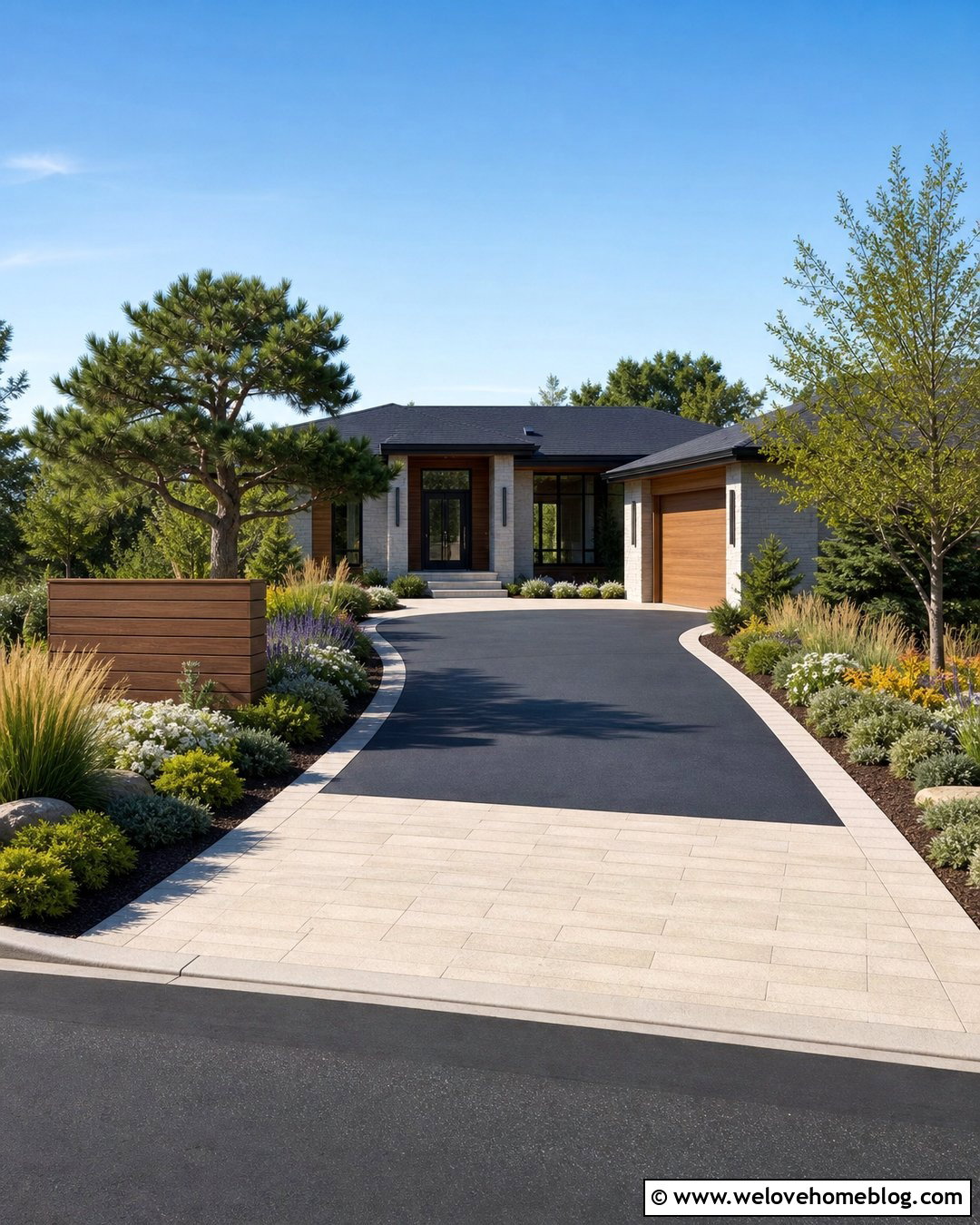
A pair of low address walls can make a modern driveway apron feel architectural while leaving the entrance open. Use smooth gray poured concrete for the apron and driveway, separated into large geometric panels by narrow dark joints. Position simple stucco or board-formed concrete walls beyond the turning zone. Surround them with rectangular beds of black gravel, low grasses, agave-like plants, and neatly shaped evergreen shrubs suited to the local climate. Integrate subtle lighting into the walls and repeat the same finish near the front walkway. Avoid tall gates or dense hedges that would compete with the clean composition. Against a contemporary house, the concrete, restrained plants, and horizontal walls work together as one complete entrance rather than a collection of unrelated decorative features.
Conclusion:
Successful **20 driveway apron landscaping ideas** balance appearance, vehicle access, durability, drainage, and the architecture of the home. Whether you prefer brick, cobblestone, concrete, gravel, or permeable pavers, the apron should connect visually with the full driveway. Borders and planting beds can repeat those materials to make the entrance feel cohesive. Keep plants low near the road, allow generous turning space, and place trees, walls, boulders, and pillars safely outside the driving path. Before changing an apron, confirm property boundaries, underground utilities, drainage needs, and local construction requirements because municipalities may regulate work near streets and sidewalks. () A thoughtful plan will create a welcoming entrance that remains practical throughout the year.

Related posts:
Leave a Reply