
Boxwood brings clean lines, rich greenery, and year-round structure to almost any driveway. The best **boxwood driveway ideas** do more than place shrubs beside pavement. They coordinate the hedge shape with the driveway material, entrance, house architecture, and surrounding garden. Low borders can sharpen a small concrete drive, while rounded shrubs soften gravel curves and broad motor courts. Boxwood also pairs naturally with brick, cobblestone, asphalt, pavers, and modern concrete. Its ability to form hedges, globes, cones, and upright accents makes it especially versatile in front-yard landscaping. () Before planting, consider mature size, vehicle clearance, sunlight, drainage, and the amount of trimming you want to handle. The complete looks below offer practical inspiration through 20 boxwood driveway ideas.

1. Boxwood Hedge Along A Gravel Driveway
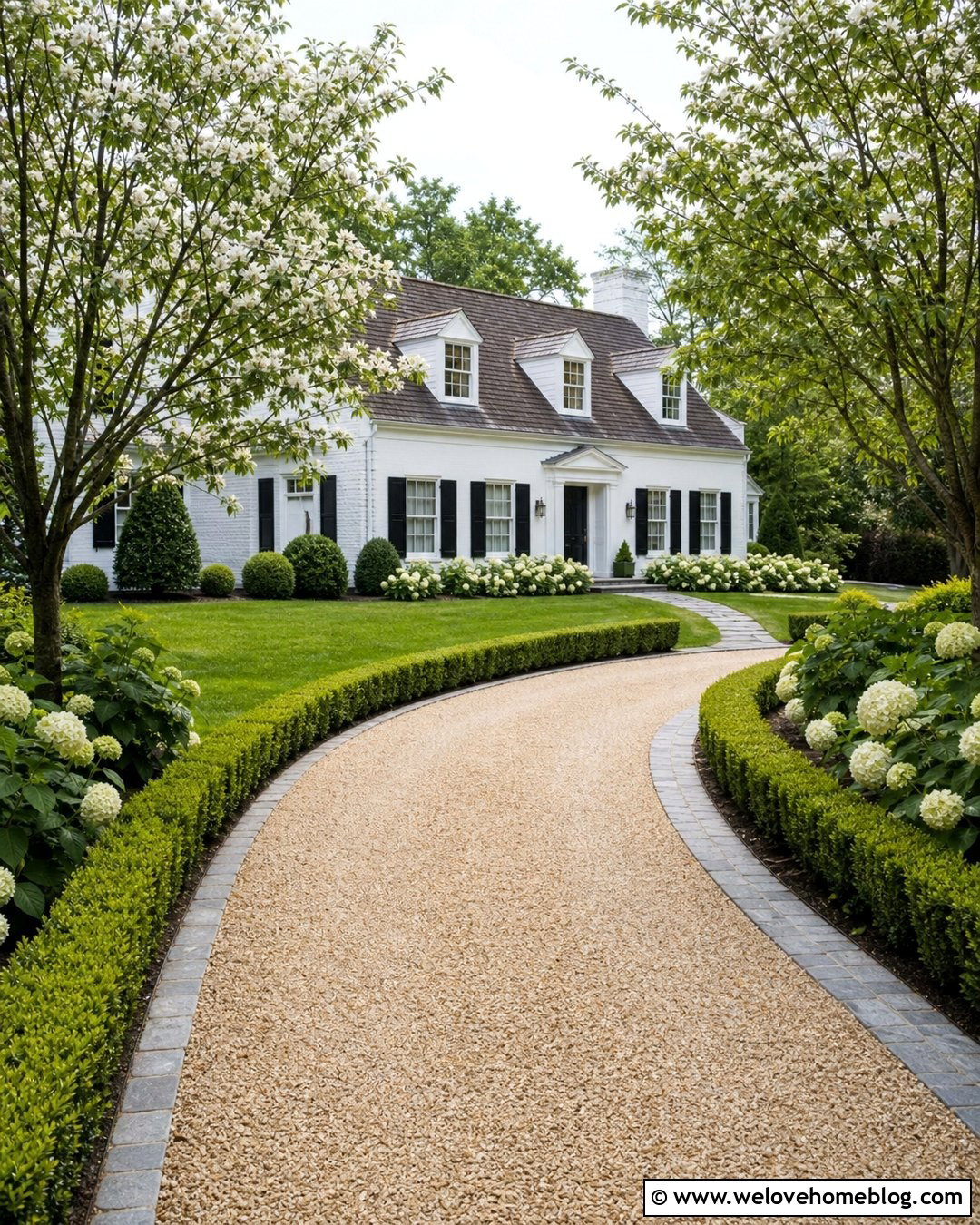
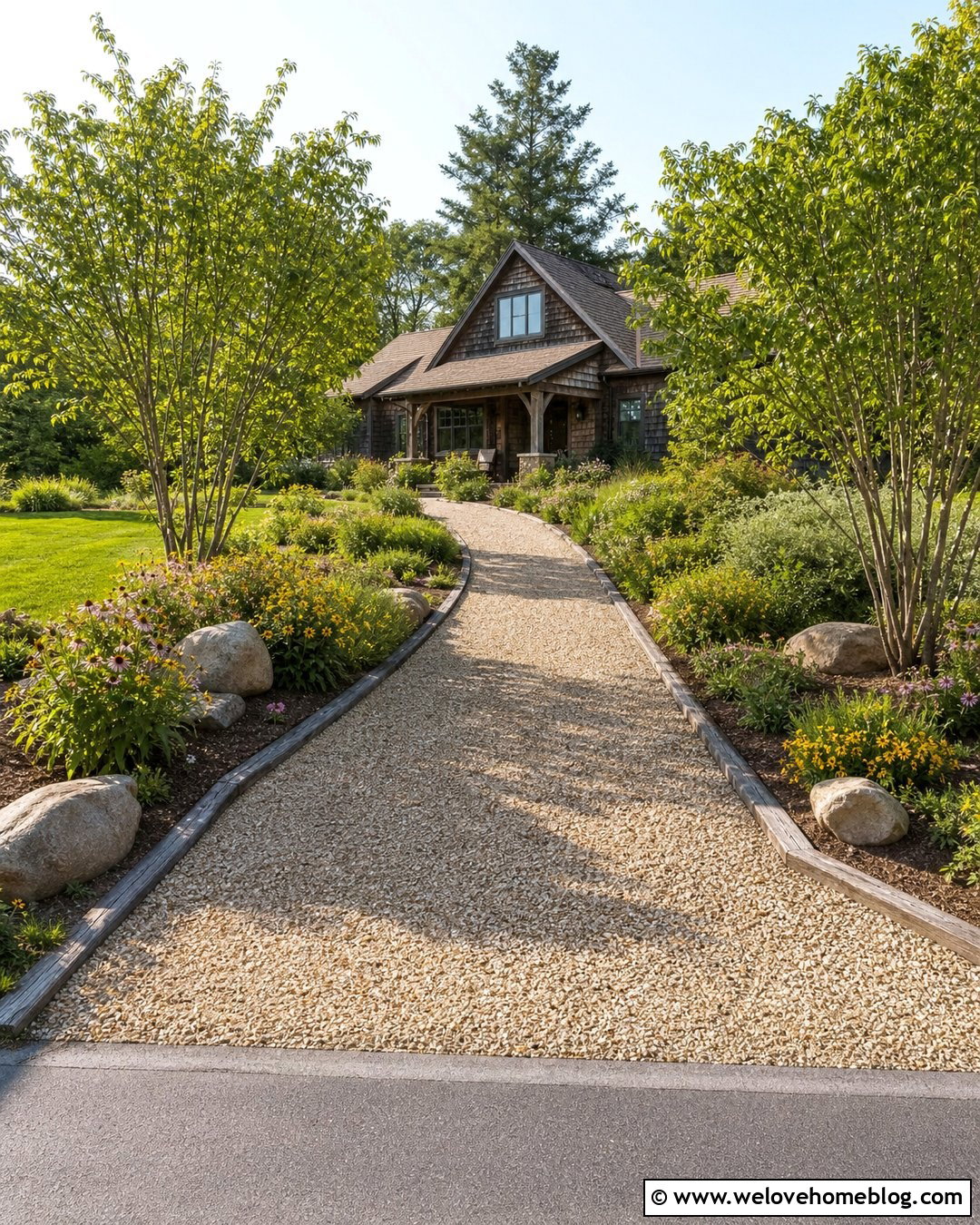
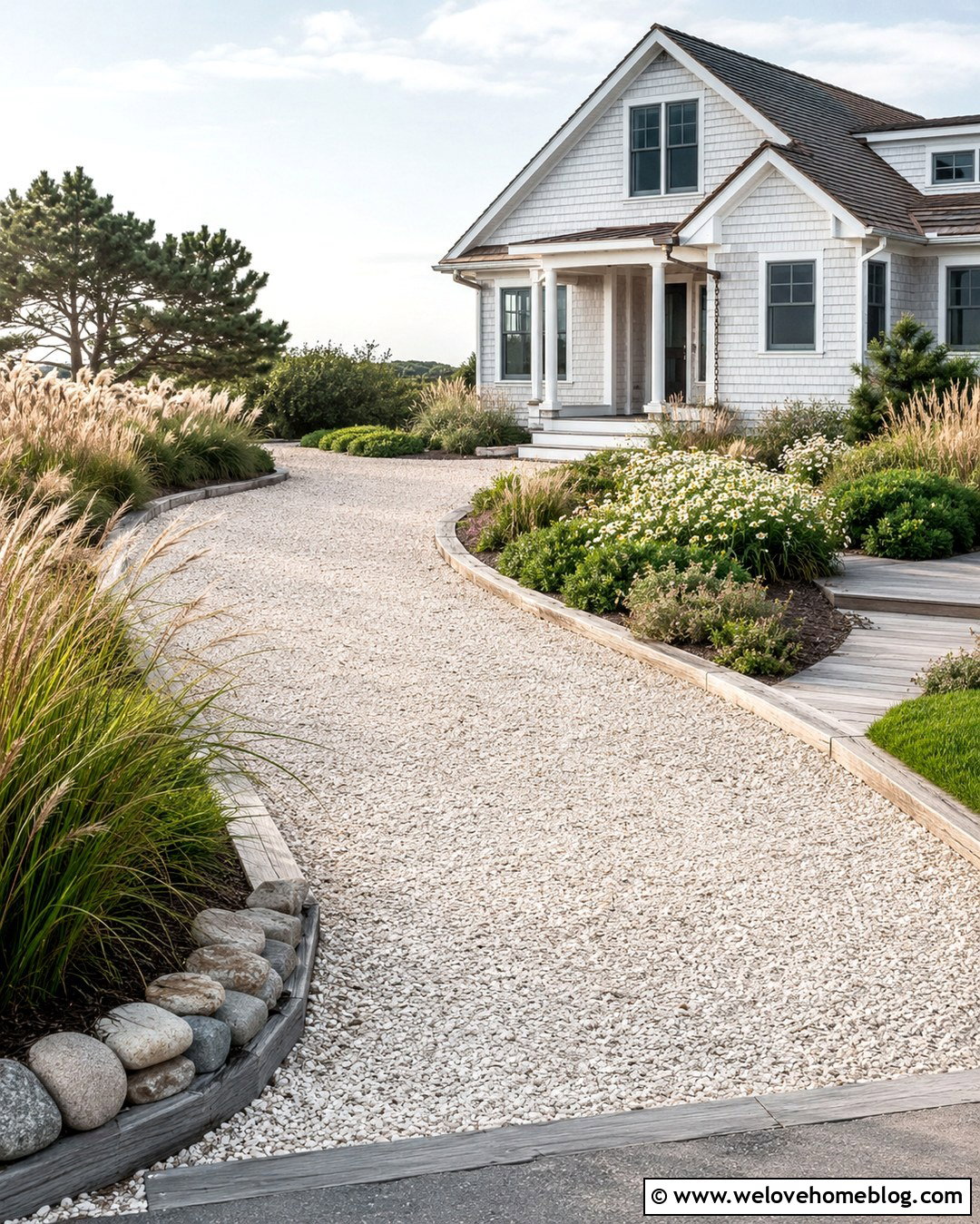
A clipped boxwood hedge gives a loose gravel surface a clean, intentional frame. Use warm pea gravel or pale crushed stone for the driveway, then run a low hedge along both sides to emphasize its direction. A gently curved layout keeps the design relaxed rather than overly formal. Add a narrow stone mowing strip between the gravel and shrubs so loose pieces do not collect under the foliage. Behind the boxwood, layer hydrangeas, white roses, or small flowering trees for height and seasonal color. This complete look works particularly well with Cape Cod, colonial, and country homes. Keep the hedge comfortably back from the driving lane so car doors can open and plants remain protected from tires.
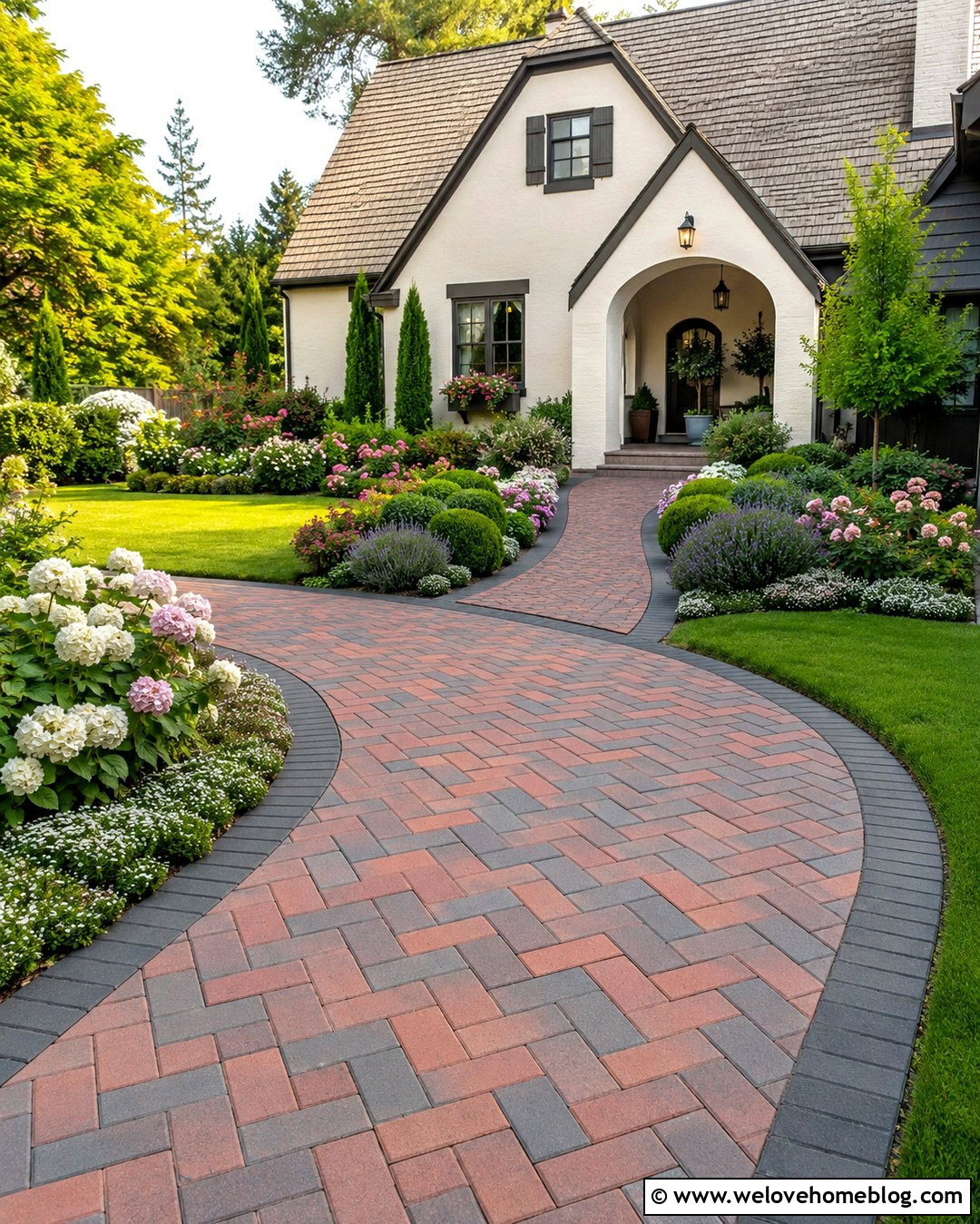
2. Boxwood Border With A Brick Driveway
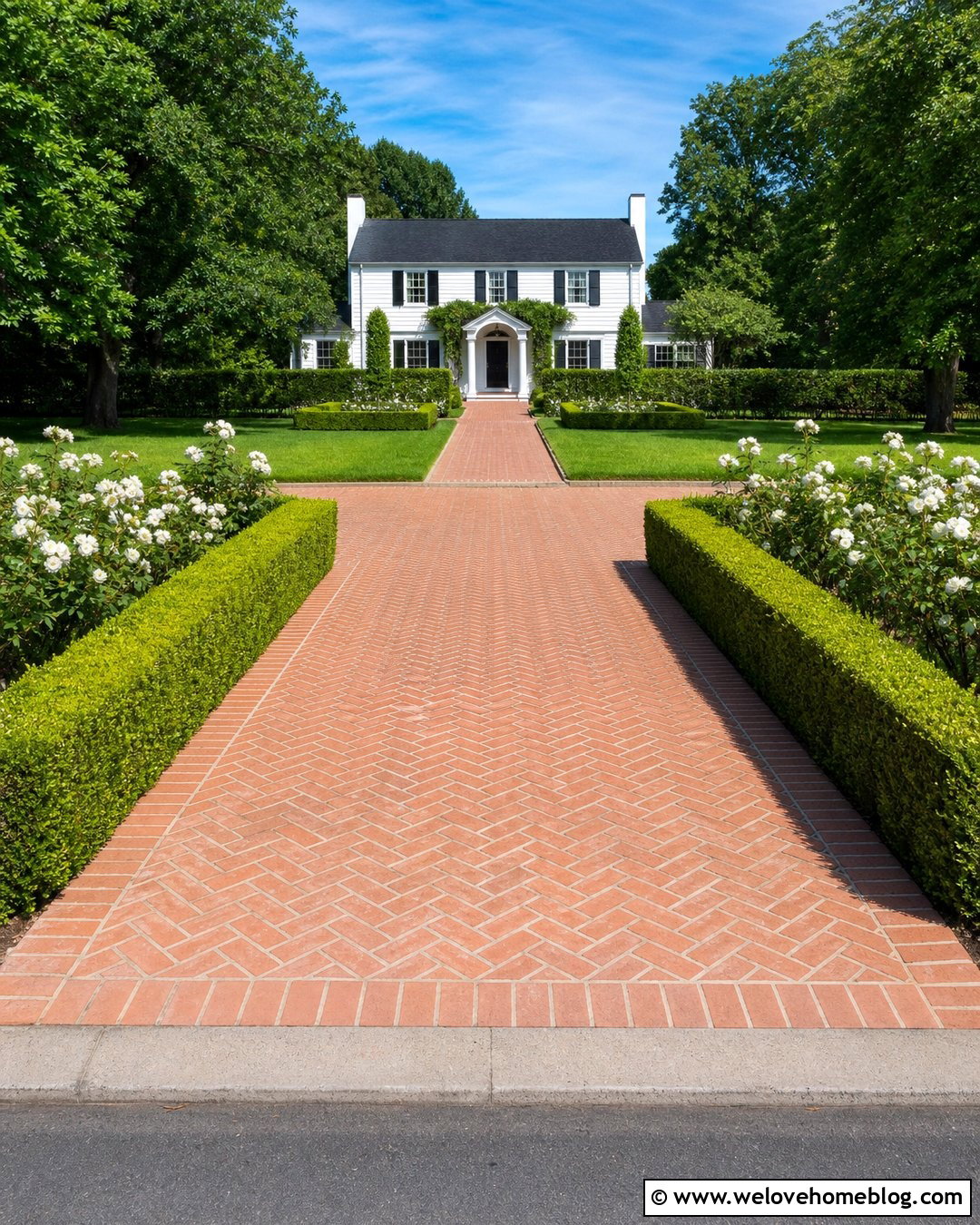
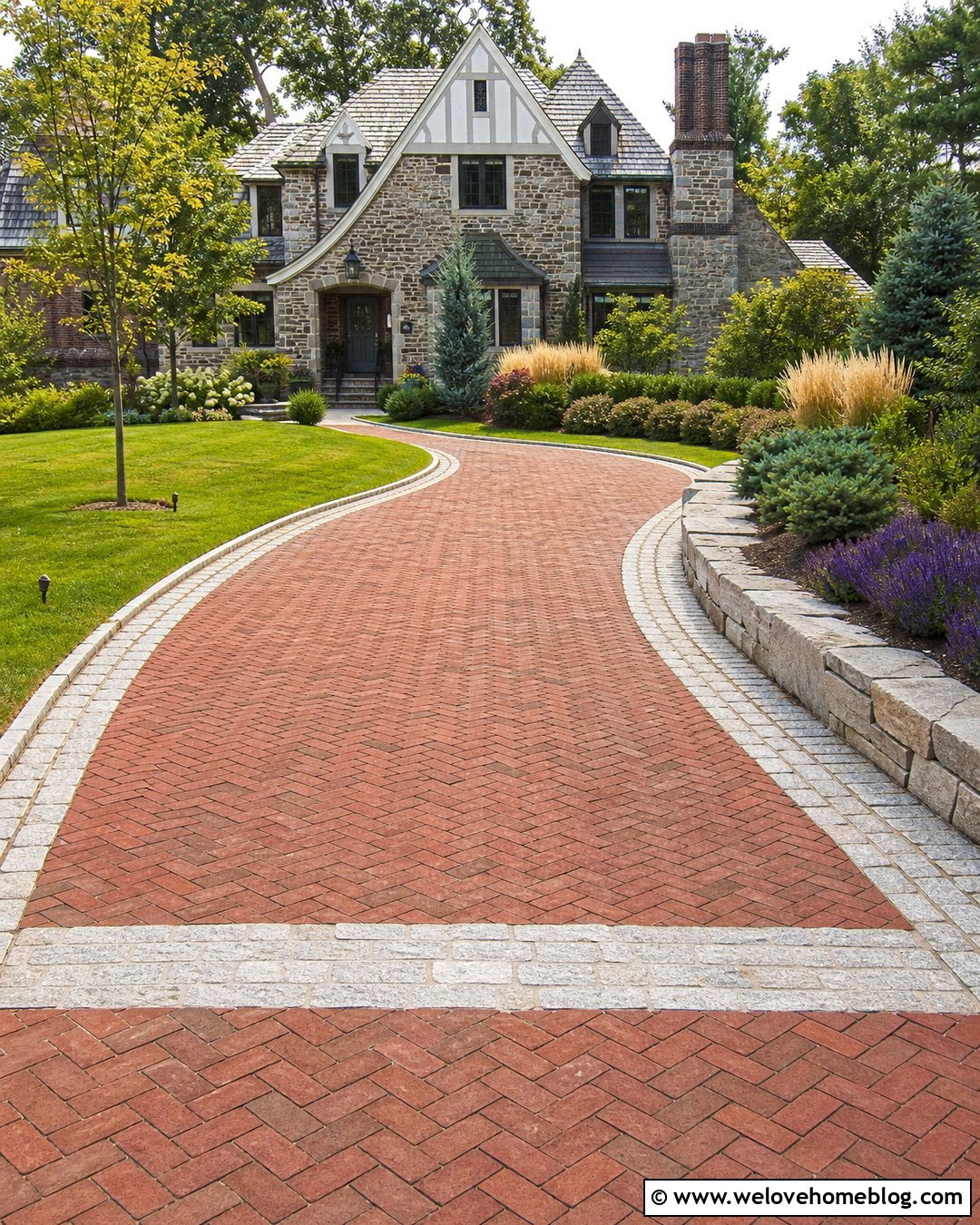
Red or weathered clay brick creates a warm foundation for a traditional boxwood border. Install the brick in a herringbone pattern and use a straight soldier-course edge to strengthen the outline. Low, rectangular boxwood hedges can then follow both sides of the driveway, connecting the street entrance to the garage or front courtyard. White flowering plants behind the hedge brighten the deep green foliage and complement white trim on a colonial home. If the driveway is wide, include generous gaps near parking areas for doors and foot traffic. Repeating brick in the front walkway or porch steps brings the entire approach together. This combination looks established and formal without requiring elaborate topiary or ornamental gates.
3. Boxwood Landscaping Around A Circular Driveway
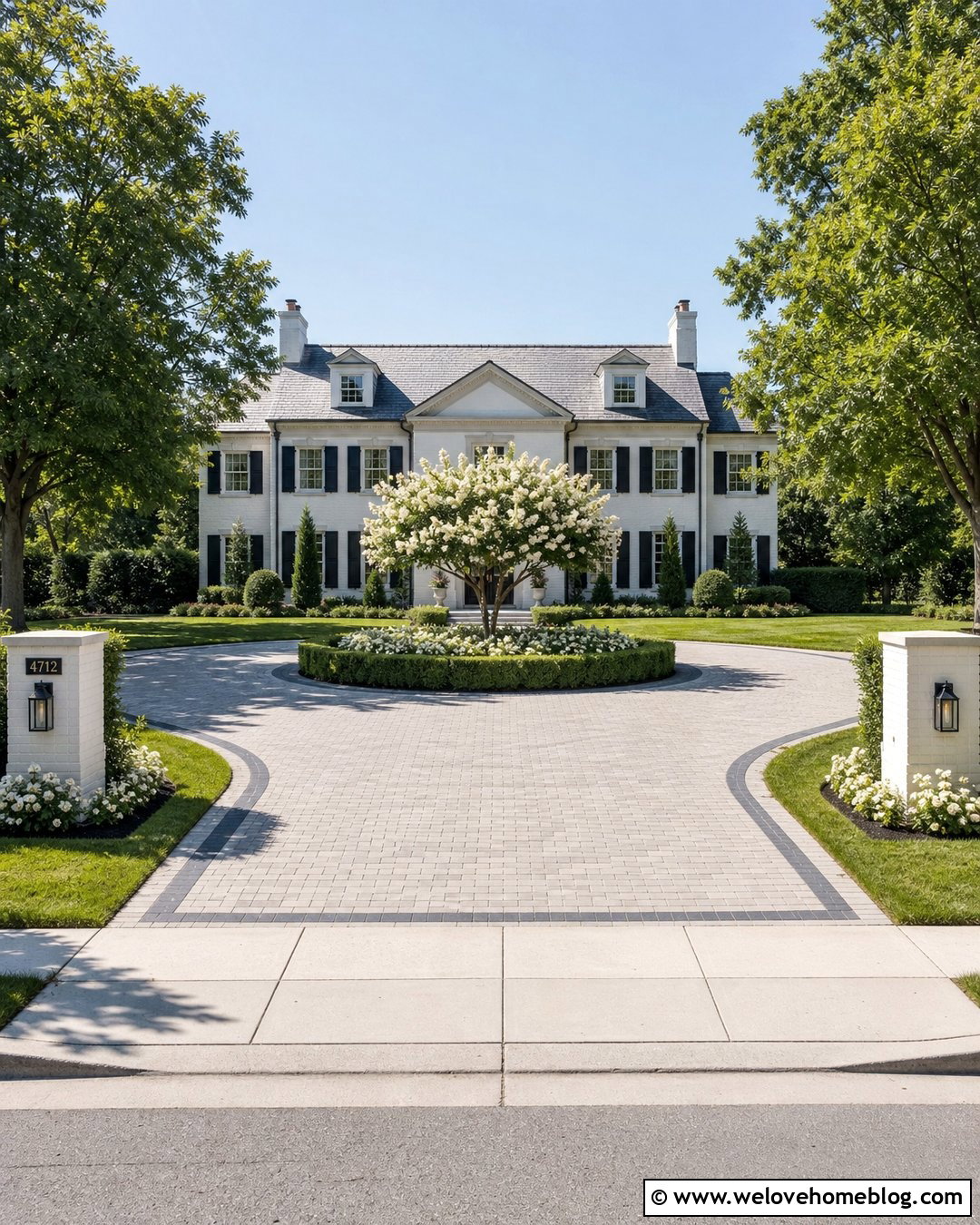
A circular driveway offers several places to repeat boxwood without enclosing the entire space. Plant a low boxwood ring around the center island, then fill the middle with a small ornamental tree, flowering shrubs, or a simple lawn panel. Matching boxwood groups at both driveway openings create a balanced view from the street. A light gray paver surface keeps the broad layout bright, while a charcoal paver border defines its curves. Leave enough open ground around the shrubs to improve airflow and simplify maintenance. Use taller plants sparingly so drivers can see across the island. The finished design suits Georgian, French-inspired, and large traditional homes because it connects the driveway, central landscape, and architecture in one orderly composition.
4. Boxwood Globes Beside A Concrete Driveway
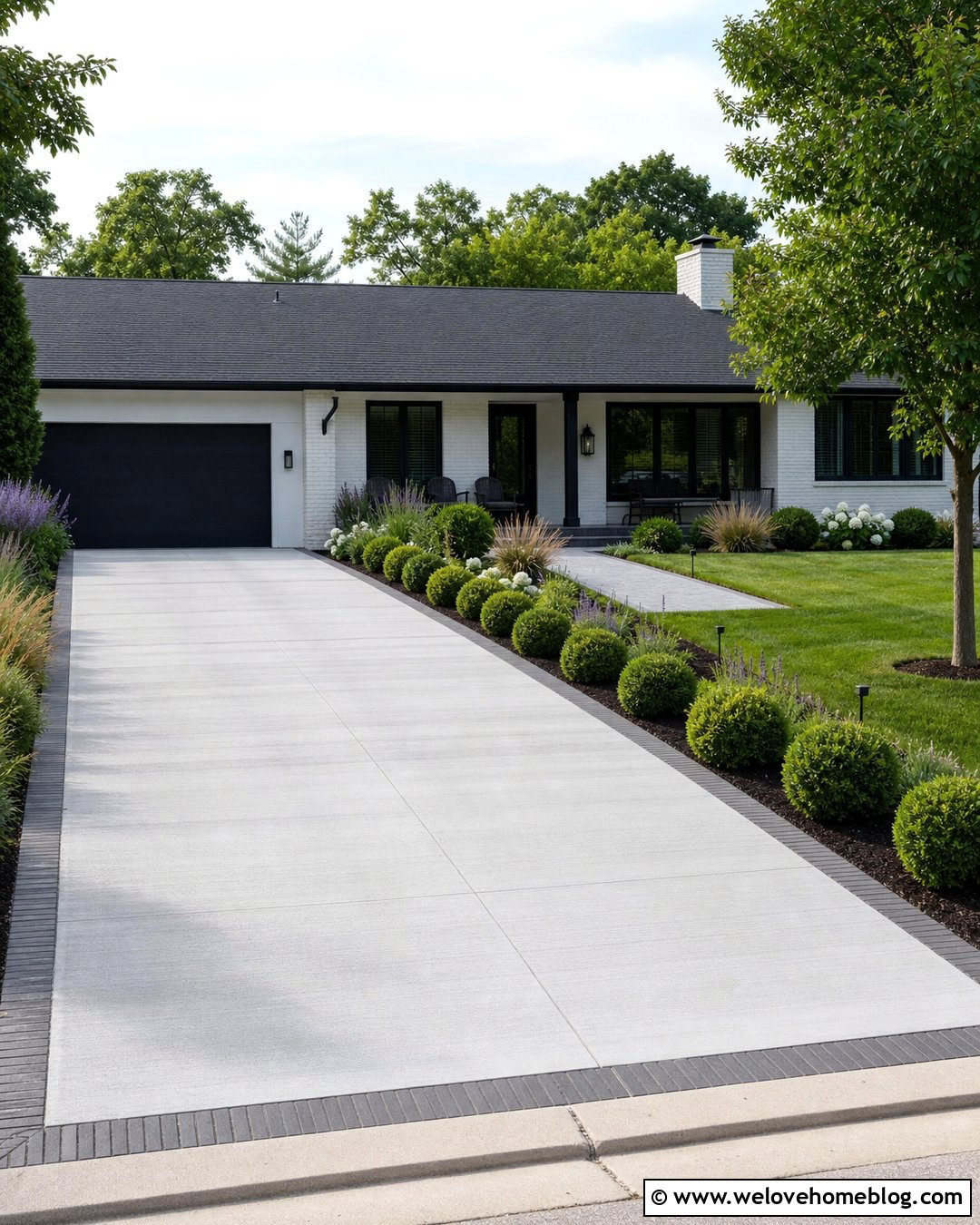
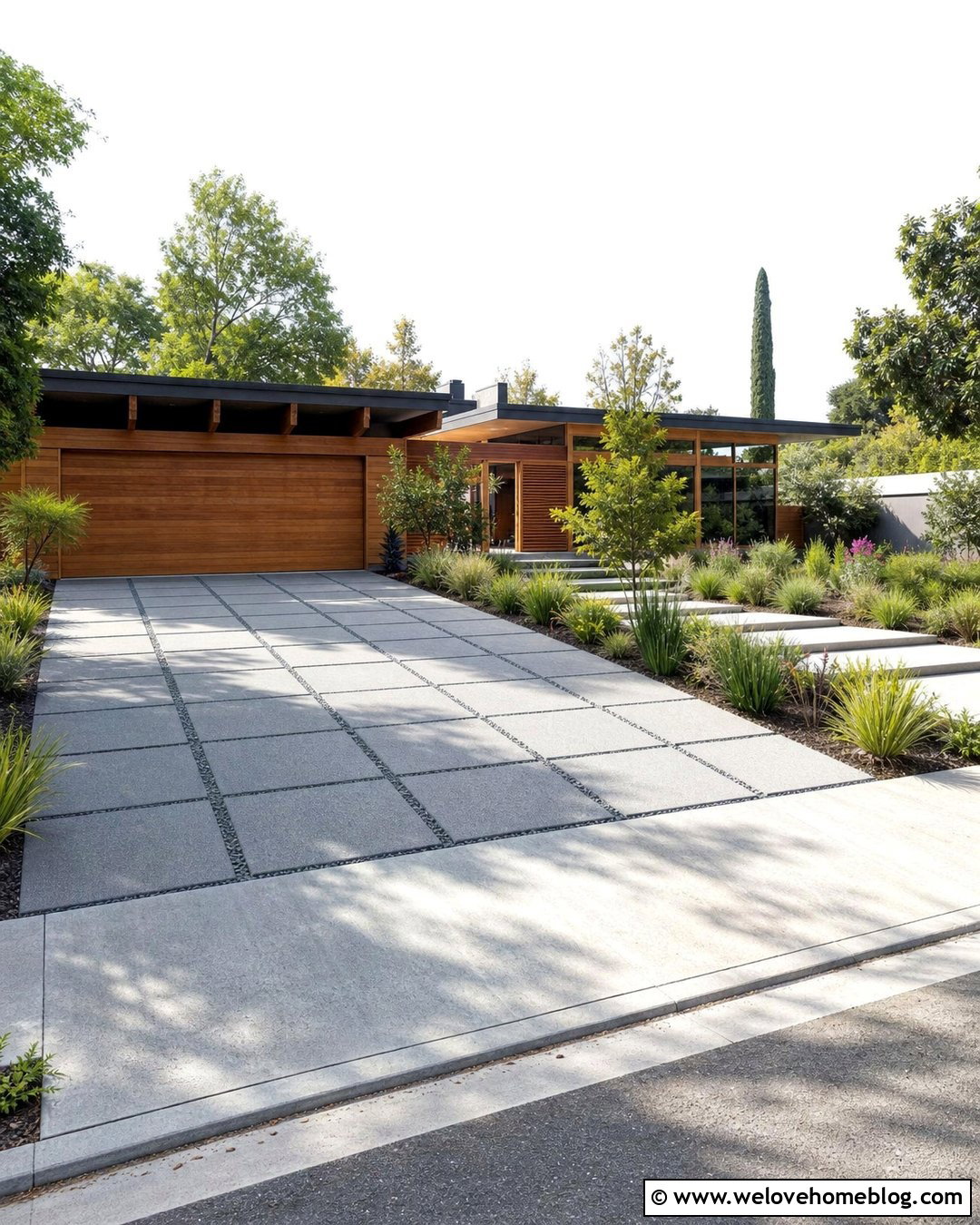
Rounded boxwoods can soften the long, rigid edges of a poured concrete driveway. Space evenly sized globes through wide planting beds instead of creating one continuous hedge. The repeated shapes establish rhythm while leaving room for ornamental grasses, catmint, or white flowering perennials between them. Choose light gray broom-finished concrete with narrow control joints for a simple, practical surface. A dark brick or stone edging strip can provide extra definition and protect the bed from vehicle tires. This approach fits ranch, transitional, and renovated suburban homes where a tall formal hedge might feel too heavy. Maintain clear sightlines at the street and gradually increase the size of the boxwood groupings closer to the house.
5. Boxwood Entrance With Stone Pillars
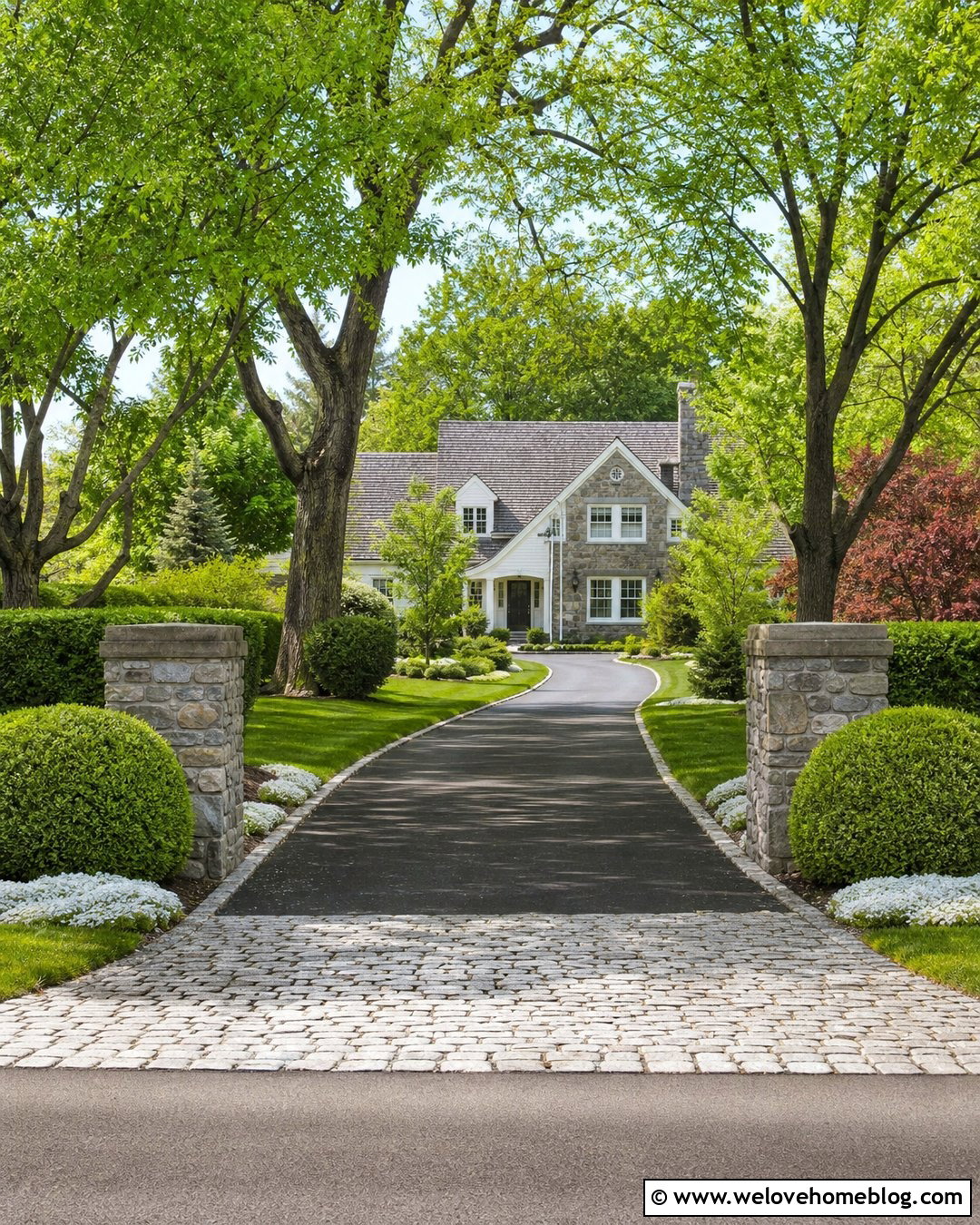
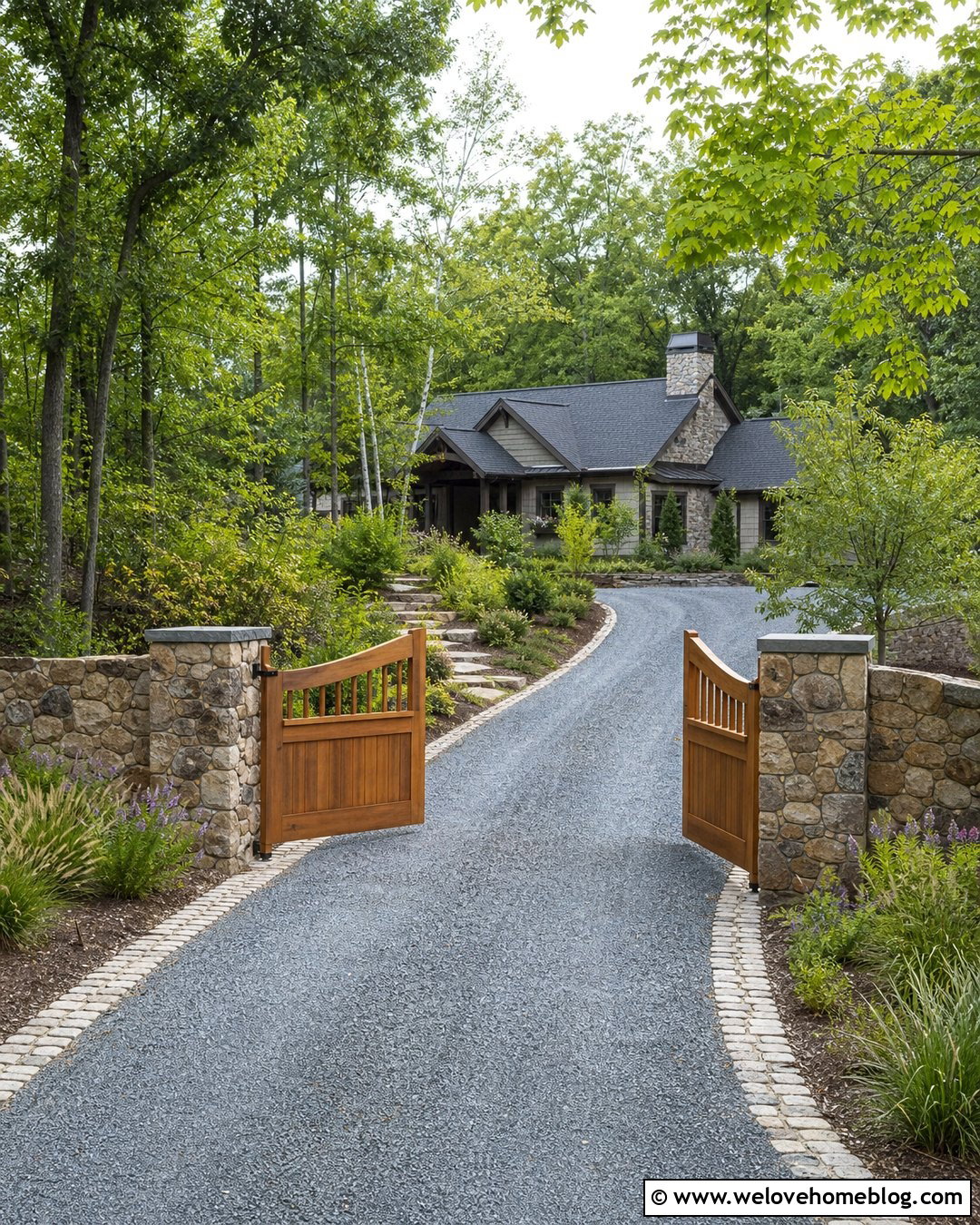
Stone pillars and boxwood plantings can make a driveway entrance noticeable without relying on an imposing gate. Build two modest pillars that match stone already used on the house, retaining walls, or porch. Place broad boxwood mounds around their bases and continue smaller shrubs into curved beds along the driveway. A dark asphalt surface with a cobblestone apron provides a durable-looking contrast to the greenery. Low flowering ground covers can fill spaces between the shrubs without hiding the masonry. Keep boxwoods below the address plaque and away from lights, access panels, and gate hardware. The complete entrance feels substantial from the road, yet the layered planting helps the stone columns blend naturally into the front yard.
6. Boxwood Border Along A Curved Driveway
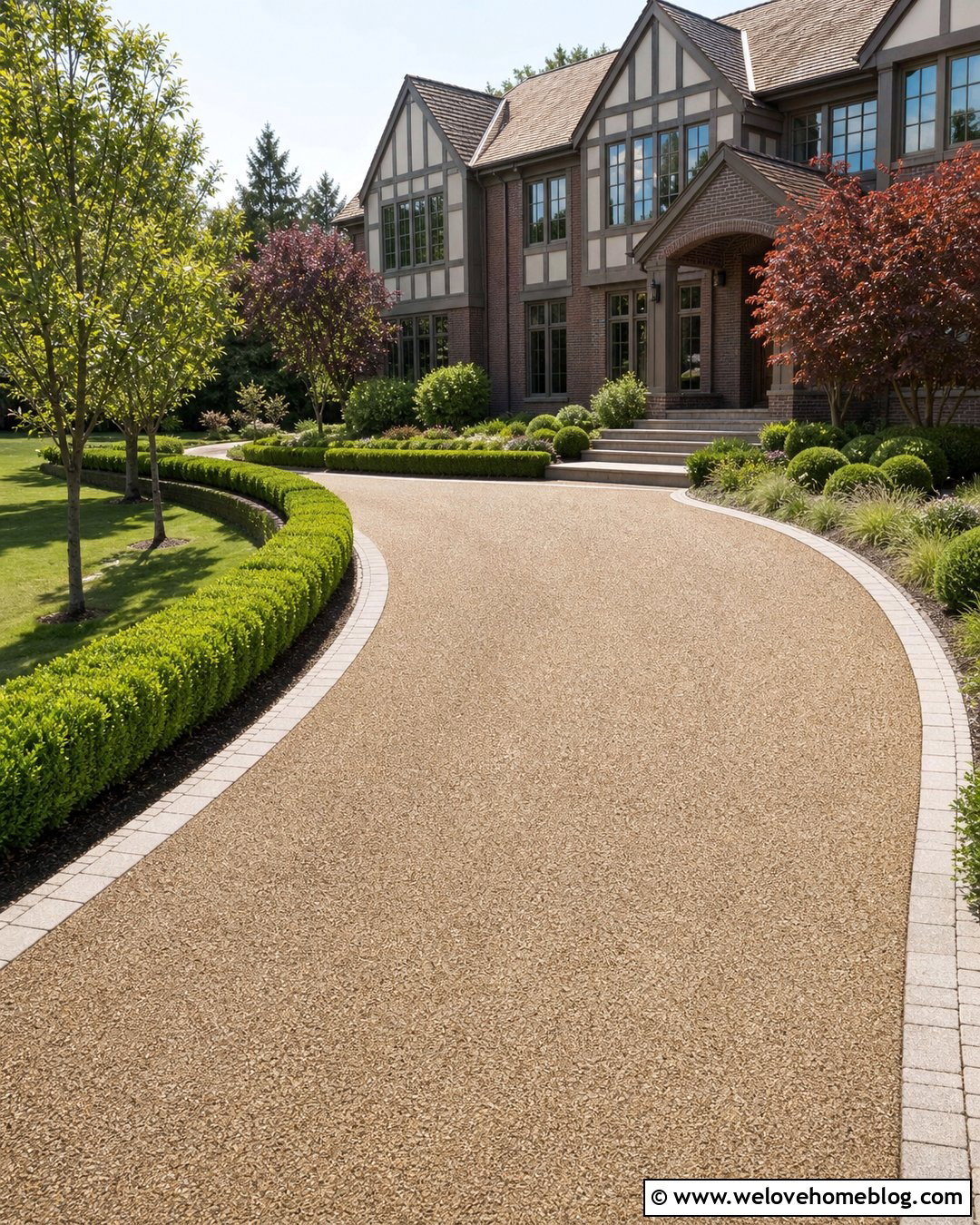
A sweeping driveway becomes easier to read when a boxwood border traces the outside curve. Use small-leaved shrubs clipped into a low, continuous hedge, allowing the greenery to guide attention toward the house. On the inside curve, create a broader bed with matching boxwood mounds, ornamental trees, and simple ground covers. Warm beige resin-bound gravel gives the drive a smooth appearance, while flush granite setts separate it from the beds. Avoid tall shrubs near tight bends because they can interfere with visibility. This layout works with Tudor, craftsman, and European-inspired homes, especially when the driveway follows natural changes in the yard. The result feels landscaped from end to end rather than decorated only near the garage.
7. Boxwood And Hydrangea Driveway Border
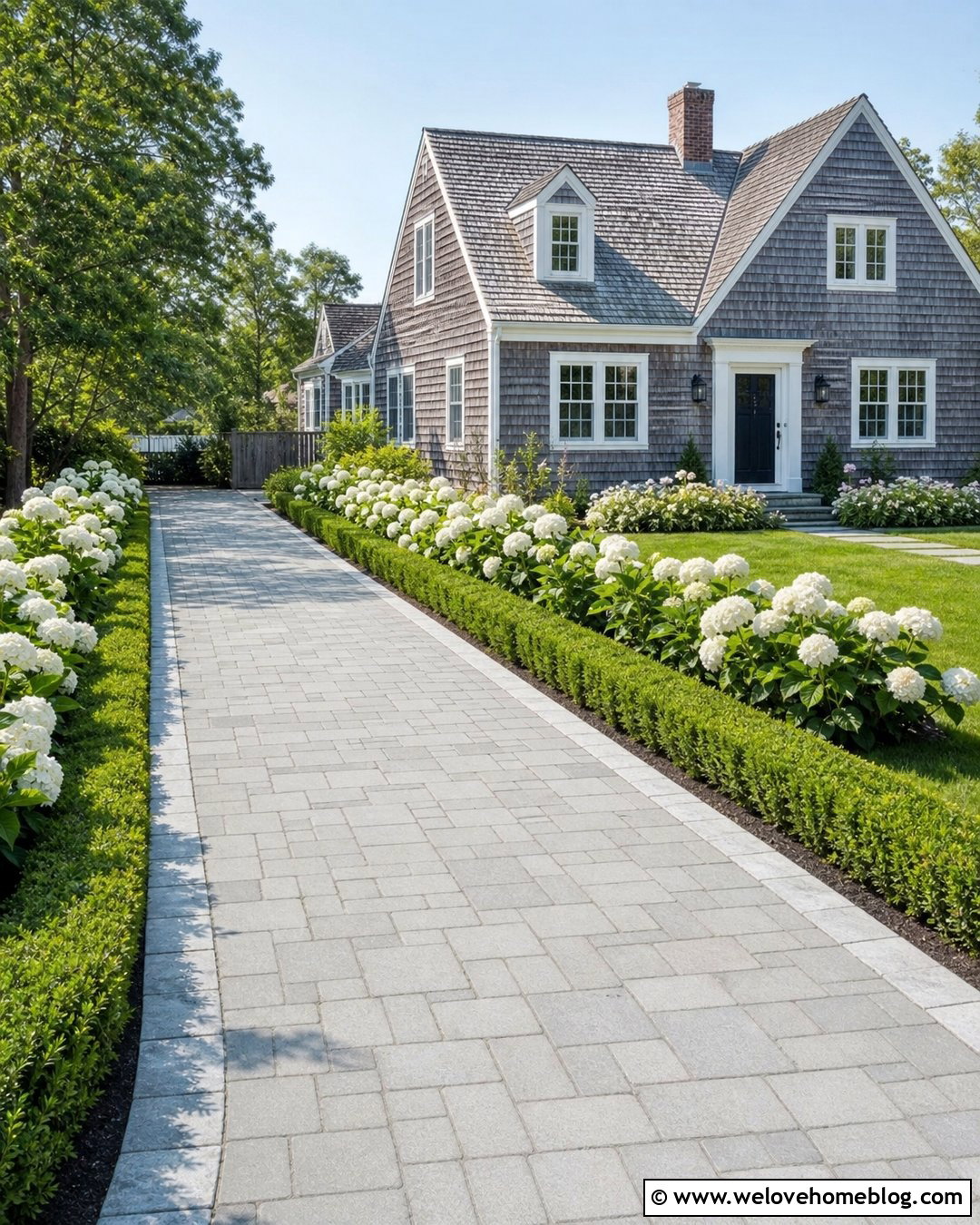
Boxwood and hydrangeas create a layered border with structure at the front and generous flowers behind it. Begin with a low boxwood hedge beside a gray concrete paver driveway. Plant hydrangeas farther back where their mature growth will not lean into the driving area. White varieties support a calm green-and-white palette, while blue or pink blooms add stronger seasonal color. A bluestone edging ribbon can connect the driveway to a coordinating walkway and front steps. This planting works especially well beside a shingle, Cape Cod, or traditional white house. Allow access breaks near the sidewalk, mailbox, and parking spaces. The evergreen-looking framework keeps the beds orderly even when the flowering shrubs are not the main visual feature.
8. Boxwood And Lavender Gravel Driveway
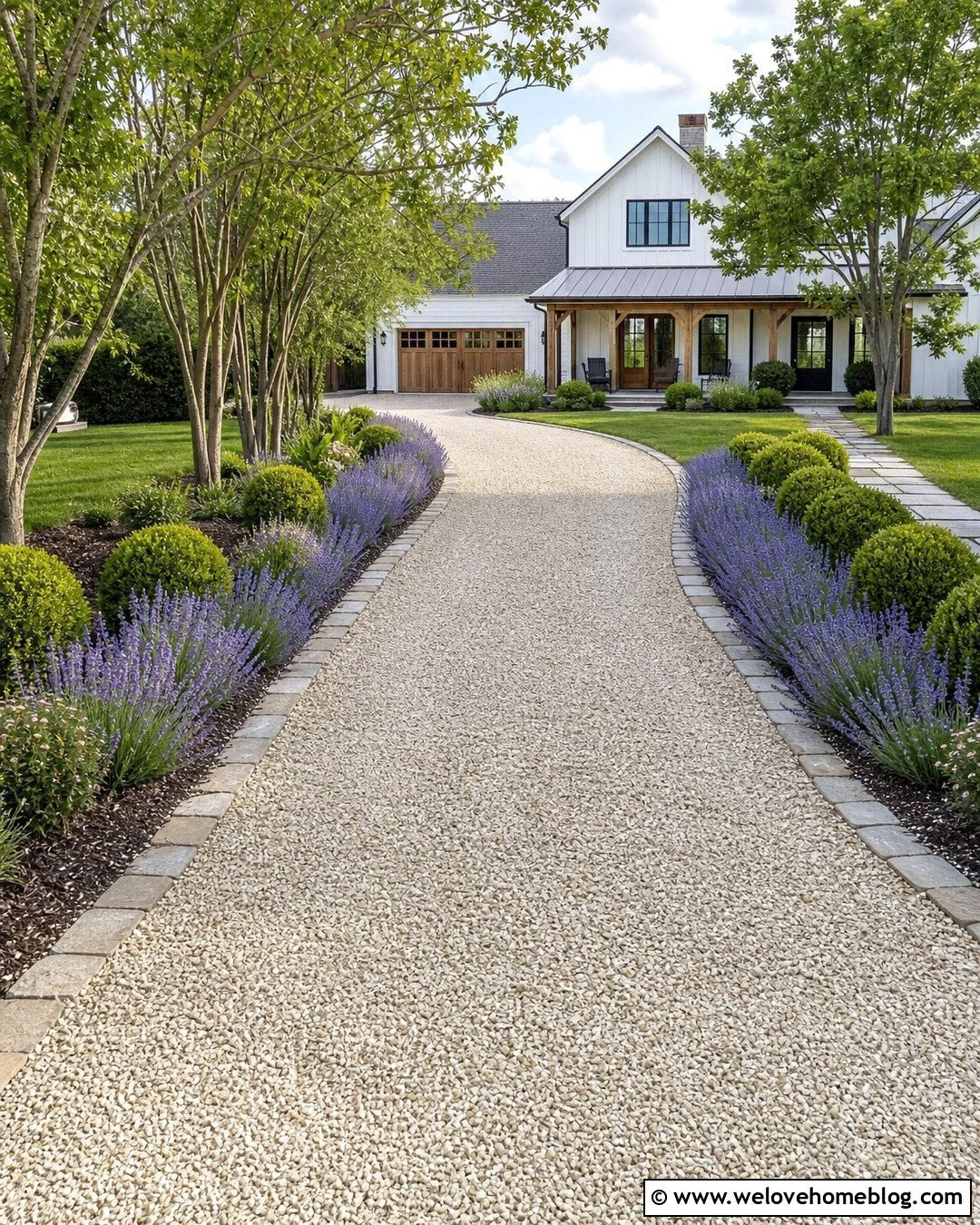
For a softer country entrance, combine rounded boxwood shrubs with bands of lavender beside a pale gravel driveway. The boxwood provides repeated green anchors, while the lavender forms a lower, looser layer closer to the driveway. Use steel edging or a narrow cobblestone border to keep crushed limestone contained. A straight drive can transition into a gentle curve near a modern farmhouse, creating a more welcoming approach. Add multi-stem trees at wider intervals rather than crowding the border with too many plant varieties. This design is best where the selected plants receive suitable light and drainage. The contrast between clipped shrubs, airy flowers, and textured gravel creates a complete landscape that feels structured but not excessively formal.
9. Boxwood Border With A Black Asphalt Driveway
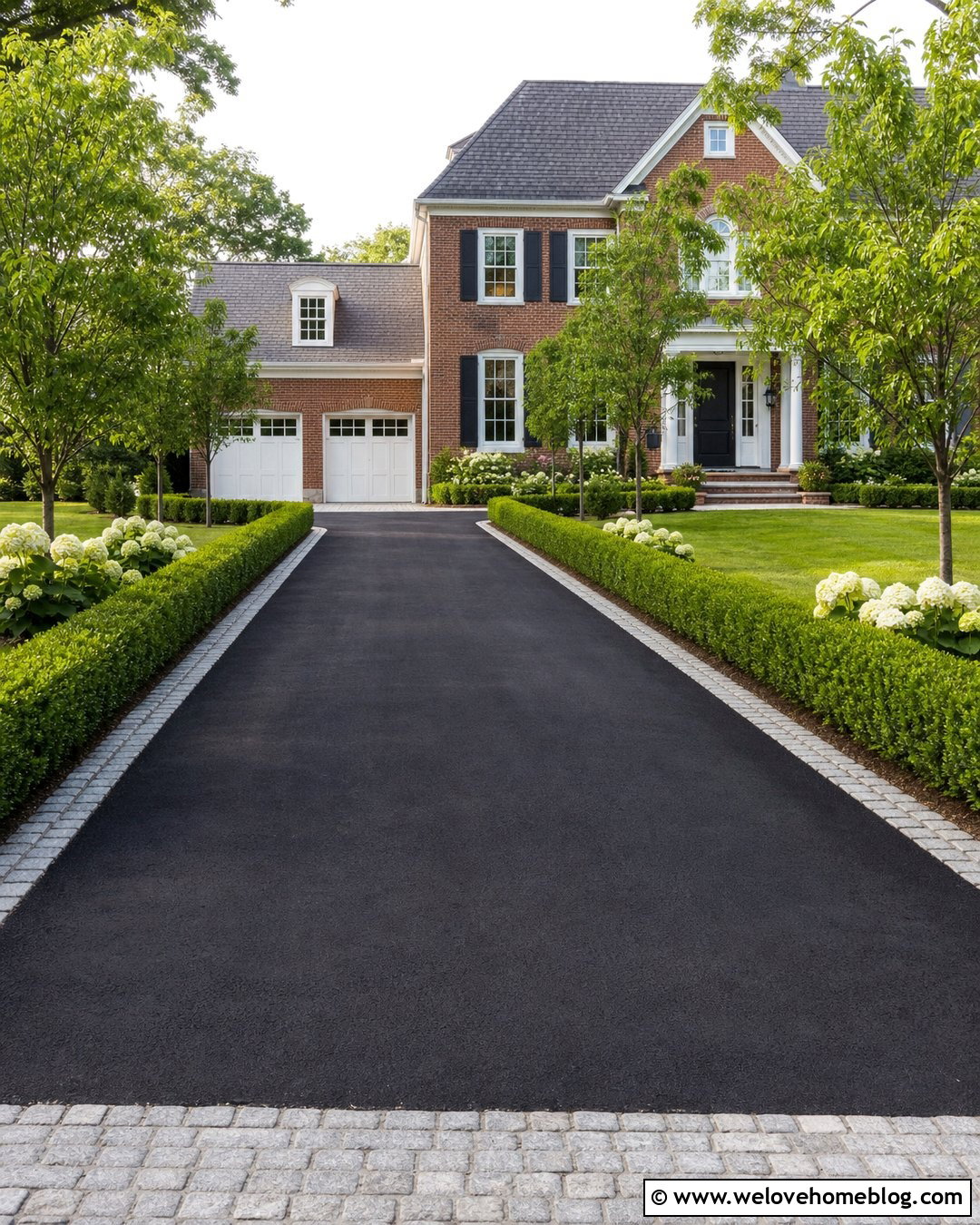
Fresh black asphalt looks much more refined when it is framed by deliberate landscaping. Install a light granite or concrete paver ribbon along each edge, then position a low boxwood hedge beyond that hard border. The pale edging increases contrast and prevents the shrubs from appearing to grow directly into the pavement. For a long straight driveway, interrupt the hedge near the house with larger beds containing boxwood globes, hydrangeas, and compact ornamental trees. Repeat the edging around the front walkway to link pedestrian and vehicle routes. This practical combination complements brick colonials, split-level homes, and classic suburban facades. Keeping the boxwood low also preserves visibility and prevents the dark driveway from feeling narrow or enclosed.
10. Boxwood Landscaping For A Modern Driveway
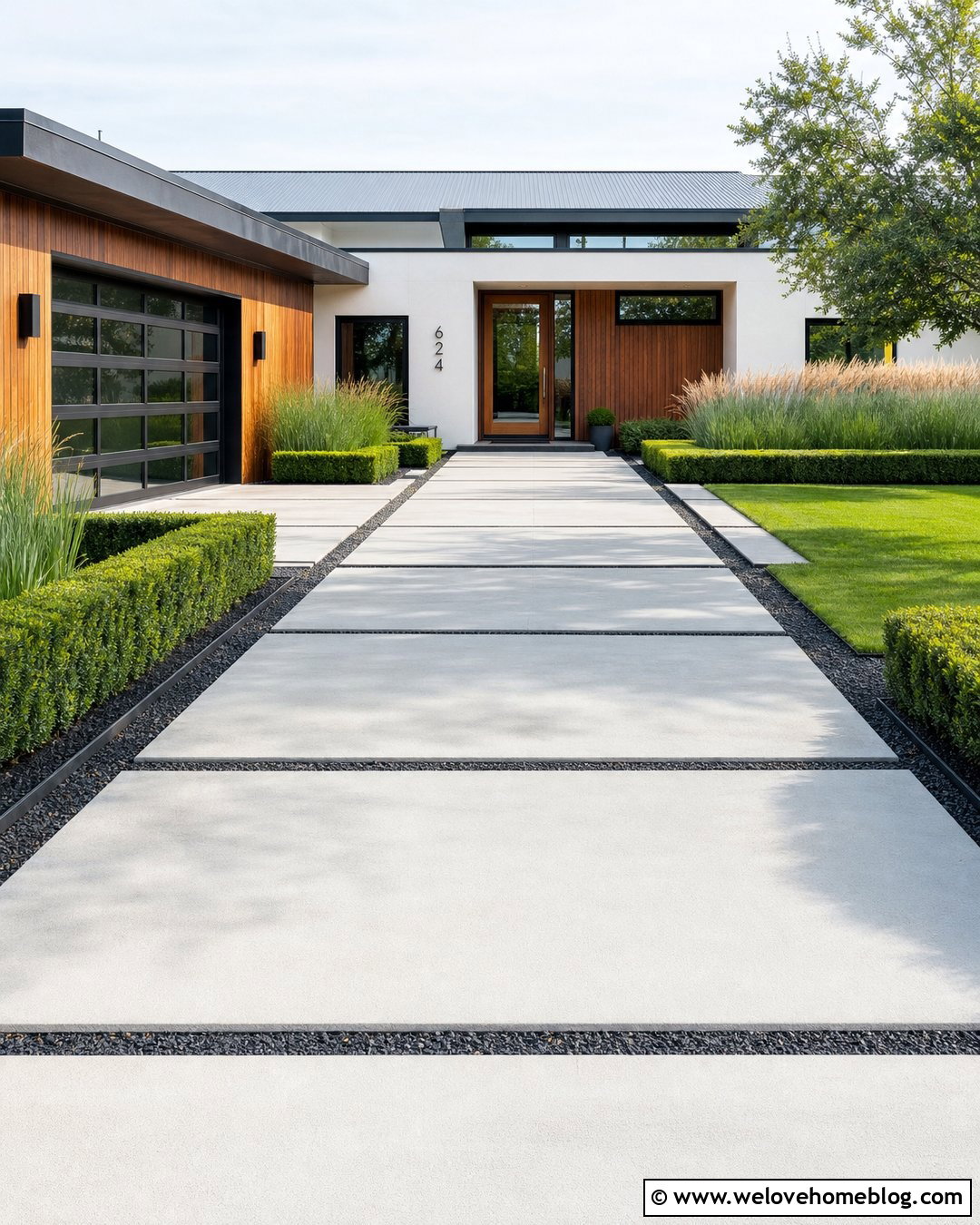
Boxwood can look contemporary when it is used as simple architectural greenery. Pair large rectangular concrete slabs with narrow dark gravel joints, then plant boxwood in crisp blocks beside selected sections rather than lining every edge. Alternate these clipped masses with ornamental grasses and open lawn for a balanced mix of solid and soft forms. A straight driveway and an uncluttered concrete walkway should align with the geometry of the house. Black metal edging helps planting beds retain sharp outlines without introducing another prominent color. Keep the boxwood at one consistent height and avoid complicated topiary. Against a modern white, charcoal, or wood-clad facade, the deep green planting adds warmth while preserving the clean overall composition.
11. Boxwood Border For A Small Driveway
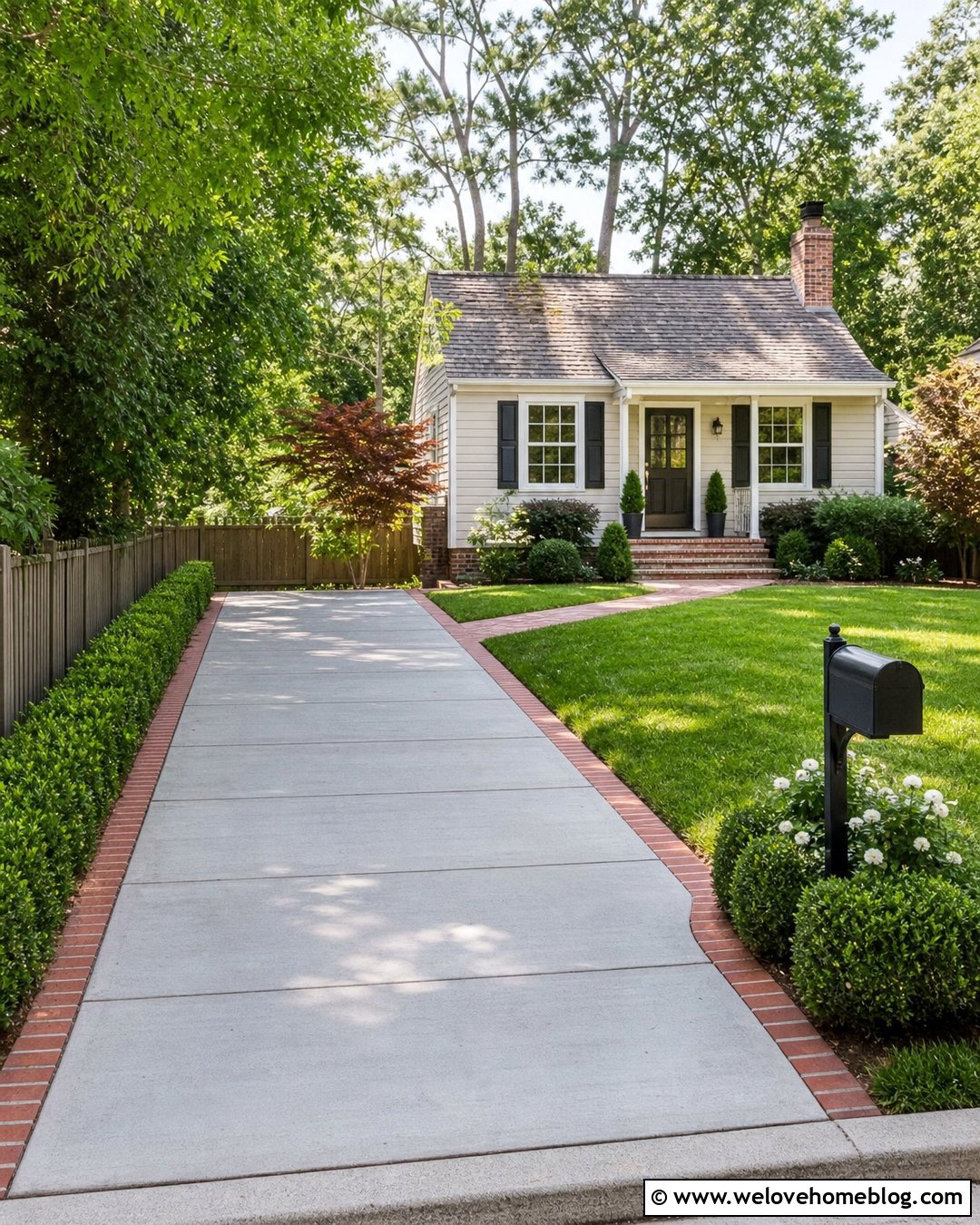
A compact driveway needs greenery that adds character without reducing usable space. Place a narrow row of dwarf boxwood along one side of a light concrete drive and leave the other side open for easier entry and parking. A flush brick edging course protects the planting bed and introduces color without creating a tripping hazard. At the street, curve the hedge into a small mailbox bed instead of ending it abruptly. Near the house, connect it to a matching front-walk border for continuity. Choose shrubs based on their mature dimensions, not their size at purchase. This efficient layout suits cottages, townhouses, and small suburban lots because it creates a polished landscape while preserving car-door clearance, visibility, and walking space.
12. Boxwood Topiary At A Driveway Gate
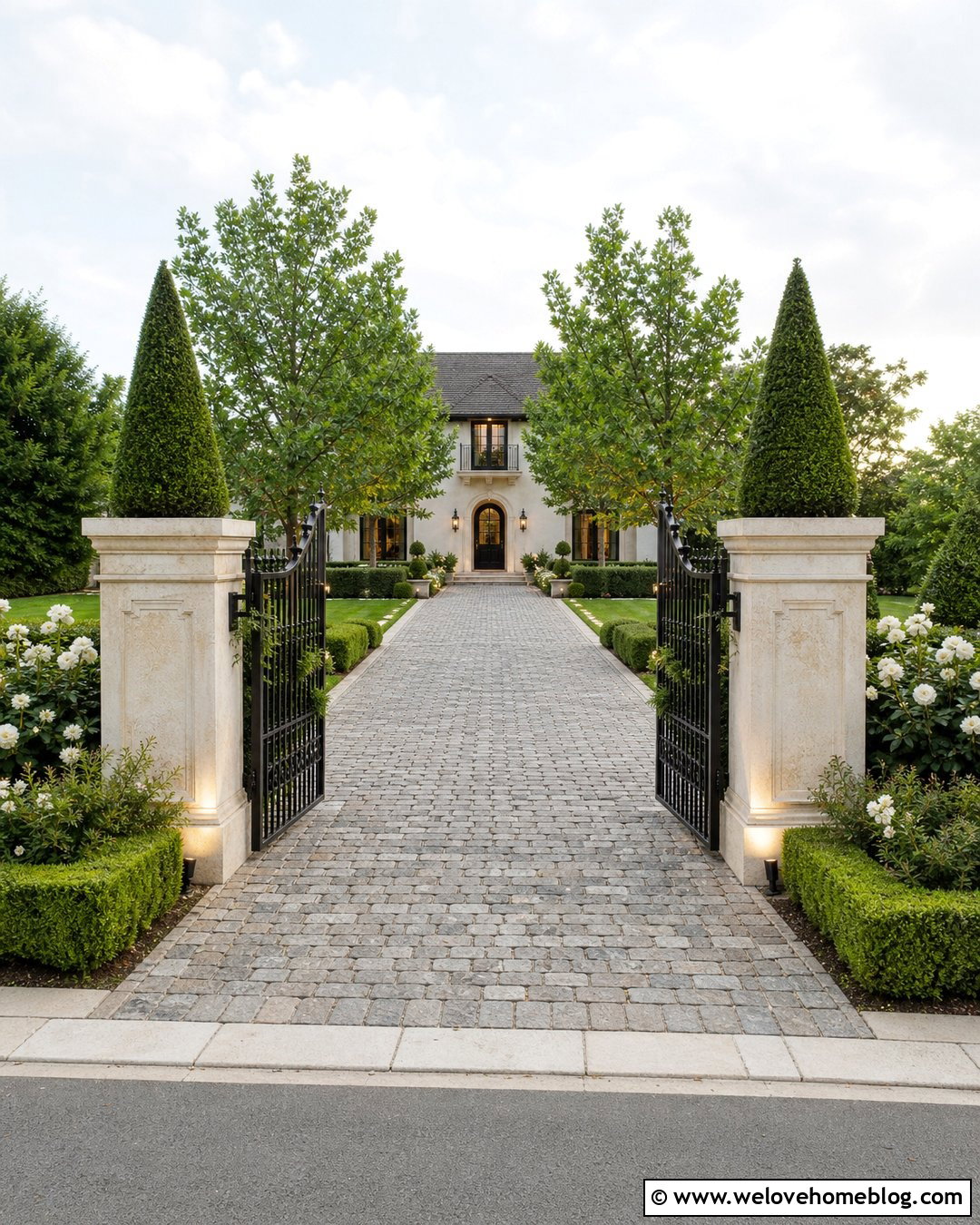
A pair of boxwood cones or standards can strengthen the symmetry of a gated driveway. Position one planted accent behind each gate pillar so the shrubs frame the opening without interfering with moving parts. Wrought iron or simple black metal works well with a warm cobblestone driveway and limestone entrance columns. Continue low boxwood mounds into curved beds on both sides, using white roses or restrained perennials as secondary planting. The driveway can widen gently beyond the gate before reaching a traditional brick or stucco home. Landscape lighting should illuminate the pillars and plants without overwhelming the entrance. This composition feels formal, but repeating natural shapes around the topiary keeps the gate from looking disconnected from the yard.
13. Boxwood Border With A Cobblestone Driveway
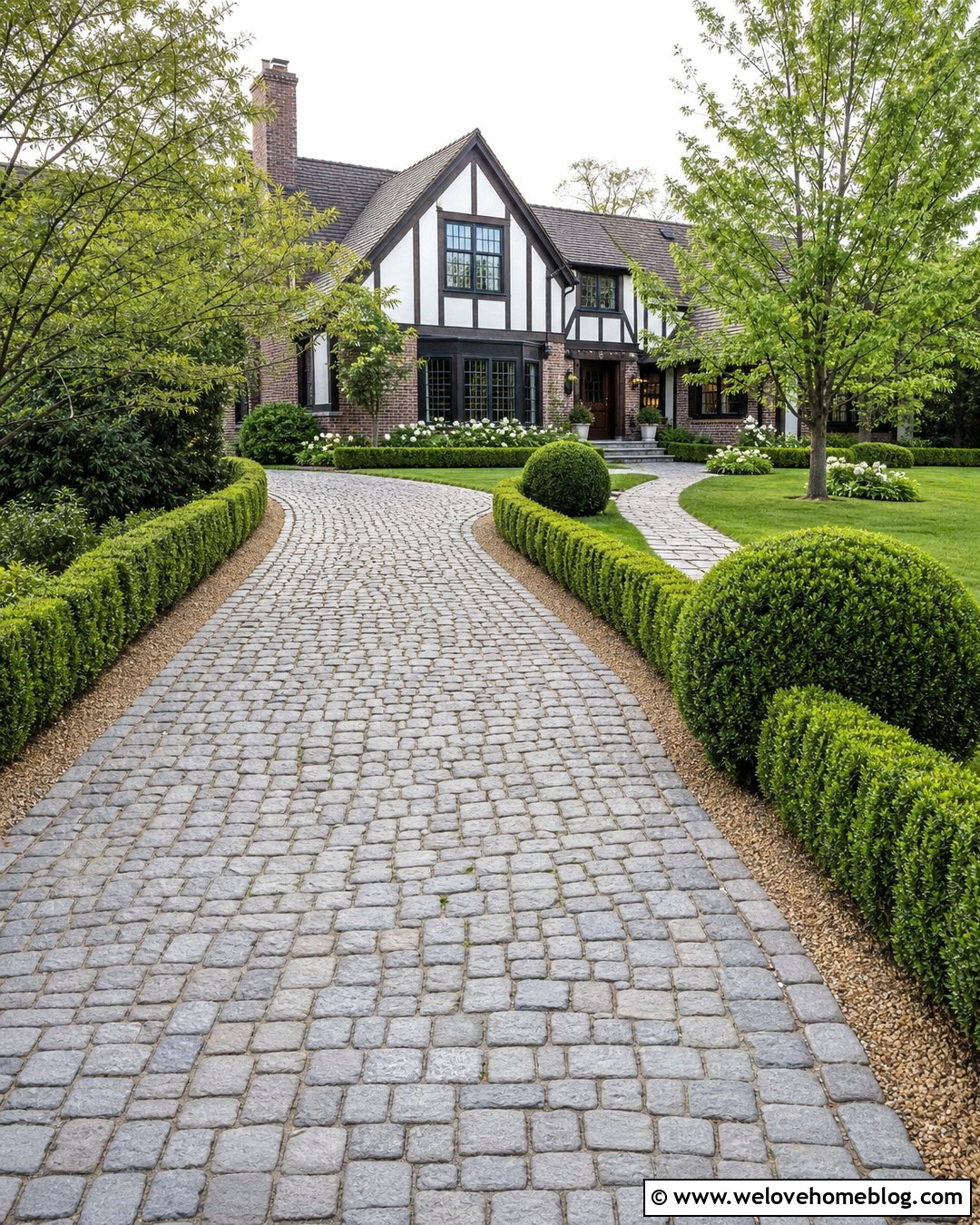
Cobblestone has strong texture, so its surrounding landscape should feel simple and controlled. Frame a gray cobblestone driveway with a low hedge of boxwood, leaving a slim strip of compacted gravel between the stone and the plants. This transition catches stray soil and makes trimming easier. Follow the driveway’s gentle curve with the hedge, then expand the planting beds near the house with larger boxwood globes and small ornamental trees. A matching cobblestone walkway can branch toward the front entrance. Keep the palette mostly green, white, and gray so the varied stone remains visible. The complete look suits Tudor, French country, and older traditional houses, where boxwood helps reinforce the driveway’s established, handcrafted character.
14. Boxwood Beds Around A Driveway Turnaround
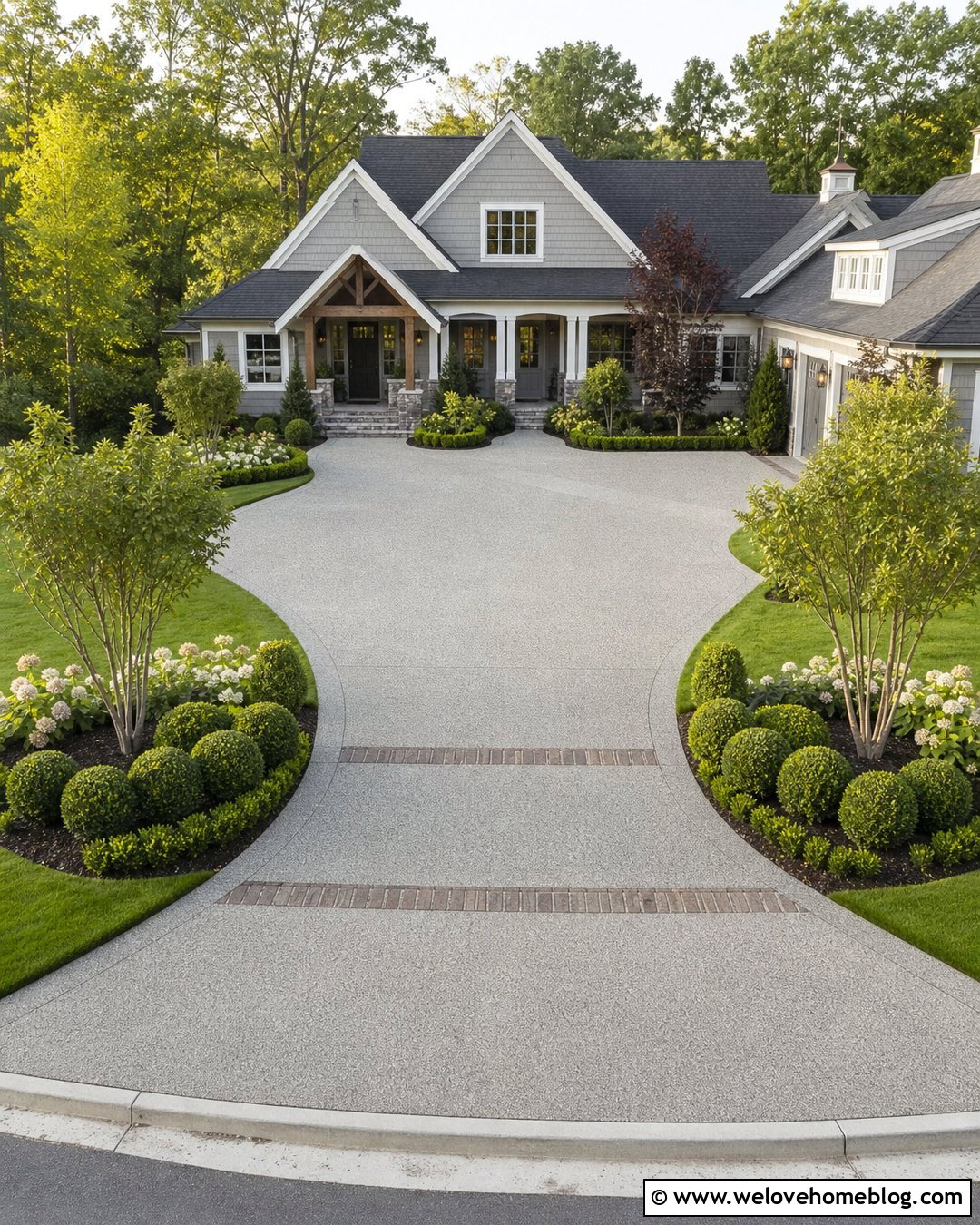
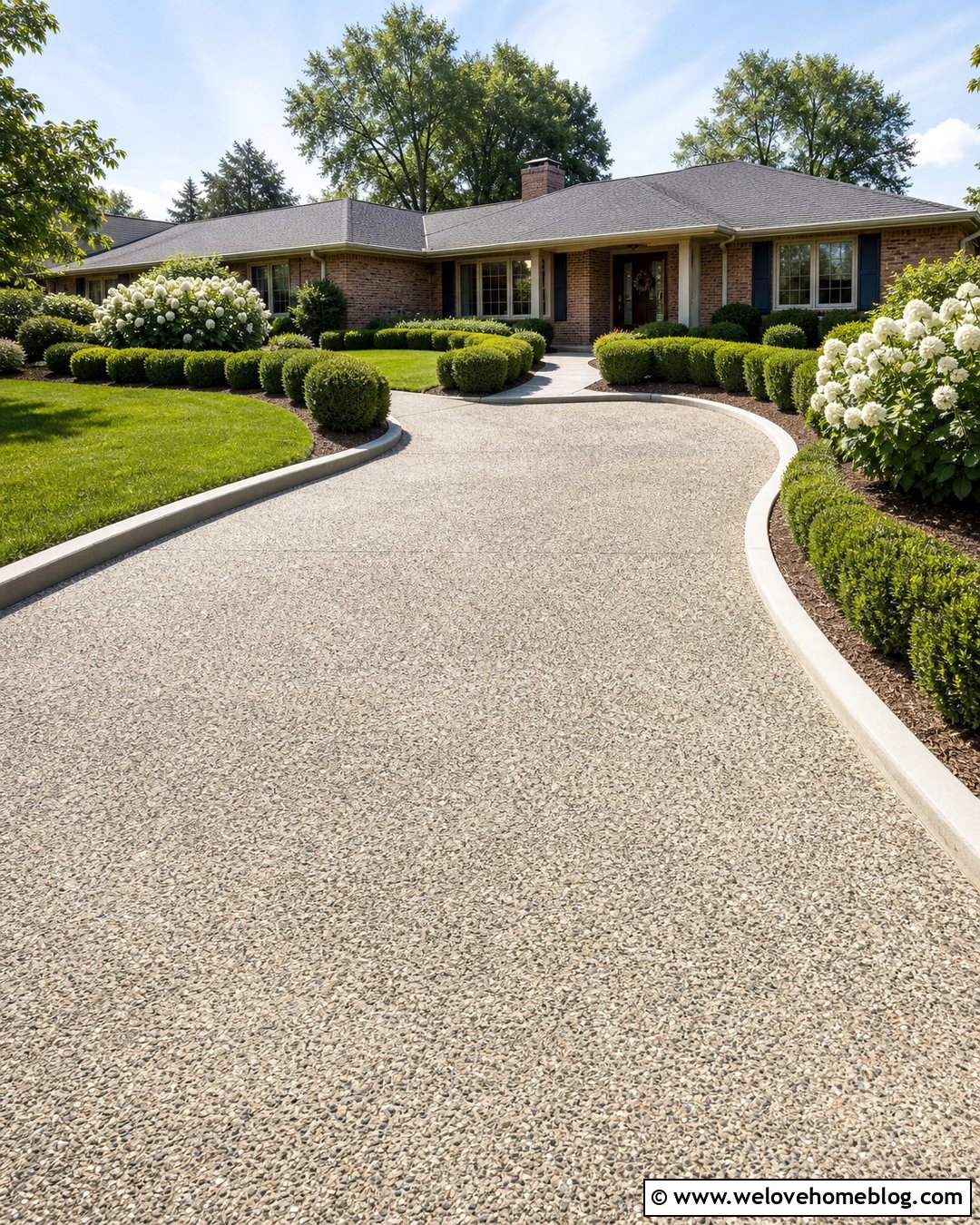
A driveway turnaround often becomes a plain paved area, but boxwood beds can give it a clear visual shape. Use an exposed aggregate surface with a contrasting brick or stone band around the parking circle. At the outer corners, create broad planting beds filled with groups of rounded boxwoods, flowering shrubs, and one or two small trees. Keep the center open so vehicles can maneuver easily. If the turnaround has a center island, repeat the same boxwood shapes there rather than introducing a different planting theme. Ensure shrubs remain clear of wheel paths and passenger exits. This arrangement works well for ranch, craftsman, and large suburban homes, turning a functional driving zone into a coordinated part of the front landscape.
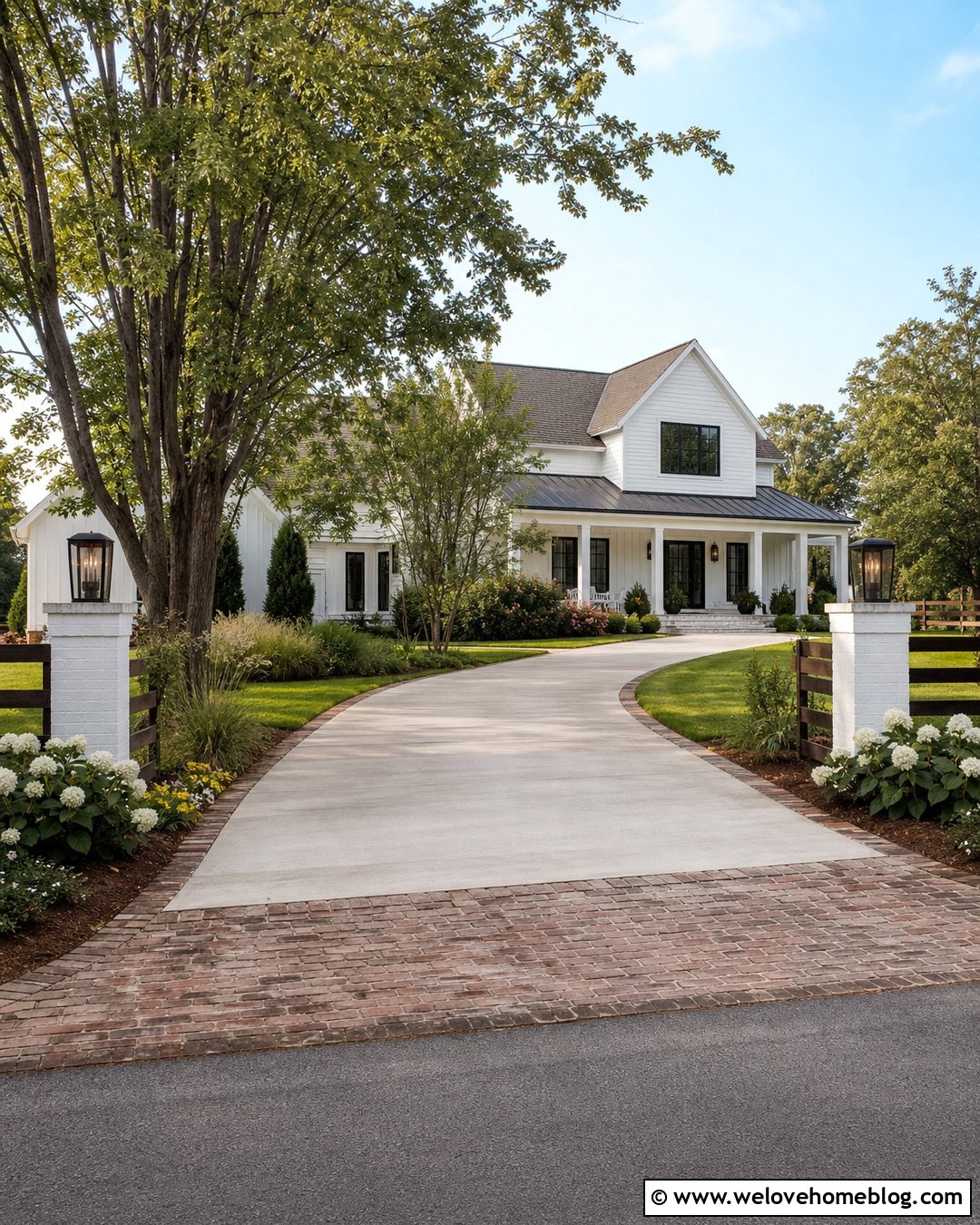
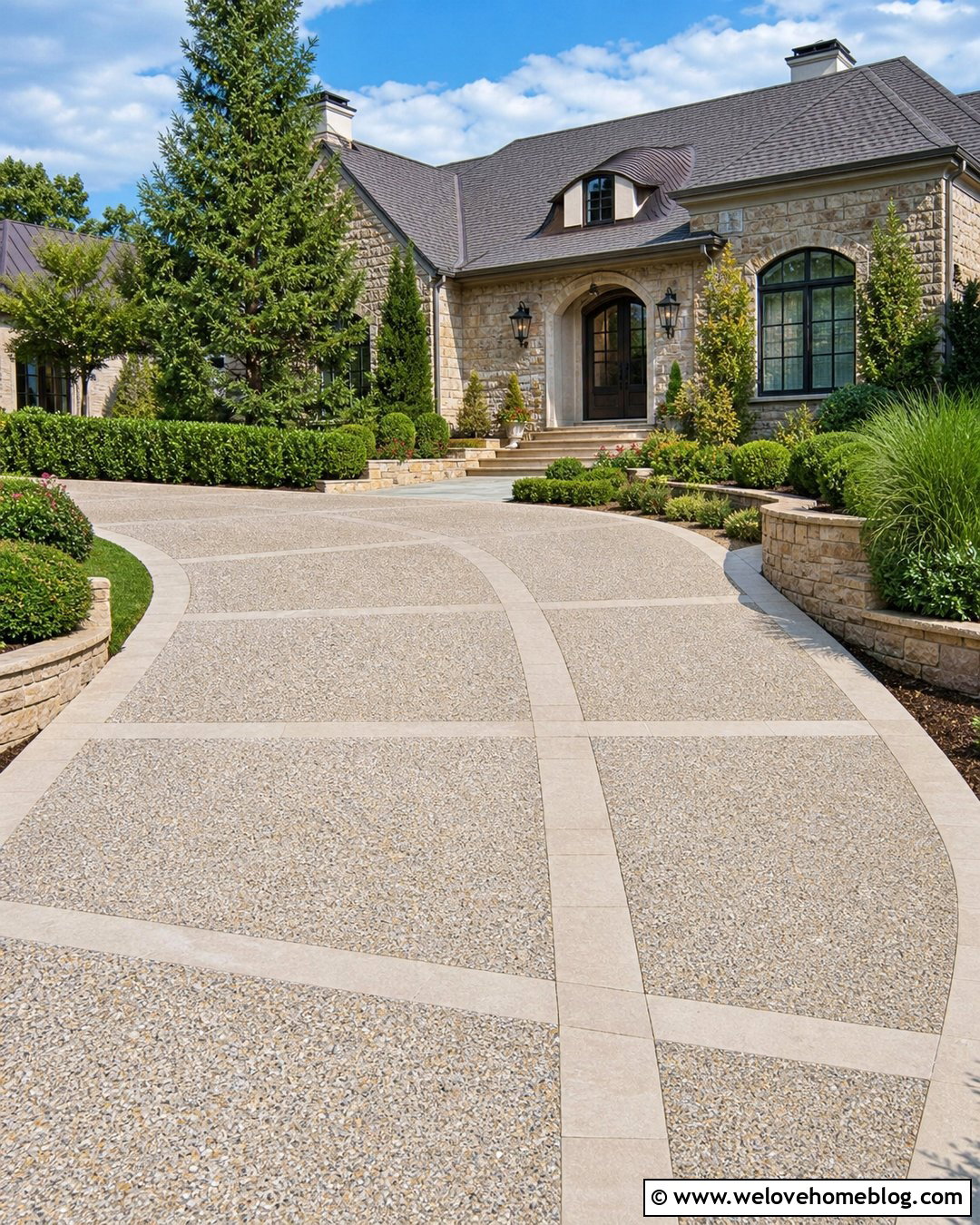
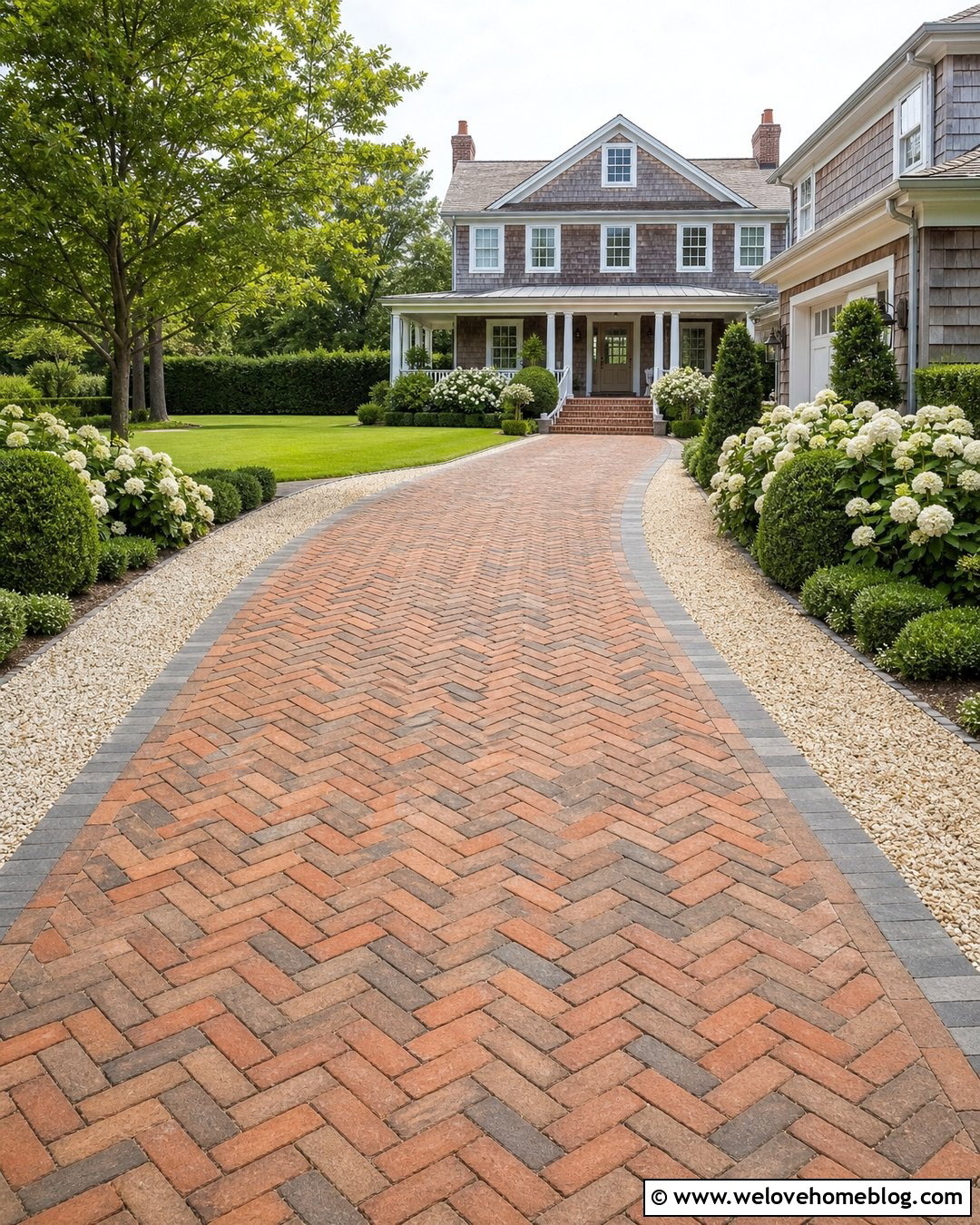
15. Boxwood And Rose Driveway Border
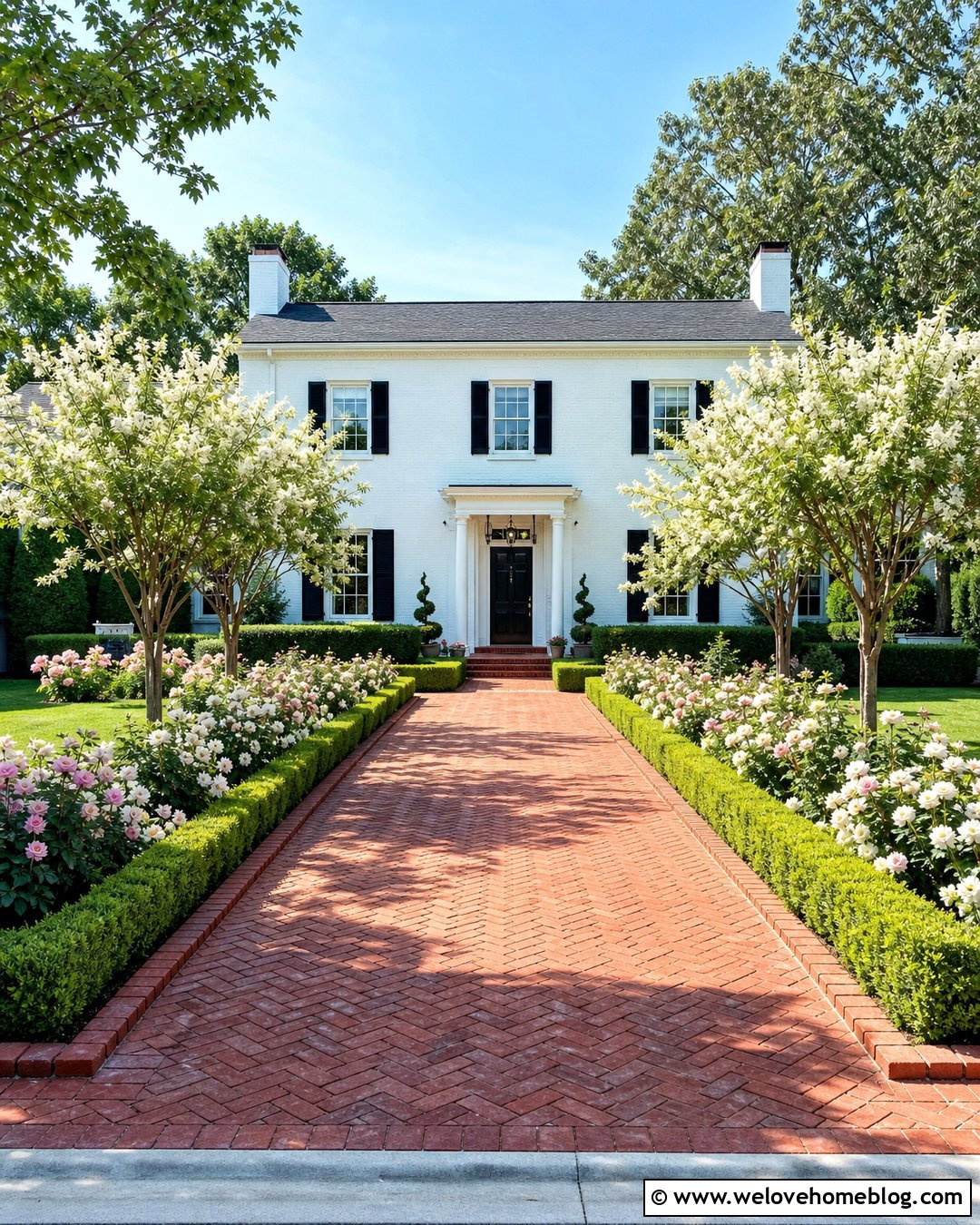
A formal rose border becomes easier to organize when low boxwood defines its front edge. Use clay brick pavers for the driveway and plant a clipped hedge beyond a brick curb. Behind it, arrange repeated groups of white or blush roses with enough spacing for healthy growth and maintenance access. Small flowering trees can mark the entrance and the point where the driveway meets the front walkway. Keep the color scheme restrained so the surface, boxwood, and flowers support one another rather than competing. This design is especially fitting for colonial, cottage, and Georgian-style homes. The boxwood provides a strong green outline, while the roses bring seasonal softness to the entire route from the curb to the house.
16. Boxwood Islands Beside A Wide Driveway
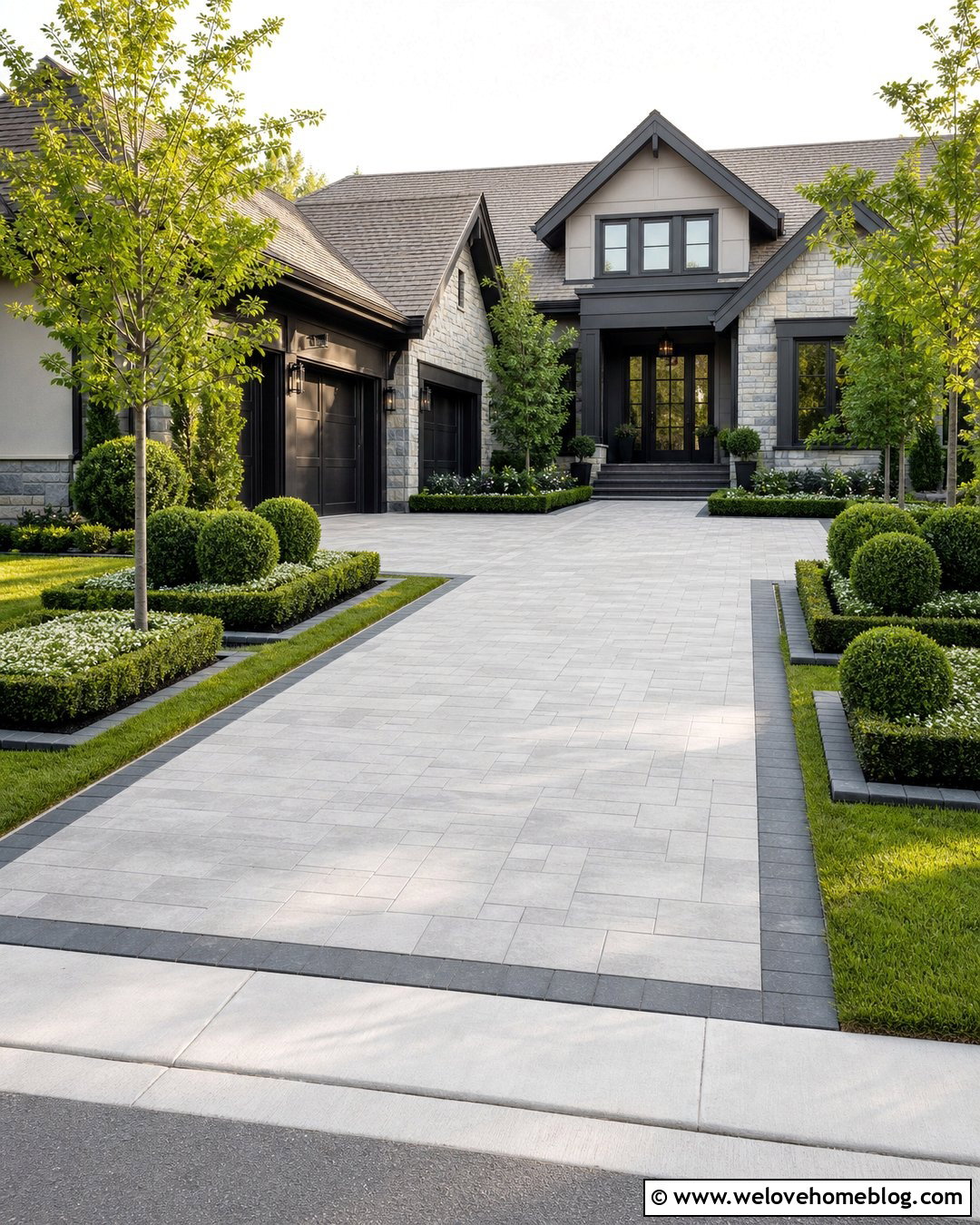
Instead of running one long hedge beside a broad driveway, use several boxwood islands to break up the paved scale. Shape the beds as long rectangles or shallow curves, depending on the architecture. Fill each island with three to five clipped boxwood globes, one upright tree, and a low ground-cover layer. Large-format concrete pavers in a running bond create a clean driveway surface, while charcoal edging defines the planting zones. Leave lawn between the islands to keep the landscape open and provide flexible access. This layout suits contemporary craftsman and upscale suburban homes with wide garage approaches. Repeating the same plant combinations in every island produces unity without creating a solid wall of shrubs beside the parking area.
17. Boxwood Border With Driveway Lighting
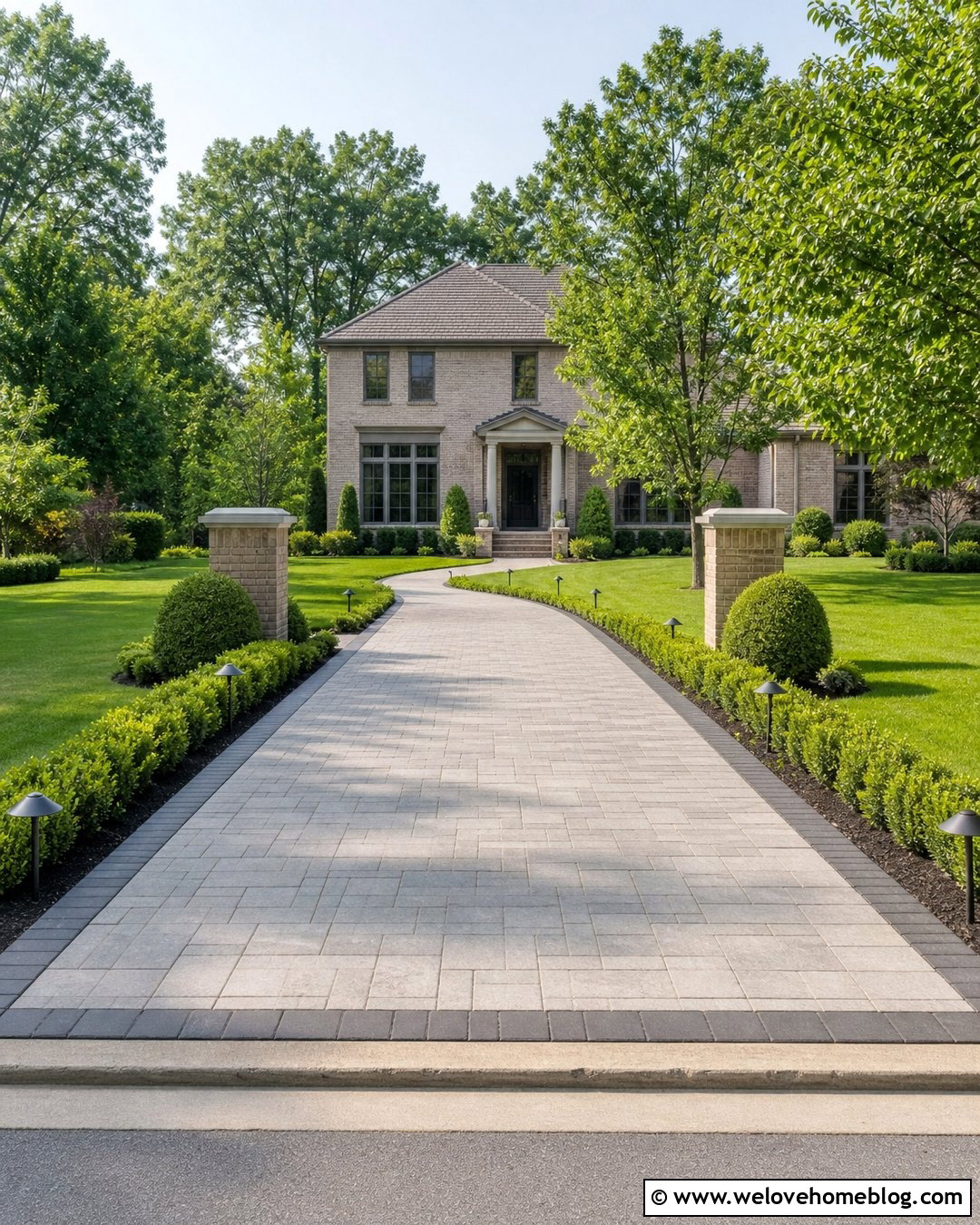
Low landscape lighting can reveal the form of a boxwood border while improving the driveway’s organization after sunset. During the day, the fixtures should remain subtle. Place compact shielded lights behind the hedge rather than directly in the driving lane. A warm gray paver driveway with a dark border gives the planting a finished backdrop, while evenly spaced boxwoods follow its straight layout. Use larger boxwood mounds around the entrance sign and smaller plants closer to the house. Electrical components should remain accessible and protected from pruning equipment. In daylight, the repeated shrubs create a calm, structured approach. At night, carefully positioned illumination can highlight the hedge, surface edge, entrance columns, and walkway without producing harsh glare.
18. Boxwood Driveway With White Flower Borders
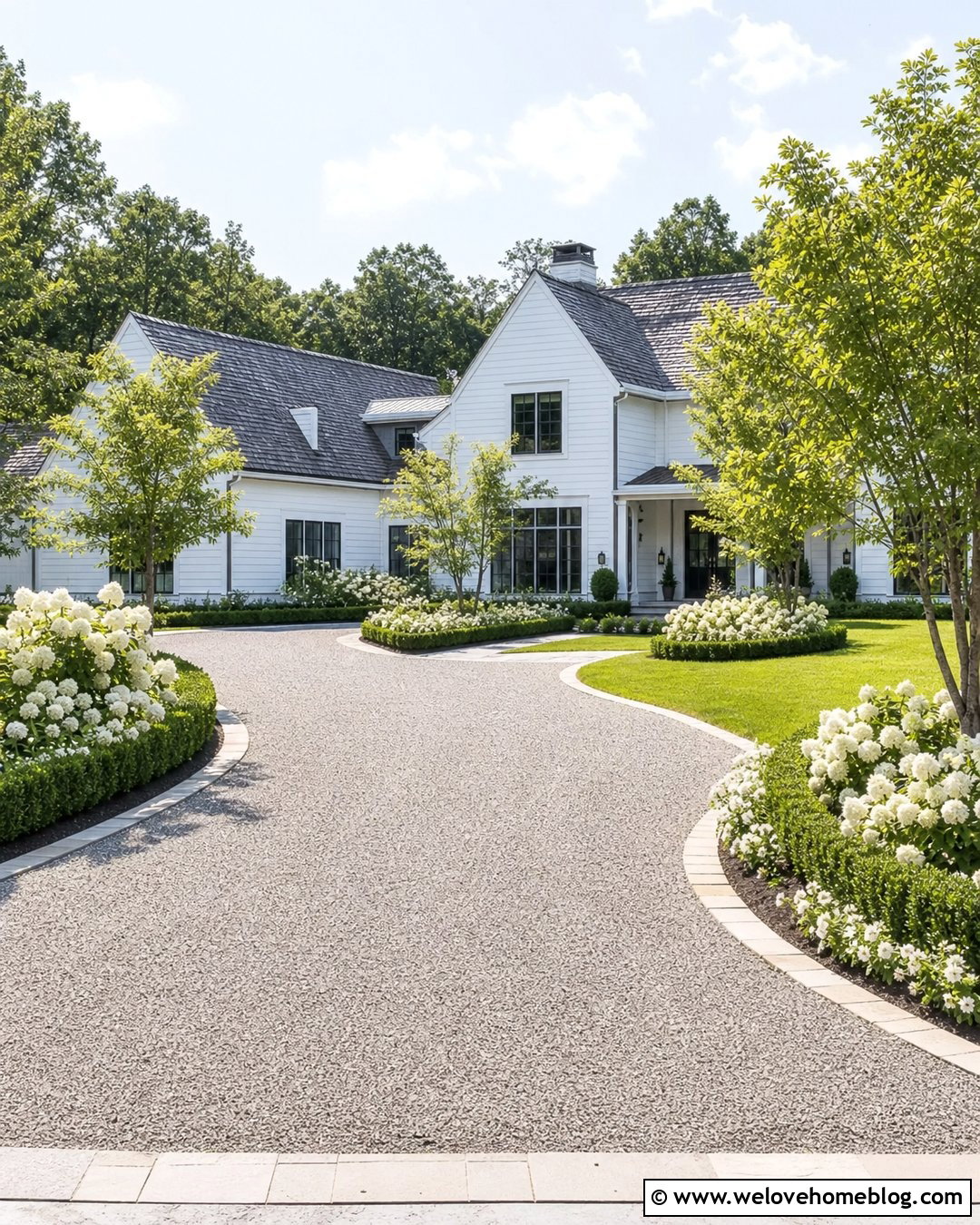
A green-and-white planting palette can make a busy front yard feel more coordinated. Start with a low boxwood hedge beside a pale gray resin-bound gravel driveway. Behind the hedge, repeat white hydrangeas, roses, salvia, or seasonal flowers in generous groups rather than mixing many unrelated colors. Use a light limestone border to separate the driveway from the planting and connect it visually to the front walkway. Rounded bed corners help the design feel welcoming around a curved drive. A white farmhouse, painted brick home, or coastal facade provides a natural background for this restrained palette. Boxwood gives the border a stable outline, while white flowers brighten the approach and keep the complete driveway landscape looking fresh and unified.
19. Boxwood Entrance Around An Address Sign
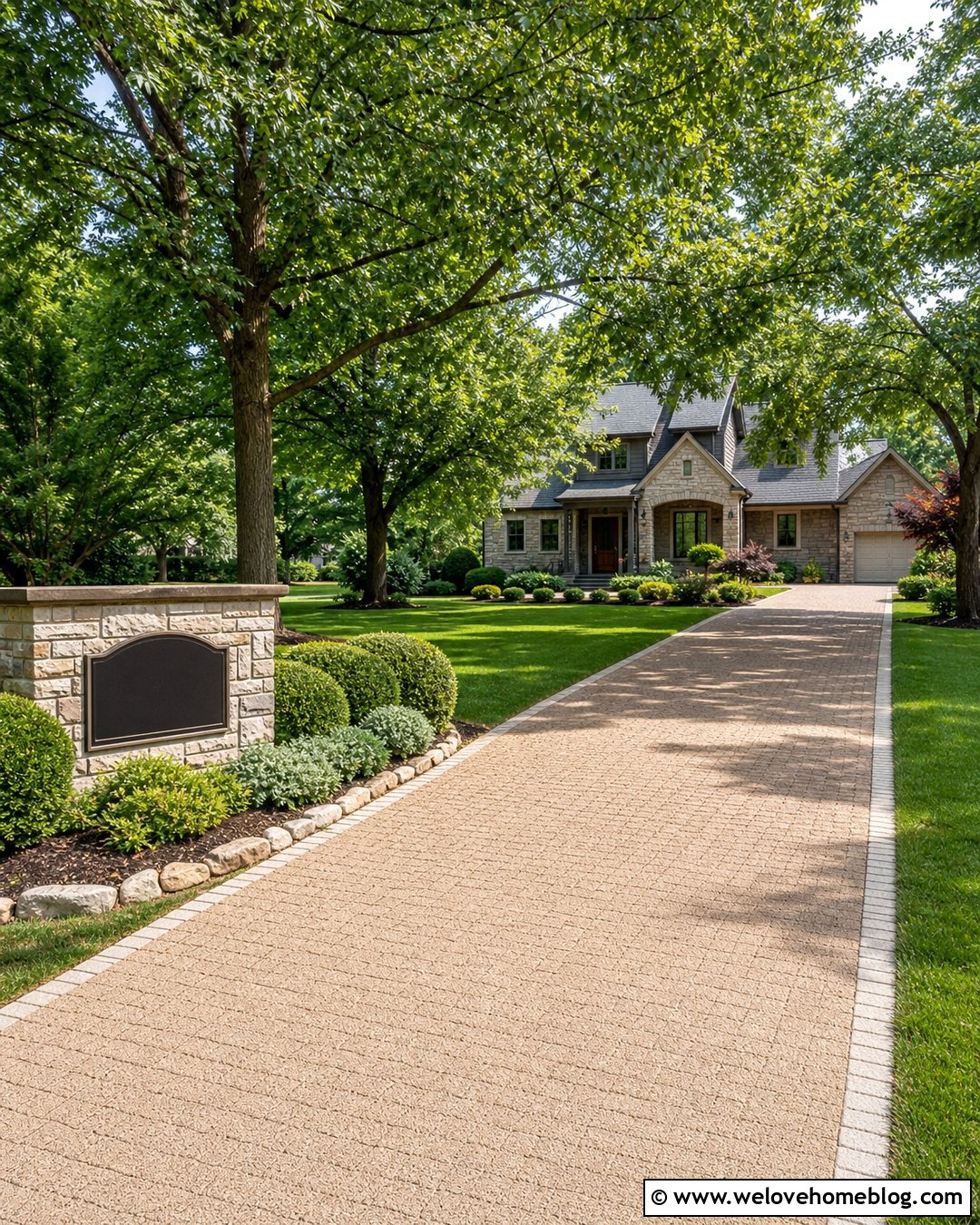
An address sign can become part of the landscape when boxwood frames it at the driveway entrance. Place the sign in a broad, shallow bed that stays clear of street visibility and utility access. Use three or five rounded boxwoods around its base, with low ground covers filling the remaining soil. Continue a shorter boxwood border along one side of a tan permeable paver driveway to lead the eye toward the house. A natural stone curb can outline the bed and protect it from gravel, tires, and lawn equipment. Match the sign material to the home’s trim or entrance pillars. This complete design makes the property easier to identify while creating an attractive transition between the road, driveway, lawn, and residence.
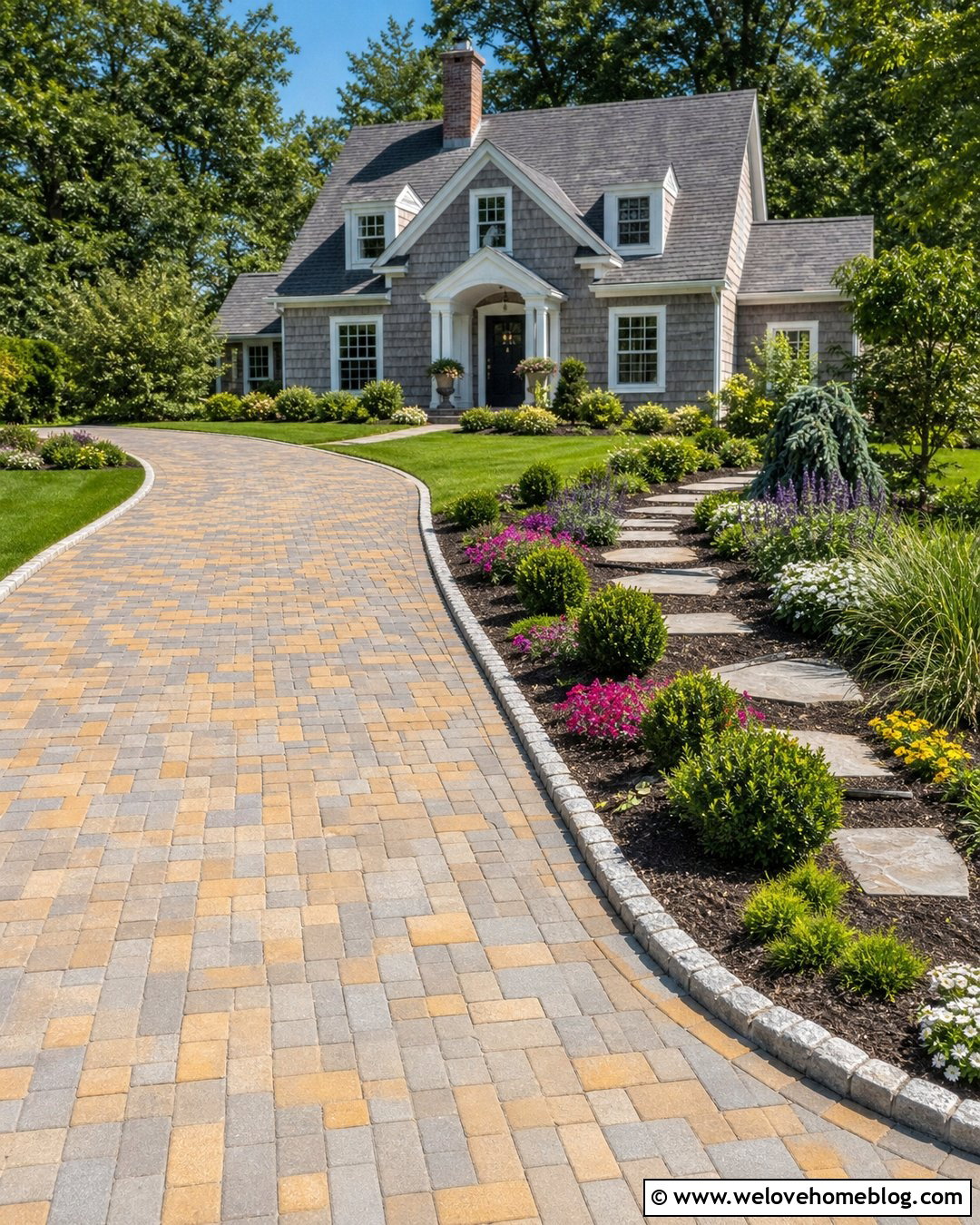
20. Boxwood Driveway With Seasonal Flowers
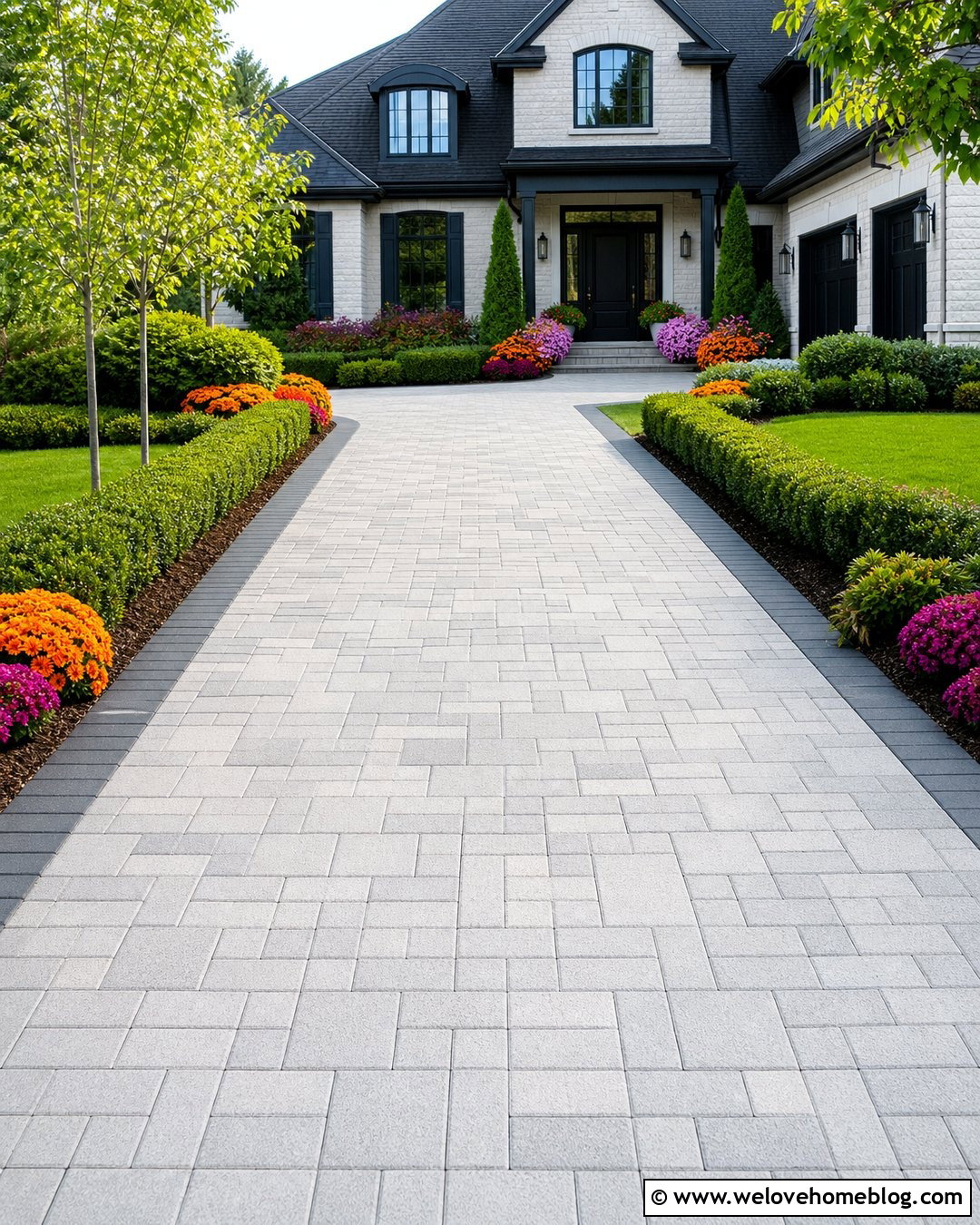
Boxwood provides a consistent framework that allows seasonal flowers to change without redesigning the entire driveway border. Create low hedges beside a light gray interlocking paver drive, then place small flower pockets at the entrance, walkway junction, and garage corners. These focused areas are easier to refresh than one long annual bed. Use tulips or other bulbs for spring, heat-suitable flowers in summer, and locally appropriate cool-season plants later in the year. Keep the flower colors connected to the home’s front door, shutters, or porch furnishings. Mulch the beds neatly and maintain adequate clearance from the paving. The finished driveway stays structured through changing seasons, while the smaller flowering accents add color at the places visitors notice most.
Conclusion:
The strongest **boxwood driveway ideas** treat the driveway and garden as one complete curb-appeal design. Start with the surface and layout, then choose boxwood forms that support those features. Continuous hedges emphasize long lines, rounded shrubs soften corners, and topiary creates stronger entrance focal points. Brick, gravel, asphalt, concrete, cobblestone, and pavers can all work when borders and planting beds connect them to the house. Before installation, check mature plant size, drainage, local growing conditions, visibility, snow-management needs, and passenger clearance. Thoughtful spacing matters as much as appearance. With a practical plan, boxwood can bring lasting structure to a small parking pad, sweeping country drive, gated entrance, or formal circular approach.

Related posts:

Leave a Reply