
A boxwood-lined driveway can make an ordinary front yard feel structured, welcoming, and thoughtfully finished. These evergreen shrubs create a clear transition between the driving surface, lawn, and surrounding garden beds. They also work with many materials, including concrete, asphalt, gravel, brick, cobblestone, and permeable pavers. The best designs consider the entire approach rather than treating the hedge as an isolated border. Driveway width, mature shrub size, drainage, passenger clearance, and the architecture of the house should all guide the layout. Boxwood is especially useful for creating low edging, rounded borders, geometric accents, and layered formal plantings. () Below, these 20 Boxwood Hedge Along Driveway Ideas offer complete looks for different homes, budgets, and yard sizes.
1. Boxwood Hedge Along Straight Concrete Driveway
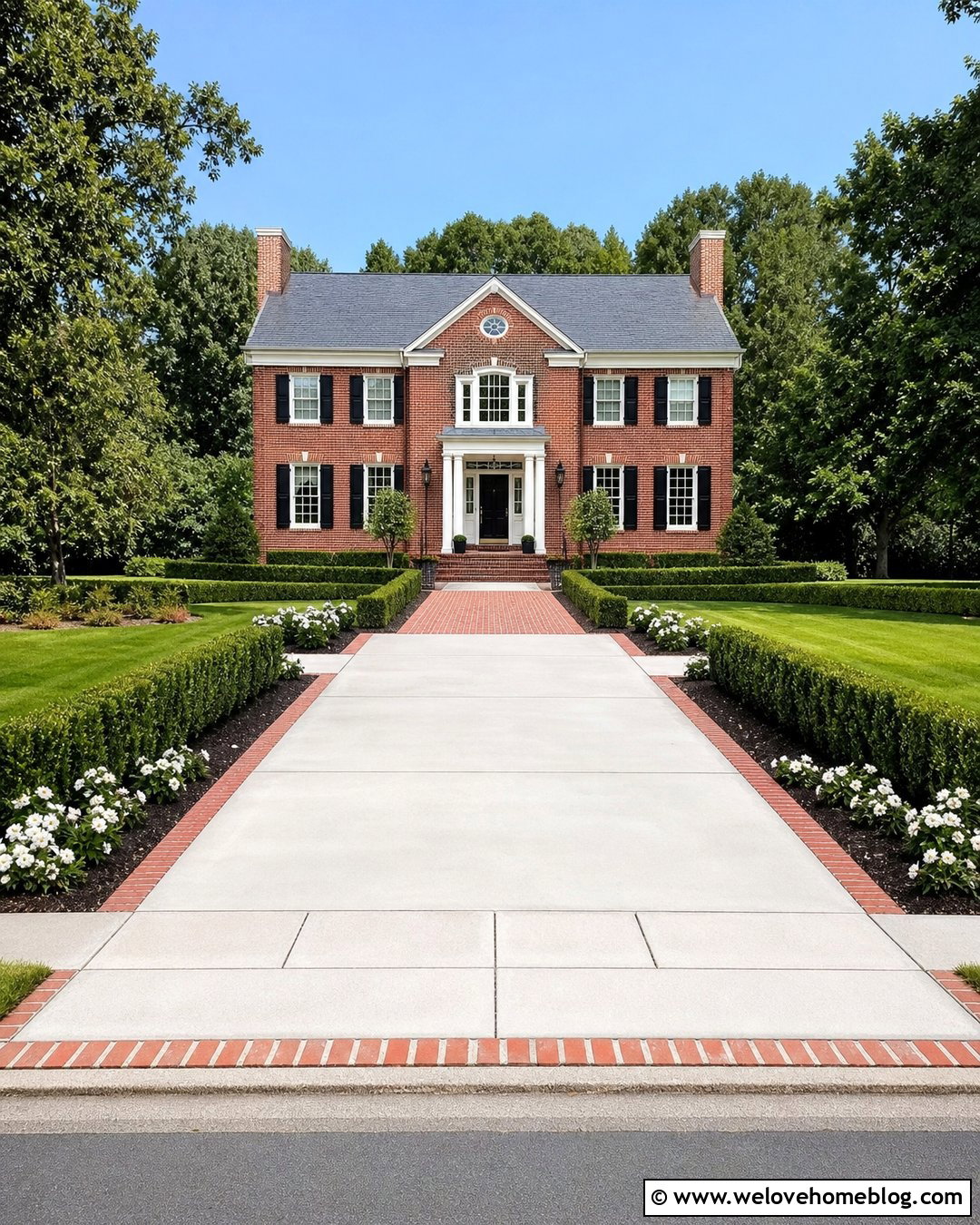
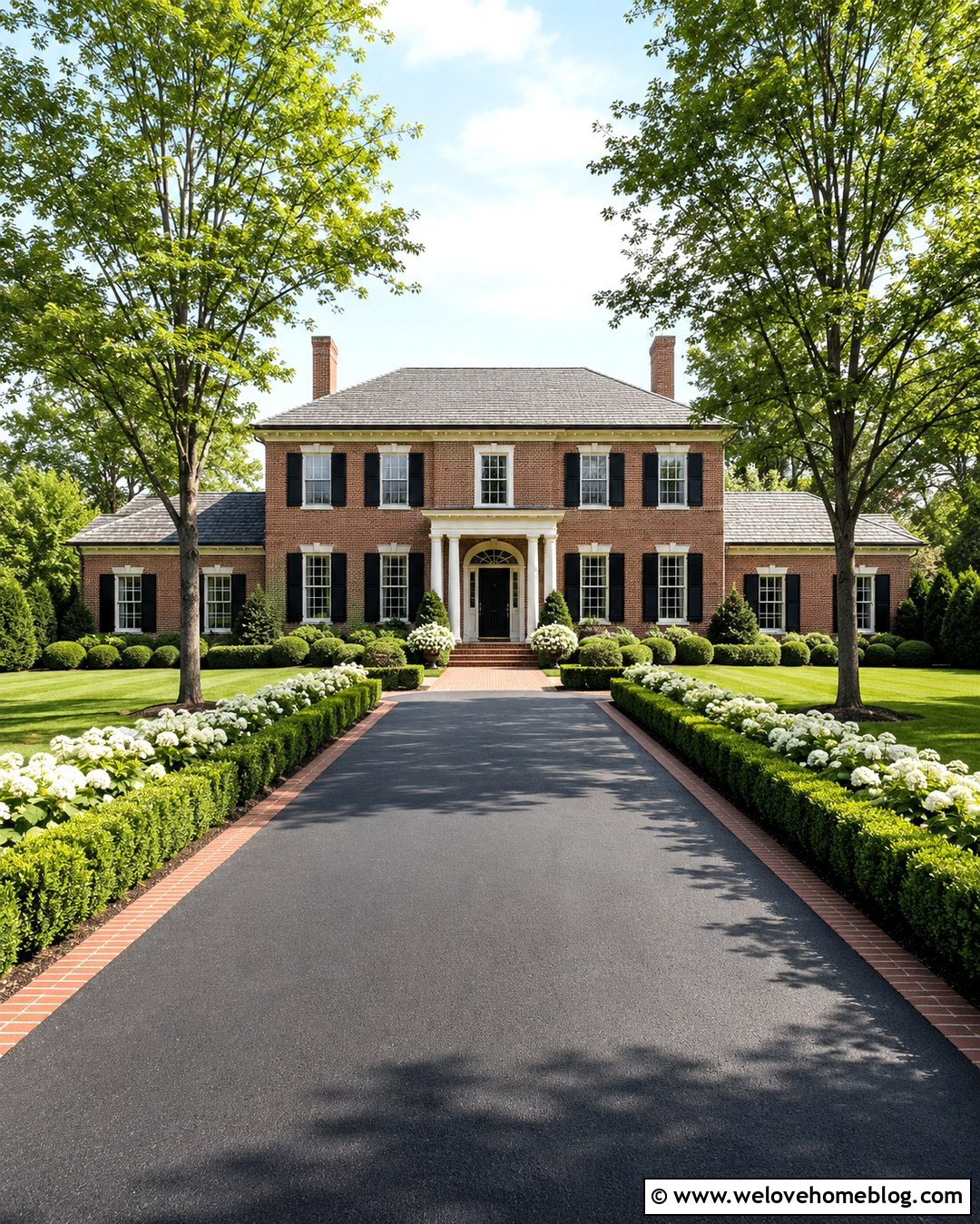
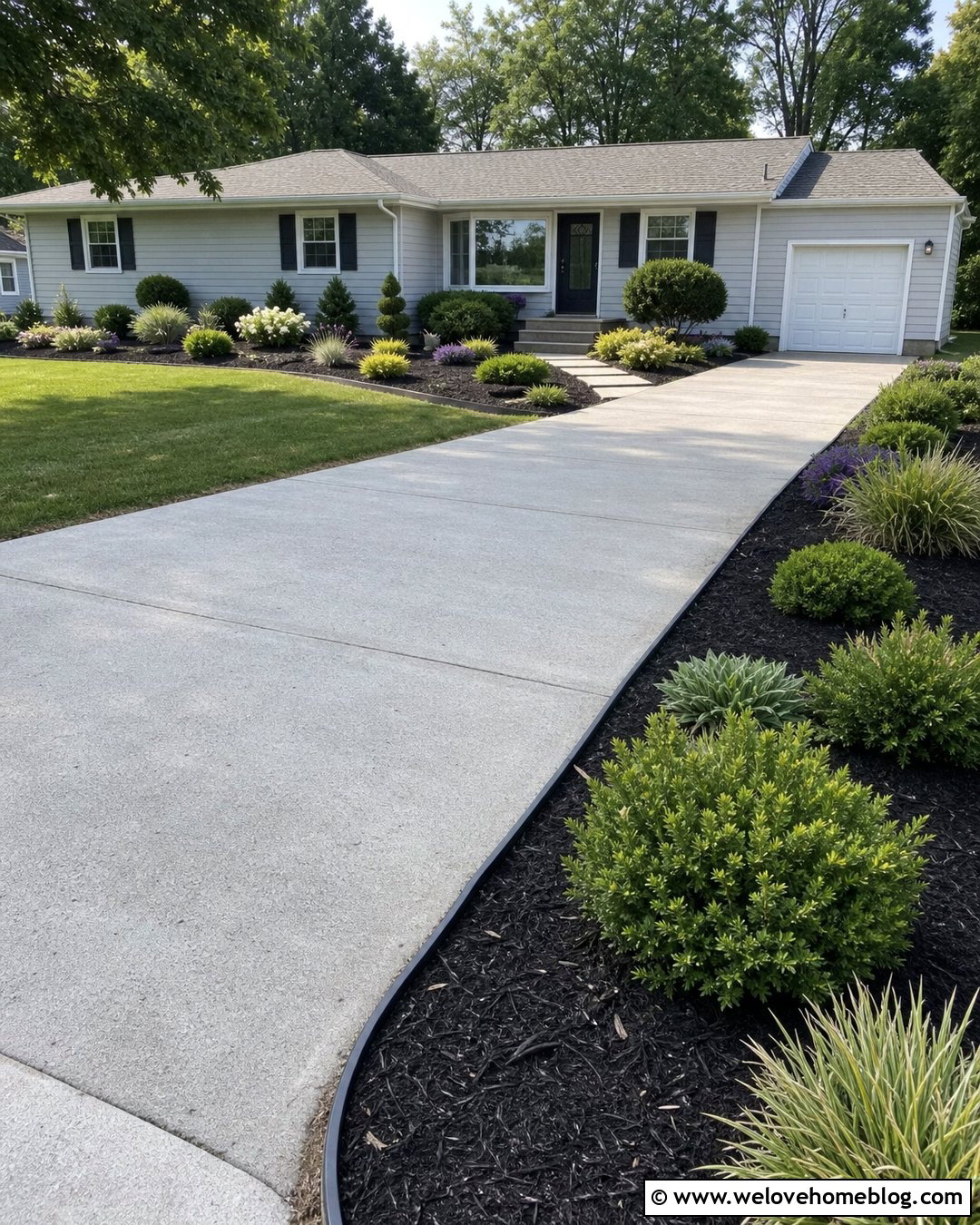
A straight poured concrete driveway gains instant definition when low boxwood hedges run evenly along both sides. Keep the shrubs clipped at roughly knee height so they frame the approach without making it feel narrow. A slim mulched bed between the concrete and hedge protects the plants from foot traffic and gives you space for maintenance. Install a brick or steel edge to prevent soil from washing onto the driveway. This balanced layout looks especially natural in front of a Colonial or Georgian house with a centered entrance. Continue the boxwood toward the front walkway to connect the driveway with the door. Matching beds of white flowering perennials can soften the formal symmetry while preserving a clean, coordinated appearance.
2. Boxwood Hedge Along Asphalt Driveway With Stone Edging
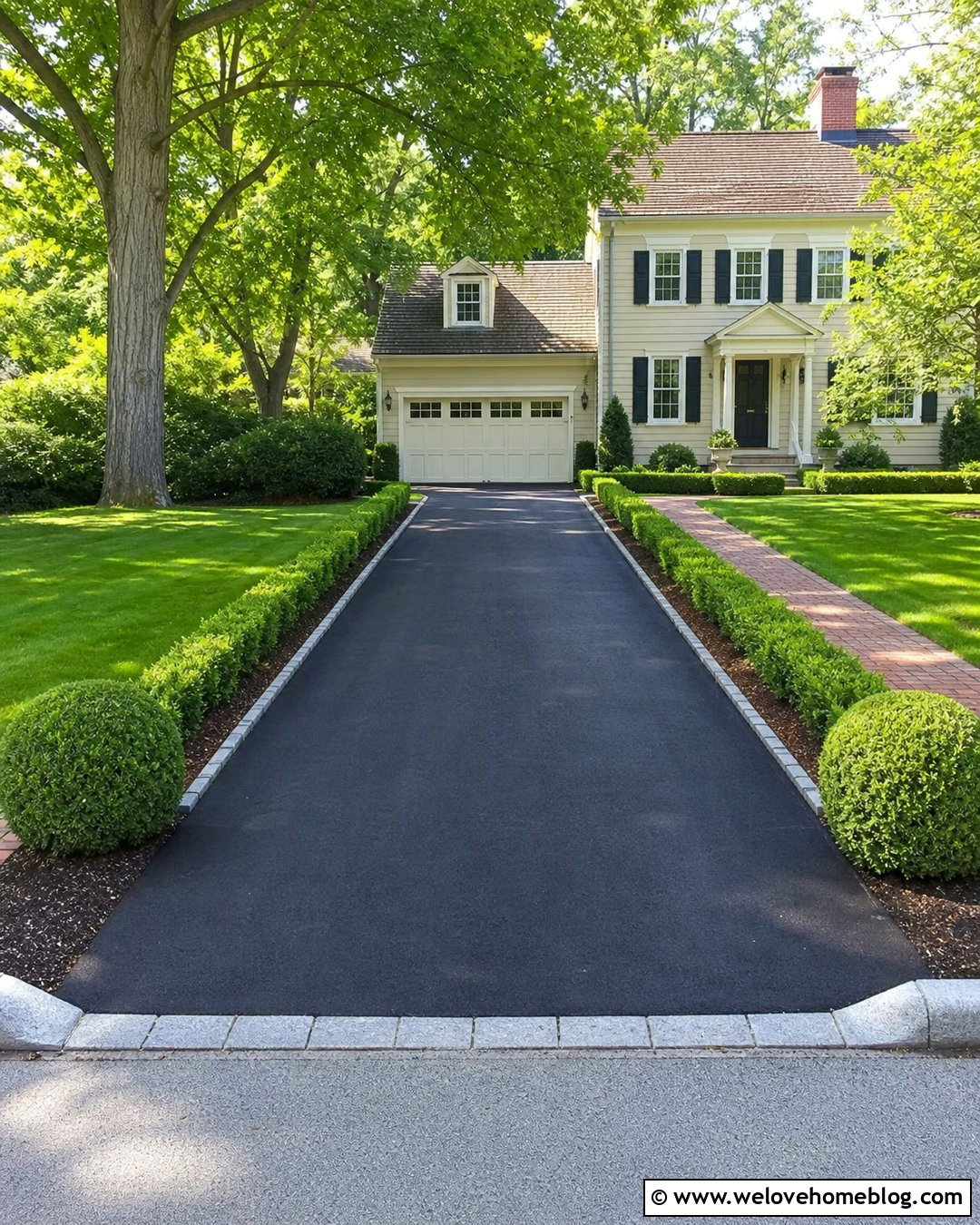
Black asphalt creates a strong background for fresh green boxwood foliage and pale granite edging. Use Belgian block or rectangular cobblestones to form a durable transition between the asphalt and planting beds. Position the boxwood behind the stones rather than directly against the driving surface. That small setback gives passengers room to open doors and reduces accidental damage during parking. A straight, tightly clipped hedge suits traditional brick homes, while slightly rounded shrubs create a more relaxed suburban look. At the street, widen the beds and finish each side with a larger boxwood globe. Simple lawn beyond the hedge keeps the composition uncluttered. This combination is practical because the stone edge visually conceals irregular asphalt borders while giving the entire driveway a crisp, permanent frame.
3. Boxwood Hedge Along Curved Gravel Driveway
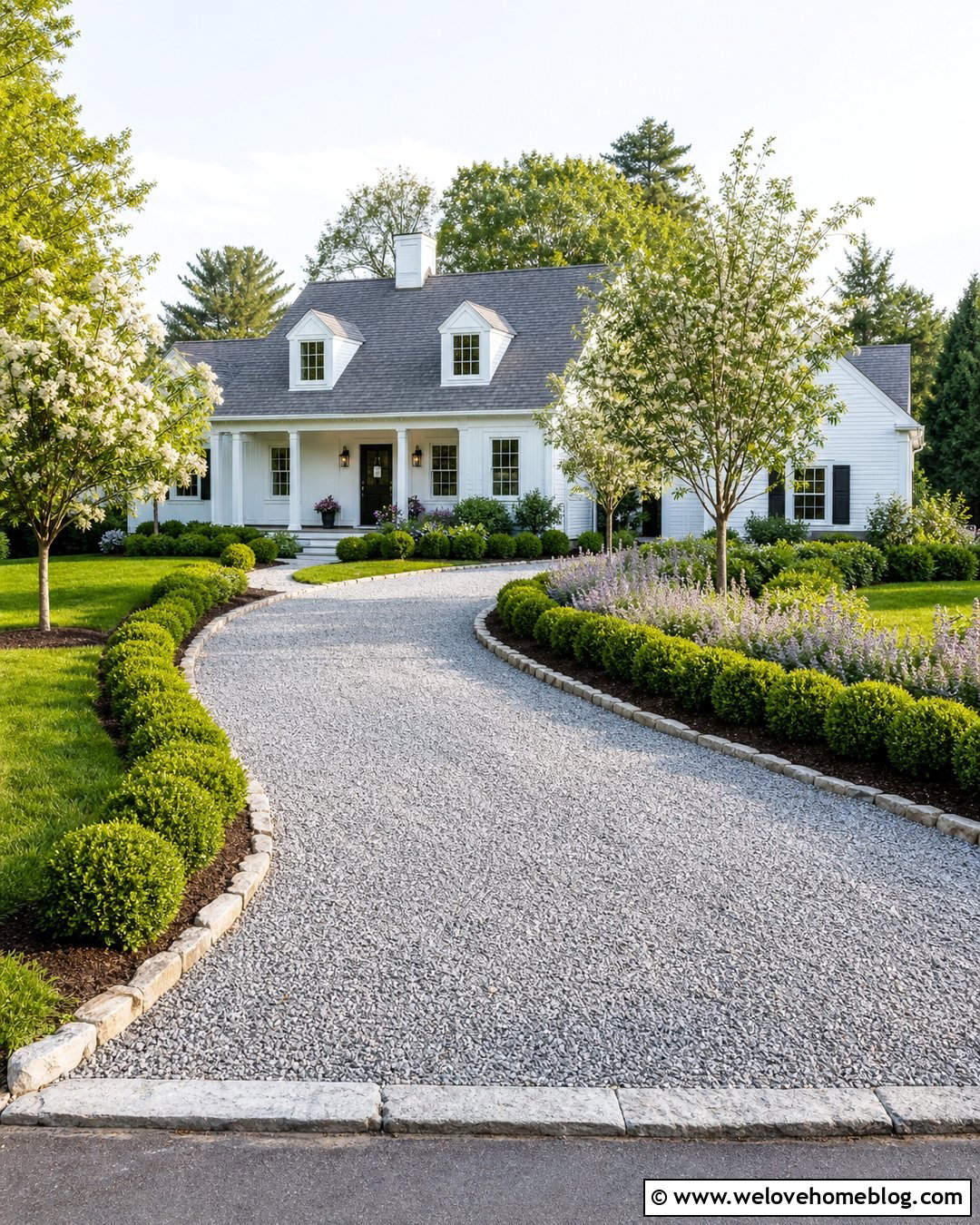
Picture a curved gravel driveway sweeping through the yard with a continuous ribbon of boxwood following its shape. Compact gray crushed gravel gives the surface a refined appearance, while natural stone edging keeps loose material away from the shrubs. Rather than clipping the hedge into a rigid rectangle, soften its upper corners to complement the driveway’s movement. Plant lavender, catmint, or another low flowering perennial behind the boxwood where sunlight allows. The green hedge then becomes a calm foreground for seasonal color. This complete look works beautifully with Cape Cod homes, cottages, and painted farmhouses. Maintain a generous planting setback around the inside curve so drivers have clear visibility. A matching gravel walkway can branch through the hedge and lead directly to the porch.
4. Boxwood Hedge Along Brick Paver Driveway
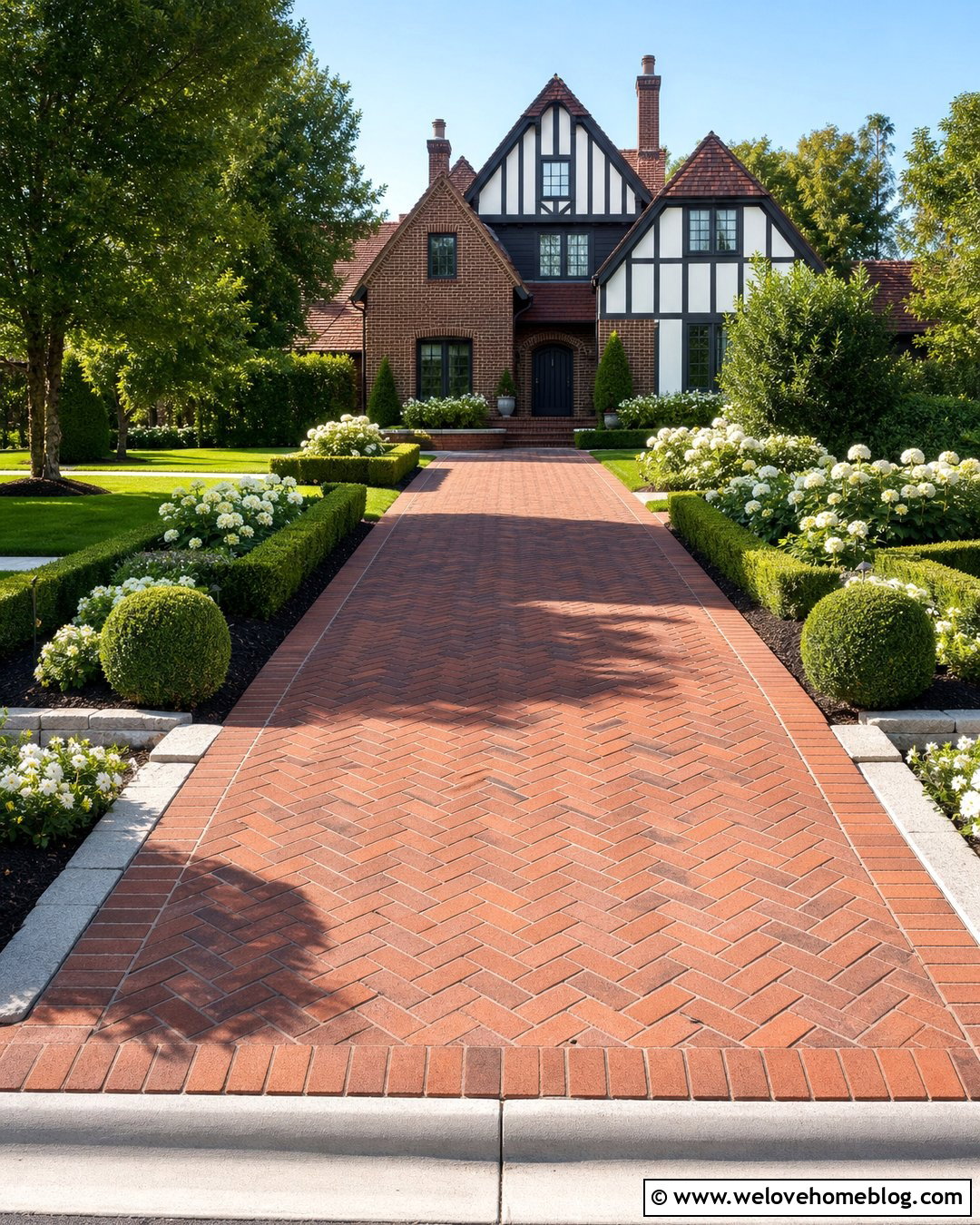
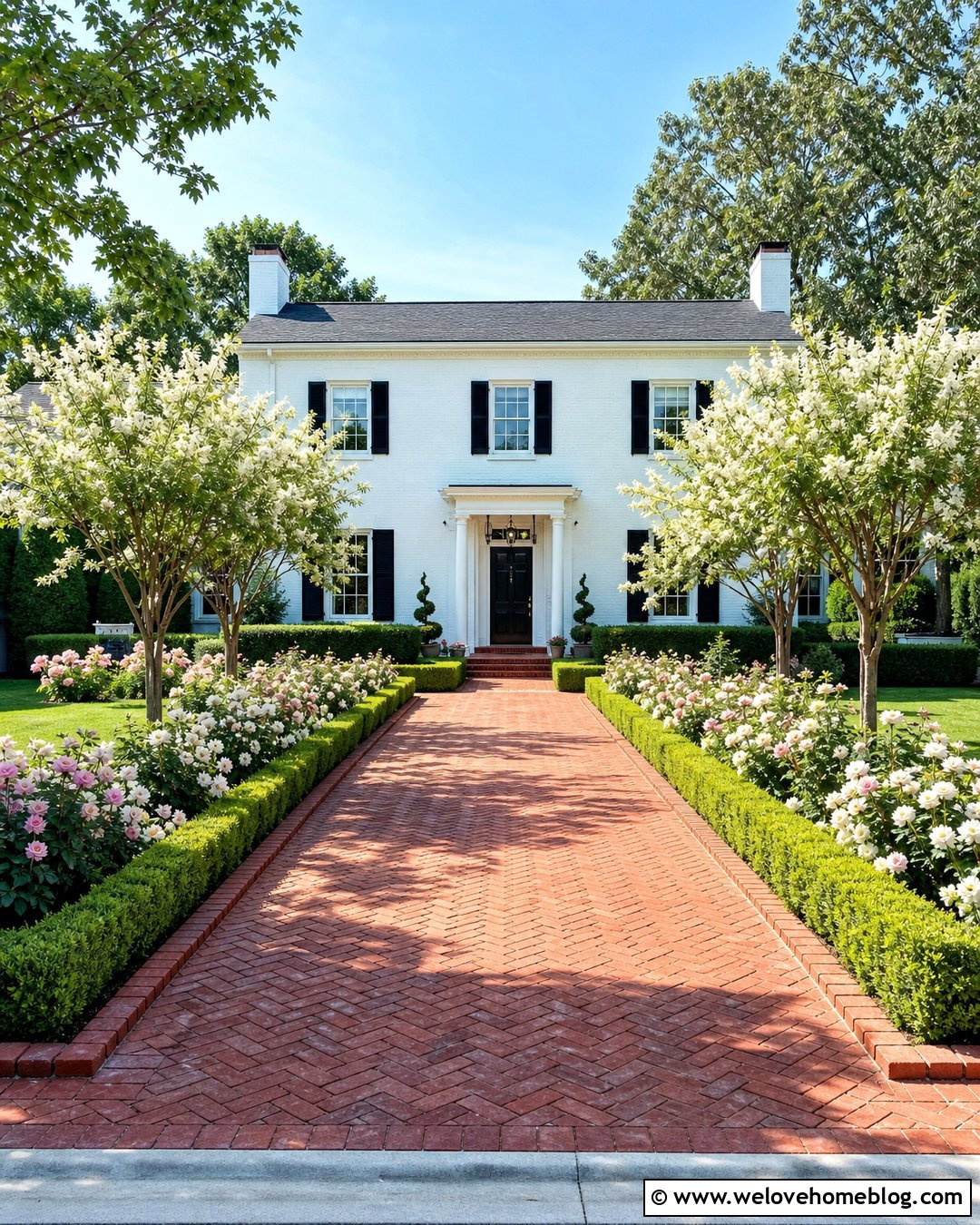
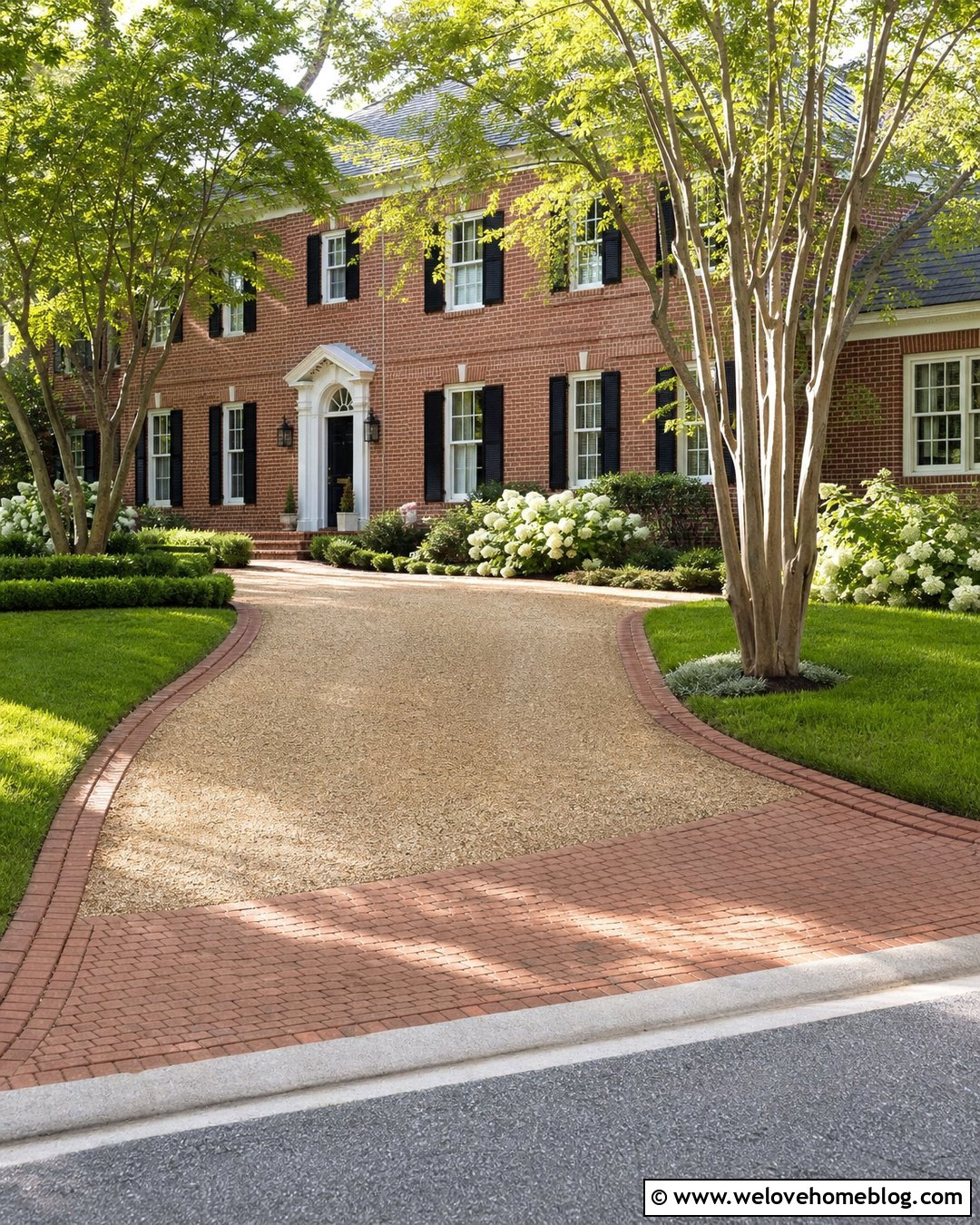
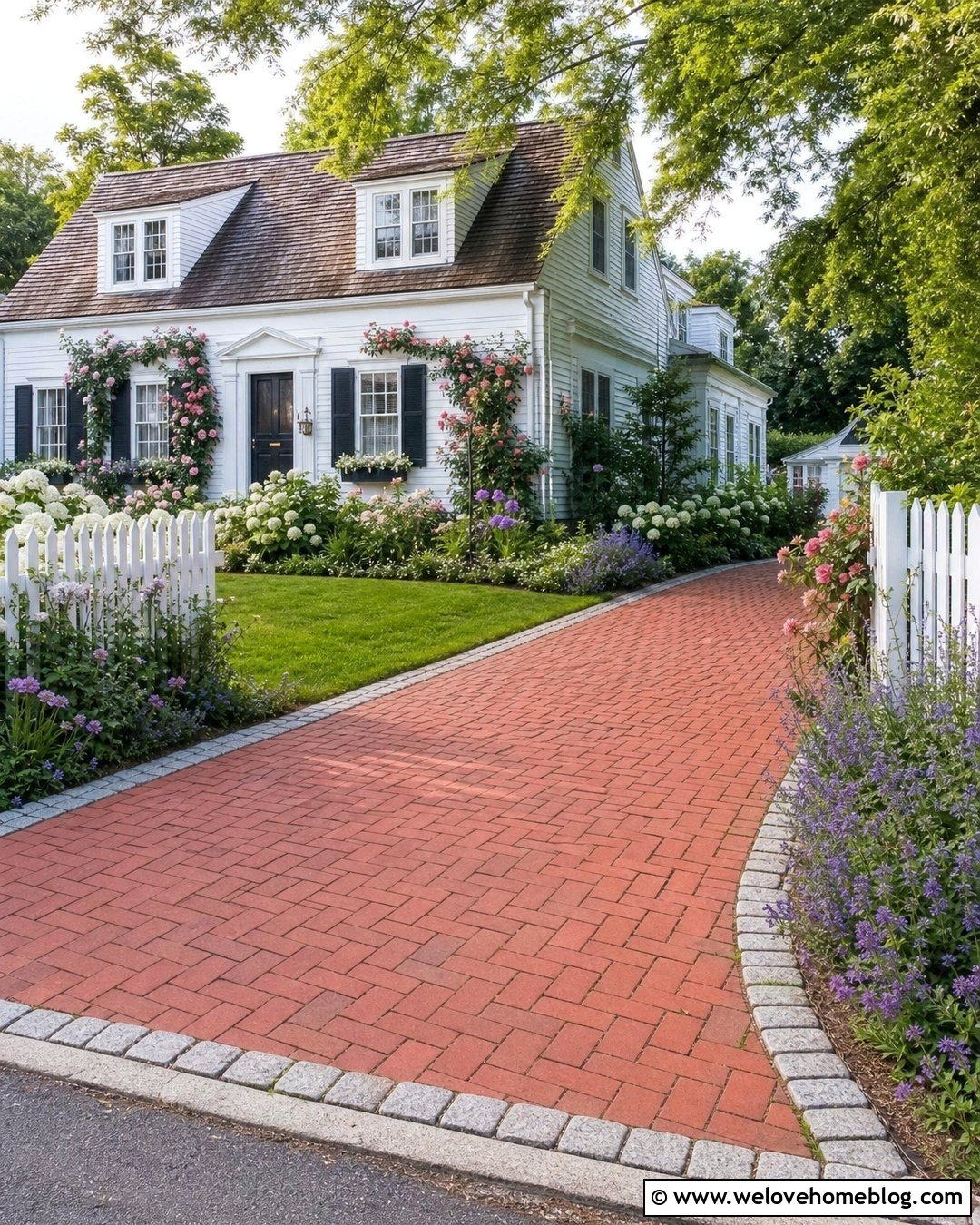
Warm clay brick pavers and dark green boxwood create a classic combination that feels established from the day it is installed. Lay the driveway in a herringbone pattern, then add a straight soldier-course border to emphasize its edges. Behind that border, place a narrow mulch strip and a neatly clipped boxwood hedge. The repeated lines bring order to the rich color and movement of the brick. For a wider driveway, include small breaks in the hedge near walkways, side doors, or garden paths. Mark each opening with a pair of rounded boxwoods so the transitions look intentional. Cream hydrangeas or white roses behind the hedge can brighten the design. This formal arrangement works particularly well with Tudor, Federal, and traditional red-brick houses.
5. Boxwood Hedge Around Circular Gravel Driveway
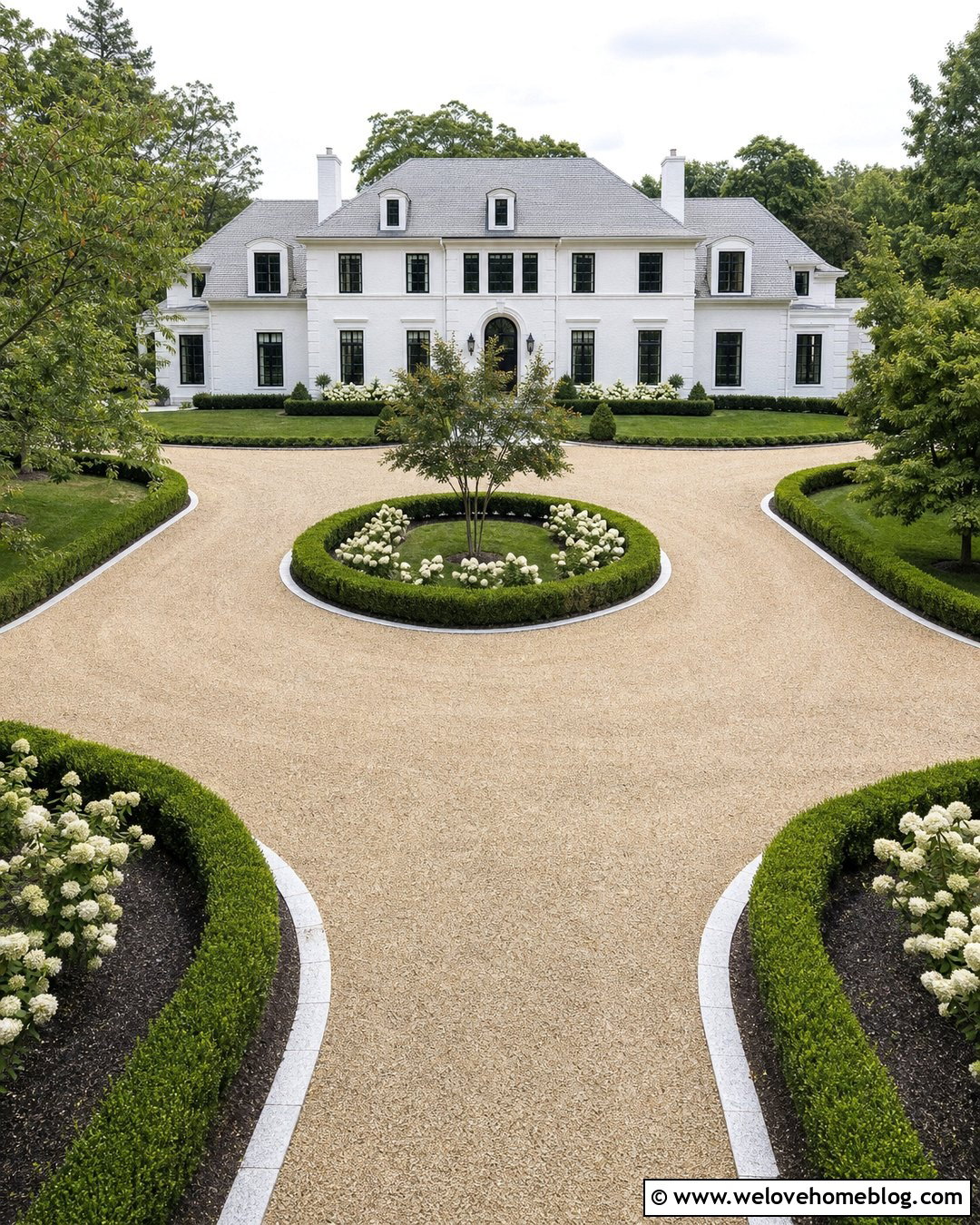
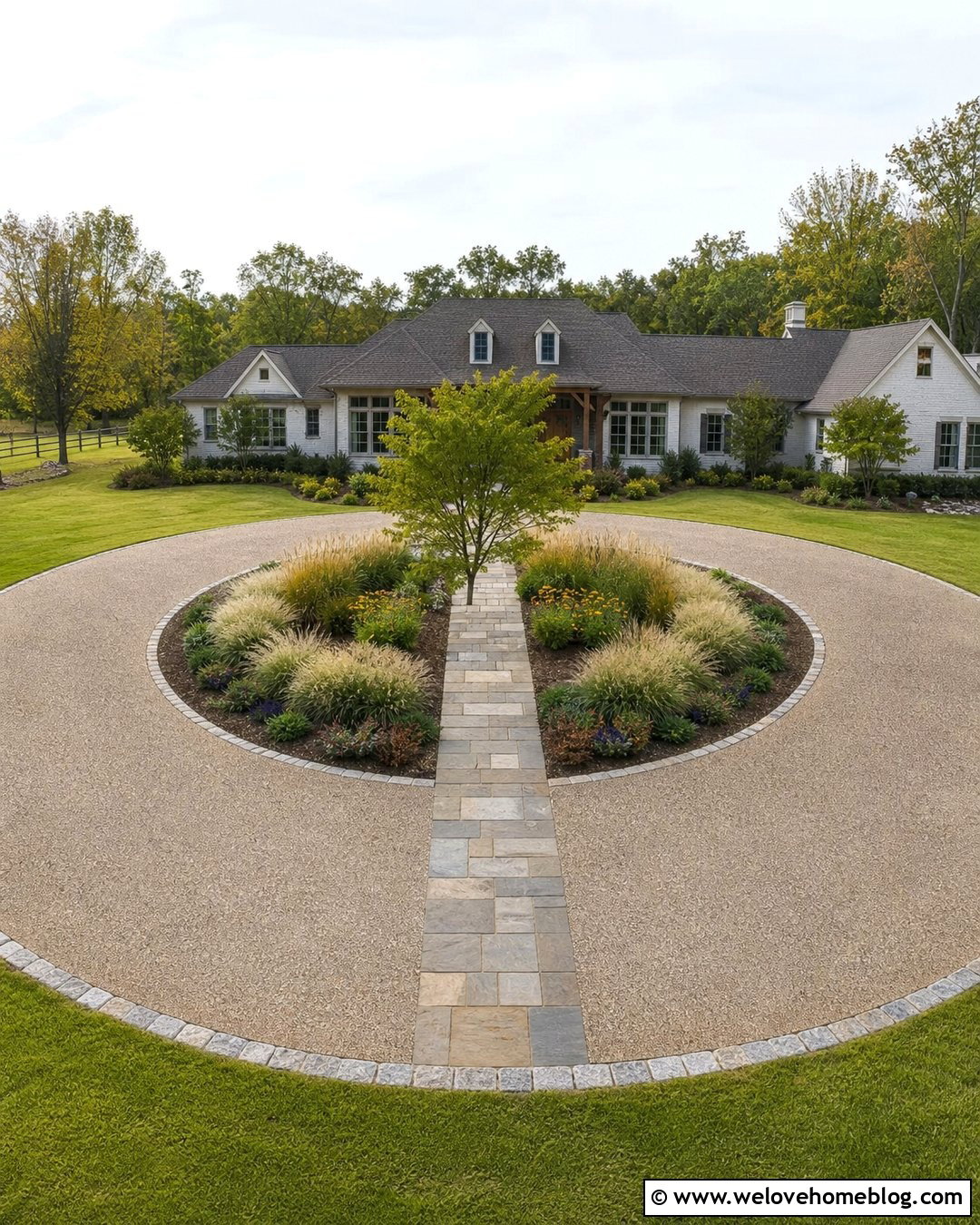
A circular driveway offers several opportunities for boxwood without requiring one long, uninterrupted hedge. Create a low clipped border around the center island, then repeat shorter boxwood sections along the outer curves near the house. Light tan pea gravel or compacted limestone will contrast gently with the deep green foliage. Inside the island, use a small ornamental tree as the focal point and surround it with simple ground cover or seasonal flowers. A stone curb between the gravel and hedge helps define the circle and controls scattered aggregate. Keep the shrubs low enough to preserve visibility across the turnaround. This arrangement gives a country home or large Colonial residence an organized entrance while leaving plenty of room for vehicles to move naturally around the landscape.
6. Boxwood Hedge Along Modern Concrete Driveway
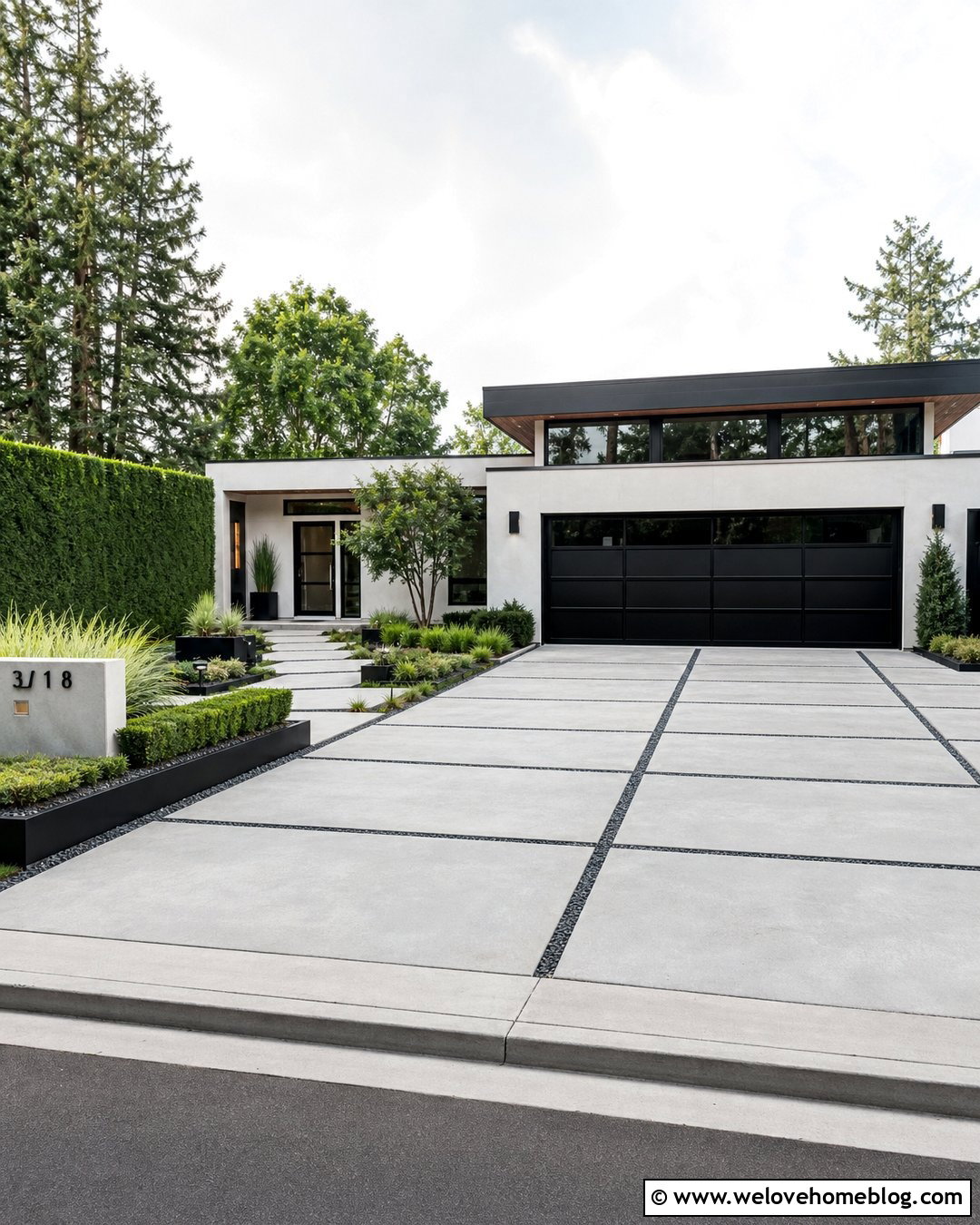
Modern architecture calls for a simpler interpretation of the traditional boxwood hedge. Use large gray concrete slabs separated by narrow gravel joints, then plant short sections of clipped boxwood beside the most important lines. Instead of one continuous border, divide the hedge into clean rectangular blocks. Repeat ornamental grasses between the sections to introduce movement and texture. Black steel edging around each planting bed will echo dark window frames, railings, or exterior lighting. Keep the palette limited to green, charcoal, gray, and natural wood. The boxwood should sit back from the slabs so its foliage never obscures the geometric layout. This design works best when the driveway, front walkway, and planting beds share the same grid, creating one complete and visually controlled modern entrance.
7. Boxwood Hedge Along Cobblestone Driveway With Pillars
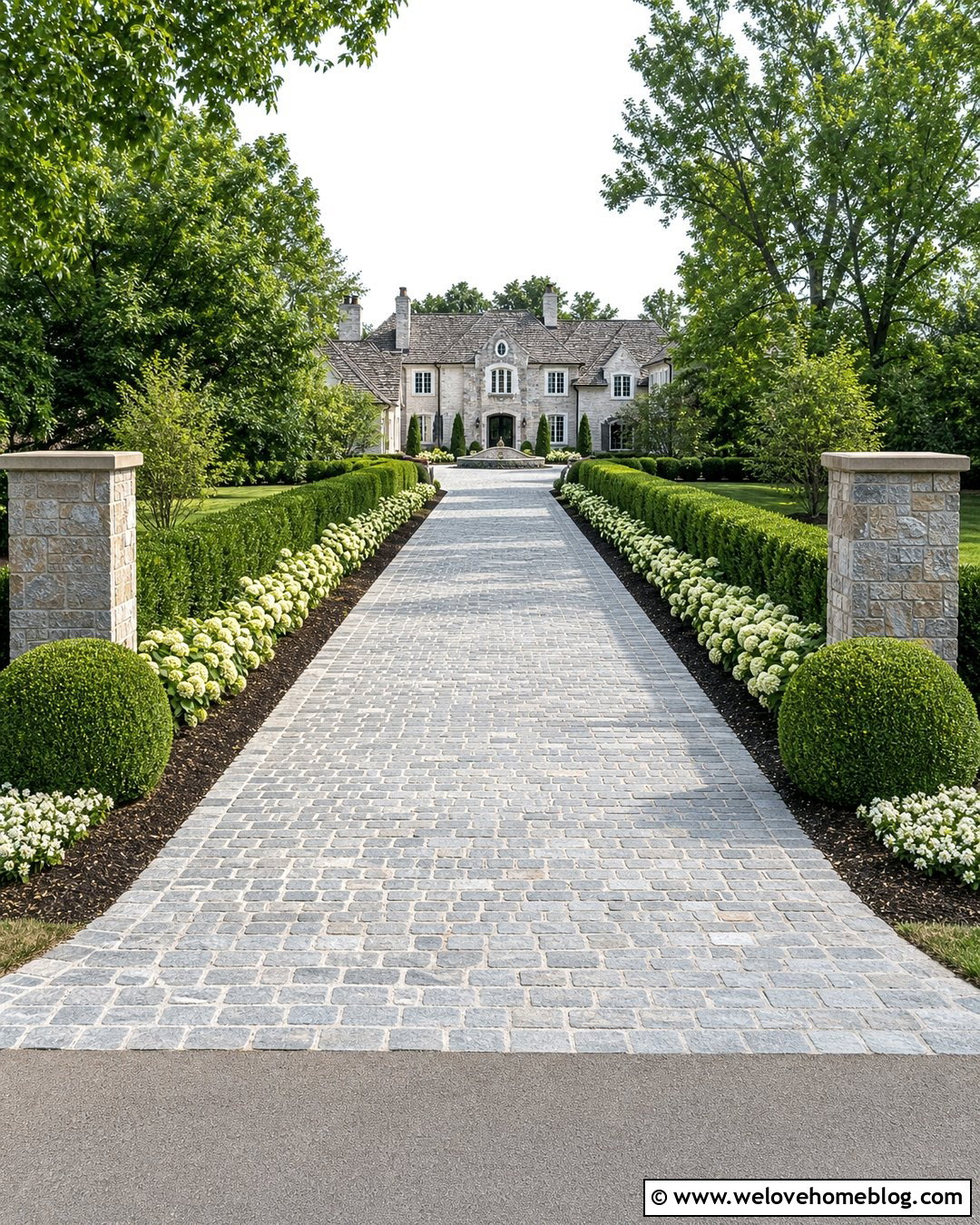
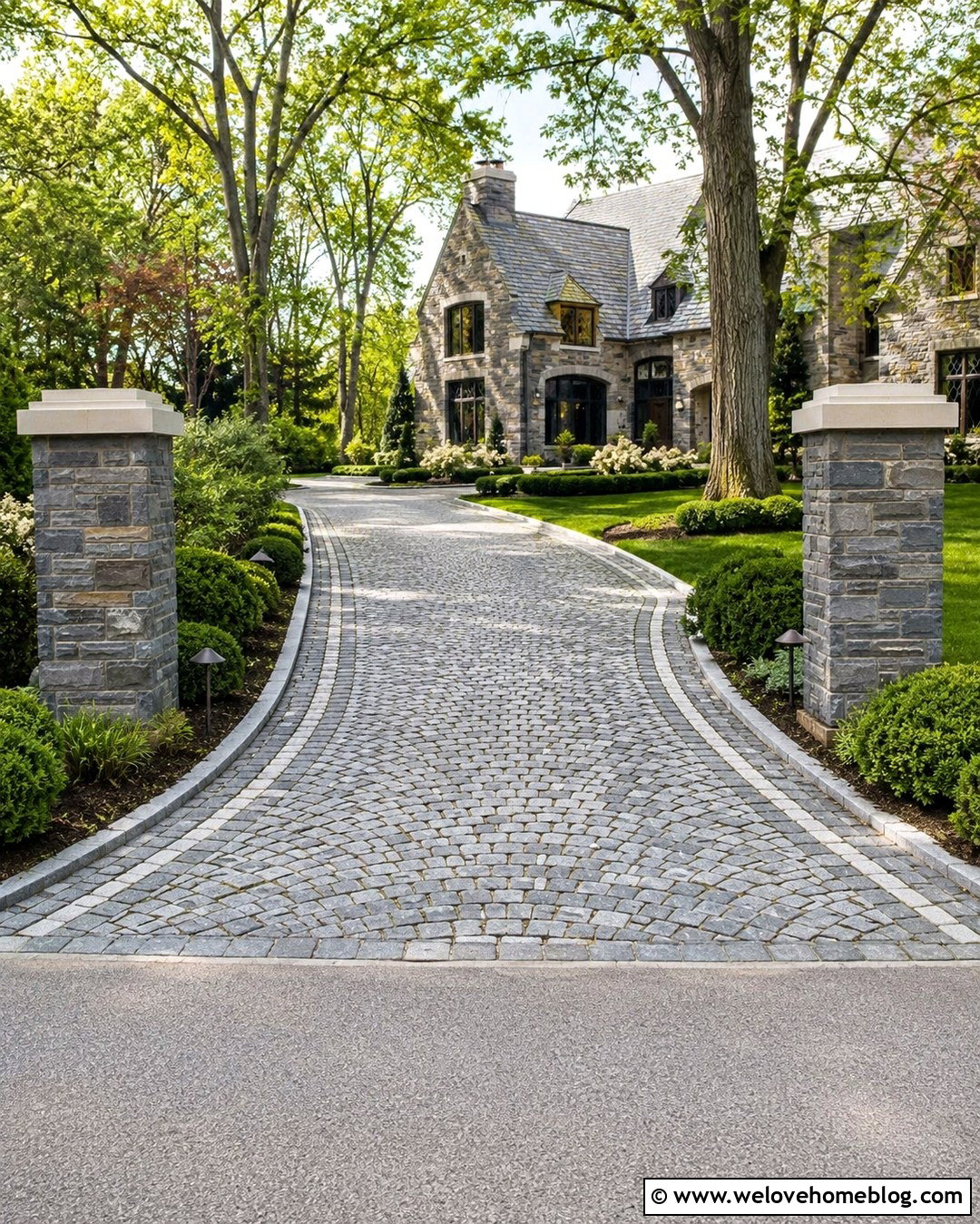
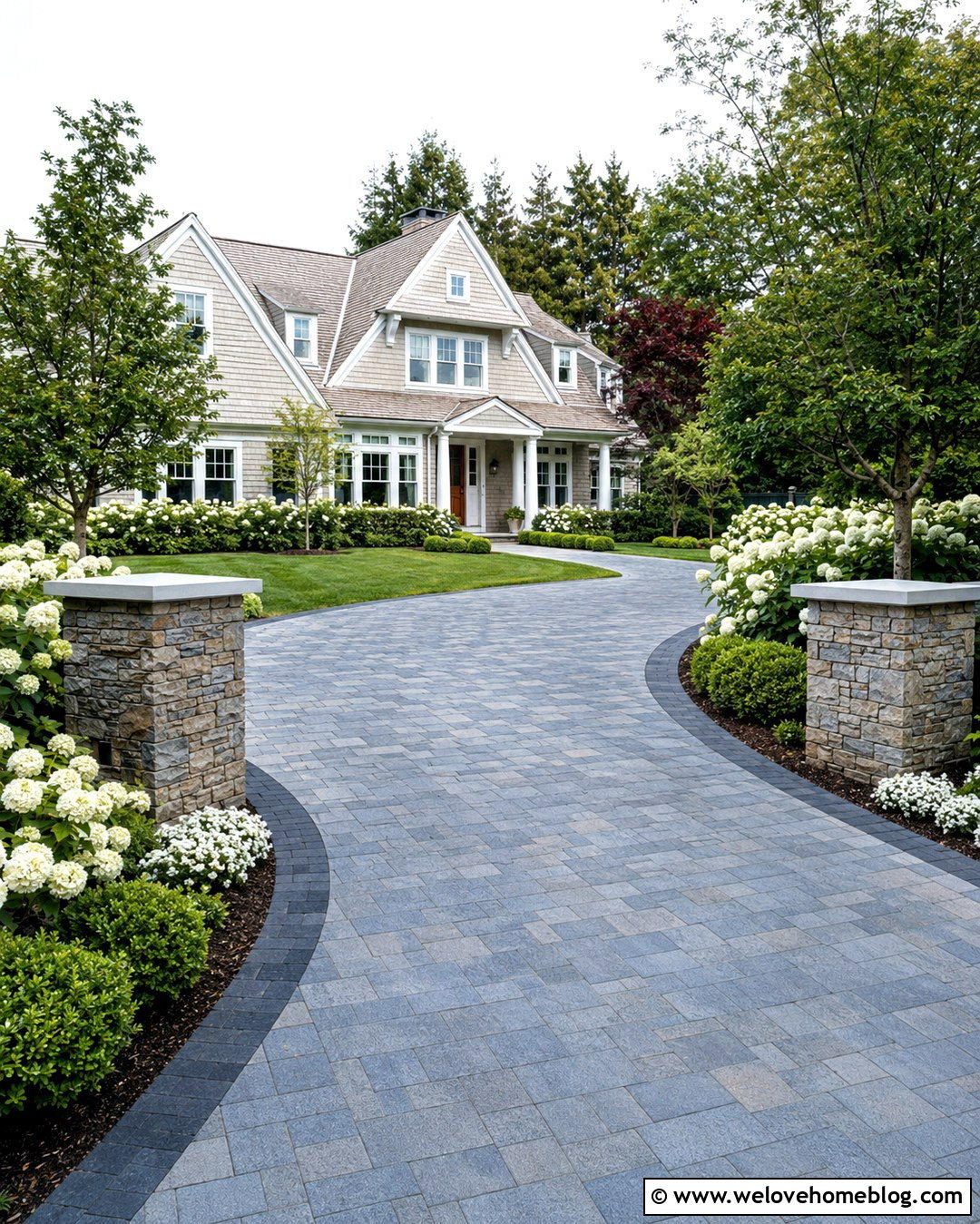
An old-world cobblestone driveway feels even more substantial when framed by boxwood hedges and masonry entrance pillars. Choose gray granite cobbles with slightly varied tones, then repeat the same stone on the pillar bases. Begin the hedges just behind the pillars and carry them toward the house in smooth, continuous lines. Slightly taller boxwood can provide a stronger sense of enclosure on a large property, but the shrubs should not block the view of the entrance. At each pillar, use a rounded boxwood specimen to ease the transition into the straight hedge. Planting beds with white flowers and dark mulch will keep attention on the stonework. This coordinated approach suits European-inspired, French Country, and Tudor homes with detailed facades and generous front yards.
8. Boxwood Hedge Along Exposed Aggregate Driveway
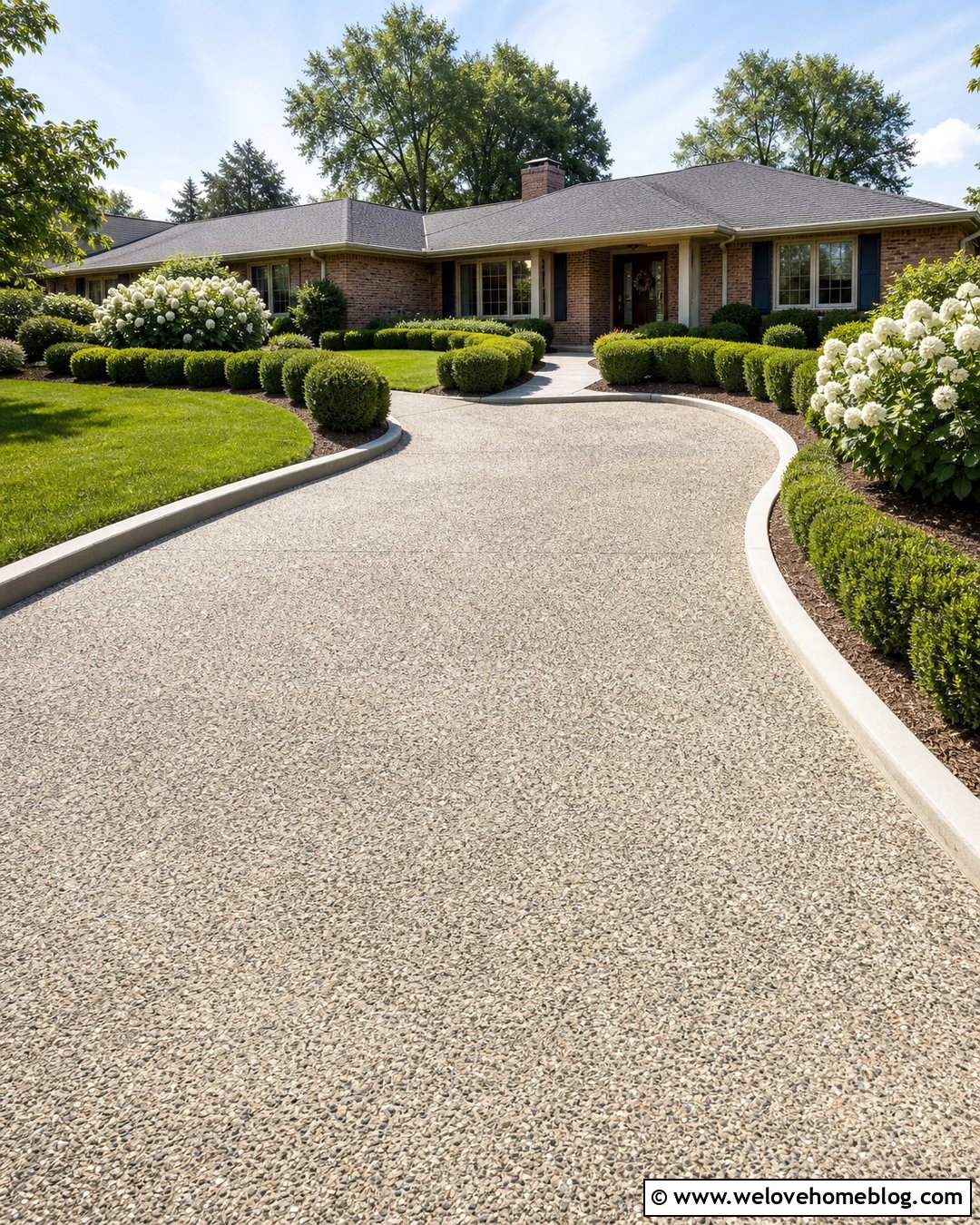
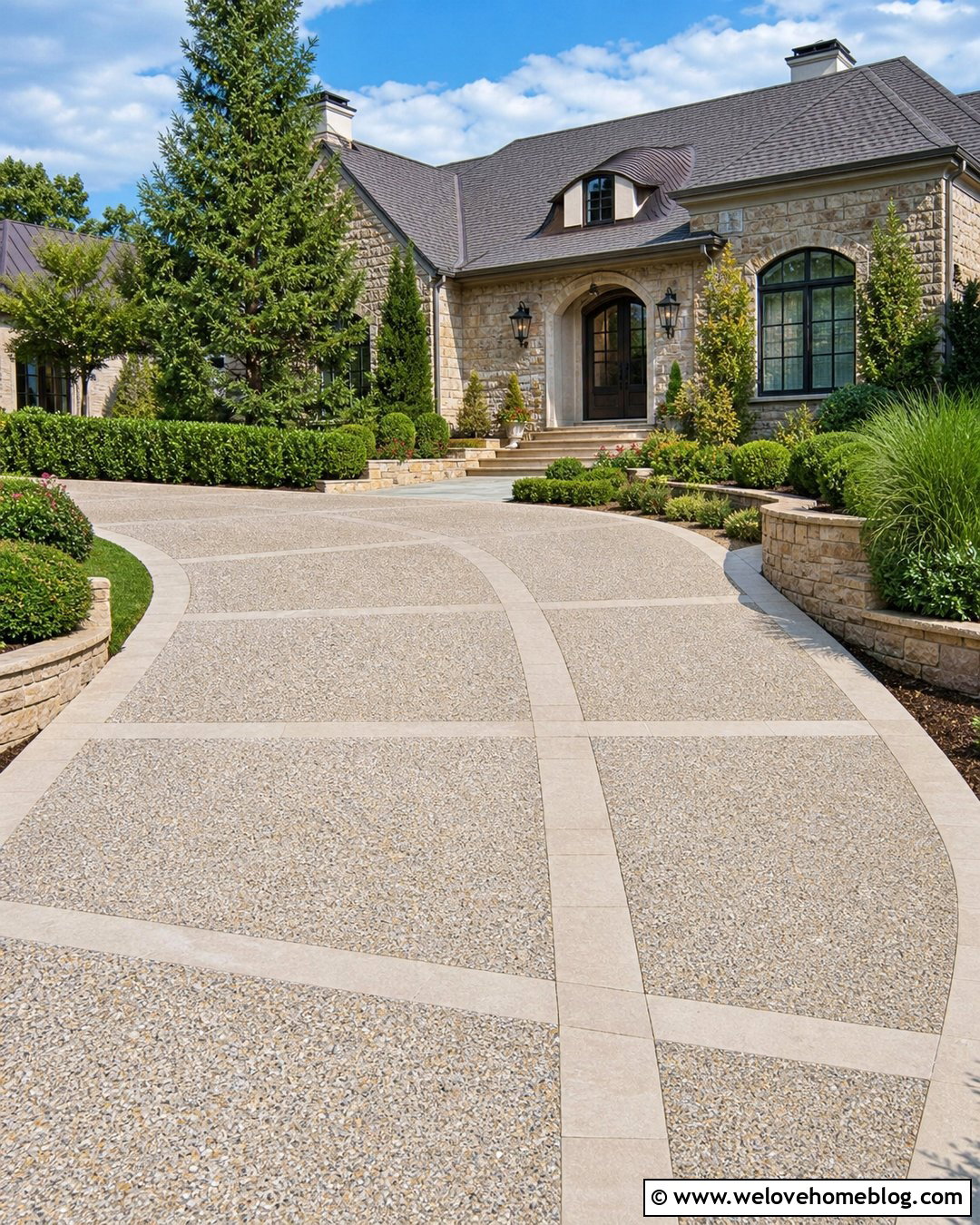
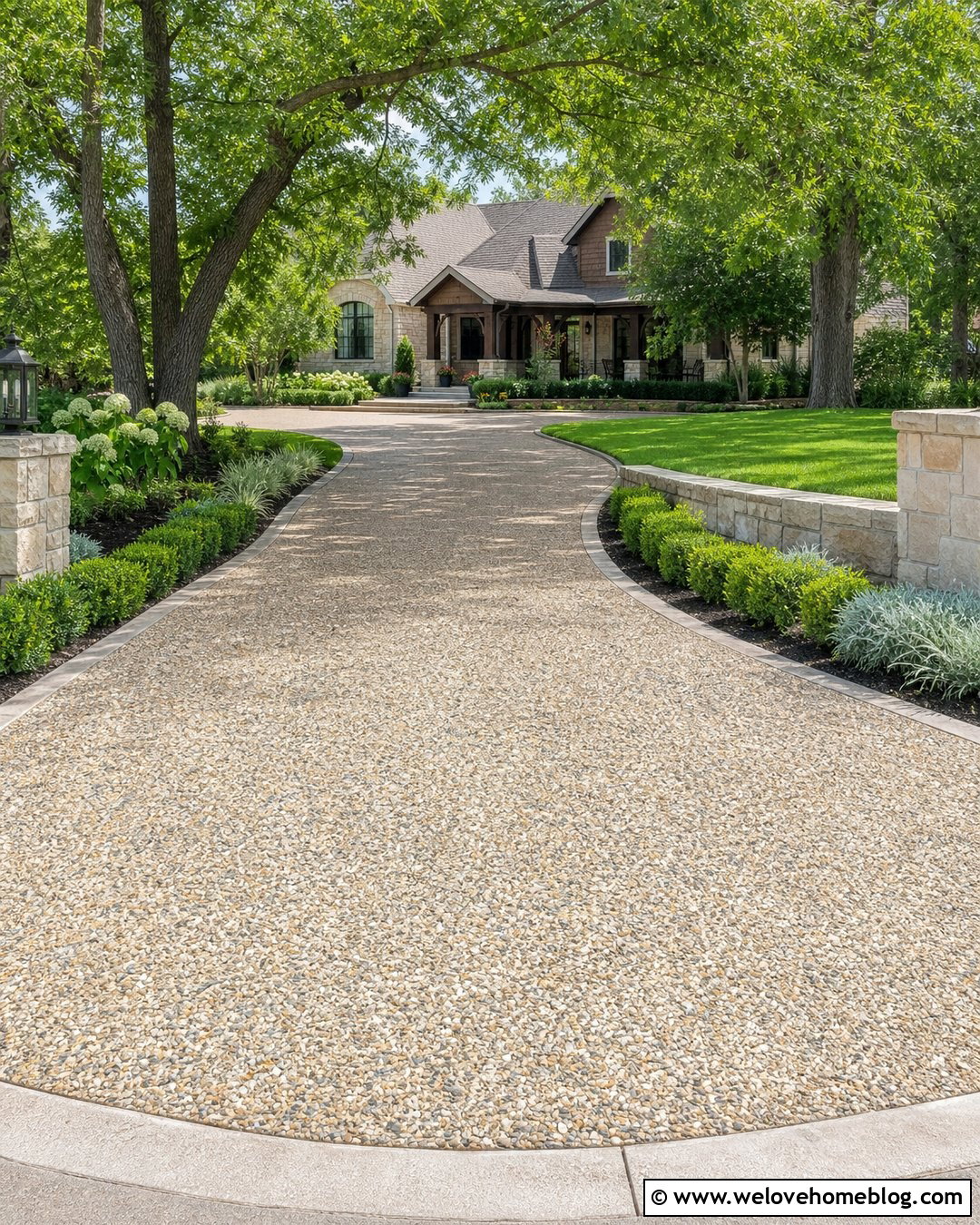
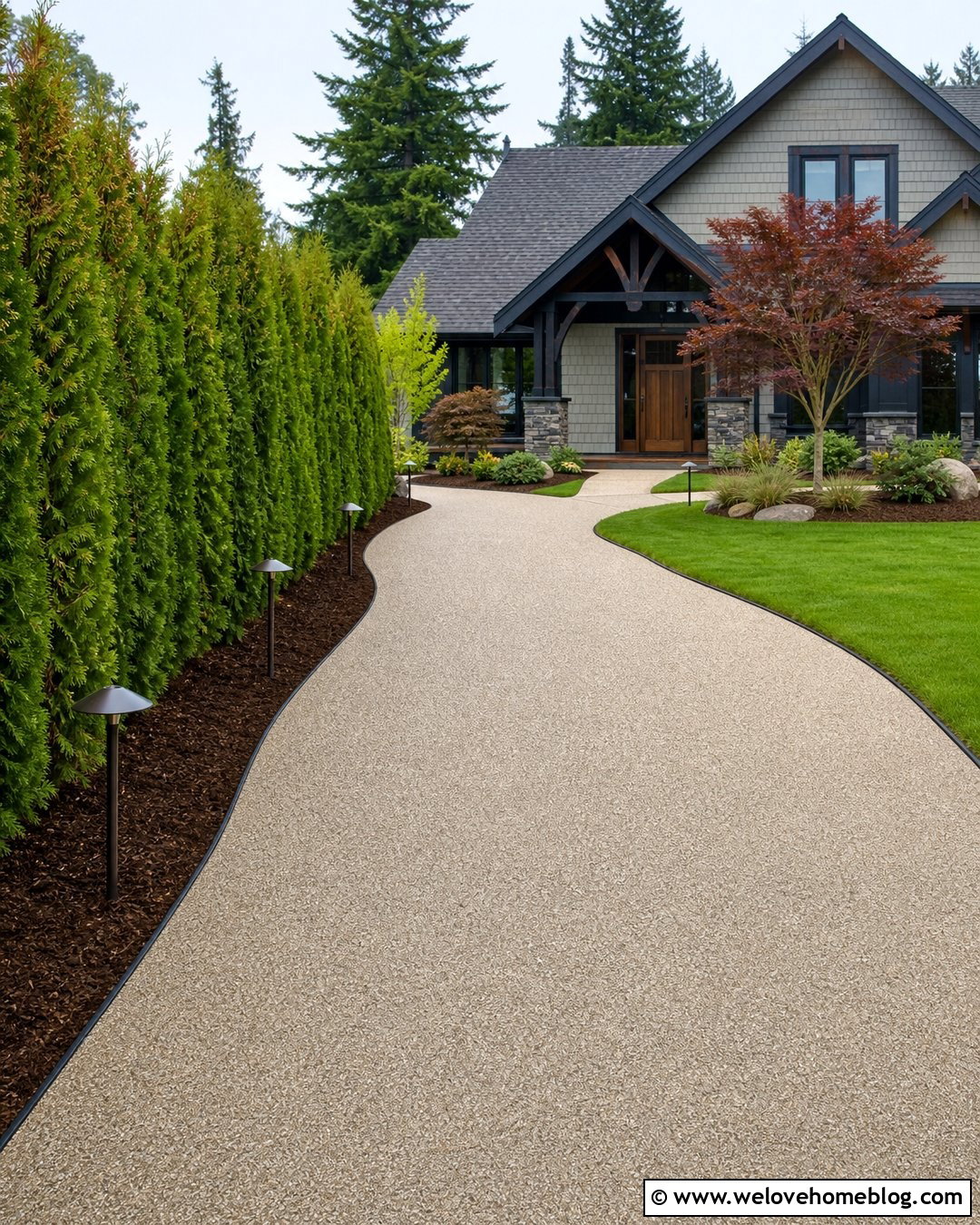
Exposed aggregate has a textured surface that pairs well with softly rounded boxwood hedges. Select a warm gray concrete mix containing tan and charcoal stones, then frame it with a smooth poured curb. Behind the curb, plant compact boxwoods in a broad mulched bed instead of squeezing them against the driveway. Shape the hedge with a gently curved top to create an approachable look for a ranch or split-level home. Groups of flowering shrubs behind the boxwood can add height near the house without cluttering the driveway edge. Where the front walk meets the driveway, curve the hedge inward to guide visitors toward the entrance. The consistent evergreen line visually organizes the varied aggregate finish and makes a practical everyday surface feel more intentionally designed.
9. Boxwood Hedge Along Resin-Bound Gravel Driveway
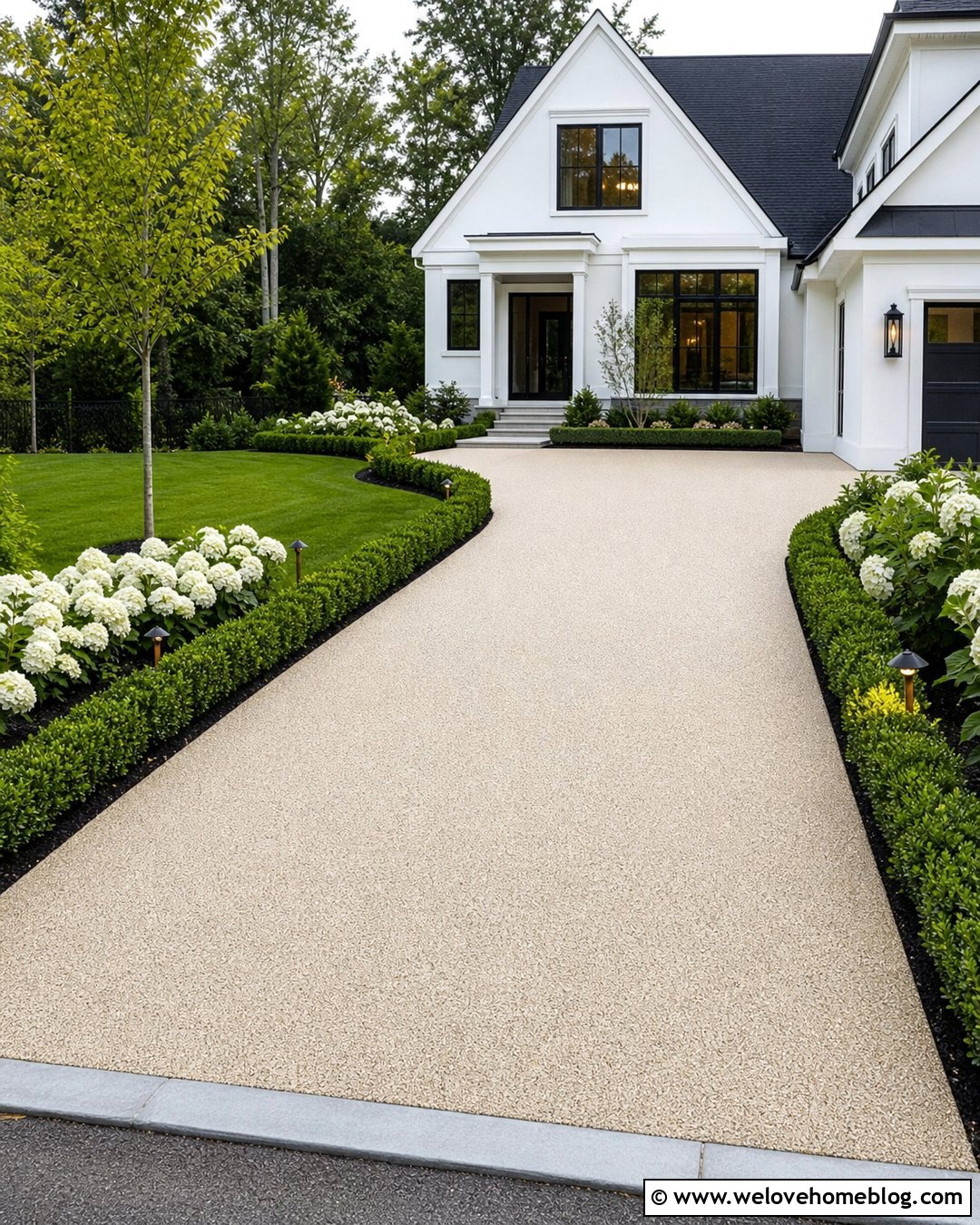
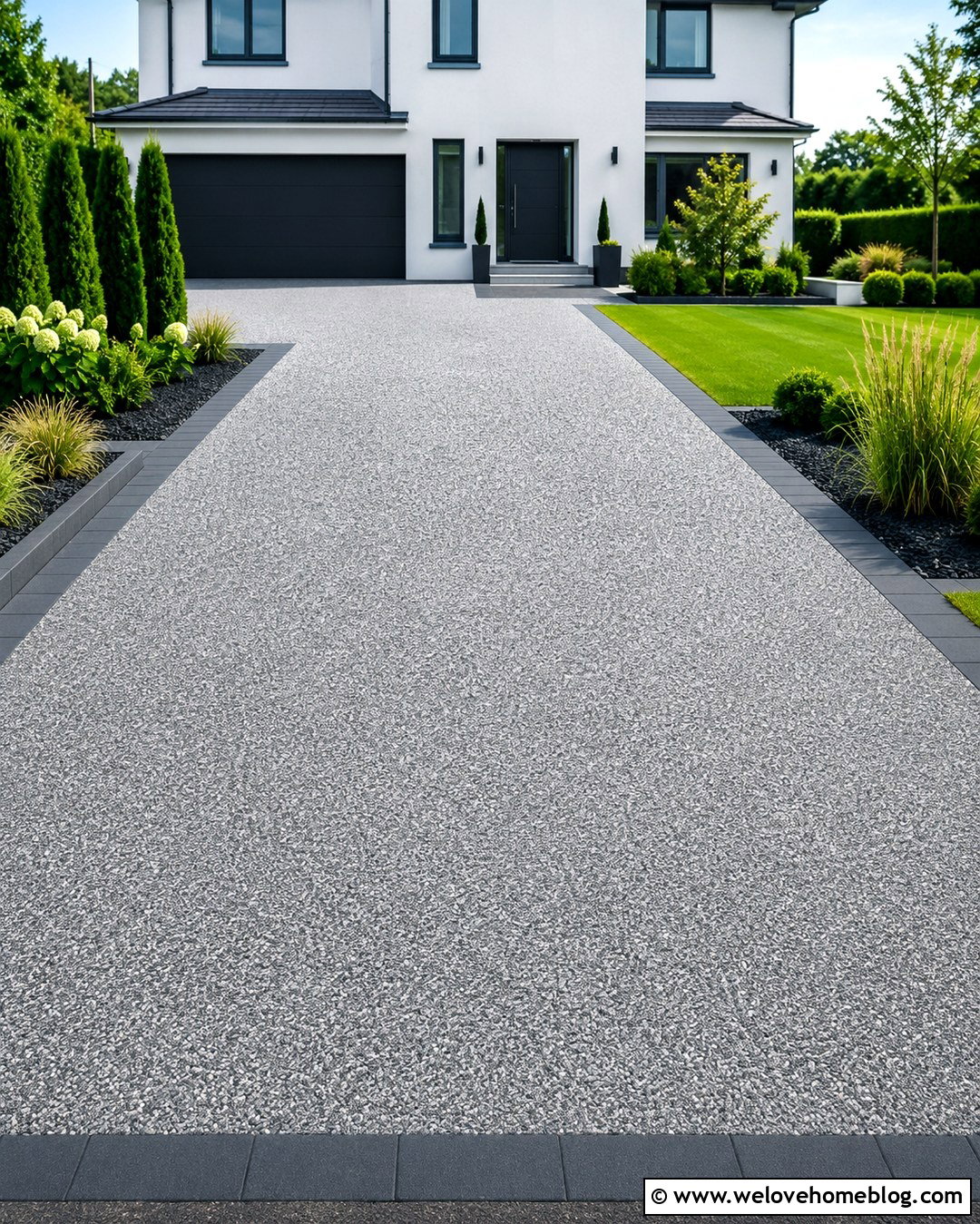
A pale resin-bound gravel driveway creates a smooth, contemporary surface that highlights the precise shape of clipped boxwood. Use warm beige aggregate for a softer look or cool gray aggregate beside a white or charcoal facade. Install a narrow metal or stone border, followed by a planting bed deep enough for the shrubs to mature comfortably. Keep the hedge low and straight, then place white hydrangeas behind it for layered summer color. At the garage, stop the hedge before the parking area so doors and walking routes remain accessible. Subtle path lights can be spaced within the bed rather than installed in the driveway. The result is a bright, polished entrance that combines the orderly character of a formal hedge with the seamless appearance of a modern bound-aggregate surface.
10. Boxwood Hedge Along Farmhouse Gravel Driveway
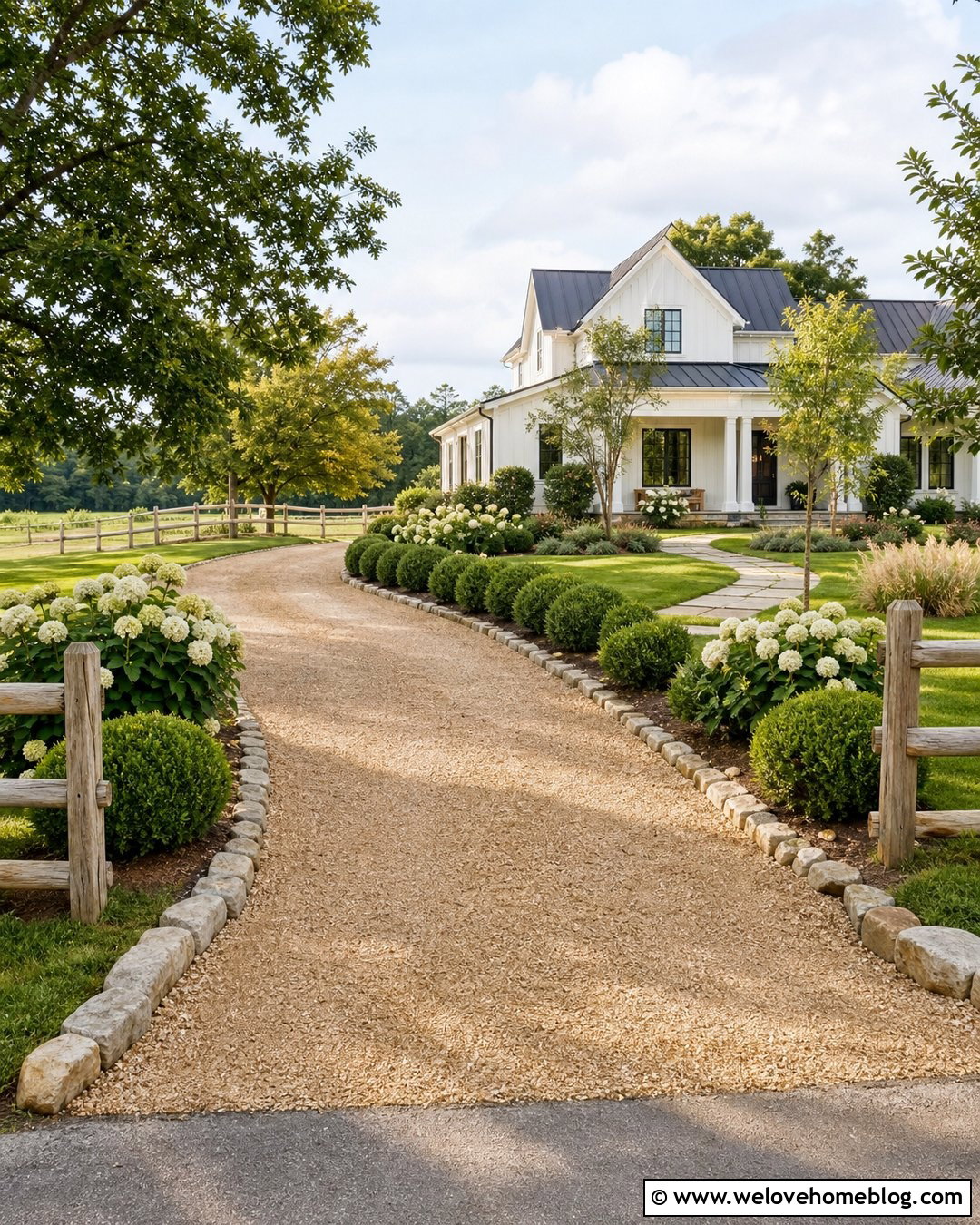
A farmhouse driveway can use boxwood without looking overly formal. Start with compacted buff gravel and irregular fieldstone edging, then plant the shrubs in a relaxed row with softly rounded tops. Allow a little natural variation between plants instead of shearing the hedge into a perfectly level wall. Behind it, layer white flowering perennials, hydrangeas, or feathery ornamental grasses. A split-rail fence can continue beyond the planted area and connect the driveway to the wider country landscape. Near the house, curve the boxwood border toward a flagstone walkway leading to the porch. This combination keeps the entrance tidy while preserving a comfortable rural character. It works especially well with white siding, dark shutters, natural wood doors, and simple metal exterior lights.
11. Boxwood Hedge Along Sloped Driveway
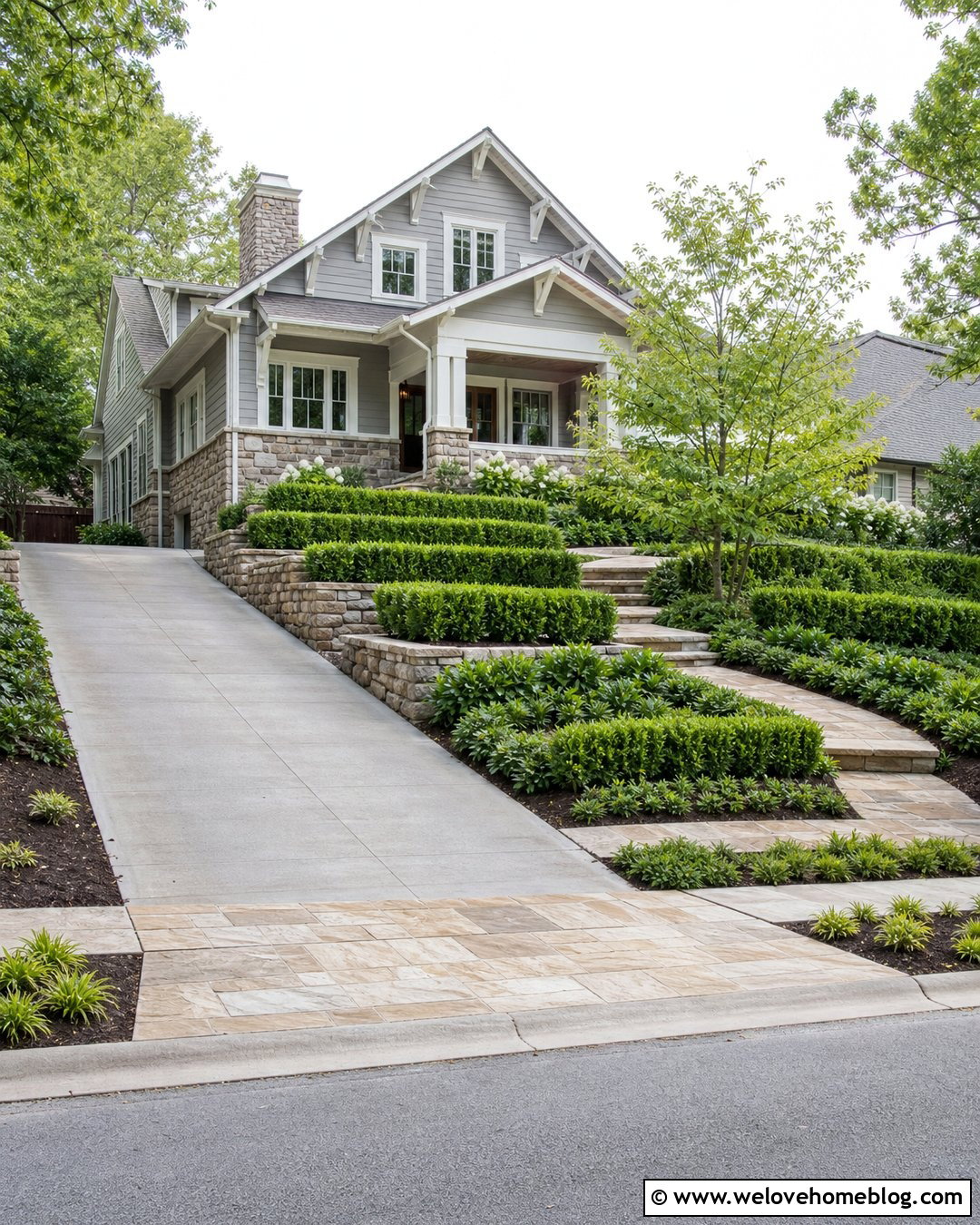
A sloped driveway needs a hedge layout that follows the grade without appearing uneven. Instead of forcing one continuous horizontal top, trim the boxwood in gradual steps that relate to the changing elevation. Pair a broom-finished concrete driveway with low stone retaining walls where the slope is most pronounced. The boxwood can sit in terraced beds above those walls, safely separated from vehicle movement and runoff. Add ground cover around the shrubs to protect exposed soil and soften the masonry. On the lower side, keep plantings short so drivers can see the street clearly when leaving. Repeating the retaining-wall stone in the walkway or house foundation will unify the setting. This layered design transforms a difficult grade into a structured, attractive part of the front landscape.
12. Boxwood Hedge Along Narrow Driveway
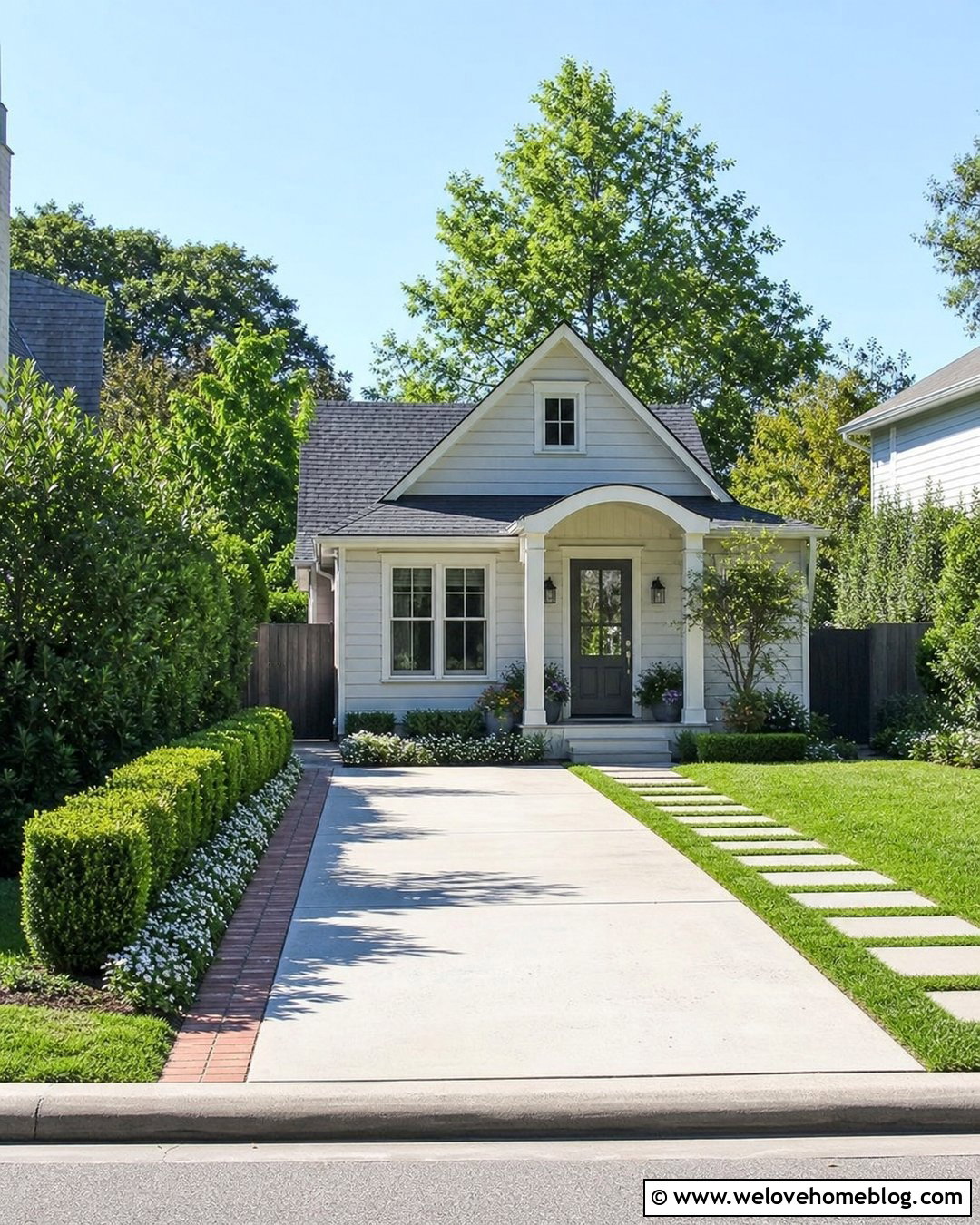
When space is limited, a one-sided boxwood hedge can provide structure without making a narrow driveway feel confined. Use dwarf shrubs along the lawn side and leave the house side open for passenger access, utilities, and drainage. A light gray concrete or concrete-paver surface will help the area appear broader. Set the hedge behind a slim brick mowing strip so grass and soil remain off the driveway. Keep the boxwood compact and carefully shaped, especially near the street and garage. If additional color is desired, add low ground cover behind the hedge rather than large flowering shrubs. A narrow stepping-stone path can pass through one planned opening. This asymmetrical arrangement offers a polished border while protecting the practical width required for everyday parking and walking.
13. Boxwood Hedge Around Horseshoe Asphalt Driveway
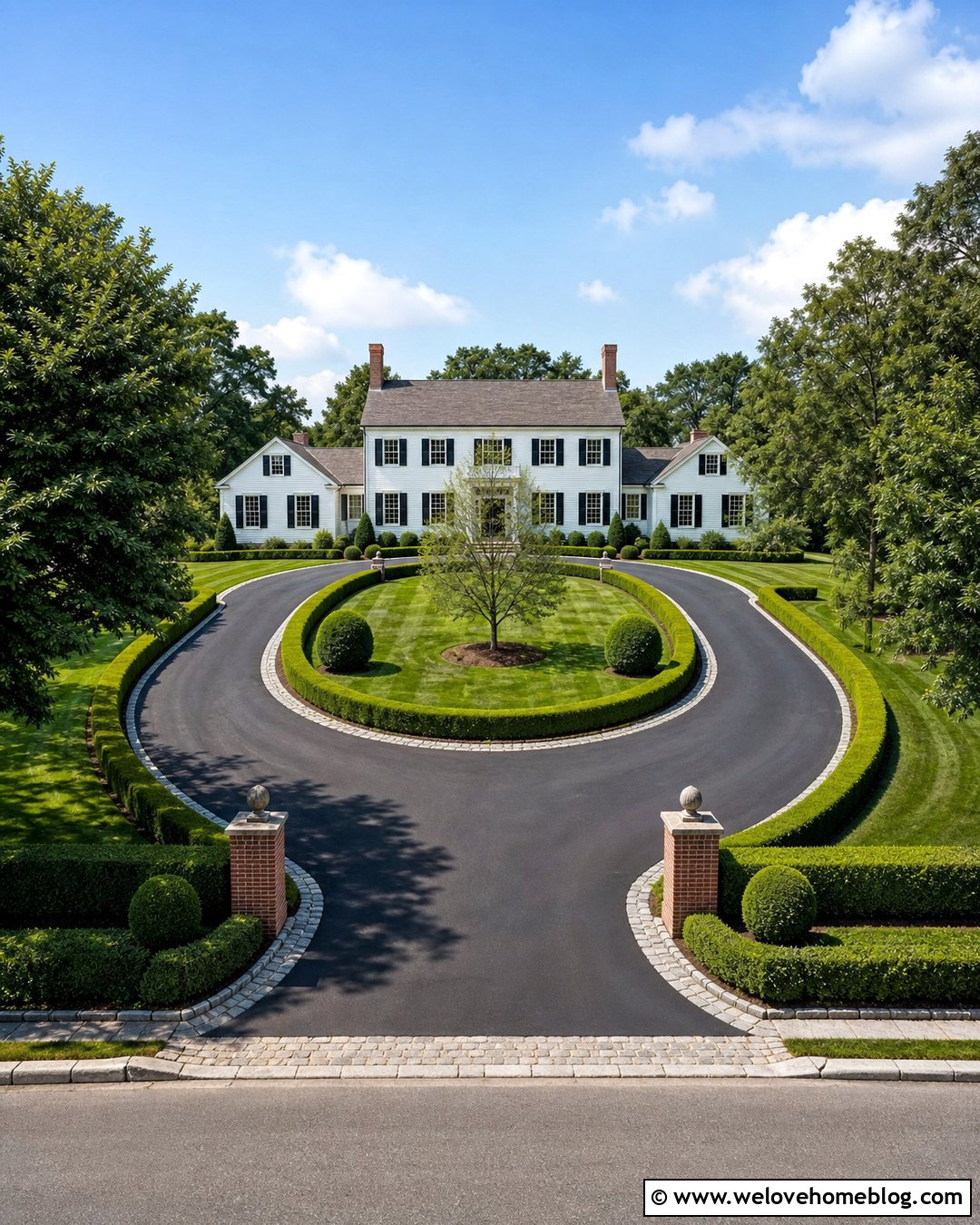
A horseshoe driveway looks organized when low boxwood hedges trace both curved entrances and frame the central lawn. Use smooth black asphalt with granite cobblestone edging to create a clear, durable outline. Begin the boxwood several feet inside the street boundary so the entrance remains open and visible. Continue the shrubs around the center bed, but leave intentional breaks for the front walkway and any drainage routes. Stone or brick pillars at both entrances can provide height, while matching boxwood globes soften their bases. Inside the central lawn, a single ornamental tree keeps the view balanced without overwhelming the house. This arrangement works particularly well for wide Colonial, Georgian, and traditional homes because the symmetry of the hedge reinforces the architecture and clarifies the vehicle route.
14. Boxwood Hedge Along Permeable Paver Driveway
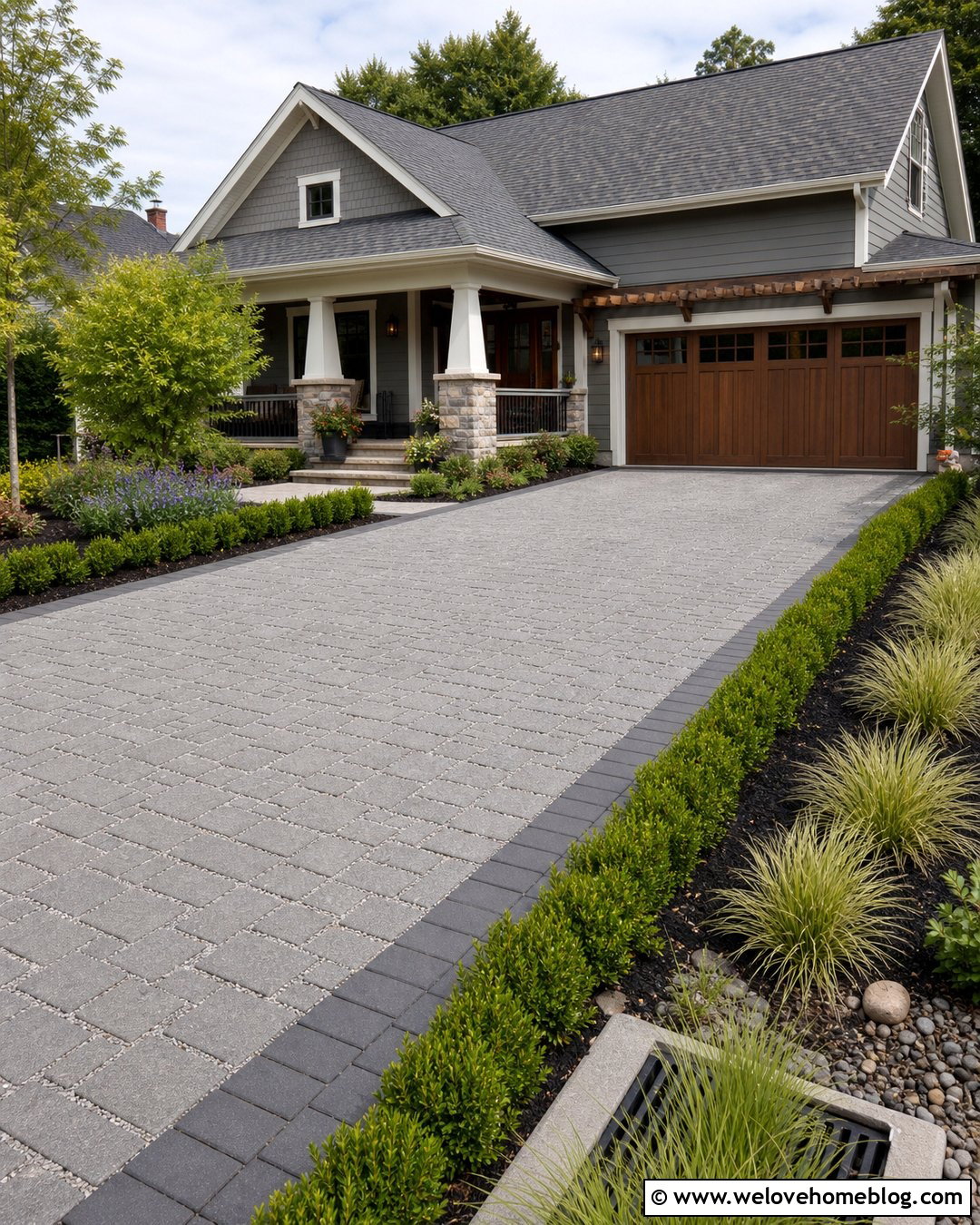
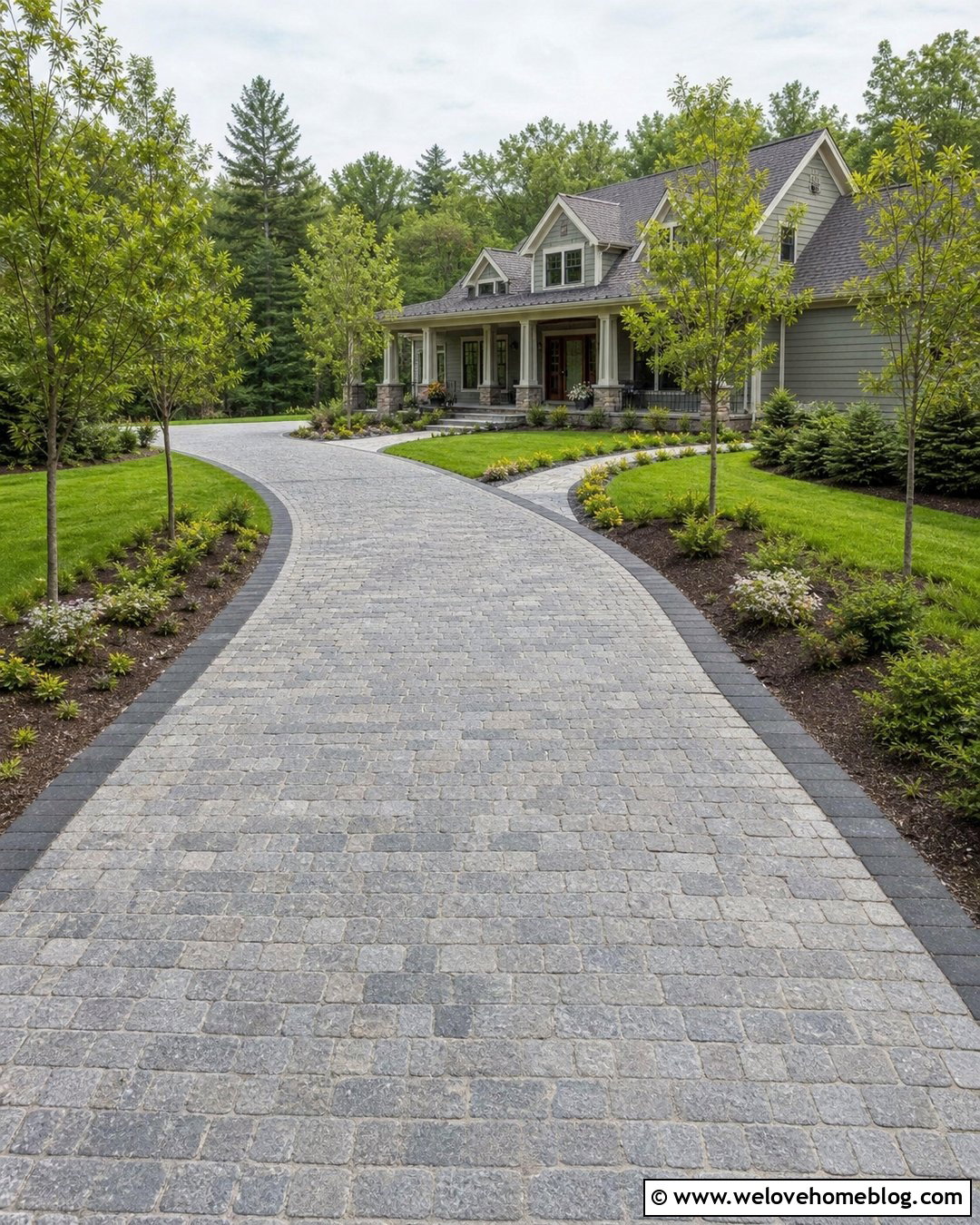
Permeable concrete pavers offer a practical foundation for a green, garden-focused driveway design. Choose medium-gray rectangular pavers with narrow gravel-filled joints, then add a darker paver ribbon around the perimeter. Plant the boxwood behind this hard border in a wide bed containing mulch and simple ground covers. On the lower side of the property, interrupt the hedge with a planted drainage area rather than creating a solid barrier across the natural flow of water. Soft grasses and moisture-tolerant perennials can contrast with the boxwood’s clipped shape. Keep the overall arrangement symmetrical near the house and more relaxed toward the street. This balance makes the entrance feel orderly without ignoring the site’s drainage needs. It suits Craftsman, contemporary, and environmentally focused suburban homes.
15. Boxwood Hedge Along Driveway With Seasonal Flowers
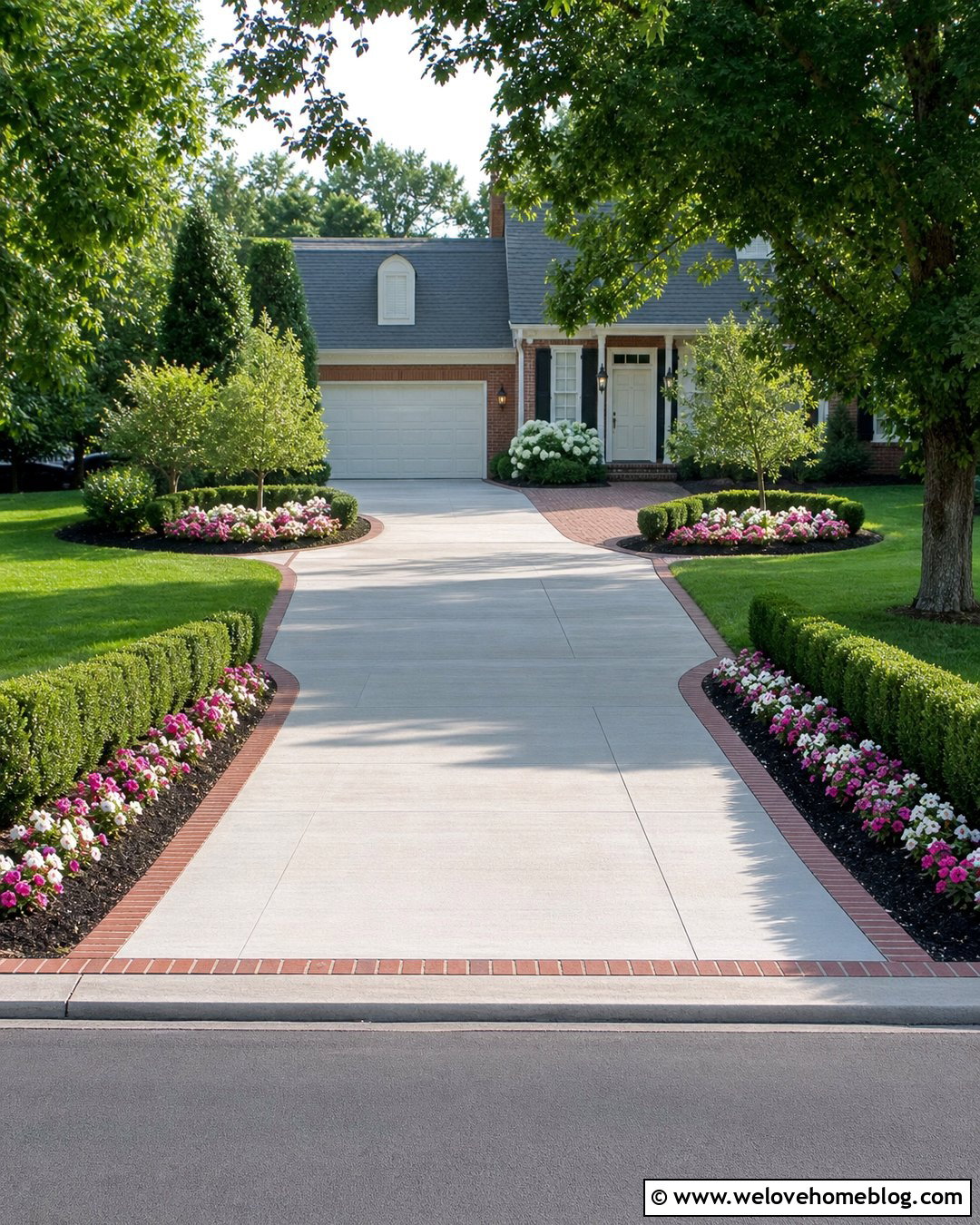
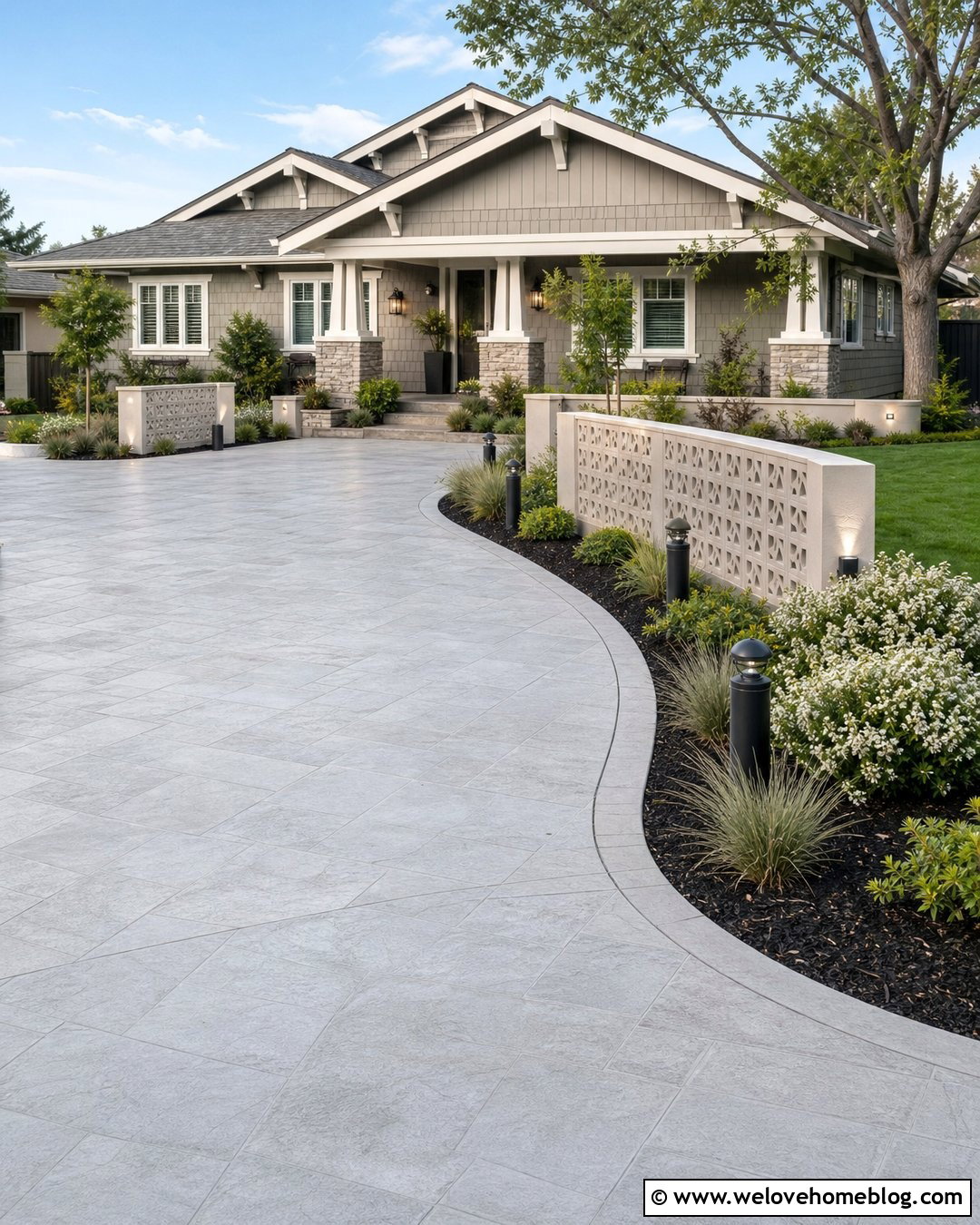
A boxwood hedge creates a reliable evergreen framework for flowers that change throughout the year. Pair a straight concrete driveway with a brick ribbon border, then plant a low hedge several inches behind the hardscape. Create a second planting layer behind the shrubs for spring bulbs, summer perennials, or fall color. Keeping flowers behind the boxwood prevents stems from leaning into parking and walking areas. Limit the palette to two or three colors at a time so the border feels coordinated rather than busy. At the driveway entrance, expand each bed into a rounded shape and repeat the same flowering plants on both sides. Even when blooms fade, the clipped boxwood retains the landscape’s basic structure, helping a traditional suburban home maintain neat curb appeal through changing seasons.
16. Boxwood Hedge Along Concrete Driveway With Brick Border
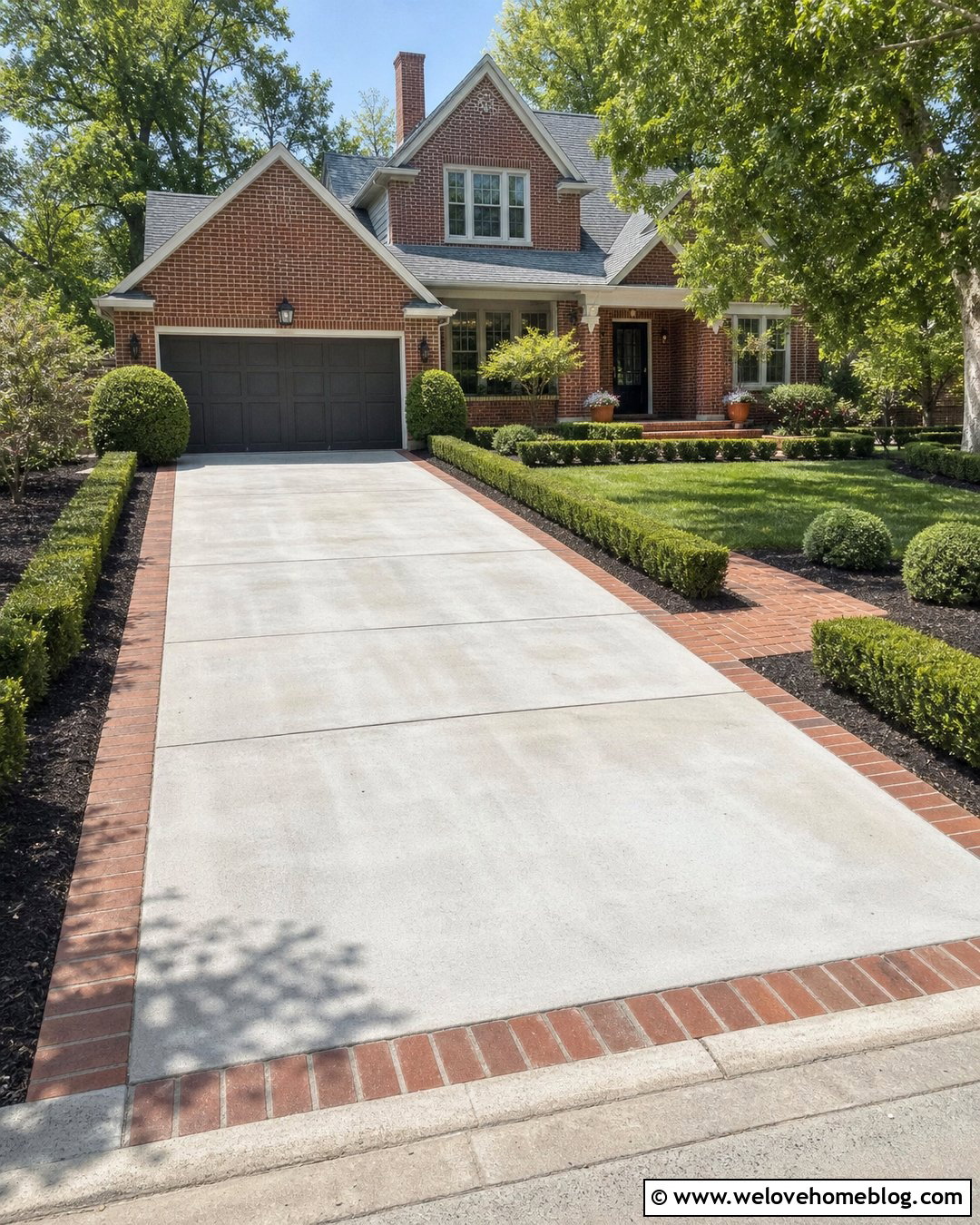
A brick border can connect an affordable poured concrete driveway to a brick house or walkway. Install a red or brown clay paver ribbon along each side of the gray concrete, then place the boxwood hedge in dark mulched beds beyond it. The contrasting materials make the driveway appear more detailed without covering the entire surface in expensive pavers. Trim the boxwood into a low rectangular form to repeat the straight border lines. Near the garage, end each hedge with a rounded shrub and leave an open area for passengers and trash bins. A matching brick path can cross one hedge opening and lead to the porch. This complete design is adaptable to Colonial, Craftsman, and traditional ranch homes, especially when the existing facade already contains warm masonry accents.
17. Boxwood Hedge Along Driveway And Front Walkway
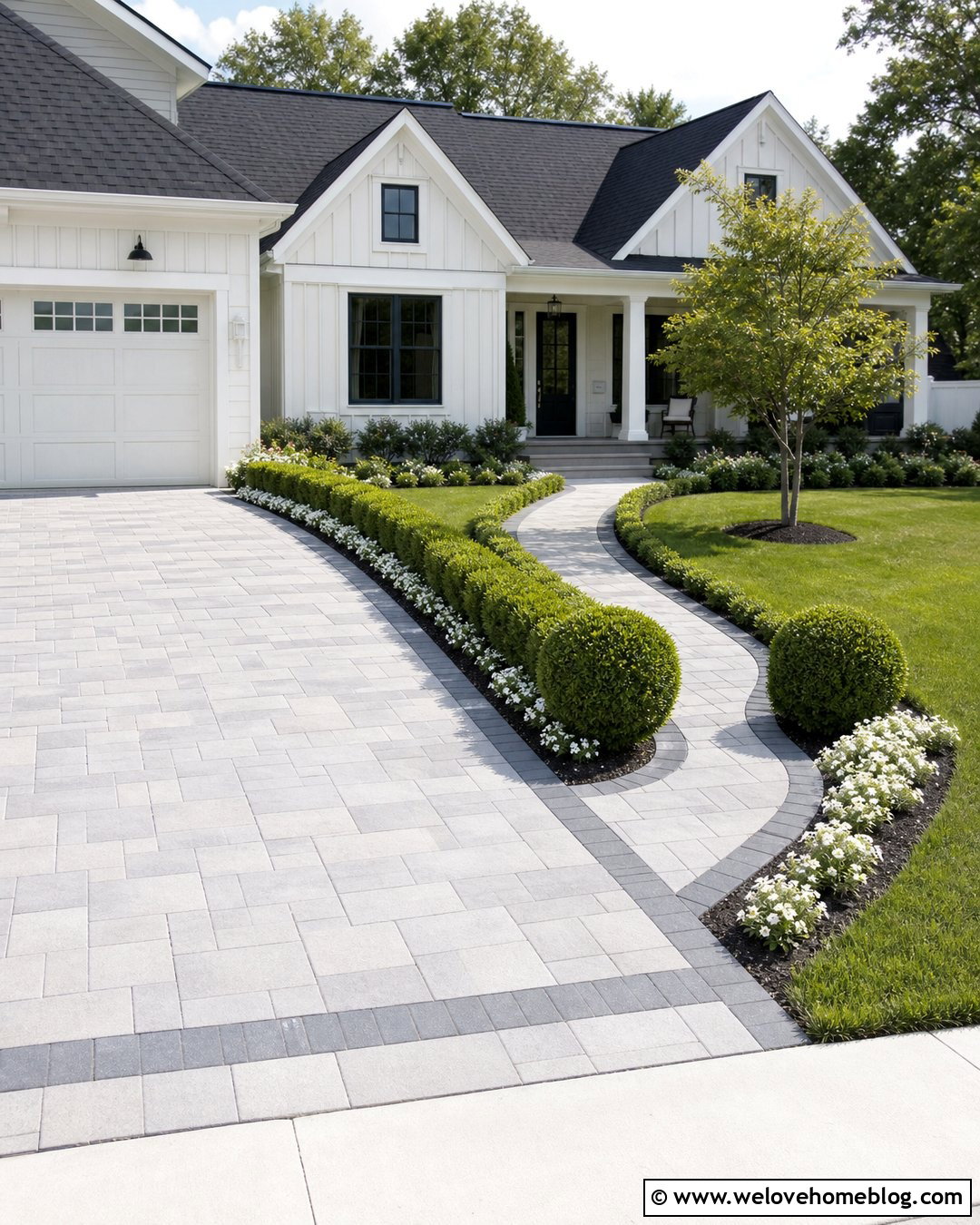
The driveway and front walkway should feel like connected parts of the same entrance. Use light gray concrete pavers for both surfaces, with a narrow charcoal border defining their edges. Run a low boxwood hedge along the driveway, then turn it smoothly beside the walkway leading to the door. At the junction, widen the planting bed and use two rounded boxwoods to mark the change in direction. Guests will naturally recognize the route without needing excessive signs or decorative objects. Add flowering ground cover behind the hedge and a small ornamental tree near the porch for height. Keep the walkway side of the shrubs carefully trimmed so branches do not reduce walking space. This coordinated layout works well in medium-size front yards where every feature remains visible from the curb.
18. Boxwood Hedge Along Long Tree-Lined Driveway
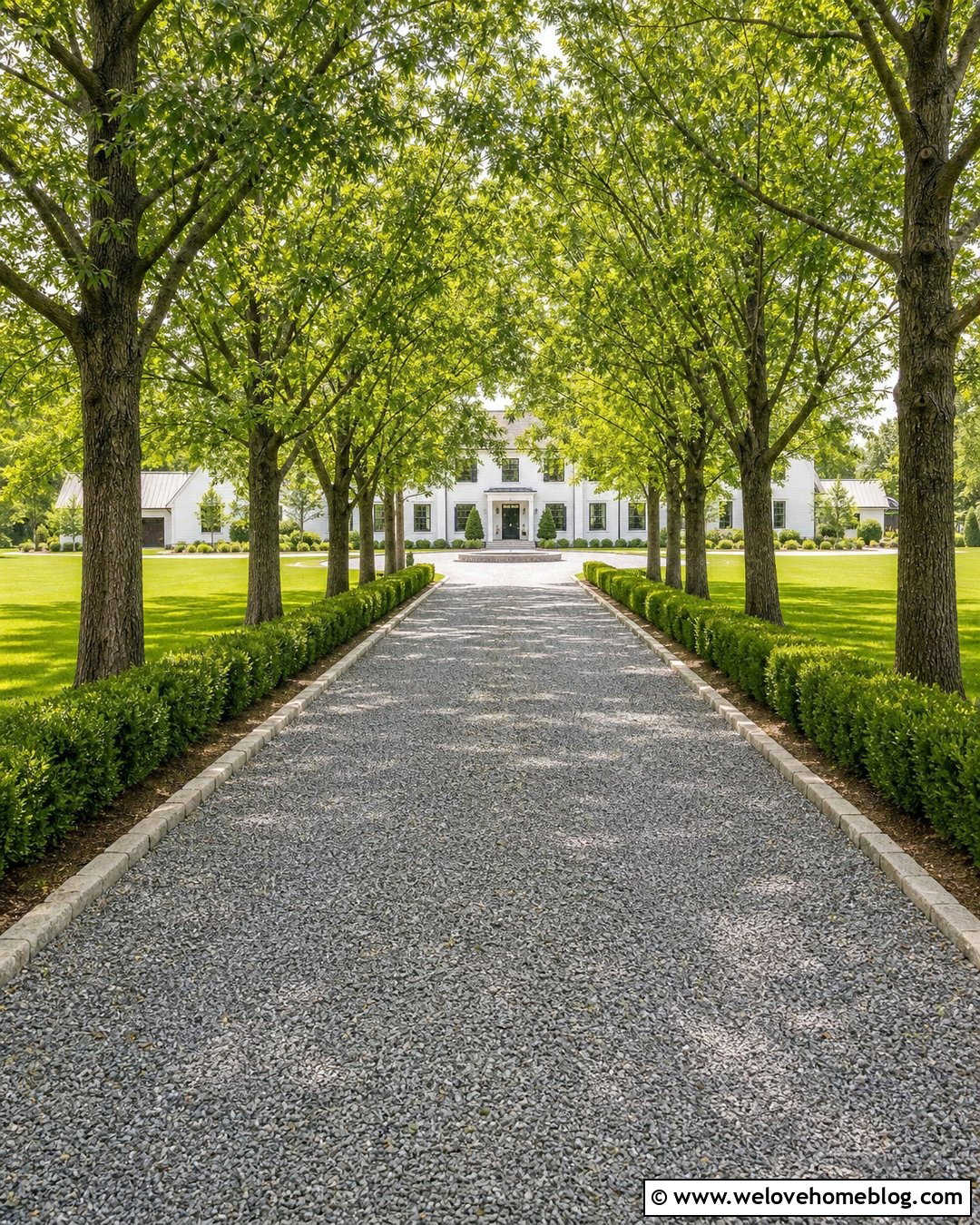
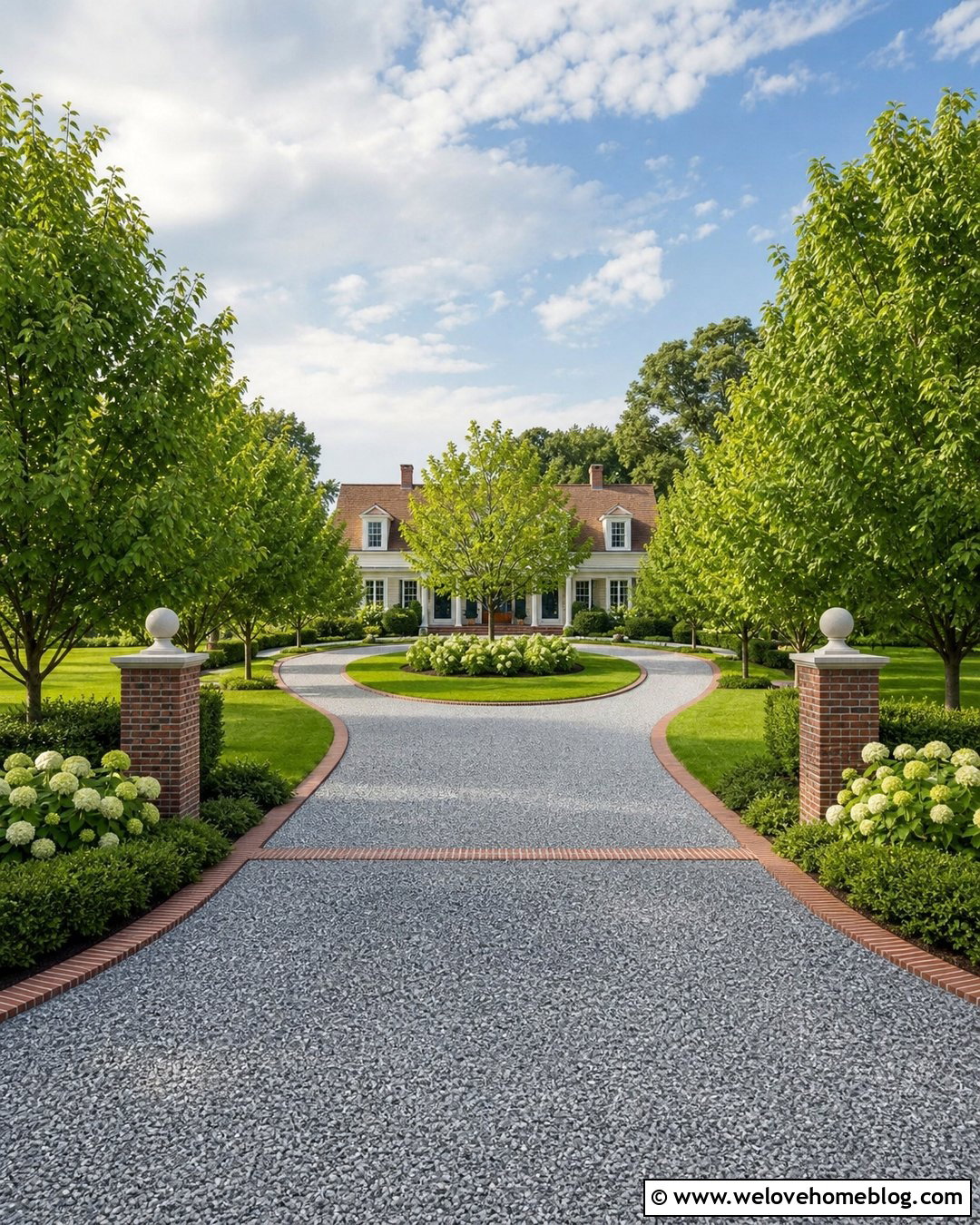
A long driveway can combine tall canopy trees with a low boxwood hedge to create layers at different heights. Start with compacted gray gravel or fine crushed stone contained by a sturdy granite edge. Plant evenly spaced deciduous trees well beyond the driving surface, then run boxwood between or slightly in front of them. The shrubs create a continuous green base, while the tree trunks establish rhythm along the approach. Avoid placing the hedge so close that it limits door clearance or routine gravel maintenance. Near the house, widen the planting beds and transition to larger boxwood forms around a circular arrival area. This grand layout is best suited to country, equestrian, farmhouse, and estate-style properties where the driveway has enough length for the repeated planting to develop fully.
19. Boxwood Hedge Around Small Driveway Parking Pad
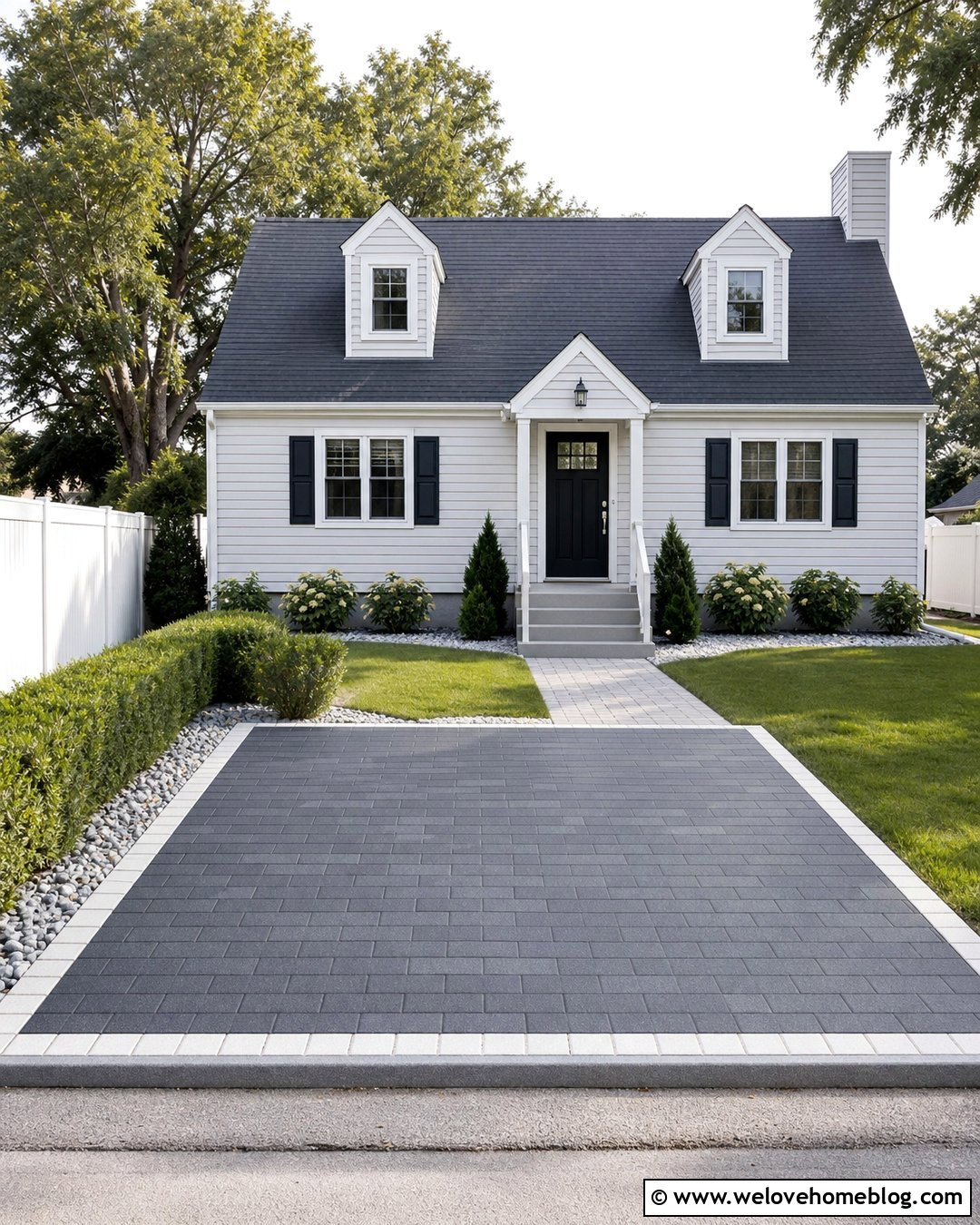
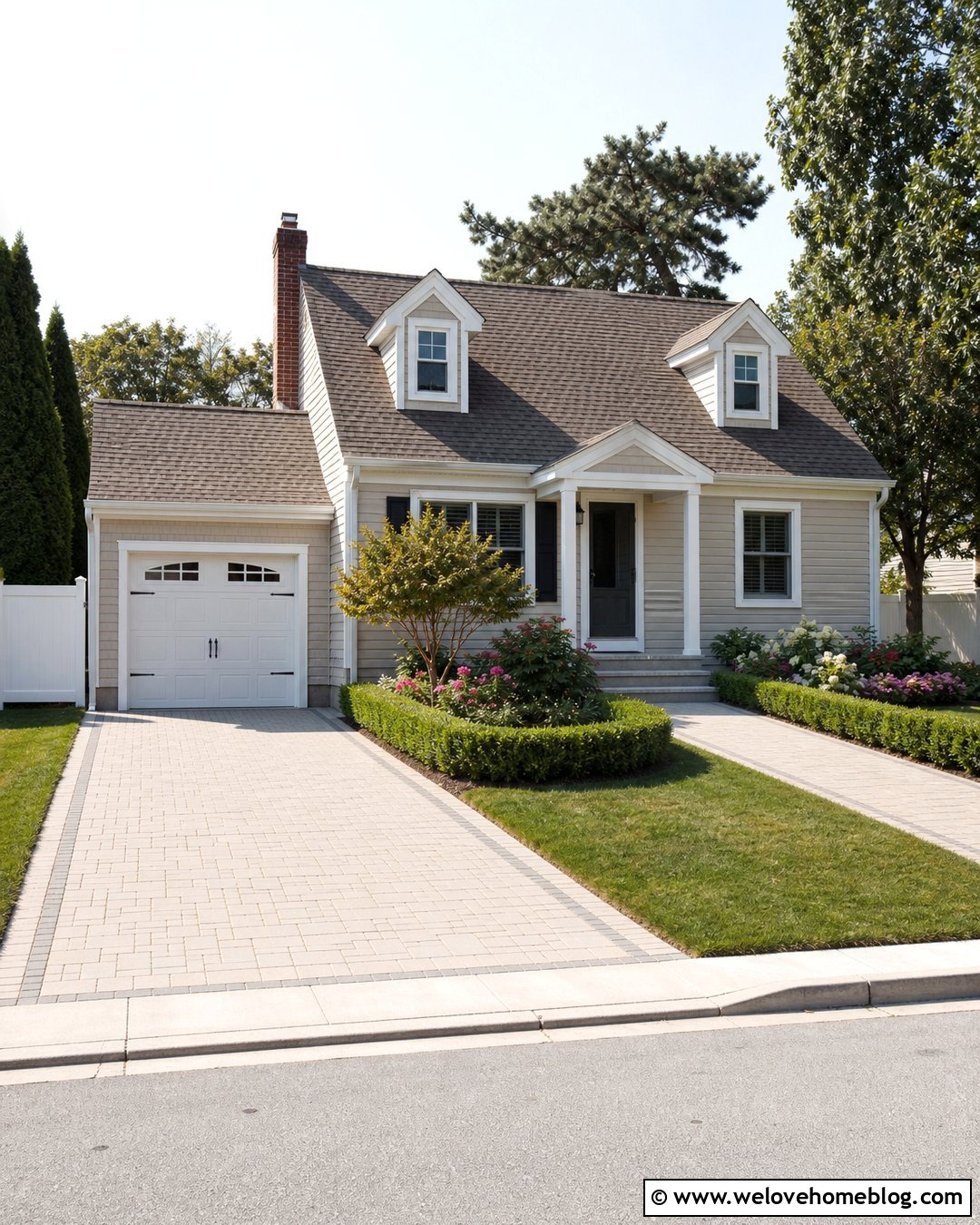
Even a short parking pad can benefit from a carefully placed boxwood border. Use charcoal concrete pavers in a simple running-bond pattern and frame the outer edge with a lighter contrasting course. Plant an L-shaped hedge along the lawn-facing side and across the back, leaving the passenger side completely open. This layout visually separates parking from the garden without reducing usable space. Keep the boxwood low so the compact front yard does not feel boxed in. A narrow bed of pale gravel around the shrubs can reduce visual clutter and make cleanup easier. Add one walkway opening that aligns directly with the porch steps. The combination suits townhouses, cottages, and small ranch homes because it provides greenery and definition while respecting the limited dimensions of the site.
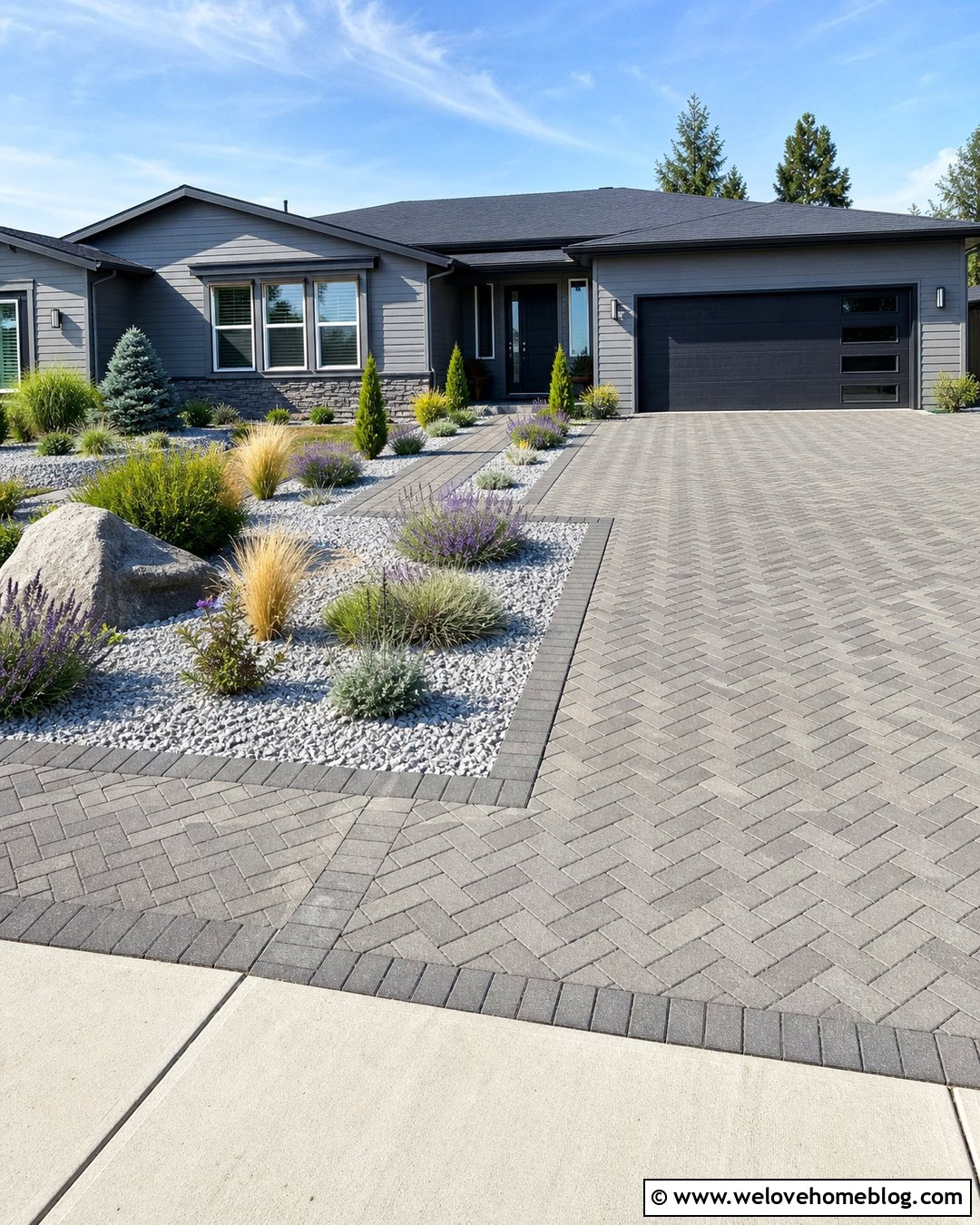
20. Boxwood Hedge Along Driveway With Landscape Lighting
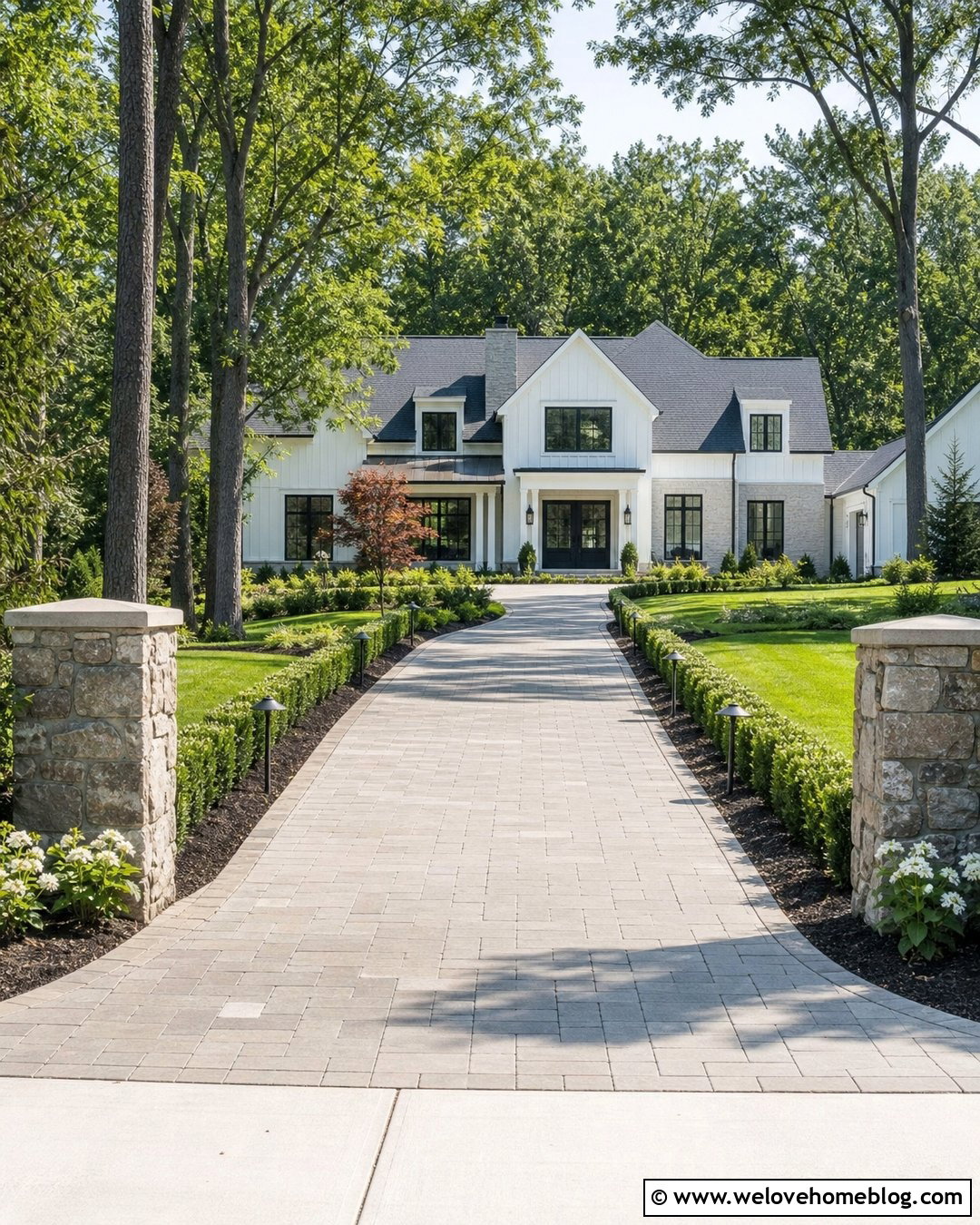
Low landscape lighting can emphasize a boxwood hedge while still preserving a clean daytime appearance. Choose a warm gray paver driveway with a dark stone border and plant the hedge in a continuous mulched bed beyond it. Position simple downward-facing lights at wider intervals rather than placing a fixture beside every shrub. During the day, the dark housings should blend into the foliage and edging. Continue the hedge toward stone entrance columns, where larger fixtures can establish a clear starting point. Keep lights away from areas where tires, snow removal equipment, or garden tools could damage them. Behind the boxwood, use lawn and a few restrained planting groups instead of dense decoration. The complete arrangement provides a polished, welcoming approach for modern farmhouse, Craftsman, or traditional homes.
Conclusion:
The strongest boxwood driveway designs coordinate the shrubs with the surface, layout, edging, architecture, and practical needs of the property. A low hedge can formalize concrete, soften gravel, enrich brick, or bring natural contrast to dark asphalt. However, successful placement matters as much as appearance. Leave room for mature growth, car doors, walkways, visibility, drainage, and routine pruning. Use planned openings to connect paths and service areas instead of allowing the hedge to become an obstacle. Whether your home is traditional, modern, rural, or compact, these 20 Boxwood Hedge Along Driveway Ideas can help you create an evergreen entrance that feels balanced, useful, and attractive from the curb to the front door.

Related posts:

Leave a Reply