
A coordinated driveway and sidewalk can make the entire front yard feel larger, cleaner, and more welcoming. The best 20 Driveway And Sidewalk Landscaping Ideas connect vehicle space, pedestrian routes, planting beds, and the home’s entrance instead of treating each feature separately. Materials should complement the house, while borders and plants soften broad paved surfaces. You also need practical details, including clear sightlines, comfortable walking space, drainage, snow storage, and room to open car doors. Whether you prefer traditional brick, modern concrete, affordable gravel, or low-maintenance native planting, the complete layout matters most. The following designs combine surfaces, shapes, edging, and landscaping to help you explore 20 Driveway And Sidewalk Landscaping Ideas.

1. Concrete Driveway And Brick Sidewalk With Boxwood Borders
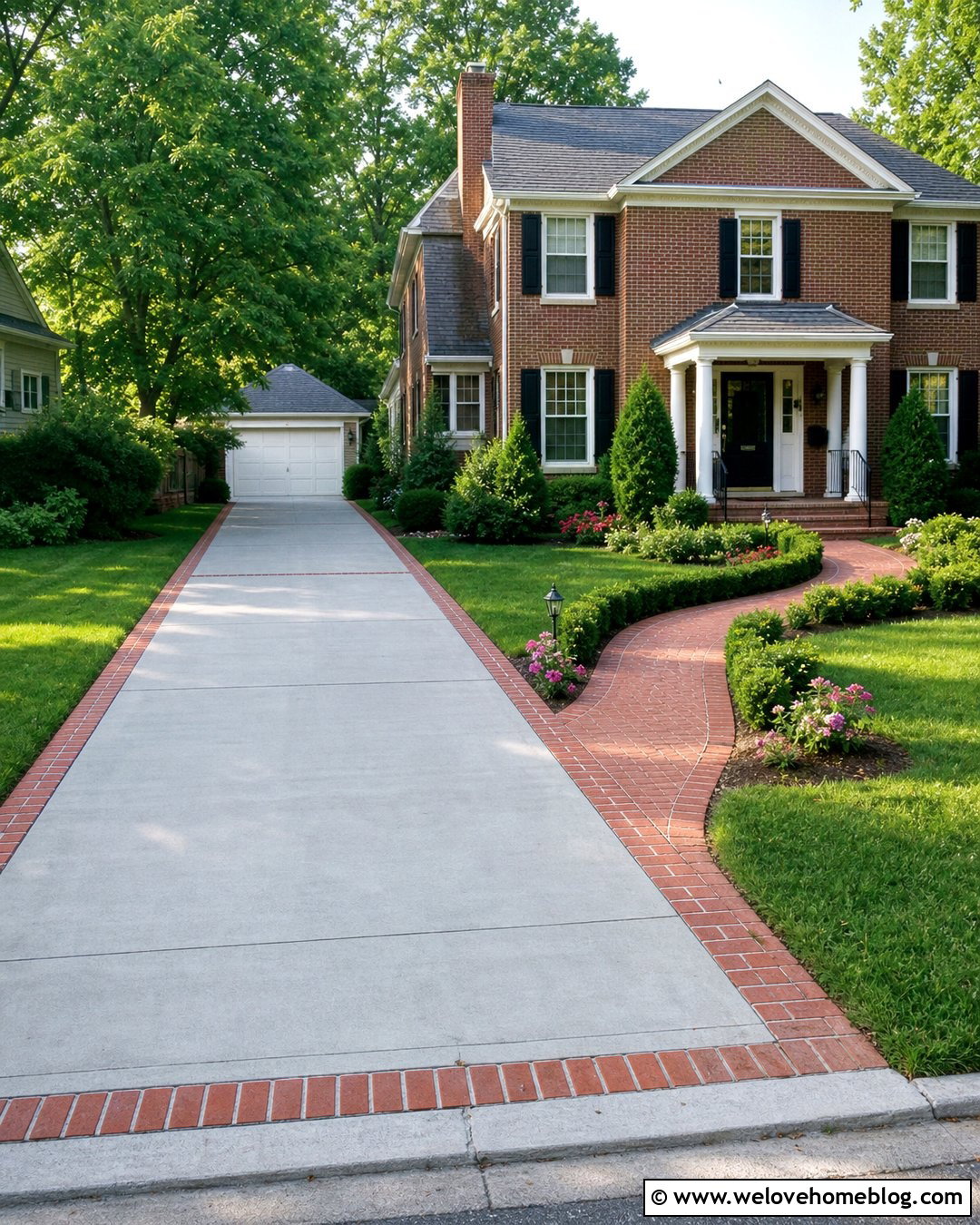
A light-gray poured concrete driveway creates a clean base, while a red clay brick sidewalk adds warmth and guides visitors toward the front porch. Run the brick path beside the driveway before gently curving it toward the entrance. A narrow planting bed between the two surfaces prevents the layout from feeling like one large paved area. Low boxwoods provide dependable structure, while seasonal flowers bring softer color around the walkway. Use a matching brick ribbon along the driveway edges to connect both hardscape materials. This combination works especially well with Colonial, Cape Cod, and traditional brick homes. Keep shrubs low near the street so drivers and pedestrians have clear views where the driveway crosses the public sidewalk.
2. Gravel Driveway And Flagstone Sidewalk With Lavender Borders
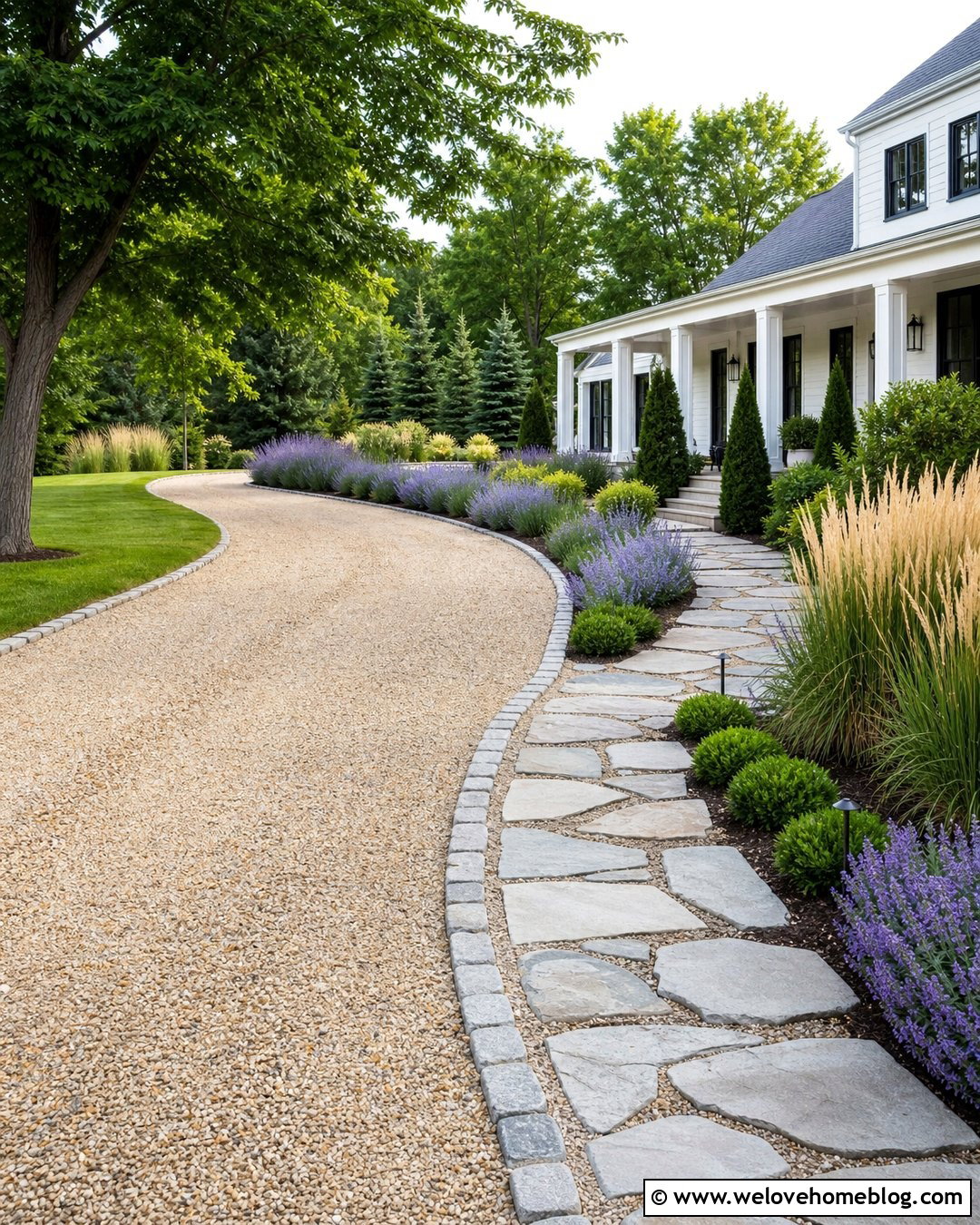
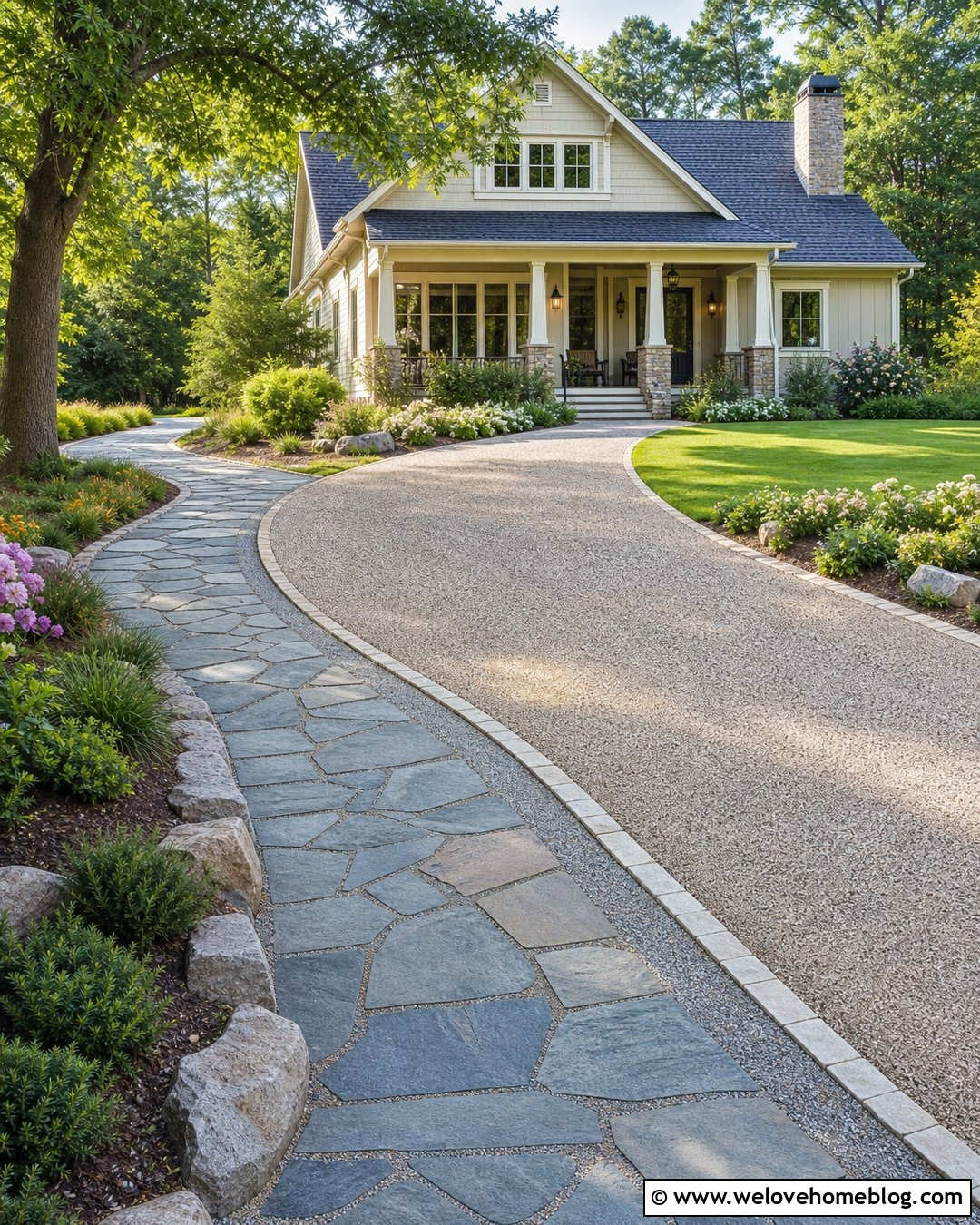
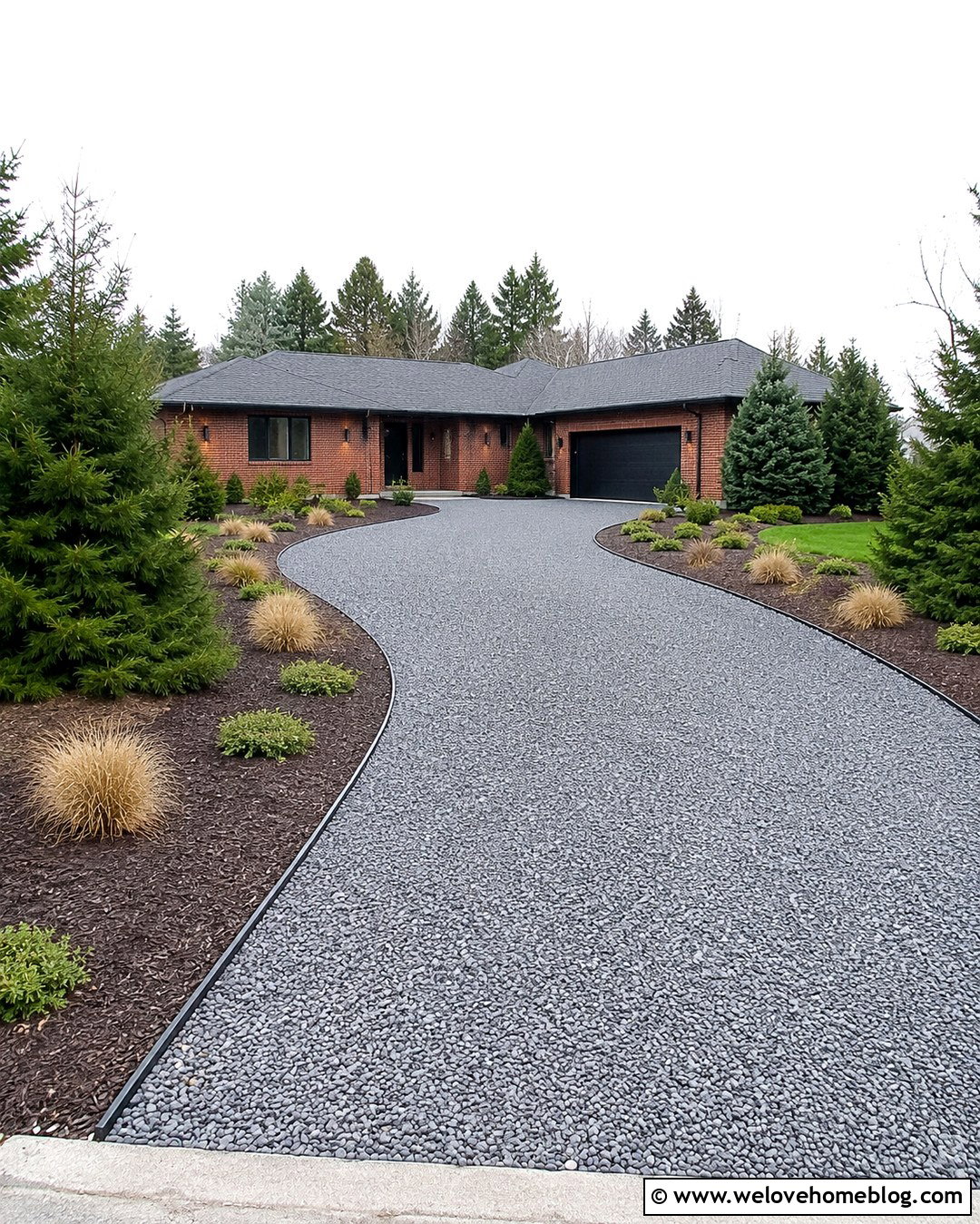
Can a relaxed landscape still look carefully finished? A warm beige gravel driveway paired with an irregular flagstone sidewalk offers an inviting balance of rustic texture and clear organization. Install steel edging or cobblestone curbs along the gravel to hold loose stones in place. The sidewalk can begin at the driveway entrance, cross a small garden bed, and continue toward a farmhouse porch. Lavender, catmint, ornamental grasses, and compact evergreen shrubs soften both sides without overwhelming the walkway. Leave a comfortable buffer beside parking areas so plants are not damaged by opening doors. Repeating the same stone in the sidewalk and driveway edging makes the design feel unified. This complete look suits cottages, ranch homes, and modern farmhouses.
3. Asphalt Driveway And Paver Sidewalk With Hydrangea Beds
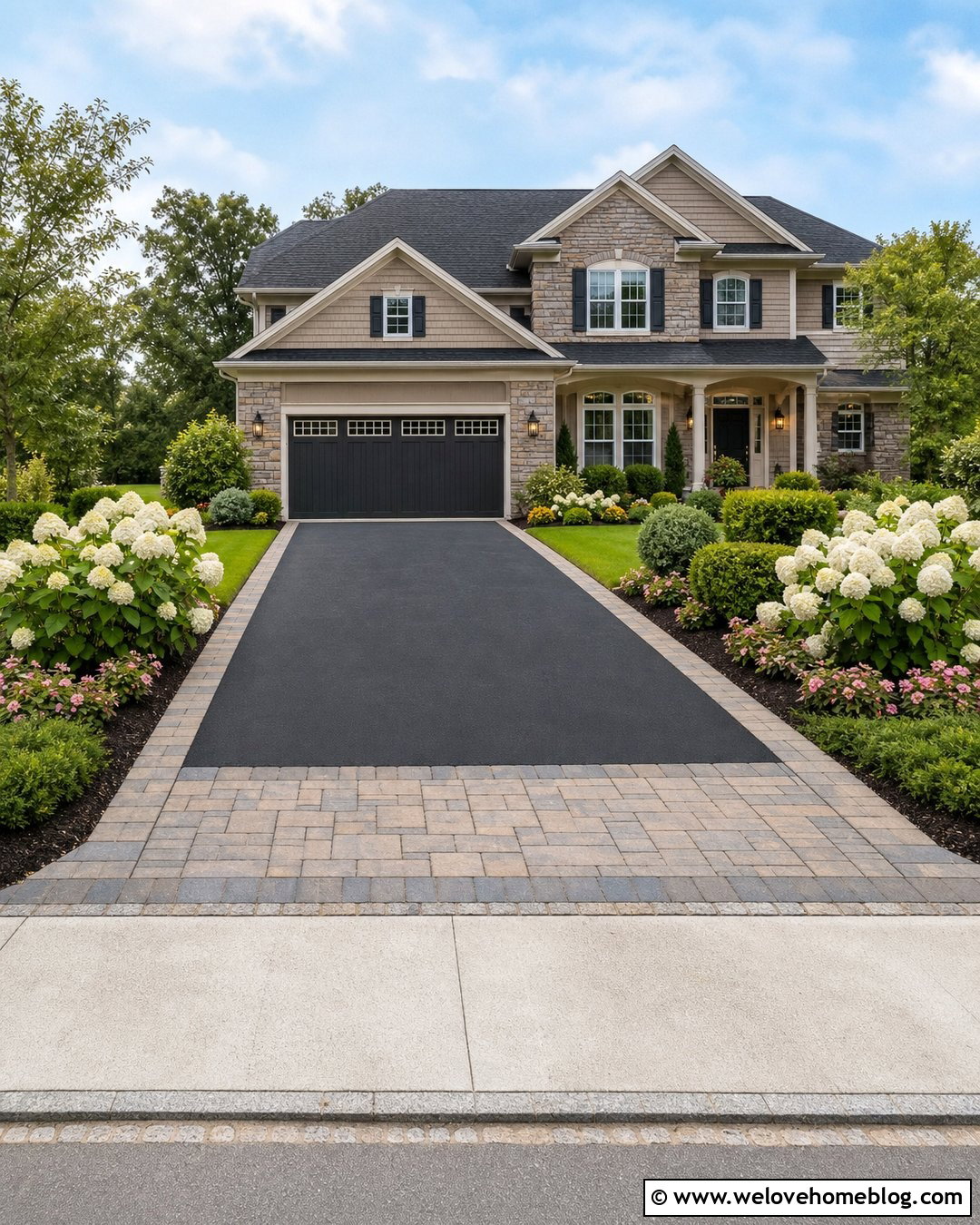
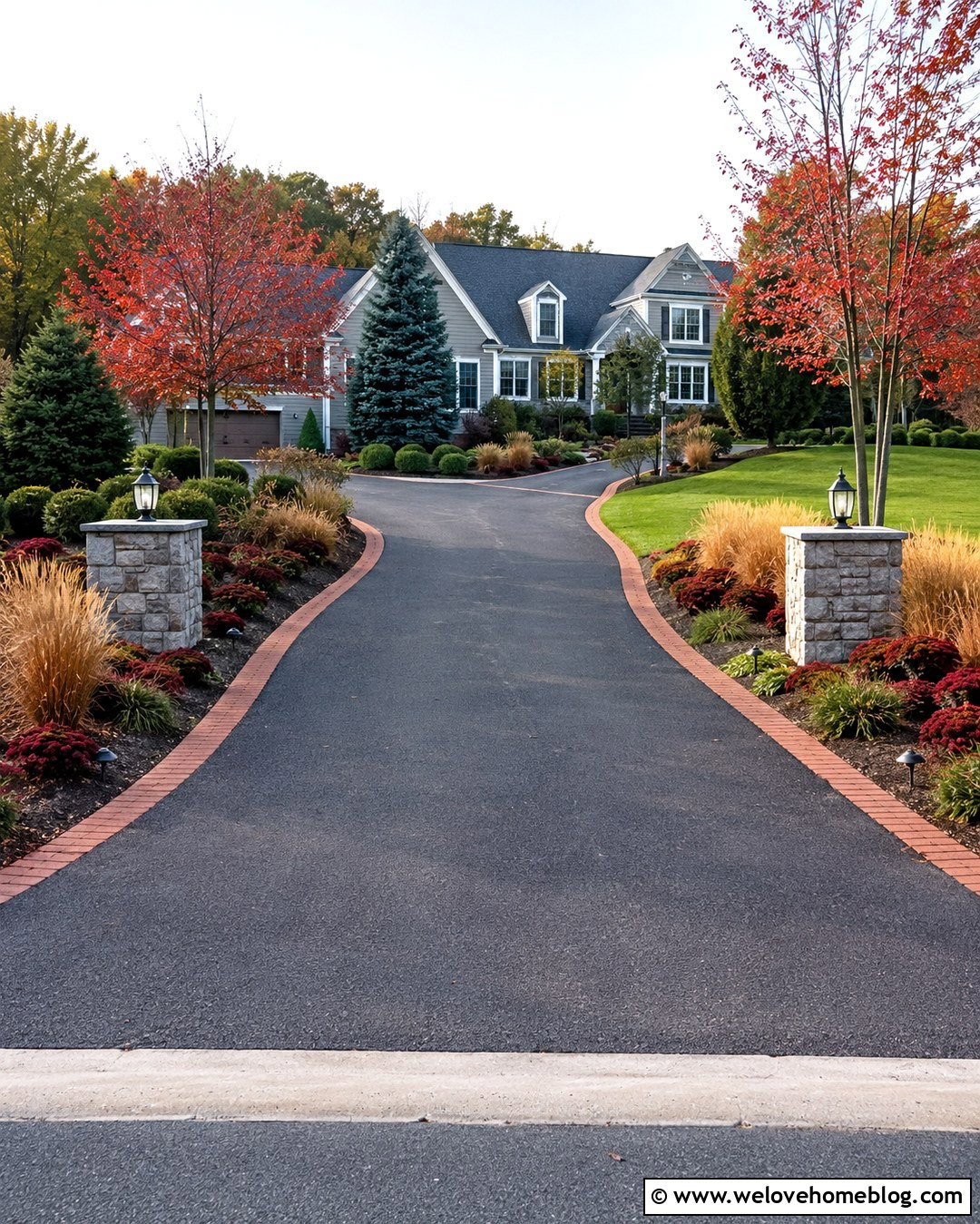
Black asphalt can look polished rather than purely practical when it is framed with contrasting materials. Add a charcoal and tan concrete paver sidewalk that runs parallel to the driveway before turning toward the front door. A matching paver apron and narrow edge ribbon help the dark asphalt relate to the lighter walkway. Along the house, create curved beds filled with compact hydrangeas, dwarf hollies, ground cover, and spring bulbs. Keep the planting lower near the sidewalk junction and driveway entrance to preserve visibility. Mulch gives the beds a tidy finish and makes flower colors stand out against the asphalt. This layout offers an approachable upgrade for suburban homes without requiring replacement of an otherwise serviceable driveway surface.
4. Modern Concrete Driveway And Stepping Stone Sidewalk
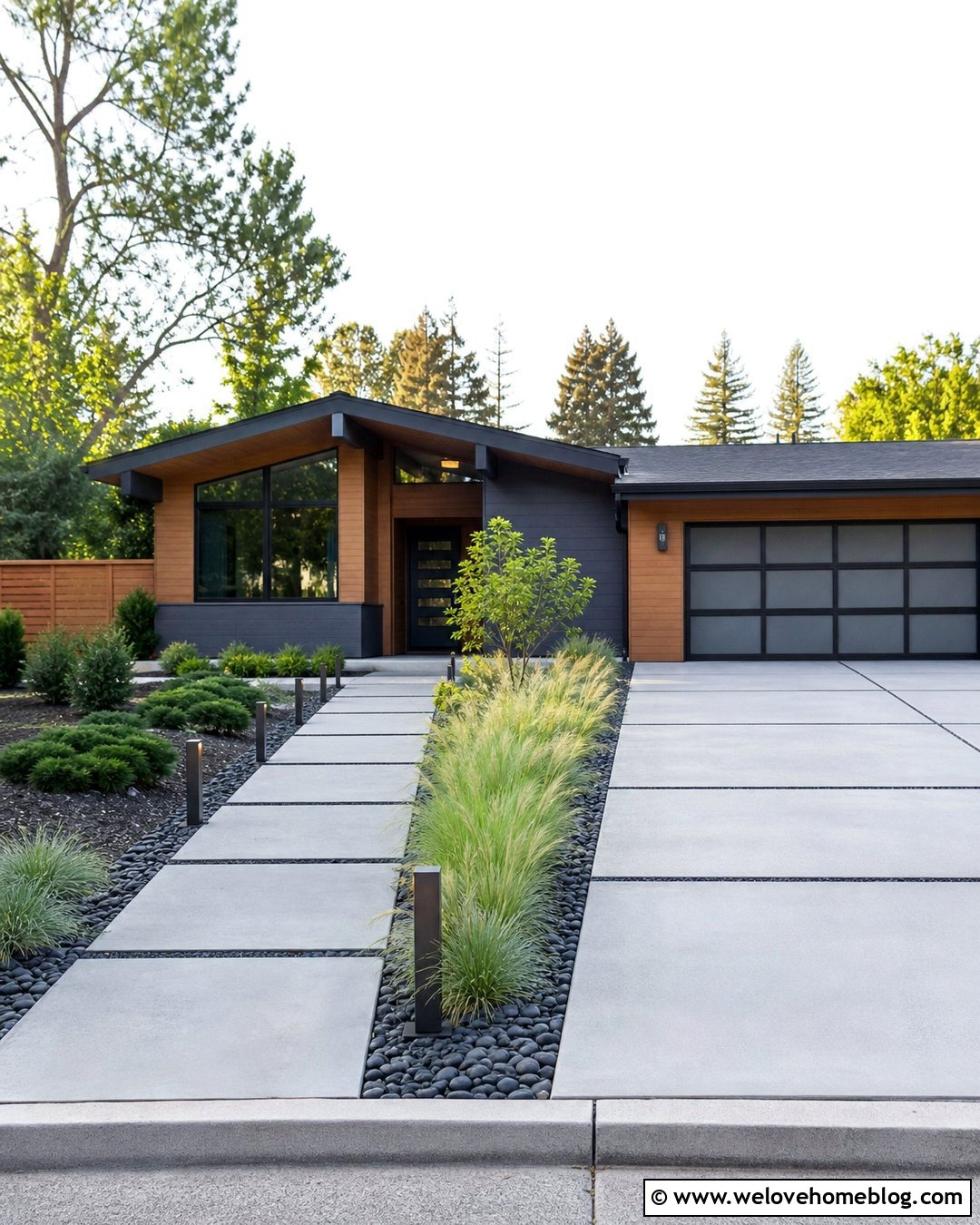
Crisp geometry can transform a modest front yard into a modern entrance. Use large gray poured concrete driveway slabs with narrow gravel joints, then repeat that rectangular shape in an oversized concrete stepping stone sidewalk. A strip of black river rock between the driveway and walkway creates separation without needing a wide garden bed. Add architectural plants such as upright ornamental grasses, compact junipers, agave where climate allows, or low mounded evergreens. The pathway should remain level and closely spaced where it serves as the primary route to the door. A few simple bollard lights can reinforce the clean lines. This driveway and sidewalk combination works best with a modern or midcentury home featuring simple siding, stone, or wood accents.
5. Brick Driveway And Curved Sidewalk With Cottage Flowers
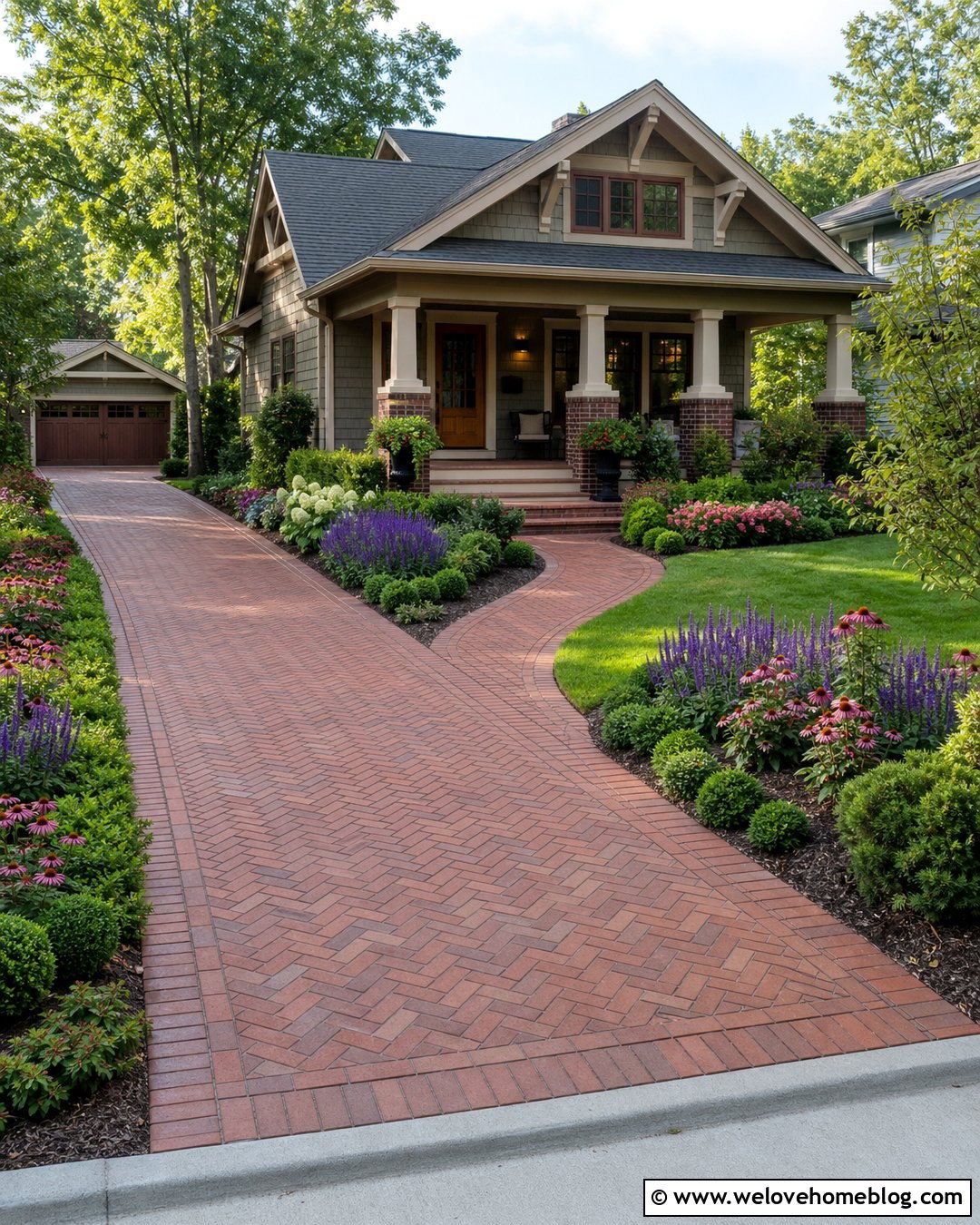
Warm clay brick pavers give a front yard immediate character, especially when the driveway uses a herringbone pattern and the sidewalk follows a softer curve. Frame both surfaces with a soldier-course brick border for a tailored finish. Between the driveway and walkway, plant a cottage-inspired bed with salvia, coneflowers, coreopsis, compact roses, and evergreen mounds. Choose restrained groups of repeated plants instead of mixing too many unrelated varieties. This keeps the landscape colorful without appearing disorganized. Near the driveway, select low plants that tolerate occasional heat and reflected sunlight. The curved sidewalk can widen slightly at the porch to create a welcoming arrival point. This coordinated design complements Craftsman homes, traditional cottages, and Tudor-inspired facades.
6. Circular Driveway And Sidewalk With A Center Garden
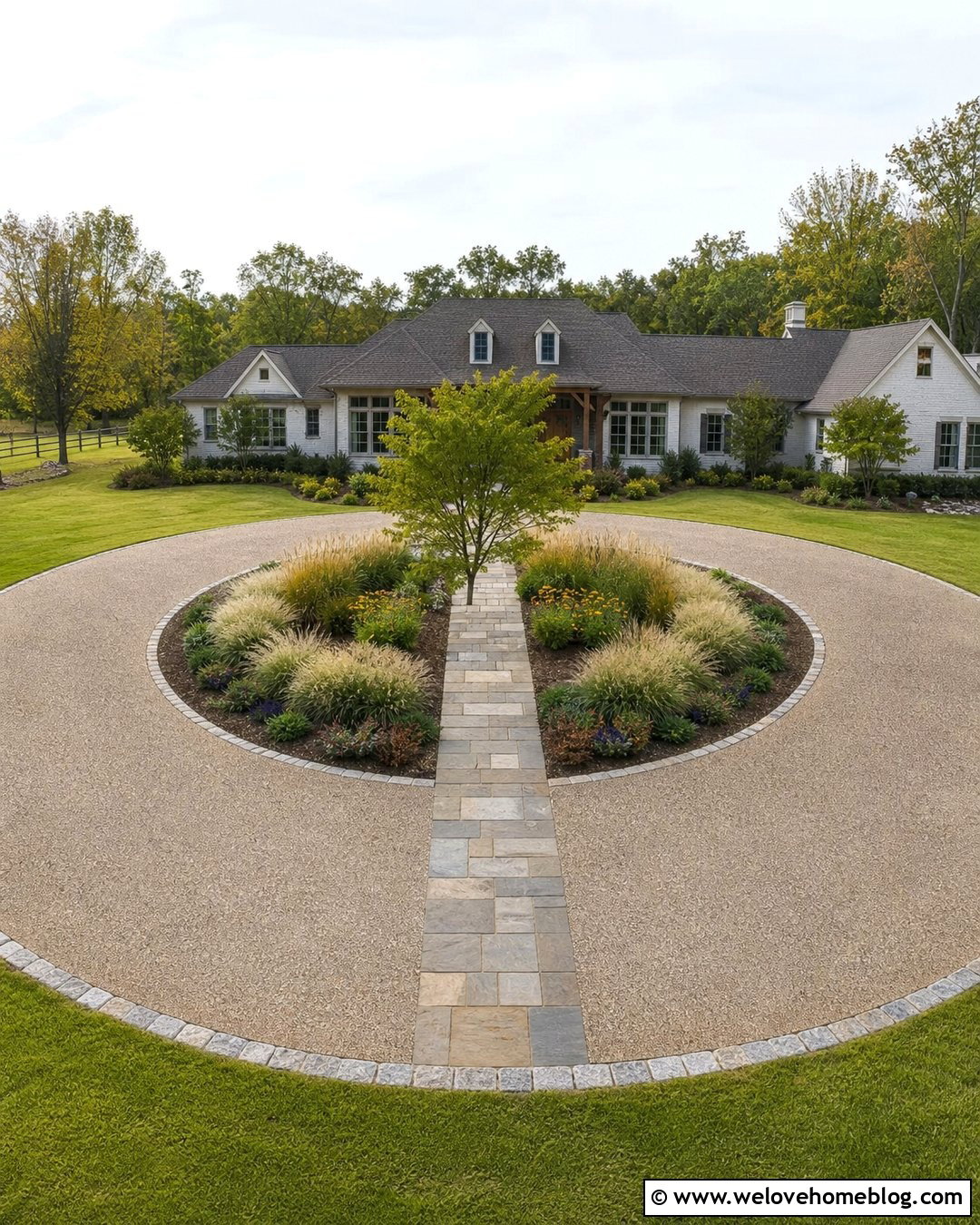
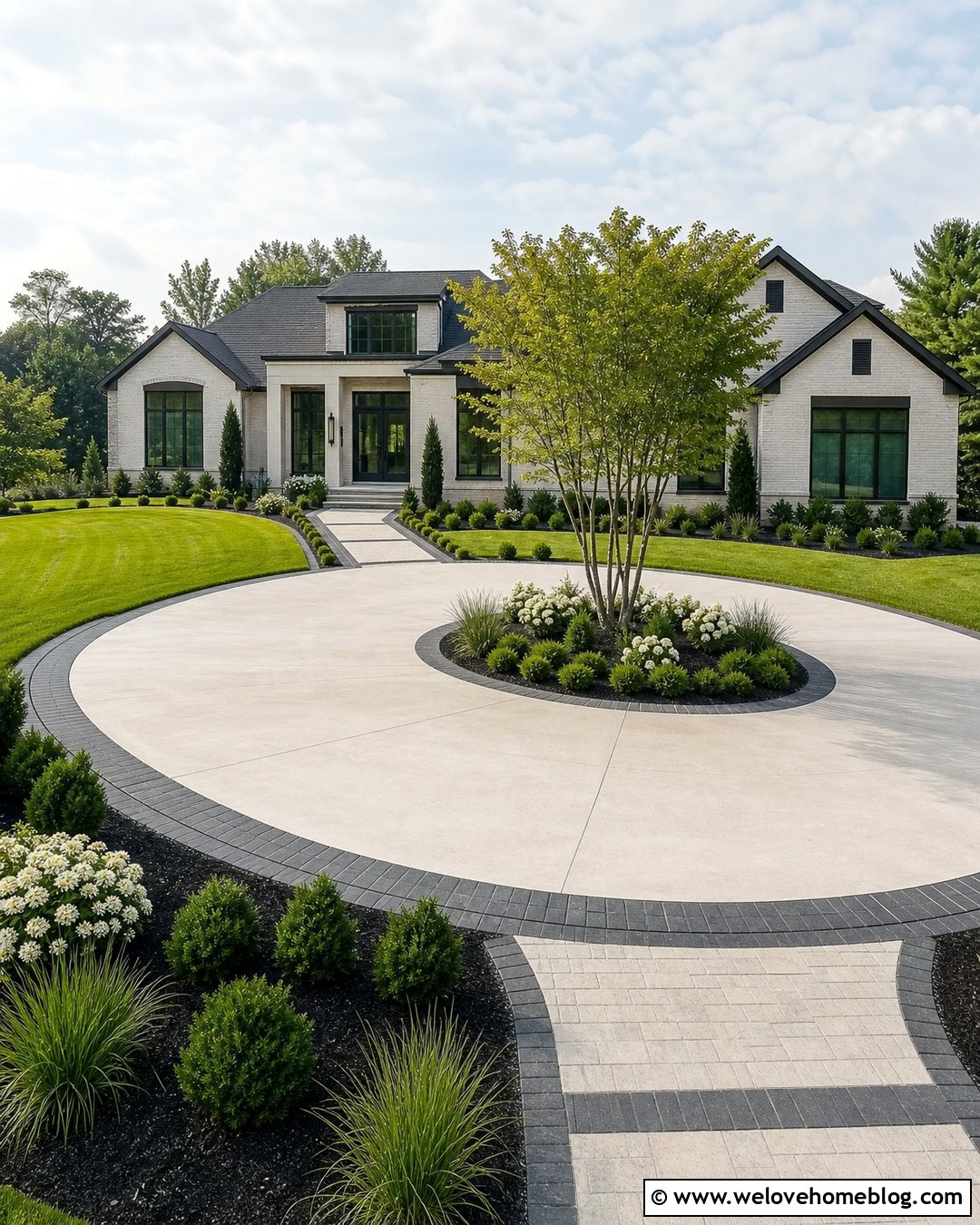
A circular driveway provides a natural setting for a prominent center garden, but the sidewalk still needs a direct and obvious route to the house. Use light exposed aggregate concrete for the circular drive and connect it to a straight flagstone sidewalk that crosses the inner planting island. A low stone curb can define the island without blocking views across the property. Place one small ornamental tree near the center, surrounded by layered grasses, flowering perennials, and low evergreen shrubs. Avoid dense planting at the driveway entrances where it could hide approaching vehicles or pedestrians. Repeating the flagstone around the garden edge visually connects the sidewalk and driveway. The finished arrangement creates a balanced entrance for larger ranch, Colonial, and country homes.
7. Paver Driveway And Sidewalk With Grass Strips
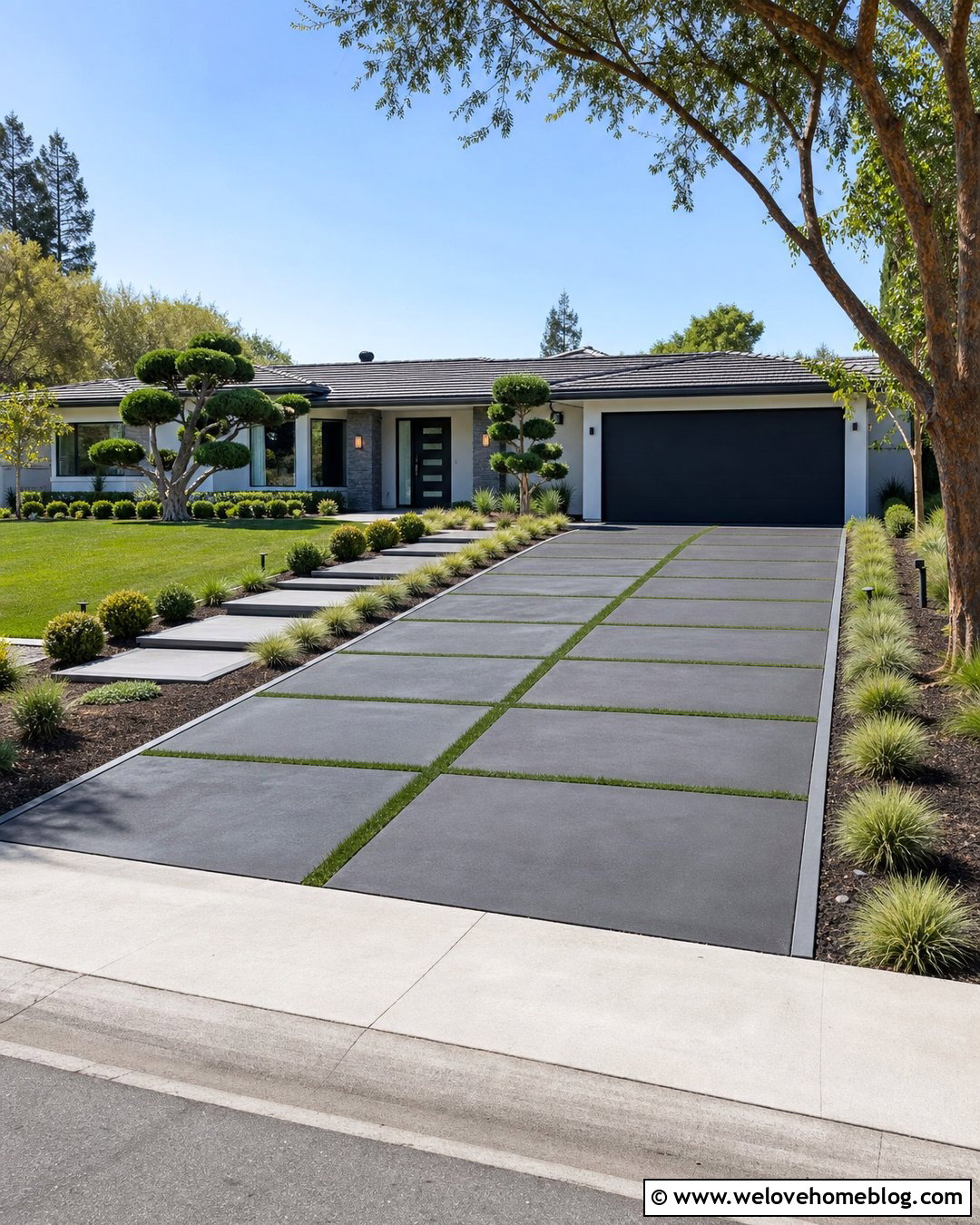
Green joints can soften a broad paved entrance and give a contemporary property a garden-focused appearance. Build the driveway with large charcoal concrete pavers separated by narrow reinforced grass strips, then continue the paver format into a solid sidewalk leading to the front door. Because the pedestrian route needs a stable surface, reserve planted joints for decorative sections rather than the main walking line. Border the layout with simple beds containing dwarf grasses, clipped shrubs, and one or two sculptural trees. Use sturdy edging where lawn meets pavers to maintain crisp boundaries. This combination reduces the visual weight of the driveway while keeping its geometry clear. It is particularly effective for modern houses, renovated ranch homes, and compact urban properties.
8. Cobblestone Driveway And Stone Sidewalk With Evergreen Landscaping
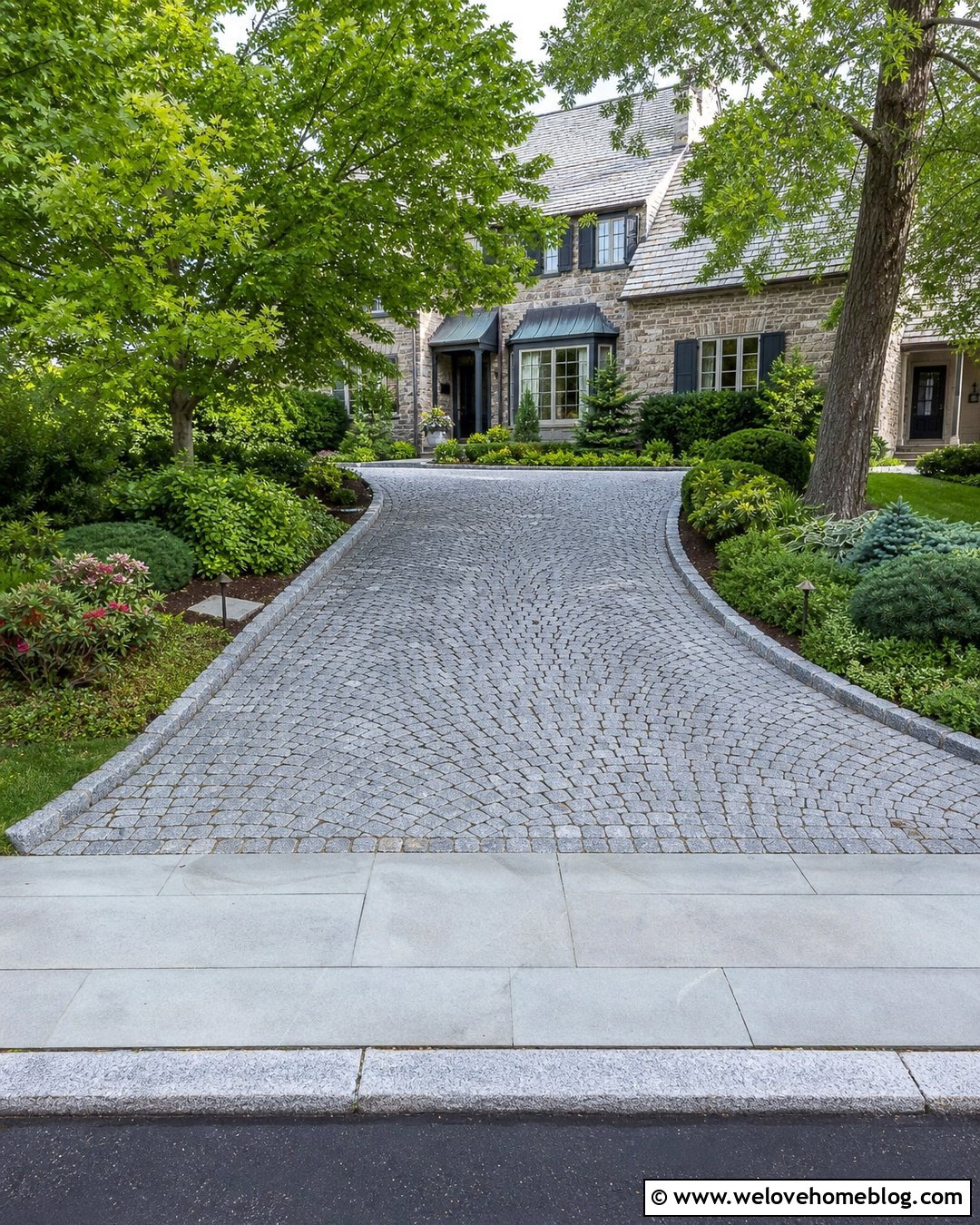
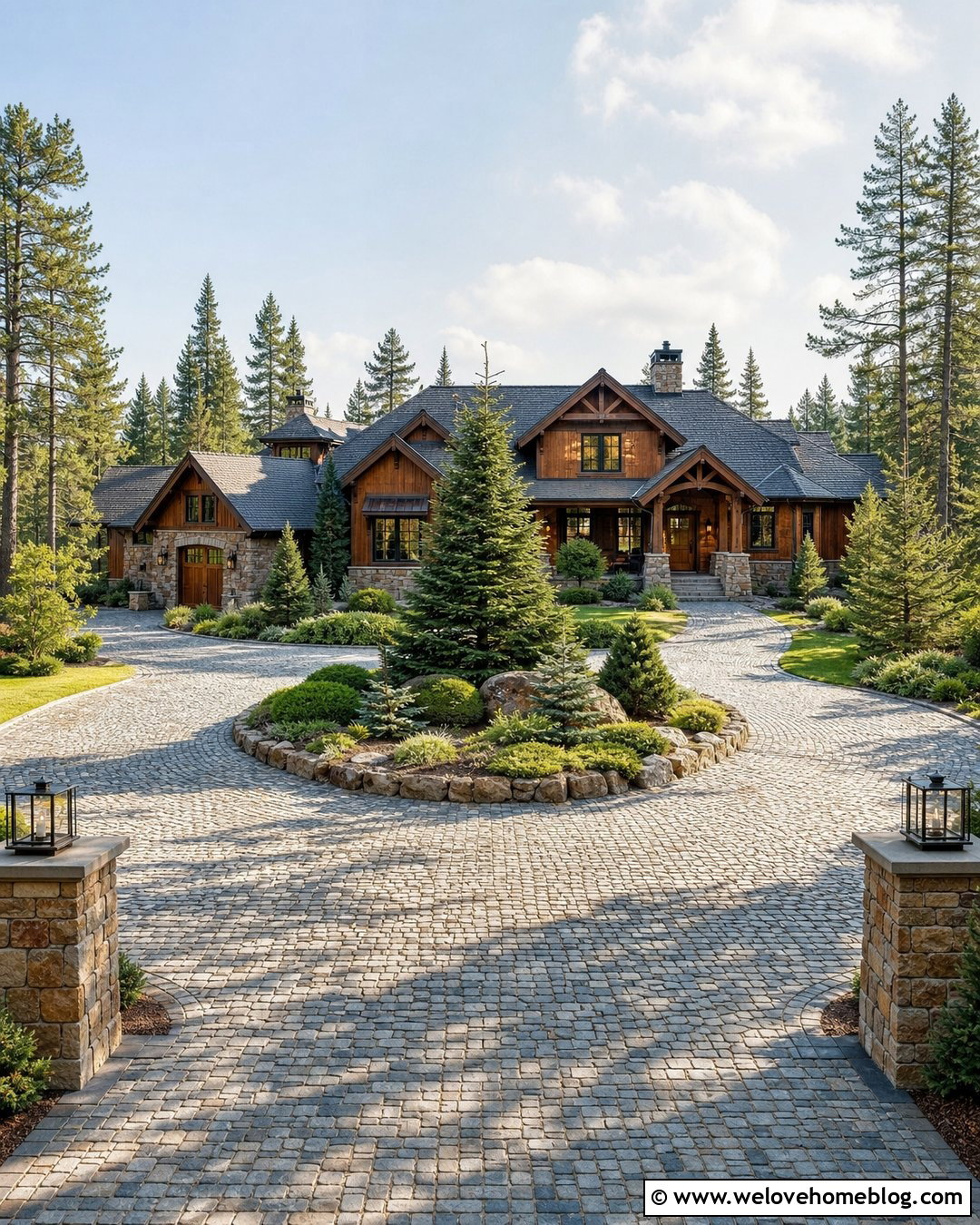
The uneven color and texture of granite cobblestone create a substantial entrance that pairs naturally with a smooth-cut bluestone sidewalk. Lay the cobblestones in gentle arcs across a straight or slightly curved driveway, then use larger bluestone slabs for a more comfortable walking surface. Deep planting beds can frame the approach with yew, inkberry, dwarf spruce, and low ground covers. Add flowering shrubs near the house for seasonal interest, but allow the evergreens to provide the main structure. Granite setts along the sidewalk edges will connect the two materials without making every surface identical. This durable-looking arrangement suits stone houses, traditional estates, and wooded properties. Use careful grading so water moves away from planting beds and pedestrian areas.
9. Driveway And Sidewalk Corner Garden With A Small Tree
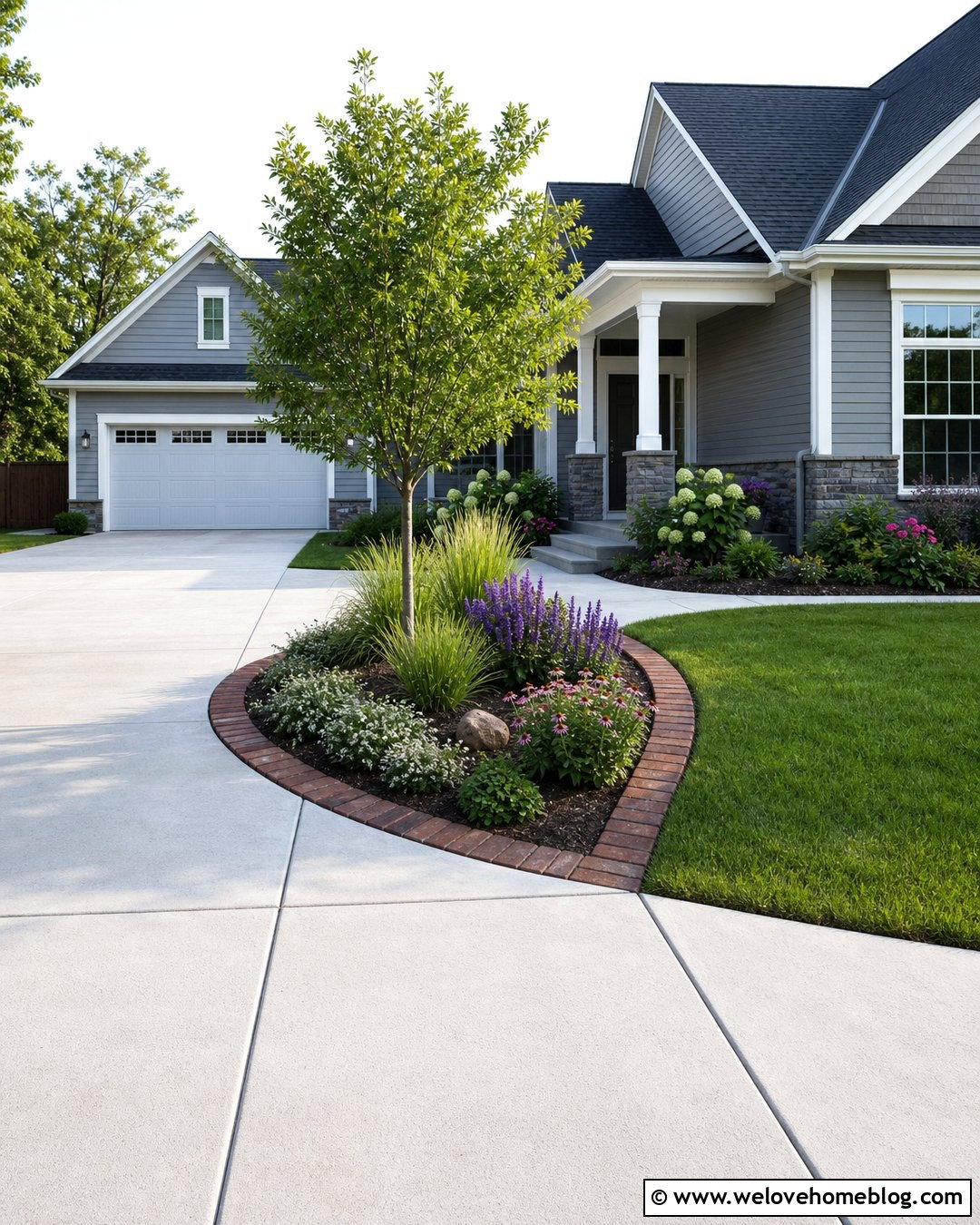
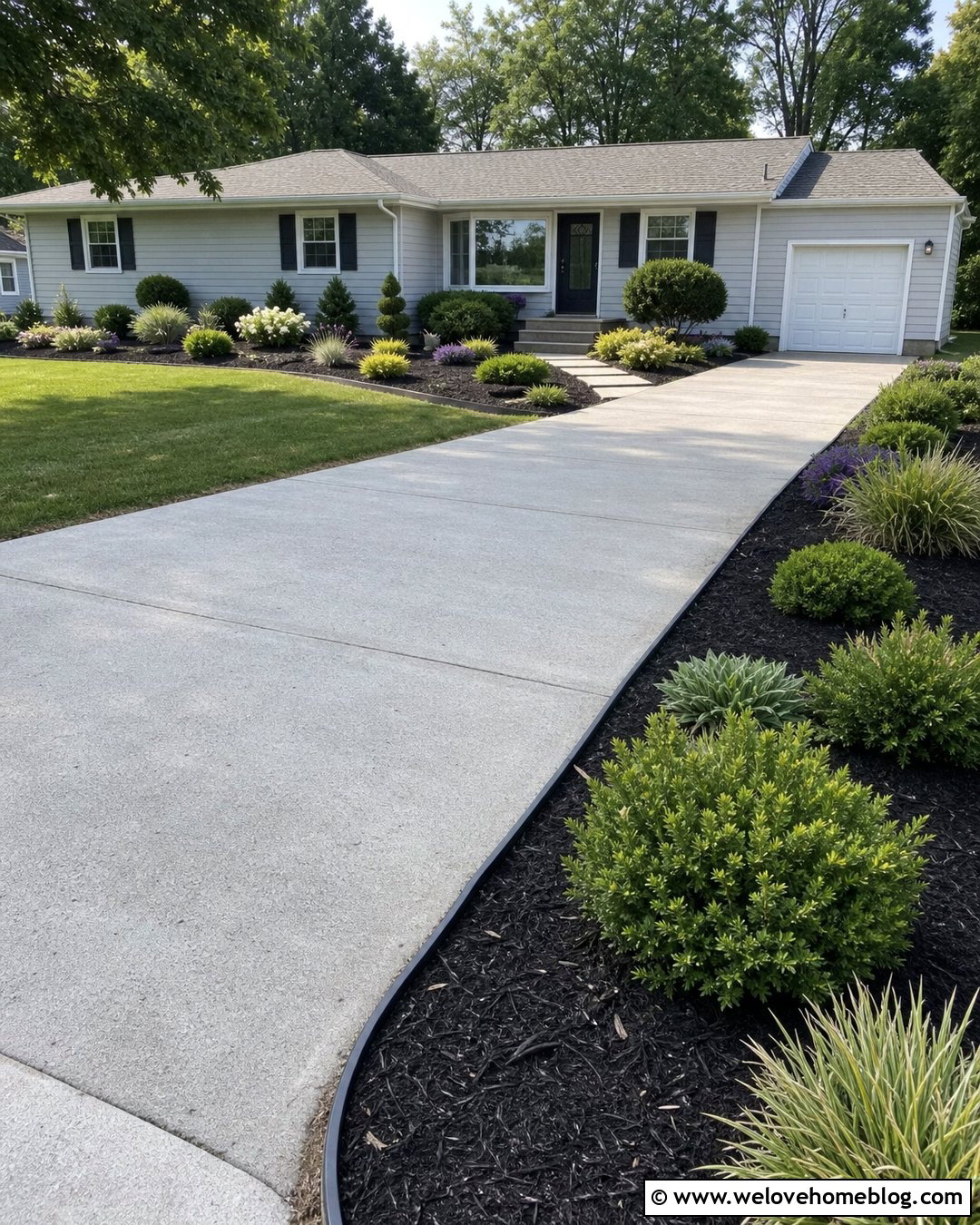
The corner where a driveway meets the sidewalk often feels empty, yet it is one of the most visible parts of the front yard. Pair a smooth gray concrete driveway with a matching sidewalk, then shape a generous curved garden around their junction. A small ornamental tree can create height without forming a heavy visual barrier. Underplant it with low grasses, spreading ground cover, flowering perennials, and a tidy stone or brick edge. Keep the trunk and taller foliage set back from the street to protect essential sightlines. Continue a narrower version of the bed along the driveway to make the corner garden feel connected to the house. This simple plan improves builder-grade landscapes and works with nearly any suburban home exterior.
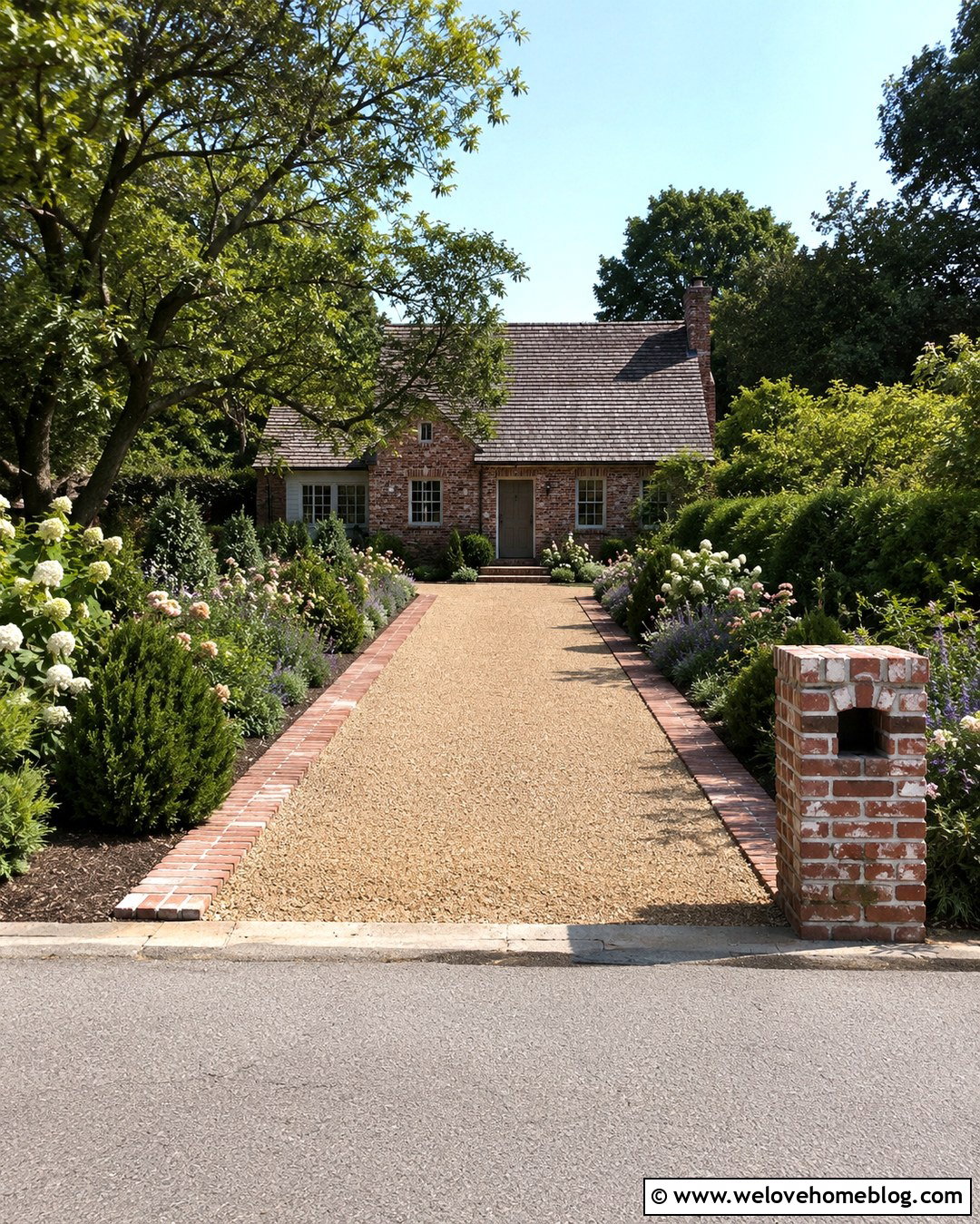
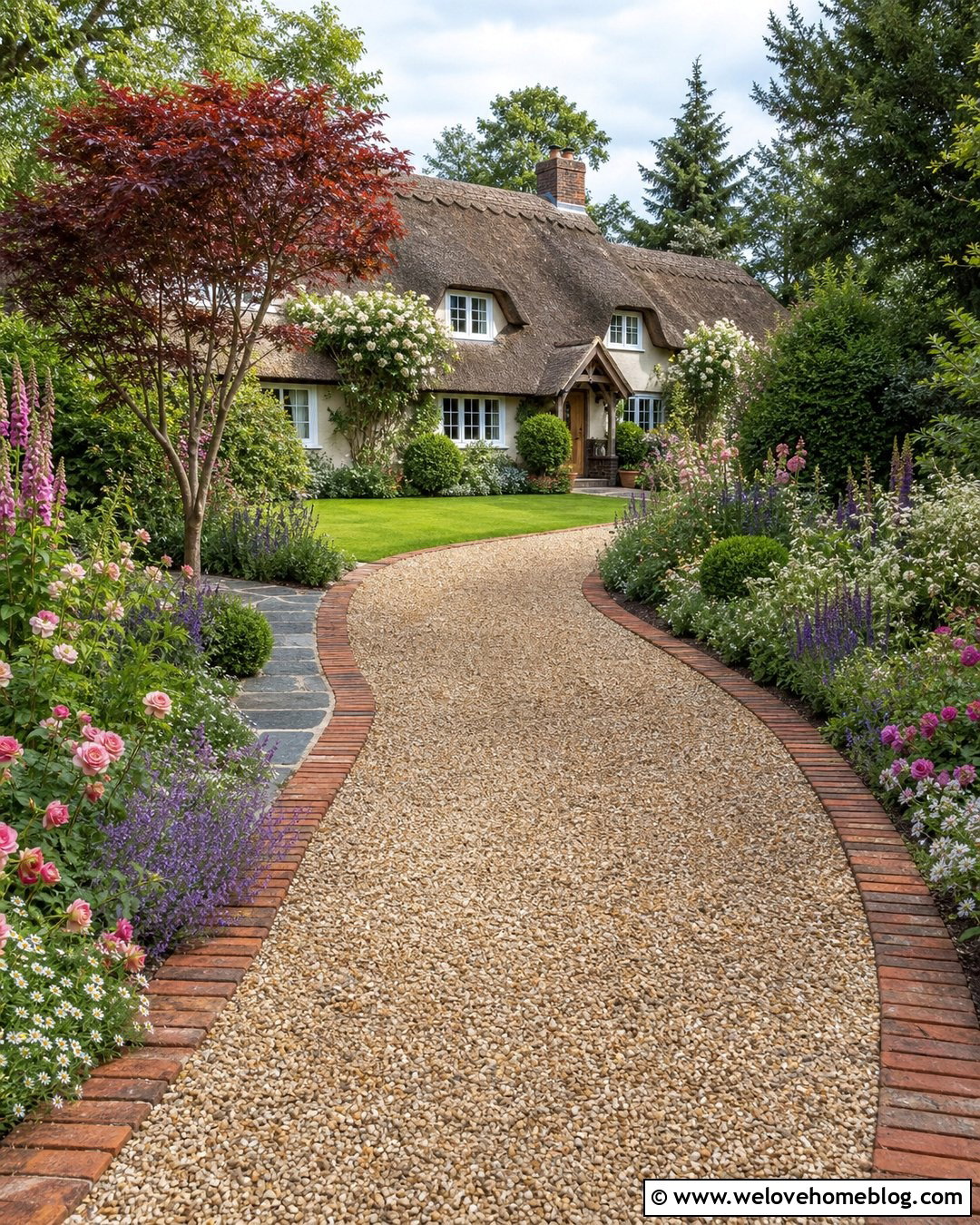
10. Sloped Driveway And Sidewalk With Retaining Wall Beds
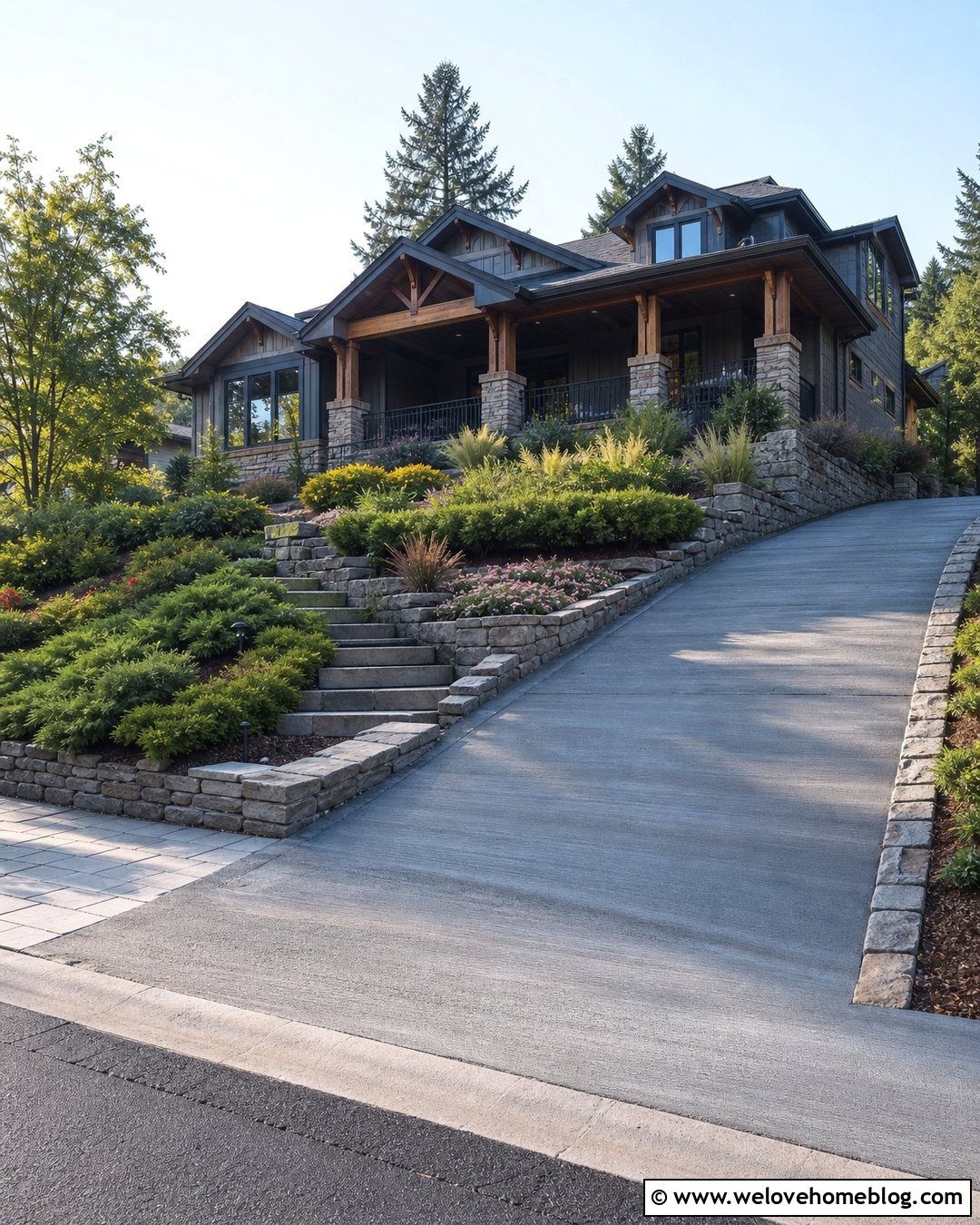
A sloped front yard needs landscaping that manages elevation while maintaining a clear route from the street to the entrance. Use a broom-finished poured concrete driveway with a separate concrete paver sidewalk positioned along the gentler side of the slope. Low natural stone retaining walls can create level planting terraces between the two surfaces. Fill those terraces with spreading junipers, ornamental grasses, compact flowering shrubs, and erosion-resistant ground covers suited to local conditions. Integrate broad steps only where the sidewalk grade requires them, and provide an alternative accessible route when possible. Repeating the retaining-wall stone as driveway edging gives the project a cohesive appearance. This complete layout works beautifully with hillside Craftsman, contemporary, and split-level homes.
11. Narrow Driveway And Sidewalk With Vertical Landscaping
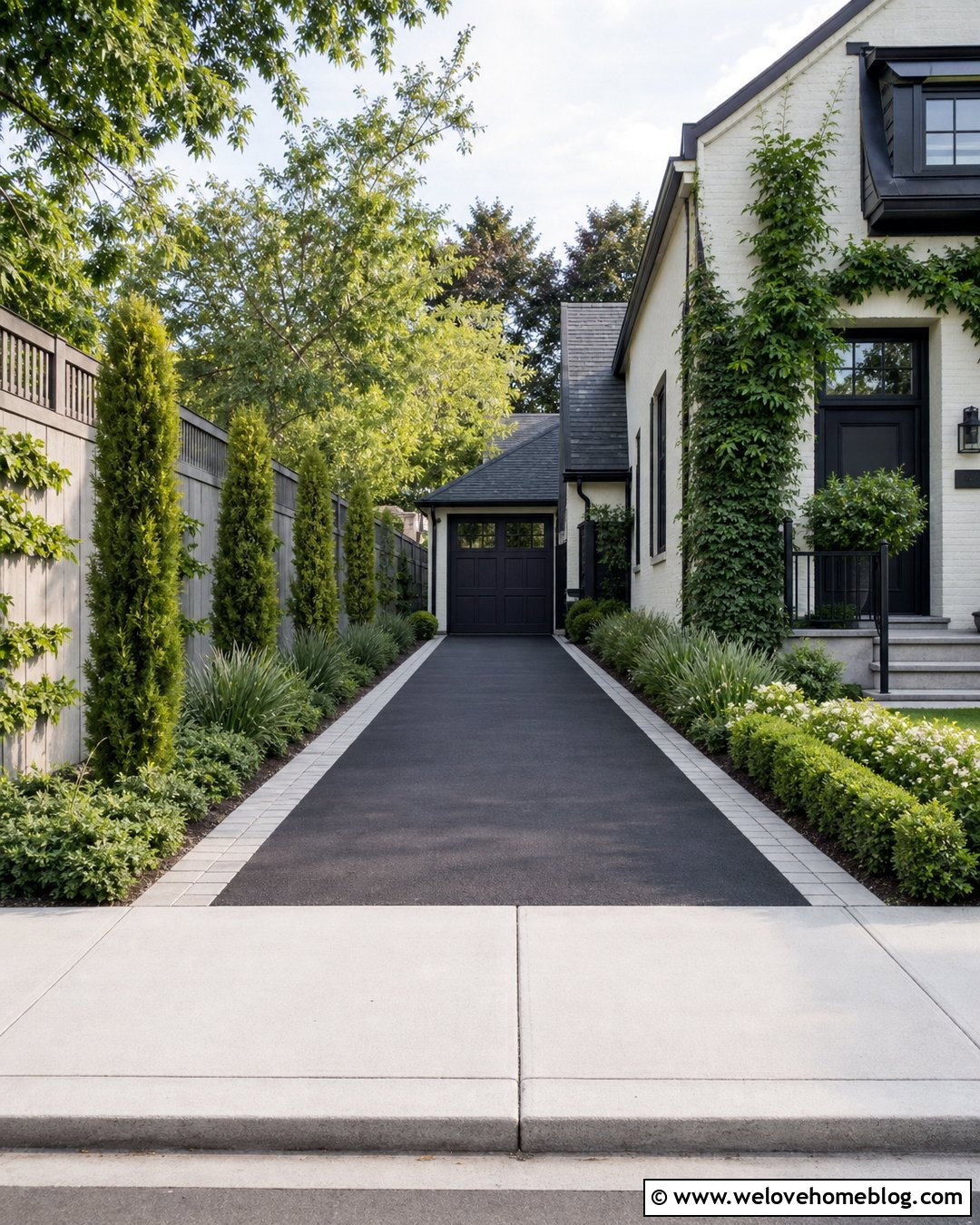
Limited width does not mean the approach has to feel cramped. A narrow black asphalt driveway can be edged with a slim band of light concrete pavers, while a straight poured concrete sidewalk runs beside it toward the porch. Instead of deep beds, use columnar evergreens, narrow ornamental grasses, espaliered shrubs, or climbing plants supported against a fence. These choices add greenery without interfering with vehicle doors or pedestrian movement. A low ground-cover strip between the driveway and sidewalk can soften the hardscape while preserving useful space. Keep branches trimmed away from the walking route and avoid thorny plants near parking areas. This organized design is practical for urban lots, townhomes, side-entry garages, and homes with closely spaced neighboring properties.
12. Driveway And Sidewalk With Drought Tolerant Landscaping
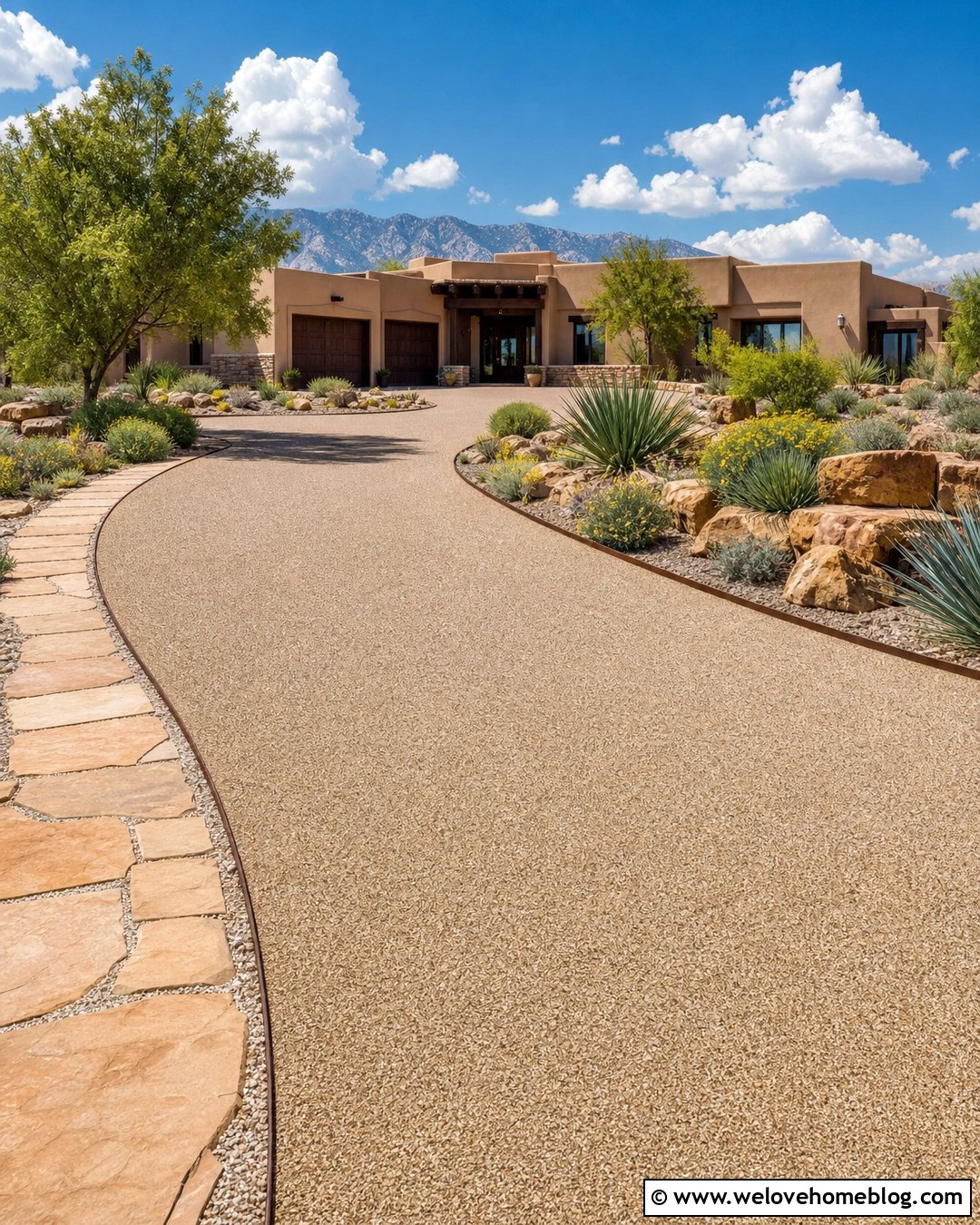
Sun, heat, and limited irrigation call for a landscape that looks intentional without demanding constant watering. Combine a tan resin-bound gravel driveway with a sandstone paver sidewalk, using rust-colored steel edging to define both surfaces. Surround them with broad sweeps of ornamental grasses, yucca, sedum, sage, low juniper, and climate-appropriate native perennials. Decorative gravel mulch can visually extend the driveway color into the planting beds while reducing exposed soil. Place larger rocks in small groups rather than scattering them randomly. Plants near the driveway should tolerate reflected heat and occasional dryness. This design creates a warm, layered entrance for Southwestern, contemporary, and modern ranch homes while keeping the pedestrian route smooth, open, and easy to recognize.
13. Driveway And Sidewalk With Native Plant Borders
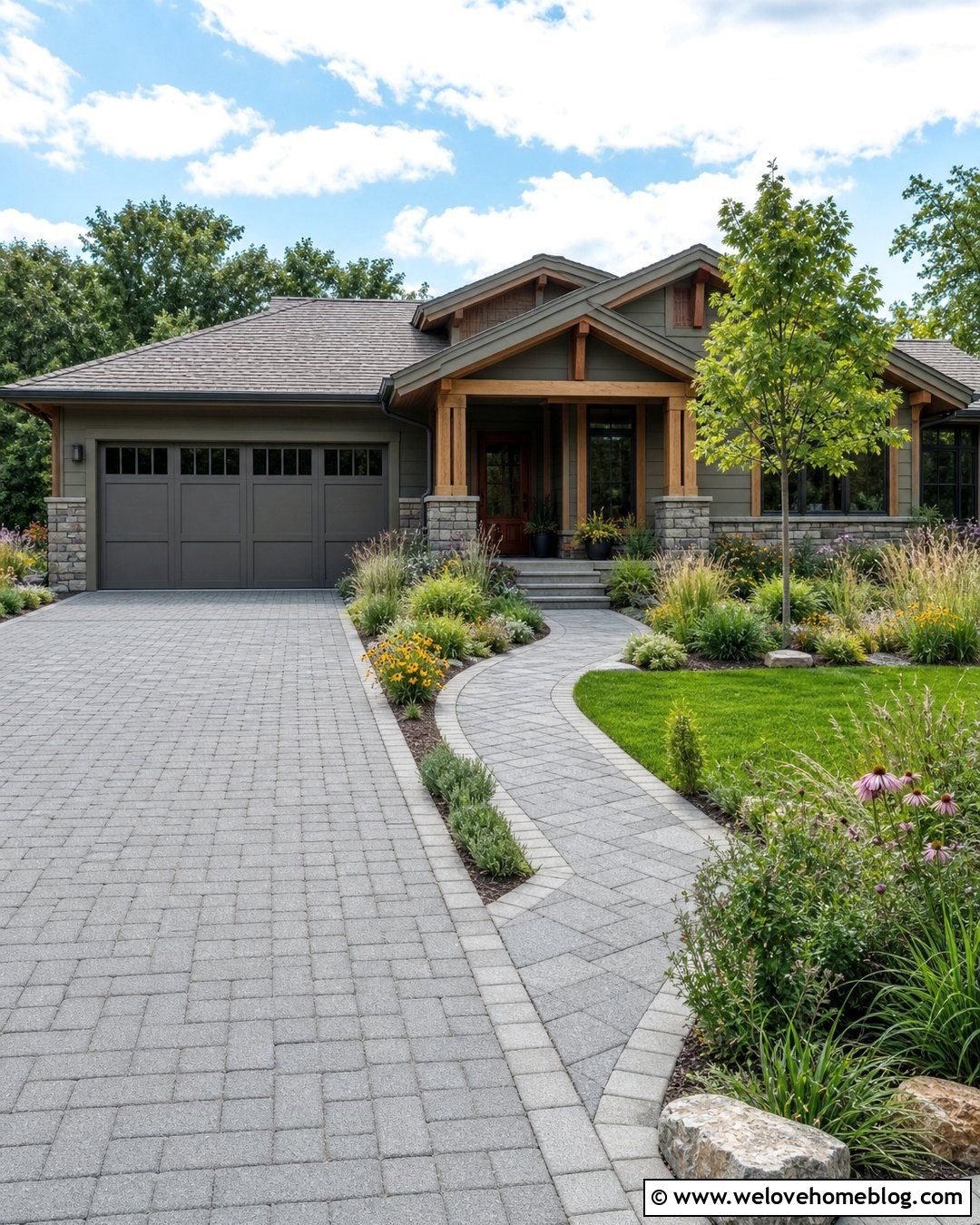
A front landscape can feel colorful and connected to its setting when native plants frame both the driveway and sidewalk. Start with a medium-gray permeable paver driveway and a coordinating solid paver walkway. Create curved planting beds that widen near the house and narrow toward the street. Fill them with locally suitable native grasses, flowering perennials, compact shrubs, and one understory tree. Repeat each plant in groups to prevent the garden from looking cluttered. A clean stone border will help contain the beds and protect plants from tires. Since mature sizes vary, leave enough clearance for vehicles, snow removal, and sidewalk users. This adaptable approach complements Craftsman, cottage, prairie-inspired, and contemporary homes across many US growing regions.
14. Driveway And Sidewalk With River Rock Drainage Beds
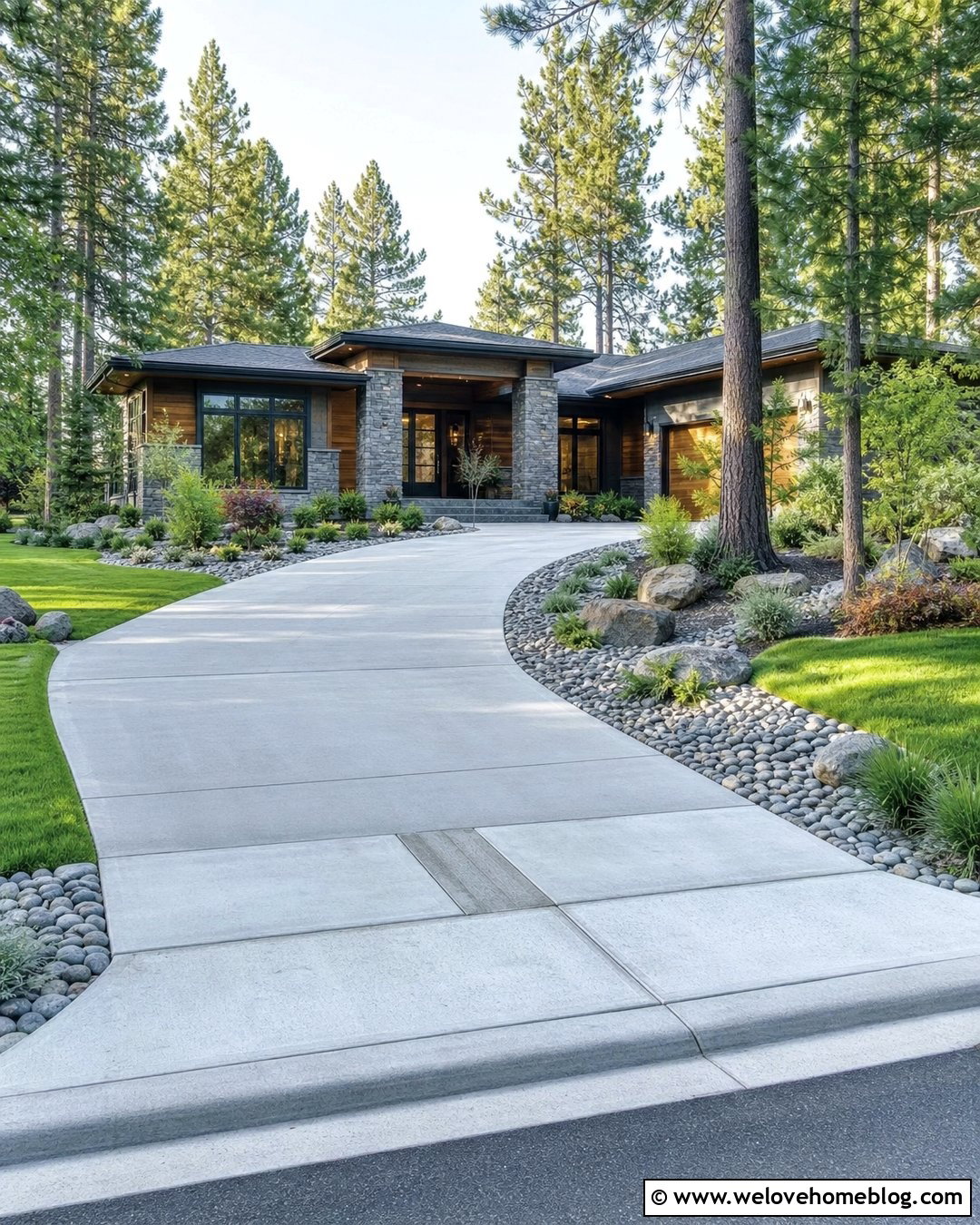
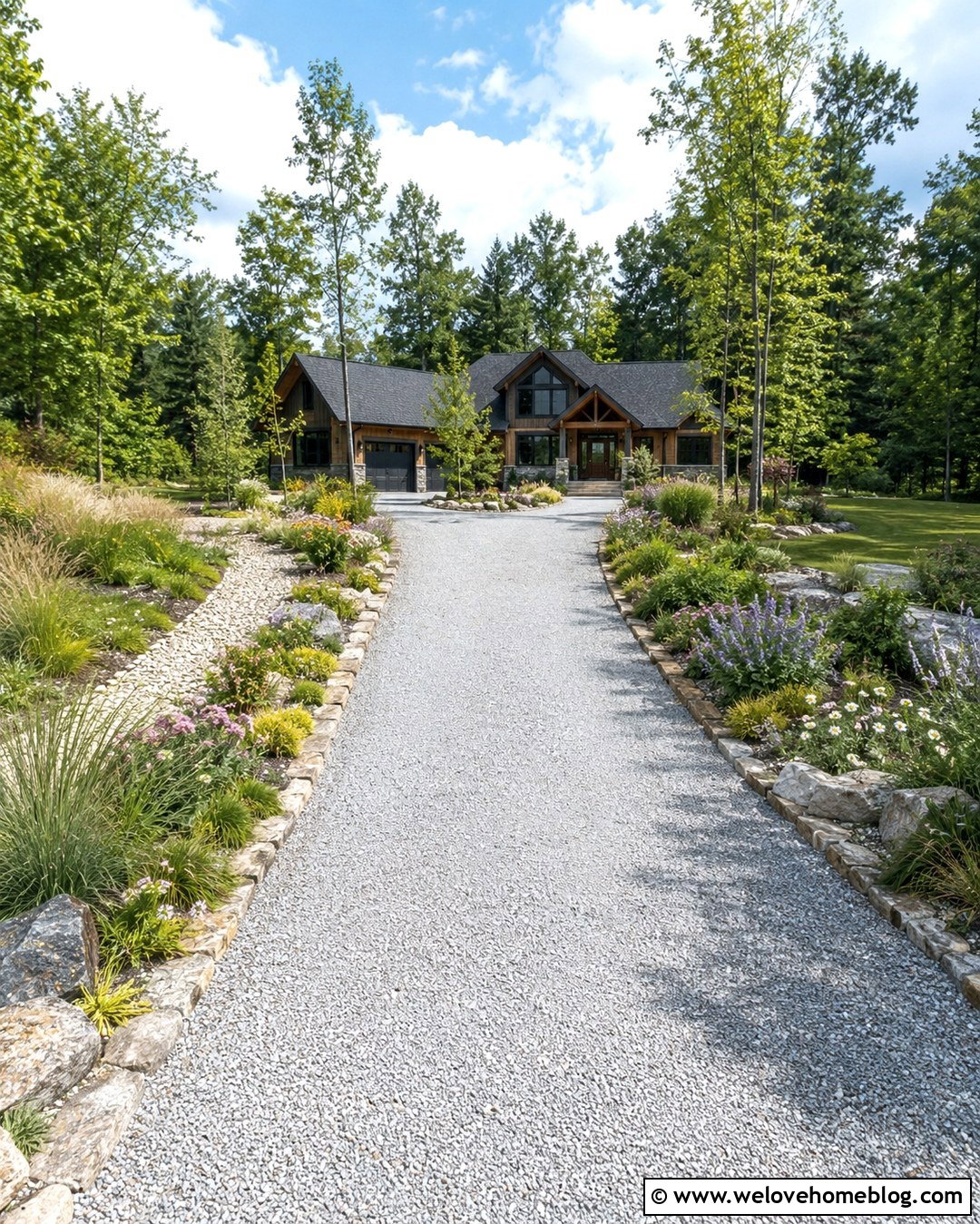
After heavy rain, water should not collect where people walk or where vehicles enter the property. A light-gray concrete driveway and matching sidewalk can be bordered by shallow river rock drainage beds that resemble natural dry creeks. Curve one bed along the lower side of the driveway and carry it beneath the sidewalk through a properly designed drainage crossing. Add moisture-tolerant grasses and low shrubs along the edges, keeping plant roots and loose stones away from the walking surface. Larger accent rocks can anchor bends and transitions. The driveway border, sidewalk crossing, and planting beds should follow one continuous drainage plan rather than serving as unrelated decorations. This natural-looking solution fits ranch, Craftsman, woodland, and contemporary homes.
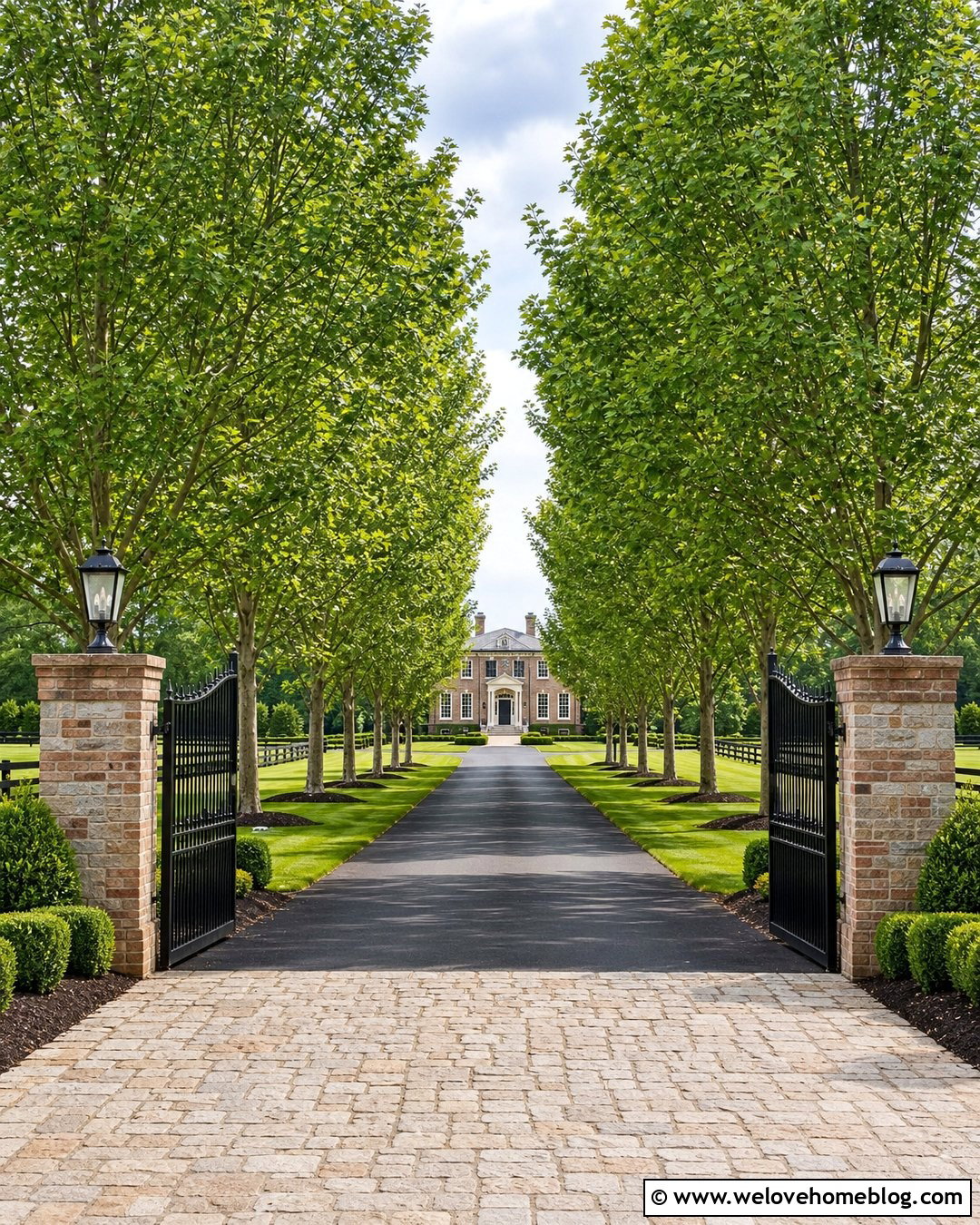
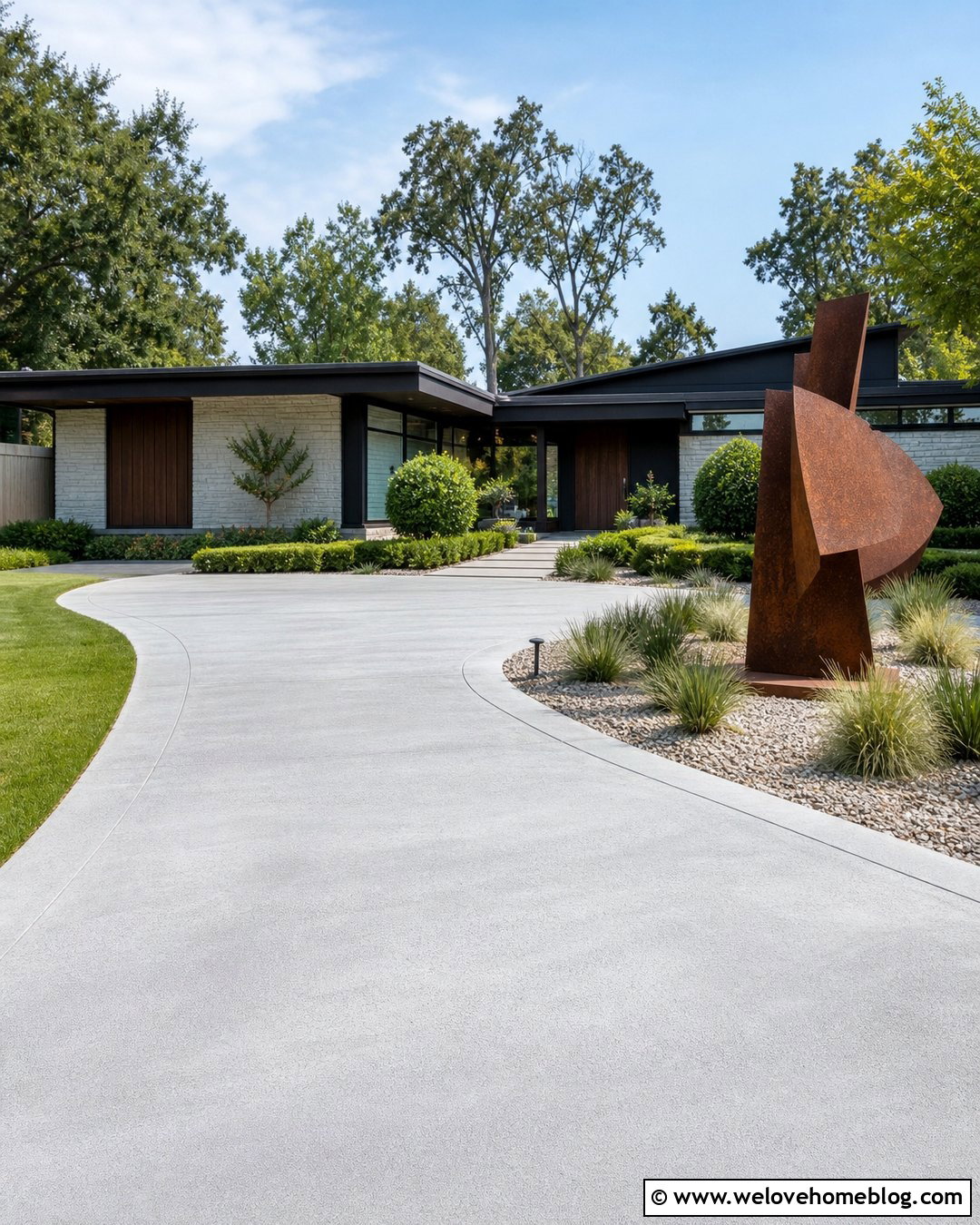
15. Driveway And Sidewalk With Low Maintenance Evergreen Beds
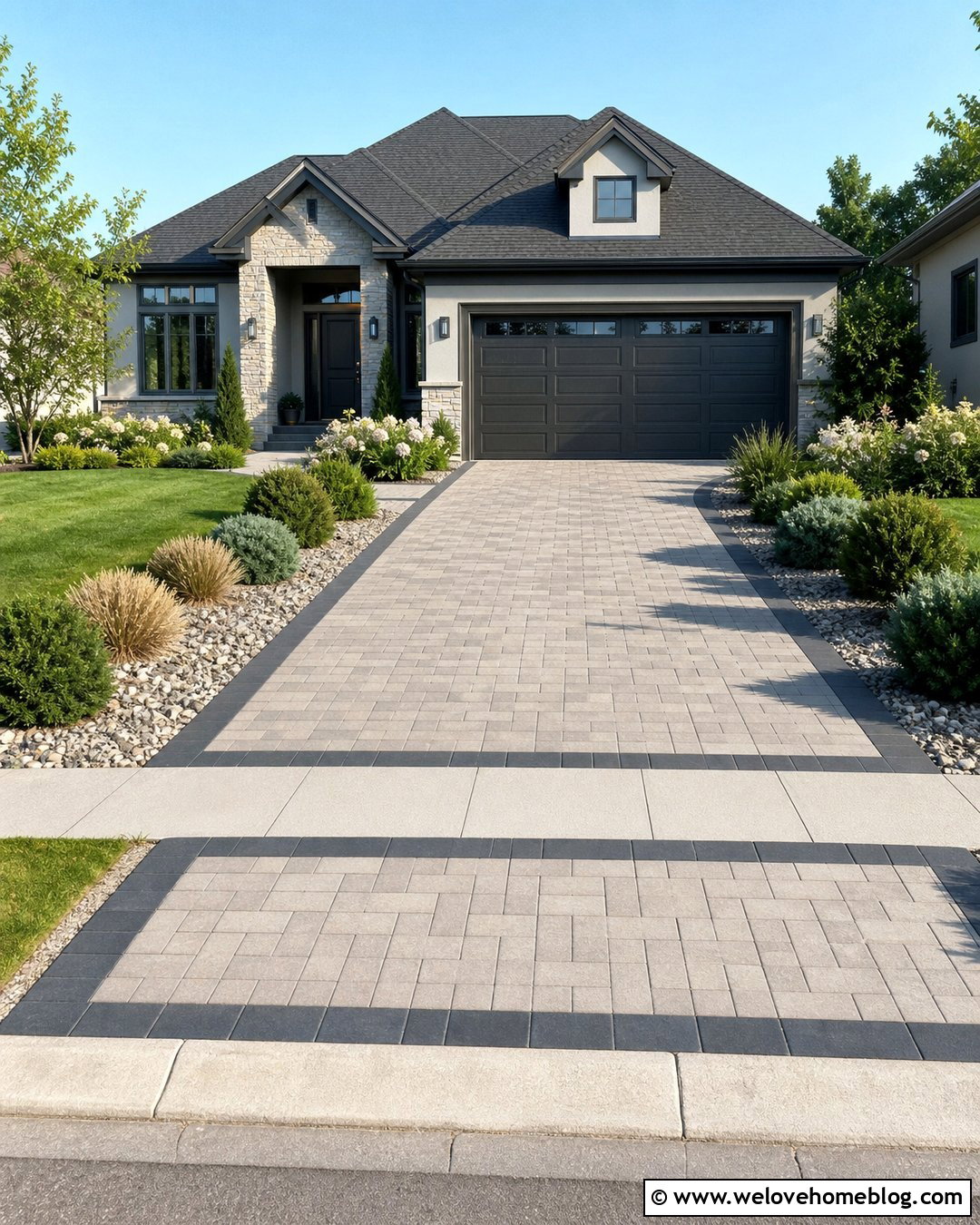
For a consistently tidy entrance, choose a limited planting palette that holds its shape through multiple seasons. Pair a warm gray interlocking concrete paver driveway with a straight matching sidewalk and contrasting charcoal borders. Plant low evergreen mounds, spreading junipers, dwarf ornamental grasses, and one compact flowering shrub variety in repeated groups. Cover open soil with uniform stone mulch or shredded bark, depending on the home’s architecture. Broad, simple planting masses are easier to read from the street than many small specimens. Leave clear space around utility boxes, lighting, and drainage outlets. The result feels polished without relying on constant seasonal color. This dependable layout works for busy households, rental properties, and homeowners who prefer restrained suburban landscaping.
16. Driveway And Sidewalk With Ornamental Grass Borders
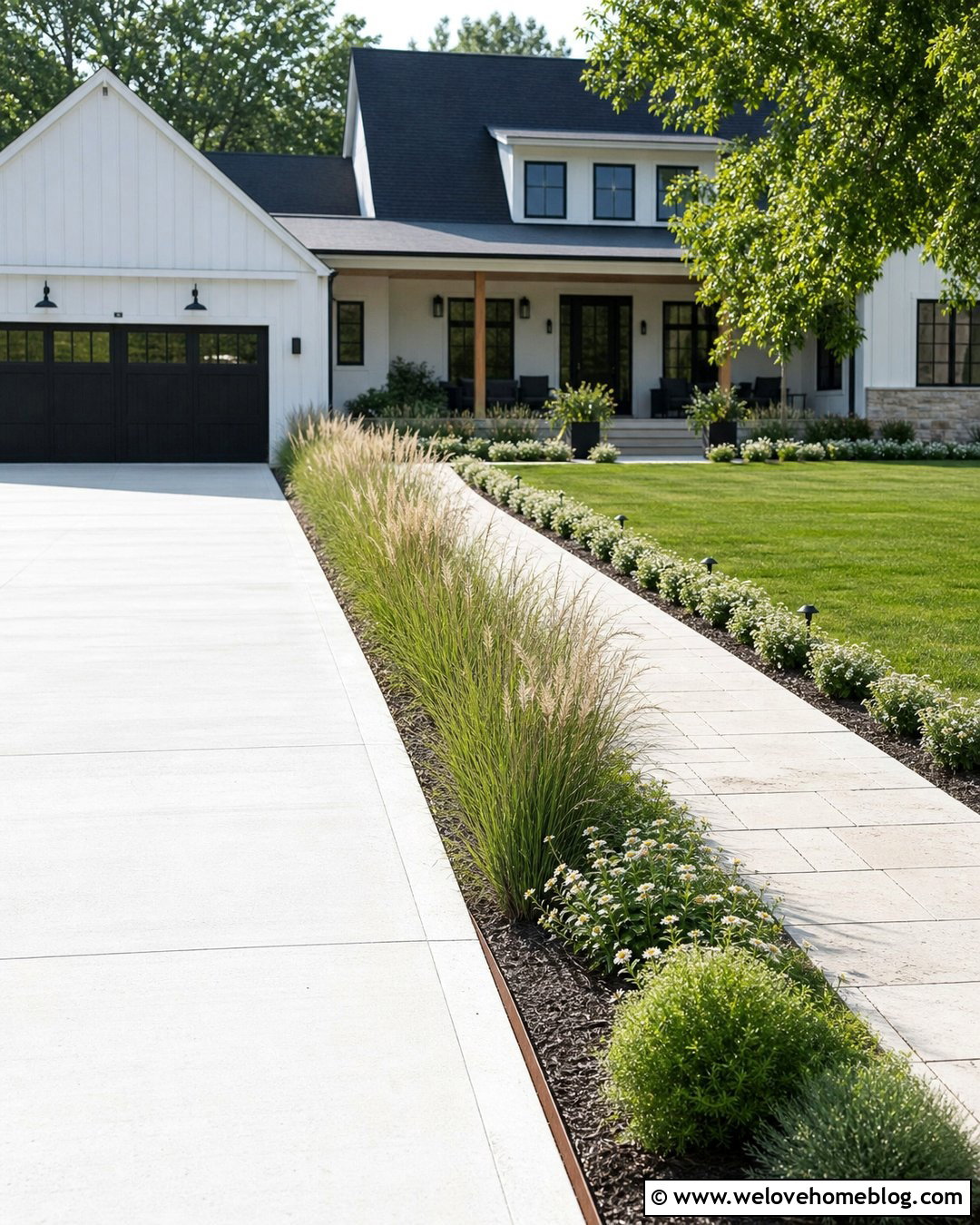
Soft movement from ornamental grasses can balance the rigid lines of a driveway and sidewalk. Use smooth white-gray concrete for a straight driveway, then add a sidewalk made from large rectangular limestone pavers. Create wide beds along the outer edges and plant grasses in repeating drifts, mixing upright forms with smaller mounded varieties. Low flowering perennials can fill gaps and provide controlled color. Avoid tall grasses beside the driveway entrance, where they may interfere with views, and select noninvasive varieties appropriate for the region. A narrow steel edge gives the beds a clean outline against the lawn. This combination suits modern farmhouse, prairie, contemporary, and transitional houses, especially when the landscape repeats the horizontal lines of the architecture.
17. Driveway And Sidewalk With Mailbox Landscaping
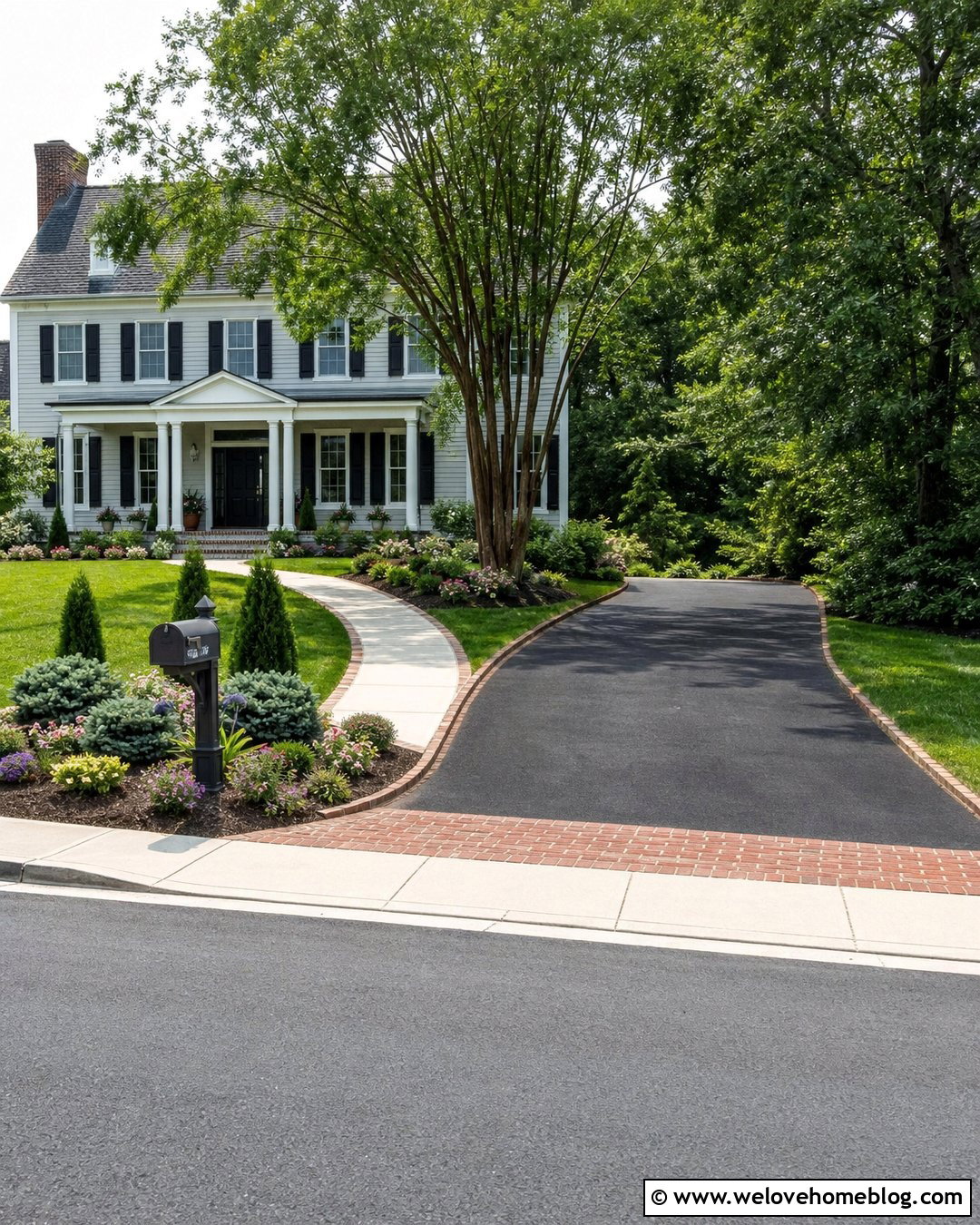
A thoughtfully landscaped mailbox can connect the street edge to the rest of the property. Start with a charcoal asphalt driveway and a light concrete sidewalk, then use a red brick ribbon to outline the driveway apron and nearby walkway crossing. Build a curved planting bed around the mailbox with compact evergreens, low flowering perennials, and durable ground cover. Repeat the same plants in smaller groups along the driveway and near the porch. This repetition keeps the mailbox from looking like an isolated garden. Maintain easy access for deliveries and leave sufficient clearance from the curb and driving area. A simple post that coordinates with the house trim completes the look. The design works particularly well with traditional suburban and Colonial homes.
18. Driveway And Sidewalk With Raised Planter Borders
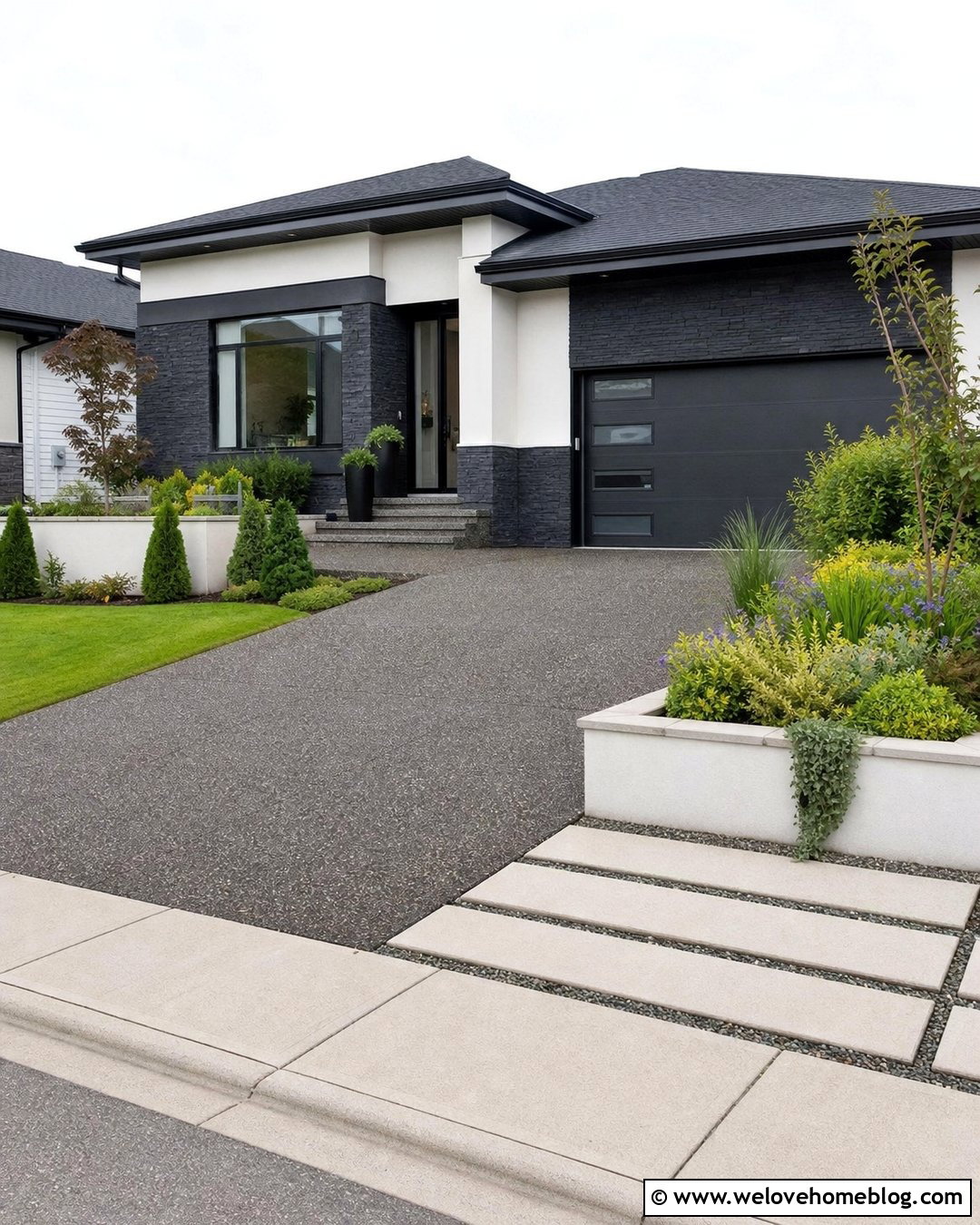
Raised planters add structure when a flat front yard lacks definition. Pair a dark exposed aggregate driveway with a light concrete paver sidewalk, then install low rectangular planters between the hardscape and lawn. Use natural stone for a traditional house or smooth rendered masonry for a modern facade. Keep walls low near the street and driveway entrance, allowing them to become slightly taller closer to the house. Fill the planters with layered evergreen shrubs, grasses, trailing plants, and restrained seasonal flowers. Include drainage outlets so water does not build up behind the walls or spill across the walkway. When planter materials repeat the home’s foundation or porch details, the driveway, sidewalk, and architecture feel like one planned composition.
19. Driveway And Sidewalk With Shade Garden Landscaping
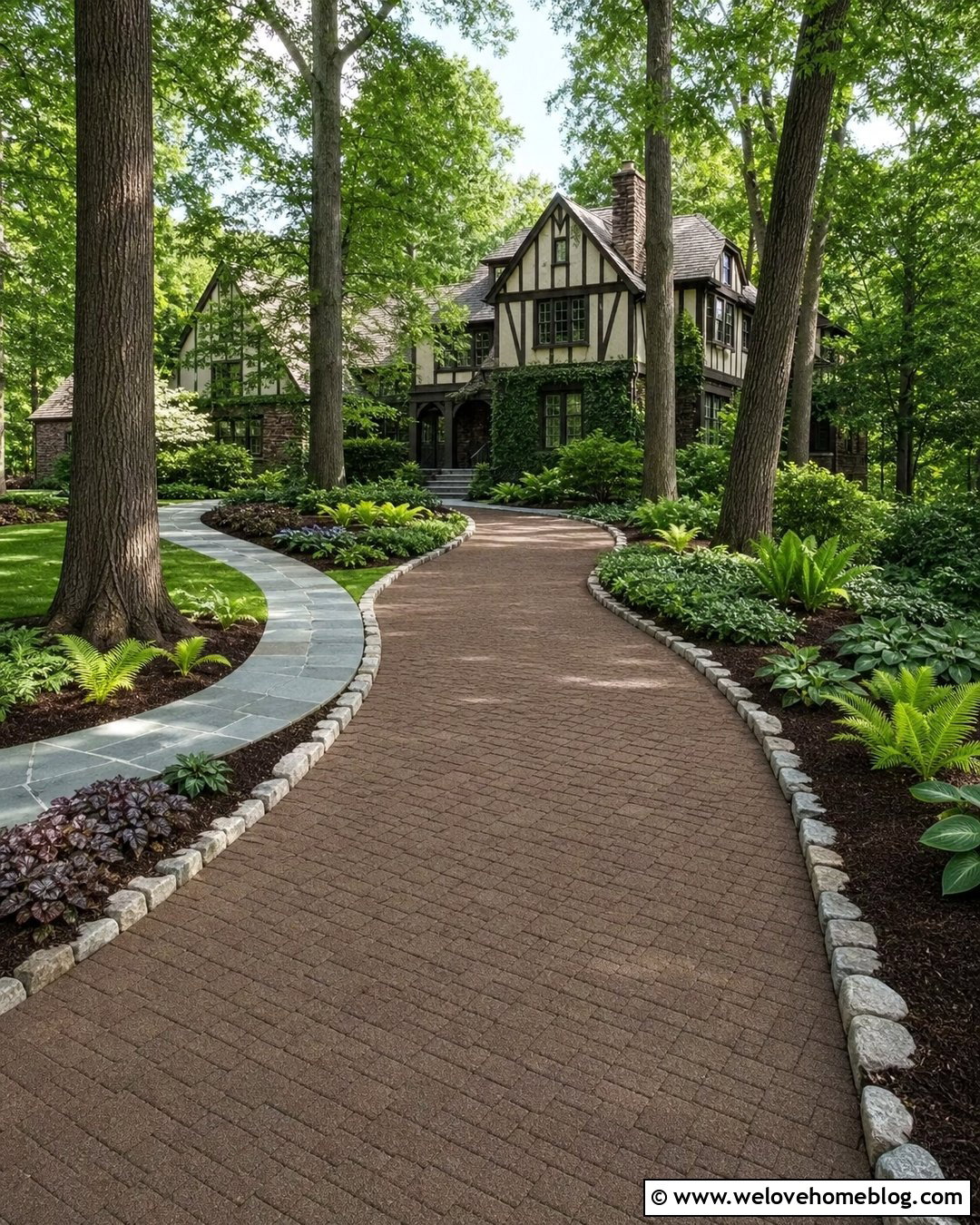
Mature trees can give a front yard character, but the surrounding driveway landscape must accommodate shade and root growth. Use a brown-toned permeable paver driveway with a gently curved bluestone sidewalk that avoids major tree roots. Create broad mulched beds containing ferns, heuchera, sedges, hostas where appropriate, and shade-tolerant flowering shrubs. Ground covers can replace thin turf in areas where grass struggles. Keep planting low beside the walkway and use subtle stone edging to prevent mulch from washing onto the pavers. Rather than building raised beds around existing tree trunks, preserve a natural transition around the root zone. This woodland-inspired arrangement works especially well with Craftsman, cottage, Tudor, and traditional homes on established lots.
20. Driveway And Sidewalk With Layered Landscape Lighting
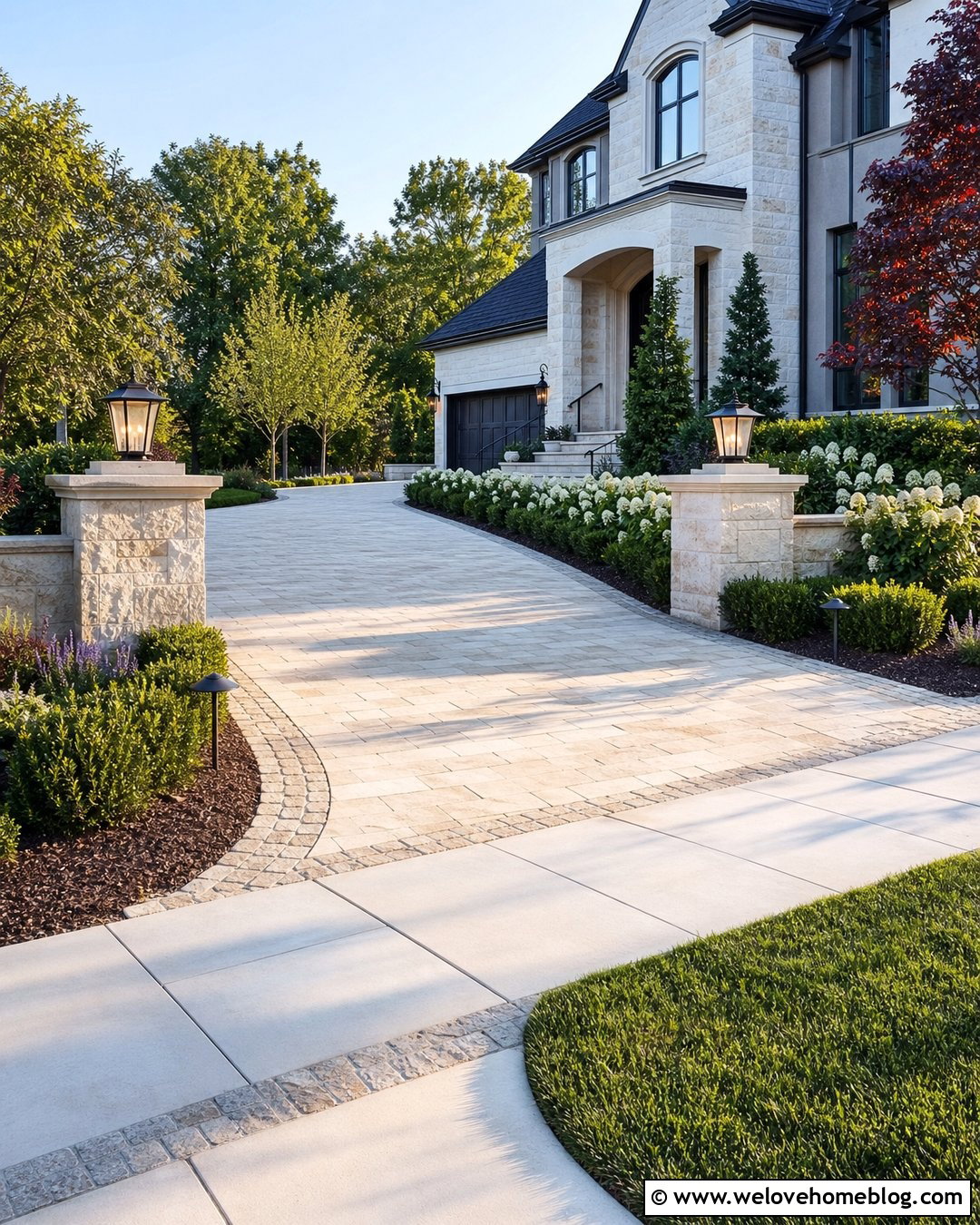
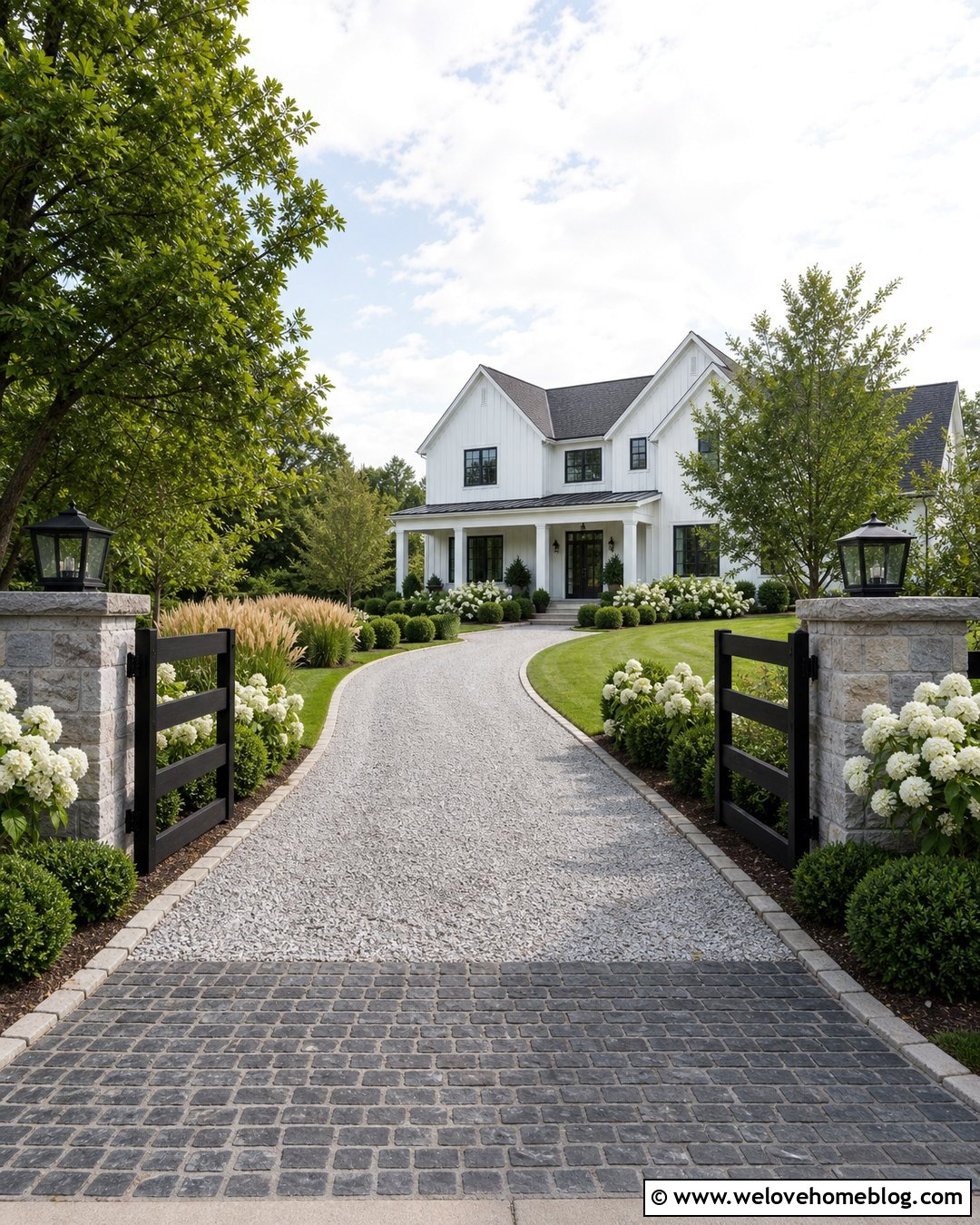
Good lighting should clarify the route to the house without turning the yard into a bright runway. Combine a pale beige limestone paver driveway with a matching straight sidewalk, framed by low evergreen and perennial beds. Install small shielded path lights along selected portions of the walkway, then use subtle fixtures to illuminate ornamental trees, stone pillars, and the driveway entrance. Spacing lights farther apart creates a calmer appearance than lining every edge. During daylight, the fixtures should blend into the planting rather than becoming dominant features. Add a contrasting cobblestone border to define the pale paving and connect the illuminated entrance to the house. This complete scheme suits upscale traditional, Mediterranean, transitional, and contemporary properties.
Conclusion:
Successful 20 Driveway And Sidewalk Landscaping Ideas balance curb appeal with everyday movement, visibility, drainage, and maintenance. Begin by selecting driveway and walkway materials that complement the home, then use borders to create a clear connection between them. Planting beds should soften the paving without crowding parked vehicles or narrowing pedestrian routes. Repeated shrubs, grasses, flowers, and masonry details will make the yard feel organized from the curb to the porch. Before changing an apron, drainage route, retaining wall, or public planting strip, check local requirements and utility locations. Whether your property is narrow, sloped, shaded, modern, or traditional, a coordinated plan can turn necessary hardscape into a welcoming landscape feature.

Related posts:
Leave a Reply