
A long entrance gives you more than a route from the road to the garage. It creates a gradual first impression and offers valuable space for trees, flower borders, lighting, drainage features, and architectural details. The best **long gravel driveway landscaping ideas** balance beauty with practical needs, including gravel containment, visibility, runoff control, and easy maintenance. Current designs often combine defined edging with layered planting, repeated landscape elements, and focal points that break up the driveway’s length. Gravel also comes in many colors and textures, making it adaptable to traditional, modern, rustic, and drought-tolerant properties. () The complete looks below will help you plan distinctive and functional **long gravel driveway landscaping ideas**.
1. Long Gravel Driveway With Tree-Lined Borders
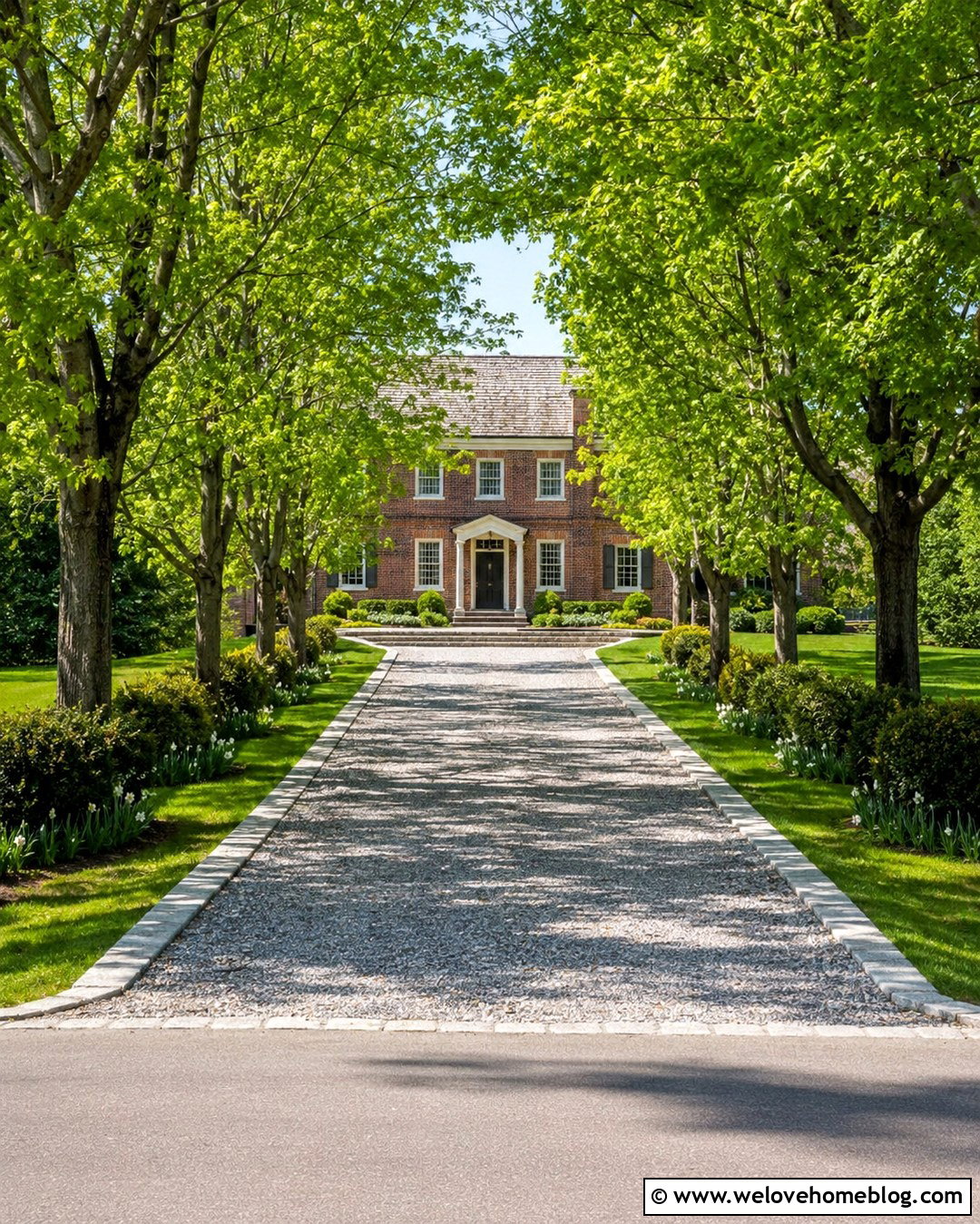
Rows of evenly spaced trees give a long gravel driveway structure, shade, and a strong sense of arrival. Choose upright varieties that suit your climate and will not spread low branches into the driving area. Gray crushed gravel works especially well because its neutral color lets green foliage stand out. Add narrow grass strips between the driveway edging and trees to keep the layout open rather than crowded. Flush cobblestone borders can contain loose gravel while creating a clean transition into the lawn. For greater depth, place low evergreen shrubs or spring bulbs beneath every second tree. Repetition is important on a long approach because it creates visual rhythm and connects the entrance to the house without introducing too many unrelated materials.
2. Long Gravel Driveway With Split Rail Fence
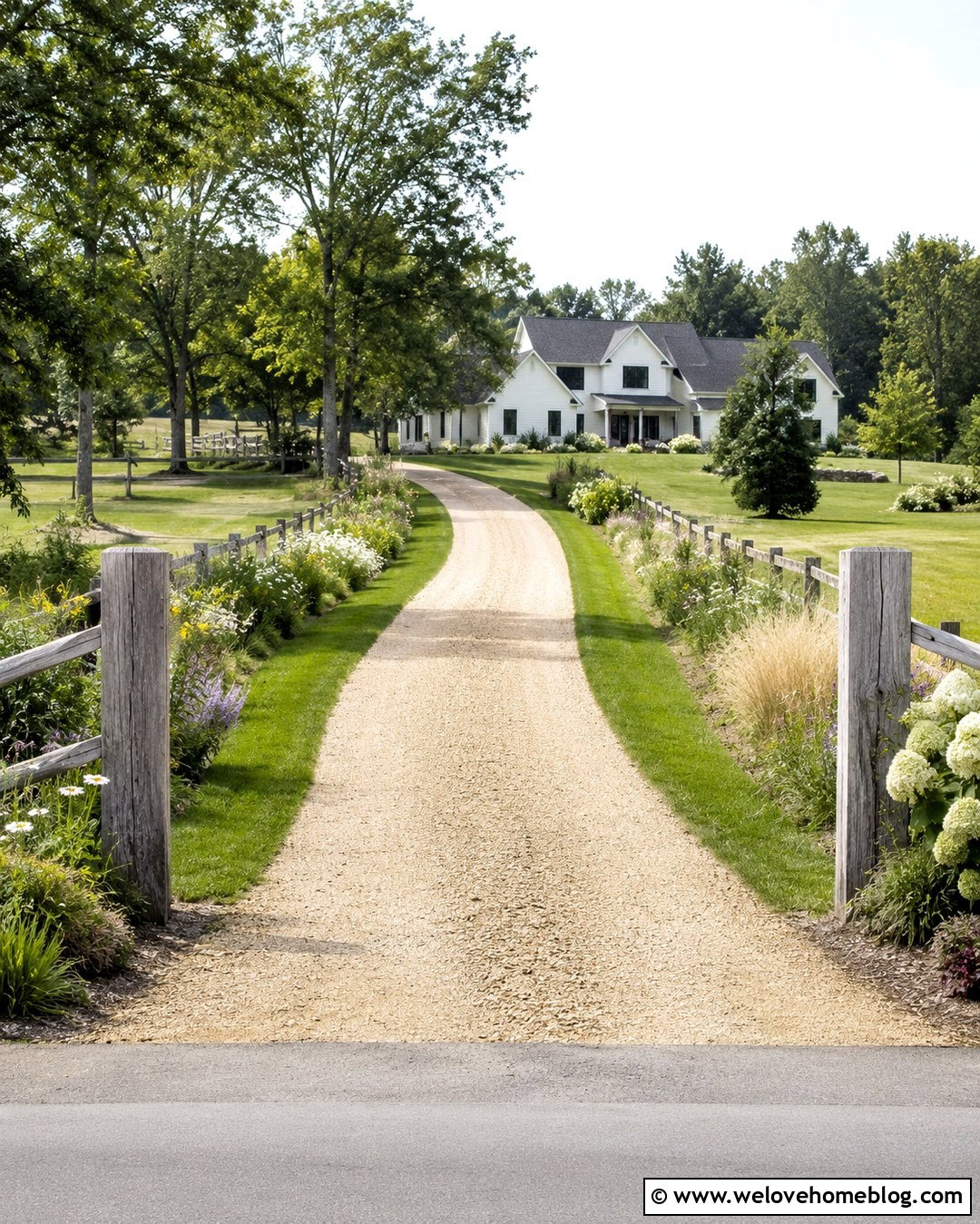
A split rail fence brings relaxed country character to a long gravel driveway, especially when paired with a farmhouse, cabin, or ranch home. Use warm tan crushed stone for the driveway and allow the route to curve gently through the property. Position the fence beyond a narrow grass shoulder so maintenance equipment can move easily along both sides. Native wildflowers, ornamental grasses, and compact flowering shrubs can soften the wooden rails without hiding them. Repeat a limited mix of plants down the driveway rather than using a different combination everywhere. This creates a natural landscape that still feels intentional. At the roadside entrance, widen the planting beds and add matching wooden posts to visually announce the beginning of the driveway. ()
3. Long Gravel Driveway With Cobblestone Edging
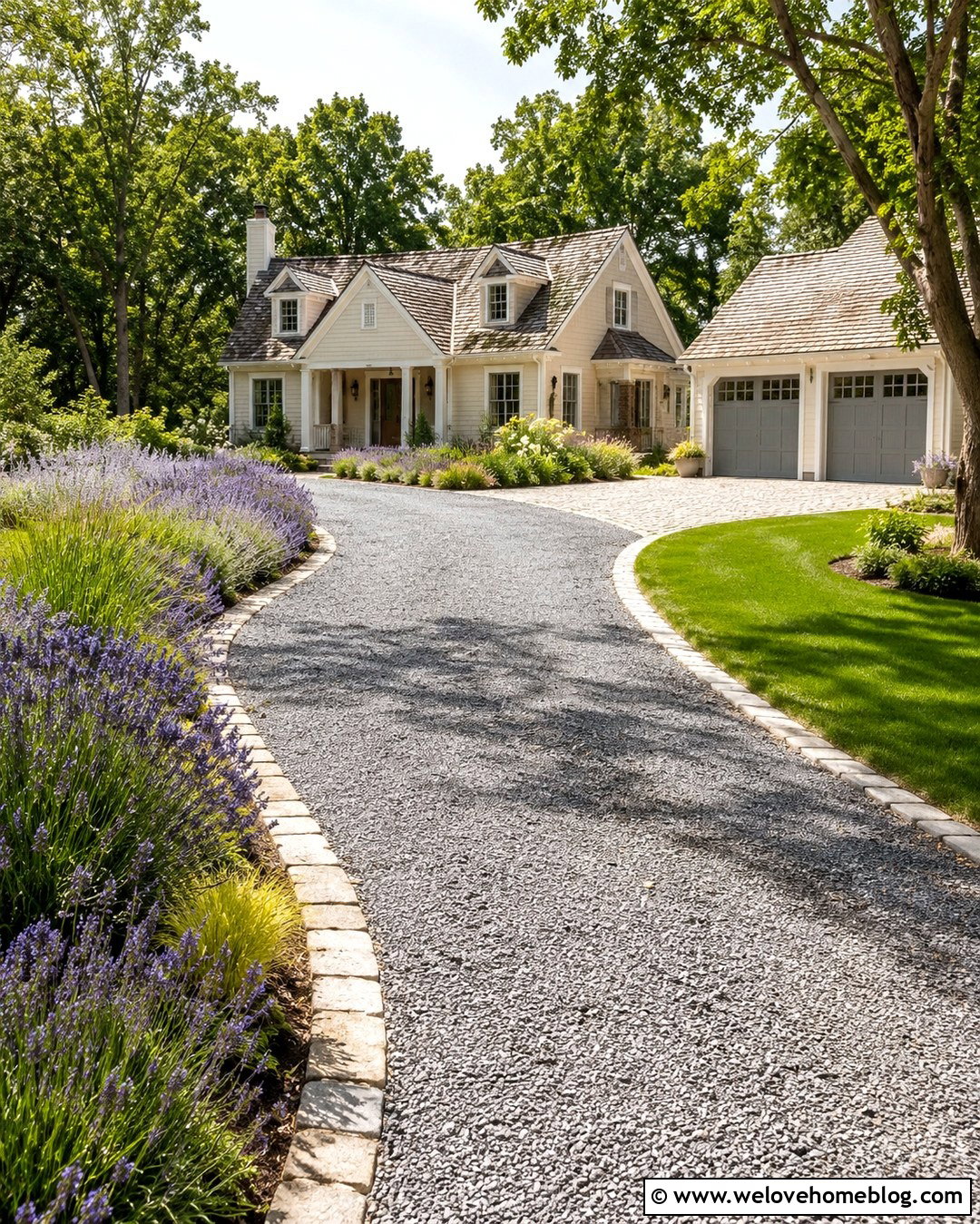
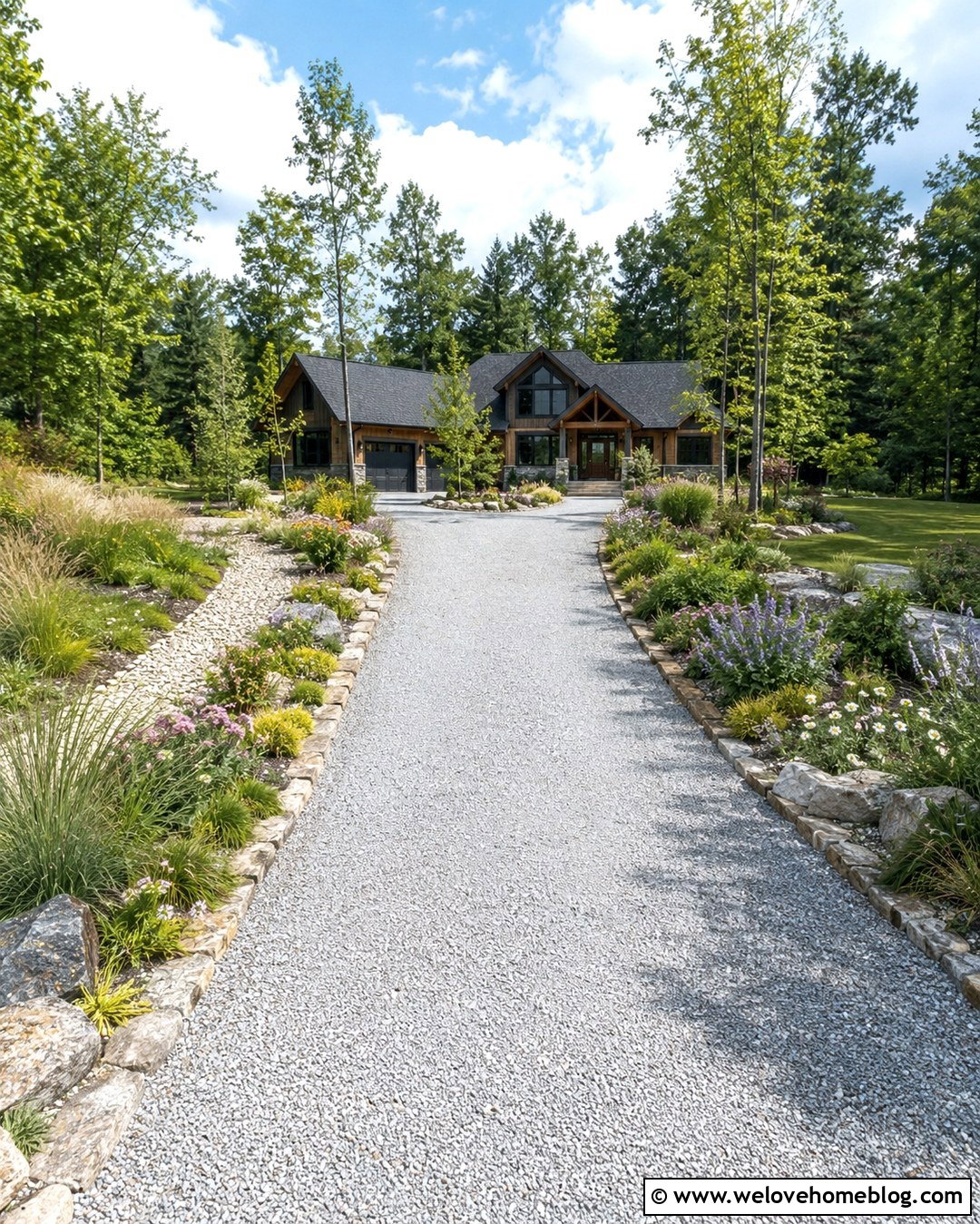
Cobblestone edging creates a crisp, durable outline that makes an ordinary gravel driveway appear more finished. Pair silver-gray crushed gravel with charcoal or weathered granite cobbles for subtle contrast. A straight layout can look formal, while a shallow curve feels softer and more suitable for a cottage garden. Along the outside edges, plant repeated drifts of lavender, catmint, dwarf grasses, or other compact plants that will not flop onto the driving surface. Set the cobblestones firmly and close to the gravel level to make raking and snow removal easier. The stones help separate loose aggregate from lawns and planting beds, reducing scattered gravel and simplifying maintenance. Finish the approach with a wider cobblestone apron near the garage or front walkway. ()
4. Modern Long Gravel Driveway With Corten Steel
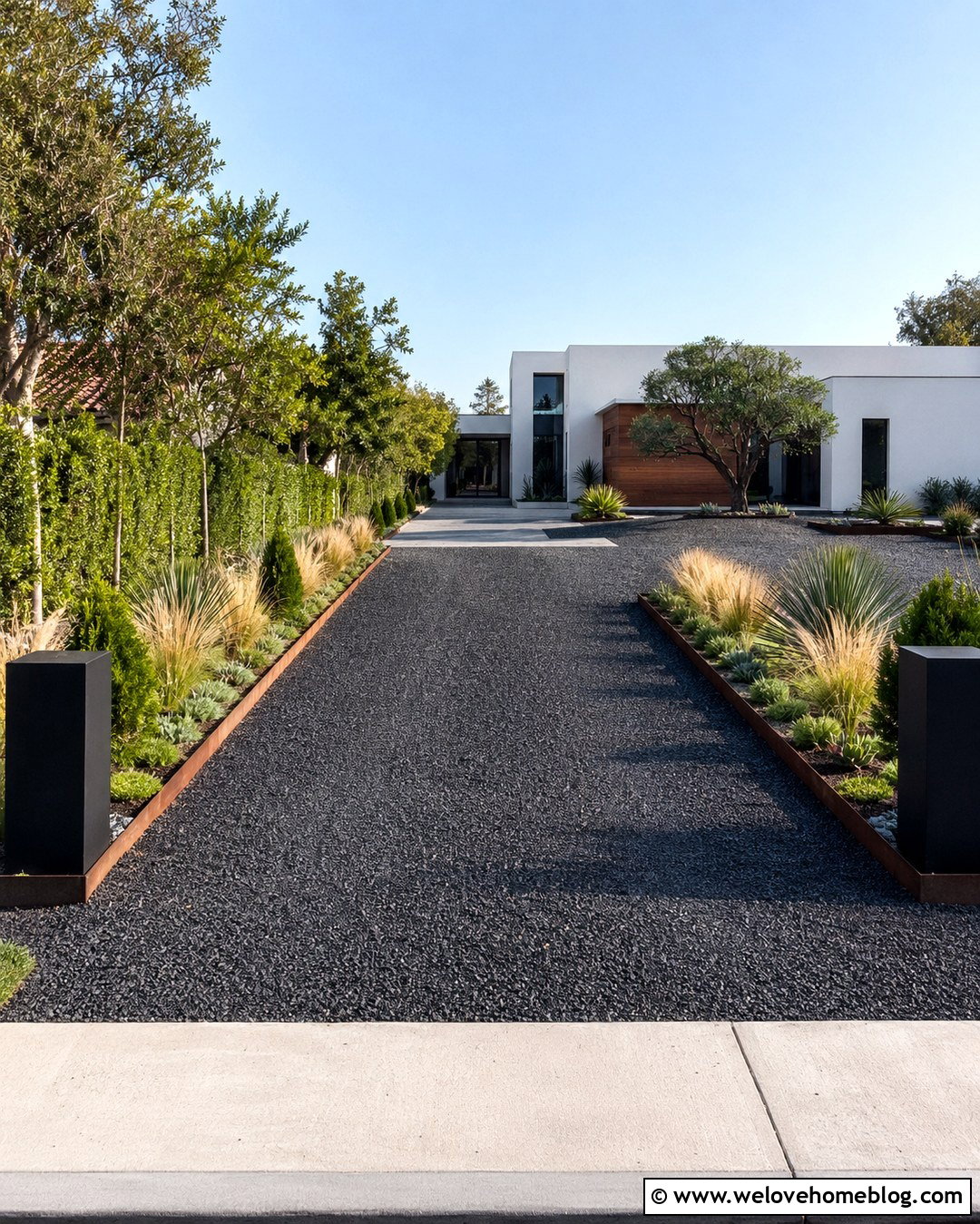
Dark gravel, slim steel edging, and architectural planting can give a long driveway a clean modern appearance. Choose compacted charcoal crushed stone rather than highly rounded gravel, then define the straight driveway with narrow Corten steel borders. The warm rust-colored metal creates an attractive contrast against the dark surface. Use simple planting beds containing feather reed grass, yucca, compact evergreens, and low ground covers. Leave open gravel or mulch between plants so the landscaping does not become visually busy. Rectangular concrete stepping pads can connect the driveway to the front entrance without changing the main gravel material. Near the house, widen the driveway into a simple parking court framed by one sculptural tree, allowing the building’s lines and materials to remain prominent.
5. Long Farmhouse Gravel Driveway With Hydrangeas
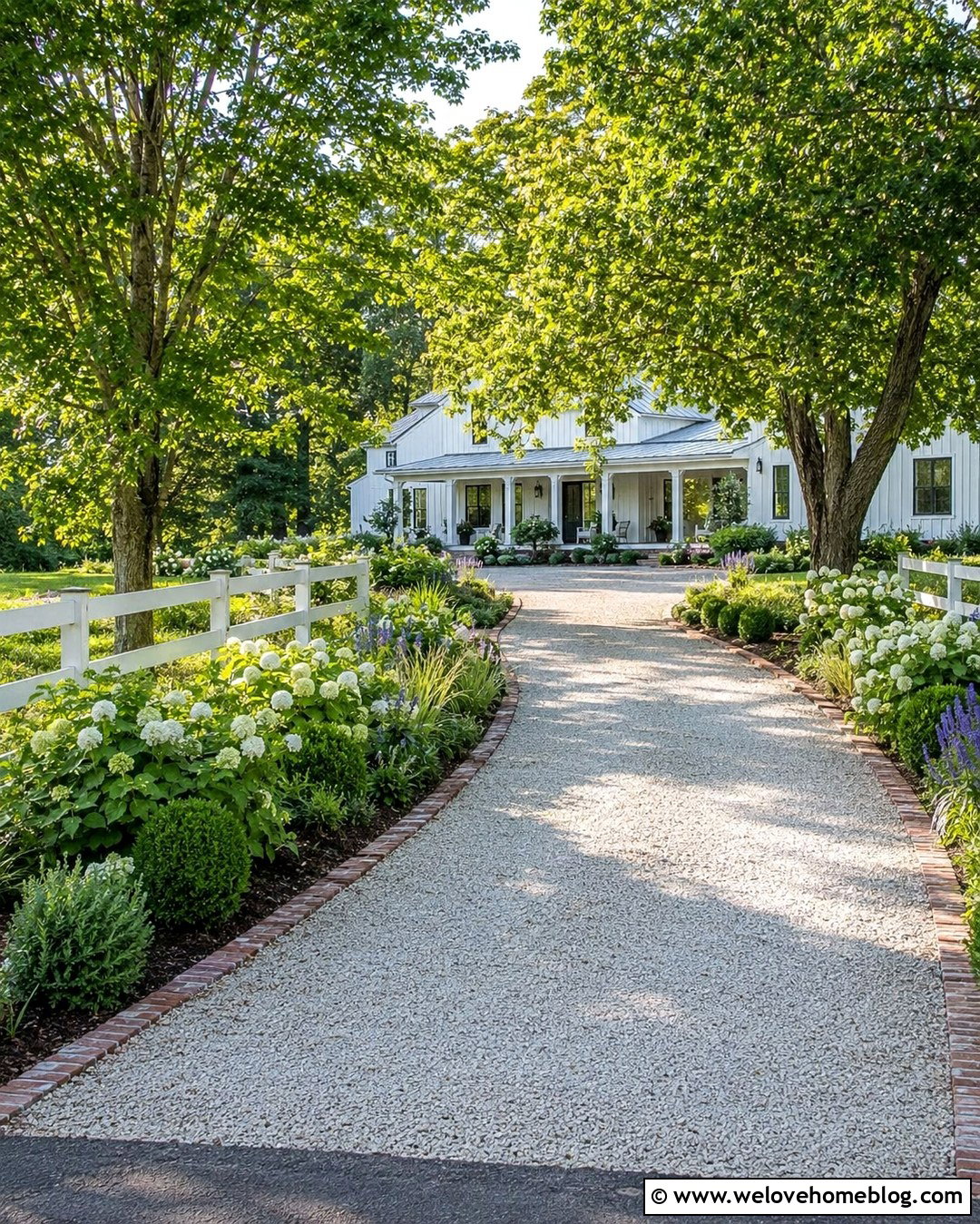
A pale limestone driveway and generous hydrangea borders create a welcoming approach to a modern or traditional farmhouse. Keep the driveway mostly straight, but introduce a gentle bend near the house to reveal the front facade gradually. Reclaimed brick edging can stop the limestone chips from spreading into the beds while adding an established, timeworn finish. Plant hydrangeas in broad groups instead of a single narrow row, then fill gaps with boxwood, salvia, ornamental grasses, and seasonal bulbs. Because hydrangeas can become large, place them far enough from the driving area to preserve visibility and vehicle clearance. Complete the layout with a matching limestone parking court and brick walkway. White fencing or simple wooden posts can reinforce the farmhouse character without overpowering the planting.
6. Curved Long Gravel Driveway With Wildflower Meadow
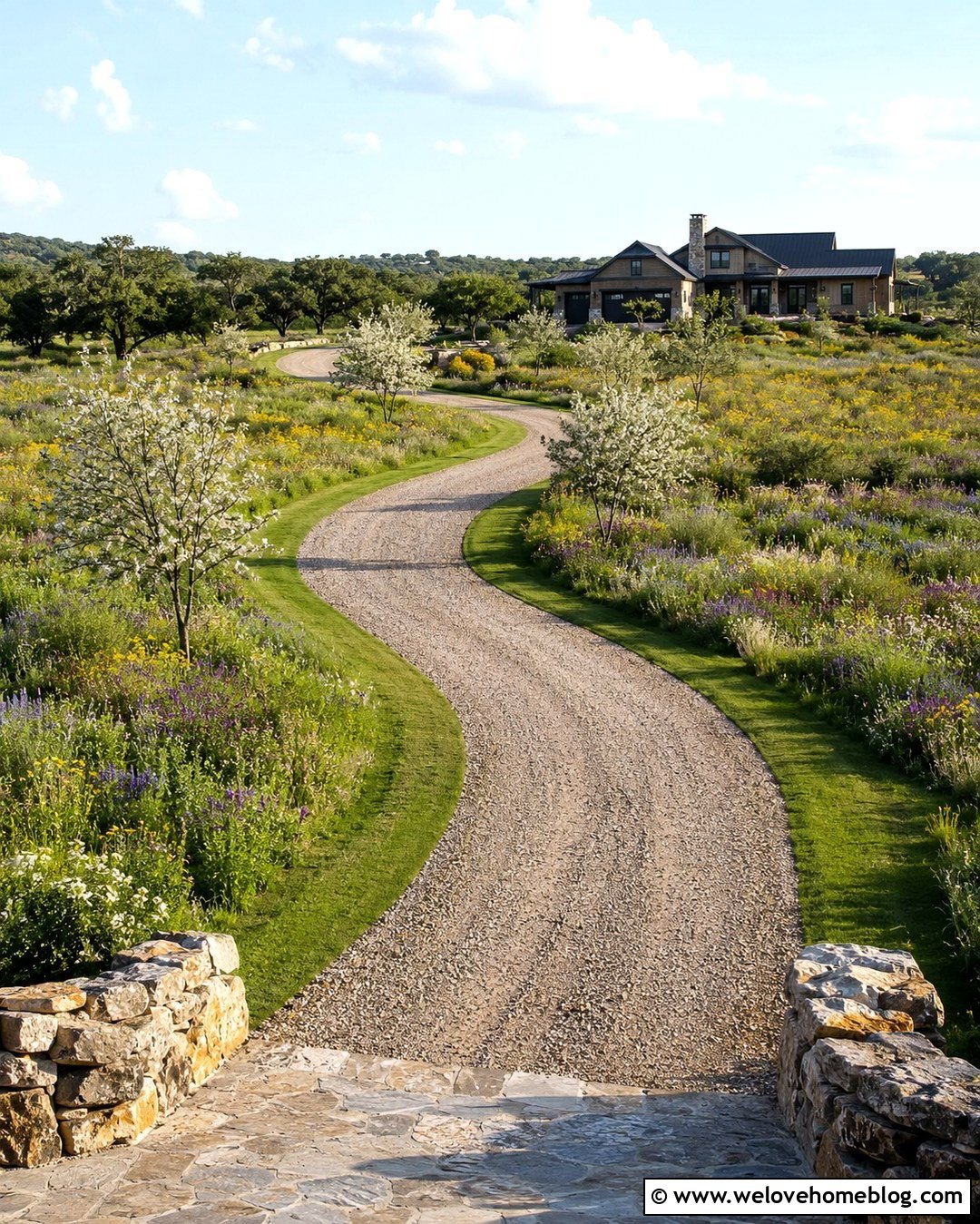
A sweeping gravel driveway can flow naturally through a large front yard or meadow landscape. Use buff-colored angular gravel to define the route while keeping the overall appearance soft and rural. Instead of formal planting beds, establish broad areas of native wildflowers and grasses on both sides. Mow a narrow strip beside the driveway to create a tidy edge and prevent taller plants from leaning into passing vehicles. At key bends, group small flowering trees or native shrubs to emphasize the curve and partially screen the house. The landscape should guide the eye forward without blocking important sightlines. A simple stone border at the entrance can contain gravel, while the rest of the driveway transitions gently into the meadow for an informal, environmentally responsive look.
7. Long Gravel Driveway With Circular Turnaround
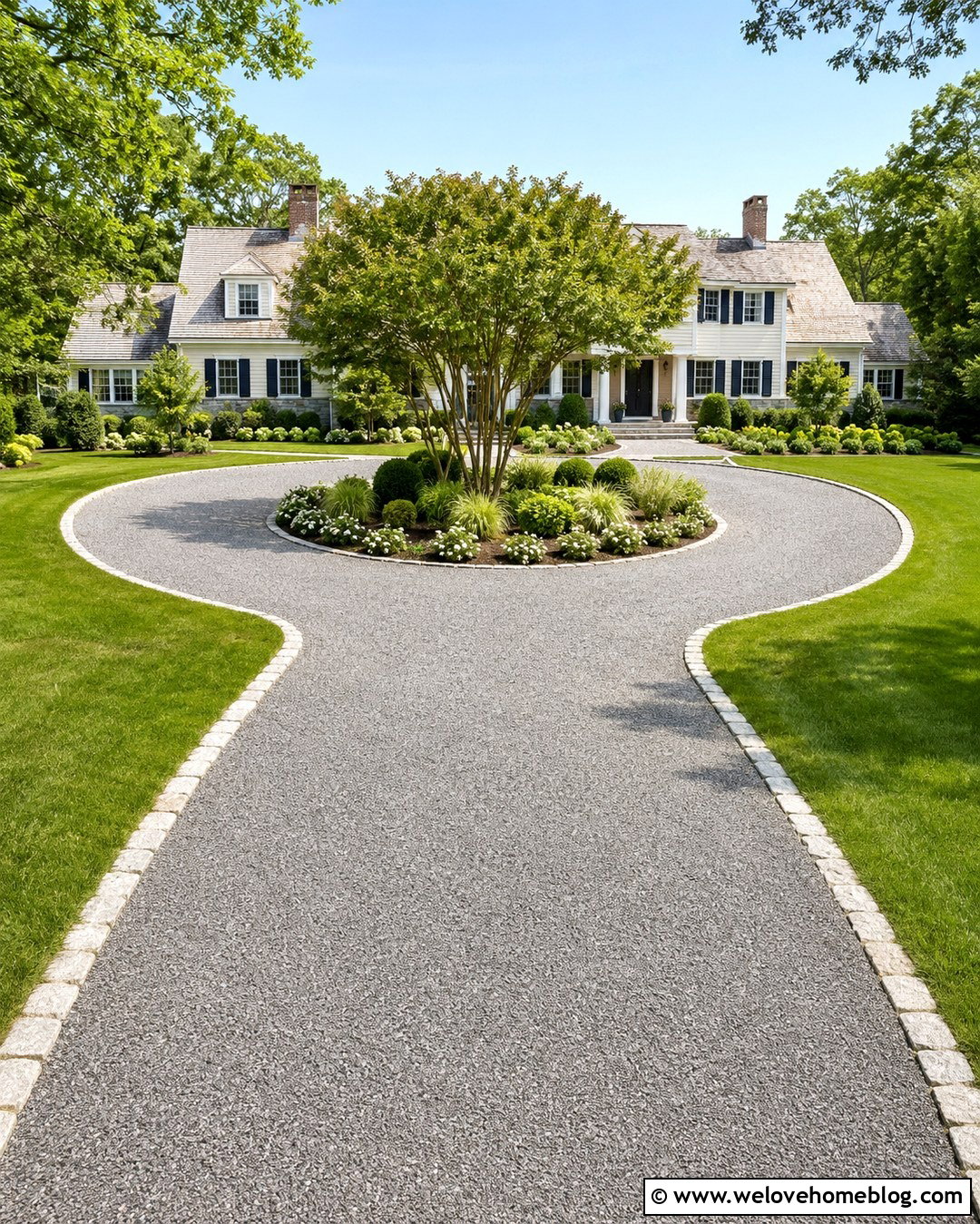
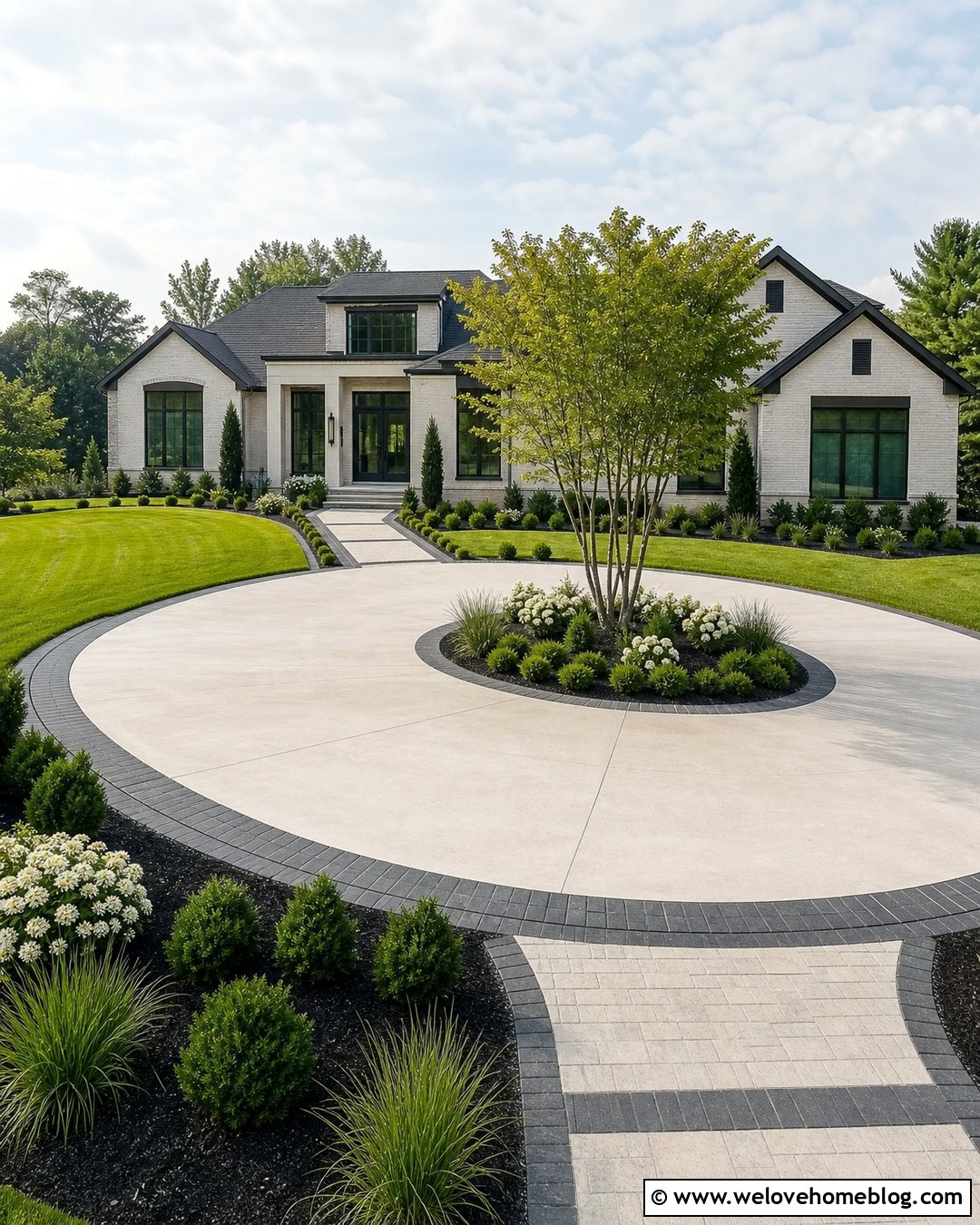
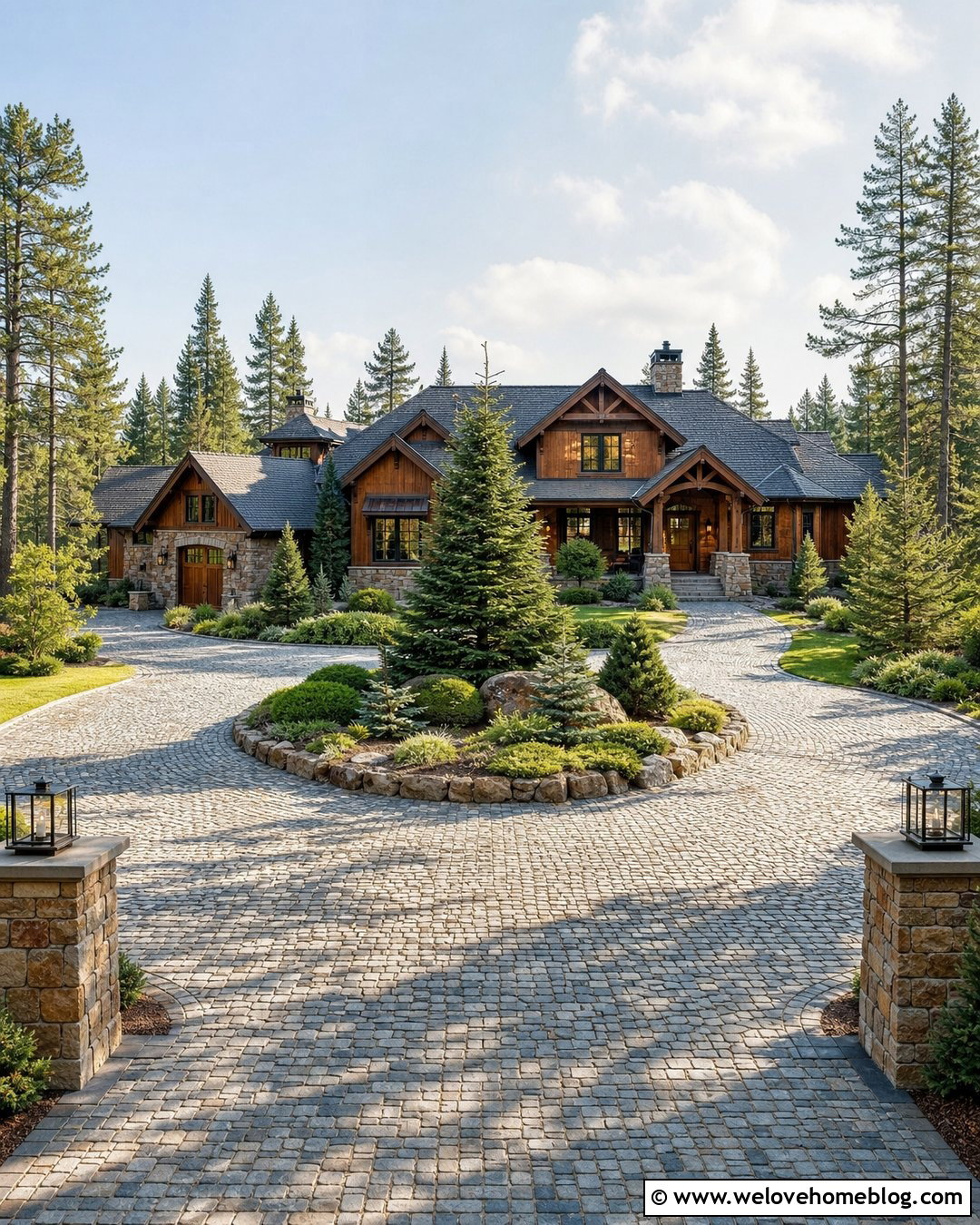
Ending a long gravel driveway with a circular turnaround makes vehicle movement easier and creates space for a prominent landscape feature. Cover the driveway and circle with compacted gray gravel, then outline both with matching granite setts. In the center, build a generous planting island containing a multi-stem tree, clipped shrubs, ornamental grasses, and low seasonal flowers. Keep plants lower near the driving edge so drivers retain clear views around the circle. The island should be large enough to look proportional but not so wide that it produces a tight turning radius. Connect the circular area to the front door with a broad stone walkway. Repeating a few plants from the entrance borders around the island will unify the entire approach and create a polished estate-like composition.
8. Woodland Long Gravel Driveway With Ferns
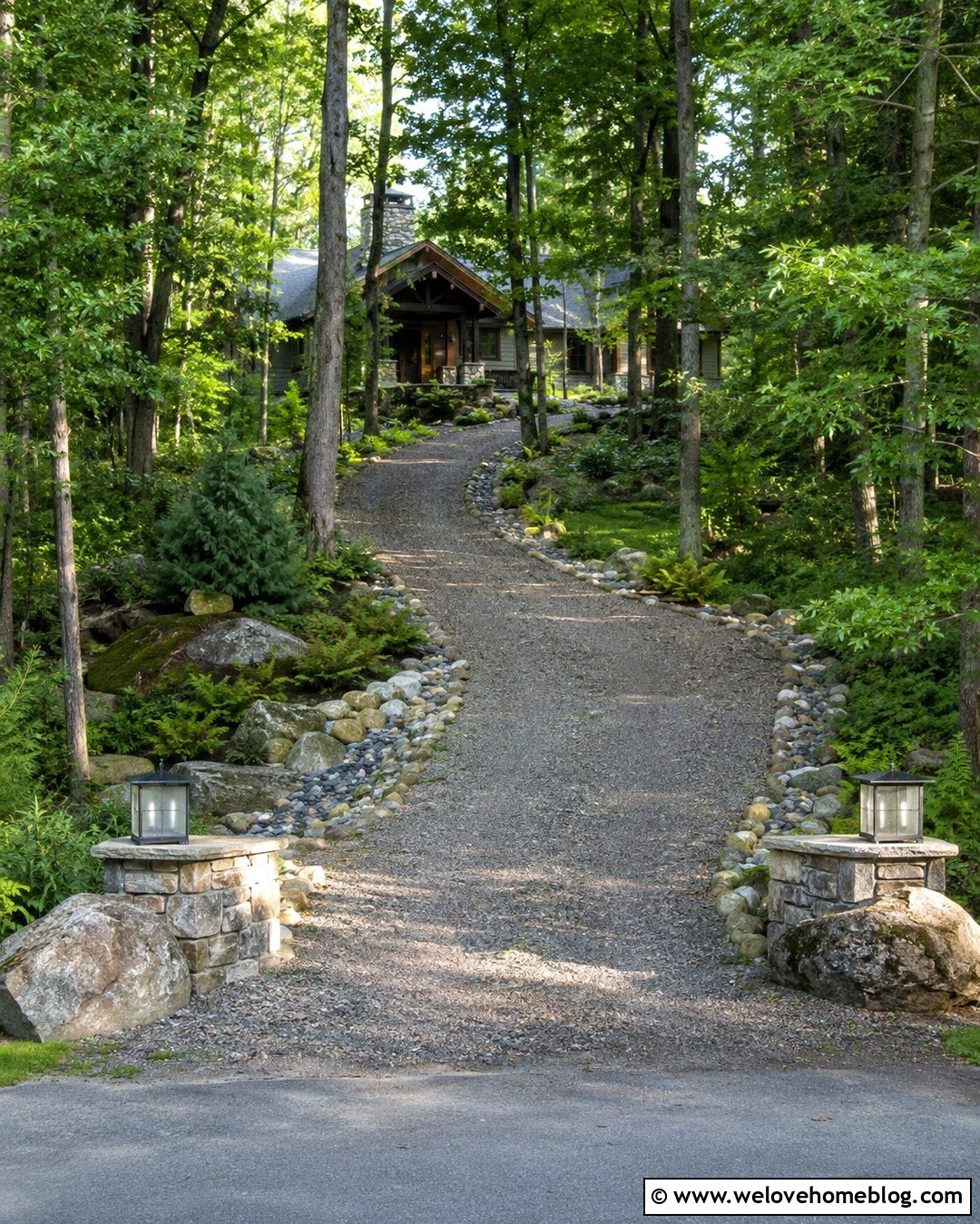
A gravel driveway winding beneath mature trees can feel peaceful and naturally integrated into a wooded property. Select brown or gray crushed gravel that complements tree bark and exposed stone. Define the driveway with irregular fieldstone edging, then arrange native ferns, woodland sedges, shade-tolerant ground covers, and small evergreen shrubs beyond it. Place large mossy boulders at occasional curves to reinforce the natural character and discourage vehicles from cutting across planted areas. Avoid creating continuous dense vegetation beside the driveway, since open areas improve visibility and air movement. Where runoff collects, add shallow stone-lined channels that fit the woodland theme. Low wooden or dark metal markers near bends can make the route easier to follow while remaining visually quiet during daylight hours.
9. Low-Maintenance Long Gravel Driveway With Evergreens
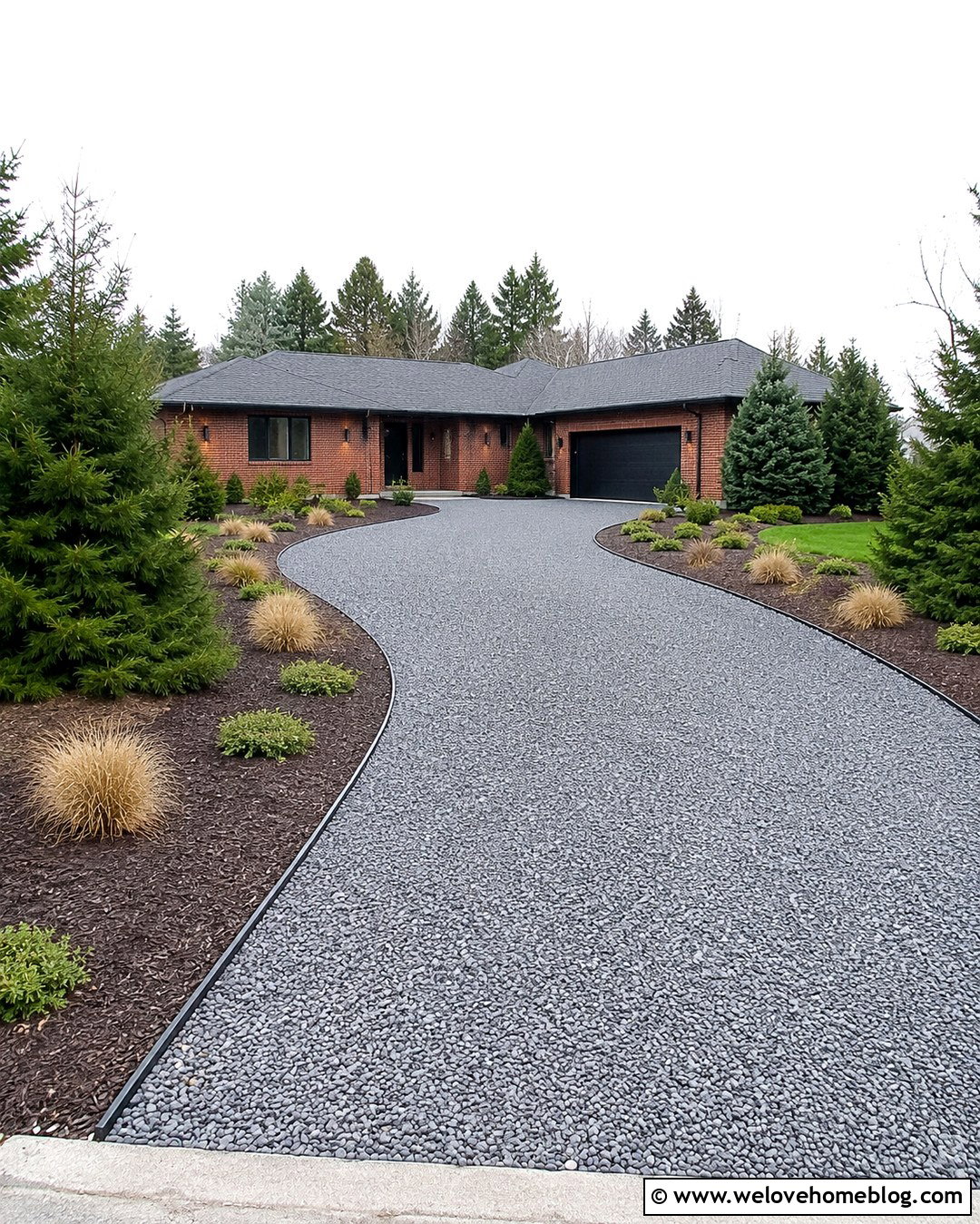
Would you prefer an attractive entrance that does not require constant trimming and replanting? Start with compacted gray angular gravel contained by sturdy stone or metal edging. Along both sides, repeat dependable evergreen shrubs in widely spaced groups rather than forming one continuous hedge. Add tough ornamental grasses and ground covers between the groups for movement and seasonal texture. Mulched beds will create a clear separation between the gravel and plants while reducing the amount of exposed soil. Choose mature plant sizes carefully so shrubs will not eventually narrow the driveway. At the house, use larger evergreen groupings to frame the garage and front walk. This simple palette provides year-round structure and keeps a lengthy landscape visually connected without demanding complicated seasonal displays.
10. Long Gravel Driveway With Rain Garden Swale
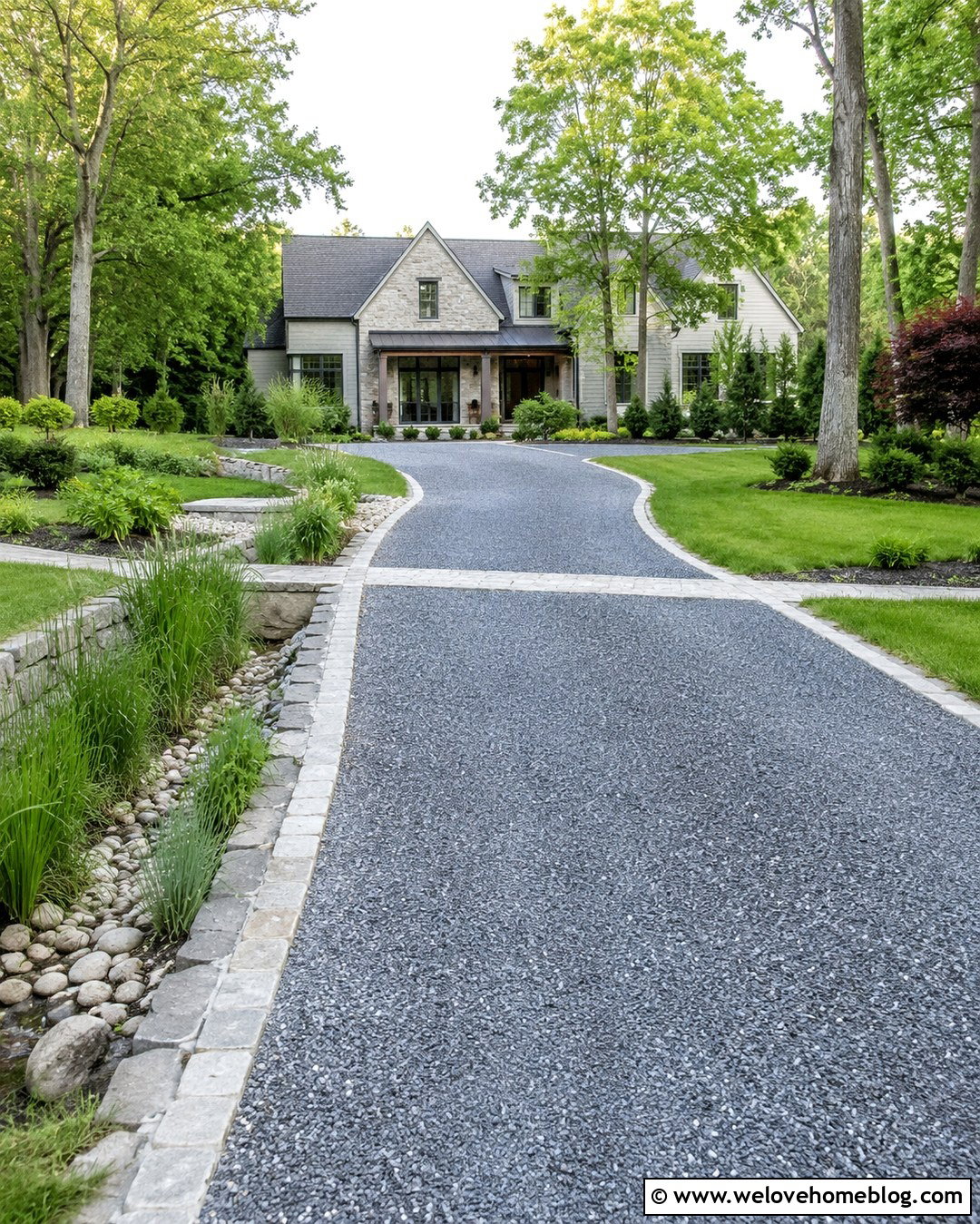
A planted drainage swale can turn necessary runoff management into an attractive part of the driveway landscape. Grade the driveway so water moves toward a shallow channel rather than flowing directly down the gravel surface. Line the swale with cobbles, river rock, moisture-tolerant grasses, rushes, irises, and regionally appropriate native plants. On the opposite side, use a simple lawn shoulder or low planting bed to prevent the design from feeling too heavy. The driveway itself can feature medium-gray crushed gravel with larger stone edging where water pressure is greatest. A small stone bridge or culvert at the walkway creates a neat crossing. Properly designed vegetated swales can slow runoff, encourage infiltration, and reduce erosion while adding texture to a long approach. ()
11. Long Gravel Driveway With Brick Ribbon Border
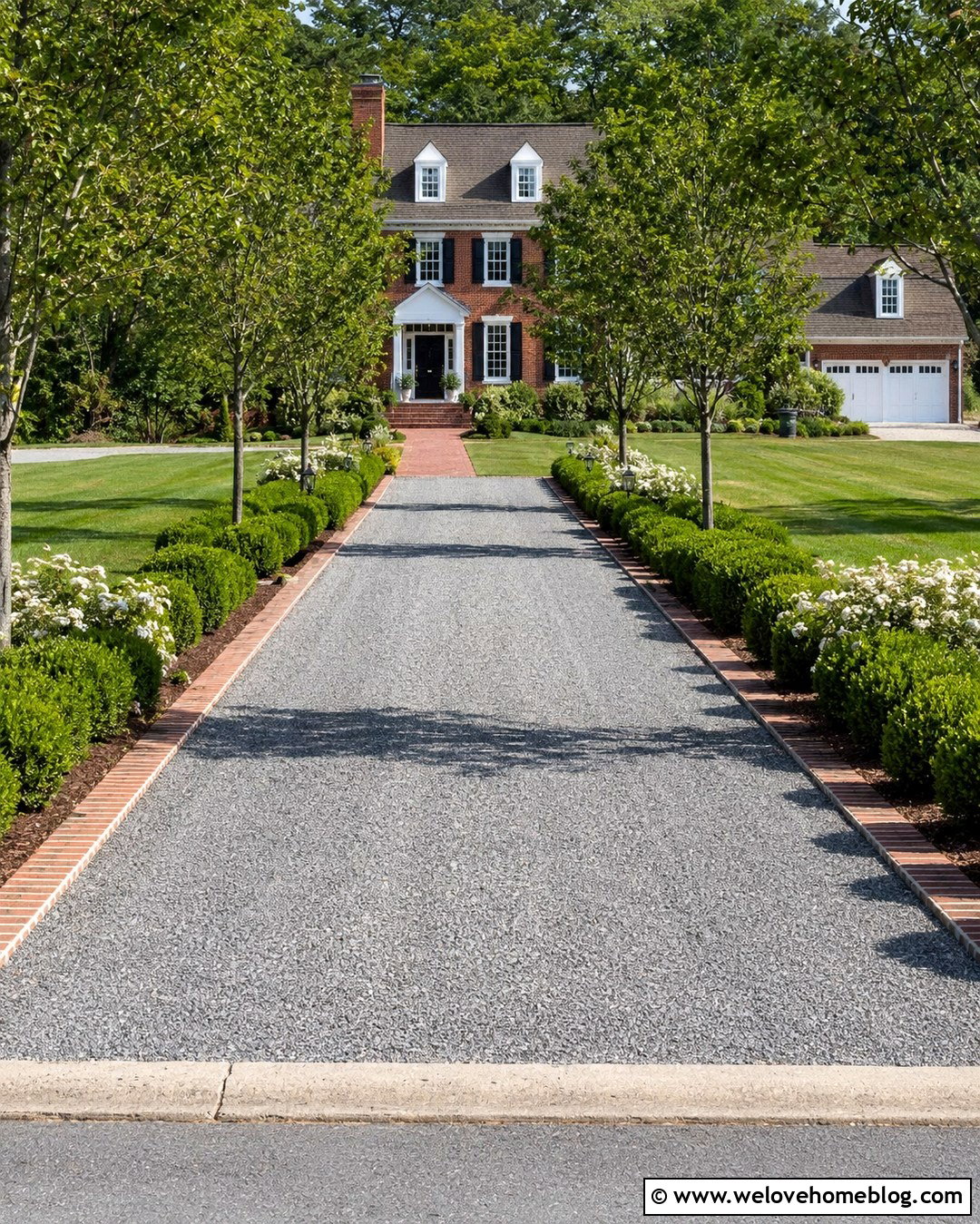
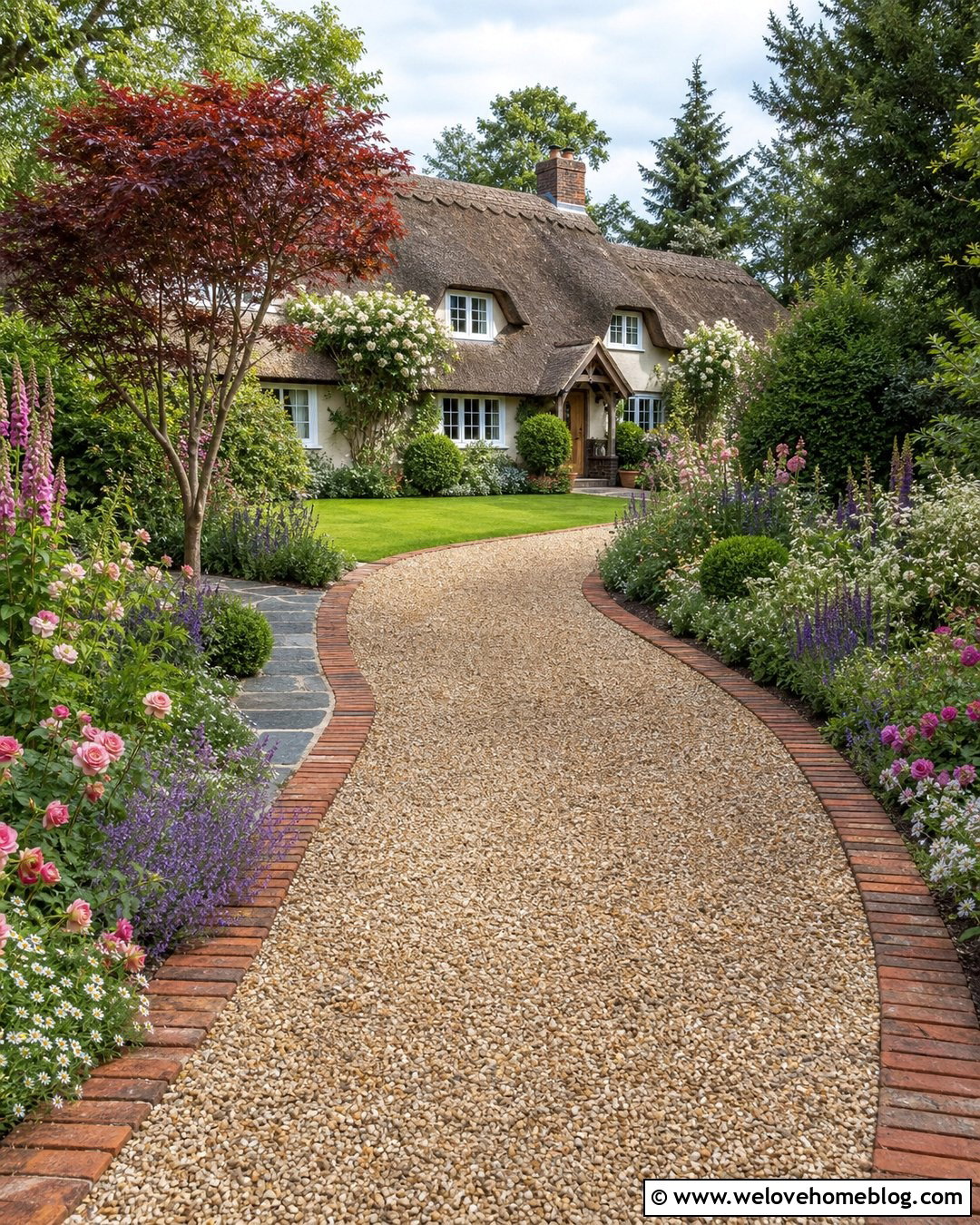
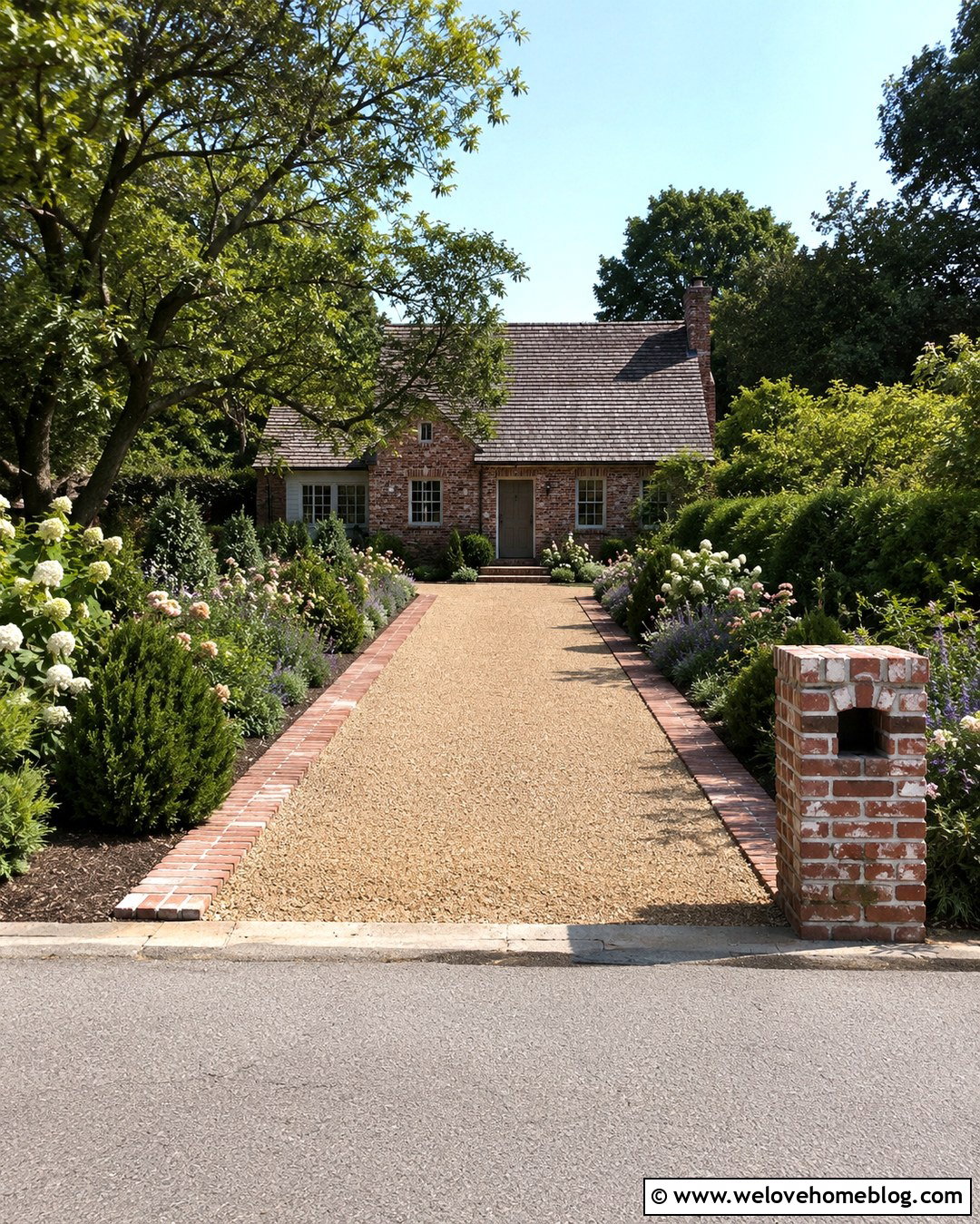
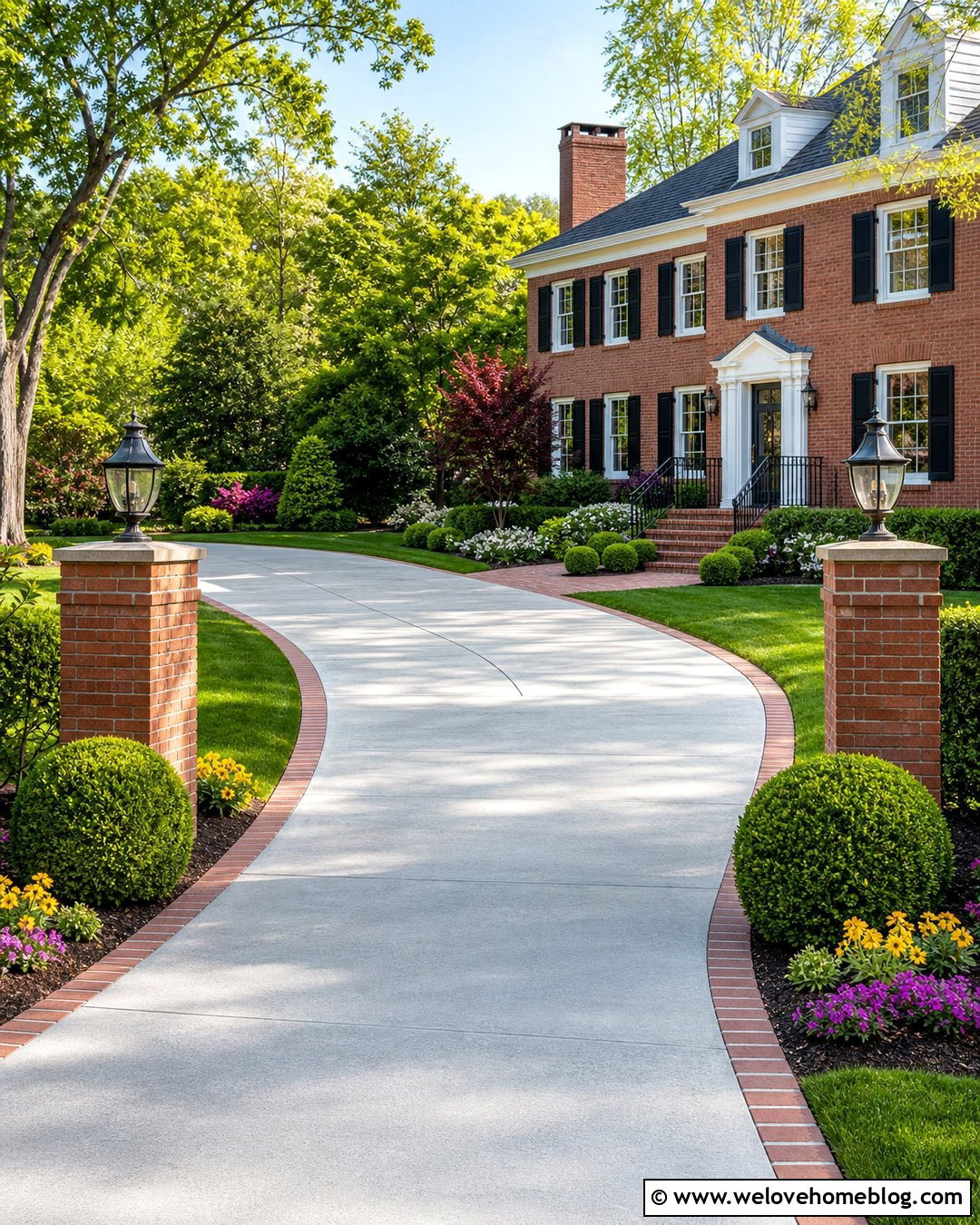
Red or weathered brick ribbons add warmth and definition to a long gravel driveway leading to a Colonial, Cape Cod, or traditional brick home. Use neutral gray gravel in the center so the border remains visible without becoming overpowering. Lay the bricks lengthwise for a restrained look or create a soldier-course pattern for stronger definition. Frame the driveway with lawn and symmetrical planting beds containing boxwood, white flowering shrubs, and small deciduous trees. Repeating brick across the entrance apron and front walkway ties the entire property together. If the driveway curves, keep the brick lines smooth and consistent rather than introducing complicated patterns. This combination feels formal but approachable, and the solid edge helps keep gravel from migrating into turf or garden beds during regular use.
12. Long Gravel Driveway With Stone Pillars And Gate
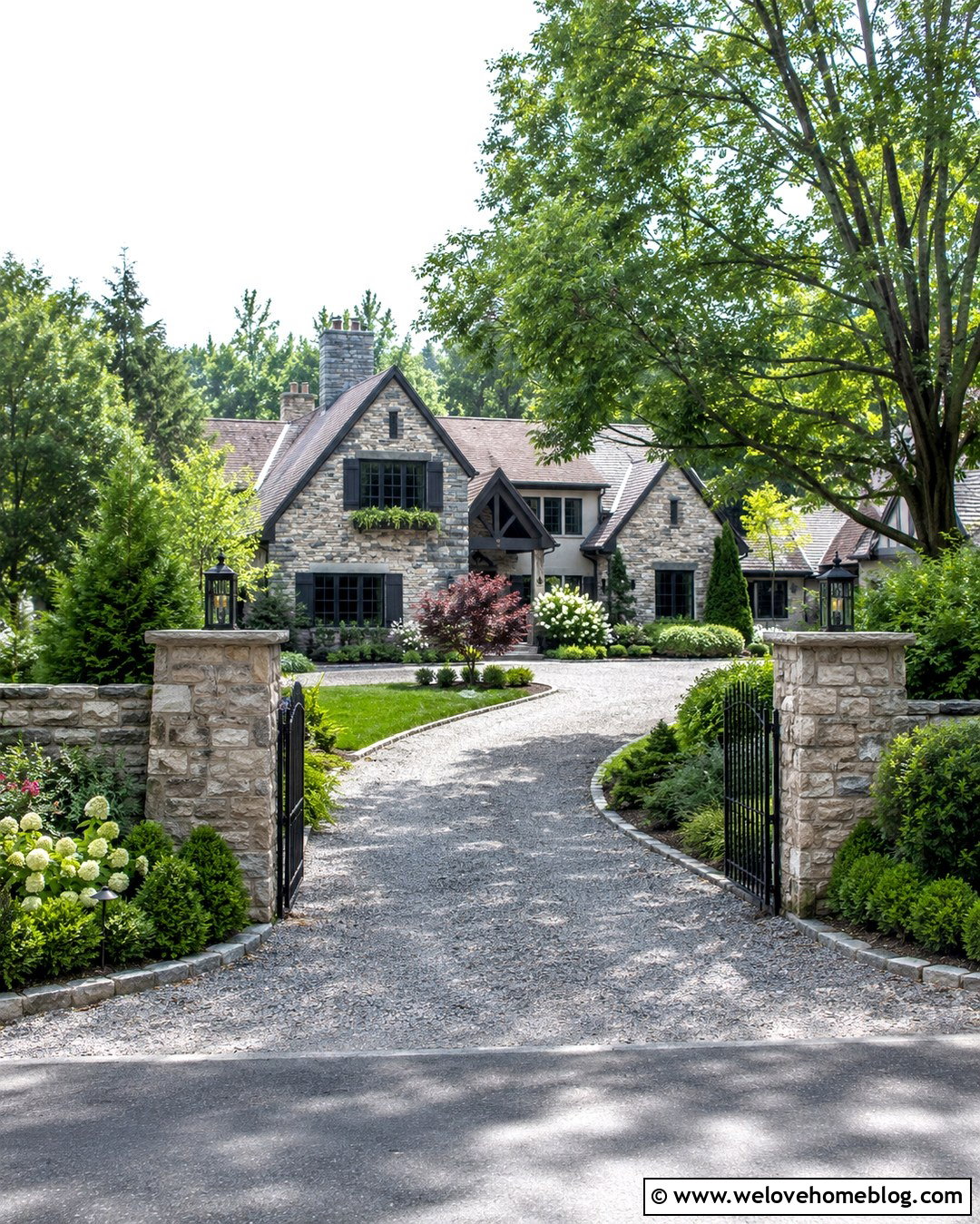
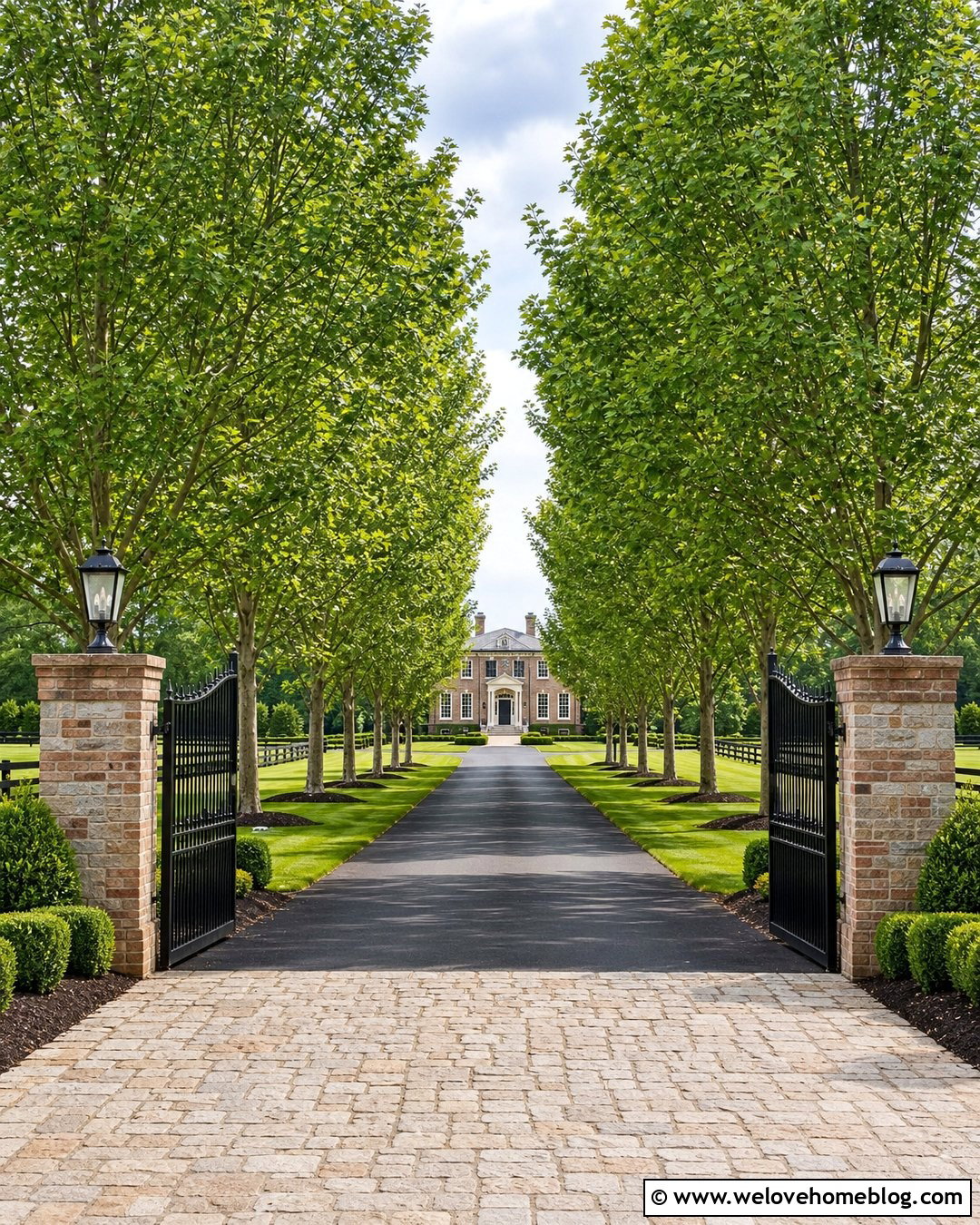
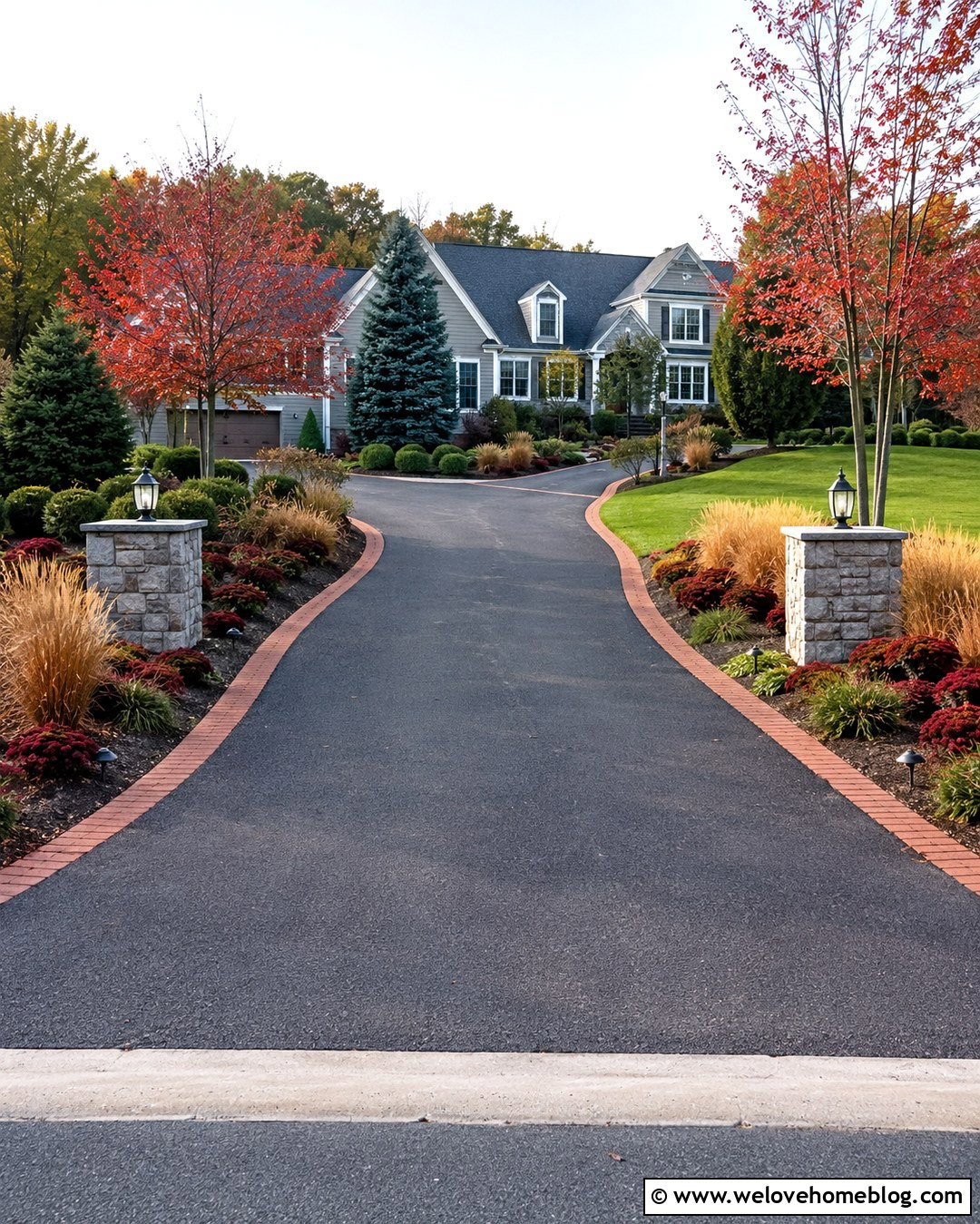
Stone entrance pillars can establish a clear beginning for a long driveway and connect the roadside view to the home’s architecture. Choose pillar stone that matches the house foundation, chimney, or retaining walls. Beyond the gate, continue with warm gray crushed gravel in a straight or gently curving layout. Low stone edging and layered evergreen beds can carry the entrance materials toward the house. Keep tall plants away from the gate opening, address marker, and sightlines to the road. If you include a fence, allow it to transition into shrubs or trees rather than running unbroken for the entire distance. A second pair of smaller pillars near the parking court can repeat the design. This creates a coordinated journey instead of treating the gate as an isolated decorative feature.
13. Long Gravel Driveway With Landscape Lighting
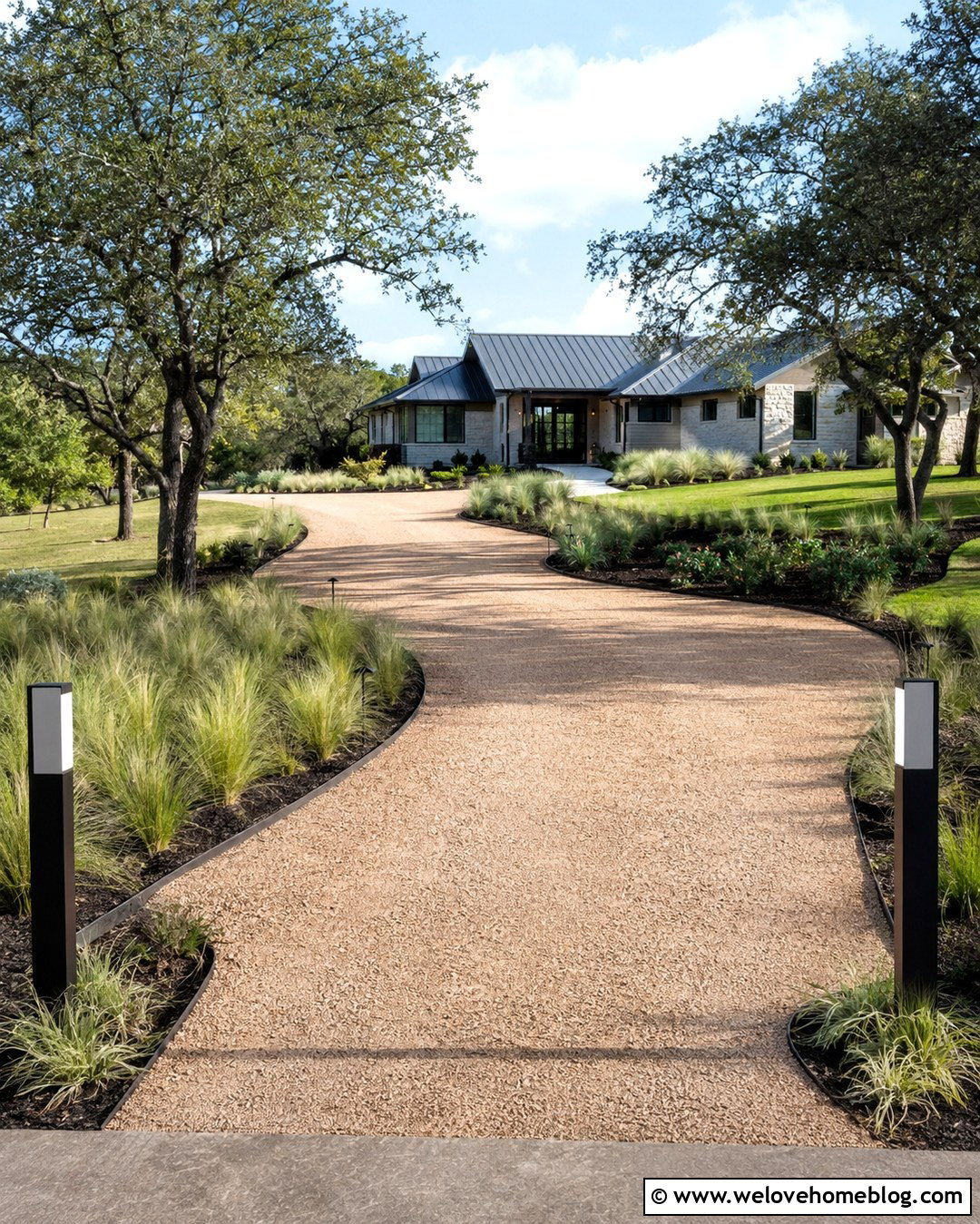
Lighting should guide drivers along a long gravel driveway without turning the landscape into a brightly lit runway. During the day, the design can feature tan crushed gravel, dark metal edging, and repeated beds of low ornamental grasses. Install understated shielded fixtures near curves, intersections, gates, and changes in elevation rather than spacing identical lights along every foot. Uplighting selected trees adds depth, while low path lights can define the final approach to the house. Hide cables within planting beds and position fixtures where they will not be struck by tires, mowers, or snow equipment. Reflective address numbers at the entrance also improve navigation. Keep the daytime composition attractive by choosing fixtures with simple forms that coordinate with the home’s exterior hardware and architectural style.
14. Long Gravel Driveway With Desert Landscaping
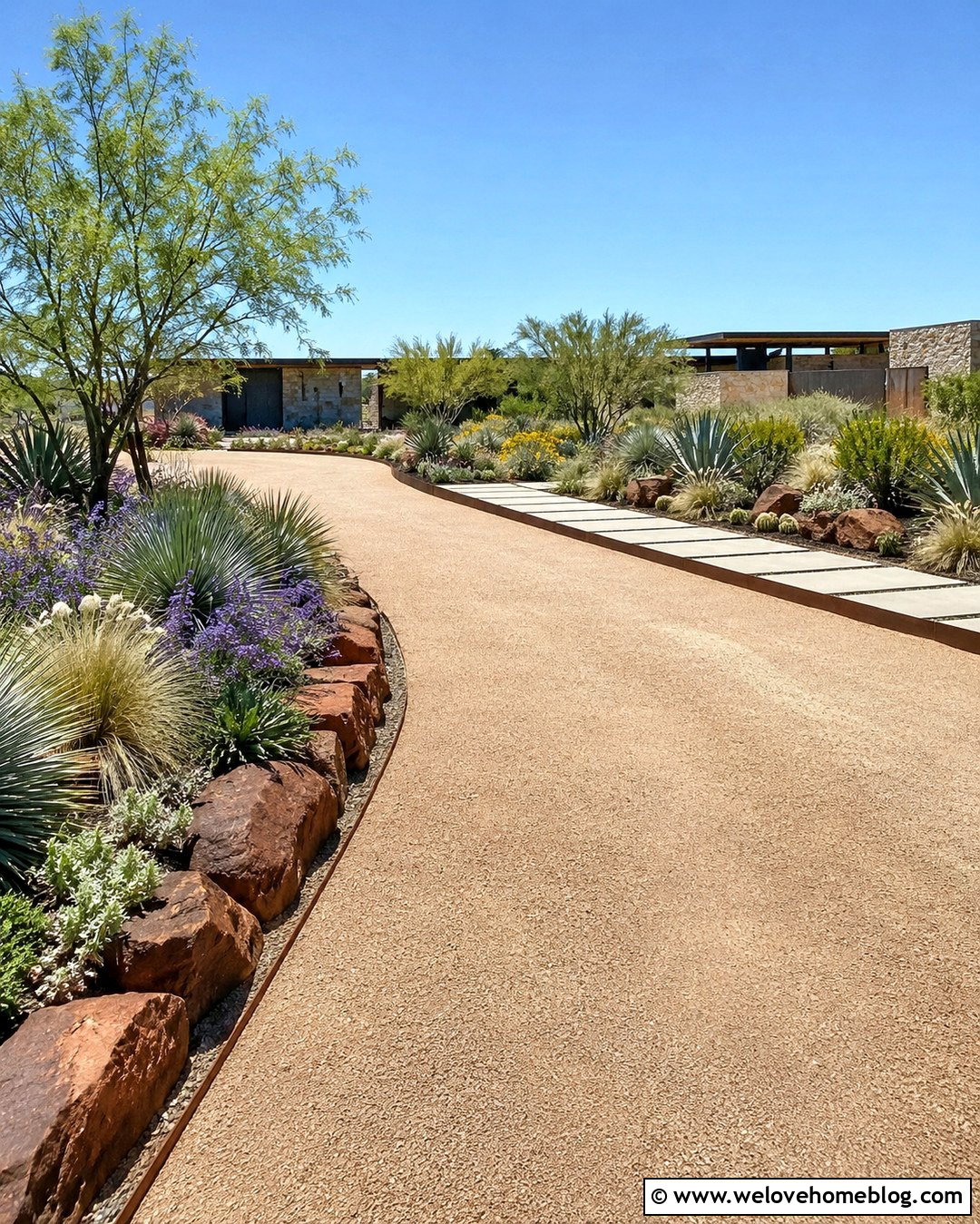
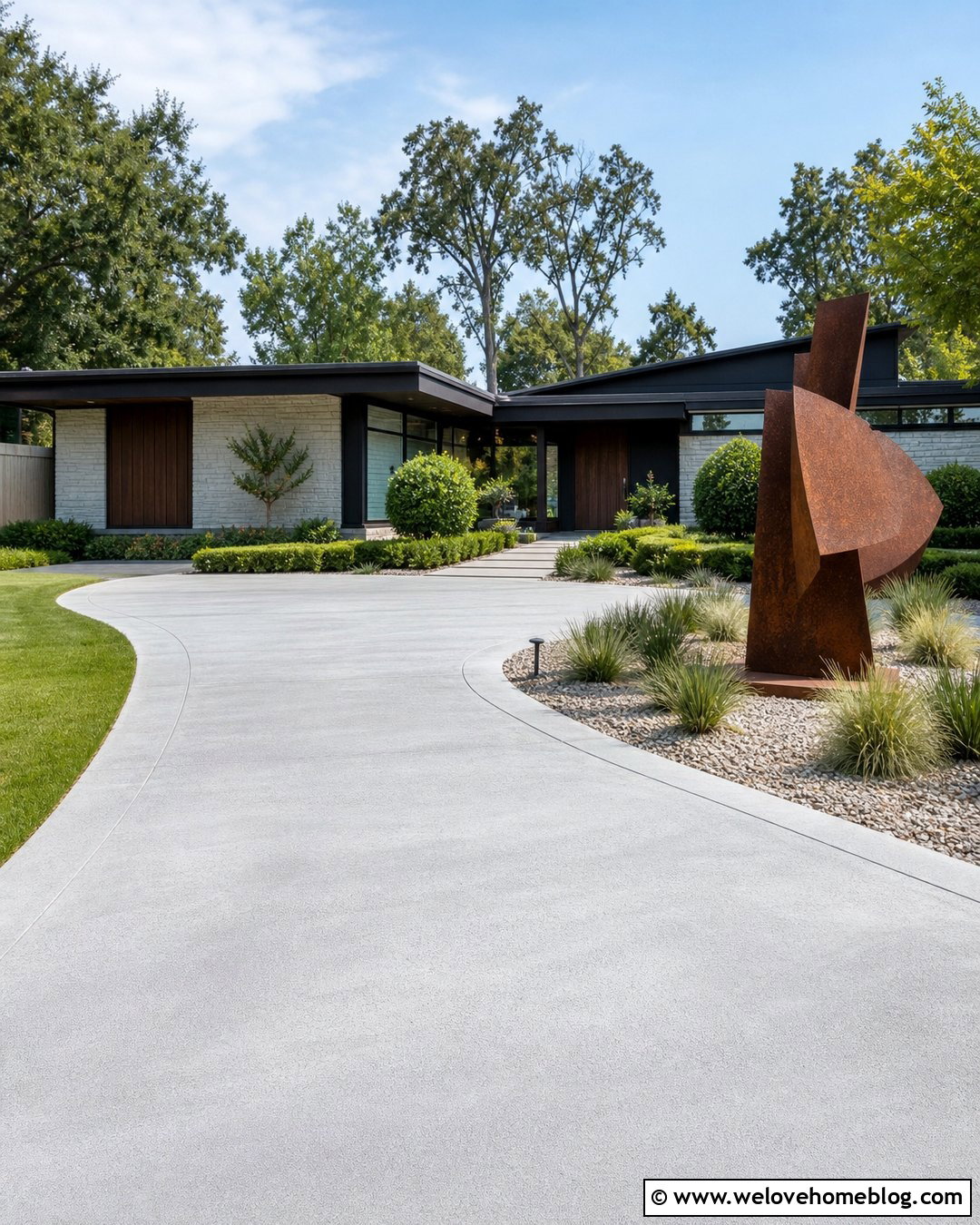
In a dry climate, a long gravel driveway can blend seamlessly into a water-conscious front yard. Use stabilized tan or decomposed granite gravel for the main surface, bordered by larger rust-colored rocks or Corten steel. Create wide planting zones with agave, yucca, desert spoon, ornamental grasses, flowering perennials, and carefully spaced specimen cacti where appropriate. Arrange plants in asymmetrical groups with open areas of decorative rock between them. This gives each form room to stand out and maintains clear vehicle visibility. A gentle curved layout can feel more natural across a large desert lot, while a straight approach suits modern architecture. Finish the driveway near the house with a broad gravel court, oversized concrete walkway slabs, and one sculptural desert tree as the main focal point.
15. Sloped Long Gravel Driveway With Retaining Walls
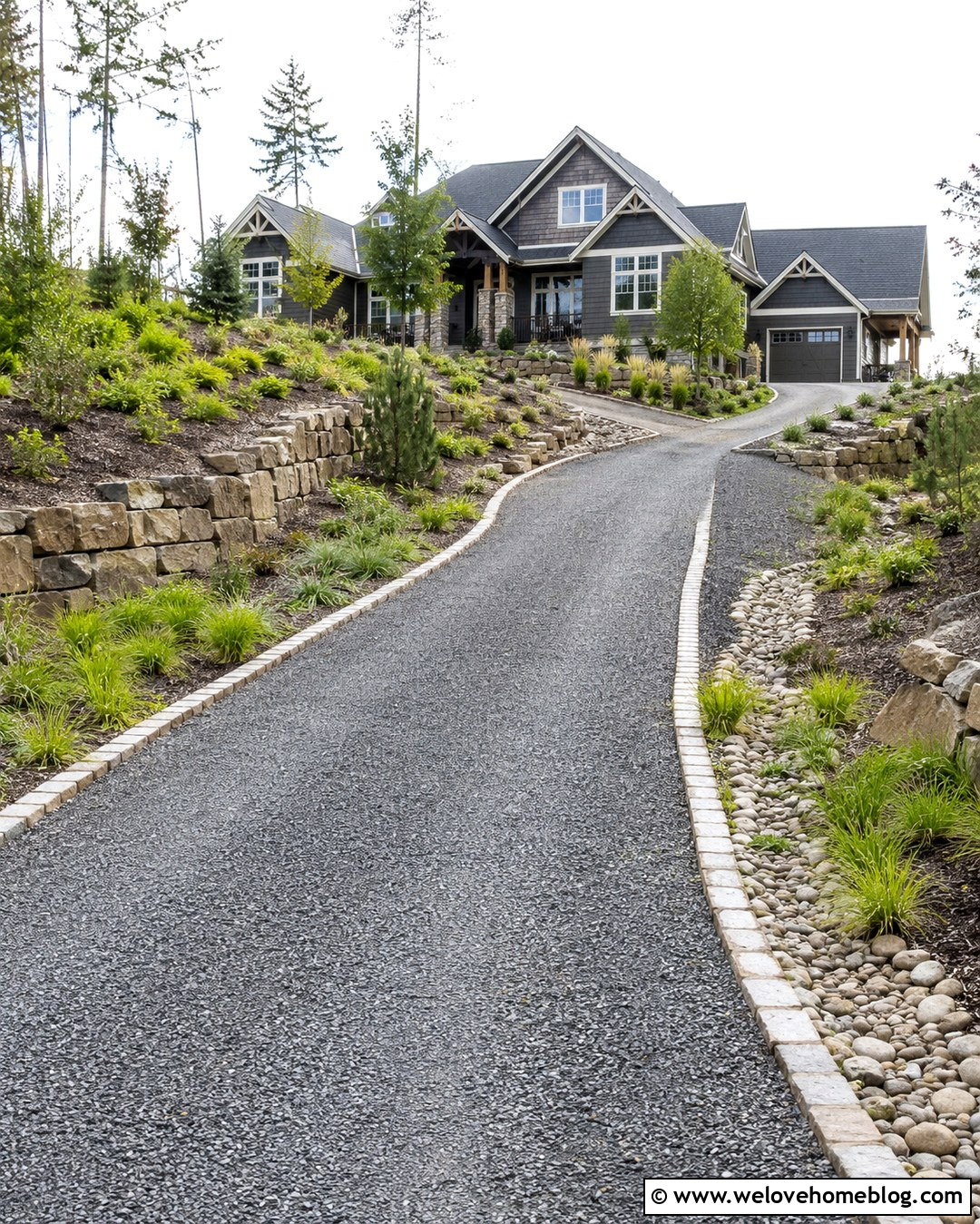
A sloped gravel driveway needs a landscape plan that supports the grade instead of simply decorating it. Choose angular crushed stone that compacts more securely than rounded pea gravel, and divide steep side banks with low natural-stone retaining walls. Plant the terraces with spreading ground covers, deep-rooted shrubs, ornamental grasses, and small trees suited to the site. Stone-lined drainage channels can carry water away from the driving surface and reduce washout during heavy rain. Use matching stone as driveway edging so the functional walls appear integrated with the overall design. On tight curves, keep the inside bank low for visibility and reserve taller planting for wider outer slopes. Before construction, have grading and drainage reviewed locally because soil conditions, rainfall, and driveway pitch will affect the required solution.
16. Budget Long Gravel Driveway With Mulch Beds
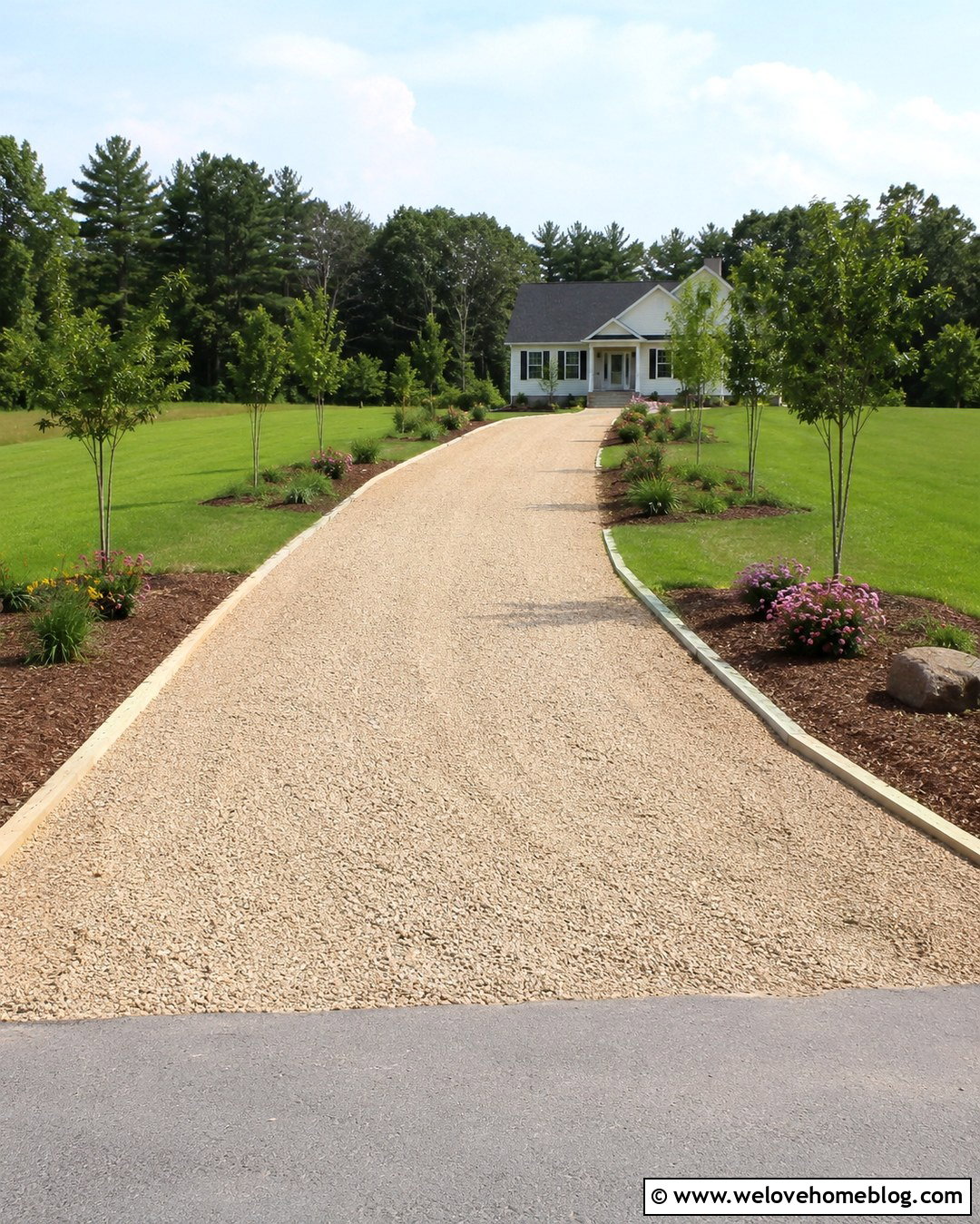
Landscaping a lengthy driveway does not require planting every available foot. Begin with affordable local crushed gravel and define selected sections using pressure-treated timber, recycled brick, or simple steel edging. Create mulched planting beds at the entrance, major curves, and the area closest to the house. Leave the remaining driveway edges as neatly maintained grass shoulders. In each bed, repeat inexpensive shrubs, ornamental grasses, and divisions of hardy perennials rather than purchasing many one-of-a-kind plants. Young trees can be planted at generous intervals and allowed to fill out over time. This targeted approach puts the strongest visual details where visitors notice them most. It also reduces watering, trimming, and material costs while making the entire long driveway feel deliberately landscaped rather than unfinished.
17. White Gravel Driveway With Coastal Landscaping
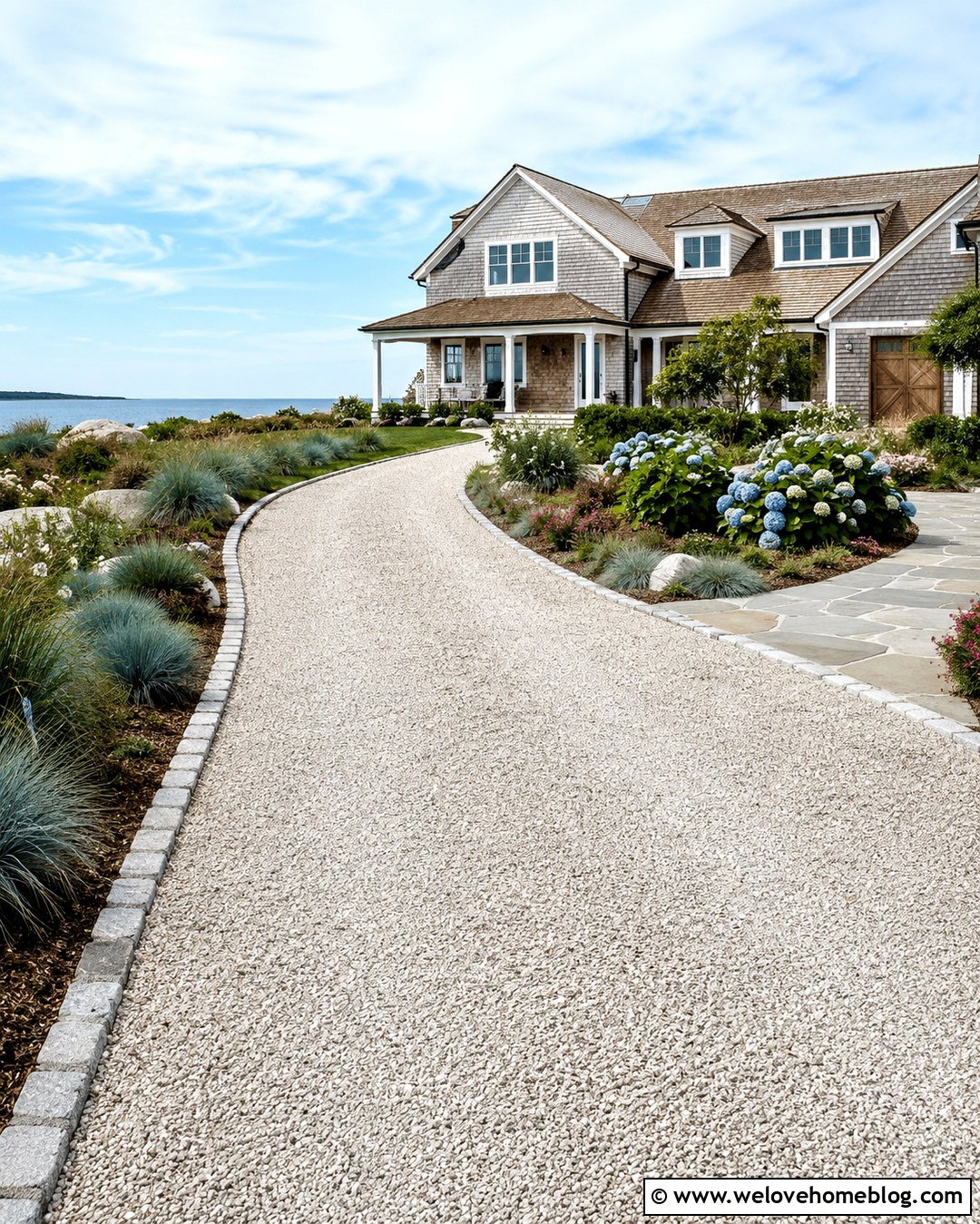
Light-colored gravel can brighten a long driveway leading to a coastal, cottage, or shingle-style home. Choose off-white crushed limestone rather than glaring pure white stone, which may show dirt and tire marks more easily. Edge the surface with pale gray cobbles or weathered timber, then plant broad drifts of blue-green grasses, hydrangeas, rugosa roses, and salt-tolerant shrubs suited to the location. Allow the driveway to curve gently through the landscape, revealing the house between plant groupings. A shell-colored stone walkway can branch toward the porch and provide a firm pedestrian route. Keep planting loose and windswept, but maintain a clear mowed or mulched strip beside the gravel. This small detail makes the relaxed design appear cared for and helps contain spreading vegetation.
18. Dark Gravel Driveway With Craftsman Landscaping
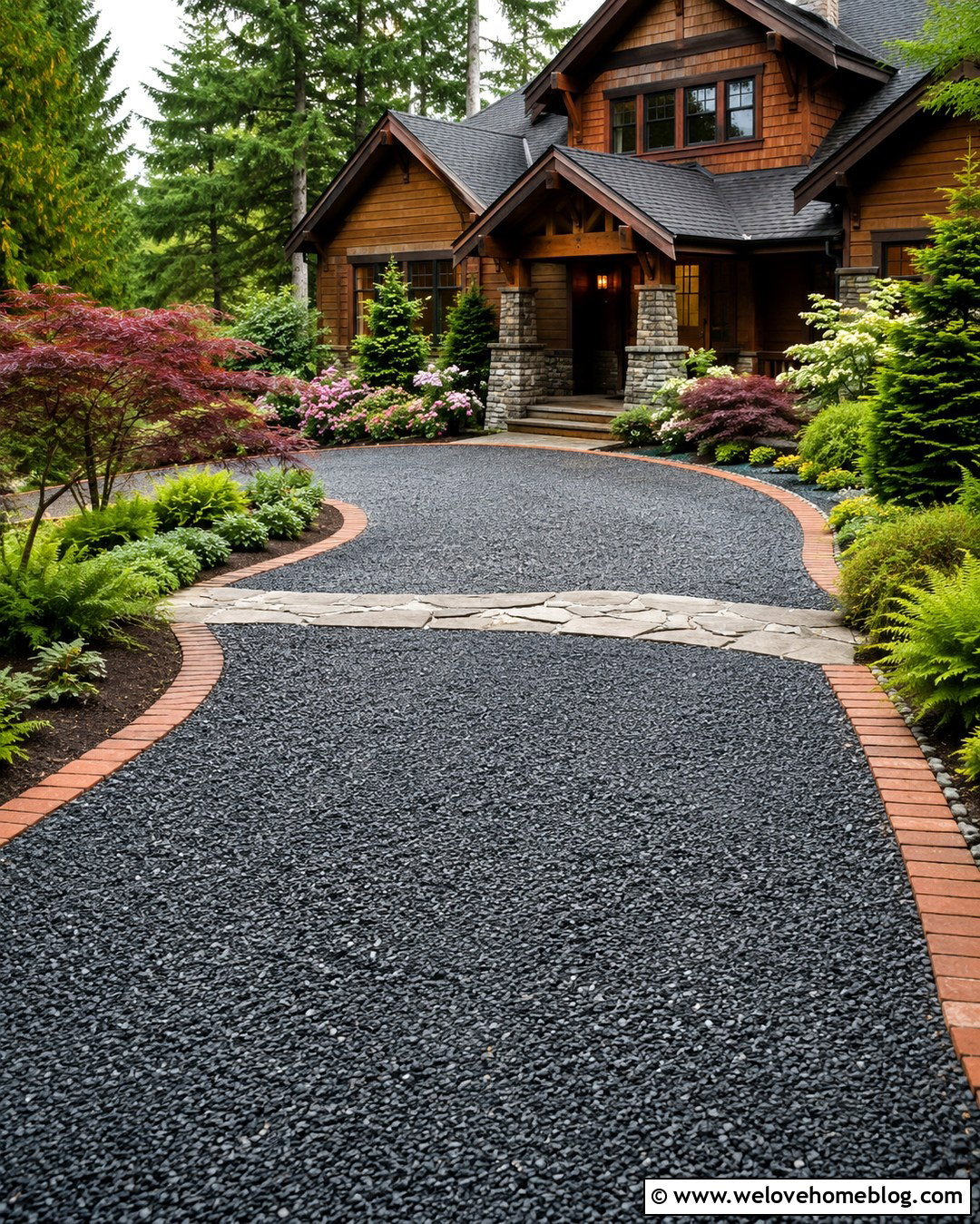
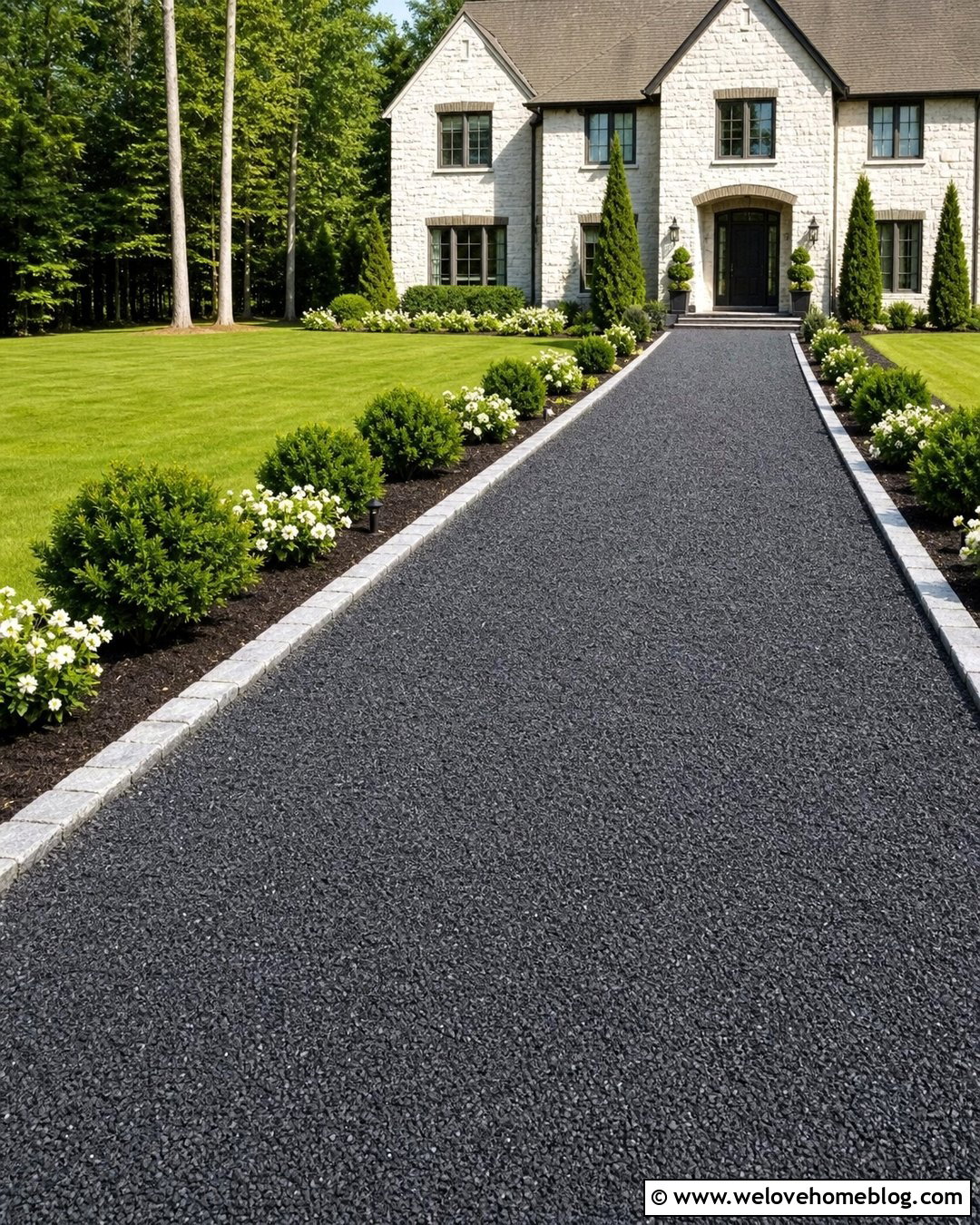
Charcoal crushed gravel creates a handsome foundation for a Craftsman home with warm woodwork, stone columns, and deep exterior colors. Give the long driveway a shallow curve and contain it with reddish-brown brick or dark granite edging. On each side, combine Japanese maples, compact conifers, flowering shrubs, ferns, and layered ground covers. These plants echo the handcrafted, garden-focused character associated with Craftsman architecture. Use broad planting beds close to the house and simpler repeated groupings along the longer approach. A natural stone walkway can cross the gravel near the front porch, visually connecting the driveway to the entrance. Because dark aggregate can create a strong visual line, soften selected sections with arching grasses and spreading plants while preserving a narrow clear strip beside the driving surface.
19. Long Gravel Driveway Through An Orchard
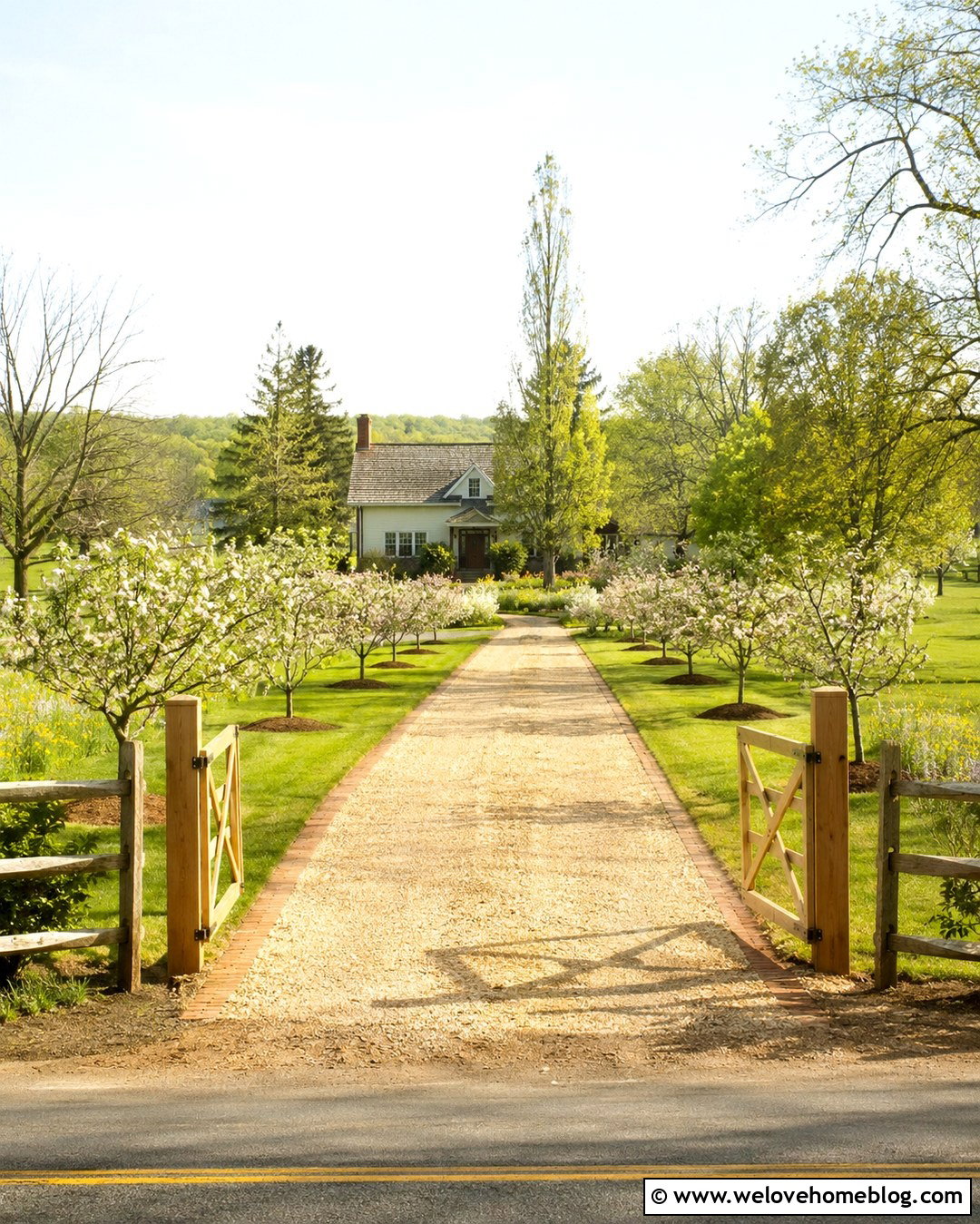
An orchard can transform a practical gravel driveway into a productive and memorable entrance. Plant evenly spaced fruit or flowering trees along both sides, setting them well beyond the driveway edge to accommodate mature canopies and maintenance equipment. Warm beige gravel suits the agricultural character, while flush brick or timber edging keeps the surface neat. Beneath the trees, maintain mowed grass, a low meadow mix, or mulched circles that protect trunks from equipment damage. Add a simple wooden gate and fence near the road to frame the first view. The driveway may run straight for a formal orchard pattern or bend gently through an existing grove. Near the house, transition into wider perennial beds using herbs, flowering shrubs, and pollinator-friendly plants that reinforce the productive landscape theme.
20. Formal Long Gravel Driveway With Boxwood Hedges
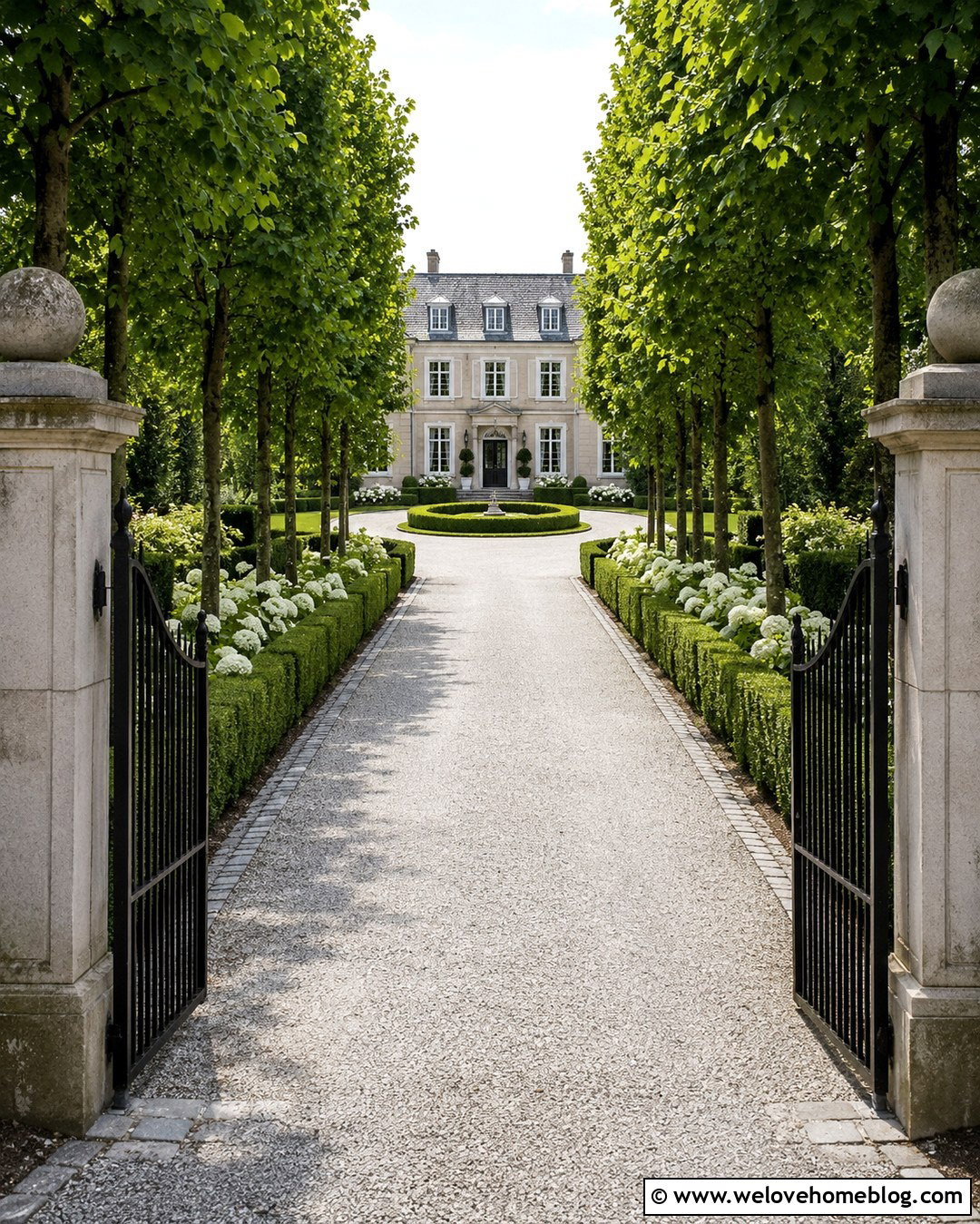
For a traditional estate look, pair a straight pale-gray gravel driveway with symmetrical boxwood hedges and regularly spaced trees. Use granite setts or brick edging to hold the gravel securely and create a tailored line along the full approach. Keep the hedges low enough to preserve open views, then position taller trees behind them for scale and shade. At the entrance, stone pillars and simple metal gates can establish symmetry. Near the house, widen the driveway into a rectangular or circular parking court with a central clipped evergreen or formal planting island. Limit the plant palette to a few repeated varieties, such as boxwood, hydrangea, upright hornbeam, and white-flowering perennials. Consistent spacing and careful pruning make the long layout feel organized, calm, and connected to the architecture.
Conclusion:
The most successful **long gravel driveway landscaping ideas** treat the entrance as one complete landscape rather than a gravel lane with random plants beside it. Start with a stable driveway surface, practical drainage, and strong edging. Then select trees, shrubs, fences, lighting, or stonework that complements the home and surrounding property. Repetition will help a long route feel connected, while curves, planting islands, gates, and focal points can prevent it from looking monotonous. You do not need to landscape every inch. Concentrate detailed planting around the roadside entrance, bends, and the final approach. With thoughtful materials and properly scaled features, a long gravel driveway can become one of your property’s strongest curb-appeal assets.

Related posts:
Leave a Reply