
Landscaping can turn a plain driveway into an attractive, welcoming part of your front yard. The best landscaping along driveway ideas combine the driving surface, planting beds, borders, lighting, and house architecture as one complete design. Before planting, consider vehicle clearance, mature plant size, sunlight, drainage, snow removal, and visibility near the street. Low shrubs and ground covers usually work well near pavement, while taller plants belong farther back. Repeating a limited plant palette also creates a cleaner look and makes long driveways feel connected to the home. Whether you have concrete, asphalt, gravel, brick, or pavers, the following complete designs offer practical and inspiring landscaping along driveway ideas.

1. Concrete Driveway With Curved Flower Beds
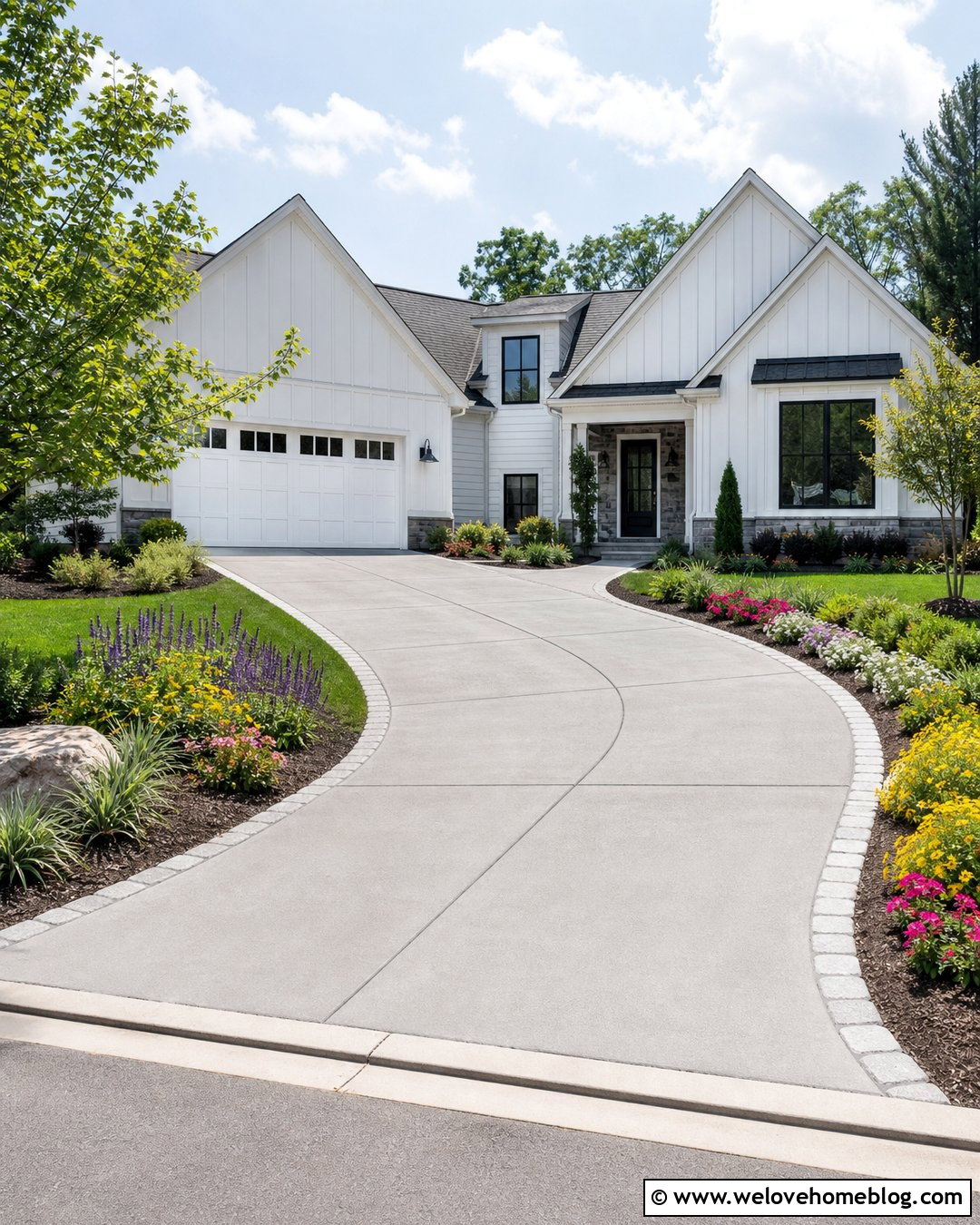
A gray poured concrete driveway feels softer when broad flower beds follow its edges in gentle curves. Start with a crisp stone or steel border that prevents mulch and soil from washing onto the pavement. Plant low ground covers near the driveway, medium-height perennials in the middle, and compact shrubs toward the lawn. This layered arrangement keeps branches away from vehicles while creating depth. Choose flowers with staggered bloom periods so the entrance remains colorful from spring through fall. Repeating the same three or four plants on both sides brings order without looking overly formal. Near the garage, widen the beds and connect them to the home’s foundation landscaping for a smooth, intentional transition.
2. Asphalt Driveway With Boxwood Hedges
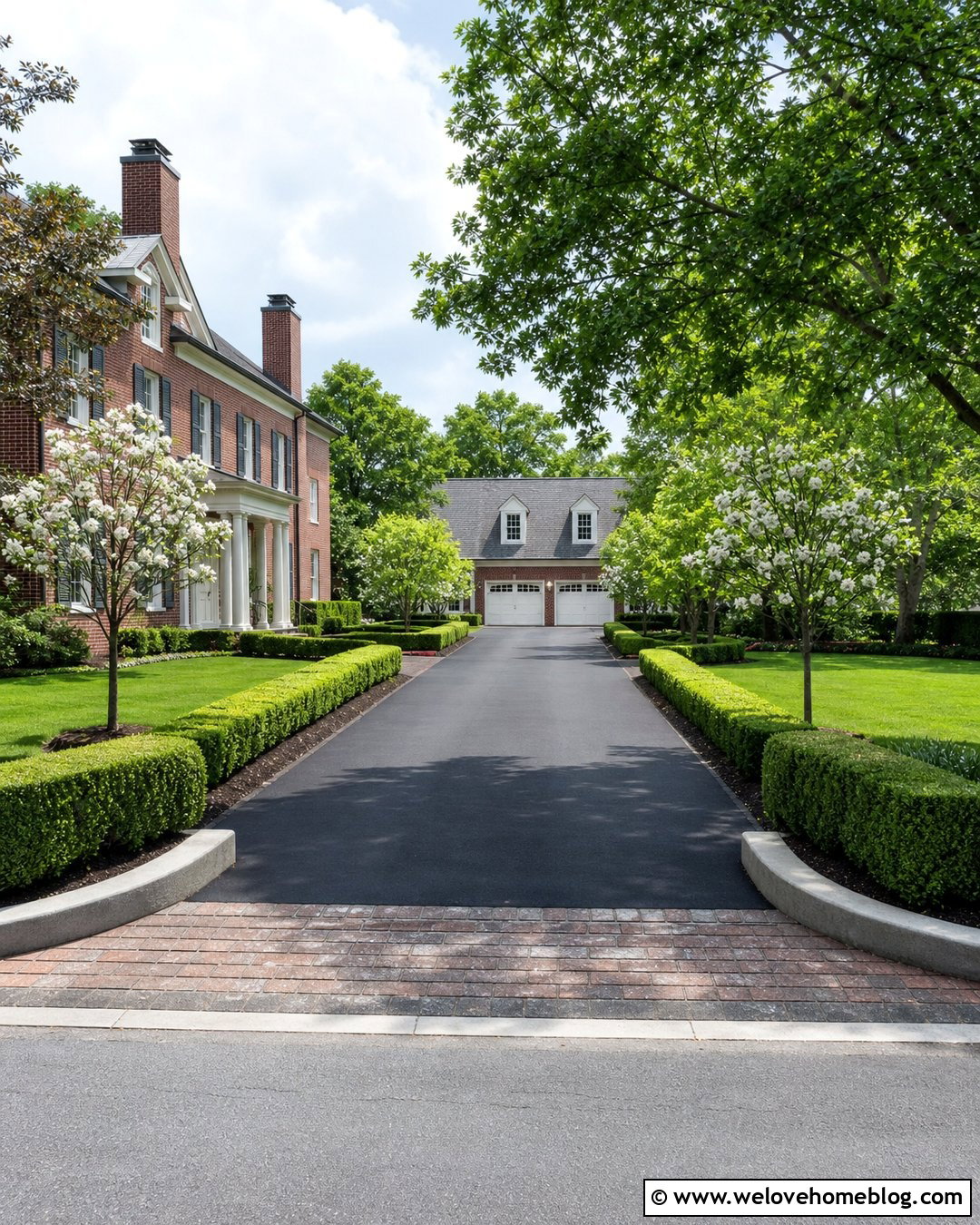
For traditional curb appeal, border a black asphalt driveway with low, neatly clipped boxwood hedges. Their rich green color provides strong contrast against the dark surface and complements brick, colonial, and Cape Cod homes. Keep the hedge around 18 to 24 inches tall so drivers can see the pavement edge and visitors can view the front yard. A narrow mulch strip beneath the plants simplifies mowing and protects trunks from lawn equipment. At the street, curve the hedge away from the entrance to preserve visibility. Add matching flowering trees farther back for height without crowding vehicles. This complete driveway landscape looks polished year-round and can be maintained with one or two light trimmings each season.
3. Gravel Driveway With Lavender Borders
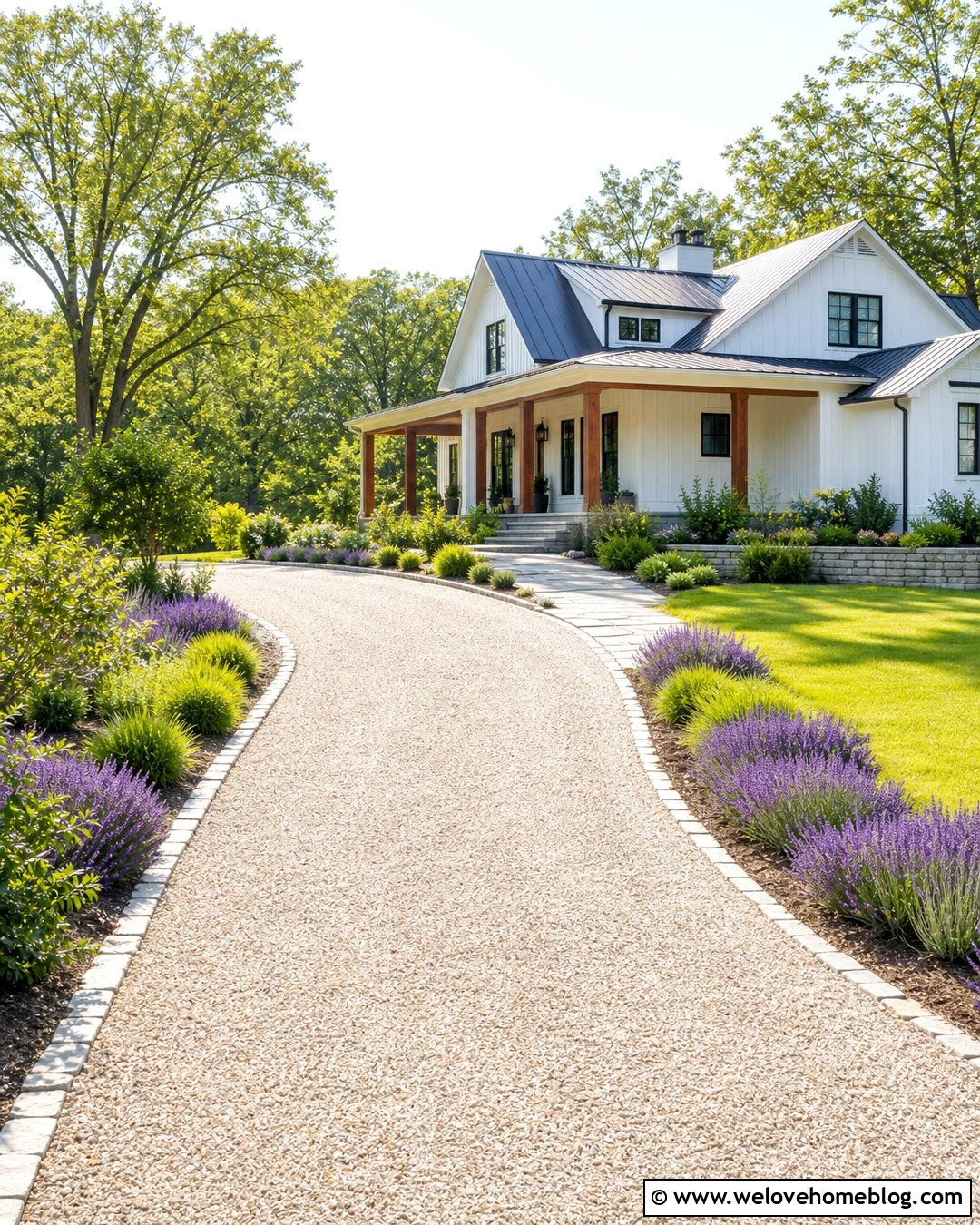
A pale gravel driveway bordered by lavender creates a relaxed country entrance with color, fragrance, and texture. Use cobblestone edging to hold the loose gravel in place and separate it from the planting soil. Lavender performs best in sunny locations with fast-draining ground, making it a natural partner for gravel landscapes. Space plants generously so air can move between them and their mature growth does not spill too far into the driving area. Add compact ornamental grasses between selected groups for movement and winter interest. A curved layout leading toward a cottage or modern farmhouse makes the arrangement especially inviting. Keep the planting palette restrained so the gravel, purple flowers, and green-gray foliage remain the main visual features.
4. Paver Driveway With Ornamental Grasses
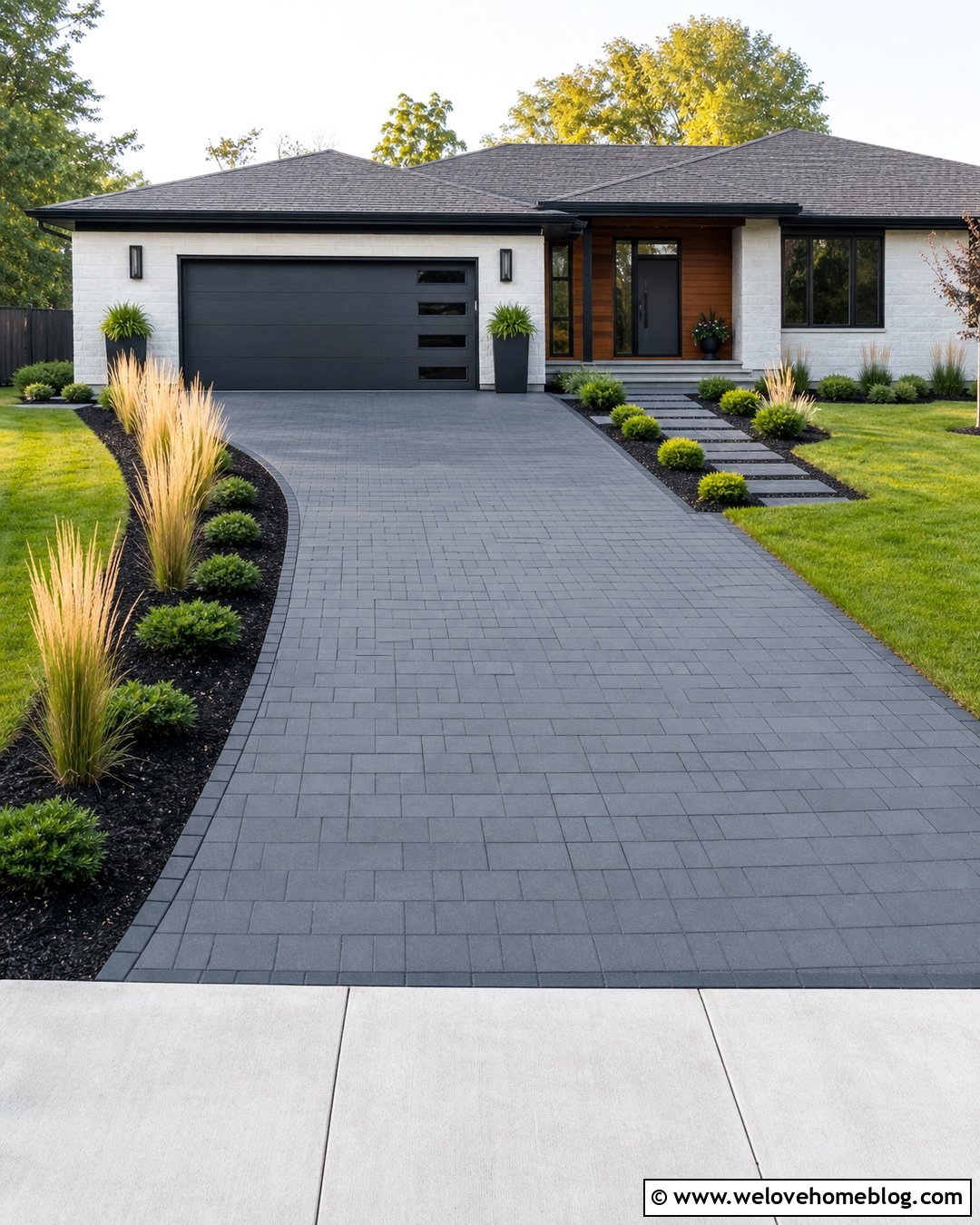
Ornamental grasses bring graceful movement to a geometric paver driveway without requiring a complicated planting plan. Choose compact, upright varieties that will not flop across the pavement or obstruct car doors. Arrange them in repeated groups along wide beds filled with dark mulch or decorative gravel. The consistent spacing creates rhythm, while the soft foliage balances the strong lines of rectangular concrete pavers. Steel edging can form a clean transition between the beds and driveway. Near the house, combine the grasses with a few evergreen shrubs to maintain structure during winter. This landscaping approach suits contemporary ranch and modern homes because it looks simple, architectural, and uncluttered while still adding natural texture to the entire driveway.
5. Brick Driveway With Hydrangea Beds
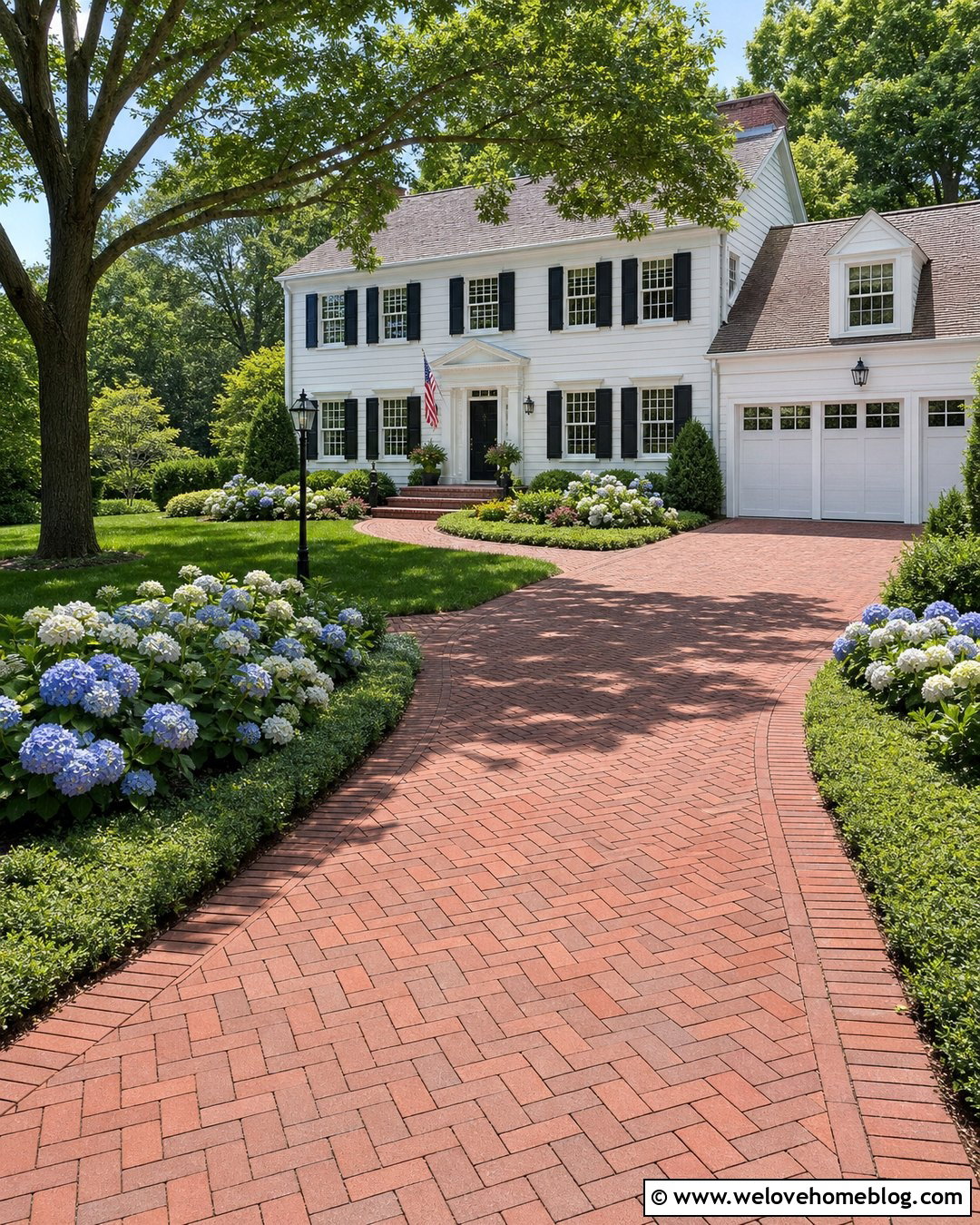
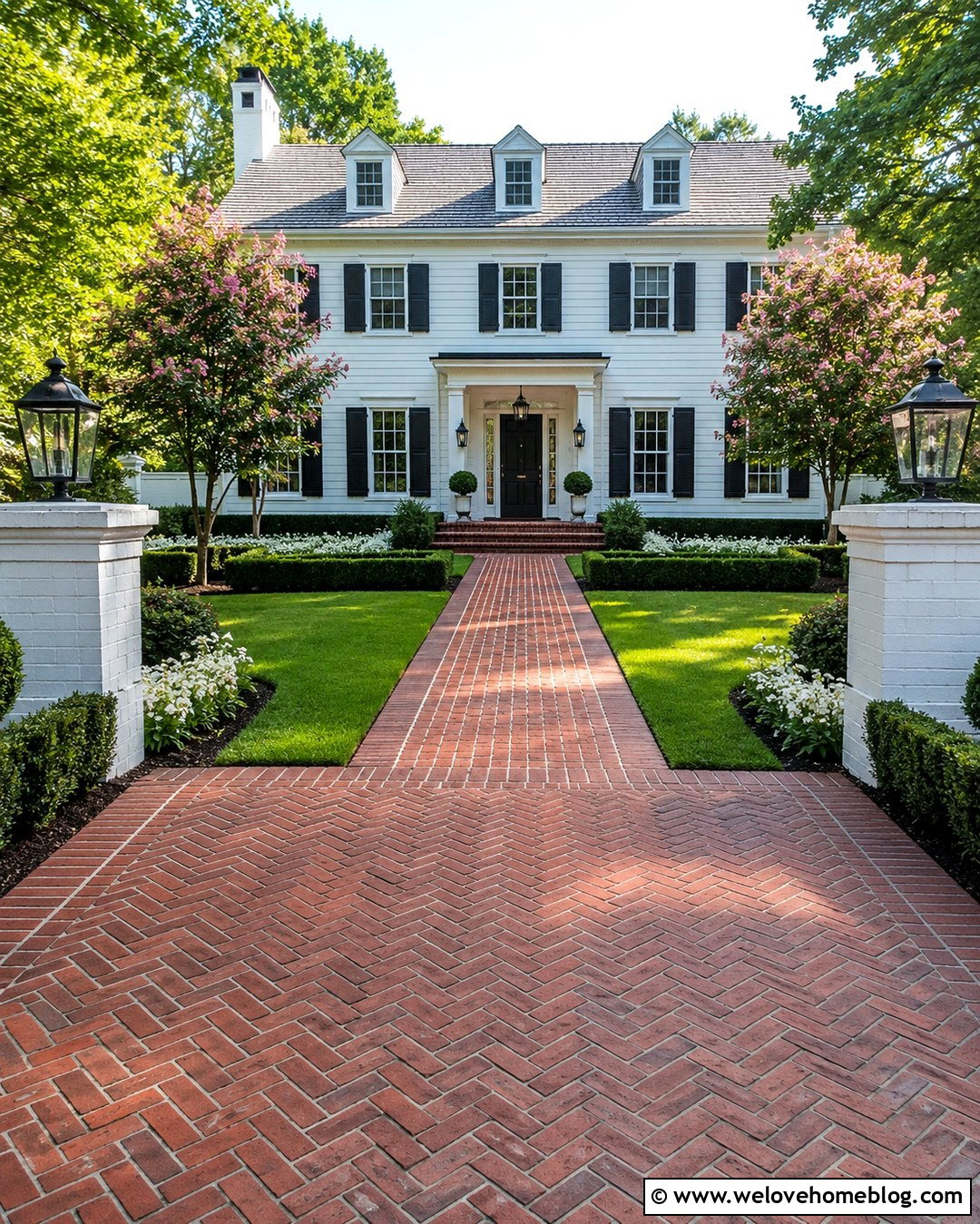
Picture a warm red brick driveway framed by generous beds of flowering hydrangeas. The large blooms soften the brick pattern and give a colonial or traditional home an established garden character. Set the shrubs far enough from the pavement to account for their mature width, then place low ground covers along the front edge. A narrow brick soldier-course border can connect the planting beds visually to the driveway. Hydrangeas may need afternoon shade and consistent moisture, so this design works particularly well where nearby trees or the house provide protection. Add evergreen shrubs between groups to prevent the border from looking empty in winter. The result is lush and colorful without making the driveway entrance difficult to navigate.
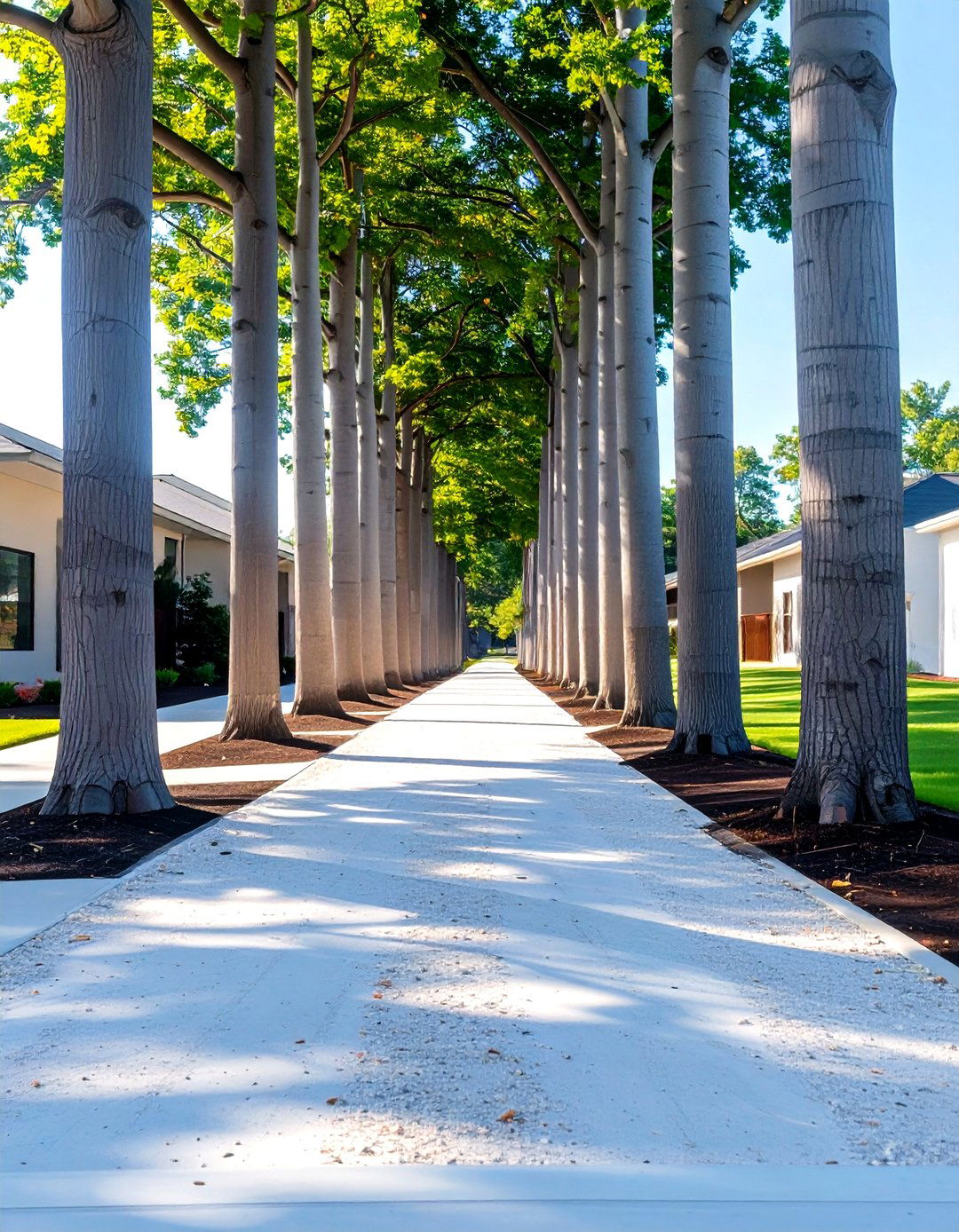
6. Long Driveway With Matching Tree Rows
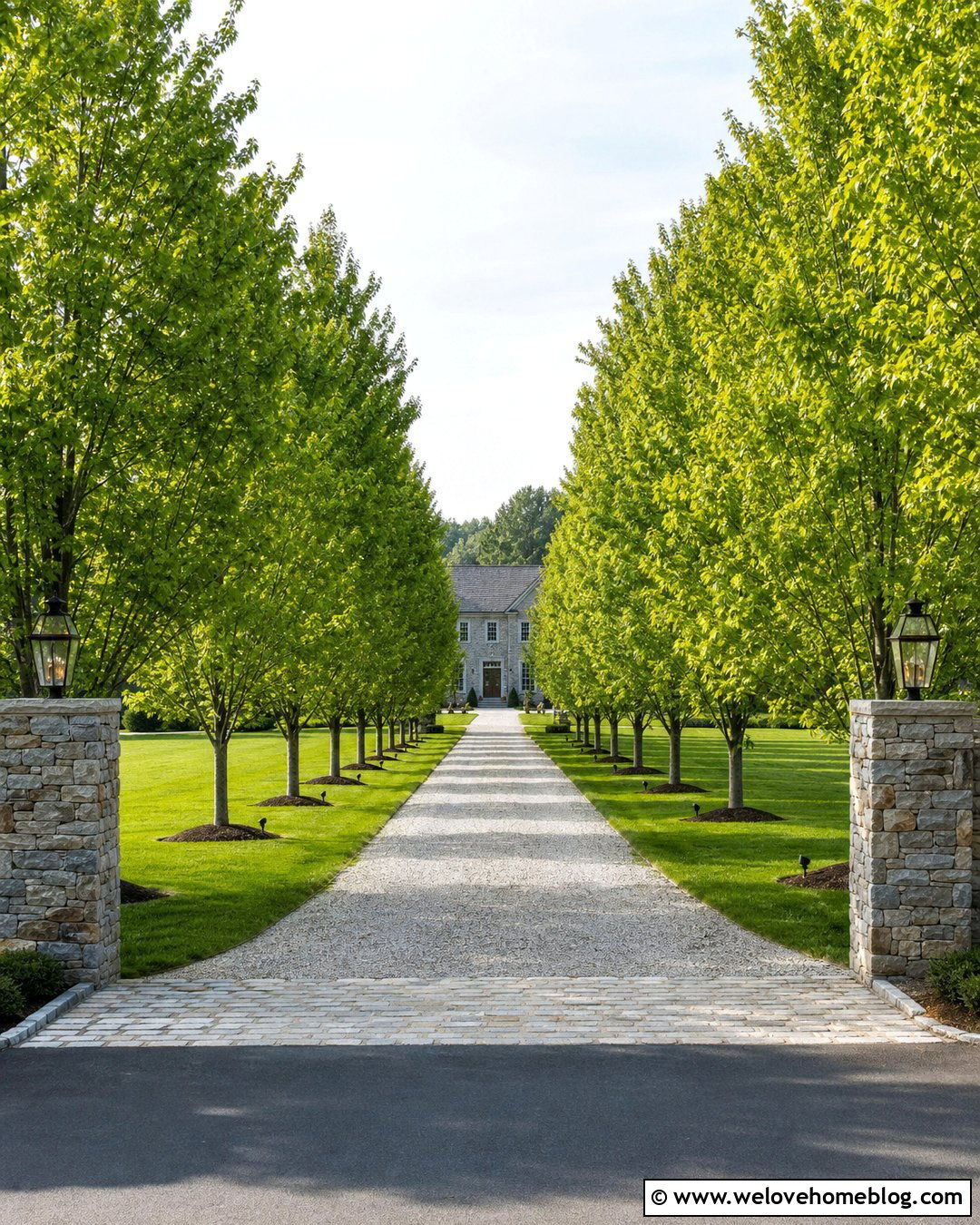
A long driveway becomes a strong landscape feature when matching rows of trees guide the eye toward the house. Select species suited to the local climate, soil, and available width, avoiding trees with aggressive surface roots or heavy fruit drop. Position trunks well beyond the pavement edge so mature branches leave comfortable clearance for vehicles and delivery trucks. Beneath the trees, use a simple lawn, meadow grass, or continuous mulched bed rather than many unrelated plants. Even spacing creates a formal look, while slightly irregular placement feels more natural. Low-voltage uplights can highlight selected trunks after dark. Whether the surface is asphalt or gravel, the repeated canopy transforms the entire approach into a memorable, park-like entrance.
7. Modern Driveway With River Rock Beds
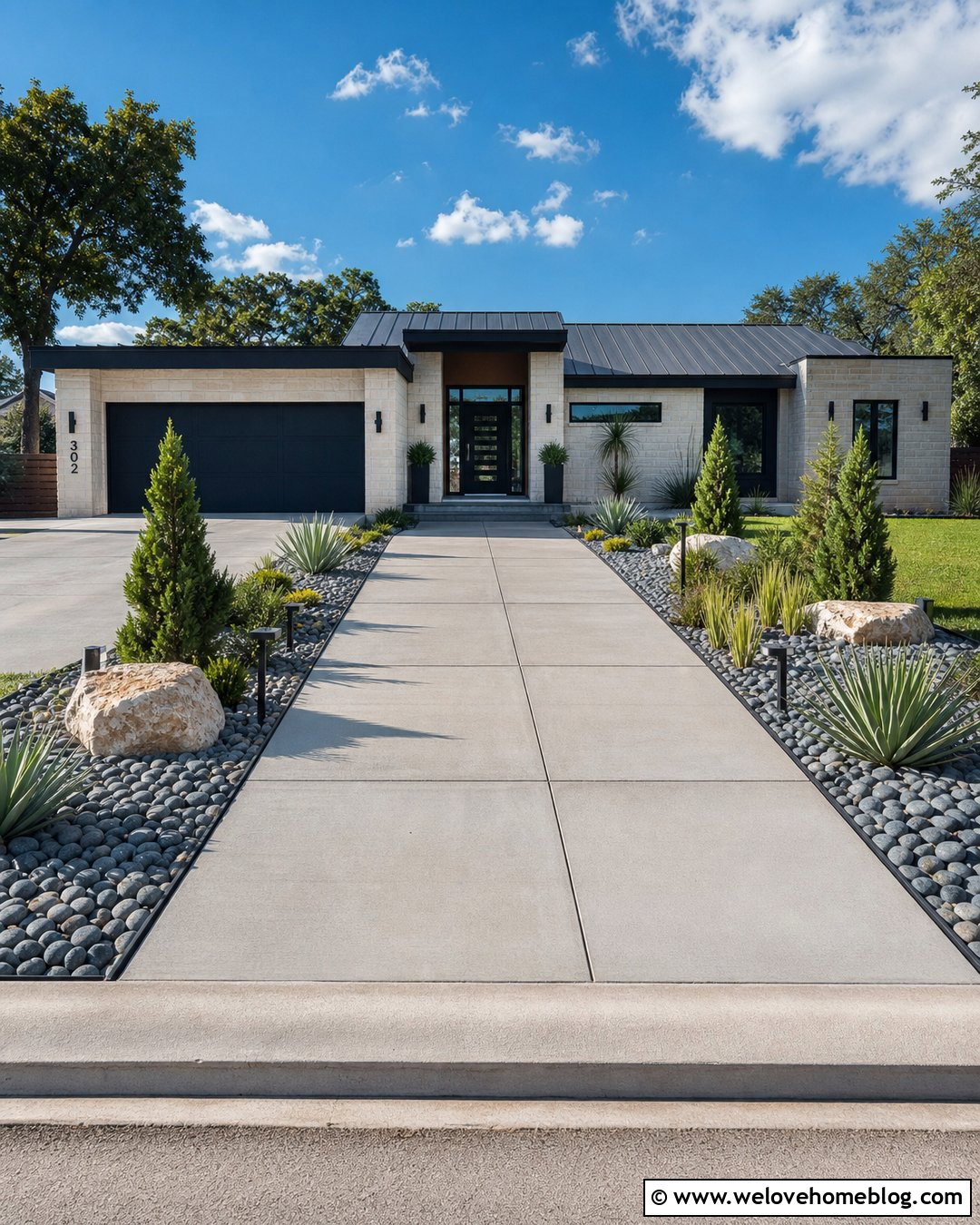
Clean river rock beds can make a concrete driveway feel connected to a modern home’s architecture. Use smooth gray stones in wide, sharply defined strips along the pavement, held in place by black steel edging. Add sculptural plants such as yucca, agave in suitable climates, dwarf conifers, or upright ornamental grasses. Leave visible space between plants so the rock remains part of the design rather than disappearing beneath foliage. Large accent boulders can create focal points, but place them far enough from turning and parking areas. Square path lights reinforce the contemporary geometry and improve edge visibility. This low-profile landscape works best when its colors repeat tones found in the driveway, facade, roof, or front walkway.
8. Circular Driveway With A Center Island Garden
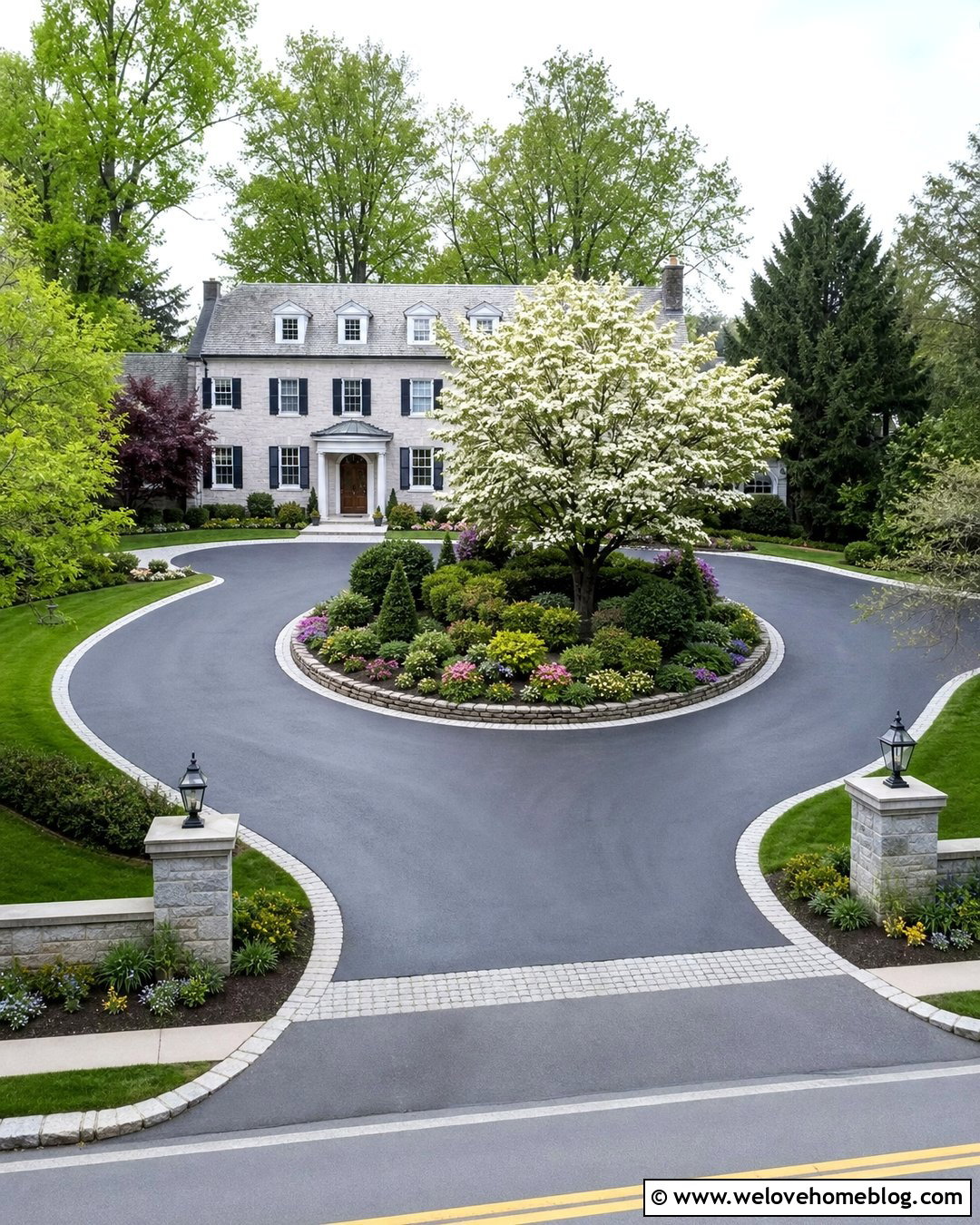
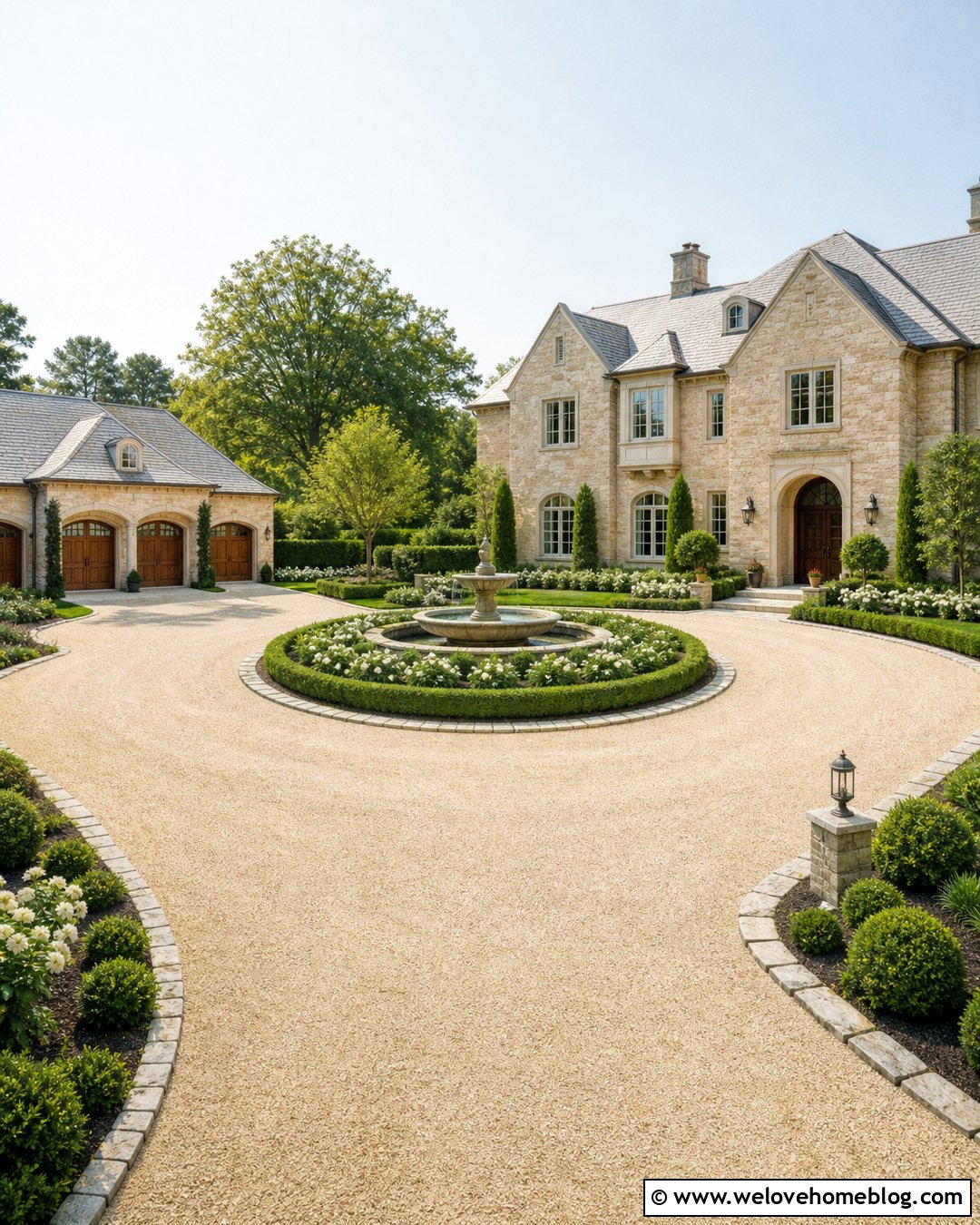
A landscaped center island gives a circular driveway a clear focal point and reduces the amount of exposed pavement. Anchor the island with one appropriately sized ornamental tree, then surround it with layered shrubs, perennials, and ground covers. Keep taller plants near the center and lower varieties around the outside so drivers retain a clear view across the circle. Stone edging protects the bed and creates a tidy transition to concrete, asphalt, or pavers. A circular drip-irrigation line can simplify watering without spraying vehicles. Repeat several island plants near the front foundation to connect the spaces. The finished design should feel balanced from every direction because the island will be seen from the street, driveway, and house.
9. Curved Driveway With Native Planting Beds
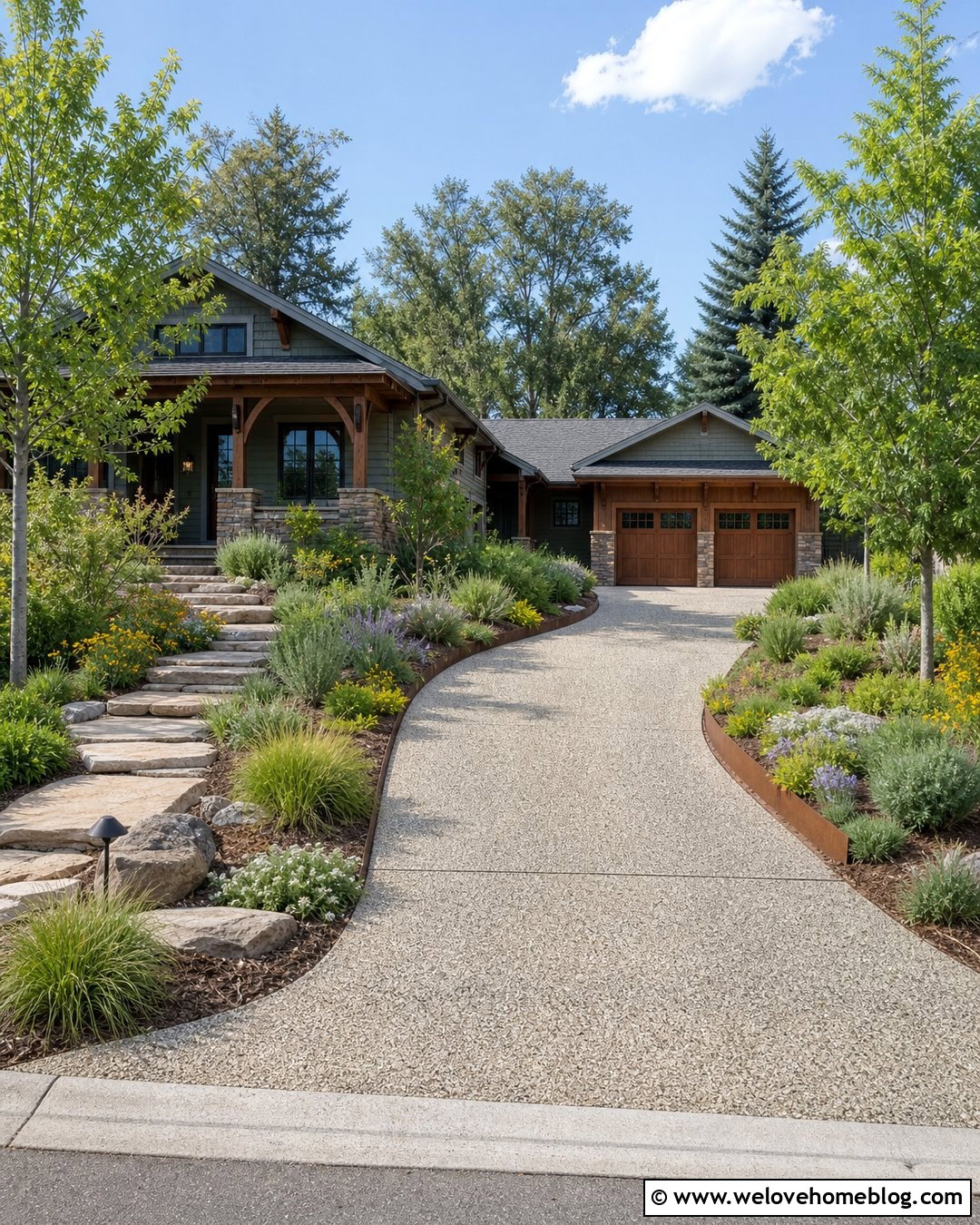
Native planting can help a curved driveway blend naturally into the surrounding yard. Create sweeping beds that follow the pavement instead of forcing straight borders against a flowing layout. Combine regionally appropriate grasses, flowering perennials, shrubs, and small trees in layered groups. Keep the lowest plants beside the driveway and place taller selections toward the rear. This protects sightlines and prevents branches from scratching vehicles. A stone or weathered steel edge provides definition while retaining an informal appearance. Repetition is essential; use a few dependable species in drifts rather than planting one of everything. The resulting landscape supports a relaxed, place-specific look and can complement gravel, asphalt, exposed aggregate, or rustic concrete surfaces.

10. Driveway With Low-Maintenance Evergreen Borders
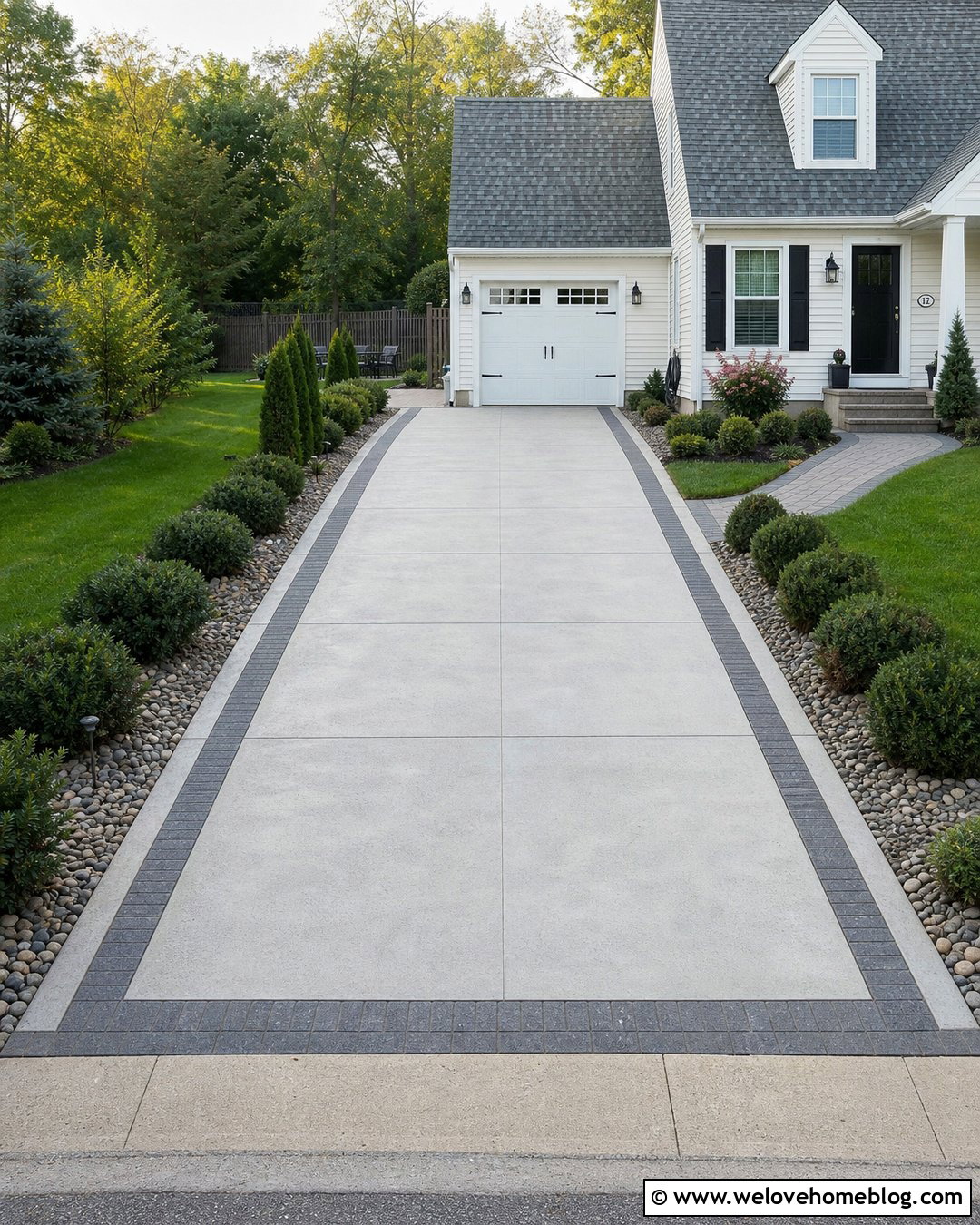
Evergreen borders keep a driveway framed throughout the year and reduce reliance on short-lived seasonal color. Select compact junipers, dwarf hollies, inkberry, or other shrubs appropriate for your region and growing conditions. Arrange them in staggered groups rather than a rigid single-file row for a fuller, more natural look. Add stone mulch or shredded bark beneath the plants to suppress weeds and simplify mowing. Leave adequate distance between shrubs and pavement, especially in regions where snow piles or road salt may affect growth. A concrete driveway with a dark paver ribbon looks especially finished beside deep green foliage. Use one flowering accent near the house or entrance to introduce color without increasing maintenance across the entire border.
11. Driveway With A Mixed Perennial Border
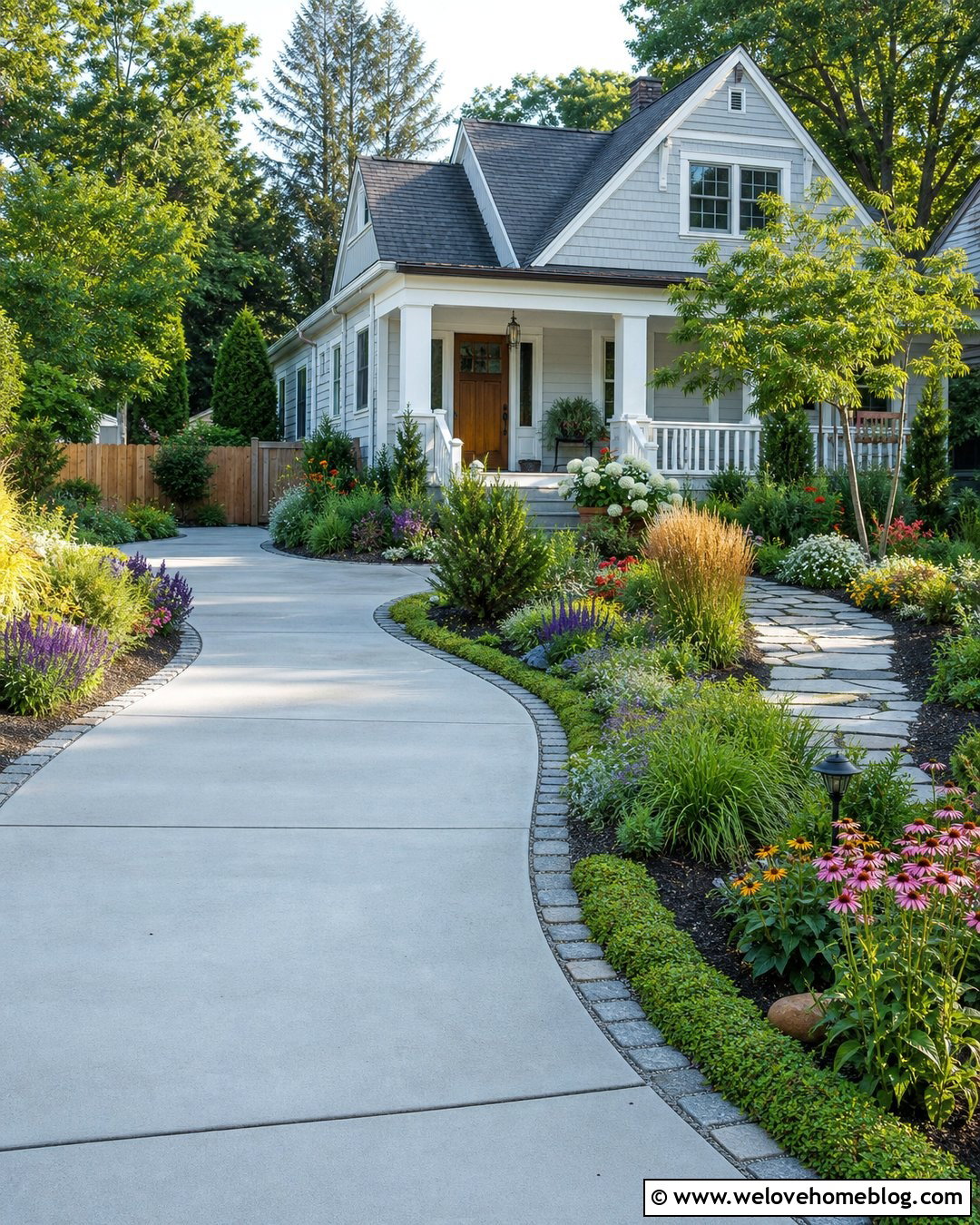
A mixed perennial border can transform an ordinary driveway into a colorful garden path. Build the design around repeated groups instead of scattered individual flowers. Place creeping plants and compact blooms near the pavement, medium-height perennials behind them, and small shrubs at the back. Select plants with different flowering seasons, foliage colors, and winter seed heads so the border remains interesting beyond summer. A brick or cobblestone edge separates the bed from poured concrete and gives the arrangement a finished appearance. Avoid delicate flowers where vehicle doors open frequently. Near the garage, transition to sturdier evergreen plants that can handle foot traffic and reflected heat. The overall combination feels abundant while preserving a clear, practical driving lane.
12. Narrow Driveway With Slim Planting Strips
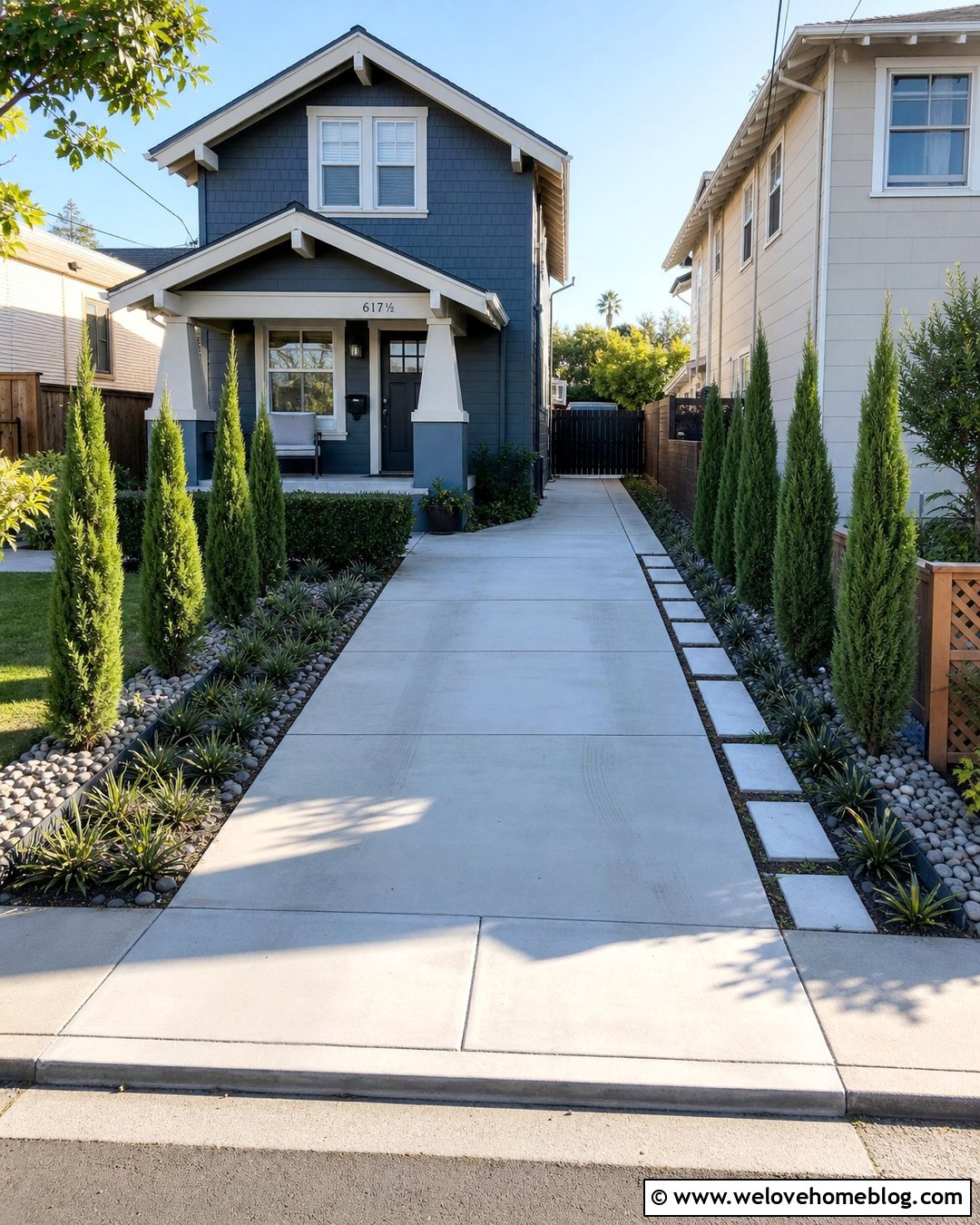
Limited space does not mean a narrow driveway must remain bare. Create slim planting strips using upright plants, compact ground covers, and narrow edging that will not reduce usable pavement. Columnar evergreens, tidy ornamental grasses, and low liriope can provide greenery without spreading into car doors or walkways. Choose one or two varieties and repeat them to prevent the confined space from feeling cluttered. Light-colored gravel mulch can brighten shaded areas and reduce soil splashing onto the driveway. If planting room is extremely tight, use wall-mounted trellises or narrow raised planters near the house instead. A straight concrete or brick driveway benefits from this controlled approach because every element reinforces the clean, efficient layout.
13. Driveway With White Flower Landscaping
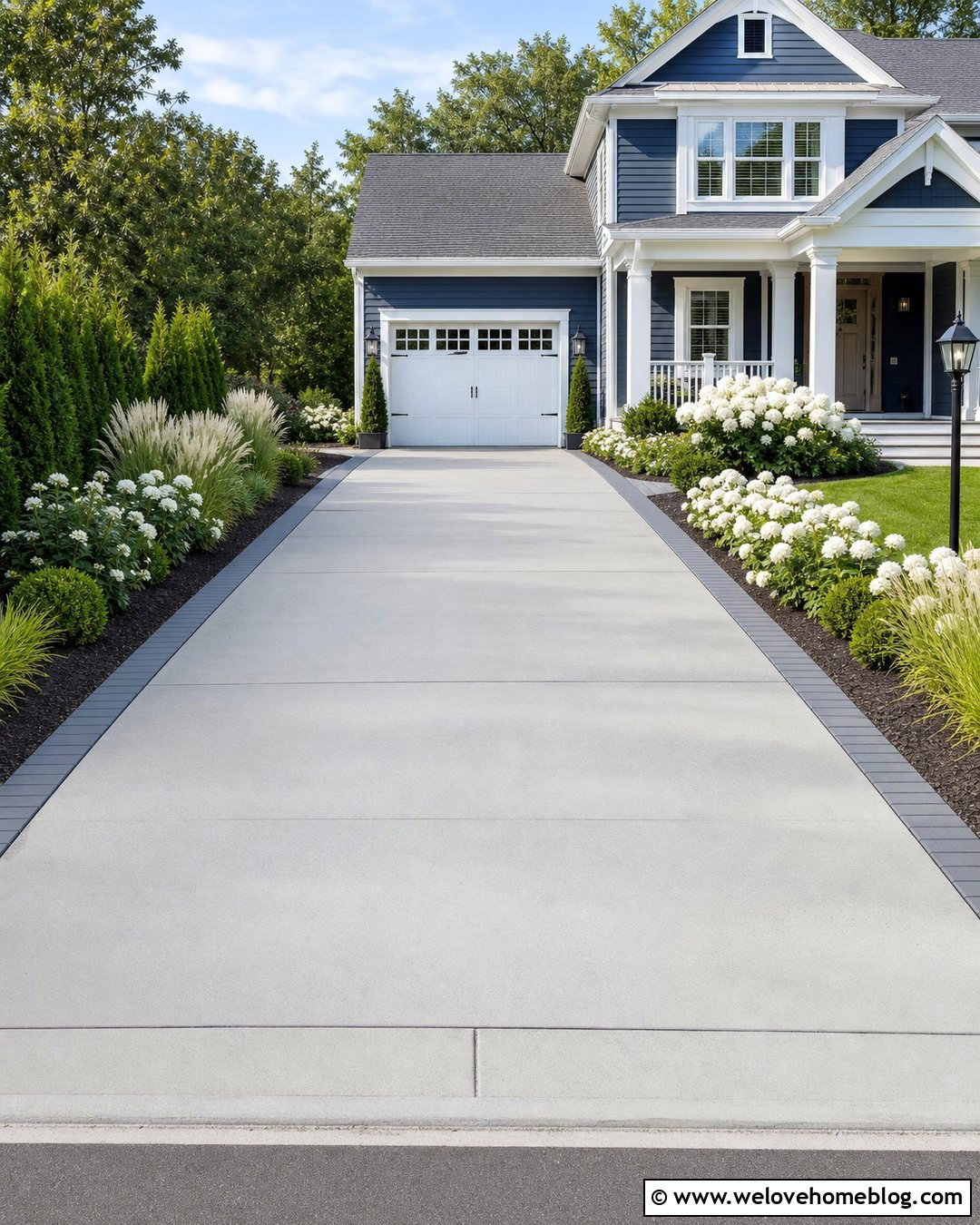
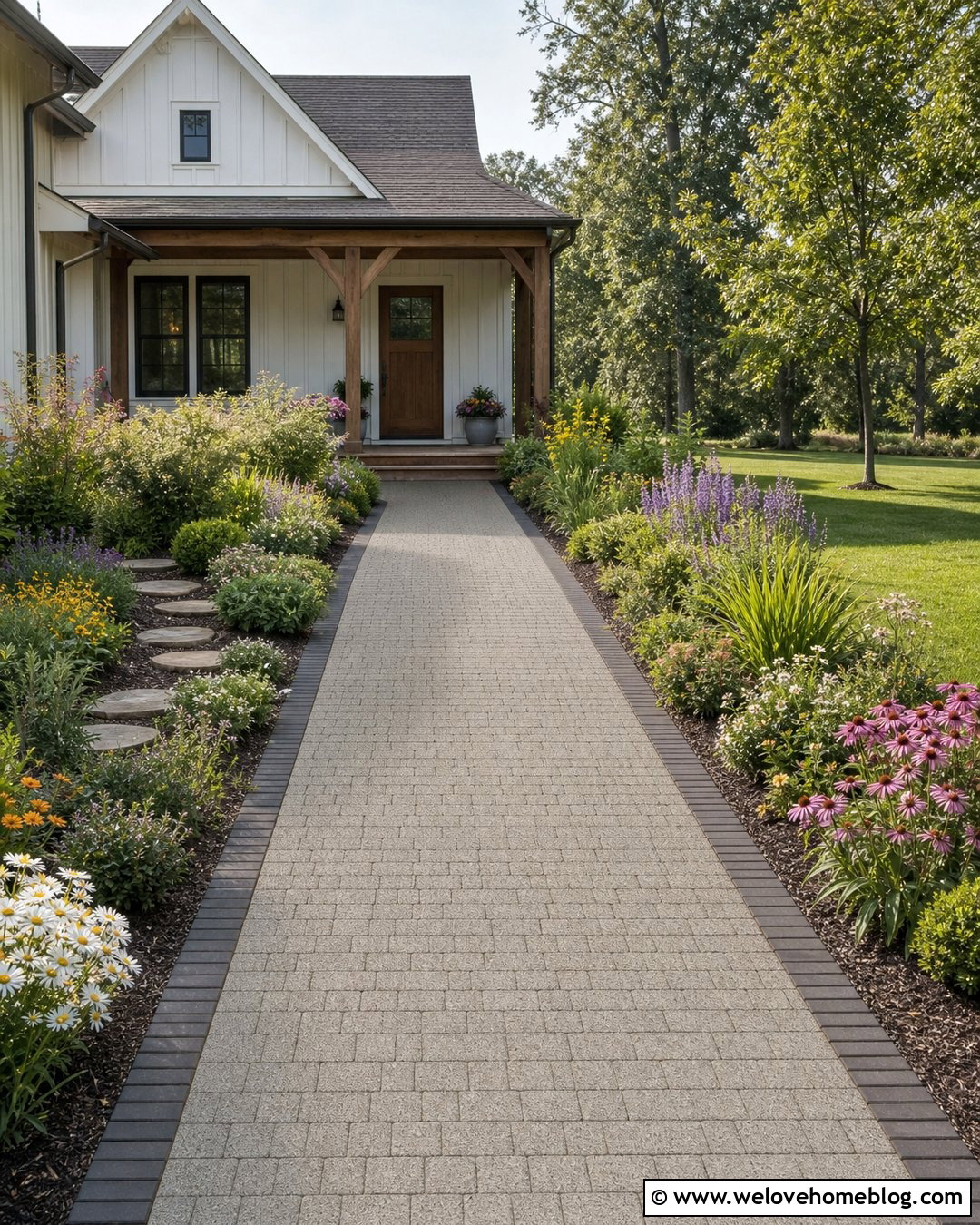
A white-flowering border creates a bright, cohesive frame that suits nearly every driveway material. Combine spring bulbs, summer perennials, flowering shrubs, and pale ornamental grasses for a longer season of interest. Green foliage prevents the monochromatic palette from feeling flat, while dark mulch emphasizes each plant’s shape. Along a gray concrete driveway, use a charcoal paver edge for extra contrast. Keep flowers low near the street and place larger hydrangeas, viburnums, or compact roses closer to the house. Repeating white blooms near the front walk visually connects the driveway with the main entrance. This complete landscape works particularly well with white, gray, blue, or red brick homes and looks crisp without depending on many competing colors.
14. Driveway With Rose And Boxwood Borders
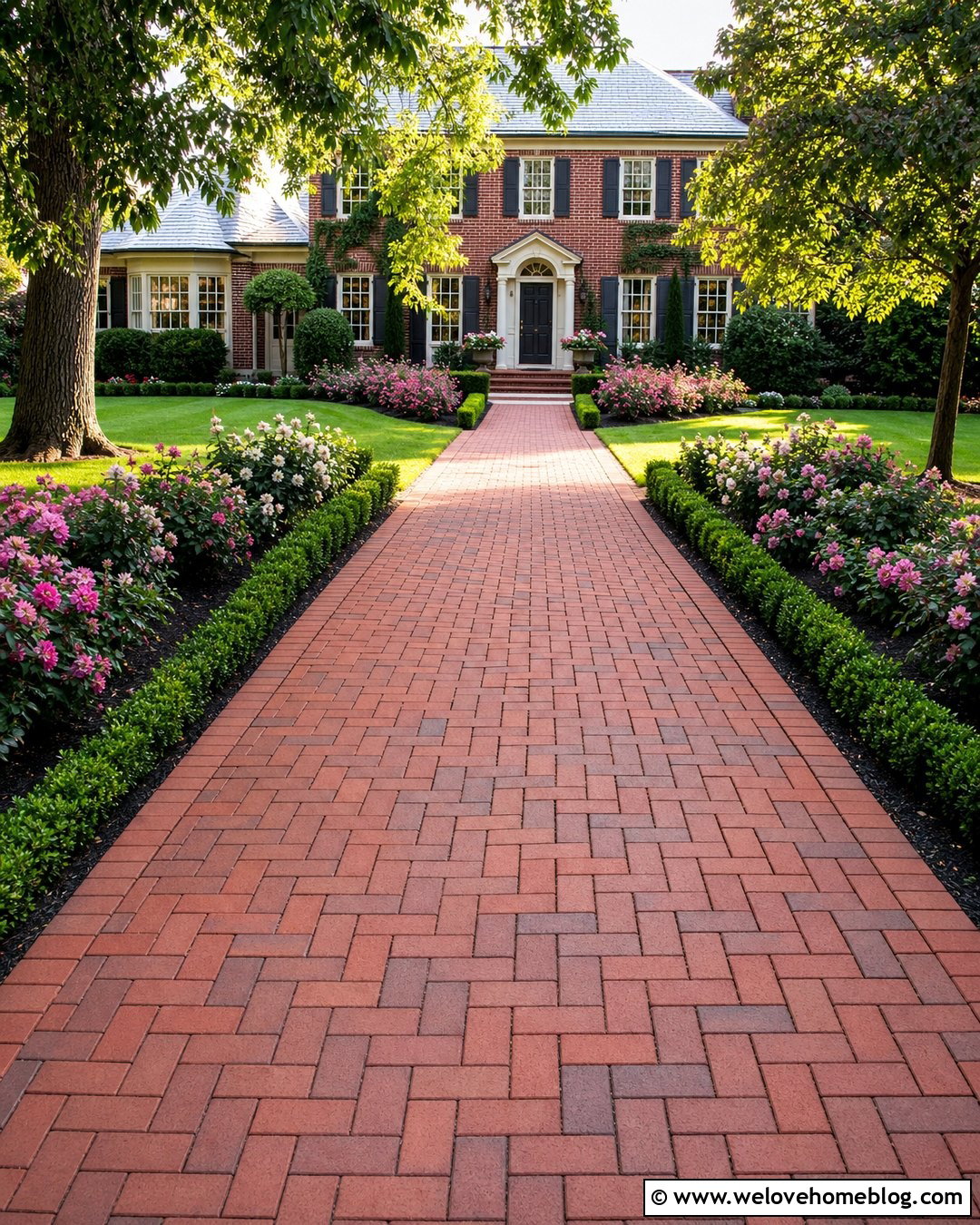
Roses and boxwood create a structured yet romantic driveway landscape. Use low boxwood as the evergreen framework, then place repeat-blooming shrub roses behind it where their stems will not interfere with vehicles. A brick driveway or brick-edged concrete surface reinforces the traditional character. Allow enough planting depth for airflow and maintenance access, and choose disease-resistant roses suited to your climate. Dark mulch makes both foliage and flowers appear richer while keeping soil away from the pavement. At the entrance, curve the border outward and reduce plant height to protect visibility. Continue a smaller version of the same combination beside the walkway or porch. This repetition makes the entire front yard feel planned rather than assembled in separate pieces.
15. Driveway With Corten Steel Planters
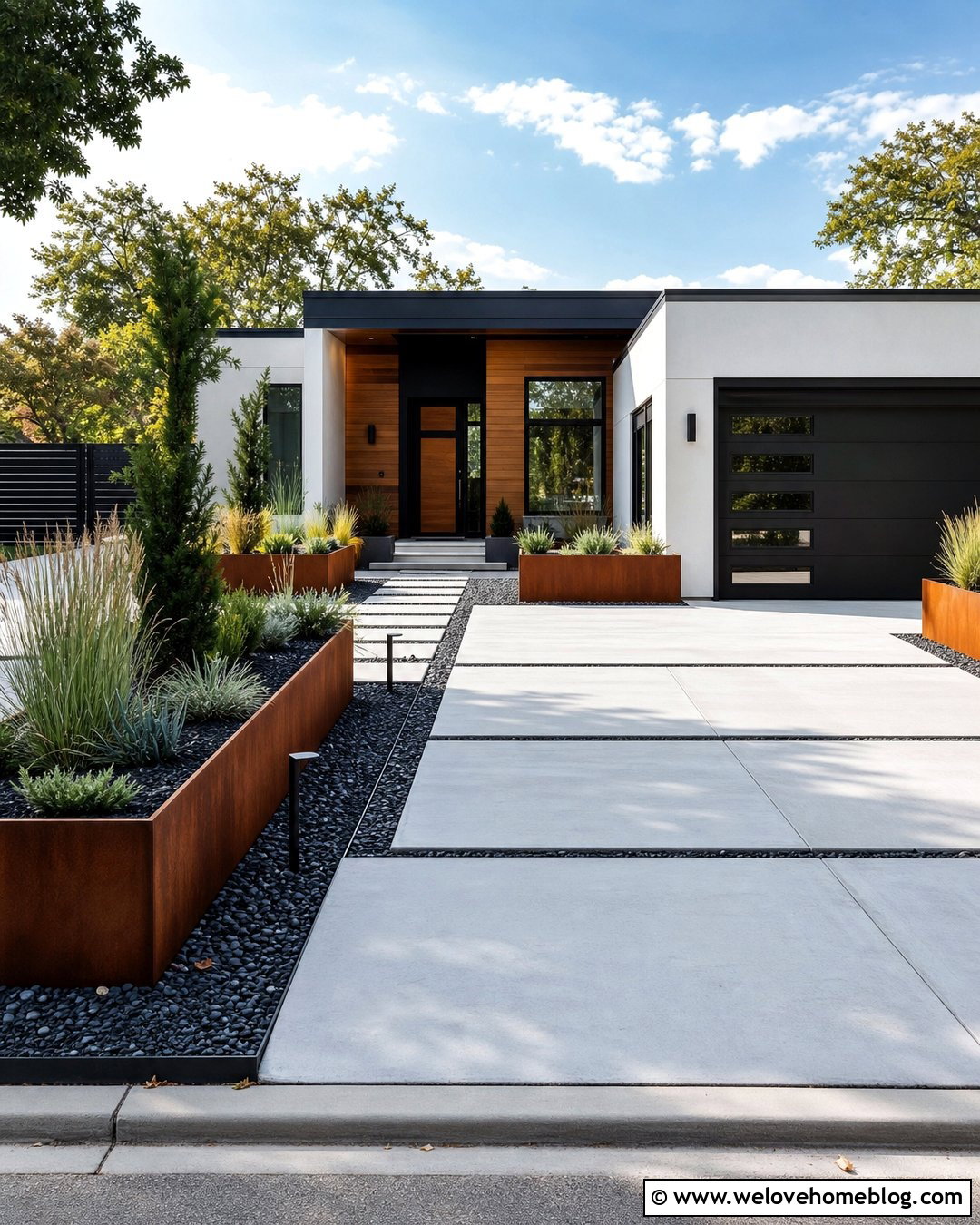
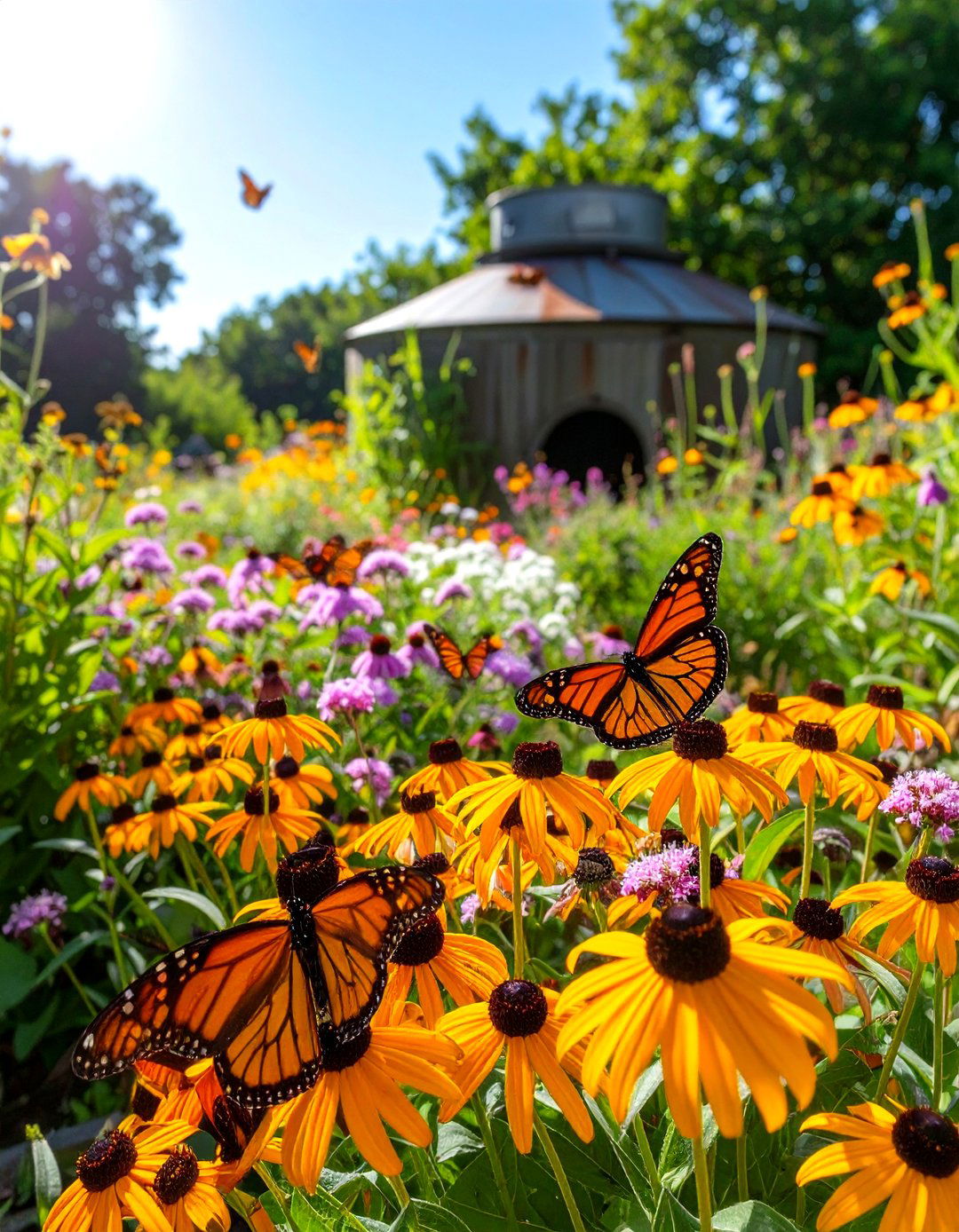
Corten steel planters offer a bold way to landscape beside a modern driveway without creating sprawling beds. Their warm, weathered finish contrasts beautifully with pale concrete, charcoal pavers, and contemporary siding. Use long rectangular planters to echo the driveway’s direction, placing them beyond door-opening and turning areas. Fill them with ornamental grasses, compact evergreens, or drought-tolerant perennials arranged in simple groups. A narrow strip of dark gravel beneath the planters improves drainage and creates a clean base. Repeat the steel near the address sign or front walkway to make the material feel intentional. Because raised containers dry out faster than ground-level beds, include irrigation or select plants that tolerate periodic dryness and reflected pavement heat.
16. Driveway With Boulder And Grass Landscaping
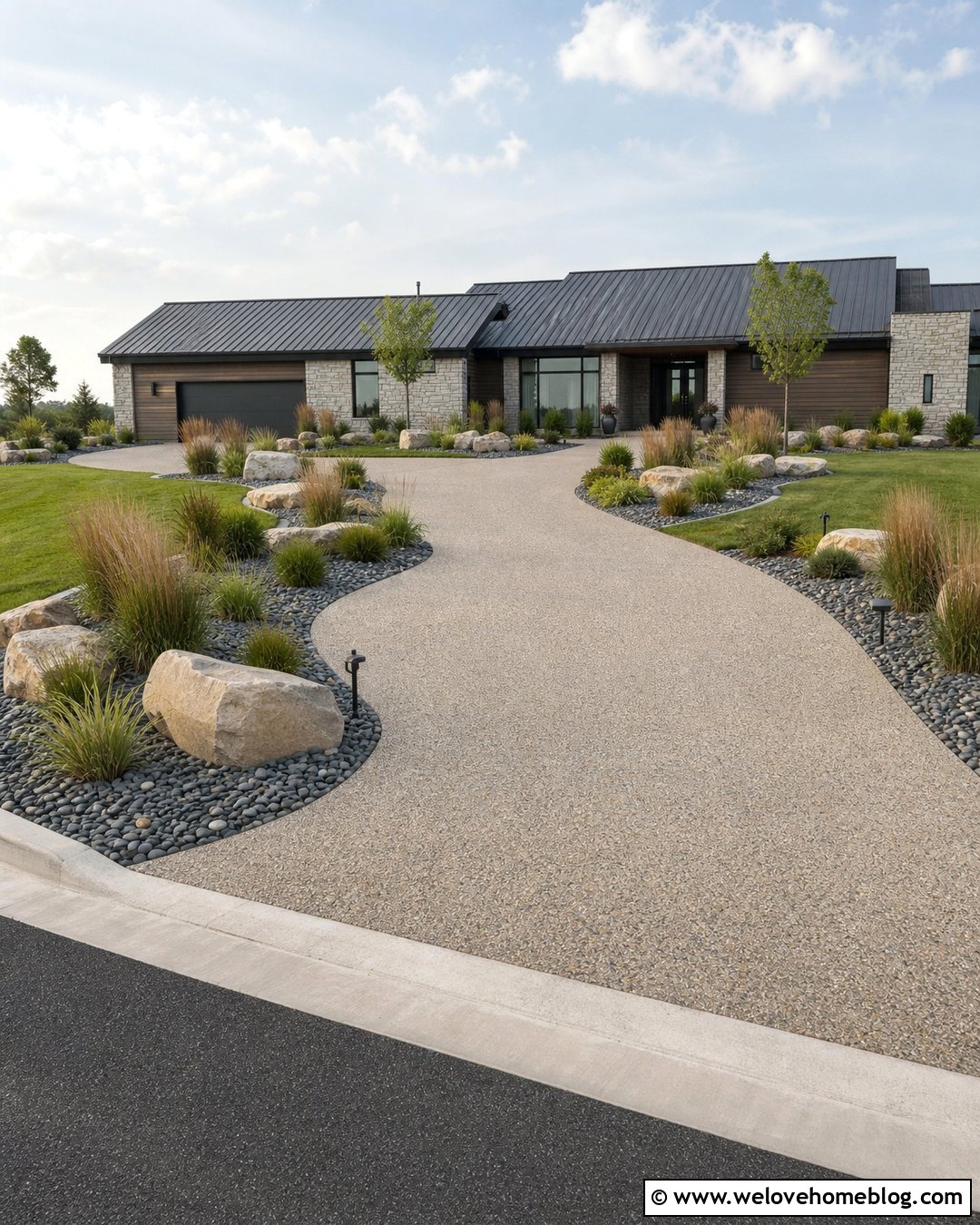
Large boulders paired with ornamental grasses create a natural transition between a driveway and an open yard. Choose stones whose color complements the driveway surface and the home’s facade. Bury part of each boulder so it appears settled into the landscape rather than placed on top. Surround the stones with repeated clumps of switchgrass, fountain grass, sedges, or other regionally suitable plants. A curved gravel or exposed-aggregate driveway works especially well with this relaxed composition. Keep boulders away from tight turns, driveway entrances, and passenger unloading areas. Smaller river rock can cover exposed soil and connect the larger stones visually. The complete look feels substantial, low-profile, and appropriate for ranch, mountain, prairie, or contemporary homes.
17. Driveway With A Rain Garden Border
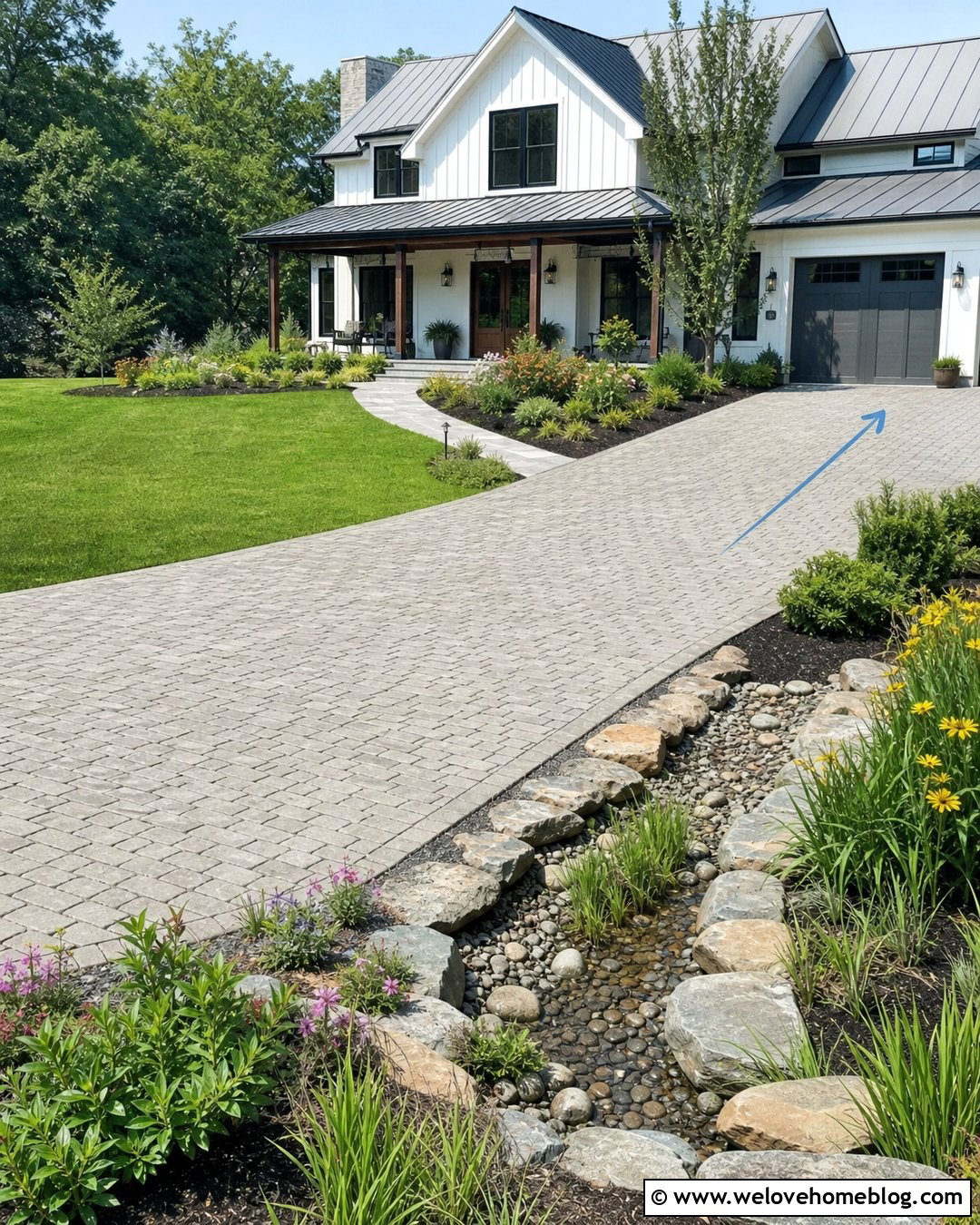
If runoff collects beside the driveway, a planted rain garden can make the area both useful and attractive. Shape a shallow basin along the lower side of the pavement, directing water into it through a gravel channel or curb opening. Fill the center with moisture-tolerant native plants and use species that handle drier conditions around the upper edge. Decorative stone helps slow water and gives the garden definition during dormant seasons. Maintain a stable strip between the basin and driveway so pavement edges remain supported. The bed should also drain away from the home’s foundation. Paired with permeable pavers or asphalt, this landscape becomes a cohesive feature rather than a wet, difficult patch of lawn.
18. Driveway With Mulch And Shrub Borders
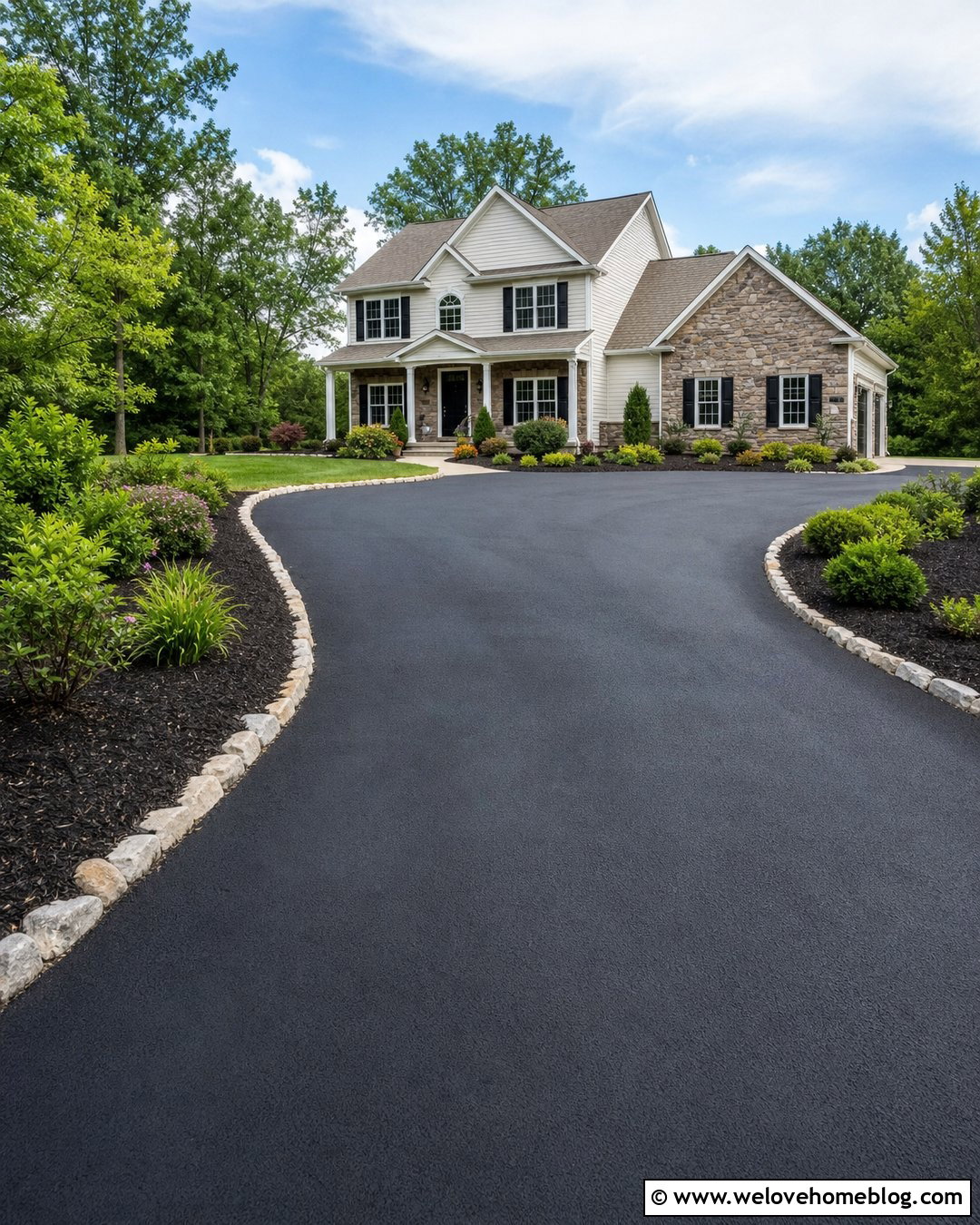
A simple mulch-and-shrub border is one of the most practical ways to improve a driveway on a moderate budget. Cut a broad, gently curved bed along the pavement and define it with steel, brick, or natural stone edging. Arrange compact shrubs in staggered groups, leaving room for their mature size. Add a few flowering perennials near the front for seasonal color, but keep the plant list limited. Dark brown mulch provides a clean background and reduces the amount of grass that must be trimmed against the driveway. On the house side, connect the border to existing foundation beds. This continuity makes a basic asphalt or concrete driveway feel more integrated with the yard and visually softens its hard edges.
19. Driveway With Landscape Lighting And Grasses
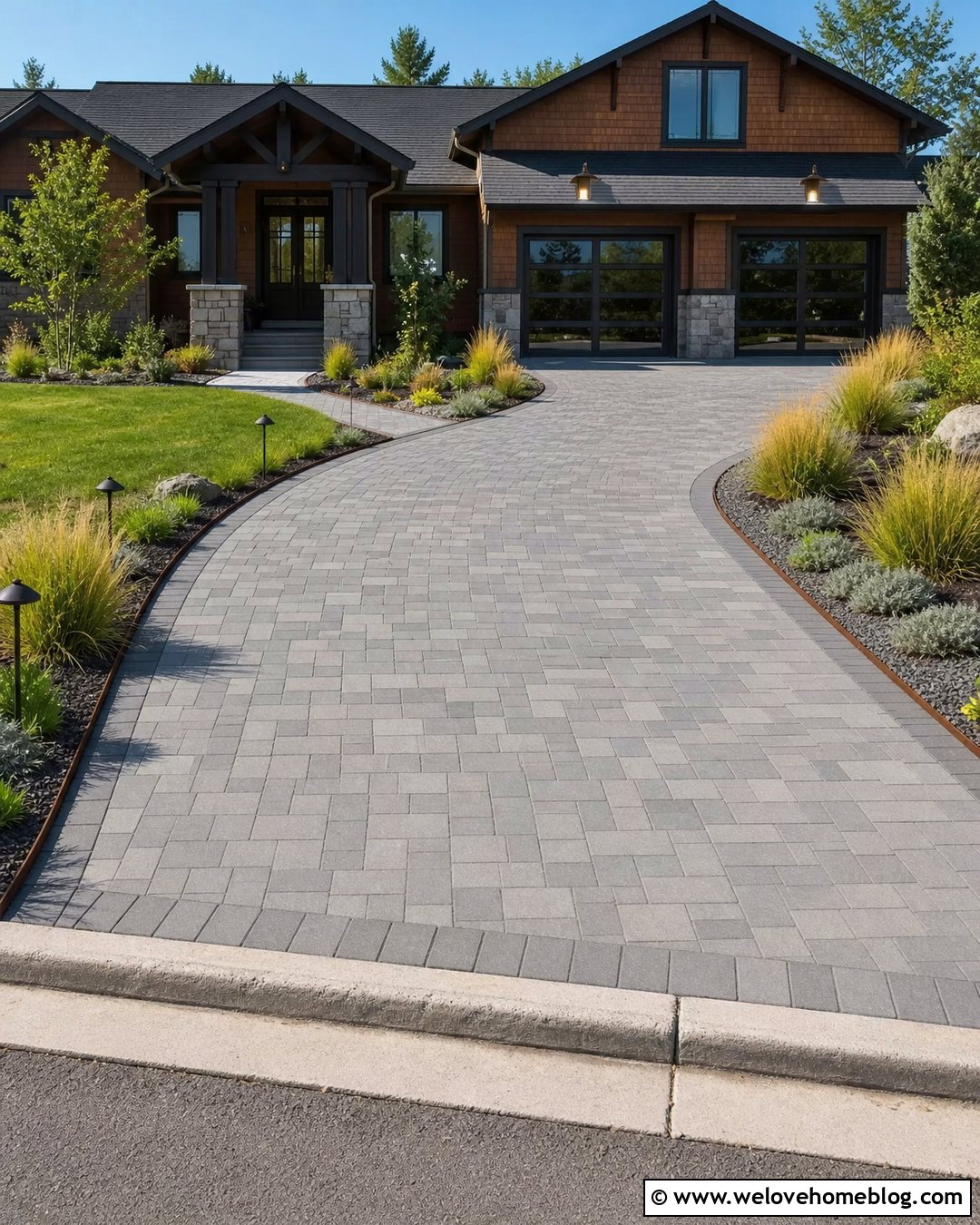
Low landscape lighting adds safety and rhythm when it is integrated into planted driveway borders. Place compact fixtures within beds rather than lining the pavement with an overly rigid row. Alternate them with ornamental grasses, low shrubs, and ground covers so the light reveals foliage texture after sunset. During the day, dark or bronze fixtures should blend quietly into the planting. A paver or concrete driveway provides a clean surface against the softer border. Focus illumination at curves, changes in grade, the street entrance, and the path to the front door. Shield fixtures to reduce glare for drivers and neighbors. The result should make the driveway edge readable without creating an airport-runway effect or overpowering the house.

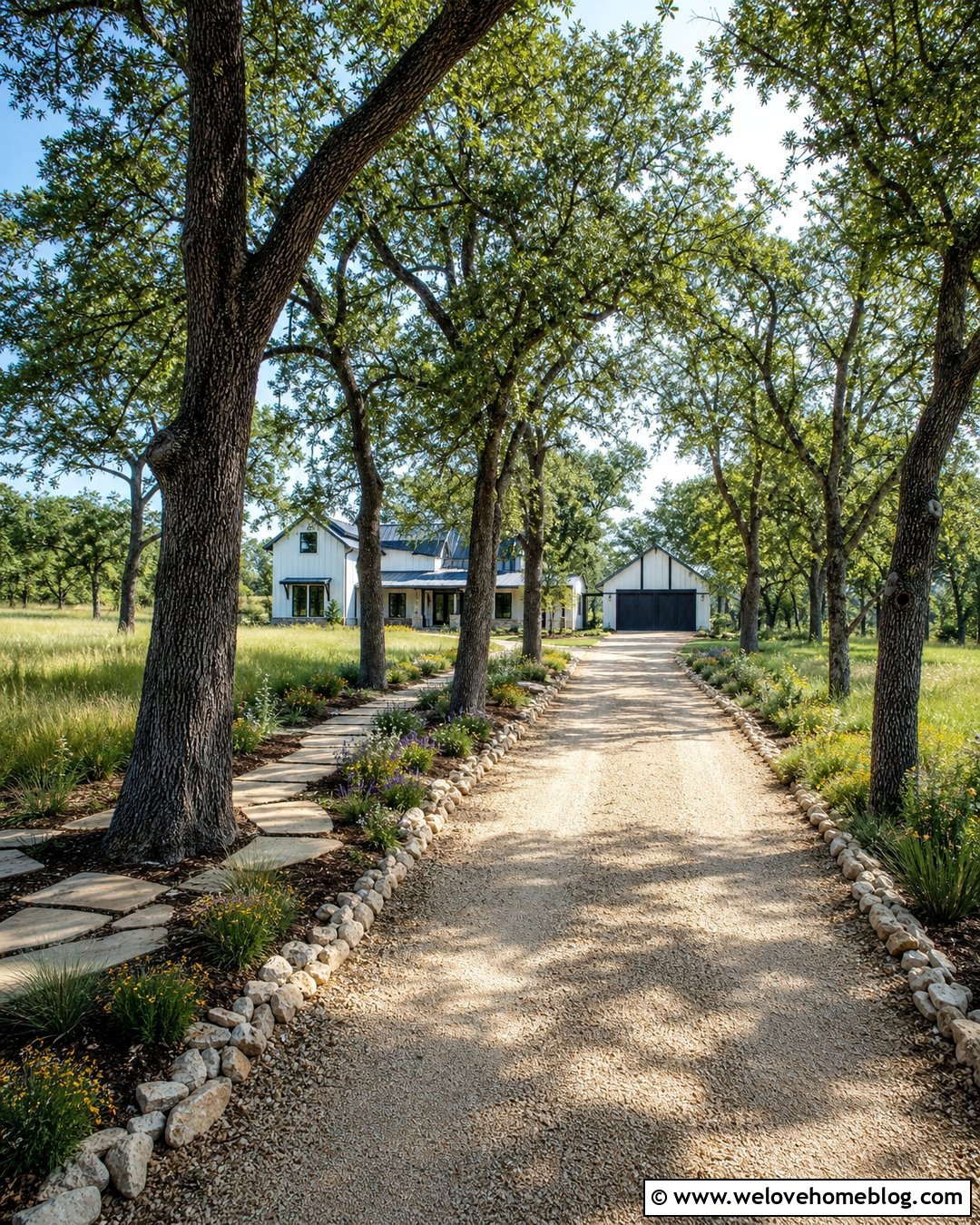
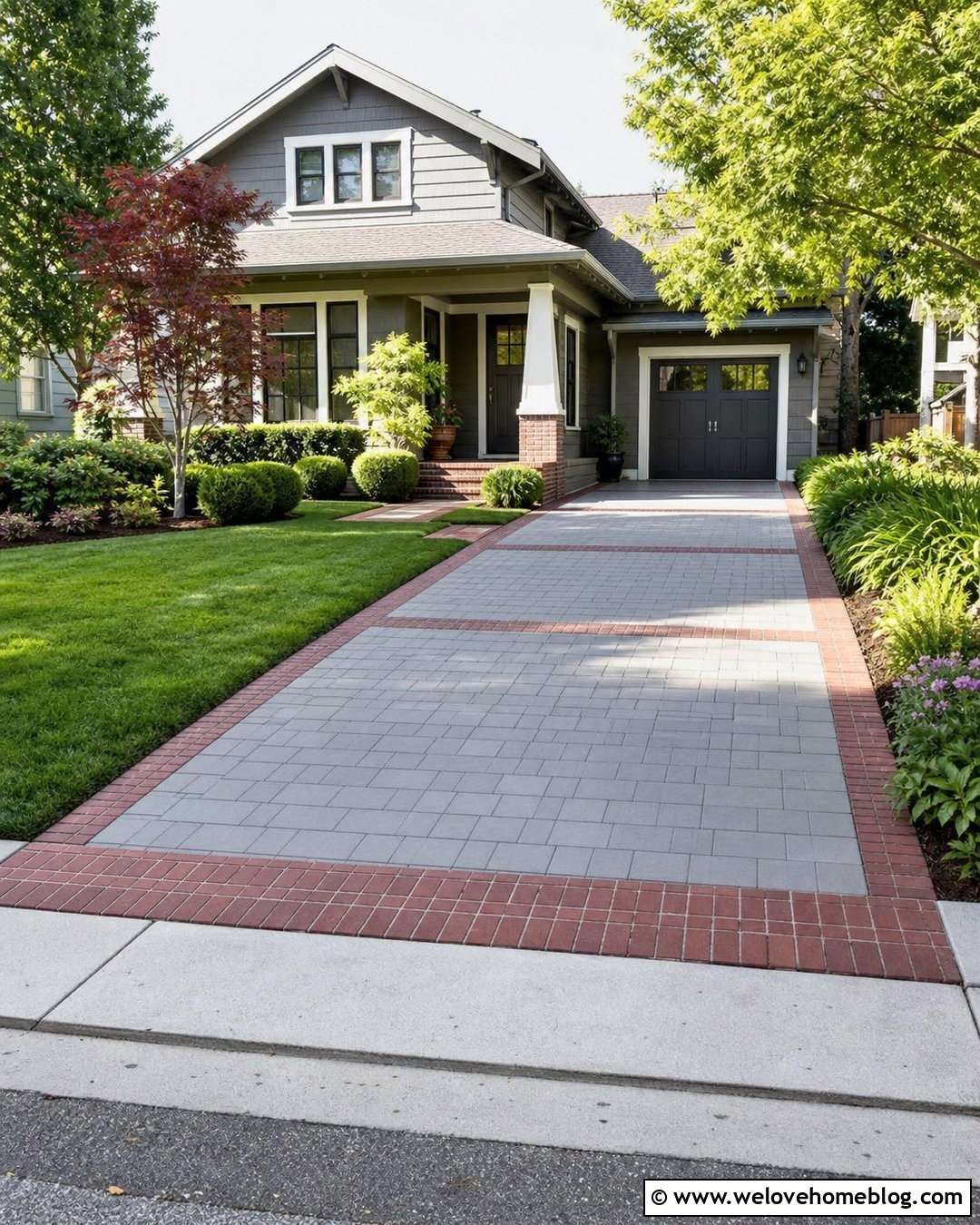
20. Driveway With A Flowering Tree Entrance
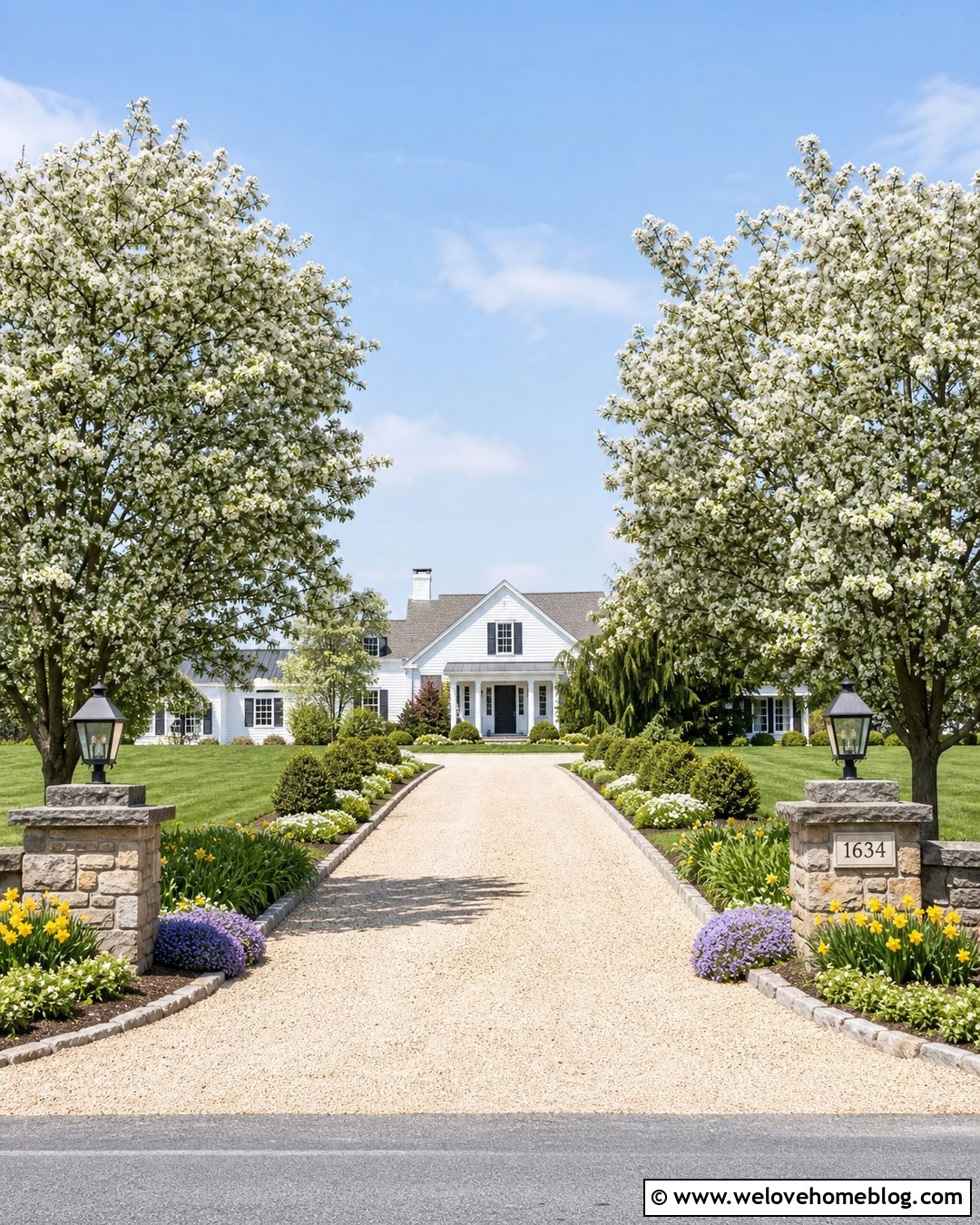
Matching flowering trees near the driveway entrance create a welcoming gateway without requiring walls or heavy pillars. Choose compact species with branching structures that will remain clear of vehicles, utility lines, and street sightlines. Set each tree in a generous curved bed filled with low shrubs, ground covers, and seasonal bulbs. A stone border can coordinate with a gravel driveway, while brick edging works well beside concrete or asphalt. Repeat one or two entrance plants near the house to connect the gateway with the rest of the landscape. Keep address numbers visible and leave enough open space for snow storage where necessary. In bloom, the trees mark the entrance; afterward, their foliage continues to frame the property.
21. Farmhouse Driveway With Wildflower Borders
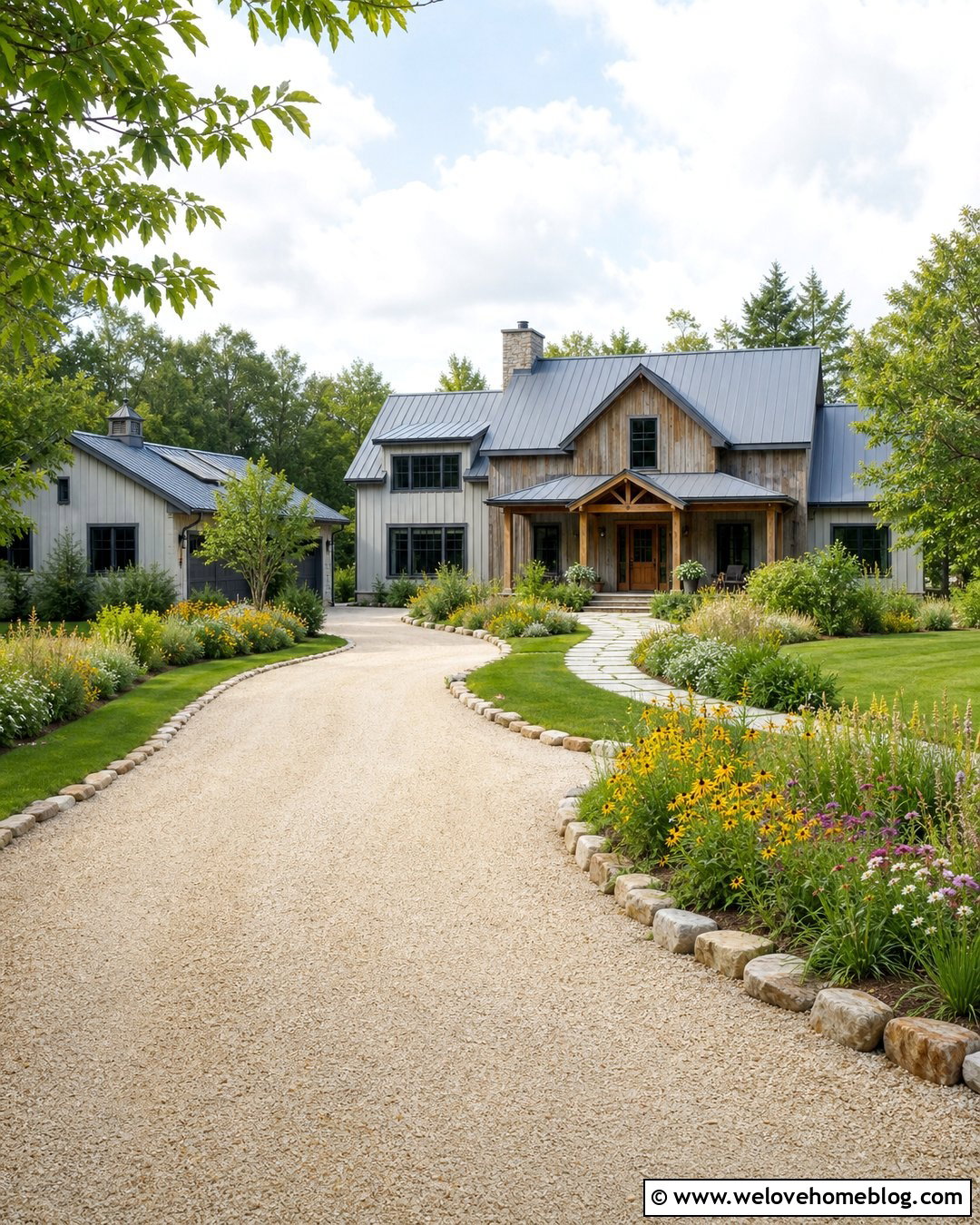
A gravel driveway edged with informal wildflower borders creates a relaxed farmhouse setting. Instead of scattering seeds directly beside the driving surface, establish defined beds behind timber, fieldstone, or steel edging. Use regionally appropriate flowers and grasses in broad drifts, placing shorter species at the front and taller plants farther back. Mowed lawn strips at the street and near the garage can keep the composition from appearing untended. Add a few structural shrubs or small trees to provide shape during winter. The pale gravel and loose planting should follow a gently curved or straight rural layout leading to the house. This design feels natural and colorful while maintaining enough organization for practical driveway use and routine maintenance.
22. Colonial Driveway With Symmetrical Landscaping
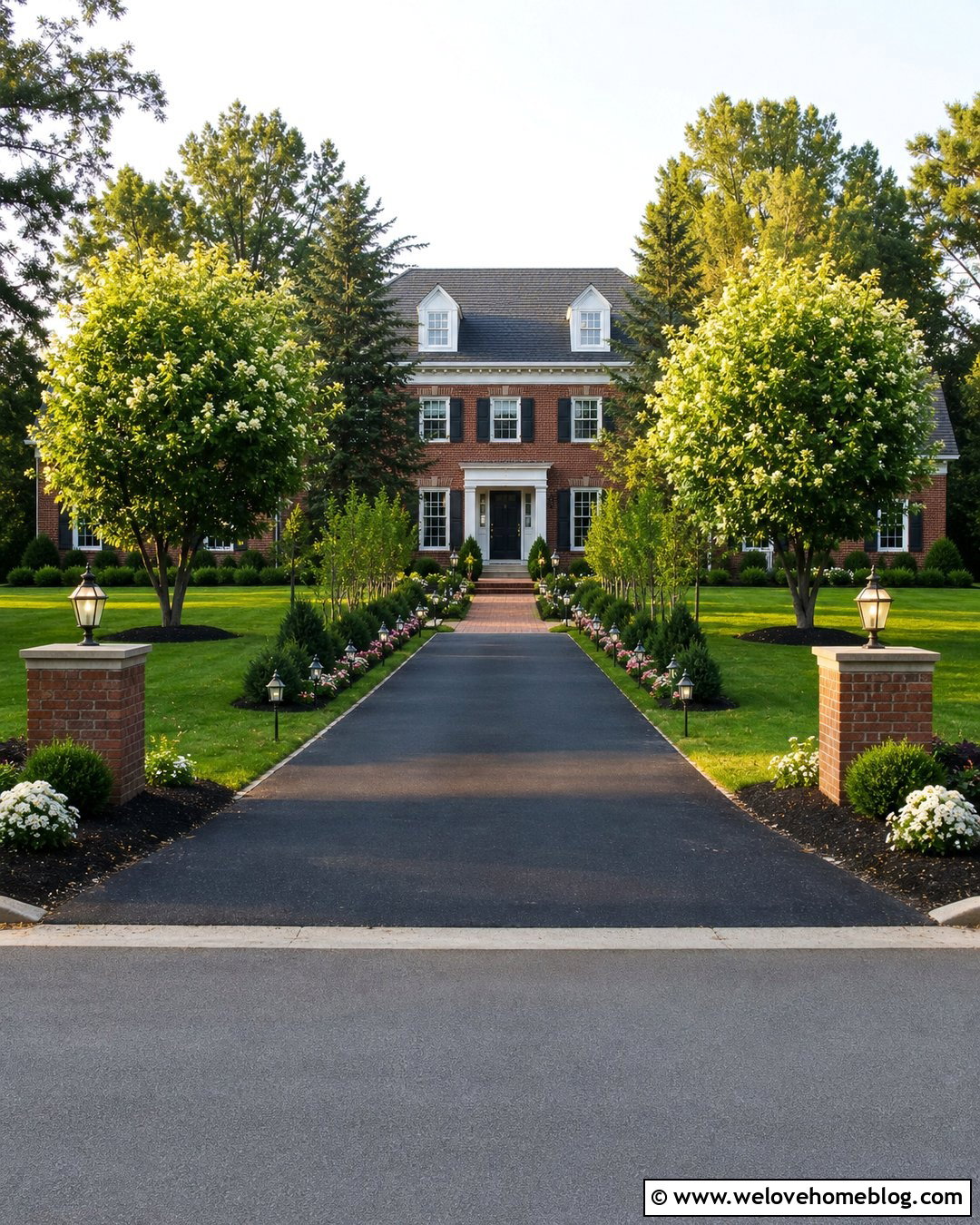
Symmetry gives a colonial home and its driveway an orderly, established appearance. Frame a straight brick or asphalt driveway with matching beds on both sides. Use the same evergreen shrubs, flowering plants, and small ornamental trees in mirrored positions, especially near the entrance and garage. Brick edging can coordinate with the facade and keep bed lines crisp. To prevent the design from feeling stiff, allow flowering perennials to form slightly relaxed groups inside the structured layout. Low plants should occupy the street end so drivers have clear views of pedestrians and traffic. Matching lantern-style fixtures or simple path lights reinforce the balance. The driveway then becomes a formal axis that leads attention directly toward the home.
23. Craftsman Driveway With Natural Stone Borders
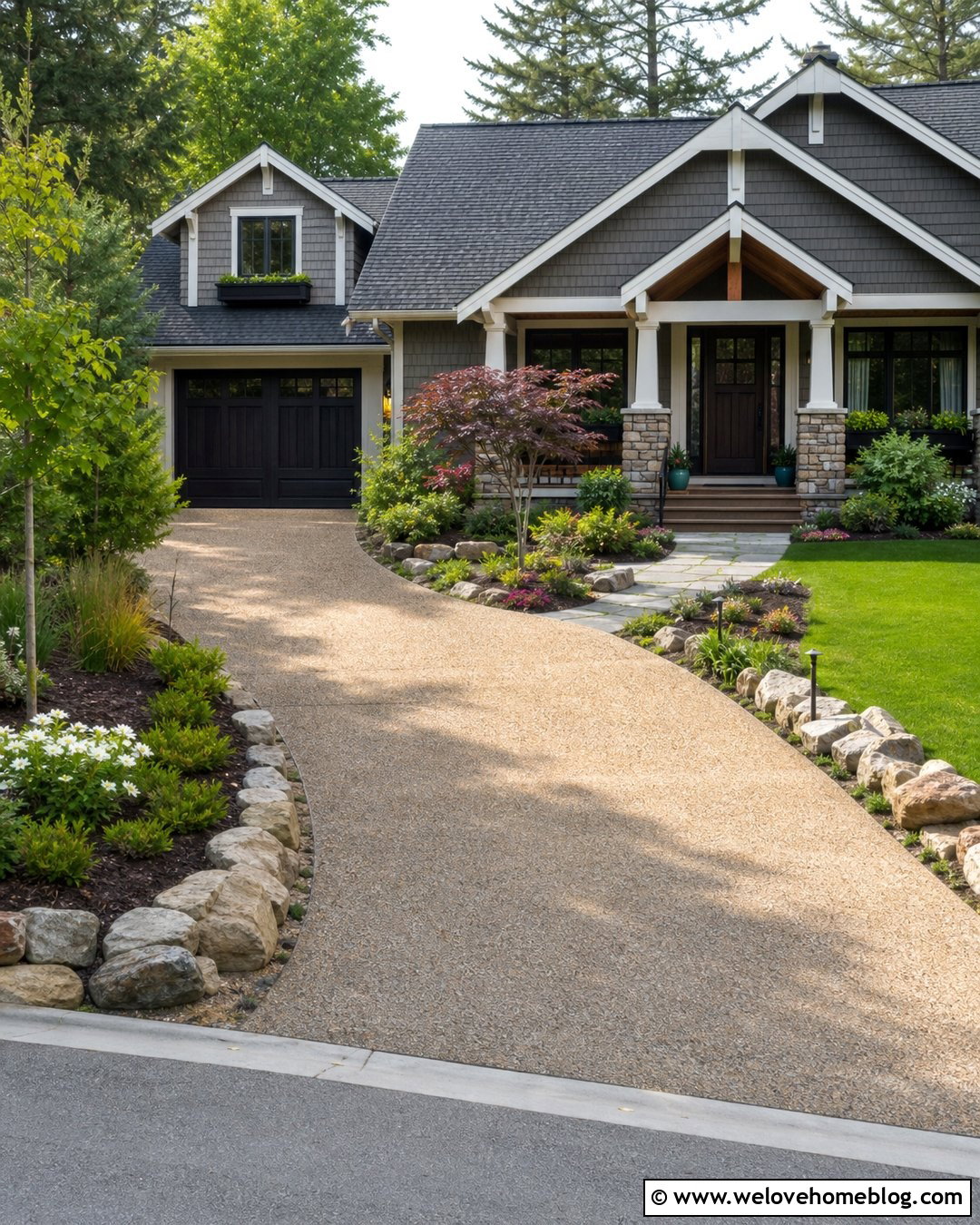
Natural stone borders suit the handcrafted character of a craftsman home. Edge an exposed-aggregate or warm-toned concrete driveway with irregular stones that repeat colors found in porch columns, steps, or foundation masonry. Behind the edging, plant layered beds of ferns, compact evergreens, ornamental grasses, and woodland perennials selected for the site’s light conditions. Use broad, gently curving bed lines instead of narrow strips. A small Japanese maple, serviceberry, or other ornamental tree can anchor the area near the front walk. Keep the planting close enough to soften the pavement but far enough back for clear vehicle access. This coordinated material palette connects the driveway, garden, and architecture in a grounded, cohesive way.
24. Ranch Driveway With Drought-Tolerant Landscaping
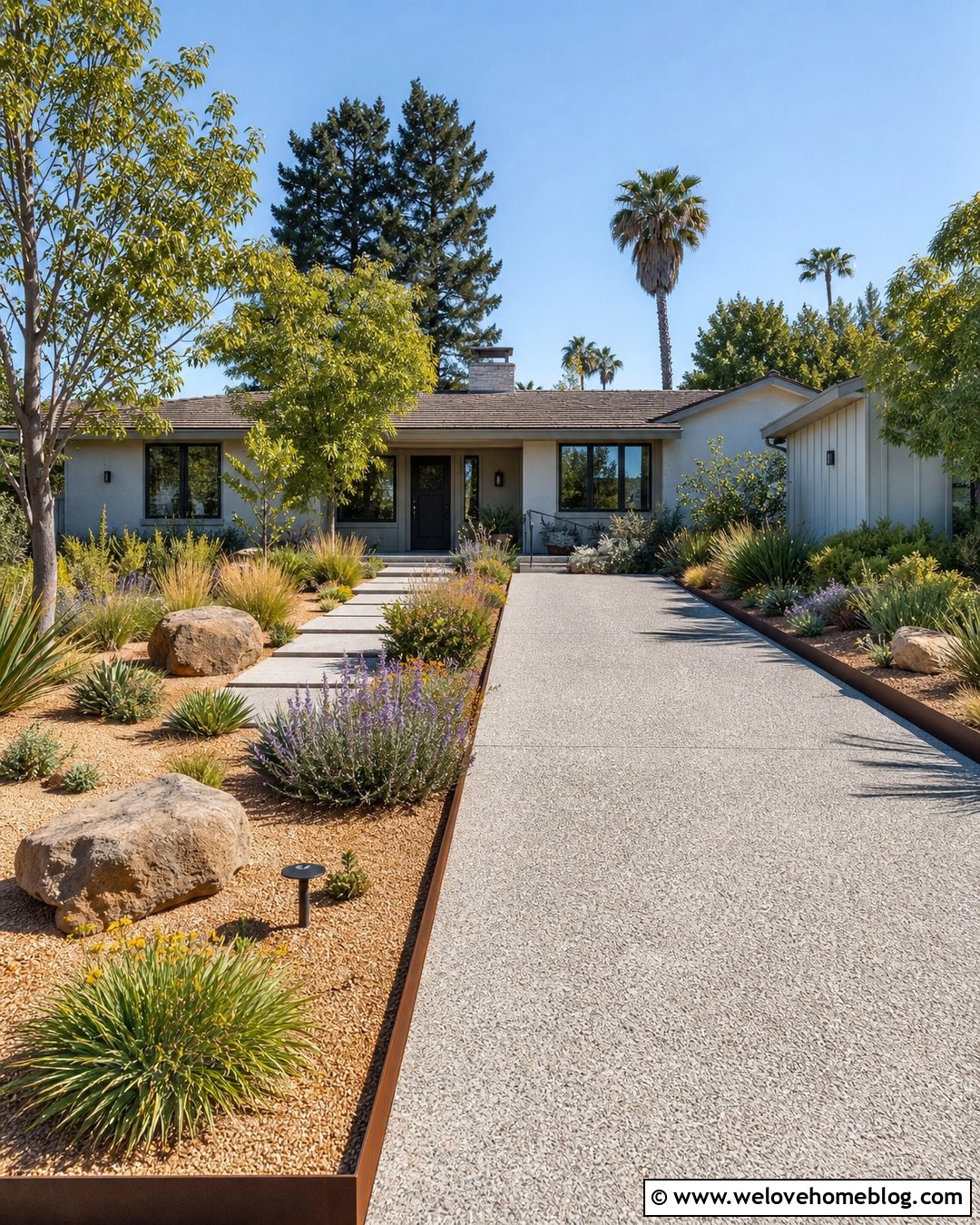
A wide ranch driveway can look more inviting with broad beds of drought-tolerant plants. Along an exposed-aggregate or concrete surface, use gravel mulch, low ornamental grasses, flowering perennials, and sculptural shrubs suited to the local climate. Arrange plants in wide repeated masses that match the home’s long horizontal lines. A weathered steel edge provides definition without adding visual bulk. Place taller grasses and specimen plants near the house, then reduce the planting height toward the street. Leave deliberate open areas of decorative rock so the border does not become crowded as plants mature. This landscape handles sunny, heat-reflective conditions more effectively than thirsty lawn while giving the ranch facade a clean, regionally appropriate setting.
25. Sloped Driveway With Terraced Planting Beds
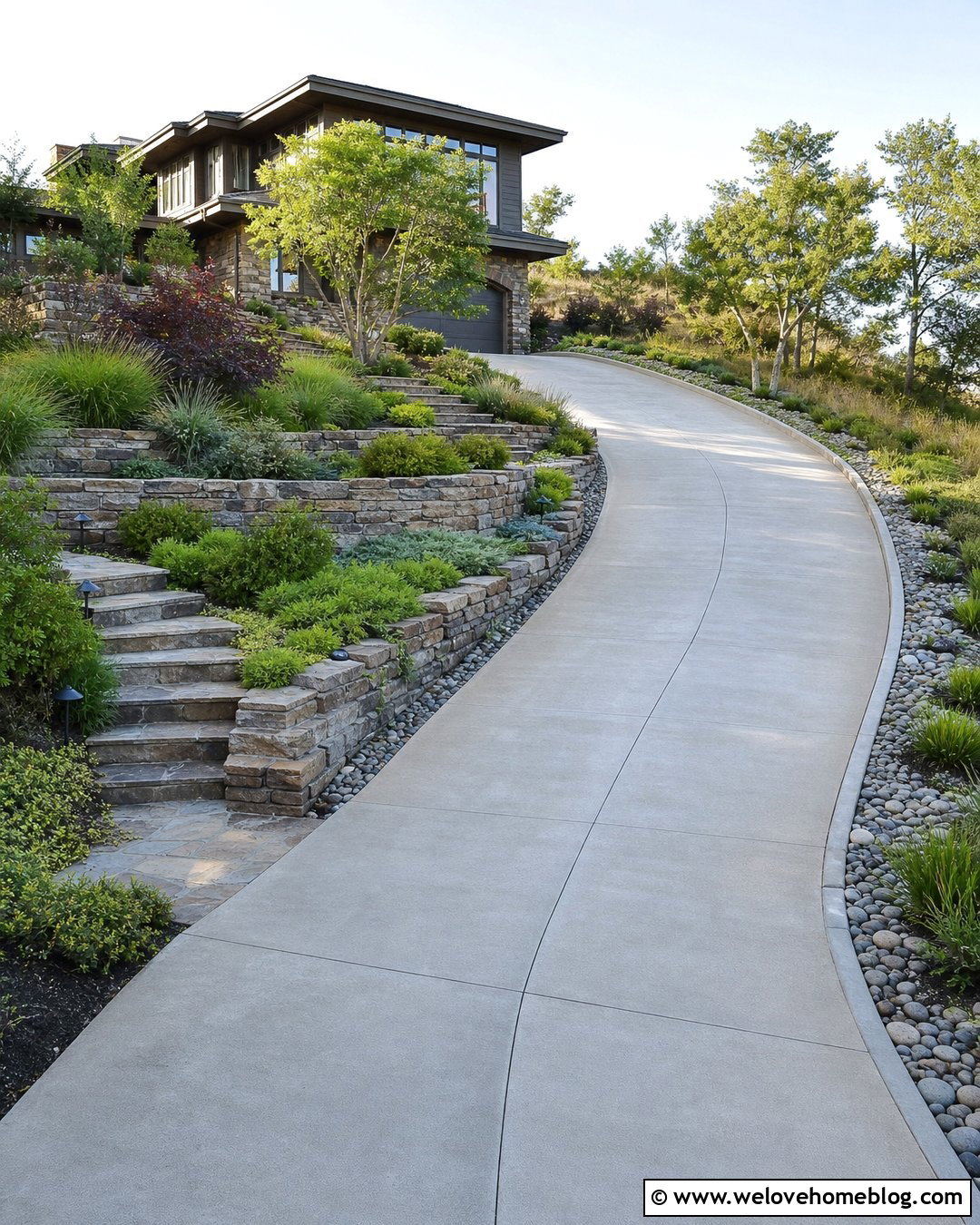
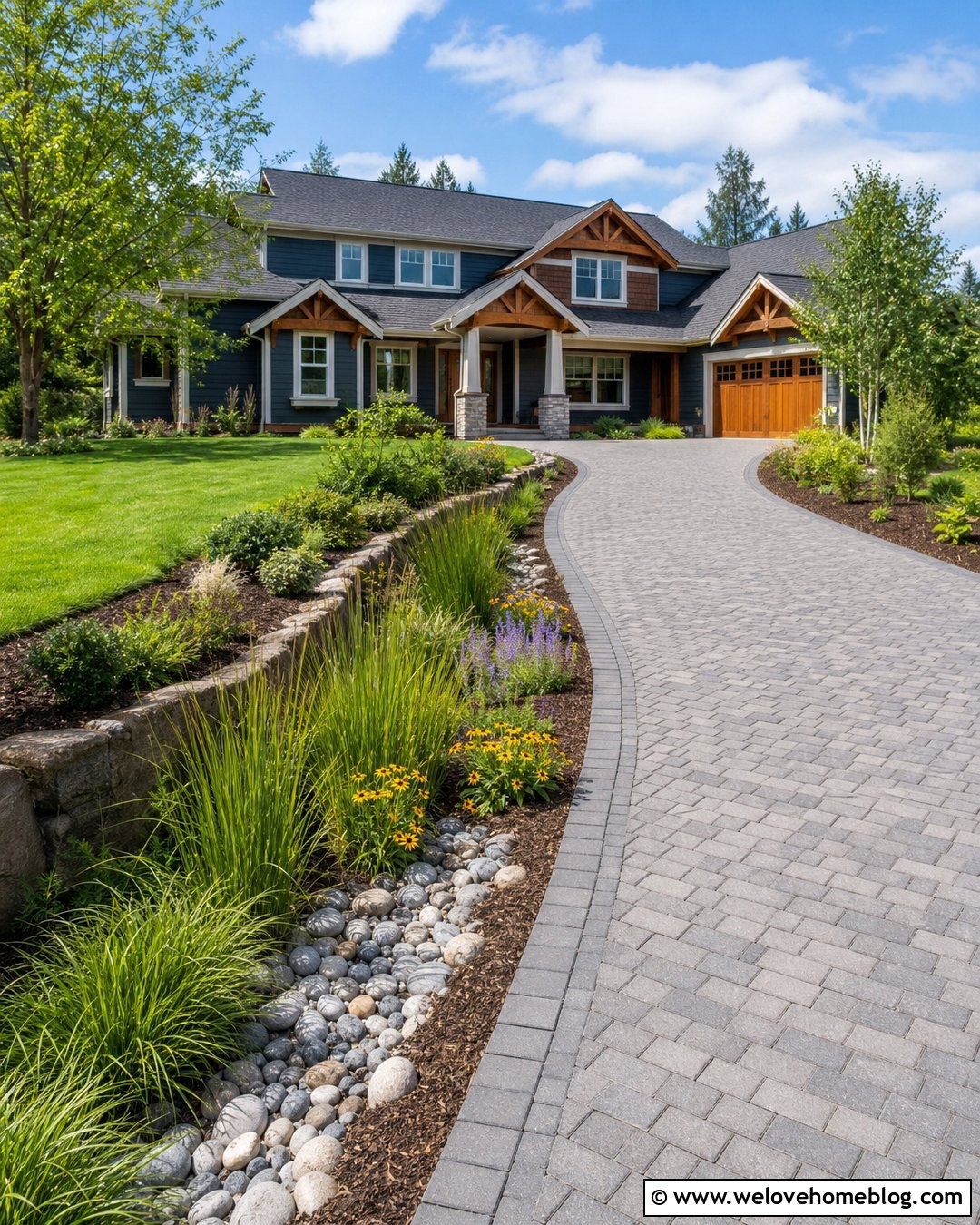
Landscaping a sloped driveway requires controlling soil movement while preserving clear access. Build low terraced beds with natural stone, concrete block, or masonry that coordinates with the house. Step the walls gradually with the grade instead of creating one tall barrier beside the pavement. Plant spreading ground covers near each wall edge, then add deep-rooted grasses and compact shrubs behind them. Decorative gravel can improve the transition where water flows off the driveway. Avoid loose mulch on steep sections because heavy rain may carry it onto the surface. A curved concrete or asphalt driveway benefits from these layered beds, which make the slope look intentional. Integrate drainage before planting so water does not collect behind walls or undermine pavement.
26. Driveway With A Privacy Hedge Border
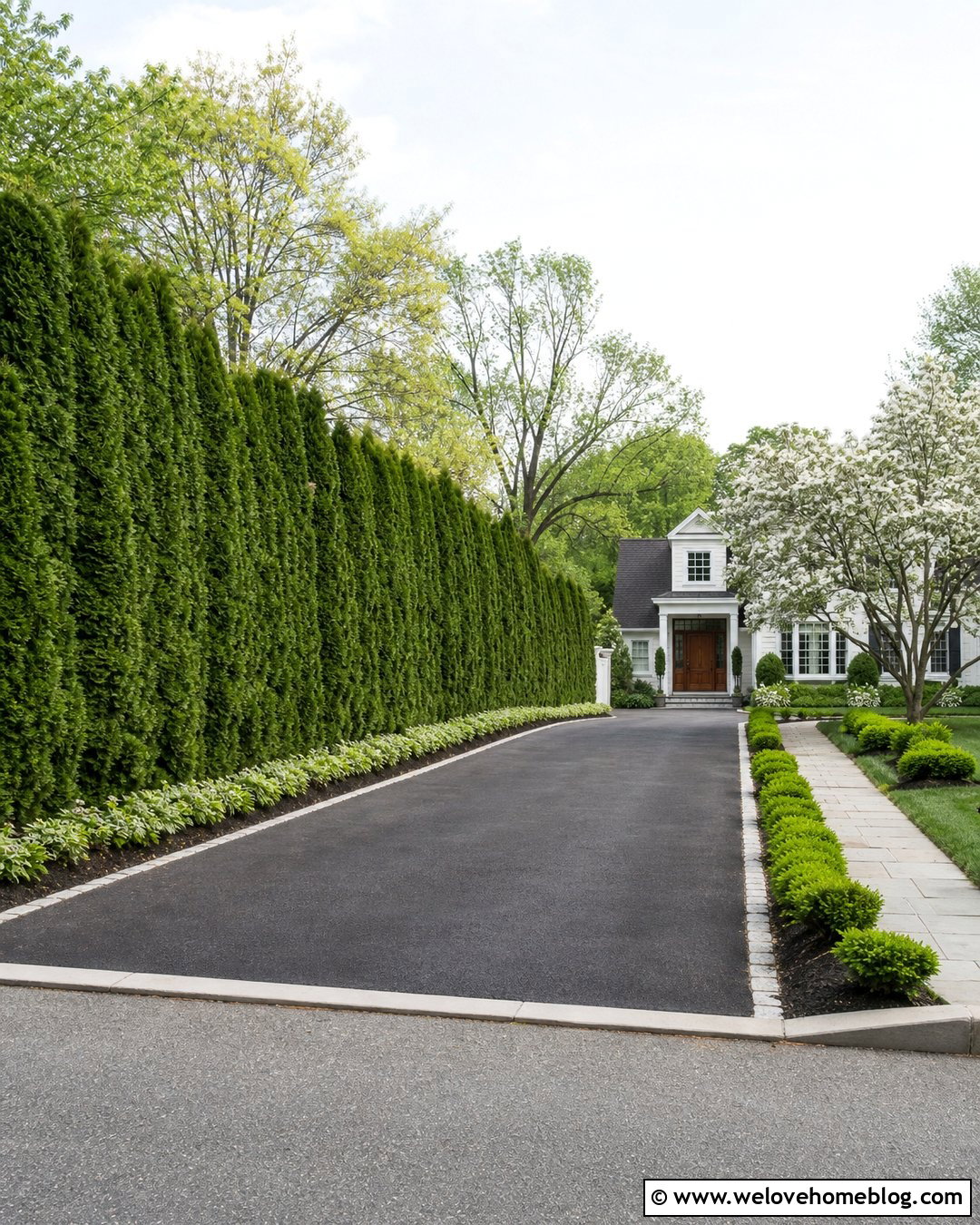
A dense hedge can provide privacy along a driveway facing a neighboring property or busy street. Rather than planting directly beside the pavement, create a generous setback that allows for mature growth, pruning access, and comfortable car-door clearance. Choose evergreen or mixed shrubs suited to the desired height and local growing conditions. A low ground-cover strip between the hedge and driveway keeps the base neat and adds another layer of texture. For a long asphalt driveway, repeating a single hedge species creates a calm backdrop. Break the row near the house with a flowering tree or gate to mark the entrance. Maintain lower growth near the street so the hedge does not block views of vehicles, cyclists, or pedestrians.
27. Driveway With Creeping Ground Cover Edging
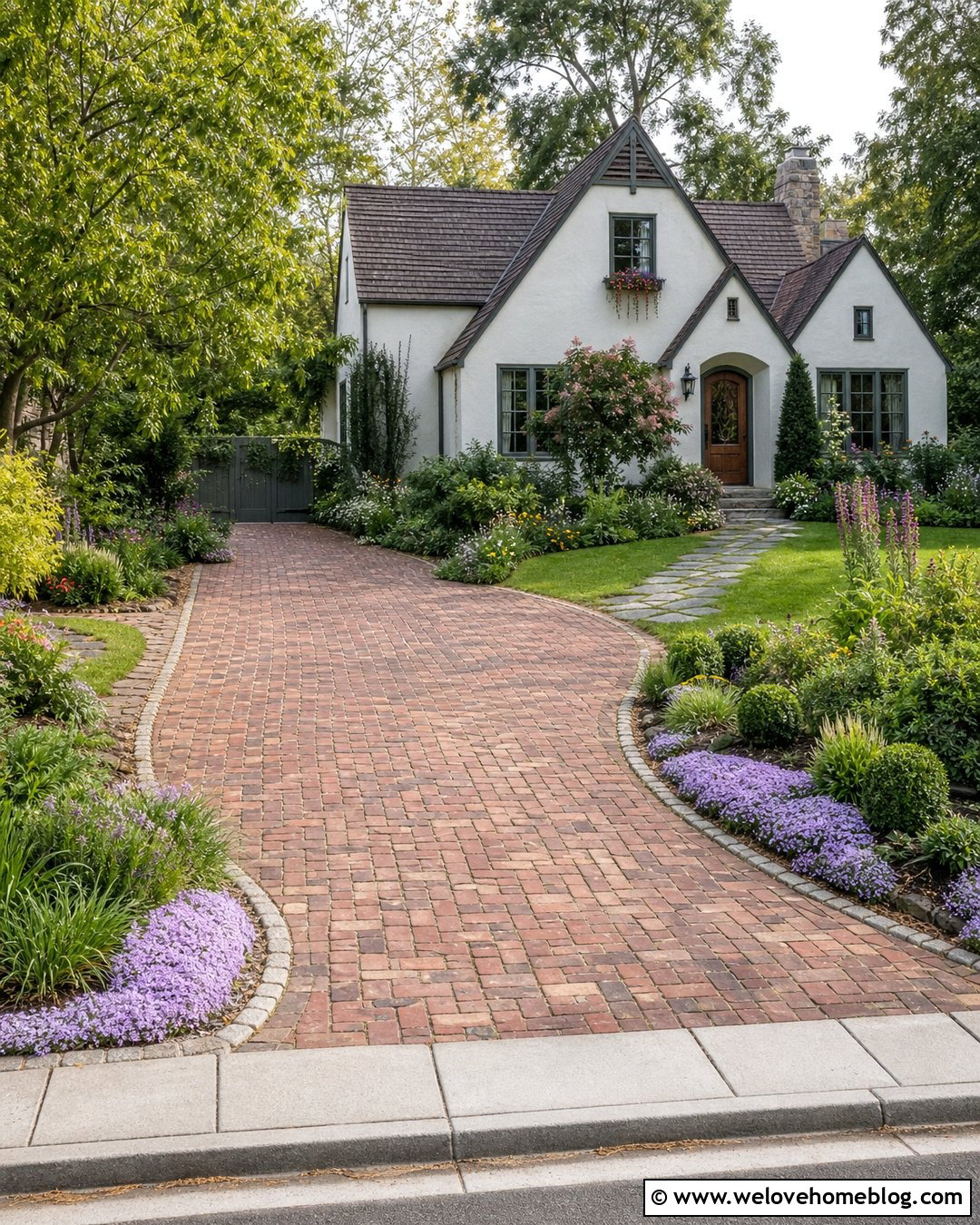
Creeping ground covers can soften a hard driveway edge without forming a tall barrier. Plant low, durable varieties behind a stable cobblestone, brick, or steel border so stems can gently approach the pavement without being crushed by tires. Creeping thyme, sedum, phlox, and other climate-appropriate selections can form broad mats that reduce exposed soil. Use one primary ground cover in repeated sweeps, then add upright grasses or dwarf shrubs farther back for contrast. This approach looks particularly attractive beside gravel, brick pavers, or weathered concrete. Keep a clear section near parking and unloading zones. When properly spaced, the plants create a seamless visual transition from the driveway to the garden while preserving an open, uncluttered view.
28. Driveway With Birch Trees And Gravel Beds
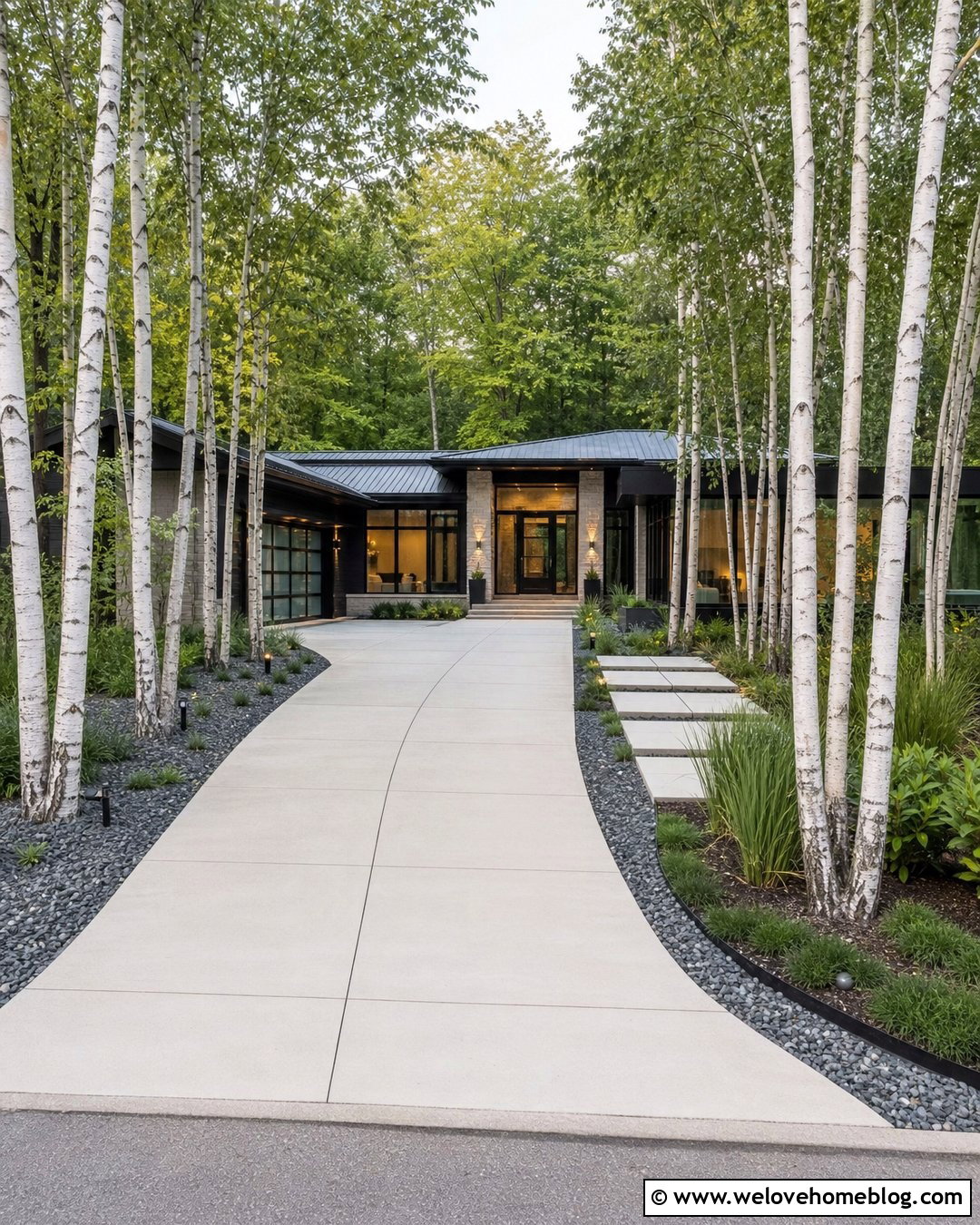
White-barked birch trees can bring vertical interest and a light woodland quality to a long driveway. Plant them in loose, repeated groups rather than a perfectly rigid line, giving each tree enough space for mature roots and canopy growth. Beneath them, create wide beds of gray gravel, shade-tolerant ground covers, and compact grasses. Black steel edging keeps the gravel separated from an asphalt or pale concrete driveway. The limited colors make the white trunks stand out while maintaining a modern, uncluttered appearance. This combination works best where birches are well suited to local soil and climate. Set trunks well back from the pavement, and place low lighting selectively to highlight their bark without overlighting the entire approach.
29. Driveway With Palm And Tropical Landscaping
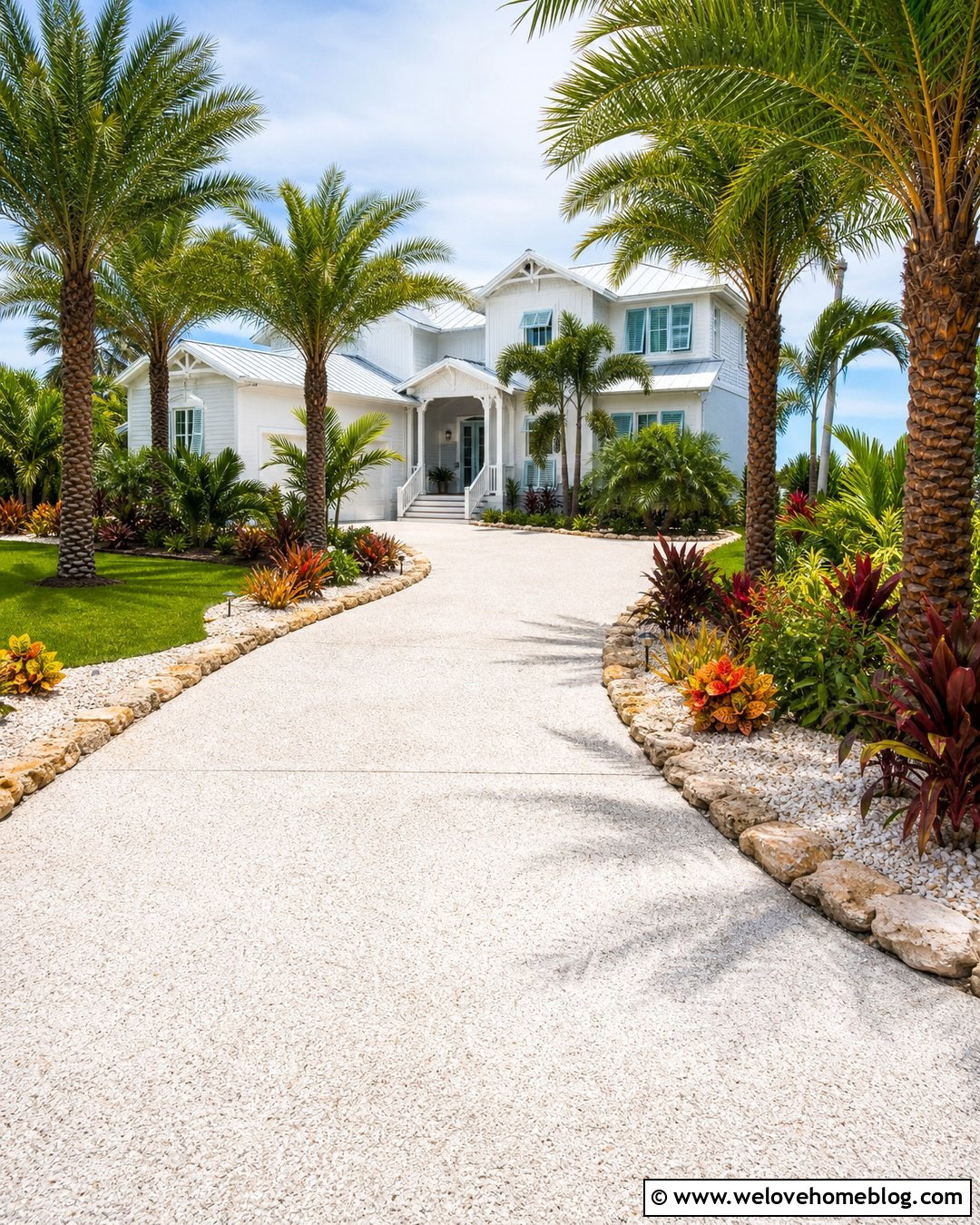
In warm climates, palms and bold foliage can turn a driveway into a lush tropical approach. Use palms with mature canopies appropriate for the available space, positioning them away from overhead lines and vehicle paths. Fill broad beds with layered crotons, gingers, philodendrons, ornamental grasses, and low ground covers suited to local conditions. A light-colored concrete or shell aggregate driveway reflects the bright, coastal character of the planting. Stone edging and pale gravel mulch keep the beds organized and reduce soil splashing during heavy rain. Maintain low growth near the street entrance for visibility. Repeating several key foliage shapes and colors creates unity, while irrigation and well-planned drainage help the landscape remain healthy through hot or wet seasons.
30. Driveway With Desert Rock Landscaping
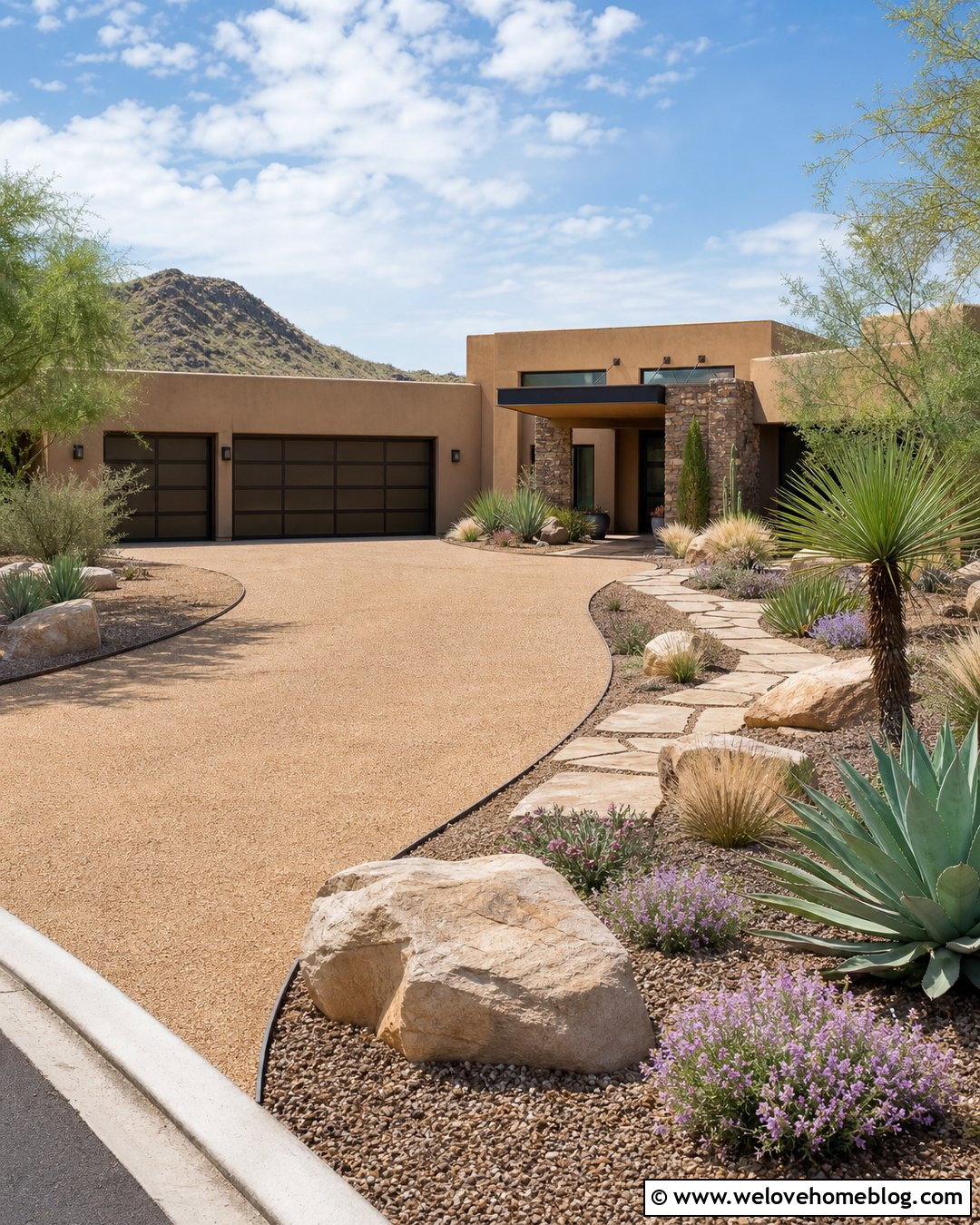
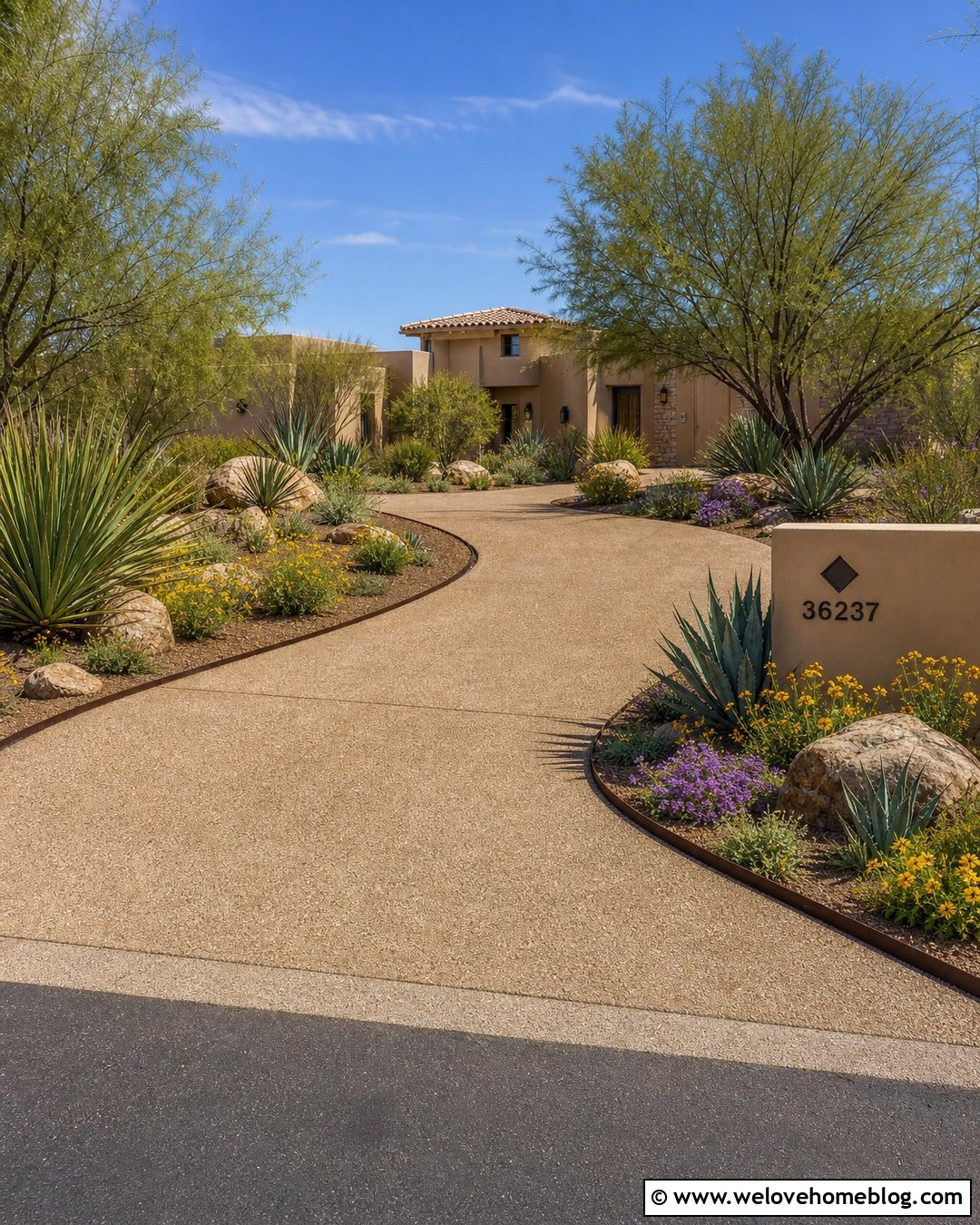
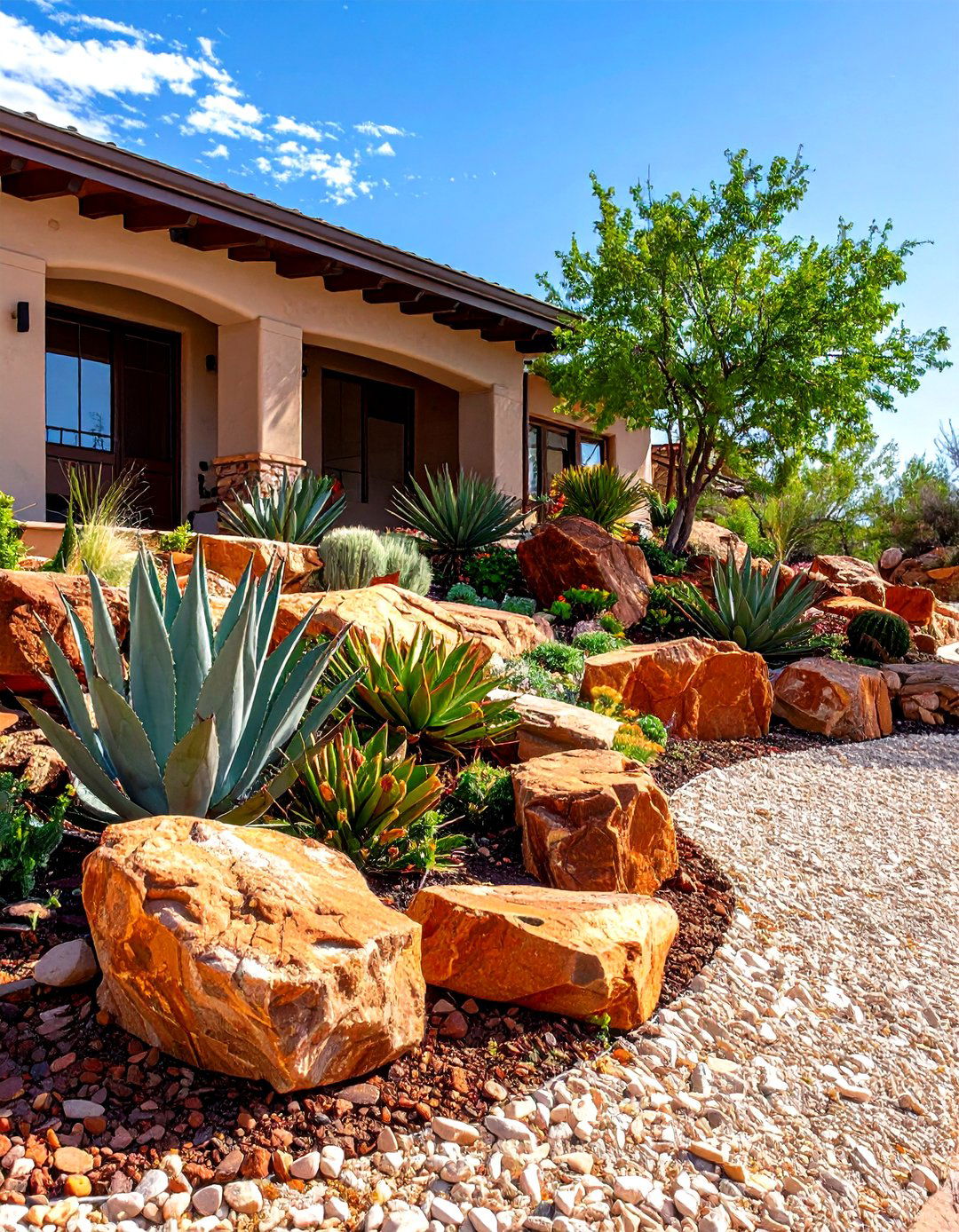
A desert driveway landscape can feel rich and detailed without relying on lawn. Surround a tan gravel or warm concrete driveway with beds of decomposed granite, angular boulders, agave, yucca, desert grasses, and flowering succulents. Use sweeping bed shapes that echo the natural terrain rather than narrow strips. Place larger plants and stones well outside vehicle clearance zones, especially around curves. A steel edge keeps decorative rock from migrating onto the driving surface. Vary plant height and spacing while leaving intentional areas of open gravel. This negative space is important to the design and gives sculptural plants room to stand out. Select only cold-hardy or heat-tolerant plants proven for the specific desert region and elevation.
31. Driveway With A Dry Creek Bed
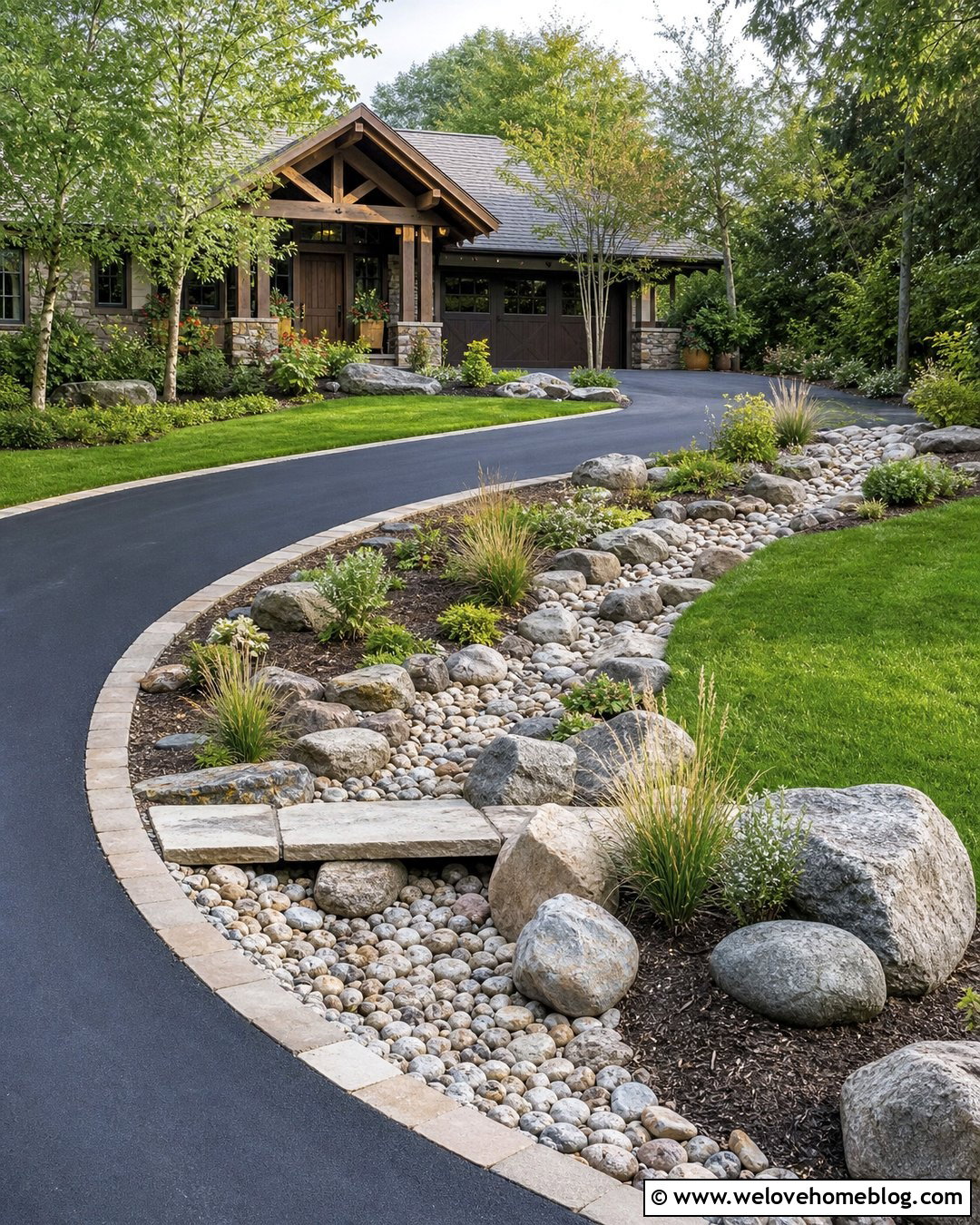
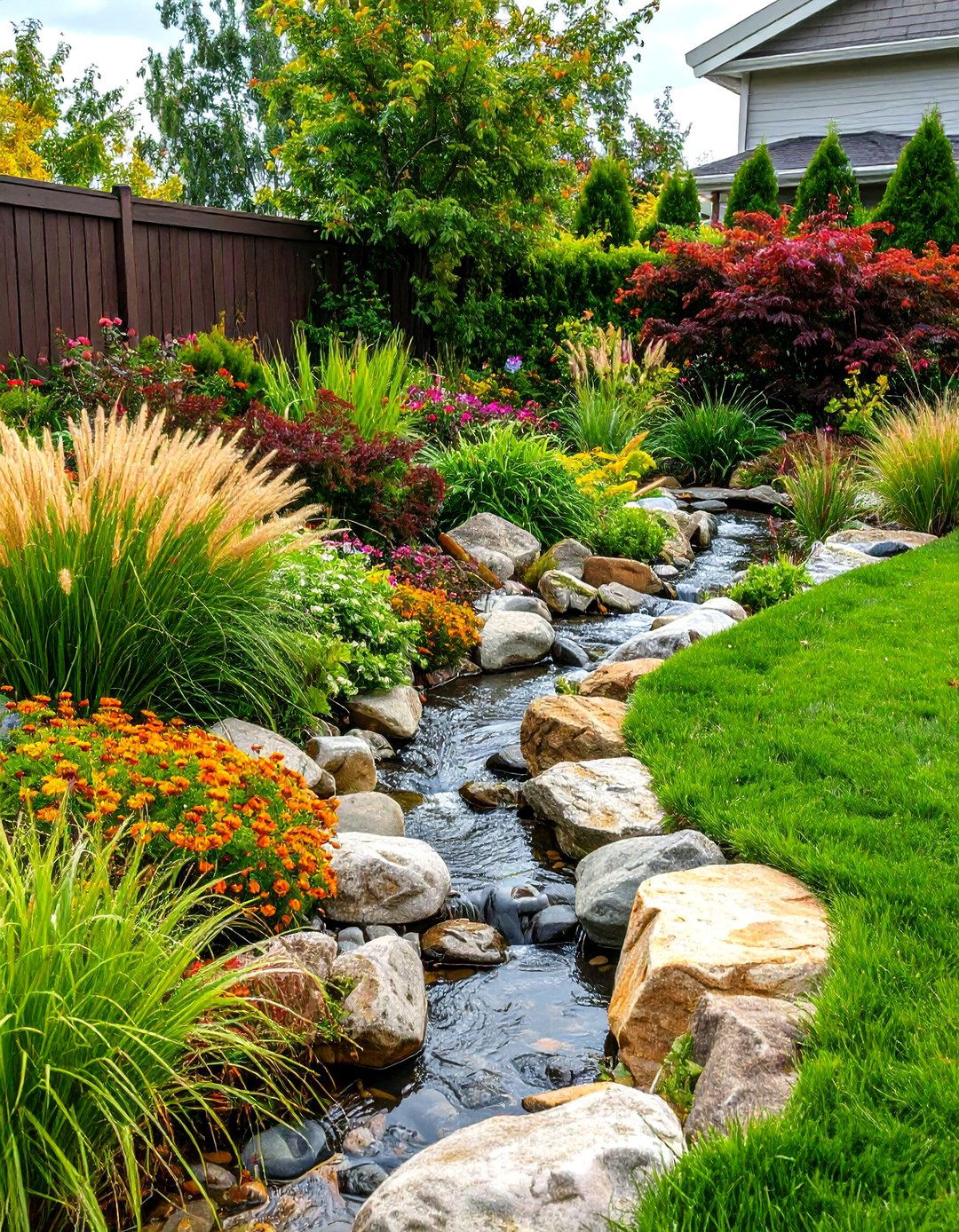
A dry creek bed can manage the appearance of a drainage channel while adding natural texture beside a driveway. Shape a shallow, winding course using mixed river stones, cobbles, and several larger boulders. Direct it along the low side of a gravel, concrete, or asphalt drive without allowing water to undermine the pavement base. Plant ornamental grasses, moisture-tolerant perennials, and compact shrubs along the banks, leaving parts of the stone visible. A small bridge or broad stepping-stone crossing can connect the driveway to the front walk. The curves should relate to surrounding beds rather than looking like an isolated rock strip. When dry, the creek remains decorative; during storms, it can help guide runoff through the landscape.
32. Driveway With Raised Brick Garden Beds
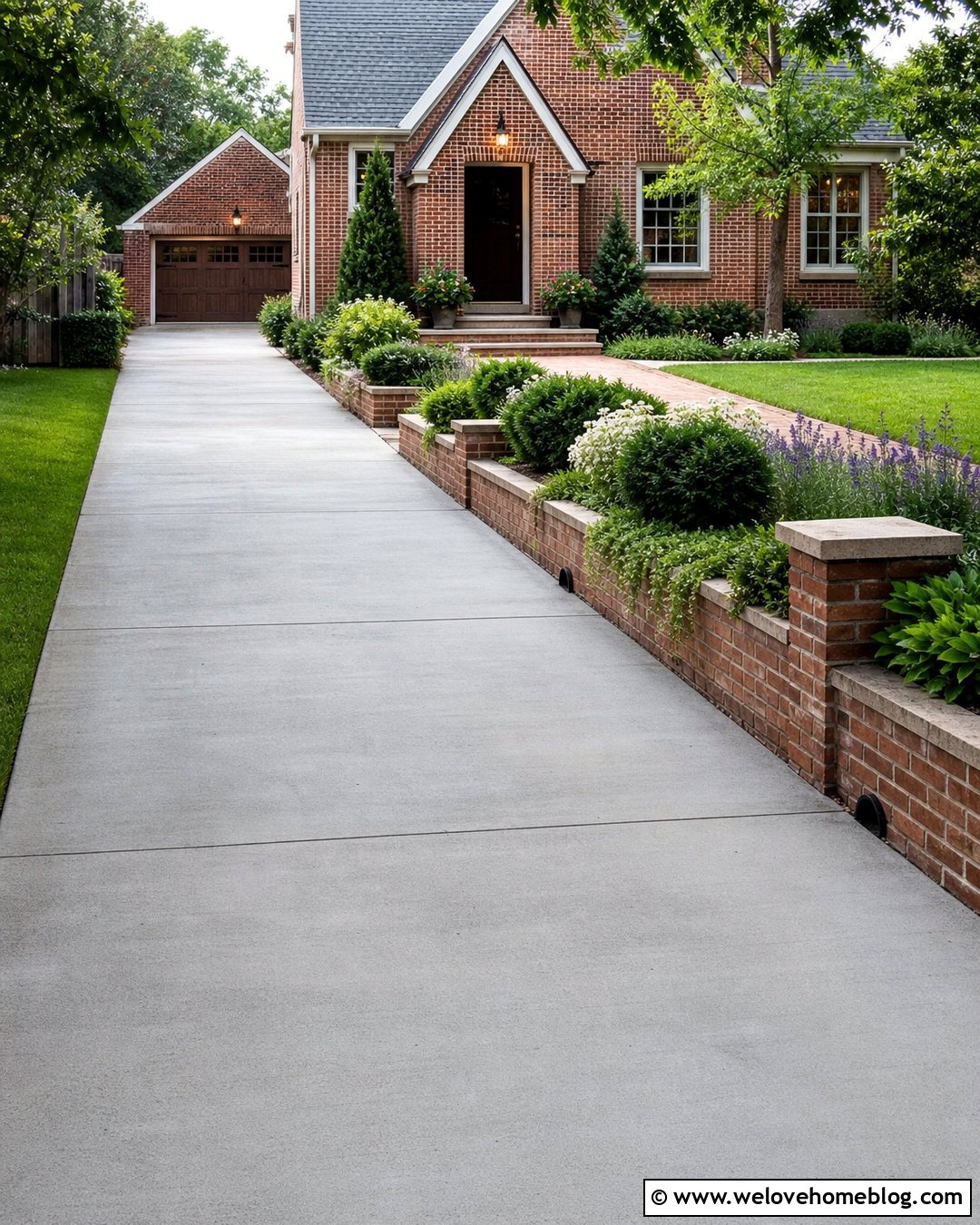
Raised brick beds create strong definition beside a driveway and work especially well where poor soil or a slight slope makes ground-level planting difficult. Match the brick to the house, driveway border, or front steps so the structure feels connected to the property. Keep walls low near parking zones and street entrances, then increase their height where more soil depth is needed. Fill the beds with evergreen shrubs, flowering perennials, and trailing plants that soften the masonry. A poured concrete driveway provides a clean contrast to the warm brick. Include drainage openings and avoid placing rigid walls where tires may clip them. Repeating the brick around the front walkway can unify the driveway landscaping with the main entrance.
33. Driveway With Large Planter Groups
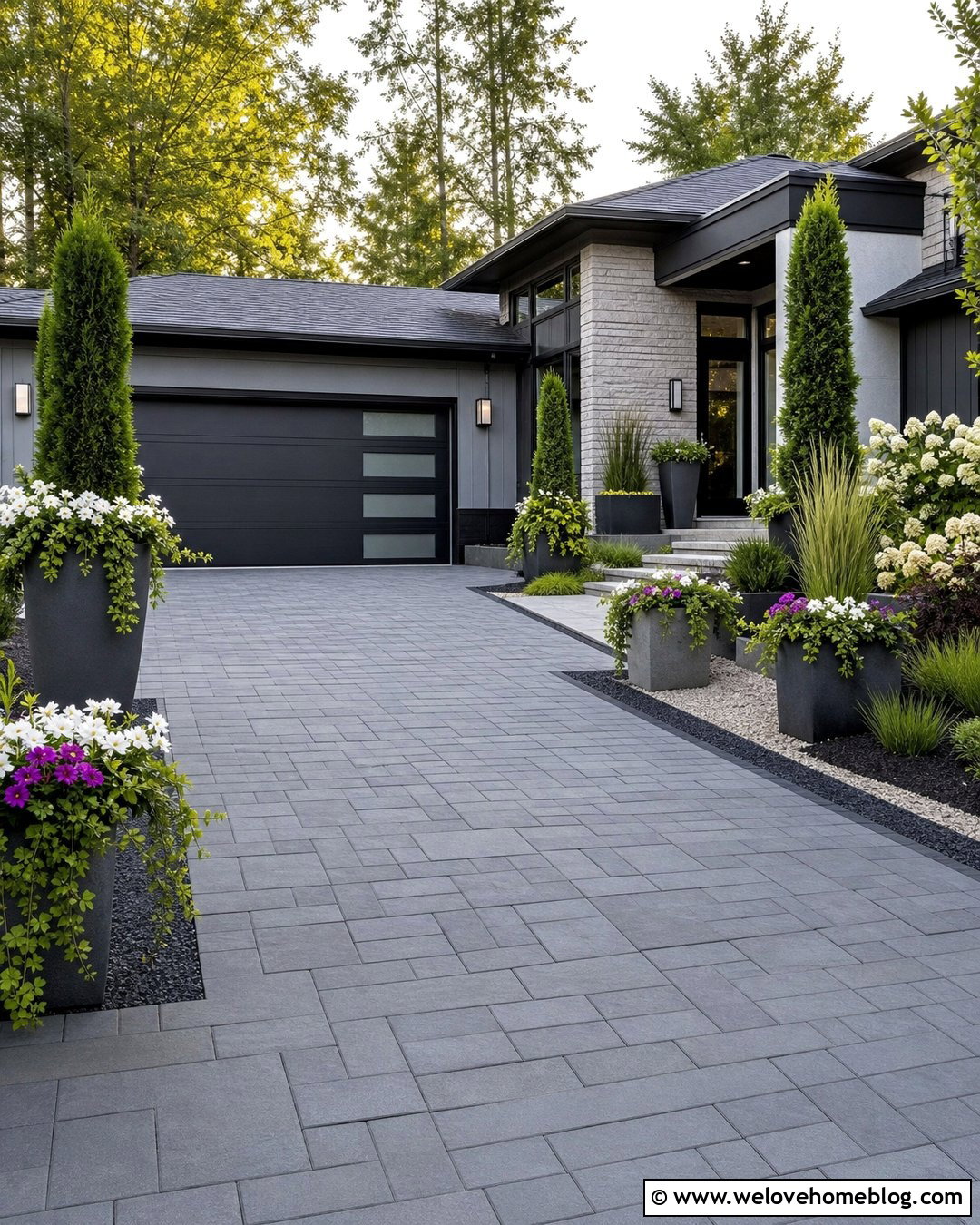
Large planters are useful where permanent planting beds cannot be installed beside a driveway. Group two or three containers of different heights near the garage, front walkway, or wide entrance areas, keeping all vehicle paths open. Choose frost-resistant or weather-tolerant materials that complement the home, such as charcoal concrete, glazed ceramic, or lightweight stone-look pots. Fill them with a consistent mix of upright evergreens, trailing foliage, and seasonal flowers. On a paver driveway, place the containers on reinforced edges or adjacent gravel pads to prevent staining and improve drainage. Repeat the container color near the porch for continuity. This flexible landscape can be refreshed seasonally while maintaining a polished overall design throughout the year.
34. Driveway With A Grass And Paver Border
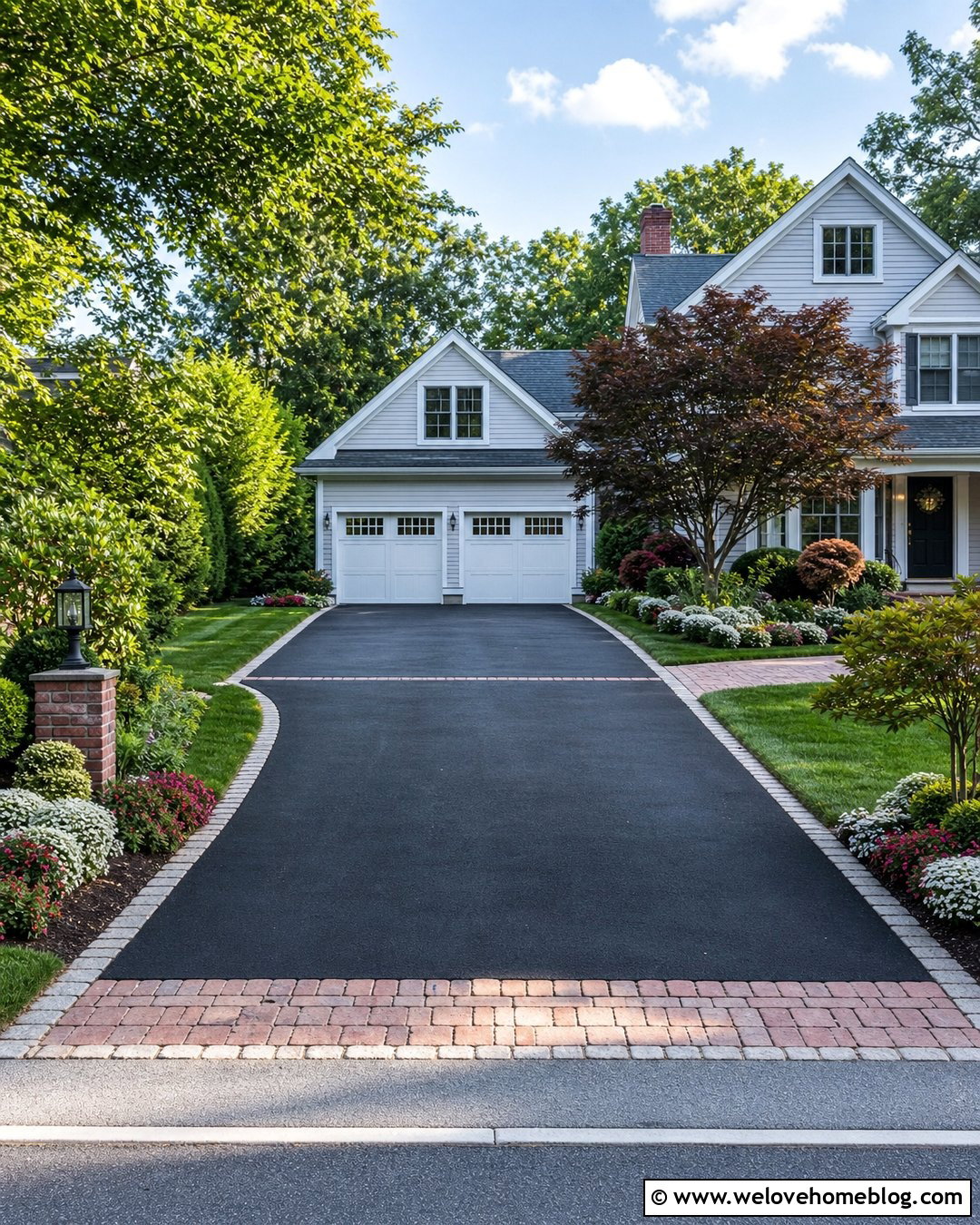
A narrow grass strip between a driveway and planting bed creates a clean, spacious transition. Edge a gray concrete or asphalt surface with a contrasting row of brick or concrete pavers, then maintain a level ribbon of lawn beyond it. Behind the grass, install broad beds containing shrubs, flowers, and ornamental trees. The green strip provides visual breathing room and keeps mulch away from car tires, while the paver edge simplifies trimming. This layout works best where the lawn can be reached easily by irrigation and mowing equipment. At the entrance and garage, widen paved areas to accommodate turning. The combination of hard edging, neat turf, and layered planting gives a suburban driveway a refined but approachable appearance.
35. Driveway With Japanese-Inspired Landscaping
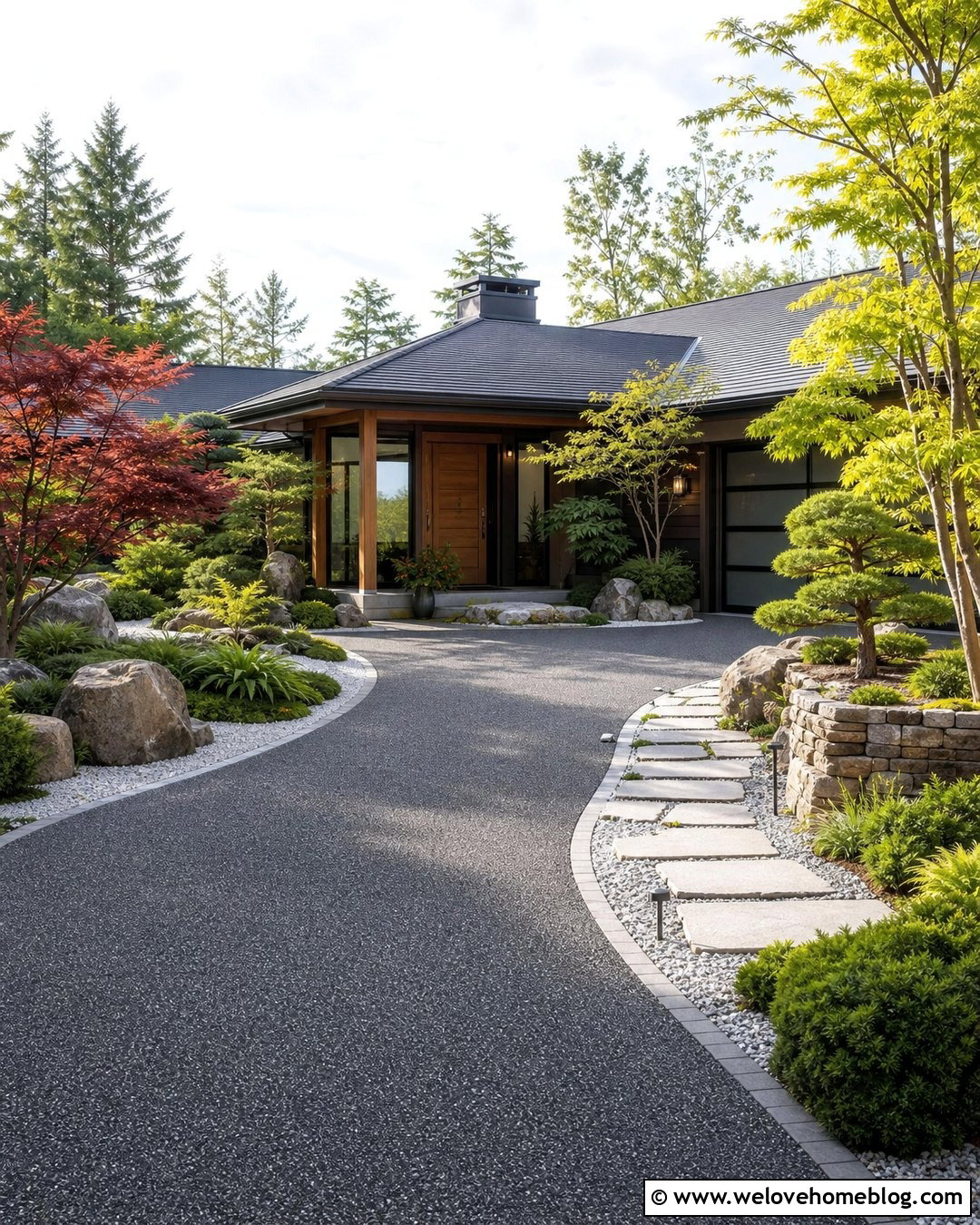
A restrained Japanese-inspired landscape can bring calm and balance to a curved driveway. Pair dark asphalt, exposed aggregate, or large concrete pavers with beds of carefully placed boulders, clipped evergreens, ornamental maples, ferns, and spreading ground covers. Use gravel as visible negative space rather than filling every area with plants. A low stone edge should follow the driveway’s curve without creating a rigid barrier. Select each plant for its form and seasonal contribution, keeping the palette intentionally limited. Near the house, a simple stepping-stone walkway can connect the drive to the entrance. Avoid placing delicate branches where vehicles pass. The complete composition should feel asymmetrical yet balanced from both the street and front door.
36. Driveway With Cottage Garden Borders
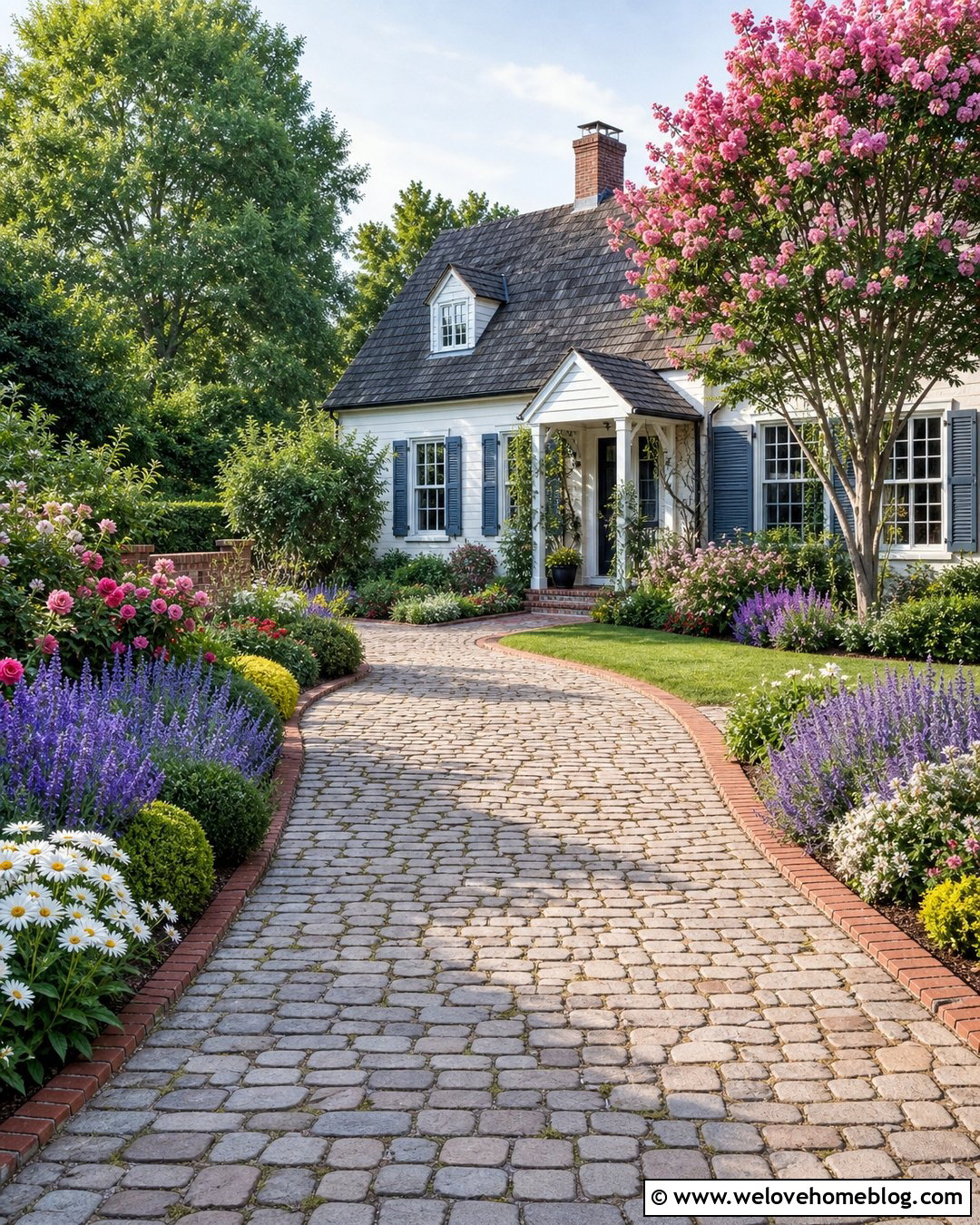
A cottage garden border adds abundant color to a simple gravel, brick, or concrete driveway. Create deep beds with curving edges, then layer roses, salvia, catmint, daisies, foxgloves, herbs, and compact shrubs according to mature height. Let a few soft plants lean toward the border, but maintain a clear paved margin where vehicles park and doors open. Brick or weathered cobblestone edging supports the informal character while keeping soil out of the driveway. Repeat several dependable plants throughout the length so the border remains visually connected. Add a small flowering tree near the house and a matching cluster beside the entry path. The finished landscape feels generous and charming without sacrificing practical access or clear sightlines.
37. Driveway With Modern Linear Planting Beds
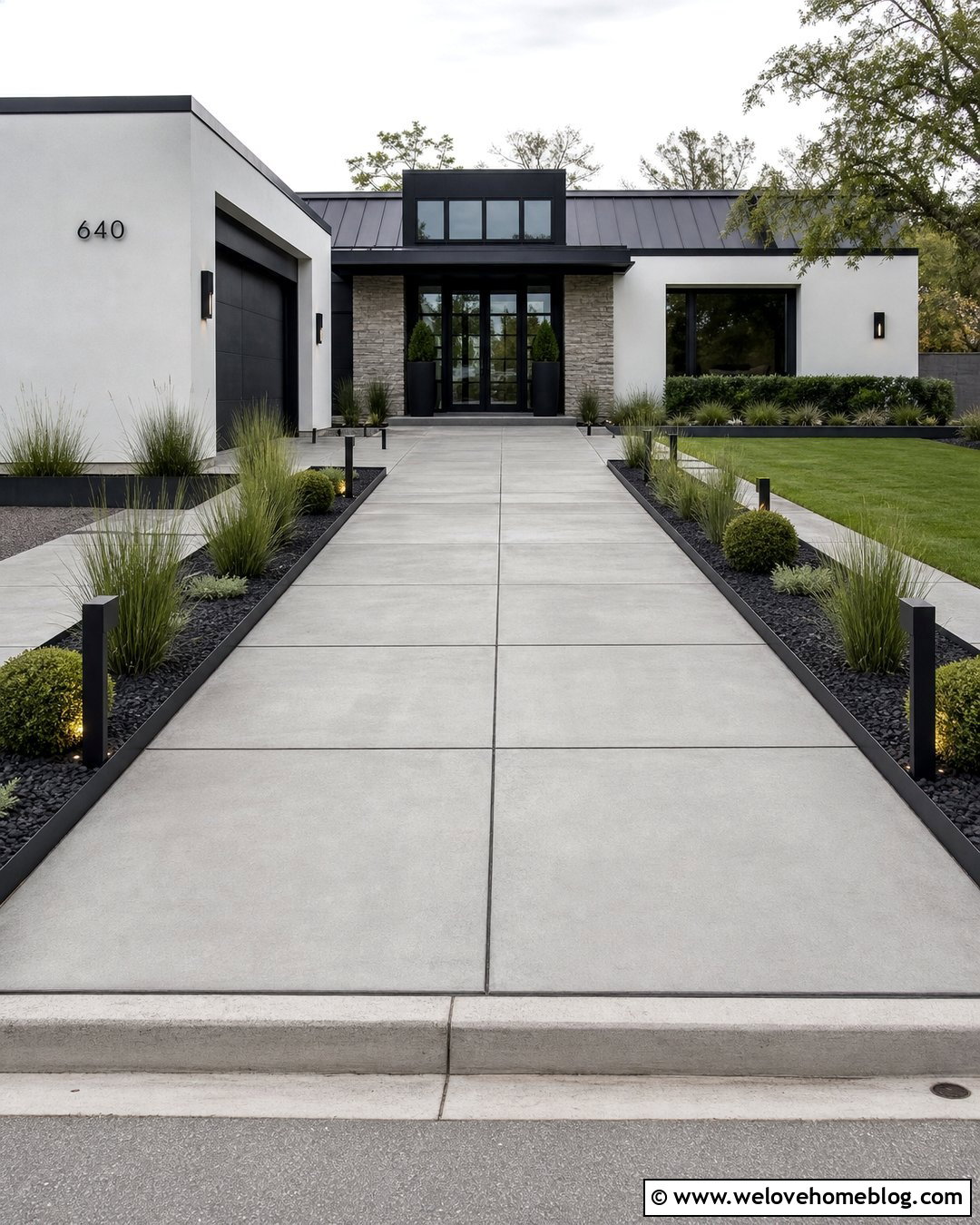
Strong linear beds can make a wide driveway complement contemporary architecture. Divide the planting into long rectangles using black steel edging, poured concrete curbs, or narrow paver bands. Fill each section with one repeated plant, such as upright grasses, clipped evergreen spheres, lavender, or low sedges. Contrasting gravel mulch emphasizes the geometry and reduces visual clutter. A smooth gray poured concrete driveway with saw-cut joints reinforces the horizontal and vertical lines. Keep plants evenly spaced and restrict the palette to a few greens, silvers, and one accent color. Integrated path lights can sit within the beds at consistent intervals. The complete layout feels organized and architectural while still softening the broad hardscape in front of the house.
38. Driveway With Woodland Shade Landscaping
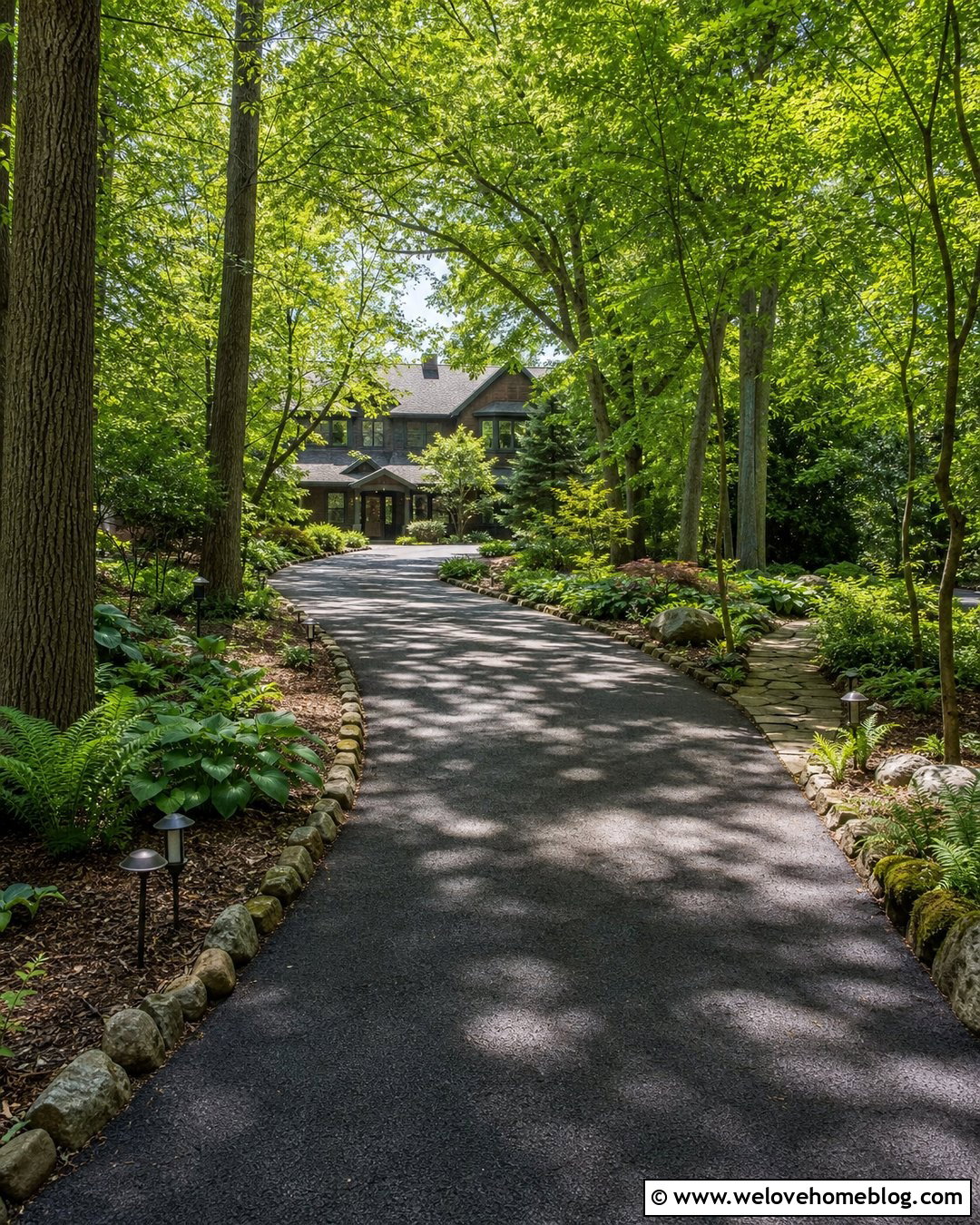
A shaded driveway beneath mature trees can become a lush woodland corridor rather than a difficult lawn area. Establish broad beds containing ferns, hostas, sedges, hellebores, heuchera, and shade-tolerant shrubs appropriate for the region. Use natural leaf mulch or fine bark to maintain the woodland character. An irregular stone edge works well beside gravel or dark asphalt, while providing a clear boundary for maintenance. Protect existing tree roots by avoiding deep excavation and major grade changes. Plant in layered drifts, leaving space around trunks instead of building raised soil rings against them. Low, shielded lighting can mark bends and highlight textured foliage. The finished driveway feels cool, established, and integrated with the surrounding tree canopy.
39. Driveway With Seasonal Bulb Borders
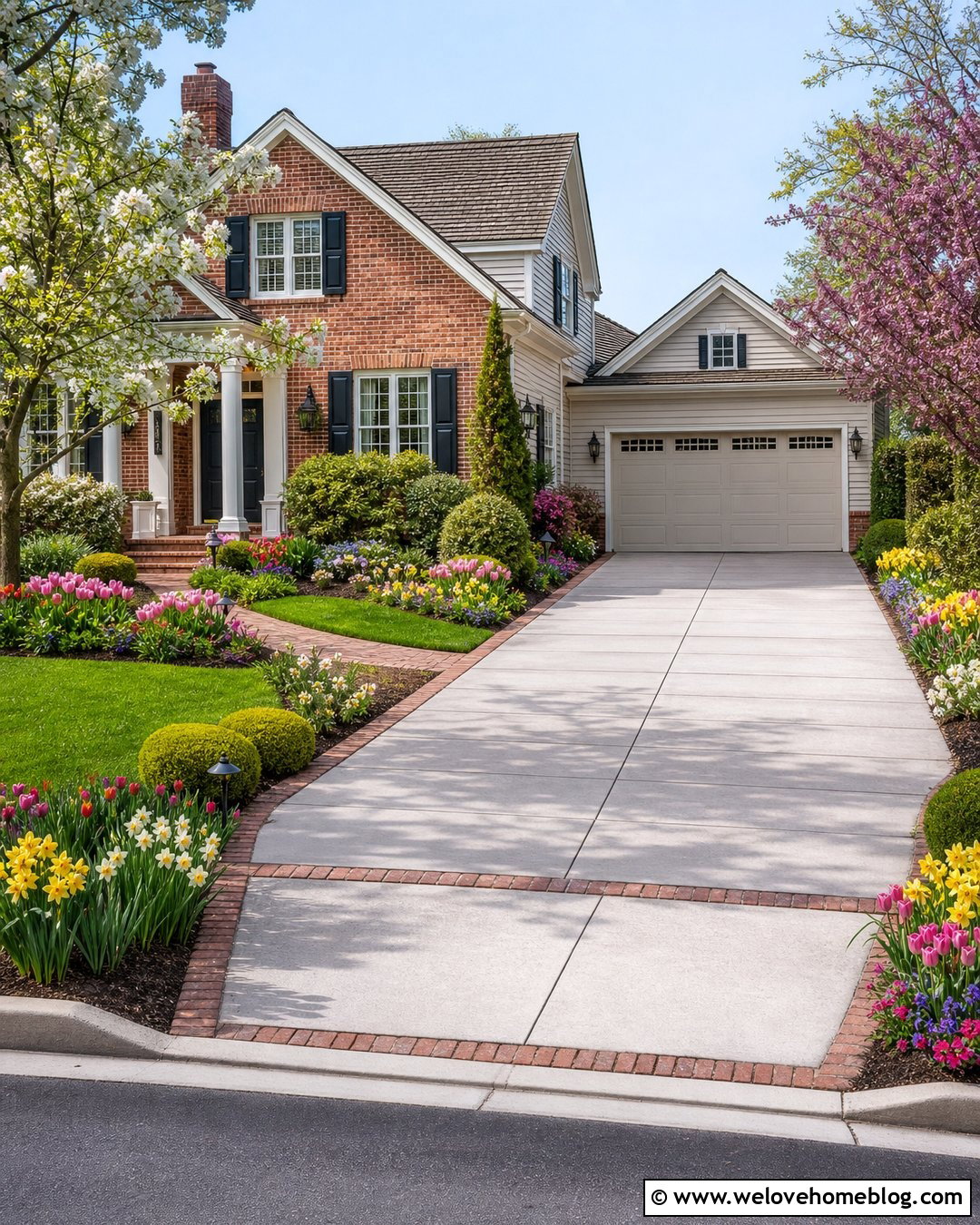
Seasonal bulbs can bring dramatic spring color to driveway borders without occupying much space later in the year. Plant daffodils, alliums, tulips, or climate-appropriate bulbs in broad repeated clusters rather than narrow single rows. Place them among evergreen ground covers and compact ornamental grasses that disguise fading foliage. A brick-edged asphalt or concrete driveway provides a neat framework for the changing display. Add summer perennials and fall-blooming plants so the beds remain attractive after the bulbs finish. Near the street, keep the arrangement low and open. Repeating the same bulb colors near the front walkway creates continuity. This layered planting strategy produces seasonal excitement while retaining dependable structure during the rest of the year.
40. Driveway With Mixed Shrubs And Small Trees
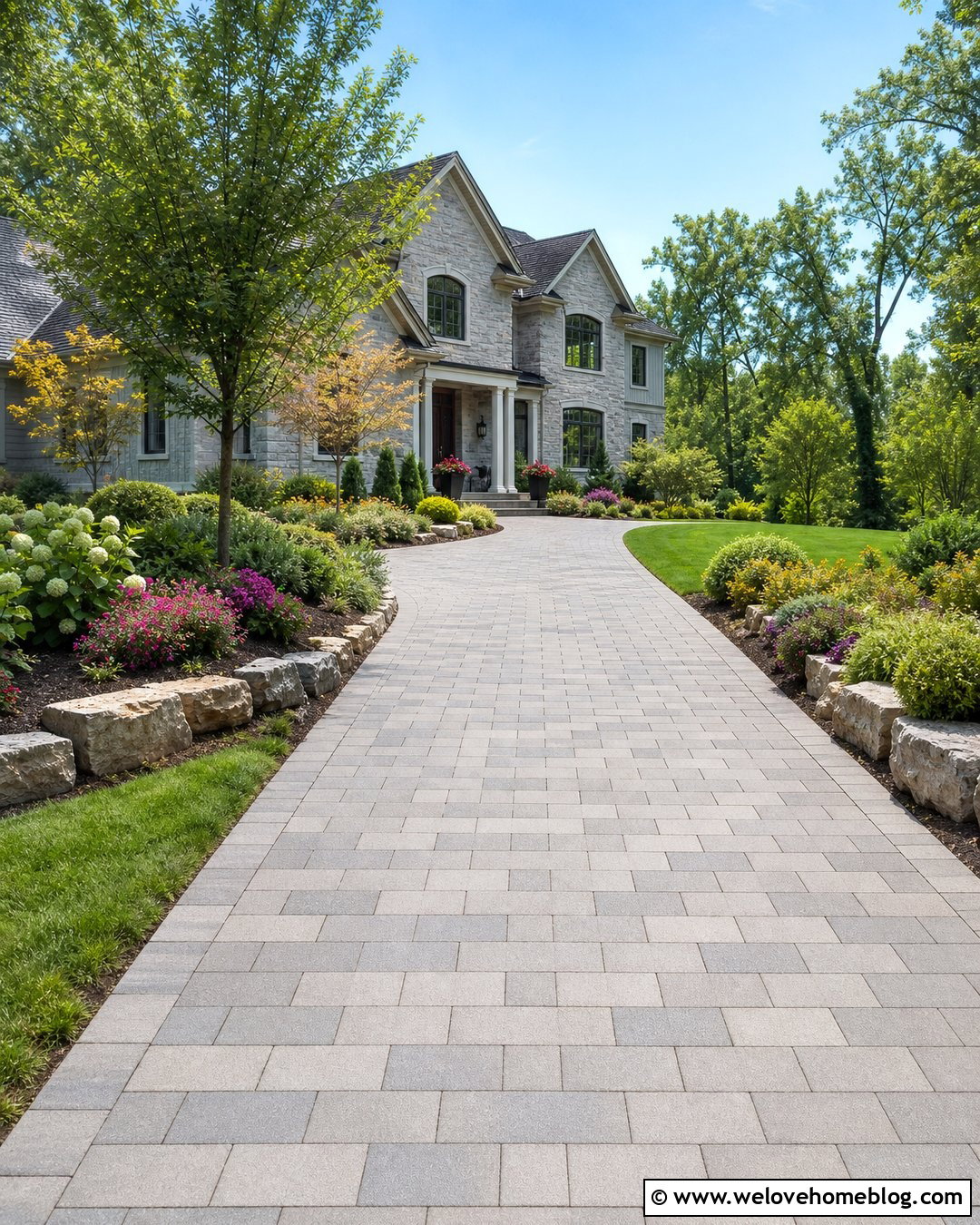
A layered combination of shrubs and small trees can soften a large driveway and help the garage blend into the landscape. Begin with one or two ornamental trees positioned where their canopies can frame the house without blocking windows or vehicle access. Beneath them, arrange evergreen and flowering shrubs in staggered groups. Complete the front edge with ground covers, perennials, and a durable stone border. Repeat the plant palette on both sides of the driveway, but vary group sizes for a natural appearance. This complete layout works with concrete, asphalt, gravel, or pavers because the planting provides height, depth, and seasonal change. Allow generous mature spacing to reduce pruning and prevent the border from becoming crowded.
Conclusion:
Successful landscaping along driveway ideas do more than place plants beside pavement. They connect the driveway material, home architecture, front walkway, and surrounding yard into one coordinated view. Begin with practical needs, including vehicle clearance, drainage, visibility, mature plant size, irrigation, and maintenance. Then choose a clear character, such as formal, modern, cottage, native, woodland, or low-maintenance. Repeat a limited group of plants and materials to create unity from the street to the garage. Even a narrow mulch border, ground-cover strip, or pair of entrance trees can make a meaningful difference. Use these landscaping along driveway ideas to build an entrance that is attractive, functional, and appropriate for your property.

Related posts:


Leave a Reply