
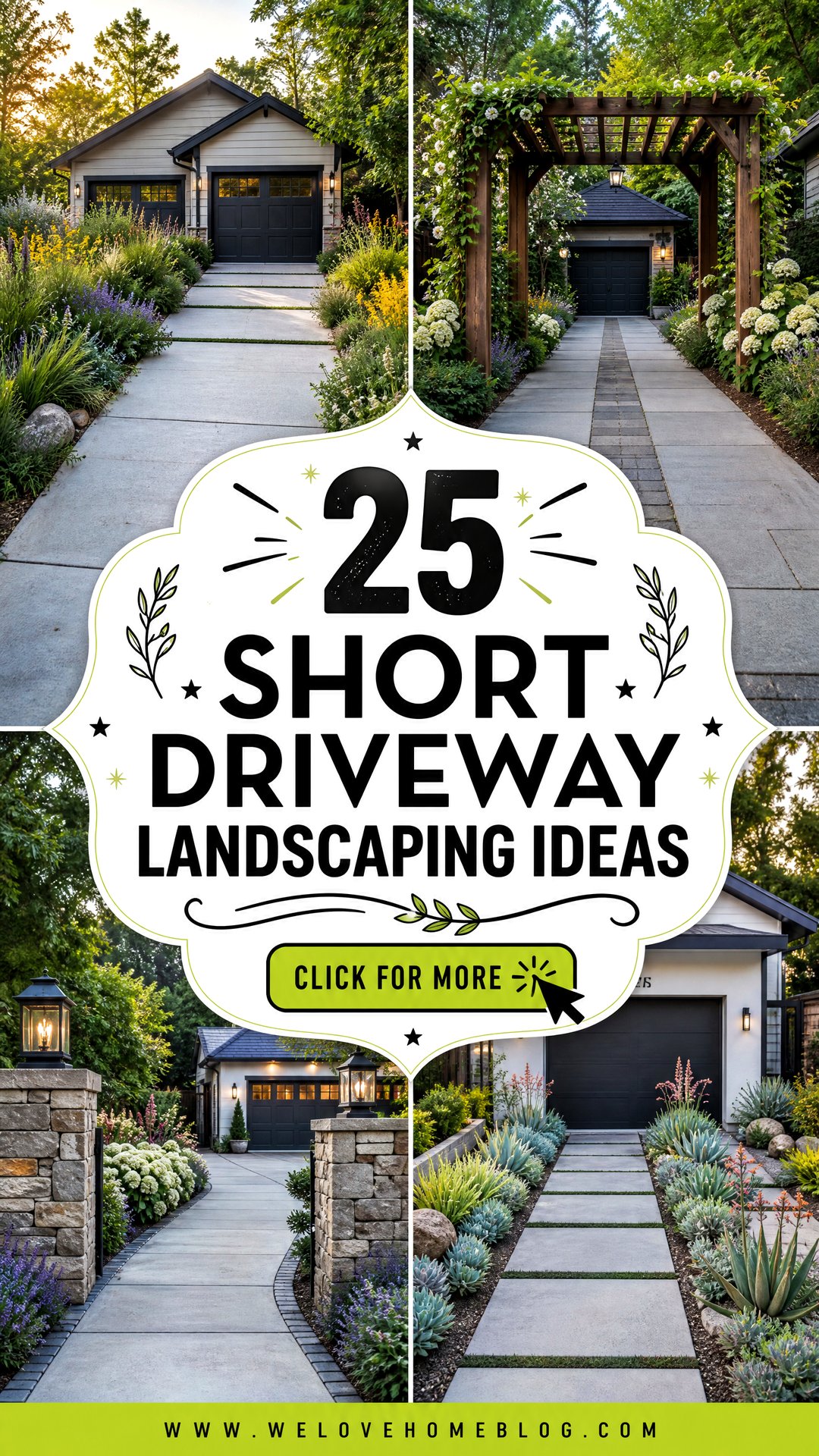
Short driveways may have limited square footage, but they offer a big opportunity to improve curb appeal. The best **25 Short Driveway Landscaping Ideas** combine a practical parking surface with defined borders, layered planting, clear walkways, and an attractive connection to the house. Because every detail is visible from the street, simple changes can make the entire front yard feel more polished. Low shrubs can soften hard paving, ornamental grasses can add movement, and stone edging can create a clean transition into the lawn. The key is choosing compact features that will not crowd vehicles or block sightlines. Whether your driveway is concrete, gravel, asphalt, brick, or pavers, these complete designs provide useful inspiration. Explore these **25 Short Driveway Landscaping Ideas** to create a welcoming and well-planned entrance.
1. Short Concrete Driveway With Layered Flower Beds
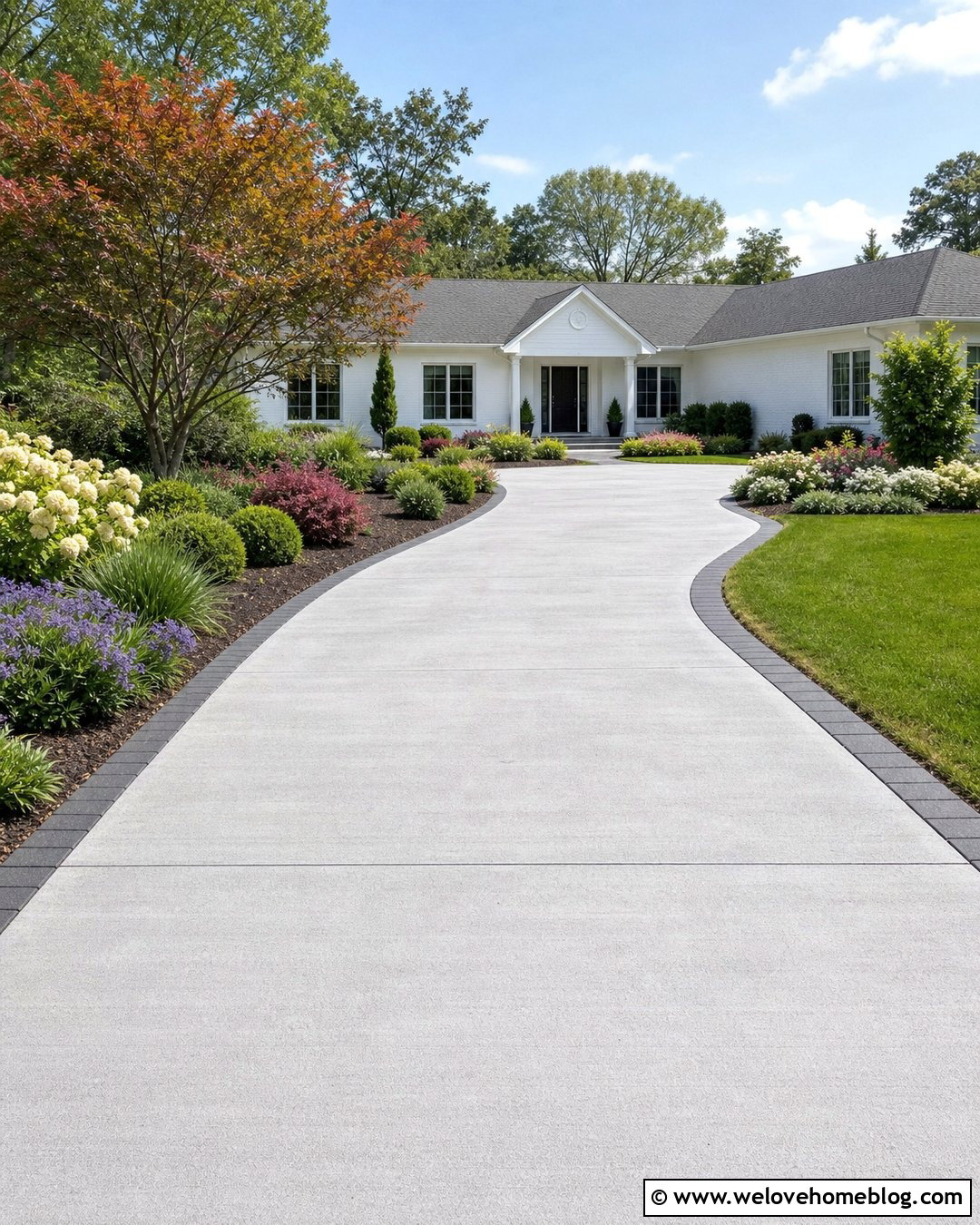
A plain concrete driveway feels much more welcoming when layered flower beds frame both sides. Keep the beds narrow near the street, then widen them slightly toward the house to draw attention to the entrance. Use low ground covers along the pavement so plants do not interfere with opening car doors. Behind them, add compact perennials, flowering shrubs, and one small ornamental tree near the garage. Dark metal or charcoal paver edging provides a crisp transition between the gray concrete and colorful planting. Repeat two or three plant varieties across both beds for a connected appearance. This complete layout works especially well beside a ranch or Cape Cod home, where the low planting complements the house without hiding its facade.
2. Short Gravel Driveway With Brick Edging
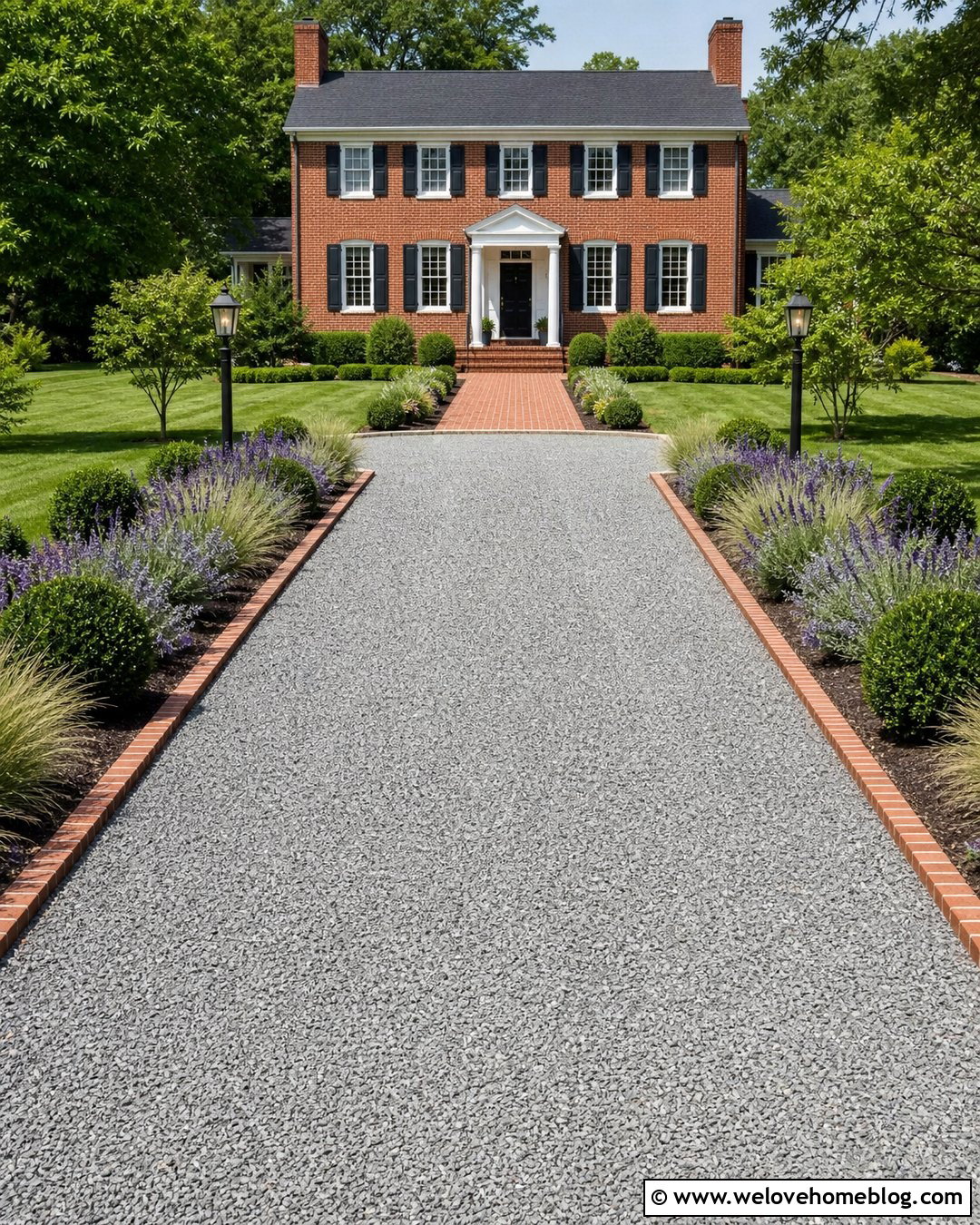
The soft texture of gravel pairs beautifully with the strong lines of brick edging. Choose compacted gray or tan gravel that coordinates with the exterior of the house. Install clay bricks along both sides to hold loose stones in place and create a finished boundary. For a short driveway, keep the surrounding landscaping simple. Narrow beds filled with lavender, catmint, dwarf grasses, or rounded evergreen shrubs provide color without making the space feel crowded. A matching brick walkway can branch from the driveway and lead directly to the front porch. This design is especially effective for cottage, colonial, and traditional homes. The combination of loose gravel, warm brick, and relaxed planting creates an inviting entrance that feels established rather than overly formal.
3. Short Asphalt Driveway With Evergreen Borders
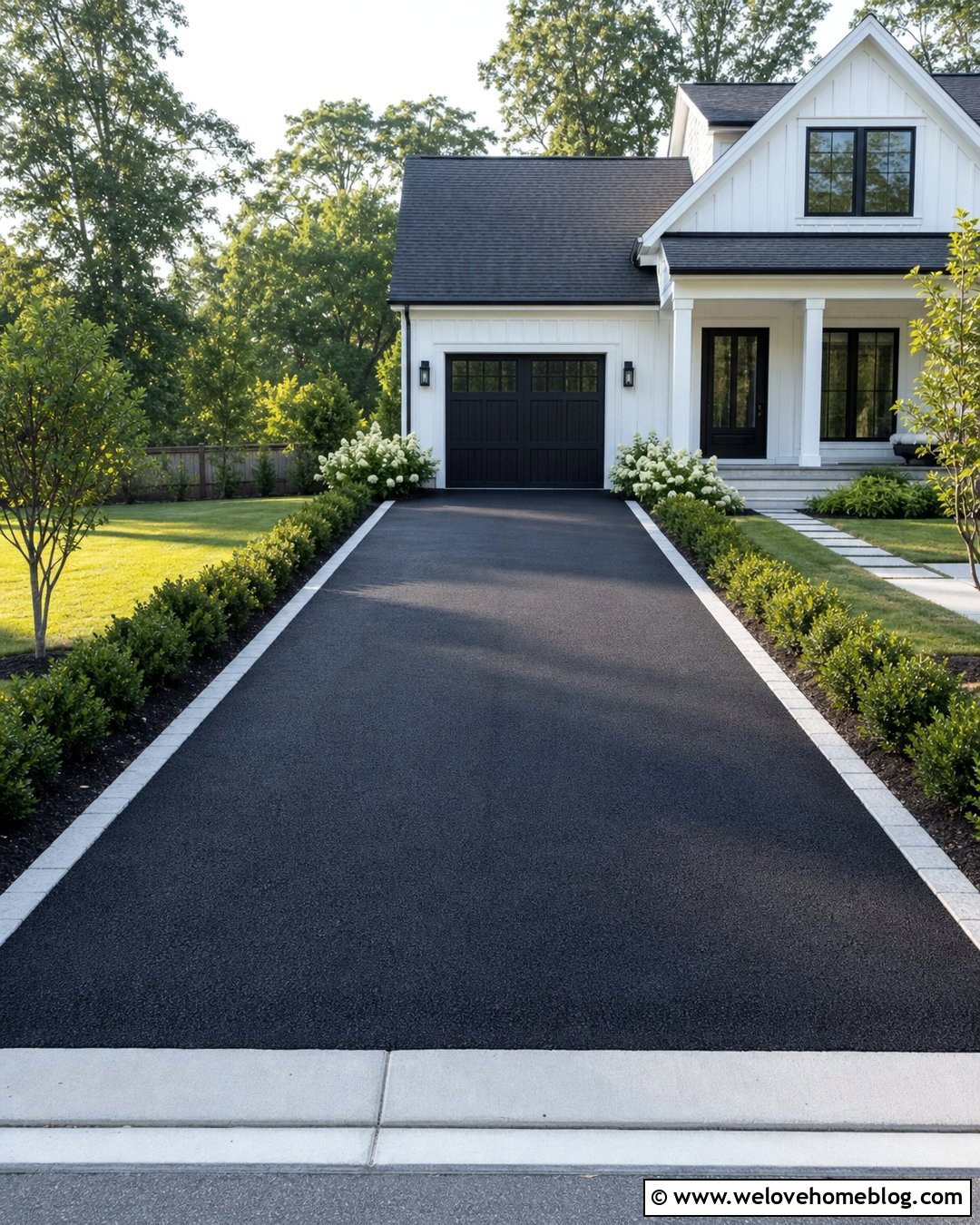
Fresh black asphalt creates a bold backdrop for neatly shaped evergreen landscaping. Frame the driveway with narrow beds containing dwarf boxwood, compact inkberry, or low-growing juniper. Their year-round color helps the entrance remain attractive even when flowers are not blooming. Add a pale stone or concrete curb between the asphalt and planting beds to keep soil, mulch, and roots away from the driving surface. One flowering accent plant near each garage corner can introduce seasonal color without overwhelming the clean design. Keep shrubs below headlight height near the street so drivers have open views of sidewalks and traffic. This short driveway layout suits brick colonials, modern farmhouses, and suburban homes that need a tidy, low-fuss front entrance with strong contrast.
4. Short Paver Driveway With Grass Strips
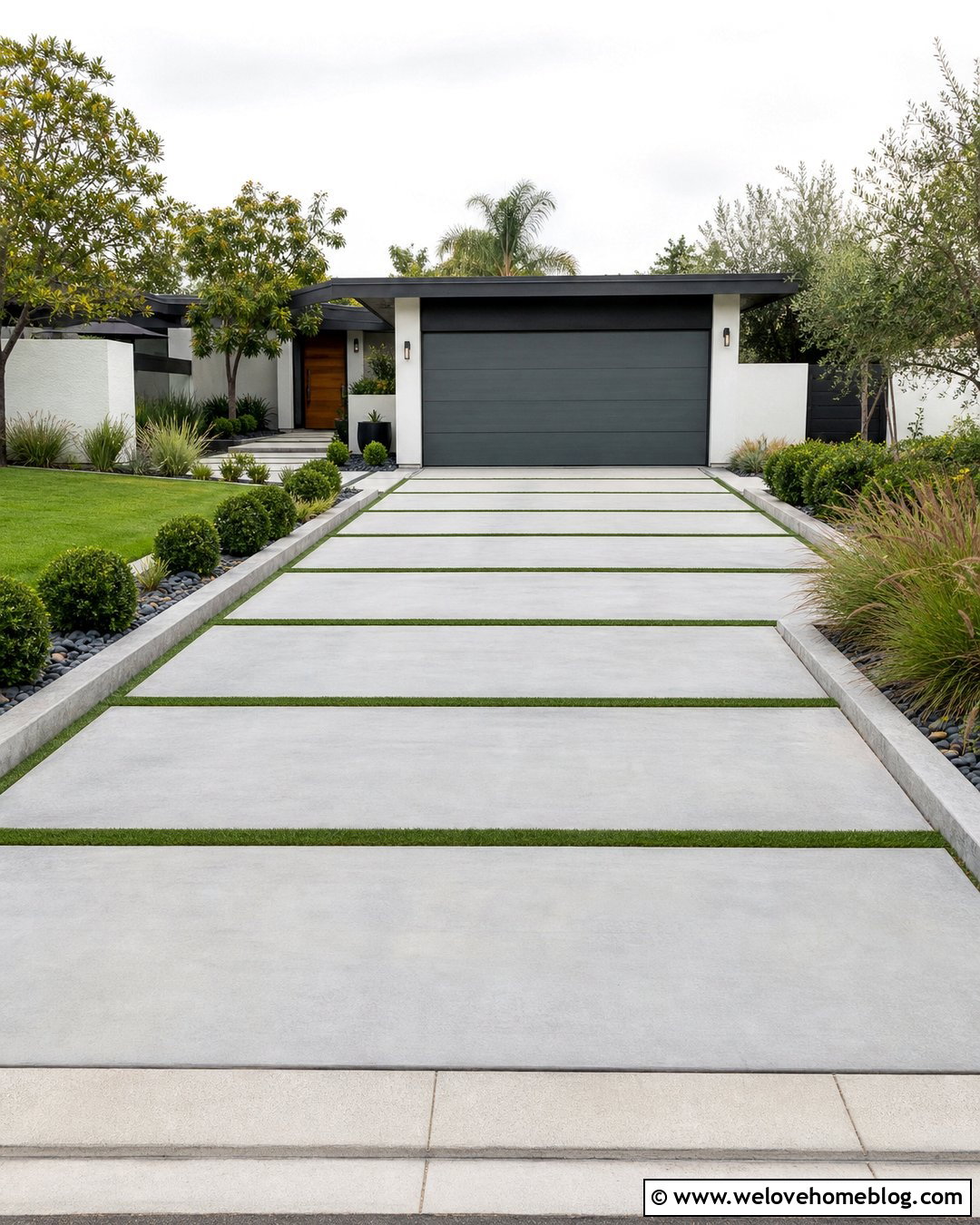
Large concrete pavers separated by slim grass strips can make a short driveway feel wider and more integrated with the yard. Use rectangular pavers in a straight running pattern to emphasize the route from the curb to the garage. The planted joints may contain durable turf or a low-growing ground cover suited to local conditions and vehicle use. Frame the outer edges with simple beds of ornamental grasses, clipped shrubs, and smooth landscape stones. A matching paver path can turn toward the front door without introducing another material. This design works best when every line remains clean and intentional. It complements contemporary and midcentury homes, especially when the planting repeats the geometric shapes of the driveway and architecture while softening the overall appearance.
5. Short Curved Driveway With Ornamental Grasses
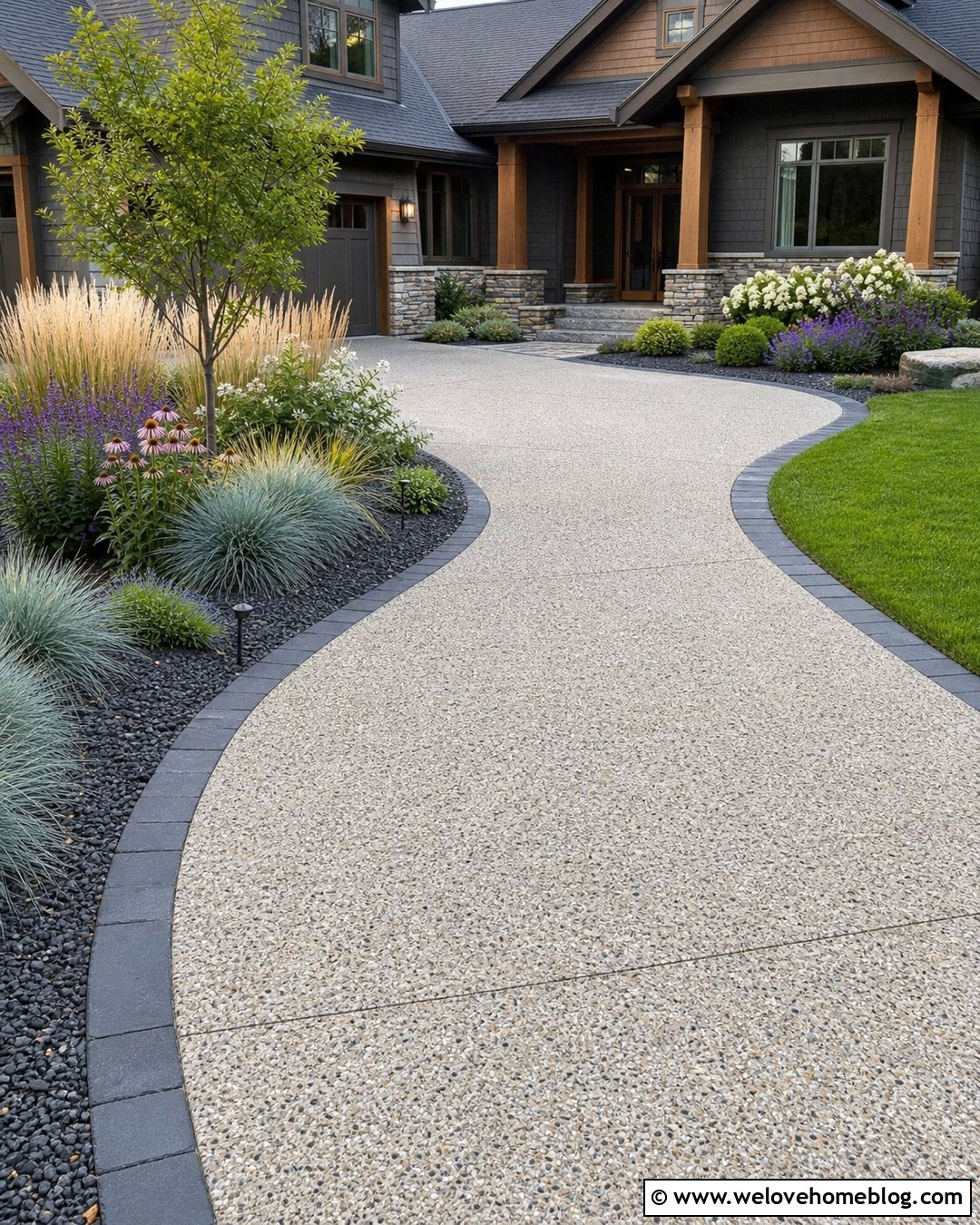
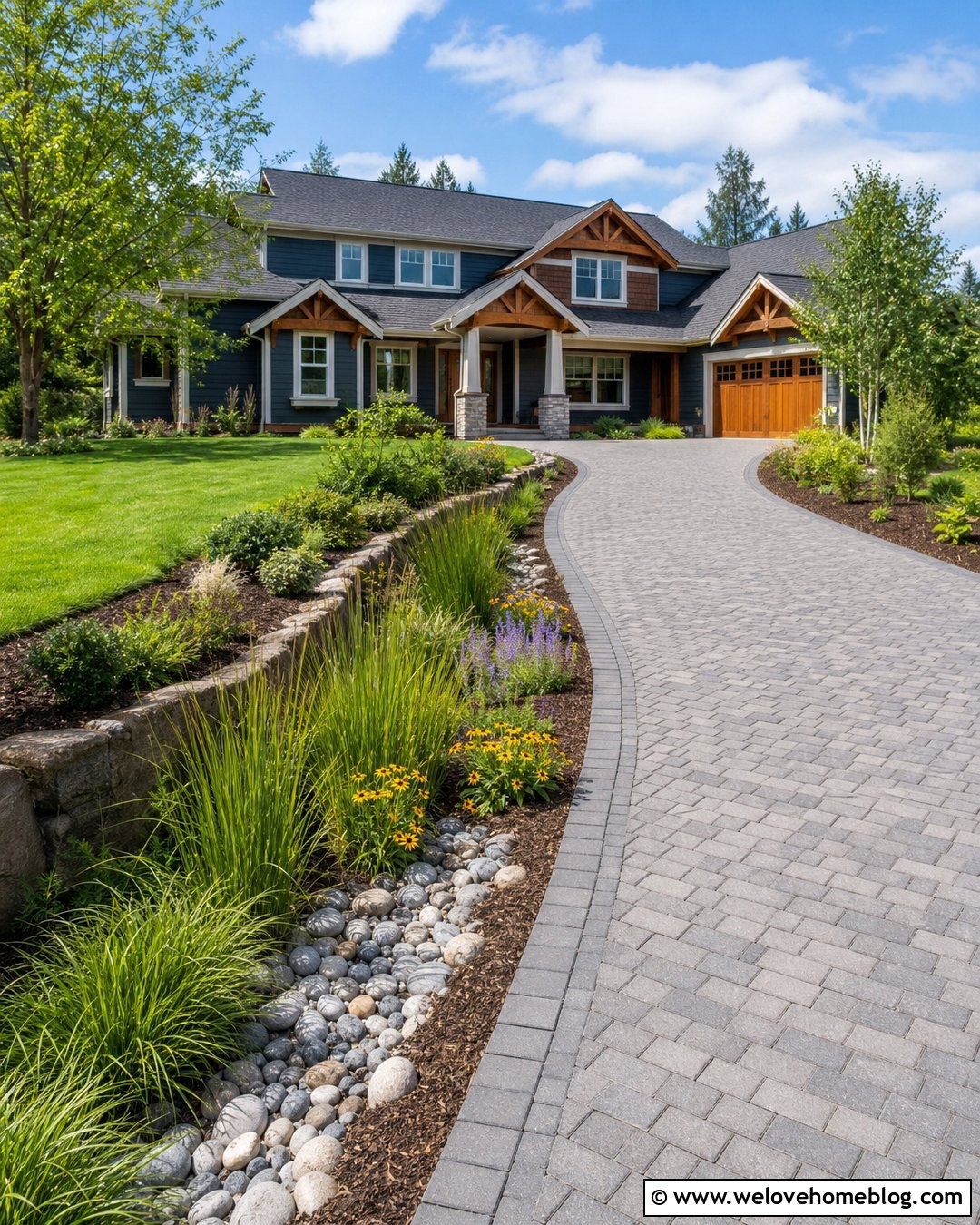
A gentle curve can make a short driveway feel less abrupt and create room for a small landscape bed. Use light exposed-aggregate concrete for the surface, then follow the curve with a border of dark cobblestones. Plant compact ornamental grasses such as blue fescue, prairie dropseed, or dwarf fountain grass along the outside edge. Their arching foliage adds movement while keeping the view open. On the inner curve, create a wider bed with one small tree, low flowering perennials, and decorative gravel. Avoid tall or rigid plants close to the driving lane. The curve, stone border, and airy planting should work as one flowing composition. This approachable layout looks natural beside craftsman houses, wooded properties, and homes with asymmetrical front yards.
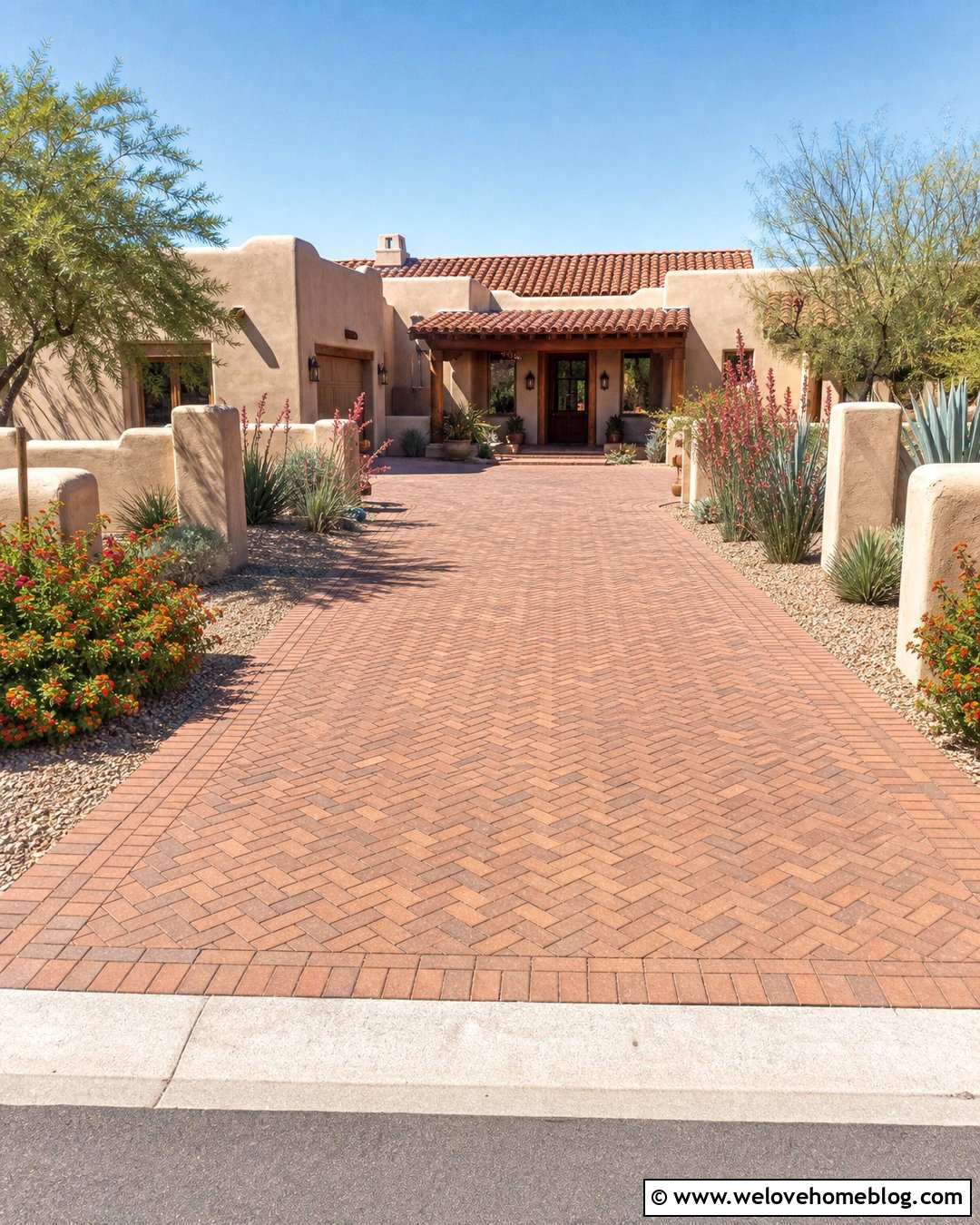
6. Short Brick Driveway With Cottage Planting
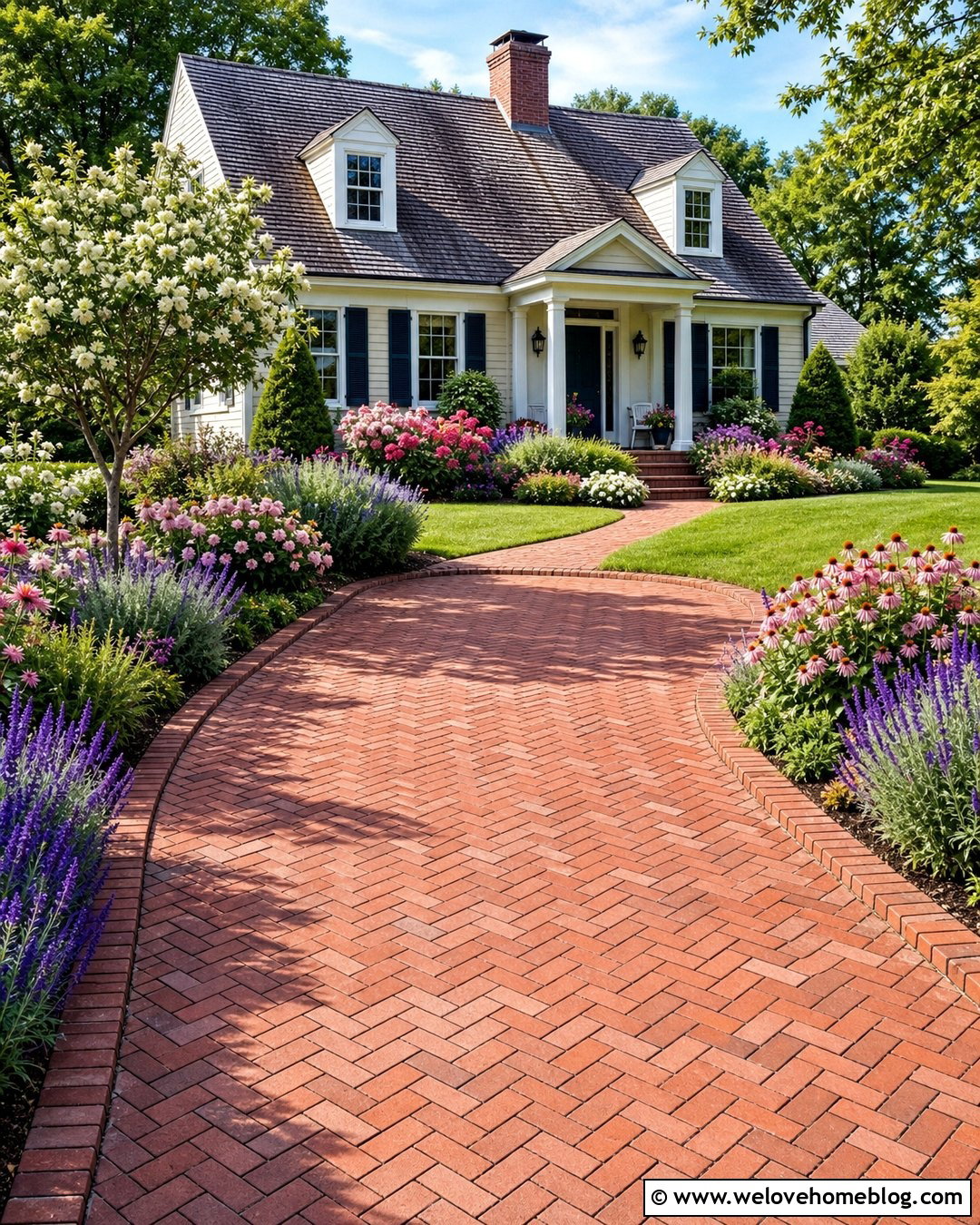
Warm clay brick pavers provide an ideal foundation for a colorful cottage-style entrance. Lay the bricks in a herringbone pattern to add visual detail without requiring extra decorations. Along each side, install narrow beds with softly overflowing plants such as salvia, coreopsis, catmint, coneflowers, and compact roses. Keep the lowest plants beside the driveway and place taller flowers closer to the fence or house. A simple brick soldier-course border keeps the surface neat and visually connects it to the beds. Near the porch, a small flowering tree can create a charming focal point. This complete driveway look works particularly well with cottages, Cape Cod homes, and painted brick houses. Controlled repetition keeps the planting abundant but prevents the short entrance from appearing messy.
7. Short Driveway With Dwarf Trees
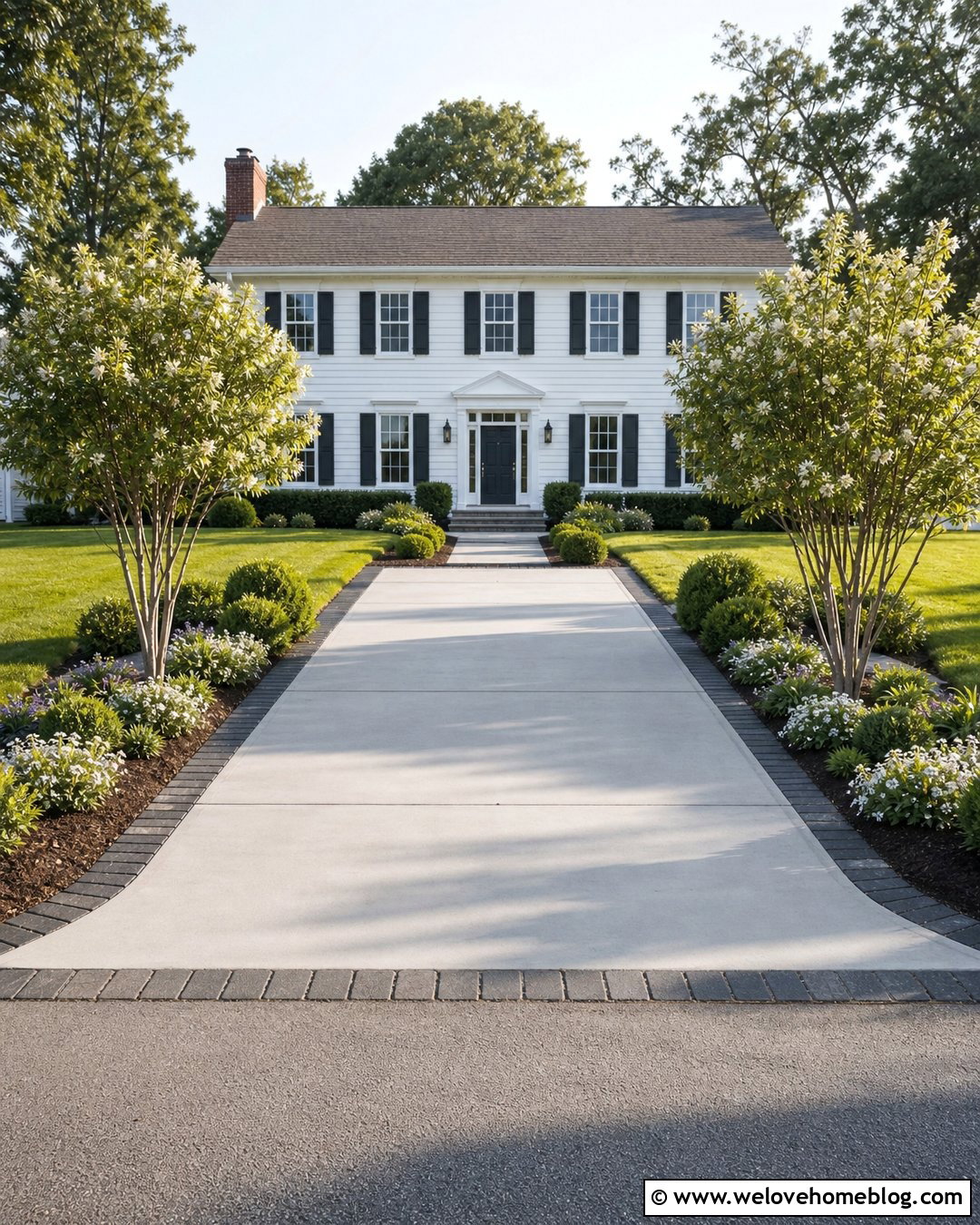
Small ornamental trees can give a short driveway structure without creating an oversized canopy. Start with a pale gray poured-concrete surface bordered by narrow bands of charcoal pavers. Place one dwarf tree on each side near the midpoint or garage, leaving plenty of clearance from vehicles, pavement, and utilities. Compact varieties with upright or rounded forms generally fit small front yards better than trees with low, spreading branches. Build simple planting beds beneath them using ground covers, spring bulbs, and low shrubs. Repeating the same tree and border material creates symmetry, while the smaller plants add seasonal variation. This design gives a short driveway a clear sense of arrival and suits colonial, craftsman, and traditional suburban homes with balanced front facades.
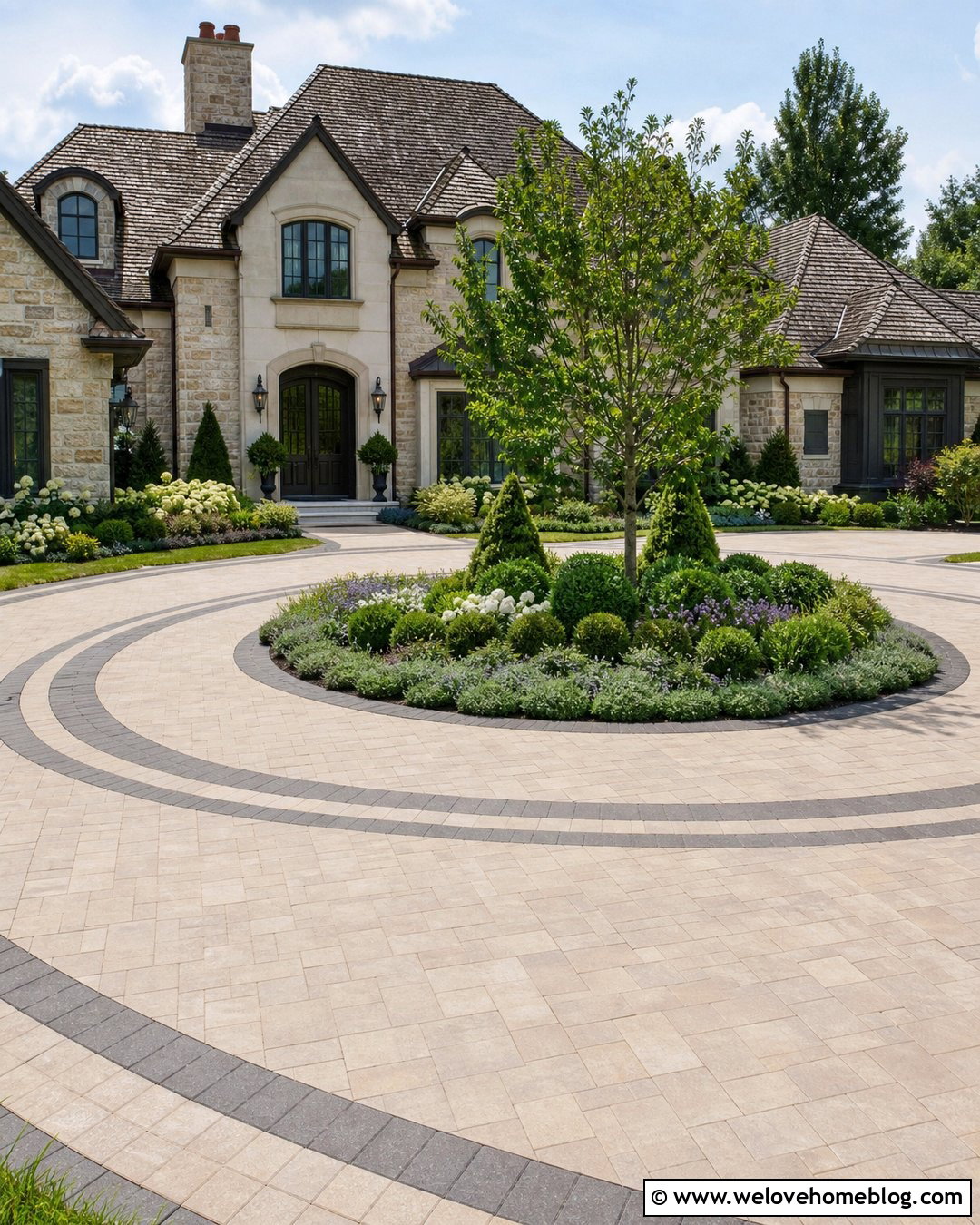
8. Short Driveway With Low Boxwood Hedges
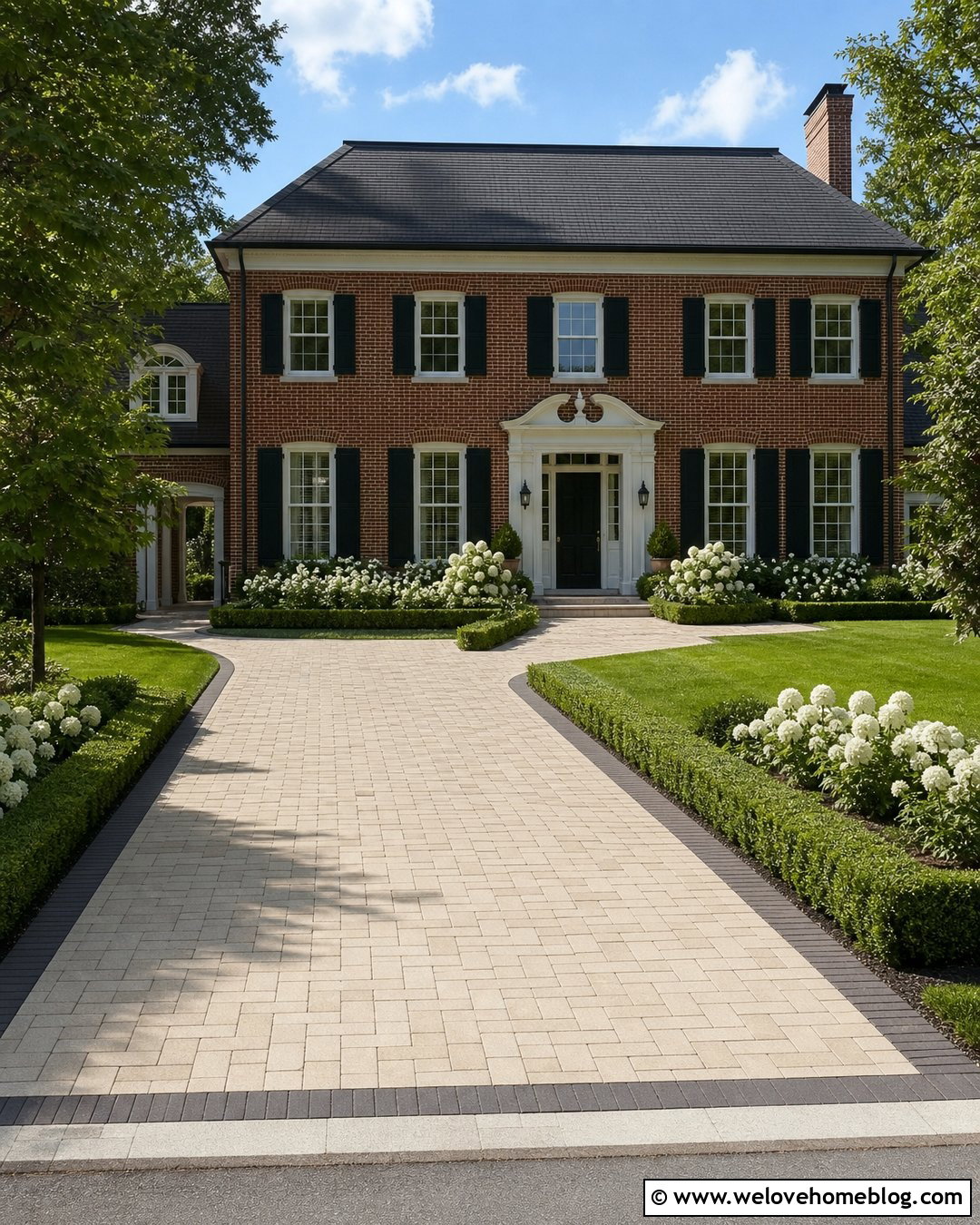
Low boxwood hedges can turn a basic driveway into a formal, well-defined approach. Pair a light concrete paver surface with a dark brick ribbon along the perimeter. Plant the boxwood behind the brick edge, keeping the hedge low enough that it will not restrict visibility or make parking feel enclosed. Break the hedge near the front walkway and garage so people can move comfortably between the car, porch, and yard. Inside the surrounding beds, add white flowering perennials or small hydrangeas for a softer contrast. The hedge should outline the driveway rather than form a tall wall around it. This complete arrangement looks especially polished with colonial, Georgian, and symmetrical brick homes where the clipped greenery reinforces the architecture’s orderly proportions.
9. Short Driveway With Native Plant Borders
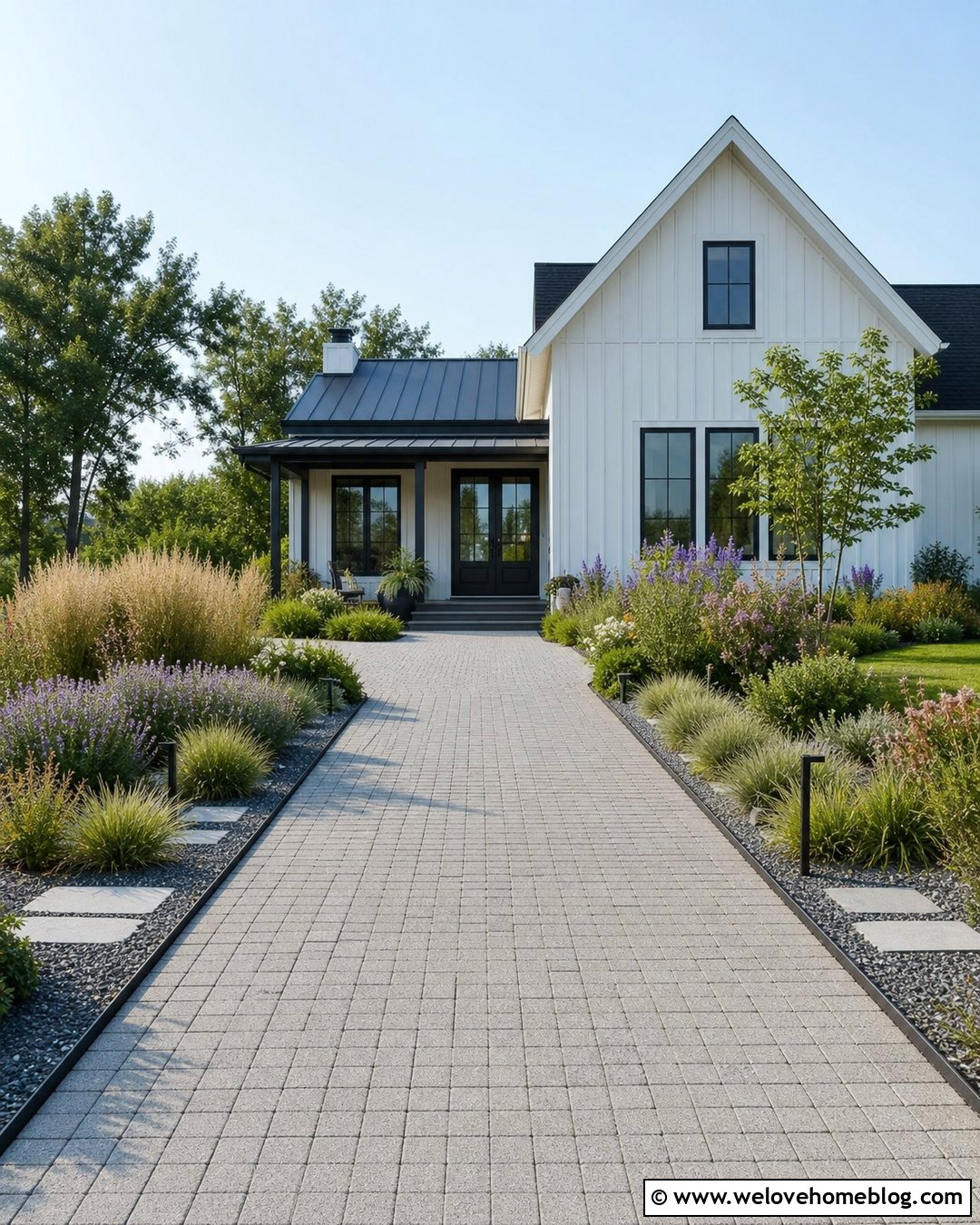
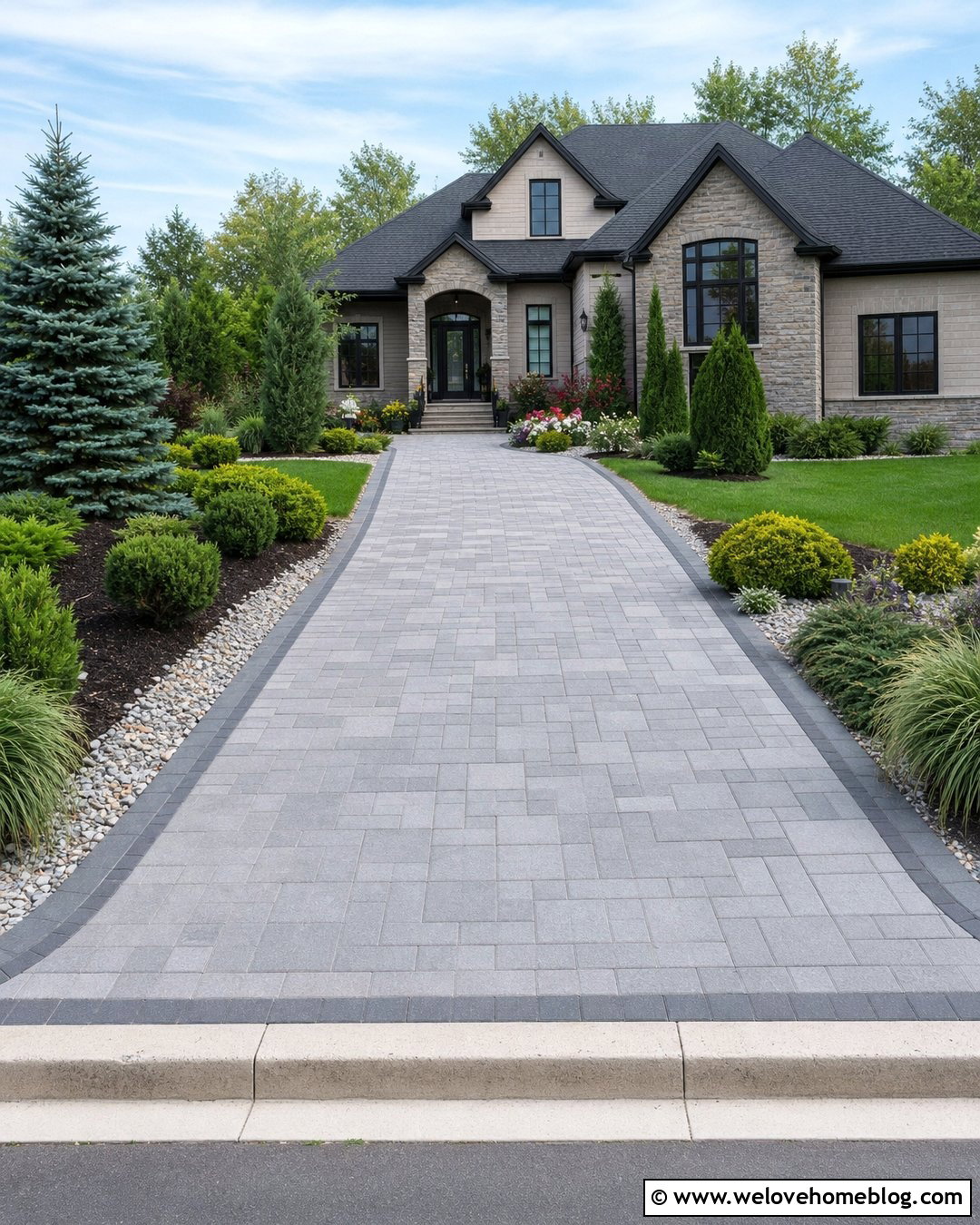
Native planting can give a short driveway a relaxed, regionally appropriate character. Use permeable concrete pavers for the surface and a narrow steel edge to separate the paving from the planting beds. Select locally suitable grasses, flowering perennials, and compact shrubs that fit the available sunlight, soil, and mature space. Arrange them in repeated groups rather than scattering individual plants randomly. Low species should sit nearest the driveway, while taller plants belong farther back where they cannot lean over parked vehicles. Add a few flat stones or a gravel strip for maintenance access. This design works with modern farmhouses, craftsman homes, and naturalistic yards. A limited color palette keeps the borders cohesive while still providing texture and seasonal change.
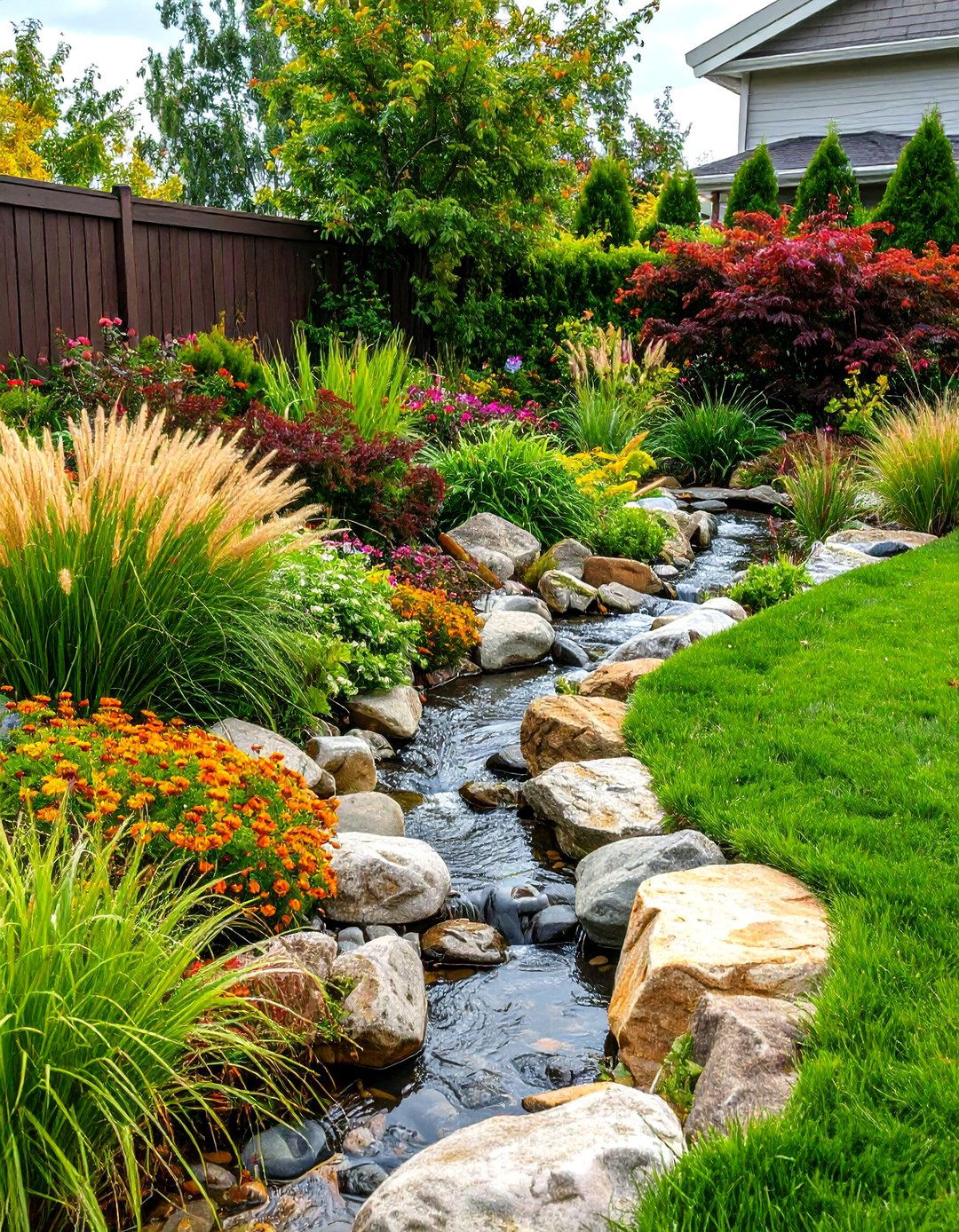

10. Short Driveway With River Rock Beds
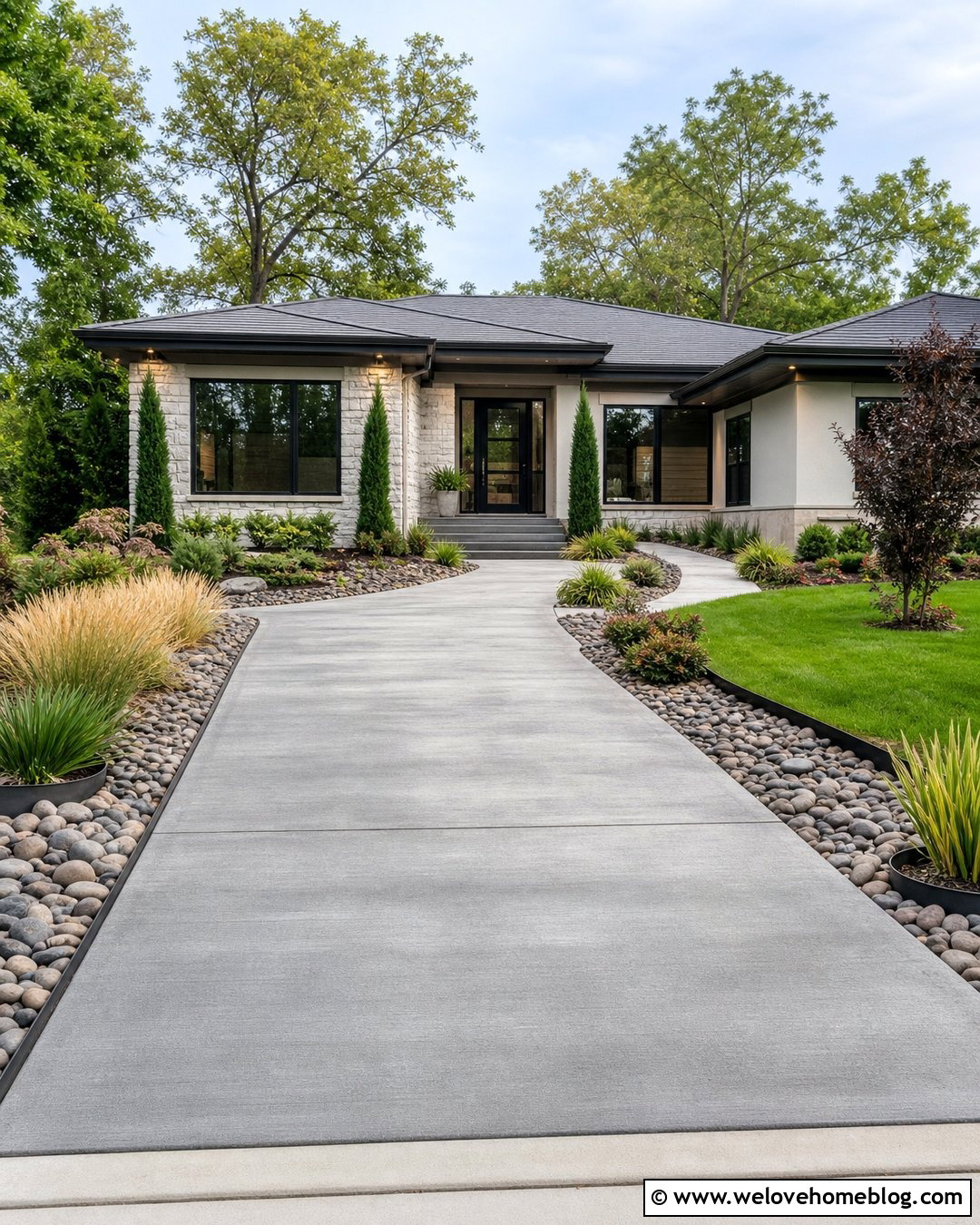
Smooth river rock creates a clean, durable transition between a driveway and nearby planting. Combine a medium-gray brushed-concrete surface with curving rock beds that begin narrow at the curb and widen near the house. Mix the stones with clusters of ornamental grass, compact evergreen shrubs, and one or two sculptural accent plants. Rather than covering the entire front yard with rock, leave areas of lawn or planted ground cover to prevent the landscape from appearing harsh. A steel or stone edge keeps the river rock from spreading onto the concrete. This complete design is practical for narrow spaces where traditional flower beds may feel crowded. It complements contemporary ranch homes, desert-inspired houses, and properties with simple facades and strong horizontal lines.
11. Short Driveway With Landscape Lighting
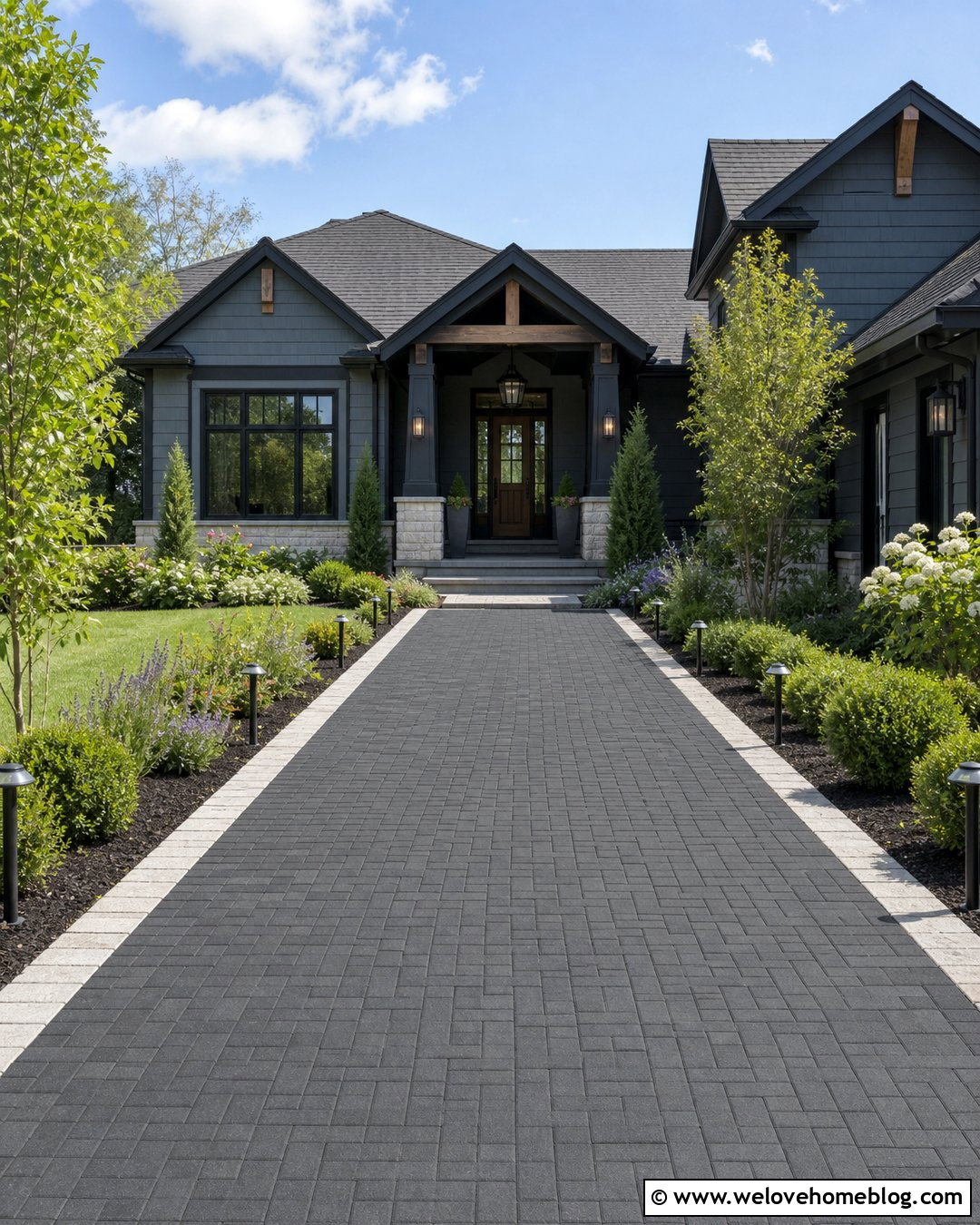
Landscape lighting should guide the driveway while remaining subtle during the day. Begin with a dark gray interlocking-paver surface and light stone edging for contrast. Place compact path lights in the planting beds rather than directly beside the driving lane, where tires or opening doors could damage them. Aim the layout toward useful points such as the curb entrance, front walkway, address feature, and garage. Surround the fixtures with low shrubs, ground covers, and small flowering plants that will not block the light. Two slightly taller fixtures near the driveway entrance can define the approach without creating a bulky gateway. This coordinated look works with almost any house style. Keep spacing even, hardware consistent, and wiring hidden so the landscaping remains tidy in daylight.
12. Short Driveway With a Rain Garden
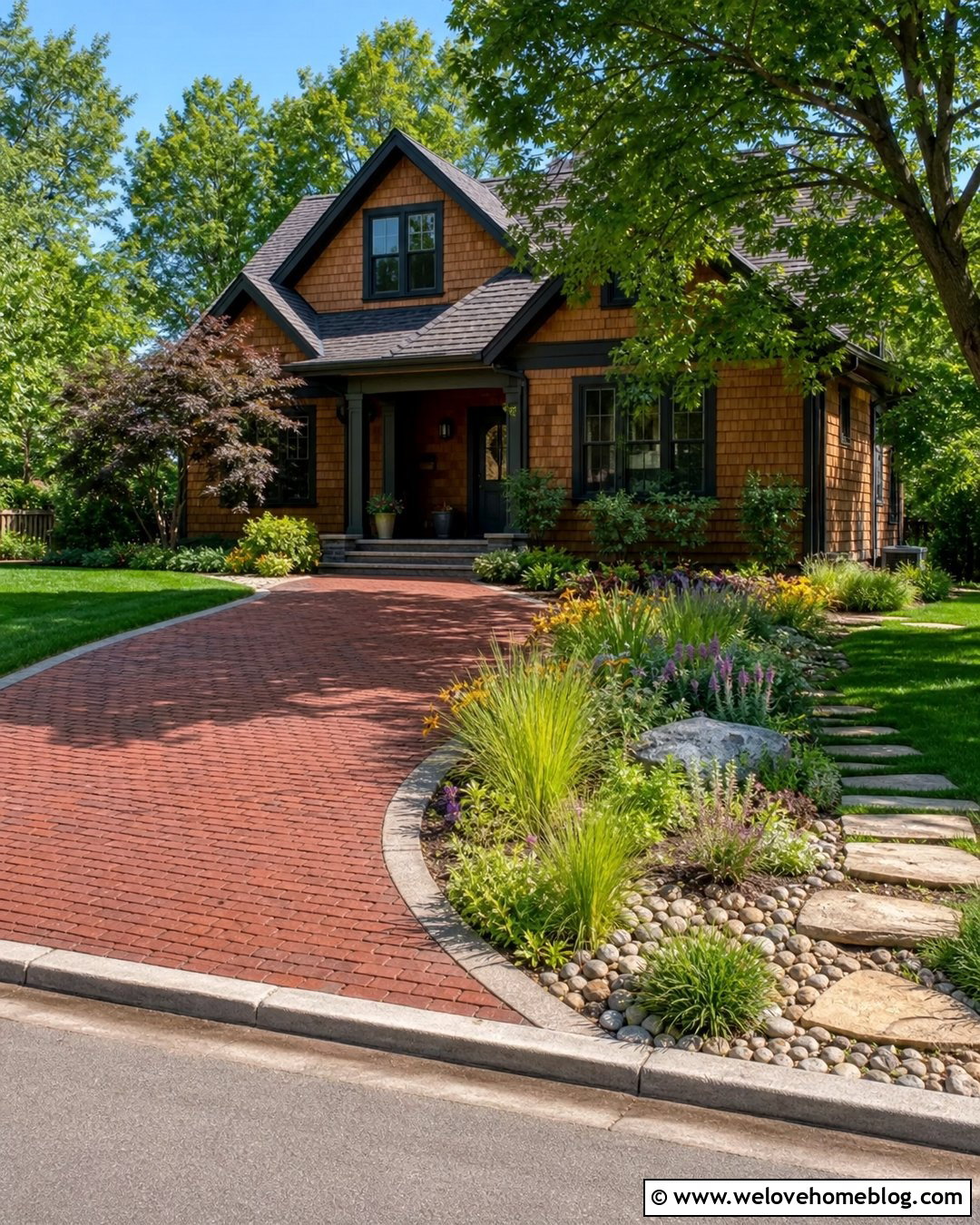
A shallow rain garden can turn a low area beside a short driveway into an attractive landscape feature. Use permeable brick pavers for the driveway so the surface feels connected to the water-conscious design. Shape a gently depressed planting bed along the downhill side, leaving enough distance from foundations and paved edges. Fill it with moisture-tolerant plants suited to the local climate, arranging low sedges near the front and flowering perennials farther back. Decorative stone can define the water entry point and protect the soil from erosion. A small stepping-stone crossing may connect the driveway to the lawn or front walk. The result should look like a planned garden even when dry, with layered planting that frames the driveway rather than swallowing it.
13. Short Driveway With Raised Planters
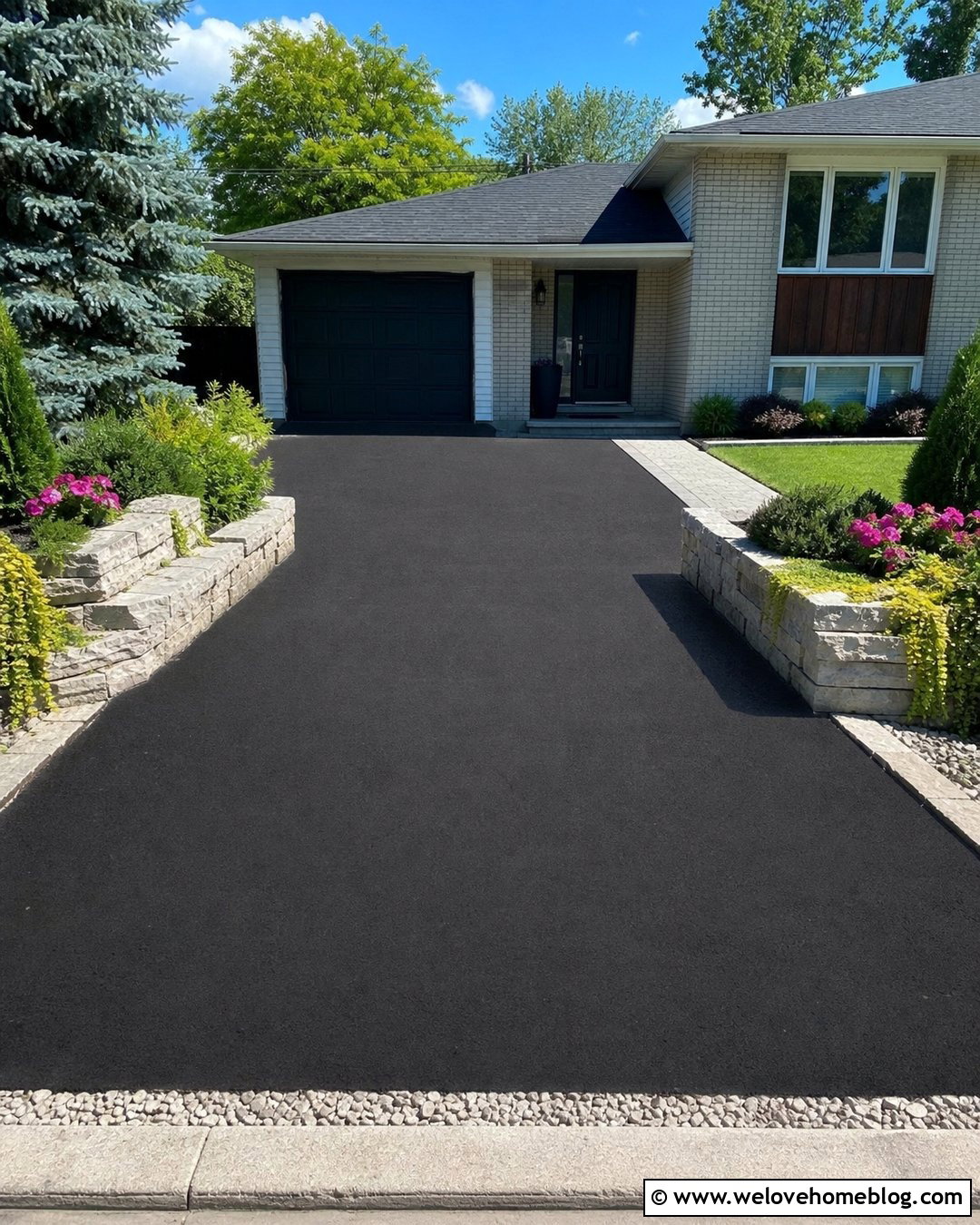
Raised planters add definition where a short driveway sits close to the house or property line. Pair a smooth black asphalt driveway with low planters built from light natural stone or pale concrete blocks. Position them near the garage or along one outer edge, never where they reduce turning space or make car doors difficult to open. Fill each planter with compact evergreen shrubs, trailing ground covers, and seasonal flowers. Keep the walls at sitting height or lower so the front yard remains open and visible. A narrow gravel strip between the asphalt and planters can improve the transition and simplify cleanup. This structured combination works well beside split-level houses, urban cottages, and sloped lots that benefit from controlled soil levels and clearly organized planting.
14. Short Driveway With a Trellis Entrance
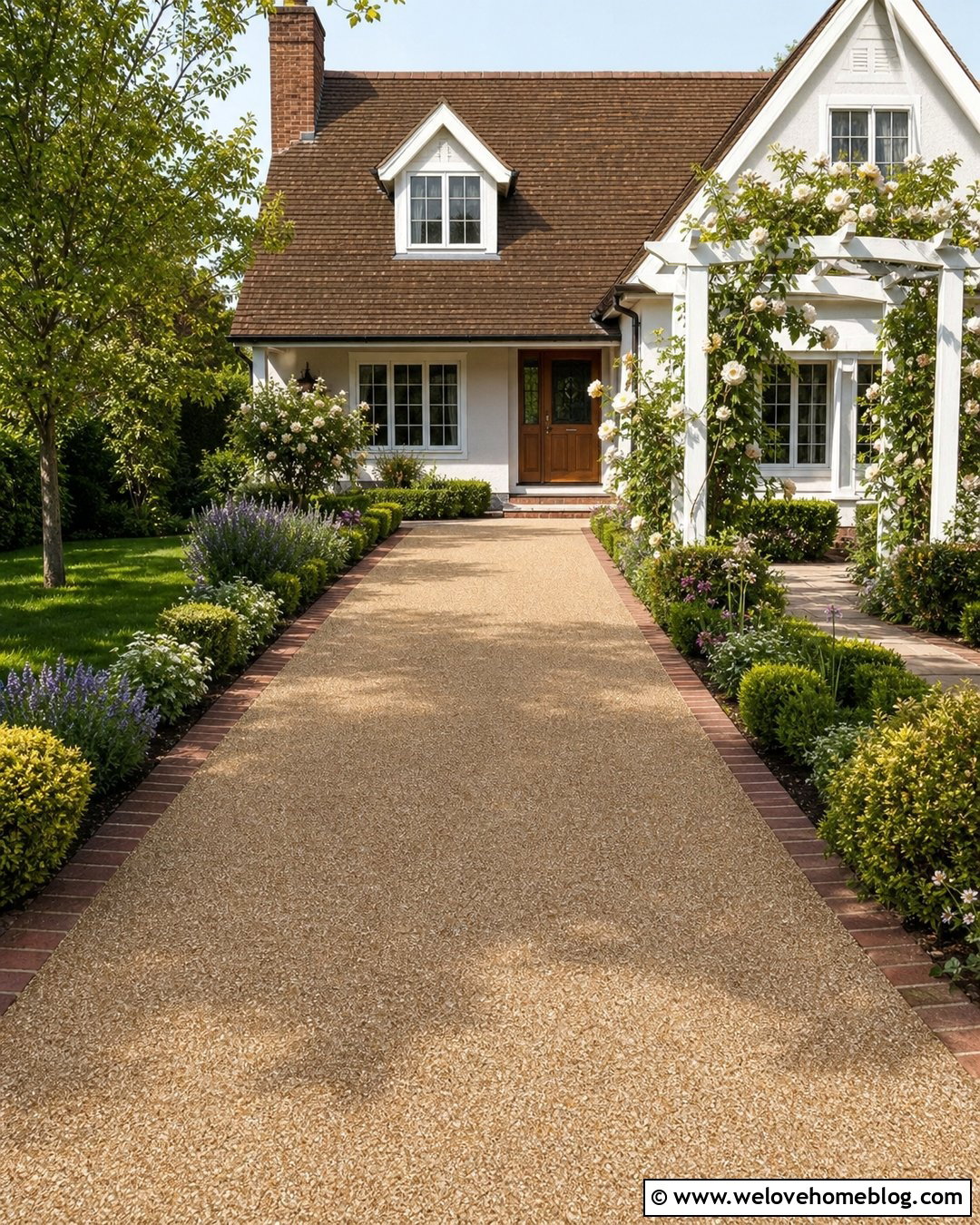
A simple trellis can give a short driveway a memorable entrance without requiring heavy gates or masonry. Choose a warm beige resin-bound gravel surface bordered by clay brick pavers. Place the trellis beside the driveway rather than directly over it, allowing it to frame an adjoining front walkway or garden gate. Train a restrained flowering vine over the structure and surround its base with compact shrubs and low perennials. Mirror some of those plants on the opposite driveway edge to balance the composition. The trellis color should relate to the house trim, fencing, or front door. This complete layout is especially attractive with cottages, craftsman homes, and traditional houses. It provides vertical interest while keeping the actual parking area open, bright, and practical.


15. Short Driveway With Stone Pillars
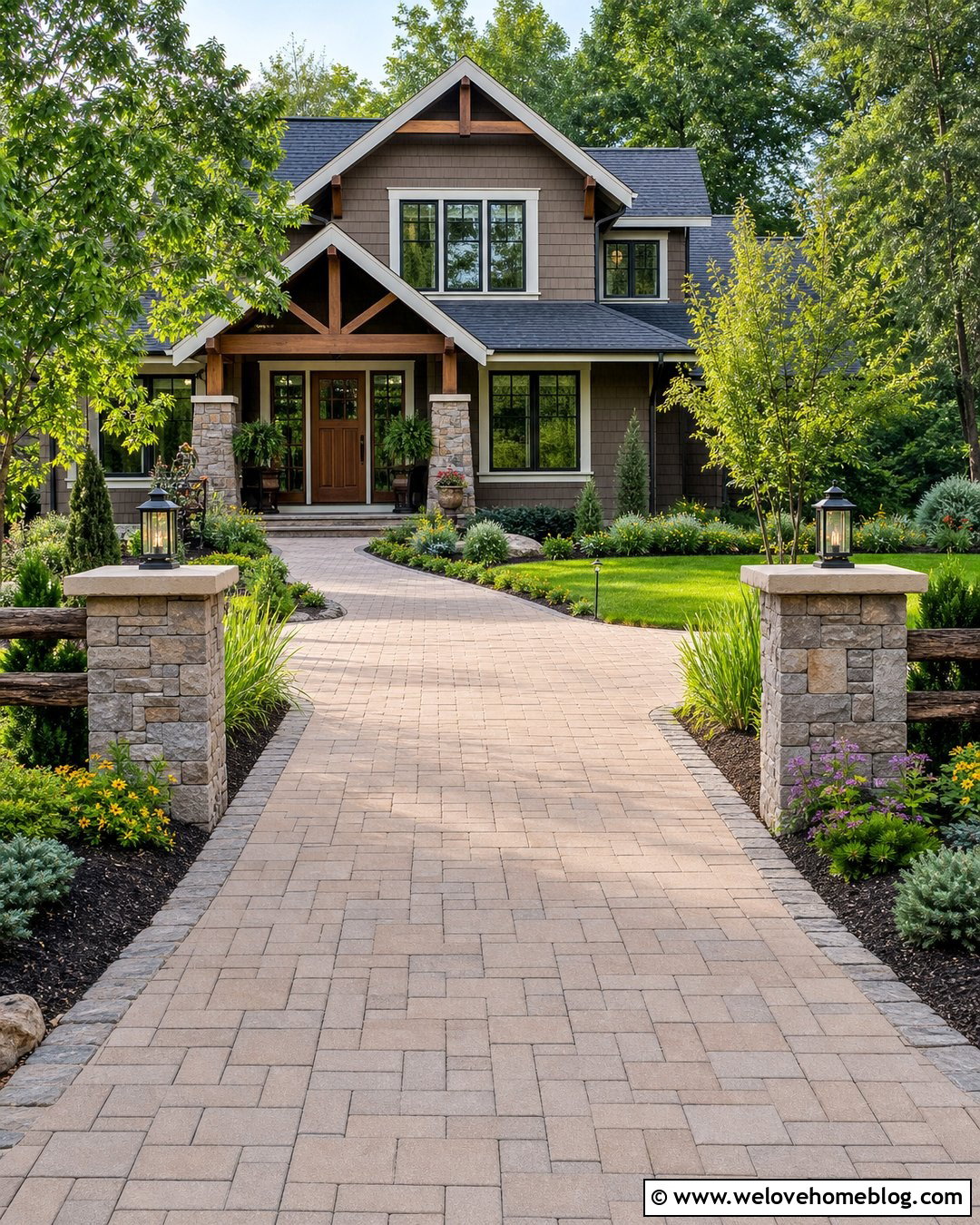
Stone pillars can make a compact driveway entrance feel established when their scale matches the property. Use warm-toned concrete pavers in a running-bond pattern and repeat the same stone from the pillars in a narrow driveway border. Position the pillars outside the required driving width and keep nearby shrubs low for clear street visibility. Instead of adding a large gate, connect each pillar to a short section of open fencing or low hedge. Plant balanced beds of dwarf evergreens, ornamental grasses, and seasonal flowers around the bases. The masonry should coordinate with the home’s foundation, chimney, or facade rather than introducing an unrelated color. This complete entrance suits craftsman, ranch, and modern farmhouse homes, offering structure without overpowering a short front yard.
16. Short Driveway With a Mailbox Garden
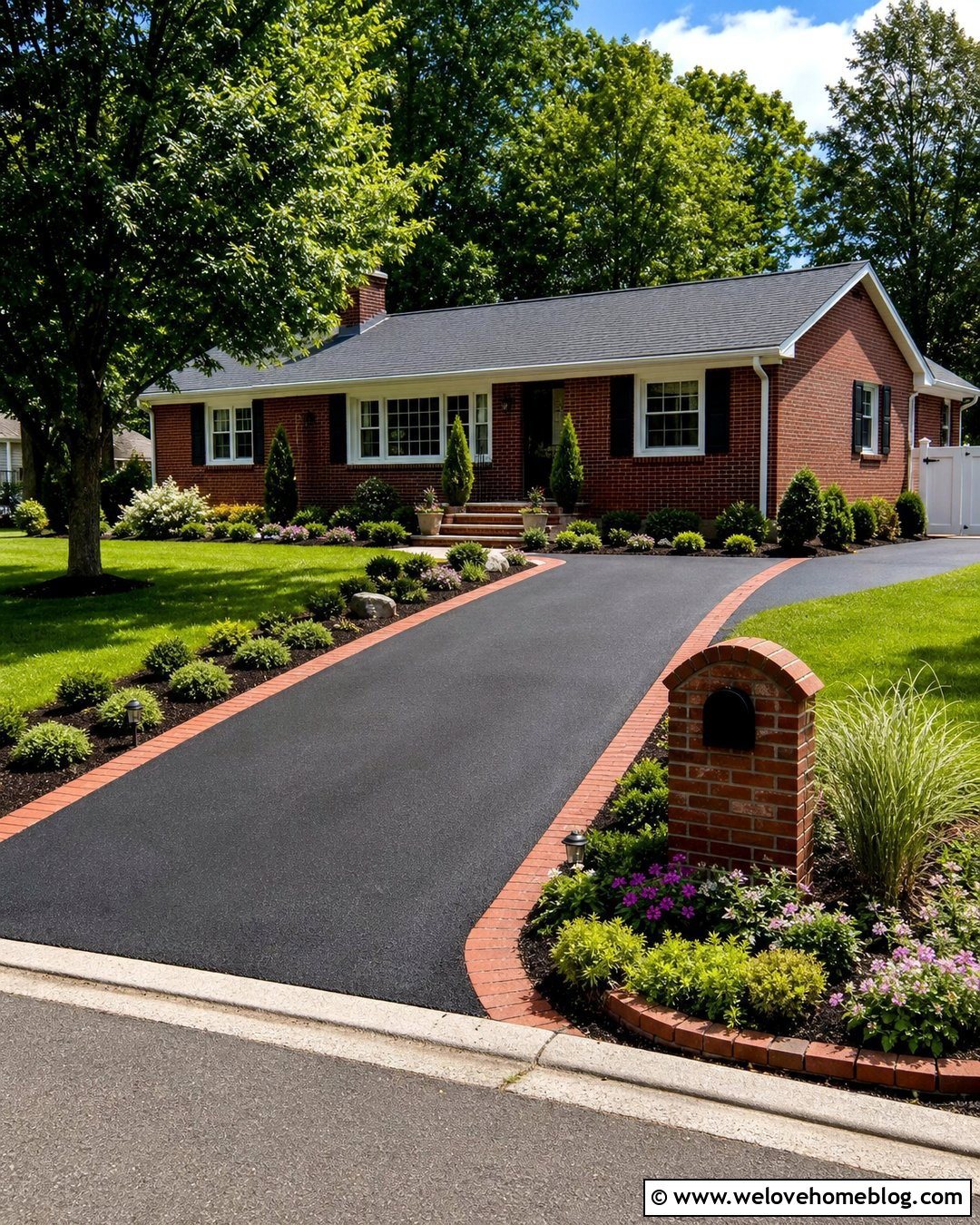
When the mailbox sits beside a short driveway, it can become part of a coordinated entrance garden. Start with a charcoal asphalt surface framed by a narrow red brick border. Create a compact curved bed around the mailbox using low flowers, evergreen ground covers, and one small ornamental grass for height. Leave enough open space around the post for easy access and routine maintenance. Extend the same brick edging and a few repeated plants along the first section of the driveway so the mailbox does not look isolated. A matching address post or simple wood finish can connect it visually to the house. This practical layout works particularly well for ranch, cottage, and suburban homes where the curb area is clearly visible from the street.
17. Short Driveway With Succulent Borders
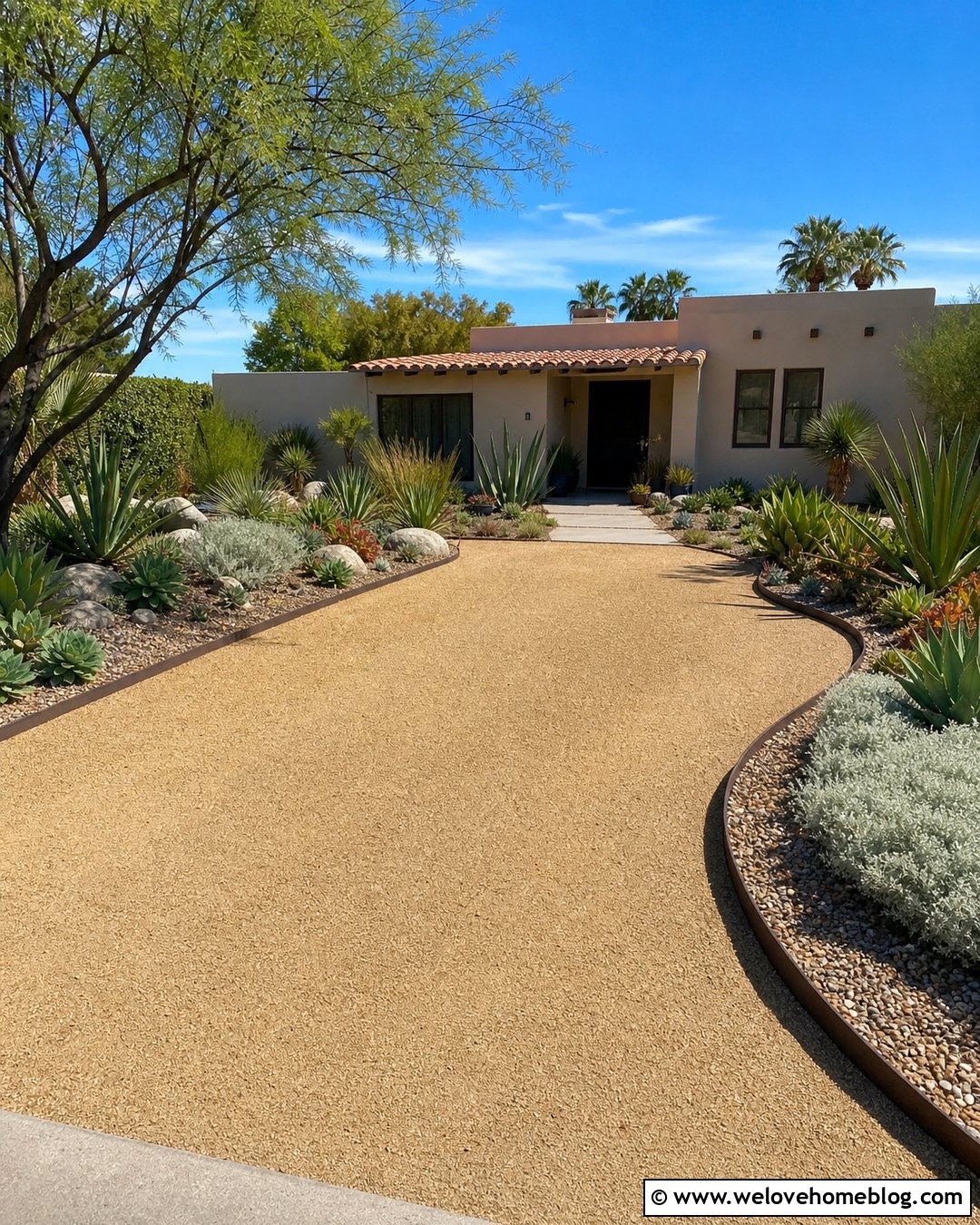
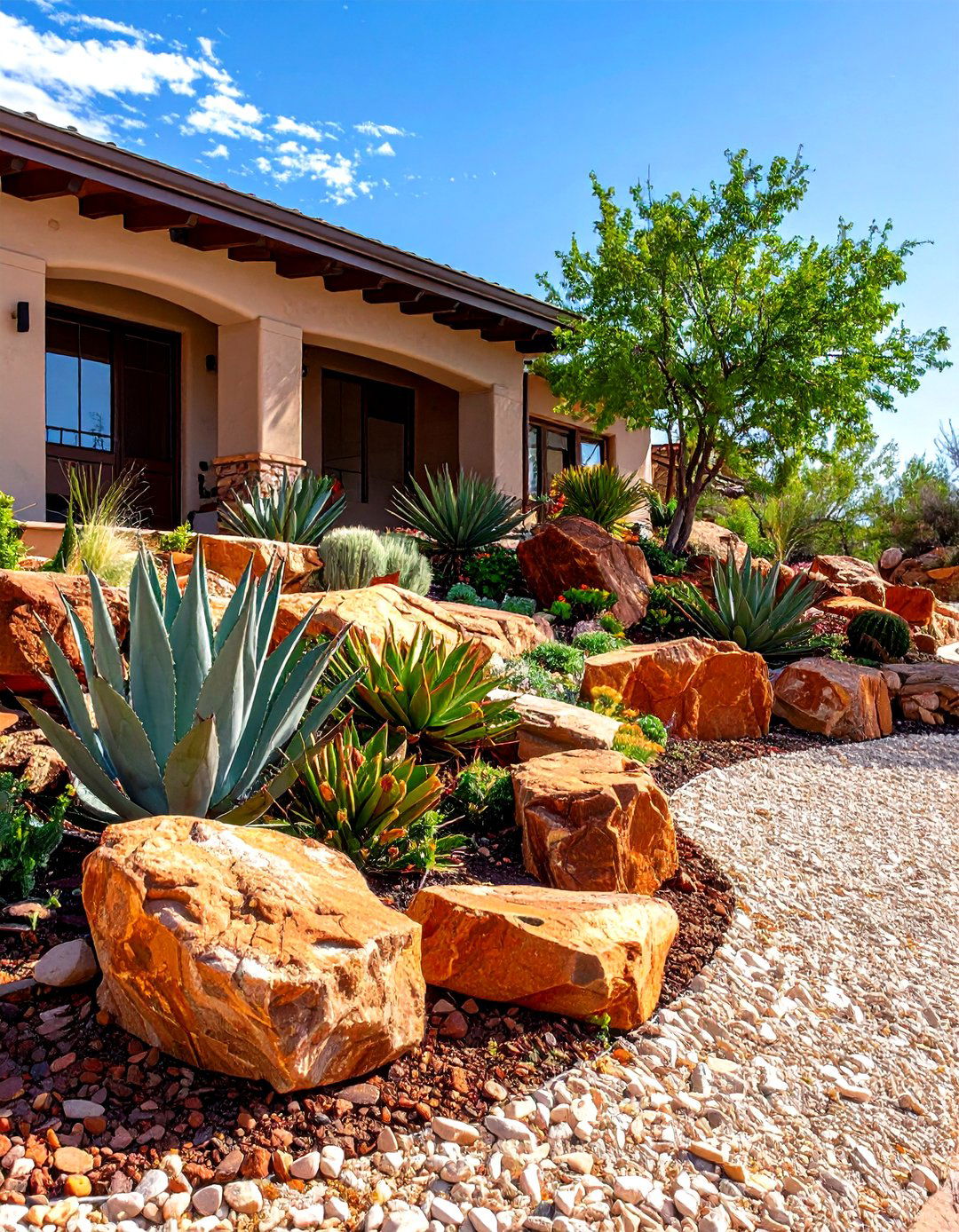
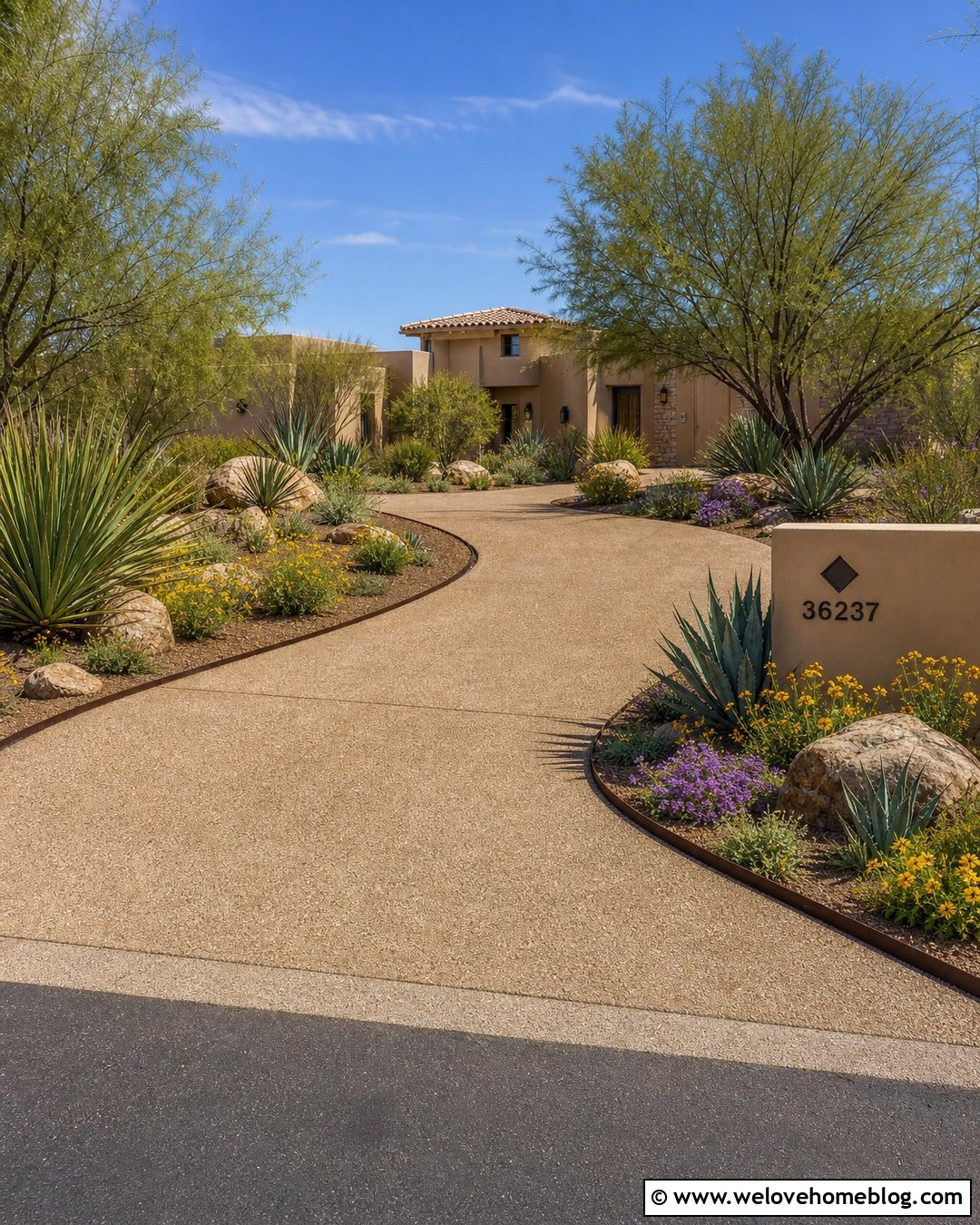
Succulent borders bring sculptural color to short driveways in warm, dry settings. Pair light tan decomposed granite with a firm stabilizing finish and dark steel edging. Along one side, arrange broad planting pockets filled with agave, aloe, yucca, echeveria, and locally appropriate drought-tolerant companions. Keep sharp or spiky plants well back from doors, sidewalks, and passenger areas. Use smooth gravel mulch in a contrasting tone to highlight plant forms and reduce visual clutter. On the opposite side, repeat smaller clusters beside a simple concrete walkway. The driveway, rock mulch, and planting should share a limited palette of sand, silver, blue-green, and charcoal. This complete design complements Southwestern homes, stucco ranches, and contemporary houses with clean architectural lines.
18. Short Driveway With Hydrangea Beds
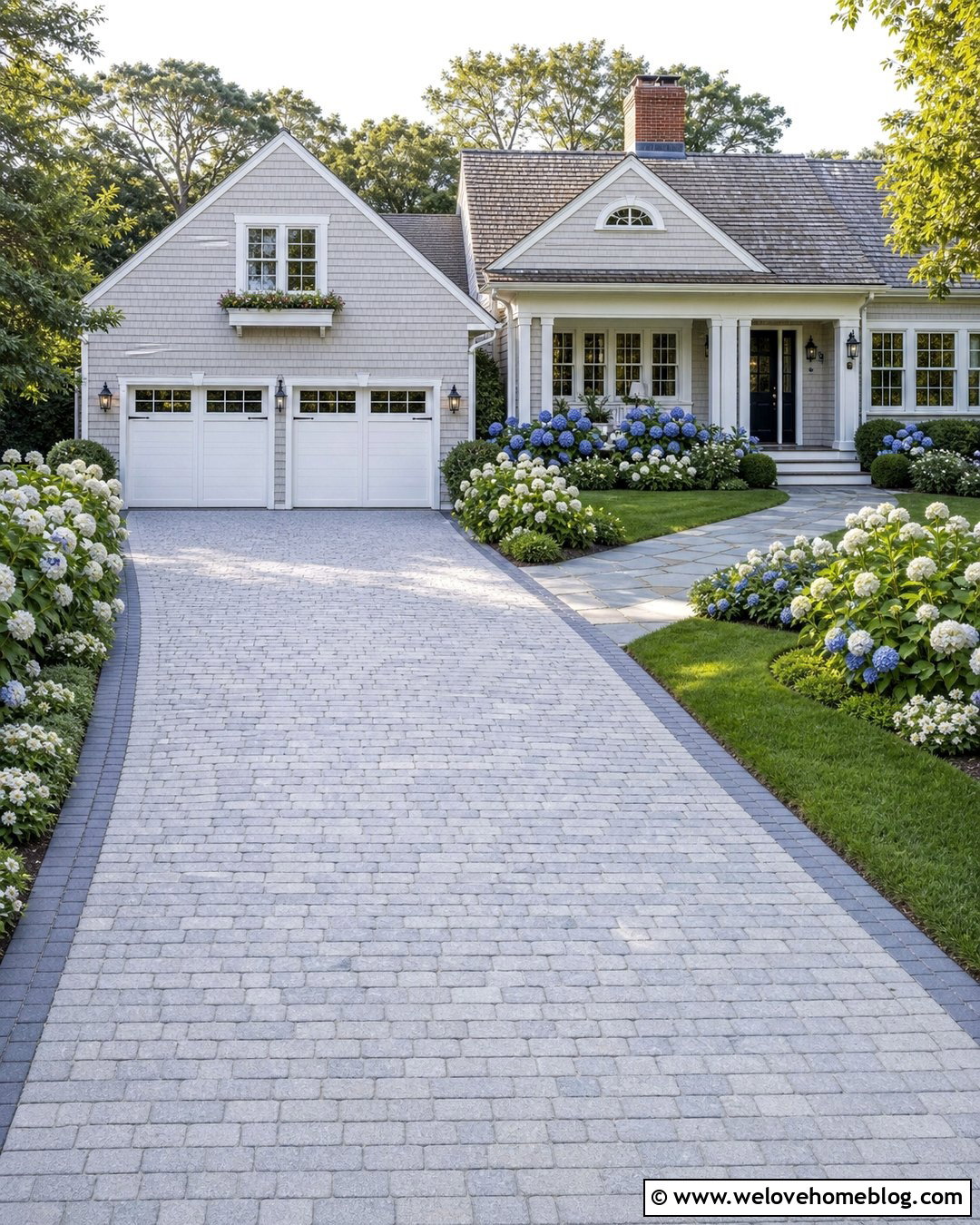
Hydrangeas can soften a short driveway when they are placed where mature growth will not crowd vehicles. Use pale gray cobblestone-style concrete pavers for the surface and a darker paver border around the edges. Create generous beds near the garage corners or along one side with enough width for the chosen hydrangeas. Underplant them with low ground covers and spring bulbs to conceal bare lower stems. On the opposite edge, use a narrow strip of matching ground cover so the driveway feels balanced without becoming too enclosed. A simple flagstone walkway can pass through the larger bed toward the porch. This layered landscape looks natural beside colonial, Cape Cod, and traditional homes, especially when flower colors coordinate with the front door and exterior trim.
19. Short Driveway With Lavender Borders
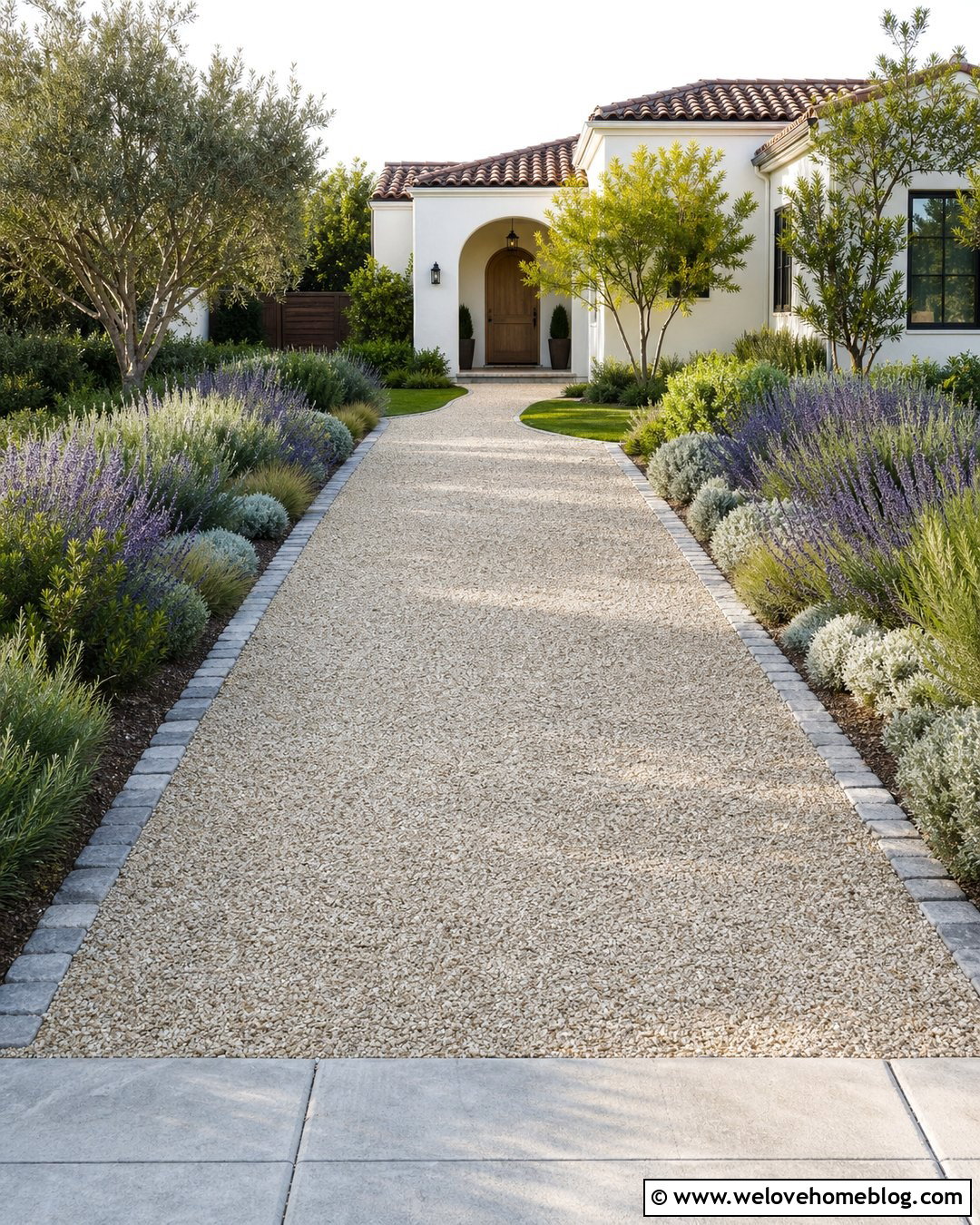
Lavender provides a soft, orderly border that suits a sunny short driveway. Combine pale pea gravel with sturdy cobblestone edging to create a surface that feels casual but clearly contained. Plant lavender in repeated groups behind the stones, leaving enough room for each plant to reach its mature width without spilling into the parking area. Add compact rosemary, silvery ground covers, or low ornamental grasses to vary texture while maintaining a restrained palette. A matching gravel walkway can curve toward the front porch through the planting. Keep the bed wider near the house and narrower at the curb to improve sightlines. This complete driveway design complements Mediterranean, cottage, farmhouse, and light stucco homes, creating an attractive transition between the gravel, greenery, and architecture.
20. Short Driveway With a Center Grass Strip
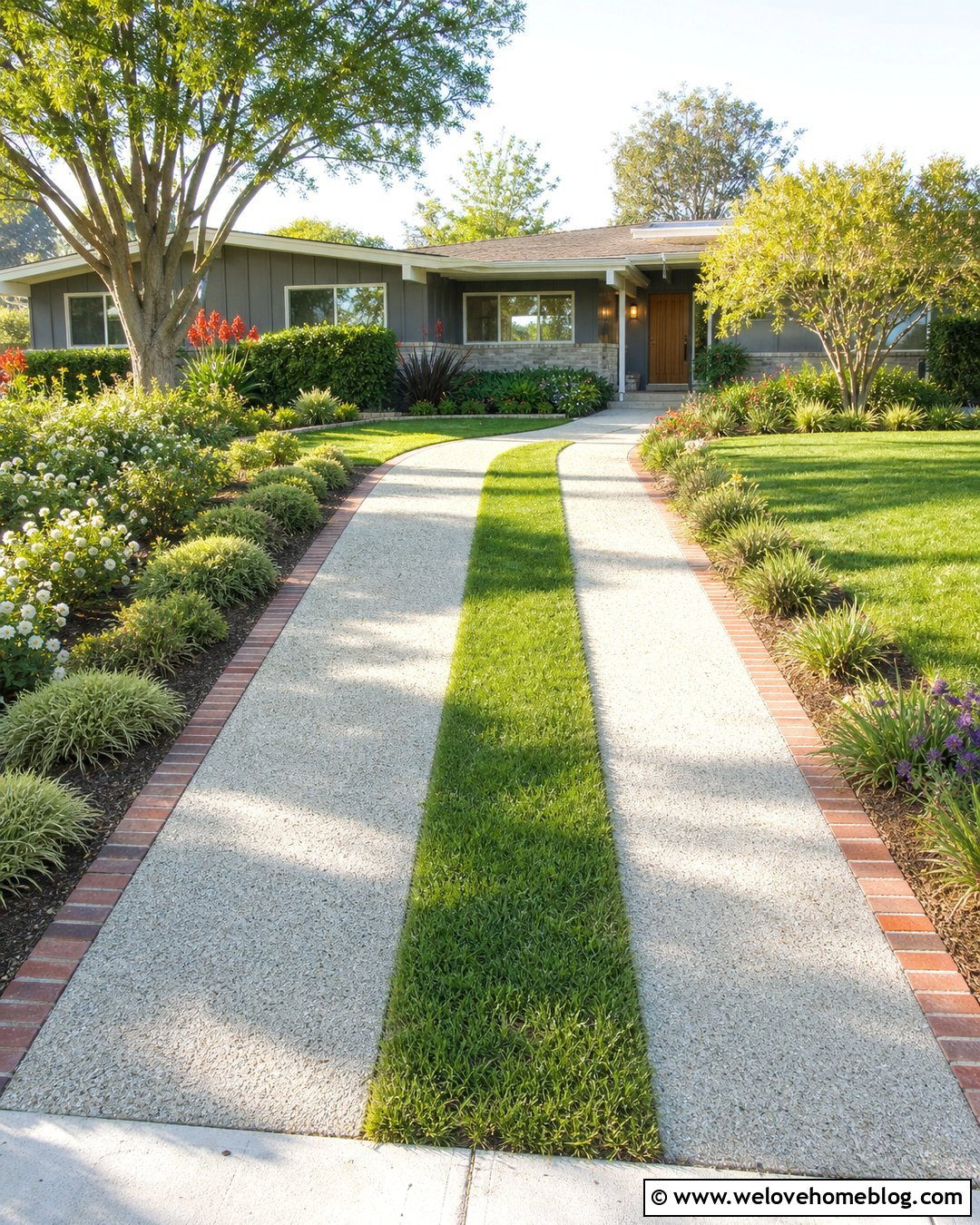
A ribbon driveway with a planted center can reduce the visual weight of paving in a small front yard. Use two parallel tracks of exposed-aggregate concrete sized for vehicle tires, with a durable grass or low ground-cover strip running between them. Border the outer edges with flush brick or steel so lawn does not creep onto the concrete. Narrow planting beds of dwarf grasses, flowering perennials, and compact shrubs can frame the driveway without competing with the green center. Continue one concrete track into a matching front walkway for a connected layout. This design looks especially suitable beside bungalows, cottages, and midcentury ranch homes. Careful measurements are important so the planted strip remains centered beneath most vehicles and does not interfere with regular access.
21. Short Driveway With a Stepping-Stone Walkway
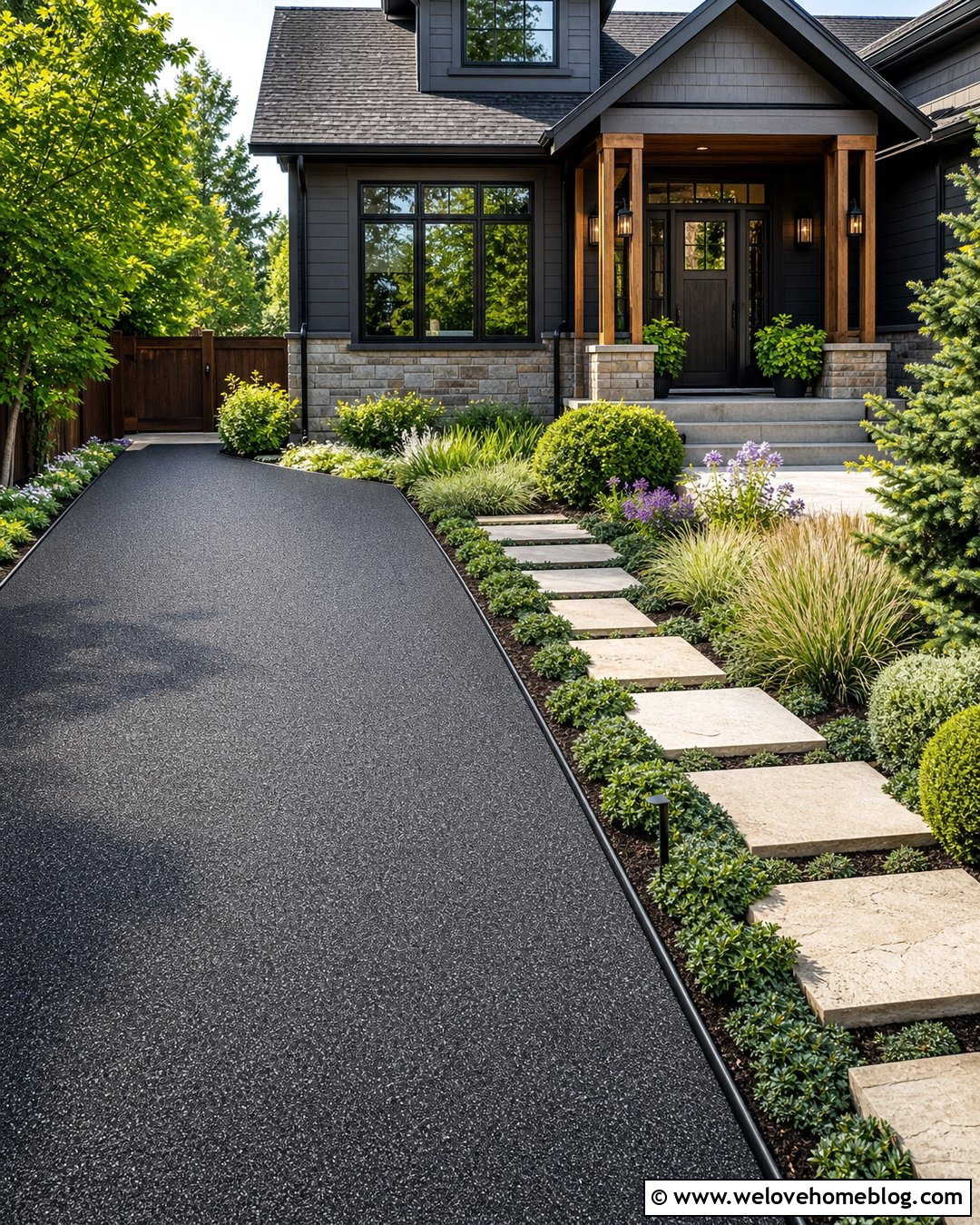
A dedicated walkway prevents a short driveway from feeling like the only route to the front door. Pair a dark resin-bound gravel driveway with large rectangular limestone stepping stones placed through a planted strip along one side. Use low ground covers between the stones, then layer ornamental grasses, rounded shrubs, and flowering perennials farther from the walking surface. A metal edge should separate the gravel driveway from the walkway bed and keep each material in place. Begin the path near the sidewalk or passenger side of the parking area, depending on how people naturally approach the house. This complete design is attractive beside contemporary, craftsman, and updated ranch homes. Clear spacing and an unobstructed route make the landscape both decorative and practical.
22. Short Driveway With Mulch Borders
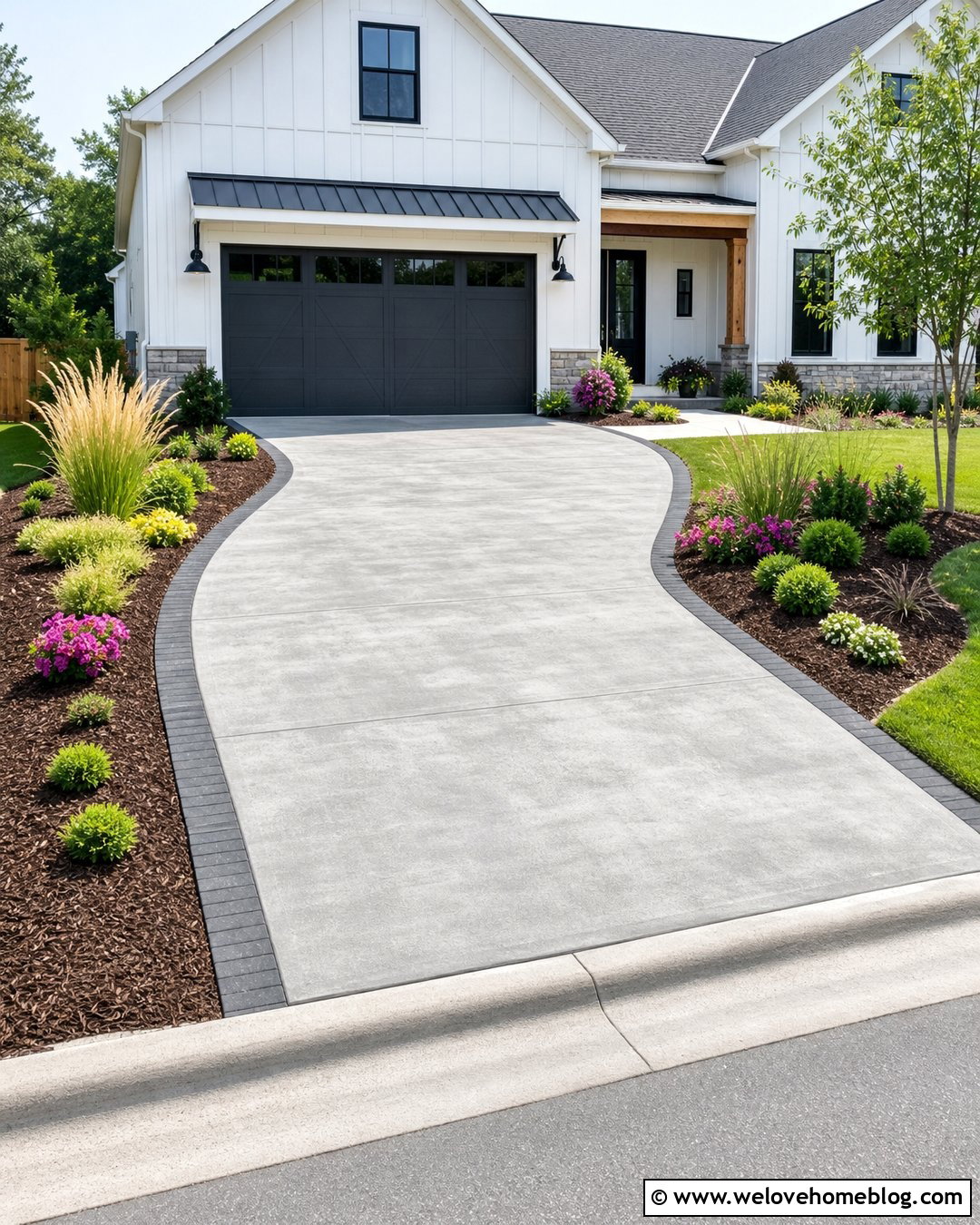
Mulch borders provide an affordable way to soften a basic short driveway. Use a clean brushed-concrete surface with narrow dark paver edging, then create gently curved beds on both sides. Fill the beds with shredded bark mulch and a simple mix of compact shrubs, ornamental grasses, and long-blooming perennials. Avoid creating large empty mulch areas, which can make the landscape look unfinished. Instead, space plants according to their mature size and use low ground covers near the pavement. Widen the beds around the garage corners to connect them with existing foundation planting. Repeating the same three or four plant types keeps maintenance manageable and the appearance cohesive. This flexible design works with ranch, colonial, farmhouse, and everyday suburban homes on modest landscaping budgets.
23. Short Driveway With a Small Retaining Wall
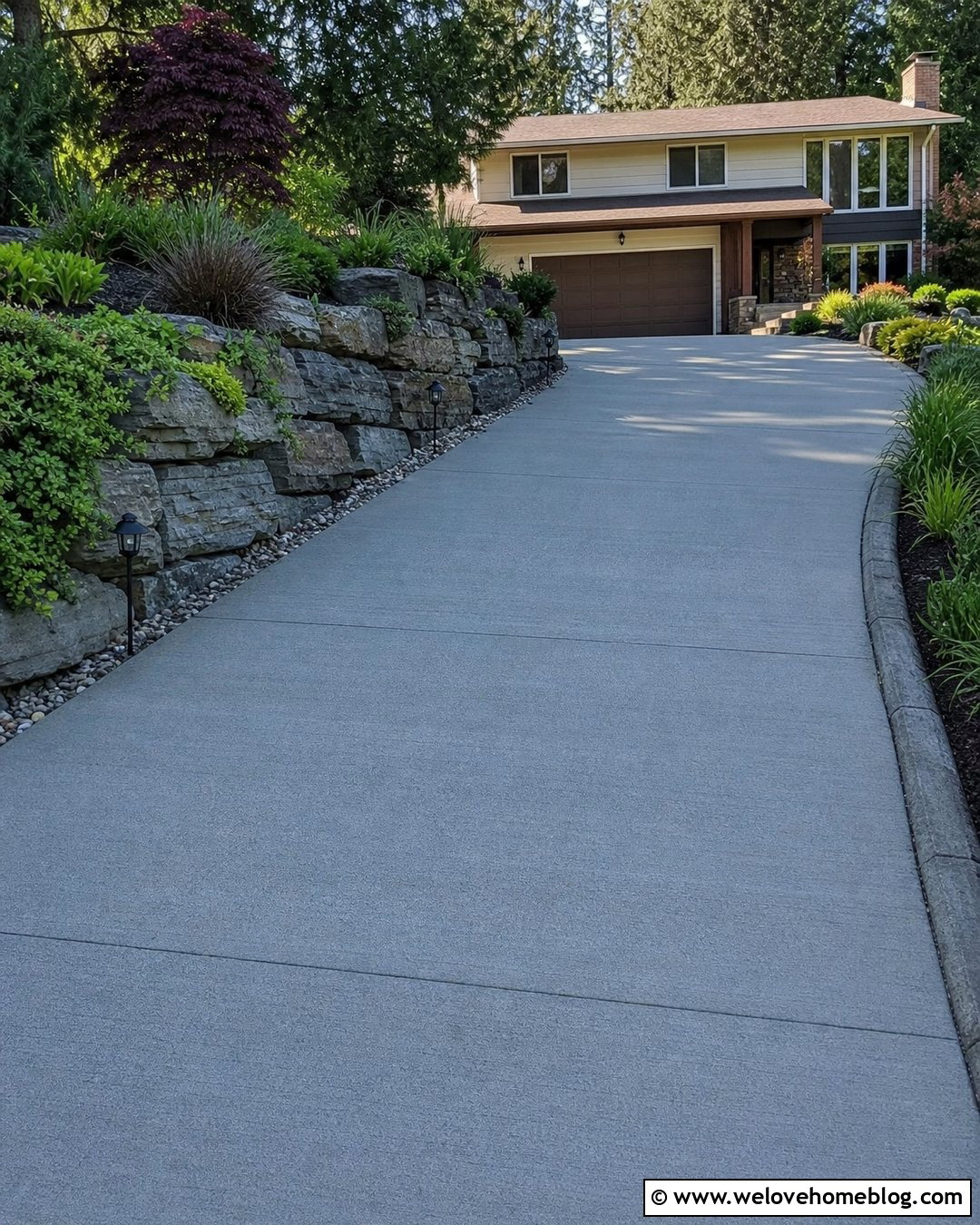
A low retaining wall can transform a sloped driveway edge into a usable planting area. Pair a broom-finished concrete driveway with a wall made from natural ledgestone or coordinated concrete blocks. Follow the slope with a stepped wall rather than forcing one tall, level structure. Above it, plant cascading ground covers, compact shrubs, and ornamental grasses that soften the masonry without blocking visibility. Include drainage behind the wall and keep soil away from the driveway surface. On the lower side, use a narrow strip of gravel or low planting to balance the design. A matching stone detail near the front steps will connect the driveway landscape to the house. This complete approach works well for split-level homes, hillside lots, and raised front lawns.
24. Short Driveway With Modern Minimalist Landscaping
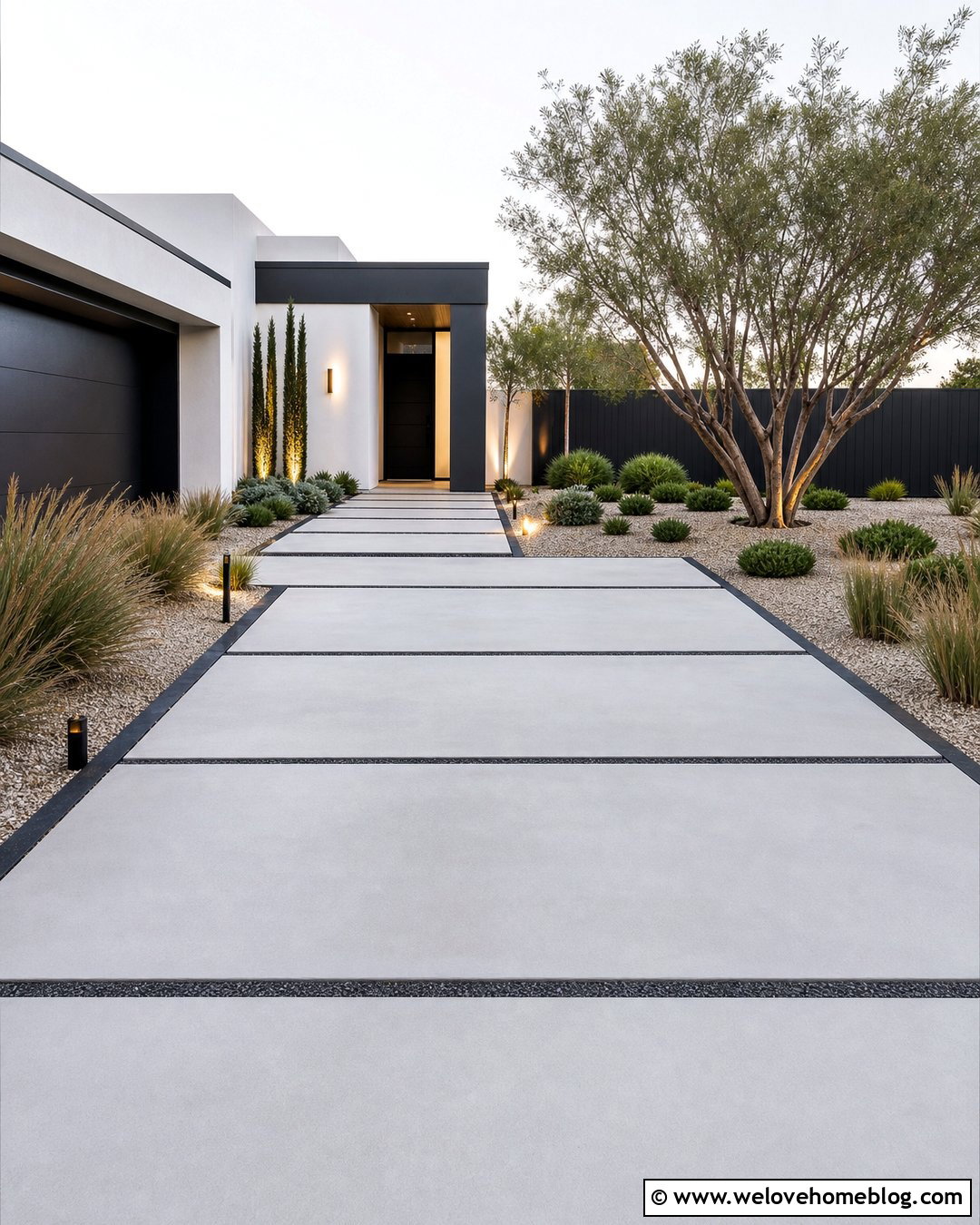
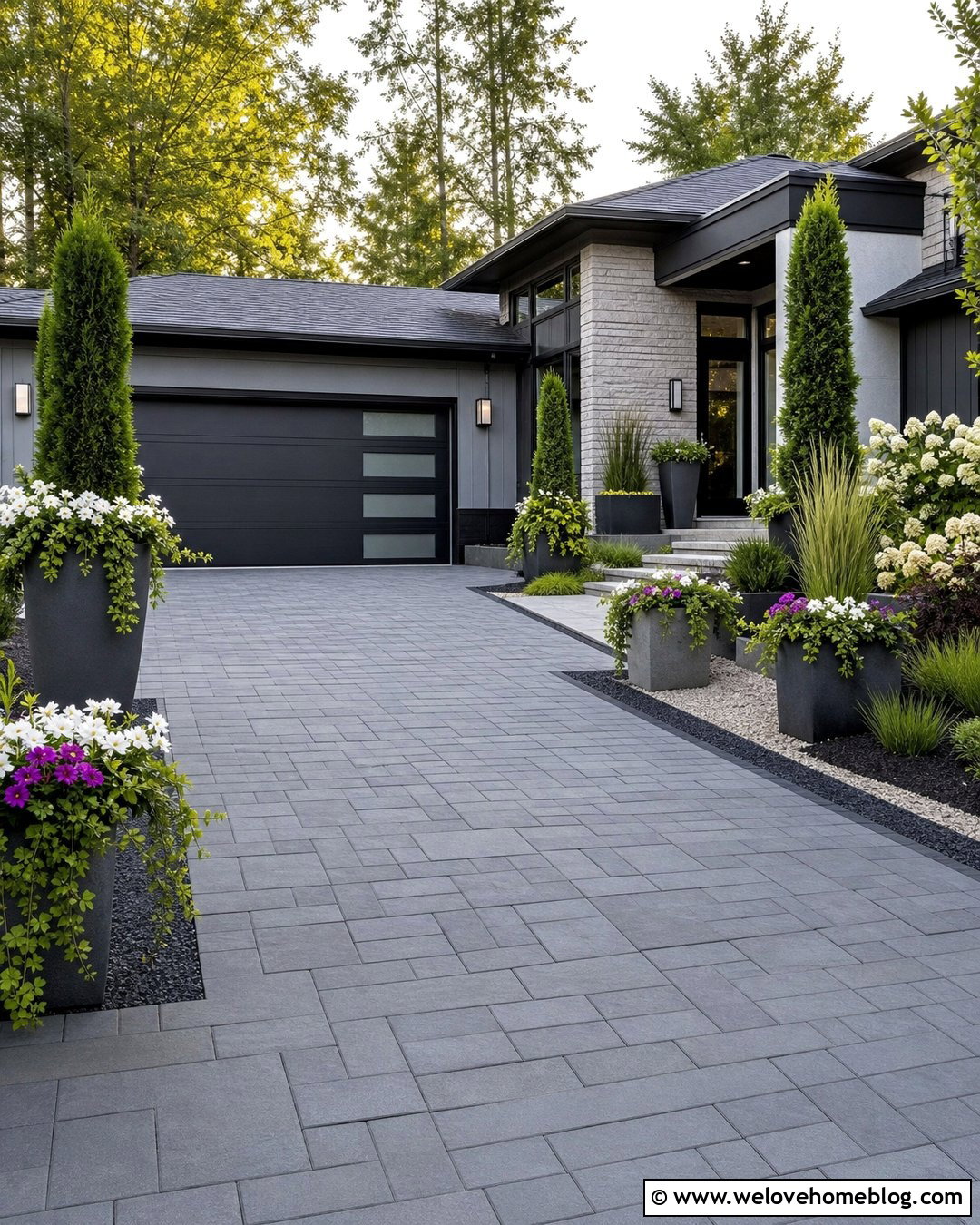
Clean materials and restrained planting can make a short driveway look larger and more organized. Use large-format light gray concrete slabs with narrow dark gravel joints. Add a straight border of black steel, then plant repeated rows of compact ornamental grasses, low evergreen mounds, and one sculptural multi-stem tree. Keep generous space between plant groups so their forms remain visible against pale gravel mulch. A flush concrete walkway should branch directly toward the front door, repeating the driveway’s geometry. Avoid mixing numerous flower colors, edging materials, or decorative objects. The appeal comes from proportion, texture, and strong lines. This complete layout is ideal for contemporary, minimalist, and midcentury homes with simple facades, flat planes, and large windows facing the front yard.
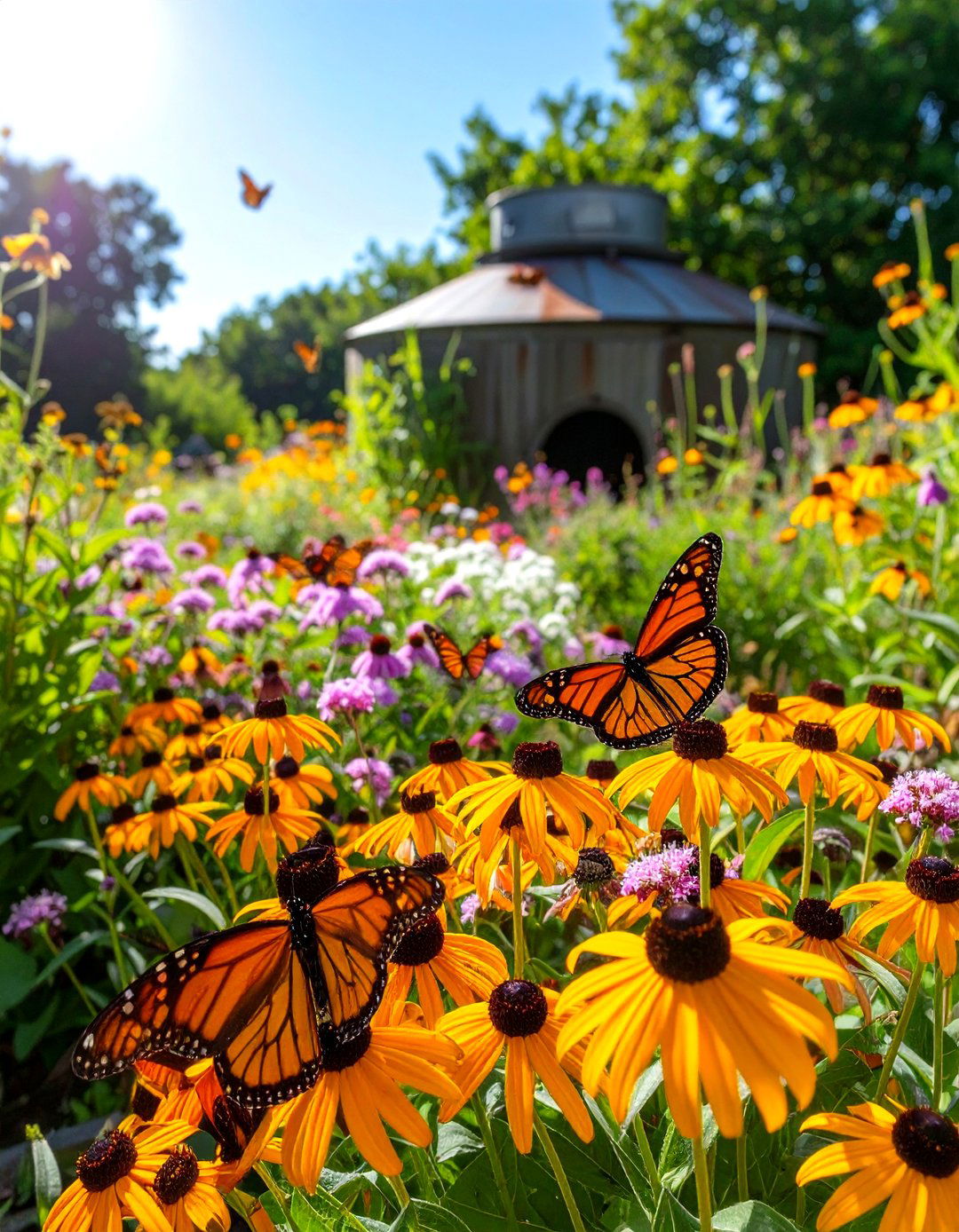
25. Short Driveway With a Pollinator Garden
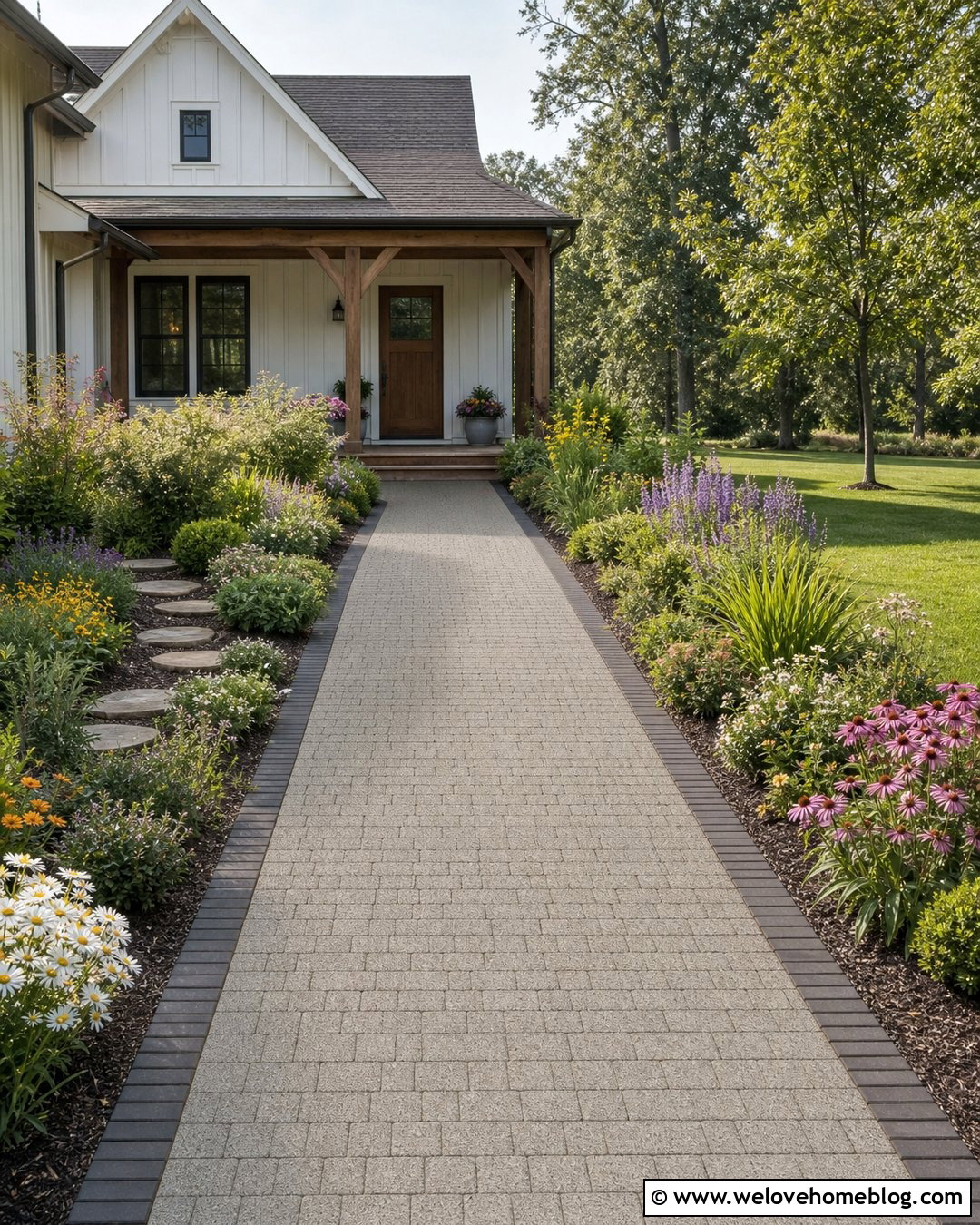
A pollinator garden can bring color and movement to a short driveway without sacrificing an orderly appearance. Start with warm gray permeable pavers bordered by a flush band of darker brick. Build a wide planting bed along one side using repeating drifts of locally suitable flowering perennials, compact native grasses, and small shrubs. Keep shorter plants near the pavement and taller blooms toward the lawn or house. On the opposite side, repeat two key species in a narrower bed for visual balance. Add a simple stepping-stone path for maintenance and leave clear access around parked vehicles. This complete landscape suits craftsman, cottage, and farmhouse homes. Defined edges and grouped planting help the garden feel intentional while allowing a generous mixture of seasonal flowers.
Conclusion:
Thoughtful landscaping can turn even the smallest driveway into an attractive part of the front yard. These **25 Short Driveway Landscaping Ideas** show how paving, borders, plants, walkways, lighting, and entrance features can work together as complete designs. Begin by protecting vehicle clearance and maintaining open views near the street. Then select a driveway material that complements the house and use one consistent edging treatment to define it. Choose compact plants based on mature size, sunlight, drainage, and local growing conditions. Repeating a limited number of plants will make narrow beds feel organized rather than crowded. Whether you prefer cottage flowers, modern grasses, formal hedges, or native planting, a coordinated plan will create stronger curb appeal.

Related posts:

Leave a Reply