
A generous driveway gives you room to create more than a simple parking surface. With the right gravel, layout, edging, and planting, it can become a defining part of your home’s curb appeal. These large gravel driveway ideas include straight approaches, sweeping curves, circular layouts, parking courts, and gated entrances for many architectural settings. Practical details matter just as much as appearance. Stable borders help contain loose stones, while a properly prepared base, thoughtful grading, and effective drainage reduce common maintenance problems. () You can also use contrasting pavers, trees, lights, and planting beds to break up a broad surface. Explore the following 20 Large Gravel Driveway Ideas to find a complete design that fits your property.

1. Long Straight Gravel Driveway With Trees
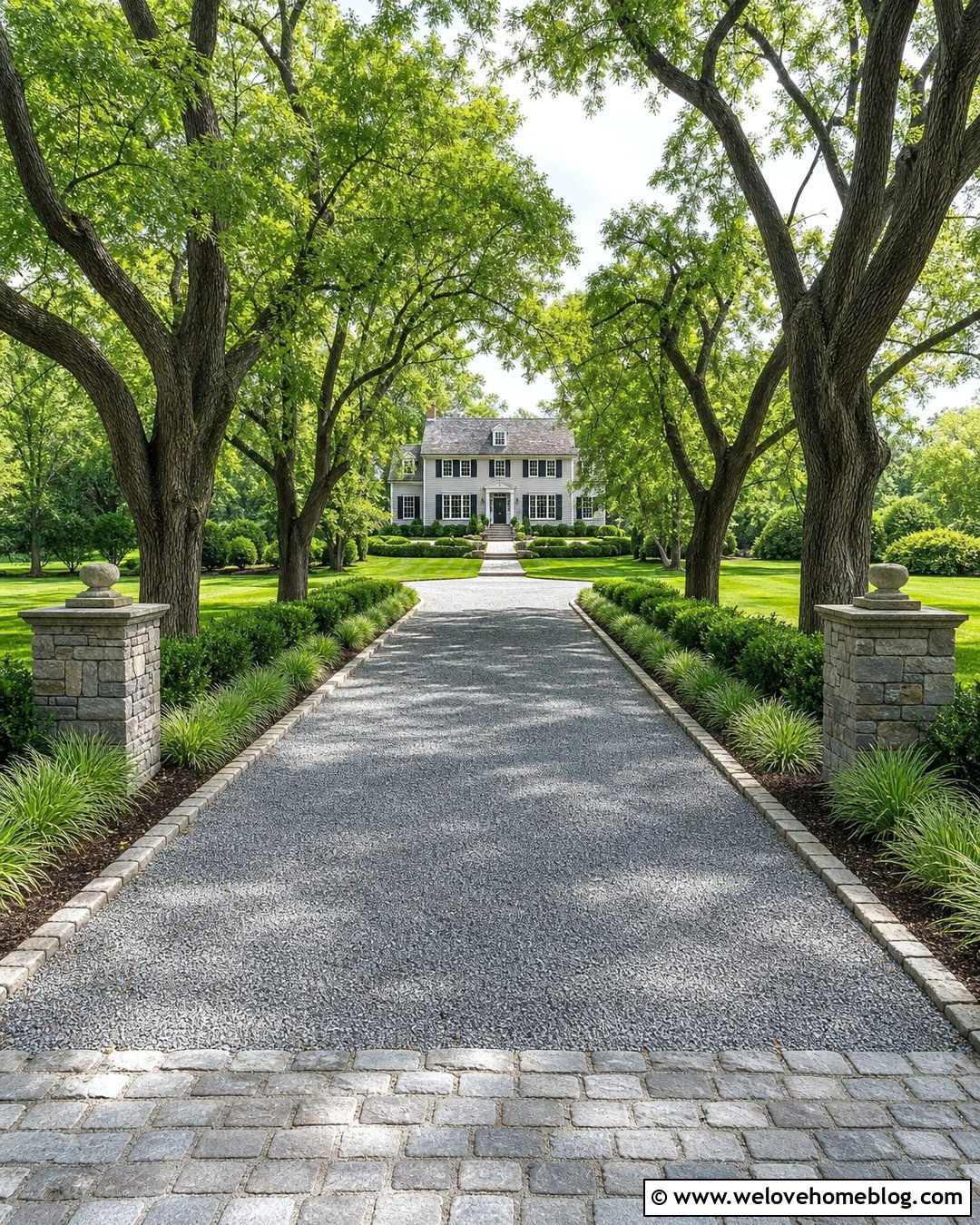
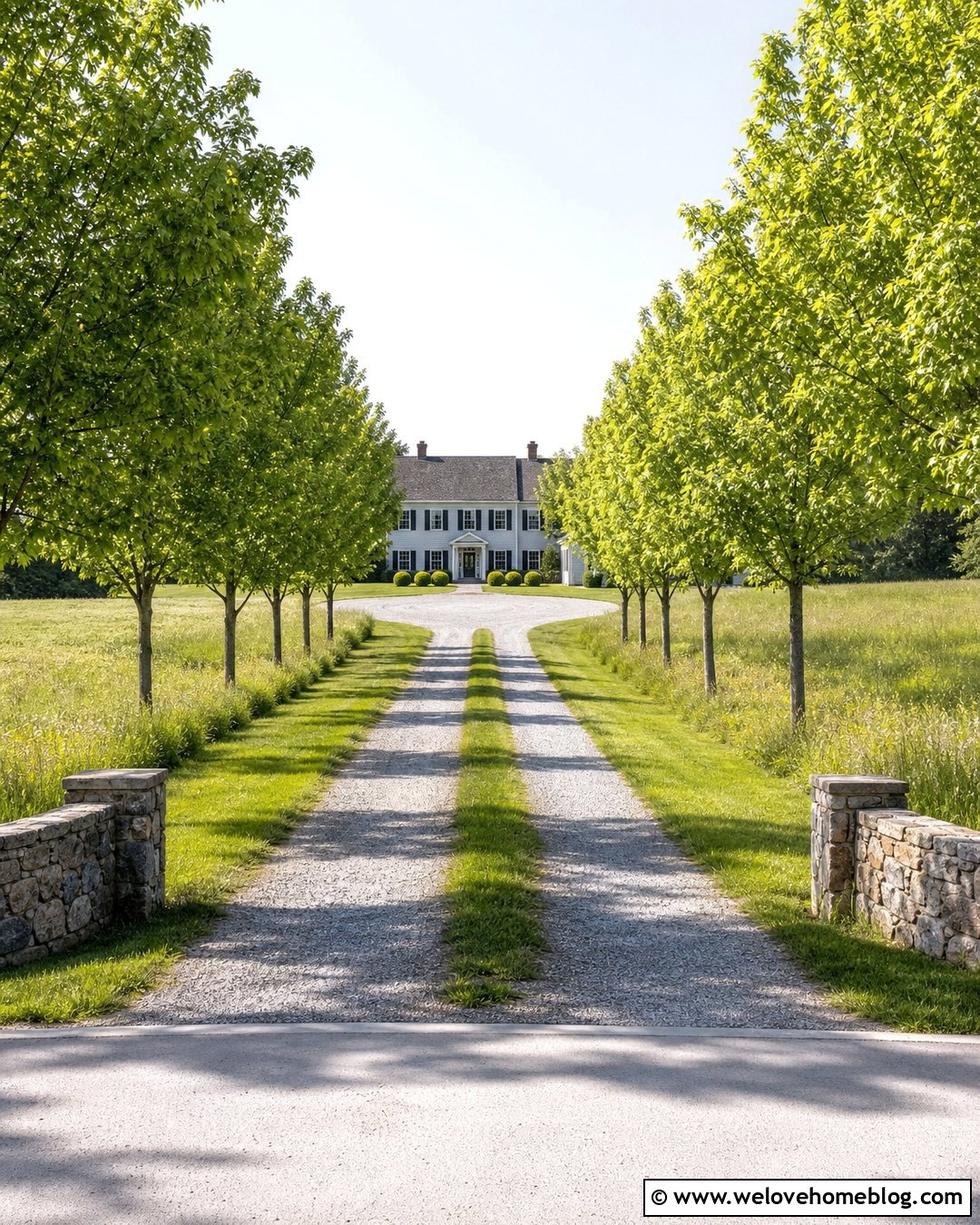
A long, straight driveway creates an impressive sightline when it points directly toward the house. Use compacted gray crushed stone for a firm, understated surface that works with traditional and contemporary architecture. Plant evenly spaced shade trees on both sides to establish rhythm and make the approach feel intentional. Keep the lower trunks clear so drivers have good visibility when entering or leaving. A narrow cobblestone edge will prevent gravel from spreading into the planting beds while adding a polished transition. Between the trees, use low ornamental grasses, ground covers, or clipped shrubs rather than dense plantings. Finish the entrance with matching stone pillars and simple lanterns. This balanced layout makes a very large space feel organized without filling it with unnecessary decoration.
2. Circular Gravel Driveway With Cobblestone Edging
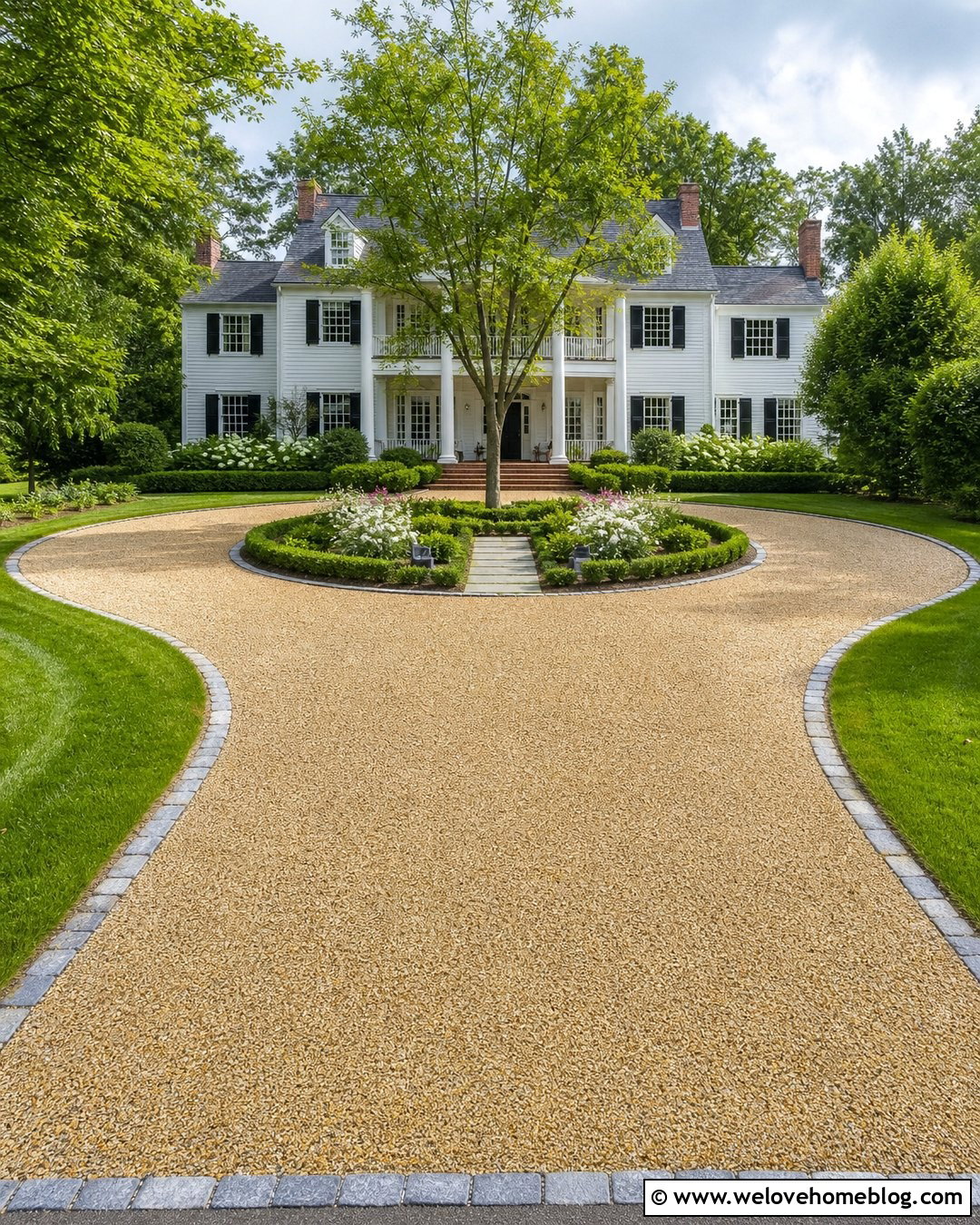
Could your front yard support a full circular turnaround? A broad pea gravel driveway wrapped around a central planting island creates easy vehicle movement and a graceful arrival. Define both edges with dark cobblestones set firmly into a stable base. Their rough texture provides attractive contrast against smooth, warm-toned pea gravel. In the center, plant one specimen tree surrounded by low boxwood, flowering perennials, and a simple stone walkway. Avoid tall shrubs near intersections because they can block views across the circle. The house-facing side can widen slightly to provide a convenient drop-off area near the front door. This design suits Colonial, Georgian, and country homes especially well. It transforms a large front yard into a formal landscape while keeping the driving route clear and understandable.
3. Curved Gravel Driveway With Brick Borders
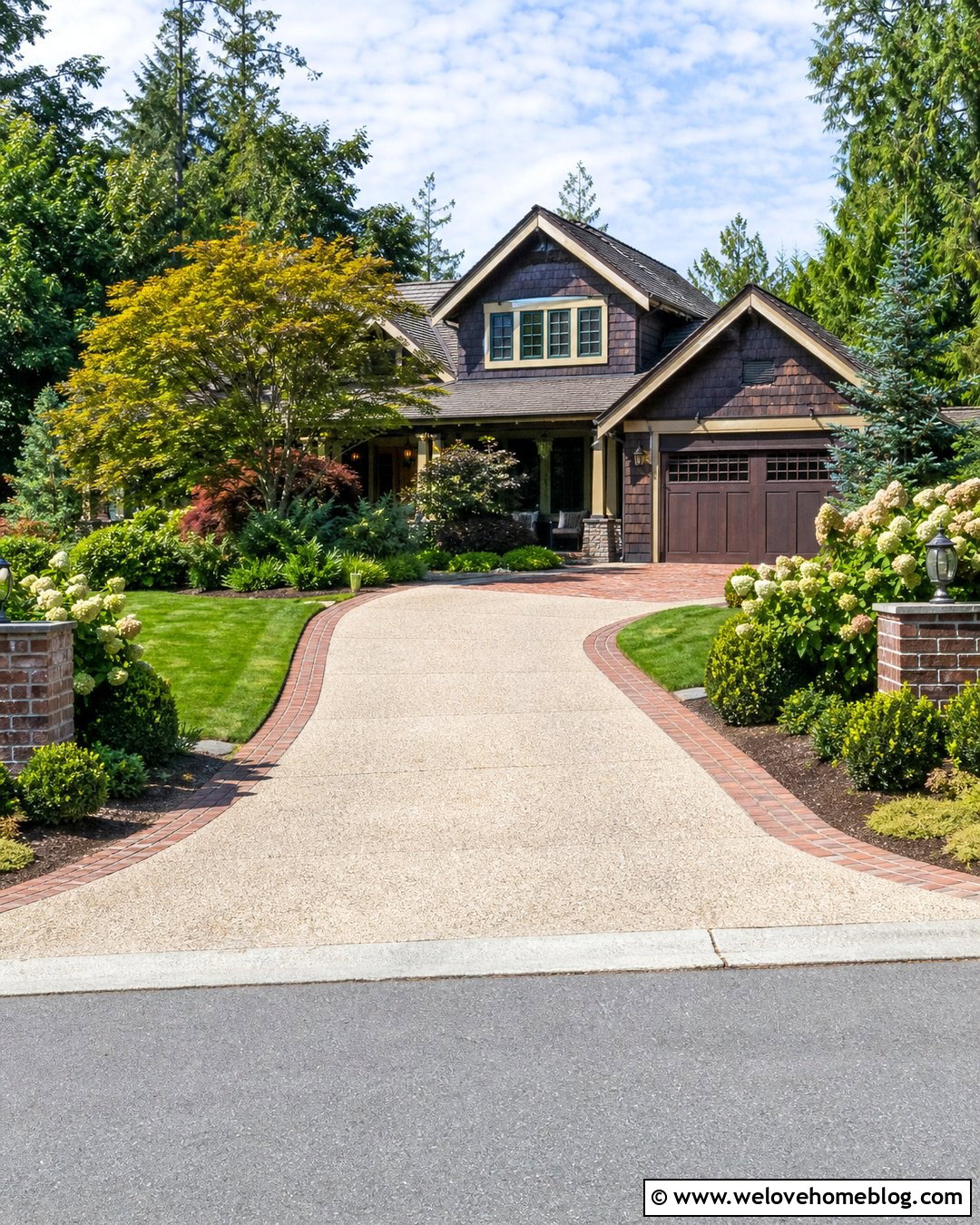
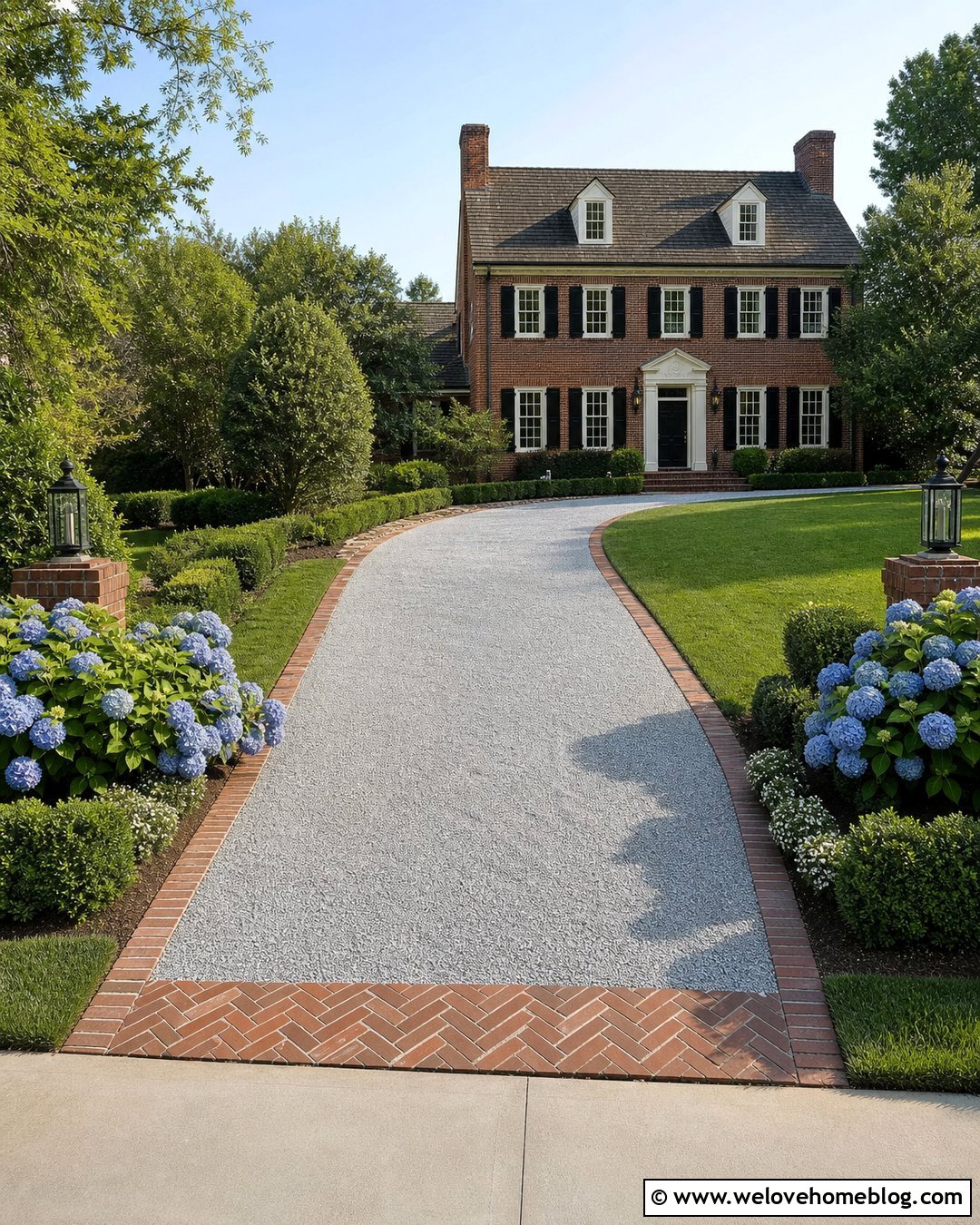
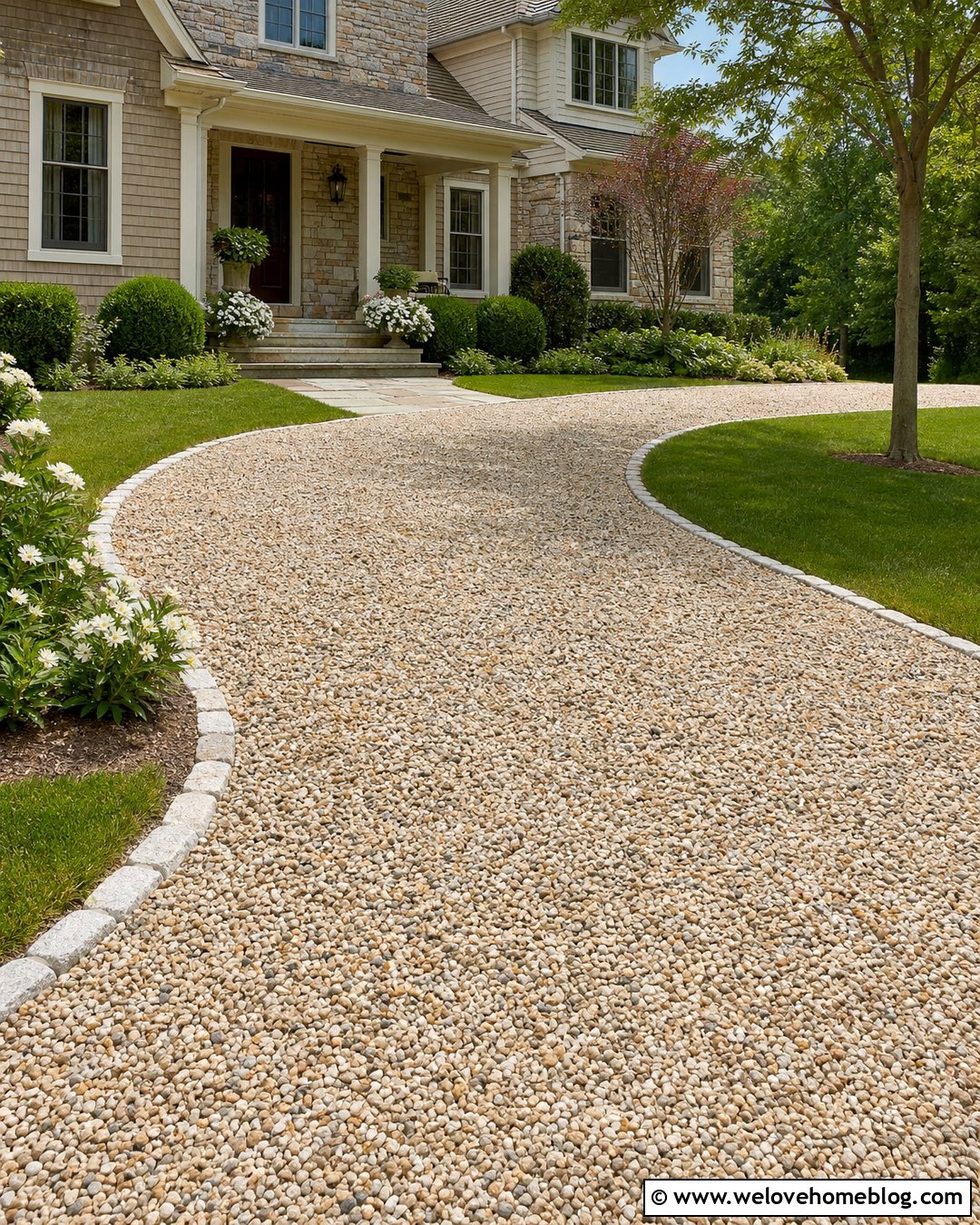
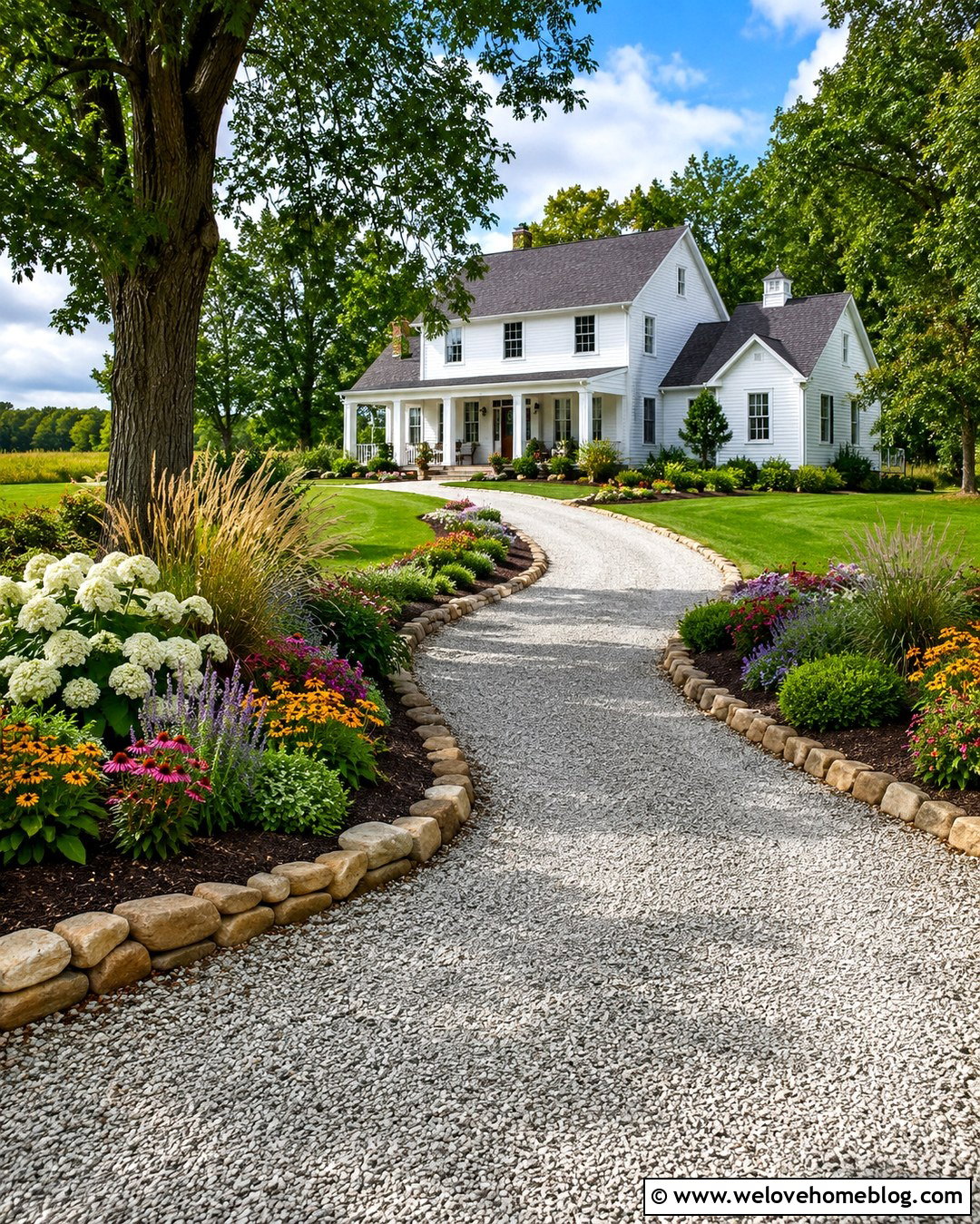
A gently curving gravel driveway can reveal the house slowly instead of displaying everything from the street. Choose buff-colored angular gravel and frame it with reclaimed red brick to give the route a warm, established appearance. The brick border should follow each curve smoothly, without sudden bends that make driving difficult. Place broad lawn areas along the inside of the curve and layered planting beds along the outside. Small ornamental trees, hydrangeas, and evergreen shrubs can soften the view without crowding the travel lane. At the house, widen the gravel into a comfortable parking court with a brick apron near the garage. The combination of movement, contrasting materials, and varied planting works particularly well around Craftsman homes, cottages, and older brick residences.
4. Large Gravel Parking Court With Paver Bands
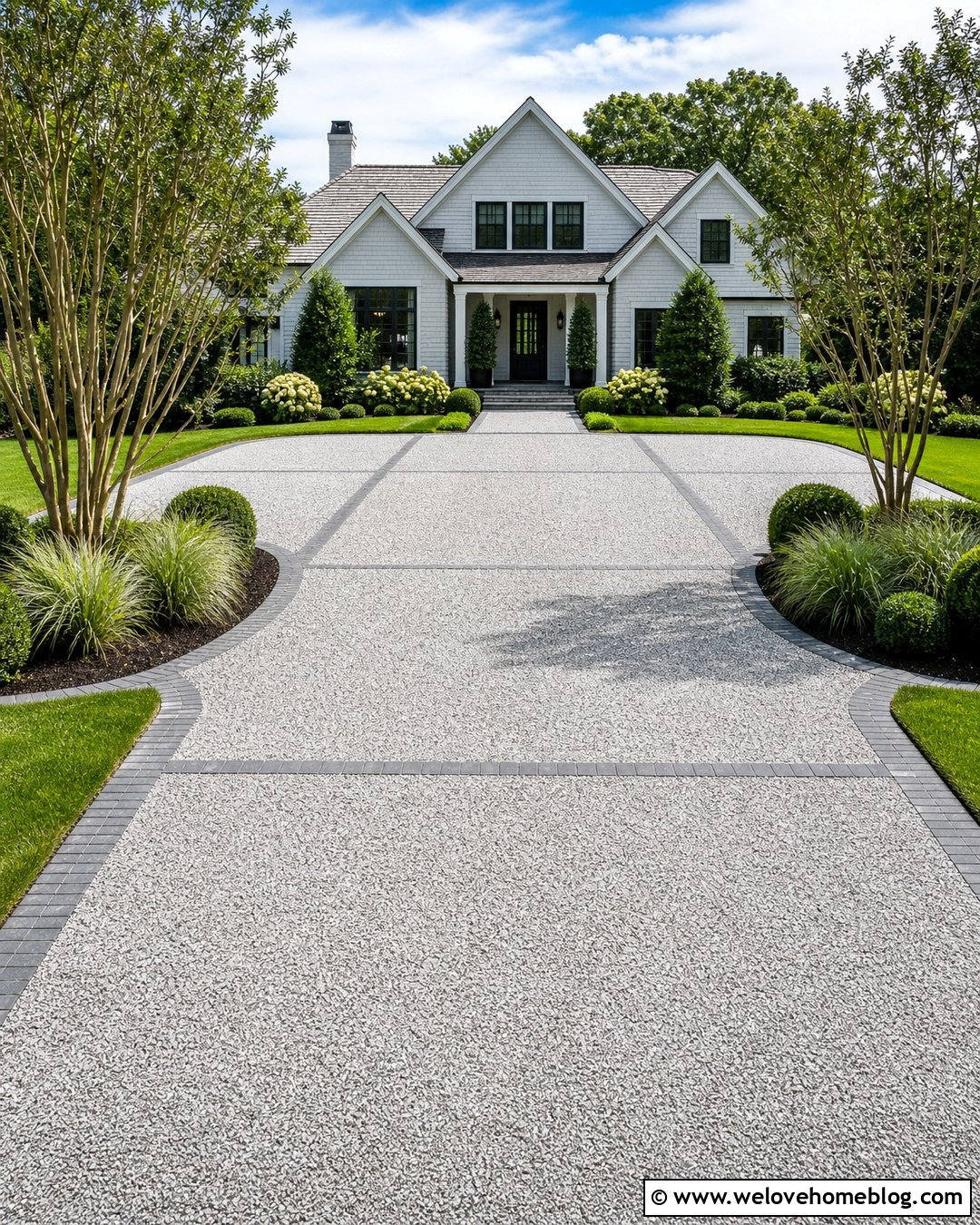
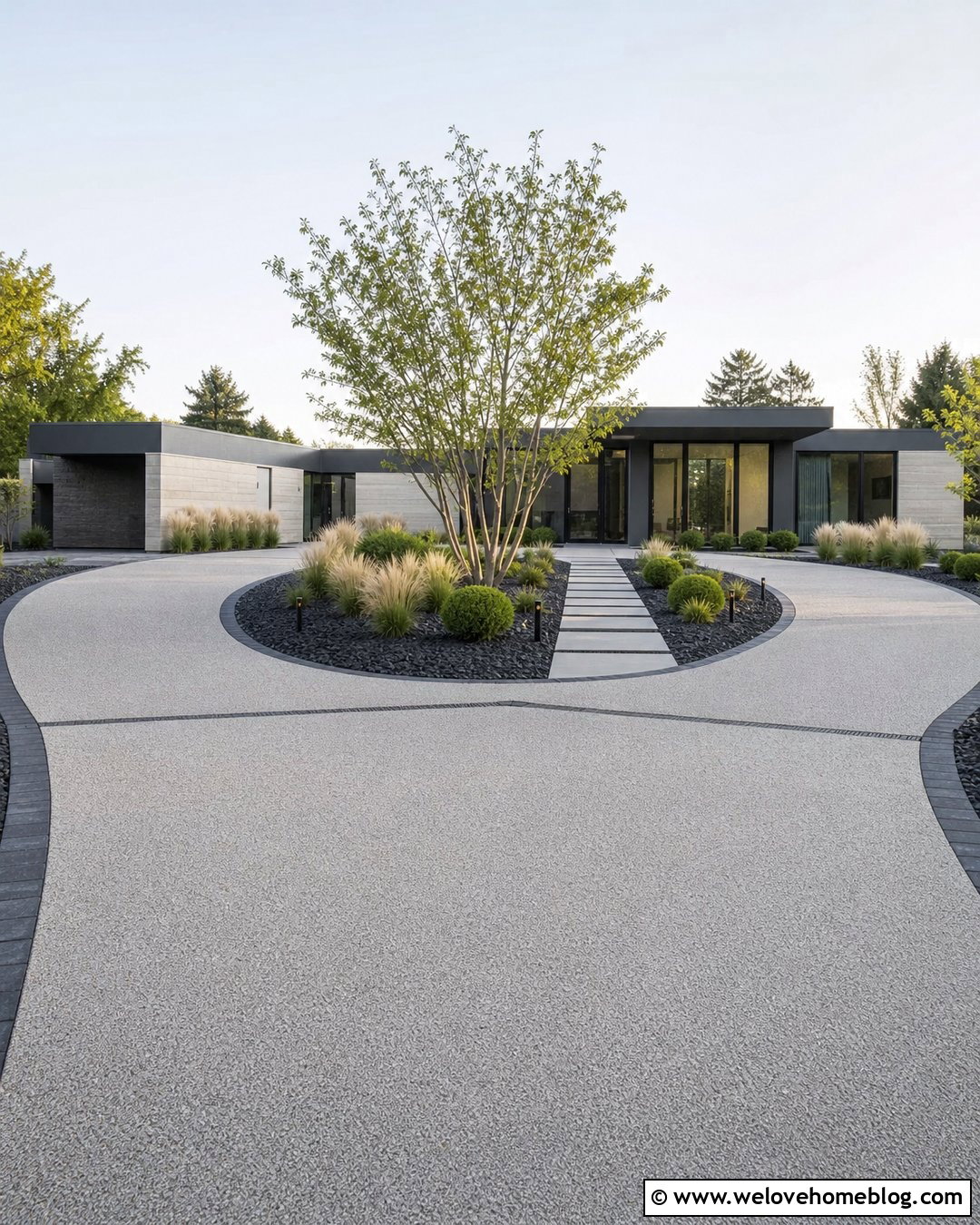
An expansive parking area can resemble an empty lot unless its surface is divided into smaller visual sections. Start with compacted light gray crushed gravel, then install charcoal concrete paver bands across the driveway at regular intervals. These bands create subtle parking zones and help connect the driveway with nearby walkways. Continue the same pavers around the perimeter for a crisp, unified border. Add large planting islands at the outer corners rather than placing small beds randomly across the space. Multi-stem trees, rounded shrubs, and ornamental grasses provide height and movement without limiting vehicle access. Near the house, use a wider paver apron to mark the main entrance. This structured layout gives a large modern or transitional property a clean appearance while preserving flexible parking and turning space.
5. Farmhouse Gravel Driveway With Timber Edging
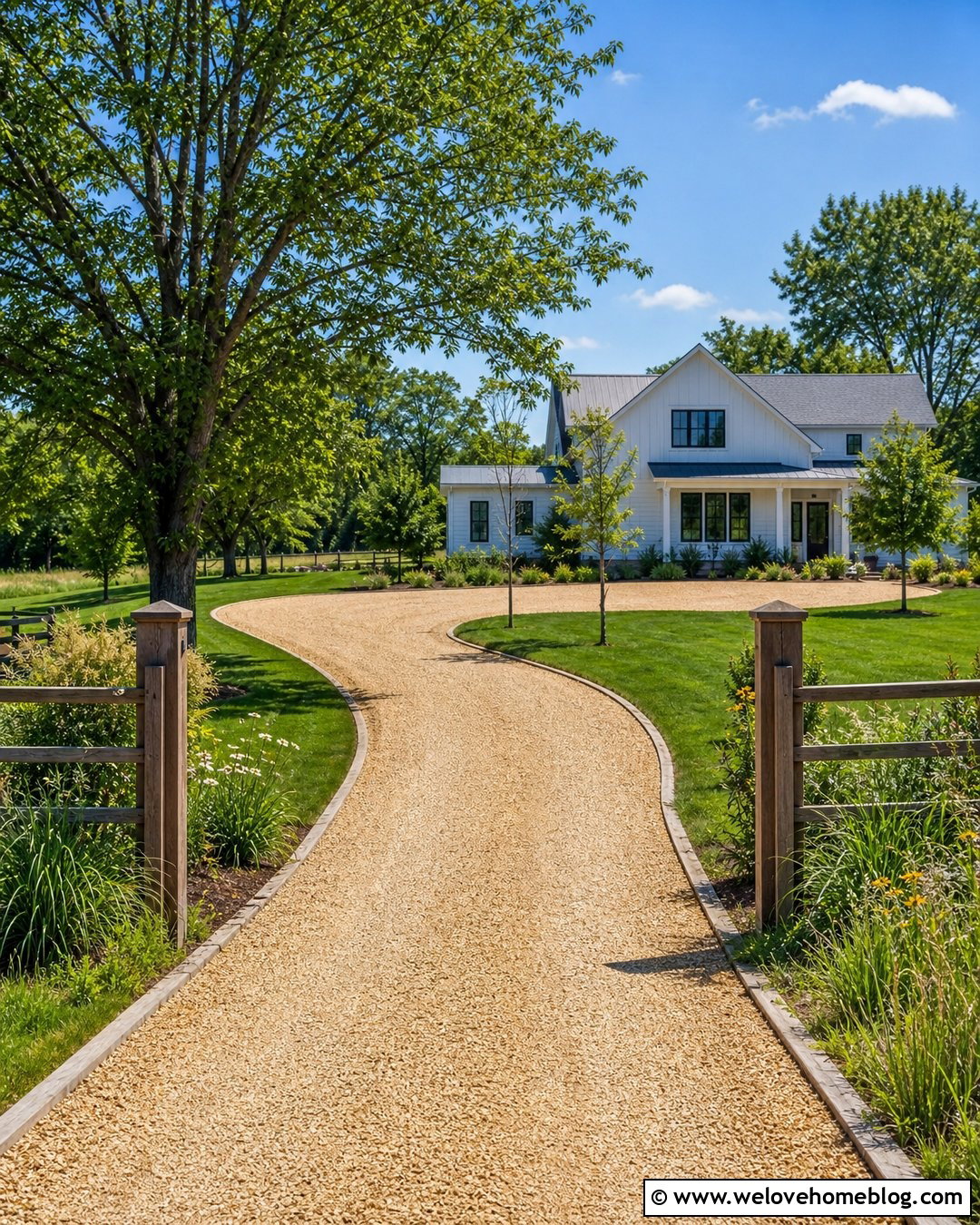
Golden limestone gravel brings a welcoming, rural character to a large farmhouse driveway. A straight or softly curved layout works best when paired with thick timber edging and open lawn. Use pressure-treated landscape timbers or naturally durable wood secured tightly enough to contain the loose surface. Along one side, add a split-rail fence backed by native grasses and informal wildflowers. The opposite edge can include a simple pedestrian path leading toward the porch or mudroom. Near the house, widen the driveway into a rectangular parking and turning area, then repeat the timber border around it. A pair of modest wooden gateposts can complete the roadside entrance. The finished design feels relaxed and practical, yet the consistent edges and restrained planting keep the property from looking unfinished.
6. Modern Gravel Driveway With Steel Edging
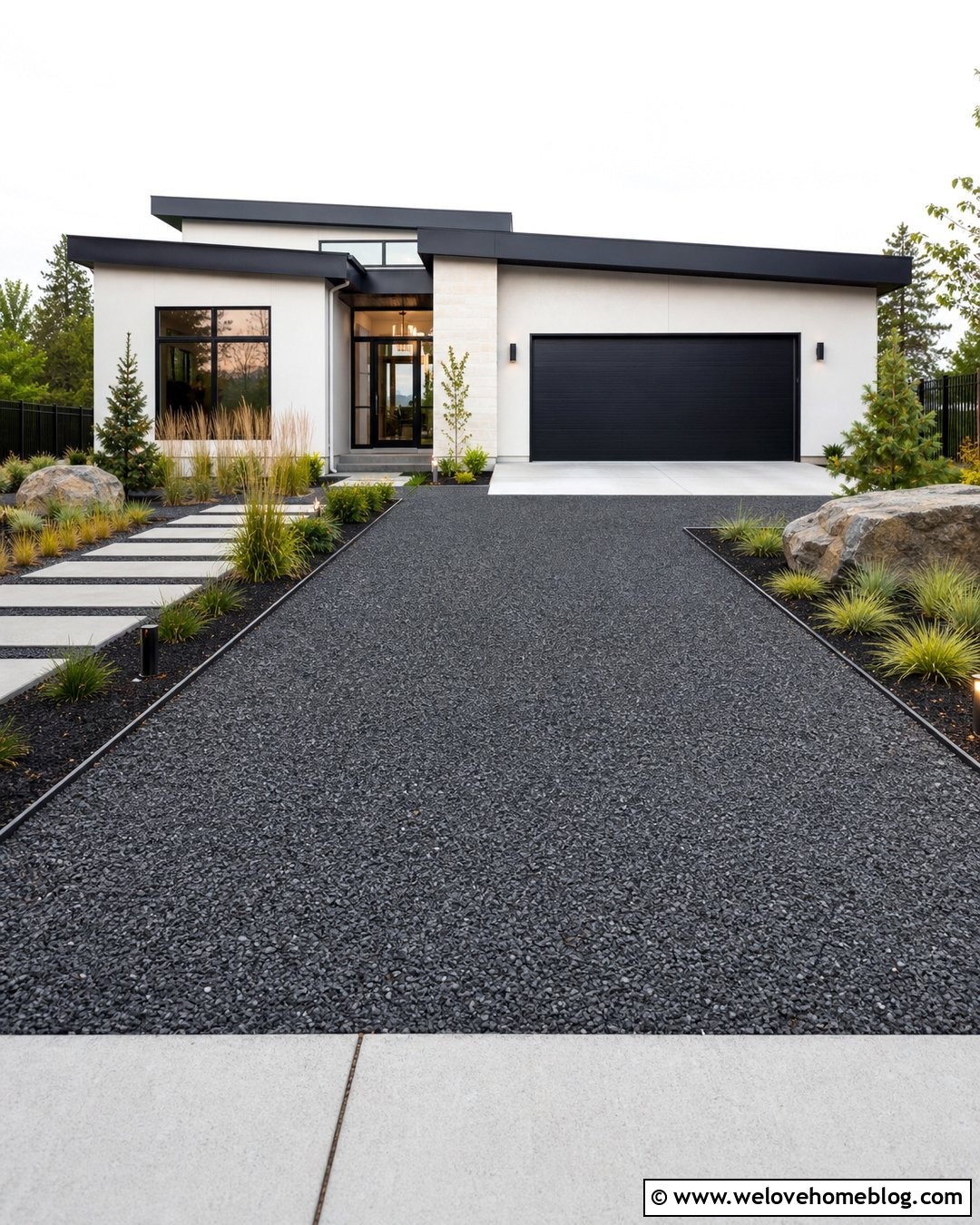
Dark gravel can make a wide driveway look sleek rather than rustic. Select charcoal basalt gravel with an angular finish and contain it with slim black steel edging. A broad, straight layout complements a modern house with simple rooflines, pale walls, and large windows. Instead of decorative curves, divide the surrounding landscape into clean rectangular beds. Fill them with architectural grasses, compact evergreens, and a few sculptural boulders. Large concrete stepping slabs can form a walkway across the gravel without hiding its texture. At the garage, add a narrow concrete apron to create a smooth transition and keep stones away from the doors. Low bollard lights placed beside the planting beds emphasize the driveway’s geometry. This complete look feels minimal, but it still offers texture, contrast, and strong curb appeal.
7. Colonial Gravel Driveway With Brick Apron
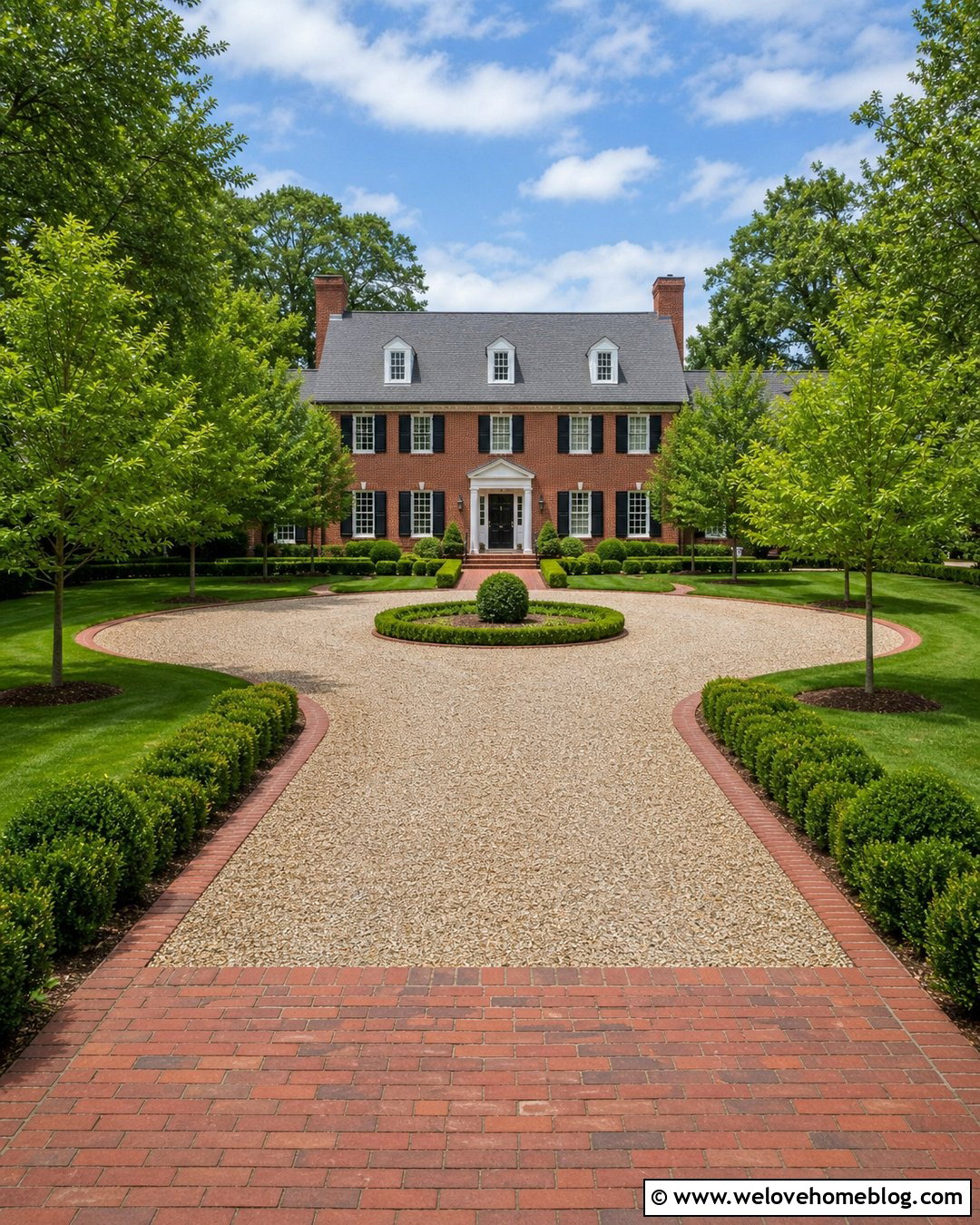
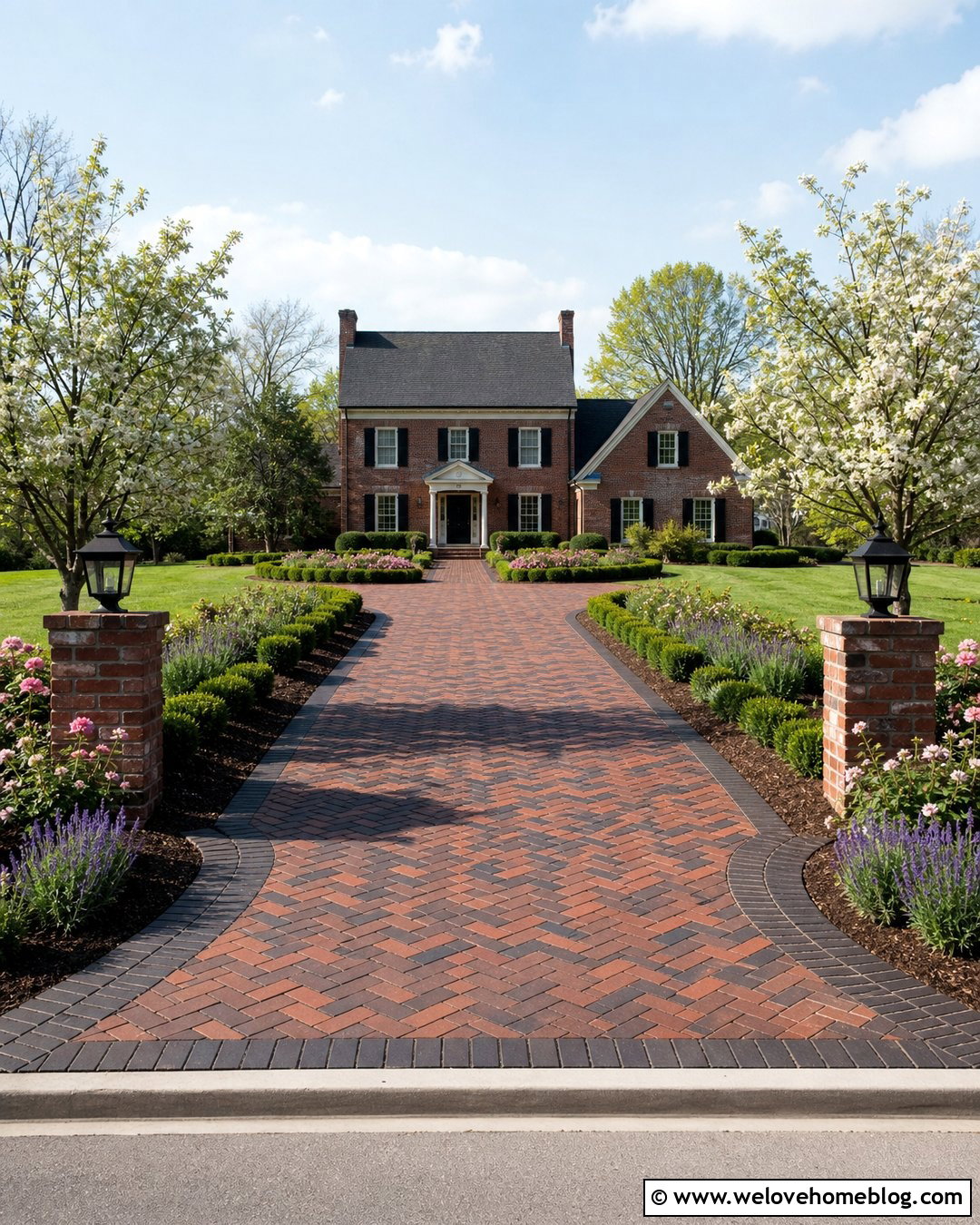
The crunch of warm pea stone feels especially appropriate in front of a symmetrical Colonial house. Lay a wide, straight driveway using tan and gray pea gravel, then install a deep red brick apron where it meets the street. Repeat the brick around the driveway edges and across the area closest to the front steps. This repetition connects the driving surface to a brick facade or traditional chimney. Frame the approach with clipped boxwood, lawn, and evenly spaced deciduous trees. Near the entrance, allow the gravel to expand into a small oval turning court. A brick walkway can cross the court and continue to the centered front door. The strong symmetry keeps a large property orderly, while the varied textures prevent the design from appearing too rigid or plain.
8. Ranch House Gravel Driveway With Grass Median
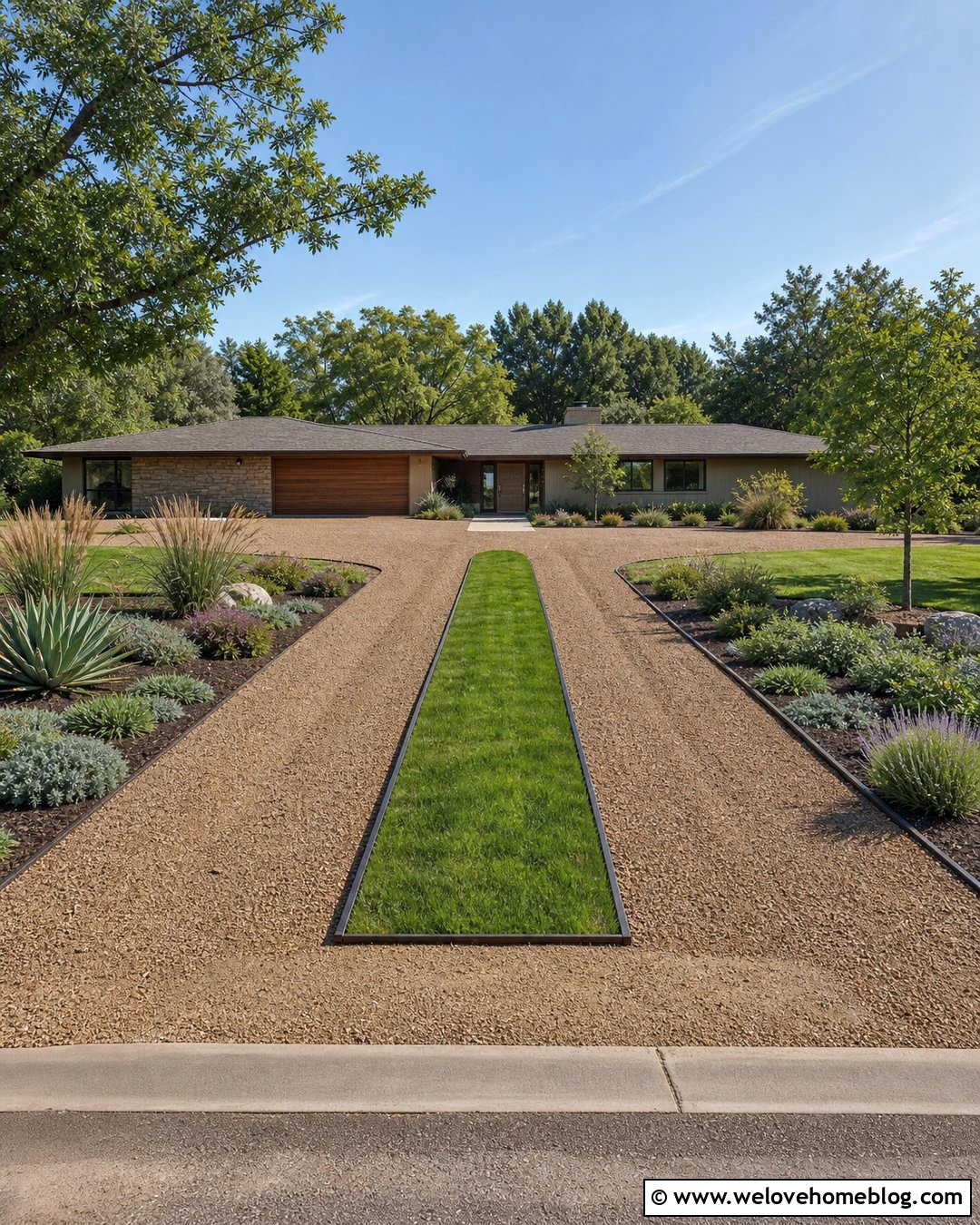
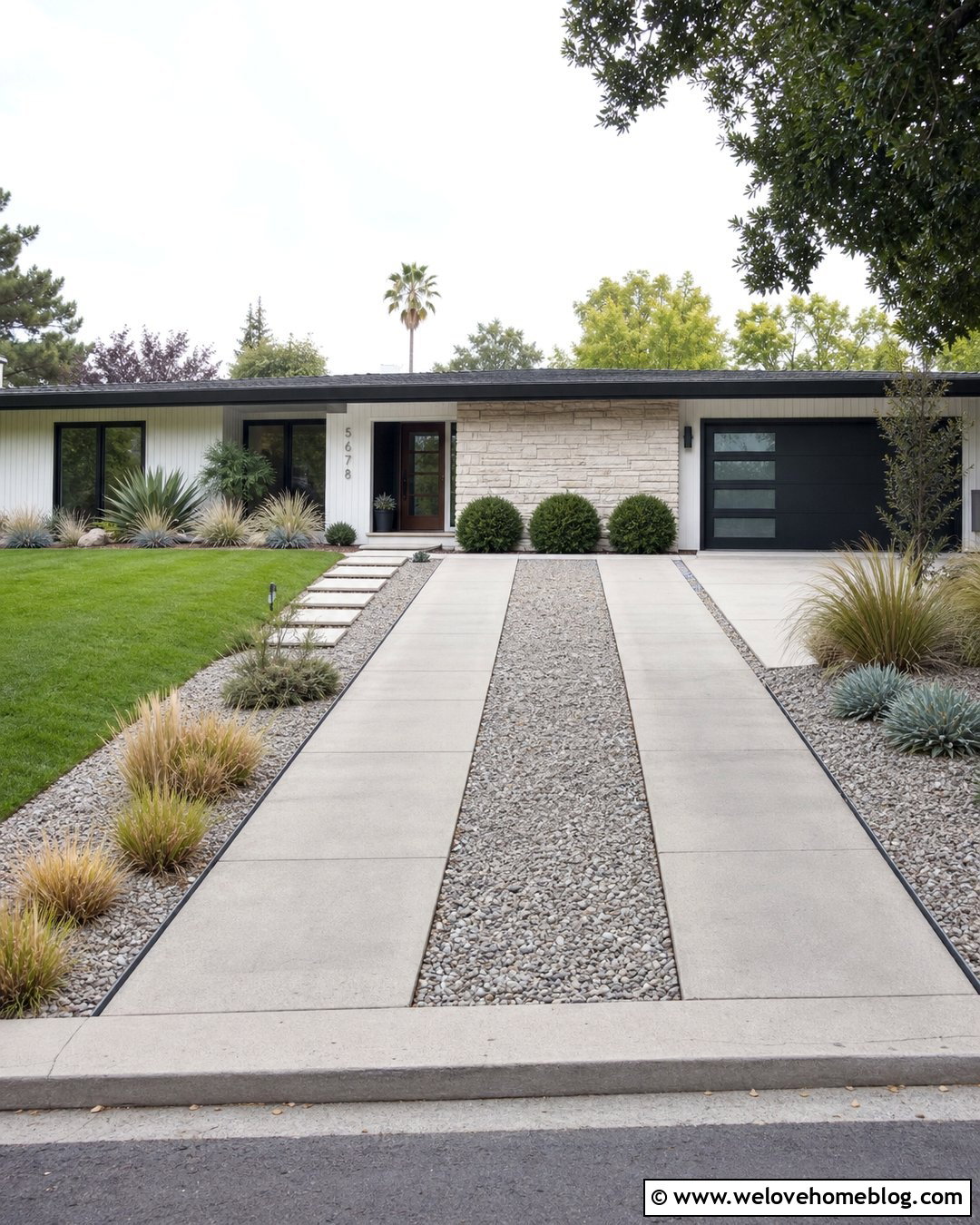
A broad ranch house often benefits from a driveway that emphasizes its low, horizontal shape. Create two parallel lanes of compacted brown crushed gravel with a generous grass median running between them. The planted strip reduces the amount of visible stone and gives a wide driveway a softer presence. Keep the grass level with firm edging so mowing remains manageable and gravel stays out of the turf. At the street and garage, join the lanes into full-width gravel aprons for easier turning. Use low native shrubs, ornamental grasses, and spreading ground covers along the outer borders. Avoid narrow planting pockets that can become difficult to maintain. This layout works best on level properties with plenty of frontage, creating a relaxed entrance that feels naturally connected to the surrounding lawn.
9. Sloped Gravel Driveway With Drainage Swales
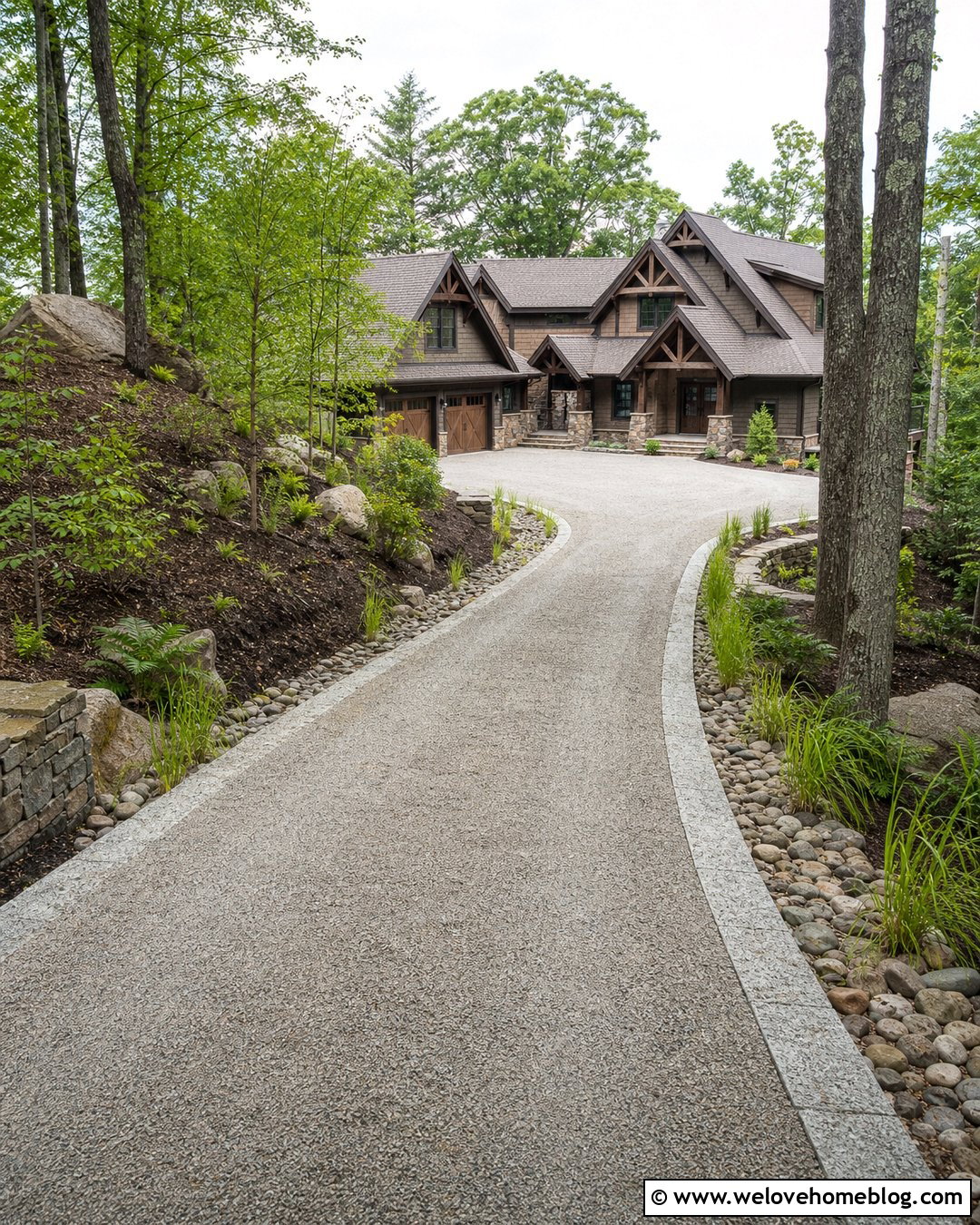
Rainwater can quickly damage a large sloped driveway if the surface and surrounding landscape are not planned together. Use angular crushed granite because its irregular pieces compact and interlock more effectively than smooth, rounded stones. Install gravel stabilization grids in vulnerable sections, particularly around turns or steeper areas. Shallow planted swales along the driveway can guide runoff toward a suitable drainage location while improving the landscape. Fill them with river rock, moisture-tolerant grasses, sedges, and locally appropriate plants. Strong stone curbs on the downhill edge provide additional containment. The driveway itself should follow broad, manageable curves rather than a severe straight climb. At the top, create a level gravel parking court. Professional grading is important because drainage requirements vary with soil, slope, climate, and local regulations.
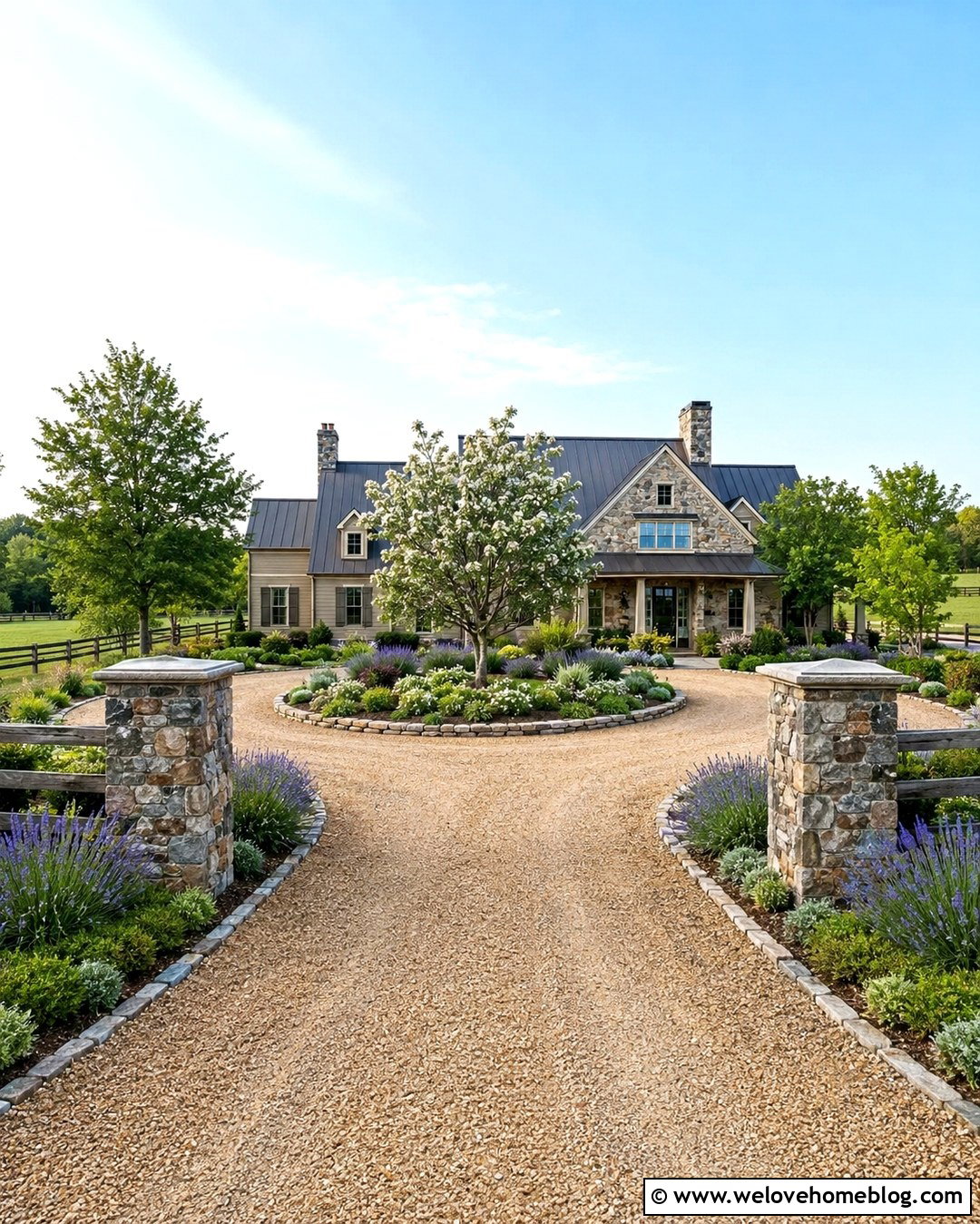

10. Horseshoe Gravel Driveway With Two Entrances
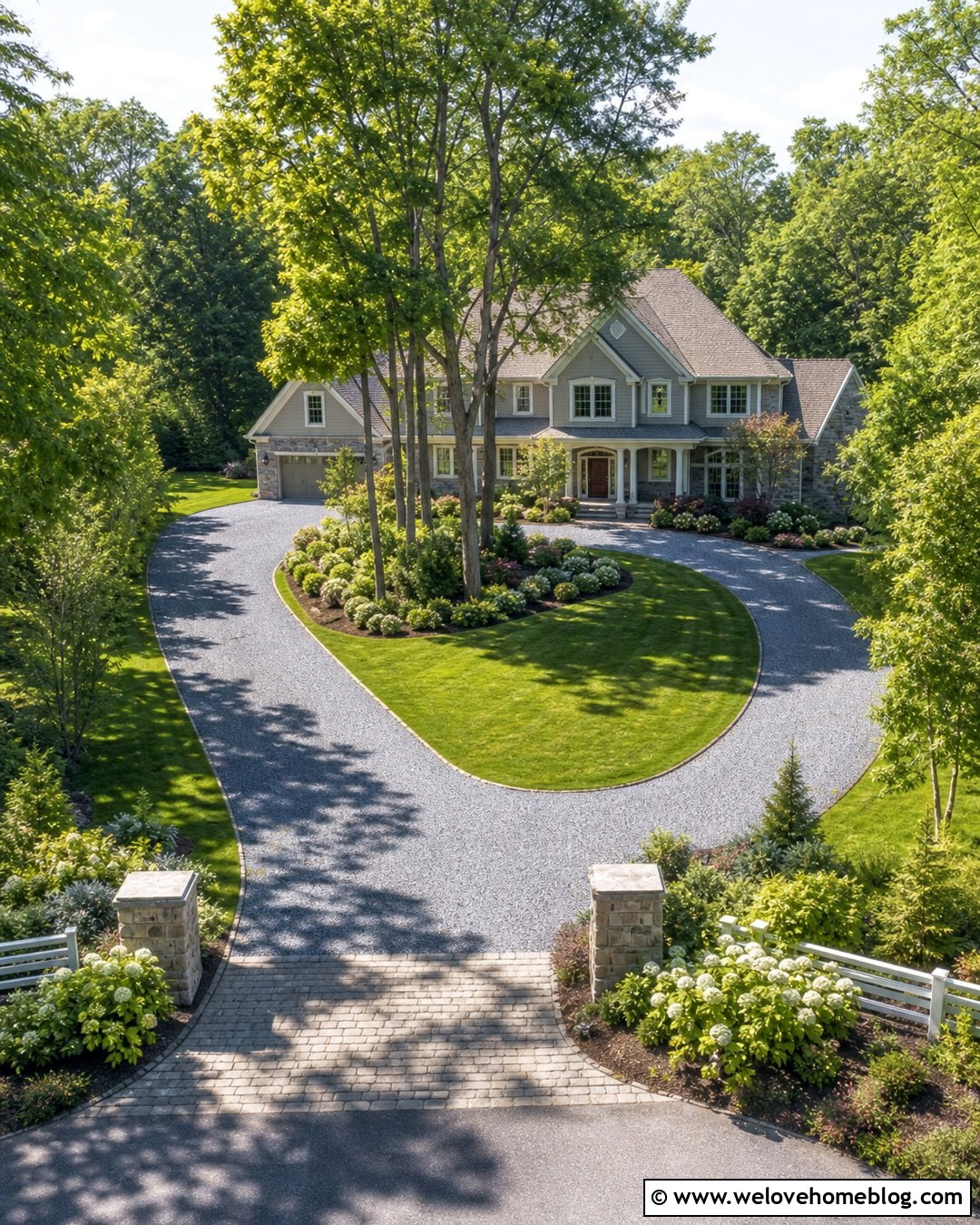
Two clearly marked entrances make a large horseshoe driveway convenient for guests, deliveries, and daily traffic. Cover the continuous curved route with medium-gray crushed stone and finish both street connections with matching cobblestone aprons. The center lawn should be large enough to feel purposeful, not like leftover space. Plant a small grove of ornamental trees there, supported by sweeping beds of shrubs and seasonal flowers. Keep the plants lower near both entrances so drivers can see pedestrians and approaching vehicles. Simple stone columns can mark the entry and exit without requiring a gate. Along the house, widen the gravel to create a drop-off zone and connect it to the front walkway. This fluid layout suits wide suburban lots and allows vehicles to leave without complicated reversing.
11. Gravel Driveway With Central Fountain
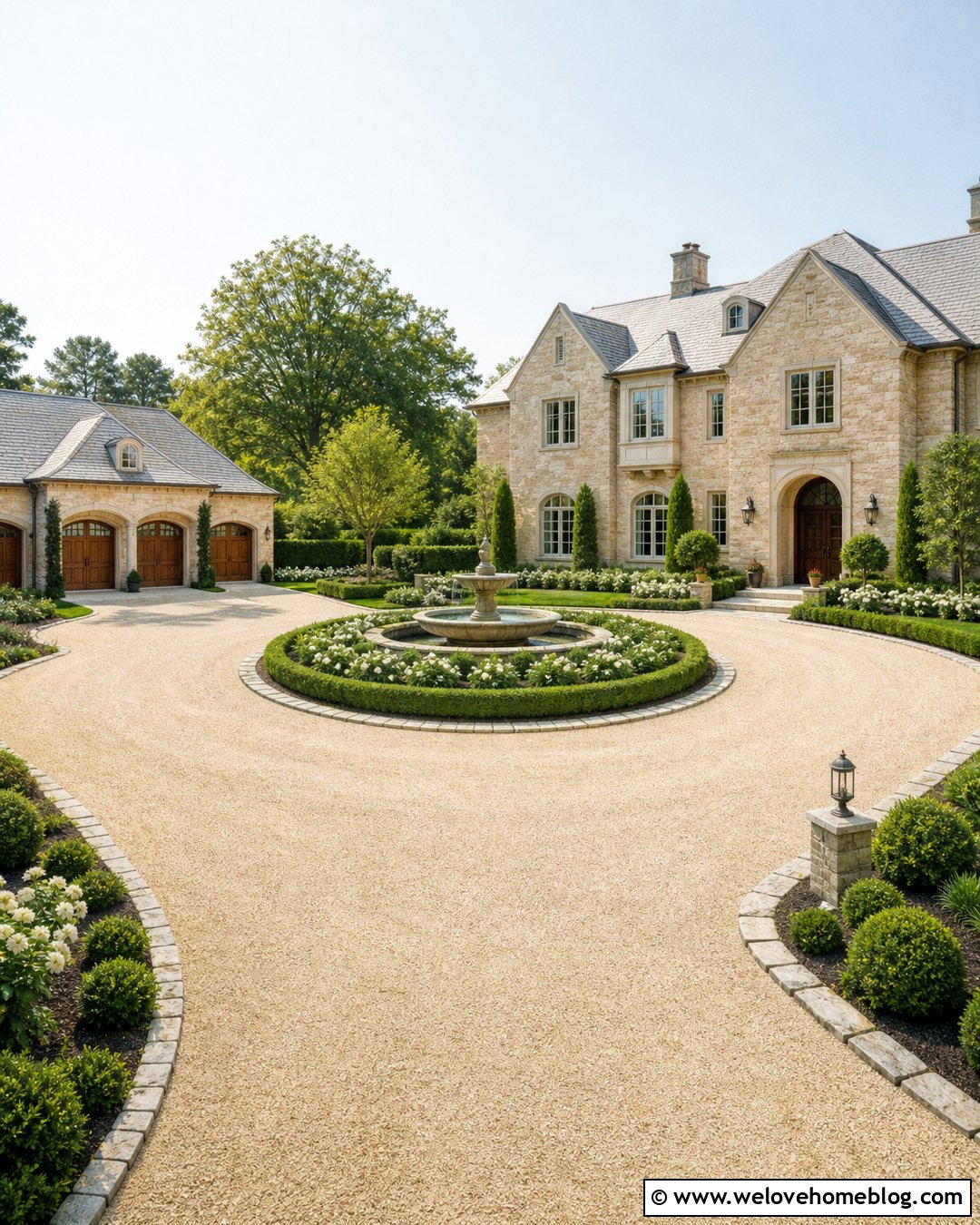
On a spacious estate-style property, a fountain can give a large gravel turnaround a clear focal point. Arrange pale beige crushed limestone in a wide circle around a raised central island. Edge the island and outer driveway with substantial natural stone setts to protect the planting beds from vehicle tires. Choose a fountain scaled to the house and leave generous clearance around it for comfortable circulation. Low evergreen hedges, white flowering plants, and neatly clipped ground covers will frame the centerpiece without competing for attention. Extend the main gravel approach from the street and add a secondary branch toward the garage. Repeating the same stone around the walkway and front steps creates cohesion. This formal arrangement feels most convincing when the fountain, driveway, landscaping, and architecture share similar proportions.
12. Gravel Driveway With Stone Pillars And Gate
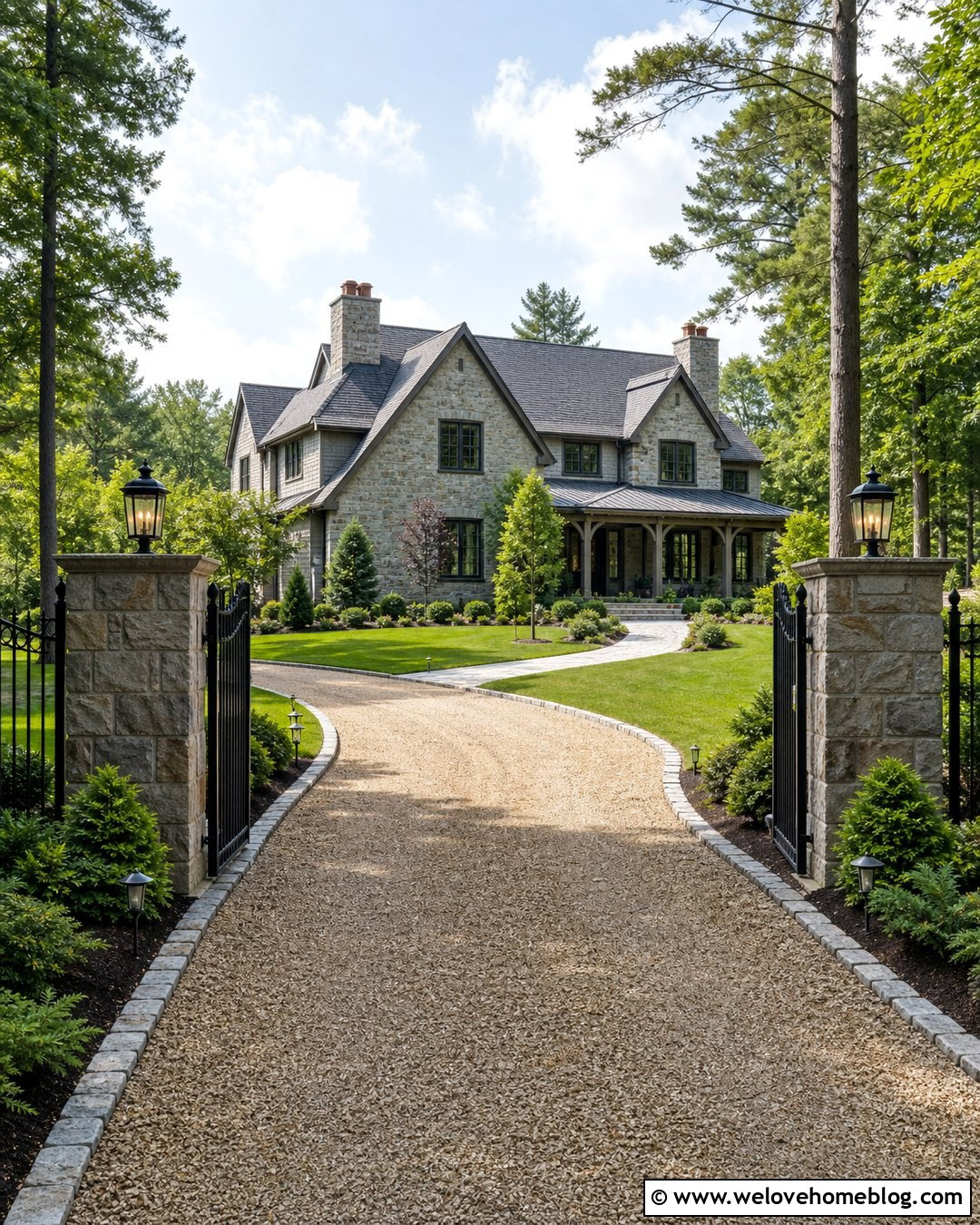
A gated driveway should look welcoming from the curb while still defining the property entrance. Begin with a wide driveway of tan angular gravel and flank it with substantial natural stone pillars. Position a simple black metal gate between them, leaving enough setback from the road for safe access. Continue a cobblestone border from the pillars along both sides of the driveway to visually pull visitors toward the house. Behind the entrance, use a gently curving route framed by open lawn, native trees, and layered evergreen beds. Add low lights near the pillars and key bends, keeping fixtures out of the driving area. Match the pillar stone to the house foundation or garden walls. This creates an entrance that feels connected to the full property rather than added as a separate feature.
13. Gravel Driveway With Split-Rail Fence
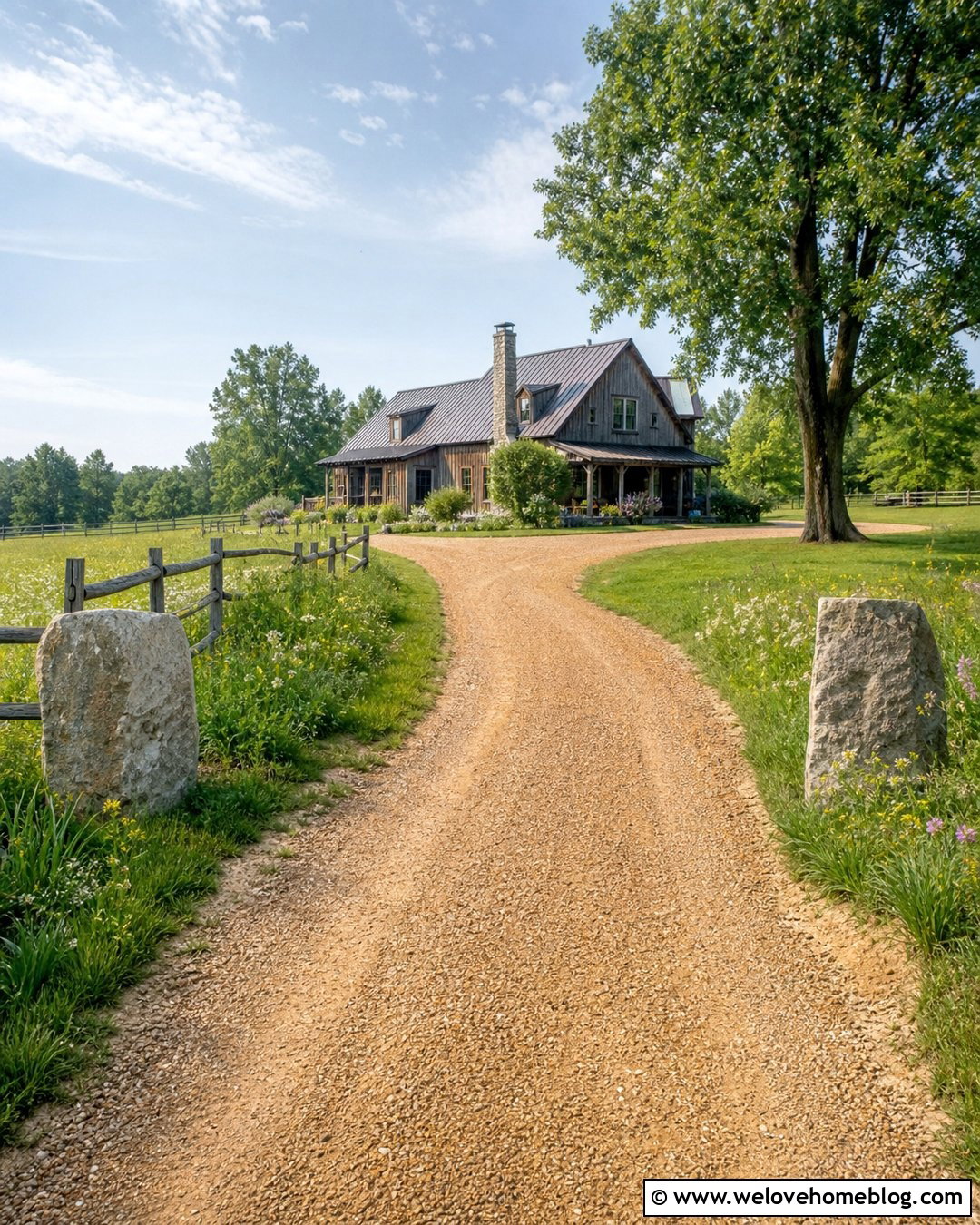
Picture a long country approach bordered by open fields and a weathered split-rail fence. A driveway of warm brown crushed gravel strengthens that rural character while providing a clear route toward the house. Follow the natural contours of the land with gentle curves rather than forcing a perfectly straight line. Place the fence several feet from the gravel edge to leave room for drainage and maintenance. Between the two, plant low meadow grasses and small groups of native wildflowers. At the road, use larger fieldstones to mark the entrance without making it overly formal. Near the house, transition into a wider gravel court bordered by lawn and shade trees. The limited material palette makes this design economical, but its generous proportions and natural setting still create a memorable arrival.
14. White Gravel Driveway With Formal Hedges
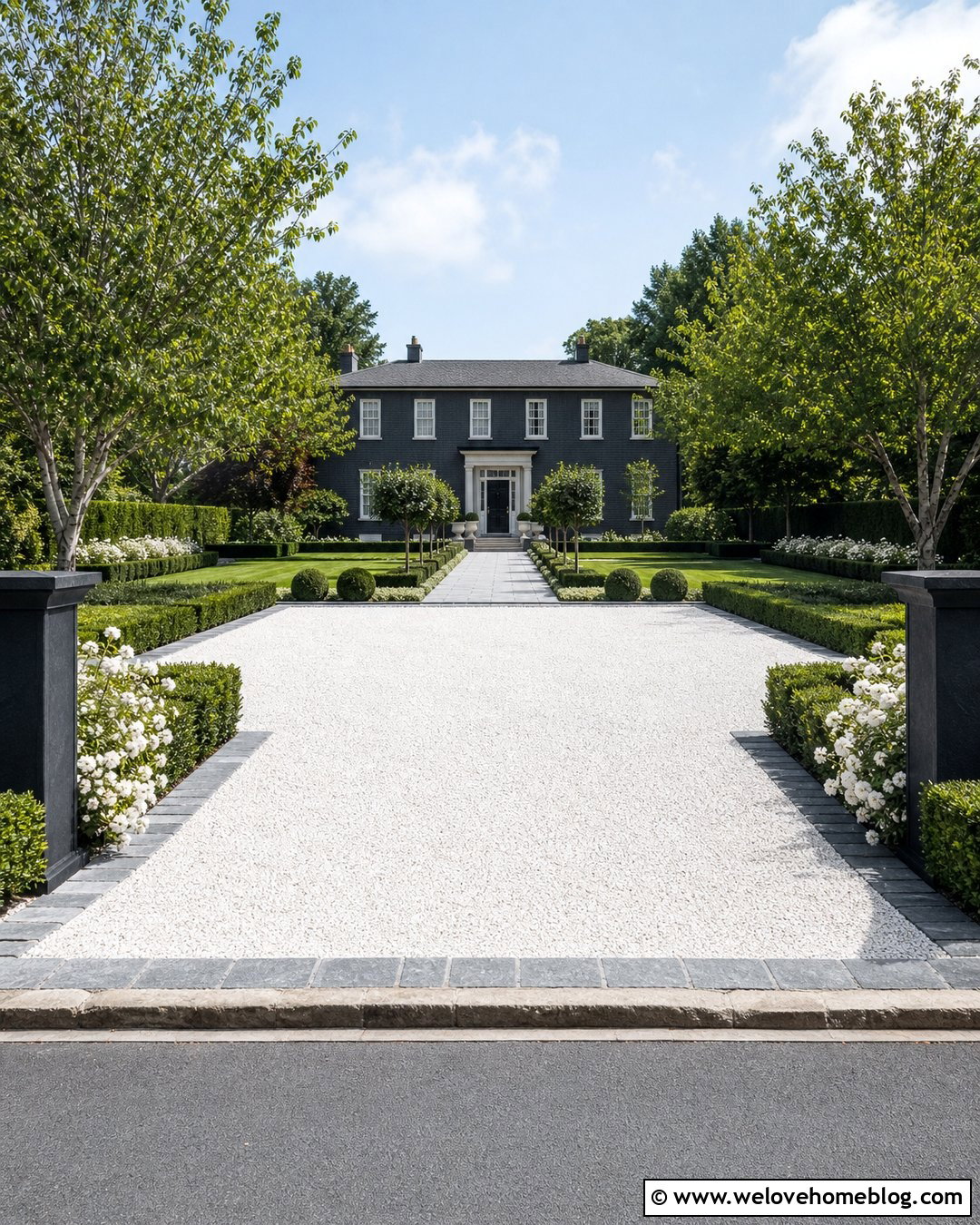
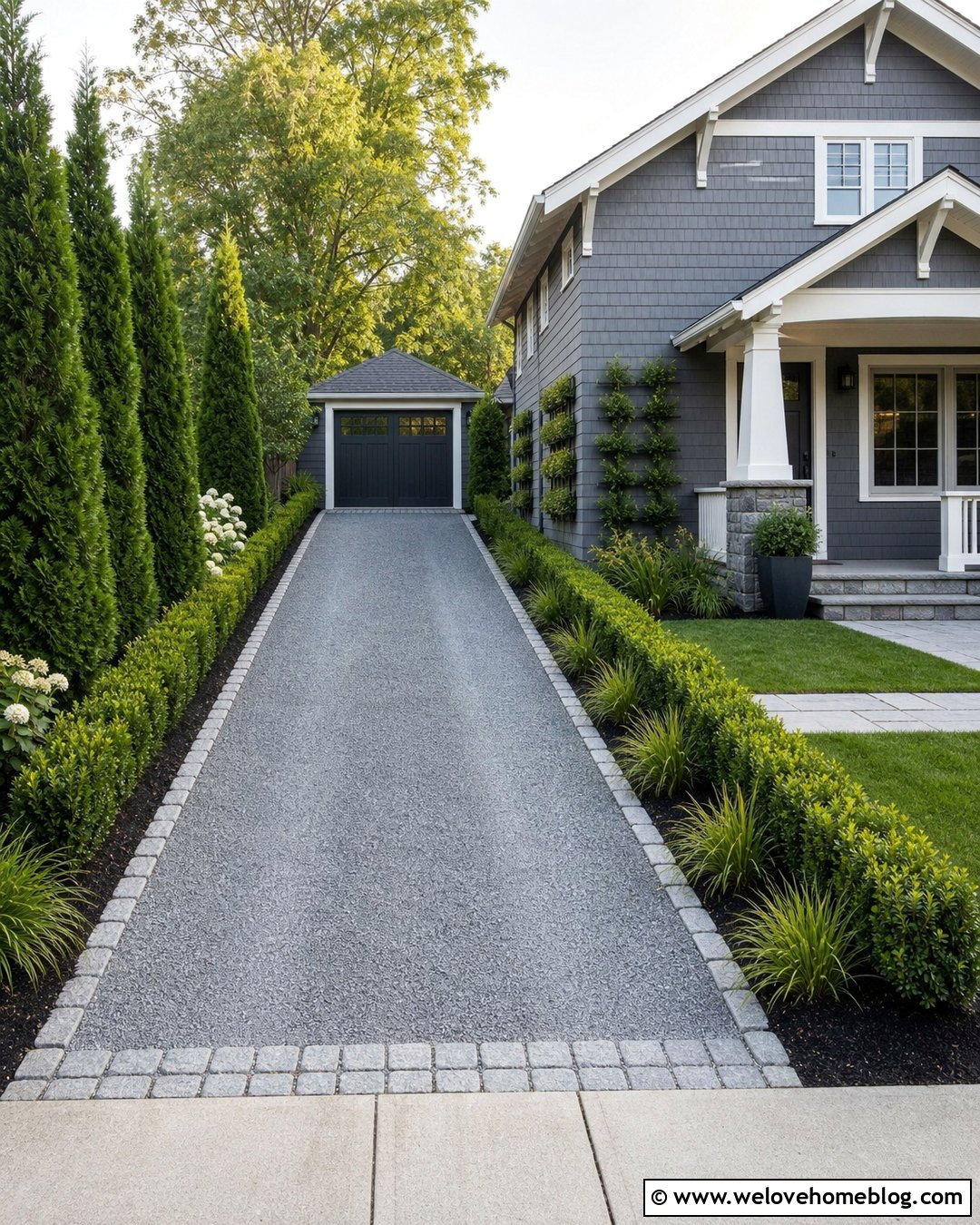
Bright white marble gravel can give a large driveway a striking, refined appearance, especially beside a dark brick or painted facade. Use it on a broad straight approach that expands into a rectangular parking court near the house. Contain the stone with charcoal granite setts, which provide a crisp outline and make the pale surface stand out. Tall hedges can frame the distant portions of the driveway, while lower clipped shrubs near the entrance maintain clear views. Add symmetrical planting beds with compact evergreens, white flowers, and small ornamental trees. Because very pale stone readily shows soil, leaves, and tire marks, plan for regular raking and periodic replenishment. Used thoughtfully, the high-contrast combination turns a functional driveway into a strong architectural feature with a clean, formal identity.

15. Woodland Gravel Driveway With Boulder Borders
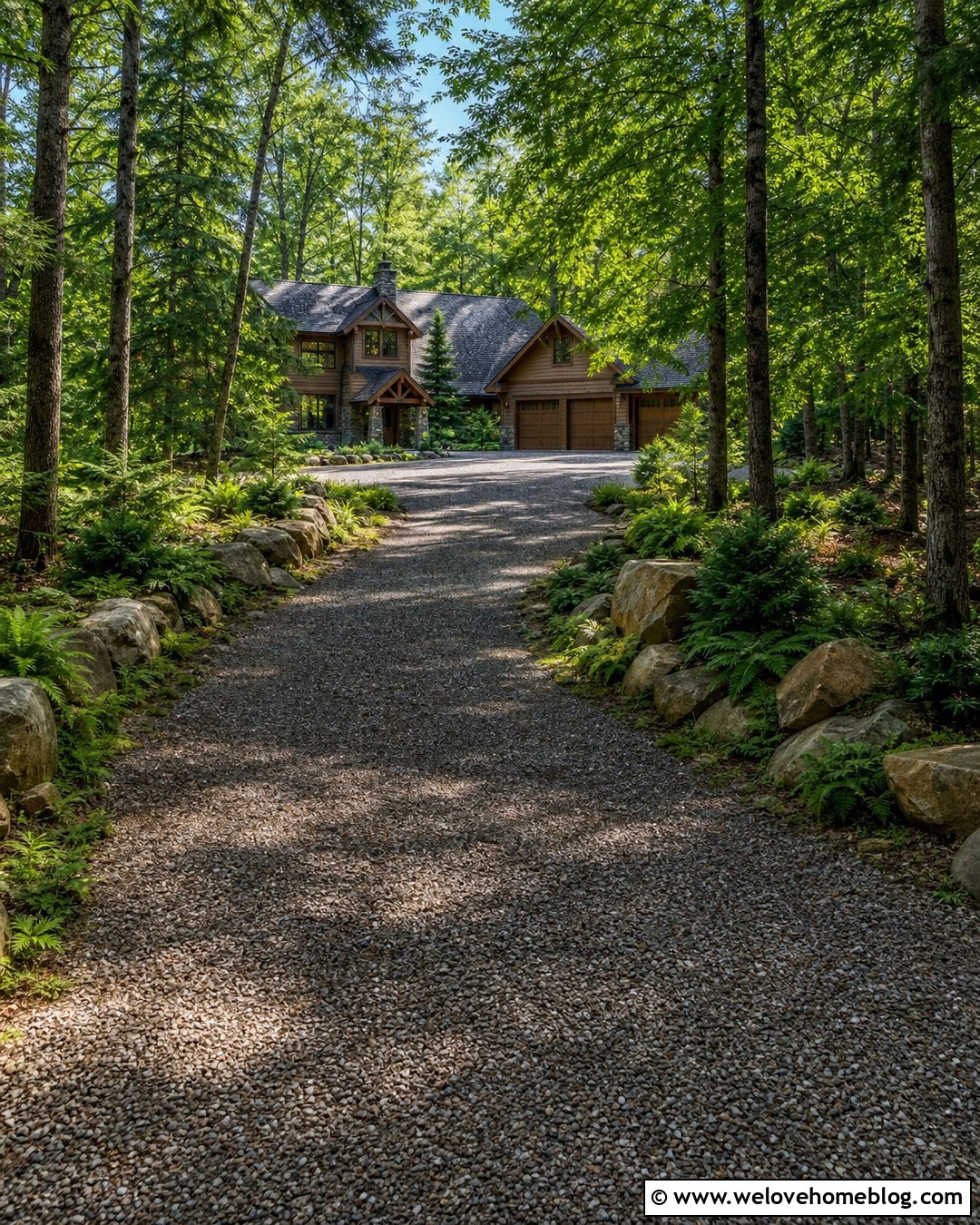
A winding woodland driveway should blend into its surroundings rather than cut through them abruptly. Use mottled brown and gray crushed stone that echoes the color of nearby tree trunks and exposed rock. Place irregular local boulders along selected curves, leaving natural gaps instead of creating a continuous hard border. Fill those gaps with ferns, woodland grasses, low evergreens, and shade-tolerant ground covers. The route should remain wide enough for comfortable driving, with extra space around sharper bends. Carefully prune low branches to maintain visibility and protect taller vehicles. Near the house, open the driveway into a brighter gravel parking area edged with the same boulders. This approach creates a seamless transition from wooded entrance to residence while preserving the informal, established feeling of the site.
16. Desert Gravel Driveway With Drought-Tolerant Landscaping
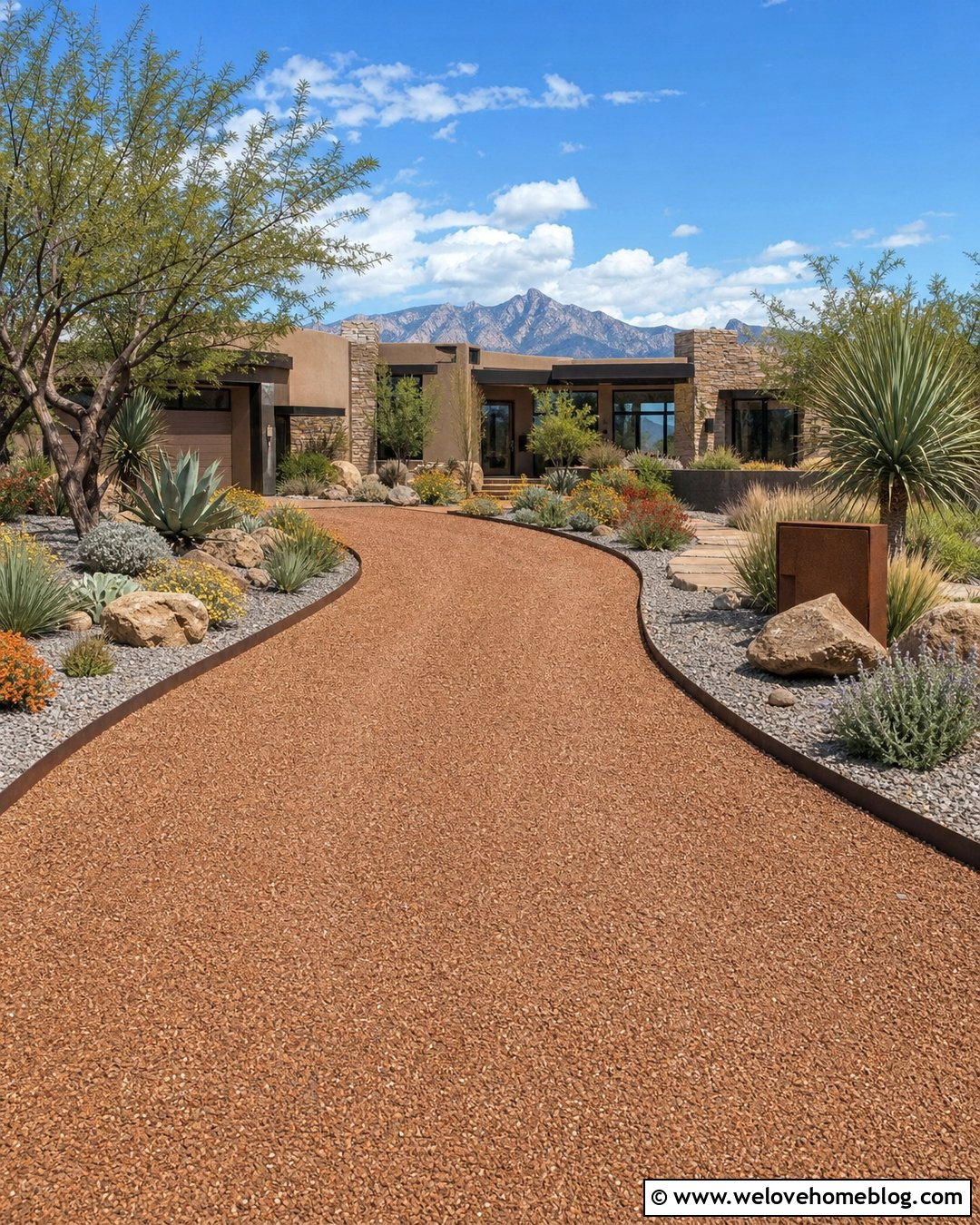
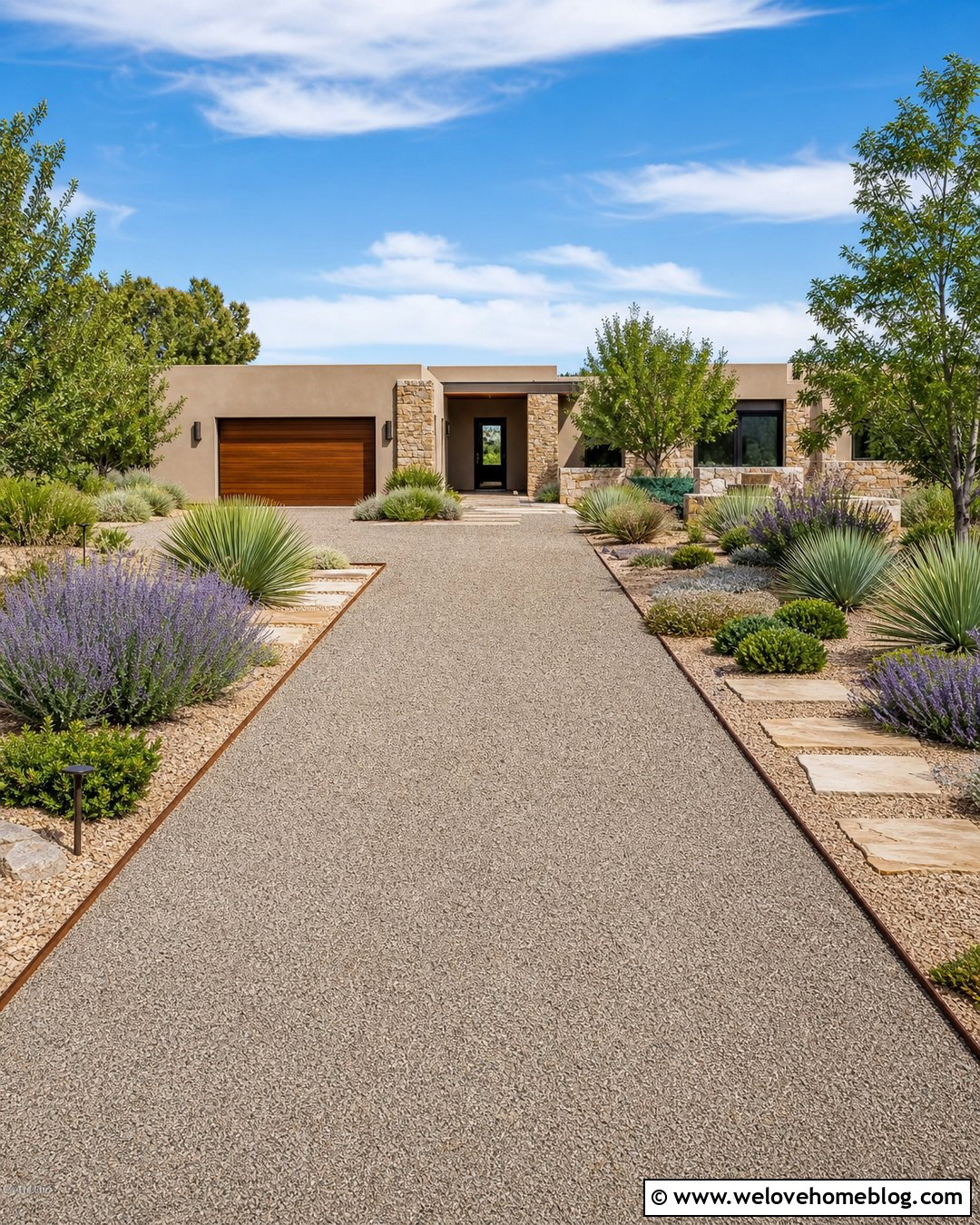
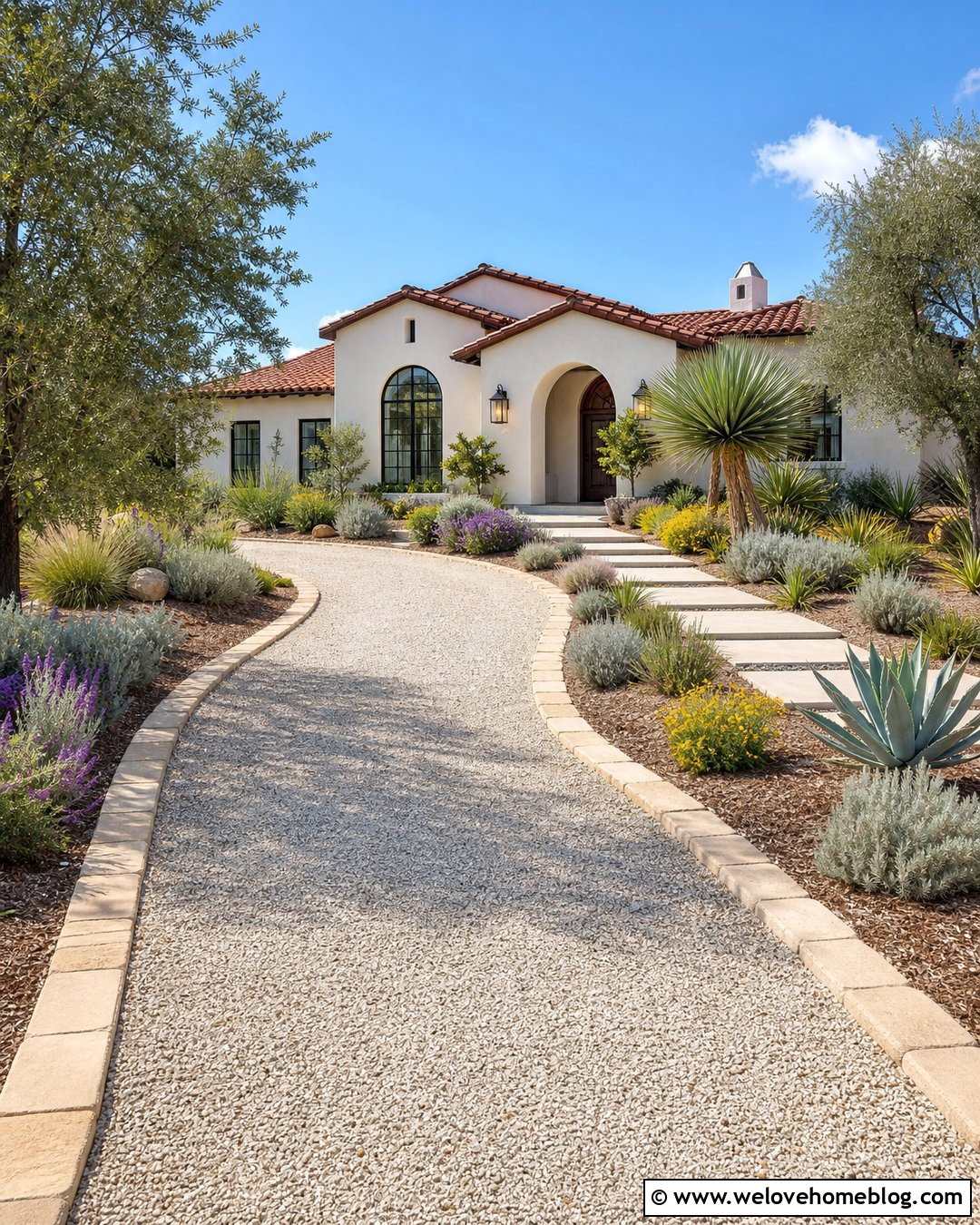
In a dry climate, a large driveway can become part of a water-conscious front landscape. Choose warm rust-colored crushed granite for the main curved surface and contain it with weathered steel or dark concrete edging. Create broad planting zones beside the drive using larger desert gravel, sculptural boulders, yucca, agave, ornamental grasses, and low flowering perennials suited to local conditions. Leave open space around every plant so its shape remains visible and maintenance stays manageable. A paved walkway in a complementary earth tone can cross the gravel near the house. At the street, group boulders and a simple address monument on one side of the entrance. The limited color palette connects the driveway, home, and arid setting while avoiding the empty appearance of an all-rock yard.
17. Gravel Driveway With Large Planting Islands
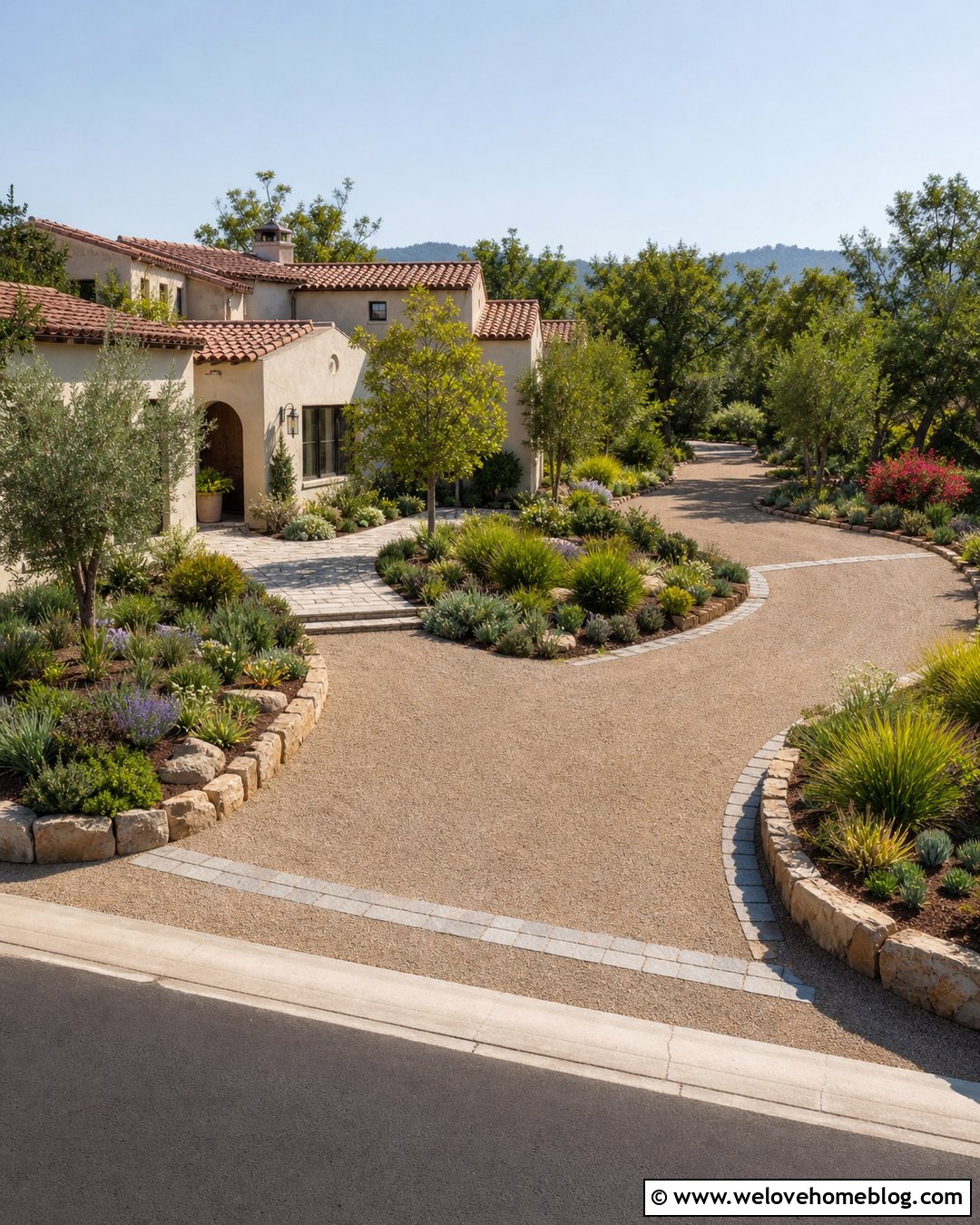
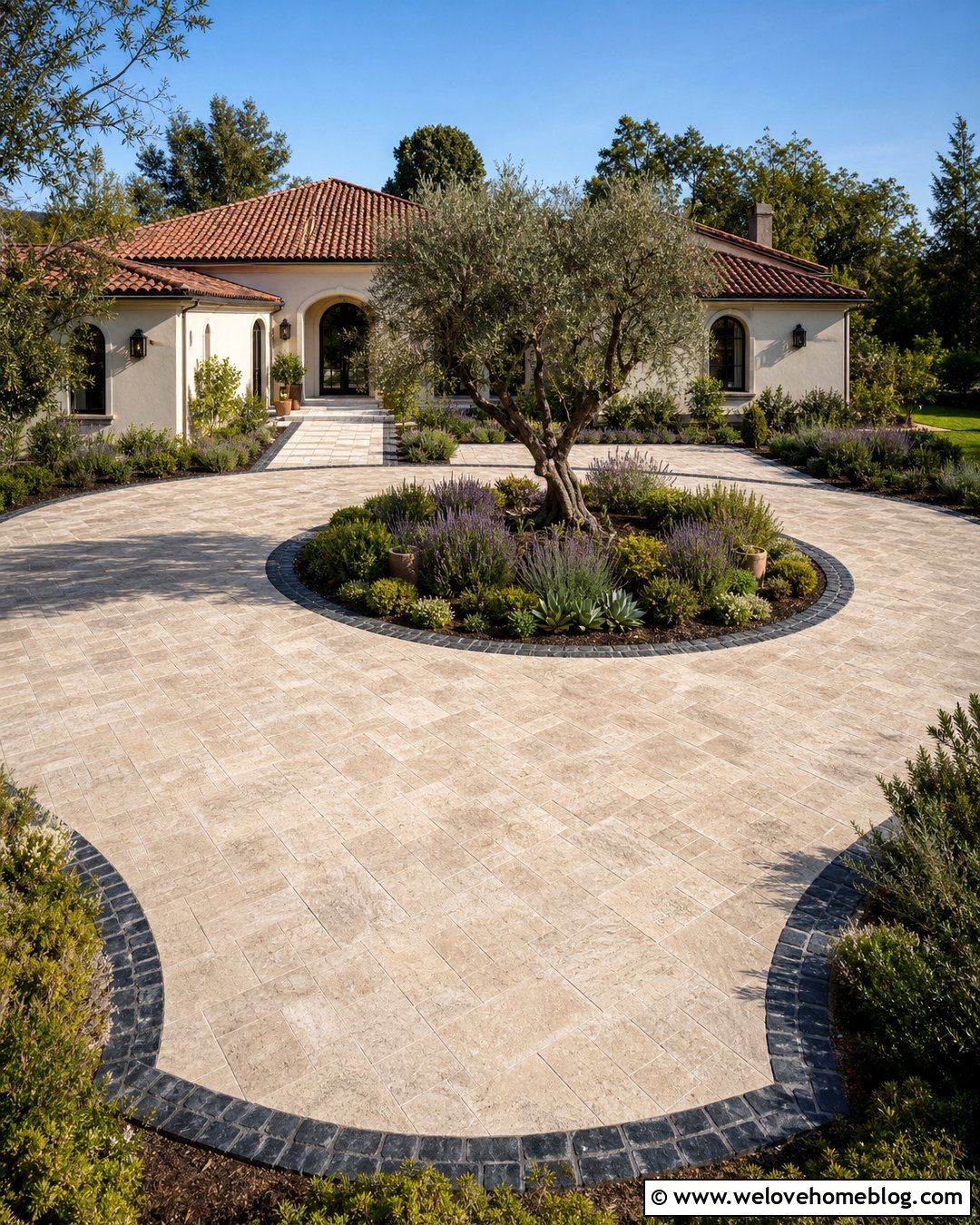
Breaking a wide driveway into connected areas can make the surface feel less overwhelming. Use light brown angular gravel for the primary driving and parking zones, then carve out several generous planting islands with flowing stone borders. Place islands where they guide circulation without creating tight turns or awkward reversing. Each bed should include a layered mix of one small tree, sturdy shrubs, ornamental grasses, and durable ground covers. Repeat the same plants across multiple islands to keep the overall design coherent. A broad paver walkway can link the parking court to the front door, while matching paver strips define guest spaces. This plan is particularly useful in front of large suburban and Mediterranean-style homes where a single uninterrupted expanse of gravel would feel out of scale.
18. Stabilized Gravel Driveway With Paver Grid
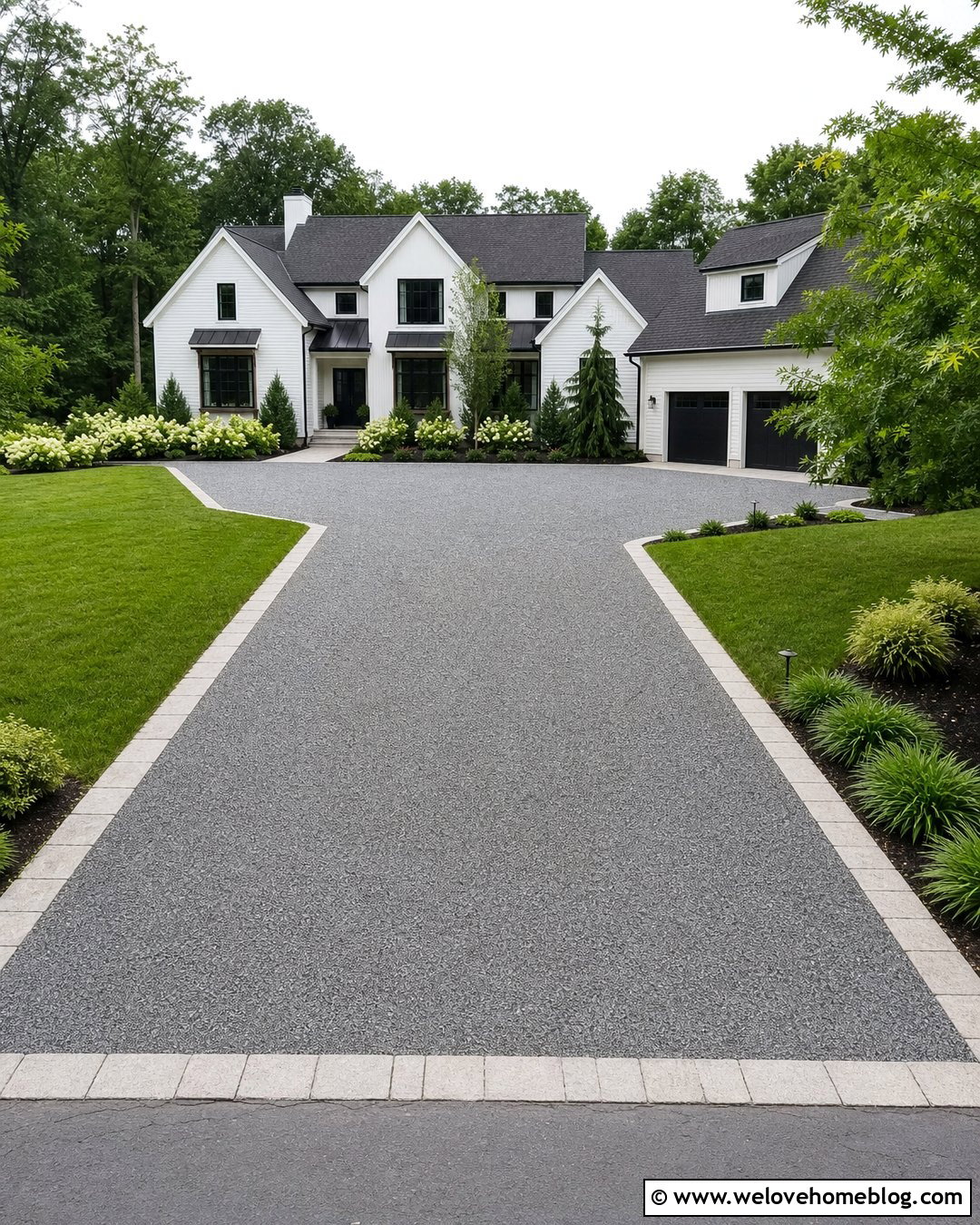
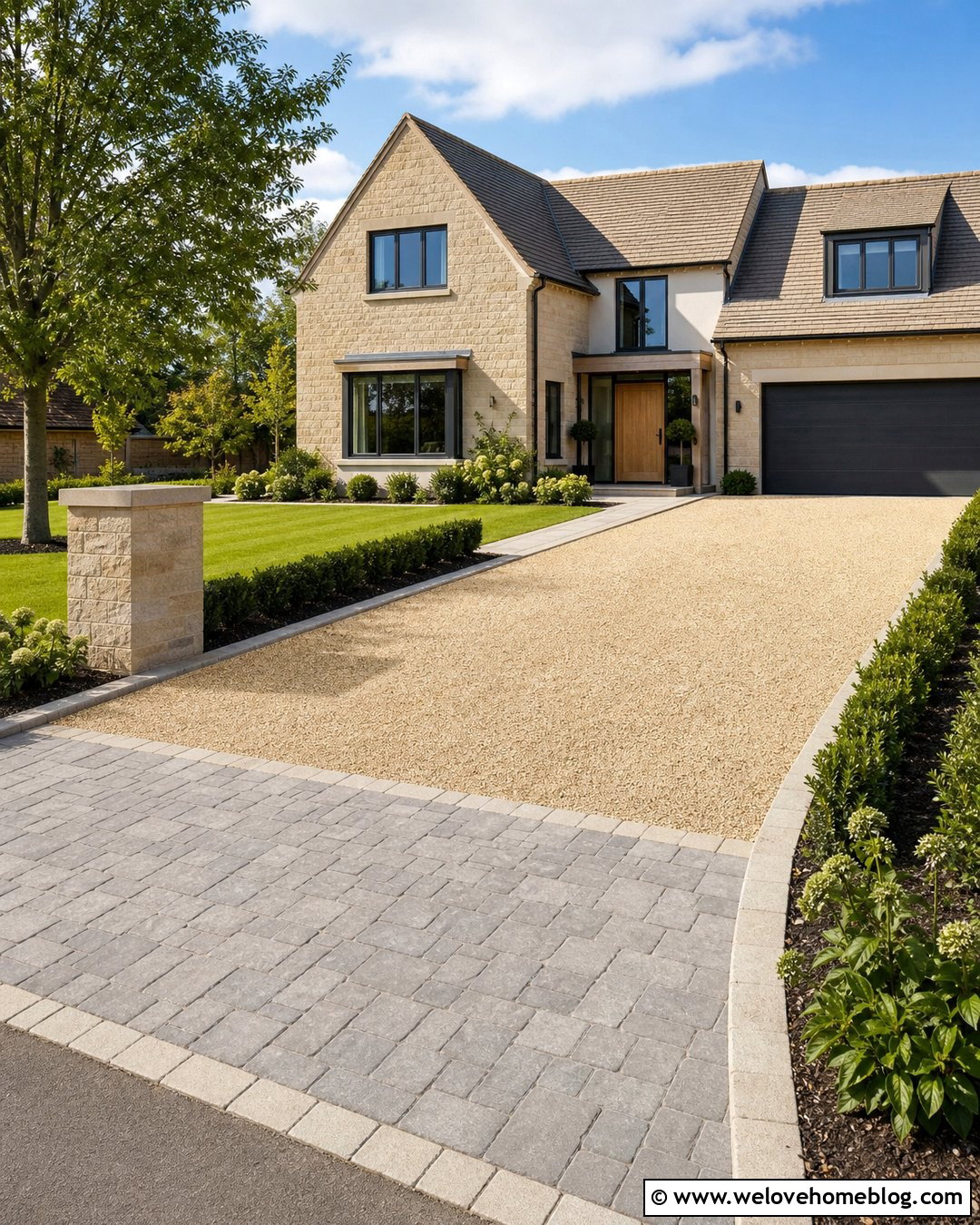
A stabilization system can help a large gravel surface maintain a more consistent appearance under regular traffic. Fill a heavy-duty permeable grid with small angular gray gravel, keeping the cells fully covered so the underlying structure remains hidden. Design the driveway as a clean, straight approach with a wide turning court near a contemporary farmhouse. Border the surface with pale concrete pavers that also continue into the front walkway. Large lawn panels and simple beds of grasses, hydrangeas, and evergreen shrubs will soften the practical grid layout. At the garage, install a wider paver threshold to reduce displaced stones around the doors. Gravel grids are particularly useful where loose material tends to migrate, although the base preparation, grid rating, drainage plan, and installation method should match site conditions. ()
19. Gravel Driveway With Guest Parking Bays
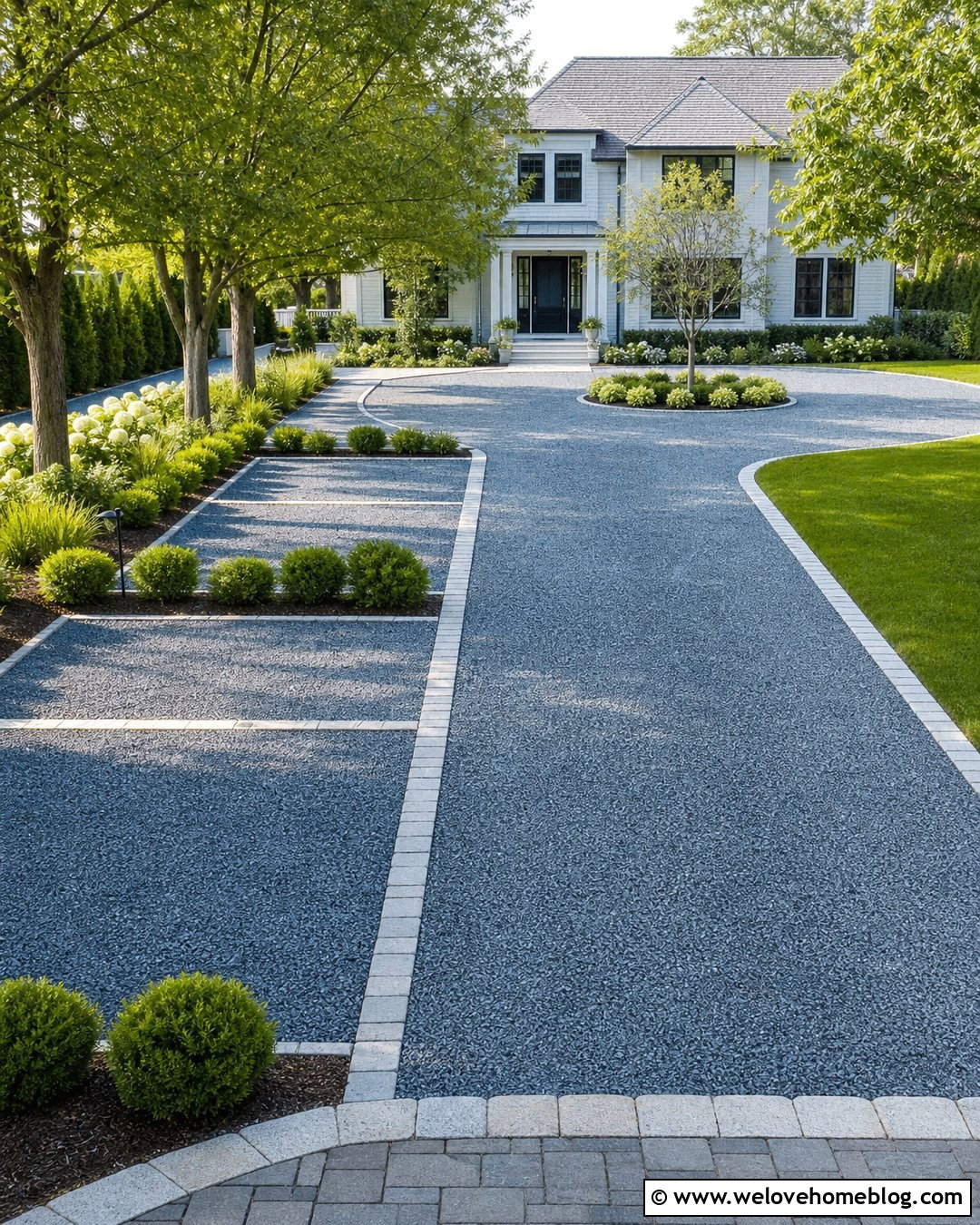
Frequent visitors call for a driveway that separates through traffic from parked vehicles. Build the main lane with compacted blue-gray crushed stone, then add two or three gravel parking bays along one side. Define each bay with granite paver strips and place low planting beds between them. This creates separation without using painted lines or signs. Continue the main driveway toward a large turnaround near the garage, keeping the front walkway free from vehicle movement. Shade trees can provide scale and comfort, but position trunks well beyond door-opening areas. Use low shrubs and ornamental grasses around the bays to maintain visibility. This layout offers the flexibility of a large driveway while giving every part a clear purpose, making the entrance feel organized even when several guests arrive at once.
20. Gravel Driveway With Porte-Cochere Entrance
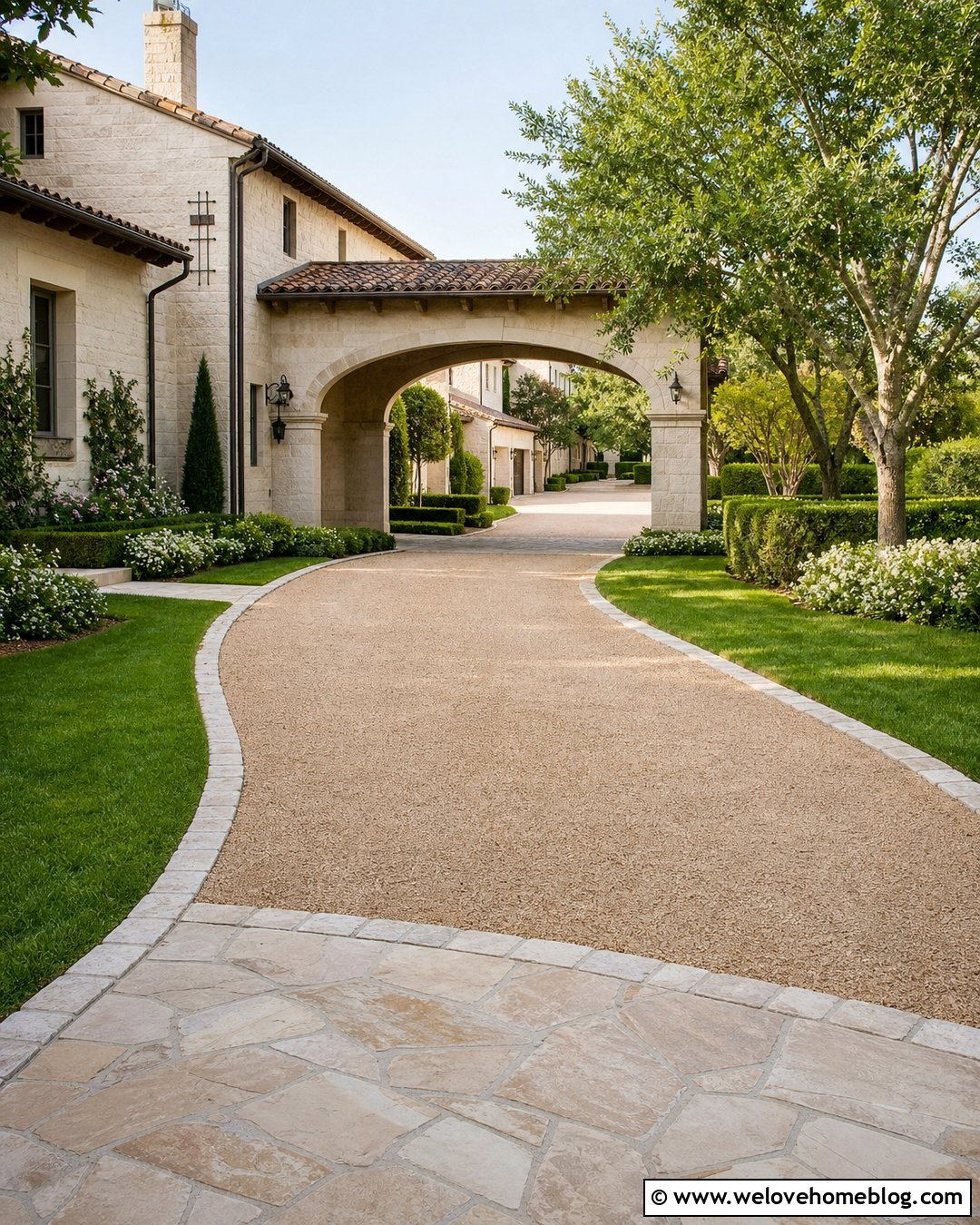
A broad gravel driveway can form an elegant approach to a covered porte-cochere. Use fine, compacted buff gravel in a sweeping curved layout that passes beneath the structure before continuing toward a rear parking court or garage. Frame the driving edge with limestone blocks that match the house facade and column bases. Near the covered entrance, add a deeper band of flat stone pavers to create a smoother walking and unloading area. Formal lawn panels, shade trees, clipped hedges, and restrained flowering beds should follow the driveway’s curve. Keep the space directly beside the porte-cochere open so doors can be used easily. This arrangement combines shelter, circulation, and curb appeal in one complete composition, making it especially effective for large traditional, Mediterranean, or European-inspired residences.
Conclusion:
The best large driveway designs balance generous vehicle space with strong borders, comfortable circulation, and landscaping that suits the property. Gravel color should complement the house, while the shape should respond to the lot, garage position, slope, and everyday traffic needs. Trees, planting islands, pillars, paver bands, and lighting can organize a broad surface without making it feel crowded. Before installation, confirm drainage, base preparation, sightlines, access requirements, and local rules with qualified professionals. Whether you prefer an informal country approach or a formal circular court, these 20 Large Gravel Driveway Ideas offer practical ways to turn a functional entrance into a cohesive and attractive part of your home.

Related posts:
Leave a Reply