
Gravel grid driveways combine the relaxed look of loose stone with a more structured, practical surface. The hidden cellular grid helps contain aggregate, define the driving area, and reduce the movement that often creates scattered stones or uneven tire tracks. A well-planned design can also complement almost any home, from a traditional colonial to a clean-lined modern farmhouse. Color, driveway shape, edging, entrance details, and nearby planting all affect the finished result. Proper base preparation, compatible aggregate, firm perimeter restraints, and thoughtful drainage remain essential for lasting performance. () Whether you are improving a compact parking area or planning a sweeping country entrance, these complete looks offer practical inspiration. Explore the following **25 Gravel Grid Driveway Ideas** to find a layout that suits your home and landscape.

1. Gray Gravel Grid Driveway With Belgian Block Edging
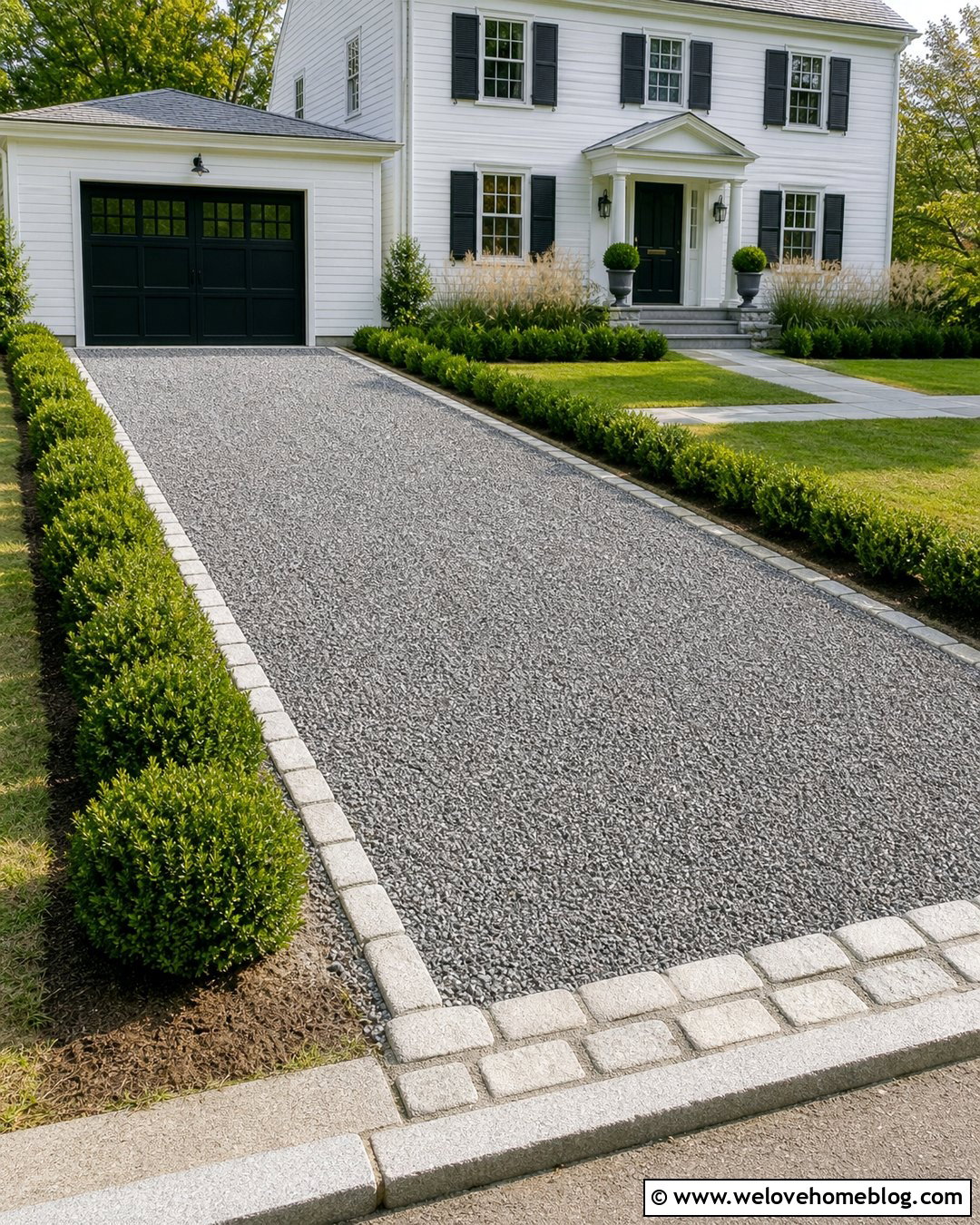
A straight gray gravel grid driveway creates a simple foundation that works with many American home styles. Choose medium-gray angular crushed stone for a neat surface that hides everyday dust and debris. Frame both sides with Belgian block set slightly above the gravel. The blocks provide a strong visual boundary while connecting the driveway to traditional masonry on the house. Add low boxwoods, ornamental grasses, and a narrow lawn strip outside the edging to soften the hard lines. At the garage, continue the Belgian block across the driveway as a finishing band. This complete look feels orderly without appearing overly formal. It is especially suitable for colonial, Cape Cod, and craftsman homes with gray roofing or natural stone accents.
2. Pea Gravel Grid Driveway With Cobblestone Borders
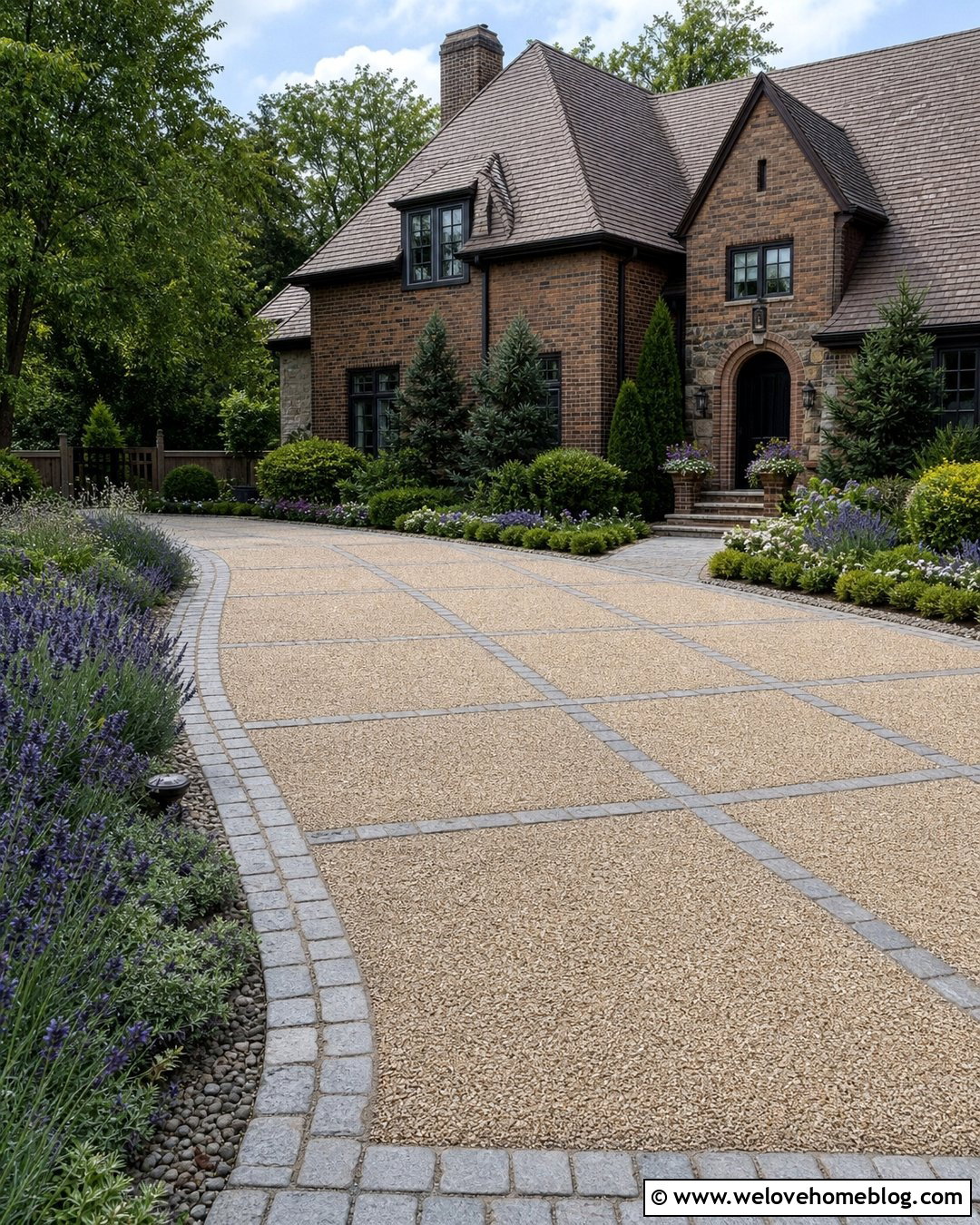
Warm pea gravel and aged cobblestone create a welcoming driveway with traditional character. Use a stabilization grid specifically approved for the selected rounded aggregate, and fill the cells evenly so the structure remains concealed. A gently curved layout will make the entrance feel softer and more connected to the landscape. Install chunky gray cobblestones along both sides, then repeat them around nearby planting beds. Lavender, catmint, dwarf evergreens, and flowering ground covers can spill slightly toward the border without blocking the driving area. A matching cobblestone walkway helps the driveway look intentional rather than added later. This combination suits brick cottages, Tudor-inspired houses, and older suburban homes where a smooth concrete surface might appear too plain or modern.
3. White Gravel Grid Driveway For A Modern House
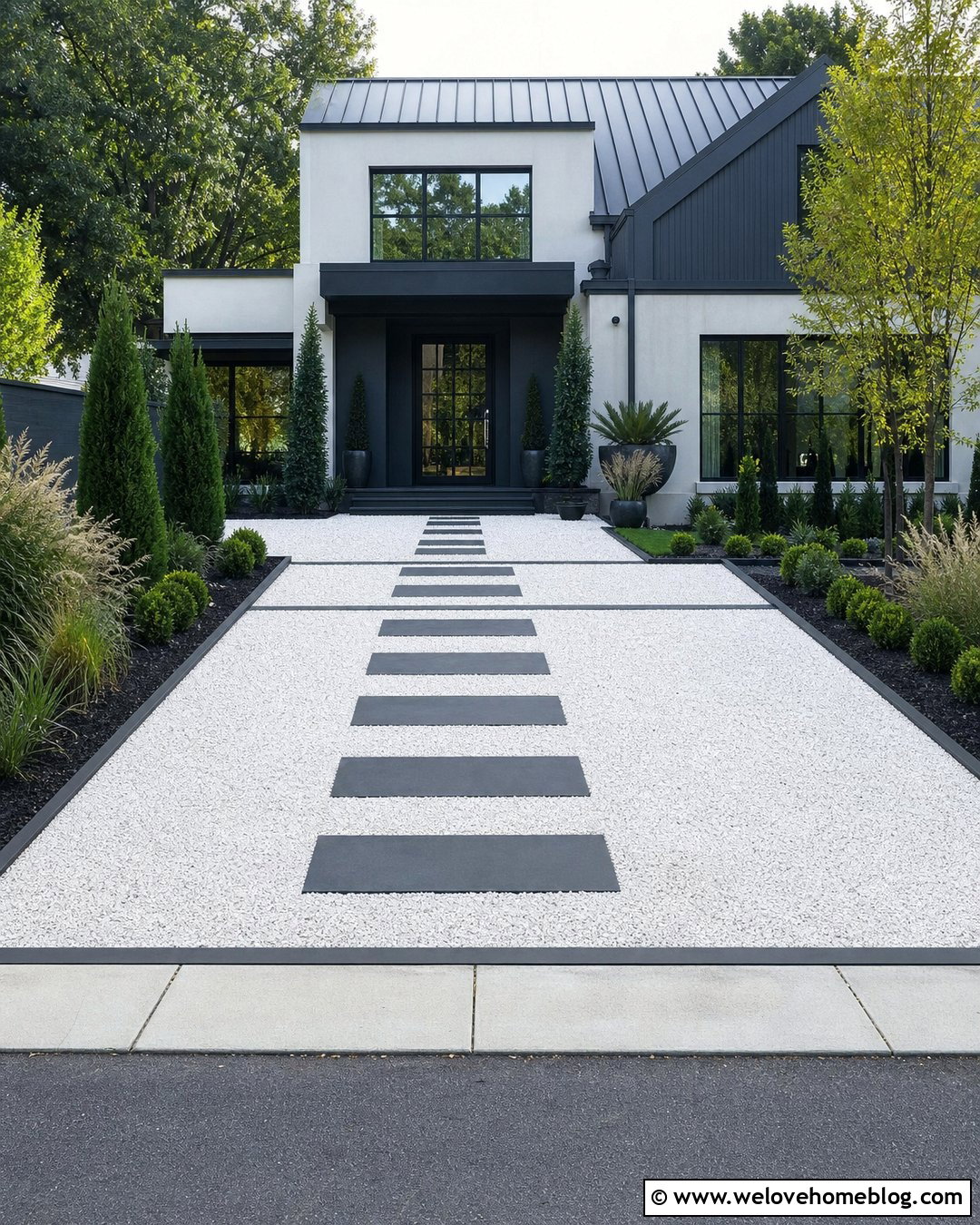
Bright white crushed marble or pale limestone can give a gravel grid driveway a crisp modern appearance. Keep the driveway straight and rectangular, with clean steel edging installed nearly flush with the surface. The restrained layout allows the light-colored aggregate to become the main feature. For contrast, use charcoal stepping stones in the walkway and dark architectural planters near the garage. Landscaping should remain simple, with clipped grasses, compact evergreens, and a few sculptural plants arranged in broad gravel-mulched beds. Avoid numerous small borders that could make the front yard look busy. The pale surface reflects light and looks especially striking beside black siding, white stucco, or warm wood cladding. Regular leaf removal will help preserve its fresh, high-contrast finish.
4. Tan Gravel Grid Driveway For A Modern Farmhouse
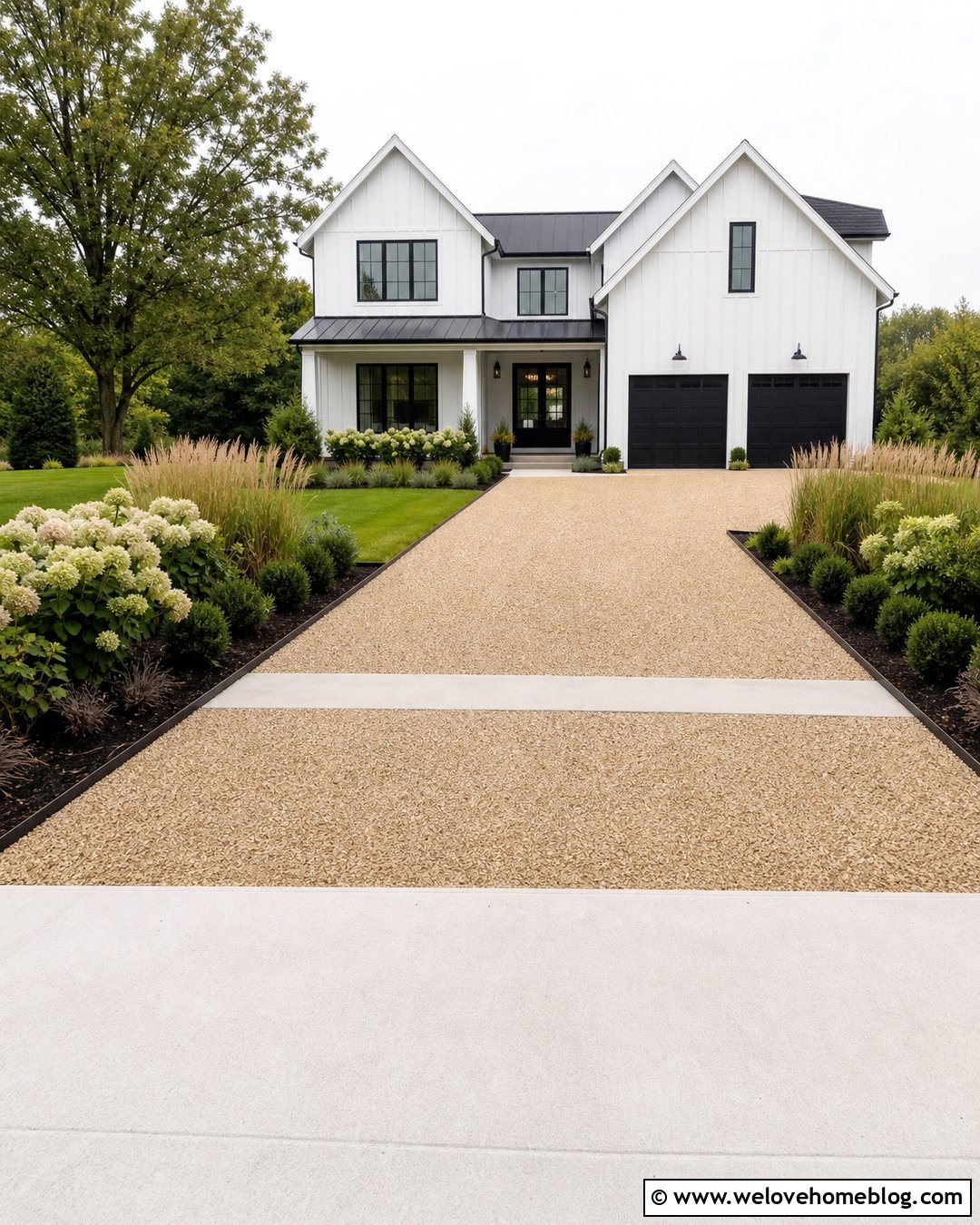
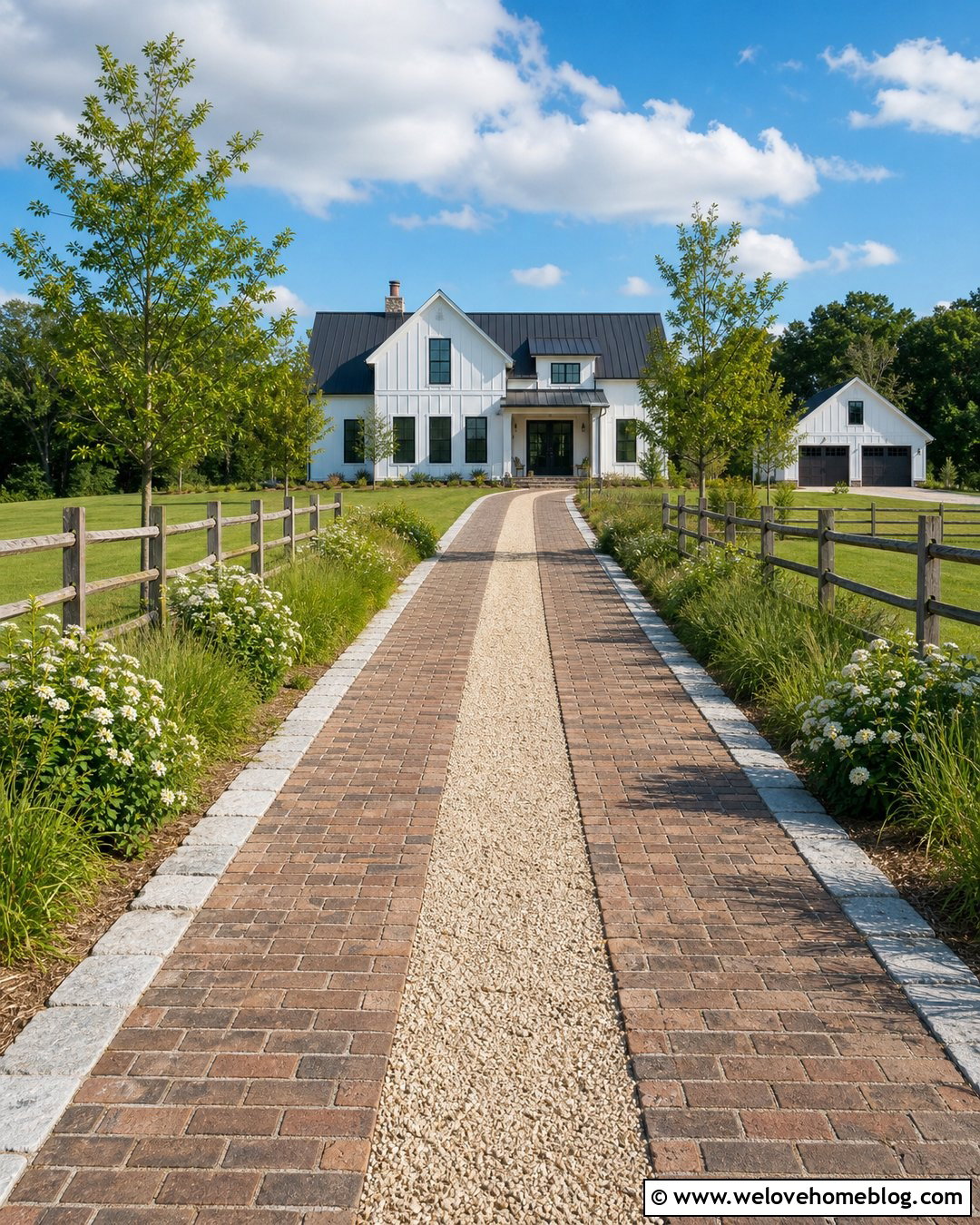
A tan limestone gravel grid driveway brings warmth to a white modern farmhouse without competing with its architecture. Create a wide, straight approach that leads directly toward a detached or front-facing garage. Edge the driveway with dark steel for a subtle outline, then place broad beds of fountain grass, hydrangeas, and compact junipers along the sides. A simple concrete walkway can cross the gravel near the porch, forming a clean transition between rustic and modern materials. Use the same tan stone in smaller landscape areas to visually connect the driveway with the yard. Black sconces, downspouts, and window frames provide useful contrast. The finished design feels casual and rural, but the grid and defined edges keep the aggregate looking controlled and purposeful.
5. Red Granite Gravel Grid Driveway With Brick Edging
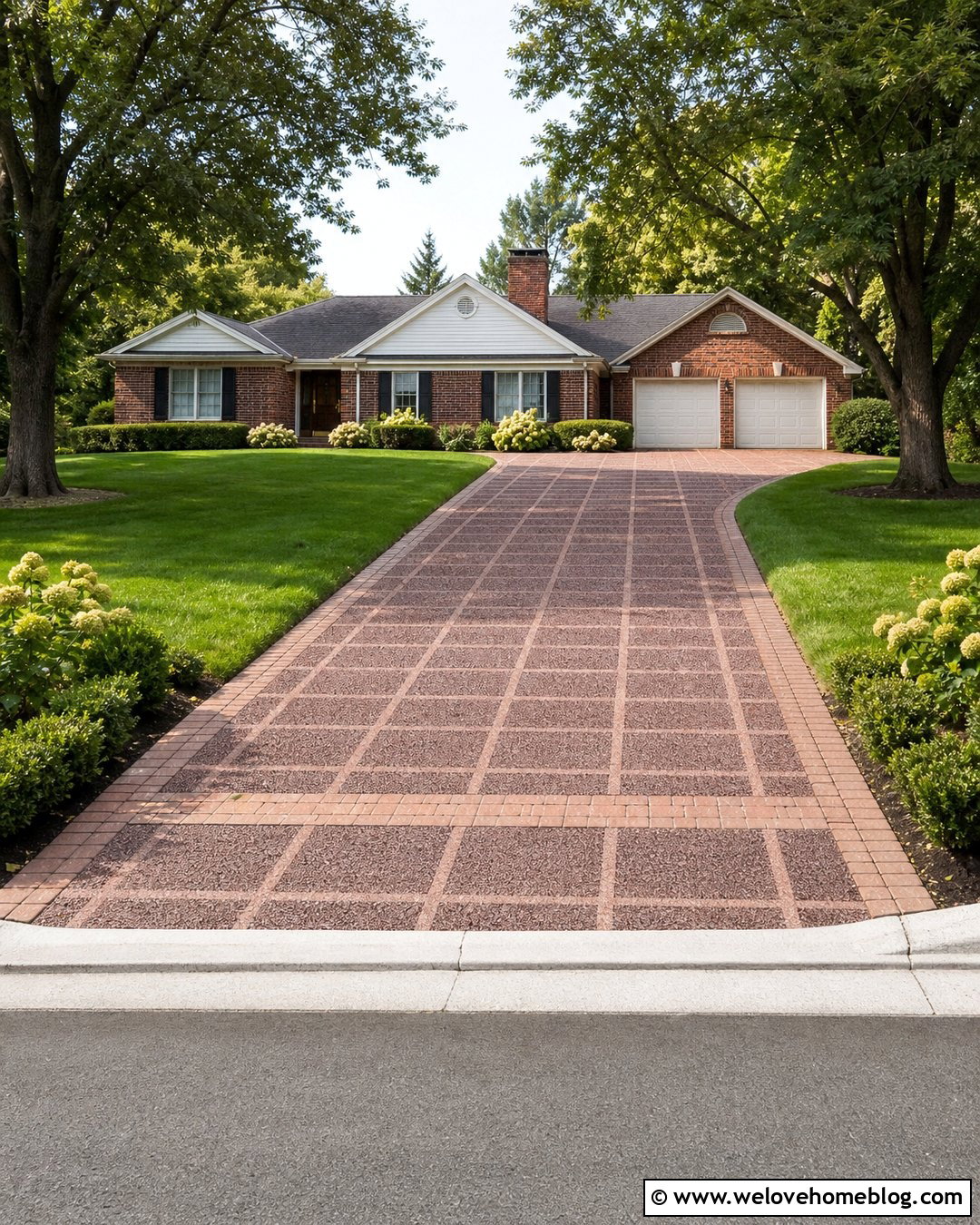
Red granite chips can create a rich driveway surface that coordinates naturally with a red or brown brick house. Choose muted rust, burgundy, and gray tones rather than a bright solid-red aggregate. Lay the driveway in a straight or gently flared shape, using clay brick pavers as a sturdy border. A double brick ribbon at the curb makes the entrance more noticeable and helps tie the complete design to the facade. Surround the driveway with deep green shrubs, shade trees, and cream flowering perennials to balance the warm surface color. Near the garage, repeat the brick in a wider apron or walkway connection. This gravel grid driveway works particularly well for ranch, Georgian, and traditional suburban homes with established landscaping.
6. Black Gravel Grid Driveway With Concrete Borders
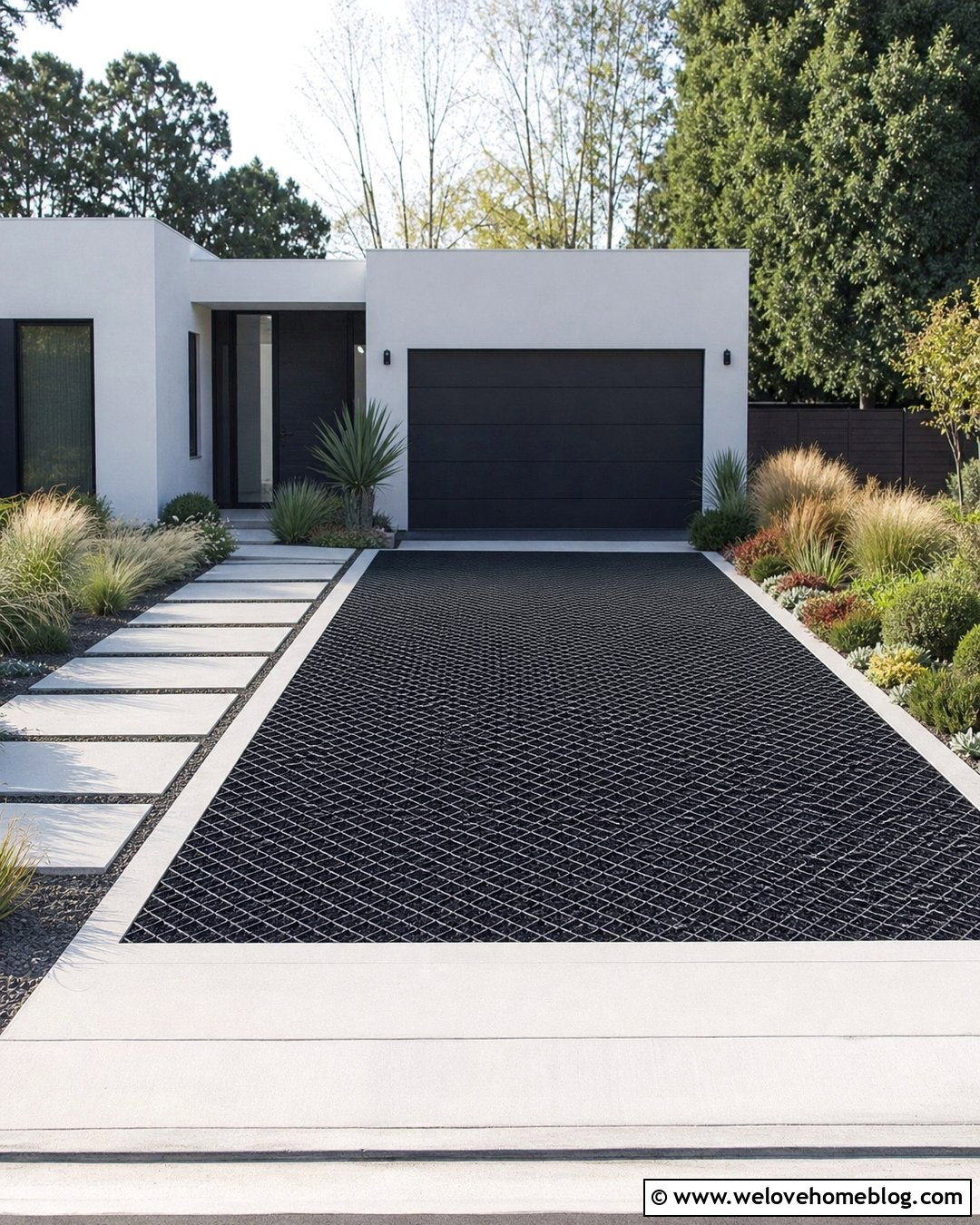
Dark basalt or charcoal granite gives a gravel grid driveway a bold, contemporary finish. Pair the black aggregate with smooth light-gray concrete curbs to create clear contrast along the full approach. A wide rectangular layout suits a modern home with a flat or low-pitched roof. Continue the concrete border around geometric planting beds filled with ornamental grasses, yucca, sedum, and neatly clipped shrubs. At the curb, flare the entrance slightly to make turning easier and emphasize the driveway shape. Large square concrete slabs can form a coordinated walkway beside the gravel. Because very dark stone can show pale dust, select locally available aggregate and test a sample before ordering. The final look should feel graphic, uncluttered, and connected to the home’s exterior palette.
7. Curved Gravel Grid Driveway With Steel Edging
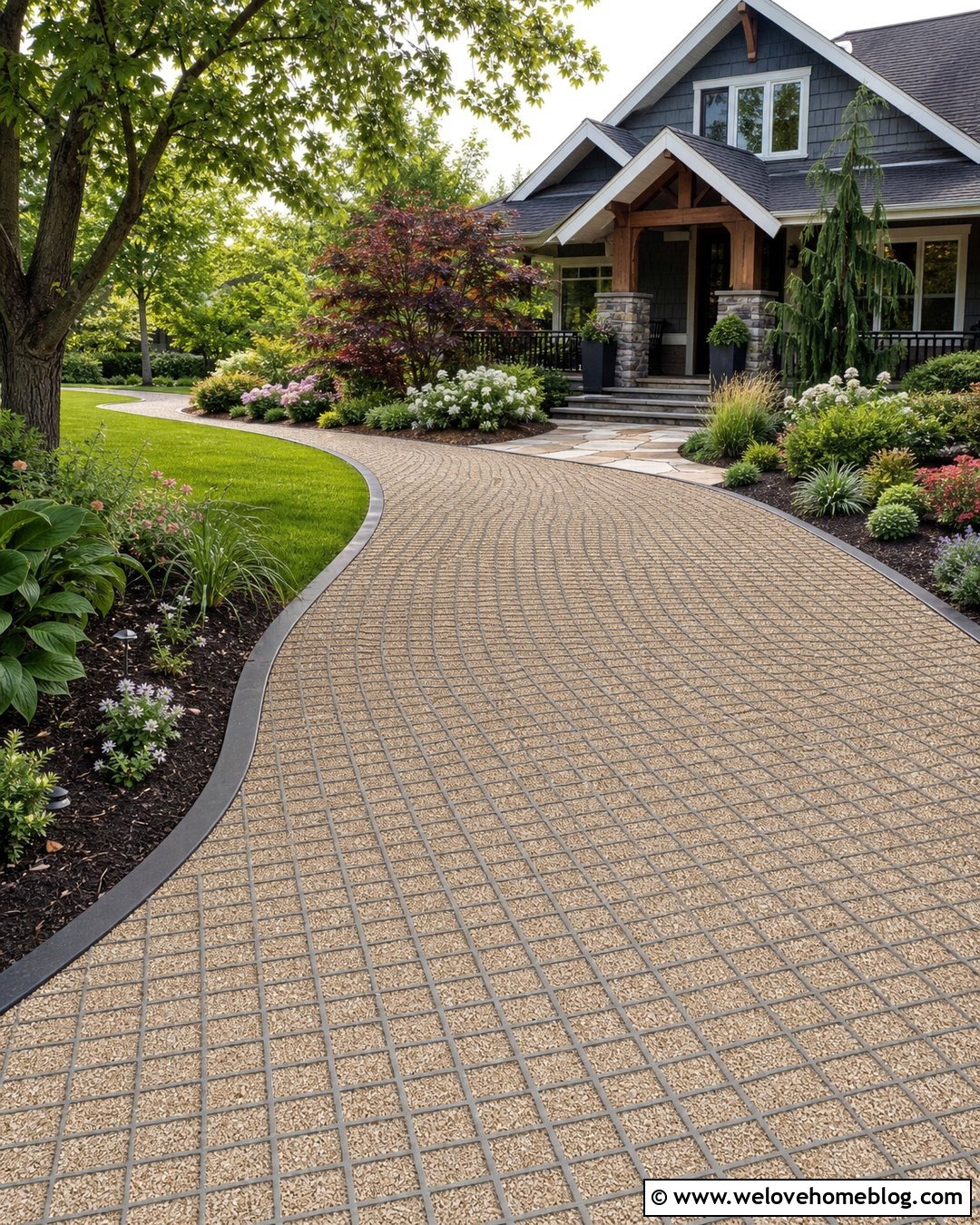
A curved gravel grid driveway can make an ordinary front yard feel larger and more landscaped. Use gray-beige crushed granite to create a versatile surface, then define the sweeping edges with heavy steel restraint. The curve should look gradual and functional rather than tight or decorative. On the outside edge, plant layered beds with low ground covers in front, flowering shrubs in the middle, and small ornamental trees behind. Keep the inside edge more open with lawn and a few evenly spaced grasses. A stone walkway branching from the curve can guide visitors toward the front door. This layout suits craftsman, ranch, and contemporary homes positioned away from the street. The hidden grid keeps the aggregate organized while allowing the curved shape to remain visually clean.
8. Circular Gravel Grid Driveway With A Planted Island
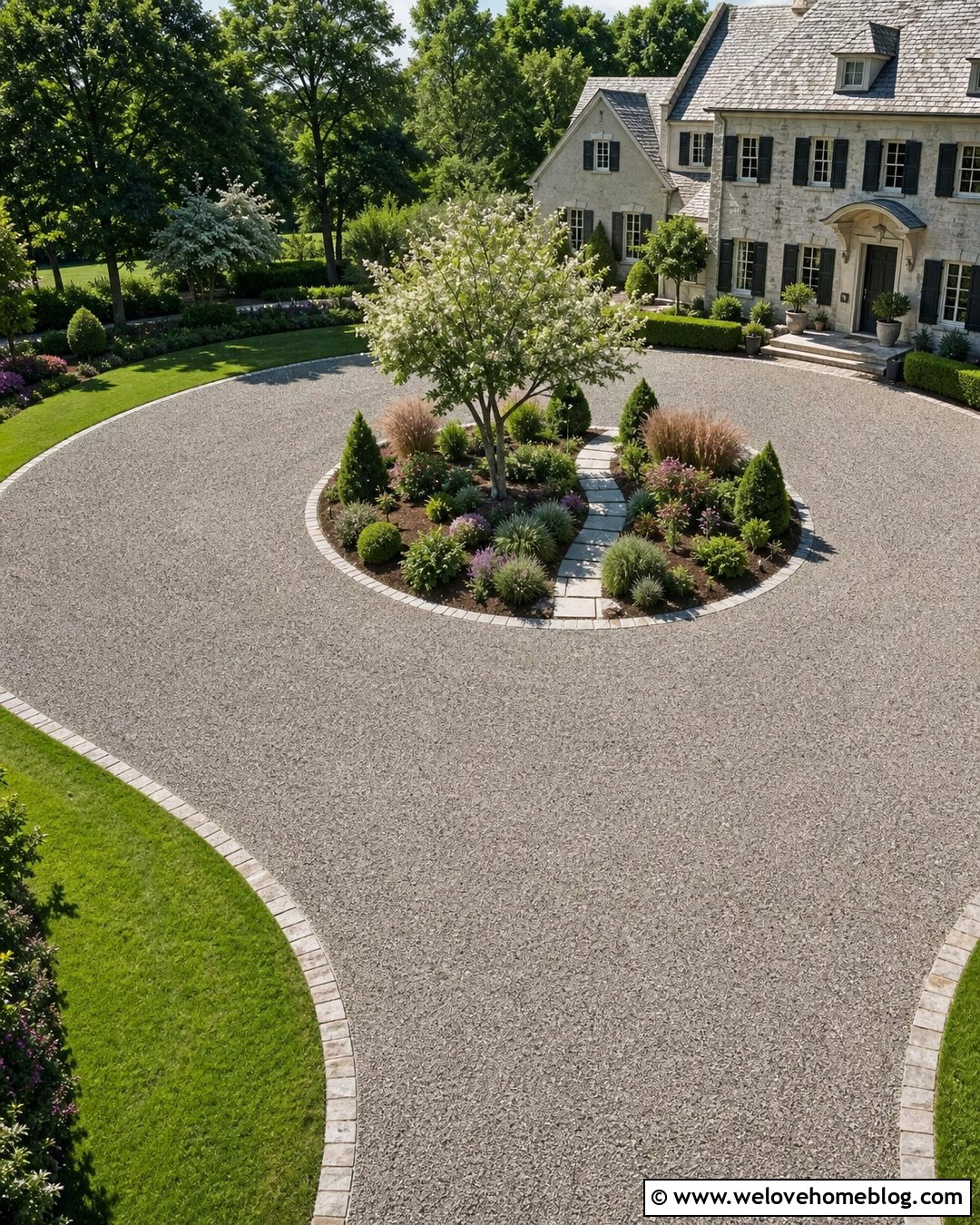
A circular gravel grid driveway offers an impressive entrance while creating convenient vehicle flow. Fill the stabilized surface with warm gray crushed stone and outline the outer curve with granite setts or dark brick. In the center, build a generous landscaped island rather than a tiny decorative circle. A small flowering tree can serve as the focal point, surrounded by compact evergreen shrubs, ornamental grasses, and seasonal perennials. Keep mature plant sizes in mind so branches do not extend into the driving lane. Connect the front walkway to the inner island border using matching masonry. This arrangement works best in a broad front yard with enough turning space. It can complement colonial, Mediterranean, French country, and traditional estate-inspired homes without requiring an entirely paved surface.
9. Horseshoe Gravel Grid Driveway With Stone Pillars
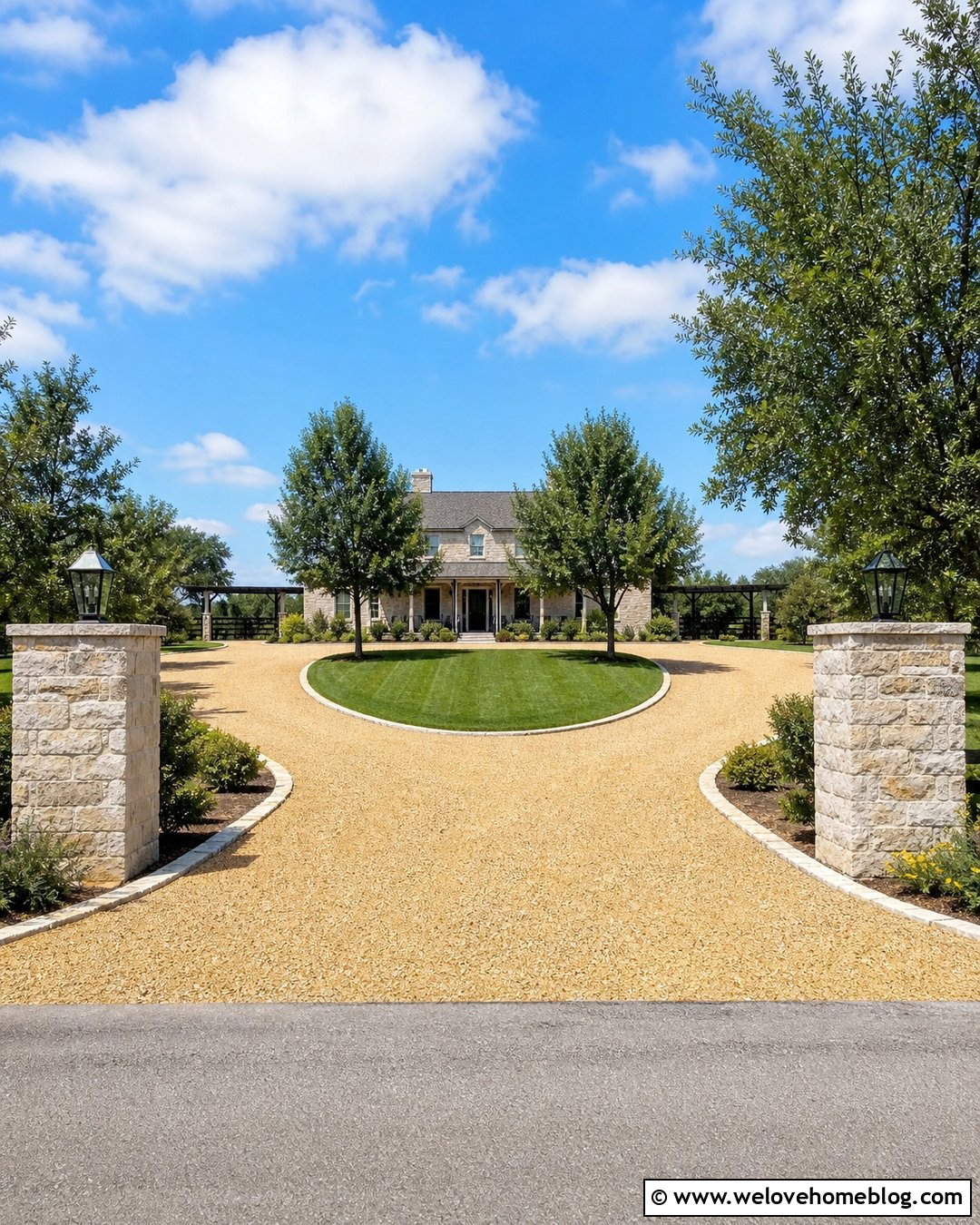
A horseshoe gravel grid driveway creates two distinct entrances and a graceful approach to the house. Use golden crushed limestone for a warm, country-inspired surface. Mark both openings with low natural-stone pillars and simple black lanterns, ensuring the structures do not reduce driver visibility. Matching stone edging can follow the curved driveway and continue around the central lawn. Add evenly spaced shade trees along the outer side, with low shrubs positioned near the pillars. A broad walkway should connect the center of the drive to the front porch. This complete layout looks especially natural with farmhouse, colonial, and country homes on larger lots. The grid helps maintain a defined travel path, while the open center keeps the front yard green and visually balanced.
10. Narrow Gravel Grid Driveway Beside The House
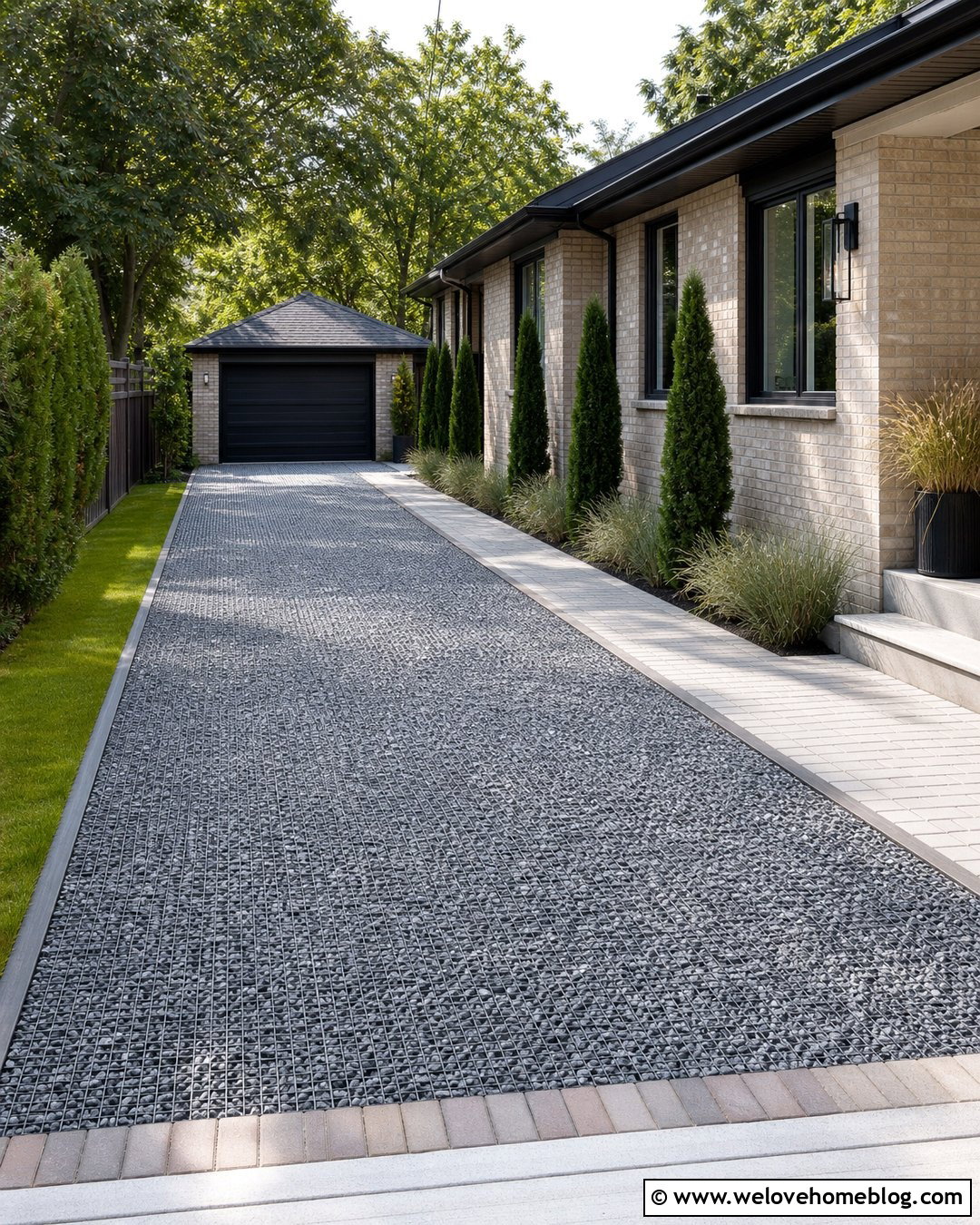
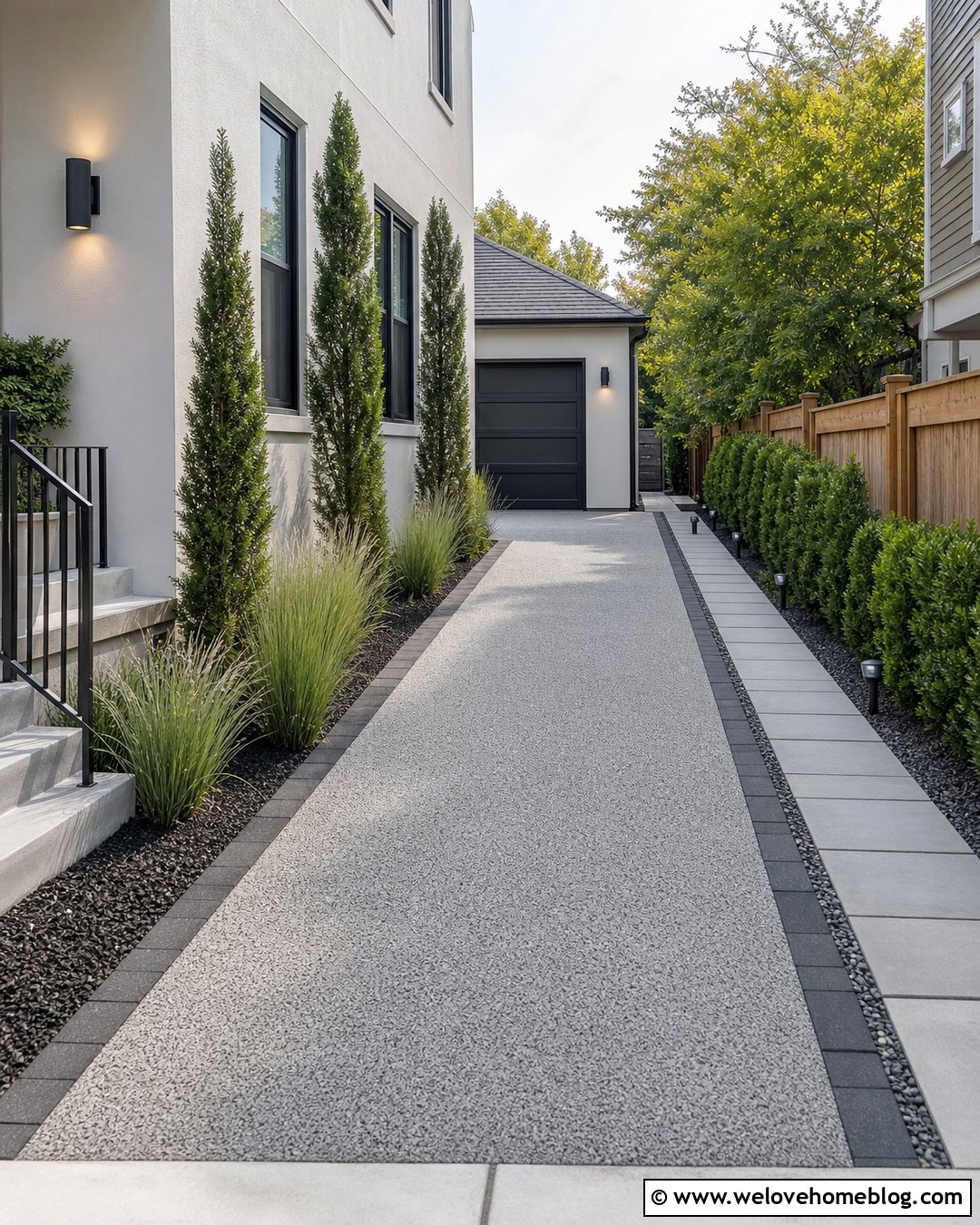
A narrow side driveway can feel finished and spacious when every detail is kept simple. Choose compacted silver-gray angular gravel held within a vehicle-rated grid. Run the driveway straight beside the house, using slim metal edging to avoid sacrificing usable width. Add a paved or brick threshold where the driveway meets the sidewalk and another at the garage. Instead of wide planting beds, use upright shrubs, columnar evergreens, or narrow ornamental grasses along one side. Wall-mounted lighting can illuminate the route without placing fixtures in the driving area. Where possible, include a slim walkway separated from the gravel by a flush paver ribbon. This layout is practical for compact urban lots, bungalows, duplexes, and homes where the garage sits behind the main building.
11. Small Gravel Grid Driveway For A Front Yard
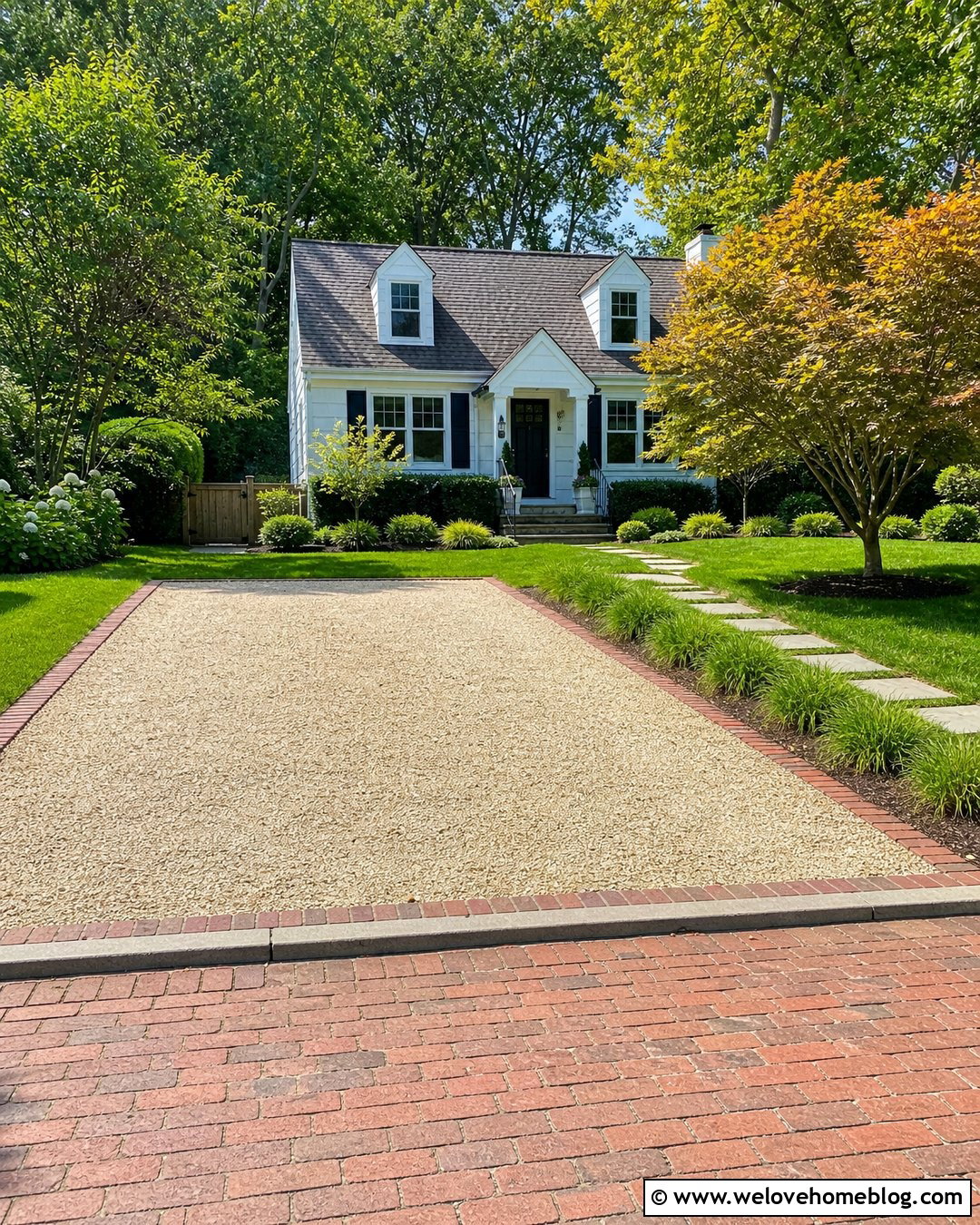
A compact front-yard driveway should provide parking without overwhelming the house. Create a simple rectangular pad using buff-colored crushed limestone in a concealed stabilization grid. Define the outer edge with a narrow clay brick ribbon that matches the front steps or facade. Instead of covering the entire yard, preserve a lawn panel and add one well-proportioned planting bed near the porch. Low shrubs, dwarf grasses, and a small ornamental tree provide structure without reducing visibility. A stepping-stone walkway can run beside the parking area and connect directly to the entrance. At the street, use a durable brick or concrete apron for a tidy transition. This balanced design fits cottages, small ranch homes, and town properties where efficient use of space is essential.
12. Long Gravel Grid Driveway With A Tree-Lined Approach
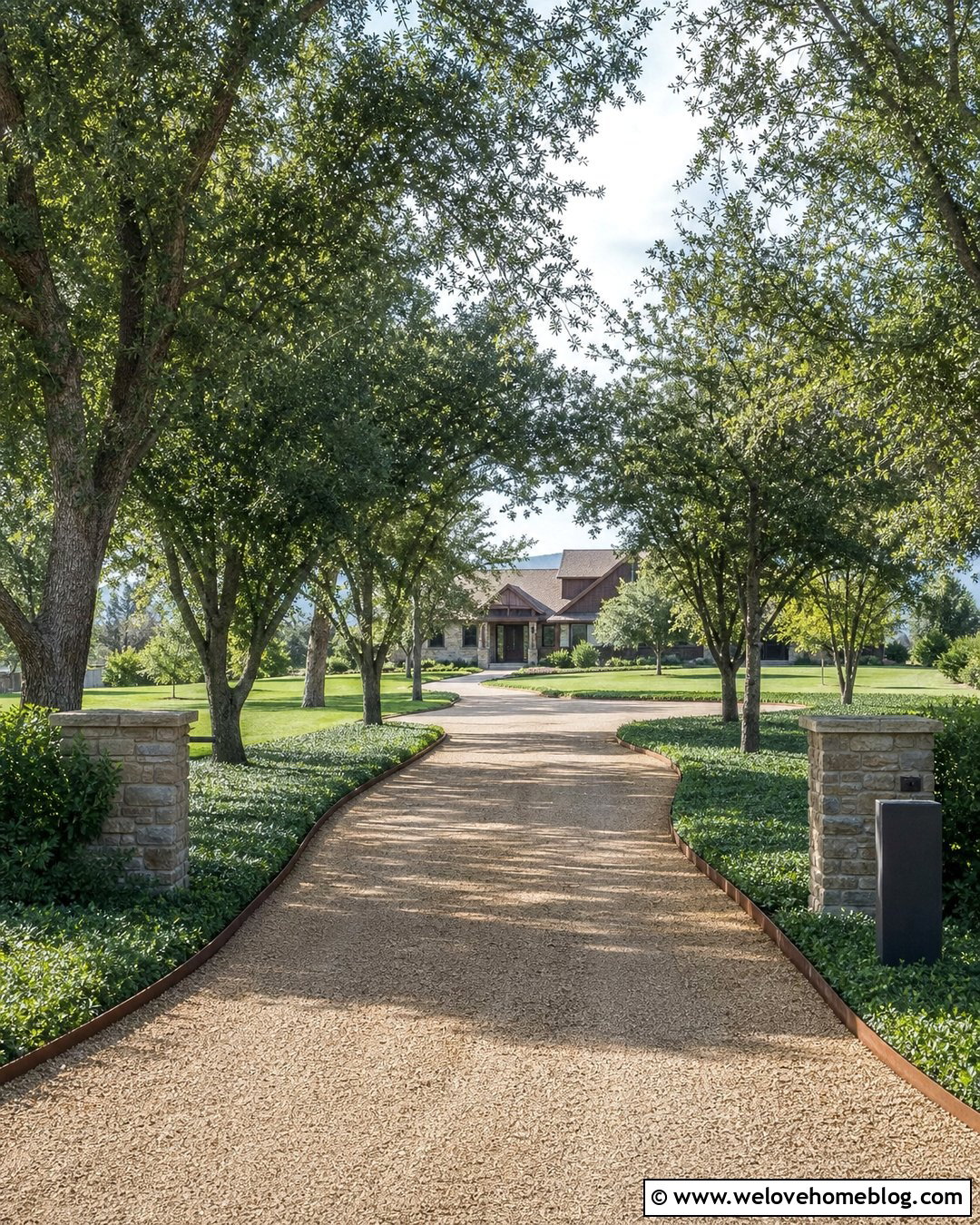
Few layouts feel as welcoming as a long driveway framed by evenly spaced trees. Use brown-gray crushed granite in a heavy-duty gravel grid and shape the route with a subtle curve toward the house. Low-profile steel edging will keep the sides crisp without distracting from the landscape. Plant suitable native or regionally adapted trees far enough from the driving surface to allow for mature trunks, branches, and roots. Beneath them, maintain lawn or broad sweeps of low ground cover for a calm, uncluttered appearance. Near the house, widen the driveway into a practical parking and turning area. Stone gateposts or an understated address marker can define the entrance. This complete look is ideal for country homes, wooded lots, and properties with deep front setbacks.
13. Sloped Gravel Grid Driveway With Drainage Landscaping
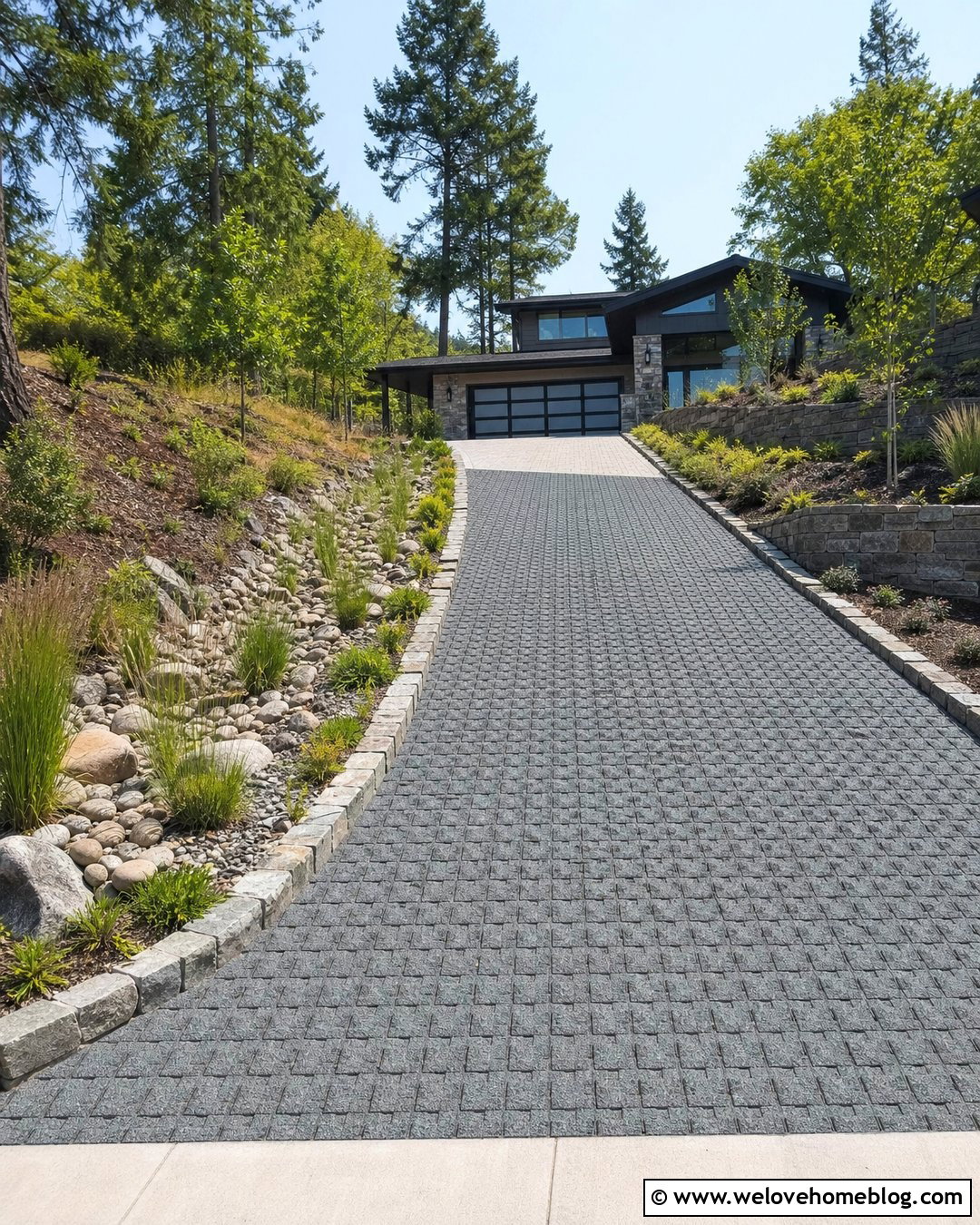
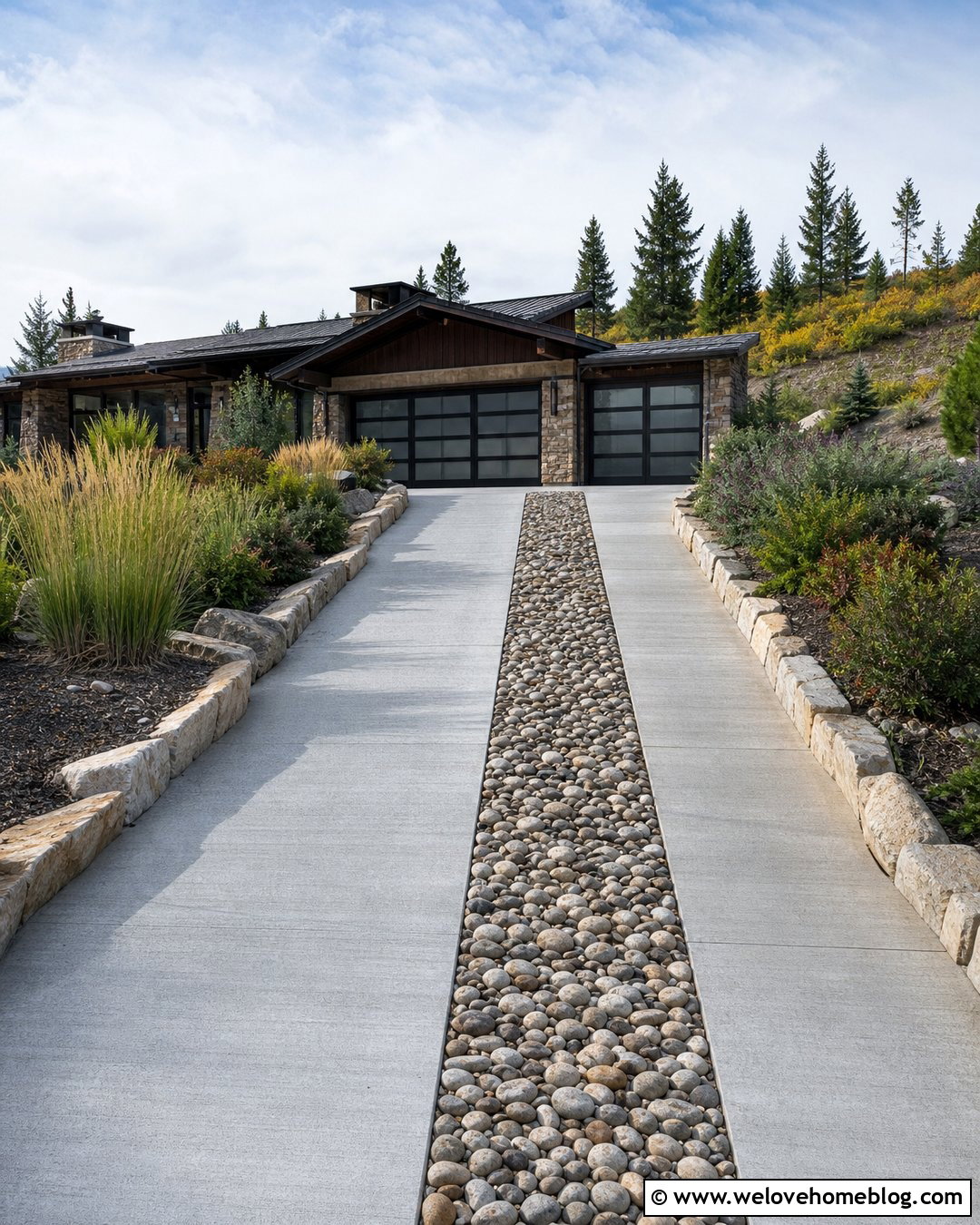
A sloped driveway needs a design that considers water movement from the beginning. Select angular crushed granite that interlocks well inside a grid approved for the site’s expected traffic and grade. Use secure concrete or stone borders to define the driveway and protect its shoulders. Beside the lower edge, create a landscaped swale with river rock, moisture-tolerant grasses, and suitable native plants. This feature should follow a professionally planned drainage route rather than direct water toward neighboring property or the home. A contrasting paver apron at the top can provide a polished garage transition. Keep curves broad and avoid complicated surface patterns. Local grading rules, soil conditions, and manufacturer limitations should be checked before construction, particularly on steep or erosion-prone sites. ()
14. Gravel Grid Driveway With A Paver Entrance Apron
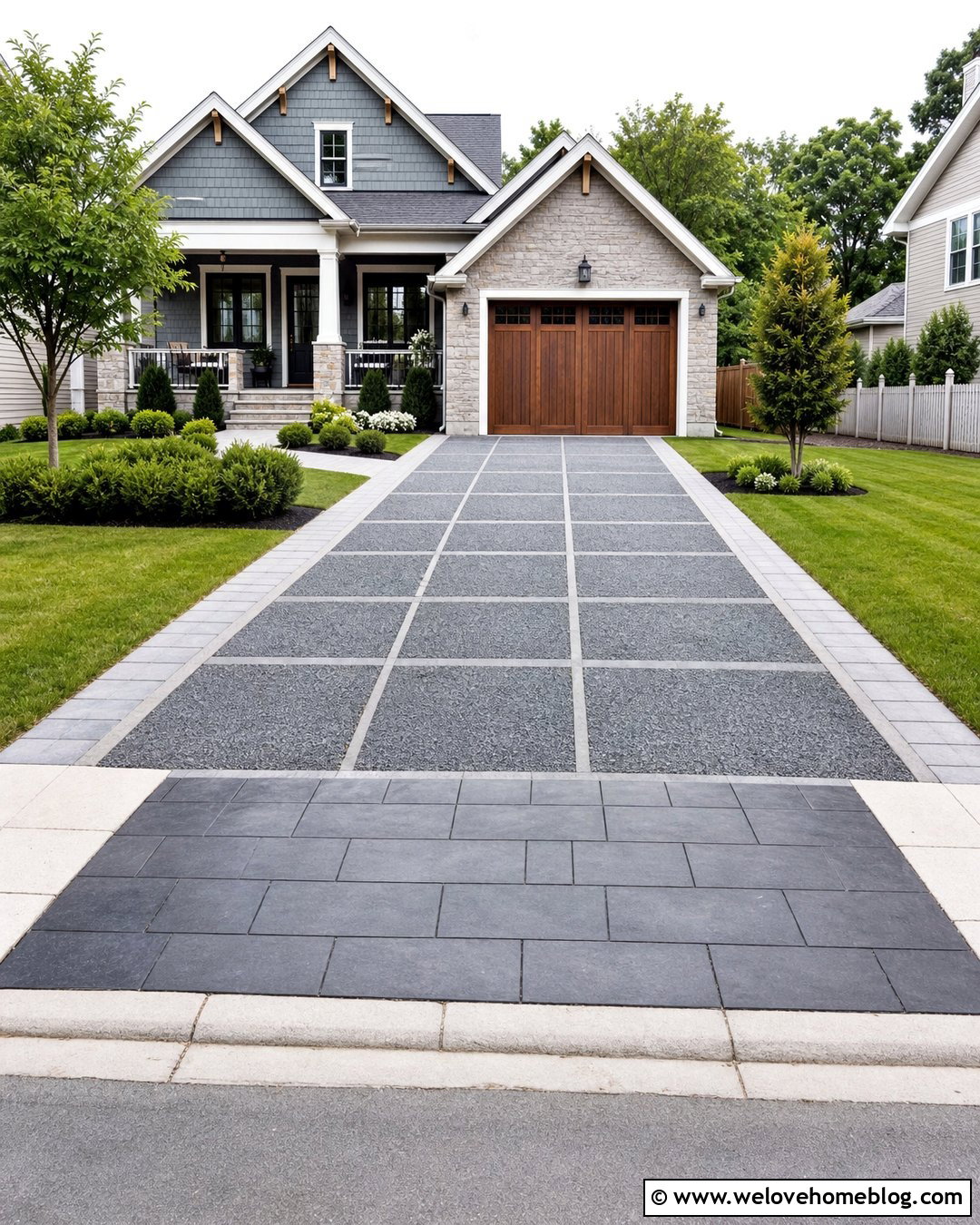
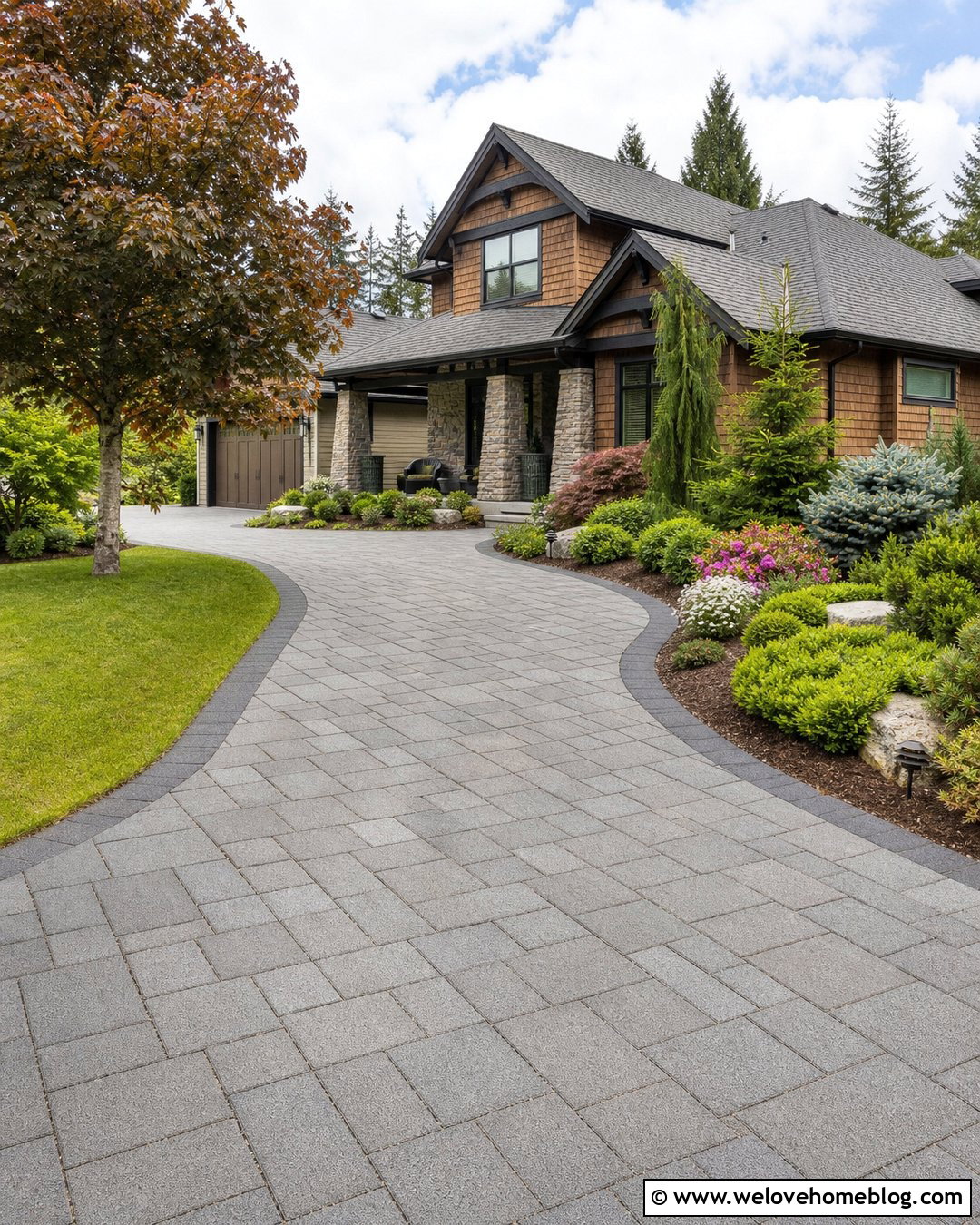
A paver apron gives a gravel grid driveway a more substantial connection to the street. Fill the main surface with medium-gray crushed stone, then install charcoal concrete pavers across the full entrance. Extend the pavers several feet into the property so the apron reads as an intentional design feature. A matching paver ribbon can outline both driveway edges and continue into the front walkway. Keep the driveway straight or add a gentle bend if the garage sits off-center. Frame the approach with lawn, low evergreen shrubs, and a pair of ornamental trees. The combination balances the relaxed texture of gravel with the precise appearance of modular paving. It is a versatile choice for craftsman, contemporary, ranch, and updated traditional homes.
15. Gravel Grid Driveway With A Cobblestone Garage Apron
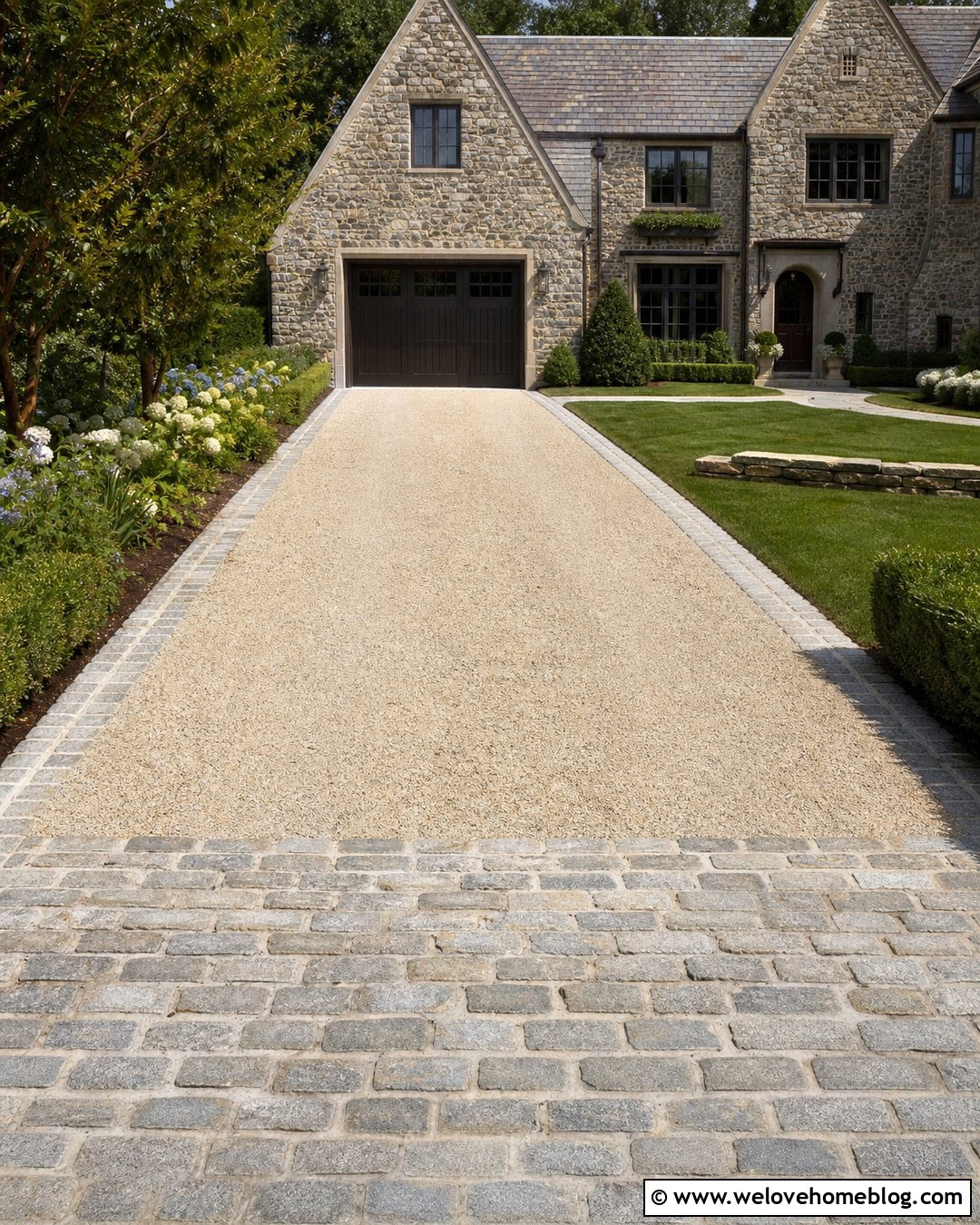
Placing a cobblestone apron near the garage creates an attractive transition at the most visible end of the driveway. Use soft beige gravel in the stabilized main section and natural gray cobblestones across the garage doors. Repeat one row of cobblestone along each side to connect the apron with the entrance. A straight driveway keeps the mixed materials from looking overly decorative. Add clipped hedges near the house, a simple lawn, and flowering beds farther from the parking area. The irregular texture of cobblestone works particularly well with stone cottages, Tudor homes, and traditional houses with arched doors. If genuine reclaimed stone exceeds the budget, select a durable tumbled paver with a similar scale and color variation for a coordinated appearance.
16. Gravel Grid Driveway With A Grass Center Strip
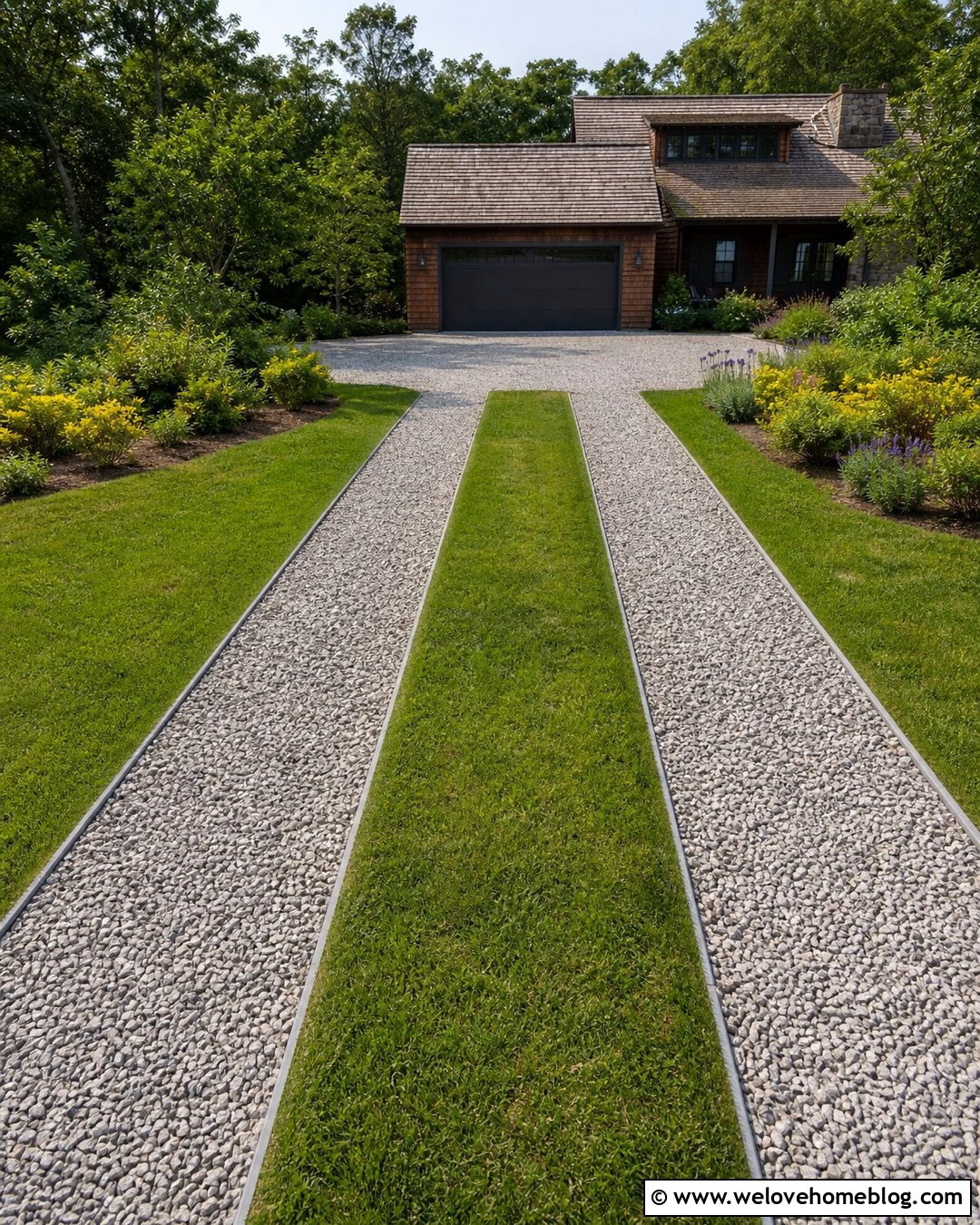
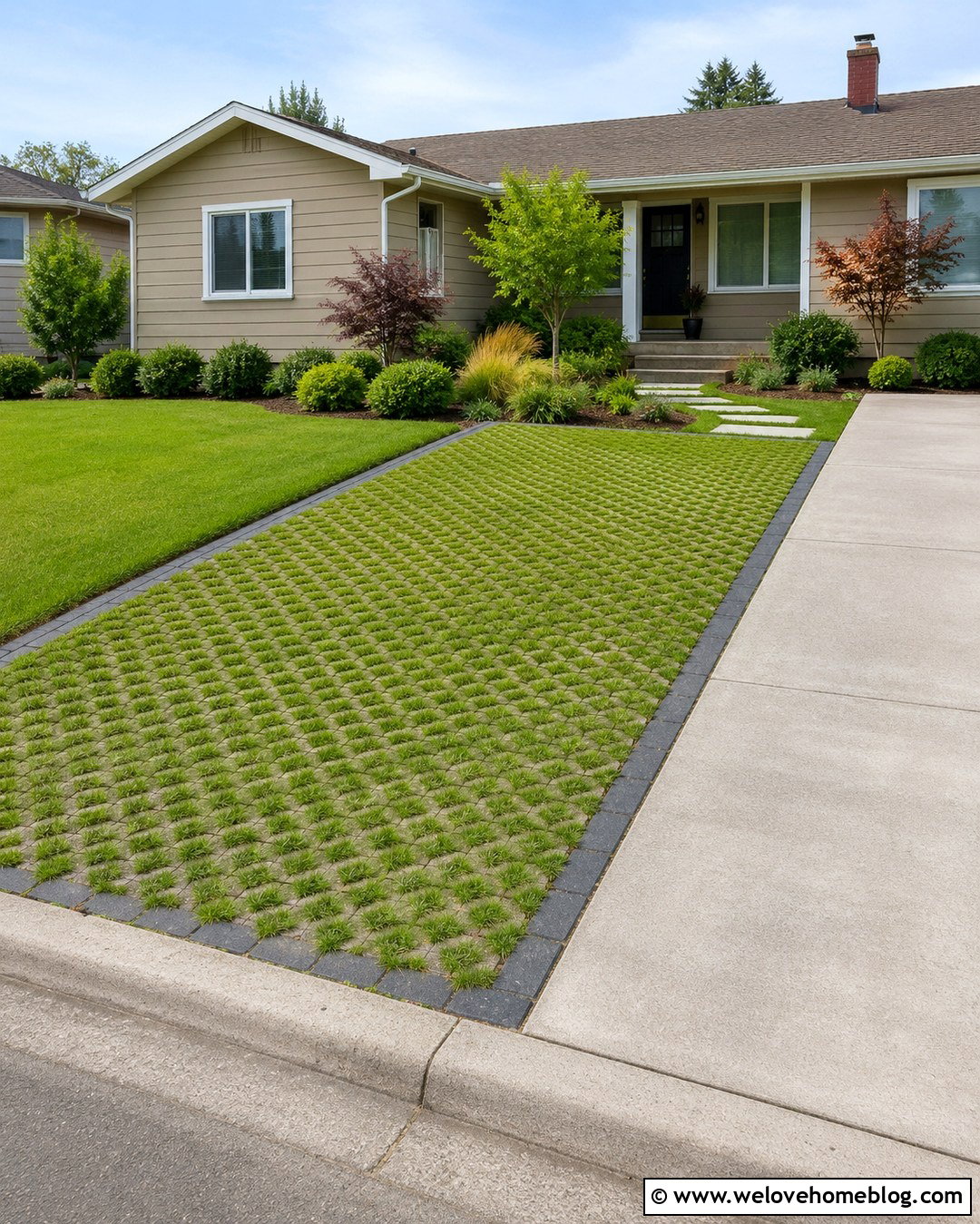
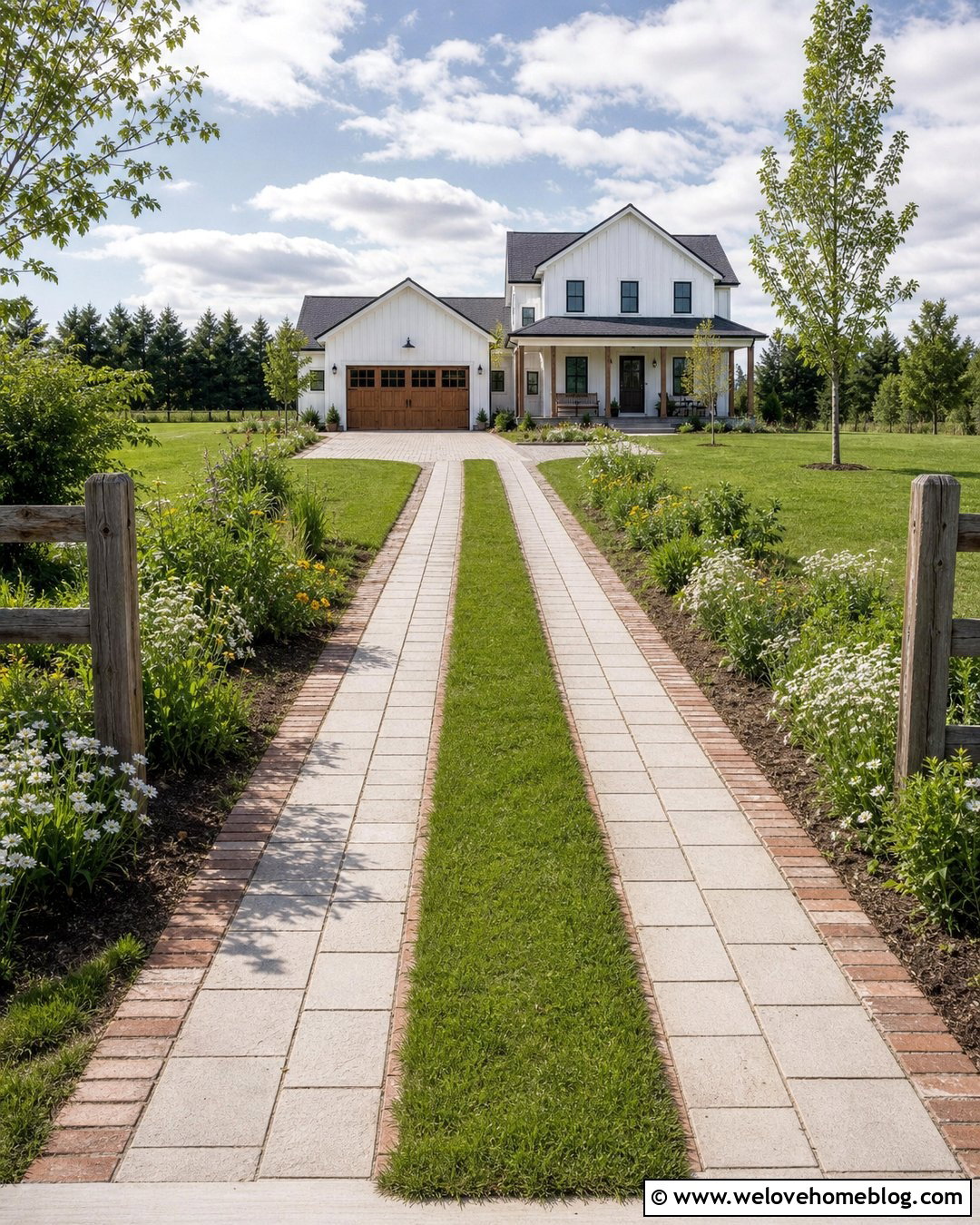
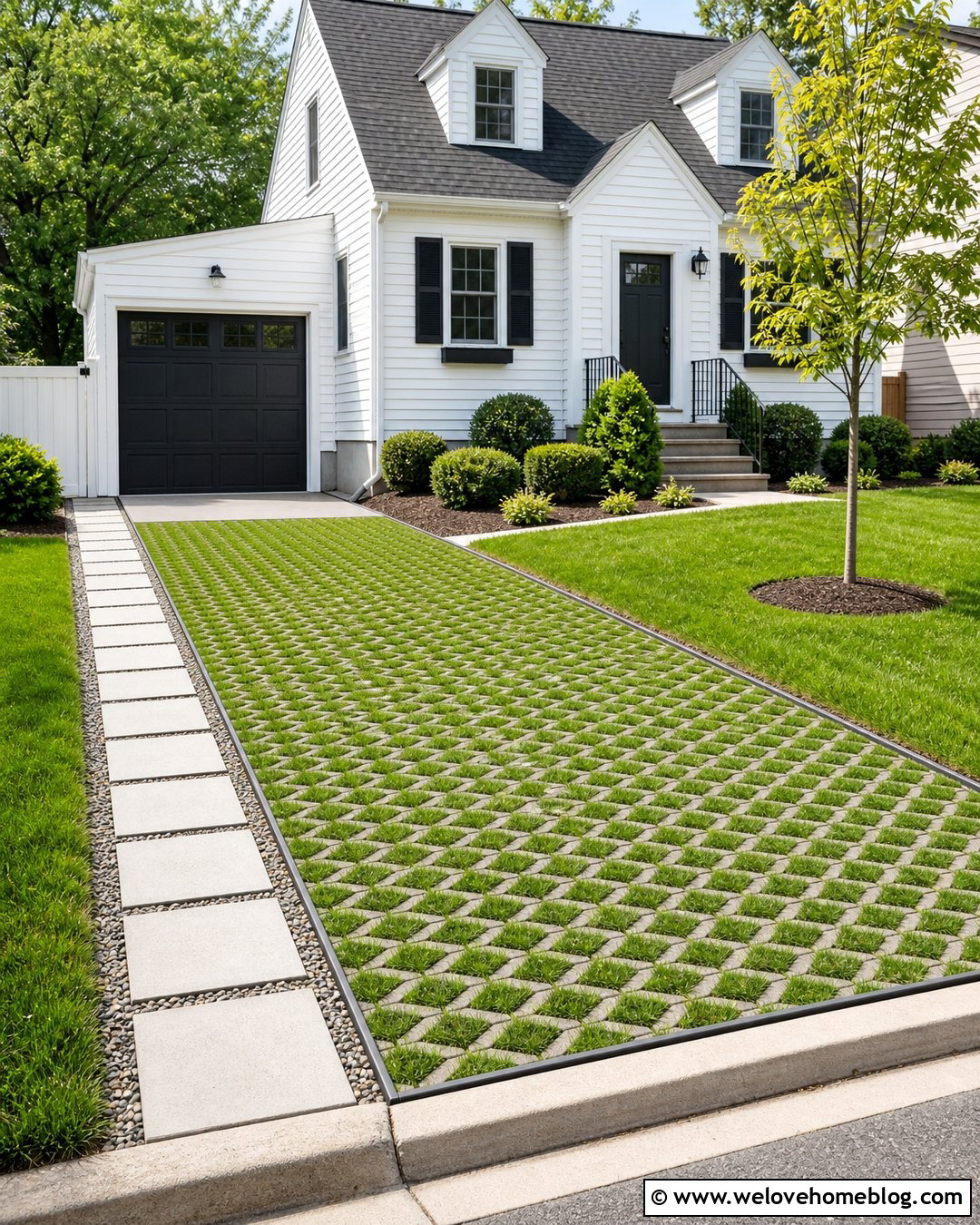
A grass center strip can reduce the visual width of a driveway and help it blend into a green front yard. Build two stabilized wheel tracks filled with tan-gray angular gravel, leaving a broad planted strip between them. The design works best on a straight private driveway where vehicle movement is predictable. Use flush metal or concrete edging to maintain clean boundaries between the gravel and grass. Continue the surrounding lawn into the center strip for a seamless look, or use a tough low-growing ground cover suited to local conditions. Near the garage, transition to a full-width gravel grid parking pad for easier maneuvering. This relaxed layout complements cottages, farmhouses, cabins, and rural ranch homes surrounded by informal planting or open lawn.
17. Gravel Grid Driveway With Drought-Tolerant Landscaping
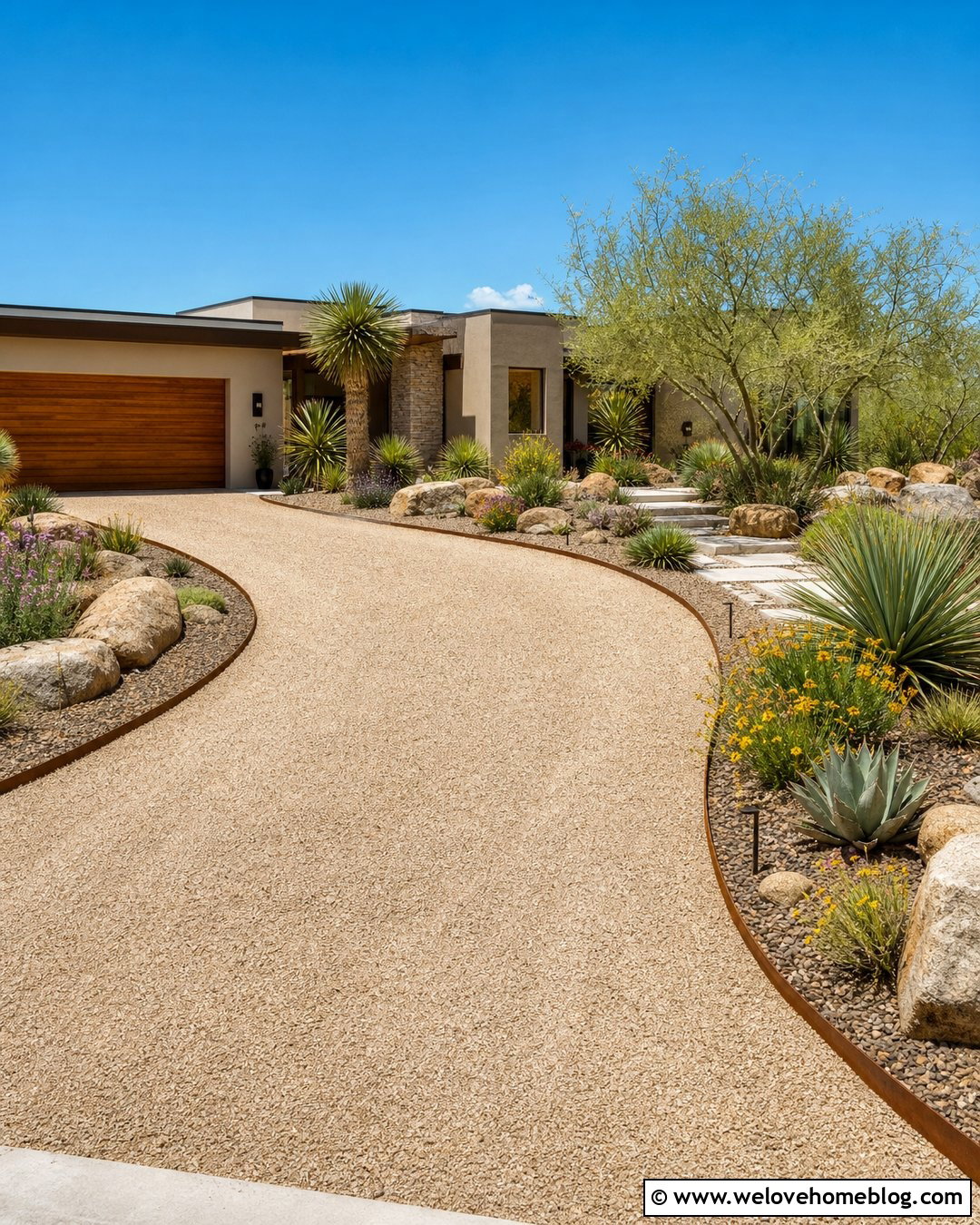
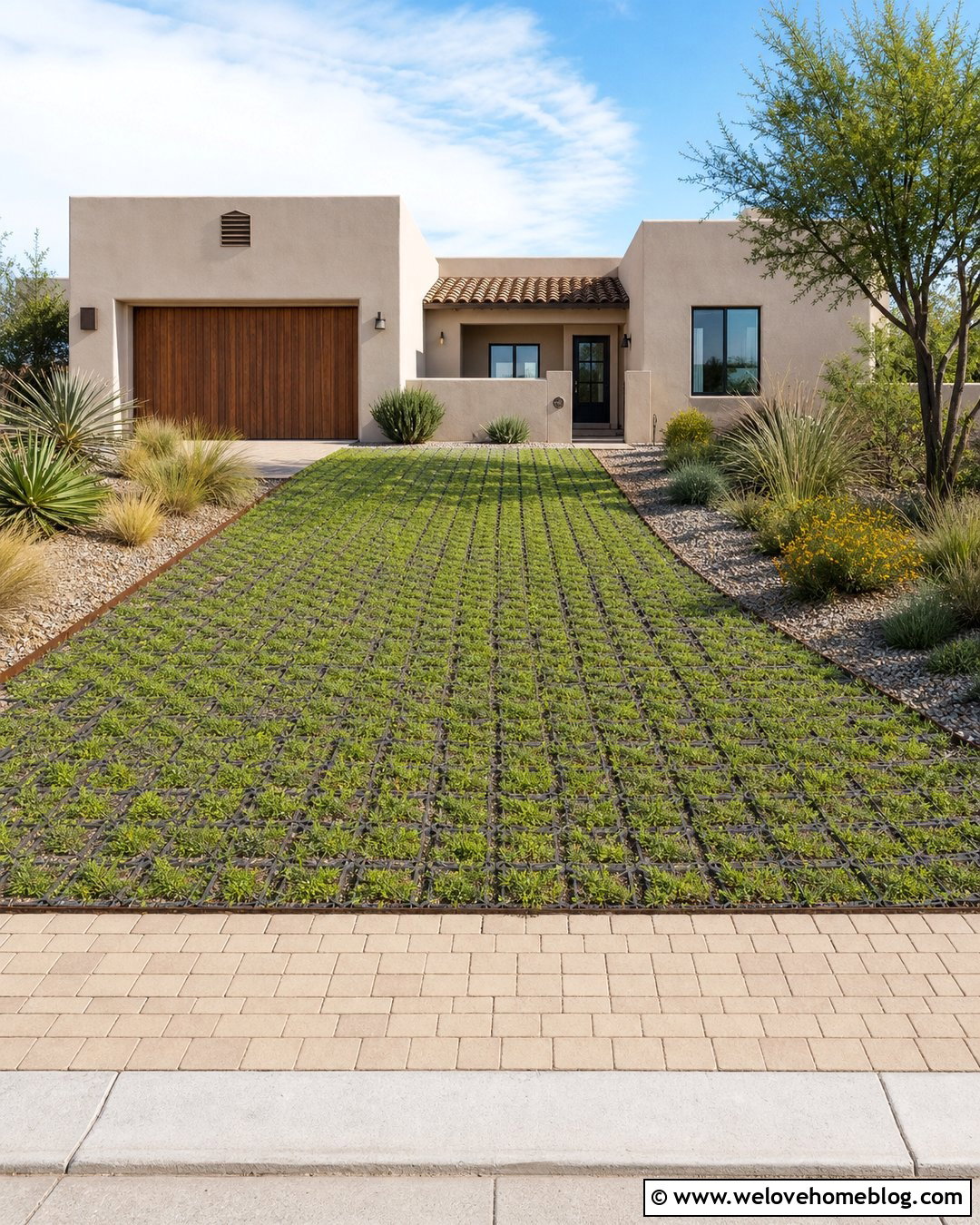
In a dry climate, a gravel grid driveway can become part of a cohesive water-conscious front yard. Choose sandy beige decomposed granite or small angular desert gravel compatible with the selected grid. Shape the driveway with a gentle curve and contain it with rust-colored steel edging. Surround the approach with broad beds of boulders, agave, yucca, ornamental grasses, and regionally appropriate flowering plants. Leave comfortable spacing between plants so the design remains open and easy to navigate. Use larger decorative rock in the beds to distinguish them from the driveway surface. A concrete slab walkway can provide a clean path to a stucco or midcentury home. The repeated earth tones create continuity, while contrasting plant forms keep the landscape visually interesting.
18. Gravel Grid Driveway With Cottage Garden Borders
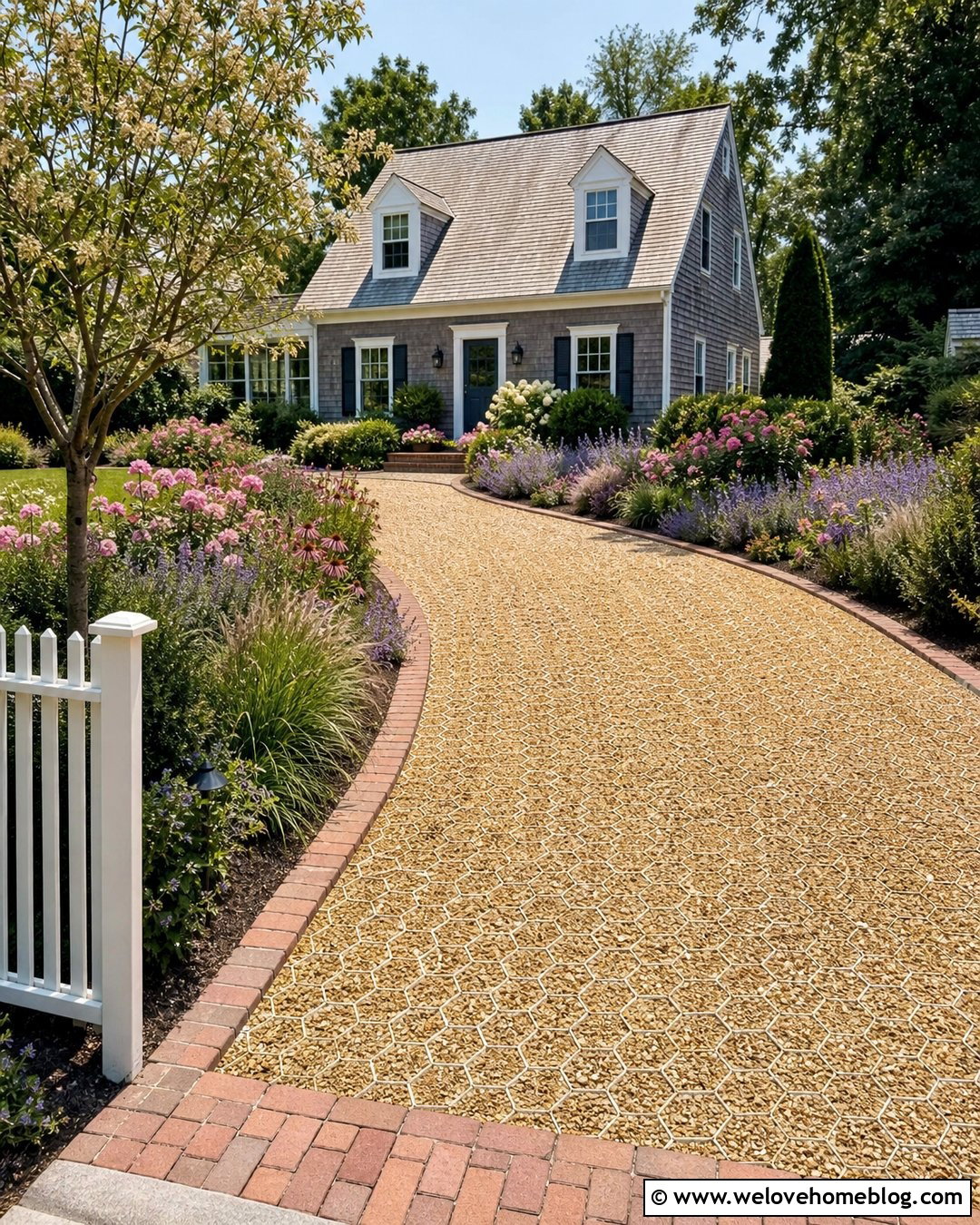
A cottage garden can soften a stabilized driveway without making the entrance feel untidy. Use honey-colored gravel in a gently curved grid driveway and edge it with weathered clay bricks. Create deep planting beds outside the border, combining roses, salvia, catmint, coneflowers, compact shrubs, and ornamental grasses suitable for the local climate. Keep the lowest plants beside the driveway so taller growth does not interfere with sightlines or vehicle doors. A matching brick walkway can branch naturally toward the front porch. Add a small flowering tree near the curve to create height and seasonal interest. This warm, layered design works beautifully with Cape Cod homes, cottages, bungalows, and traditional houses featuring painted siding, window boxes, or brick chimneys.
19. Gravel Grid Driveway With Evergreen Borders
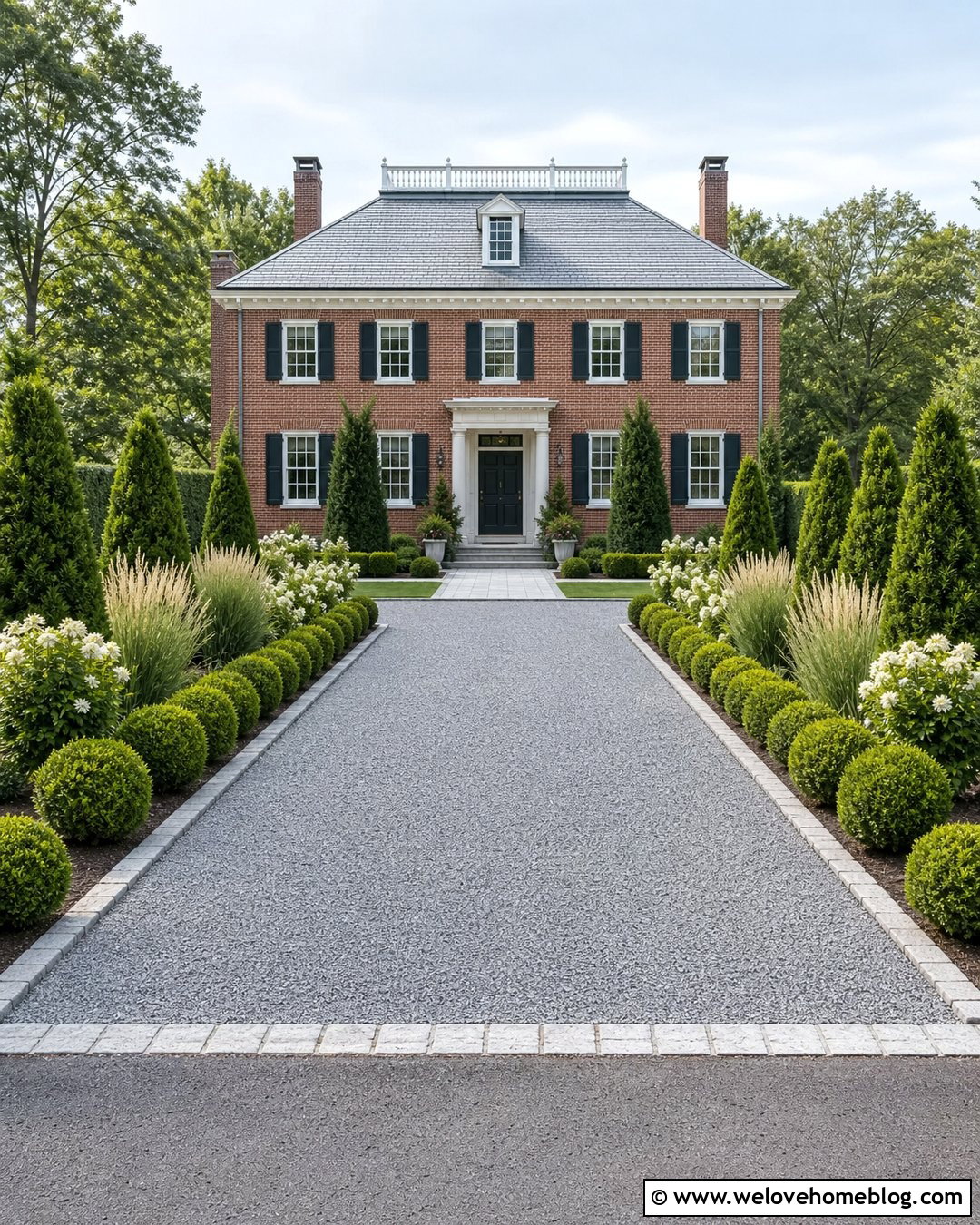
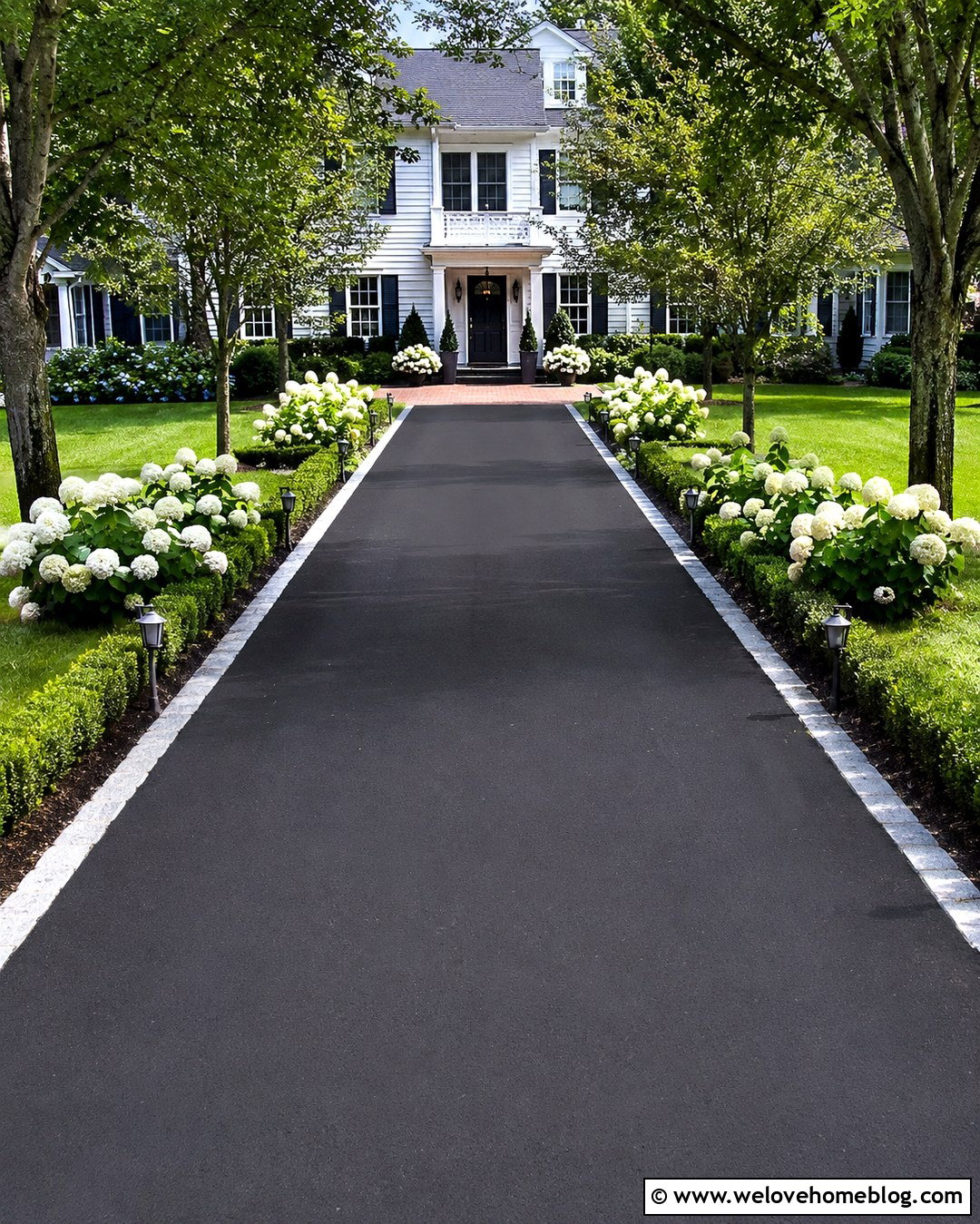
Evergreen planting gives a gravel grid driveway clear structure in every season. Select cool gray crushed limestone and create a straight, symmetrical layout leading toward the garage. Frame the sides with granite block edging, then plant compact boxwoods, inkberry, junipers, or other locally suitable evergreens in repeated groups. Use low plants near the street and slightly taller specimens closer to the house to build depth. White flowering perennials or pale ornamental grasses can provide seasonal contrast without changing the calm color palette. A centered walkway and matching masonry steps strengthen the formal arrangement. This complete driveway look complements colonial, Georgian, and traditional brick homes. Careful spacing is important so mature shrubs do not crowd the driveway or require constant clipping.
20. Gravel Grid Driveway With Natural Boulder Edging
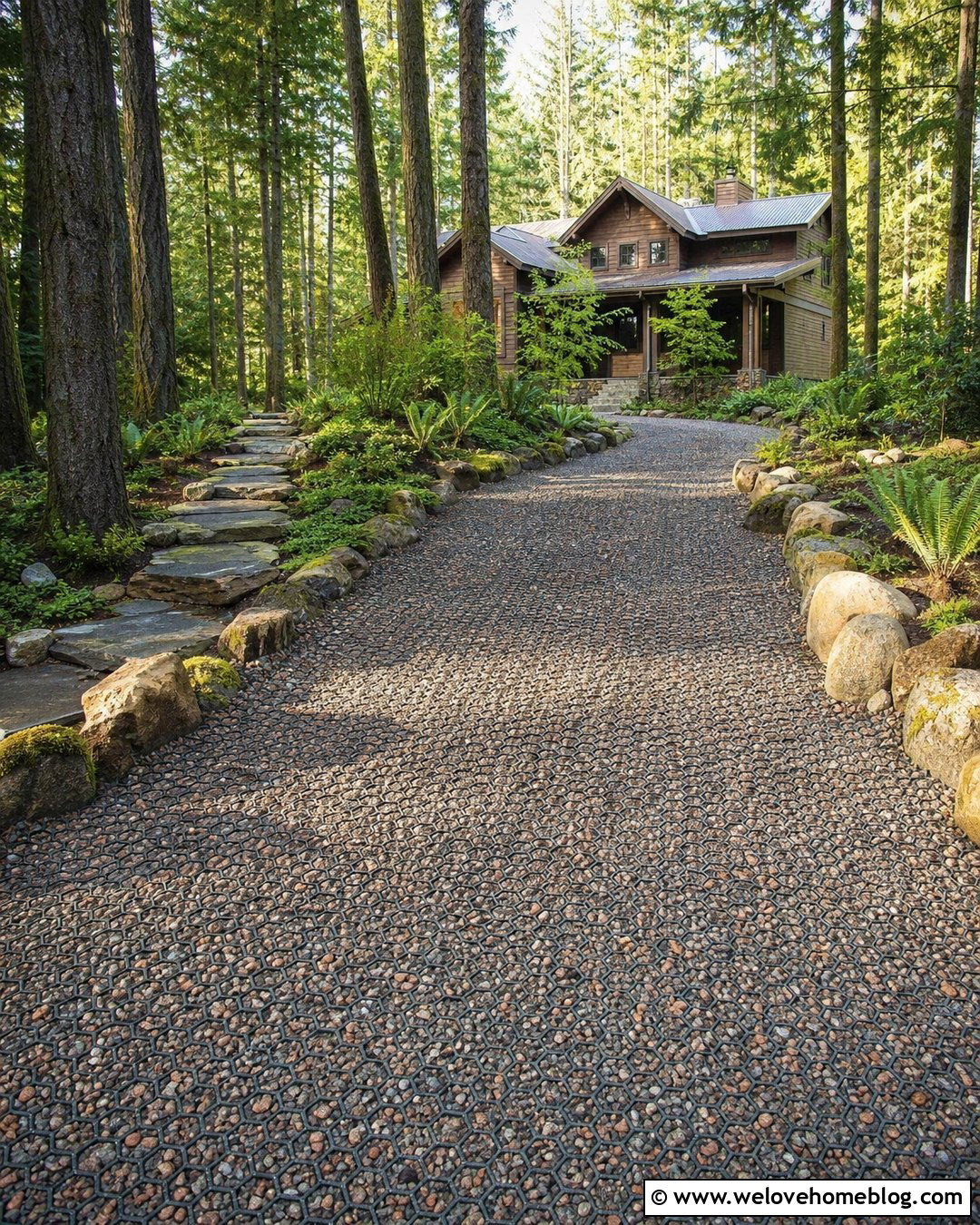
Natural boulders can help a gravel driveway settle comfortably into a wooded or rustic property. Fill the grid with brown and charcoal crushed stone that reflects the colors found in the surrounding landscape. Use irregular boulders along selected sections of a gently curving driveway rather than creating a continuous wall. Between the stones, plant ferns, low native grasses, creeping ground covers, and woodland shrubs suited to the site. Keep larger rocks well outside the vehicle clearance zone, especially around curves and the entrance. A flagstone walkway and timber-accented house facade can reinforce the natural theme. This design is particularly fitting for cabins, mountain homes, lake houses, and craftsman properties where straight concrete curbs would feel too formal or visually heavy.
21. Gravel Grid Driveway With Timber Edging
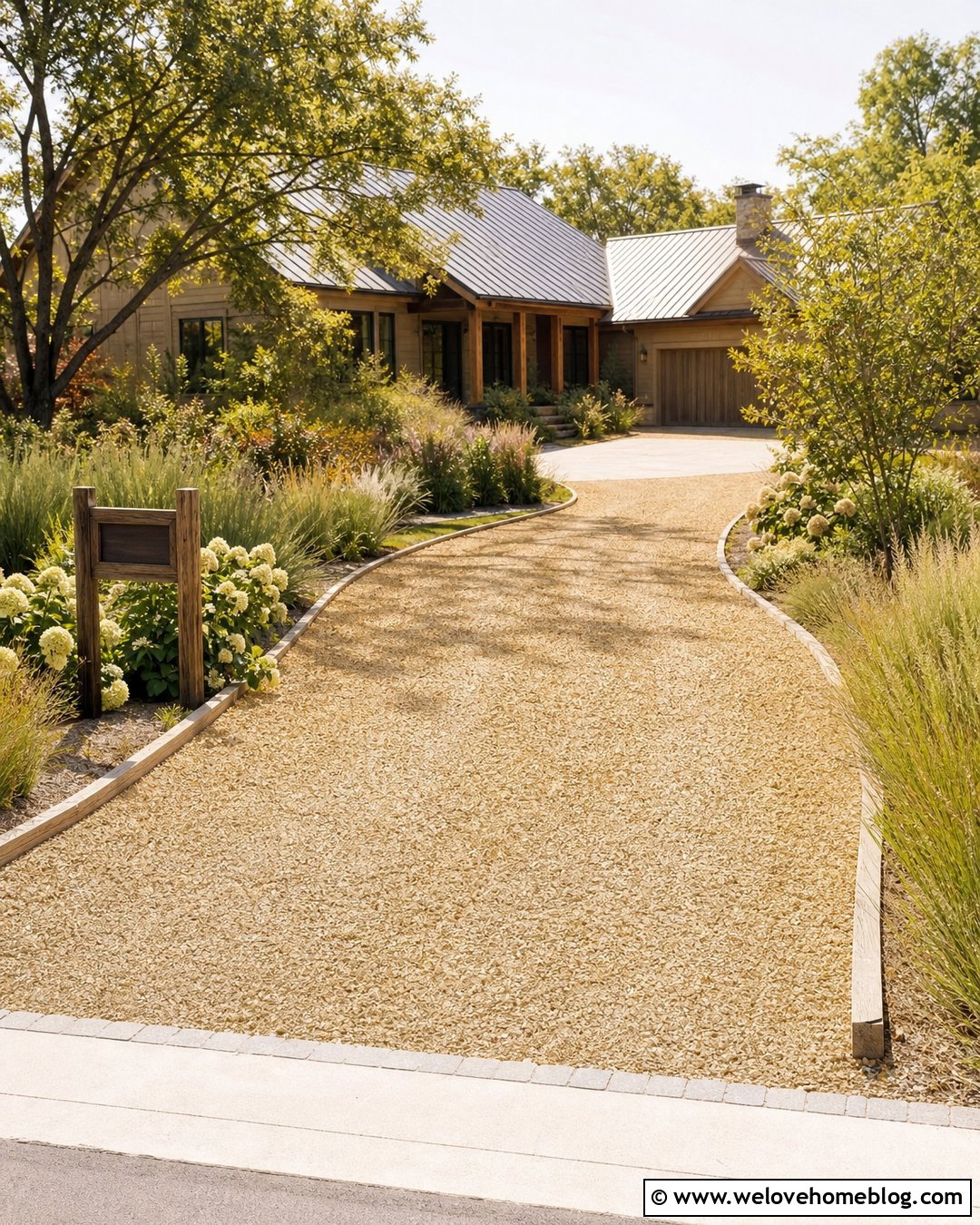
Timber edging offers a straightforward way to define a casual gravel grid driveway. Use golden-brown crushed stone and lay the drive in a straight or lightly curved shape. Choose durable landscape timbers appropriate for ground contact, and install them securely so the top edge remains consistent. Outside the border, create simple beds with native grasses, hydrangeas, and low spreading shrubs. A timber-framed address marker at the curb can repeat the material without becoming overly decorative. Near the garage, switch to a flush paver band to provide a cleaner transition. This affordable-looking combination suits cabins, ranch houses, rustic farmhouses, and properties with wood fencing. Plan for eventual timber maintenance or replacement, particularly in damp climates or areas with frequent soil contact.
22. Gravel Grid Driveway With A Concrete Curb
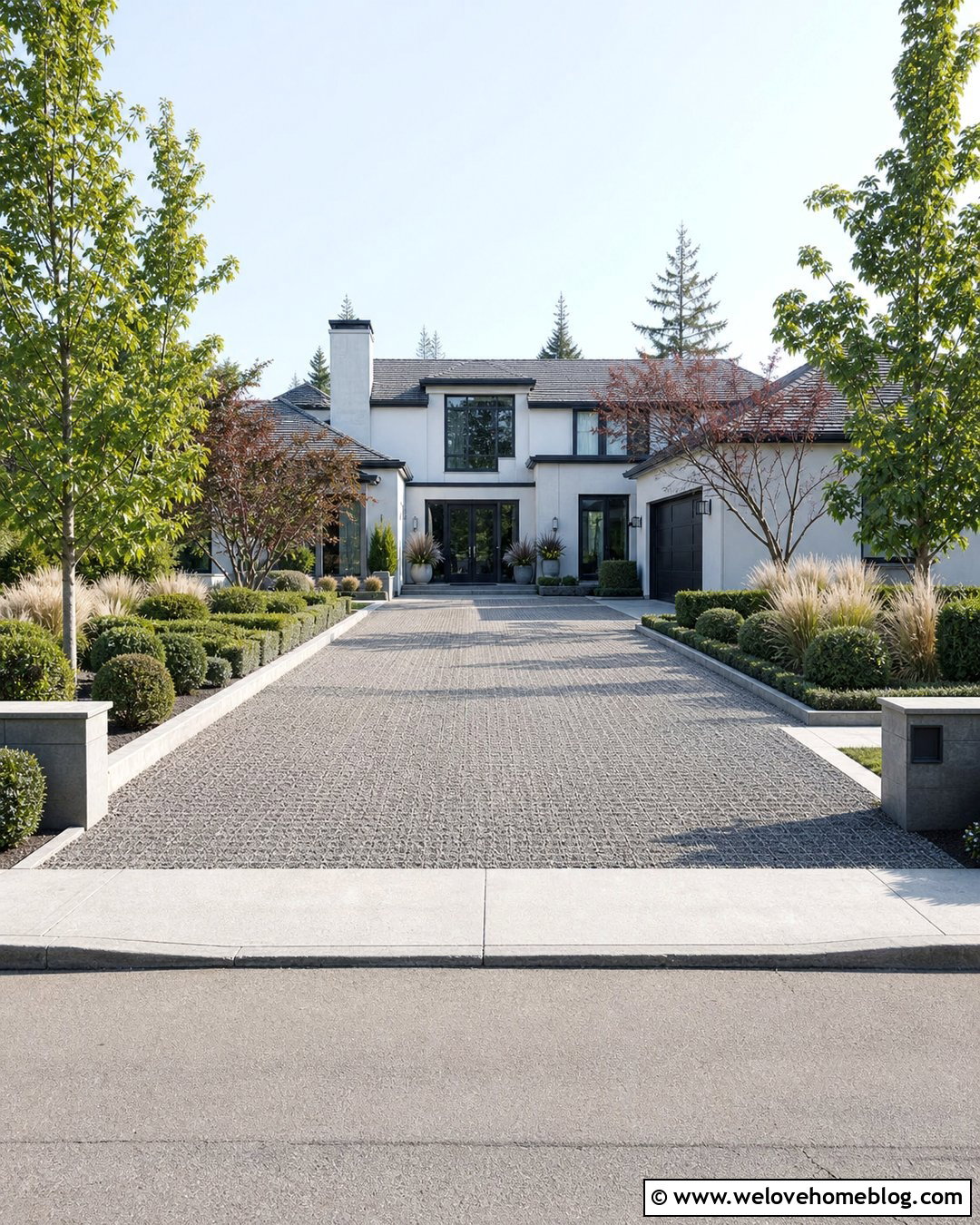
A poured concrete curb creates a durable, highly defined perimeter around a gravel grid surface. Fill the center with warm gray angular aggregate, and use a low smooth curb along both sides of a wide straight driveway. The restrained materials work well with contemporary and transitional houses. Extend the curb around rectangular planting beds containing clipped shrubs, feather reed grass, and one or two small trees. At the sidewalk, widen the curb slightly to frame the entrance and connect it to a concrete apron. A matching walkway can run beside the driveway with a narrow planted strip between them. Keep the curb height practical around parking areas and garage doors. The finished design should appear crisp and architectural while allowing the textured gravel to soften the overall composition.
23. Gravel Grid Driveway With Brick Ribbon Borders
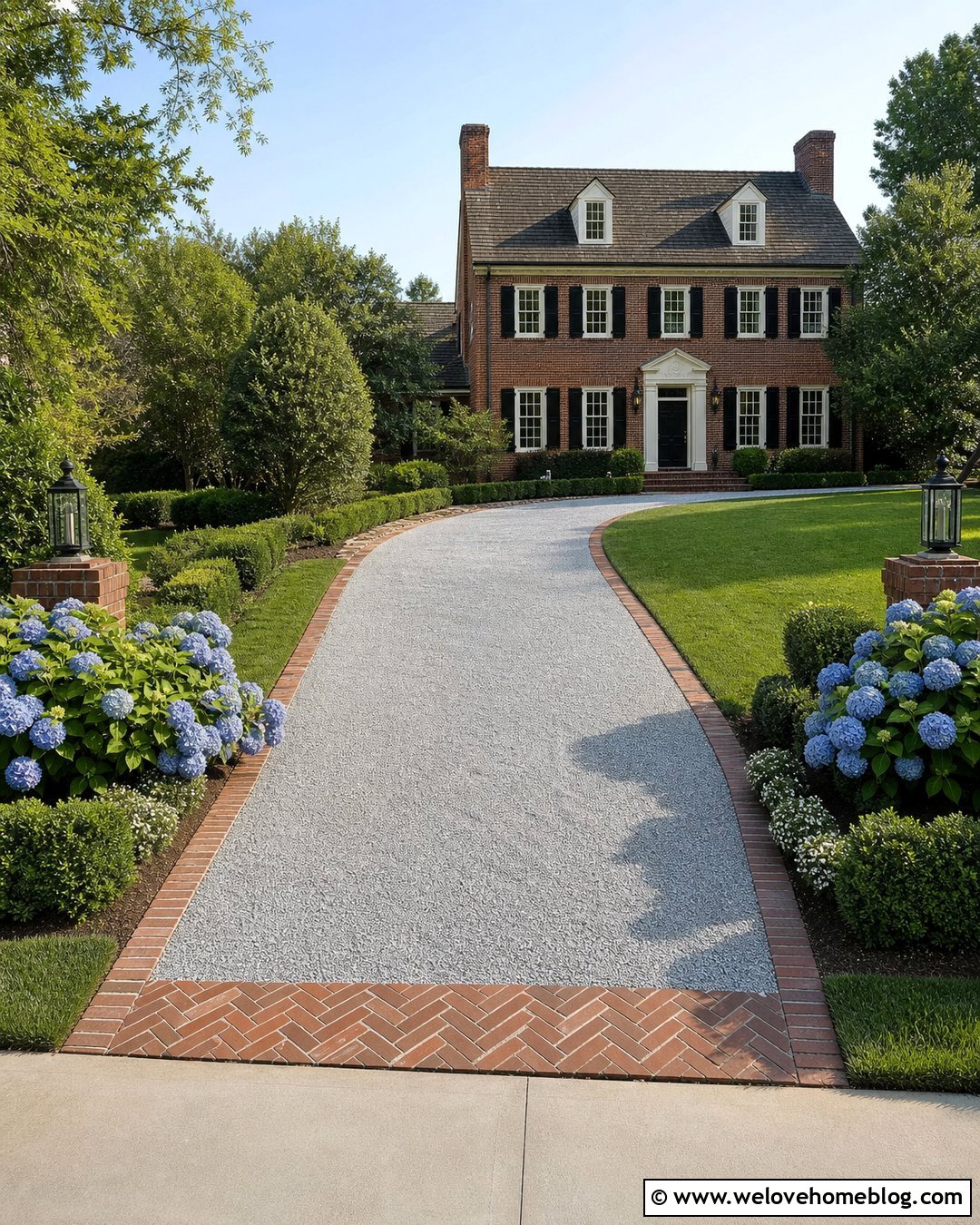
Brick ribbon borders bring color and pattern to a gravel driveway without covering the entire surface in masonry. Choose light-gray crushed granite for the grid infill, then install one or two rows of red-brown brick along each edge. A herringbone brick band at the street can make the entrance feel wider and more decorative. Continue the same brick into the front walkway and porch steps for visual consistency. Plant foundation beds with hydrangeas, boxwoods, and flowering perennials that complement the home’s facade. The driveway may be straight, curved, or slightly flared depending on the yard. This flexible design is especially effective for brick ranch homes, colonial houses, and craftsman properties where the border can echo existing chimneys, columns, or garden walls.
24. Gravel Grid Driveway With Low Landscape Lighting
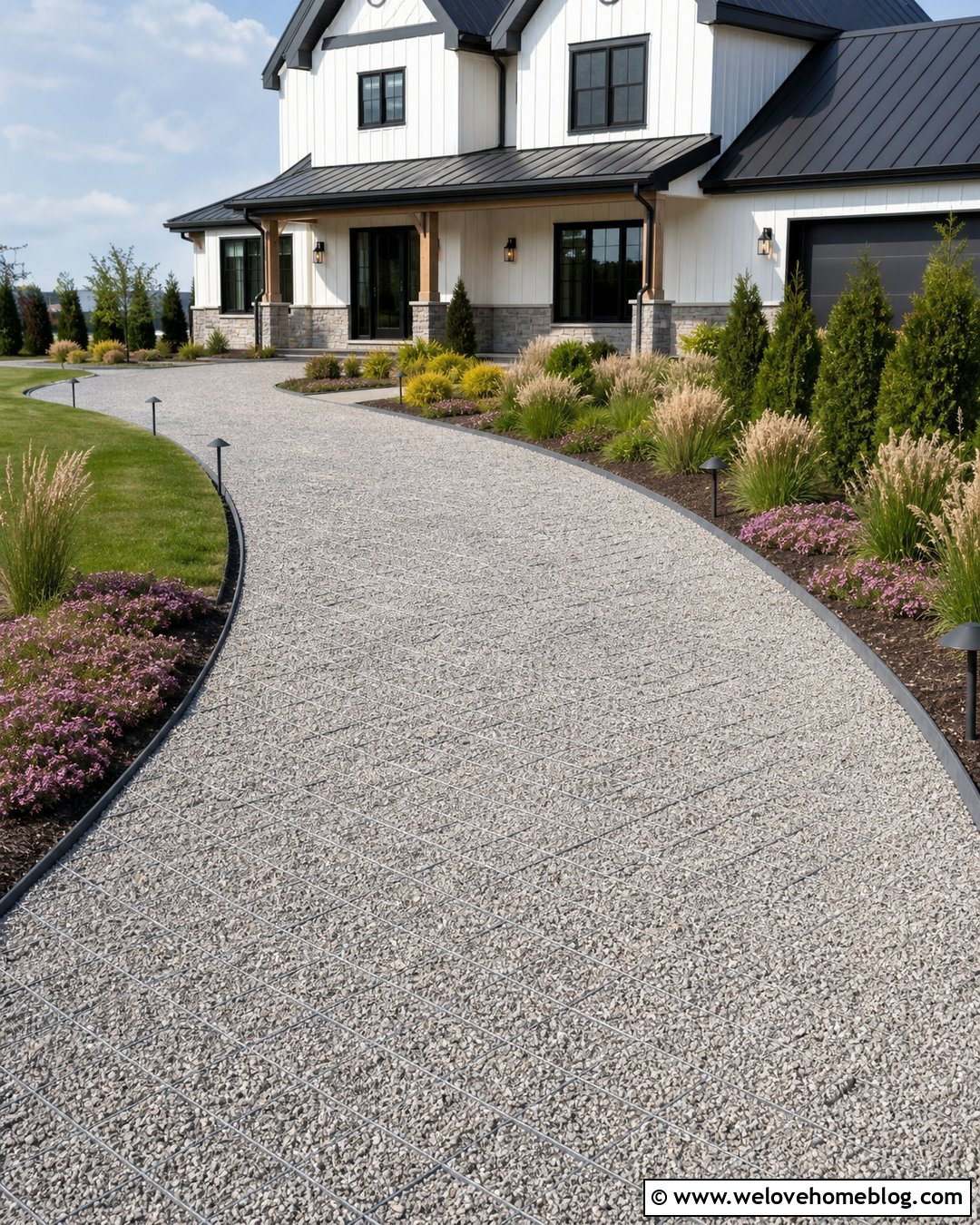
Lighting can make a long gravel grid driveway easier to understand while adding polished curb appeal. Use pale gray crushed stone within a gently curved grid system and outline the route with dark steel edging. Place low, shielded path lights at measured intervals outside the driving area rather than crowding both sides with fixtures. Integrate them into beds of ornamental grass, low evergreens, and flowering ground covers. Near the house, add coordinated wall sconces and subtle lighting around the walkway. The fixtures should guide attention toward the entrance without producing glare for drivers or neighbors. During the day, their simple forms should blend into the landscaping. This complete design works well with contemporary, craftsman, and modern farmhouse homes on deep suburban or semi-rural lots.
25. Gravel Grid Driveway With Gates And Stone Pillars
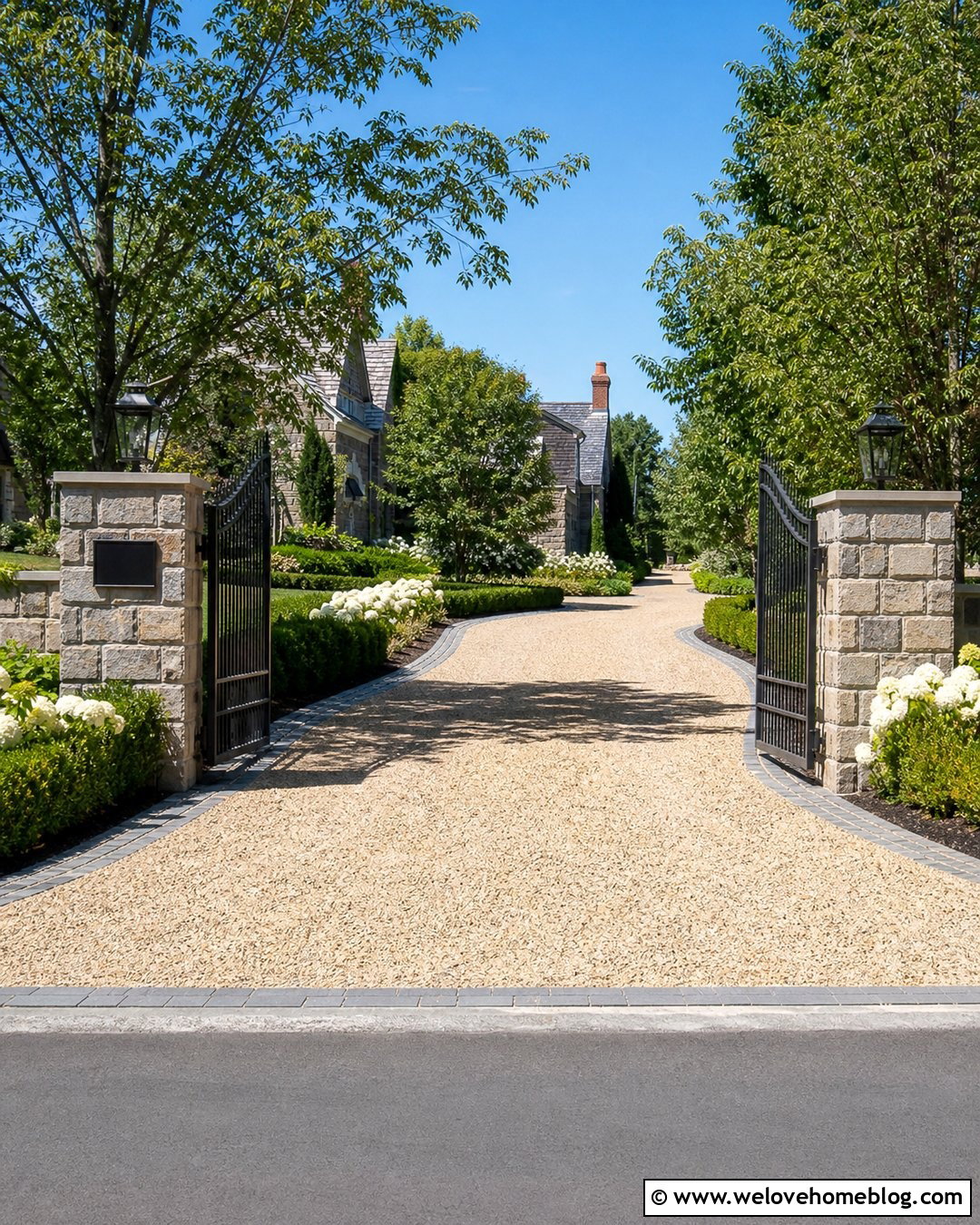
A gated gravel grid driveway can feel substantial without becoming severe or fortress-like. Use warm buff limestone in a broad, gently curved approach, framed by dark granite setts. At the entrance, install natural-stone pillars that coordinate with the house facade and support a simple metal gate. Position the gate far enough inside the property to support safe access and follow applicable local requirements. Low hedges, flowering shrubs, and matching trees can extend outward from both pillars, making the entrance part of the landscape. An understated address plaque and pillar-mounted lights complete the composition. Continue the gravel toward a farmhouse, country estate, or traditional stone home. The coordinated surface, masonry, gate, and planting create a clear arrival sequence from curb to front door.
Conclusion:
The best **25 Gravel Grid Driveway Ideas** show how stabilized aggregate can work as part of a complete front-yard design. Gravel color should complement the house, while the driveway’s shape must respond to available space and everyday vehicle movement. Edging, entrance aprons, planting beds, walkways, lighting, and gates can then create a more polished result. Before installation, confirm local rules and evaluate drainage, slope, soil, expected traffic, base construction, and aggregate compatibility. A qualified driveway contractor or landscape professional can recommend suitable materials for the property. With careful preparation and a coordinated design, a gravel grid driveway can feel welcoming, orderly, and naturally connected to the surrounding home and landscape.

Related posts:
Leave a Reply