
Cotswold gravel brings warm cream, honey, and pale gold tones to a driveway, making it a natural match for traditional cottages and newer homes alike. The best designs treat the driveway as part of the entire front garden. Its layout, edging, entrance, planting, pathways, and house facade should feel connected. Defined borders help contain loose stone, while thoughtful landscaping softens large parking areas and improves curb appeal. You can also use gravel stabilization grids, paved aprons, and practical walkways to create a neater, easier-to-use surface. Whether you have a compact frontage or a sweeping country approach, these complete designs offer practical inspiration. Explore these **20 Cotswold Gravel Driveway Ideas** to find a layout that suits your property.

1. Cotswold Gravel Driveway With Brick Edging
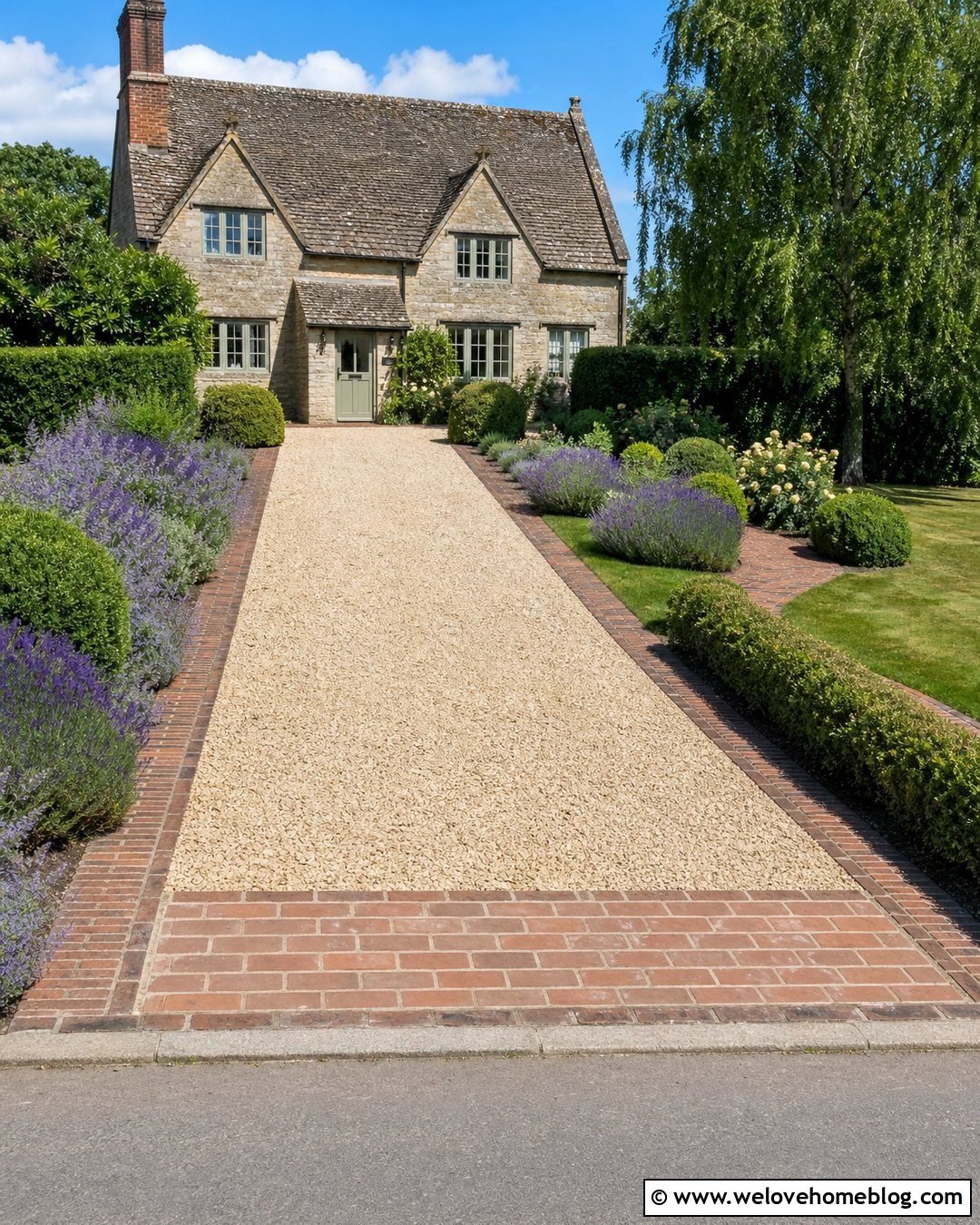
Warm red brick edging makes the creamy color of Cotswold gravel look richer and more defined. Use reclaimed or weathered bricks to complement an older cottage, or choose crisp new bricks for a cleaner finish. A straight driveway can have bricks laid lengthwise along both sides, with a matching brick apron at the road. Add lavender, catmint, and clipped evergreen shrubs behind the border to soften the hard landscaping. A narrow brick walkway leading toward the front door will connect the driveway with the house. Keep the gravel level slightly below the edging so loose stones are less likely to migrate into the lawn or planting beds. This complete look feels established, welcoming, and appropriate for both rural and suburban properties.
2. Modern Cotswold Gravel Driveway With Steel Edging
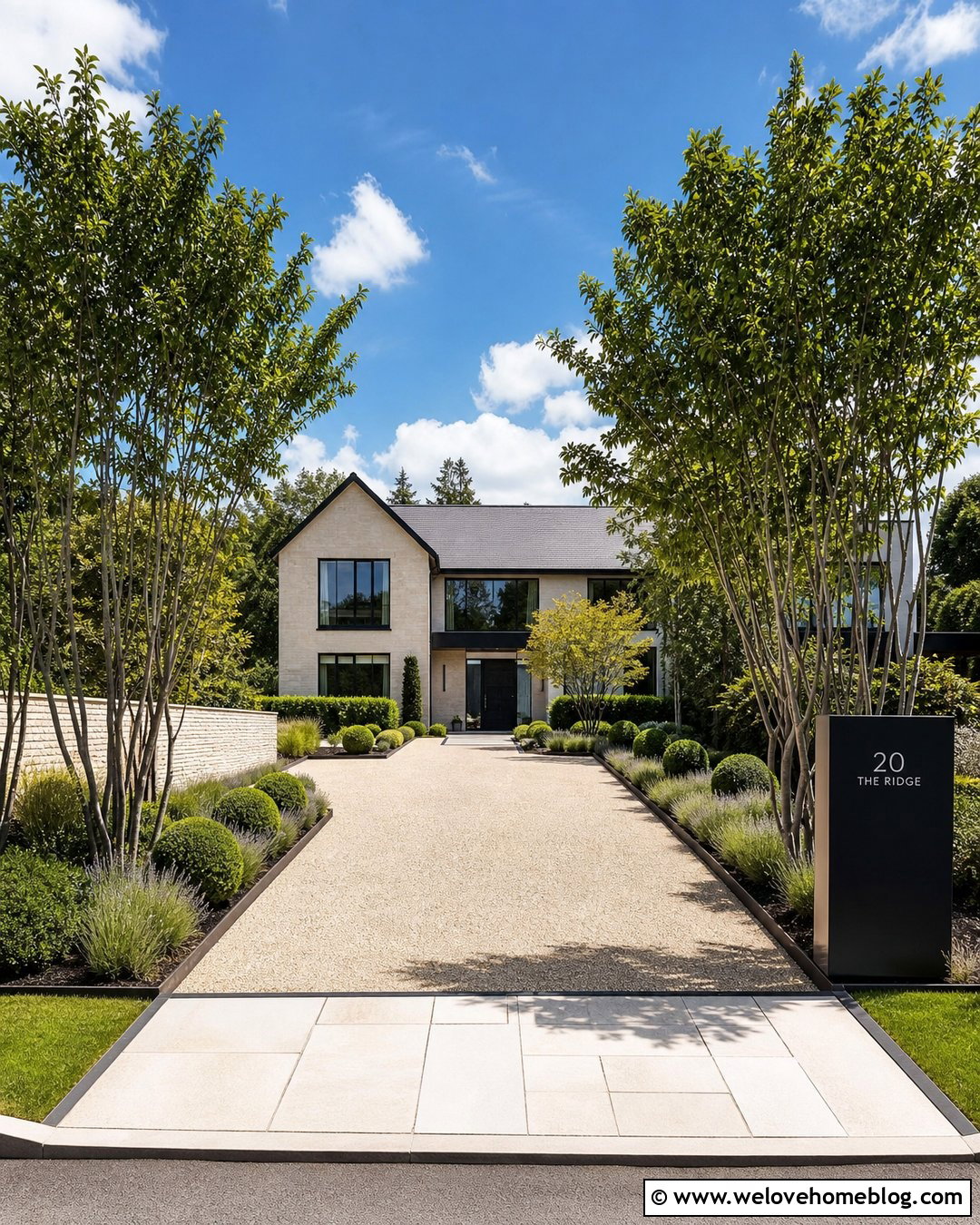
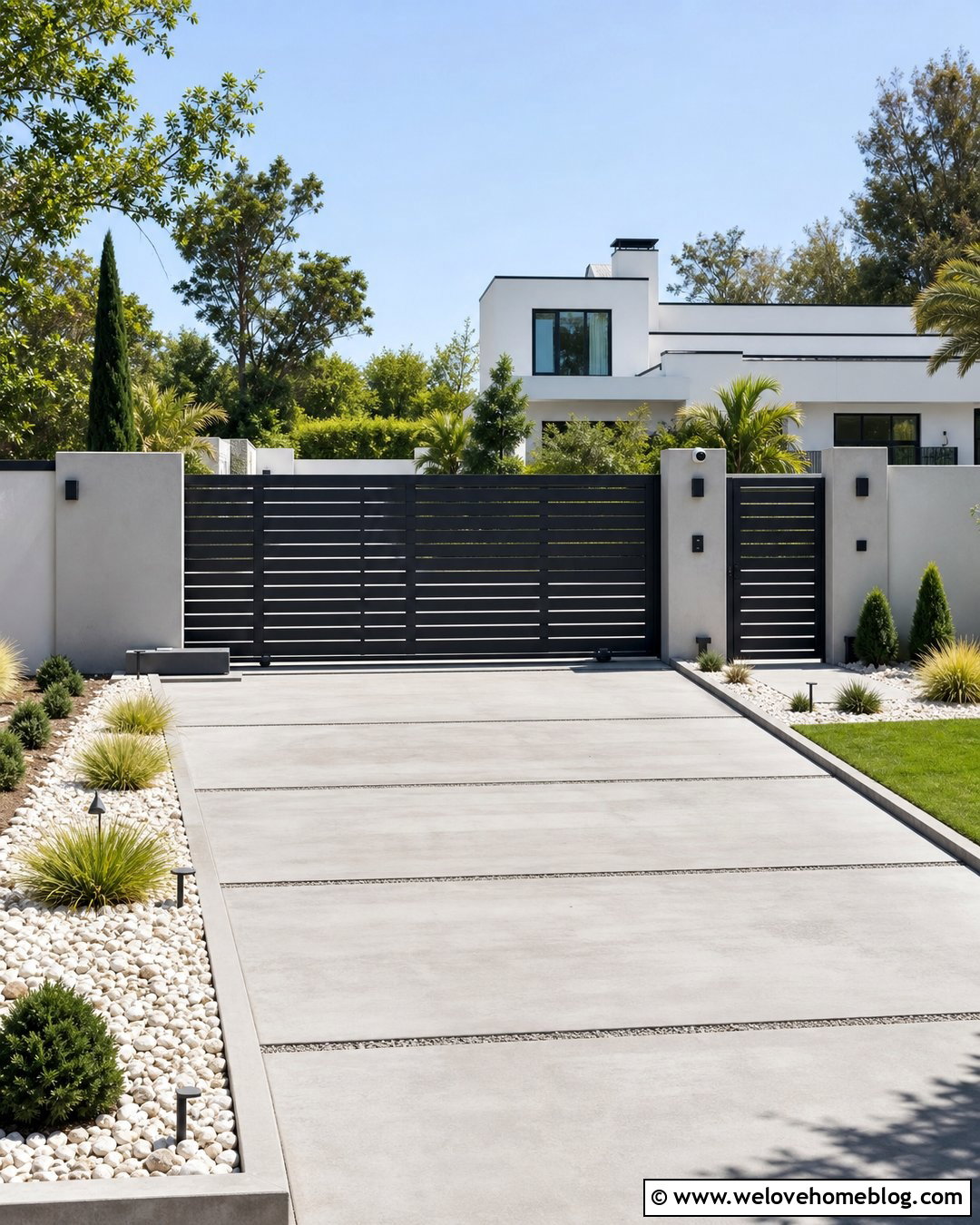
Can Cotswold gravel work with contemporary architecture? Pairing it with slim black steel edging creates a sharp, modern contrast. Design a wide, straight driveway with clean rectangular planting beds on either side. Fill them with ornamental grasses, clipped spheres, and multi-stem trees rather than colorful cottage planting. The pale buff gravel will brighten the frontage, while the dark edging provides a clear visual outline. Continue the black finish through wall lights, window frames, and a simple address marker for consistency. A large-format stone walkway can cross the gravel and lead directly to the entrance. Concealed gravel stabilization grids are useful where vehicles regularly turn. The result combines a relaxed natural surface with the controlled geometry of a modern home.
3. Curved Cotswold Gravel Driveway With Stone Setts
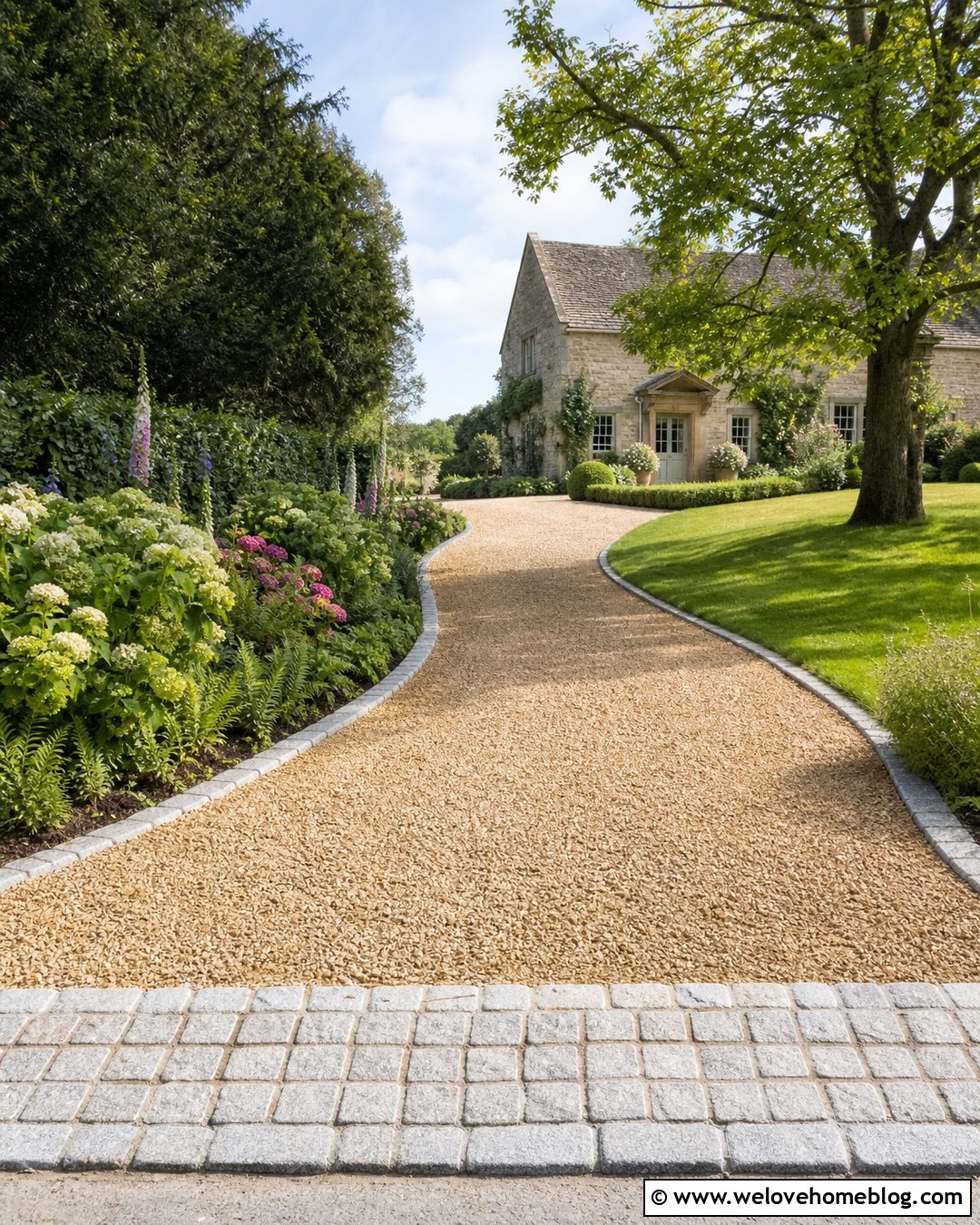
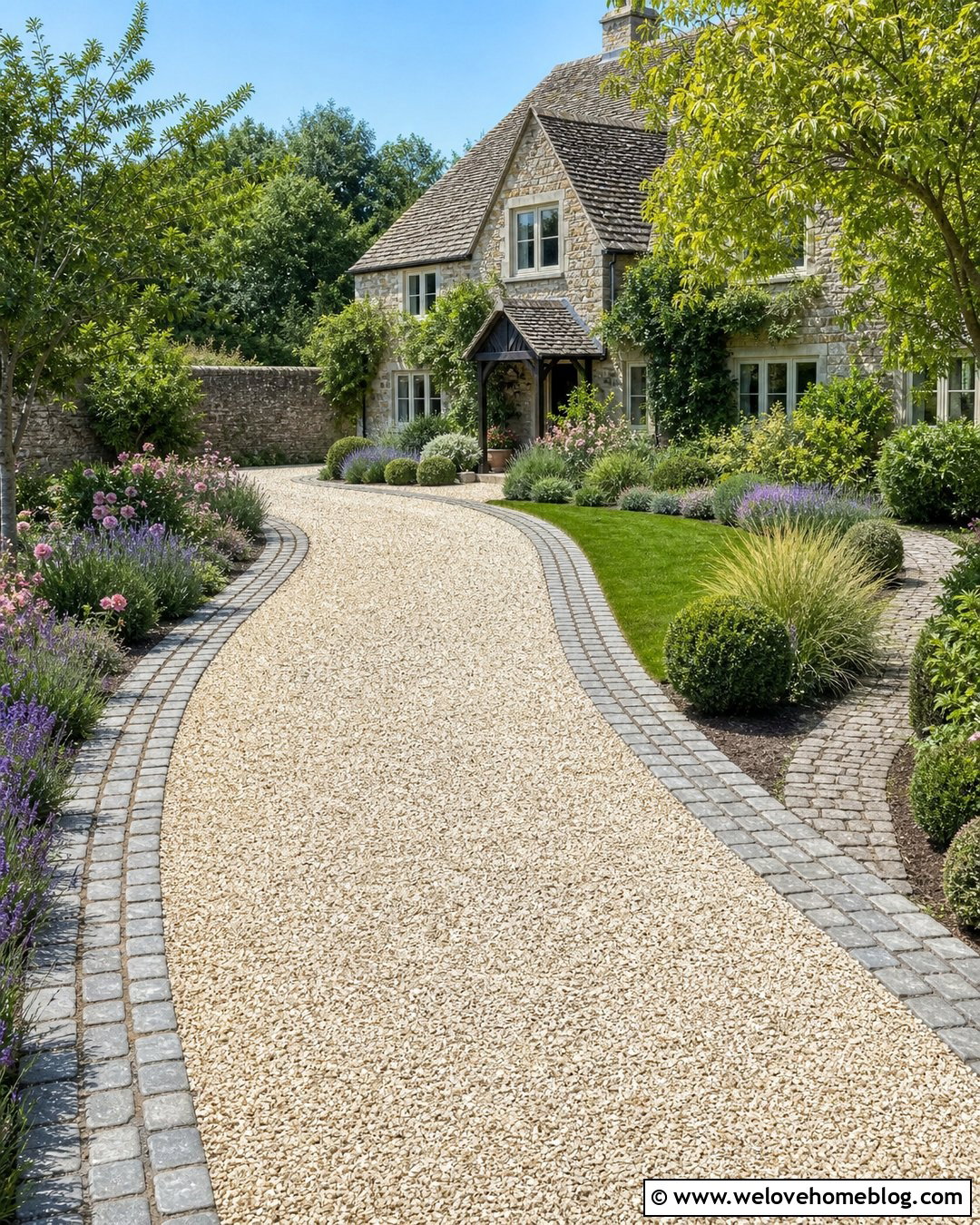
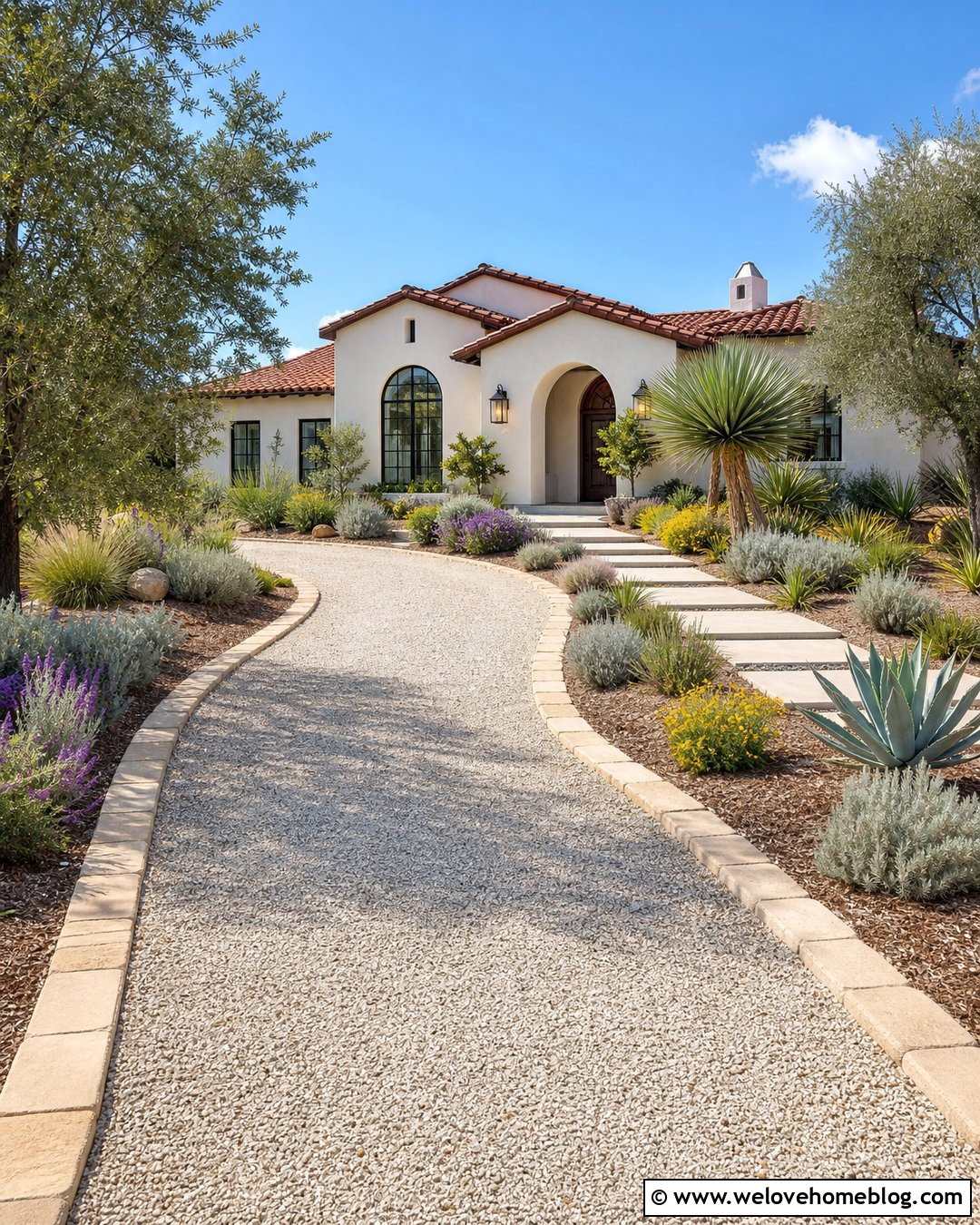
A gentle curve can make a short approach feel longer and give the front garden a softer layout. Frame a Cotswold gravel driveway with gray granite or weathered sandstone setts to hold the sweeping shape. On the outer curve, create a deep planting bed filled with hydrangeas, ferns, foxgloves, and low evergreen shrubs. Keep the inside curve more open with lawn and one feature tree, ensuring drivers have a clear view of the route. A double row of setts at the entrance can form a durable rumble strip where gravel would otherwise scatter toward the road. This design works especially well with stone cottages and country houses. The cool edging and green planting balance the warm, creamy gravel without overpowering its natural appearance.
4. Circular Cotswold Gravel Driveway With Planted Island
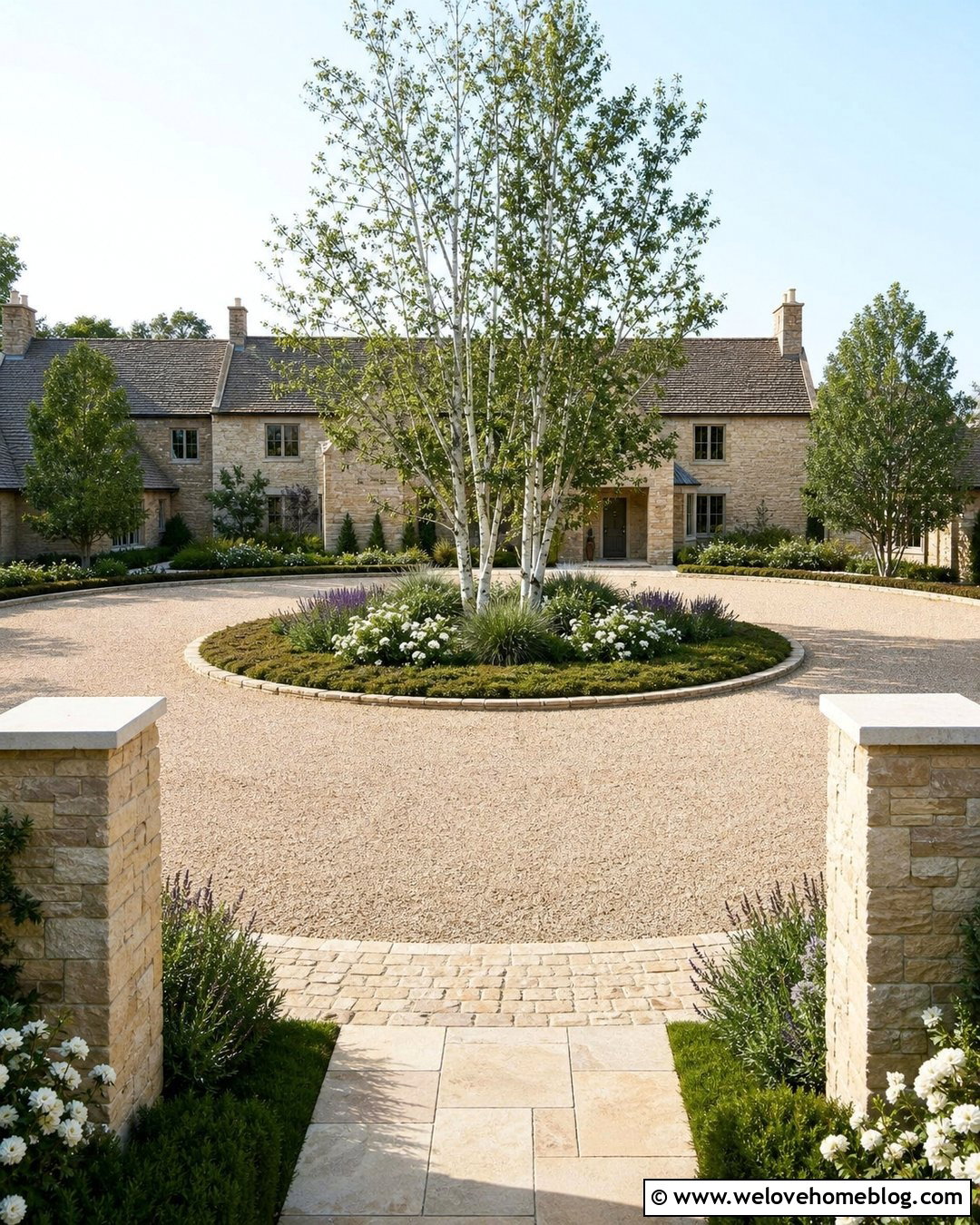
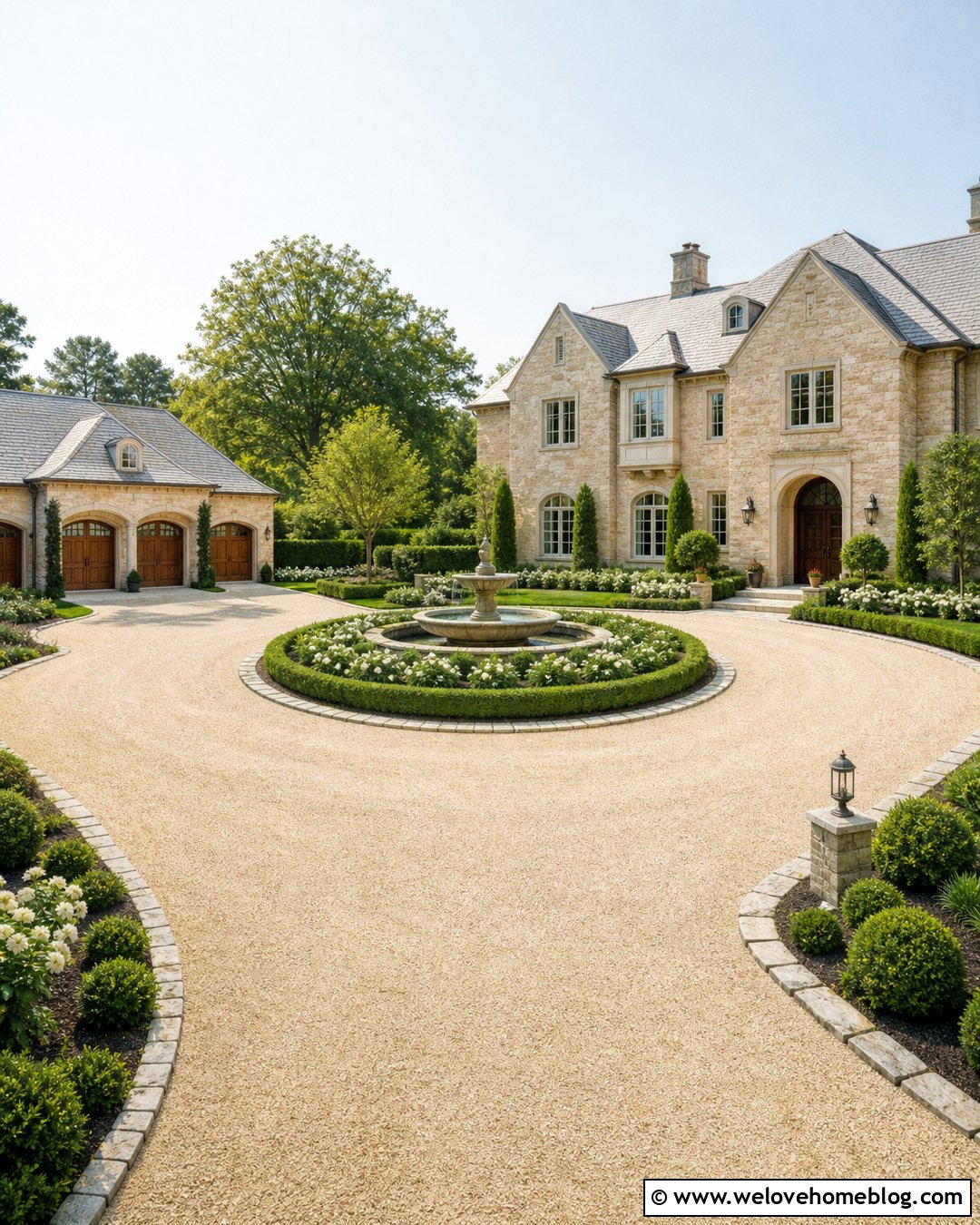
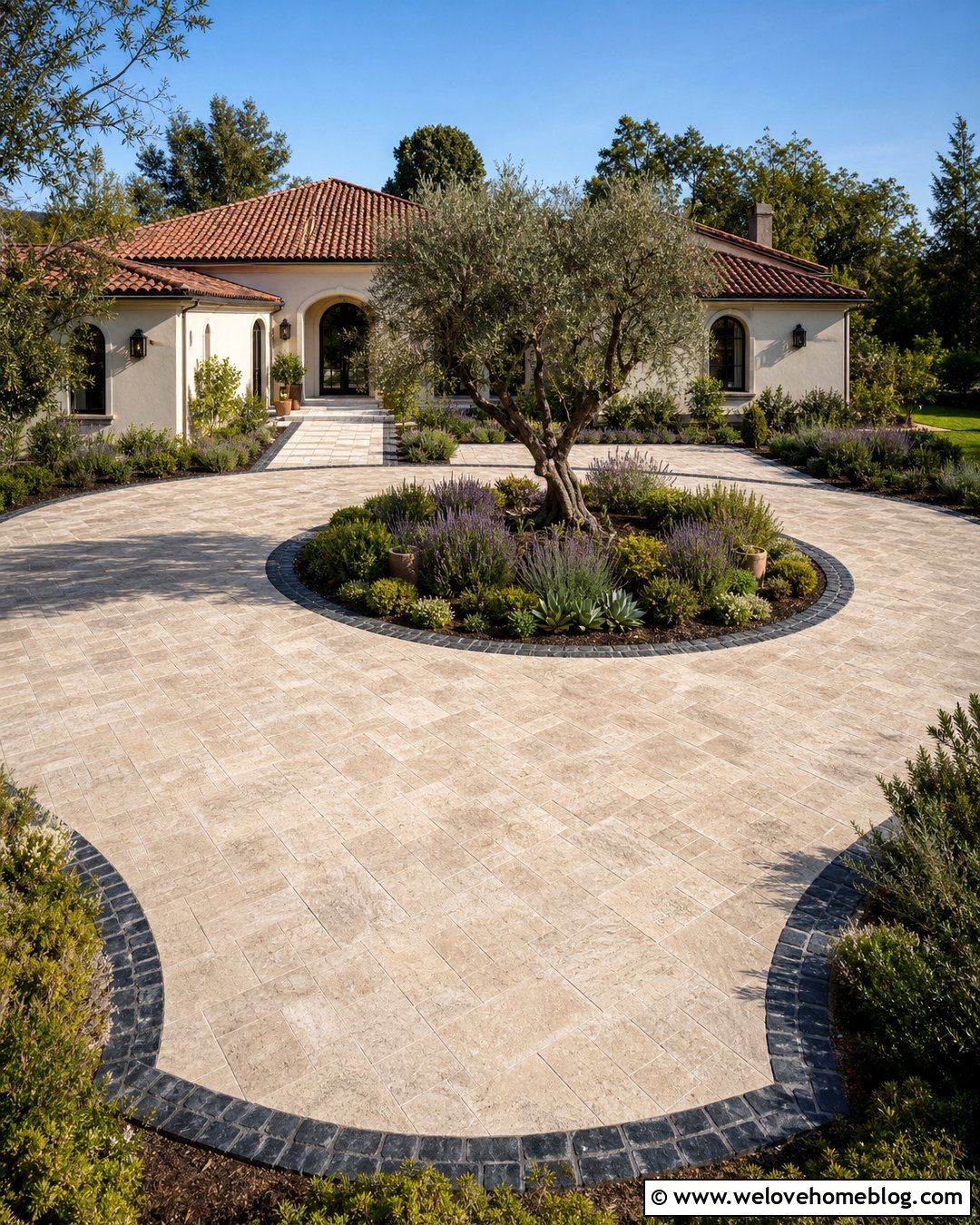
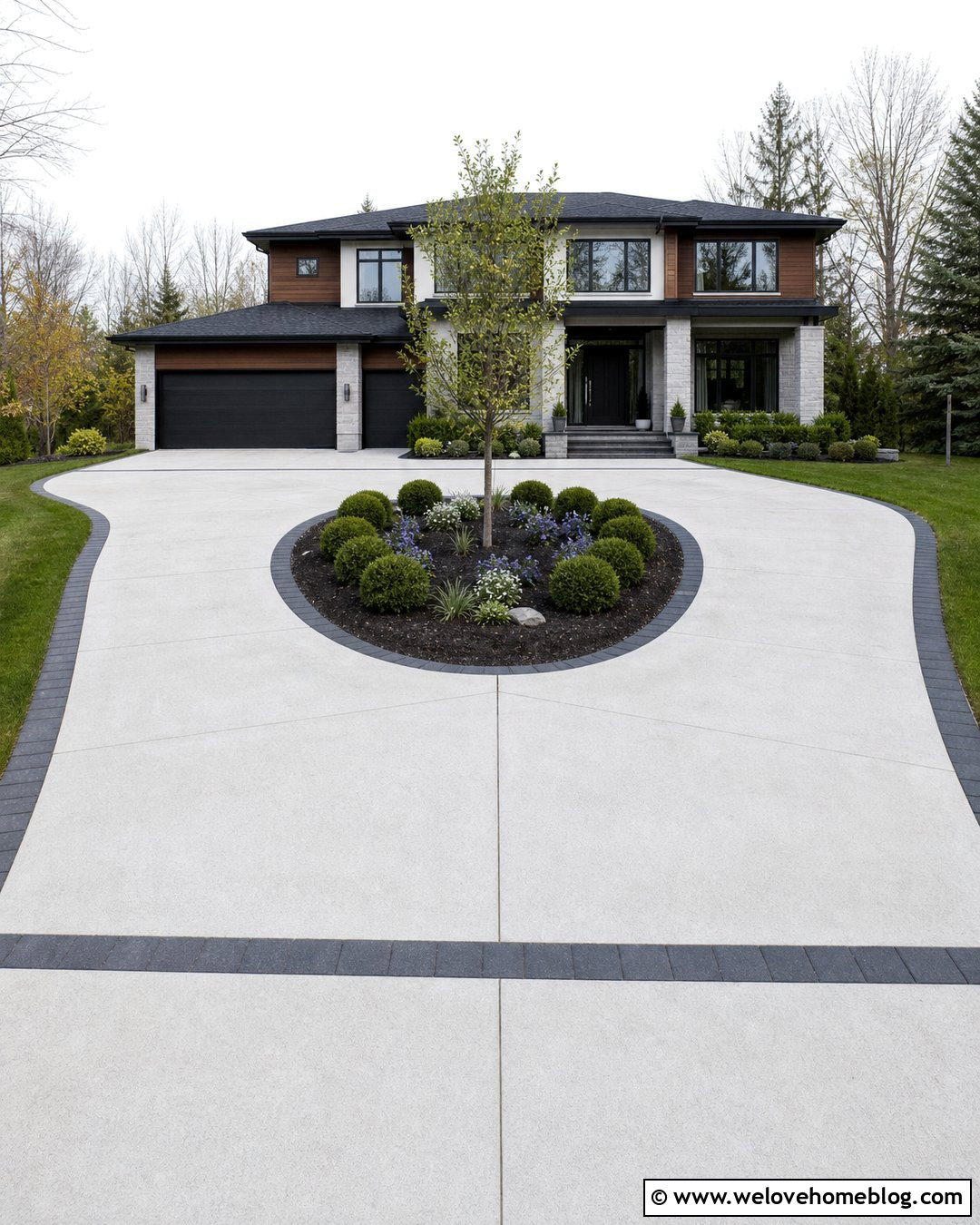
A circular driveway provides an impressive approach and allows vehicles to move through the property without complicated reversing. Cover the main loop with angular Cotswold buff gravel and contain it using natural limestone kerbs. The center island should be large enough to look intentional rather than like a leftover patch of ground. Plant a multi-stem birch or small ornamental tree as the focal point, then surround it with lavender, white roses, grasses, and ground-cover plants. A stone walkway can cross from the circle to the front entrance. At the road, use a paved apron and matching limestone gate pillars to create a structured arrival. The pale gravel, rounded layout, and layered planting produce an elegant design suitable for a broad country frontage.
5. Cotswold Gravel Driveway With Timber Edging
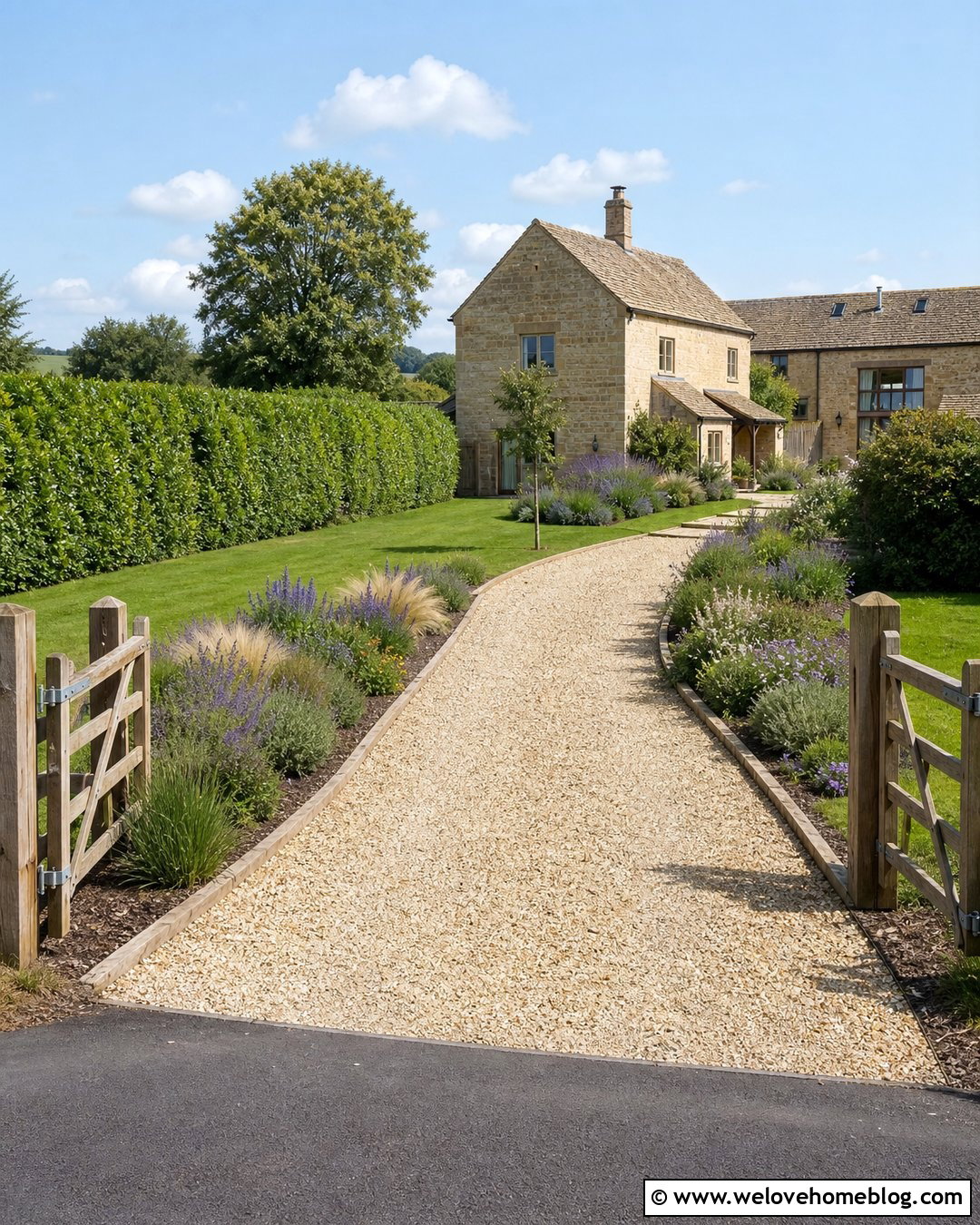
Timber edging offers a simple, affordable way to define a relaxed Cotswold gravel driveway. It works particularly well beside a farmhouse, barn conversion, or modest country cottage. Use pressure-treated timber boards secured firmly at ground level, creating a straight or gently curved driveway that follows the natural shape of the garden. Add informal planting with lavender, rosemary, hardy geraniums, and ornamental grasses along one side. A native hedge can form the opposite boundary and provide privacy from the road. Near the house, introduce a sandstone stepping-stone walkway so visitors do not have to cross loose gravel in dress shoes. Timber will weather naturally, allowing the warm gravel and greenery to remain dominant. Regularly inspect the boards and replace damaged sections before gravel begins escaping.
6. Cotswold Gravel Driveway With Cobblestone Entrance
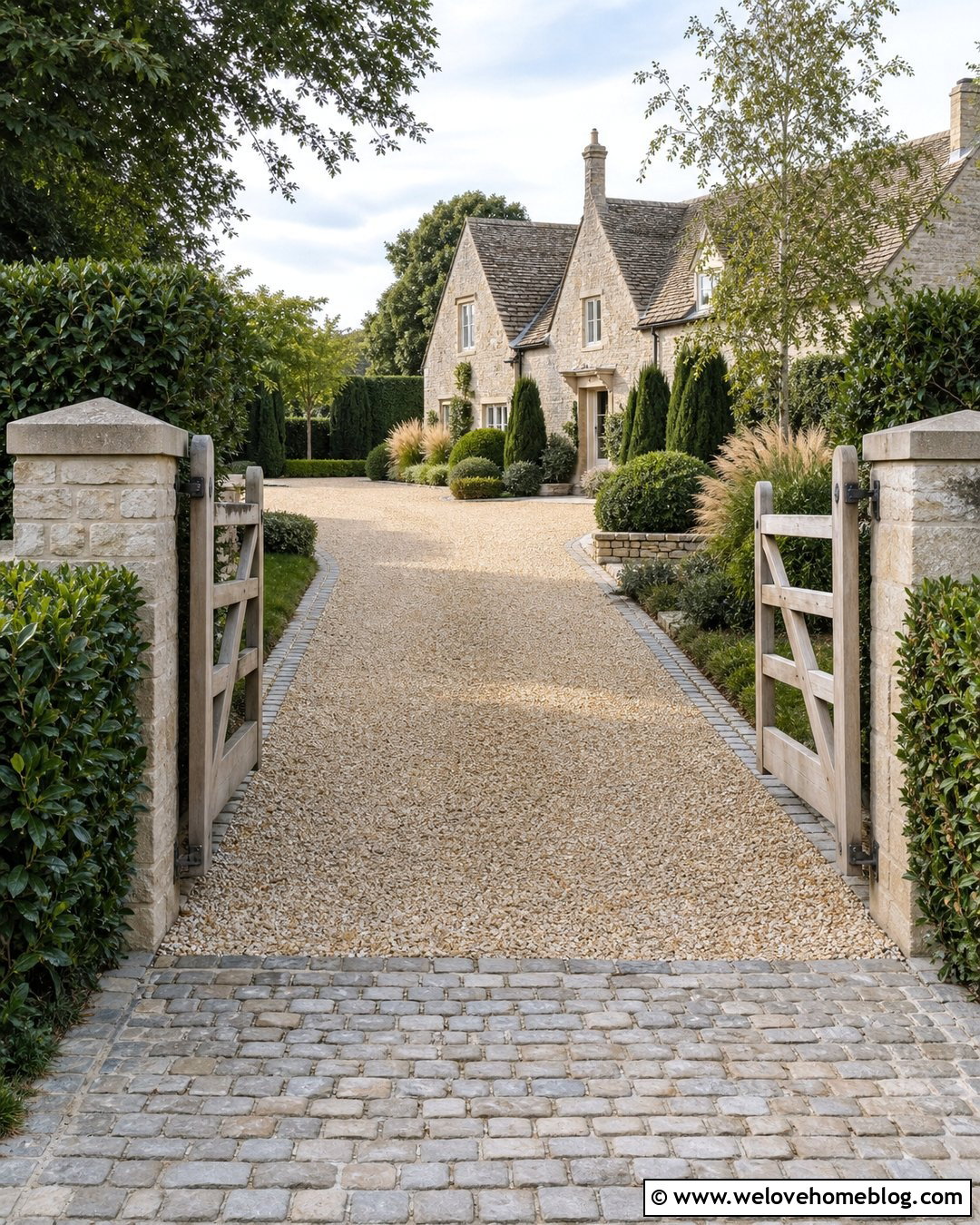
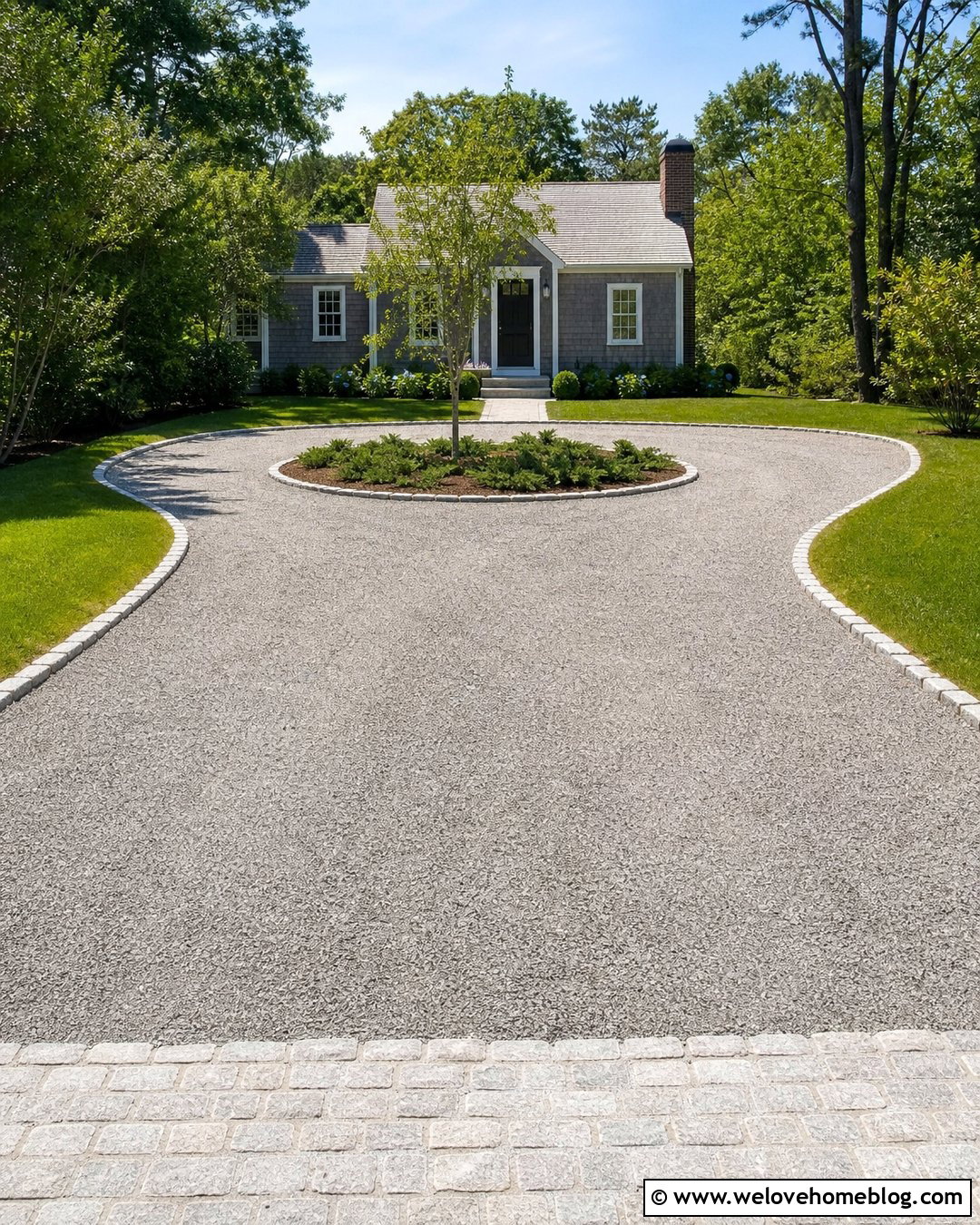
The entrance usually receives the greatest visual and physical impact, so a cobblestone apron can be both attractive and practical. Lay weathered granite or sandstone cobbles across the first section of a straight Cotswold gravel driveway. The paved strip creates a strong threshold, reduces loose stone near the road, and introduces texture. Continue a narrow cobblestone border along both sides to contain the gravel. Traditional stone pillars and simple timber gates will complete the country look without making the entrance feel overly formal. Behind the pillars, plant upright yew, clipped holly, or soft ornamental grasses for height. The driveway can then widen closer to the house to provide turning or parking space. This combination suits cottages, converted farmhouses, and substantial period homes.
7. Small Cotswold Gravel Driveway With Granite Border
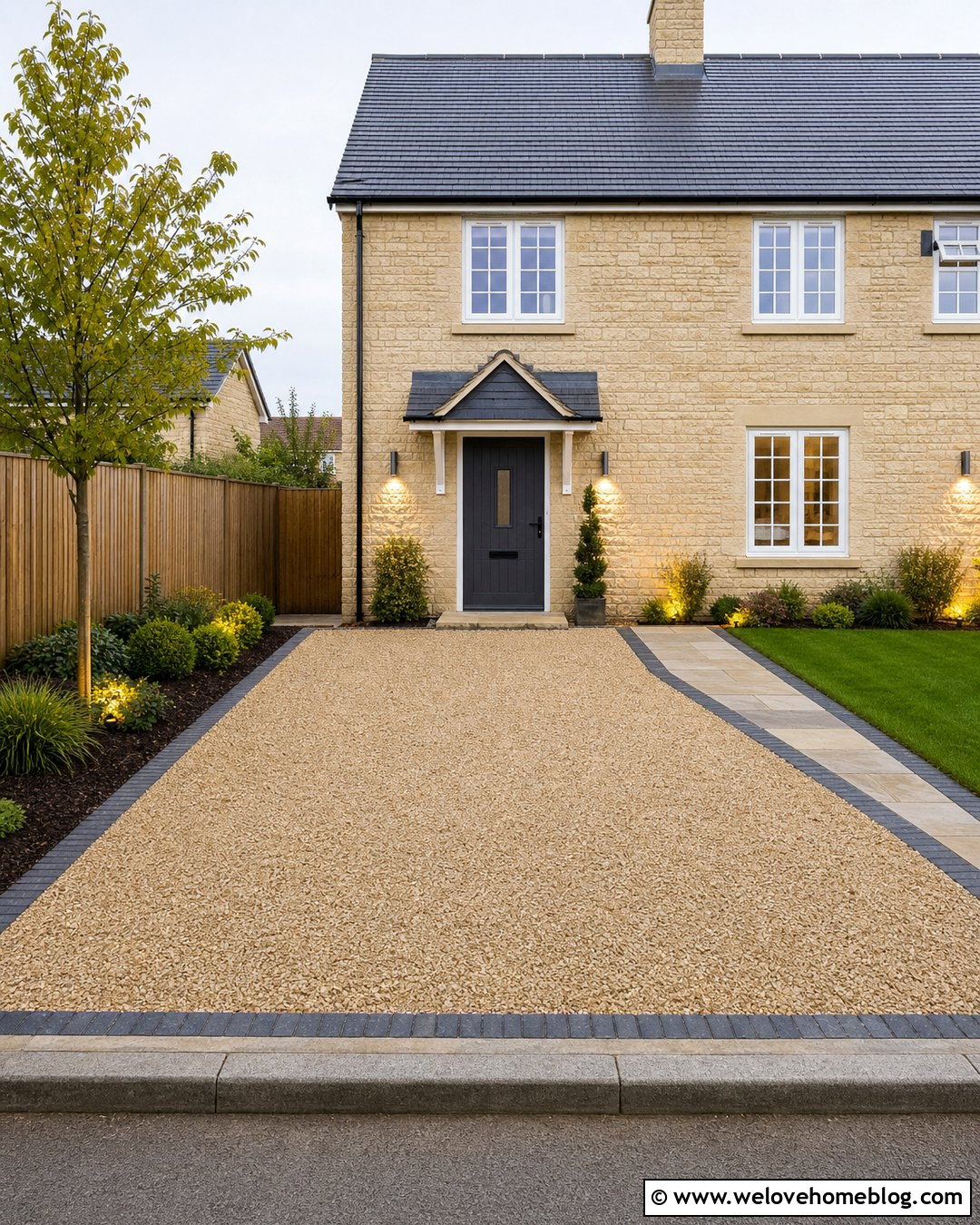
Limited frontage calls for a simple layout that maximizes parking without removing every trace of garden. Cover the main rectangular parking area with 14–20mm angular Cotswold gravel and outline it with narrow charcoal granite setts. The dark border makes the light stone look crisp while clearly separating it from neighboring beds. Reserve one corner for a compact ornamental tree underplanted with evergreen ground cover. A paved walkway along the house provides a stable route to the front door and keeps pedestrians away from parked vehicles. Low planting is preferable near the pavement because it preserves visibility when entering or leaving. Choose wall-mounted lighting instead of bulky freestanding posts. This compact design gives a small semi-detached or terraced home practical parking, attractive contrast, and manageable landscaping.
8. Long Cotswold Gravel Driveway With Trees
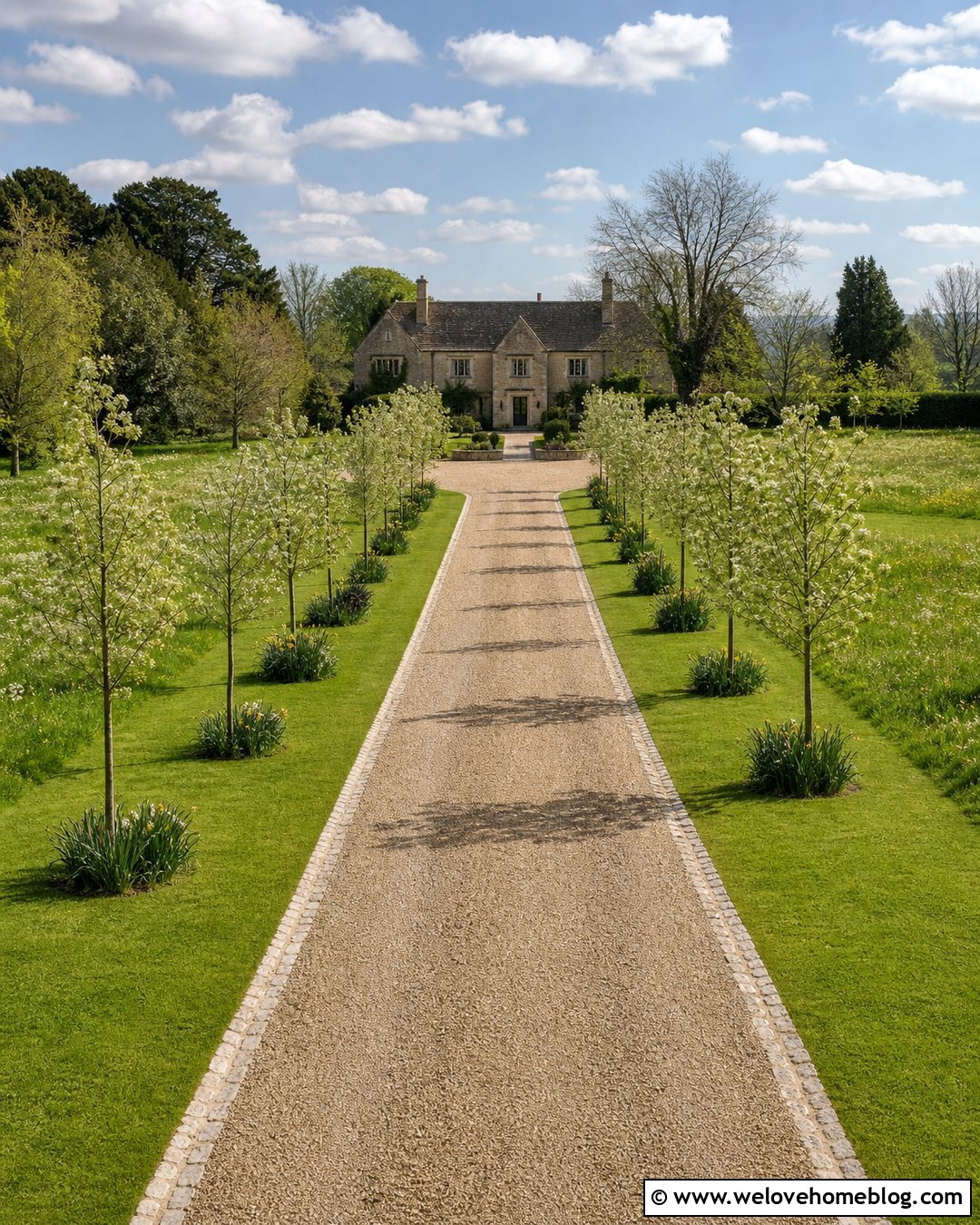
Few driveway layouts feel more inviting than a long gravel approach framed by evenly spaced trees. Use warm Cotswold limestone gravel on a straight or subtly curving route leading toward a country house. Edge the surface with flush natural stone setts, allowing lawn to meet the border neatly. Small ornamental pears, hornbeams, or crab apples can create rhythm without forming an overpowering canopy. Underplant the trees with spring bulbs and low meadow grass for seasonal interest. Near the house, widen the drive into a practical turning court while maintaining the same edging material. A gravel stabilization system can reduce ruts on frequently traveled wheel paths. Keep tree trunks well back from the driving area and allow enough mature width so branches do not obstruct vehicles.
9. Stabilized Cotswold Gravel Driveway With Paver Apron
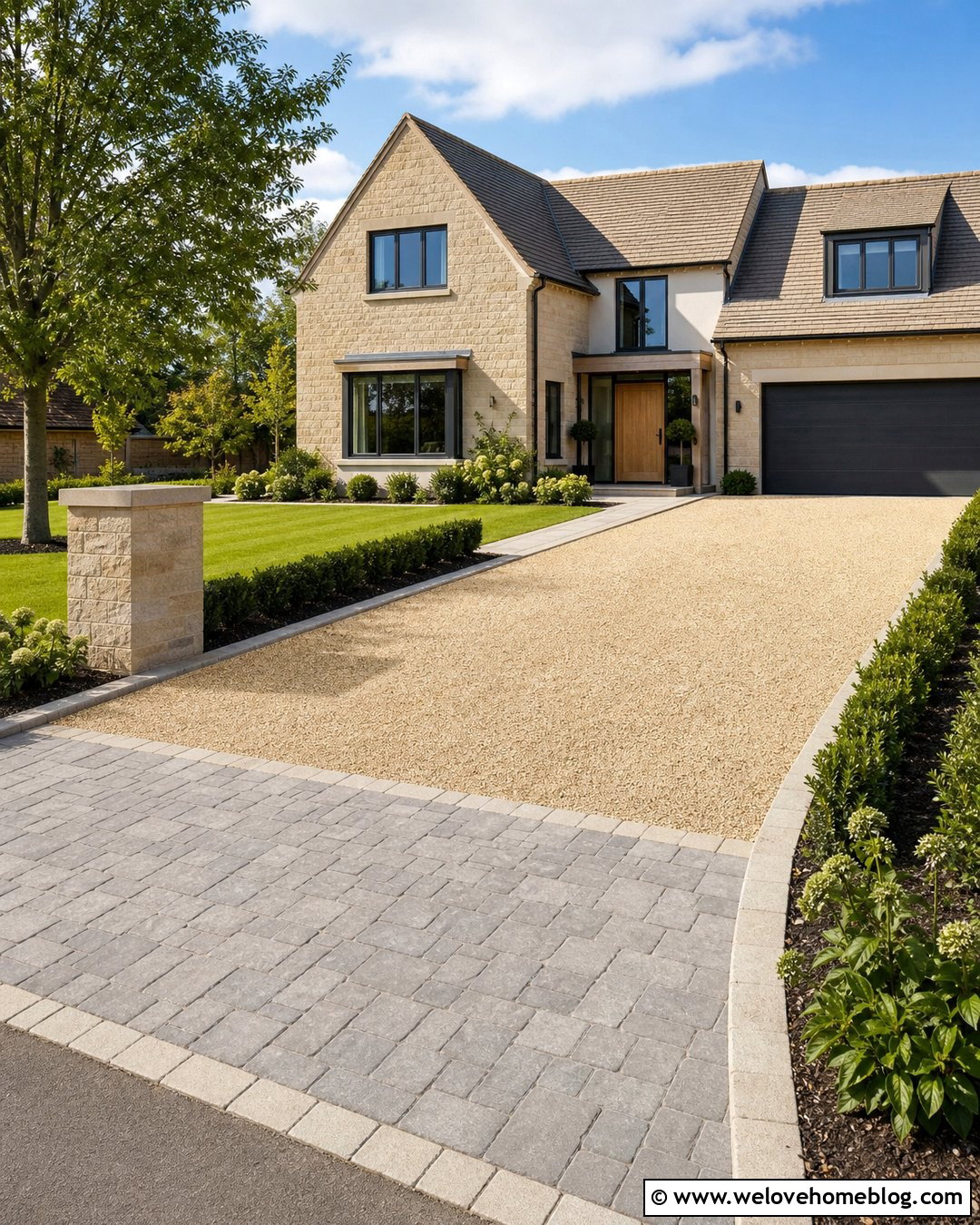
A stabilized gravel system is a smart choice for busy family driveways where loose stones and wheel ruts could become frustrating. Install angular Cotswold gravel over a properly prepared base and gravel retention grid, following the grid manufacturer’s installation requirements. Frame the driveway with raised concrete or stone kerbs to maintain a clean boundary. At the street, add a broad apron made from warm gray block pavers. Repeat those pavers around the parking area or walkway to give the design a coordinated finish. Low evergreen hedges and simple lawn panels will keep the frontage orderly without hiding the gravel. Once filled correctly, the grid should remain concealed beneath the stone. This complete setup combines the appearance of a traditional gravel drive with a firmer, more controlled layout.


10. Cotswold Gravel Driveway With Dry Stone Walls
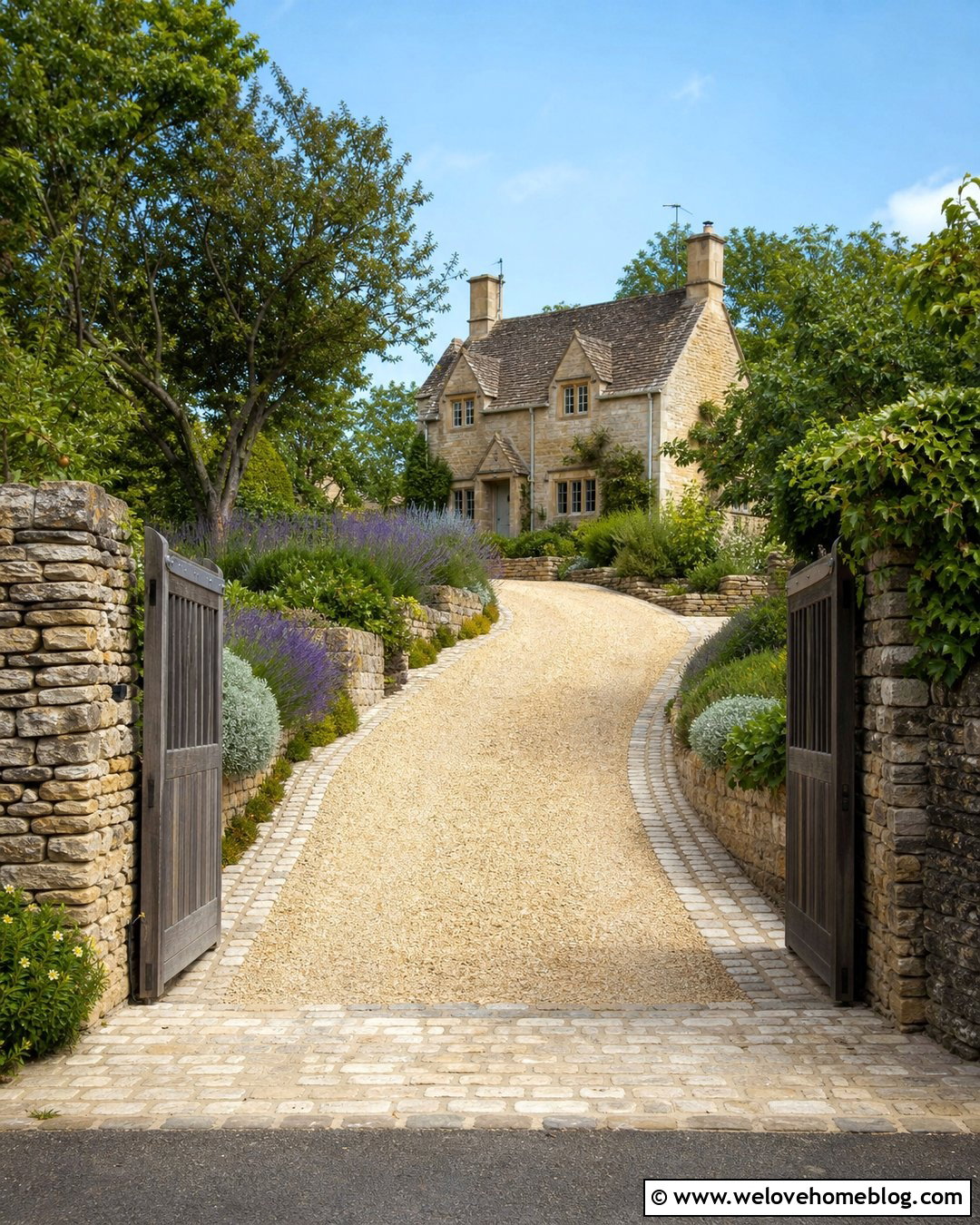
Dry stone walls give a Cotswold gravel driveway an authentic regional character, especially when the wall color echoes the gravel and house facade. Use low walls to border a gently rising driveway, contain raised planting beds, or mark the transition from the road. The surface can follow a soft curve toward a limestone cottage, with stone setts installed along the driving edge for extra definition. Plant lavender, santolina, thyme, and cascading ground covers behind the walls so they spill slightly over the stone. A recessed entrance with simple timber gates prevents the frontage from feeling crowded. Include wider passing or turning space where the property allows. Keeping walls relatively low near the road will preserve sightlines, while taller sections closer to the house can offer privacy and shelter.
11. Cotswold Gravel Driveway With Red Brick Ribbons
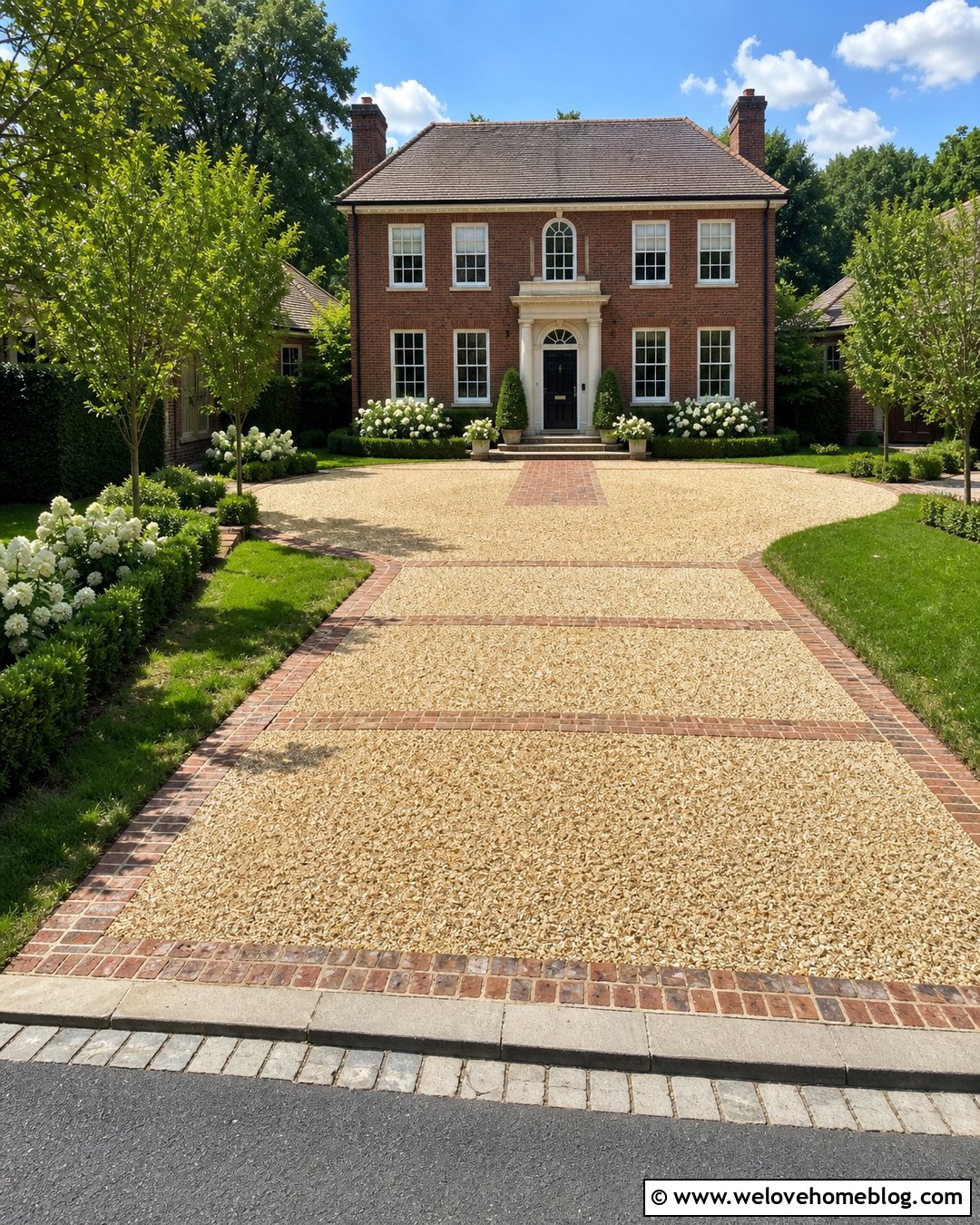
Brick ribbons introduce pattern without the cost or visual weight of paving the entire driveway. Begin with a broad Cotswold gravel surface, then install narrow red brick bands across it at regular intervals. The bands can mark parking bays, break up a long approach, or highlight the transition into a turning area. Use the same brick around the perimeter and along a walkway to create a unified design. Deep green hedges and white flowering shrubs provide a classic background for the cream-and-red color combination. This look is especially effective beside Georgian, Edwardian, and traditional brick homes. Make sure the brick ribbons sit securely and flush with the finished surface. Proper levels prevent awkward bumps while allowing the decorative pattern to remain visible through everyday use.
12. Horseshoe Cotswold Gravel Driveway With Grass Island
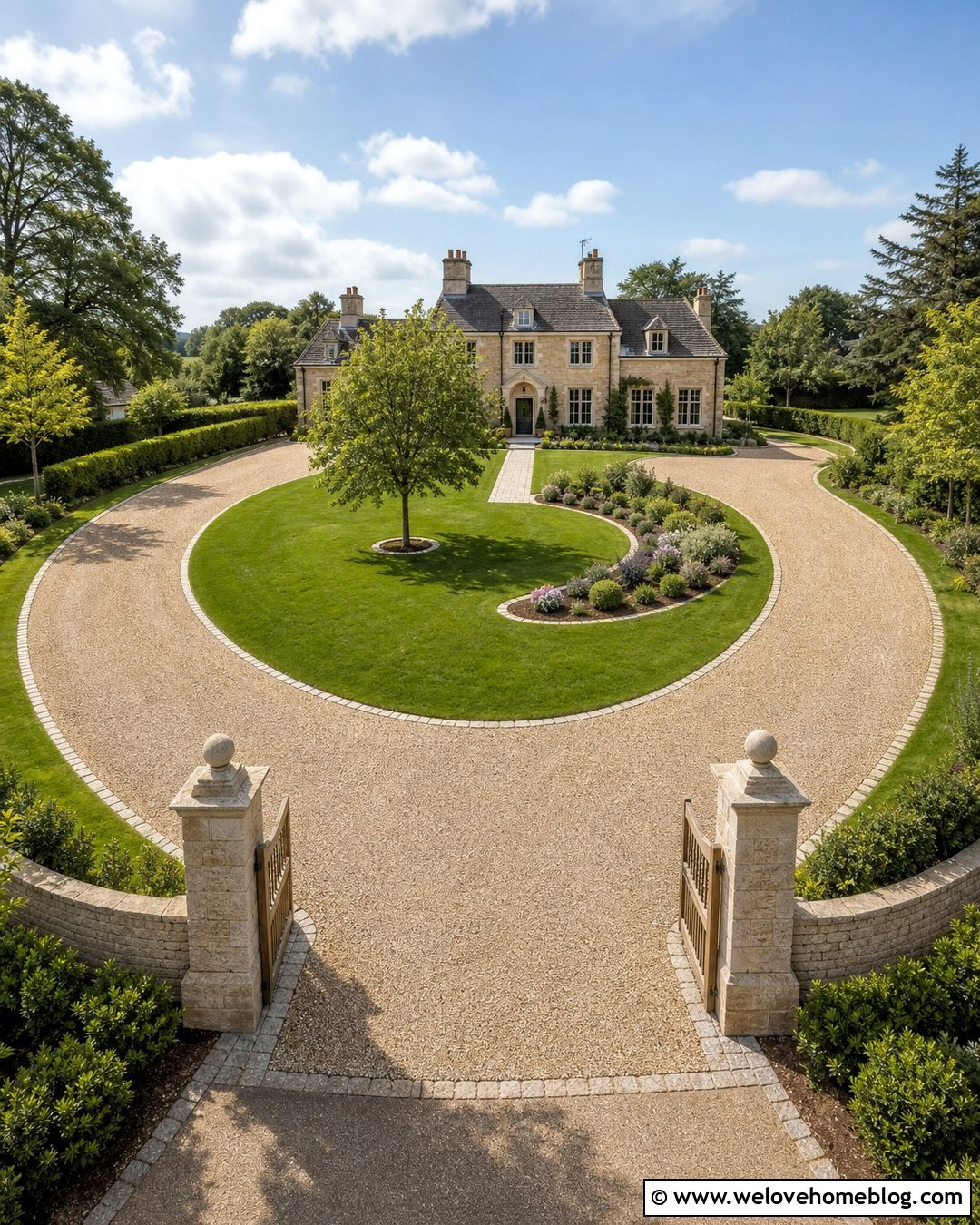
A horseshoe driveway can organize a wide frontage while preserving a substantial amount of greenery. Lay Cotswold buff gravel in a smooth U-shaped route with separate entrance and exit points. Define both sides using limestone setts or understated metal edging. Keep the central island mostly lawn for an open appearance, then add one specimen tree and a curved bed near the house. Matching stone pillars at each entrance will make the layout easy to understand from the road. Use low shrubs around the exits so drivers retain clear visibility. A paved footpath can connect the inner curve to the front door without interrupting the overall shape. This design feels spacious and formal, yet the warm gravel and simple grass island stop it from becoming rigid or overly grand.
13. Cotswold Gravel Driveway With Slate Edging

Dark slate edging creates one of the strongest contrasts with pale Cotswold gravel. Use rectangular slate setts to frame a straight driveway leading toward a white-rendered cottage or contemporary stone house. A matching slate apron at the entrance will anchor the design and help prevent gravel from spreading toward the roadway. Repeat the charcoal color in planters, exterior lights, or the front door. Planting beds can feature blue-green grasses, white hydrangeas, deep purple heucheras, and compact evergreen shrubs. Their cooler colors will bridge the difference between the warm gravel and dark border. Keep the slate line simple rather than introducing several patterns. When the edging, planting, and exterior details share a limited palette, the completed driveway appears considered, distinctive, and easy to maintain.
14. Formal Cotswold Gravel Driveway With Clipped Hedges
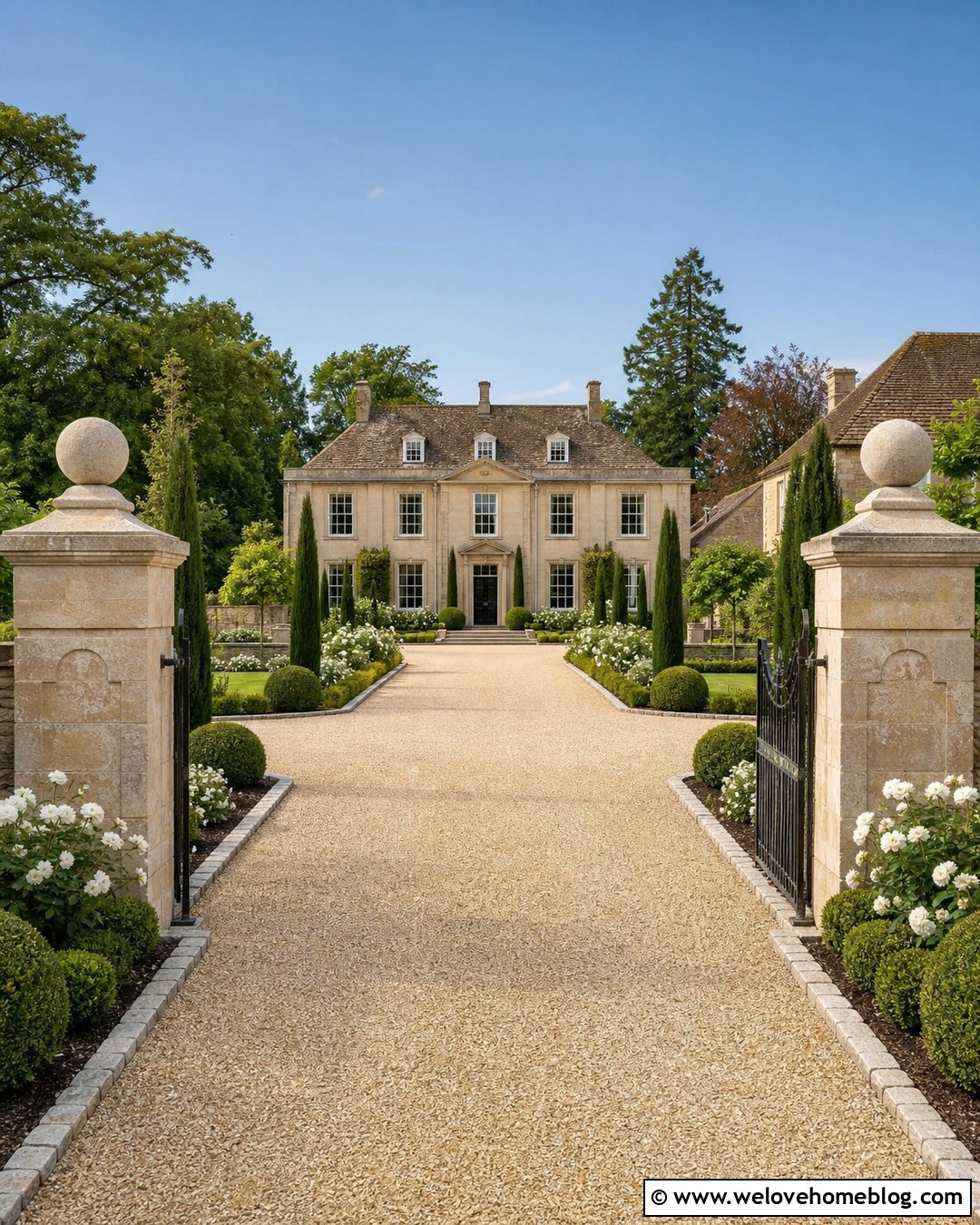
Symmetry can transform a straightforward gravel driveway into a polished formal entrance. Center a broad Cotswold gravel drive on the front door and frame it with matching stone kerbs. Place low clipped hedges along both sides, leaving openings for balanced planting beds or a pair of paved walkways. Evergreen balls, white roses, and upright yew accents will reinforce the structured layout. At the house, widen the driveway slightly to create comfortable parking without disrupting the central axis. Matching gate pillars or stone posts at the street can introduce the symmetry from the beginning. Keep plant heights consistent and avoid filling every available space. The warm gravel prevents the formal arrangement from feeling too severe, while careful repetition gives a Georgian, manor-style, or symmetrical new-build facade greater presence.




15. Cotswold Gravel Driveway With Wildflower Borders
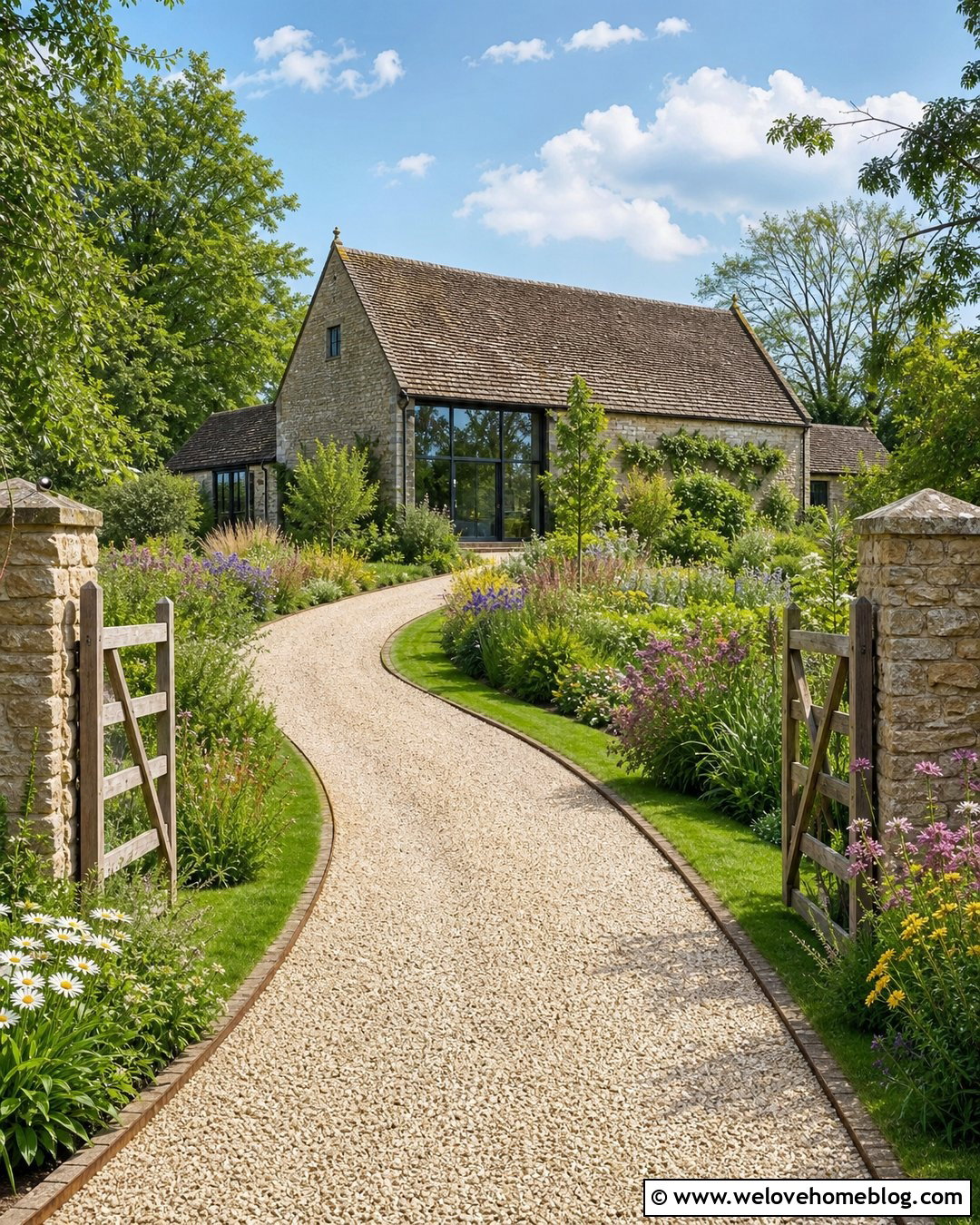
For a softer country setting, surround a gently curved Cotswold gravel driveway with naturalistic wildflower borders. The pale stone creates a calm base for purple, blue, yellow, and white flowers, while weathered steel or flush stone edging keeps the planting soil away from the driving surface. Mix long-flowering perennials with ornamental grasses and spring bulbs rather than relying on a single short season of color. Leave a narrow mown grass strip behind the edging to make the border look intentional. A timber gate and simple stone entrance pillars will support the informal rural character. Near turning points, replace tall plants with lower varieties to maintain visibility. This complete driveway look suits a cottage, farmhouse, or barn conversion and helps a large gravel area blend naturally into the surrounding garden.
16. Cotswold Gravel Driveway With Paved Walkway
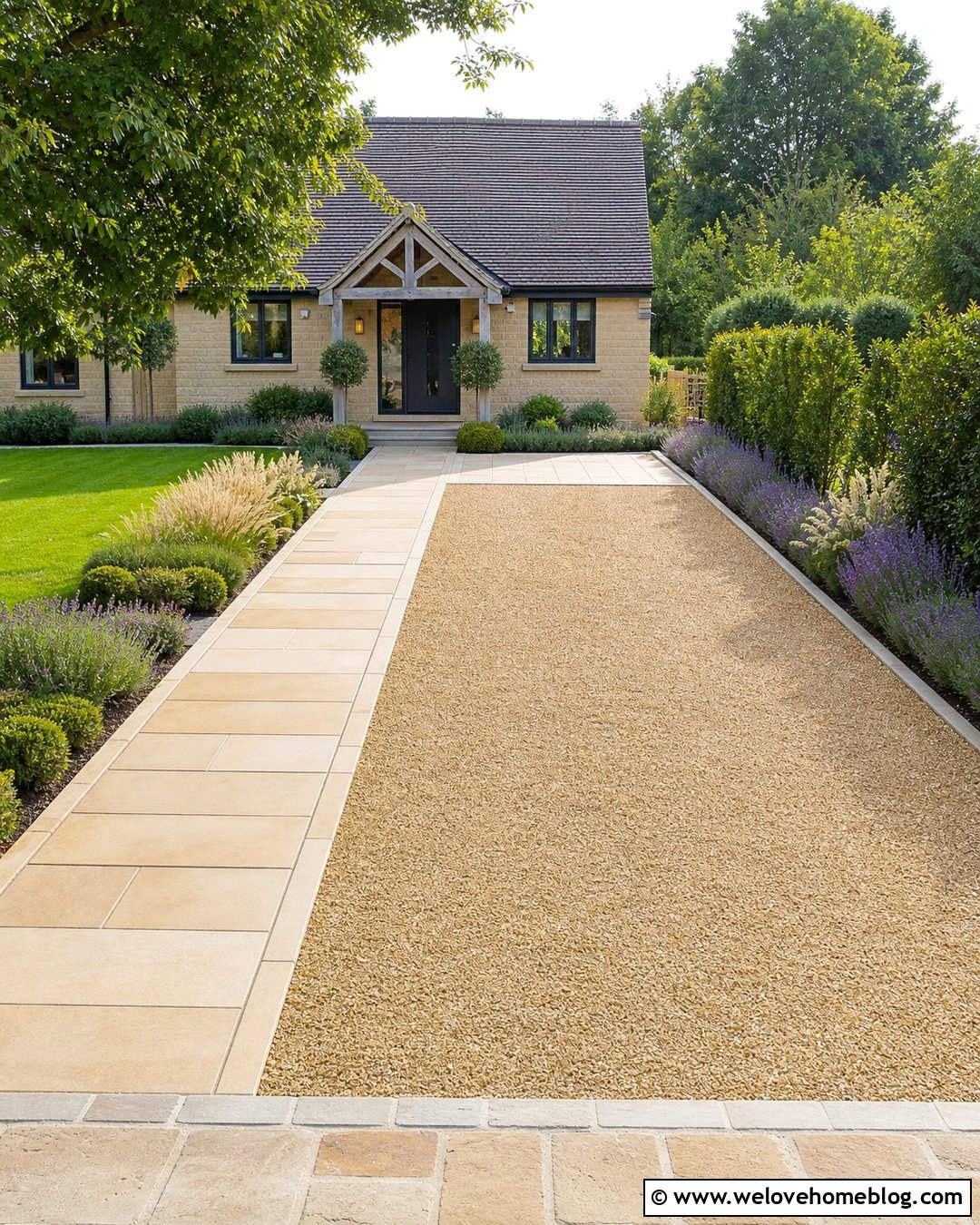
Loose gravel can be less convenient for wheelchairs, strollers, bicycles, and some footwear, so add a smooth paved walkway as part of the overall layout. Run wide sandstone slabs along one edge of a straight Cotswold gravel driveway, connecting the sidewalk, parking area, and front door. Use the same sandstone as a border around the gravel to make the pathway feel integrated. Keep transitions flush and avoid narrow gaps that could become trip points. Low planting beds with lavender, compact grasses, and evergreen shrubs can separate the path from the house. A small paved landing beside the main parking position will provide a stable unloading area. This arrangement preserves the warm country appearance of Cotswold gravel while creating a more comfortable and clearly defined pedestrian route.
17. Cotswold Gravel Driveway With Drainage Channel
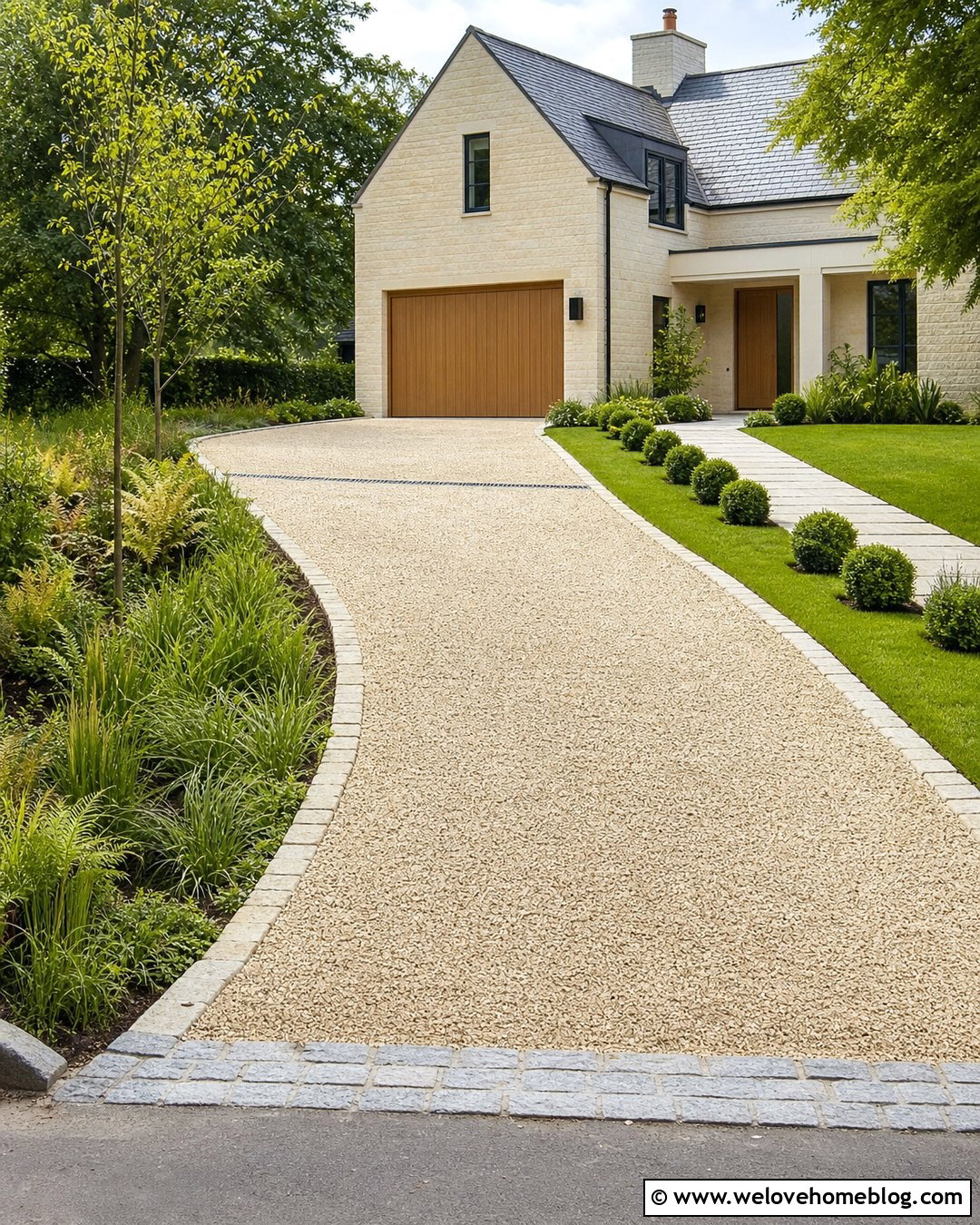
A driveway should direct water safely rather than allowing it to collect near the house, garage, or entrance. Design a gently sloping Cotswold gravel surface with defined stone edging and a discreet linear drainage channel where needed. A band of granite setts across the garage threshold can create a durable transition and visually conceal the drainage detail. Along the lower side of the driveway, add a planted rain garden or moisture-tolerant border, provided it suits the site and local conditions. Sedges, ferns, and compact shrubs can soften this practical feature. Keep gravel levels below surrounding paving so stones do not spill into the channel. Because drainage needs vary by property, obtain site-specific advice before installation. Done well, the finished driveway will look attractive rather than visibly engineered.
18. Cotswold Gravel Driveway With Bollard Lighting
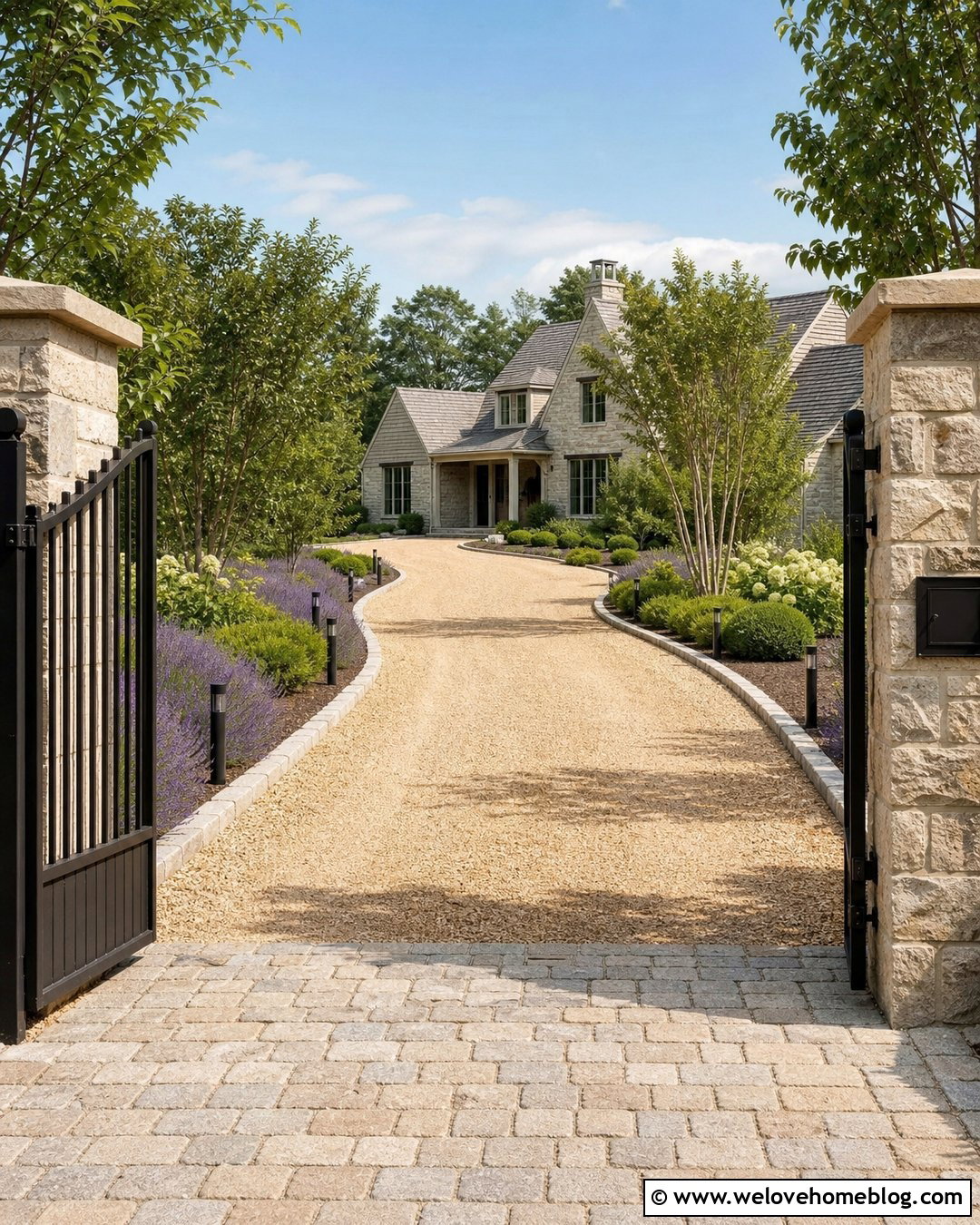
Good lighting helps define a long driveway, but the fixtures should support the design rather than dominate it. Place low black or bronze bollard lights at generous intervals along a curved Cotswold gravel approach. Position them behind stone edging so they remain protected from vehicle tires and maintenance equipment. Repeat the metal finish on the gate hardware, address plaque, and exterior wall lights. Use restrained planting with lavender, evergreen mounds, and small multi-stem trees to maintain an open route. A granite sett apron at the entrance adds a durable surface around the first pair of lights. Plan cable routes before laying the gravel and follow applicable electrical requirements. In daylight, the repeated fixtures provide structure; after dark, they can make the driveway route easier to identify and navigate.
19. Cotswold Gravel Driveway With Stone Gate Pillars
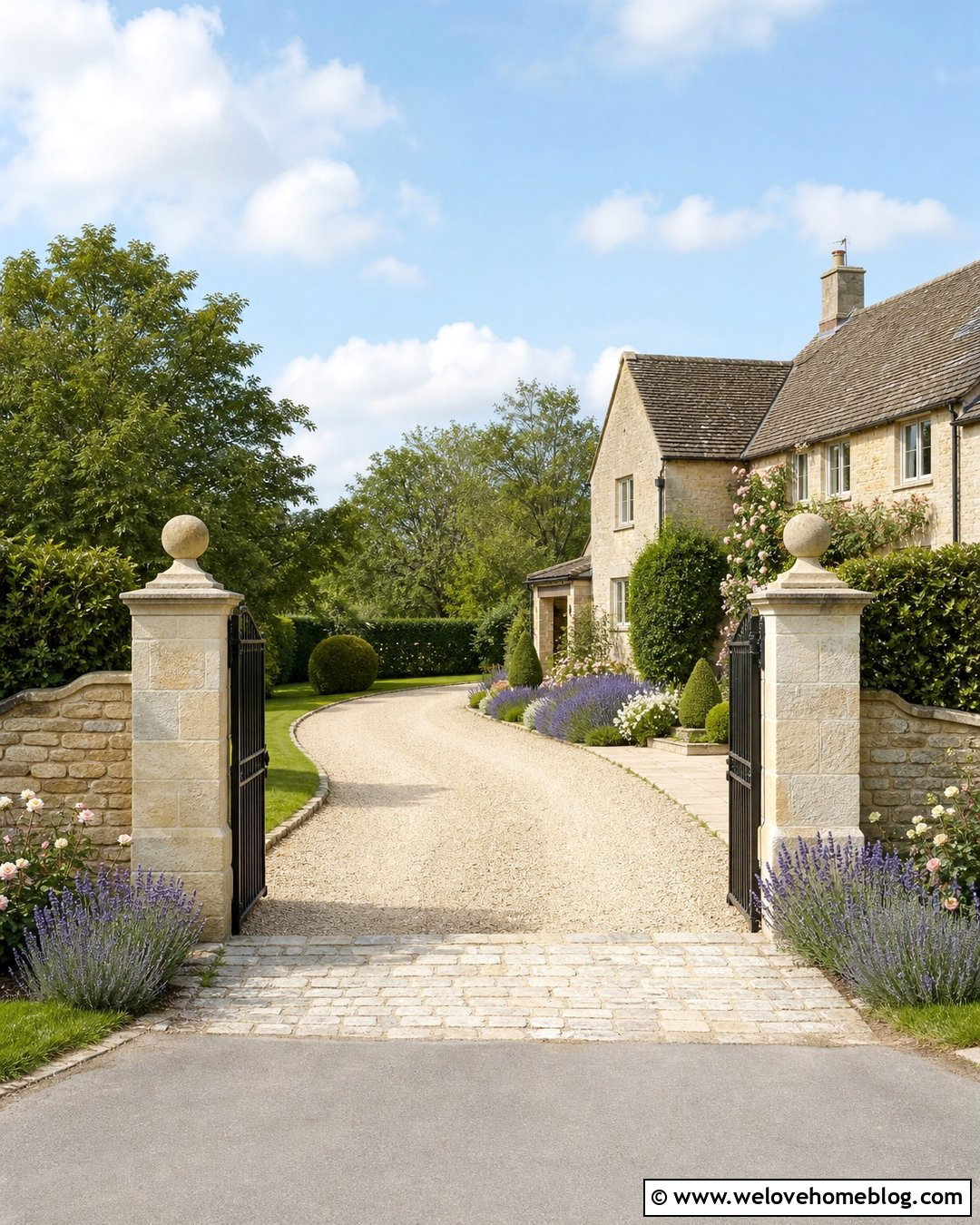
Strong entrance pillars give a loose gravel driveway a clear beginning and establish the character of the property. Build limestone or weathered local-stone pillars that coordinate with the creamy tones of Cotswold gravel. Set them far enough apart for comfortable access, then connect them to low walls or native hedges. Timber gates create a traditional farmhouse look, while simple black metal gates provide a more refined finish. Continue the entrance stone into a sett apron before transitioning to gravel. The driveway can curve gently behind the hedge, offering privacy and a more interesting arrival. Plant lavender, roses, or clipped evergreens around the pillars, but keep sightlines open. A discreet address plaque and integrated mailbox will make the entrance functional without adding unnecessary visual clutter.
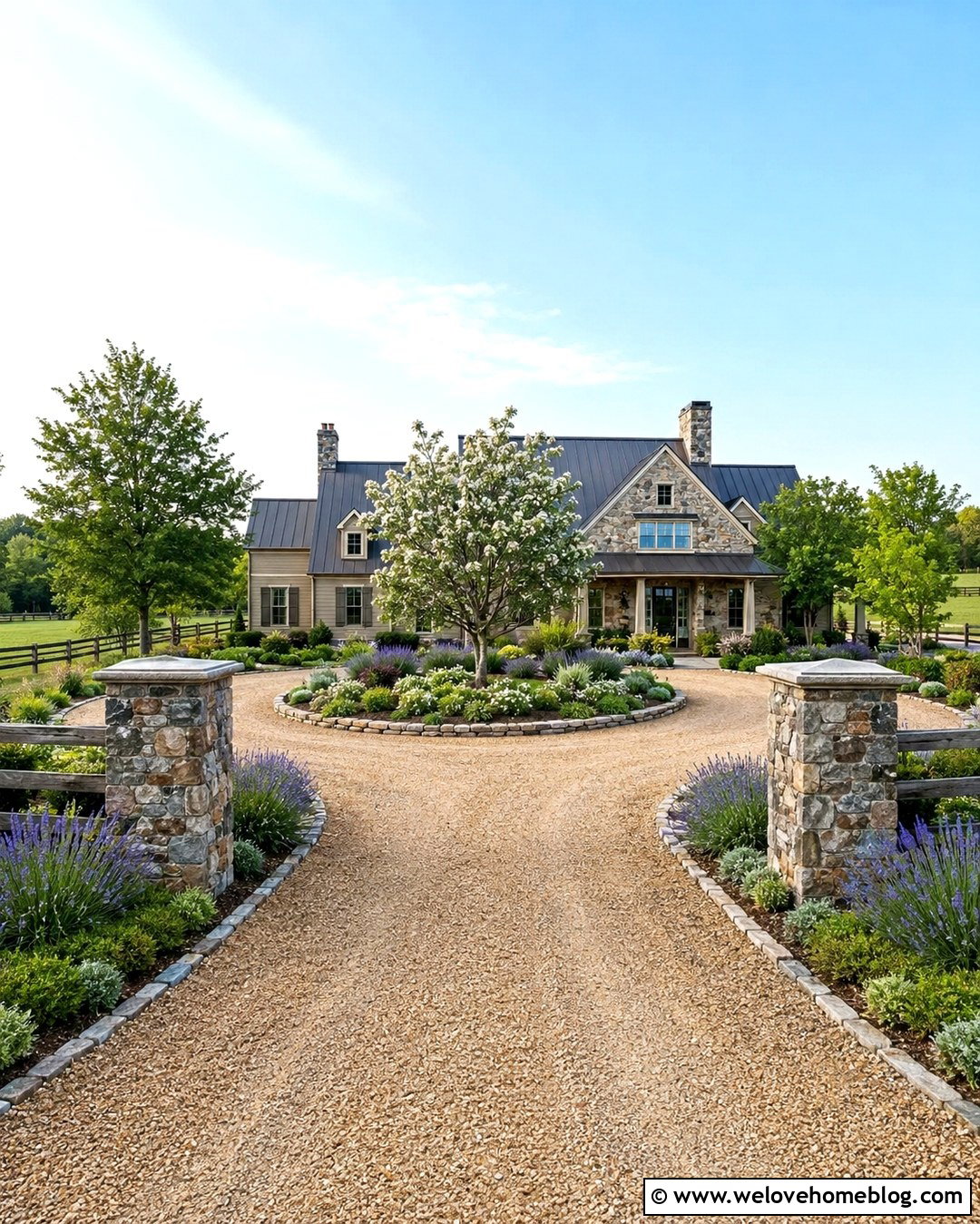
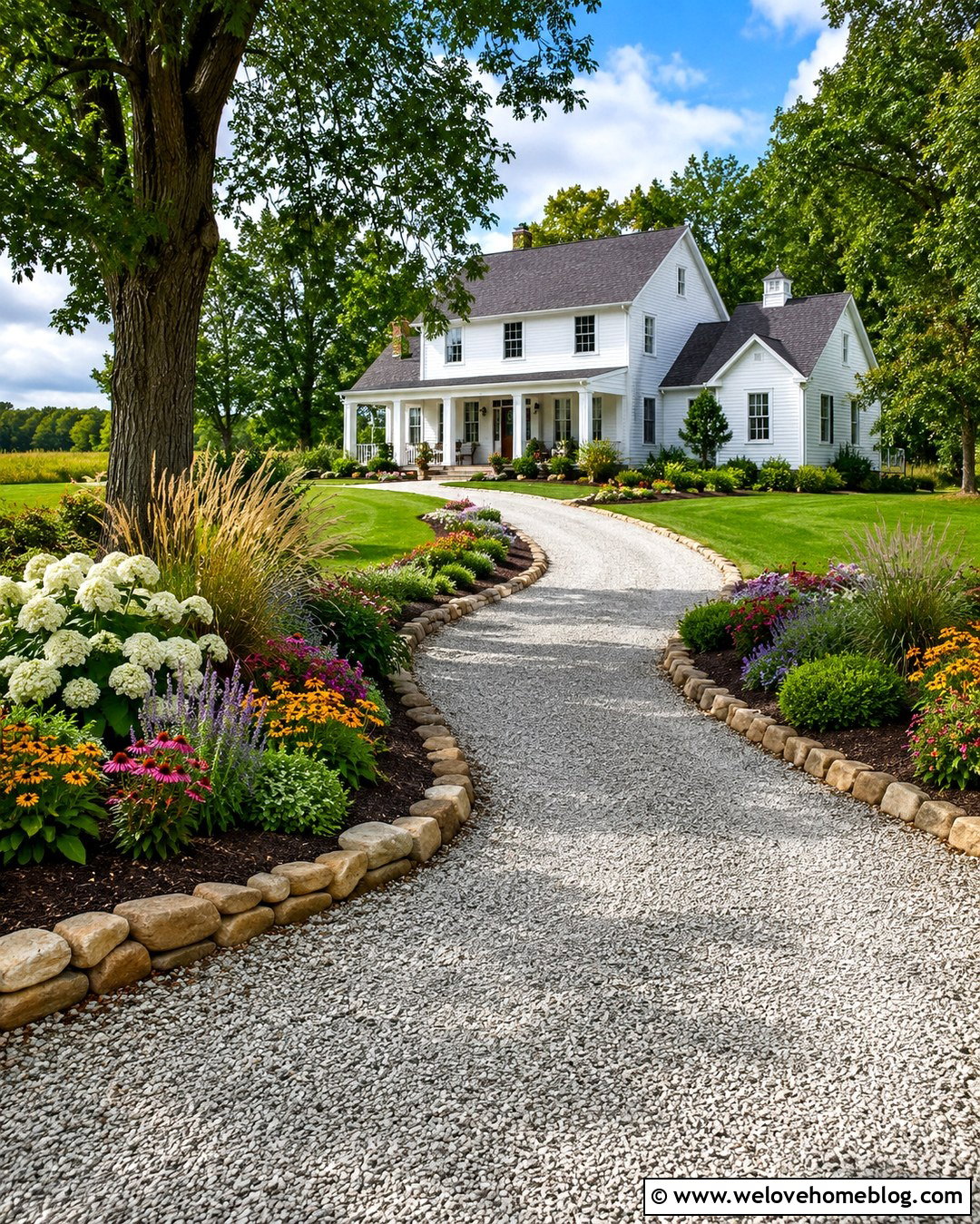
20. Low Maintenance Cotswold Gravel Driveway
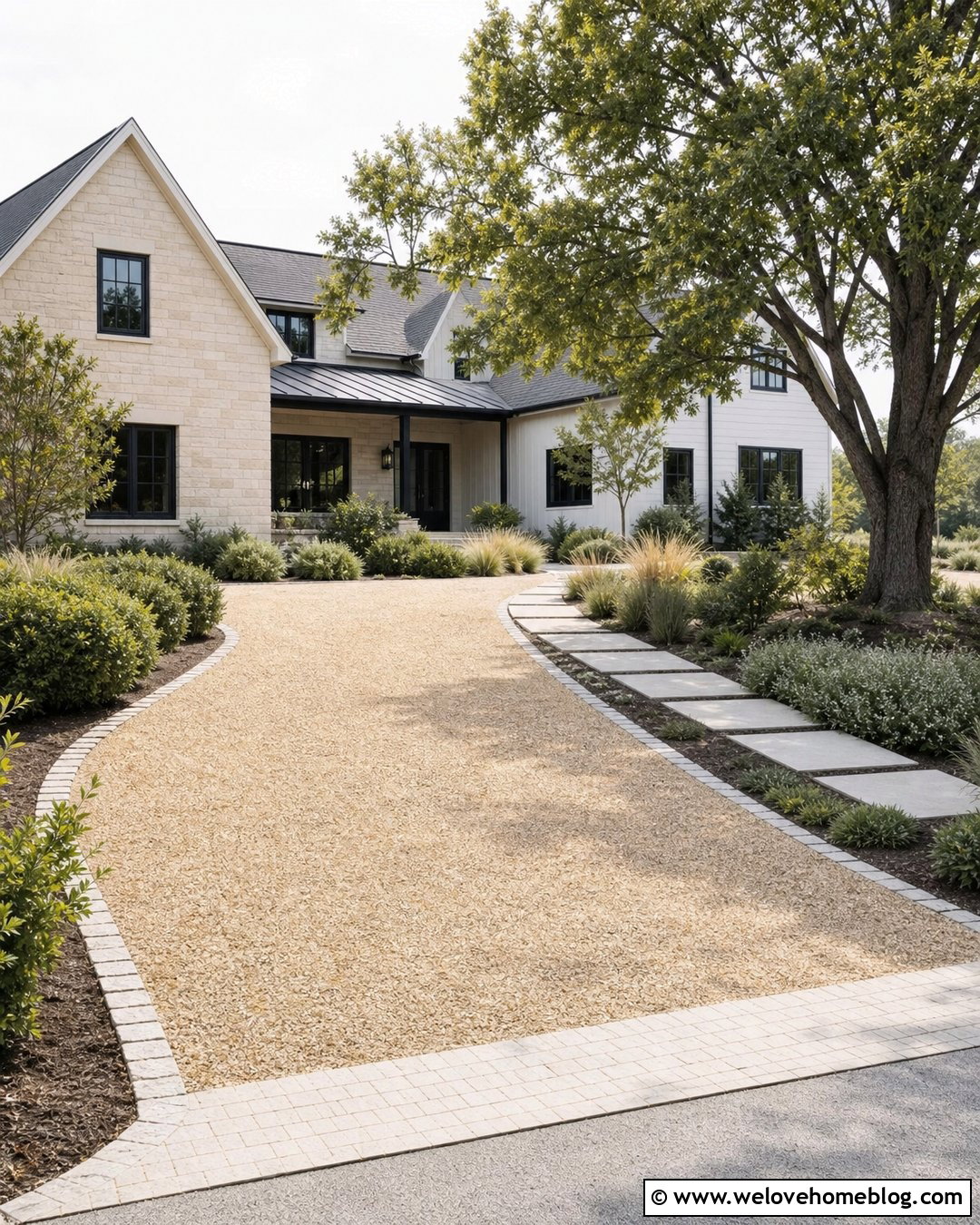
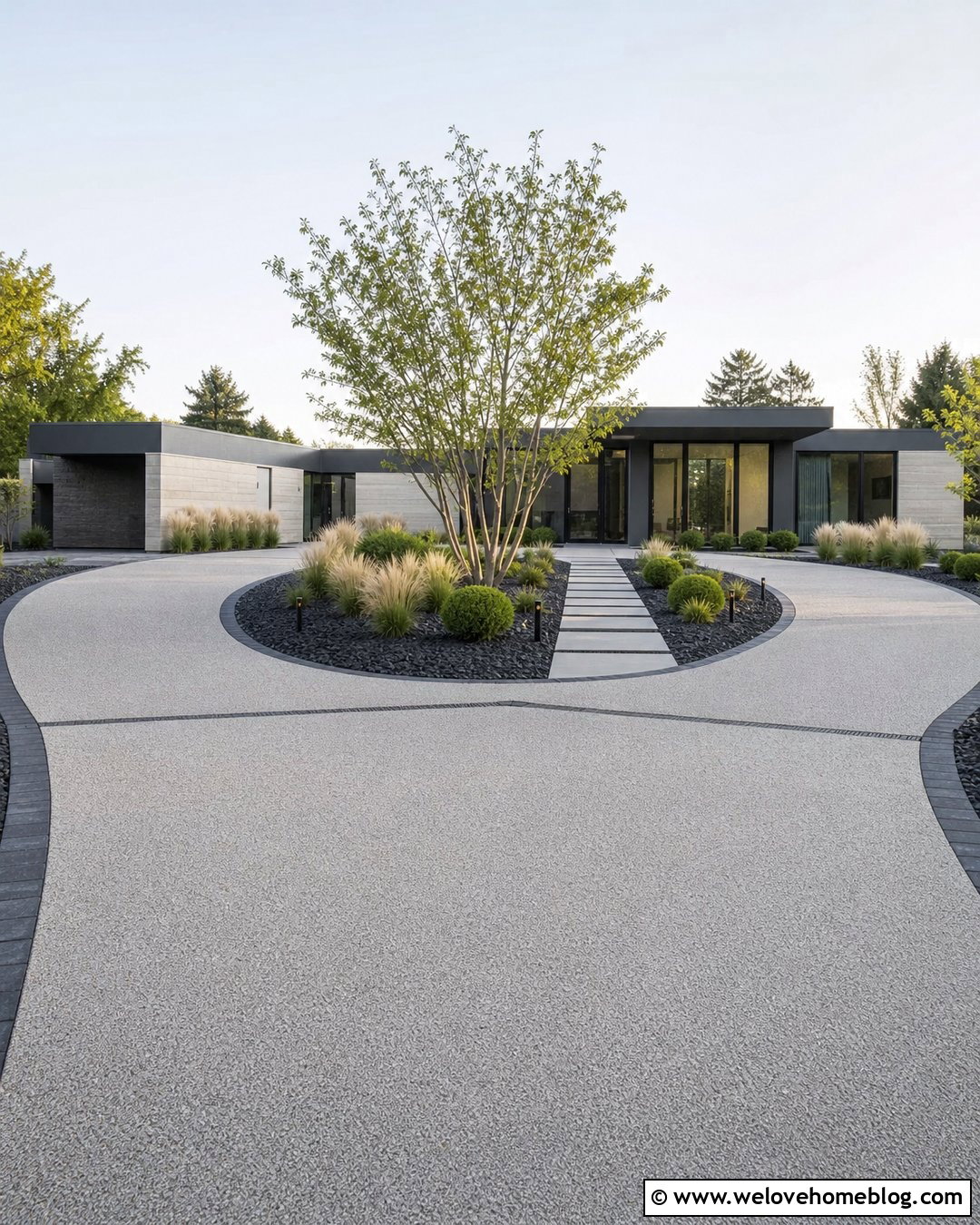
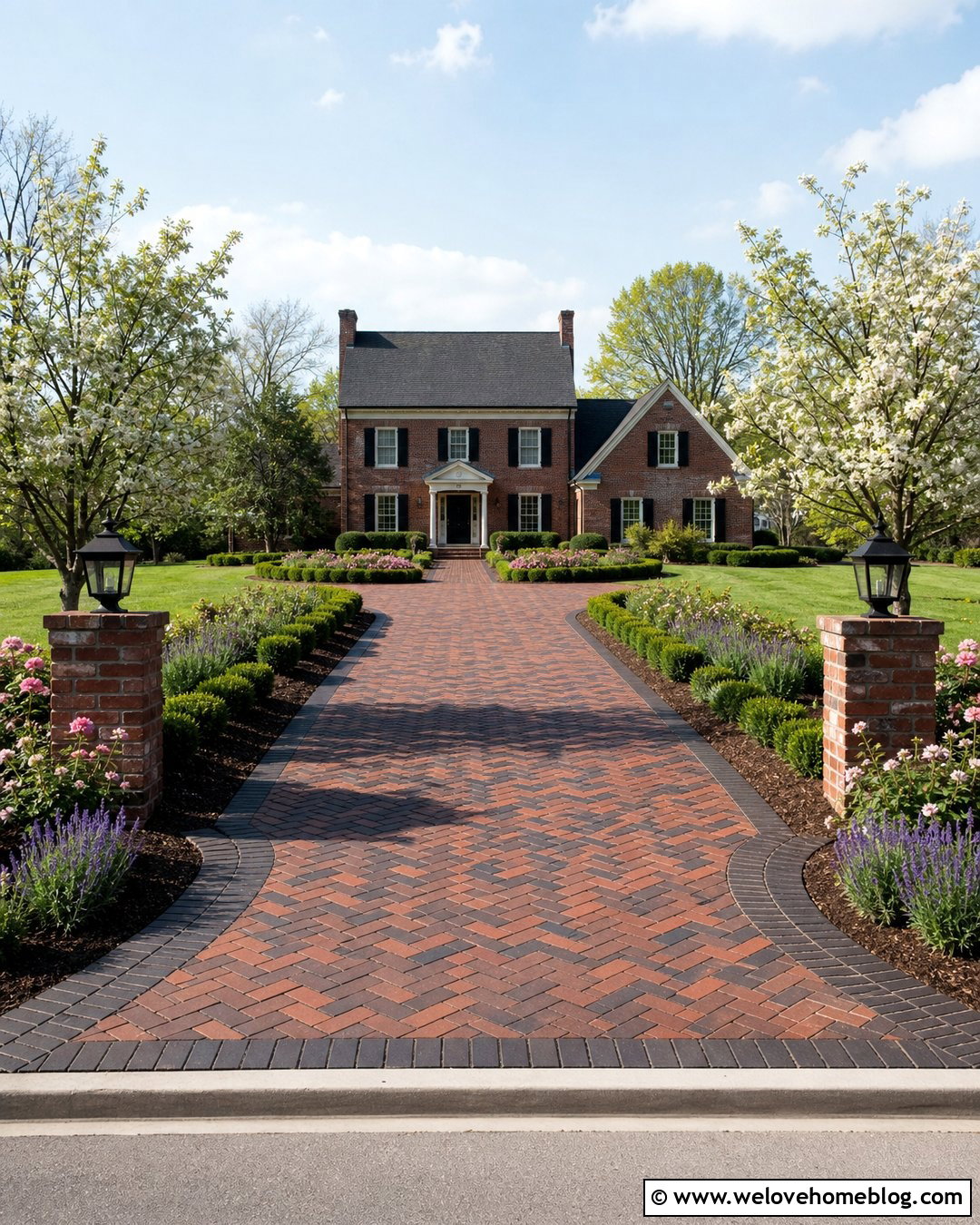
A low-maintenance design depends on strong construction, clear boundaries, and a restrained planting plan. Create a simple rectangular or gently curved Cotswold gravel driveway over a suitable compacted base, with stabilization grids in parking and turning zones. Use flush granite setts around the perimeter and a paved strip near the road to contain loose stones. Replace demanding flower beds with broad groups of evergreen shrubs, hardy grasses, ground-cover plants, and one carefully positioned feature tree. A smooth slab walkway should connect parking spaces to the front entrance. Avoid tiny planting pockets that are difficult to weed or irrigate. The limited material palette keeps maintenance manageable and makes repairs easier. This complete look can complement a bungalow, modern farmhouse, cottage, or understated contemporary home.
Conclusion:
The most successful **20 Cotswold Gravel Driveway Ideas** combine warm gravel with a practical layout, secure edging, clear walking routes, and landscaping that suits the house. Brick and cobblestone create traditional character, while steel, slate, and granite add sharper contrast. Circular and horseshoe layouts suit wider properties, whereas straight stabilized driveways make efficient use of compact front gardens. Before installation, consider drainage, vehicle movement, pedestrian access, maintenance, and the finished levels beside the house. Choose an appropriate driveway-grade angular gravel and prepare the foundation carefully. With those essentials in place, Cotswold gravel can create a bright, welcoming entrance that feels connected to both the architecture and the surrounding garden.

Related posts:

Leave a Reply