
Cotswold chippings bring a warm cream, honey, and pale-gold finish to residential driveways. Their softly varied color complements brick, stone, stucco, and painted facades without making the entrance feel overly formal. Angular pieces can settle together more effectively than rounded gravel, while secure edging helps prevent loose stone from spreading into lawns and planting beds. For vehicle use, choose chippings specifically rated by the supplier for driveways and install them over a properly prepared sub-base. Gravel stabilization grids can also reduce rutting and movement, especially on turning areas or gentle slopes. () From cottage entrances to streamlined modern layouts, the following complete designs explore **20 Cotswold Chippings Driveway Ideas**.

1. Cotswold Chippings Driveway With Brick Edging
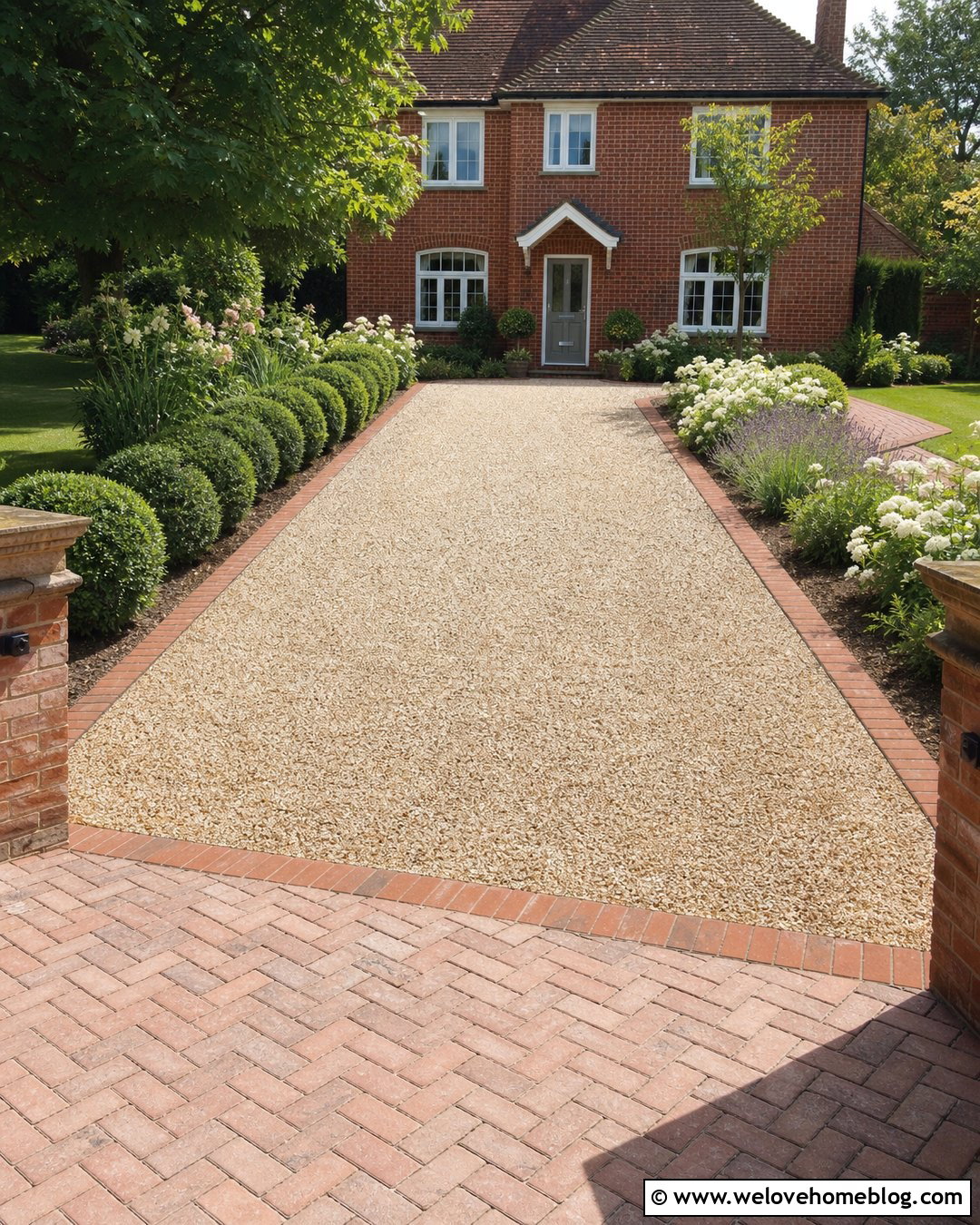
Warm red brick creates a crisp boundary around pale Cotswold chippings, making this combination especially effective beside traditional brick homes. Use a straight driveway with bricks installed lengthwise along both sides for a simple, structured appearance. A matching brick apron at the road can catch some displaced gravel and create a stronger transition from the pavement. Frame the entrance with clipped boxwood alternatives, flowering shrubs, or low evergreen planting that will not spill across the driving area. A brick walkway branching toward the front door helps connect the driveway to the house. Choose bricks that echo the facade rather than matching it perfectly. Slight color variation usually produces a more natural, established finish and makes the cream-colored stone appear brighter.
2. Cotswold Chippings Driveway With Cobblestone Border
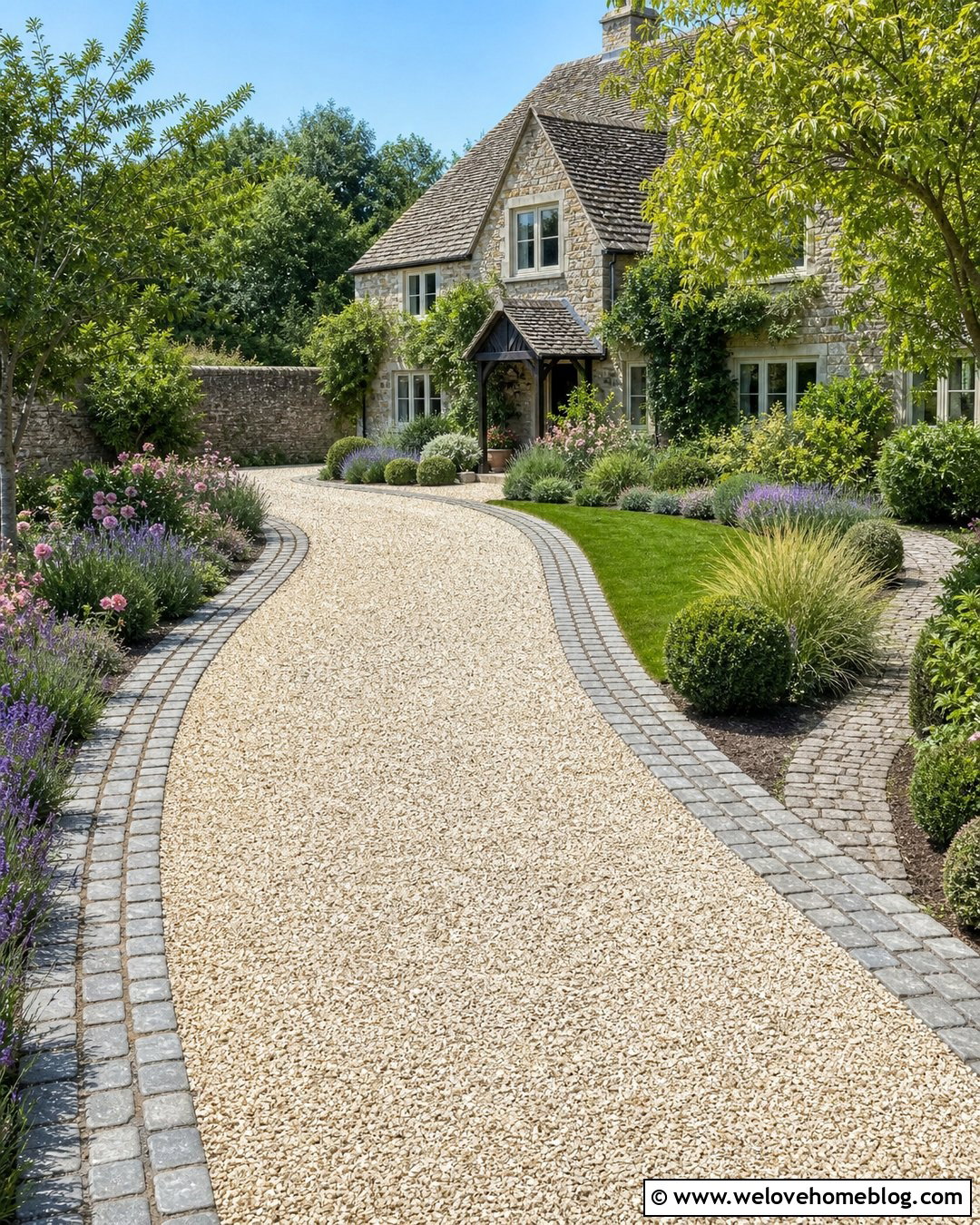
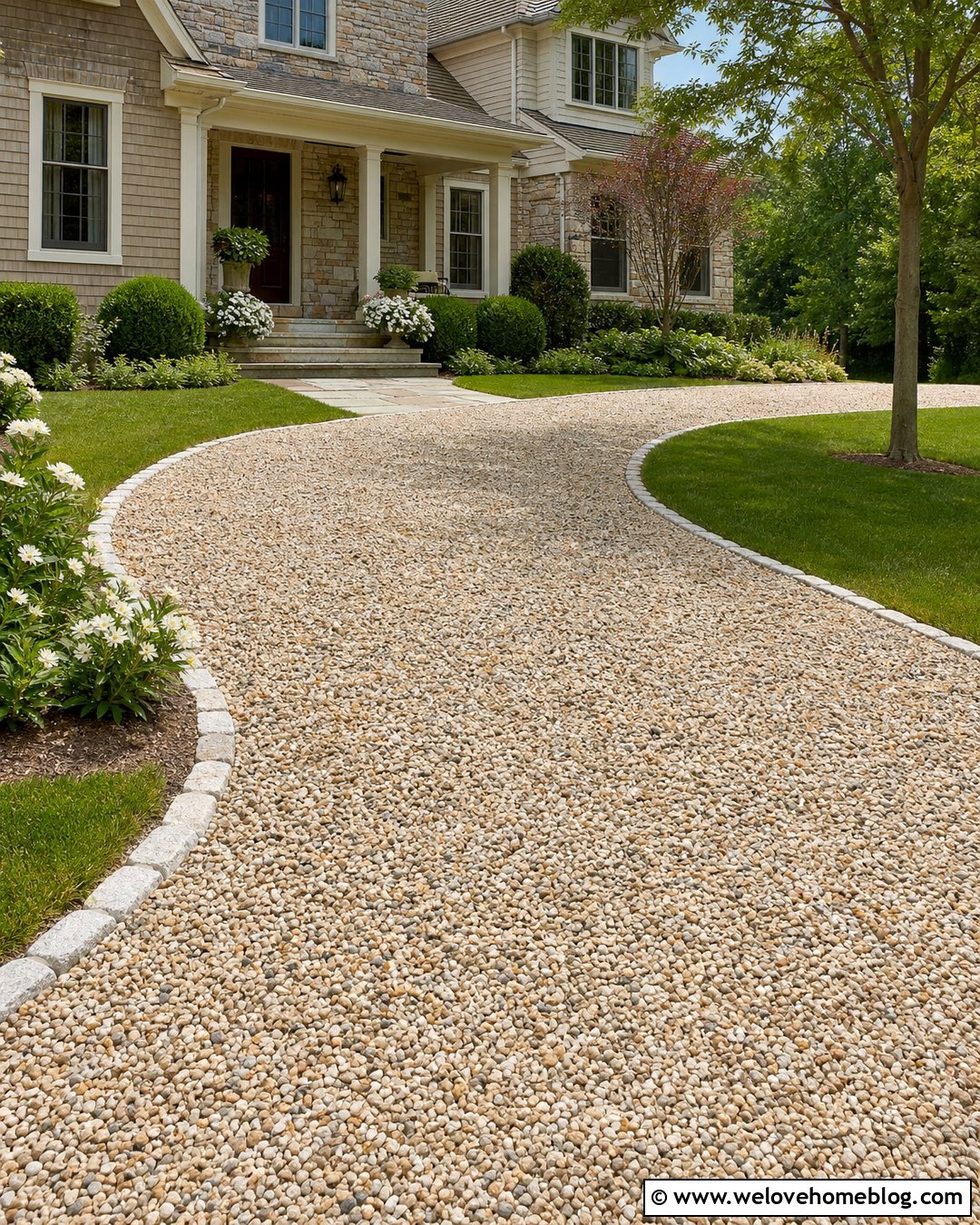
Could a light gravel driveway feel both rustic and carefully finished? A cobblestone border provides that balance by containing the Cotswold chippings while introducing a durable, textured edge. This design works beautifully with a gently curved driveway leading to a stone cottage, converted barn, or country house. Choose weathered gray or warm brown cobblestones that contrast with the creamy gravel. A double cobblestone row can provide extra visual weight along broad curves and vehicle turning points. Continue the same stone around nearby planting beds for a coordinated landscape. Soft grasses, lavender, roses, and rounded evergreen shrubs can frame the approach without hiding its shape. Keep the middle open and uncluttered so the flowing curve and contrasting materials remain the main features.
3. Cotswold Chippings Driveway With Gravel Grids
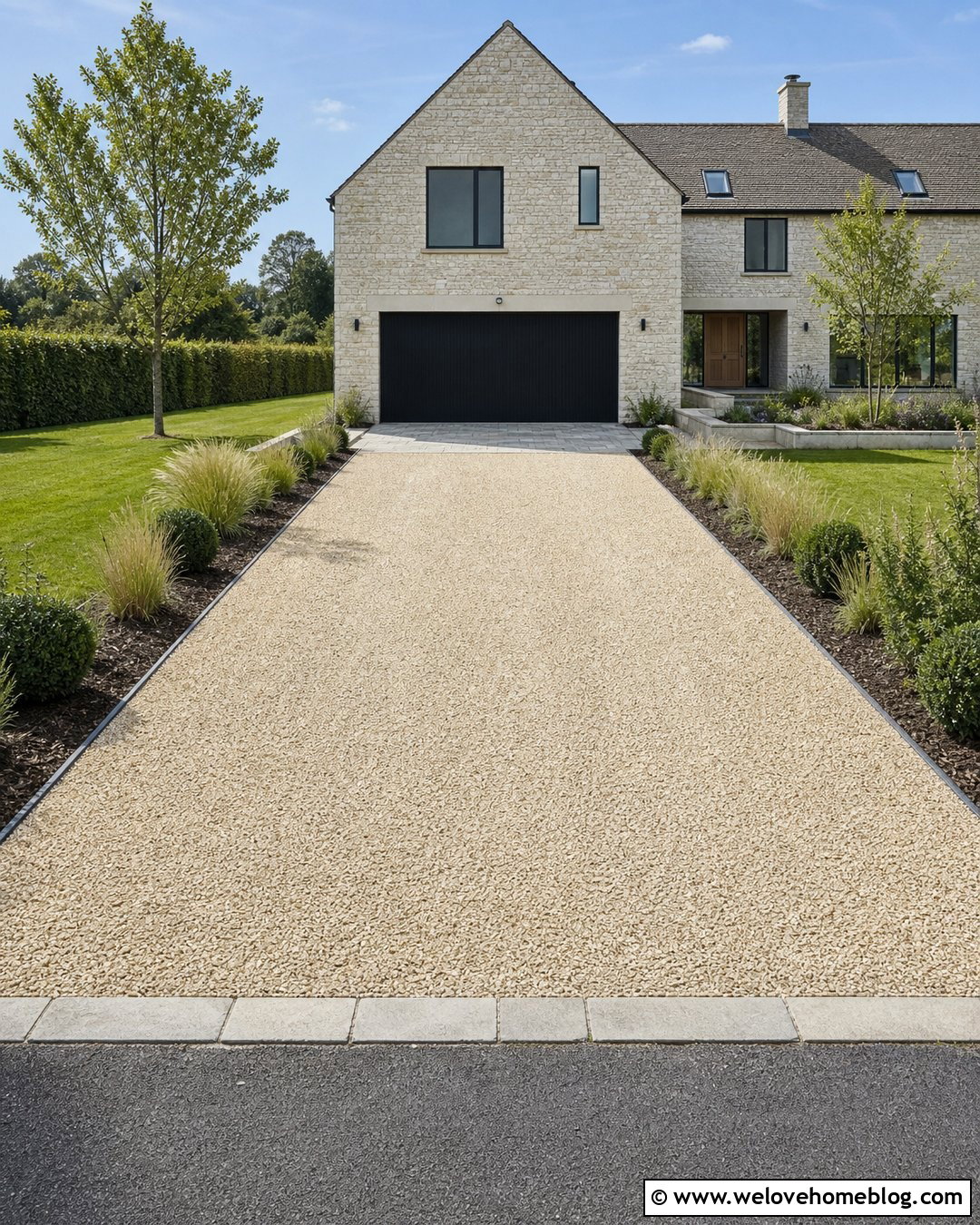
A stabilized Cotswold chippings driveway offers the loose-stone appearance many homeowners want with a firmer surface underneath. Honeycomb gravel grids are especially useful where tires repeatedly follow the same route, vehicles turn, or the driveway has a modest incline. The cells hold the chippings in place and can reduce spreading, shallow ruts, and uneven areas when installed over a suitable base. () Use cream or neutral-colored grids that remain concealed beneath the finished surface. Add slim metal edging for a clean outline, then soften it with low planting beds and ornamental grasses. This practical design fits a contemporary country home particularly well. A broad paved threshold near the garage can create a smooth transition and prevent loose chippings from entering the building.
4. Curved Cotswold Chippings Driveway
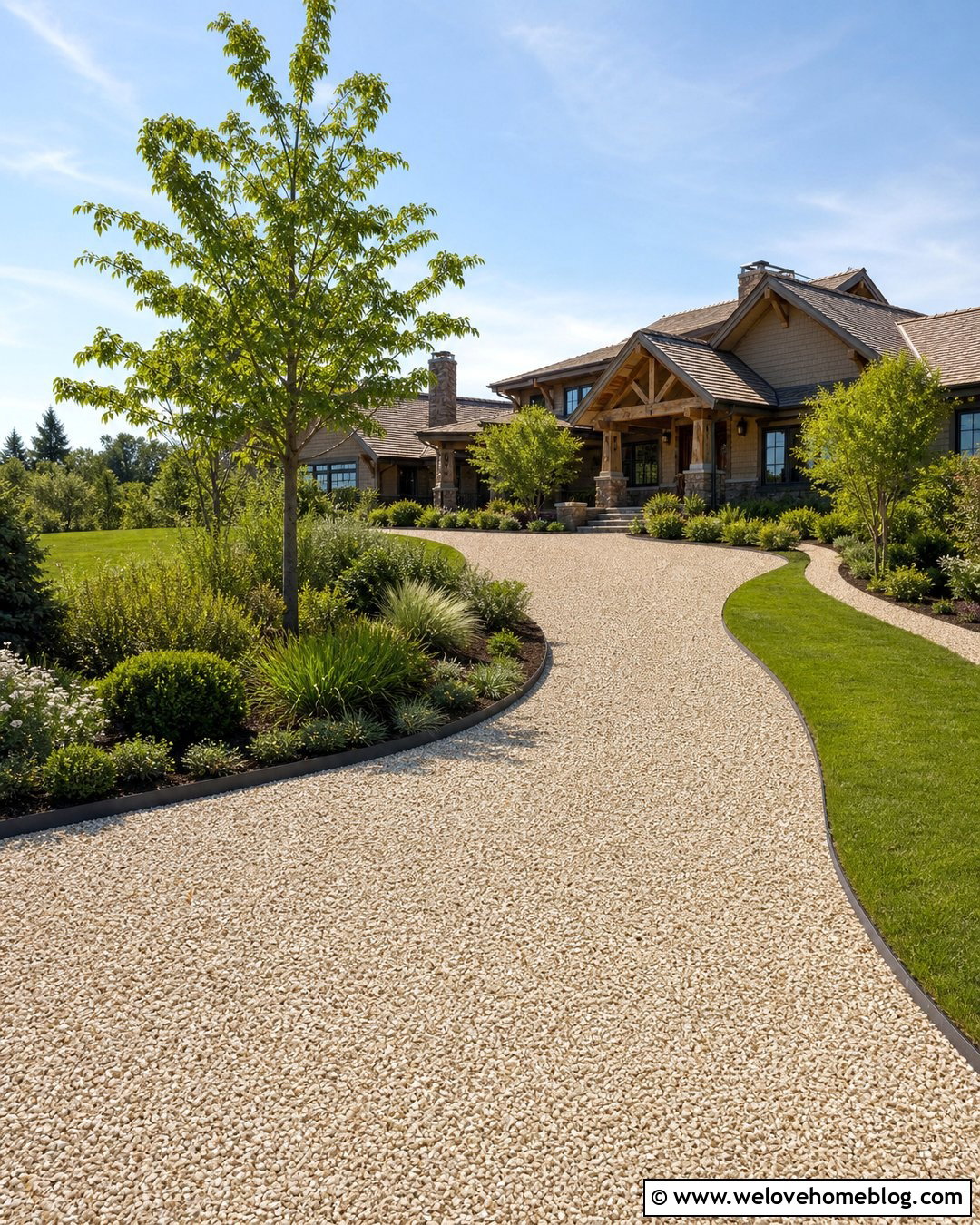
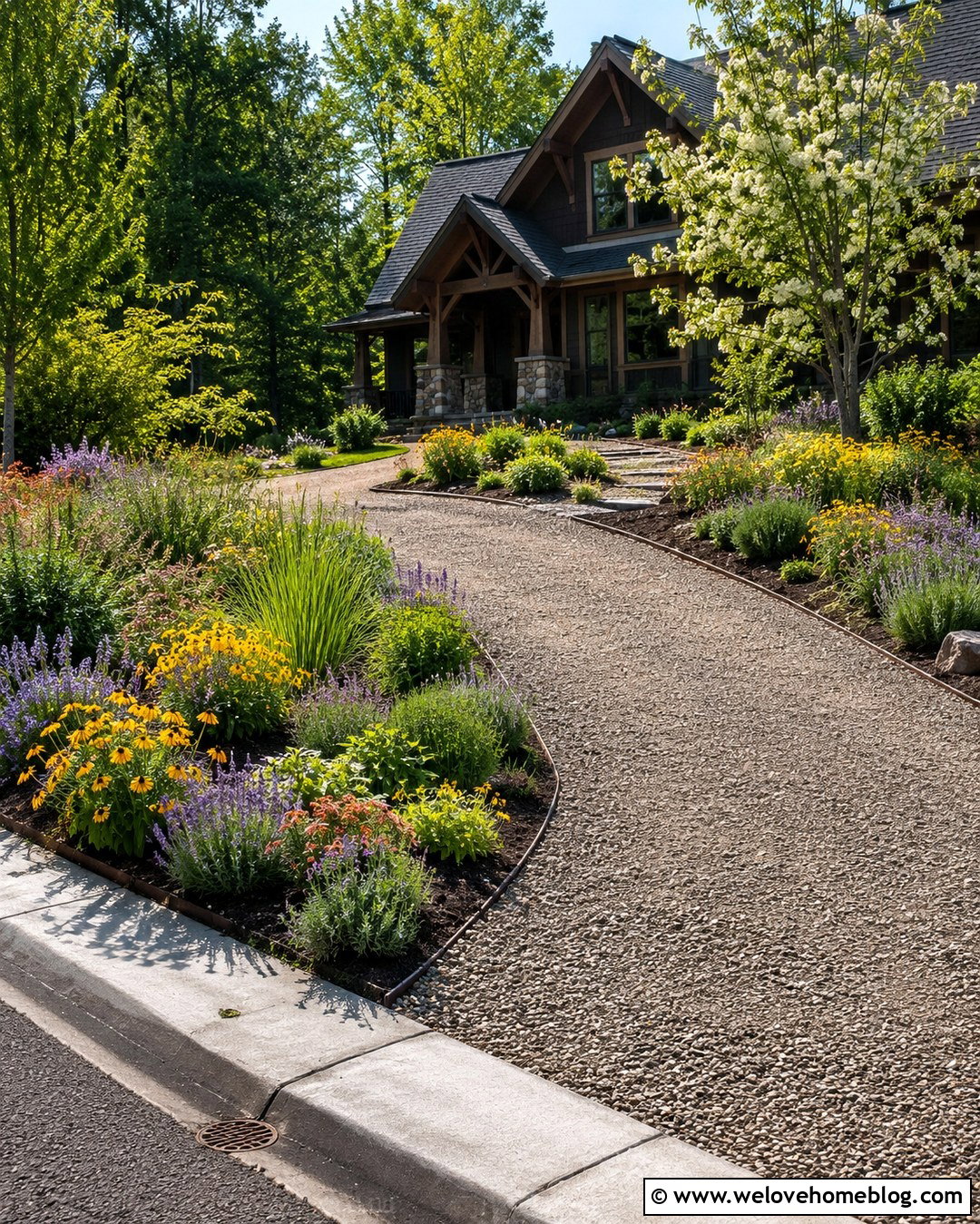
A curved driveway can make a compact front yard appear deeper by revealing the house gradually. Cover the full route with driveway-rated Cotswold chippings and define the sweeping edges with flexible steel or stone restraints. The inside curve is an ideal place for a generous planting bed filled with layered shrubs, grasses, and one small ornamental tree. Keep taller plants away from the road entrance so drivers maintain clear sightlines. On the outer curve, use lawn or restrained ground cover to prevent the landscaping from feeling crowded. Repeating the pale gravel in a narrow garden path can tie different areas together. This layout suits cottages, Craftsman-inspired homes, and country properties where a rigid, perfectly straight approach might look too harsh against the informal garden.
5. Circular Cotswold Chippings Driveway
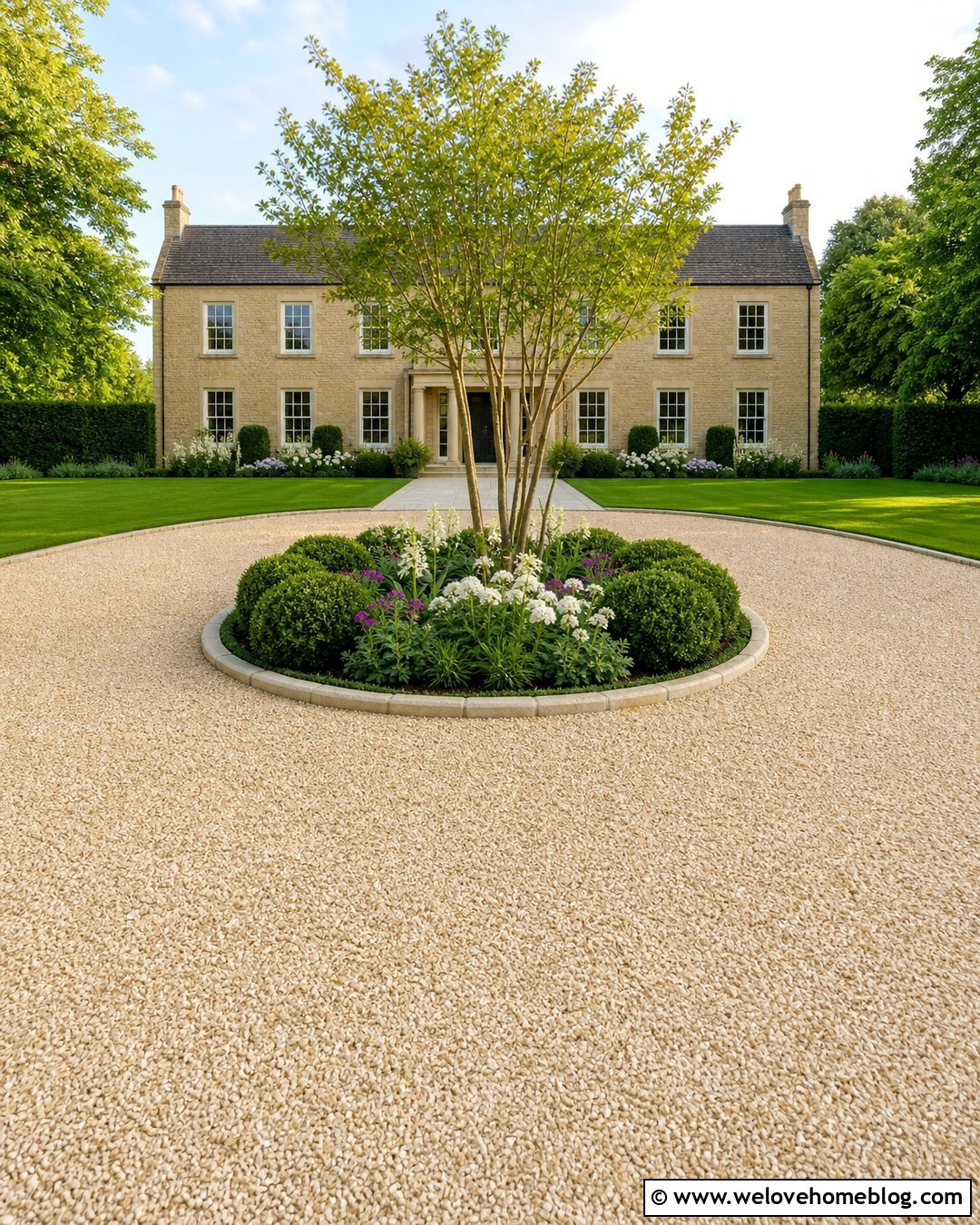
A circular Cotswold chippings driveway creates convenient vehicle movement while giving the front landscape a clear focal point. Place a round or oval island in the center and outline it with stone setts, brick pavers, or flush metal edging. The island could contain a multi-stem tree, clipped evergreens, seasonal flowers, and low ground cover arranged in simple layers. Avoid oversized planting that blocks views across the circle. At the house, add a paved drop-off zone or wide stepping-stone route leading toward the entrance. The warm cream gravel looks particularly harmonious beside limestone, tan brick, and muted stucco facades. For a balanced composition, align the central island with the front door, porch, or strongest architectural feature rather than positioning it randomly within the yard.
6. Cotswold Chippings Driveway With Stone Setts
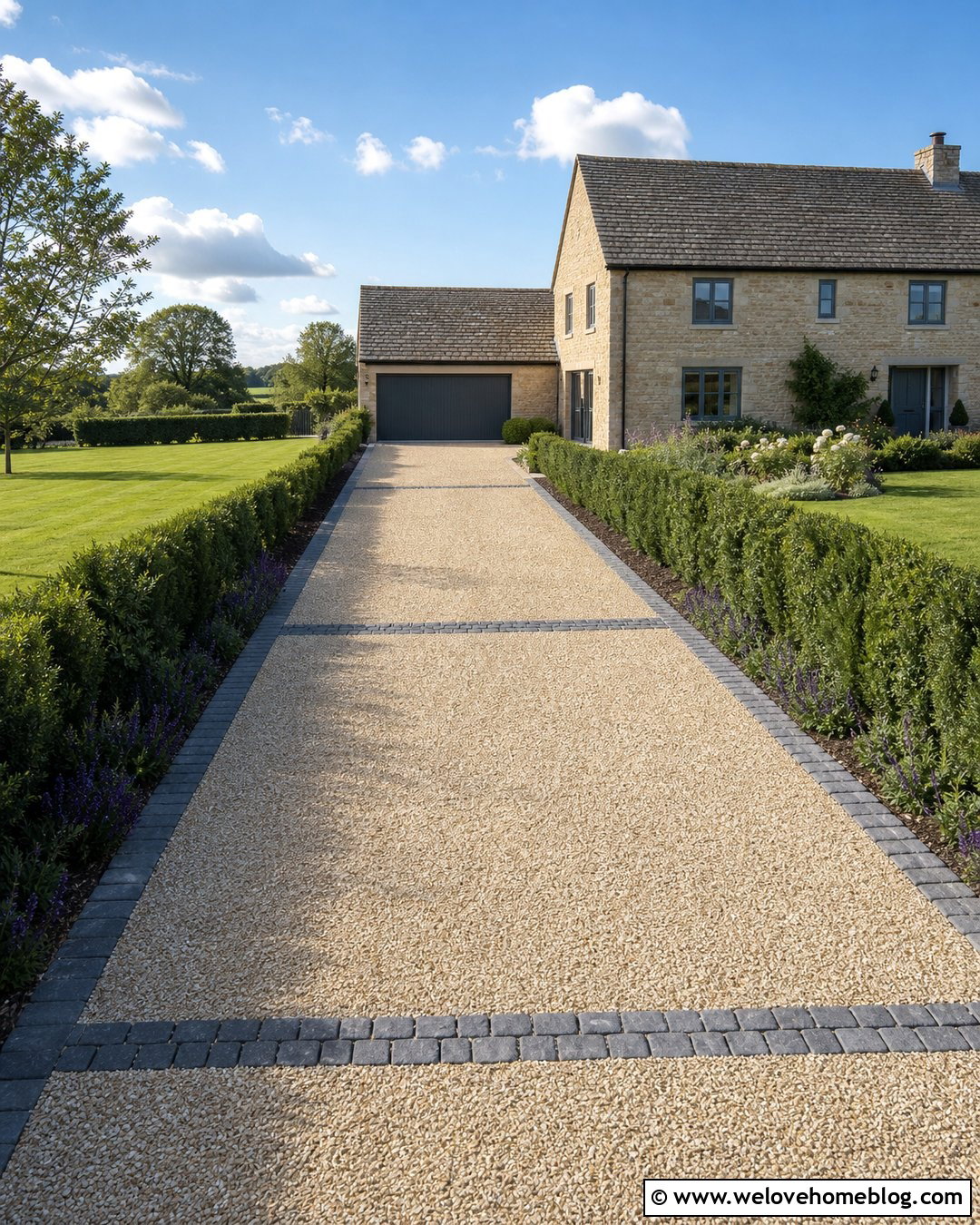
Stone setts can divide a large Cotswold chippings driveway into visually manageable sections. Install a dark gray sett border around the perimeter, then add transverse bands at the entrance, garage, and major turning points. These lines introduce structure without covering the warm gravel surface. They can also mark where the driveway meets a walkway or parking bay. For a traditional home, select naturally weathered setts with varied tones. Sawn granite setts create a cleaner finish for a renovated cottage or modern farmhouse. Surround the drive with broad lawn panels, clipped hedges, and restrained perennial beds. Repeating the setts around the front path or doorstep makes the materials feel intentional. Keep each decorative band flush and professionally secured to create comfortable, practical transitions for vehicles.
7. Cotswold Chippings Driveway With Timber Edging
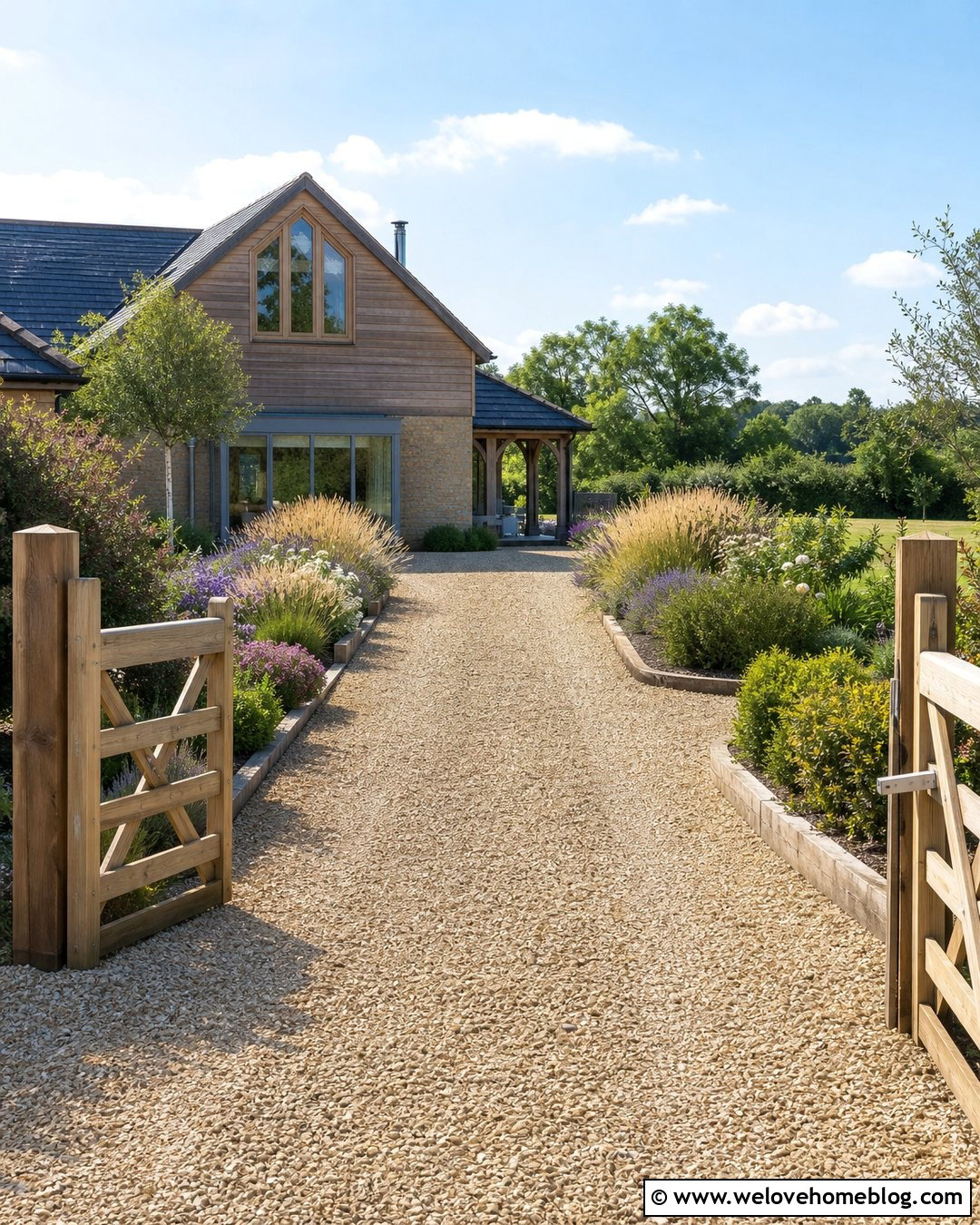
Timber edging gives a Cotswold chippings driveway a relaxed appearance that fits rural homes, cabins, and informal cottage gardens. Use pressure-treated sleepers or durable landscape timbers to form a straight driveway with gently rounded planting pockets near the house. The warm wood tones blend naturally with the cream and golden stone. Position the timber securely so it contains the gravel and remains stable beside vehicle traffic. Behind the edge, combine meadow-style grasses, hardy flowering perennials, and a few evergreen shrubs for year-round structure. A matching timber gate or simple address post can complete the entrance. This design is best for relatively level sites because pronounced slopes place more pressure on loose gravel and edging. Inspect the wood periodically and replace damaged sections before the border loses alignment.
8. Cotswold Chippings Driveway With Lavender Borders
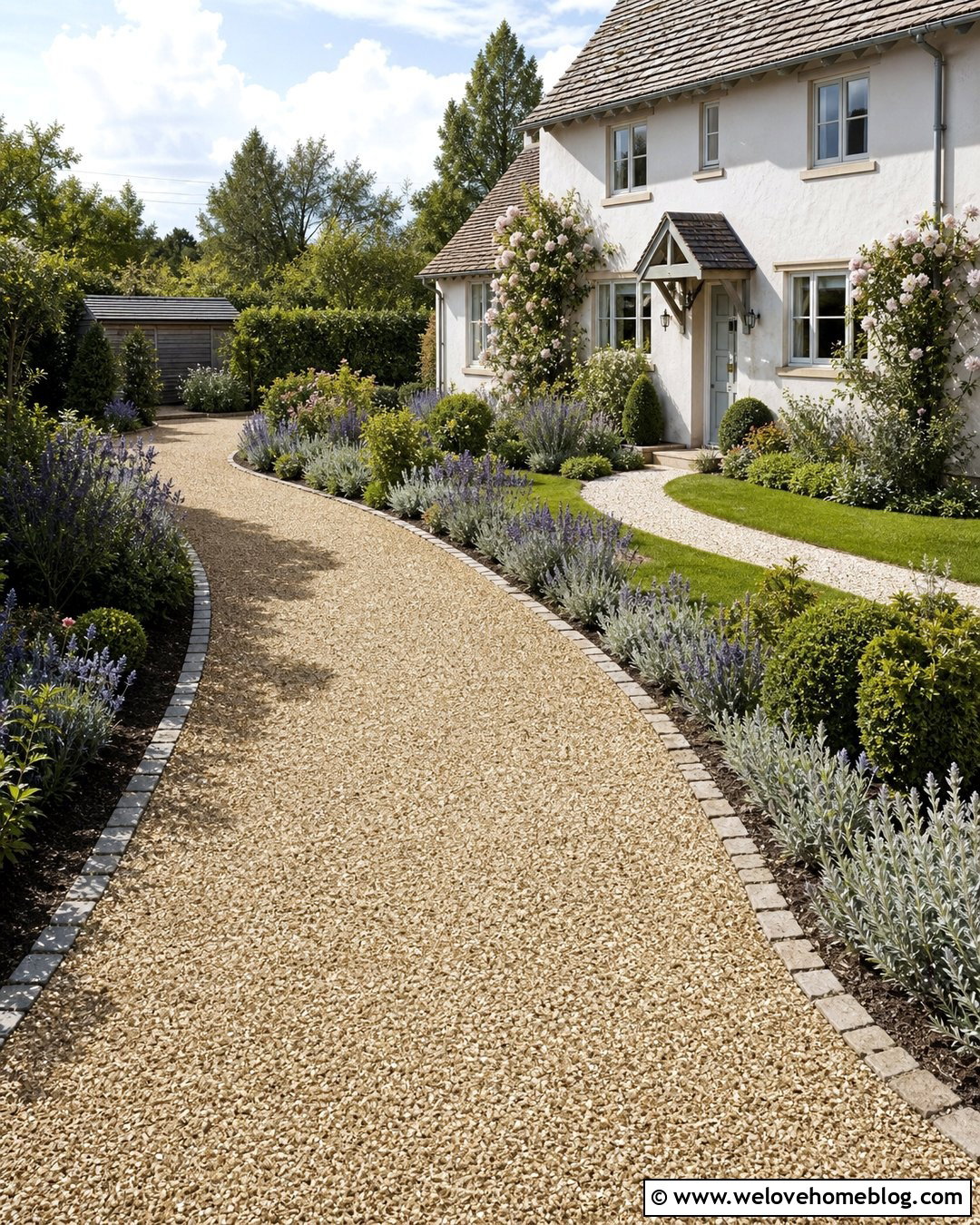
When summer arrives, purple lavender beside pale Cotswold chippings creates a striking but natural color contrast. Use the combination along a straight or softly curved driveway approaching a stone cottage, rendered house, or farmhouse. A narrow strip of stone setts should separate the plants from the driving surface and stop stems from leaning into the vehicle zone. Plant lavender in repeated groups rather than one continuous, crowded line. This leaves room for airflow and gives the border a more relaxed rhythm. Mix in compact evergreen forms or silvery foliage for winter interest when flowering has finished. Choose plants suited to the soil, sunlight, and local climate, and keep alkaline limestone runoff in mind. A matching gravel path toward the front door can carry the color palette through the entire garden.
9. Cotswold Chippings Driveway With Grass Borders
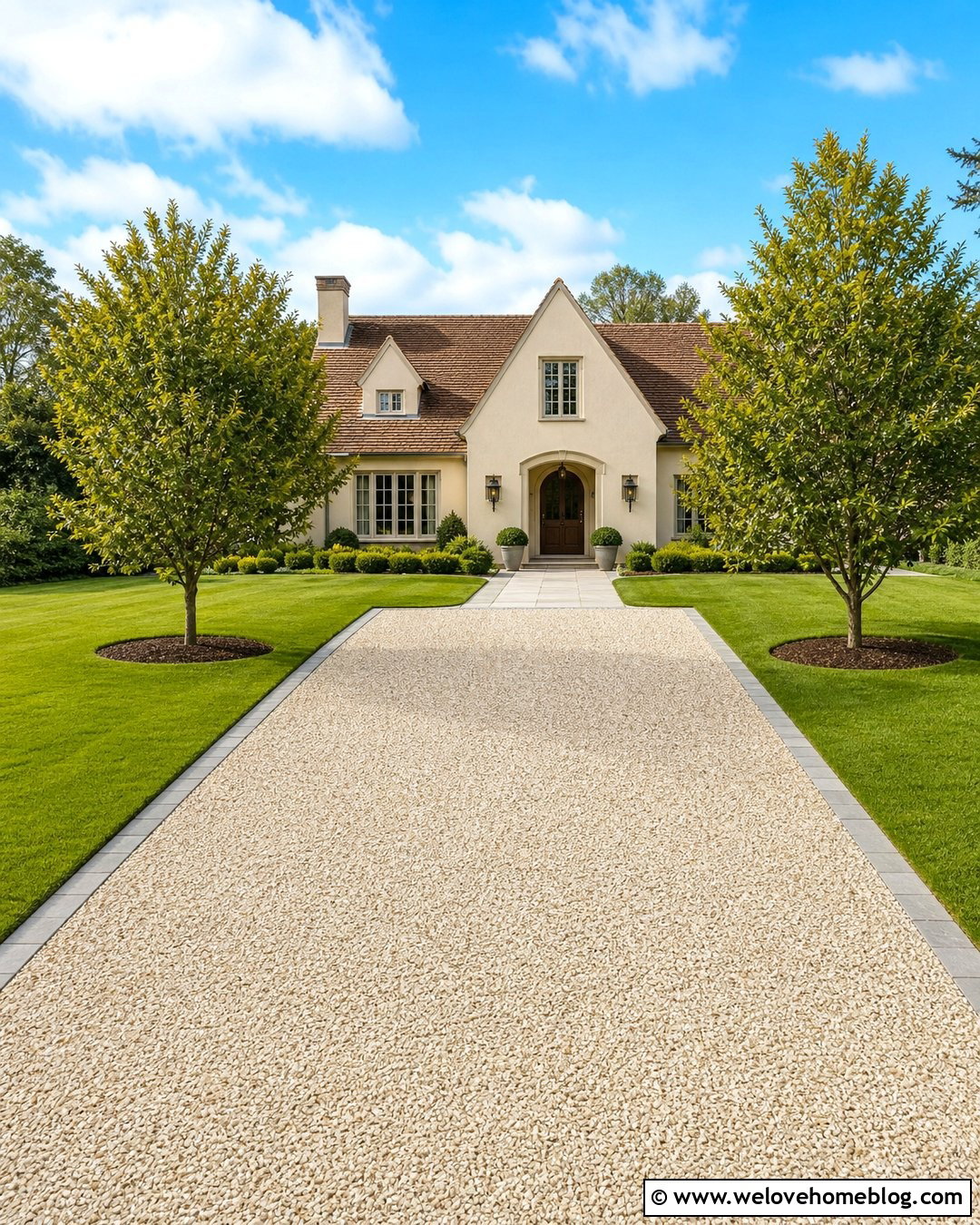
Fresh green lawn makes the creamy tones of Cotswold chippings appear cleaner and brighter. This simple pairing works best when the driveway has a strong, readable shape and neatly contained edges. Install flush steel, concrete, or stone restraints between the gravel and turf so mowing remains manageable. A broad straight drive can lead to a brick or stucco home, while small rounded lawn corners soften the entrance near the road. Add one or two specimen trees farther from the driving area instead of filling every edge with planting. This preserves an open, spacious feeling and reduces leaf debris on the light stone. If the lawn is frequently crossed by tires, widen the driveway or add reinforced shoulders. Crisp boundaries are essential because scattered chippings quickly weaken the streamlined effect.

10. Cotswold Chippings Driveway With Paver Ribbons
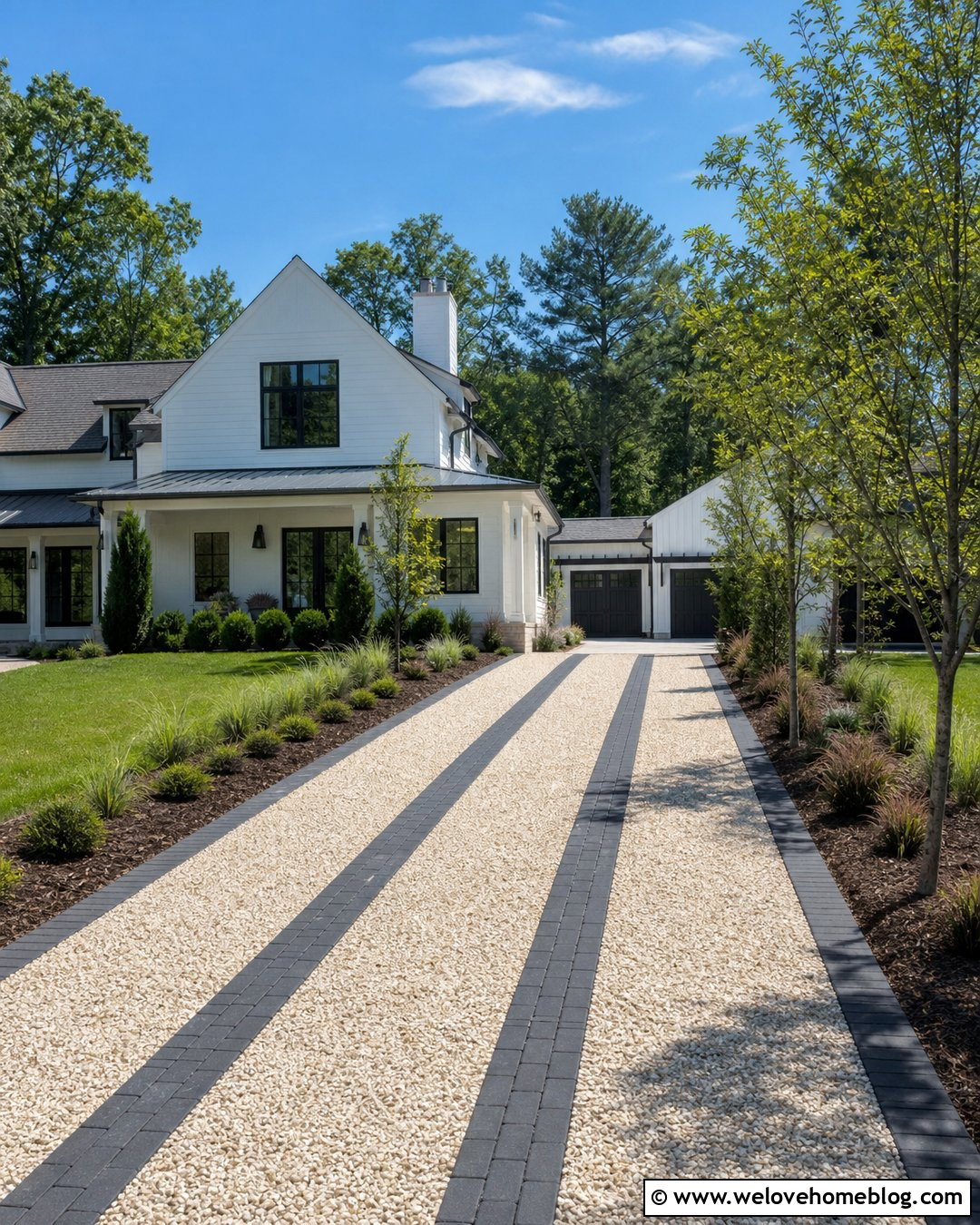
Paver ribbons introduce clean lines across a Cotswold chippings driveway while retaining most of the affordable gravel surface. Run two parallel rows of charcoal or warm-gray pavers beneath the expected tire tracks for a distinctive linear layout. Alternatively, use narrow cross bands to divide the entrance, parking area, and garage approach. The pavers should sit flush with the surrounding chippings and be installed on a vehicle-appropriate foundation. This design looks particularly polished beside a contemporary farmhouse or renovated bungalow. Echo the paver color in the front walkway, porch steps, or low retaining walls. Finish the outer edges with matching pavers and add simple planting beds containing evergreen mounds and ornamental grasses. The contrast between geometric paving and loose limestone produces a driveway that feels practical, organized, and visually balanced.
11. Cotswold Chippings Driveway With Granite Edging
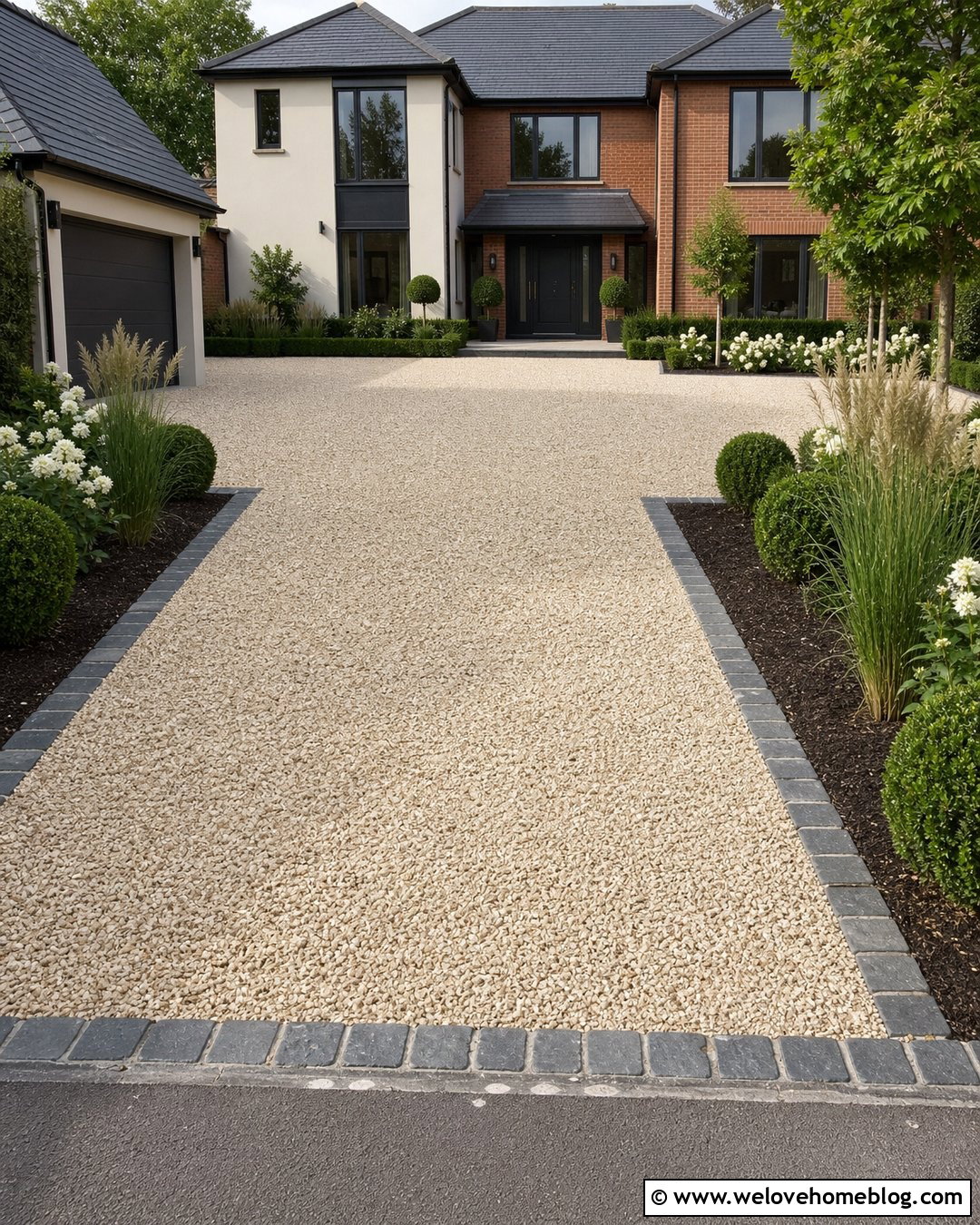
Dark granite edging creates one of the strongest contrasts with pale Cotswold chippings. It is a useful choice for homeowners who like the warmth of limestone gravel but want a sharper, more contemporary outline. Shape the driveway as a broad straight approach with a widened parking court near the house. Frame it with charcoal granite setts, then repeat that material around the path and front steps. Restrained landscaping keeps the two-tone surface prominent. Consider clipped evergreen shrubs, upright grasses, and a few white flowering plants set against dark mulch. A modern stucco, brick, or stone facade can anchor the scheme. Since light limestone may show leaves and soil, avoid placing messy fruiting trees directly overhead. Regular raking will preserve the clean separation between the cream surface and deep-gray perimeter.
12. Cotswold Chippings Driveway With Farmhouse Gate
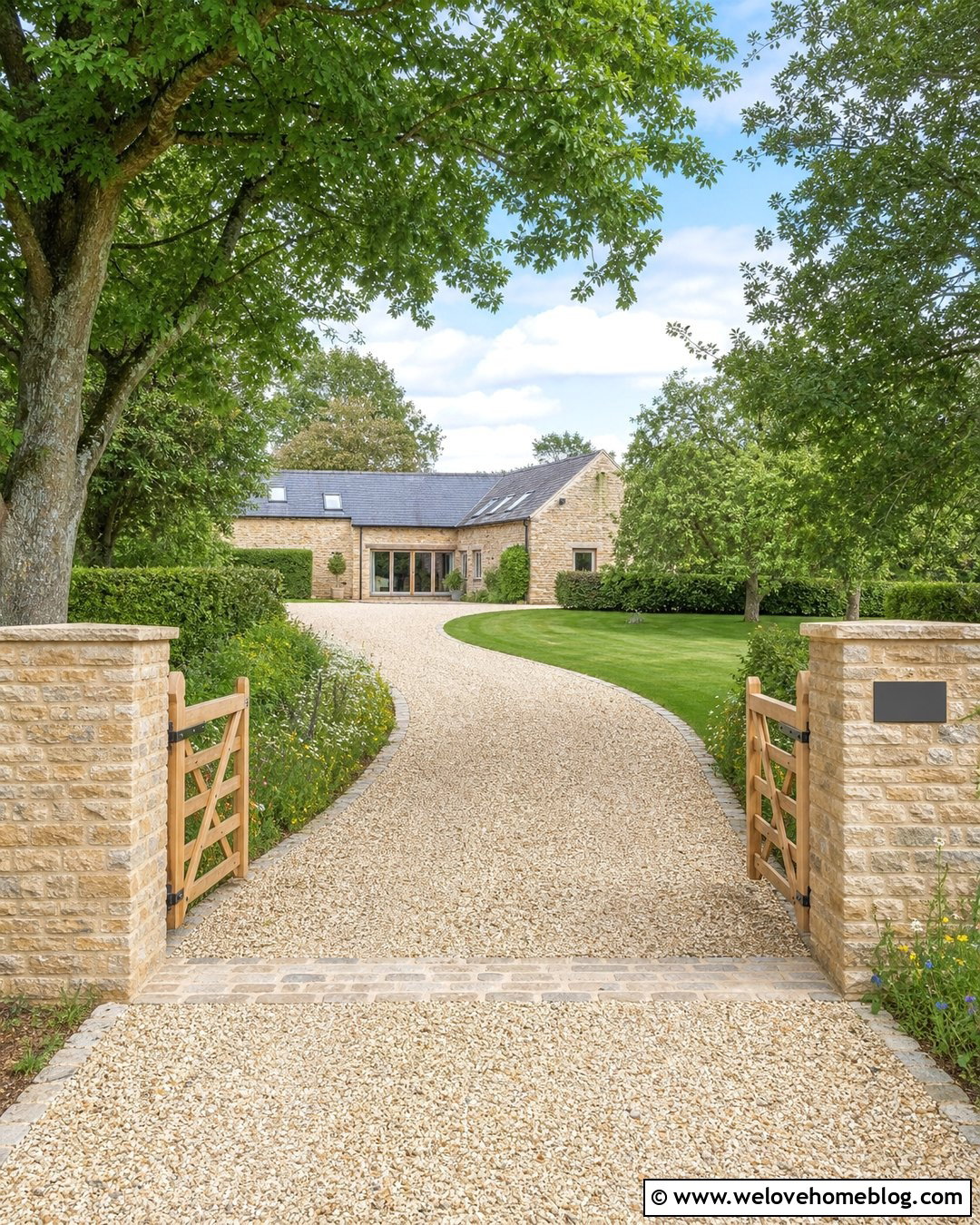
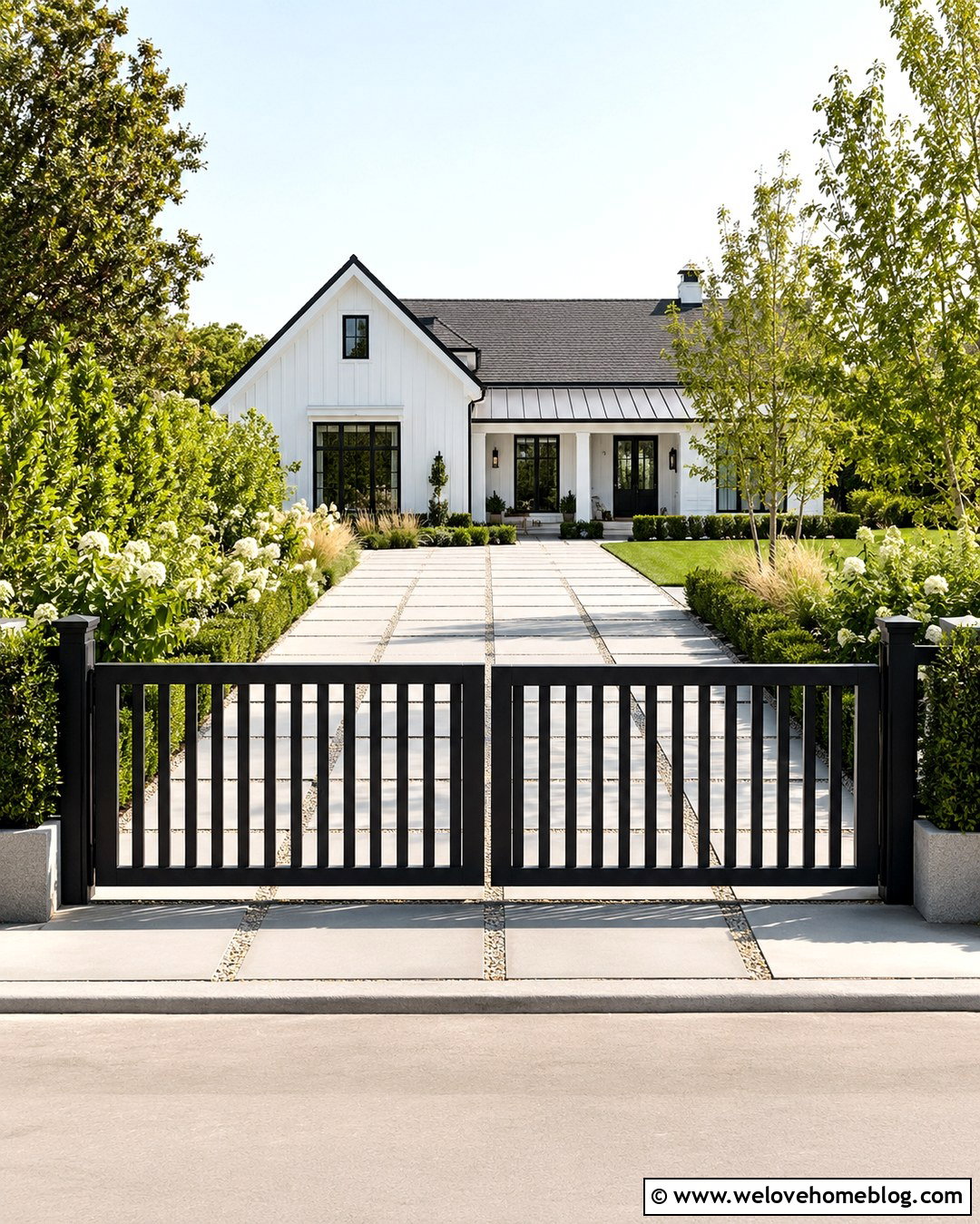
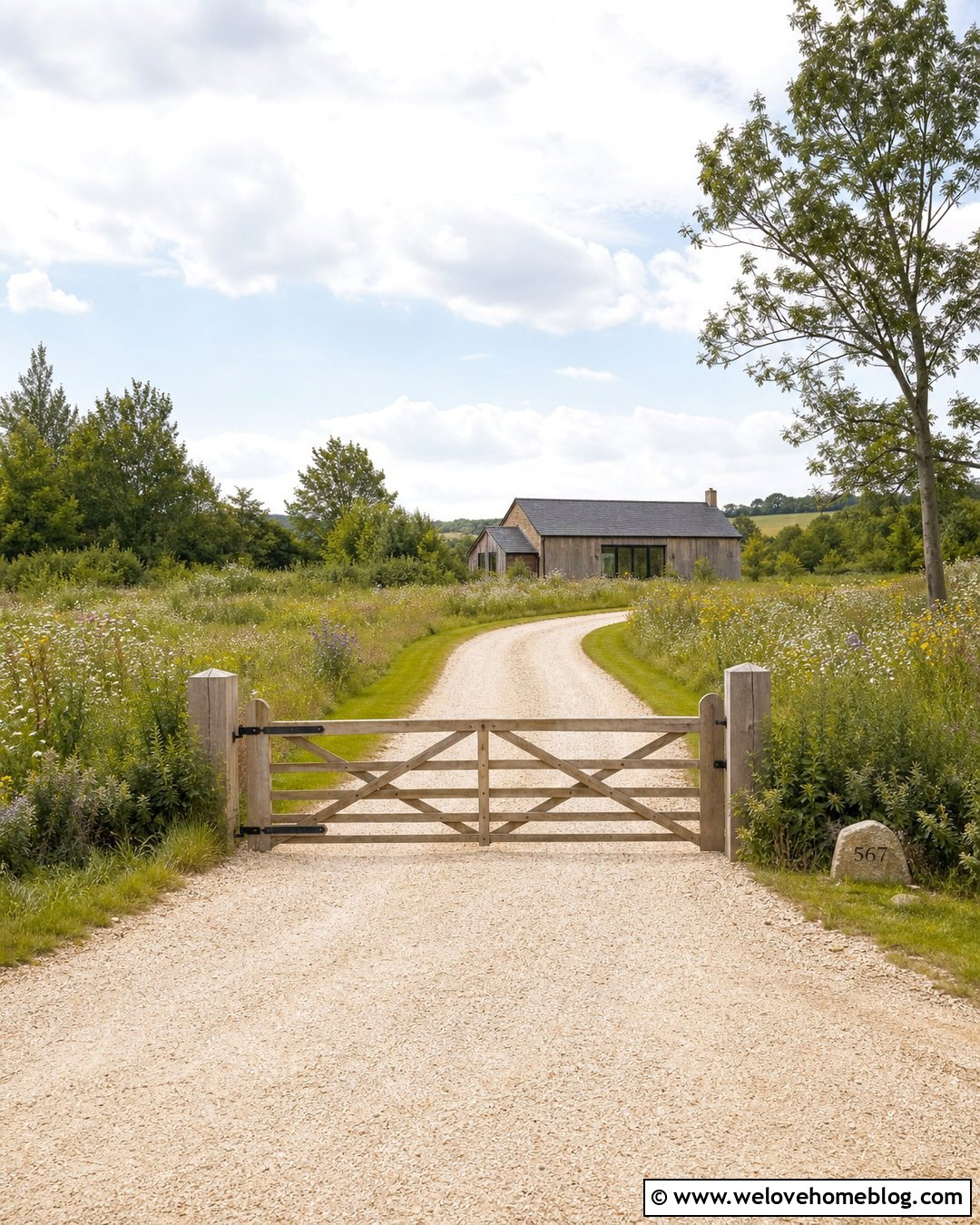
A simple timber farmhouse gate can transform the road-facing end of a Cotswold chippings driveway into a welcoming country entrance. Use a straight or gently curving drive framed by low native hedges and informal planting. Set the gate between stone or brick pillars that reflect materials already found on the house. The gate should open without dragging across loose chippings, so include a level paved or sett threshold beneath its swing. Beyond the entrance, continue the pale gravel toward a farmhouse, barn conversion, or cottage-style property. Large trees can sit farther along the route, but maintain clear visibility beside the road. Add a discreet address plaque and traditional mailbox or parcel box on one pillar. This complete arrangement feels established without relying on ornate metalwork or excessive decorative features.
13. Cotswold Chippings Driveway With Stone Pillars
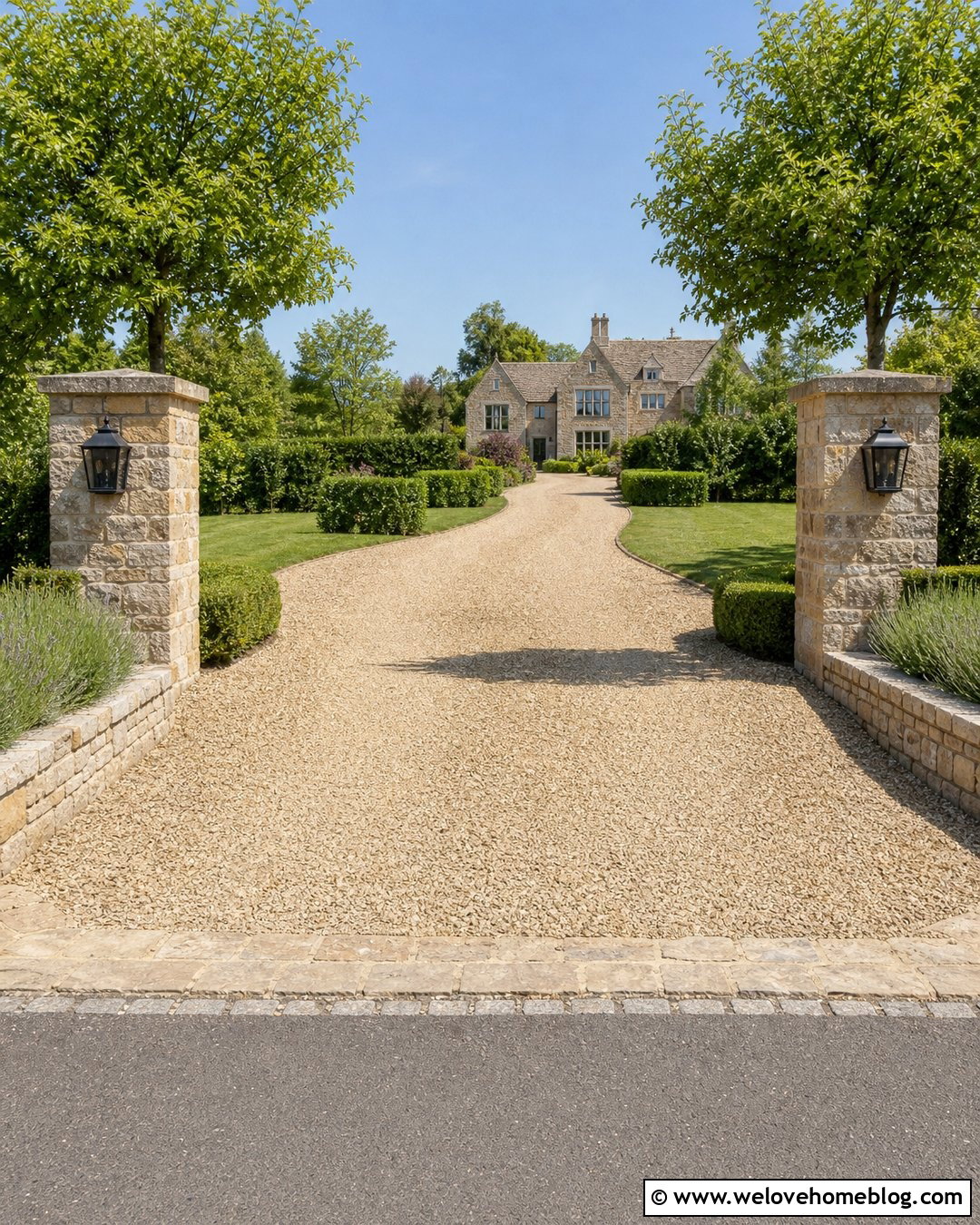
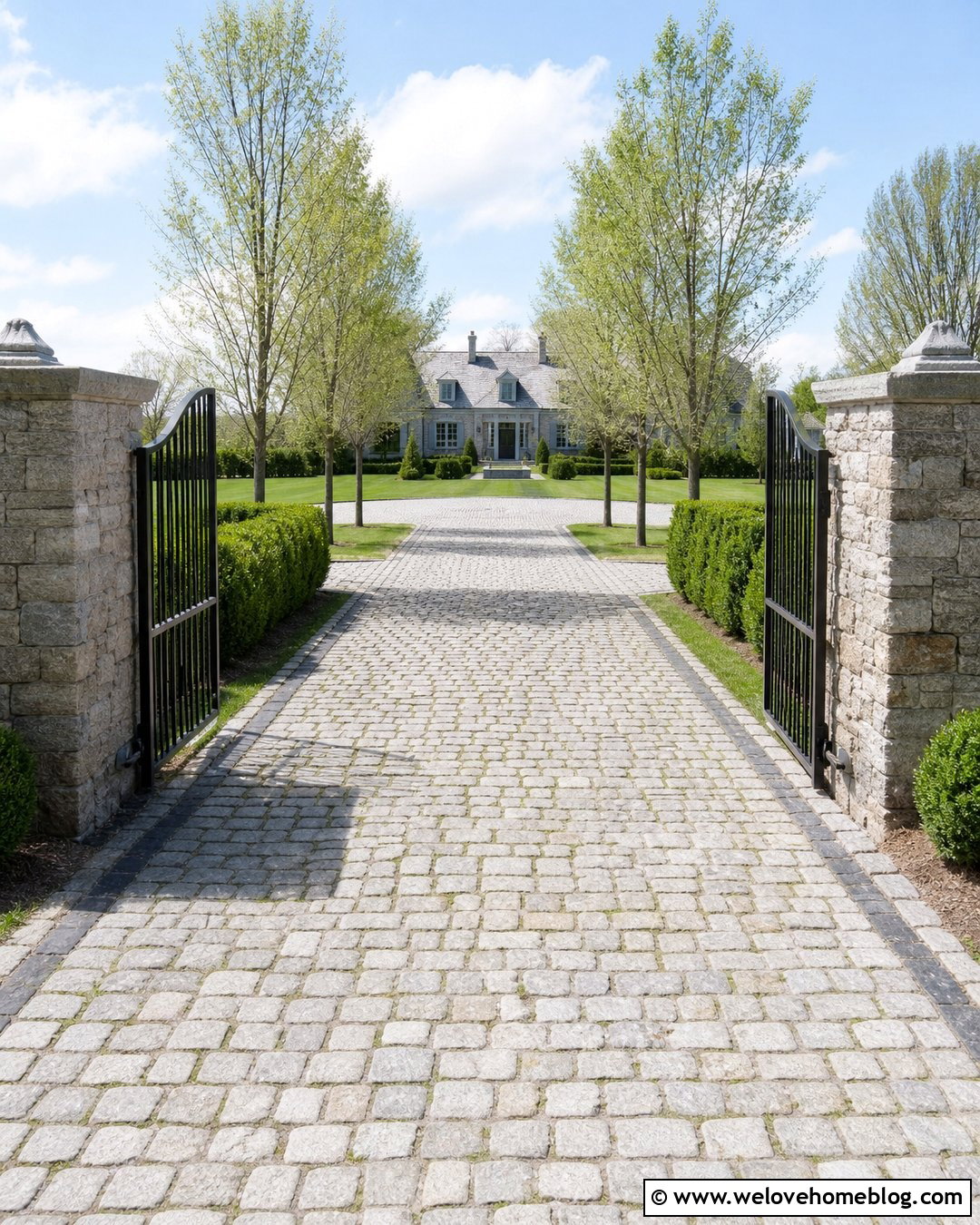
Substantial stone pillars give a Cotswold chippings driveway a defined entrance even when no gate is required. Build the pillars from local-looking limestone, sandstone, or mixed rubble masonry that complements the cream aggregate. A wide, slightly flared gravel opening between them makes turning easier and prevents the entrance from appearing cramped. Use stone setts across the threshold to reduce gravel migration toward the road. Low walls can extend briefly from each pillar before transitioning into hedges or planting beds. Keep vegetation below eye level around the opening for safer visibility. Farther inside, a pair of small trees can frame the approach to a traditional house. Matching pillar caps and understated lanterns add a finished detail, although the fixtures should remain proportional to the masonry rather than dominating the entire entrance design.
14. Cotswold Chippings Driveway With Modern Landscaping
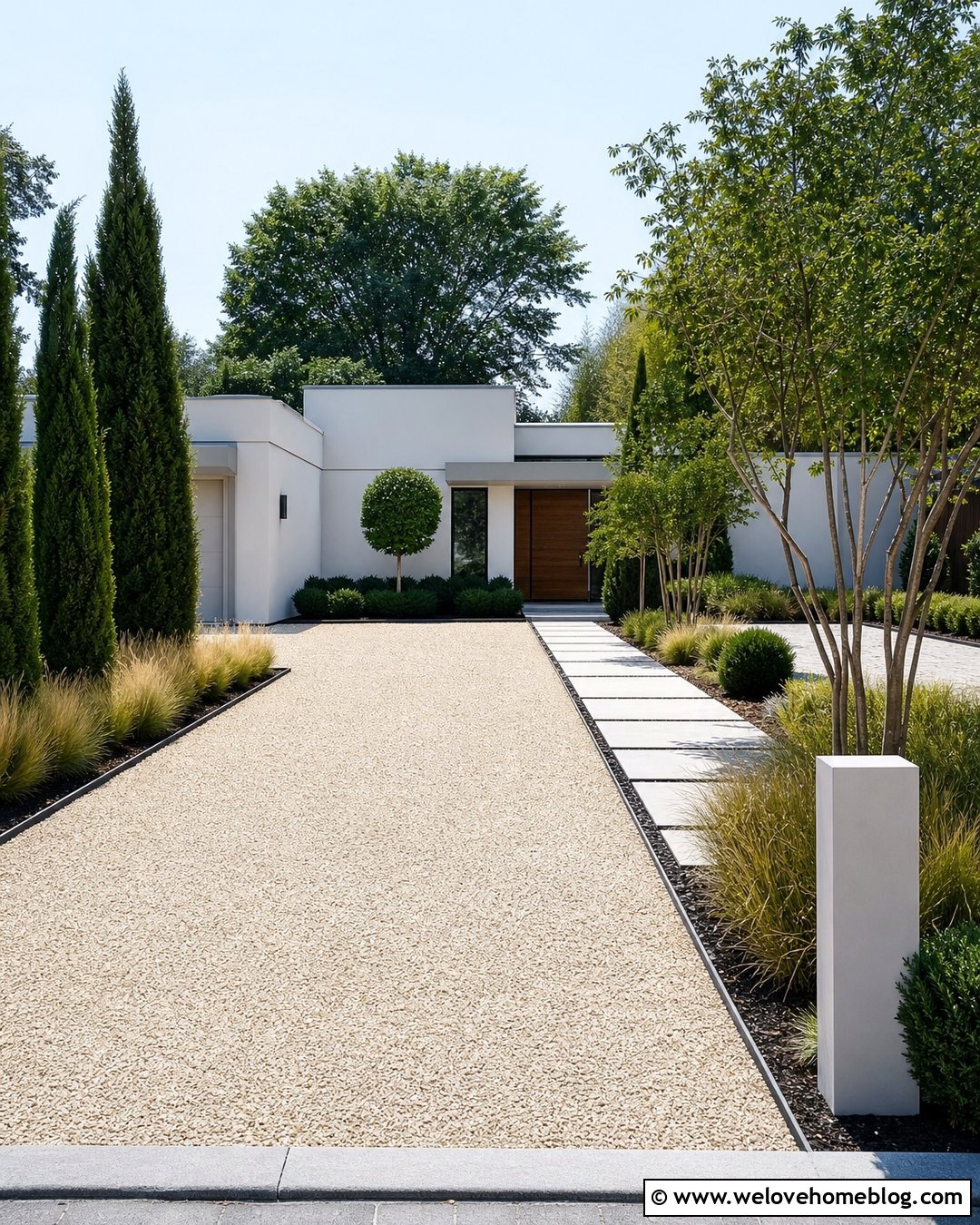
Cotswold chippings can suit modern architecture when their warm texture is balanced by crisp geometry. Create a wide rectangular driveway leading to a flat-roofed or minimalist rendered home. Use narrow black steel edging to define the perimeter and separate the gravel from large planting blocks. Fill those beds with architectural grasses, clipped evergreens, and multi-stem trees arranged in restrained groups. Large-format concrete stepping slabs can form a direct walkway across or beside the gravel. Choose off-white, charcoal, and muted green as the supporting palette so the golden undertones of the chippings provide warmth. A concealed gravel stabilization system will help preserve the flat, orderly appearance. Keep accessories minimal, perhaps using one slim address monument and integrated daytime-visible bollard fixtures instead of multiple ornaments, planters, or contrasting materials.


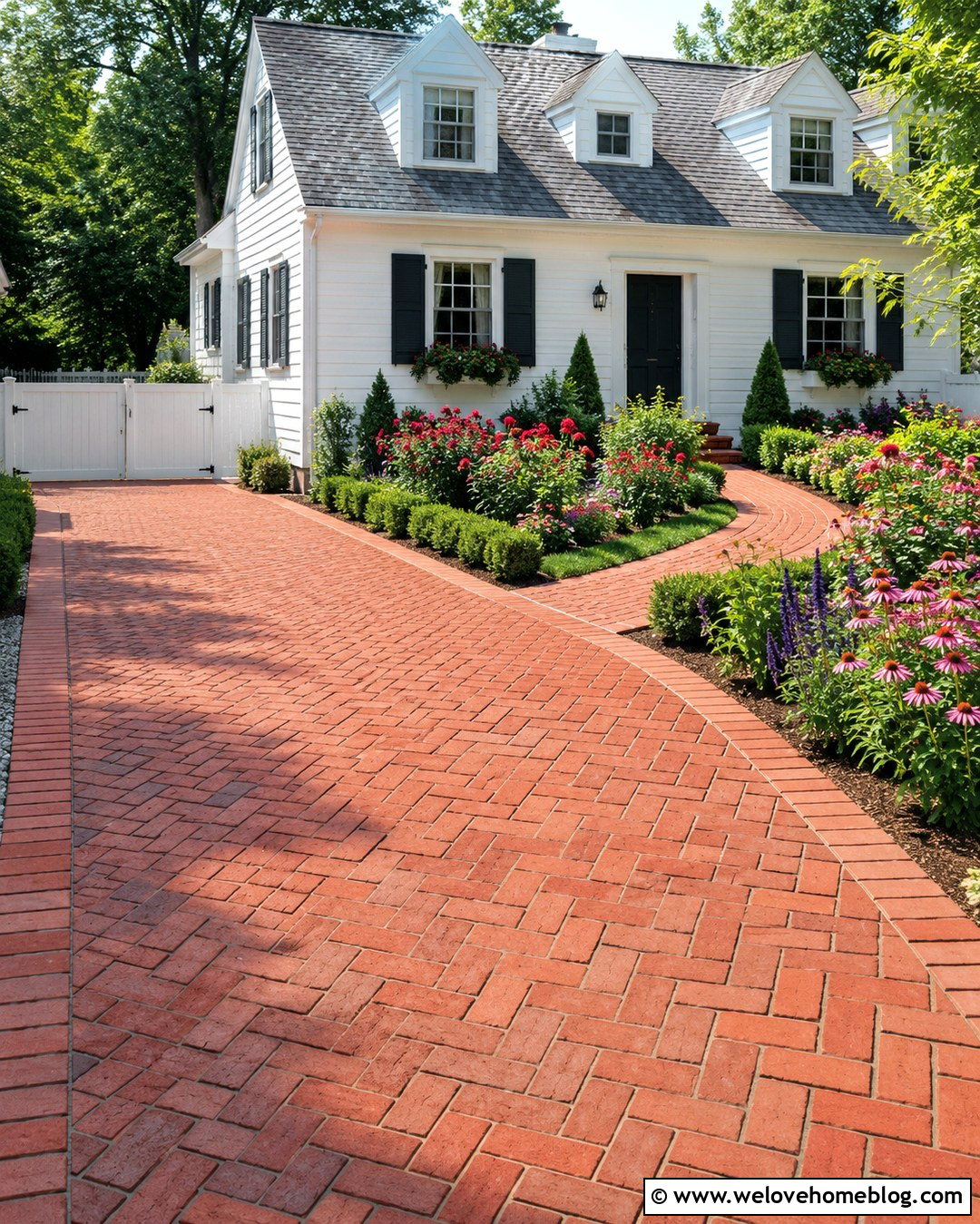

15. Cotswold Chippings Driveway With Cottage Garden Borders
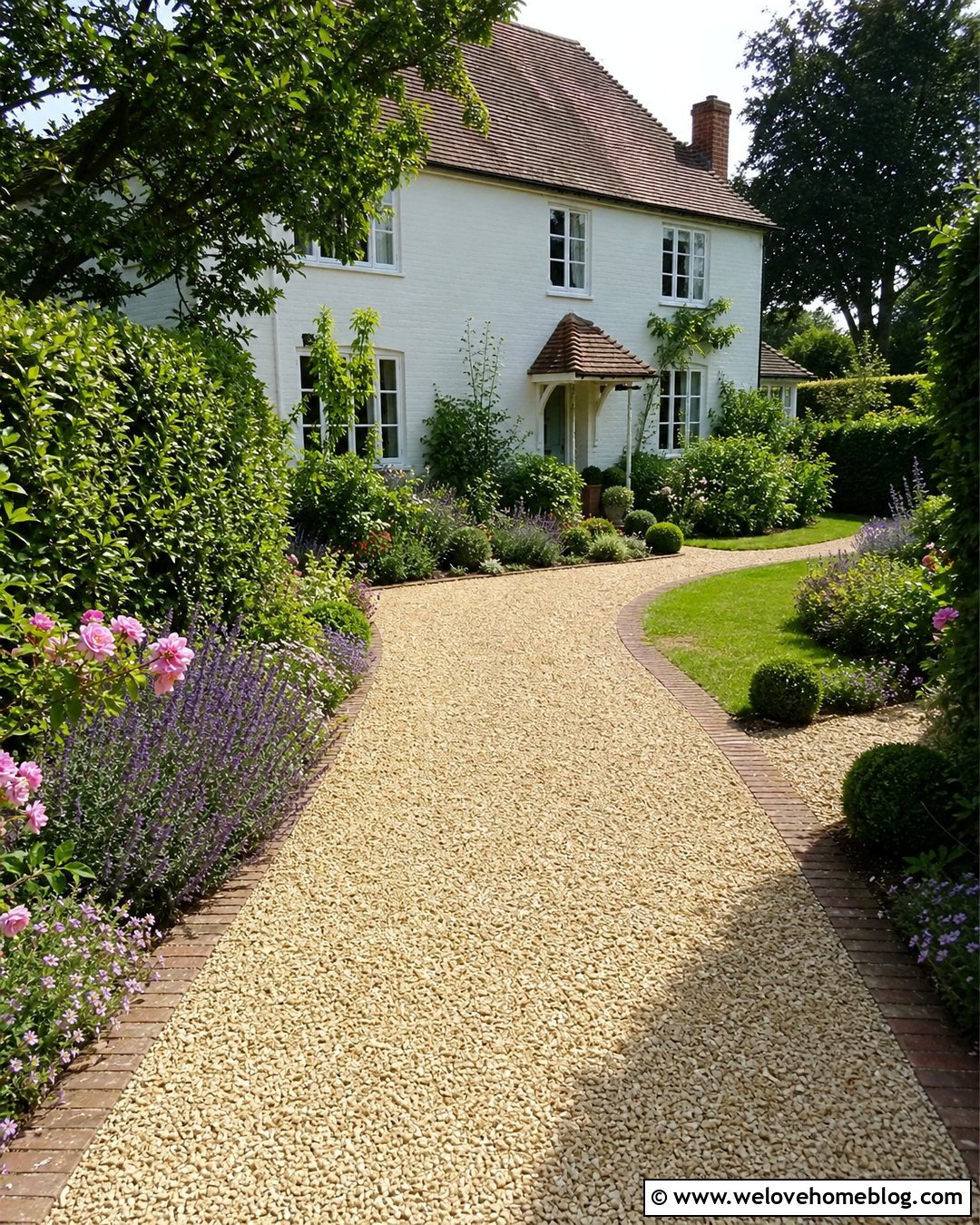
A cottage garden softens the functional edges of a gravel driveway with generous color and layered foliage. Begin with a curved Cotswold chippings surface edged in aged brick or irregular stone setts. Behind the border, arrange roses, salvia, catmint, hardy geraniums, and compact shrubs in repeating clusters. Let the planting appear abundant, but keep a clear setback from tires and doors. Near the entrance, lower flowers maintain visibility and reveal the driveway’s curve. Taller shrubs can frame the house without covering windows or architectural details. A narrow matching gravel path should branch naturally toward the front door and garden gate. The warm chippings unify the varied flowers and masonry, preventing the composition from looking chaotic. This complete design works especially well with brick cottages and painted period homes.
16. Cotswold Chippings Driveway With Block Paving Apron
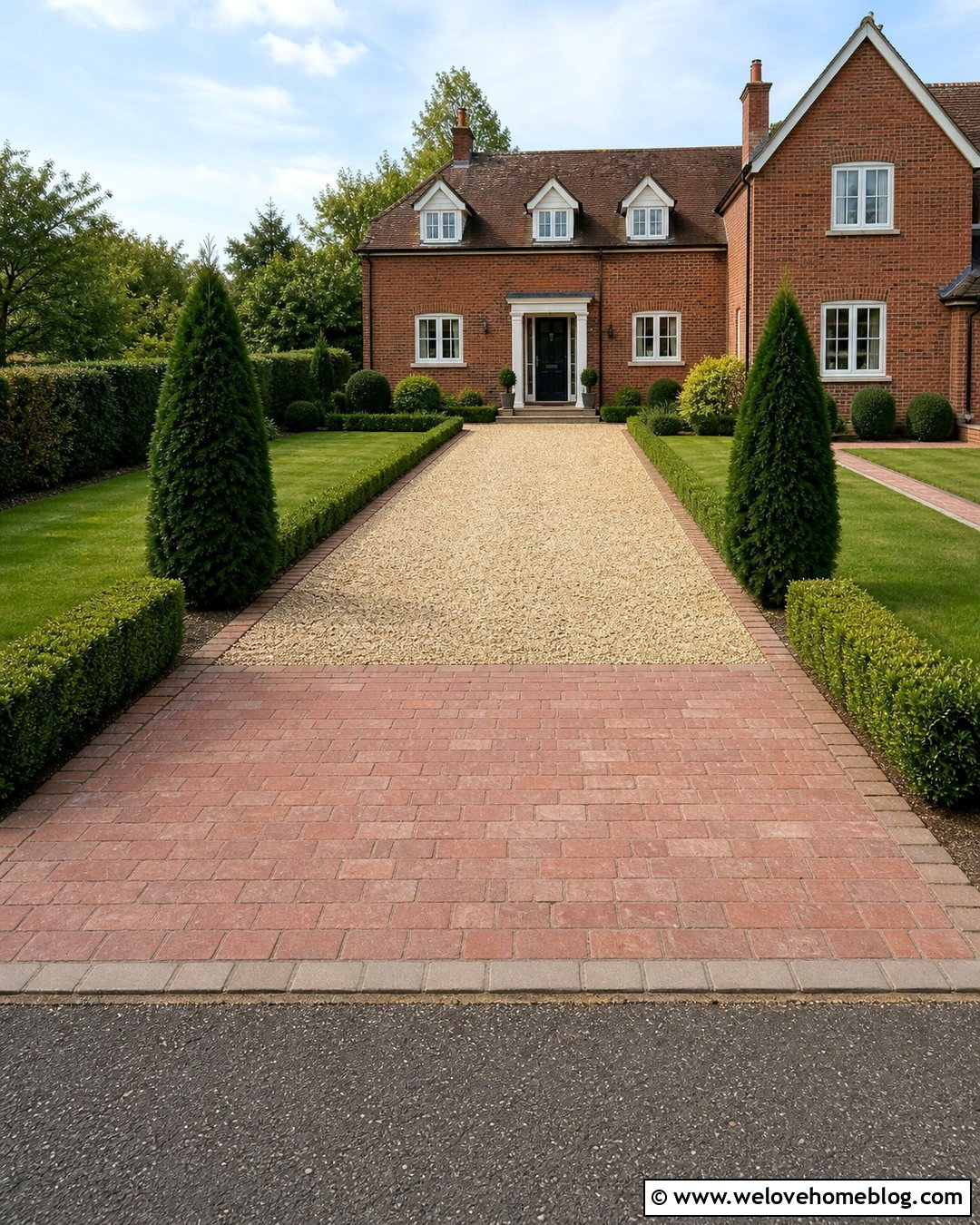
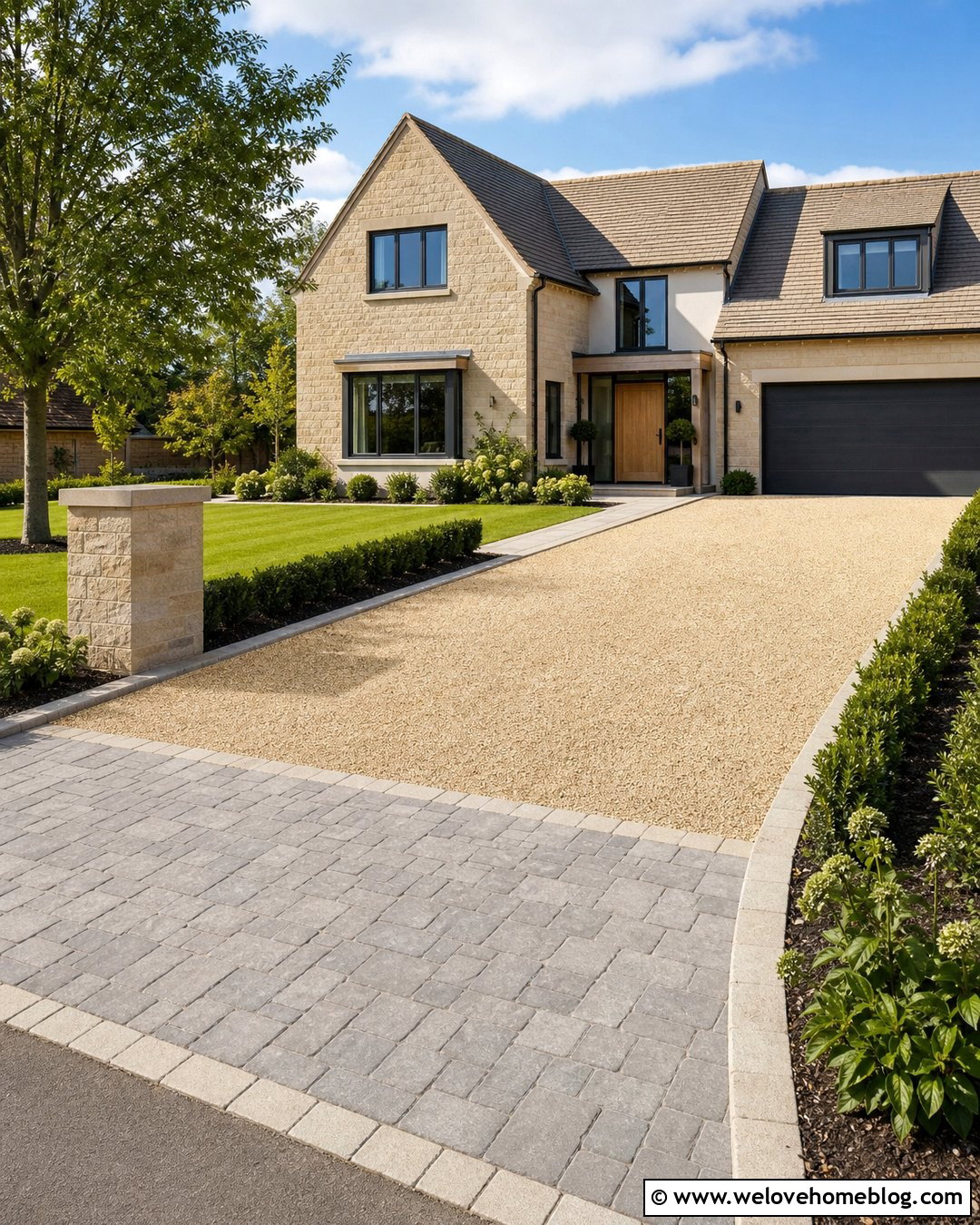
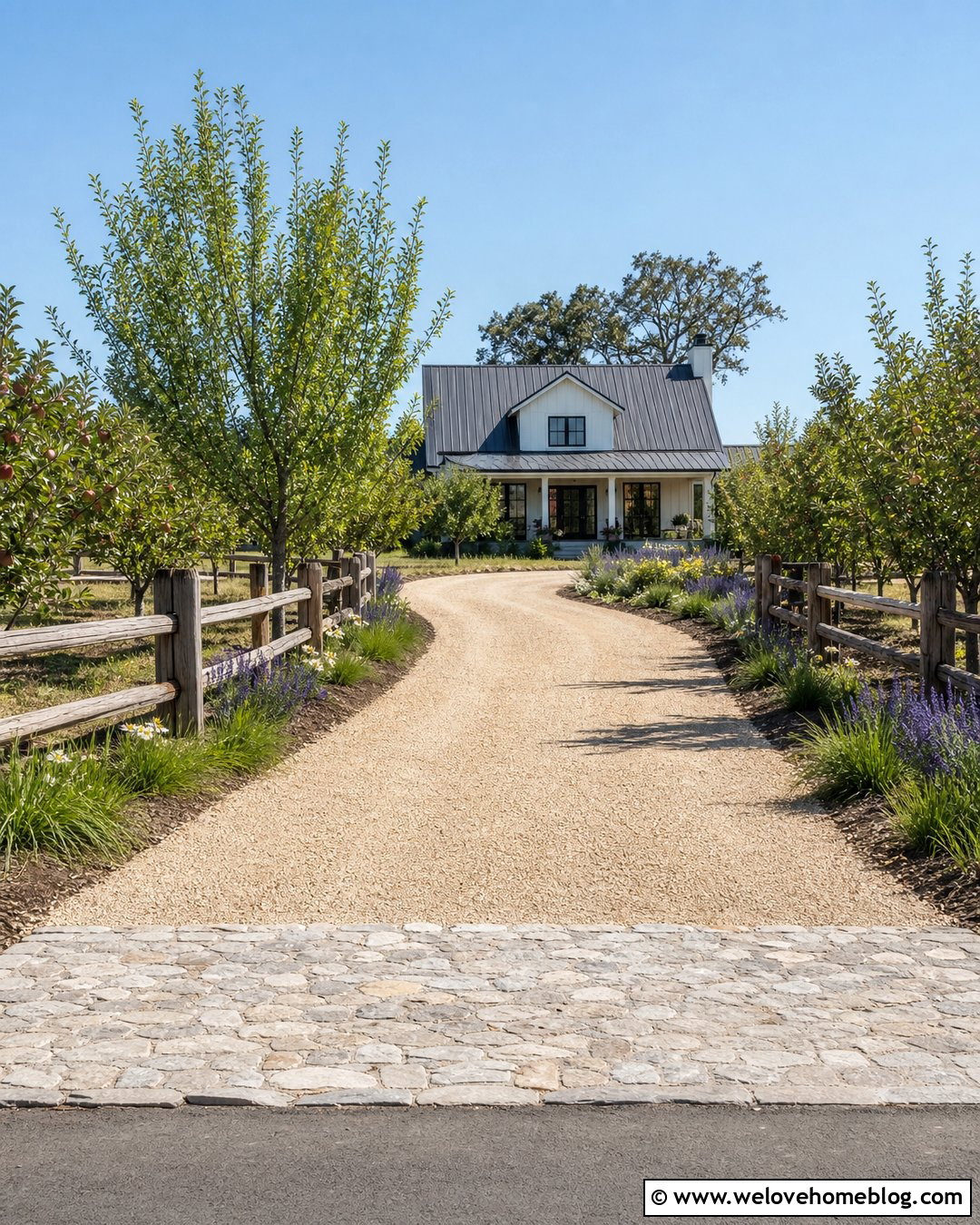
Loose gravel meeting a public road can spread beyond the property if the transition is poorly defined. A block paving apron provides a practical buffer while giving the driveway a more finished entrance. Install warm gray, charcoal, or weathered red blocks across the full driveway width, then continue Cotswold chippings toward the house. The apron can be rectangular for a formal property or slightly flared to accommodate easier turning. Use the same blocks as perimeter edging and repeat them around the front walkway. Low hedges, symmetrical shrubs, and open lawn panels create a tidy setting without competing with the material change. A second paved strip beside the garage can further contain loose stone. Coordinate the blocks with the home’s roof, brickwork, or window trim for a deliberately connected appearance.
17. Cotswold Chippings Driveway With Parking Bay
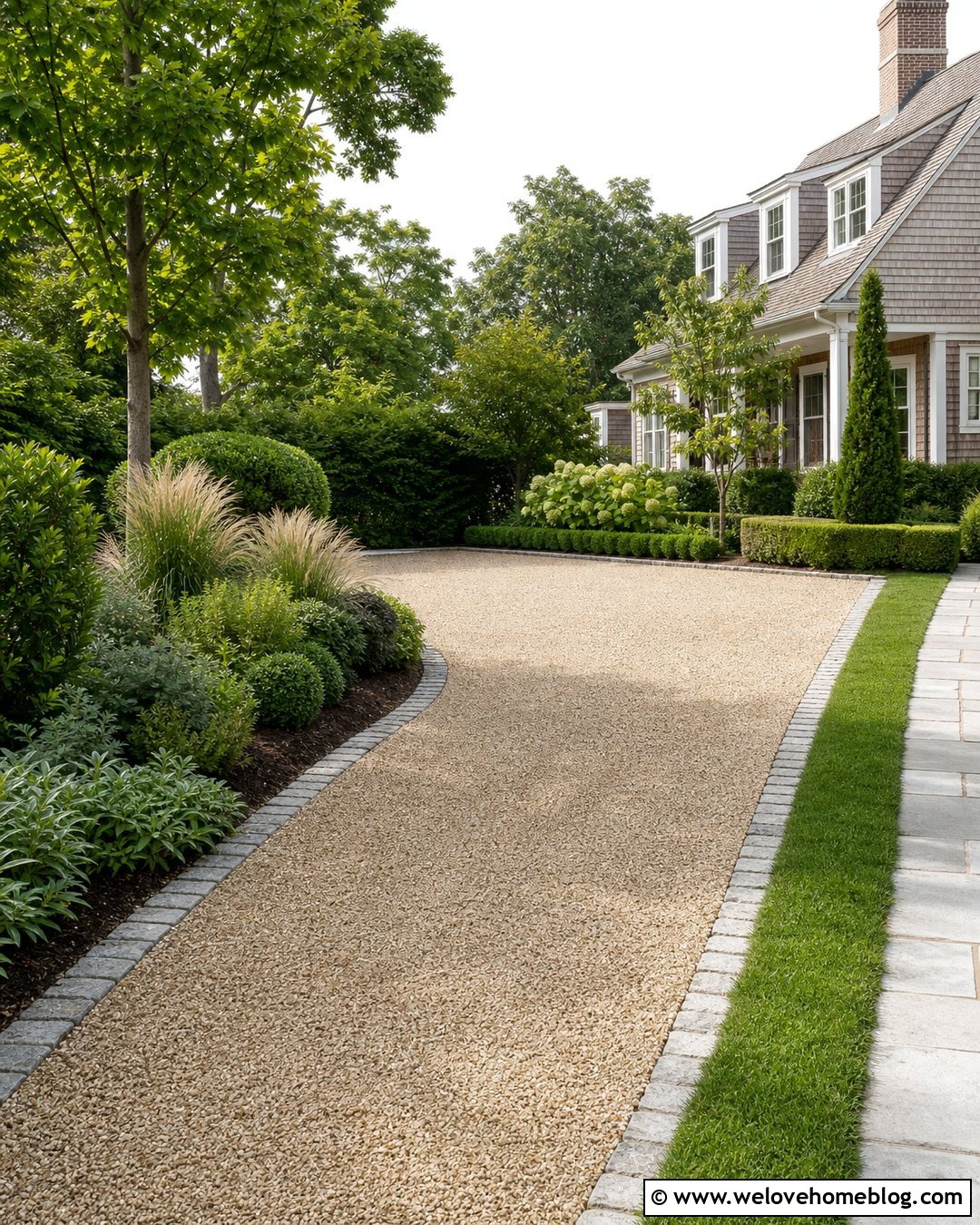
A dedicated parking bay keeps a Cotswold chippings driveway organized without turning the entire front yard into one large gravel area. Run a narrower driveway toward the house, then widen it into a rectangular or gently curved bay near the entrance. Outline the parking space with stone setts or brick pavers so its boundaries remain visible. Gravel grids beneath the turning and parking zones can provide additional stability where vehicle pressure is greatest. Screen the bay with layered shrubs, small trees, and ornamental grasses while leaving enough clearance for doors. A separate paved path should lead passengers safely toward the house. This arrangement suits compact suburban plots and country homes alike. By shaping only the space genuinely needed for vehicles, the design preserves more lawn and planting around the property.
18. Cotswold Chippings Driveway With Central Grass Strip
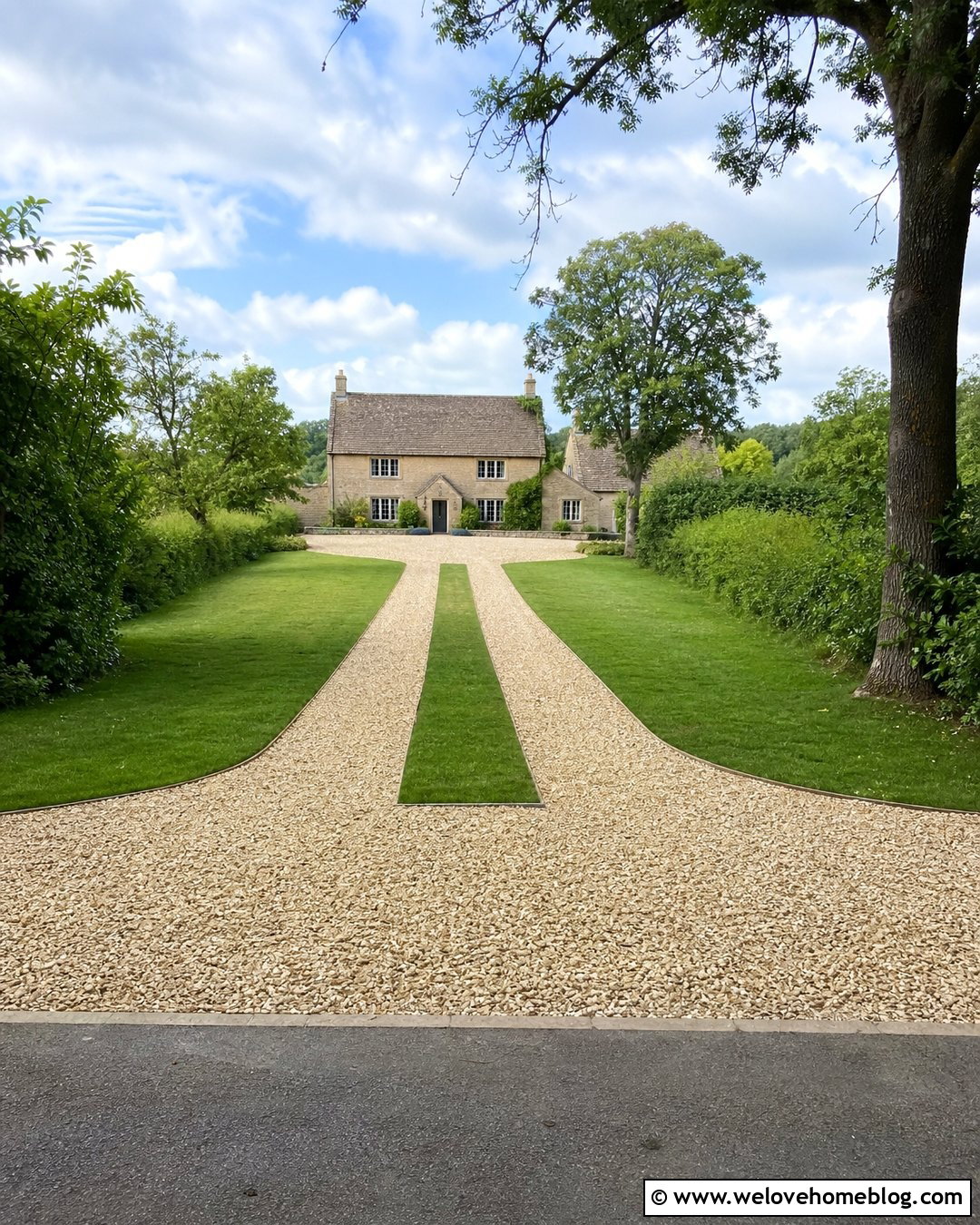
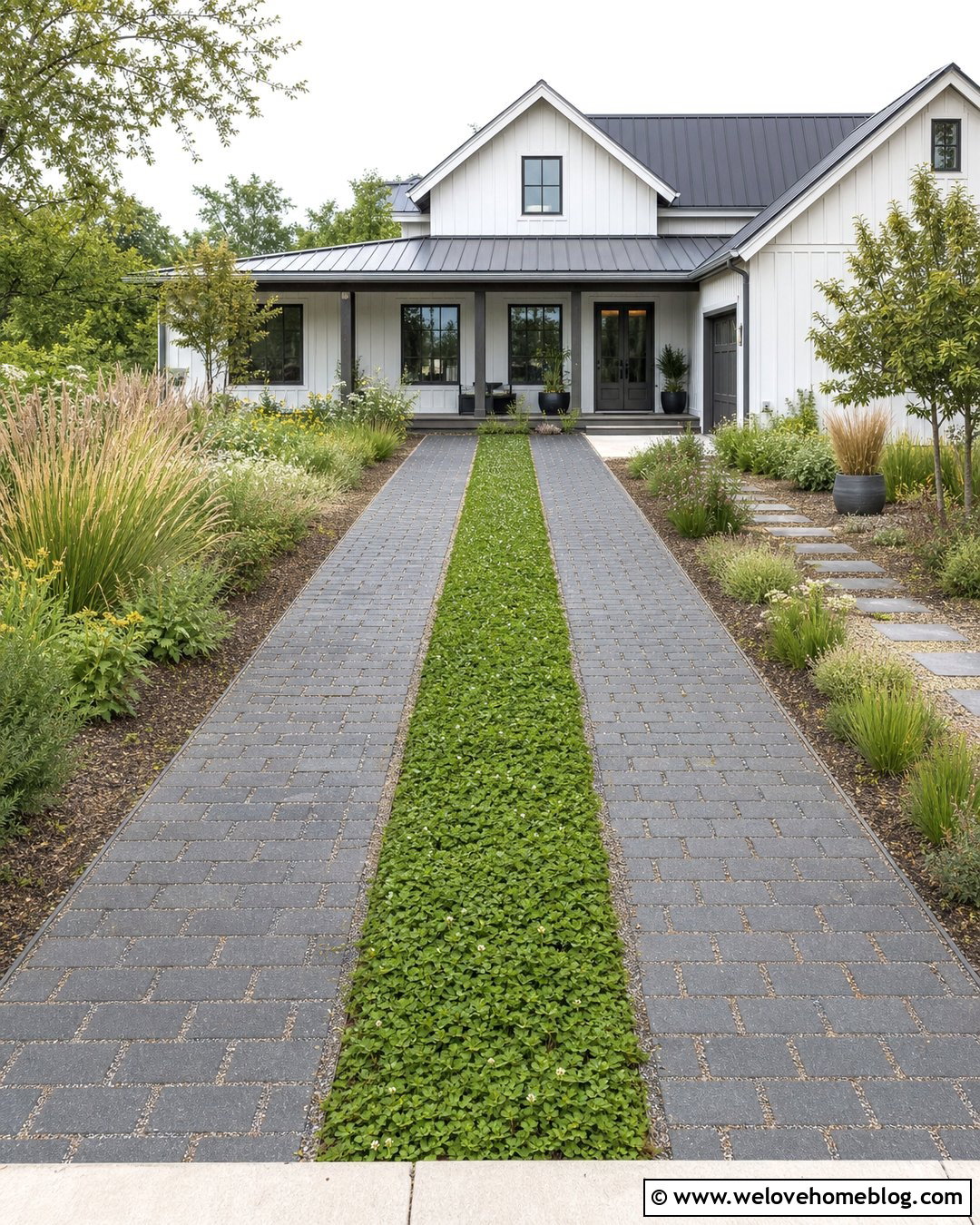
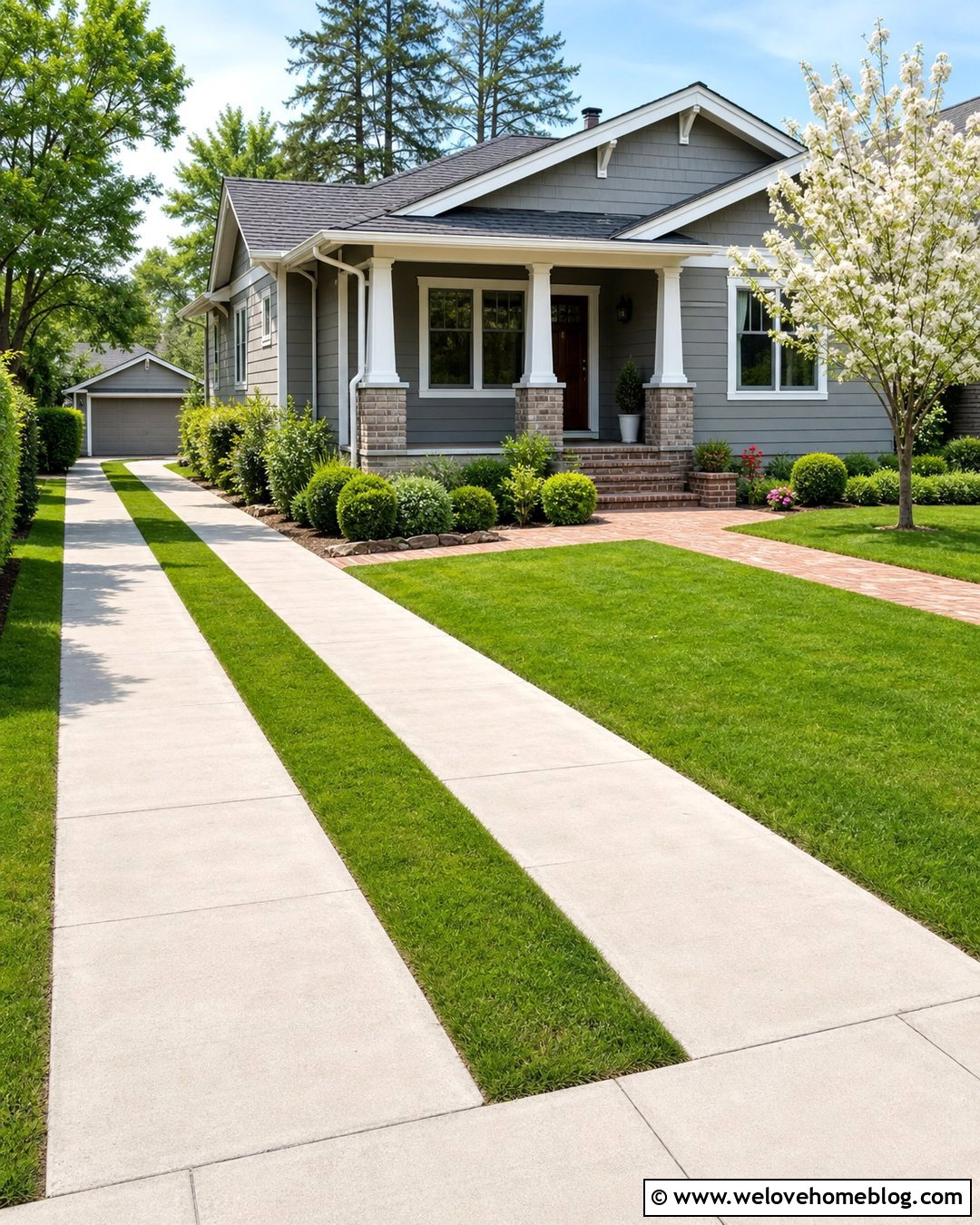
Two Cotswold chippings wheel tracks separated by a central grass strip can give a long driveway a traditional country character. This layout is most appropriate for a lightly used, predictable vehicle route with enough width for comfortable alignment. Edge both sides of the grass strip with flush metal or stone restraints to prevent gravel contamination and simplify maintenance. At the road and garage, merge the tracks into full-width gravel areas for easier turning. Continue lawn along the outer edges, then introduce informal hedges and scattered trees farther back. The green center visually reduces the amount of hard surface and draws attention toward the house. For lower maintenance, replace conventional turf with durable, locally suitable ground cover, but confirm that it can tolerate the site’s light, moisture, and occasional tire contact.
19. Cotswold Chippings Driveway With Raised Planting Beds
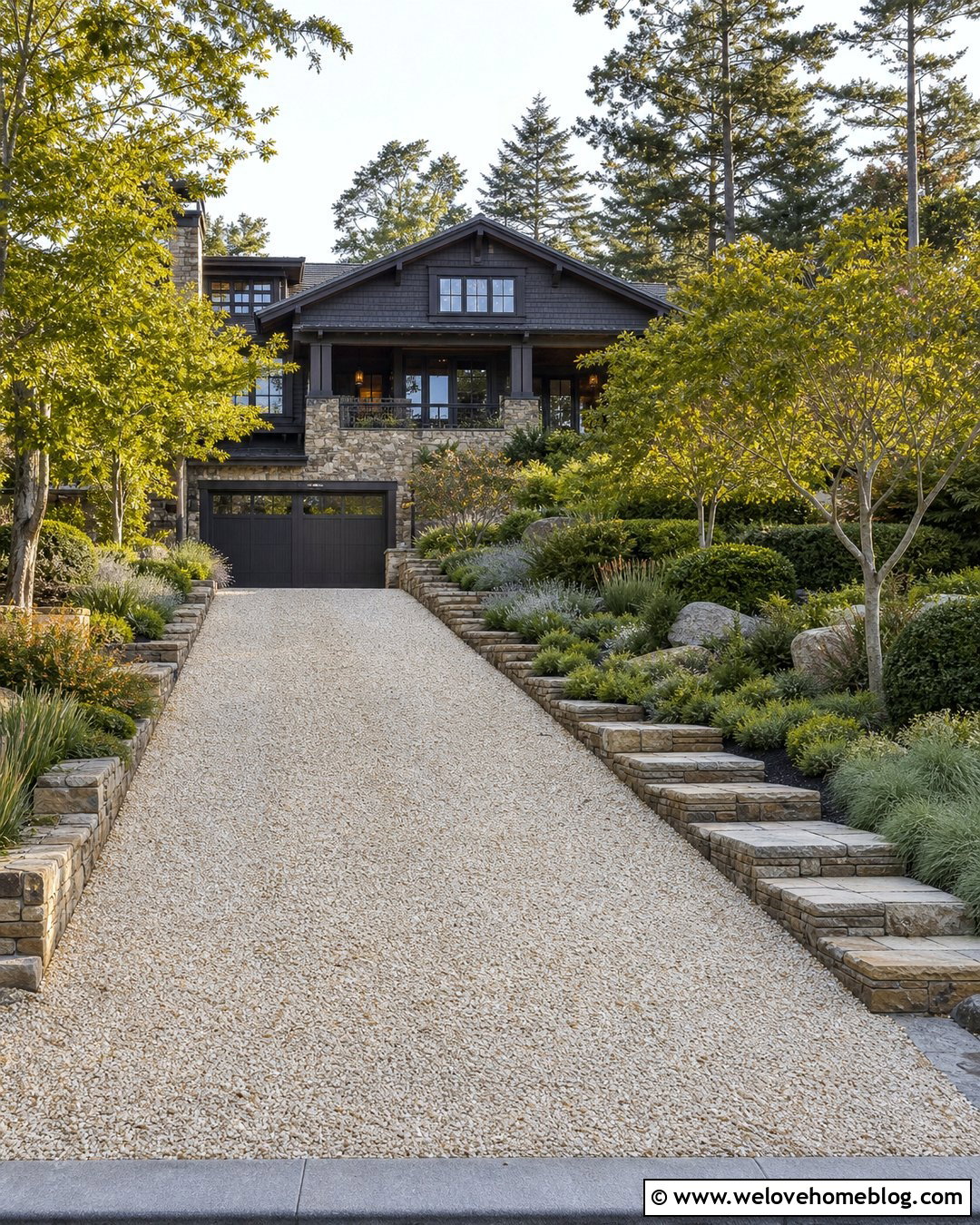
Raised beds can frame a Cotswold chippings driveway where the yard slopes or additional planting depth is needed. Construct low retaining beds from warm brick, natural stone, or dark rendered masonry, keeping corners visible and safely away from vehicle paths. A broad straight driveway works well because the walls provide enough architectural interest without requiring a complicated layout. Fill the beds with tiered planting: trailing ground cover at the front, compact shrubs in the middle, and grasses or small trees toward the back. Include drainage outlets so water does not collect behind the walls or wash soil onto the pale gravel. Repeat the retaining material around the entrance steps for continuity. With thoughtful proportions, the raised landscaping makes the driveway feel integrated into the garden rather than placed between unrelated boundaries.


20. Cotswold Chippings Driveway With Exterior Lighting

Good driveway lighting should help define the route without turning the landscape into a runway. During the day, understated black or bronze bollards can provide attractive vertical accents beside a curved Cotswold chippings driveway. Space them at important locations such as bends, gates, steps, and the parking area instead of placing them continuously along every edge. Stone setts can contain the pale gravel, while grasses and low evergreens soften the fixtures at ground level. Pair the driveway lights with subtle wall-mounted fixtures on a modern farmhouse, cottage, or brick home. Plan cable routes before installing the aggregate so finished areas do not need to be disturbed later. Keep fittings away from tire paths and lawn mower routes. The complete scheme should appear clean, coordinated, and attractive even when the lights are off.
Conclusion:
The best Cotswold chippings driveway combines attractive stone with a suitable foundation, secure containment, practical vehicle access, and landscaping that complements the house. Brick and cobblestone create traditional character, while granite setts, steel edging, and structured planting produce a more contemporary finish. Curves, circular layouts, parking bays, gates, and paved aprons can make the entrance more functional as well as more distinctive. Because limestone products vary in durability, size, and color, confirm that your chosen chippings are approved for the expected vehicle traffic. Proper preparation will matter more than decorative details alone. Use these **20 Cotswold Chippings Driveway Ideas** to plan a complete entrance that feels welcoming, balanced, and appropriate for your property.

Related posts:
Leave a Reply