
Driveway paver edging ideas can turn a basic parking surface into a polished part of your home’s landscape. The right border does more than create a neat outline. It can support vulnerable driveway edges, contain loose gravel, separate pavement from planting beds, and connect the driveway visually to the house. Belgian block, clay brick, concrete pavers, and natural stone are especially useful because they add both structure and contrast. () Your best choice will depend on the driveway material, architectural style, drainage needs, and maintenance preferences. From affordable single-row borders to detailed aprons and curved bands, the following complete designs offer practical and attractive inspiration. Explore these 20 Driveway Paver Edging Ideas.
1. Brick Paver Edging for a Concrete Driveway
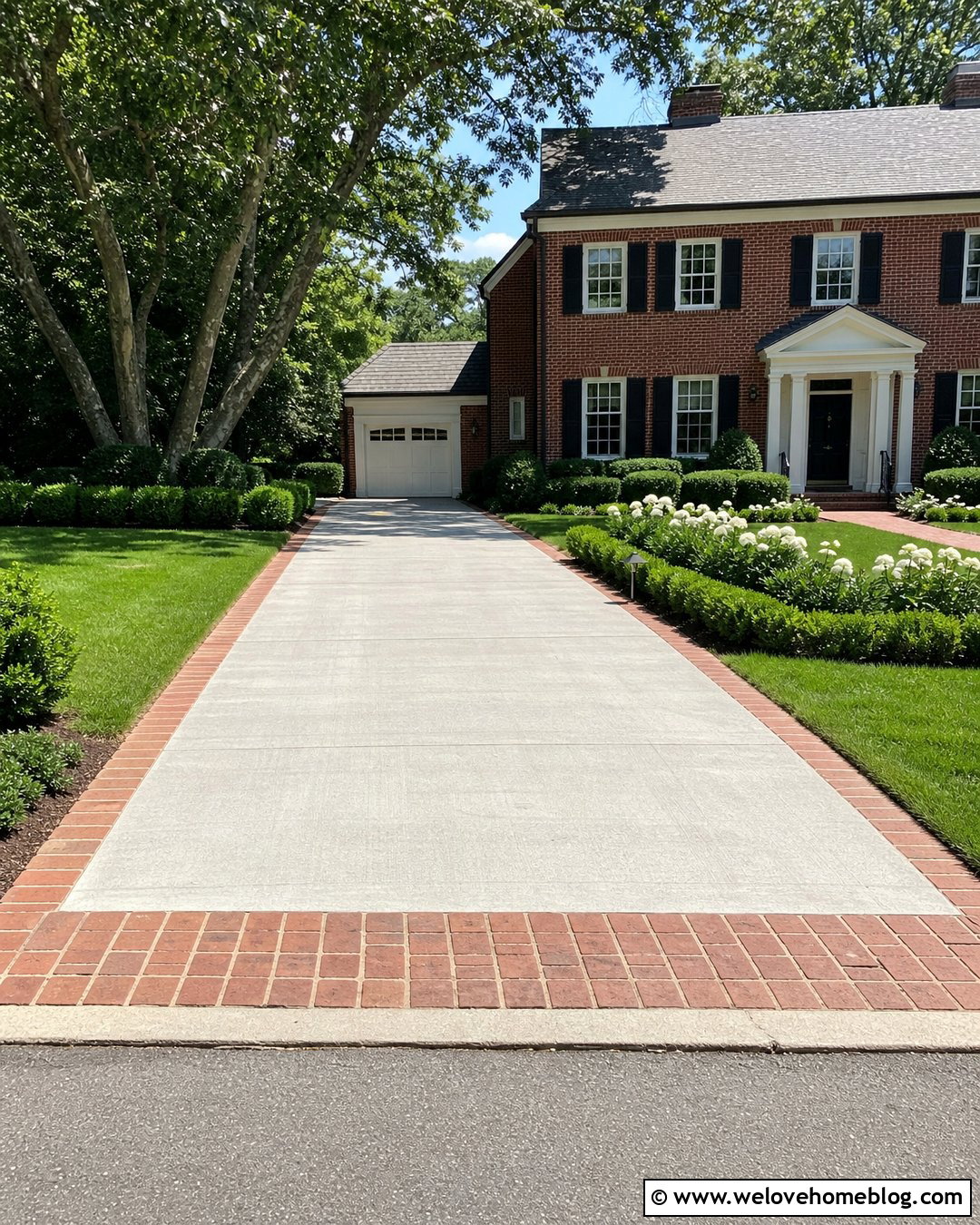
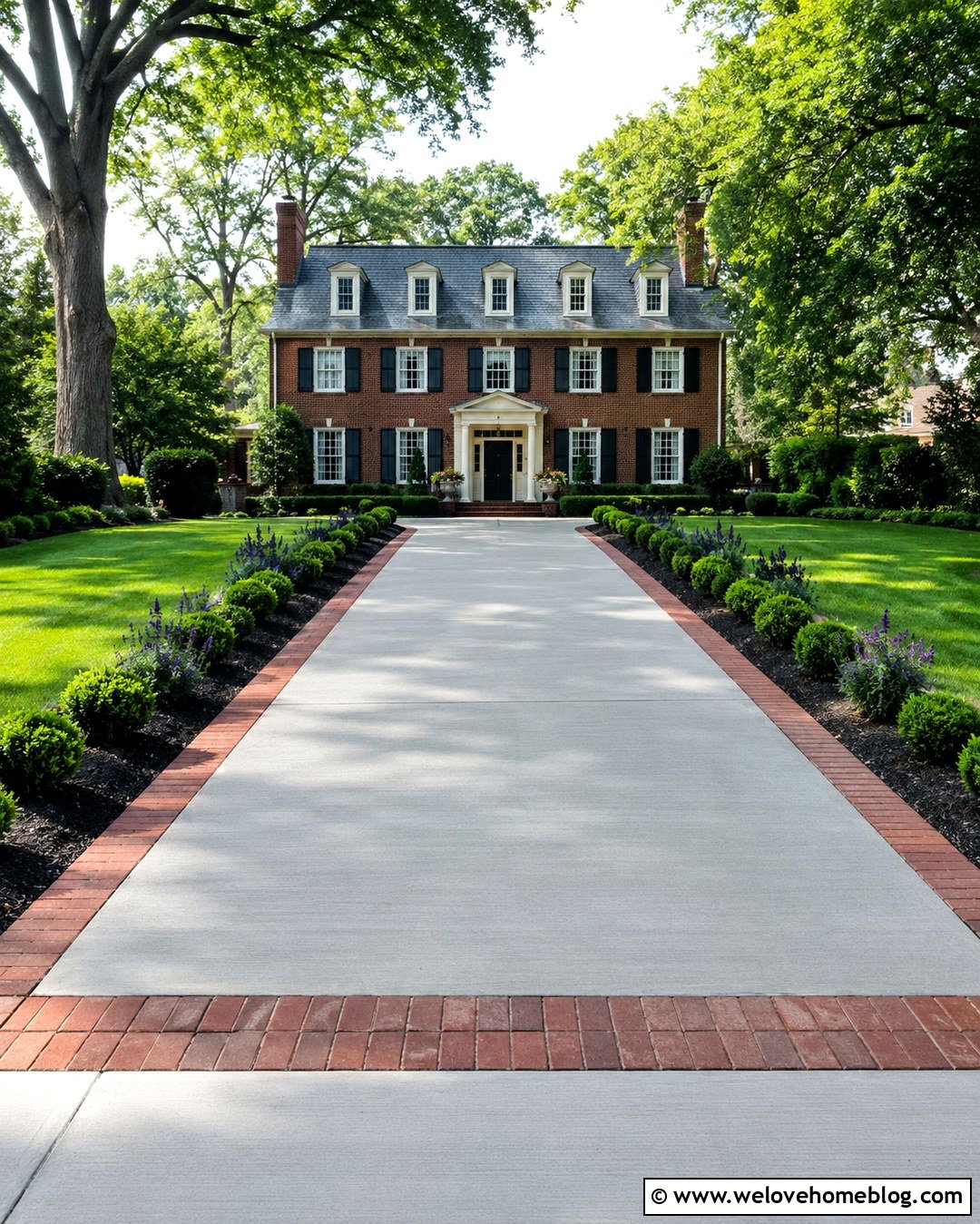
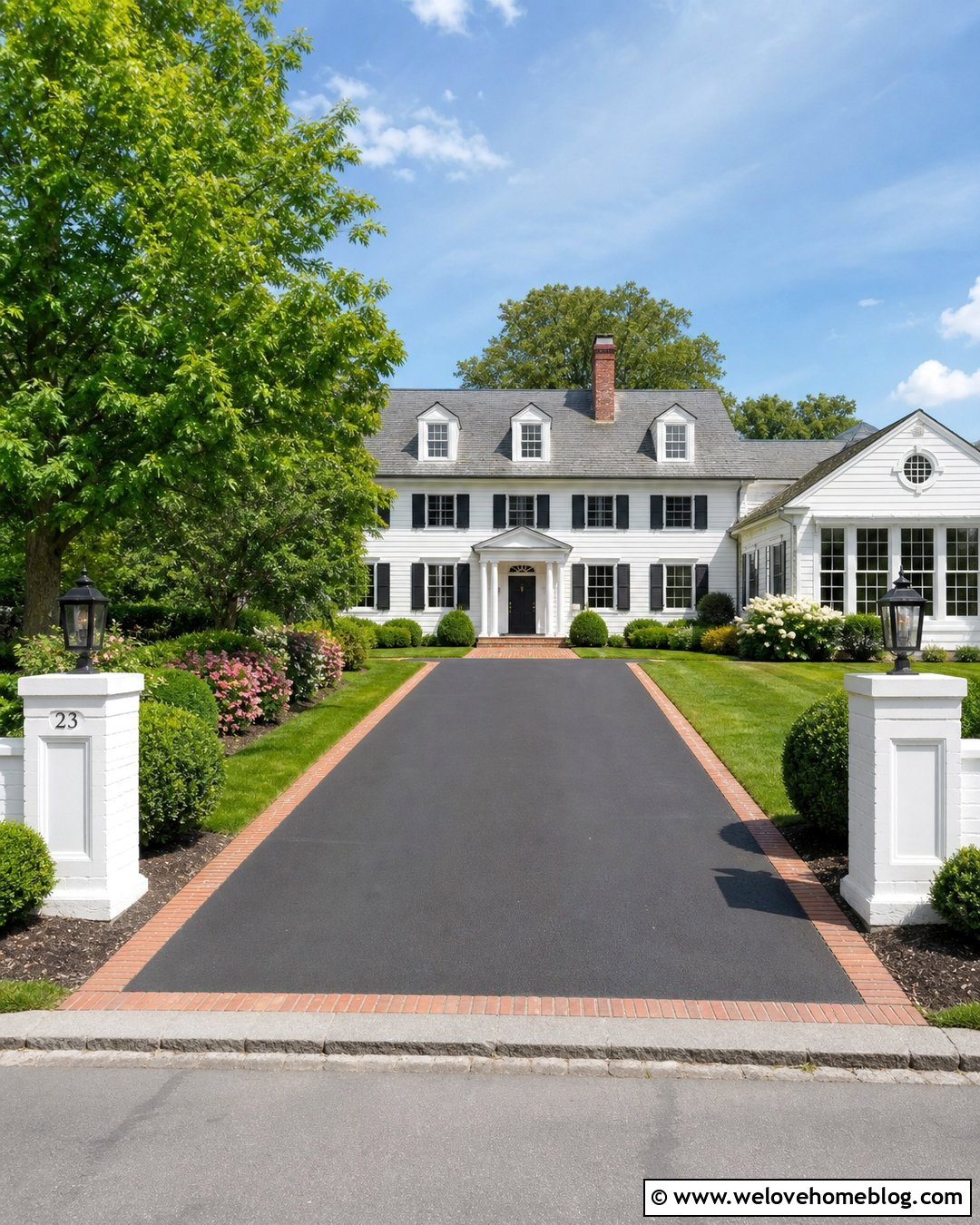
Warm red brick pavers create a crisp frame around a light gray concrete driveway. This combination works particularly well with traditional ranch, Colonial, and Cape Cod homes. Install the bricks lengthwise for a simple single-row border or turn them perpendicular to the driveway for a wider, more noticeable edge. Carry the same brick into the walkway or front steps to make the entrance feel coordinated. Along the outer side, use a narrow planting bed with boxwood, ornamental grass, or seasonal flowers. A soldier-course brick apron at the street can complete the design. Choose brick colors that relate to the house facade instead of trying to match every exterior material exactly.
2. Belgian Block Edging for an Asphalt Driveway
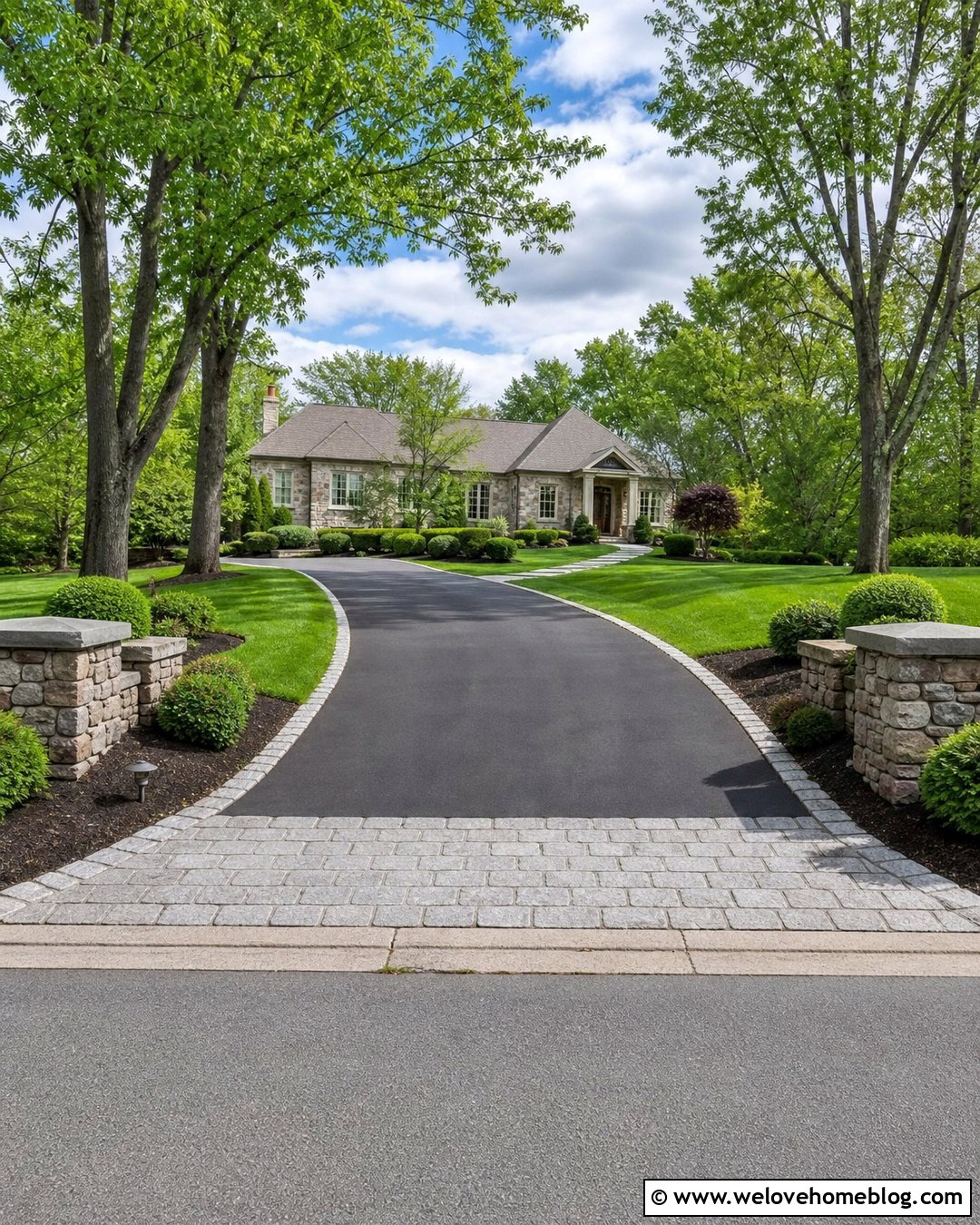
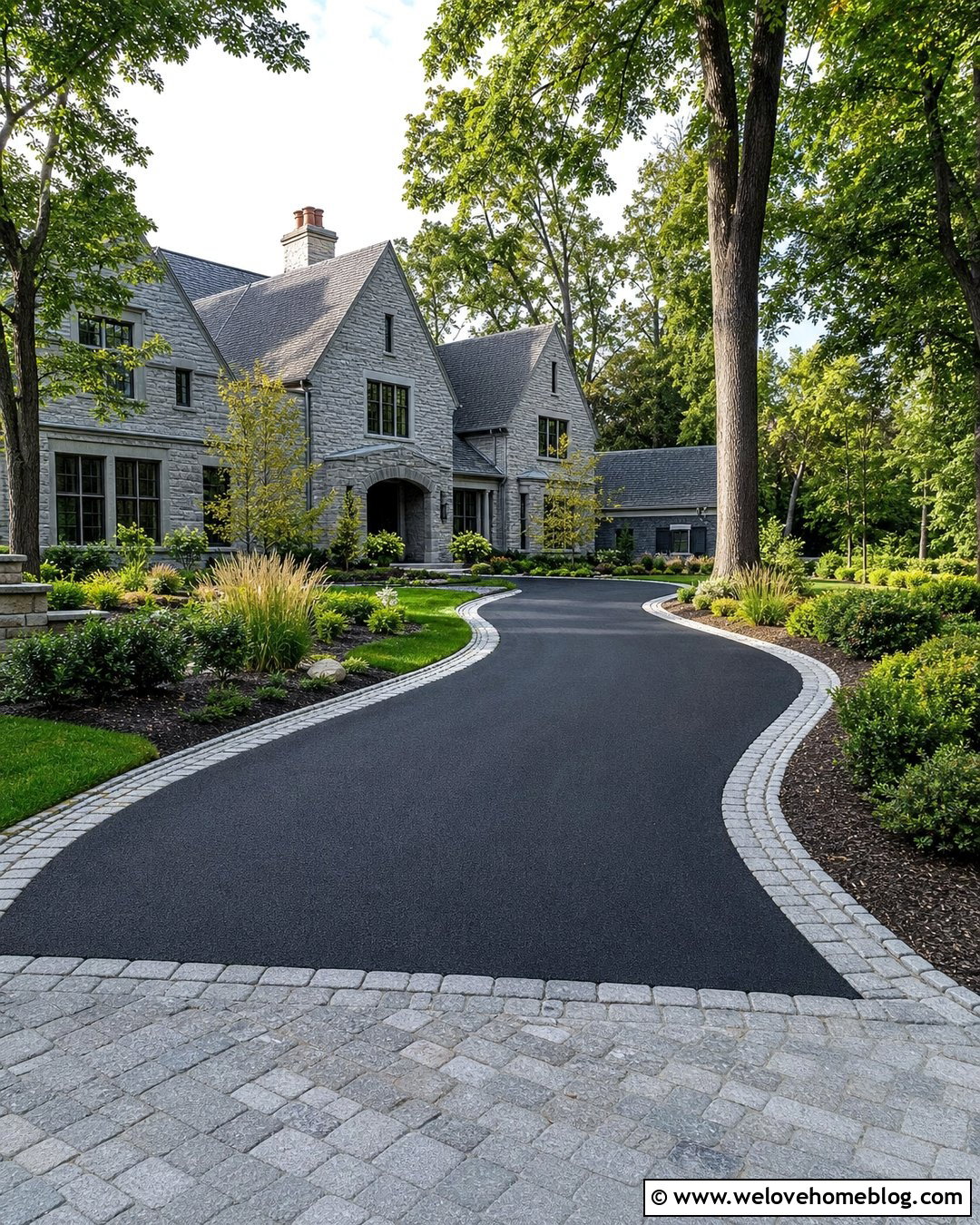
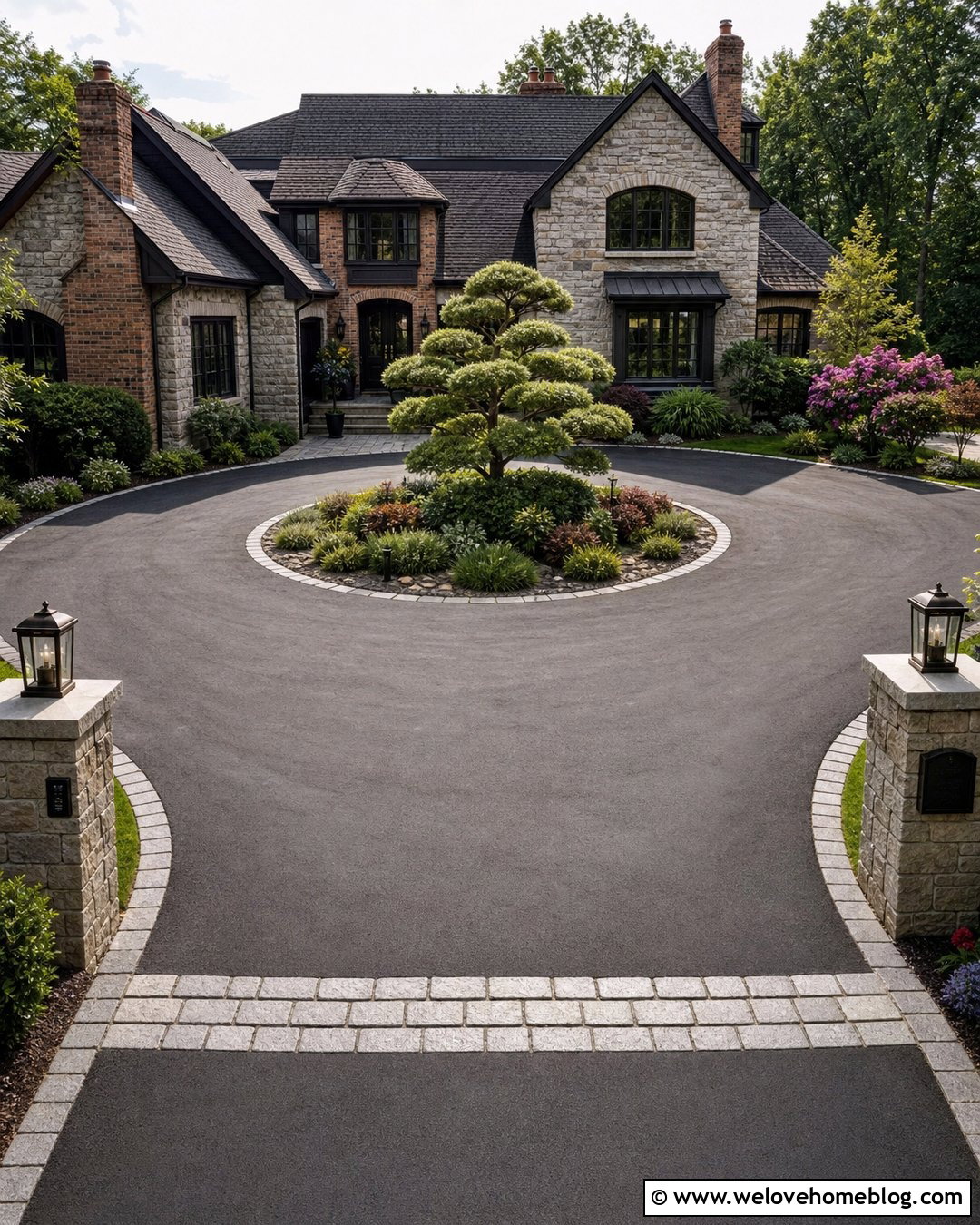
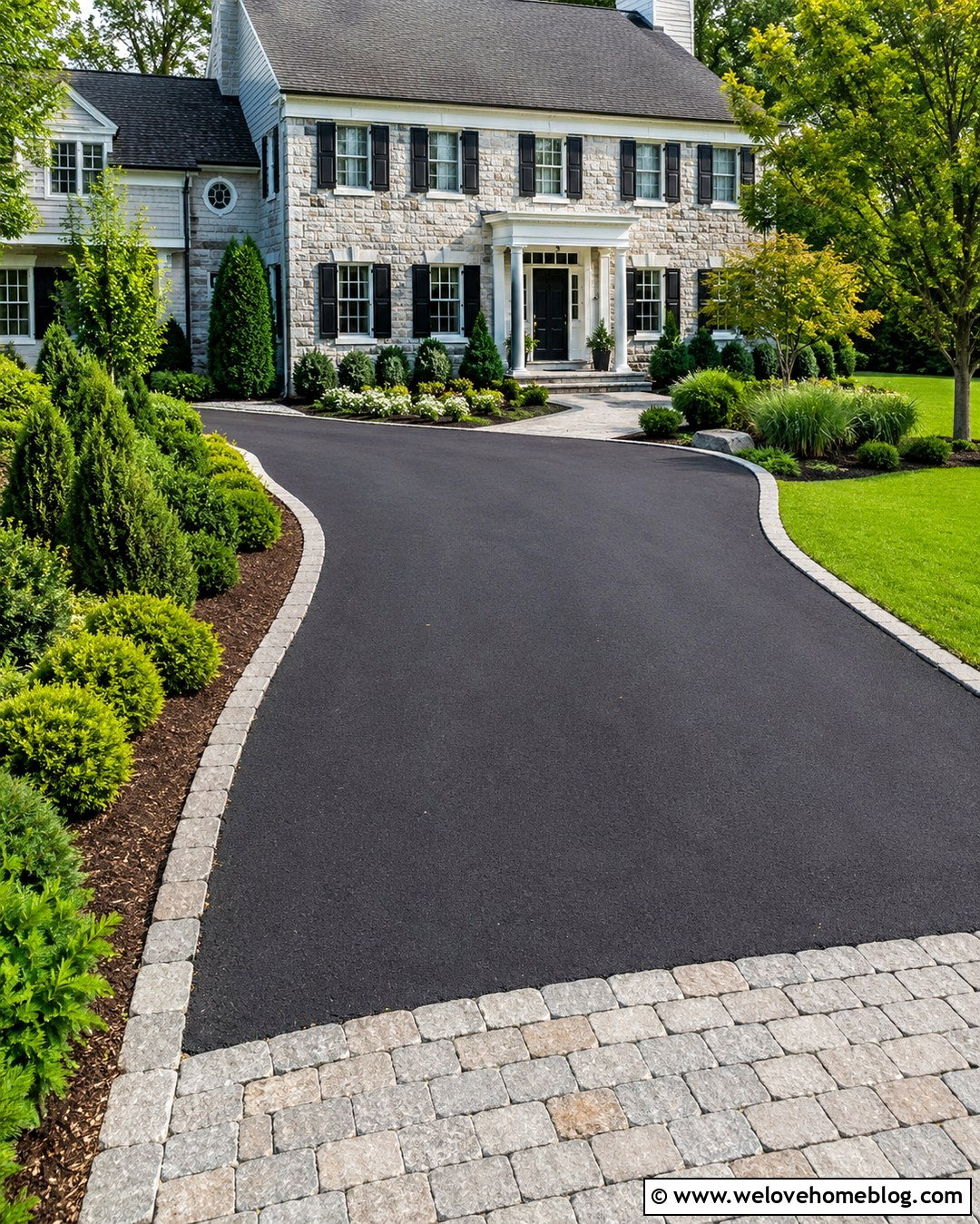
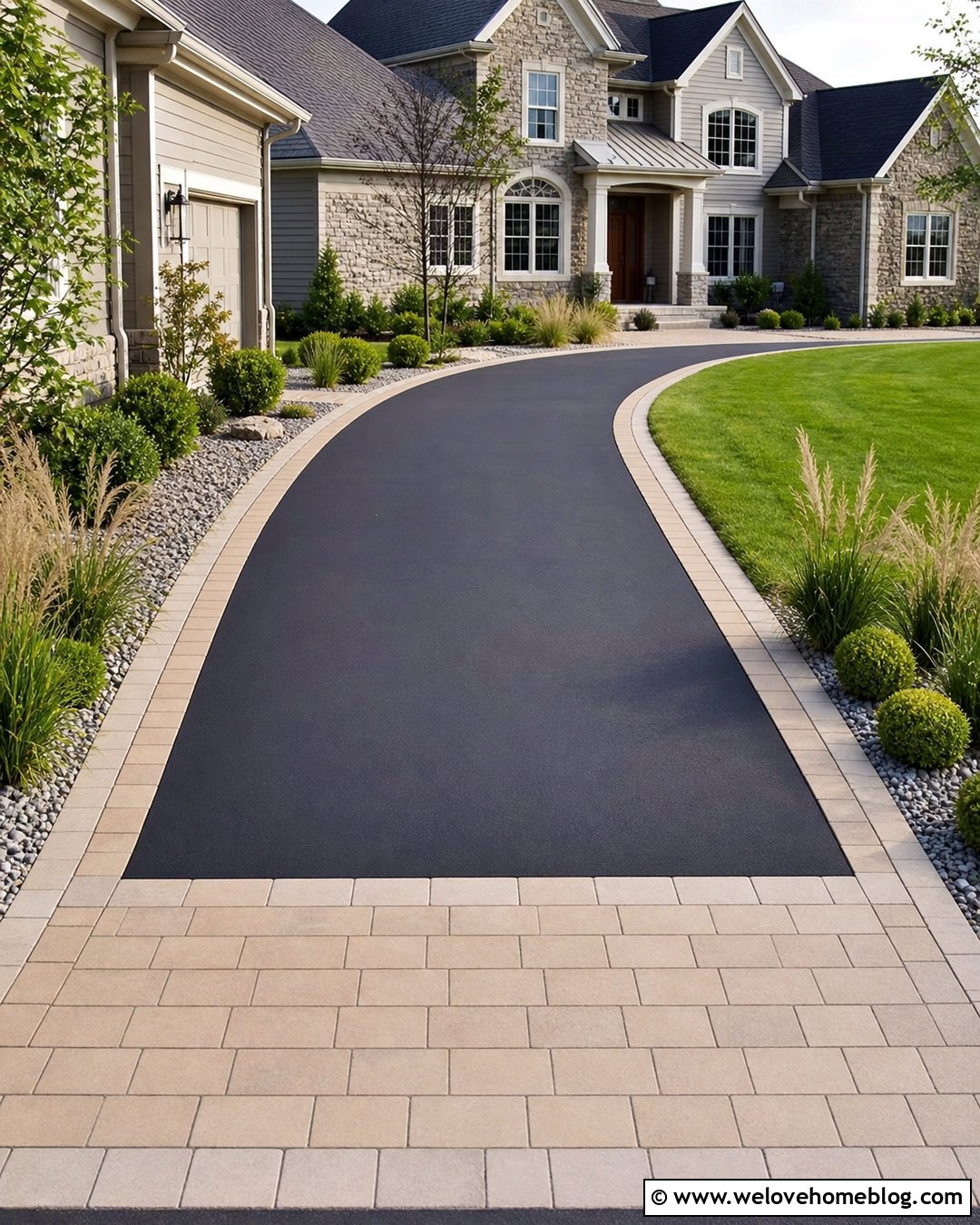
Black asphalt gains definition when it is paired with chunky gray Belgian block pavers. The lighter stone interrupts the dark pavement and gives the driveway a strong architectural outline. It is especially attractive along a gently curved approach leading to a brick or stone house. Set the blocks flush for easy mowing or raise them slightly where you need a clearer barrier between asphalt and mulch. A properly supported block edge may also help protect vulnerable pavement edges from crumbling and landscape erosion. () Finish the look with broad lawn panels, clipped evergreen shrubs, and a matching Belgian block apron at the curb. The result feels established without becoming overly formal.
3. Dark Paver Edging for a Light Paver Driveway
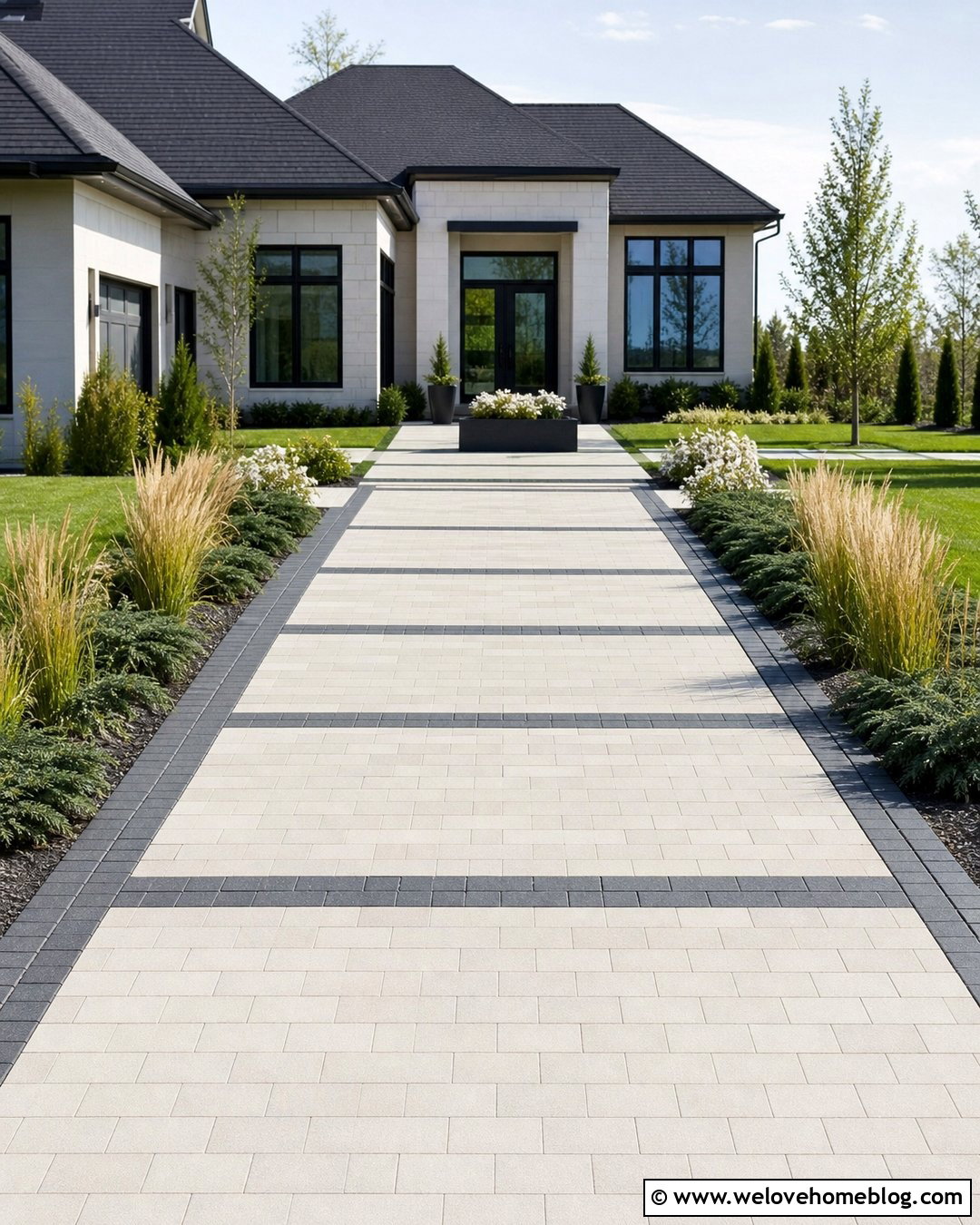
A dark charcoal border can make a pale paver driveway look cleaner and more intentional. Use cream, beige, or light gray concrete pavers through the center, then frame them with charcoal rectangular pavers in a single or double row. This high-contrast layout suits contemporary homes with black windows, dark roofing, or metal accents. Keep the driveway straight and symmetrical to reinforce the modern appearance. Narrow planting beds filled with ornamental grasses, low juniper, and white flowering perennials will soften the hard lines. Extend the dark pavers across the driveway near the garage as a finishing band. Repeating that border color in the front walkway creates a unified landscape rather than several disconnected paved areas.
4. Cobblestone Paver Edging for a Gravel Driveway
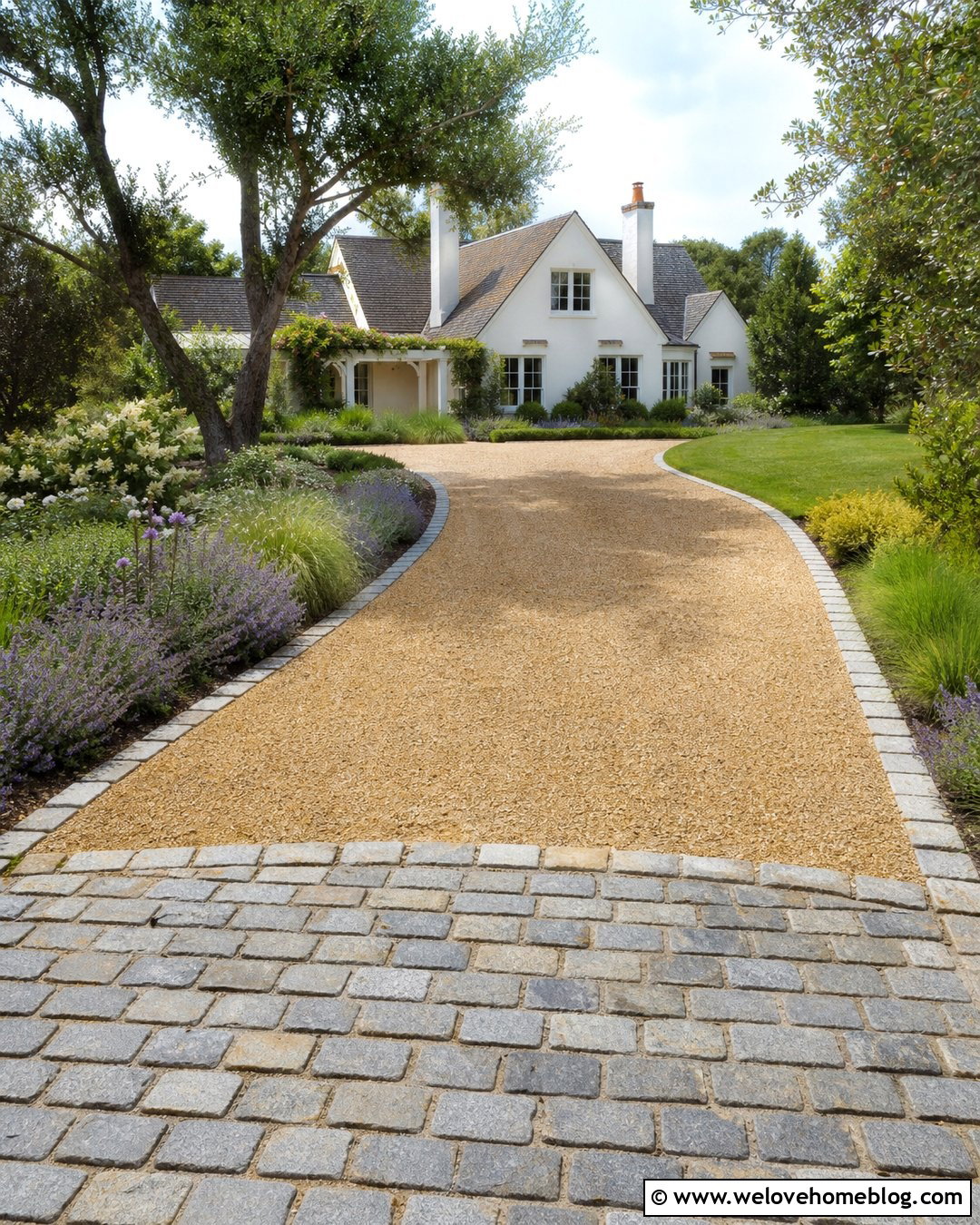
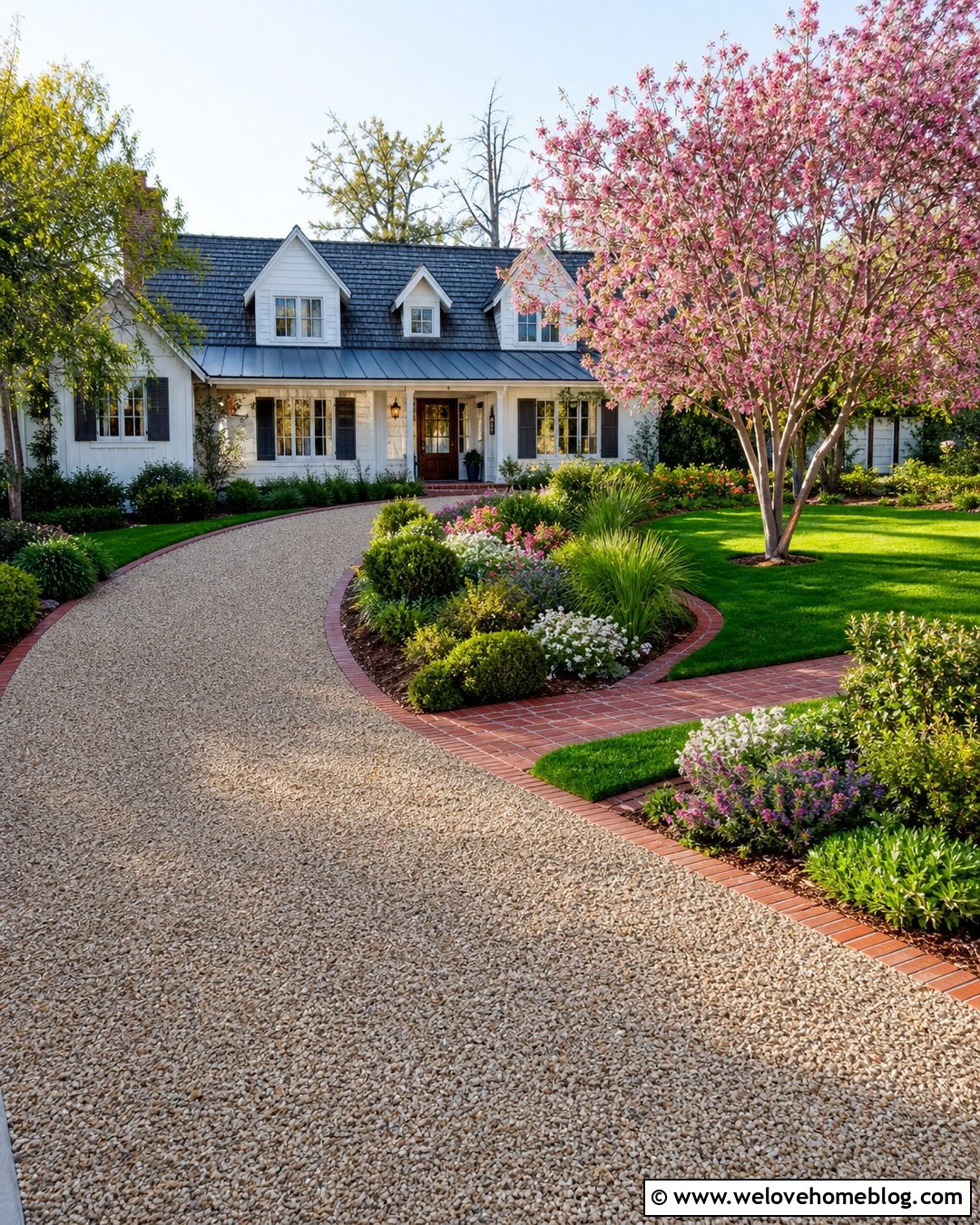
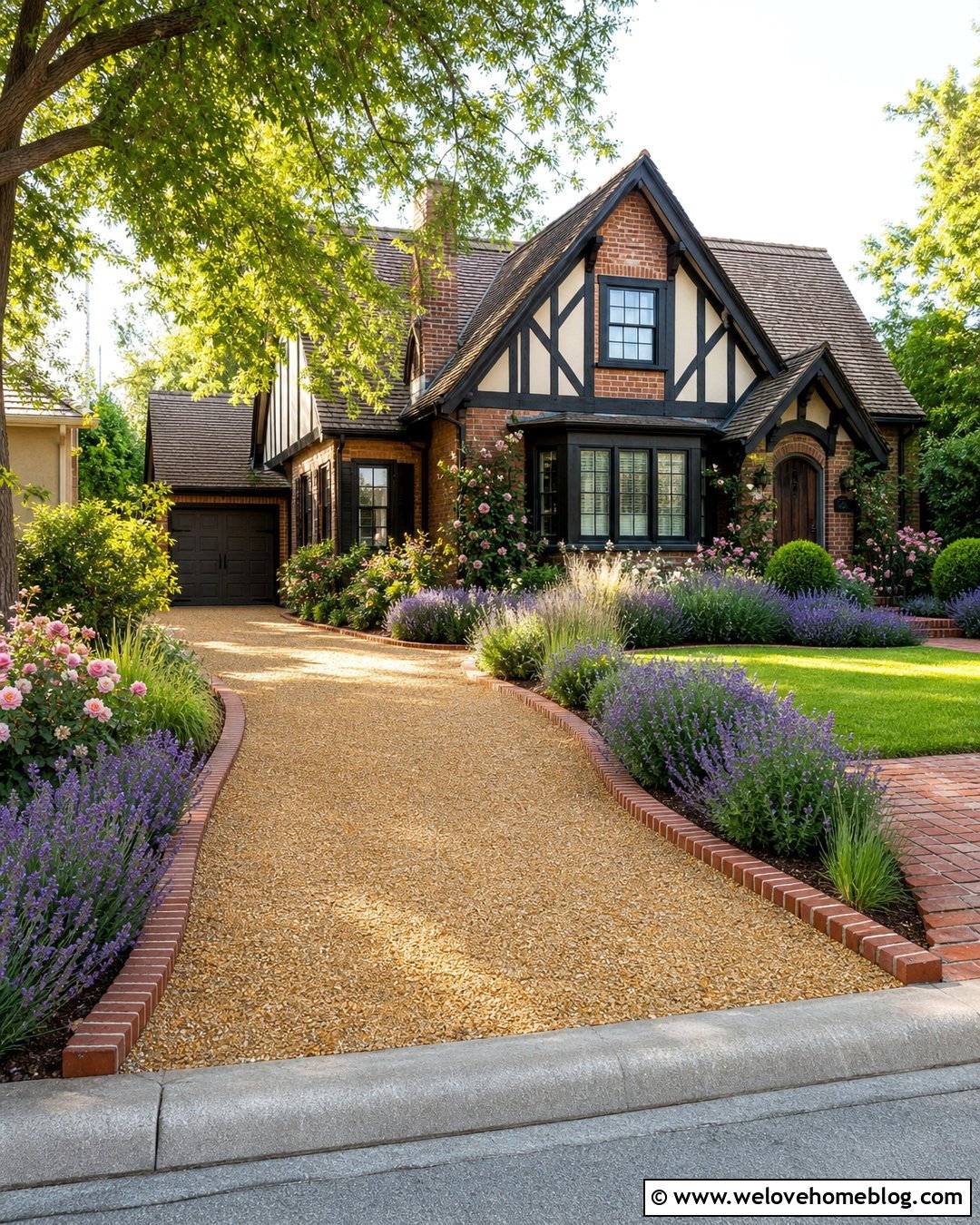
Loose gravel looks more finished when its perimeter is contained by substantial cobblestone pavers. Pair warm tan gravel with mixed gray and brown granite setts for a natural country entrance. A curved layout makes the irregular color and texture feel even more appropriate. Set the cobbles close together along both sides, then repeat them across the entrance as a broad apron that catches displaced stones. Naturalistic beds planted with lavender, catmint, dwarf grasses, and flowering shrubs can follow the curves. This border is particularly suitable for cottages, farmhouses, and wooded properties. Because gravel can migrate under tires and during heavy rain, the edging should be stable, continuous, and high enough to provide useful containment.
5. Double-Row Paver Edging for a Wide Driveway
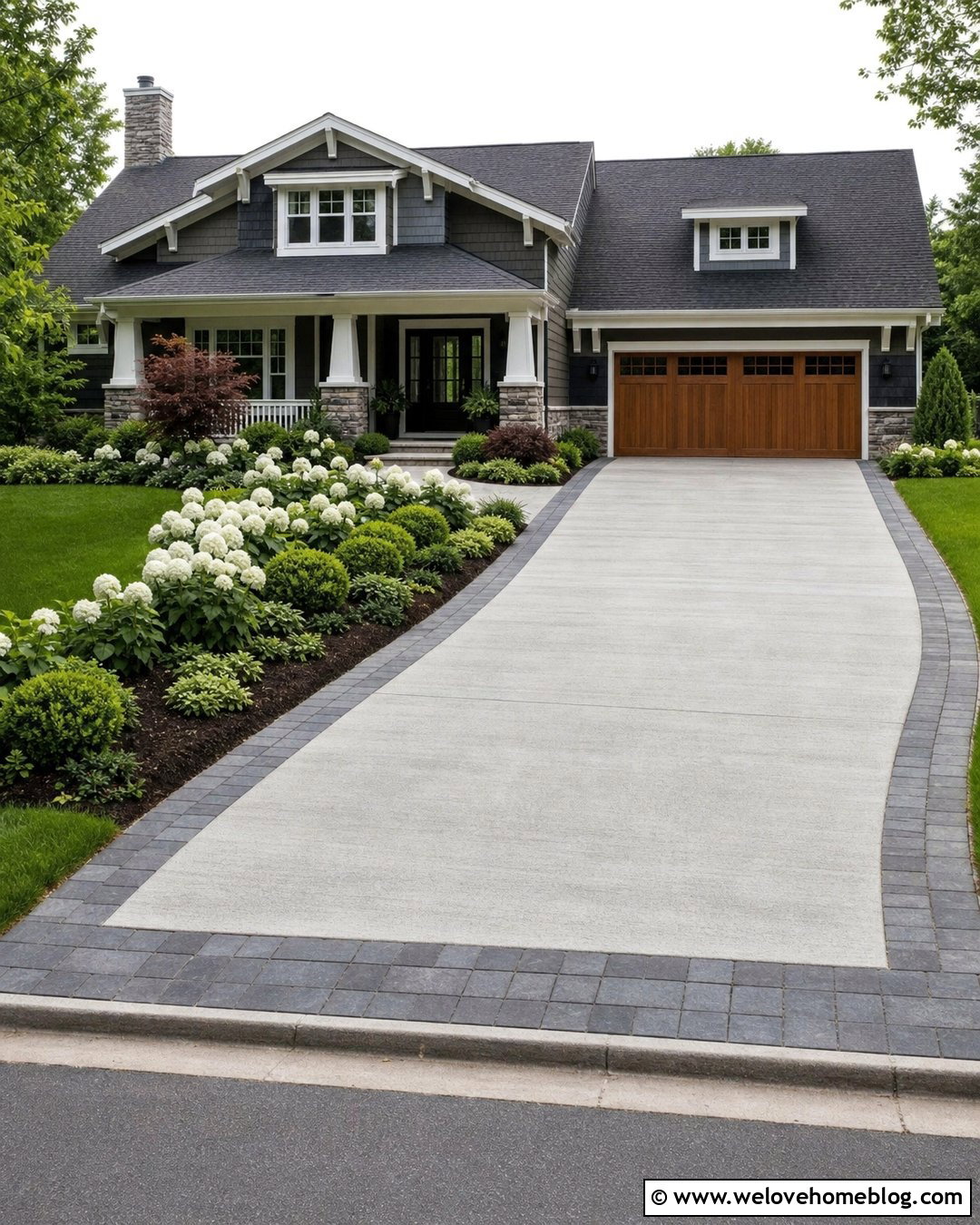
A broad driveway can overpower a front yard if its border is too narrow. A double row of pavers creates enough visual weight to balance the paved area. Try a broom-finished concrete driveway framed by two rows of medium-gray tumbled pavers. Run the inner row parallel to the pavement and the outer row perpendicular for subtle pattern variation. At the entrance, widen the border into a coordinated paver apron. Large planting beds with hydrangeas, evergreen mounds, and small ornamental trees will keep the landscape in scale. This complete look works well for two-car and three-car garages. It also provides a clear transition between the driveway, lawn, walkway, and foundation plantings without introducing too many unrelated materials.
6. Herringbone Brick Edging for an Asphalt Driveway
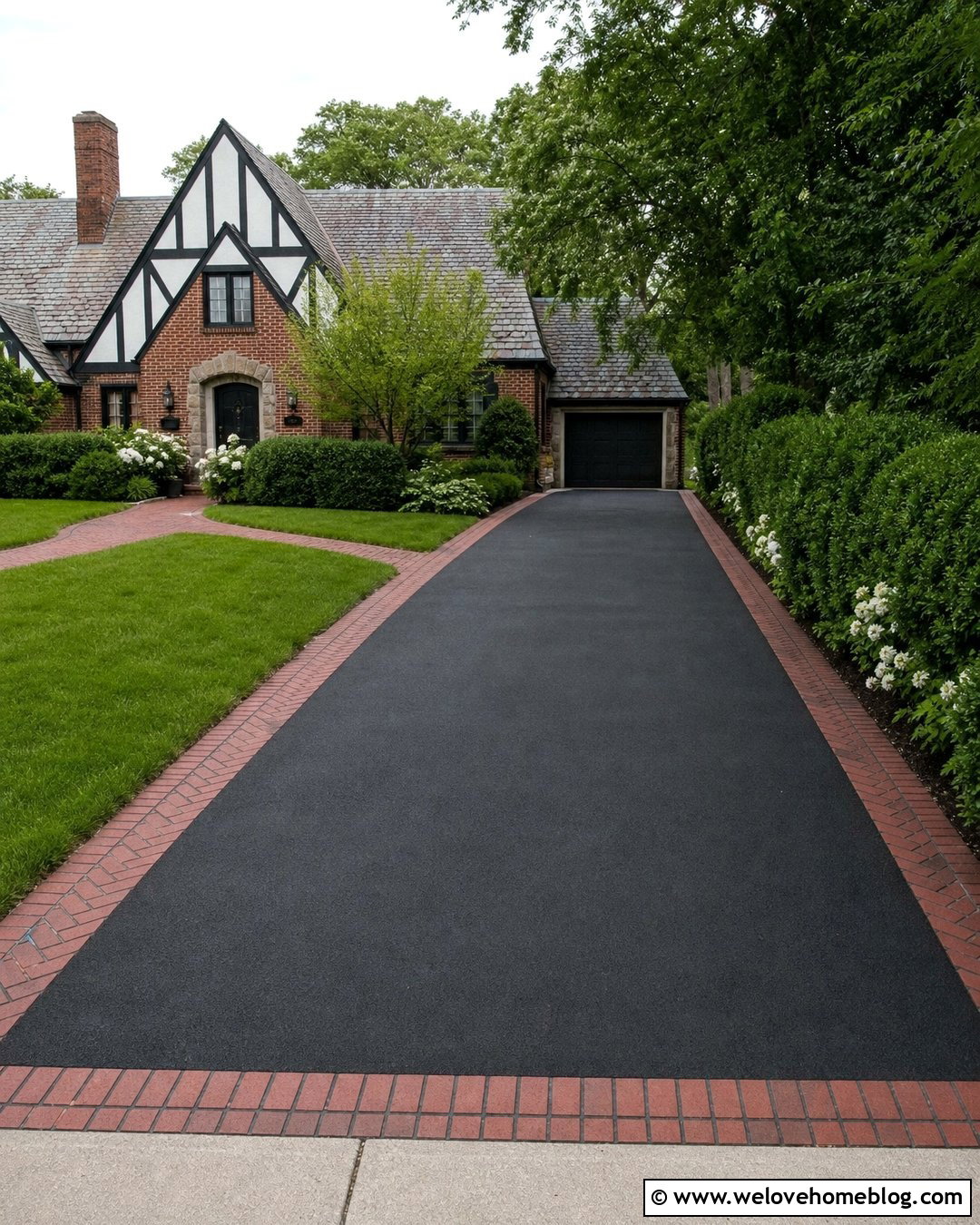
Would a more decorative border suit your traditional home? A compact herringbone band can bring movement and warm color to a smooth black asphalt driveway. Use clay brick pavers in burgundy, red, and muted brown, contained by a straight outer soldier course. The border should be wide enough for the zigzag pattern to remain readable from the curb. Continue the same bricks into the front walk or a rectangular landing near the porch. Green lawn and simple evergreen foundation shrubs provide a calm background for the detailed masonry. This design complements Tudor, Colonial, and older brick houses. Choose blended brick tones to disguise dust and minor staining while maintaining a rich, established appearance.
7. Flush Paver Edging for Easy Lawn Mowing
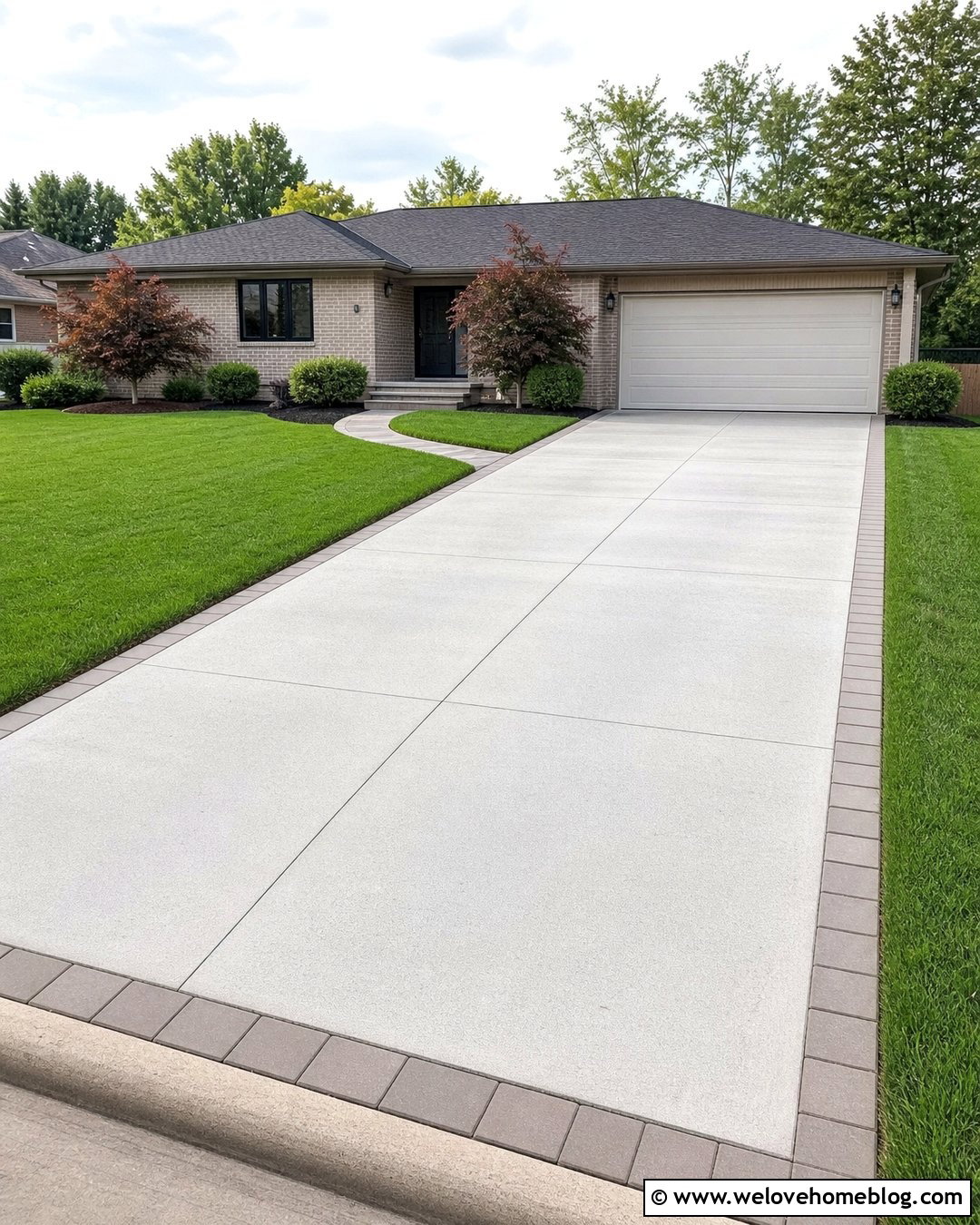
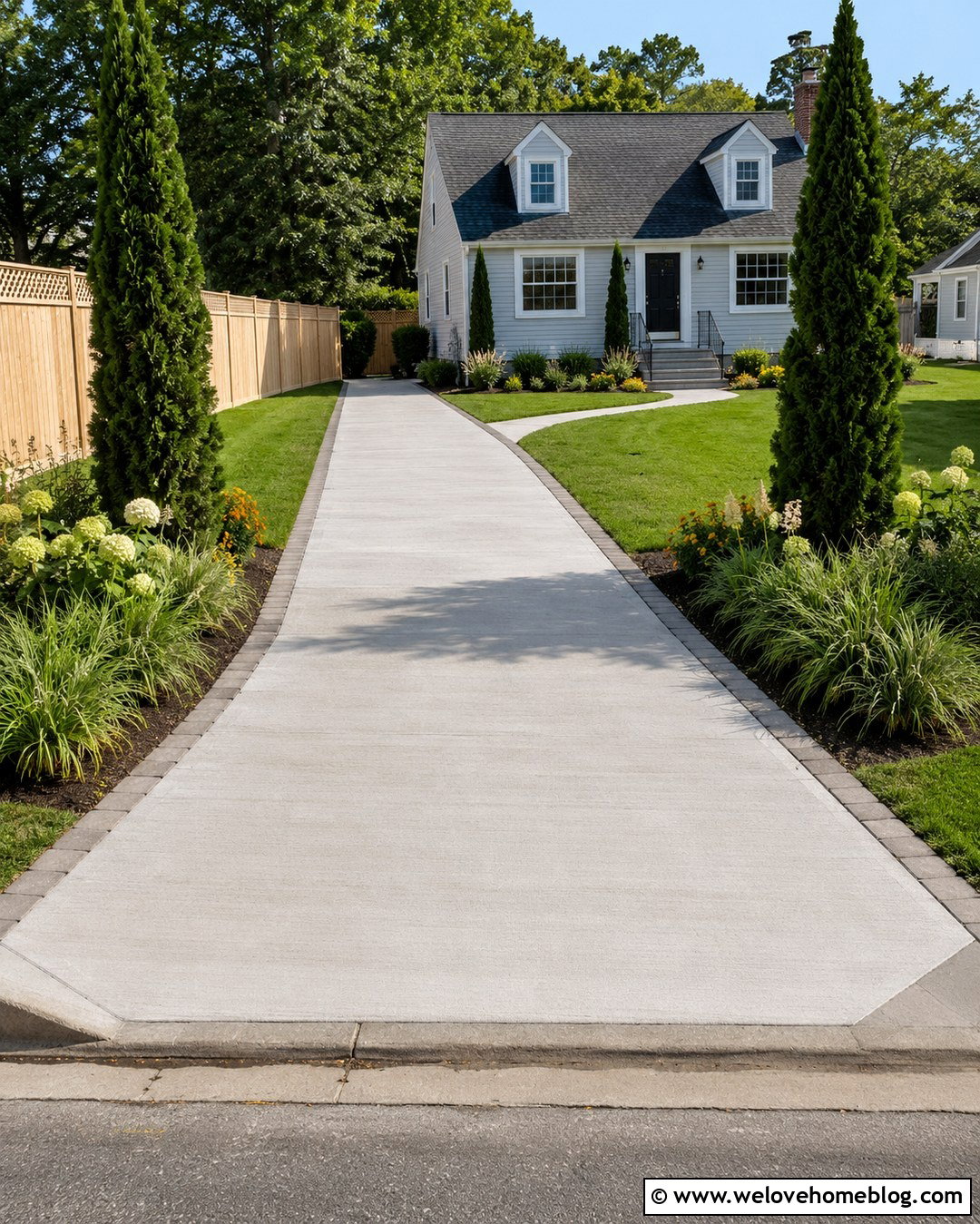
Flush paver edging creates a tidy border without forming a raised obstacle beside the lawn. Frame a straight poured-concrete driveway with smooth rectangular concrete pavers installed level with the surrounding grass. Medium-gray or taupe pavers offer visible contrast while remaining subtle enough for a simple suburban home. Since the mower can travel over the border, grass maintenance becomes easier and string trimming may be reduced. Use the same pavers around a curved walkway and nearby planting beds for continuity. Small trees at the entrance, low shrubs near the garage, and an open lawn preserve a clean appearance. Careful grading remains important so soil and turf do not sit above the pavers or wash onto the driveway.
8. Raised Paver Edging Beside Flower Beds
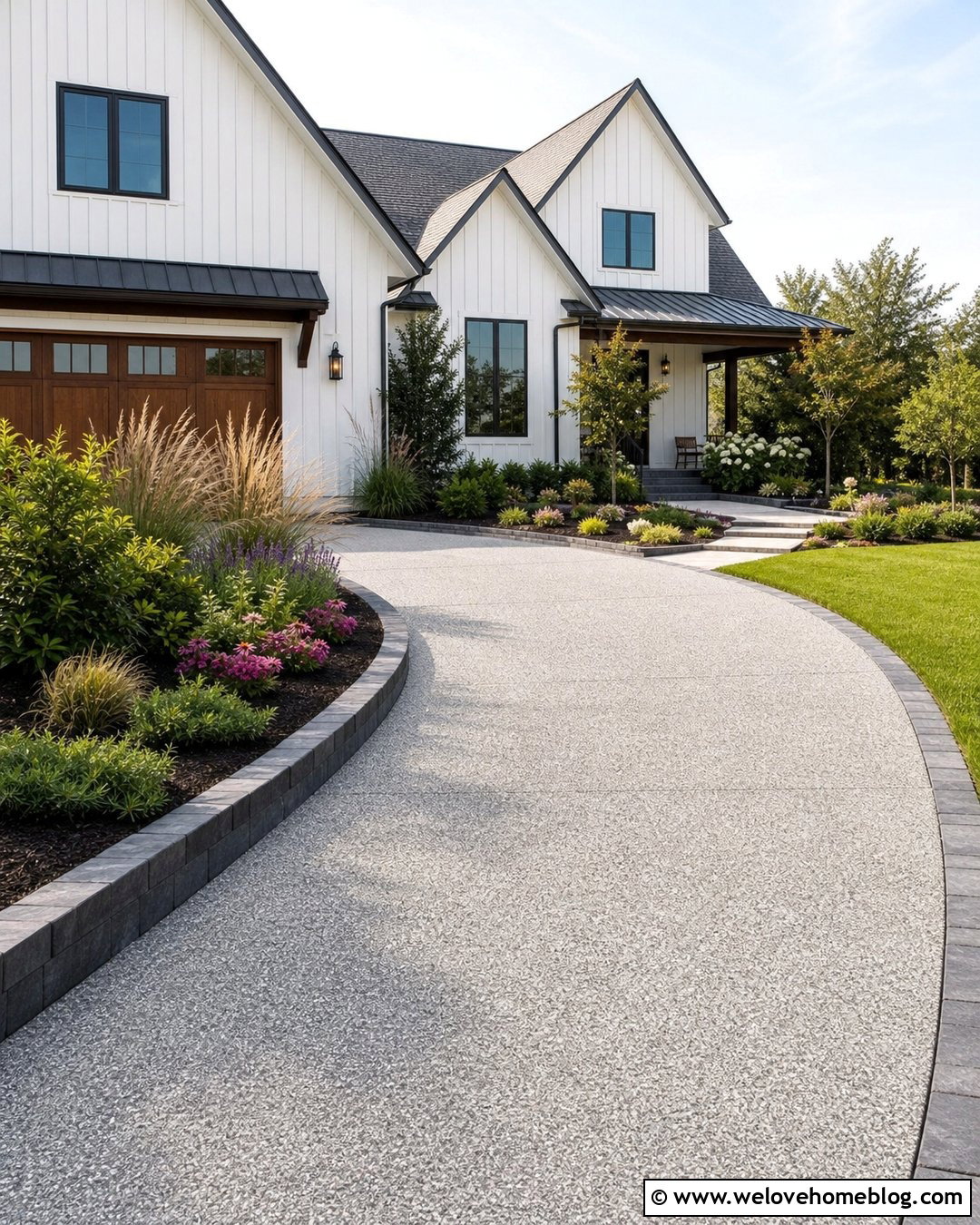
Raised edging is useful where colorful planting beds sit directly beside the driveway. A single upright row of concrete or clay pavers can form a low barrier that holds mulch and soil away from vehicle tires. Pair the border with an exposed aggregate concrete driveway for a pleasing mix of texture. Gentle curves will give the flower beds enough depth for layered planting, including low ground covers near the edge, flowering perennials in the middle, and compact shrubs behind them. Avoid making the border so tall that opening a car door becomes difficult. A modern farmhouse or Craftsman home provides a fitting backdrop. Match the edging to the front walkway to connect the driveway and garden visually.
9. Curved Paver Edging for a Winding Driveway
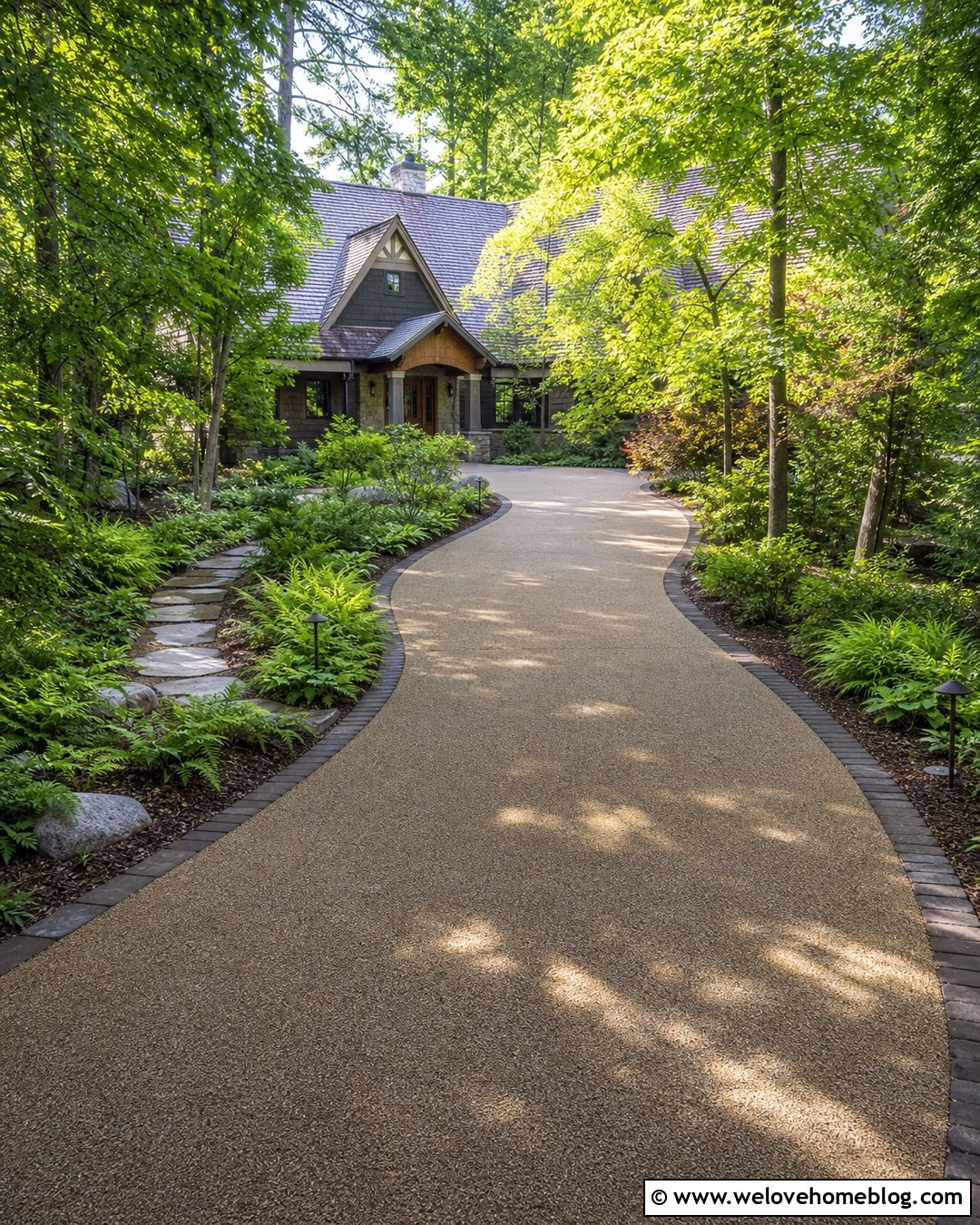
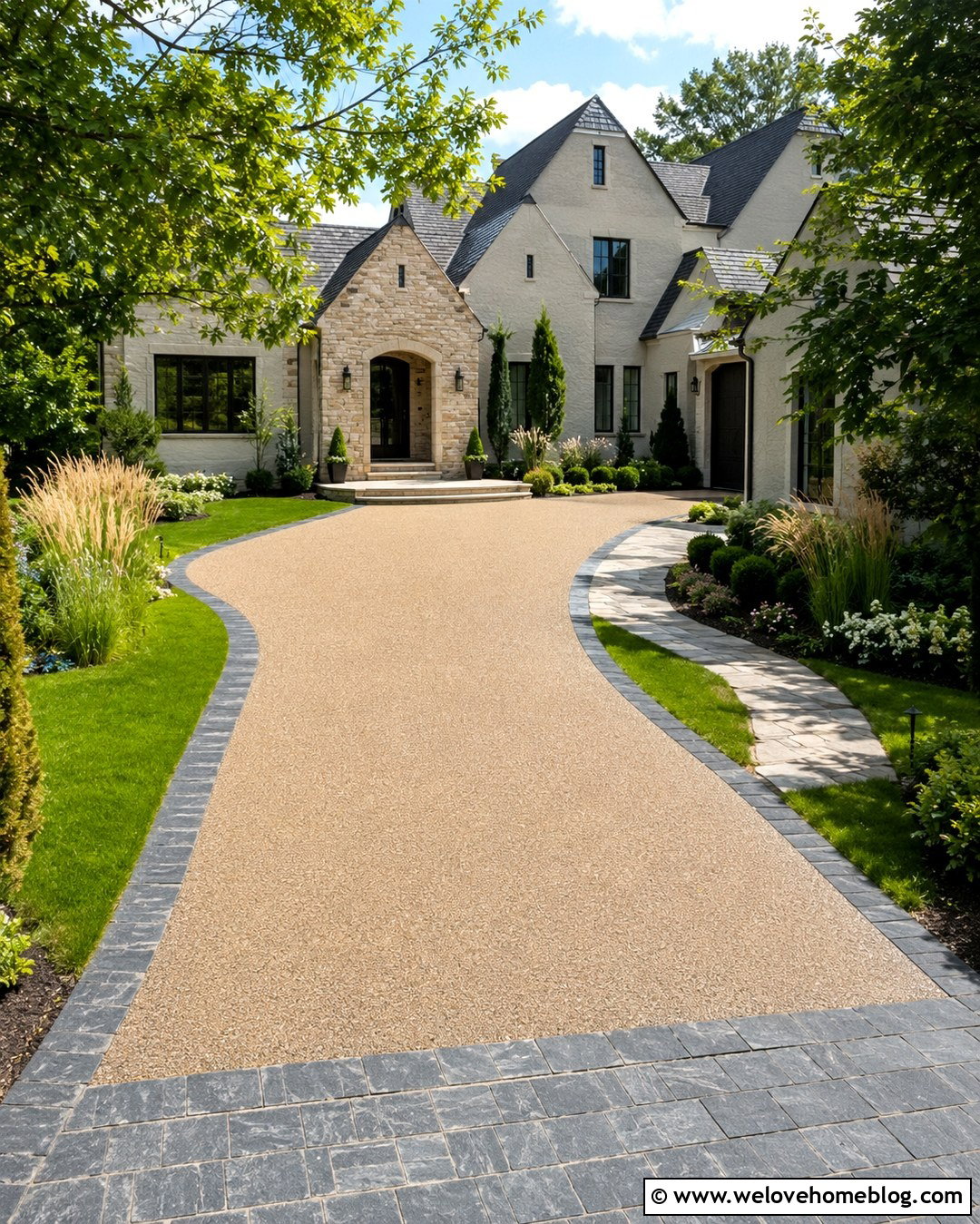
A winding driveway needs edging that follows its curves smoothly rather than breaking into awkward angles. Small rectangular or fan-shaped pavers are easier to arrange around bends than oversized units. Consider a warm beige resin-bound gravel driveway bordered by dark brown tumbled pavers. The strong outline makes the route clear while complementing a natural, wooded yard. Sweep planting beds along the outside curves and use shade-tolerant shrubs, ferns, and native ground covers beneath mature trees. Low landscape lighting can be positioned behind the border, where fixtures are less vulnerable to tires. The coordinated curves of the pavement, edging, and planting beds create movement and guide the eye toward the house.
10. Paver Ribbon Edging for a Modern Driveway
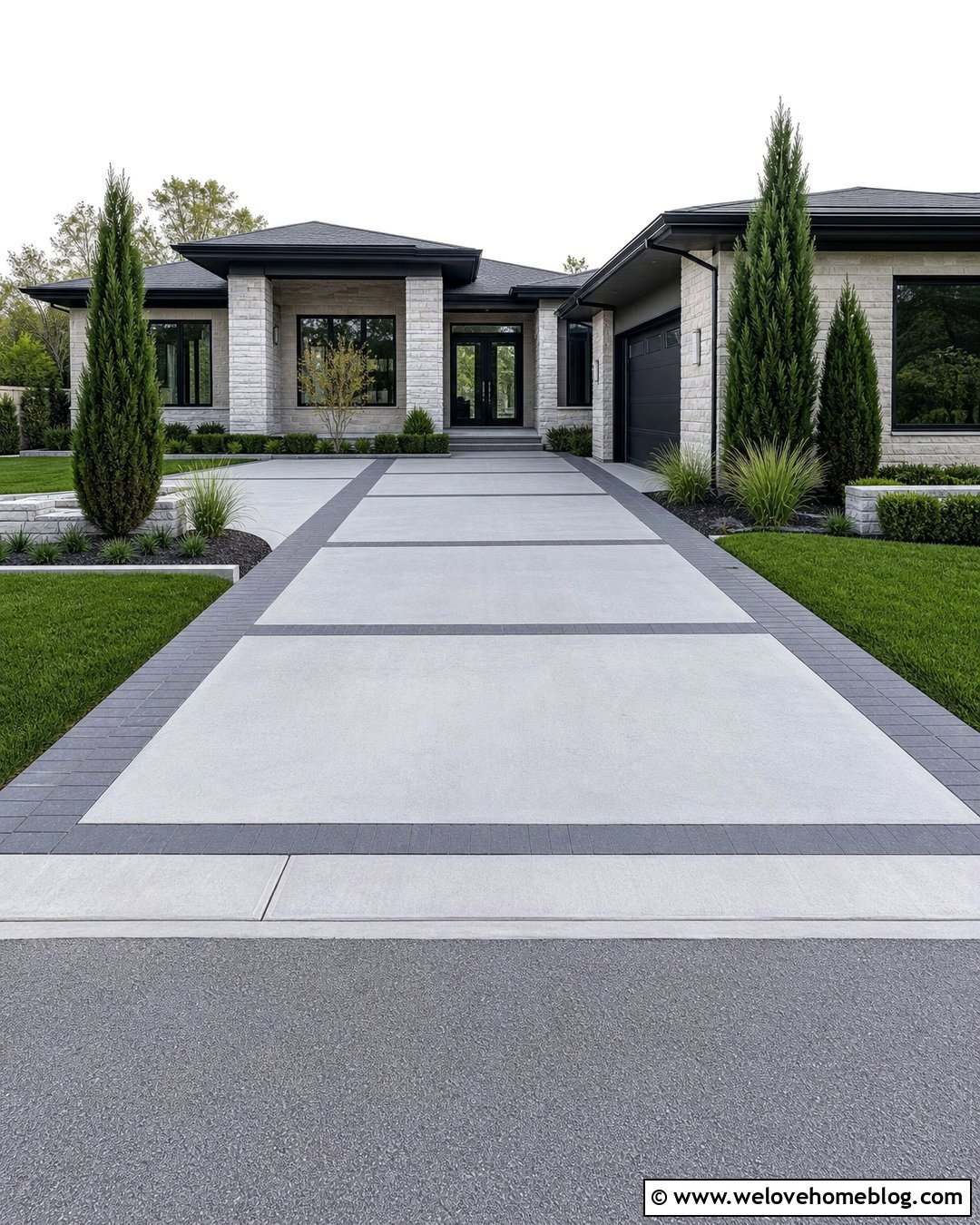
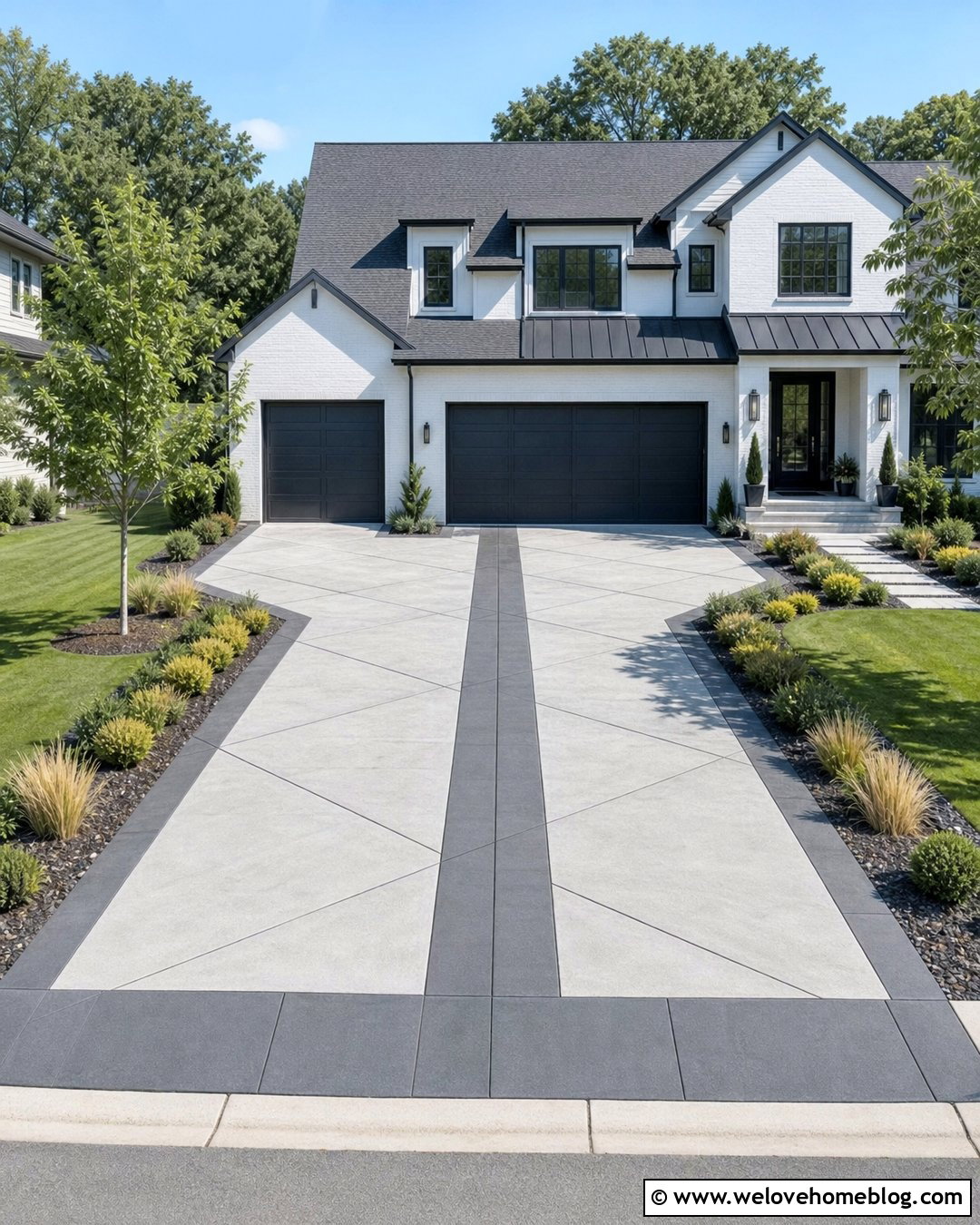
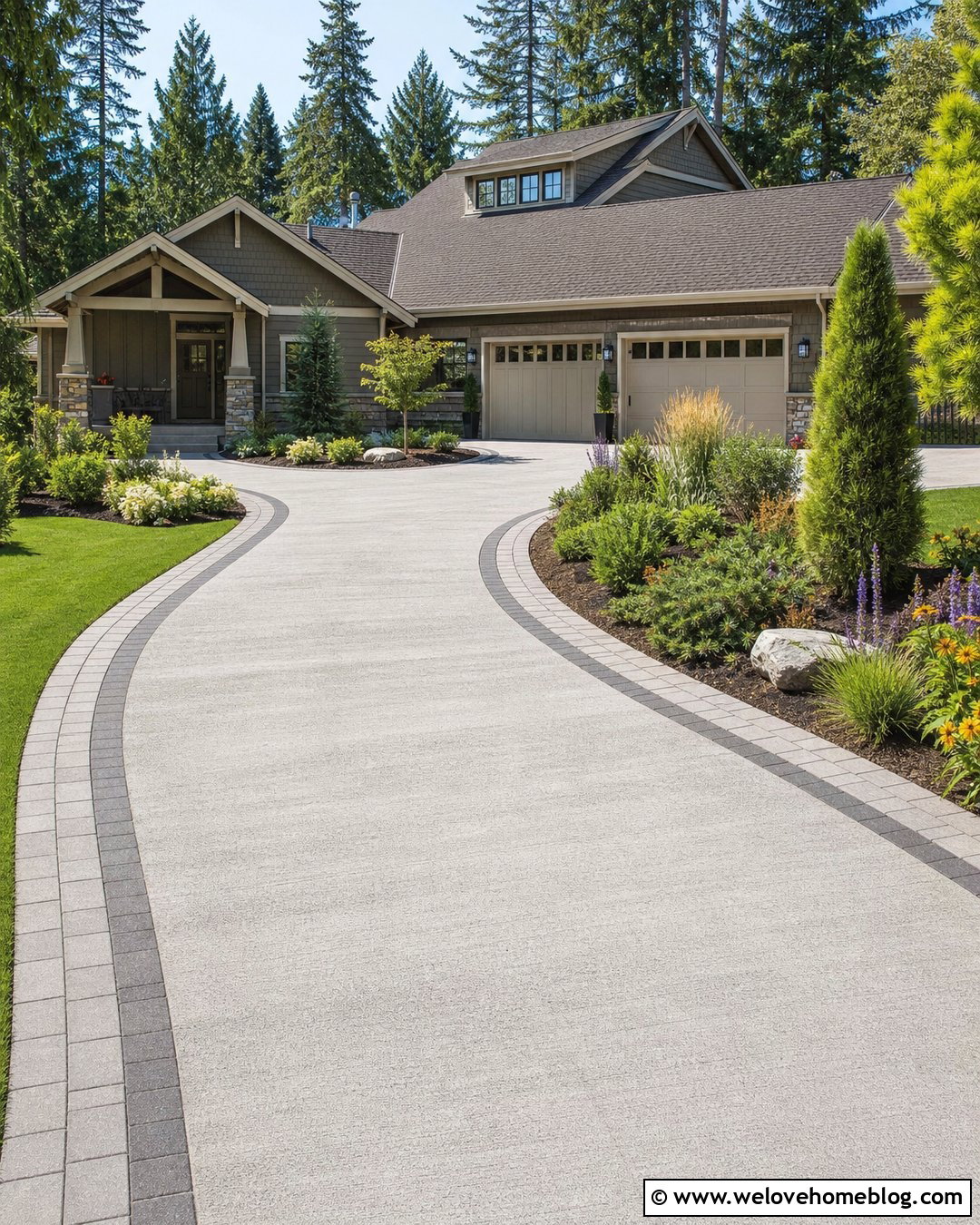
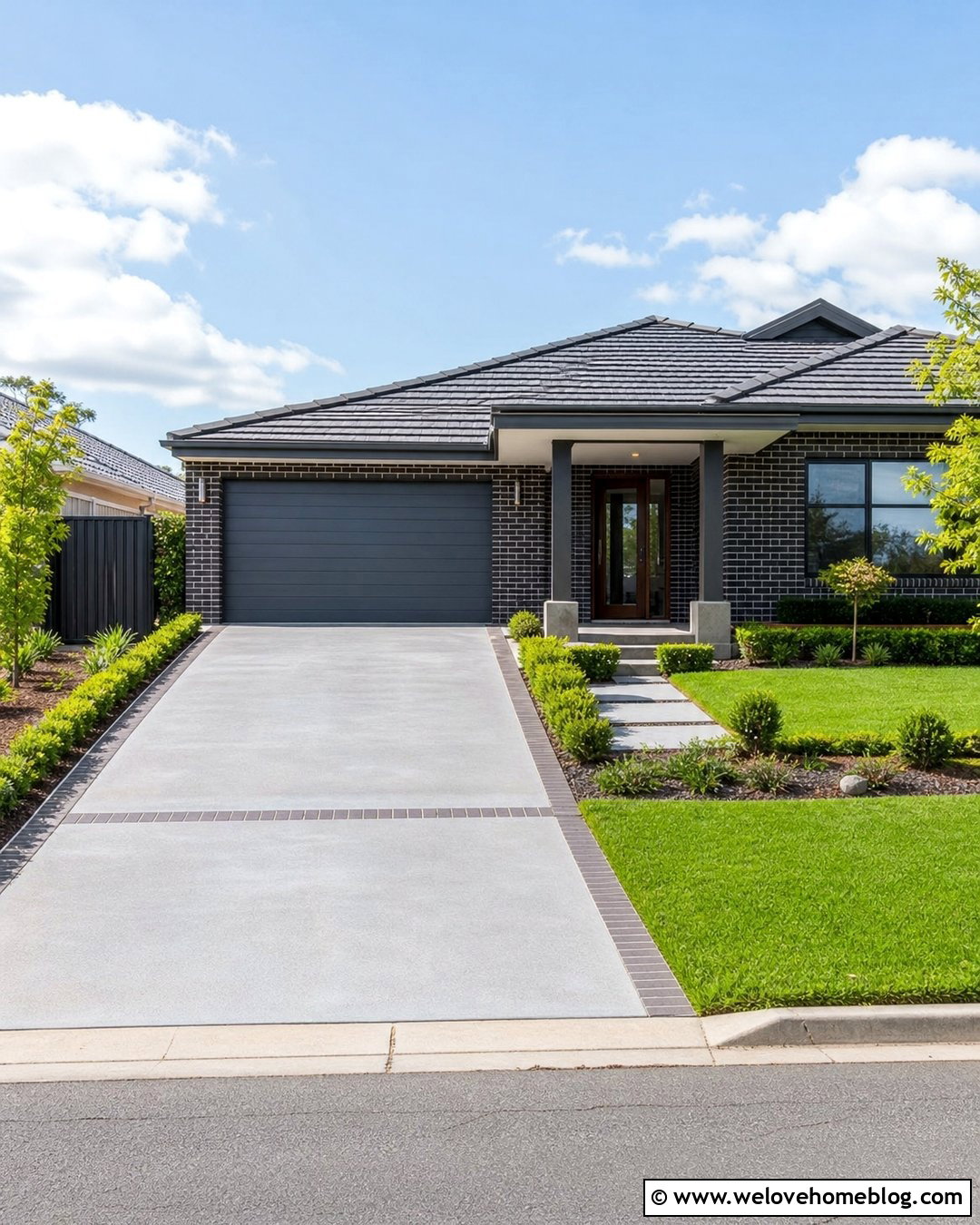
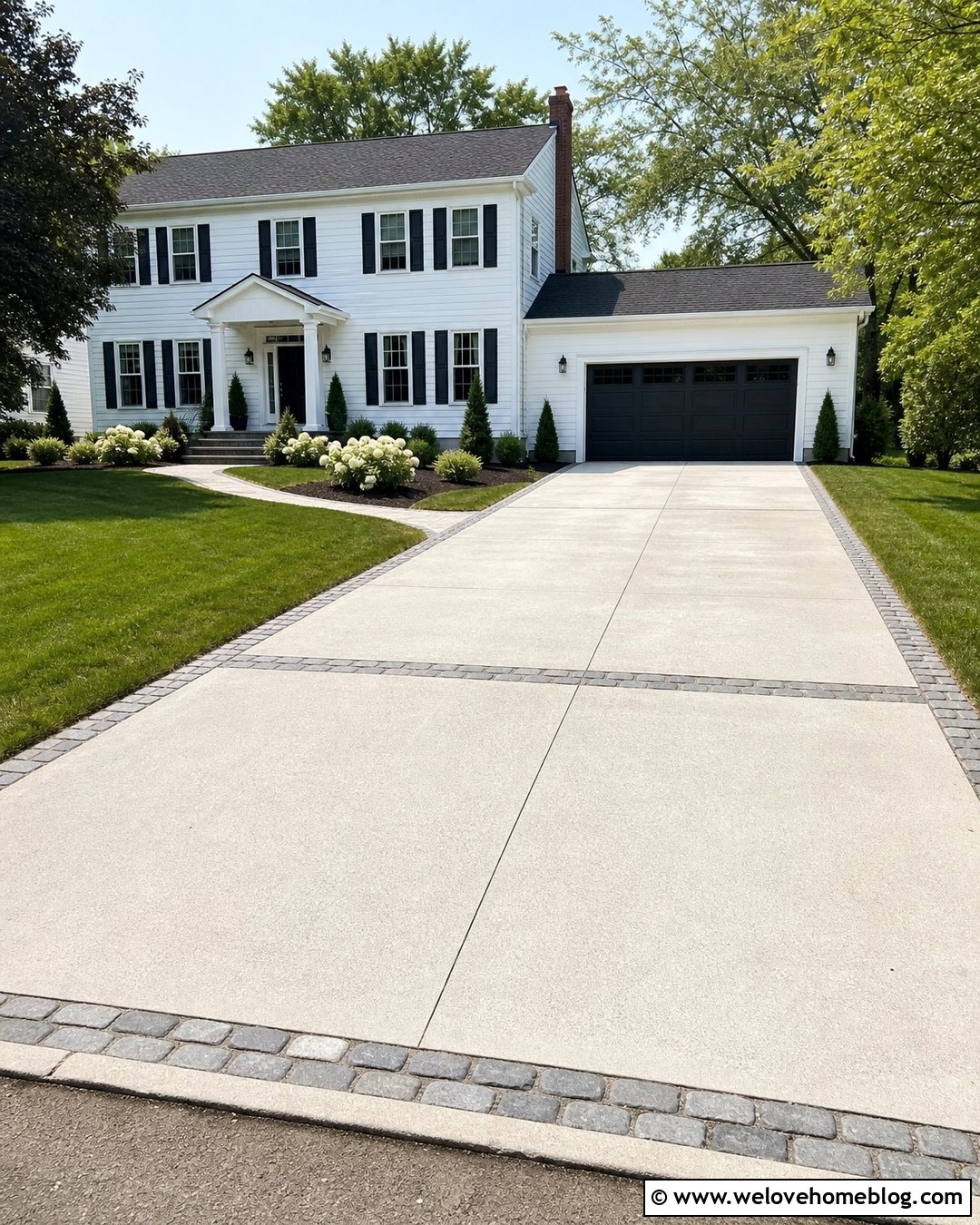
Clean paver ribbons give a modern concrete driveway definition without adding ornate detail. Start with large-format light gray concrete slabs separated by narrow joints. Add a continuous charcoal paver ribbon along each side, then repeat the dark material in one or two cross-bands. The edging can align with black-framed windows, metal planters, or a dark garage door. Keep planting restrained with clipped grasses, sculptural evergreens, and beds of pale decorative stone. A straight driveway leading to a low-profile contemporary house is ideal for this treatment. Maintain consistent ribbon widths throughout the design because irregular borders will be noticeable against the geometric pavement. The finished entrance feels bold, balanced, and easy to understand from the street.
11. Tumbled Paver Edging for a Farmhouse Driveway
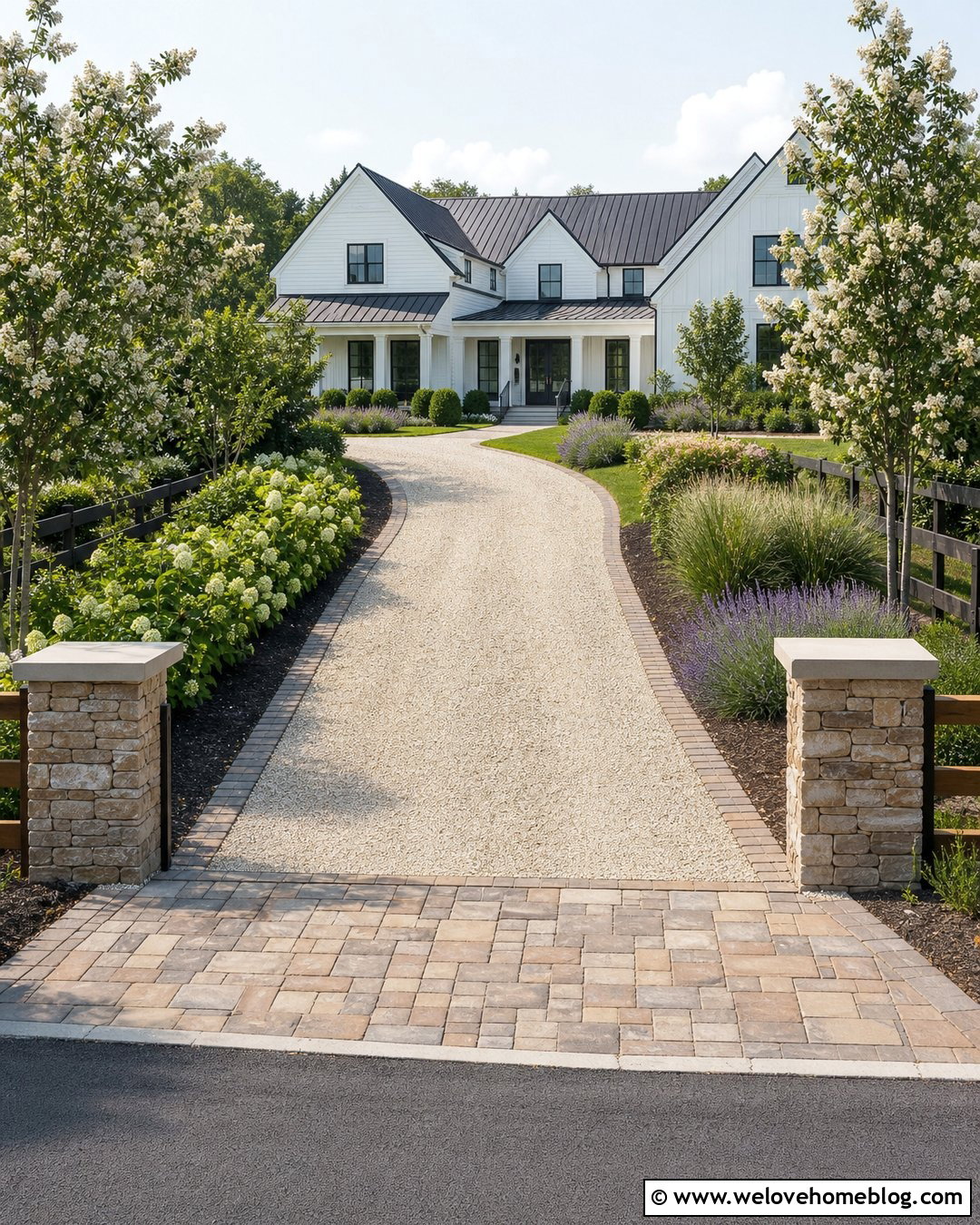
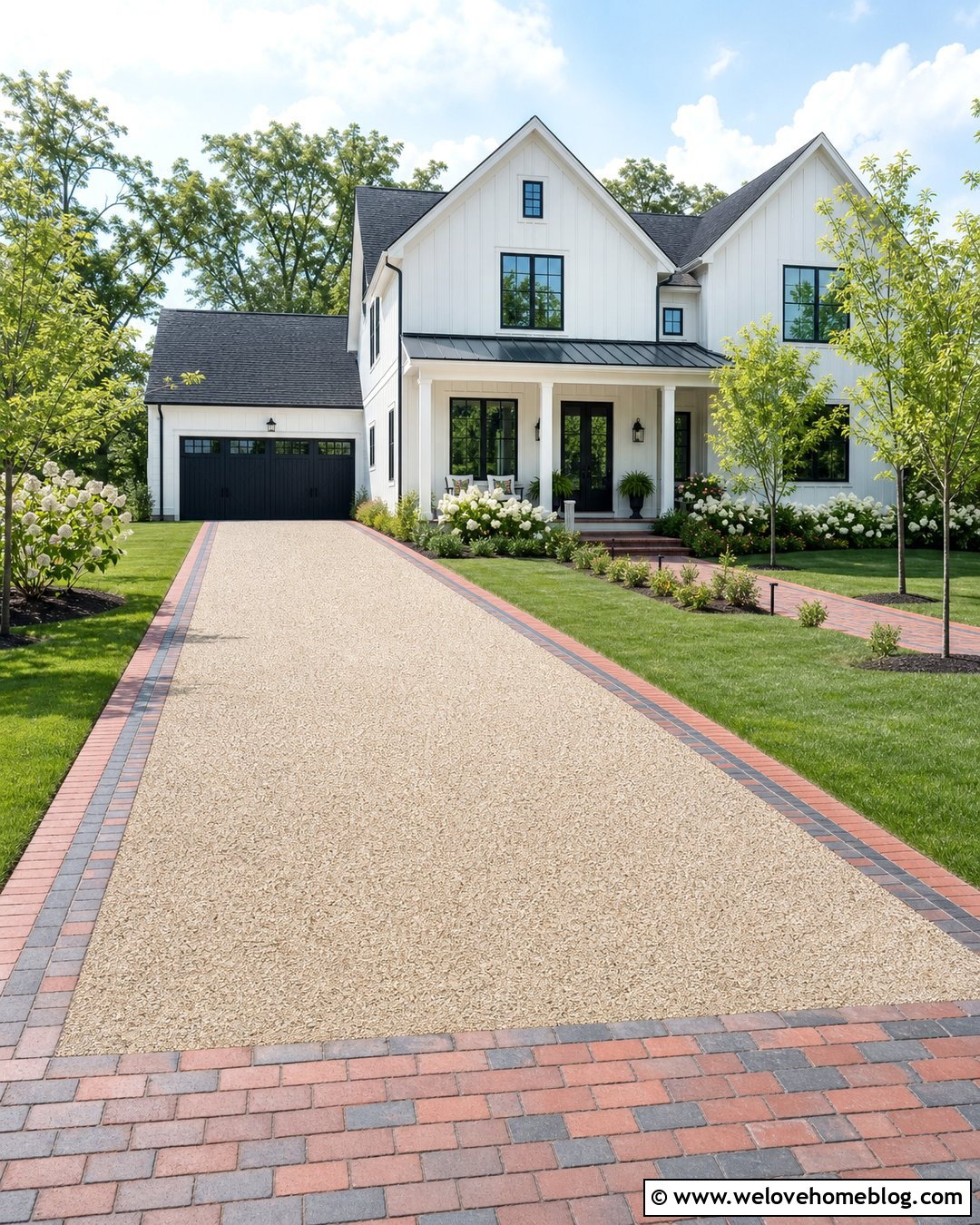
Soft, weathered edges make tumbled pavers a natural match for farmhouse architecture. Frame a cream-colored crushed-stone driveway with muted brown, buff, and gray concrete pavers. A gently curved approach will enhance the relaxed rural character. Set the pavers in a wide single row and add a larger matching apron near the road or garage. Plant hydrangeas, panicle grasses, lavender, and small flowering trees in informal beds beyond the border. Timber fencing or simple stone pillars can define the entrance without making it feel grand. The pavers should share at least one color with the gravel, house stone, or roof. That connection keeps the mixed materials looking intentional rather than randomly assembled.
12. Granite Paver Edging for a Circular Driveway
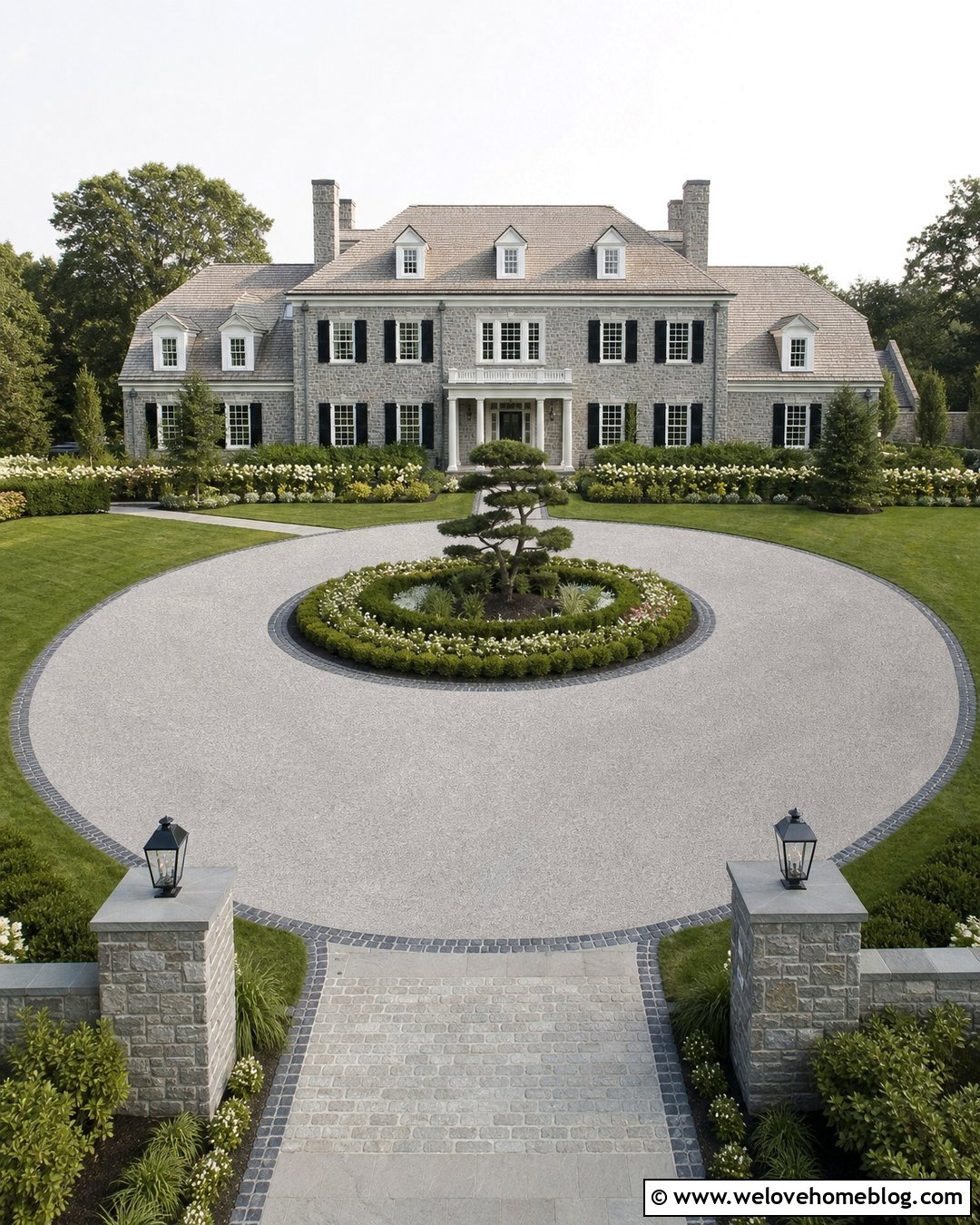
Granite pavers can give a circular driveway a durable, refined perimeter. Use light gray permeable concrete pavers for the main surface and darker granite setts around both the outside edge and central island. The double outline clearly defines traffic flow while introducing natural color variation. In the island, plant one sculptural tree surrounded by evergreen ground cover and seasonal flowers. Keep the plants low near entry and exit points so drivers have open sightlines. Granite can also be repeated around the walkway and at the base of masonry entrance pillars. This complete design complements substantial Colonial, Georgian, and stone-front homes. Consistent curves and carefully cut edge units are essential for a polished circular layout.
13. Limestone Paver Edging for a Beige Driveway
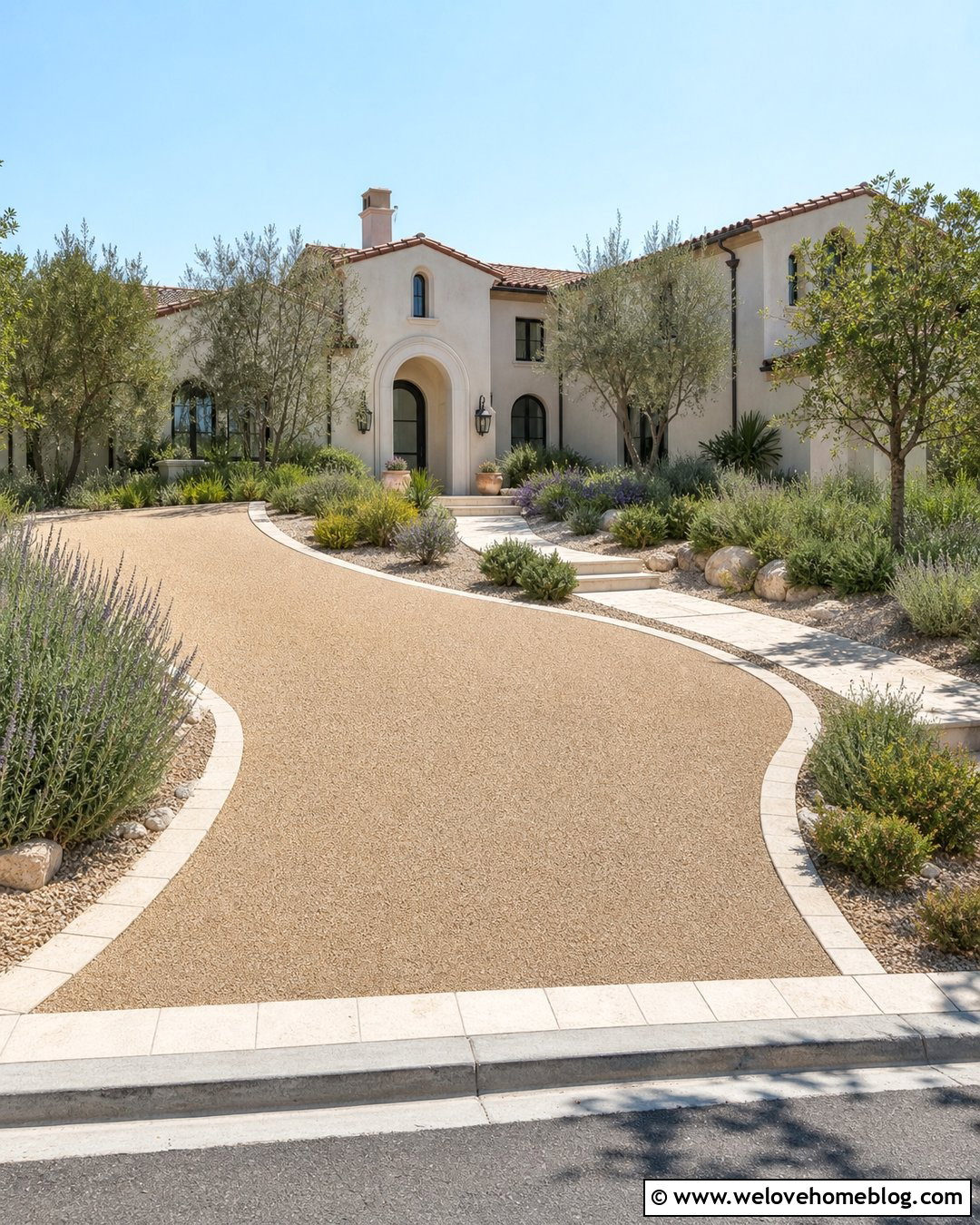
Pale limestone edging creates a soft, upscale transition around a warm-toned driveway. Pair rectangular cream limestone pavers with beige resin-bound gravel or sand-colored concrete. The low contrast makes the driveway feel wider and calmer than a dark, sharply outlined border would. This approach suits Mediterranean, Spanish Revival, and light stucco homes. Use a curved or gently flared entrance, then add drought-tolerant beds with rosemary, ornamental grasses, sage, and compact olive-like trees appropriate for the local climate. A limestone walkway can branch from the driveway toward the front door. Select dense exterior-grade stone and confirm that it is suitable for local freezing, moisture, and deicing conditions before installation.
14. Red Paver Edging for a Gray Driveway
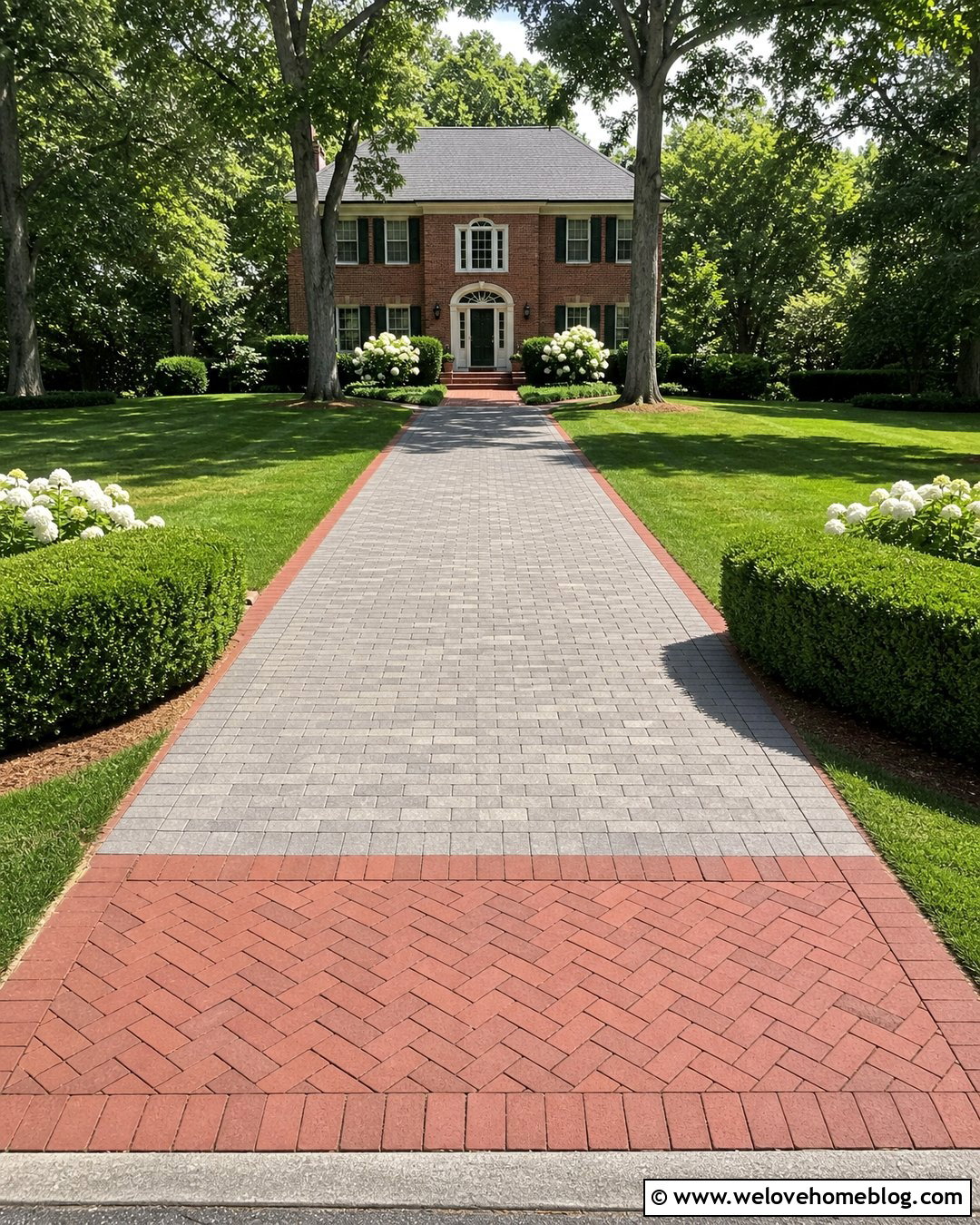
Red edging brings warmth to a cool gray driveway and can visually connect the pavement to a brick facade. Choose a gray interlocking concrete paver surface, then outline it with muted red clay or concrete border pavers. A straight soldier course provides a traditional finish, while a wider basketweave entrance apron adds interest near the curb. Use green lawn, clipped boxwood, and white flowering shrubs to balance the two pavement colors. This design is especially effective for brick ranch, Colonial, and Craftsman houses. Avoid bright orange-red borders if the existing masonry is dark or weathered. A blended burgundy-red paver usually creates a more natural transition and is less likely to compete with the home.
15. Contrasting Paver Edging for a Small Driveway
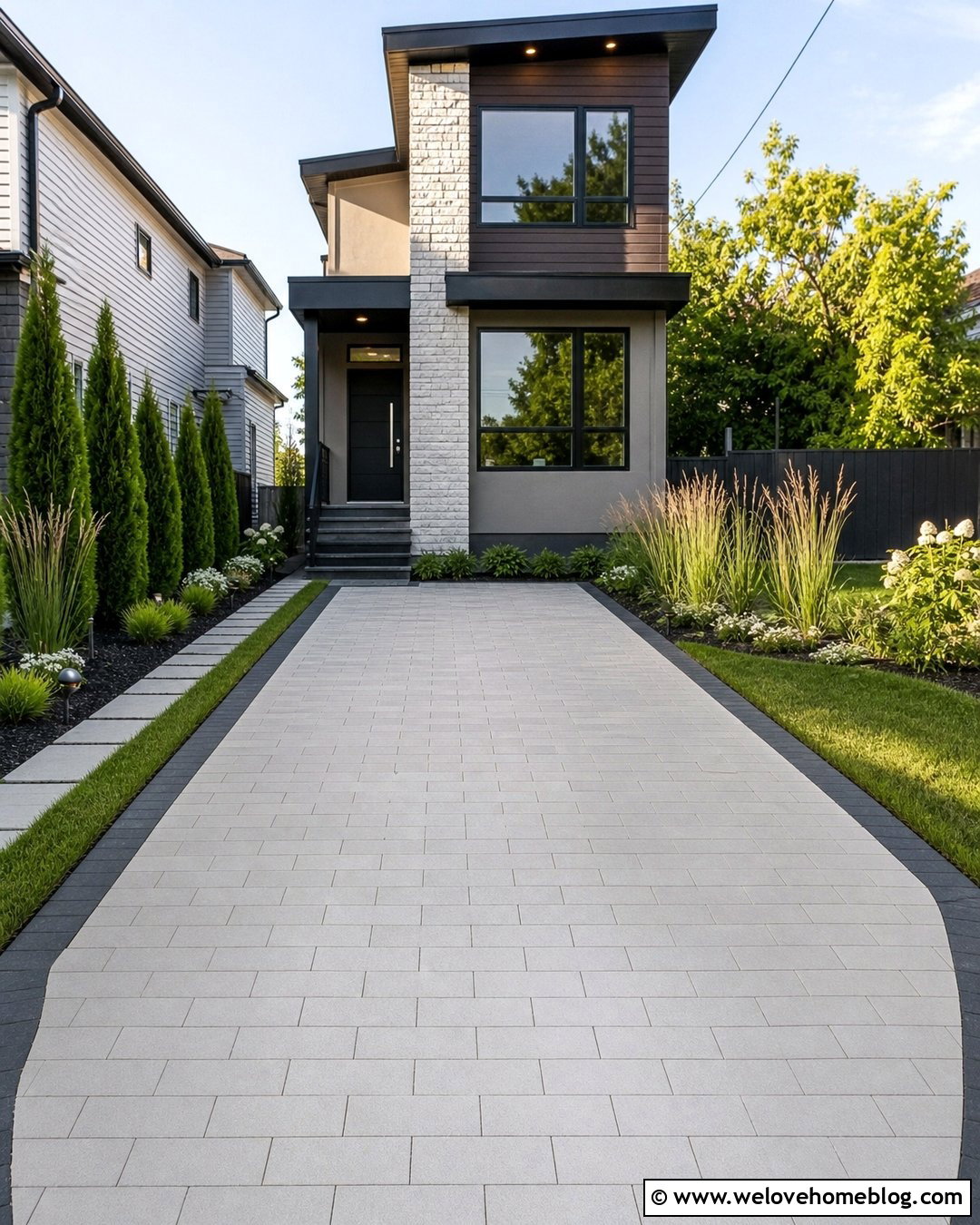
A narrow driveway can look more organized with a clearly contrasting border. Install light greige concrete pavers in a running-bond pattern and frame them with slim charcoal pavers. Keep the border to one row so it defines the parking area without taking away too much usable width. A slightly flared curb entrance can make turning easier and give the compact layout a welcoming shape. Use vertical landscaping, such as narrow evergreens or upright grasses, instead of shrubs that spread into the driveway. Connect the front walkway with the same light field pavers and charcoal edge. Repeating two materials throughout the small front yard creates a cohesive design and prevents the space from feeling visually crowded.
16. Matching Paver Edging and Driveway Apron
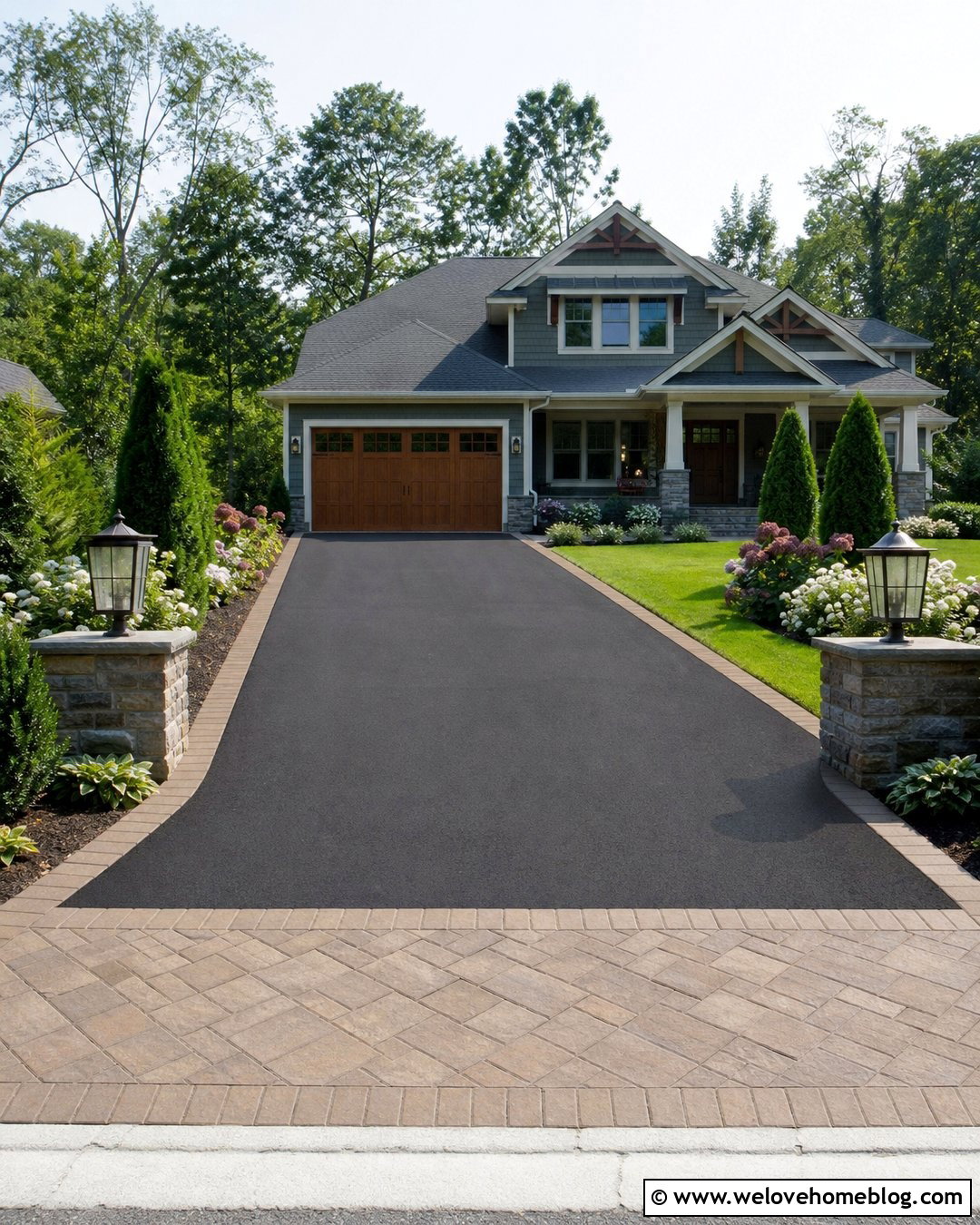
Repeating the edging material in a driveway apron produces one of the most complete-looking entrances. Surround a dark asphalt driveway with warm brown concrete pavers, then build a broad matching band across the curb end. The apron creates a visual threshold, while the side borders carry that detail toward the garage. Add low stone pillars, simple lanterns, and symmetrical planting beds near the entrance to reinforce the composition. A Craftsman or transitional home works well with the earthy palette. Keep the apron pattern simple, such as running bond or herringbone, so it remains compatible with the linear border. Where the driveway meets the street, confirm local right-of-way and drainage requirements before changing the pavement or curb area.
17. Permeable Paver Edging With Grass Strips
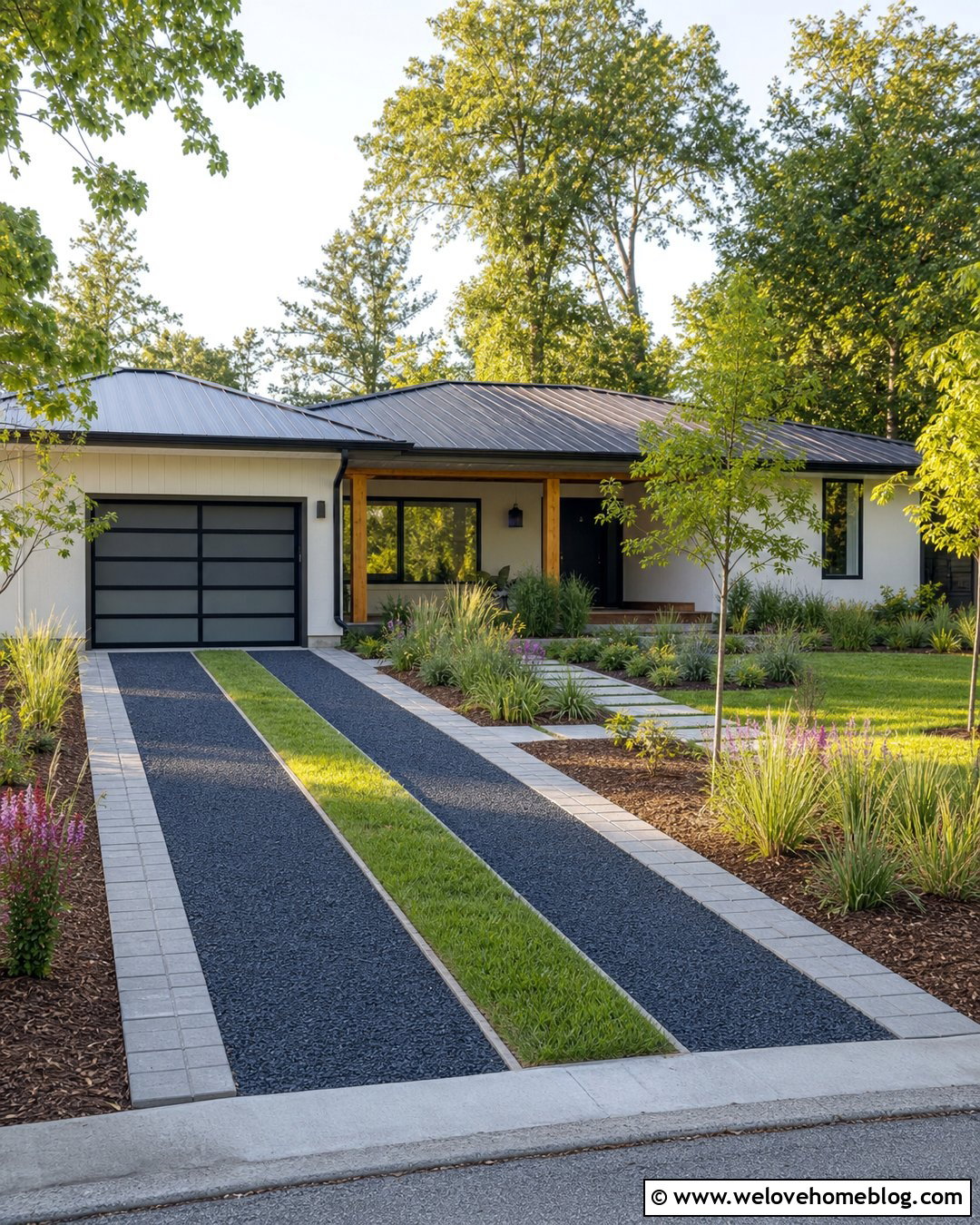
A permeable driveway can combine structural paver edging with narrow grass or planted strips. Use charcoal permeable concrete pavers for the vehicle tracks and lighter rectangular pavers around the entire perimeter. Between the tracks, add reinforced turf or low-growing ground cover suited to occasional traffic. The border creates a clean separation between the planted sections and adjoining landscape beds. This layout looks particularly attractive in front of an eco-conscious modern or contemporary ranch house. Keep the approach straight and use native grasses, rain-garden plants, and small shade trees nearby. Proper base preparation and drainage planning are essential because the attractive surface depends on the complete system beneath it, not only the visible pavers.
18. Scalloped Paver Edging for a Cottage Driveway
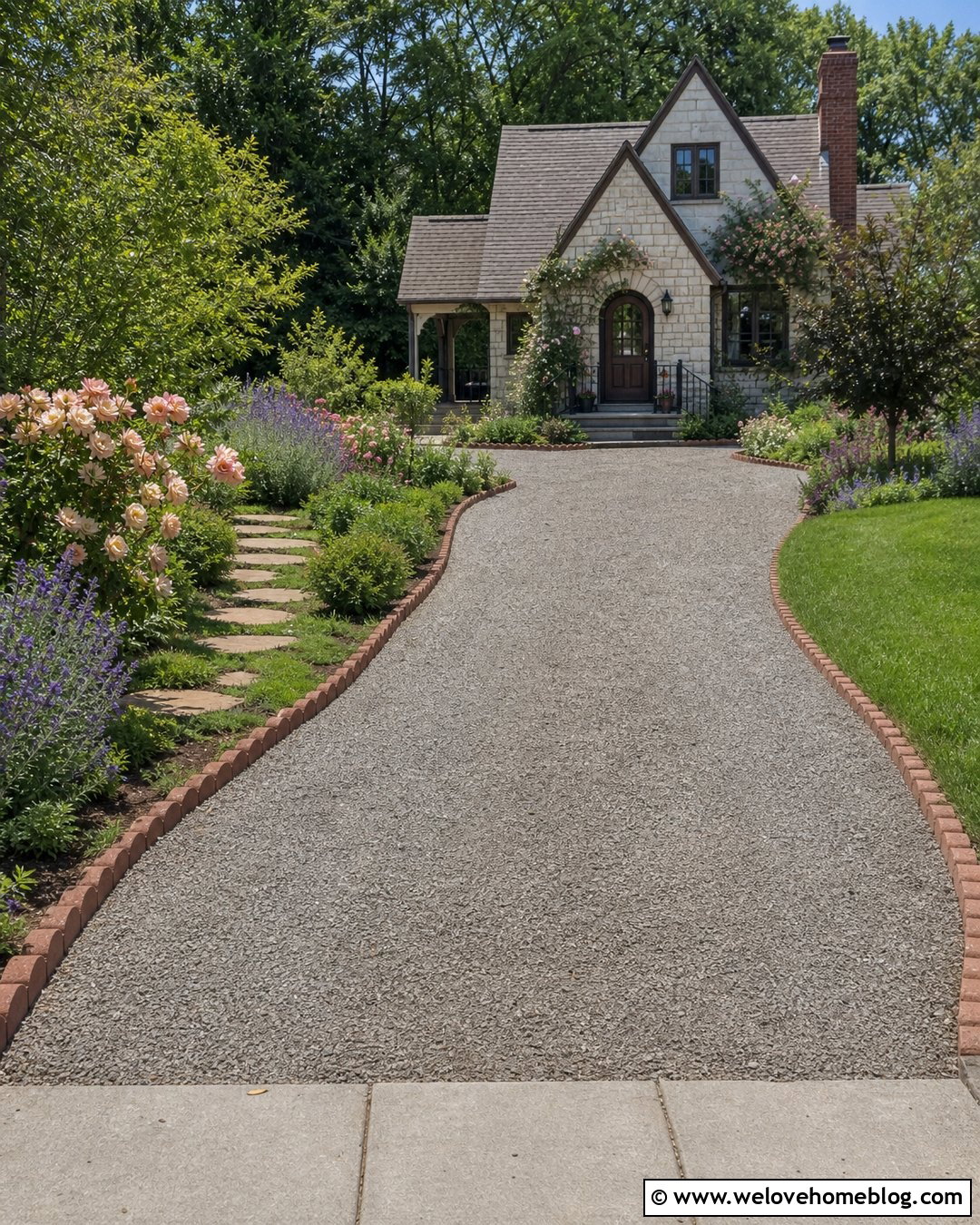
Scalloped borders introduce a softer shape around a compact cottage driveway. Use small red-brown clay pavers to edge a warm gray gravel surface, creating shallow curves beside generous planting beds. The pattern should remain low and restrained rather than forming a tall, decorative wall. Fill the surrounding beds with roses, catmint, salvia, and compact evergreen shrubs, leaving enough clearance for car doors and foot traffic. A stepping-stone path can branch toward the porch and repeat the edging color. This design works best when the driveway shape, garden curves, and informal architecture share the same relaxed character. Use a solid base beneath the border so the repeated curves remain even and do not spread over time.
19. Stepped Paver Edging for a Sloped Driveway
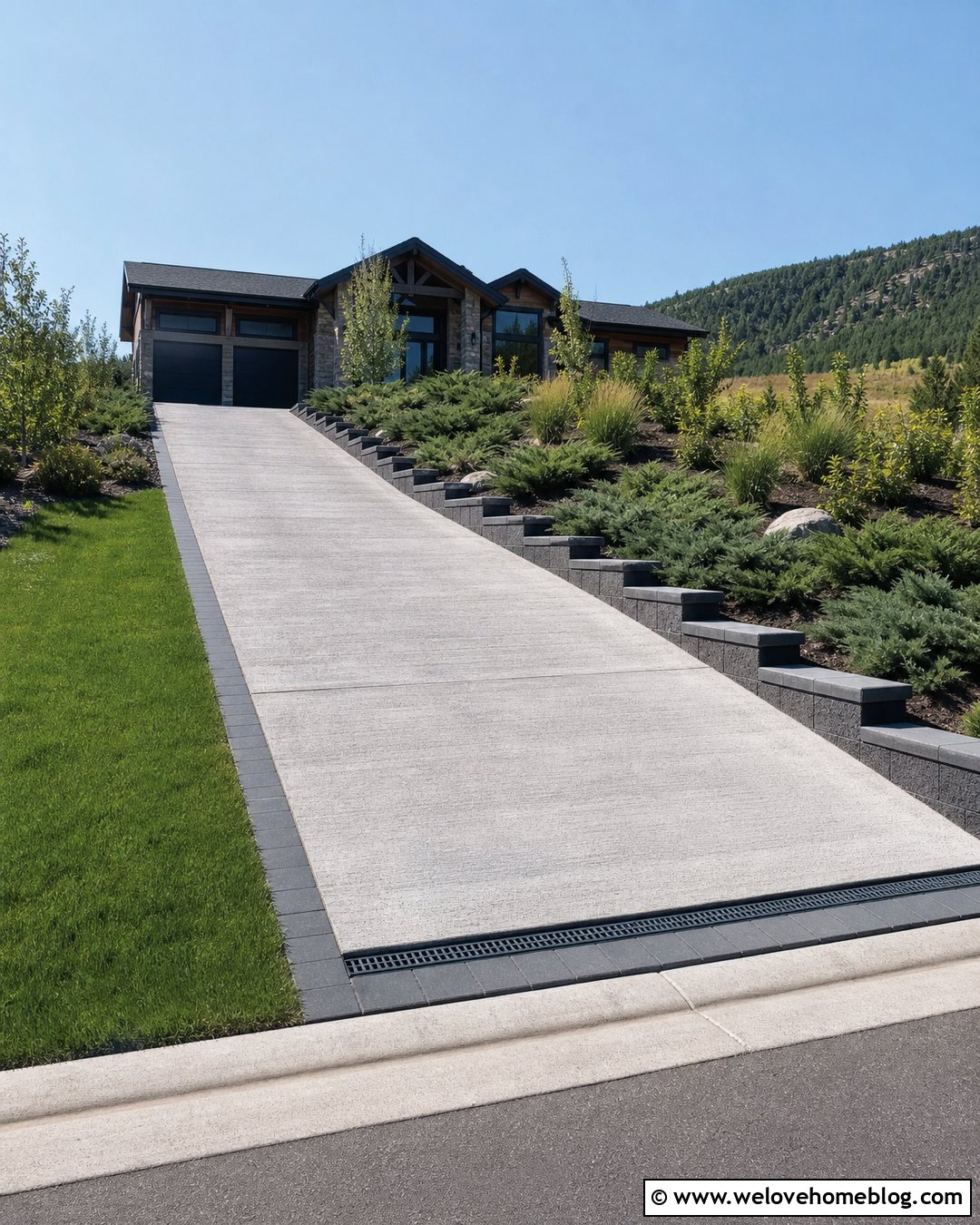
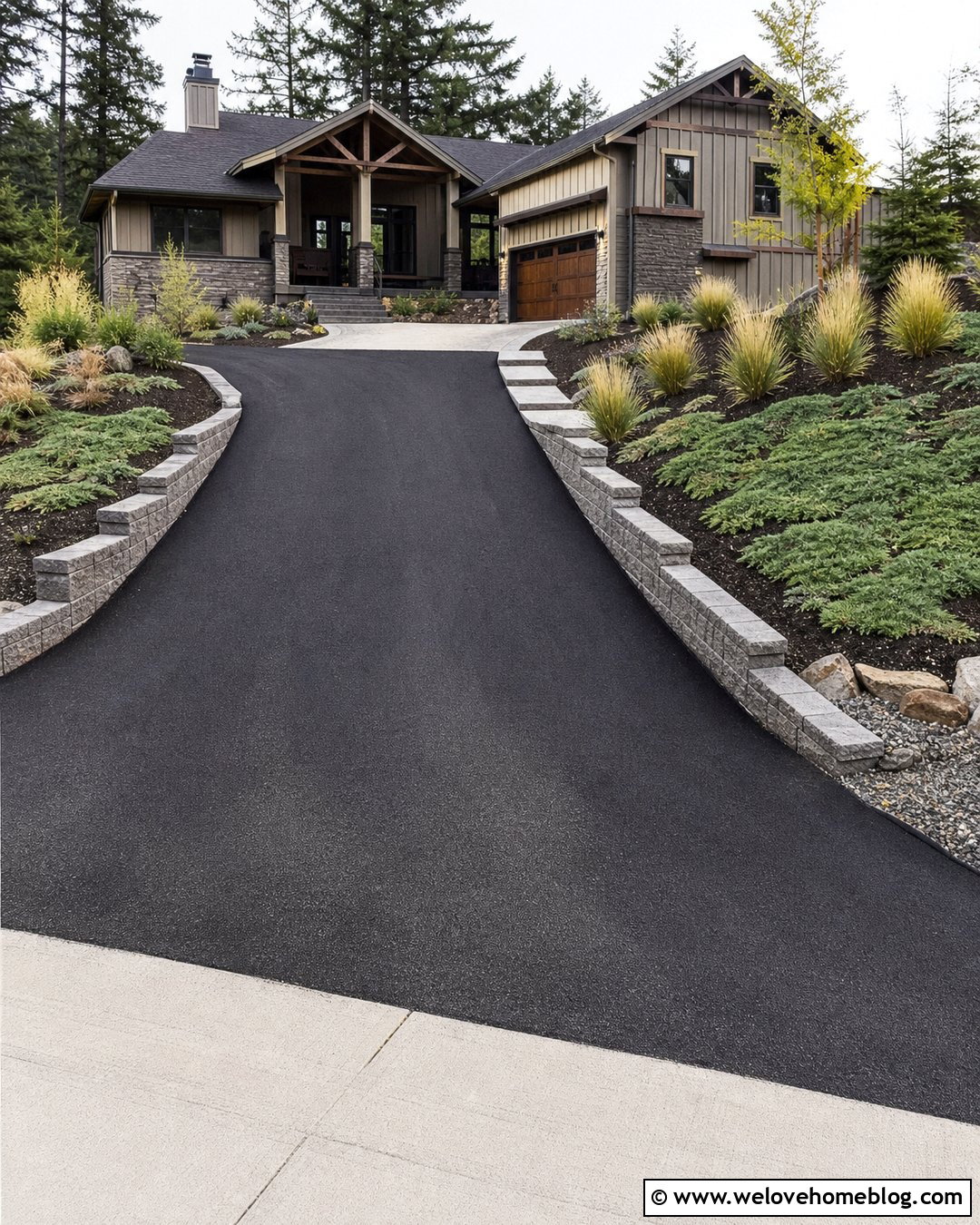
Sloped driveways require edging that responds to changes in elevation. A stepped paver border can follow the grade while holding back raised planting beds along the higher side. Pair a brushed concrete driveway with charcoal concrete wall pavers that rise gradually toward the house. On the lower side, use flush pavers to maintain open drainage and easier lawn access. Plant spreading juniper, ornamental grasses, and erosion-resistant ground covers above the raised edge. A straight central layout will keep the design orderly despite the changing elevation. Drainage should direct runoff toward an approved collection or discharge point rather than trapping water against the pavers. Professional grading may be necessary on steep or complicated properties.
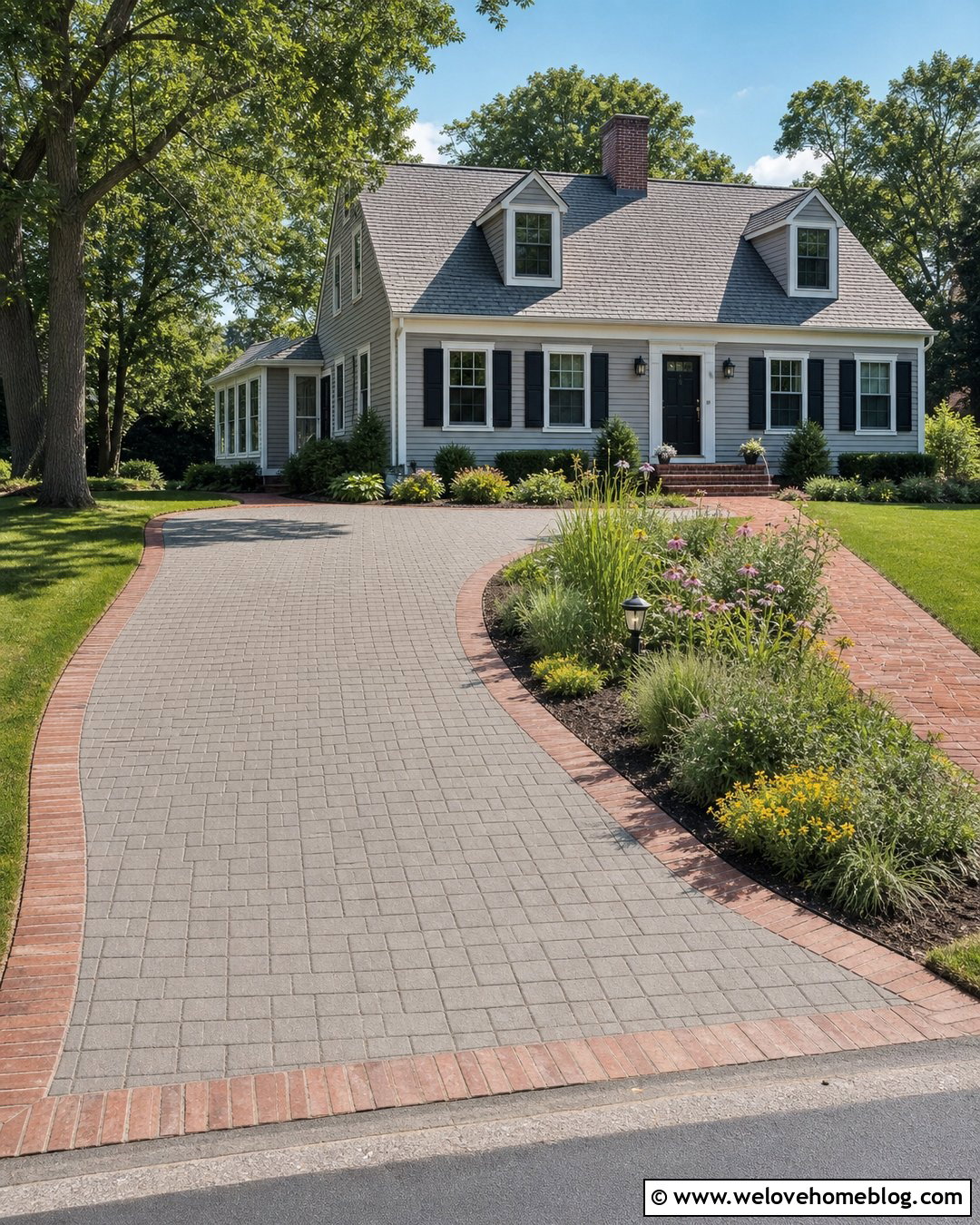
20. Mixed-Color Paver Edging for a Rustic Driveway
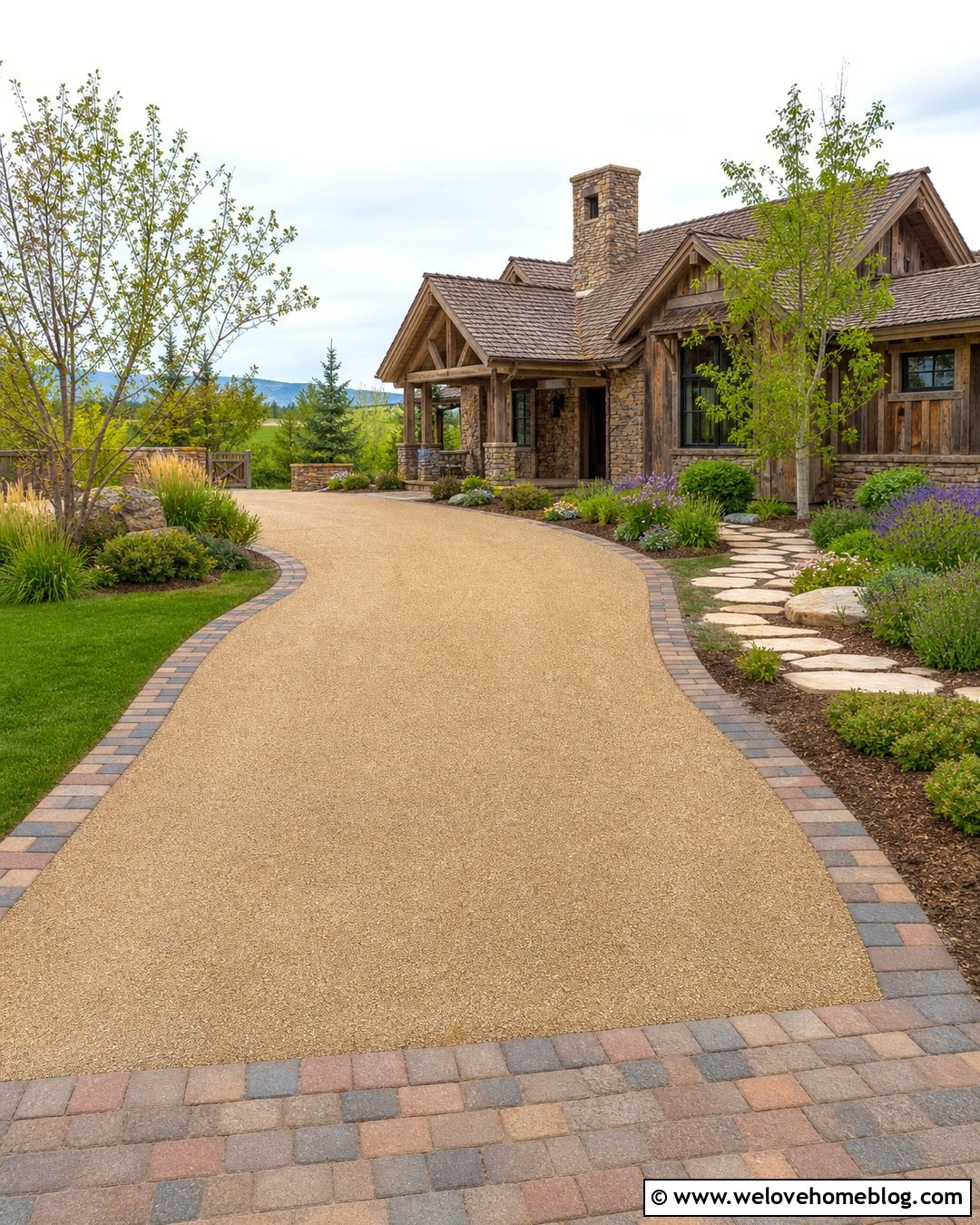
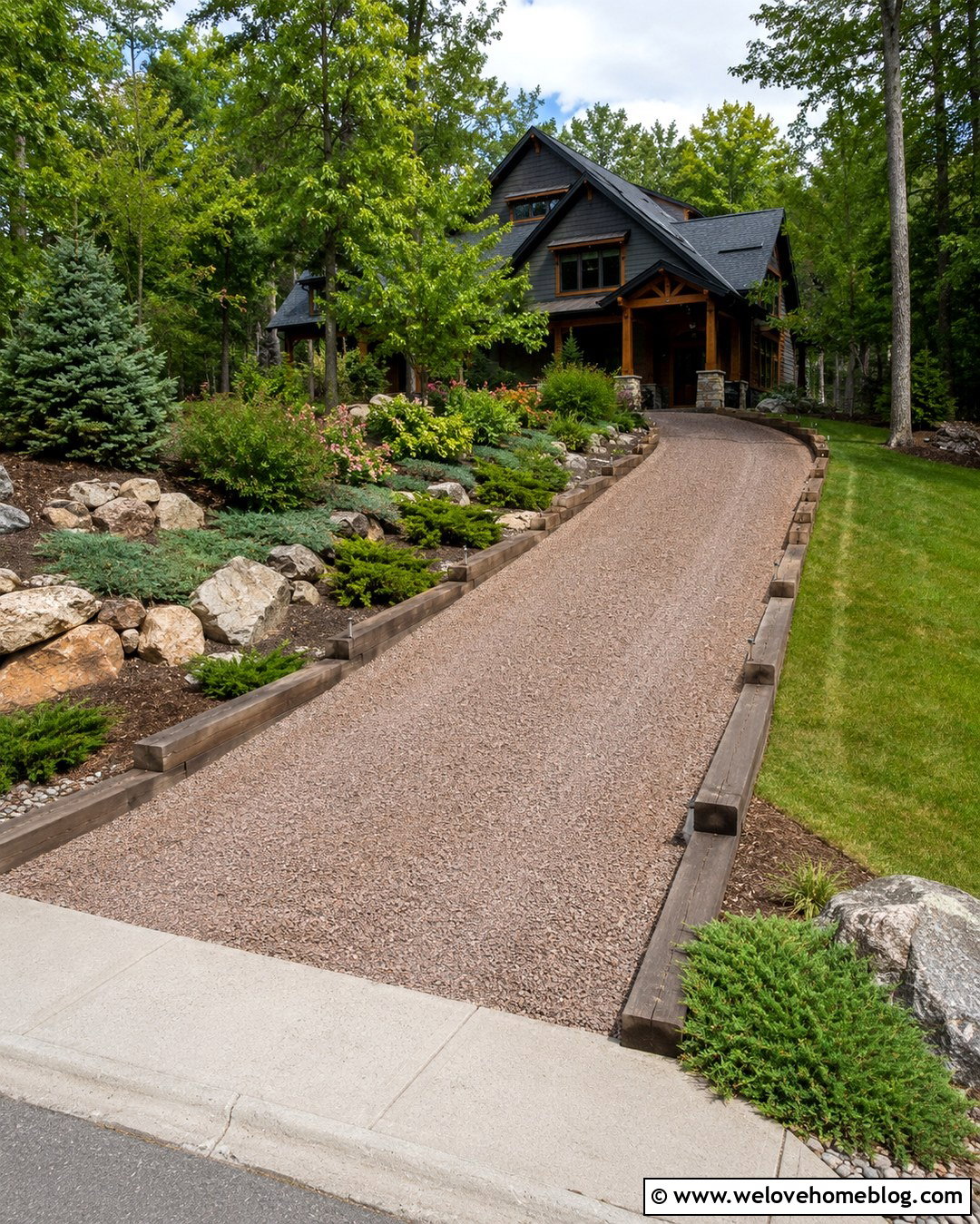
A blended border can tie together several colors found around a rustic home. Edge a compacted tan gravel driveway with tumbled pavers in brown, charcoal, buff, and muted red. Arrange the colors randomly but repeat them evenly so no single shade forms a distracting cluster. Use a wide curved layout leading toward a stone-and-wood house, with a matching paver apron at the entrance. Informal beds of native grasses, flowering shrubs, and small deciduous trees will reinforce the relaxed setting. The varied border also helps disguise soil, dust, and minor weathering. Keep the main driveway material simple, however. Combining a multicolored border with an equally busy field pattern could make the overall entrance appear cluttered.
Conclusion:
The best driveway border combines good looks with practical support. Brick can warm up concrete, dark pavers can sharpen a modern layout, and substantial granite or Belgian block can give gravel and asphalt a more established edge. Consider the complete view before choosing a material. The driveway surface, border width, house facade, walkway, planting beds, and entrance should feel like parts of one design. Also account for drainage, snow removal, mowing, turning space, and the stability of the paver base. Whether you prefer a subtle flush ribbon or a decorative apron, these 20 Driveway Paver Edging Ideas can help you create a cleaner, stronger, and more inviting approach to your home.

Related posts:
Leave a Reply