
A smooth tarmac surface becomes far more attractive when it is framed by a carefully chosen border. The contrast adds definition, protects vulnerable edges, and helps connect the driveway with the house, walkway, and front garden. These 20 Tarmac Driveway With Border Ideas cover traditional brick, contemporary paving blocks, natural stone, gravel, planting beds, drainage details, and decorative entrance patterns. Each option considers the entire driveway rather than treating edging as an isolated feature. You will see straight, curved, circular, narrow, and wide layouts designed for different homes and yard sizes. Use the combinations below to compare colors, textures, maintenance needs, and overall curb appeal while exploring these 20 Tarmac Driveway With Border Ideas.
1. Tarmac Driveway With Red Brick Border
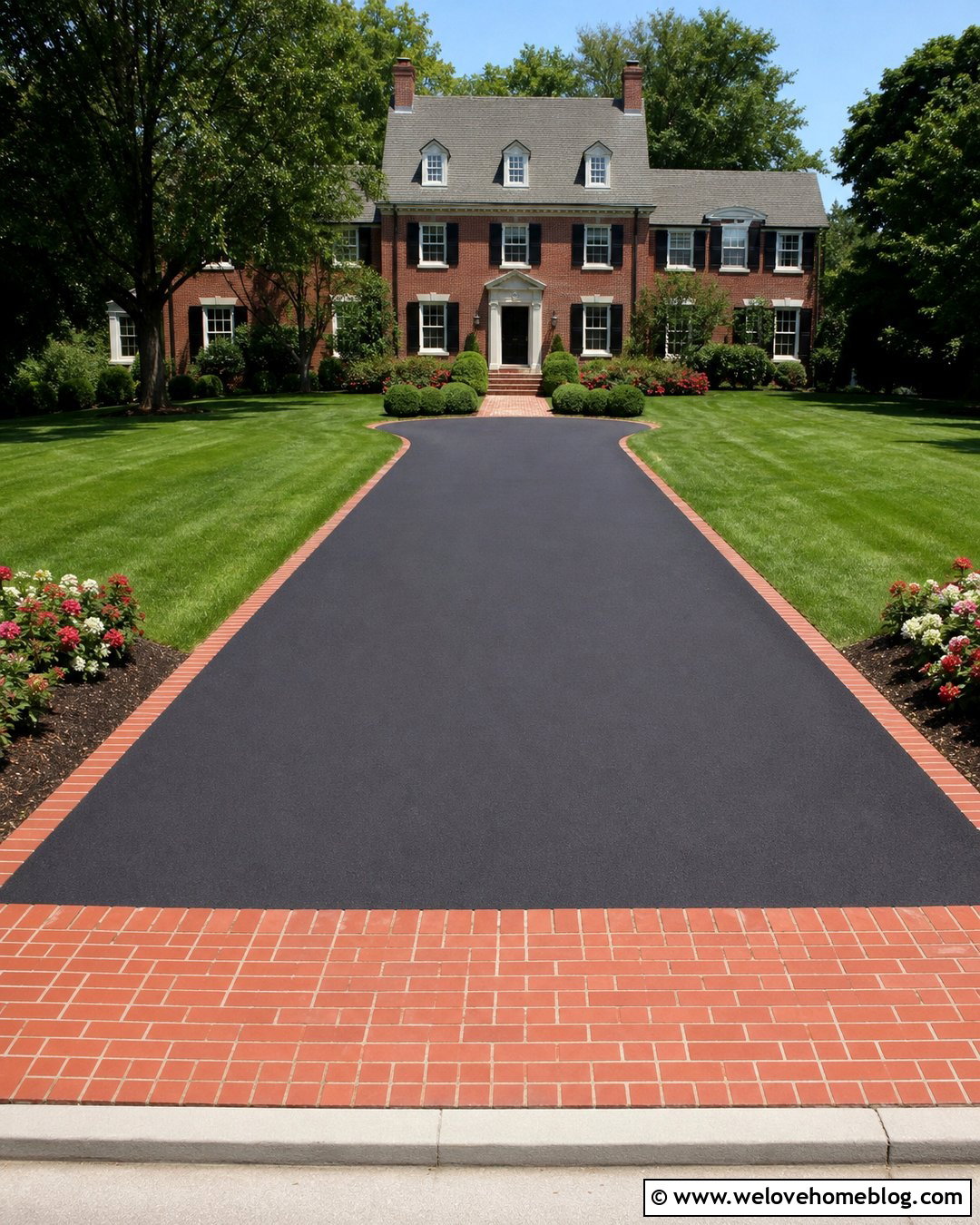
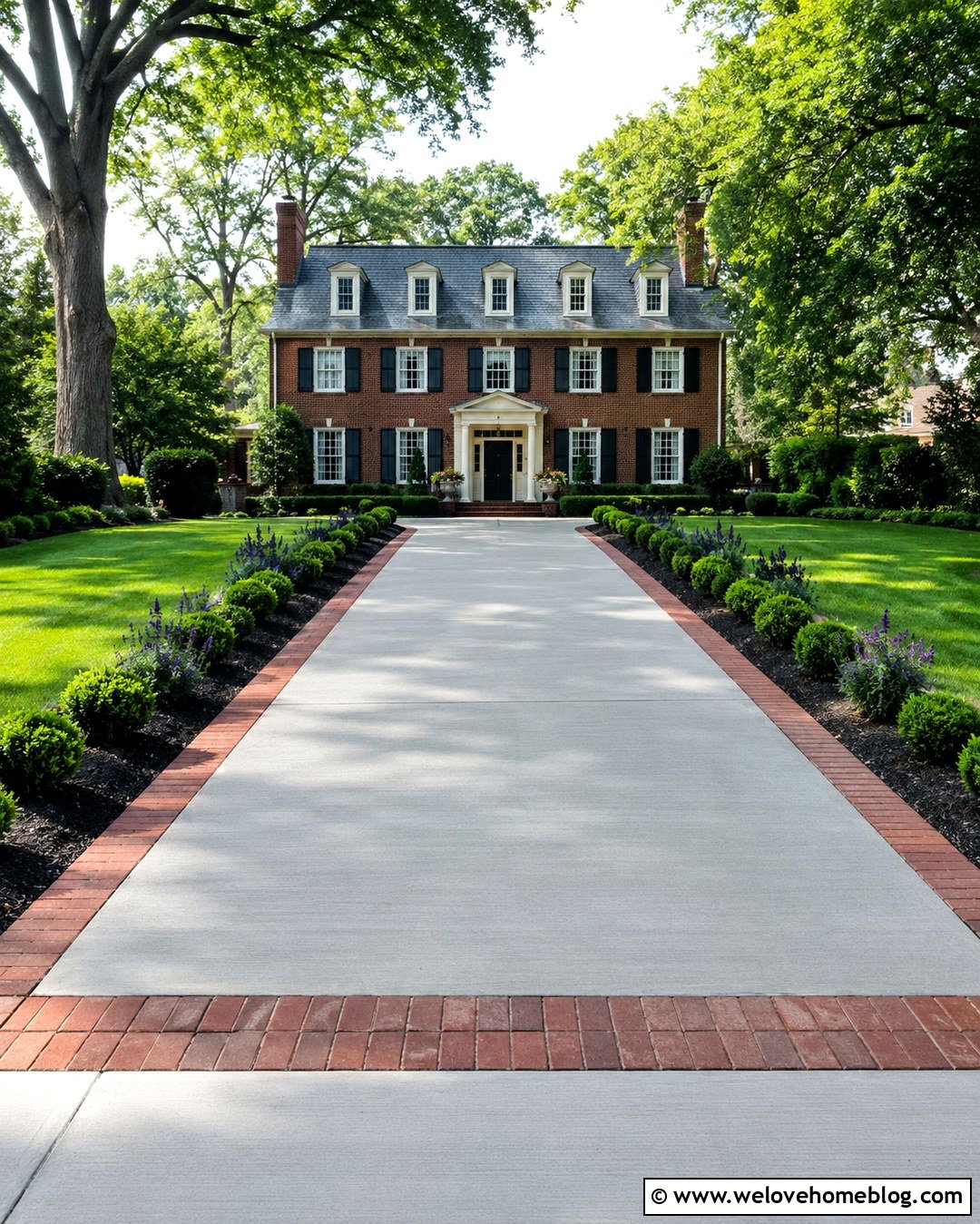
A red brick border creates one of the clearest contrasts against smooth black tarmac. It works especially well outside a traditional brick house because the edging can repeat colors already found in the facade. Lay the bricks in a simple soldier course for a tidy outline, then continue the same material across the driveway entrance. A straight driveway benefits from symmetrical lawn strips and low evergreen shrubs on both sides. You can also connect the border to a matching brick walkway leading toward the front door. Choose bricks with subtle color variation rather than a perfectly uniform finish. This keeps the driveway from feeling too formal while giving the tarmac strong visual structure and a warm, established appearance.
2. Tarmac Driveway With Charcoal Block Border
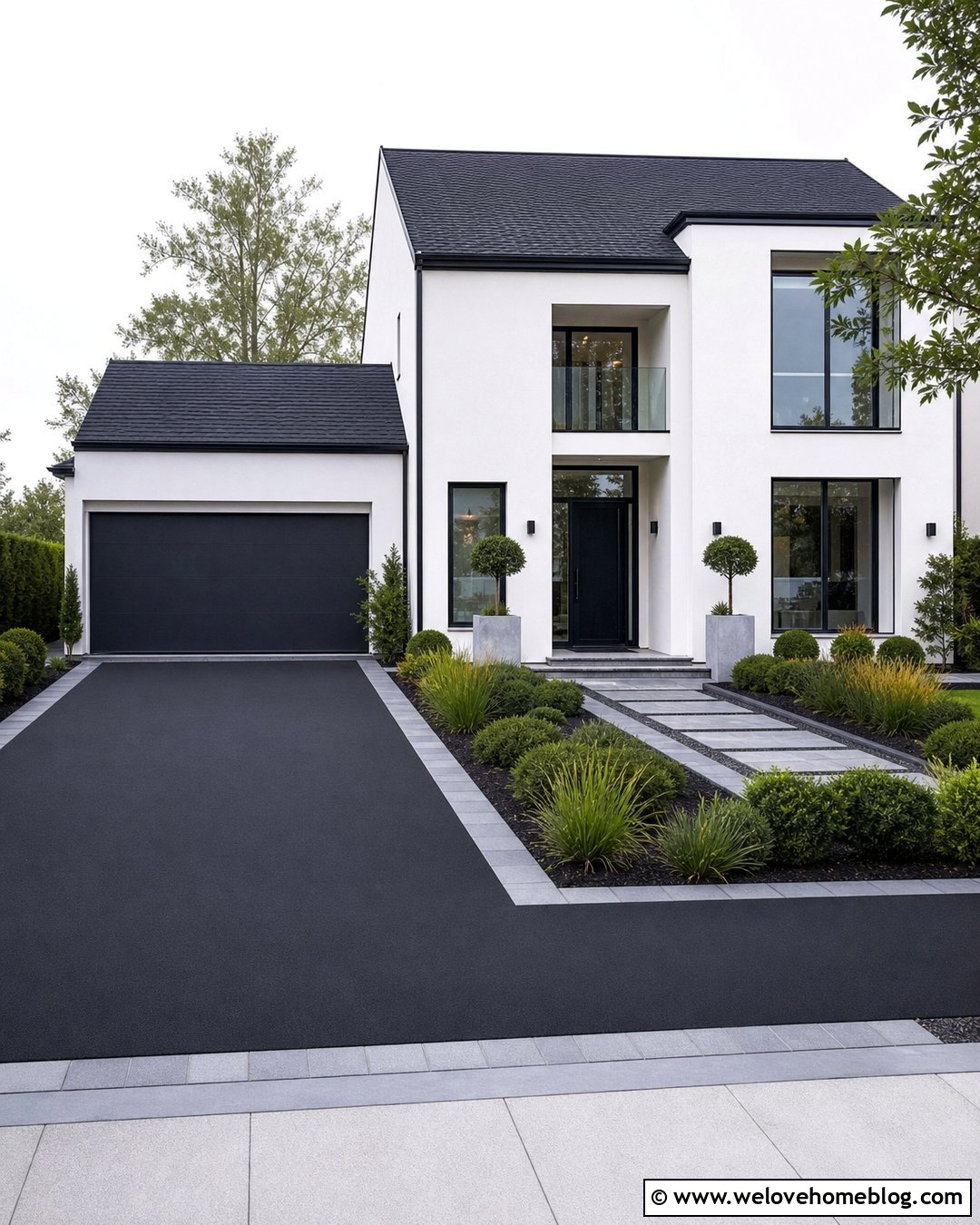
For a quieter, contemporary finish, surround fine black tarmac with charcoal block paving. The similar colors create a layered monochrome look without producing a harsh outline. Select blocks that are slightly lighter than the central surface so the border remains visible in bright and overcast conditions. This combination suits a straight double driveway leading to a modern rendered house or attached garage. Pale concrete planters, clipped shrubs, and ornamental grasses can break up the darker materials. A wide block course near the garage creates a clean transition and provides additional pattern. Keep the layout simple and geometric. Straight edges, square planting beds, and a matching paved walkway will reinforce the streamlined appearance of the complete frontage.
3. Tarmac Driveway With Granite Sett Border
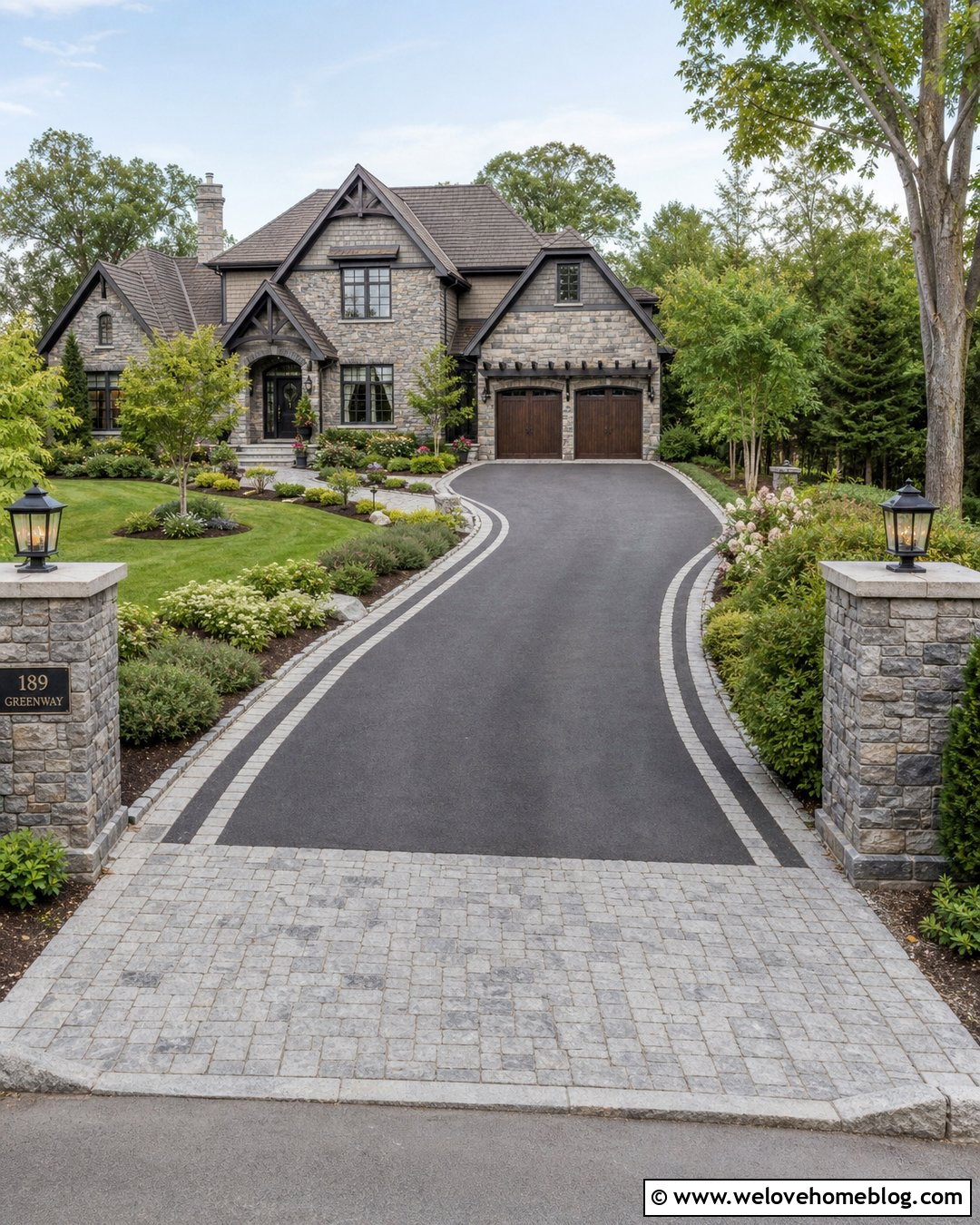
Granite setts bring natural texture to a practical tarmac driveway. Their mottled gray tones complement black surfacing while creating enough contrast to make the outline easy to see. A double row can frame a broad curved driveway, while a single row may be sufficient for a smaller parking space. Continue the granite across the entrance to form a decorative threshold between the driveway and street. A stone-faced house, mature hedges, and softly planted borders help this combination feel connected to its setting. Because natural setts vary slightly in tone and shape, they prevent a large tarmac area from looking flat. Ask for carefully aligned joints and secure installation where vehicle tires regularly cross the border.
4. Tarmac Driveway With Cobblestone Border
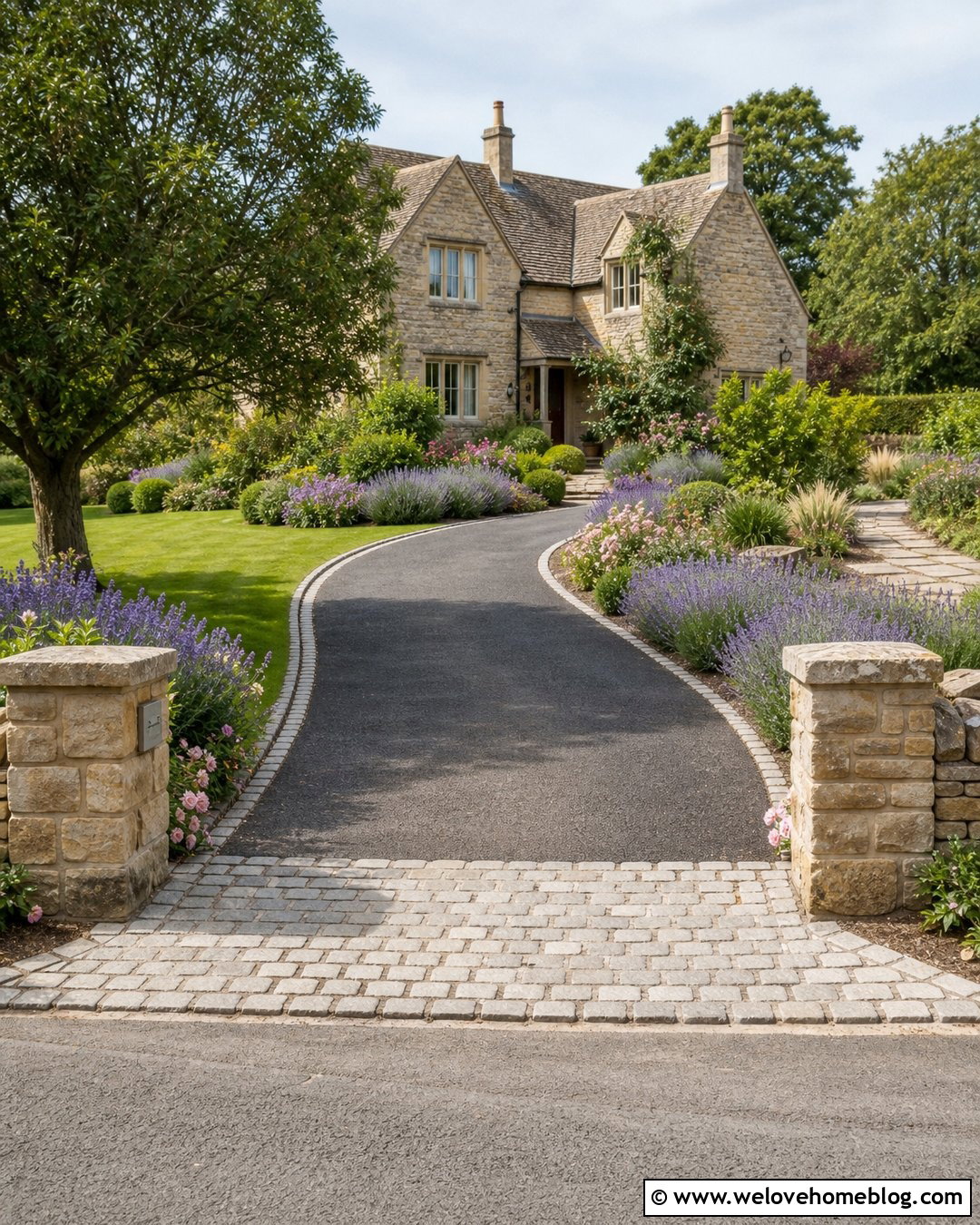
Could a smooth driveway still feel suitable for an older cottage? A rounded cobblestone border offers the texture and traditional character needed to soften dark tarmac. Use weathered gray and brown stones around a gently curved layout leading toward a cottage, converted barn, or country home. The curve should follow existing garden contours instead of cutting through them with rigid lines. Lavender, compact roses, ornamental grasses, and low hedging can fill the beds outside the cobbles. At the entrance, widen the stonework into a cobblestone apron for a more substantial welcome. Keeping the main driving surface in tarmac makes the space visually calm, while the textured border, informal planting, and natural curves provide charm around the edges.
5. Tarmac Driveway With Sandstone Border
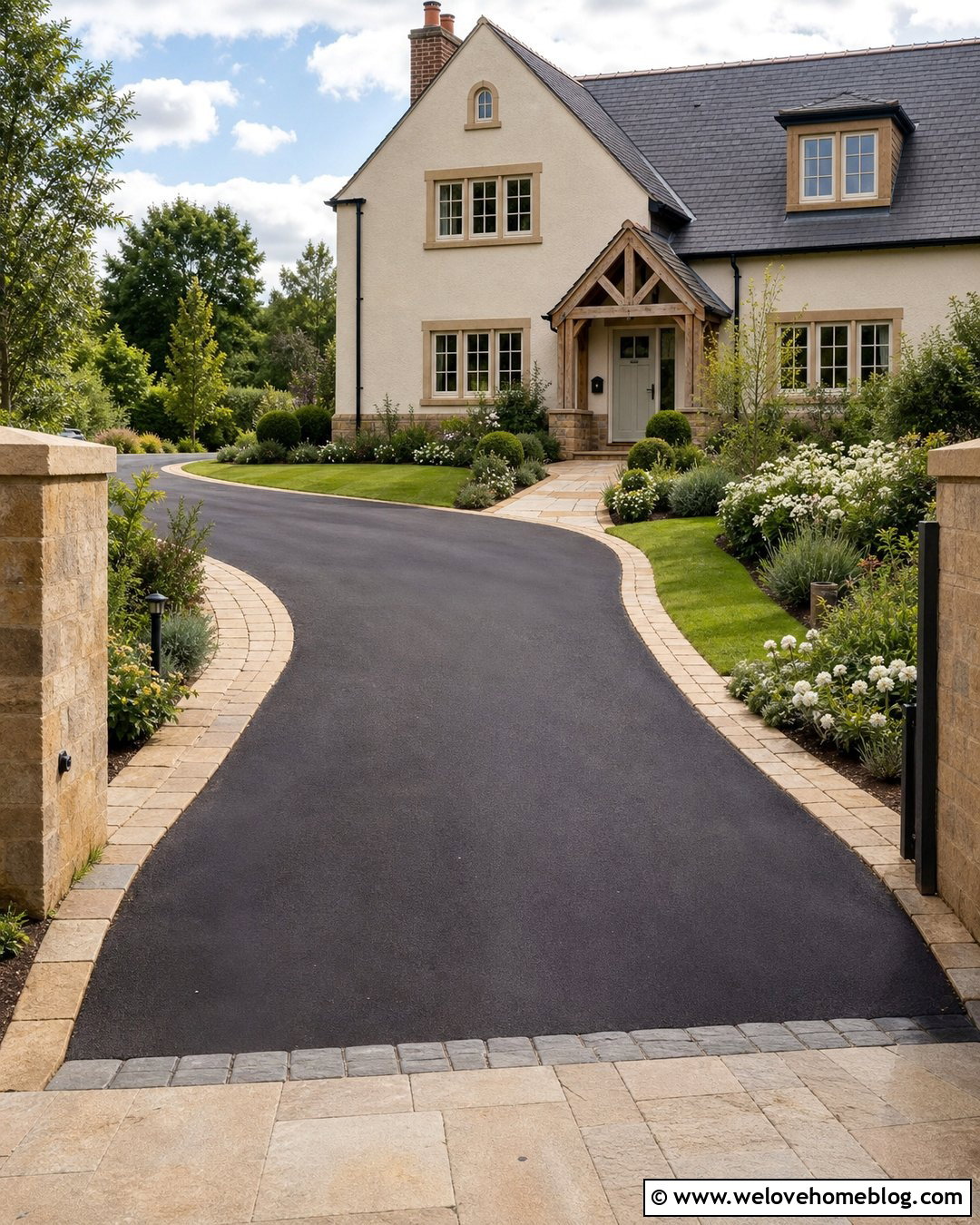
Warm sandstone creates an appealing transition between black tarmac and a light stone or cream-rendered house. Choose paving blocks in beige, buff, and muted brown tones, then install them as a broad single or double border. A slightly curved driveway allows the sandstone colors to guide attention toward the entrance without overwhelming the main surface. Repeat the same stone along the front walkway and around a small doorstep landing. Soft planting works best with this palette, including sage-green shrubs, white flowers, and restrained ornamental grasses. Avoid using too many unrelated paving colors nearby. The sandstone should act as the main decorative material, allowing the dark tarmac, pale house facade, green lawn, and planting beds to form a balanced exterior scheme.
6. Tarmac Driveway With Light Gray Paver Border
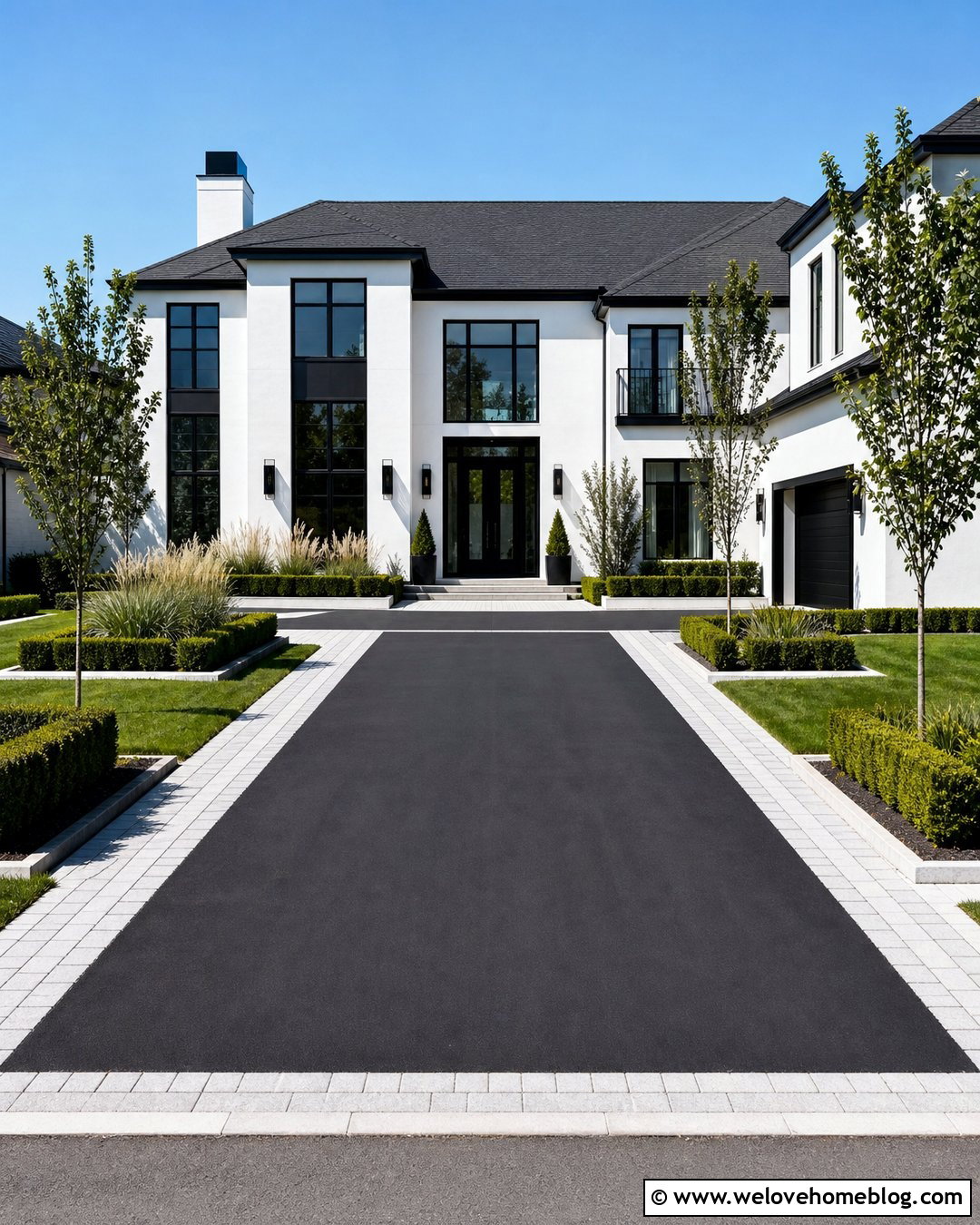
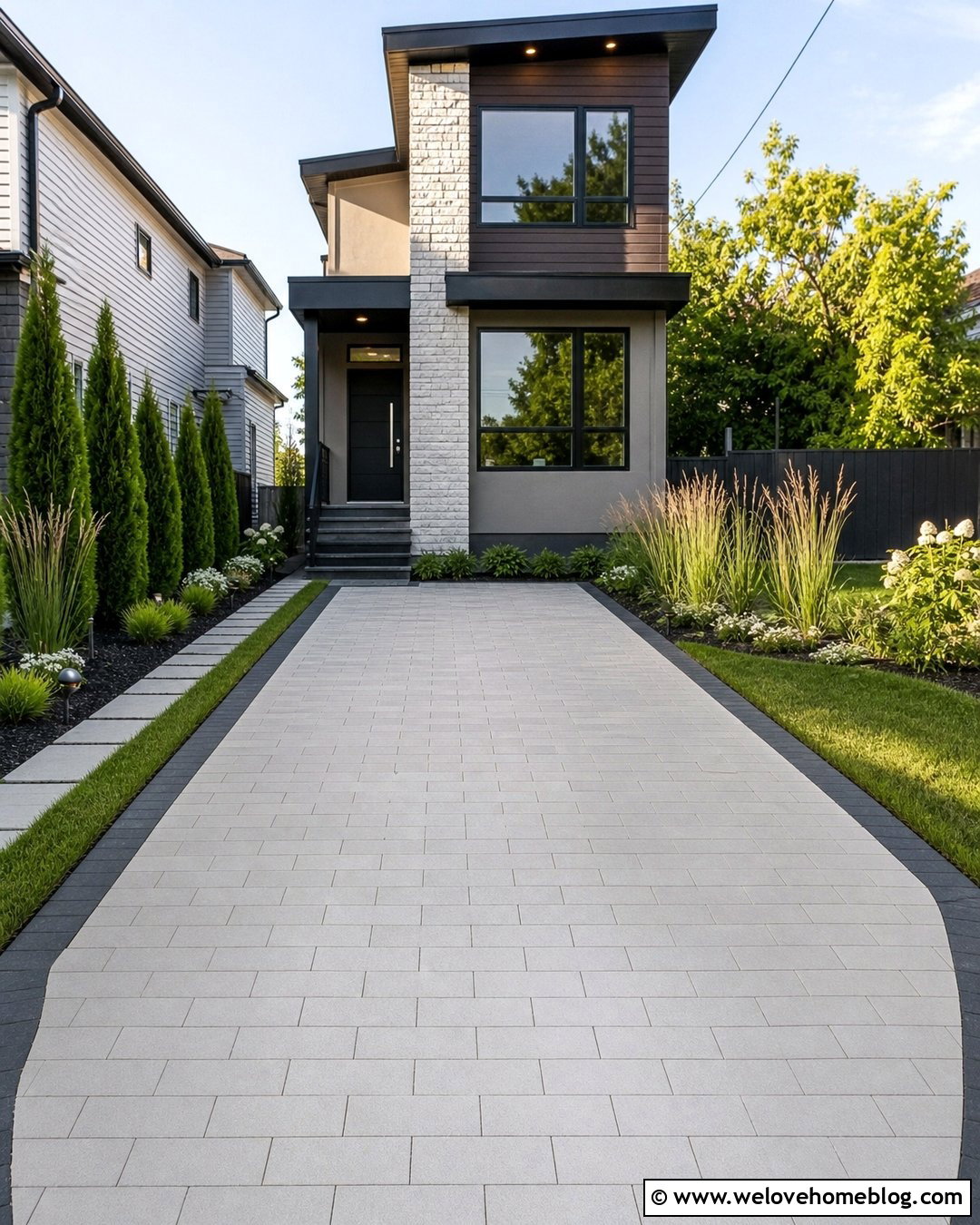
Light gray pavers make a black tarmac driveway look crisp and clearly defined. This high-contrast combination is particularly effective beside a modern white house with dark window frames. Frame a wide straight driveway with two rows of rectangular pavers, and use the same blocks to create a path toward the front door. Large planting beds filled with clipped evergreens and feathery grasses will soften the sharp geometry without hiding it. The pavers can also form a turning or parking outline within a larger paved area. Choose a gray tone that coordinates with the roof, facade trim, or garden walls. Repeating that color elsewhere helps the border look intentional rather than like an unrelated strip added after the driveway was installed.
7. Tarmac Driveway With Double Brick Border
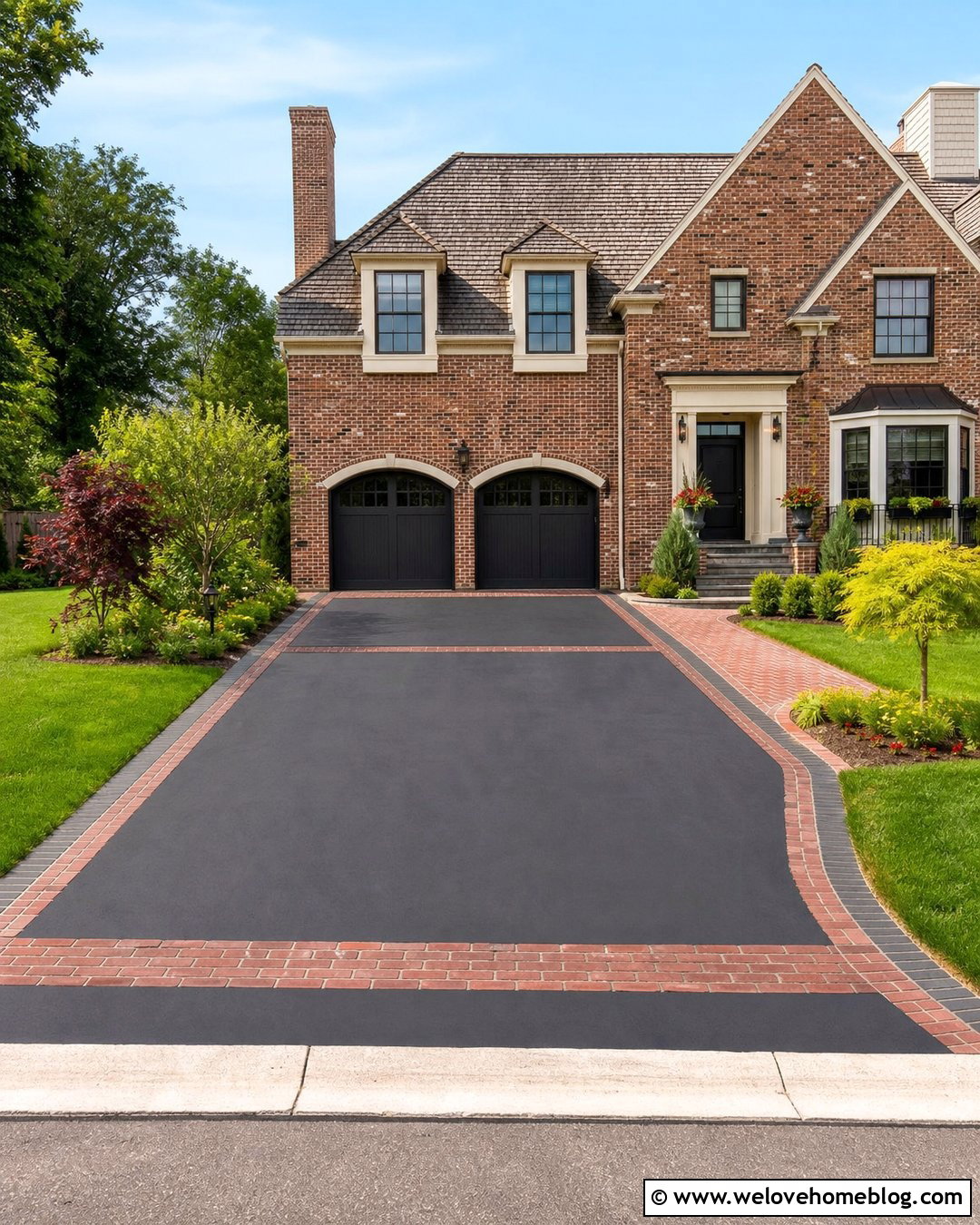
A double brick border gives a large tarmac driveway more presence than a narrow single row. Combine one dark charcoal course with an outer red or brown brick course for a subtle two-tone effect. This arrangement works well around a spacious driveway serving a two-car garage, where a thin border might appear undersized. Run both rows along the sides and across the entrance, maintaining an even width around curves and corners. Neat lawns can sit outside the border, while deeper beds near the house provide room for shrubs and small trees. Match one brick color to the house and the other to the tarmac. That simple connection brings the building, driveway surface, and landscaping together as one coordinated frontage.
8. Tarmac Driveway With Herringbone Entrance Border
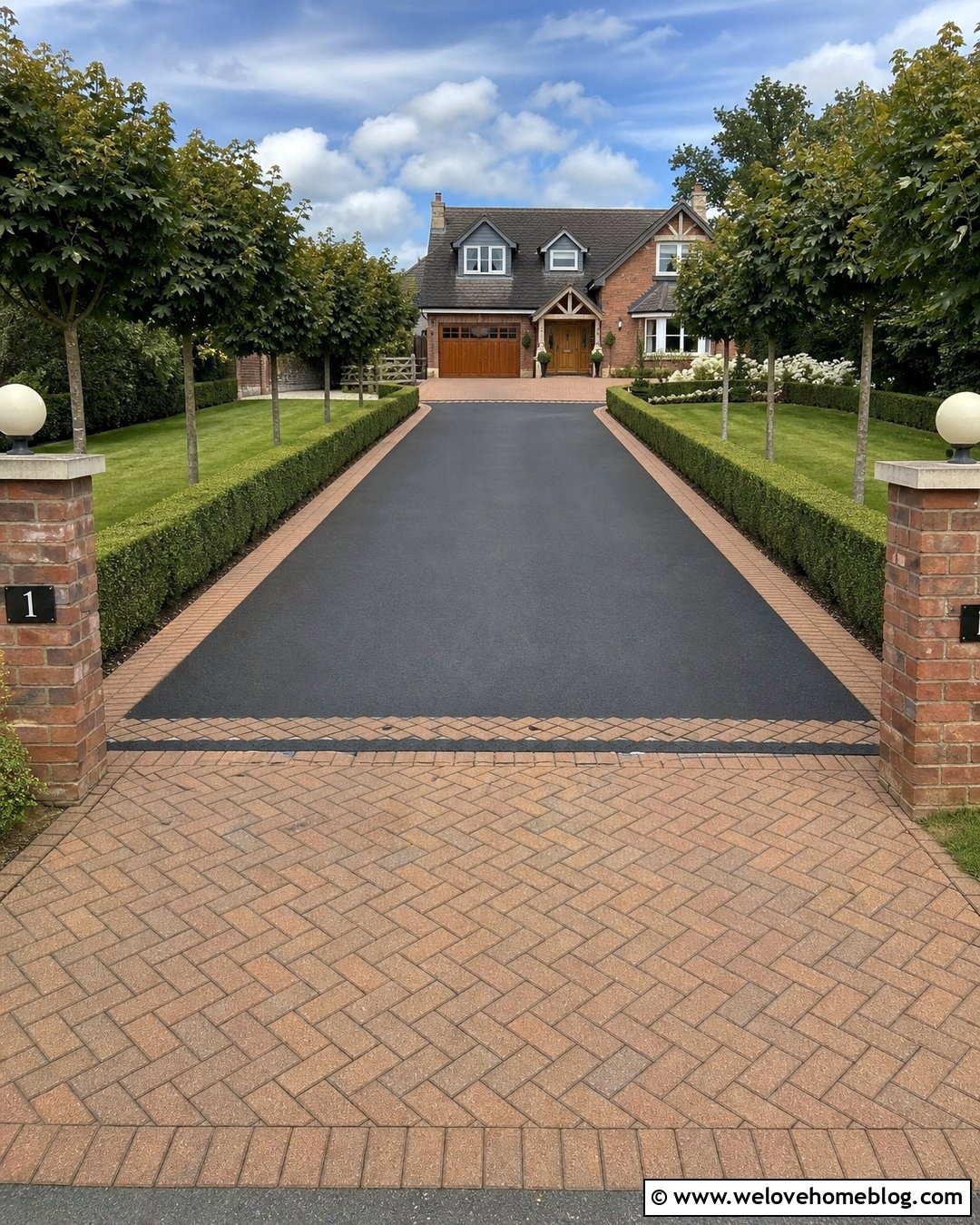
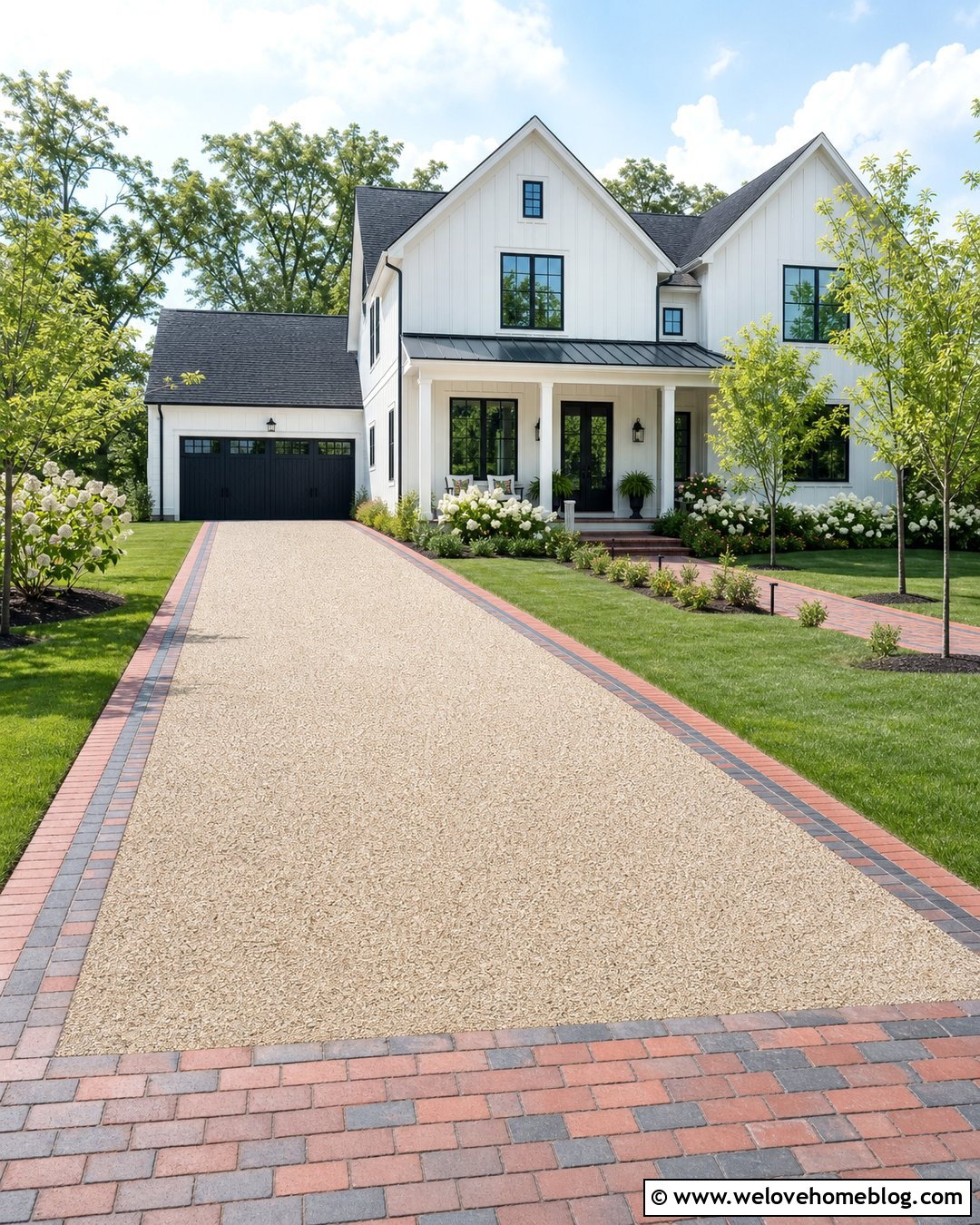
A herringbone block-paved apron can turn the entrance into the main feature of a tarmac driveway. Use warm red, brown, or charcoal pavers across the first several feet, then frame the remaining black surface with a matching block border. The patterned entrance creates an attractive transition without the cost or visual activity of covering the complete driveway in pavers. It suits a long, straight approach to a colonial, craftsman, or traditional brick house. Low hedges can define the sides, while evenly spaced trees emphasize the length. Keep the herringbone area broad enough to read as an intentional entrance feature. Repeating a narrow strip of the same pattern near the garage can visually balance the design.
9. Curved Tarmac Driveway With Block Border
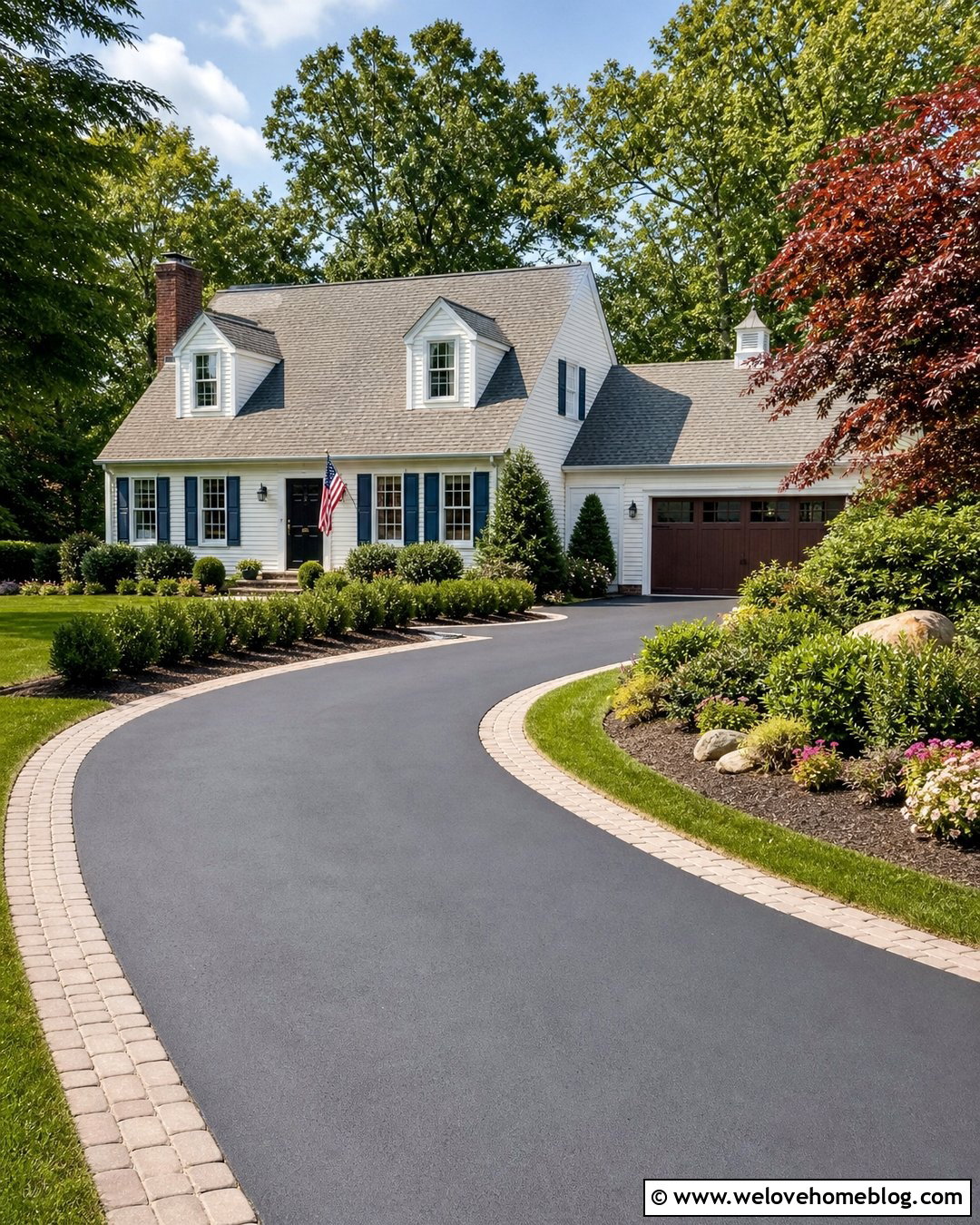
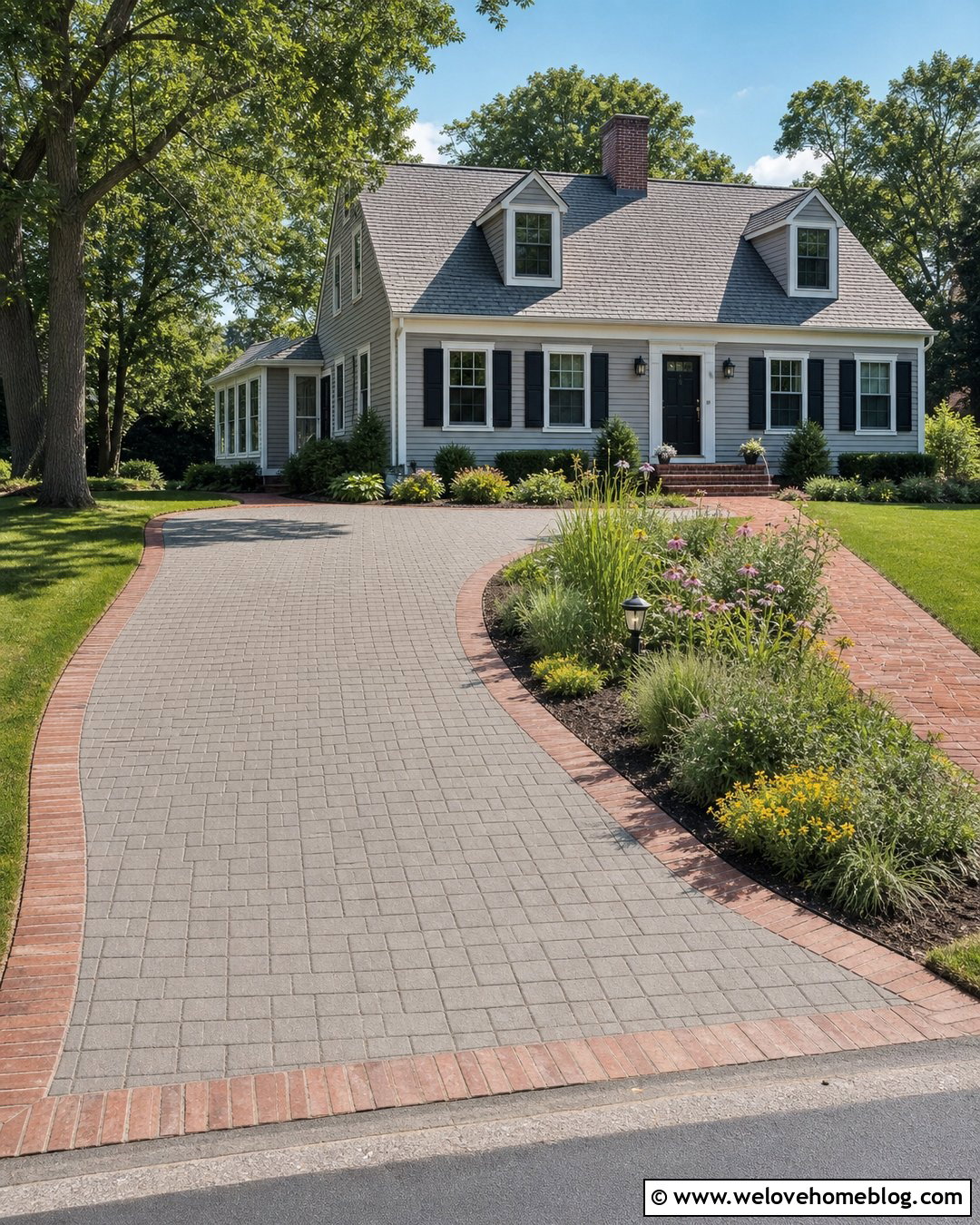
Gentle curves can make a compact front yard feel more natural and less dominated by parking. Follow the edge of a curved black tarmac driveway with small rectangular paving blocks that can form a smooth, consistent arc. Gray, brindle, or warm brown blocks are all suitable, depending on the house facade. Position a deep planting bed along the outside curve, using layered shrubs, ground cover, and a small ornamental tree. On the inner edge, a simpler lawn or low hedge will keep the route visually open. The block border should continue around the entire driveway rather than ending abruptly near the garden. This complete outline emphasizes the flowing shape and separates the dark surface from surrounding soil and grass.
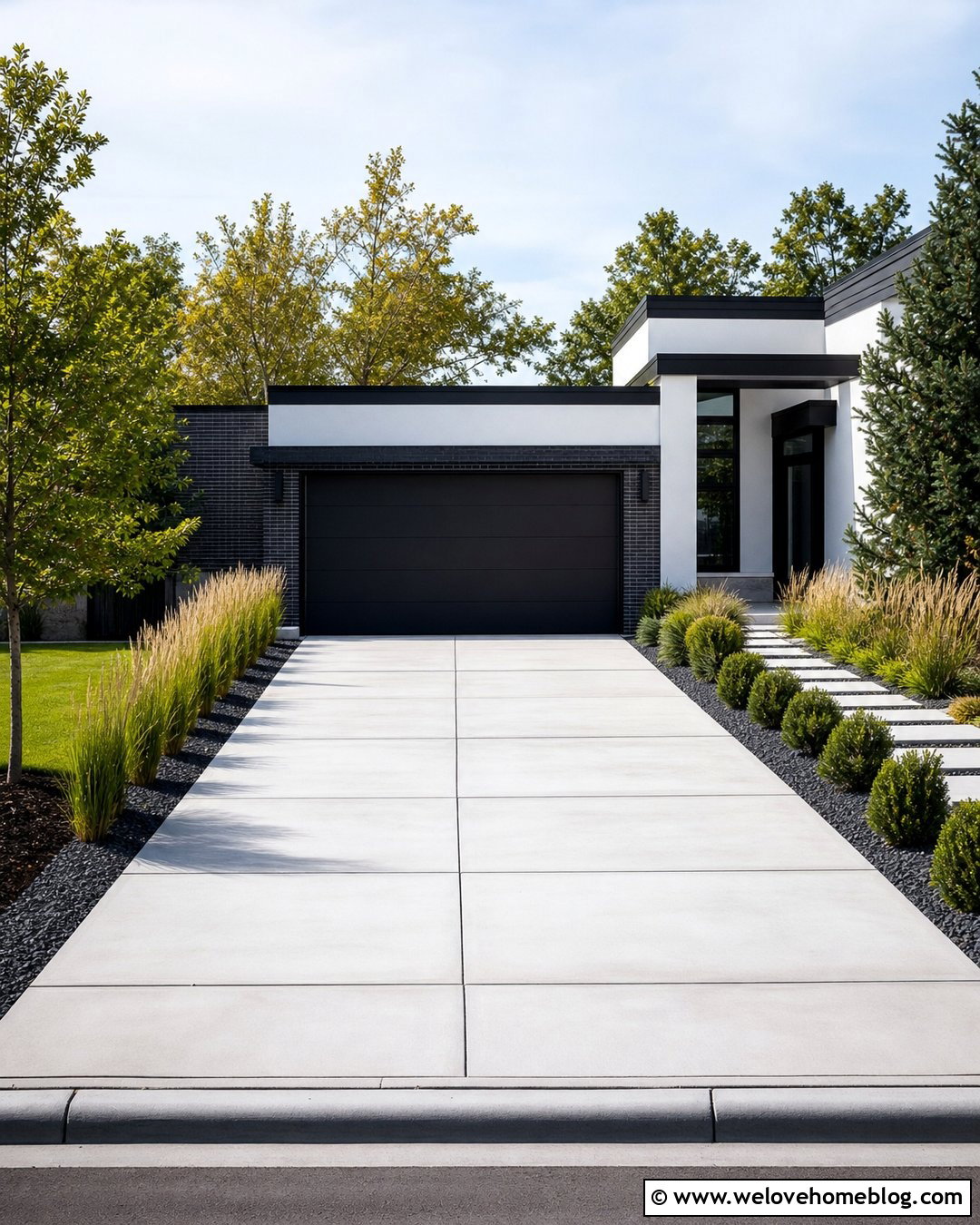
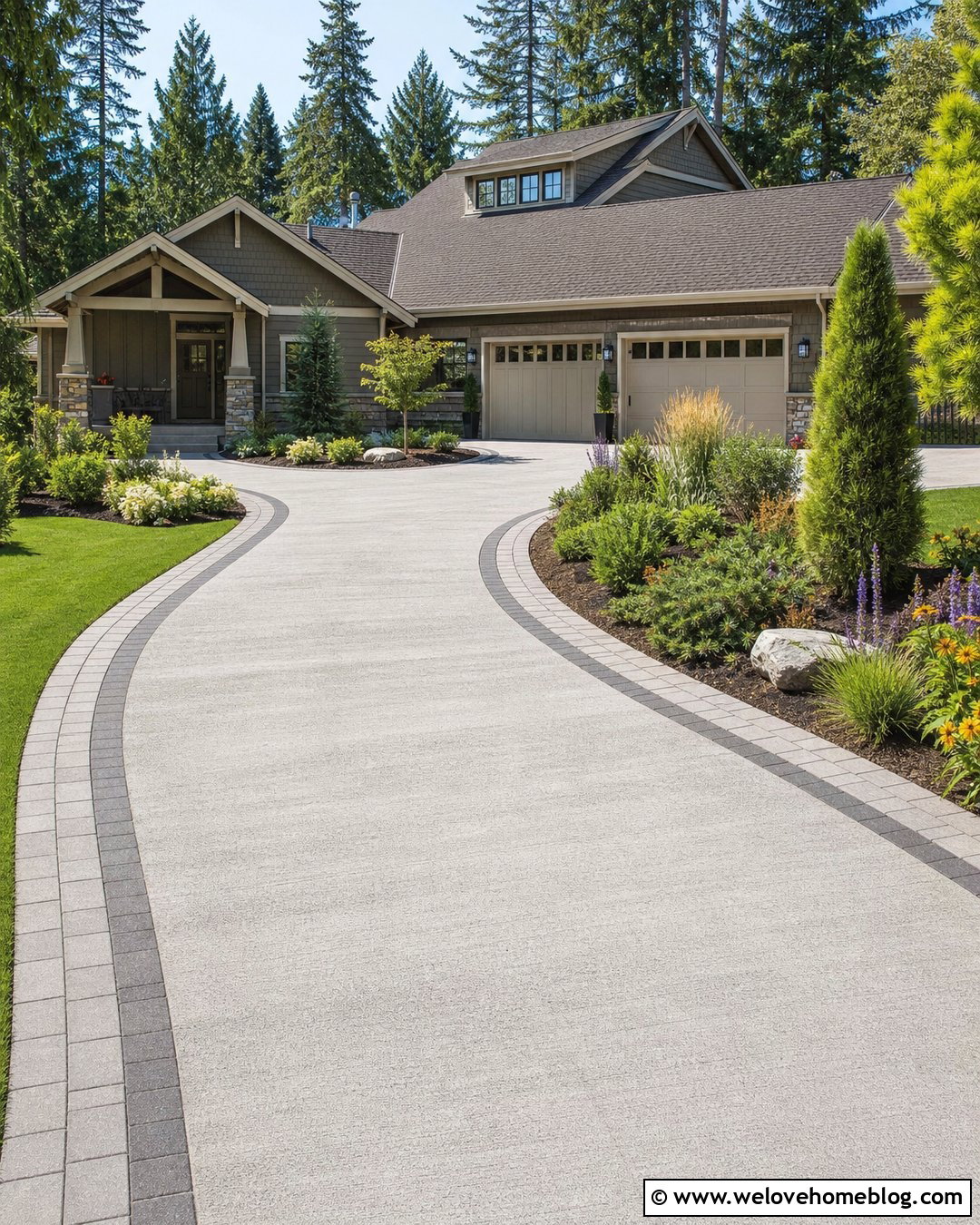
10. Tarmac Driveway With Raised Stone Border
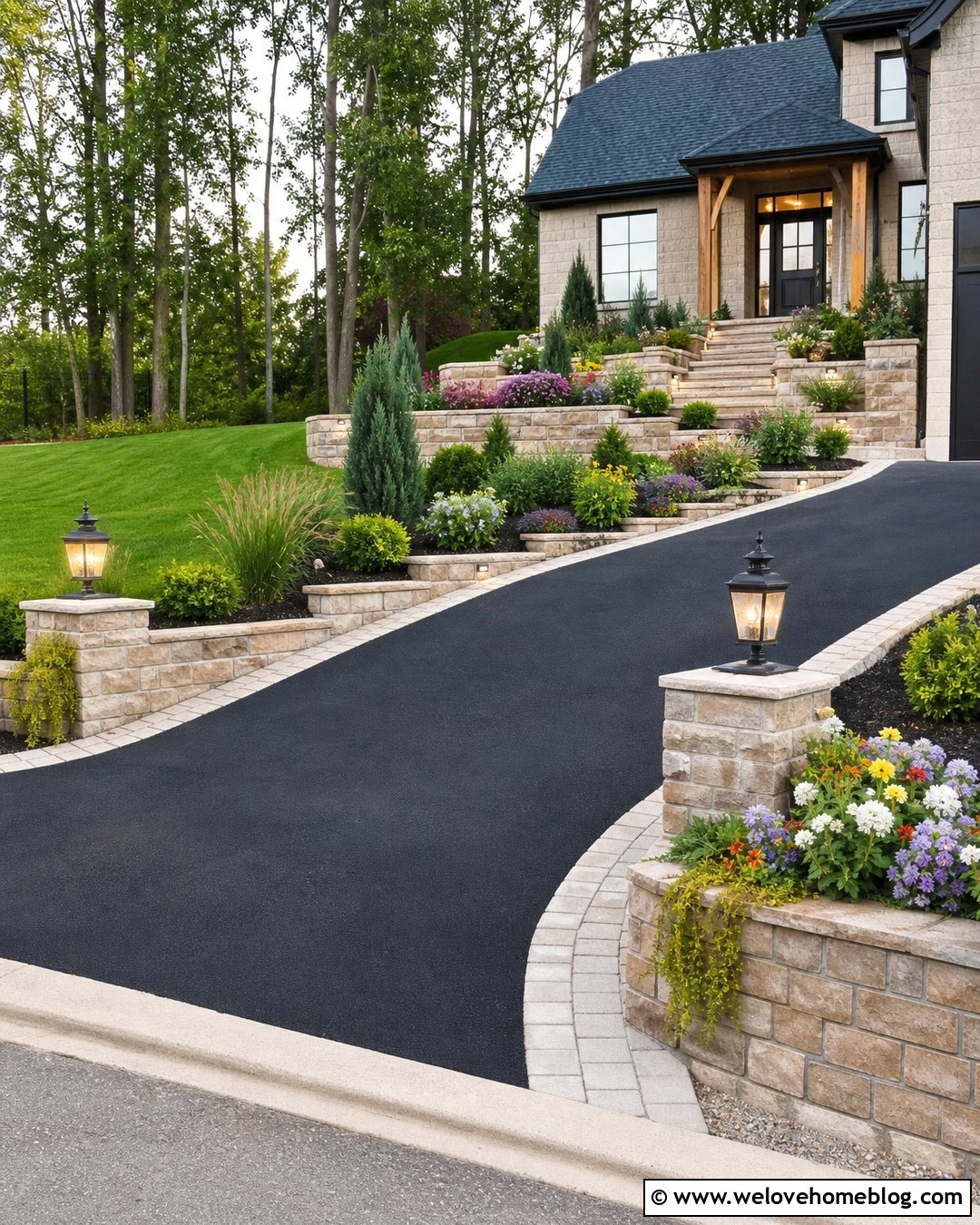
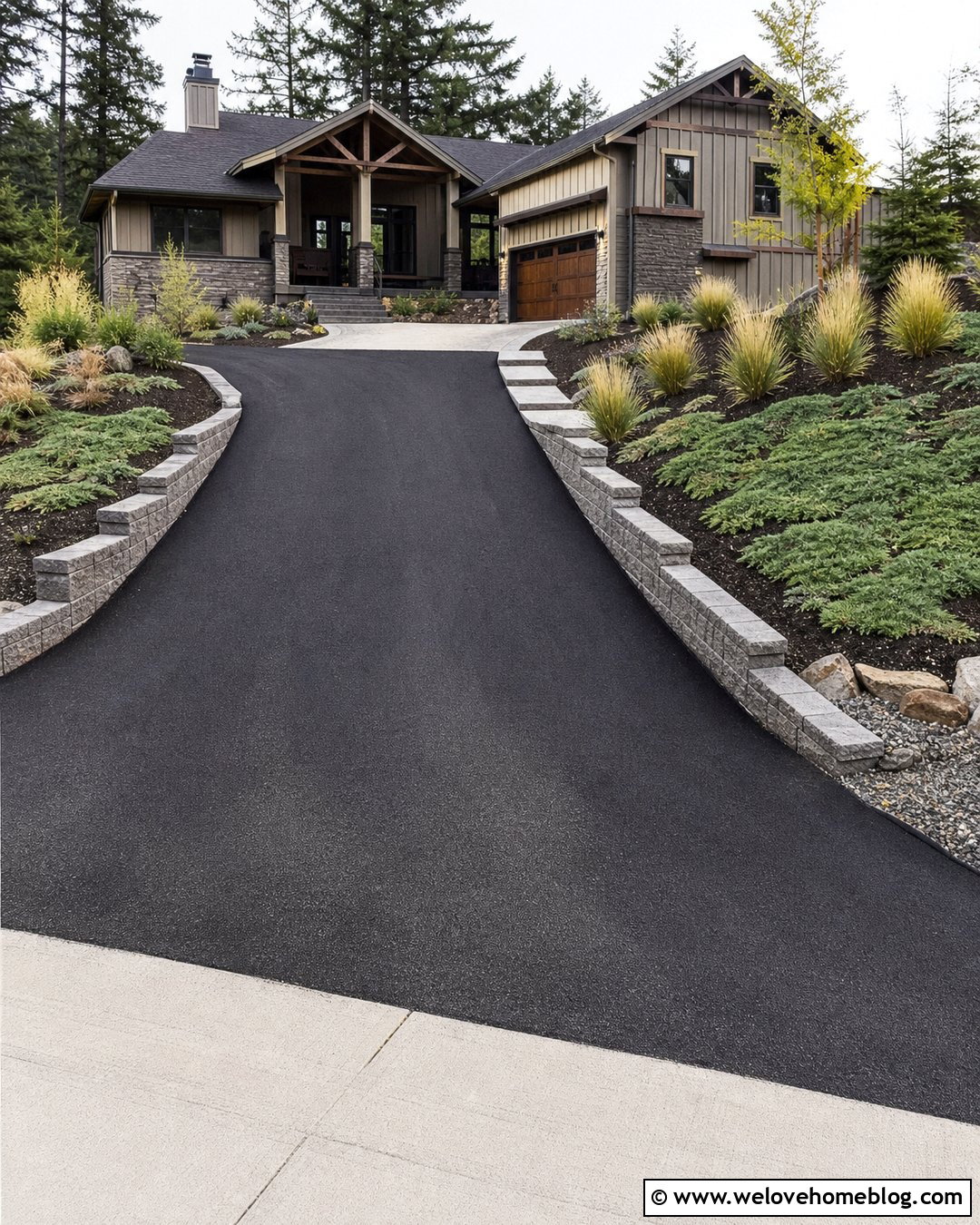
Raised stone planting beds can soften the broad surface of a tarmac driveway while providing a strong physical boundary. Use low walls made from natural sandstone, limestone, or textured concrete blocks along one or both sides. Keep the walls relatively low so drivers retain a clear view of the entrance and surrounding space. Fill them with compact evergreen shrubs, seasonal flowers, and grasses that will not spread across the driving area. This design fits a sloping driveway because the raised borders can follow changing ground levels in controlled steps. Coordinate the wall stone with the house, walkway, or entrance pillars. The resulting composition combines a clean tarmac surface with generous greenery and substantial architectural edging.
11. Tarmac Driveway With Gravel Border
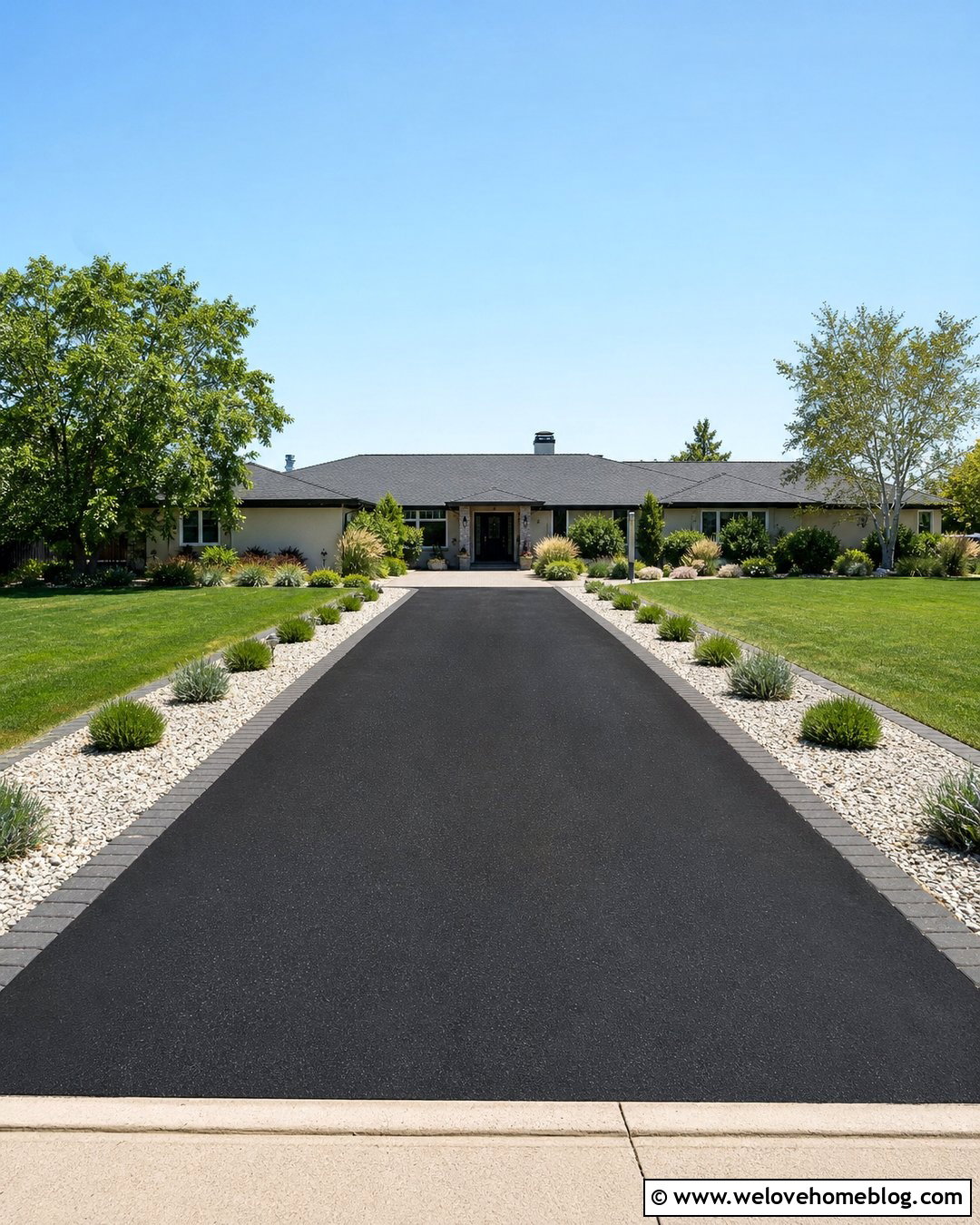
A gravel strip introduces lighter color and loose texture beside smooth black tarmac. Pale granite chippings, golden gravel, or gray limestone can each create a different effect. Contain the gravel between the driveway’s structural edge and a second border beside the lawn or planting bed. This prevents the stones from spreading into nearby areas and gives the strip a finished shape. A straight driveway leading to a simple ranch or bungalow can use symmetrical gravel borders for a calm, practical appearance. Add occasional clusters of low grasses or compact shrubs outside the stones, leaving clear sightlines near the entrance. The contrasting materials make the driveway look wider and more detailed without requiring an elaborate paving pattern.
12. Tarmac Driveway With Slate Chip Border

Blue-gray slate chips create a bold textured band around a dark tarmac driveway. Although the colors are closely related, the slate’s angular shapes and subtle variations provide enough contrast to define the edges. Use a narrow charcoal block course between the tarmac and loose chips for secure separation. This combination looks especially cohesive outside a contemporary home with slate roofing, gray cladding, or black-framed windows. Frame the driveway with raised steel planters, white flowering shrubs, and upright grasses to brighten the dark palette. Slate works well along straight lines and shallow curves, but the border should remain consistent in width. A matching slate bed around an address sign can connect the driveway entrance with the wider landscape.
13. Tarmac Driveway With Concrete Curb Border
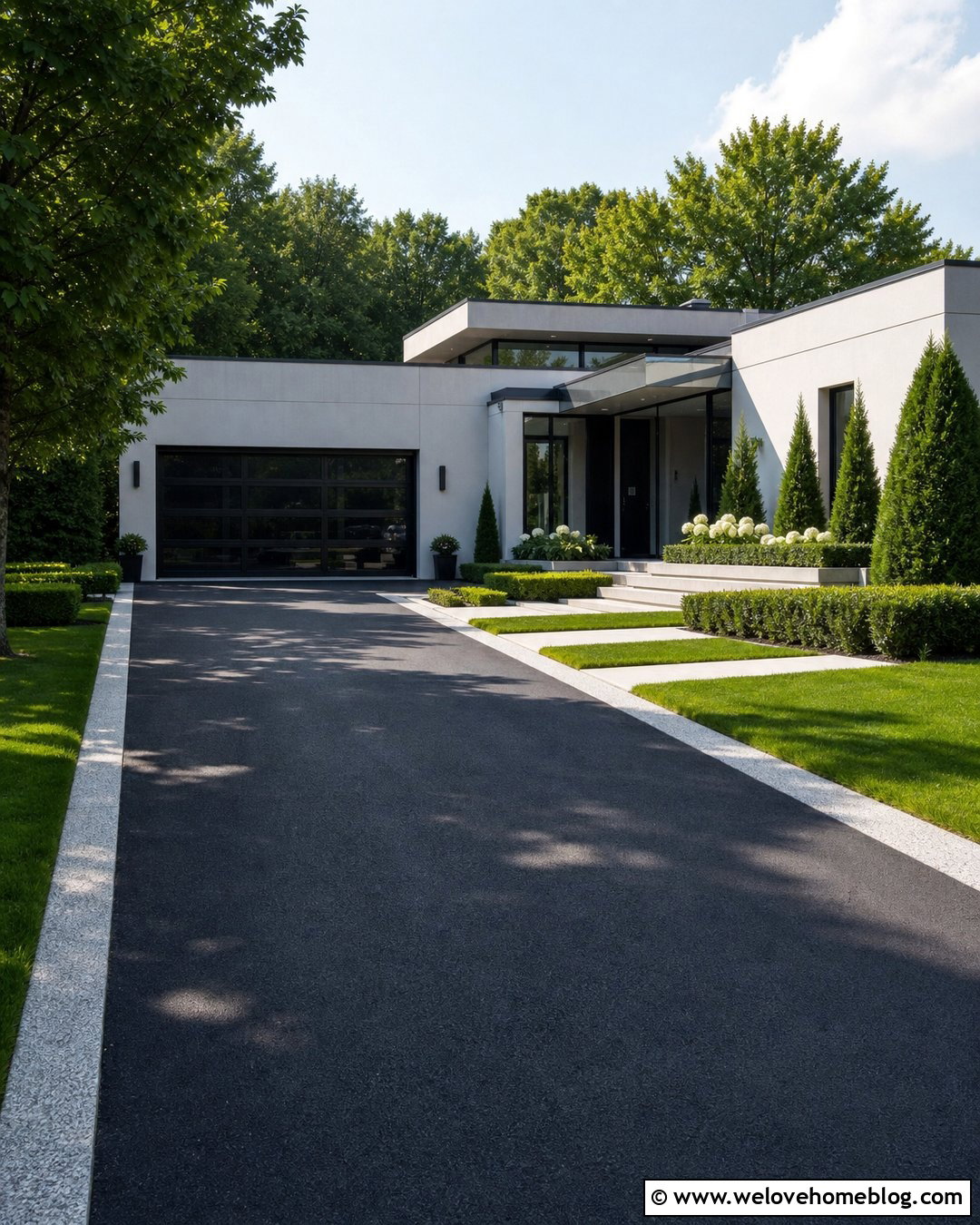
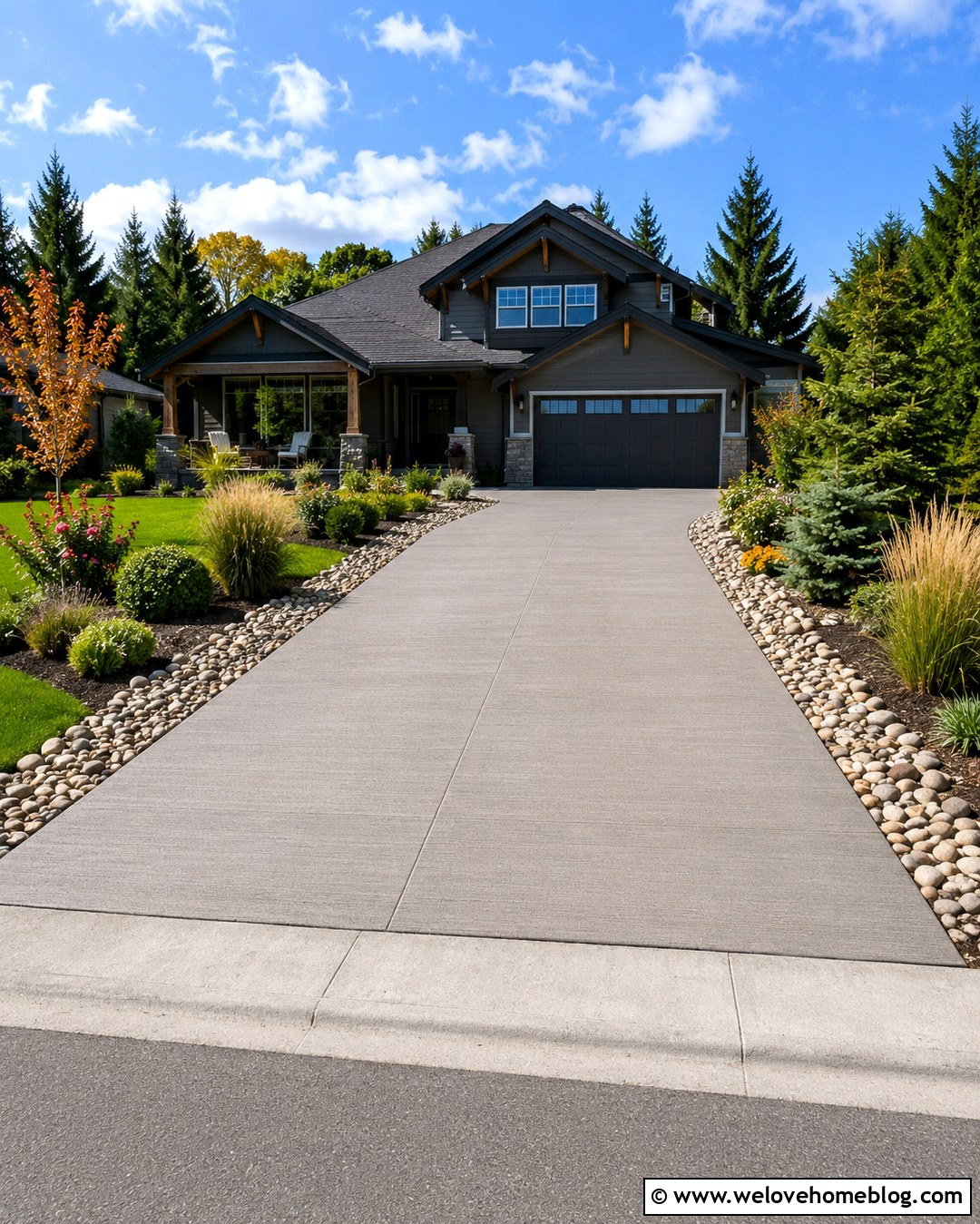
A formed concrete curb gives a tarmac driveway a clean, durable-looking outline. Instead of leaving the concrete plain gray, consider a light exposed-aggregate finish that adds subtle texture and complements modern architecture. A low flush curb works beside lawns and walkways, while a slightly raised edge can define planting beds. This border is particularly useful for a minimalist straight driveway where excessive color would distract from the house. Pair it with structured evergreens, square lawn panels, and large concrete stepping stones leading to the entrance. Keep the curb profile consistent across both sides and around the garage transition. The precise lines will make even a simple black tarmac surface appear carefully designed and professionally integrated into the front yard.
14. Tarmac Driveway With Steel And Gravel Border
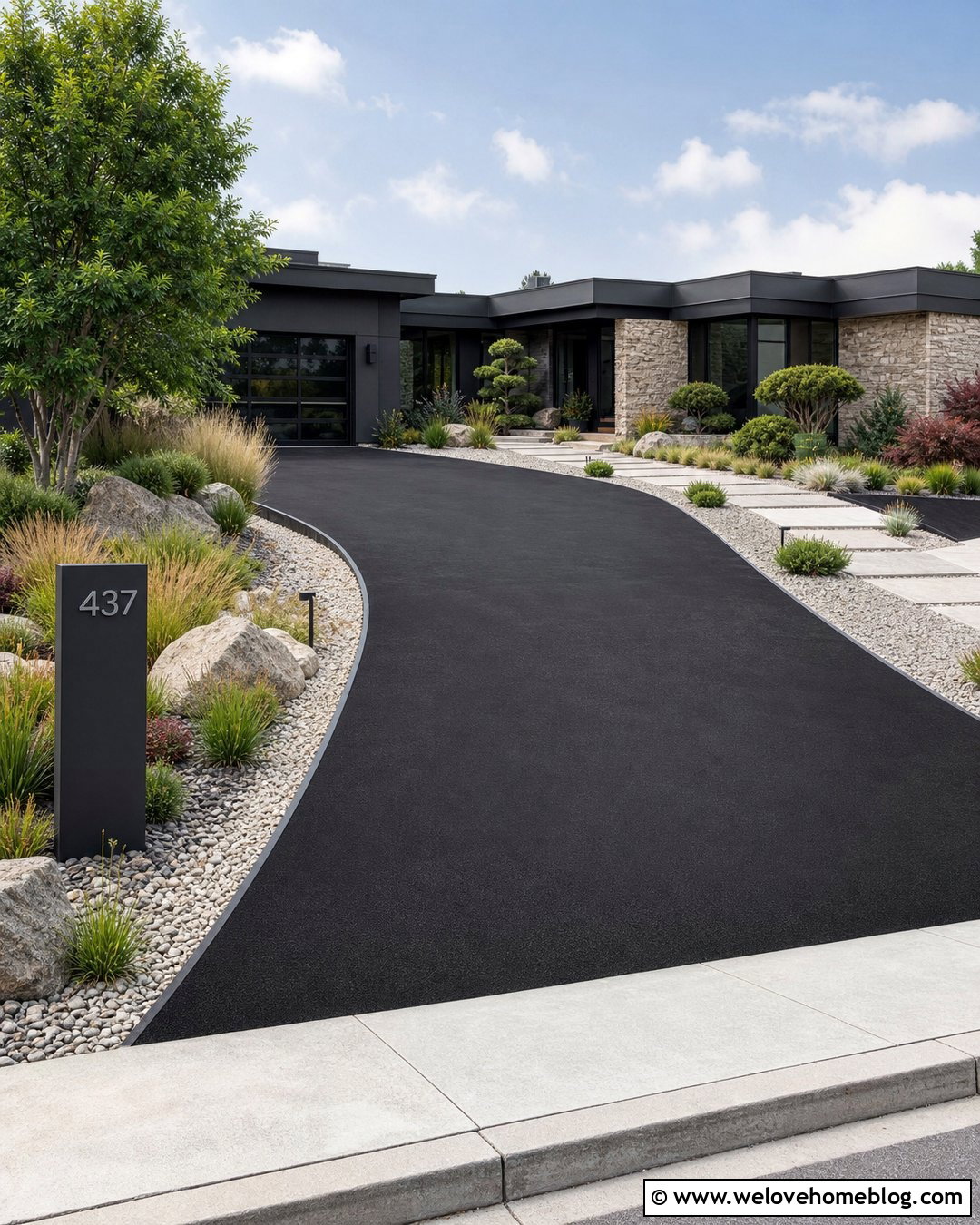
Slim steel edging can create a nearly invisible divider between tarmac and decorative gravel. Choose dark powder-coated steel for a restrained contemporary finish, then fill the border with pale stone chippings to create contrast. The metal line is most effective along a straight or sharply angled driveway leading to a modern house. Add drought-tolerant grasses, small sculptural shrubs, and a few larger stones within wider gravel beds. Keep loose material away from frequent tire paths by maintaining a clear tarmac driving width. The combination of smooth surfacing, narrow metal edging, and textured gravel produces a precise but natural-looking frontage. It also allows the house and landscaping to remain visually prominent instead of making the border itself overly decorative.
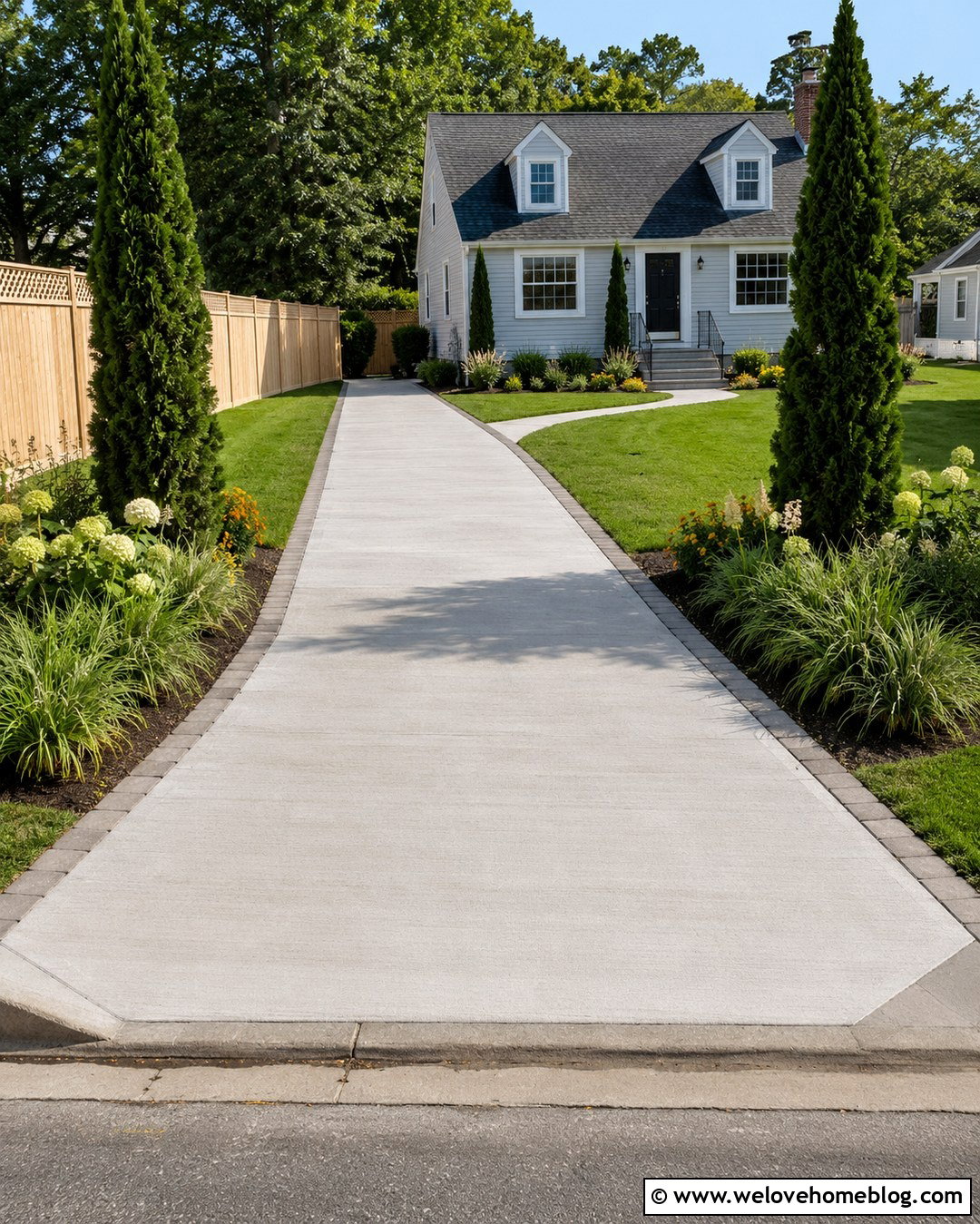
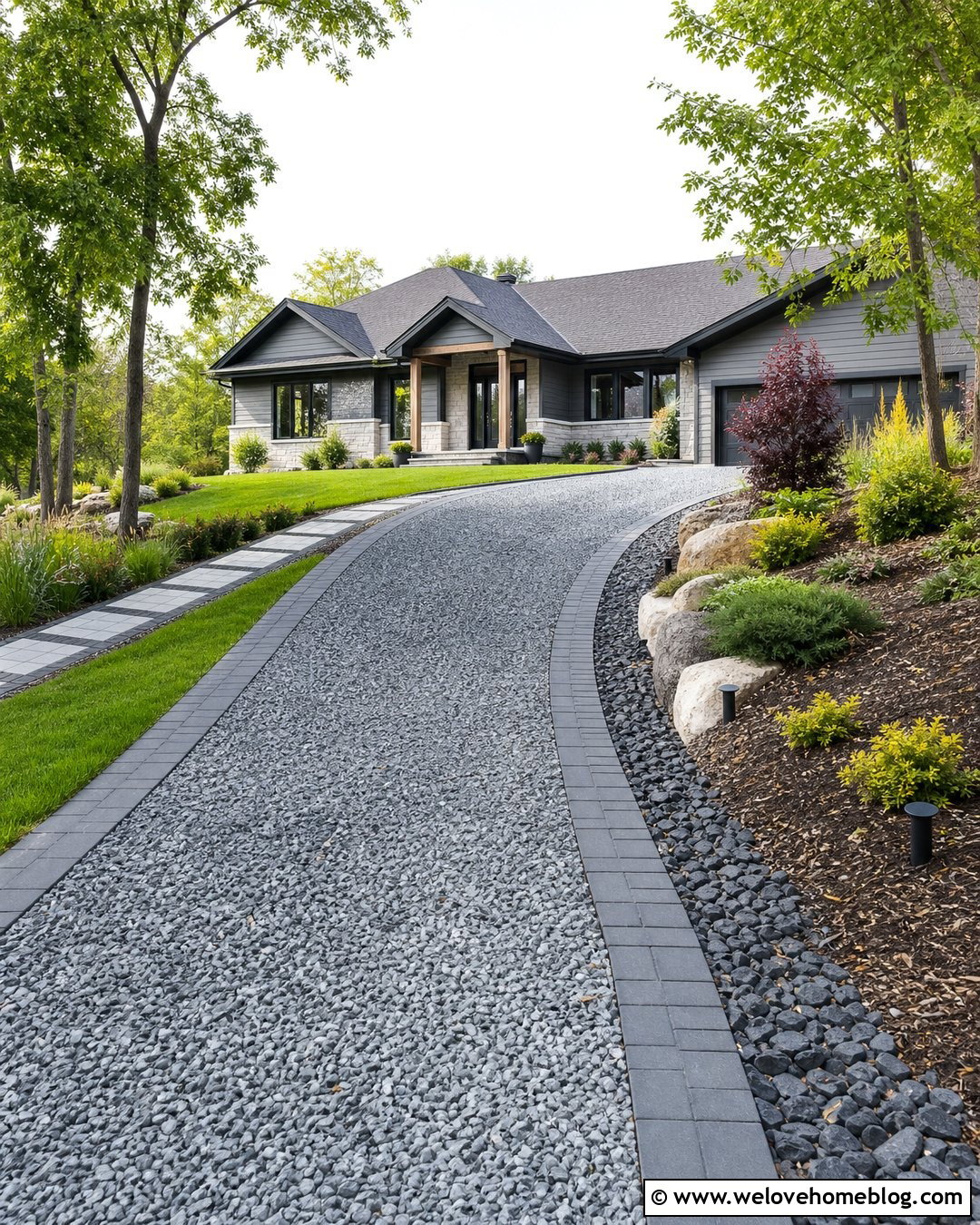
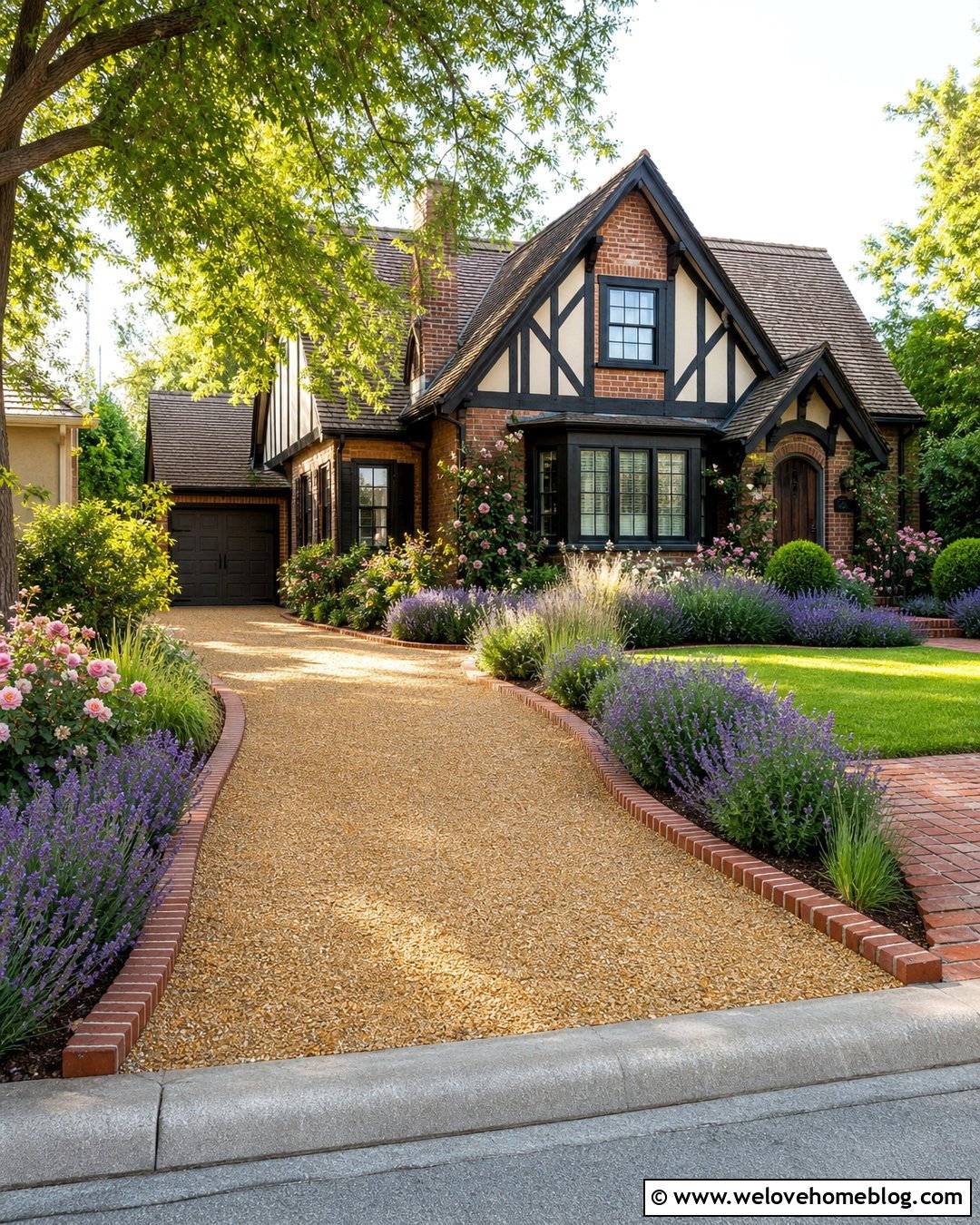
15. Tarmac Driveway With Brick And Grass Border
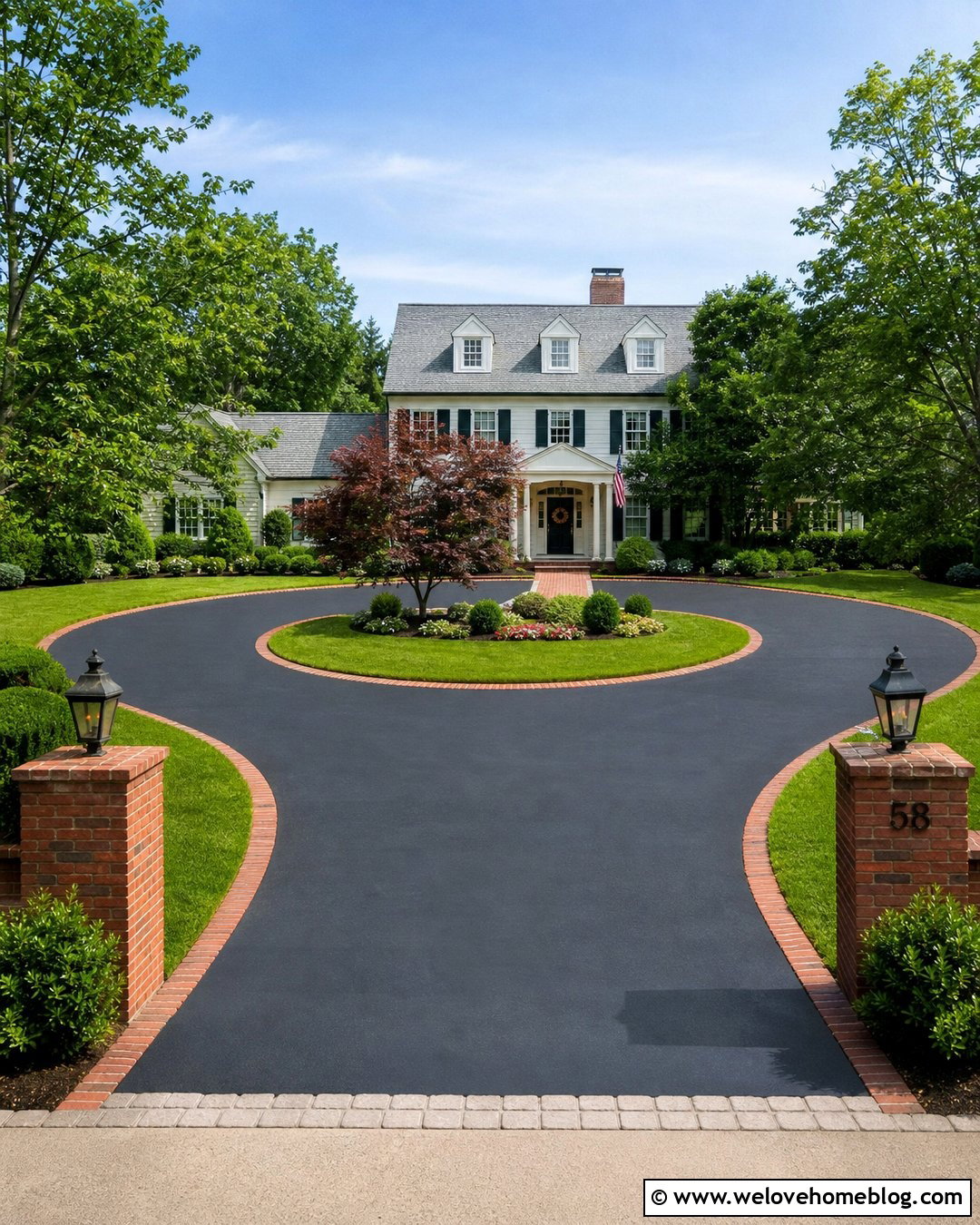
Green grass strips can make a dark driveway feel softer and more connected to the yard. Frame the tarmac first with a narrow brick course, then place neatly maintained lawn bands outside the bricks. The hard edging clearly separates the materials and creates a tidy line for routine lawn care. This look works beautifully around a broad horseshoe driveway serving a traditional suburban or colonial home. Use matching brick around the central lawn island, where a small ornamental tree and low shrubs can become the focal point. Avoid making grass strips so narrow that they appear awkward or fragmented. Generous proportions allow the green areas, warm brick, black tarmac, and house facade to work together in a balanced circular composition.
16. Tarmac Driveway With Drainage Channel Border
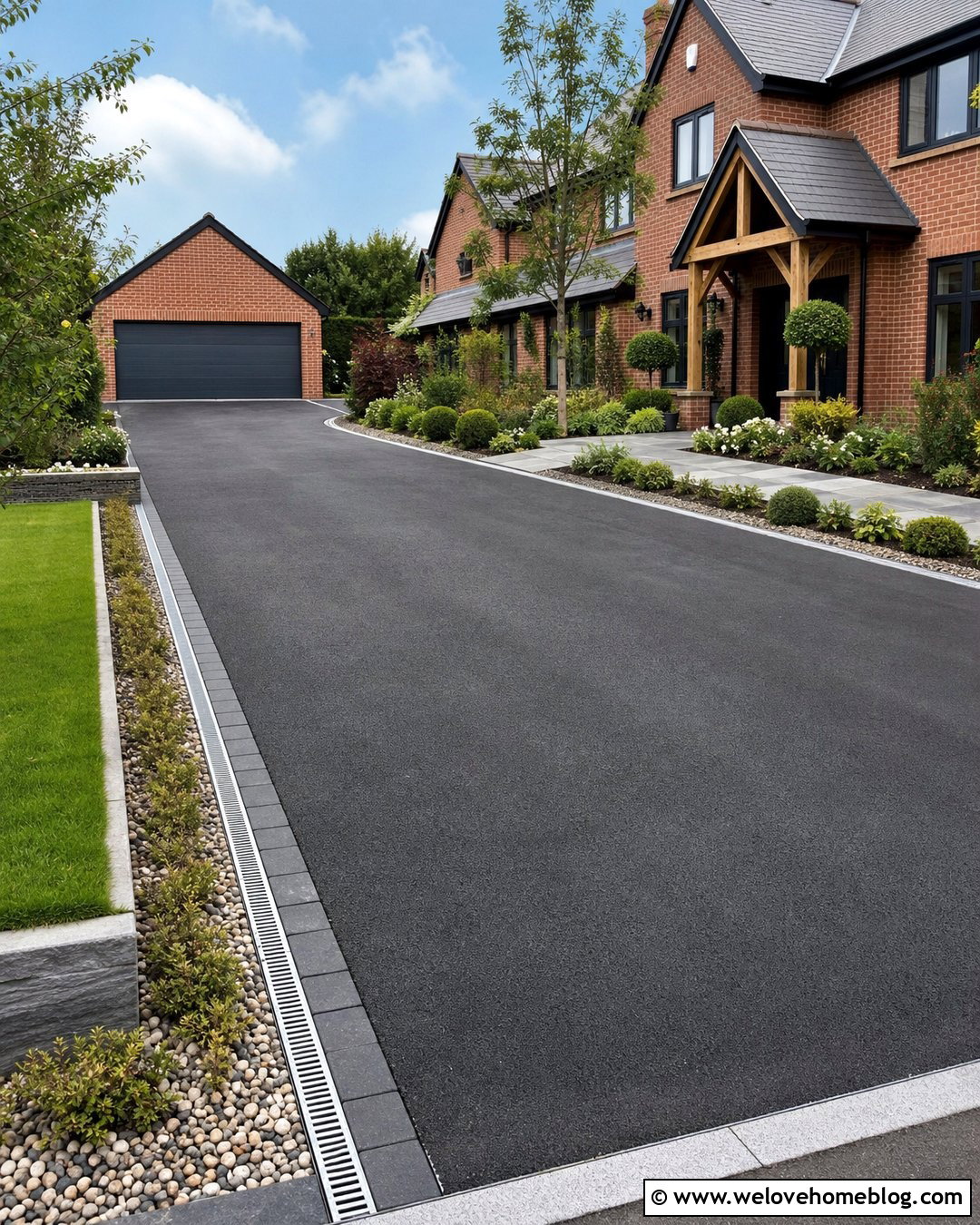
A drainage channel can be incorporated into the border rather than treated as an unattractive afterthought. Select a narrow channel with a dark or galvanized grate, then align it beside a charcoal block-paving course. Place it across the garage threshold or along the lowest edge of a sloping tarmac driveway, based on the drainage plan prepared for the property. Continue the block border around the remaining sides to create a consistent visual frame. Low planting beds and a permeable gravel strip can help integrate practical water management into the landscape. This approach is suitable for modern and traditional homes because the surrounding paver color can change. Precise installation keeps the channel visually discreet while maintaining a clean transition around the tarmac.
17. Circular Tarmac Driveway With Stone Border
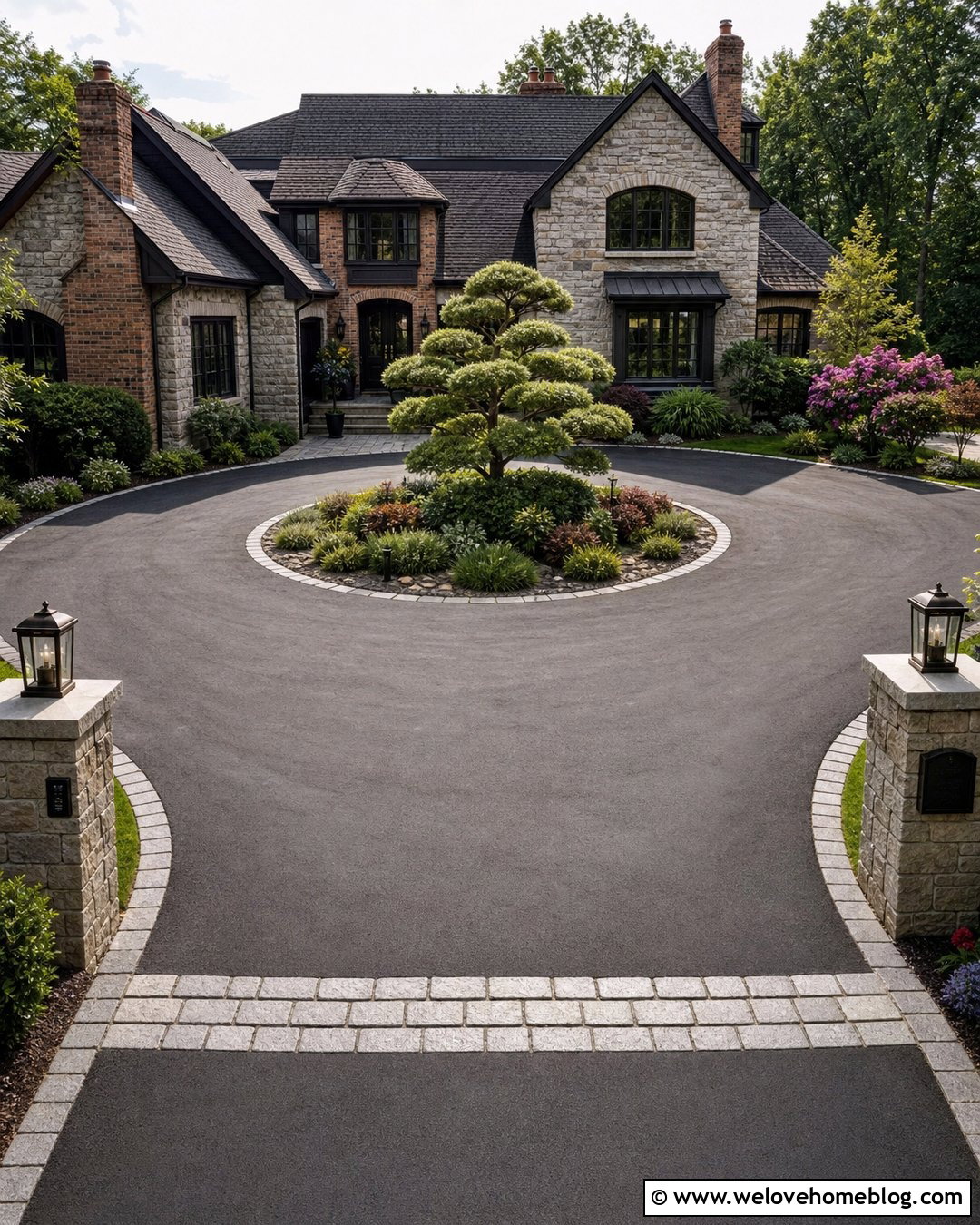
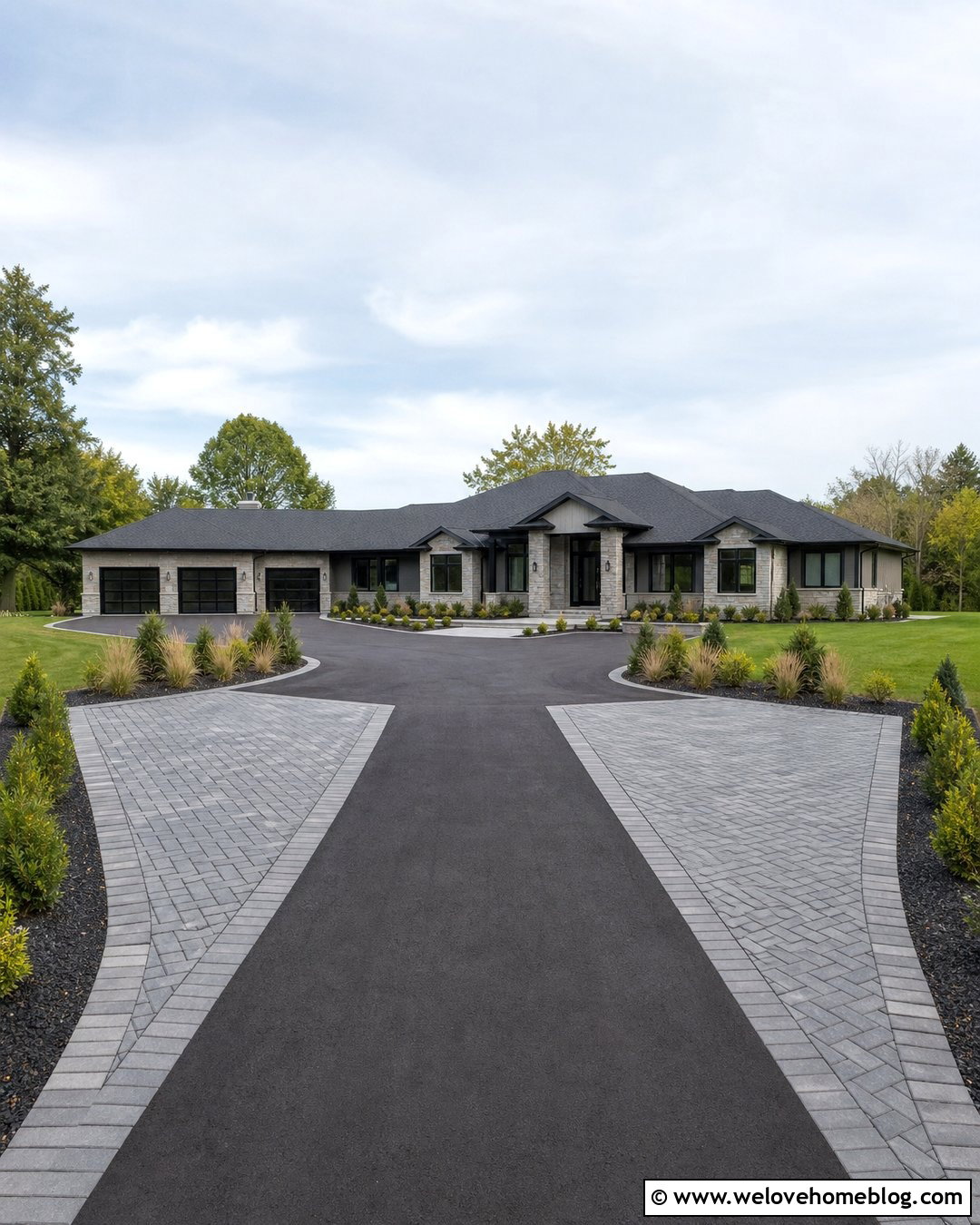
A circular layout needs a border that clearly expresses its sweeping shape. Granite setts or weathered stone blocks can outline both the outer driveway edge and the central landscaped island. Fill the island with a well-shaped ornamental tree, low evergreen shrubs, and ground cover that will not restrict visibility. The main black tarmac surface should remain broad and uncluttered so vehicles can follow the curve comfortably. Repeat the stone at both entrance points and along the walkway to the house. This layout works well outside a large craftsman, country, or brick colonial home. Consistent materials are important because too many border colors can make the circular arrangement look busy. One natural stone palette keeps the entire frontage unified.
18. Tarmac Driveway With Pillar Entrance Border
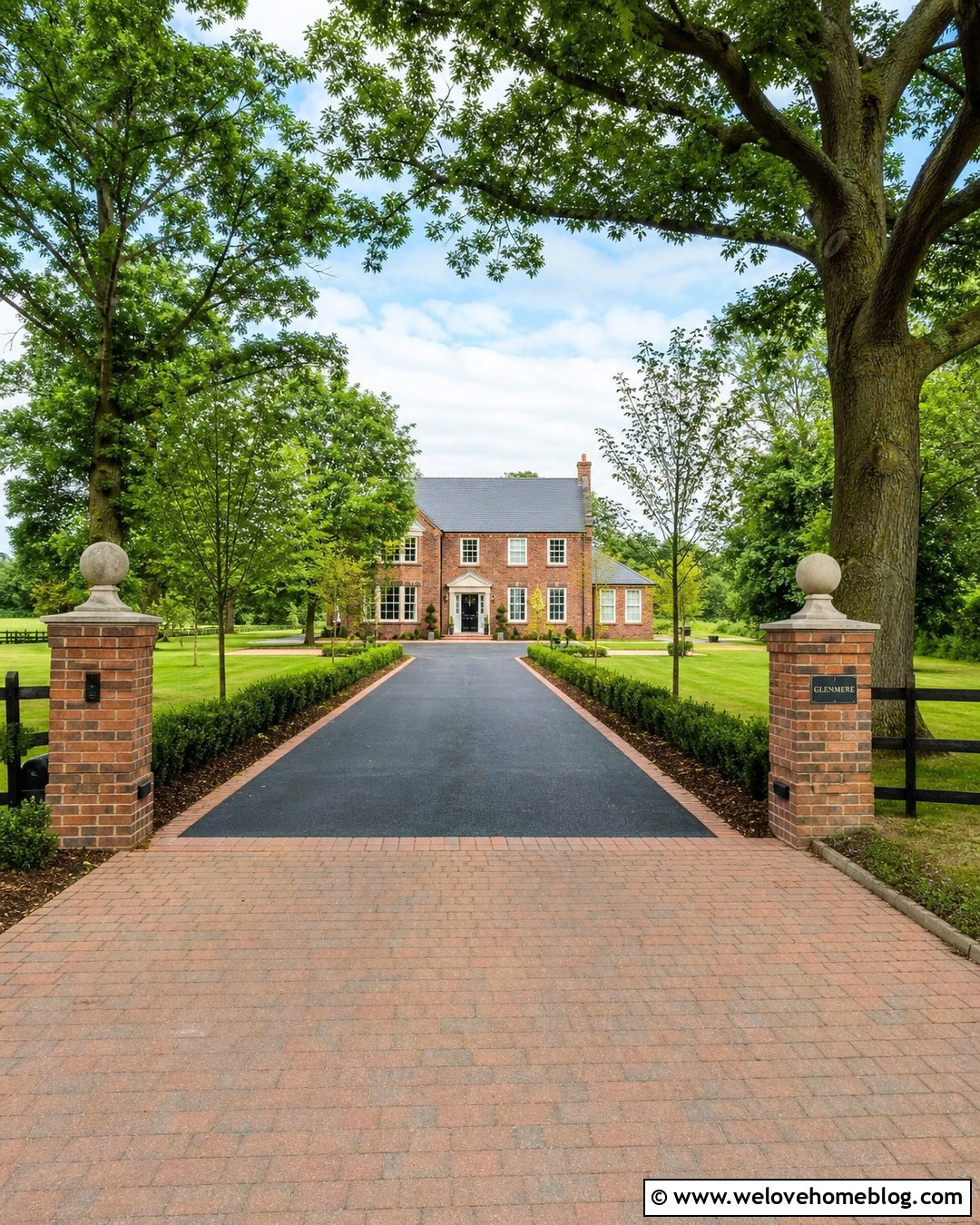
Entrance pillars can visually anchor a long tarmac driveway, especially when their materials match the border. Pair red brick pillars with a brick-edged driveway, or use stone-faced pillars with granite sett edging. Continue the border between the street and pillars to form a complete entrance apron. Beyond it, a straight black tarmac surface can lead toward a detached home surrounded by lawn and mature trees. Low hedges or planting beds should begin behind the pillars so the gateway remains open and welcoming. Add simple caps and discreet fixtures without crowding the entrance with too many details. By repeating one masonry material at ground level and vertical points, the entire driveway gains structure and a stronger connection to the house.
19. Tarmac Driveway With Timber Planter Border
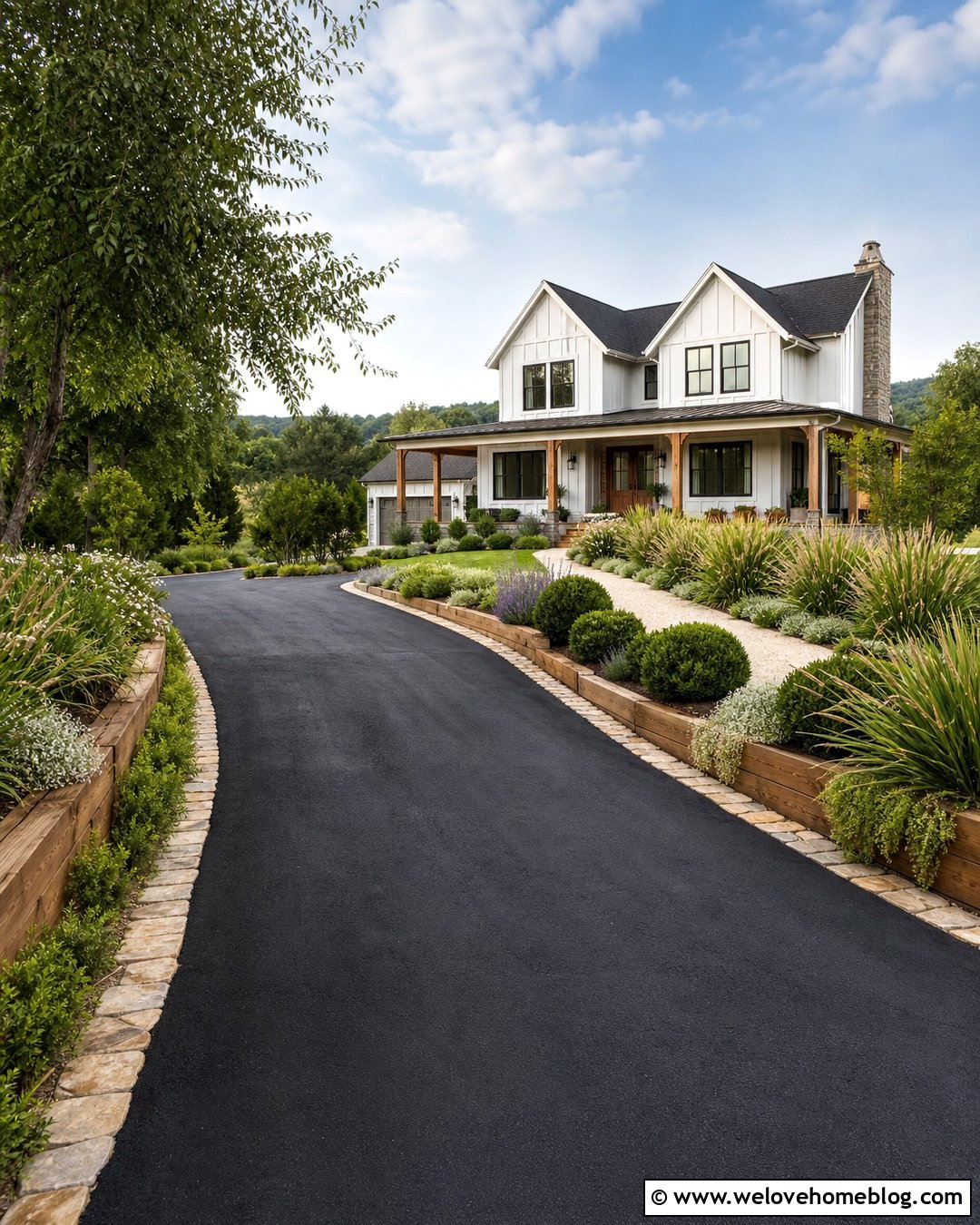
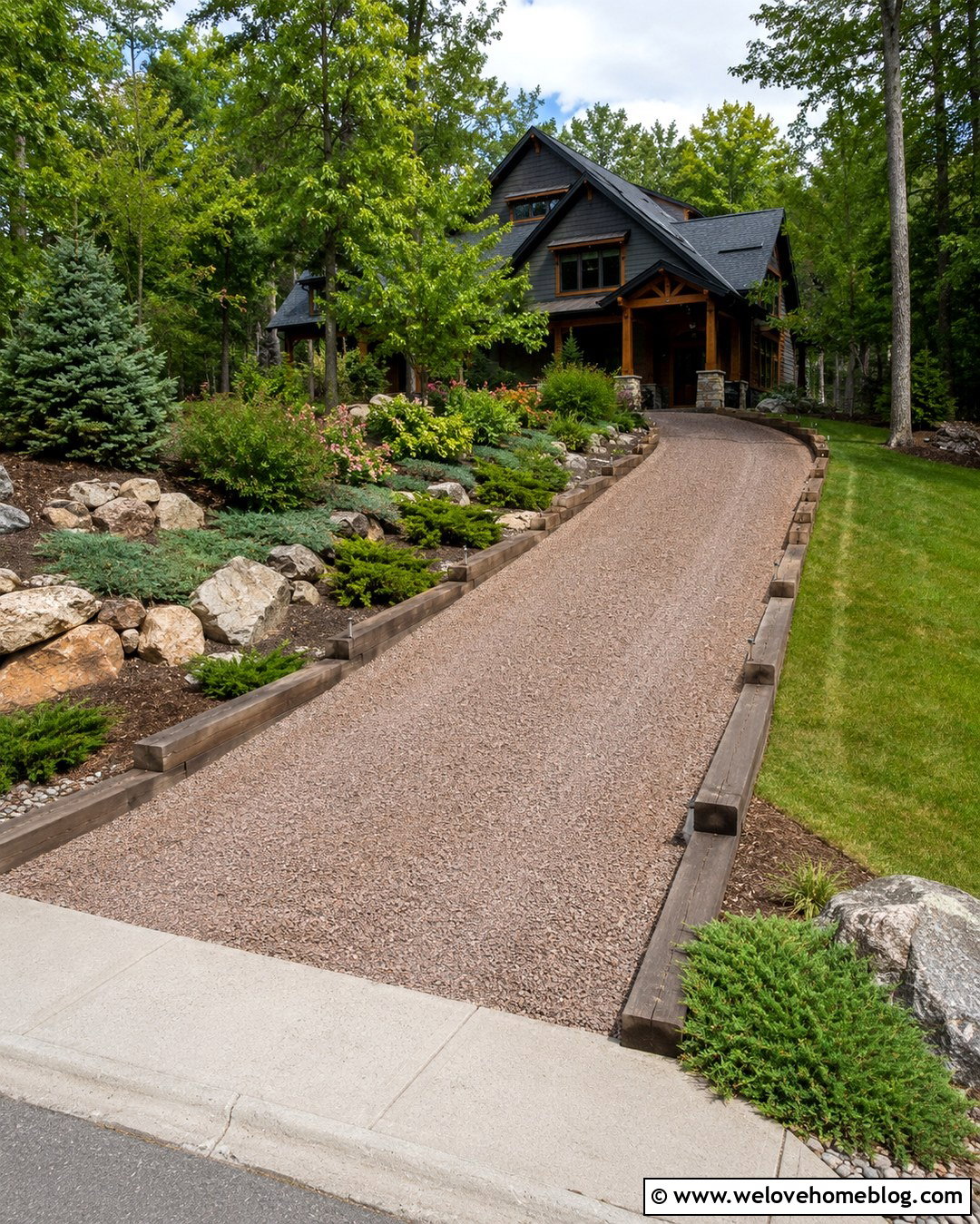
Timber sleeper planters bring warmth to tarmac and suit relaxed farmhouse or country settings. Arrange treated sleepers as low raised beds along the outside of a gently curved driveway, while using a secure brick or stone course directly beside the tarmac. This prevents the timber from becoming the only edge supporting the paved surface. Fill the planters with ornamental grasses, flowering perennials, evergreen shrubs, and trailing ground cover. Vary plant heights gradually so the beds frame the approach without blocking views. A gravel walkway can run behind one planter toward the front door. The mix of dark tarmac, warm wood, natural planting, and simple stone edging creates a welcoming complete design that feels practical rather than overly formal.
20. Red Tarmac Driveway With Gray Block Border
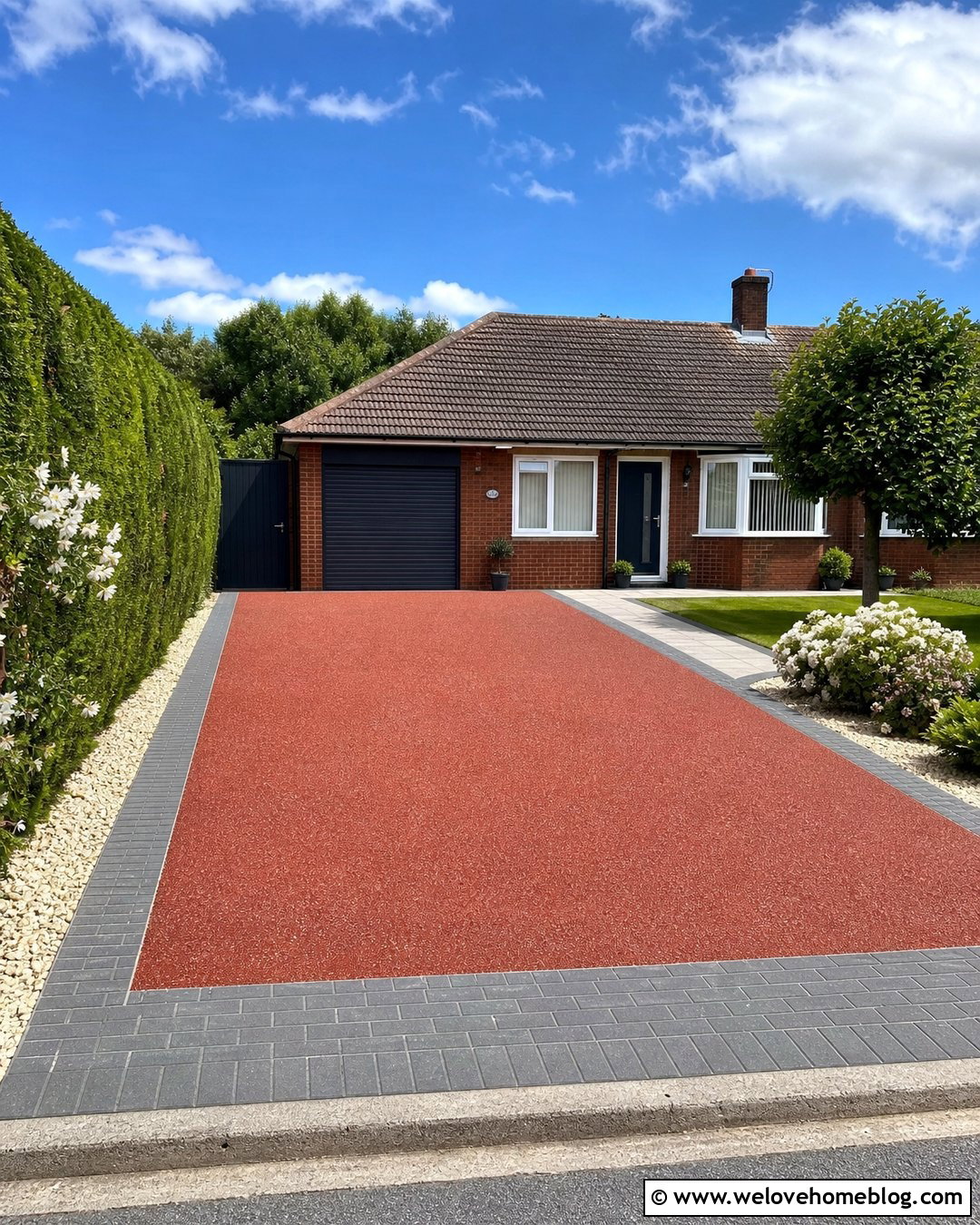
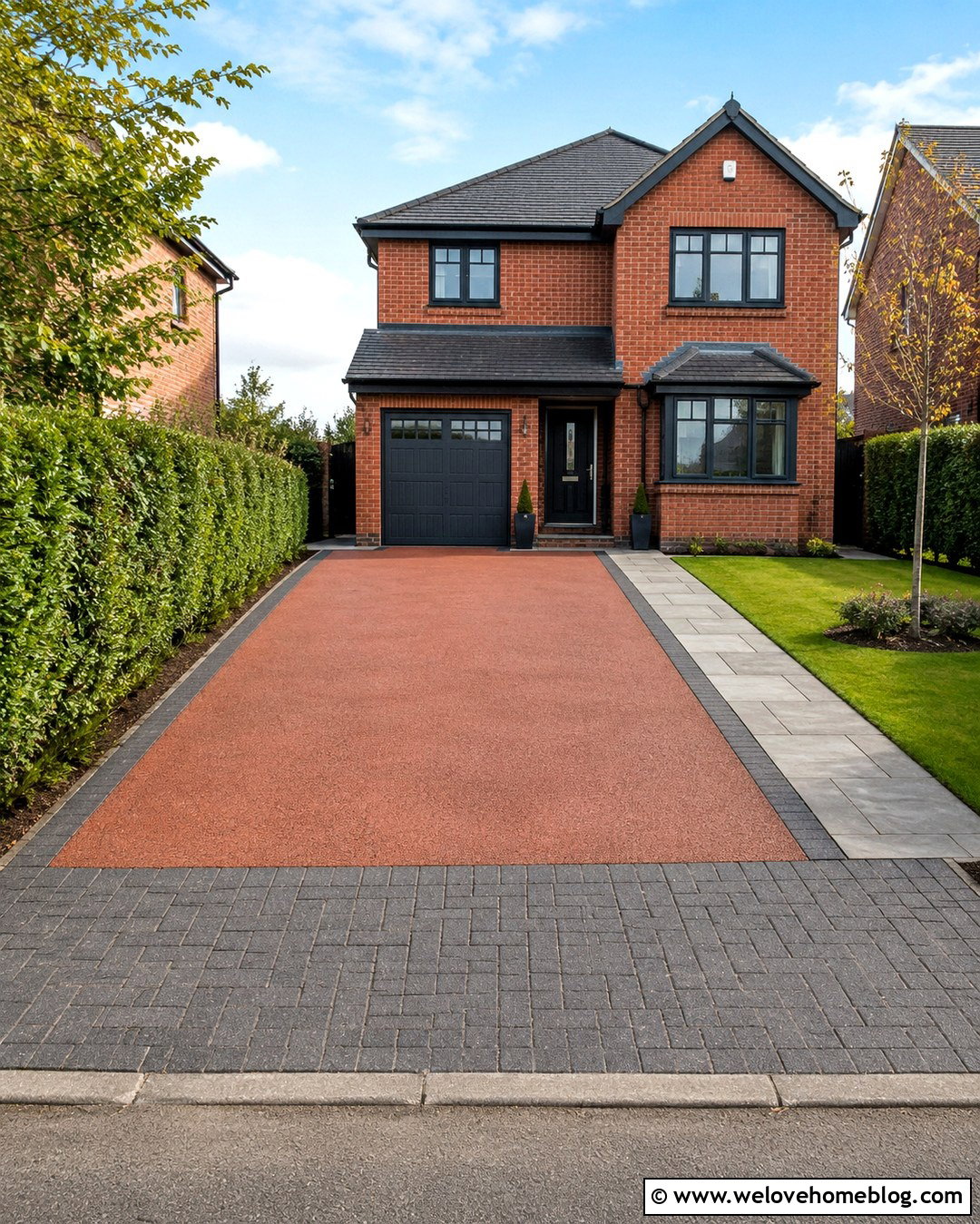
Red tarmac offers a warmer alternative to the usual black finish and can coordinate naturally with brick houses. Frame it with charcoal or medium-gray blocks to control the color and create a clear modern outline. This pairing works particularly well on a straight driveway leading to a red brick bungalow, craftsman home, or converted country property. Use a double block course at the entrance and a single course along the sides for subtle variation. Deep green hedges, pale gravel beds, and restrained white flowers will balance the stronger surface color. Before selecting red tarmac, compare samples beside the existing brickwork. Choosing complementary rather than identical reds will prevent the driveway and facade from blending into one flat field of color.
Conclusion:
The best border should do more than outline the edge of a driveway. It should connect the tarmac with the architecture, landscaping, entrance, and walkway while giving the complete frontage a clear visual structure. Brick and block paving provide reliable contrast, while granite, cobblestone, sandstone, gravel, and planted borders introduce natural texture. Curved and circular layouts benefit from flexible small-format materials, whereas modern straight driveways often suit crisp gray blocks, steel, or concrete curbs. Use these 20 Tarmac Driveway With Border Ideas as starting points, then adjust the colors, border width, planting, and entrance details to fit your property. A coordinated plan will always look more polished than several unrelated features.

Related posts:
Leave a Reply