
Red brick edging gives almost any driveway a warmer, more finished appearance. It can sharpen plain concrete, contain loose gravel, add contrast beside black asphalt, and connect the driveway with brick details on the house. The best border also supports the complete layout rather than looking like an added strip. Brick can sit flat for easy mowing, stand upright as a small curb, form decorative patterns, or widen near the street to create a welcoming apron. Proper groundwork matters because a stable base helps the bricks remain aligned under weather and vehicle pressure. () Whether your property is traditional, modern, rustic, or cottage-inspired, the following 20 red brick driveway edging ideas offer practical ways to improve its structure and curb appeal.
1. Concrete Driveway With Red Brick Soldier Course Edging
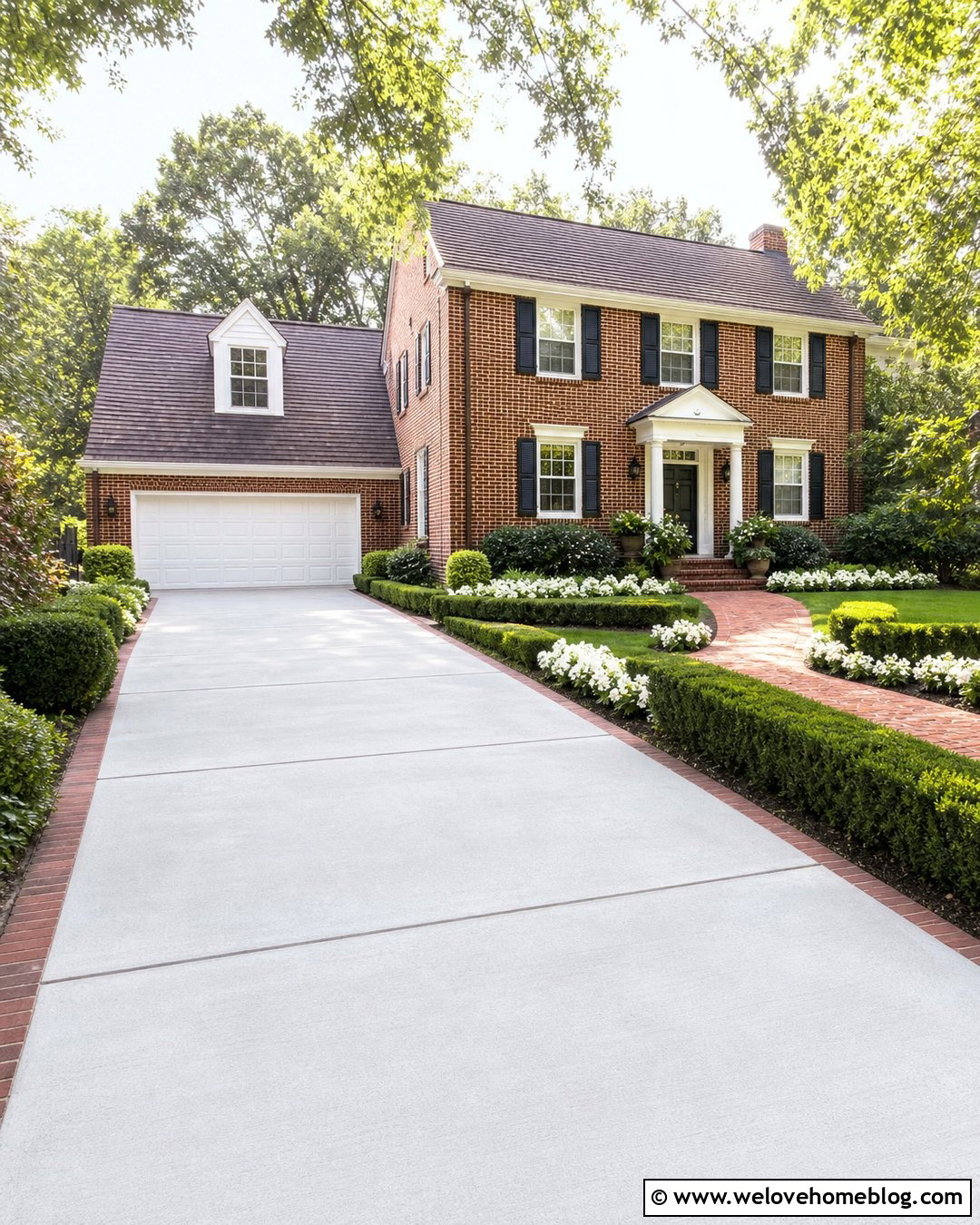
A straight, broom-finished concrete driveway becomes much more inviting when framed by red bricks in a soldier course. In this layout, each brick sits perpendicular to the driveway, creating a substantial border without appearing overly decorative. Keep the bricks flush with the concrete and surrounding lawn for simple mowing and a smooth transition. A narrow planting bed filled with boxwoods, ornamental grasses, or white flowers can soften one side. On the other side, an open lawn prevents the entrance from feeling cramped. This complete look suits Colonial, ranch, and traditional brick homes particularly well. Repeat the same brick around the front walkway or porch steps to make the driveway feel connected to the house rather than treated as a separate surface.
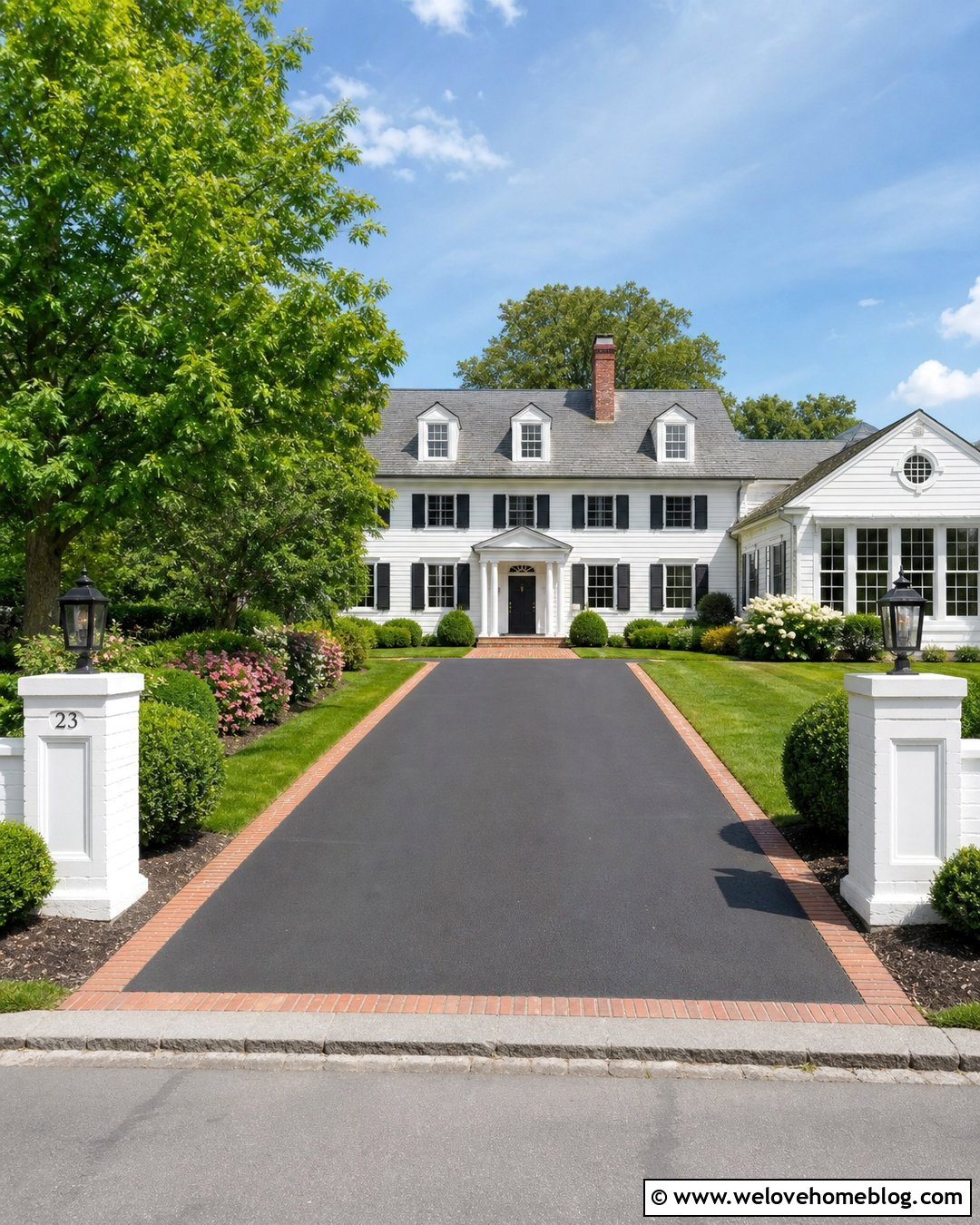
2. Black Asphalt Driveway With Flush Red Brick Edging
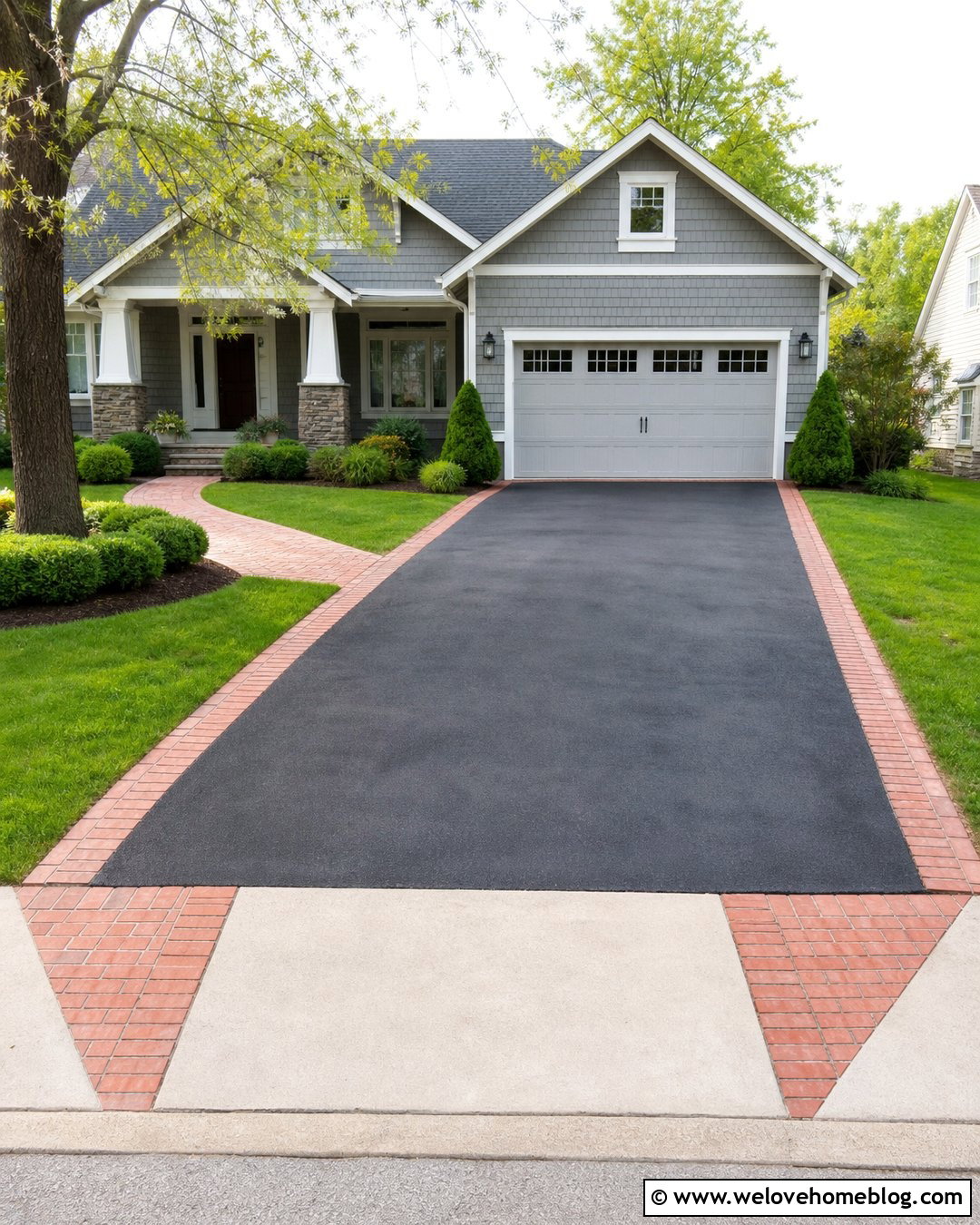
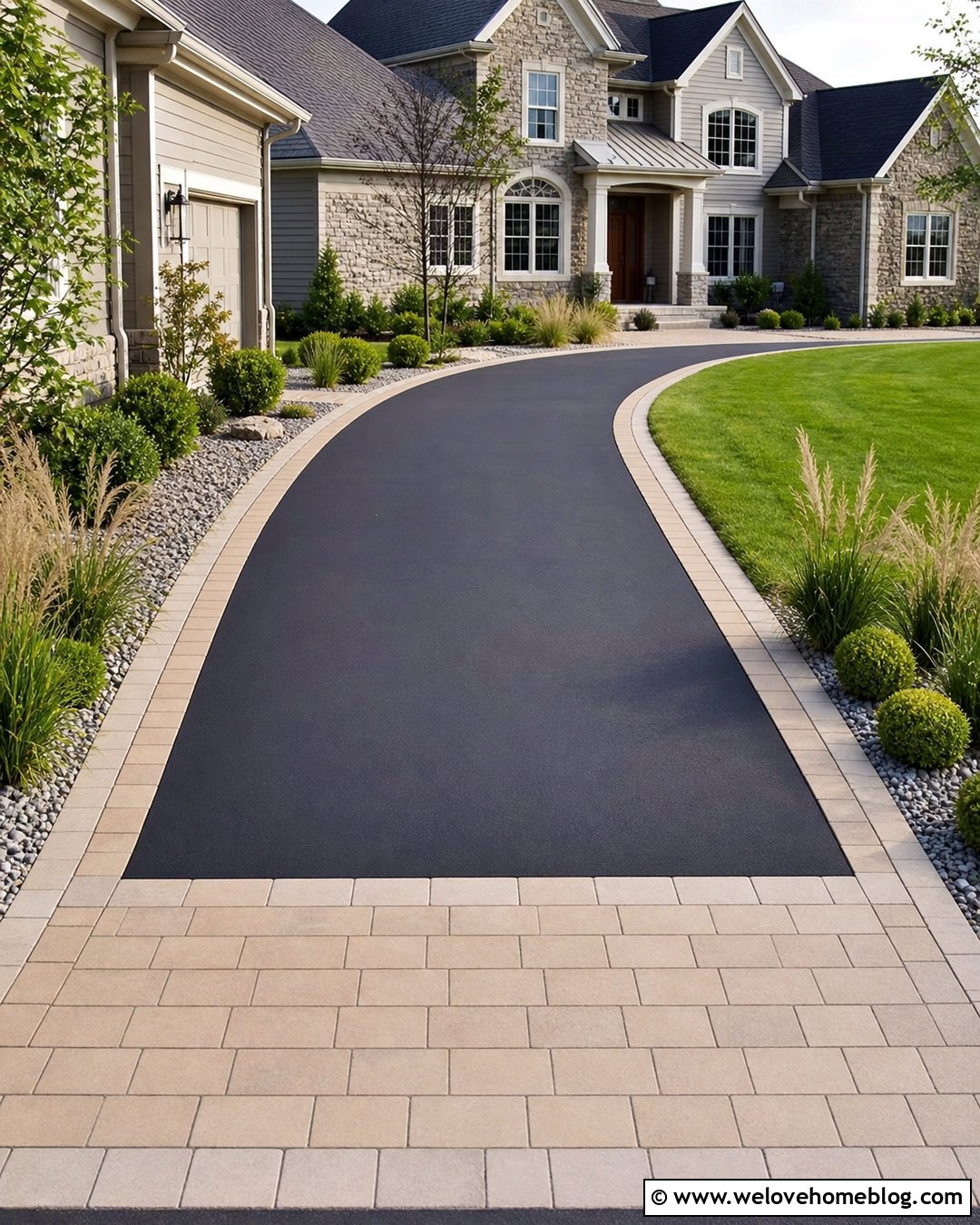
The rich contrast between black asphalt and red clay brick creates a clean, recognizable driveway border. Use a single row of bricks laid lengthwise and set nearly flush with the asphalt. The low profile keeps the design practical while giving the dark surface a warm architectural outline. This combination looks especially balanced beside a white Cape Cod, gray Craftsman, or light-sided suburban home. Frame the driveway with green lawn, compact evergreen shrubs, and a matching brick walkway near the garage. At the street, widen the edging into short brick wings that visually mark the entrance. Because asphalt edges can appear unfinished, the orderly brick line adds definition and makes a basic driveway look more intentional without covering the entire surface with expensive masonry.
3. Curved Gravel Driveway With Double Red Brick Edging
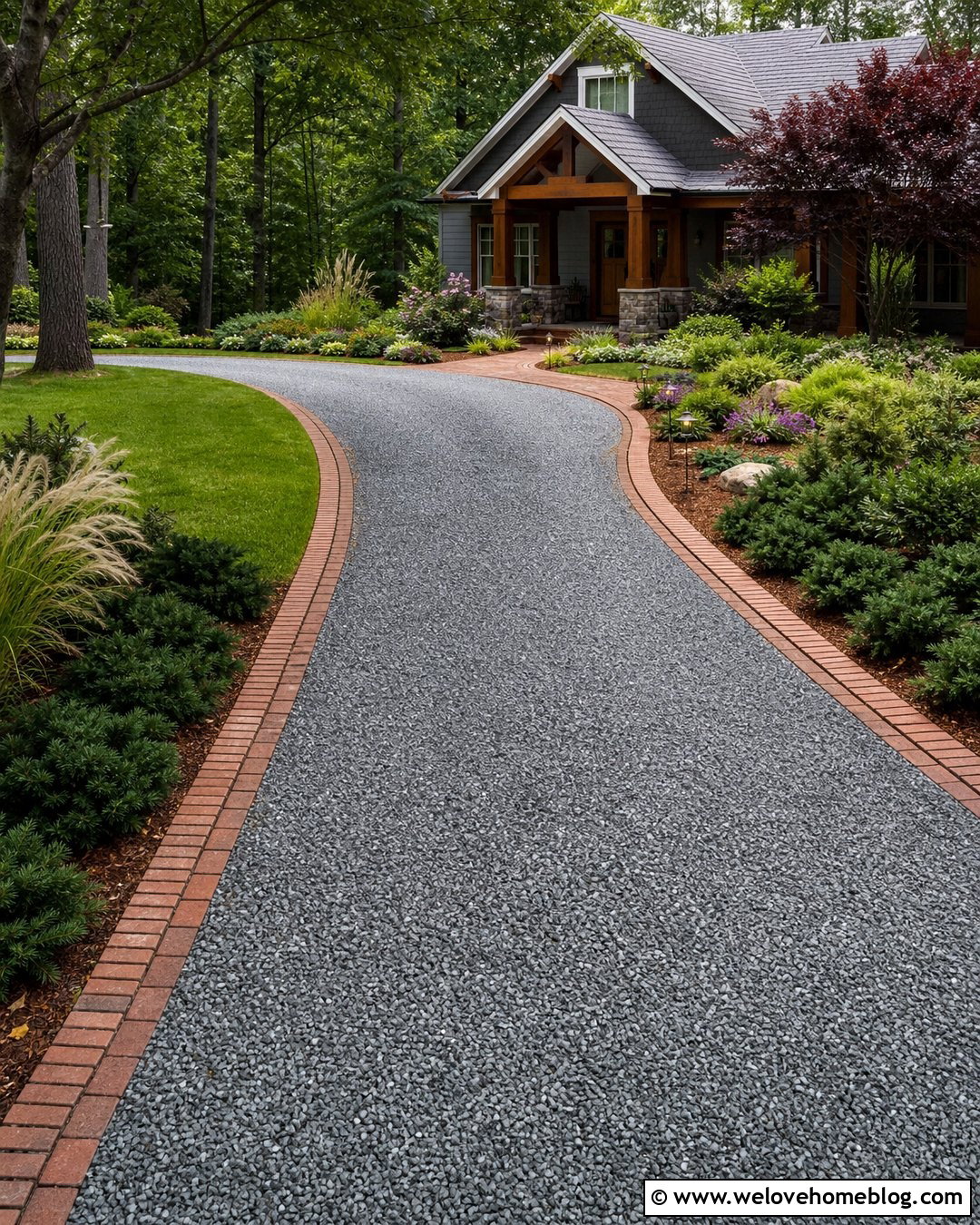
Loose gravel and a curved layout feel relaxed, but two rows of red brick can give the driveway a stronger, more polished shape. Lay the inner bricks lengthwise and the outer bricks perpendicular to create a broad border that helps visually contain the aggregate. Warm buff gravel or medium-gray crushed stone will contrast clearly with the brick. Follow the curve with layered landscaping, such as low junipers, fountain grass, flowering perennials, and one or two small ornamental trees. This complete design works well for country homes, Craftsman houses, and wooded suburban properties. Use a compacted base beneath the edging, particularly along outside curves where vehicle tires may apply pressure. The wider brick band also creates a noticeable line when viewed from the street.
4. Exposed Aggregate Driveway With Herringbone Brick Edging
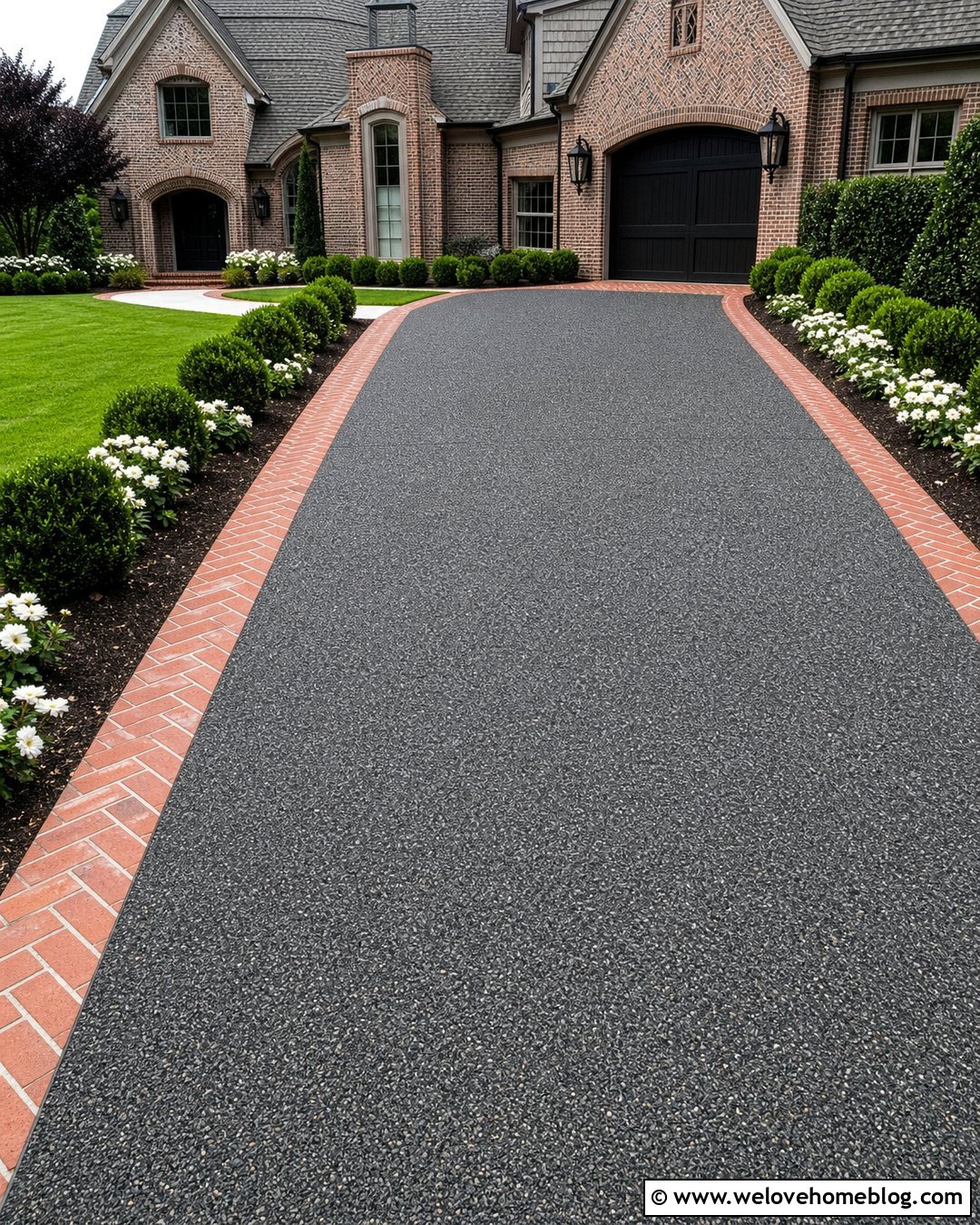
Exposed aggregate already has plenty of texture, so a narrow herringbone brick border adds detail without competing with the surface. Choose red clay pavers with slightly varied tones and arrange them in a compact zigzag band along both sides. A charcoal or gray aggregate driveway will make the brick colors appear richer. Keep planting simple with clipped shrubs, broad lawn panels, and a clean concrete walkway leading to the entrance. This combination can complement a traditional home while still looking appropriate beside updated architecture. At the garage, continue the herringbone border across the driveway as a decorative threshold. The repeated pattern ties the edges together and creates a clear stopping point. A restrained brick width ensures that the driveway remains easy to navigate and visually balanced.
5. Circular Gravel Driveway With Raised Red Brick Curbs
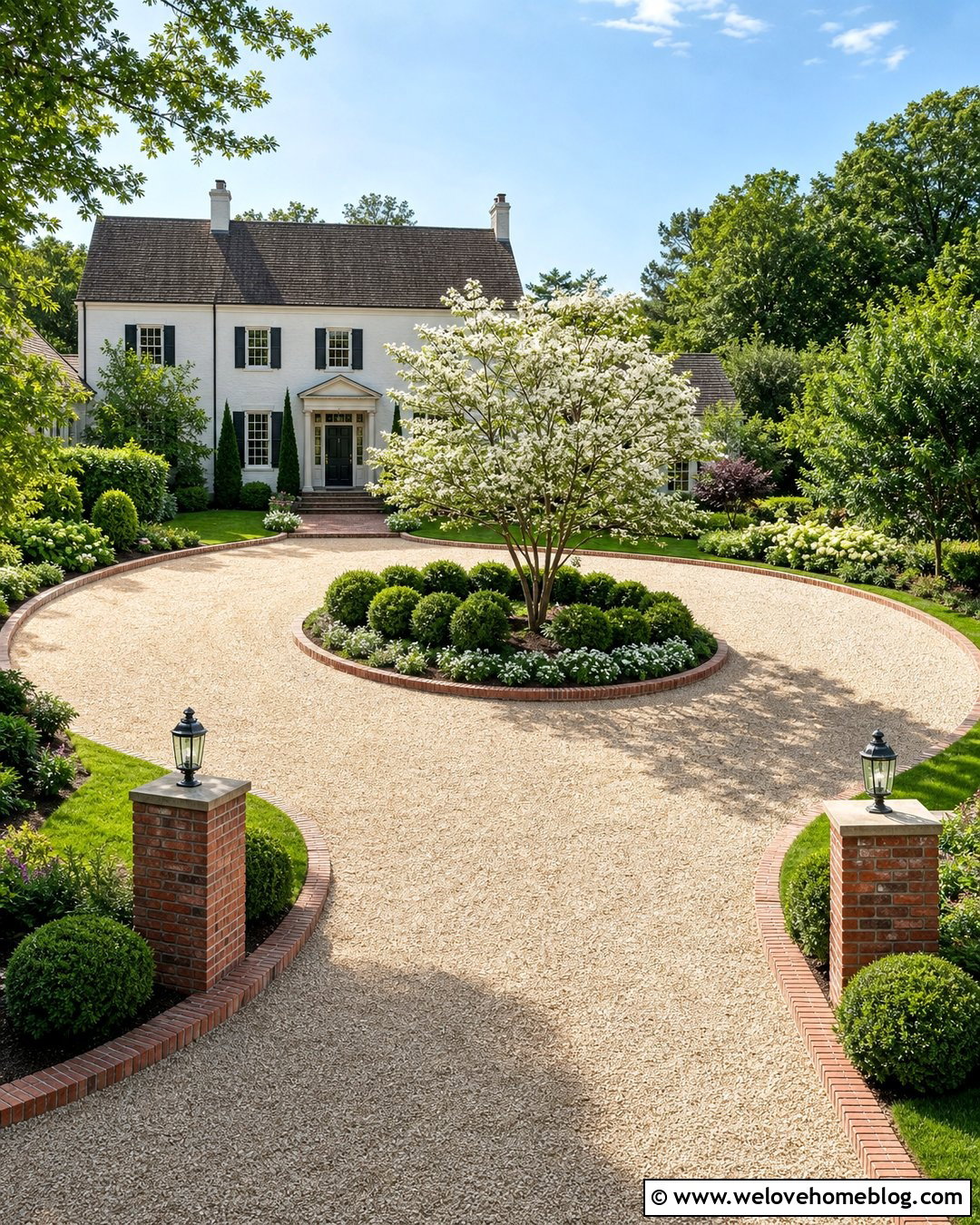
A circular gravel driveway benefits from sturdy borders that maintain its sweeping shape. Set red bricks upright or on edge to create low curbs around both the exterior boundary and the center island. Cream limestone gravel, tan pea gravel, or gray crushed granite can provide an attractive contrast. Fill the central island with a small flowering tree, low evergreen shrubs, and seasonal perennials that will not block views across the driveway. Near the street, add matching brick pillars or modest planting beds to emphasize the entrance. The raised edging gives this design a formal outline while helping reduce gravel migration into the lawn. Keep the curb low around vehicle turning areas, and allow enough driveway width so larger vehicles can follow the circle comfortably without touching the bricks.
6. Broom-Finished Concrete Driveway With Red Brick Apron
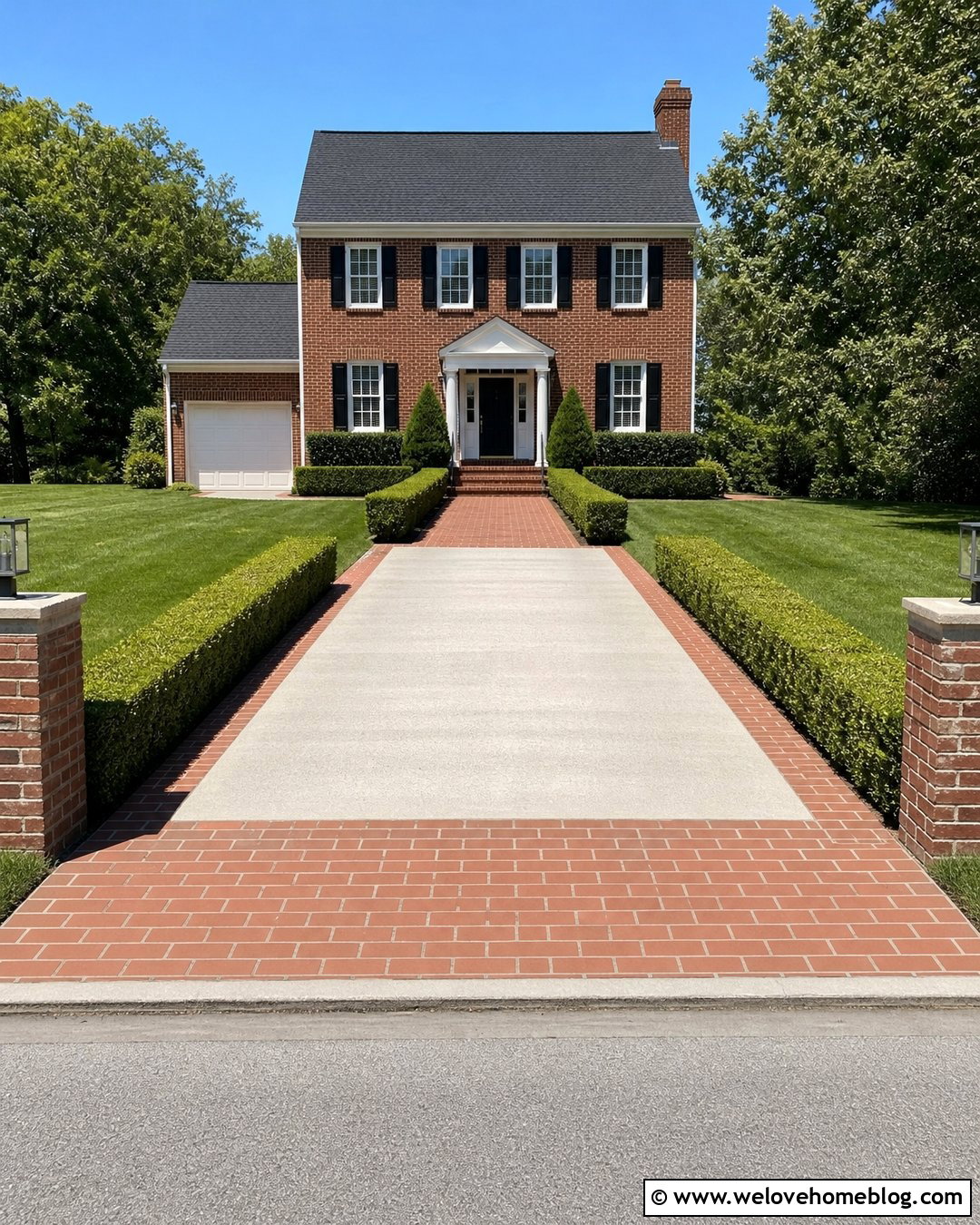
Instead of limiting the brick to two narrow side borders, expand it across the entrance to create a coordinated driveway apron. A red brick apron laid in running bond can span several feet from the street before transitioning into broom-finished concrete. Continue one matching brick row along each side so the entrance and driveway read as a single composition. This look is especially effective with a brick Colonial, Georgian home, or classic two-story house. Add symmetrical lawns, clipped hedges, and a straight walkway to reinforce the orderly layout. The brick apron provides color where the driveway is most visible from the curb. Use paving bricks rated for exterior vehicular applications rather than softer wall bricks, and create a stable base appropriate for local soil and weather conditions.
7. Pea Gravel Driveway With Raised Red Brick Edging
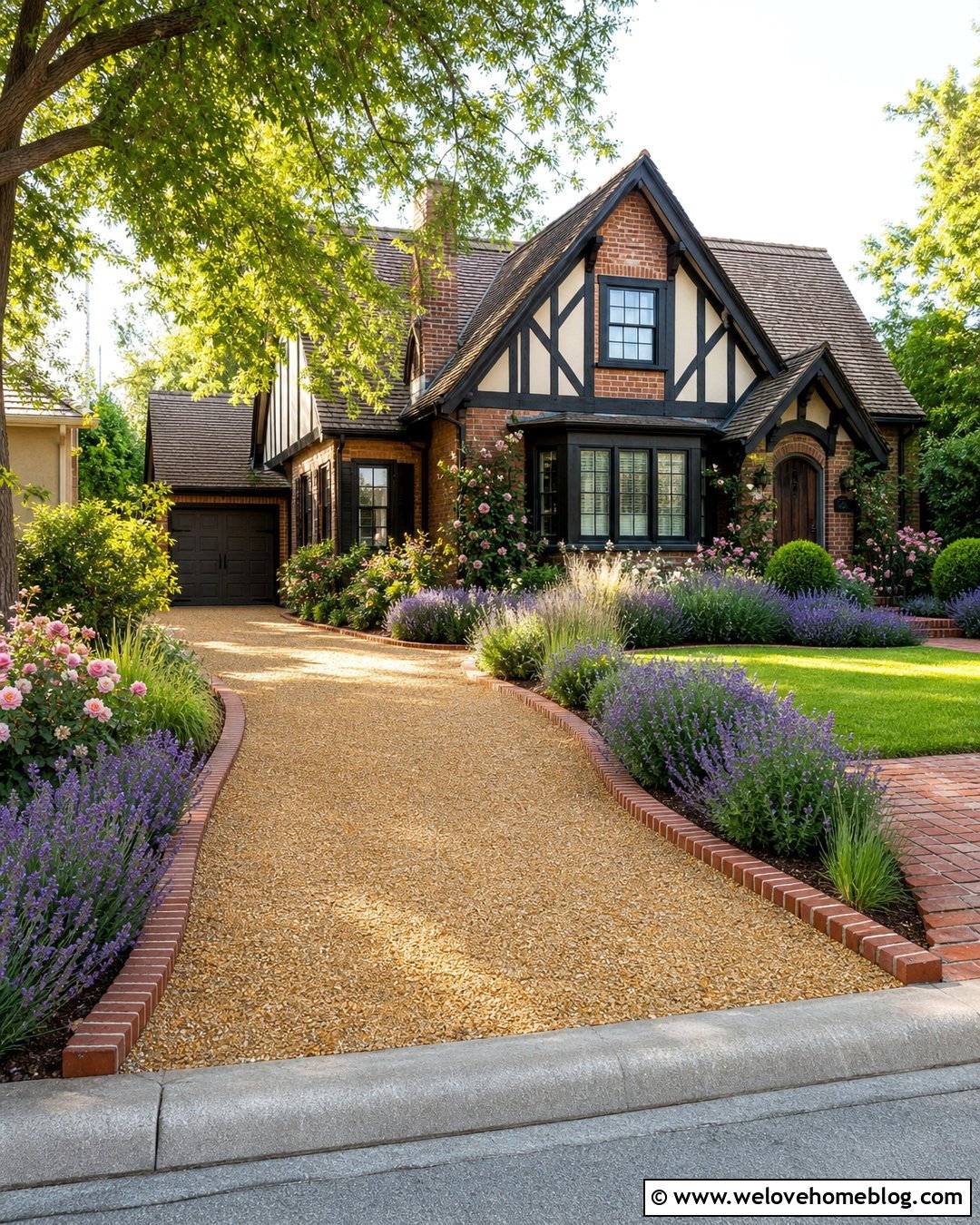
Golden pea gravel paired with raised red brick edging creates a warm, cottage-inspired driveway. Position the bricks upright to form a modest curb that keeps the rounded stones from spreading into adjacent beds. A gently curved layout will make the combination feel informal and welcoming. Plant lavender, catmint, compact roses, and soft ornamental grasses beyond the brick line, leaving a narrow maintenance strip where necessary. The driveway can lead to a cottage, Tudor-style house, or traditional home with warm exterior colors. At the garage entrance, lower the brick edge so tires can cross safely if additional parking is needed. Since pea gravel moves more easily than angular aggregate, plan for occasional raking and replenishment. The strong brick boundary keeps that maintenance manageable while providing year-round color.
8. Charcoal Resin-Bound Driveway With Red Brick Edging
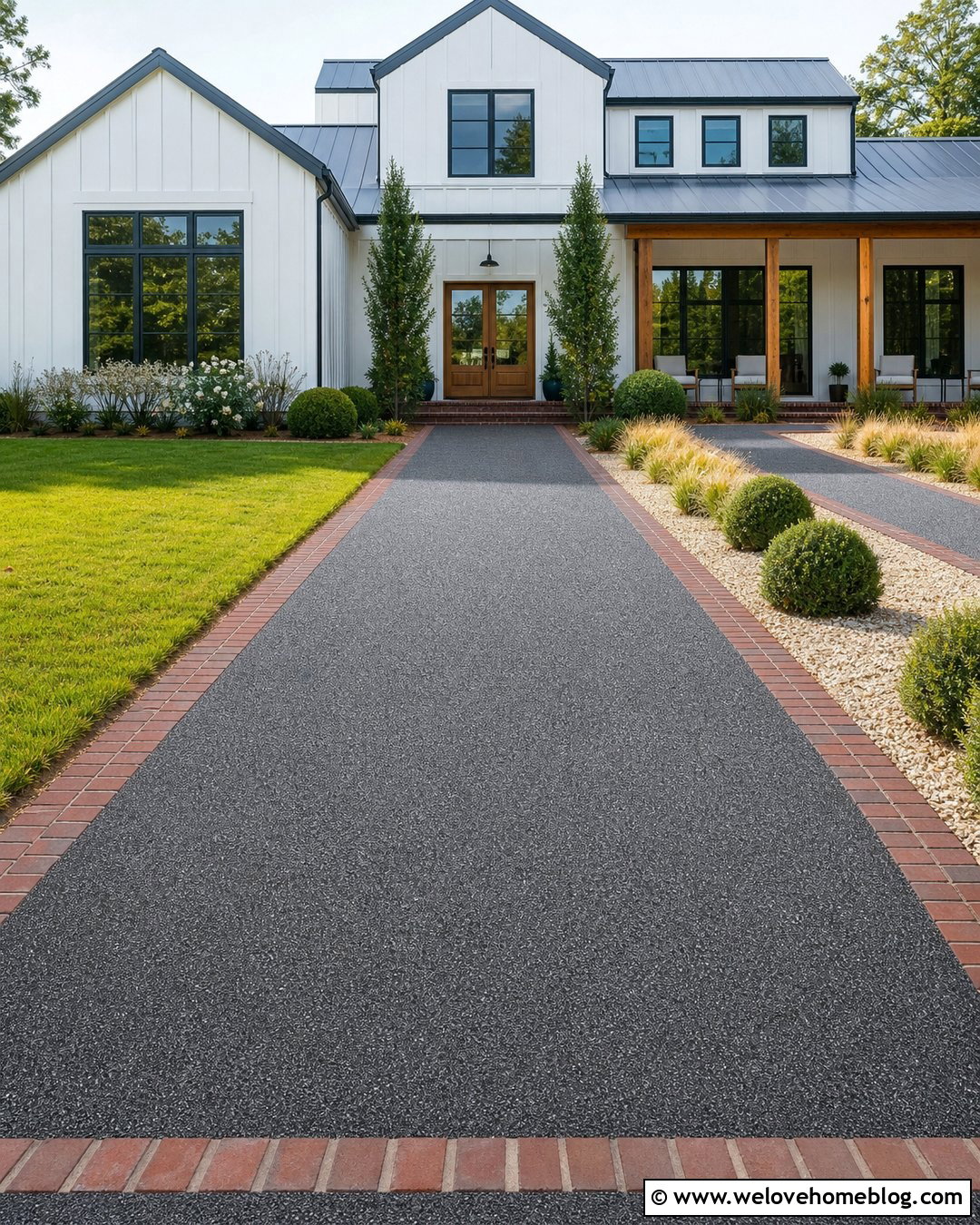
A smooth charcoal resin-bound driveway gains warmth from a crisp red brick perimeter. Use dark red clay pavers with minimal color variation for a tailored look, laying them lengthwise in one or two straight rows. The contrast works particularly well with a modern farmhouse or renovated suburban home that mixes white siding, black trim, and natural wood. Keep the driveway shape simple, then frame it with structured grasses, rounded evergreen shrubs, and pale gravel planting beds. A narrow brick band can also separate the driveway from a matching resin walkway. Align brick joints carefully around corners and drainage points so the finished border looks continuous. This design balances contemporary simplicity with a familiar traditional material, making it useful when updating an older property without removing all of its classic character.
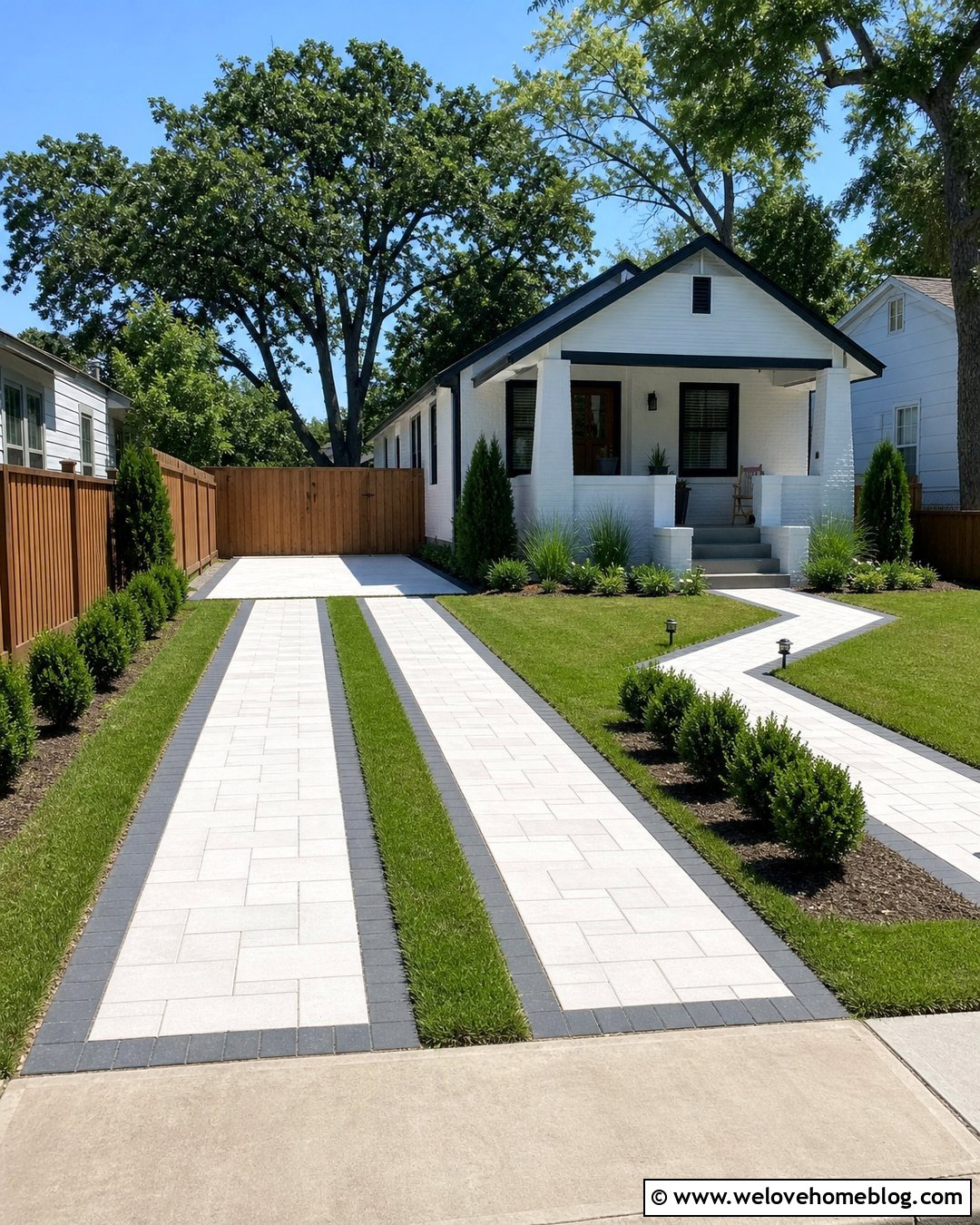
9. Concrete Ribbon Driveway With Red Brick Borders
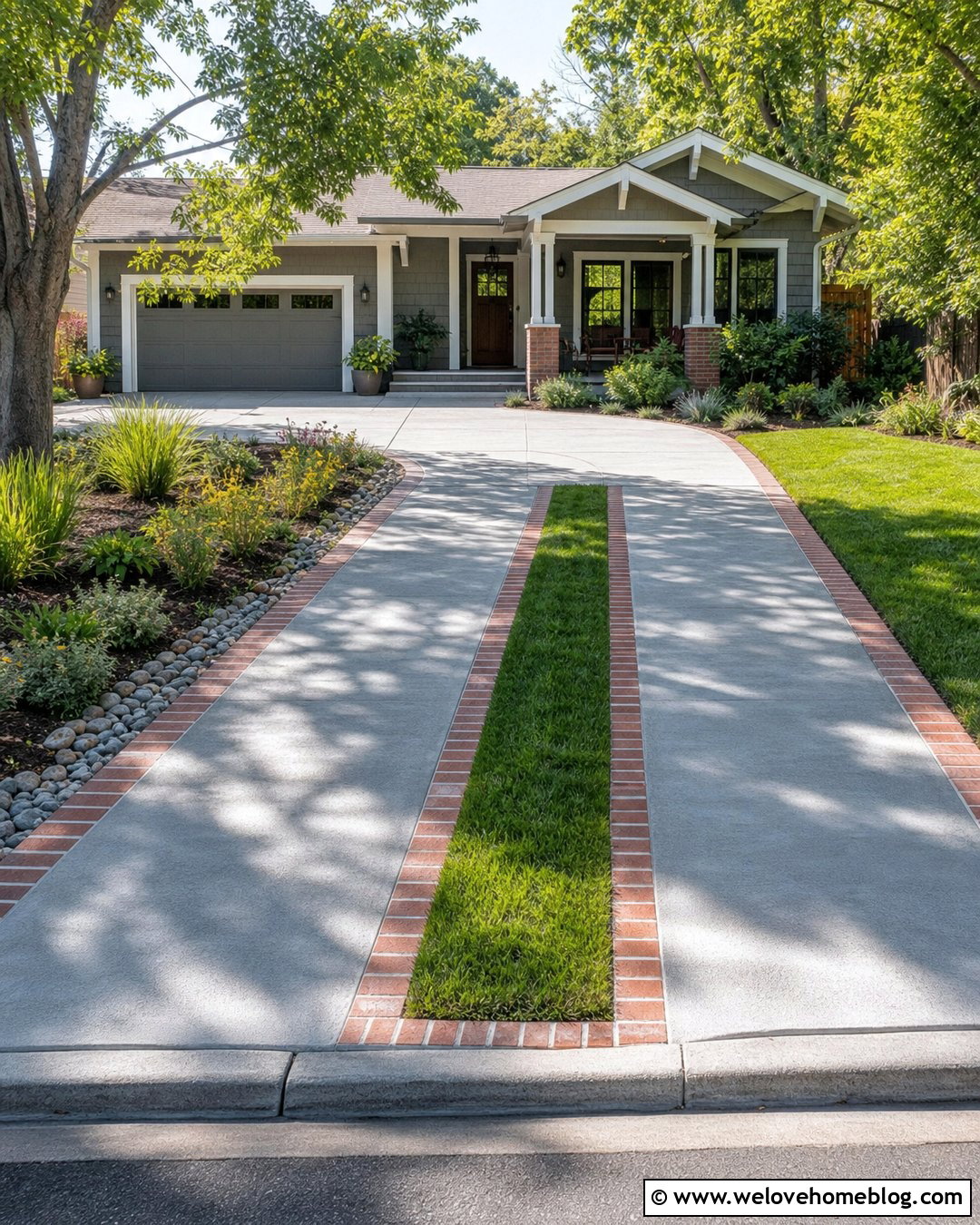
A concrete ribbon driveway uses two paved wheel tracks with a grass or ground-cover strip running through the center. Framing each outside edge with red brick gives the open design greater definition. Add another brick row beside the central green strip if you want a more structured appearance. This layout can reduce the visual mass of paving and looks natural in front of a Craftsman bungalow, cottage, or casual ranch house. Use durable turf suited to local conditions, or replace lawn with low-growing thyme where climate and traffic allow. Continue the brick into a small apron near the garage, where a full-width paved pad makes parking easier. The combination of green planting, pale concrete, and warm brick creates a driveway that feels integrated with the front yard.
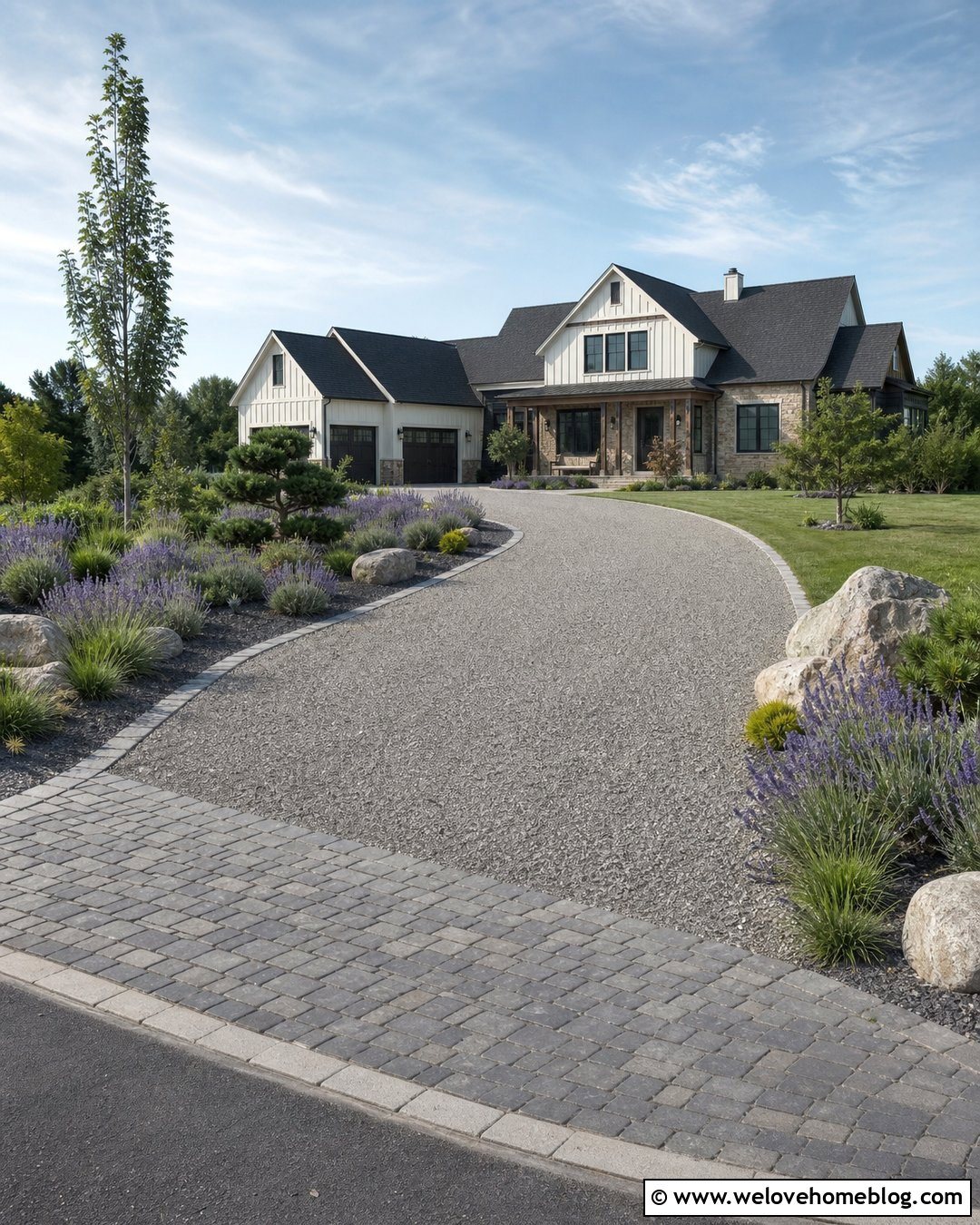
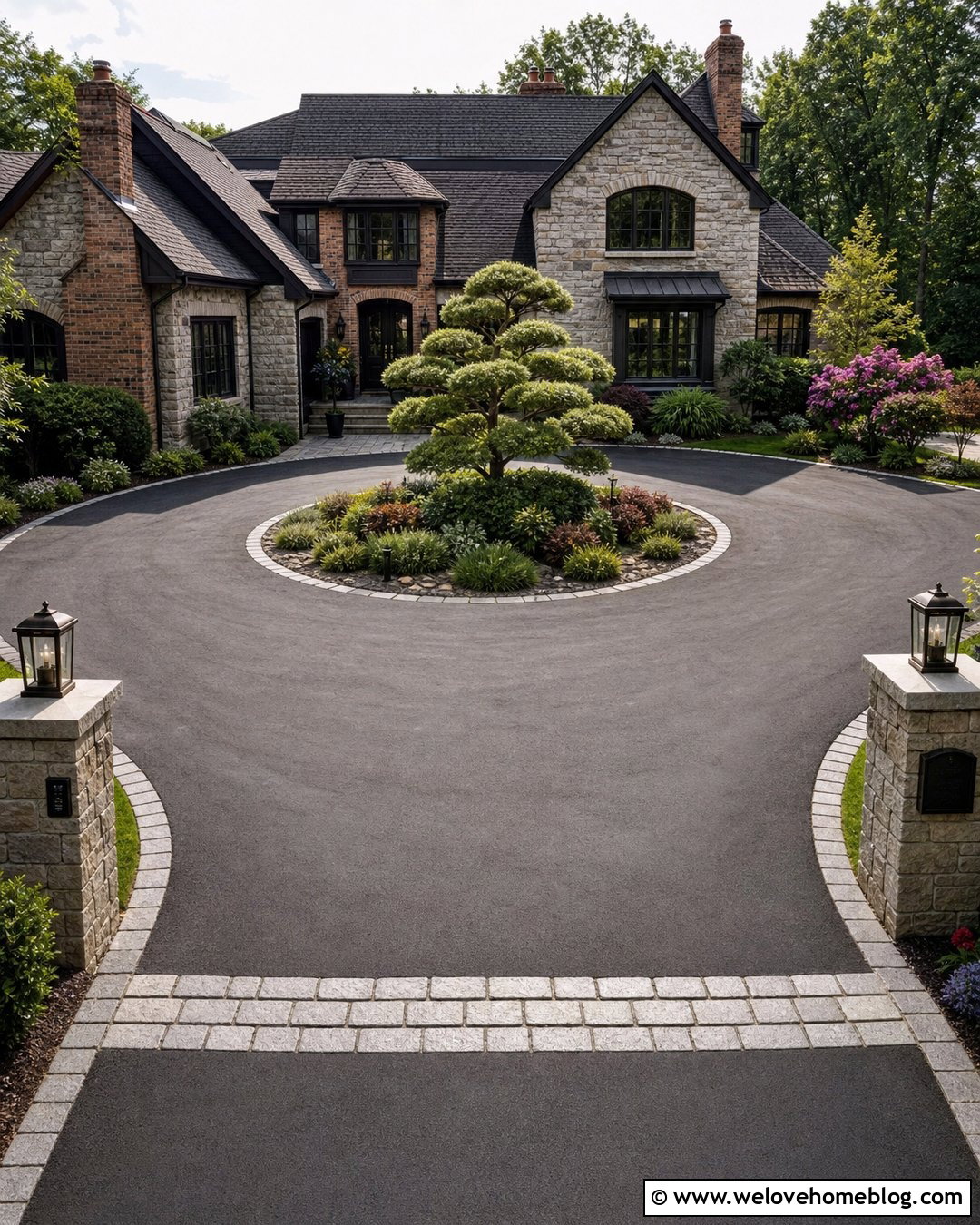
10. Reclaimed Red Brick Edging With Gray Gravel
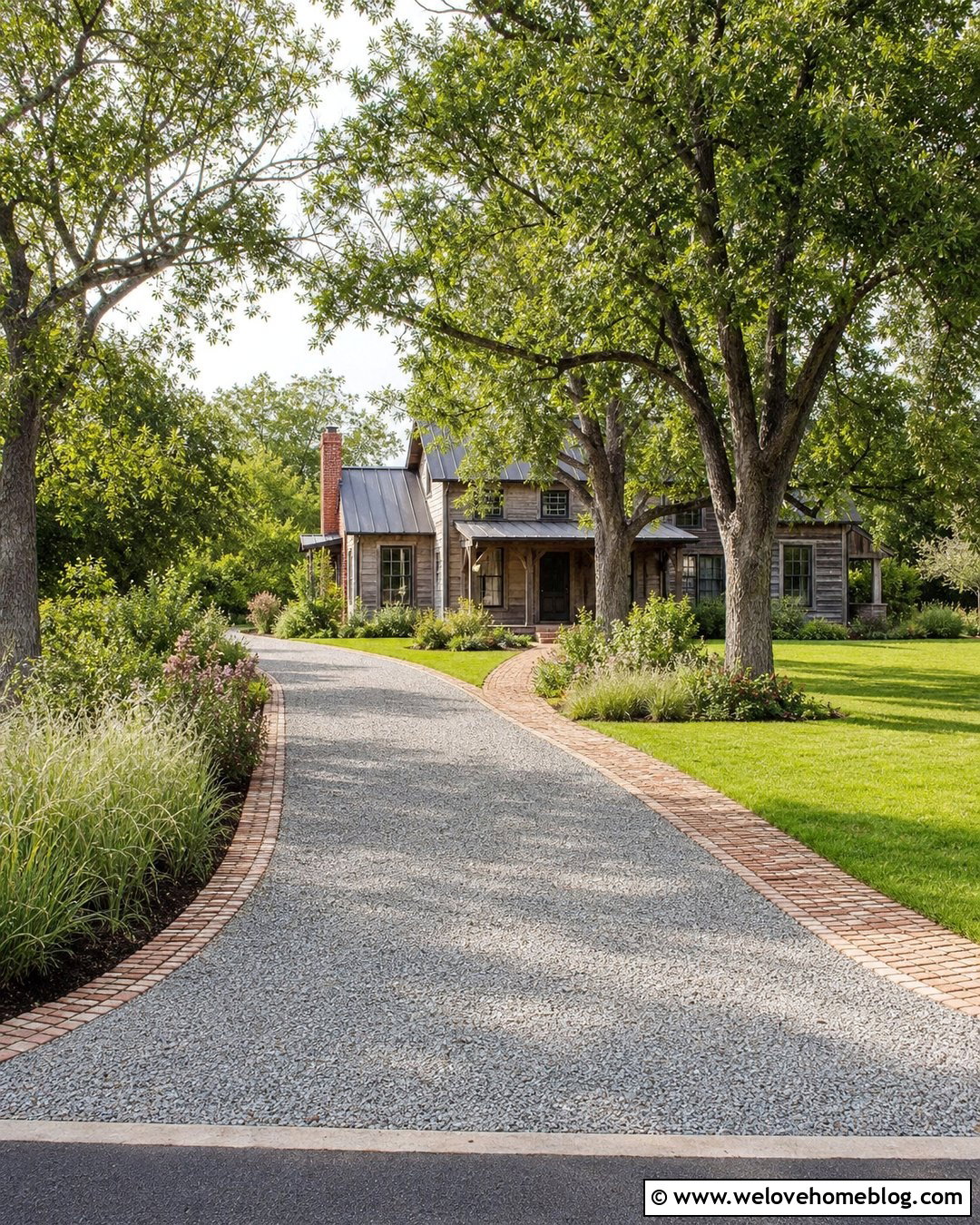
Reclaimed red bricks bring softened color and irregular texture to a gray gravel driveway. Lay them in a single flush row for a subtle boundary, or use a double row when the driveway is wide and the landscape has room for a heavier edge. The worn brick works best with a farmhouse, historic home, or rustic Craftsman exterior. Surround the drive with native grasses, informal flowering shrubs, and mature shade trees rather than highly clipped planting. A gently curved approach will reinforce the relaxed character. Sort salvaged bricks before installation and reserve the strongest, most consistent pieces for areas exposed to tire pressure. Chips and color variation can be attractive, but loose or badly deteriorated units should be avoided. A matching reclaimed-brick walkway completes the weathered, cohesive look.
11. White Gravel Driveway With Red Brick Edging
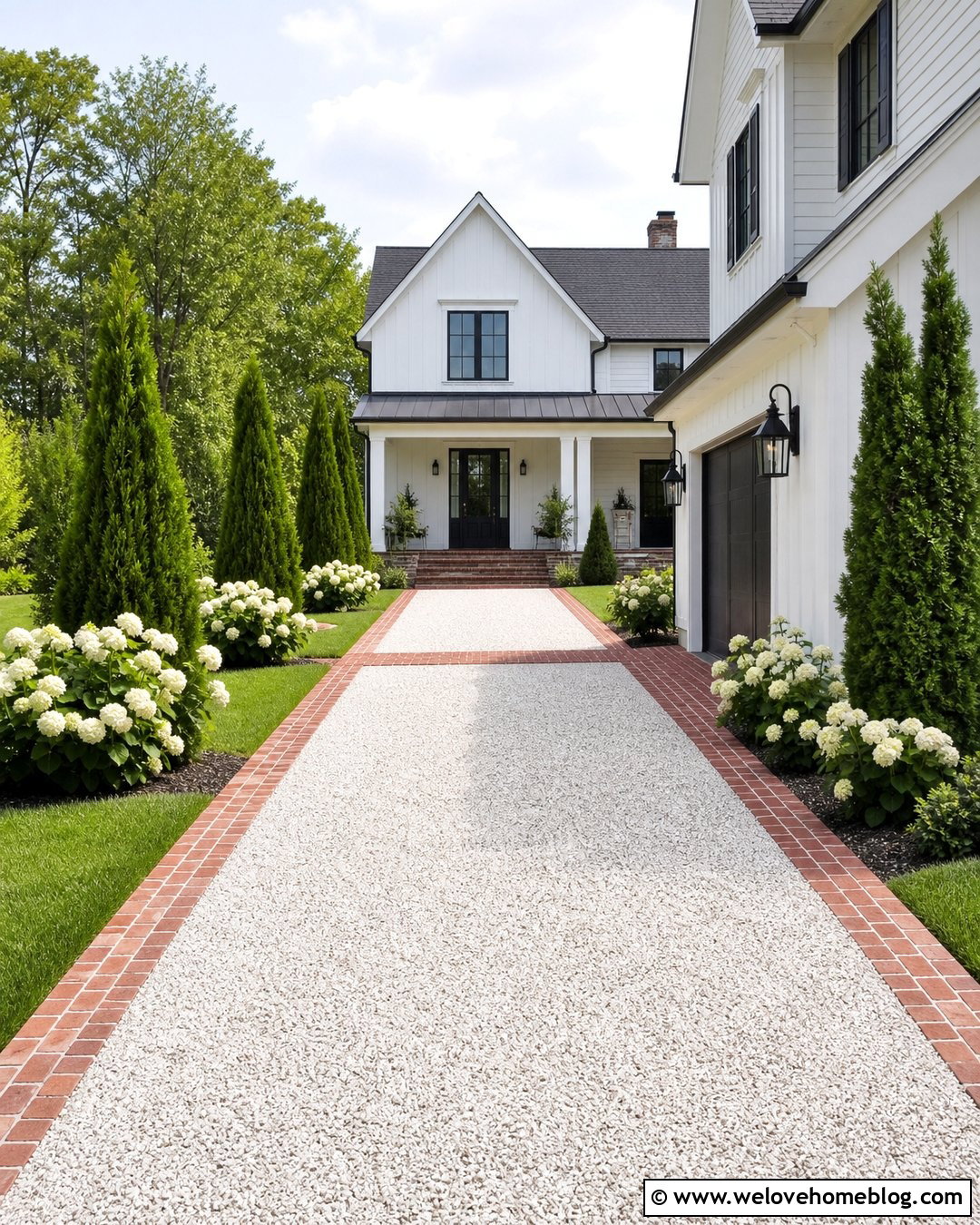
Bright white or pale limestone gravel makes red brick edging stand out clearly from the curb. Use two rows of bricks in running bond to create enough visual weight against the light-colored surface. A straight driveway leading to a white modern farmhouse can be framed with green lawn, hydrangeas, upright evergreens, and simple black entrance lights. Repeat the brick near the garage as a broad threshold or parking divider. Because pale gravel can show soil and leaf debris, maintain clean planting margins beyond the edging and choose mulch that will not wash easily onto the driveway. The strong red border makes the composition feel grounded rather than overly bright. It also introduces a traditional accent that complements porch brickwork, chimney masonry, or warm wood details elsewhere on the house.
12. Stamped Concrete Driveway With Red Brick Edging
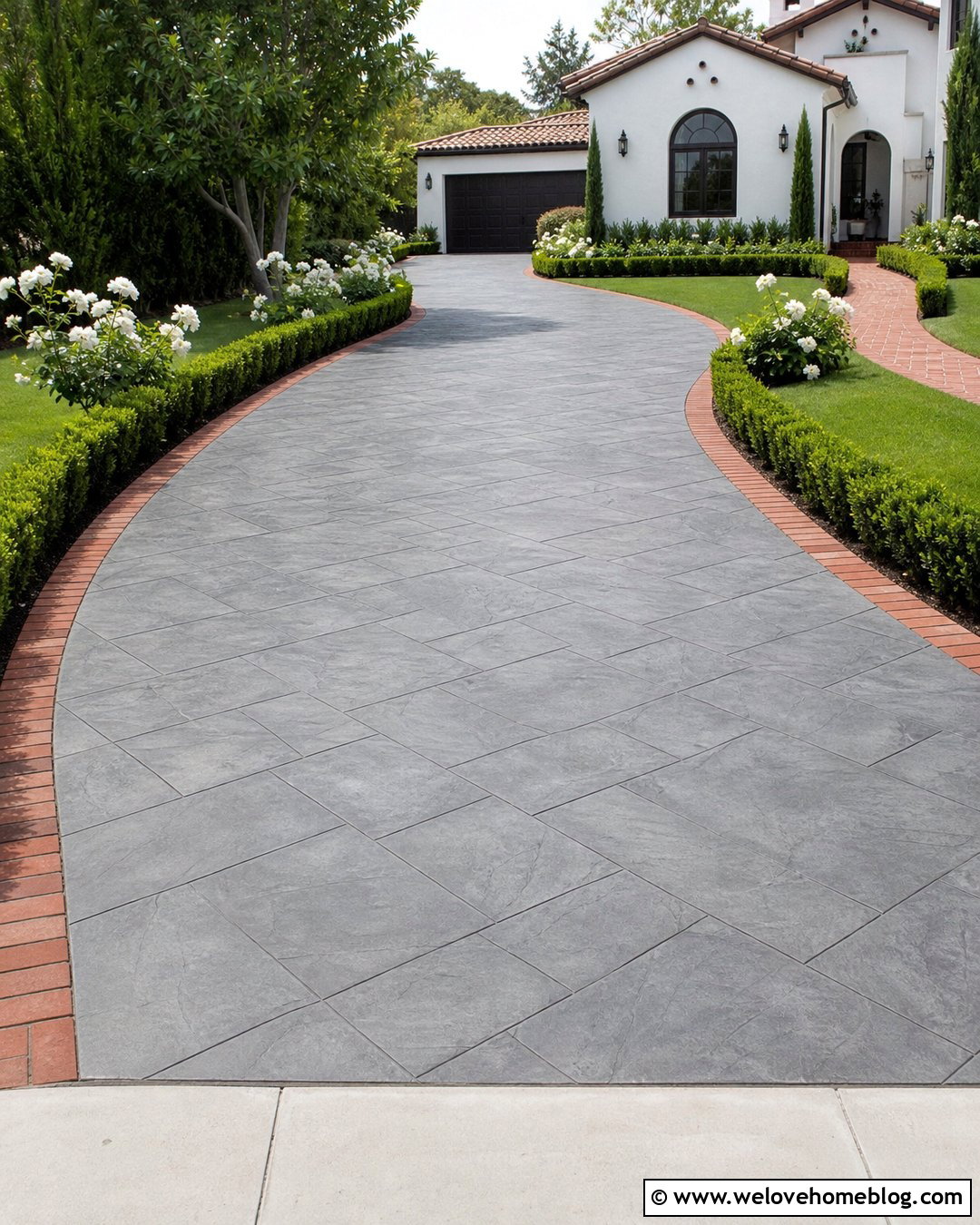
Stamped concrete can feel busy when combined with an elaborate border, so choose a simple red brick soldier course. Medium-gray concrete stamped to resemble large slate slabs provides a neutral center, while the brick adds warmth along its edges. Follow a curved driveway with the soldier course so the individual brick joints emphasize the movement of the layout. Low boxwoods, white roses, and broad areas of lawn create a calm frame around the textured paving. This complete look can suit a large traditional house or an updated Mediterranean-style property. Select brick colors that relate to the roof, facade, or front steps rather than introducing an unrelated bright red. A narrow concrete or mortar transition between materials can create a cleaner joint and simplify construction around irregular stamped edges.
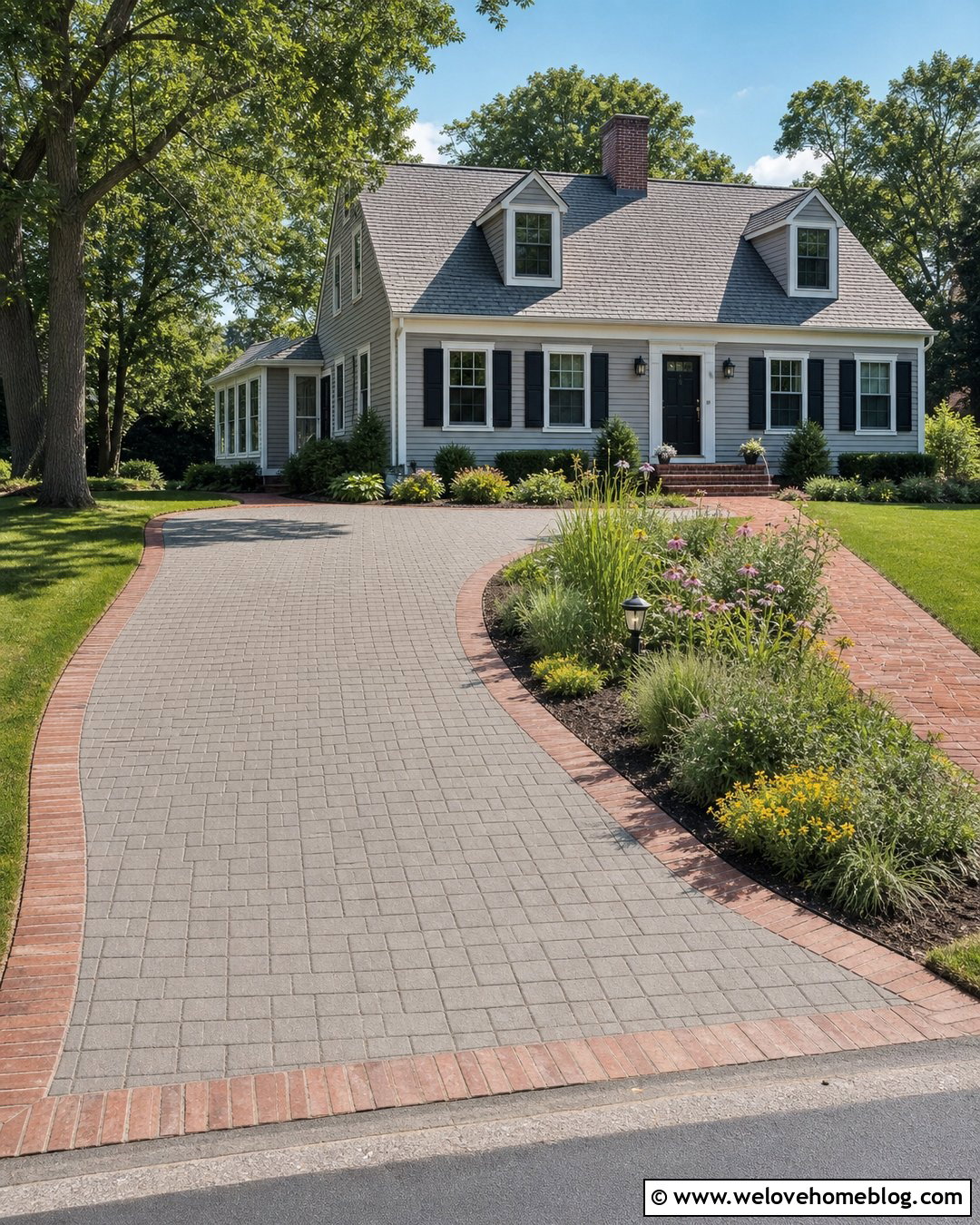
13. Gray Paver Driveway With Red Brick Border
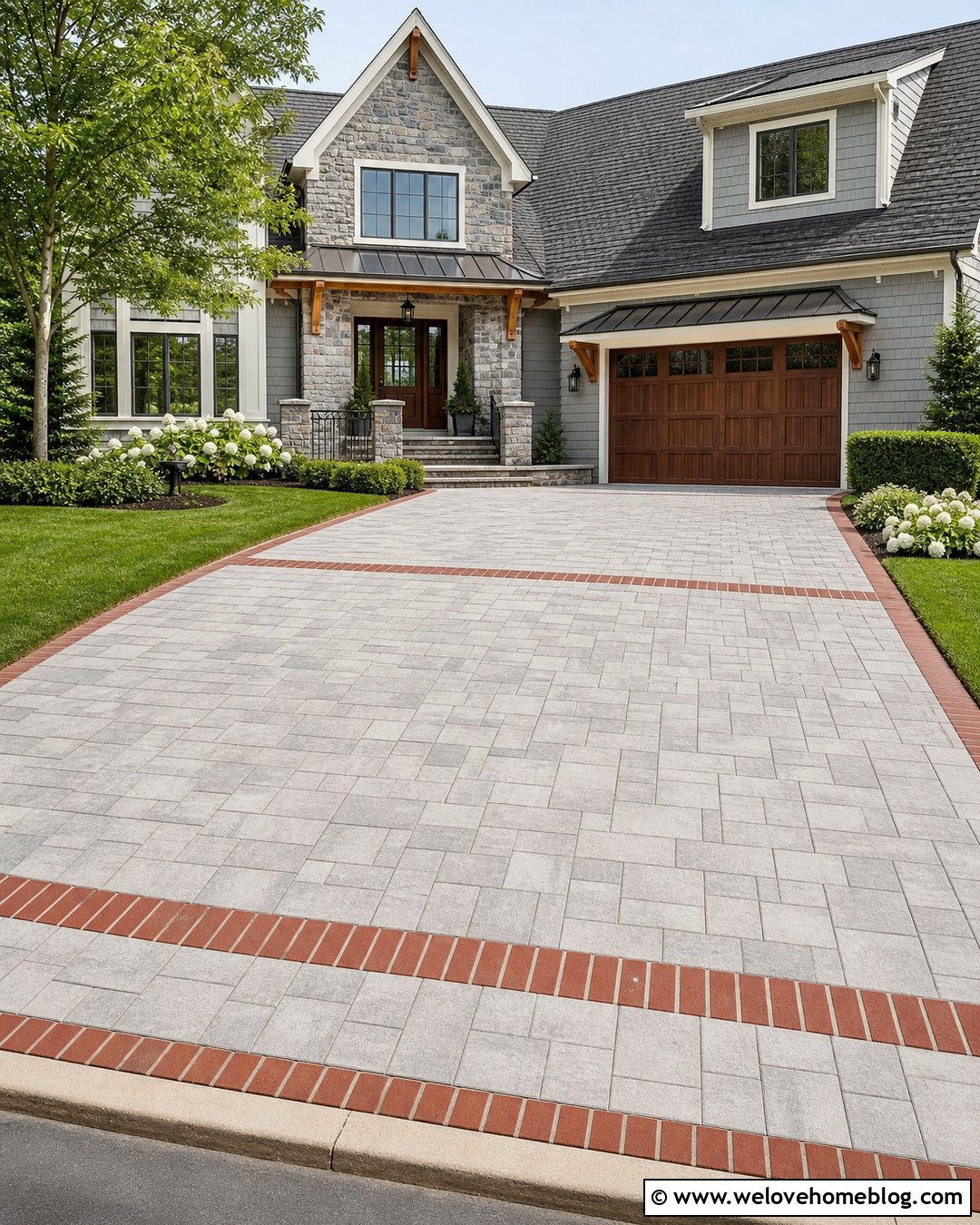
Gray concrete pavers surrounded by red brick create a layered masonry driveway with strong visual contrast. Choose large rectangular gray pavers in a running bond or modular pattern, then install a single soldier-course brick border along the sides. Add a second red brick band across the driveway near the street and garage to frame the main field. The design works well with a gray-sided Craftsman, light stone house, or transitional suburban home. Keep nearby planting beds simple with dark green shrubs and white flowers so the two paving colors remain the focus. Match the width of the border to the driveway scale; one row suits a narrow drive, while two rows can anchor a broad parking area. Consistent joint spacing will keep the mixed materials looking orderly and professionally planned.
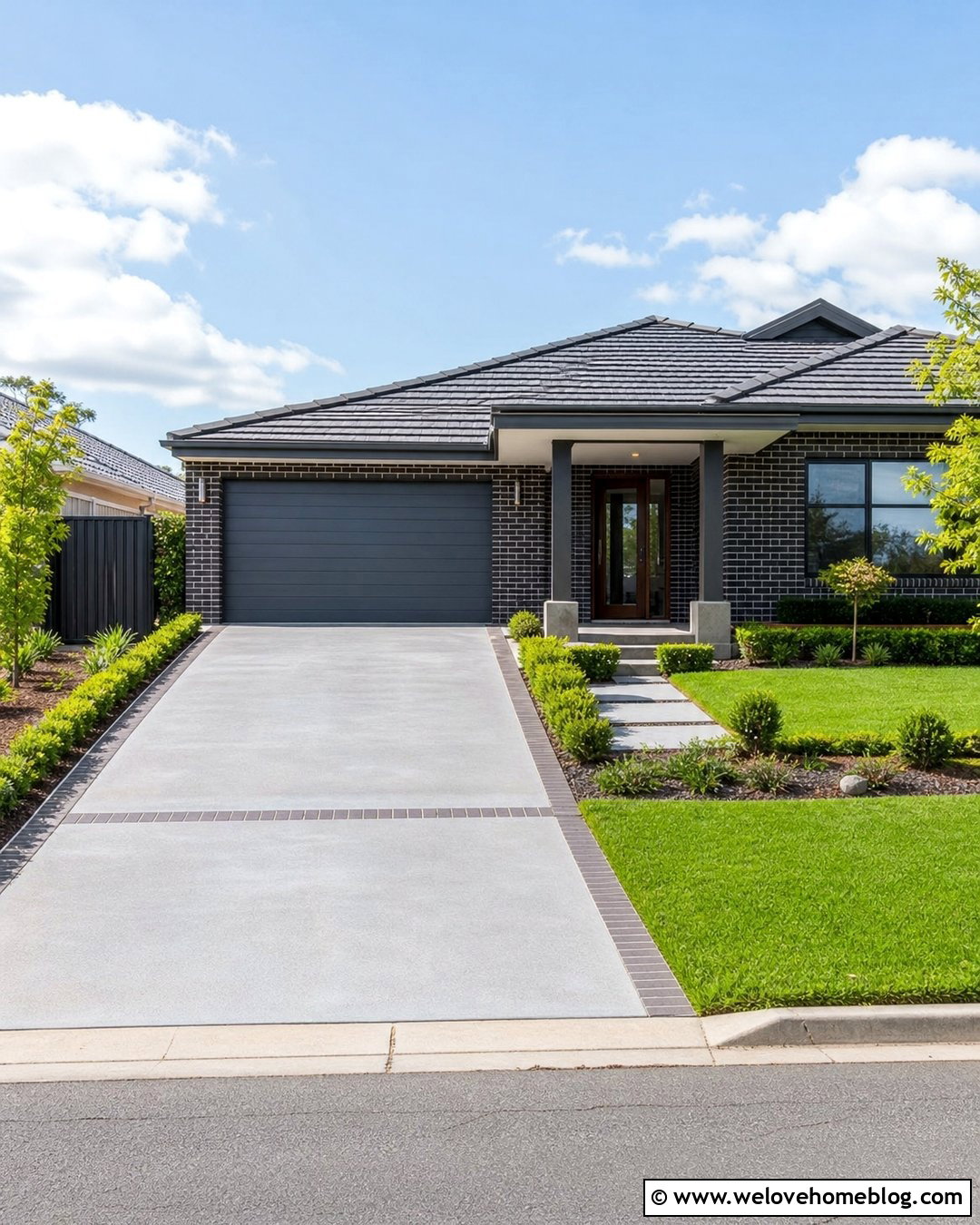
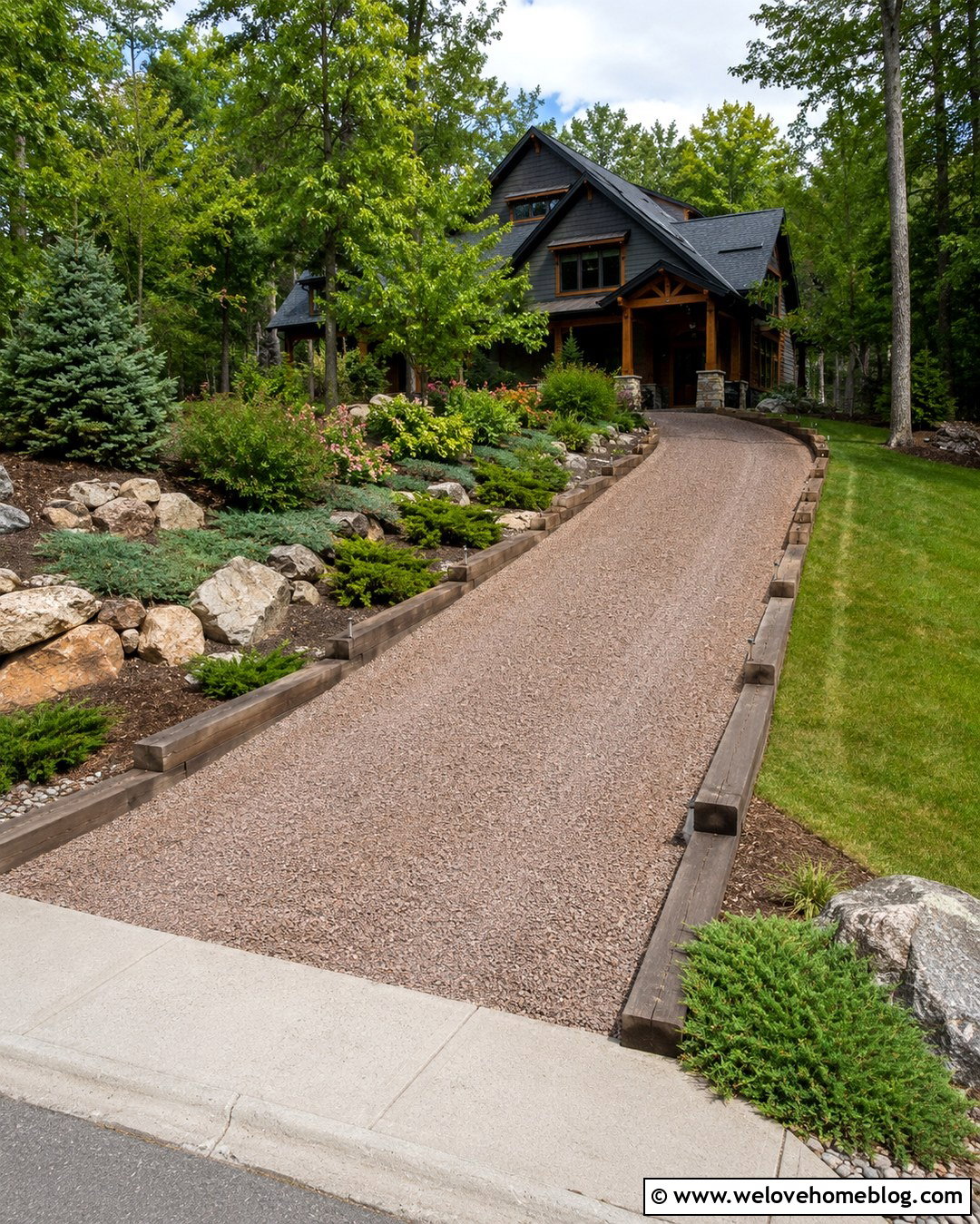
14. Sloped Asphalt Driveway With Red Brick Drainage Edging
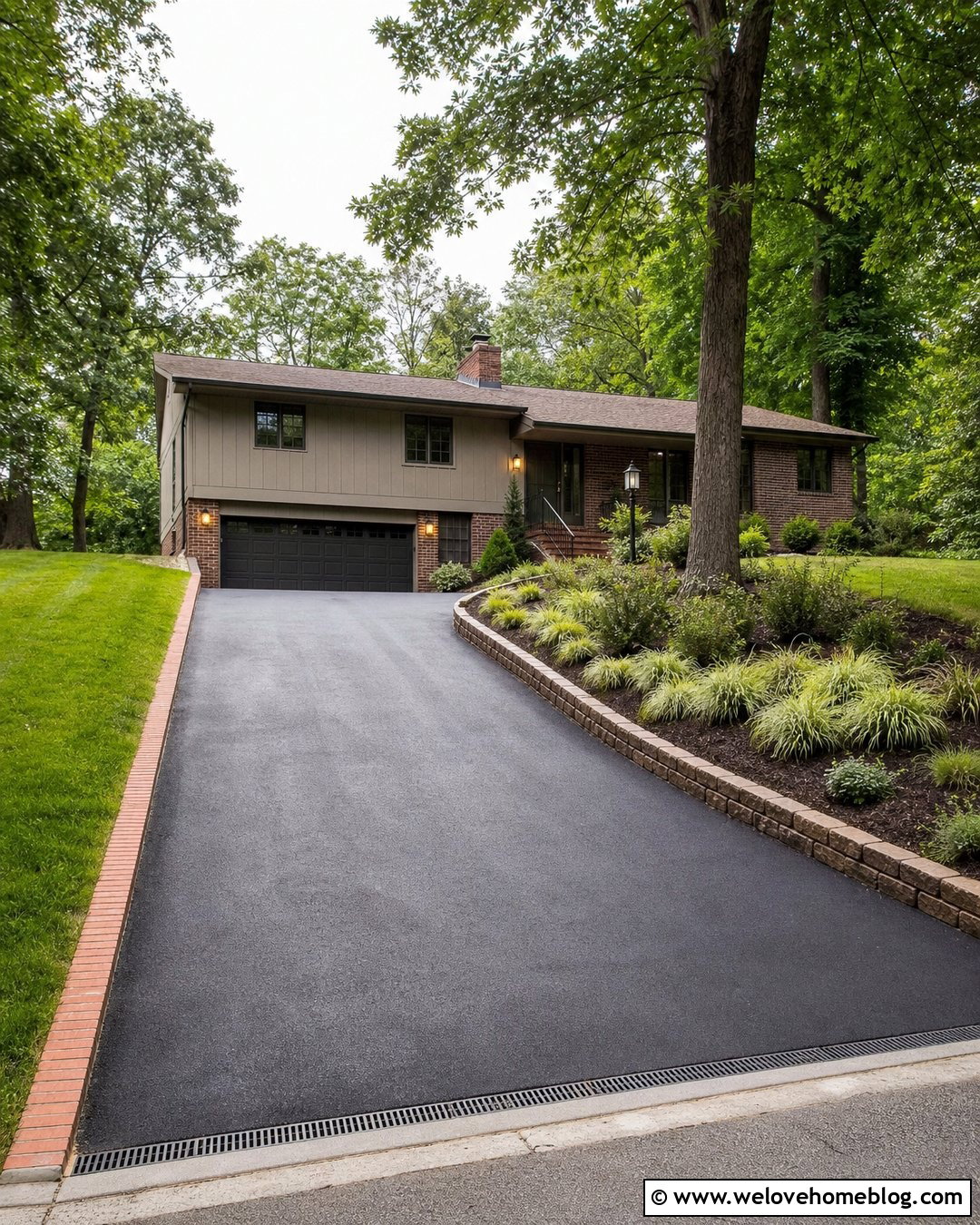
A sloped asphalt driveway needs an edging plan that considers runoff as well as appearance. Frame the higher side with flush red brick and use a slightly raised soldier course along the lower landscape edge, where appropriate. A discreet drainage channel near the garage can prevent the brick border from being expected to manage water on its own. Arrange rain-tolerant grasses and shrubs in the lower planting bed, while keeping the uphill side more open. The black asphalt, warm brick, and green planting produce a practical look for ranch, split-level, or wooded suburban homes. Avoid creating raised brick obstacles in vehicle paths or places where water could become trapped. Local grading and drainage requirements should guide the final construction, especially on steep properties or lots with frequent heavy rainfall.
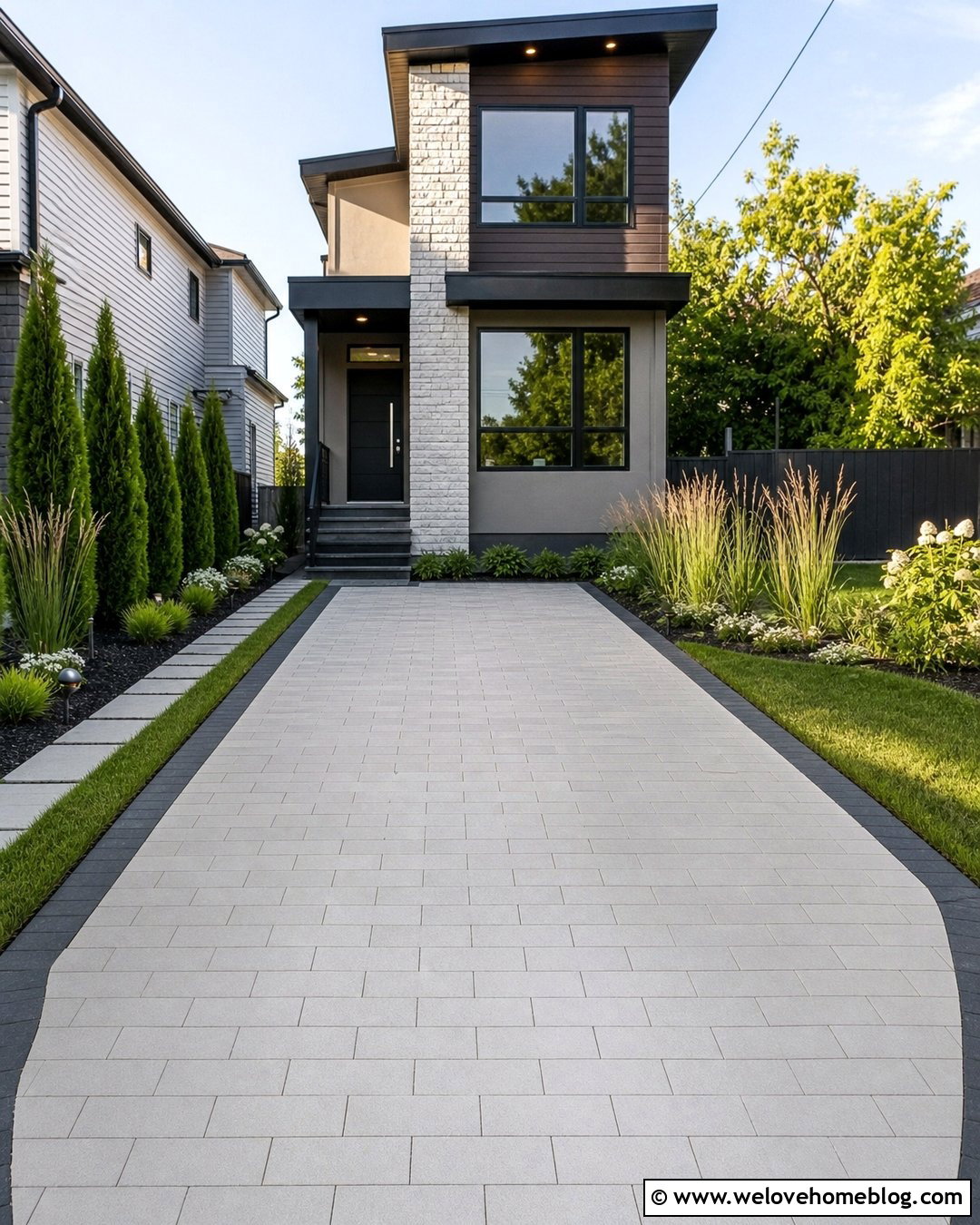
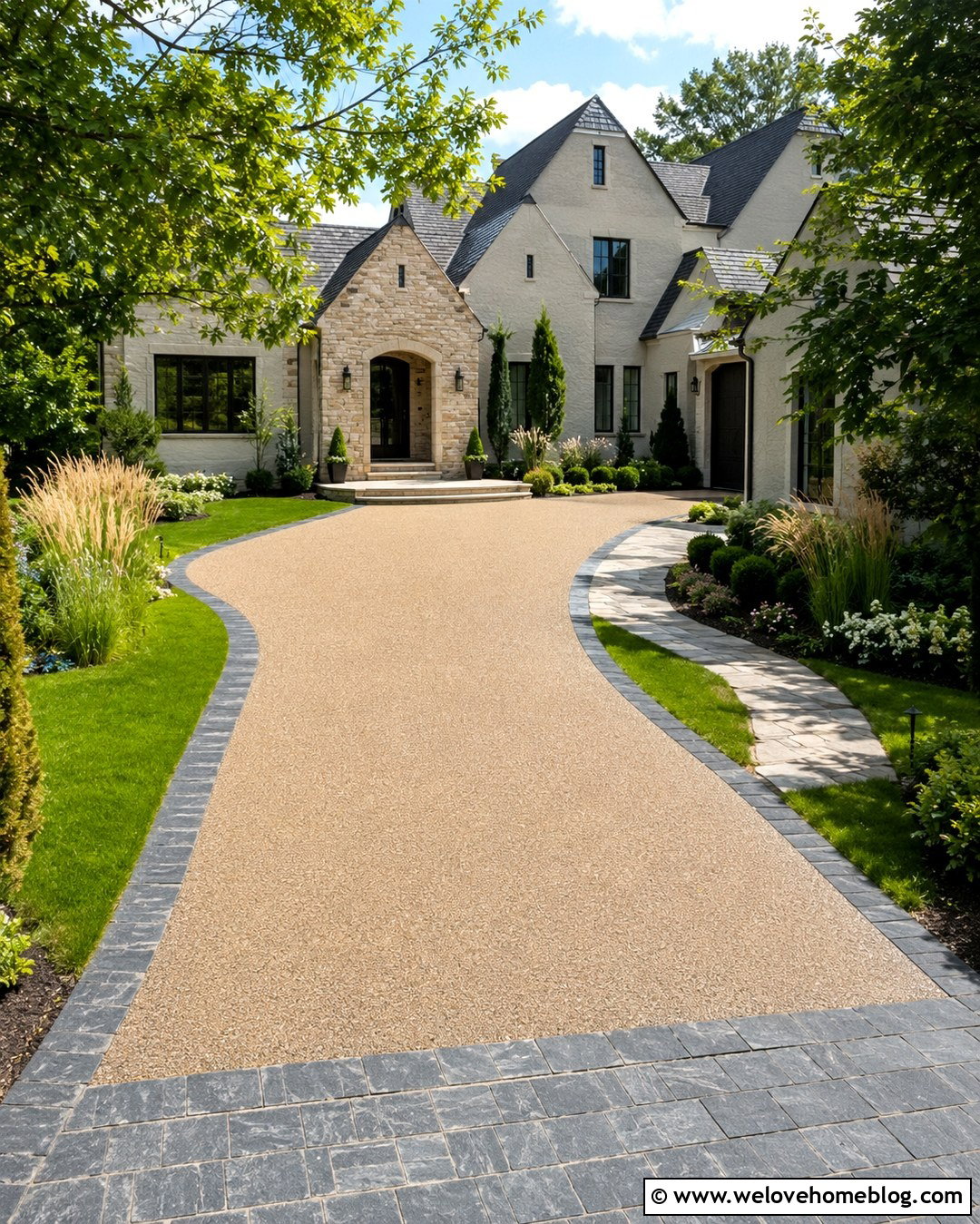
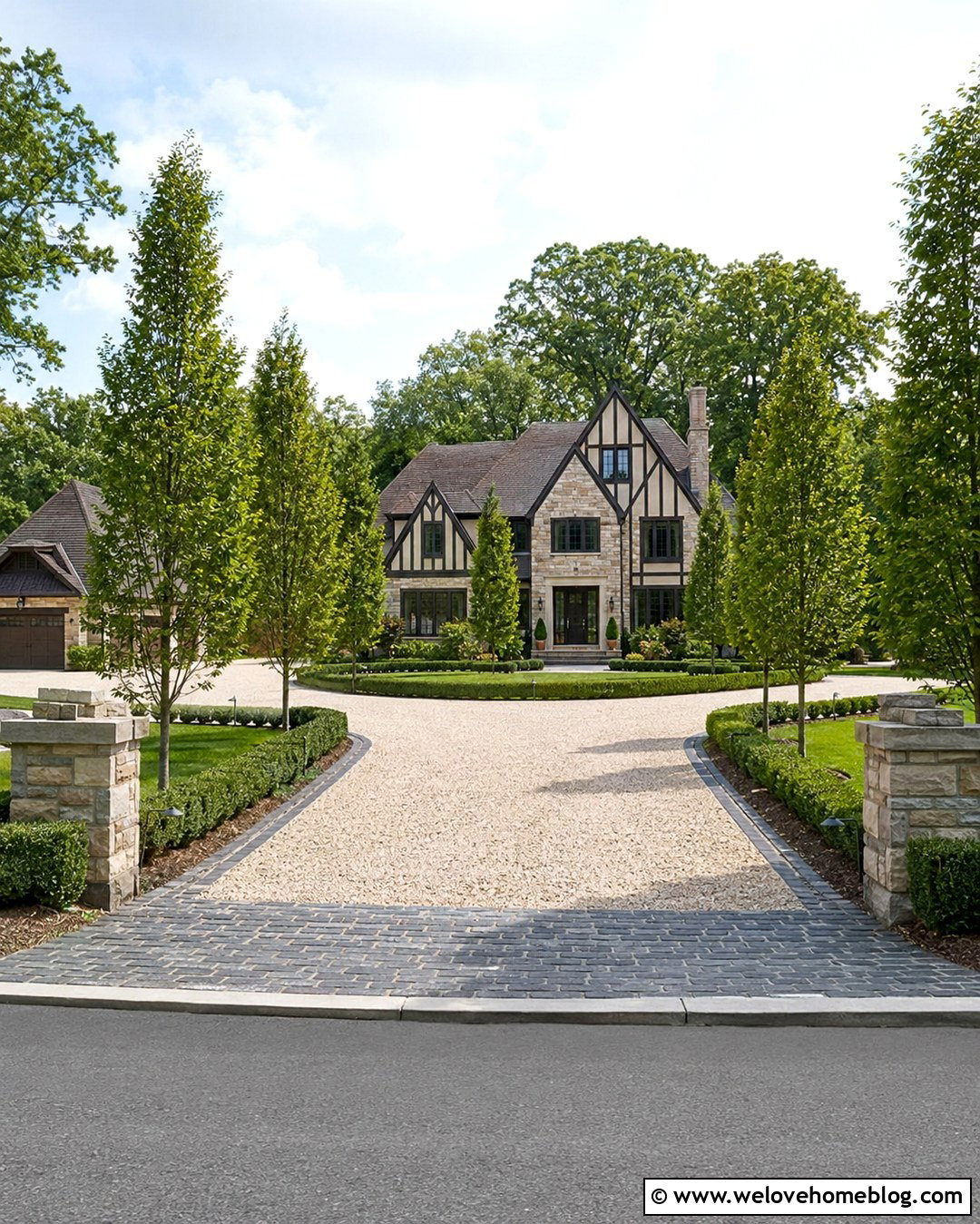
15. Narrow Concrete Driveway With Flush Red Brick Edging
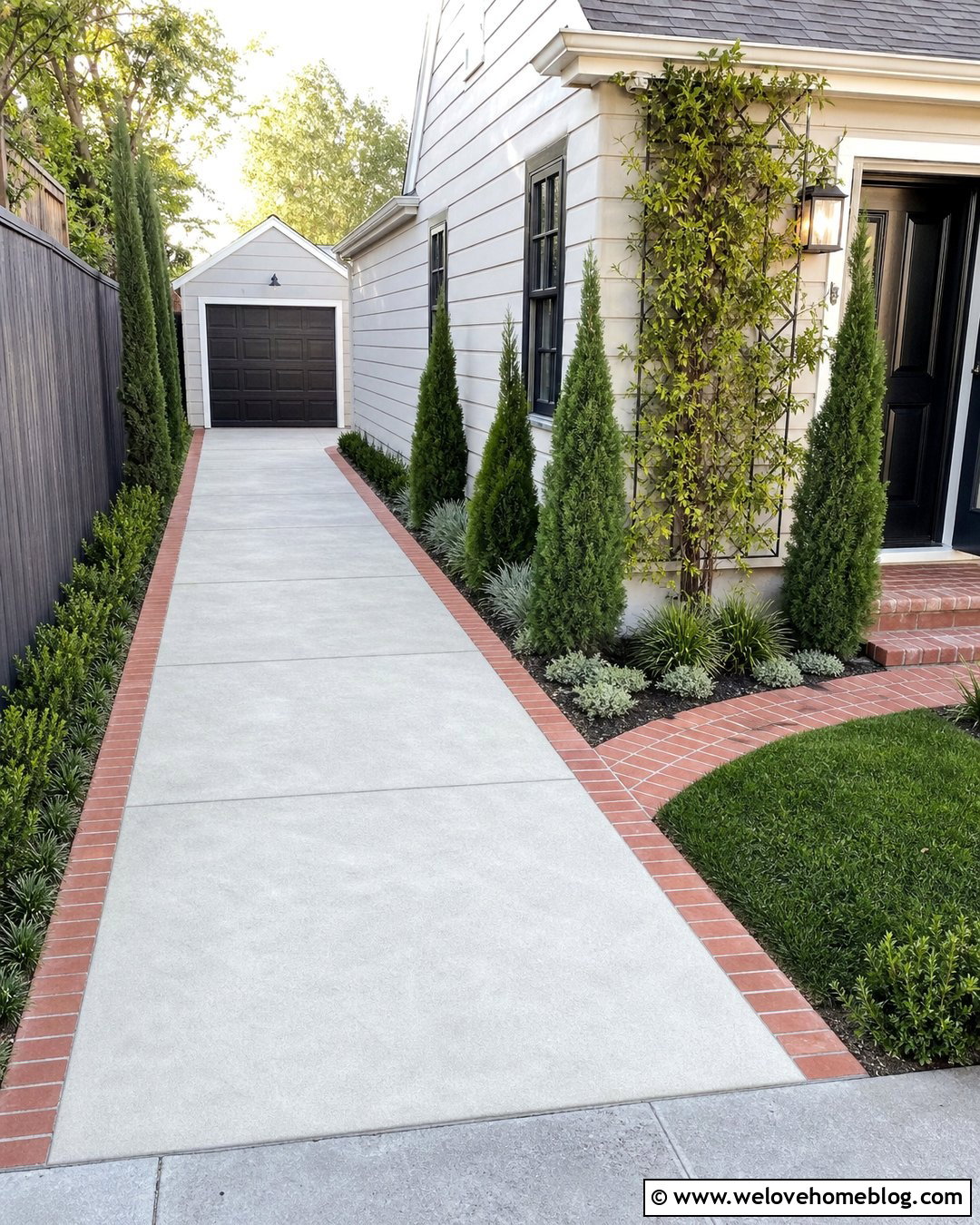
When a driveway sits close to the house or property line, flush red brick edging provides definition without taking away usable width. Lay one neat row along both sides of a light-gray concrete surface. Keep the bricks level with the driveway so car doors, tires, mowers, and trash bins can pass without hitting a raised curb. Use vertical landscaping to conserve space, such as narrow evergreens, trellised vines, or slim planting beds with compact grasses. A matching brick path branching toward the front door can make the tight layout feel intentional. This design suits small ranch homes, urban cottages, and side-entry garages. Choose a simple straight arrangement and avoid wide decorative bands. The red brick supplies enough color and texture to improve curb appeal without making the narrow approach appear even smaller.
16. Wide Concrete Driveway With Red Brick Cross Bands
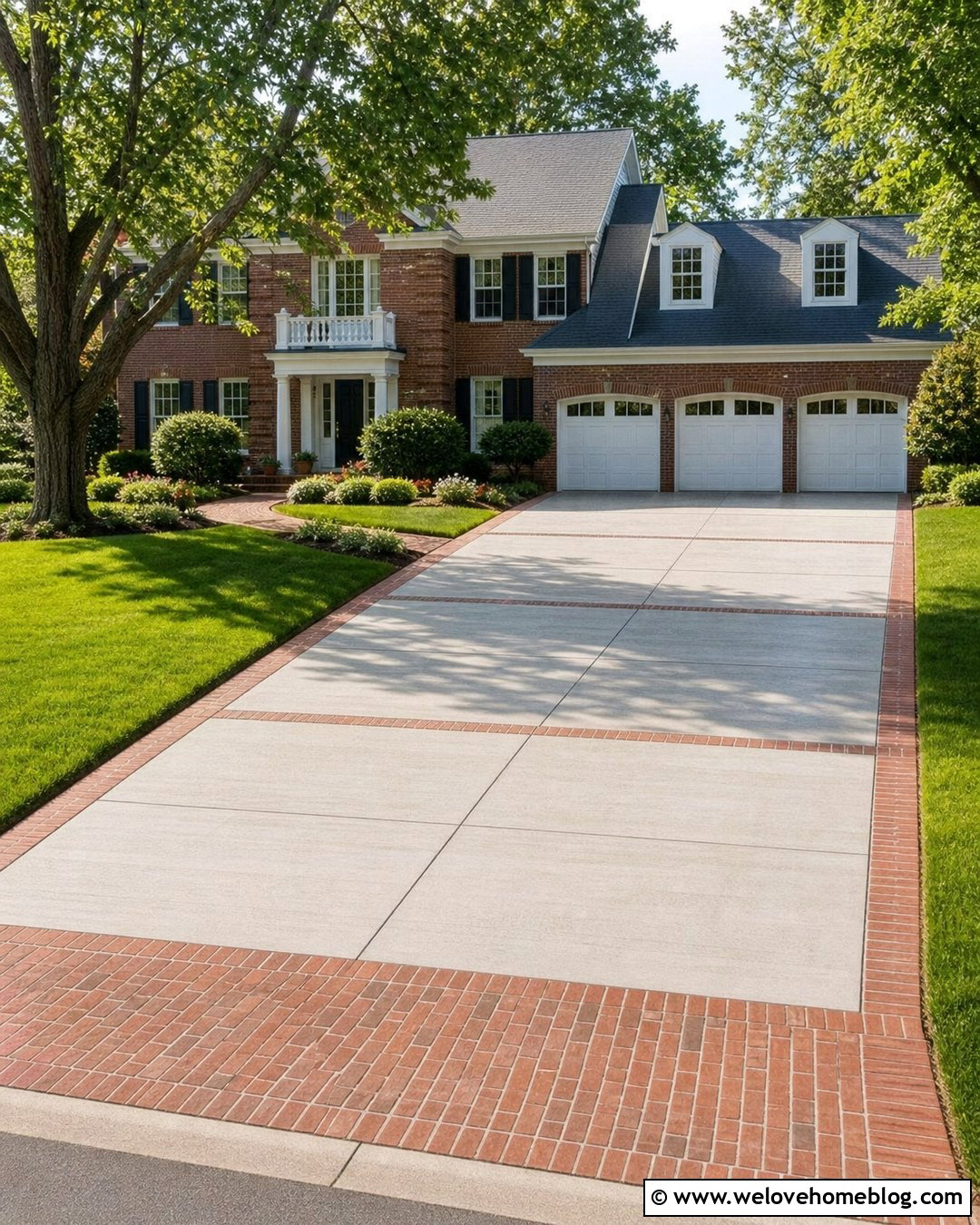
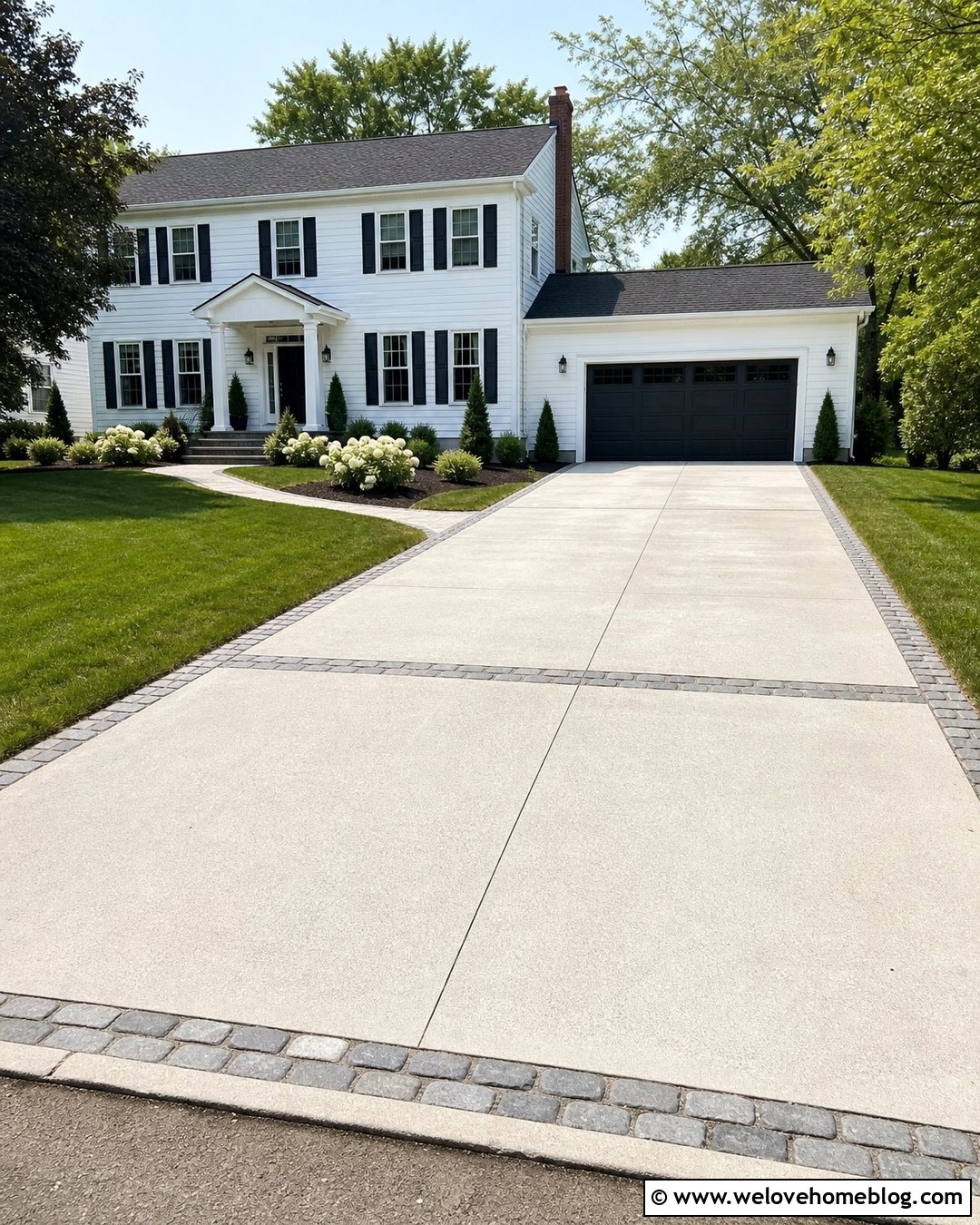
A broad driveway can look like one large slab unless the design introduces clear visual divisions. Frame the outer edges with red brick, then place matching brick bands across the concrete at measured intervals. The cross bands can align with garage doors, walkway entrances, or changes in the parking area. Use broom-finished gray concrete between the bricks for a practical, understated surface. Large lawn panels, shade trees, and deep foundation beds will balance the scale of the paving. This complete layout works well for a three-car garage, expansive ranch house, or substantial Colonial home. Keep each band narrow enough to avoid overwhelming the concrete. Consistent spacing is important because random brick strips can make the surface appear patched rather than designed. A coordinating brick apron can complete the entrance.
17. Curved Concrete Driveway With Red Brick And Lavender Borders
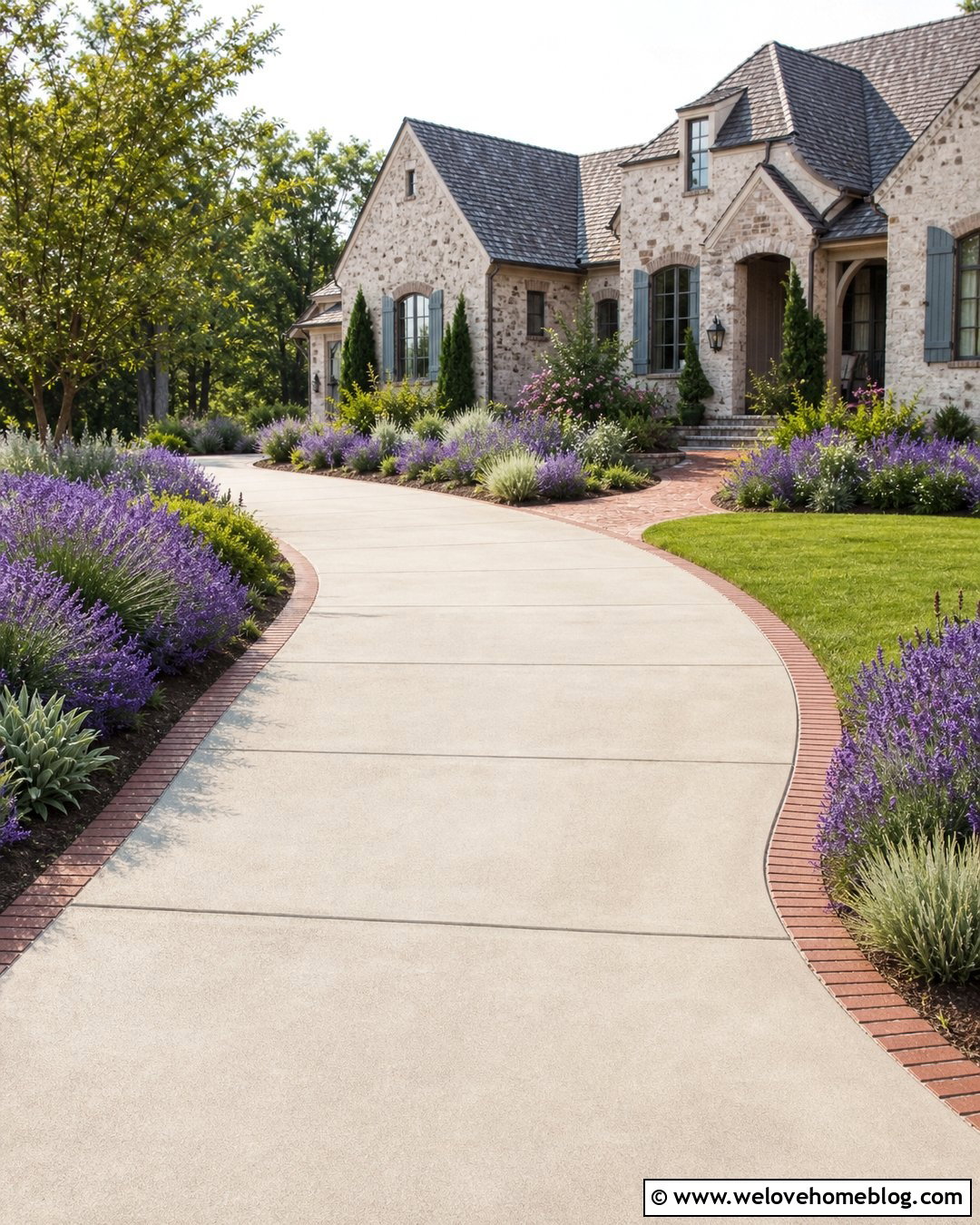
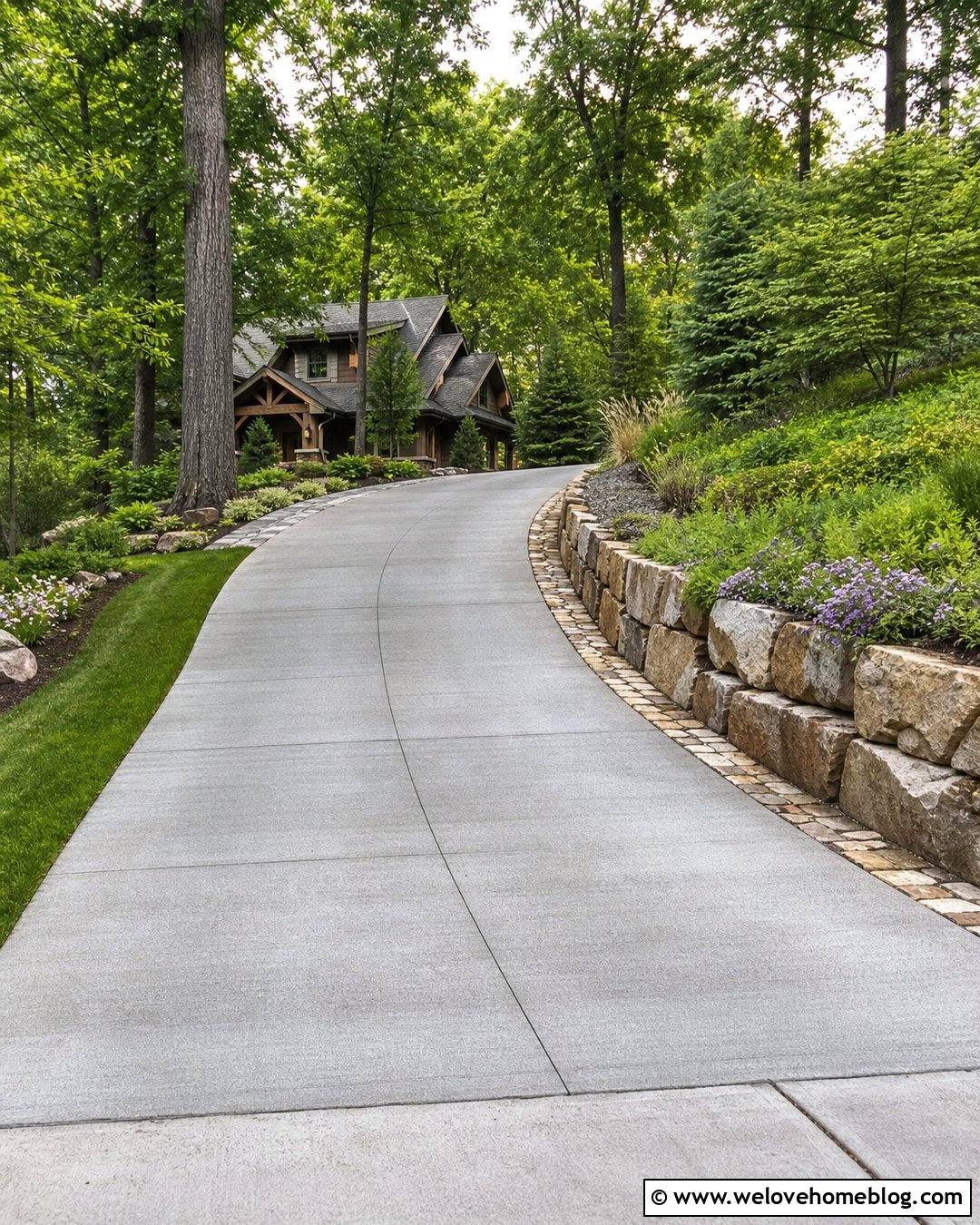
Follow the sweeping line of a curved concrete driveway with a flush red brick soldier course and a generous lavender border. The brick creates a precise transition between the smooth, pale-gray concrete and the softer planting. Mix lavender with catmint, sage, and low ornamental grasses to extend seasonal interest while preserving clear sightlines. This look can complement a French country home, cottage, or warm stucco house. Leave small access gaps or stepping areas where people regularly move between the lawn and driveway. A red brick walkway curving toward the front porch will connect the border with the home. Select plants suited to local soil and moisture conditions, and avoid varieties that spread heavily onto the driving surface. The final result feels colorful and relaxed while maintaining a defined, usable edge.
18. Circular Asphalt Driveway With Red Brick Entrance Pillars
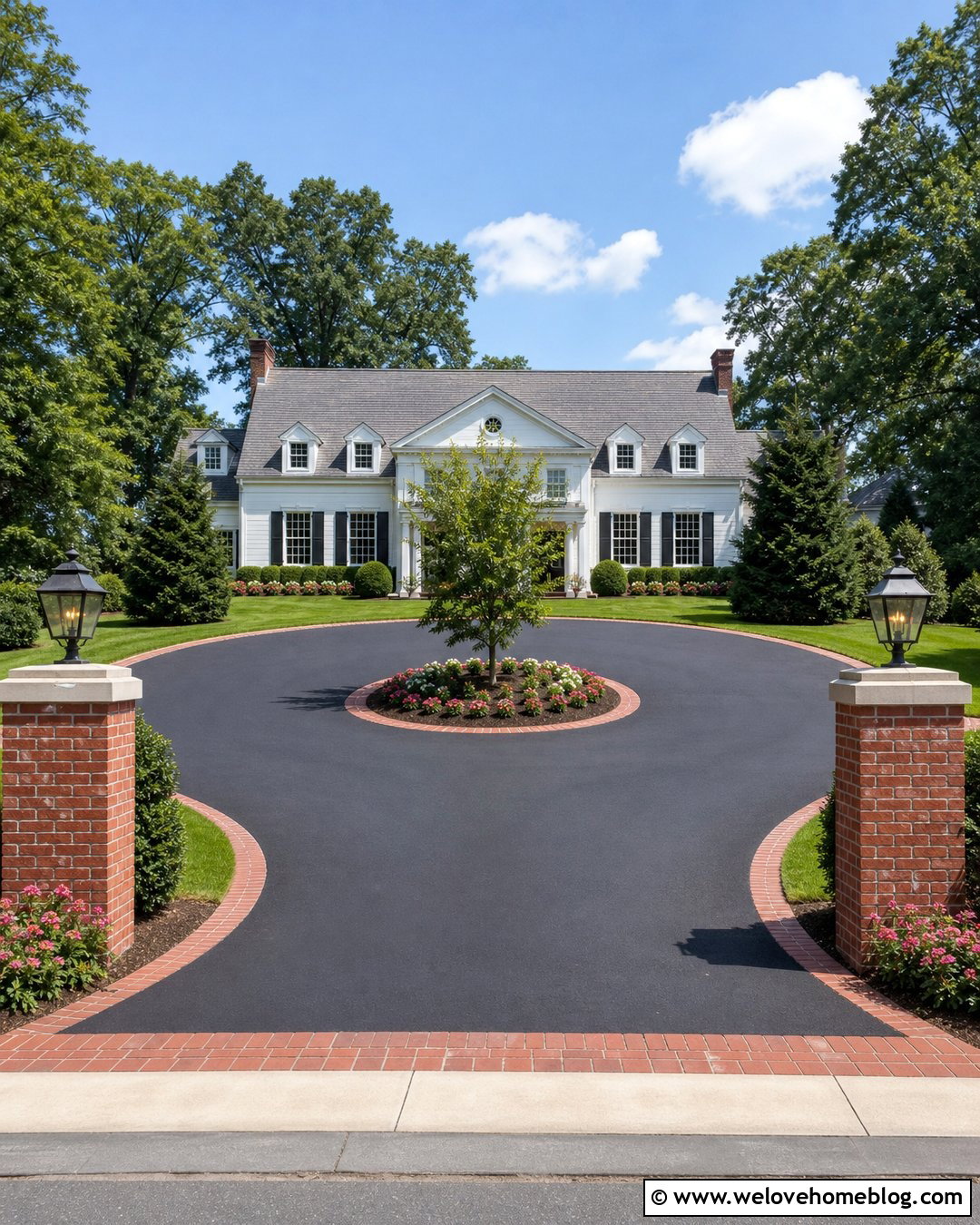
For a formal circular driveway, combine smooth black asphalt with flush red brick edging and matching brick entrance pillars. The warm brick outlines the entire loop while connecting the driveway to the masonry at the street. Cap the pillars with pale stone and keep them low enough to preserve clear views when entering traffic. Inside the circle, create a landscaped island with a small tree, evergreen structure, and low seasonal flowers. A traditional brick or white-sided home provides an appropriate backdrop. Continue the edging around the island to contain mulch and establish a crisp boundary. The contrast between asphalt and brick makes the circular geometry easy to read from the curb. Simple metal lanterns, an address plaque, and restrained planting can complete the entrance without making it feel crowded.
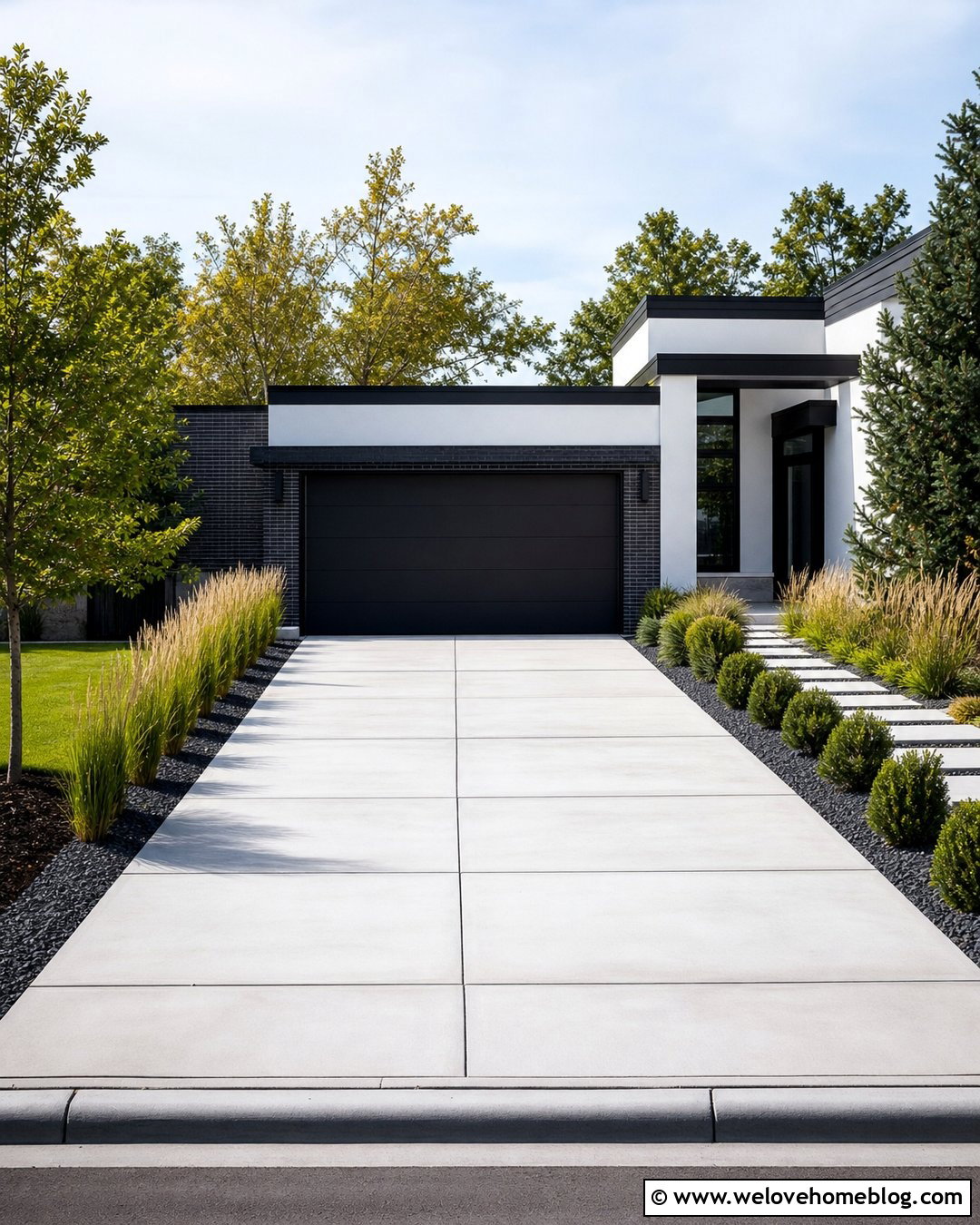
19. Modern Concrete Driveway With Dark Red Brick Edging
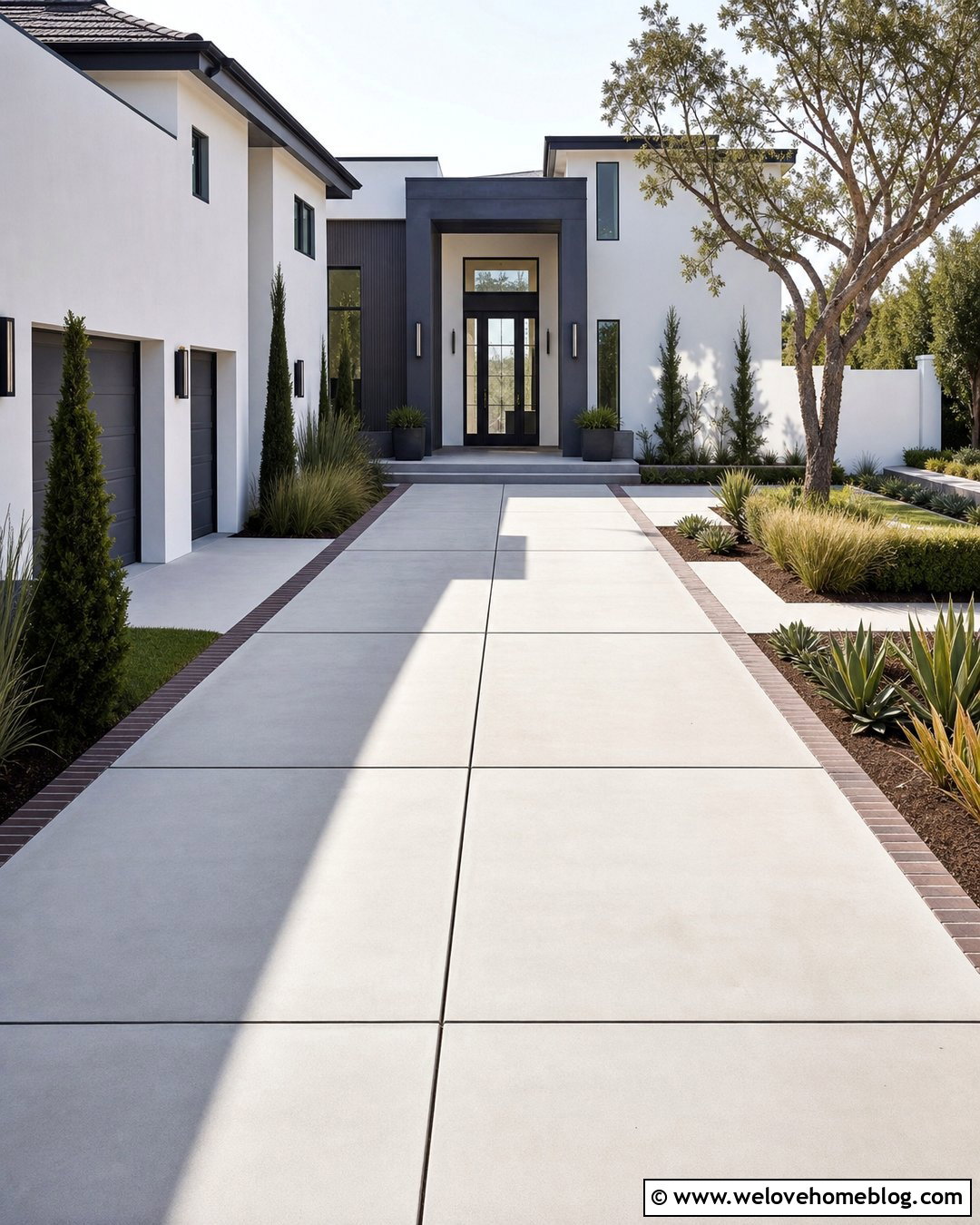
Red brick can work with modern architecture when its color and placement remain controlled. Choose dark burgundy-red pavers with clean edges and install them as a narrow flush border around large, smooth concrete driveway panels. Thin gravel joints or dark expansion lines between the concrete slabs can reinforce the home’s geometric design. Frame the approach with rectangular planting beds containing ornamental grasses, compact evergreens, and one sculptural tree. A flat-roofed or contemporary house with white stucco, charcoal siding, and wood accents provides a balanced background. Avoid distressed bricks, curved borders, and elaborate patterns in this setting. Carry the dark red brick into the front walkway as a single accent band. The resulting driveway feels streamlined while gaining more warmth than an entirely gray concrete composition.
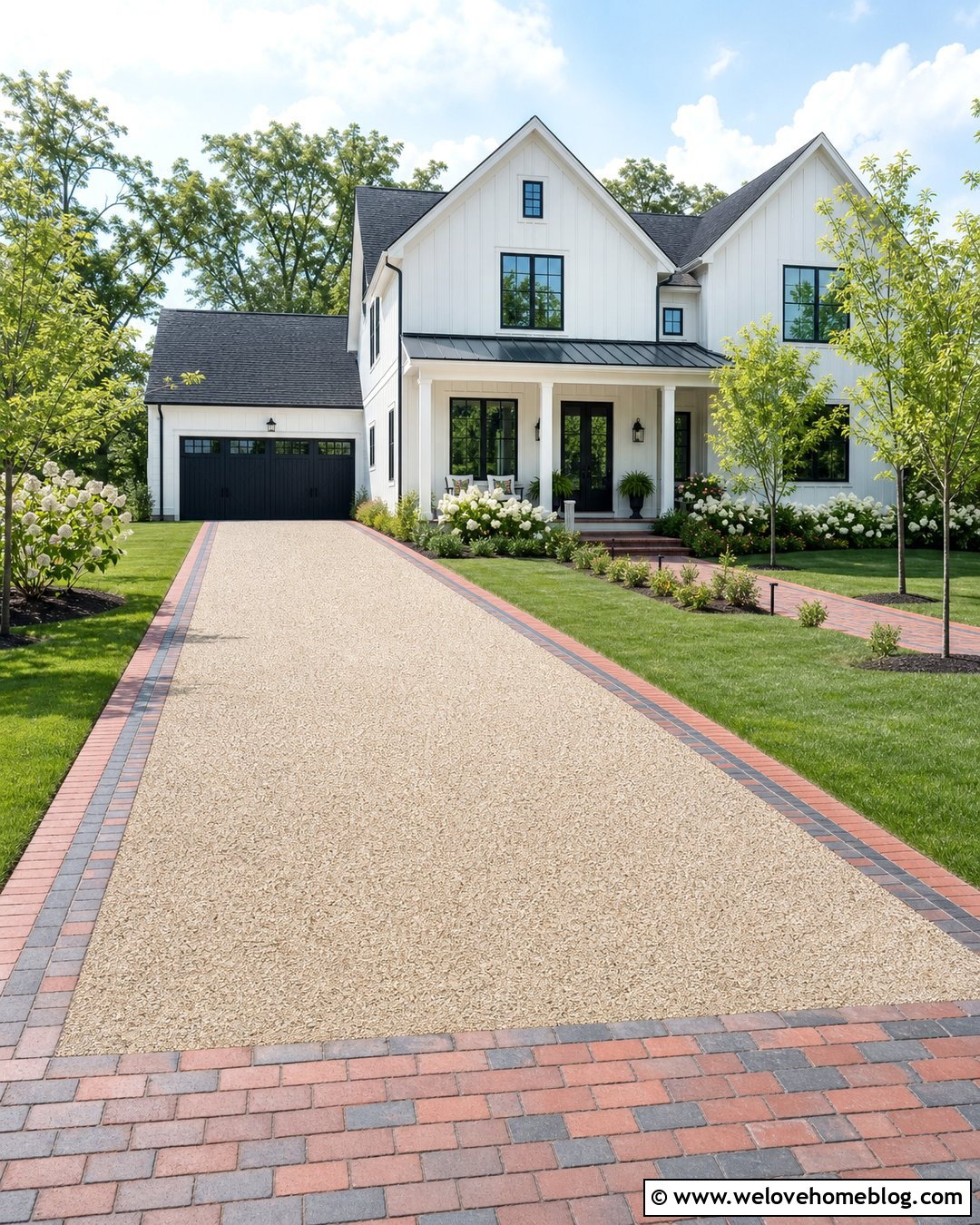
20. Cottage Gravel Driveway With Basketweave Brick Entrance
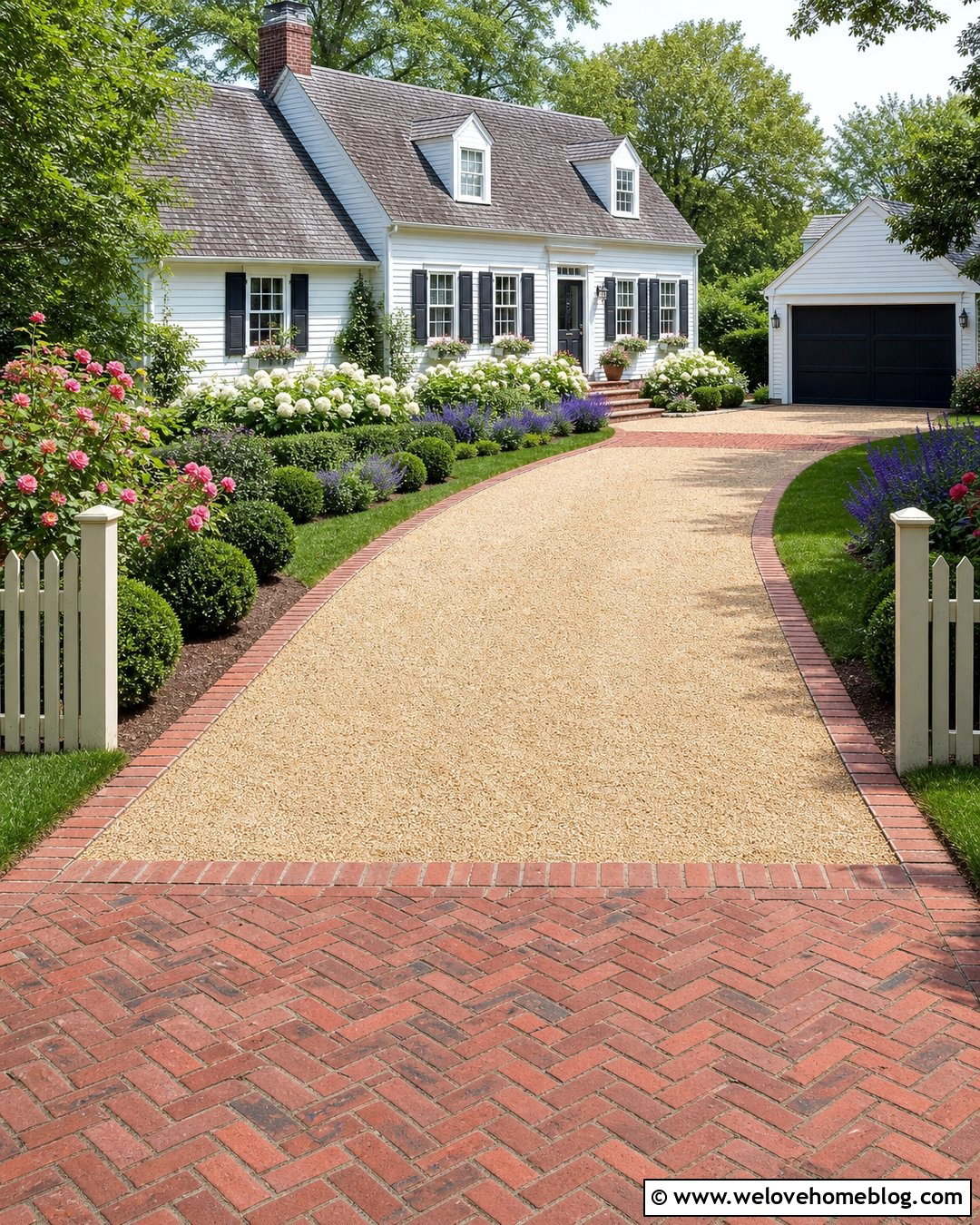
A cottage driveway can combine warm tan gravel, simple red brick side edging, and a basketweave brick entrance apron. The patterned apron creates a welcoming transition at the curb, while the straight or gently curved brick borders contain the gravel along the rest of the approach. Surround the driveway with informal garden beds filled with roses, hydrangeas, salvia, and rounded evergreen shrubs. A picket fence or low hedge can define the property without hiding the house. Near the garage, repeat a smaller basketweave band to visually finish the drive. This complete design complements Cape Cod cottages, traditional bungalows, and cozy country homes. Keep plants trimmed back from the vehicle area and use a properly compacted base beneath both the gravel and the brick entrance for lasting stability.
Conclusion:
The best red brick border does more than add color. It defines the driveway’s shape, supports the surrounding landscape, and connects paving with the architecture of the house. Flush soldier courses offer easy maintenance, while raised curbs help contain loose gravel. Herringbone, basketweave, aprons, and cross bands provide extra detail where a larger property needs it. Before installation, consider vehicle clearance, drainage, brick durability, base preparation, and how the border will meet the street and garage. You can also repeat the brick in a walkway, pillar, or porch detail for a cohesive result. Use these 20 red brick driveway edging ideas to create an entrance that feels attractive, practical, and intentionally designed.

Related posts:
Leave a Reply