
A well-planned driveway border does more than create a neat line between paving and plants. The best **30 driveway landscaping edging ideas** combine the driveway surface, layout, edging material, and surrounding yard into one cohesive entrance. Brick can warm up plain concrete, granite blocks can strengthen gravel edges, and low plantings can soften wide areas of asphalt. Before choosing a look, consider drainage, snow removal, turning space, maintenance, and how the edging complements your home. Keep raised materials away from vehicle doors and tires, and select plants that tolerate heat reflected from the driveway. Whether your property is modern, traditional, rustic, or coastal, the complete looks below offer practical inspiration from the curb to the garage. Explore these **30 driveway landscaping edging ideas**.

1. Brick Driveway Edging With Flower Beds
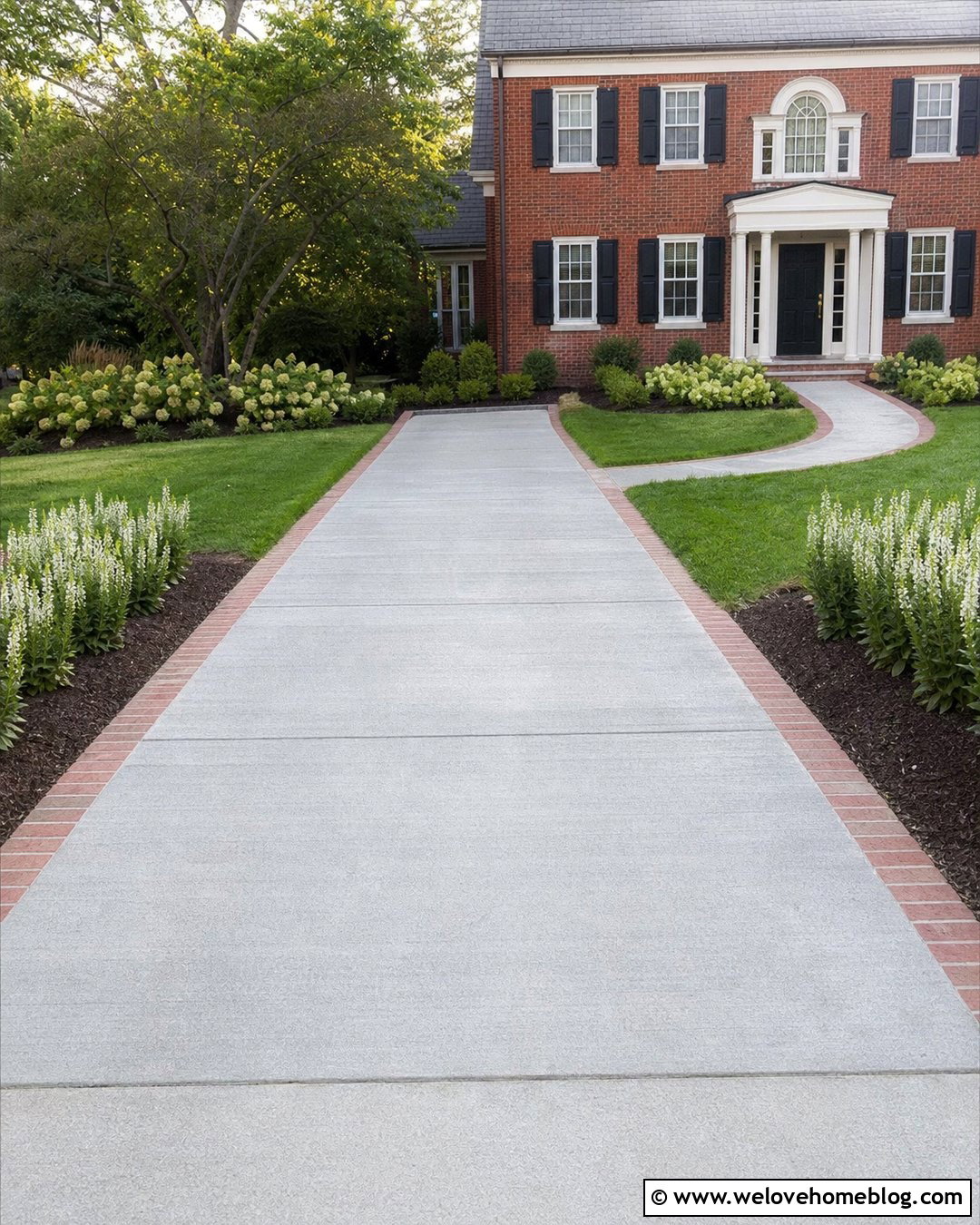
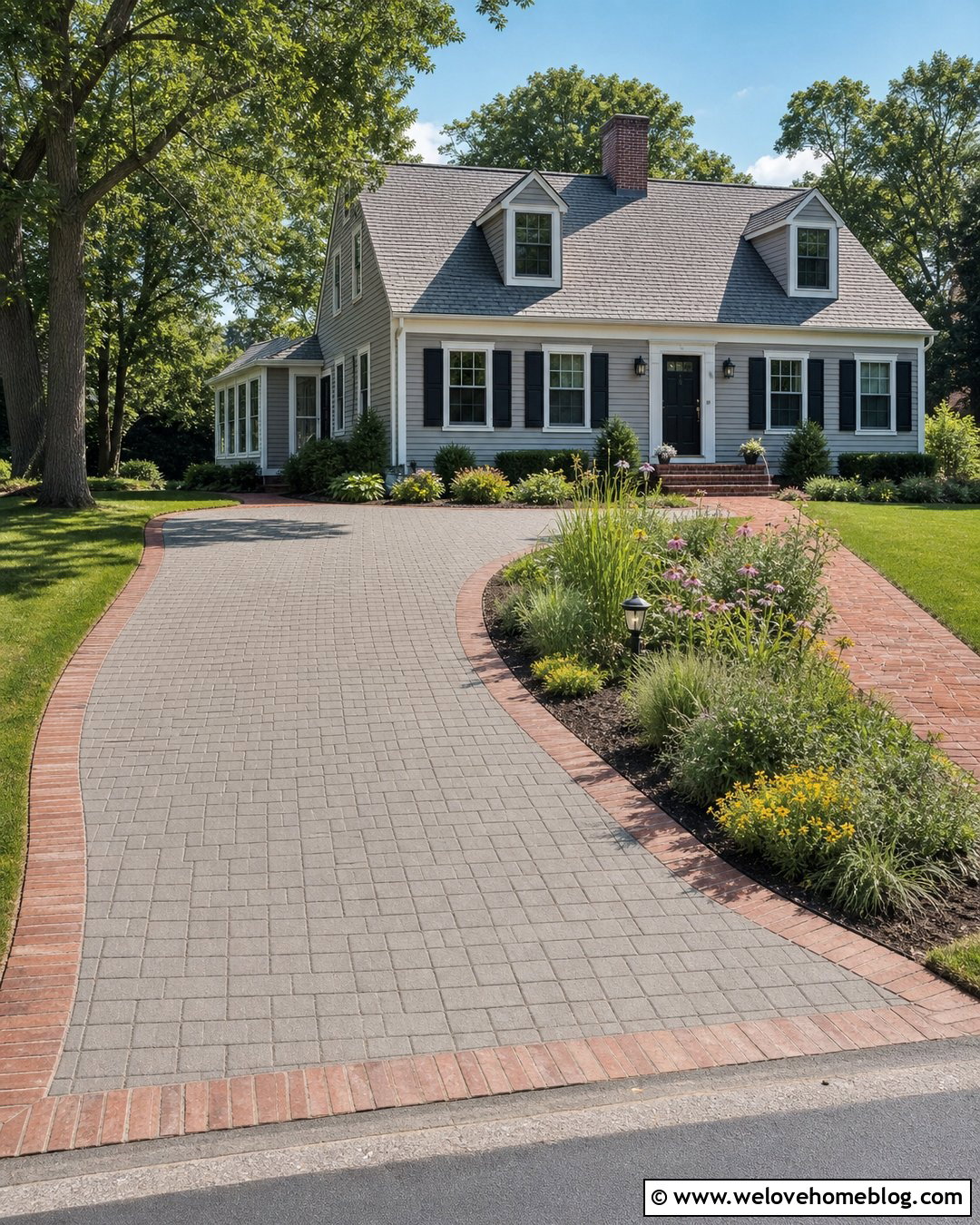
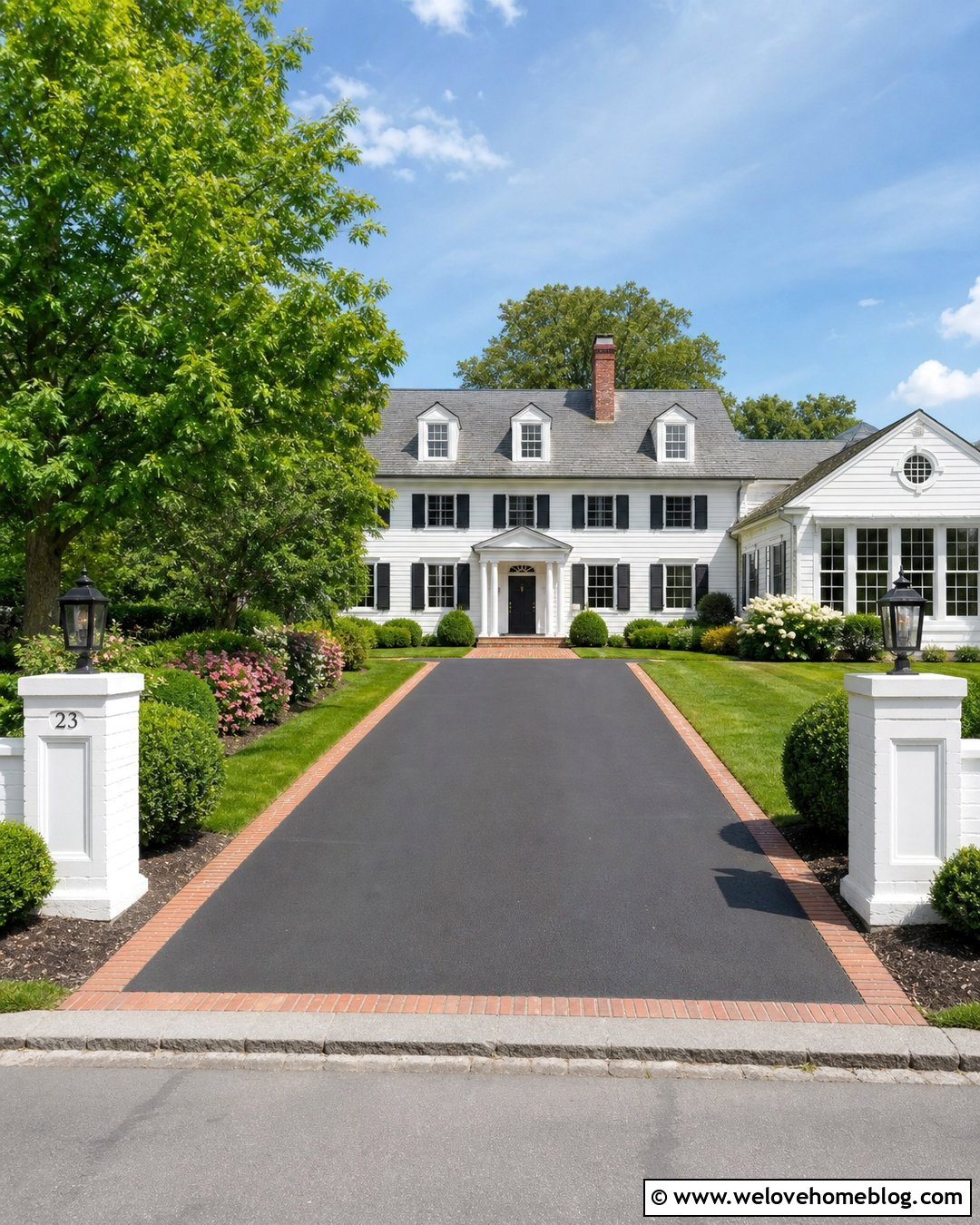
Warm red brick edging gives a straight gray concrete driveway a more welcoming, established appearance. Lay the bricks flat in a single soldier-course border so the edge remains easy to drive over when necessary. On the lawn side, create gently curved planting beds filled with compact hydrangeas, white salvia, and low evergreen shrubs. Dark brown mulch will highlight the brick while keeping the flower colors crisp. Repeat the same brick around the walkway leading to the front door for continuity. This complete look suits Colonial, Cape Cod, and traditional suburban homes. For a polished result, keep taller shrubs near the house and use lower plants beside parking areas where open doors need extra clearance.
2. Cobblestone Driveway Edging With Boxwood
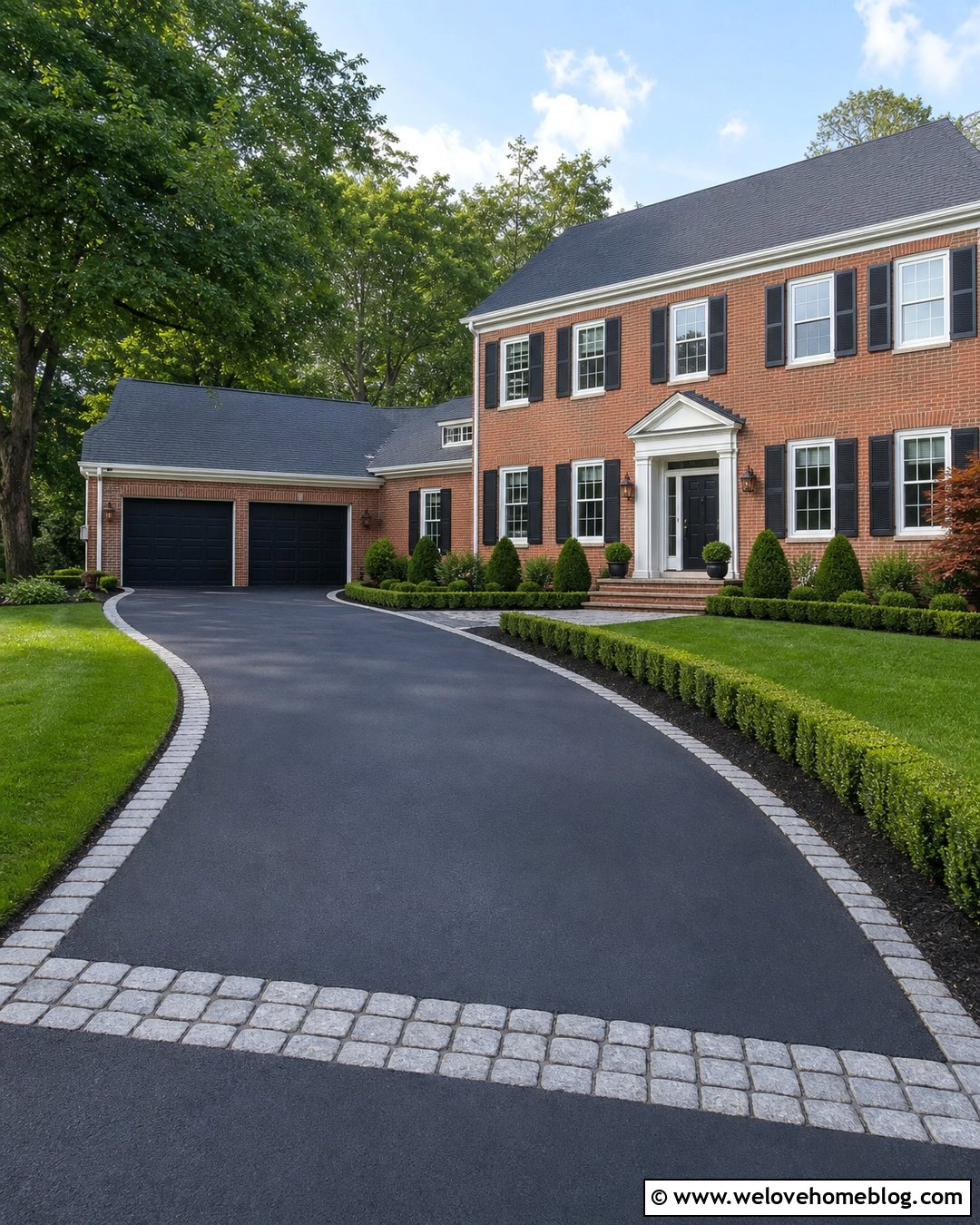
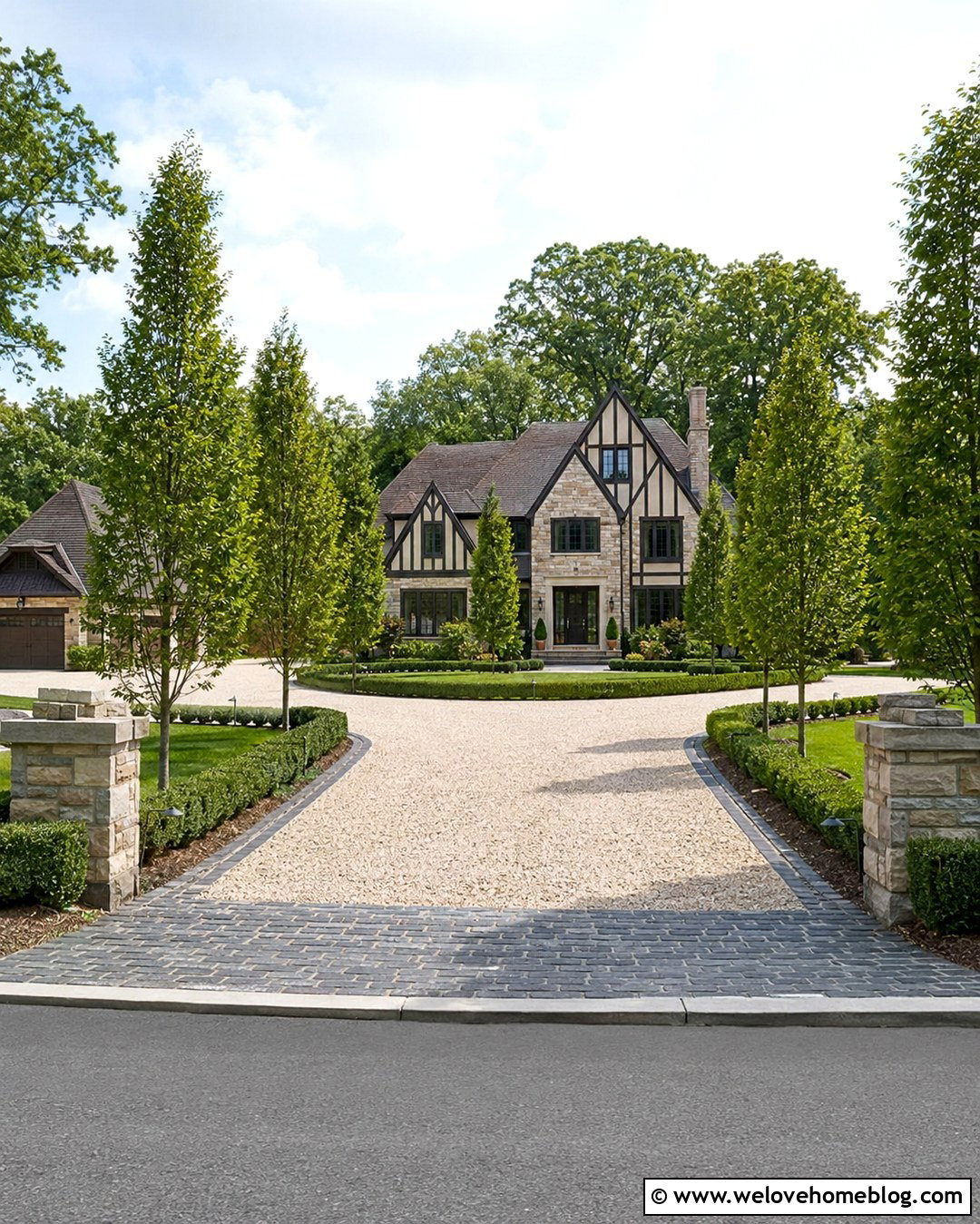
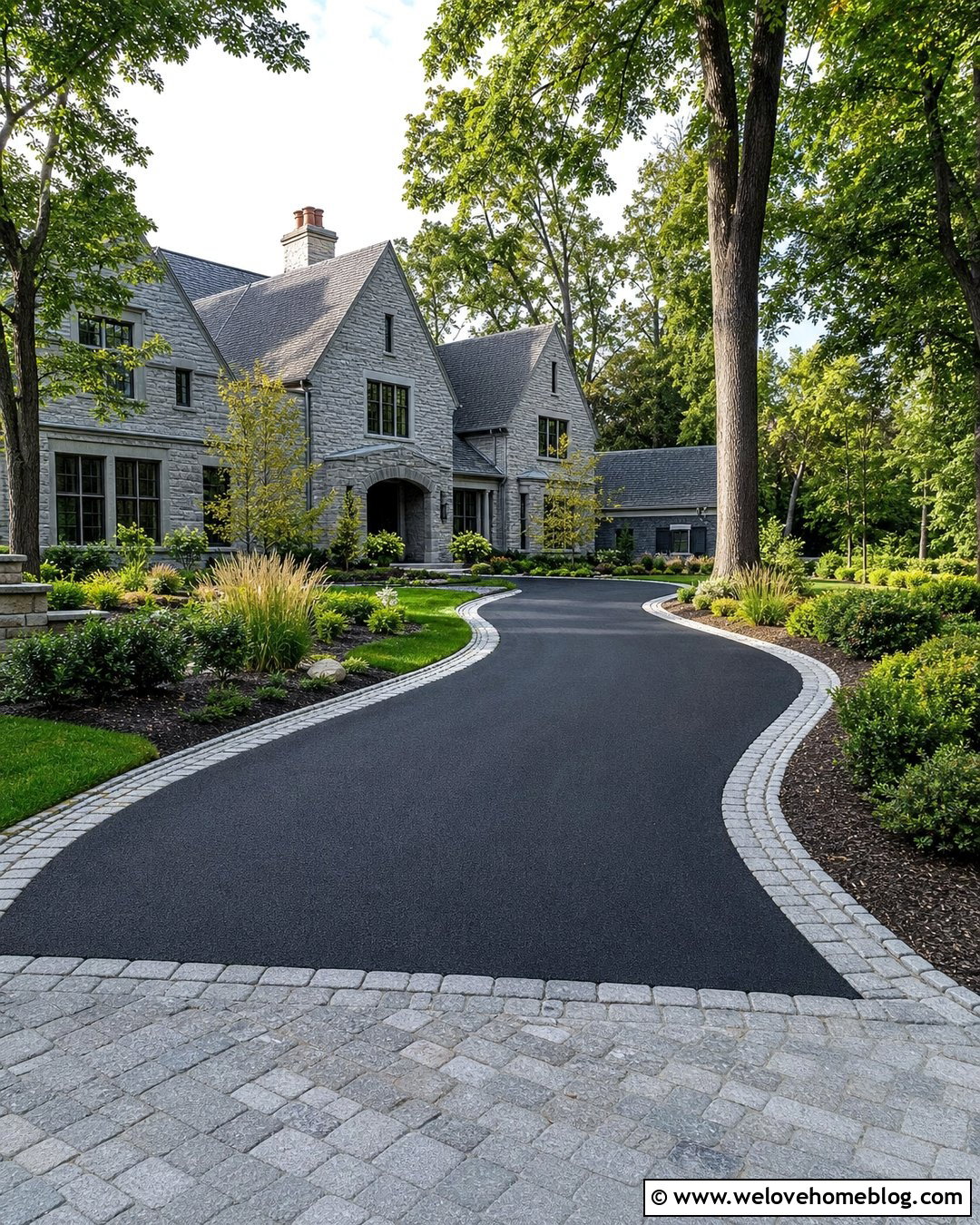
A cobblestone edge brings definition and texture to a sweeping asphalt driveway without making the entrance feel overly decorative. Use charcoal and gray granite cobbles in one tidy row, set nearly flush with the pavement. Behind the stone, plant a low clipped boxwood hedge that follows the driveway’s curve. A narrow mulch strip between the cobbles and hedge will simplify trimming and protect the plants from tires. Add matching cobblestone bands across the driveway near the street and garage to connect the design. This tailored combination works especially well with brick Colonial homes. Keep the hedge low enough to preserve visibility at the entrance and leave wider openings around guest parking and walkways.
3. Gravel Driveway Edging With Timber Sleepers
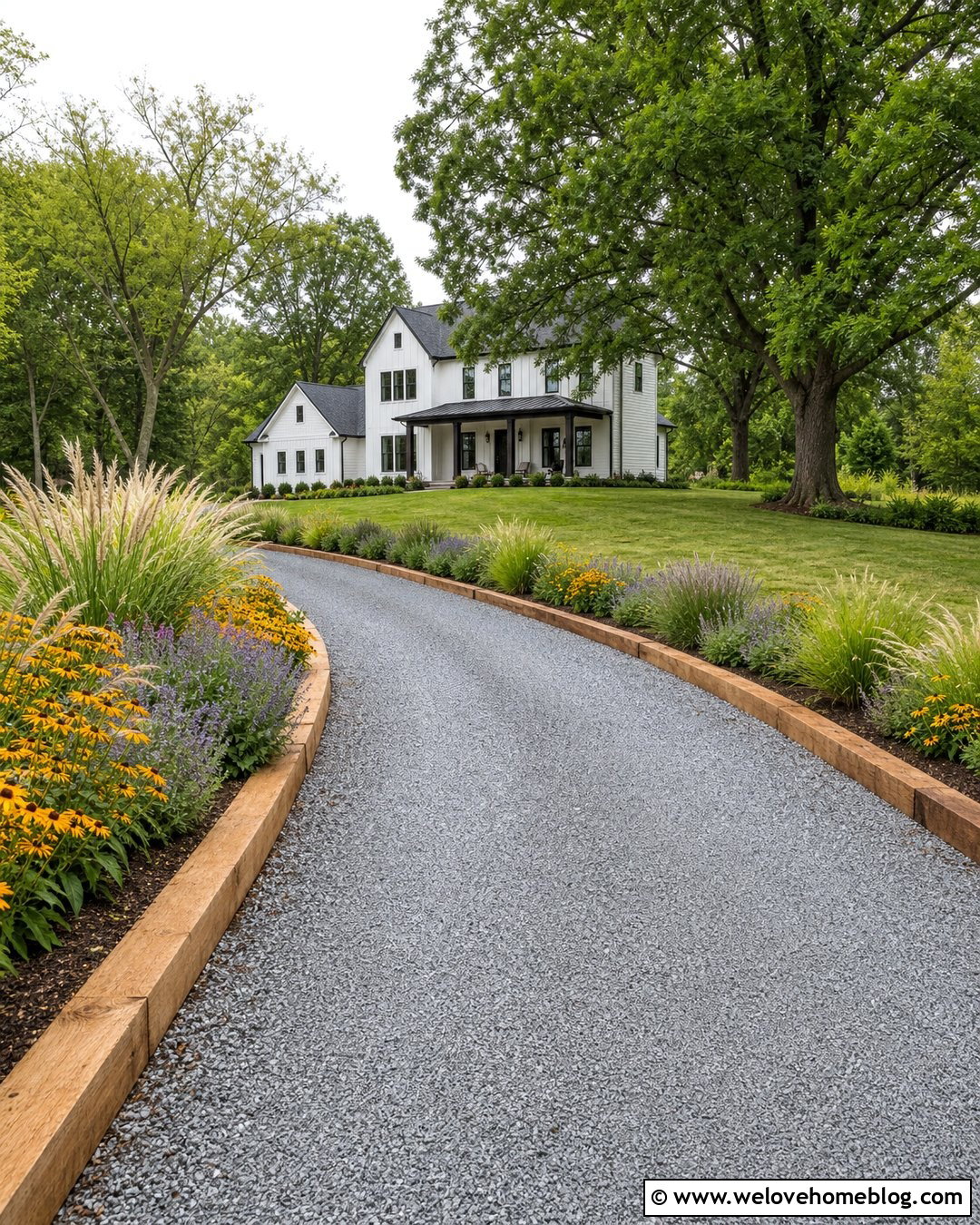
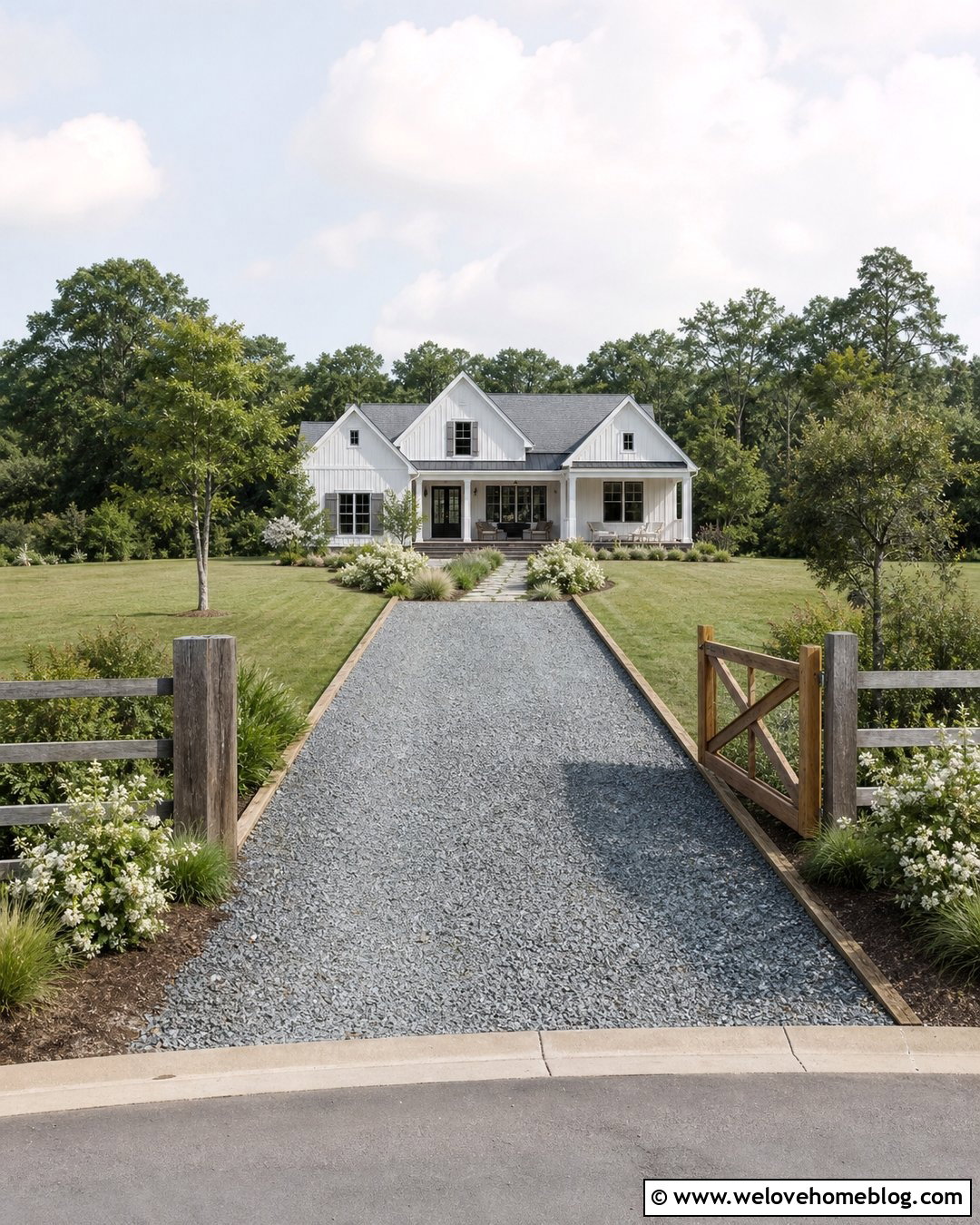
Crunchy gray gravel and thick timber edging create a relaxed driveway that feels appropriate beside a farmhouse or country home. Use pressure-treated or naturally durable wood sleepers to contain the gravel along a straight or softly curved layout. Set the timbers low and anchor them securely so they form a stable boundary without becoming a tire hazard. Beyond the wood, plant sweeping groups of ornamental grasses, catmint, and black-eyed Susans. Their loose shapes balance the strong horizontal lines of the edging. A matching timber-framed planting bed near the garage can repeat the material. Choose medium-sized gravel that compacts reasonably well, and refresh displaced stones periodically to maintain an even, finished surface.
4. Concrete Driveway Edging With Lavender
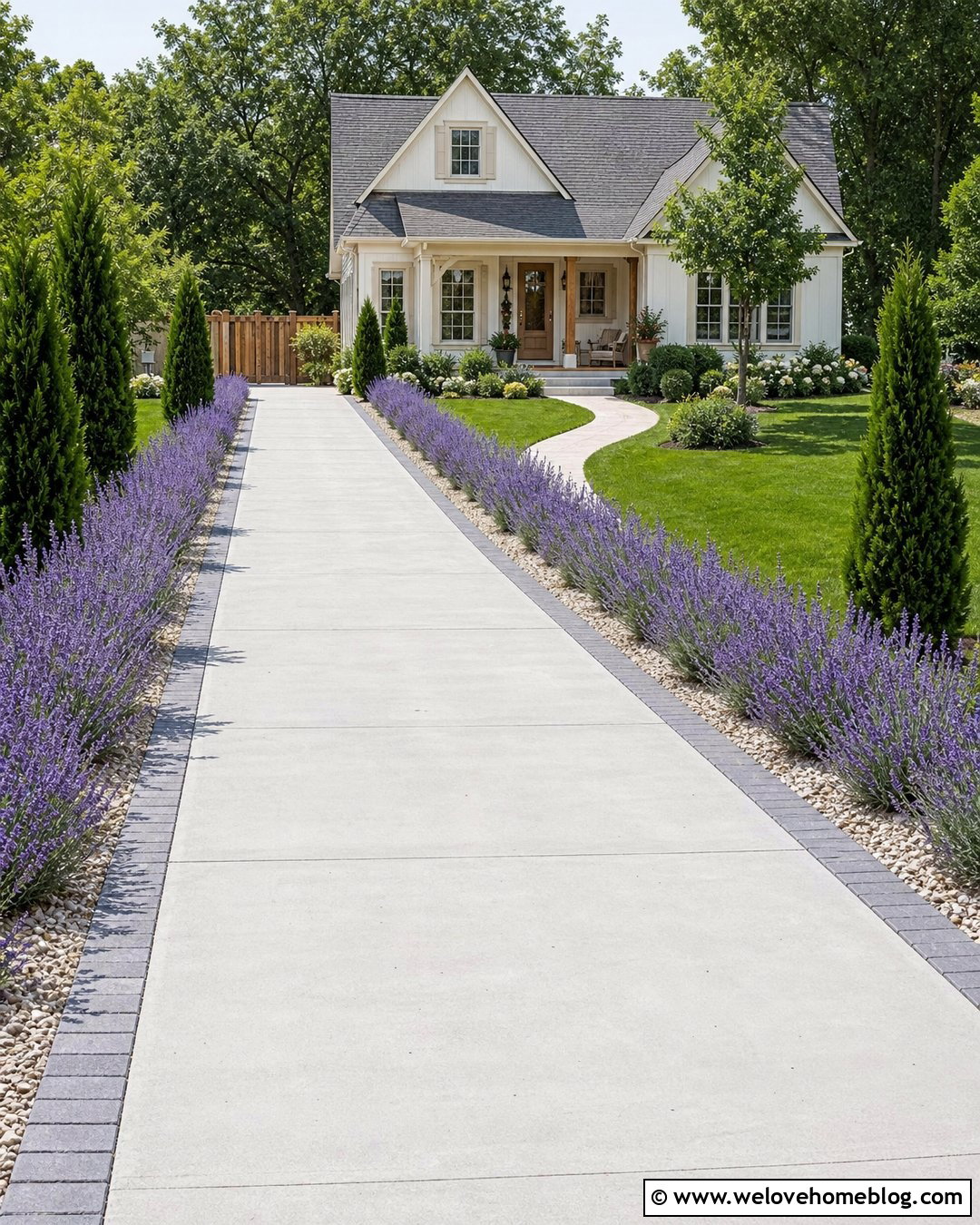
Imagine a pale concrete driveway framed by long ribbons of purple flowers and silvery foliage. Lavender makes a beautiful living edge when paired with a narrow stone or metal barrier that keeps soil away from the pavement. Use it along a straight driveway leading to a cottage, ranch, or Mediterranean-inspired home. Space the plants far enough back to prevent mature branches from brushing vehicles. Light gravel mulch around the lavender reinforces the dry, sun-loving appearance while reducing soil splash. Add a few upright evergreens near the house to provide winter structure. This combination works best in sunny locations with suitable drainage. The repeating lavender plants create rhythm, soften the concrete, and make the entire approach feel intentionally landscaped.
5. Asphalt Driveway Edging With River Rock
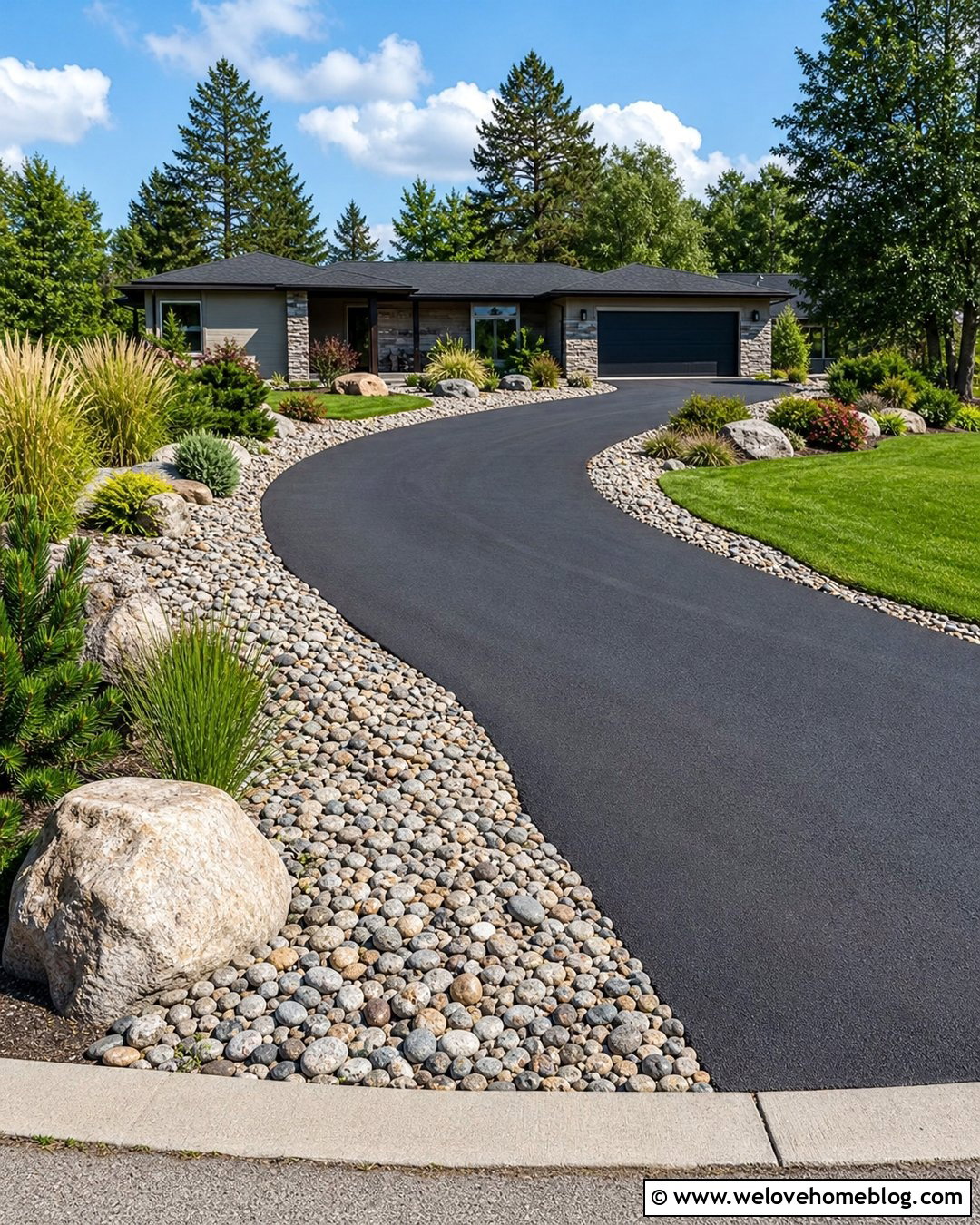
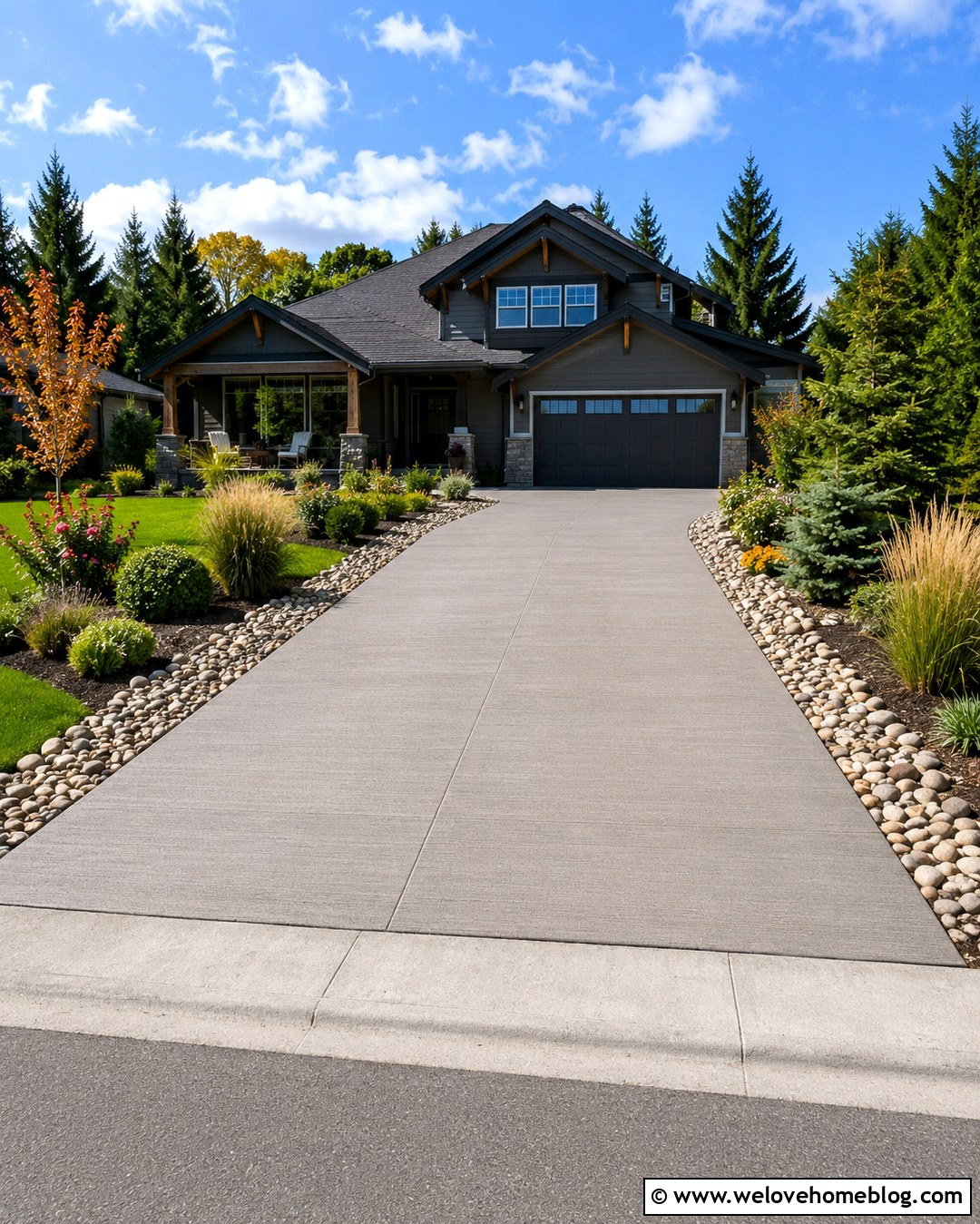
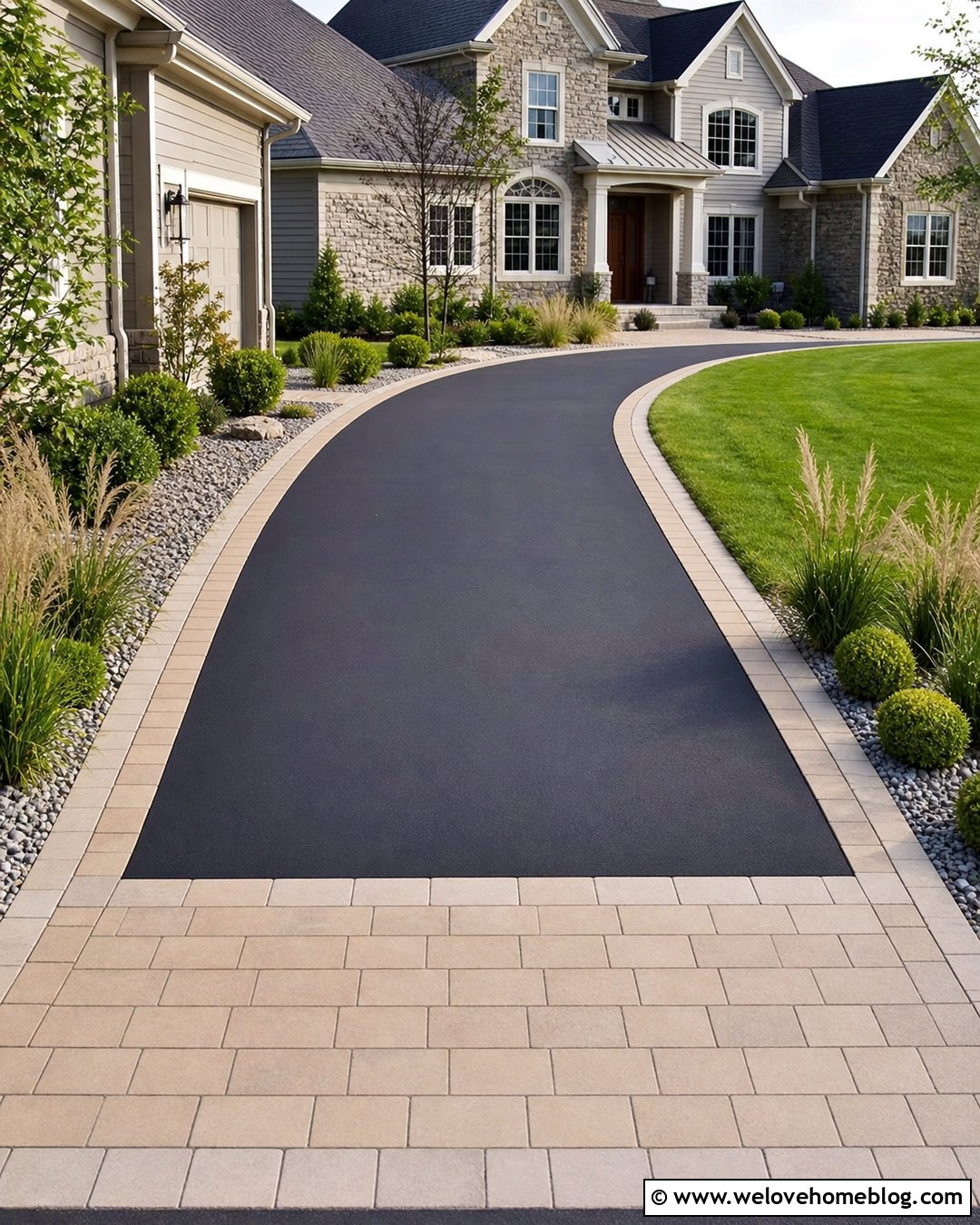
A black asphalt driveway can look less severe when it is framed with a broad strip of mixed river rock. Install a sturdy hidden edge beside the asphalt, then place smooth stones in shades of gray, tan, and cream between the driveway and planted beds. Use the rock strip to direct visual attention toward clusters of dwarf evergreens, ornamental grasses, and flowering shrubs. A gently curved border will soften a wide driveway and make the front yard feel larger. Include a few substantial boulders near the entrance, but keep them well outside the vehicle path. This low-growing design fits ranch and contemporary homes and can help create a clean transition where maintaining narrow strips of lawn would be inconvenient.
6. Paver Driveway Edging With Ornamental Grass
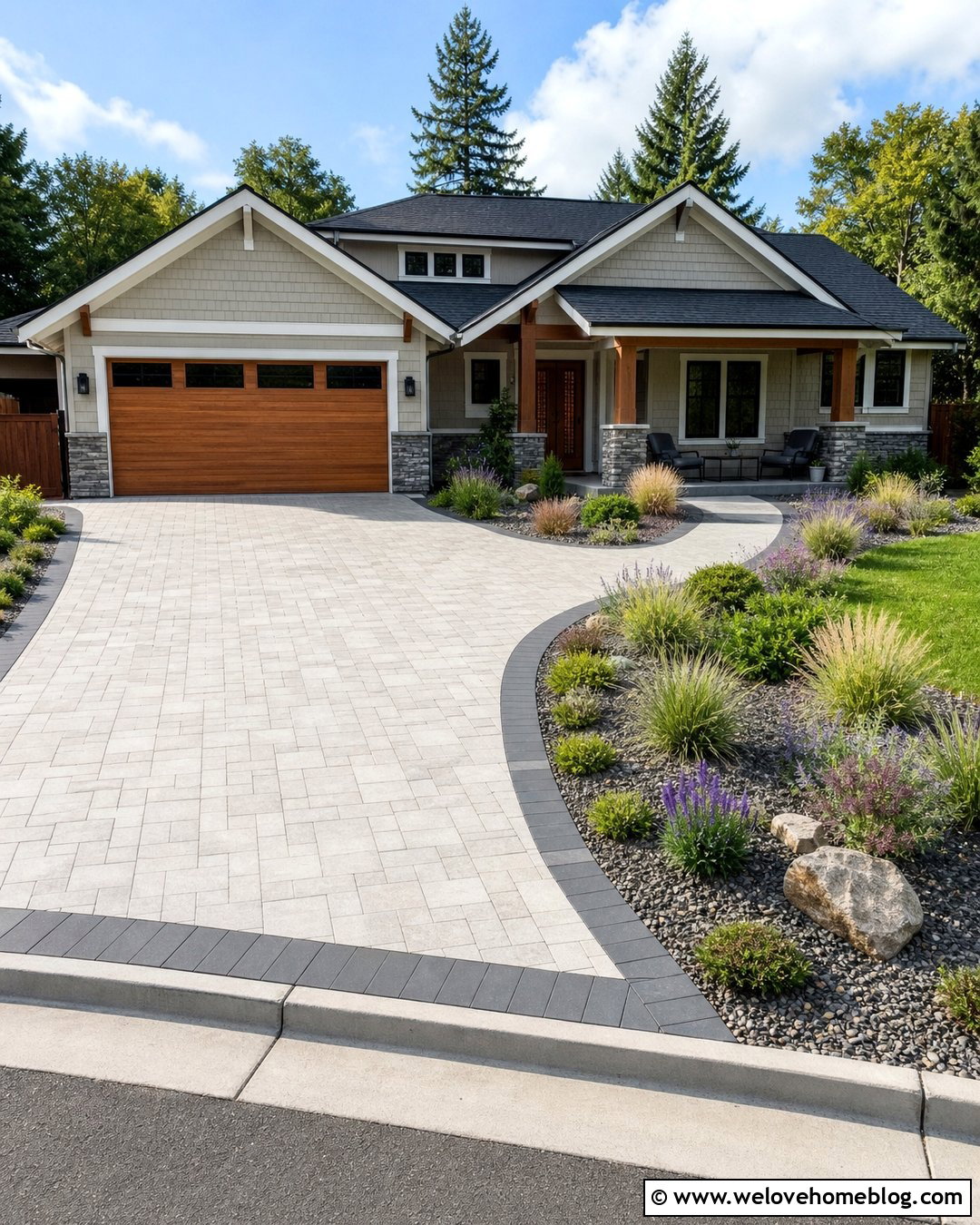
A light concrete paver driveway gains movement when bordered by feathery ornamental grasses. Choose charcoal pavers for the outside course, creating a strong frame around a straight or gently flared driveway. Behind that hard edge, arrange grasses in repeating groups rather than one uninterrupted wall. Mix compact fountain grass with low sedges and a few flowering perennials for seasonal color. Leave a narrow gravel-mulched strip near the pavers so arching foliage does not cover the driving surface. This layered look complements modern Craftsman and transitional homes. Continue the dark border pavers around the front walkway and parking pad. The consistent hardscape ties everything together, while the grasses bring softness, motion, and a relaxed garden character.
7. Belgian Block Driveway Edging With Hydrangeas
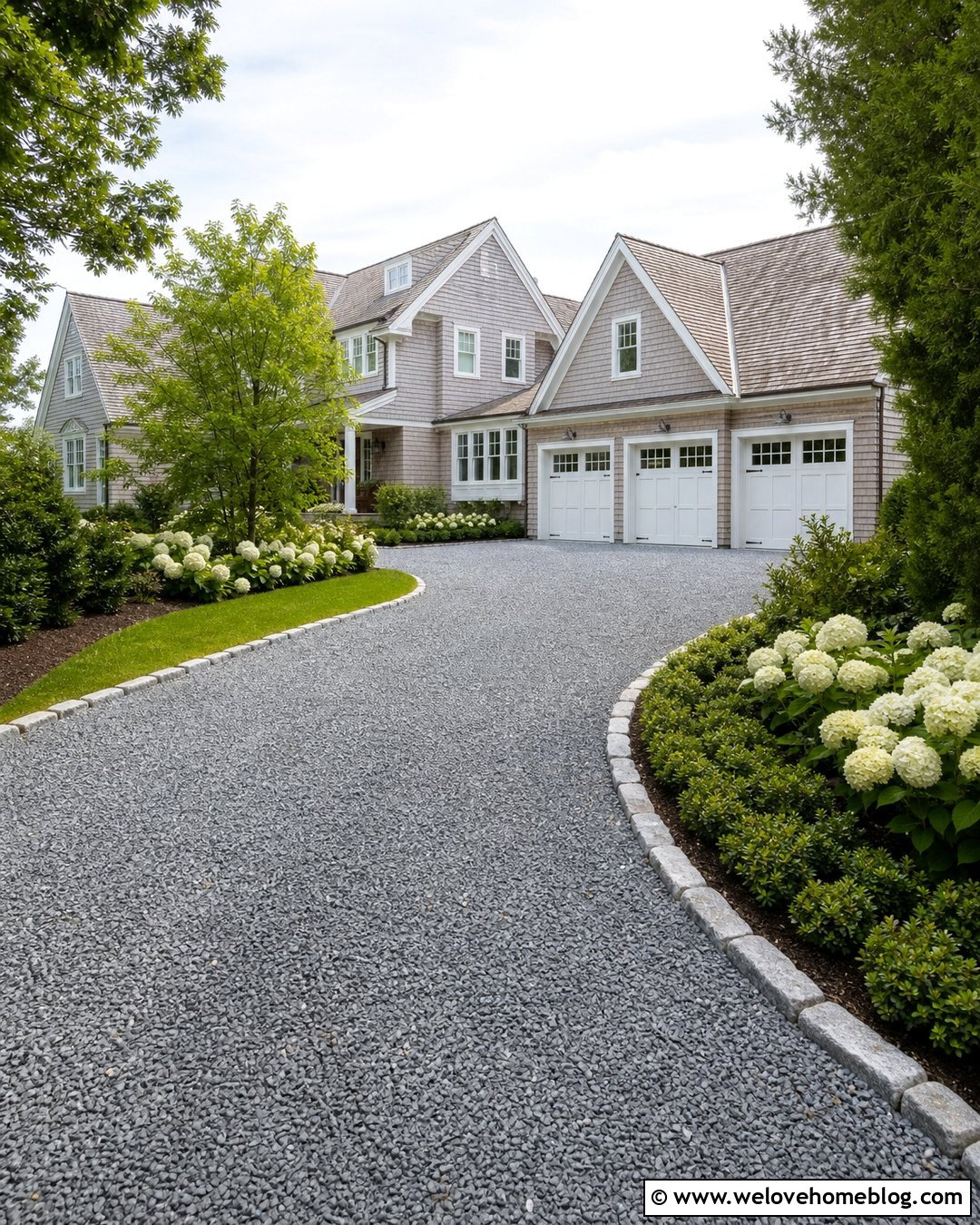
Belgian block creates a substantial border that pairs naturally with a crushed-stone or asphalt driveway. Use weathered gray blocks in a flush row along both sides of a curved approach. Behind them, develop deep mulched beds with compact hydrangeas, inkberry holly, and low ground cover. White hydrangea blooms will brighten the darker driveway, while evergreen foliage keeps the border structured outside the flowering season. Repeat the blocks around a small entrance bed near the street for a unified design. This complete look is particularly effective with shingle, stone, and New England-inspired houses. Provide enough bed depth for mature shrubs and position the blocks carefully where vehicle tires commonly cross the edge.
8. Steel Driveway Edging With Modern Landscaping
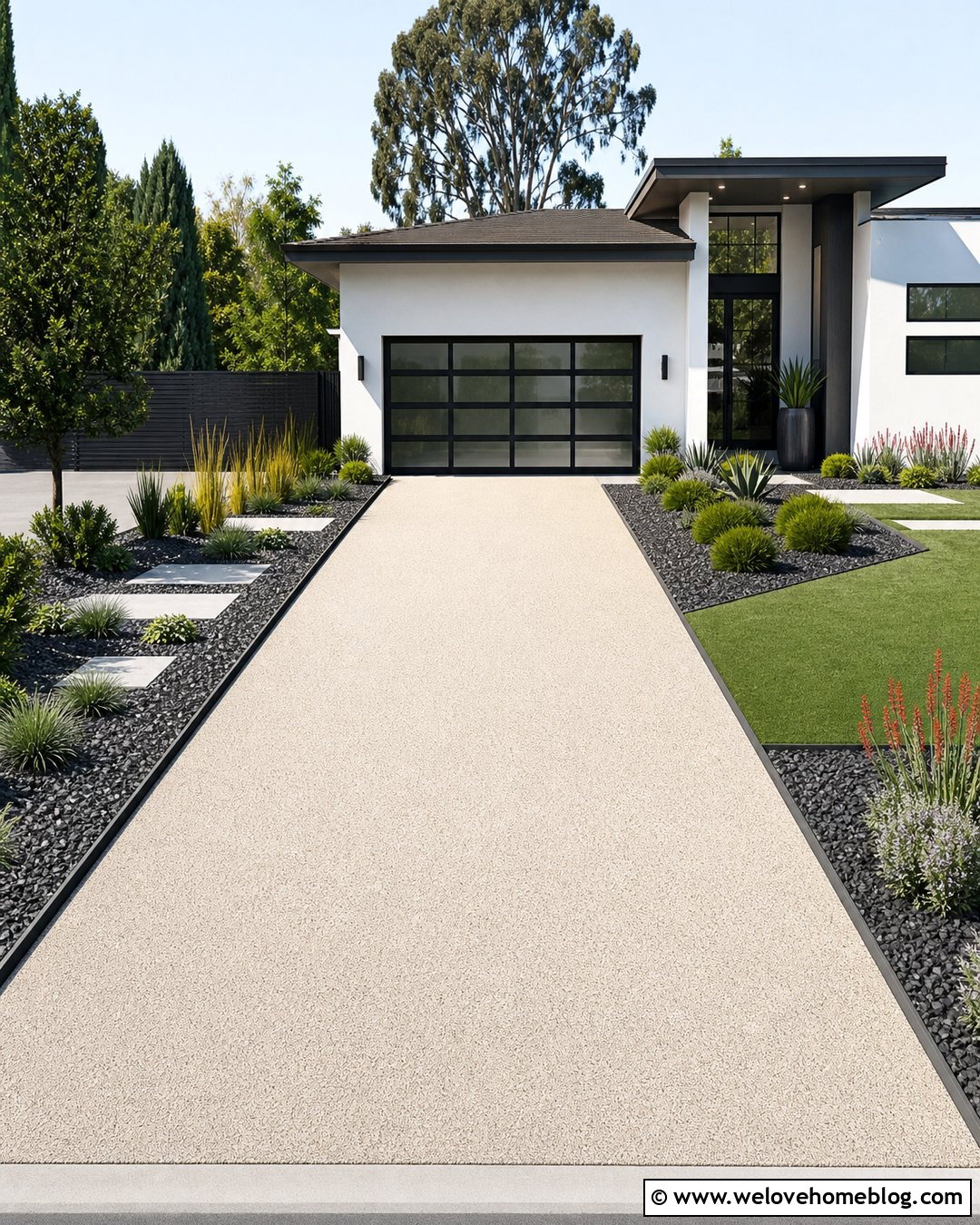
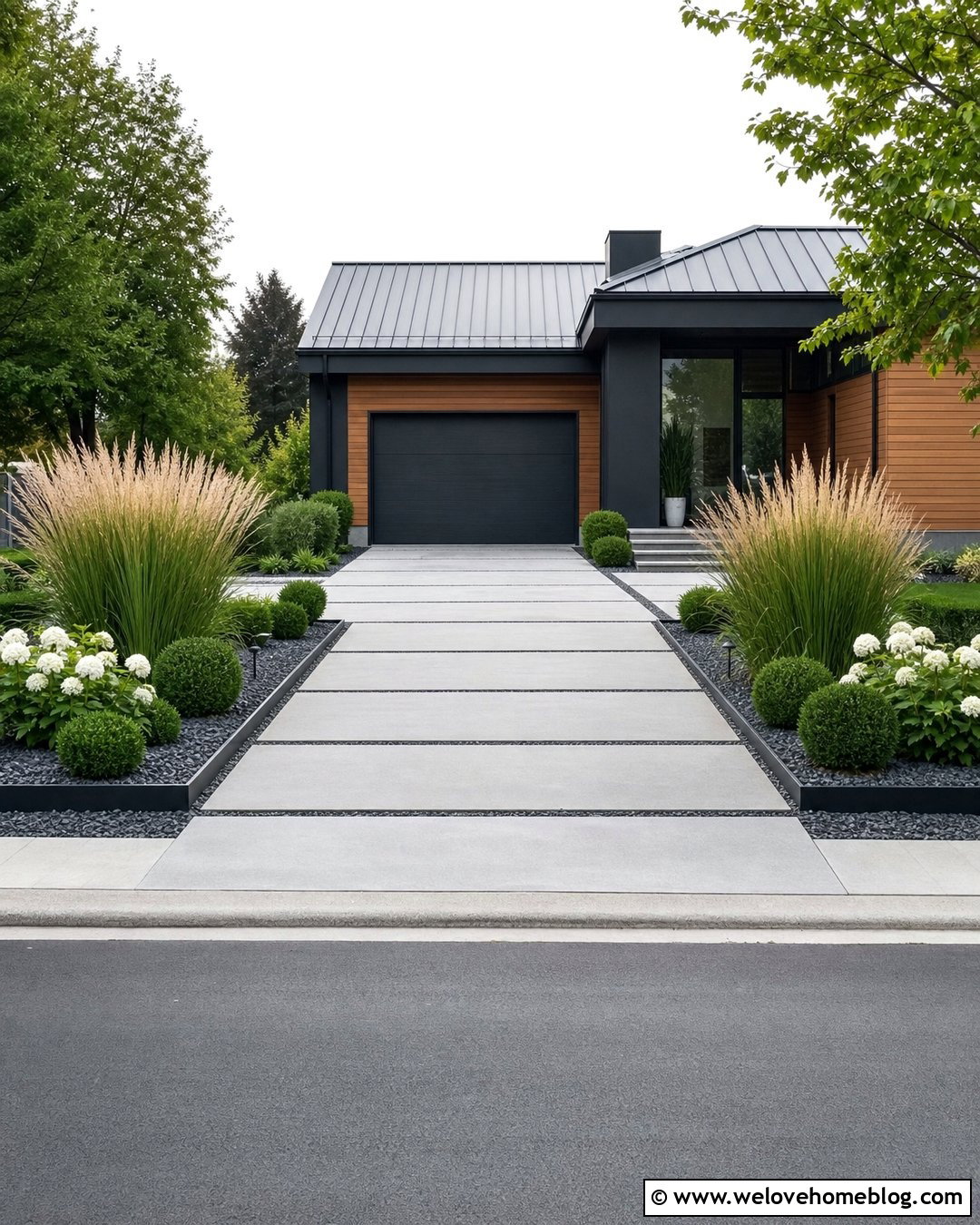
Thin black steel edging can give a pale resin-bound gravel driveway a precise, contemporary outline. Use it along a straight layout leading to a clean-lined modern house. Set the steel close to grade so it separates the driveway from planting beds without becoming visually heavy. Fill those beds with sculptural grasses, compact evergreen mounds, and repeated drifts of drought-tolerant perennials. Dark decorative gravel between the plants will echo the edging and contrast with the light driveway. Add large rectangular concrete stepping pads to connect the driveway and front entrance. Simple geometry is essential for this look. Limit the planting palette, repeat each selection in groups, and maintain open sight lines across the front yard.
9. Natural Stone Driveway Edging With Native Plants
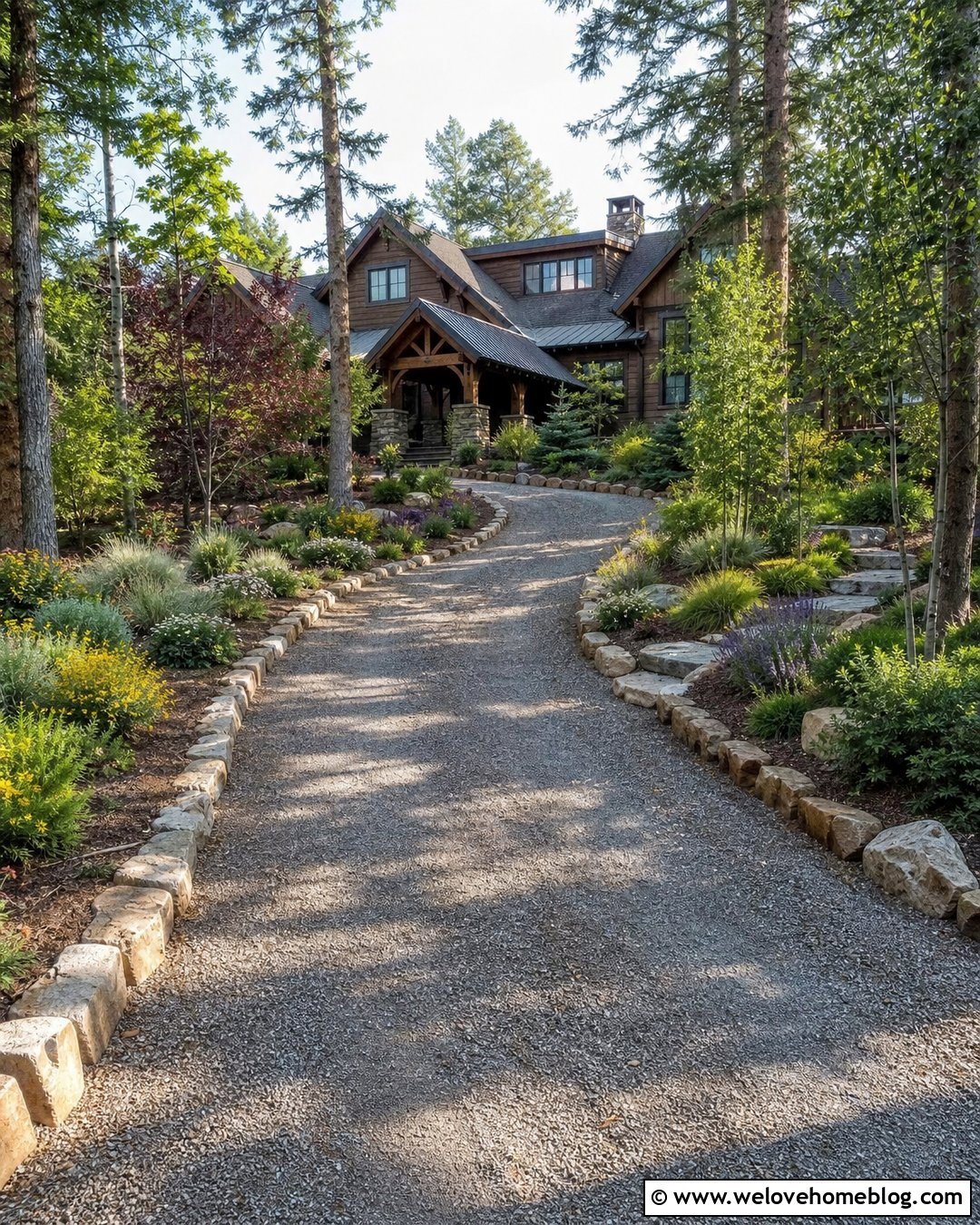
Irregular natural stone helps a winding gravel driveway blend into a wooded or semi-rural property. Select locally appropriate stone in earthy gray, brown, and buff tones, then set it as a low, uneven border rather than a formal curb. Beyond the stones, create layered beds using regionally suitable native grasses, flowering perennials, shrubs, and small trees. The plants should appear relaxed but remain clear of the driving lane. Place larger rocks at broad curves where they can serve as landscape accents without obstructing vehicles. A woodland walkway made from the same stone can branch toward the front door. This design works beautifully with rustic Craftsman homes, cabins, and houses surrounded by mature trees.
10. Concrete Curb Driveway Edging With Mulch Beds
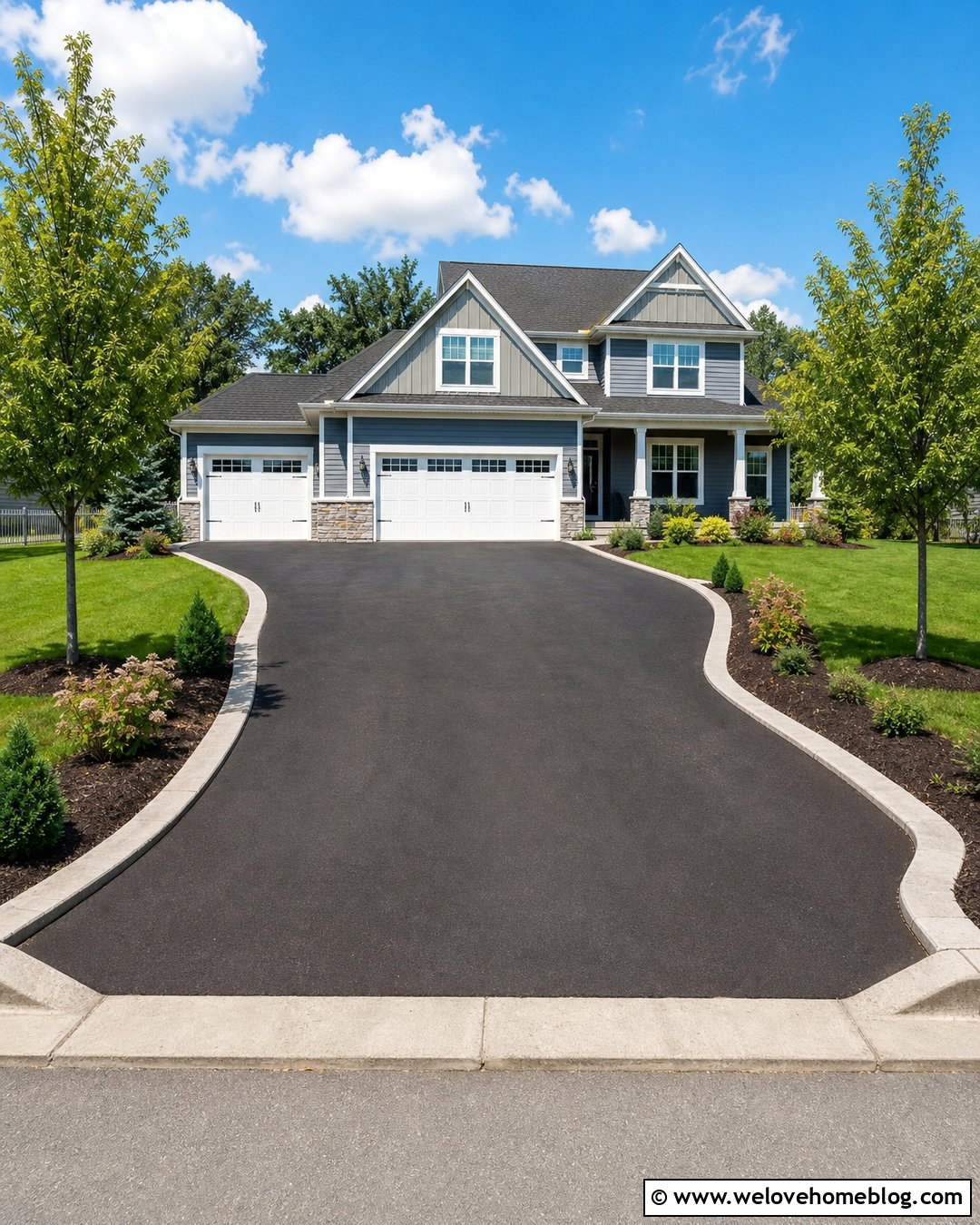
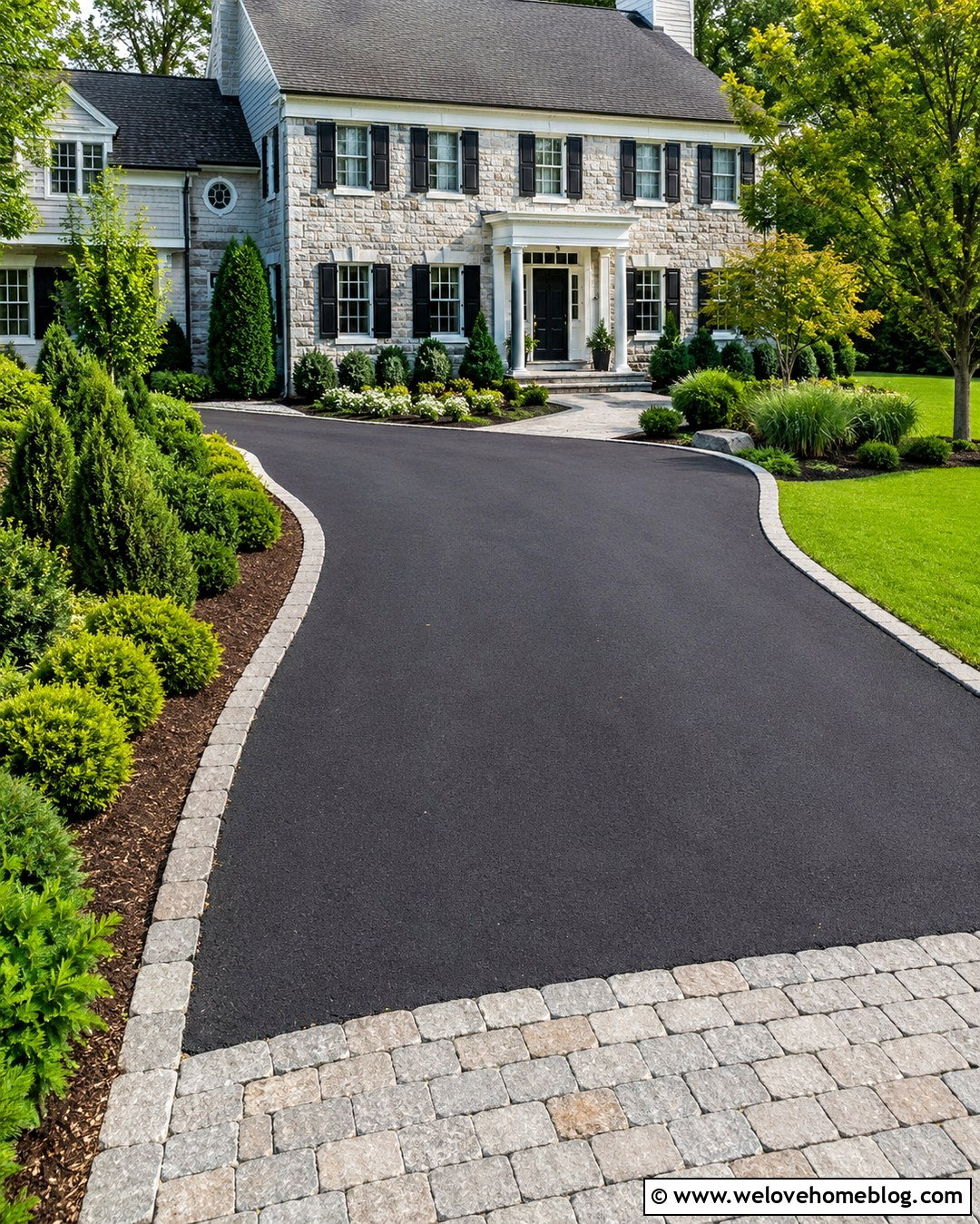
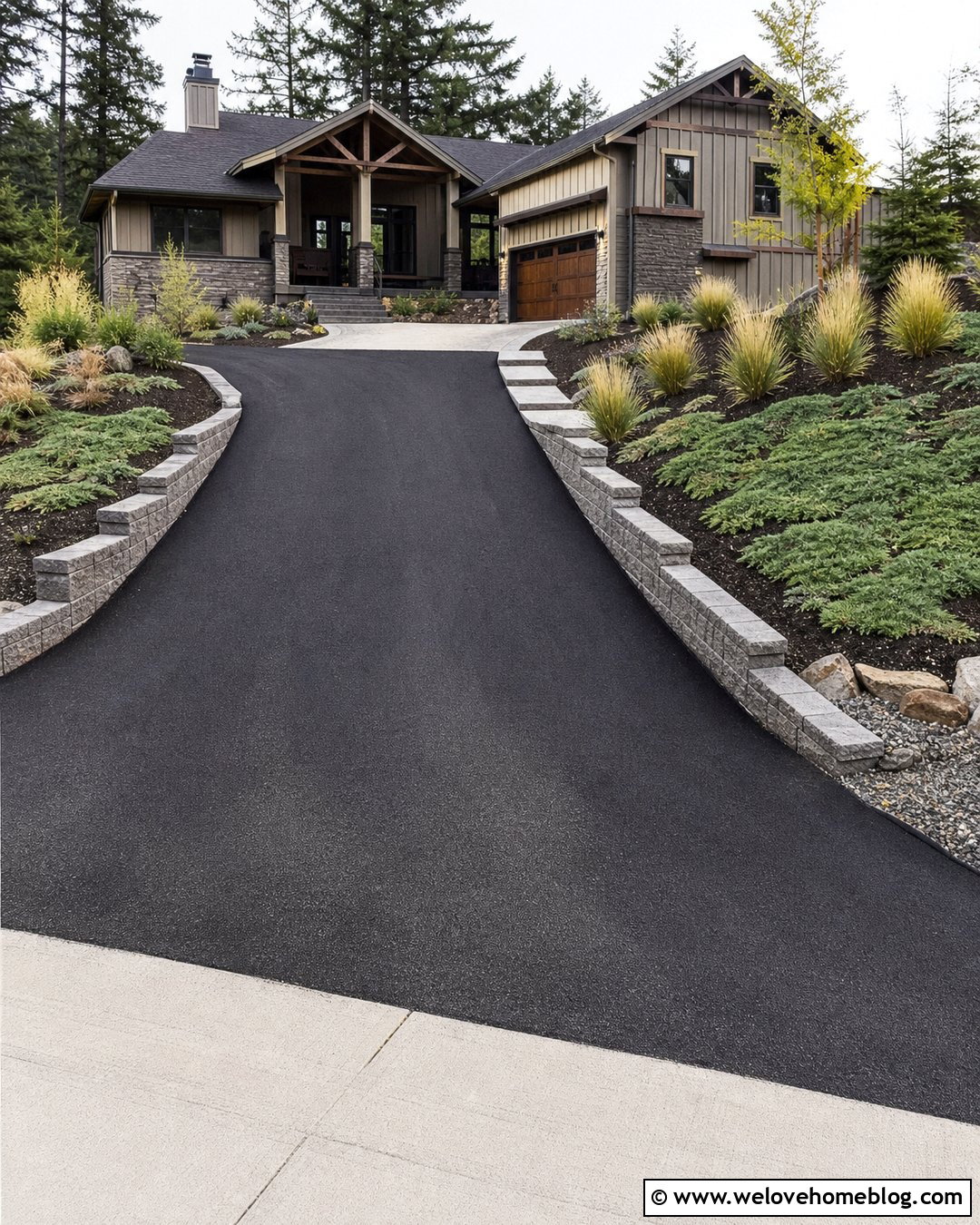
Continuous concrete curbing provides a crisp boundary around a wide black asphalt driveway. Choose a simple smooth finish in a medium gray tone that coordinates with the home’s walkway and foundation. Shape the curb into broad, gradual curves rather than tight waves. Behind it, use dark mulch beds planted with compact junipers, flowering spirea, and evenly spaced ornamental trees. The raised edge keeps the visual line clear, while the layered planting reduces the apparent width of the asphalt. At the garage and street apron, taper or lower the curb to accommodate turning tires. This practical design suits busy suburban properties where the owners want tidy landscaping, a defined mowing edge, and a polished entrance that does not require intricate masonry.
11. Limestone Driveway Edging With White Flowers
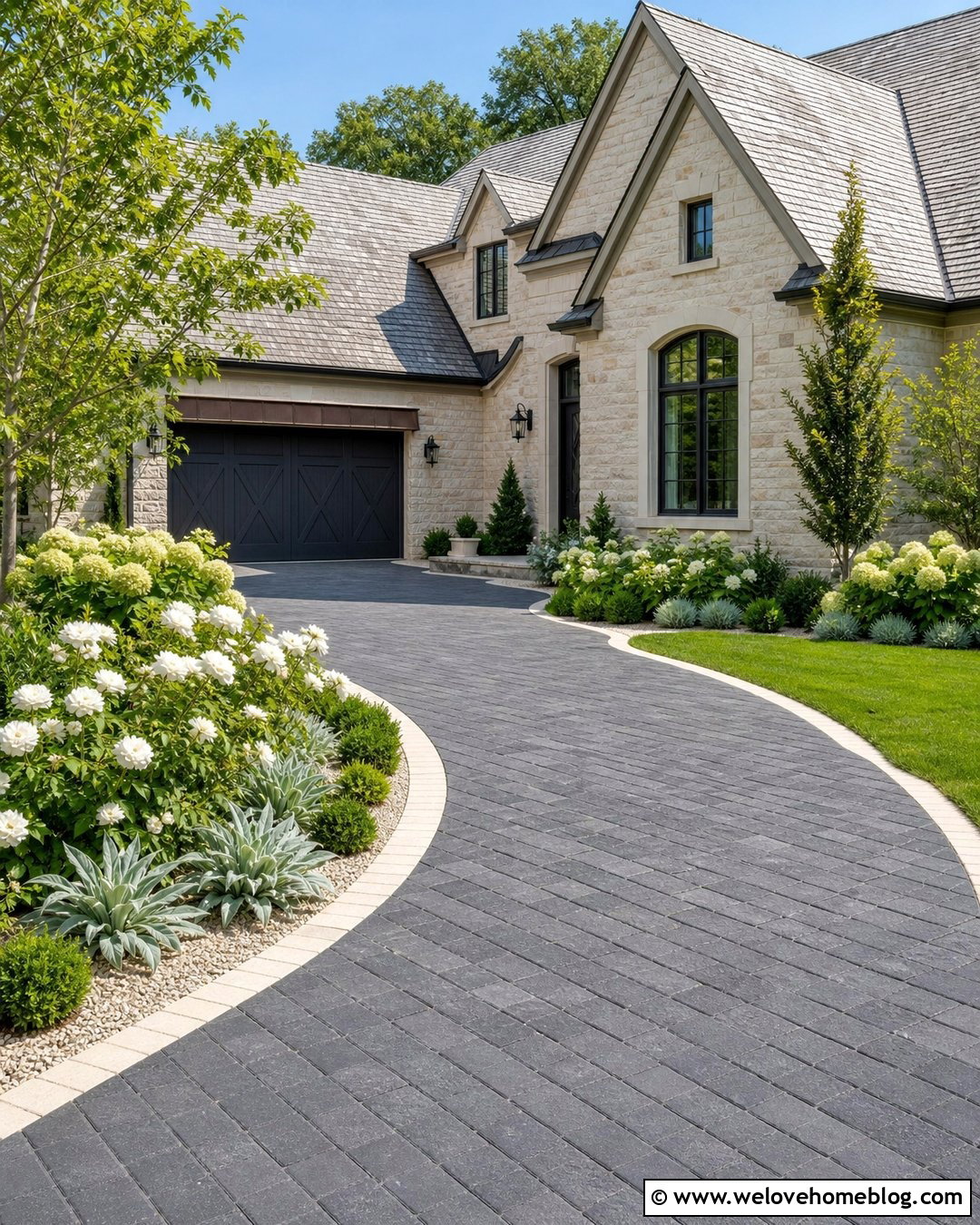
Cream limestone edging can brighten a charcoal paver driveway and connect it to a light stone house. Use rectangular limestone blocks in a clean, flush border that traces the driveway and front walkway. On the outside, plant generous beds of white roses, panicle hydrangeas, lamb’s ear, and low evergreen shrubs. Pale gravel mulch can fill small gaps and reinforce the soft neutral palette. A curved driveway will make the planting feel especially graceful, but the limestone should follow smooth, consistent lines. Avoid highly porous or delicate stone where deicing products and severe winter conditions are concerns. When properly selected for the setting, the combination of dark paving, pale edging, and white flowers creates fresh curb appeal without relying on excessive color.
12. Corten Steel Driveway Edging With Gravel Beds
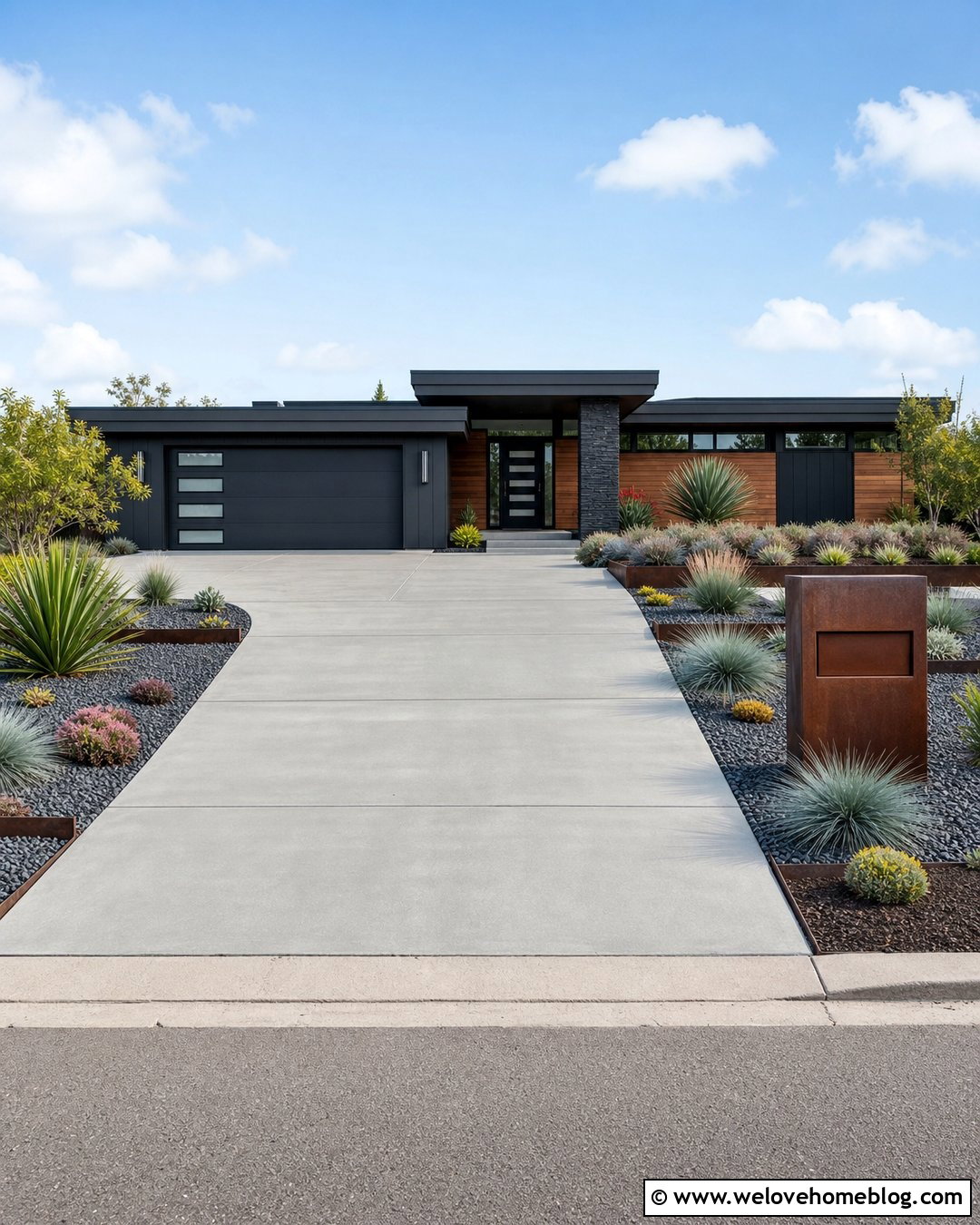
Weathering steel introduces a warm rust-colored line beside a smooth gray concrete driveway. Use the edging to define angular gravel beds that mirror the geometry of a modern or midcentury home. Fill the beds with charcoal stone, blue-green ornamental grasses, yucca, sedum, and compact flowering plants suited to the local climate. The restrained planting lets the steel remain visible while still softening the hardscape. Continue the same material around an address feature or walkway bed to connect the entrance. Keep the edging low beside parking spaces and check that exposed corners are safely finished. This complete look feels bold but natural because the earthy steel color works well with stone, foliage, wood siding, and neutral concrete.
13. Fieldstone Driveway Edging With Cottage Plants
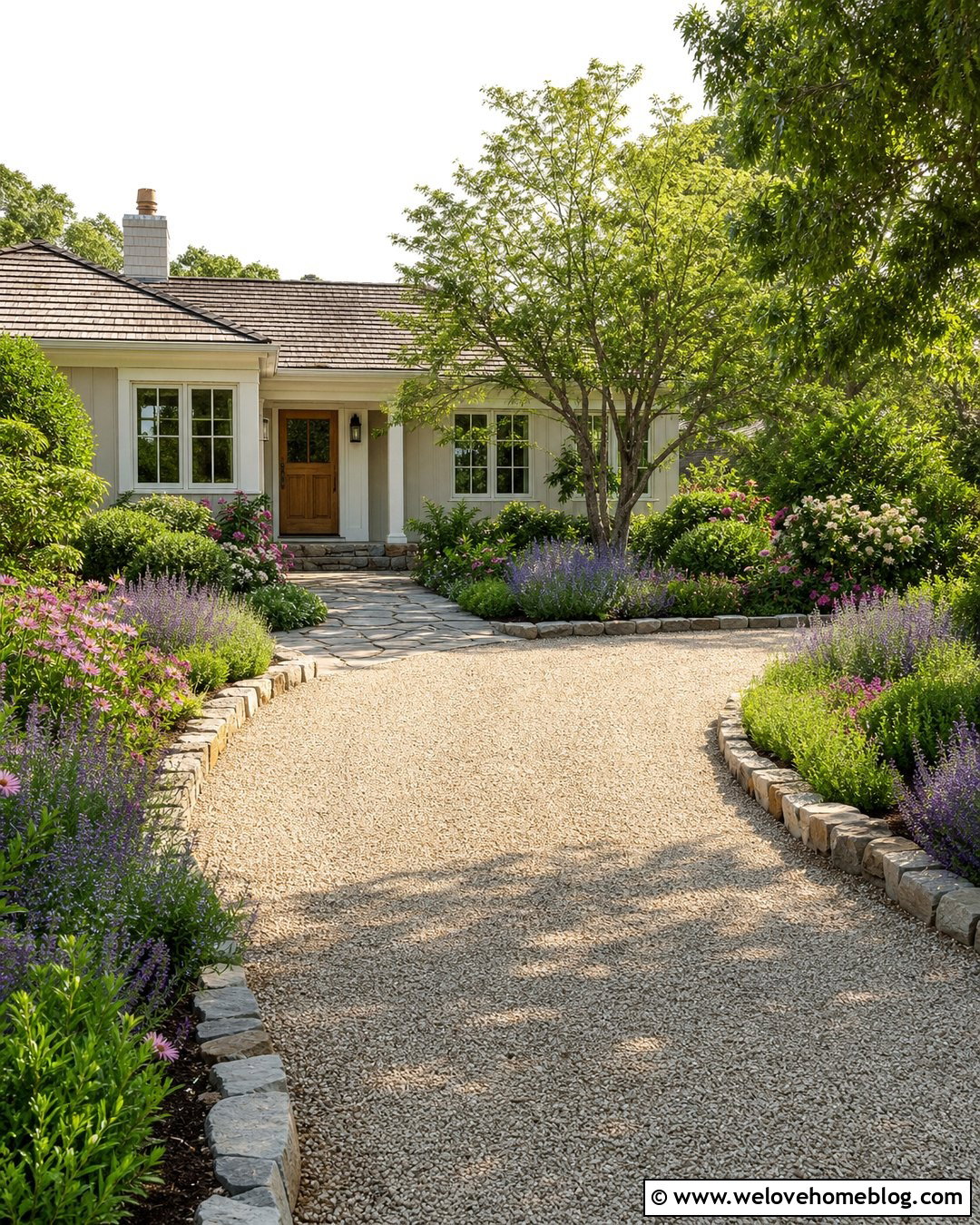
A loose fieldstone border gives a pea gravel driveway the informal character of an established cottage garden. Arrange rounded and irregular stones in a low line along a softly curved driveway, allowing small variations in size and color. Behind the stones, layer catmint, coneflowers, hardy geraniums, salvia, and compact shrub roses. Keep the lowest plants near the edge and place taller flowers farther back so the driveway remains open and visible. Use matching fieldstone around the mailbox bed and front path. The design should feel abundant rather than messy, so repeat several plants throughout the border and maintain a defined gravel margin. This charming combination suits cottages, bungalows, and relaxed country homes.
14. Granite Driveway Edging With Evergreen Shrubs
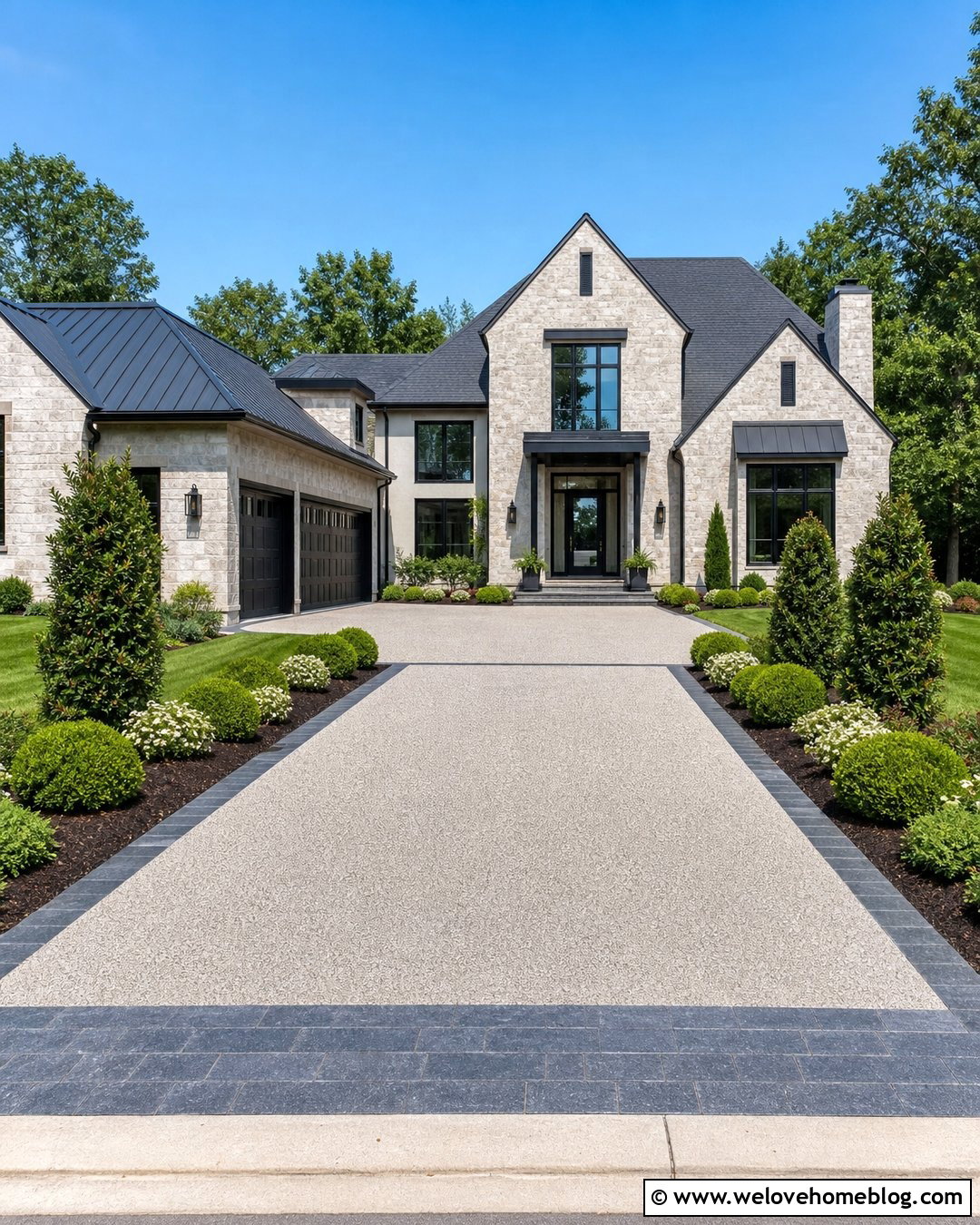
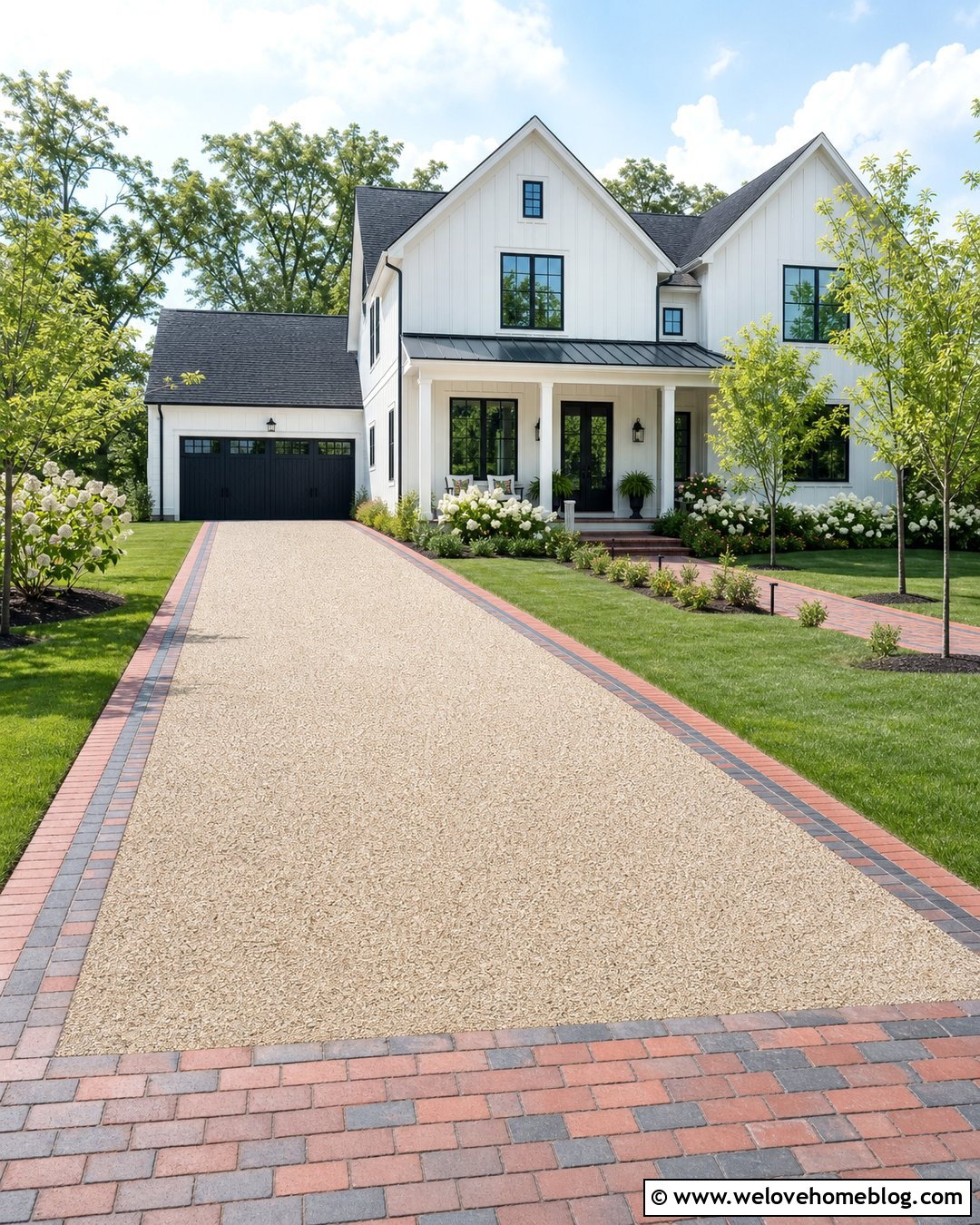
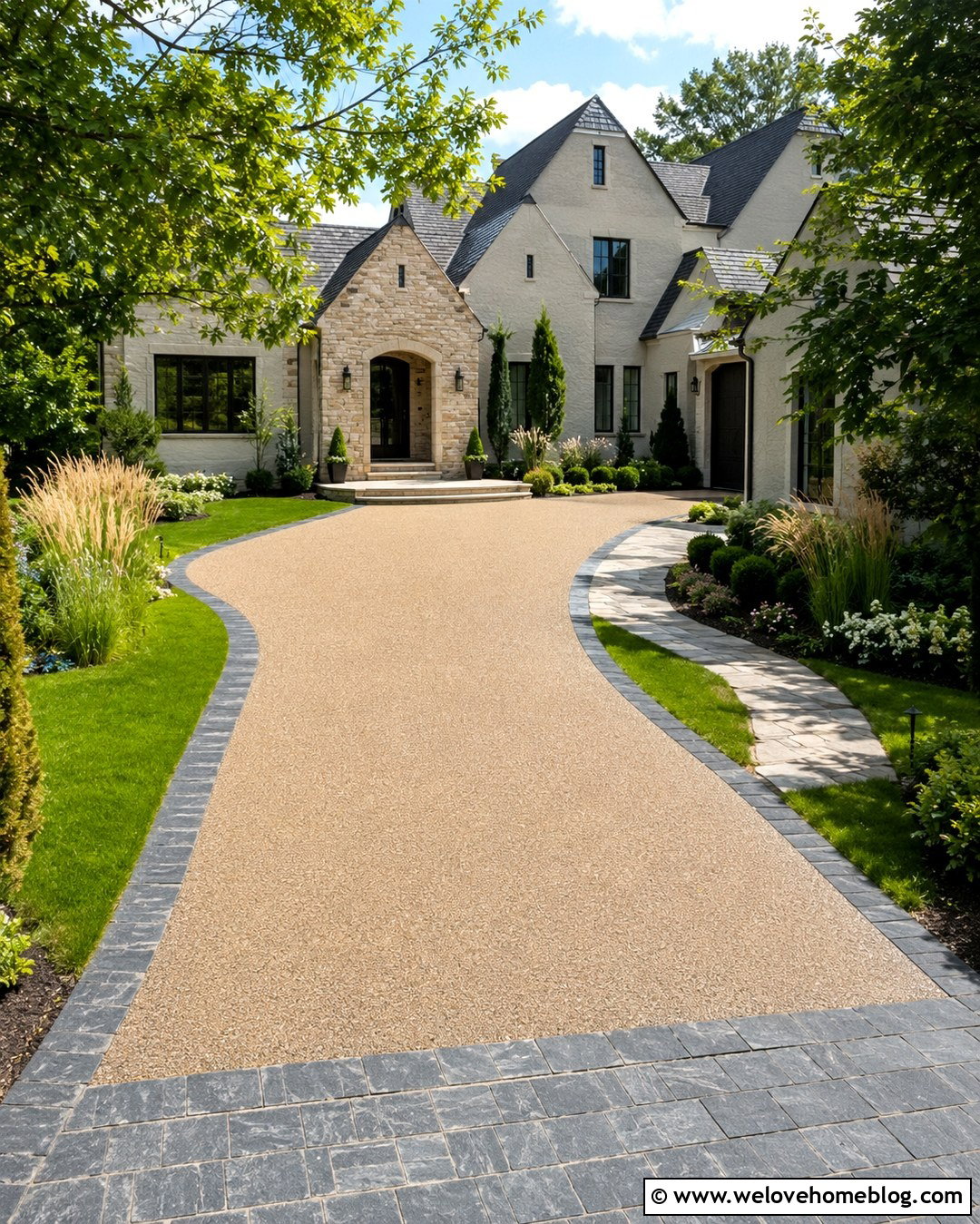
Dark granite setts can transform a light exposed-aggregate driveway into a sharply framed, upscale approach. Install one or two rows around a straight driveway and use a wider granite apron near the street. Beside the edging, build structured beds with rounded evergreen shrubs, upright hollies, and small areas of flowering ground cover. Dark mulch will blend with the granite and keep the planting composition quiet. This design looks particularly balanced in front of stone, stucco, or contemporary brick houses. Choose shrub sizes that will remain proportionate to the driveway and avoid blocking windows or entrance views. Repeating the granite at the walkway, porch steps, or garage threshold helps the driveway feel integrated with the rest of the property.
15. Brick Driveway Edging With Low Hedges
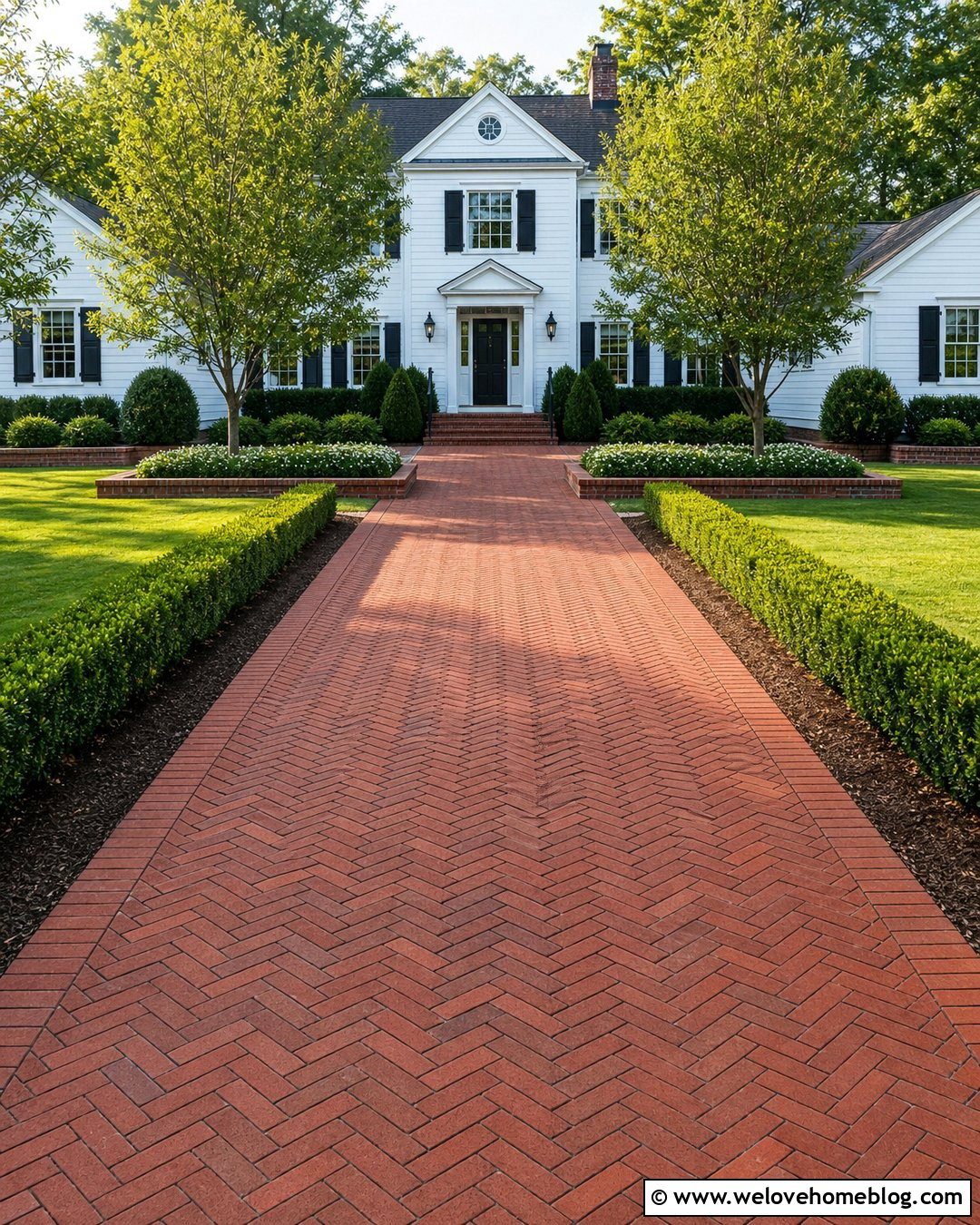
Clay brick pavers laid in herringbone become even more refined when framed by a simple soldier-course brick edge and low evergreen hedges. This complete look is ideal for a straight driveway leading to a traditional brick or white-sided home. Set the border bricks securely and keep the hedge several inches behind them, leaving a slim mulched maintenance strip. Use boxwood alternatives suited to your region if local growing conditions or pests make traditional boxwood difficult. At the entrance, widen the beds and add two small ornamental trees for height. The repeated brick tones unite the driveway and facade, while the clipped greenery creates a formal line without requiring stone curbs or highly colorful planting.
16. Gravel Driveway Edging With Metal Strips
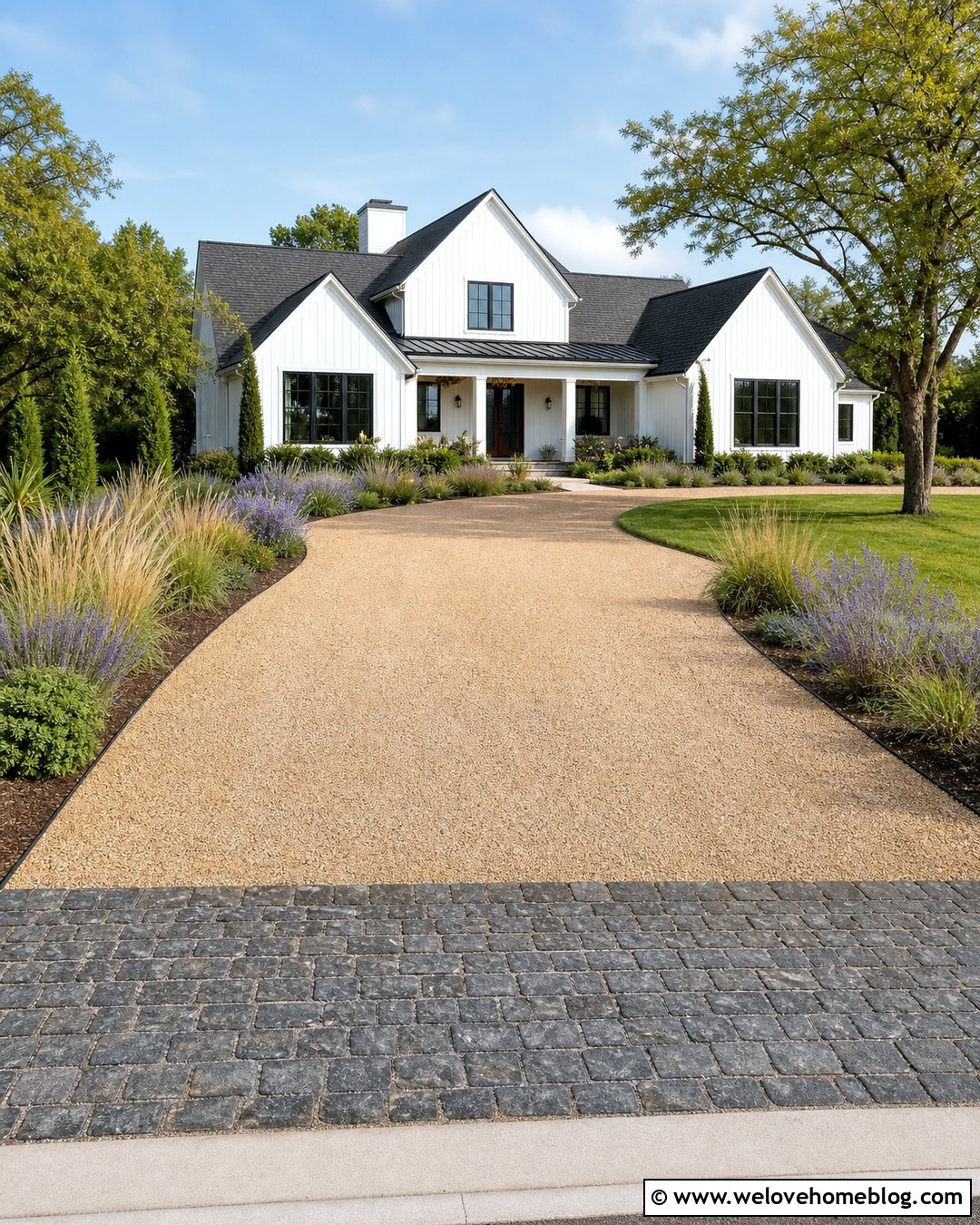
Hidden metal edging offers a subtle way to contain warm beige gravel without competing with the surrounding landscape. Shape the driveway into a relaxed curve and use flexible steel or aluminum strips to maintain a clean boundary. On the lawn side, create wide beds filled with wispy grasses, lavender-colored perennials, and low shrubs. The edging should sit nearly flush, allowing the planting and gravel to meet in one precise line. Add a contrasting cobblestone apron at the garage or street to catch loose aggregate and strengthen high-traffic areas. This understated approach works with modern farmhouses and casual contemporary homes. It is especially useful when homeowners want the loose texture of gravel but prefer a streamlined border instead of visible timber or masonry.
17. Flagstone Driveway Edging With Ground Cover
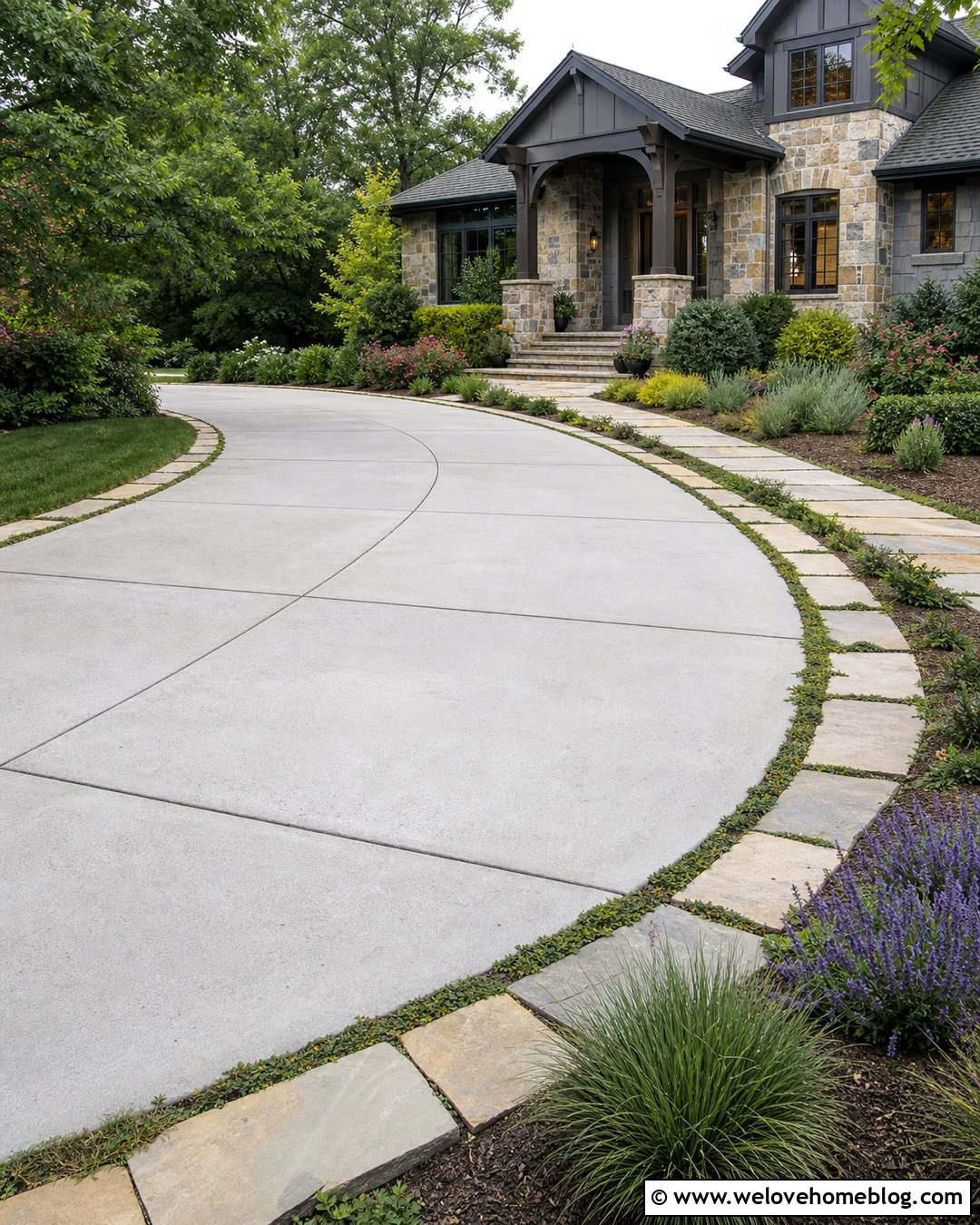
Large flagstones can create a natural, walkable edge beside a curved concrete driveway. Set the stones in a broad single course, using flat pieces with varied shapes but similar thicknesses. Low creeping ground covers can fill the outer joints and connect the border to deeper planting beds. Add dwarf grasses, flowering perennials, and a few compact shrubs beyond the stones to build height gradually. The flagstone edge also provides a convenient stepping surface when passengers exit a vehicle. Match its color to the home’s porch, facade, or front walkway for a coordinated finish. Keep spreading plants away from the pavement and select varieties suited to foot traffic, reflected heat, sunlight, and the local growing conditions.
18. Timber Driveway Edging With Wildflowers
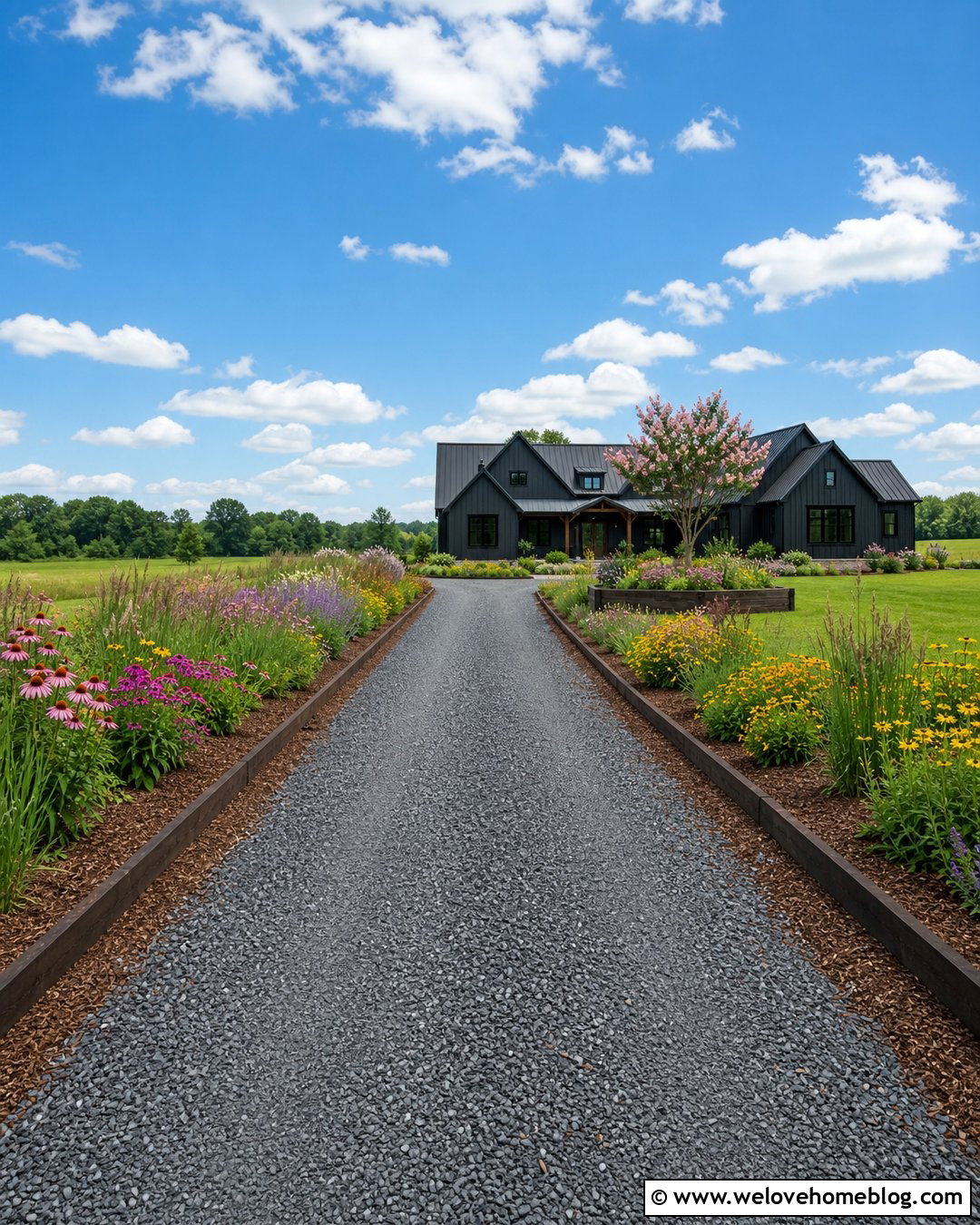
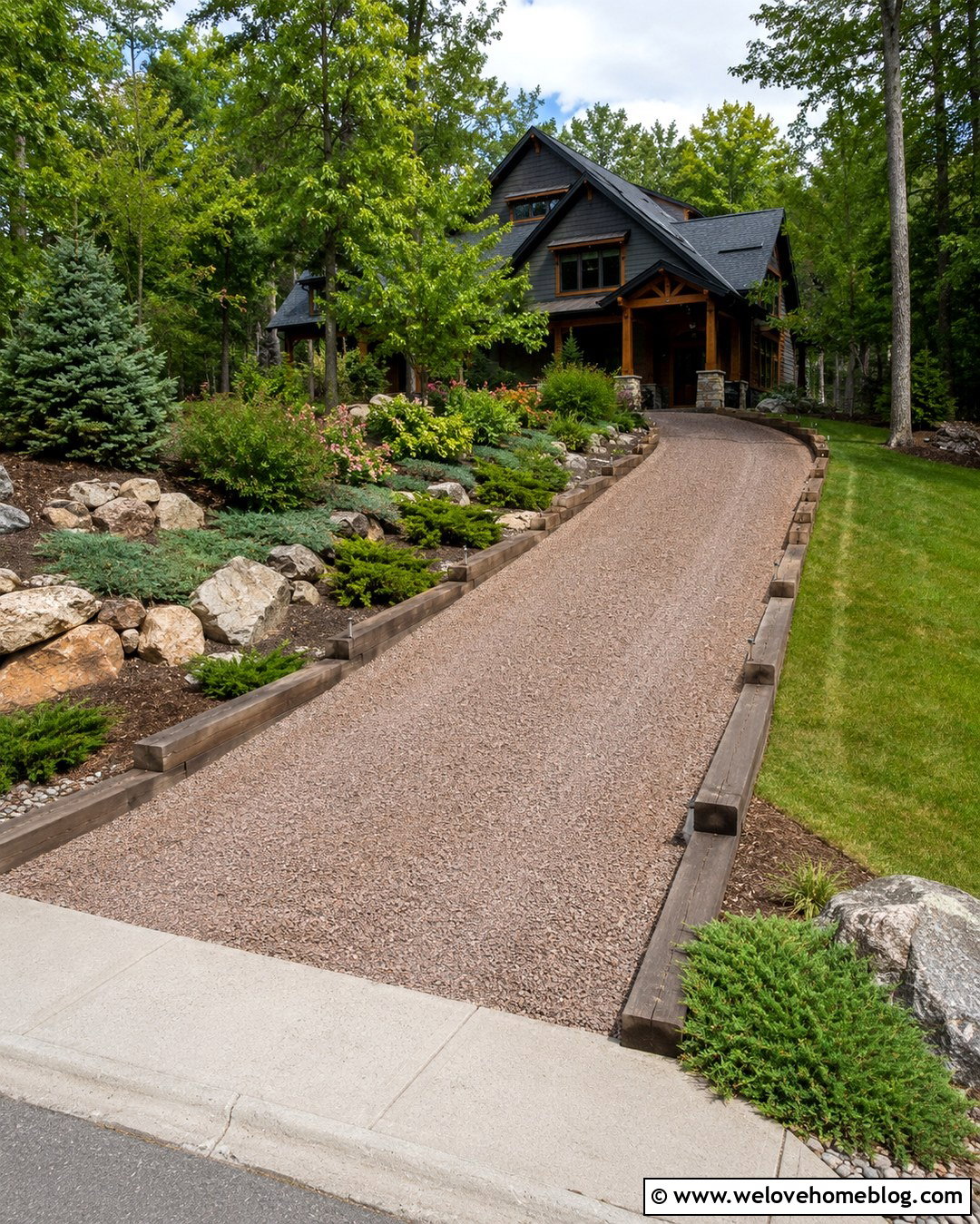
A long crushed-gravel driveway can feel more inviting when framed with dark-stained timber and broad wildflower-inspired planting. Run sturdy wood beams along gentle curves to keep the gravel contained, then establish meadowlike beds beyond the border. Use an organized mix of ornamental grasses, coneflowers, coreopsis, asters, and other climate-appropriate plants. Repeating the same varieties in broad drifts prevents the landscape from looking random. Near the street, add a timber-framed address bed with one small flowering tree. This natural combination suits barns, farmhouses, cabins, and rural homes. Leave a mowed or mulched buffer between the timber and taller plants so growth does not lean into the driveway or interfere with visibility.
19. Poured Concrete Driveway Edging With Succulents
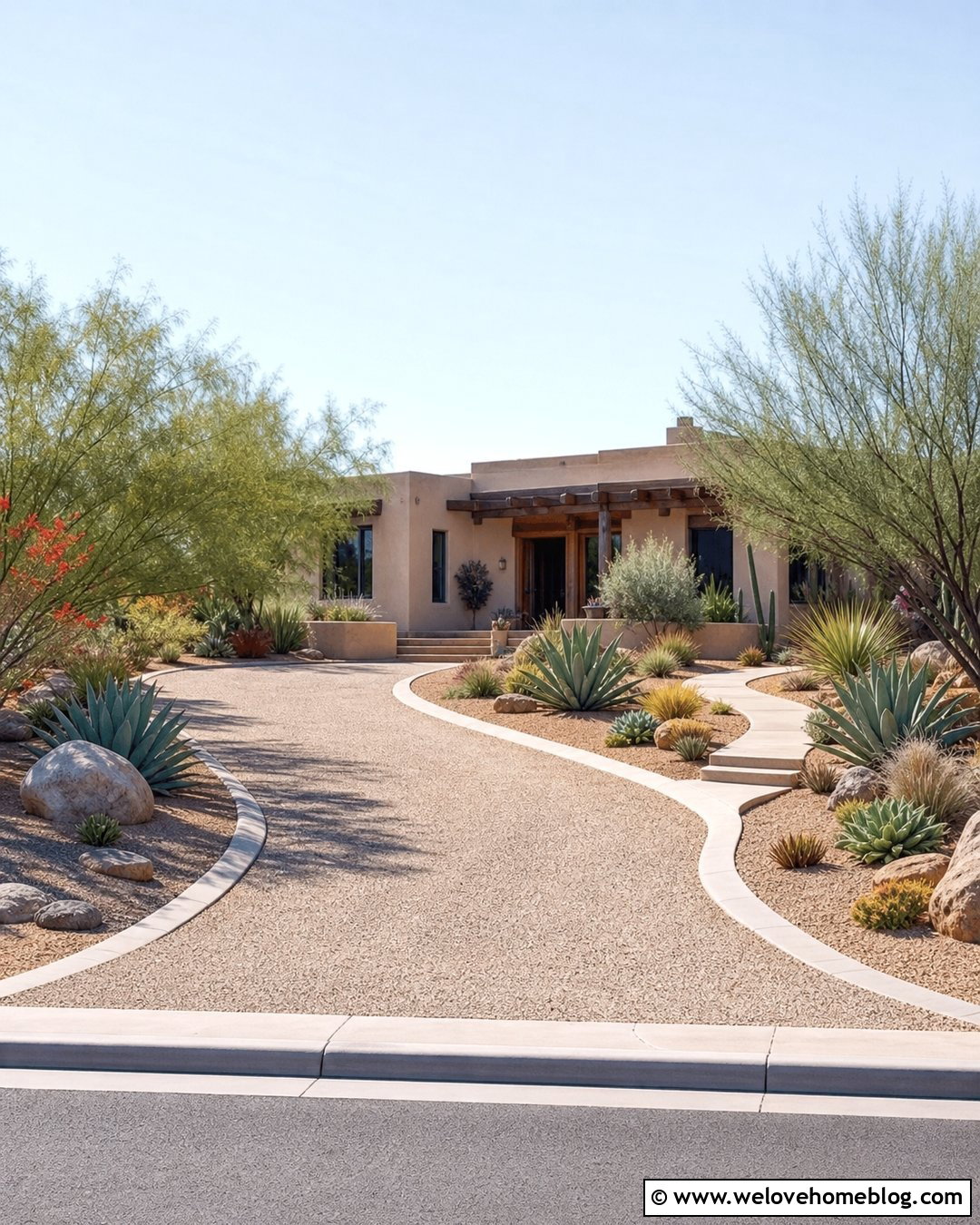
A seamless poured concrete curb can frame a pale gravel driveway while creating raised beds for a Southwestern landscape. Shape the driveway with a gentle curve and use smooth, low concrete edging in a warm sand or light gray finish. Fill the bordering beds with agave, yucca, compact succulents, decorative boulders, and drought-adapted grasses selected for the regional climate. Tan gravel mulch will tie the plantings to the driveway without making the entire area look monochromatic. Keep sharp or spiny plants well away from doors and walkways. This complete design complements stucco ranch, Pueblo-inspired, and contemporary desert homes. A matching concrete walkway and simple entrance pillars can carry the clean material palette toward the front door.
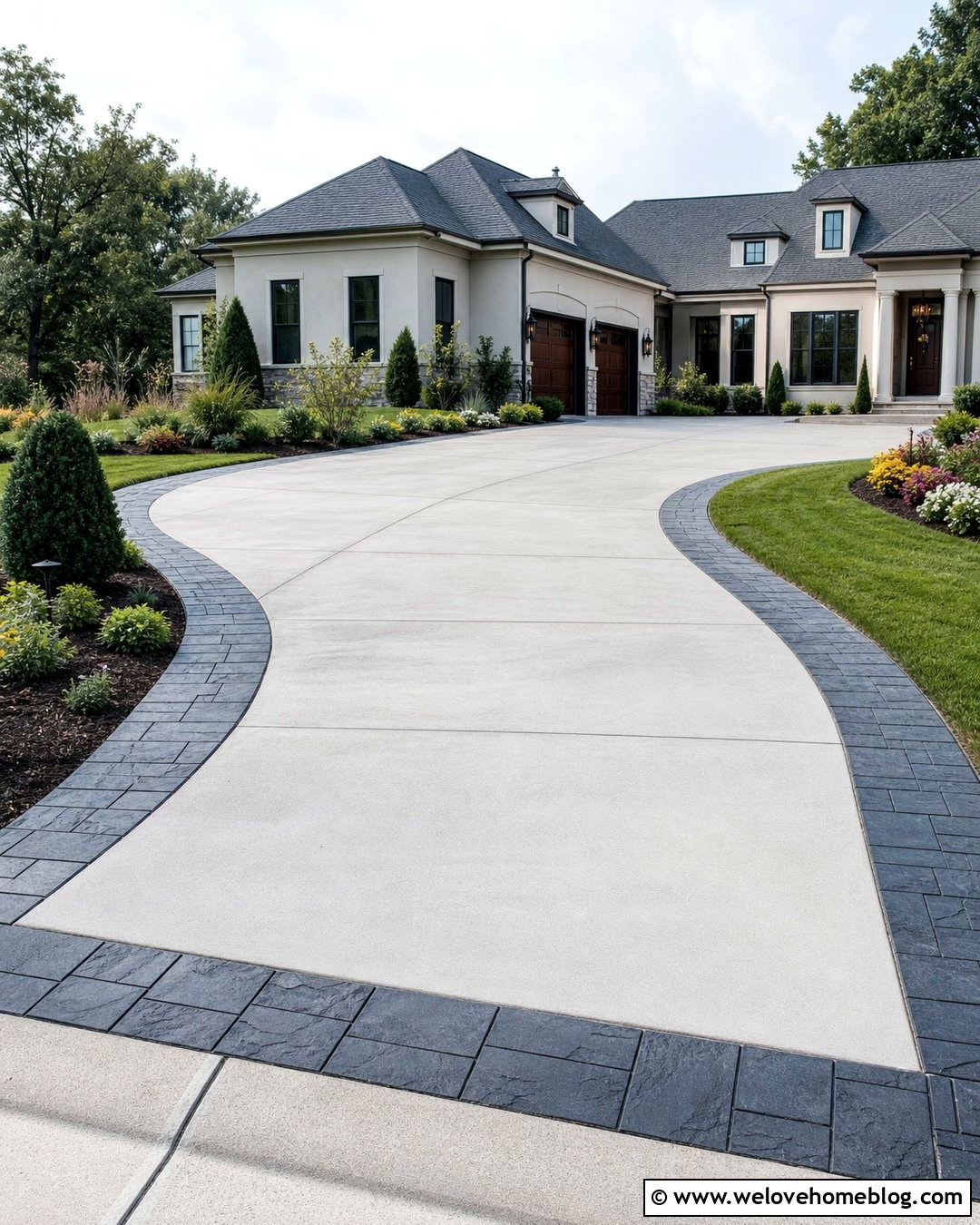
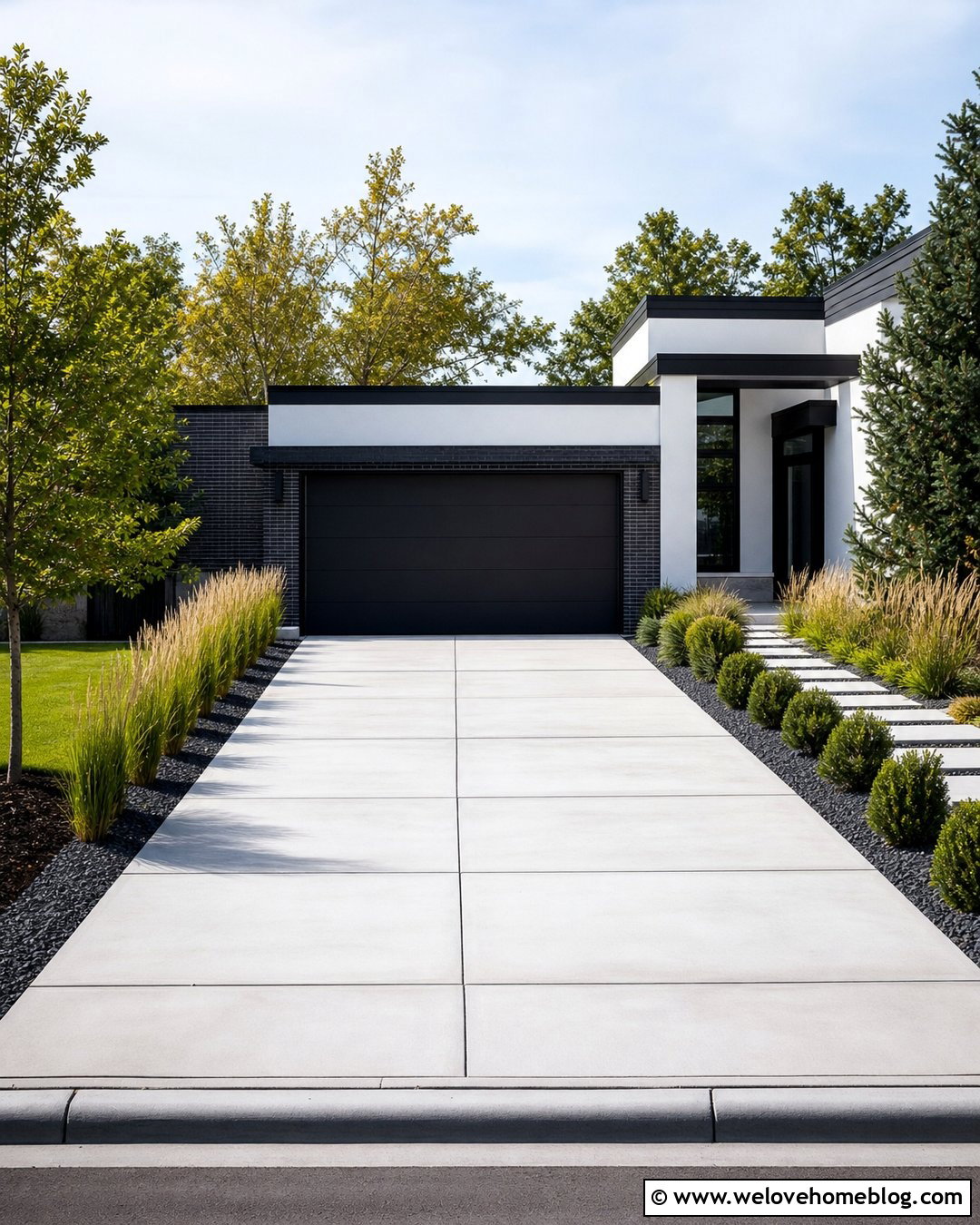
20. Cobblestone Driveway Edging With Lawn
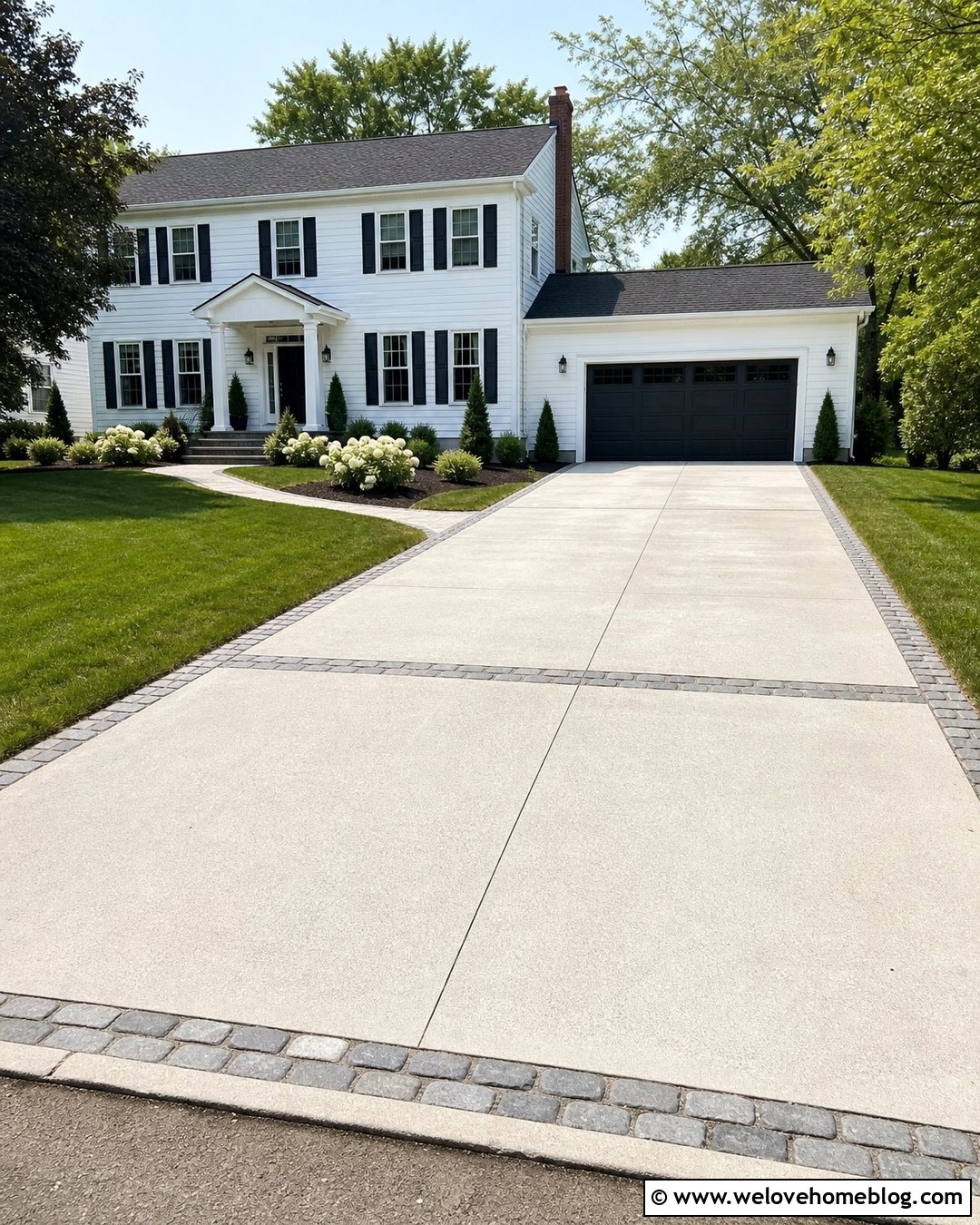
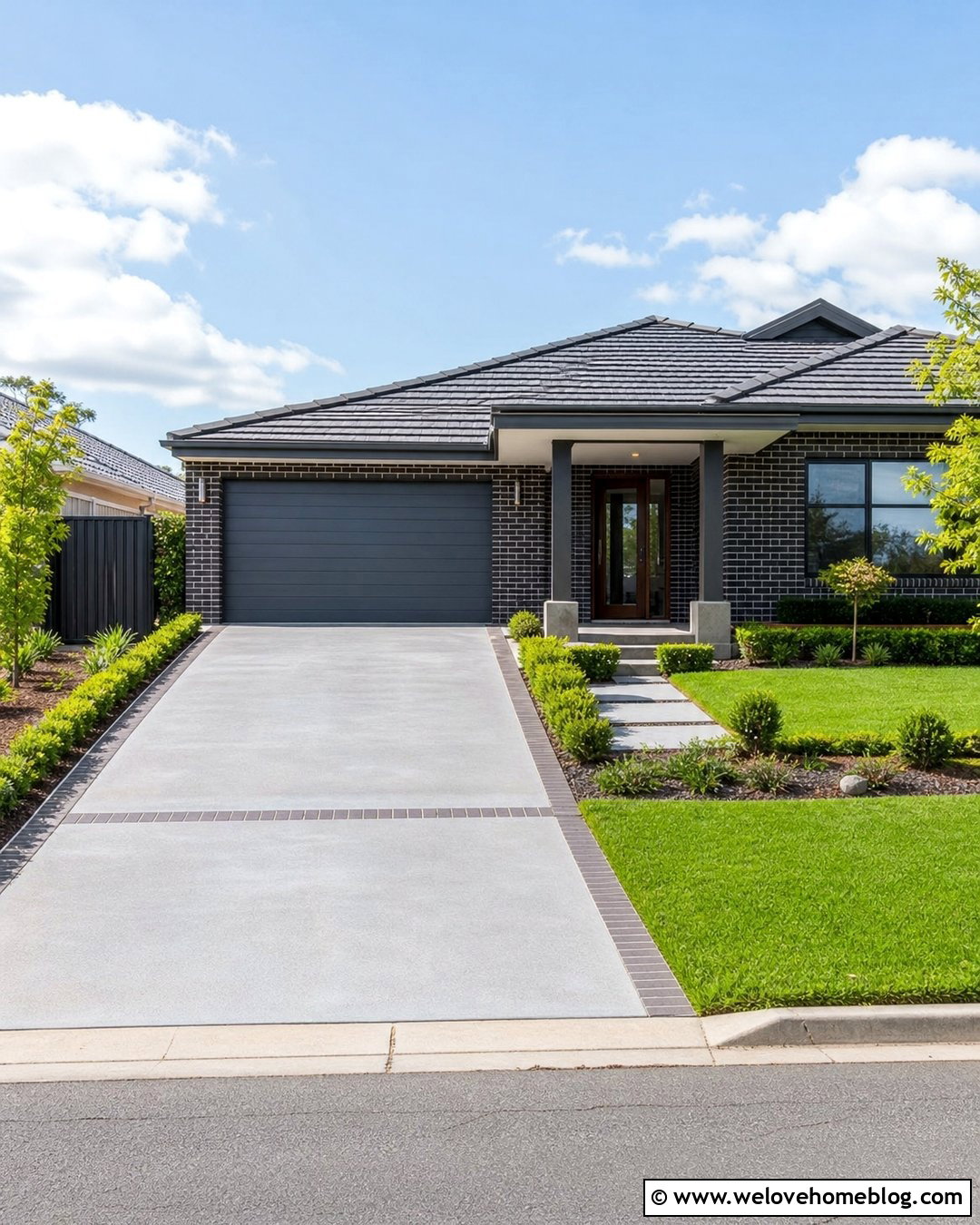
For a classic and uncluttered entrance, border a light gray concrete driveway with one row of dark cobblestones and neatly maintained lawn. The cobbles create enough contrast to define the driveway without requiring large flower beds along its full length. Use a straight layout for a ranch or Colonial home, then widen the border into small planted areas near the street and garage. Those beds can contain compact evergreens and one seasonal flowering accent. Set the cobbles close to grade so mowing remains manageable and tires can cross the edge if needed. A matching cobblestone band across the driveway adds a tailored finishing detail. This design is useful for homeowners who want strong curb appeal while preserving an open, spacious front lawn.
21. Slate Driveway Edging With Blue-Green Plants
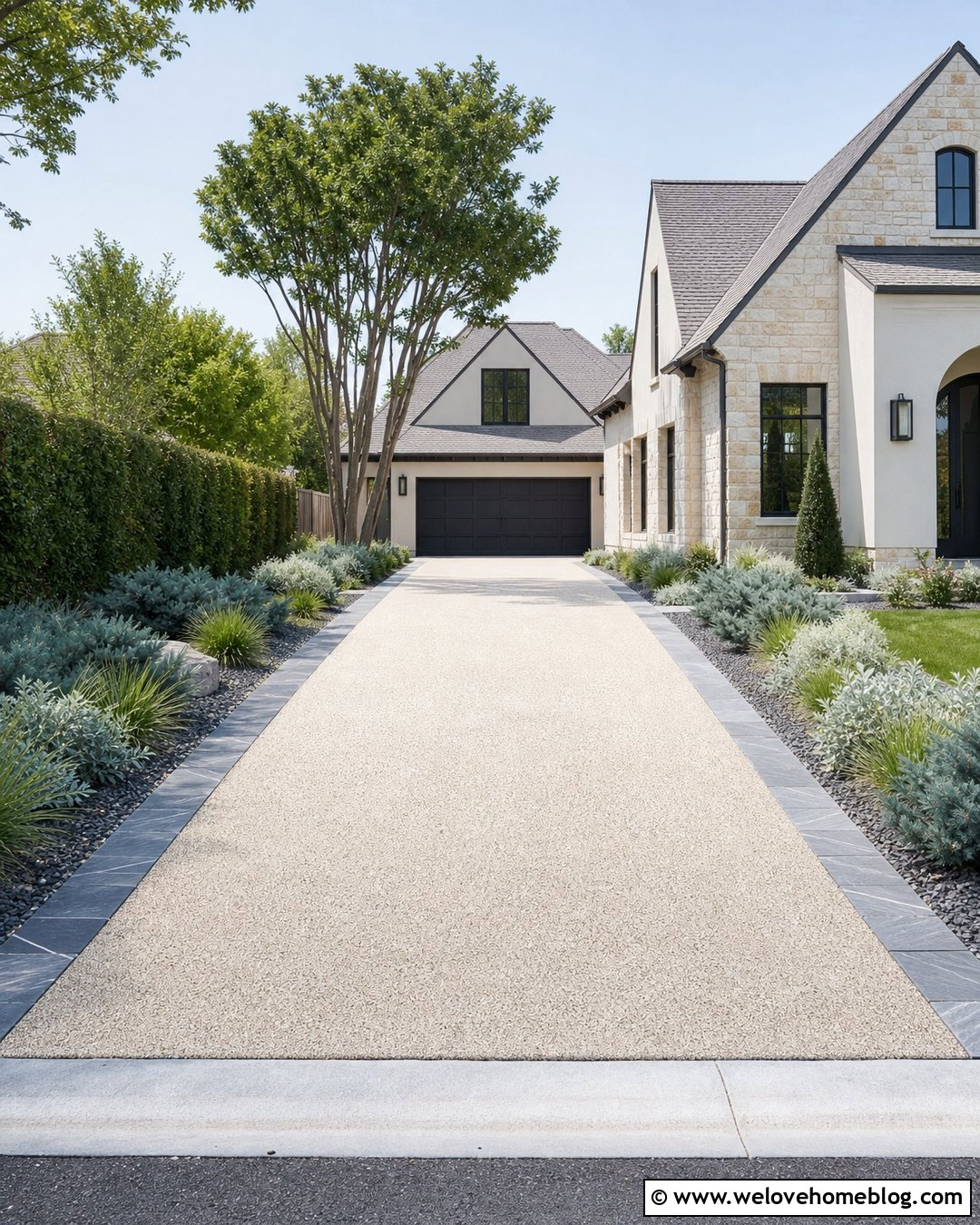
Dark slate edging creates an elegant contrast against a light resin-bound gravel driveway. Lay rectangular slate pieces in a flush linear border around a straight approach to a modern or transitional home. On the landscape side, repeat blue-green plants such as compact junipers, fescues, and silvery perennials. Black or charcoal gravel mulch will visually connect the planting bed with the slate. Use one wider bed near the entrance for a sculptural multi-stem tree, while keeping the rest of the border low and streamlined. Because slate characteristics vary, choose an exterior-grade product appropriate for driveway conditions in your area. The combination of pale paving, dark stone, and cool foliage produces a calm, coordinated look that remains interesting without bright flowers.
22. Brick Ribbon Driveway Edging With Shade Plants
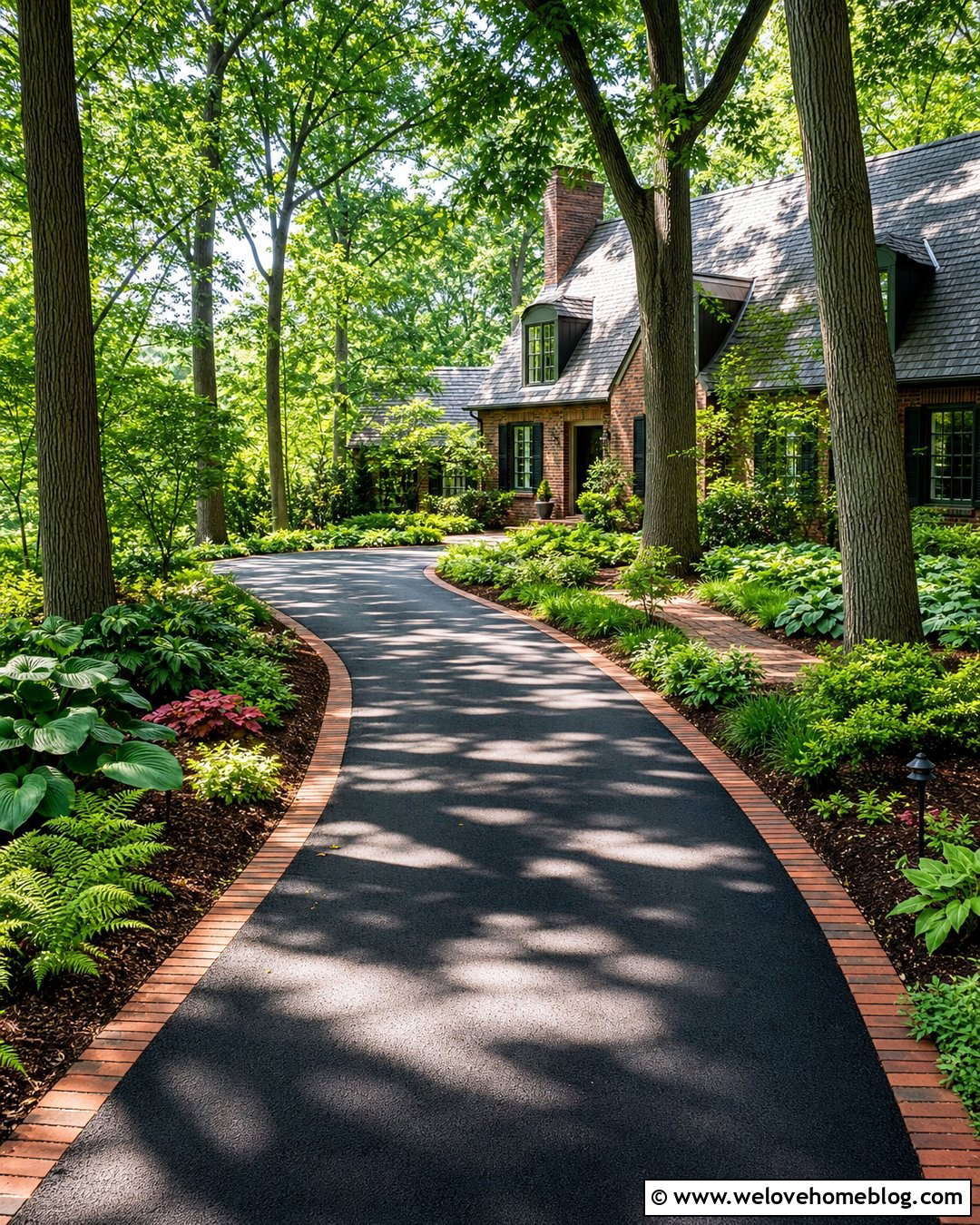
A red brick ribbon brings color to a plain asphalt driveway passing beneath mature shade trees. Install two flush brick rows along each edge, following the driveway’s gentle curve. Beyond the brick, create generous woodland beds with hostas, ferns, coral bells, sedges, and shade-tolerant shrubs selected for local conditions. Use natural leaf mulch or dark shredded bark to complete the garden setting. The brick should also appear around the front walkway and tree beds so it feels connected to the property rather than added as an isolated strip. Keep plants low near the street and inside curves to preserve visibility. This layered look works well with traditional homes, wooded lots, and older neighborhoods with established tree canopies.
23. River Rock Driveway Edging With Ornamental Trees
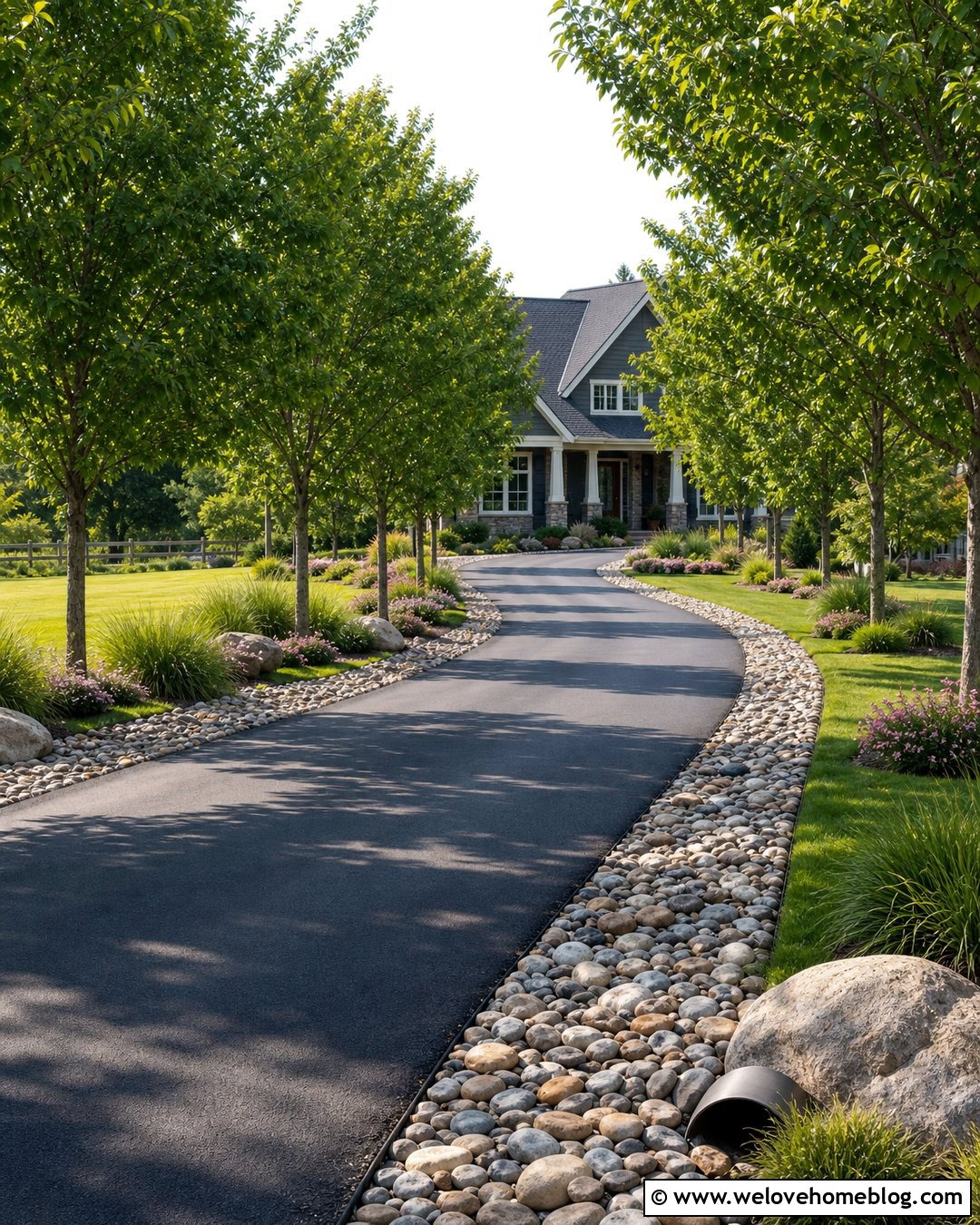
Smooth river rock can form a broad transition between a black asphalt driveway and a row of small ornamental trees. Contain the rock with discreet metal edging on both sides, creating a clean strip that follows a slightly curved layout. Plant evenly spaced serviceberries, redbuds, crape myrtles, or another suitably sized tree beyond the rock, depending on the region. Underplant them with low grasses and flowering ground covers rather than dense shrubs. This keeps the border airy and preserves room around vehicles. Use larger stones at drainage outlets and smaller river pebbles along the main edge. The repeated tree canopies create rhythm along a long driveway, while the stone provides a tidy, low-growing foreground throughout the year.
24. Concrete Paver Driveway Edging With Rain Garden
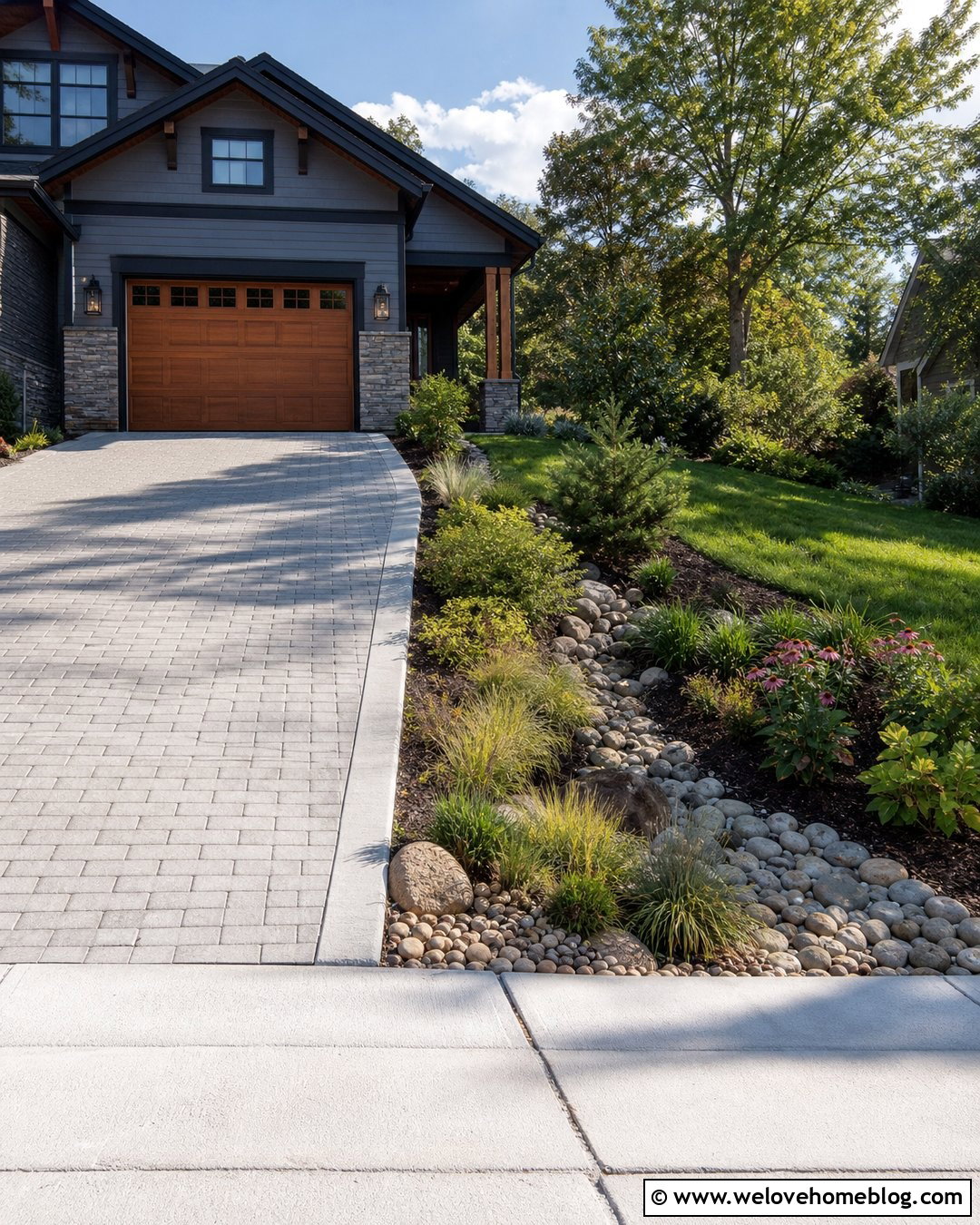
A permeable concrete paver driveway can flow naturally into a planted rain garden along its lower side. Frame the pavers with a durable stone or concrete edge, then shape a shallow landscape bed beyond it to receive runoff where site conditions allow. Fill the area with moisture-tolerant grasses, flowering perennials, and shrubs appropriate to the region. Rounded river stones can mark the lowest channel and create visual texture during dry weather. Keep the garden’s slopes gentle and maintain a clear buffer beside the parking area. This environmentally thoughtful look suits modern, Craftsman, and naturalistic homes. Because drainage requirements vary by property, confirm soil conditions, utility locations, local rules, and overflow routing before changing how driveway water moves across the yard.
25. Limestone Driveway Edging With Ornamental Grass
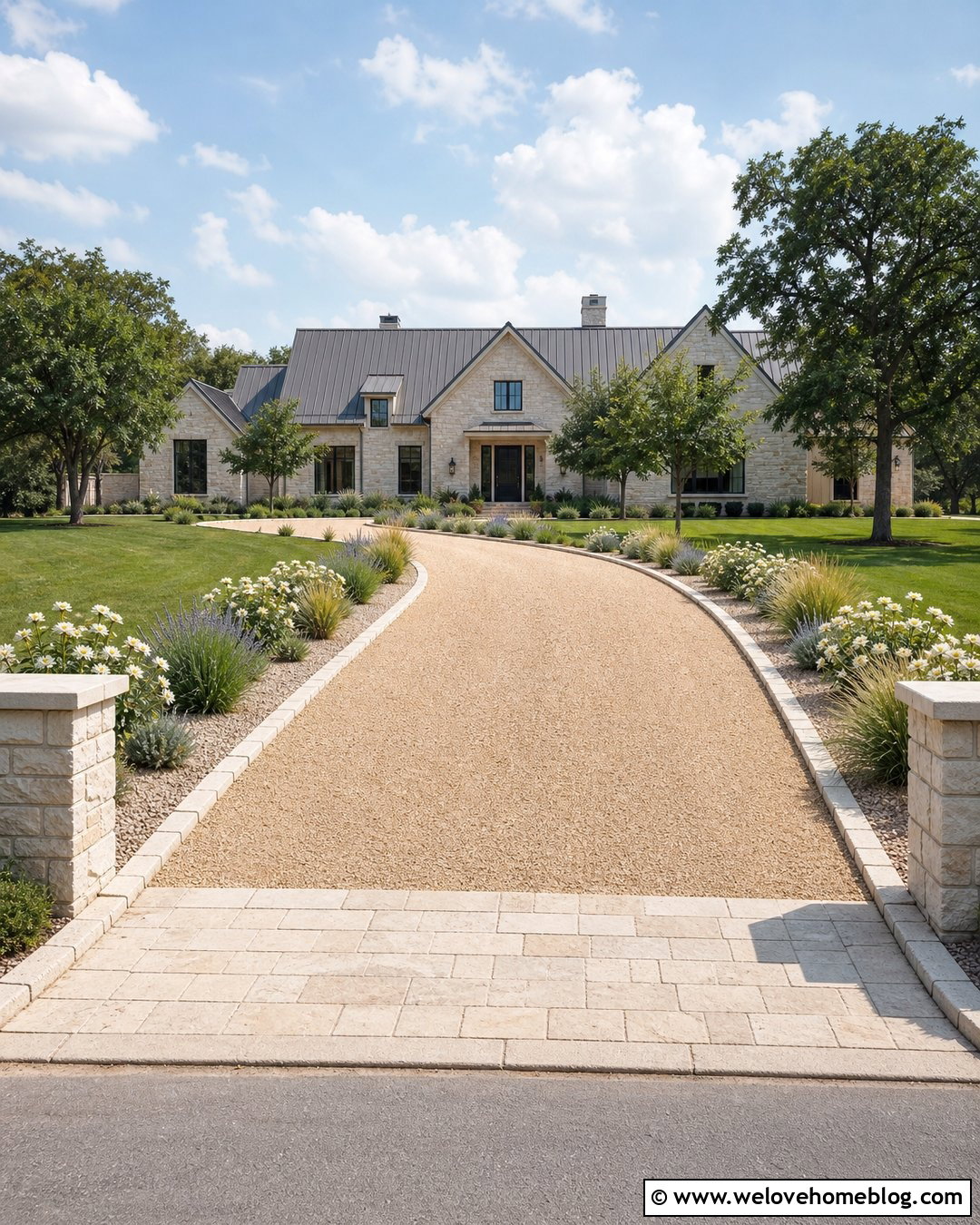
A warm tan gravel driveway feels crisp and intentional when bordered by pale limestone blocks and repeating ornamental grasses. Use a sweeping curved layout that leads toward a light brick, stone, or modern farmhouse facade. Set rectangular limestone pieces in a consistent line, then plant compact grasses in evenly spaced clusters beyond the edge. Between them, add low white-flowering perennials and soft gray foliage. A neutral gravel mulch in the beds will reduce the visual break between hardscape and planting. Create a broader limestone apron at the entrance to make the driveway easier to identify from the street. The limited palette of cream stone, tan gravel, and green foliage gives this landscape a bright, relaxed, and cohesive appearance.
26. Metal Driveway Edging With Layered Planting
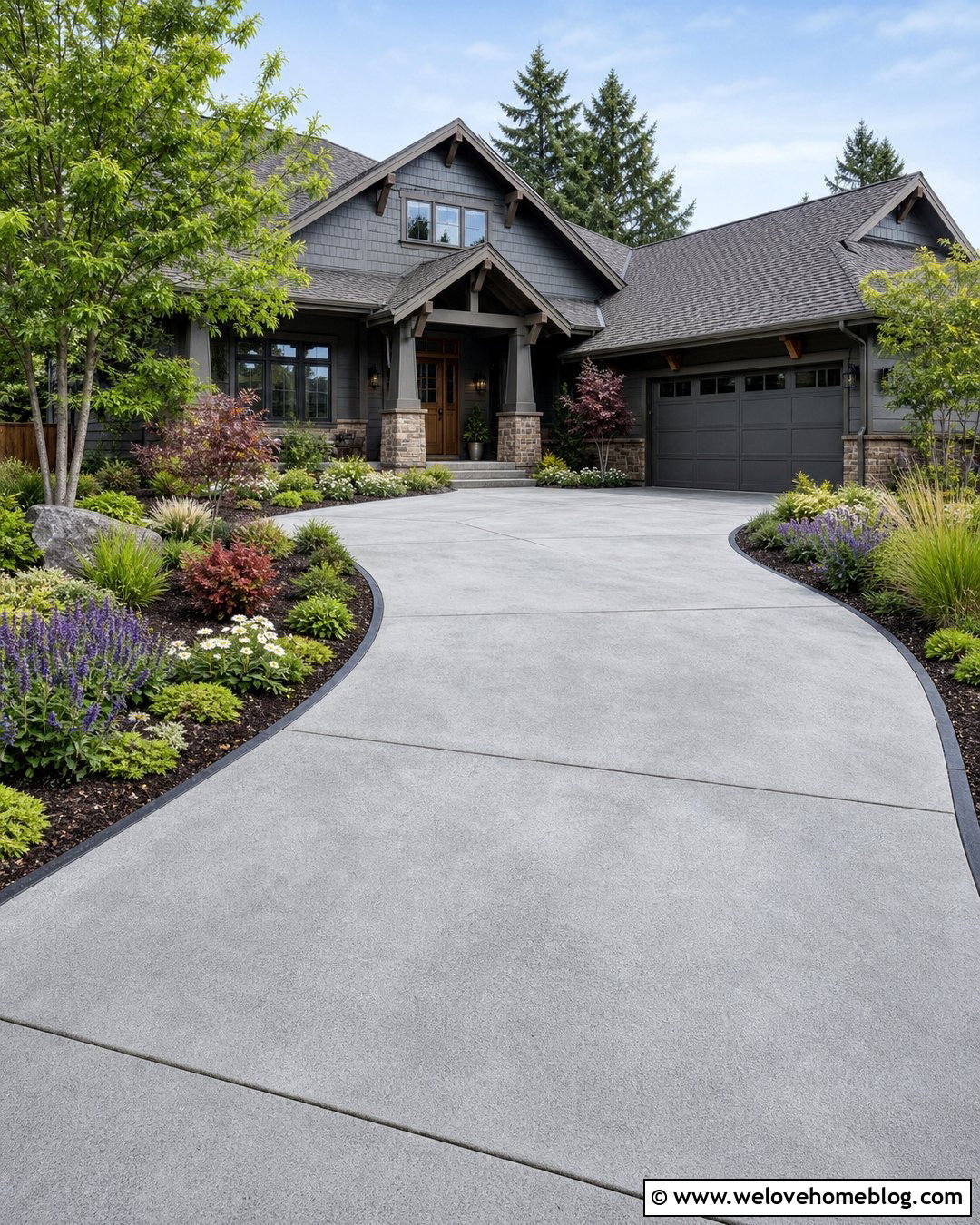
A narrow steel edge can quietly separate a gray poured-concrete driveway from a lush, layered garden border. Begin with low ground cover beside the pavement, add flowering perennials and ornamental grasses behind it, then finish with compact shrubs or small trees near the property line. This gradual increase in height keeps plants away from vehicle doors while making the landscape feel deep and established. Follow the driveway with one broad curve instead of several small waves. Use dark mulch to emphasize the clean metal line and repeat the same plant groups on both sides where space allows. This adaptable design complements contemporary, Craftsman, and suburban homes without tying the landscape to one highly visible masonry material.
27. Reclaimed Brick Driveway Edging With Farmhouse Landscaping
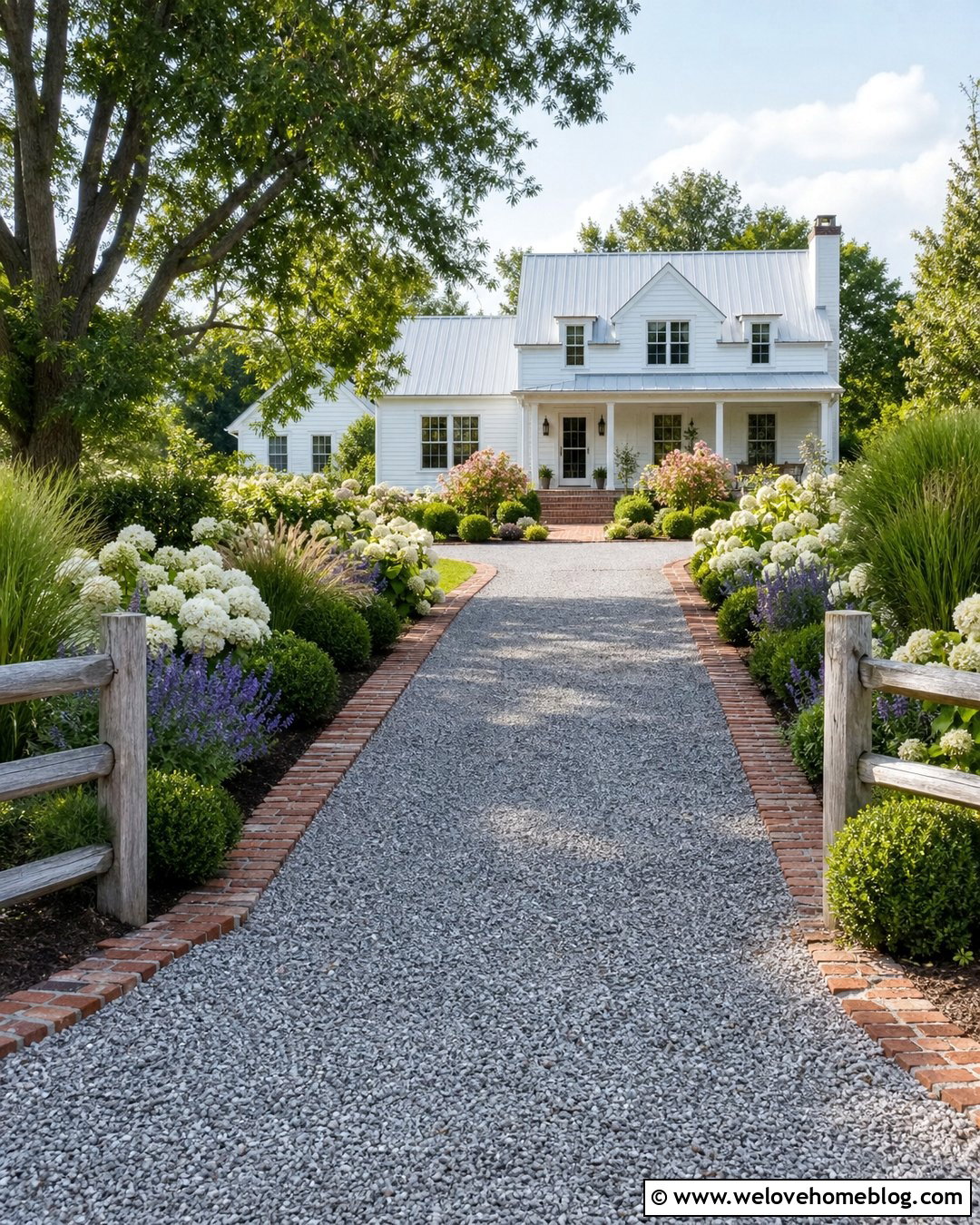
Weathered reclaimed brick adds warmth and character to a light crushed-stone driveway leading to a farmhouse. Set the bricks in a slightly irregular but stable border, allowing their varied red, brown, and faded tones to remain visible. Beyond the edge, create deep beds with hydrangeas, salvia, ornamental grasses, and rounded evergreen shrubs. A simple split-rail fence or wooden gate near the entrance can reinforce the rural setting without enclosing the full driveway. Repeat the brick around the mailbox and front walkway. Keep the surface of the border low and smooth in turning areas. The combination feels collected over time, yet repeated materials and generous planting prevent the entrance from appearing unfinished or overly rustic.
28. Raised Stone Driveway Edging With Sloped Landscaping
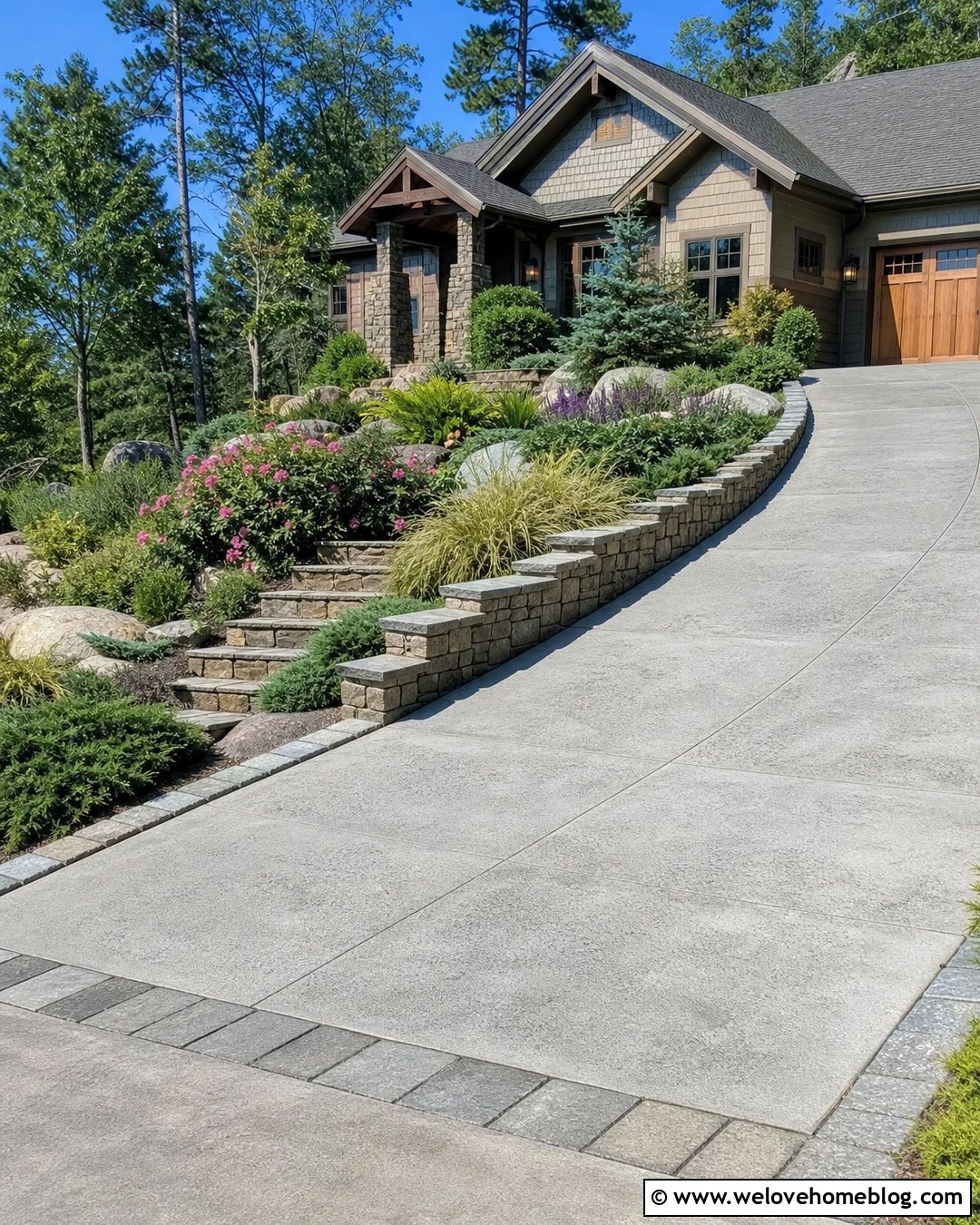
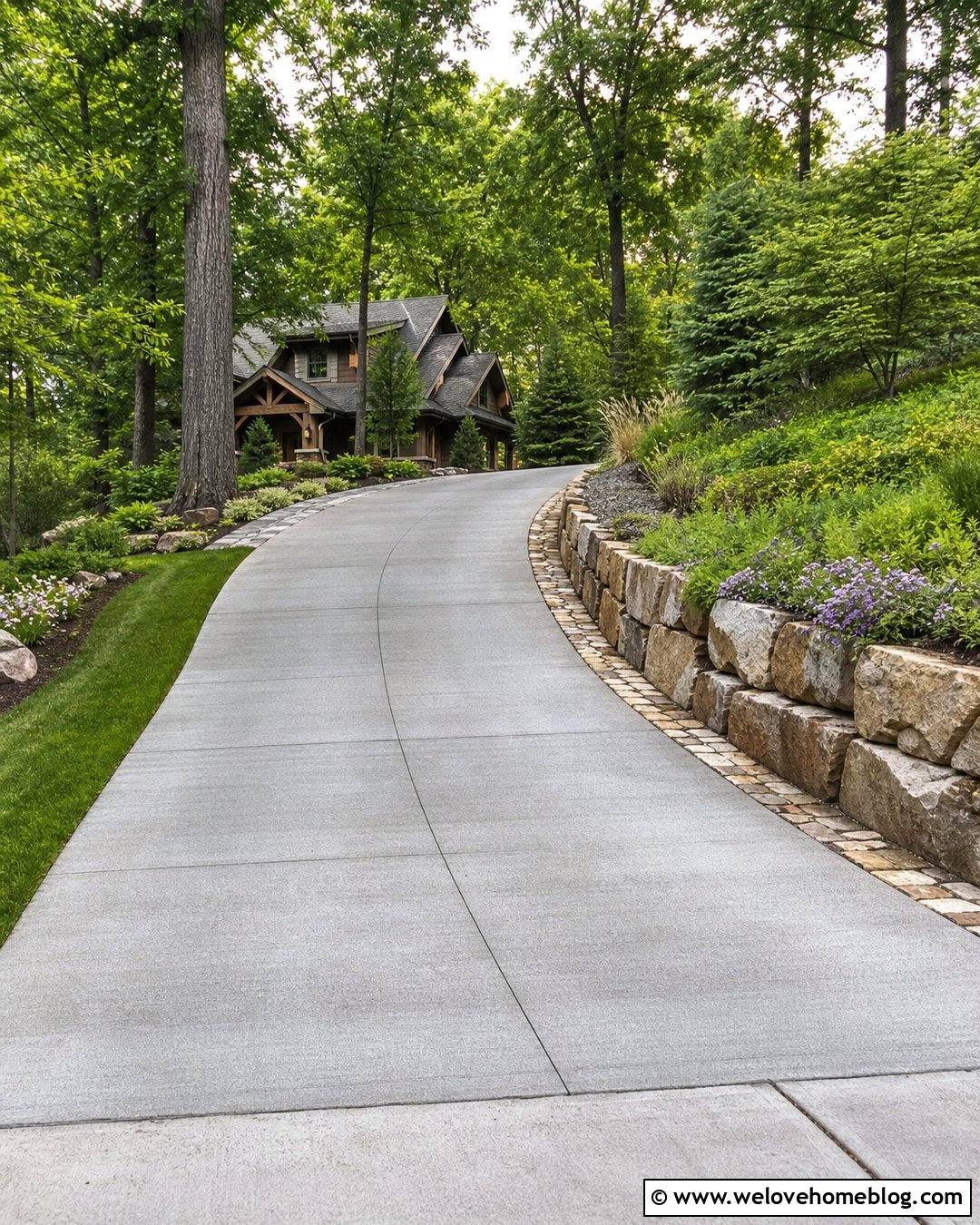
A driveway cut into a sloping front yard needs edging that feels substantial and connected to the grade. Border a brushed concrete driveway with a low wall of mortared natural stone, increasing its height gradually where the slope rises. Above the wall, use spreading junipers, ornamental grasses, flowering shrubs, and ground covers to stabilize the visual transition. Include stone steps where a walkway climbs from the driveway to the front door. On the lower side, use flush matching stones so rainwater and vehicle movement are not obstructed. This design works well with hillside ranches, Craftsman houses, and mountain homes. Professional planning may be appropriate where the border retains significant soil or affects drainage and structural loads.
29. Flush Paver Driveway Edging With Modern Lawn
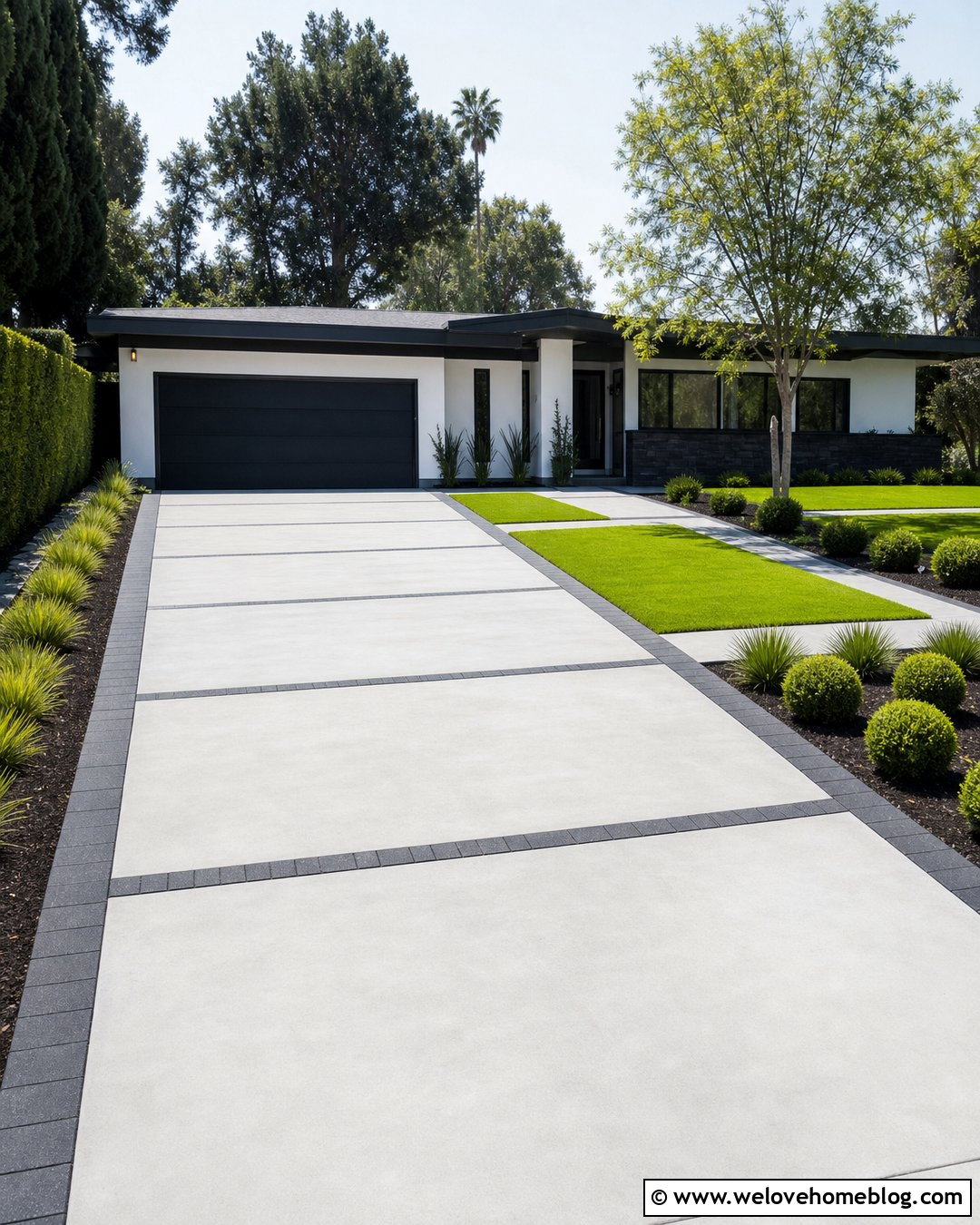
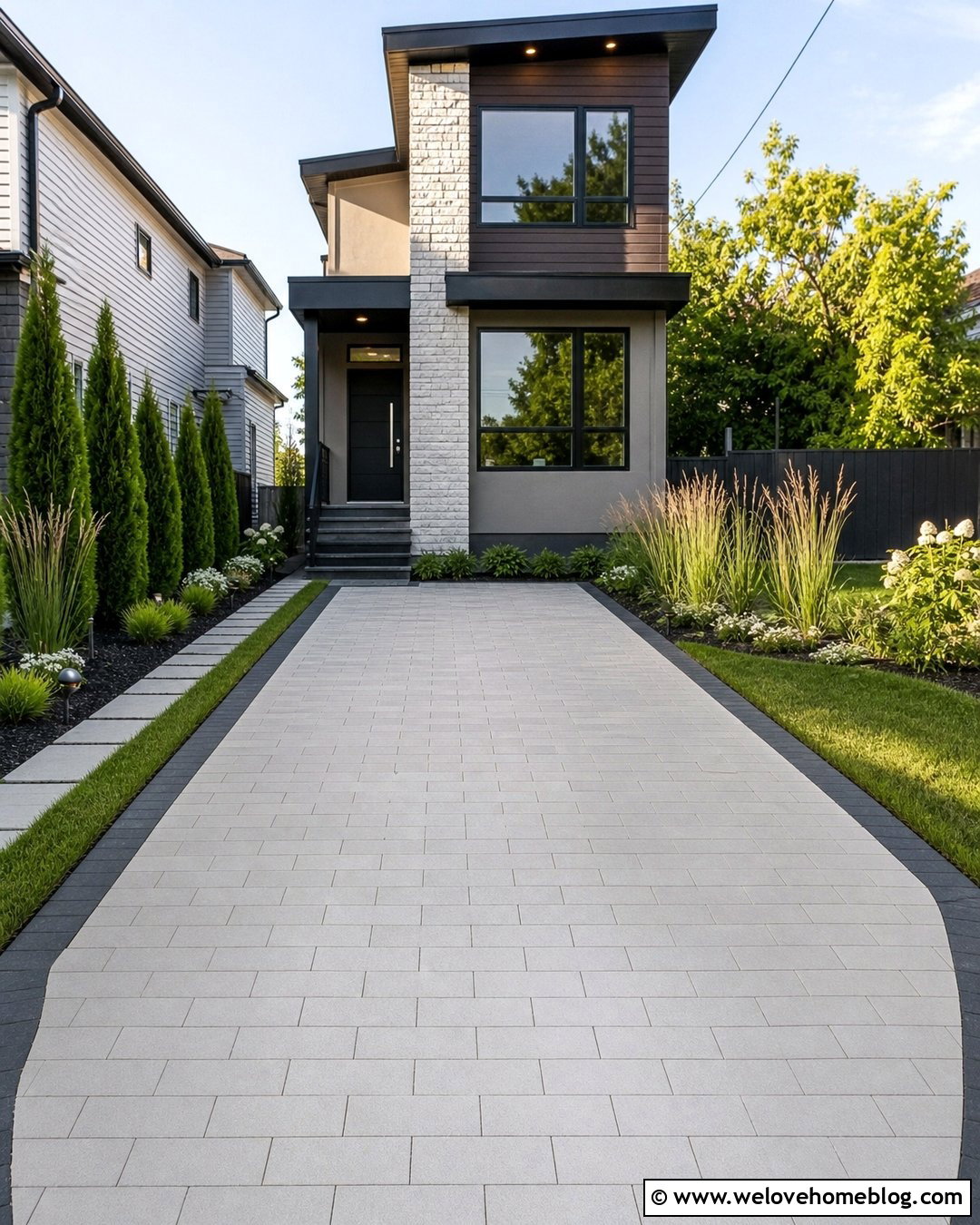
A flush charcoal paver edge gives a white or light gray concrete driveway a precise modern frame. Use a wide straight layout with rectangular lawn panels and simple planting beds aligned to the home’s architecture. Continue the charcoal pavers across the driveway as narrow bands, then repeat them around a concrete walkway leading to the entrance. In the beds, limit the planting to compact grasses, rounded evergreen shrubs, and one architectural tree. The lawn should meet the outer paver edge cleanly, making mowing and trimming straightforward. This controlled composition suits modern, midcentury, and minimalist ranch homes. Strong proportions and repeated materials create the interest, so additional ornaments or numerous flower colors are unnecessary.
30. Mixed Stone Driveway Edging With Entrance Planting
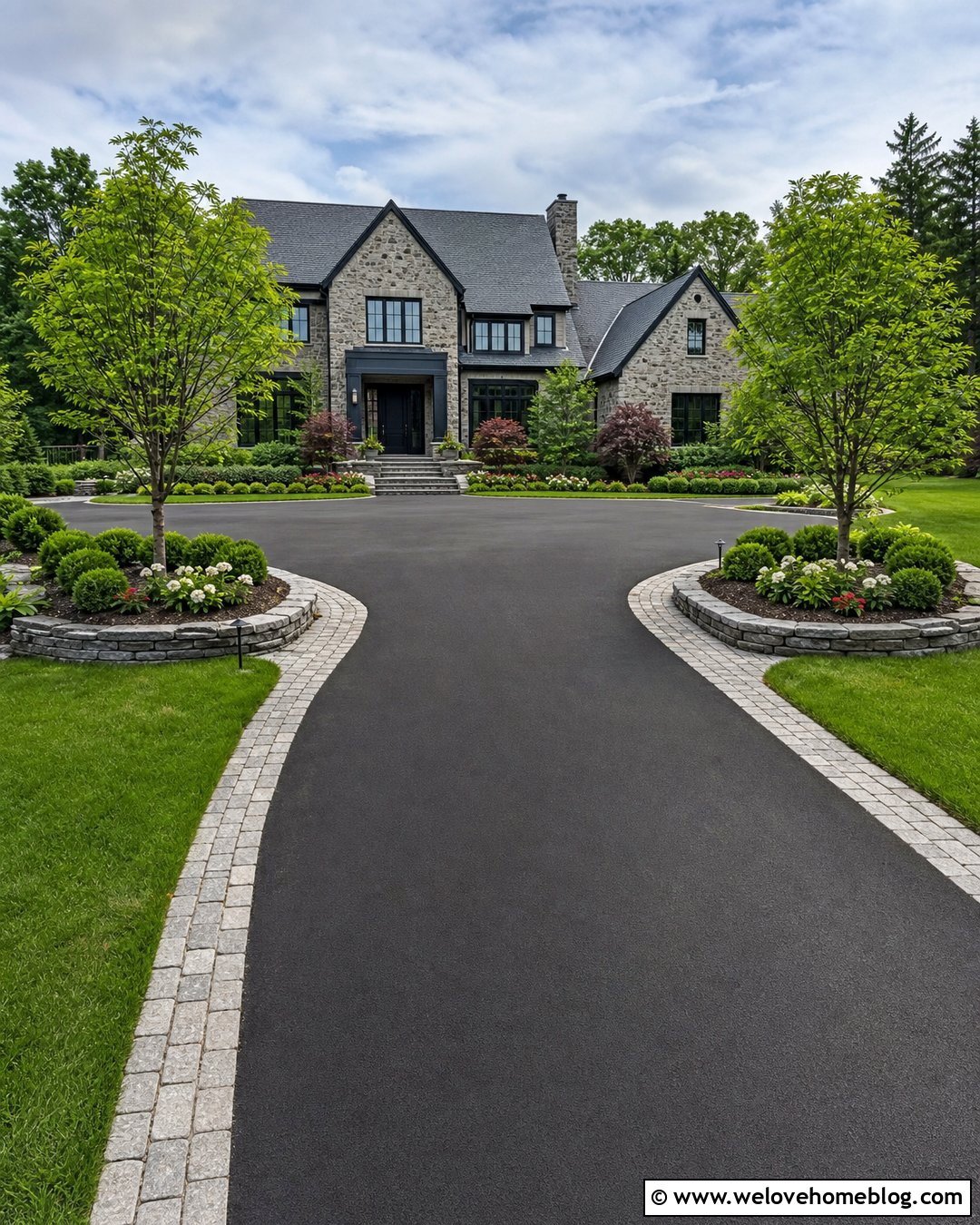
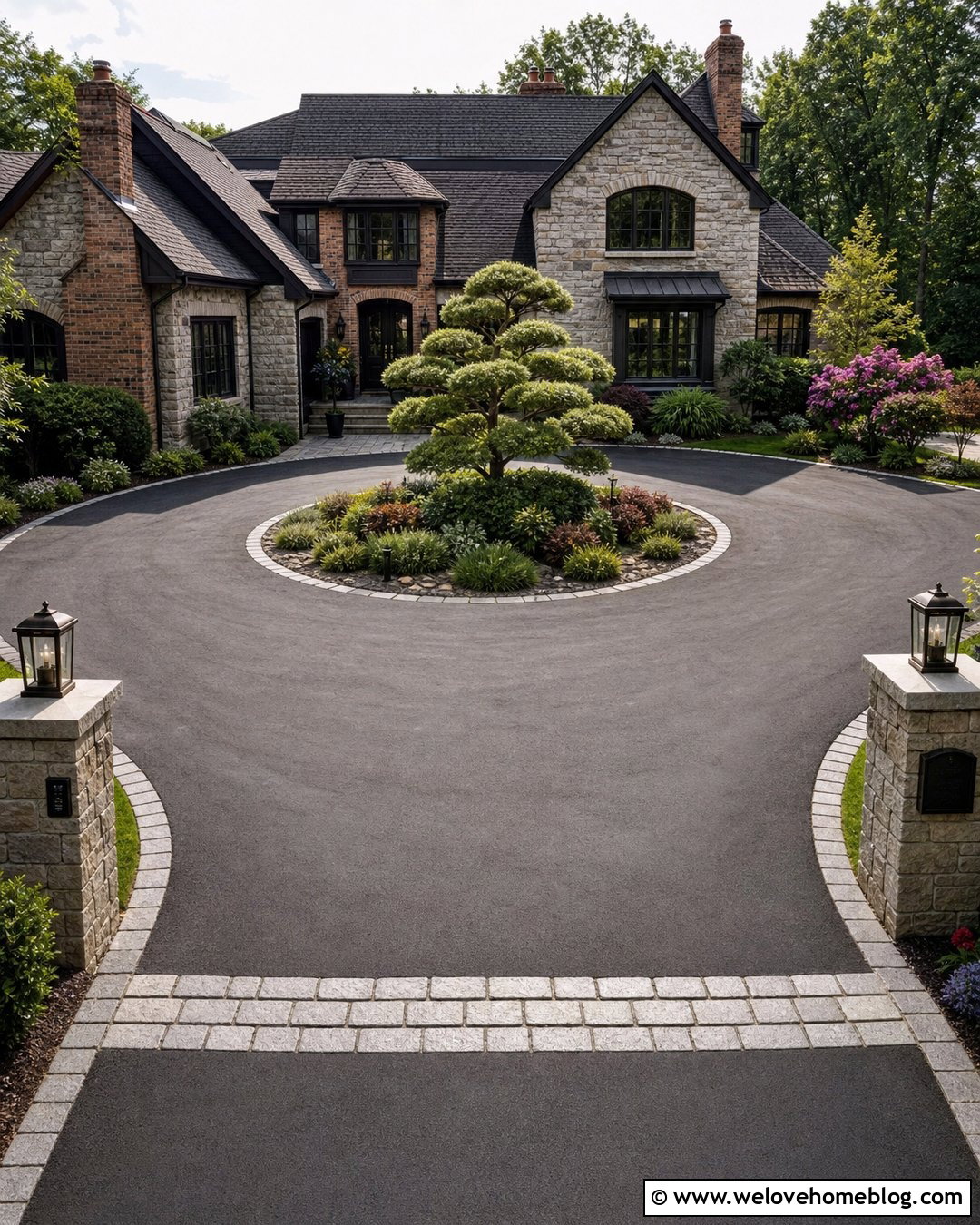
A mixed stone border can unite a broad asphalt driveway with a dramatic but practical entrance landscape. Use granite cobbles along the driving edge, then widen the border near the street into curved beds faced with larger natural stones. Anchor each side with a compact ornamental tree, evergreen shrubs, and low seasonal flowers. Match the stone colors to the house facade or front steps so the entrance feels connected to the architecture. Solar or low-voltage fixtures can be positioned behind the masonry where they will not be struck by tires. Keep the planting symmetrical for a formal home or slightly varied for a relaxed setting. The changing border width creates a clear arrival point while leaving the main driveway open and functional.
Conclusion:
The most successful **30 driveway landscaping edging ideas** treat the driveway and front yard as one connected design. Start with an edging material that complements the paving and house, then add plants that fit the available sunlight, space, and maintenance level. Flush brick, cobblestone, metal, and paver borders work well around busy parking areas, while deeper stone, mulch, or planted edges can enhance less-traveled sections. Keep sight lines open near the street, allow enough clearance for car doors, and plan how runoff will move through the landscape. Repeating edging materials around walkways and entrance beds will create continuity. With practical spacing and a focused palette, even a basic driveway can become a polished part of your home’s curb appeal.

Related posts:
Leave a Reply