
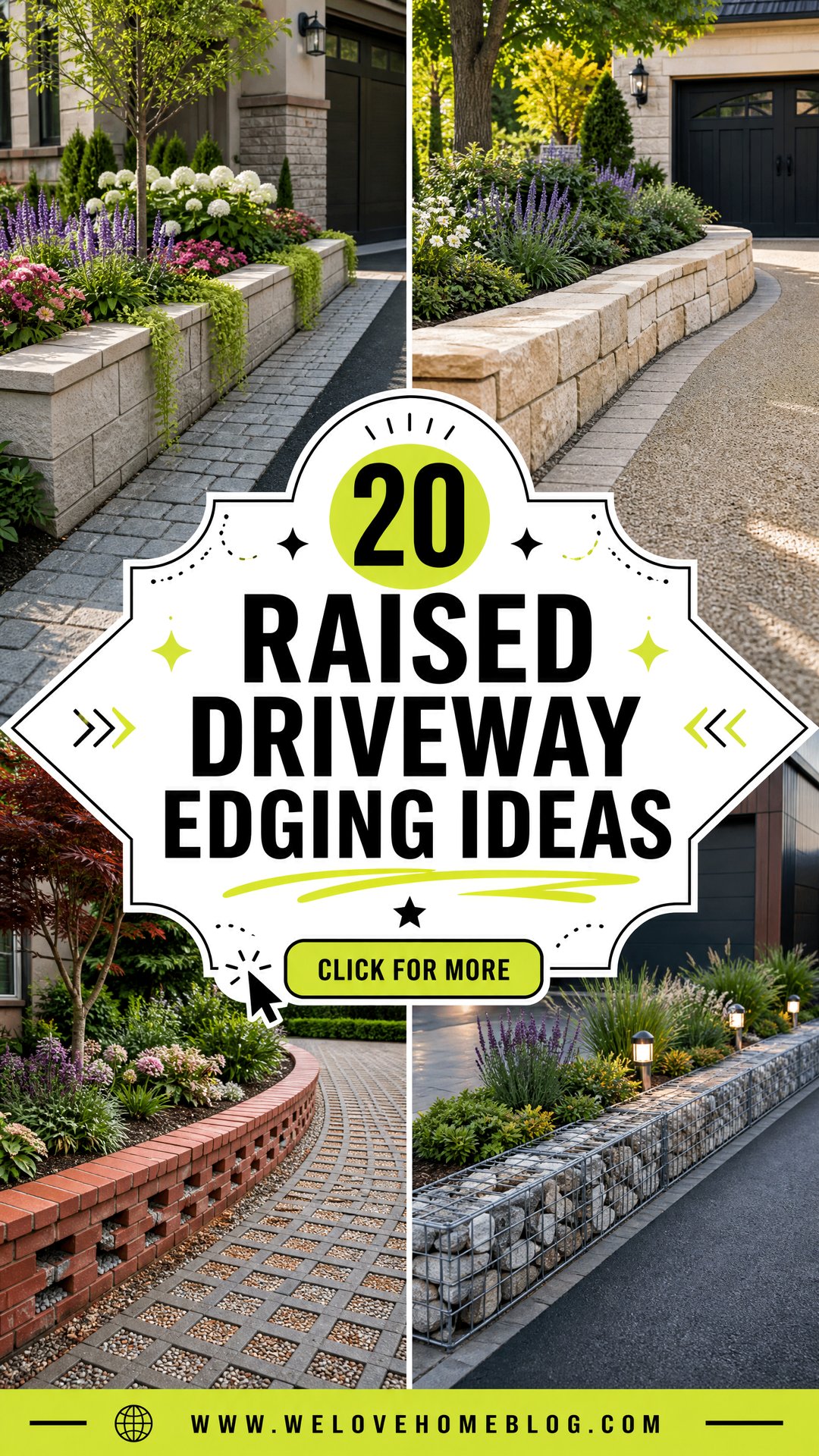
Raised driveway edging can turn a basic parking area into a polished part of the front yard. The best borders do more than create a neat line. They help contain loose aggregate, support driveway edges, guide runoff, protect planting beds, and connect the surface with the home’s architecture. Gravel may call for substantial stone blocks, while asphalt can look sharper beside brick or poured concrete curbing. Height also matters. A low border offers subtle definition, whereas a taller edge can support an elevated garden bed or manage a sloped yard. Proper foundations and drainage planning are especially important around vehicle surfaces. () The complete looks below offer practical and attractive inspiration through 20 Raised Driveway Edging Ideas.
1. Belgian Block Raised Driveway Edging
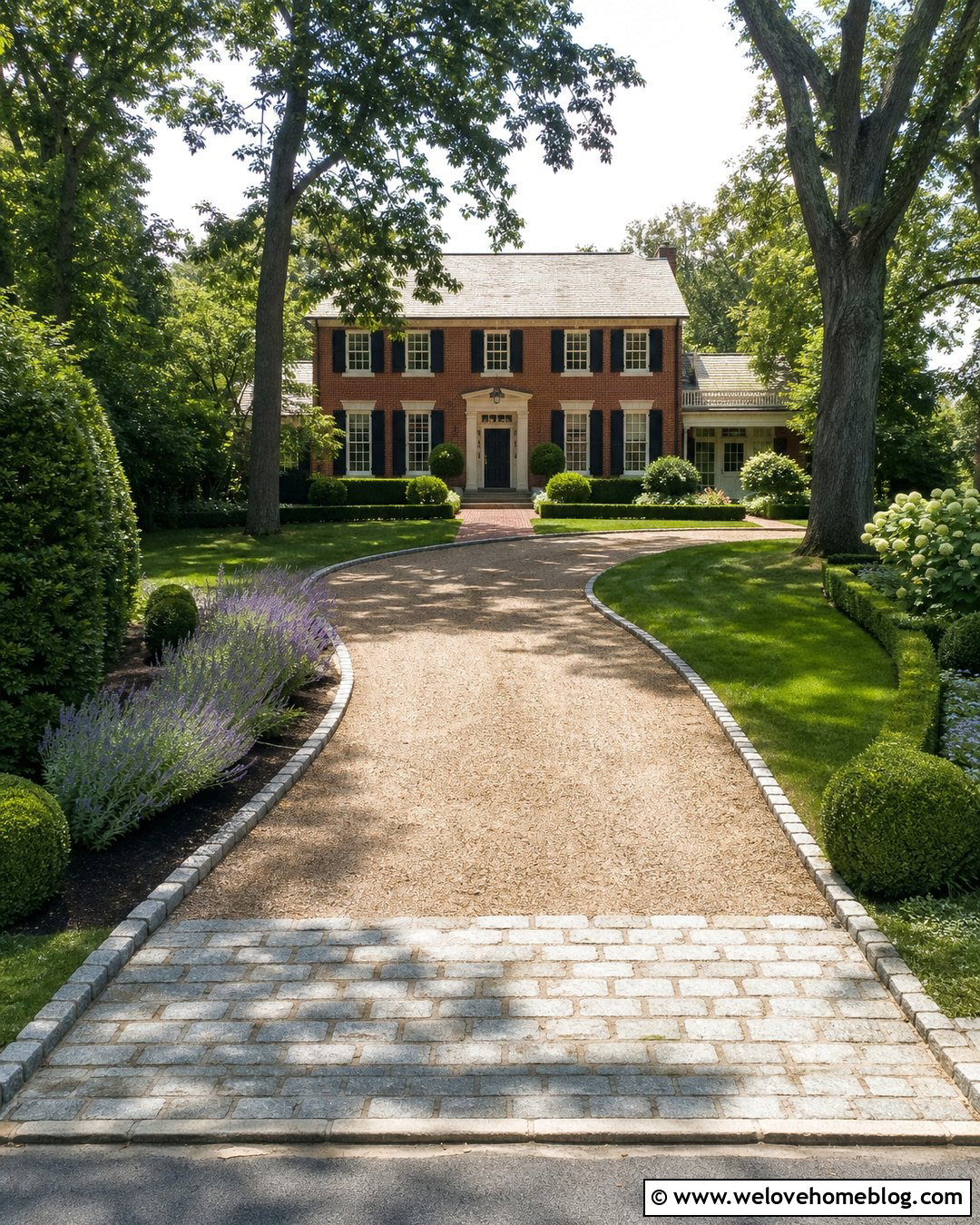
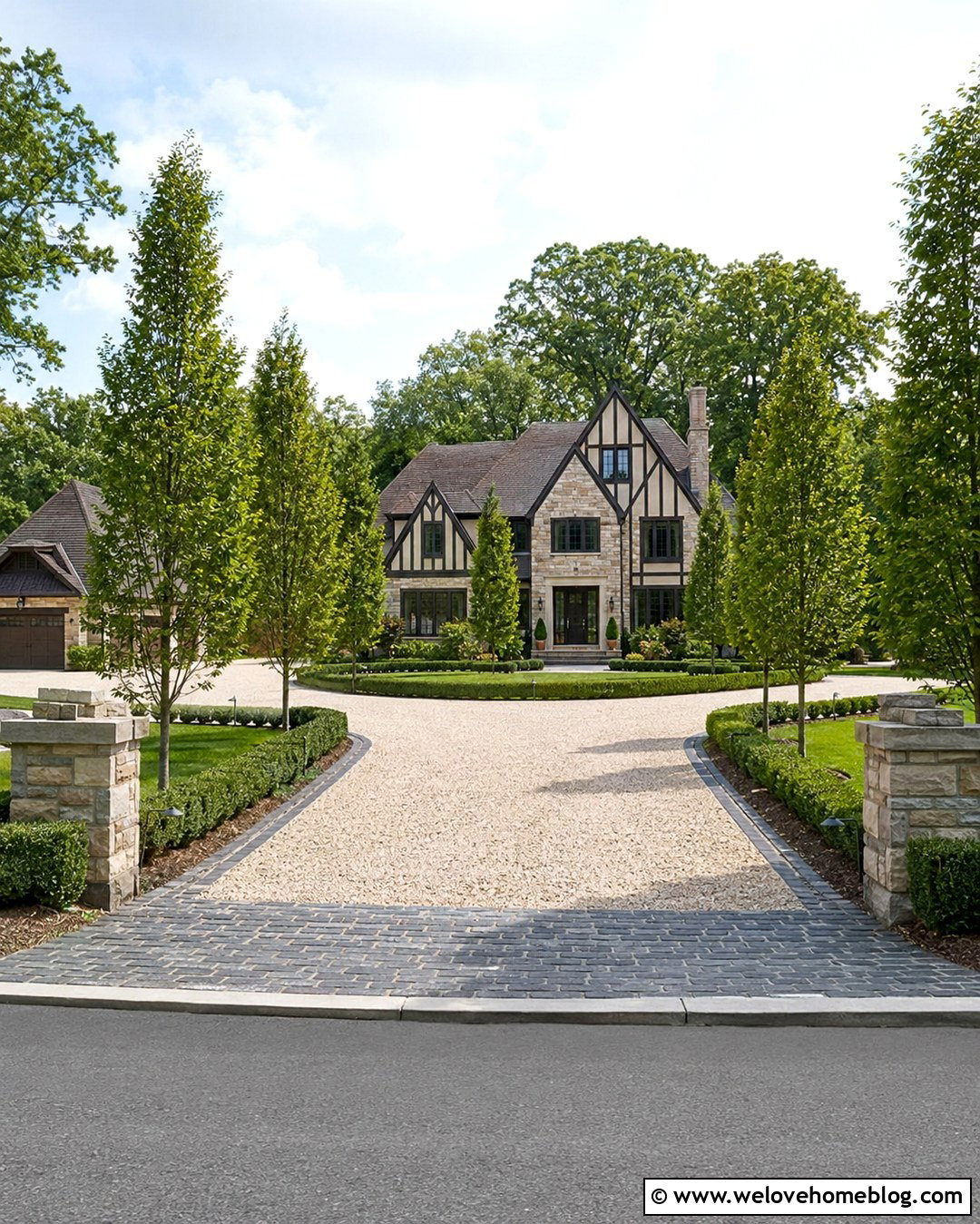
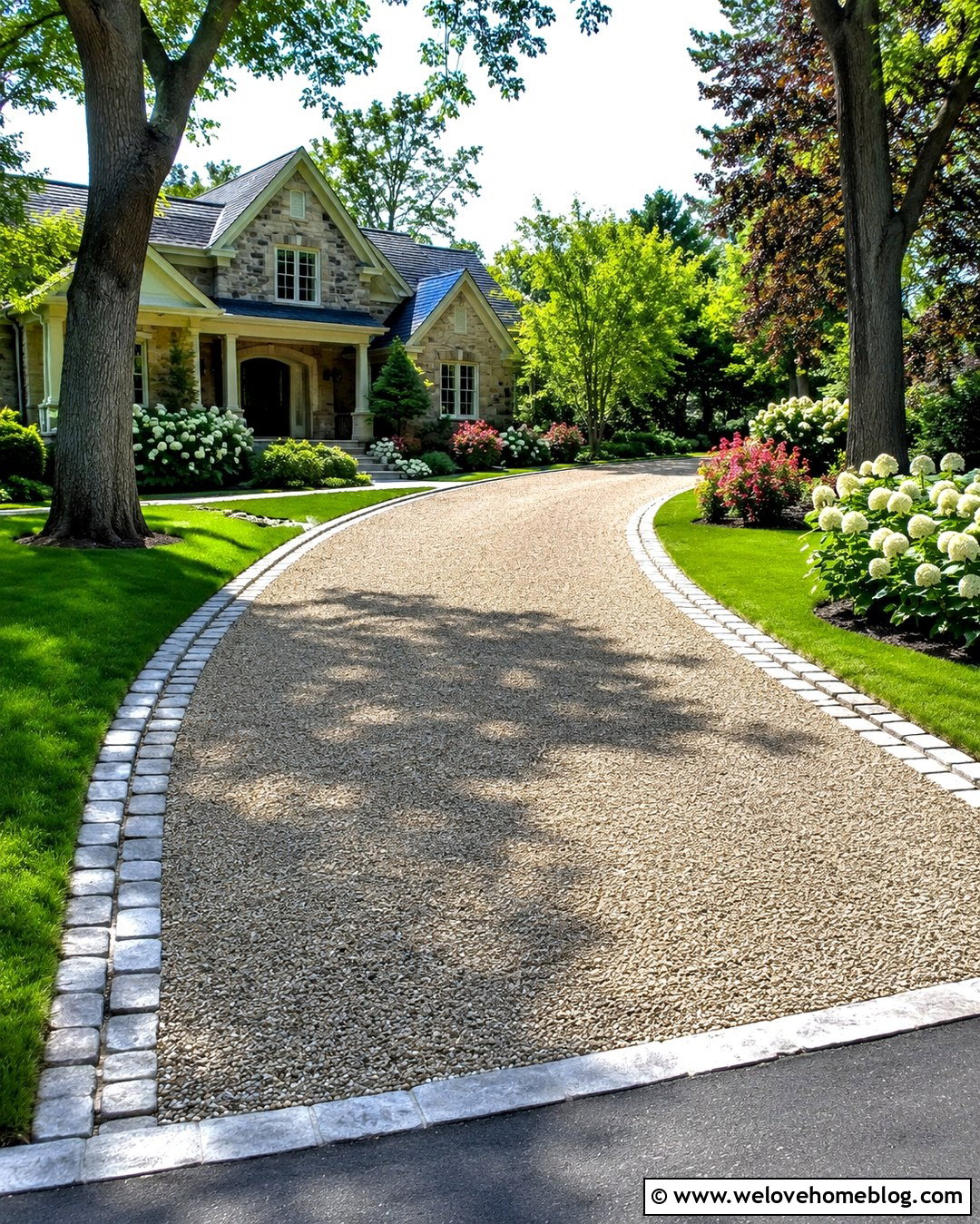
Belgian block edging gives a loose gravel driveway a strong, traditional frame. Use gray granite blocks set vertically along a gently curved drive, leaving two to four inches visible above the gravel. Their substantial profile helps keep stone away from the lawn and planting beds while creating a crisp line that is easy to follow from the street. Belgian blocks are especially attractive beside buff pea gravel, crushed bluestone, or warm river gravel. Complete the look with clipped boxwood, lavender, and a brick walkway leading toward a Colonial home. At the driveway entrance, widen the edging into a matching cobblestone apron. Set the blocks on a stable base with adequate support so regular vehicle movement does not loosen the border. ()
2. Brick Raised Driveway Edging
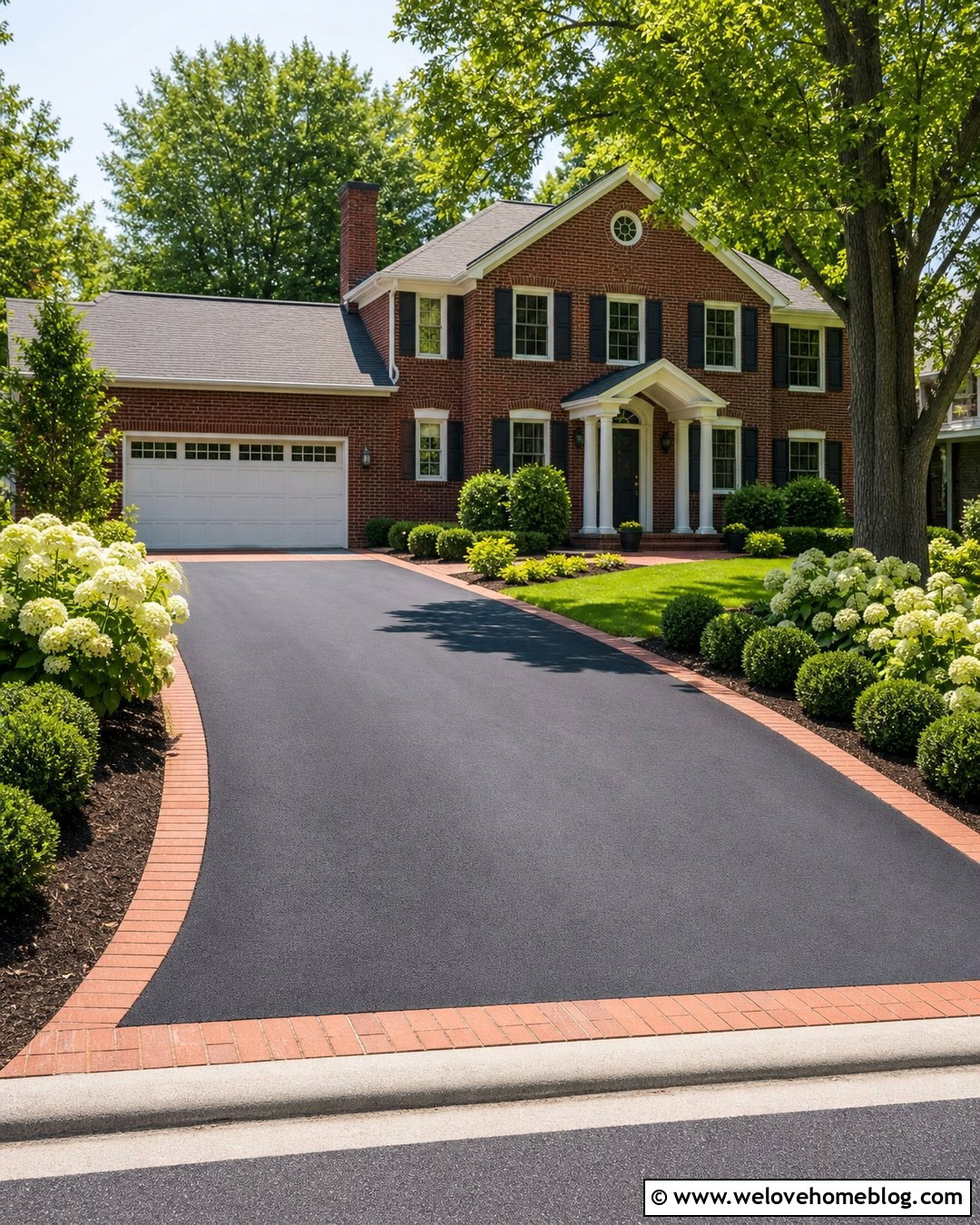
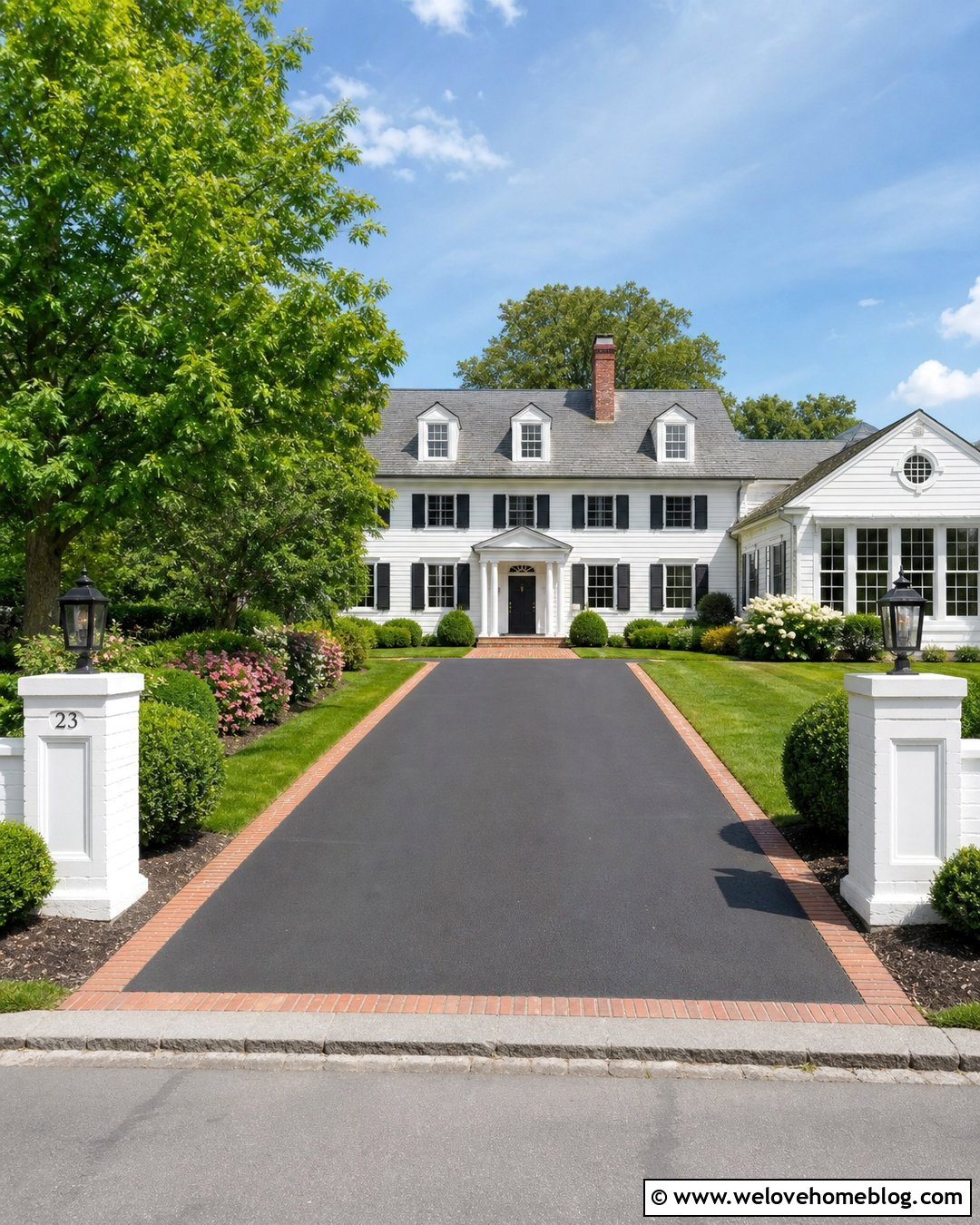
Red brick edging brings warmth to a black asphalt driveway and visually connects it with a traditional brick house. Install the bricks in a soldier course, with each unit standing upright and a small portion raised above the pavement. A straight layout creates a formal appearance, but the same border can follow a soft curve through a cottage-style front yard. Use a concrete footing and firm backing where tires could touch the edge. Continue the brick around nearby flower beds for a coordinated design rather than treating the driveway as a separate feature. Cream hydrangeas, low evergreen shrubs, and a neatly cut lawn soften the strong color contrast. Near the garage, lower the edging slightly to reduce tripping risks and make opening car doors more comfortable.
3. Poured Concrete Raised Driveway Edging
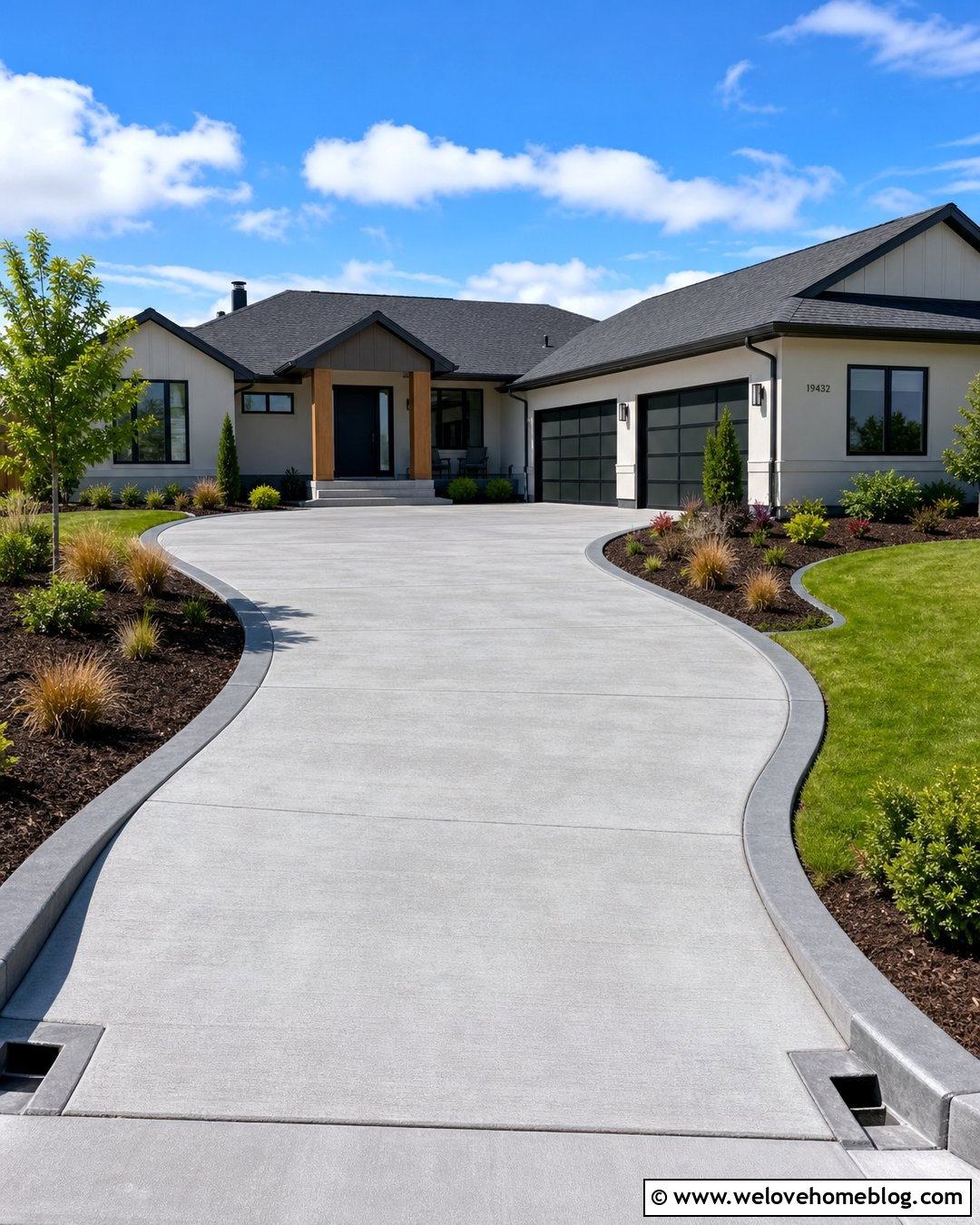
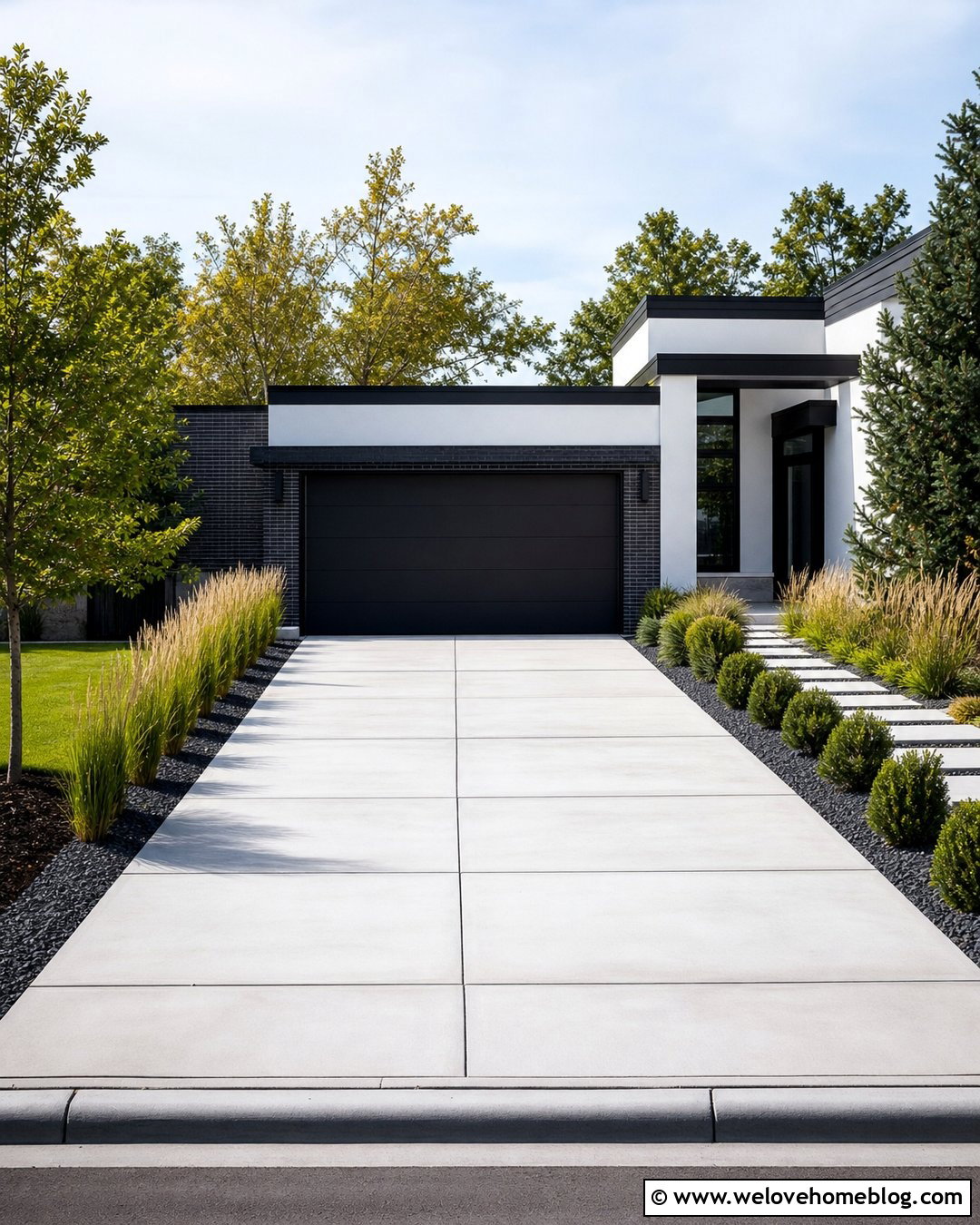
A continuous poured concrete curb suits a wide broom-finished concrete driveway with a clean suburban layout. Choose a slightly darker gray for the raised edge so it defines the driveway without introducing another unrelated material. Gentle curves can guide the eye toward a ranch or contemporary Craftsman home, while straight curbs create a more modern effect. Place lawn on one side and a mulched planting bed with compact shrubs and ornamental grasses on the other. The concrete border can rise higher beside the garden and transition closer to driveway level near walkways and garage doors. Include planned outlets or breaks wherever runoff needs to reach a swale or drainage area. Continuous curbing can contain adjacent mulch and soil, but it should not trap water on the driving surface. ()
4. Natural Stone Raised Driveway Edging
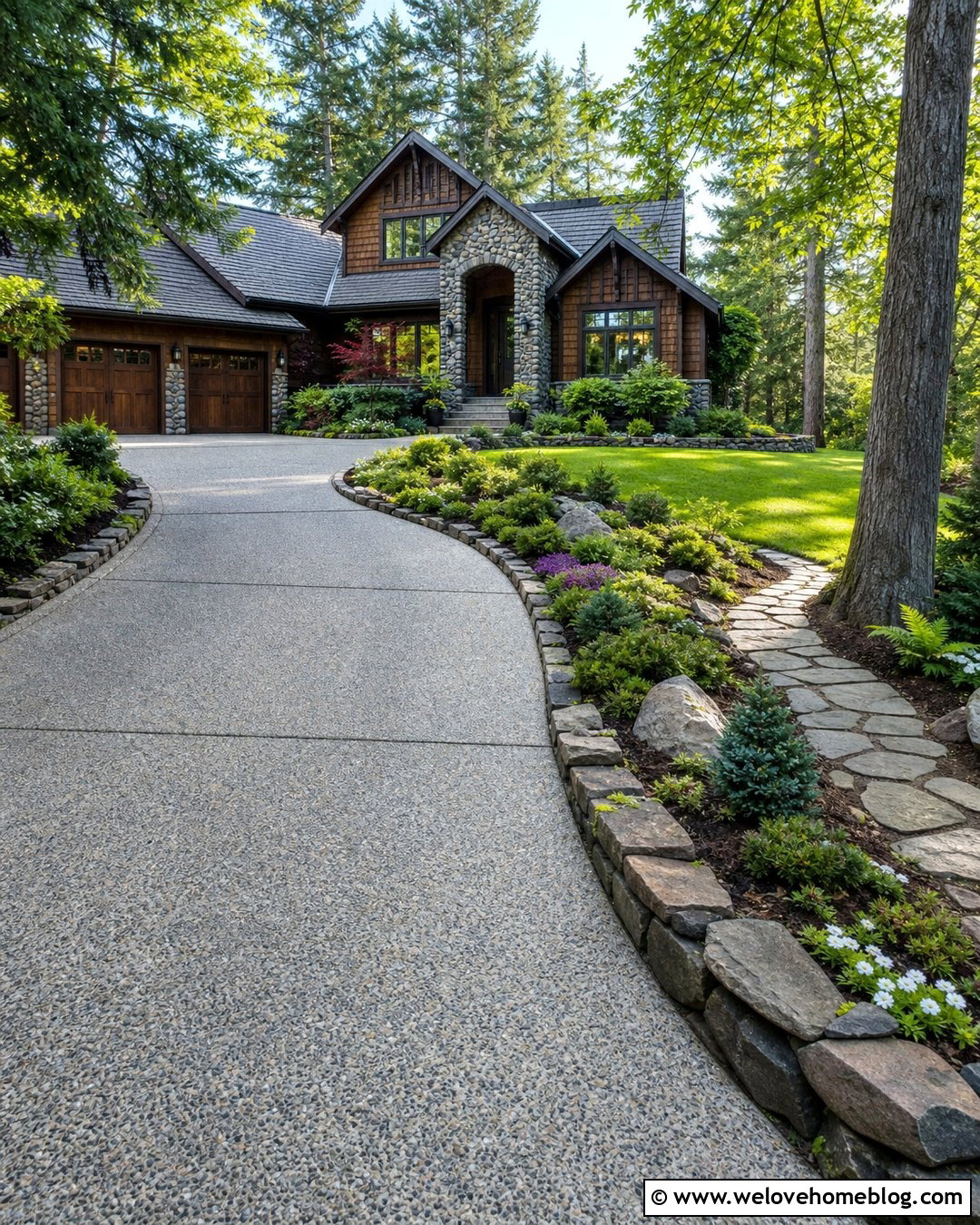
Natural stone edging works beautifully with an exposed aggregate driveway leading to a Craftsman house. Select irregular fieldstone in colors that repeat the aggregate, foundation, or porch columns. Build a low dry-stacked border along both sides, keeping the stones consistent enough to look intentional but varied enough to retain a natural character. A curved driveway makes this combination feel particularly welcoming. Behind the raised stone, plant ferns, dwarf evergreens, sedges, and flowering ground covers suited to local conditions. A flagstone walkway can branch from the driveway and use the same stone family. Keep the border lower beside parking and passenger areas, then increase its height near deeper planting beds. This arrangement makes the driveway, landscaping, and house materials feel like one cohesive design.
5. Cobblestone Raised Driveway Edging
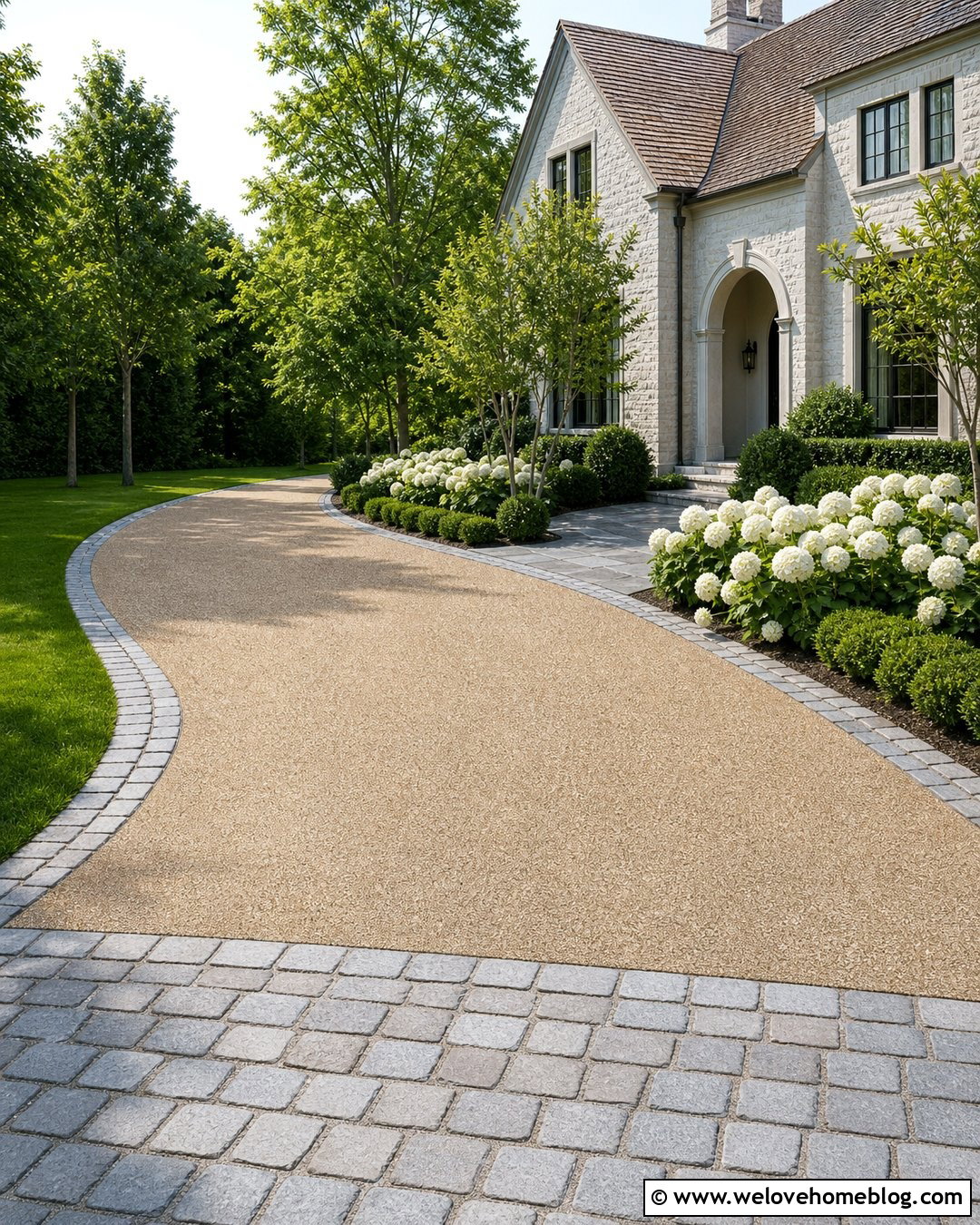
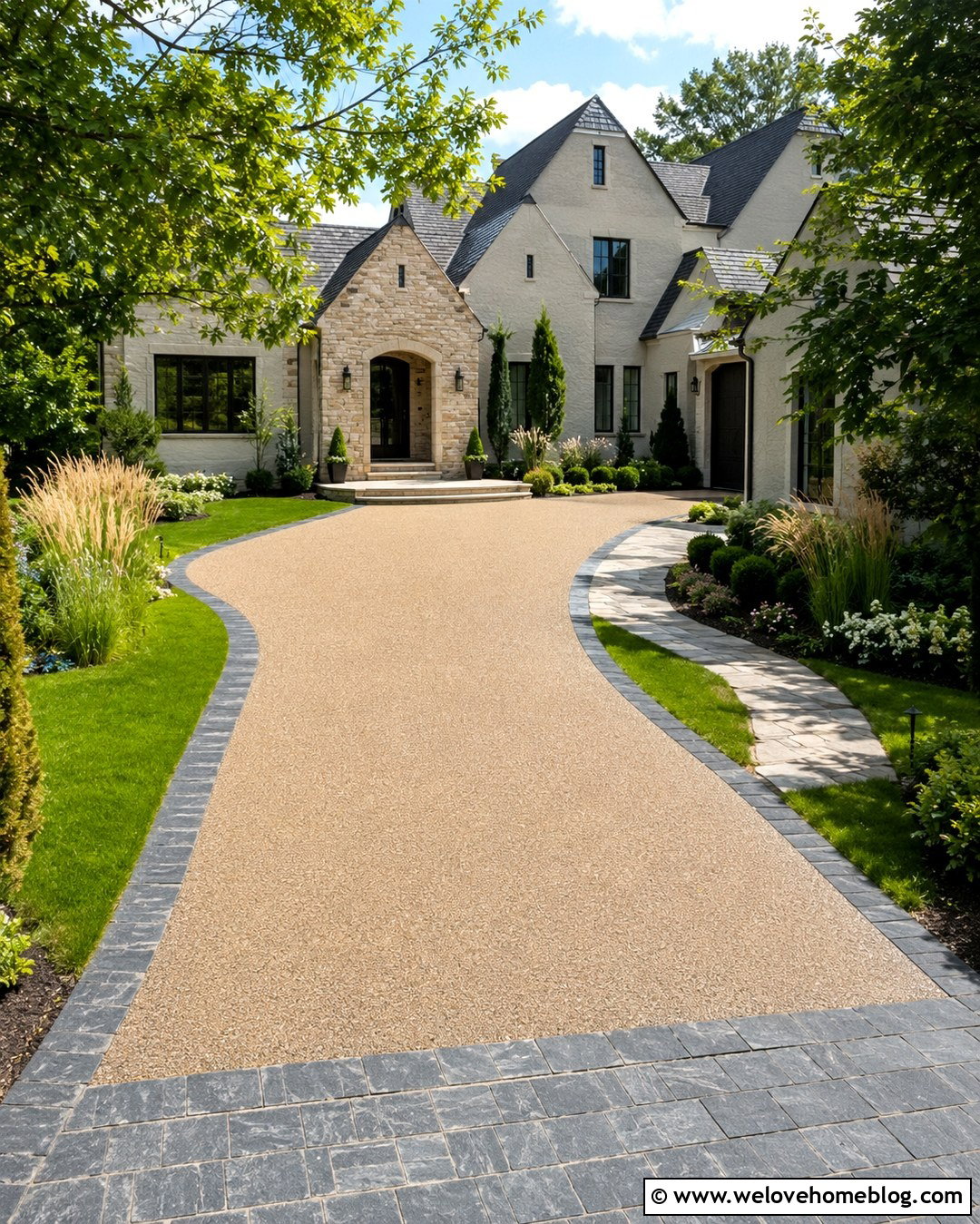
Cobblestone edging adds texture to a smooth resin-bound gravel driveway without making the finished entrance feel overly busy. Pair warm beige resin-bound gravel with weathered gray cobbles set in a single raised row. The contrast clearly outlines a curved driveway while preserving a refined, country-house appearance. Carry the cobbles across the entrance as a broad apron or narrow threshold band. Beyond the edging, use deep green hedges, white flowering shrubs, and small multi-stem trees to frame the route toward the house. Cobblestones should sit on a properly prepared base and remain securely restrained, especially along turning areas. Where the driveway meets a walkway, reduce the height and create a flush crossing. The finished border feels established and elegant while keeping planting soil visually separated from the light driveway surface.
6. Corten Steel Raised Driveway Edging
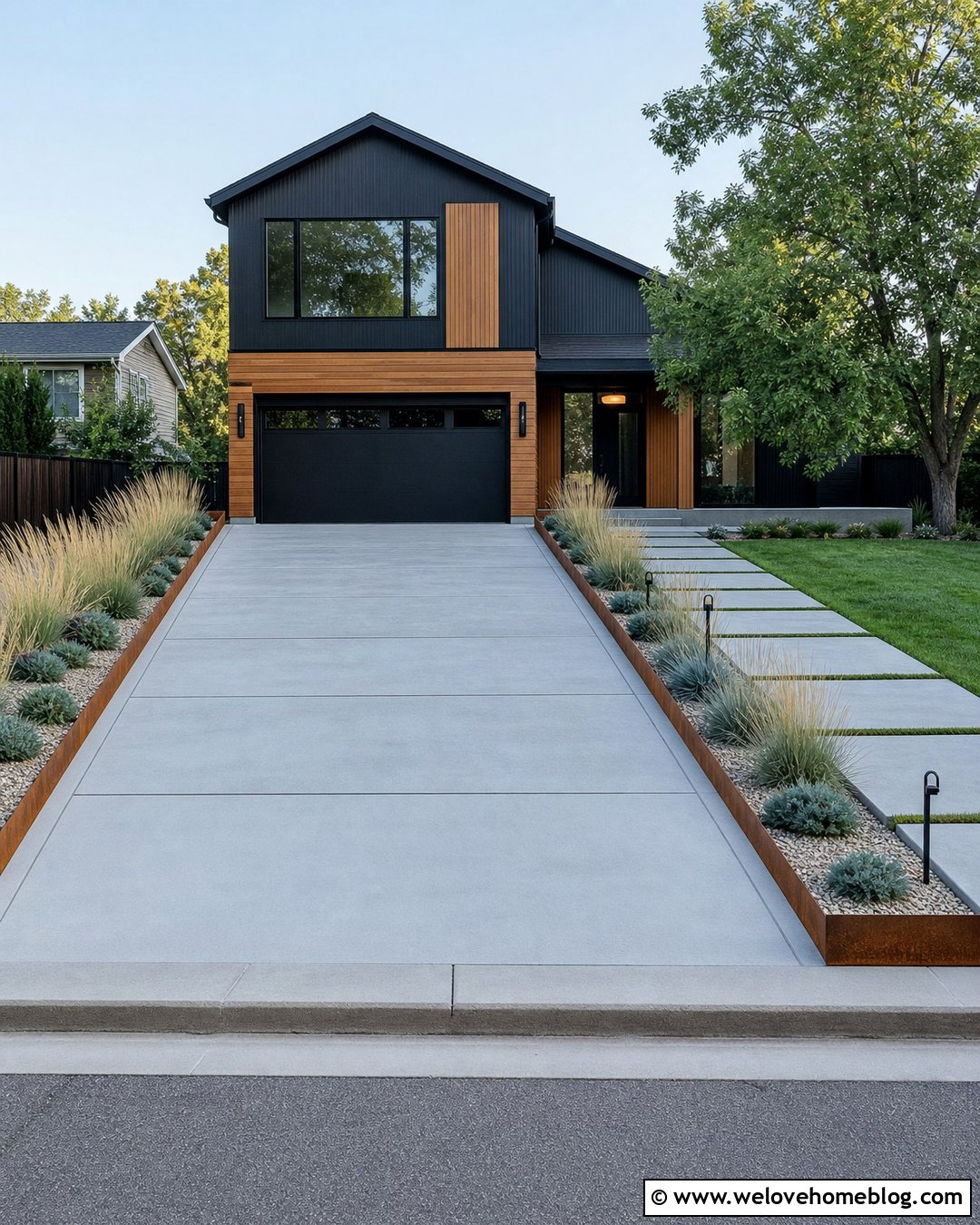
Corten steel creates a slim raised edge for a modern poured concrete driveway. Its warm weathered surface contrasts with cool gray concrete, black siding, and pale architectural gravel. Use long steel sections beside a straight driveway, raising them several inches where they retain narrow planting beds. Fill those beds with feather reed grass, blue fescue, compact juniper, and sculptural drought-tolerant plants. The clean metal line should continue toward the front walk so the landscape has a consistent geometry. Keep sharp corners away from pedestrian crossings and use properly finished top edges. Steel is particularly useful when a substantial visual border is wanted without the width of masonry. On the lawn side, place the edging close to grade or provide a narrow mowing strip to simplify maintenance around the raised profile.
7. Timber Raised Driveway Edging
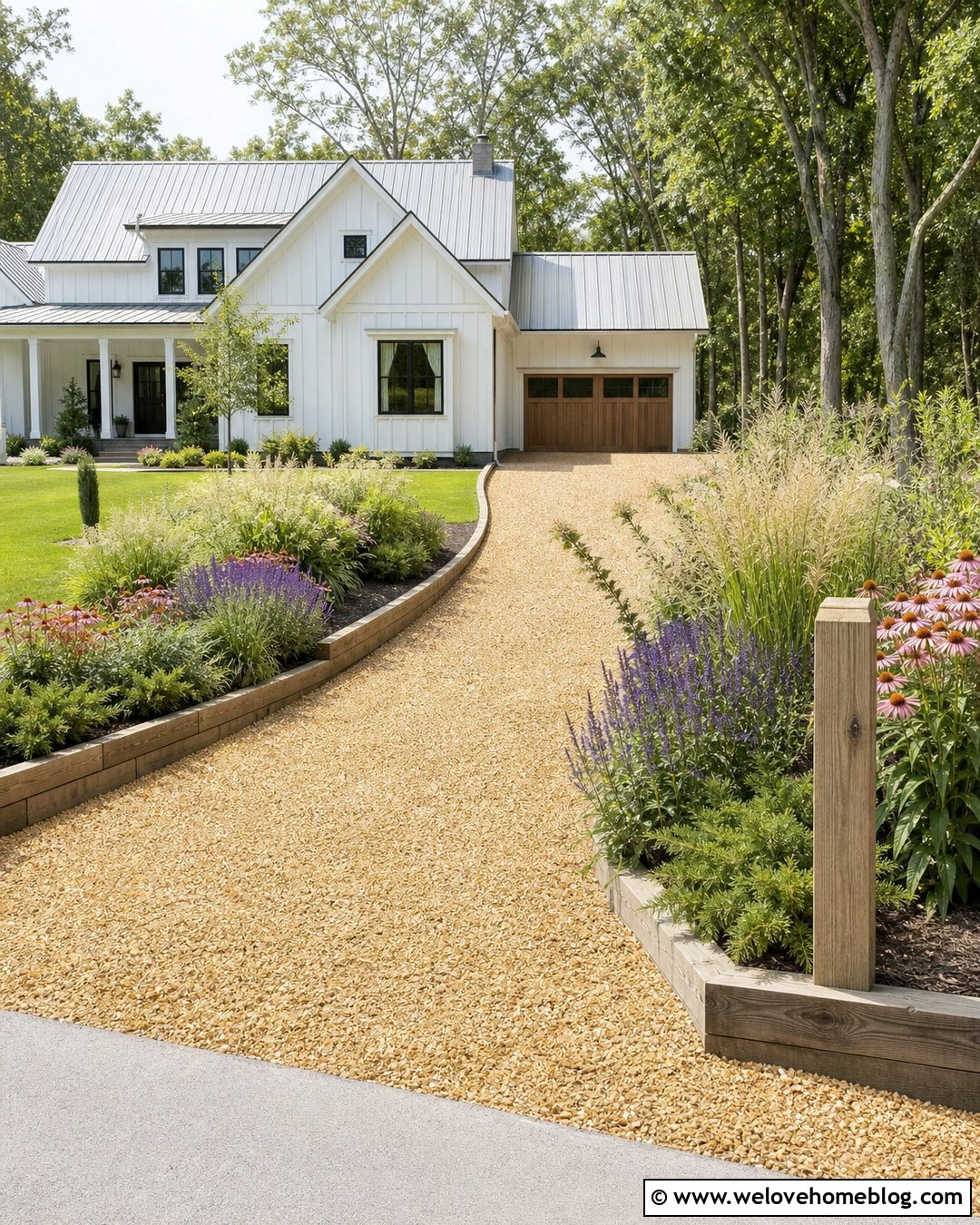
Pressure-treated landscape timbers create an affordable raised border for a casual crushed-stone driveway. They look most natural beside a straight or gently curved drive leading to a farmhouse, cabin-inspired home, or simple ranch. Use substantial timbers anchored securely rather than thin decorative boards. Golden crushed gravel, dark brown wood, and green lawn produce a relaxed color palette. Behind the edging, add wide beds of ornamental grasses, coneflowers, salvia, and low evergreen shrubs. At the entrance, pair the timber with a simple wood address post or farm-style gate. Keep soil and mulch from remaining constantly wet against the boards, and select wood rated for ground contact. Treated timber is practical and easy to cut, but its long-term condition depends heavily on moisture exposure and installation quality. ()
8. Stacked Flagstone Raised Driveway Edging
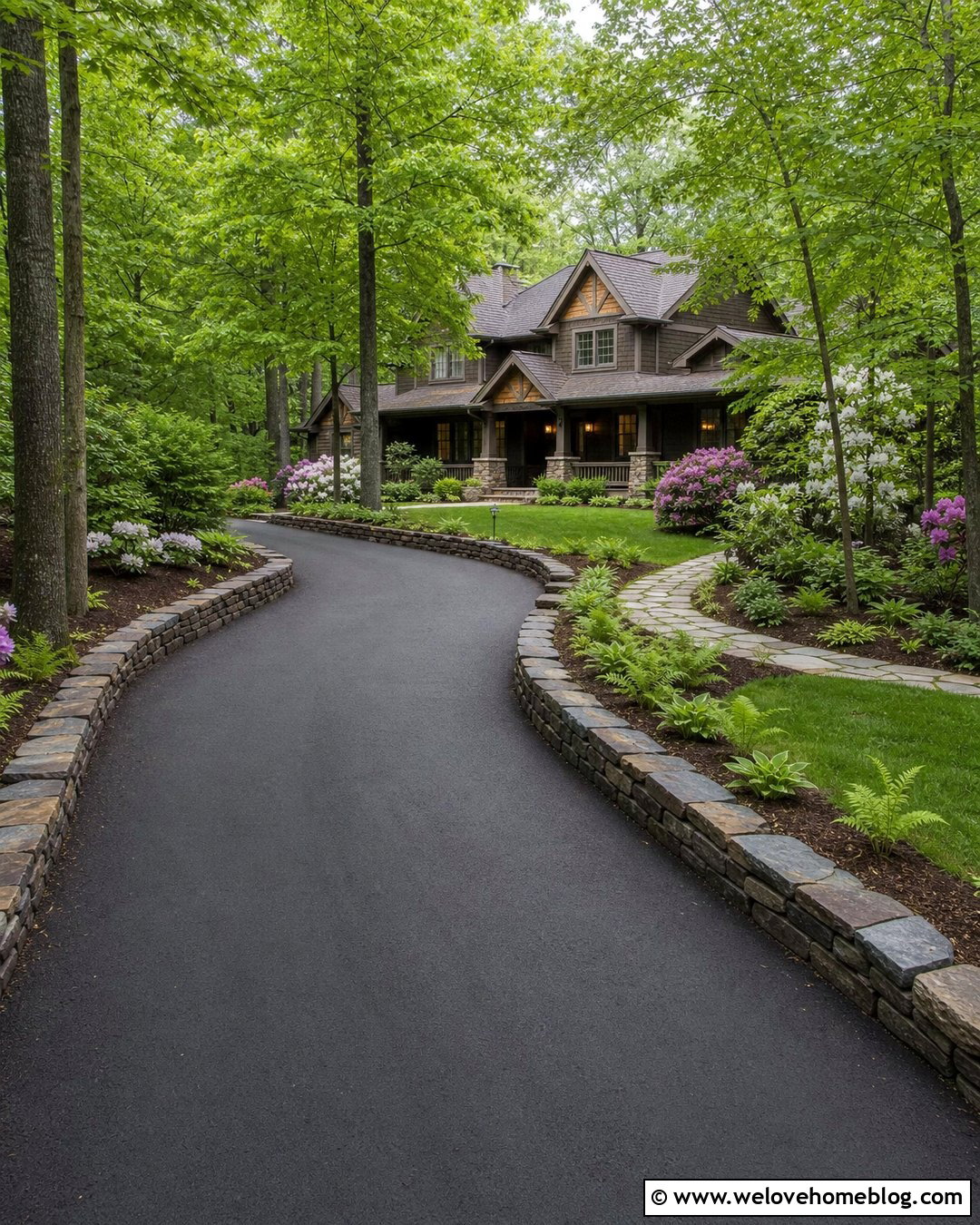
A stacked flagstone edge can soften a curved asphalt driveway while giving it a more custom appearance. Choose flat stones with charcoal, brown, and muted blue tones that complement the dark pavement. Stack them into a low border beside woodland-inspired beds, allowing the driveway-facing side to remain relatively even. The border can gradually rise near the house where it supports deeper soil around shrubs and small trees. Place ferns, hostas, azaleas, and native ground covers behind the stone for a layered landscape. A matching flagstone path can connect the driveway to a Craftsman porch. Avoid placing loosely stacked stones where tires frequently cross the edge. Along tight turns, use heavier pieces, a stable foundation, and concealed backing to help the raised border retain its shape.
9. Granite Paver Raised Driveway Edging
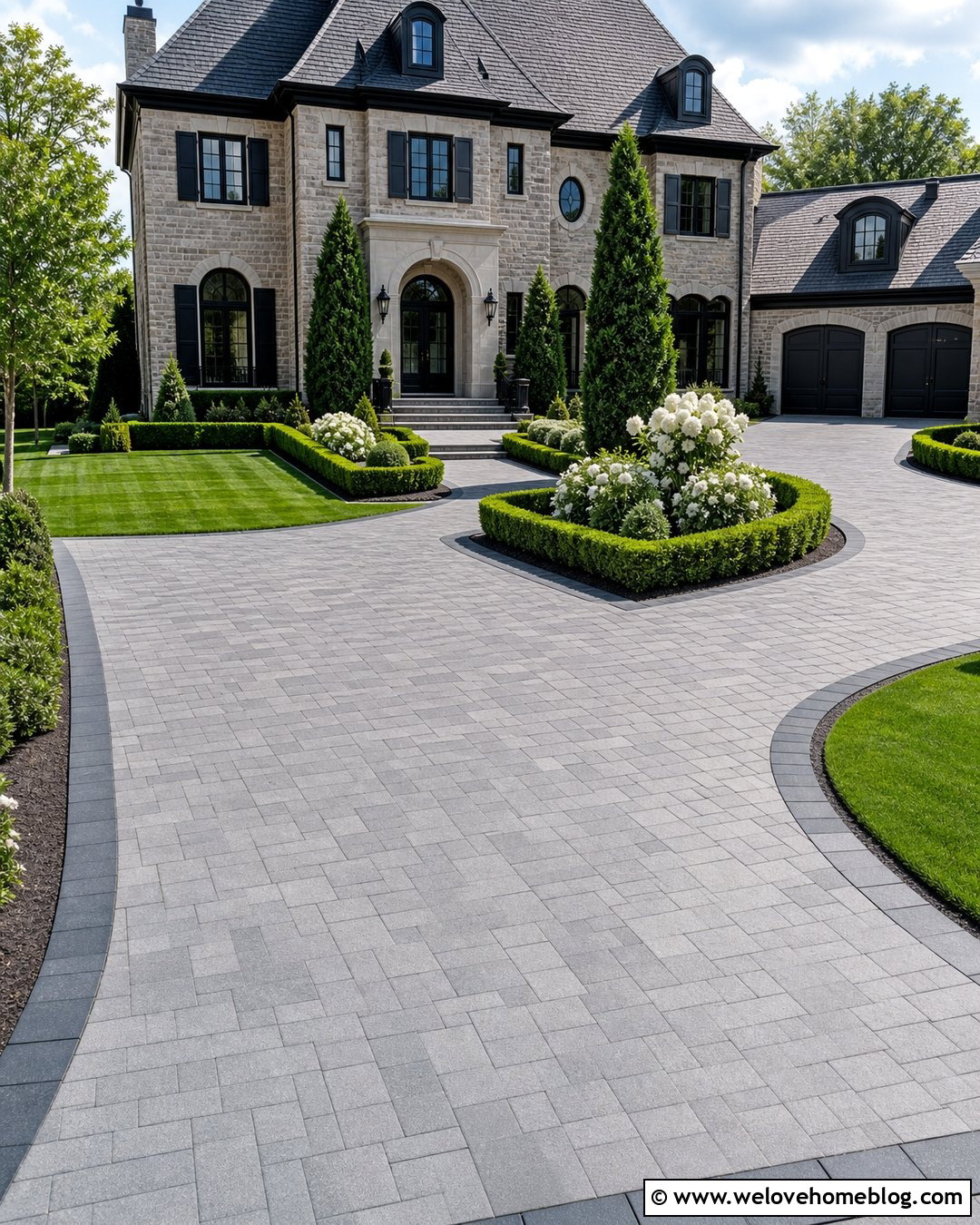
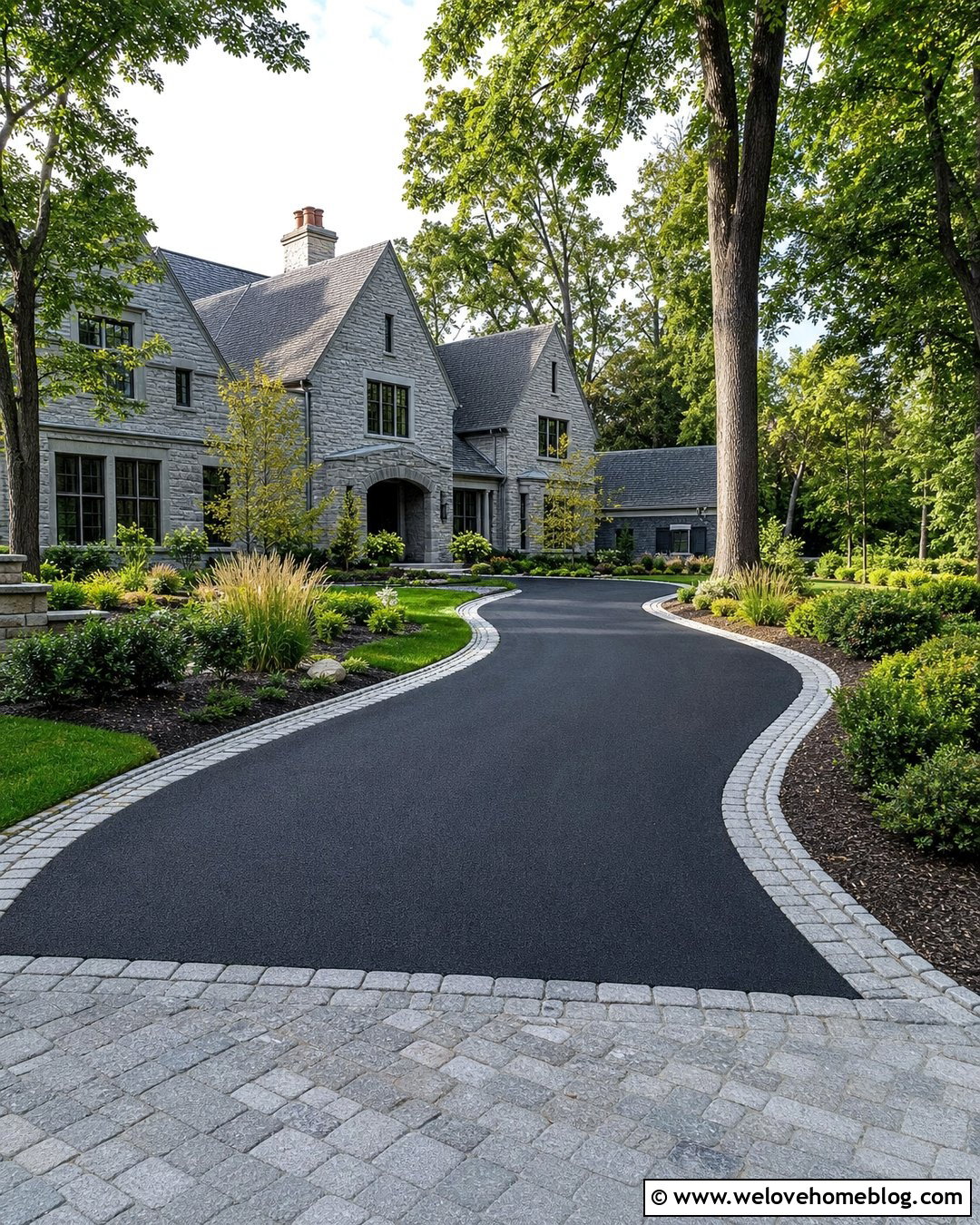
Granite paver edging gives a concrete paver driveway a durable-looking, upscale outline. Combine medium-gray interlocking pavers with a darker granite border set slightly above the main surface. A broad straight driveway leading to a stone-faced house works well, although the border can also define a circular layout. Install the granite in a consistent single row, then repeat it around a central planting island or along the front walkway. Low boxwood, white roses, and upright evergreens reinforce the formal character. Paver fields require dependable edge restraint, so the visible granite treatment should work with the structural system specified for the installation. () Lower the raised edge near garage thresholds and pedestrian crossings. This creates an elegant boundary without turning everyday access points into obstacles.
10. Raised Planter Driveway Edging
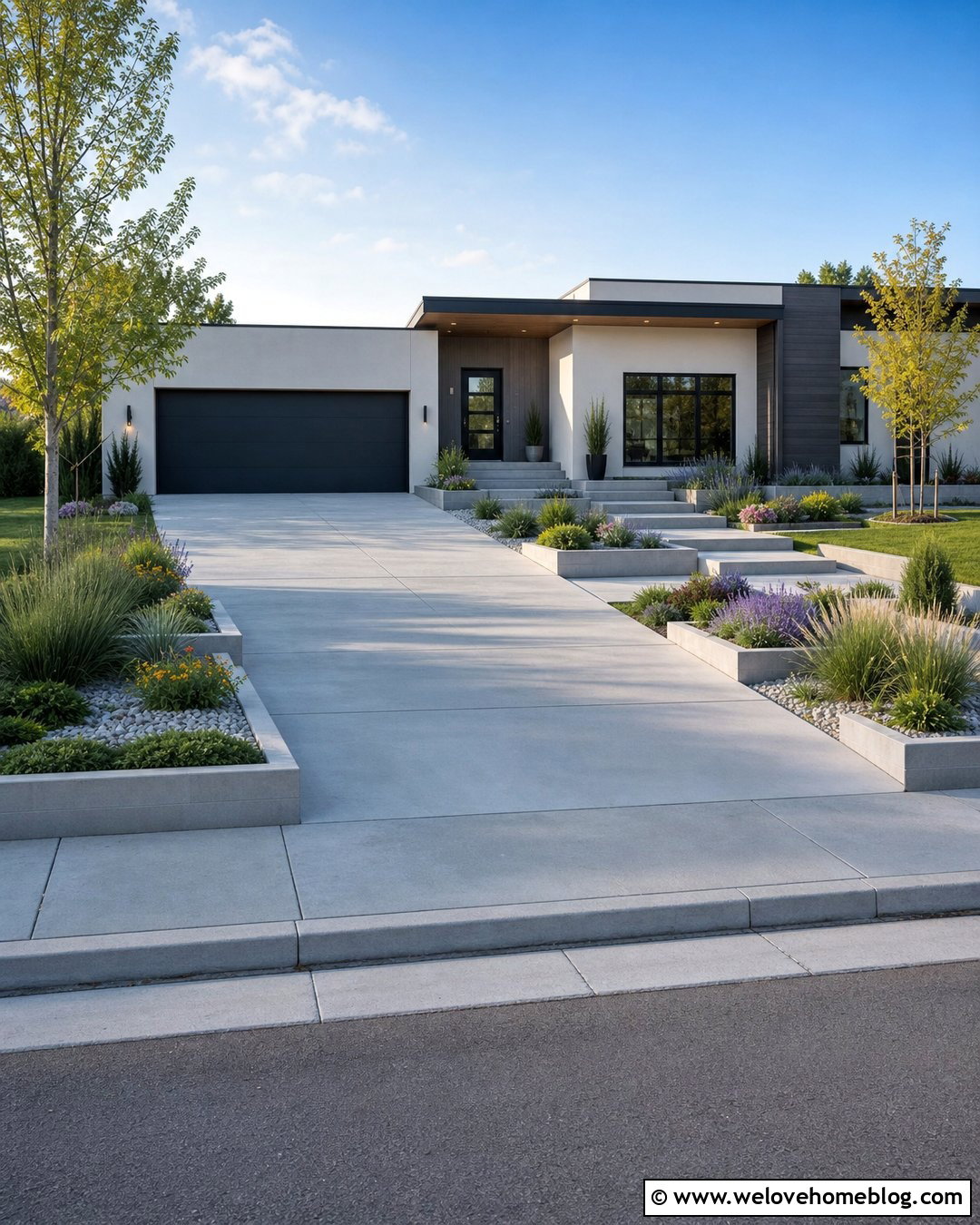
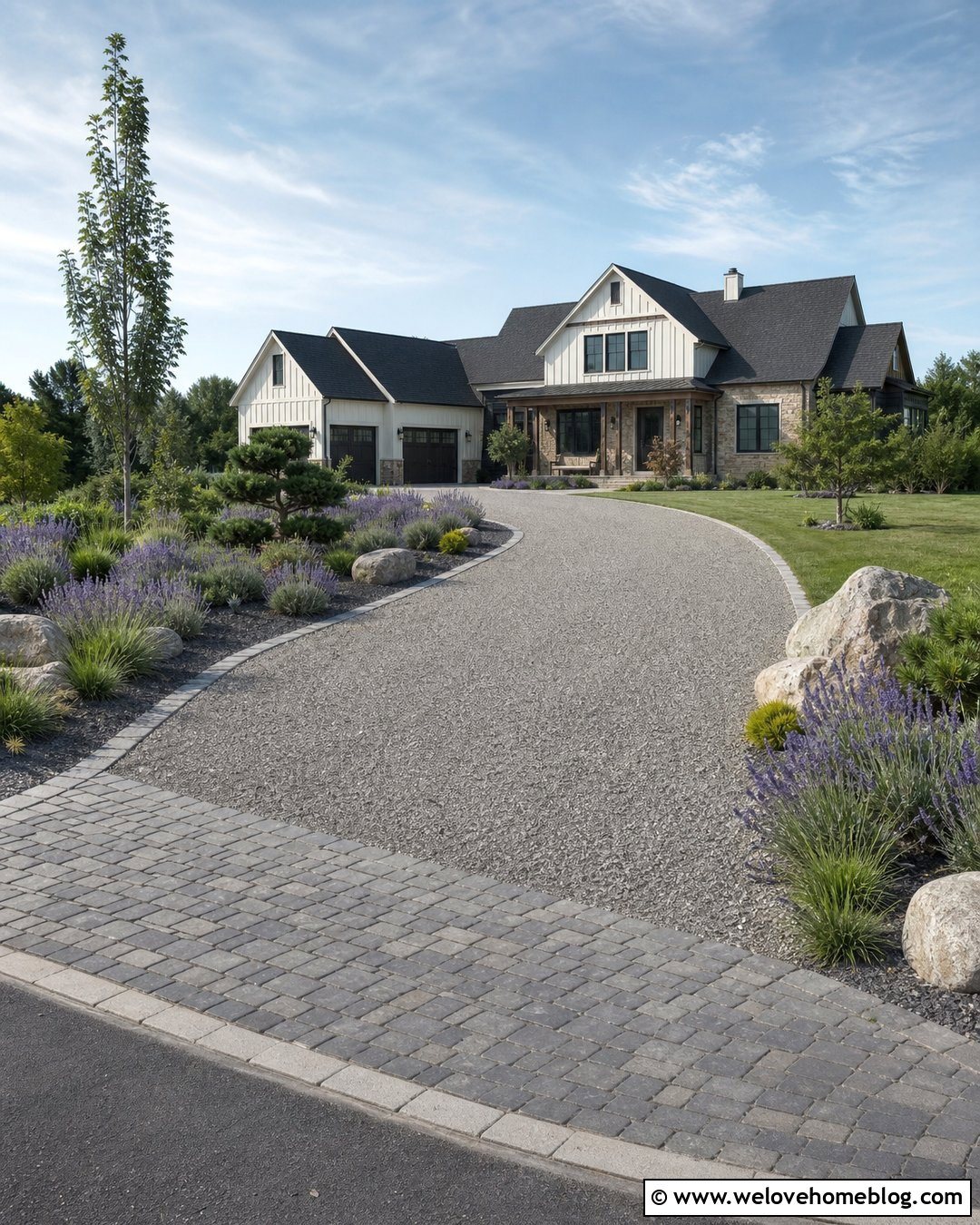
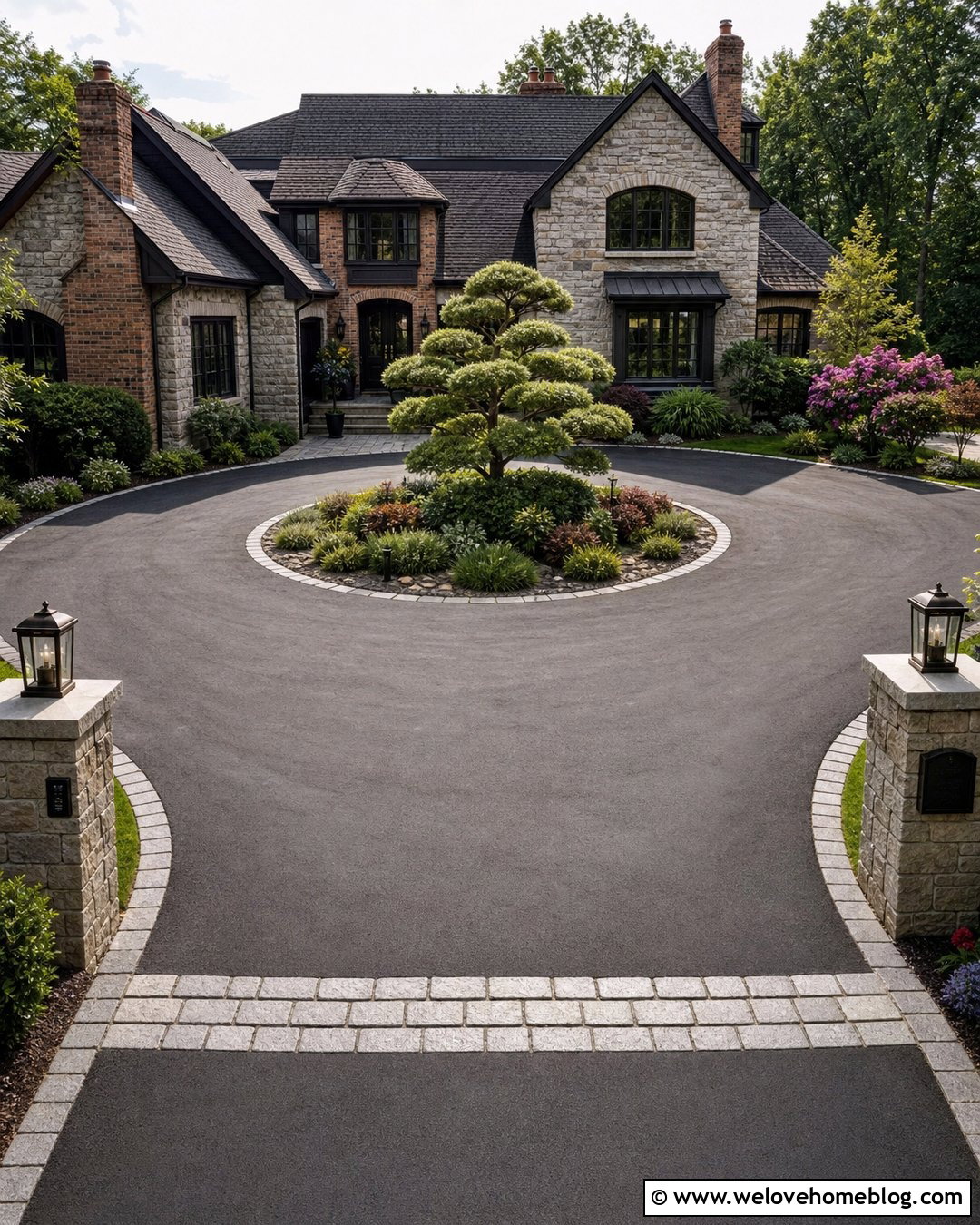
Why settle for a thin border when the edging can become a full planting feature? Frame a straight, light-gray concrete driveway with low rectangular planters built from smooth concrete blocks. Raise them eight to twelve inches along selected sections rather than enclosing the entire drive. Plant ornamental grasses, compact flowering perennials, and evergreen ground covers in repeated groups. Leave generous breaks beside parking spaces, paths, utility areas, and doors. This layout looks especially effective with a flat-roofed modern home and a wide front walkway. The planters should have suitable drainage so soil does not stay saturated or wash onto the driveway. Use the same block or concrete finish around the front steps for visual continuity. The result combines strong architecture with softer seasonal color and movement.
11. Limestone Raised Driveway Edging
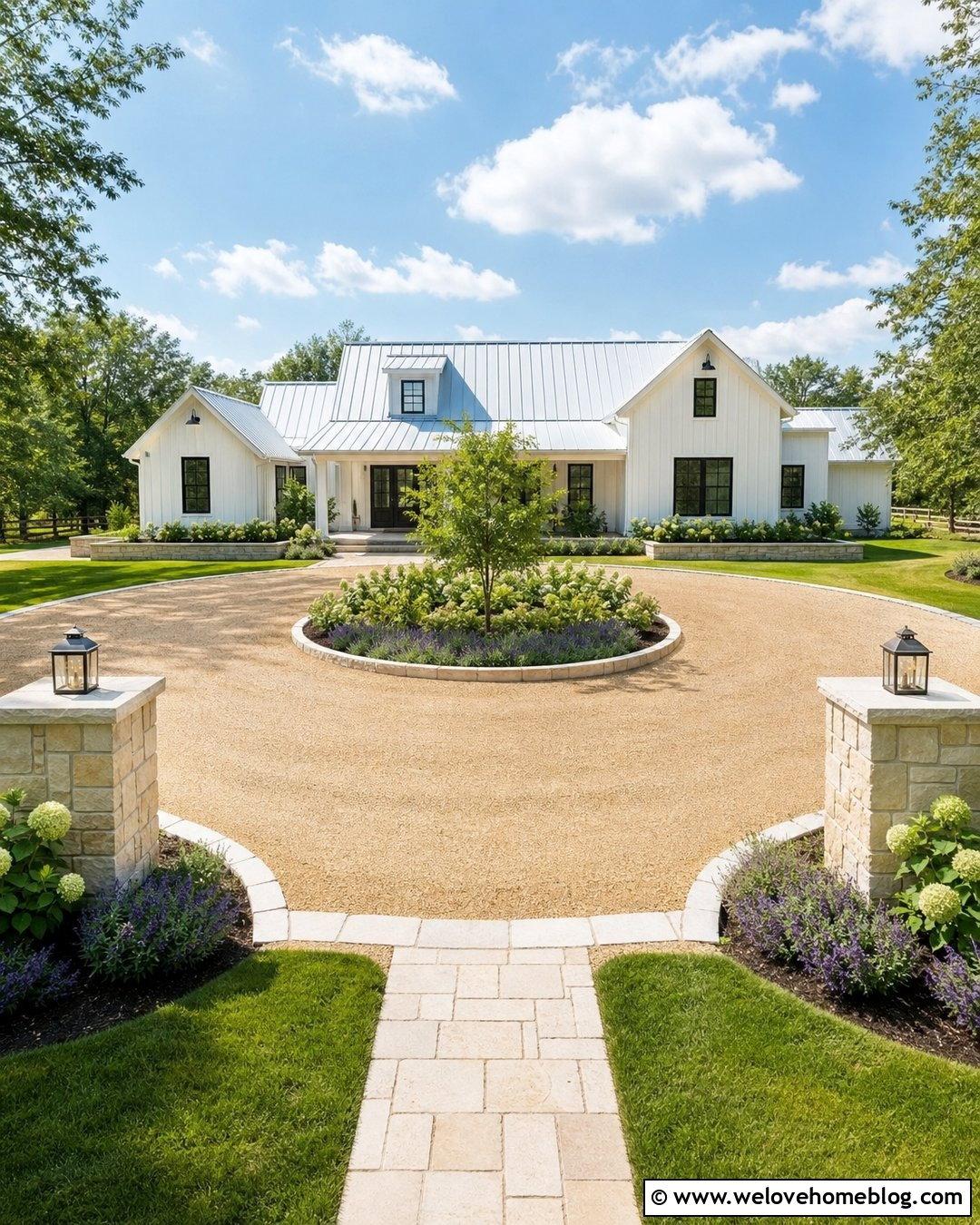
Pale limestone blocks create a bright raised edge around a circular gravel driveway. Pair creamy rectangular stone with honey-colored crushed limestone for a soft, coordinated finish. Arrange the blocks in a smooth ring around the central island and continue them along the outer driveway perimeter. A white farmhouse or light stucco home provides an ideal backdrop. Fill the island with a small ornamental tree, low hydrangeas, catmint, and neatly trimmed grass. The limestone can also form short entrance pillars or support an address marker near the street. Select dense exterior-grade stone suited to the local climate and road-salt exposure. Keep the border clearly visible to drivers, particularly around the central circle. This complete design feels open and welcoming while giving loose aggregate a defined boundary.
12. Charcoal Paver Raised Driveway Edging
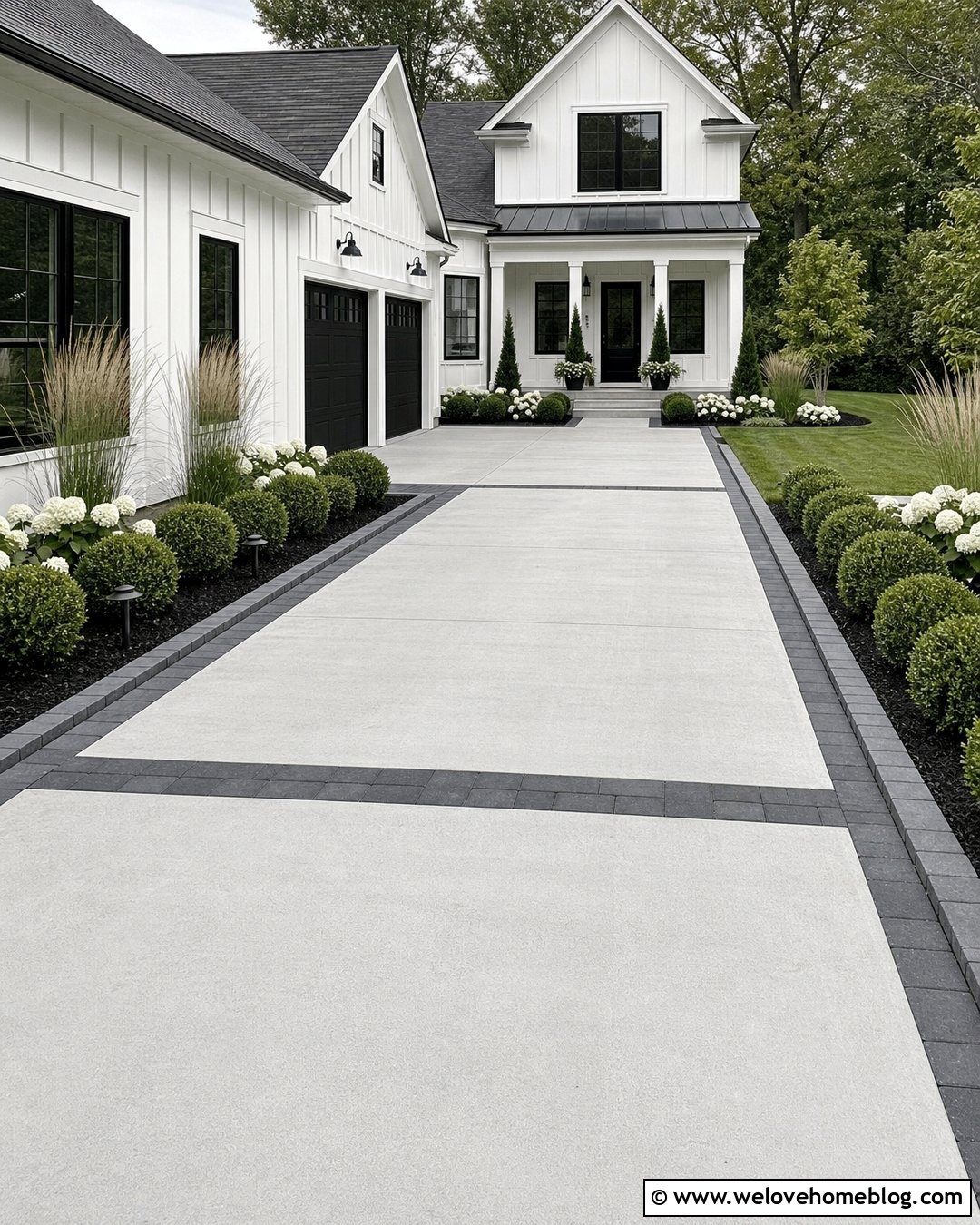
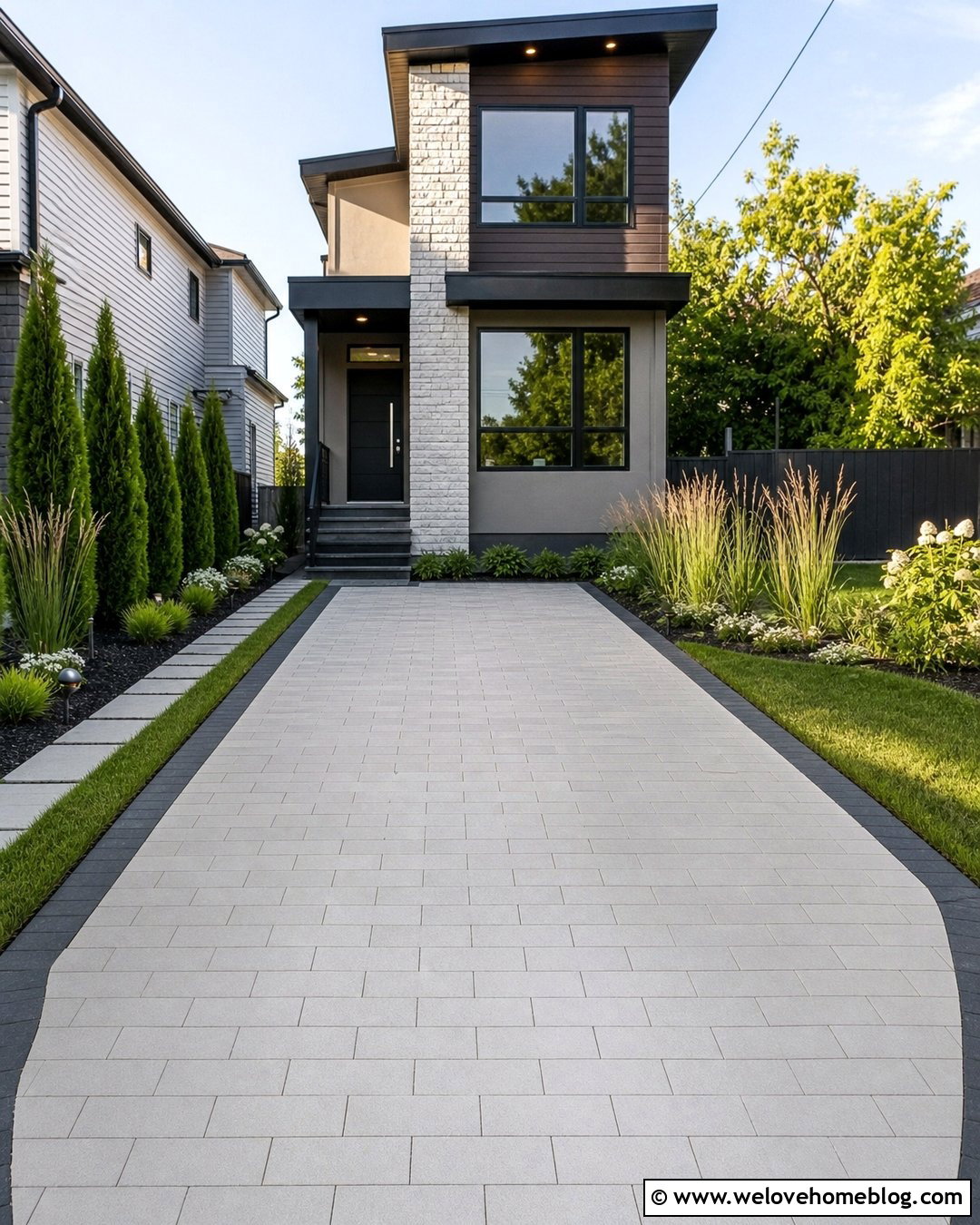
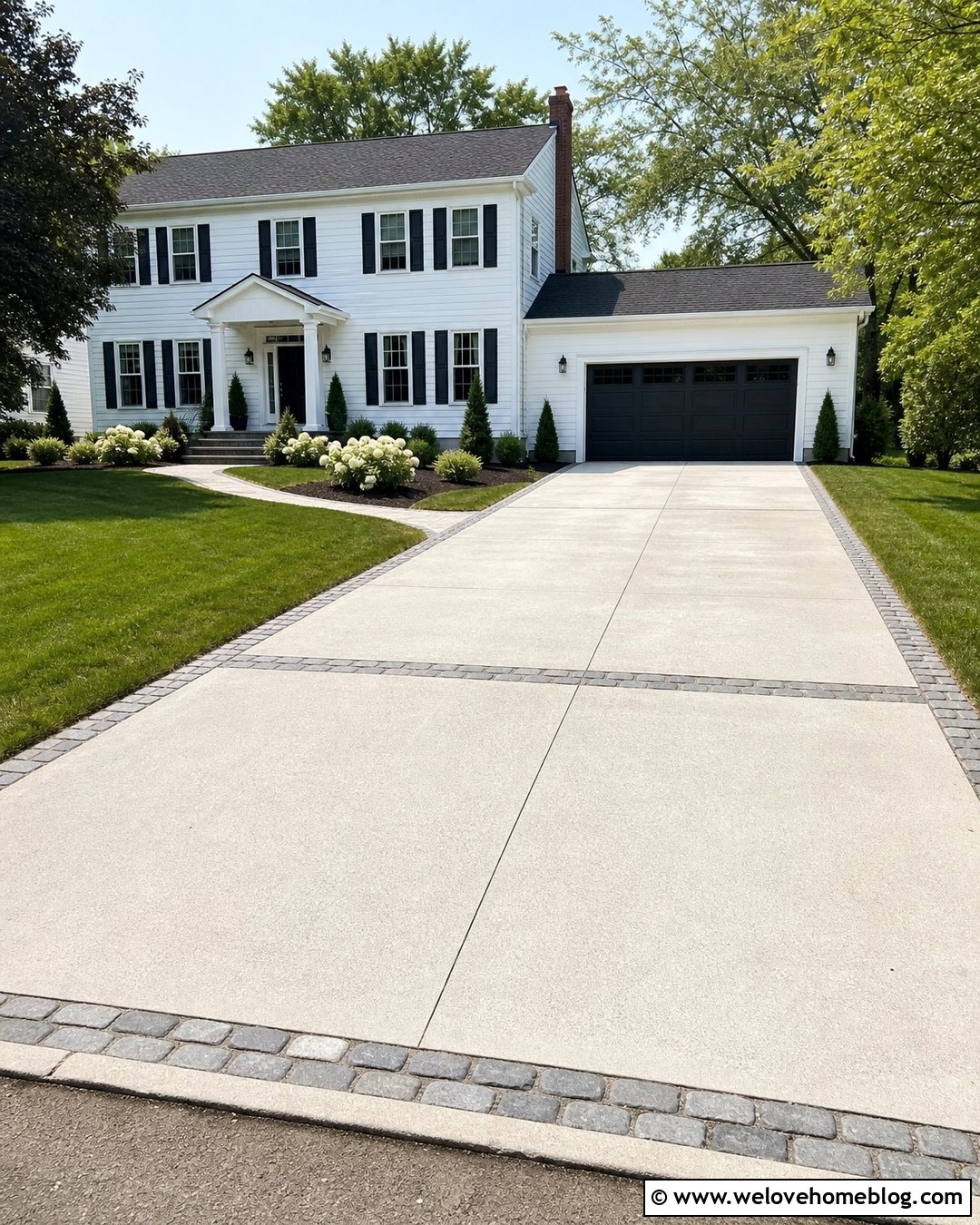
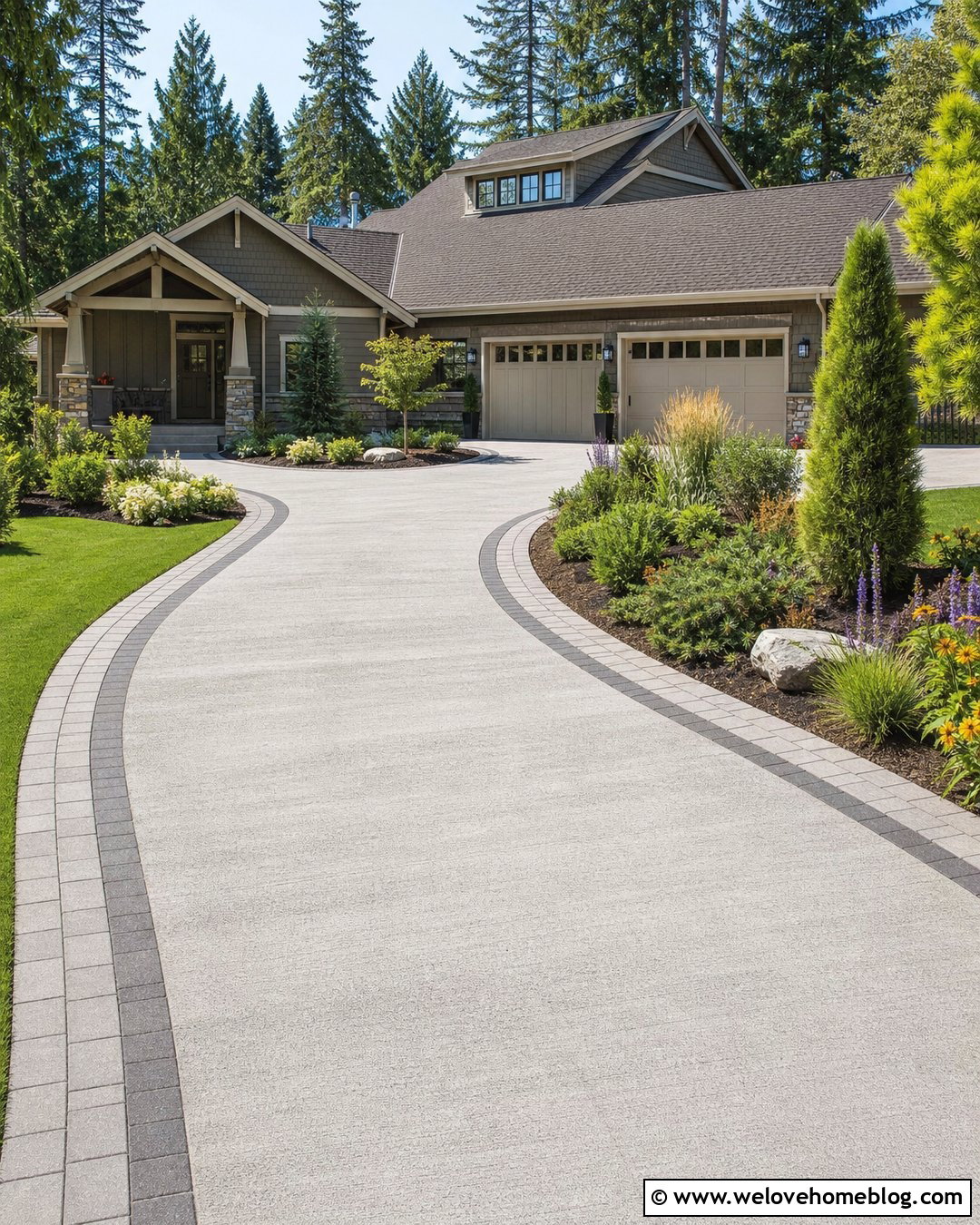
A charcoal paver curb adds crisp contrast to a white or pale-gray concrete driveway. Use narrow rectangular pavers in a double row, with the outer course raised slightly above the slab. A straight layout complements a modern farmhouse with white siding, black windows, and a simple covered porch. Repeat the dark pavers across the driveway as a decorative band near the sidewalk or garage, but keep those crossing points flush with the surface. On both sides, plant rounded evergreens, white flowering perennials, and airy ornamental grasses in dark mulch. The strong border color hides minor dirt better than a very light edge and visually ties into black exterior accents. Secure the pavers on a suitable base and avoid unsupported pieces where tires may repeatedly press against them.
13. Red Brick Raised Permeable Driveway Edging
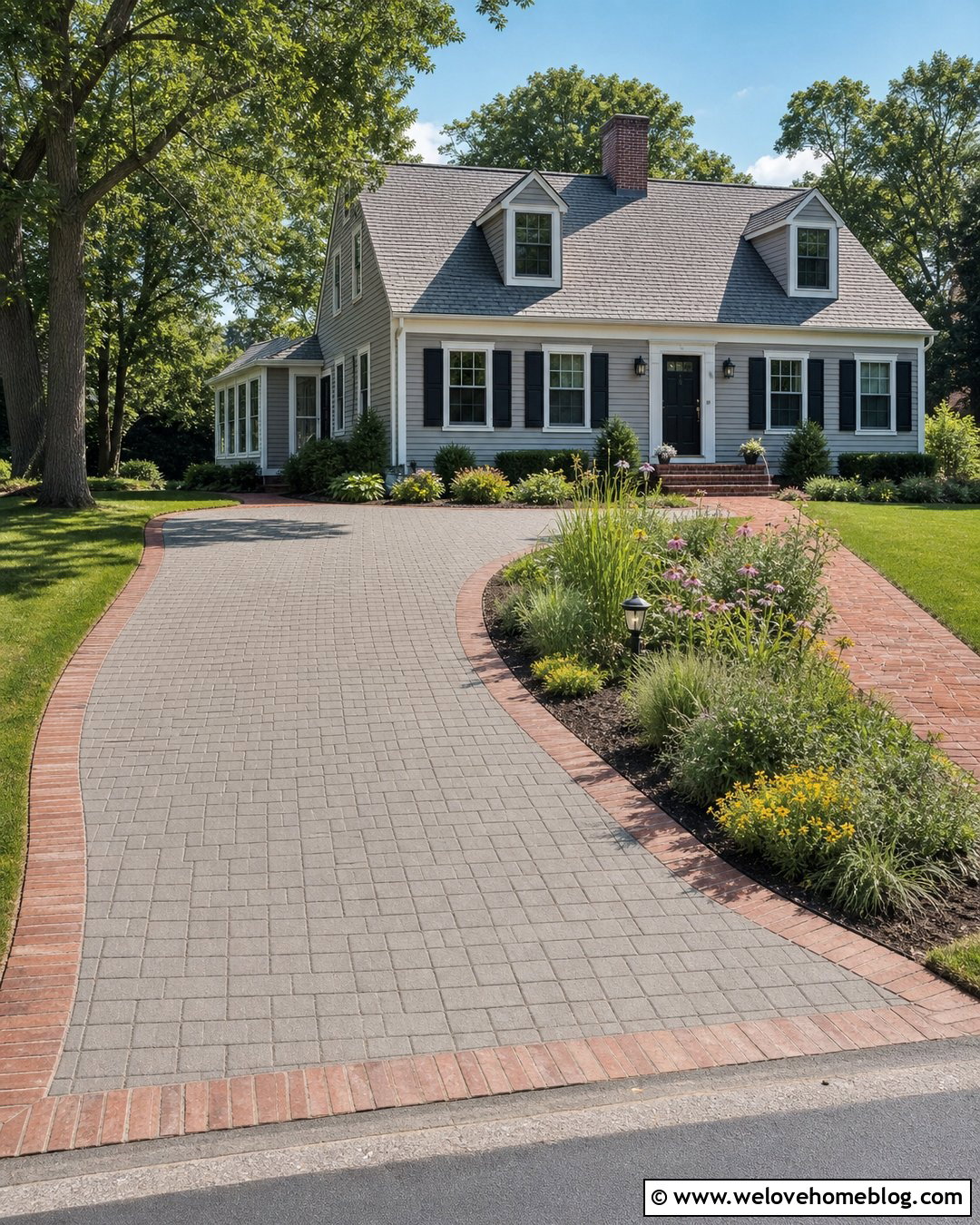
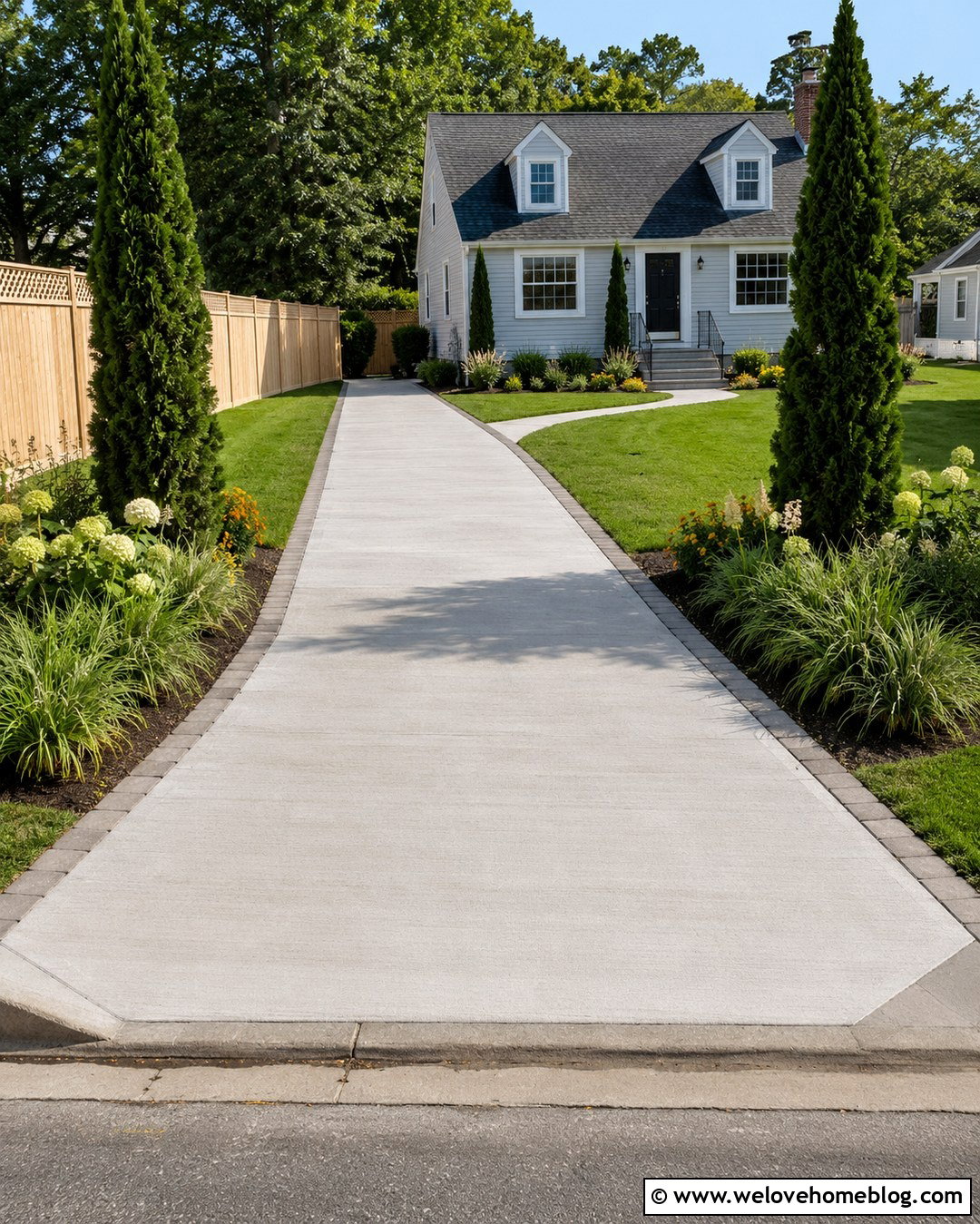
Red brick can provide a familiar, welcoming frame for a permeable concrete paver driveway. Choose warm gray permeable pavers for the main surface and install bricks vertically along the outer edges. The small drainage joints in the driveway should remain unobstructed, while the border and base are designed as part of the complete system. Permeable pavers allow water to pass through their joints into underlying stone layers, so professional planning is worthwhile for a vehicle-scale project. () Use a gently curved approach leading to a Cape Cod home, with lawn on one side and rain-garden planting on the other. Repeat the red brick around the walkway and porch steps. This combination balances practical stormwater management with a traditional residential look.
14. Low Gabion Raised Driveway Edging
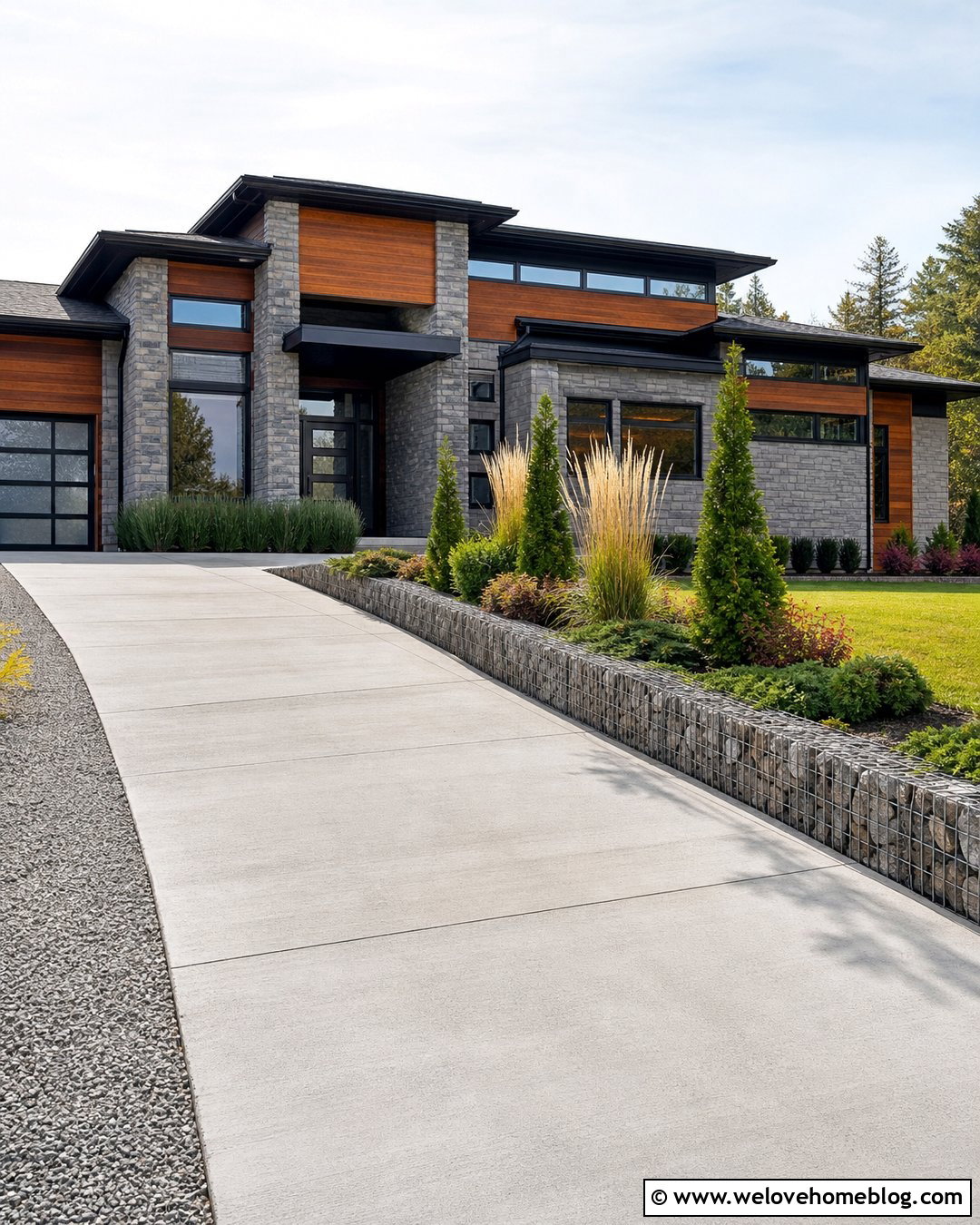
A low gabion border gives a wide concrete driveway a distinctive modern-rustic edge. Build narrow wire baskets filled with angular gray stone, keeping their height modest beside vehicle doors and sightlines. Use them along one side of a gently sloped driveway where they can visually support an elevated planting bed. On the opposite side, choose a simpler flush gravel strip so the entrance does not feel confined. Behind the gabions, plant upright grasses, creeping ground covers, and tough shrubs with restrained forms. A contemporary house with stone veneer and wood siding completes the palette. The baskets, stone fill, and foundation should be specified for exterior retaining use. Add a smooth cap where pedestrians may pass nearby, and provide intentional drainage routes instead of treating the gabion edge as a substitute for drainage design.
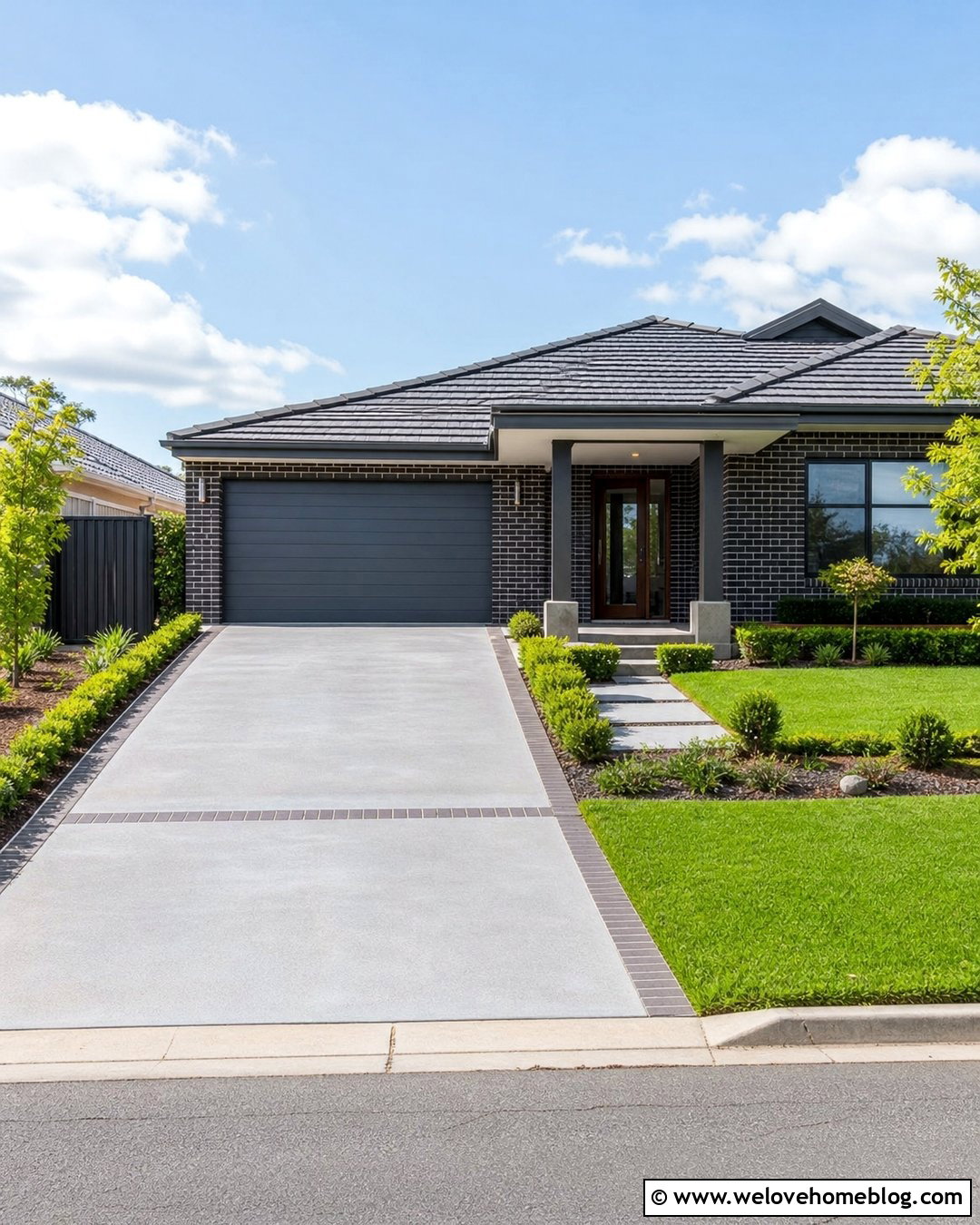
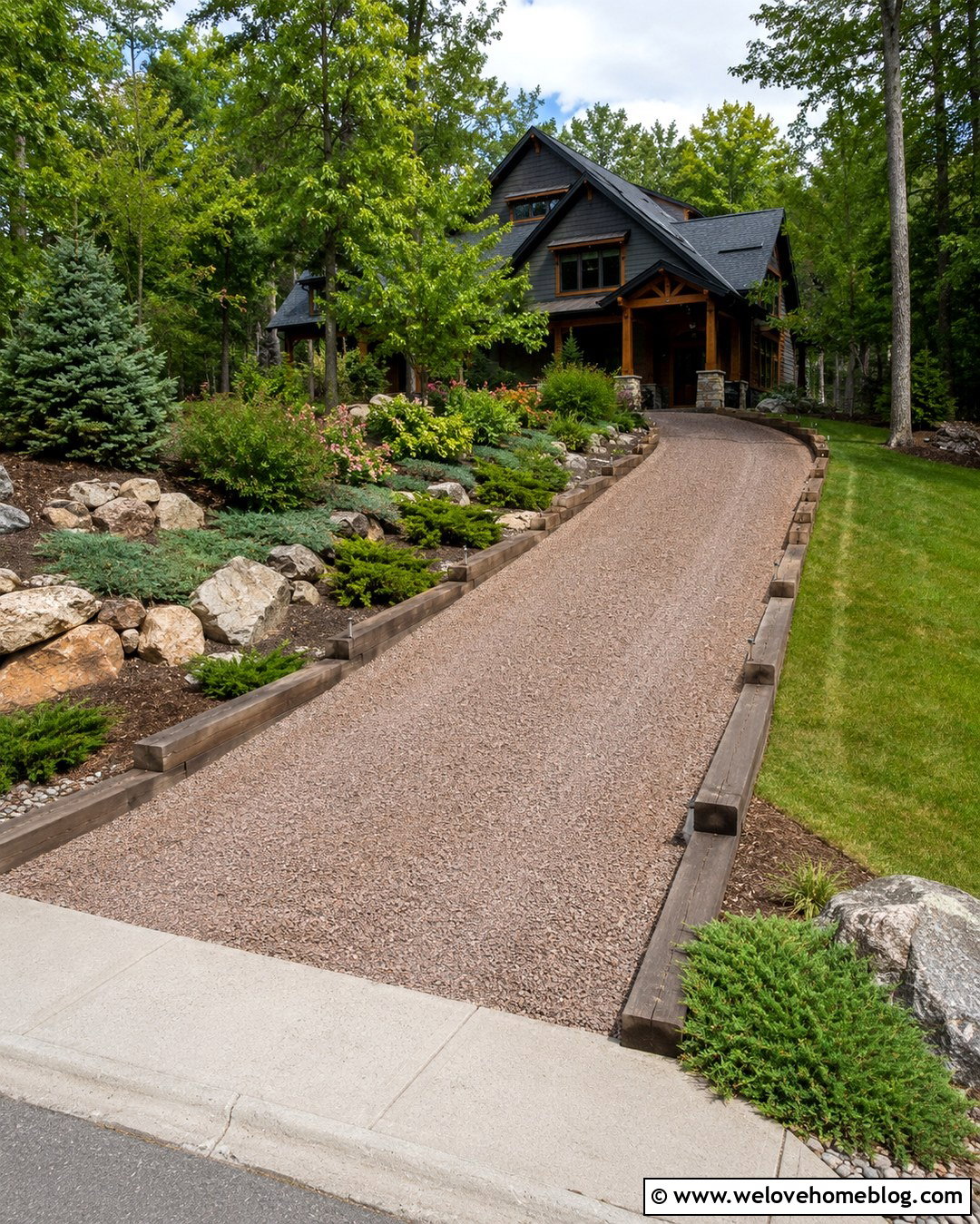
15. Stamped Concrete Raised Driveway Edging
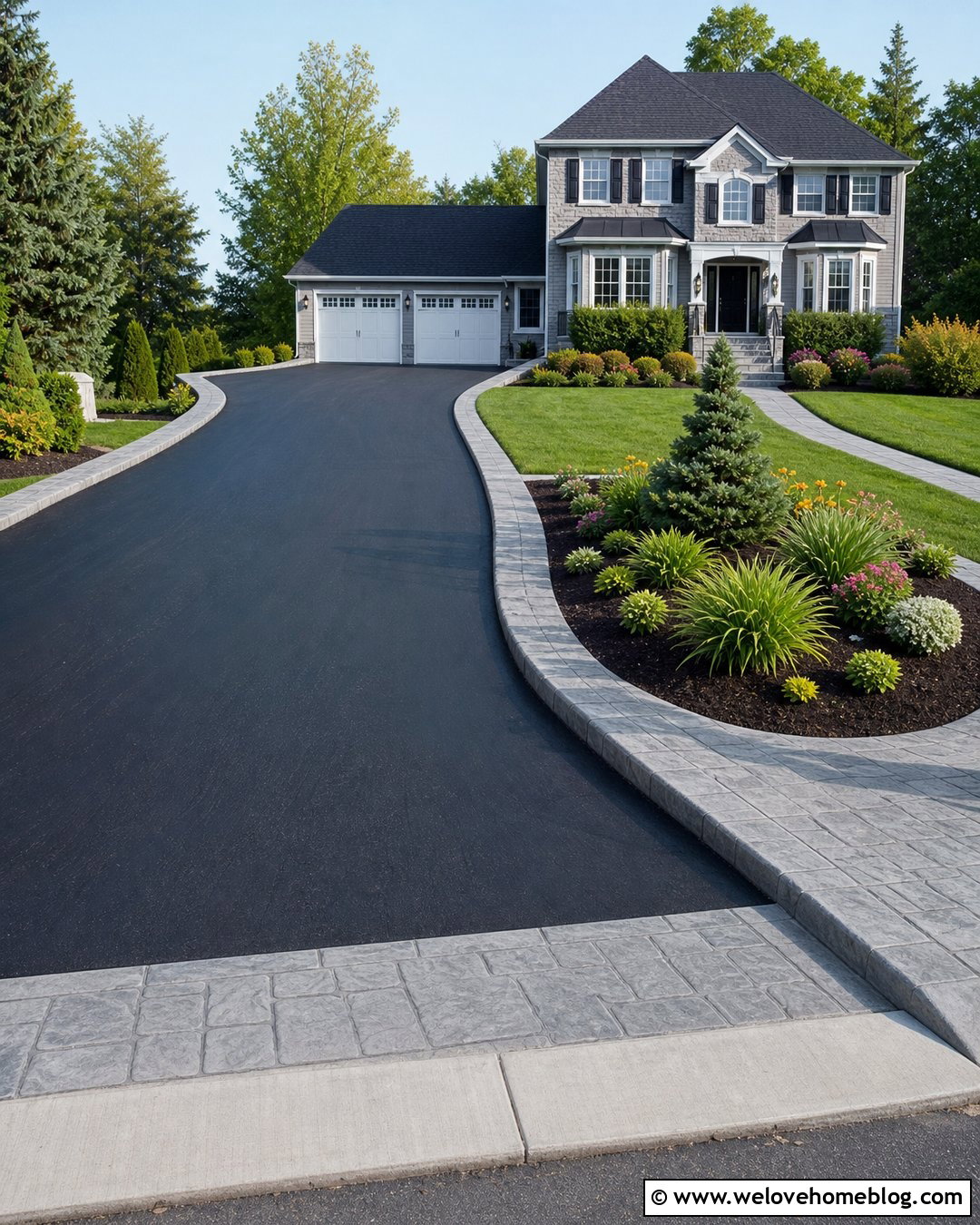
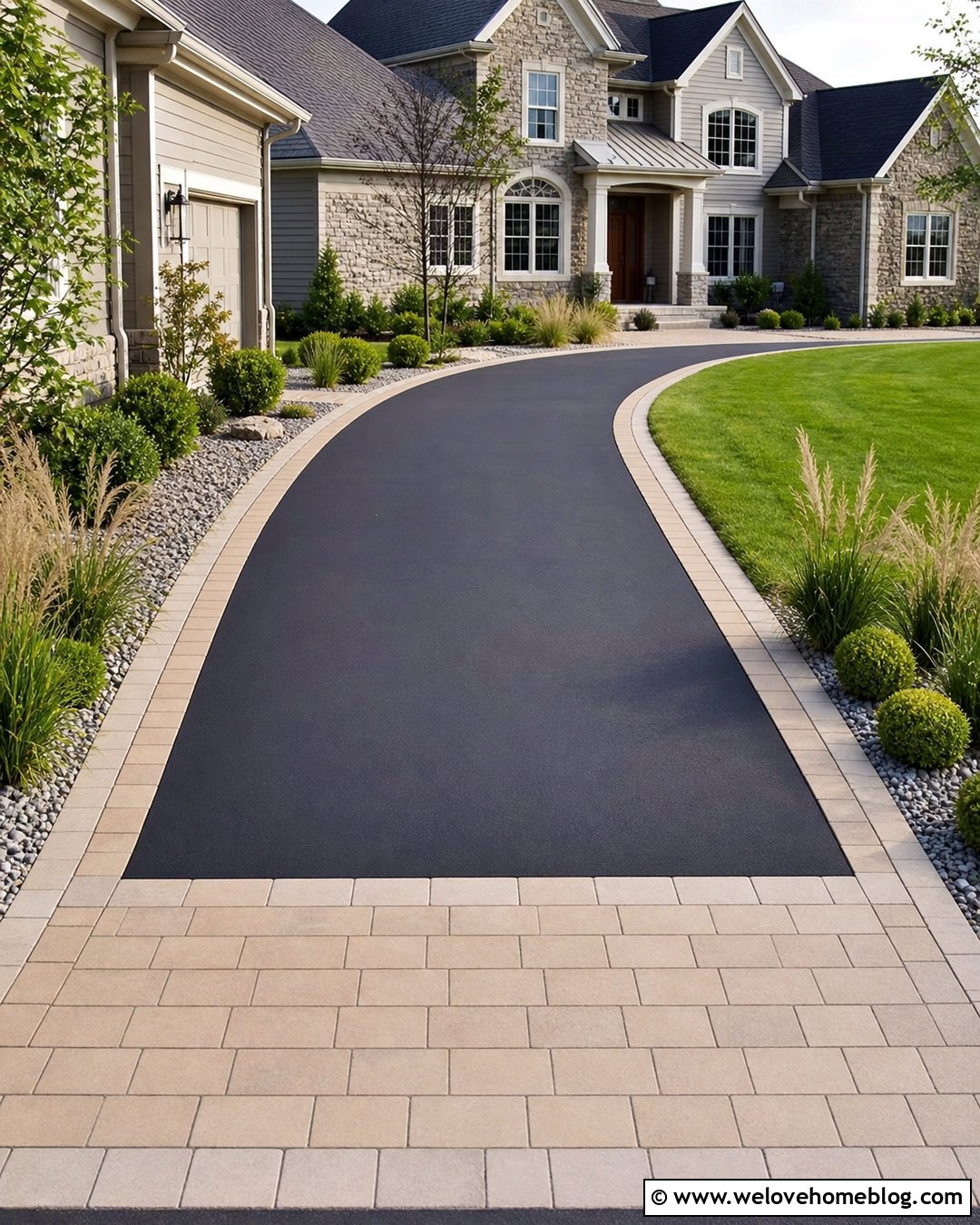
Stamped concrete curbing can give an asphalt driveway the appearance of a stone-lined entrance at a more consistent size and shape. Select a slate or cobblestone texture in medium gray, taupe, or muted brown. Run the curb along a sweeping driveway leading to a suburban two-story home, then widen it around a landscaped entrance bed. Match one of the curb colors to the house roof, foundation, or walkway. Layer the surrounding landscape with dwarf evergreens, daylilies, ornamental grasses, and seasonal flowers. Avoid an overly bright or heavily contrasting release color, which can make the border look disconnected from the pavement. The stamped curb should rise enough to define the drive but remain lower near sidewalks, garage doors, and areas where passengers regularly step out.
16. Reclaimed Brick Raised Driveway Edging
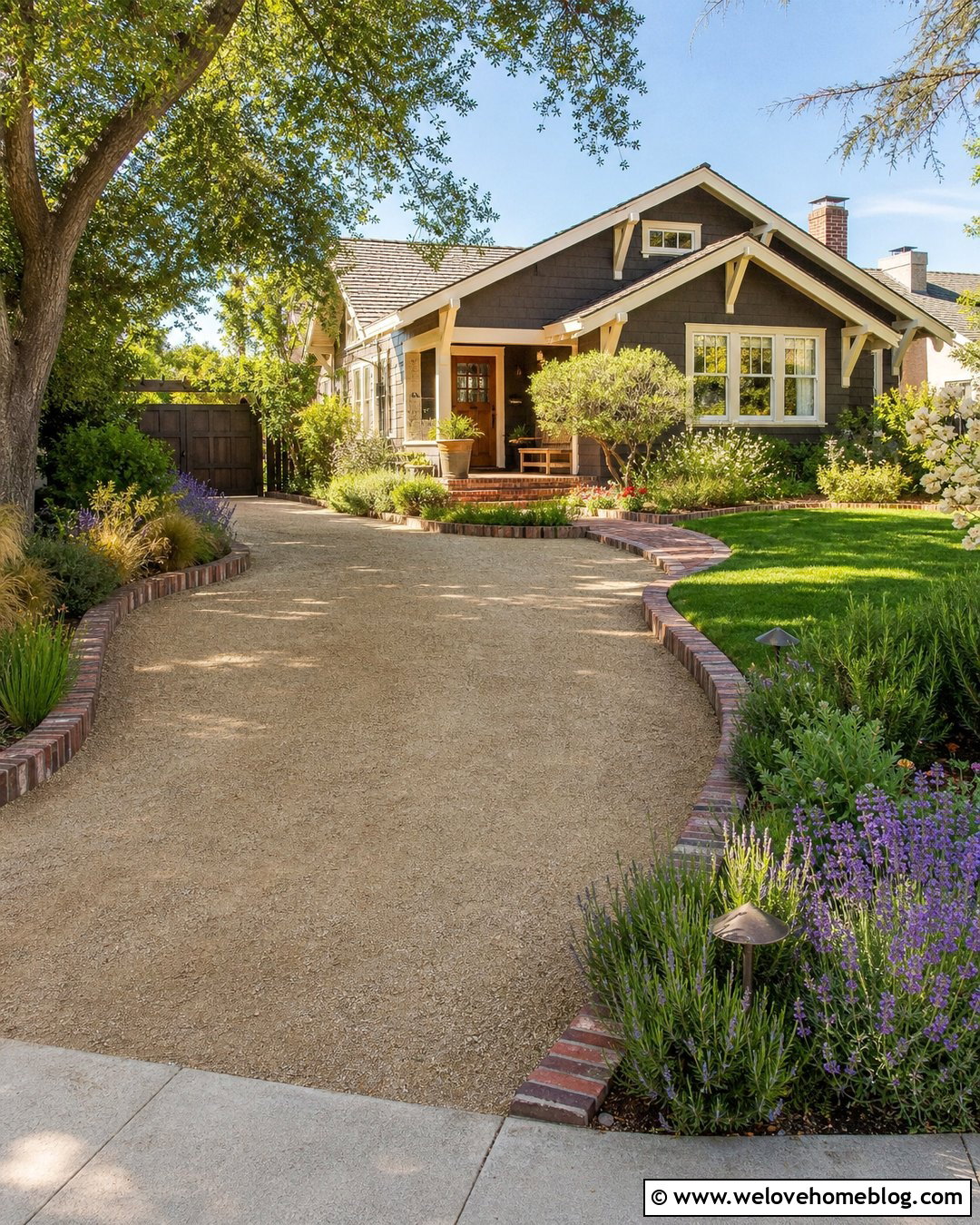
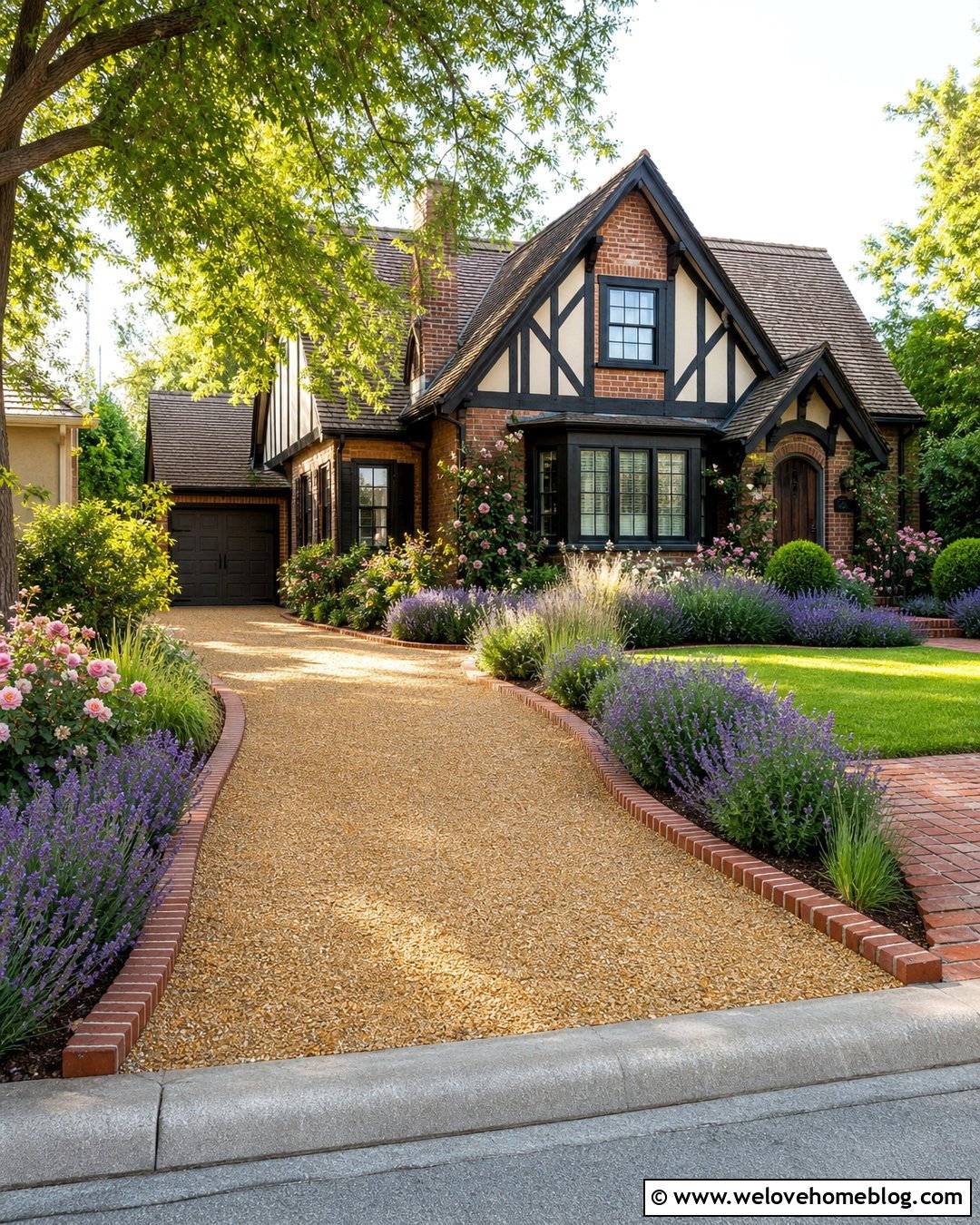
Reclaimed brick adds age and character to a decomposed granite driveway. Select bricks with varied red, brown, and charcoal tones, then set them upright in a gently uneven but structurally secure line. This treatment is well suited to a cottage, bungalow, or older Craftsman home. A curved driveway makes the weathered materials feel even more established. Plant lavender, rosemary, ornamental grasses, and flowering shrubs behind the raised edge, leaving enough space so mature growth does not spill into the driving area. Repeat the brick around the front path or a mailbox bed to unite the landscape. Inspect salvaged units carefully and reserve cracked or soft bricks for decorative areas away from tire pressure. A proper base and backing will help the old material function as more than decoration.
17. Boulder Raised Driveway Edging
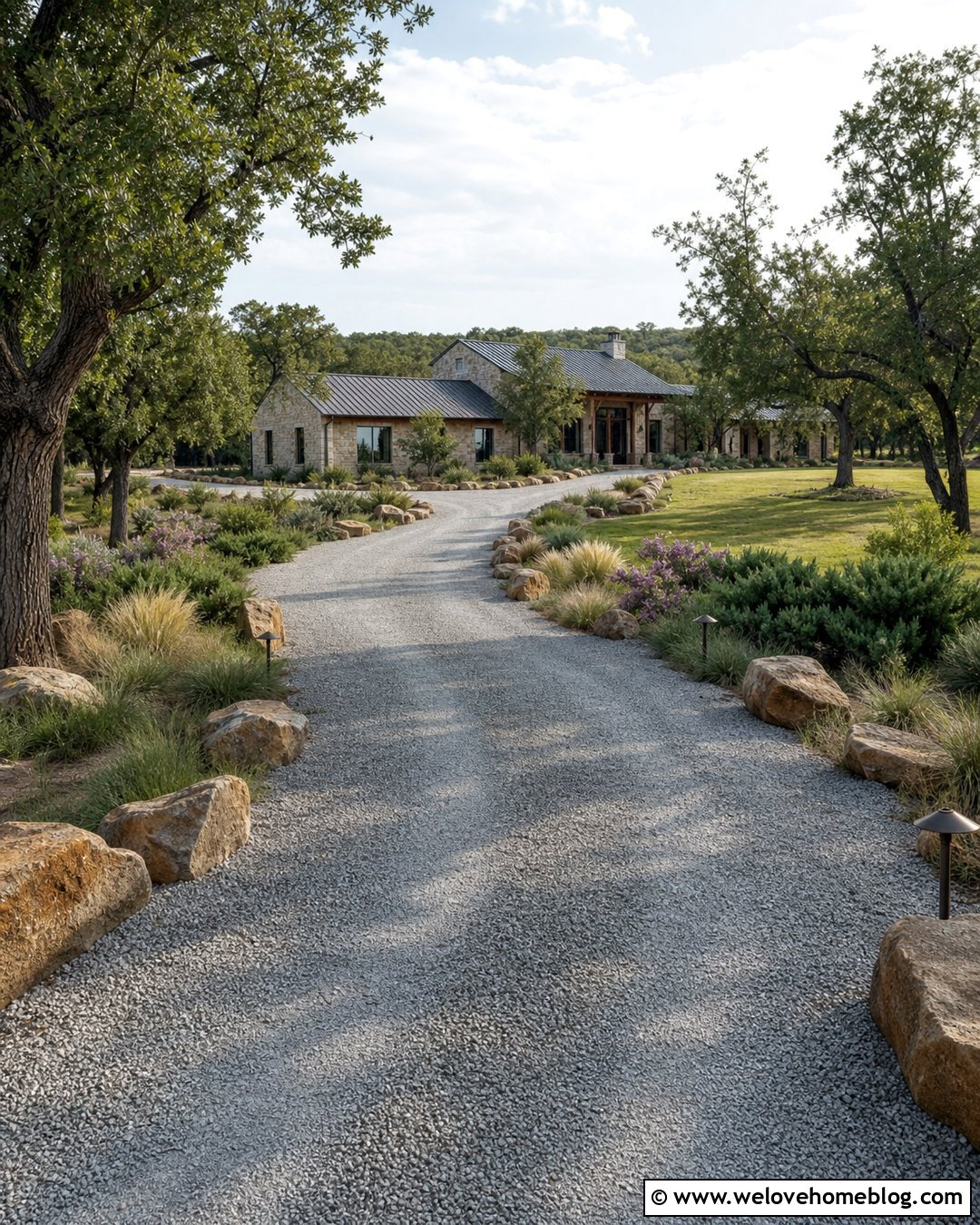
Large boulders can define a rural gravel driveway without creating a continuous wall. Space locally sourced stones along a broad, curving drive surfaced with compacted gray crushed gravel. Sink part of each boulder into the ground so it appears settled into the landscape rather than placed on top. Use lower stones near the street and taller groupings beside broad planting beds. Native grasses, spreading junipers, flowering shrubs, and mature shade trees complete the natural look around a country home or rustic ranch. Maintain enough clearance for snow removal, delivery vehicles, and wider turning movements. Reflective markers can be positioned discreetly where visibility is limited. The open gaps between boulders allow the landscape to breathe and provide possible runoff routes while still discouraging vehicles from cutting across the lawn.
18. Raised Garden Bed Driveway Edging
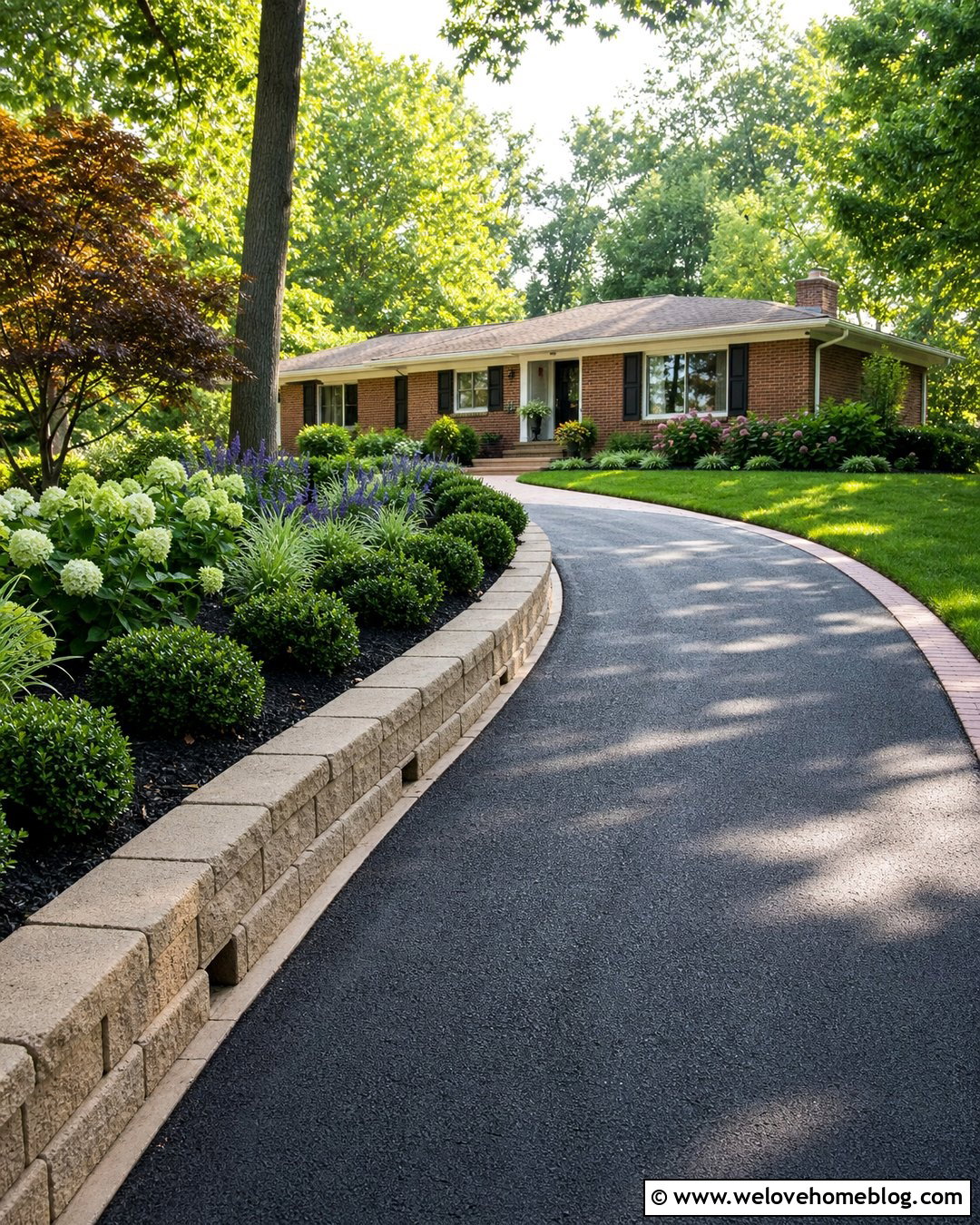
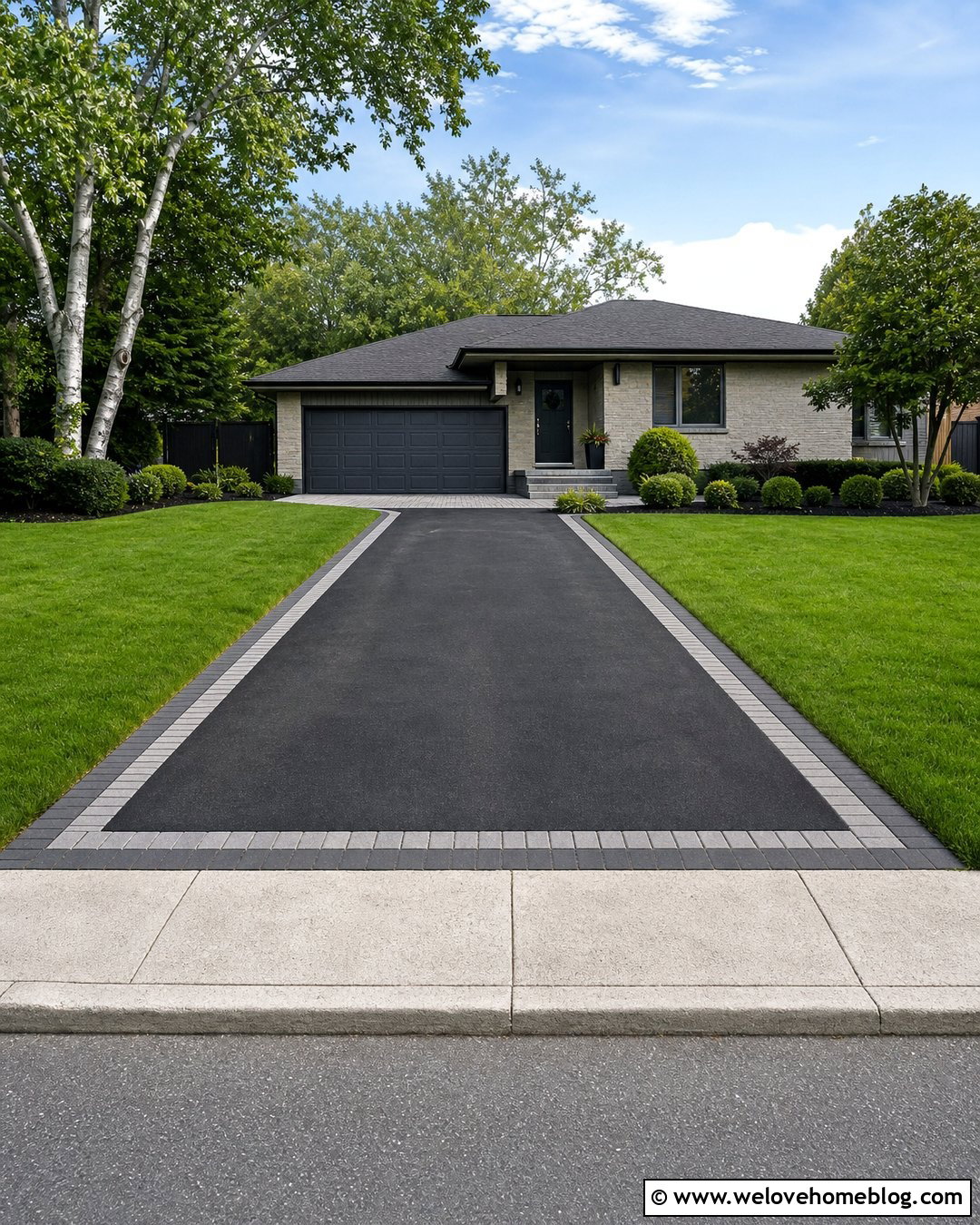
A long driveway can feel more welcoming when one side is bordered by a gently raised garden bed. Pair a black asphalt surface with a low tan concrete-block edge that curves toward a brick ranch home. Keep the wall around six to ten inches high through the main landscape and taper it down near the sidewalk and garage. Fill the bed with repeating groups of dwarf hollies, hydrangeas, salvia, and ornamental grasses. On the opposite side, use a narrow flush brick mowing strip to prevent the driveway from looking too enclosed. Include gaps or drainage features at low points so runoff can leave the pavement. The combination of a restrained wall, layered plants, lawn, and a coordinated walkway turns the driveway into an intentional part of the front-yard composition.
19. Lighted Stone Raised Driveway Edging
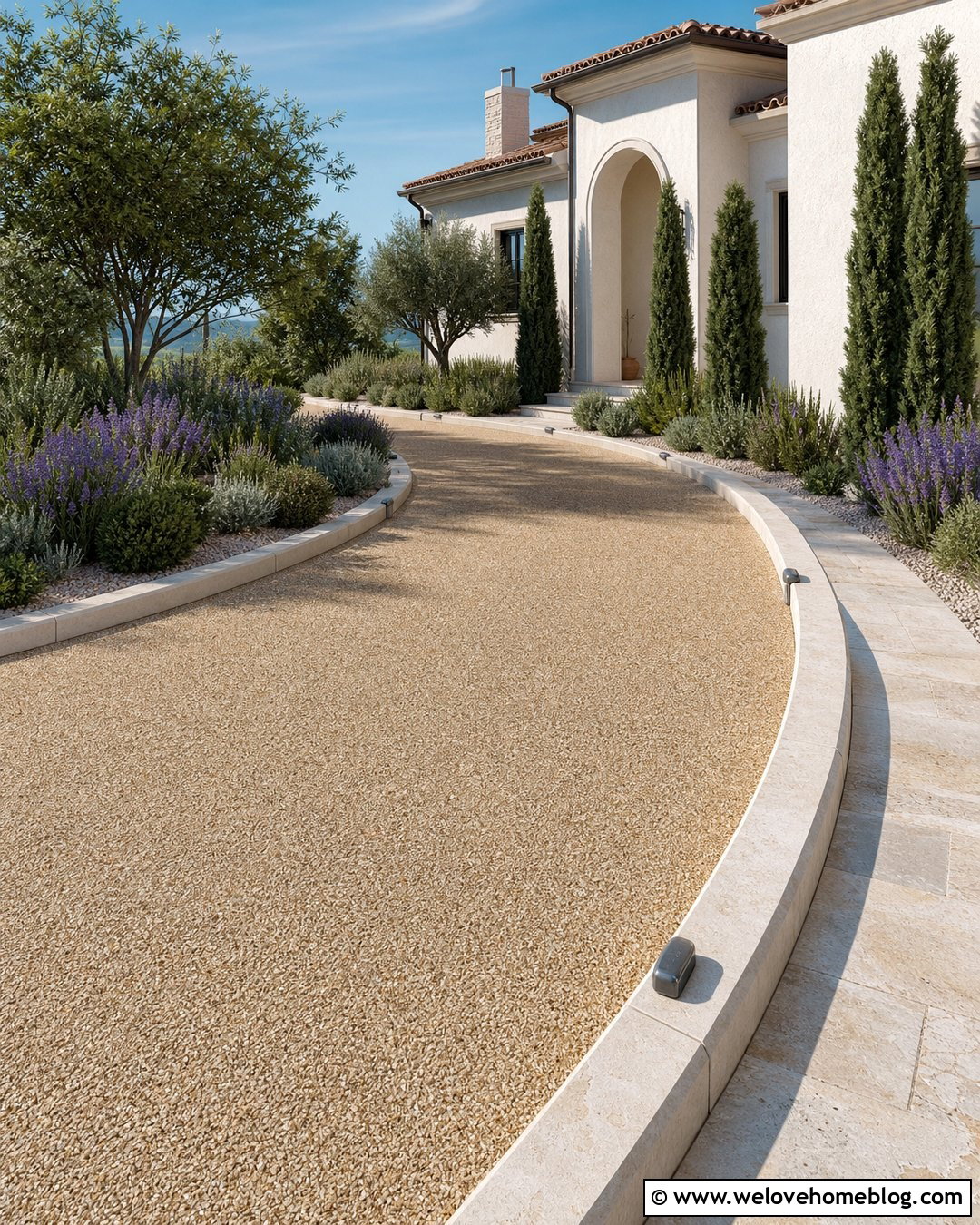
Integrated lighting makes a raised stone edge easier to recognize while giving the entrance a finished appearance. Border a warm beige resin-bound gravel driveway with smooth-cut limestone blocks, then install small shielded fixtures at measured intervals. The fixtures should direct light toward the driveway edge rather than into drivers’ eyes or neighboring windows. During the day, the pale stone complements a Mediterranean or light stucco home. Surround it with olive-like ornamental trees suited to the climate, rosemary, lavender, evergreen shrubs, and light gravel mulch. Use a curved layout that allows the border and planting to guide the approach naturally. Keep electrical components protected and accessible for maintenance. The lighting should support safe navigation, but the daytime design must remain attractive without relying on dramatic nighttime effects.
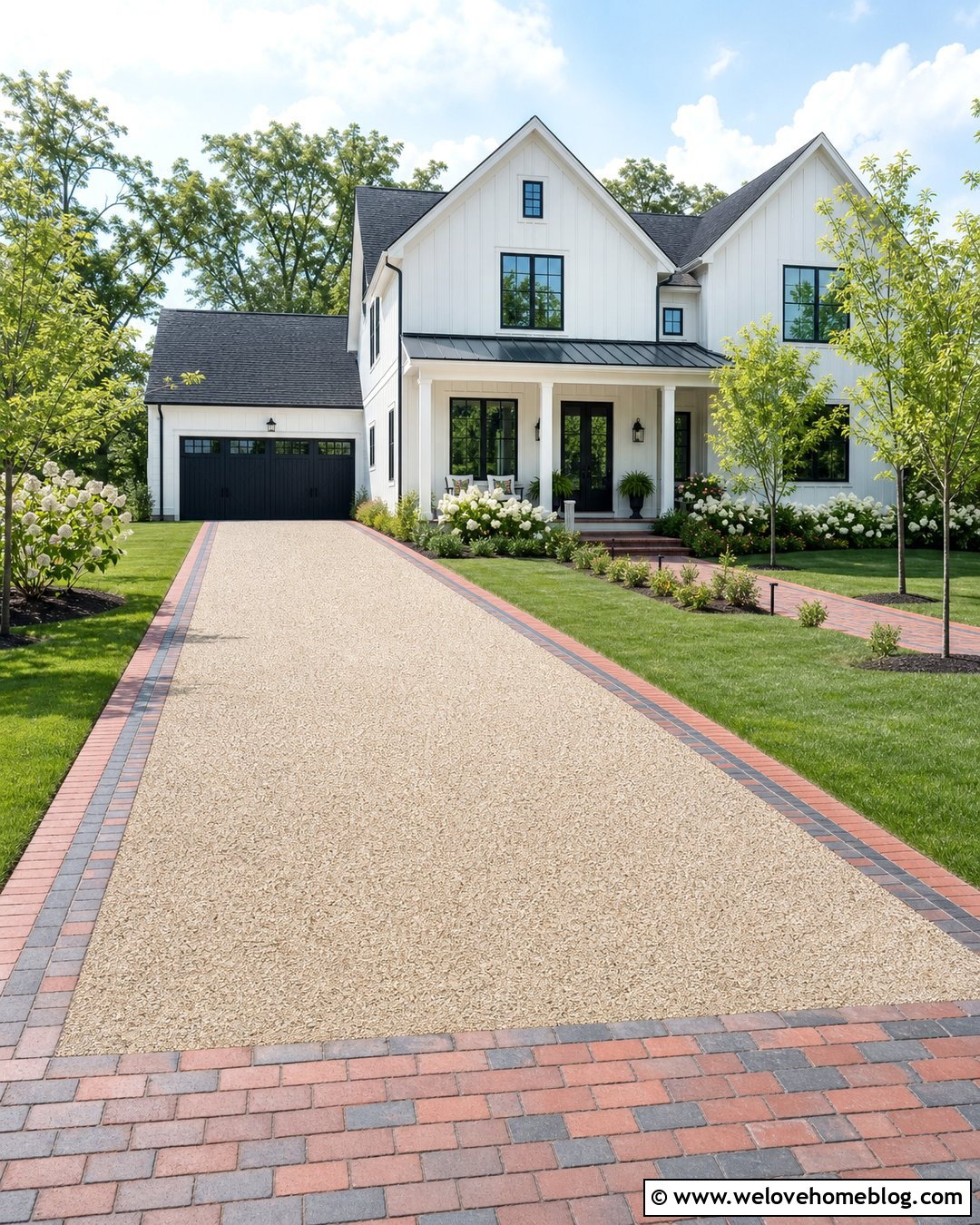
20. Retaining Wall Raised Driveway Edging
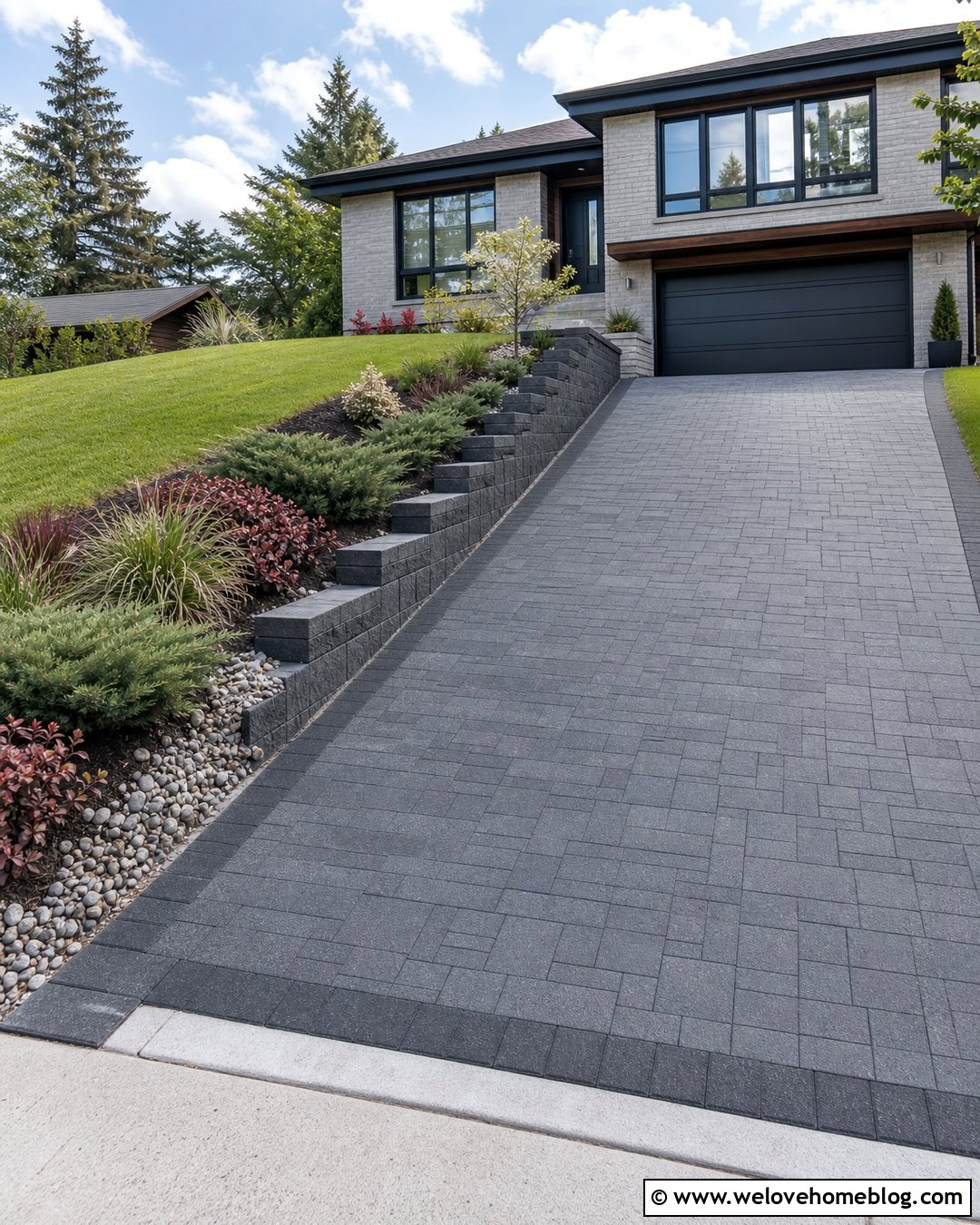
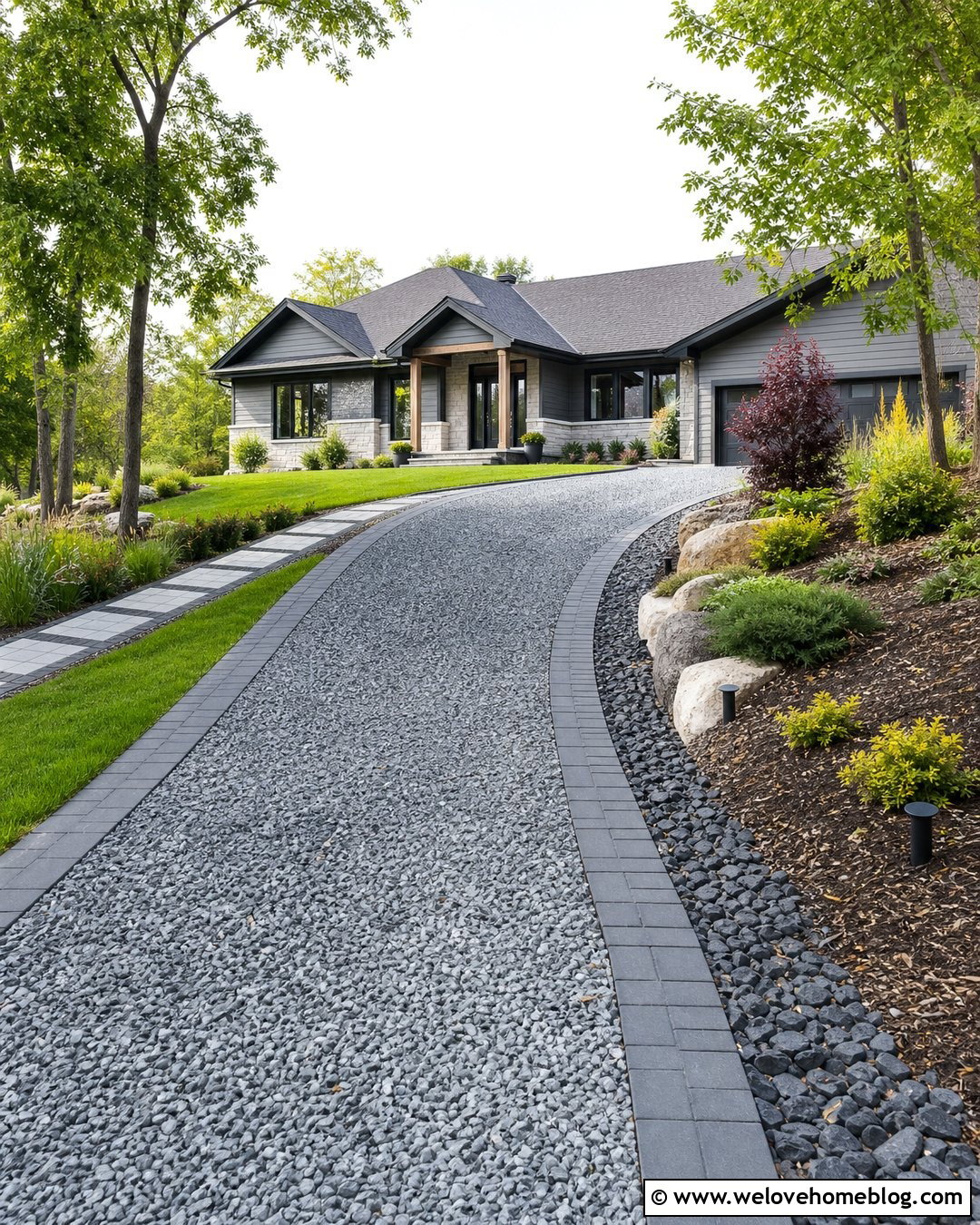
A sloped driveway may need an edging solution that functions as a small retaining wall. Pair textured concrete pavers with a low wall made from matching segmental blocks on the uphill side. Step the wall gradually with the slope instead of forcing a single level line. On the downhill side, use a lower curb or flush paver band to keep the driveway visually open. Plant compact shrubs, spreading ground covers, and grasses above the wall, choosing species that will not block visibility. A split-level contemporary home provides an appropriate background for this structured arrangement. Retaining conditions, vehicle loads, soil pressure, and runoff can make this more complex than decorative edging. Have the base, drainage aggregate, outlets, and wall dimensions planned correctly so appearance and performance are addressed together.
Conclusion:
The strongest raised borders combine attractive materials with practical planning. Belgian block and cobblestone suit traditional gravel entrances, while steel, concrete, and dark pavers create cleaner lines around modern surfaces. Timber, reclaimed brick, fieldstone, and boulders bring a more relaxed character to rural or cottage properties. Whatever material you choose, consider tire clearance, passenger access, snow removal, drainage, soil pressure, and the strength of the supporting base. Lower transitions are usually helpful near walkways and garage doors, while taller sections can define planting beds or accommodate changing grades. Use colors already found on the house, walkway, or landscape. With thoughtful coordination, these 20 Raised Driveway Edging Ideas can produce a safer, neater, and more cohesive entrance.

Related posts:
Leave a Reply