
A well-planned cement driveway can feel polished, welcoming, and closely connected to the architecture of your home. These 20 cement driveway with paver border ideas combine practical concrete surfaces with decorative edges that add color, pattern, and definition. While “cement driveway” is the common search term, the finished surface is typically poured concrete, since cement is one ingredient in concrete. Paver borders can also provide a clean visual transition between the driveway, lawn, planting beds, and walkway. Proper edge restraint and a stable base help keep border pavers aligned under regular driveway use. () From slim charcoal edging to wide brick bands and matching aprons, the following complete designs offer inspiration for different homes, budgets, and lot sizes. Explore these 20 cement driveway with paver border ideas.

1. Light Gray Cement Driveway With Charcoal Paver Border
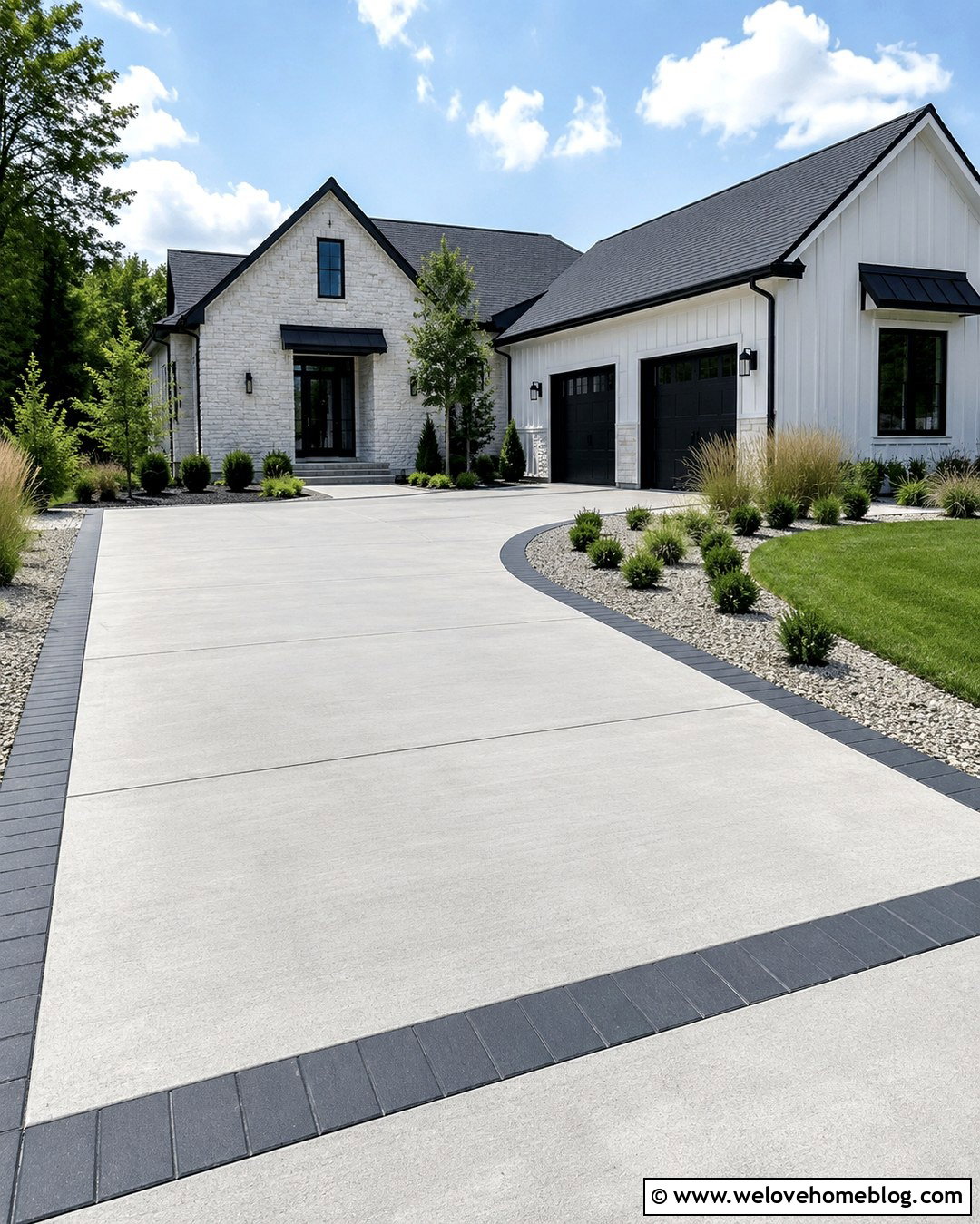
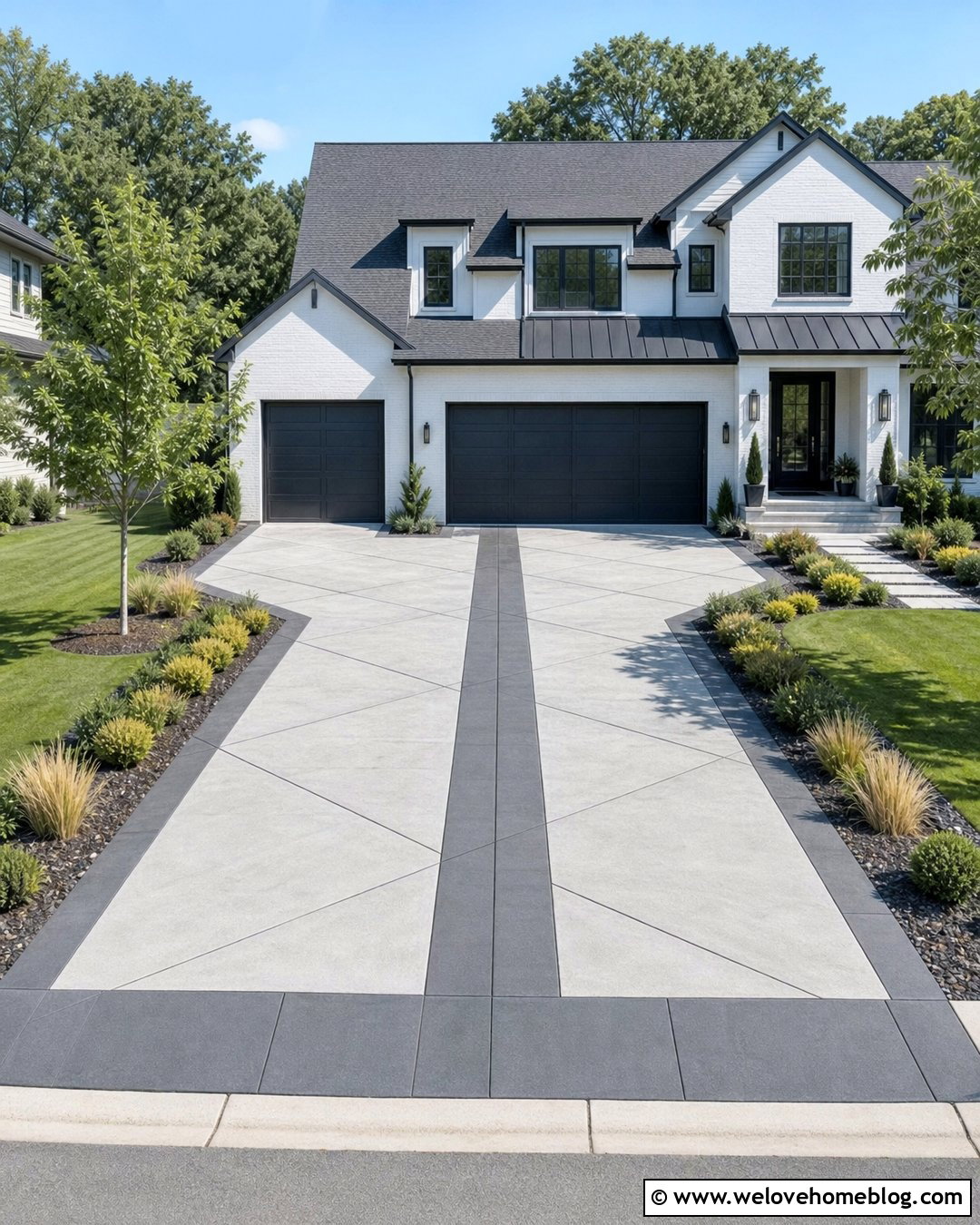
A light gray cement driveway framed with charcoal pavers creates crisp contrast without looking overly decorative. Use smooth or lightly broom-finished concrete for the main surface, then install rectangular charcoal concrete pavers in a straight soldier-course border. The dark frame makes the driveway shape easier to see and coordinates naturally with black windows, dark roofing, or modern garage doors. Keep the layout straight for a compact suburban property, and connect it to a matching paver walkway near the garage. Low ornamental grasses, clipped evergreen shrubs, and pale gravel beds can soften the strong lines. Choose pavers with subtle tonal variation rather than a solid black finish, which may show dust more easily. The finished driveway feels clean, balanced, and suitable for modern or transitional architecture.
2. Broom Finish Cement Driveway With Red Brick Paver Border
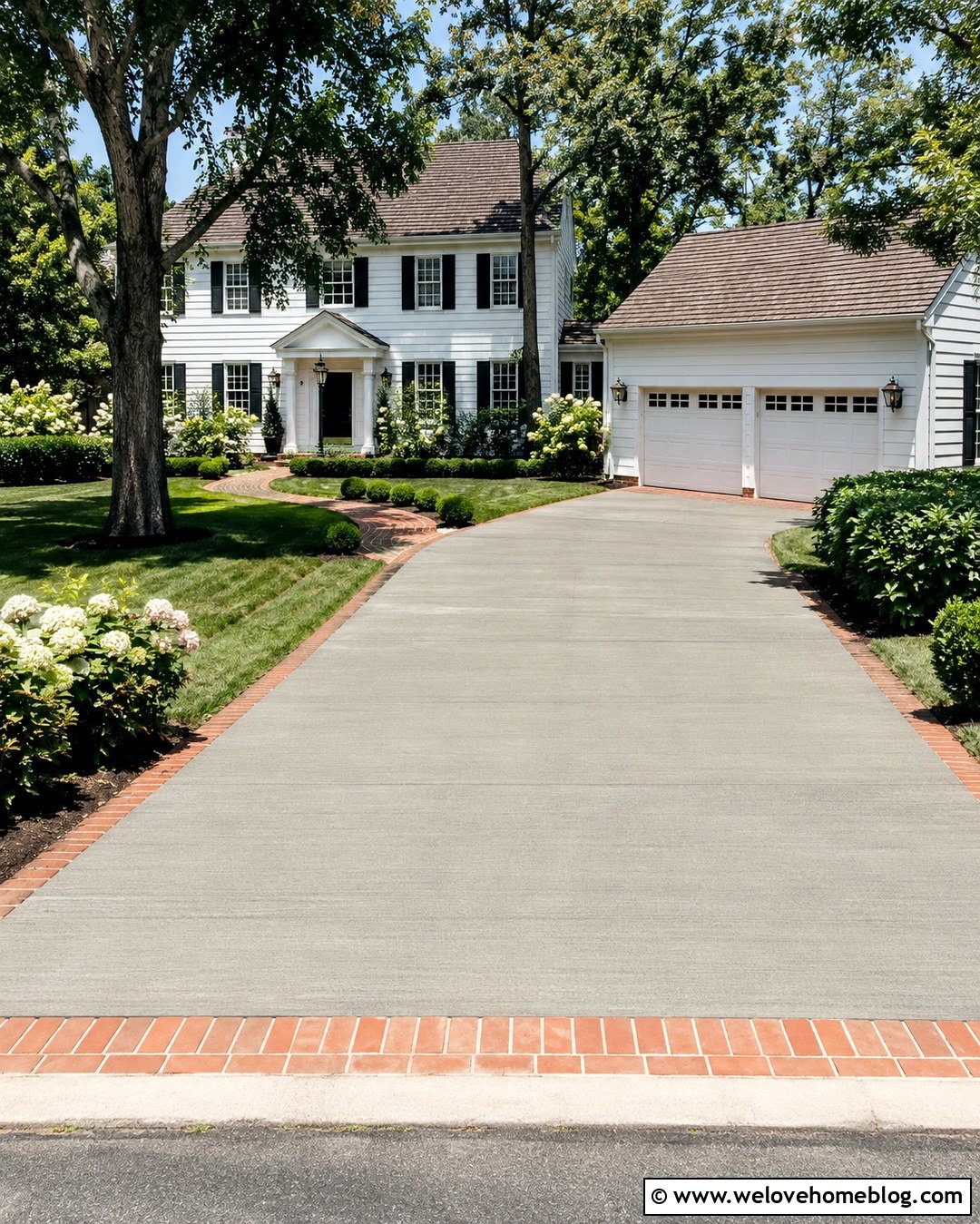
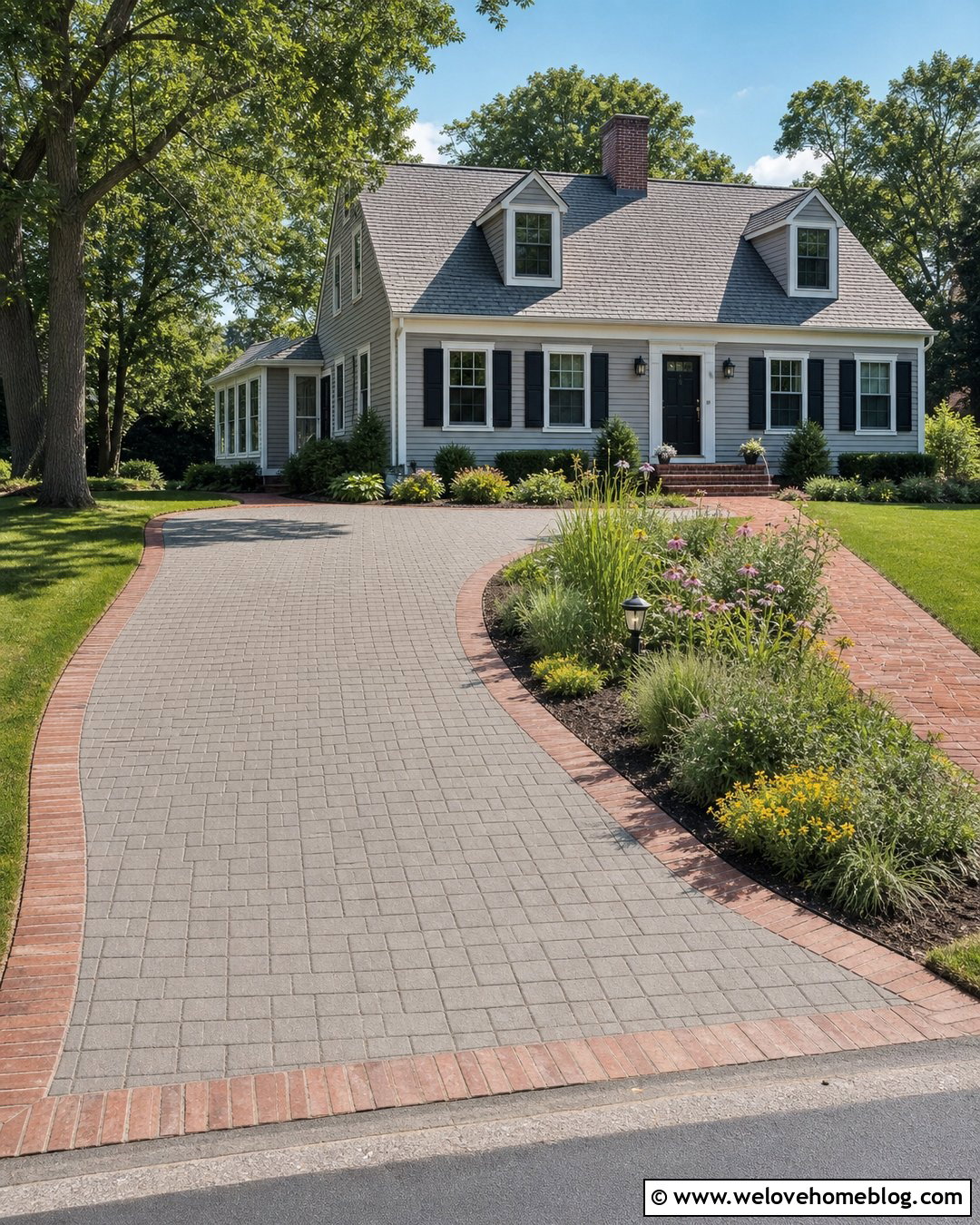
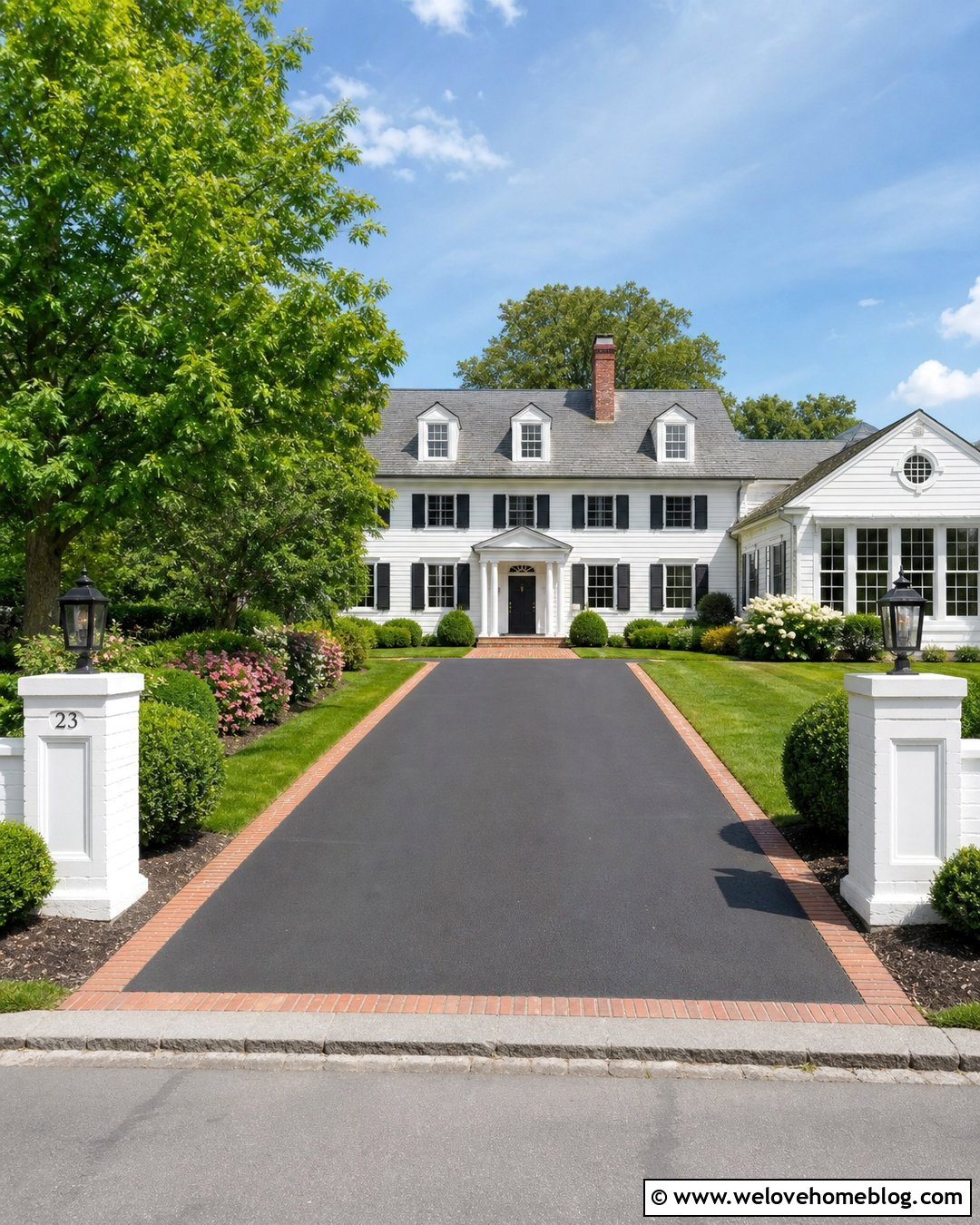
Warm red brick pavers can give an affordable broom-finished cement driveway a more traditional appearance. Arrange the bricks in a single soldier course along both sides, with the narrow ends facing the concrete. Carry the same border across the garage threshold or driveway entrance to create a complete frame. This combination works especially well with colonial, Cape Cod, and traditional brick homes. Plant boxwood, hydrangeas, or compact flowering shrubs beside the border to connect the red tones with the front yard. A curved brick walkway leading toward the porch can repeat the material without overwhelming the design. Select bricks rated for paving and vehicle exposure rather than ordinary wall bricks. A professionally prepared base and reliable edge restraint help the border remain straight and stable. ()
3. White Cement Driveway With Tan Paver Border
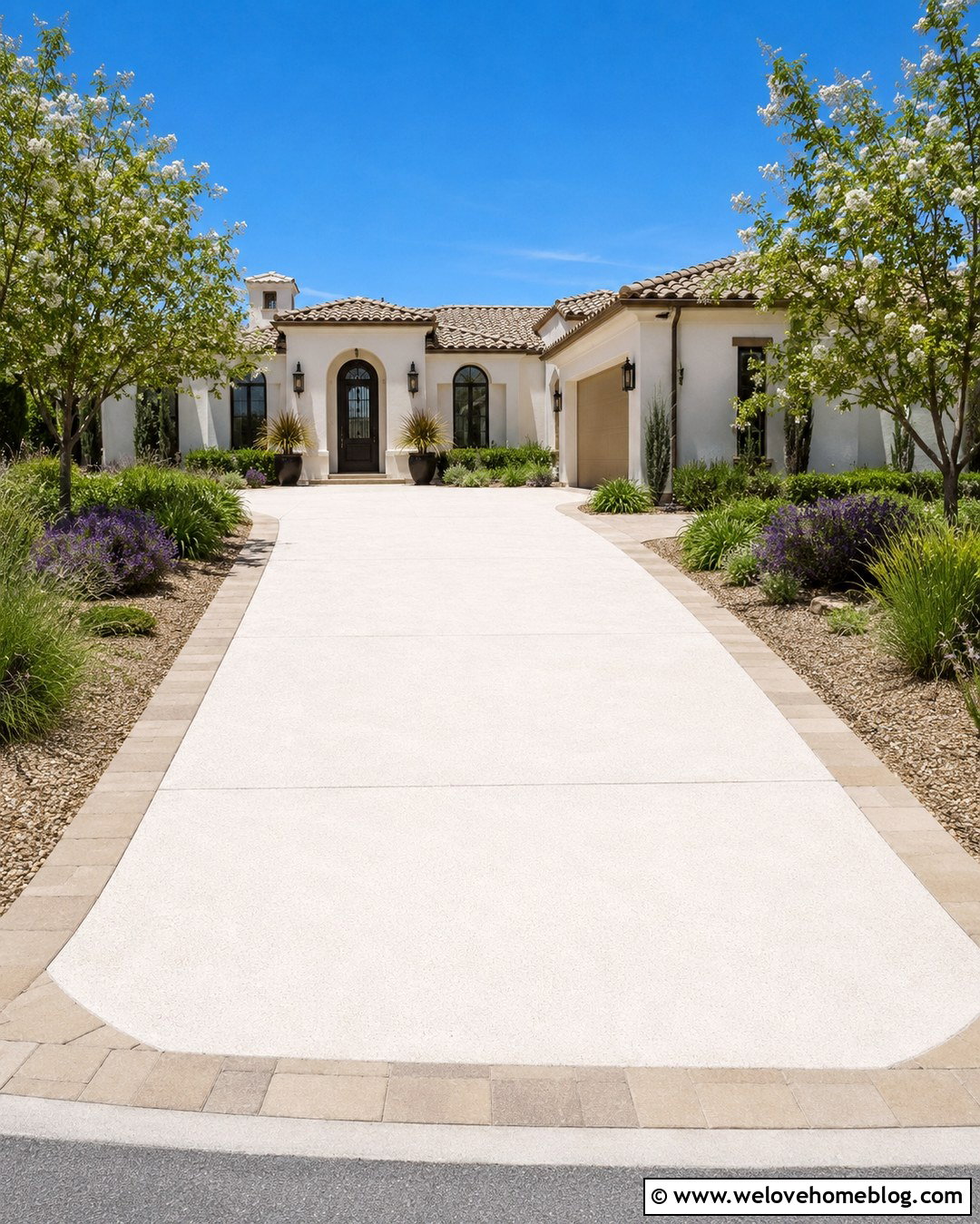
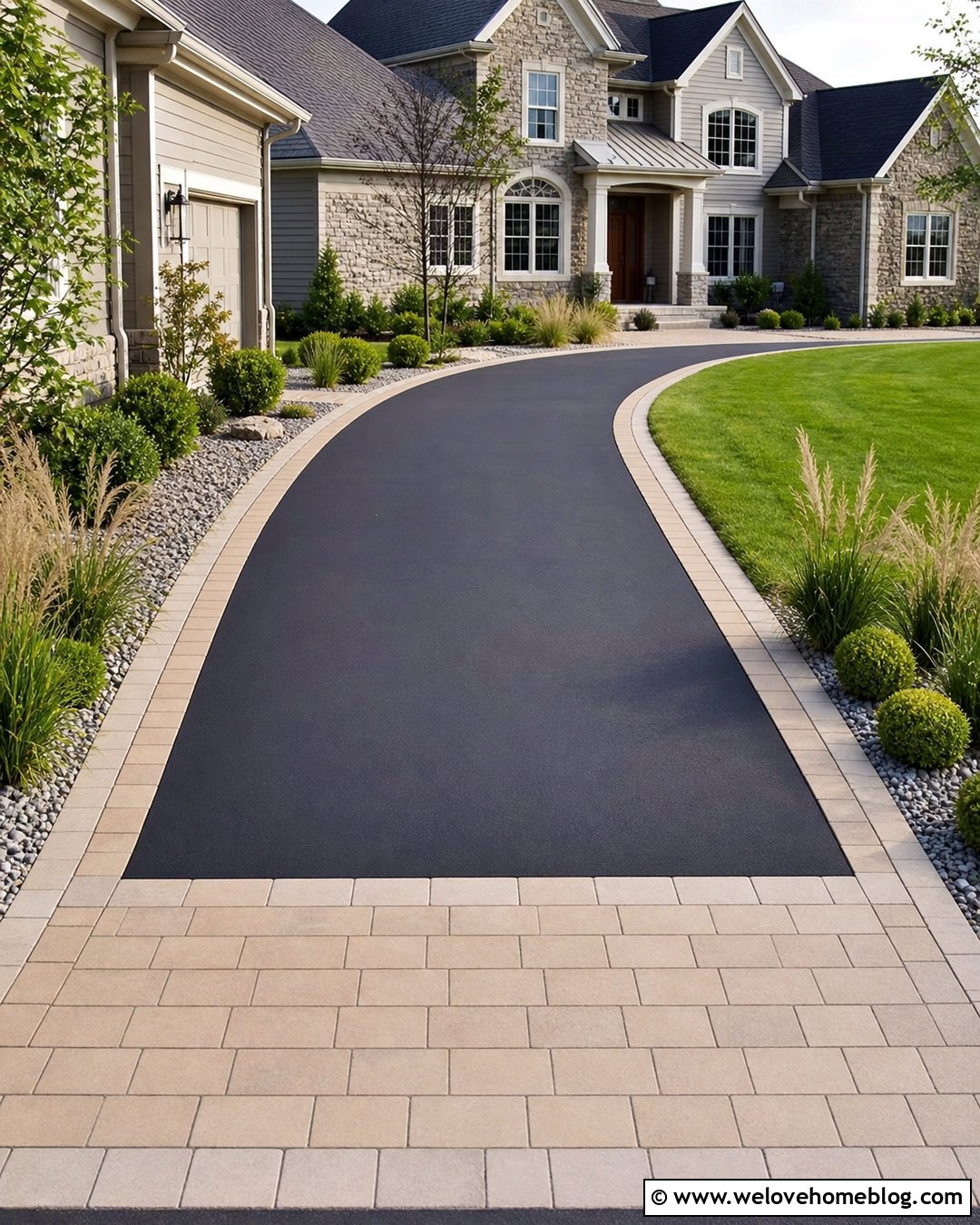
Imagine a bright white cement driveway leading toward a cream stucco home, surrounded by soft green planting. A tan paver border keeps this light color palette warm and approachable. Choose sand-colored concrete pavers with gentle variations in beige, oatmeal, and pale brown. A double-width border will have more presence on a large driveway, while a single row suits a smaller front yard. Consider a straight driveway with slightly flared edges at the street for a gracious entrance. Drought-tolerant grasses, lavender, sage, and small flowering trees reinforce the relaxed look. Because very pale concrete can highlight stains and tire marks, choose a lightly textured finish and plan for routine cleaning. The tan edging visually separates the driveway from gravel beds while coordinating with natural stone walls, stucco, and warm roof colors.
4. Curved Cement Driveway With Cobblestone Paver Border
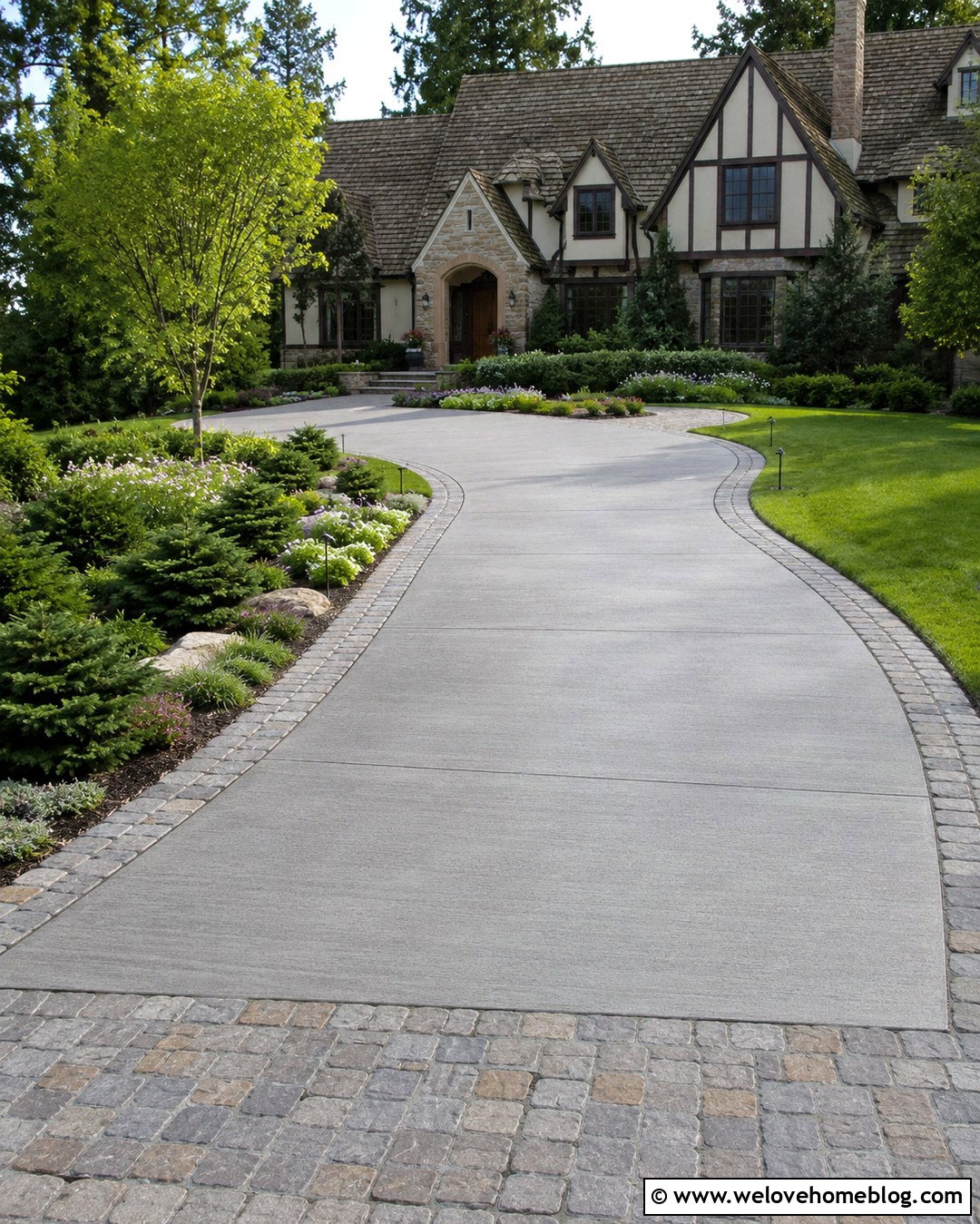
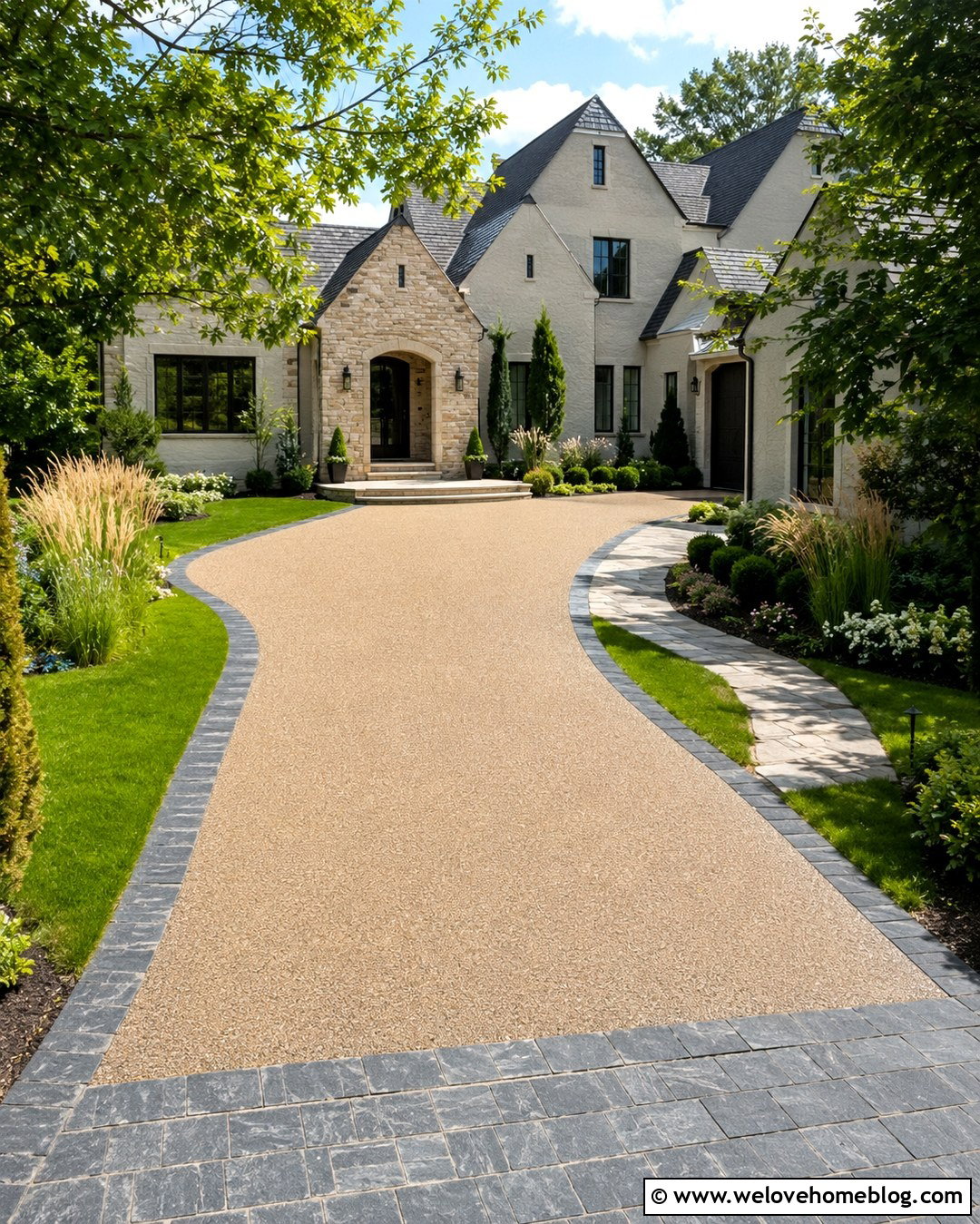
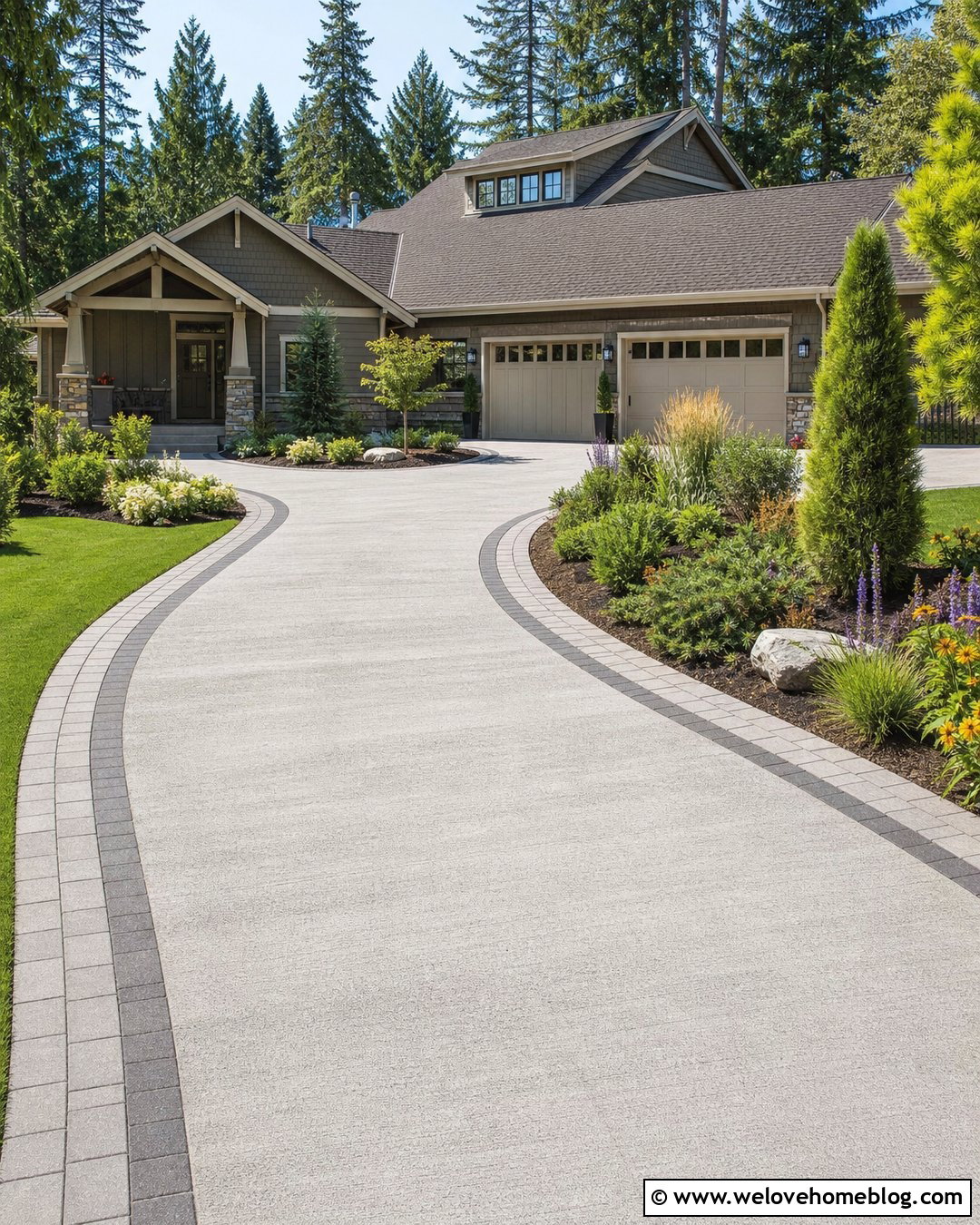
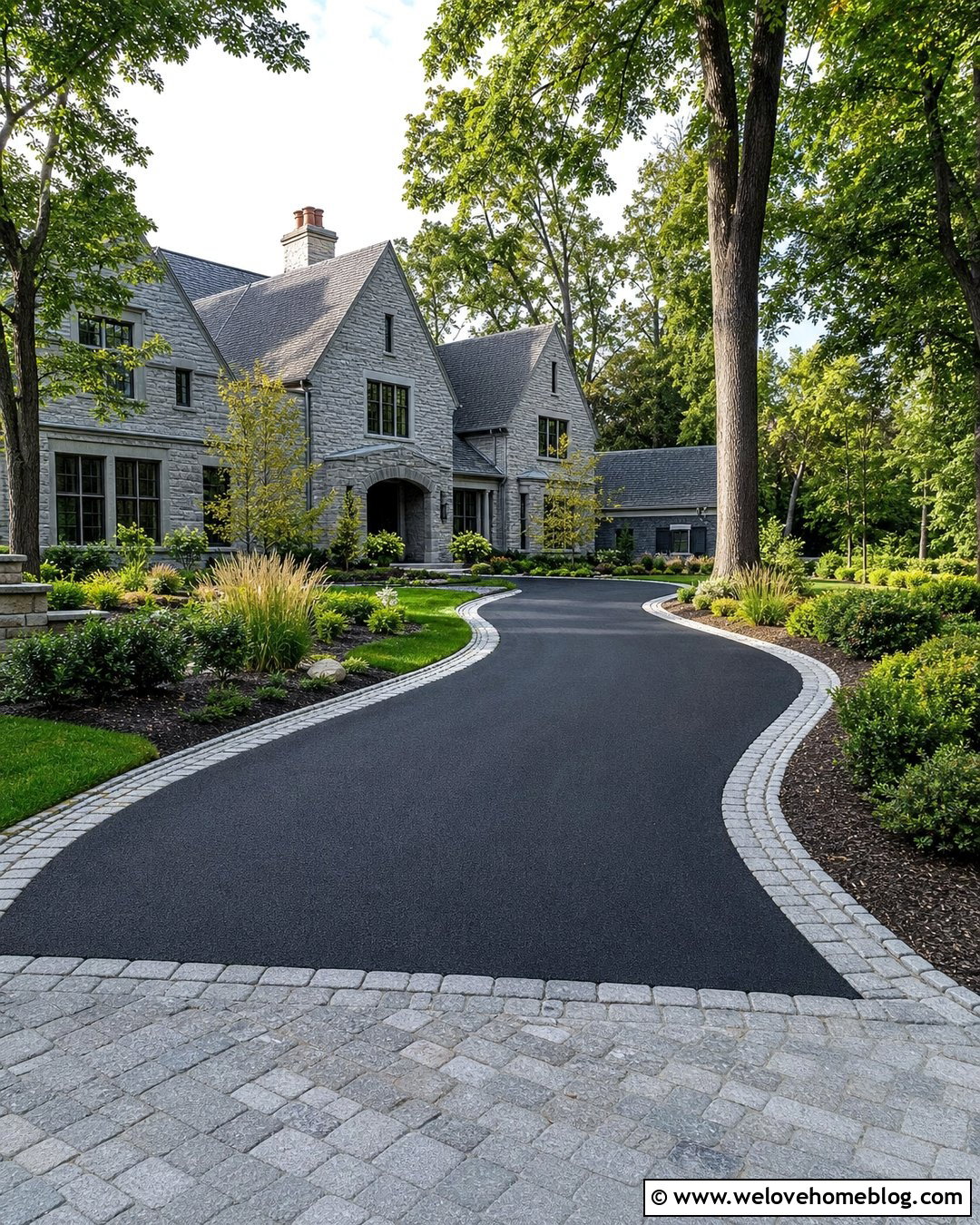
A gently curved cement driveway becomes much more distinctive when edged with cobblestone-style pavers. Gray, brown, and muted charcoal cobbles follow the curve naturally and create an established, traditional appearance. Use a medium-gray poured concrete surface so the stones provide texture without producing a harsh color difference. The outside curve can border a sweeping lawn, while the inside curve holds layered planting beds with evergreen shrubs, ground covers, and one small ornamental tree. Continue the cobblestone around the driveway apron for a connected design. Wider curves are generally easier to navigate and look more intentional than abrupt bends, so consider vehicle movement during planning. This complete driveway look complements Tudor, European-inspired, craftsman, and country homes. Low landscape lighting can highlight the curved border without placing fixtures where doors or tires may hit them.
5. Modern Cement Driveway With Black Paver Border
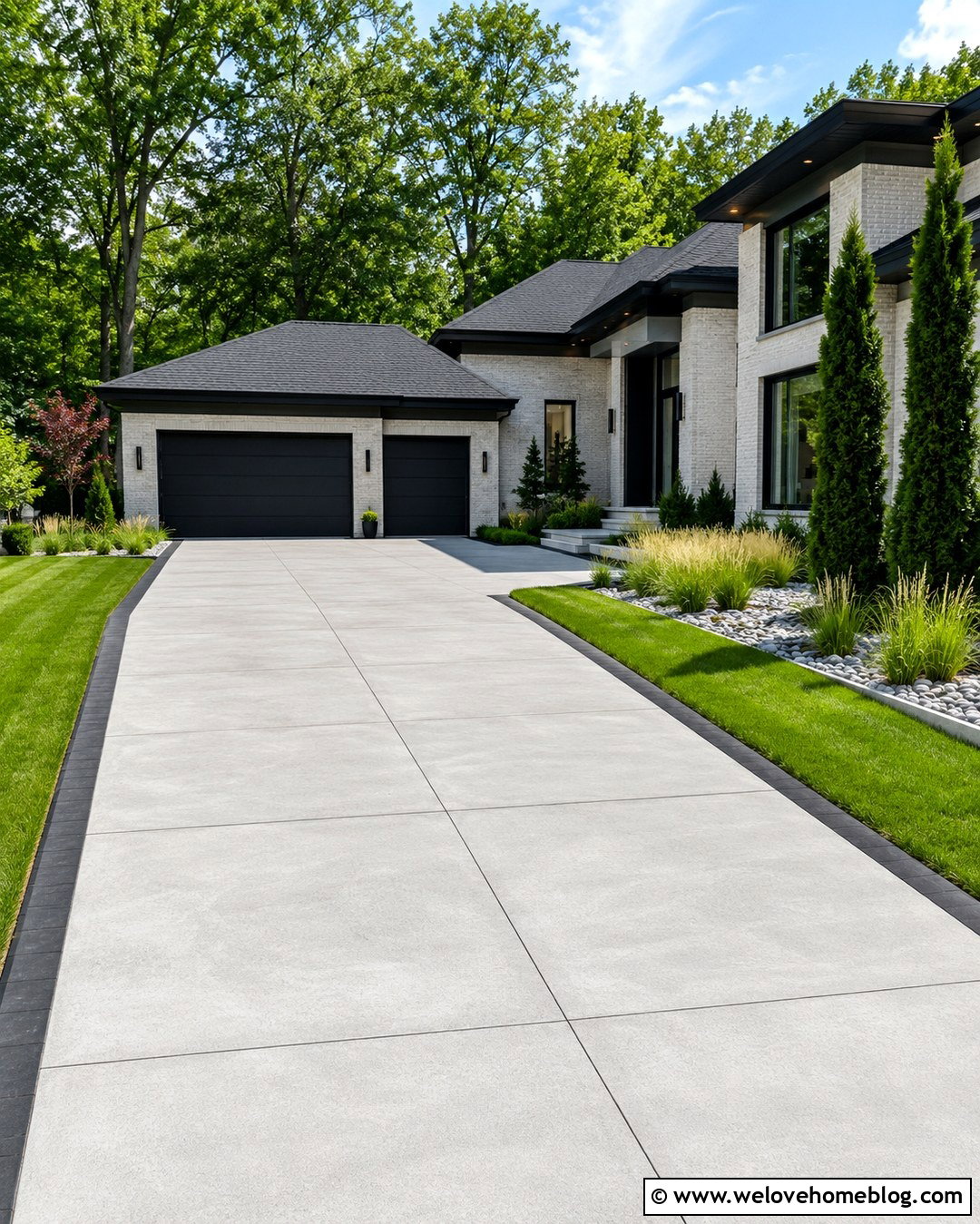
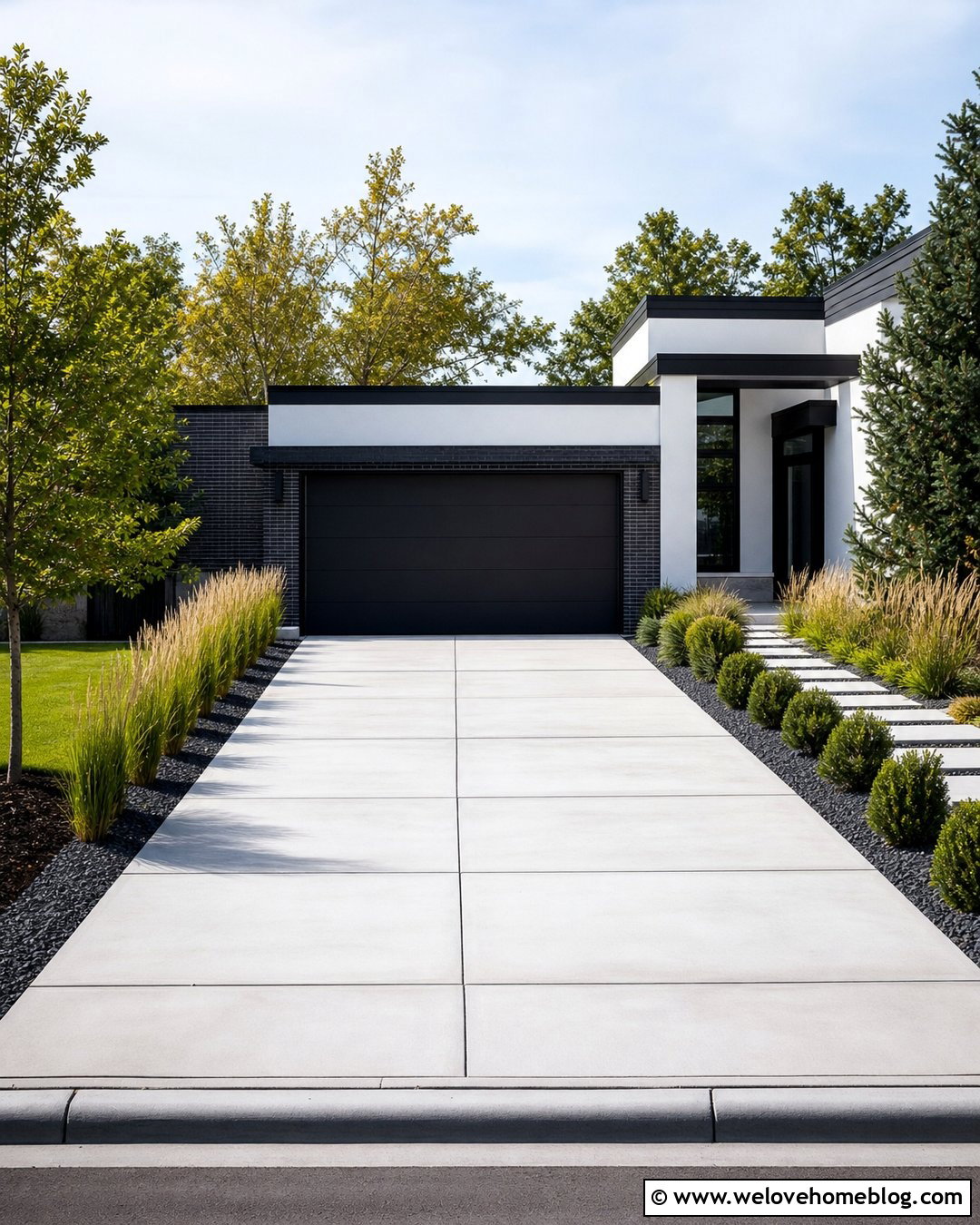
Sharp geometry gives this modern cement driveway its visual impact. Divide pale gray poured concrete into large rectangular panels, then surround the driveway with narrow black concrete pavers. Match the border to a black garage door, metal fence, or dark window frames for a unified exterior. The driveway can run straight from the curb before widening into a parking pad near the house. Keep surrounding landscaping simple with architectural grasses, sculpted evergreens, and rectangular beds filled with pale stone. A linear concrete walkway separated from the driveway by a slim planting strip adds another clean layer. For greater definition, place a short black paver band across selected concrete joints, but avoid creating a busy grid. The result is streamlined and practical, with enough contrast to make an otherwise simple concrete driveway feel deliberately designed.
6. Cement Driveway With Herringbone Paver Border
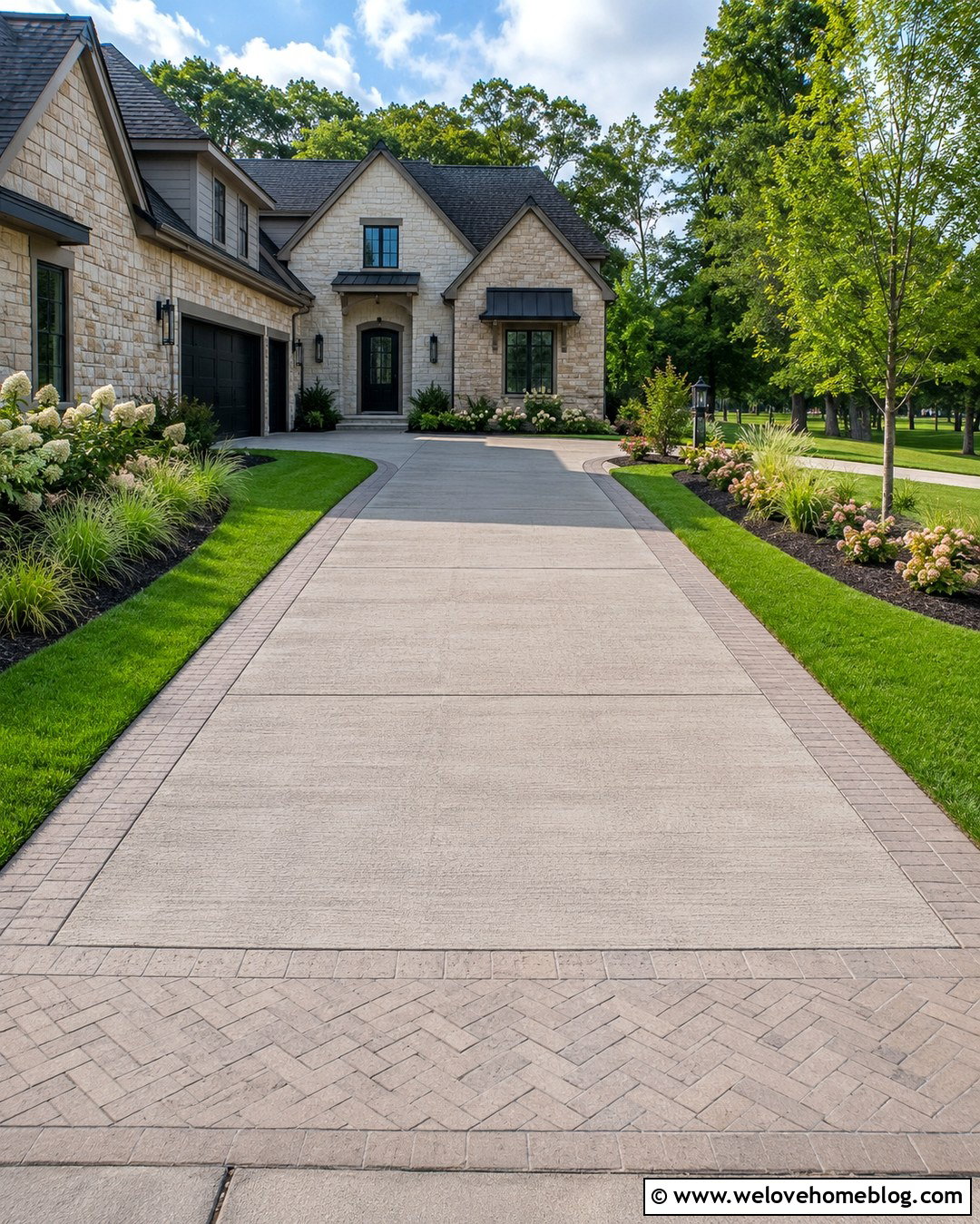
A herringbone paver band adds movement and craftsmanship to a plain cement driveway. Instead of using one narrow row, create a border wide enough to display the angled pattern clearly. Warm gray or taupe pavers pair well with medium-gray broom-finished concrete and suit both traditional and transitional homes. Use the patterned band along the sides, then widen it into a coordinated apron where the driveway meets the street. Because herringbone requires more cuts around corners and curves, a simple rectangular driveway keeps the installation visually neat. Frame the finished surface with lawn on one side and a mulched planting bed on the other. Repeat the pavers in the front walkway or porch steps. The detailed border introduces pattern where it can be appreciated while leaving the larger concrete field calm, functional, and easy to maintain.
7. Cement Driveway With Double Paver Border
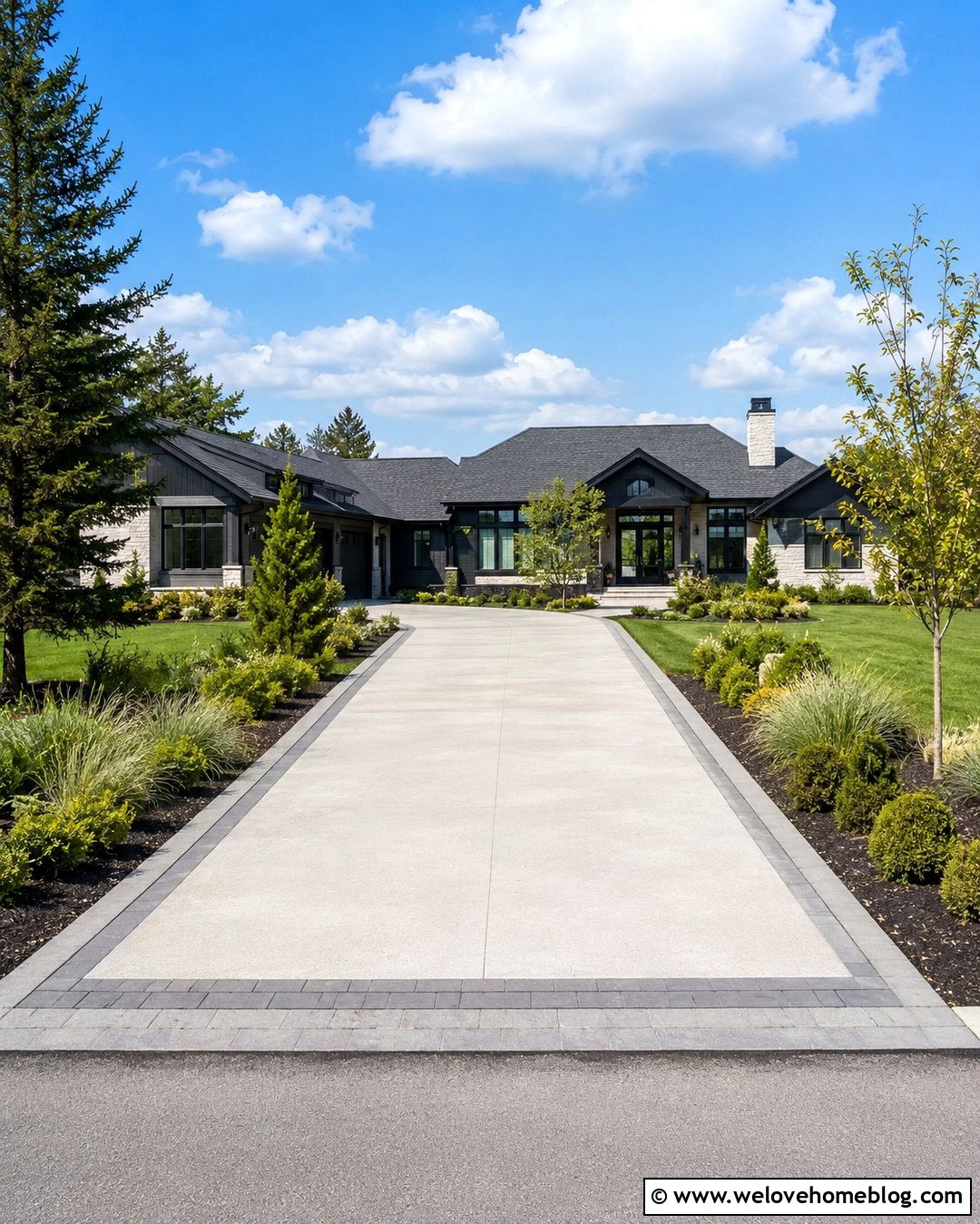
When a single row feels too narrow, a double paver border creates a stronger frame around the entire cement driveway. Combine an inner row of dark charcoal pavers with an outer row in medium gray for subtle depth. Another option is to use the same paver color in two patterns, such as a running bond beside a soldier course. This wider edge works best on broad driveways or homes with large facades because its scale feels proportional to the architecture. Keep the concrete center light and simply finished so the layered border remains the main feature. Along the lawn, a flush installation supports a clean mowing line. Near planting beds, low ground cover can soften the outside row. Continue both bands around the street apron and garage entrance to make the double border look complete rather than added as an afterthought.
8. Cement Driveway With Paver Border And Apron
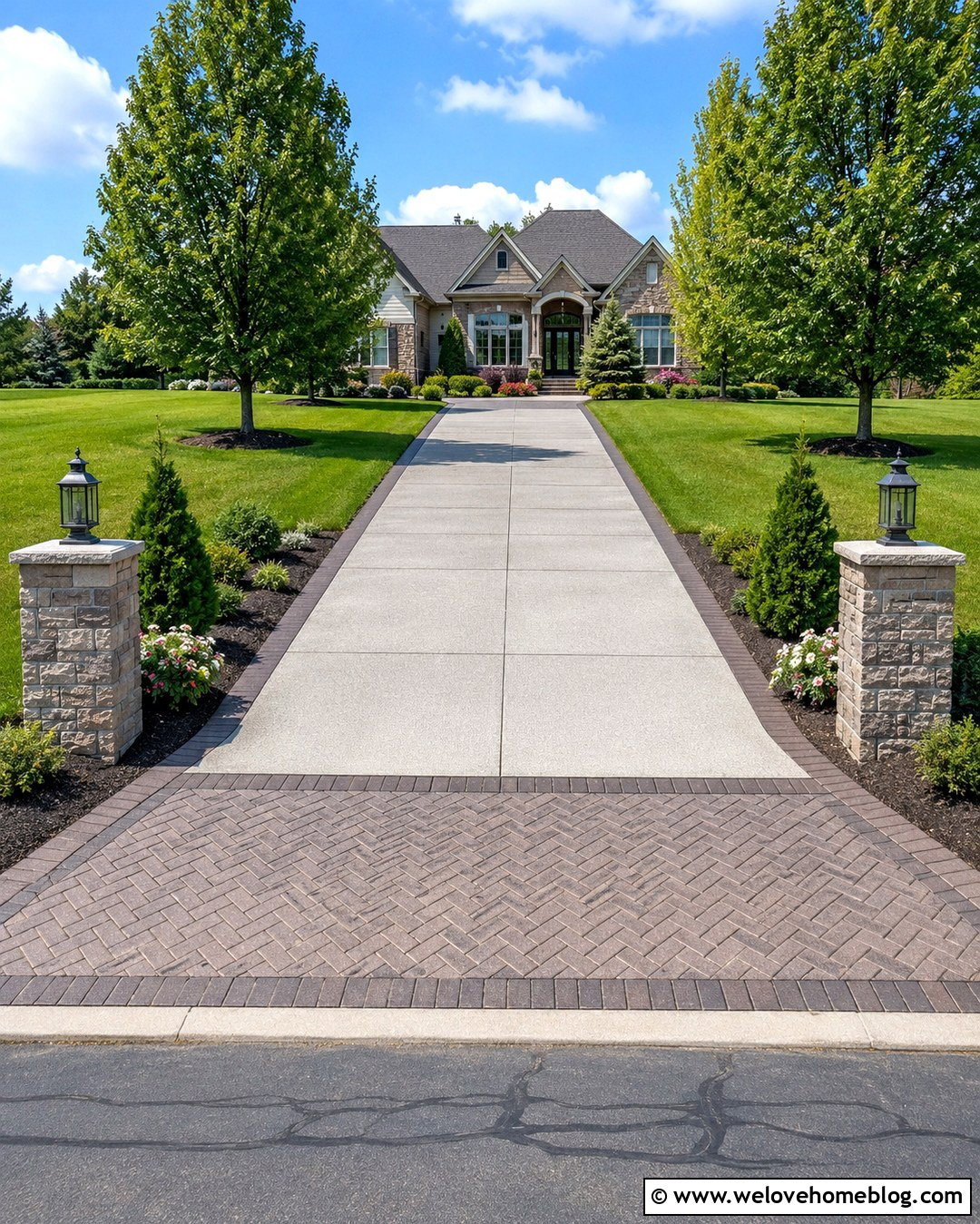
A coordinated paver apron can transform the street-facing end of a cement driveway into a clearly defined entrance. Use light gray concrete for the main drive, a dark brown paver border along both sides, and a wide rectangular paver apron at the curb. Lay the apron in herringbone or basketweave for added texture, then use simpler straight rows along the edges. Repeating the same paver color keeps the two patterns from competing. This layout works particularly well on a long driveway because the apron provides an attractive starting point and breaks up the large concrete surface. Add stone mailbox pillars, low shrubs, and symmetrical planting beds near the entrance. Decorative driveway aprons and borders are commonly used together to add pattern and visual interest to long concrete approaches. ()
9. Exposed Aggregate Cement Driveway With Paver Border
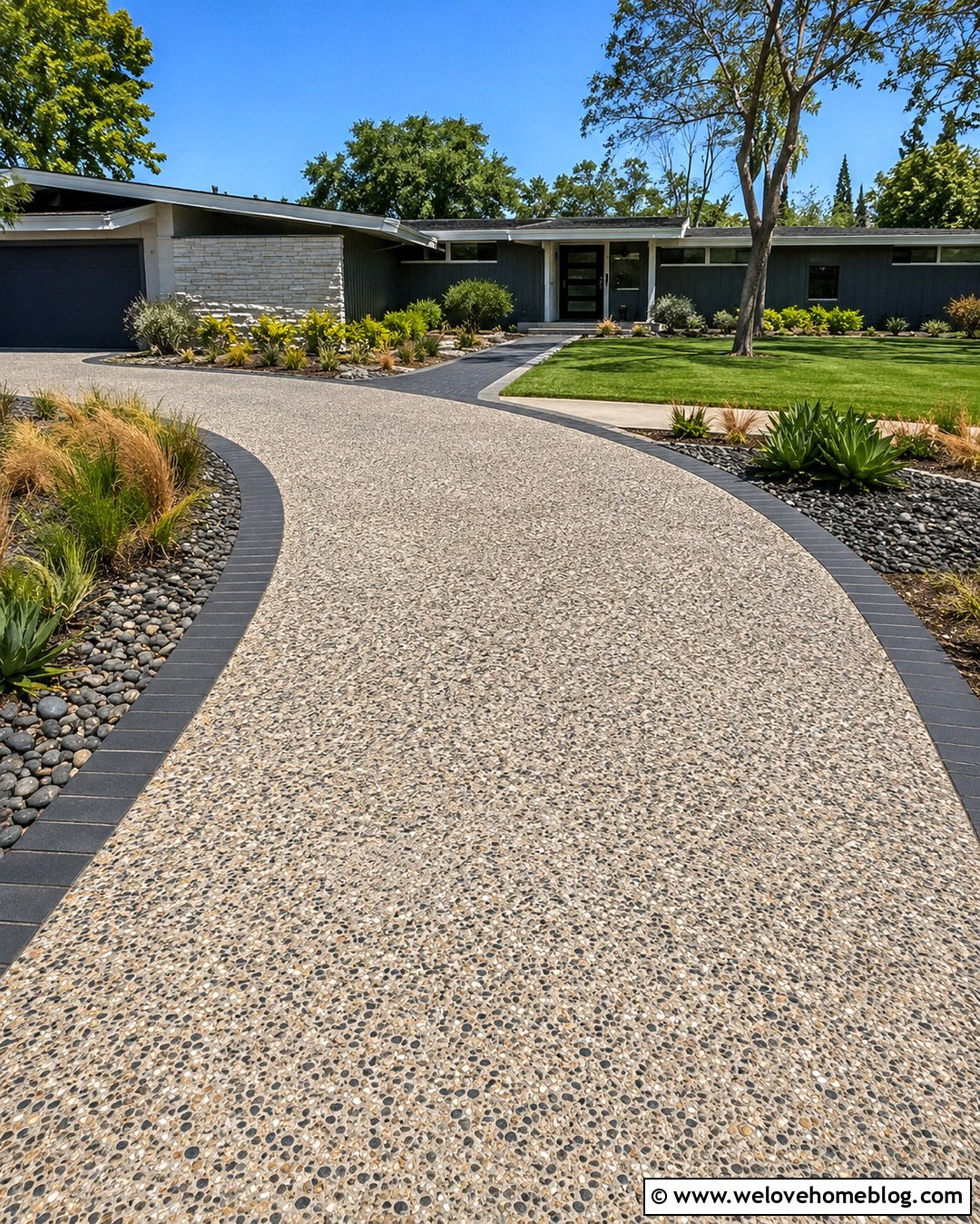
The natural texture of exposed aggregate pairs beautifully with a smooth paver border. Choose a cement driveway containing small gray, cream, and tan stones, then edge it with solid charcoal concrete pavers. The clean border controls the visual movement of the aggregate and gives the textured surface a more finished outline. A gently curved layout can showcase the material as it leads toward a ranch or mid-century home. Surround the driveway with broad lawn areas, river-rock drainage beds, and drought-tolerant shrubs. Smooth pavers also provide a useful contrast beside the more rugged main surface. Consider repeating the charcoal material in the walkway or porch landing. Before selecting the final colors, view aggregate and paver samples together in outdoor light. This helps ensure that their undertones coordinate with each other and the house facade.
10. Stamped Cement Driveway With Contrasting Paver Border
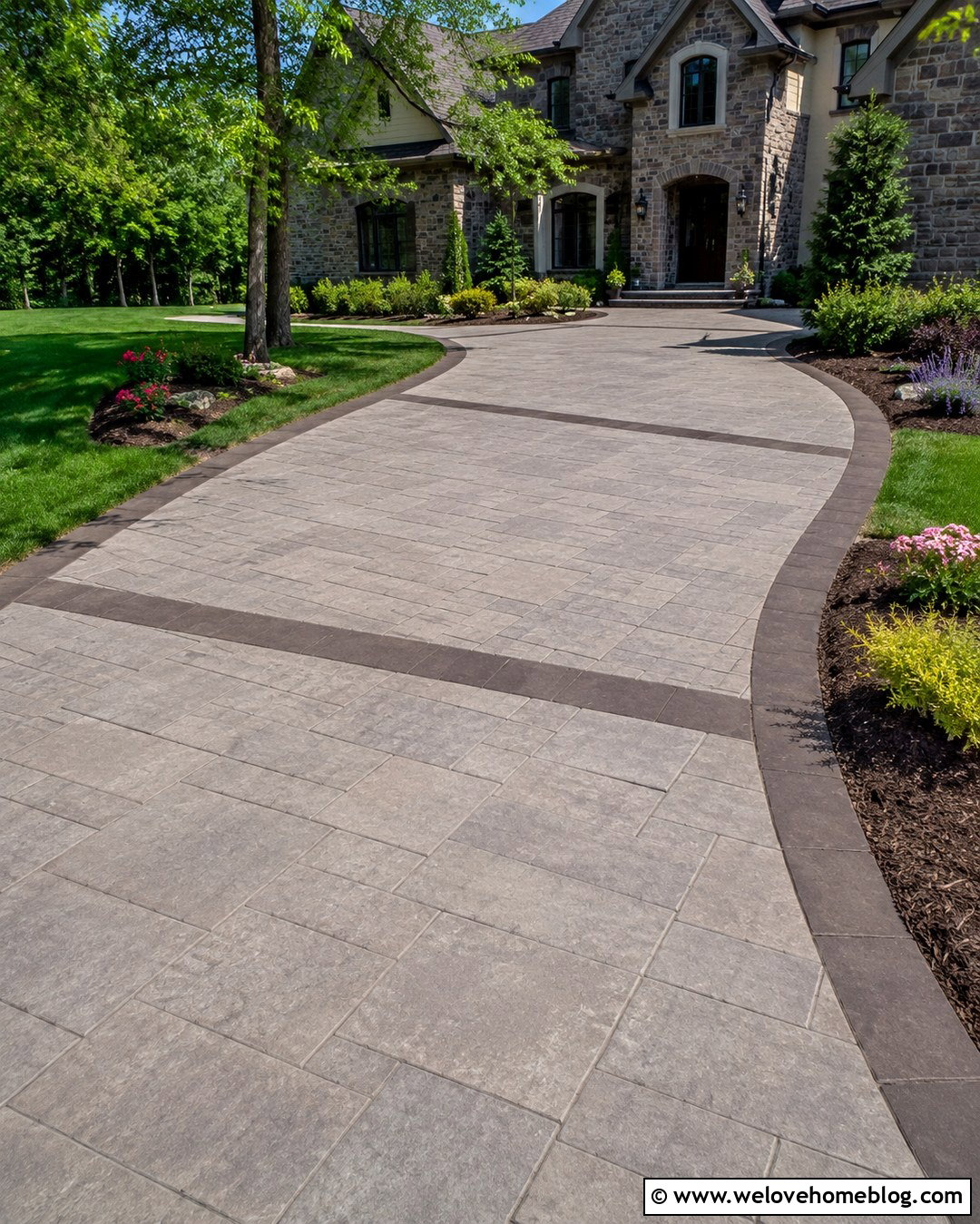
Stamped cement can deliver plenty of pattern, so the surrounding paver border should provide structure rather than extra visual noise. Choose a large ashlar-stone stamp in warm gray, then frame it with smooth dark brown pavers installed in a simple soldier course. The darker outline gives the driveway a clean stopping point beside lawn and flower beds. Use the design on a straight or softly curved driveway leading to a stone-accented traditional home. Match one color in the stamped surface to the pavers so the contrast feels coordinated. If the driveway includes visible control joints, align selected paver bands or pattern changes with those lines where the construction plan allows. Contrasting borders are often used to define stamped concrete that might otherwise end abruptly against surrounding landscaping. ()
11. Circular Cement Driveway With Paver Border
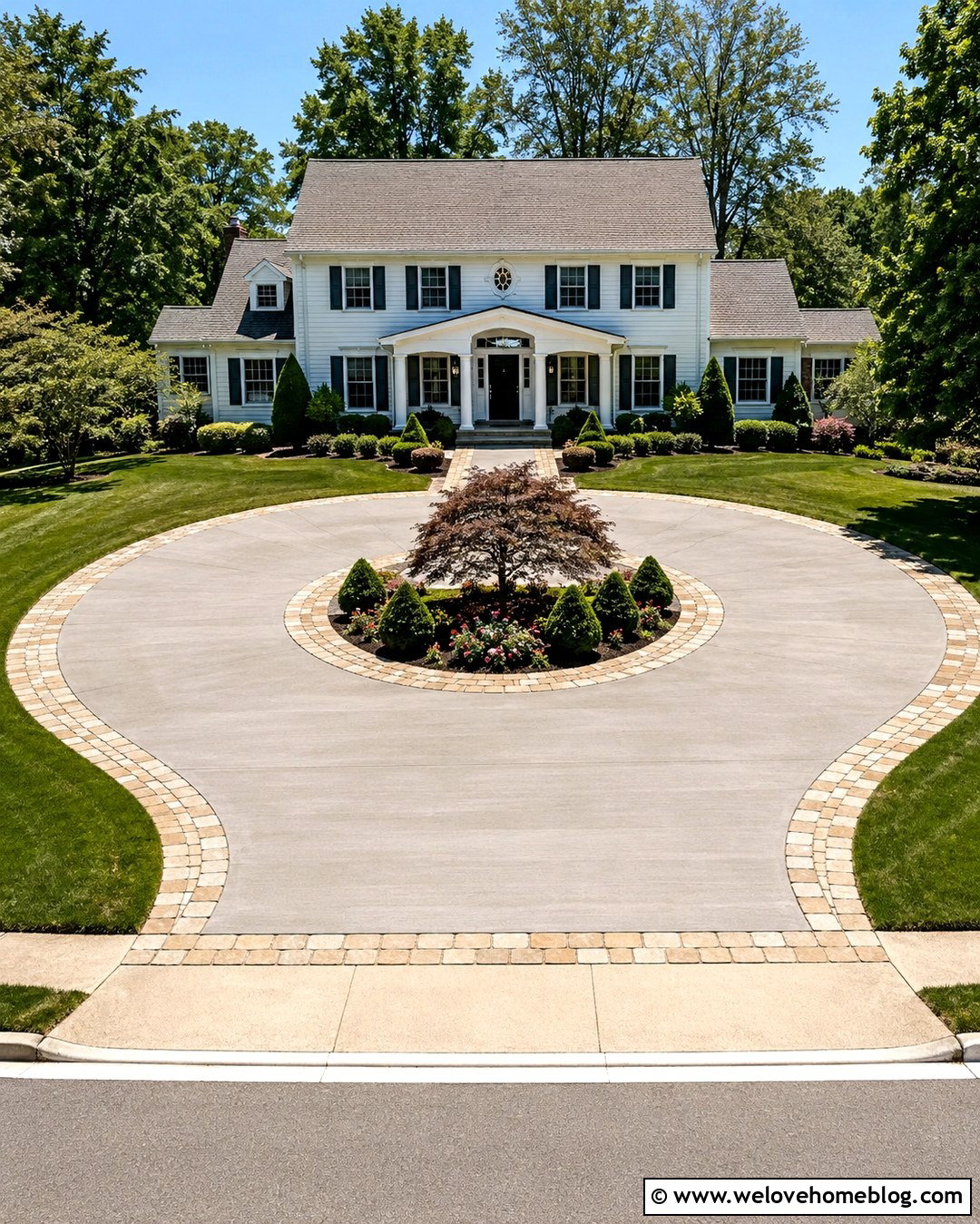
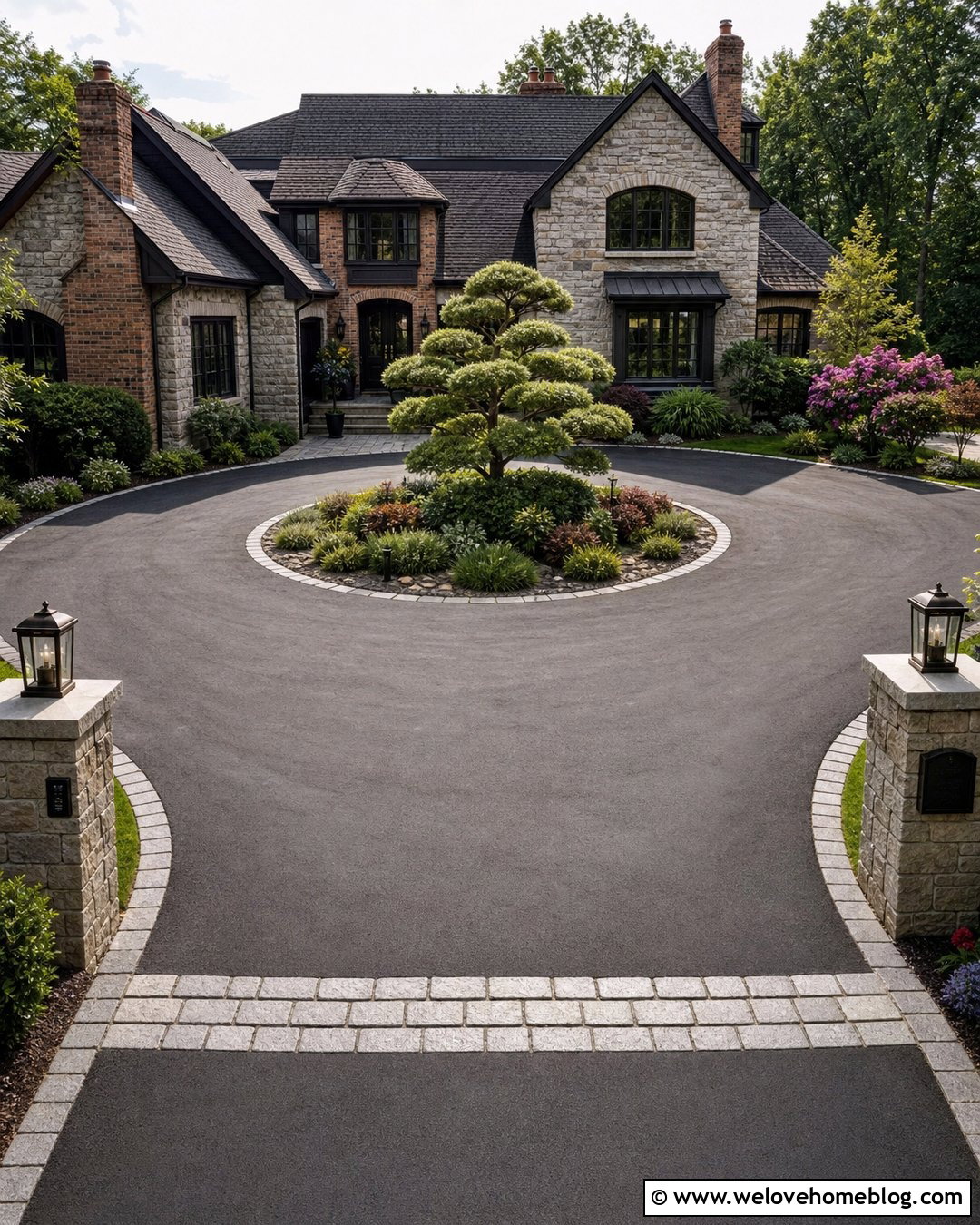
A circular cement driveway benefits from a paver border that clearly defines every curve. Use warm gray poured concrete for the driving surface and tumbled tan pavers along both the outer edge and central island. The repeated edging connects the two circles and prevents the landscaped center from feeling separate. Fill the island with a small ornamental tree, evergreen shrubs, and low flowers that preserve clear sightlines. At the front entrance, widen the pavers into a small landing where the driveway meets the walkway. A thin matching band across each entry can emphasize the horseshoe layout. This design suits larger colonial, Mediterranean, and traditional homes with centered front doors. Keep pavers flush with the concrete wherever tires may cross them. The complete arrangement creates a practical turning route while giving the front yard a formal, balanced framework.
12. Narrow Cement Driveway With Paver Border
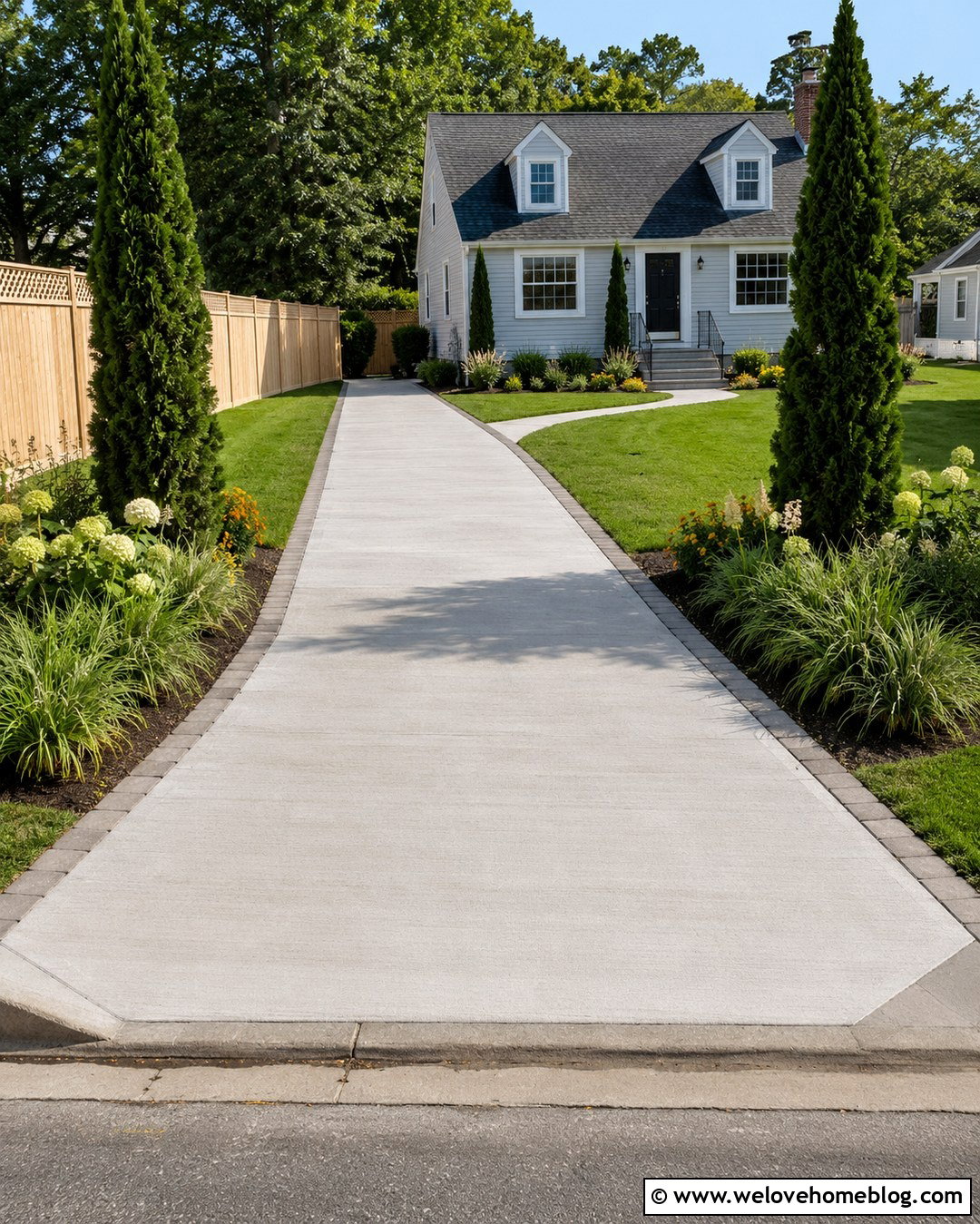
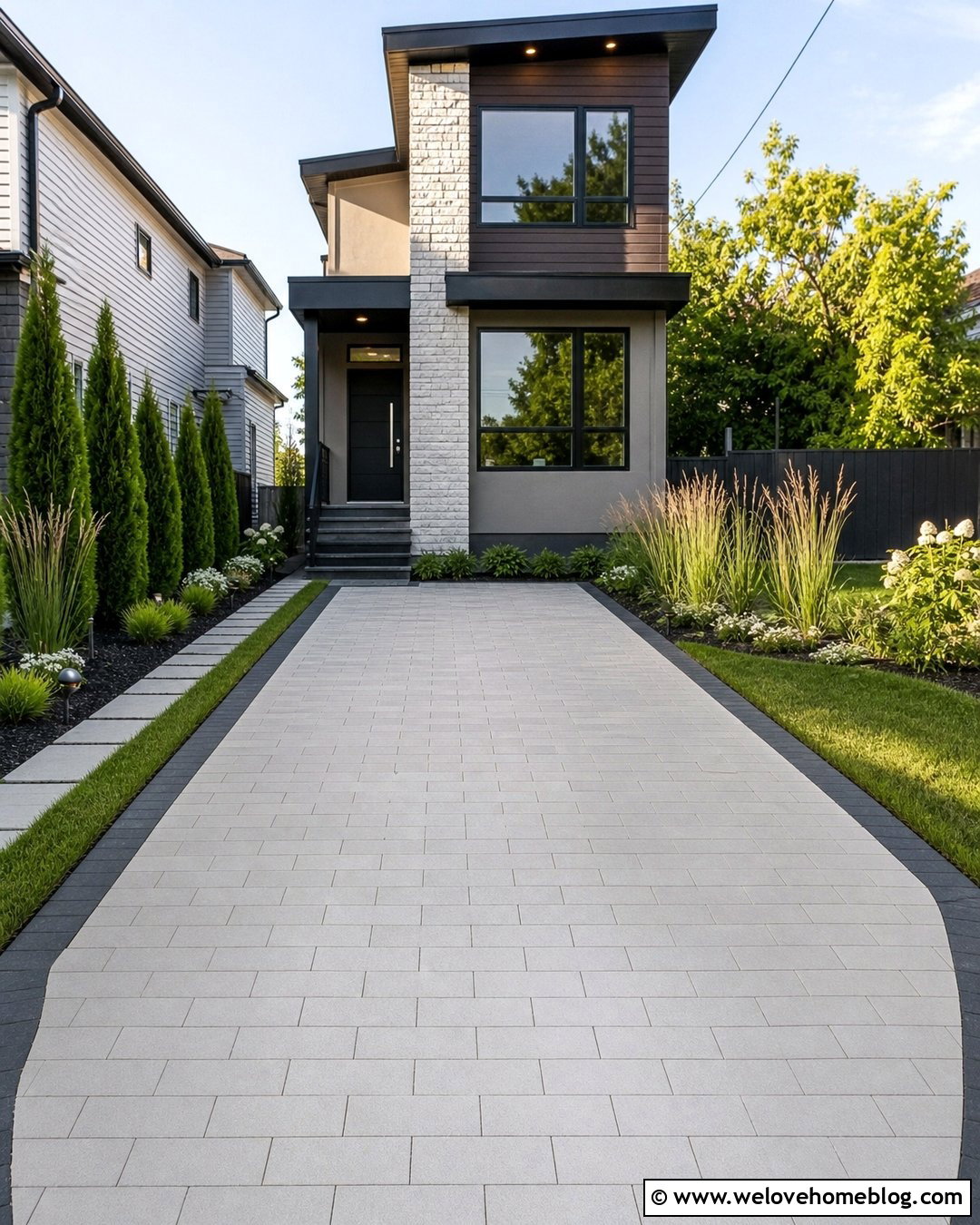
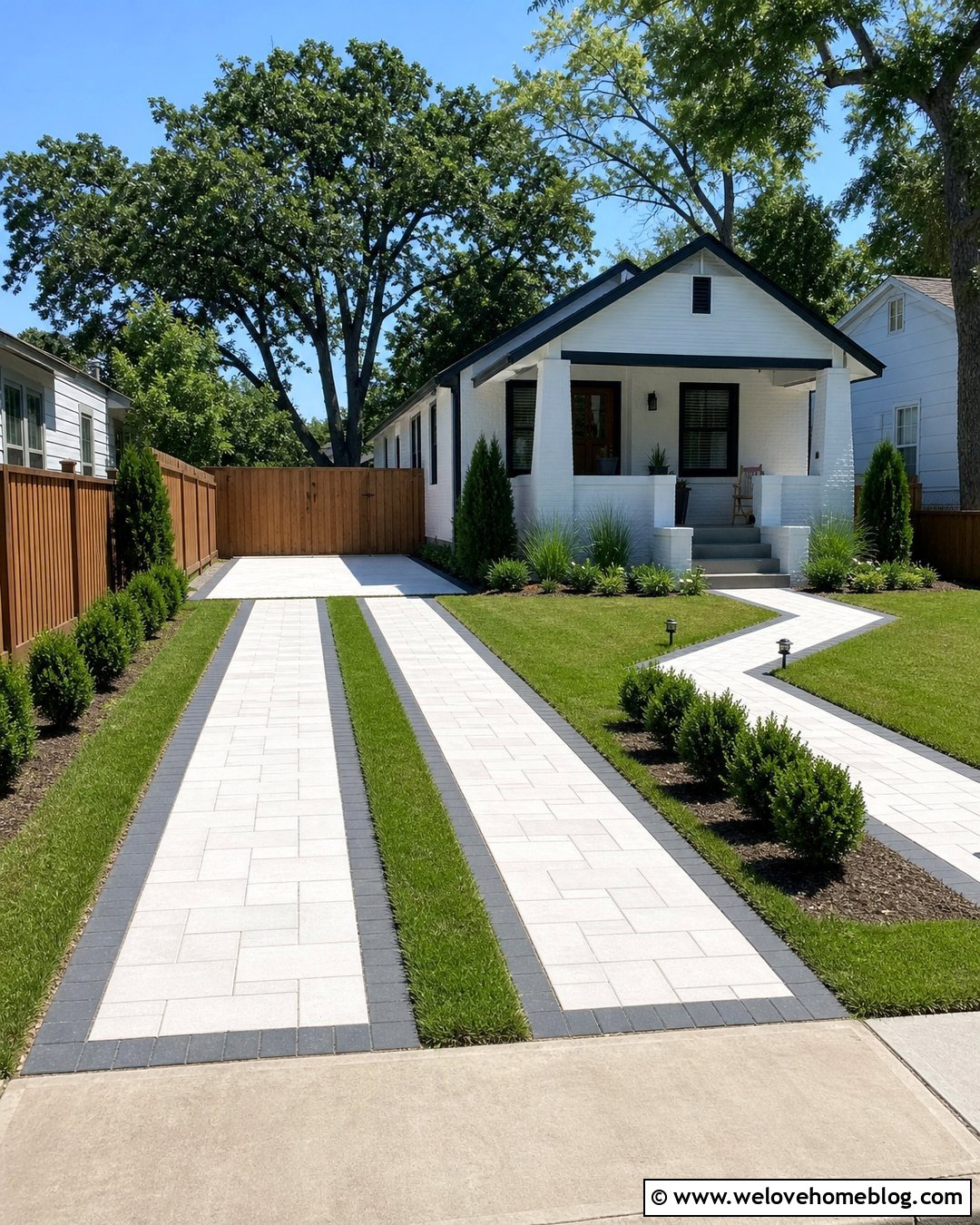
A narrow cement driveway needs careful detailing so the border does not make the usable surface feel smaller. Select slim rectangular pavers and install one flush row along each side of a pale gray concrete drive. Medium brown, muted brick red, or charcoal can provide definition without taking over the limited space. Keep the layout straight and uncluttered, with a matching walkway branching toward the front door near the house. Replace bulky planting with columnar evergreens, low grasses, or shallow flower beds. If the driveway runs beside a wall or fence, use the paver edge to create a tidy visual transition. A slightly flared entrance can improve the overall proportions and make the approach more welcoming. This efficient design works well for urban homes, cottages, duplexes, and compact suburban lots where every inch of pavement matters.
13. Wide Cement Driveway With Paver Border
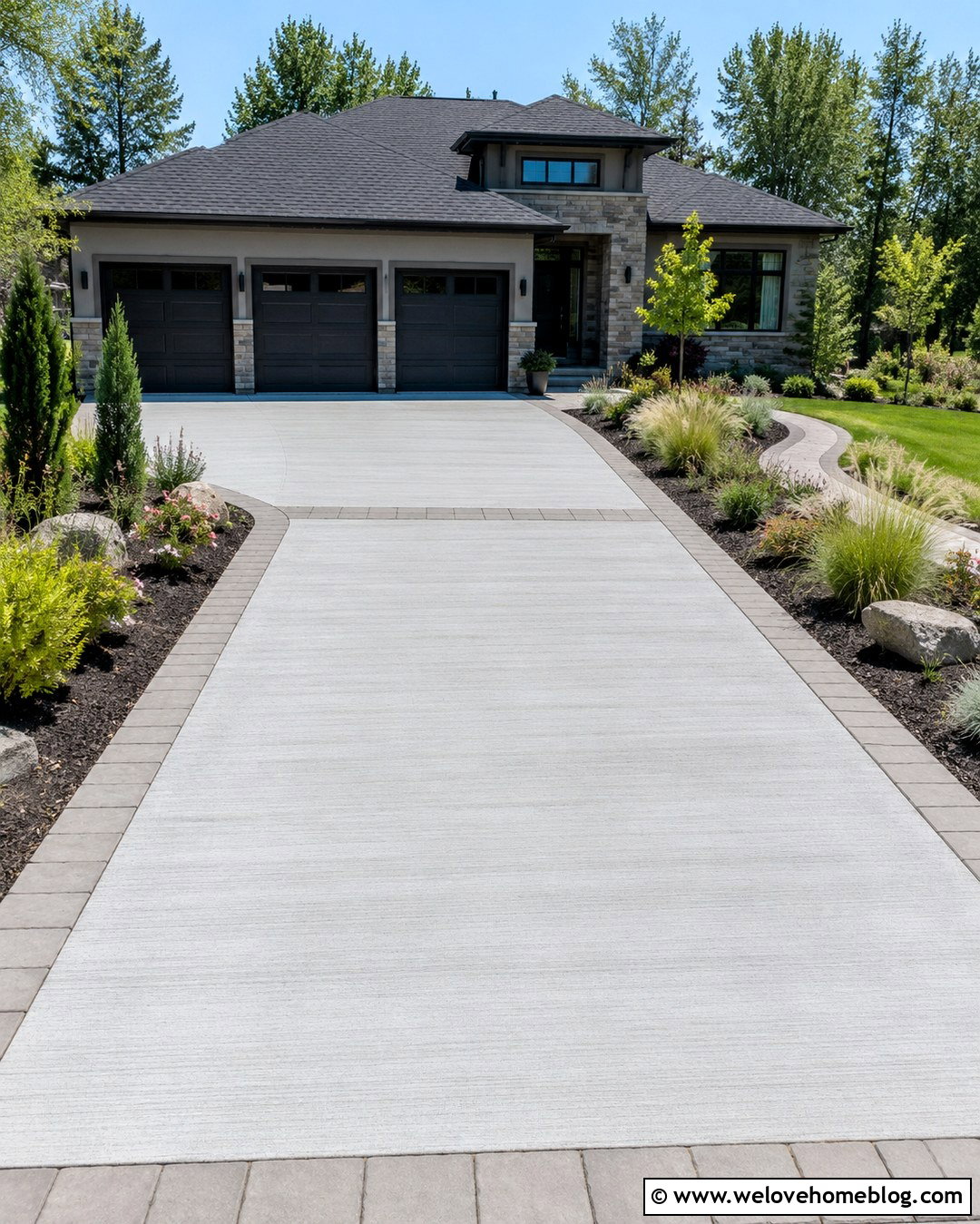
A wide cement driveway can appear flat and oversized unless the border helps organize the surface. Frame the perimeter with a double row of large-format taupe pavers, then add one matching cross band near the garage. This divides the broad concrete field into more comfortable visual sections without covering it in excessive pattern. Light broom-finished concrete keeps the center understated and provides contrast against the richer border color. Add generous planting beds at the outside edges with layered shrubs, ornamental grasses, and small trees. A separate paver-edged walkway can guide guests toward the front door instead of through the parking area. This look fits a large ranch, contemporary home, or three-car garage. Keep the paver dimensions proportional to the driveway; larger units typically read more clearly than narrow bricks across an expansive residential approach.
14. Cement Driveway With Paver Border And Grass Strip
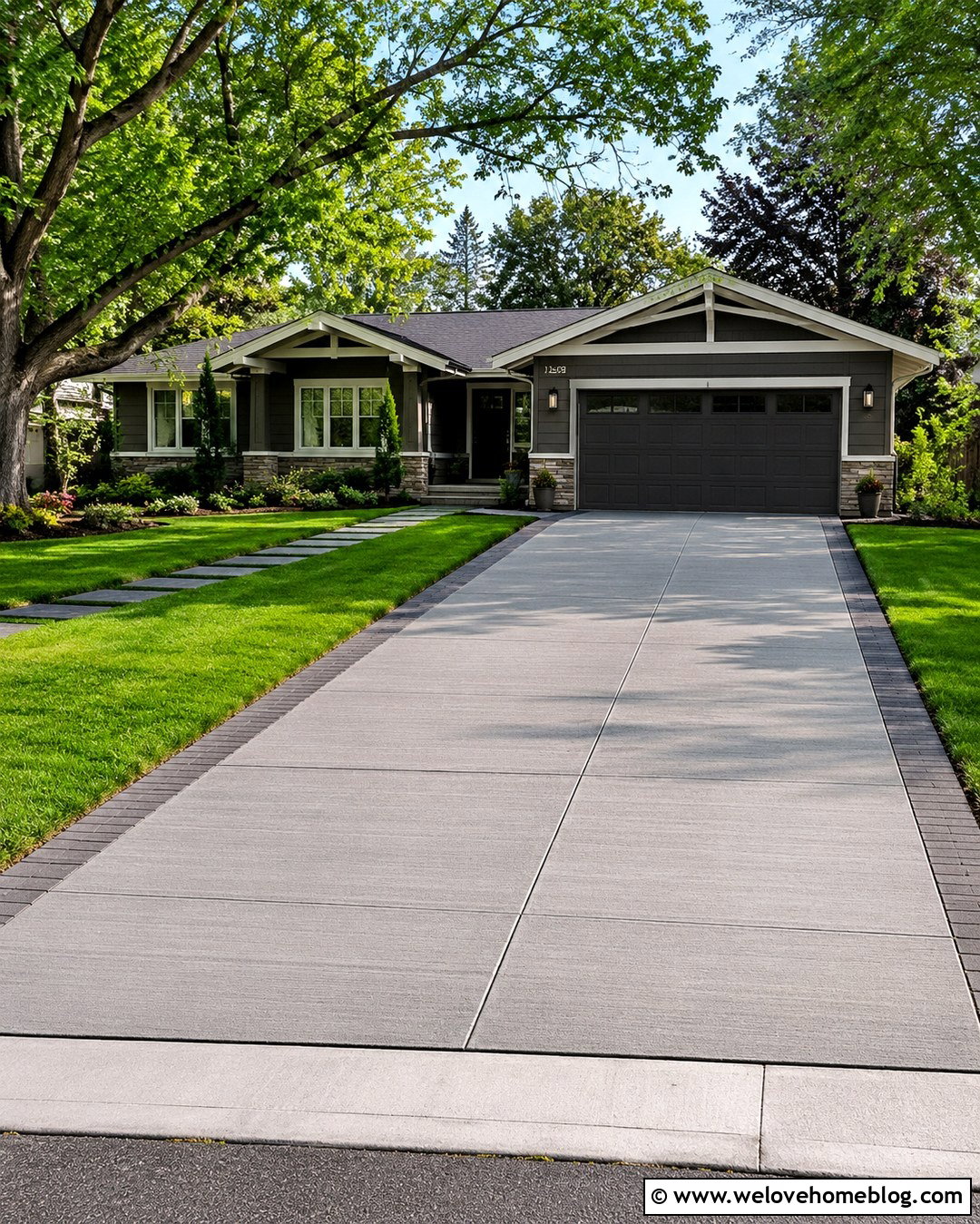
Fresh grass strips can soften the hard edges of a cement driveway while pavers maintain a crisp, controlled outline. Use medium-gray poured concrete bordered by one row of warm charcoal pavers. Beyond the pavers, add narrow, level lawn strips that run toward the house and merge into the larger front yard. This arrangement looks especially attractive on a straight driveway leading to a craftsman or updated ranch home. Allow enough room for practical mowing, and avoid very narrow turf ribbons that may dry out quickly or become difficult to maintain. A stepping-stone walkway can cross one grass strip and connect the driveway to the porch. Near the garage, replace turf with low planting beds to prevent awkward corners. The paver border separates the green lawn from the concrete and gives the entire approach a neat, tailored appearance.
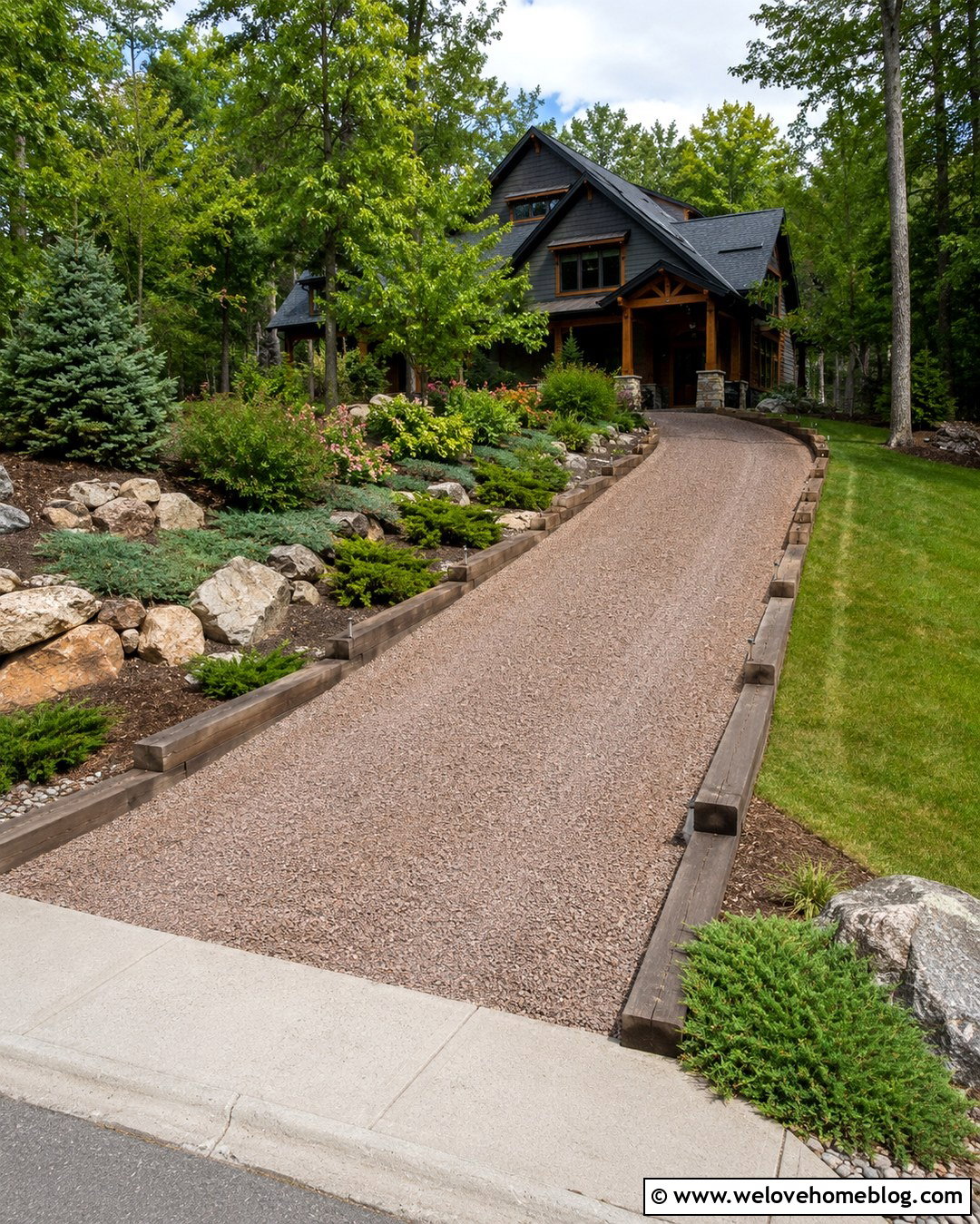
15. Cement Driveway With Paver Border And Gravel Beds
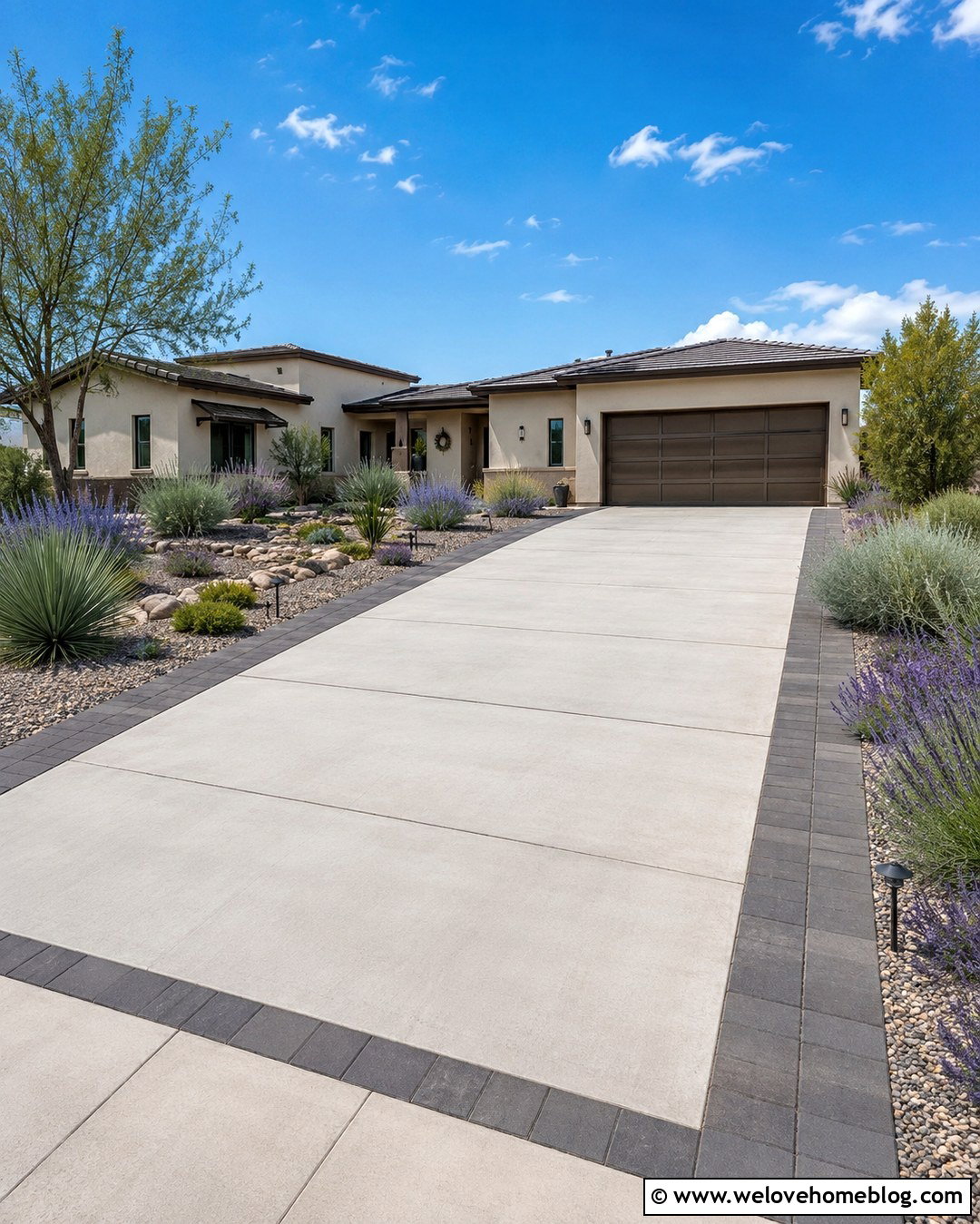
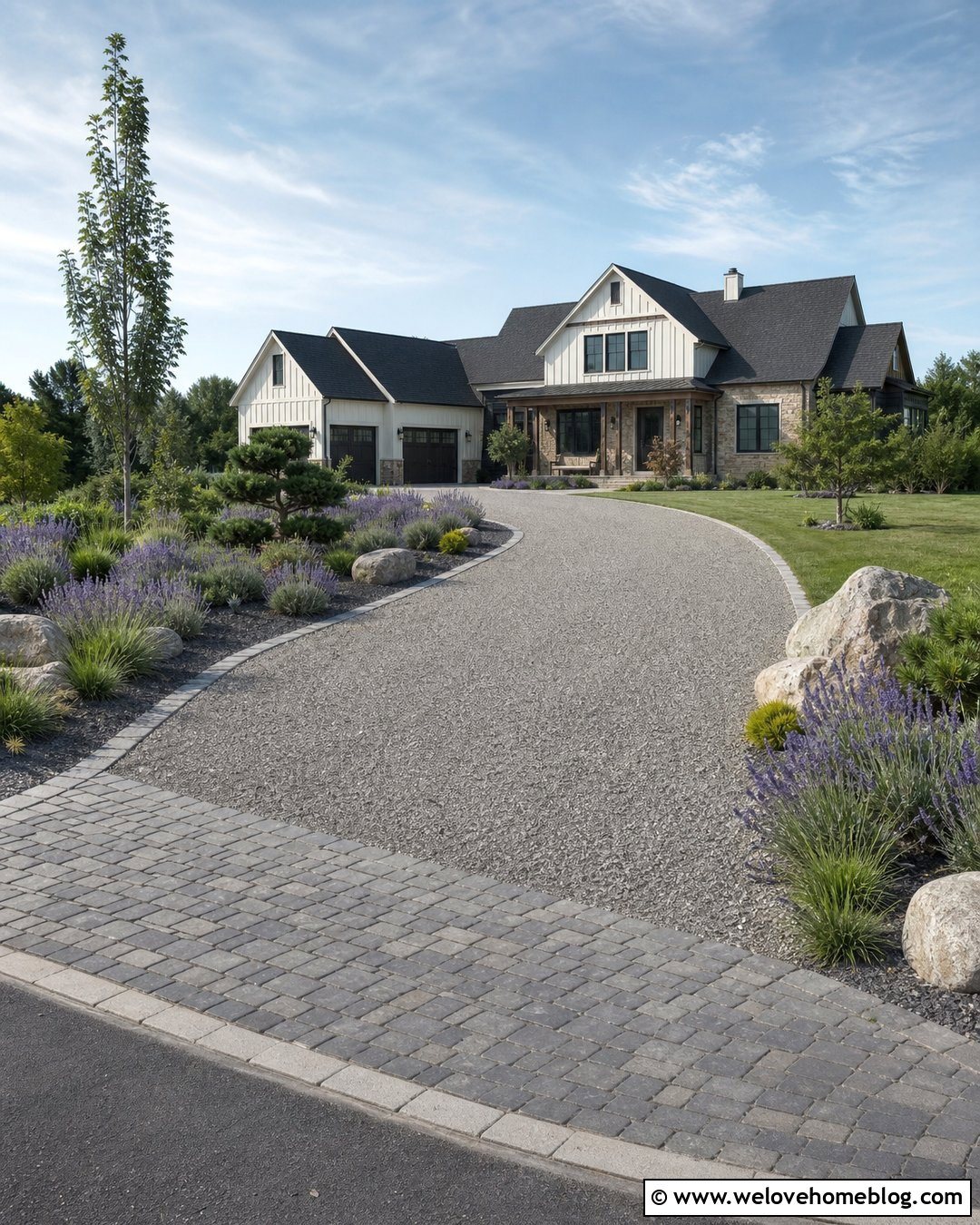
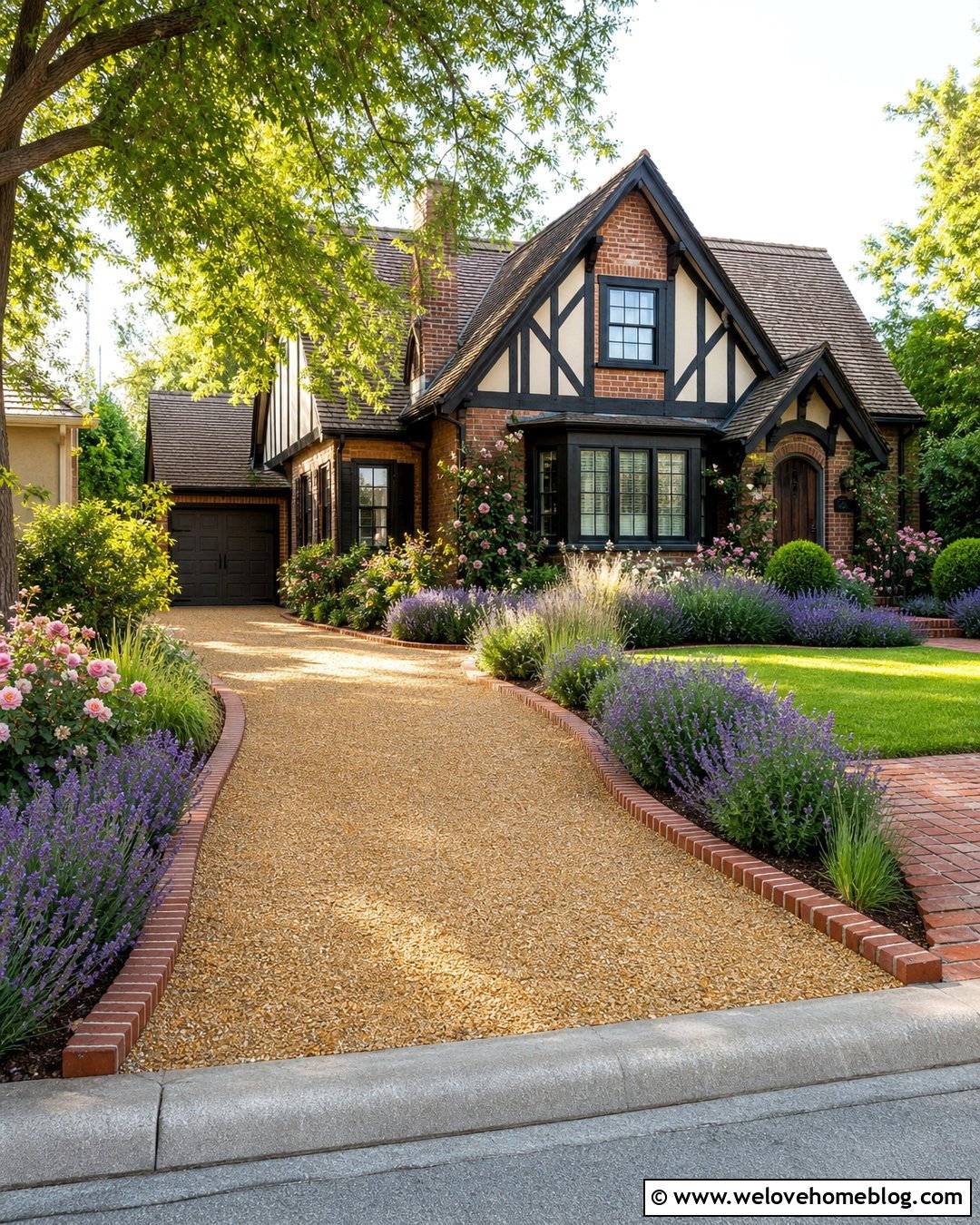
Gravel planting beds make an attractive low-maintenance companion to a cement driveway with a paver border. Start with smooth light gray concrete, then install dark taupe pavers in a single soldier course along the sides. Beyond the border, use pale crushed stone or decorative gravel around drought-tolerant grasses, yucca, lavender, and compact evergreen shrubs. The dark pavers create a strong transition between the two light materials so the driveway does not visually disappear into the gravel. A straight or slightly angled layout works well for modern ranch, desert contemporary, and Southwestern homes. Repeat the border pavers around the walkway for consistency. Keep loose gravel below the top of the paver edge and away from the driving surface. This complete design delivers texture, clean lines, and colorful planting without relying on broad lawn areas.
16. Farmhouse Cement Driveway With Brick Paver Border
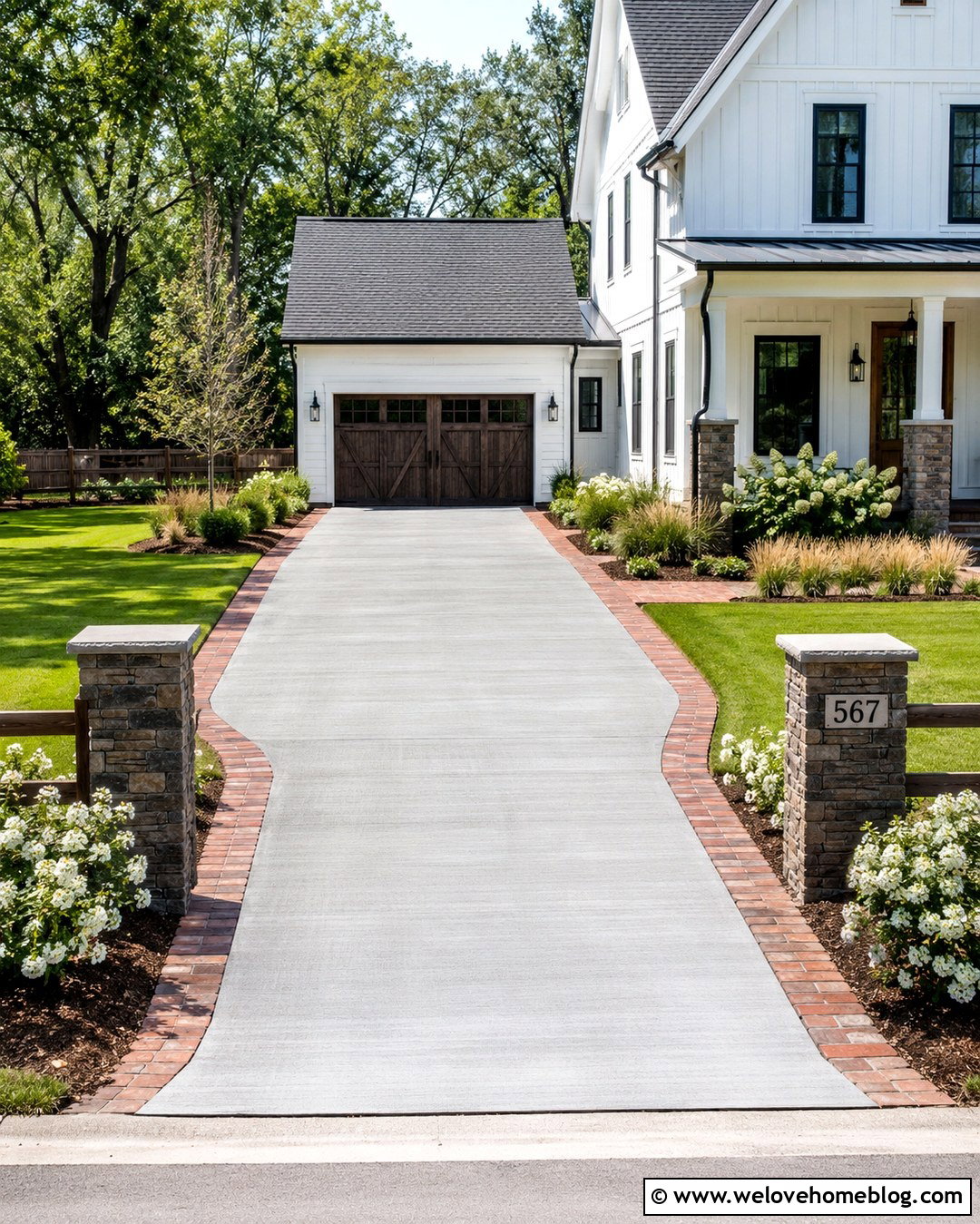
Soft textures and warm colors help a practical cement driveway feel at home beside farmhouse architecture. Choose lightly broom-finished gray concrete and frame it with weathered red or brown brick pavers. A straight driveway can gently widen near a detached garage or wrap into a small parking area beside the house. Use a simple running-bond border for a casual look, then repeat the bricks around the walkway and porch steps. Surround the drive with white flowering shrubs, ornamental grasses, hydrangeas, and a broad green lawn. Wooden fencing or stone entrance posts can reinforce the rural character without making the property feel themed. Keep the concrete’s color natural rather than heavily stained. The brick provides enough warmth and age-inspired detail, while the clean cement surface keeps maintenance and everyday vehicle access straightforward.
17. Craftsman Cement Driveway With Tumbled Paver Border
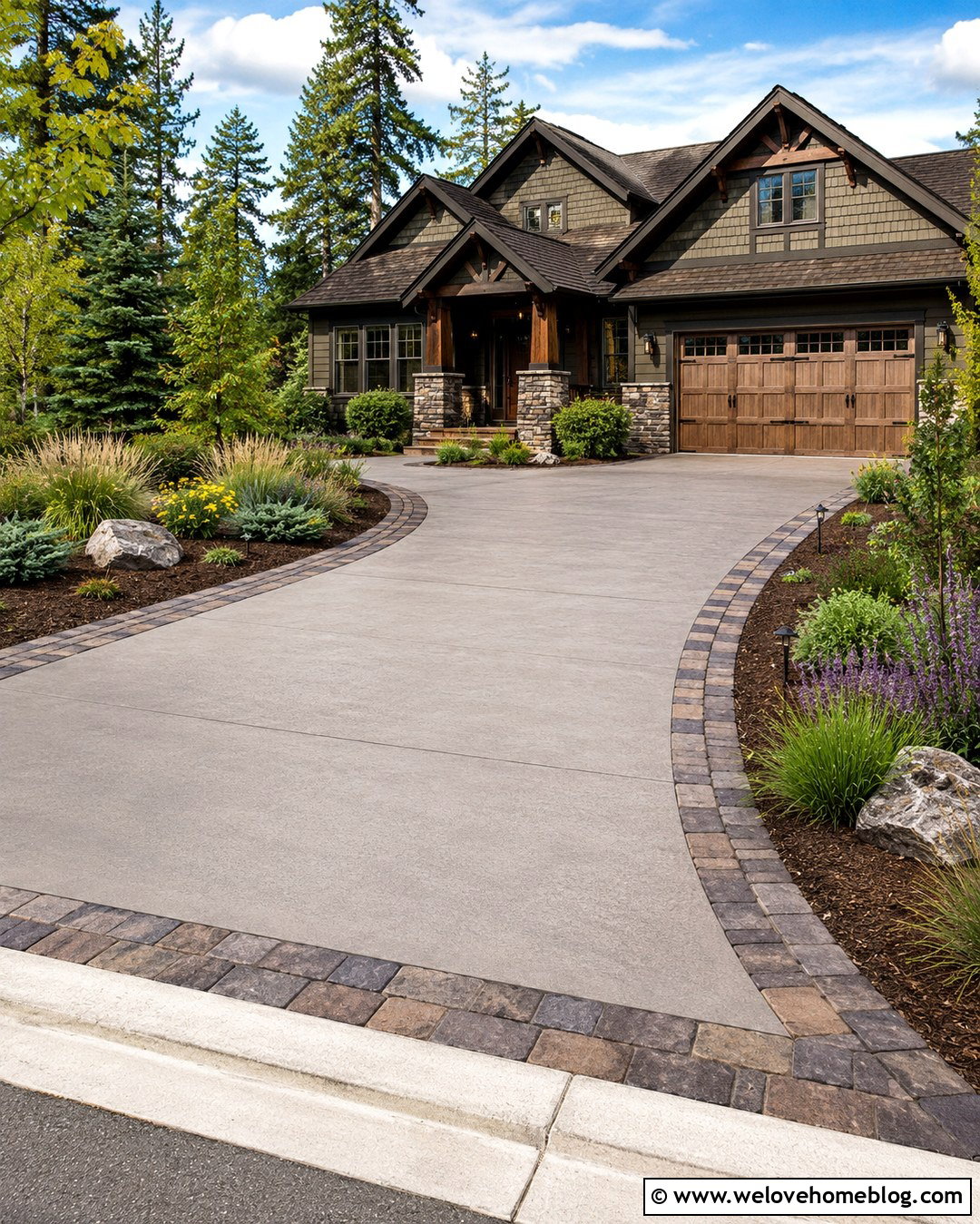
Tumbled pavers have softened edges and varied tones that coordinate naturally with craftsman stonework and wood trim. Frame a warm gray cement driveway with brown, charcoal, and sandstone-colored pavers arranged in a wide running-bond band. A gently curved approach will enhance the informal character, especially when it follows layered planting beds toward the garage. Use native grasses, evergreen shrubs, and low flowering perennials to connect the hardscape with the front yard. A matching paver walkway can branch toward a covered porch with tapered columns. Keep the center concrete lightly textured and divided into broad panels, allowing the multicolored border to carry most of the detail. Select a restrained paver blend with two or three related tones. Too many colors could compete with the craftsman facade and make the border appear unnecessarily busy.
18. Colonial Cement Driveway With Paver Border
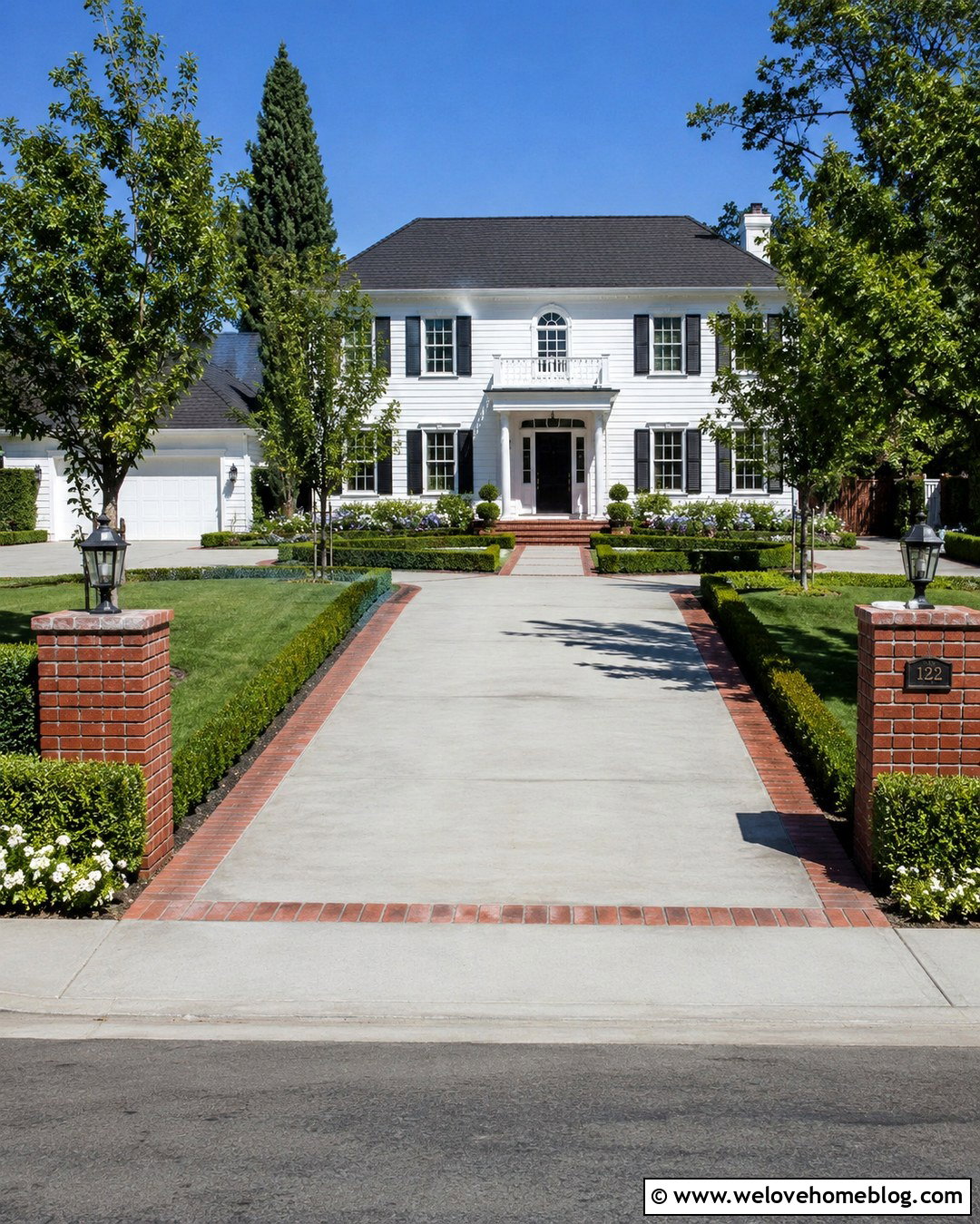
Symmetry is the key to pairing a cement driveway with a colonial home. Use pale gray concrete bordered by classic red brick pavers, then repeat the brick around a straight walkway leading to the centered front door. If space allows, widen the driveway near the house into a balanced parking court with matching paver bands at each end. Formal boxwood hedges, evenly spaced trees, and simple lawn panels reinforce the ordered layout. White pillars or brick entrance columns can mark the curb without blocking views. Choose a soldier-course border for a clean architectural line rather than an irregular pattern. Red brick brings warmth to white siding, dark shutters, and symmetrical windows. A properly compacted foundation, appropriate pavers, and secure edge restraints should be included in the installation plan, particularly around turning and parking areas. ()
19. Sloped Cement Driveway With Paver Border
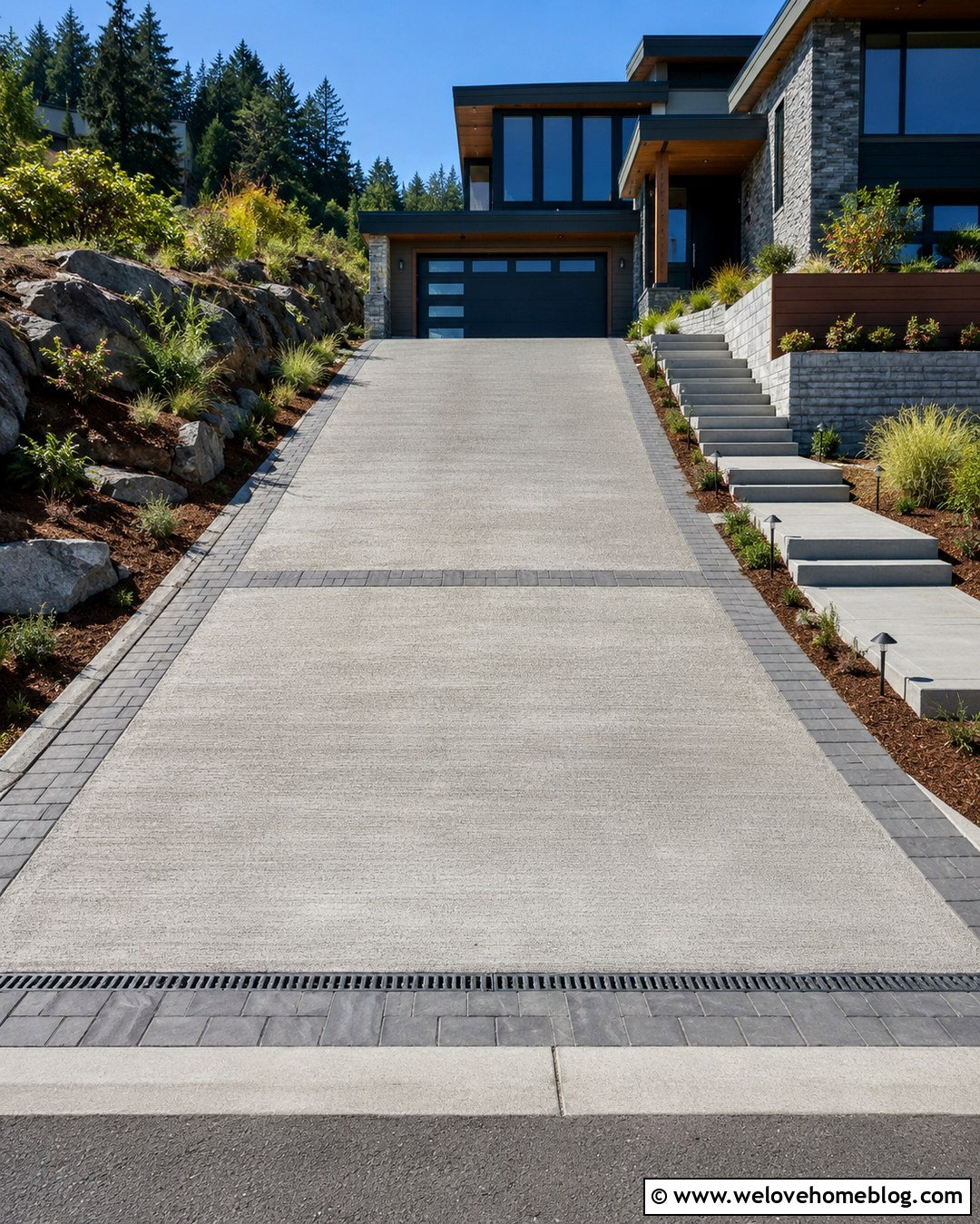
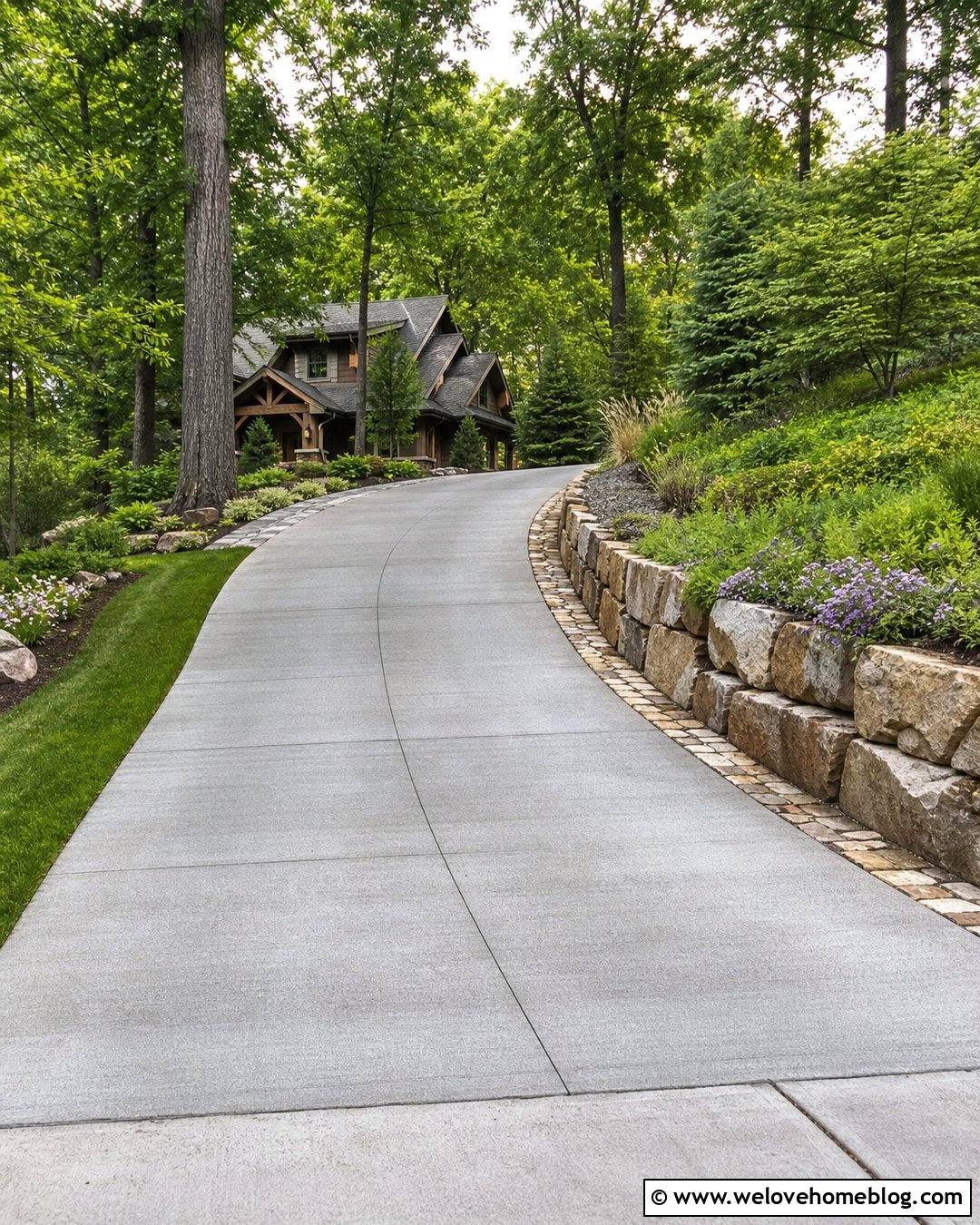
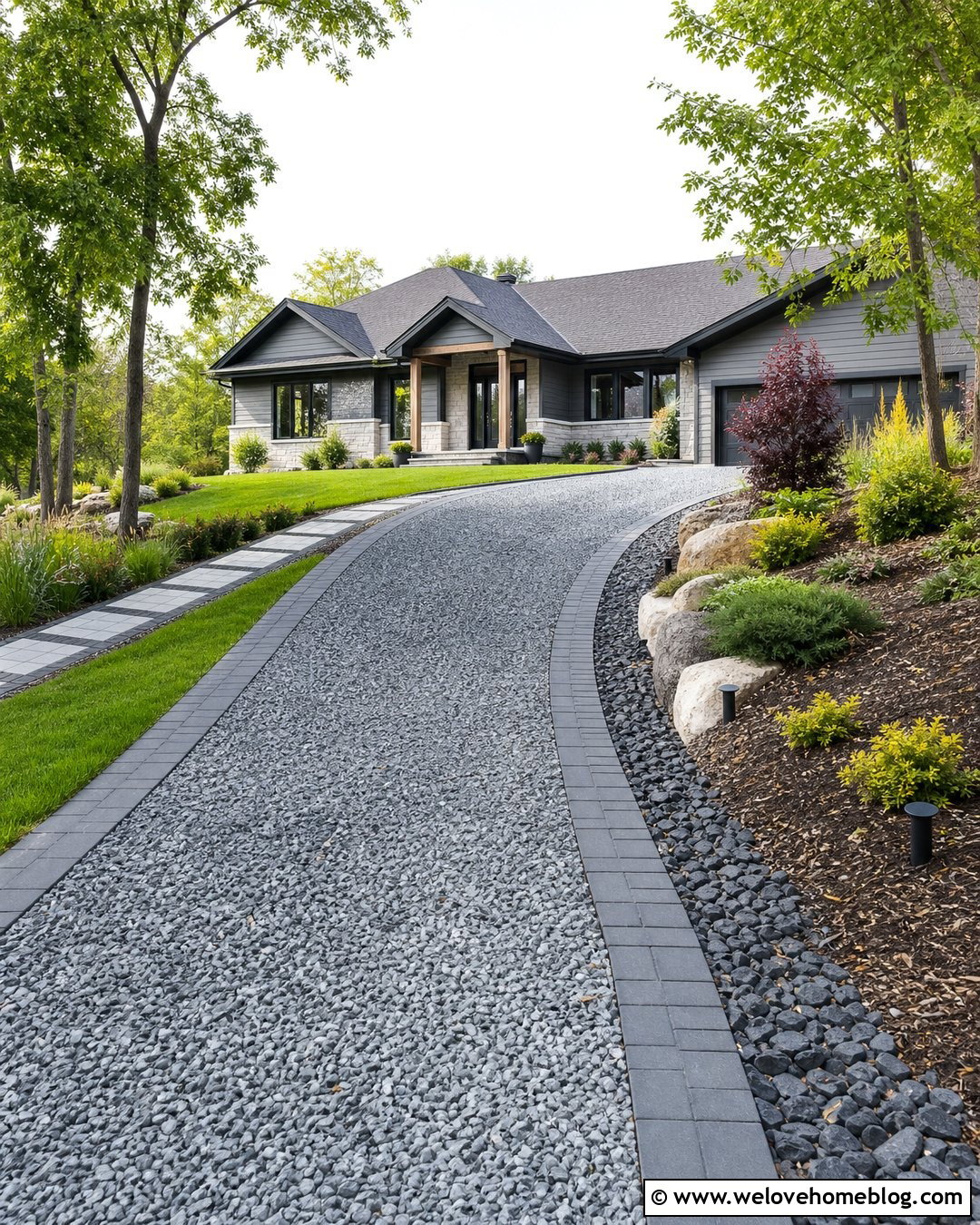
A sloped cement driveway can look refined when its border follows the grade in one continuous, well-planned line. Use textured broom-finished concrete for the main surface and dark gray interlocking pavers along both edges. Add a matching band at the garage threshold to visually finish the climb. Terraced planting beds, low retaining walls, and compact shrubs can frame the slope without spilling soil onto the pavement. Where drainage planning requires an inlet or channel, integrate it neatly into the lower apron rather than disguising it with loose landscaping. Keep the pavers flush and avoid raised edging where vehicle doors, snow equipment, or tires may contact it. Because slopes introduce site-specific drainage and foundation concerns, consult experienced local professionals before construction. The completed design should feel visually level and organized even when the property has a noticeable grade.
20. Budget Cement Driveway With Single Paver Border
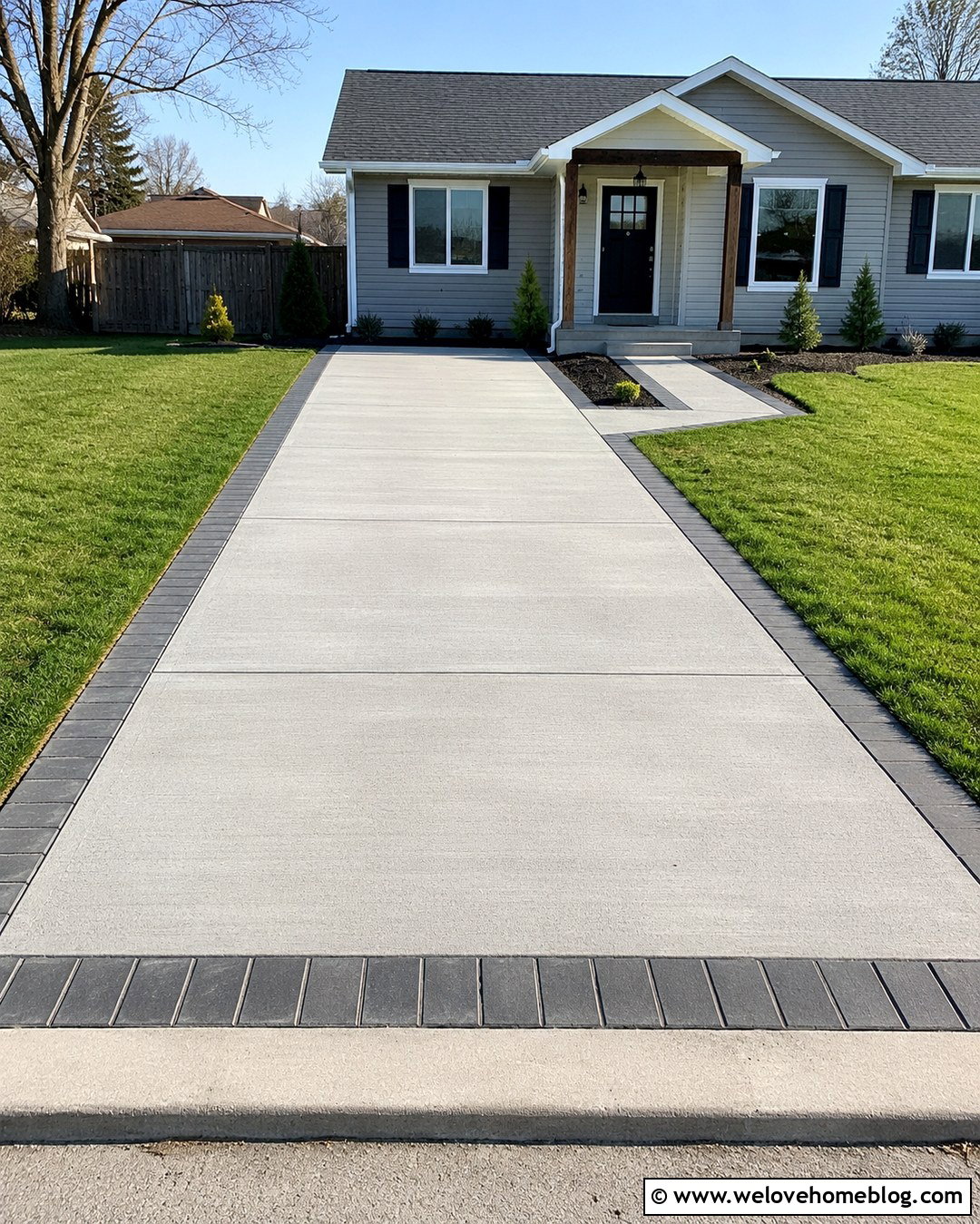
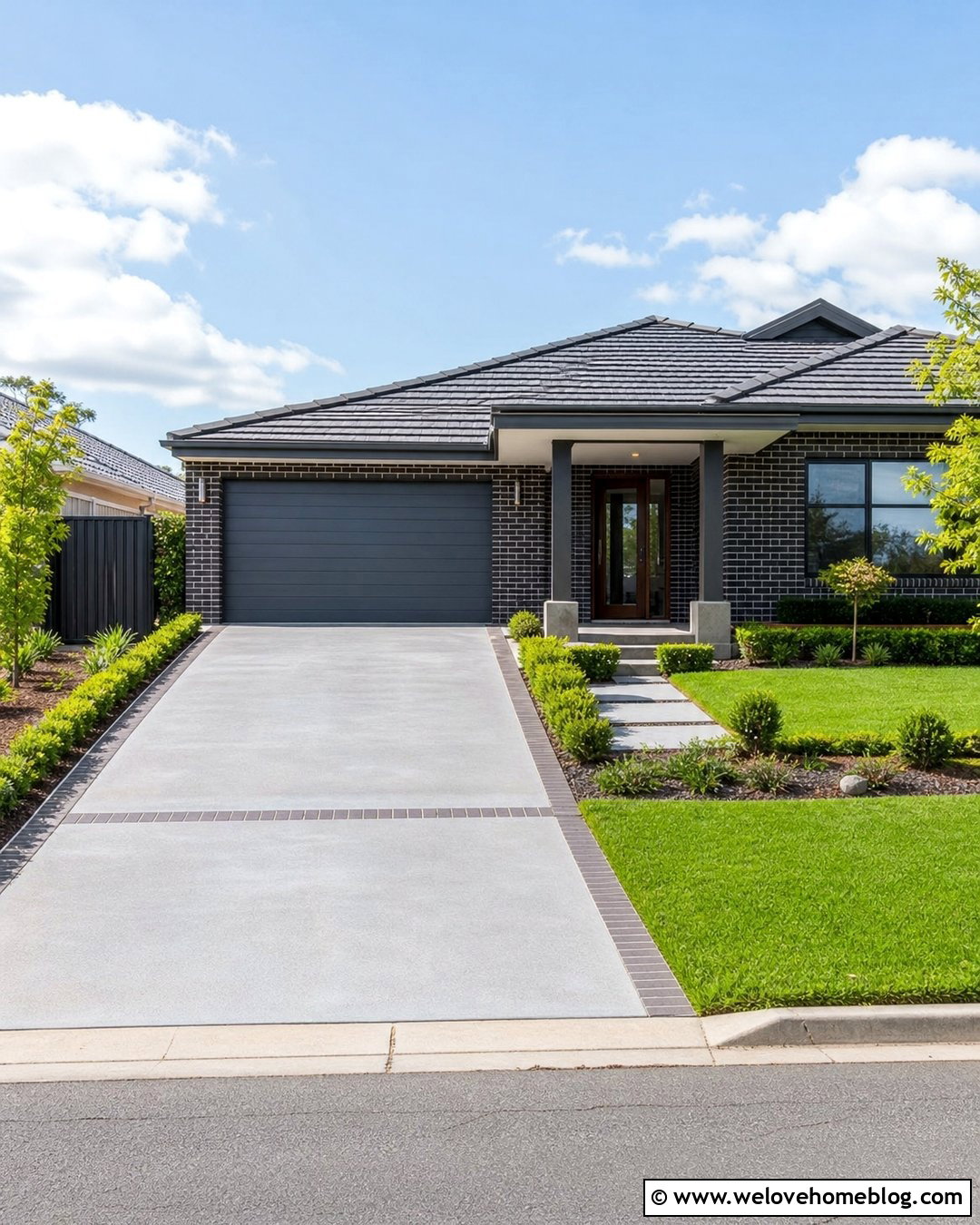
A simple one-row paver border can give a basic cement driveway a finished look without using large quantities of decorative material. Choose standard light gray broom-finished concrete and an affordable rectangular paver in charcoal, brown, or muted red. Install the pavers in a straight soldier course on both sides and across the driveway entrance. Keep the shape rectangular to reduce complicated cuts and material waste. Use existing lawn as the main surrounding landscape, then add two compact planting beds near the garage or front walkway. Repeating the border material around a small porch path can make the project feel more coordinated. Spend available funds on sound base preparation, drainage, and edge restraint before adding optional decoration. The result is straightforward but attractive, proving that a clear outline and consistent color palette can noticeably improve everyday curb appeal.
Conclusion:
The best driveway design balances appearance, daily use, drainage, maintenance, and the architecture of the home. These 20 cement driveway with paver border ideas show how one decorative material can completely change a basic concrete surface. Charcoal pavers create modern contrast, red brick brings traditional warmth, and tumbled stone complements relaxed craftsman or farmhouse settings. Shape matters too. Straight, curved, circular, narrow, and sloped driveways each require borders planned around their proportions and vehicle movement. Before choosing materials, compare full-size samples outdoors and confirm that every product is suitable for driveway use. A qualified local contractor can also plan the base, joints, drainage, and edge restraints. With thoughtful detailing, the concrete and pavers will read as one cohesive entrance.

Related posts:
Leave a Reply