
A well-designed driveway can make the entire front of your home feel more polished, welcoming, and intentional. These **20 Cement Driveway Curb Appeal Ideas** show how concrete color, texture, shape, borders, and landscaping can work together as one complete design. Instead of treating the driveway as a plain parking surface, consider how it connects the street, walkway, garage, lawn, and architecture. Contrasting borders can define the edges, while decorative finishes, planting beds, and attractive driveway aprons create stronger visual interest. These techniques are widely used to turn ordinary concrete into a more distinctive landscape feature. () Whether your house is traditional, modern, rustic, or coastal, you will find practical inspiration in these **20 Cement Driveway Curb Appeal Ideas**.

1. Cement Driveway With Brick Border
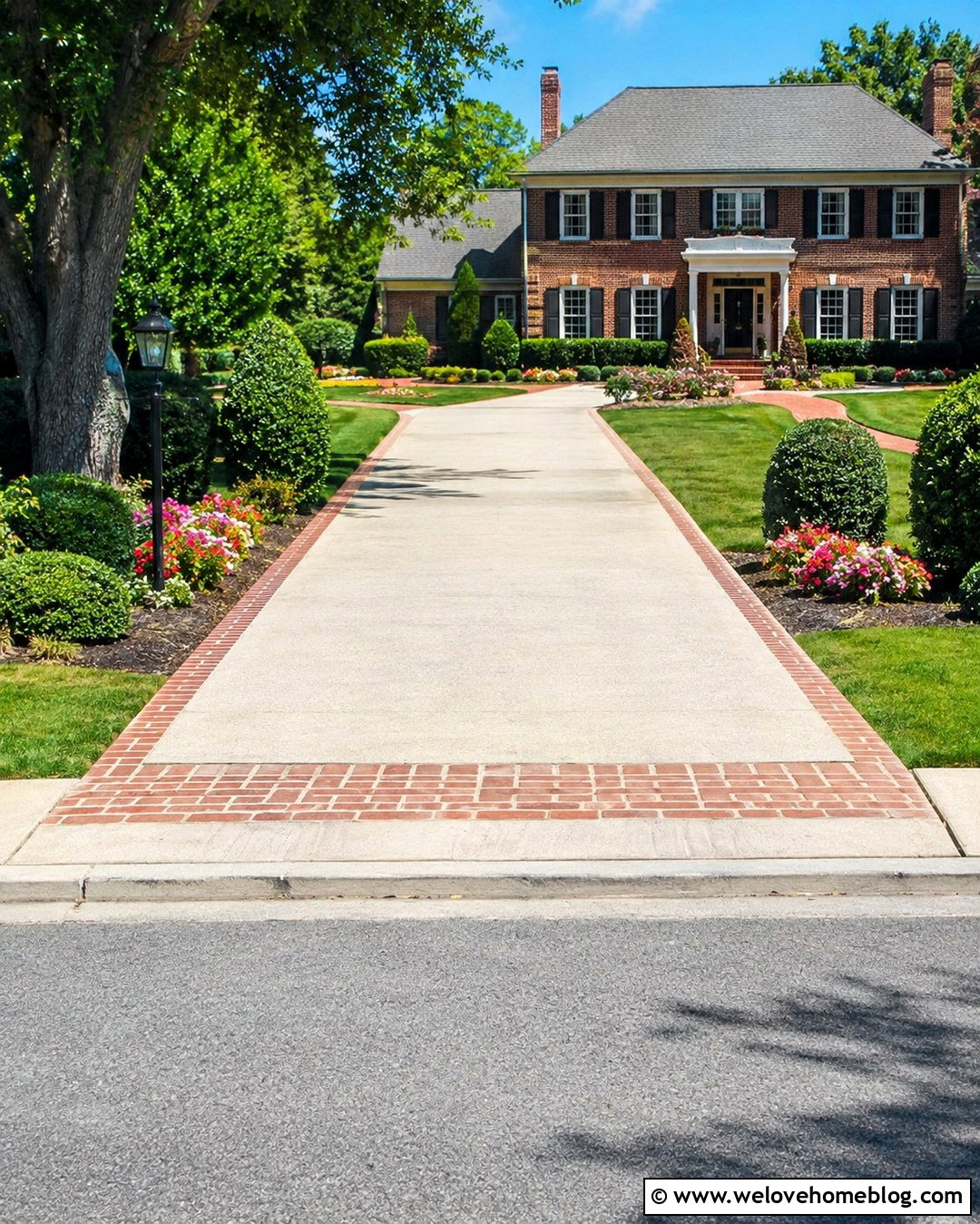
A red brick border gives a light gray cement driveway a crisp, traditional frame. Use a straight driveway layout for a colonial or Cape Cod house, then continue the brick along the walkway to connect the driveway with the front entrance. A matching brick apron near the street can make the entire approach feel more substantial. Keep the concrete center simple with a broom finish so the warm brick remains the main accent. On both sides, add neatly trimmed lawn, rounded evergreen shrubs, and seasonal flowers in curved planting beds. Brick tones look especially attractive when they repeat colors found in the home’s facade, chimney, or porch steps. The result is a complete driveway design that feels established without looking overly decorative.
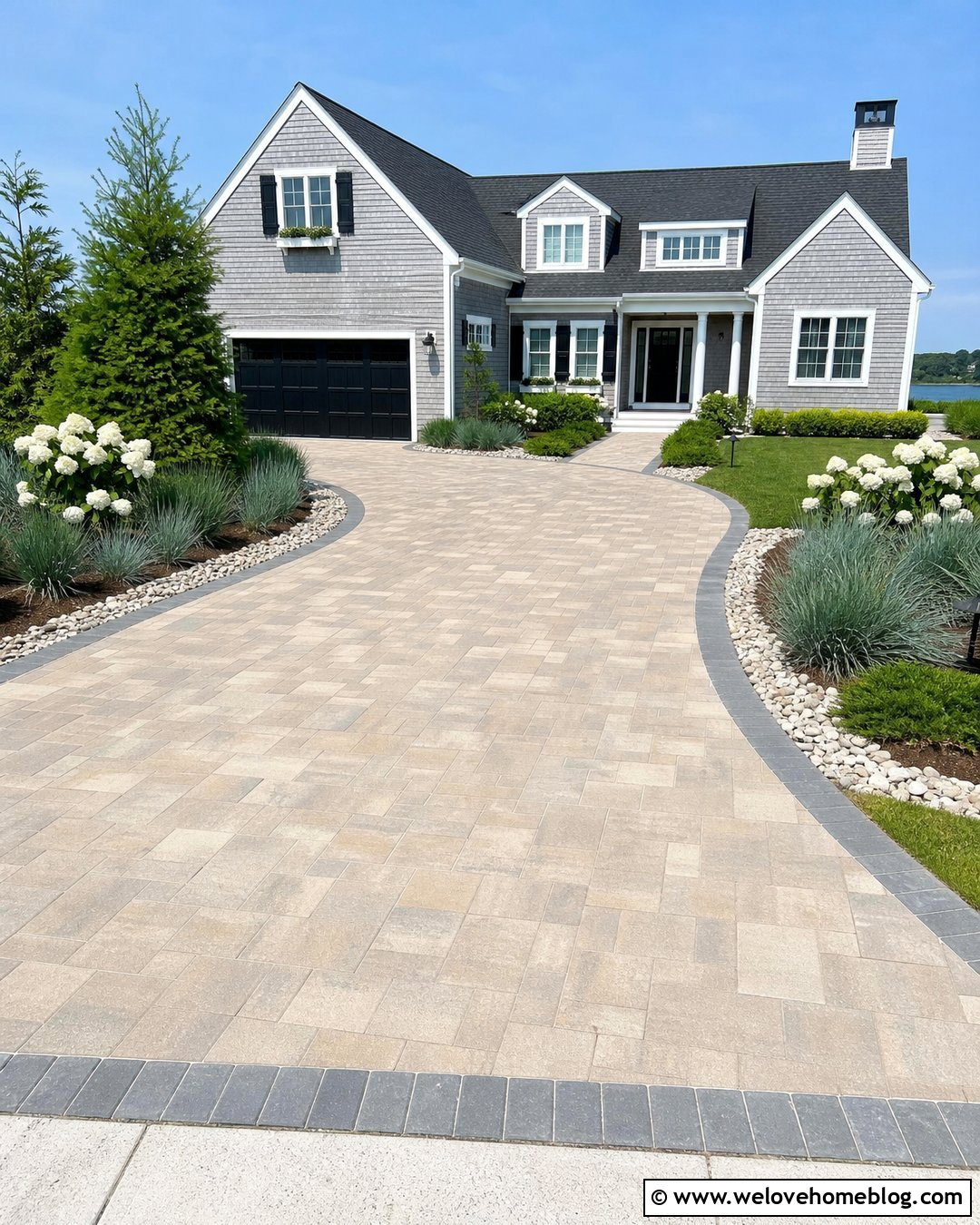
2. Curved Cement Driveway With Stone Edging
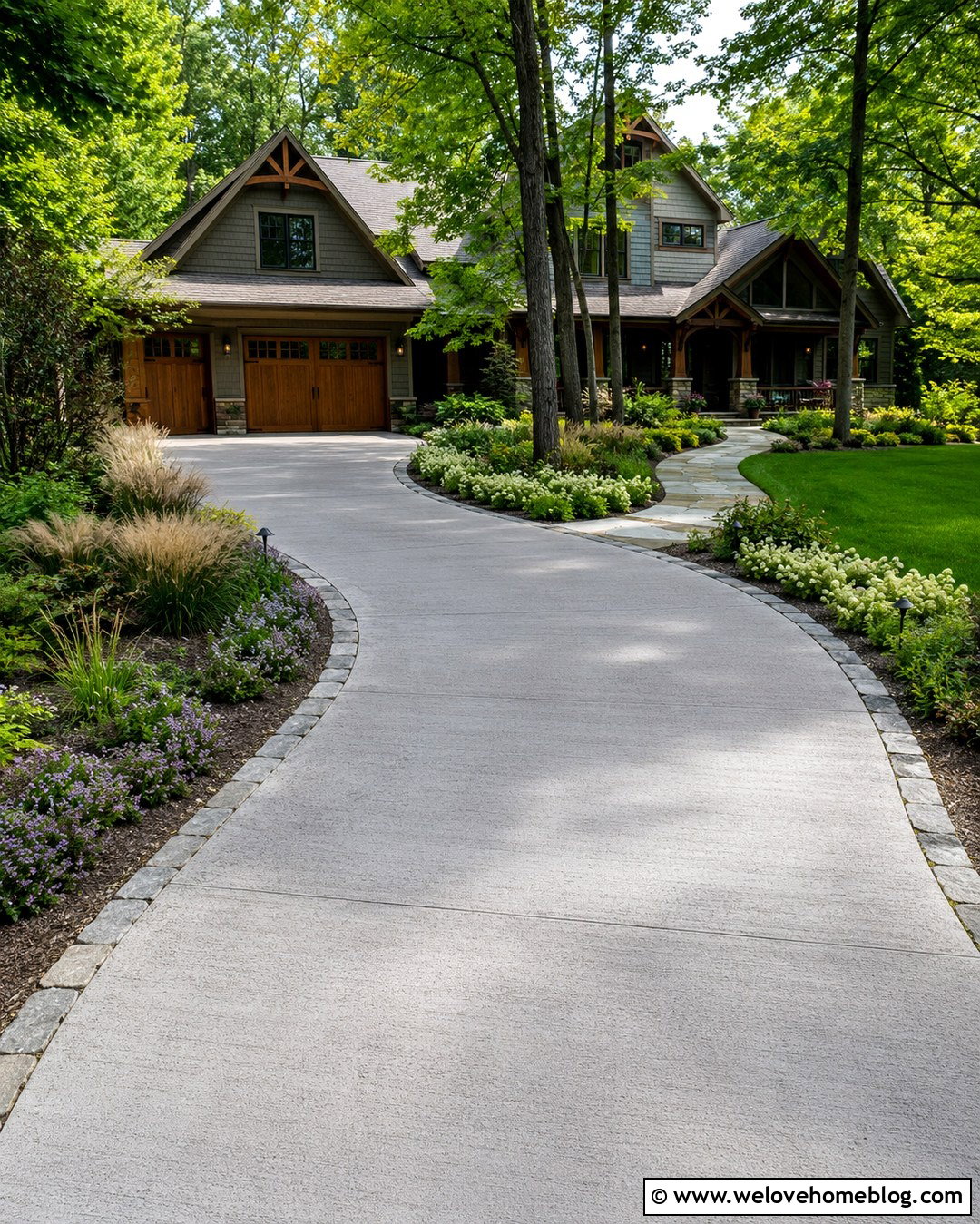
Soft curves can make a wide front yard feel more natural and inviting. Create a gently curved cement driveway with a smooth or lightly brushed gray finish, then define both edges with granite cobblestones or locally sourced fieldstone. The stone border provides texture while helping the driveway blend into surrounding landscaping. Place low ornamental grasses, spreading ground covers, and flowering shrubs along the outer curve. Keep taller trees and plants farther from the driving area so the entrance remains open and easy to navigate. A curved flagstone walkway can branch from the driveway toward a craftsman-style porch. This coordinated combination of cement, natural stone, layered plants, and flowing lines creates a relaxed approach that works especially well on wider suburban or country properties.
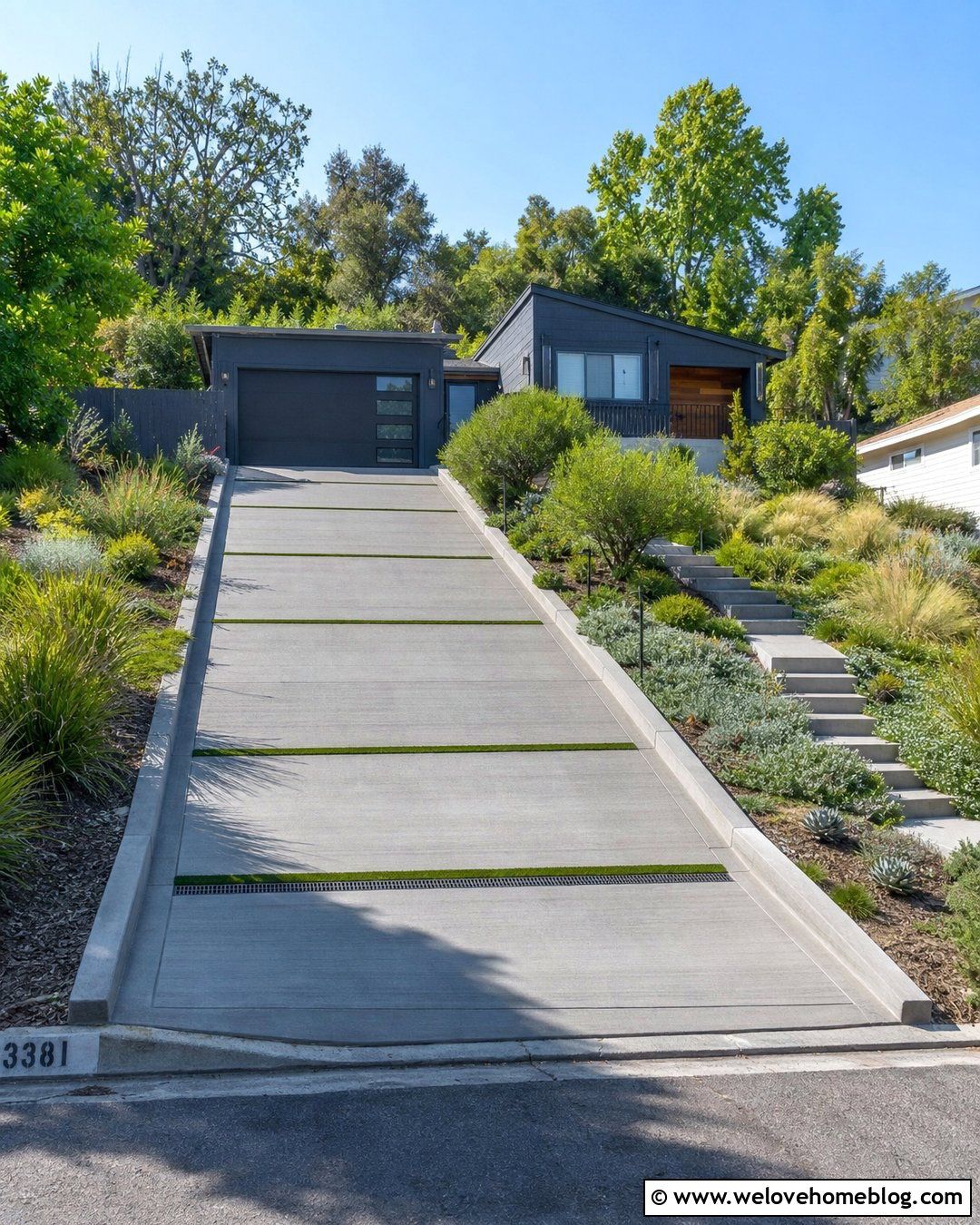
3. Modern Cement Driveway With Grass Strips
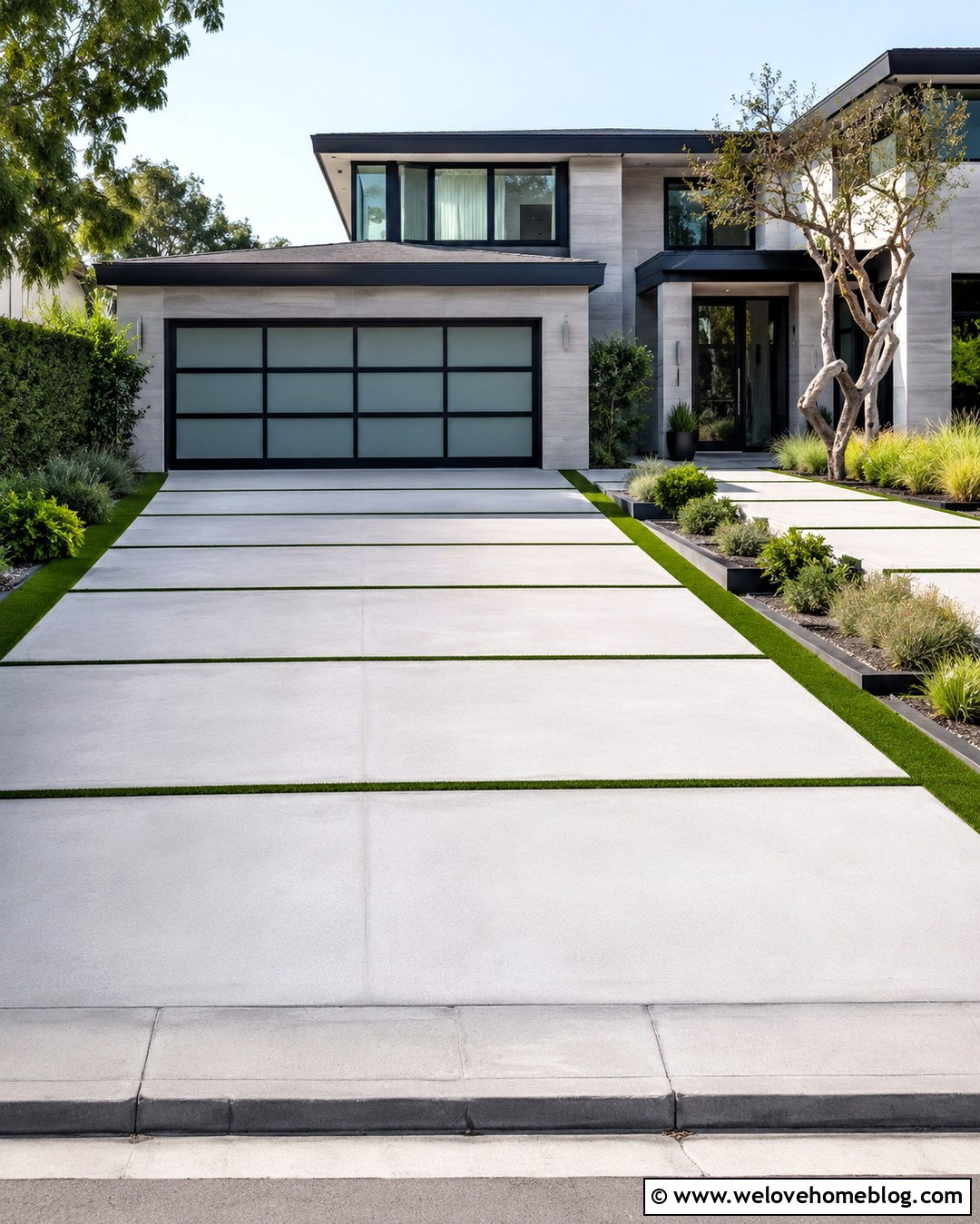
Large rectangular cement slabs separated by narrow grass strips create a clean, modern driveway. Choose pale gray poured concrete with smooth surfaces and precise straight joints. The green lines soften the hardscape and visually break up a wide parking area without adding complicated patterns. This layout works best beside a contemporary home with simple architecture, large windows, and restrained colors. Frame the driveway with rectangular planting beds containing ornamental grasses, compact shrubs, and one sculptural tree. A matching concrete walkway can lead directly to the front door. Keep the lawn strips wide enough to remain visible but narrow enough for practical maintenance. Oversized slabs and planted joints are frequently used to connect contemporary concrete surfaces with surrounding greenery. ()
4. Stamped Cement Driveway With Dark Border
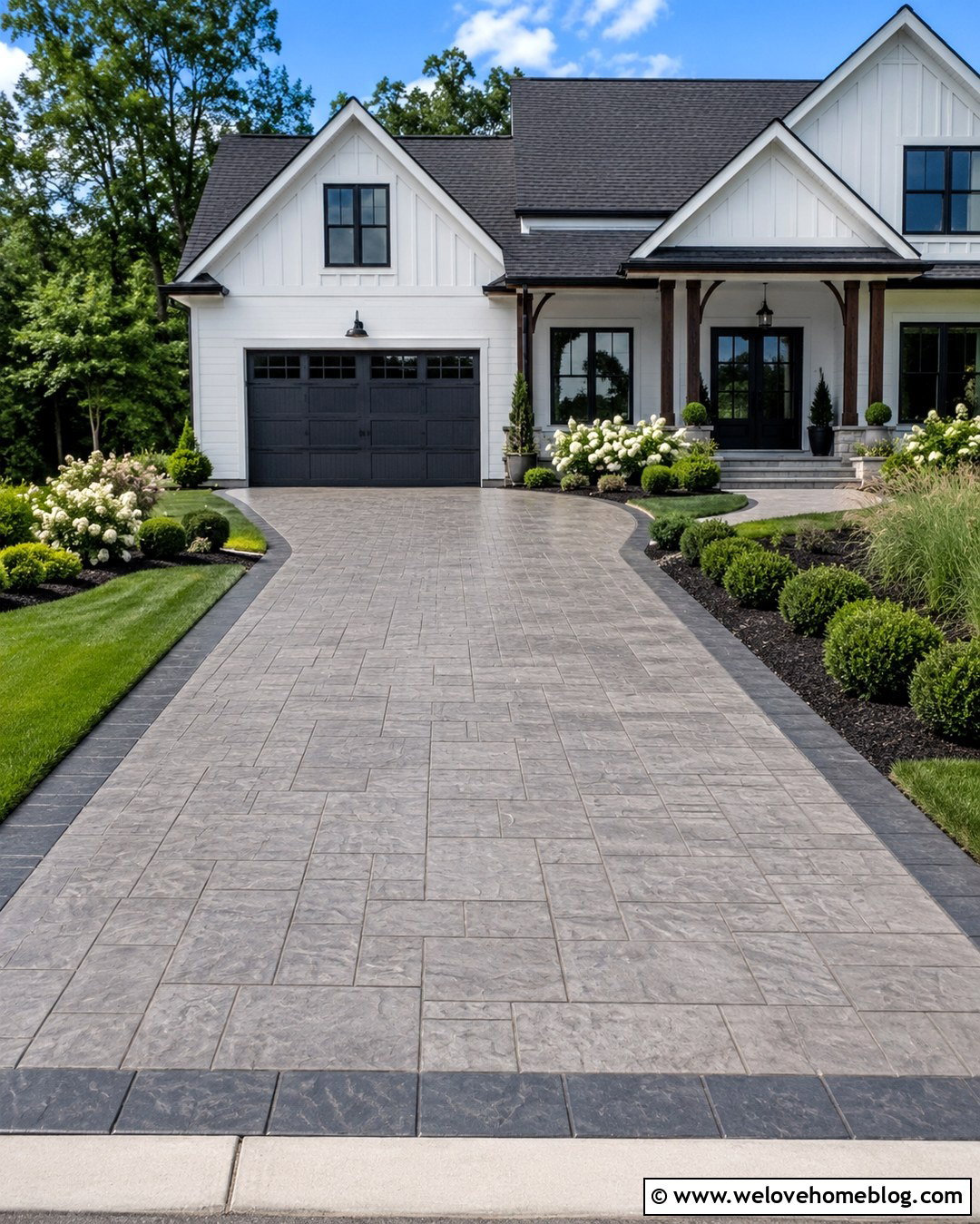
Stamped cement can provide the texture of individual paving units while maintaining a continuous concrete surface. Choose a warm gray fieldstone or ashlar pattern for the main driveway, then surround it with a charcoal stamped border. A straight layout with a gently flared entrance creates a welcoming transition from the street. Repeat the charcoal tone in the garage doors, exterior lights, or front door for a balanced appearance. Add low boxwoods, white flowering shrubs, and dark mulch along the edges. Because stamped patterns create plenty of visual detail, keep the planting scheme organized and relatively simple. This complete look suits brick homes, traditional suburban houses, and modern farmhouses. Carefully planned color contrast helps the border frame the driveway without competing with the architecture.
5. Exposed Aggregate Cement Driveway With Paver Bands
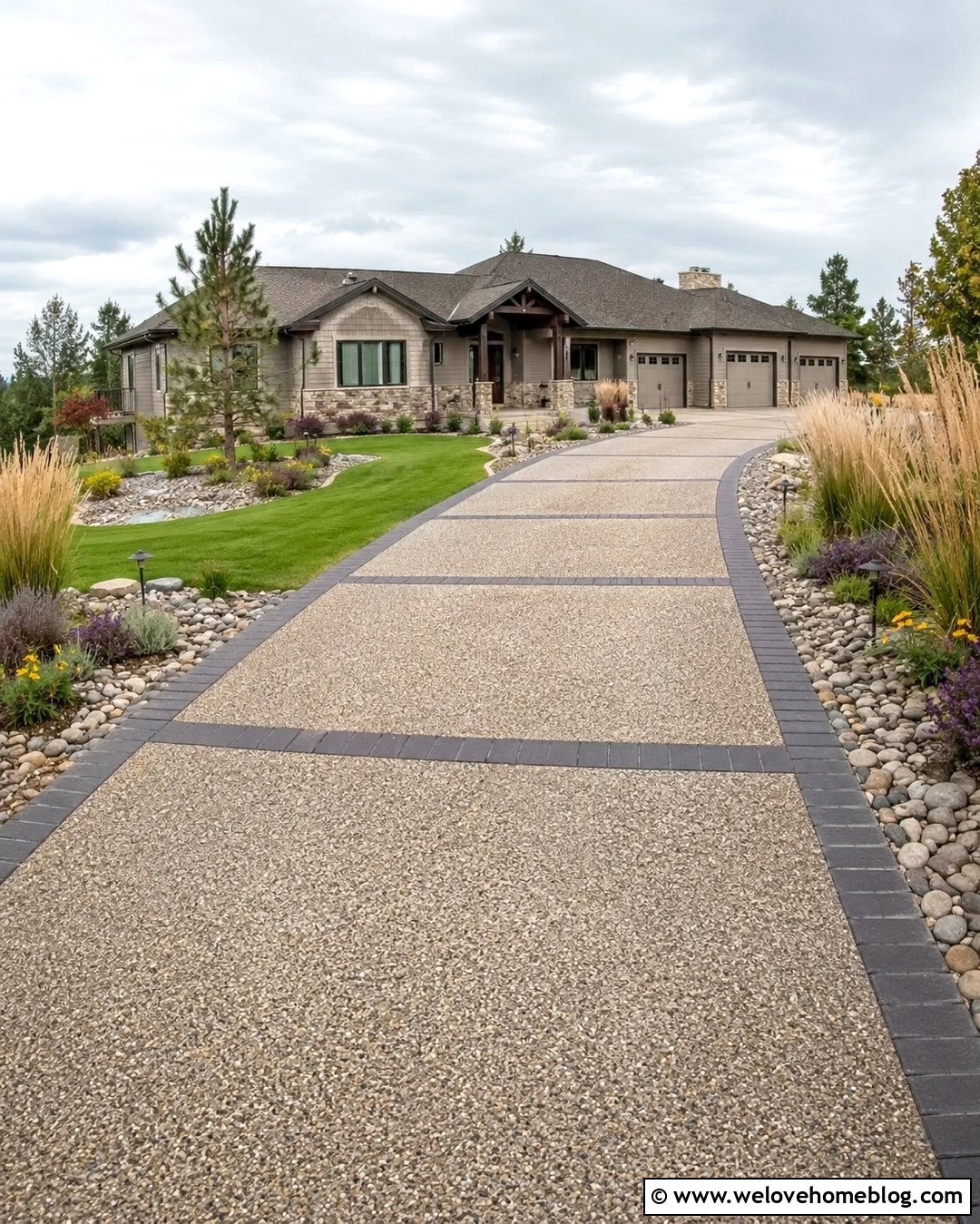
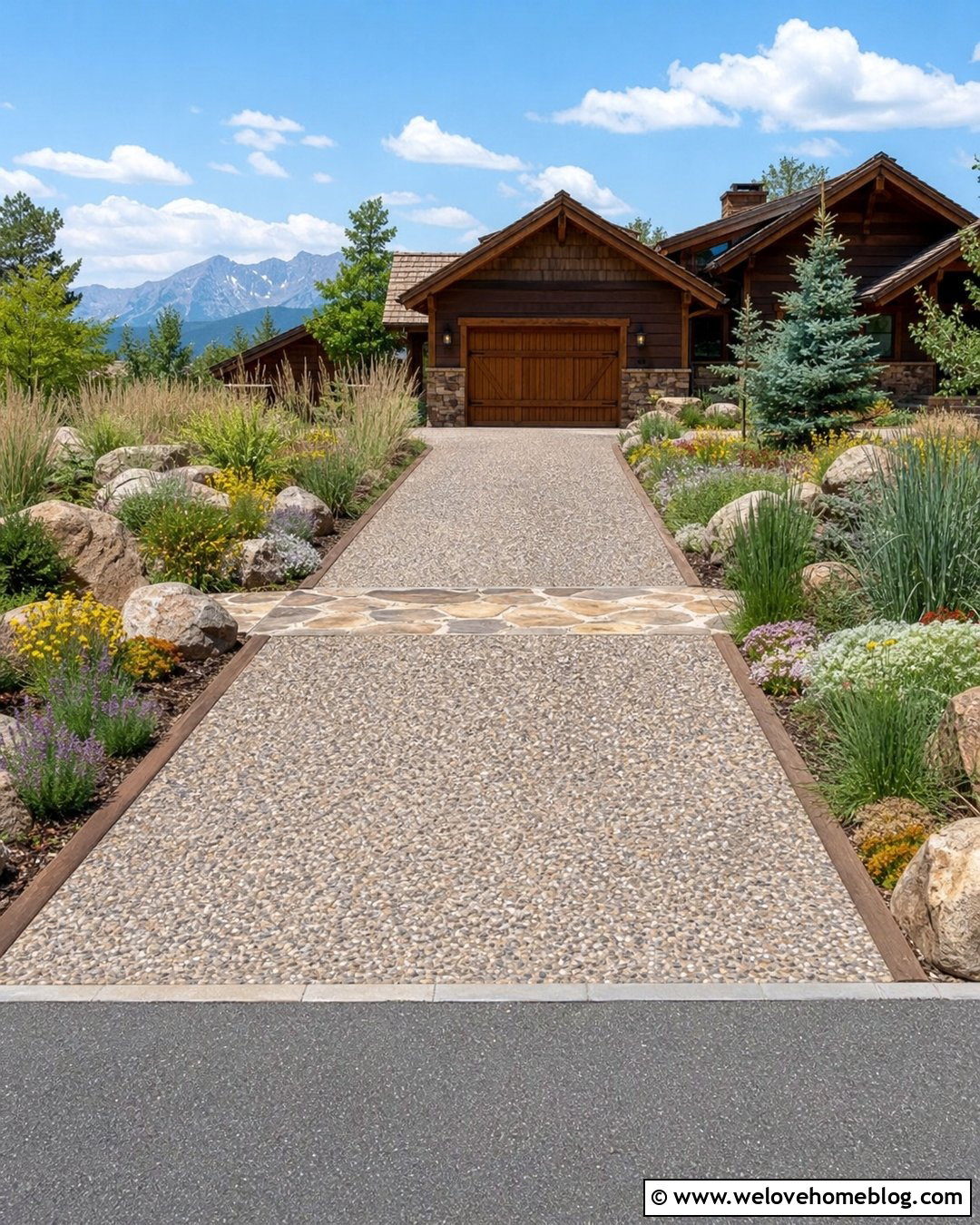
Exposed aggregate gives a cement driveway natural color and a textured appearance. Select a mix containing tan, cream, and soft gray stones, then divide the driveway with dark concrete paver bands. The bands can cross the surface at regular intervals, creating manageable visual sections along a long, straight approach. Continue the pavers around the outer edge and across the street apron for a coordinated finish. Warm aggregate colors pair beautifully with a ranch house featuring stone veneer, natural wood, or beige siding. Complete the design with drought-tolerant grasses, flowering perennials, and decorative river rock. Banded edges and crossways can also visually integrate necessary surface divisions into the overall pattern rather than leaving the driveway looking like one uninterrupted expanse. ()
6. White Cement Driveway With Coastal Landscaping
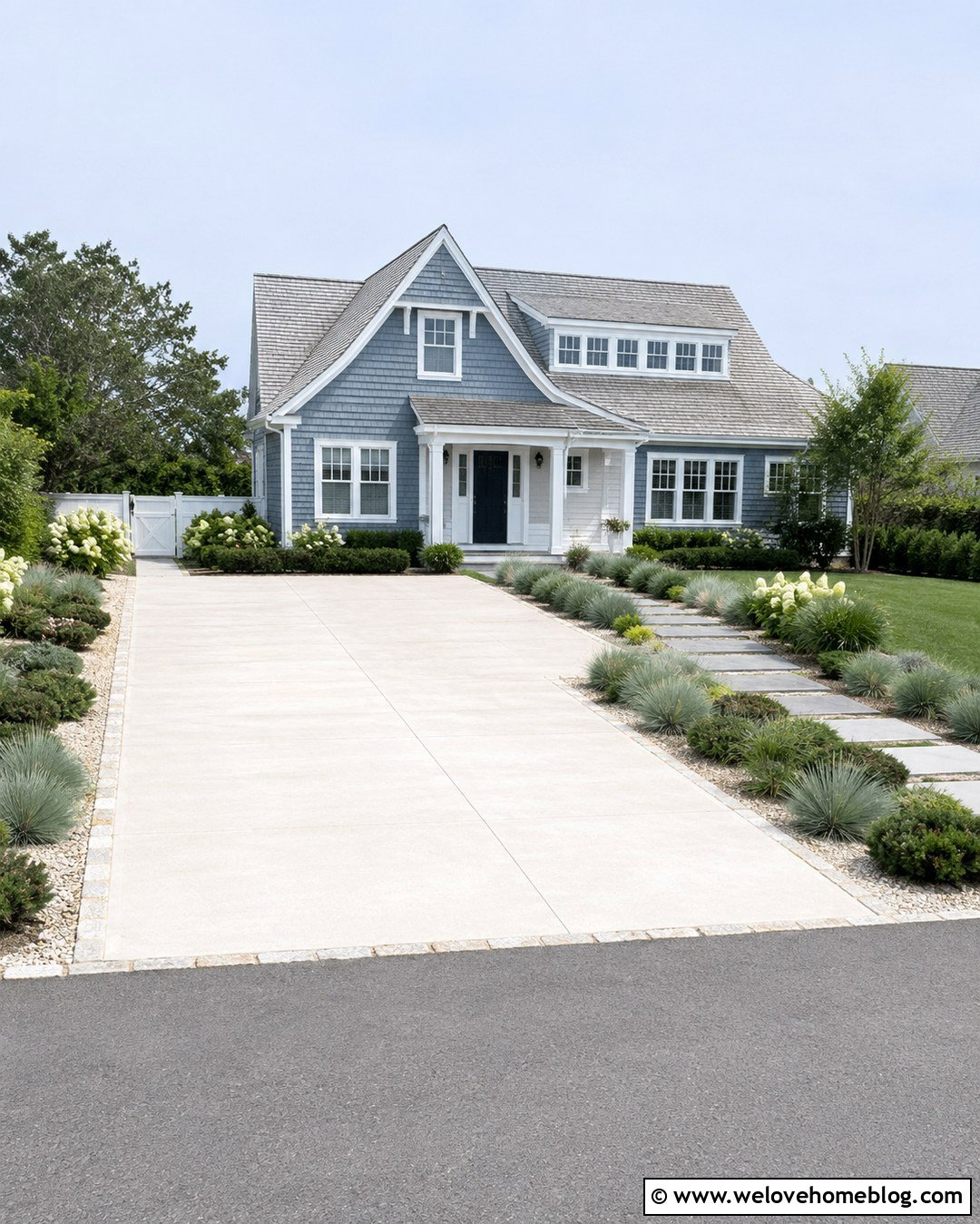
A bright cement driveway can give a coastal home a fresh and spacious appearance. Use light cream or off-white concrete with a subtle salt finish rather than stark, polished white. Shape the driveway into a simple straight approach with a slightly wider parking pad near the garage. Edge it with pale shell-colored pavers or light limestone blocks. Surround the surface with blue-green ornamental grasses, compact hydrangeas, low junipers, and clean areas of decorative gravel. A stepping-stone walkway can lead from the driveway to a covered porch with white columns. Soft blue siding, natural wood accents, and a light driveway create an airy palette. This design feels relaxed and refined while keeping the complete front landscape bright, uncluttered, and visually connected.
7. Charcoal Cement Driveway With Light Edging
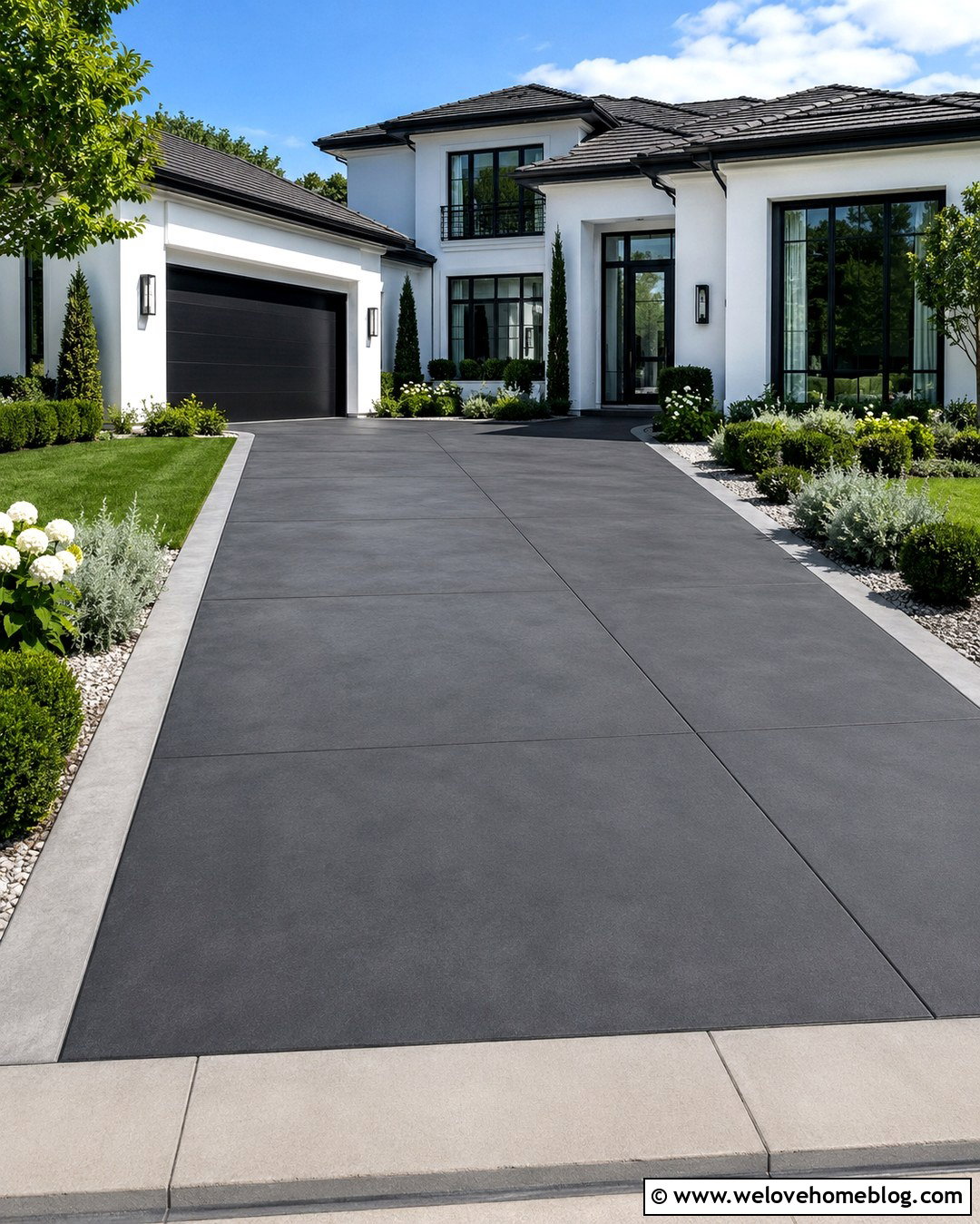
Dark charcoal cement creates a bold foundation for a light-colored house. Use integral color or a professionally applied decorative finish to achieve an even tone, then frame the driveway with narrow bands of pale gray concrete. A straight layout with large rectangular scoring gives the surface a structured, contemporary appearance. Pair it with a white stucco or light brick house so the driveway provides attractive contrast rather than making the entire exterior feel dark. Add evergreen shrubs, silver foliage, and white flowering perennials along the borders. Light gravel between the plants can repeat the edging color. Because dark surfaces can dominate a small yard, leave generous lawn or planting areas nearby. This contrast-driven look is especially effective for modern homes with black trim and simple landscaping.
8. Cement Driveway With Cobblestone Apron
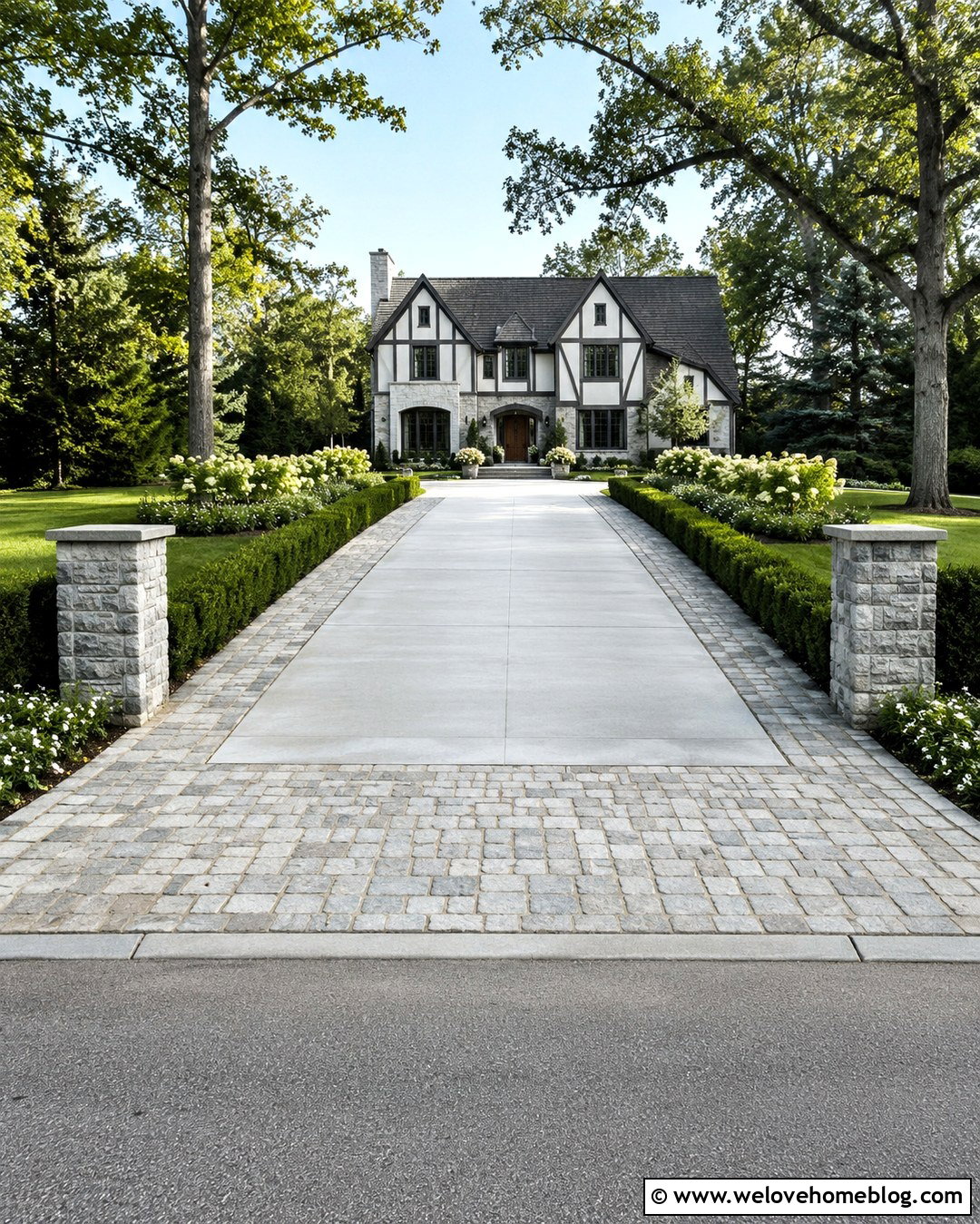
The driveway apron is highly visible from the street, making it a useful place for decorative detail. Begin with a light gray broom-finished cement driveway, then install a wide cobblestone apron across the entrance. Continue a narrow row of matching cobblestones along both sides for a unified appearance. The main driveway can remain understated and practical while the apron creates a more memorable first impression. Add stone entrance pillars, low hedges, and symmetrical planting beds near the curb. Farther up the driveway, use softer shrubs and a lawn to prevent the design from feeling too formal. This combination works beautifully with Tudor, colonial, and European-inspired homes. A decorative apron functions like a visual welcome mat and can break up a long concrete approach. ()
9. Circular Cement Driveway With Center Garden
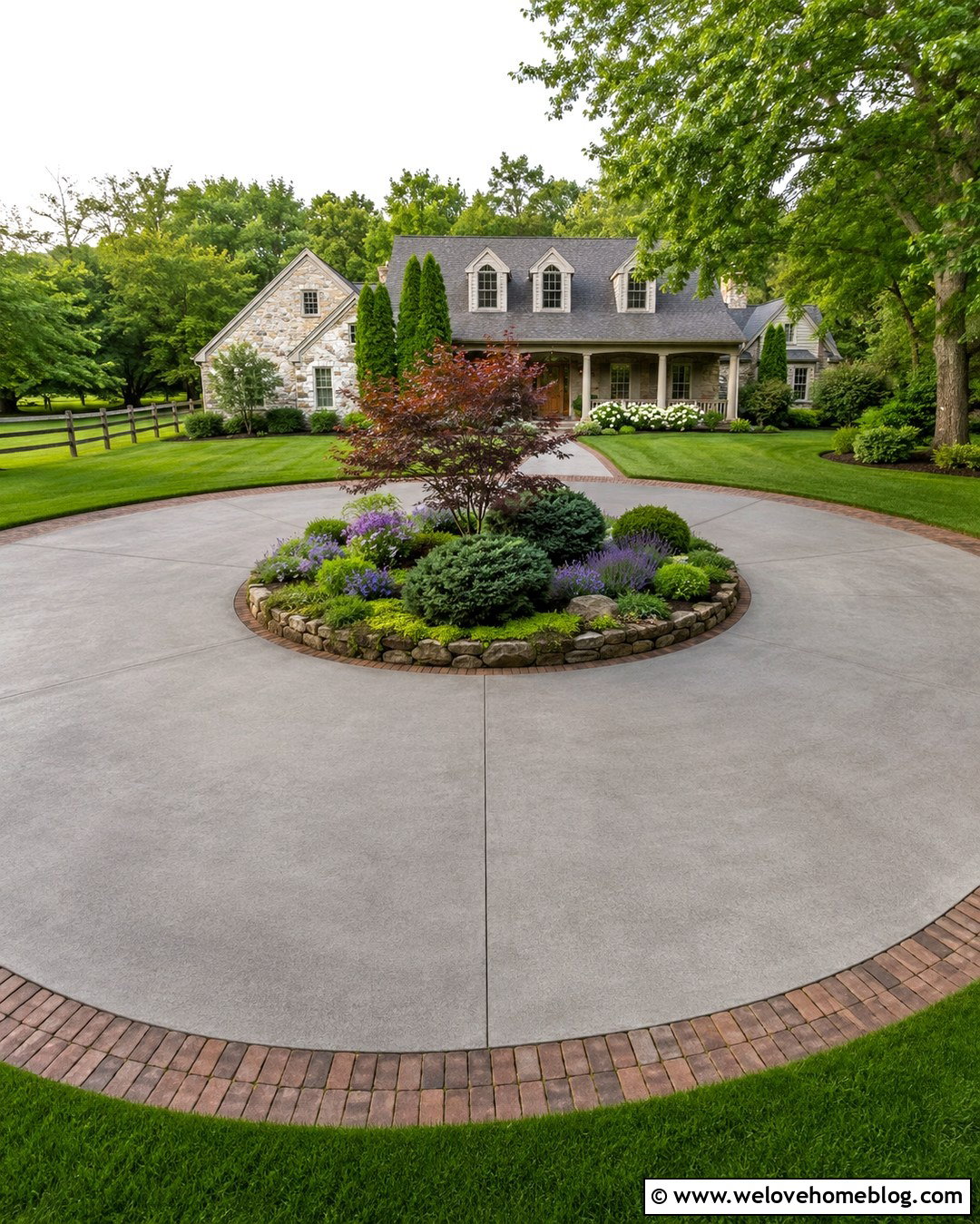
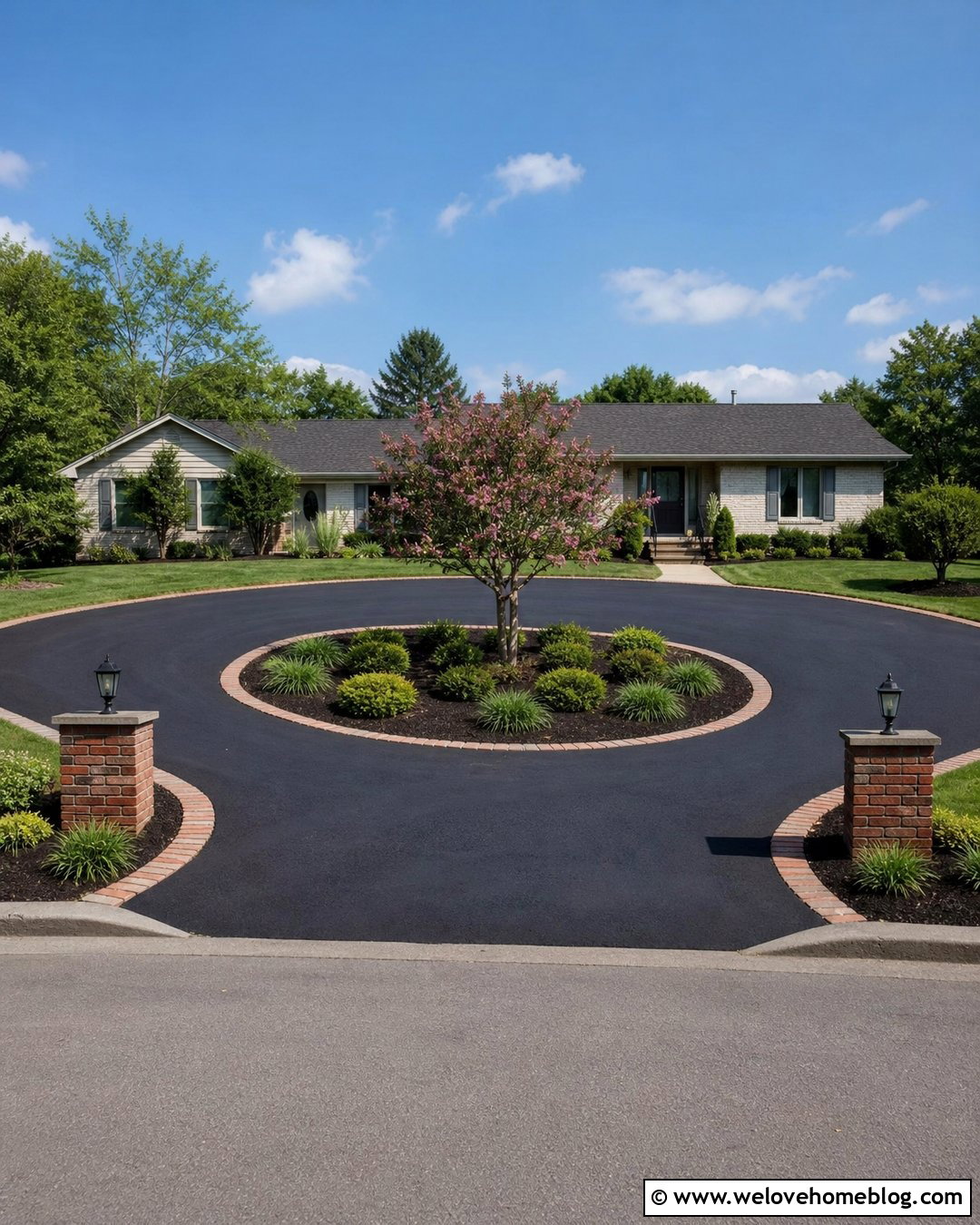
A circular cement driveway can turn a large front yard into an elegant arrival area. Use lightly textured gray concrete for the driving surface and place a landscaped island at the center. Give the island a curved stone border that follows the driveway’s shape. A small ornamental tree can serve as the focal point, surrounded by evergreen shrubs, flowering perennials, and low ground covers. Keep plants near the island’s edge short so drivers maintain clear visibility. Add a brick or cobblestone ribbon around the outer driveway edge to reinforce the circle. The walkway to the front door should connect naturally with the inside curve. This complete arrangement gives a traditional or country home a prominent entrance while replacing an oversized plain concrete area with layered greenery.
10. Cement Driveway With Geometric Saw Cuts
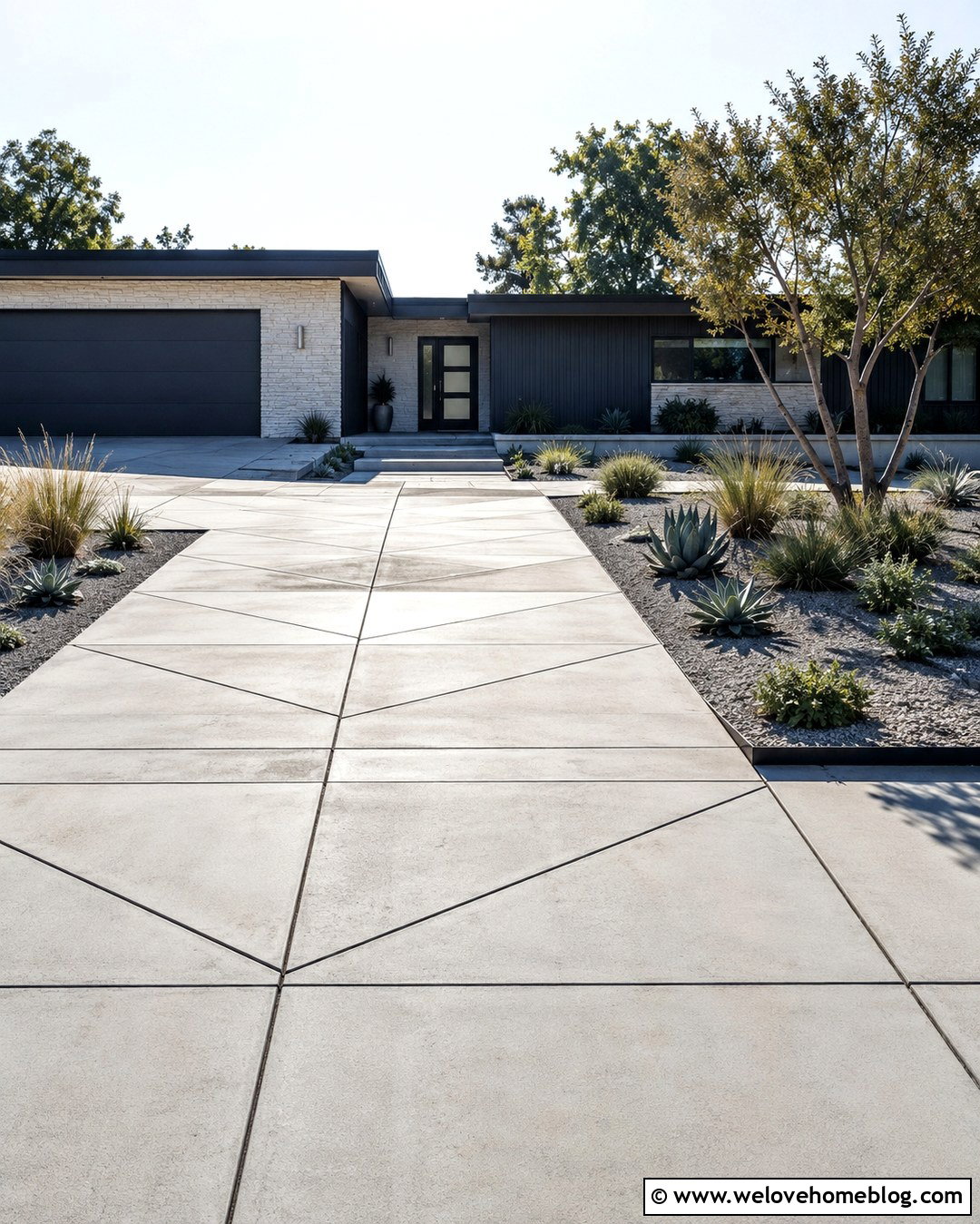
Decorative saw cuts can give a basic cement driveway a sharper architectural character. Choose smooth light gray concrete and arrange the cuts in large diamonds, offset rectangles, or a clean grid. The pattern should relate to the size and lines of the house rather than appearing randomly placed. For a mid-century modern home, combine wide rectangular sections with a straight driveway and a flat concrete walkway. Use black metal edging beside planting beds filled with agave, ornamental grasses, low succulents, or other climate-appropriate plants. A narrow gravel border can create additional separation between the concrete and greenery. Keep the color palette limited so the joint pattern stays readable from the curb. This approach adds visual detail without introducing a second dominant paving material.
11. Cement Driveway With Timber Edging
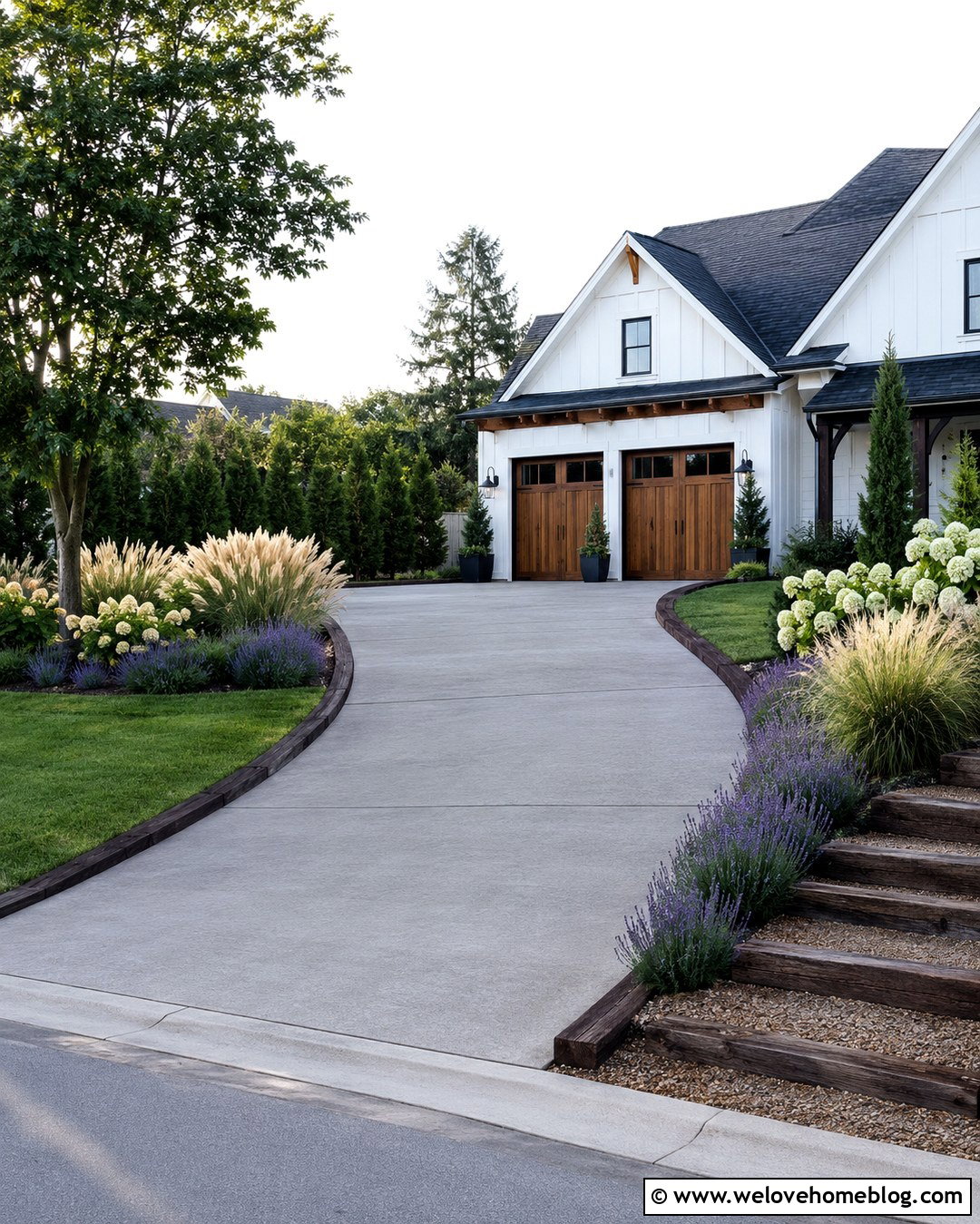
Timber edging can soften a cement driveway beside a modern farmhouse or rustic country home. Use warm gray broom-finished concrete in a straight or gently curved layout. Install substantial treated timber borders along selected planting areas rather than placing wood where vehicles regularly cross. The rich brown tone creates a natural transition between the pale cement and surrounding landscape. Fill the beds with lavender, fountain grass, hydrangeas, and compact evergreen shrubs. A gravel walkway with timber steps can lead toward a porch with wooden columns. Repeat the timber color in the garage door, fence, or house trim to make the materials feel intentional. This design balances the clean surface of concrete with the warmer texture of wood, producing a comfortable and approachable front-yard setting.
12. Cement Driveway With Lavender Borders
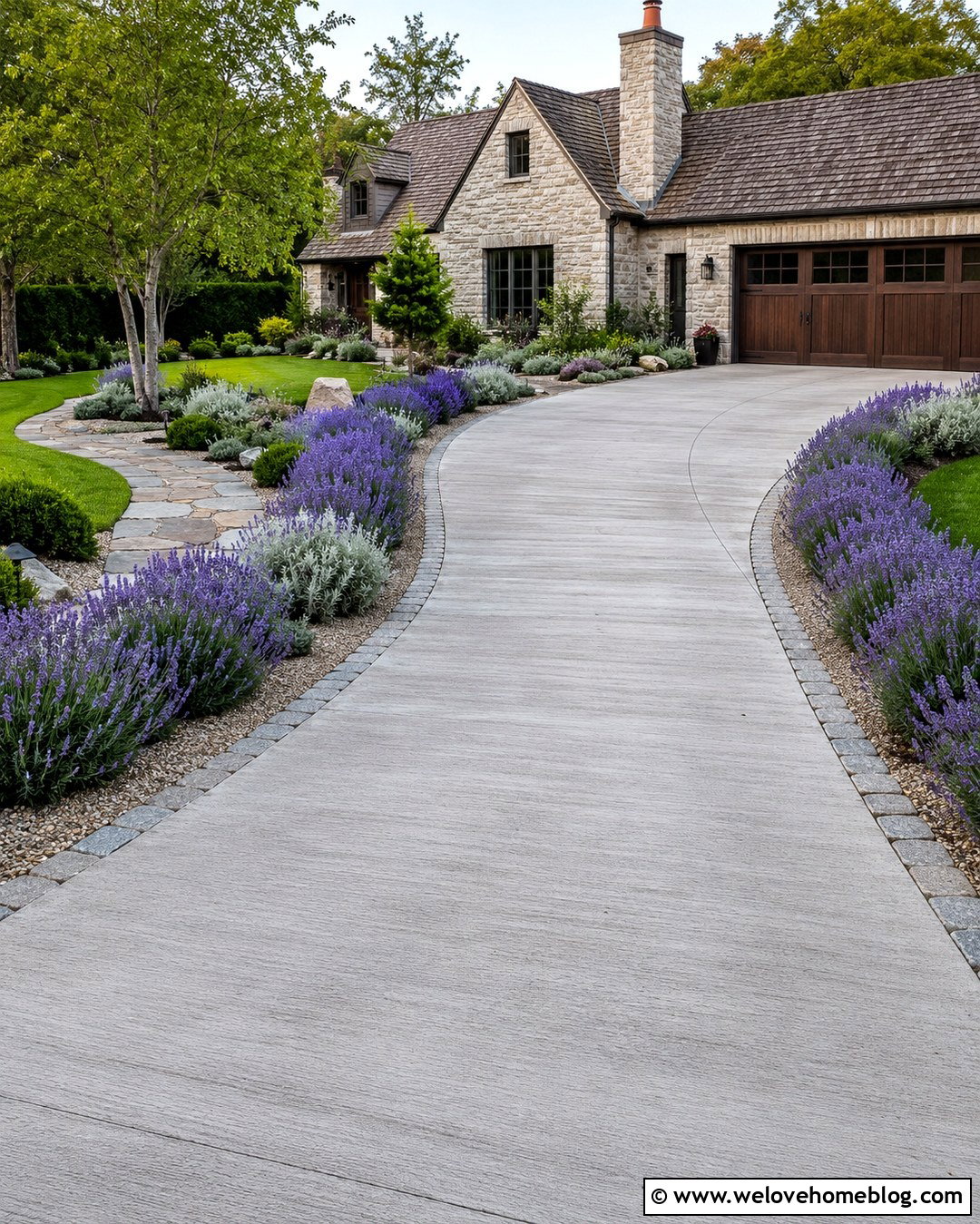
Imagine arriving home along a clean cement driveway framed by soft purple flowers. Start with pale gray brushed concrete and a gently curved layout that follows the front lawn. Add narrow cobblestone edging to protect the planting beds and give the driveway a finished boundary. Plant repeated groups of lavender along sunny sections, mixing them with compact evergreen shrubs and silver-leaved plants. Use one consistent mulch or gravel color to prevent the beds from looking busy. A flagstone walkway can branch from the driveway and continue through the same planting palette toward a cottage-style entrance. The combination of cool gray cement, purple blooms, and green foliage creates an inviting complete look. Where lavender is unsuitable, choose a locally adapted plant with a similar low, mounded form.
13. Cement Driveway With Concrete Paver Border
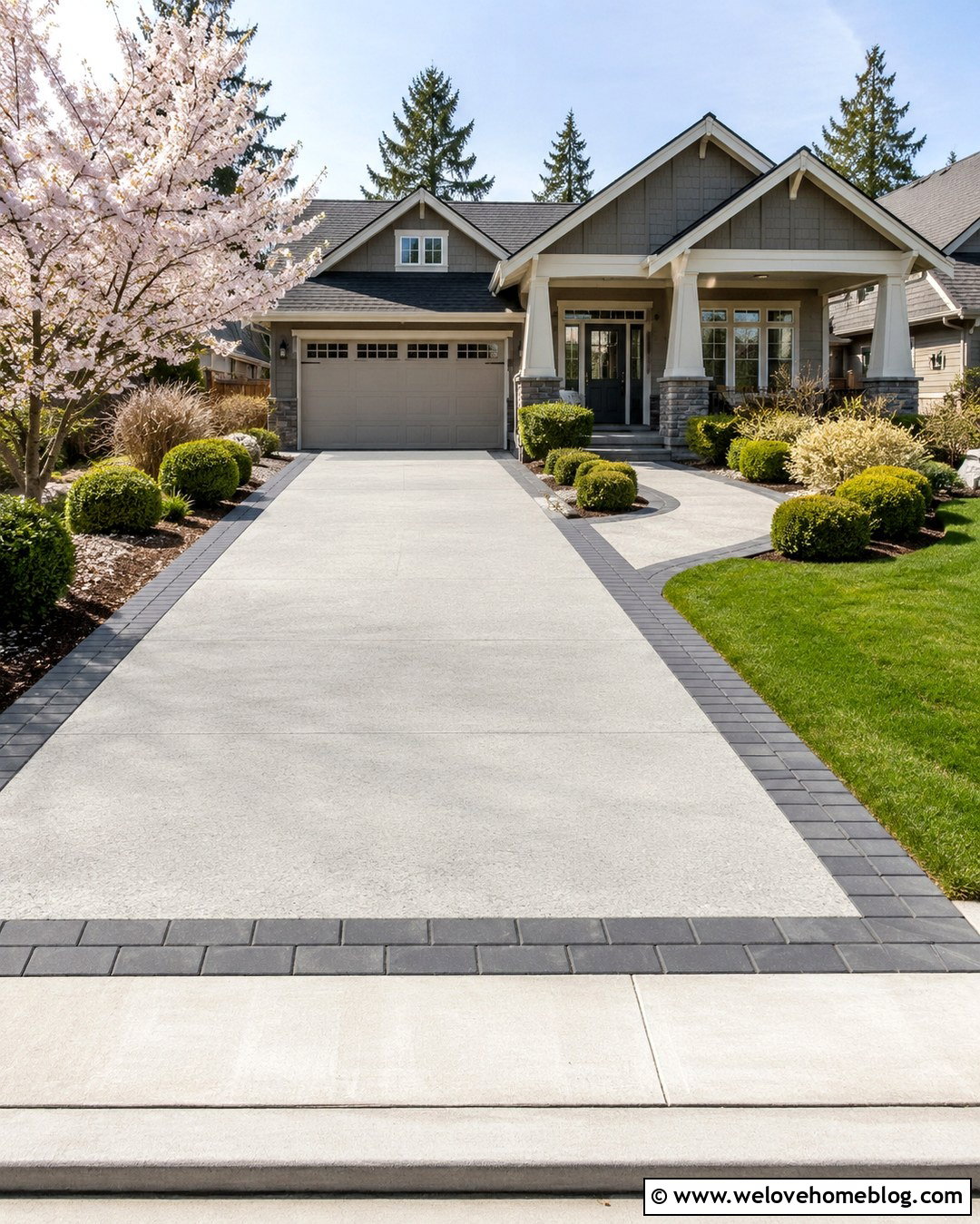
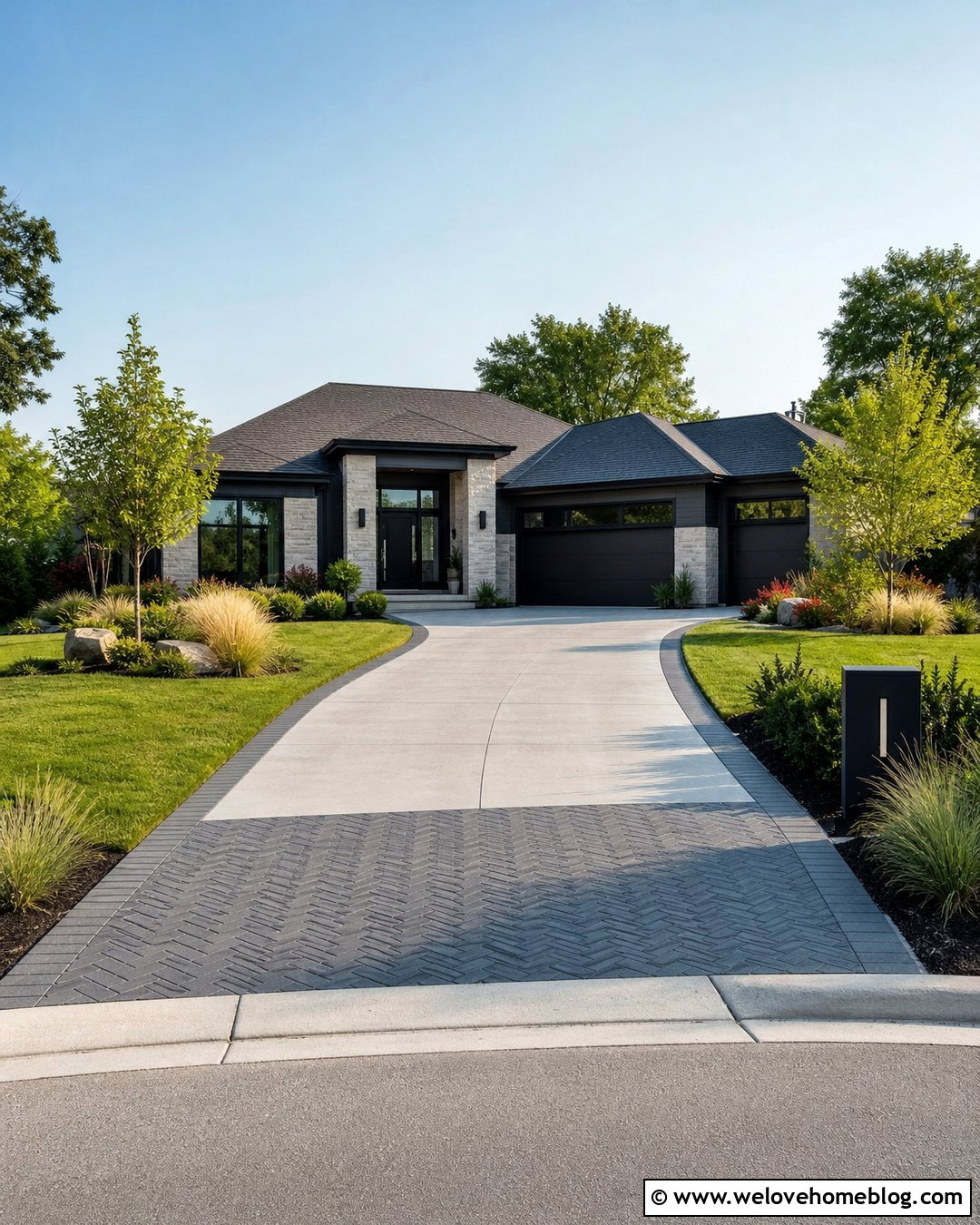
A concrete paver border adds definition without introducing a completely different material family. Use standard light gray cement for the main driveway and frame it with charcoal rectangular pavers in a running-bond pattern. A matching paver ribbon across the entrance and near the garage can make the long surface feel more organized. This combination suits a wide range of houses, including ranch, craftsman, and contemporary suburban homes. Surround the driveway with trimmed lawn and simple beds containing rounded shrubs, ornamental grasses, and one small flowering tree. Connect the front walkway with the same charcoal pavers to carry the design toward the house. Keeping the center understated makes this a practical upgrade, while the darker border creates enough contrast to improve the driveway’s visibility and overall curb presence.
14. Warm Beige Cement Driveway With Desert Plants
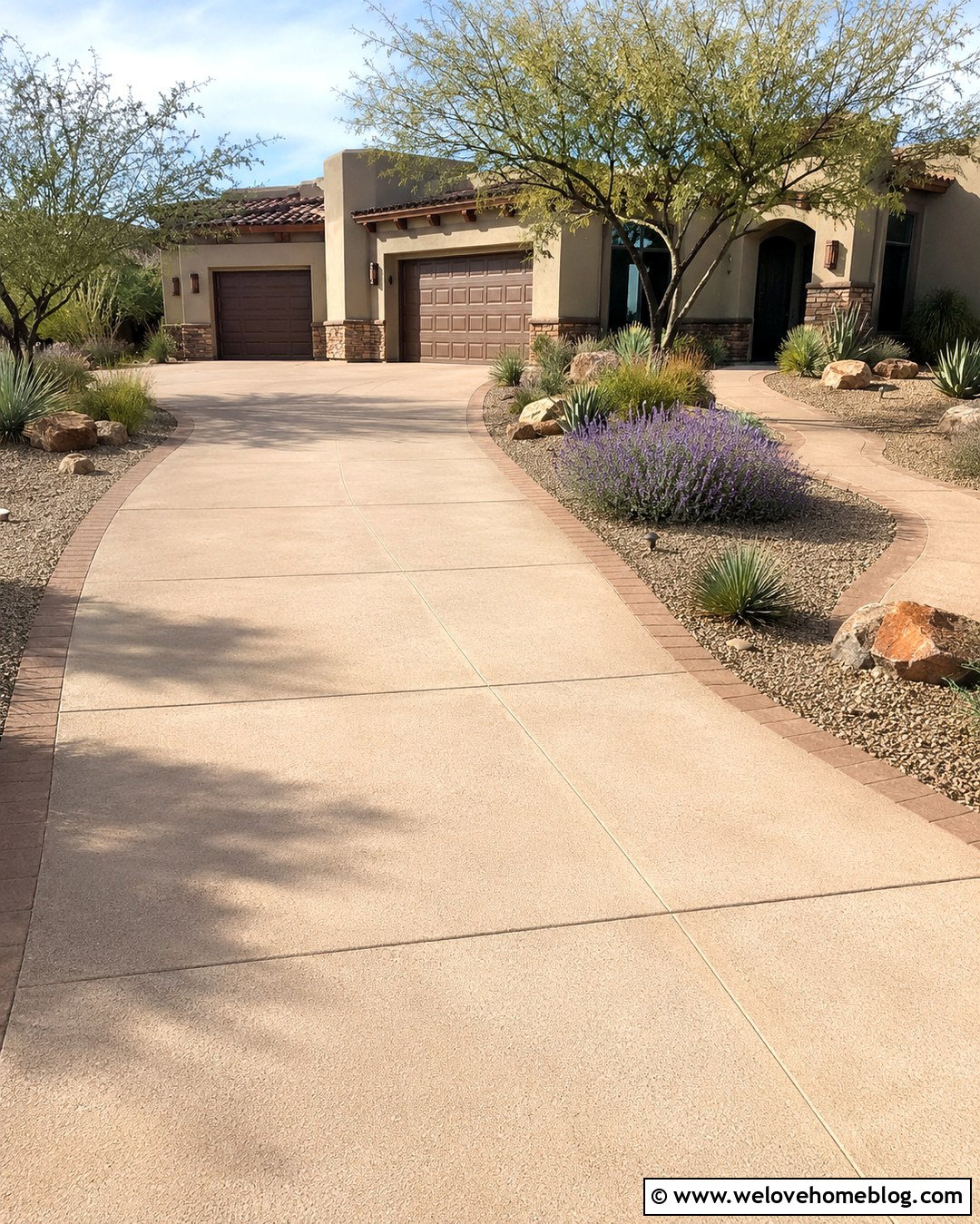
Warm beige cement blends naturally into a Southwestern or desert-inspired landscape. Choose integral color in a sand, buff, or light tan tone, then add subtle rectangular scoring across a gently curved driveway. Edge the surface with rust-colored concrete pavers or natural sandstone. Use broad planting beds filled with sculptural agaves, yuccas, desert-adapted grasses, flowering shrubs, and warm gravel mulch. Space plants carefully so their shapes remain distinct and mature growth stays clear of vehicles. A stucco house with terracotta, wood, or dark bronze details will strengthen the coordinated color palette. Add a matching walkway that curves through the planting area rather than running directly beside the driveway. This complete design reduces the visual harshness of concrete and connects the surface to an arid residential setting.
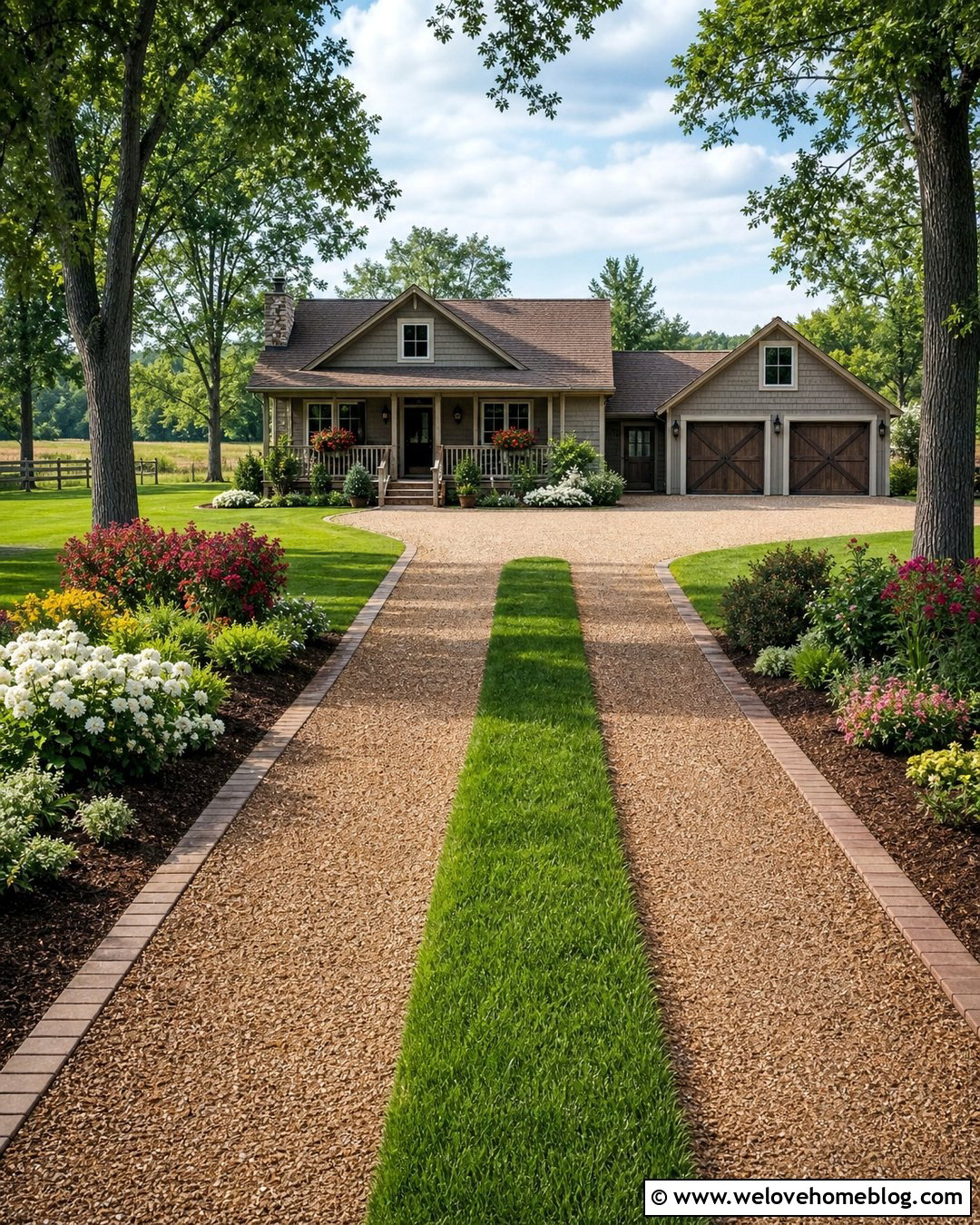
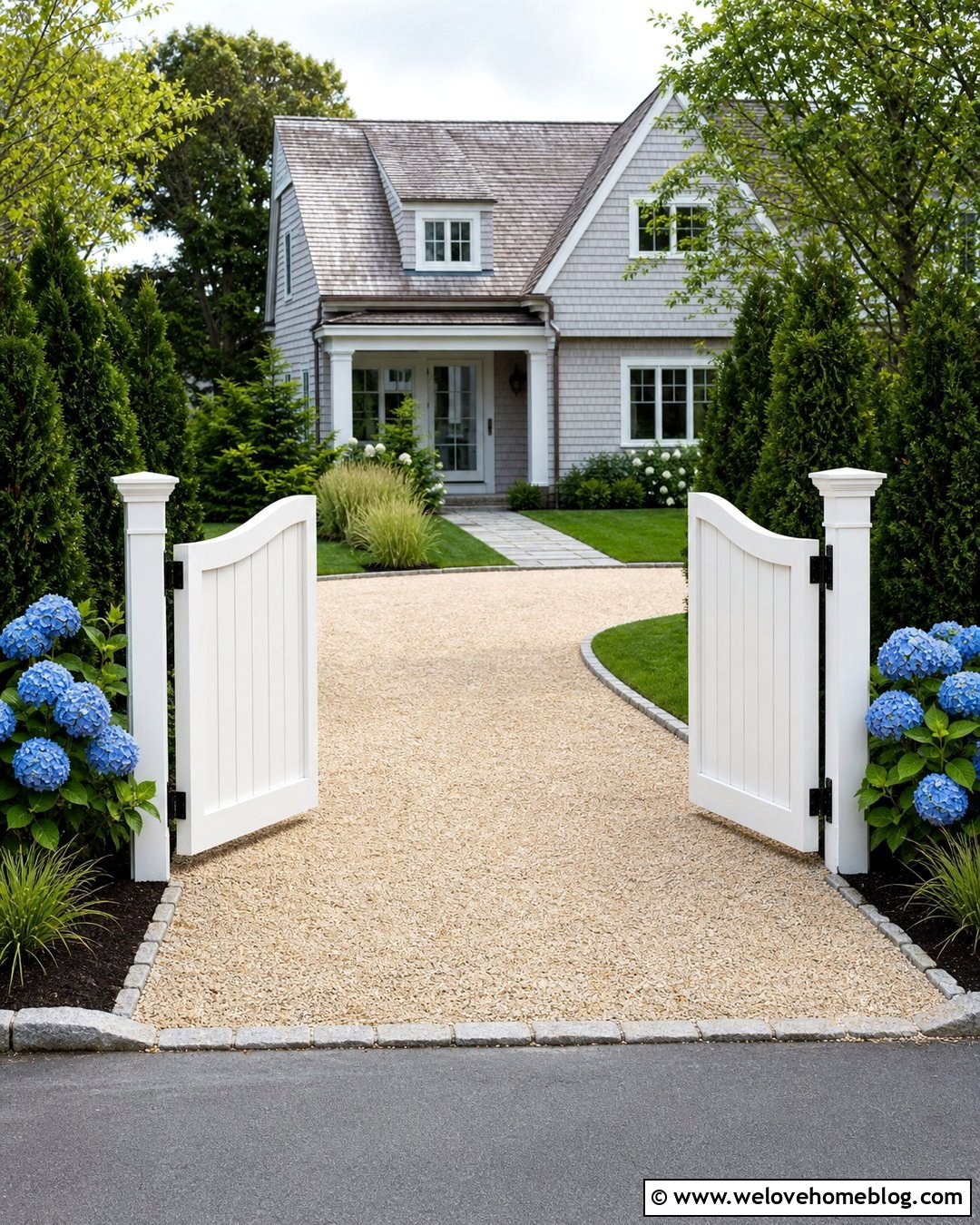
15. Cement Driveway With Black Metal Edging
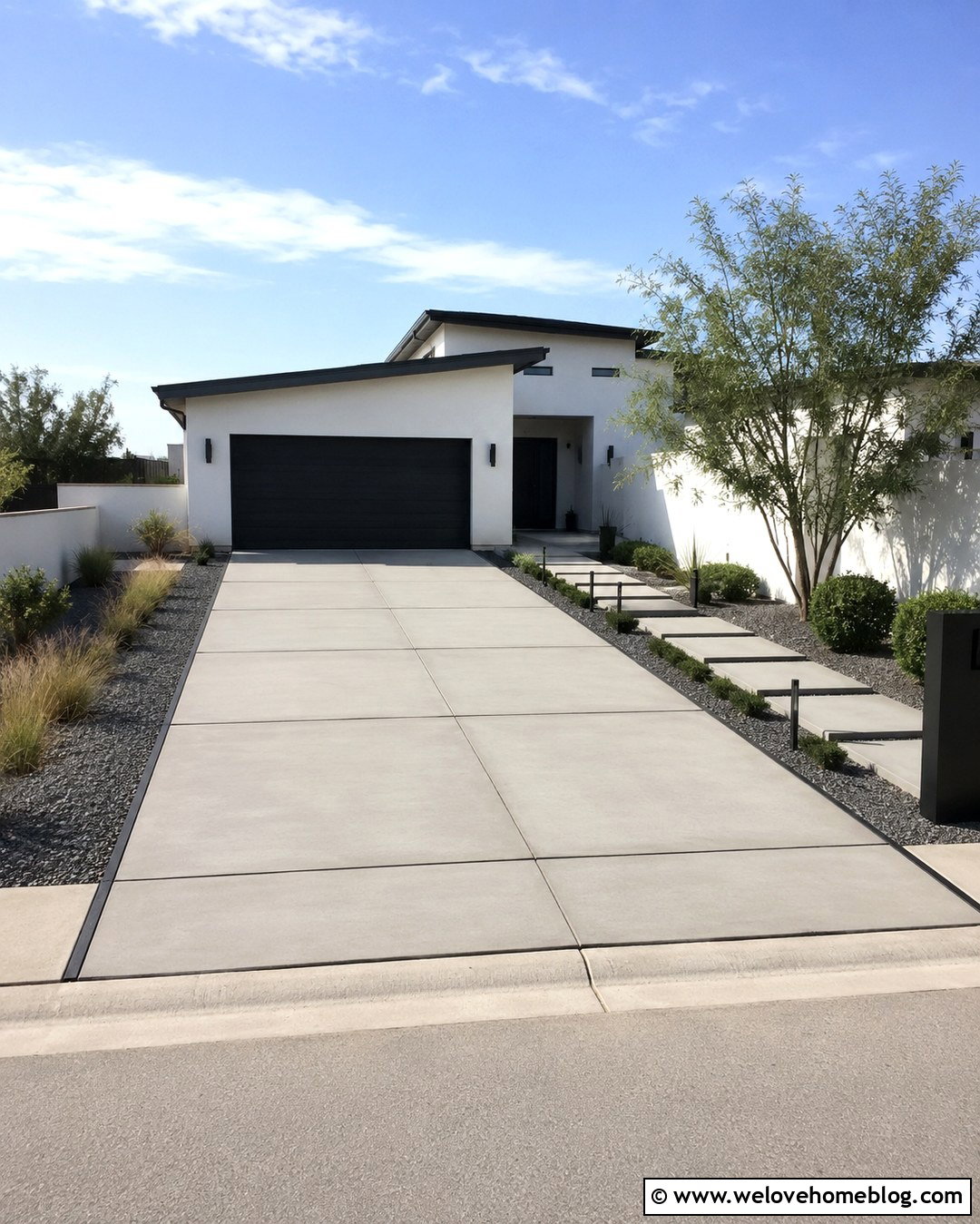
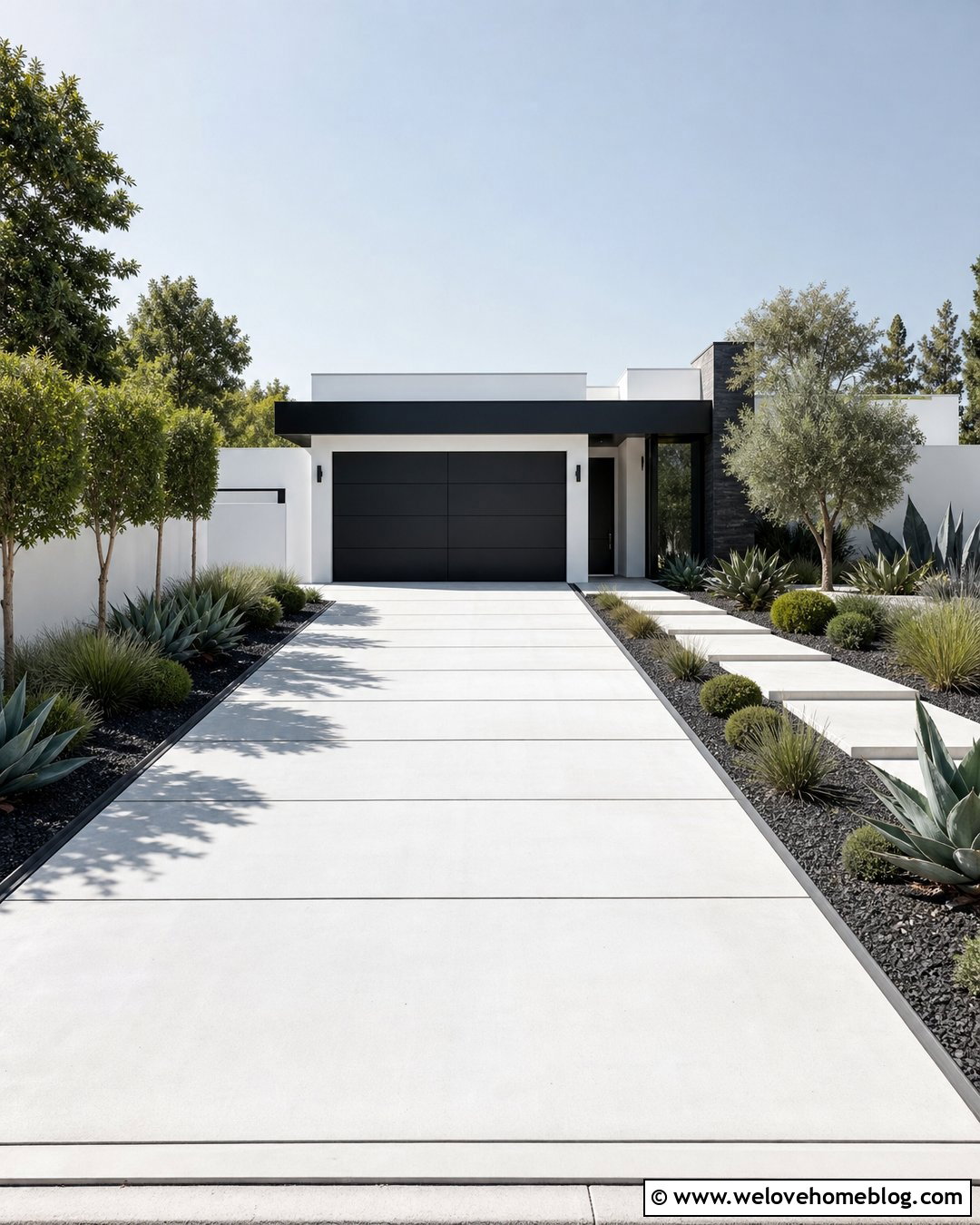
Slim black metal edging creates a precise boundary around a modern cement driveway. Select large, smooth, light gray concrete panels with straight joints and a clean rectangular parking area. Run the metal edging between the driveway and narrow beds of ornamental grass, clipped shrubs, and dark decorative gravel. Although the edging is visually subtle, it helps the plantings read as intentional sections rather than loose additions beside the pavement. Repeat black details through modern address numbers, exterior lights, window frames, and the front door. A floating-style concrete walkway can extend toward the entrance through the same landscaping. Keep the lawn and beds level with the driveway wherever practical for a streamlined view. The resulting design feels crisp, spacious, and coordinated without relying on elaborate stamped patterns.
16. Cement Driveway With Red Brick House
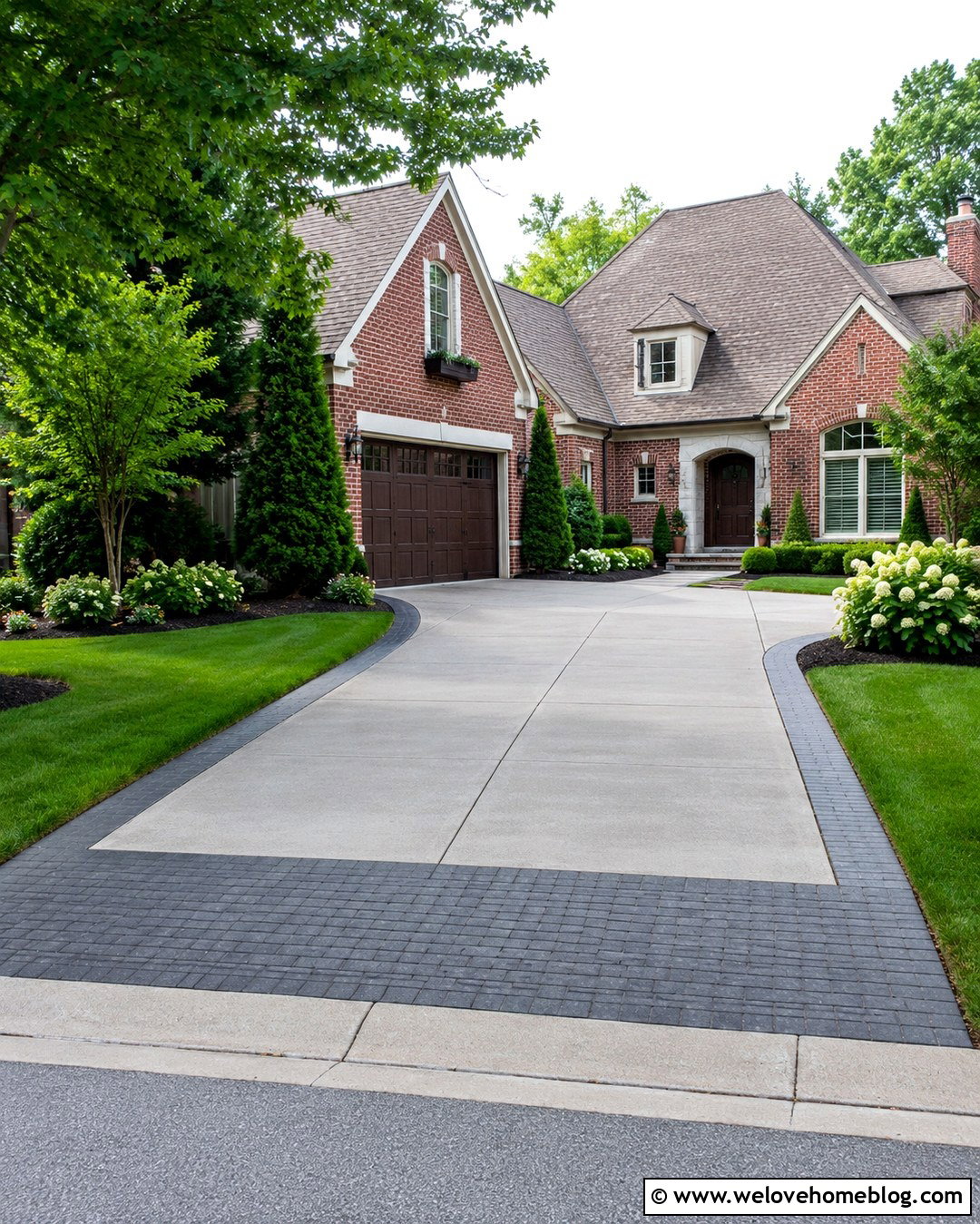
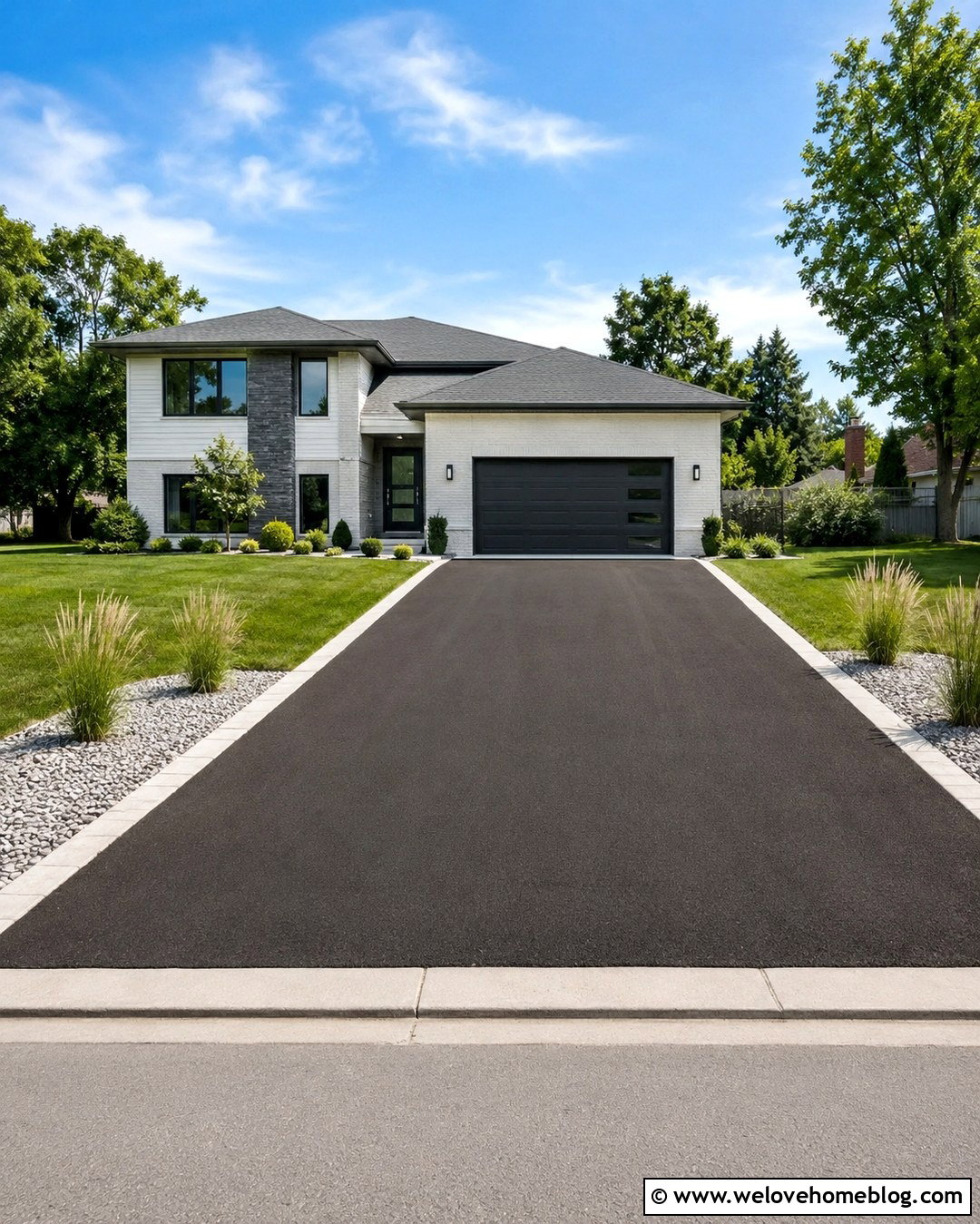
A red brick house needs a driveway that supports its strong color rather than competing with it. Use neutral medium-gray cement with a simple broom finish and a straight layout. Add a narrow charcoal or muted brown border instead of bright red brick, allowing the home’s masonry to remain dominant. Near the street, create a restrained apron with darker concrete in a running-bond pattern. Frame the driveway with deep green evergreen shrubs, white flowers, and a neatly maintained lawn. Curved beds can soften the straight lines of the driveway and brick facade. Connect the driveway to the porch with a broad concrete walkway edged in the same dark material. This balanced palette gives the entire property a finished appearance while avoiding too many red or heavily patterned surfaces in one curb view.
17. Cement Driveway With Stone Retaining Wall
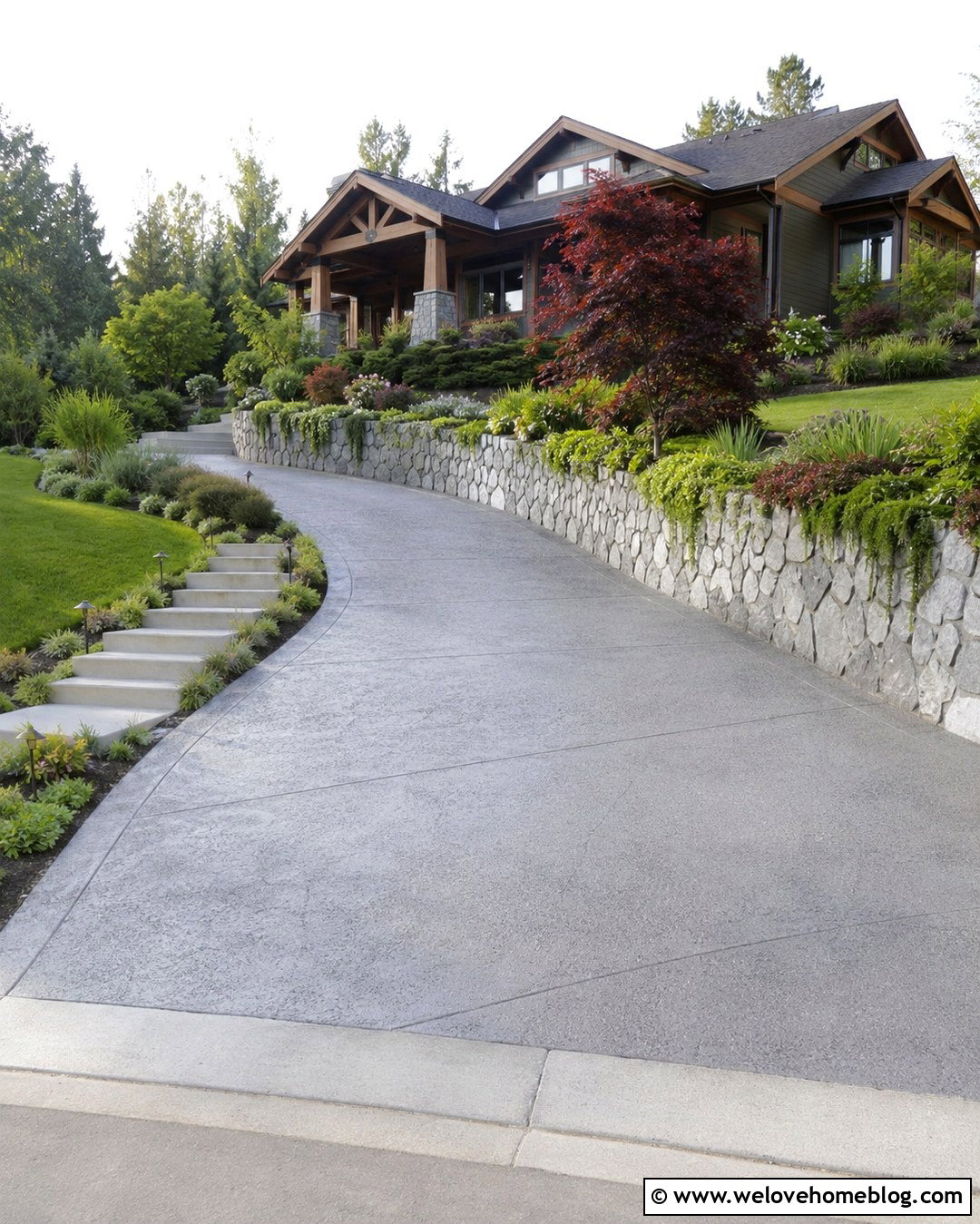
A sloped front yard can gain curb appeal when the driveway and retaining wall are designed together. Use textured gray cement for a gently rising or curved driveway, then place a low natural-stone retaining wall along the higher side. Select stone containing gray and tan tones that complement both the concrete and house facade. Plant trailing ground covers near the wall’s top, followed by layered shrubs and small ornamental trees farther back. On the lower driveway edge, maintain an open lawn or low planting bed to keep the route visually balanced. Include broad concrete steps and a matching walkway if the front entrance sits above the garage. The wall should feel like part of the full landscape composition, creating structure while preventing the sloping yard from overwhelming the driveway.
18. Cement Driveway With Split Entry Landscaping
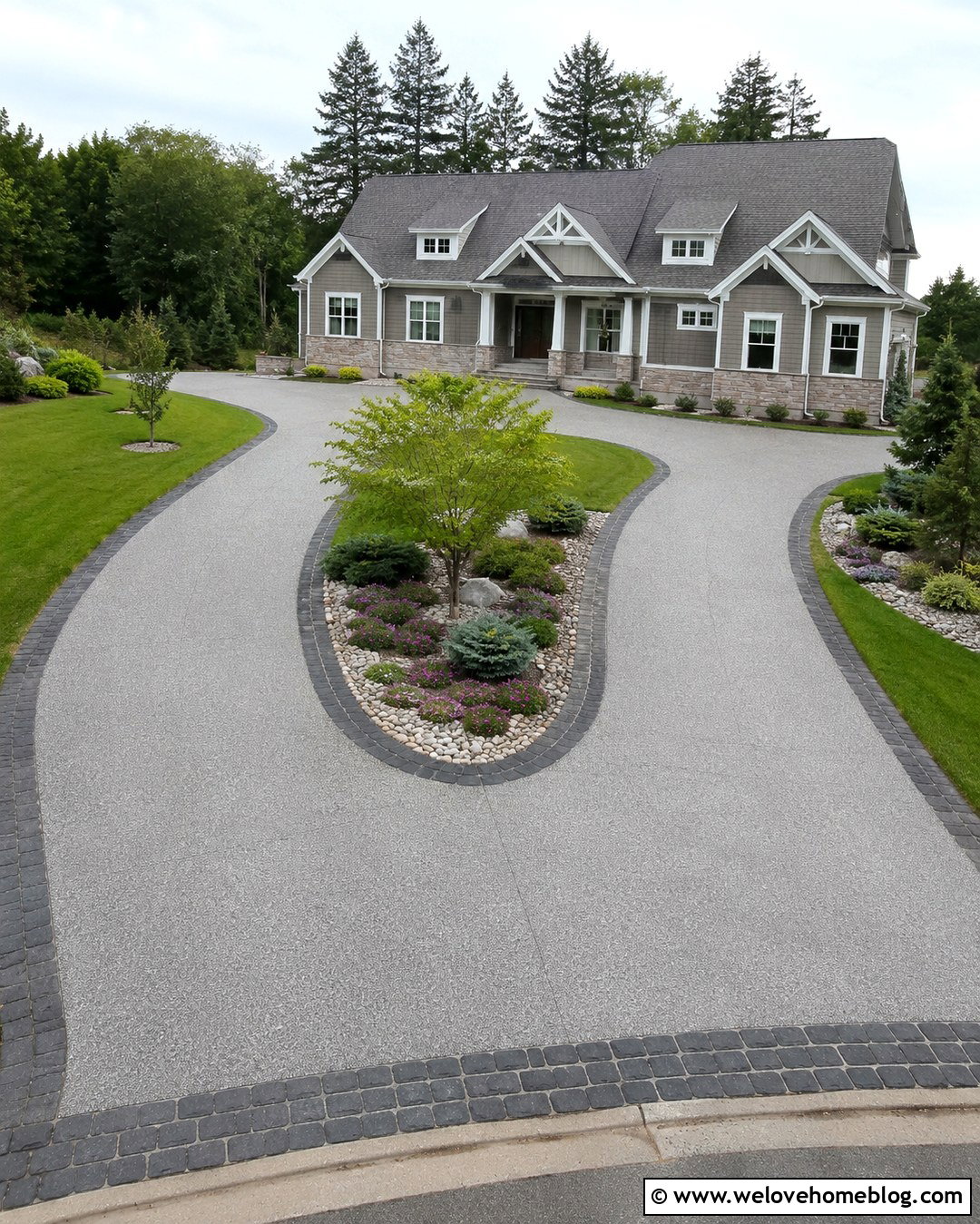
A split driveway entrance can create an upscale appearance without requiring a full circular layout. Begin with a wide cement entrance that divides into two branches around a small teardrop-shaped planting island. Use medium-gray exposed aggregate concrete and frame each edge with dark cobblestones. Place a compact ornamental tree in the island, then surround it with low evergreen shrubs and colorful ground covers. Keep the plants below sight lines near the street. One branch can lead toward the garage while the other creates a turnaround or guest parking area. Repeat the cobblestone border around both sections so they feel like one design. This layout works well on broad suburban lots where a straight expanse of concrete would otherwise dominate the entire front yard.
19. Narrow Cement Driveway With Vertical Landscaping
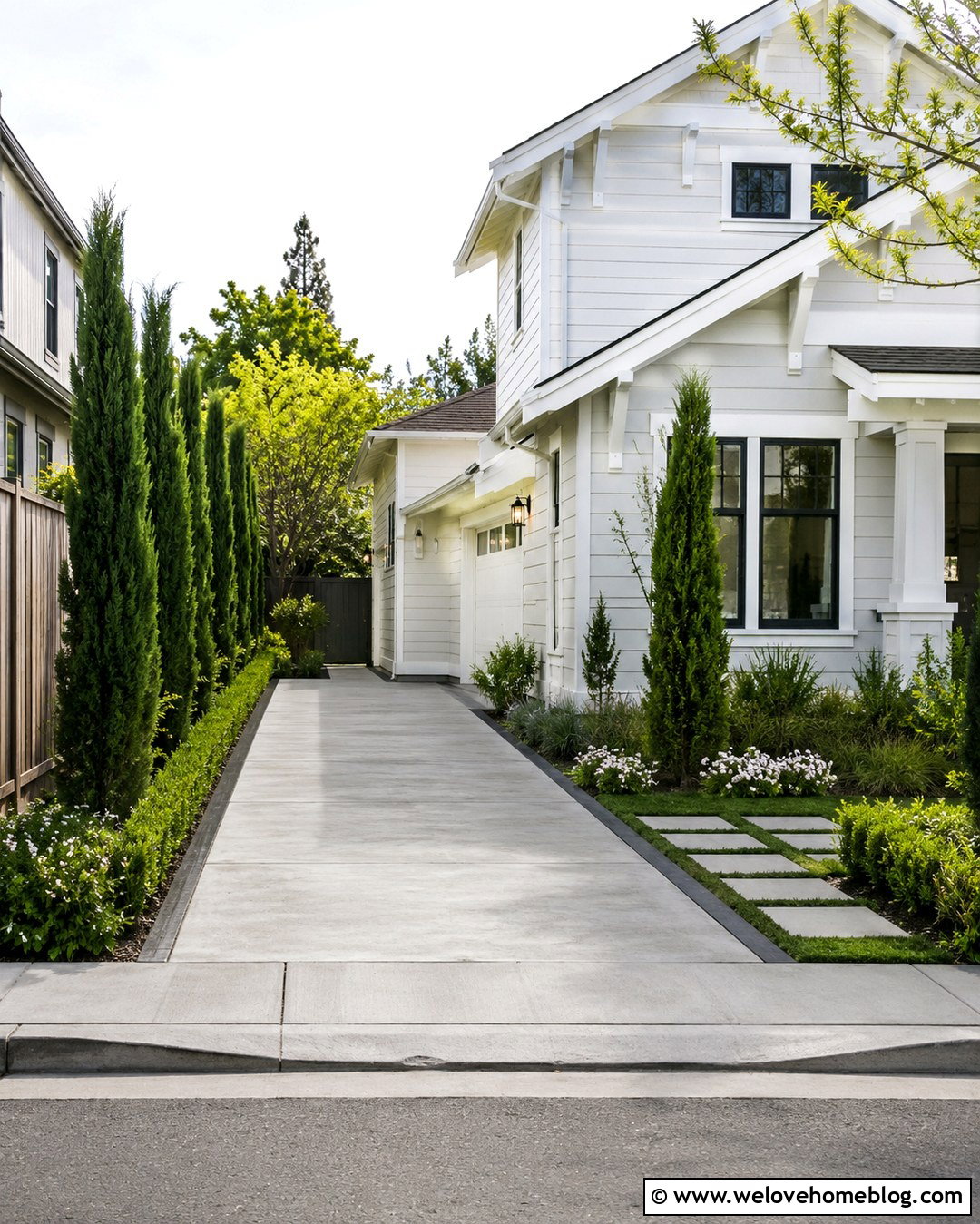
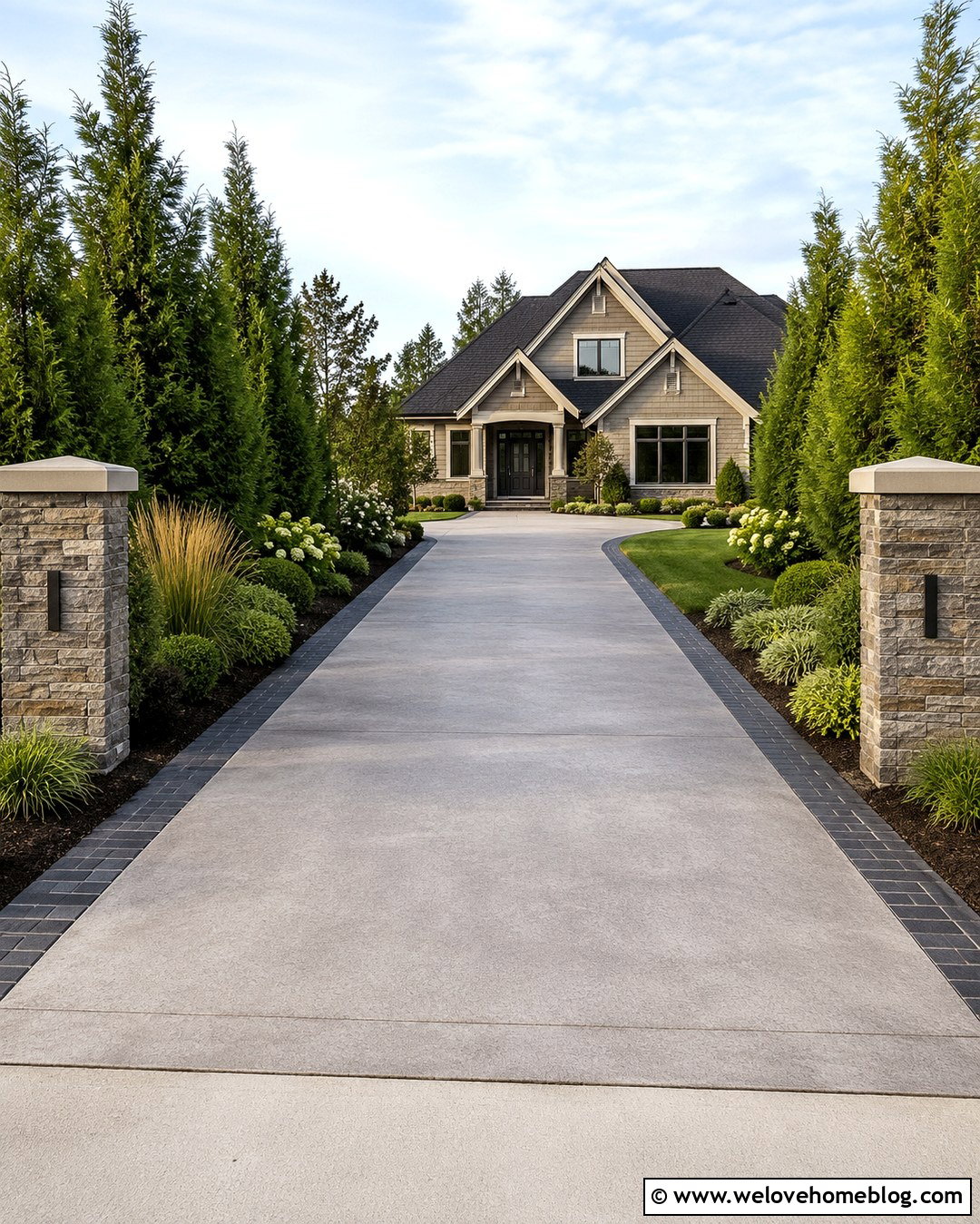
A narrow driveway can still look attractive when its surface and nearby landscaping are carefully proportioned. Use light gray cement with long rectangular scoring that visually follows the direction of travel. Add a slim brick or dark concrete border to sharpen the edges without reducing usable width. On one side, plant a narrow hedge or columnar evergreens to create vertical structure. On the other, use a low bed of ground covers, compact grasses, and seasonal flowers to maintain openness. A simple stepping-stone path can connect the driveway to a side entrance without adding another wide paved surface. Choose a bright garage door that blends with the house rather than becoming the focal point. The complete arrangement makes a small side-yard approach feel longer, cleaner, and more thoughtfully landscaped.
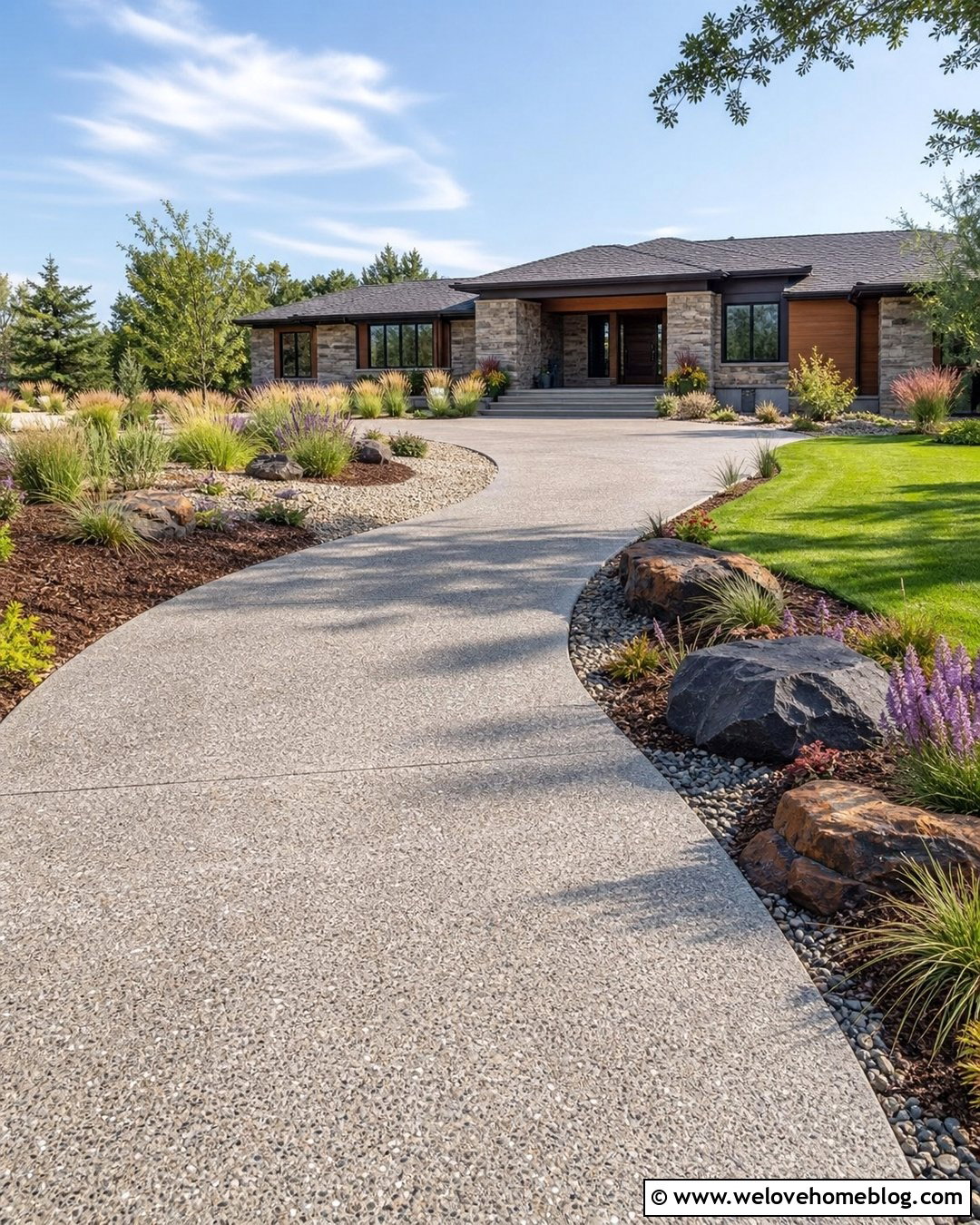
20. Cement Driveway With Lighted Entrance Pillars
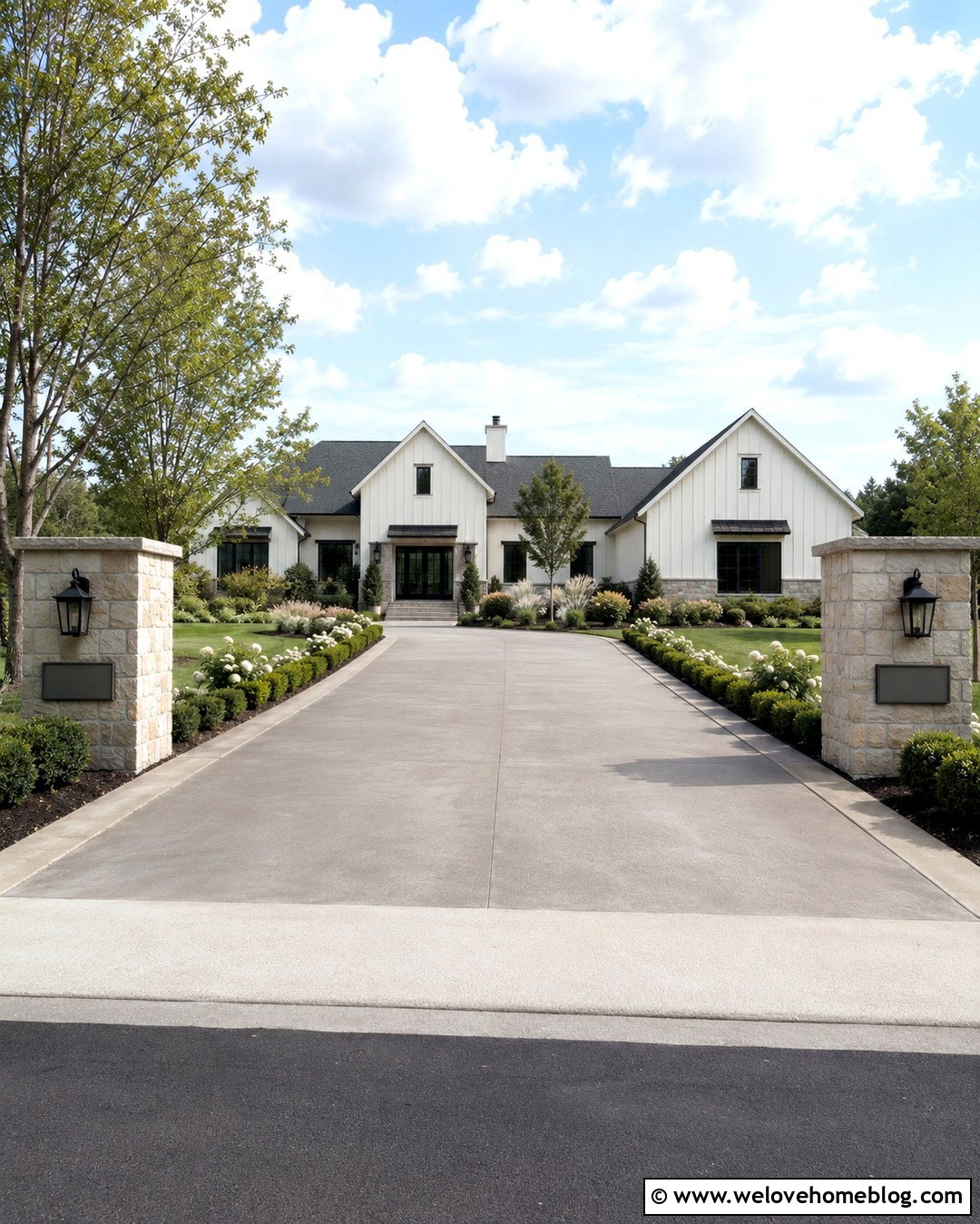
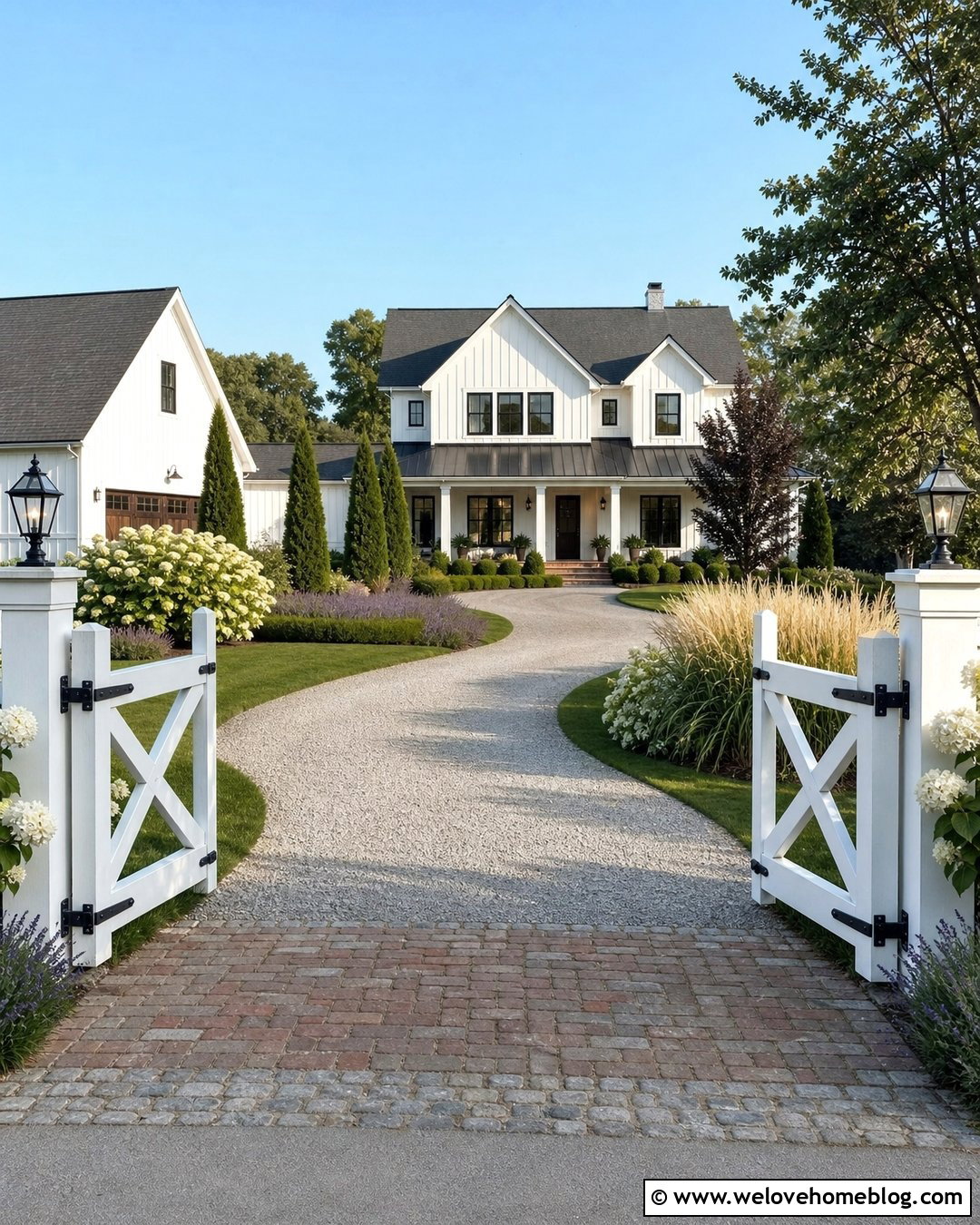
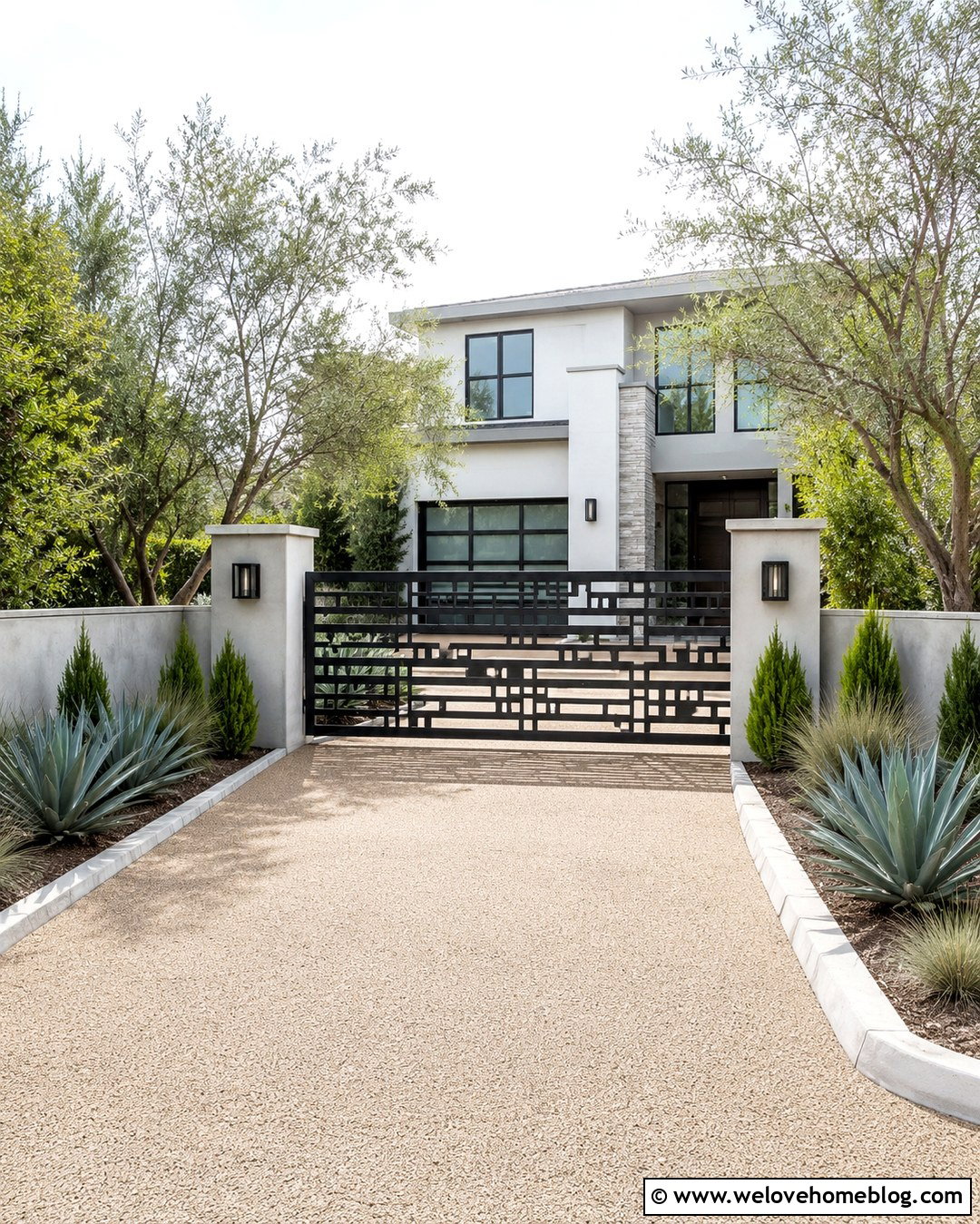
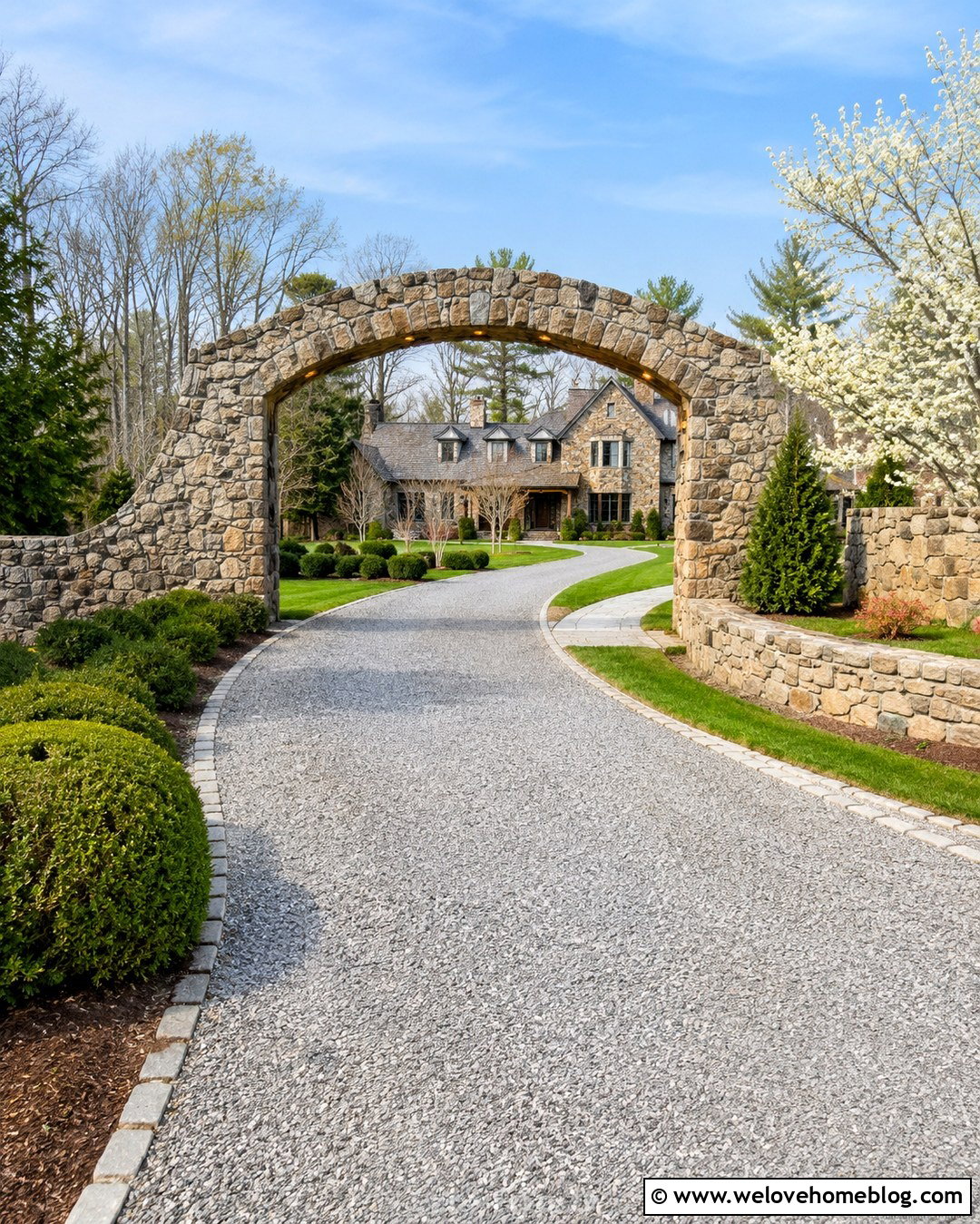
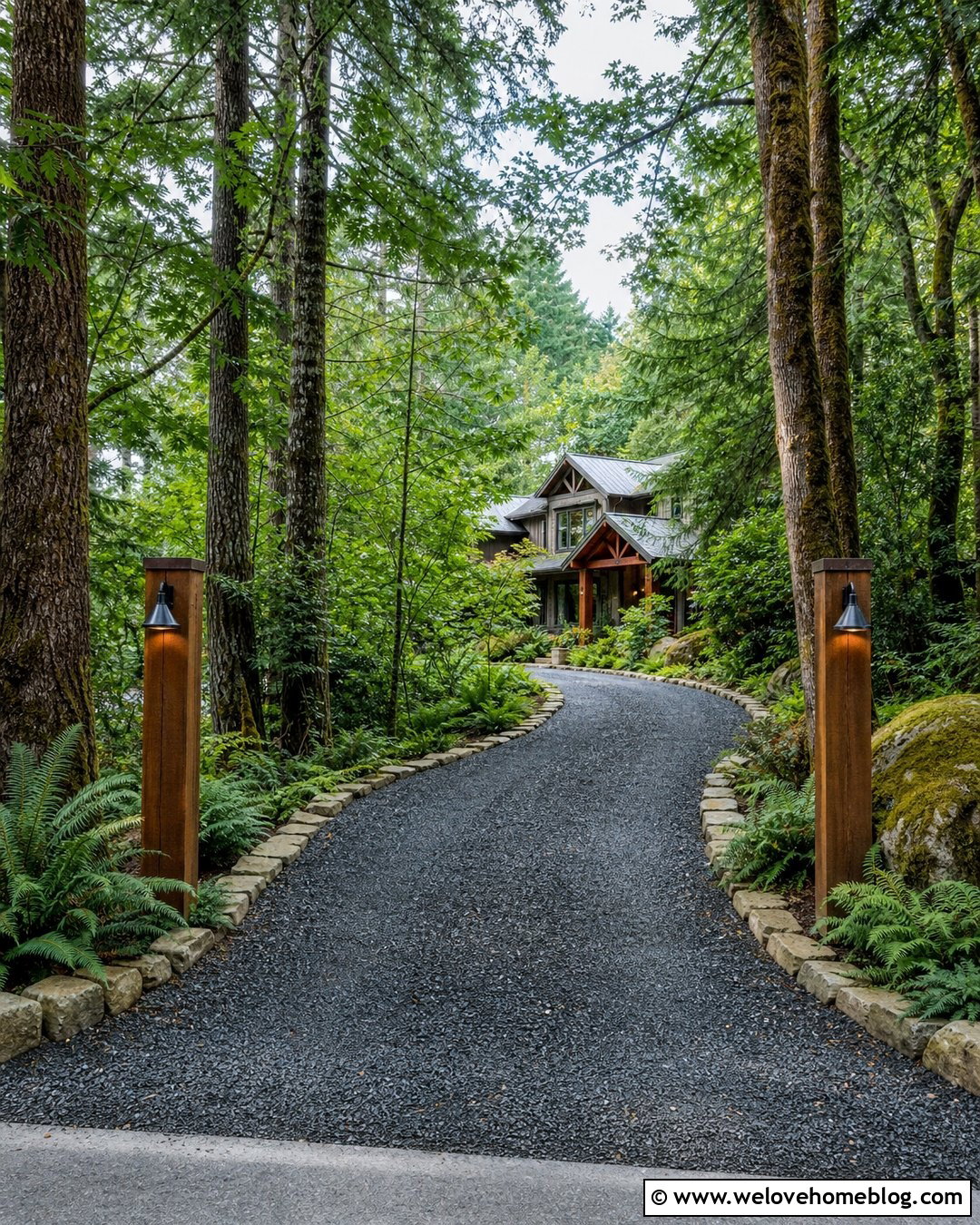
Entrance pillars and lighting can turn a basic cement driveway into a welcoming approach. Use warm gray poured concrete in a straight layout with a subtle flared apron near the street. Place matching stone or brick pillars on both sides, set far enough back to preserve a comfortable entrance width. Add shielded, appropriately scaled fixtures that illuminate the gateway without dominating the daytime design. Continue the pillar material as a narrow driveway border or short garden wall. Plant low boxwoods, flowering shrubs, and ornamental grasses around each base while keeping the view clear. A coordinated address plaque can be mounted on one pillar for easy visibility. This complete entrance works with traditional, craftsman, and modern farmhouse homes, creating a clear transition between the public street and private residence.
Conclusion:
The best **20 Cement Driveway Curb Appeal Ideas** treat the driveway, house, and front yard as one connected design. Even simple concrete can feel distinctive when it is paired with the right border, finish, layout, and landscaping. Brick edging adds tradition, while grass strips and geometric scoring create a modern look. Curves, aprons, entrance pillars, and planting islands can also change how the property feels from the street. Before choosing a design, consider your home’s architecture, available space, climate, drainage, and maintenance preferences. Repeat a few colors or materials from the facade to build visual harmony. With thoughtful planning, a cement driveway can become an attractive part of your home’s curb appeal rather than merely a parking surface.

Related posts:
Leave a Reply