
Limestone brings a soft, natural look to residential driveways while working with many home styles, yard sizes, and budgets. The best **25 Limestone Driveway Ideas** go beyond choosing stone color. They combine the surface with a practical layout, stable edging, thoughtful drainage, attractive landscaping, and a welcoming entrance. Current designs often pair crushed limestone with brick, concrete pavers, metal edging, stone borders, planting beds, or gravel-stabilization systems to create a more defined finish. () Whether you want a relaxed country approach or a clean modern driveway, consider how every detail will function together. The complete looks below offer useful inspiration for planning your own **25 Limestone Driveway Ideas**.

1. Crushed Limestone Driveway With Brick Edging
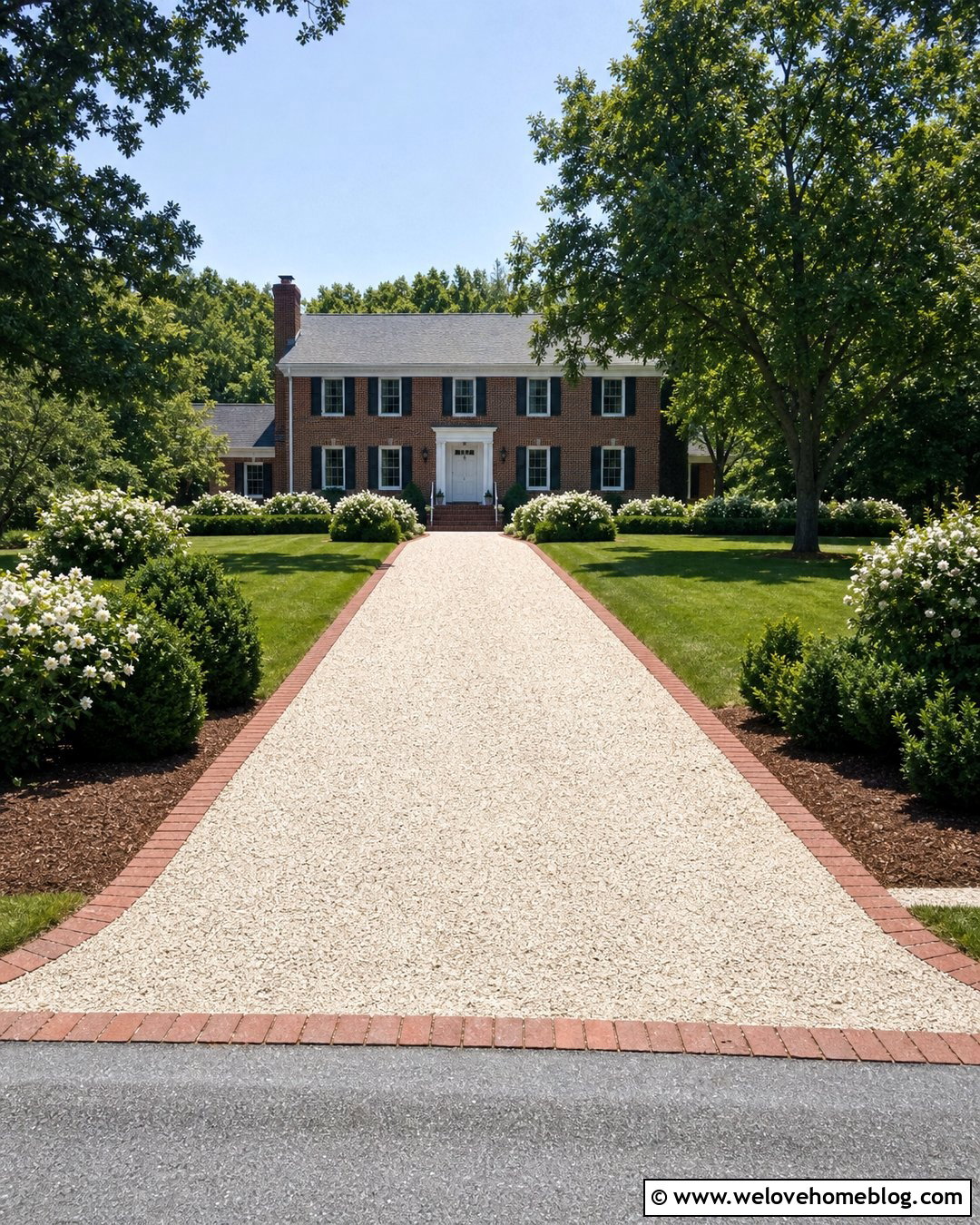
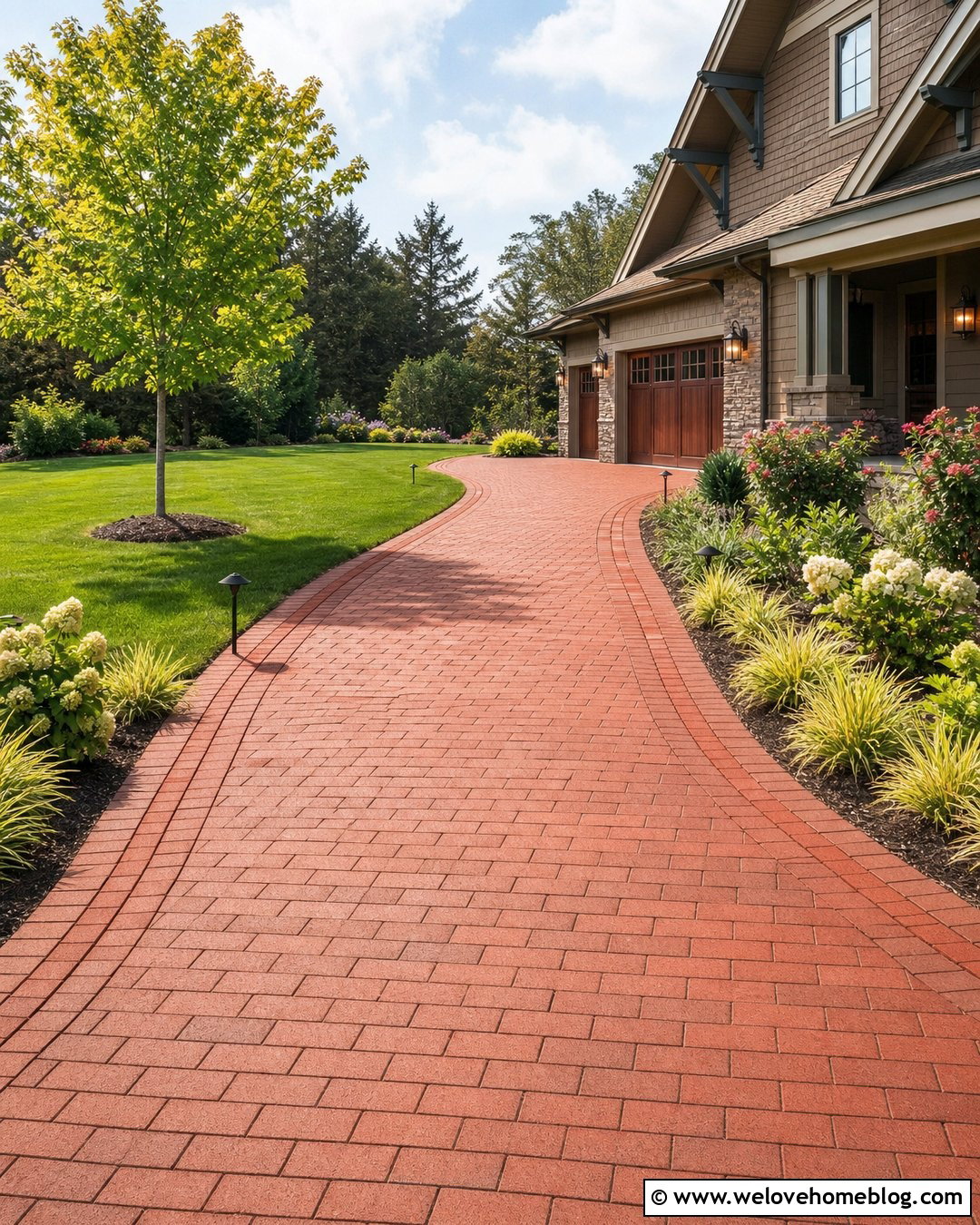
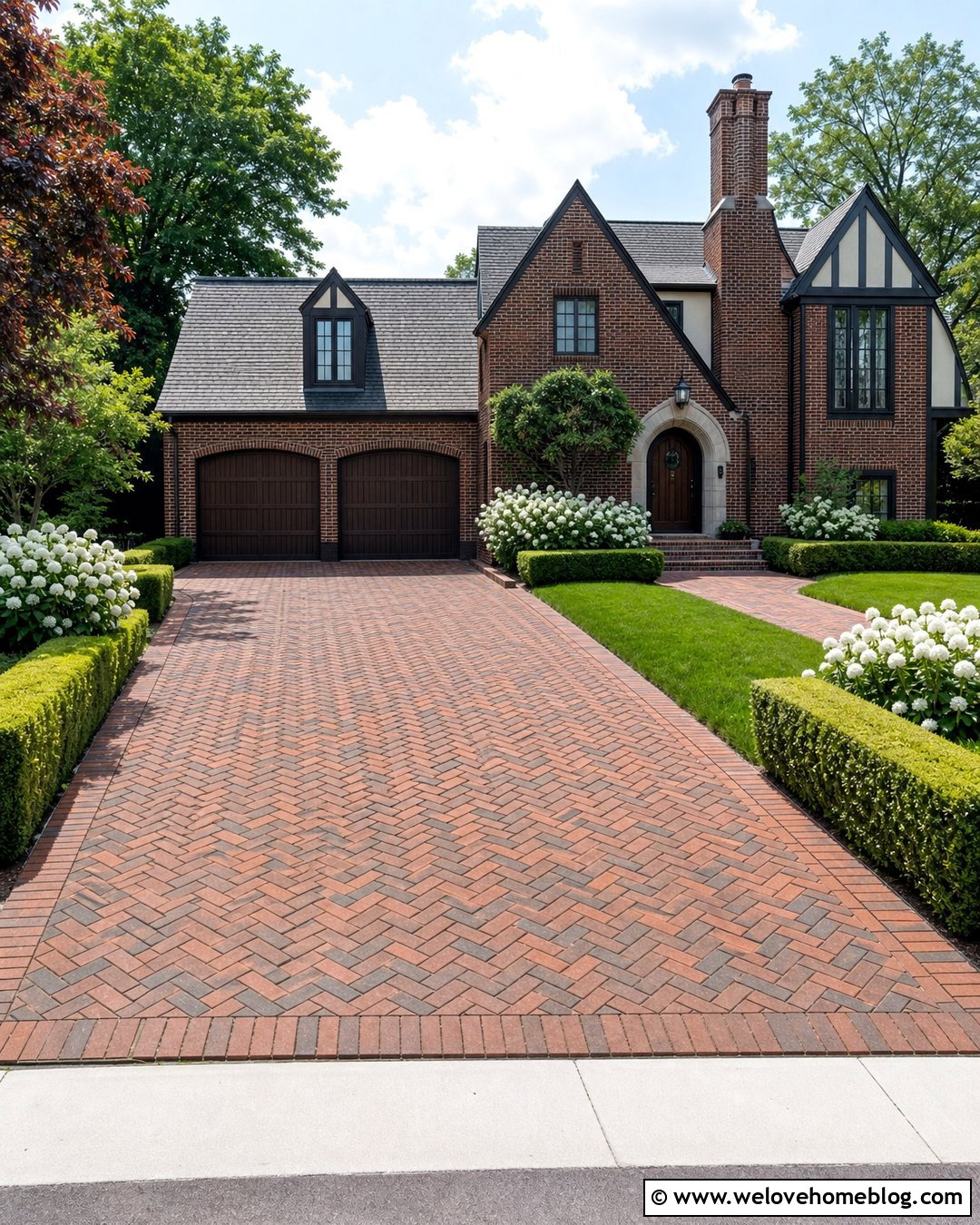
Warm brick edging gives a crushed limestone driveway a clean boundary and a classic residential look. Choose cream or pale gray limestone to create noticeable contrast against traditional red clay bricks. A straight layout suits a colonial, ranch, or Craftsman home, while bricks installed in a soldier-course pattern make the edges feel especially orderly. Continue the same brick into the front walkway or entrance apron so the design looks connected. Low evergreen shrubs, ornamental grasses, and neatly cut lawn can soften the hard surfaces without hiding them. Set the bricks securely and close to the finished driveway grade. This creates a comfortable transition for tires while helping contain loose limestone along both sides of the driveway.
2. White Limestone Driveway With Cobblestone Border
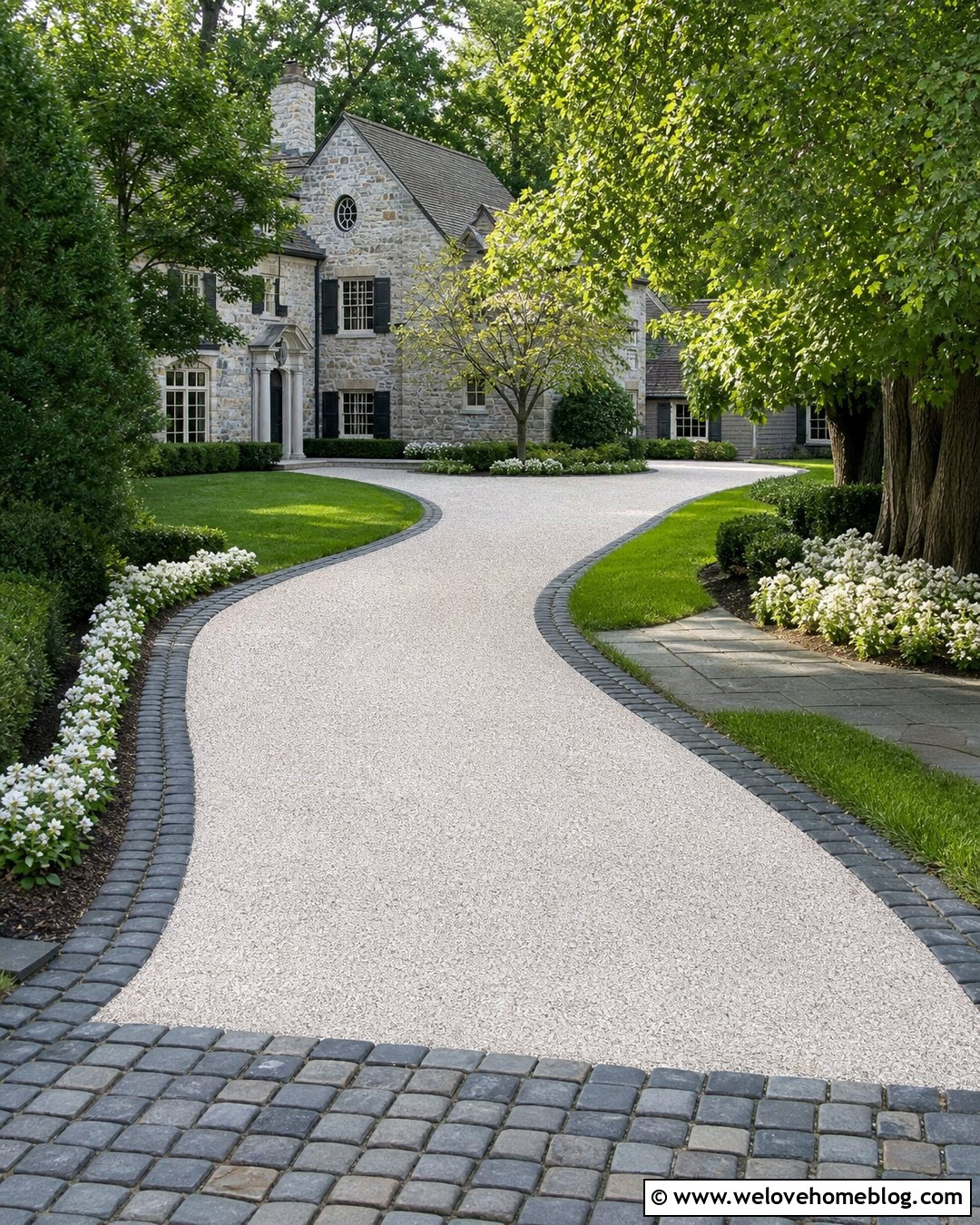
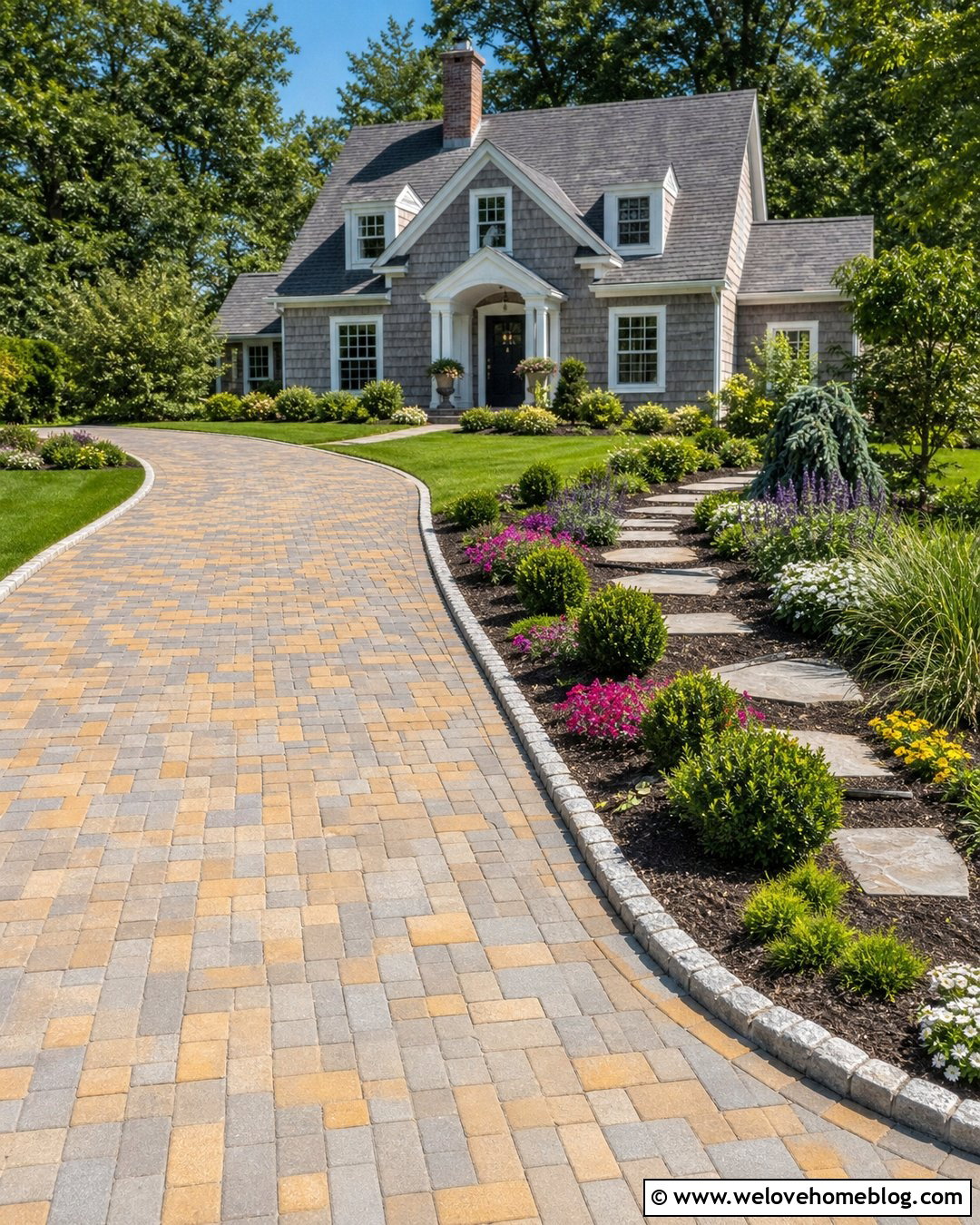
A white limestone driveway framed with gray cobblestones creates an elegant contrast that works beautifully with traditional homes. Use compacted crushed limestone rather than oversized loose stones to create a smoother, more settled appearance. A gently curved layout can make the approach feel graceful while revealing the house gradually. Dark gray cobblestones provide a strong visual outline and can continue across the entrance as a decorative threshold. Frame the driveway with deep green hedges, clipped shrubs, or broad planting beds filled with white flowering perennials. Because bright limestone can visually dominate a small yard, darker edging and generous greenery help balance the overall scene. The finished look feels refined without losing the relaxed texture associated with a stone driveway.
3. Curved Limestone Driveway With Lavender Borders
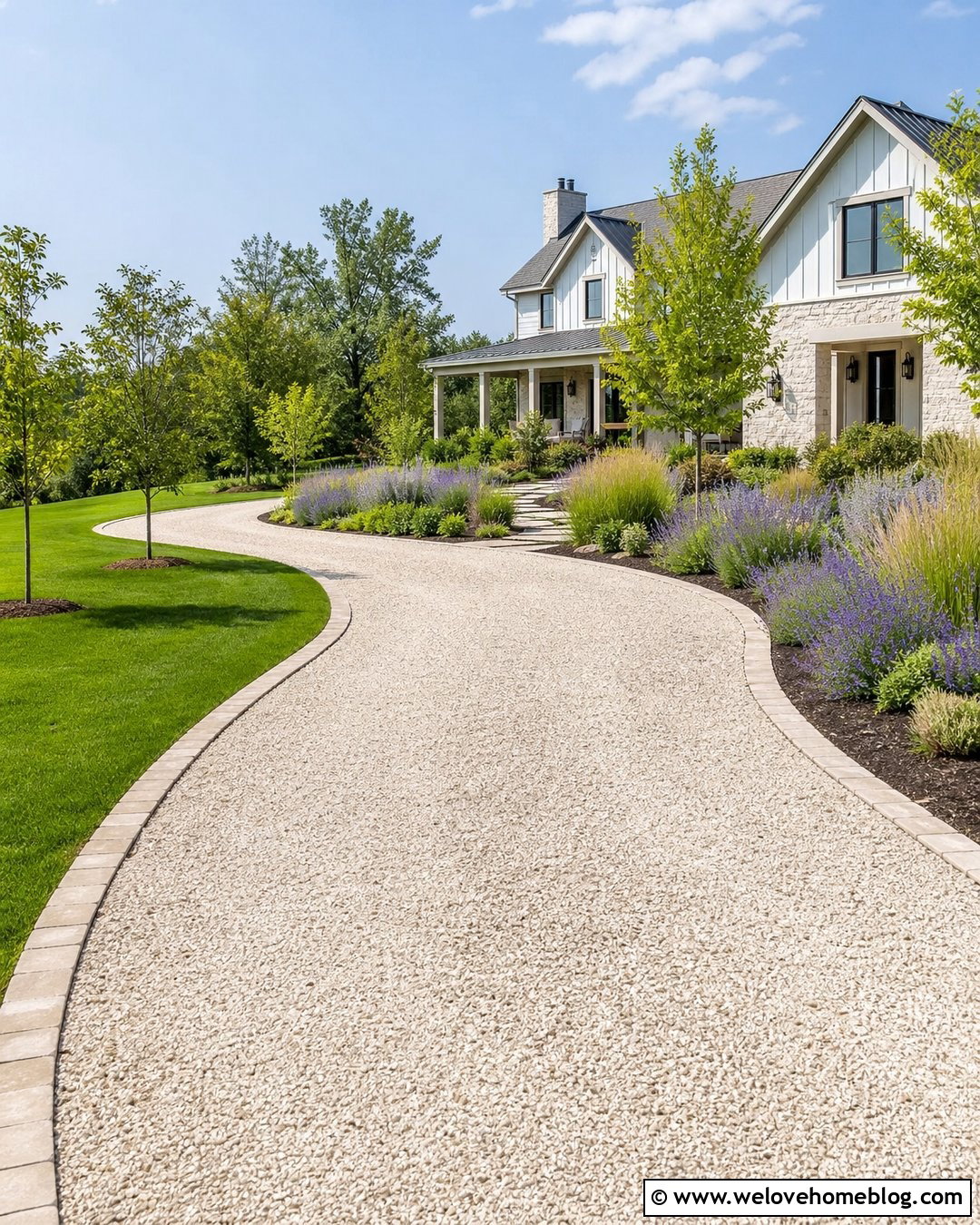
Imagine a pale limestone driveway sweeping through soft purple planting beds toward a country-inspired home. A broad curve works especially well in a wide front yard because it reduces the appearance of a long, rigid path. Line the driveway with flush limestone blocks or narrow steel edging to keep the surface visually tidy. Lavender can form the main border in sunny, well-drained locations, while catmint, salvia, ornamental grasses, or other locally suitable plants can provide a similar effect. Leave enough setback between mature plants and passing vehicles. Repeating the same plants along both sides creates rhythm and guides attention toward the entrance. Cream crushed limestone completes the bright, natural palette and complements stone, brick, stucco, and painted siding.
4. Circular Limestone Driveway With Center Island
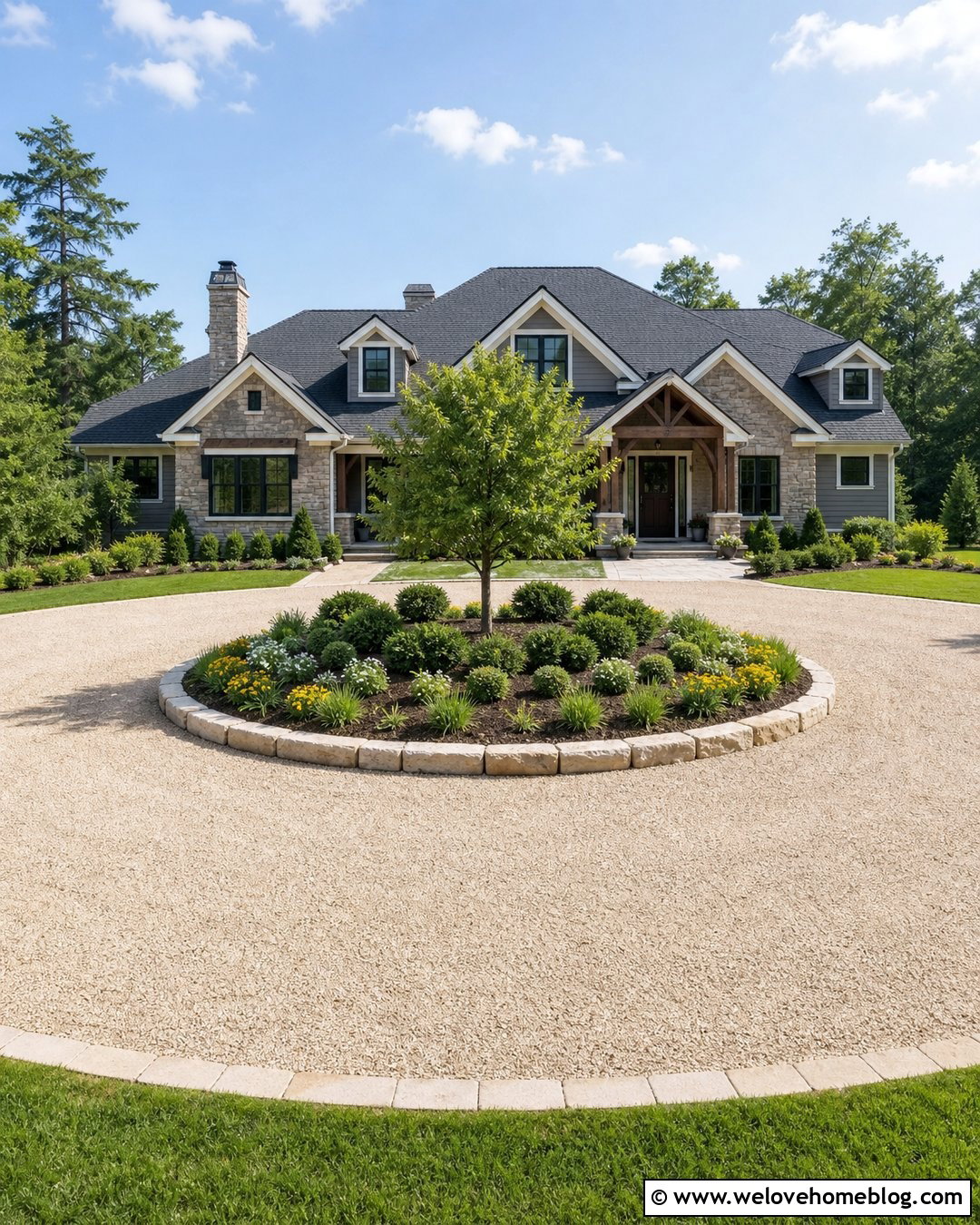
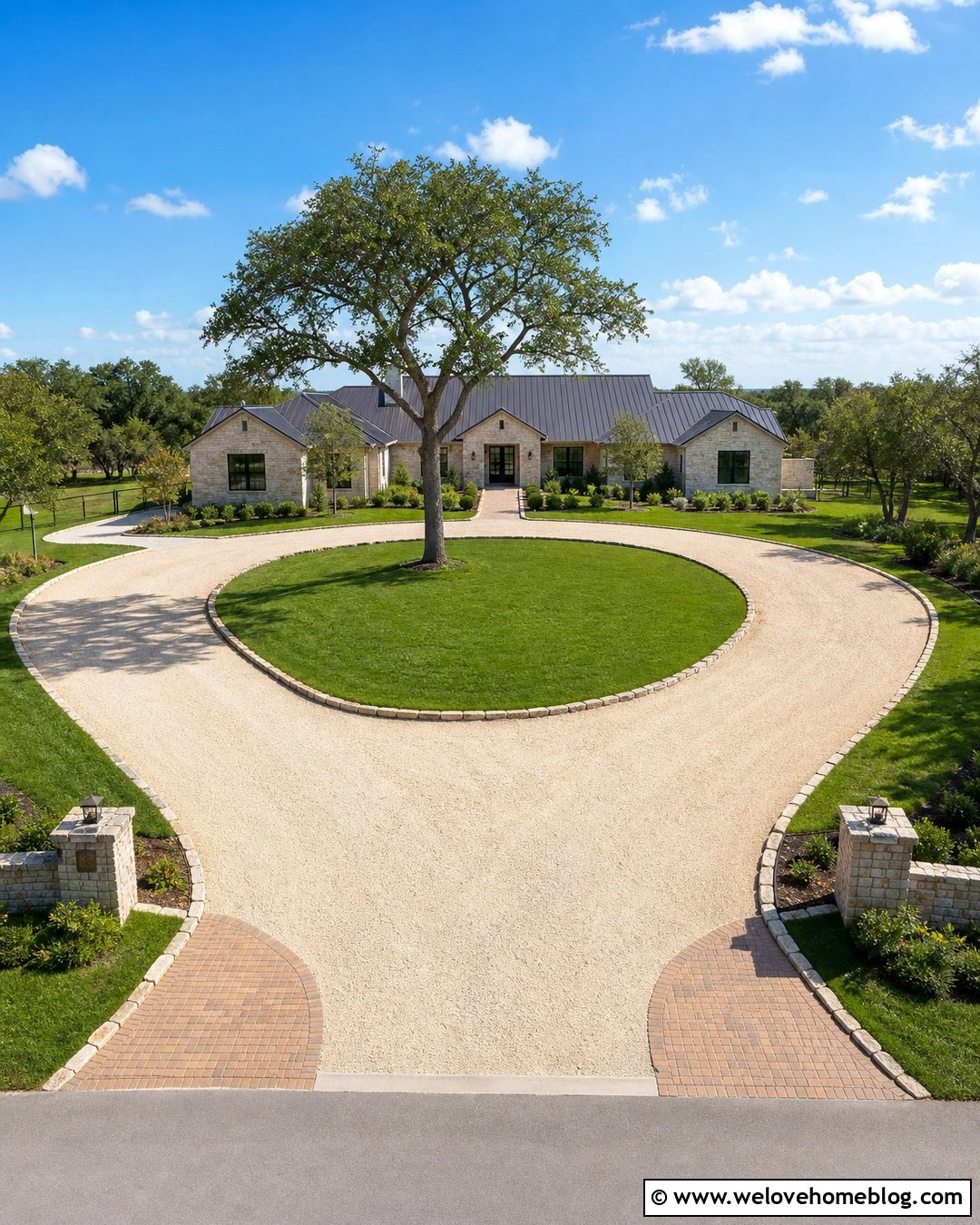
A circular limestone driveway provides a convenient flow while turning the center of the front yard into a landscaping feature. Pale tan crushed limestone looks welcoming around an oval or round island edged with natural stone. Instead of filling the island with many small decorations, use one well-scaled ornamental tree surrounded by low shrubs, ground cover, and seasonal flowers. Keep plants short near entry and exit points so drivers retain clear sightlines. Matching limestone paths can connect the circular drive to the front door without interrupting the design. This layout is most successful when the driveway has comfortable turning space and a properly prepared base. The island, borders, house, and driveway should feel centered and proportionate when viewed from the street.
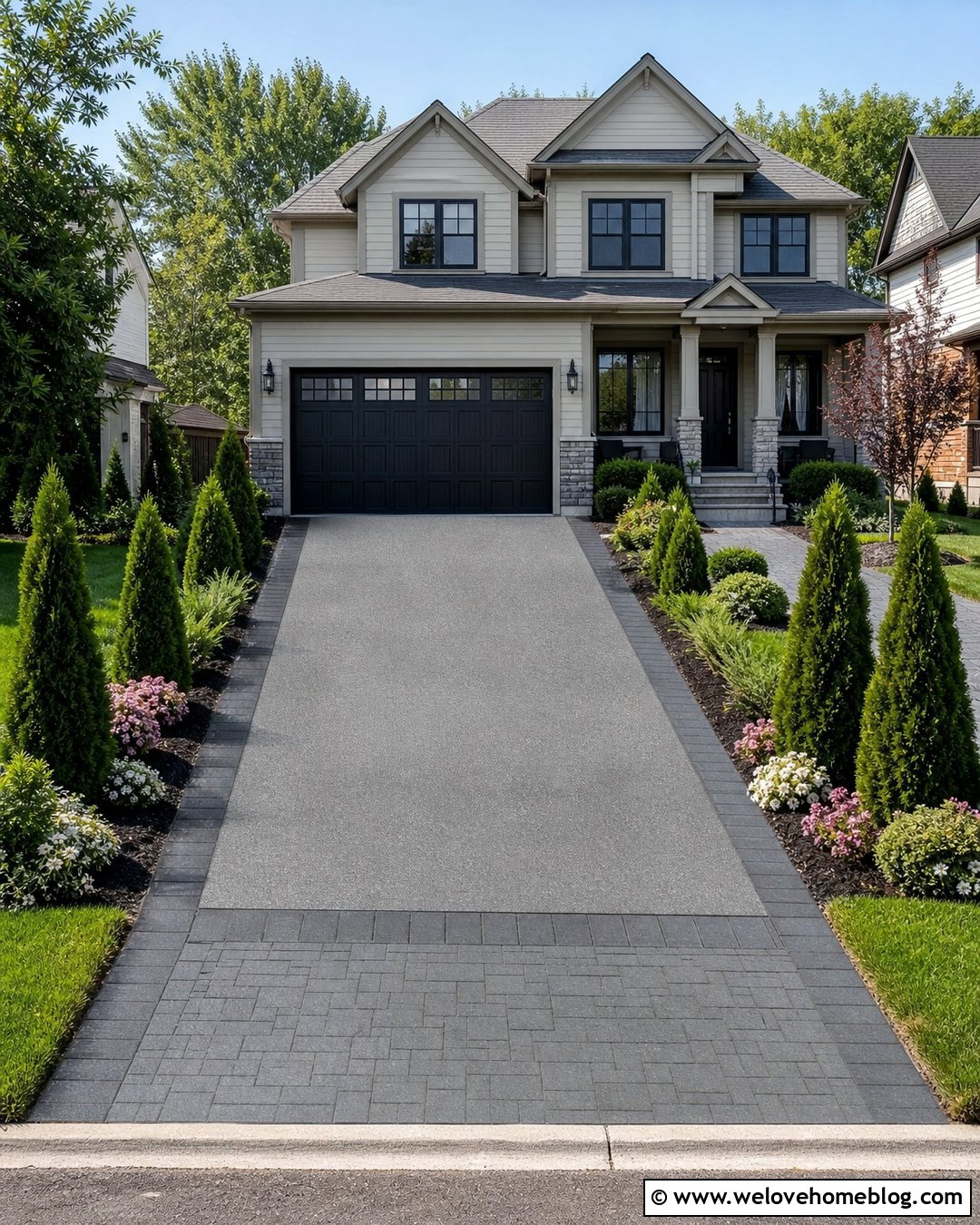
5. Limestone Driveway With Concrete Paver Apron
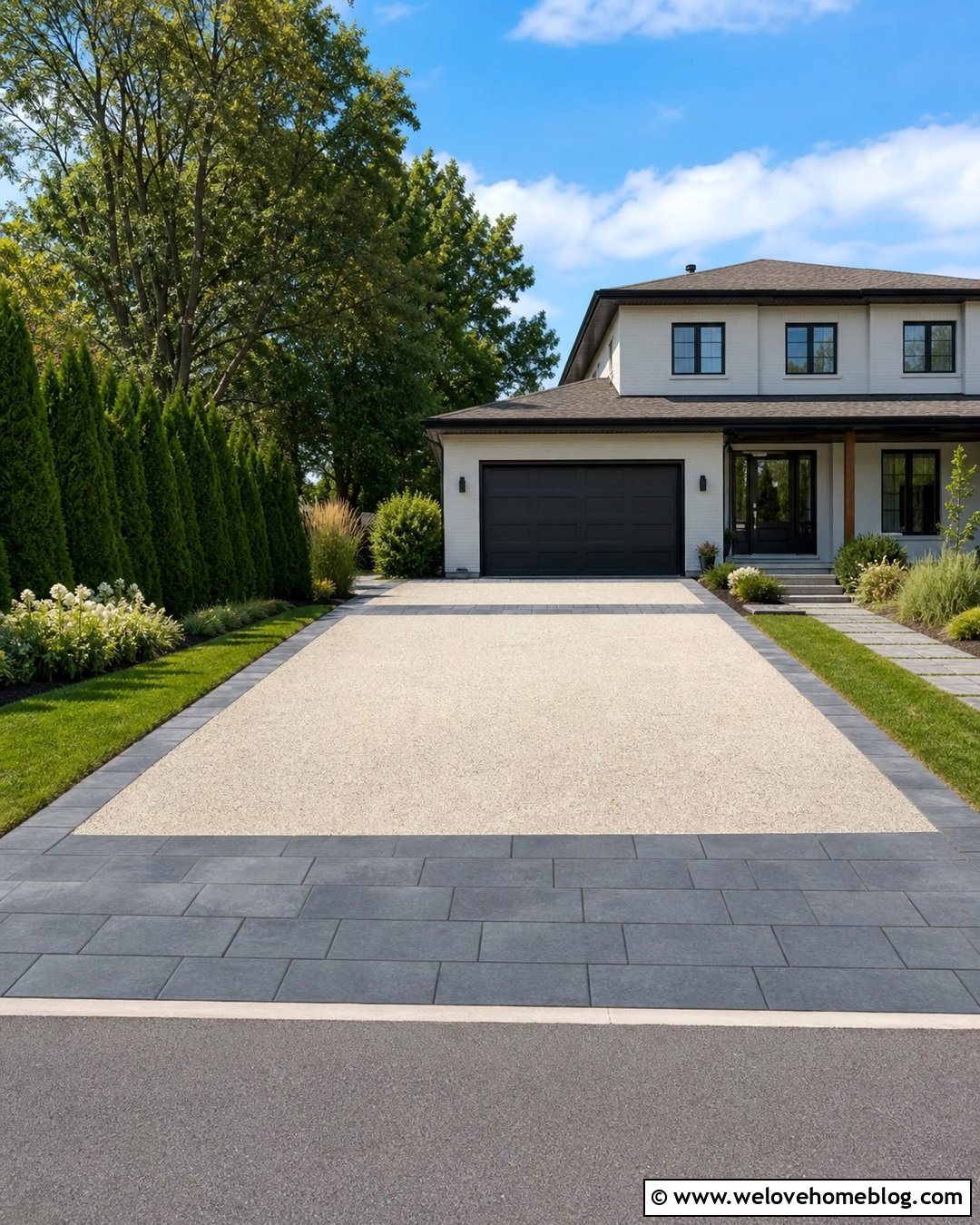
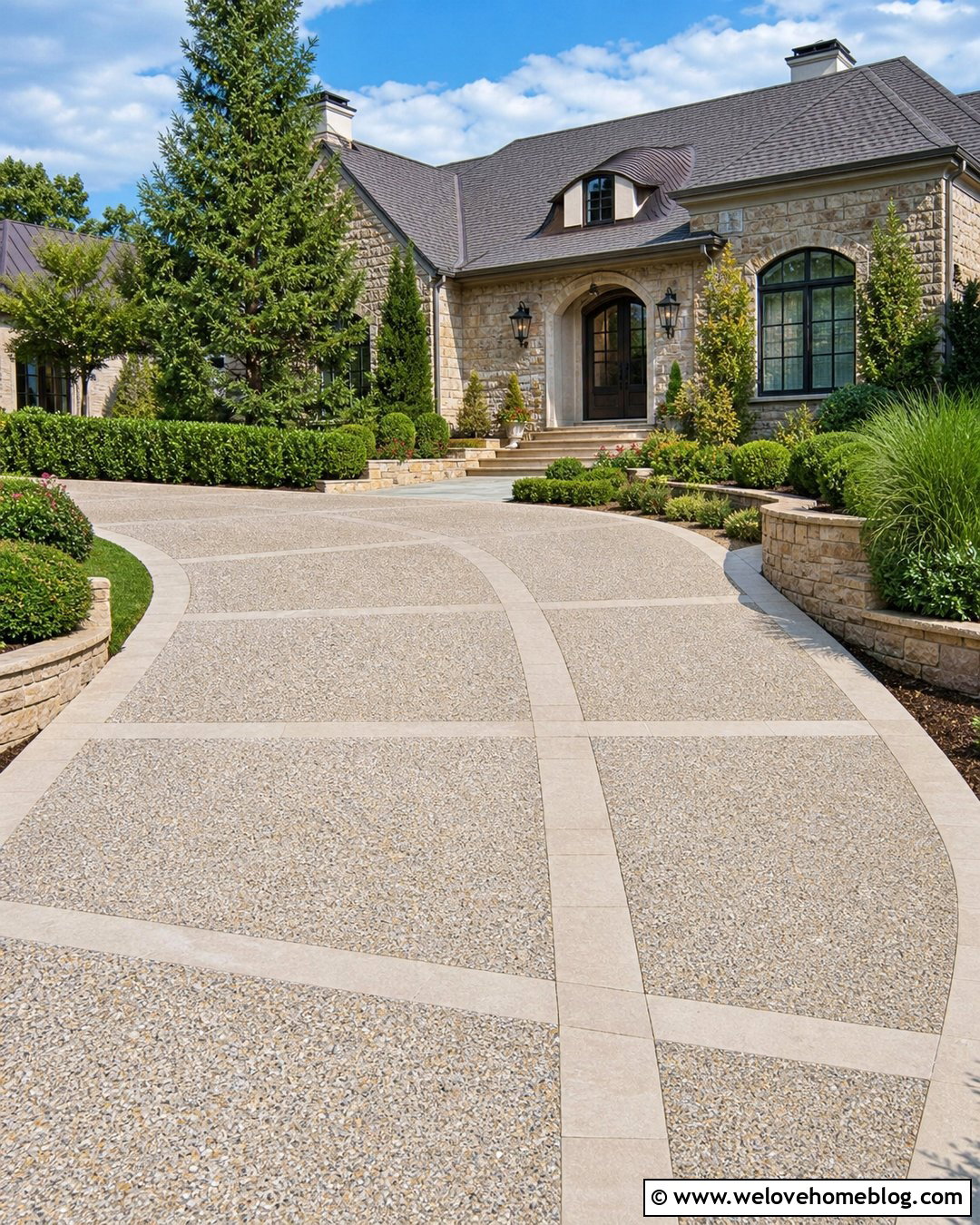
A concrete paver apron strengthens the visual entrance of a limestone driveway and creates a polished transition from the street. Select charcoal, warm gray, or taupe pavers that contrast with cream crushed limestone. The apron can span the full driveway width and extend several feet into the property, making it a noticeable design feature rather than a narrow stripe. Repeat the pavers near the garage or along the front walkway for continuity. Crisp lawn edges and simple evergreen beds maintain a clean suburban appearance. Where loose limestone meets the pavers, install a secure restraint to preserve a sharp transition. This mixed-material approach delivers the relaxed texture of limestone while giving the most visible areas a structured, finished appearance.
6. Limestone Driveway With Steel Edging

Slim steel edging gives a limestone driveway a precise outline without adding a heavy decorative border. It is particularly effective with a straight or gently angled driveway leading to a contemporary home. Use finely crushed gray limestone for a smooth, understated surface, then install dark steel edging nearly flush with the finished grade. The narrow profile allows the driveway shape and surrounding plants to remain the main visual features. Pair the surface with rectangular planting beds, sculptural grasses, compact evergreens, and a simple concrete walkway. Avoid placing sharp or raised edging where tires or pedestrians regularly cross. When properly positioned, the steel defines clean lines and helps separate loose stone from lawn and planting areas. ()
7. Limestone Driveway With Timber Border
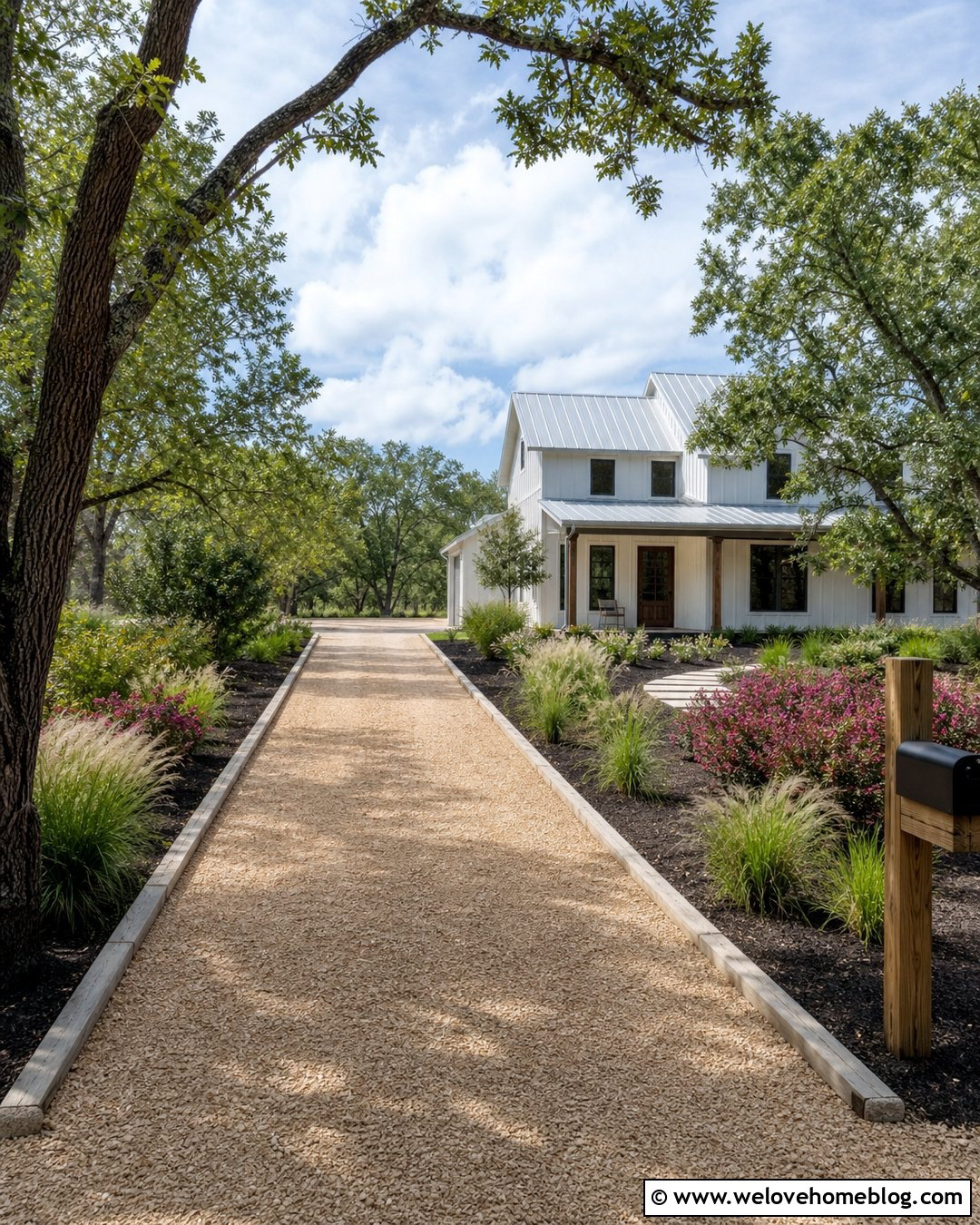
Timber edging creates a relaxed, rustic frame around a crushed limestone driveway. This combination suits cabins, ranch houses, wooded properties, and modern farmhouses. Use warm beige limestone with pressure-treated landscape timbers or another exterior-rated wood approved for ground contact. A straight driveway can feel more inviting when timber-bordered beds widen near the house and include grasses, flowering shrubs, and native ground covers. Keep the lumber height low enough to avoid creating an awkward obstacle beside the driving surface. Dark mulch beyond the timber provides strong contrast against pale limestone. Repeating the wood in a mailbox post, simple gate, or walkway detail makes the border feel intentional. Plan for eventual wood maintenance or replacement when comparing this option with masonry edging.
8. Limestone Driveway With Grass Strip
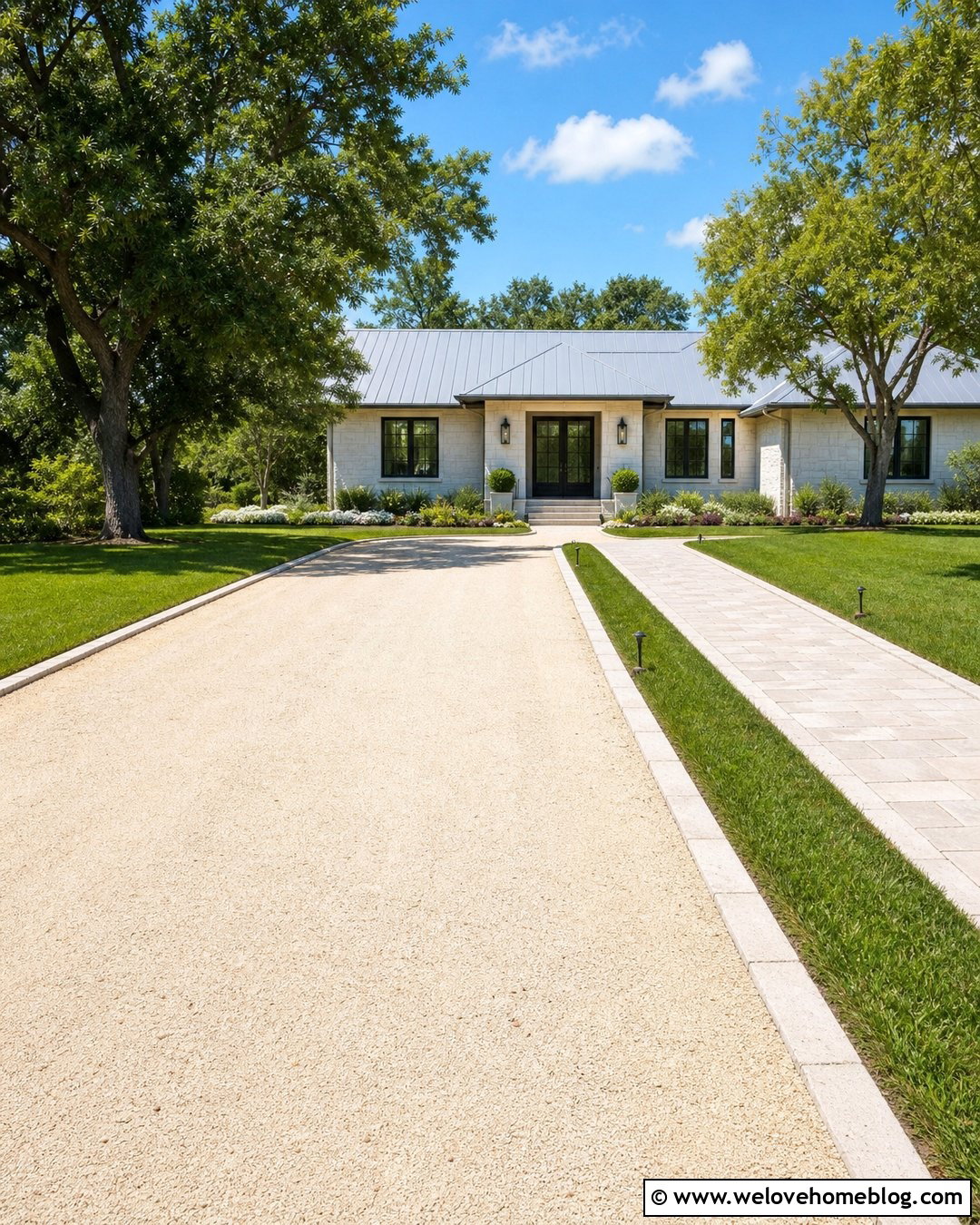
A narrow grass strip can visually separate a limestone driveway from an adjoining walkway or parking area. The result feels open and green, making it a useful option for broad front yards. Use compacted buff limestone for the main driveway and install a neat band of durable turf between the drive and a matching limestone or concrete path. Flush paver edging on both sides of the grass helps maintain a crisp shape and simplifies trimming. This arrangement looks especially attractive with a ranch or Cape Cod home because its horizontal lines complement the architecture. Keep the strip wide enough to maintain easily but narrow enough to remain part of the hardscape composition. Repeating turf elsewhere prevents the strip from appearing isolated or accidental.
9. Limestone Driveway With Native Plant Beds
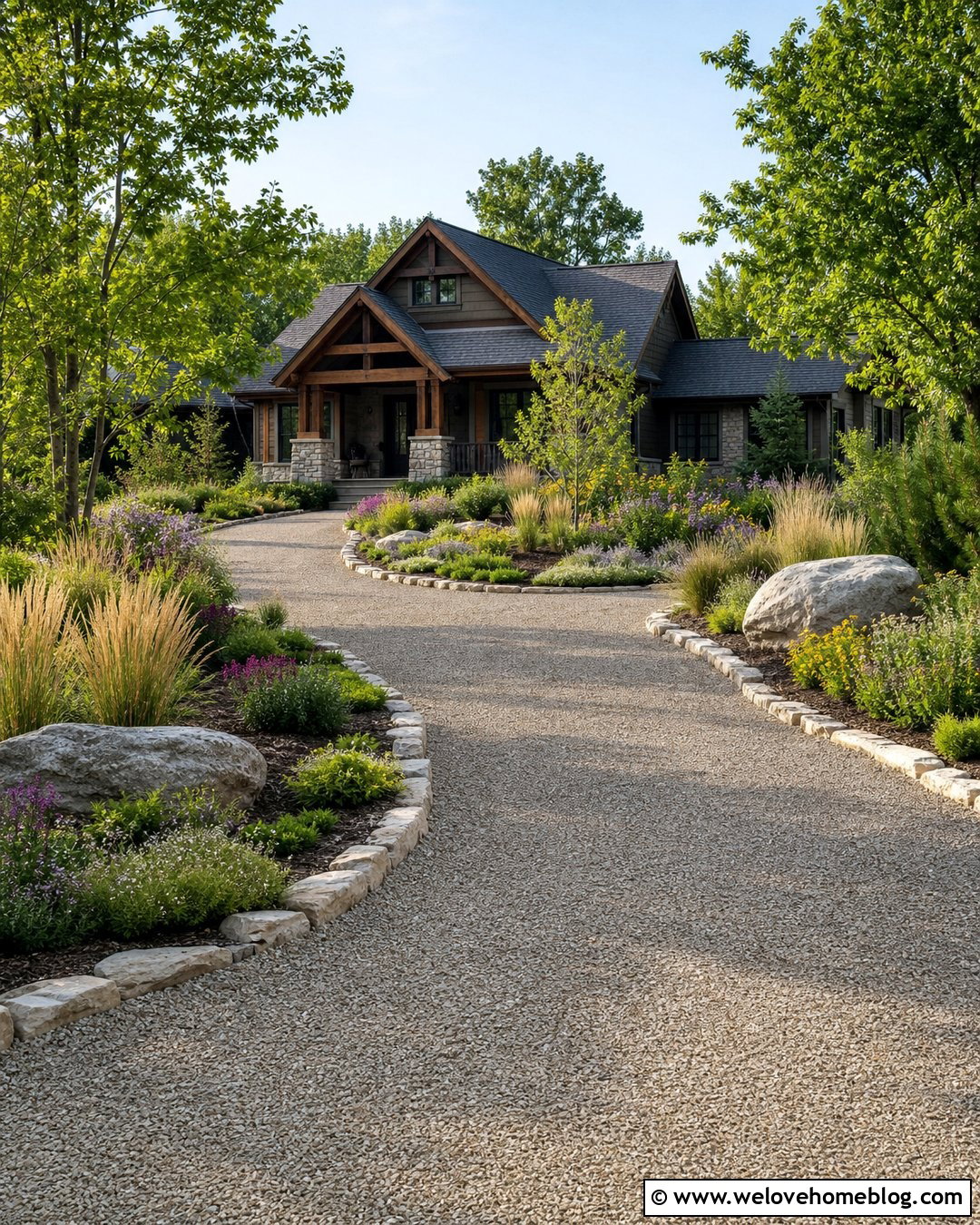
Native planting beds can make a limestone driveway feel naturally integrated into the surrounding property. Start with a gently curved surface made from compacted, locally available crushed limestone. Use natural stone edging, then create broad planting areas containing regionally appropriate grasses, flowering perennials, shrubs, and small trees. Repetition is more effective than planting a different species every few feet. Group plants in visible masses and keep taller varieties away from street sightlines. A few limestone boulders can connect the driveway material to the beds, but they should not crowd the vehicle path. This complete look suits Craftsman, prairie, ranch, and contemporary homes. It offers a softer alternative to formal hedges while giving the driveway seasonal color, texture, and a clear landscape identity.
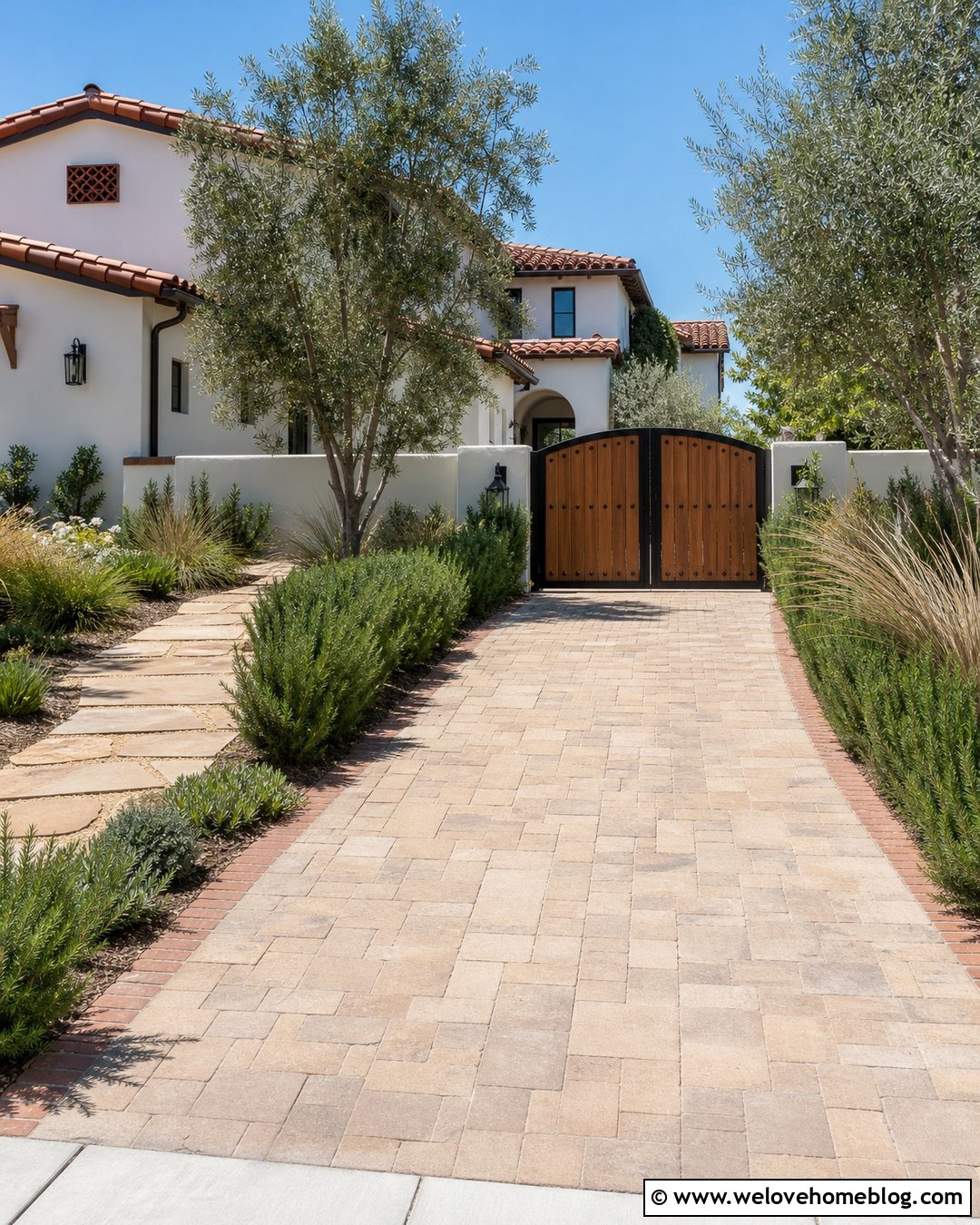
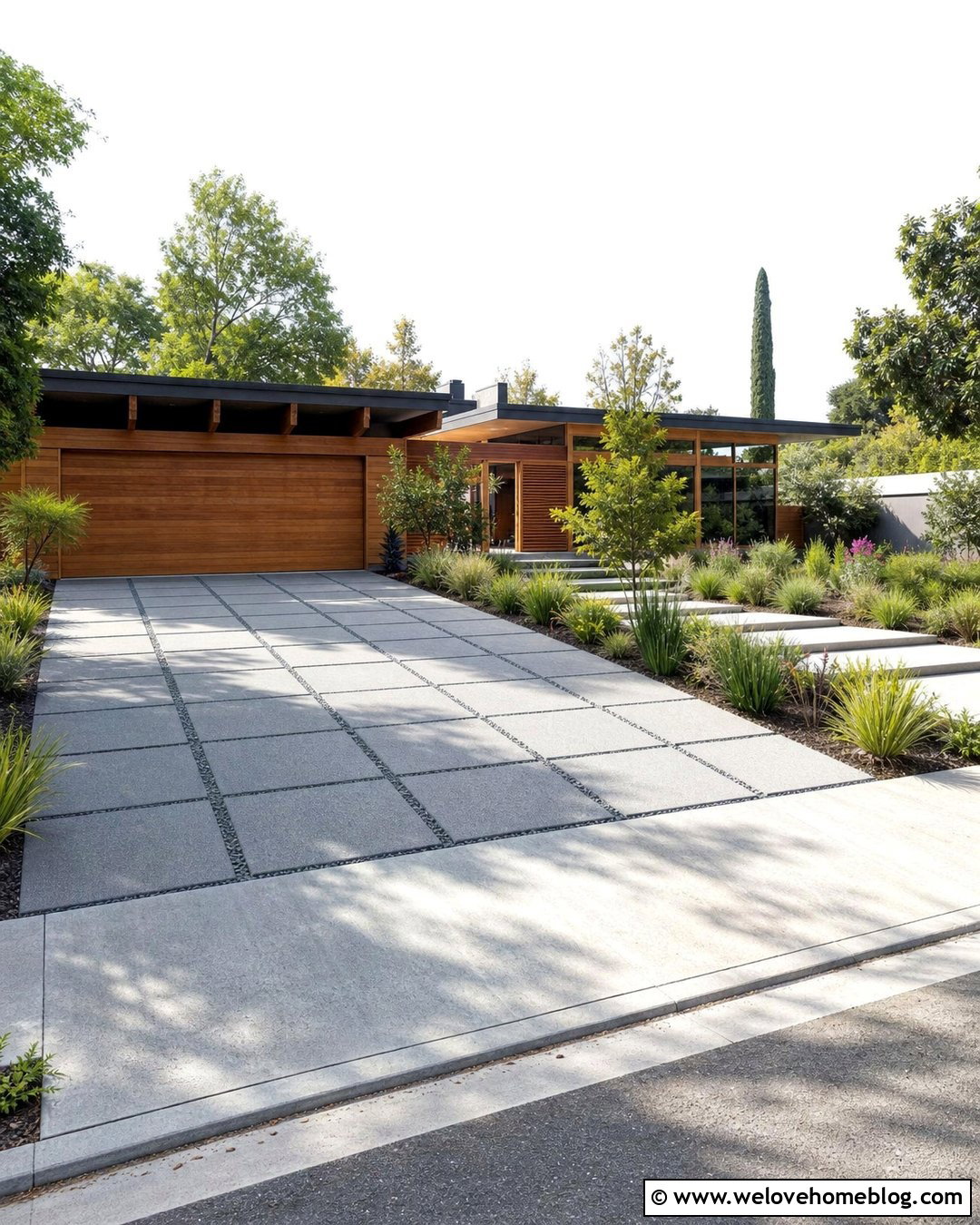
10. Limestone Driveway With Boxwood Borders
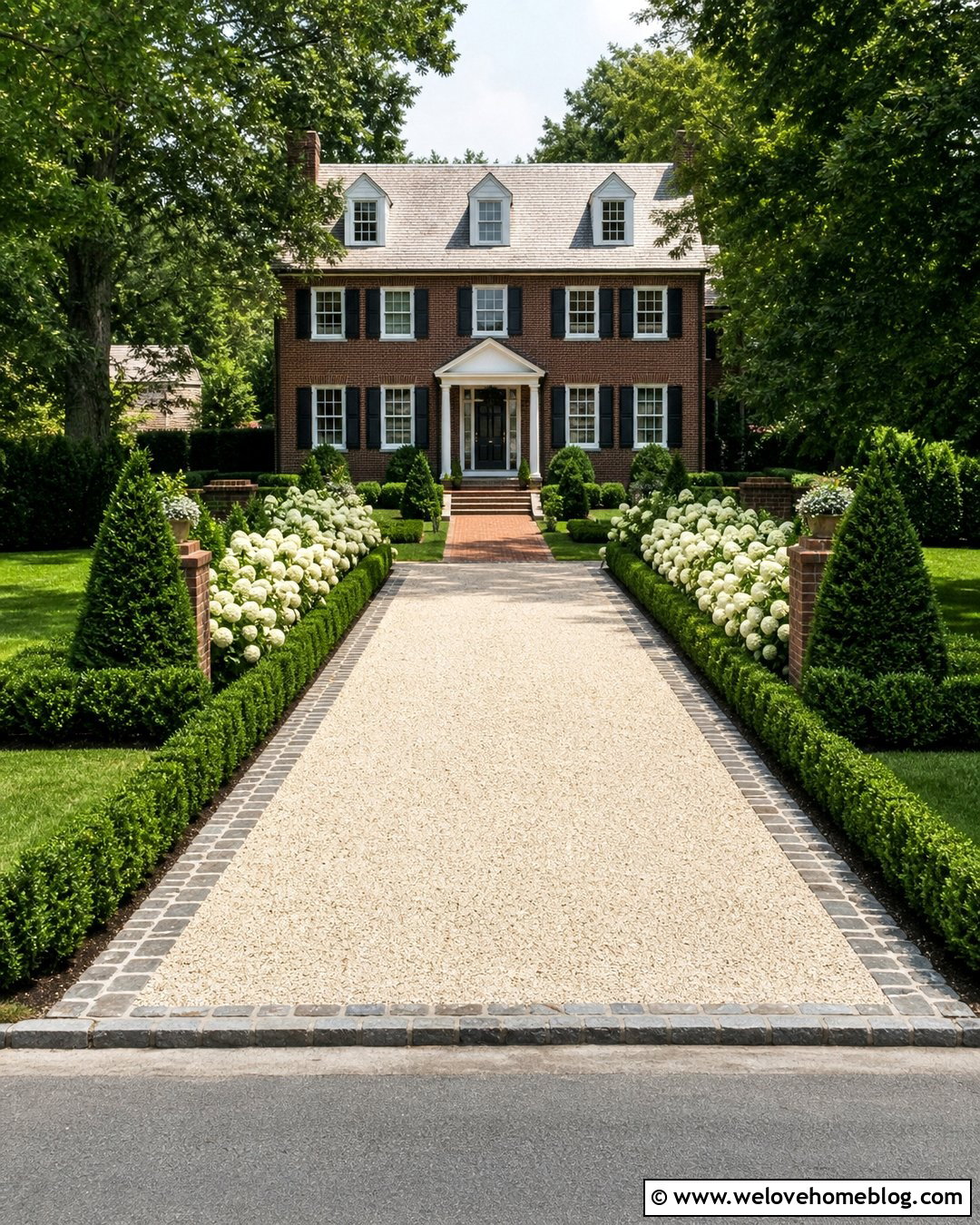
Clipped boxwood borders bring order and symmetry to a pale limestone driveway. They work particularly well beside a straight approach leading to a brick colonial, Georgian-inspired house, or formal cottage. Define the driveway with flush gray cobblestones, then plant low boxwood hedges beyond the hard border. The cobblestones protect the plants from loose aggregate and create a more finished edge. Near the house, widen the beds and add white hydrangeas, small flowering trees, or neatly shaped evergreens. Keep the hedges low enough to preserve visibility and avoid planting them where winter snow storage or vehicle doors could cause damage. The combination of light crushed limestone, dark green foliage, and repeated symmetrical forms creates a balanced entrance that looks attractive throughout the year.
11. Limestone Driveway With Hydrangea Borders
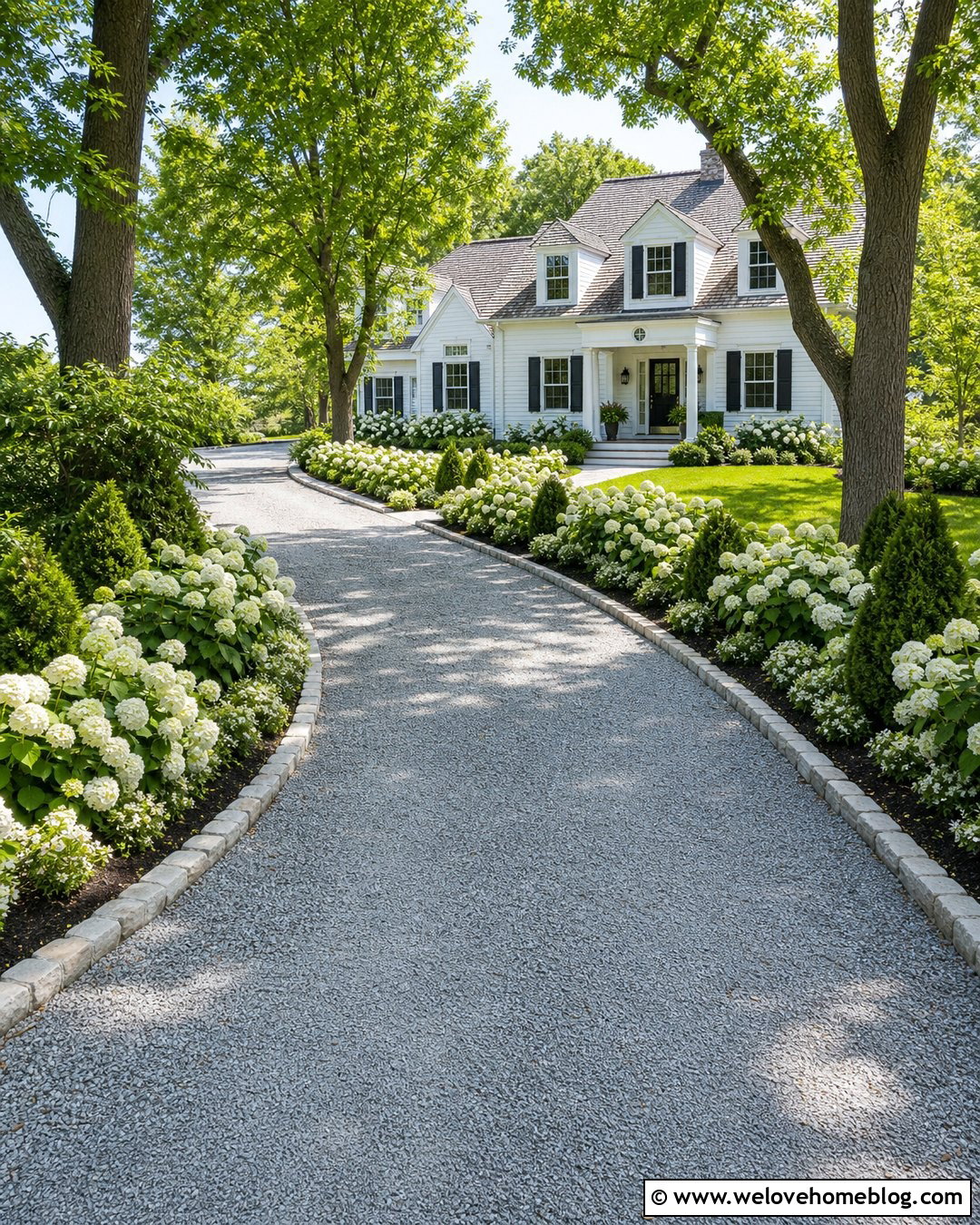
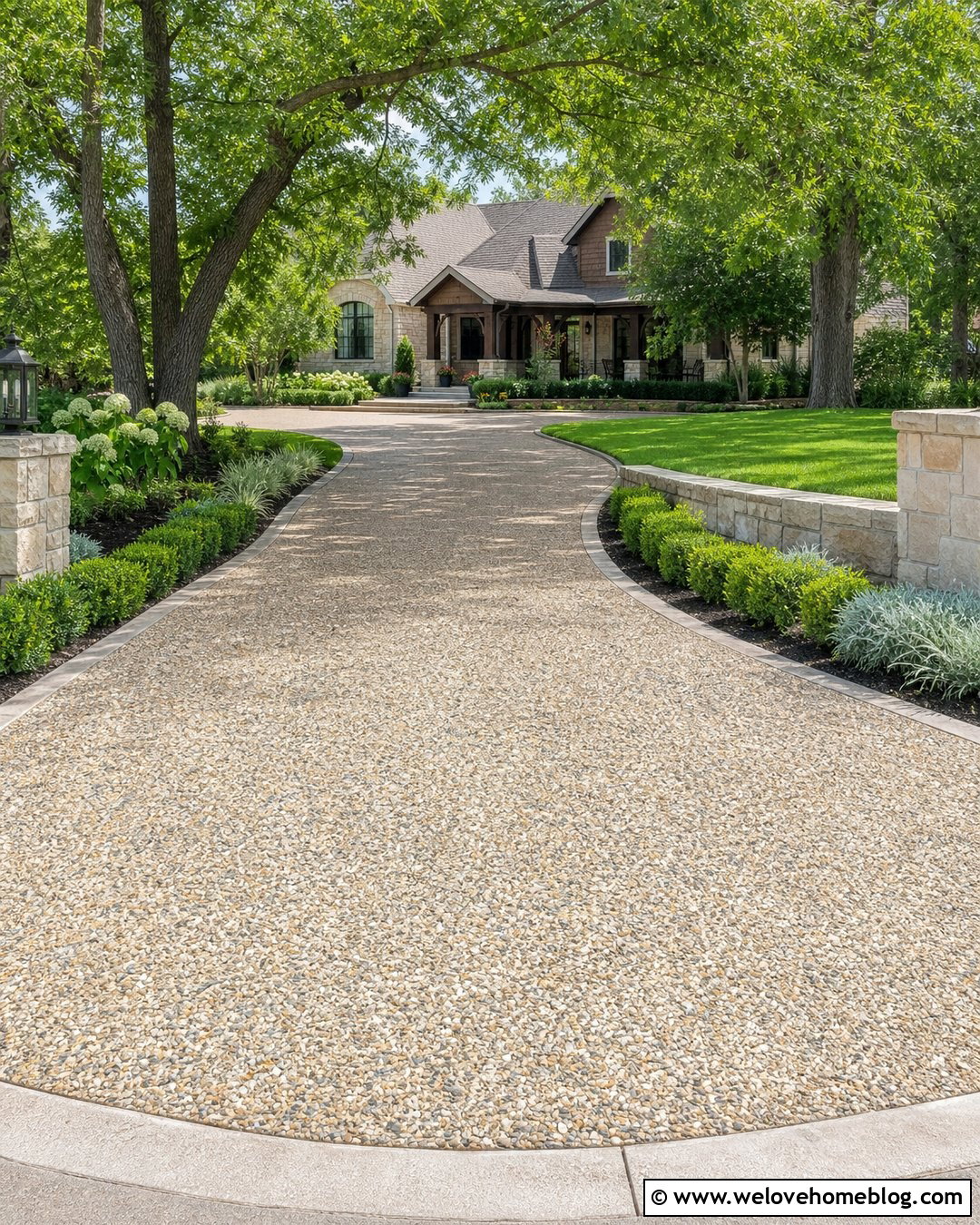
Large hydrangea beds can soften the edges of a limestone driveway and add generous seasonal color. Choose a curved or slightly flared driveway made with light gray or cream crushed limestone. Install a low natural-stone curb, then leave sufficient planting depth for mature shrubs. White hydrangeas create a calm, coordinated palette, while blue or pink blooms add stronger contrast depending on cultivar and growing conditions. Fill gaps with shade-tolerant ground covers, small evergreens, or spring bulbs suited to the site. This look complements Cape Cod, cottage, farmhouse, and traditional homes. Keep shrubs set back from the driveway so flowers do not brush vehicles or restrict visibility. A matching limestone walkway can connect the driveway to the porch while maintaining the soft, cohesive material palette.
12. Limestone Driveway With Drainage Swale
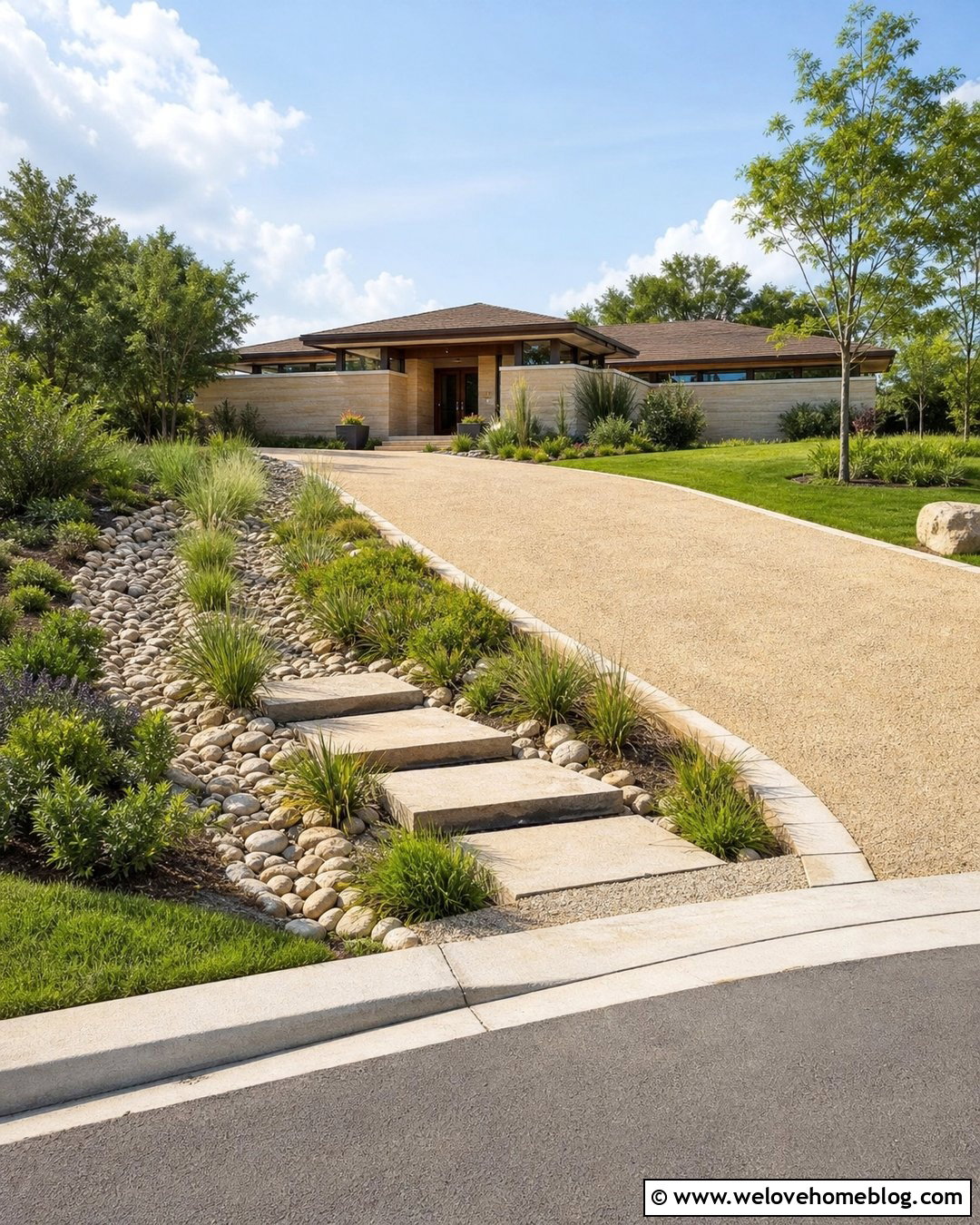
A landscaped drainage swale can become part of the design instead of looking like an unfinished ditch. Shape a straight or curved crushed limestone driveway so water is directed toward a shallow planted channel rather than the house or garage. Edge the driveway with flush stone or concrete where additional definition is needed. Fill the swale with rounded river rock, moisture-tolerant grasses, and plants suitable for local conditions. A small stone bridge or wide stepping slabs can carry the front walkway across it. The river rock should contrast gently with the angular limestone driveway aggregate. Because drainage needs depend on soil, slope, climate, and local requirements, have the grading evaluated before construction. The completed landscape should manage runoff while remaining open, attractive, and easy to maintain.
13. Limestone Driveway With Retaining Wall
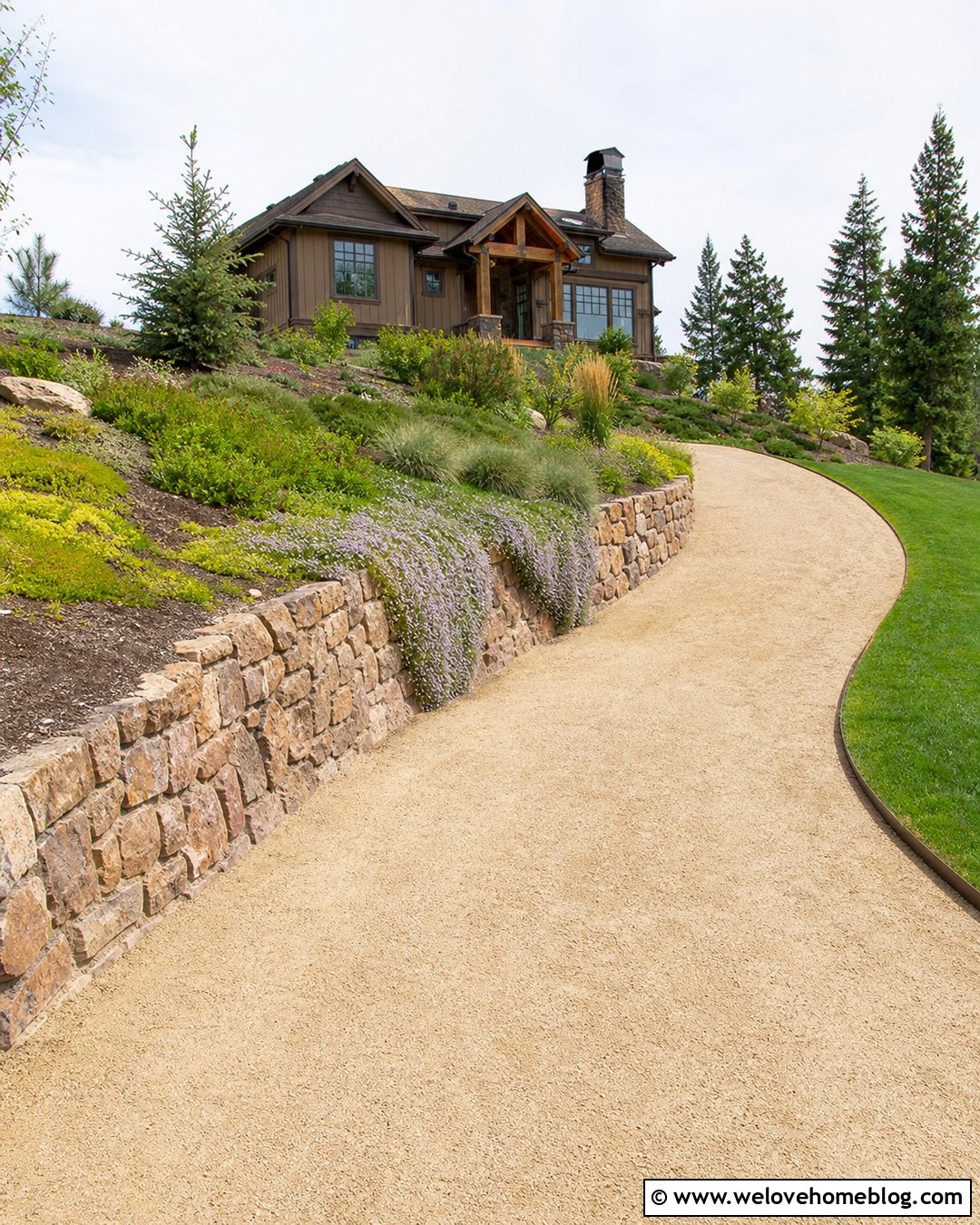
A low retaining wall can frame a limestone driveway on a sloped property while creating usable planting space above it. Choose buff crushed limestone and pair it with wall blocks or natural stone in similar warm tones. A curved driveway often works best because it can follow the existing terrain instead of cutting directly through the slope. Plant the upper bed with cascading ground covers, compact shrubs, and ornamental grasses that soften the wall without covering it completely. Use simple edging on the open side of the driveway to balance the heavier masonry. Proper engineering, drainage, footing preparation, and wall height are important, especially where the wall supports significant soil. When carefully planned, the driveway and retaining wall appear as one integrated landscape rather than separate construction projects.
14. Limestone Driveway With Stone Pillars
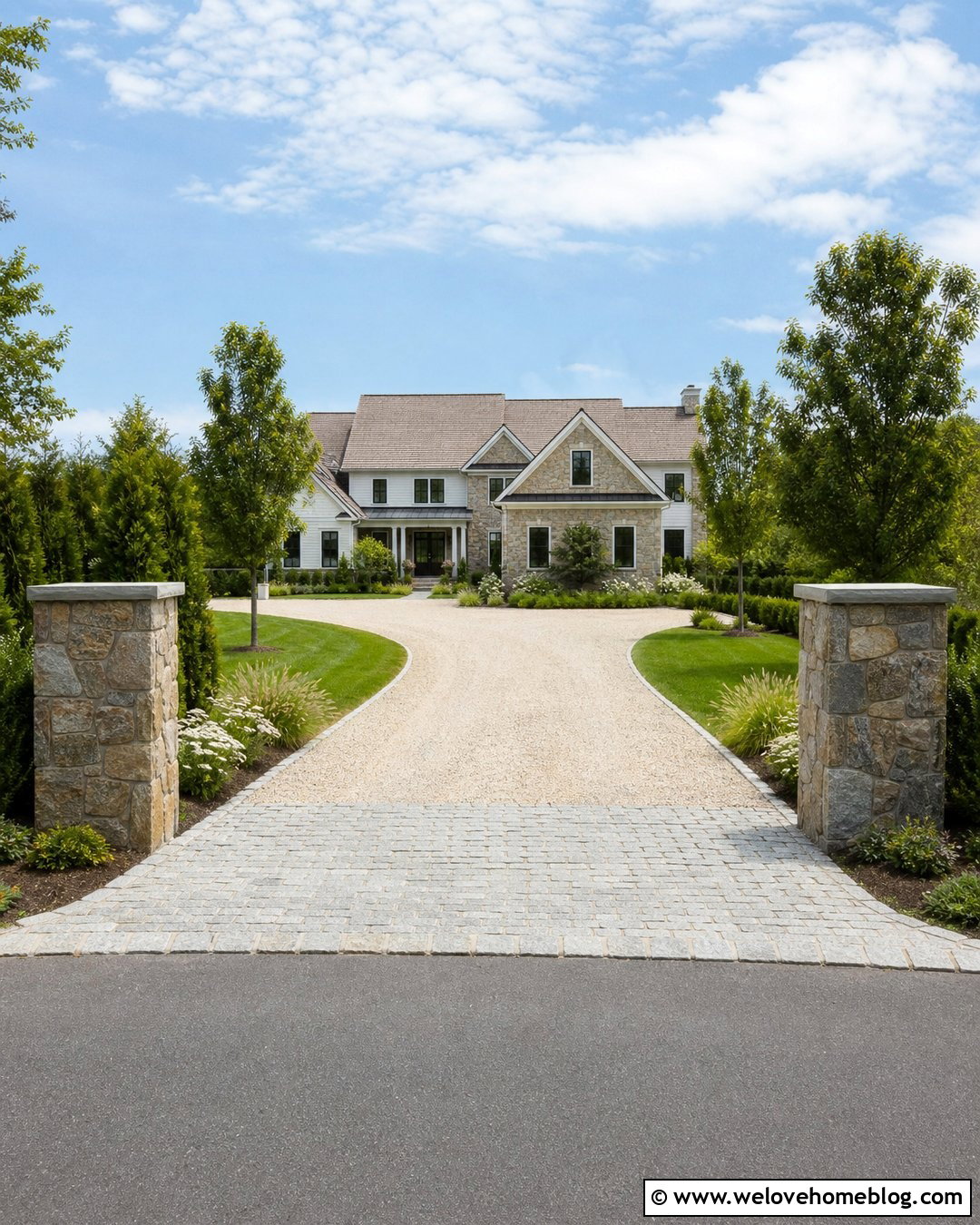
Stone pillars create a clear entrance and give a limestone driveway greater presence from the street. Build the pillars from fieldstone, limestone veneer, or another masonry material that relates to the home’s facade. Between them, use a straight or gently curved driveway surfaced with compacted cream limestone. A cobblestone entrance apron can mark the threshold and protect the most visible edge of the gravel. Add symmetrical planting beds with dwarf evergreens, ornamental grasses, and low flowering plants. The pillars should be positioned with enough width for comfortable vehicle access and clear visibility. Lantern-style fixtures may be added if suitable for the architecture, although their scale should remain proportional. Repeating the pillar stone around the mailbox, walkway, or porch creates a unified and well-planned entrance.
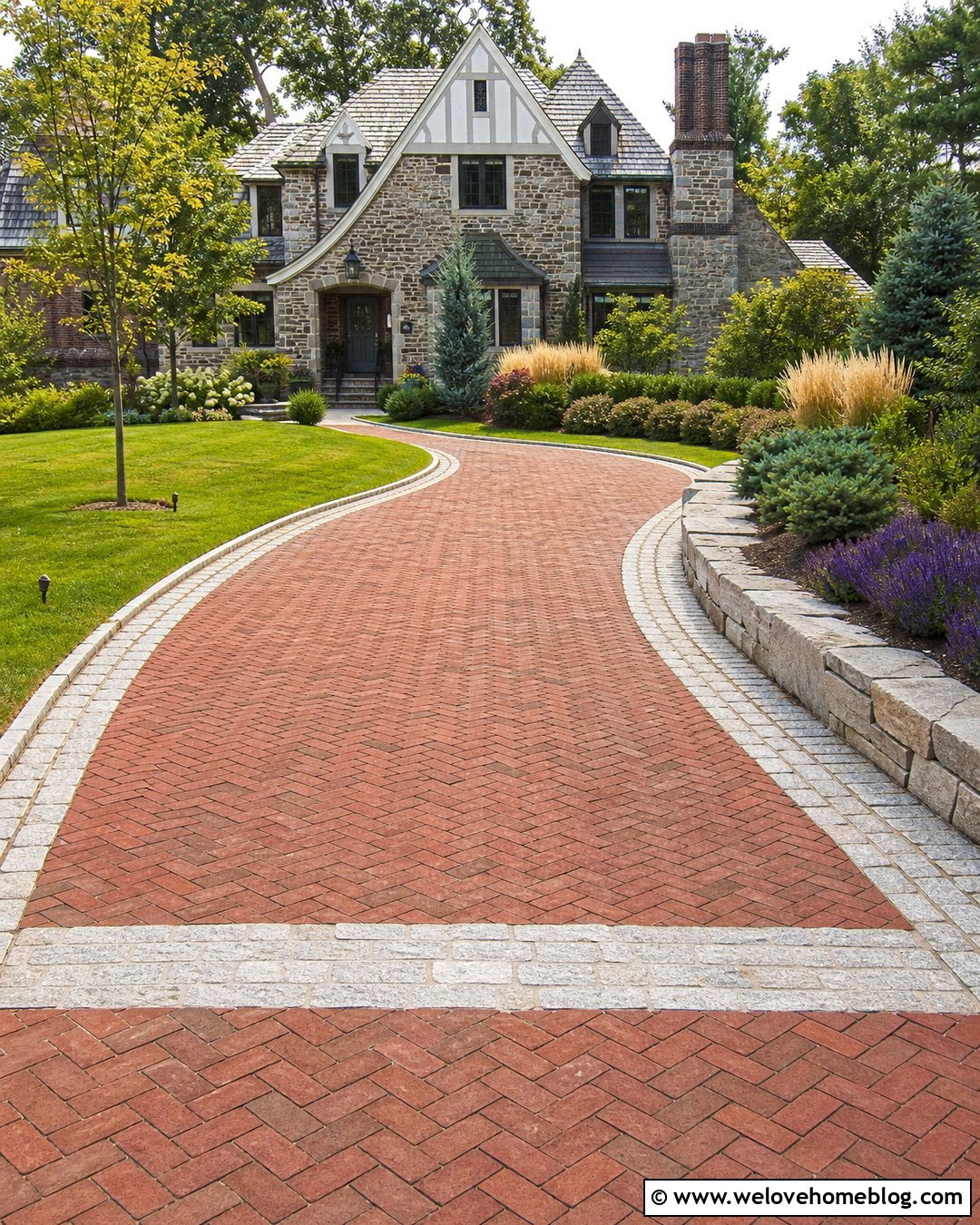
15. Limestone Driveway With Farm Gate
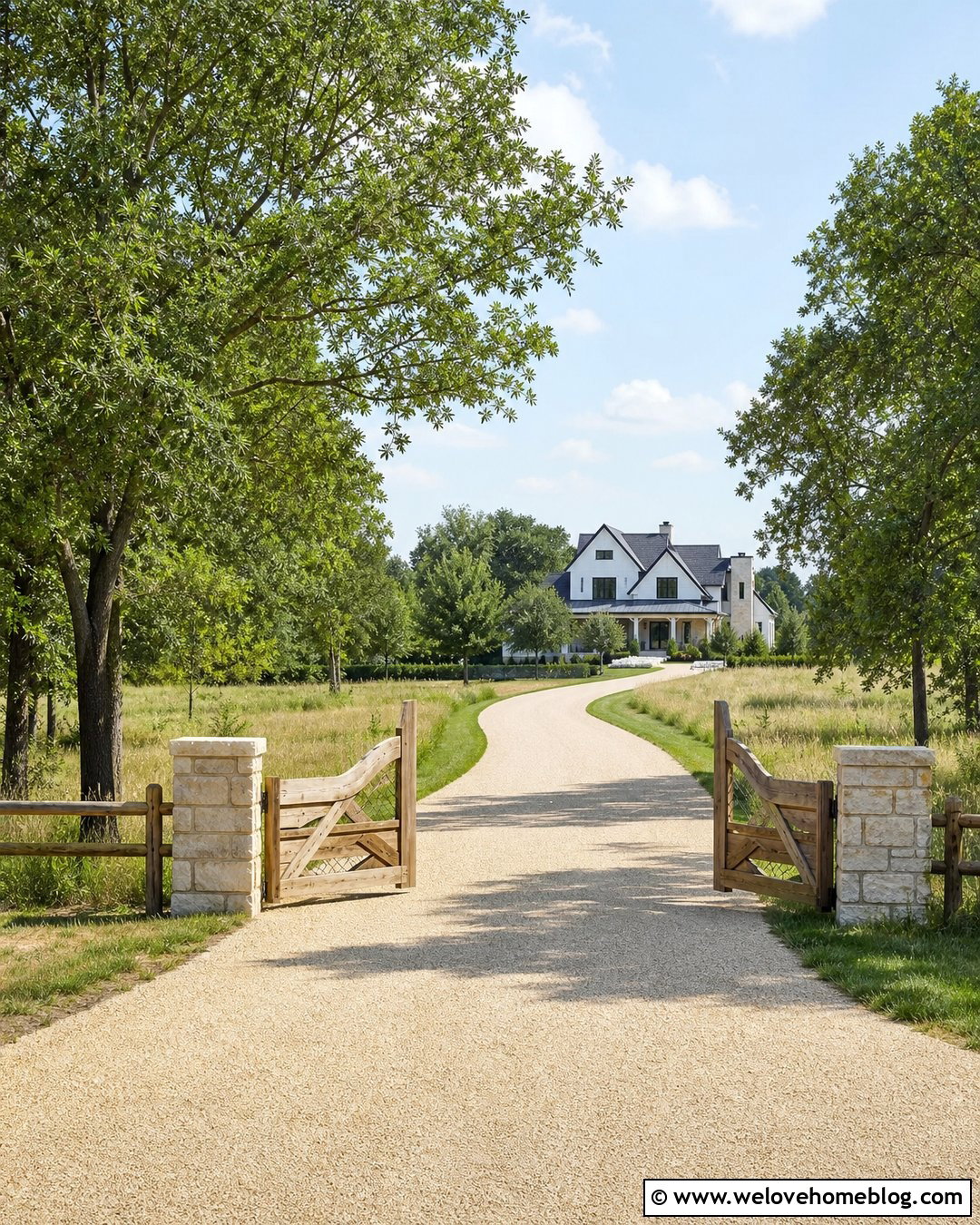
A simple farm gate feels natural at the entrance to a long limestone driveway. Use warm, compacted crushed limestone with timber or limestone-block edging near the gate, then transition to softer grass edges farther into the property. A white, black, or natural wood gate can connect two sturdy posts or low stone pillars. Set the entrance back appropriately so a vehicle can wait safely without obstructing the road, subject to local requirements. Frame the approach with split-rail fencing, meadow grasses, deciduous trees, or informal hedges. The driveway can curve gently toward a modern farmhouse, barn-inspired home, or country residence. Keep landscaping around the gate low and uncluttered so the entrance remains visible, practical, and easy to navigate throughout every season.
16. Limestone Driveway With Modern Horizontal Gate
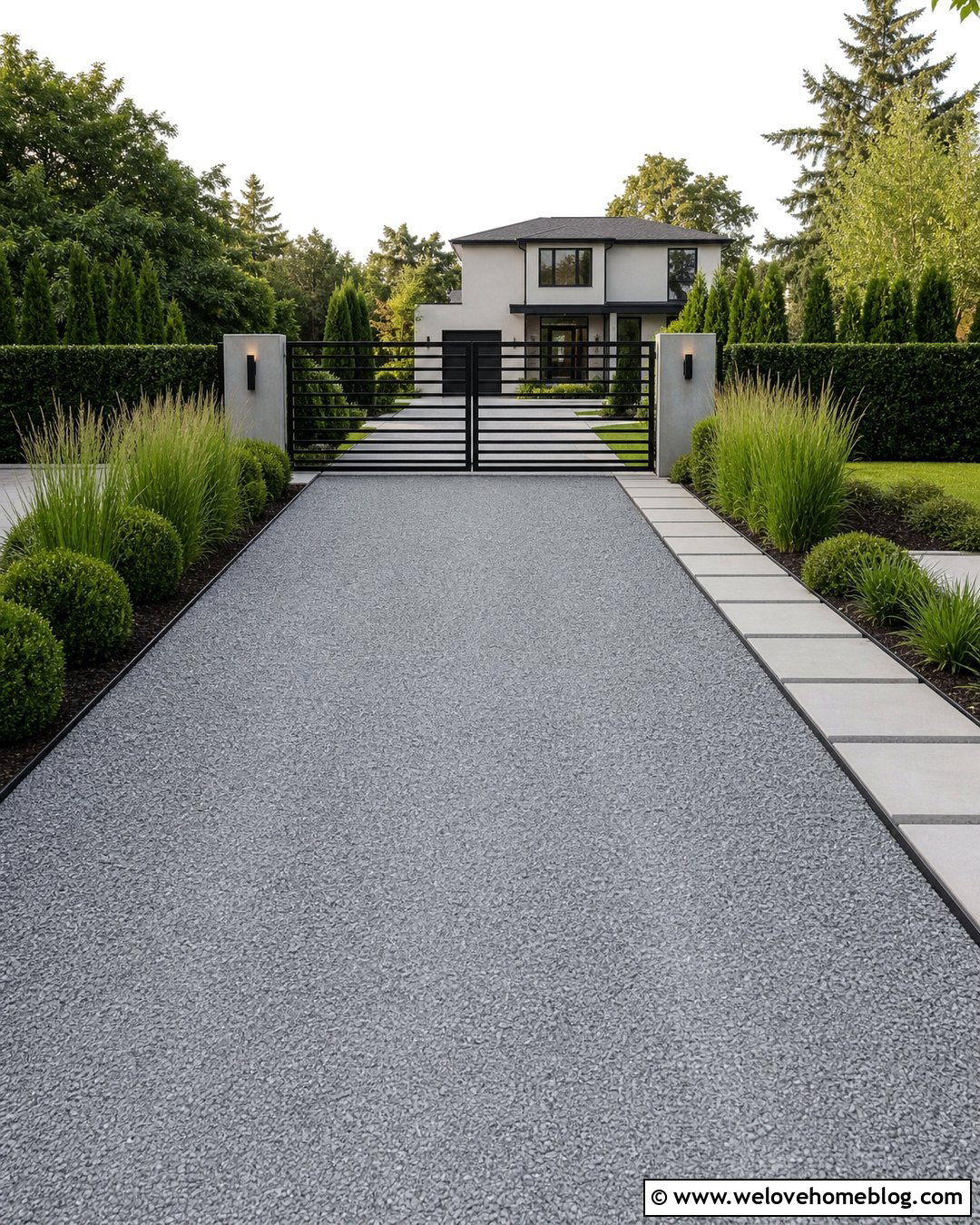
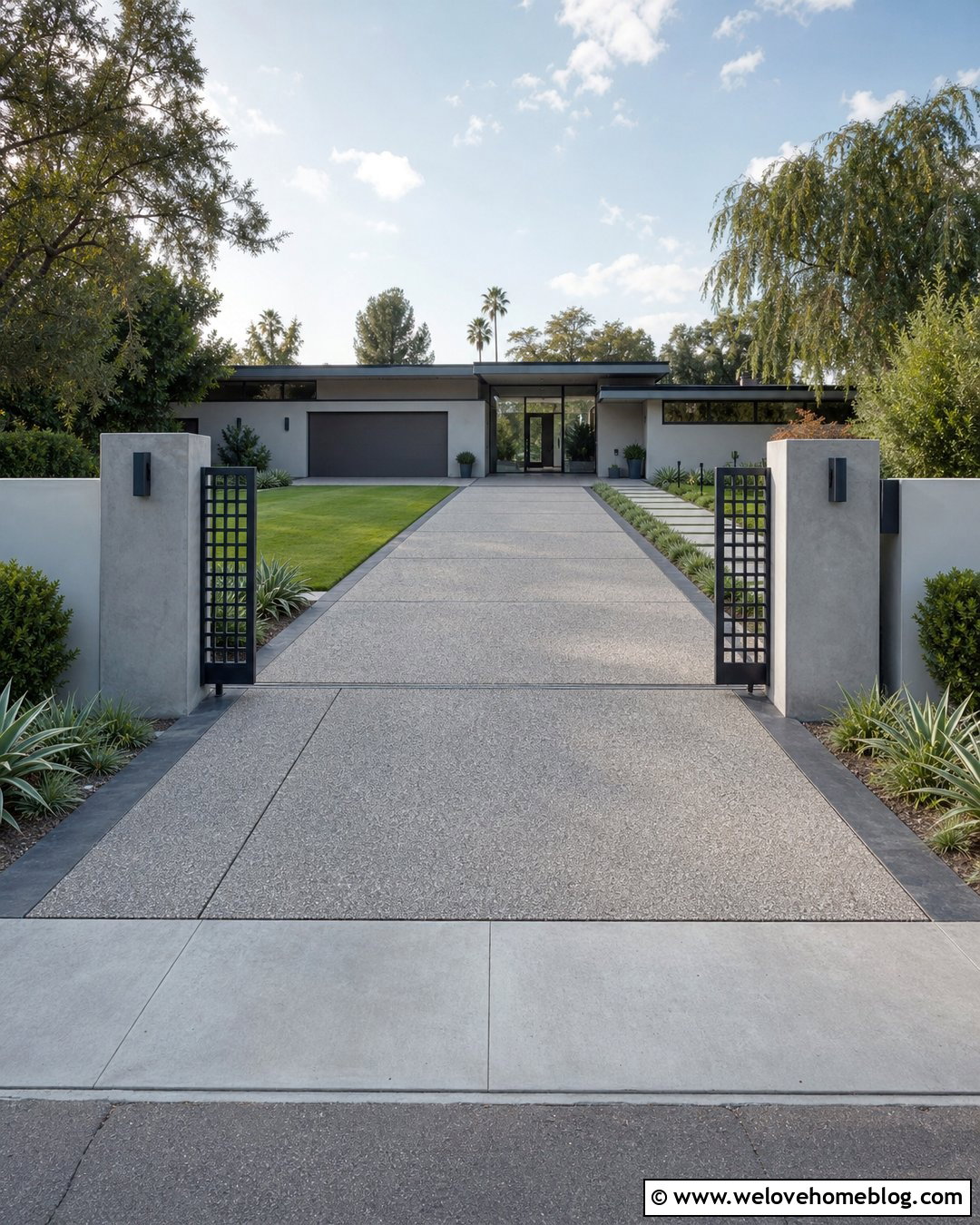
A horizontal slat gate creates a strong contemporary focal point when paired with a finely crushed limestone driveway. Choose medium-gray limestone for a quieter palette, then contain it with black steel edging or low poured-concrete curbs. The driveway should remain straight and uncluttered so its lines align with the gate and modern house beyond. Use smooth stucco walls, simple masonry columns, or dark metal posts to support the entrance. Landscaping can include upright grasses, compact olive-toned shrubs, or clipped evergreens arranged in broad, minimal groups. Continue a paved pedestrian path beside the vehicle gate for safer access. Automated gates require adequate clearance, suitable hardware, and careful site planning. The finished design should look simple, but every line and transition must be deliberately positioned.
17. Long Limestone Driveway With Trees
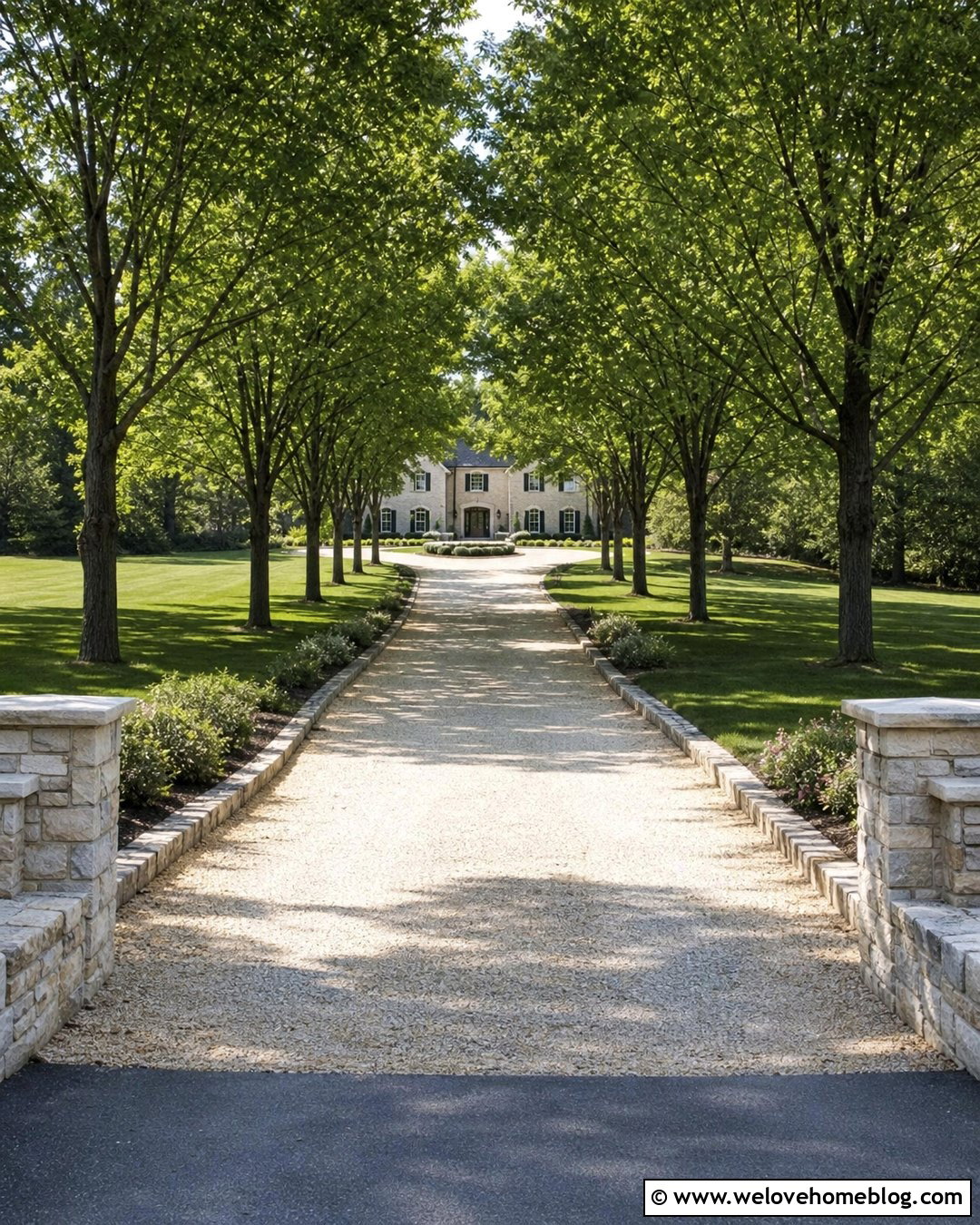
A tree-lined limestone driveway can turn a long approach into a memorable landscape feature. Use pale crushed limestone in a straight or gently winding layout, depending on the property’s shape and existing vegetation. Plant matching rows of deciduous trees beyond low stone or steel edging, allowing adequate room for trunks, roots, and mature canopies. Underplant with grass, low ground cover, or a restrained mix of bulbs and perennials. Avoid positioning trees so close that branches regularly scrape vehicles or roots disrupt the driveway base. A wider arrival court near the house can provide parking and turning space without changing the character of the long approach. Repeating limestone in the walkway or front steps helps connect the distant entrance to the architecture.
18. Small Limestone Driveway For Cottage
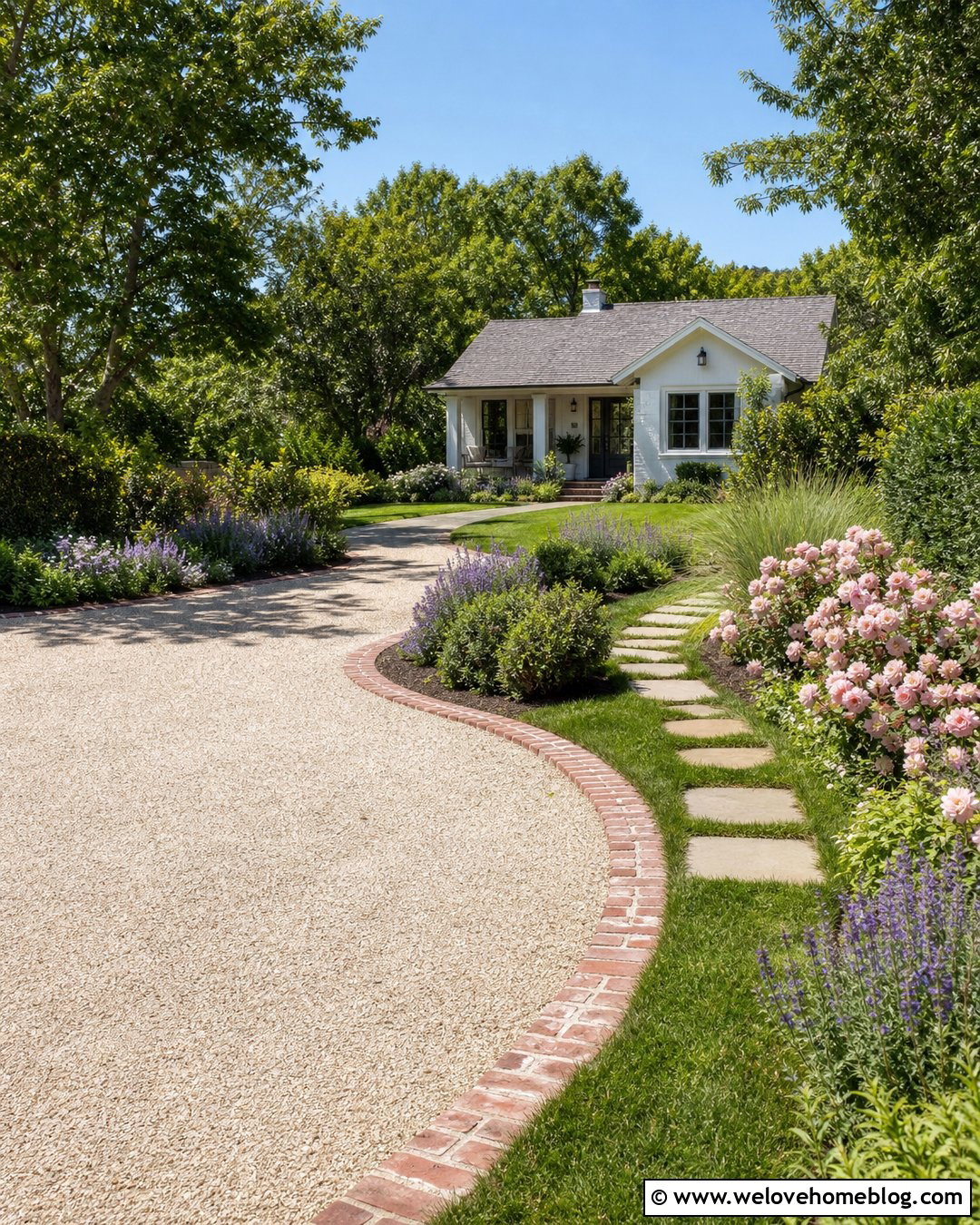
A small cottage driveway benefits from a simple layout and a limited material palette. Cover the parking area with fine cream crushed limestone, then define its edges with reclaimed brick or weathered cobblestones. A subtle curve can create enough space for planting without making the driveway difficult to navigate. Add a narrow stepping-stone path from the parking space to the porch, leaving a planted strip between the path and driveway. Compact shrubs, lavender, catmint, roses, or ornamental grasses can provide cottage character without overwhelming the yard. Allow practical clearance around vehicle doors and trash-bin routes. Matching the border to existing porch or chimney brick makes the design feel established. The result is welcoming, efficient, and appropriately scaled for a modest home.
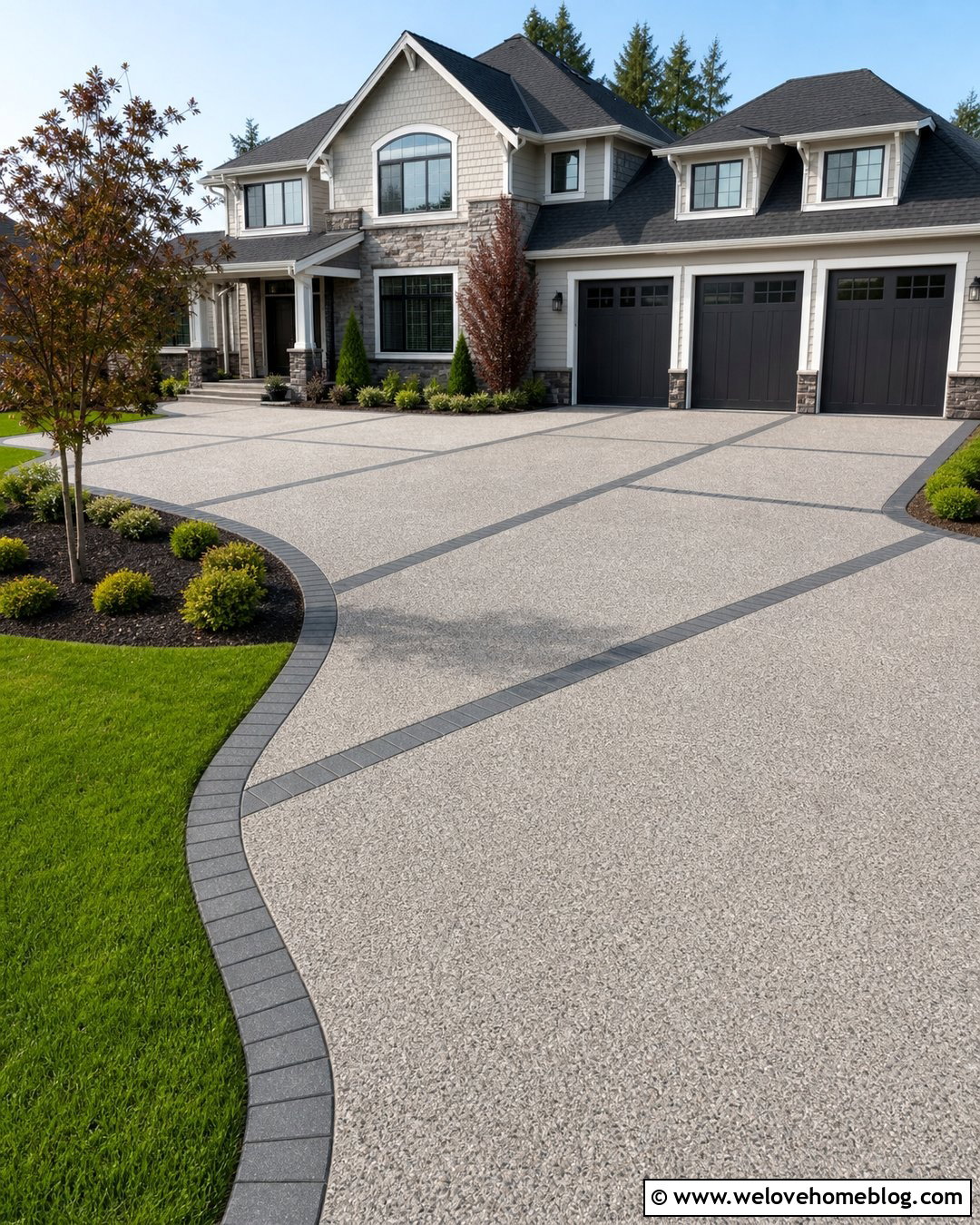
19. Wide Limestone Driveway With Parking Pad
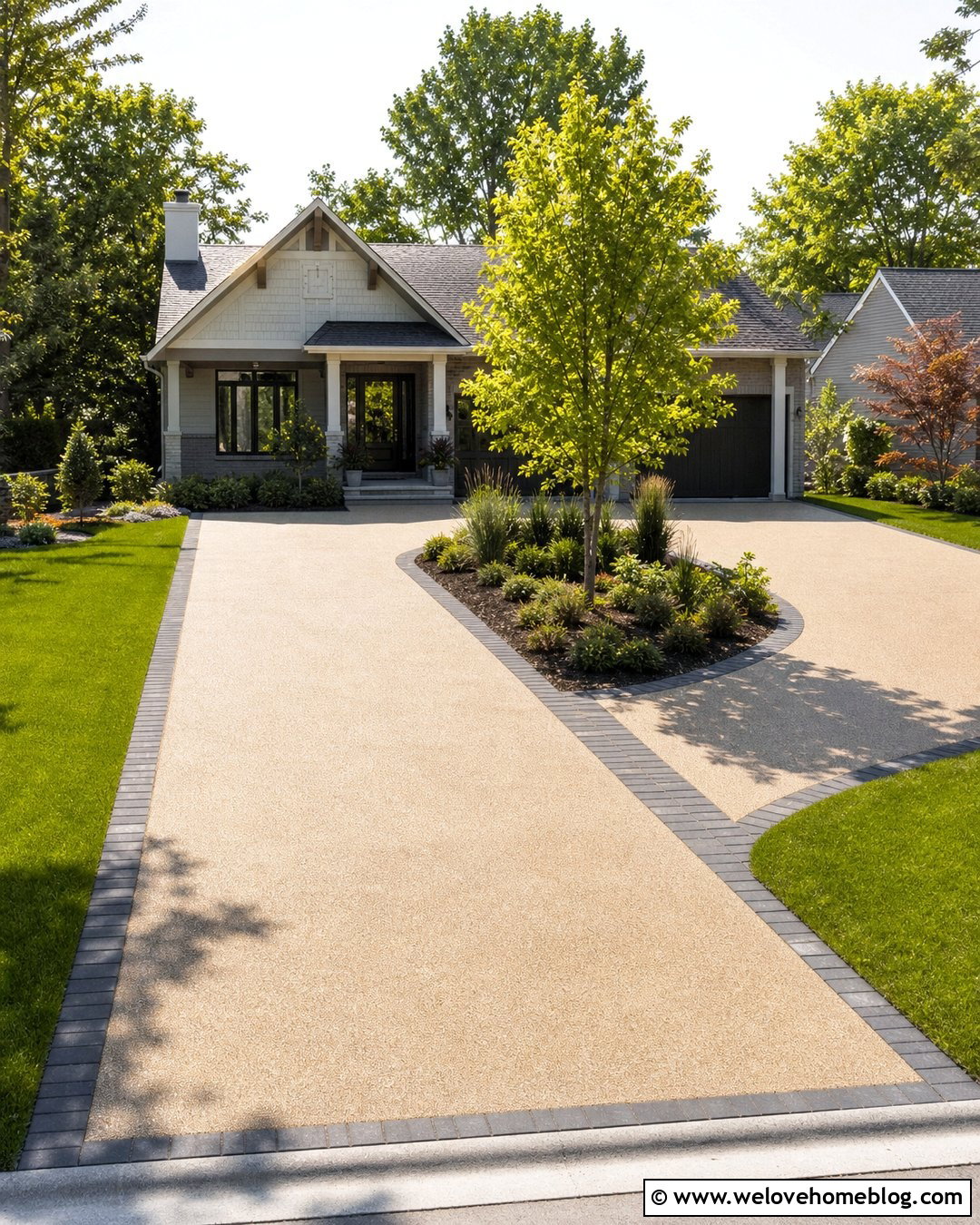
A side parking pad adds function to a wide limestone driveway without making the entire front yard look paved. Use compacted tan limestone for the main drive and branch the pad from one side near the house. Define both areas with the same flush brick, concrete, or cobblestone border. A curved planting island between the parking pad and main approach can break up the broad stone surface. Fill it with a small ornamental tree, low grasses, and shrubs that will not obstruct drivers. Maintain enough maneuvering room for vehicles to enter and leave comfortably. The parking pad can also be separated visually with a paver ribbon. This makes the added space look like an intentional part of the landscape rather than a later expansion.
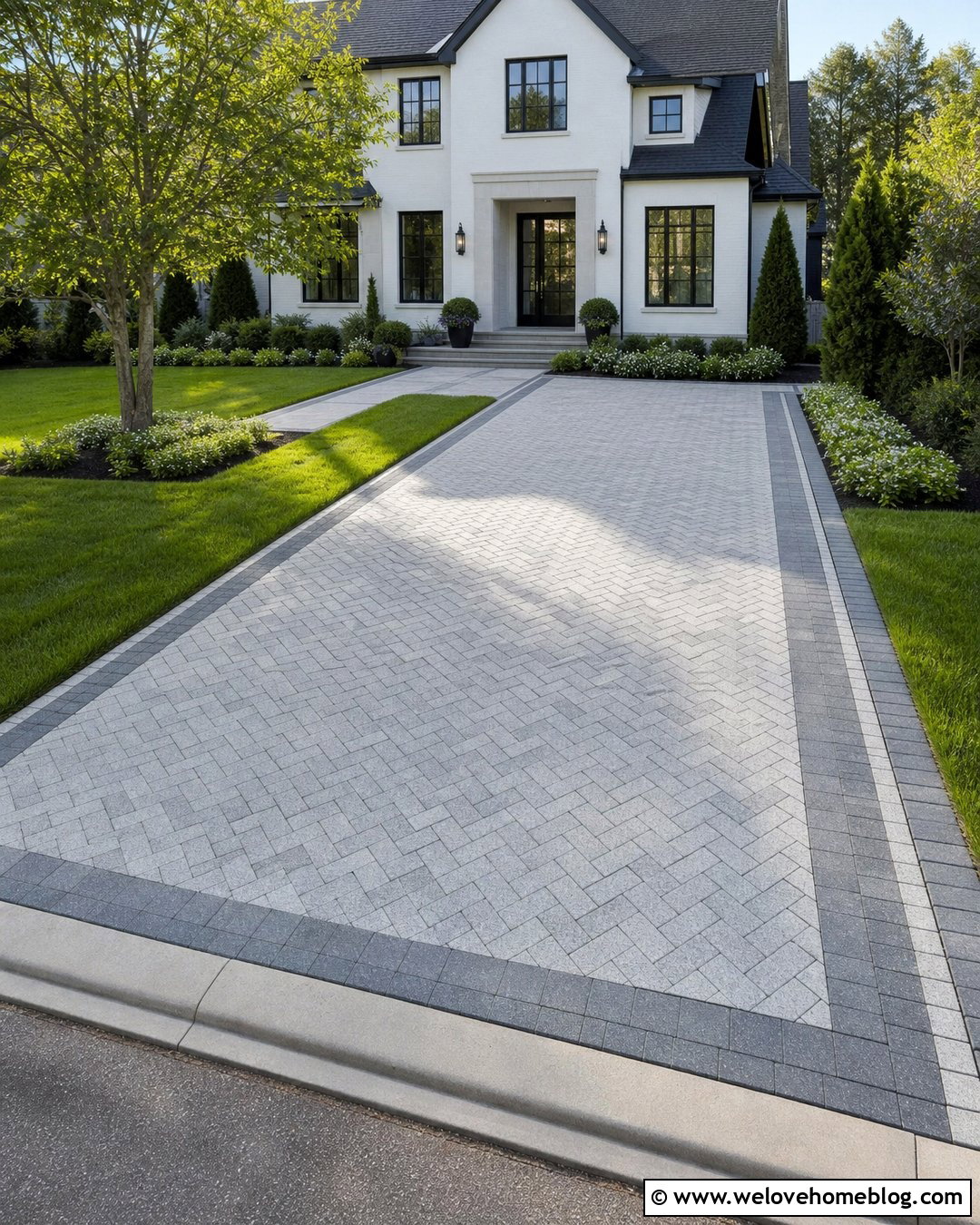
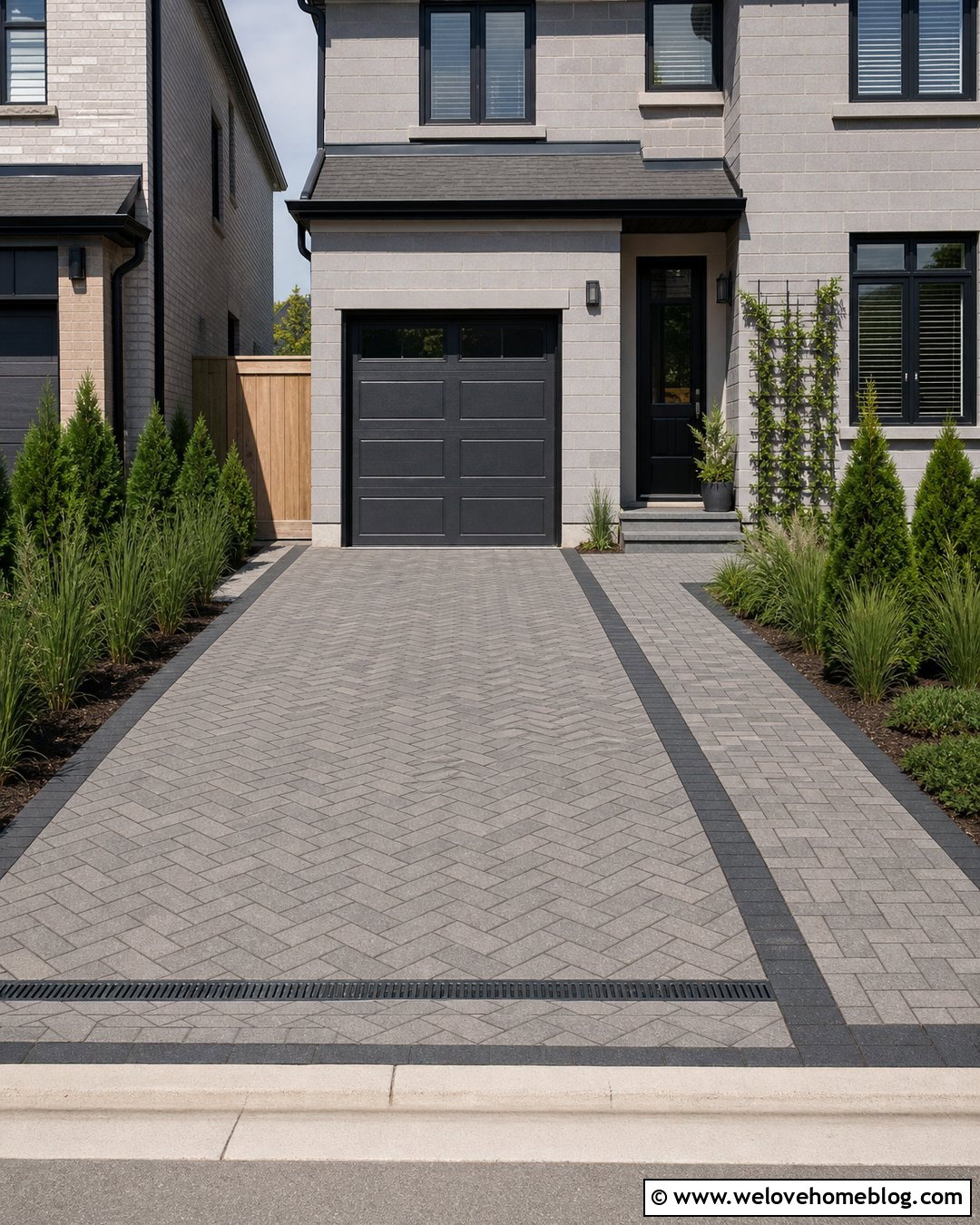
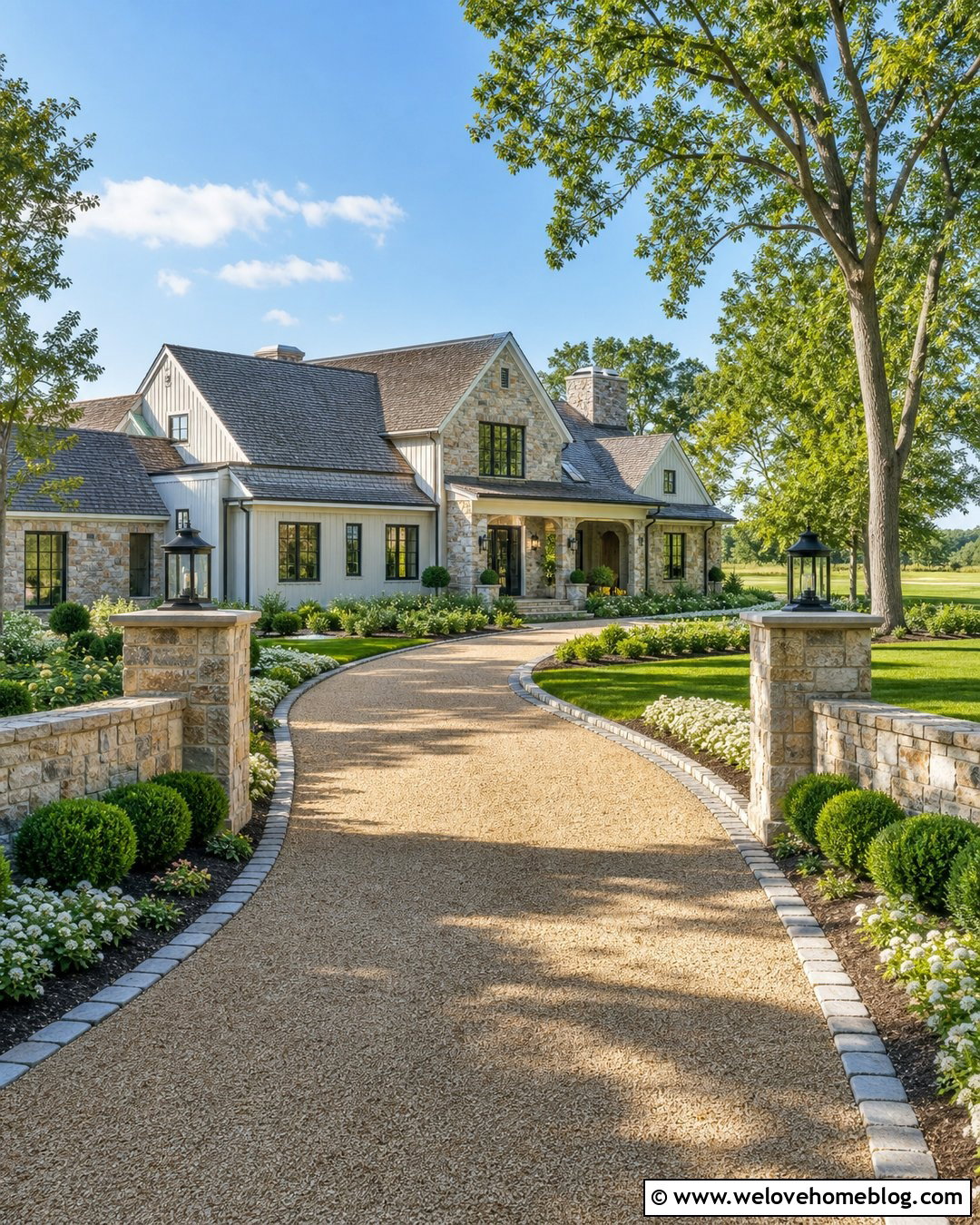
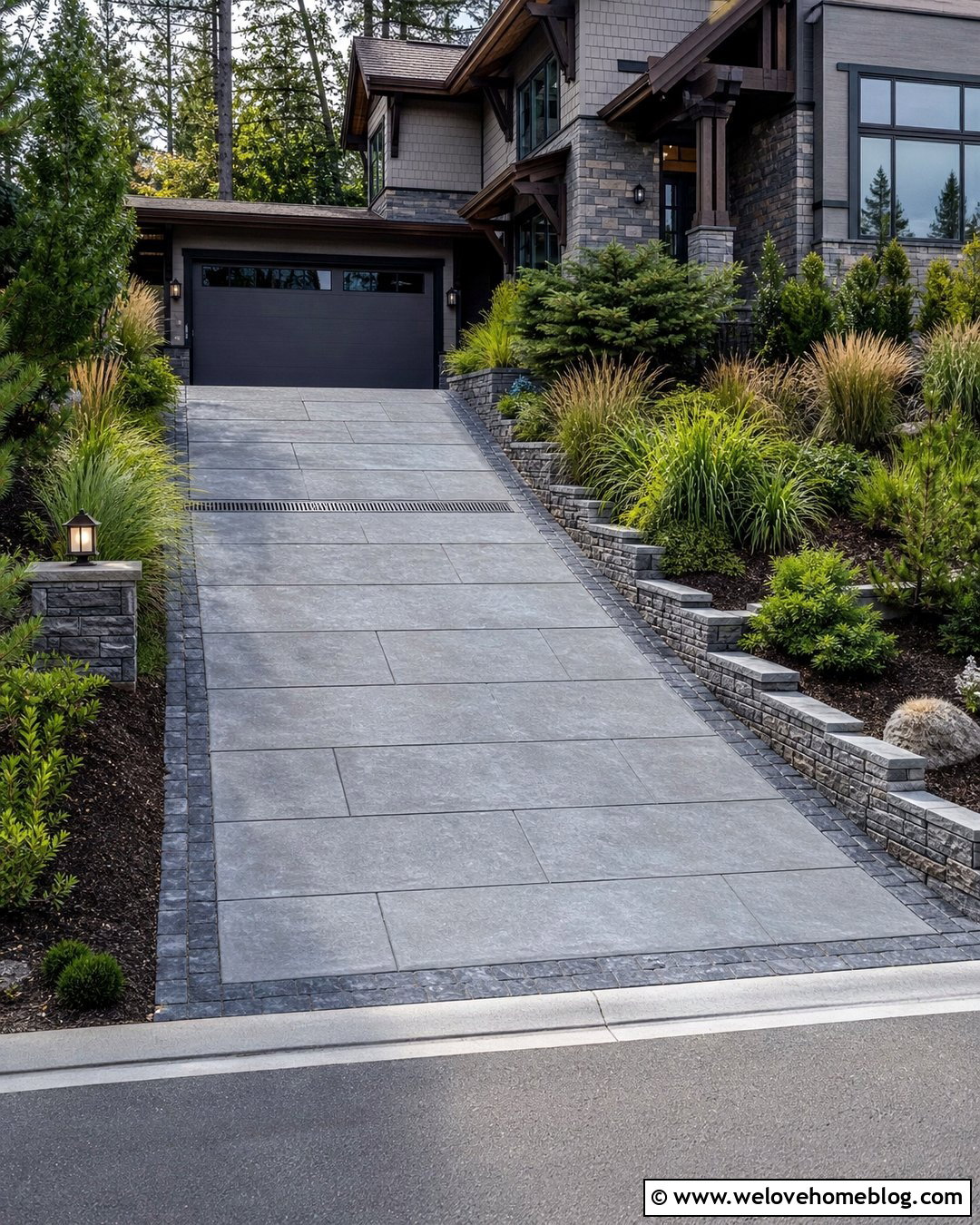
20. Sloped Limestone Driveway With Curbs
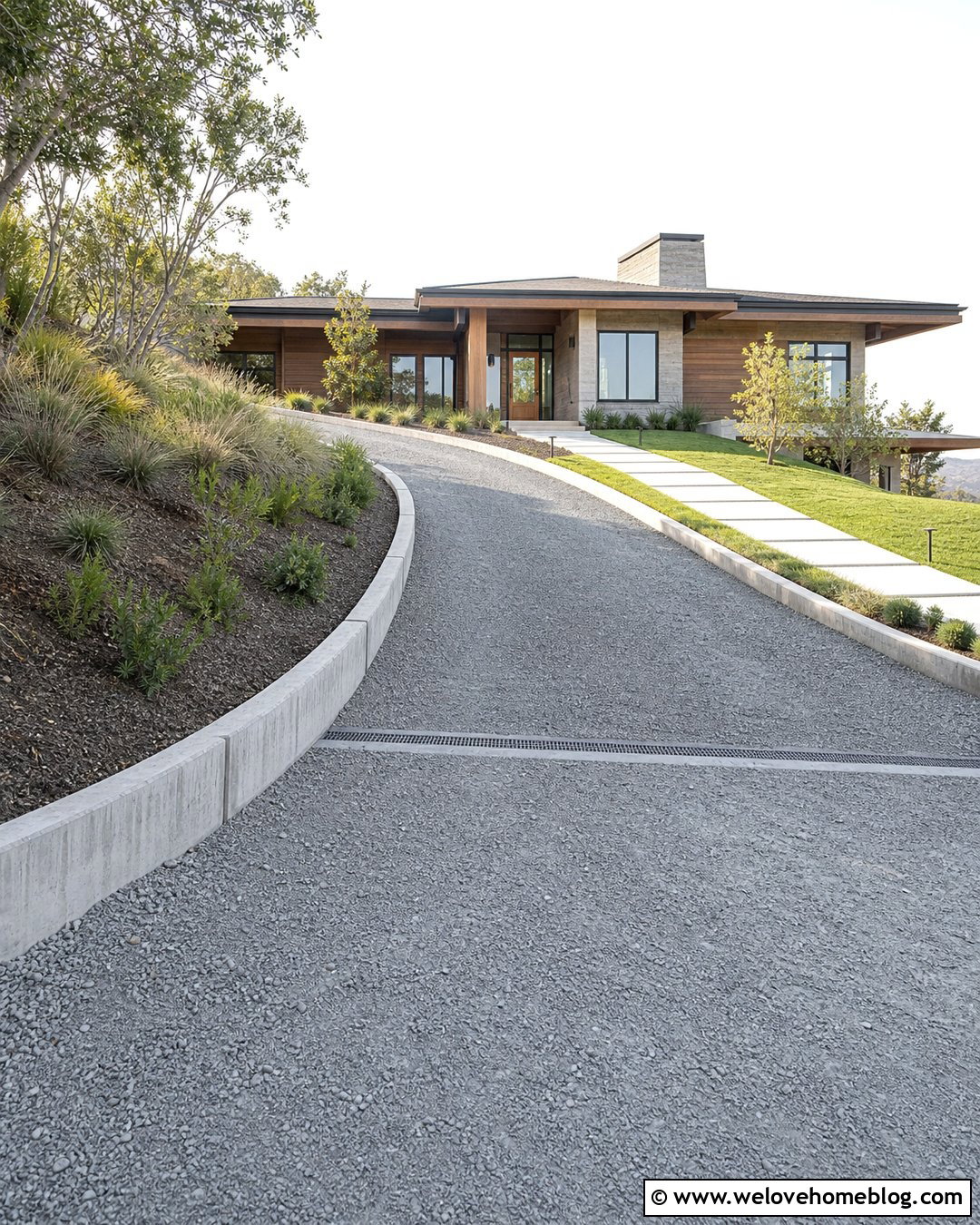
A sloped limestone driveway requires stronger visual containment and careful water management. Use angular crushed limestone with fines that can form a firm, compacted driving surface, rather than relying on rounded decorative gravel. Low concrete or stone curbs can frame both sides and direct loose material away from the lawn. Introduce gentle curves only where the site provides enough width and visibility. Plant the uphill side with deep beds of ground covers, grasses, and erosion-conscious shrubs suited to local conditions. A drainage channel may be needed near the garage or lower edge, depending on the direction of runoff. Because steep grades create installation and maintenance challenges, professional grading advice is worthwhile. A restrained material palette keeps this practical design visually clean.
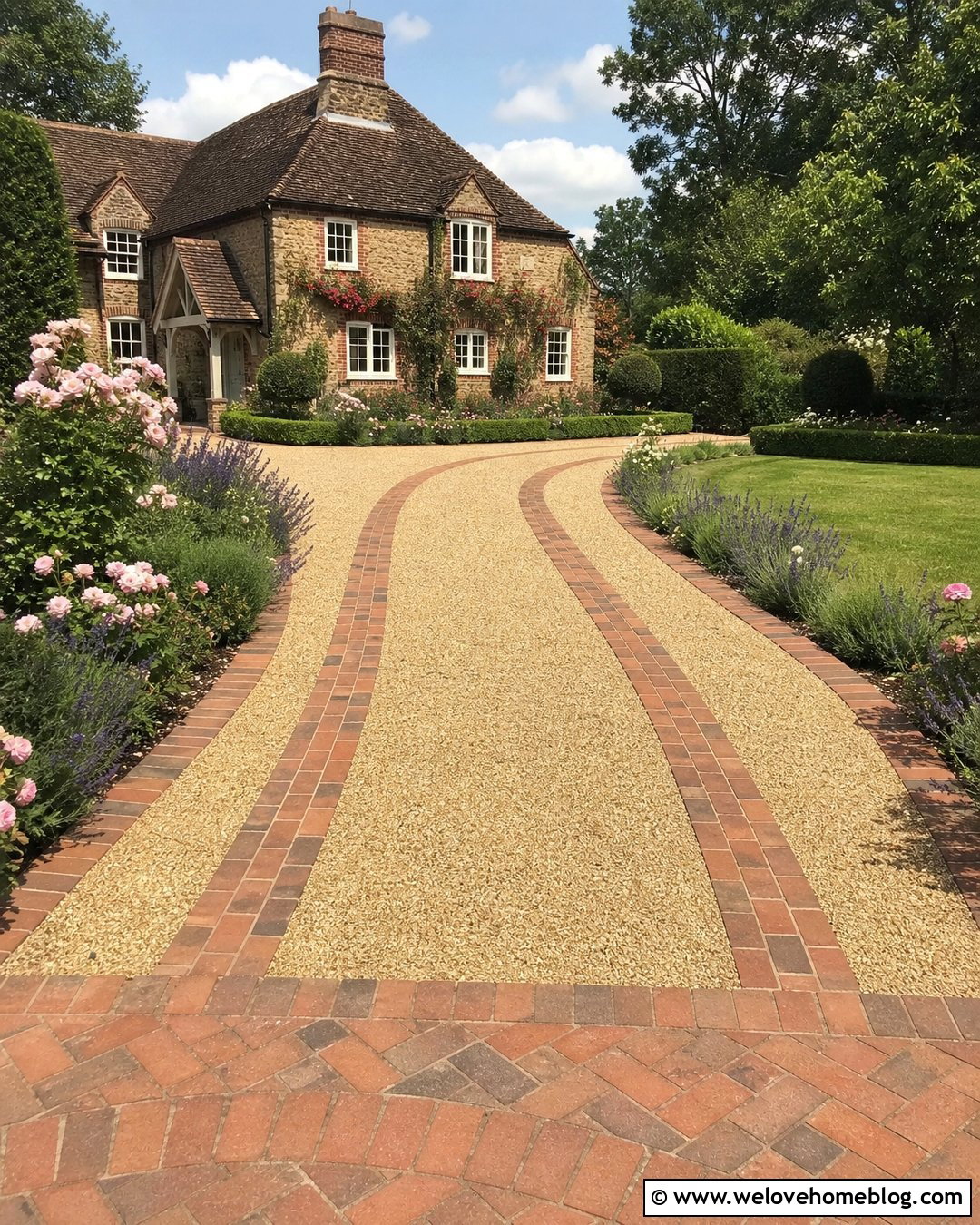
21. Limestone Driveway With Brick Ribbon
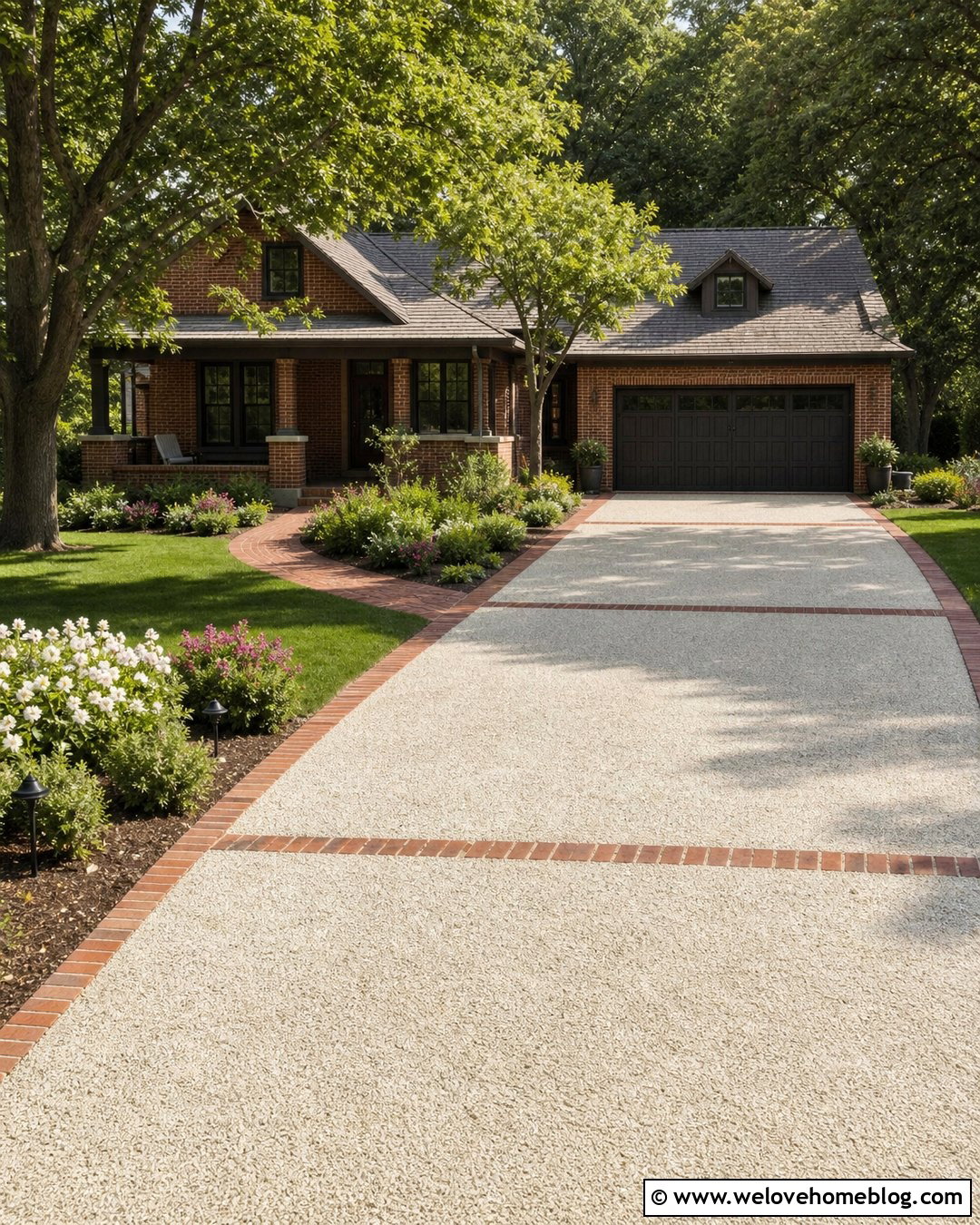
Brick ribbons can divide a large limestone driveway into visually manageable sections. Install warm gray or cream crushed limestone across a straight driveway, then place red or charcoal brick bands at the entrance, halfway point, and garage threshold. The ribbons may run across the driveway or form a narrow perimeter frame. Repeat the same brick in the front walkway to connect the vehicle and pedestrian routes. On both sides, use trimmed lawn and broad planting beds with compact flowering shrubs. Keep the brick close to the limestone surface so vehicles cross each band smoothly. A brick ribbon provides more detail than plain edging while preserving limestone as the dominant material. This combination works especially well with brick ranch, colonial, and Craftsman homes.
22. Stabilized Limestone Driveway With Gravel Grid
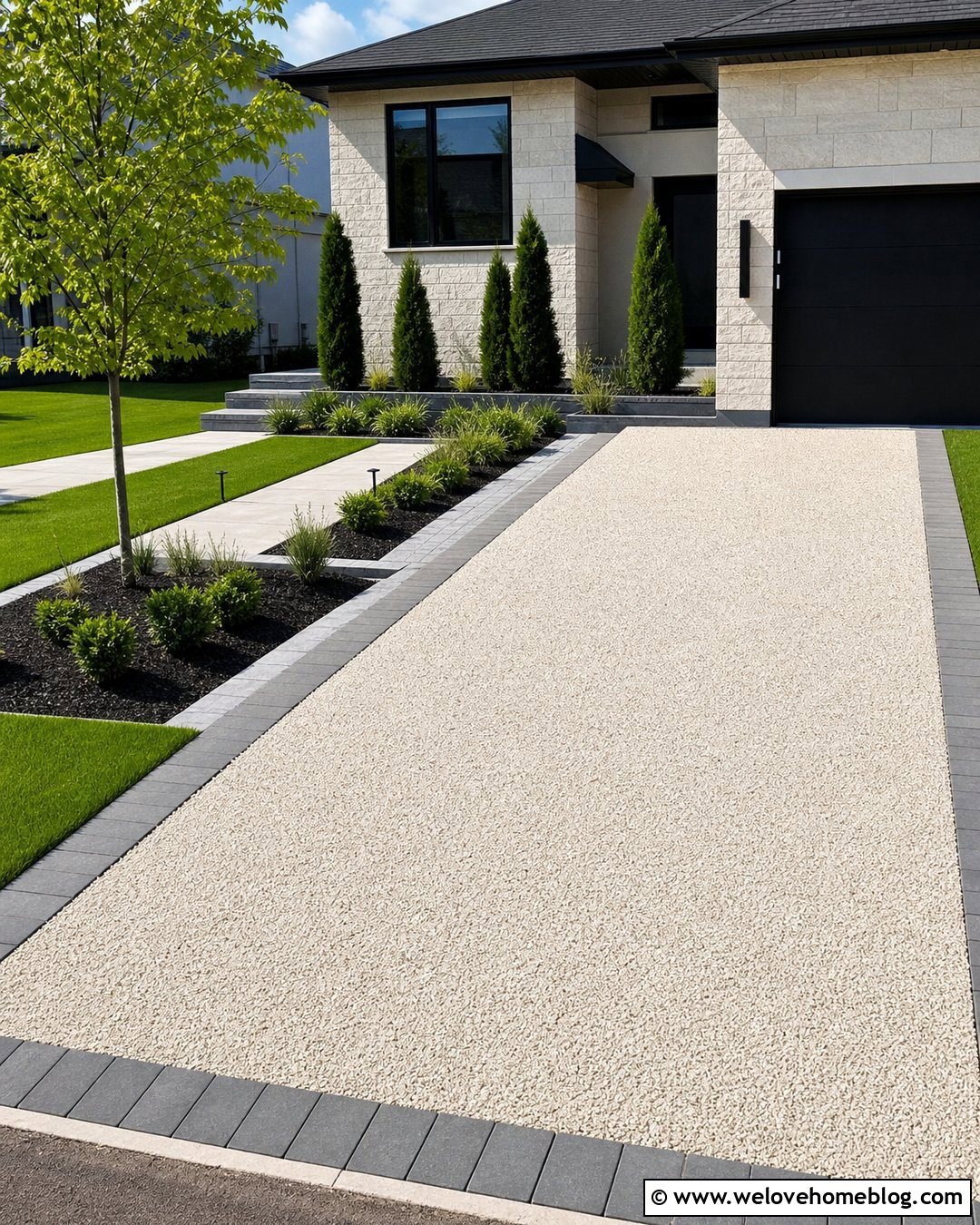
A gravel stabilization grid can help create a more orderly limestone surface where rutting or shifting is a concern. Fill the installed cellular system with angular gray or buff limestone selected to suit the grid specifications. Keep the top of the cells concealed so the driveway retains a natural gravel appearance. Steel edging, concrete curbs, or paver borders can define a straight modern layout. Pair the surface with geometric planting beds, a concrete walkway, and simple evergreen landscaping. Correct excavation, base construction, drainage, and compaction remain important because the grid is only one part of the driveway system. This option can be especially appealing for a clean residential entrance where homeowners want loose-stone texture with a more controlled, even-looking finish.
23. Limestone Driveway With Stepping Stone Walkway
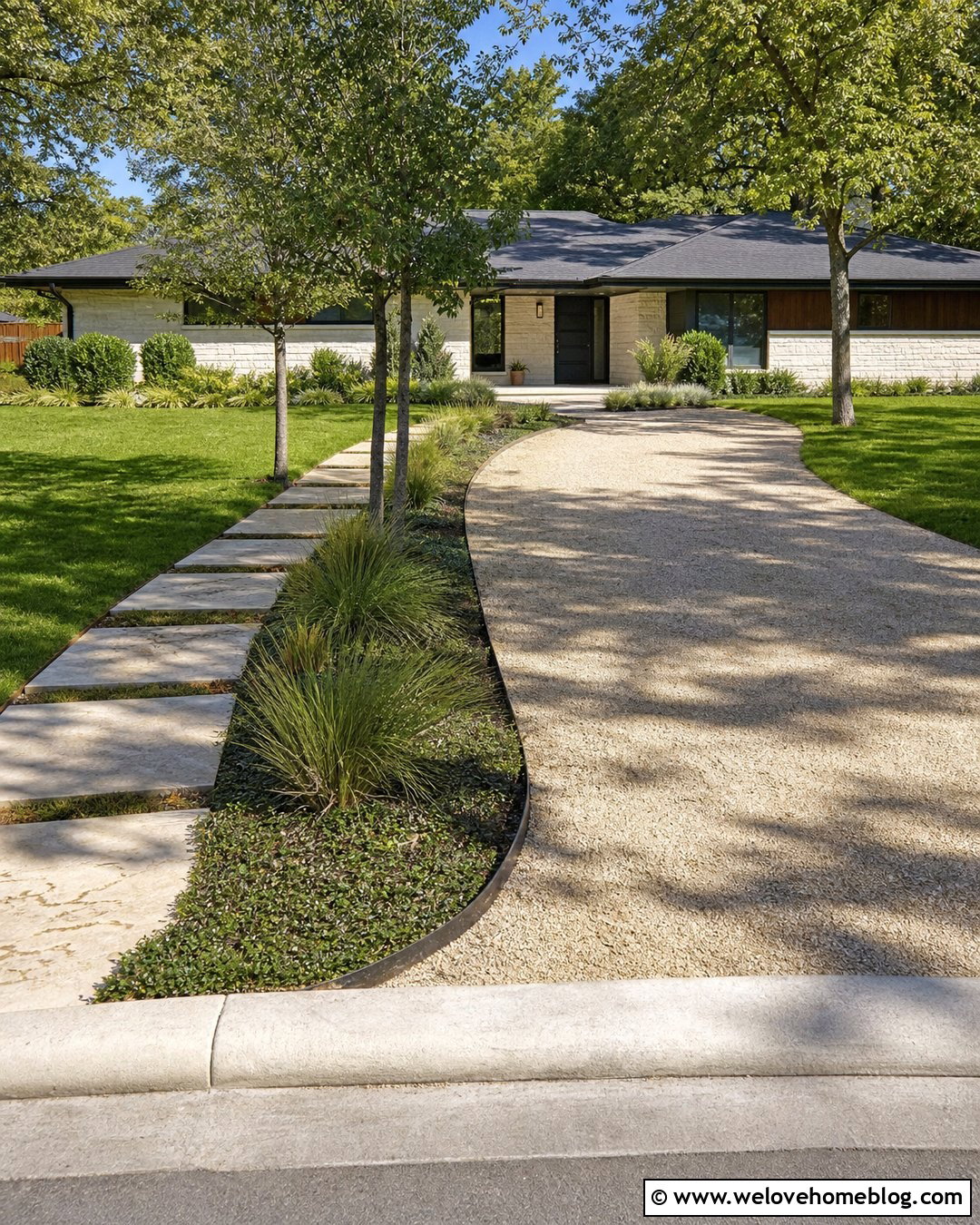
A separate stepping-stone walkway keeps pedestrians from having to cross loose driveway aggregate. Build the main surface from compacted pale limestone and place the walkway along one side, divided by a narrow bed of ground cover or ornamental grasses. Use large limestone slabs, bluestone, or rectangular concrete steppers that coordinate with the house. The walking route should form a clear connection between the parking area, front porch, and sidewalk. Define the driveway with flush metal or stone edging so limestone does not continually move into the planted strip. Low lighting or small shrubs can reinforce the path without crowding it. This complete arrangement works well in small and medium yards because it separates movement while preserving an open, landscaped appearance.
24. Limestone Driveway With Landscape Lighting
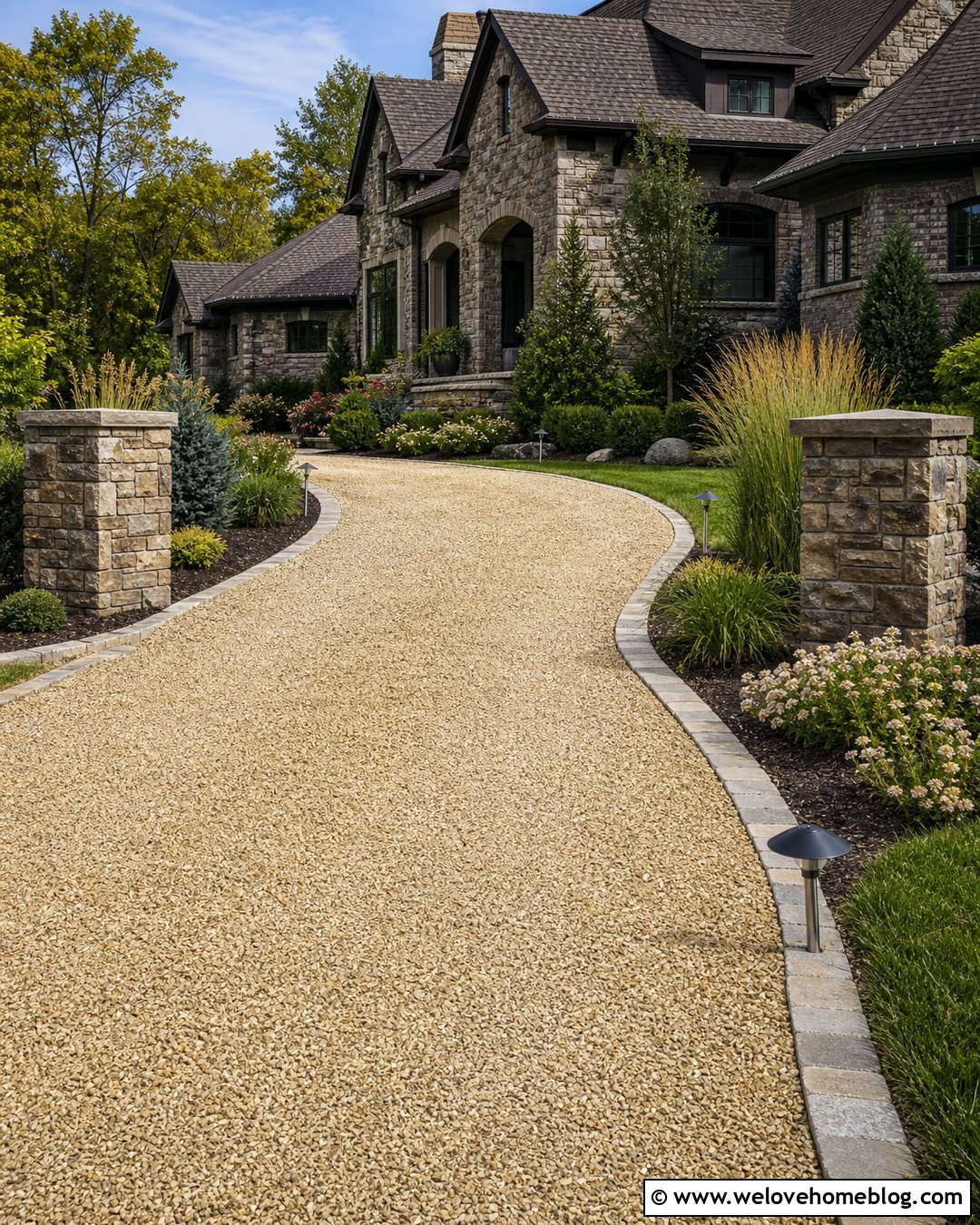
Thoughtfully positioned lighting can define a limestone driveway without turning it into a runway. Start with a gently curved surface made from warm beige crushed limestone. Add low, shielded fixtures along selected sections, focusing on curves, changes in grade, walkways, pillars, and the garage approach. During daylight, the fixtures should remain discreet among ornamental grasses, shrubs, and natural-stone edging. Use matching wall or pillar lights at the entrance to create visual continuity. Space fixtures according to the lighting plan rather than lining both sides with identical closely packed units. Electrical components should be rated and installed for outdoor conditions. The complete design remains attractive during the day, while carefully directed illumination improves orientation after dark without overpowering the house or neighboring properties.
25. Limestone Driveway With Limestone Paver Borders
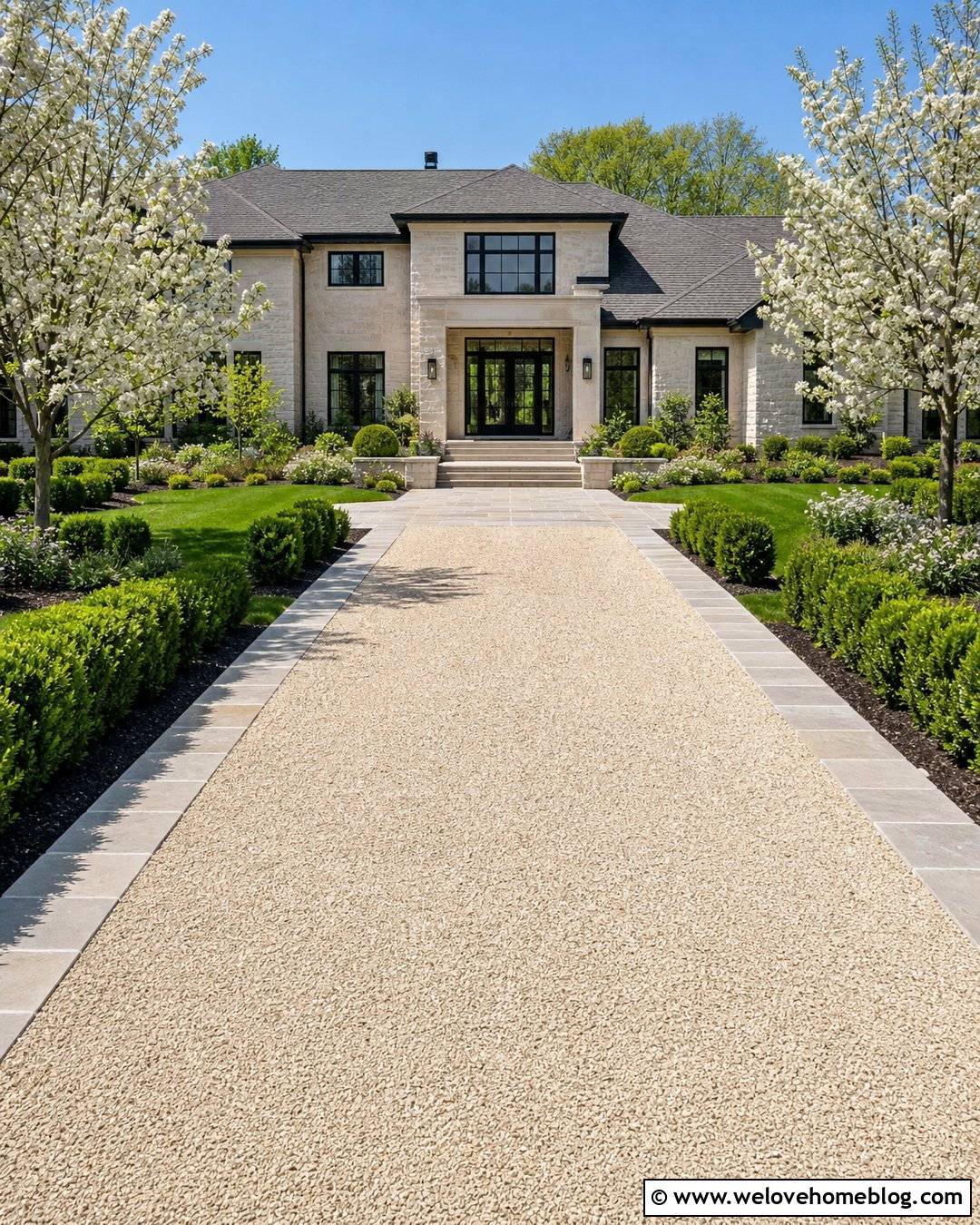
Using limestone pavers around a crushed limestone driveway creates a coordinated, high-end finish without introducing a contrasting material. Select large sawn pavers in a slightly darker tone than the loose aggregate so the border remains visible. A wide straight driveway can include pavers along both sides, across the street entrance, and near the garage. Continue the same stone into the front walkway or porch steps. Green lawn, clipped shrubs, and a few flowering trees prevent the neutral palette from feeling flat. Because natural limestone products can vary in density, finish, and suitability, choose pavers intended for the expected climate and vehicle-edge conditions. The combination of fine aggregate and larger cut stone creates subtle textural variation while preserving a calm, unified appearance.
Conclusion:
The most successful **25 Limestone Driveway Ideas** treat the driveway as a complete part of the front landscape. Surface color matters, but layout, edging, drainage, planting, walkways, and entrance details determine how polished and practical the result will feel. Brick and cobblestone create traditional contrast, while steel, concrete, and stabilization grids support a cleaner modern appearance. Trees, native plants, formal hedges, or flowering borders can then connect the stone surface to the home. Before installation, evaluate vehicle movement, slope, runoff, local rules, and long-term maintenance. With proper preparation and a coordinated material palette, a limestone driveway can provide an attractive, welcoming approach suited to many residential settings.

Related posts:
Leave a Reply