
Lavender can turn a practical driveway into a colorful, fragrant approach that feels connected to the home and garden. Its purple flowers and silver-green foliage complement gravel, concrete, brick, asphalt, cobblestone, and modern pavers. The key is treating the driveway as one complete landscape. Consider the surface color, driveway shape, border width, drainage, lighting, and house architecture together. Lavender generally performs best in sunny positions with fast-draining soil, making raised borders, gravel beds, and sloped planting strips especially useful. () From compact suburban entrances to sweeping country approaches, the following complete designs offer practical inspiration for different properties, materials, and maintenance levels. Explore these 25 Lavender Driveway Ideas to find a layout that suits your home.

1. Gravel Lavender Driveway Border
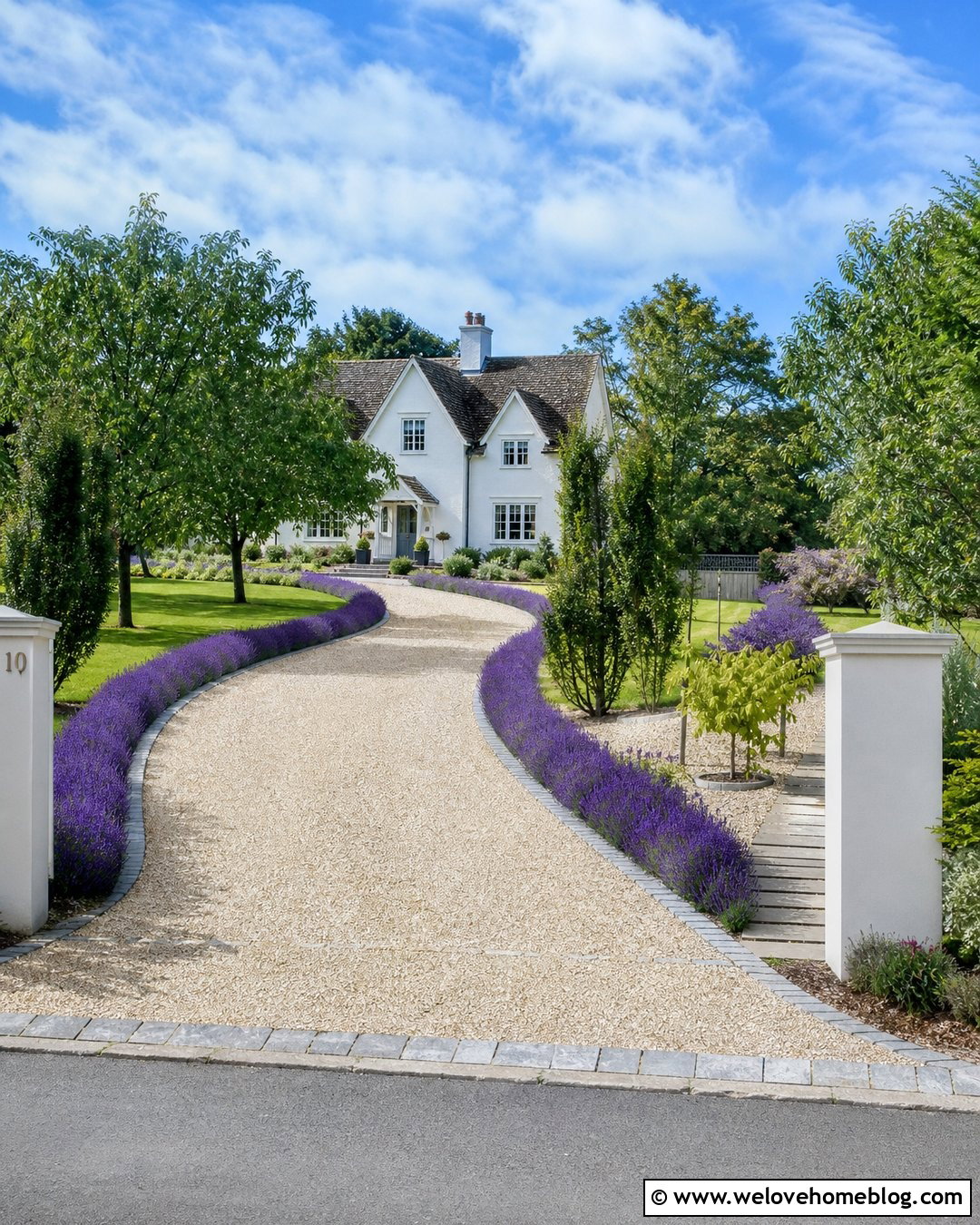
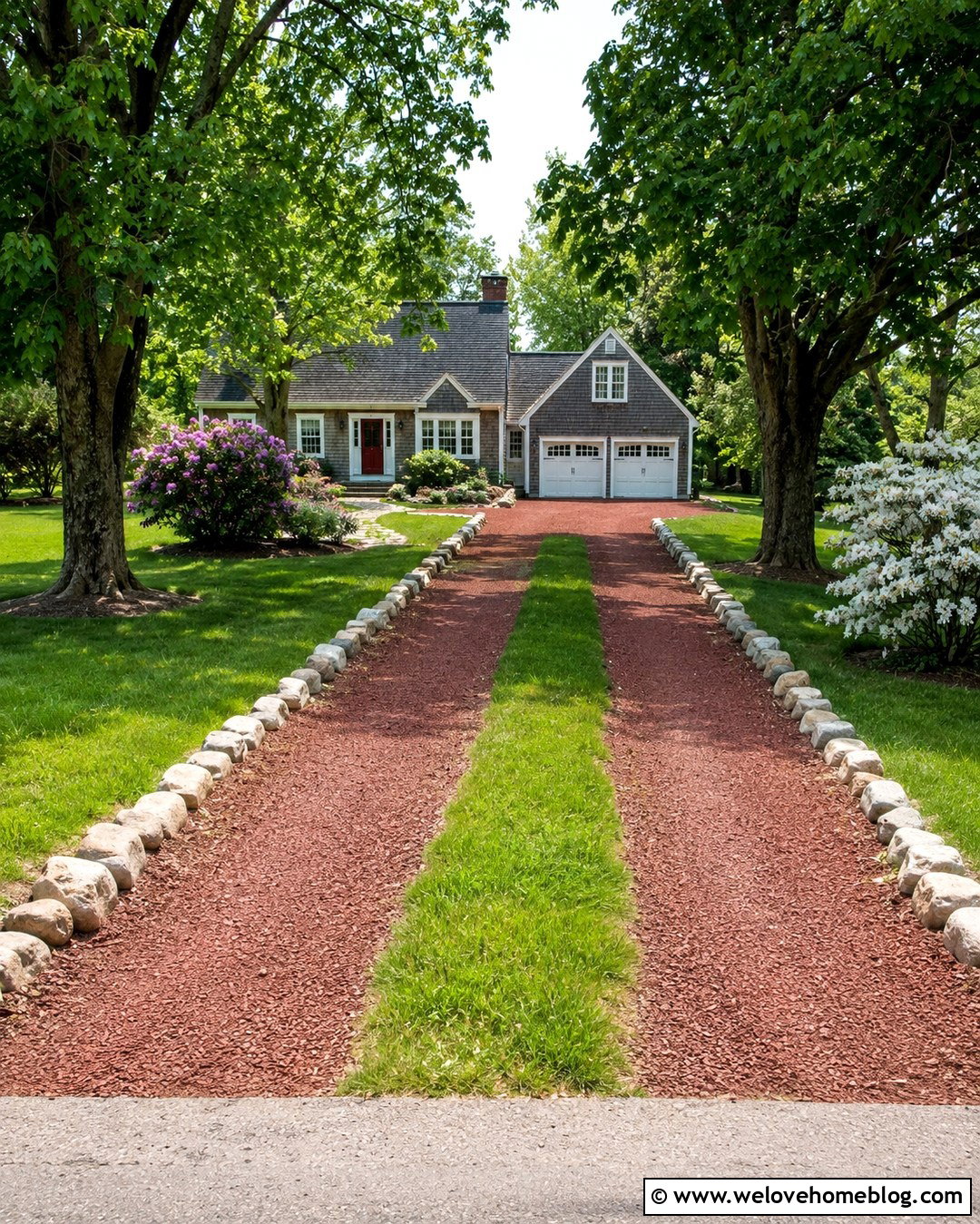
A pale gravel driveway and deep purple lavender create a relaxed combination that works beautifully beside cottages, farmhouses, and country homes. Use compacted crushed stone for the stable base, then add a neat top layer of pea gravel or angular cream gravel. Belgian block edging keeps loose stones away from the planting beds and protects the lavender from vehicle tires. Plant one compact variety in evenly spaced rows for a continuous, low hedge. A gently curved layout will make the driveway feel softer and more inviting. Continue the beds toward the front walkway so the landscape looks connected. Small ornamental trees near the house can add height without hiding the lavender or overwhelming the driveway entrance.
2. Concrete Lavender Driveway Edging
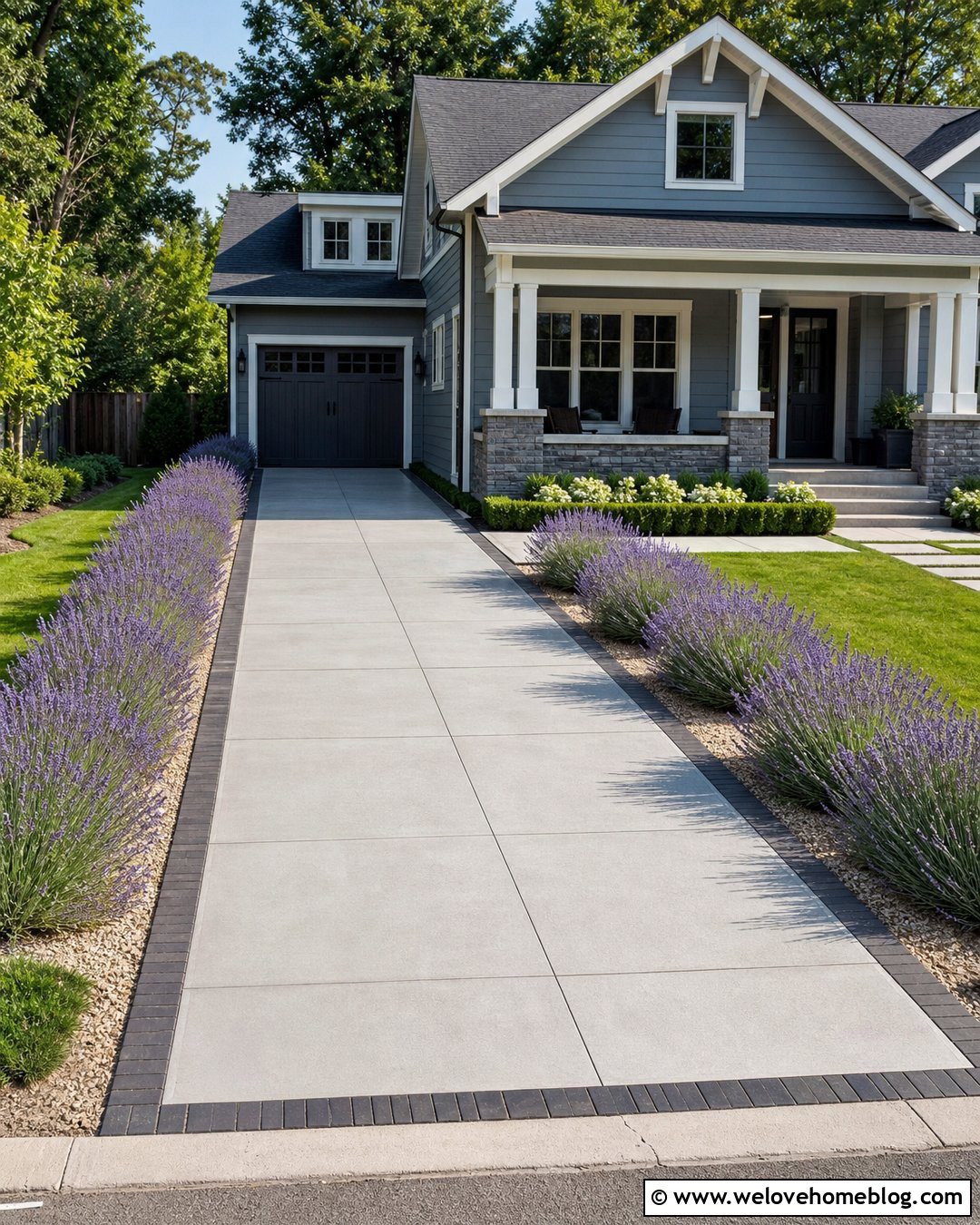
Smooth gray concrete gains warmth and color when it is framed by wide lavender beds. This design suits a straight suburban driveway leading to a ranch, Craftsman, or contemporary home. Divide a large slab into clean rectangular sections with narrow control joints, then install a brick or dark paver ribbon along each side. The darker edging creates a clear transition between concrete and soil. Arrange lavender in a single repeated row, leaving enough setback for open car doors and mature plant growth. Gravel mulch around the plants improves the crisp appearance while preventing soil from splashing onto the concrete. Add a separate walkway through one border, using stepping stones that match the driveway’s modern lines and neutral color palette.
3. Circular Lavender Driveway Island
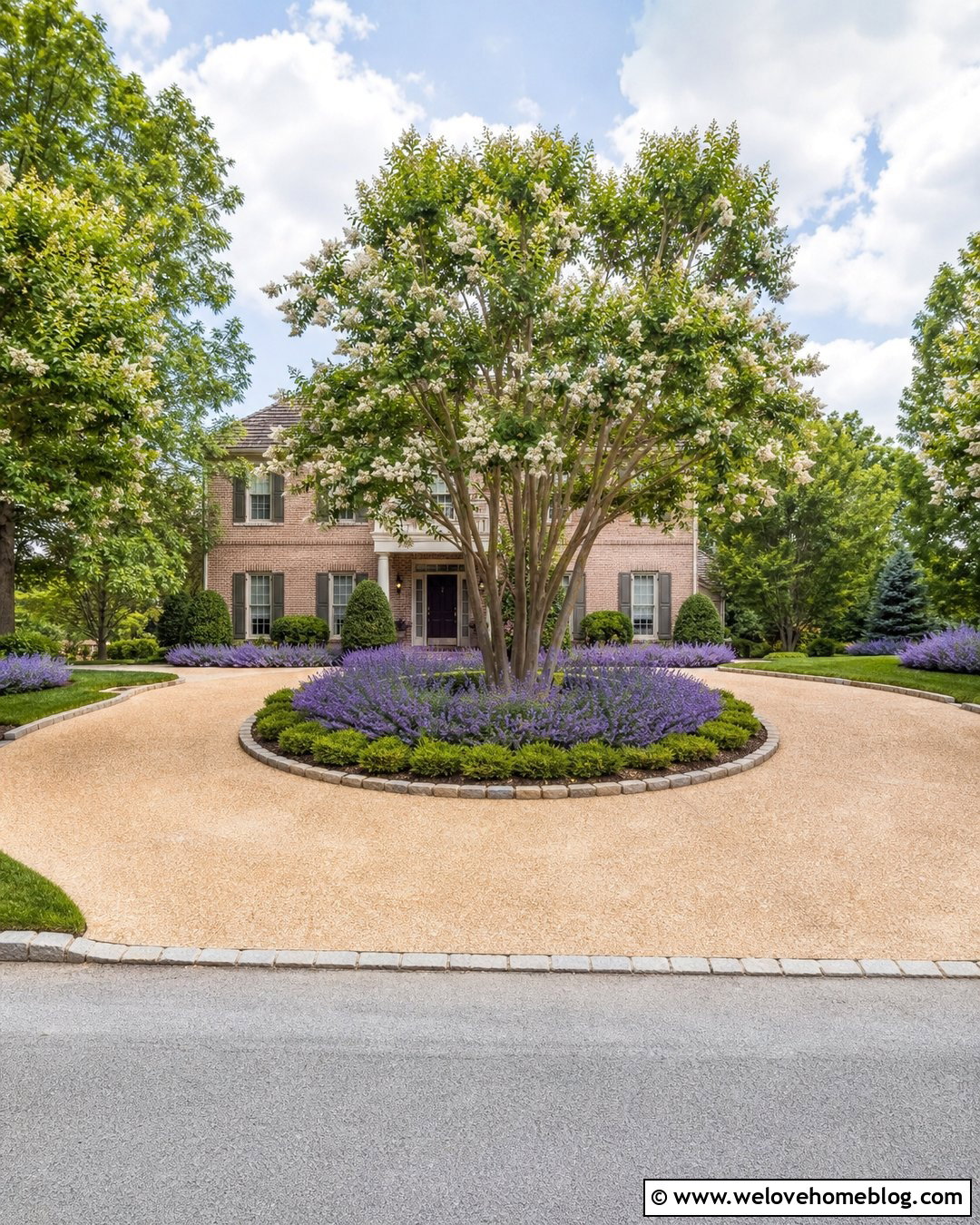
A circular driveway offers an ideal setting for a substantial lavender centerpiece. Instead of filling the center island with lawn alone, create layered planting around a small multi-stem tree, sculptural evergreen, or simple fountain. Place low lavender around the outside of the island where its purple flowers remain visible from the street. A raised stone curb gives the planting bed a finished edge and protects it from turning vehicles. Natural stone pavers or warm exposed aggregate can reinforce the elegant shape of the drive. Keep taller plants near the middle so sightlines across the circle remain open. Matching lavender beds at the entrance can repeat the island’s color and make the entire driveway composition feel balanced rather than disconnected.
4. Curved Lavender Driveway Landscaping
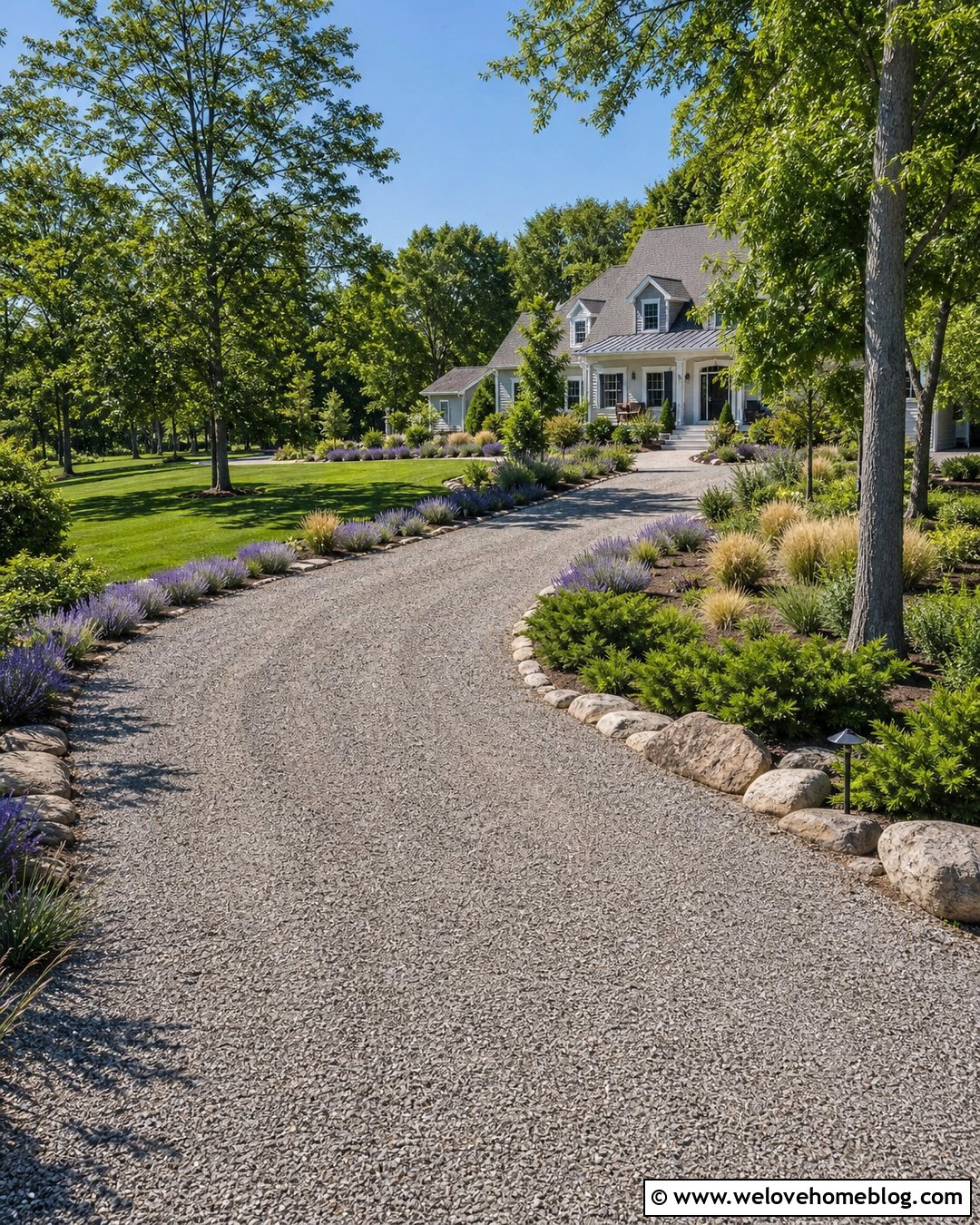
Imagine a gently winding driveway with waves of lavender following each bend. This layout works especially well on a deep lot where the house is partially hidden from the road. Use warm gray gravel, exposed aggregate, or lightly textured concrete to establish a natural-looking route. Along the outside curves, create broad planting beds with lavender arranged in informal drifts rather than rigid lines. Place ornamental grasses, low junipers, and a few upright trees behind the lavender for depth. The inside curves should remain simpler to preserve visibility and provide extra driving clearance. Fieldstone edging can help the soft planting beds follow the pavement accurately. The repeated lavender mounds visually guide visitors toward the house while emphasizing the driveway’s graceful shape.
5. Brick Lavender Driveway Border
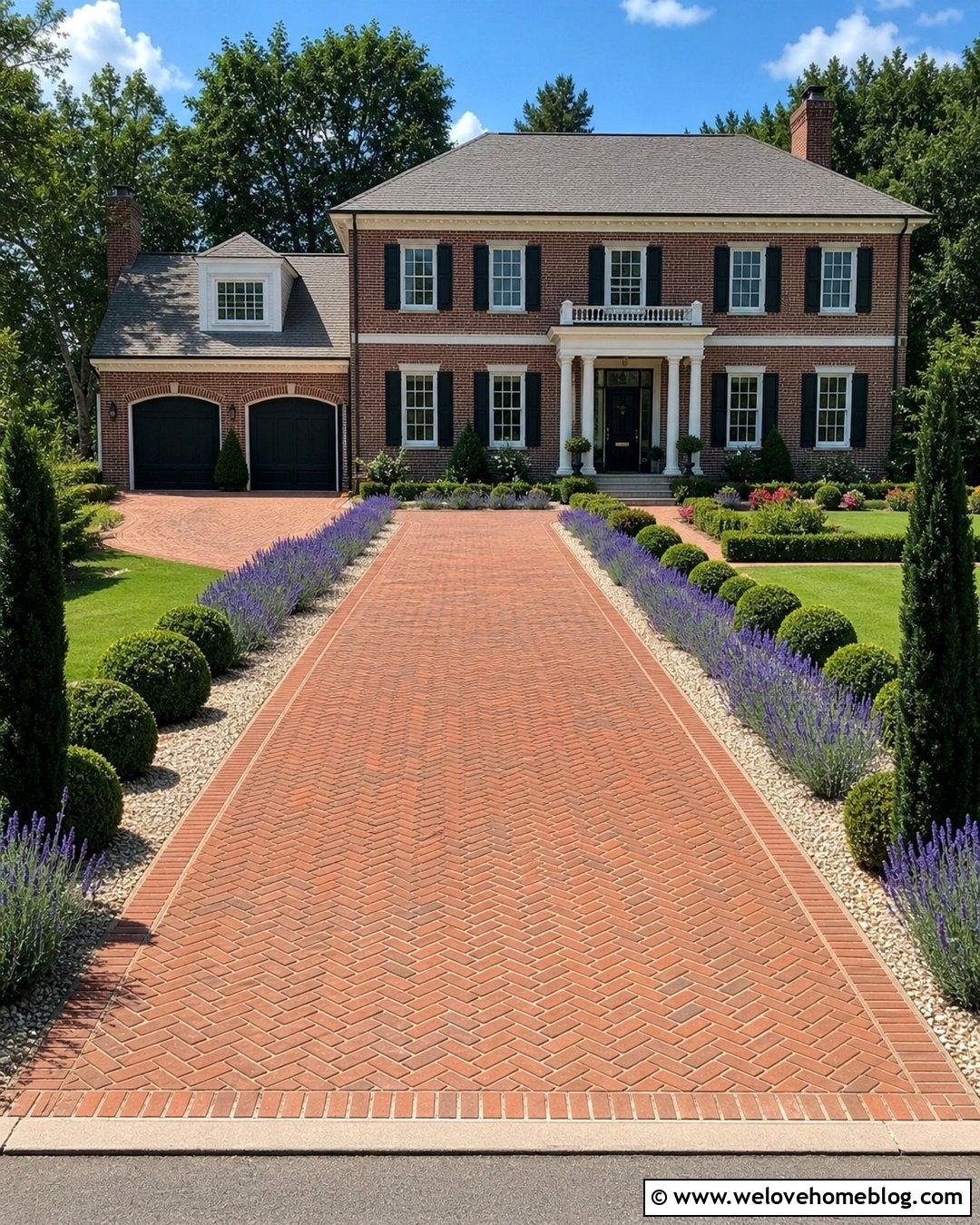
Rich red brick and purple lavender produce a traditional combination with plenty of texture. Choose clay brick pavers in a herringbone pattern for the main driveway, then use a soldier-course border to define the edges. The structured paving looks particularly appropriate in front of Colonial, Georgian, and traditional brick homes. Add straight lavender hedges on both sides, backed by dark green boxwood or upright evergreens where additional structure is needed. Keep the planting beds symmetrical near the road, but allow them to widen closer to the house. Cream gravel mulch can brighten the beds and separate the lavender foliage from the red paving. Matching brick paths should connect the driveway to the porch without interrupting the continuous planting design.
6. Paver Lavender Driveway Beds
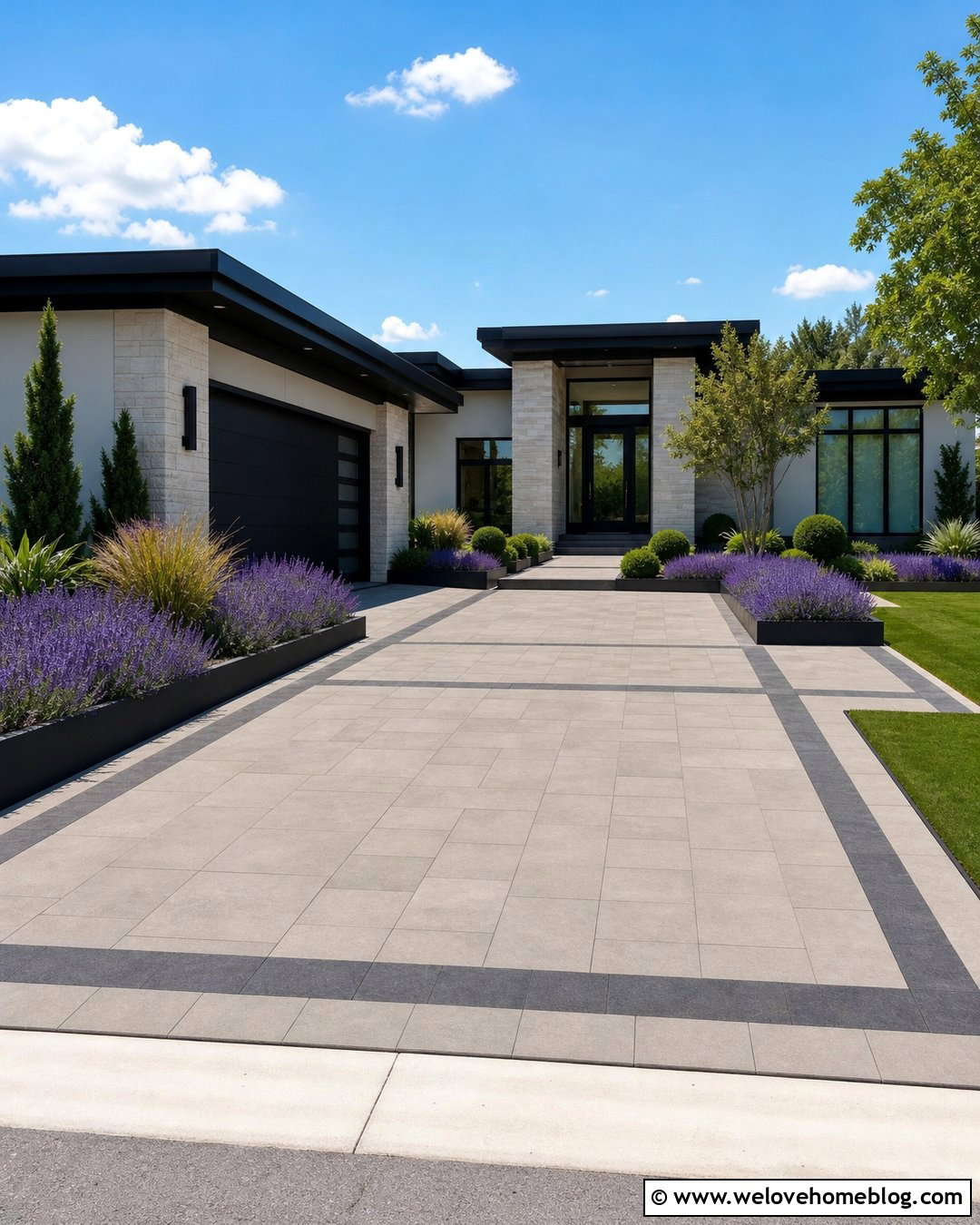
Large-format concrete pavers give lavender landscaping a cleaner, more contemporary character. Select warm greige or limestone-colored pavers that contrast gently with the flowers without making the front yard feel cold. A wide straight driveway can be divided visually with narrow charcoal paver bands, while matching charcoal edging frames raised lavender beds. Plant compact lavender in broad, repeated blocks instead of using a loose cottage arrangement. This makes the soft flowers feel intentional beside the geometric pavement. Add architectural grasses and clipped evergreen spheres sparingly for year-round structure. A linear walkway, low retaining wall, and simple house foundation beds should follow the same geometry. The result is a polished driveway where the hardscape and planting share one organized visual rhythm.
7. Asphalt Lavender Driveway Border
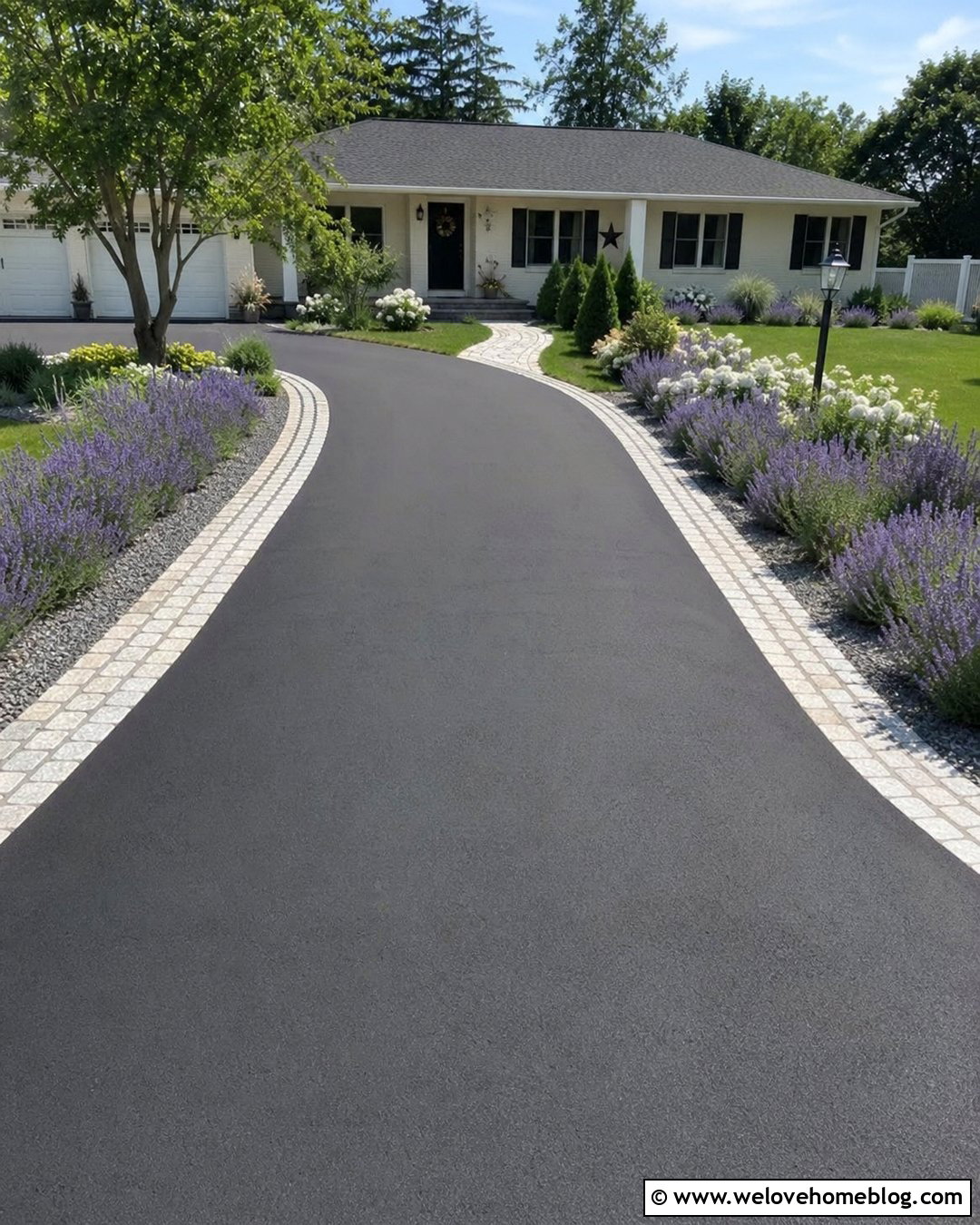
Black asphalt creates a dramatic background for lavender’s pale foliage and saturated purple blooms. To prevent the surface from looking overly plain, add a double border of light cobblestones or tumbled concrete blocks. The border strengthens the edge while creating a cooling visual buffer between the dark pavement and plants. Use a curved or flared entrance to soften the asphalt and make turning easier. Wide beds filled with lavender, gray gravel mulch, and occasional white-flowering perennials will brighten both sides. Because asphalt can radiate considerable warmth, keep plants slightly back from the pavement and avoid trapping their crowns under heavy mulch. A light-colored walkway and matching porch steps can repeat the border tone, helping the practical driveway feel coordinated with the house.
8. Cobblestone Lavender Driveway Entrance
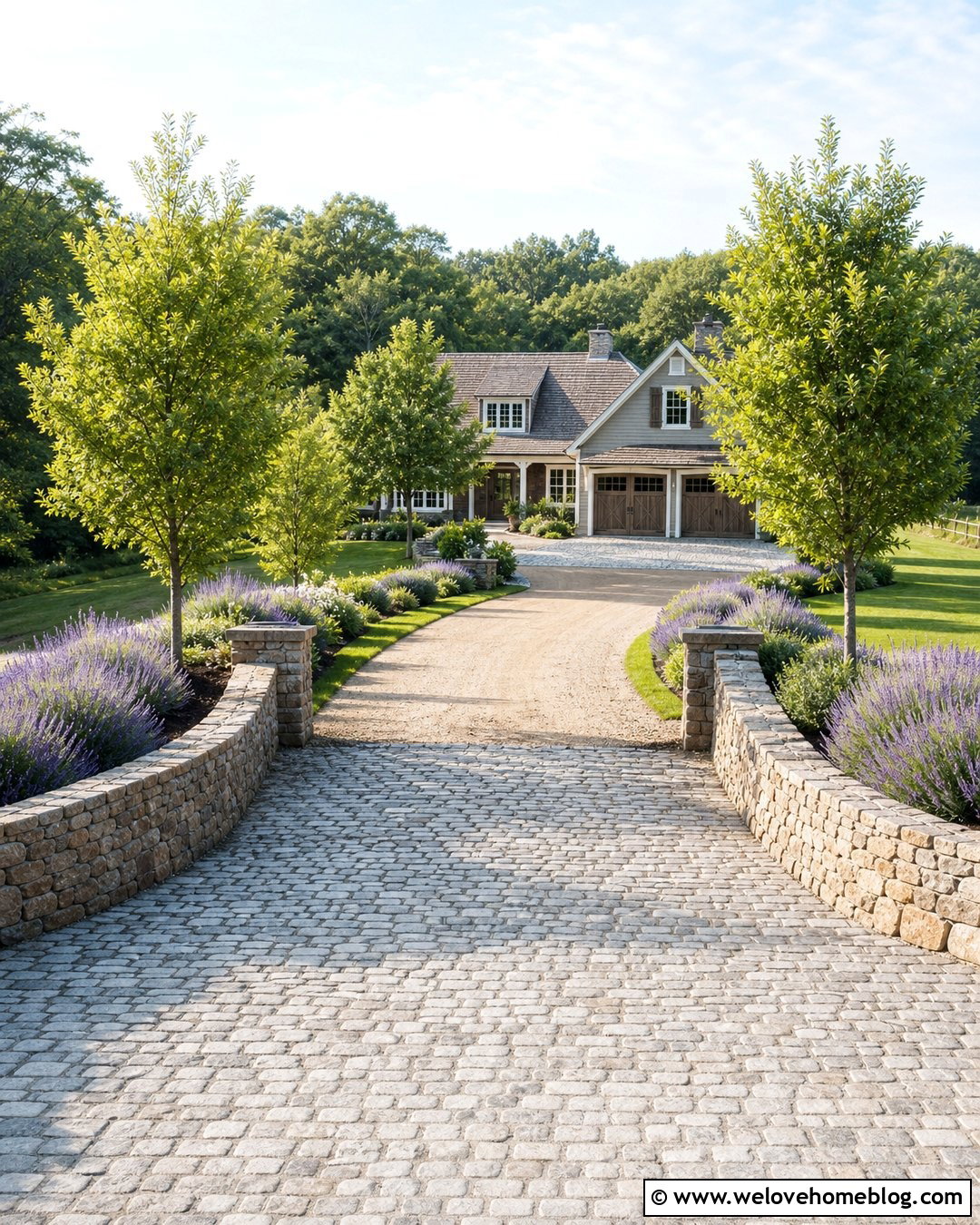
A cobblestone entrance framed by lavender can give even a simple driveway a memorable sense of arrival. Use natural gray cobblestones across the first section of the drive, then transition to compacted gravel or asphalt farther inside the property. Low dry-stacked stone walls can curve outward from the entrance and hold raised beds of lavender. This elevation displays the flowers clearly while improving drainage around their roots. Add a pair of small ornamental trees behind the walls to create height without forming a heavy barrier. Keep the entrance wide, uncluttered, and visible from both directions. Repeating a narrow cobblestone strip near the garage ties the decorative entry apron to the rest of the driveway and prevents it from feeling like an isolated feature.
9. Resin Lavender Driveway Landscaping
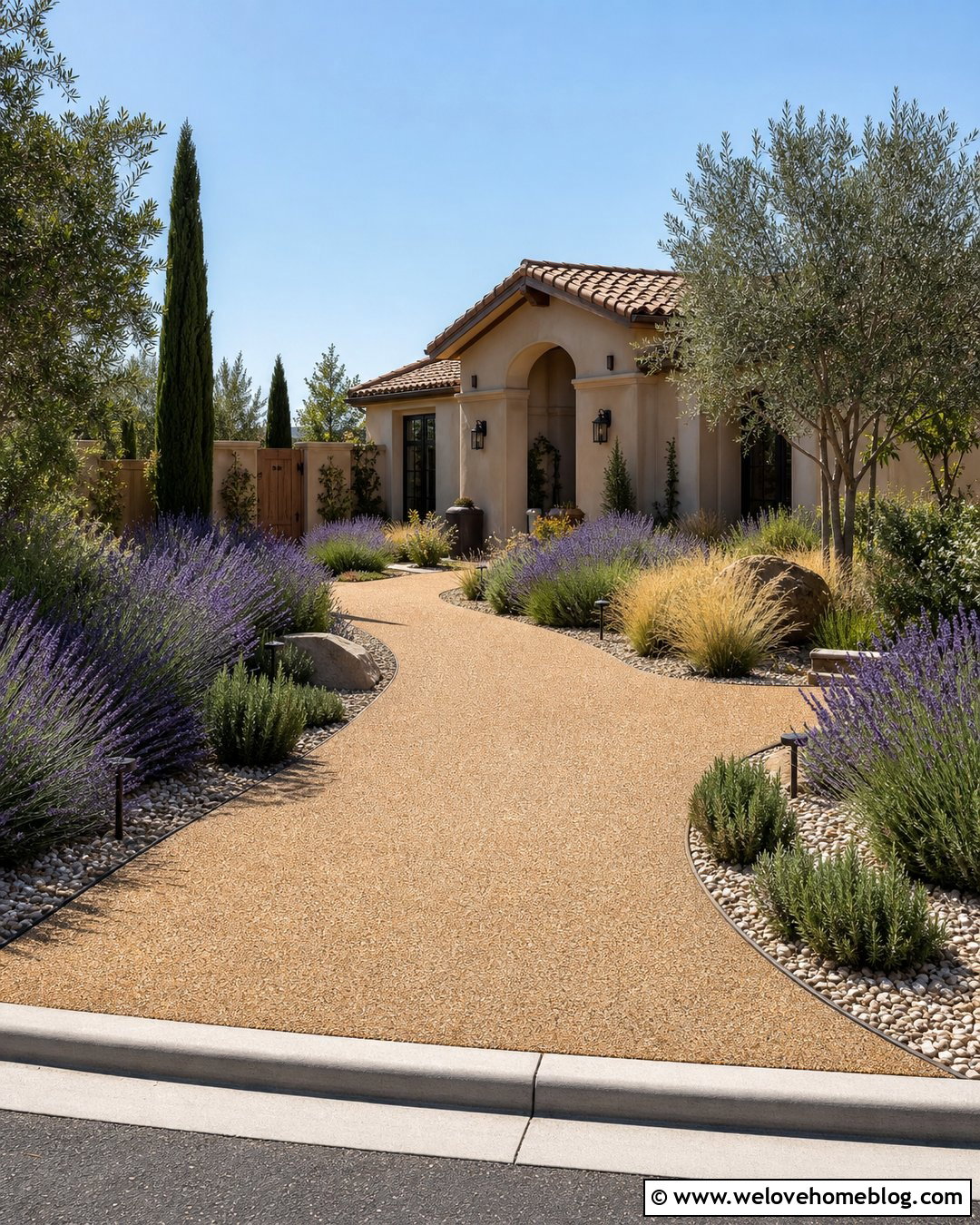
A resin-bound gravel driveway offers a smooth, visually quiet surface that allows lavender borders to stand out. Choose a warm beige or honey-colored aggregate rather than a cool gray finish for a softer Mediterranean effect. A gently curved layout can lead toward a stucco, transitional, or contemporary house. Install flush metal edging between the resin surface and generous gravel planting beds. Arrange lavender in long drifts, mixing several sizes while keeping the colors consistent. Rosemary, thyme, ornamental grasses, and small sculptural shrubs can fill gaps without distracting from the main purple border. Continue the same aggregate into the front walkway for an uninterrupted appearance. This design feels refined but still natural because the finely textured driveway echoes the gravel surrounding the plants.
10. Modern Lavender Driveway
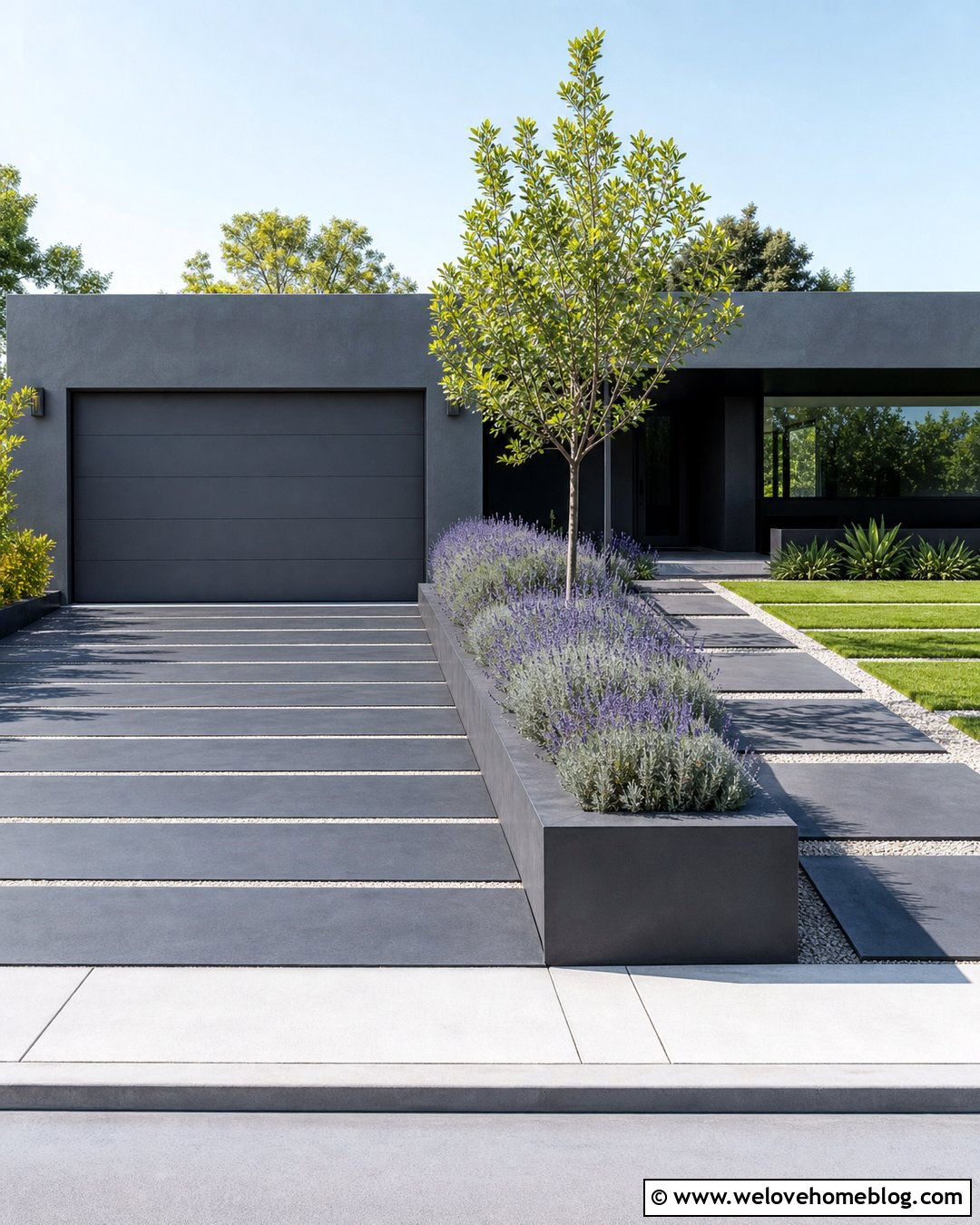
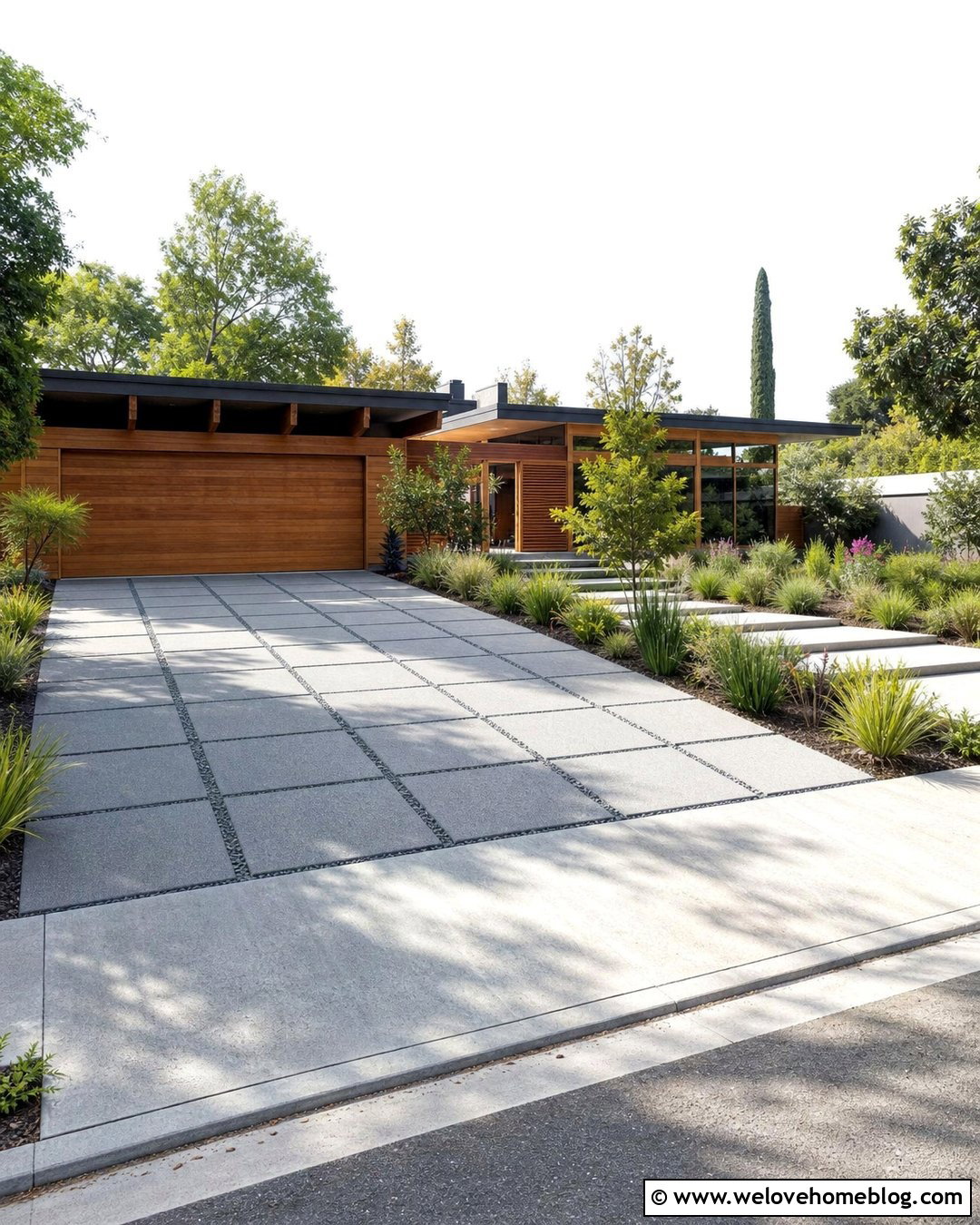
Lavender does not have to look rustic. Against a minimalist house, it can soften sharp architecture while preserving a clean exterior. Create a straight driveway from large charcoal concrete slabs separated by narrow strips of pale gravel. Along one side, plant a continuous lavender hedge in a raised rectangular bed with dark steel edging. Use fewer plants on the opposite side so there is space for a simple walkway and lawn panel. A small specimen tree near the garage can provide one strong vertical feature. Avoid mixing many flower colors or decorative ornaments. Instead, repeat silver foliage, purple flowers, black metal, and gray paving throughout the front yard. The restrained palette gives the driveway a modern identity while preventing the lavender from appearing overly formal or old-fashioned.
11. Farmhouse Lavender Driveway
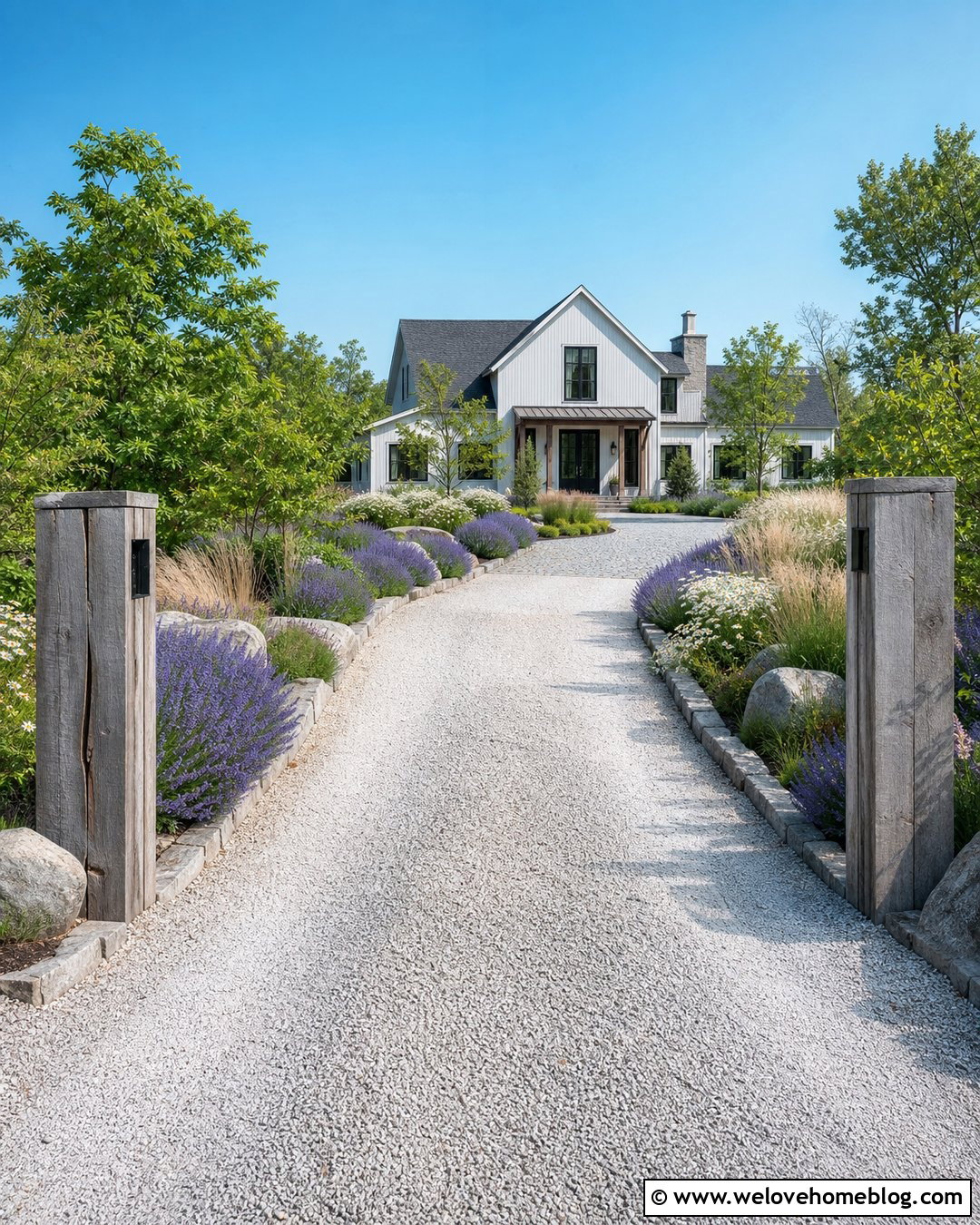
A long white-gravel driveway bordered with lavender is a natural match for a modern farmhouse. Define the approach with weathered granite blocks, allowing broad planting beds to run along both sides. Use repeated lavender drifts near the road and closer to the house rather than filling every inch of the border. Between these groups, add native grasses, white flowering perennials, and occasional boulders for a relaxed rural appearance. Simple timber posts or a black farm gate can mark the entrance without blocking the view. Near the house, transition the gravel to a wider parking area with a cobblestone apron. The lavender’s neat mounds bring order to the loose gravel and informal planting, while the white facade provides a bright backdrop for the flowers.
12. Cottage Lavender Driveway
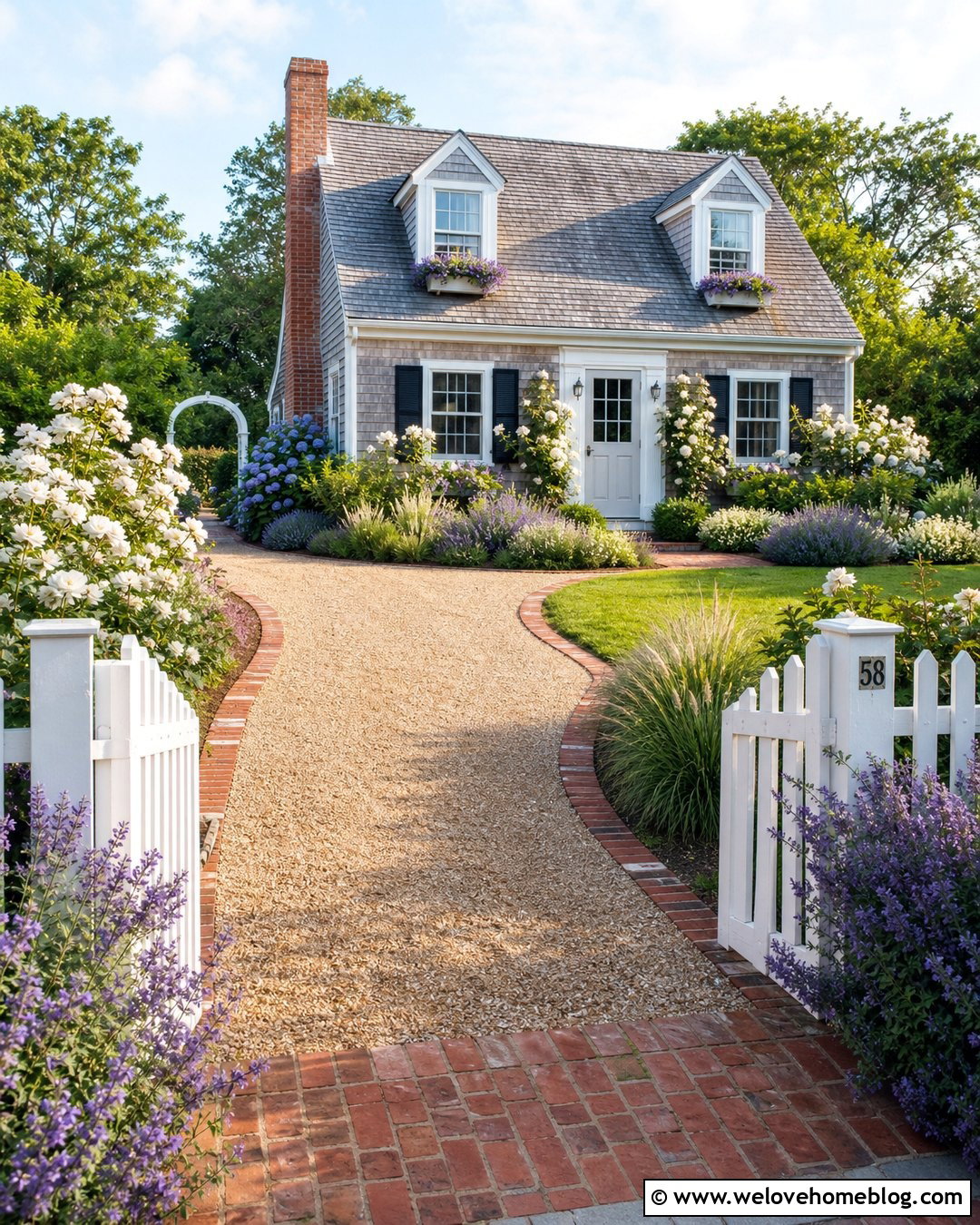
For an inviting cottage look, combine a narrow pea gravel driveway with lavender, roses, catmint, and soft ornamental grasses. The lavender should form the repeated backbone of the border, while companion plants create seasonal variation. Reclaimed brick edging can contain the gravel and introduce a warm, aged surface that suits a Cape Cod or storybook cottage. Allow the planting beds to curve gently and widen around the front walkway. A small arbor or picket gate beside the driveway can identify the pedestrian entrance without reducing vehicle clearance. Keep flowers lower near the road and garage, reserving climbing roses and taller shrubs for the house. This layered arrangement looks abundant, yet the repeated lavender and continuous brick edge prevent the garden from becoming visually chaotic.
13. Mediterranean Lavender Driveway
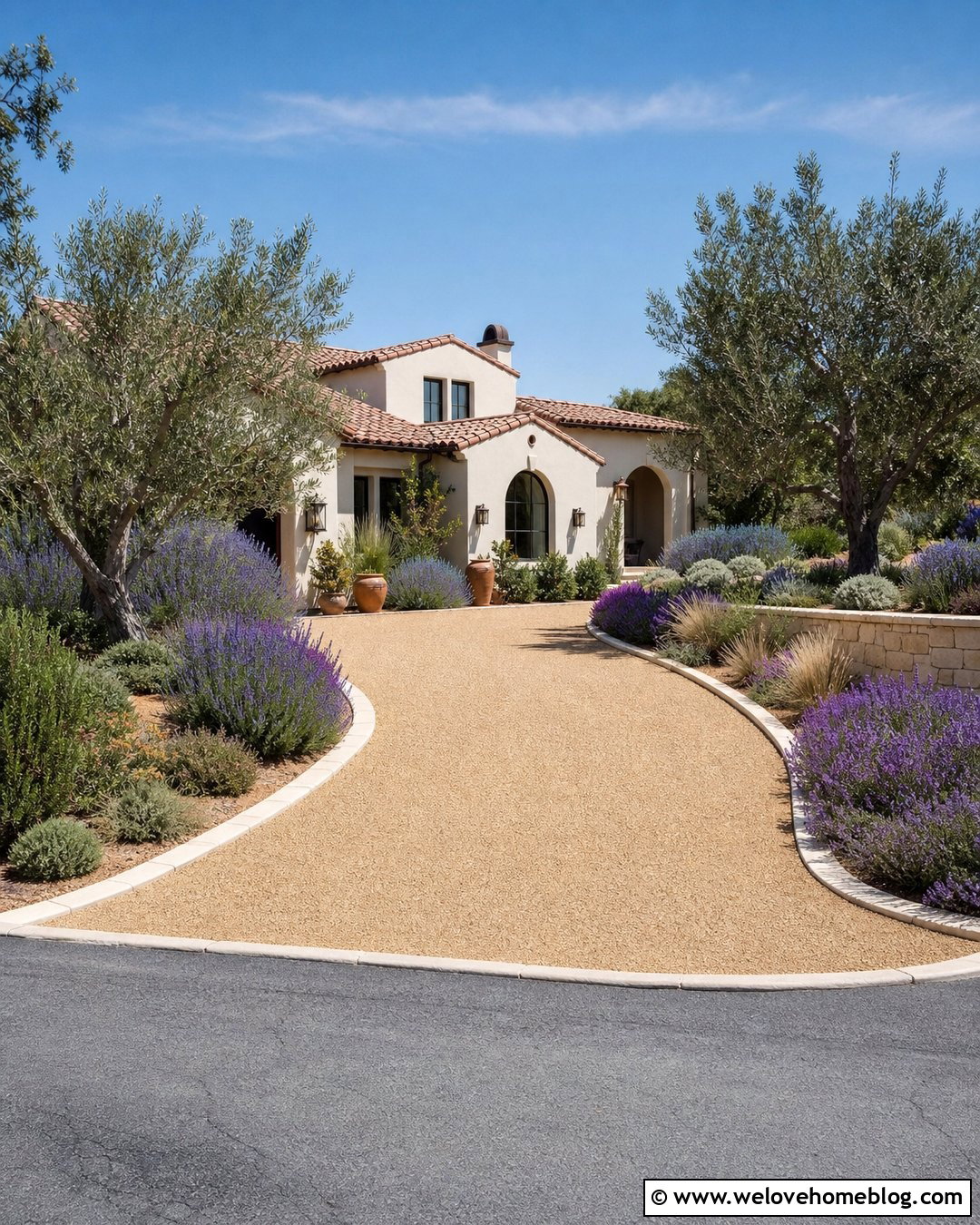
Sun-washed paving, silvery plants, and lavender can bring Mediterranean character to a warm-climate property. Start with a buff-colored gravel or resin-bound driveway in a broad curved layout. Border it with low limestone curbs and raised gravel beds planted with lavender, rosemary, thyme, and drought-tolerant ornamental grasses. A few olive trees can add filtered shade and sculptural height, provided they are positioned away from essential sightlines. Terracotta pots near the entry steps repeat the warm tones of the driveway. Use pale decomposed granite around the plants instead of dark organic mulch. The unified stone palette helps the purple flowers look especially vibrant. This complete landscape works best when the house has stucco walls, warm roofing, arched details, or natural wood accents.
14. Colonial Lavender Driveway
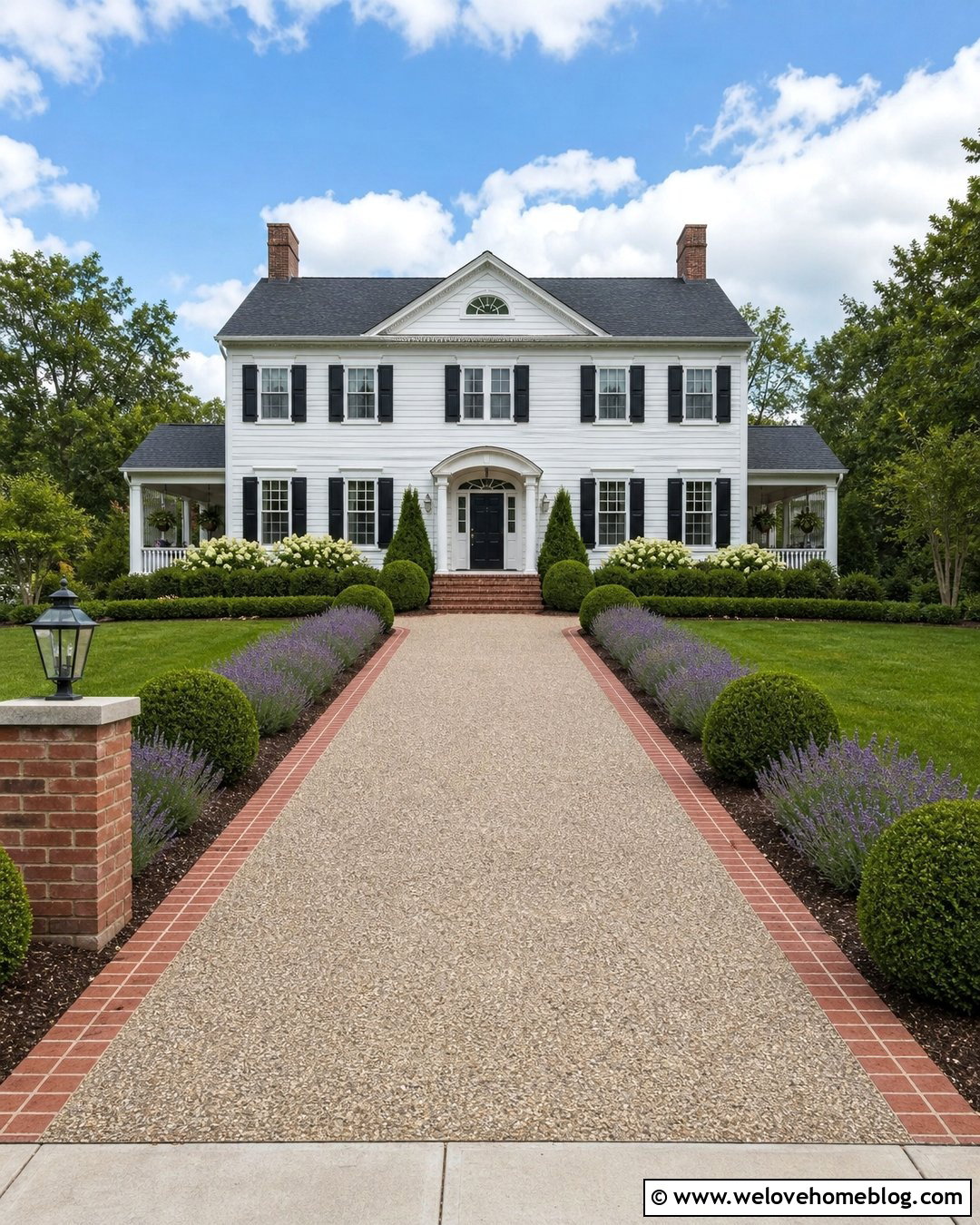
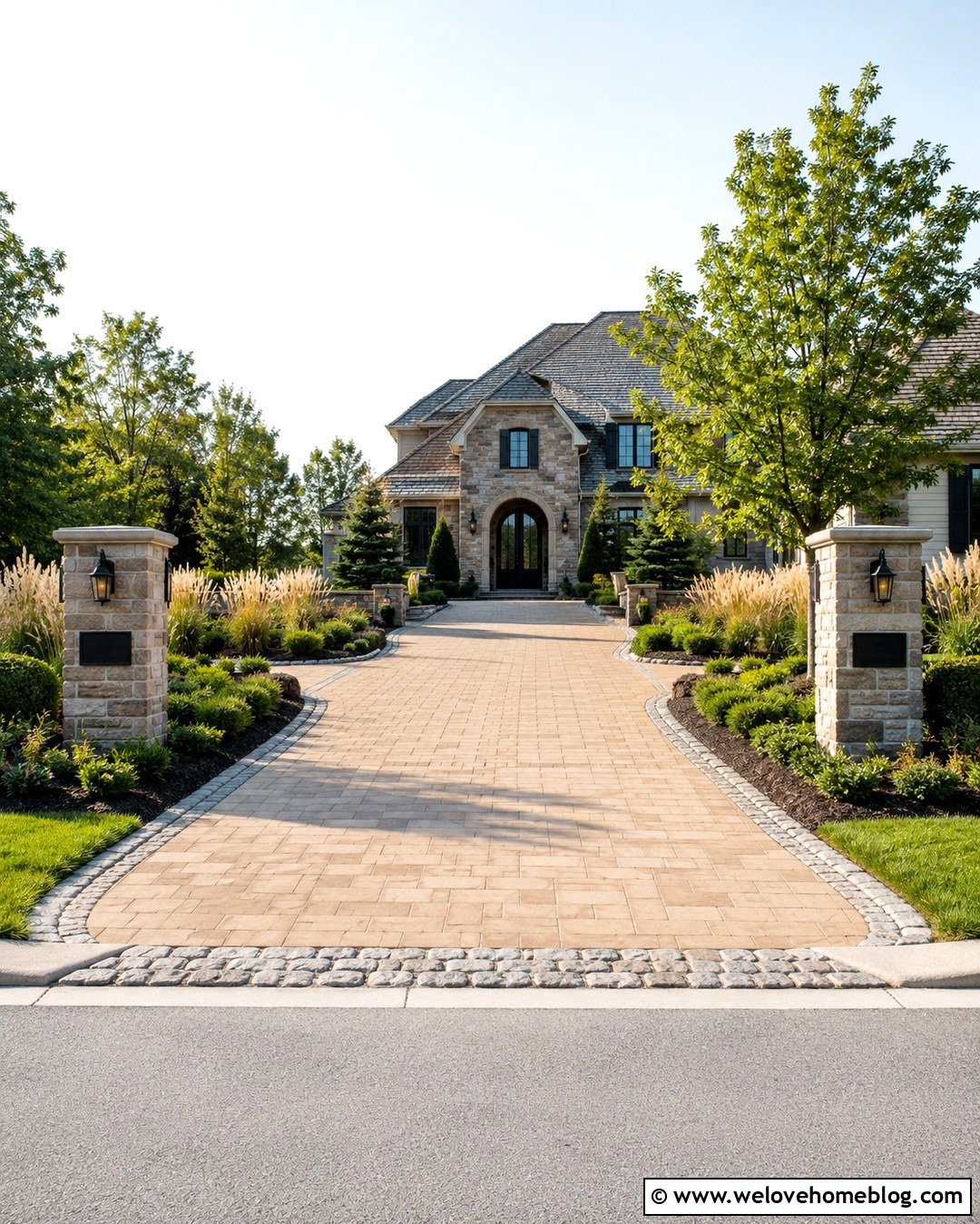
A symmetrical lavender driveway can reinforce the balanced architecture of a Colonial home. Use a straight brick or exposed aggregate drive centered on the garage, with matching planting beds on both sides. Low lavender hedges should run parallel to the pavement, ending at clipped boxwood spheres or small upright evergreens near the house. A red brick ribbon creates a polished boundary and connects the drive visually to brick porch steps or foundation details. Keep the beds consistent in width for a formal effect. At the street, slightly flare the driveway and repeat lavender around a traditional address marker. The composition should feel orderly without becoming rigid. Allow the flowers to retain their naturally rounded form instead of clipping them into unnaturally square or narrow shapes.
15. Small Lavender Driveway
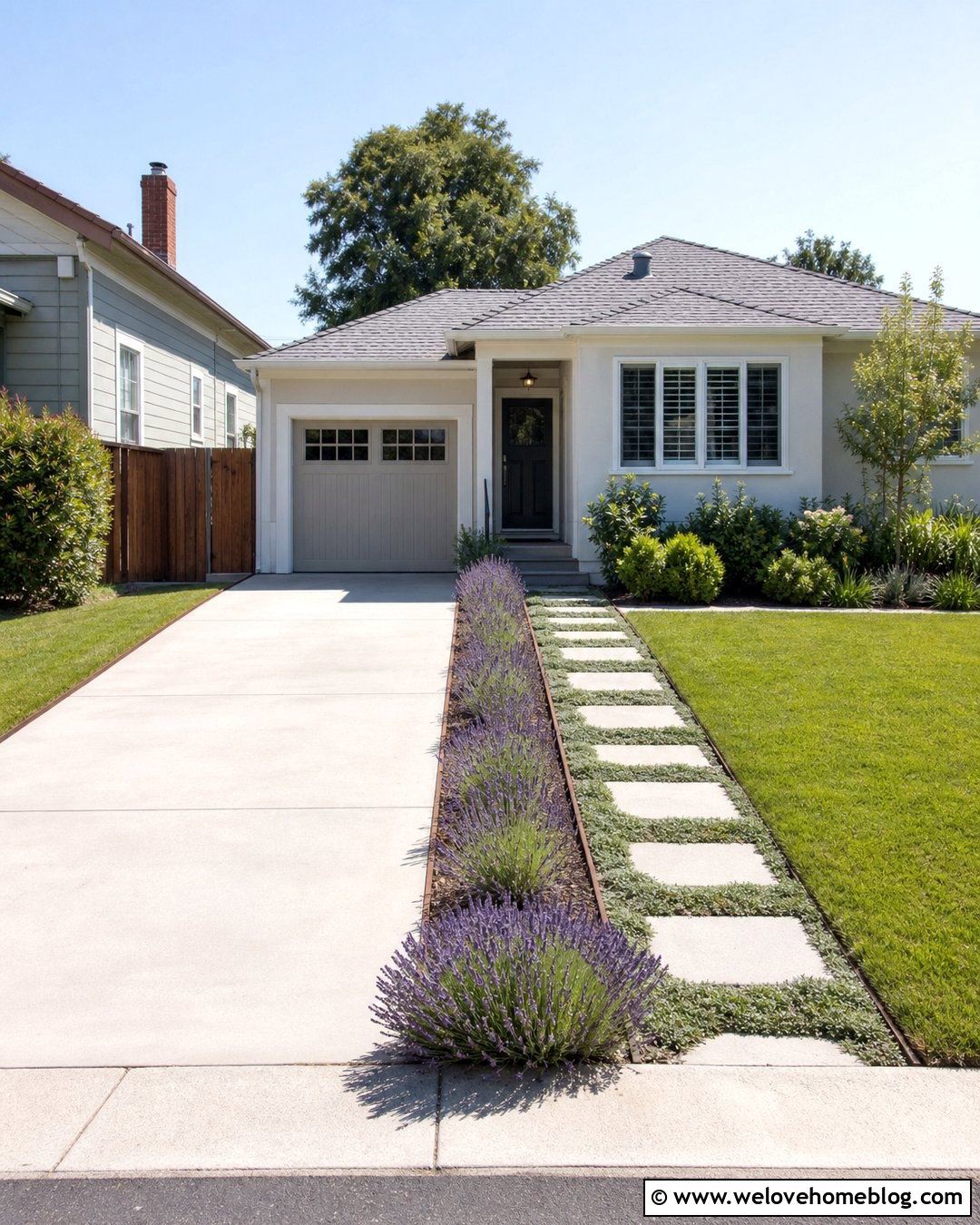
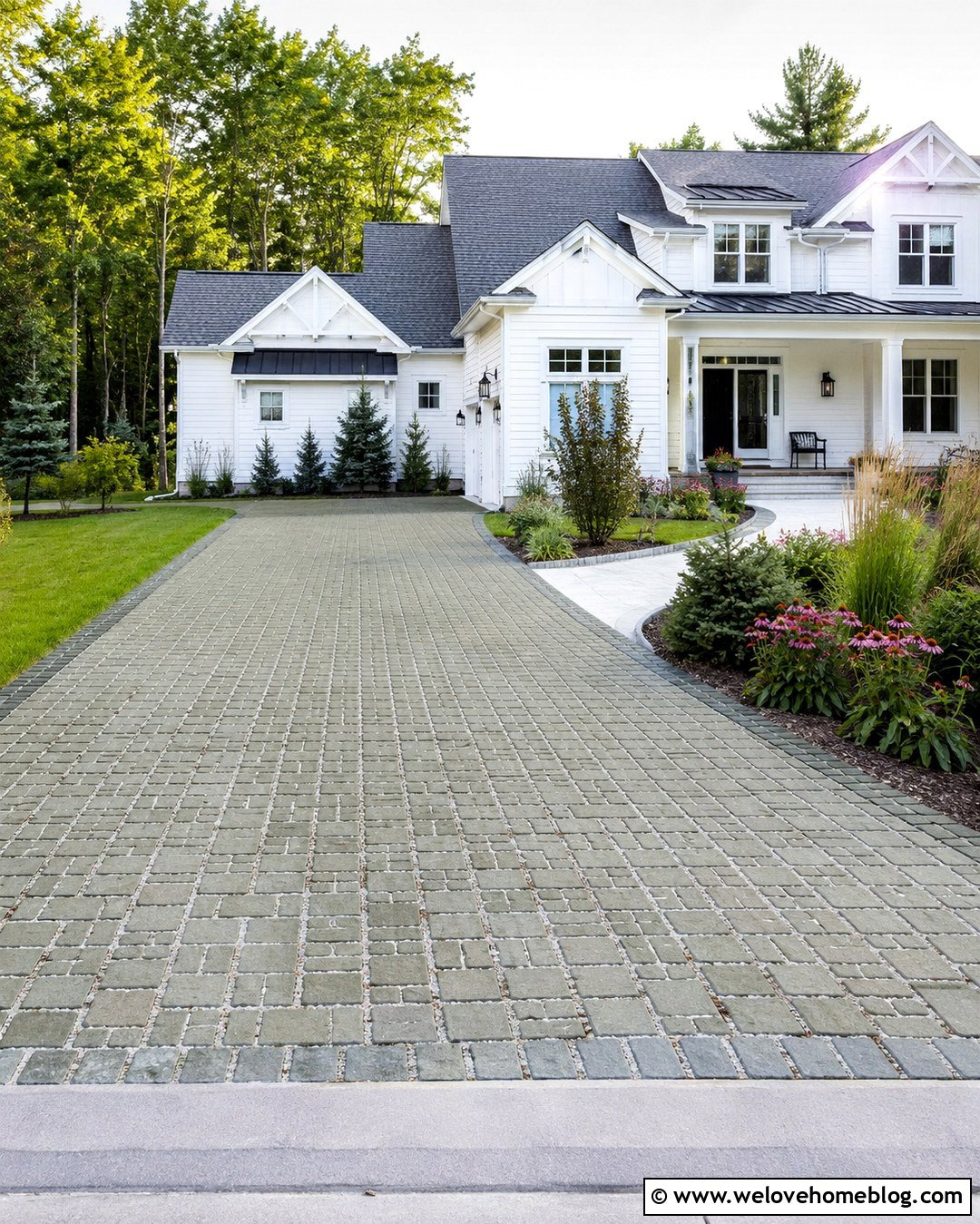
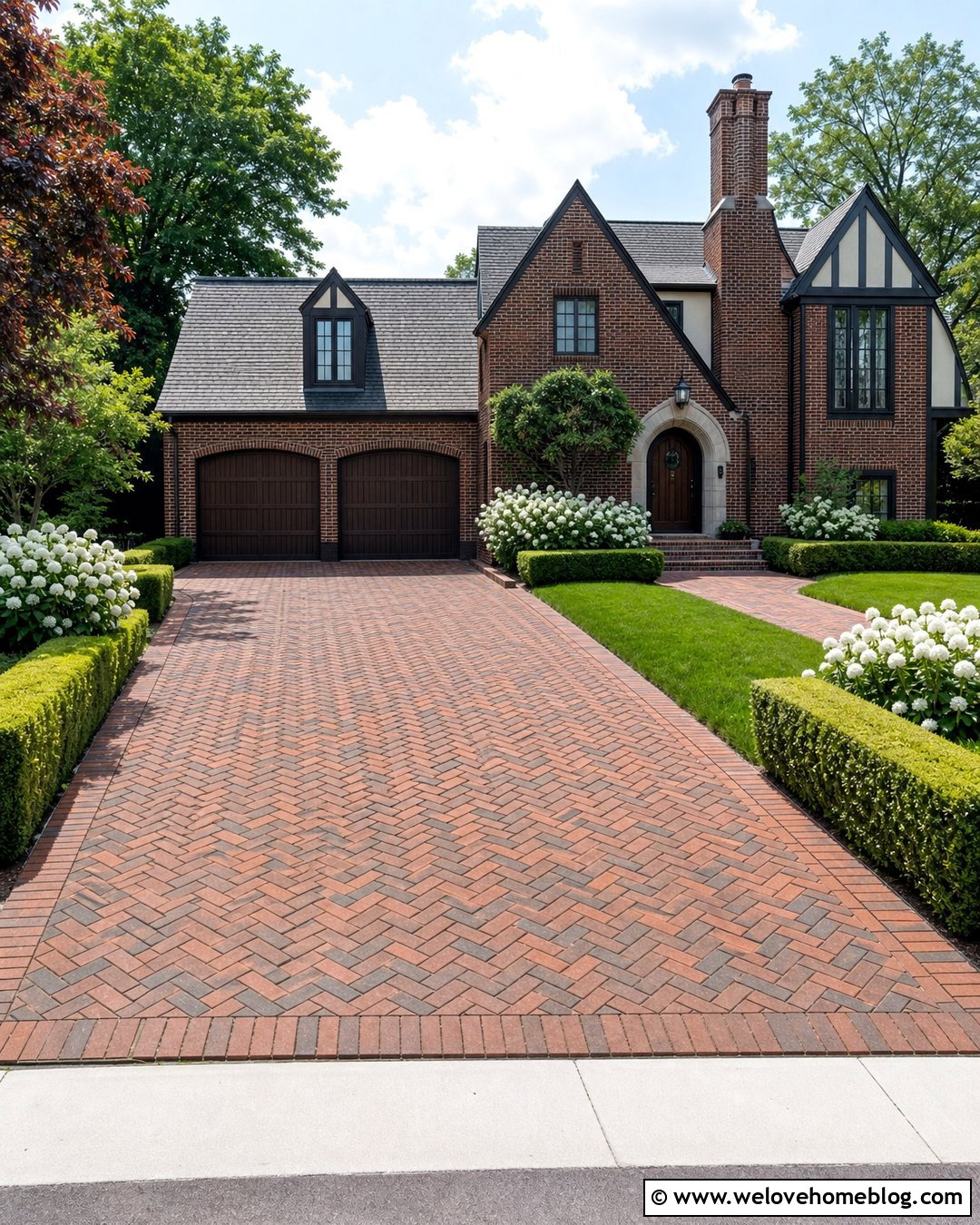
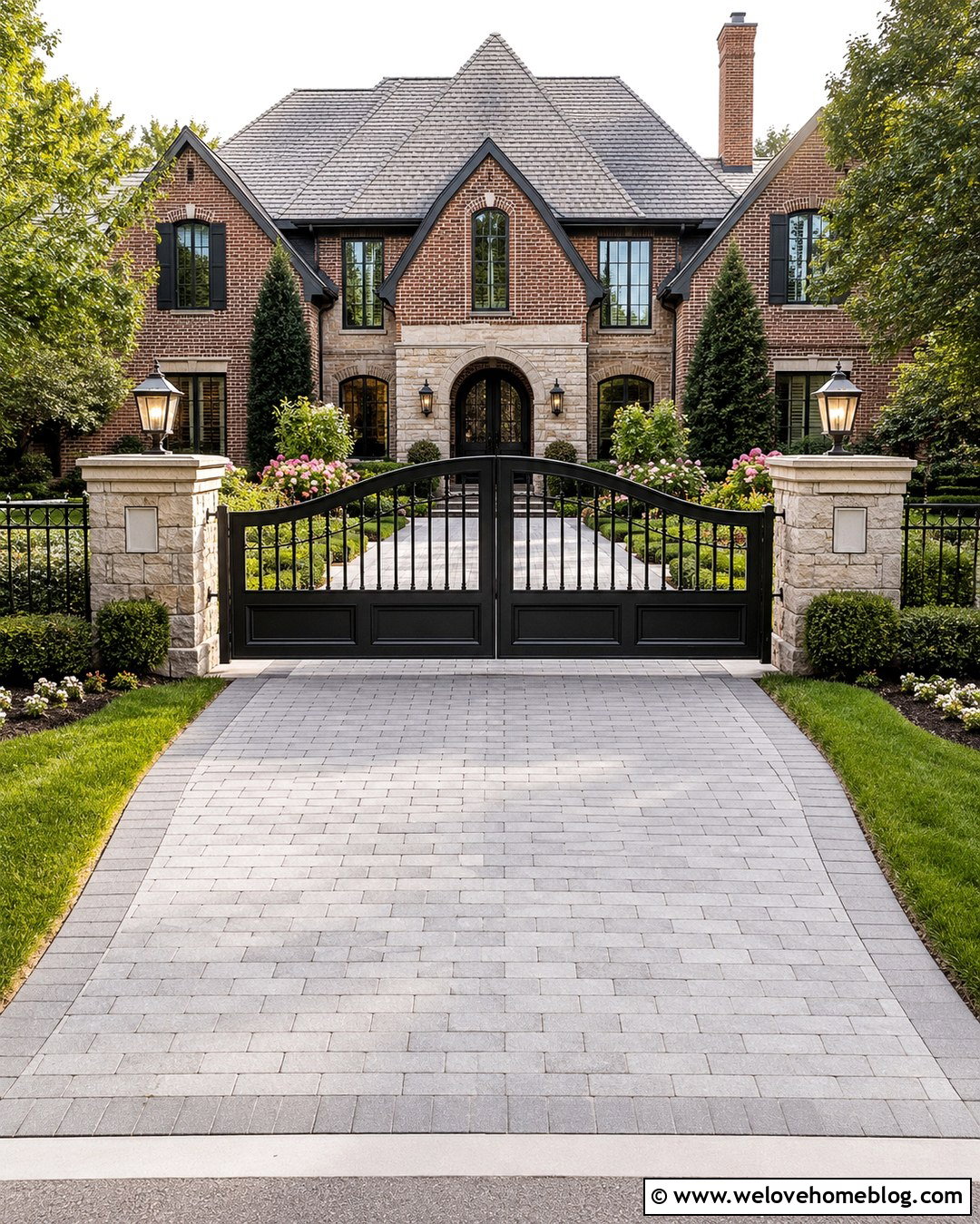
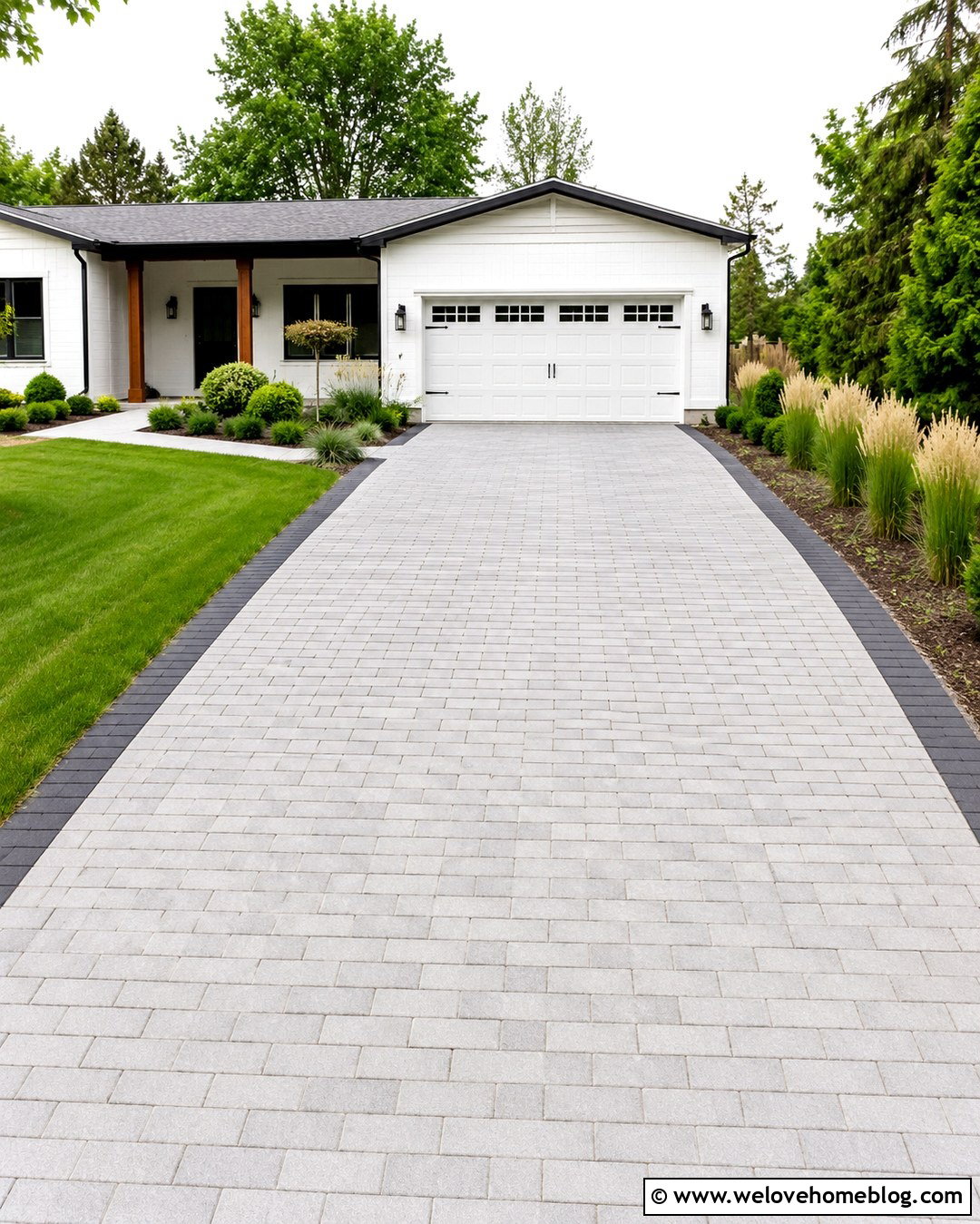
Even a compact single-car driveway can include lavender without becoming crowded. Use pale poured concrete or small concrete pavers to reflect light and make the entrance feel wider. Reserve one sunny side for a narrow gravel bed planted with compact lavender varieties. A low steel or brick edge prevents soil from spilling onto the driving surface. On the other side, install a slim stepping-stone walkway with creeping thyme between the stones. Keep shrubs close to the house rather than beside the parking area, where they could obstruct doors or mirrors. One larger lavender group near the curb can mark the entrance and connect with the smaller border. Limiting the materials and plant palette keeps this small driveway functional while still adding recognizable color and fragrance.
16. Long Lavender Driveway
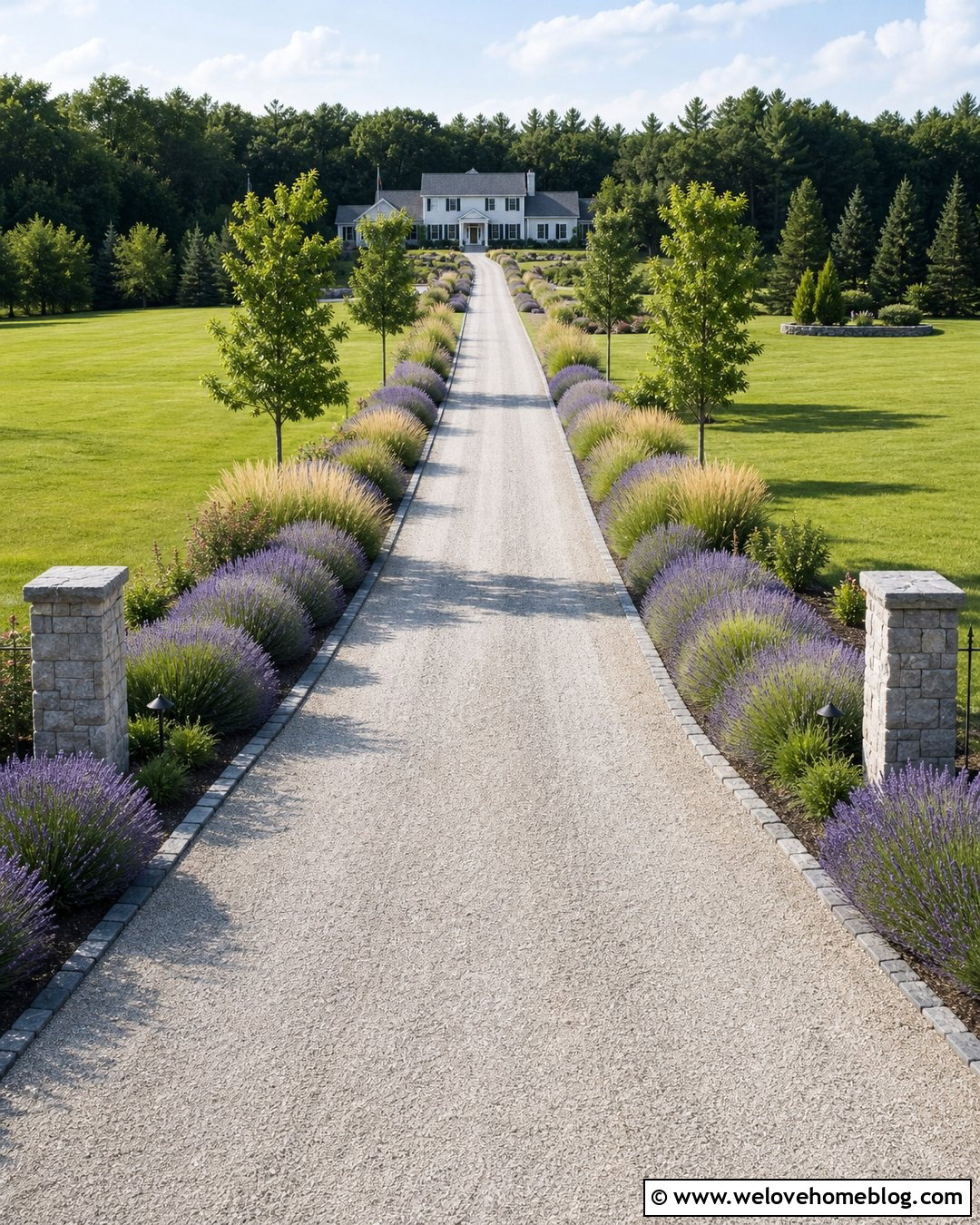
A long driveway benefits from repetition, but an uninterrupted line of identical plants can feel monotonous. Break the lavender into generous groups separated by small trees, stone markers, or low sweeps of ornamental grass. A light gray gravel surface with darker granite edging creates a neutral foundation for the purple flowers. Start with formal lavender rows at the roadside entrance, loosen the planting along the middle section, and return to a structured layout near the house. This progression makes the journey feel intentional. Place simple lighting between selected plant groups rather than spacing fixtures continuously. If the land is broad, use lavender on both sides near key focal points and only one side elsewhere. The arrangement creates rhythm while reducing planting and maintenance requirements.
17. Sloped Lavender Driveway
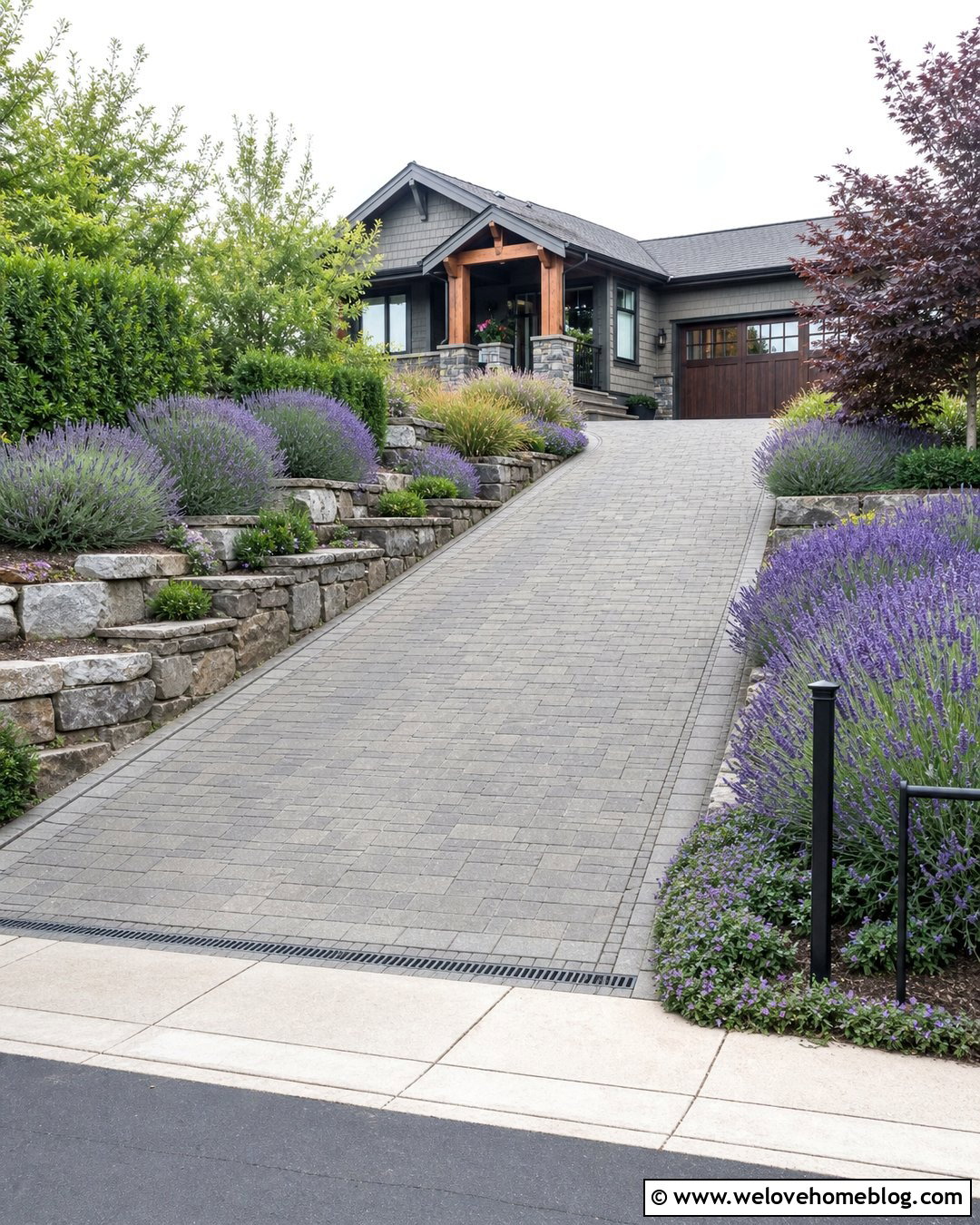
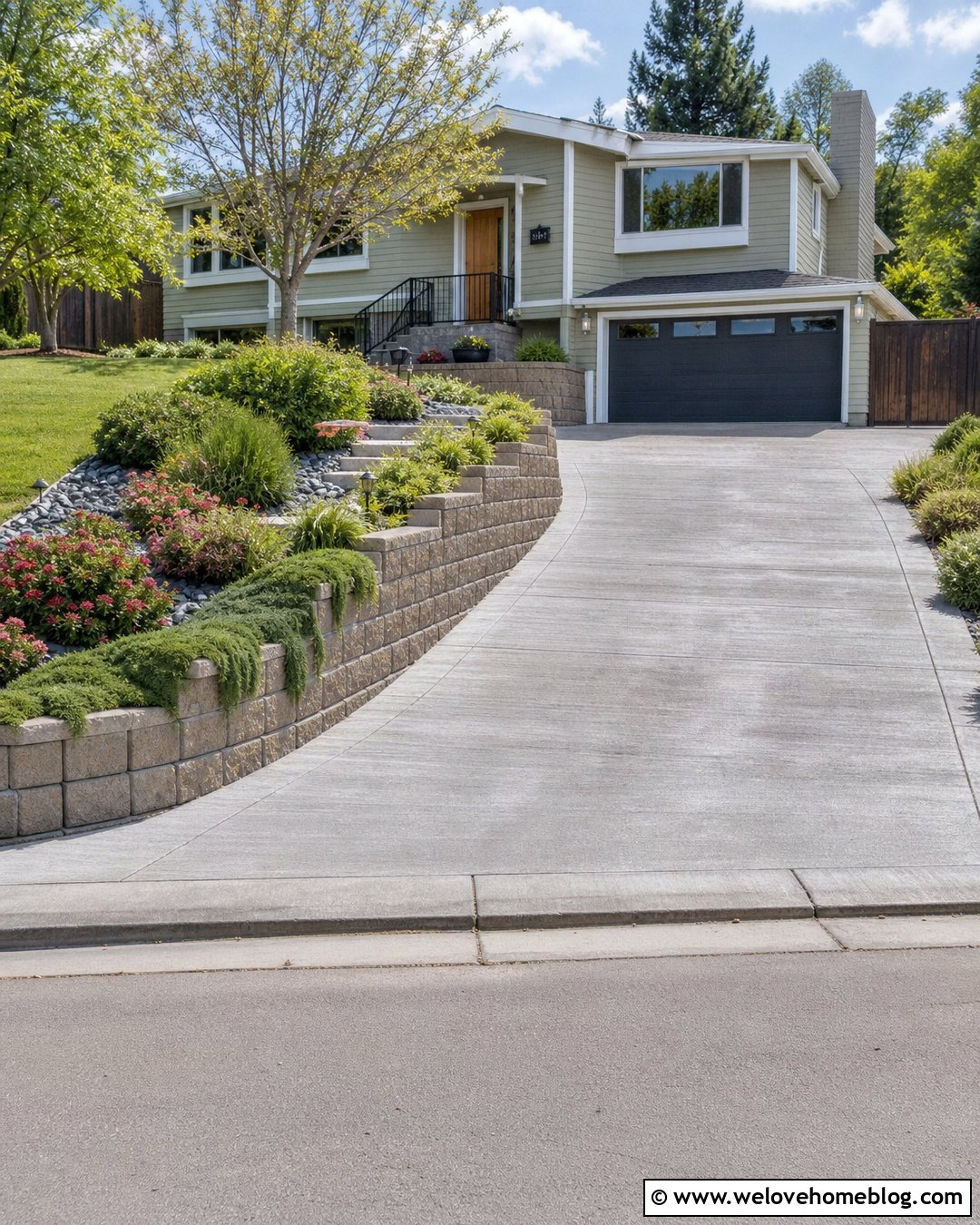
A driveway on a slope needs planting that manages elevation without hiding the pavement. Use textured concrete, interlocking pavers, or resin-bound gravel for a stable, defined surface. On the uphill side, construct low terraced walls from natural stone and fill each level with lavender, creeping thyme, and compact grasses. The raised, freely draining beds suit lavender while reducing the visual weight of the retaining structure. Keep the downhill border lower and simpler, using a narrow lavender row behind a protective curb. Add drainage channels where runoff crosses the driveway, and coordinate their grates with the paving color. The repeated purple planting connects the different levels. Meanwhile, the terraced layout turns a difficult grade into a distinctive approach rather than treating it as a landscaping problem.
18. Lavender Driveway With Stone Walls
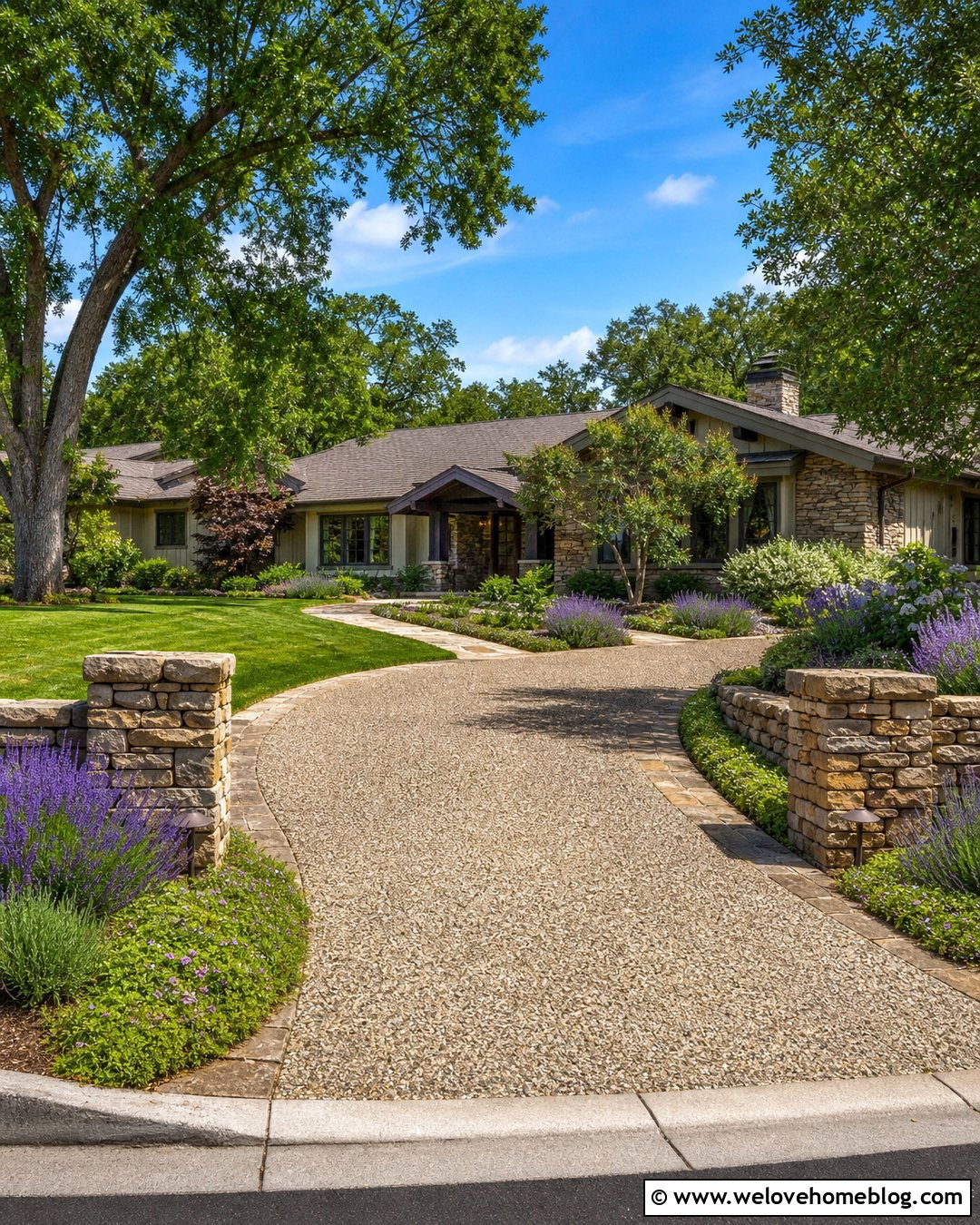
Low stone walls provide structure, protection, and a strong visual base for lavender planting. This look works well with a gravel or exposed aggregate driveway leading to a Craftsman, ranch, or country home. Construct walls that gently follow the driveway’s curves, keeping them low near the street for safe visibility. Fill the raised borders with gritty soil and arrange lavender in wide repeated groups. Trailing thyme can spill over selected sections, softening the masonry without hiding it. Match the wall stone to the home’s foundation, chimney, or porch columns for a cohesive exterior. At the driveway entrance, widen the walls slightly to hold larger lavender displays. The hard stone and soft purple flowers create contrast while making the approach feel established and carefully planned.
19. Lavender Driveway With Gate
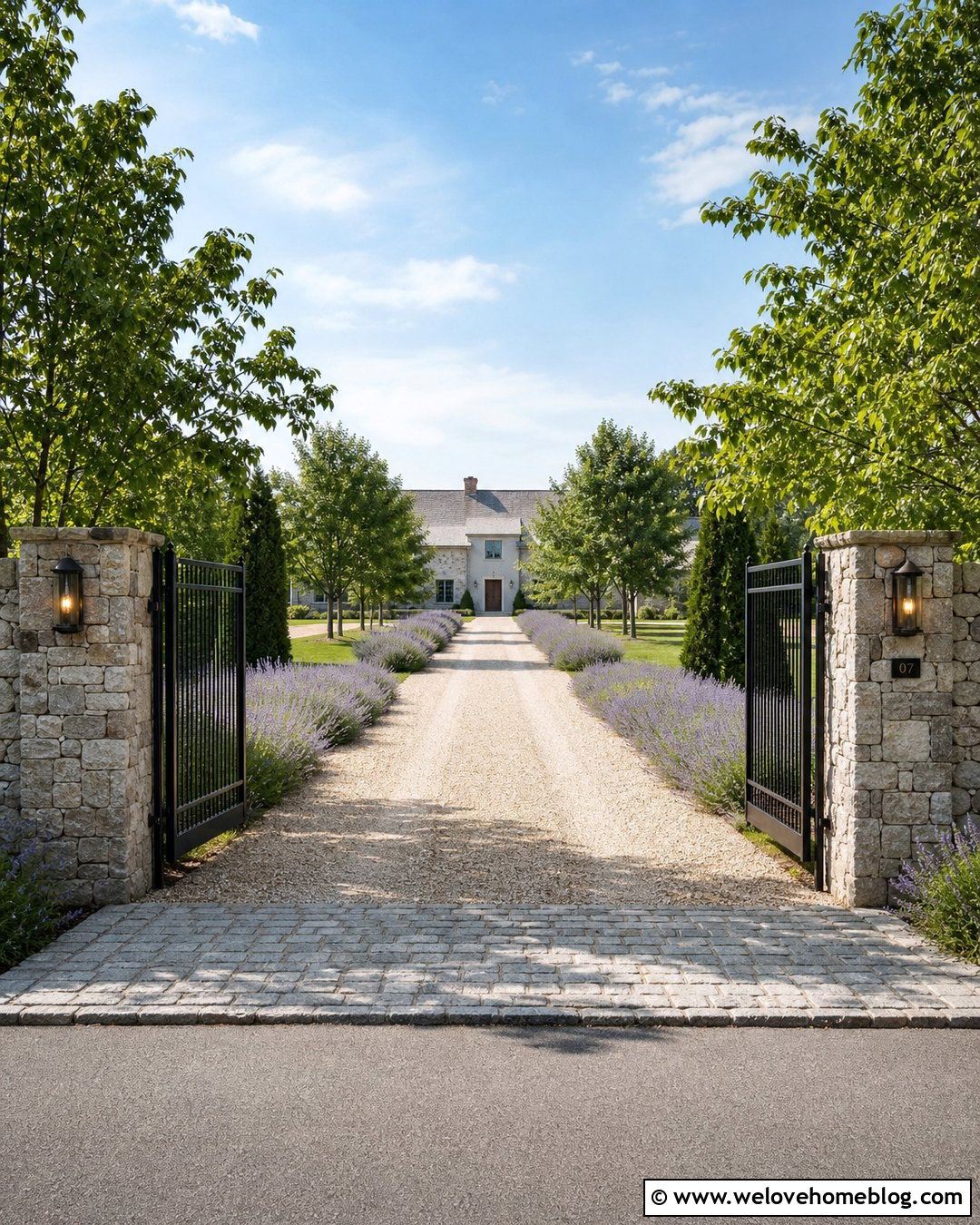
A driveway gate looks more welcoming when lavender connects it to the surrounding landscape. Set a simple black metal or natural wood gate between low stone walls, leaving clear space around moving parts and access controls. Use a pale gravel driveway with a cobblestone threshold beneath the gate for a strong, durable transition. Lavender beds can curve outward from both sides, visually widening the entrance and guiding attention toward the property. Place taller evergreens or ornamental trees behind the lavender rather than directly beside the road. Continue smaller lavender groups inside the gate so the entrance relates to the full driveway. Solar or low-voltage lights can be integrated into the walls, but their fixtures should remain understated and below the top of the planting.
20. Lavender Driveway With Pillars
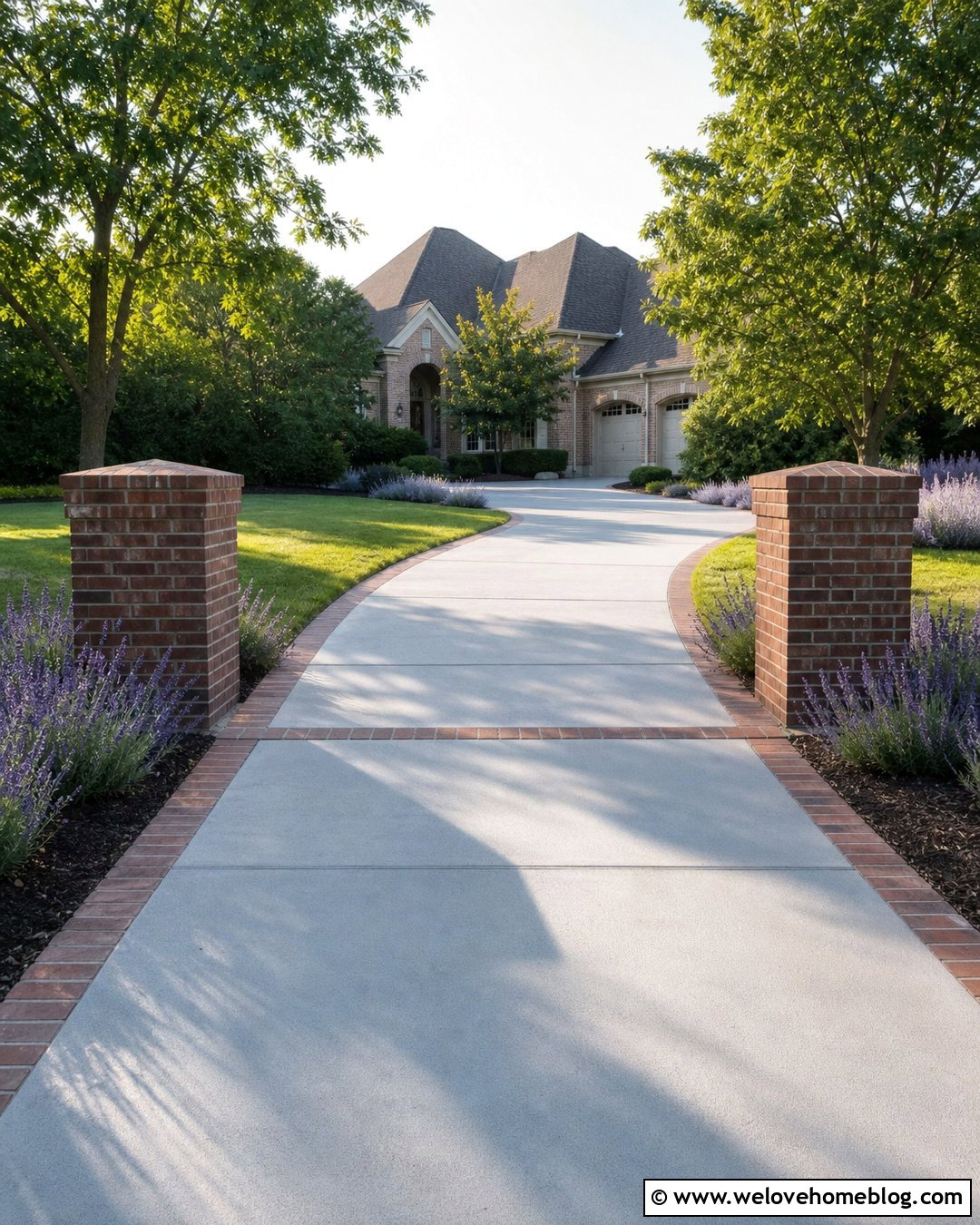
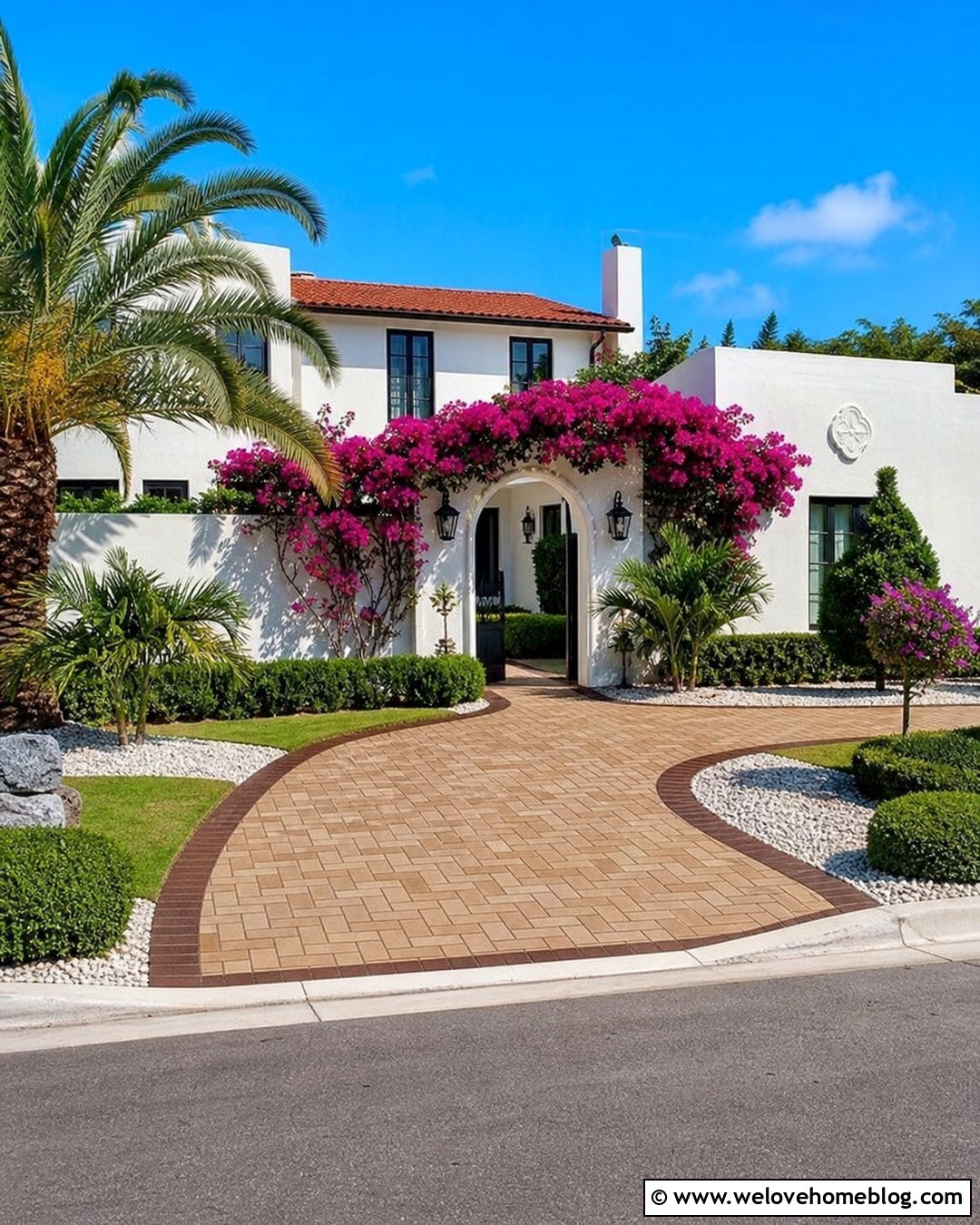
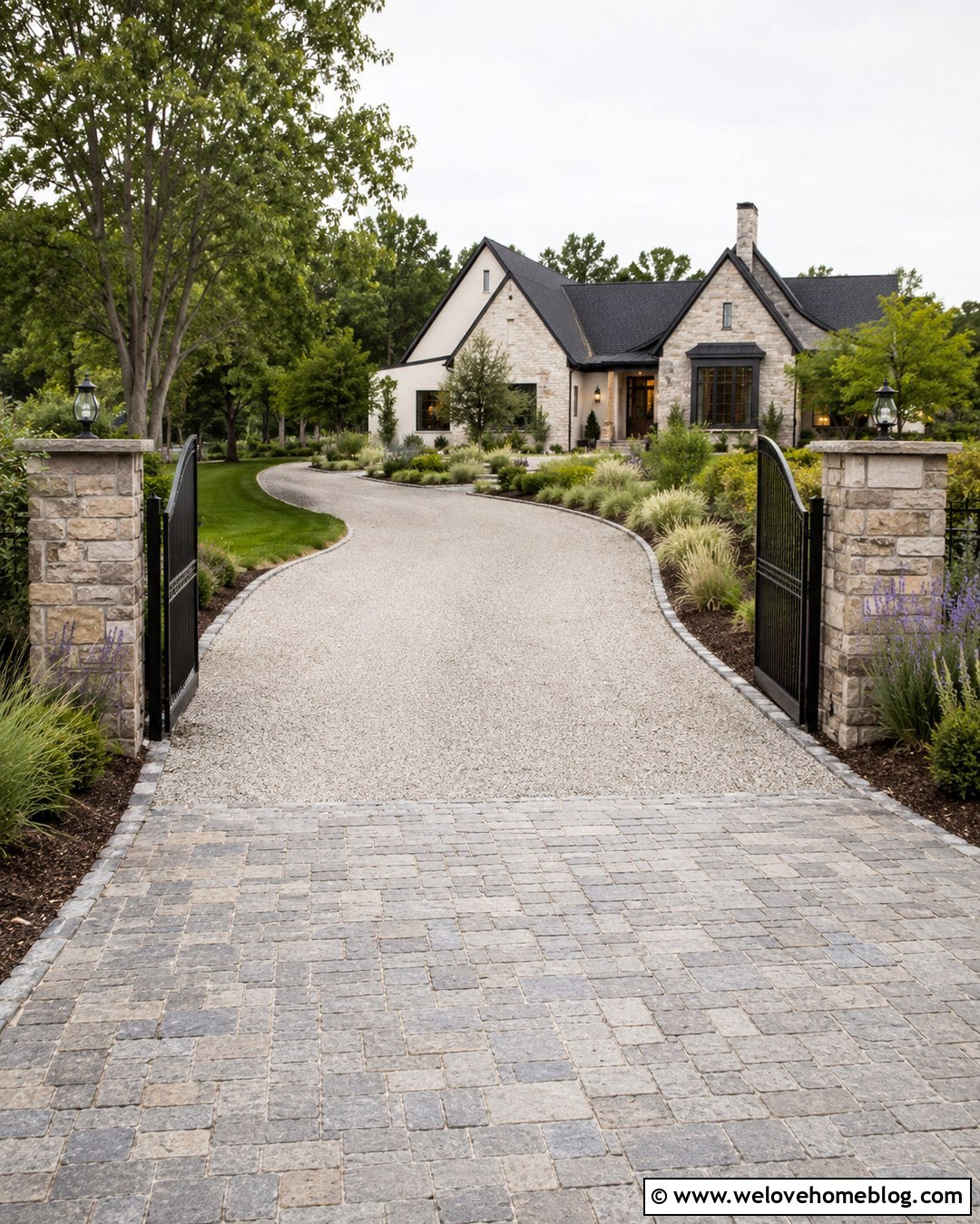
Brick or stone pillars can anchor a lavender-lined driveway without making it feel imposing. Match the pillar material to the house facade, then use the same masonry as a narrow driveway border or entrance apron. Deep planting beds should sit outside the vehicle clearance zone, with lavender arranged around the base of each pillar. Keep the flowers low enough to leave address numbers, lights, and sightlines unobstructed. A curved asphalt or concrete driveway can begin between the pillars and continue through looser lavender drifts toward the home. Add one specimen tree behind each planting bed for balanced height. Repeating the pillar stone near the garage or front walkway will strengthen the connection between entrance and house, creating a complete design rather than a decorative gateway alone.
21. Lavender Driveway With Lighting
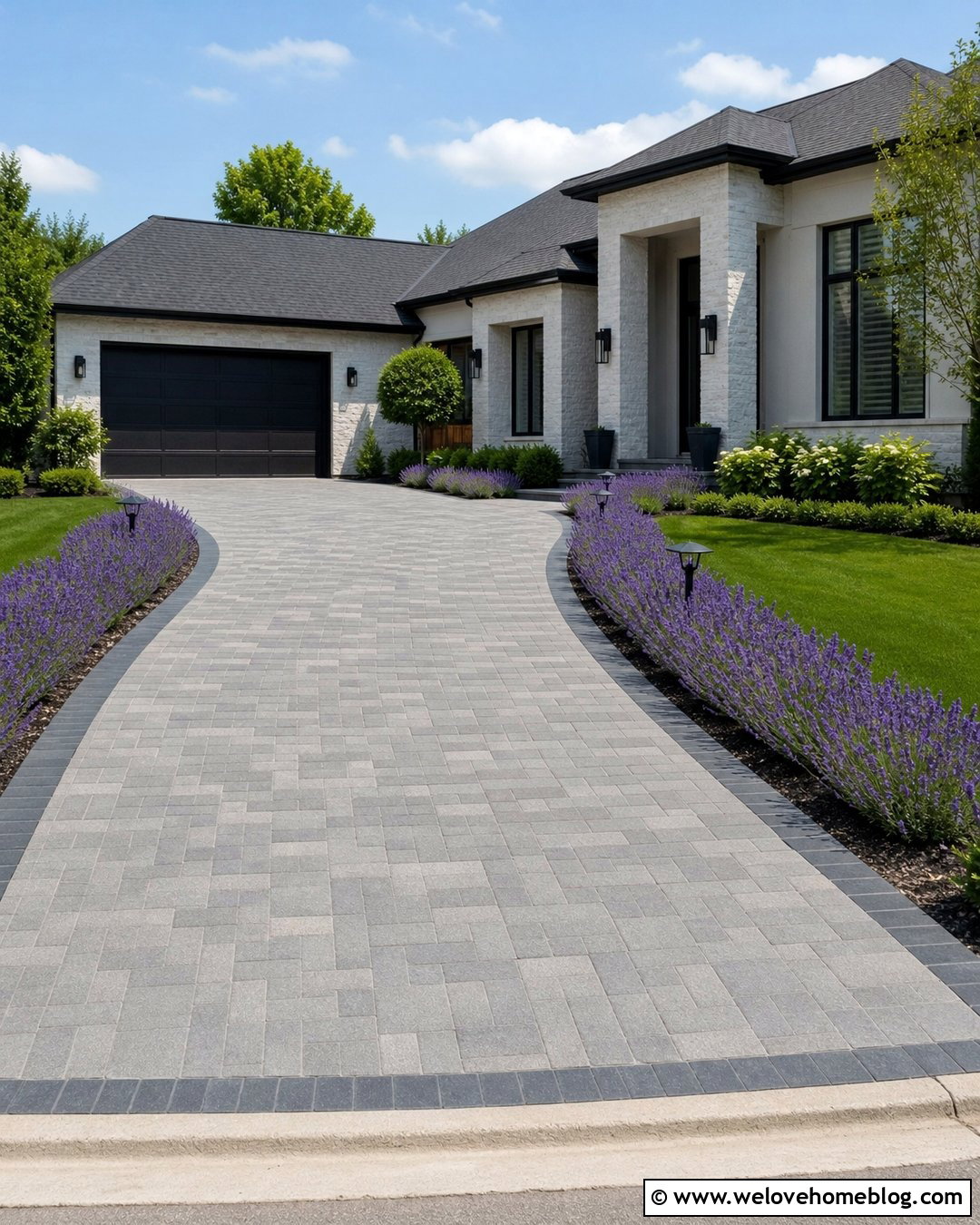
Good driveway lighting should reveal the route without overpowering the lavender. Choose a warm gray paver driveway with low, shielded path lights placed behind the planting edge. During the day, the small dark fixtures nearly disappear among the silver foliage. After sunset, they can cast light across the pavement instead of directly upward. Space the fixtures at major curves, transitions, and pedestrian crossings rather than beside every plant. A single lavender hedge along each side creates a continuous shape that the lighting can emphasize. Use matching wall lights near the garage and front entry to maintain one exterior finish. Keep electrical equipment accessible from the bed, and position fixtures where mature lavender will not cover the light source or interfere with routine trimming.
22. Lavender Driveway With Ornamental Grass
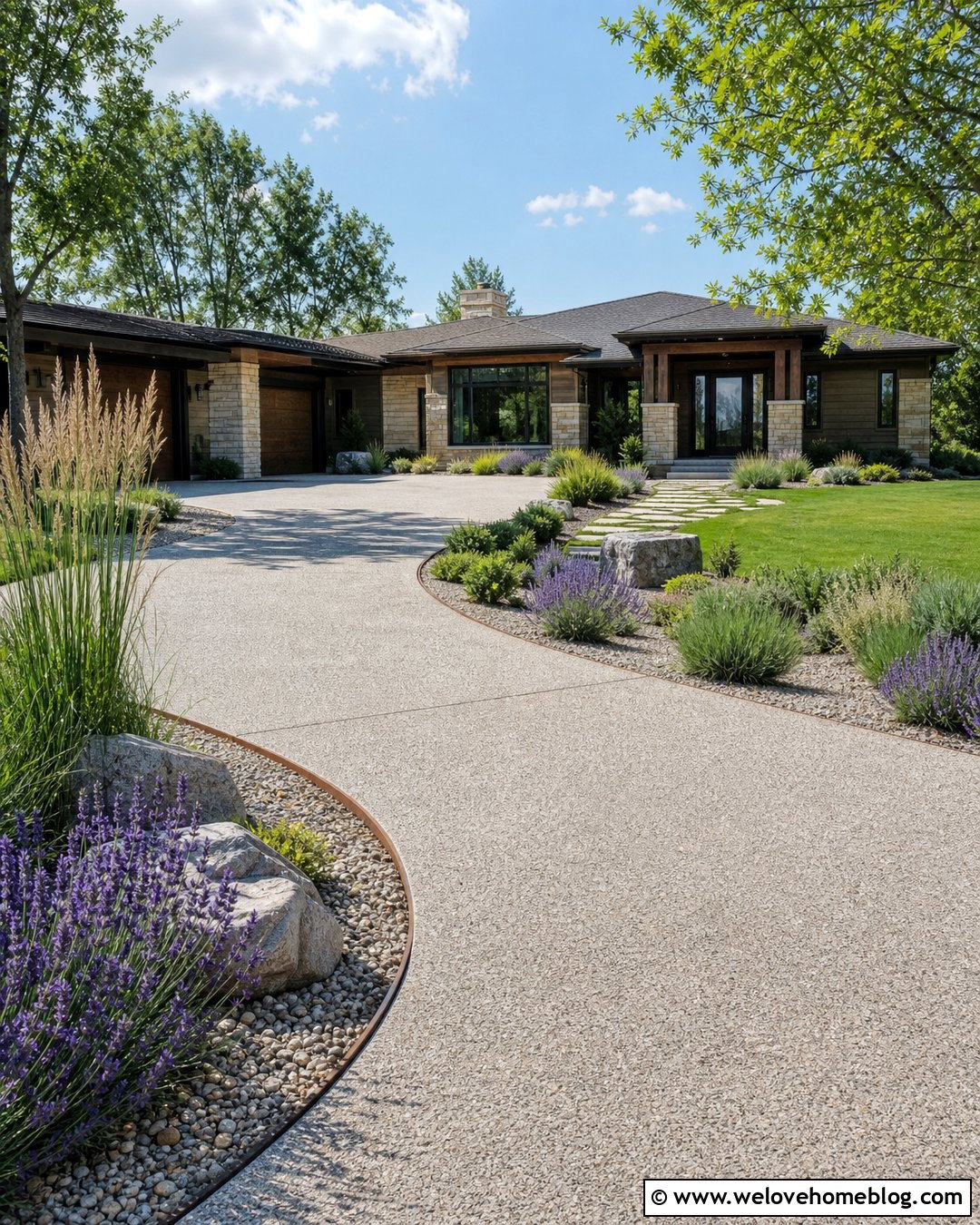
Lavender and ornamental grass create a layered border with color, softness, and movement. Start with a curved exposed aggregate driveway edged in weathered steel or charcoal pavers. Place lavender in broad groups along the front of the beds, then add upright grasses behind it at wider intervals. The grasses provide height, while the rounded lavender keeps the pavement edge open and approachable. Avoid planting tall varieties near the street or inside tight curves where they could reduce visibility. Small boulders and gravel mulch can reinforce a dry, natural landscape, especially around a modern ranch or prairie-style home. Repeat only two or three grass varieties throughout the border. This restraint helps the driveway feel designed rather than like an unrelated collection of drought-tolerant plants.
23. Lavender Driveway With White Flowers
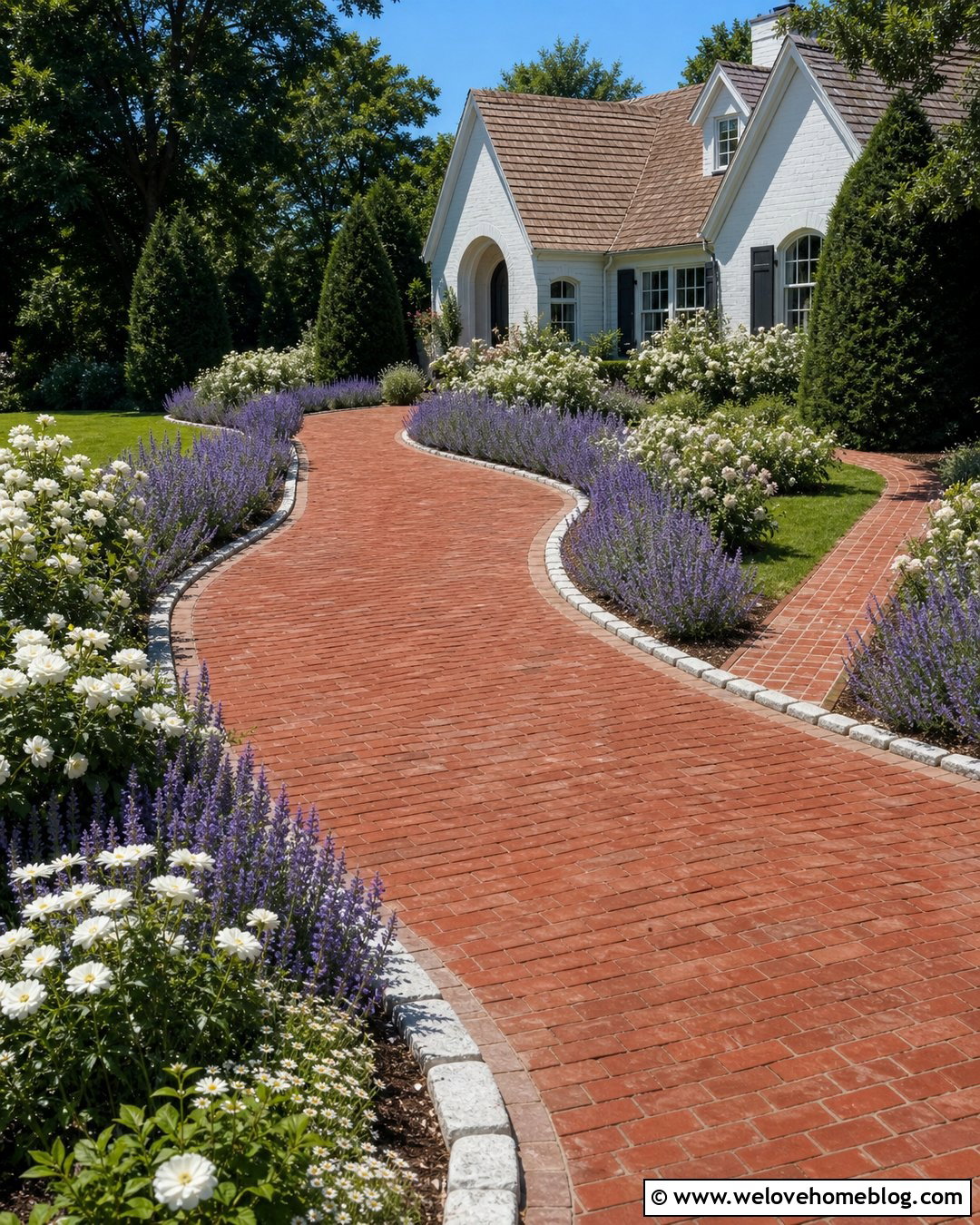
Purple lavender and white flowers make a bright, classic border that complements almost any driveway material. Choose a warm brick paver or light gravel surface, then create gently curved beds along both sides. Use lavender as the repeated lower layer and add white roses, daisies, salvia, or compact hydrangeas where growing conditions are suitable. Keep thirstier plants in separate irrigation zones so the lavender’s soil does not remain constantly wet. A dark evergreen backdrop can make both flower colors more visible from the street. White flowering groups should repeat near the entrance, walkway, and garage instead of appearing randomly. Pale stone edging ties the planting to the house and gives the driveway a crisp boundary while preserving the border’s soft, romantic cottage character.
24. Lavender Driveway With Olive Trees
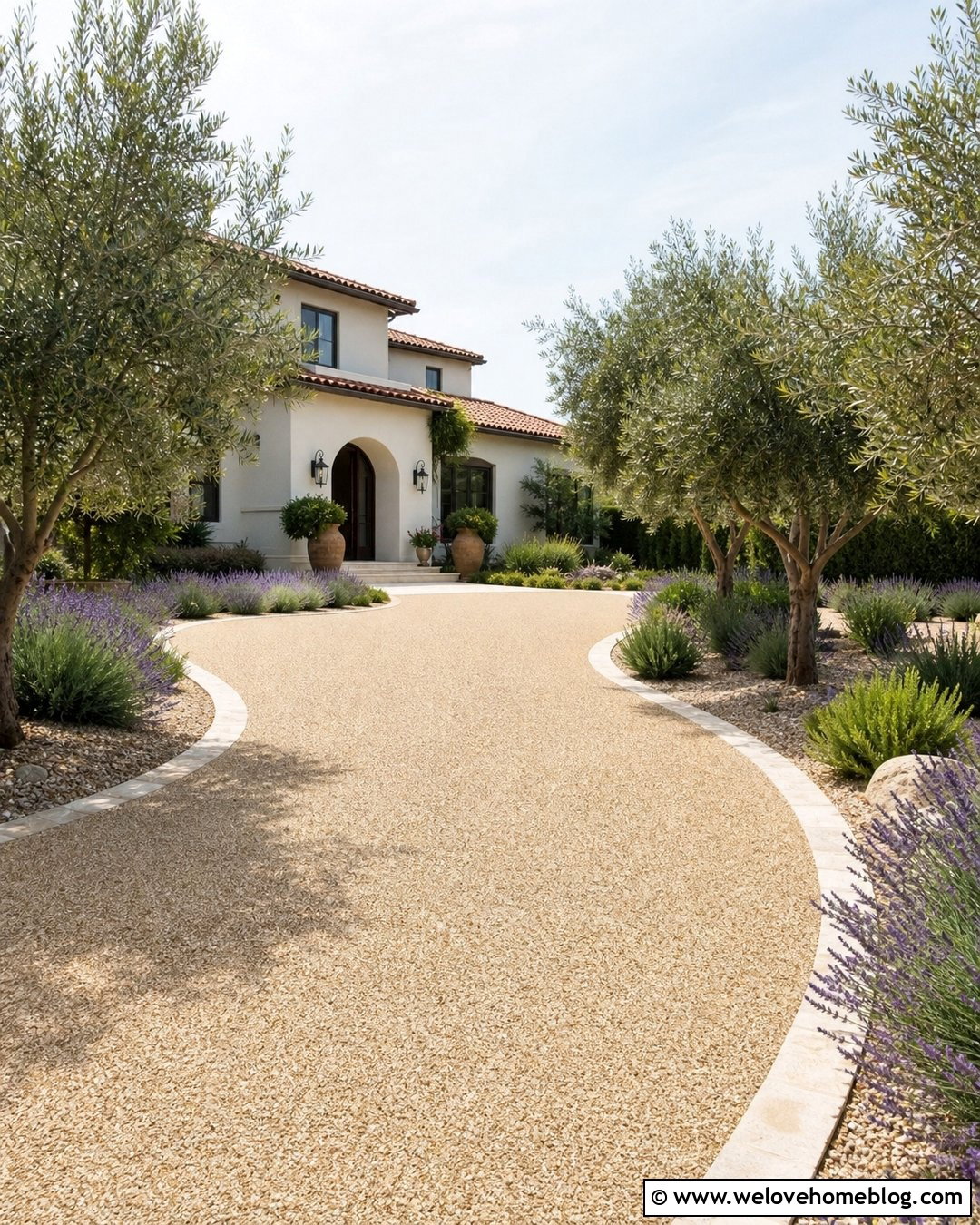
Olive trees and lavender can frame a driveway with graceful height and a restrained silver-green palette. Use a pale resin-bound gravel or decomposed granite driveway in a gently curving layout. Plant olive trees at generous intervals along the outer beds, allowing their open canopies to remain separate as they mature. Fill the lower layer with repeated lavender drifts, rosemary, thyme, and small ornamental grasses. Limestone edging and gravel mulch support the warm, dry visual character. Keep branches pruned away from vehicles, lighting, and the driveway entrance. Near the house, use large clay containers to echo the landscape without adding another plant type. This arrangement feels most cohesive beside stucco, Spanish Revival, Southwestern, or contemporary homes with warm natural finishes.
25. Low-Maintenance Lavender Driveway
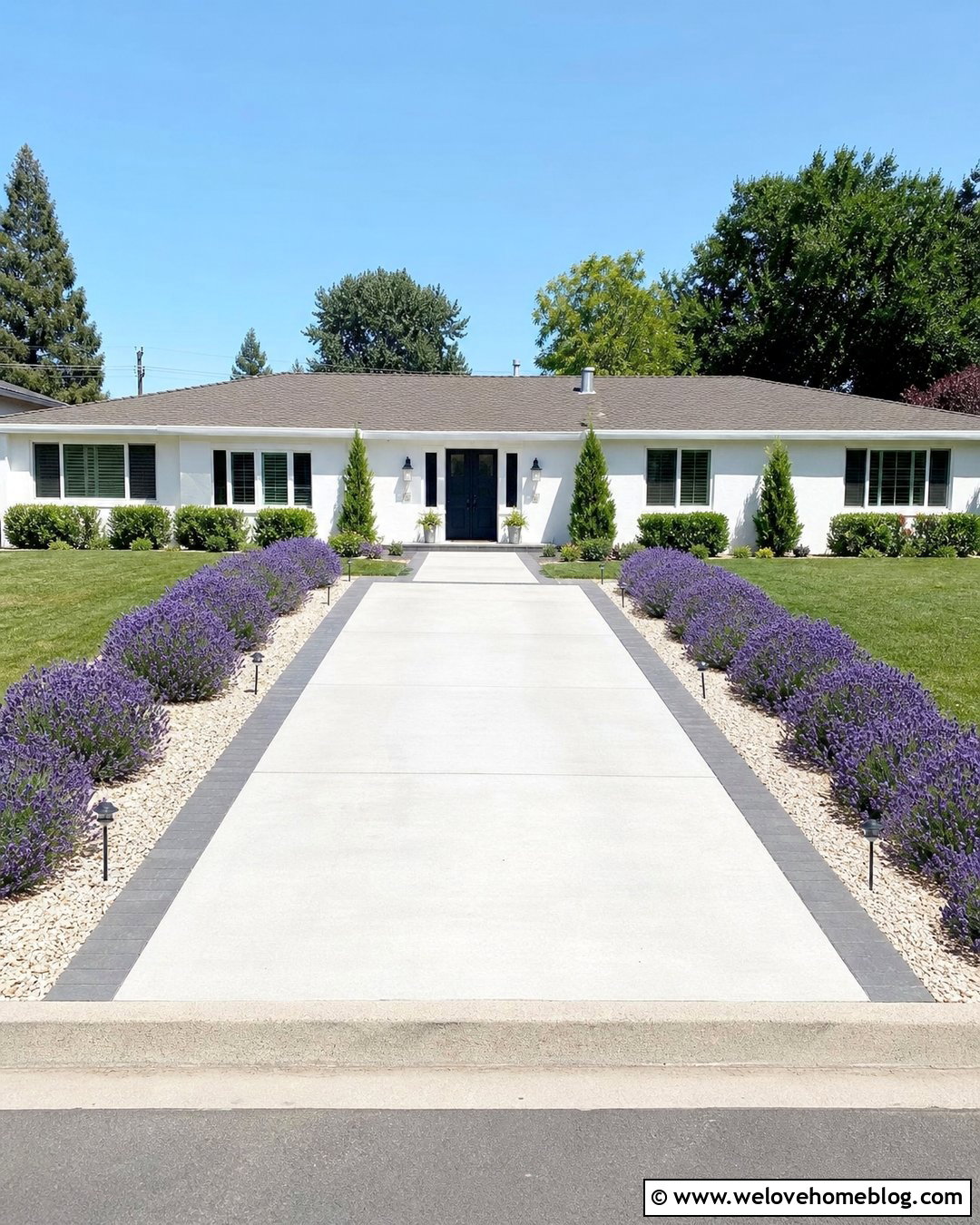
For a simpler landscape, combine durable paving with one lavender variety, gravel mulch, and minimal accent planting. A straight light-gray concrete driveway with charcoal block edging creates a clean surface that is easy to understand and maintain. Build beds wide enough for mature lavender, then space plants so air and light can reach every mound. Cover exposed soil with pale gravel and use drip irrigation only where local conditions require it. Add a few evergreen shrubs near the house for winter structure, but keep the driveway borders primarily lavender. Avoid complicated curves, mixed flower schemes, and lawn strips that require awkward trimming. This limited palette reduces visual clutter and gives the front yard a consistent appearance, even when the lavender is not at peak bloom.
Conclusion:
The best lavender driveway designs coordinate plants with the surface, layout, borders, architecture, and everyday vehicle access. Gravel creates an easy country look, while concrete, resin, asphalt, brick, and pavers can support more traditional or modern arrangements. Whatever material you choose, leave room for mature plants, protect beds with durable edging, and keep sightlines clear near roads and curves. Sunny, well-drained planting areas will generally produce the healthiest and most attractive display. You can then add stone walls, gates, lighting, ornamental grasses, or small trees to suit your property. Use these 25 Lavender Driveway Ideas as a starting point for building a practical entrance with lasting color and cohesive curb appeal.

Related posts:

Leave a Reply