
Lavender brings color, fragrance, and soft texture to an area that often feels purely functional. The best 20 lavender driveway border ideas combine healthy planting conditions with a complete driveway design, including the surface, edging, layout, and surrounding landscape. Lavender generally performs best beside sunny, well-drained driveways, while gravel mulch and masonry can help create the dry setting it prefers. Its silvery foliage also remains attractive beyond the main flowering season. () Whether your home has a country gravel lane, a modern concrete drive, or a traditional brick entrance, there is a practical way to make lavender fit. The following complete looks offer useful inspiration for planning 20 lavender driveway border ideas.

1. Gravel Driveway With Lavender Border
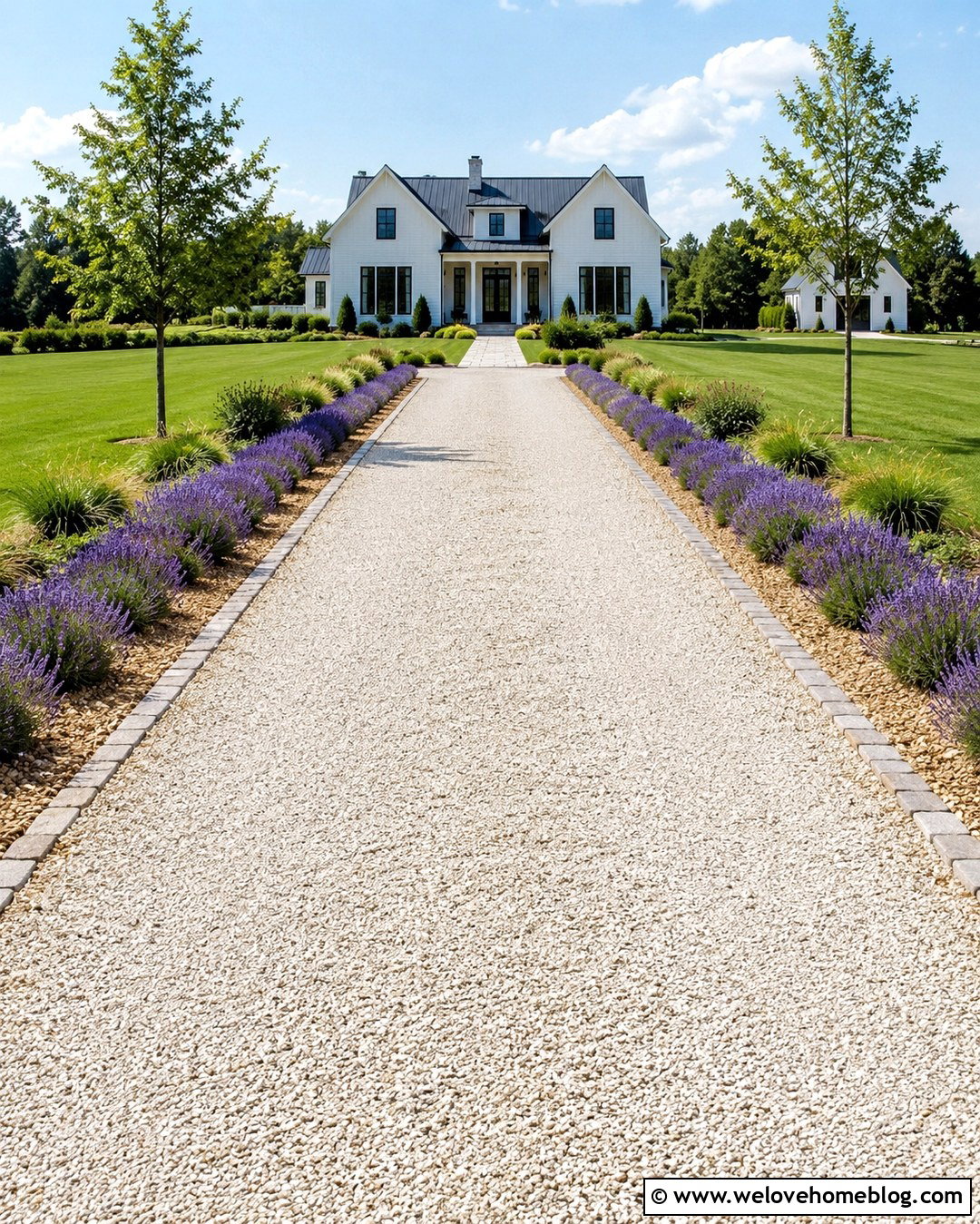
A pale gravel driveway and a continuous lavender border create an inviting country-style approach. Use compacted crushed limestone or angular gray gravel rather than loose, rounded stones near the planting beds. The stable surface looks tidy and is less likely to scatter into the lavender. Install steel edging or a narrow cobblestone curb between the driveway and soil to keep both materials separated. A straight layout suits cottages and modern farmhouses, especially when lavender runs evenly along both sides. Leave enough space for every plant to reach its mature width without leaning into vehicle doors. Gravel mulch around the plants improves the coordinated, dry-garden appearance. Add a simple flagstone walkway and a few ornamental grasses near the house for height.
2. Concrete Driveway With Lavender Border
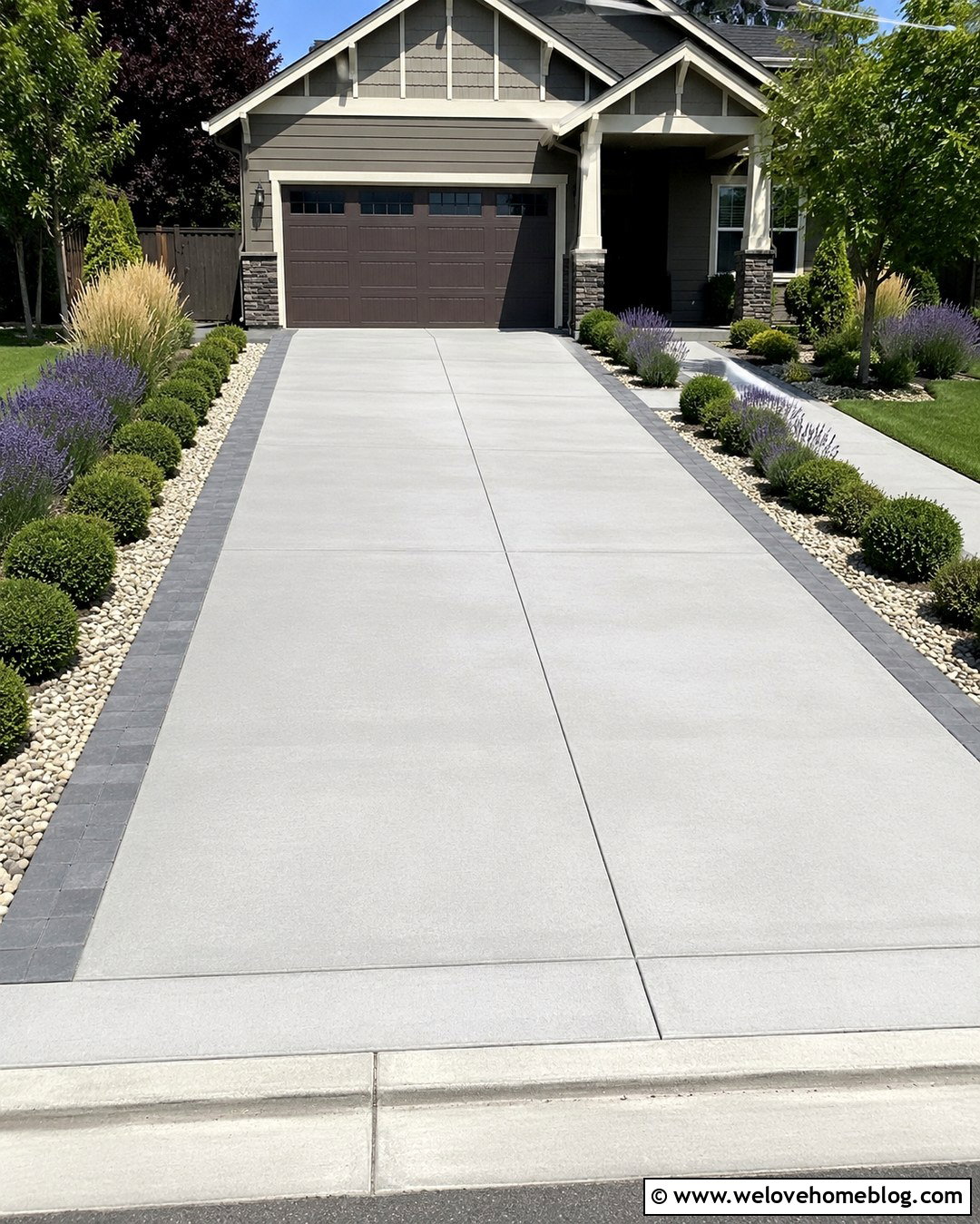
Smooth, light-gray concrete forms a calm background for purple flowers and silvery foliage. This look works especially well with a straight driveway leading to a ranch, Craftsman, or contemporary suburban home. Create planting beds on both sides, then add a flush charcoal paver edge to separate the soil from the concrete. Repeating one lavender variety produces a consistent height and color, making the driveway feel wider and more organized. Keep plants back from areas where passengers regularly step out. A narrow strip of decorative gravel can provide extra clearance while reinforcing the clean design. Connect the border to foundation beds containing rounded evergreens and upright grasses. The result softens a large concrete surface without making the front yard appear busy or difficult to maintain.
3. Curved Driveway With Lavender Border
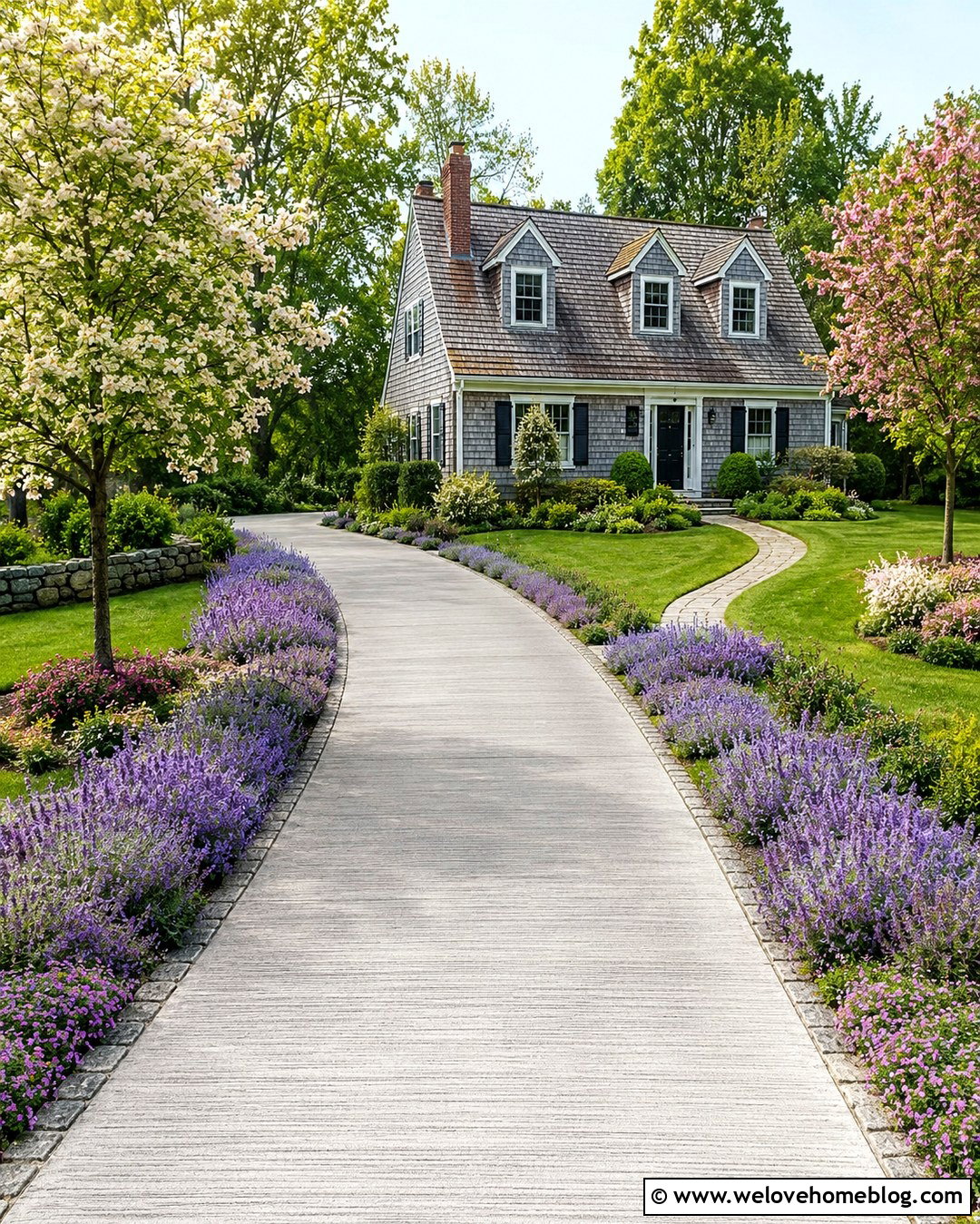
Can a practical driveway also guide the eye through the landscape? A gently curved asphalt or concrete driveway framed by lavender makes the journey toward the house feel more intentional. Follow the outside curve with a broad lavender bed and use shorter groups along the inside where visibility matters. A Belgian block edge strengthens the shape while keeping tires away from the plants. Instead of planting rigid rows, arrange lavender in overlapping drifts that echo the driveway’s movement. Add low catmint or creeping thyme between occasional gaps for a relaxed garden effect. Small ornamental trees can anchor the widest points without hiding the house. This layout looks particularly natural beside a Cape Cod, cottage, or stone-front home with an informal front lawn.
4. Asphalt Driveway With Lavender Border
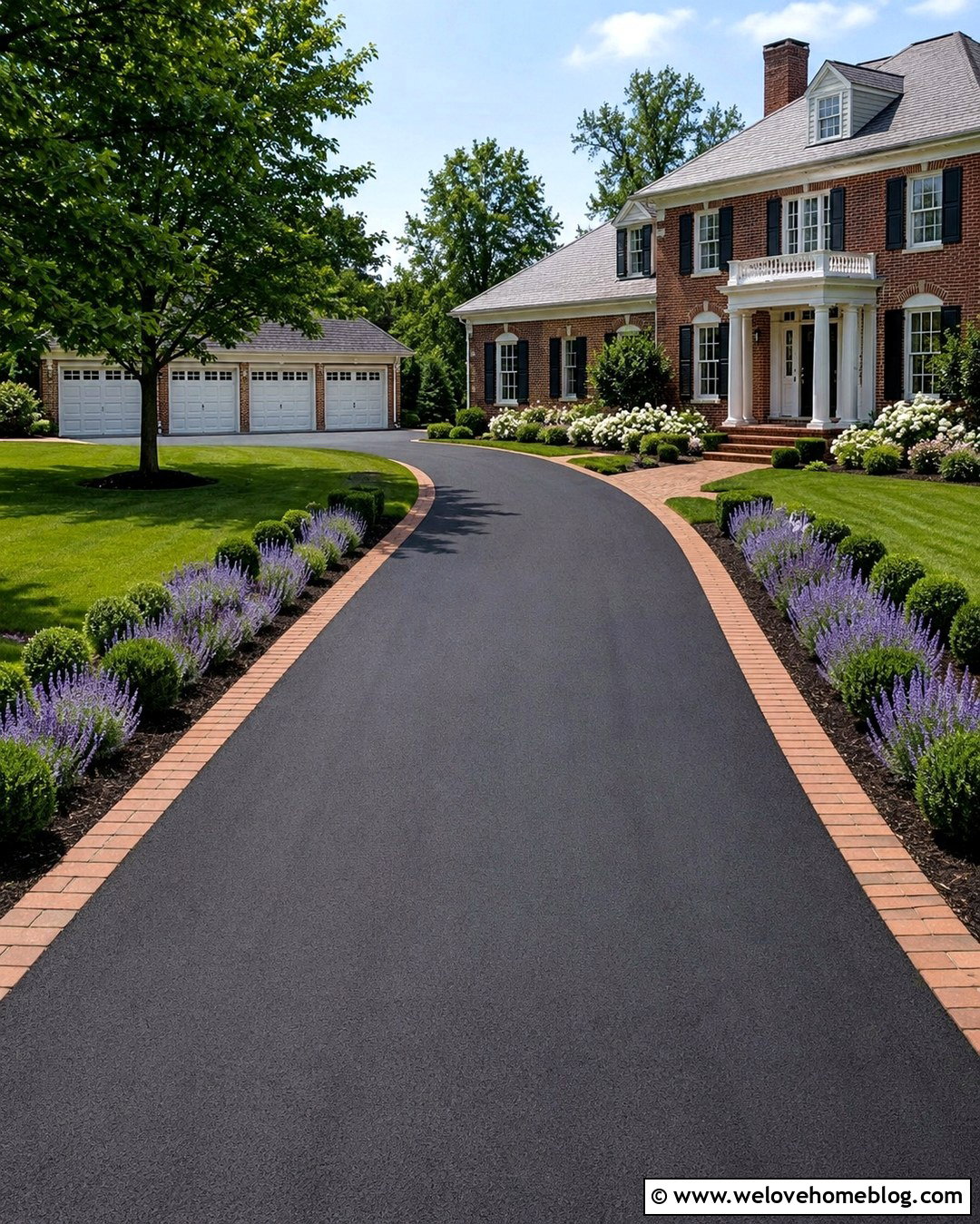
Deep black asphalt makes lavender blooms appear brighter and more defined. To prevent the border from feeling too harsh, add a warm brick soldier course between the pavement and planting bed. The brick creates a durable visual transition while connecting the driveway to a traditional brick house or colonial facade. Plant lavender in evenly spaced groups rather than one crowded hedge, leaving small gravel-covered gaps where doors are likely to open. A straight or slightly flared driveway works best for this structured treatment. Continue the brick into a walkway or entry apron so the landscape feels unified. Behind the lavender, use low evergreen shrubs for year-round form. The dark pavement, red-brown brick, green shrubs, and purple flowers produce strong yet balanced curb appeal.
5. Paver Driveway With Lavender Border
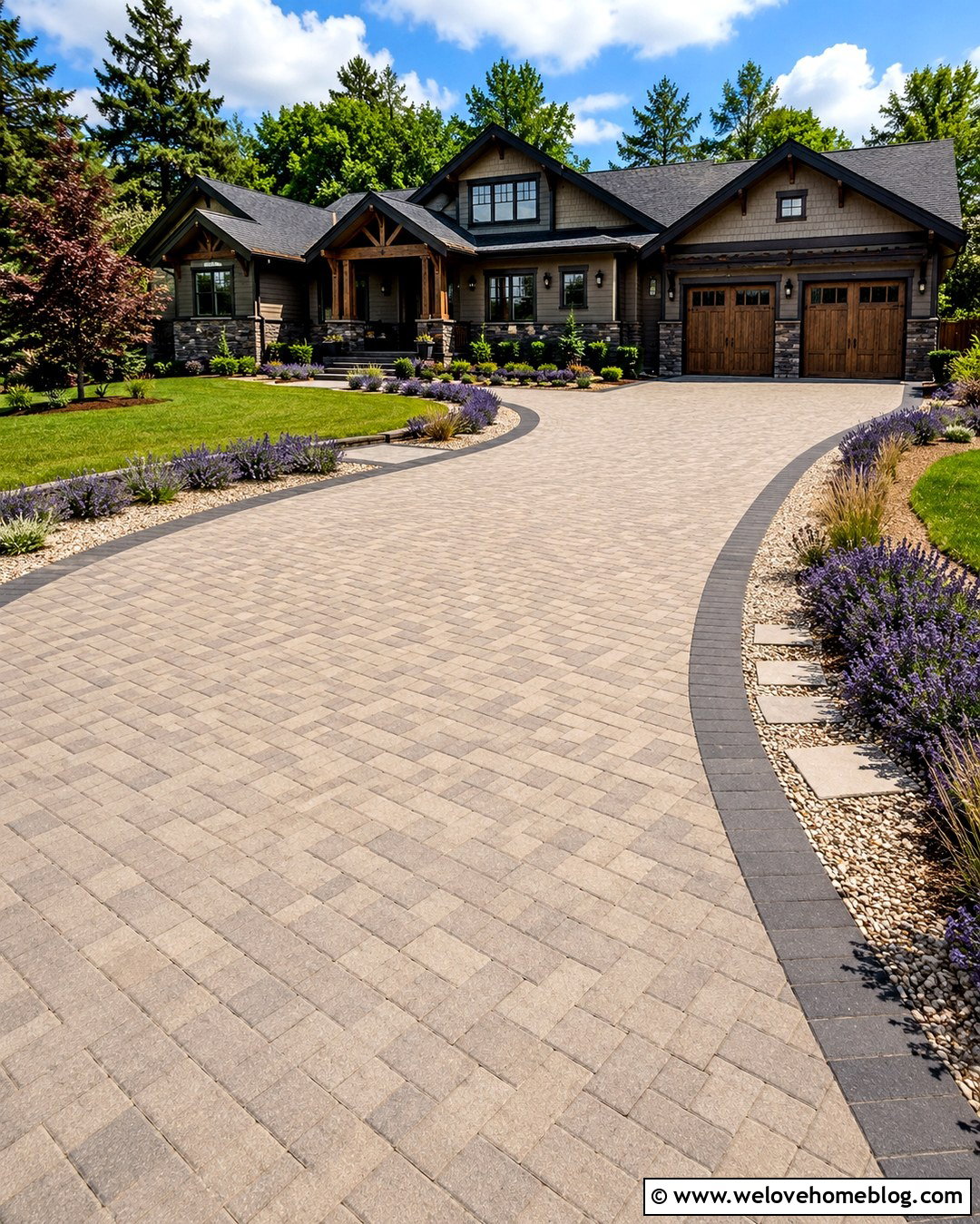
Interlocking concrete pavers bring pattern to the driveway, while lavender adds movement and natural color around the edges. Choose warm greige pavers in a running bond or herringbone layout, then install a darker paver course around the perimeter. A slightly curved planting bed can soften the precise geometry without making the approach look unplanned. Use compact lavender cultivars beside narrow parking areas and fuller varieties where the border widens near the house. Pale gravel mulch highlights the gray-green foliage and keeps the composition visually clean. Include a stepping-stone path through the border so visitors do not walk across the plants. This complete look complements Craftsman homes, updated ranch houses, and modern residences with stone or wood accents. Keep the remaining planting simple so the patterned surface stays visible.
6. Brick Driveway With Lavender Border
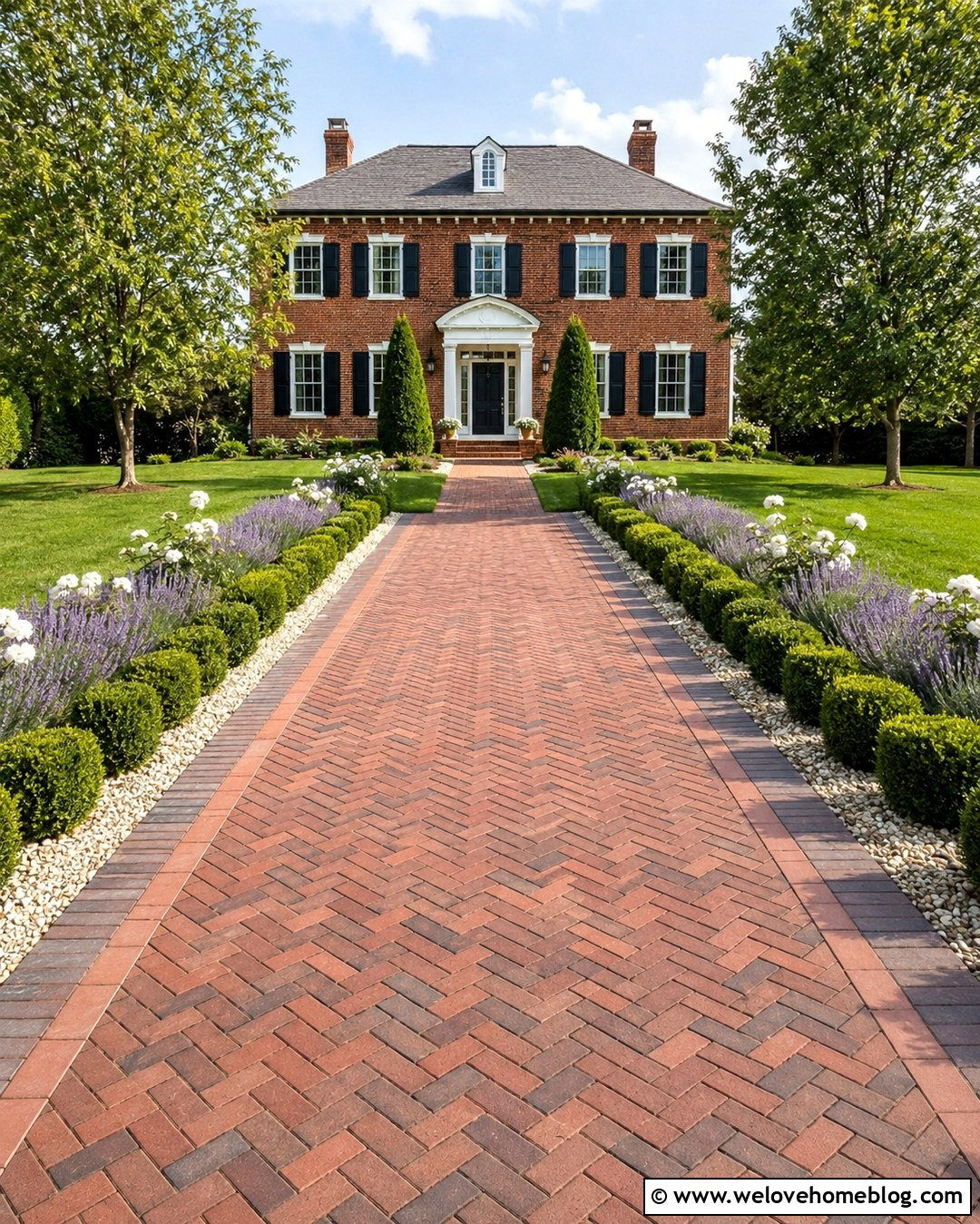
Warm clay brick and cool purple lavender create a classic contrast suited to traditional architecture. Lay the brick driveway in herringbone to handle the visual scale of the surface, then use a simple running-bond edge for definition. On each side, build a generous border filled with repeated lavender mounds and light gravel mulch. A low boxwood hedge behind the lavender can add structure, but it should remain short enough to preserve visibility. Allow the beds to widen near the front entrance, where roses or white flowering perennials can join the composition. This design looks especially polished with colonial, Georgian, and cottage homes. Match the walkway brick to the driveway so every hardscape element feels connected. The lavender then becomes the soft, fragrant layer that prevents the formal layout from feeling rigid.
7. Cobblestone Driveway With Lavender Border
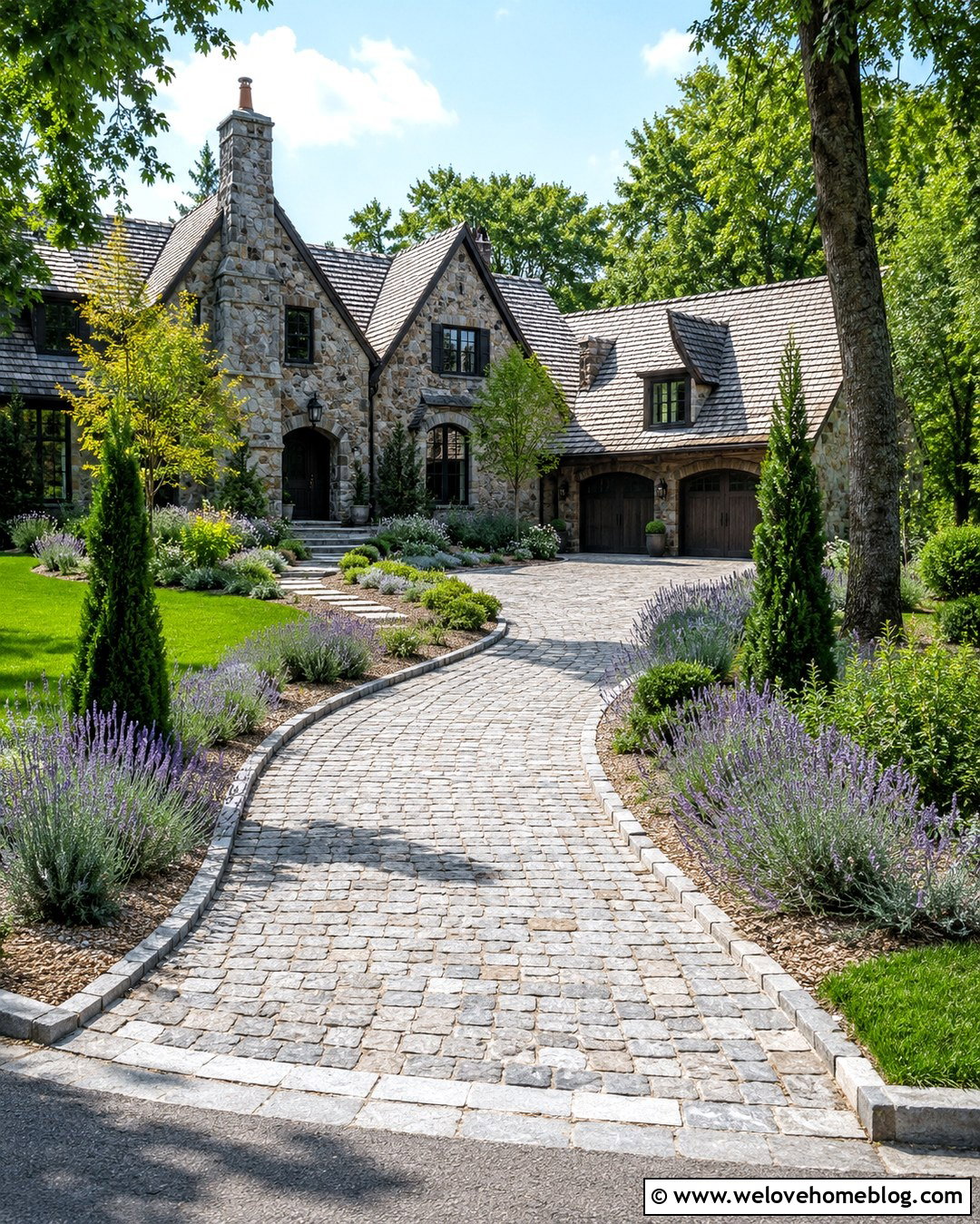
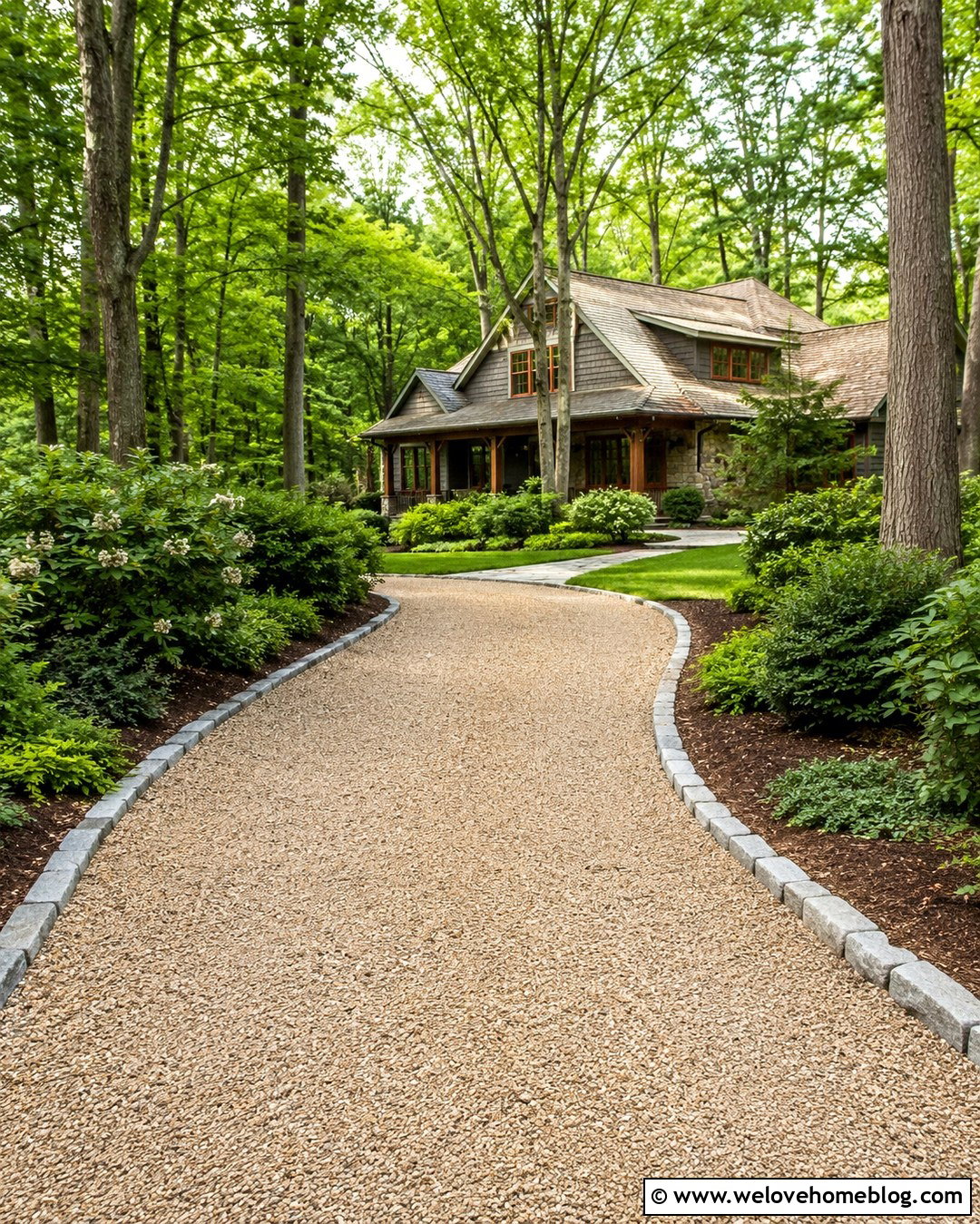
The uneven texture of cobblestone pairs naturally with relaxed lavender planting. Choose gray and tan cobbles for a gently curved driveway leading to a stone cottage, Tudor home, or wooded country property. Rather than creating perfectly straight rows, plant lavender in broad clusters that occasionally overlap the stone edge. A flush granite curb will contain the cobbles and protect plant crowns from tires. Use fine gravel mulch throughout the beds, then add thyme between larger stones near the walkway. The subtle repetition of gray stone, silver leaves, and purple flowers keeps the design coordinated. If the driveway is long, introduce small olive-like ornamental trees or upright junipers at intervals. Their height breaks up the border while preserving the open view toward the house and garage.
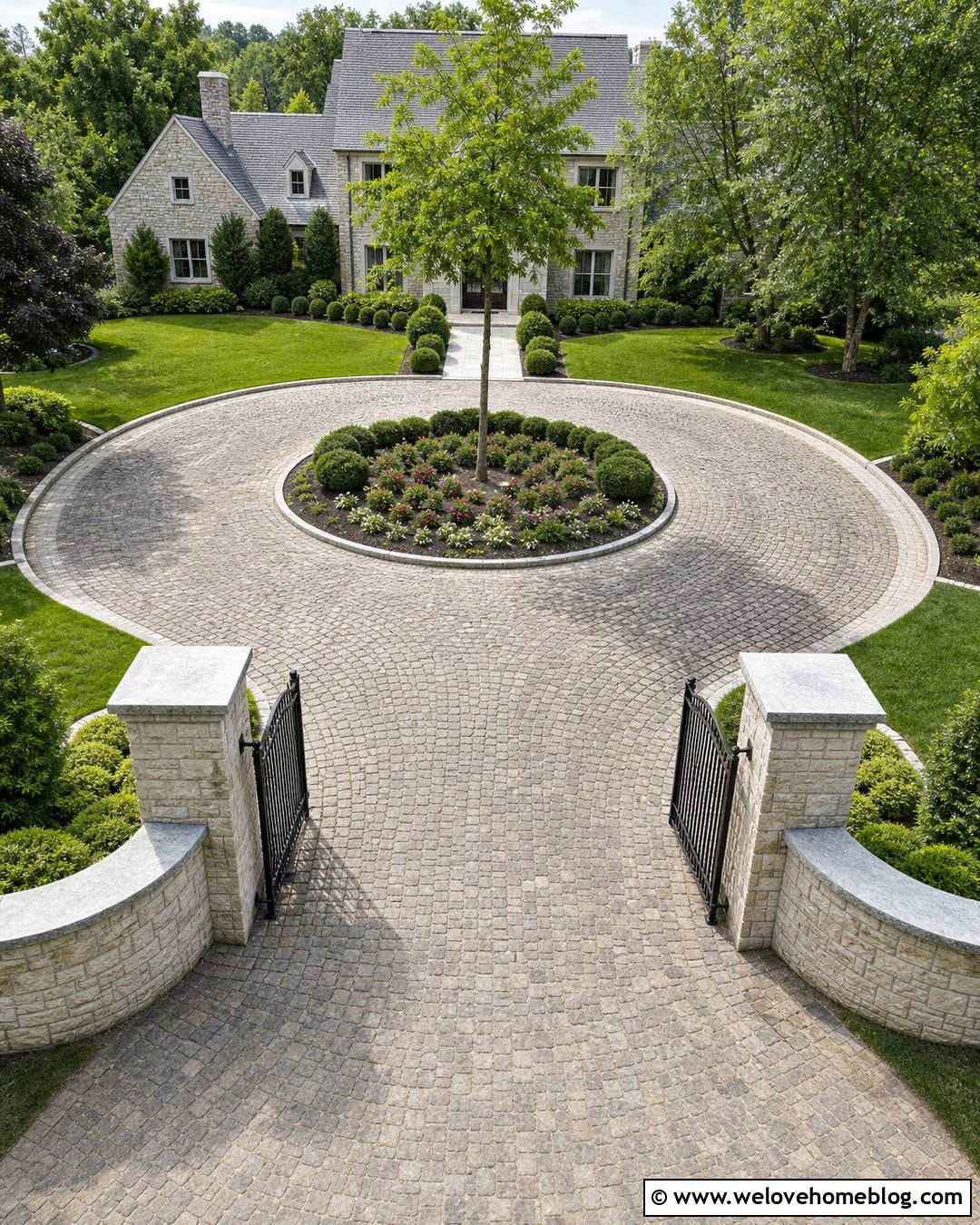
8. Circular Driveway With Lavender Border
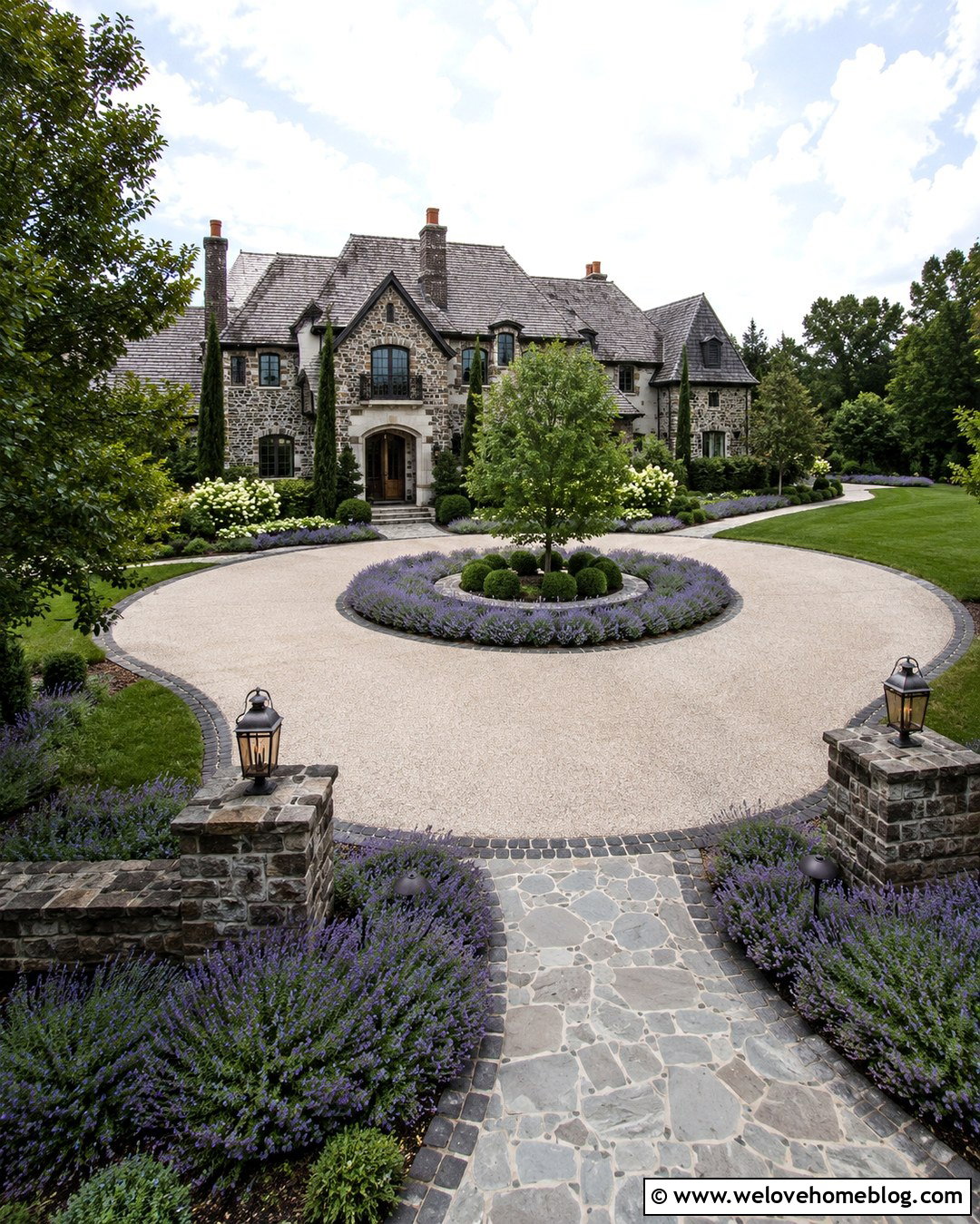
A circular driveway offers several opportunities to use lavender without overwhelming the entrance. Frame the outside edge with a continuous low border, then repeat lavender inside the central island in larger curved groups. A light exposed-aggregate surface and dark cobblestone edging provide enough contrast to define both circles. Place a small ornamental tree, stone urn, or clipped evergreen in the island’s center, surrounded by lavender and decorative gravel. Keep plants low near both street connections so drivers can clearly see approaching traffic and pedestrians. This balanced layout suits Mediterranean, French country, and large traditional homes. Repeating the same edging material around the island, driveway, and walkway creates a finished appearance. Lavender supplies color and fragrance while emphasizing the circular geometry of the entire front landscape.
9. Modern Driveway With Lavender Border
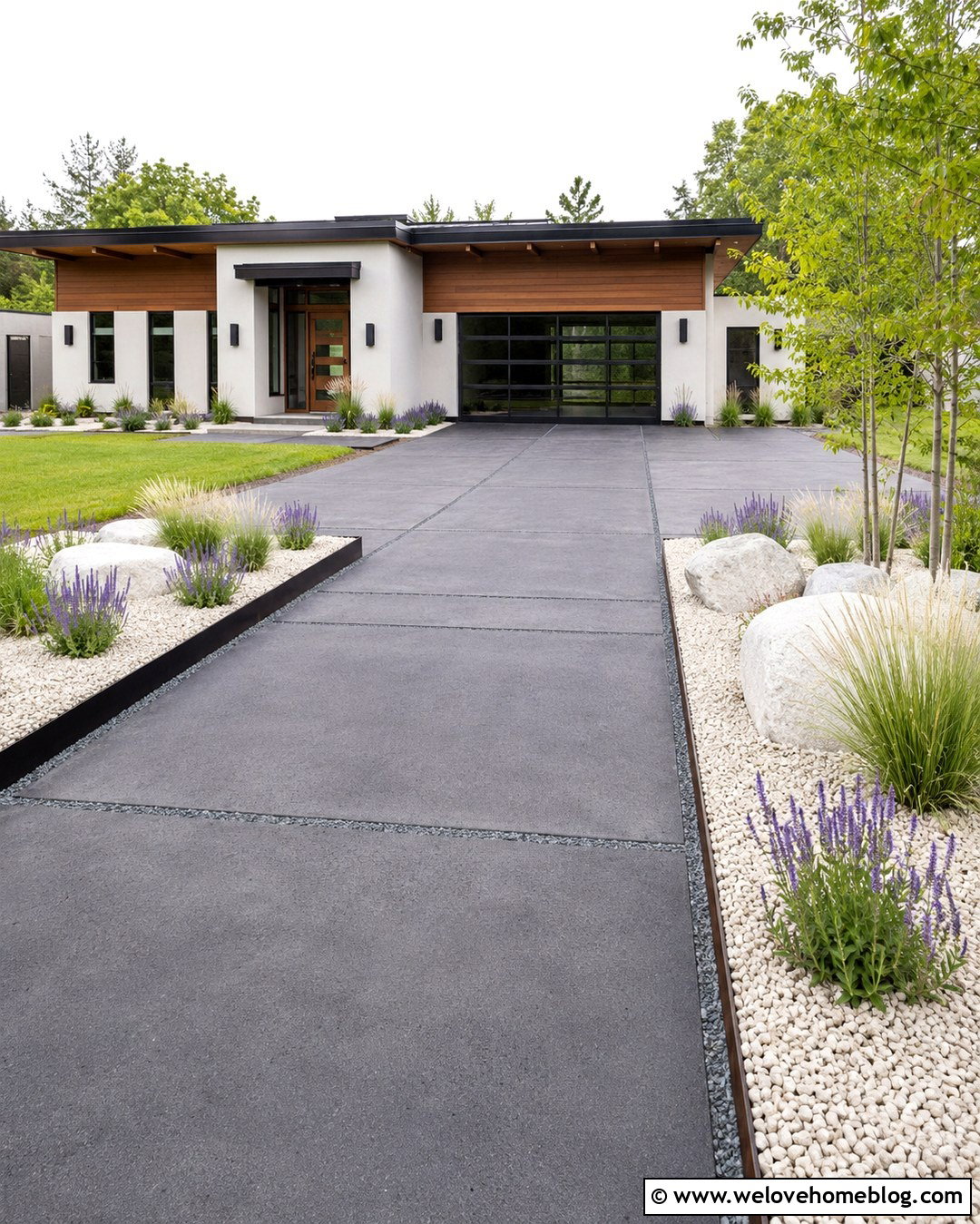
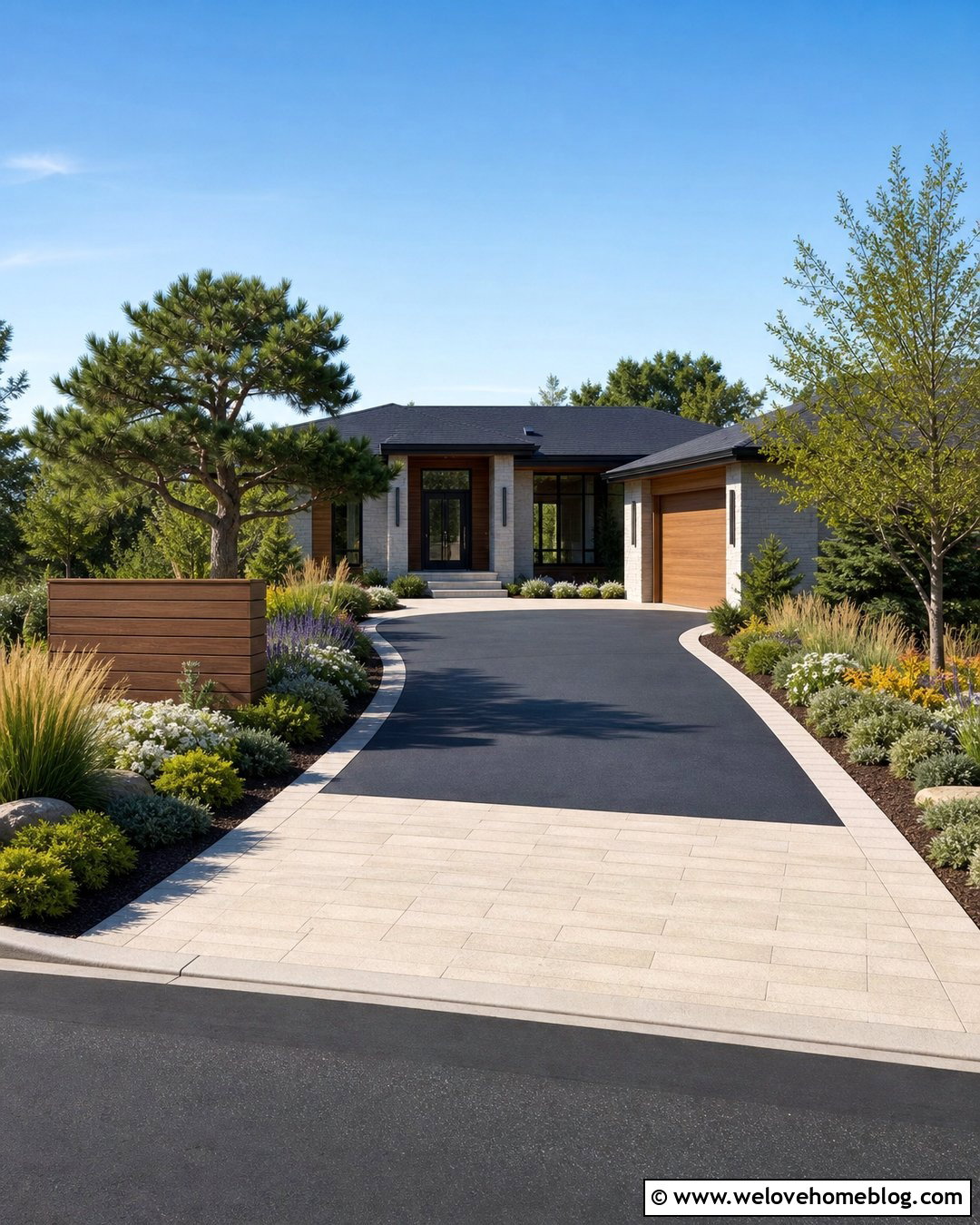
Clean lines do not require an empty landscape. Large-format charcoal concrete pavers can be arranged in a straight driveway with narrow gravel joints and restrained lavender planting along one side. Use black steel edging and pale crushed stone to create a sharp transition between the pavers and planting bed. Space compact lavender mounds in a measured rhythm, alternating them with architectural grasses or small boulders. On the opposite side, maintain a simple lawn or gravel garden to avoid excessive symmetry. This design supports a modern house with stucco, glass, wood, or dark metal details. Keep the lavender below window and lighting levels so the facade remains visible. The combination of geometric paving, airy plants, and limited colors gives the driveway softness without weakening its contemporary character.
10. Farmhouse Driveway With Lavender Border
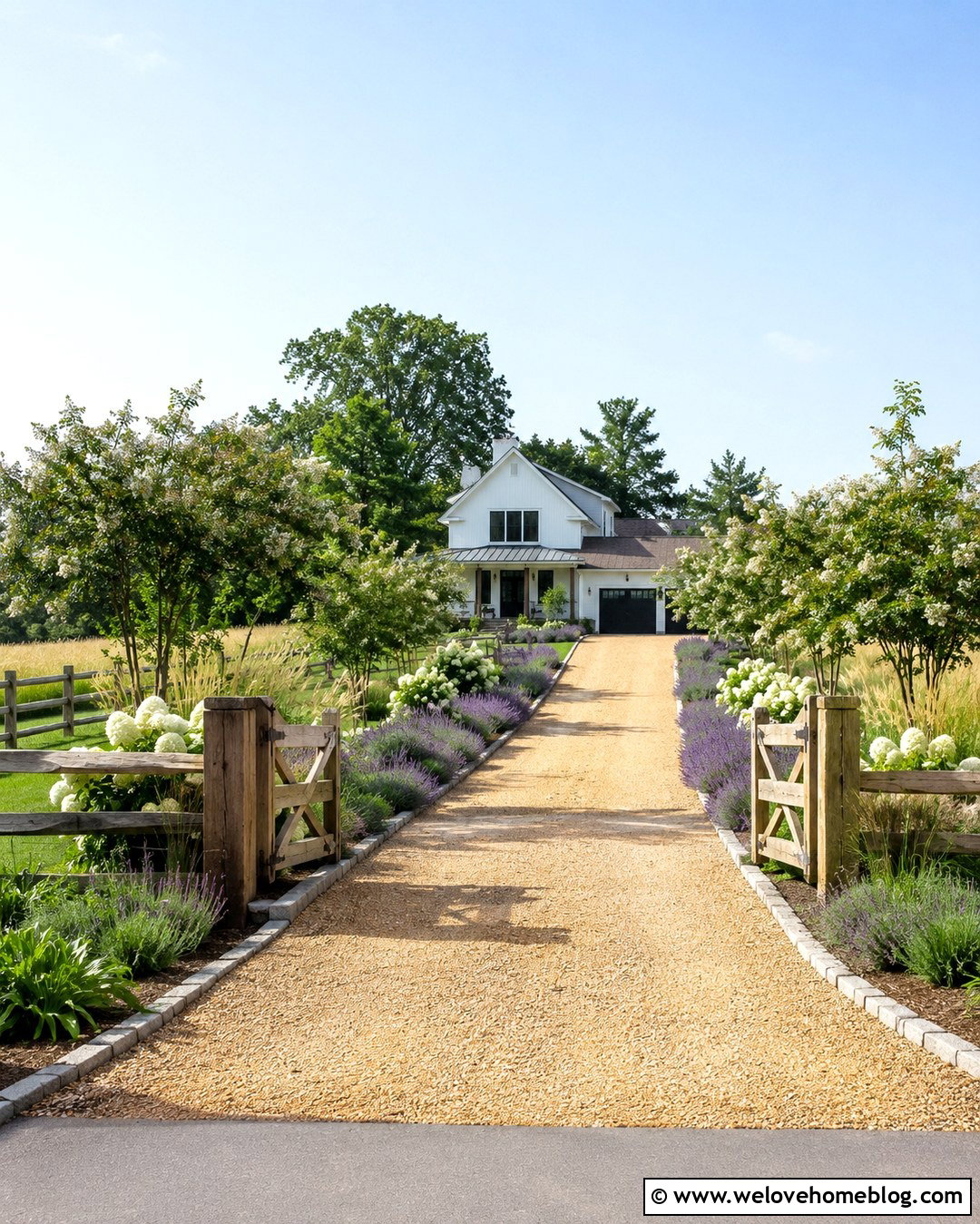
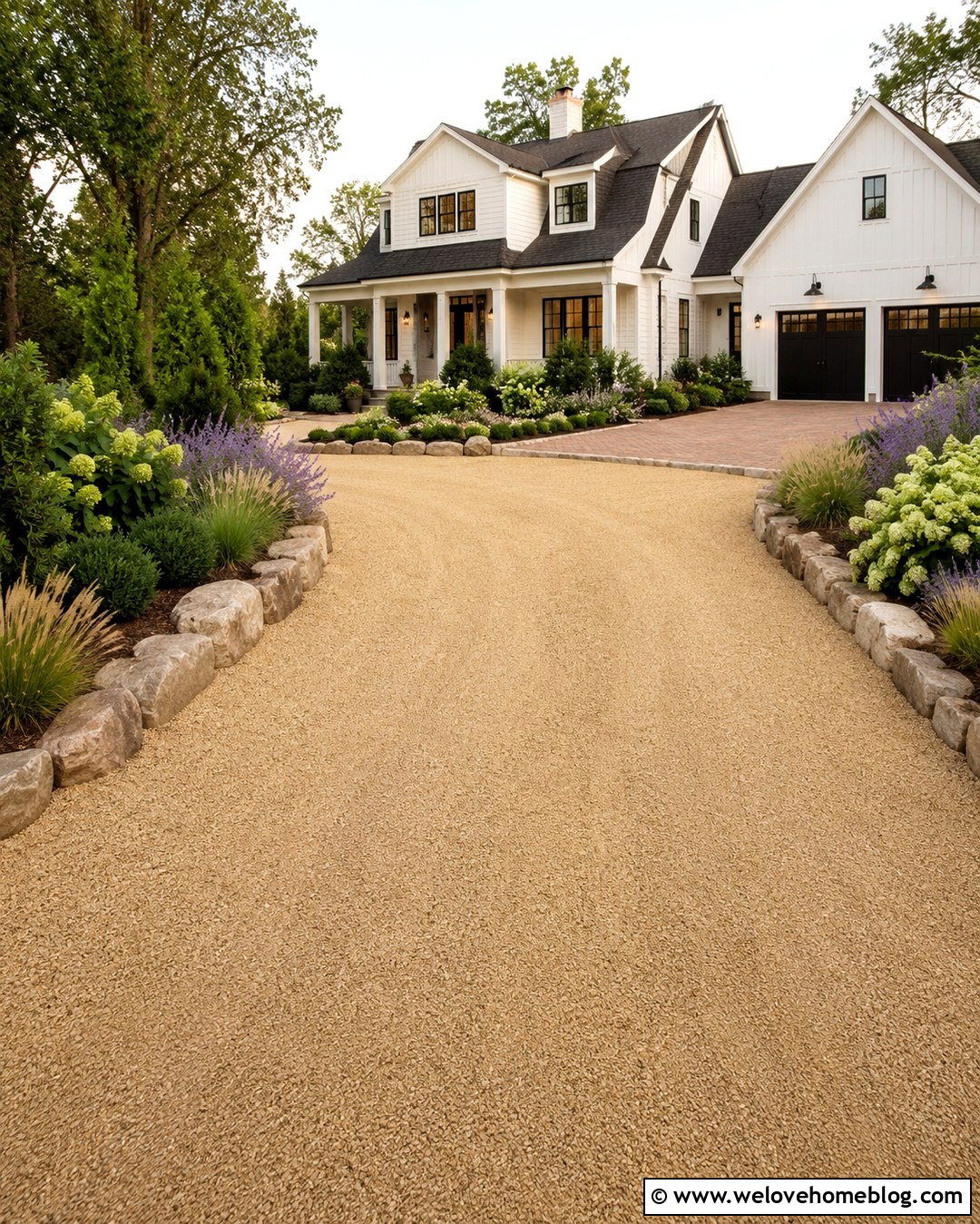
Picture a broad gravel approach leading toward a white farmhouse, with lavender lining both sides like a soft purple ribbon. Use buff crushed gravel for the driveway and reclaimed granite setts along the edges. The weathered stone keeps the material in place while adding an established country feeling. Plant lavender in repeated drifts rather than one perfectly clipped row. Near the entrance, widen the beds to include white hydrangeas, ornamental grasses, and a pair of small flowering trees. A simple timber gate and split-rail fence can frame the street connection without blocking the open view. Continue gravel mulch beneath the lavender for a consistent finish. This look is relaxed but organized, allowing the driveway, farmhouse architecture, and rural planting to work as one welcoming composition.
11. White Gravel Driveway With Lavender Border
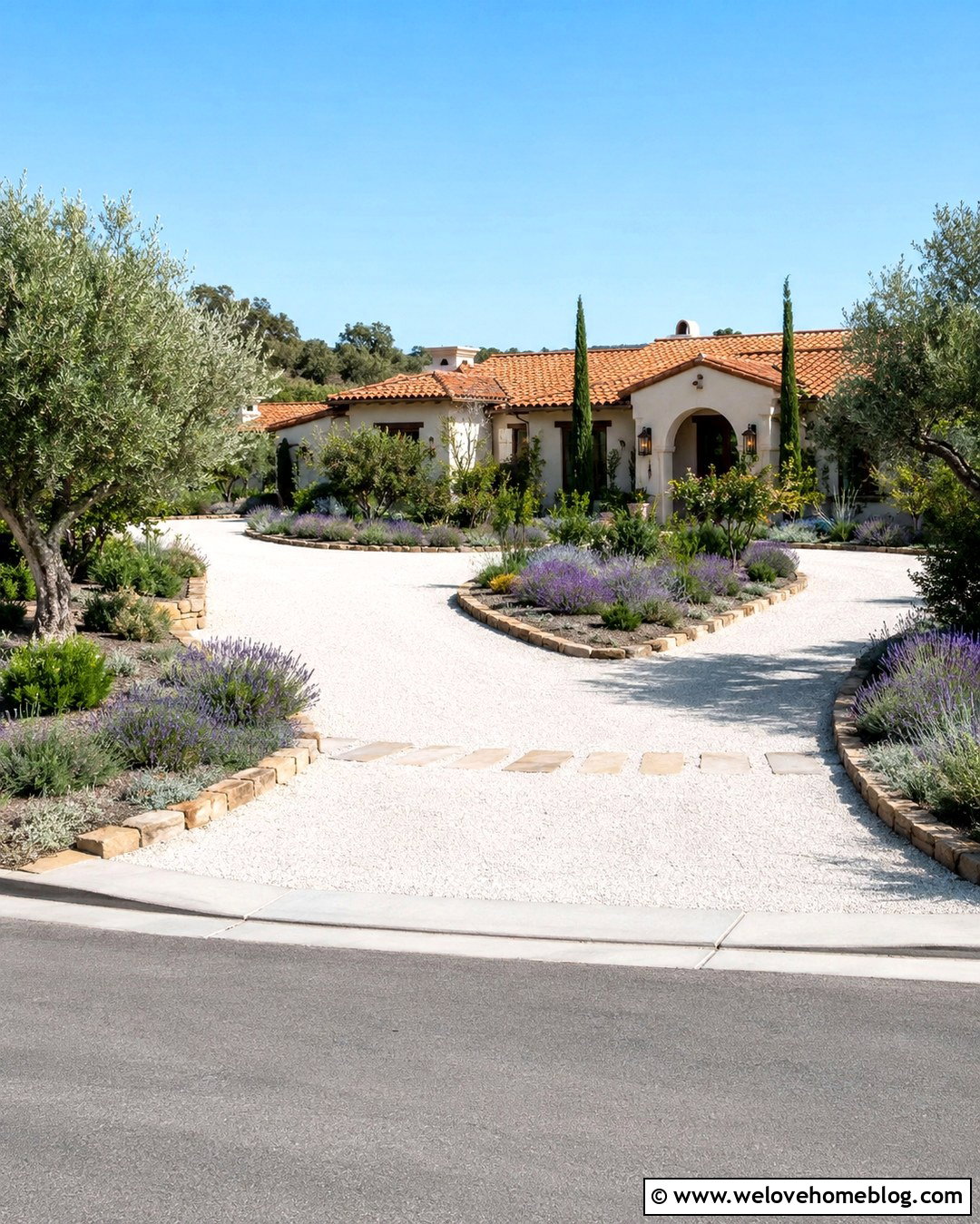
White marble chips or pale limestone gravel create a bright Mediterranean foundation for lavender. Because very light stone can produce strong glare, soften the driveway with wide planted edges and warm natural-stone curbing. A curved or horseshoe layout feels particularly appropriate for a stucco home with terracotta roofing. Use lavender as the dominant border plant, then add rosemary, sage, and small ornamental grasses with similar visual character. Muted gravel mulch in the beds prevents the design from becoming excessively white. Include stepping stones at regular access points so people can cross the border comfortably. Olive trees or drought-tolerant ornamental trees can mark the entrance and garage area. Together, the pale driveway, aromatic plants, warm stone, and curved layout create a cohesive landscape rather than a disconnected row of flowers.
12. Resin Driveway With Lavender Border
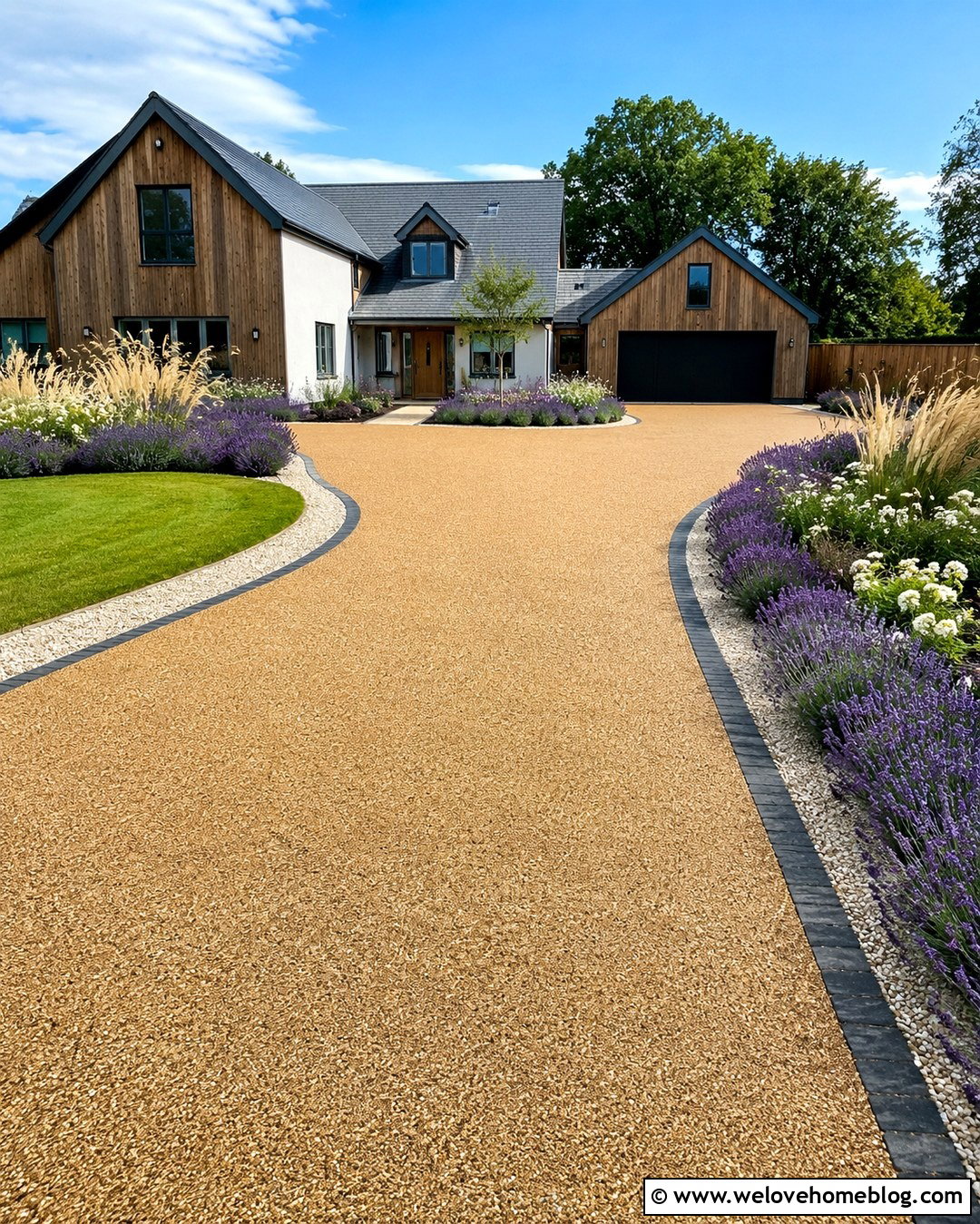
A resin-bound gravel driveway offers a smooth, uniform surface that works beautifully with an informal lavender edge. Choose a warm honey or natural-stone blend instead of a flat gray finish. Frame the driveway with a narrow charcoal paver course, then plant lavender in generous beds that widen toward the front door. The solid-looking surface and loose flower shapes balance each other well. For extra texture, combine the lavender with feathery ornamental grasses and low white perennials. Keep a clear gravel strip beside the parking zone to reduce accidental damage when doors open. A sweeping layout suits contemporary country homes and remodeled suburban properties. Carry the charcoal edging into the front walkway and garage threshold, giving the whole exterior a consistent visual framework that feels both practical and carefully planned.
13. Driveway Entrance With Lavender Border
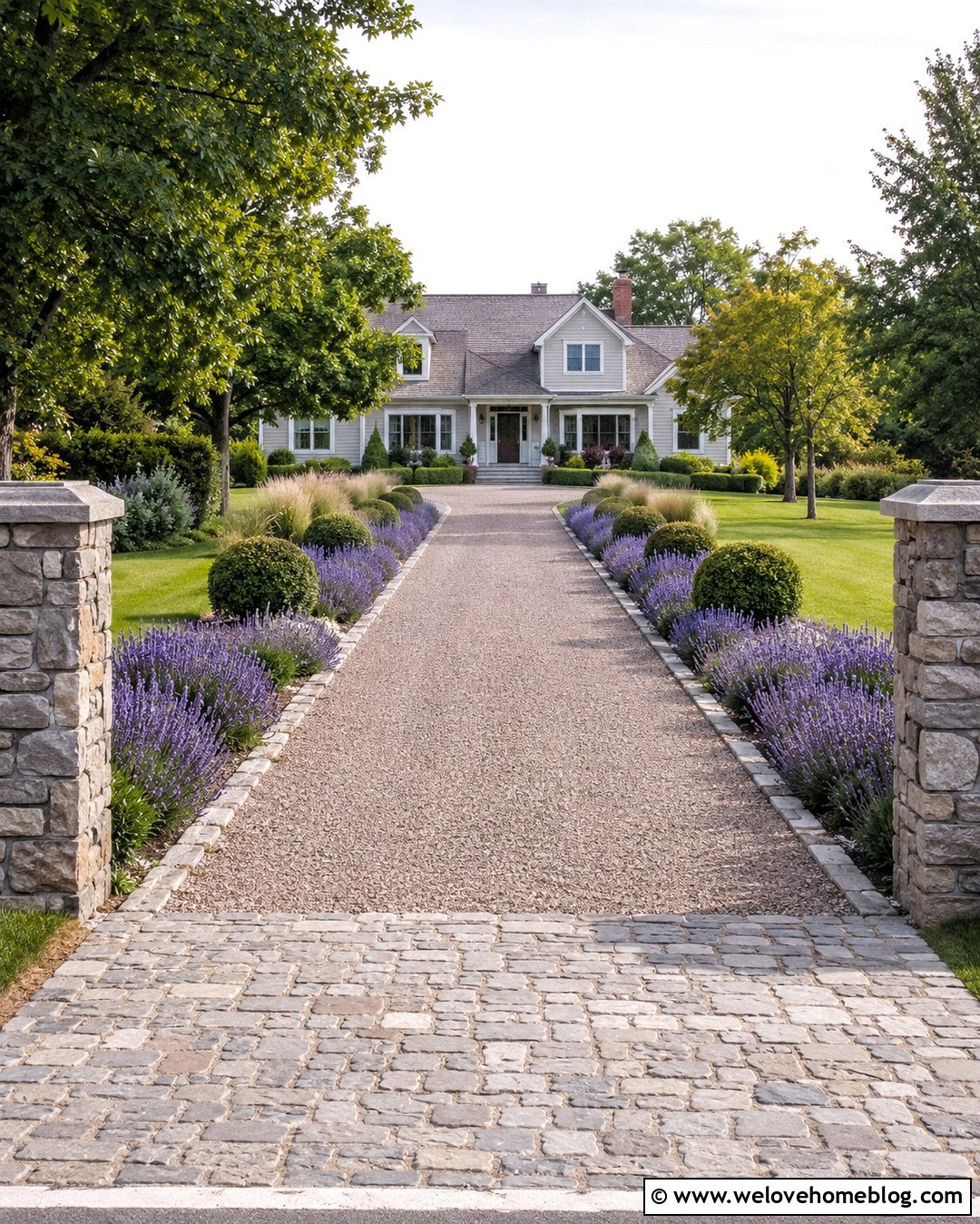
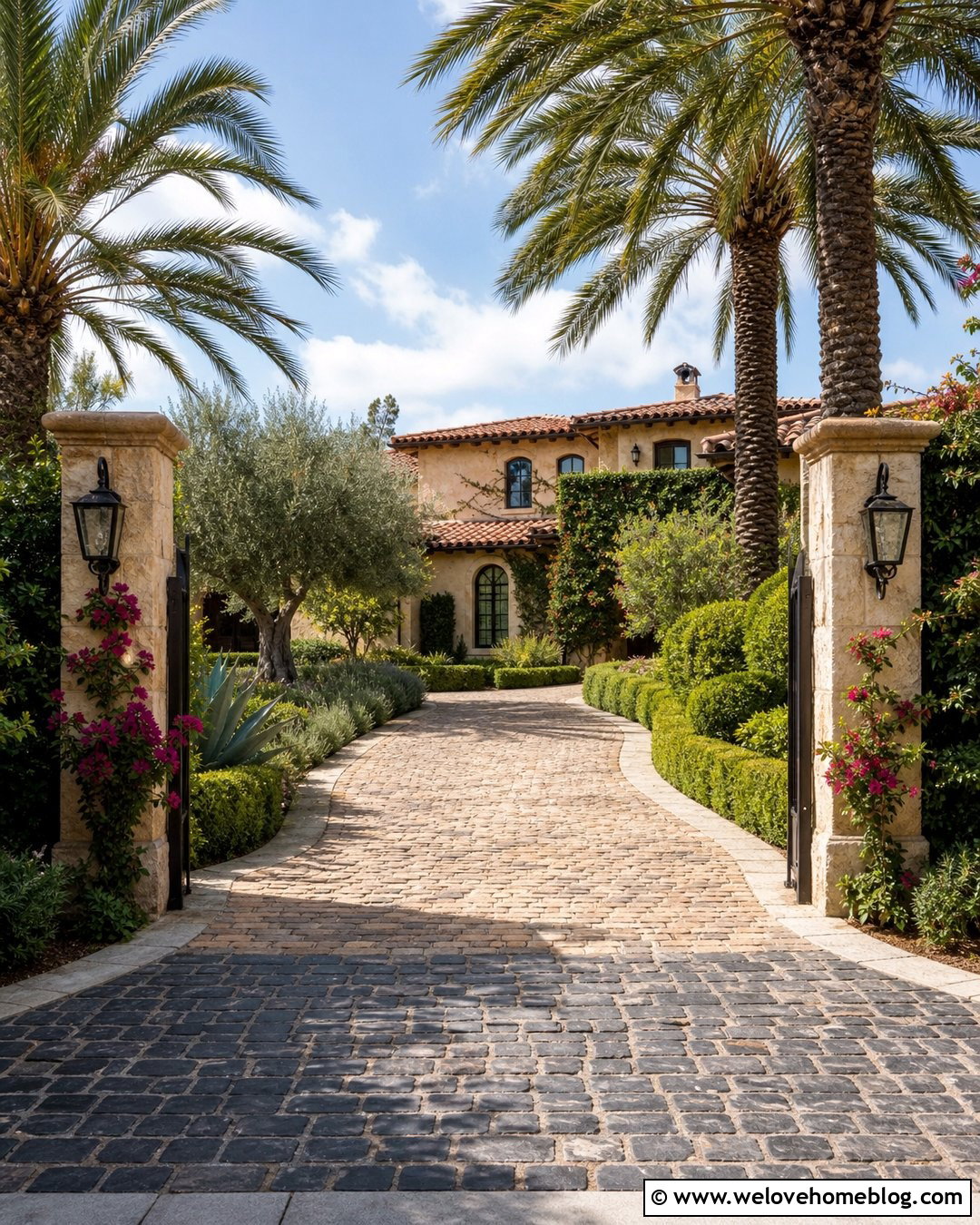
Lavender can make the driveway entrance feel welcoming before the rest of the house comes into view. Start with two broad planting beds positioned behind the roadside sight line. Use matching stone pillars or low masonry walls to mark the opening, then surround them with compact lavender, grasses, and rounded shrubs. A crushed granite driveway with a cobblestone apron creates a durable transition from the street. Continue smaller lavender groups along the drive so the entrance planting does not feel isolated. Avoid tall plants close to the curb, especially where they could limit visibility. Low-voltage marker lights can sit behind the lavender rather than directly among the flower stems. This complete arrangement creates a clear sense of arrival while preserving safe access and an open, uncluttered view.
14. Driveway Gate With Lavender Border
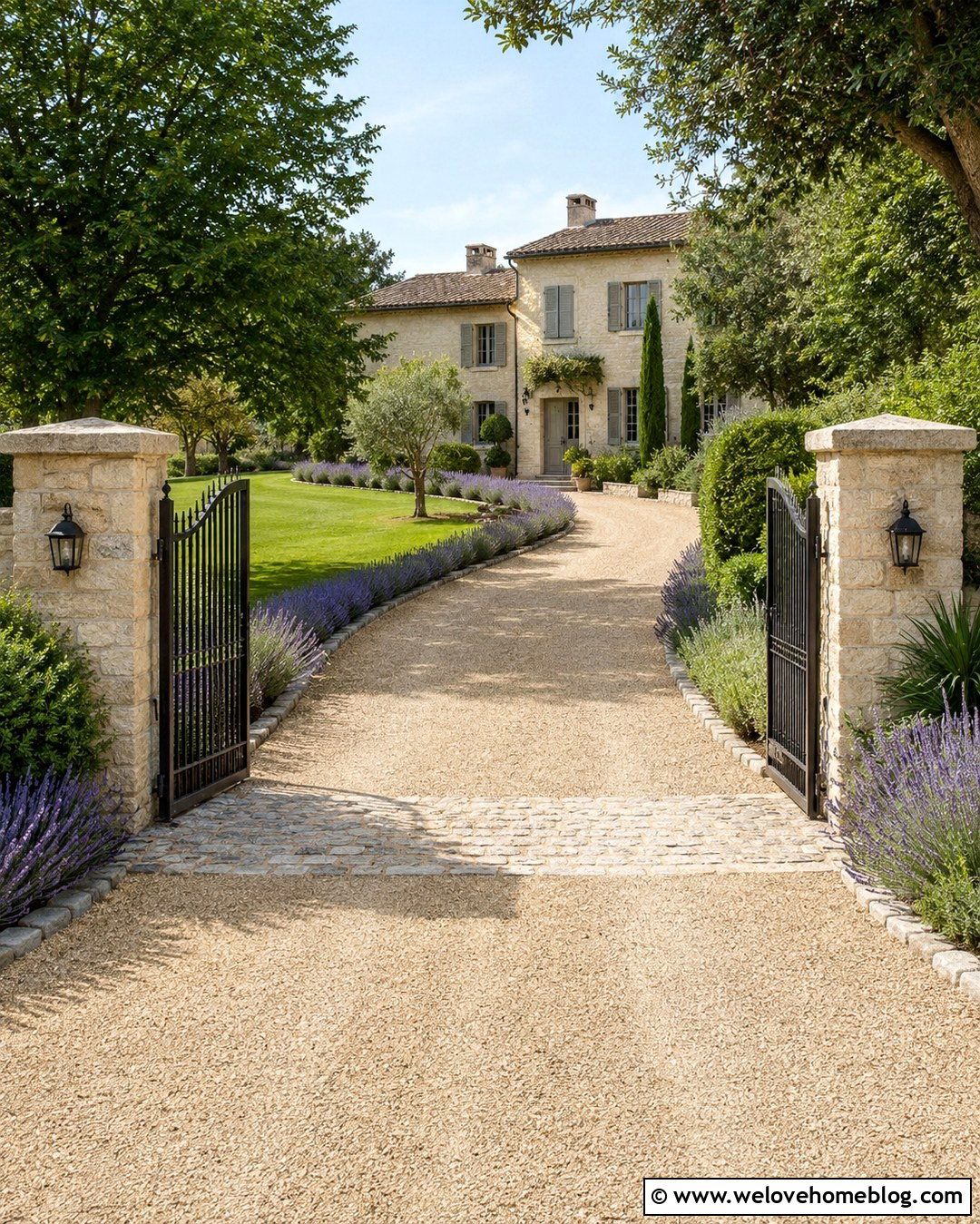
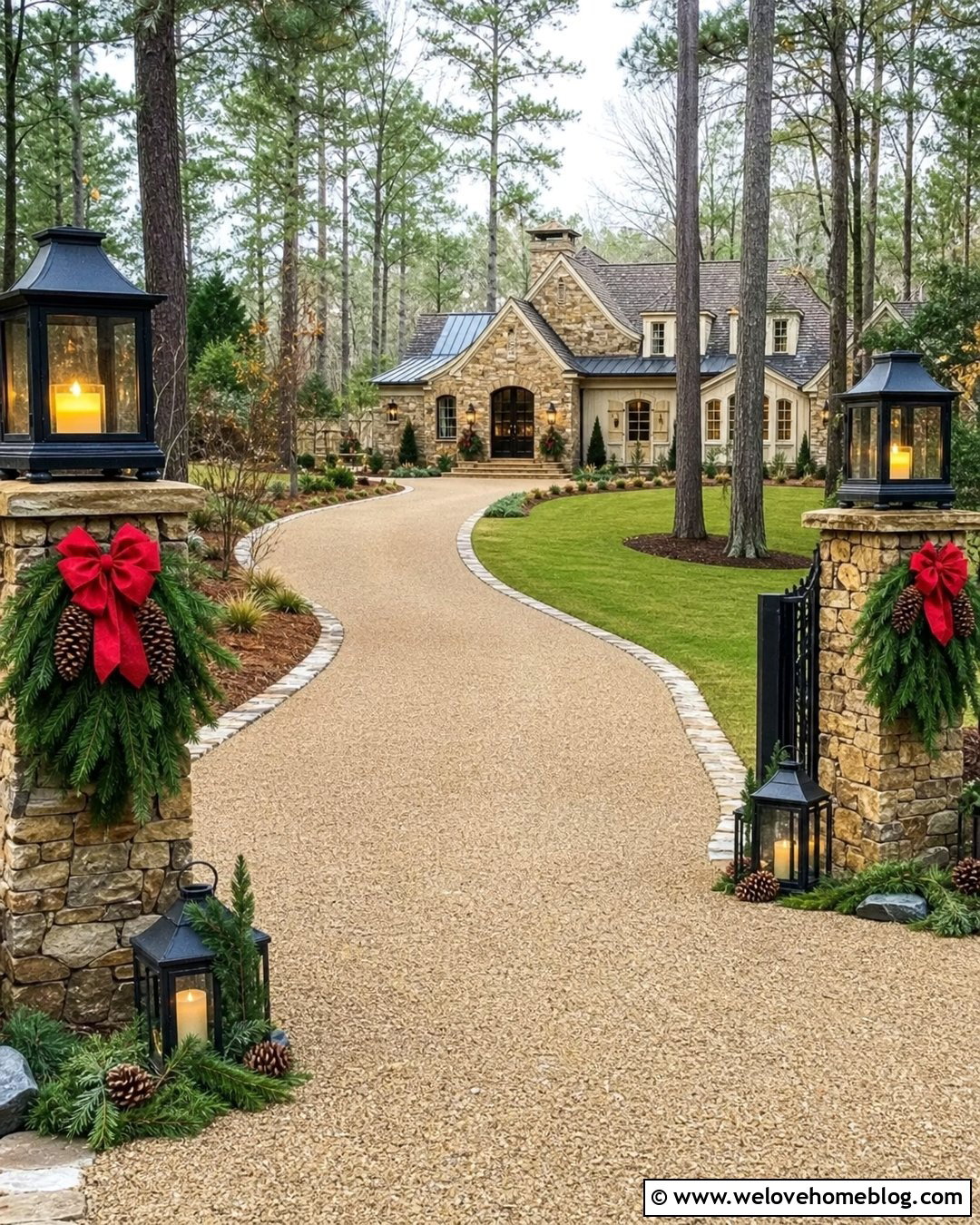
A gate becomes more inviting when lavender connects it to the surrounding landscape. Pair a black metal swing gate with natural-stone pillars and a warm gravel driveway. On both sides, create deep beds containing lavender in the foreground, clipped evergreen shrubs behind it, and small trees near the property line. Continue a narrower lavender border inside the gate to lead the eye toward the house. Keep planting away from hinges, sensors, keypads, and the full gate swing. A cobblestone apron beneath the gate can reduce gravel movement and visually anchor the entrance. This combination works well for French country, Mediterranean, and traditional estates. The repeating stone, dark metal, gravel, and purple flowers make the gate look integrated rather than placed randomly at the end of the driveway.
15. Narrow Driveway With Lavender Border
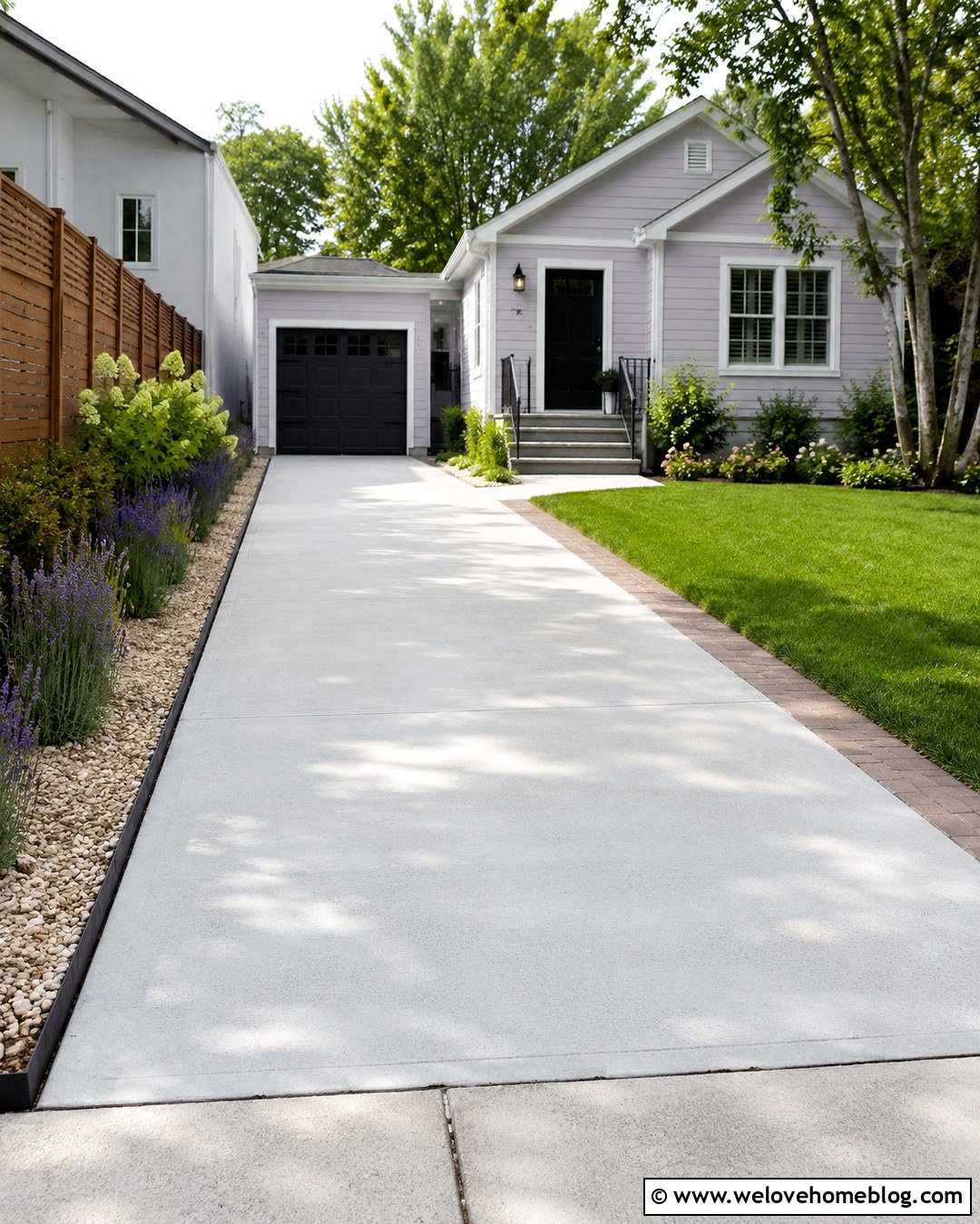
Limited space calls for a controlled lavender border rather than large, spreading beds. Along a narrow poured-concrete driveway, install a slim strip of compact lavender on the side without frequent passenger access. Use steel edging and pale gravel mulch to make the planting zone look deliberate. On the opposite edge, choose a flush brick border beside lawn or a simple walkway. This asymmetrical layout preserves usable driveway width while still adding color. Select plants with a naturally compact habit and position them far enough from the pavement to prevent mature foliage from being crushed. Near the garage, replace the planted strip with matching gravel for easier turning and door clearance. The complete design is especially useful for small ranch houses, urban cottages, and homes with close side boundaries.
16. Long Driveway With Lavender Border
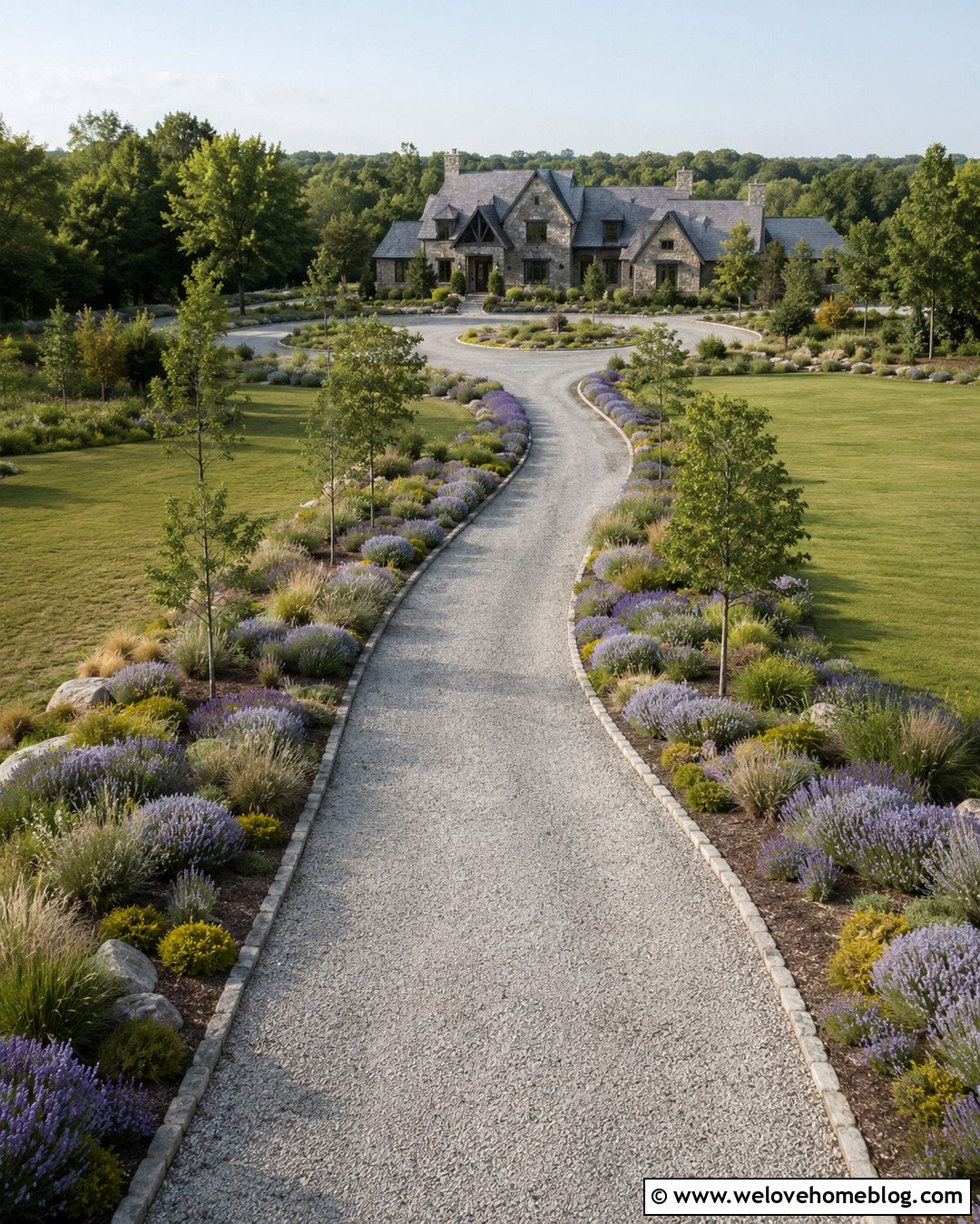
A long driveway can look monotonous unless the border creates rhythm and changes in scale. Begin with lavender near the entrance, pause the planting beneath groups of ornamental trees, and repeat it closer to the house. A compacted gray gravel surface with granite edging provides a neutral base for this layered approach. Use broader lavender drifts at bends and smaller groups along straight sections. This creates visual landmarks without requiring a continuous hedge over the entire distance. Add meadow grasses or low ground covers between lavender areas to maintain softness. At the house, finish the drive with a circular turning area and a fuller planting bed. The repeated purple color ties every zone together, while variations in trees, border width, and driveway shape make the long approach feel thoughtfully designed.
17. Sloped Driveway With Lavender Border
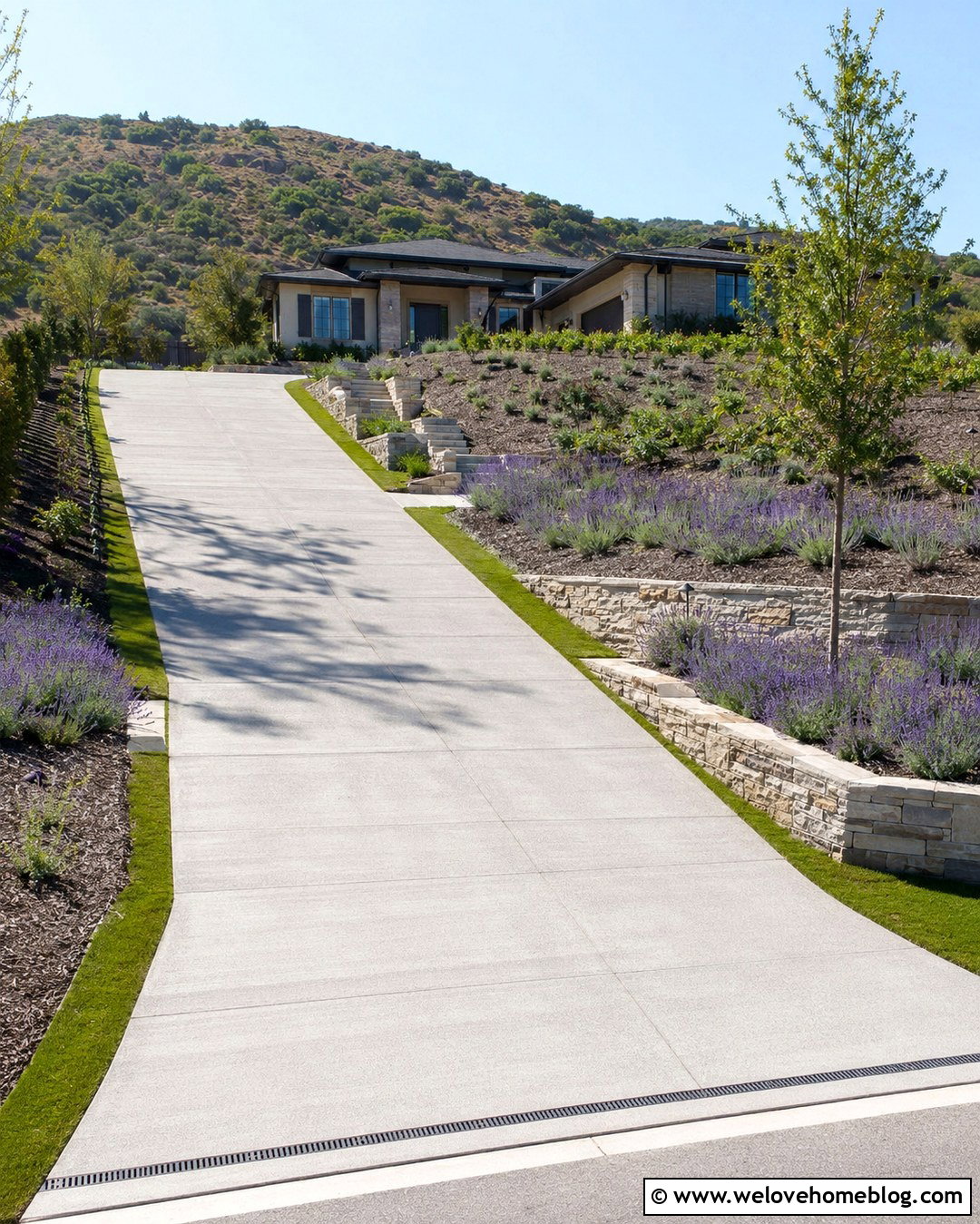
Slopes require careful attention to runoff, soil movement, and accessible maintenance. A broom-finished concrete driveway with stone curbs provides a secure foundation, while terraced lavender beds help break the surrounding grade into manageable levels. Use low retaining walls made from natural stone, keeping lavender on the upper side where its foliage can spill gently toward the drive. Add angular gravel mulch instead of loose organic mulch that may wash onto the pavement. On steep sections, interrupt long beds with stone steps or planted grass bands. Direct runoff toward a suitable drainage area rather than allowing it to collect around plant crowns. This structured look complements hillside ranch homes and contemporary houses. The terracing turns a difficult driveway edge into a layered landscape with clear lines and seasonal color.
18. Driveway With Lavender And Ornamental Grass Border
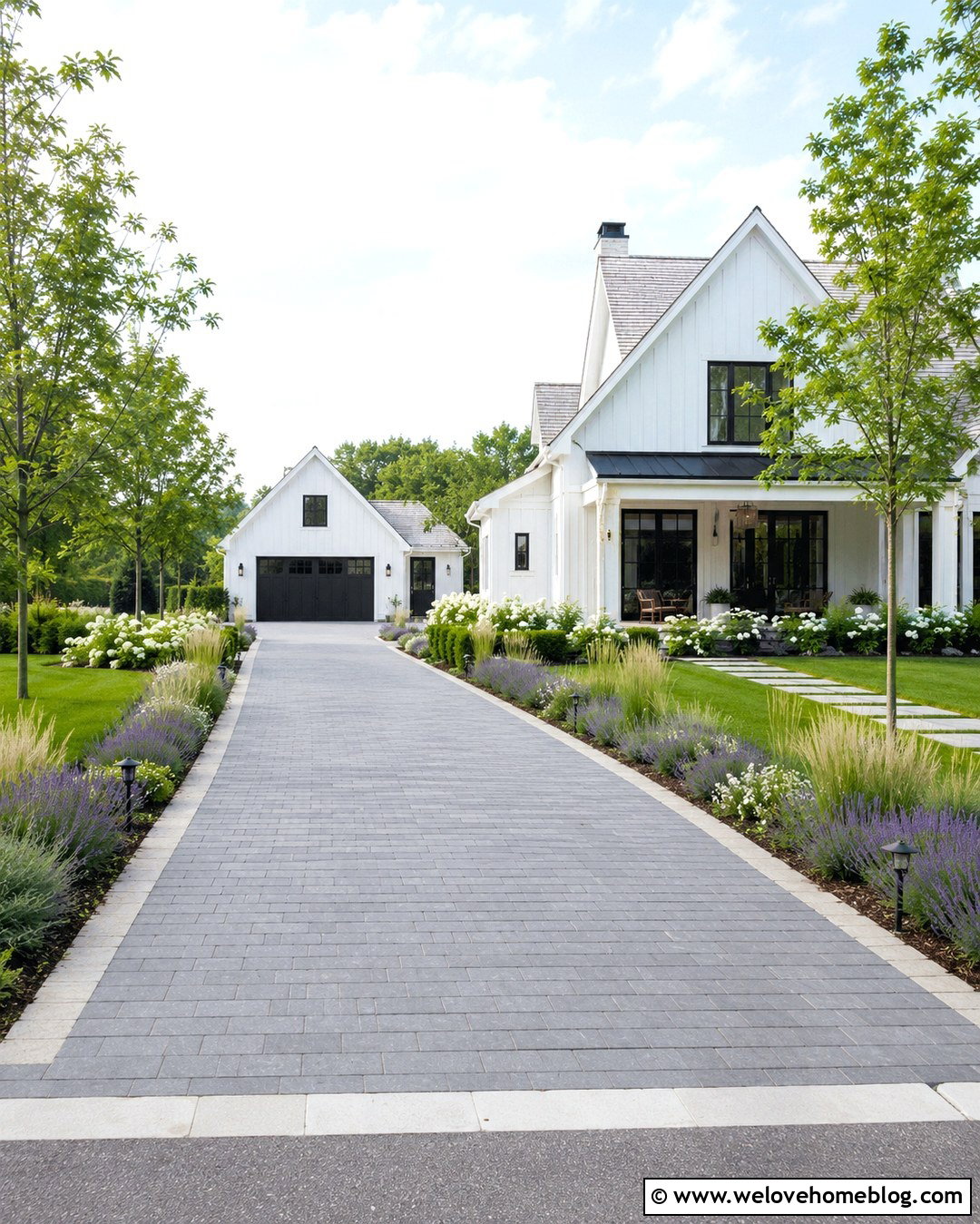
Lavender and ornamental grasses create a border that remains interesting after the purple flowers fade. Pair them with a medium-gray paver driveway laid in a simple running bond. Use lavender in repeating foreground groups and place upright grasses behind them for height and movement. A flush limestone edge keeps the planting separate from the driving surface without creating a tripping hazard. Choose grasses that maintain a tidy form and will not flop across the pavement. White flowering perennials can fill occasional gaps and brighten the composition. This mixed border looks natural beside modern farmhouse, prairie-inspired, and contemporary suburban homes. Repeat the same plant sequence on both sides near the entrance, then loosen the arrangement closer to the house for a landscape that feels coordinated but not overly formal.
19. Driveway With Lavender And Stone Border
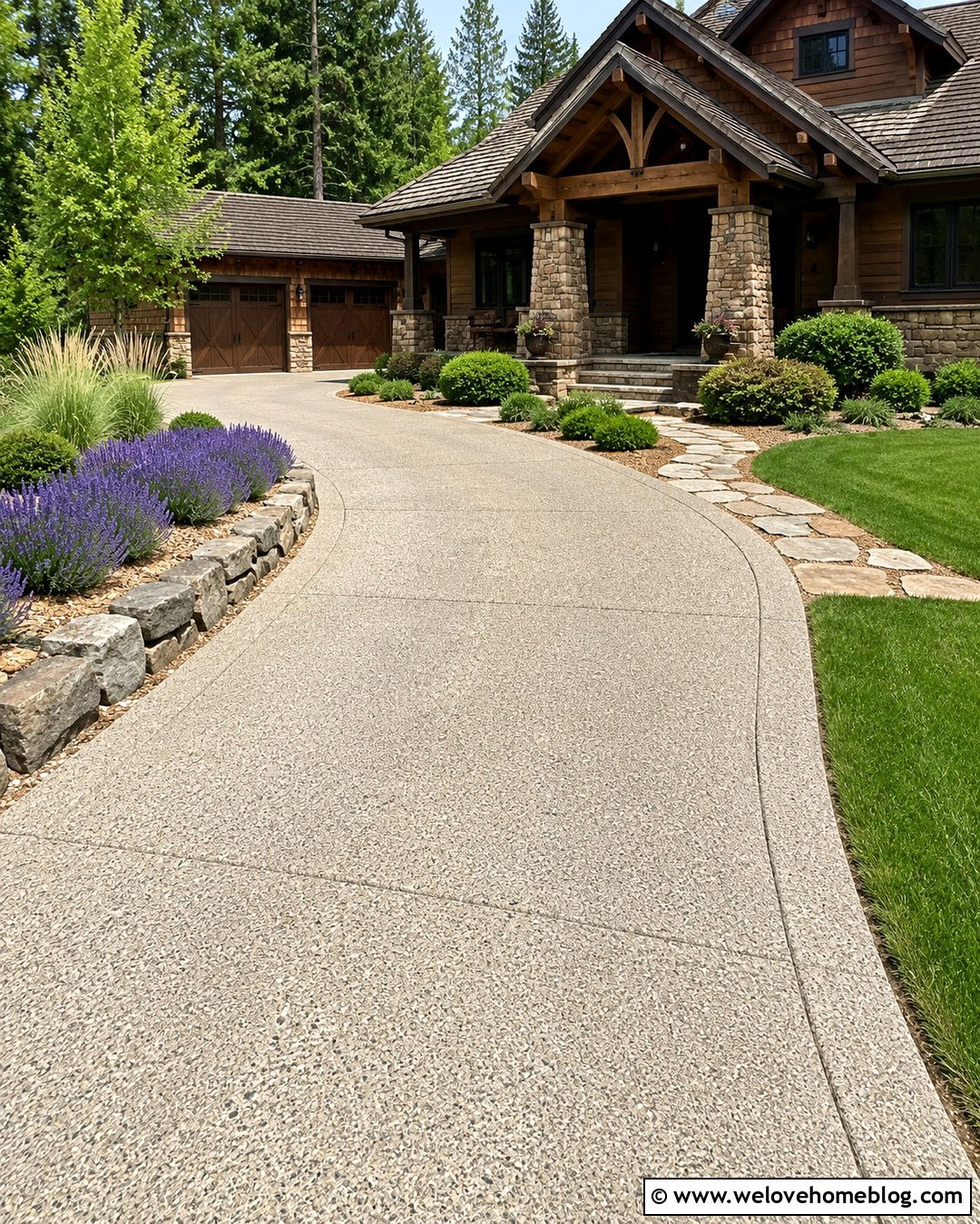
Natural stone gives lavender a strong visual base and protects it from vehicle traffic. Use an exposed-aggregate concrete driveway edged with one low row of rough-cut fieldstone. Behind the stone, place lavender in a wide bed finished with small tan gravel. Let the plants slightly overlap the garden side of the rocks while keeping the pavement edge open. A gently curved layout helps the rugged material feel natural rather than heavy. Connect the driveway border to matching stone porch columns, retaining walls, or front steps. Add a few rounded evergreen shrubs behind the lavender to extend the structure through winter. This complete look works with Craftsman, rustic, and mountain-inspired homes. The driveway remains durable and clearly defined, while the flowers soften the weight and irregular texture of the masonry.
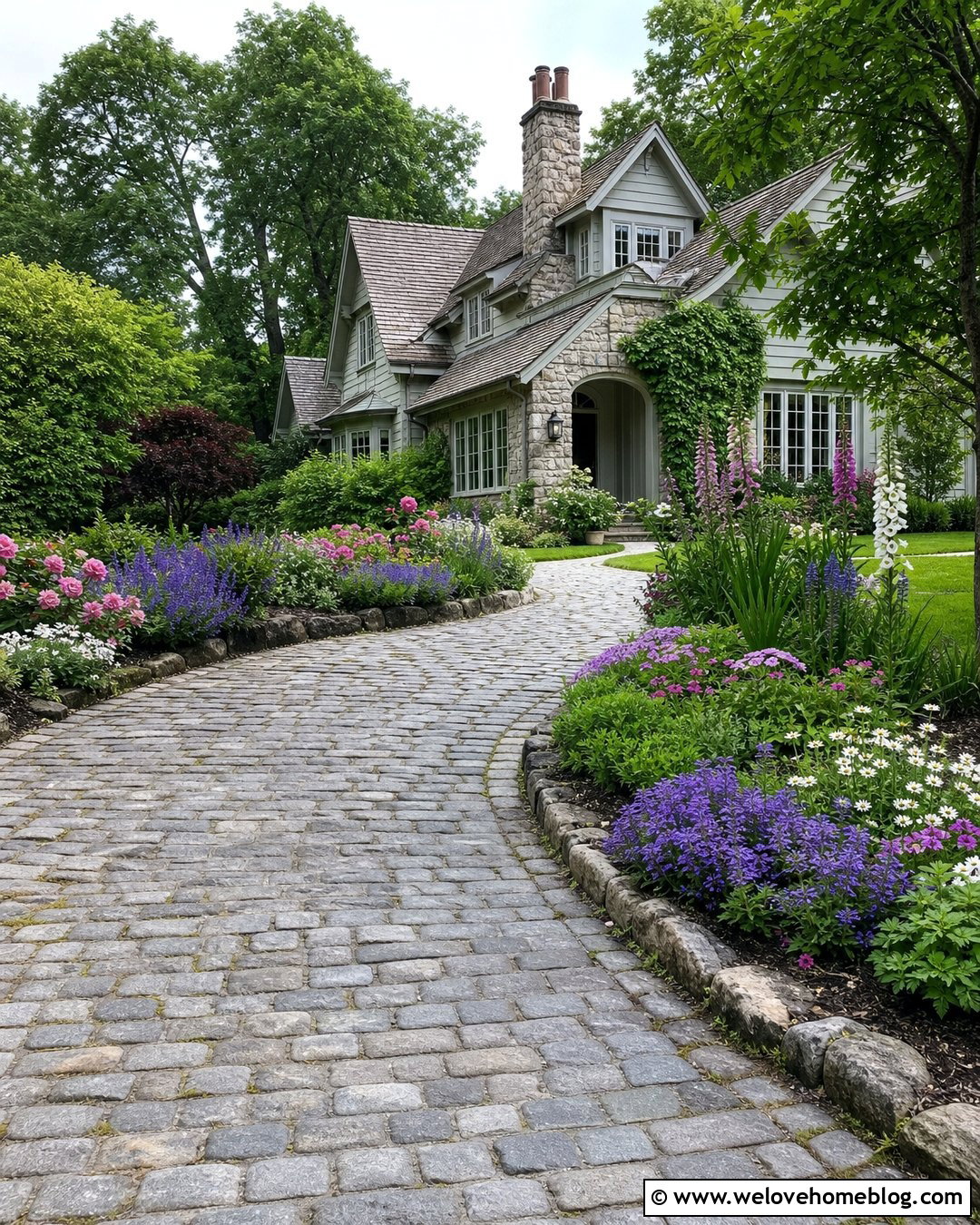
20. Driveway With Lavender And Lighting Border
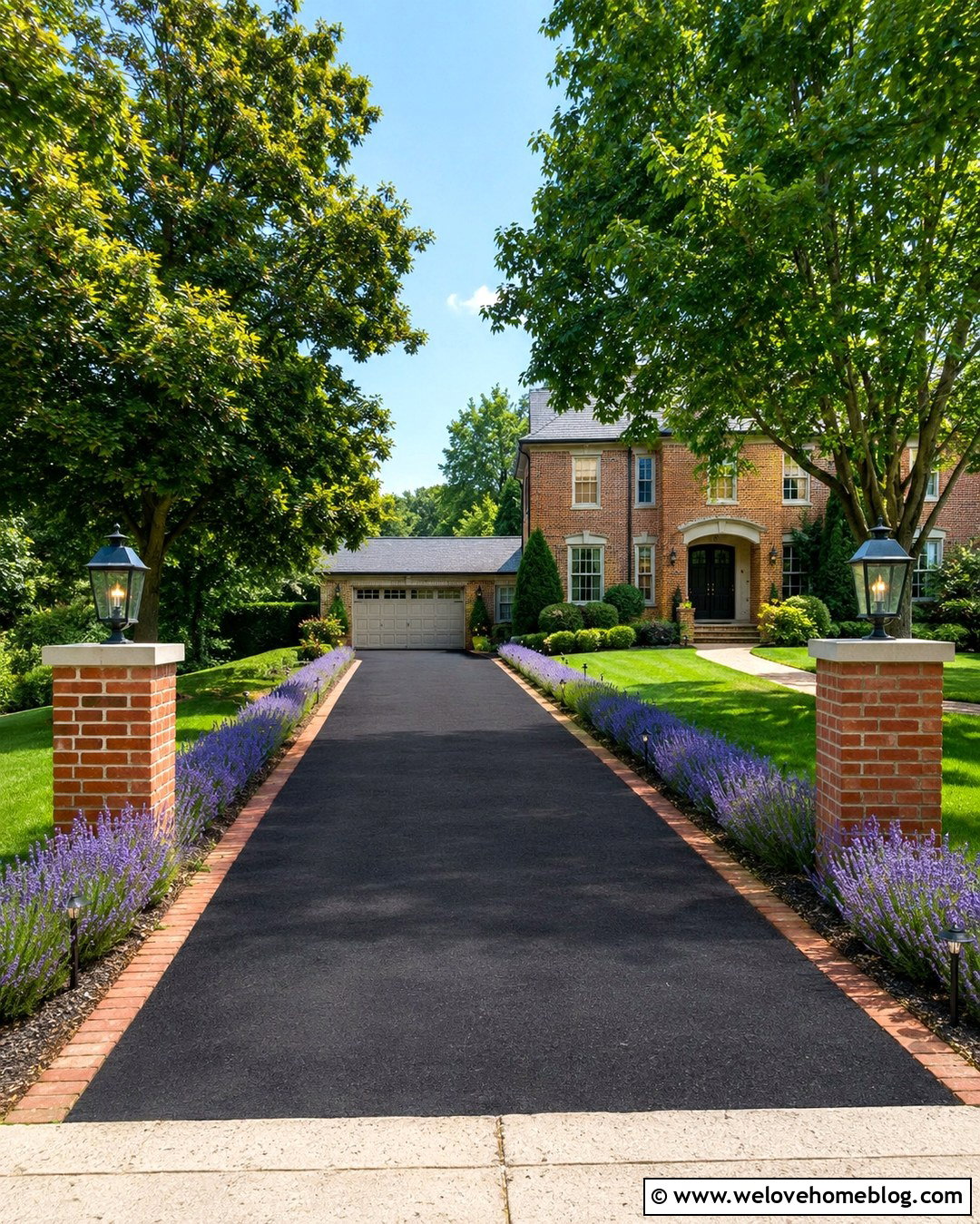
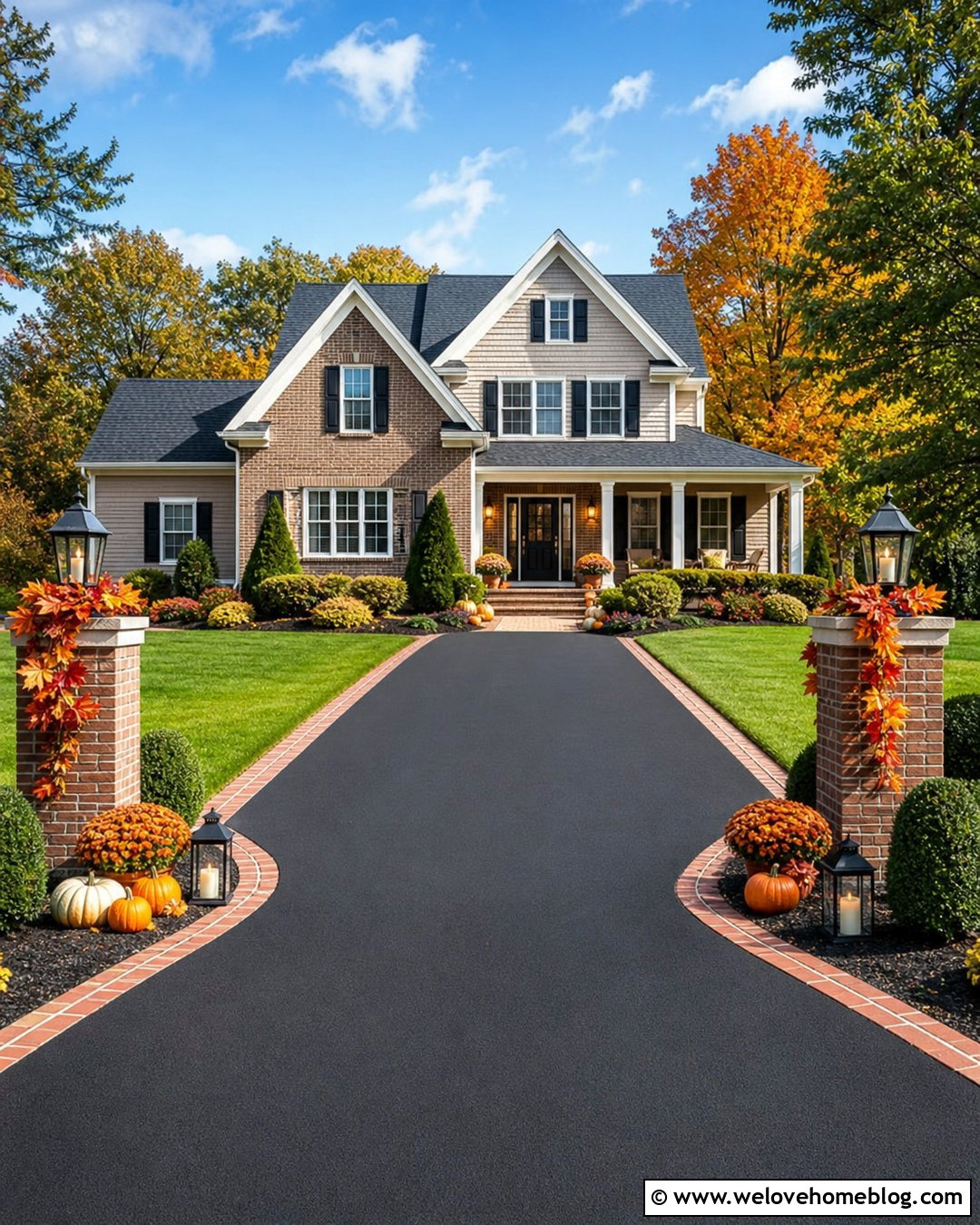
Well-placed lighting should support the lavender border without turning it into a row of visible fixtures. Start with a dark asphalt driveway, a warm brick edge, and lavender planted in continuous beds on both sides. Position low, shielded path lights behind every few plants so their daytime appearance remains subtle. Aim the illumination toward the driveway edge and nearby walkway, not directly into drivers’ eyes or neighboring windows. At the entrance, use slightly taller fixtures beside brick pillars to establish a clear arrival point. Continue the same brick and lighting finish near the garage and front path. During the day, lavender provides the main color and texture. After sunset, the carefully spaced fixtures reveal the driveway shape, borders, and access points while maintaining a clean residential appearance.
Conclusion:
The most successful 20 lavender driveway border ideas treat plants, pavement, edging, and architecture as one connected design. Lavender can soften concrete, brighten asphalt, complement gravel, and bring natural movement to formal pavers or brick. Choose a layout that preserves parking space, door clearance, drainage, and clear visibility at the street. Then select a lavender variety suited to your local climate and the available planting width. Durable edging and a gravel buffer can help separate flowers from moving vehicles while producing a more finished appearance. Whether your driveway is narrow, curved, circular, sloped, or long, thoughtful repetition will create a border that feels established, welcoming, and easy to understand from the curb.

Related posts:
Leave a Reply