
Interlocking concrete driveway tiles offer the strength needed for daily vehicle traffic while giving homeowners far more design flexibility than a plain concrete slab. They come in practical shapes, textured finishes, blended colors, and permeable formats that can complement nearly any home. The best driveway designs combine a durable paving pattern with secure edging, proper drainage, attractive landscaping, and a clear transition to the garage and sidewalk. Herringbone layouts are especially effective for vehicle areas because their short, interrupted joints help distribute turning and braking forces across neighboring pavers. Stable edge restraints are also essential for maintaining interlock. () From traditional brick-look surfaces to clean modern layouts, the following complete designs explore 20 Interlocking Concrete Driveway Tiles Ideas.

1. Gray Interlocking Concrete Driveway Tiles With Charcoal Border
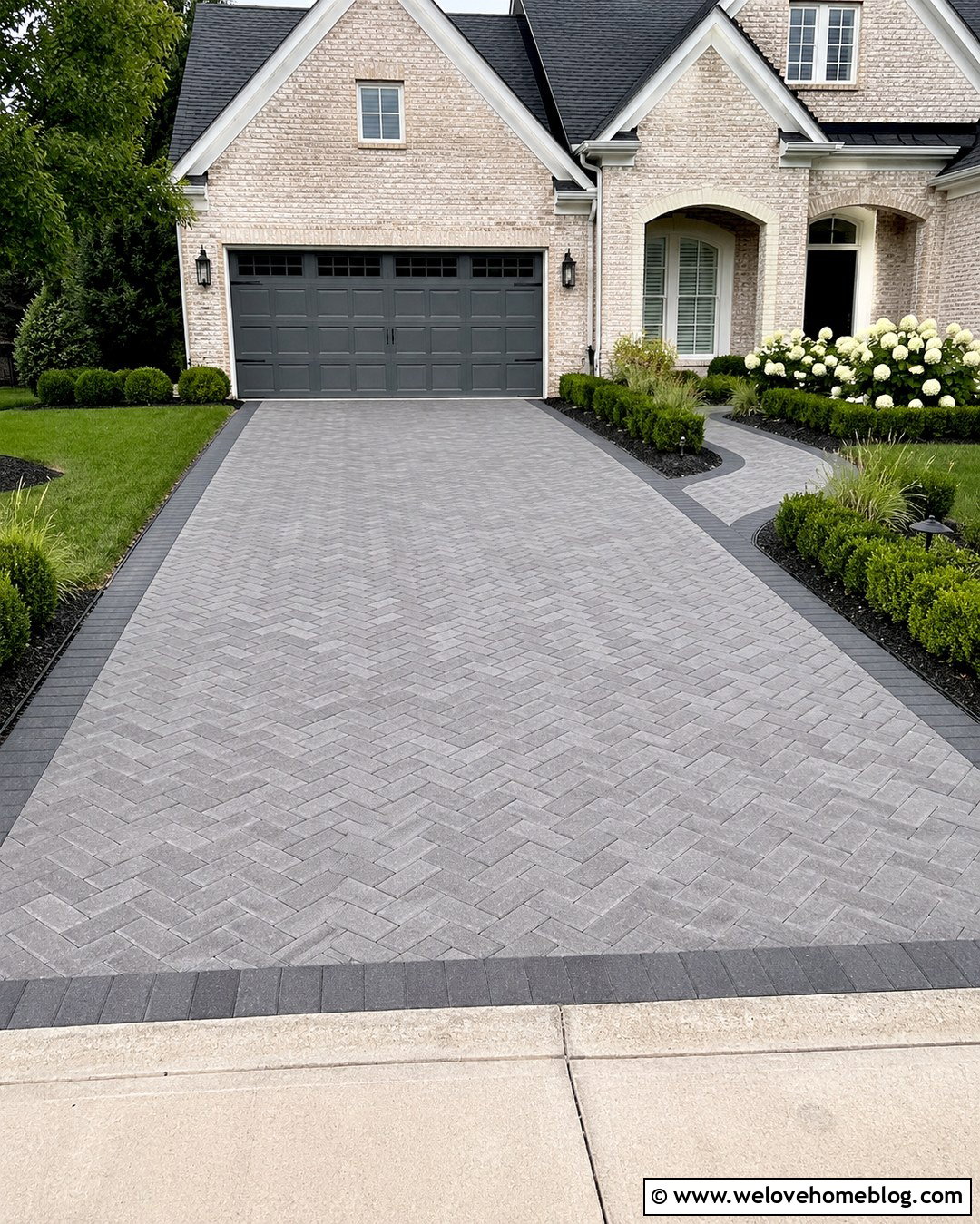
A medium-gray driveway laid in a 45-degree herringbone pattern creates a practical surface with strong visual movement. The diagonal arrangement makes a wide driveway feel more detailed without becoming overly decorative. Frame the entire surface with charcoal concrete tiles installed as a soldier-course border. This darker outline helps define the driveway against green lawn and planting beds. At the garage, repeat the charcoal tiles in a wider apron to create a finished transition. Low boxwoods, ornamental grasses, and white flowering perennials can soften the hardscape while maintaining a tidy appearance. This complete look works especially well with light brick, gray siding, or white stucco homes. Choose slightly textured, vehicle-rated tiles so the surface remains attractive and comfortable under tires.
2. Beige Interlocking Concrete Driveway Tiles In Herringbone
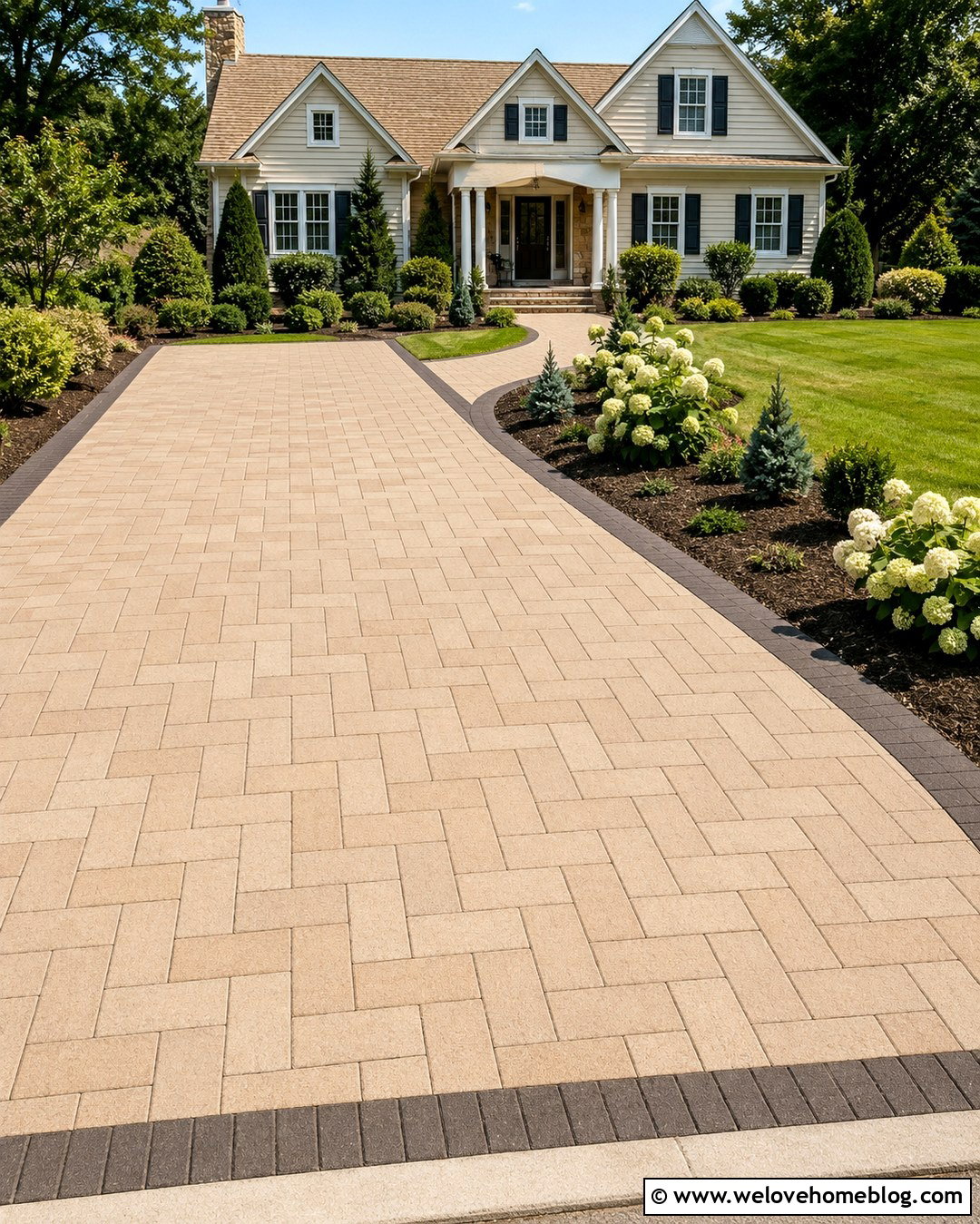
Warm beige tiles can make a driveway feel welcoming while coordinating naturally with stone, cream siding, and brown roofing. Use rectangular interlocking concrete driveway tiles in a 90-degree herringbone pattern, with the zigzags running toward the garage. This alignment visually lengthens a short driveway and creates fewer awkward cuts along straight edges. Add a narrow espresso-brown paver border to provide contrast without making the surface look busy. Curved planting beds filled with dwarf evergreens, pale hydrangeas, and seasonal flowers can frame the entrance. A matching tile walkway should branch smoothly toward the front door rather than appearing like a separate project. For a cohesive finish, repeat the beige and brown tones in the porch steps, retaining walls, mailbox base, or entry pillars.
3. Running Bond Interlocking Concrete Driveway Tiles
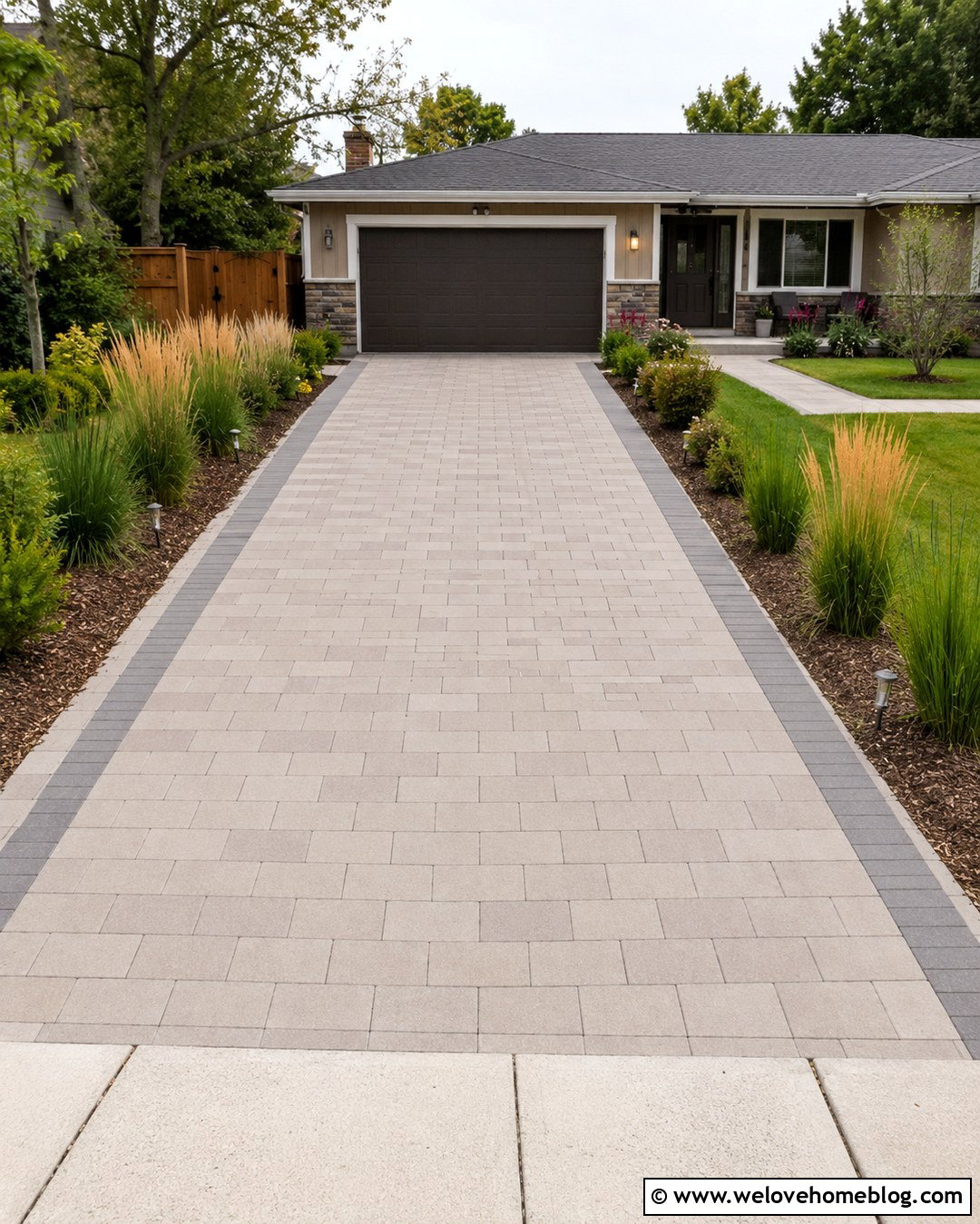
Long rectangular concrete tiles laid in a staggered running bond produce a simple, streamlined driveway. This layout is particularly suitable for a straight residential approach with light vehicle use when the tile specifications, base, and installation method are appropriate. Position the rows across the driveway rather than running them lengthwise to reduce the appearance of long continuous lines. Soft taupe tiles with a darker taupe border create subtle definition around the surface. On each side, use narrow landscape beds containing upright grasses, compact shrubs, and ground-cover plants. A flush concrete curb can provide dependable edge restraint while remaining nearly invisible. This understated driveway works beautifully with a ranch house or Cape Cod home where clean proportions matter more than elaborate patterns. Confirm the selected product is rated for driveways.
4. Mixed Size Interlocking Concrete Driveway Tiles
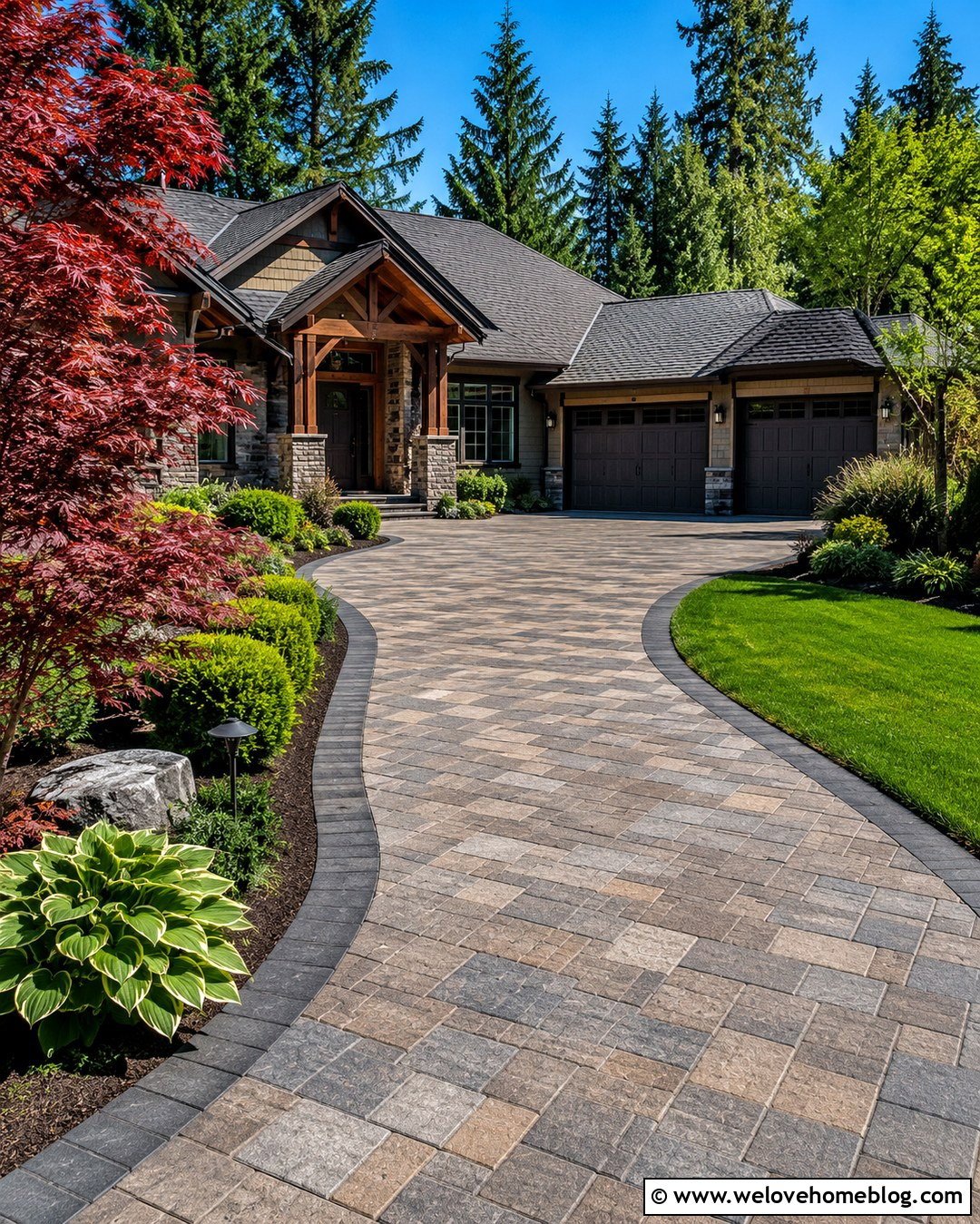
Mixed-size concrete tiles create a natural stone appearance without losing the consistent dimensions of a manufactured paving system. Combine small squares, medium rectangles, and larger units in a repeating modular pattern rather than placing them randomly. A blend of gray, taupe, and muted brown tones adds depth and helps conceal everyday dust. Keep the border simple with one row of dark rectangular tiles, allowing the varied field pattern to remain the main feature. A gently curved layout can lead toward a craftsman garage while following the shape of the front yard. Layered beds with Japanese maple, compact juniper, hostas, and ornamental grasses will strengthen the natural character. Carry one tile color into the walkway and porch landing so the driveway feels connected to the house.
5. Permeable Interlocking Concrete Driveway Tiles
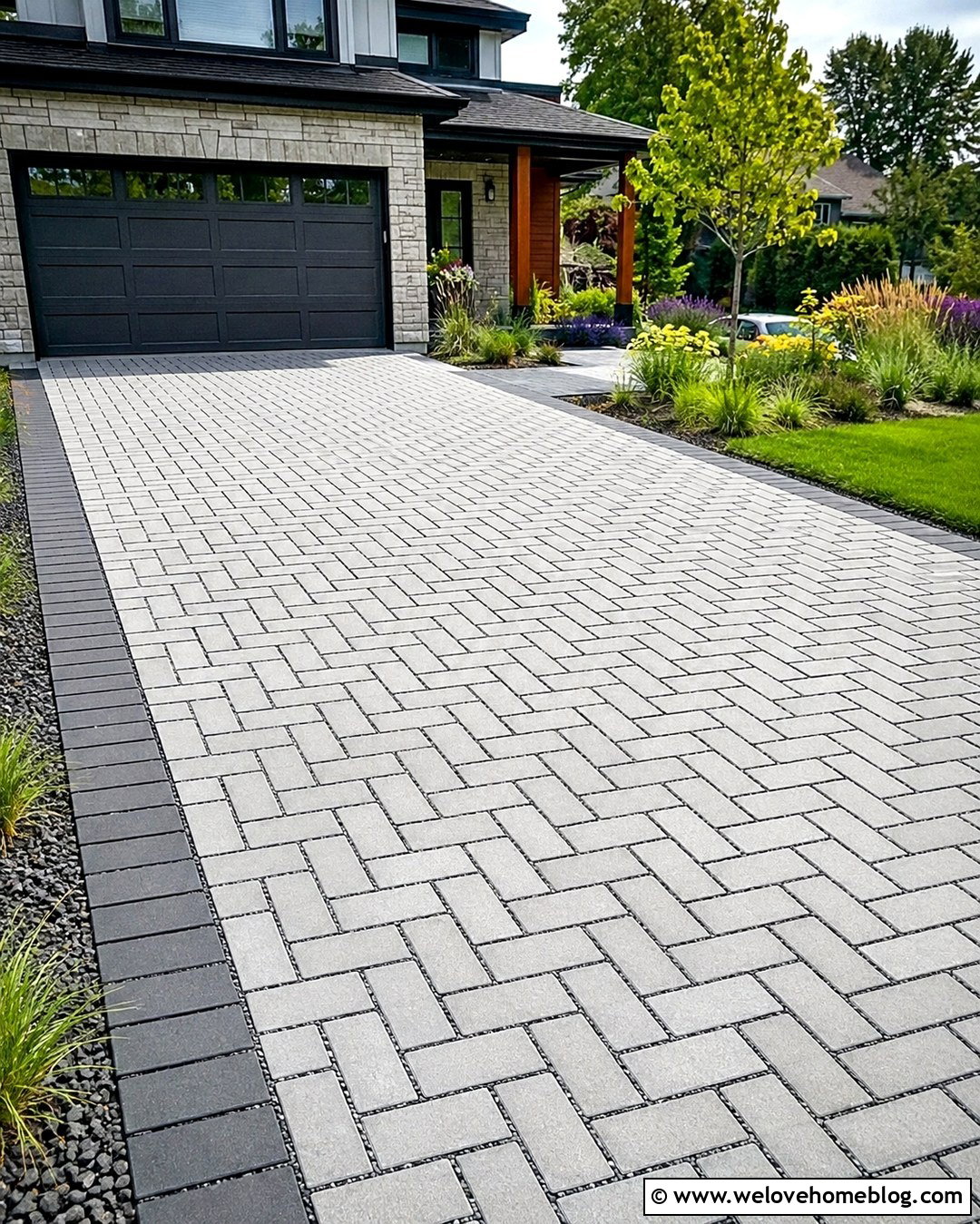
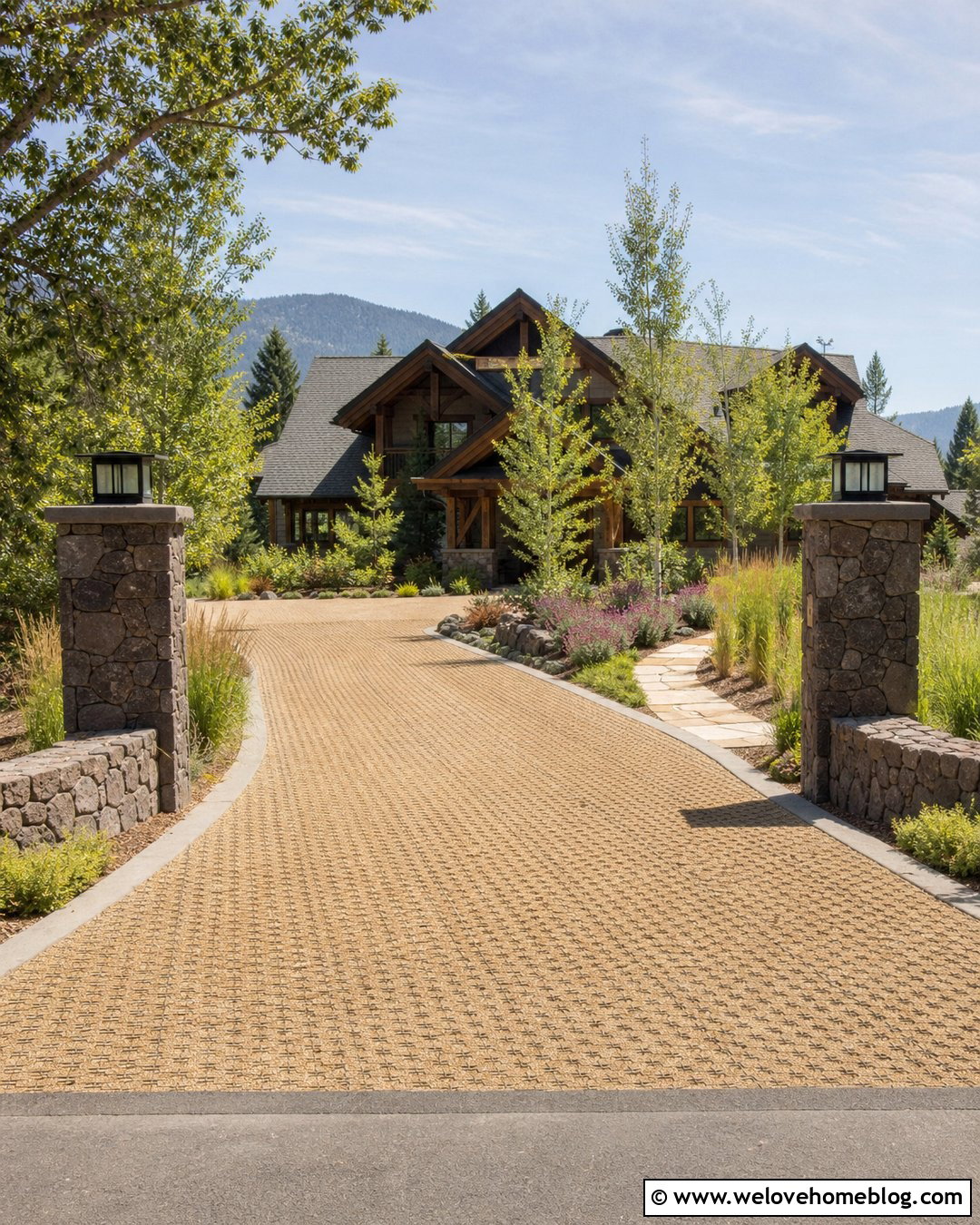
Permeable concrete driveway tiles combine a structured paved appearance with wider joints that allow water to enter a properly designed stone base. Select cool gray rectangular units and fill the open joints with clean, angular aggregate suited to the paving system. A 90-degree herringbone field can provide a strong visual pattern, while a solid dark-gray border clearly contains the permeable area. Keep soil, mulch, and dense plant growth away from the open joints to reduce clogging. Rain gardens planted with moisture-tolerant grasses and flowering perennials can receive overflow near the lower side of the driveway. This design suits a contemporary suburban house, especially where runoff management is important. Permeable systems require careful site evaluation, excavation, aggregate selection, and drainage planning, so professional installation is worth considering.
6. Large Interlocking Concrete Driveway Tiles
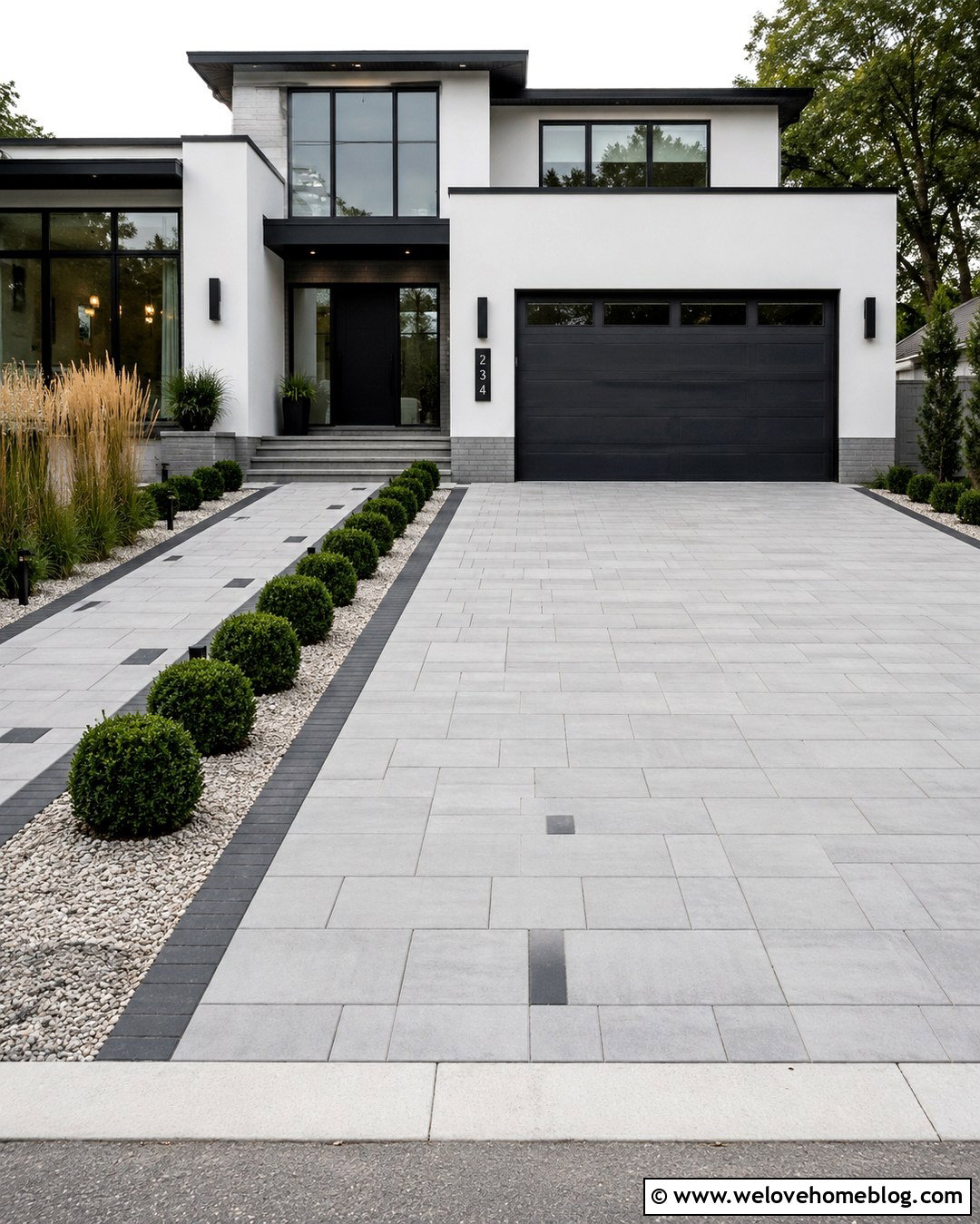
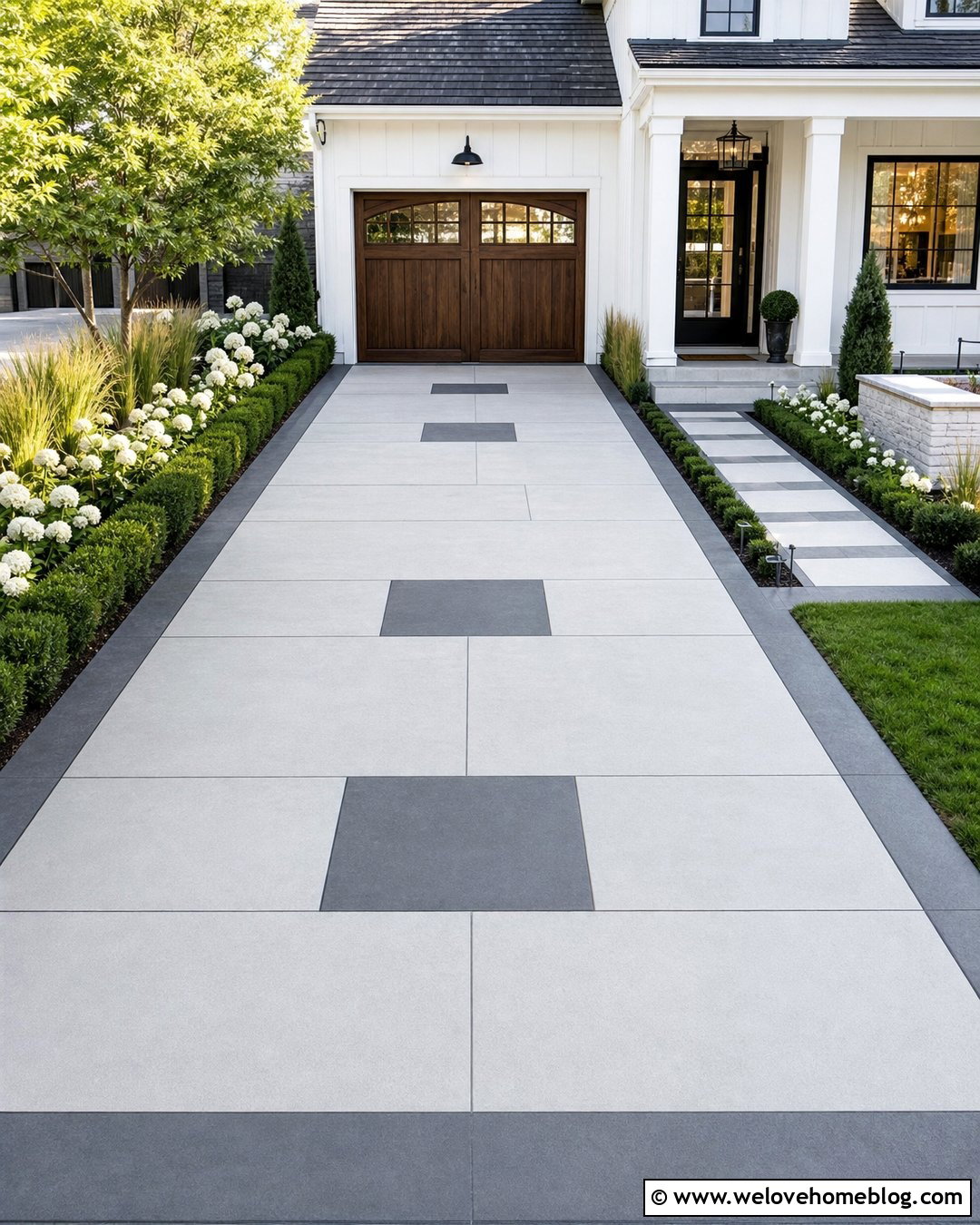
Large-format concrete driveway tiles give a modern home a calmer, less fragmented entrance. Choose vehicle-rated rectangular units in a smooth limestone-gray finish and install them in an offset modular arrangement. Smaller matching tiles can be added at regular intervals to preserve visual rhythm and improve the fit around edges. Outline the surface with a narrow black concrete paver border that connects to dark window frames, garage doors, or metal railings. Straight planting beds filled with clipped shrubs, feather reed grass, and pale gravel reinforce the modern geometry. A wide walkway made from the same tiles can run beside the driveway, separated by a slim planting strip. Because larger units may have special base and loading requirements, use products specifically engineered for driveways rather than ordinary patio slabs.
7. Tumbled Interlocking Concrete Driveway Tiles
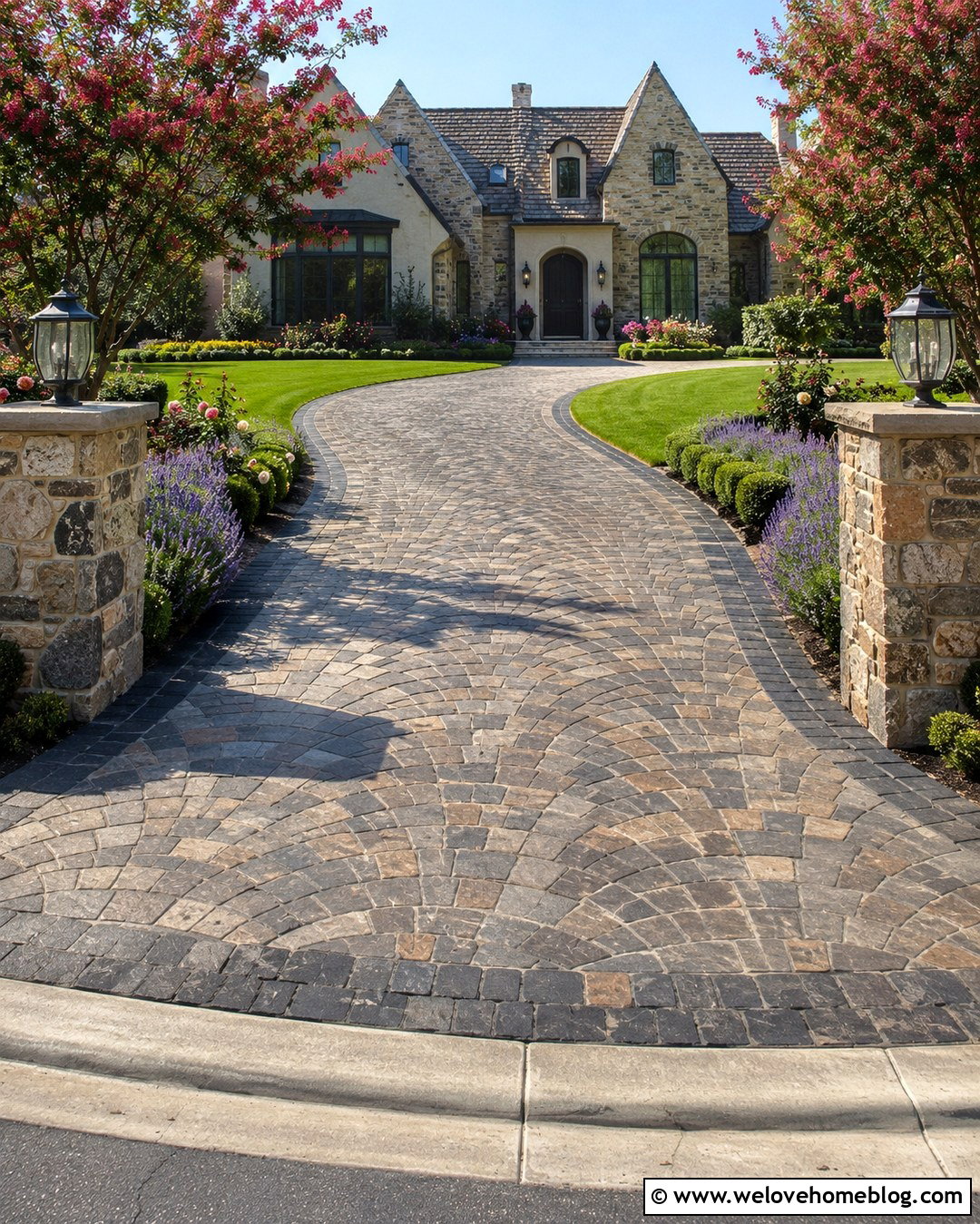
Tumbled concrete tiles have softened corners and textured faces that resemble aged cobblestone. Use a blend of charcoal, brown, and weathered gray units on a gently curved driveway leading to a traditional or European-inspired home. A fan or repeating arch pattern can enhance the old-world character, especially near the entrance and garage apron. Keep the perimeter secure with dark soldier-course tiles and a concealed edge restraint along the lawn. Plant lavender, boxwood, roses, and small flowering trees in broad beds that follow the driveway curve. Natural stone pillars at the curb can repeat the rugged texture without overwhelming the design. The result feels established rather than newly installed. Select a moderate color blend so the paving complements the house instead of competing with detailed masonry or roofing.
8. Brick Look Interlocking Concrete Driveway Tiles
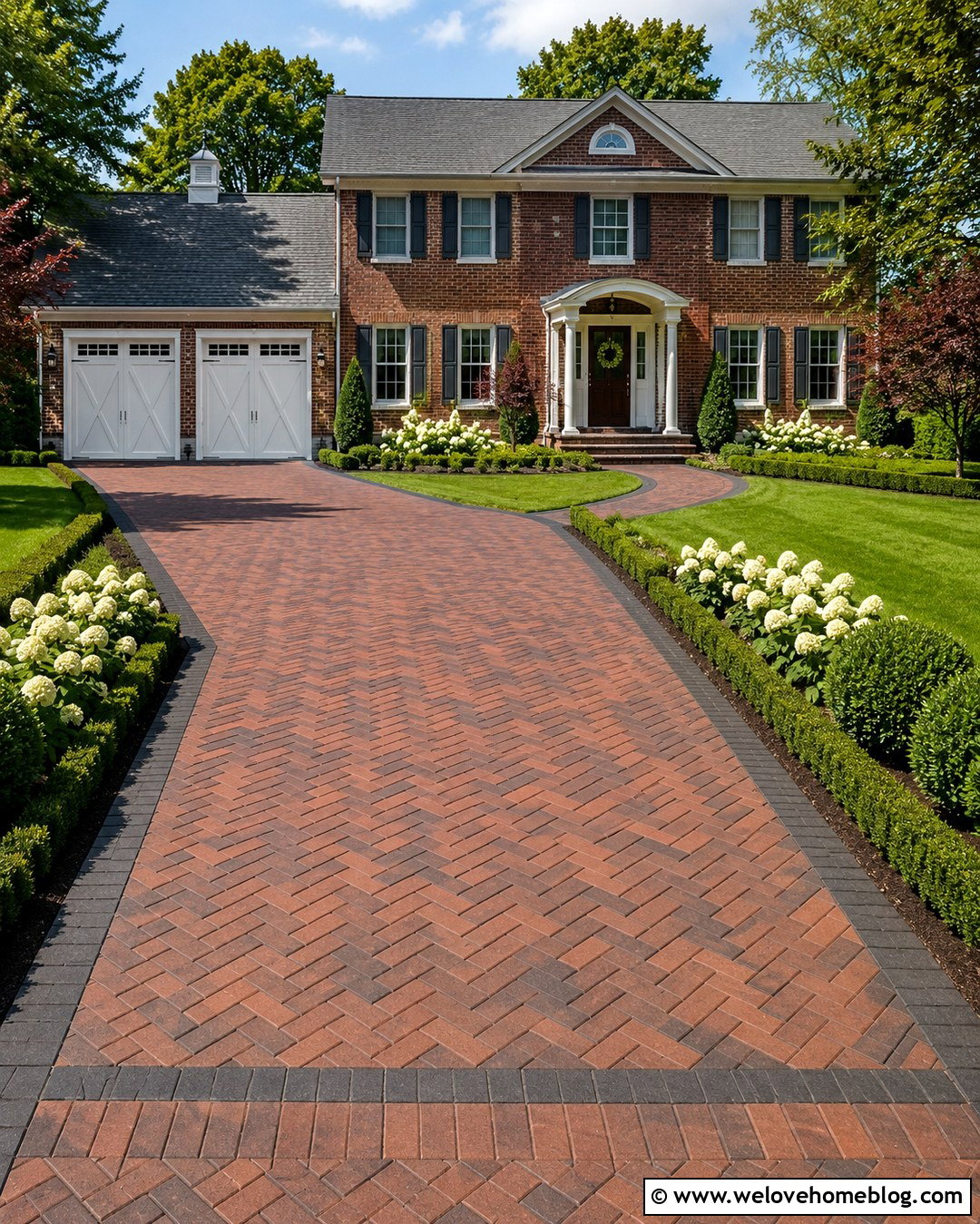
Red and brown concrete driveway tiles can reproduce the warmth of clay brick while offering consistent interlocking shapes. Arrange narrow rectangular tiles in a 45-degree herringbone field to create a traditional surface suitable for a colonial or Georgian-style house. A charcoal soldier-course border will sharpen the perimeter and prevent the red tones from blending into nearby brick walls. Add a matching charcoal ribbon across the garage apron and sidewalk transition. Symmetrical beds with clipped boxwoods, white hydrangeas, and small ornamental trees reinforce the formal layout. If the house already has red brick, choose a slightly muted driveway blend rather than trying to match the facade exactly. Small variations in burgundy, brown, and charcoal generally create a richer, more forgiving surface than one uniform red color.
9. Two Tone Interlocking Concrete Driveway Tiles
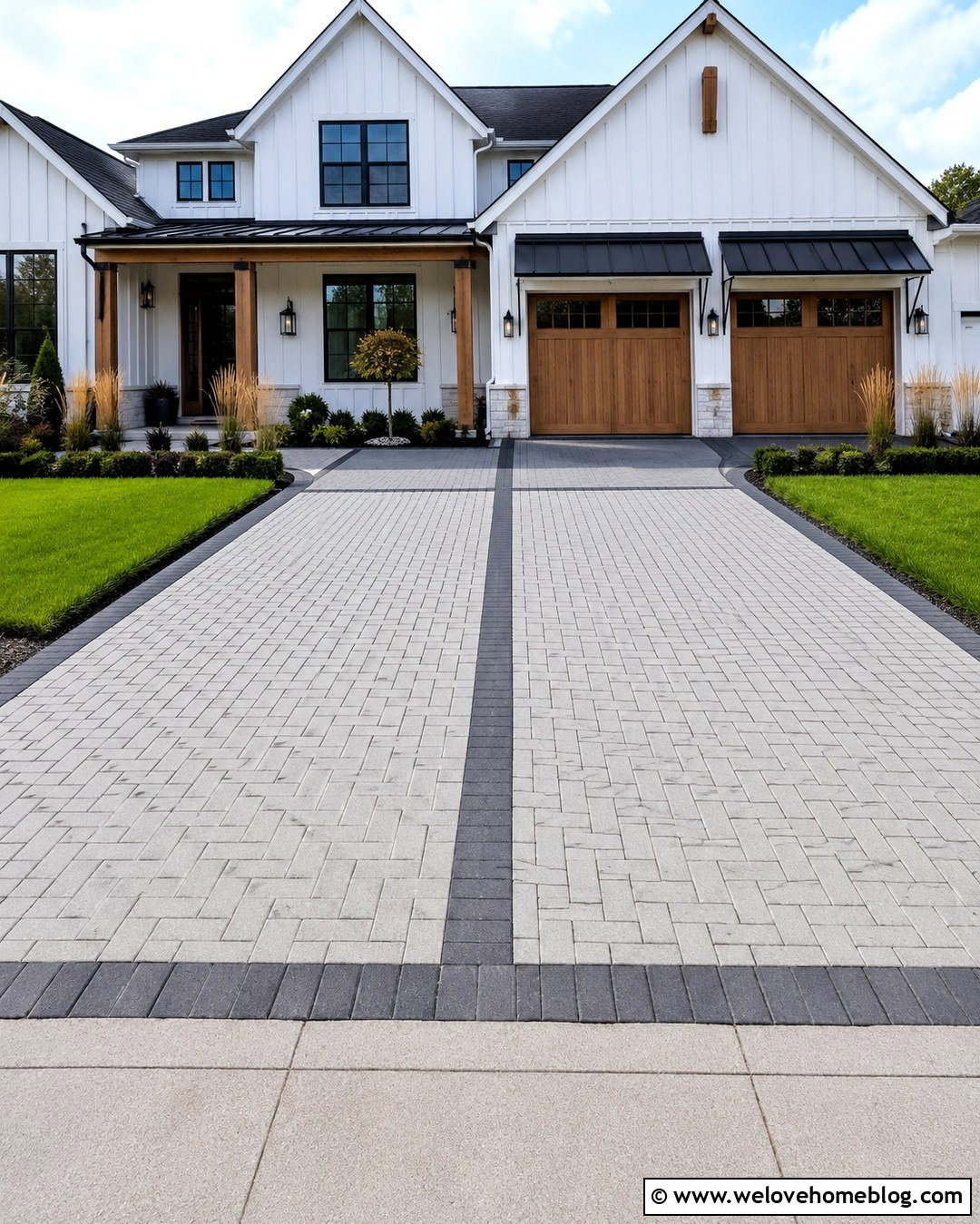
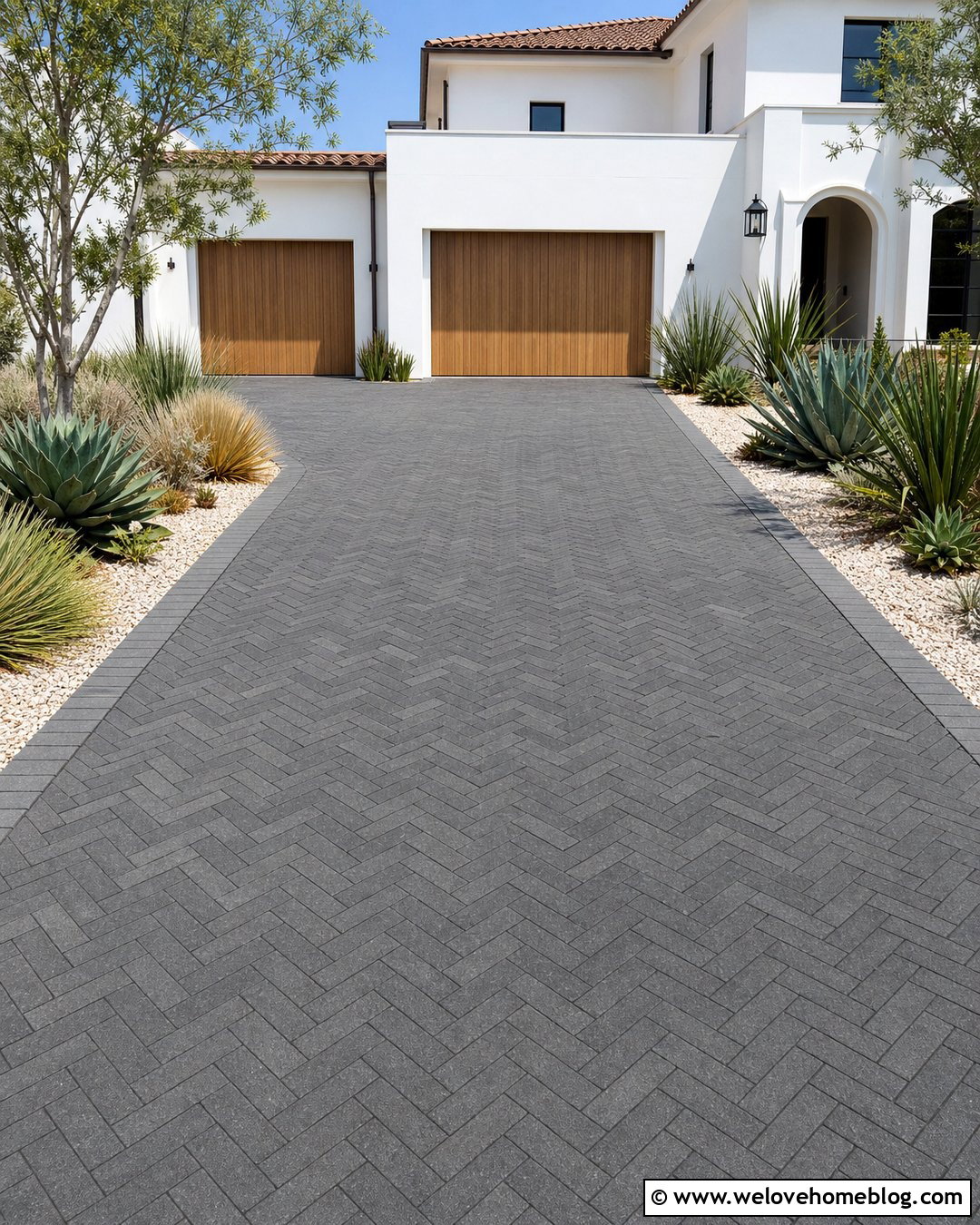
A two-tone tile layout can organize a wide driveway and make parking areas easier to understand. Use light-gray interlocking concrete tiles for the main field and charcoal tiles for the perimeter, central divider, and garage apron. Install the field in a 90-degree herringbone pattern so the directional lines lead naturally toward the house. The darker divider can separate two parking bays without painted markings or signs. Keep the surrounding landscape crisp with rectangular lawn panels, low hedges, and evenly spaced ornamental grasses. This balanced look pairs well with a modern farmhouse featuring white siding, black windows, and natural wood accents. Avoid adding too many additional colors. Repeating only two tile tones throughout the driveway, walkway, and entrance creates a cleaner and more intentional overall design.
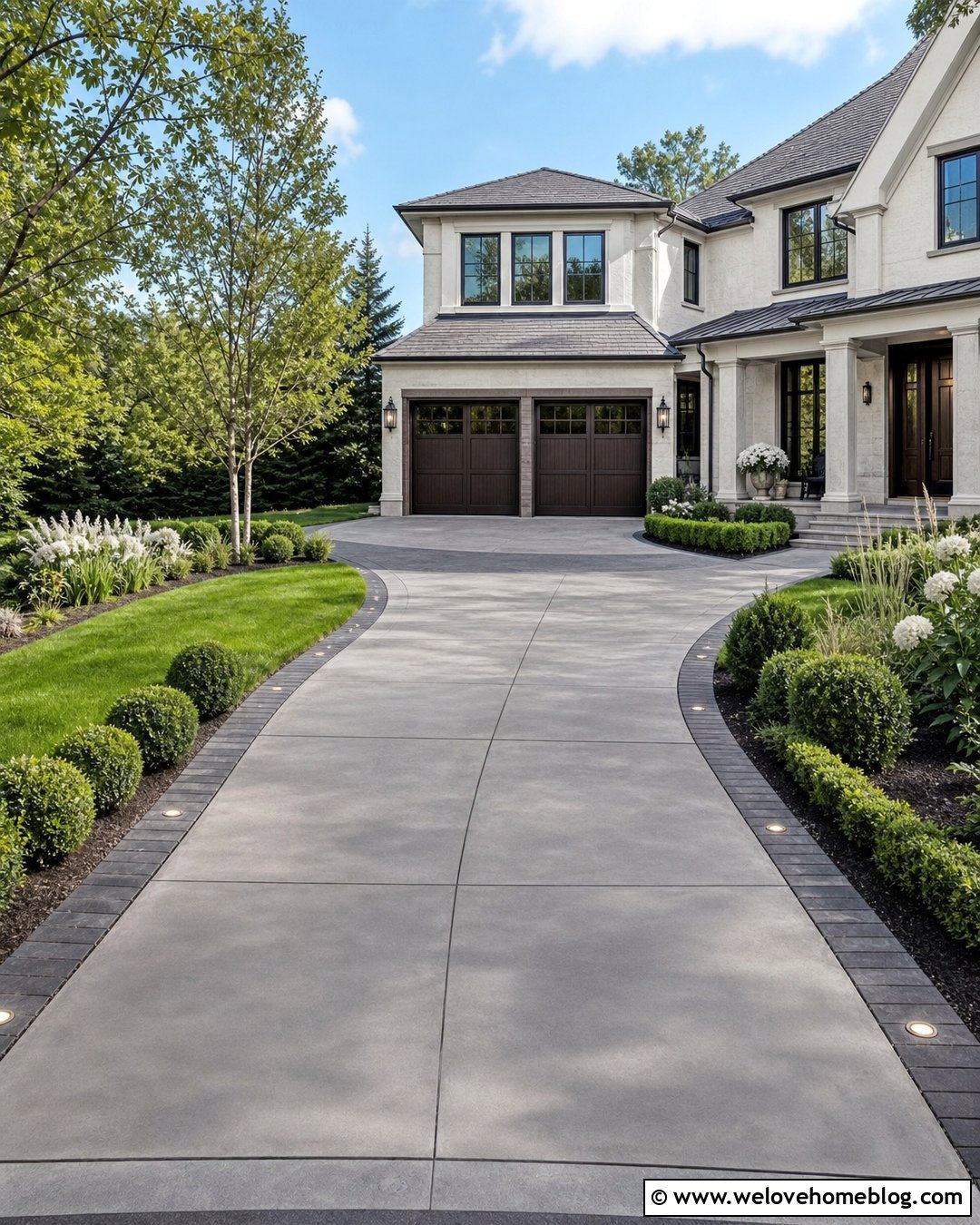
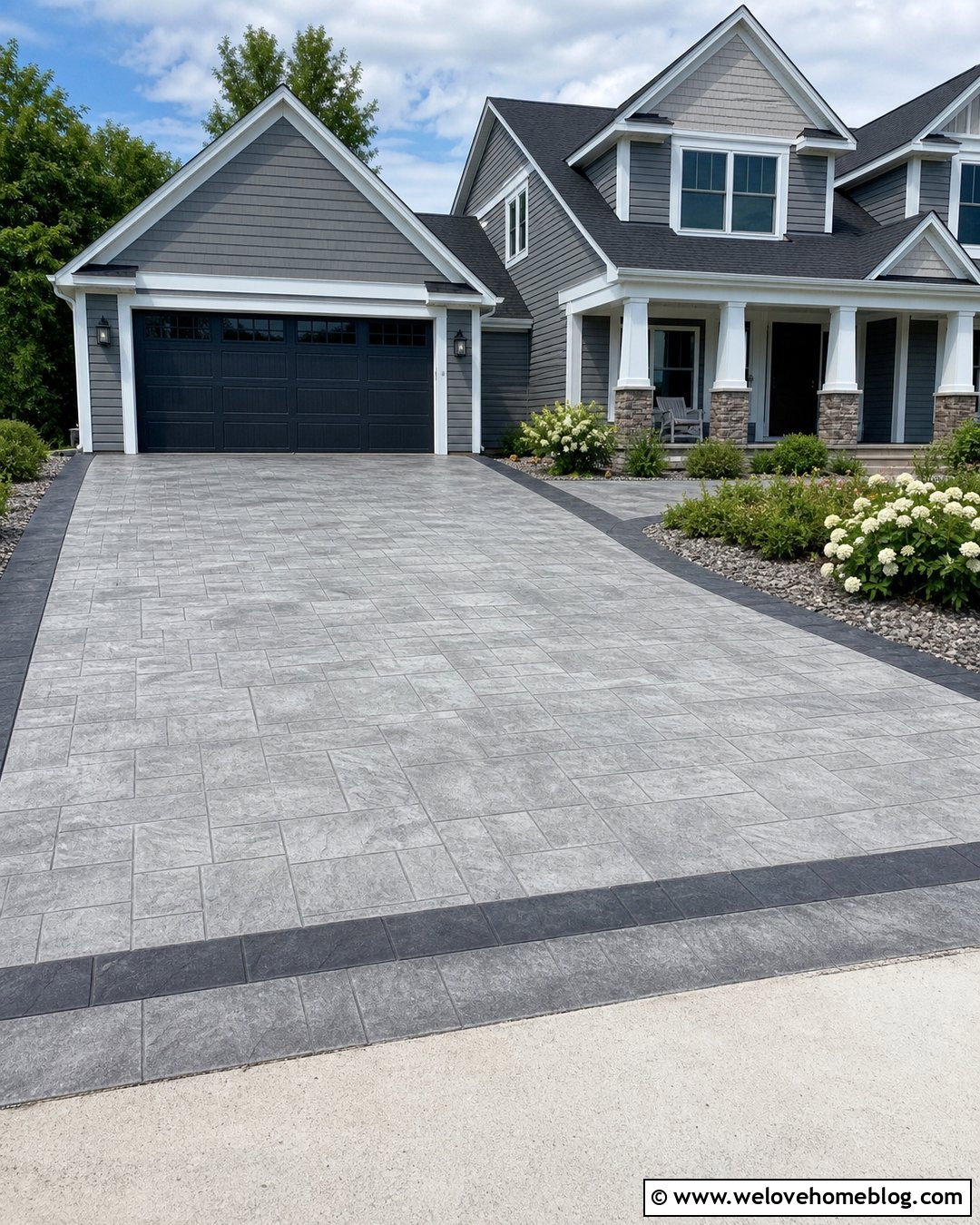
10. Circular Interlocking Concrete Driveway Tiles
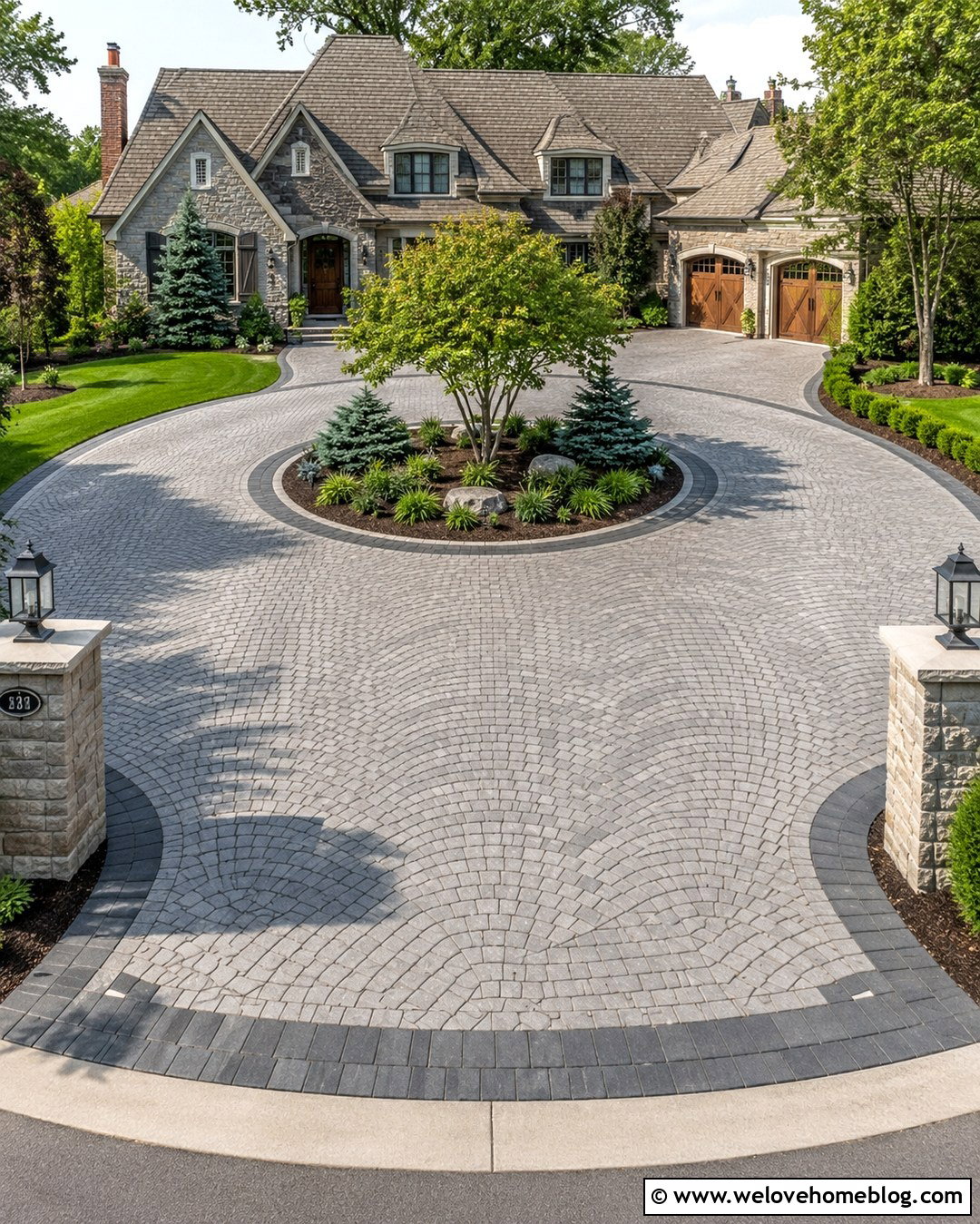
A circular driveway gains definition when interlocking concrete tiles follow the sweeping shape instead of fighting it. Use warm-gray rectangular tiles in a curved fan pattern around the central landscape island. Create an outer charcoal border and a second narrow charcoal ring around the island to emphasize the circular geometry. In the center, plant a multi-stem ornamental tree with low evergreen shrubs and colorful ground cover that will not block views across the driveway. Stone or concrete entrance pillars can mark both openings from the street. Keep the garage spur in a simpler herringbone layout using the same tile colors. This combination creates visual variety while maintaining continuity. Careful grading is especially important so water does not collect around the island, entry points, or inner paver border.
11. Curved Interlocking Concrete Driveway Tiles
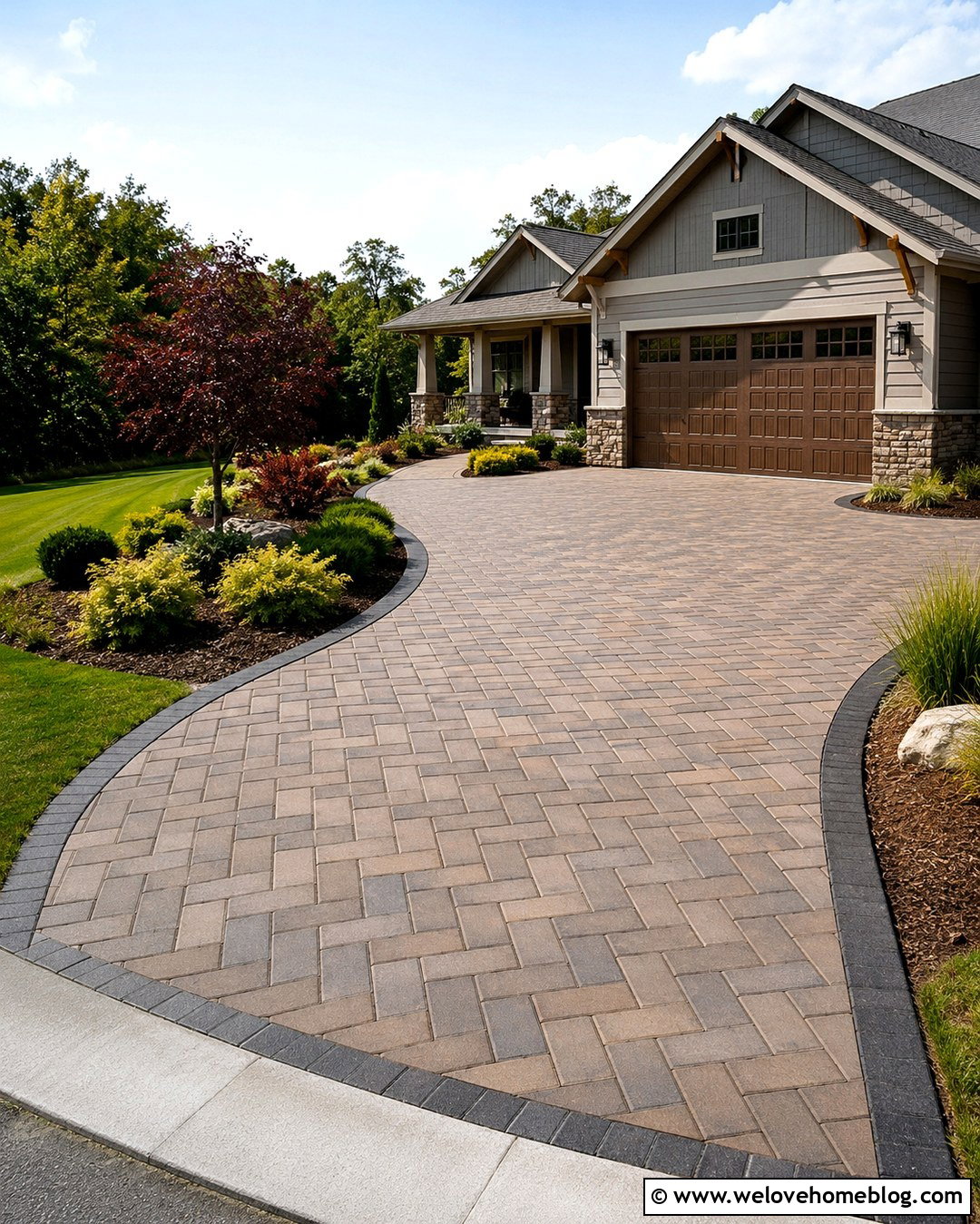
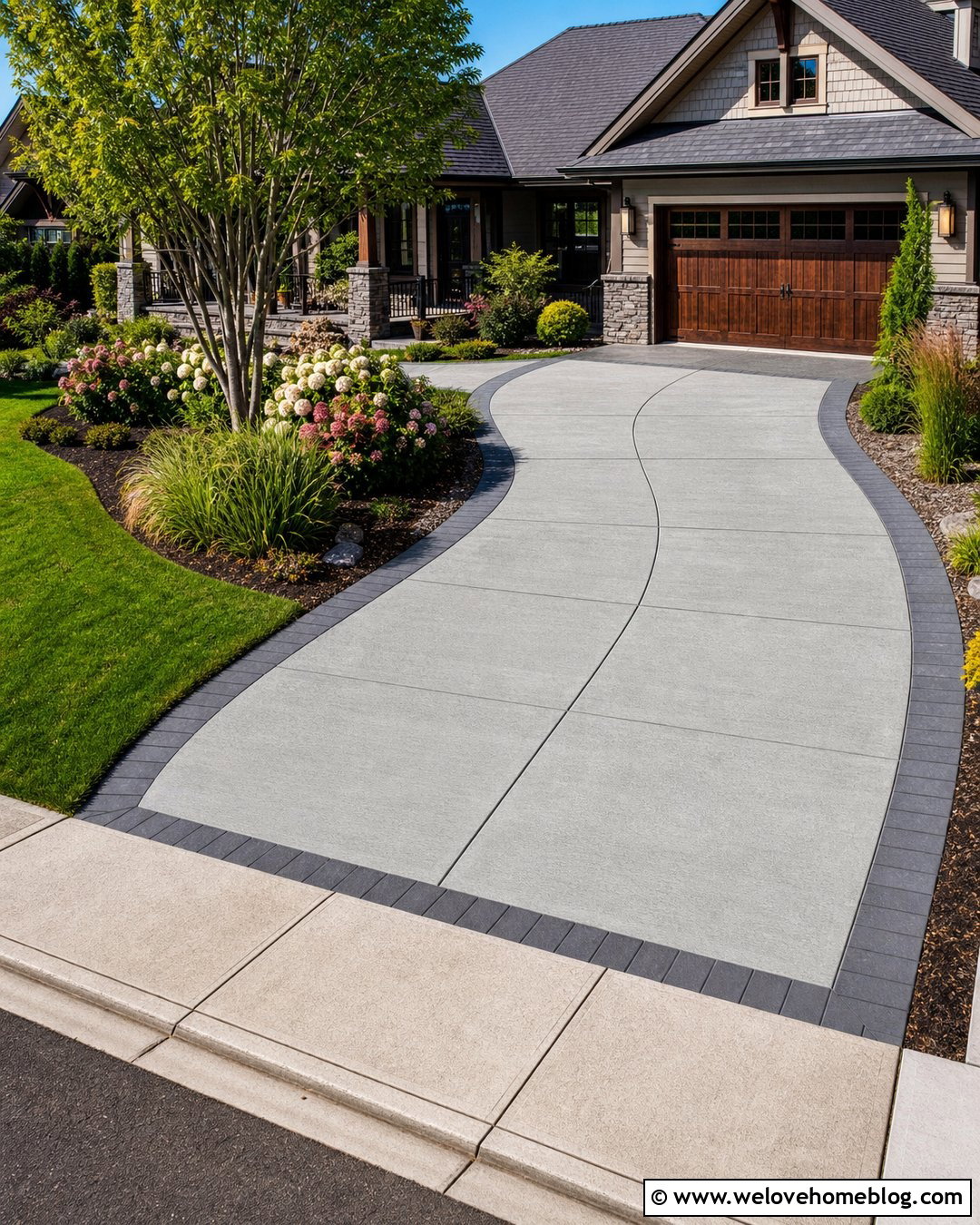
Does the garage sit at an angle from the street? A curved interlocking tile driveway can create a smoother and more attractive approach than a rigid straight surface. Choose medium-brown and gray concrete tiles laid in a flowing herringbone pattern that follows the bend. A darker curved border will emphasize the route while containing cut pieces along the perimeter. Extend planting beds into the inside curve, using a small tree, layered shrubs, and ornamental grasses to create a focal point. Keep the outside curve more open with lawn and low ground cover for better visibility. A matching walkway can branch from the driveway near the house. This design works well with craftsman, ranch, and wooded suburban homes where the driveway should feel integrated into the existing landscape.
12. Interlocking Concrete Driveway Tiles With Stone Apron
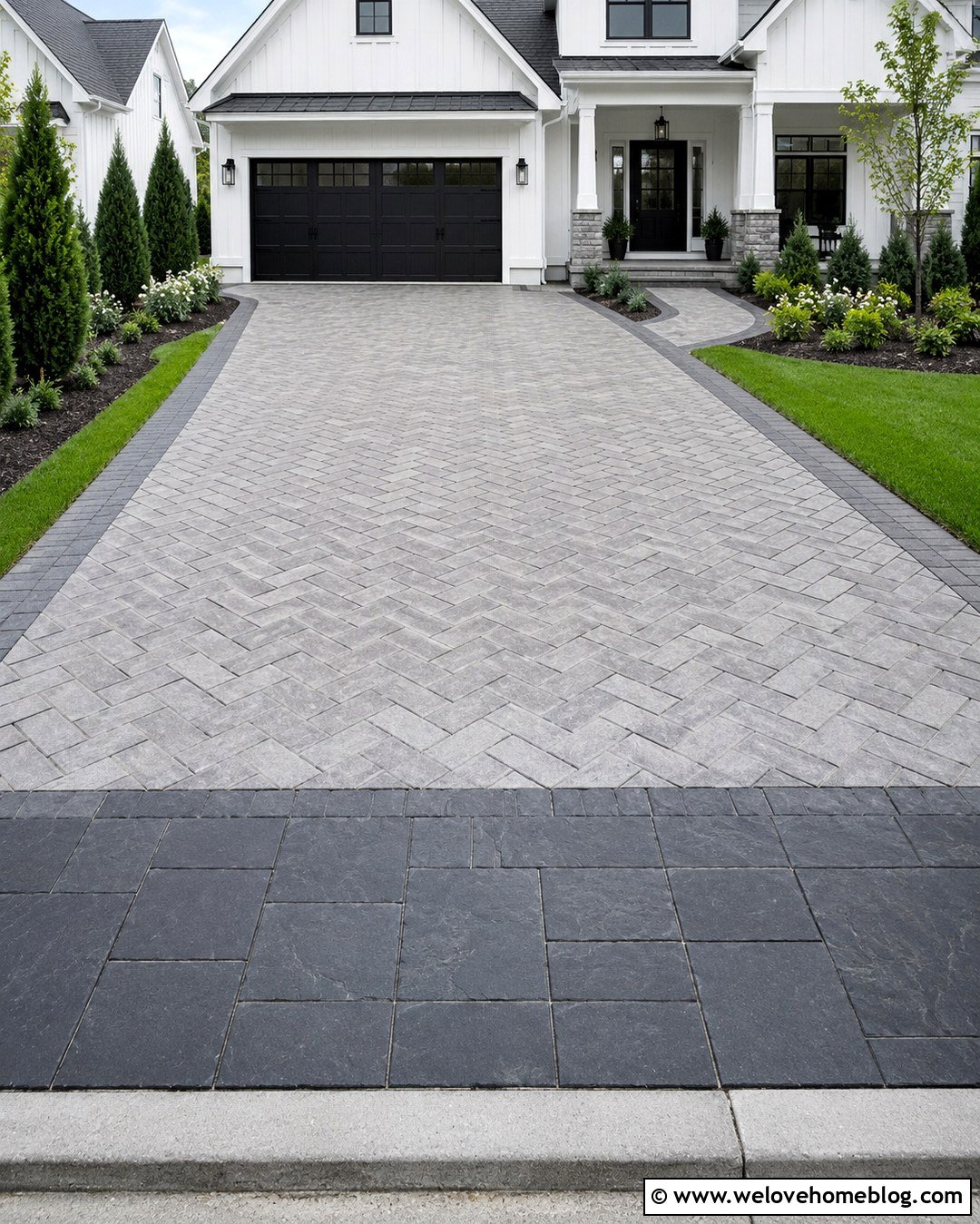
A stone-look apron gives an interlocking tile driveway a substantial entrance without covering the entire surface in a premium accent material. Install light-gray concrete tiles in a 45-degree herringbone pattern from the street to the garage. At the curb, add a broad apron made from darker, irregularly textured concrete tiles that resemble granite setts. Repeat the dark accent in a narrow perimeter border and a band near the garage doors. Stone-clad pillars, simple lanterns, and low evergreen planting can complete the entrance. This combination is well suited to a modern farmhouse or country house with mixed stone and siding. Keep the apron flush with the main field to avoid an uncomfortable bump. The contrasting texture should mark the entrance while still appearing connected to the driveway.
13. Modern Interlocking Concrete Driveway Tiles With Grass Strips
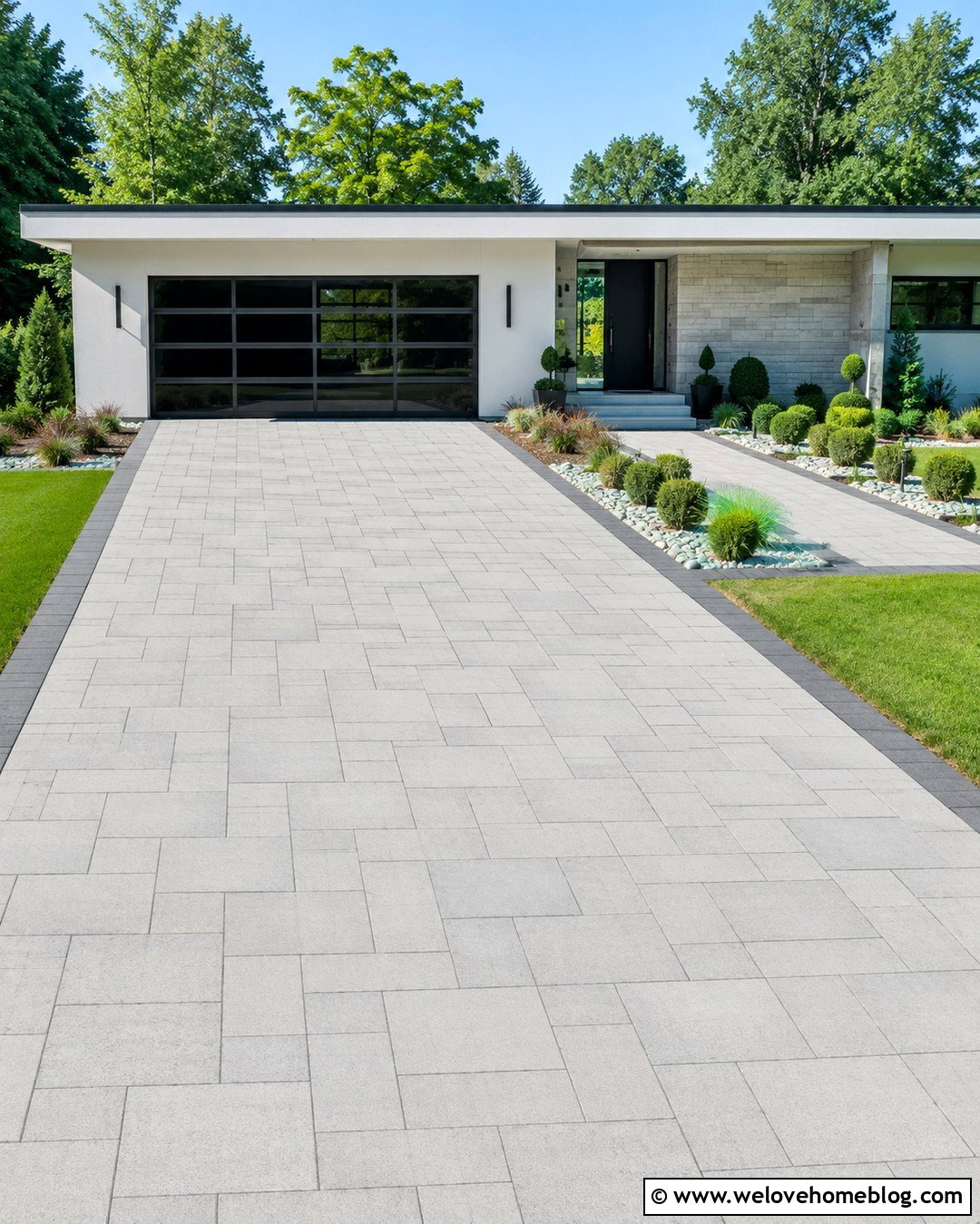
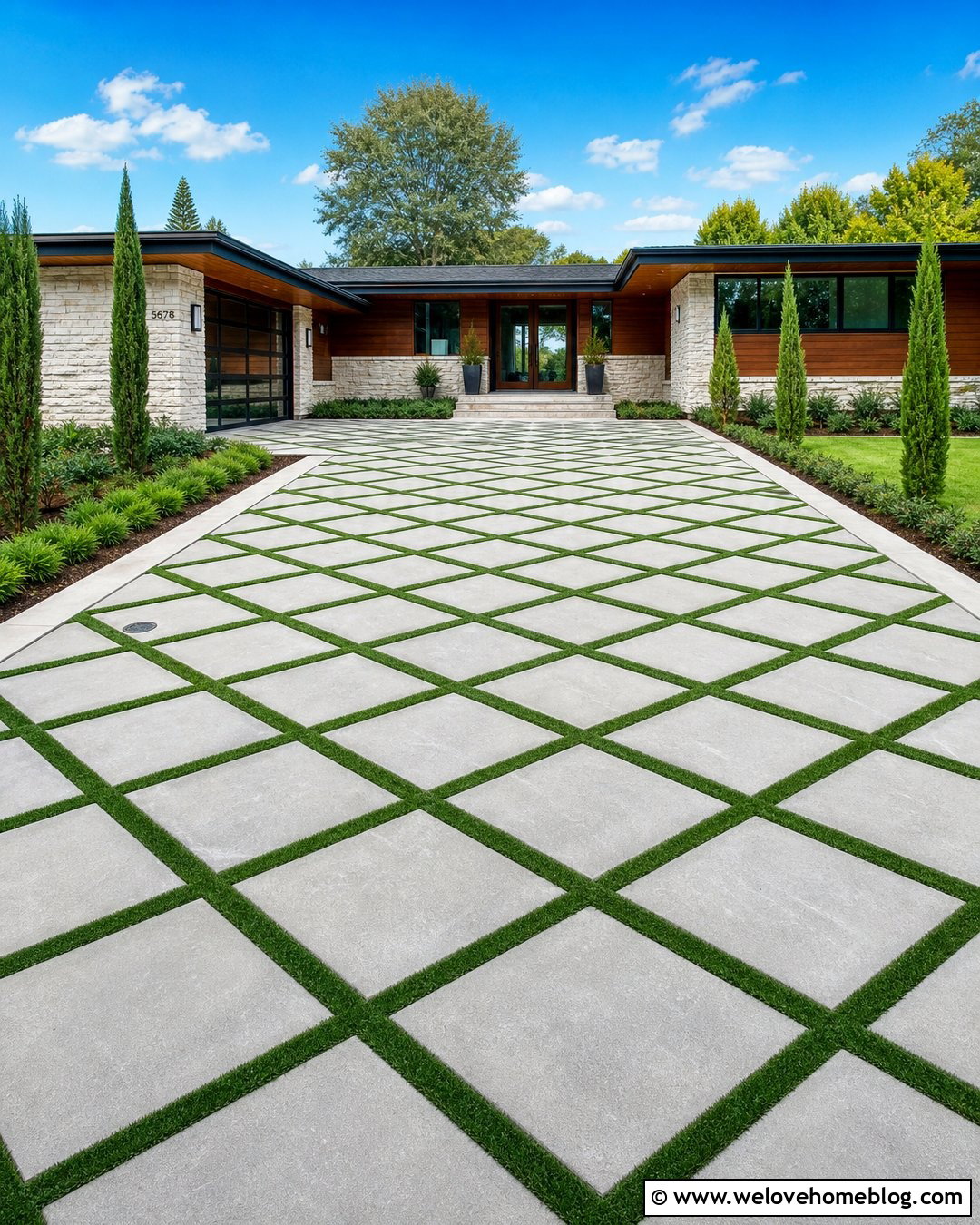
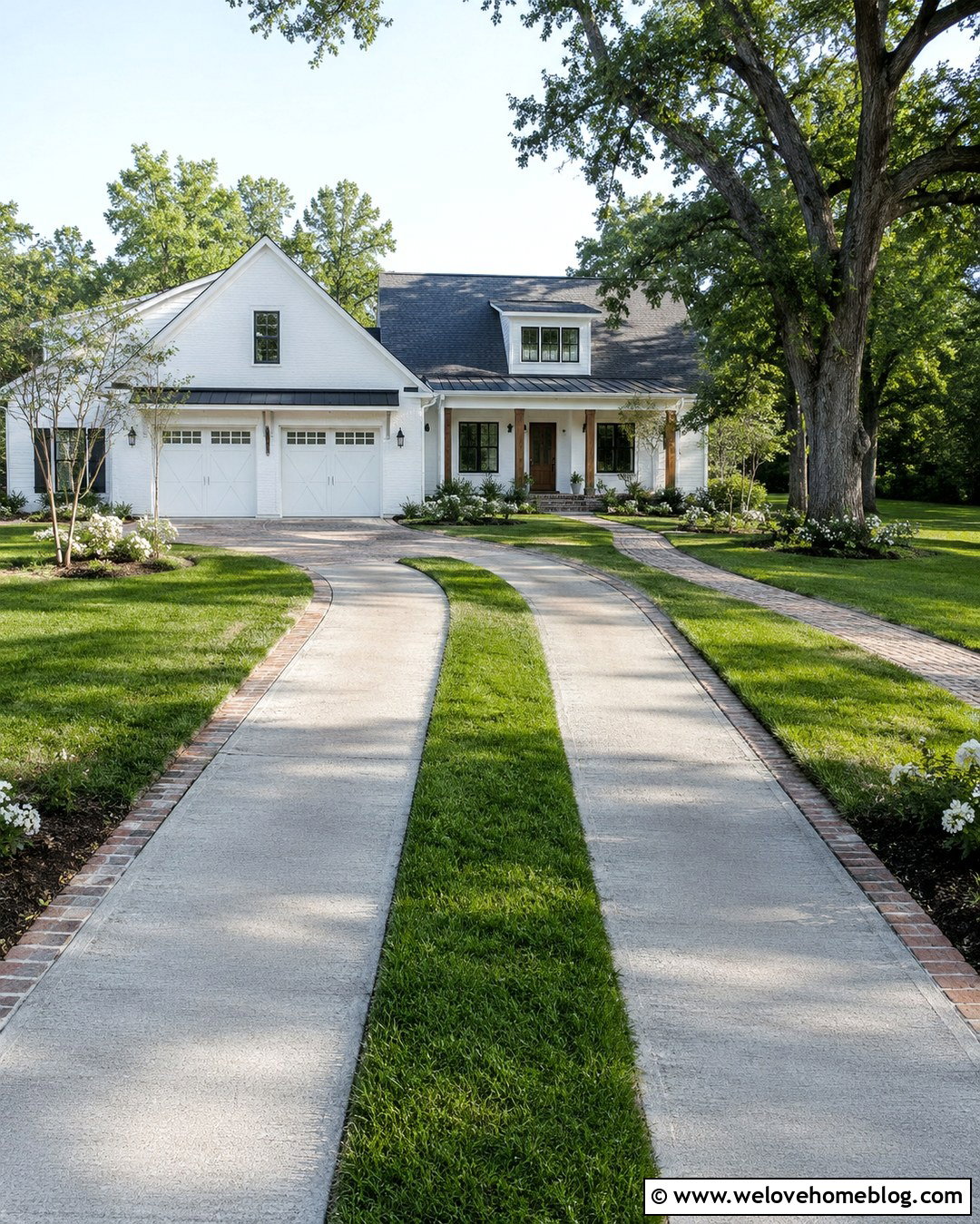
Narrow grass strips can soften a modern driveway when they are placed carefully outside the primary tire paths. Use large, light-gray interlocking concrete tiles in a clean modular pattern, divided by slim green bands near the sides or between the driveway and walkway. A solid charcoal border should contain each paved section and provide clear edge restraint. Choose tough turf or low-growing ground cover suitable for local sun, water, and traffic conditions. Straight beds with sculptural grasses, rounded evergreens, and pale decorative stone can frame the driveway without hiding its geometry. This look pairs naturally with a flat-roofed or midcentury modern house. Avoid placing wide planted joints where frequent turning occurs. The driveway should remain functional first, with greenery acting as a controlled visual accent.
14. Tan Interlocking Concrete Driveway Tiles With Brick Border
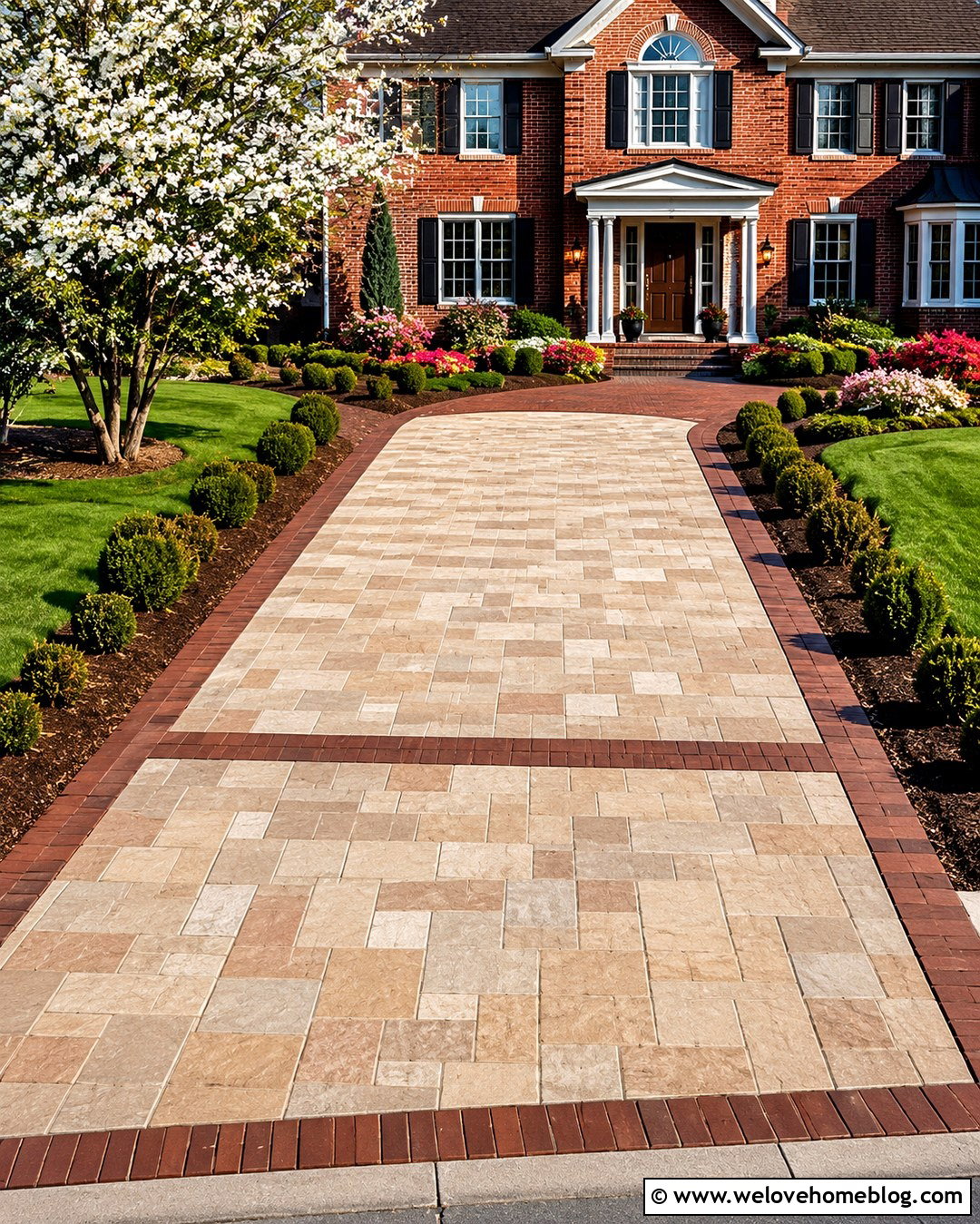
Soft tan concrete tiles can bridge the color difference between a red brick house and a green front yard. Lay the main driveway in a mixed-size ashlar pattern using cream, sandstone, and light-brown tones. Add a narrow border of dark red concrete brick-look tiles to connect the driveway visually with the facade. A matching red ribbon near the sidewalk can create a clear transition at the entrance. Traditional beds with boxwood, azaleas, and a small flowering tree will complement the warm palette. Keep the driveway shape mostly straight, but use gently curved planting edges to prevent the front yard from feeling too rigid. This approach works particularly well for colonial and traditional suburban homes because it updates the paving while respecting the architecture’s existing colors and symmetry.
15. Desert Interlocking Concrete Driveway Tiles
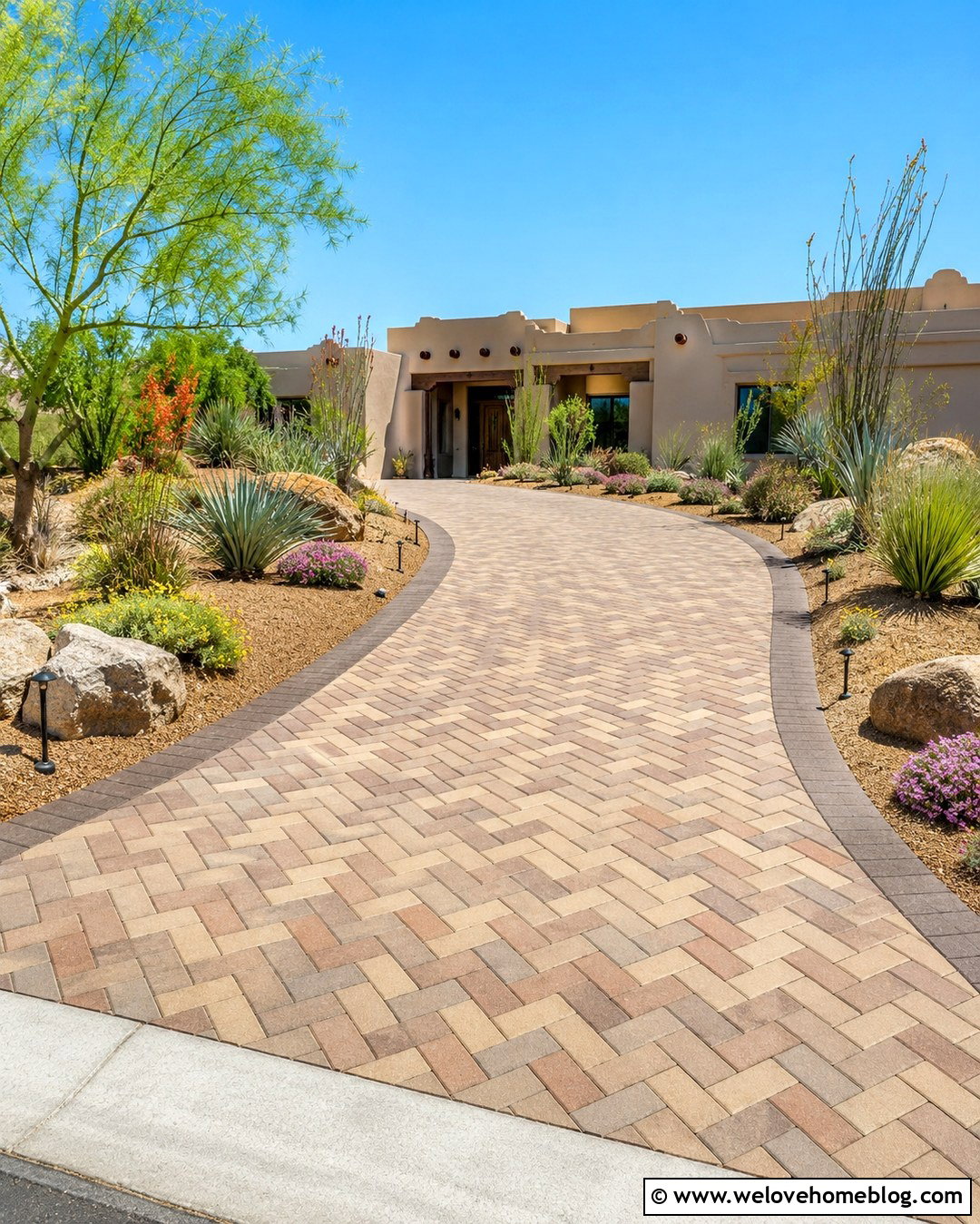
In a dry landscape, sand-colored interlocking concrete driveway tiles can blend naturally with gravel, stone, and drought-tolerant plants. Select textured units in beige, buff, and muted terracotta, then arrange them in a 90-degree herringbone field. A dark-brown concrete tile border will define the driveway against decomposed granite planting areas. Use sculptural agaves, yuccas, desert grasses, flowering perennials, and carefully placed boulders along the sides. A curved layout can guide the eye toward a stucco ranch or Southwestern-style house. Keep thorny plants and sharp leaves set back from vehicle doors and pedestrian routes. Low-voltage lighting may be integrated near the border, but fixtures should remain outside the tire path. The resulting driveway feels warm, practical, and connected to the surrounding climate.
16. Craftsman Interlocking Concrete Driveway Tiles
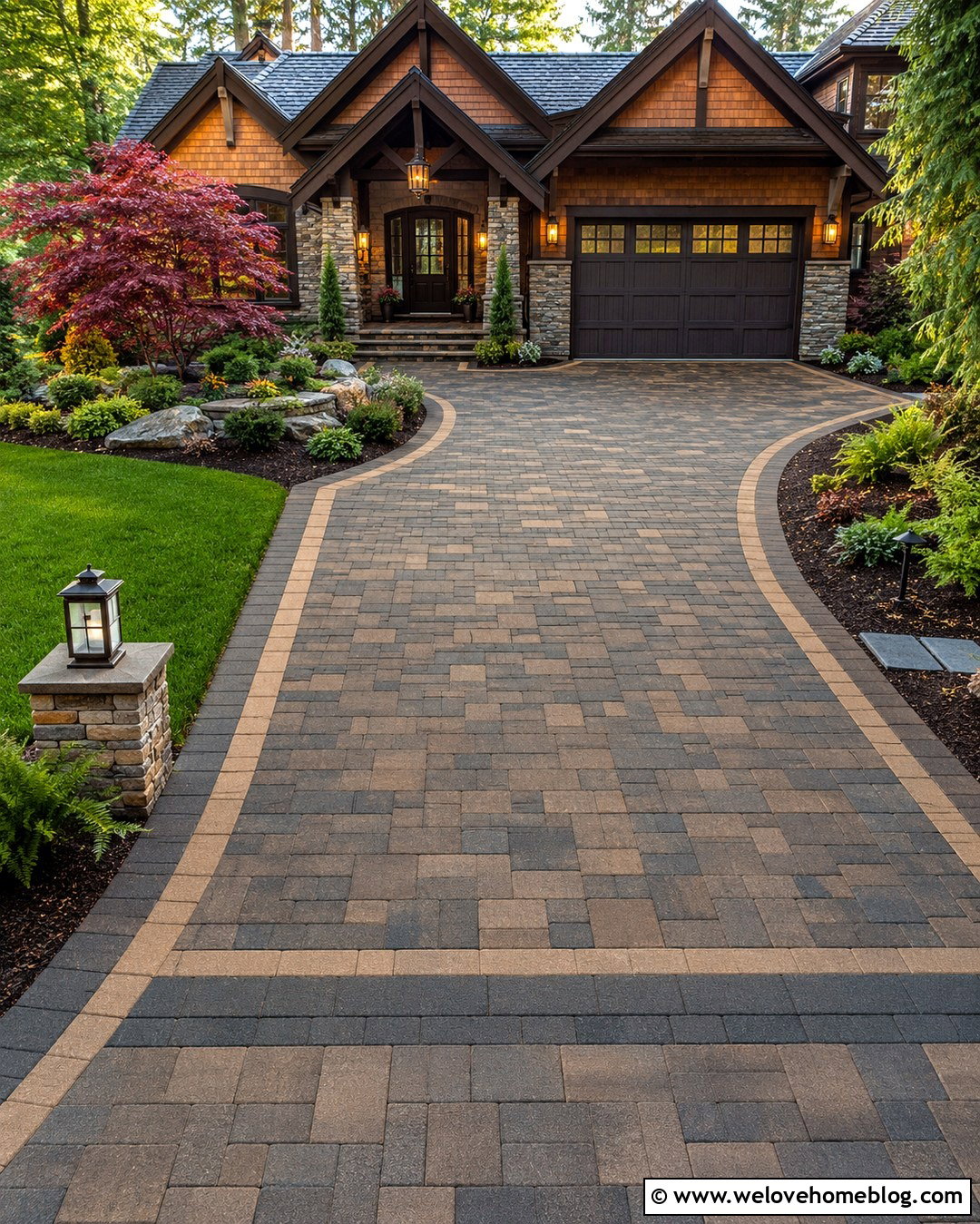
Earth-tone driveway tiles complement the natural materials commonly found on craftsman homes. Combine olive-gray, warm brown, and charcoal concrete units in a structured three-size pattern. Frame the field with a double border: one narrow tan course followed by a wider charcoal soldier course. This layered edge creates detail that echoes a craftsman porch without looking overly formal. A straight driveway with a slightly widened parking pad will suit the home’s practical character. Plant Japanese maple, compact conifers, ferns, and shade-tolerant ground cover in softly curved beds. A stone mailbox base or low garden wall can repeat colors from the tile blend. Use the same paving on the walkway but simplify the pattern, allowing the driveway to remain the largest and most visually detailed hardscape feature.
17. Coastal Interlocking Concrete Driveway Tiles
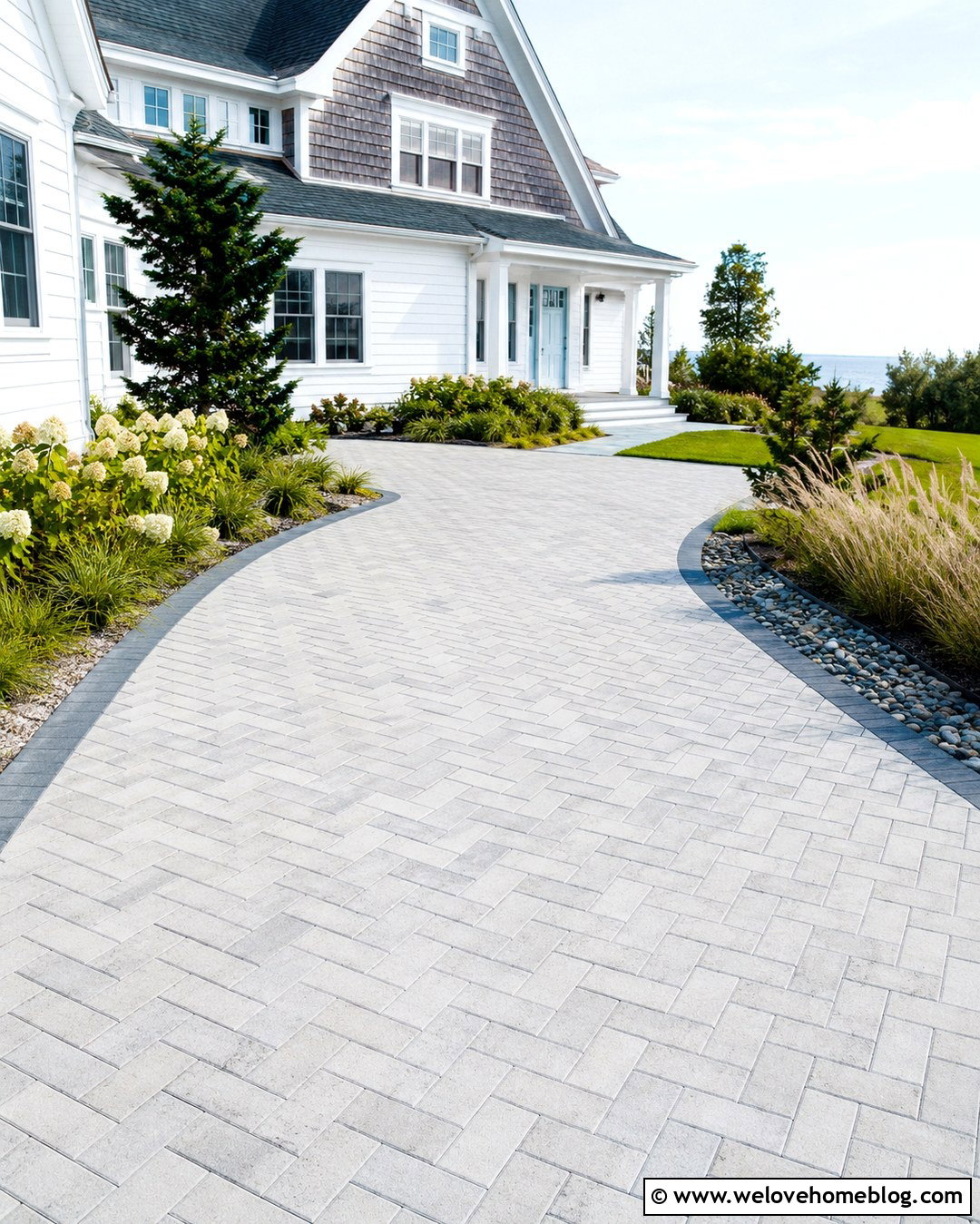
Pale gray interlocking concrete tiles can create a bright, relaxed driveway for a coastal or beach-inspired home. Choose a lightly textured finish with subtle blue-gray variation and install the rectangular units in a 45-degree herringbone pattern. Border the field with deeper slate-gray tiles to prevent the light surface from appearing unfinished. A gently curved driveway will feel softer beside weathered shingles, white siding, or a pale blue facade. Surround it with salt-tolerant grasses, compact evergreen shrubs, hydrangeas, and areas of clean stone mulch suited to the local conditions. A bluestone-colored walkway can connect the driveway to the porch. Keep decorative nautical details minimal. The combination of cool tile colors, airy planting, and a clear border already provides enough coastal character for an attractive residential entrance.
18. Long Interlocking Concrete Driveway Tiles With Trees
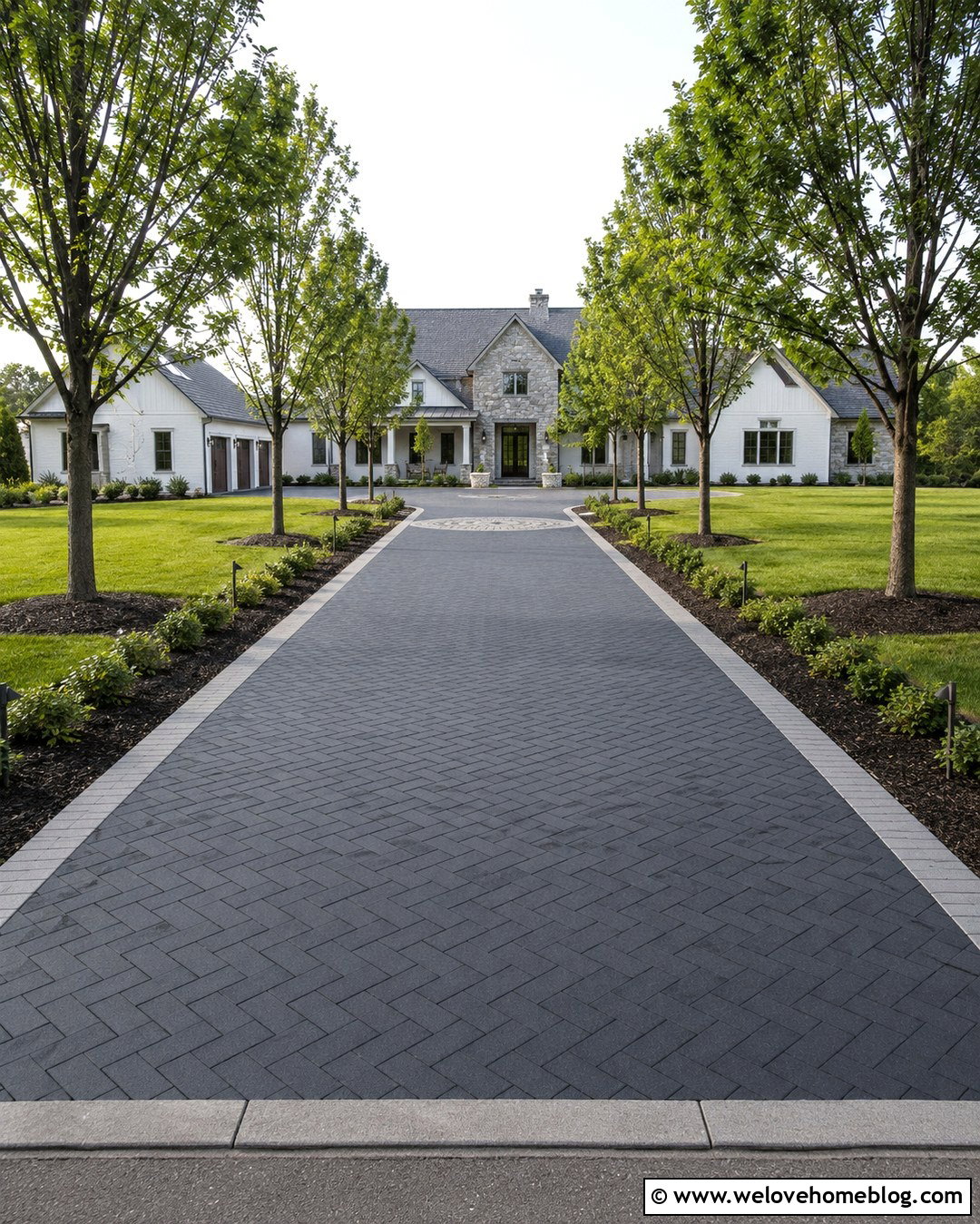
A long driveway needs repetition and strong edges to prevent the paving from feeling endless. Use charcoal-gray interlocking concrete tiles in a 90-degree herringbone pattern that points toward the house. Add narrow light-gray borders on both sides to create contrast and visually contain the route. Space deciduous trees evenly beyond the border, leaving enough room for mature trunks, roots, and vehicle clearance. Beneath them, use simple ground cover or lawn rather than complicated flower beds. Near the house, widen the driveway into a parking court and introduce a circular tile medallion or contrasting apron. Low landscape lights can follow one side without crowding the paving. This complete look suits larger colonial, country, and modern farmhouse properties where the driveway forms a major part of the arrival experience.
19. Small Interlocking Concrete Driveway Tiles
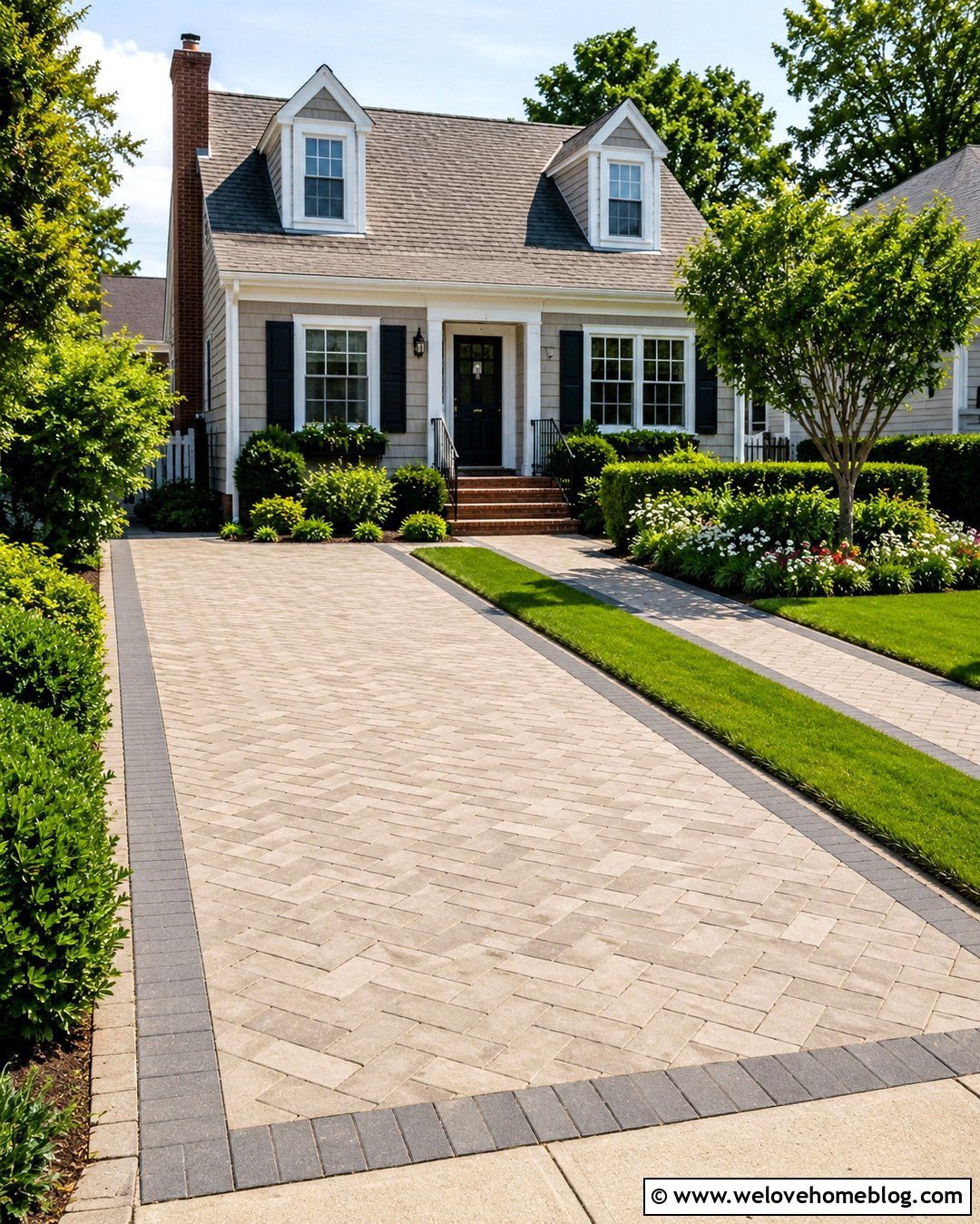
A compact front yard benefits from a driveway pattern that adds interest without visually shrinking the space. Use small, light-taupe concrete tiles in a diagonal herringbone pattern, then frame them with a narrow dark-gray border. The diagonal lines make the surface appear wider, while the restrained color palette prevents clutter. Keep planting beds slim and place taller plants near the house rather than beside car doors. A low hedge, one ornamental tree, and a few flowering perennials can provide enough greenery. Connect the front walkway directly to one driveway edge using the same tiles and border. Avoid adding a separate material that divides the small yard into too many pieces. This efficient design works well for cottages, townhouses, Cape Cod homes, and narrow suburban lots.

20. Split Interlocking Concrete Driveway Tiles
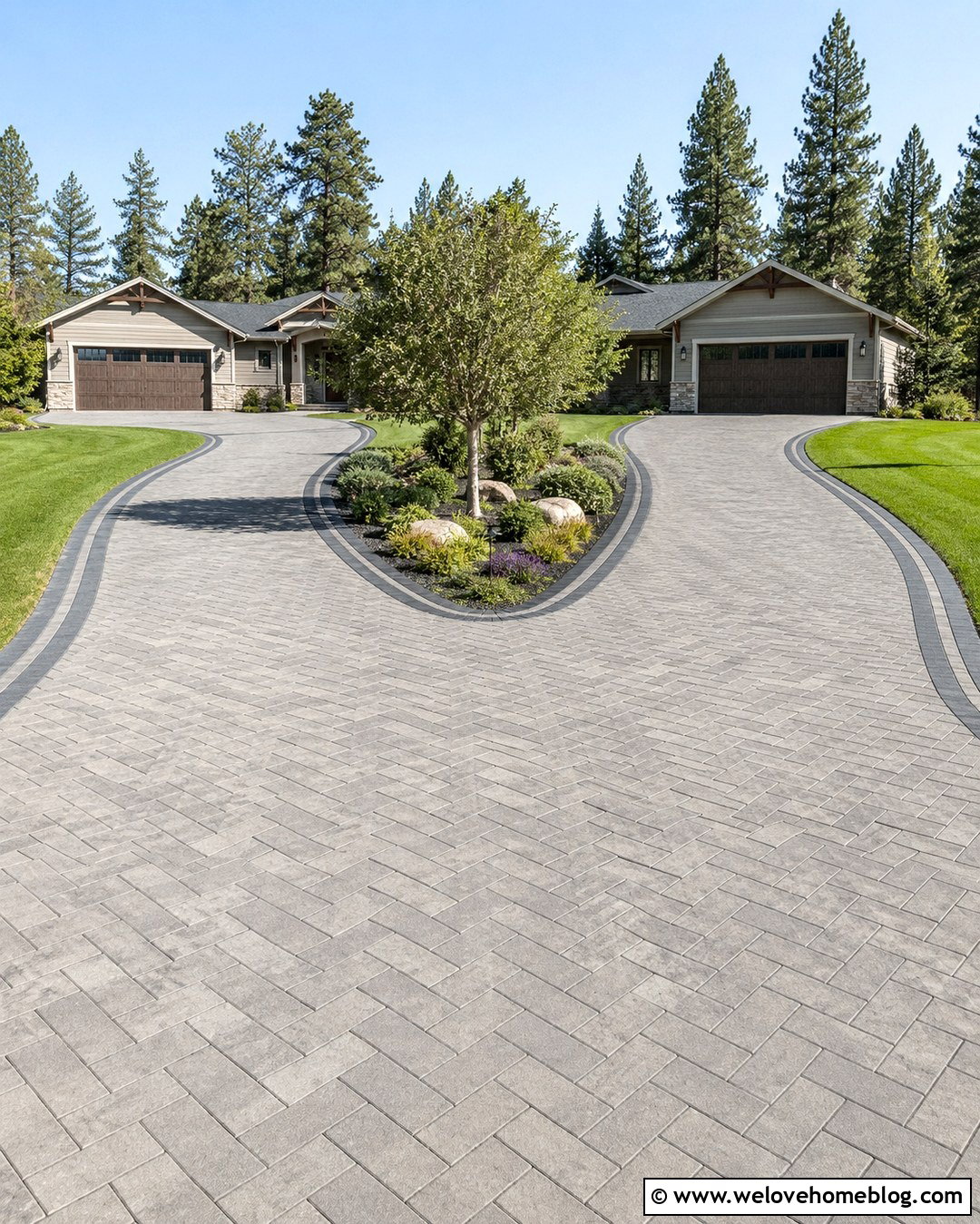
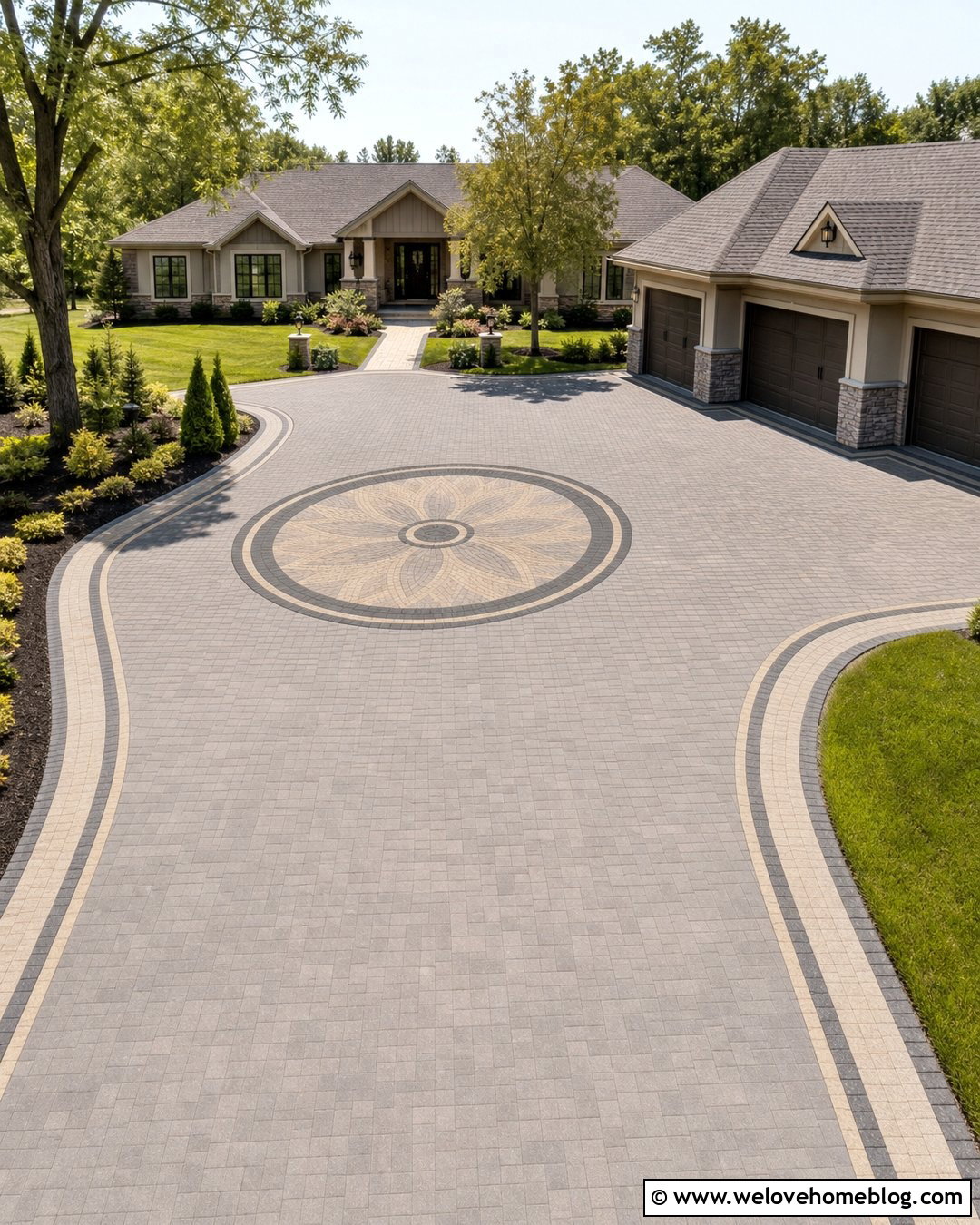
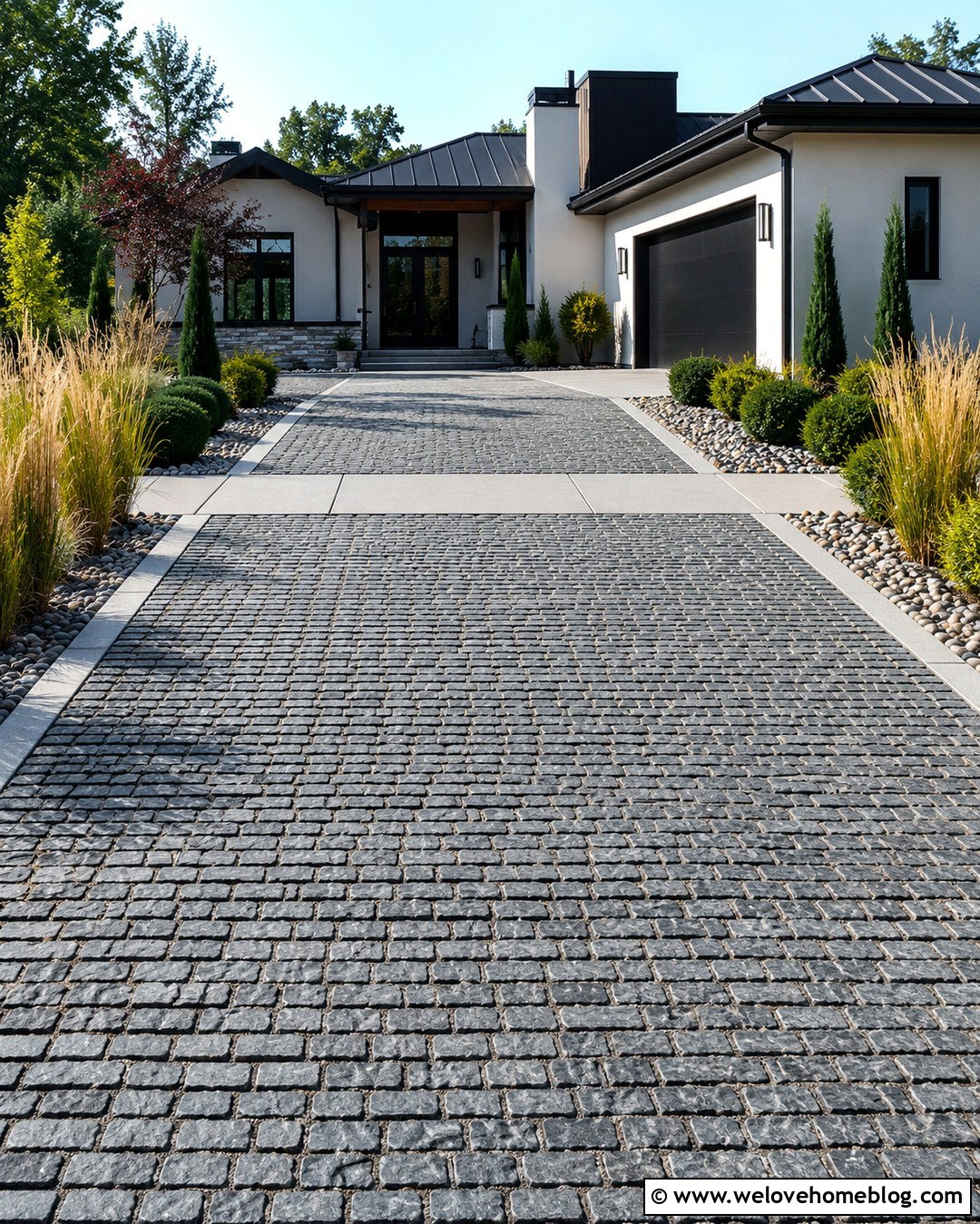
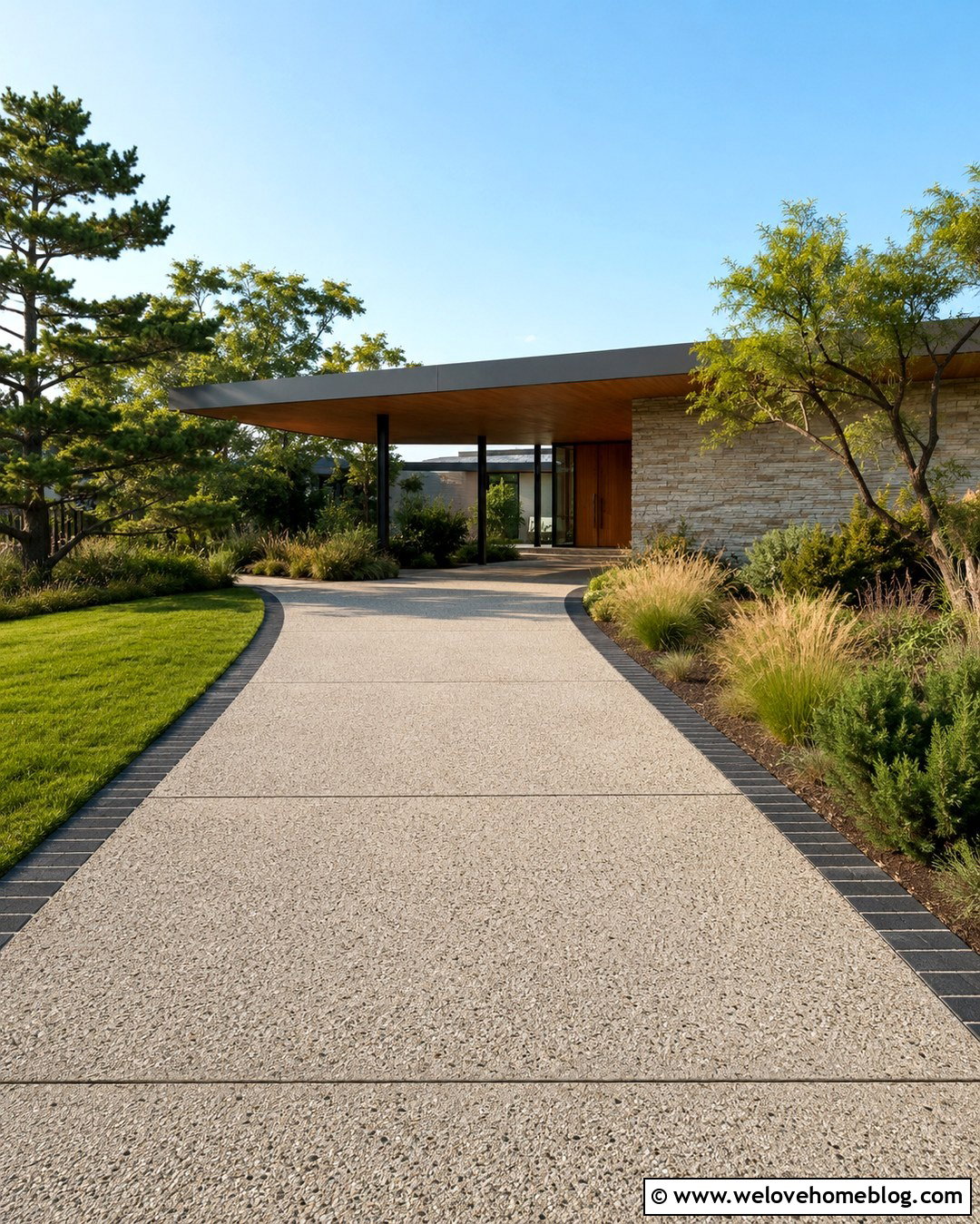
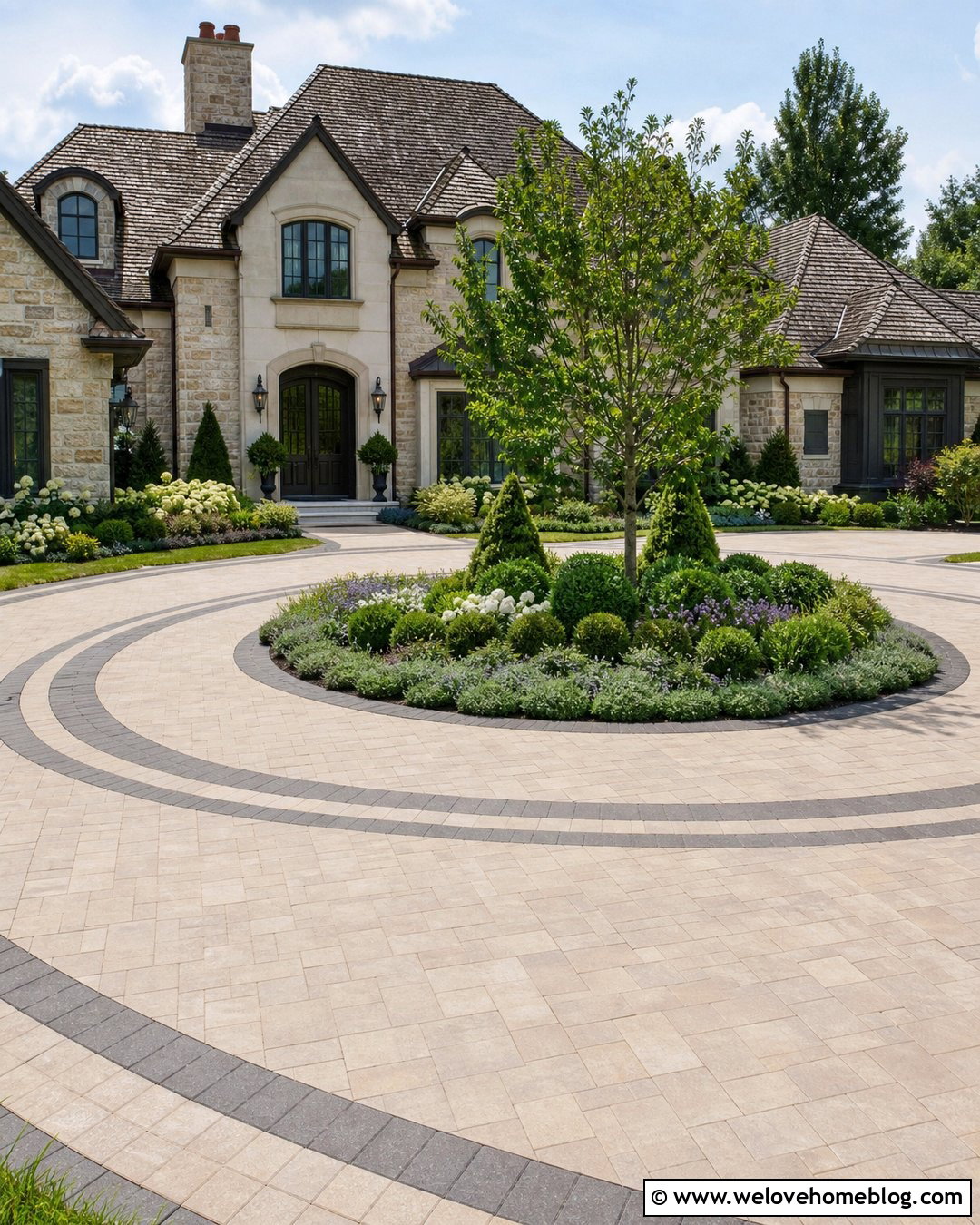
A split driveway can direct vehicles toward separate garages while creating an attractive planted feature between the two branches. Begin with warm-gray interlocking concrete tiles in a 45-degree herringbone pattern. At the split, use charcoal paver ribbons to outline each route and visually explain the layout. Fill the center island with a small ornamental tree, low shrubs, ground cover, and decorative stone, keeping plants short enough for clear sightlines. Repeat the charcoal tiles around the island and across both garage aprons. A broad shared entrance at the curb prevents the design from feeling fragmented. This layout works best on a wide lot with a ranch, contemporary, or multi-garage home. Consistent tile colors and borders help both branches read as one coordinated driveway design.
Conclusion:
The most successful interlocking tile driveway combines appearance, vehicle performance, drainage, and landscaping in one coordinated plan. Pattern and color matter, but so do a properly prepared base, suitable bedding material, tight joints, dependable edge restraints, and tiles specifically rated for vehicular use. Match the surface to the scale and architecture of the house, then use borders, aprons, walkways, and planting beds to create clear transitions. Herringbone fields provide a strong starting point, while permeable systems, mixed sizes, and contrasting ribbons offer additional possibilities. Whether the property is modern, traditional, coastal, or rustic, these 20 Interlocking Concrete Driveway Tiles Ideas can help create a durable entrance with polished curb appeal.

Related posts:
Leave a Reply