
Choosing a driveway surface involves more than replacing one gray slab with another. The best **20 Concrete Alternatives Driveway Ideas** combine a suitable material with a practical layout, secure edging, good drainage, and landscaping that complements the home. Options range from affordable crushed stone and recycled asphalt to refined clay brick, granite cobblestone, and resin-bound gravel. Permeable systems are also worth considering because they can absorb or temporarily store stormwater instead of sending it directly toward streets and drains. () Before selecting a surface, consider your climate, driveway slope, vehicle load, maintenance expectations, local rules, and installation budget. The complete driveway looks below show how those choices can work together in **20 Concrete Alternatives Driveway Ideas**.

1. Asphalt Driveway With Brick Edging
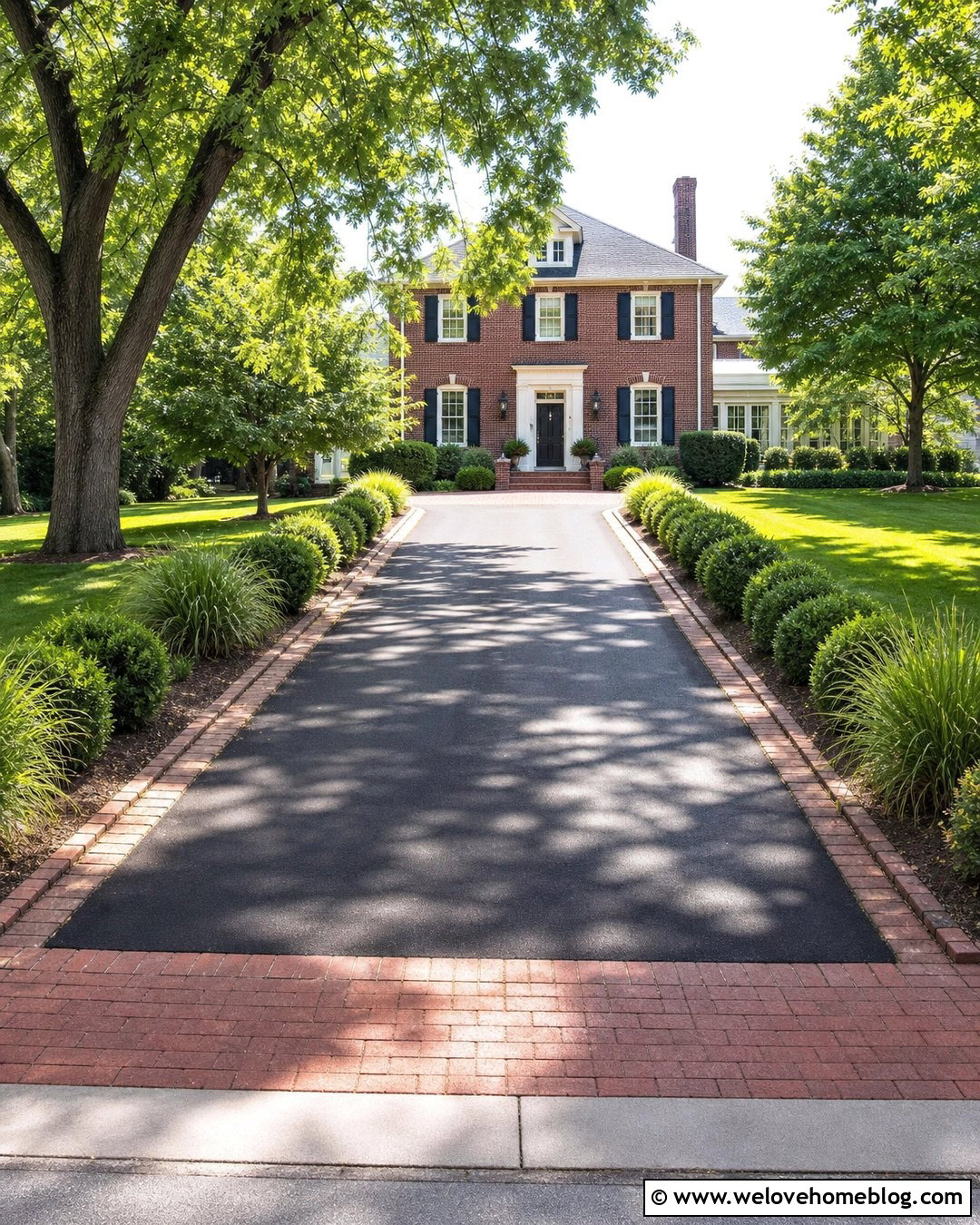
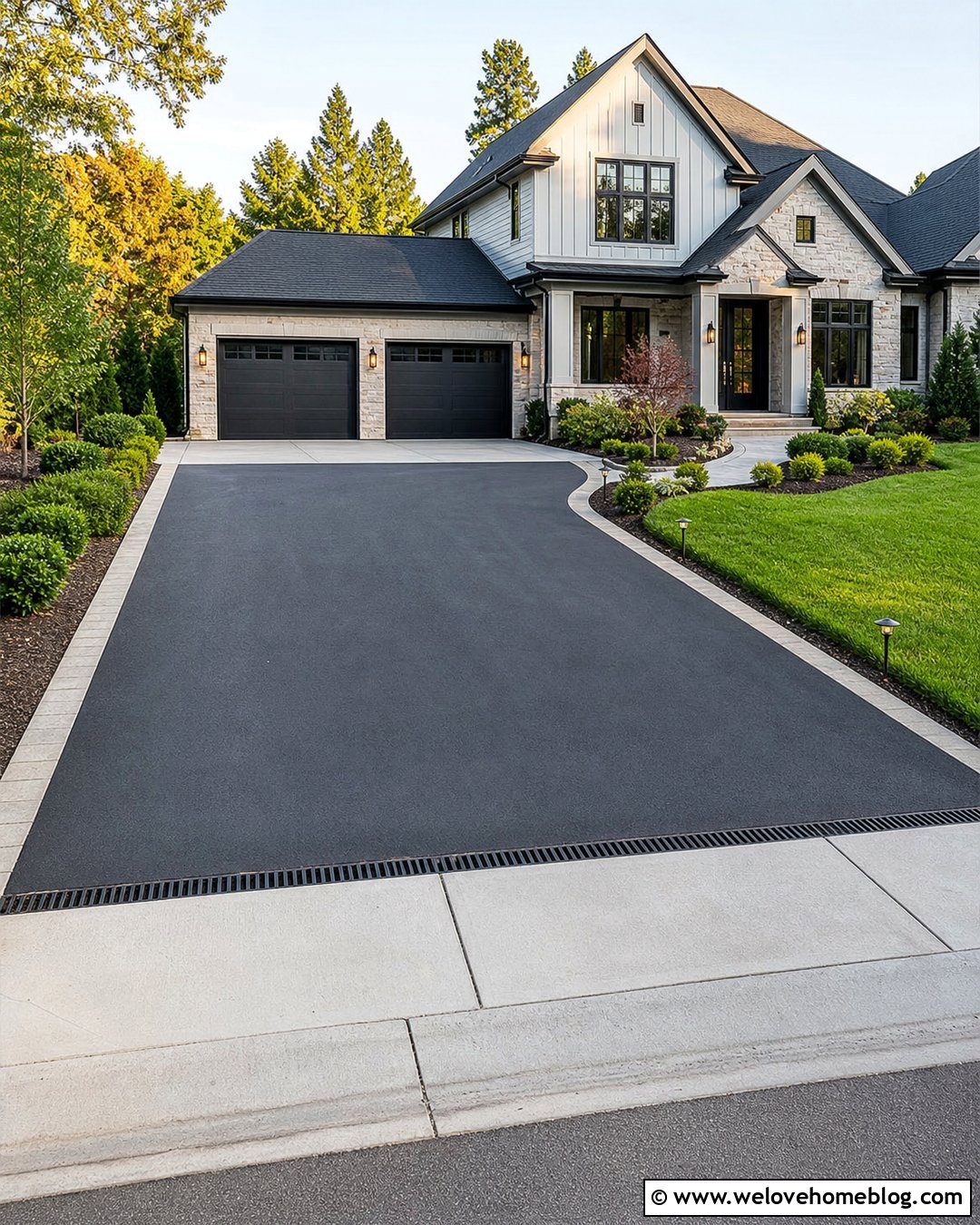
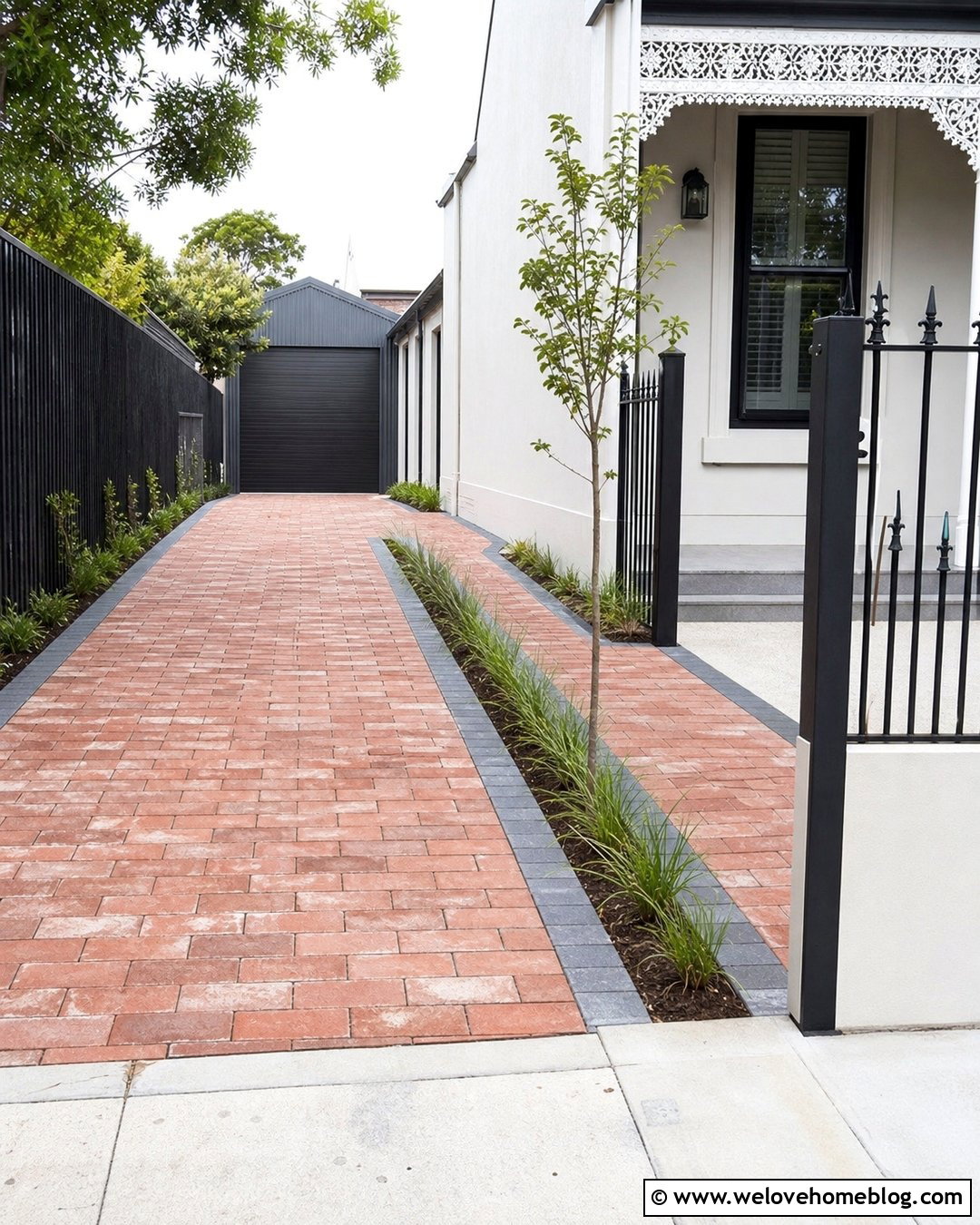
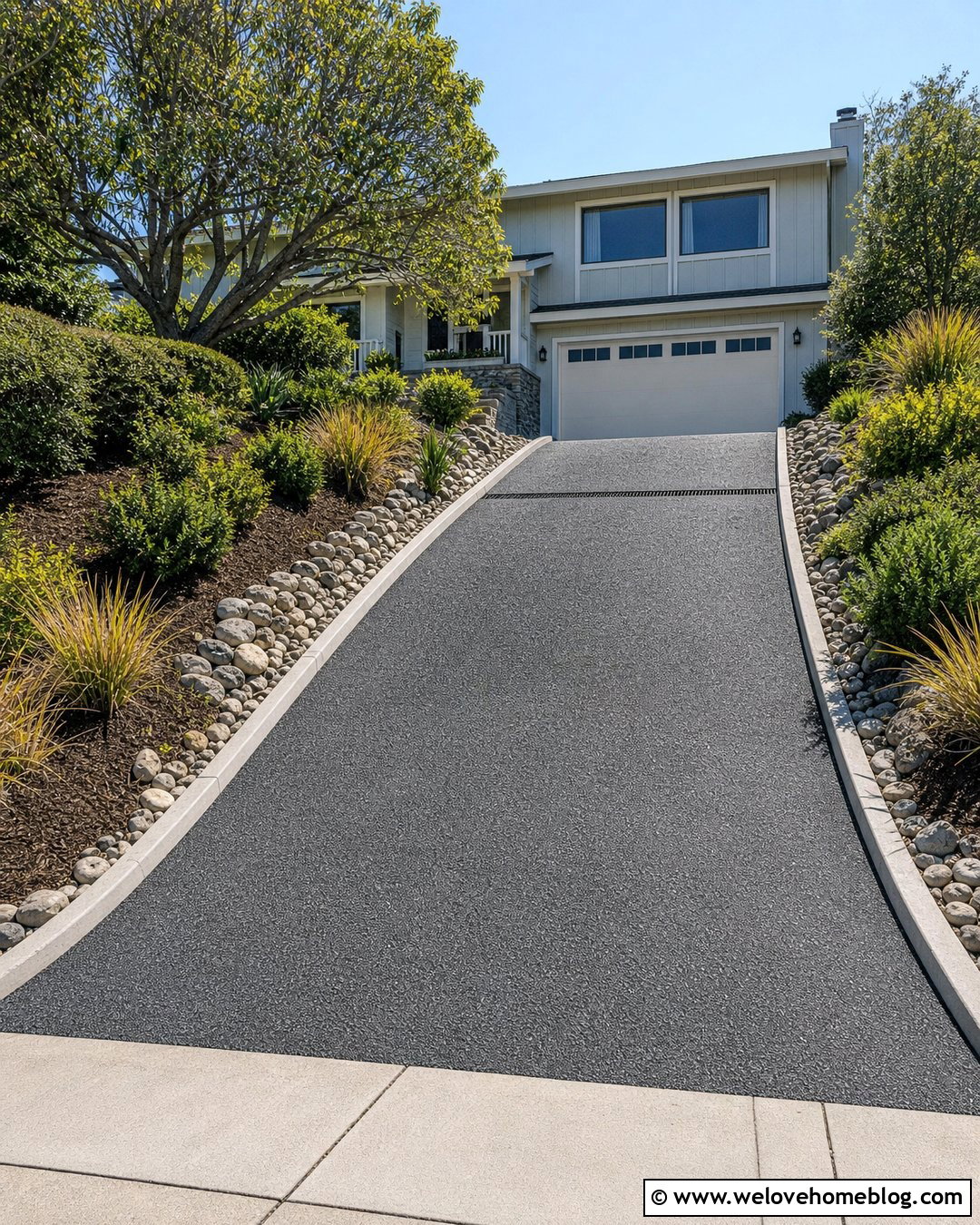
A smooth black asphalt driveway creates a clean, familiar surface without the lighter appearance of poured concrete. Use a straight layout for a compact suburban property, then add red or charcoal clay brick edging to define both sides. A matching brick apron near the street makes the entrance feel more intentional and helps connect the driveway to a brick home. Low boxwoods, ornamental grasses, and a narrow lawn strip can soften the dark pavement without blocking visibility. Asphalt works especially well where homeowners want a relatively seamless driving surface, but proper base preparation and drainage remain essential. Climate, slope, installation quality, and periodic maintenance can all affect performance, so obtain a site-specific assessment rather than choosing the surface by appearance alone. ()
2. Pea Gravel Driveway With Cobblestone Borders
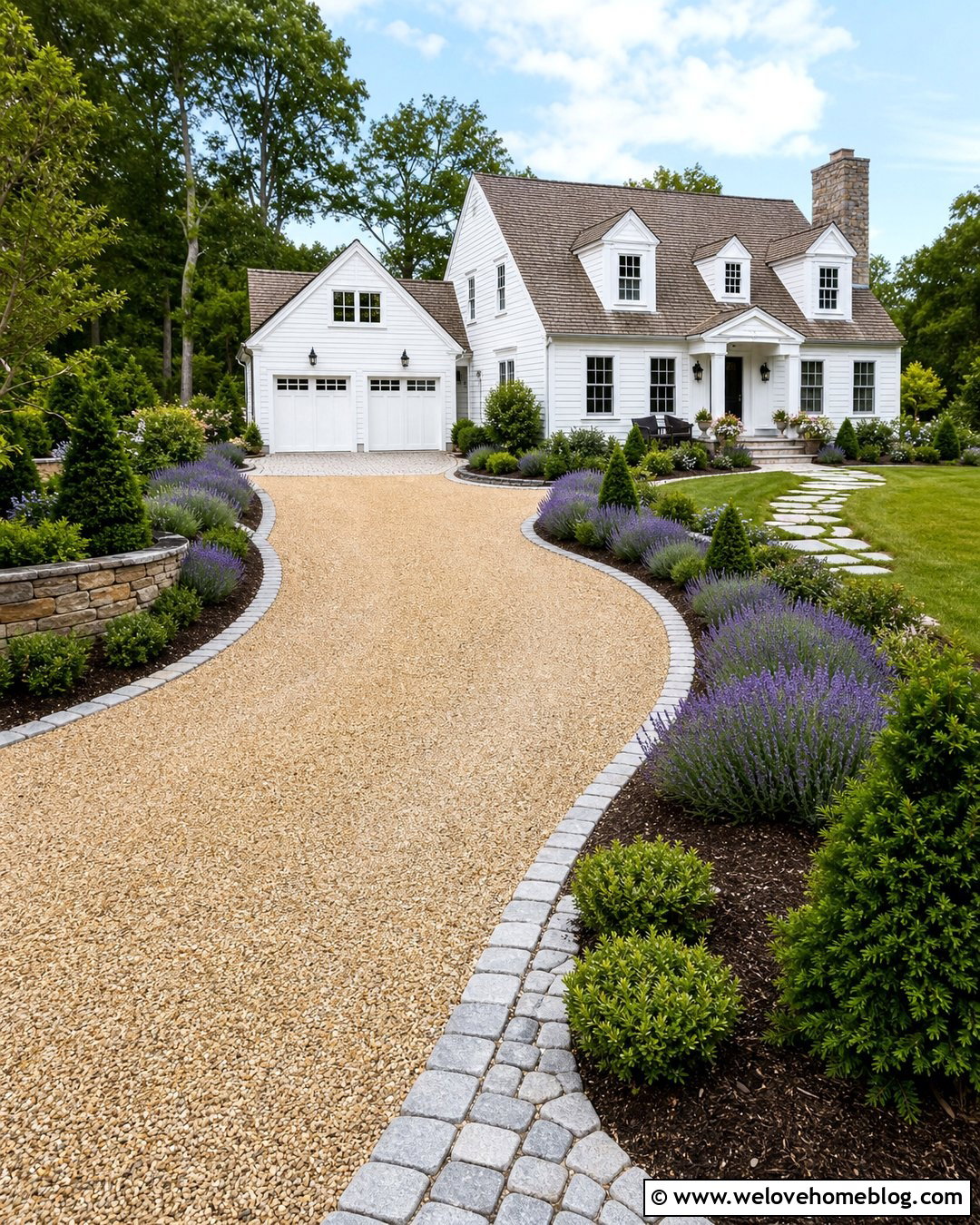
Warm pea gravel brings soft color and natural texture to a curved driveway serving a cottage, Cape Cod, or traditional home. Install a compacted structural base beneath the decorative gravel so tires do not sink into loose soil. Sturdy cobblestone borders should rise slightly above the surface to contain the rounded stones, especially along curves and sloping edges. Near the garage, a wider cobblestone parking apron can reduce scattered gravel at the transition. Frame the approach with lavender, catmint, dwarf evergreens, and an open lawn that keeps the entrance bright. Gravel drains well, but routine raking and occasional replenishment help correct displaced material and shallow tire tracks. A stabilizing grid can provide additional support where frequent vehicle movement would otherwise push the pea gravel outward. ()
3. Crushed Stone Driveway With Steel Edging
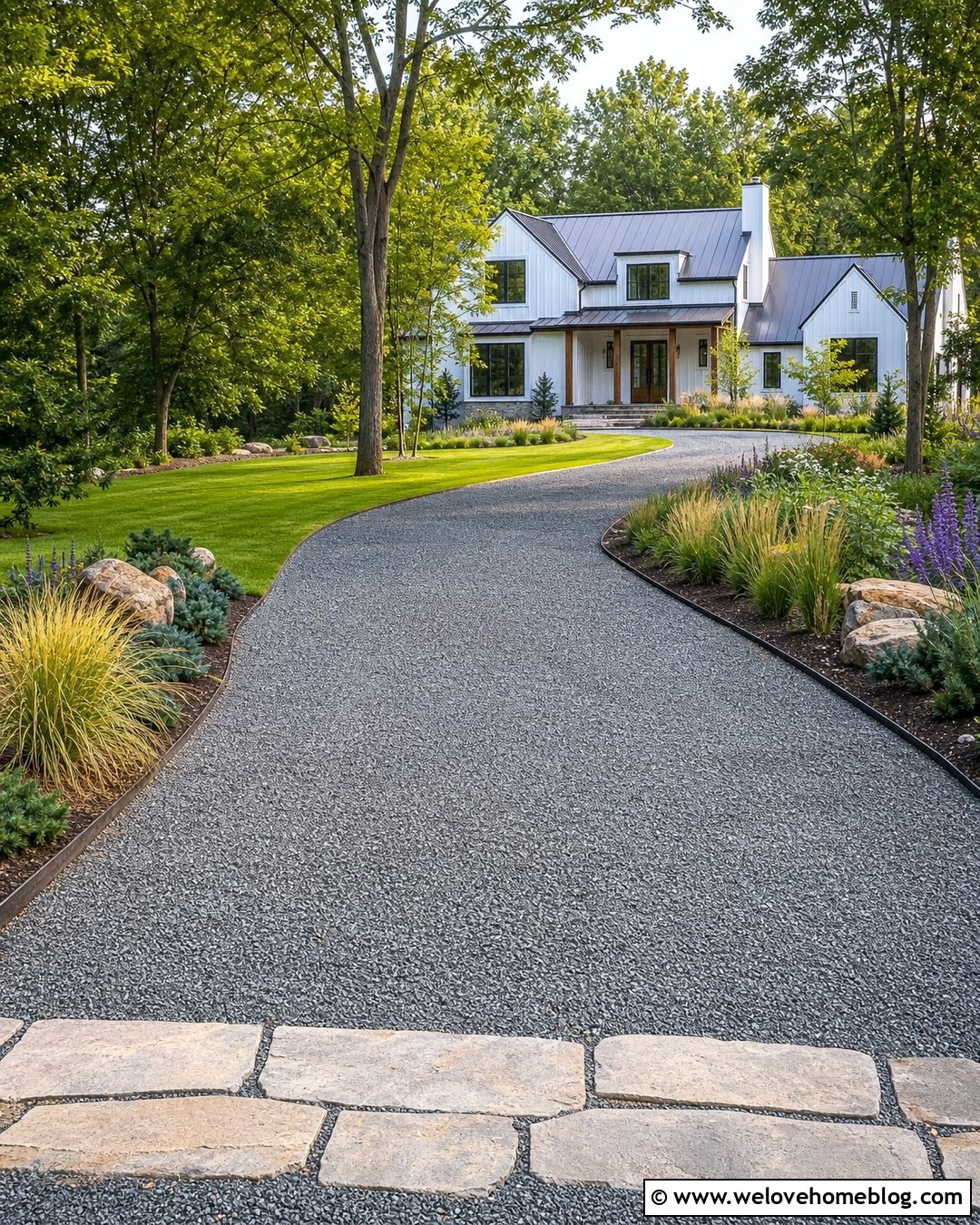
Angular gray crushed stone produces a firmer-looking driveway than rounded pea gravel because the irregular pieces compact together more effectively. Pair it with a gently curved layout leading toward a modern farmhouse or simple ranch home. Dark steel edging creates a crisp boundary, while a row of larger fieldstones at the entrance gives the design greater visual weight. Plant drought-tolerant grasses, juniper, salvia, and small native shrubs in broad beds beside the drive. The restrained planting palette complements the cool stone without making the property feel overly formal. Use an appropriately graded aggregate and a well-compacted base, not a thin decorative layer spread directly over soil. Crown or slope the finished surface carefully so water moves toward suitable planted areas instead of collecting near the garage foundation.
4. Gravel Grid Driveway With Stone Pillars
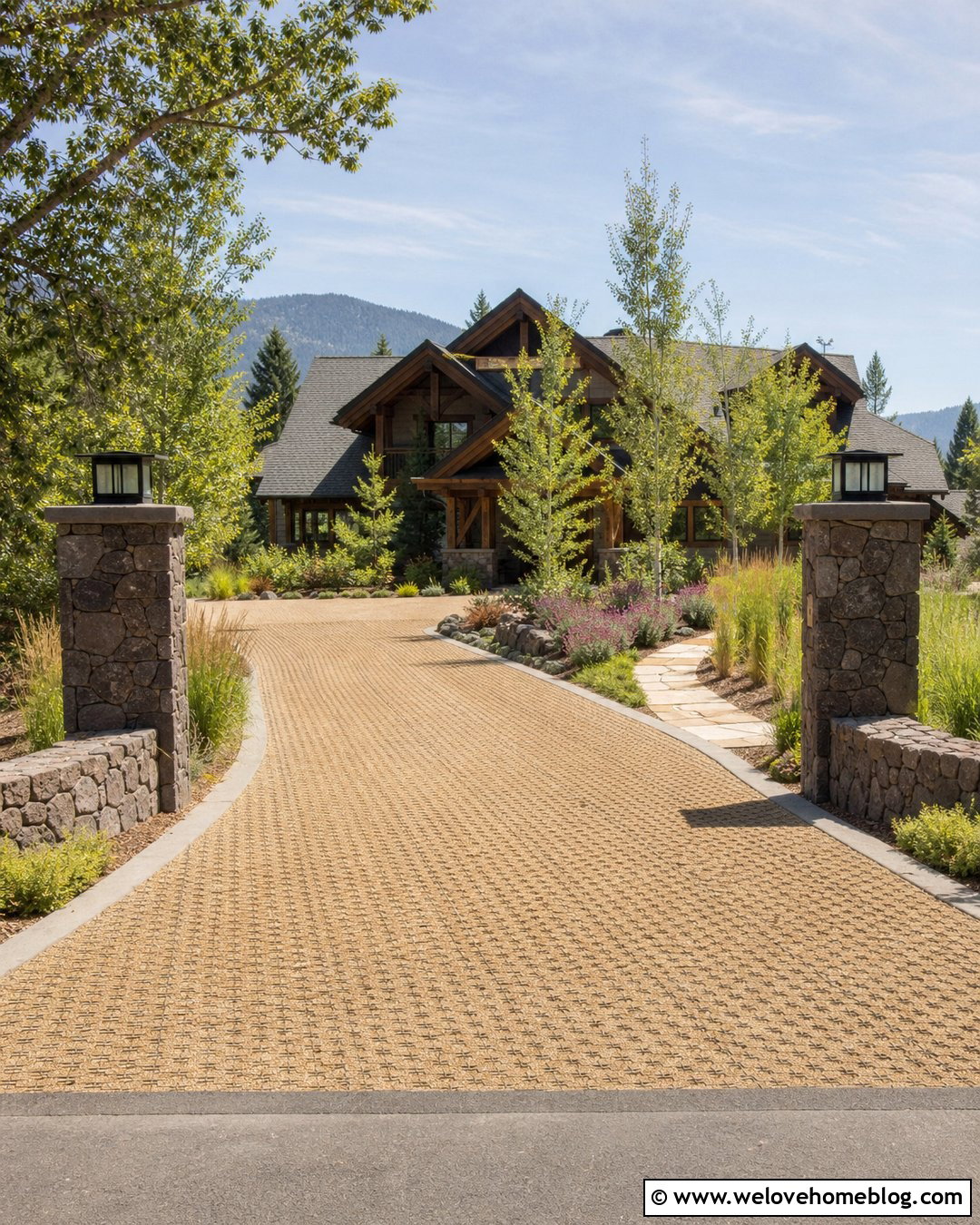
A gravel stabilization grid offers the relaxed appearance of loose aggregate with better control under tires. Fill the cells with angular beige or gray gravel, then use a straight driveway layout that leads through two natural stone entrance pillars. The grid should sit over a properly prepared permeable aggregate base, with edge restraints securing the perimeter. Continue the entrance design using a low stone wall, native grasses, and small flowering shrubs. This combination looks especially appropriate beside Craftsman, ranch, and mountain-style homes. Grid-supported gravel can help limit rutting and migration, although installation requirements vary by product, vehicle load, soil, and site drainage. Plastic grid pavers are among the permeable alternatives that allow water to move through the surface and into underlying stone layers. ()
5. Decomposed Granite Driveway With Timber Borders
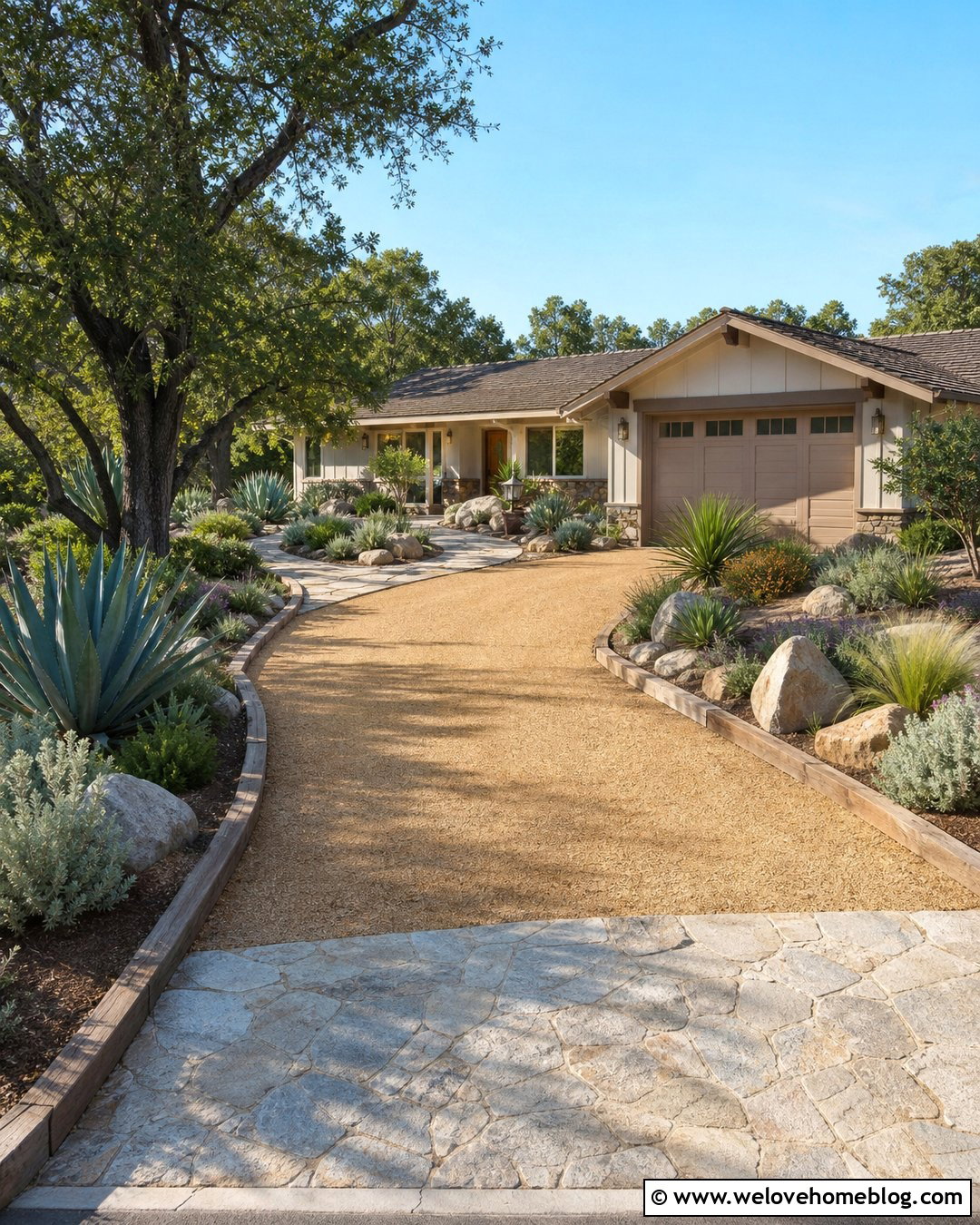
Golden decomposed granite gives a driveway a warm, understated finish that works beautifully with Southwestern, California ranch, and rustic contemporary homes. Design a broad curved approach and contain the compacted material with pressure-treated timber, weathering steel, or stone curbing. Timber creates the most casual look and blends naturally with dry-climate planting. Use agave, yucca, feather grass, sage, and scattered boulders to frame the driveway without introducing thirsty lawn. A stabilized decomposed granite product can create a more cohesive driving surface than untreated loose material, but the exact specification should match expected traffic and weather. Pay close attention to runoff on sloping properties because fine particles may wash toward the street during intense storms. A contrasting stone apron can protect the driveway entrance while giving the complete landscape a polished transition.
6. Clay Brick Driveway In Herringbone
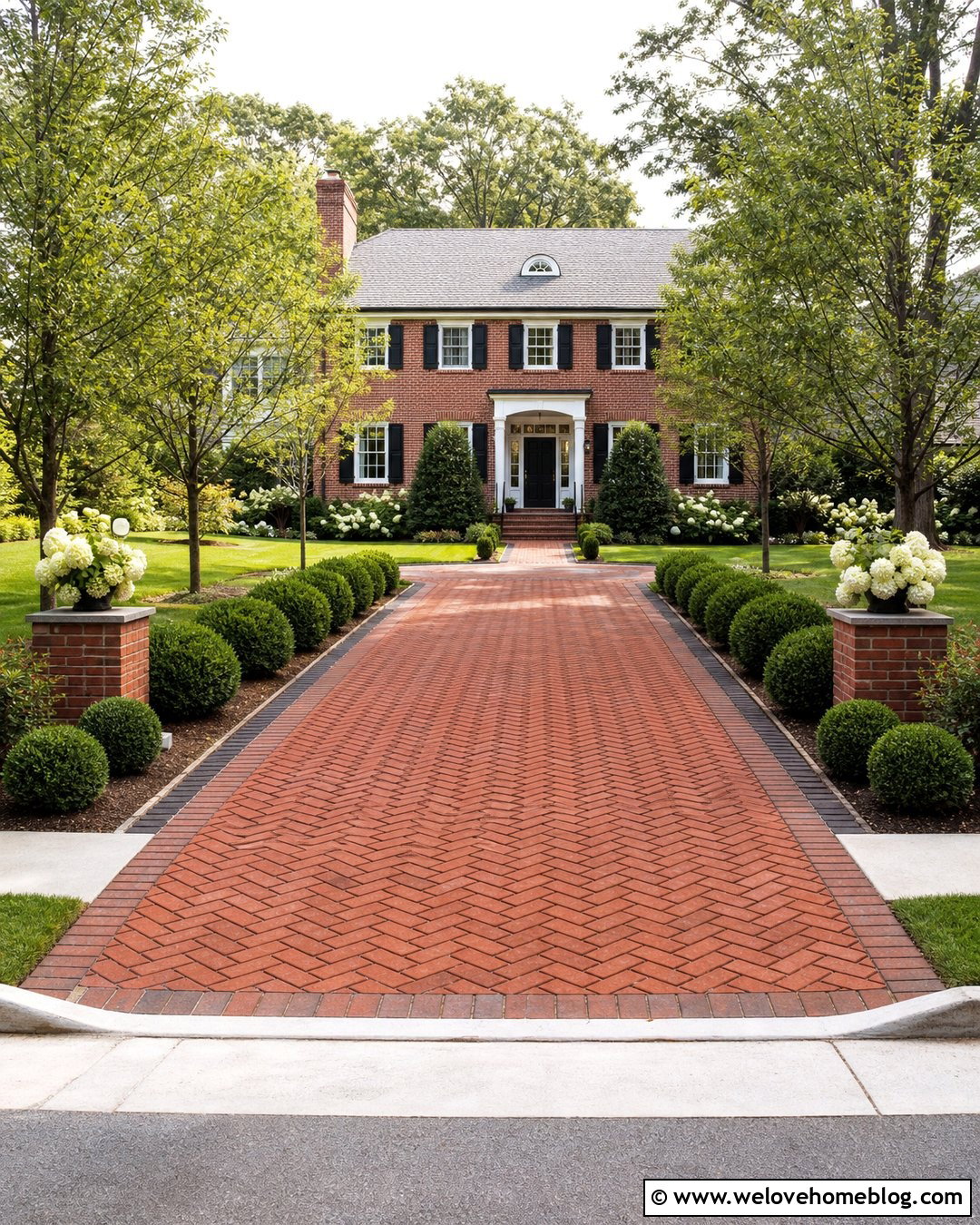
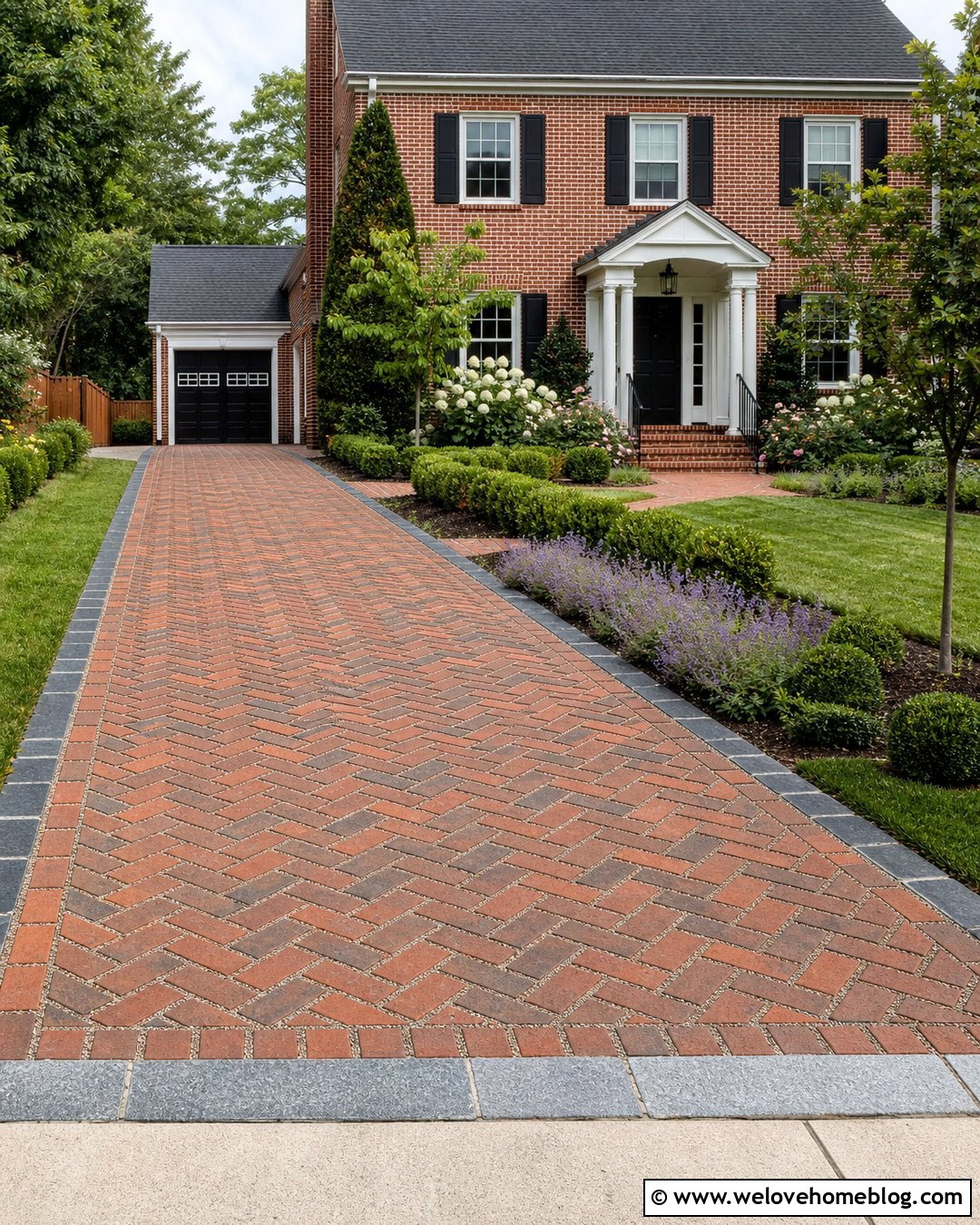
Rich clay brick laid in a herringbone pattern makes the entire driveway feel connected to a Colonial, Tudor, or traditional red brick home. The interlocking visual pattern suits a straight or gently flared approach, while a soldier-course brick border creates a strong finished edge. Choose darker bricks for the border and a varied red blend through the center to disguise everyday dust. Symmetrical boxwoods, hydrangeas, and small ornamental trees can reinforce the formal layout. A brick walkway leading from the driveway to the front door completes the design. Individual brick pavers allow localized pieces to be lifted and replaced when necessary, but performance depends heavily on the base, edge restraints, joint material, and installation quality. Brick also offers multiple patterns, including herringbone and basket weave. ()
7. Cobblestone Driveway With Formal Landscaping
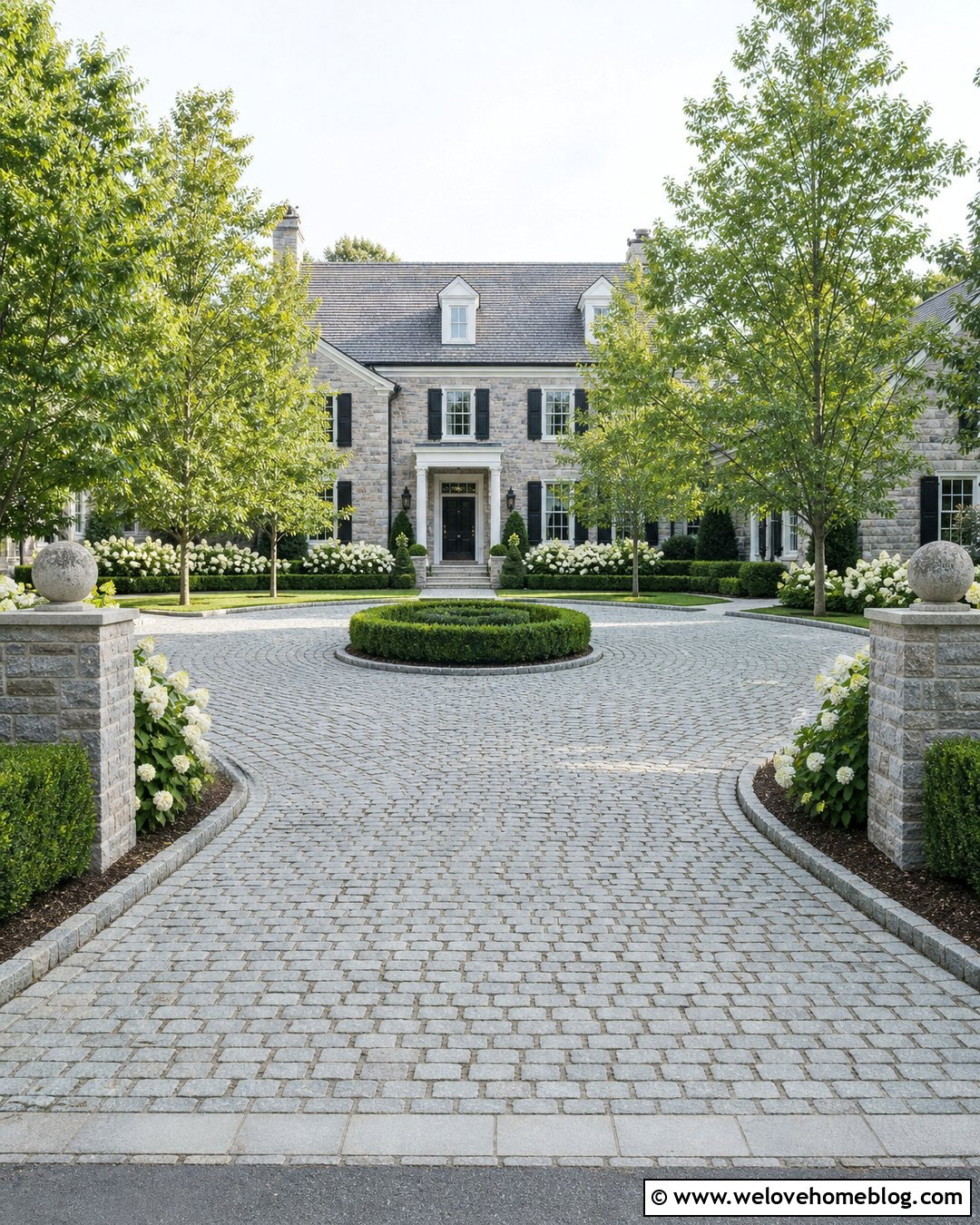
Granite cobblestone creates a substantial driveway with unmistakable texture and a long-established appearance. Use it across a circular layout surrounding a clipped boxwood island or a single specimen tree. Rectangular granite setts laid in gentle arcs can follow the driveway’s curves, while flush granite curbs hold the outer edges securely. This surface pairs naturally with stone Colonial, European-inspired, and large traditional homes. Keep the landscaping organized with evergreen hedges, white flowering shrubs, and evenly spaced trees. Because cobblestone is an investment material, reserve it for a smaller circular drive or combine it with a less costly surface beyond the main entrance. A professionally engineered base is vital for supporting vehicles and maintaining an even surface. Carefully selected stone color can also coordinate with the house facade, walkways, and entrance pillars. ()
8. Permeable Paver Driveway With Gravel Joints
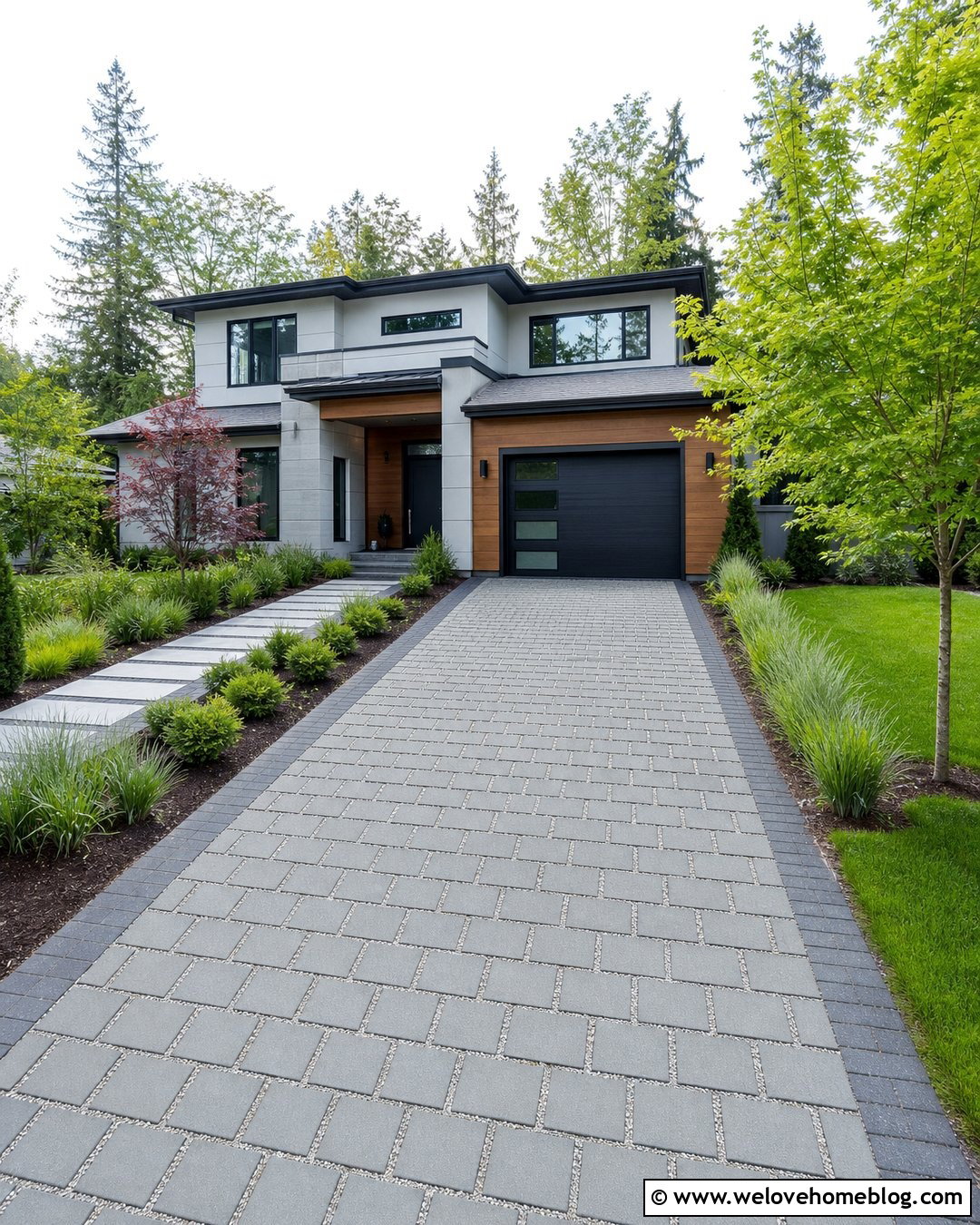
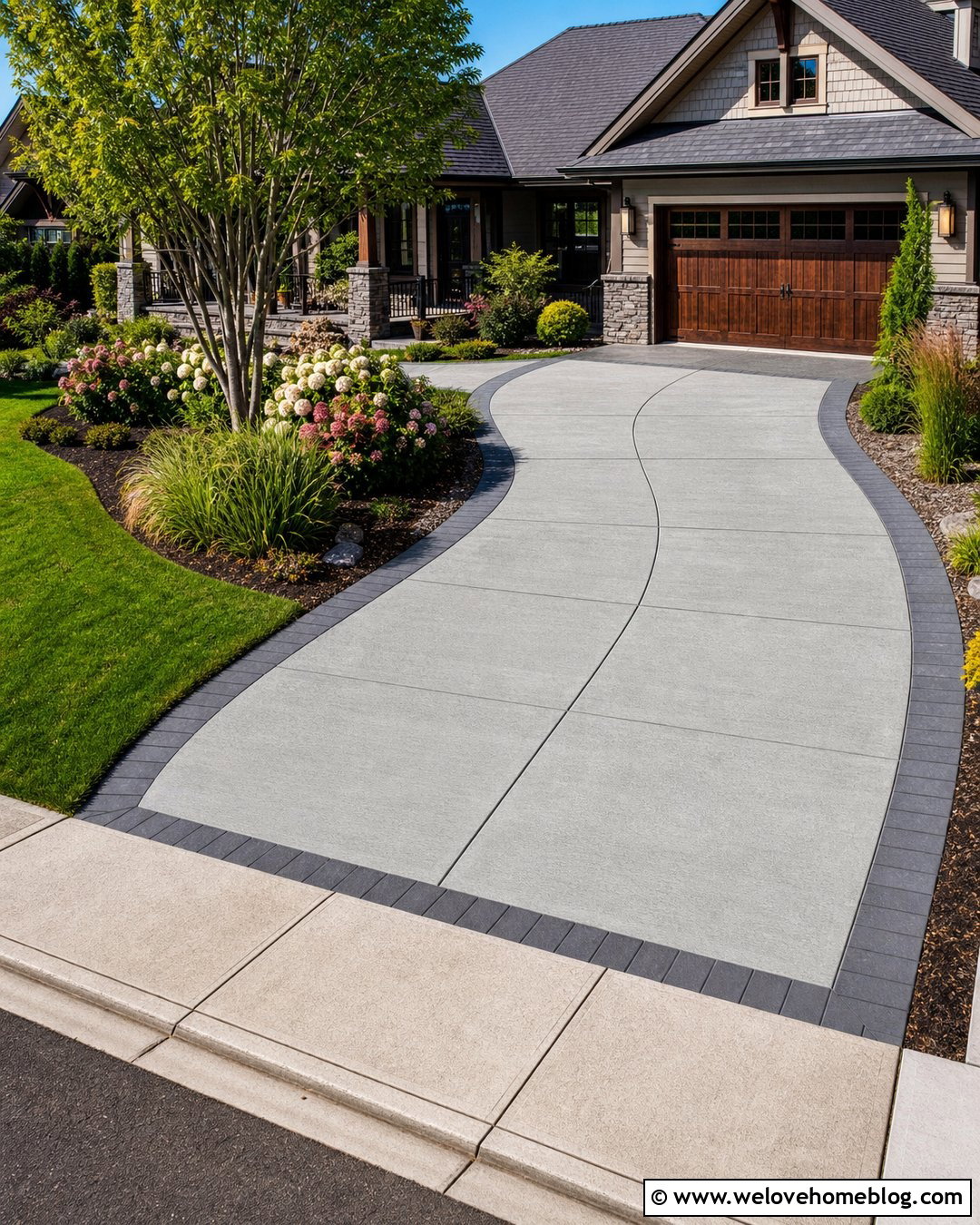
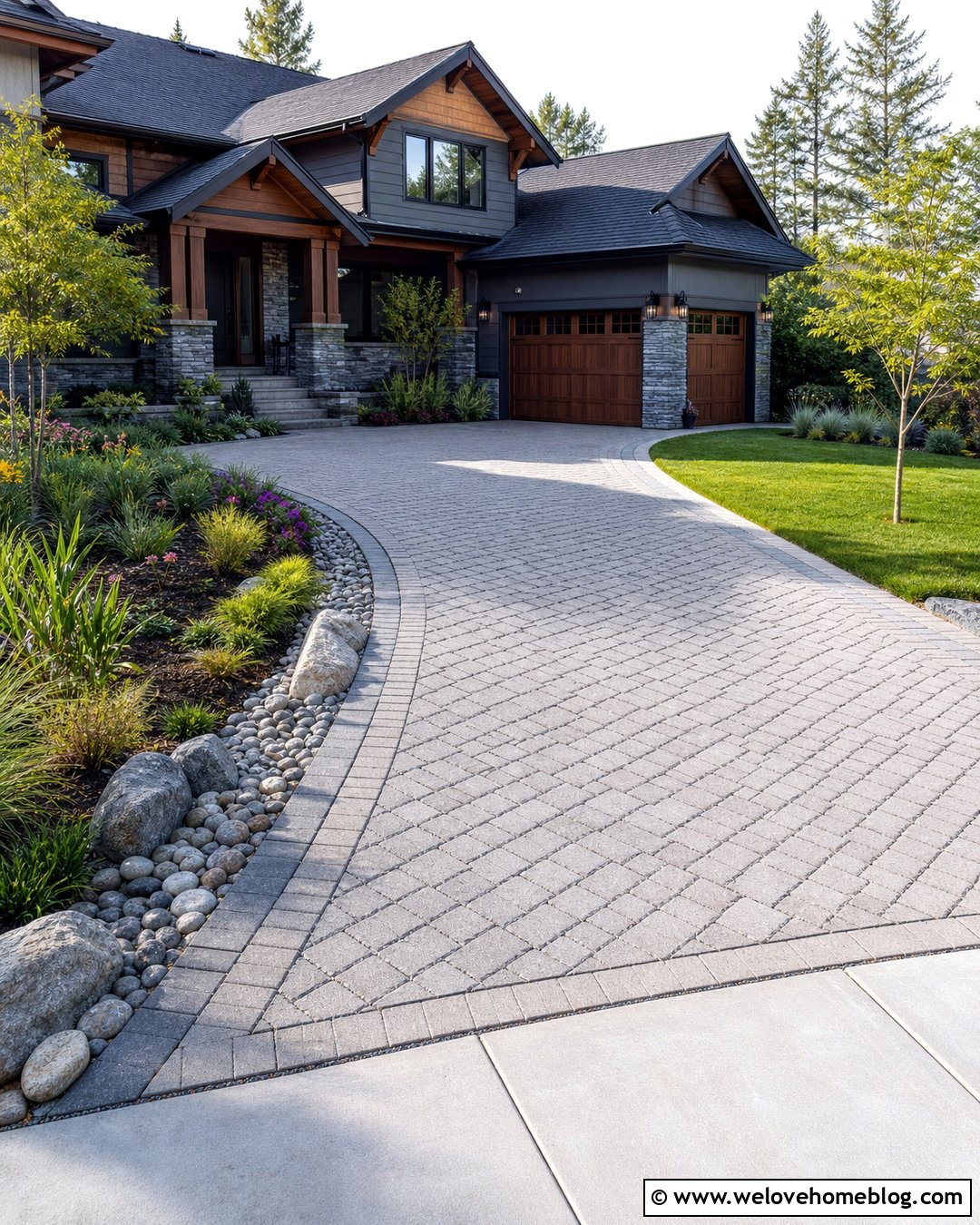
Permeable interlocking pavers offer an orderly, finished driveway while allowing stormwater to pass through enlarged joints filled with clean aggregate. Choose medium-gray pavers for a straight modern driveway and define the edges with a darker charcoal border. Repeating the border material in the front walkway creates a cohesive connection to the house. Rain gardens, native sedges, inkberry, and compact flowering shrubs can receive or complement water moving through the landscape. The visible pavers are only one part of the system. Open-graded bedding and reservoir layers beneath the surface provide space for water before it infiltrates the soil or enters an underdrain. () A qualified designer should evaluate soil infiltration, groundwater, slope, winter conditions, and local requirements before specifying this attractive alternative.
9. Resin-Bound Gravel Driveway With Paver Edging
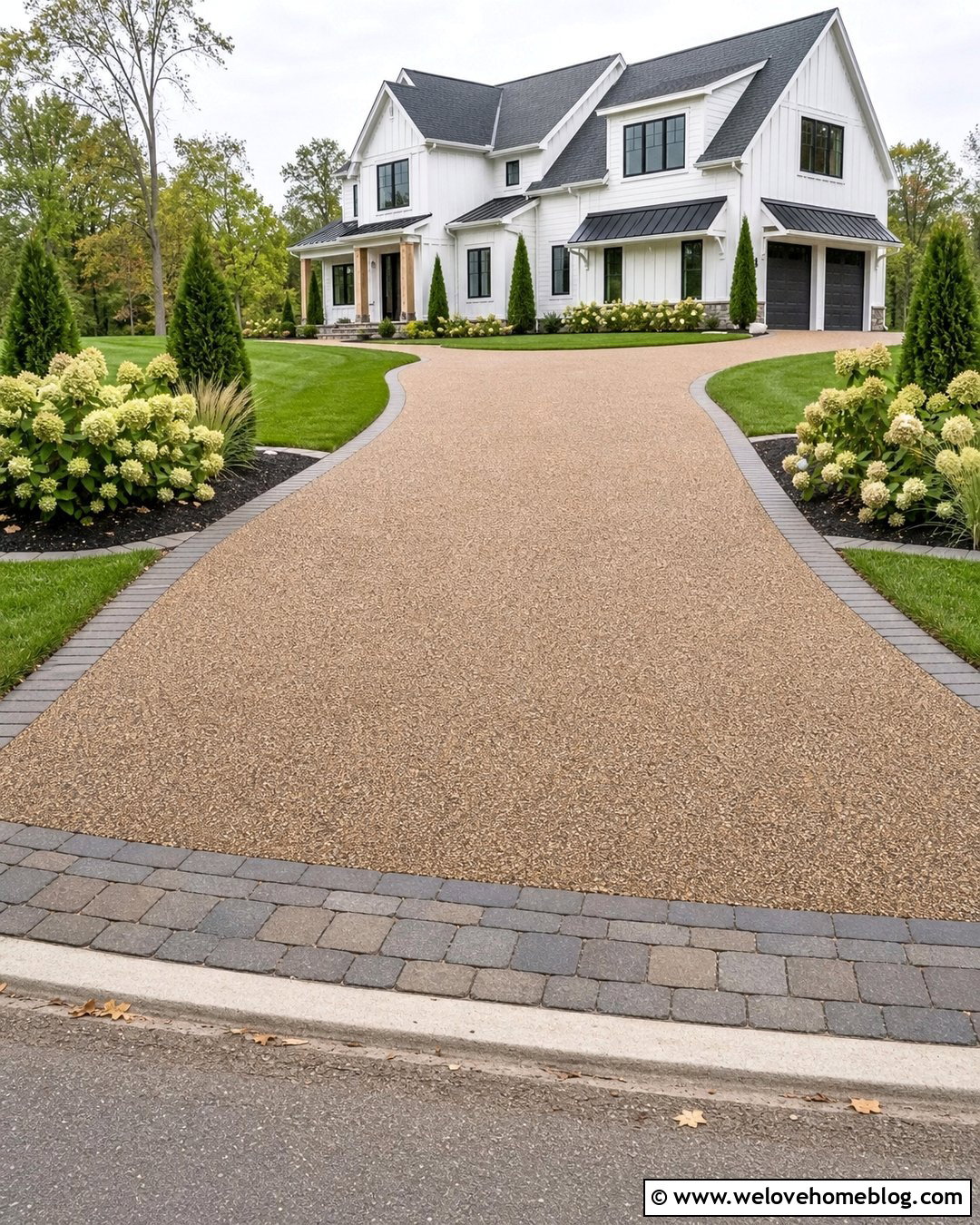
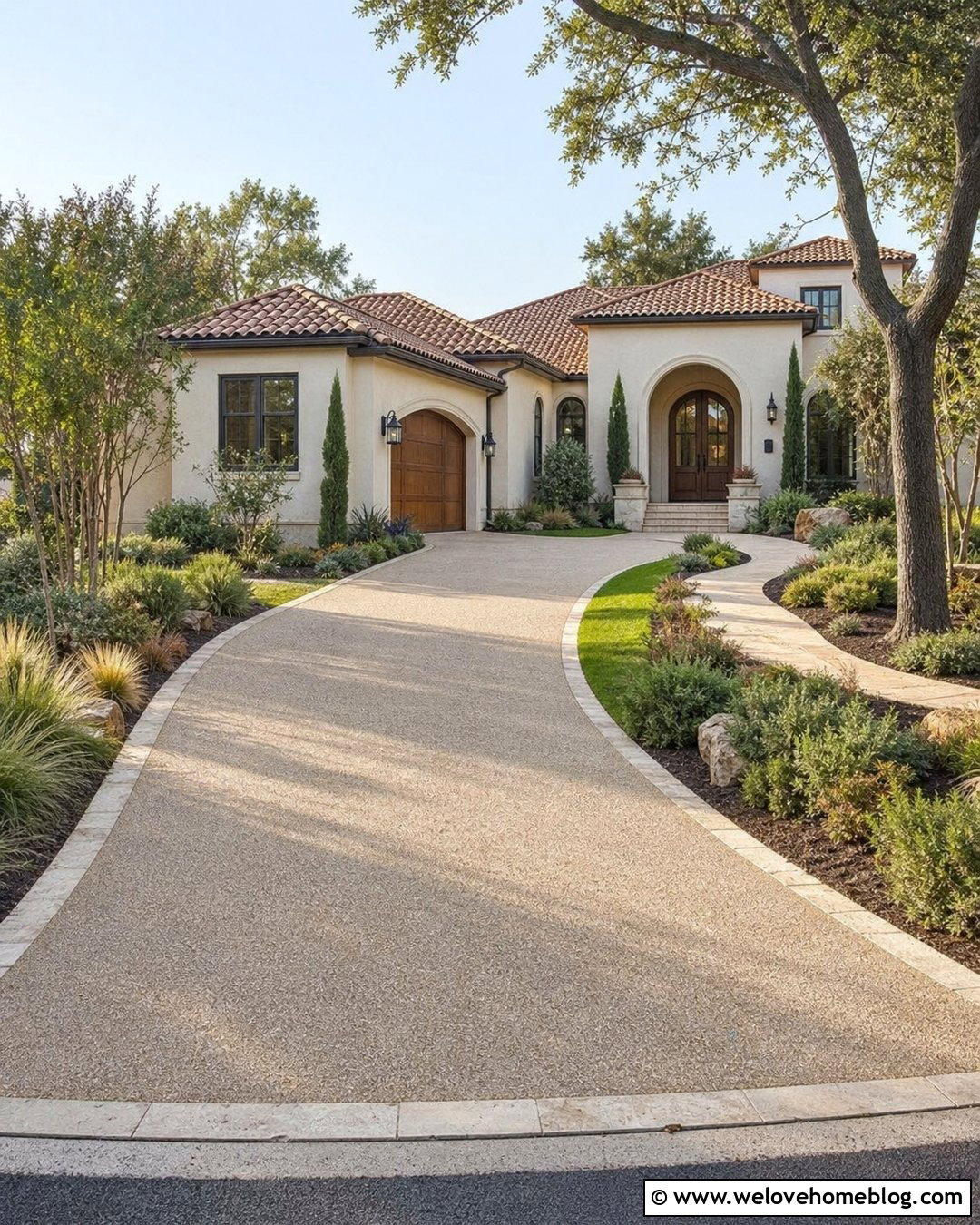
Resin-bound gravel combines small aggregate and resin into a smooth, visually consistent surface. A warm buff blend can brighten a curved driveway leading to a white modern farmhouse, while dark clay paver edging provides definition. Extend the pavers across the entrance as a decorative ribbon and around planting islands to unify the design. Hydrangeas, upright evergreens, ornamental grasses, and a neat lawn will soften the driveway’s clean appearance. Resin-bound and resin-bonded treatments are different systems, so verify exactly what a contractor proposes. A correctly specified resin-bound surface can be permeable when installed as part of a suitable open base, but drainage performance depends on the complete construction. () Ask about aggregate depth, binder type, UV stability, curing requirements, edge support, and suitability for local temperatures.
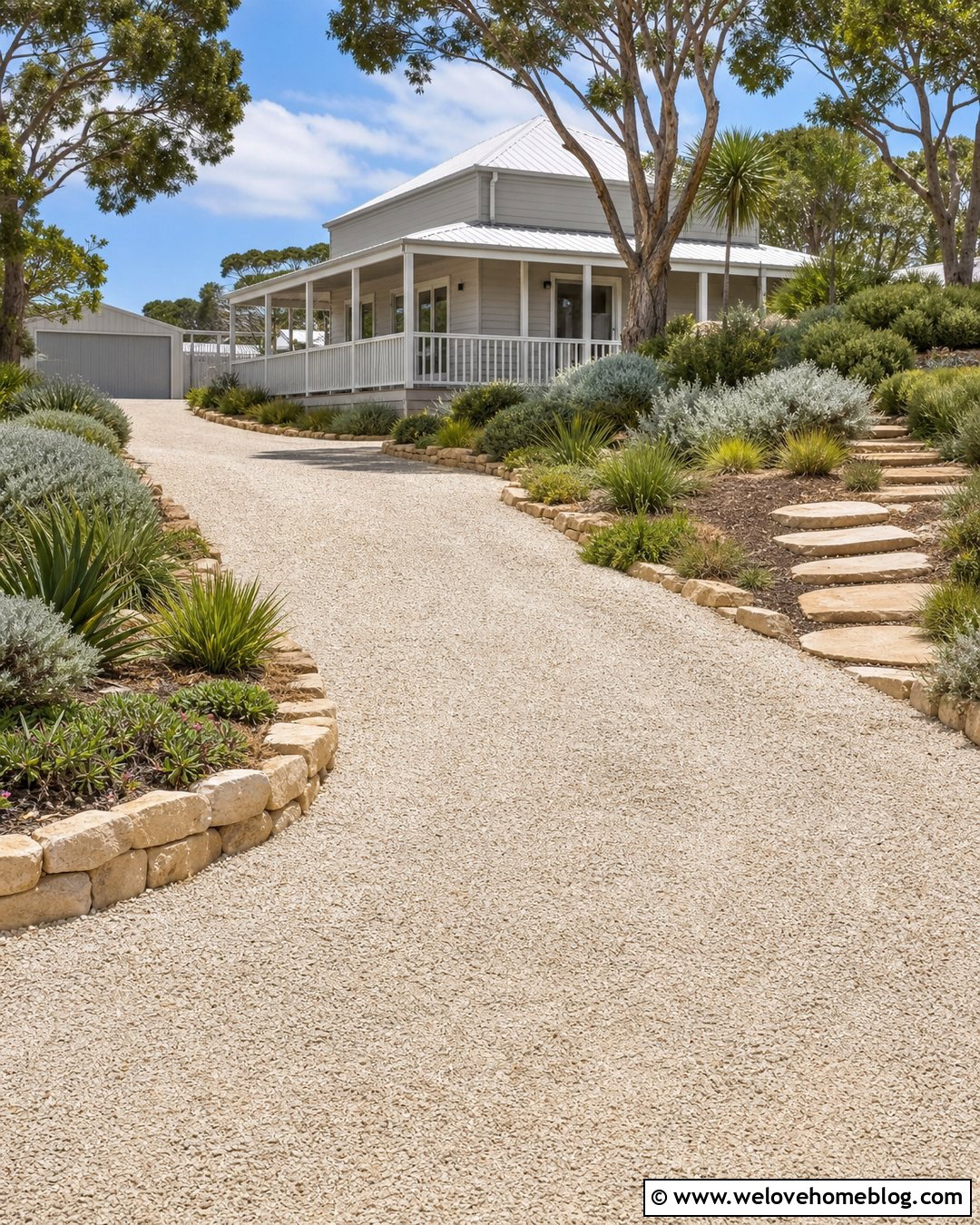
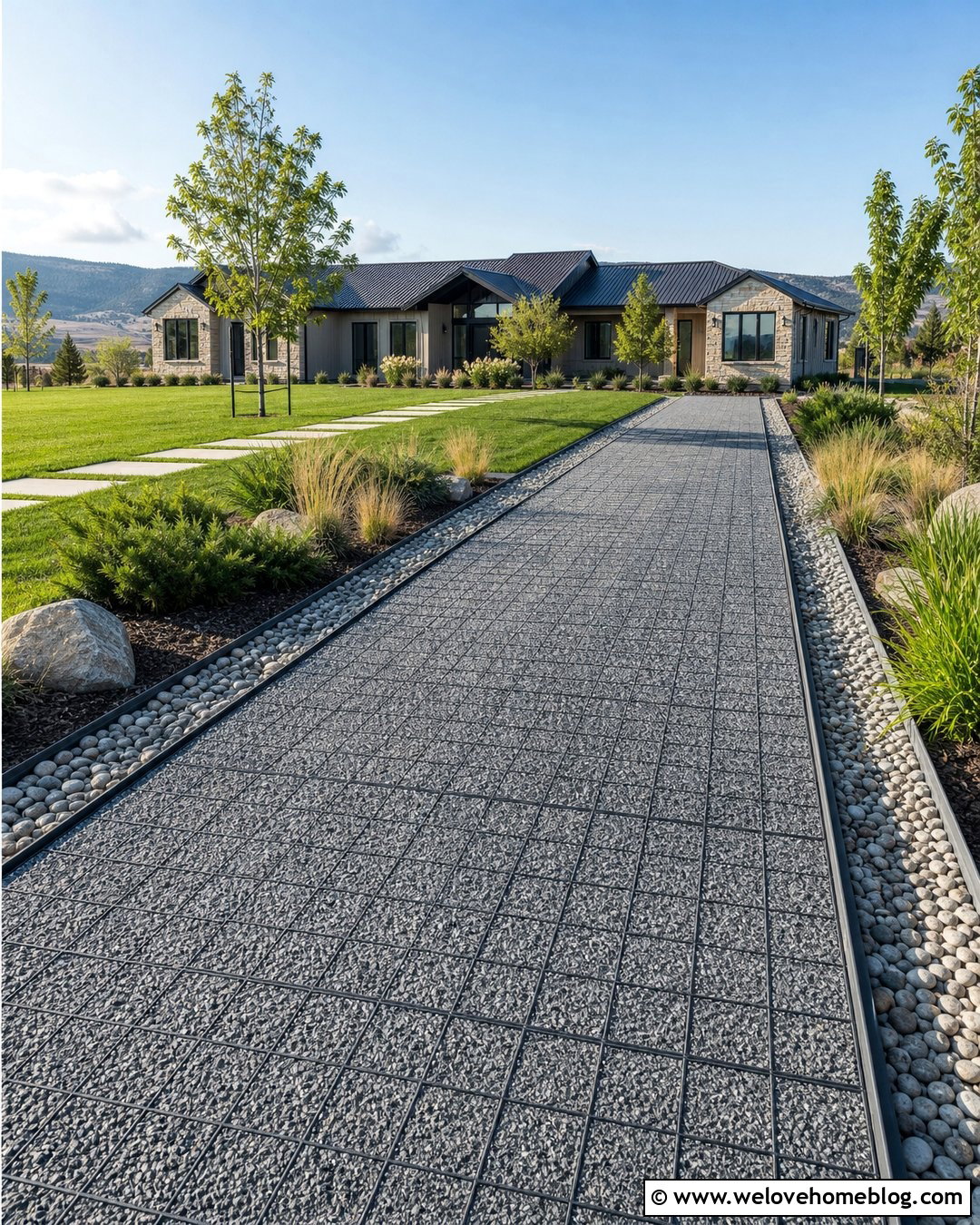
10. Recycled Asphalt Driveway With Stone Edging
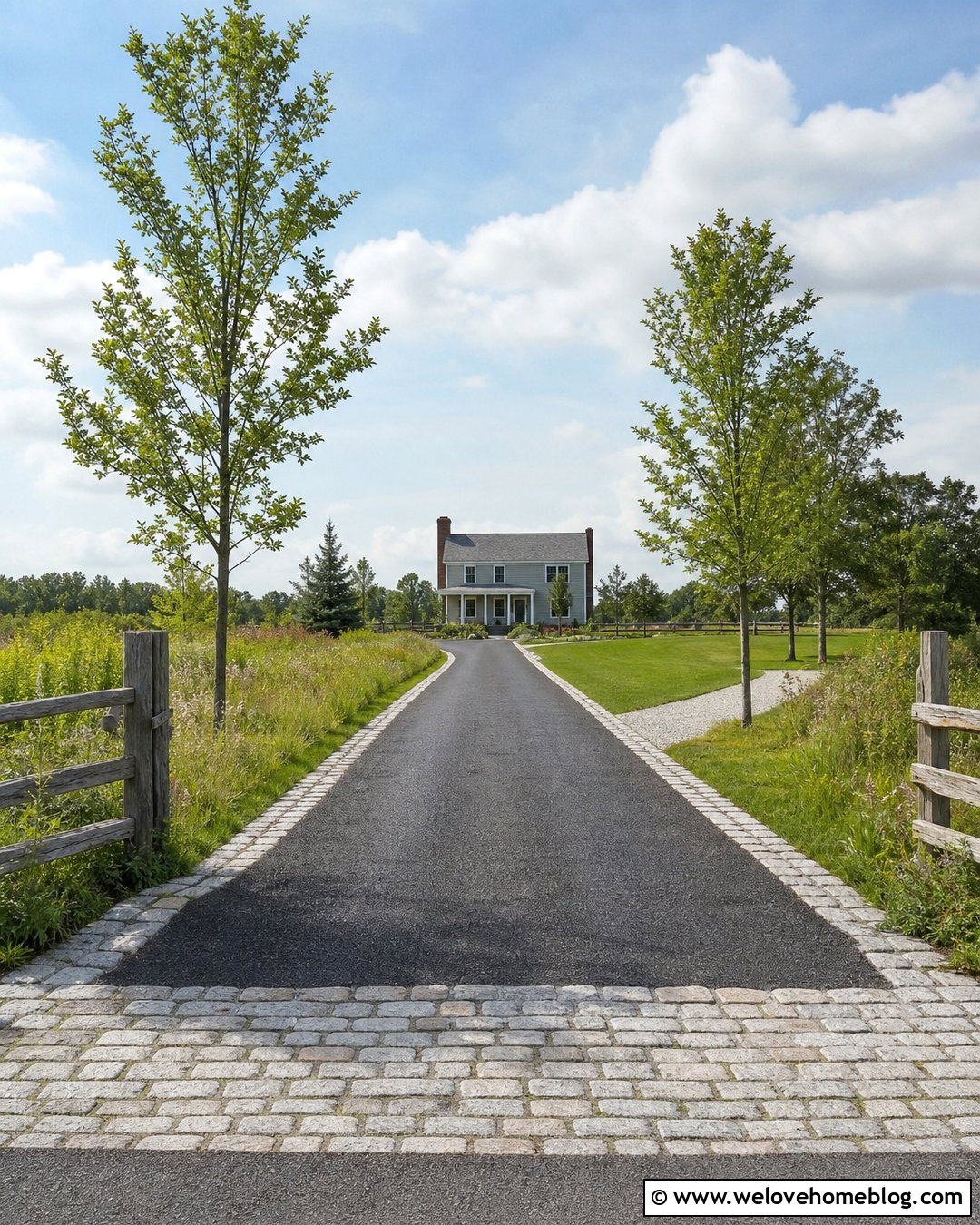
Recycled asphalt creates a practical dark-gray driveway that feels more finished than ordinary gravel but less formal than newly paved black asphalt. Use it on a long country approach where the driveway needs to blend with barns, wooded edges, or a modest farmhouse. Compact the reclaimed material carefully and install strong stone edging near landscaped areas. At the road, a wide apron of granite cobbles can create a durable transition and prevent the entrance from looking unfinished. Native meadow grasses, deciduous trees, and simple split-rail fencing reinforce the rural character. Material quality can vary, so ask where the reclaimed asphalt came from and whether it is appropriate for residential compaction. Proper grading remains essential. Direct runoff toward stable vegetated swales rather than allowing water to cut channels through the surface or gather beside buildings.
11. Tar And Chip Driveway With Fieldstone Borders
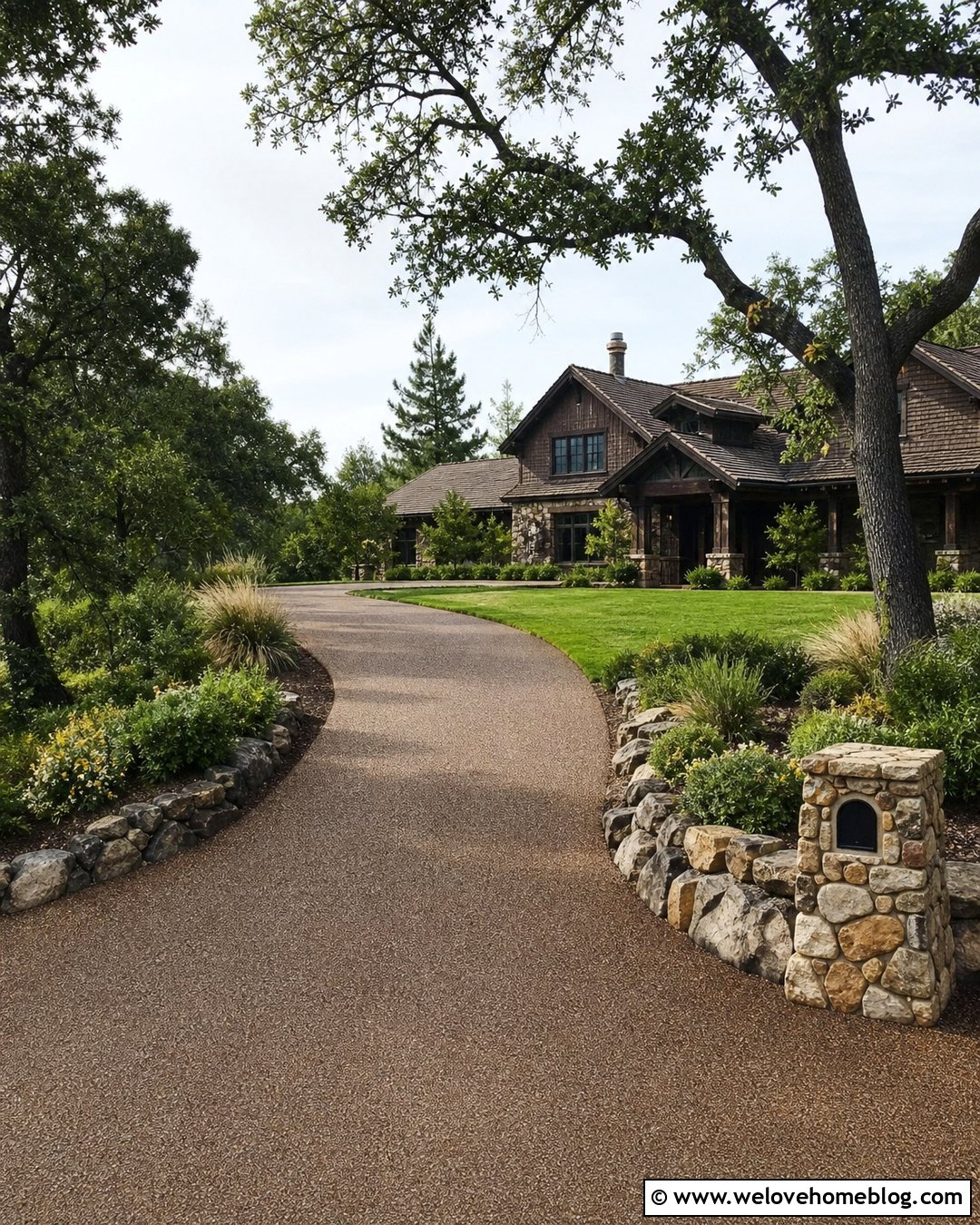
Tar and chip, also called chip seal, produces a textured driveway using a bituminous layer topped with stone aggregate. The finished color depends on the selected chips, making this surface more adaptable than standard black asphalt. Choose warm brown stone for a sweeping driveway serving a rustic Craftsman or country home. Fieldstone borders can contain adjacent planting beds, while a matching stone mailbox pier establishes a coordinated entrance. Use oak trees, native shrubs, and broad grass areas to frame the drive without hiding its graceful curve. The surface generally feels firmer than loose gravel, although small stones and texture remain visible. Contractor experience matters because application rates, base condition, compaction, and weather can influence the result. Confirm local availability, maintenance expectations, and snow-removal compatibility before choosing this treatment.
12. Grass Paver Driveway With Stone Wheel Strips
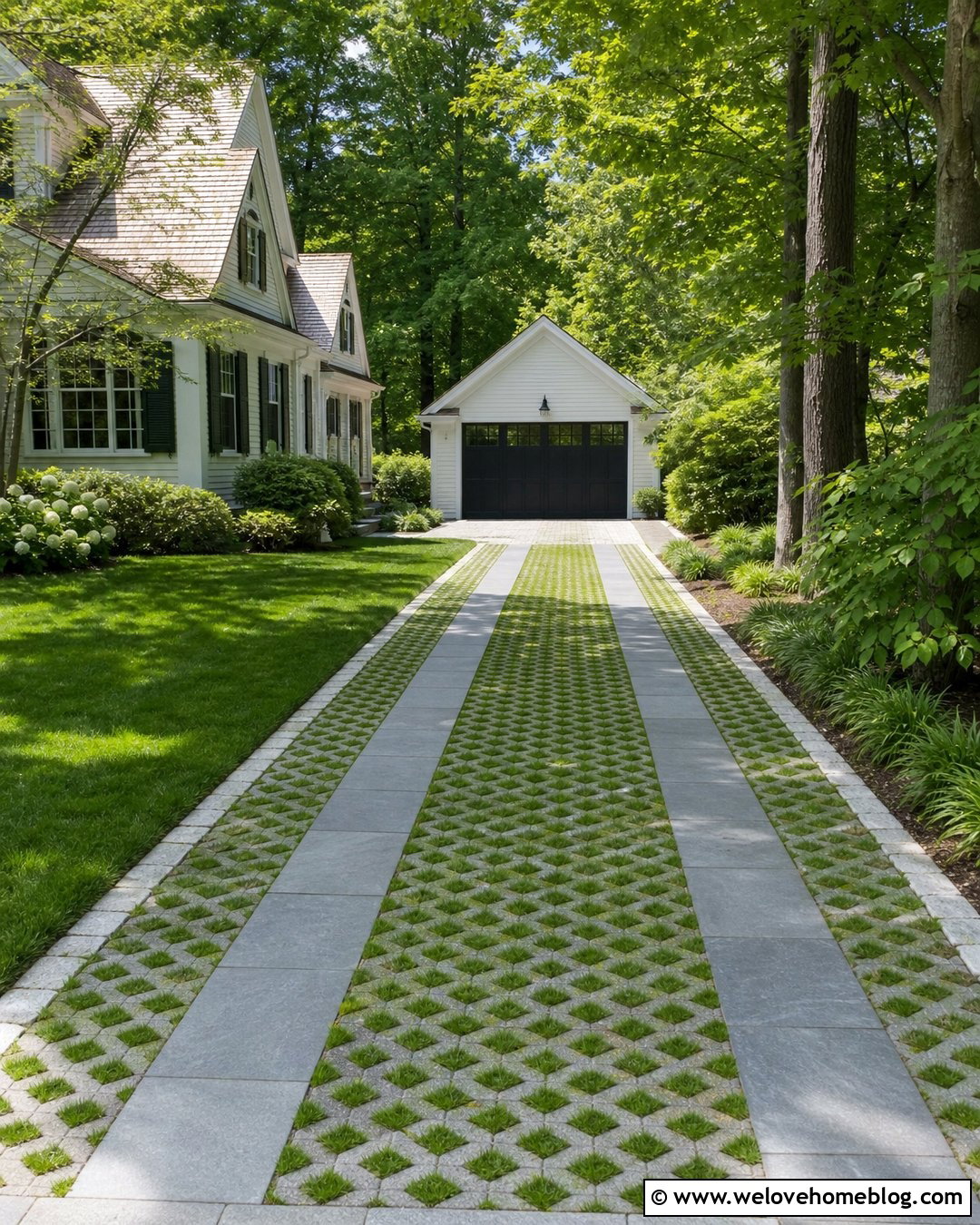
Grass pavers create a green driveway that visually extends the lawn while providing a reinforced route for vehicles. Use grass-filled cellular pavers across a straight secondary drive, then add two natural stone wheel strips for clearer daily guidance. The combination is well suited to guest parking, side-yard access, or a lightly used approach to a detached garage. Low groundcovers, shade trees, and native planting beds can make the driveway feel like part of the landscape. Grass-filled systems require suitable soil, sunlight, irrigation, mowing access, and a structural base designed for expected loads. They may be less practical where traffic is constant or snow management is demanding. Reinforced lawn and gravel grid systems are recognized permeable options because water can move through the open surface. ()
13. Crushed Shell Driveway With Brick Edging
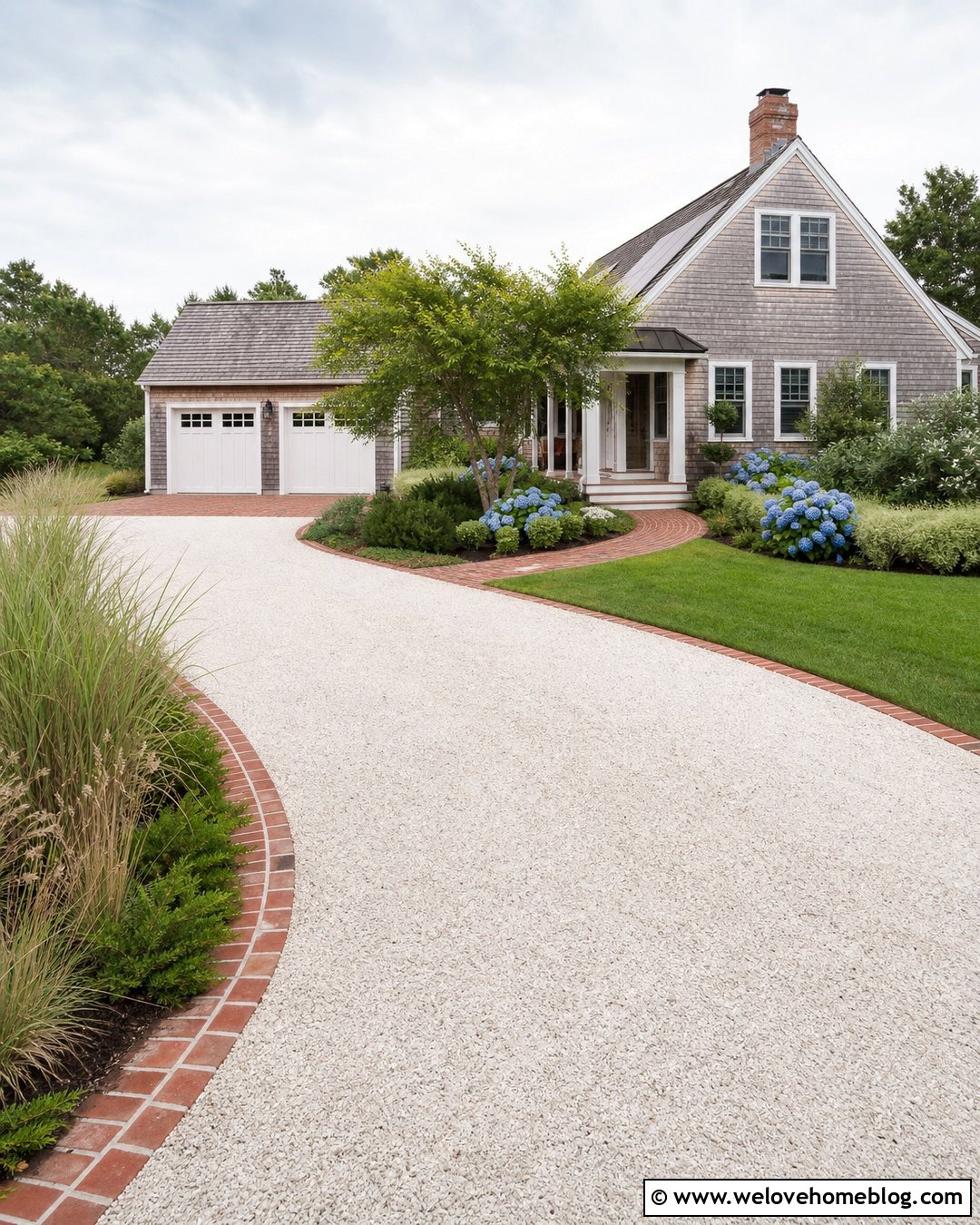
Pale crushed shell creates a bright coastal driveway that complements shingle-style homes, beach cottages, and light-colored ranch houses. Shape the driveway with a relaxed curve and use weathered red brick edging to keep shell fragments away from the lawn. A brick parking pad near the garage can provide a stable transition where vehicles turn most often. Plant ornamental grasses, bayberry, hydrangeas, and salt-tolerant shrubs around the perimeter for an authentic coastal setting. Crushed shell availability and suitability vary greatly by region, making local sourcing important. Install it over a properly compacted aggregate base rather than untreated soil, and expect periodic raking or replenishment. Confirm whether shell material is legally and responsibly sourced. The pale surface, brick border, and airy landscaping should work together as one casual but deliberately organized entrance.
14. Granite Setts Driveway With Courtyard Layout
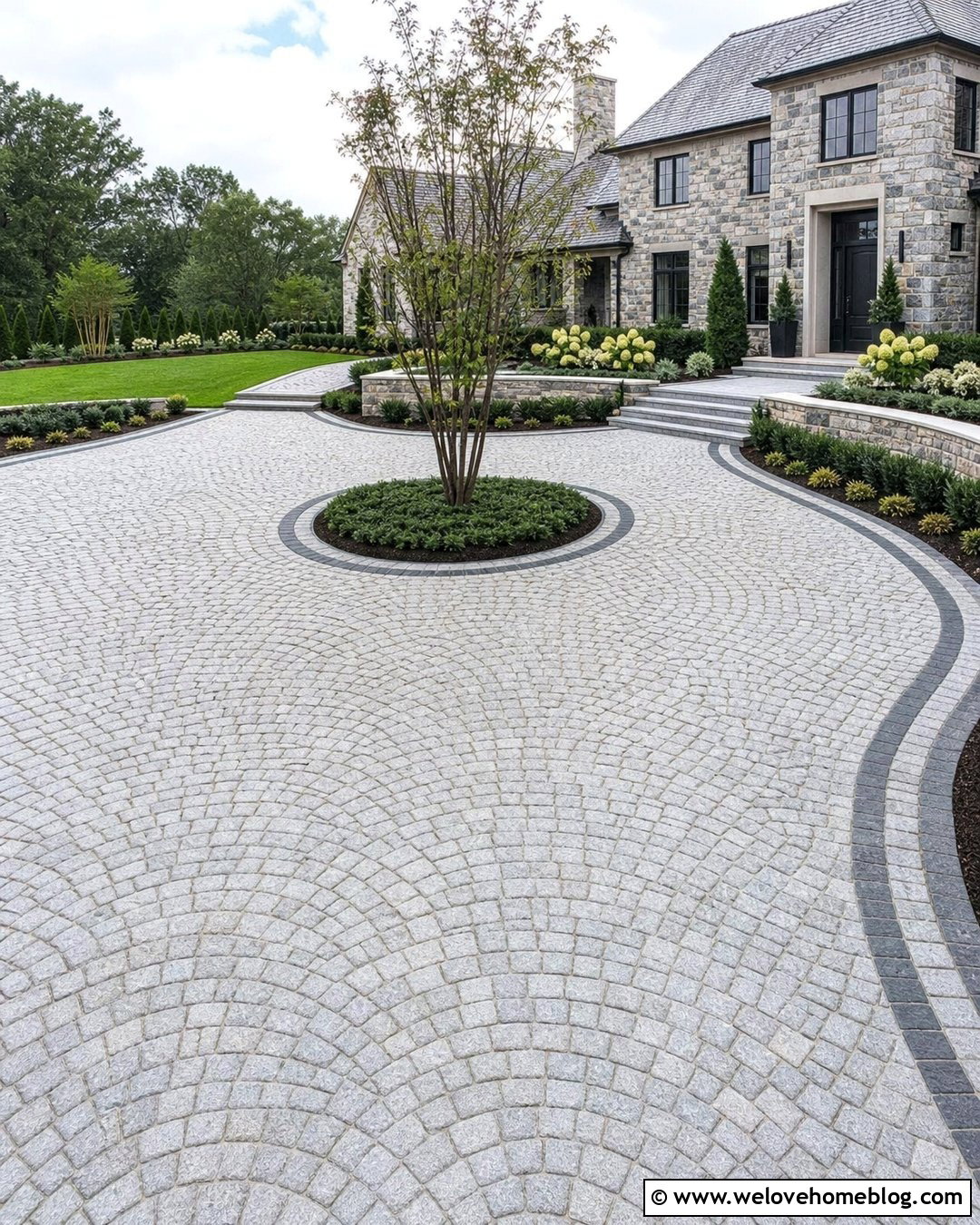
Granite setts are rectangular natural stone blocks that can create a structured courtyard driveway without relying on poured concrete. Lay silver-gray setts in fan patterns across a wide arrival court, then outline the space with charcoal granite bands. A central planting island can hold a compact multi-stem tree surrounded by evergreen groundcover. This arrangement suits stone farmhouses, European-inspired homes, and renovated traditional properties. Use matching granite steps and a simple walkway to connect parking areas to the front entrance. Because natural stone units vary in size and texture, careful setting produces a smoother, more coherent driving surface. The foundation and edge restraints must be designed for vehicle movement. If a full granite driveway exceeds the budget, combine setts at the entrance and turning area with compacted gravel along the longer approach.
15. Porous Asphalt Driveway With Rain Garden
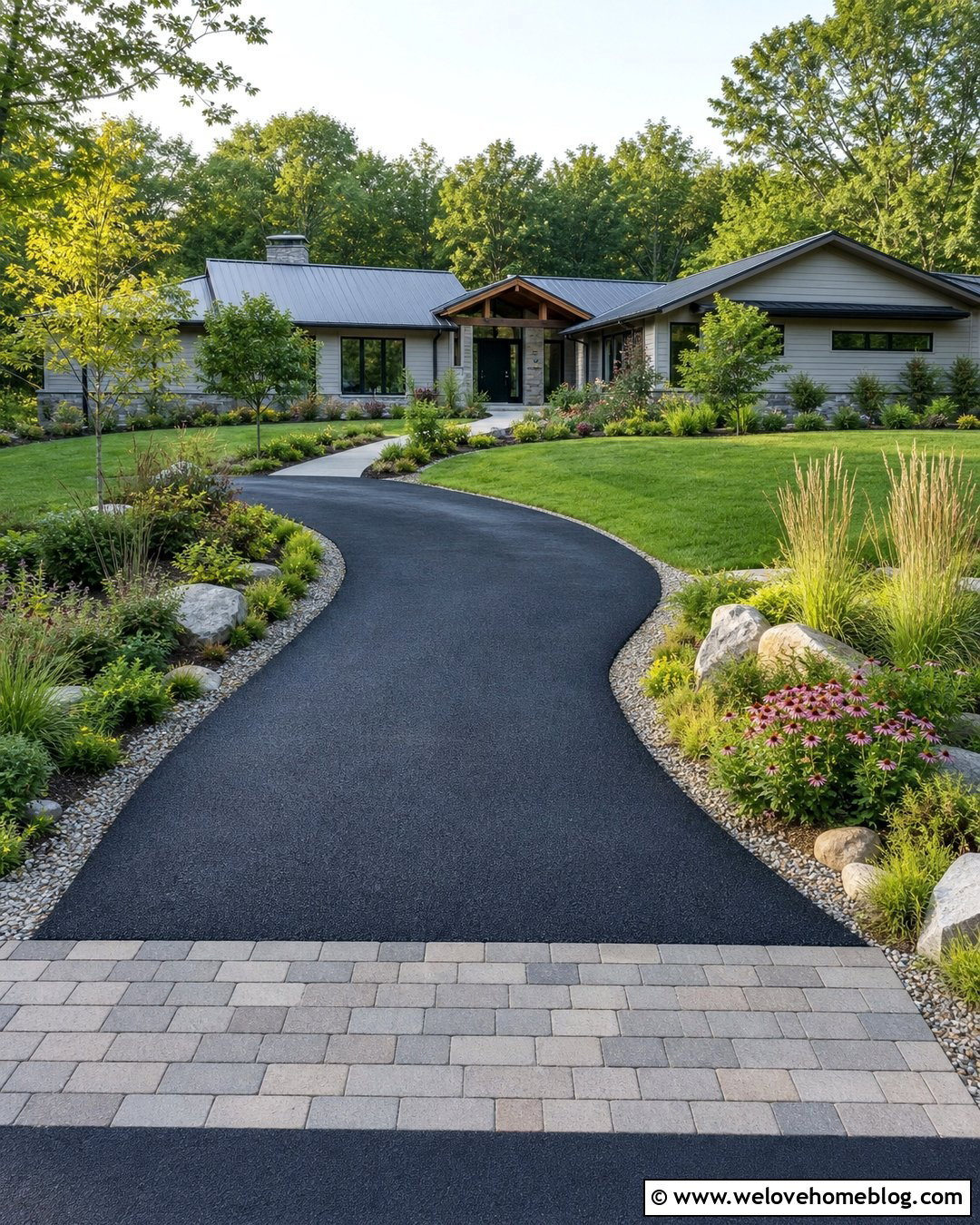
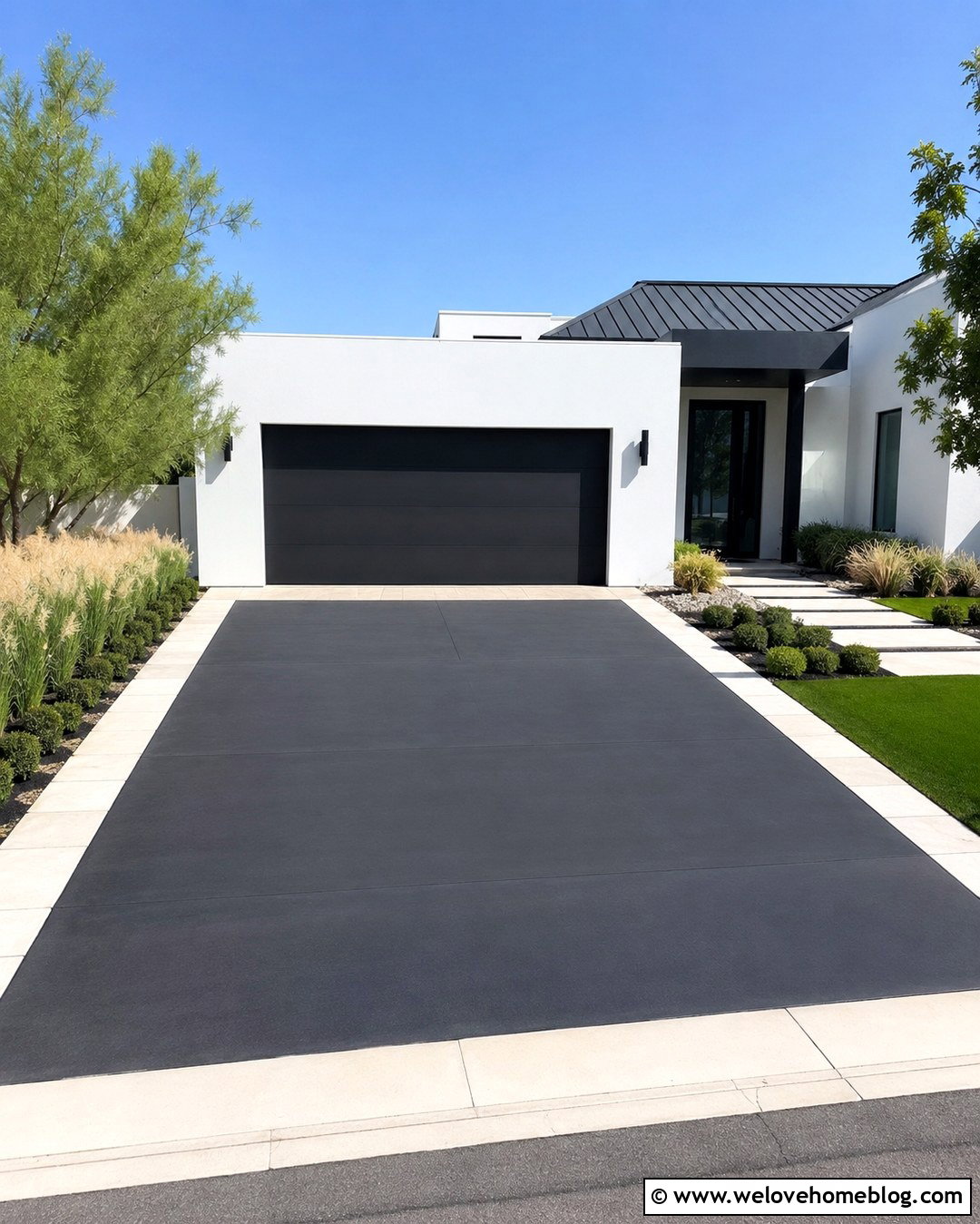
Porous asphalt preserves the smooth, dark appearance of asphalt while allowing water to enter openings in the pavement. Pair it with a gently sloped driveway that directs excess flow toward a planted rain garden rather than the street. A flush band of permeable pavers can separate the driveway from the sidewalk and highlight the entrance. Native sedges, switchgrass, coneflowers, and moisture-tolerant shrubs give the drainage area year-round structure. Beneath the asphalt, clean stone layers store water temporarily before infiltration or controlled drainage occurs. () Porous asphalt is a complete engineered system, not simply ordinary asphalt with holes. Soil conditions, sediment exposure, maintenance access, groundwater separation, and winter care require professional evaluation. Regular cleaning may be needed to prevent fine debris from restricting surface infiltration.
16. Slate Chip Driveway With Metal Edging
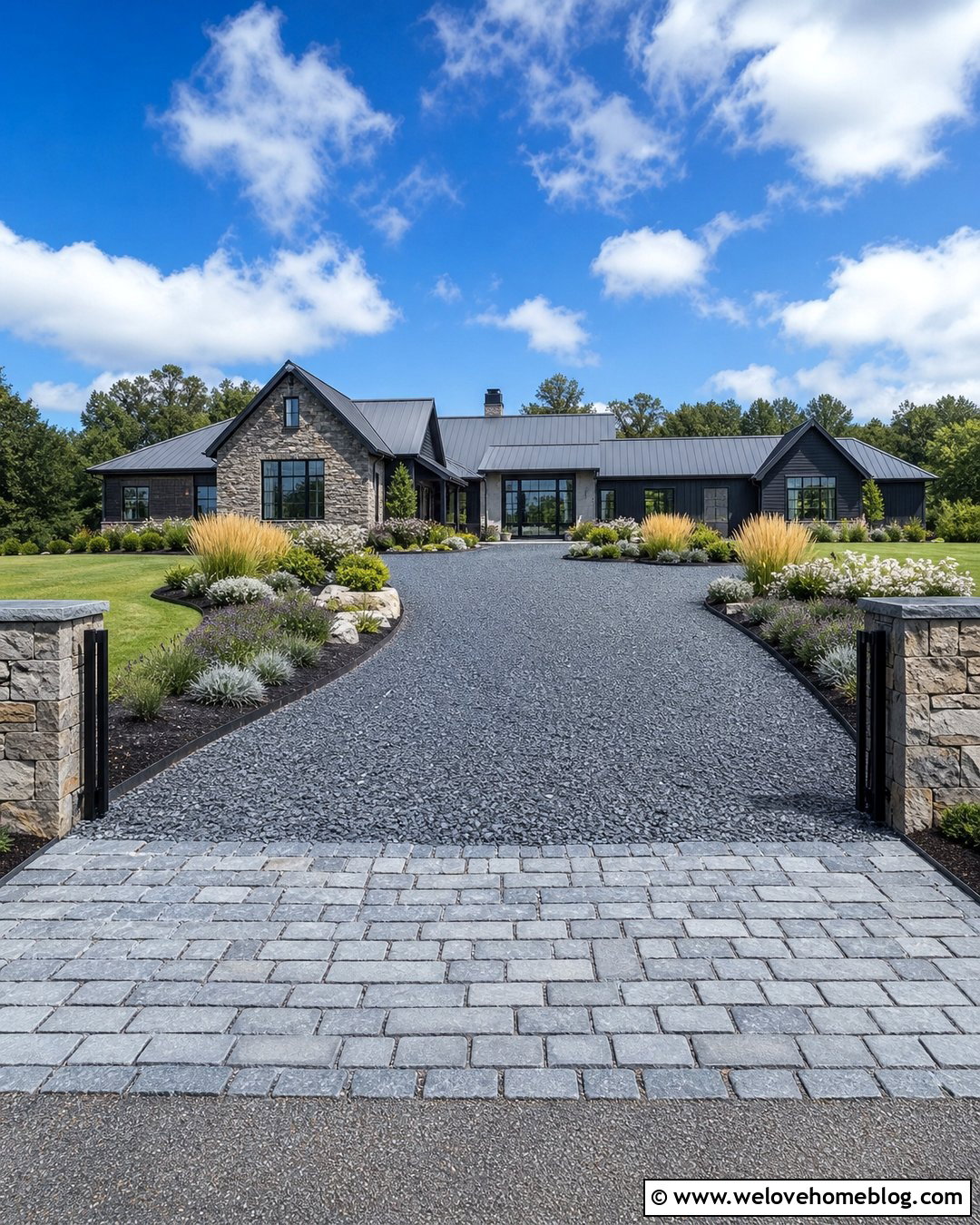
Blue-gray slate chips give a driveway deep color and attractive variation without creating the uniform look of concrete. Use angular chips within a broad horseshoe layout leading to a contemporary country home. Black metal edging provides a clean outline, while larger slate slabs can form a walkway through the adjacent garden. To prevent the dark surface from feeling heavy, add pale ornamental grasses, white flowering shrubs, silver foliage, and open green lawn. Slate chips should be selected for vehicle use because thin or brittle decorative products may break down too quickly. Place the surface over compacted structural aggregate and incorporate a stabilization grid if movement is a concern. A contrasting cobblestone or paver apron at the street can capture stray pieces and make the horseshoe entrance appear more permanent and carefully detailed.
17. Limestone Gravel Driveway With Brick Ribbon
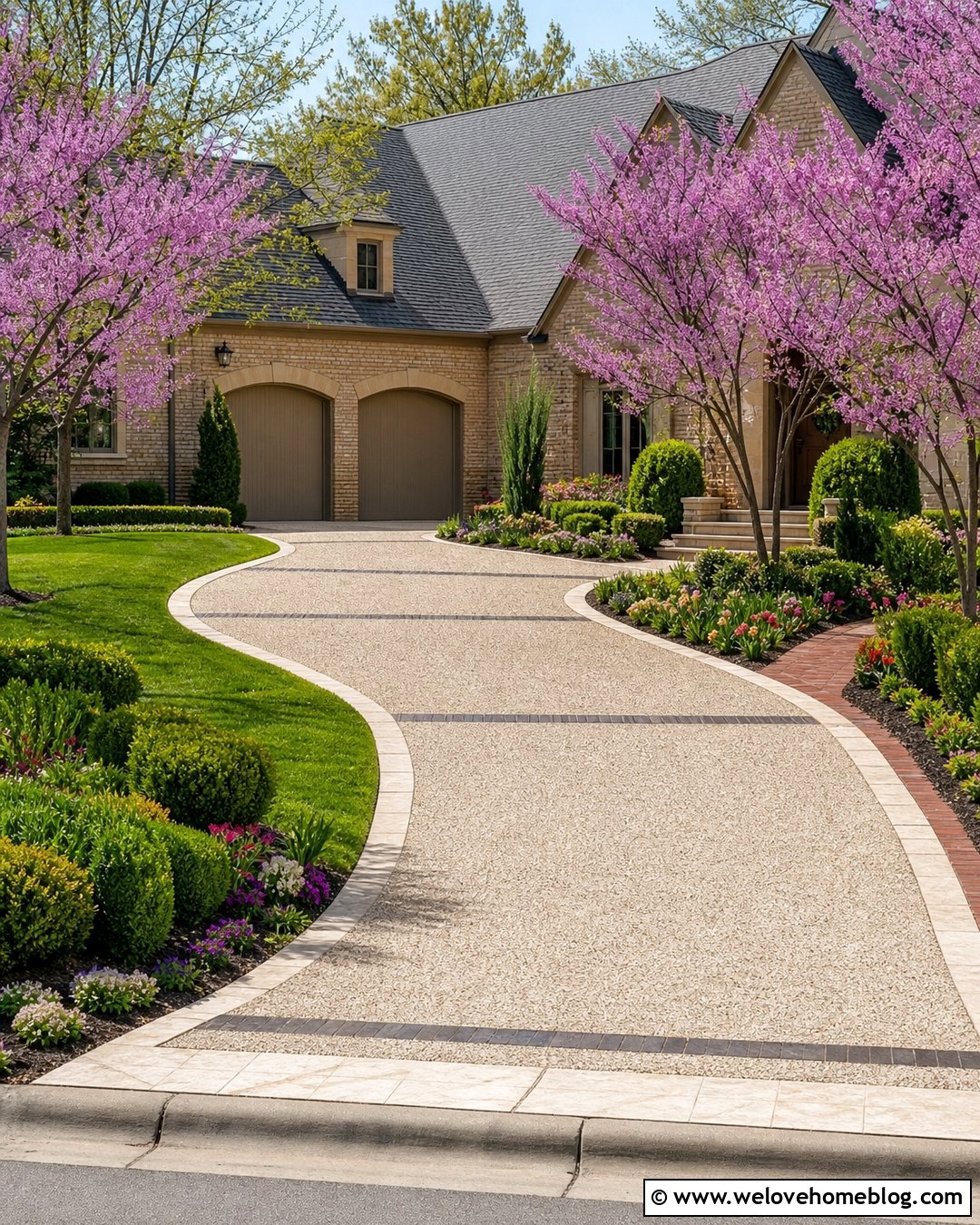
Cream-colored limestone gravel can brighten a long driveway and coordinate naturally with tan brick, limestone, or warm stucco homes. Create a softly curved route and insert a dark brick ribbon across the surface at the entrance, halfway point, and garage apron. These visual breaks make a long driveway feel designed rather than purely functional. Limestone curbing can hold the outer edges, while redbuds, clipped shrubs, and layered perennial beds add color. Choose angular driveway-grade limestone rather than smooth decorative pebbles, then compact it over an adequately prepared base. Fine limestone dust may lighten nearby plants or structures, so consider prevailing wind and maintenance expectations. The combination of pale aggregate, dark brick accents, and generous landscaping creates an inviting approach that works for both traditional homes and updated suburban properties.
18. Flagstone Driveway With Gravel Joints
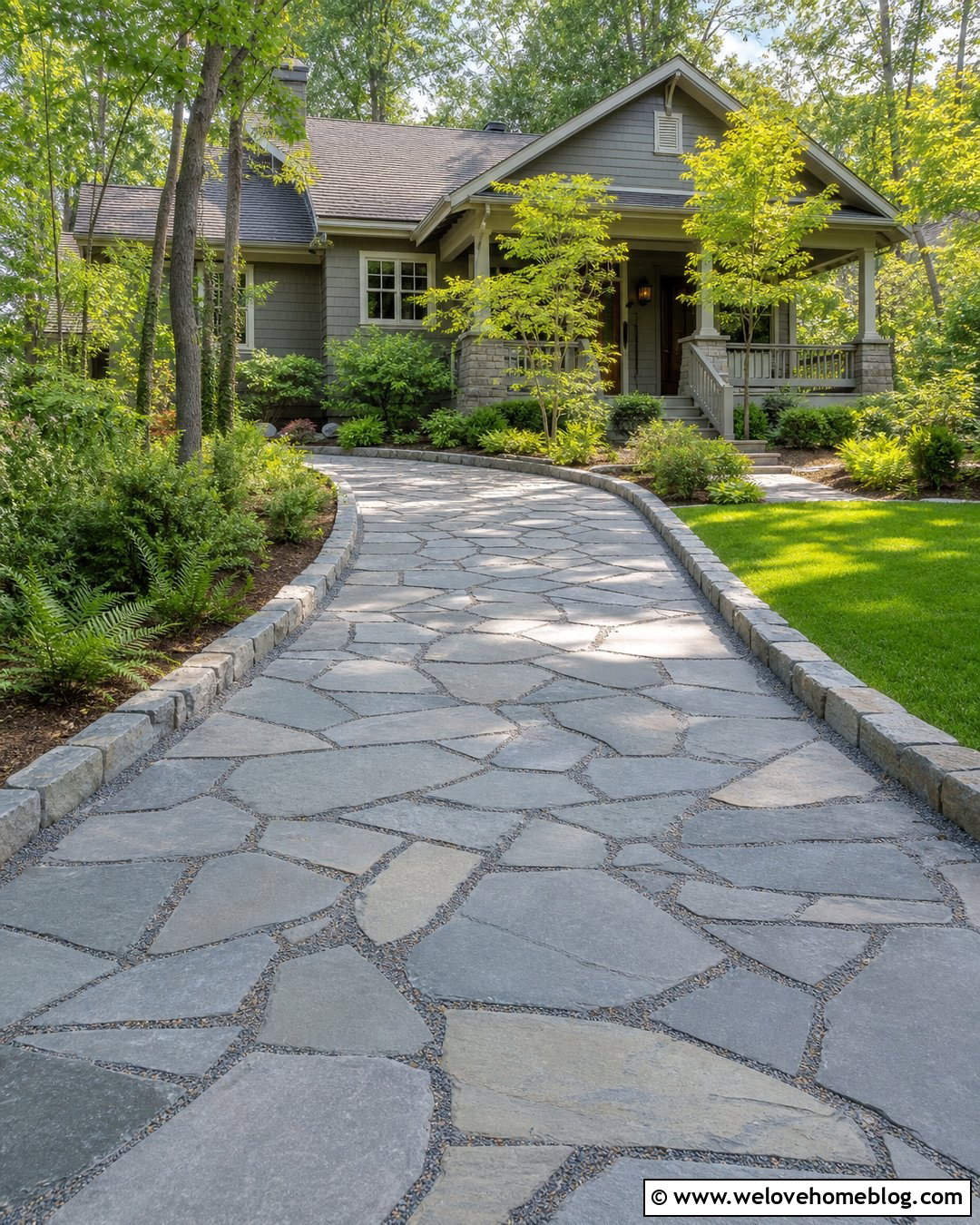
Thick, vehicle-rated flagstone can create a distinctive driveway when installed over a professionally designed base. Arrange large irregular sandstone or bluestone pieces across a short curved approach, leaving consistent joints filled with compacted gravel. A matching stone border keeps the layout visually contained, while planted pockets should remain outside the primary tire paths. This surface suits Craftsman bungalows, wooded retreats, and rustic stone houses. Ferns, native shrubs, small trees, and low groundcover can soften the broad slabs without crowding the driveway. Not every patio flagstone is thick or strong enough for vehicles, so material selection and load-bearing installation are critical. Good drainage beneath the stones helps reduce settlement and movement. For easier maneuvering, use the flagstone near the house and transition to compacted crushed stone along the longer entrance.
19. Composite Paver Driveway With Grass Borders
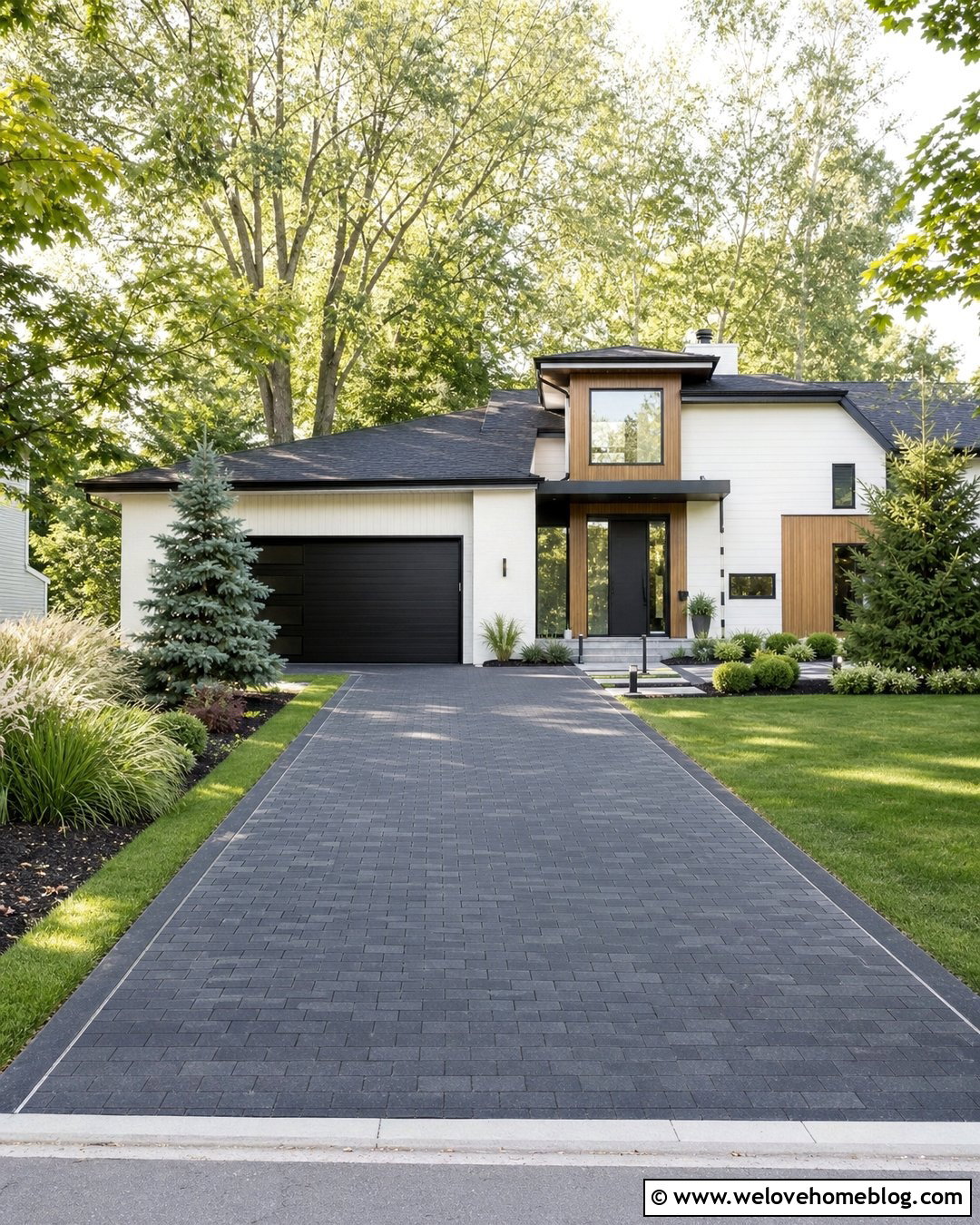
Composite pavers can offer a lightweight modular alternative for homeowners seeking a crisp, contemporary driveway. Choose pavers specifically manufactured and rated for residential vehicle loads, not ordinary deck tiles or pedestrian products. Lay charcoal composite units in a straight running pattern leading to a modern home with wood and white siding. Narrow grass borders between the driveway and planting beds soften the geometric layout. Repeat the dark pavers in the front walkway and use low ornamental grasses, dwarf evergreens, and sculptural shrubs for a cohesive facade. Product composition, recycled content, installation method, surface temperature, warranty, and maintenance requirements vary by manufacturer. Some synthetic interlocking pavers are designed for straightforward cleaning and do not require routine sealing, but homeowners should confirm those claims for the exact product being considered. ()
20. Gravel And Brick Driveway With Parking Court
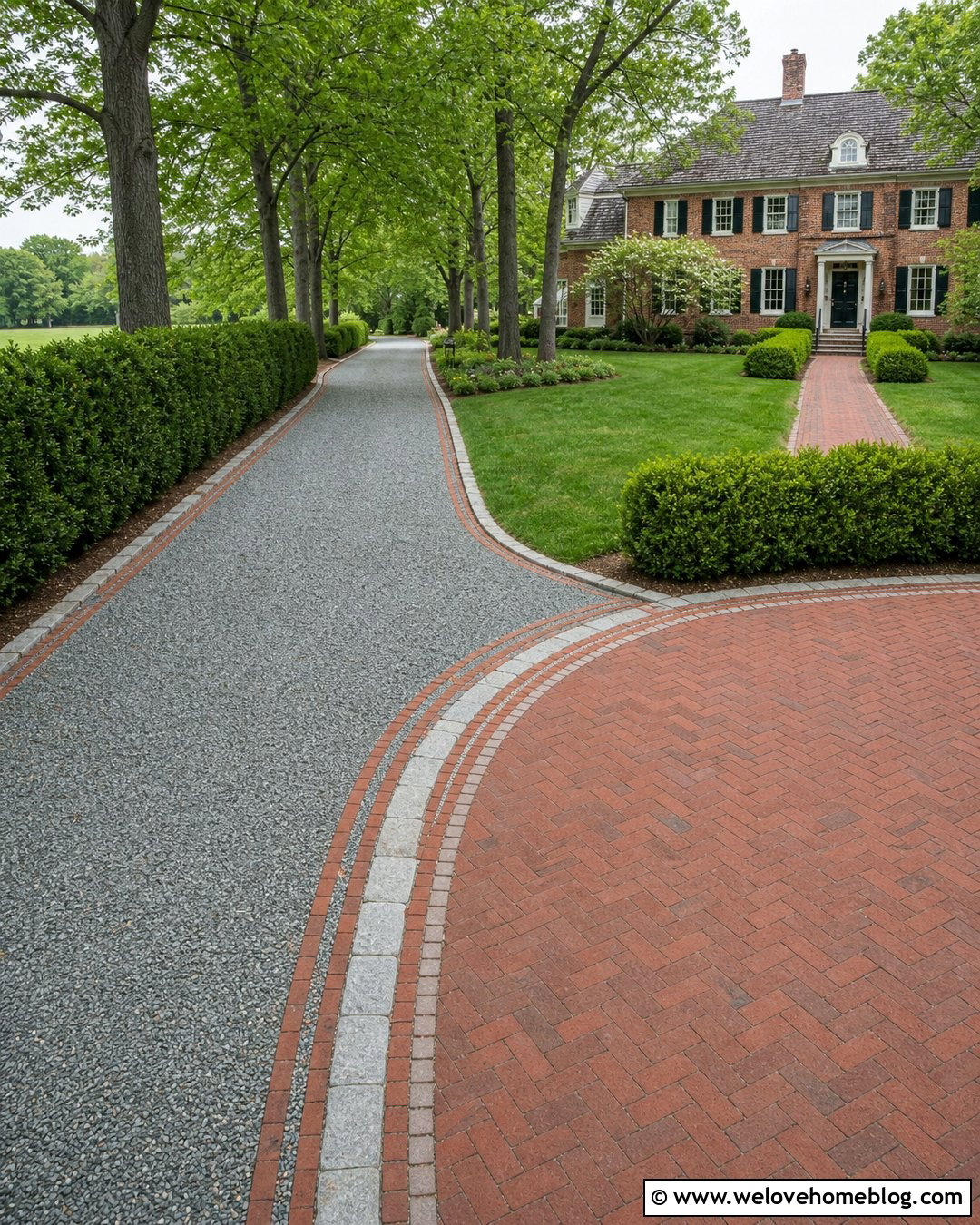
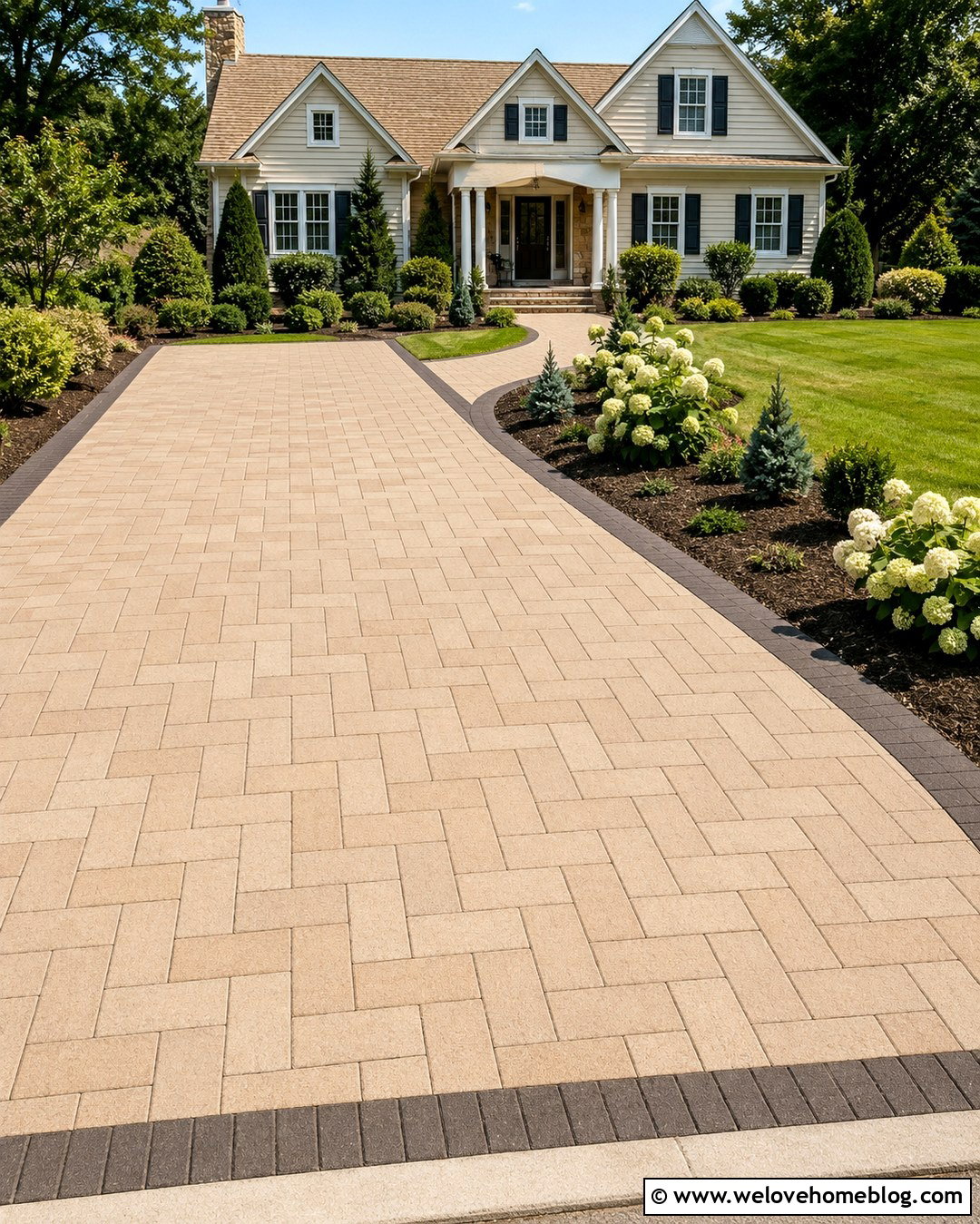
Combining materials can make a large driveway more attractive while reserving premium paving for the areas that need the strongest definition. Use compacted gray gravel along a long tree-lined approach, then transition to clay brick pavers in a herringbone pattern across the parking court and garage apron. Granite edging can contain the gravel, while a double brick band clearly marks the material change. This layered design works especially well with Colonial, Georgian, and traditional farmhouse architecture. Add deciduous trees, evergreen hedges, and generous lawn on the approach, followed by more formal foundation planting near the house. The gravel reduces the amount of unit paving required, while the brick gives turning and parking zones a finished appearance. Coordinate elevations and drainage carefully so neither surface traps water at the transition.
Conclusion:
These **20 Concrete Alternatives Driveway Ideas** demonstrate that a practical vehicle entrance can also strengthen the character of a home and landscape. Gravel, asphalt, brick, cobblestone, resin-bound aggregate, permeable pavers, and reinforced grass each create a different balance of appearance, drainage, maintenance, and cost. The strongest design will not be based on surface color alone. It should include a load-bearing base, secure edging, controlled runoff, safe transitions, and landscaping that preserves visibility. Before construction, compare local material availability and request detailed installation specifications from qualified contractors. Check neighborhood rules, permits, utility locations, and stormwater requirements as well. With thoughtful planning, a concrete-free driveway can look intentional, handle everyday use, and improve the property’s complete curb appeal.

Related posts:
Leave a Reply