
Searching for **20 Rubber Driveway Recycled Tires Ideas** can open the door to surfaces that look polished while giving discarded tire material a practical new use. Recycled rubber may appear as a poured-in-place overlay, interlocking pavers, permeable grid inserts, or crumb rubber blended into asphalt. These systems can create anything from a smooth black entrance to a warm, stone-inspired finish with contrasting borders. Rubber paving is commonly installed over a properly prepared concrete, asphalt, gravel, or compacted aggregate base, depending on the product and site conditions. () The best design also considers drainage, vehicle loads, edging, climate, and the home’s architecture. Explore these complete **20 Rubber Driveway Recycled Tires Ideas** for attractive and practical inspiration.
1. Black Rubber Driveway With Concrete Edging
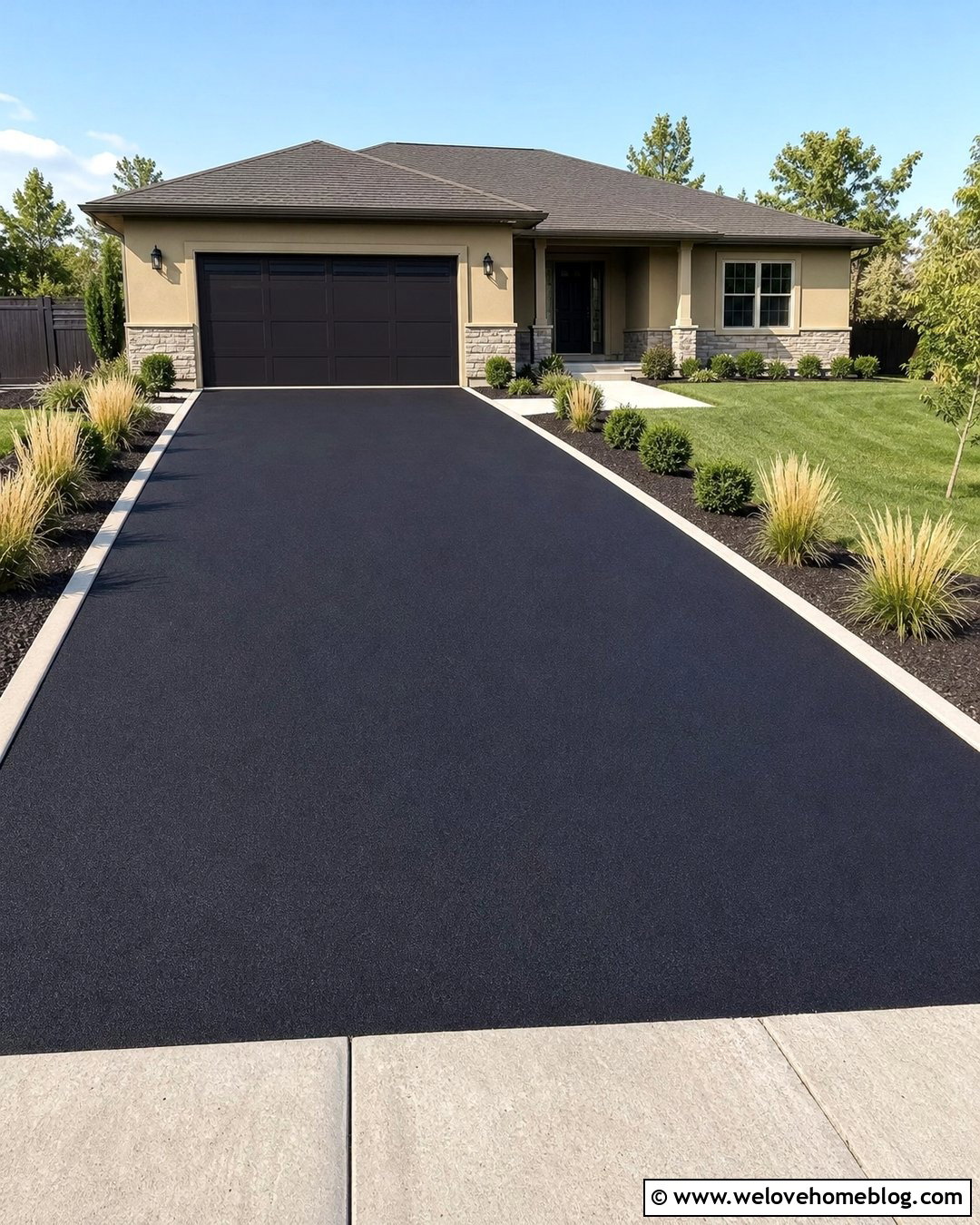
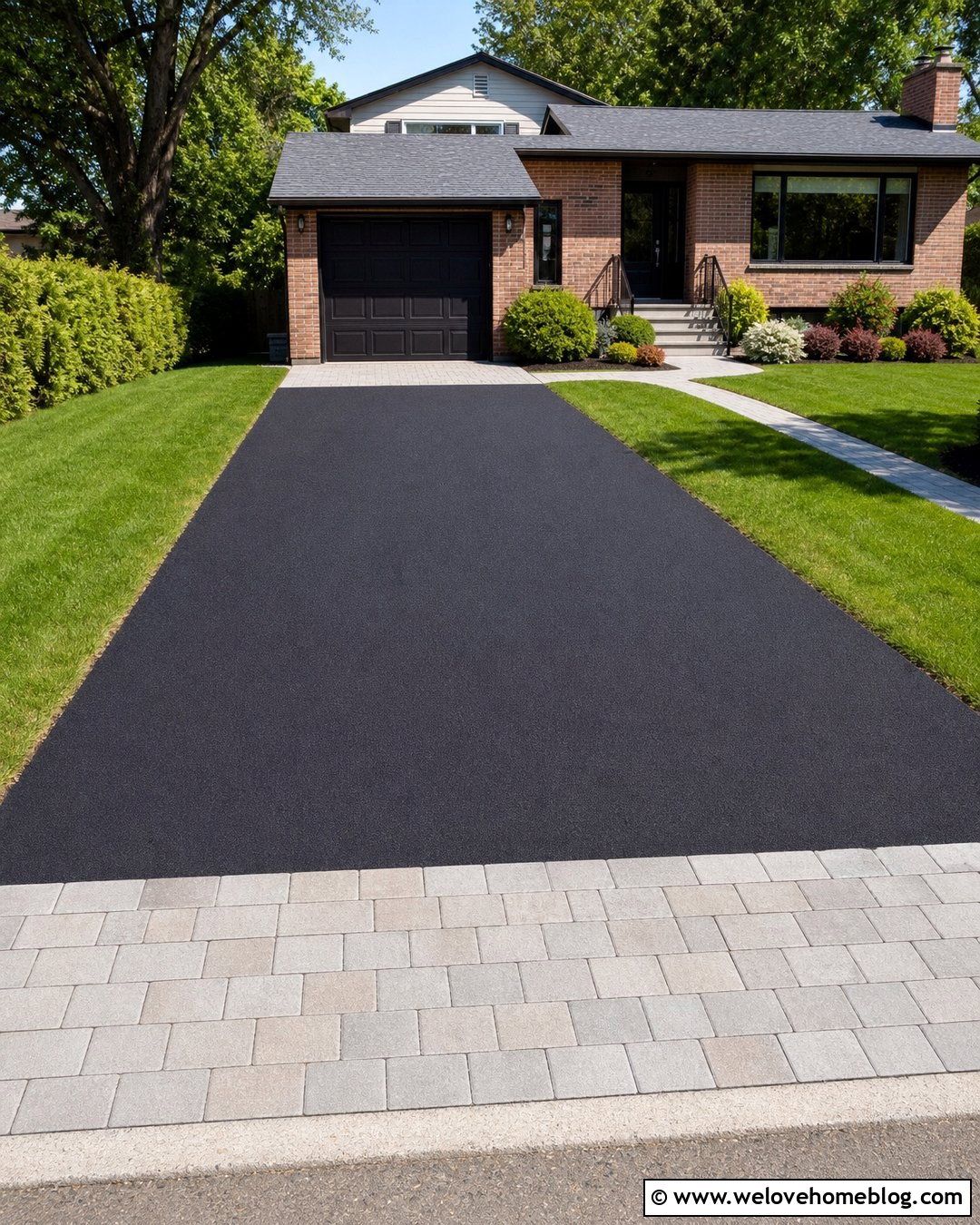
A black poured rubber driveway creates a clean surface that feels familiar without looking exactly like standard asphalt. Use a straight layout for a ranch, split-level, or simple suburban house. Pale concrete curbs along both sides provide a crisp contrast and help define the rubber surface. Add rectangular planting beds with ornamental grasses, compact evergreens, and low flowering perennials. A matching concrete walkway can branch from the driveway toward the front door. Keep the color palette controlled so the recycled tire rubber remains the main feature. Before installation, have the contractor inspect the existing base for movement, drainage problems, and serious structural damage. Rubber surfacing can cover a suitable prepared surface, but unstable sections should be repaired rather than hidden beneath the new finish.
2. Charcoal Rubber Driveway With Paver Border
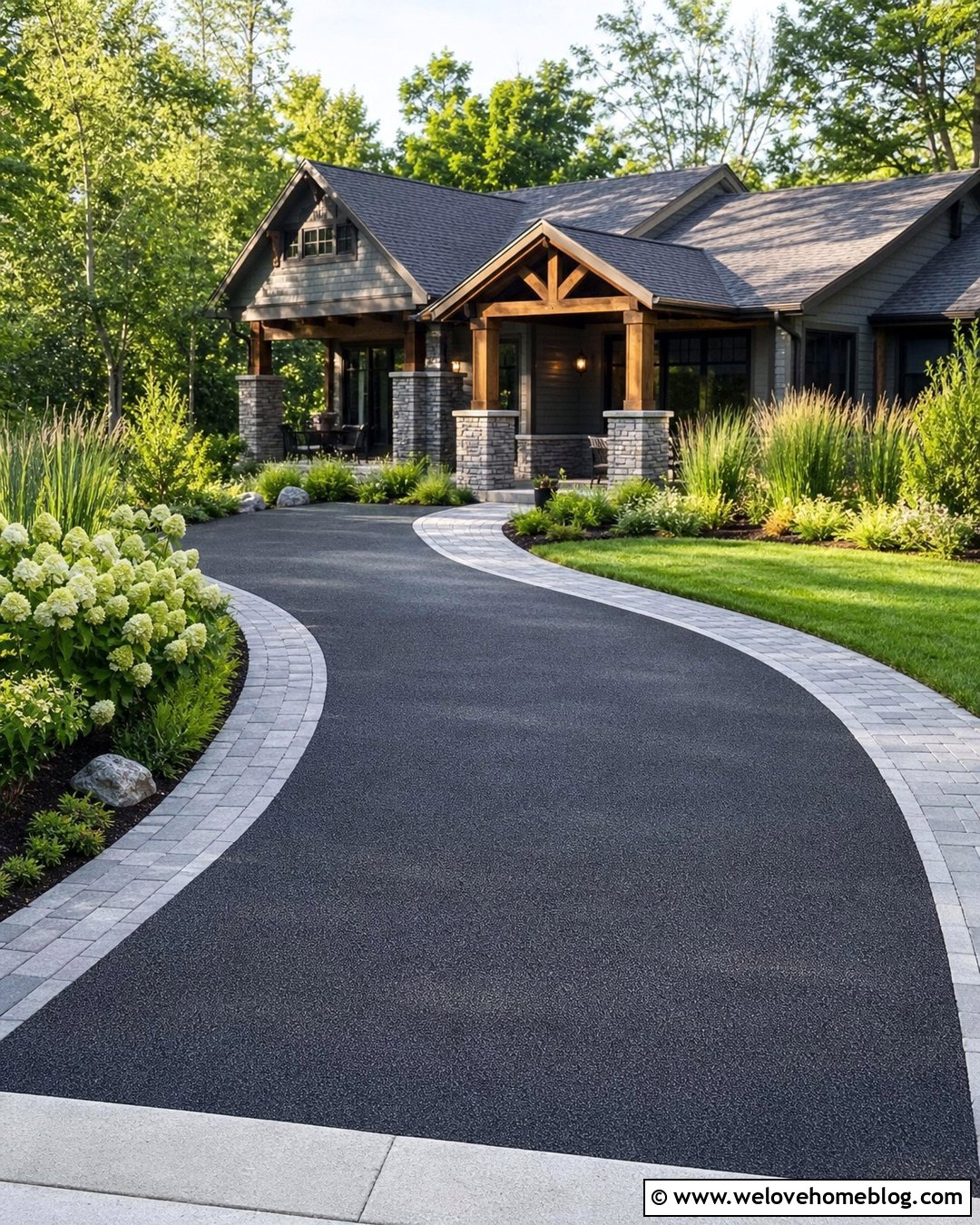
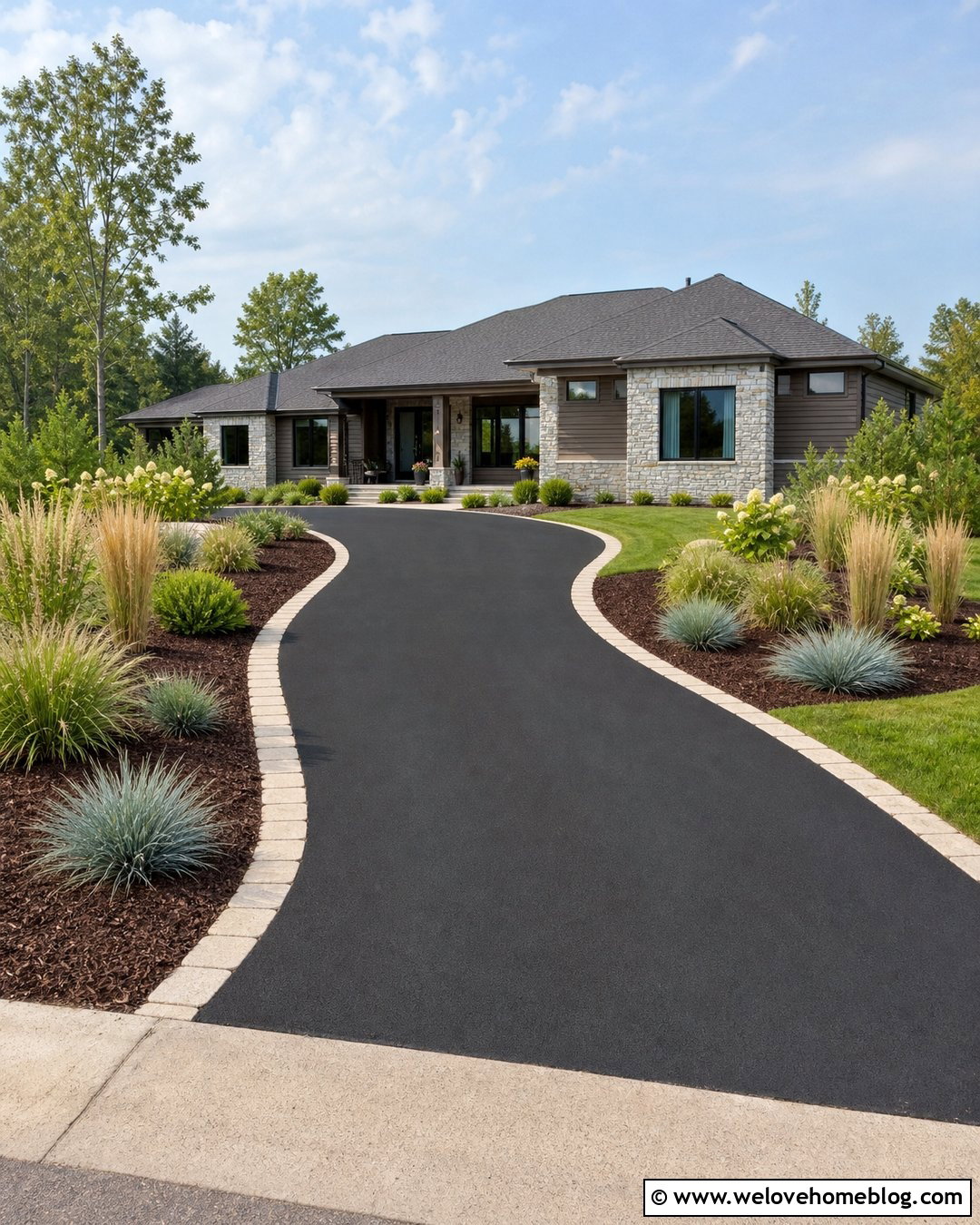
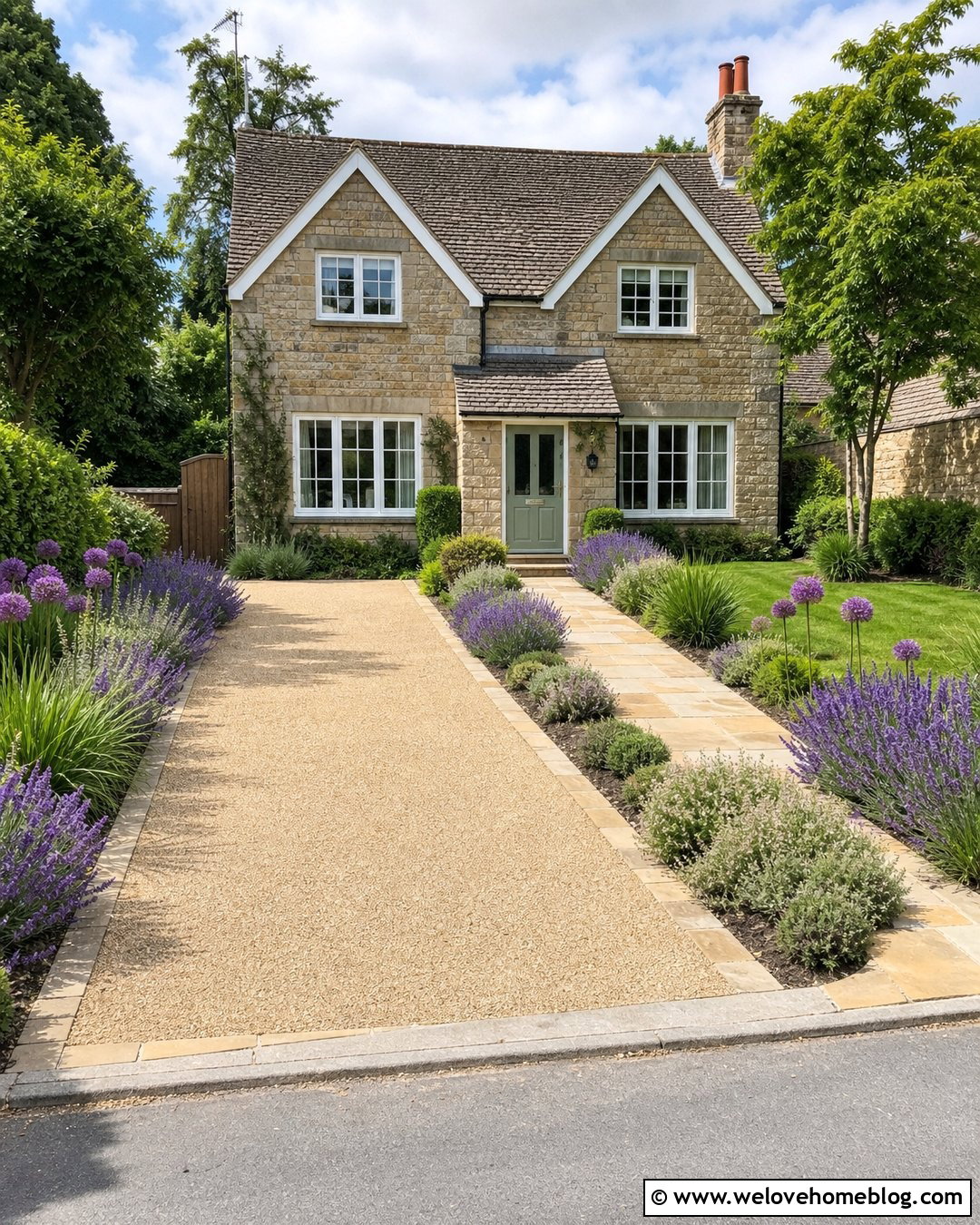
Soft charcoal rubber works beautifully when pure black would feel too strong against the house. Shape the driveway into a gentle curve, then frame it with medium-gray concrete pavers. The border gives the flexible surface a more structured appearance while visually guiding guests toward the garage. This combination suits a Craftsman home with stone columns, gray siding, and warm wood details. Along the outside curve, plant feather reed grass, dwarf hydrangeas, and spreading ground cover in a wide mulched bed. Maintain an open lawn on the opposite side to keep the entrance balanced. Ask the installer for actual cured samples because granule blends can look different in direct sunlight. The finished color should connect naturally with the roof, masonry, walkway, and garage doors.
3. Speckled Gray Rubber Driveway For A Modern House
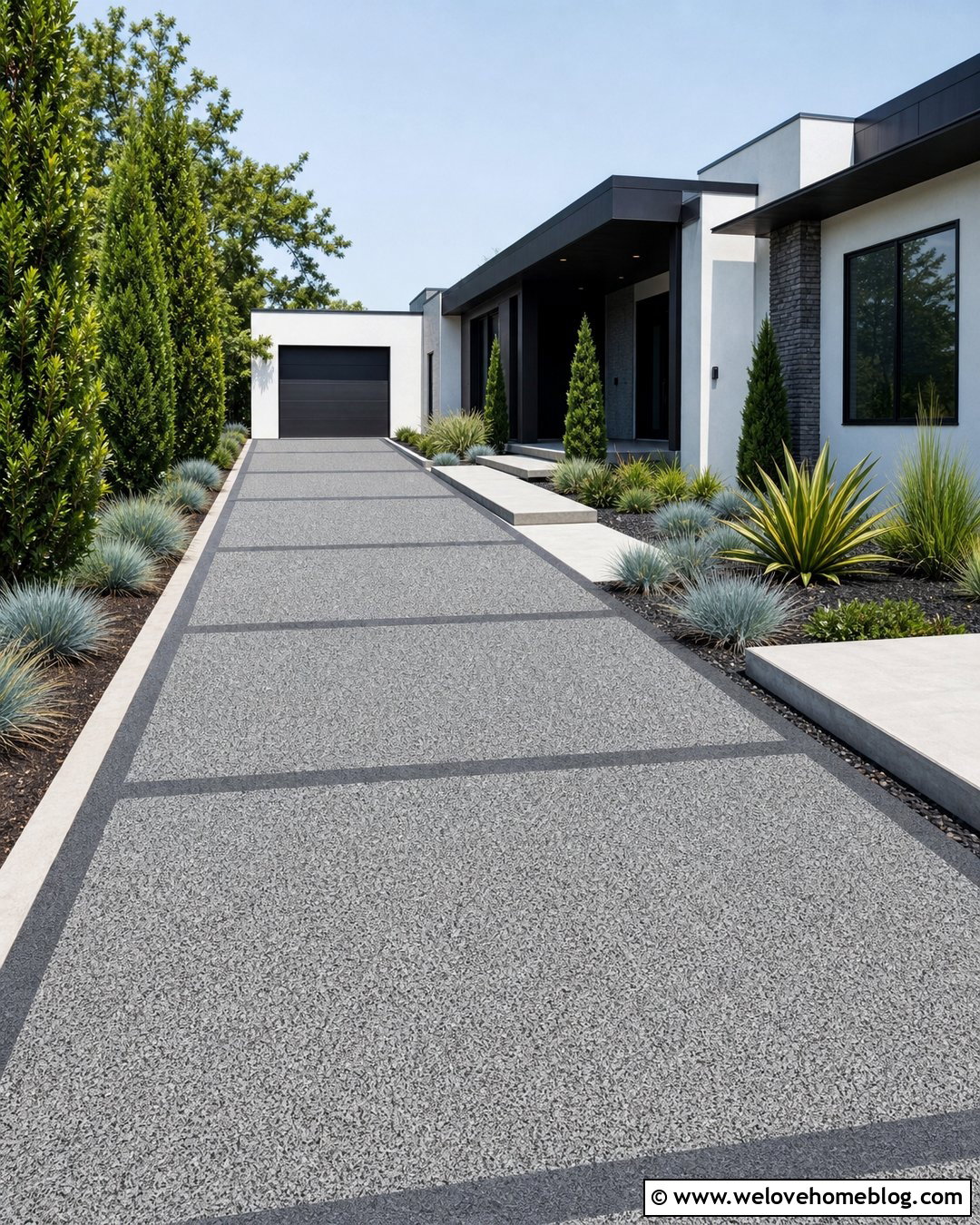
A speckled gray recycled rubber driveway can complement modern architecture without producing the flat appearance of plain concrete. Choose a mix of light gray, charcoal, and small black granules to create subtle visual movement. Install it in a wide, straight layout divided visually by narrow dark rubber bands. Flush steel or concrete edging will preserve the minimalist lines. Surround the driveway with rectangular beds containing blue fescue, upright junipers, and neatly spaced shrubs. Large concrete walkway slabs can continue the geometric theme toward the entrance. Keep the garage apron uncluttered so the surface pattern remains visible. Because modern designs reveal uneven workmanship easily, prioritize careful base preparation, straight transitions, clean drainage details, and consistent granule distribution across the entire driveway.
4. Brown Rubber Driveway For A Farmhouse
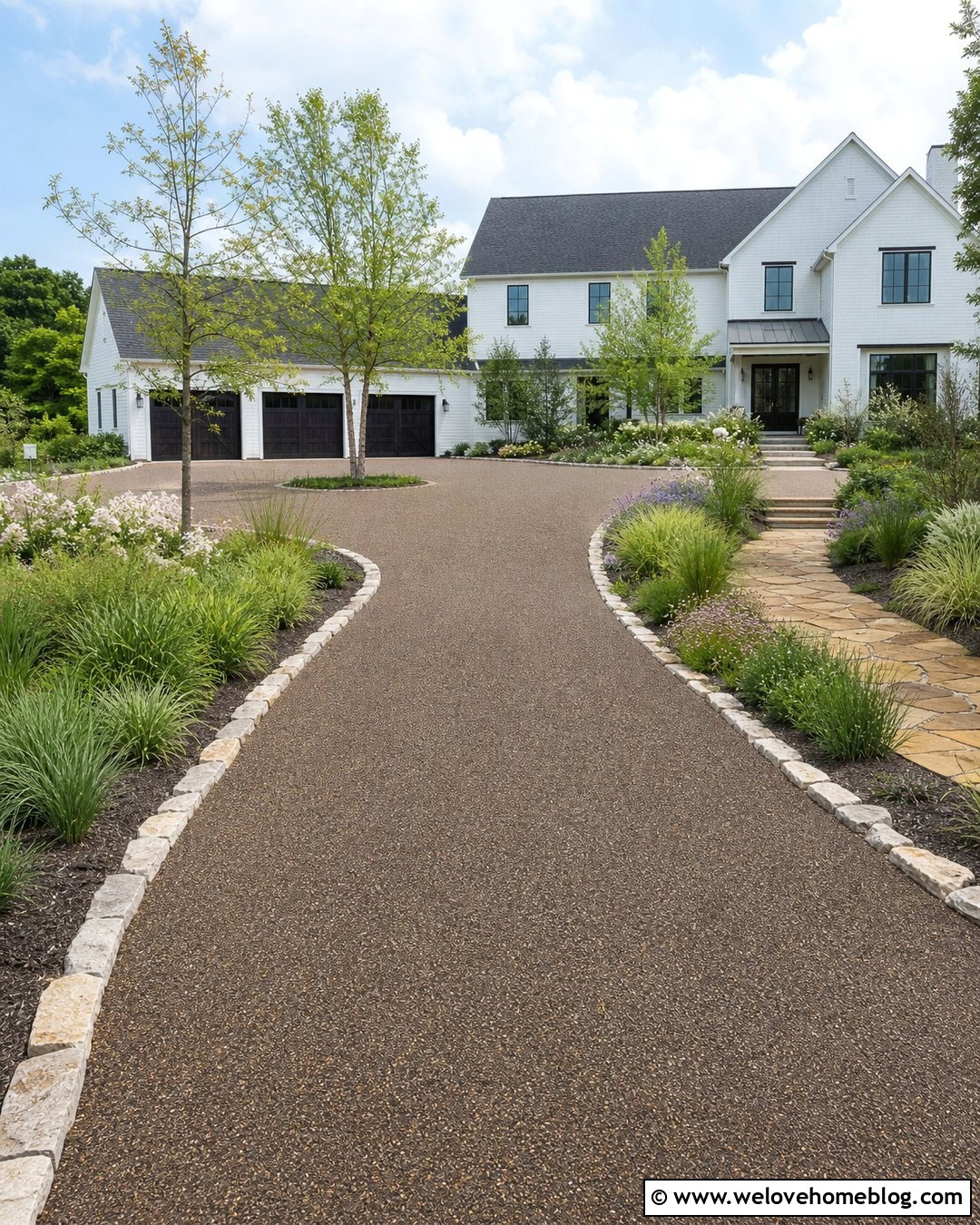
Earthy brown rubber paving offers a softer alternative to black around a modern farmhouse or country home. A medium-brown blend with scattered tan and charcoal granules can resemble fine natural aggregate from a distance. Use a long, slightly curved driveway edged with weathered limestone blocks or sturdy concrete curbing. Frame the approach with meadow grasses, white flowering shrubs, and a few small deciduous trees. Near the house, widen the surface into a practical parking court beside the garage. Connect it to a flagstone-inspired walkway in related warm colors. Avoid placing loose landscape mulch directly against the rubber edge, where it may scatter across the driving area. A narrow strip of stone or low ground cover can create a cleaner, easier-to-maintain transition.
5. Tan Rubber Circular Driveway With Stone Edging
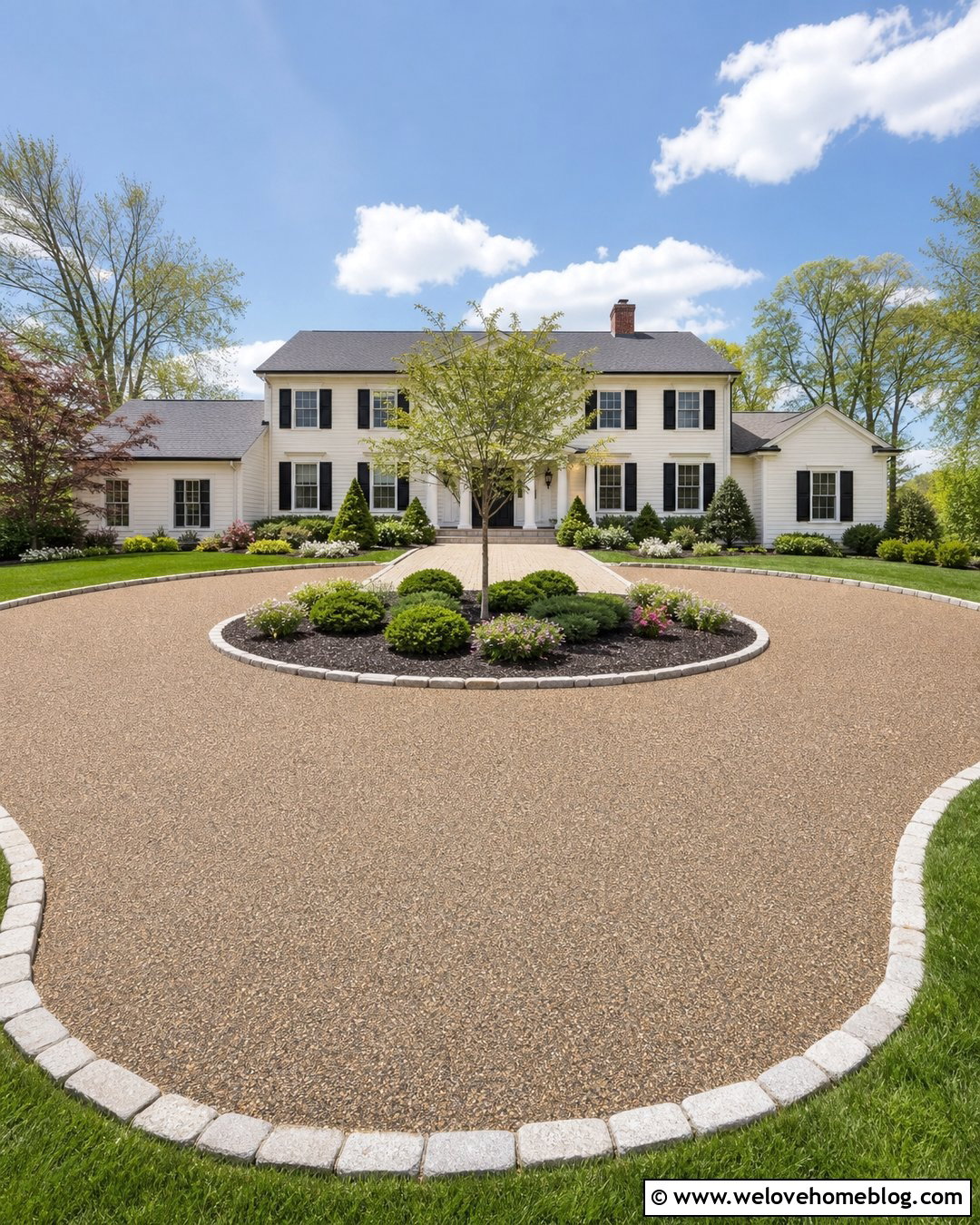
Could a lighter driveway make a large front yard feel more inviting? A tan recycled rubber surface arranged in a circular layout can brighten a Colonial, Mediterranean, or stucco home. Blend beige, muted brown, and a small amount of charcoal rubber granules to prevent the finish from appearing overly uniform. Define both sides of the circle with warm limestone or tumbled concrete edging. In the center island, use a small ornamental tree surrounded by evergreen shrubs and drought-tolerant perennials. The planting should remain low enough to preserve visibility around the curve. Add a broad walkway from the inner loop to the front steps. Circular driveway dimensions, turning space, drainage, and street access may be regulated locally, so confirm requirements before finalizing the layout.
6. Brick Look Rubber Paver Driveway
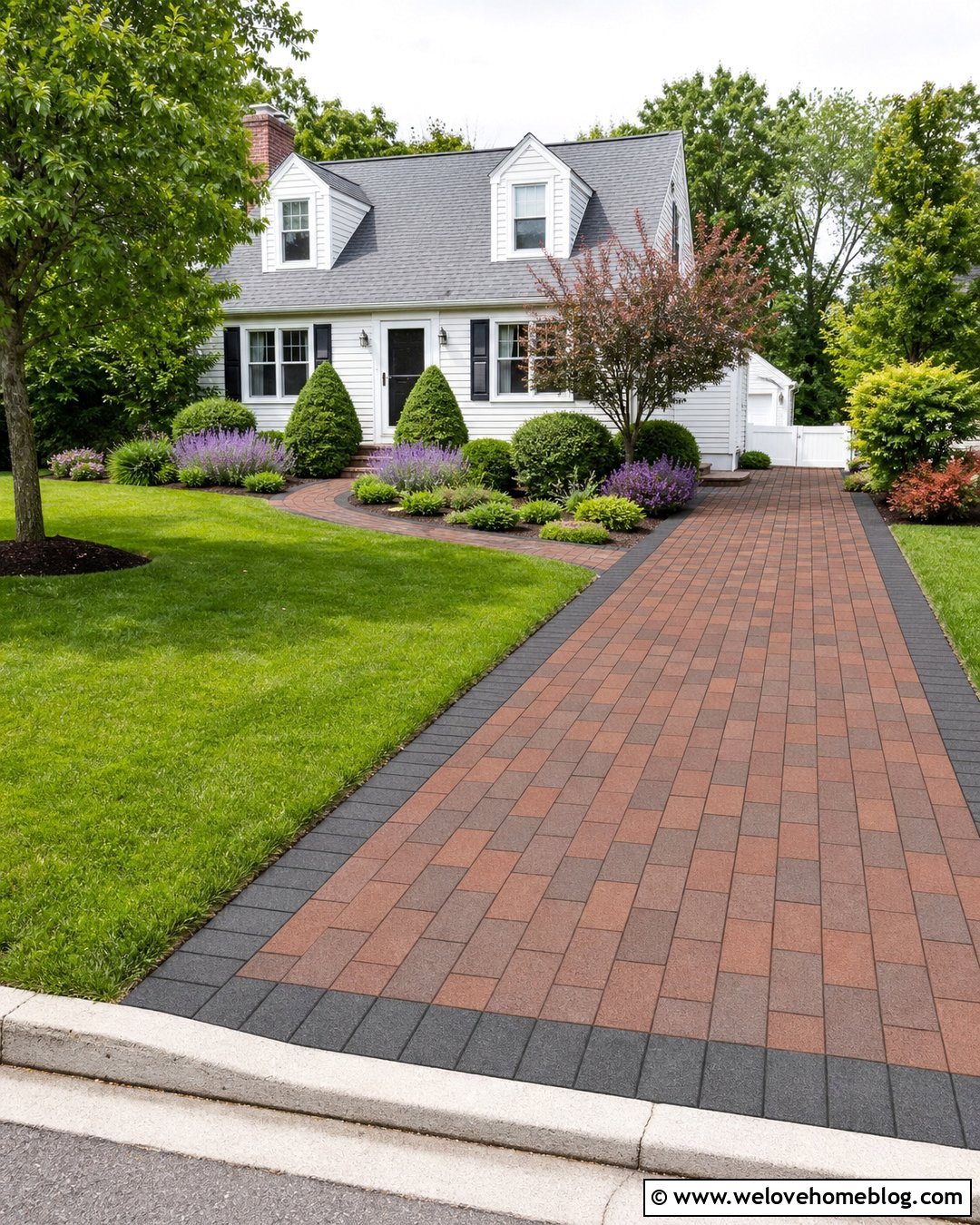
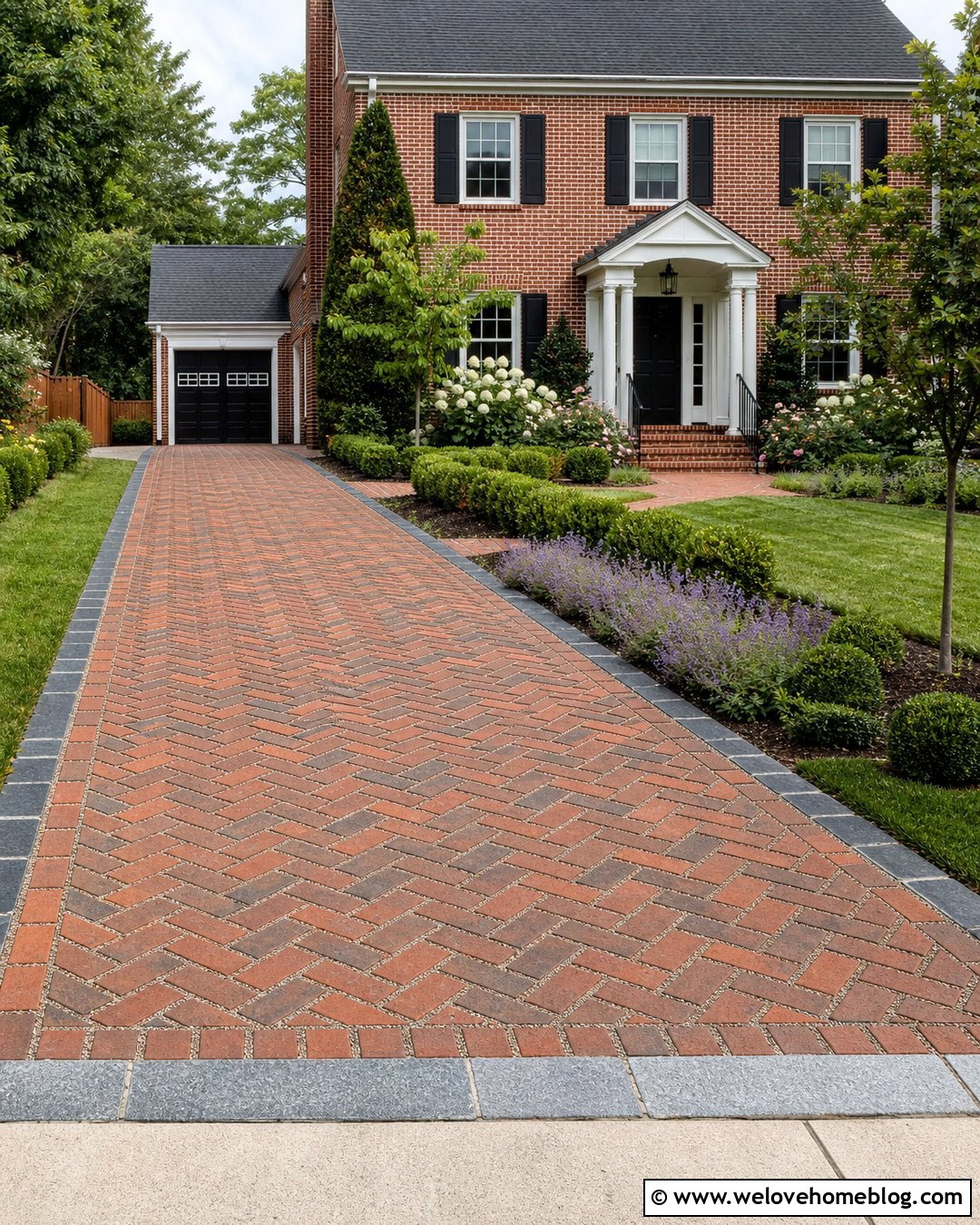
Recycled rubber pavers in muted red and brown tones can suggest the warmth of brick while creating a distinctly different paving system. Arrange rectangular rubber pavers in a running-bond or offset pattern across a straight driveway. Use dark charcoal units as a perimeter border to sharpen the layout. This complete look works well with a Cape Cod, traditional brick, or cottage-style house. Plant rounded boxwood alternatives, flowering salvia, and compact ornamental trees along the sides. A matching paver walkway can turn toward the porch without introducing another surface. Select products specifically rated for vehicle traffic and install them over the base system recommended by the manufacturer. Proper edge restraint is particularly important because it helps keep individual units aligned under repeated turning and braking forces.
7. Rubberized Asphalt Driveway With Brick Border
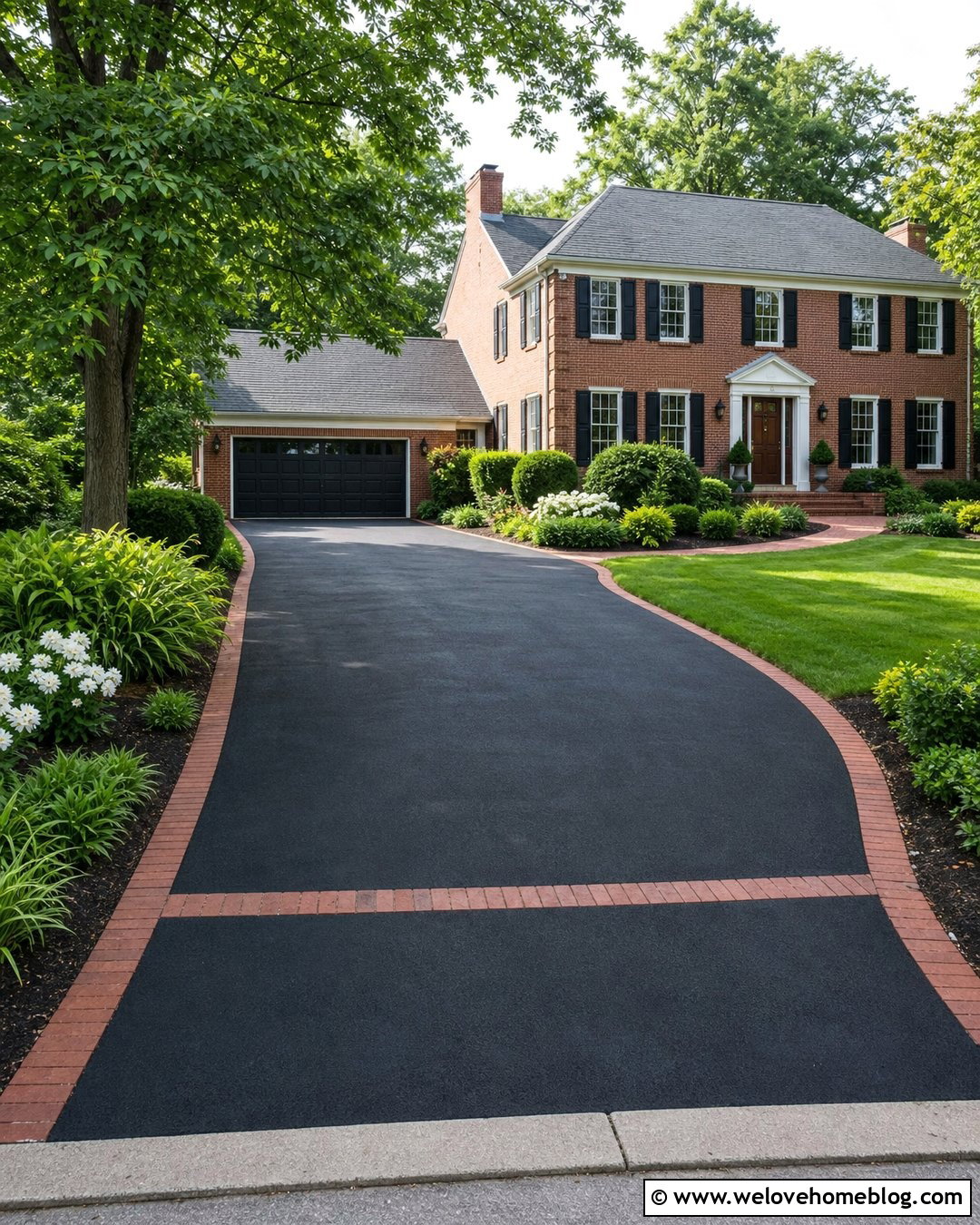
Rubberized asphalt combines conventional asphalt paving materials with processed recycled tire rubber through specialized production methods. It offers a practical choice for homeowners who prefer the continuous appearance of asphalt but want tire-derived material incorporated into the pavement. () Create a slightly curved black driveway and add a red clay brick ribbon along each side for traditional contrast. A brick Colonial or Tudor-inspired home makes an ideal backdrop. Use clipped shrubs near the garage and looser perennial beds closer to the street. The brick border should sit securely on a suitable base and meet the asphalt at an even transition. Availability may be limited for small residential projects, so ask local paving companies whether they produce or source rubber-modified asphalt in residential quantities.
8. Permeable Rubber Paver Driveway With Grass Strips
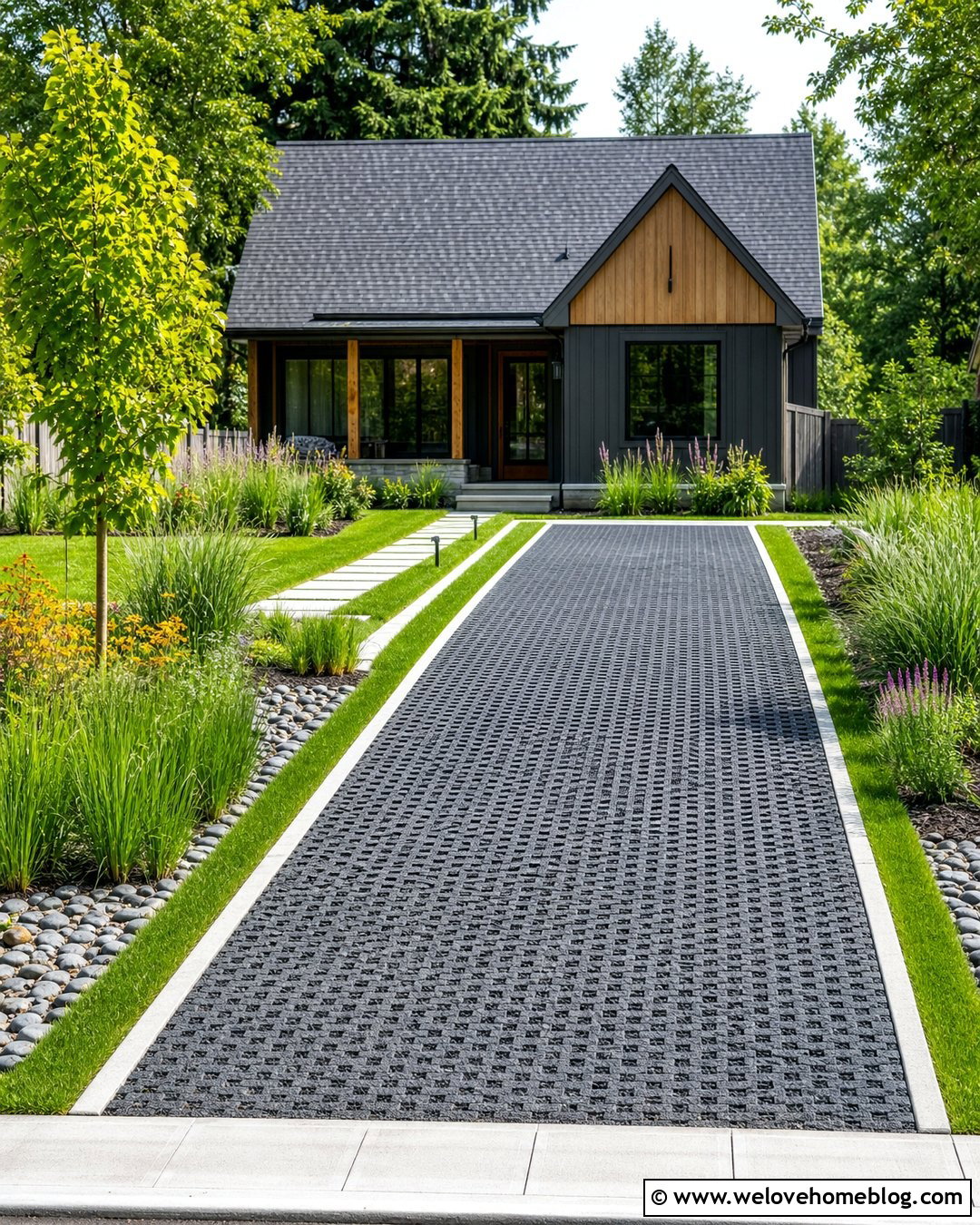
A permeable grid filled with recycled rubber pavers can give the driveway a modular, environmentally focused appearance. Choose dark gray rubber blocks and leave narrow openings or designated joints according to the system’s drainage design. A straight driveway with green grass strips along the outer edges will suit a contemporary cottage or eco-conscious suburban home. Add rain-garden planting near the lowest appropriate point, using moisture-tolerant sedges and native flowering plants. Permeable performance depends on the entire assembly, including the surface openings, bedding material, aggregate base, soil conditions, and drainage plan. A documented residential system has combined recycled-tire rubber pavers with a porous structural grid and base. () Have the design reviewed for vehicle loading, runoff management, and local stormwater requirements.
9. Two Tone Rubber Driveway With Dark Border
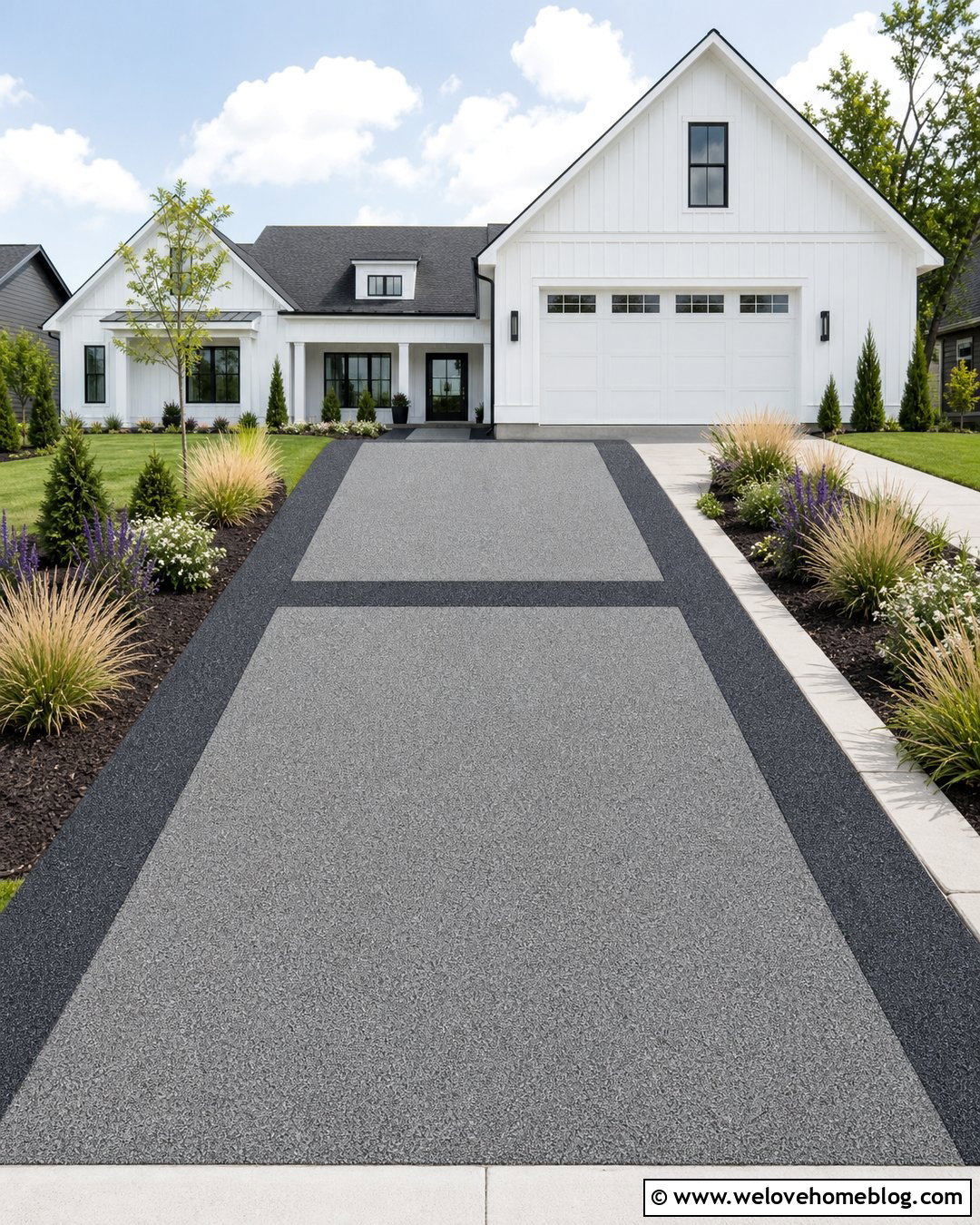
Two-tone rubber paving adds definition without requiring a separate edging material. Cover the main driving area with a medium-gray recycled rubber blend, then install a wide charcoal rubber border around the perimeter. A matching dark band across the garage apron can make the composition feel complete. This look works especially well with a white contemporary farmhouse or pale-gray transitional home. Use symmetrical planting beds with dwarf evergreens, lavender-colored perennials, and ornamental grasses. A light concrete walkway will prevent the yard from becoming too dark. Keep the color change simple and consistent rather than adding multiple decorative patterns. Confirm that both rubber blends use compatible binders and installation methods. Clean masking, accurate measuring, and careful sequencing are essential for producing straight, professional-looking color boundaries.
10. Rubber Driveway With Concrete Bands
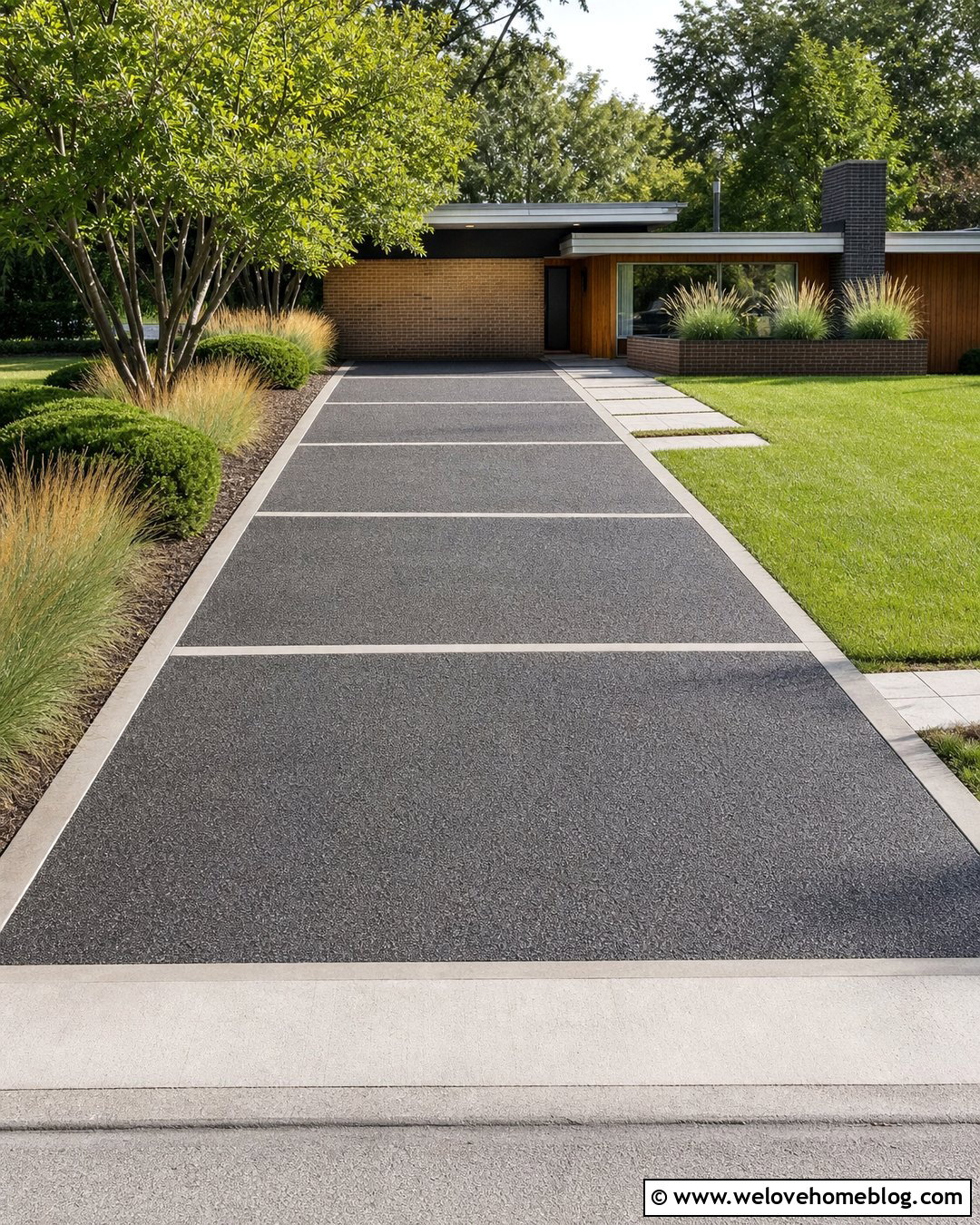
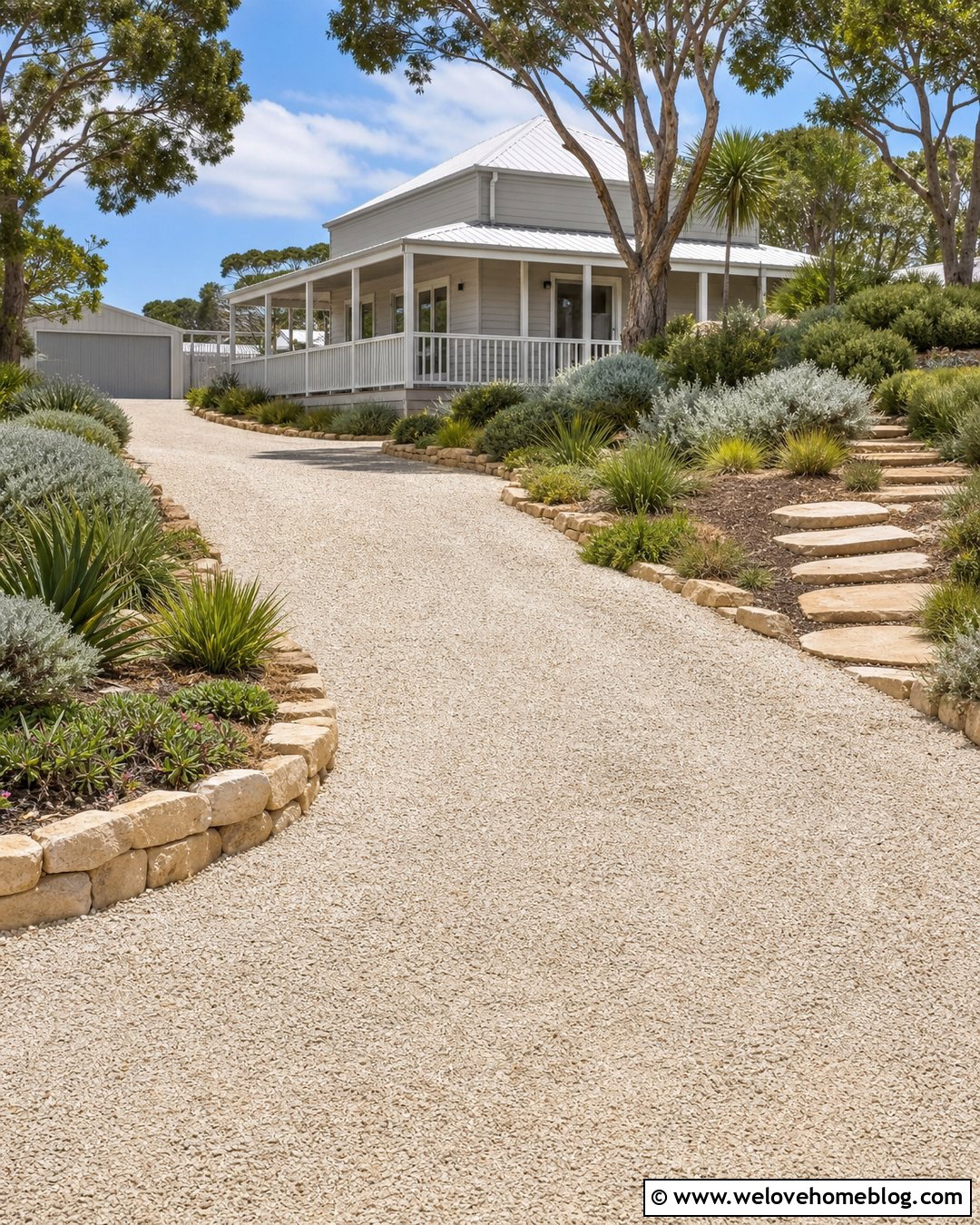
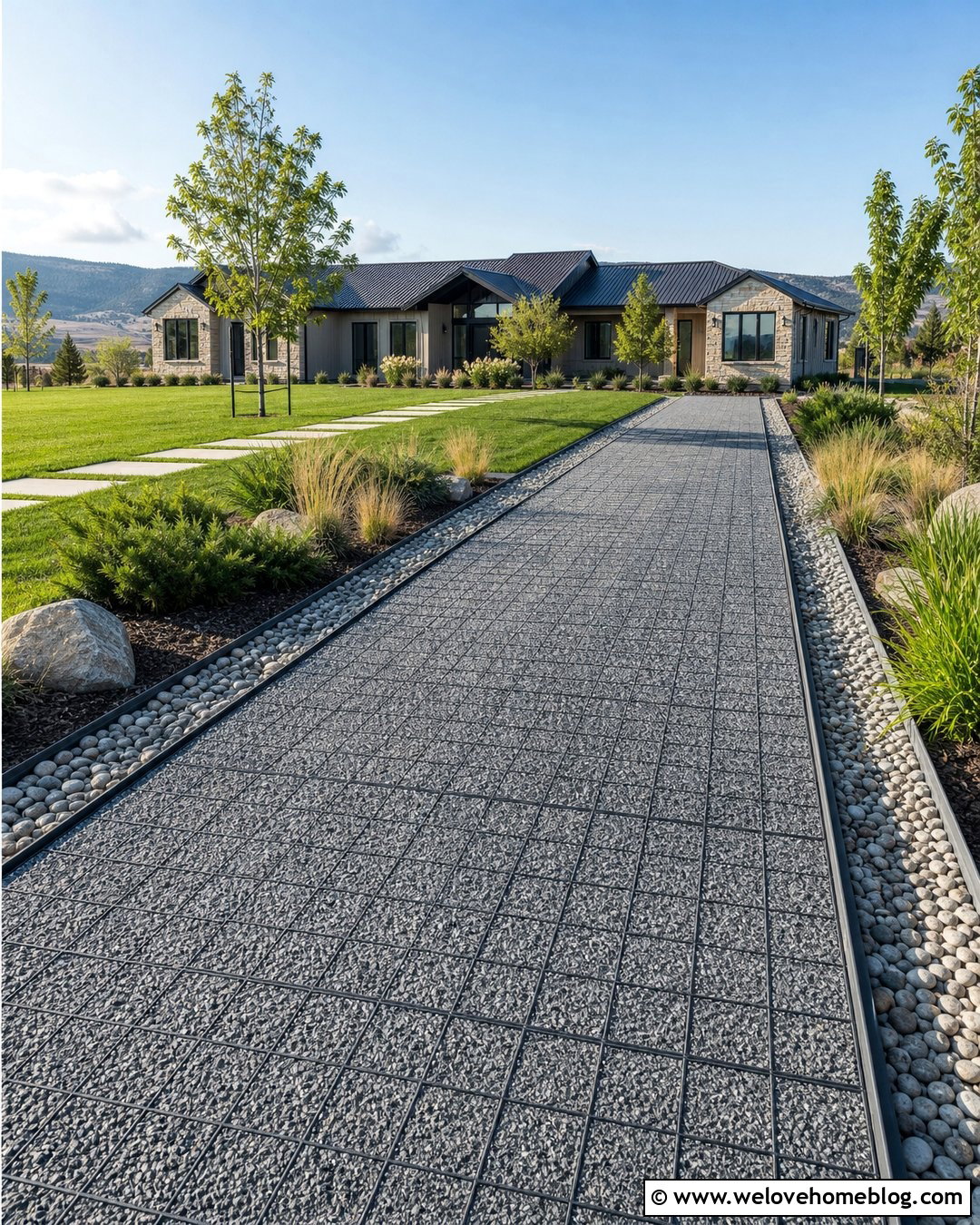
Wide concrete bands can bring order to a large rubber driveway and visually break up an expansive surface. Install charcoal poured rubber between pale-gray concrete strips arranged across a straight or gently sloped layout. Continue the bands at regular intervals, but avoid placing unnecessary joints where tires frequently turn. The design pairs naturally with a midcentury modern home, especially when the facade includes wood, brick, and broad rooflines. Frame the entrance with sculptural grasses, low evergreen mounds, and a single multi-stem tree. Use the same concrete for the front walkway and garage threshold to unify the property. The concrete and rubber may respond differently to temperature and movement, so transitions must be planned by an experienced installer. Neat interfaces will determine whether the finished driveway appears intentional or patched together.
11. Rubber Driveway Overlay Over Old Concrete
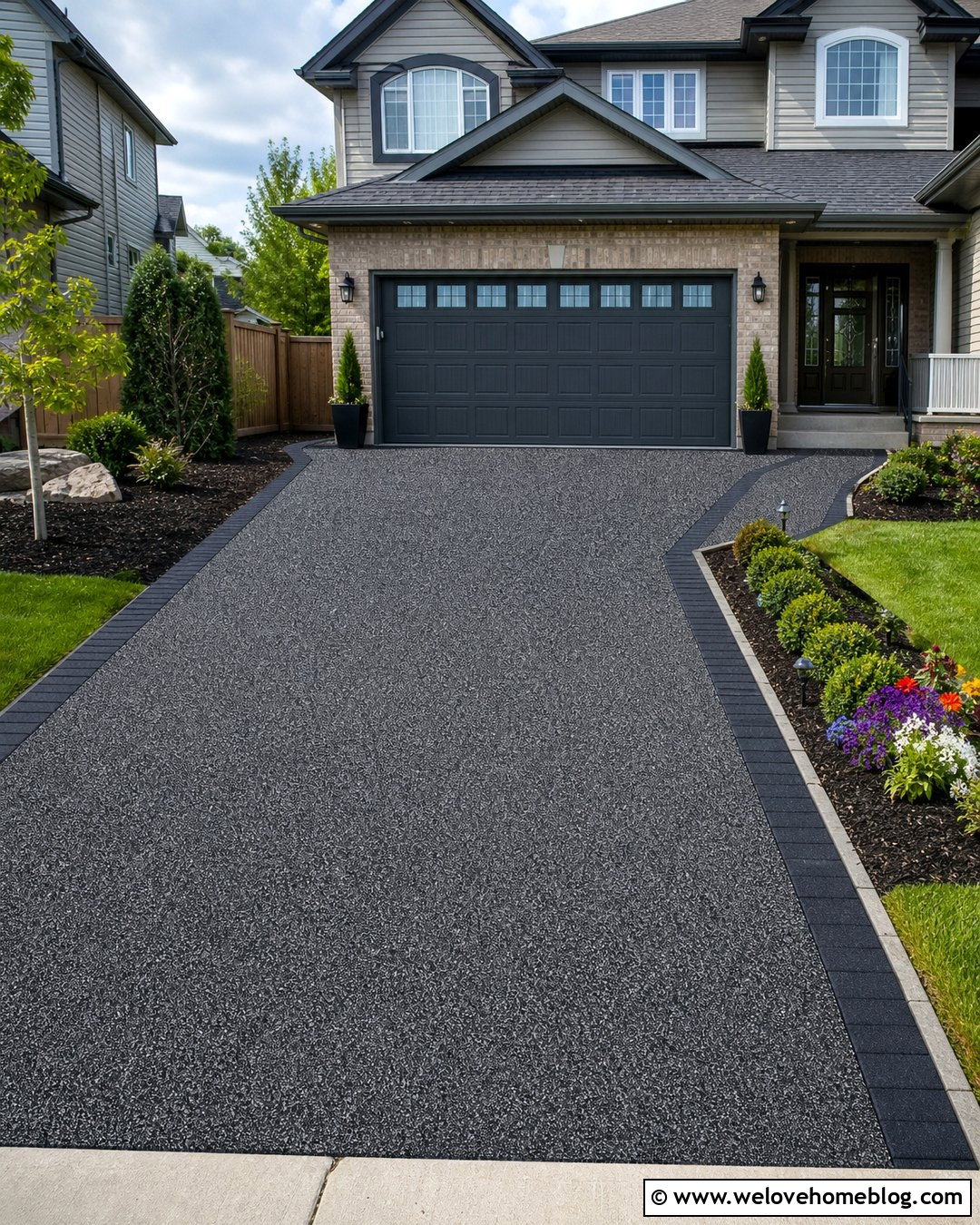
An aging concrete driveway does not always need complete removal before receiving a new visual finish. Some bound recycled rubber systems are designed to resurface suitable concrete after cleaning, repairs, and preparation. () Choose a black-and-gray speckled overlay for a practical suburban look, then retain the existing straight driveway shape. Add new charcoal concrete edging to conceal rough perimeter areas and create a finished transition to the lawn. Refresh nearby planting beds with compact shrubs and colorful perennials that complement the granule blend. Extend the rubber treatment onto an adjoining walkway only when the product is appropriate for both areas. Major settlement, drainage failure, or active slab movement should be evaluated first. A decorative overlay improves appearance, but it cannot correct every structural problem beneath the surface.
12. Rubber Driveway Overlay Over Asphalt
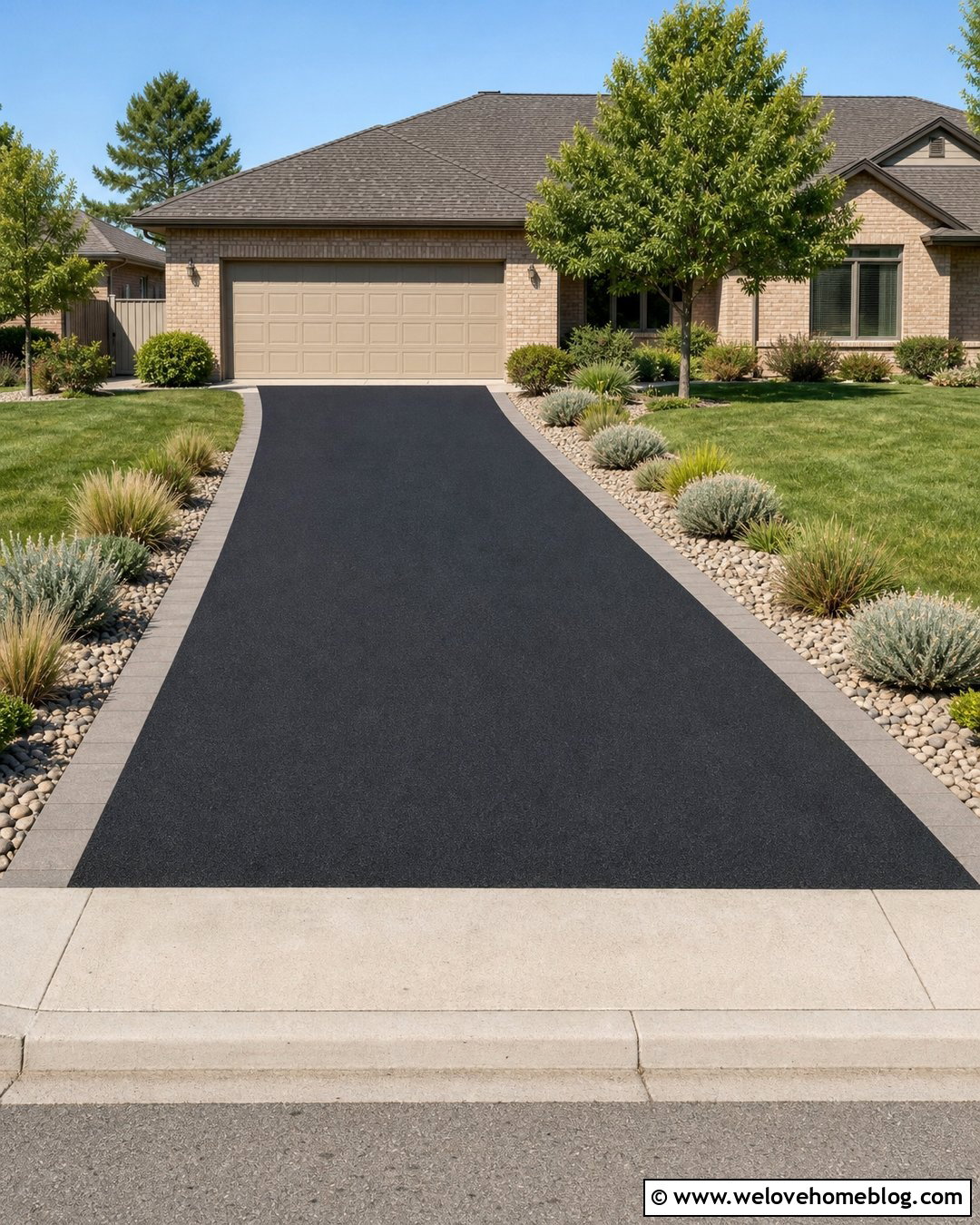
A faded asphalt driveway can become the base for a rich black recycled rubber overlay when it remains sufficiently stable and properly prepared. Rubber paving installers commonly assess existing asphalt and other hard surfaces for resurfacing compatibility. () Keep the driveway straight and add a warm gray rubber accent border to distinguish it from ordinary asphalt. This restrained palette complements a beige ranch or red brick home. Install river rock planting strips beyond the edging, using drought-tolerant grasses and low shrubs for easy upkeep. At the street, create a neat transition that does not leave a raised edge vulnerable to traffic or snow equipment. Existing holes, loose areas, oil contamination, and poor drainage require attention before installation. Follow the product supplier’s requirements for cleaning, priming, thickness, curing, and weather conditions.
13. Long Rubber Driveway With Tree Lined Landscaping
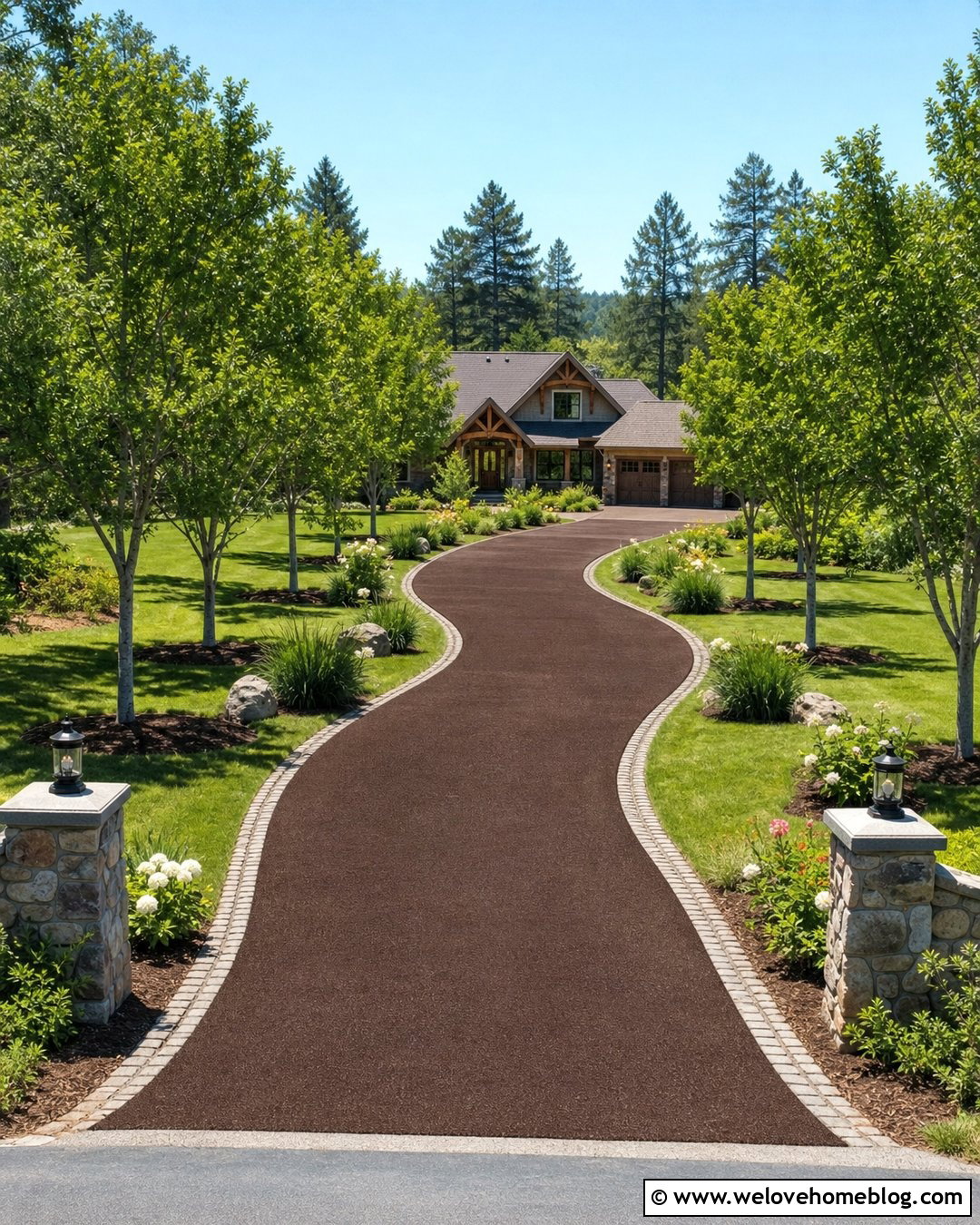
A long driveway needs strong visual structure so it feels connected to the house rather than like a narrow strip across the yard. Use a dark brown recycled rubber surface in a gentle S-curve leading to a country, Craftsman, or modern farmhouse home. Edge both sides with flush cobblestone or concrete setts that follow the curve. Place evenly spaced ornamental trees beyond the border, leaving enough clearance for mature roots, branches, and sightlines. Between the trees, repeat low grasses and flowering shrubs to establish rhythm. Widen the driveway near the garage to provide comfortable maneuvering space. Subtle changes in elevation should direct runoff toward an approved drainage area. Because long driveways require substantial material, compare complete installed systems rather than judging options only by their surface price.
14. Small Rubber Driveway With Simple Landscaping
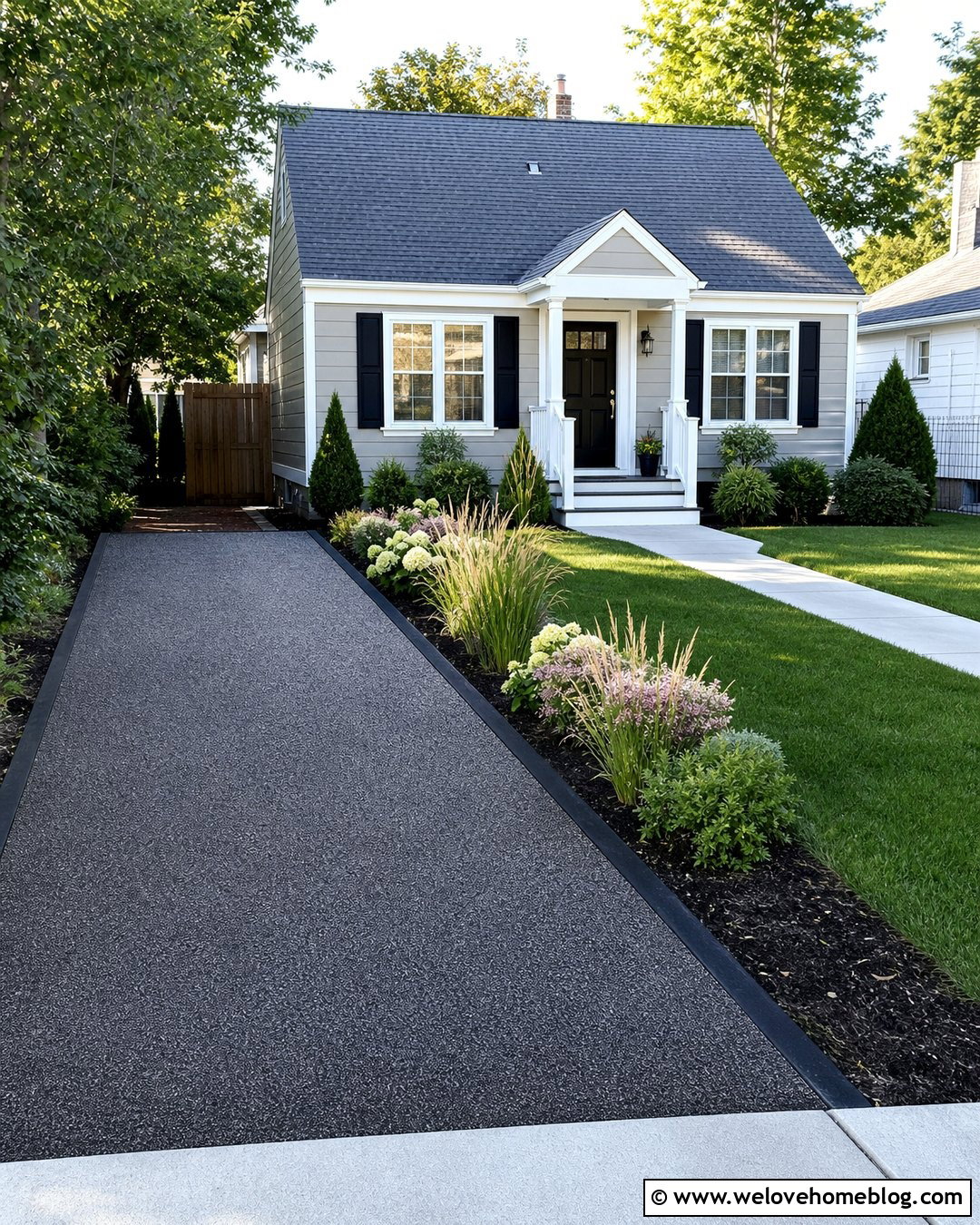
Limited front-yard space calls for a driveway that looks organized without overwhelming the house. A light charcoal recycled rubber surface can make a short, single-car driveway feel visually open. Use a straight layout with narrow black rubber edging rather than bulky stone borders. Place one slim planting bed along the property line with upright grasses, compact flowering shrubs, and low ground cover. On the other side, connect a pale concrete walkway to the front porch. This arrangement suits a small bungalow, townhouse, or compact Cape Cod home. Keep plants away from sightlines and allow enough width for doors, bins, and everyday access. A restrained granule blend is usually more effective in a small area than a busy multicolor finish. Precise edges and an uncluttered entrance will provide the strongest curb appeal.

15. Sloped Rubber Driveway With Drainage Channel
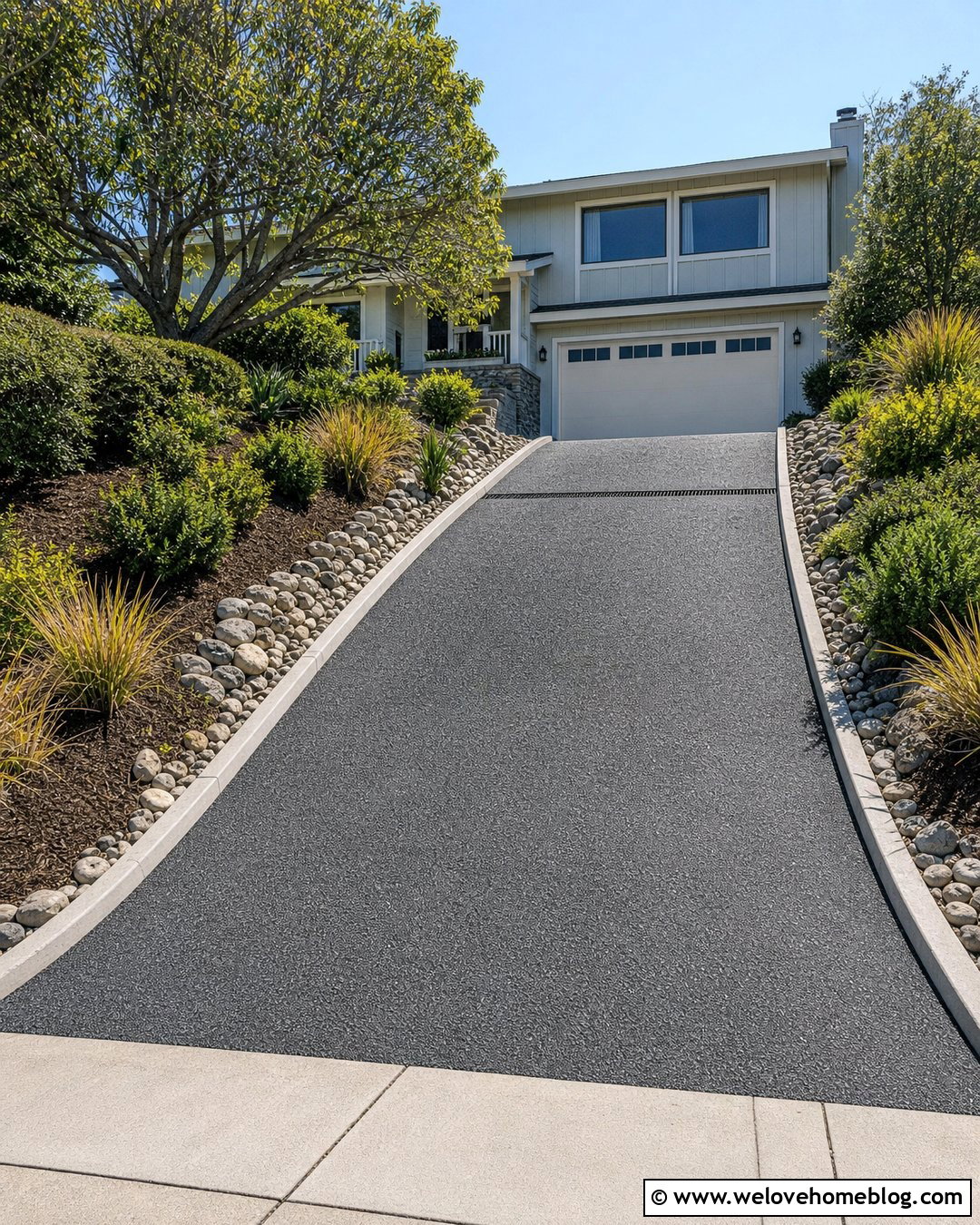
Rainwater management should guide every decision on a sloped driveway. Choose a medium-gray textured recycled rubber surface for a straight incline leading to a raised ranch or hillside contemporary home. Add sturdy concrete curbs along the sides and install an appropriately designed channel drain near the garage when site conditions require one. The surface should meet the drain cleanly without creating low pockets that hold water. Use erosion-resistant ground cover, ornamental grasses, and deeply rooted shrubs on the surrounding banks. Stone-lined swales can become attractive landscape features when they are sized and positioned correctly. Ask the installer about the product’s suitability for the slope, vehicle traffic, local temperatures, and expected drainage. The base, surface texture, cross-slope, and water outlet matter as much as the color or decorative border.
16. Black Rubber Driveway For A Snowy Climate
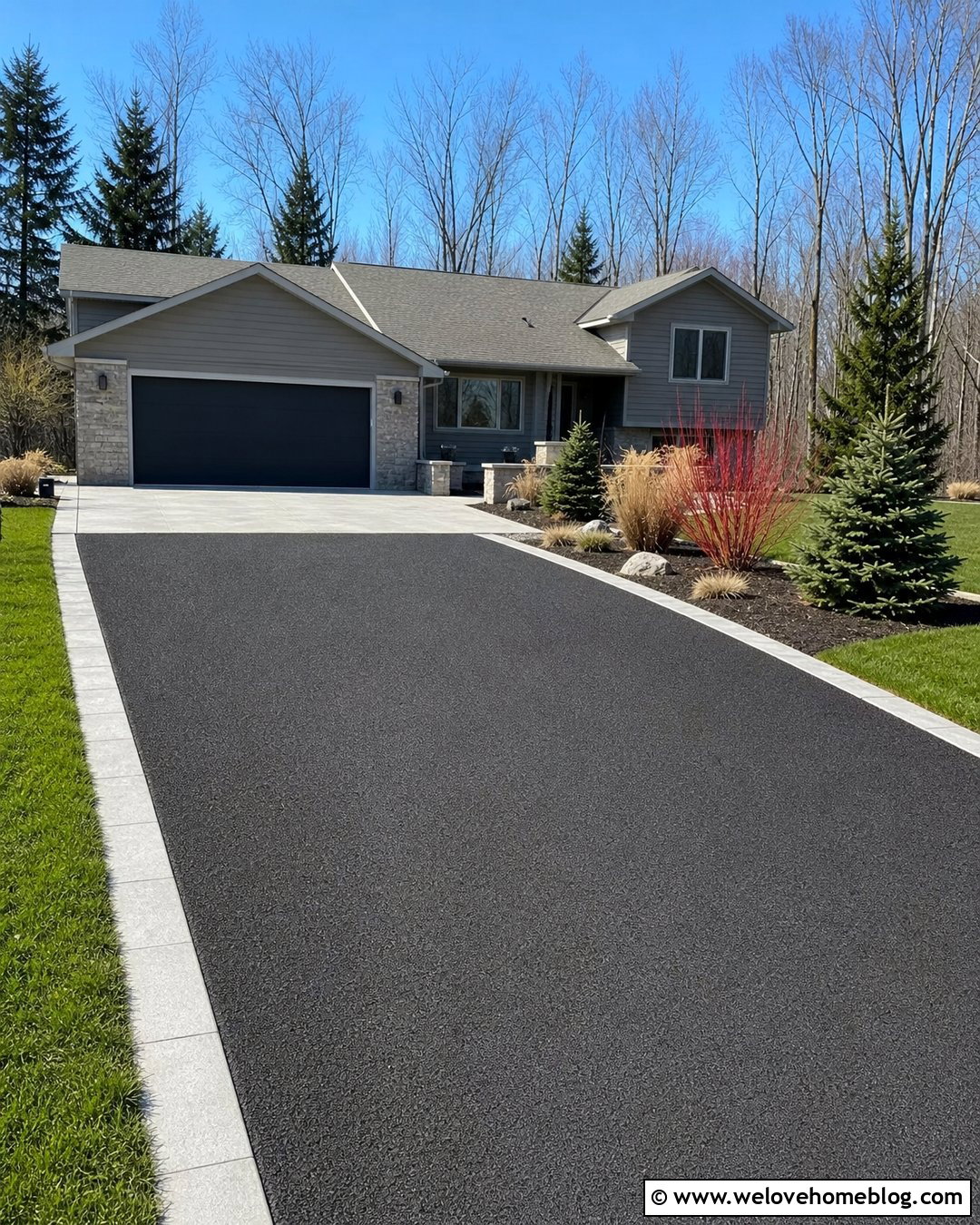
In a region with regular snow and freeze-thaw cycles, simple construction details often matter more than elaborate patterns. Select a black recycled rubber driveway with a straight layout and flush light-gray concrete borders. Avoid tall edging that could interfere with shovels, blowers, or plow equipment. A wide garage apron will make winter maneuvering easier. Surround the entrance with compact evergreens, red-twig dogwood, and ornamental grasses that remain attractive during cold months. Clearly mark drainage structures and driveway edges before heavy snowfall. Ask the paving contractor how the selected rubber system should be cleared, whether metal blades require adjustment, and which deicing products are permitted. Product specifications vary, so follow the manufacturer’s maintenance instructions instead of assuming every rubber surface reacts to winter equipment and chemicals in the same way.
17. Light Gray Rubber Driveway For A Coastal House
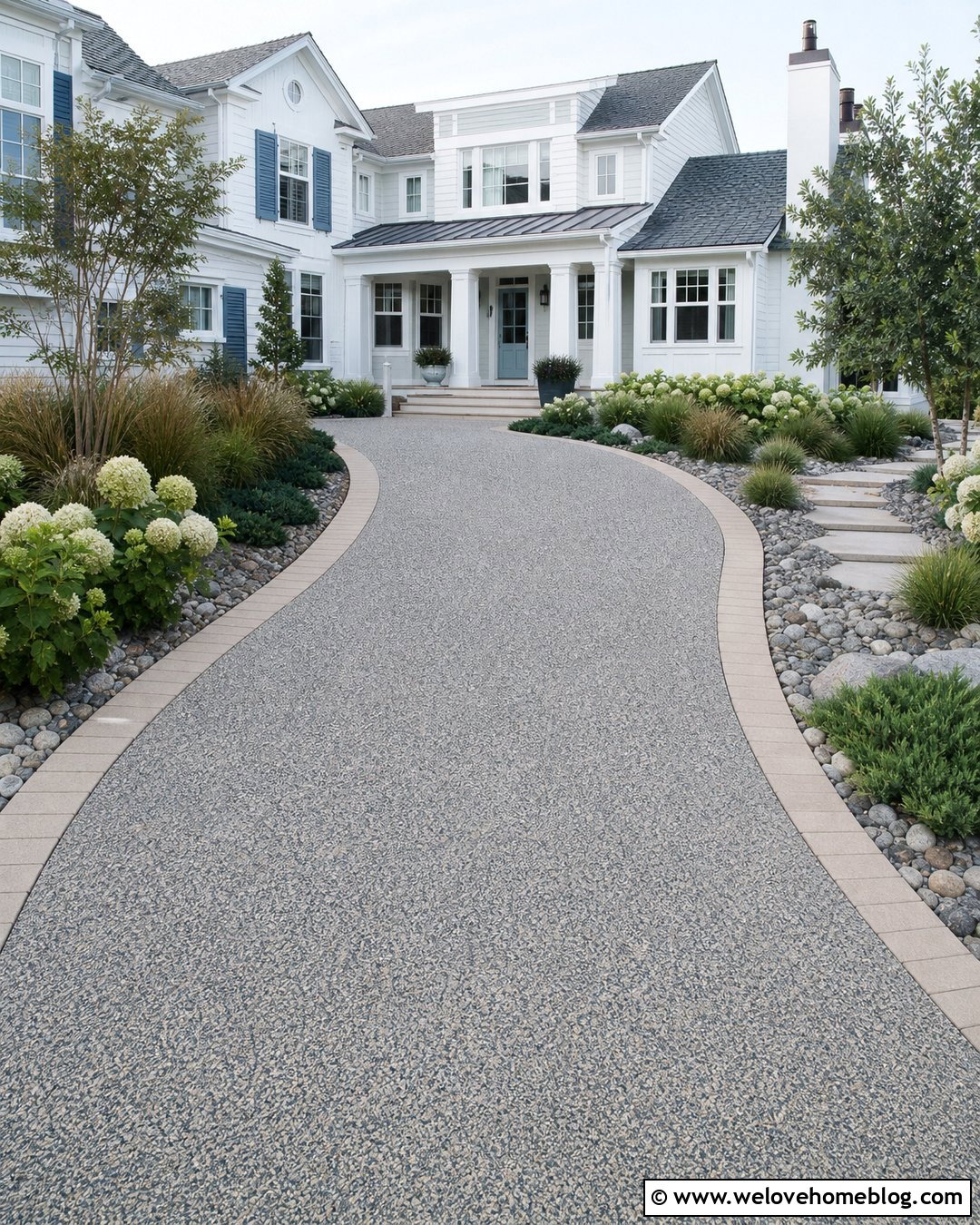
A pale gray rubber driveway can echo weathered stone and suit the relaxed palette of a coastal-inspired home. Mix light-gray recycled rubber granules with small amounts of beige and charcoal for greater depth. Shape the driveway into a shallow curve leading toward a white or blue-gray house with simple porch details. Border the surface with sandy-beige concrete pavers. Use salt-tolerant-looking ornamental grasses, low junipers, hydrangeas, and smooth landscape stone to complete the setting, selecting actual plants according to local growing conditions. A stepping-stone walkway can connect the inner curve to the porch. Lighter finishes may show stains differently than dark surfaces, so request maintenance guidance and review physical samples. Keep runoff, roof drainage, and irrigation water from repeatedly carrying soil across the driveway.
18. Warm Blend Rubber Driveway For A Craftsman House
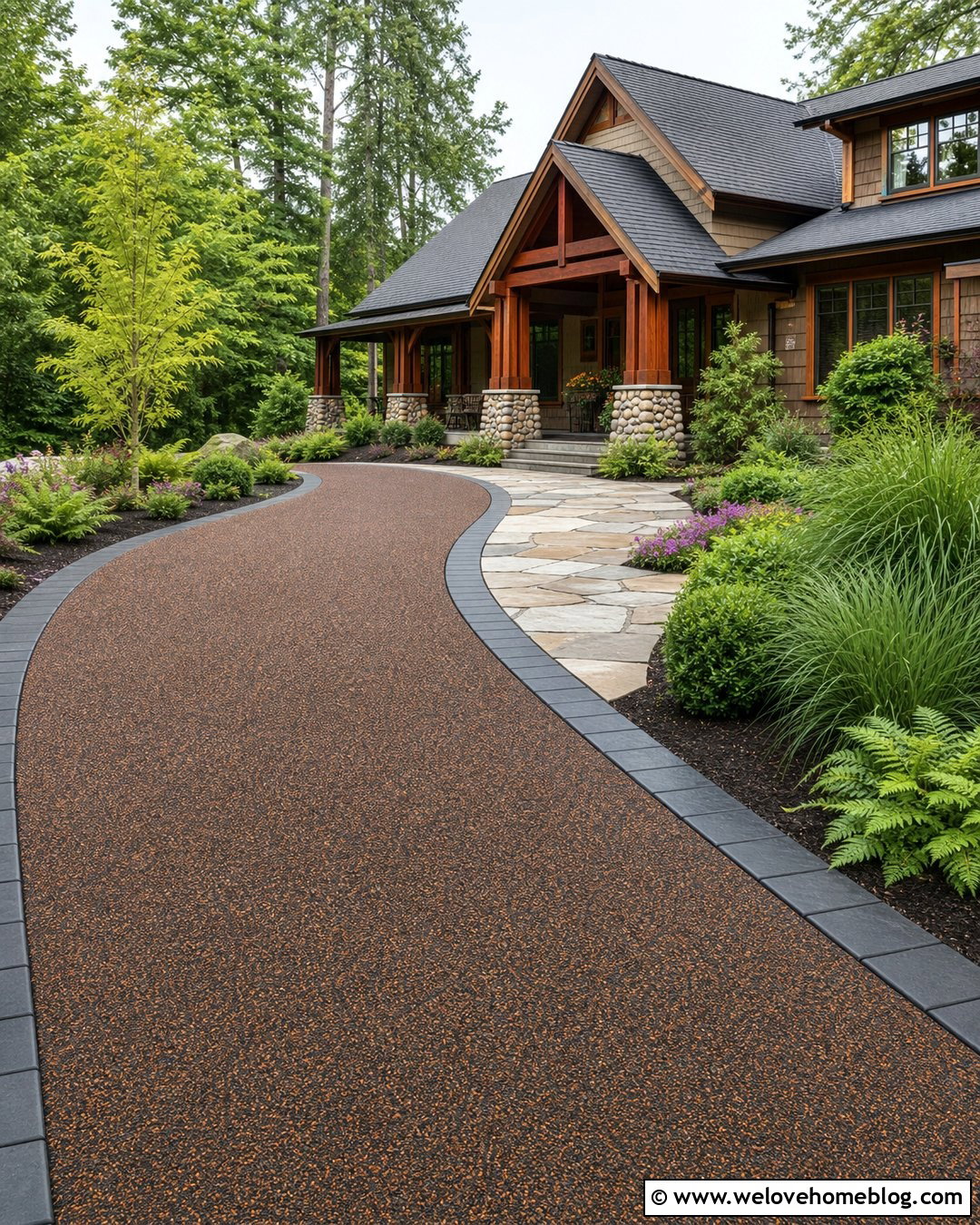
Craftsman architecture benefits from materials that appear textured, grounded, and connected to the landscape. Choose a recycled rubber blend containing brown, black, rust, and muted tan granules. Install it in a broad curved driveway leading to a home with stone porch columns and stained wood details. Frame the rubber surface with dark concrete pavers that echo the roof color. Layer the surrounding beds with ferns, ornamental grasses, flowering perennials, and rounded shrubs. A natural-stone walkway can branch from the driveway and curve toward the porch. Keep the surface pattern finely blended rather than using large contrasting patches. Warm granule colors should coordinate with the masonry without matching it exactly. View samples beside the house in both sun and shade before selecting the final mixture.
19. Rubber Driveway With Gate And Stone Pillars
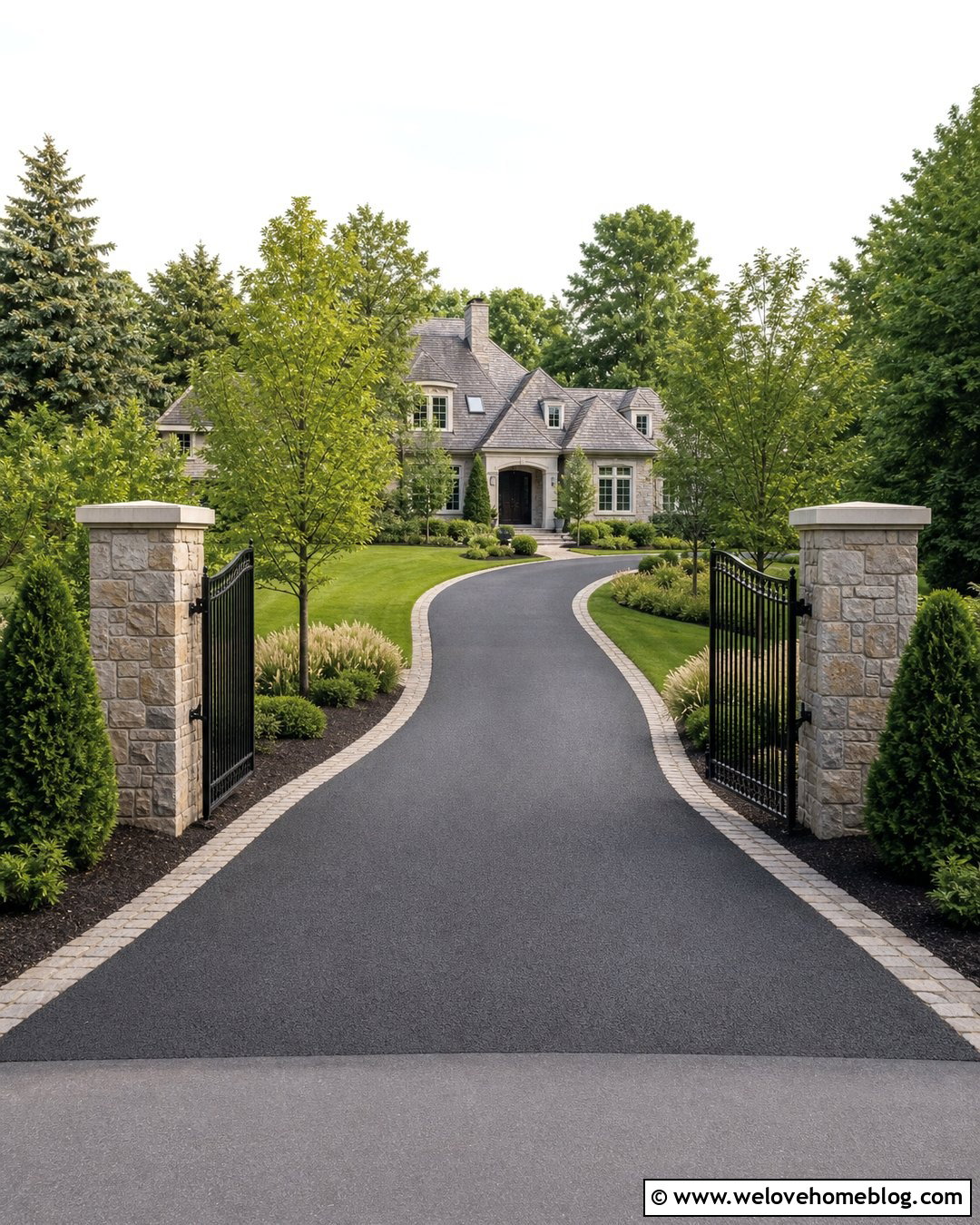
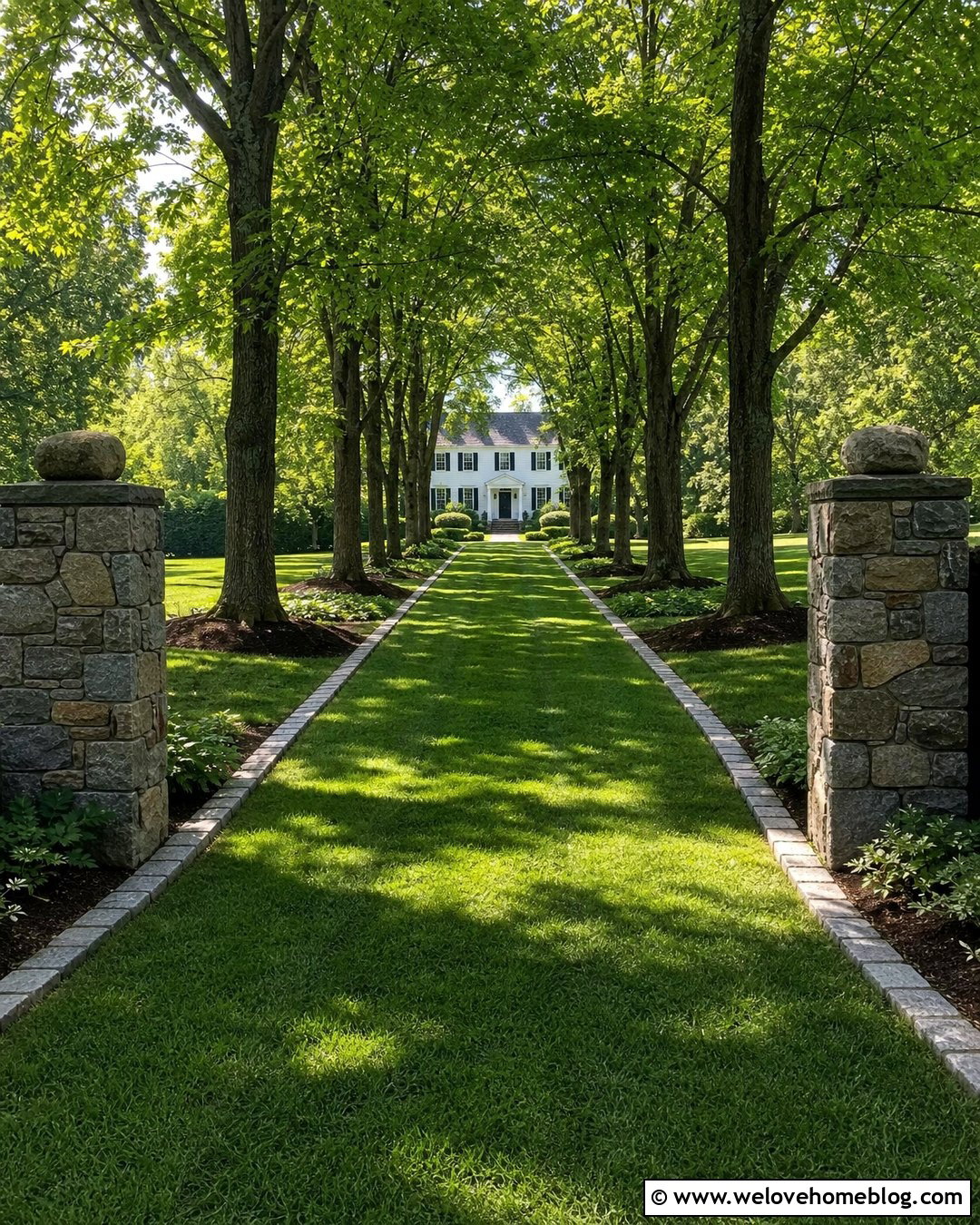
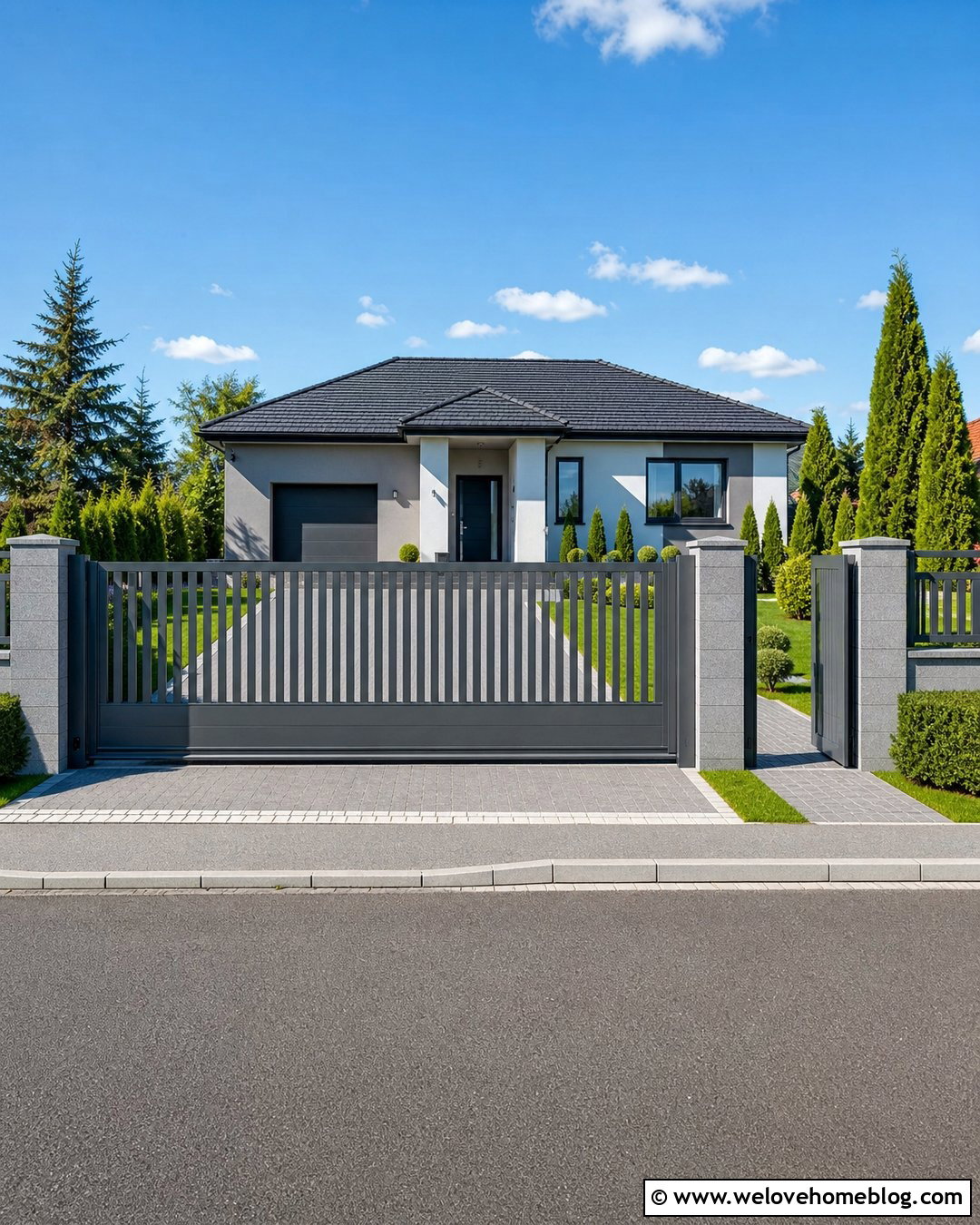
A gated entrance can make a recycled rubber driveway feel established and carefully planned. Use a deep charcoal poured rubber surface in a long, gently curved layout. At the street, install substantial stone pillars with a simple black metal gate set far enough back for safe vehicle positioning, subject to local requirements. Continue the driveway through the entrance with low, flush cobblestone edging. Plant evergreen shrubs near the pillars, then transition to looser grasses and small trees farther along the approach. The gate equipment, drainage, utilities, and paving edges must be coordinated before surfacing begins. Avoid placing control boxes where they interrupt the clean curb view. Repeating the pillar stone near the house or garage will visually connect the entrance with the rest of the property.
20. Rubber Driveway With Matching Front Walkway
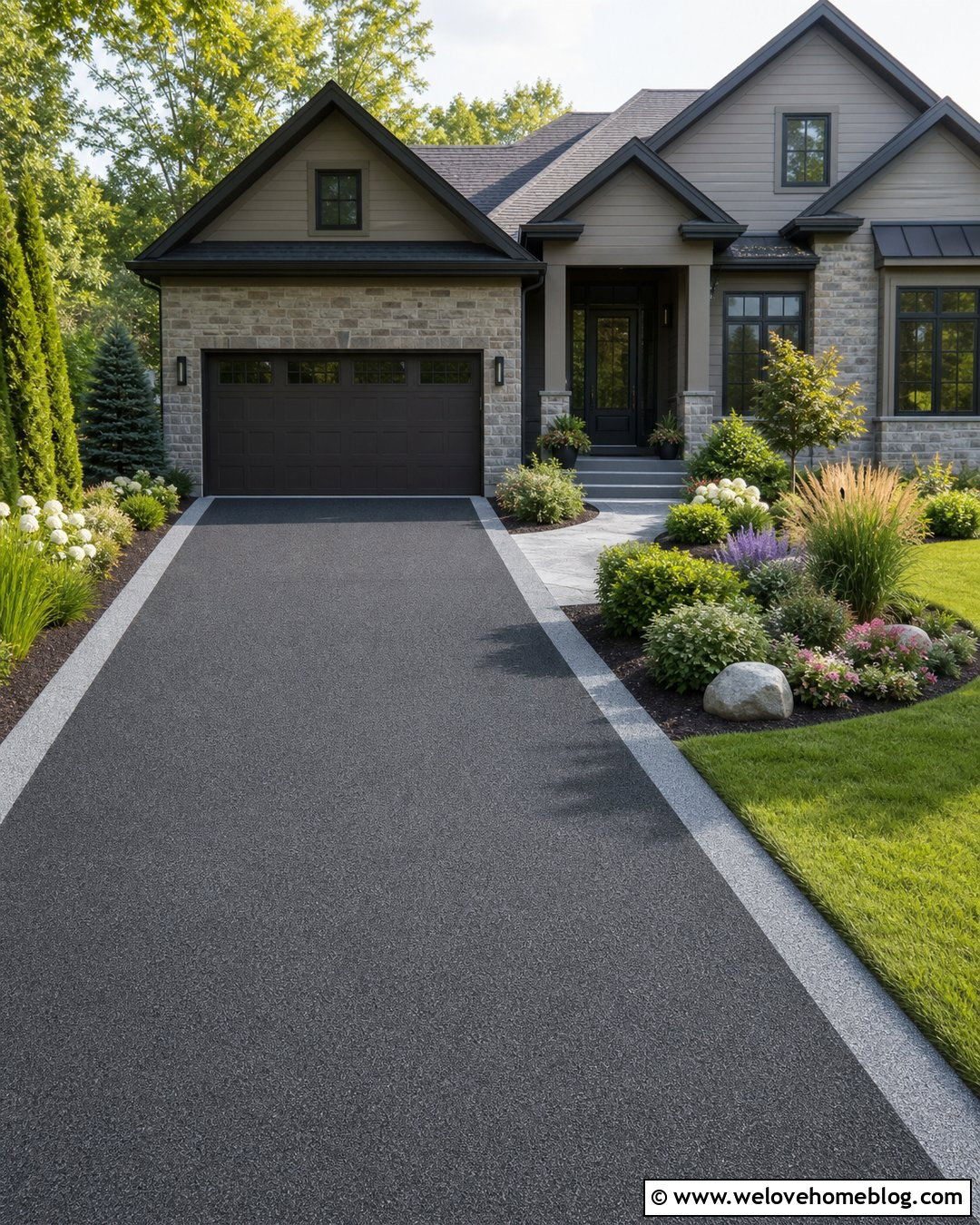
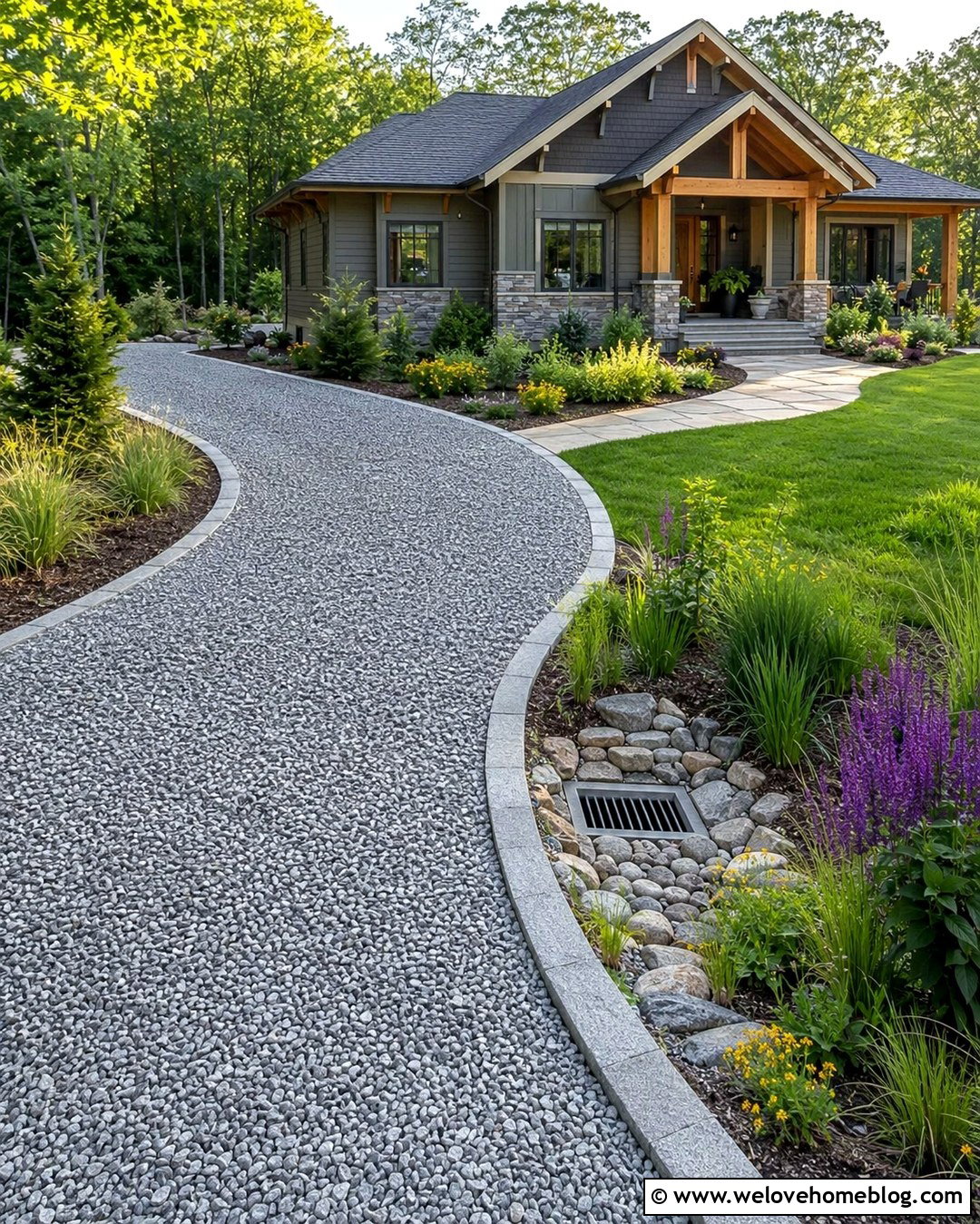
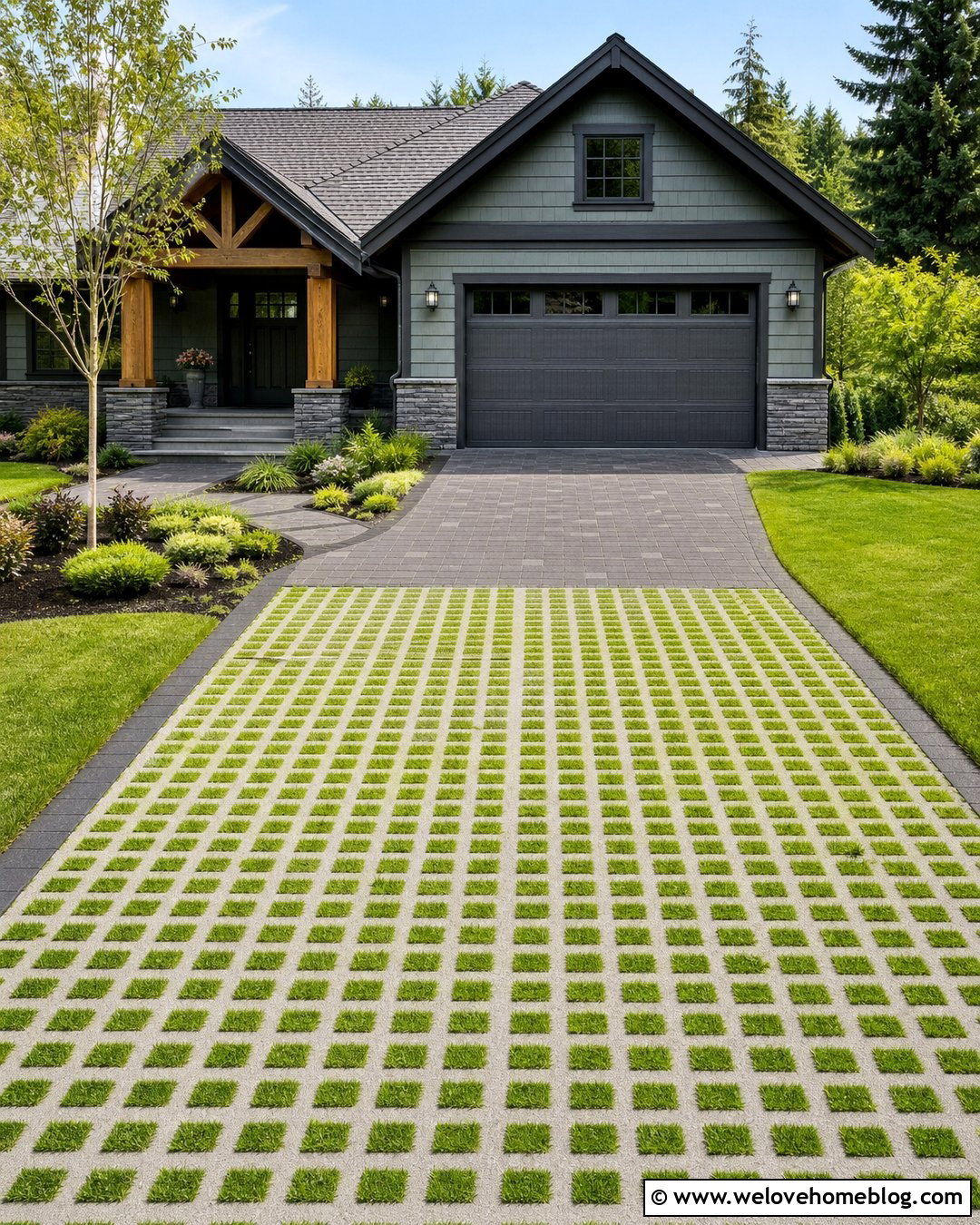
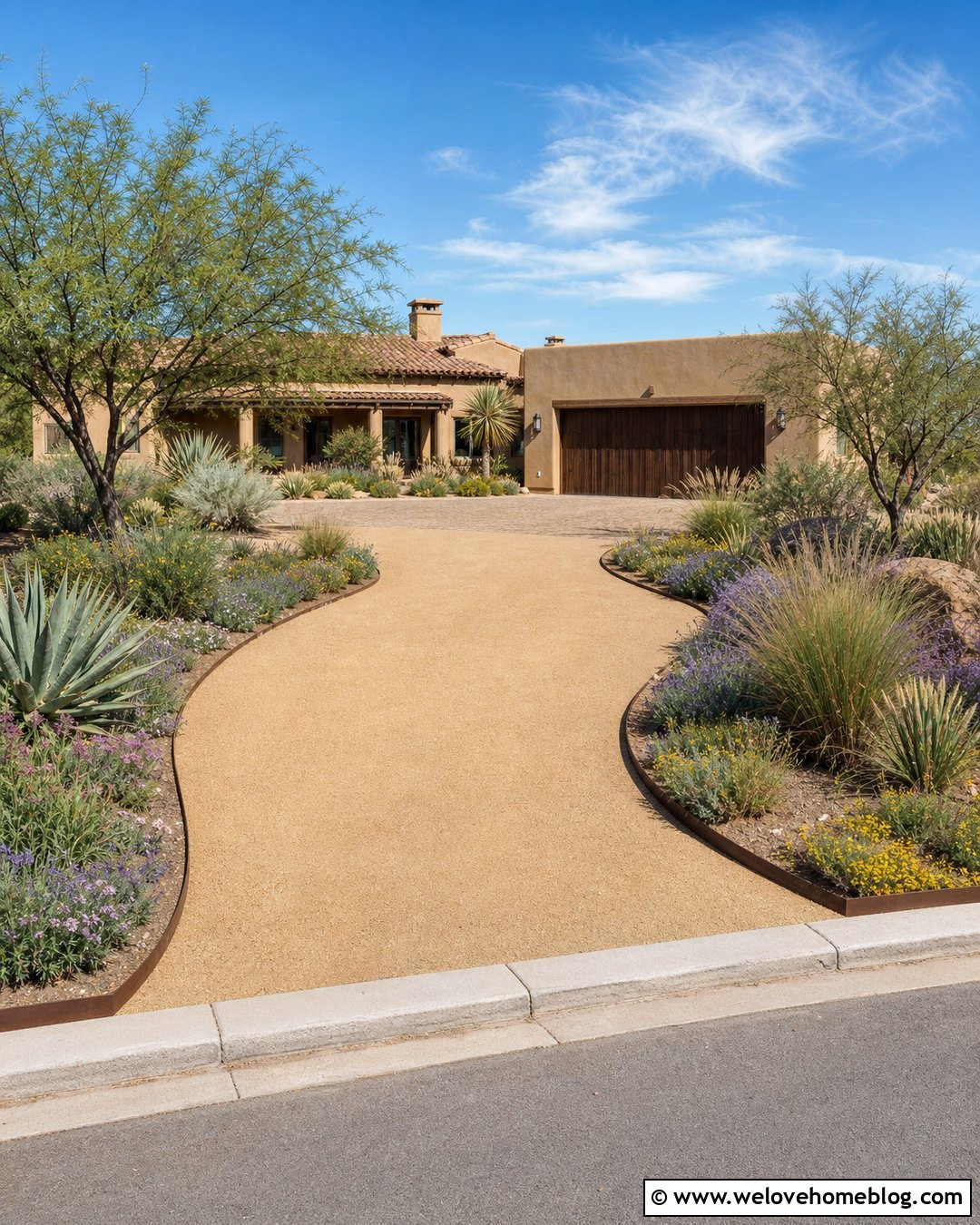
Connecting the driveway and front walkway creates a unified entrance, especially when both surfaces use related recycled rubber colors. Cover the main straight driveway with charcoal rubber, then use a lighter gray rubber blend for the walkway and a narrow perimeter ribbon. The color change will clearly separate pedestrian and vehicle areas without making the property feel fragmented. This approach works well with a transitional suburban home featuring white trim, mixed siding, and modest stone accents. Curve the walkway gently through layered beds of evergreen shrubs, flowering perennials, and ornamental grasses. Keep the meeting point between the walkway and driveway wide and smooth. Confirm that each area receives the proper base, thickness, edge restraint, and surface specification for its expected load and pattern of use.
Conclusion:
These **20 Rubber Driveway Recycled Tires Ideas** show how recycled tire materials can support many complete driveway looks, from black overlays and rubberized asphalt to colored pavers and permeable grid systems. The strongest design will coordinate the rubber color, driveway shape, edging, landscaping, drainage, and house style as one composition. Before choosing a product, confirm that it is intended for residential vehicle traffic and compatible with the existing base. Ask about preparation, curing, winter maintenance, repairs, warranty coverage, and local availability. Physical samples are also essential because color blends can change under outdoor lighting. With thoughtful planning and qualified installation, a recycled rubber driveway can create a distinctive, practical, and cohesive home entrance.

Related posts:
Leave a Reply