
A geocell driveway combines practical ground reinforcement with the relaxed curb appeal of gravel, stone, grass, or permeable paving. The honeycomb-style cellular system confines the infill, helping limit sideways movement under vehicle loads. It can be especially useful where loose aggregate is prone to rutting, spreading, or washing out. Proper grading, a suitable subbase, and thoughtful drainage remain essential because the grid cannot correct water problems by itself. () From clean modern entrances to rustic country approaches, geocells can support many surfaces, shapes, borders, and landscaping schemes. The grid is usually concealed, so the finished driveway can look polished rather than industrial. Below are 20 Geocell Driveway Ideas.

1. Gravel Geocell Driveway With Stone Edging
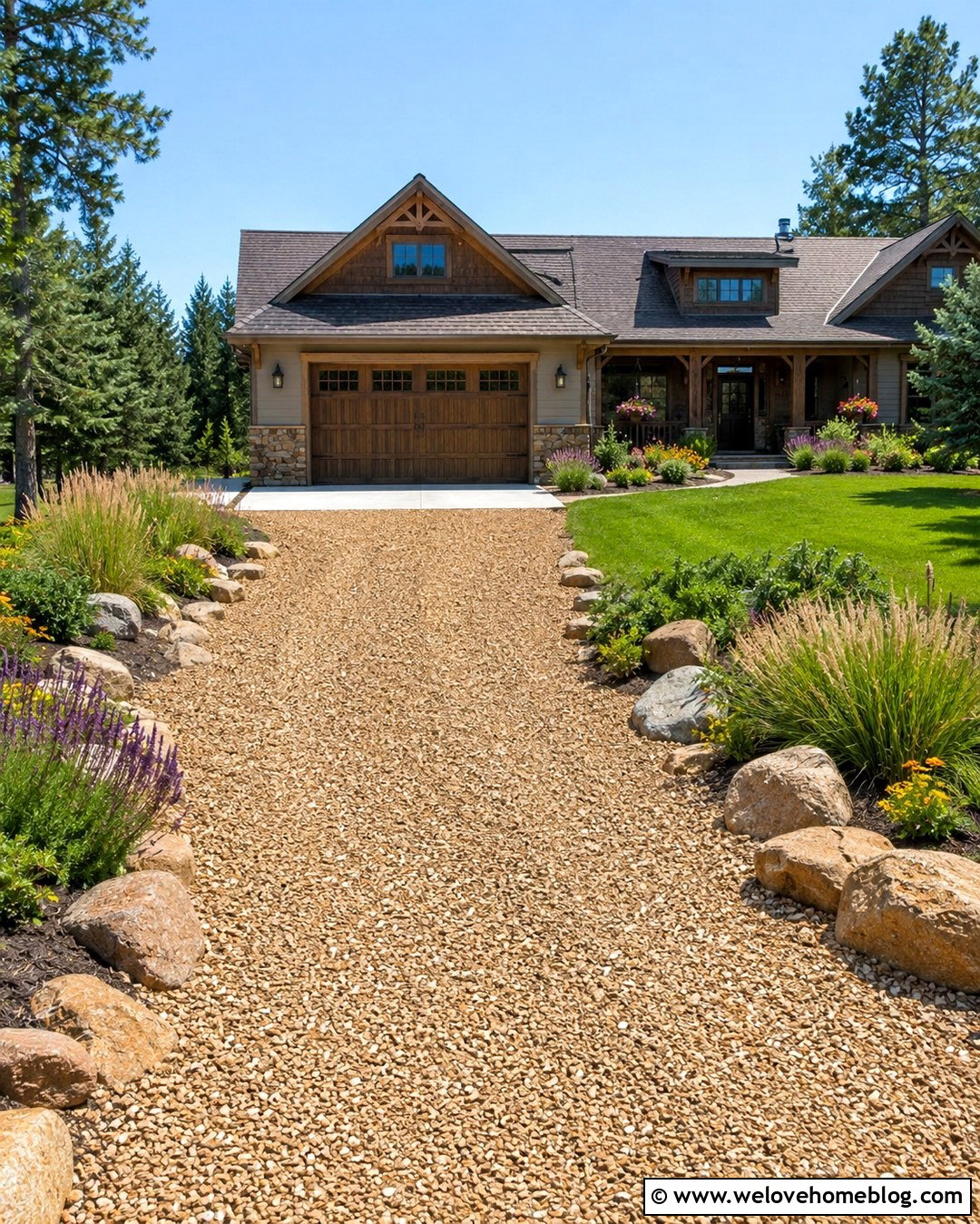
A straight gravel driveway framed by natural stone creates a practical entrance that feels established and welcoming. Fill the geocell system with compactable angular gravel, then add a thin matching surface layer to conceal the cells. Large fieldstones along both sides form a strong visual boundary and help separate the driving surface from planting beds. Use low ornamental grasses, spreading junipers, and clusters of flowering perennials behind the stones for a layered landscape. At the garage, transition the gravel into a concrete apron so tires do not carry loose material indoors. This complete design works especially well with ranch, craftsman, and country homes. Choose warm tan gravel for a softer appearance or gray crushed stone for a cleaner look.
2. Curved Geocell Driveway With Brick Borders
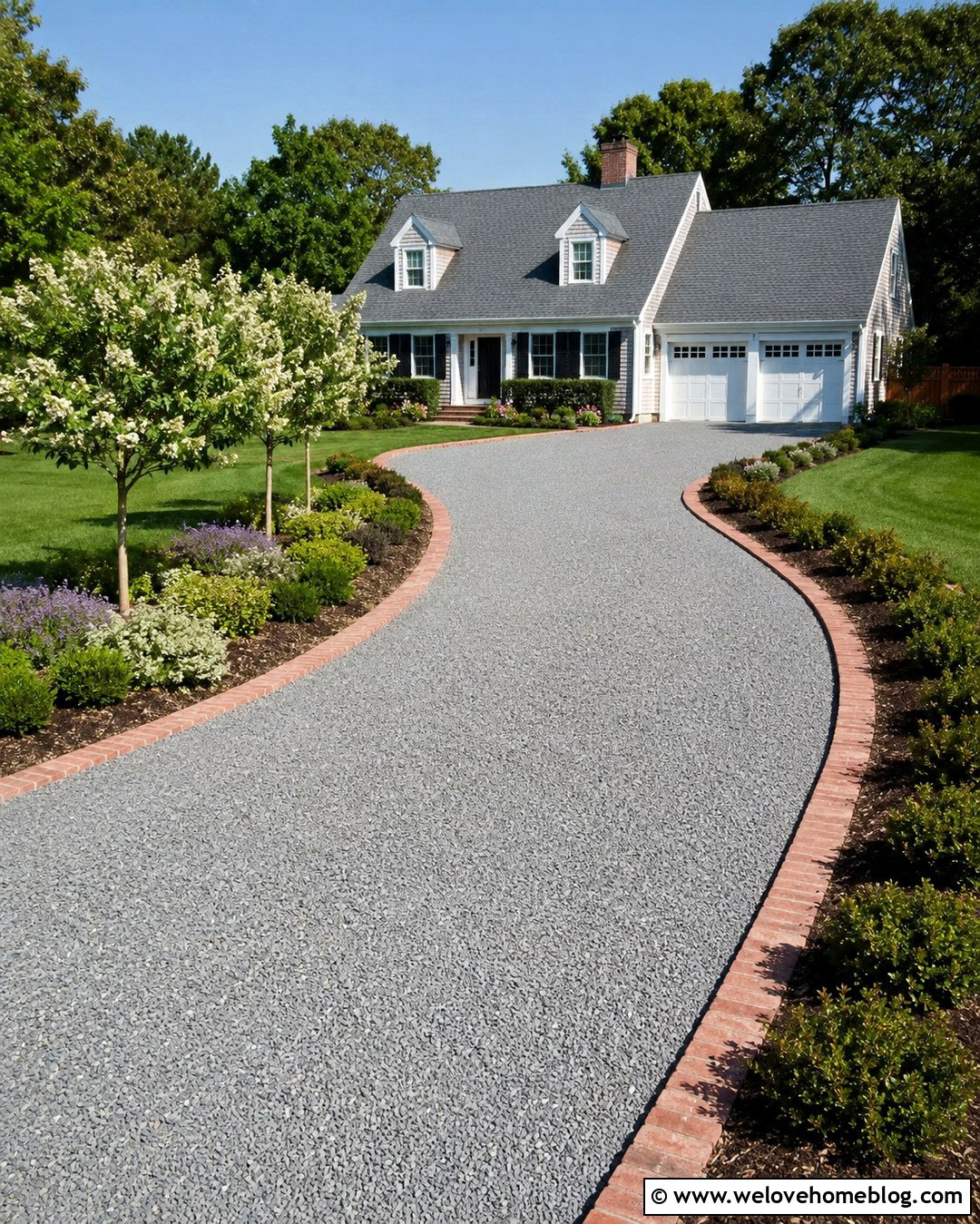
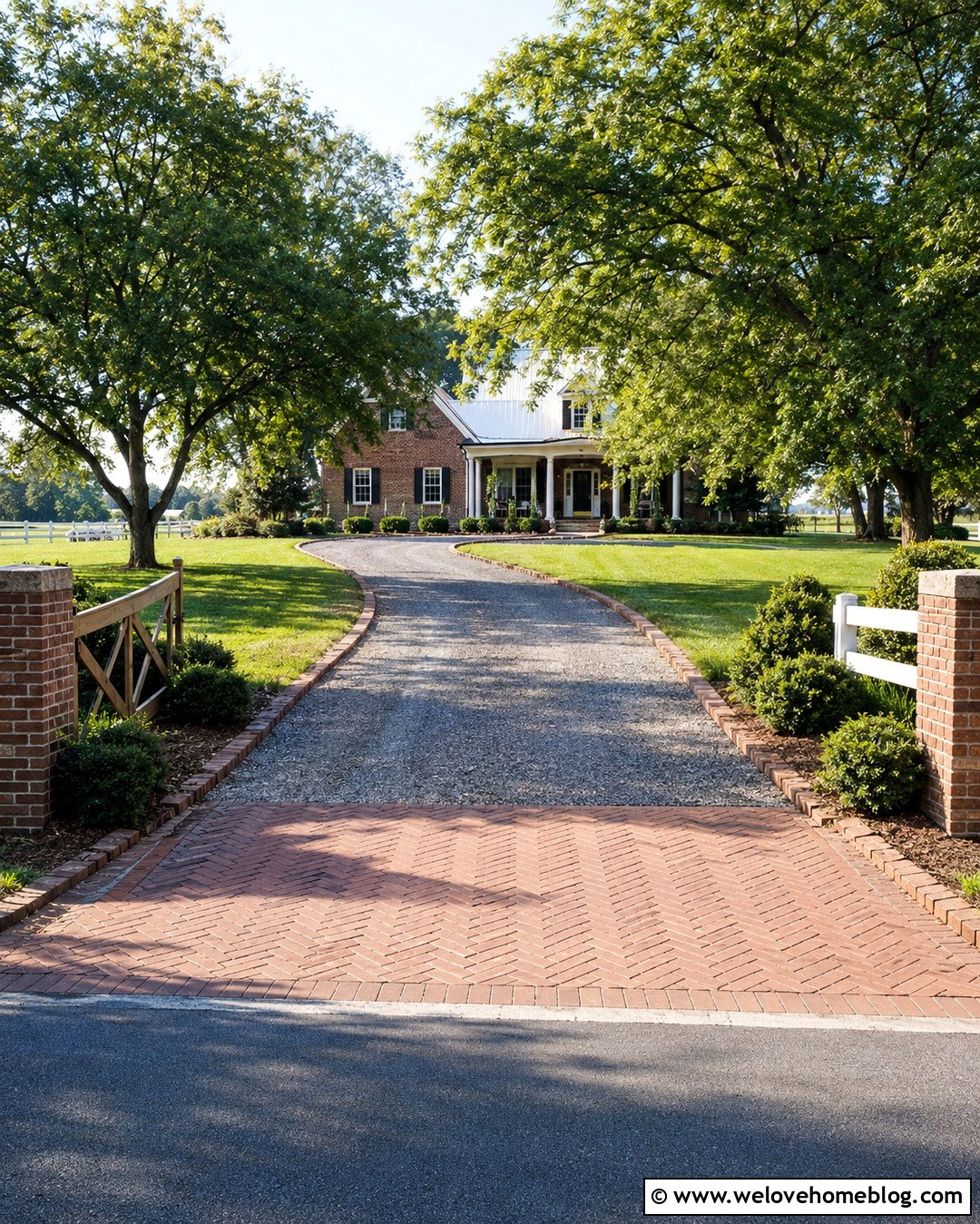
Could a gentle curve make the approach to your home feel more natural? A curved geocell driveway follows the shape of the yard while creating space for broad planting beds along the inside and outside edges. Use compacted gray crushed gravel over the reinforced base, then define the curves with clay brick borders. Red or brown brick brings warmth to the neutral stone and can coordinate with brick steps, chimneys, or facade details. Plant small flowering trees near the outer bend and keep the inner curve open with low shrubs for better visibility. A widened landing near the garage provides convenient turning space. This driveway look suits colonial and Cape Cod homes because it blends traditional materials with an informal, garden-focused layout.
3. Grass Geocell Driveway With Concrete Tire Tracks
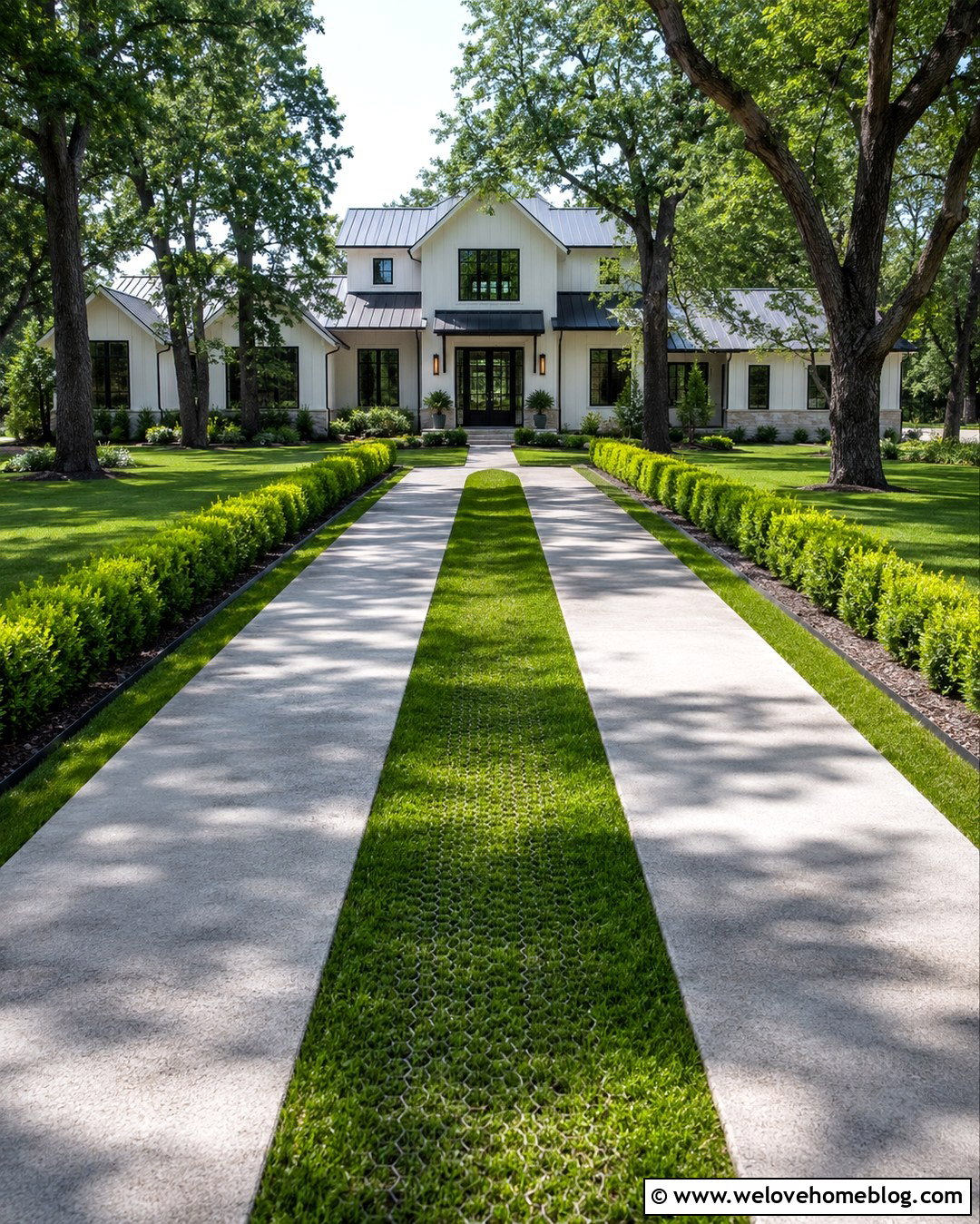
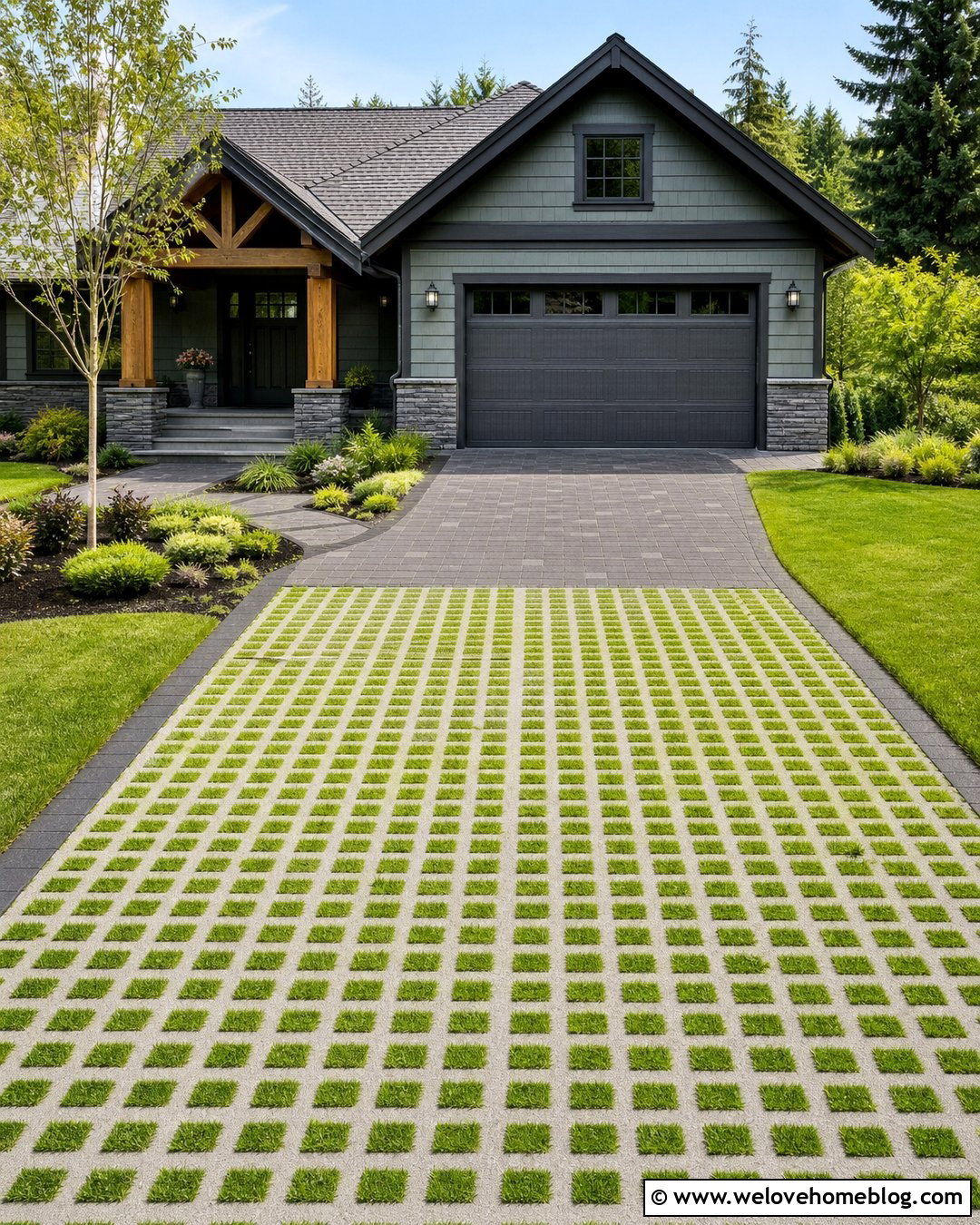
Soft green grass can make a driveway feel like part of the lawn rather than a large hardscape area. Create two poured concrete tire tracks and reinforce the center and outer strips with geocells filled using an appropriate soil-and-aggregate growing mixture. Durable turf between the tracks softens the entire approach while the concrete provides clearly defined driving lanes. Straight steel edging produces a crisp transition between the reinforced grass and adjacent planting beds. Pair the driveway with simple boxwood masses, shade trees, and a concrete walkway leading to the front door. This arrangement is best suited to relatively level properties where the grass can receive suitable light and maintenance. It complements modern farmhouse and updated ranch architecture particularly well.
4. Sloped Geocell Driveway With Crushed Granite
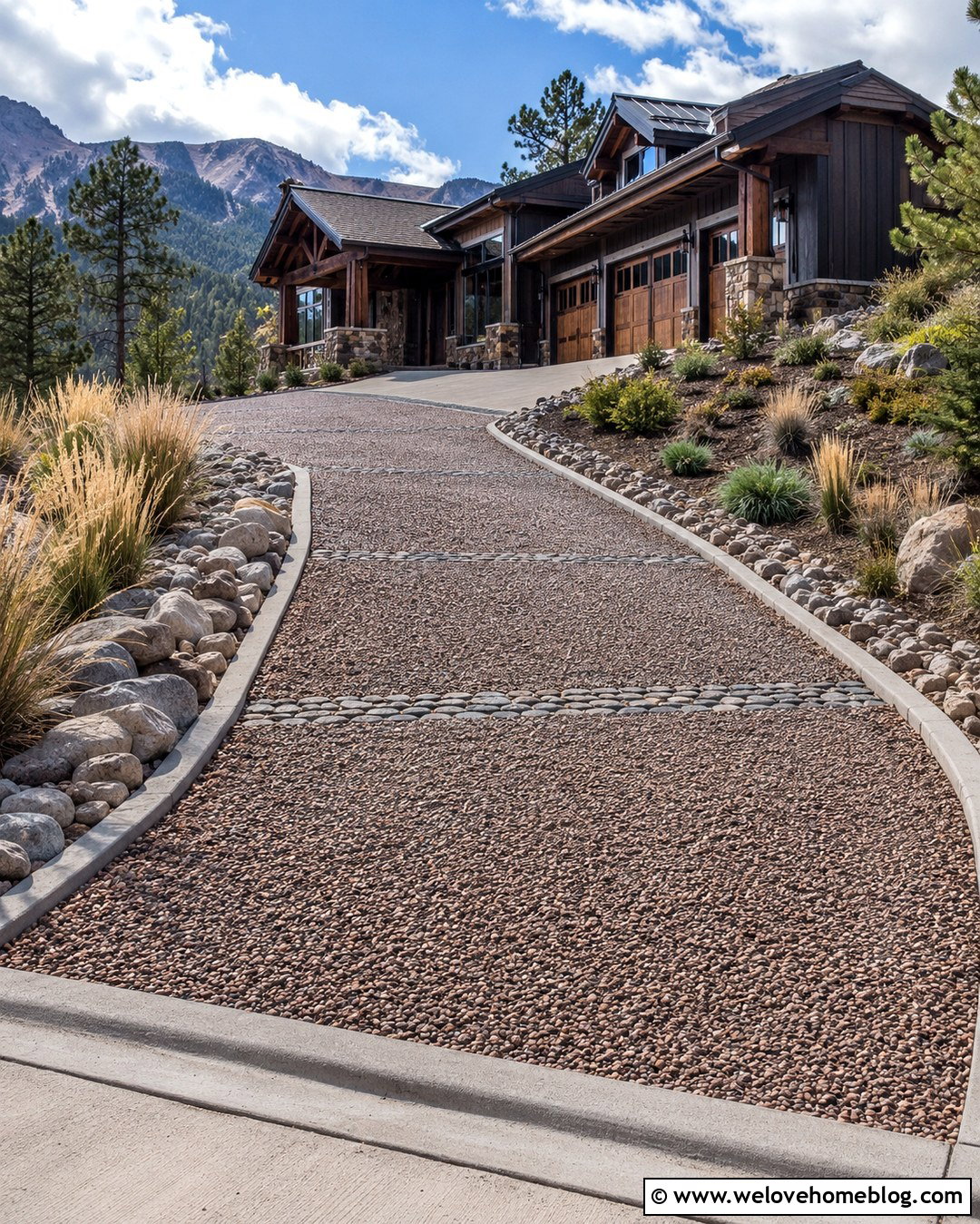
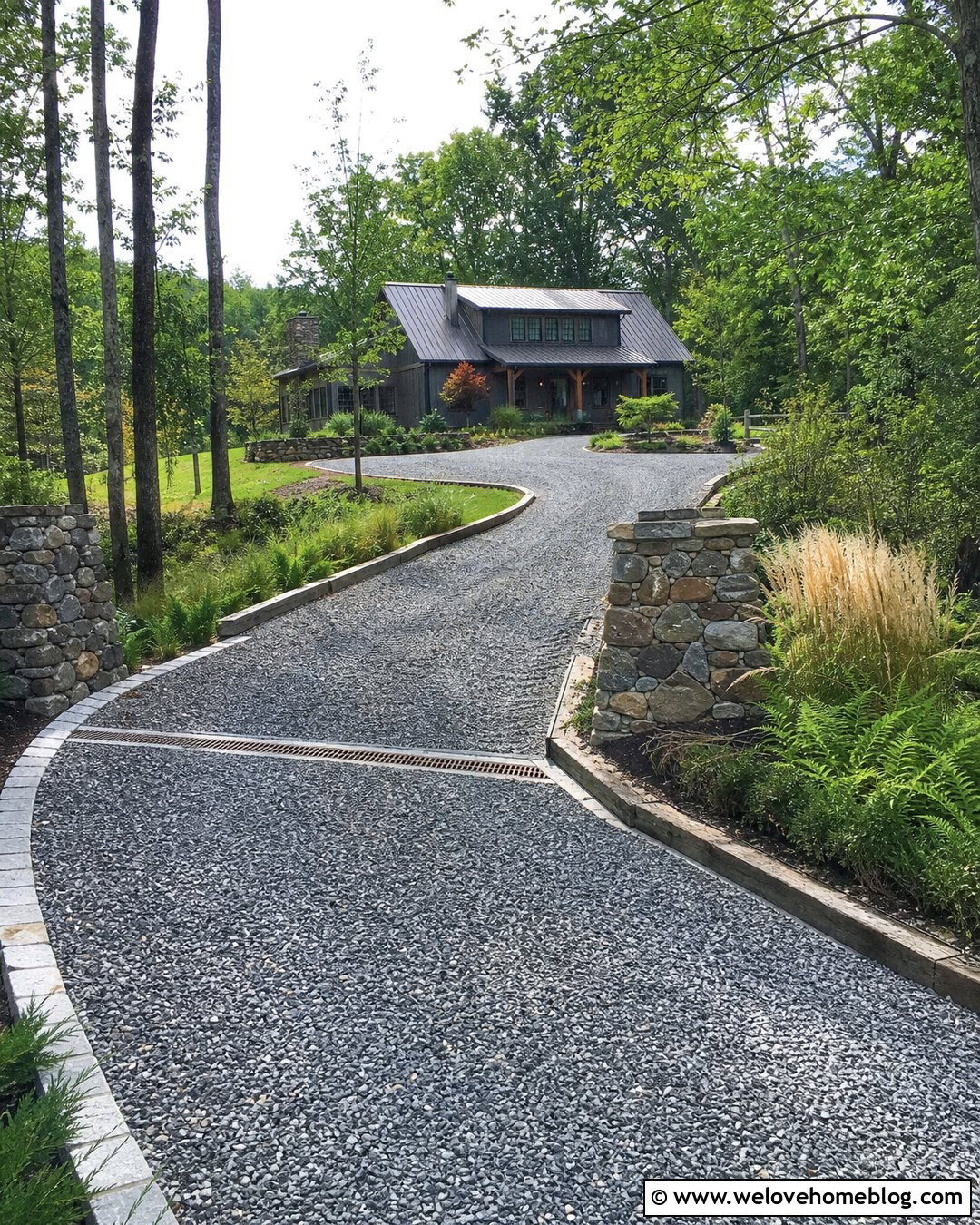
A steep-looking approach becomes more visually grounded when its materials and drainage features are designed together. Use geocells filled with compacted angular crushed granite to reinforce the driving surface, following product-specific engineering recommendations for the site and expected traffic. Install sturdy concrete curbs or embedded stone borders where runoff could carry gravel toward the lawn. Shallow drainage swales planted with erosion-tolerant grasses can direct water beside the driveway instead of across it. Break up the long incline with a contrasting cobblestone band near the entrance and another before the garage apron. Because slope, soil, and stormwater conditions vary significantly, professional grading advice may be needed. Geocell confinement should complement proper drainage rather than replace it. ()
5. Circular Geocell Driveway With a Planted Island
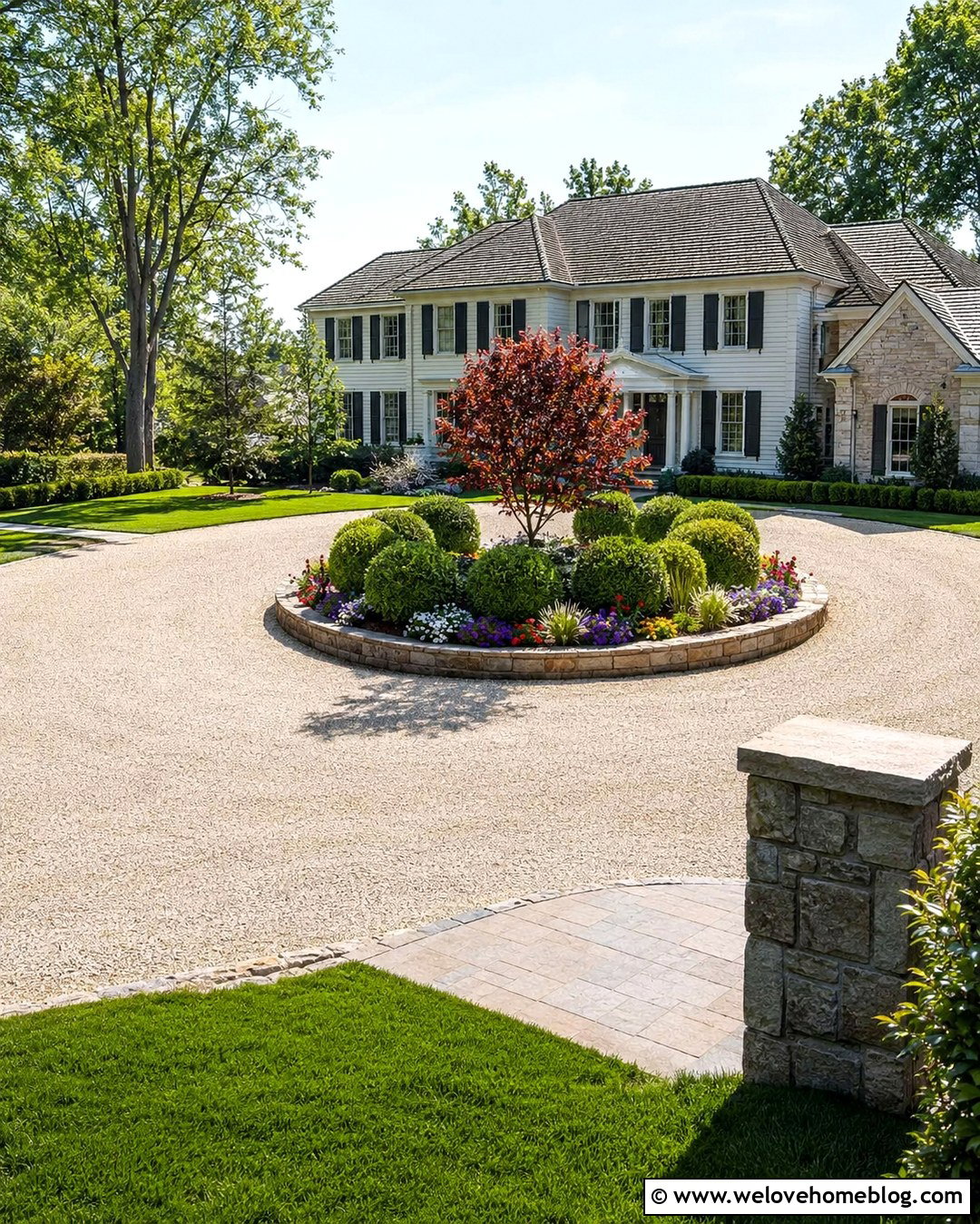
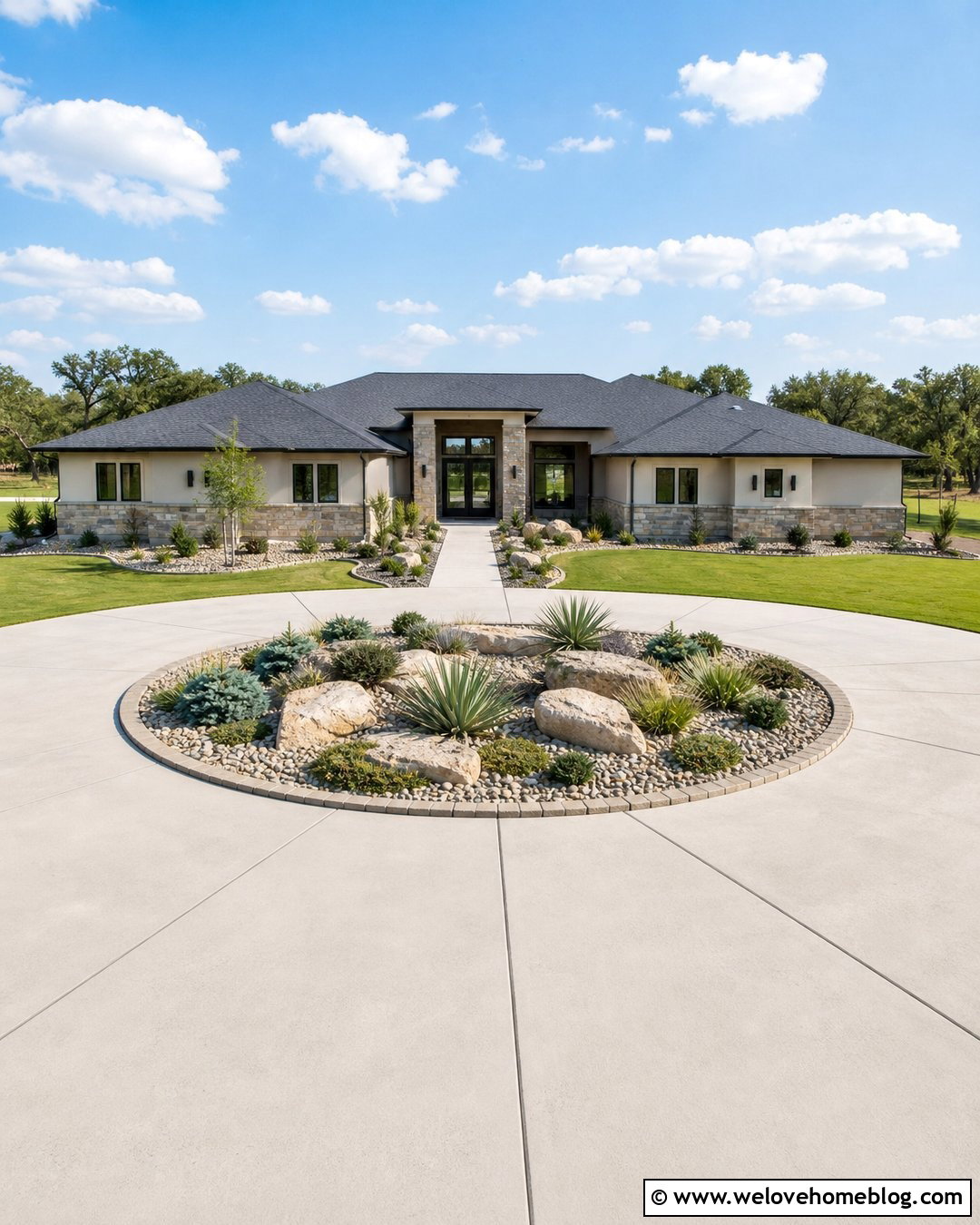
A circular geocell driveway offers an impressive arrival without requiring drivers to back into the street. Cover the reinforced structure with buff-colored crushed limestone for a bright, traditional finish. At the center, create a generous landscaped island edged with mortared stone that matches the house foundation. A small ornamental tree can serve as the anchor, surrounded by evergreen shrubs, seasonal flowers, and low ground covers. Keep taller plants away from the entrance side so approaching vehicles remain visible. Stone entrance pillars and a matching mailbox can connect the circular layout to the architecture. This complete driveway design looks especially appropriate in front of colonial, Georgian, and large craftsman homes. Add a paved walkway across the island only if pedestrian circulation requires it.
6. Modern Geocell Driveway With Black Gravel
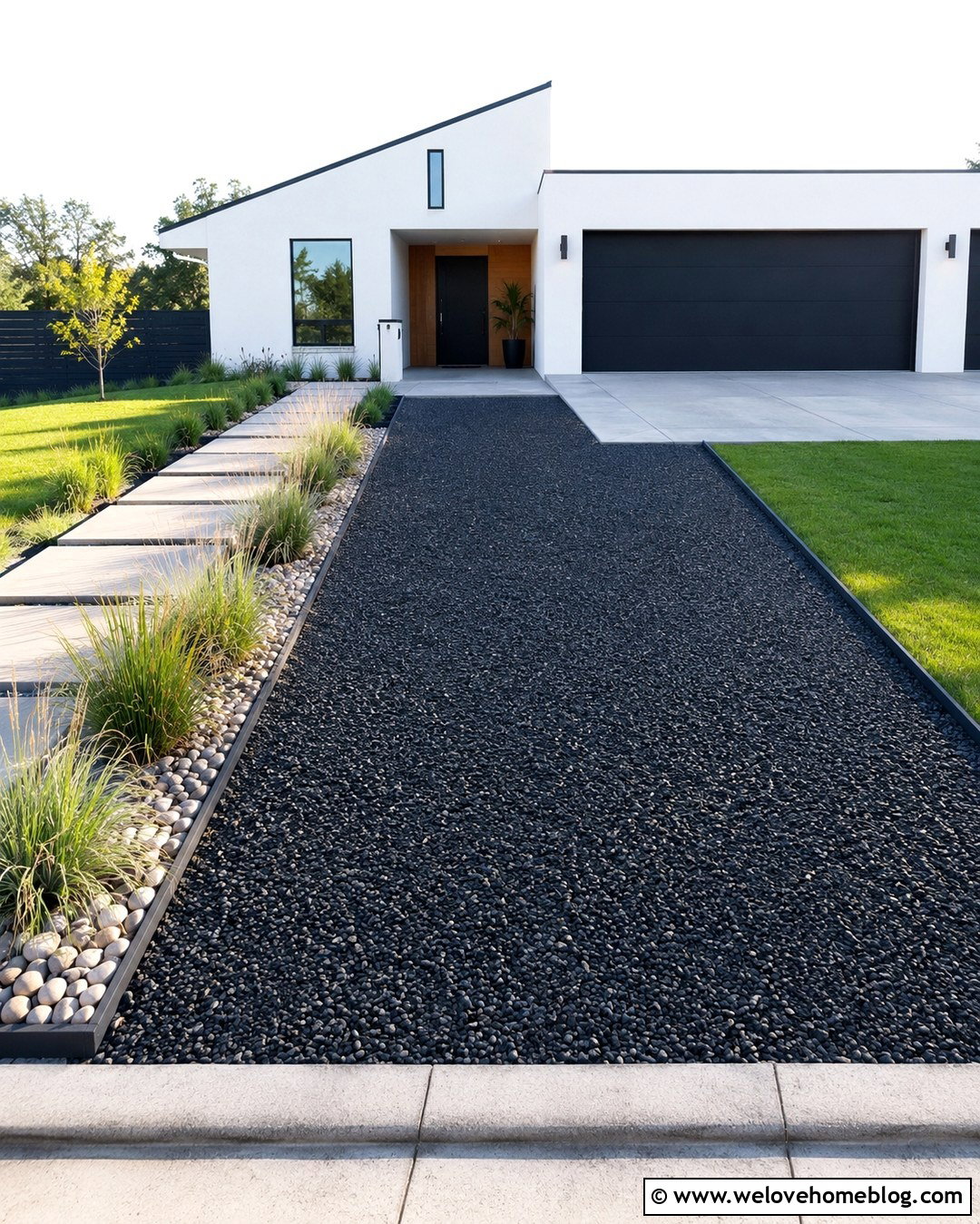
Sharp lines and limited colors give a geocell driveway a distinctly modern character. Use dark charcoal angular gravel as the visible finish, supported by a properly prepared geocell base. Straight black steel edging keeps the driveway geometry crisp and separates the stone from pale concrete walkways. Along one side, plant repeated groups of ornamental grasses in rectangular beds filled with light river rock. On the opposite edge, maintain an open lawn to prevent the entrance from appearing crowded. A broad poured-concrete apron at the garage creates a clean stopping point and makes sweeping easier near the doors. This high-contrast combination works with contemporary homes featuring white stucco, dark siding, or natural wood accents. Minimal planting allows the gravel color and strong driveway layout to remain prominent.
7. Farmhouse Geocell Driveway With Timber Edging
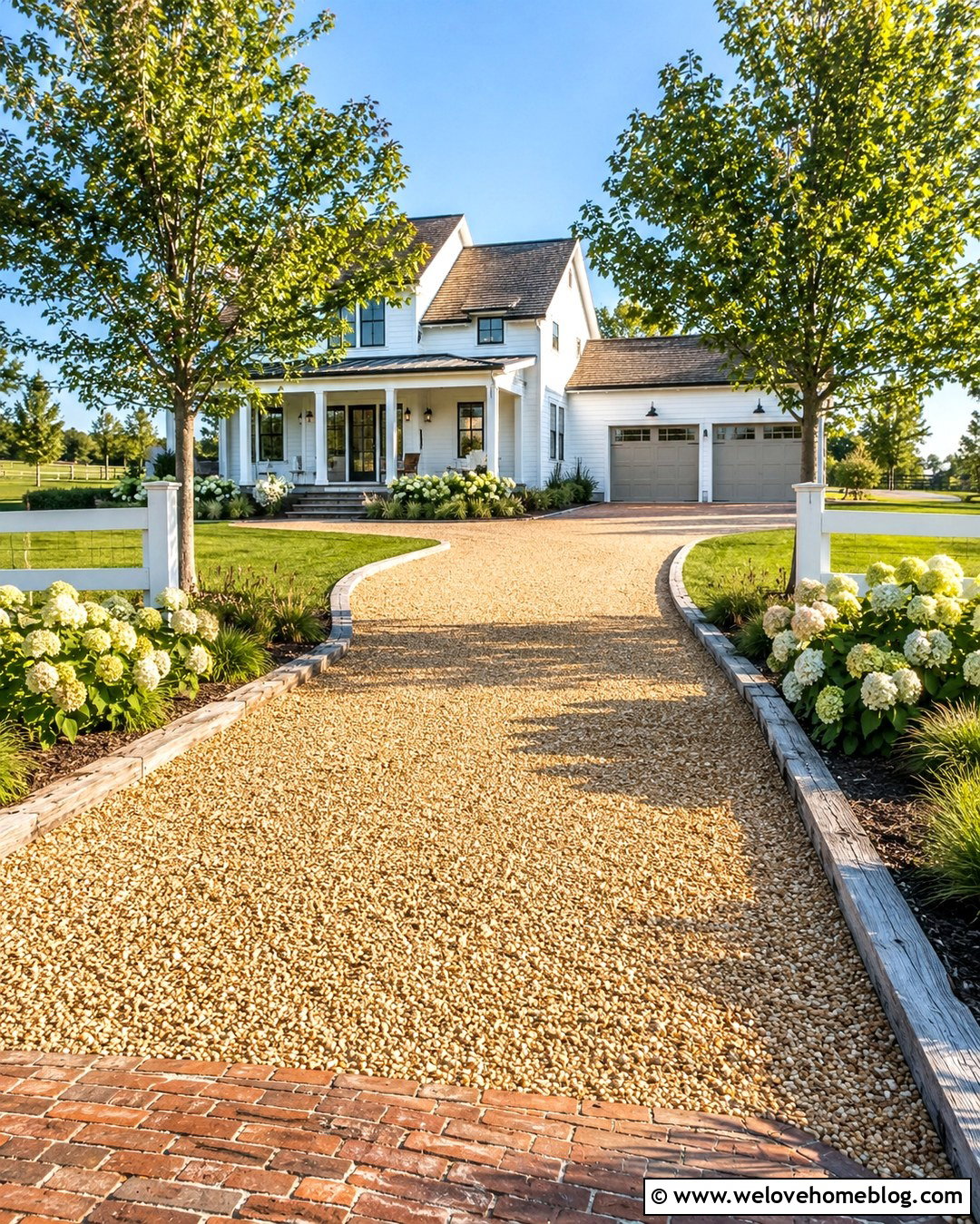
Warm gravel, timber edging, and meadow-like planting create an approachable farmhouse entrance. Choose compacted golden crushed stone over the geocell reinforcement and form a wide, gently curved route toward the garage. Pressure-treated landscape timbers can define the edges in suitable settings, although stone or metal may offer a more permanent alternative. Plant hydrangeas near the house, ornamental grasses along the curve, and a pair of deciduous trees near the roadside entrance. A brick or concrete apron beside the garage gives the loose-stone surface a tidy ending. White fence sections can mark the property entrance without enclosing the entire yard. The finished design feels informal but organized, making it a natural match for white siding, board-and-batten details, covered porches, and dark metal roofs.
8. Geocell Driveway With Cobblestone Ribbons
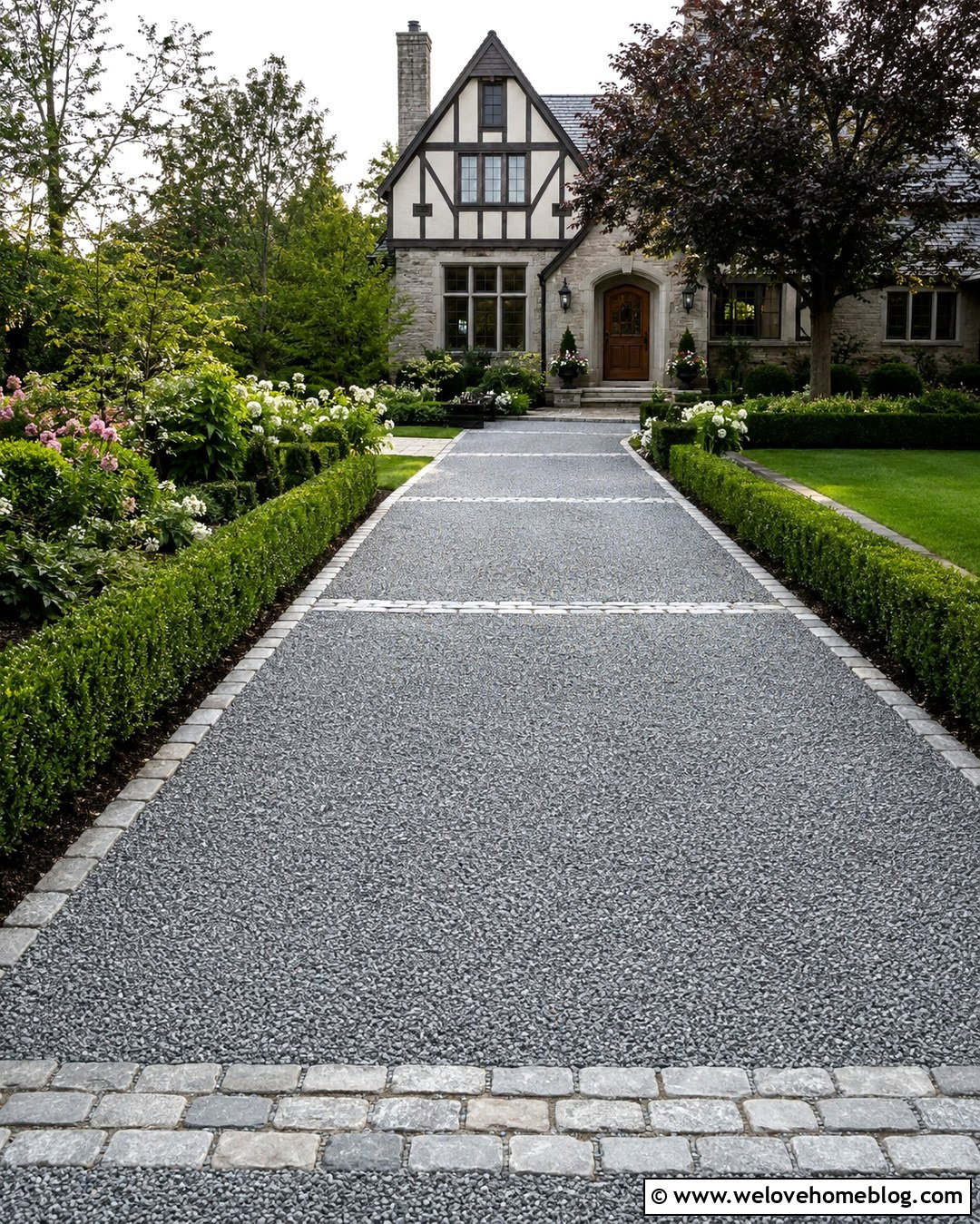
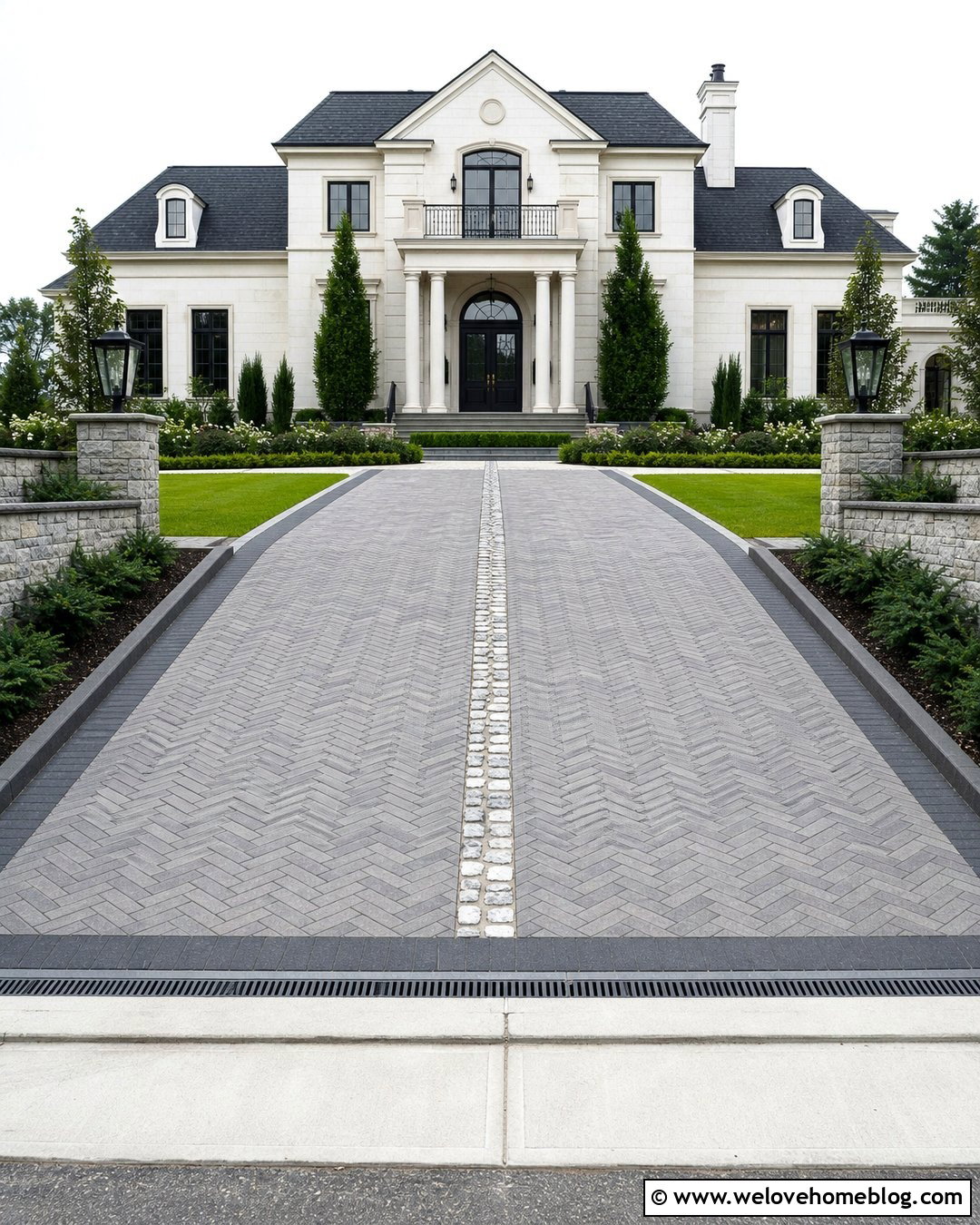
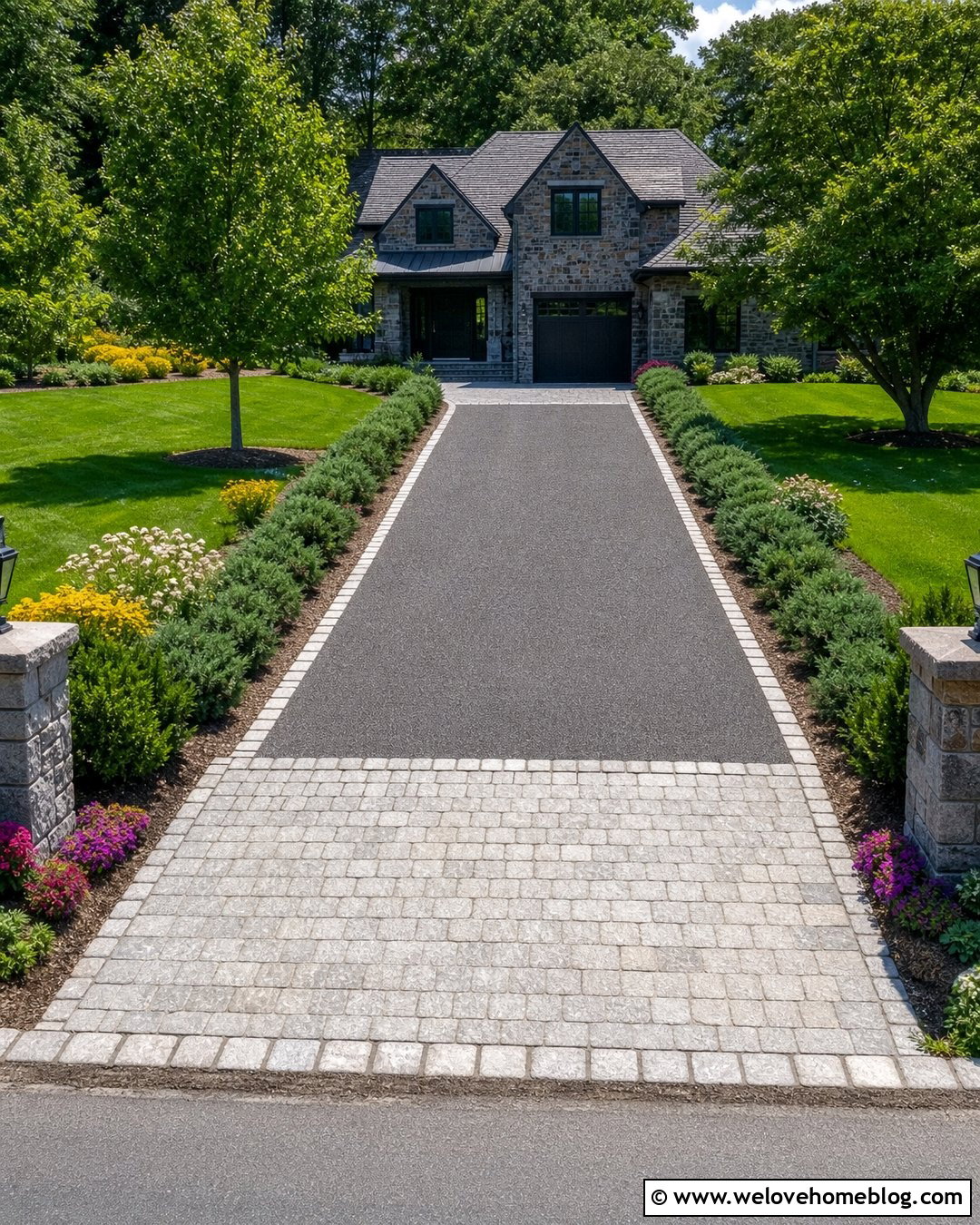
Cobblestone ribbons introduce pattern without covering the entire driveway in expensive masonry. Build the main driving area with geocell-reinforced gray crushed stone, then install narrow cobblestone bands at the street, halfway along the drive, and near the garage. These repeated crossbands visually divide a long approach and connect it with a cobblestone walkway or front steps. Continue the stone along both edges as a restrained border, using curved sections where the driveway widens. Formal hedges can frame the entrance, while looser flowering plants closer to the house prevent the landscaping from becoming too rigid. This combination works beautifully with Tudor, colonial, and European-inspired homes. Keep the cobblestones properly supported and nearly flush with the gravel surface to create smoother transitions for vehicles.
9. Geocell Driveway With Native Plant Borders
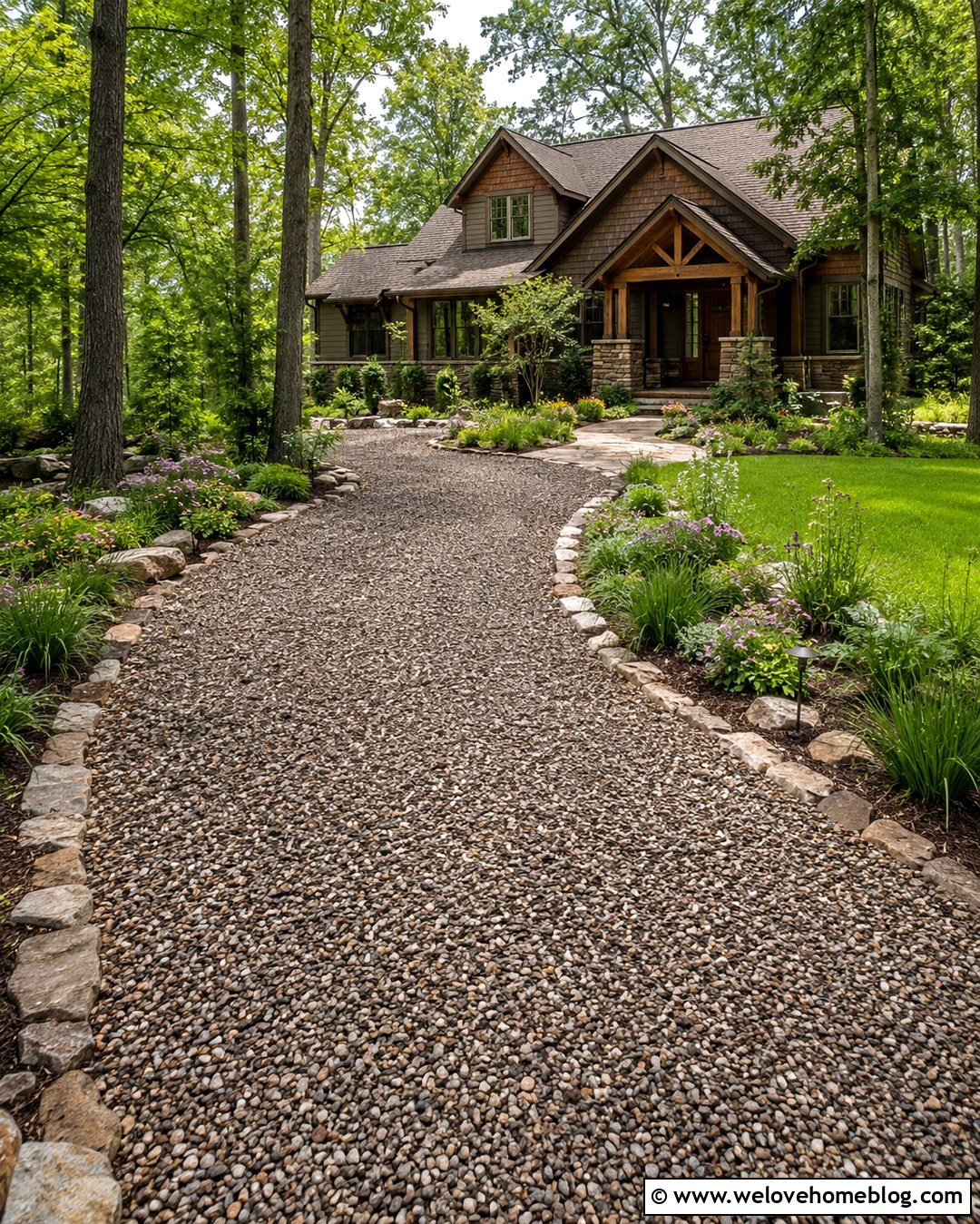
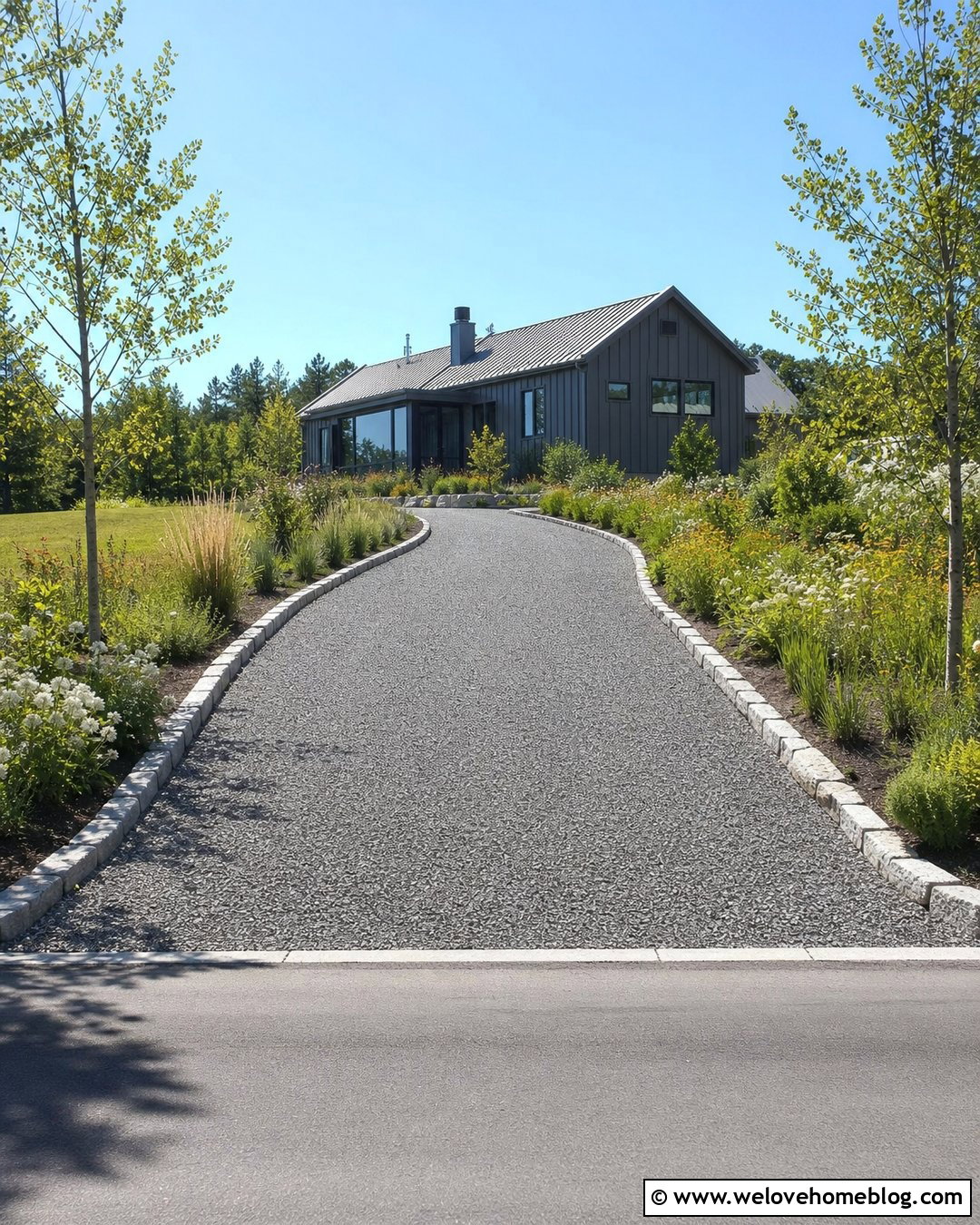
A driveway bordered by regionally appropriate plants can feel connected to the surrounding landscape. Use locally sourced angular gravel in the geocells and design a straight or subtly curved approach that preserves existing mature trees. On each side, arrange native grasses, flowering perennials, and compact shrubs in broad, repeating groups rather than isolated specimens. The planting beds can help visually absorb drainage swales while leaving enough clearance for vehicles and snow management. Natural stone edging provides a durable transition between the gravel and garden soil. Near the street, keep plants low so the entrance remains open and easy to see. This design suits craftsman, ranch, cottage, and woodland homes. Select plants for the property’s actual climate, soil, sunlight, and roadside exposure instead of appearance alone.
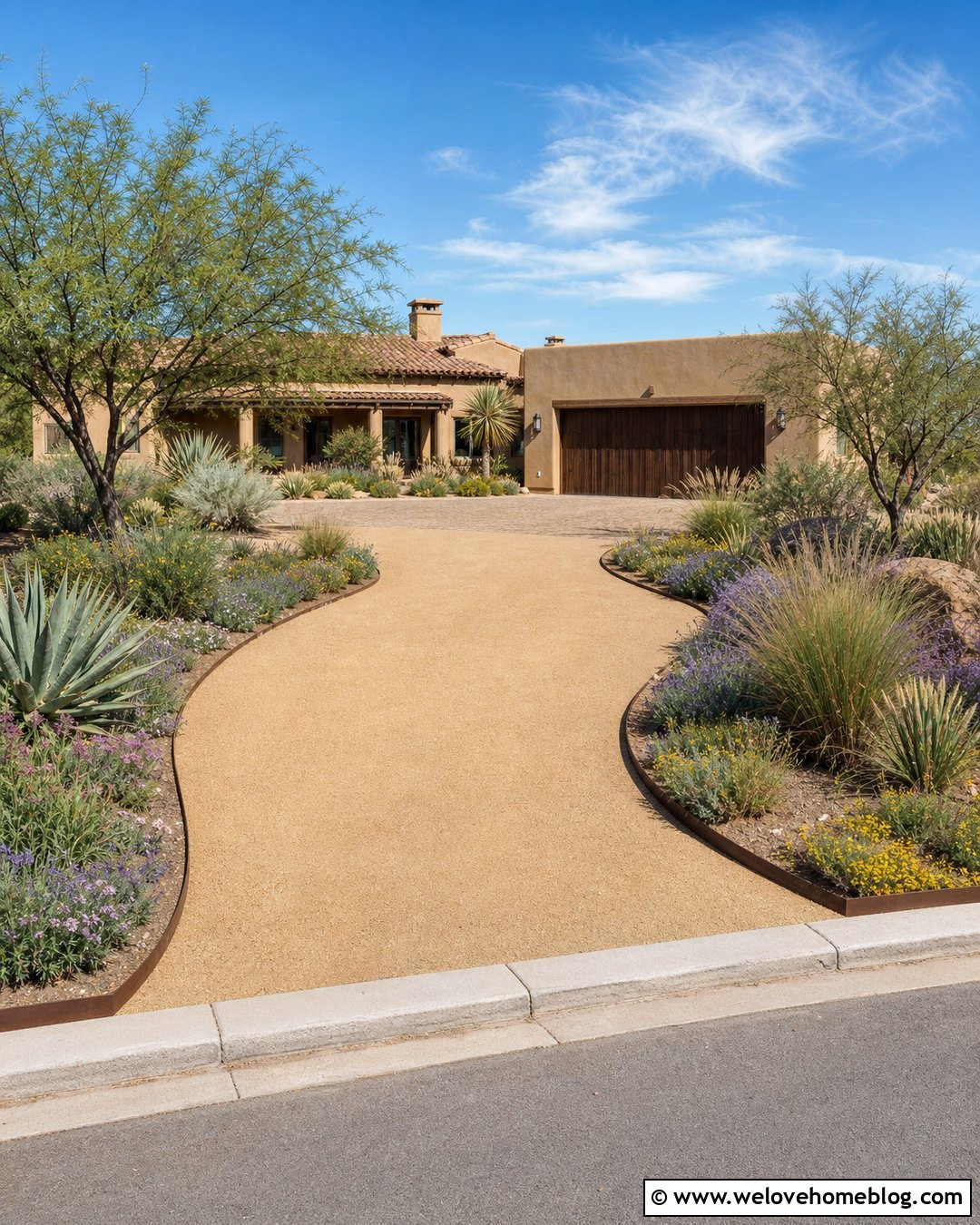
10. Geocell Driveway With Concrete Paver Apron
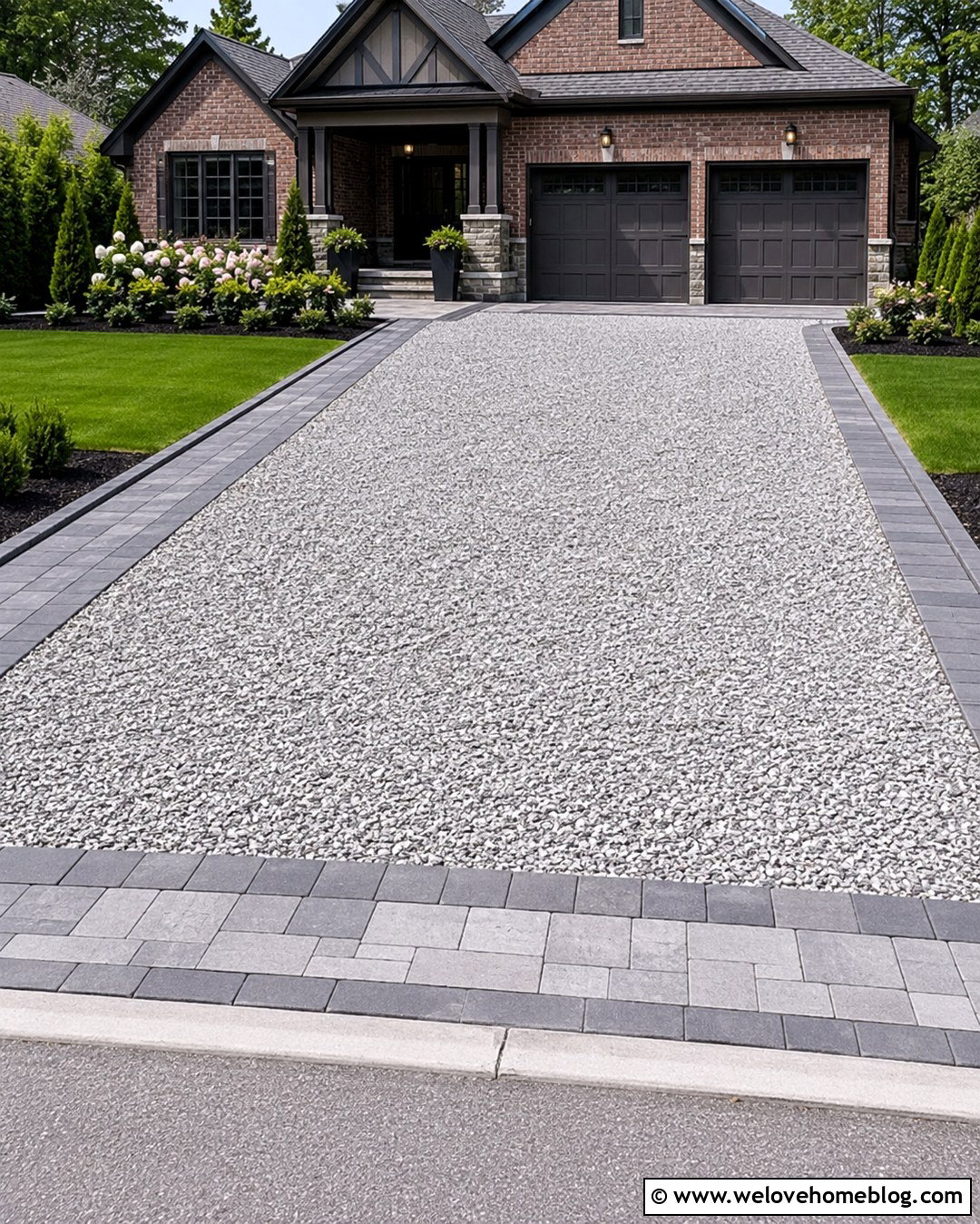
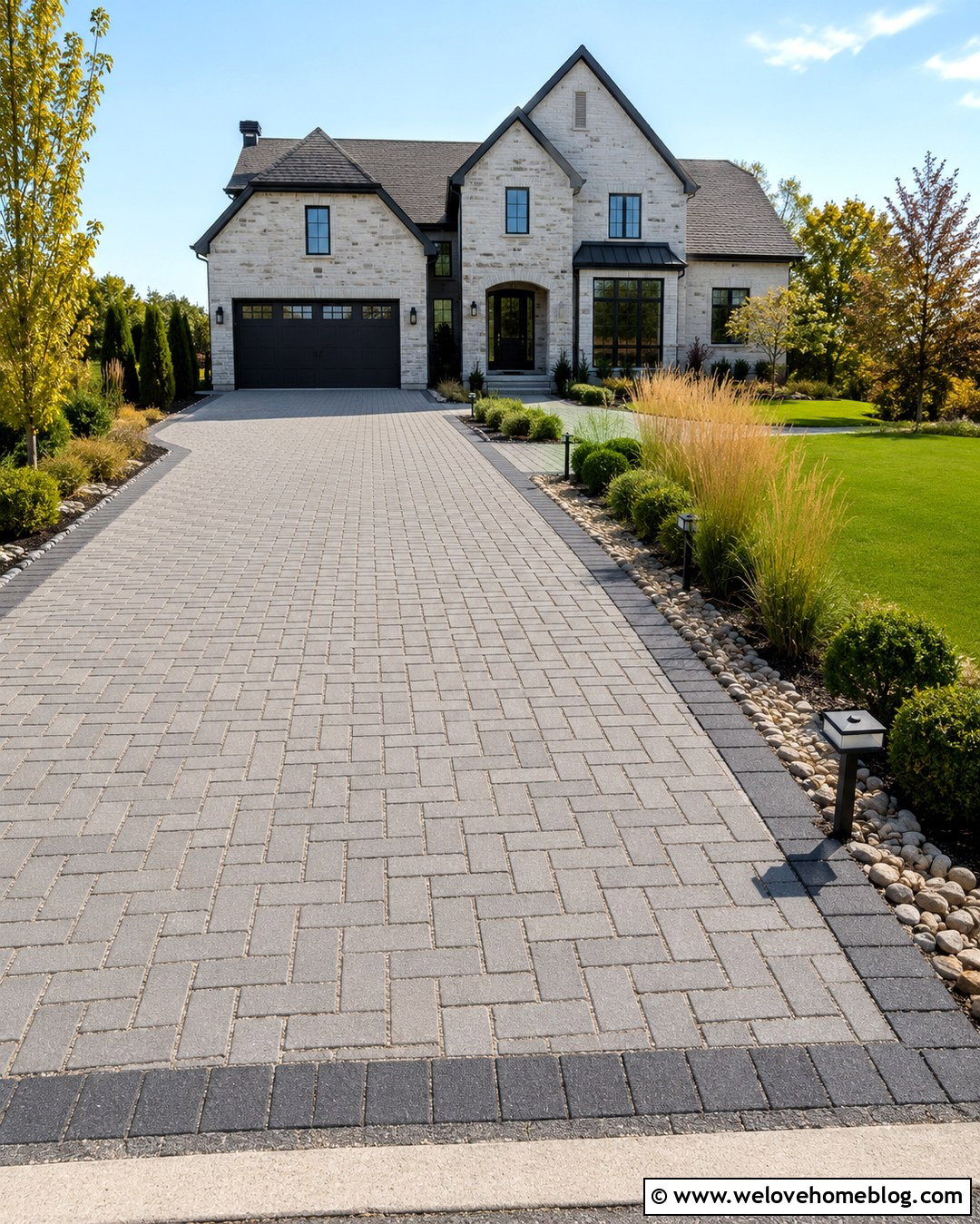
The sound and texture of gravel feel inviting, but a solid apron can make the garage entrance look more finished. Construct the main driveway with geocells filled and surfaced with compacted light-gray angular gravel. Install a generous concrete paver apron across the full width of the garage, using charcoal border pavers to create a clear frame. Repeat those pavers at the street transition and along the front walkway for a coordinated look. Low evergreen shrubs and neat lawn panels keep the surrounding landscape simple. The geocell portion should meet the apron at a carefully contained, level edge to reduce loose stone collecting on the pavers. This practical combination complements suburban brick homes, contemporary craftsman houses, and traditional two-story properties without making the entire driveway appear heavily paved.
11. Long Geocell Driveway With Tree-Lined Landscaping
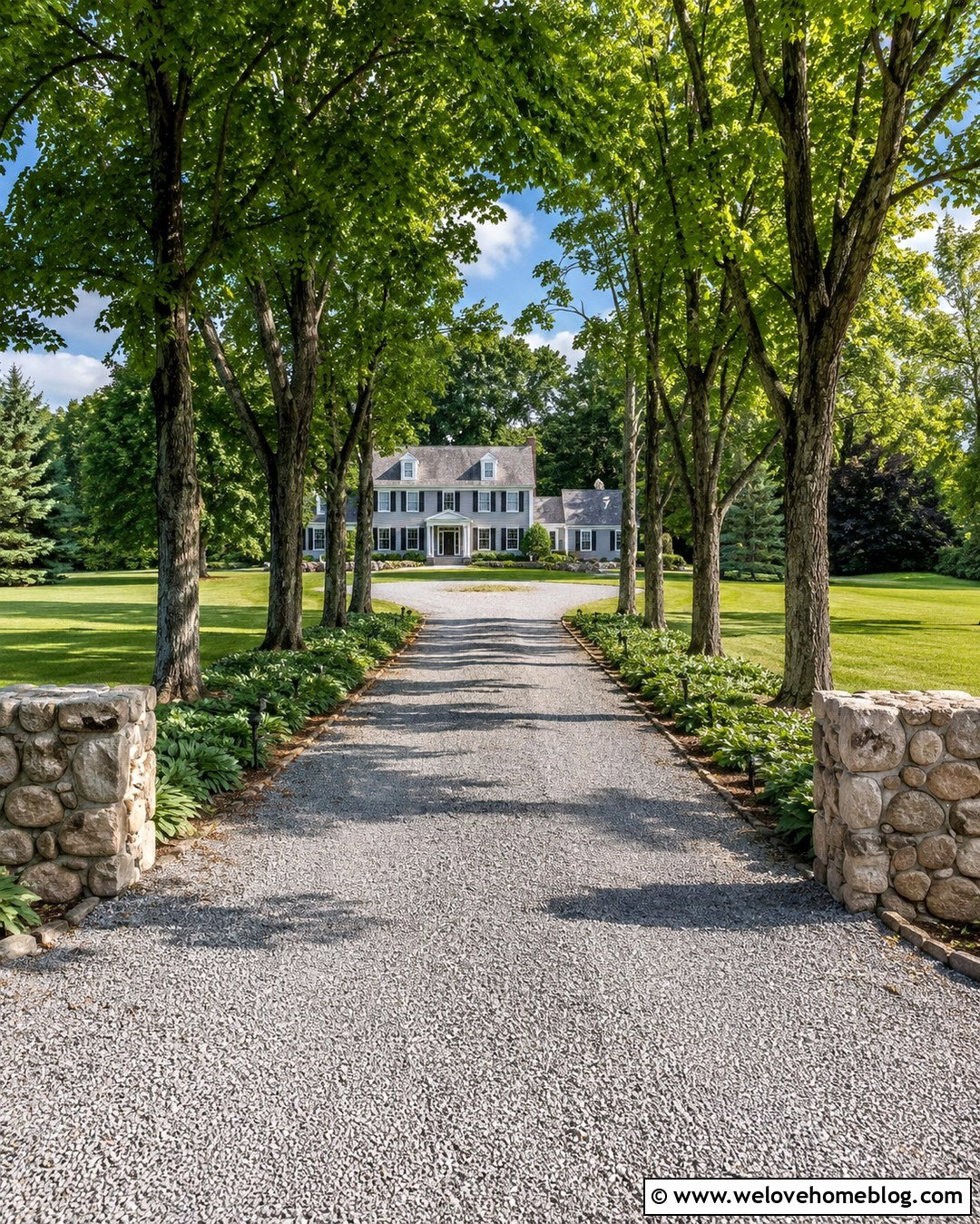
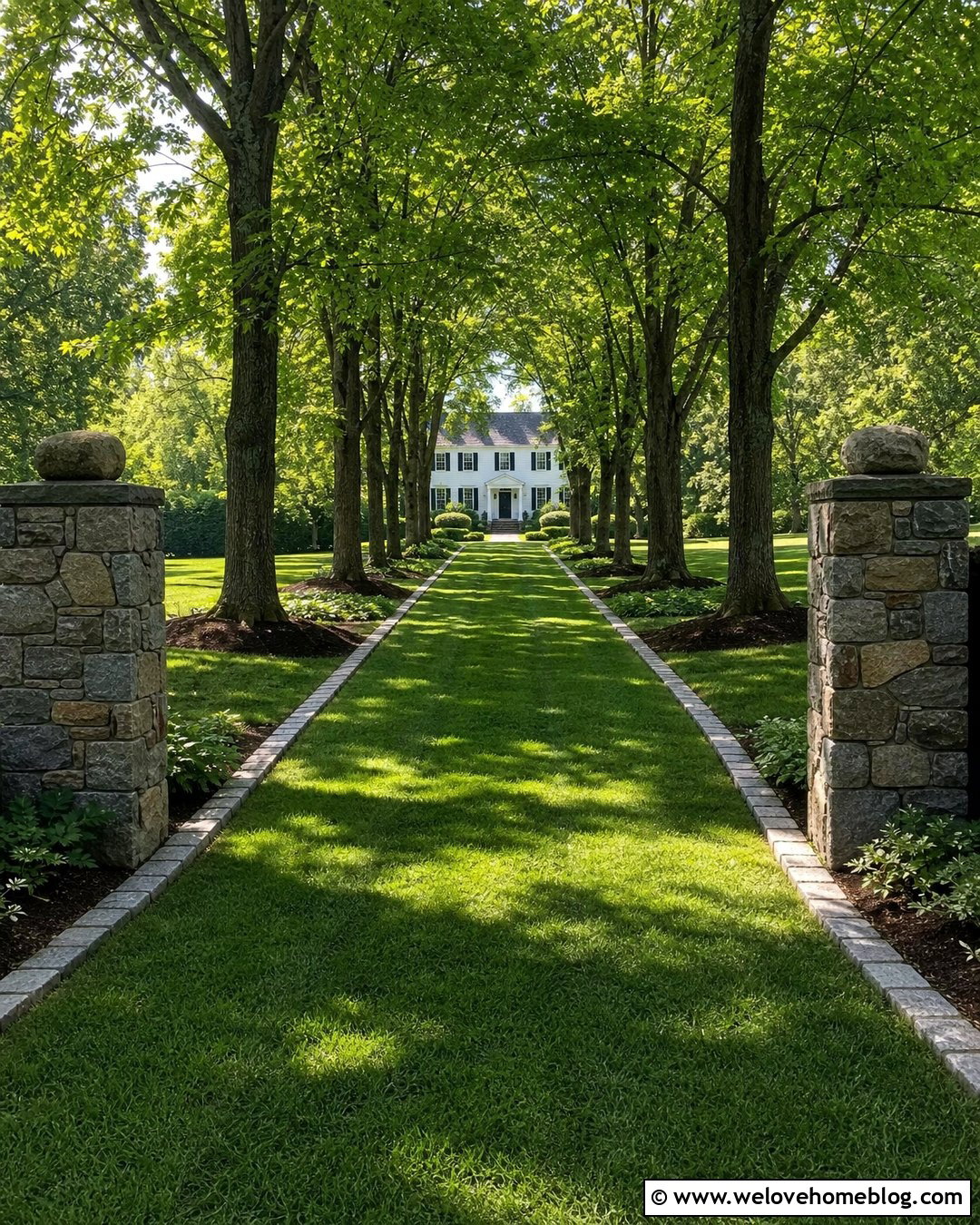
A long driveway can become one of the property’s strongest landscape features when its proportions are carefully controlled. Use warm gray crushed stone over geocell reinforcement and establish a straight route centered on the home or garage. Plant evenly spaced deciduous trees outside the required driveway clearance, leaving room for mature trunks, branches, and roots. Underplant them with simple grass or low ground cover rather than dense beds that could make maintenance difficult. Natural stone markers at the entrance provide a subtle sense of arrival. Near the house, widen the drive into a practical parking and turning area bordered by shrubs. This layout suits country, colonial, and estate-style homes. Repeated trees emphasize the long perspective, while the confined gravel surface keeps the approach visually relaxed.
12. Side Yard Geocell Driveway With Privacy Hedges

Narrow side yards require a driveway design that feels functional without becoming cramped. Lay out a straight geocell driveway using compacted tan or gray angular gravel and define its edges with slim steel restraints. Along the property line, use a clipped evergreen hedge or a mixed screen of upright shrubs to add privacy. Keep the planting narrow enough to preserve vehicle clearance at mature size. On the house side, a simple stepping-stone walkway and low ground covers provide pedestrian access without consuming excessive width. Finish the drive with a poured-concrete pad in front of the detached garage. A horizontal wood gate can screen the rear parking area when it is not in use. This streamlined arrangement works well beside urban cottages, bungalows, and compact suburban homes.
13. Geocell Driveway With Boulder Landscaping
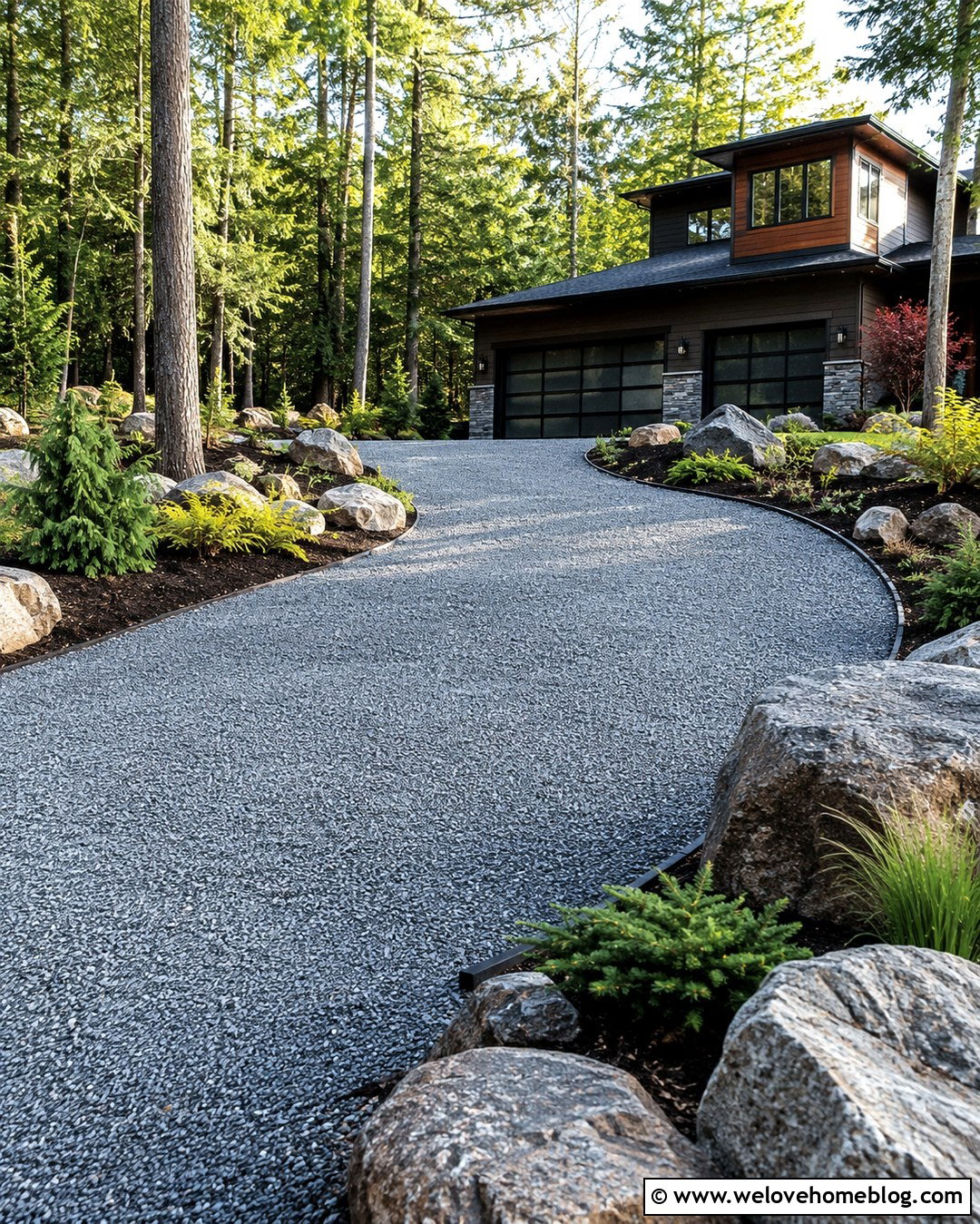
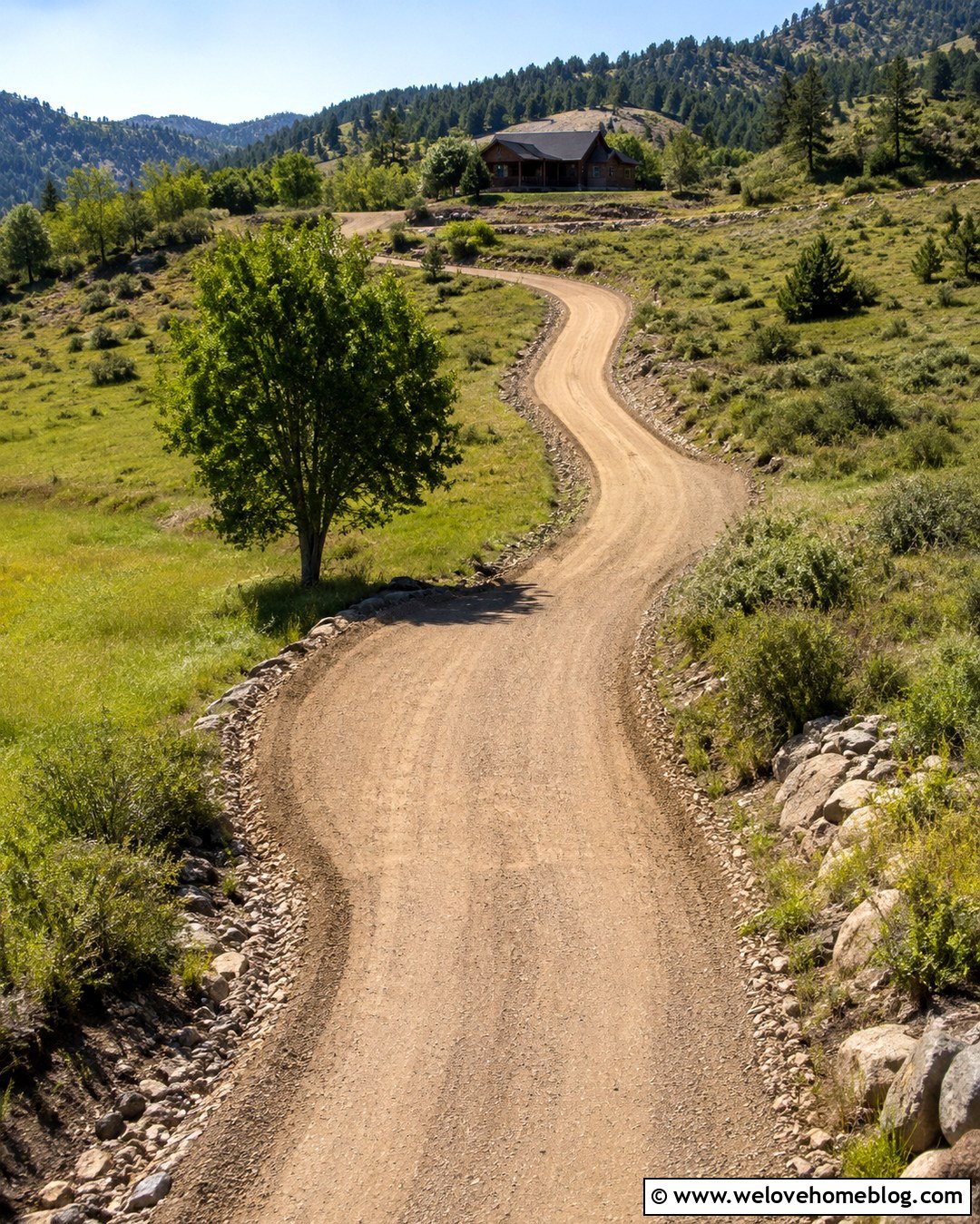
Large boulders can give a reinforced gravel driveway a strong connection to rugged or wooded surroundings. Use medium-gray crushed granite as the surface and shape the driveway into a broad curve that moves around existing trees. Position several substantial native boulders along the outside bend, partially setting them into the ground so they appear integrated rather than placed on top. Repeat smaller stones near the entrance and around the garage planting beds. Junipers, ferns, ornamental grasses, and drought-tolerant perennials can soften the rock without hiding it. Use metal edging on less visible sections to keep the gravel contained. This complete driveway look fits mountain cabins, contemporary woodland houses, and rustic ranch homes. Avoid placing boulders where they could reduce turning clearance or entrance visibility.
14. Geocell Driveway With Brick House Landscaping
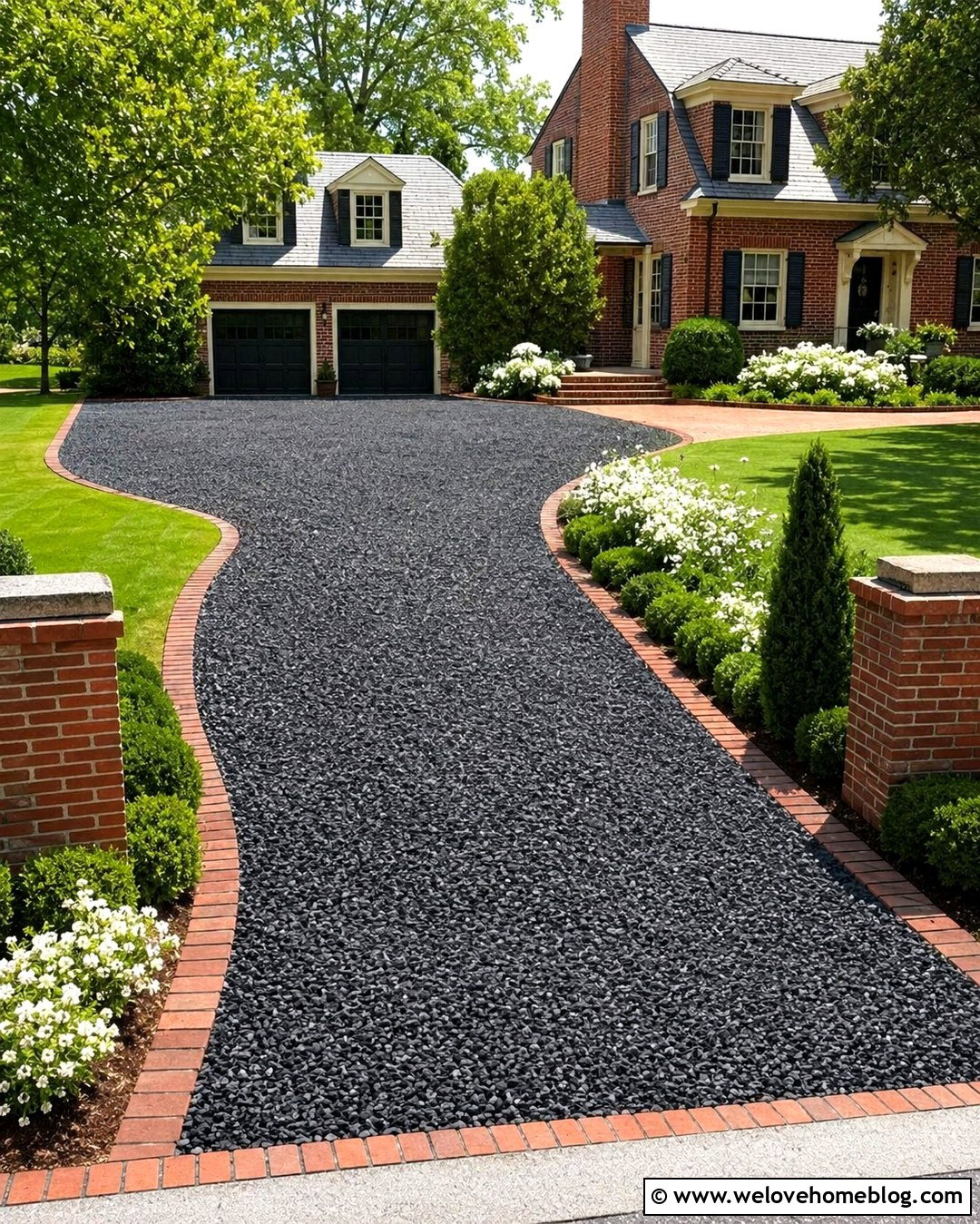
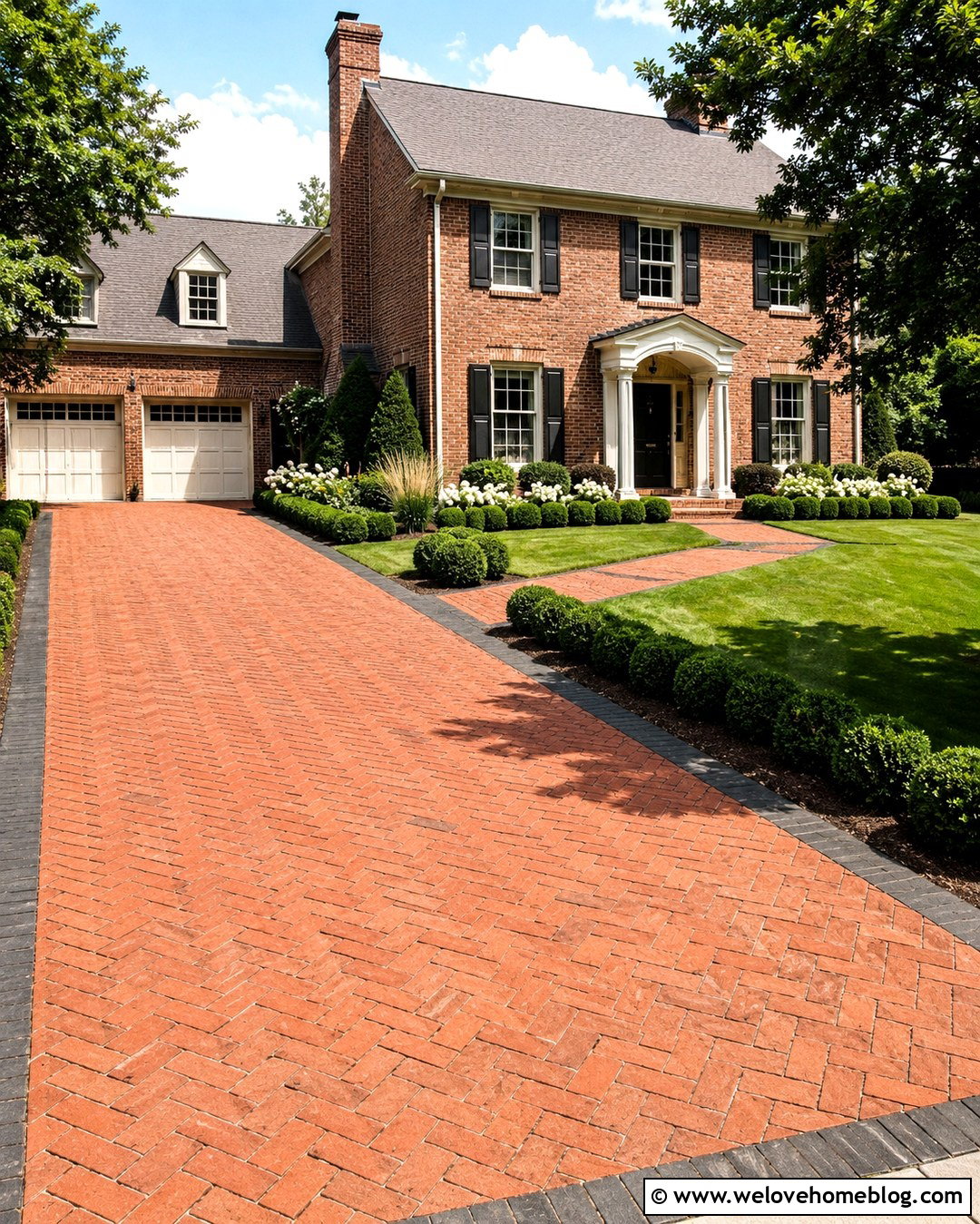
A brick house benefits from a driveway palette that supports its warm facade without competing with it. Select charcoal-gray angular gravel for the geocell surface, creating contrast against red or brown masonry. Add a narrow clay brick soldier-course border that repeats the home’s material in a restrained way. Shape the driveway with a slight curve, then widen it into a rectangular parking court beside the garage. Evergreen foundation shrubs, white flowering perennials, and a well-defined lawn provide a classic landscape frame. Connect the driveway to the front door with a matching brick walkway or stepping path. At the street, low brick pillars can mark the entrance without overwhelming the yard. The balanced mixture of gravel, brick, lawn, and structured planting produces polished curb appeal.
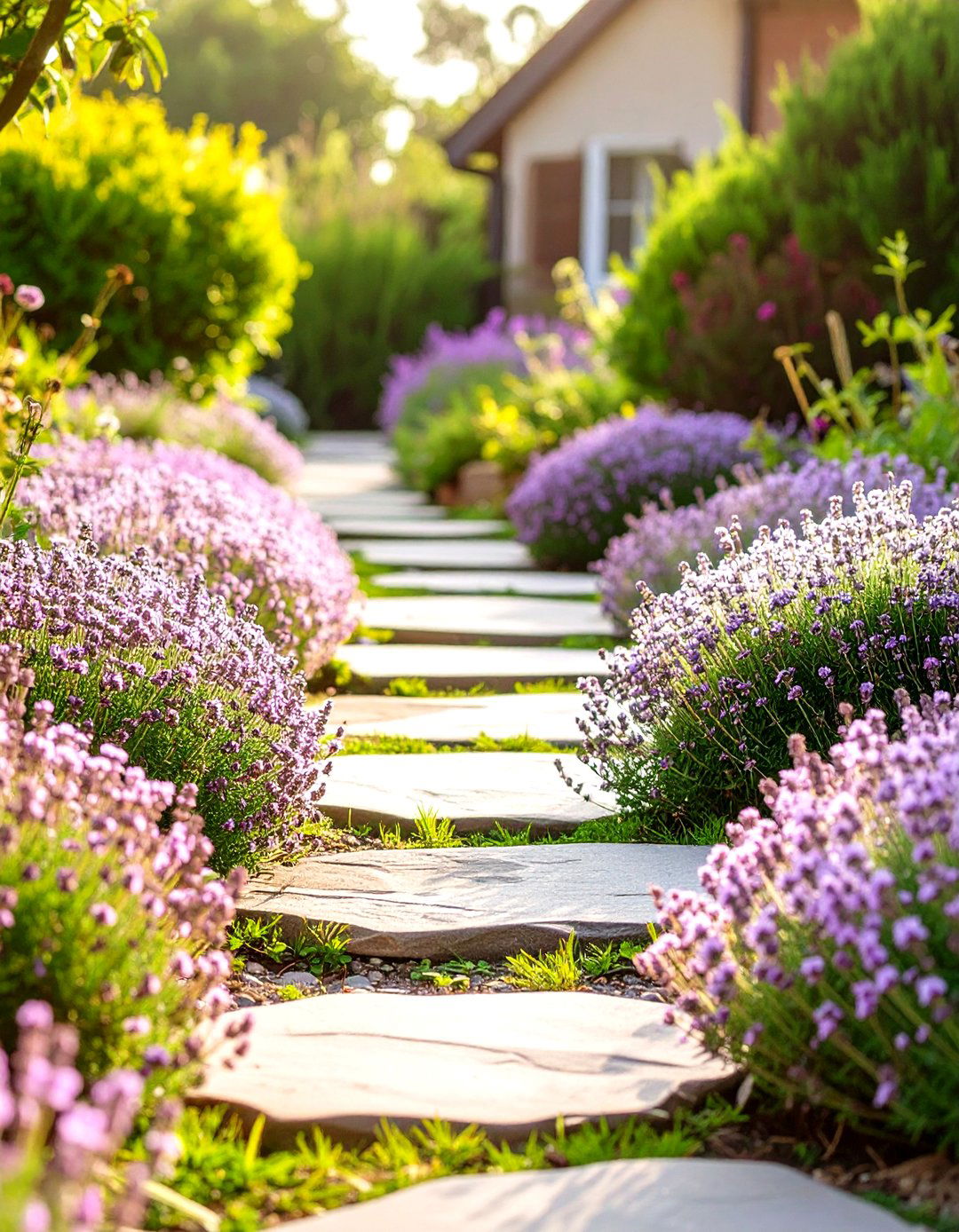

15. Geocell Driveway With Permeable Parking Area
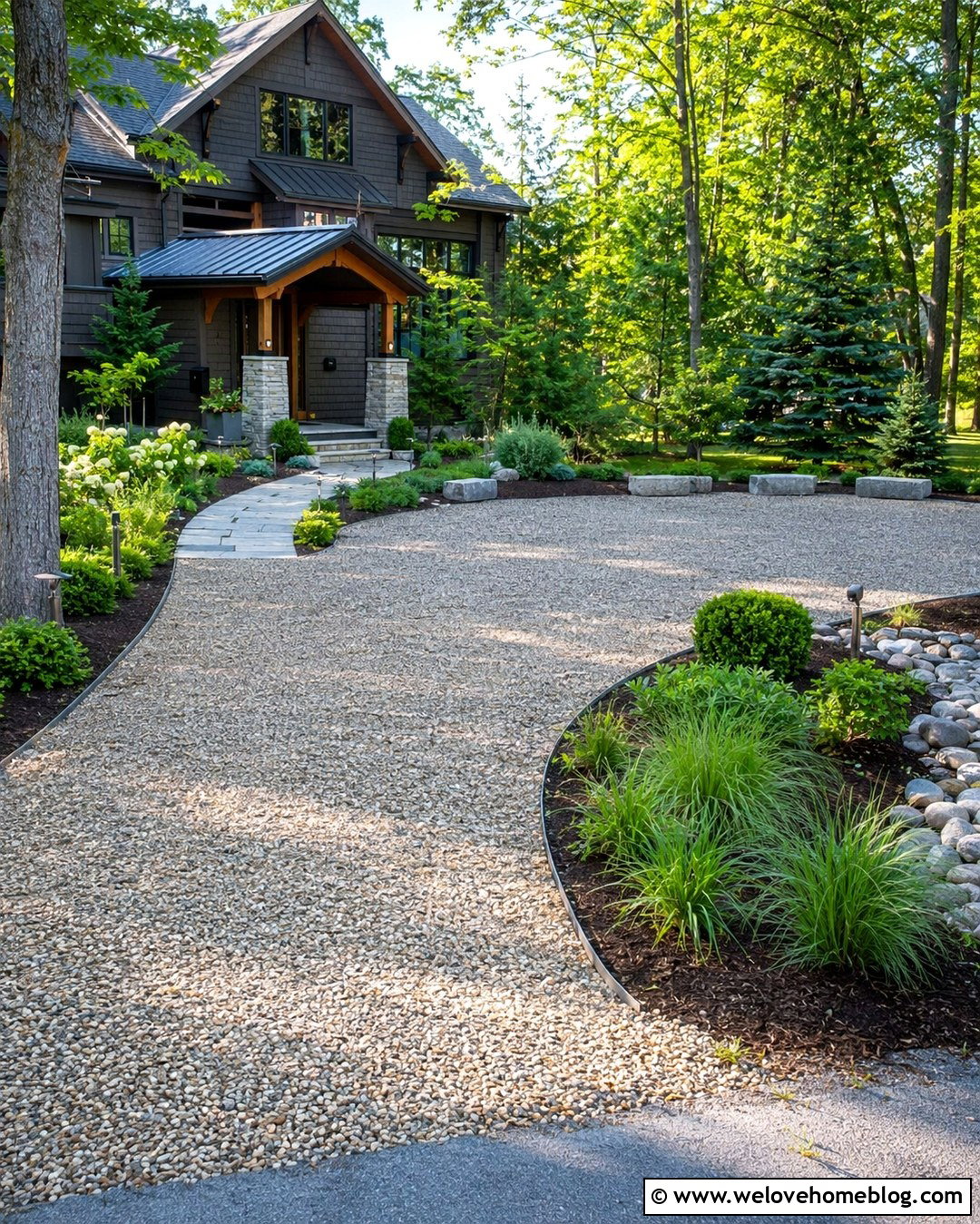
Extra parking does not need to look like an oversized paved lot. Create a gravel geocell driveway that widens into a rectangular or fan-shaped parking bay near the house. Use compacted angular stone in a color that blends with the main approach, then outline individual parking spaces with subtle granite setts or contrasting gravel bands. Surround the bay with planted drainage areas, low shrubs, and shade trees rather than continuous pavement. A paver walkway can provide a clean route from parked vehicles to the entrance. Geocell systems may support permeable driveway designs when the underlying layers, soil, and drainage plan are compatible. Site-specific infiltration, runoff, and local code requirements should be checked before construction. ()
16. Geocell Driveway With Corten Steel Edging
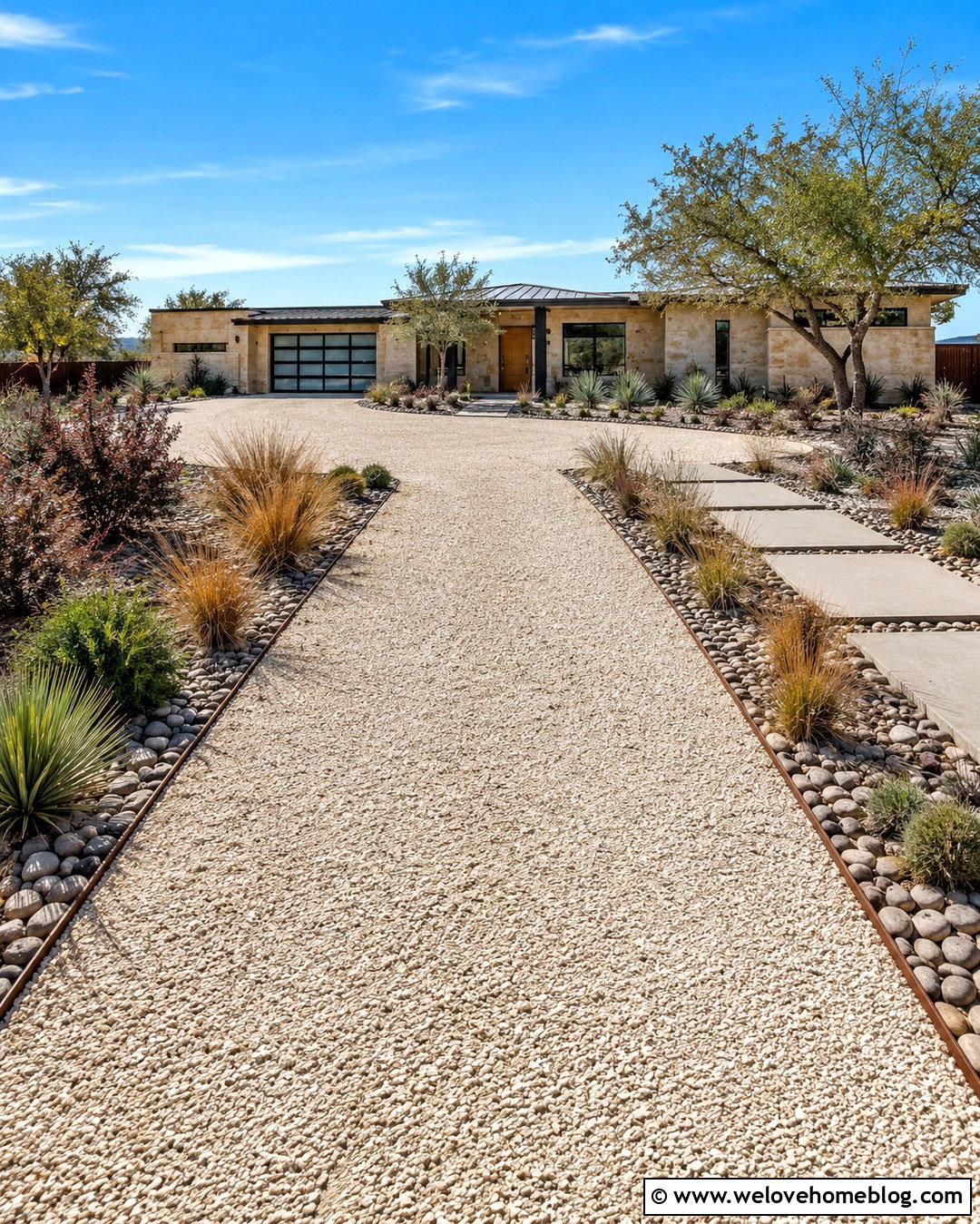
Corten steel creates a slim, warm-toned border that pairs especially well with pale gravel. Use cream crushed limestone or light granite as the visible geocell driveway surface and form a straight approach with a slightly widened parking pad. Run weathering-steel edging along both sides to produce a clean separation from planting beds. Repeat rust-colored accents through decorative grasses, reddish foliage, or weathered planters near the entrance. Large rectangular concrete stepping pads can connect the driveway to a modern walkway. Keep the planting loose but organized, with low species near the street and taller grasses closer to the house. This complete look is ideal for contemporary ranch homes, desert-modern properties, and houses with wood siding. Properly installed edging should remain visible without becoming a tire hazard.
17. Horseshoe Geocell Driveway With Entrance Pillars
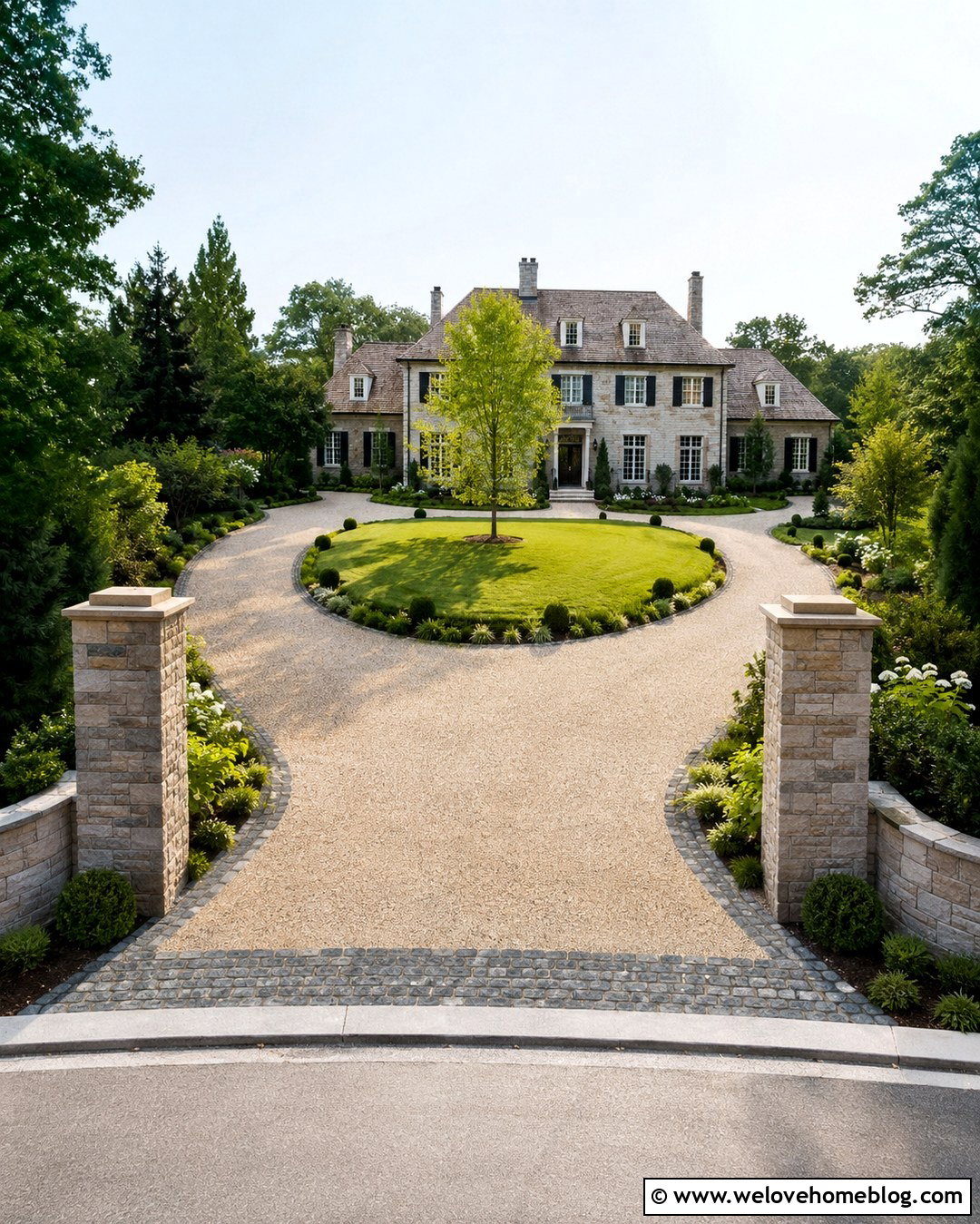
A horseshoe layout creates convenient arrival and departure points while establishing a broad front-yard focal area. Finish the geocell driveway with compacted beige crushed gravel and mark each roadside opening with stone or brick pillars. Low curved walls can extend from the pillars, but they should remain clear of vehicle turning paths. Inside the horseshoe, create a large lawn panel with a specimen tree and a curved walkway leading to the front entrance. Use clipped shrubs near the house and looser perennial planting near the lawn for a balanced appearance. A darker cobblestone ribbon at both entrances helps define the transition from the road. This design works particularly well on wide properties with colonial, French country, Mediterranean, or traditional farmhouse architecture.
18. Geocell Driveway With Rain Garden Drainage
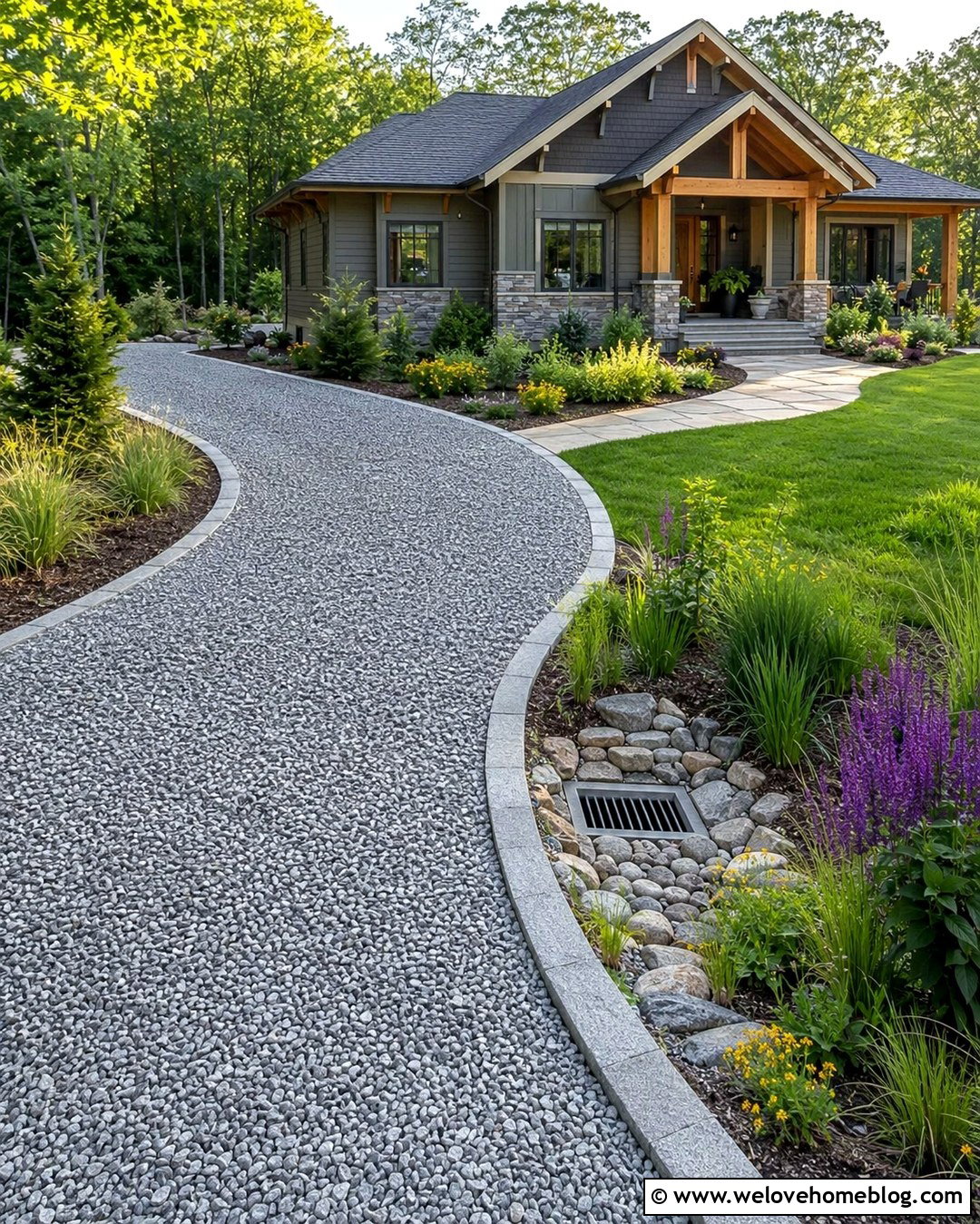
After heavy rain, a driveway should direct water toward an appropriate outlet rather than concentrating it near the foundation. Design a gently crowned or properly cross-sloped geocell driveway with compacted gray angular gravel. Along the lower side, create a shallow vegetated channel leading to a rain garden filled with moisture-tolerant plants suited to the region. A stone-lined inlet can slow runoff and make the drainage feature feel intentional. Use granite curbing near the house to protect planting beds and maintain a clear gravel edge. The rain garden should sit away from foundations, septic systems, and other sensitive areas according to local guidance. This landscape-focused approach suits craftsman, cottage, and contemporary homes while turning essential stormwater planning into an attractive part of the driveway design.
19. Geocell Driveway With Solar Entrance Lighting
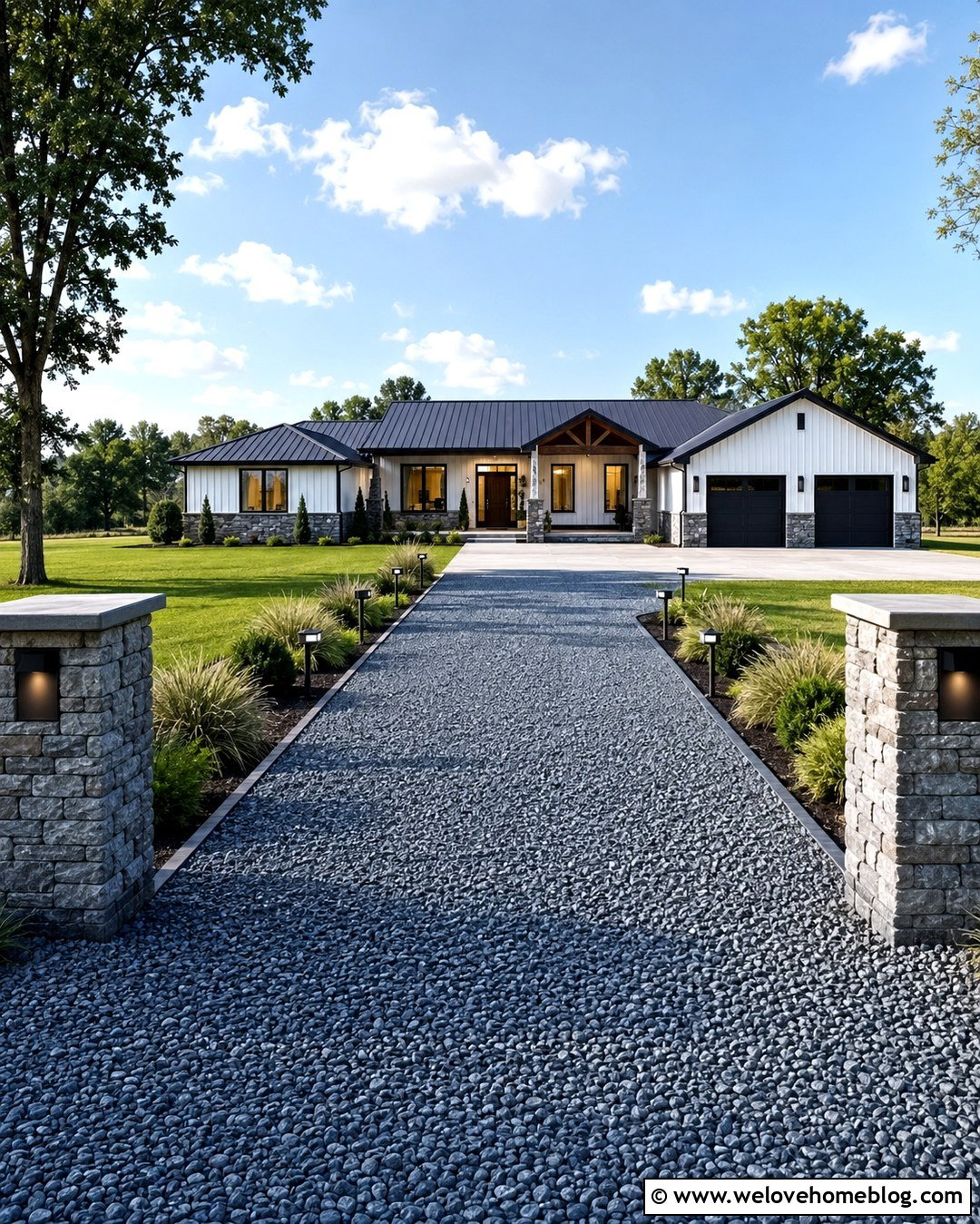
Lighting can make a long driveway easier to understand after sunset without filling the landscape with tall fixtures. During the day, a straight geocell driveway surfaced with blue-gray crushed stone creates a clean base for the design. Install low-profile solar or wired lights along the borders, spacing them evenly and keeping them outside vehicle clearance. At the entrance, stone pillars with shielded fixtures can mark the driveway more clearly. Frame the approach with low grasses, evergreen shrubs, and a simple lawn so the fixtures remain visible. Near the garage, add downlighting under the eaves rather than increasing the number of driveway lights. Choose fixtures that direct light downward and verify that solar models receive enough sunlight for dependable charging.
20. Geocell Driveway With Mixed Gravel Colors
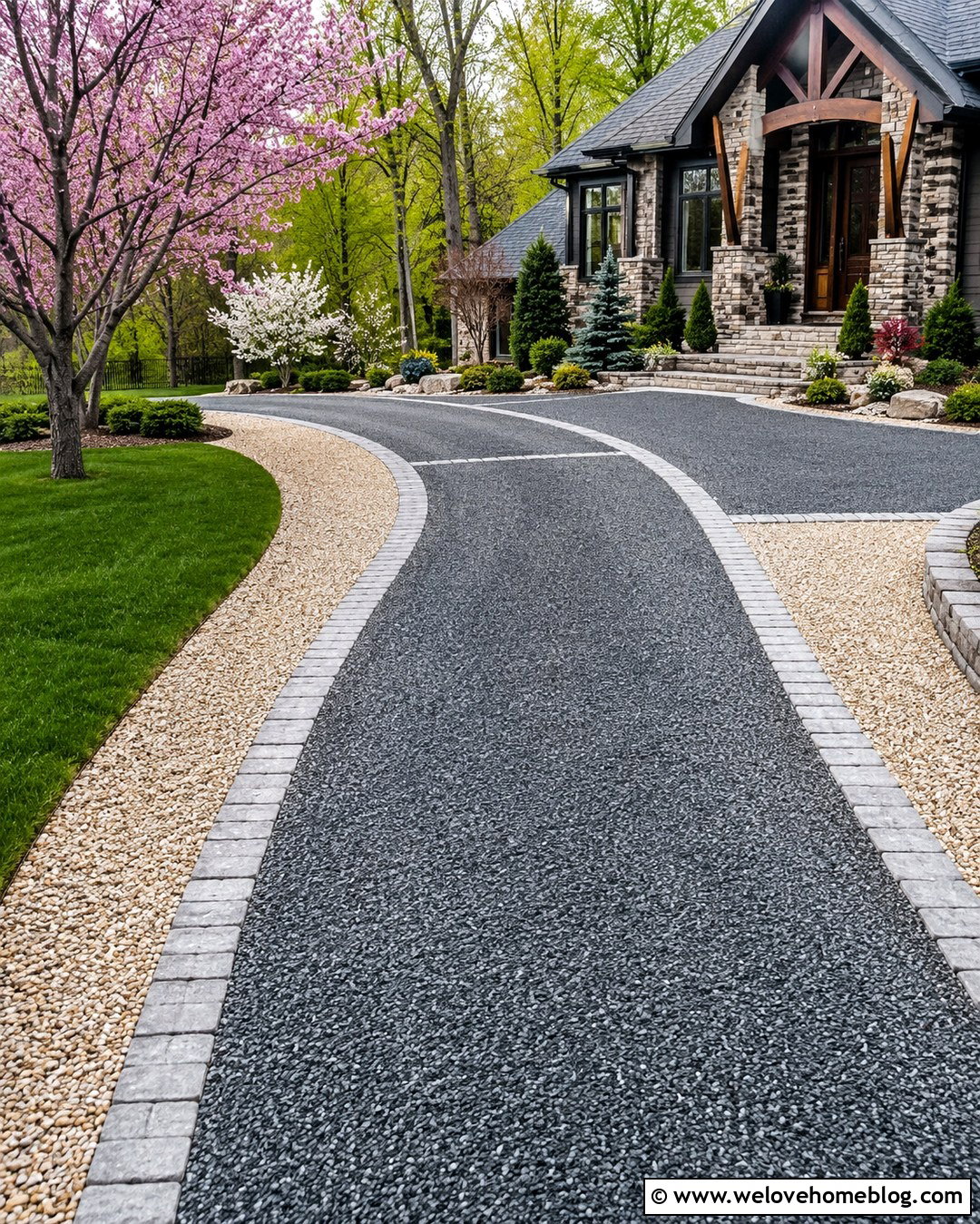
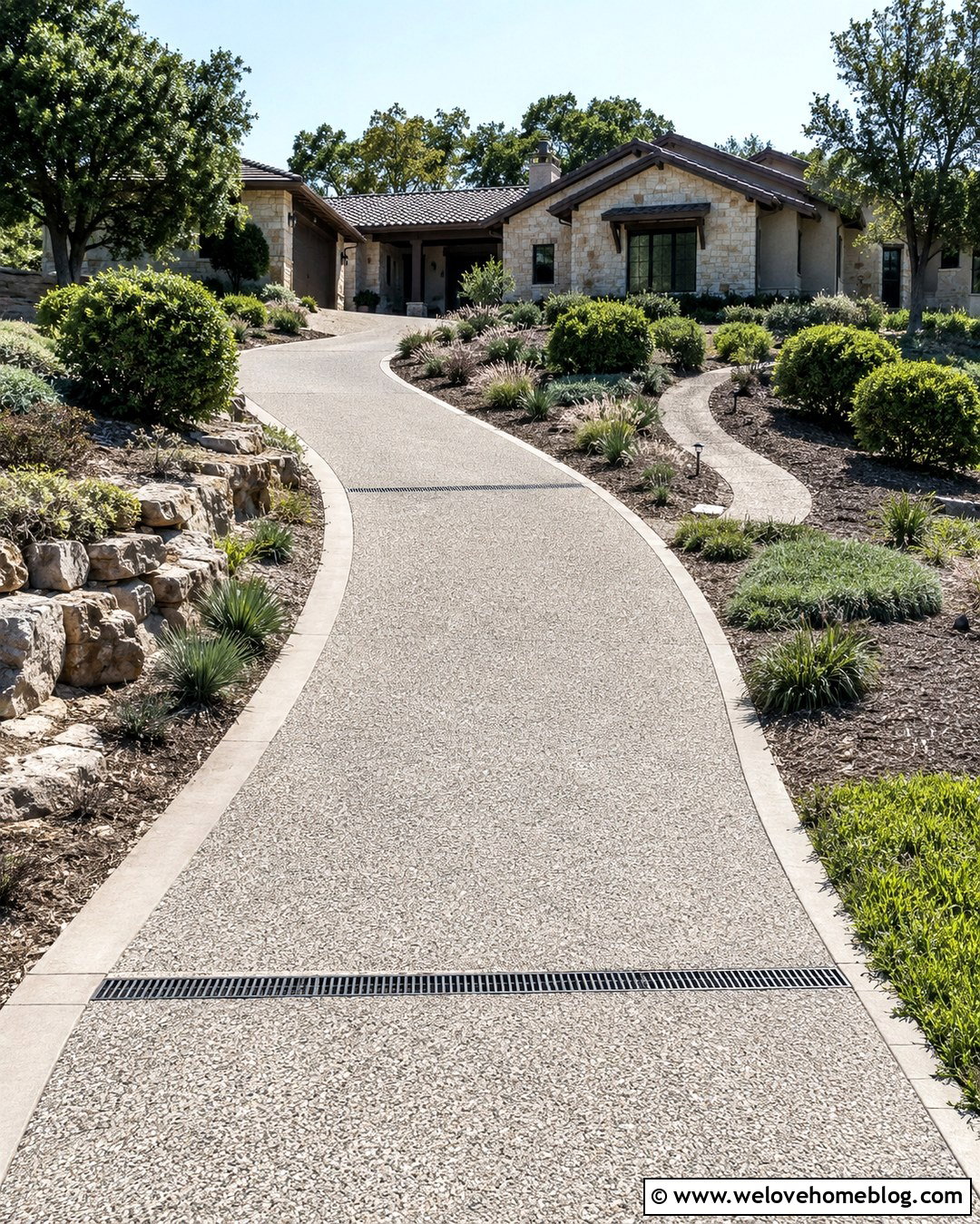
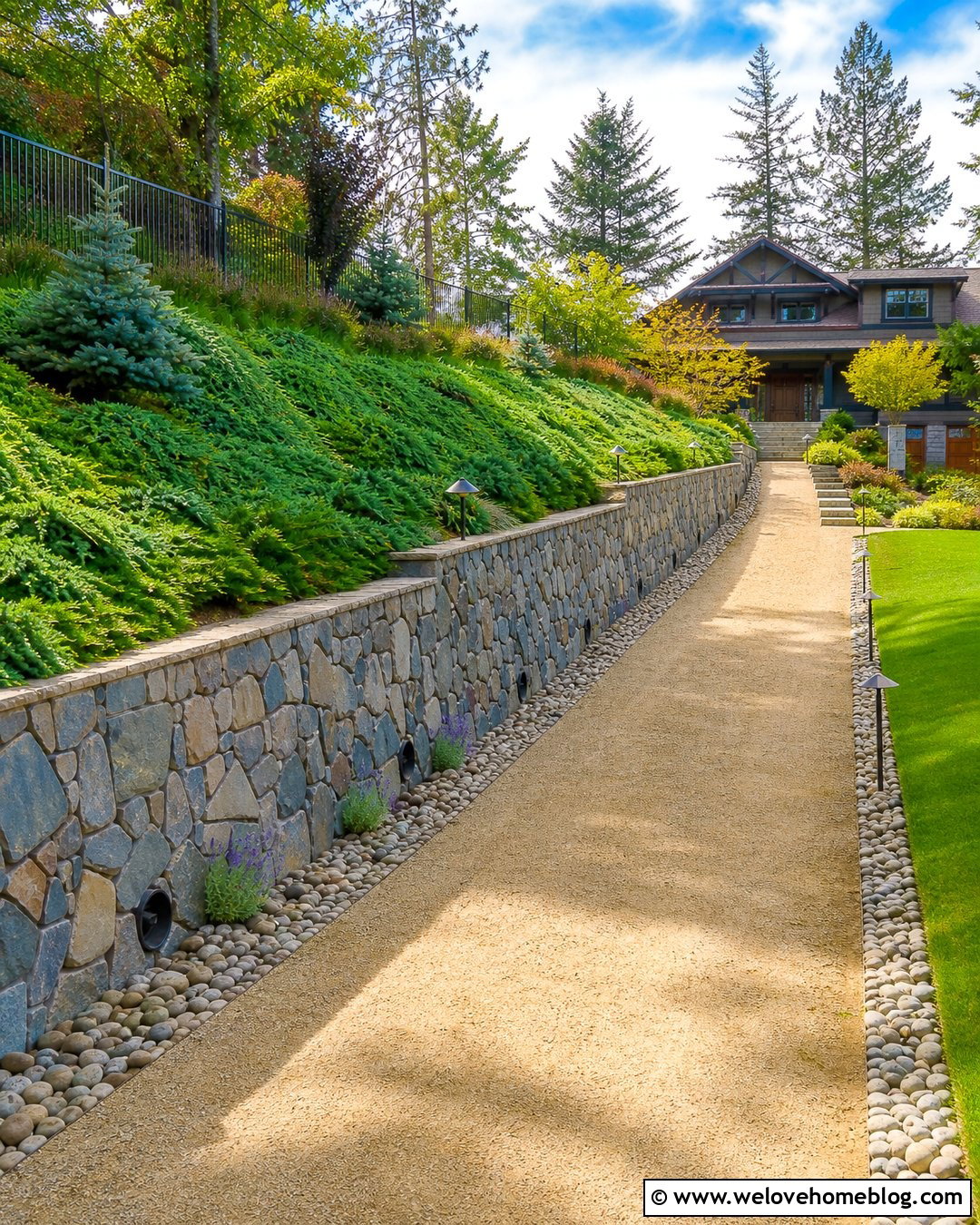
Mixed gravel colors can define zones while keeping the entire driveway surface visually connected. Use dark gray angular gravel for the main geocell-reinforced driving lanes and a lighter buff aggregate along the borders. Separate the colors with narrow granite setts so the materials do not blend as quickly under tires. A curved layout can lead toward a craftsman home, widening into a parking area finished in the darker stone. Repeat the buff gravel inside nearby planting beds as decorative mulch, but maintain a physical edge between landscape and vehicle areas. Evergreen shrubs, flowering trees, and a broad lawn provide enough green space to balance the stone. The finished design looks detailed and custom without relying on a fully paved surface or complicated decorative patterns.
Conclusion:
The best geocell driveway is designed as a complete system rather than a grid covered with decorative stone. Surface material, subgrade preparation, drainage, cell depth, edging, driveway shape, vehicle loads, and landscaping all need to work together. Angular gravel creates a practical finish, while grass, paver aprons, brick ribbons, cobblestones, and planting beds can personalize the entrance. Choose details that complement the house and remain easy to maintain in the local climate. For steep slopes, weak soil, drainage problems, or heavy traffic, consult an experienced installer or engineer before construction. Use these 20 Geocell Driveway Ideas to create an entrance that feels attractive, stable, and connected to the wider landscape.

Related posts:
Leave a Reply